Twelve thousand steps later

Today was my only Saturday in Ormond Beach. So by gosh, I was going to make the most of it! While I’m still not back to the strength and stamina I had when I was working with horses and camping so much, I still managed 4.5 miles of walking at three different parks. I got my nature walking in!
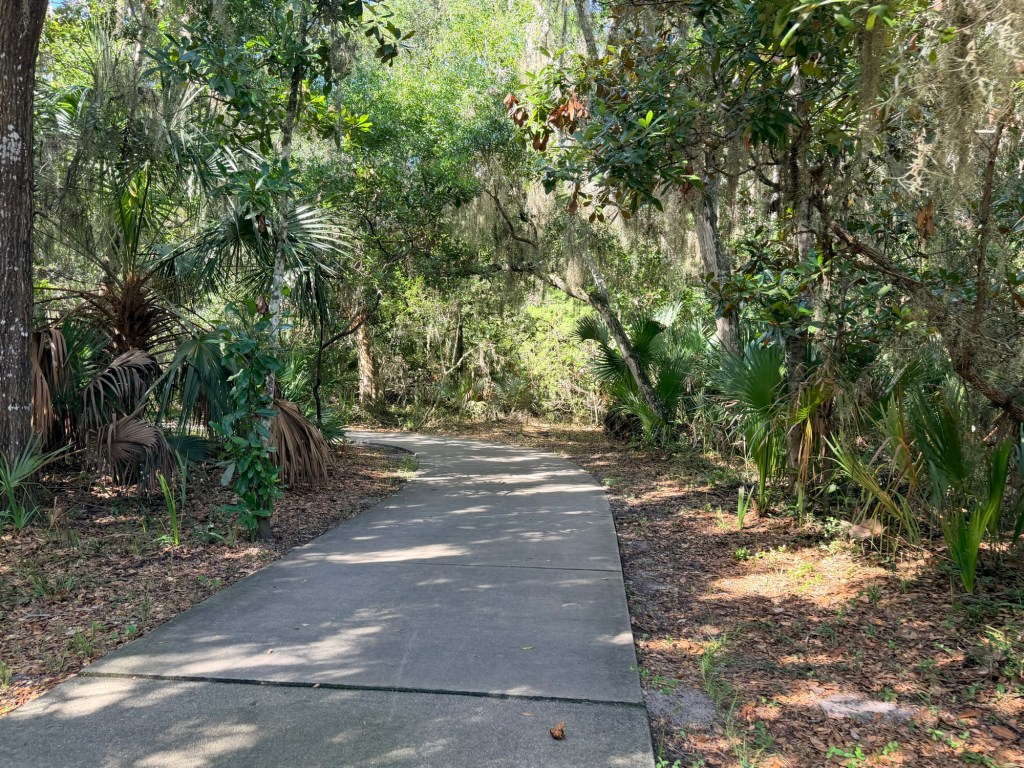
It was worth it!

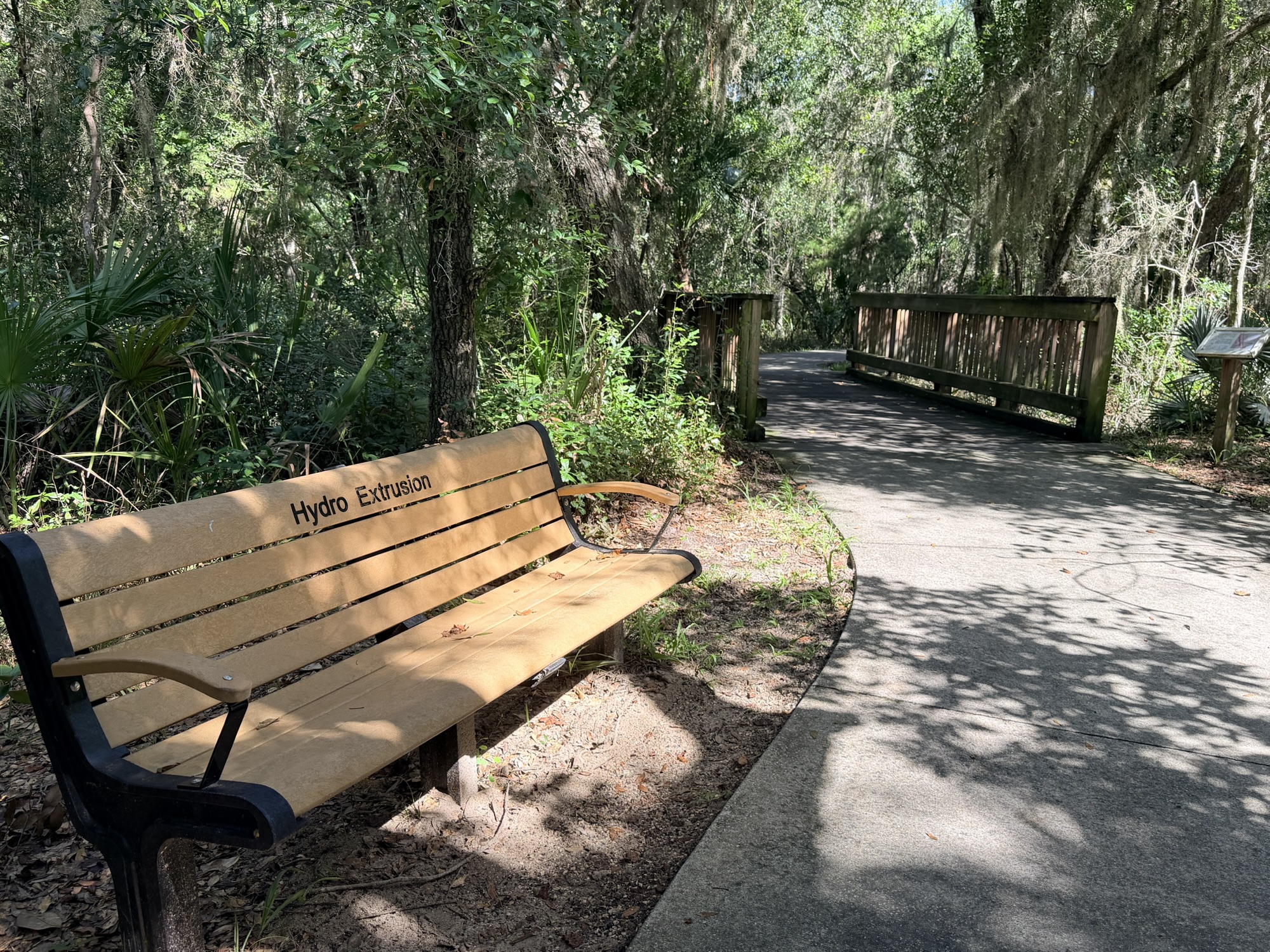
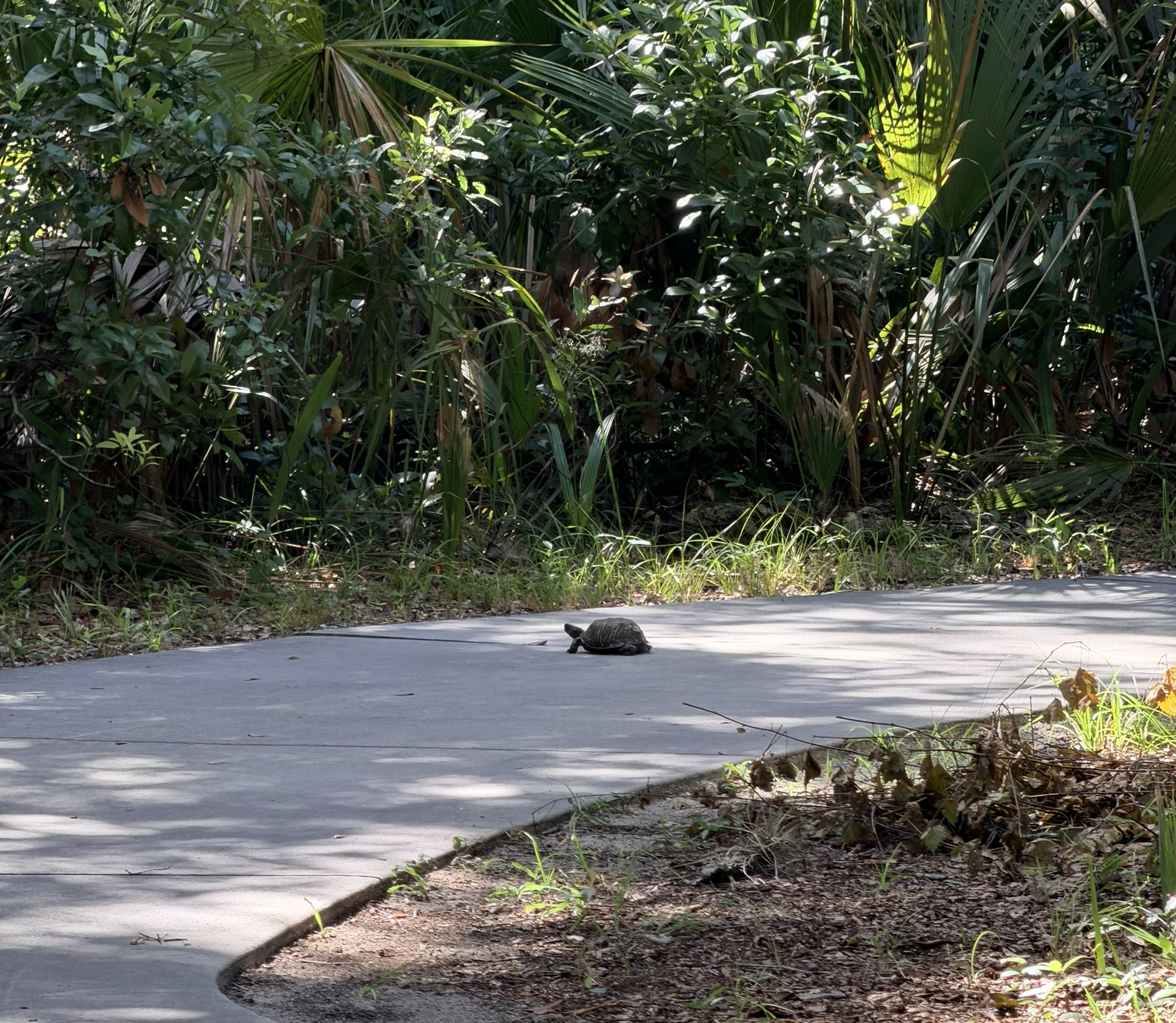
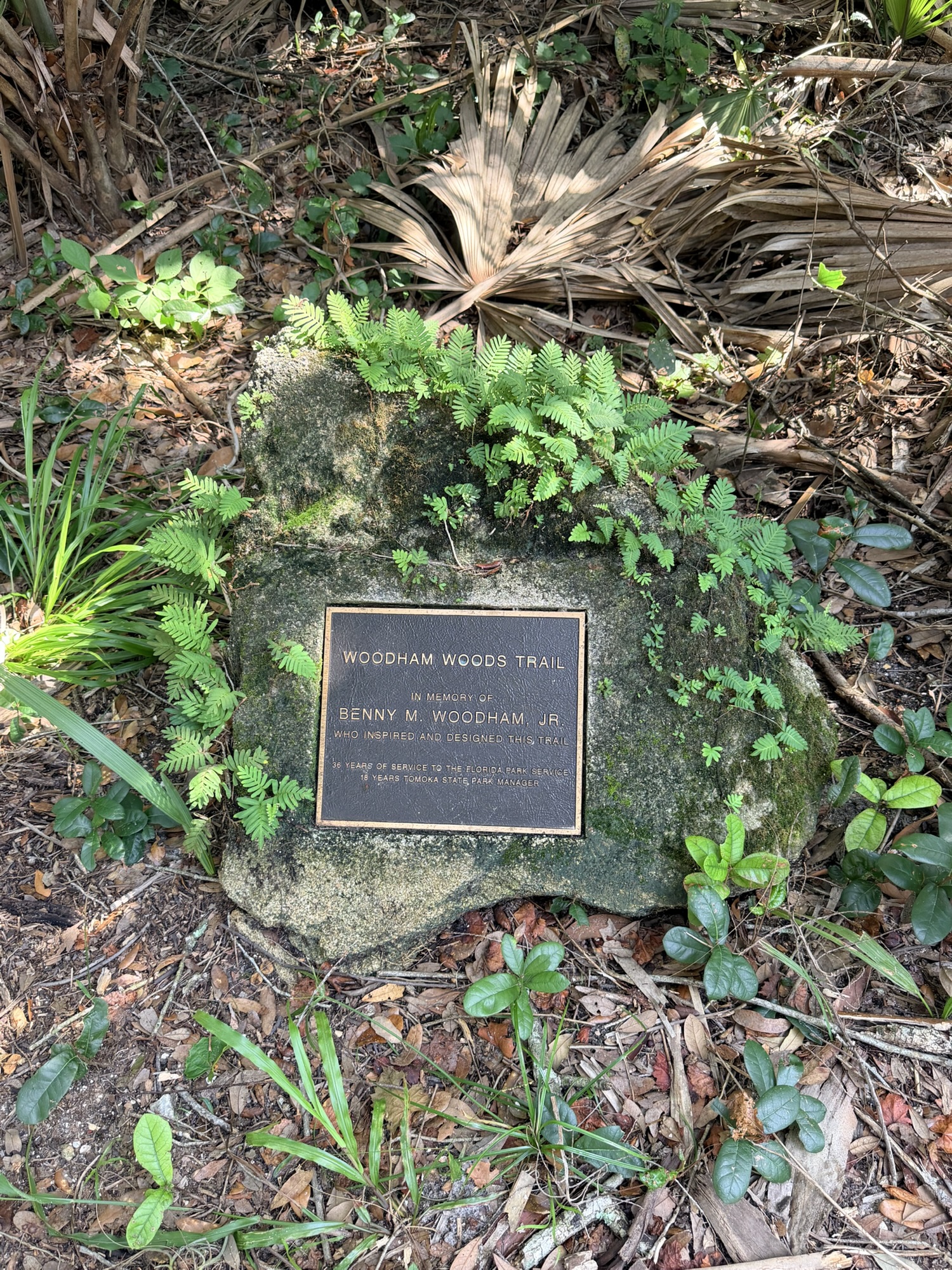
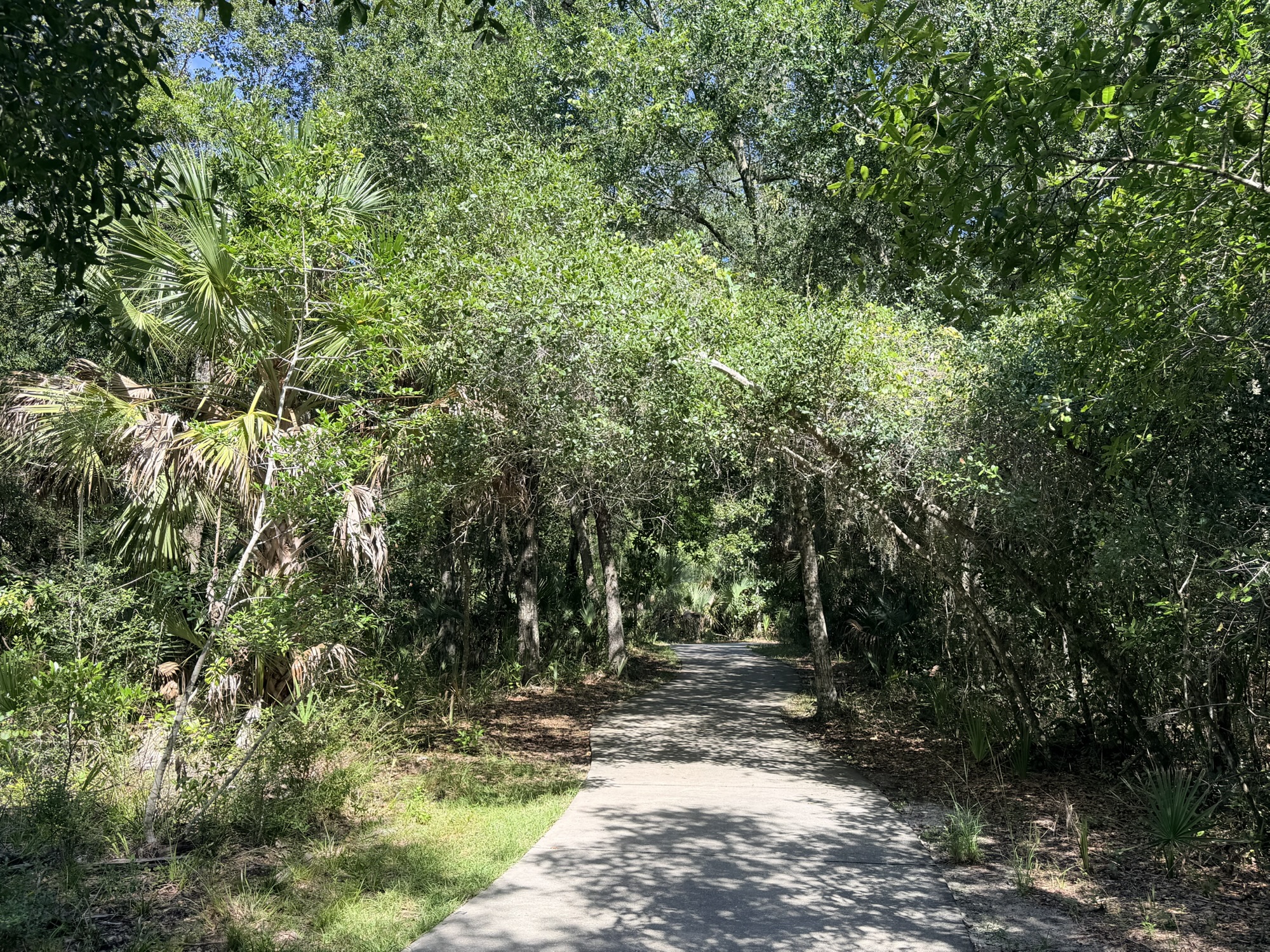
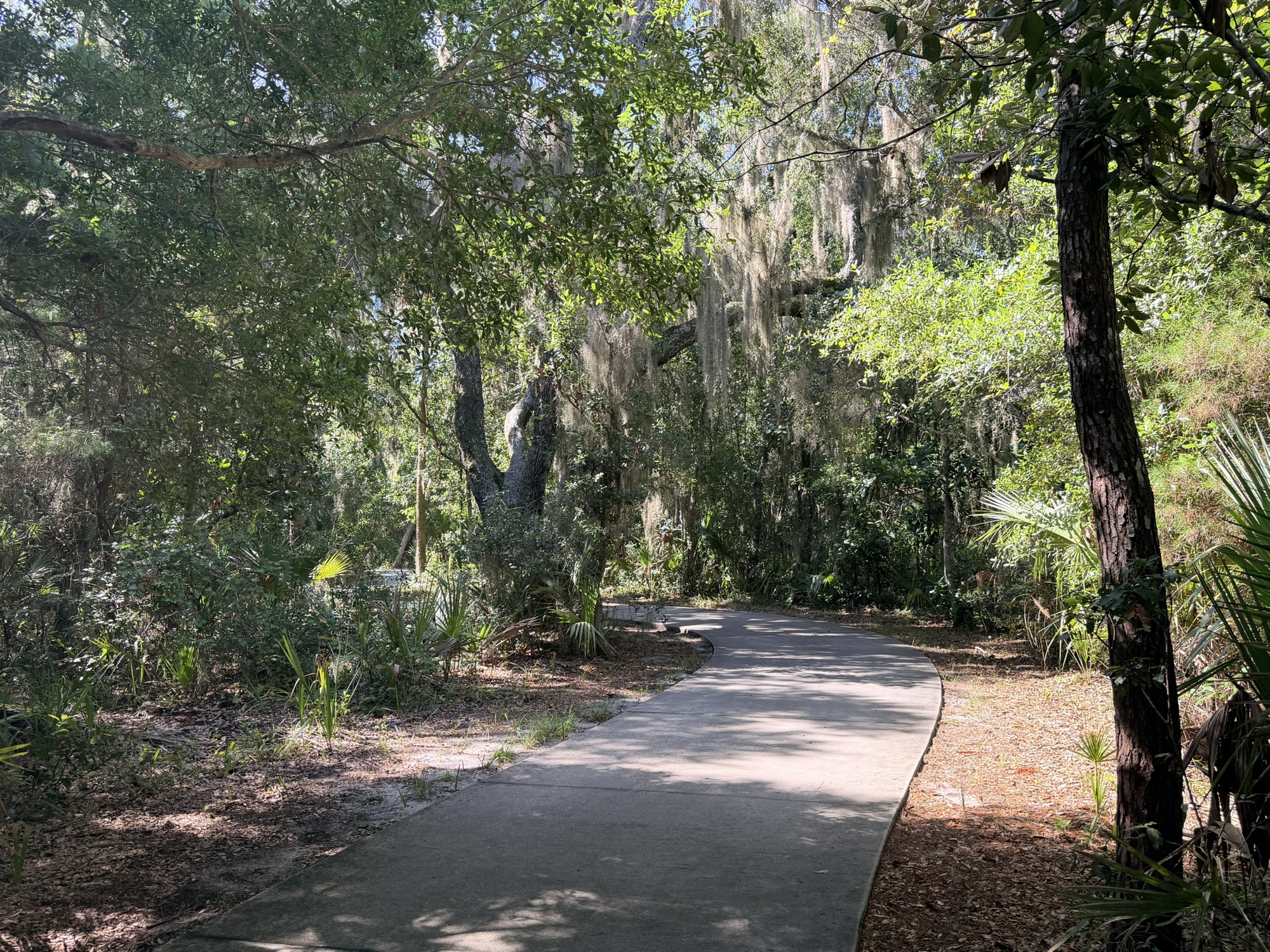
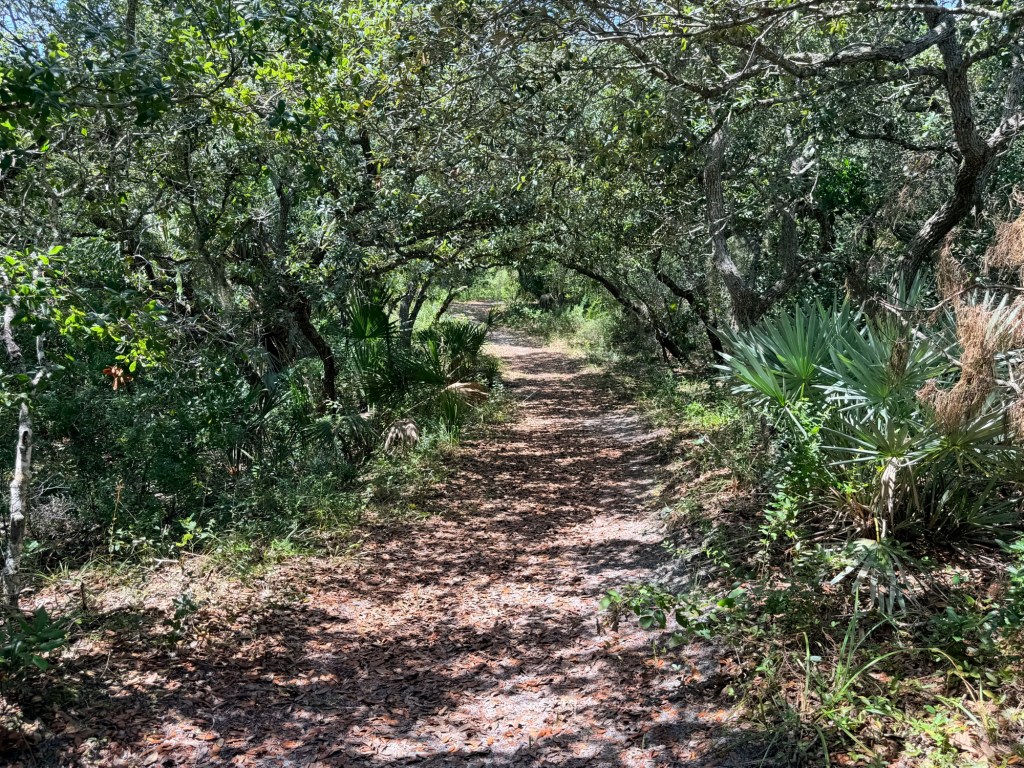
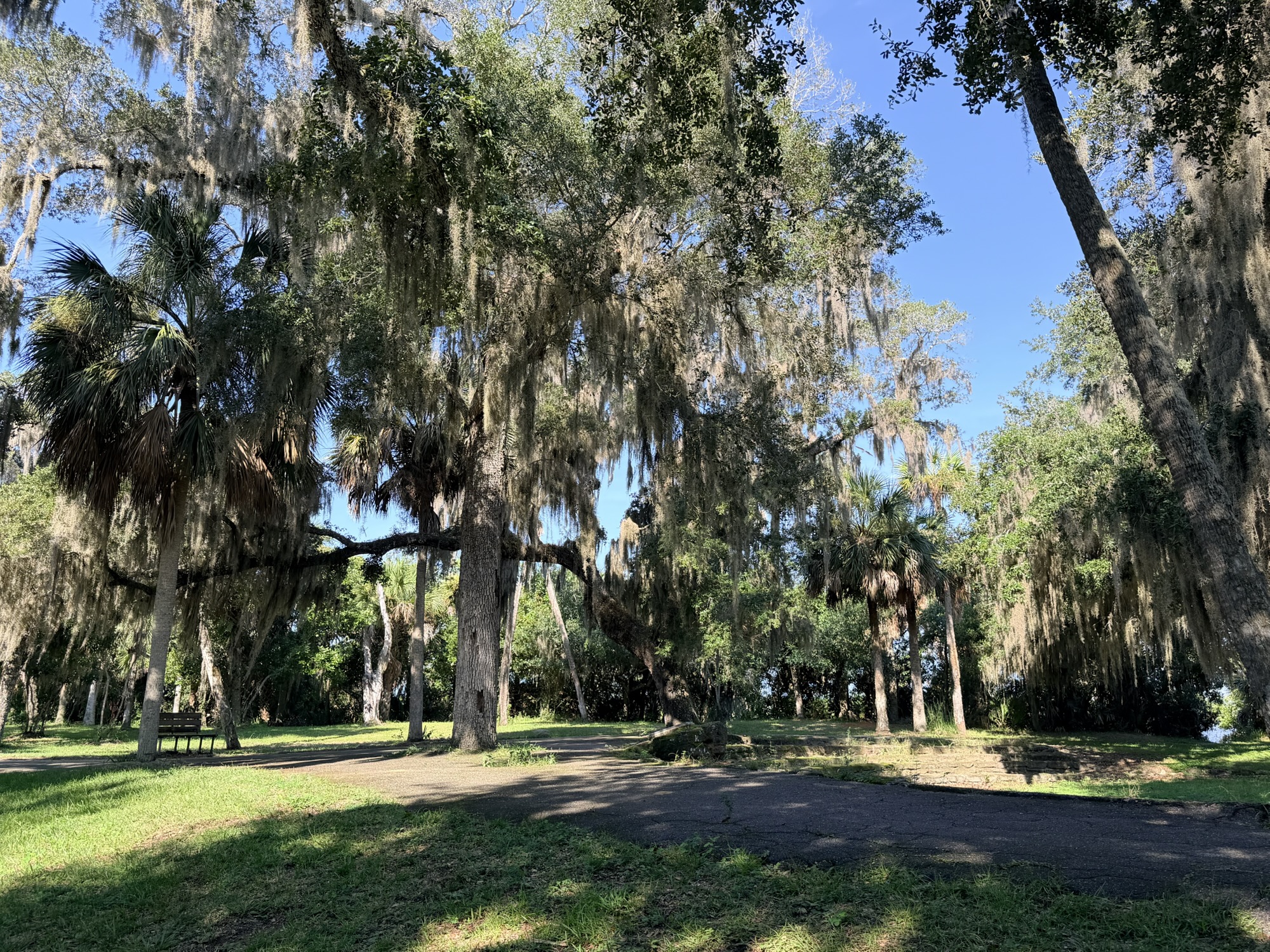
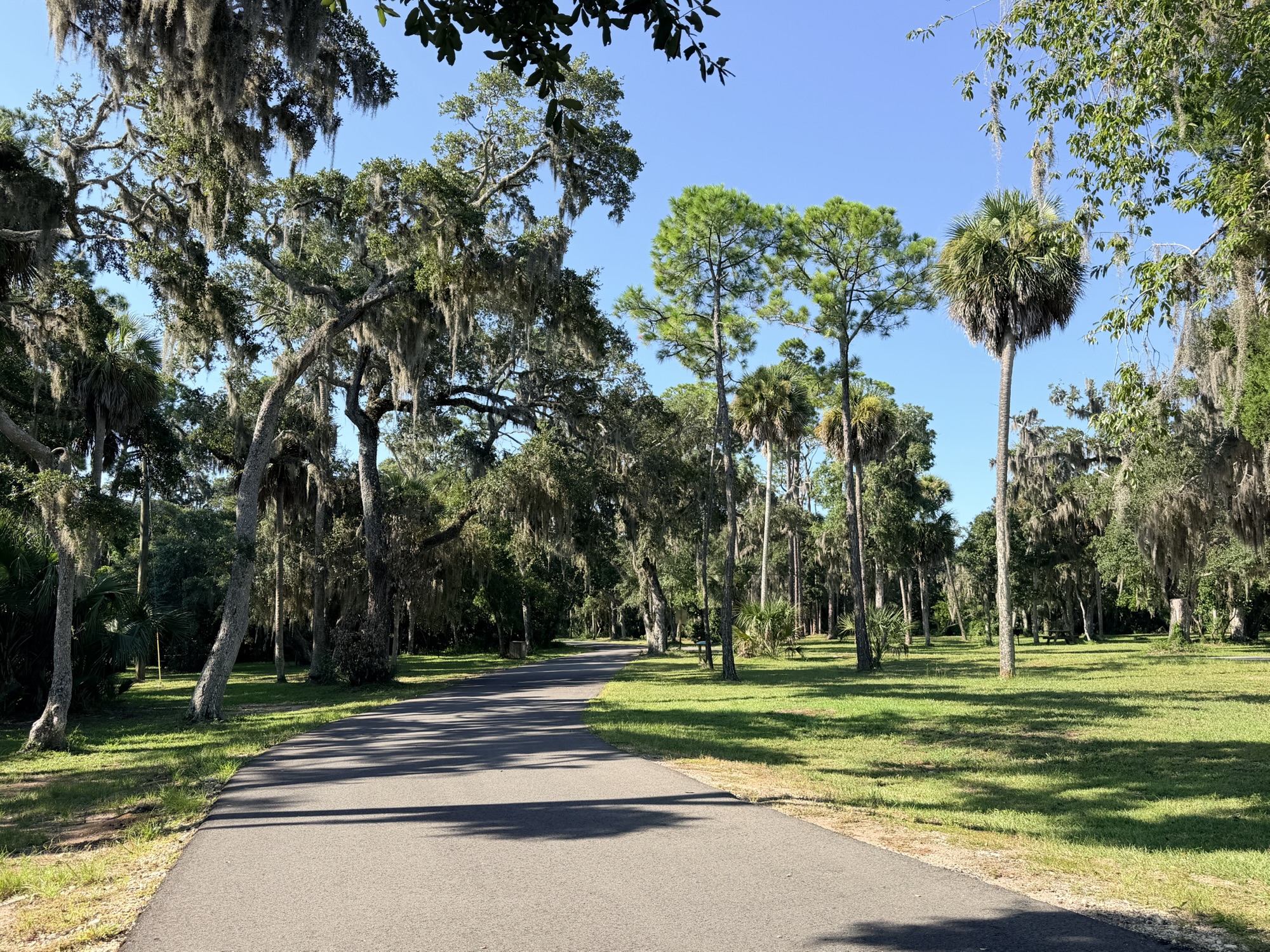
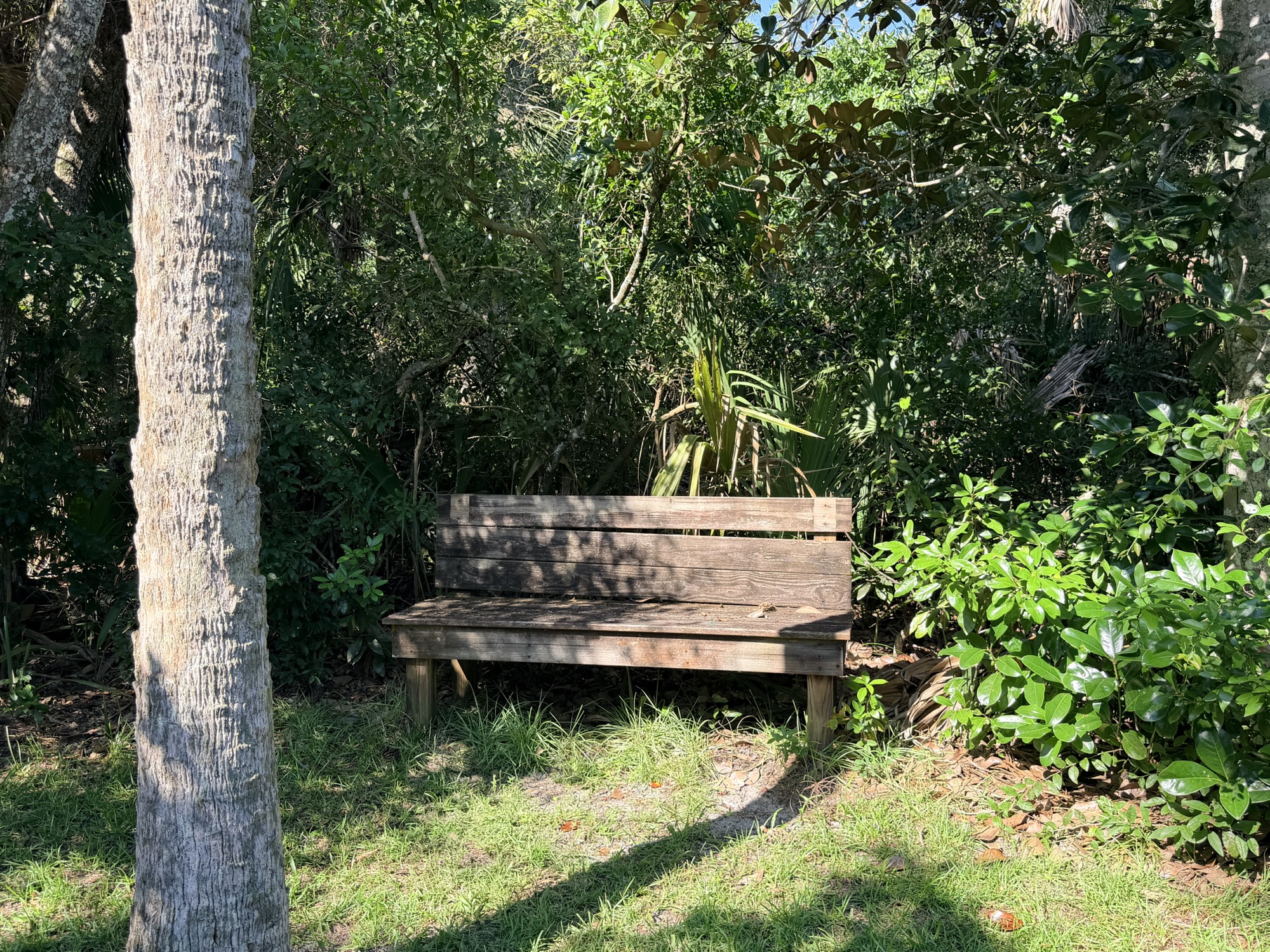
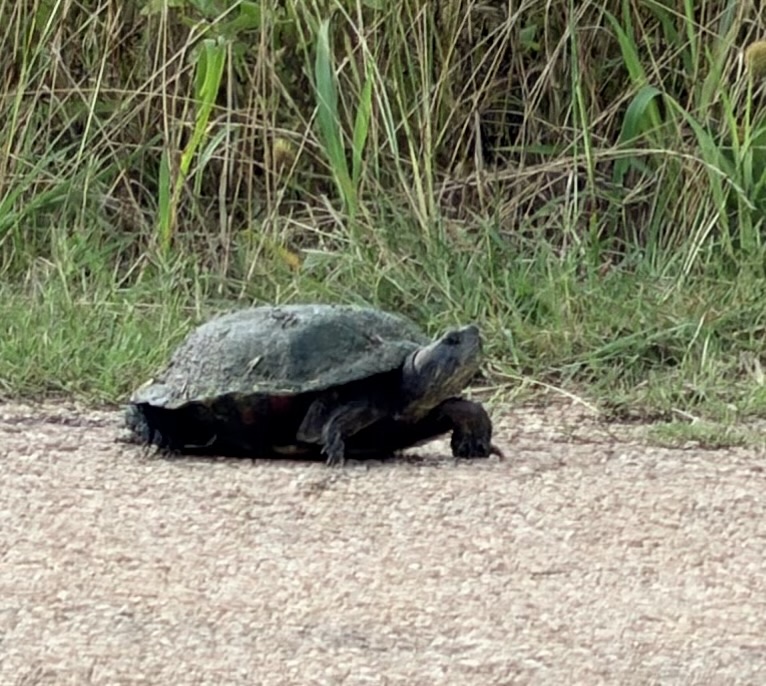
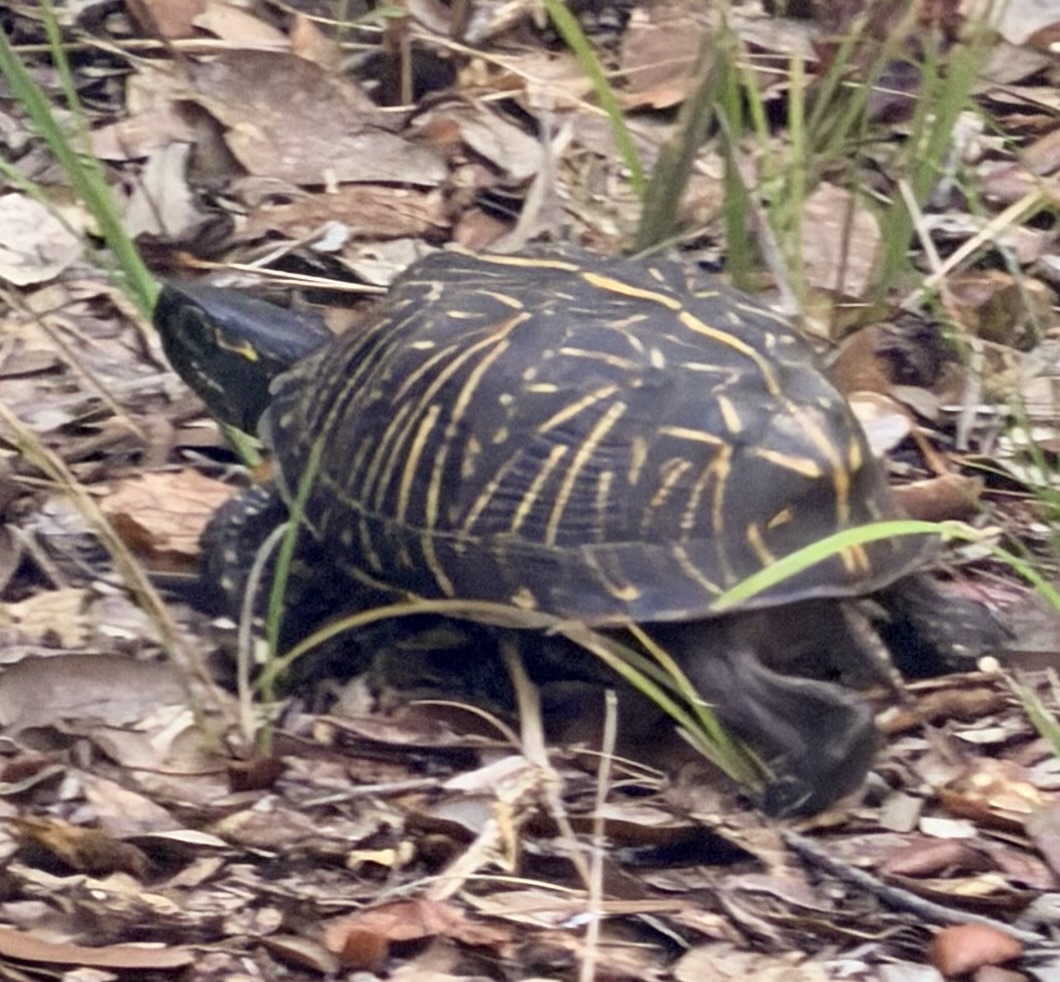
I started off back at Tomoka State Park, where I walked the mile-long paved path on the other side of the road from the main park. It’s very smooth, and can be enjoyed by people with many disabilities in addition to walkers and cyclists. I’d have enjoyed it much more if there were fewer motorcycles on the road (it must have been a special touring day). There was a never-ending parade of buzzy small planes, too. But it was shady, and I saw a beautiful box turtle. Not many birds.
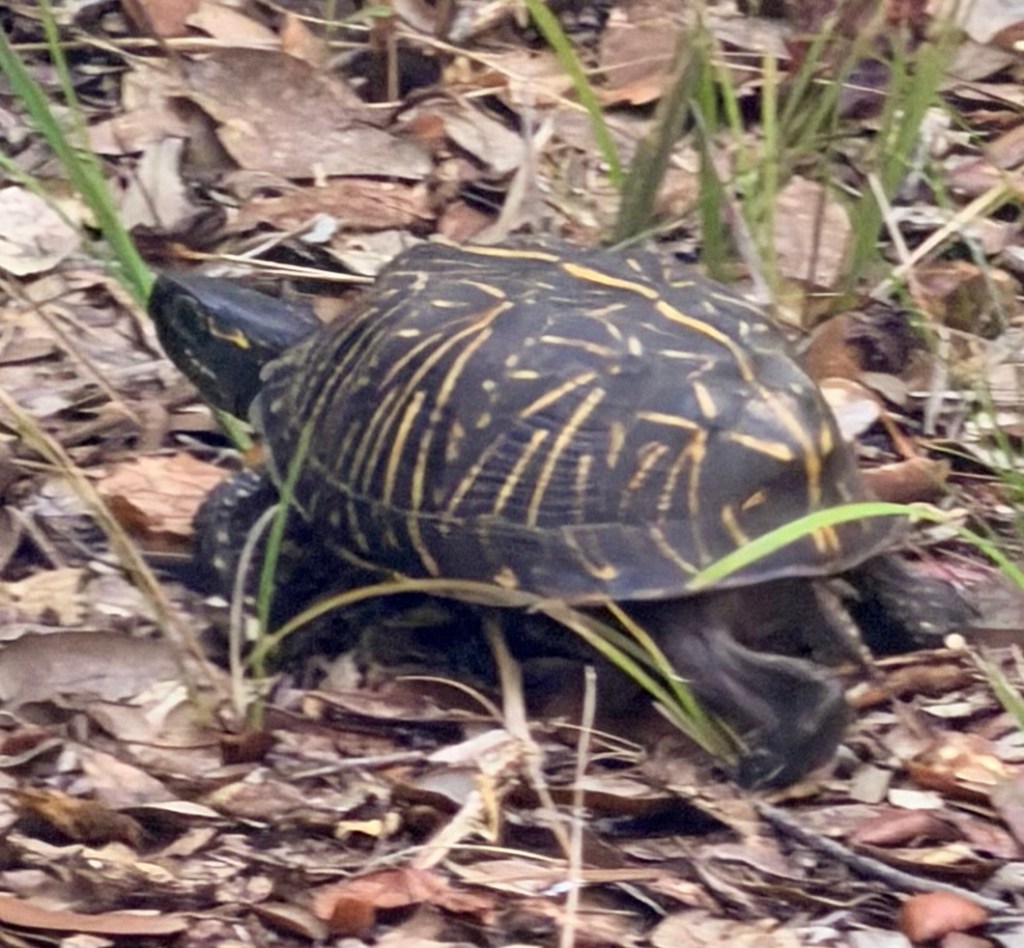
Box turtle!

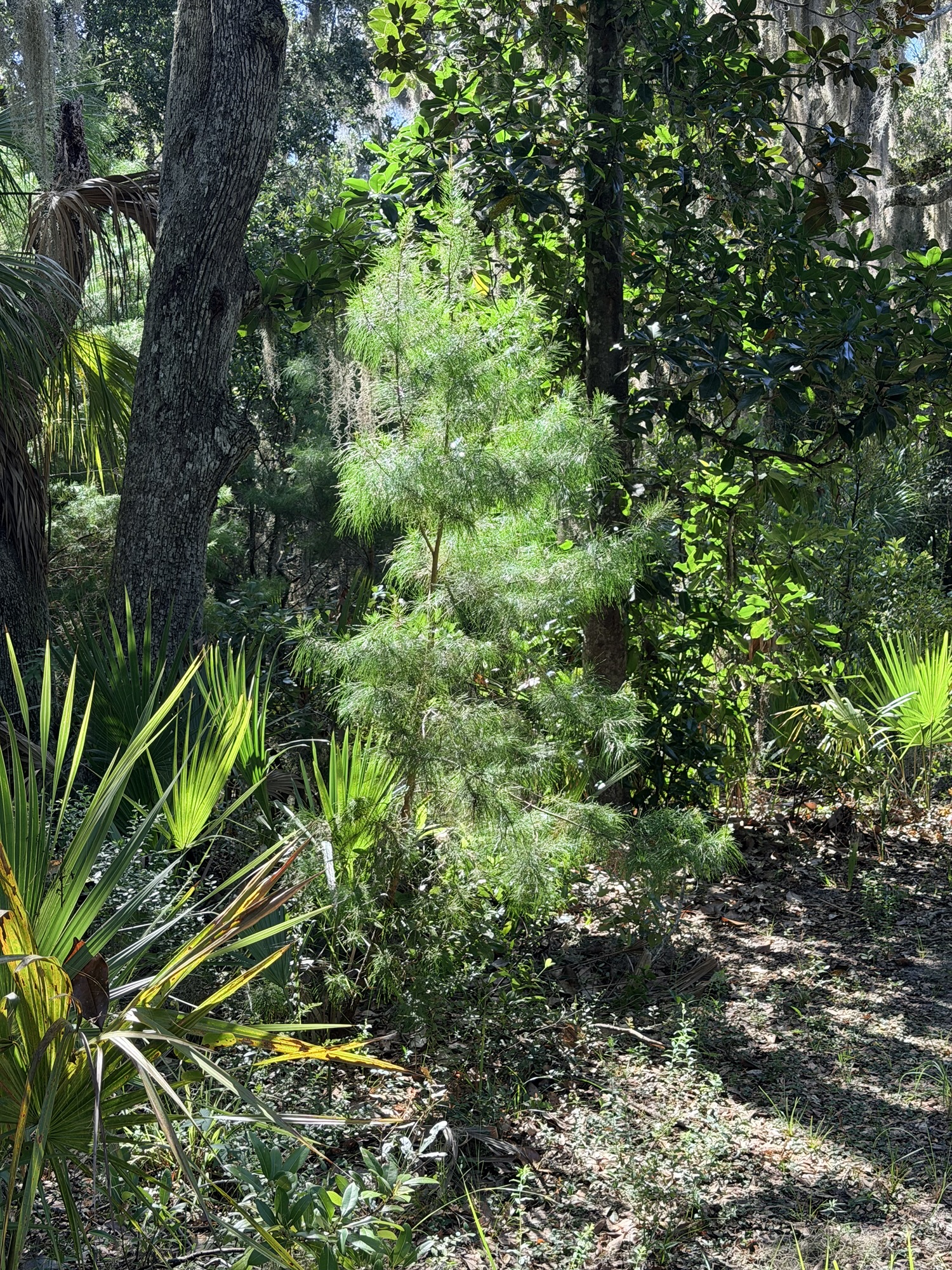
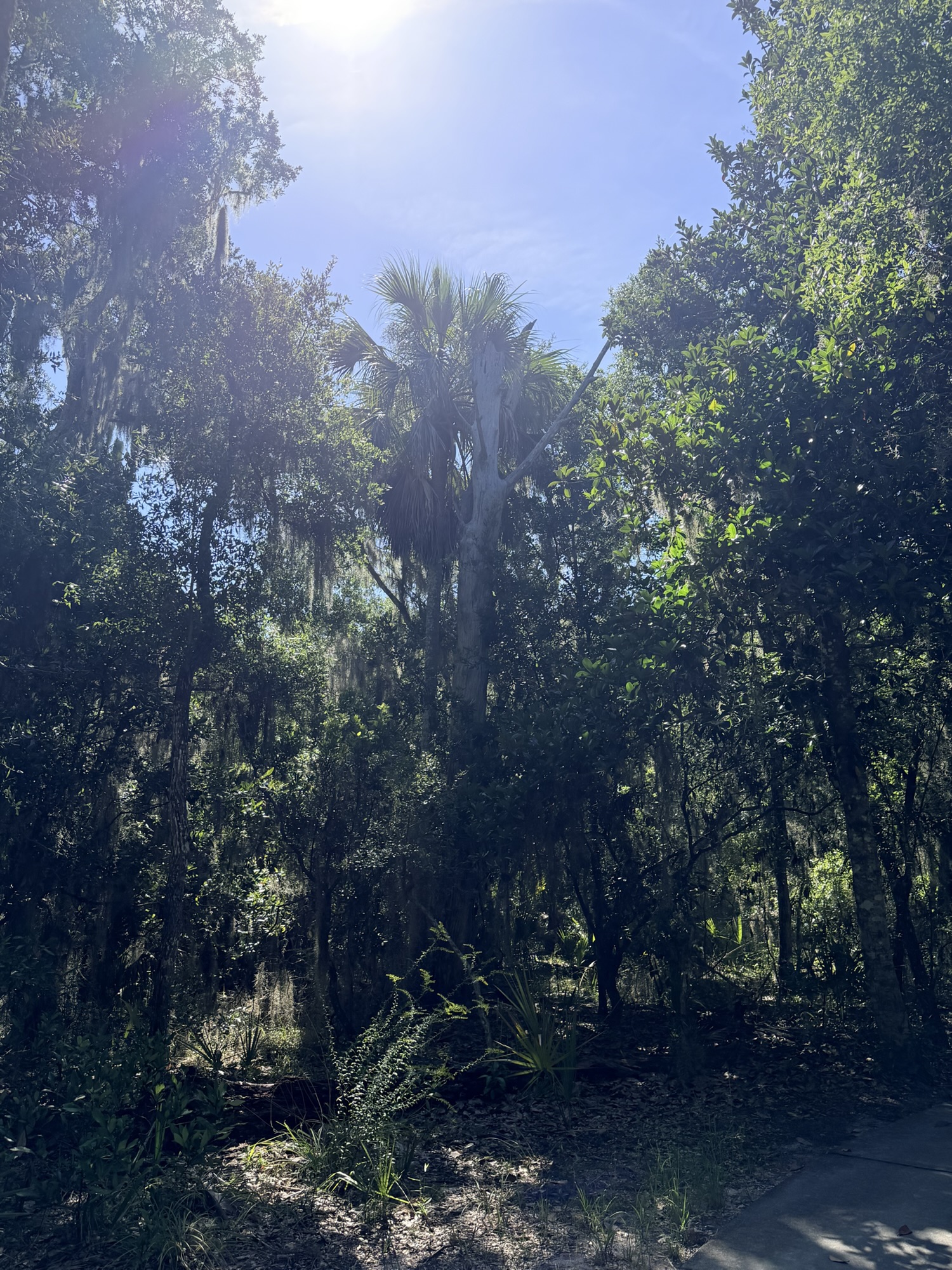
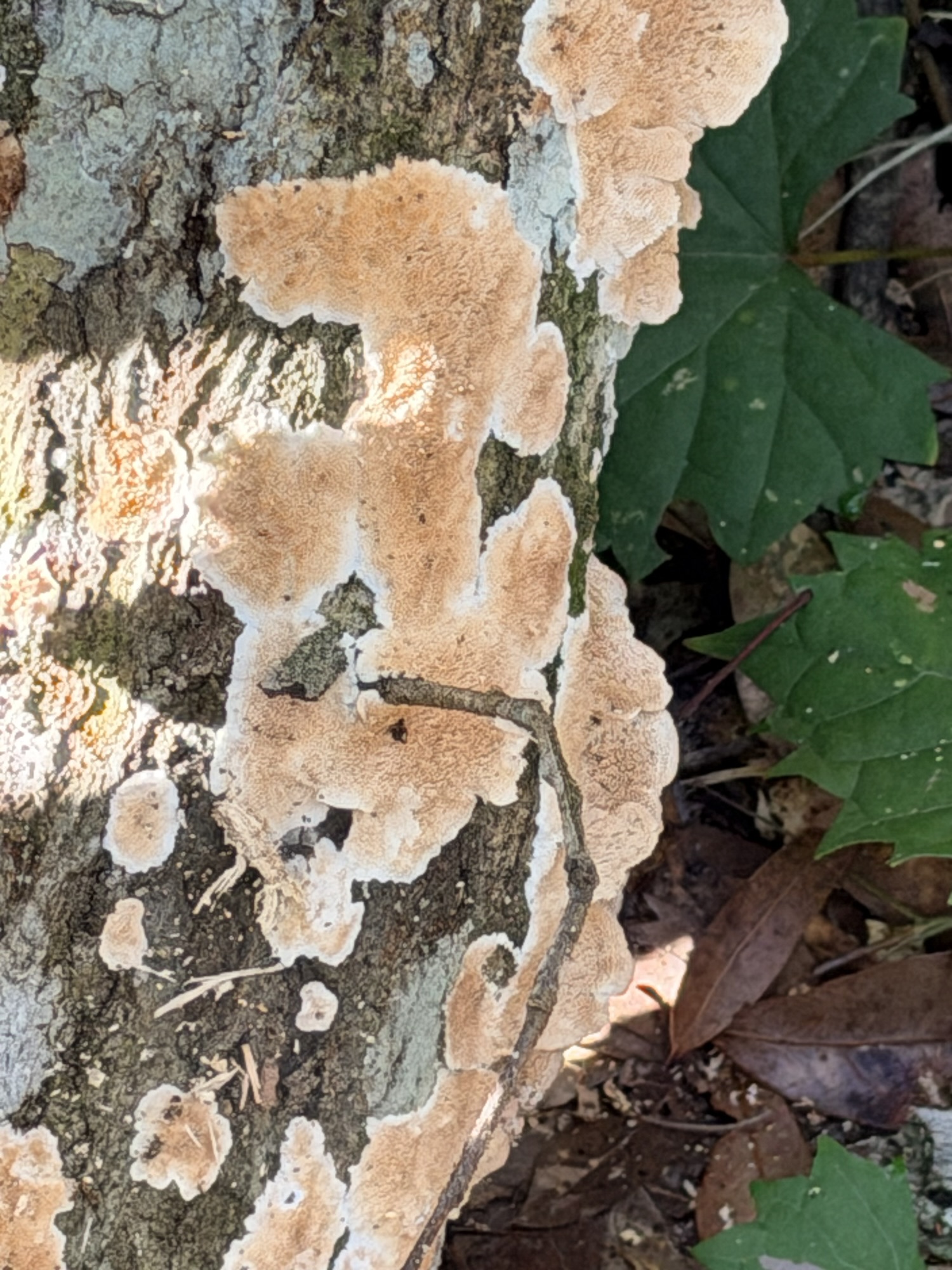
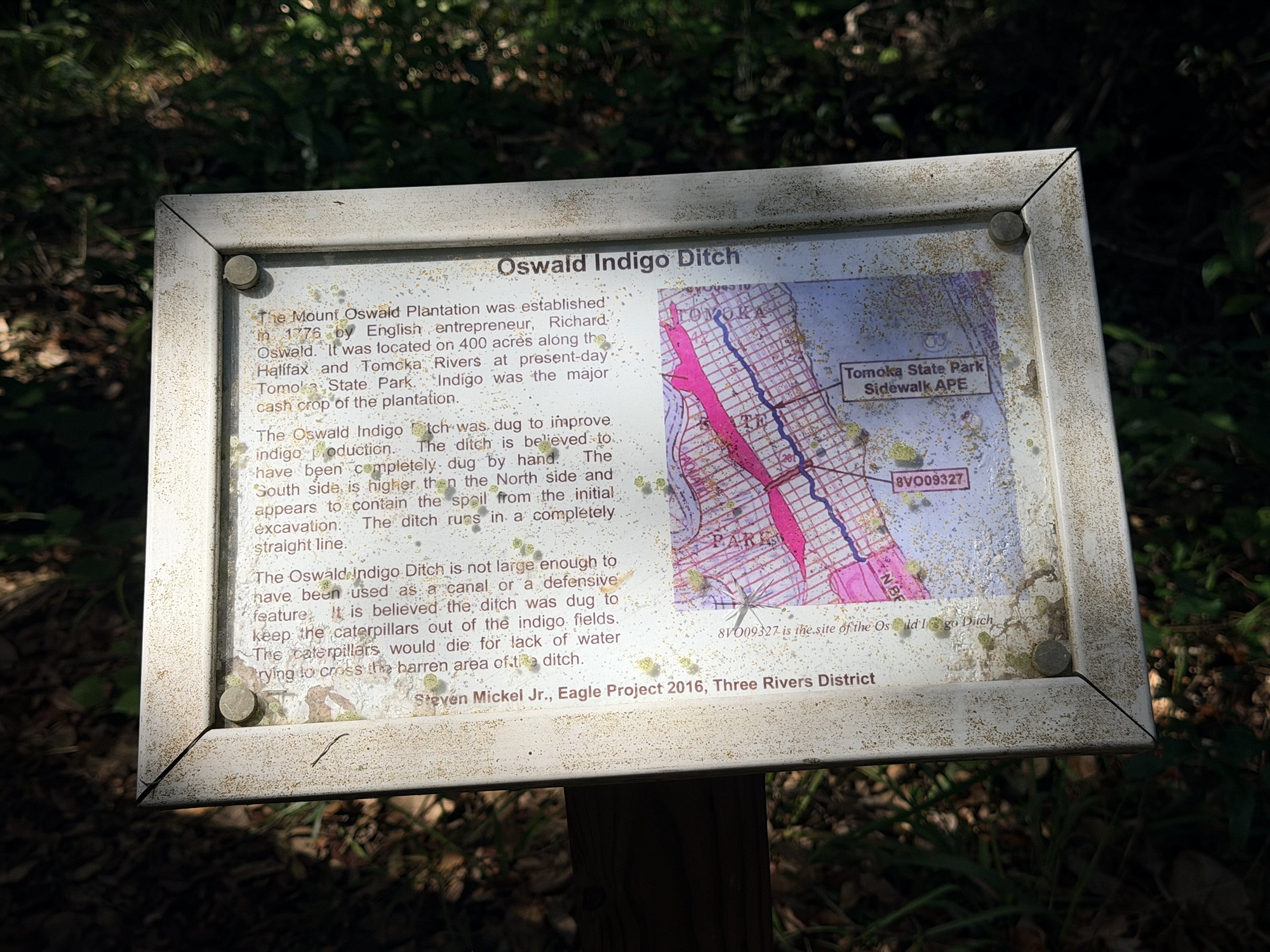
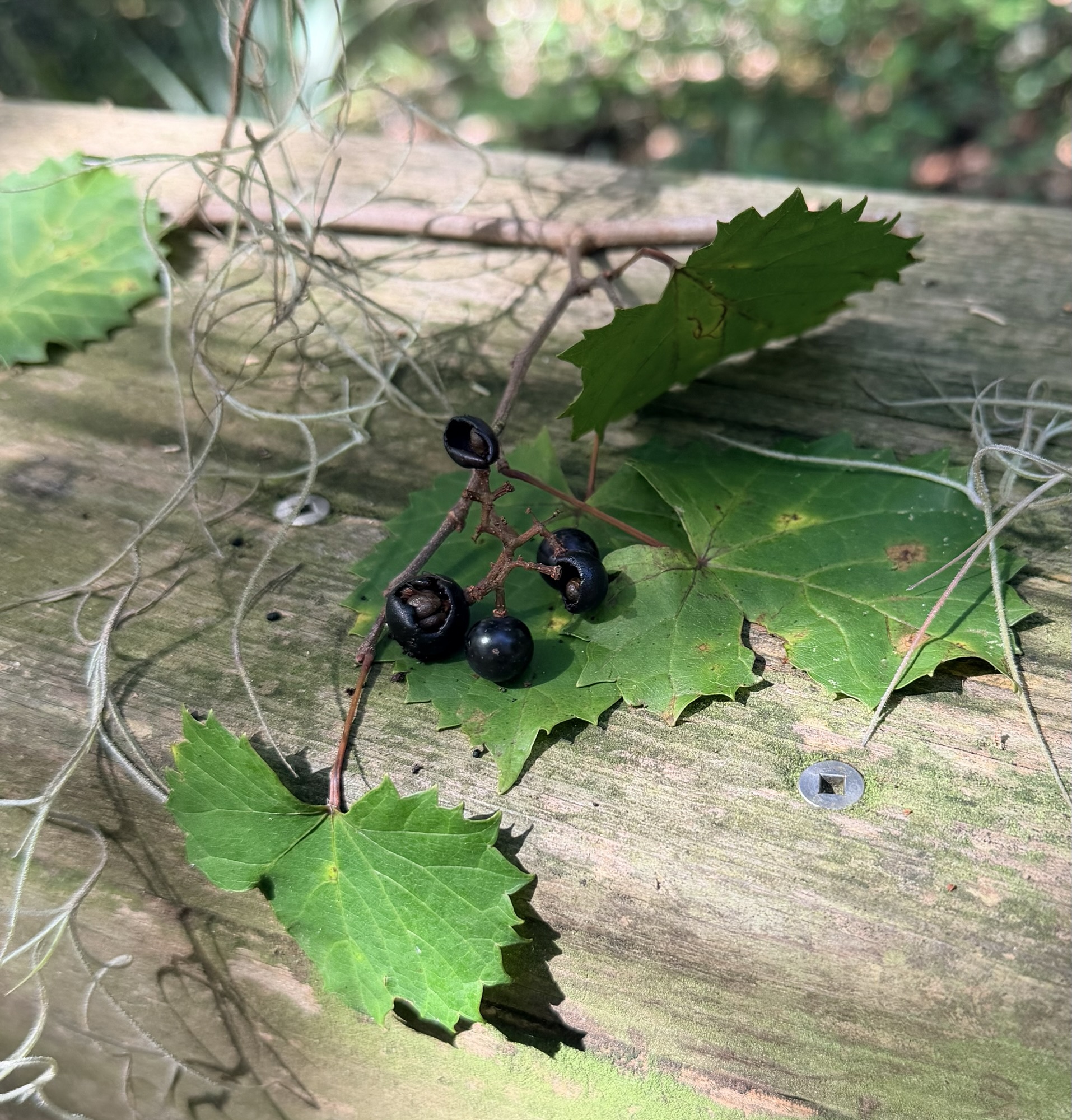
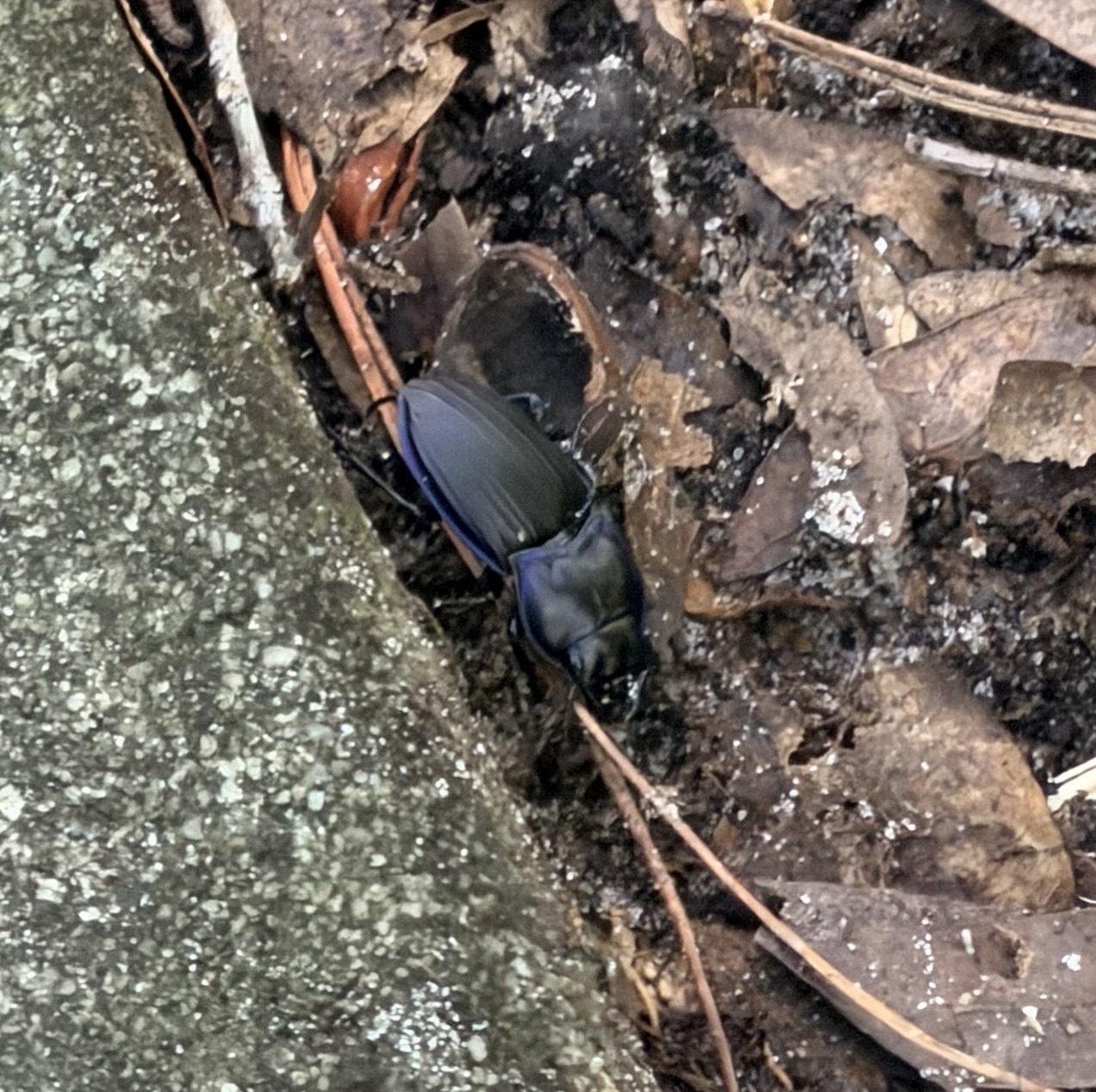
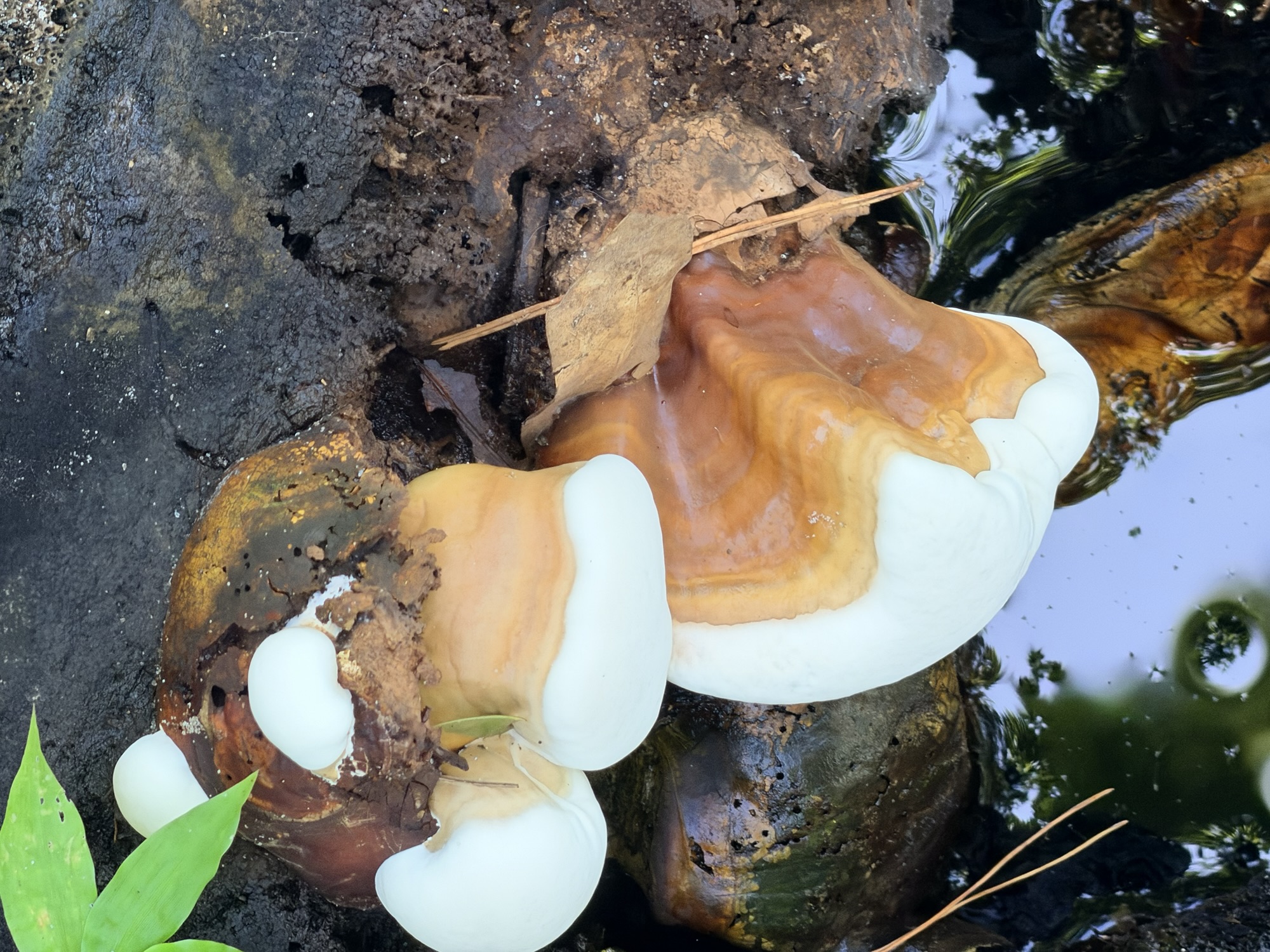
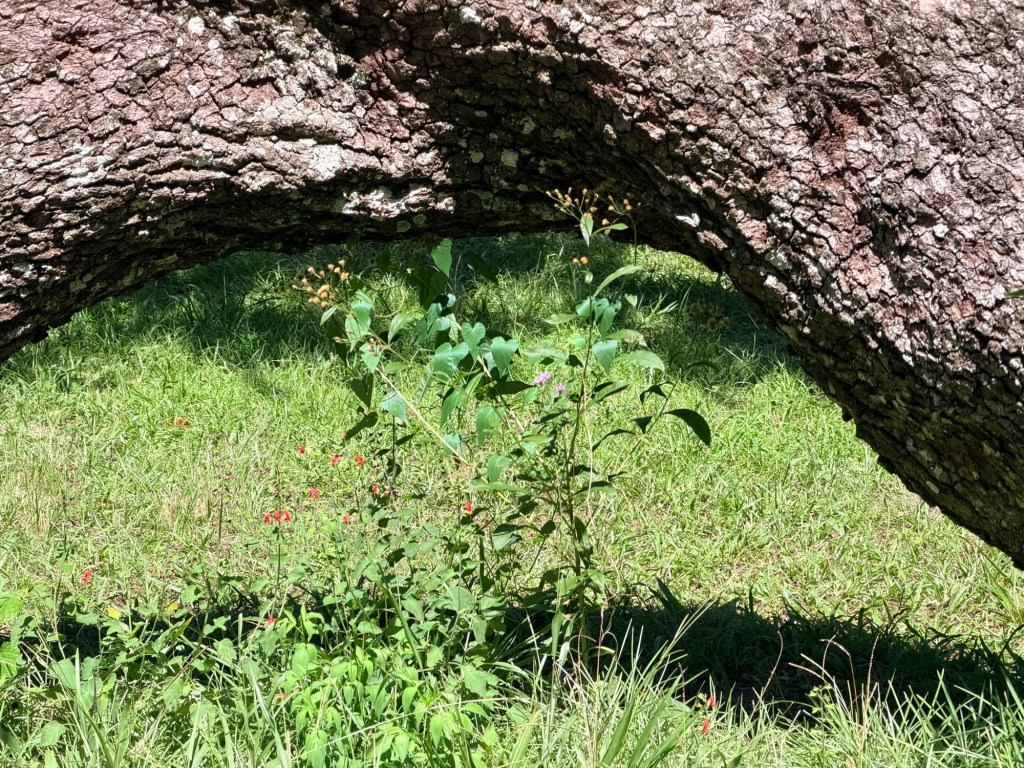
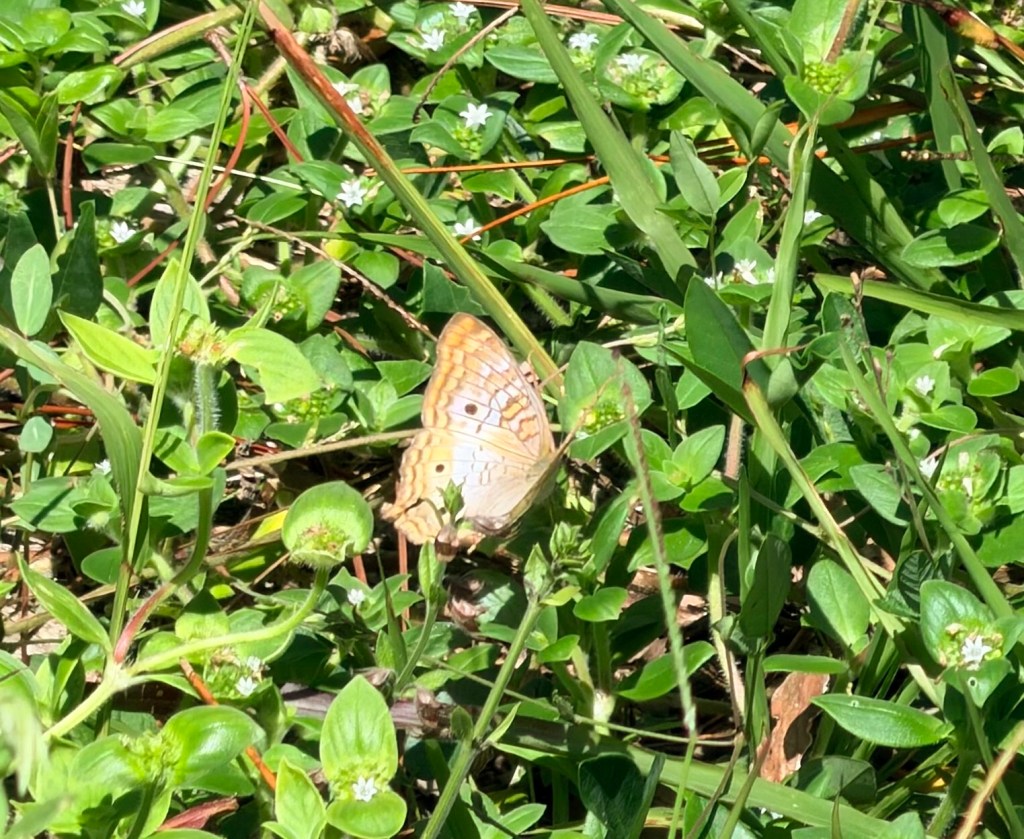
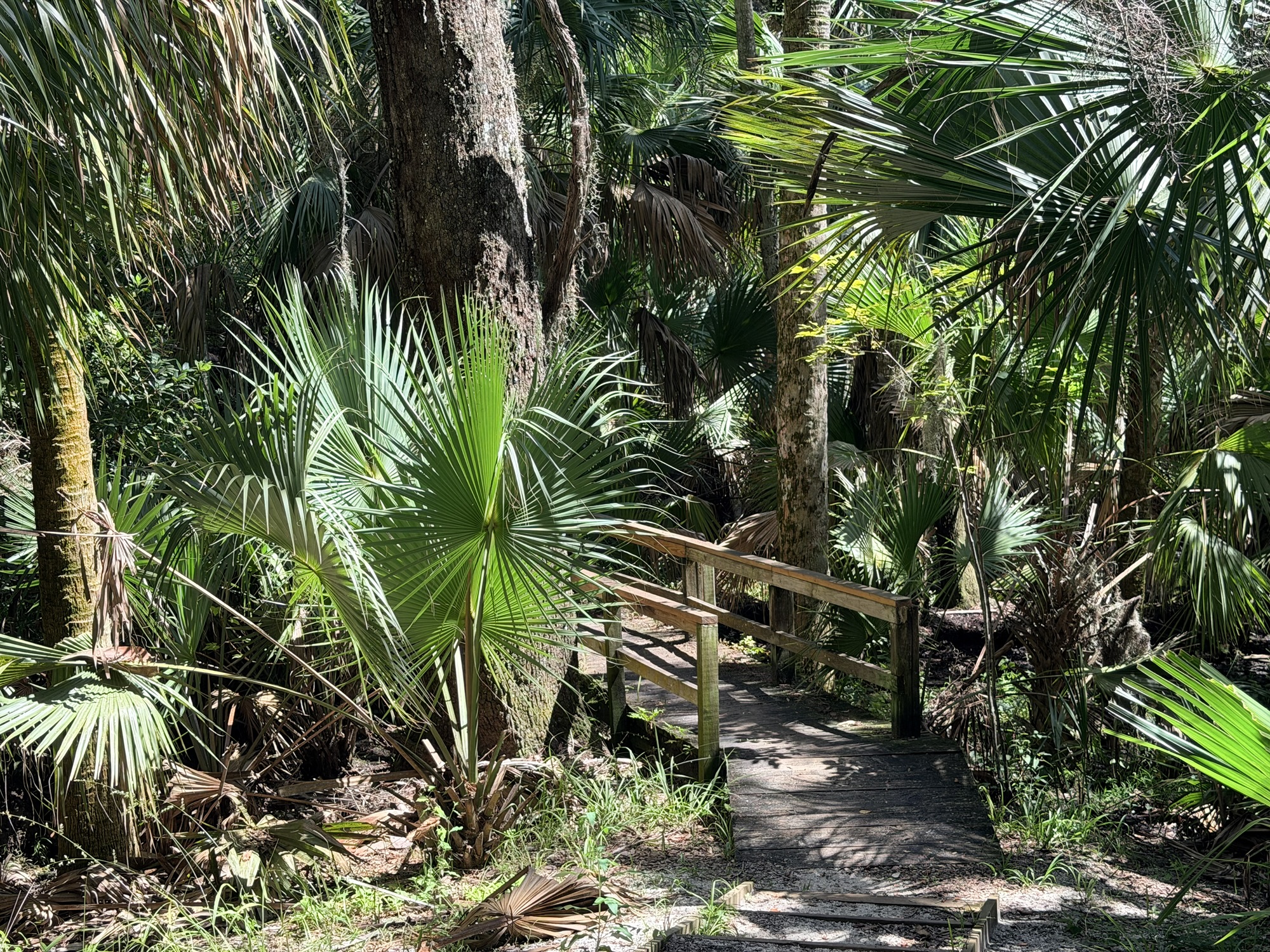
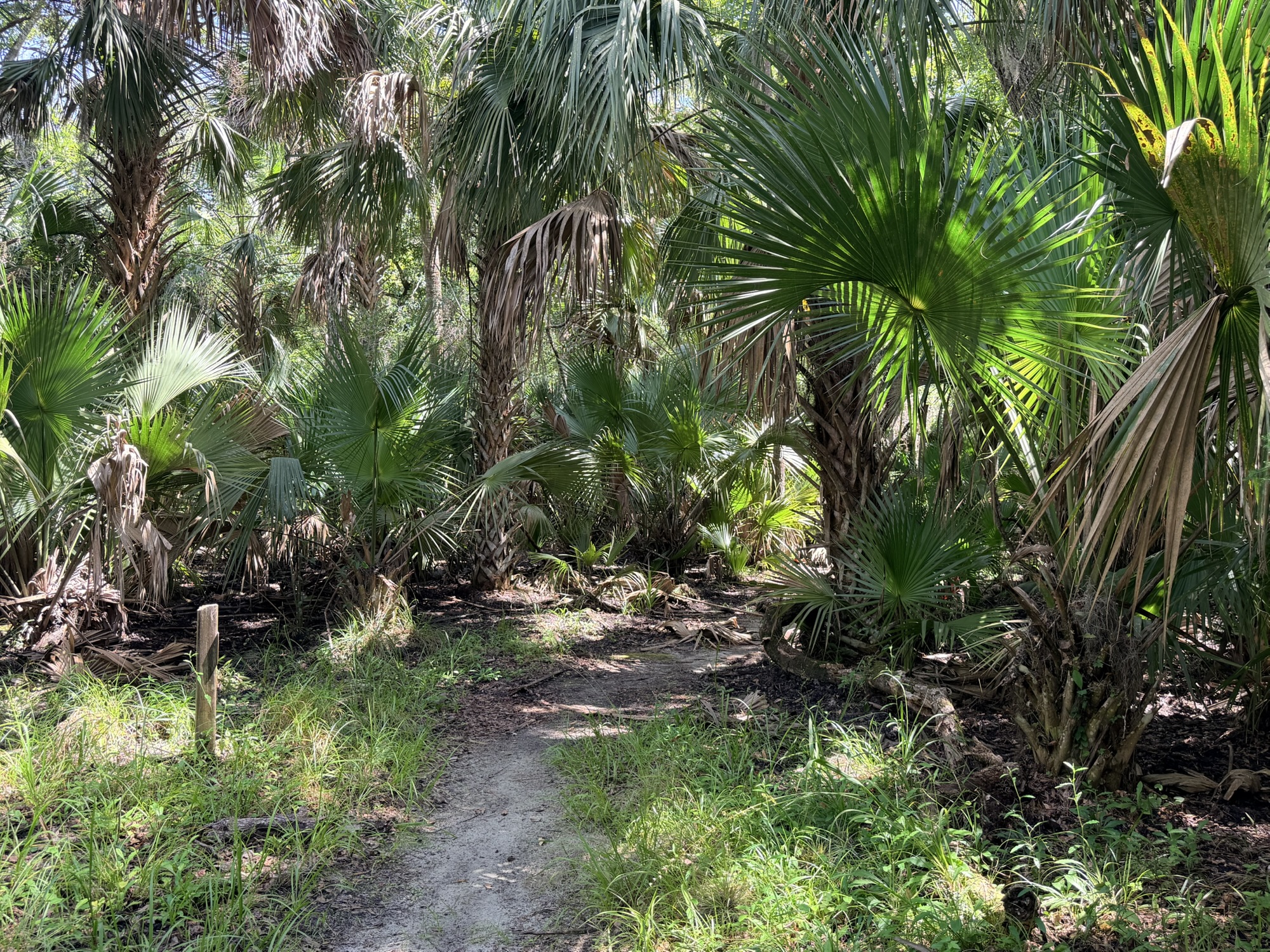
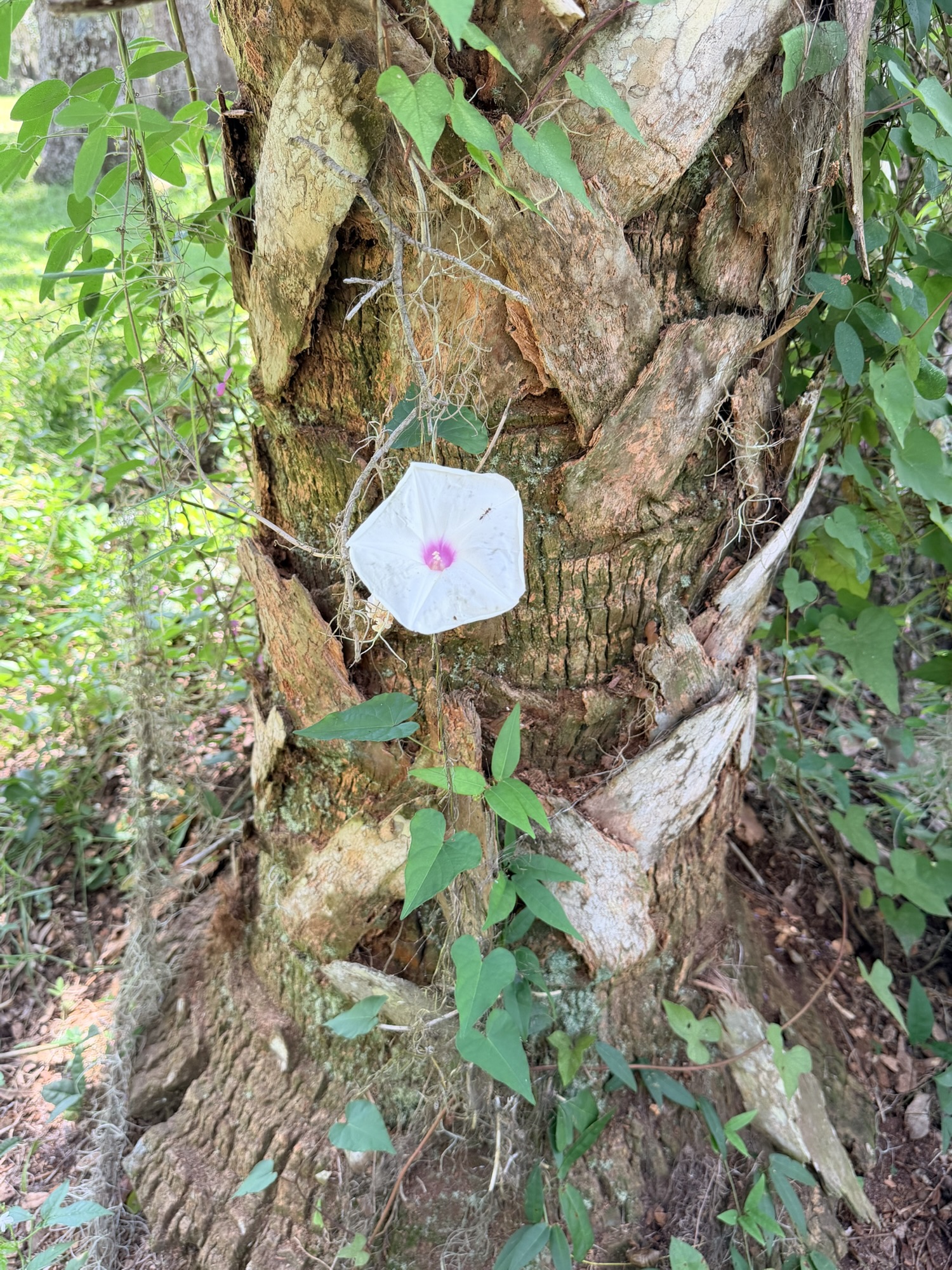
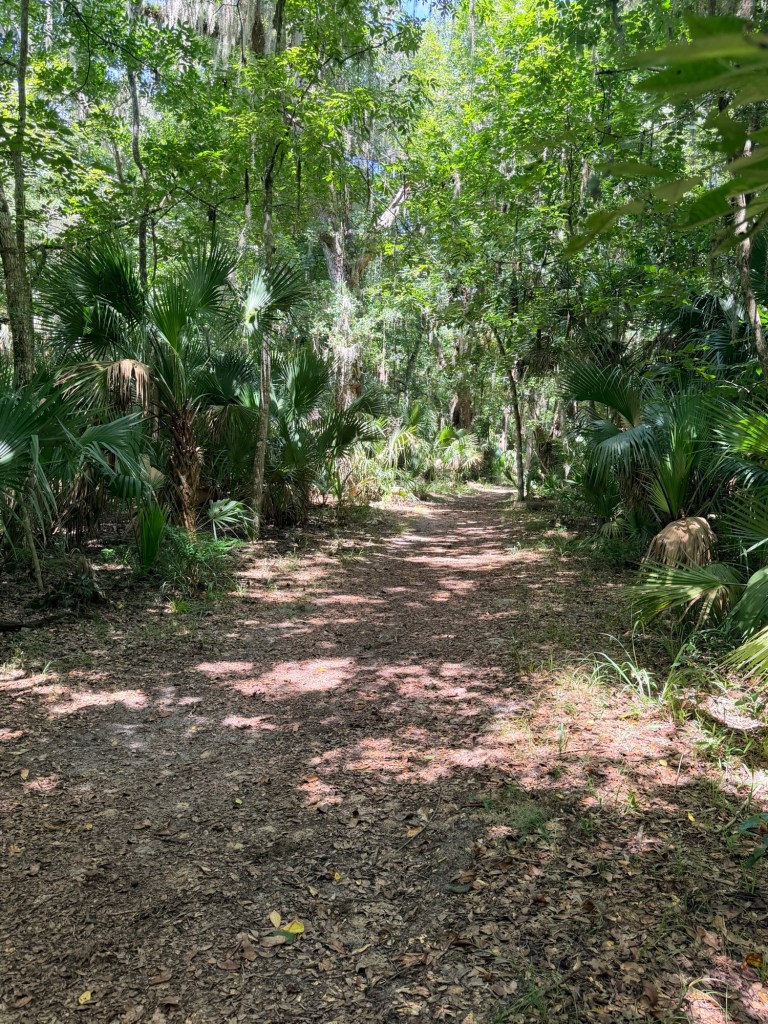
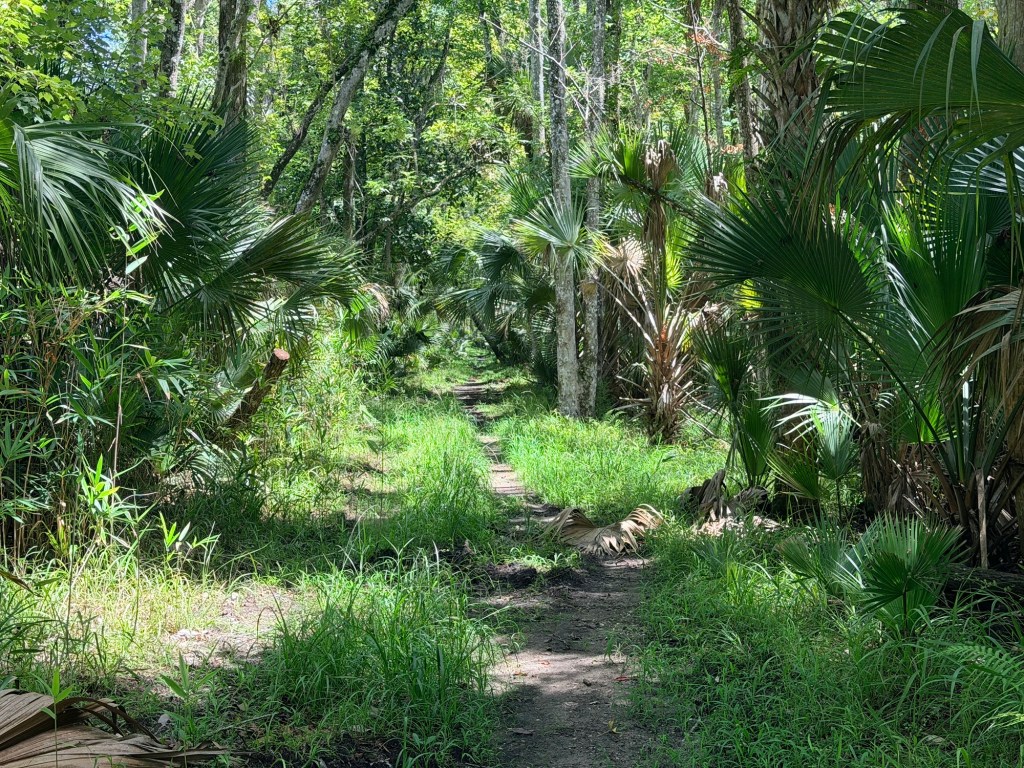
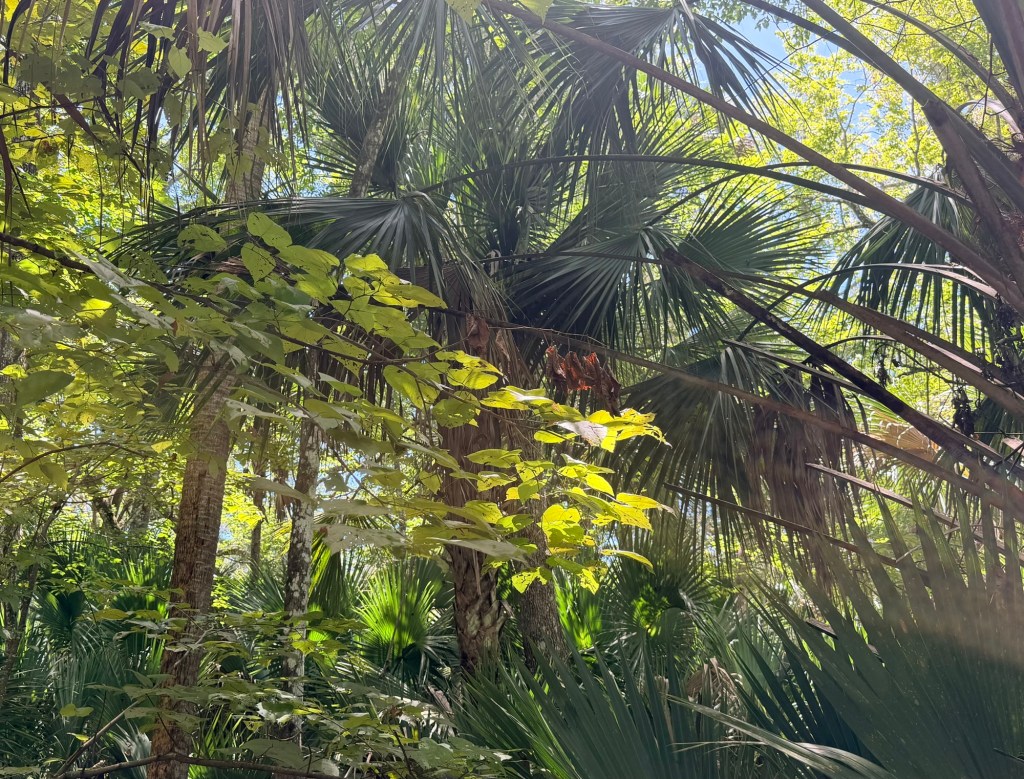
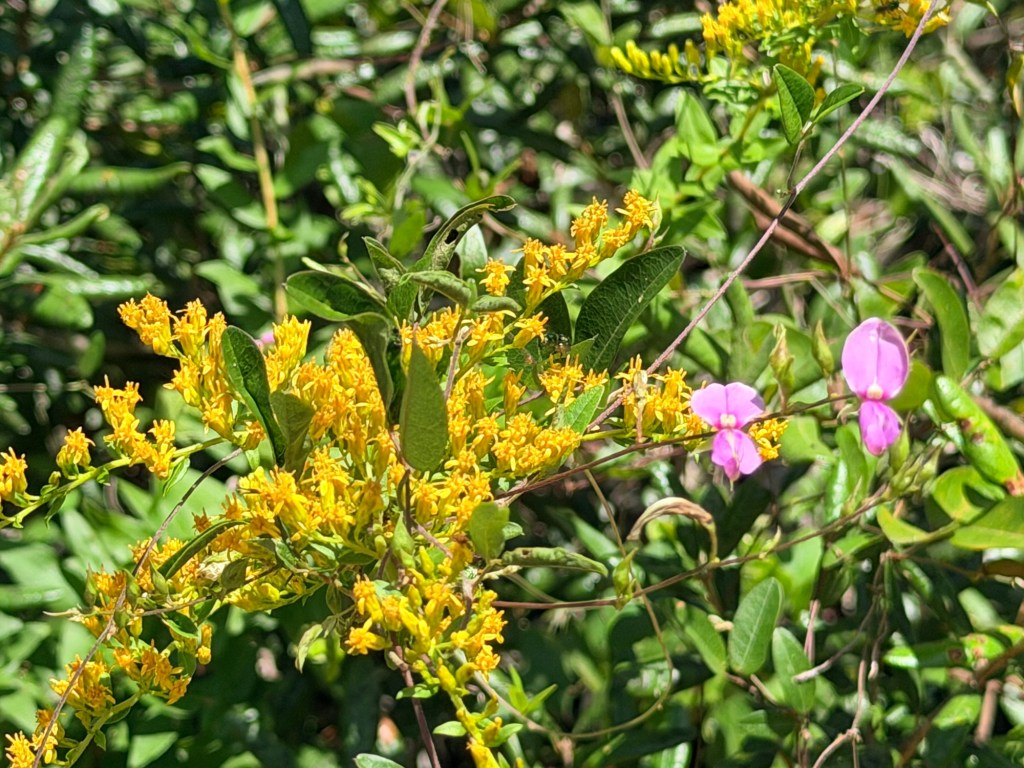
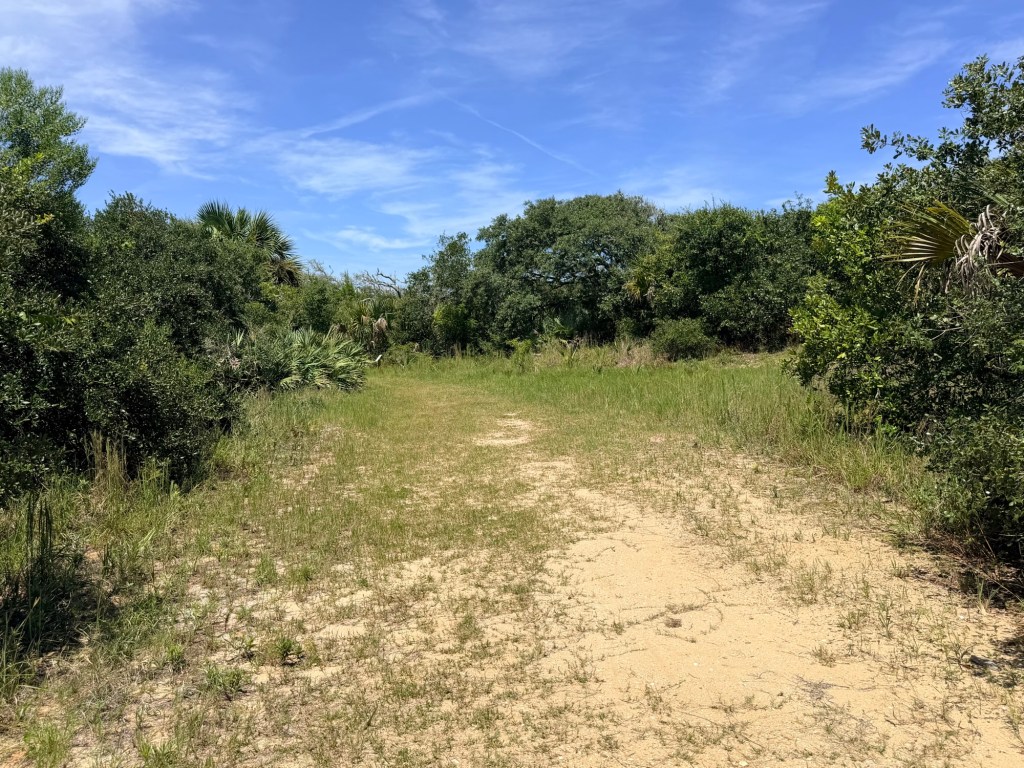
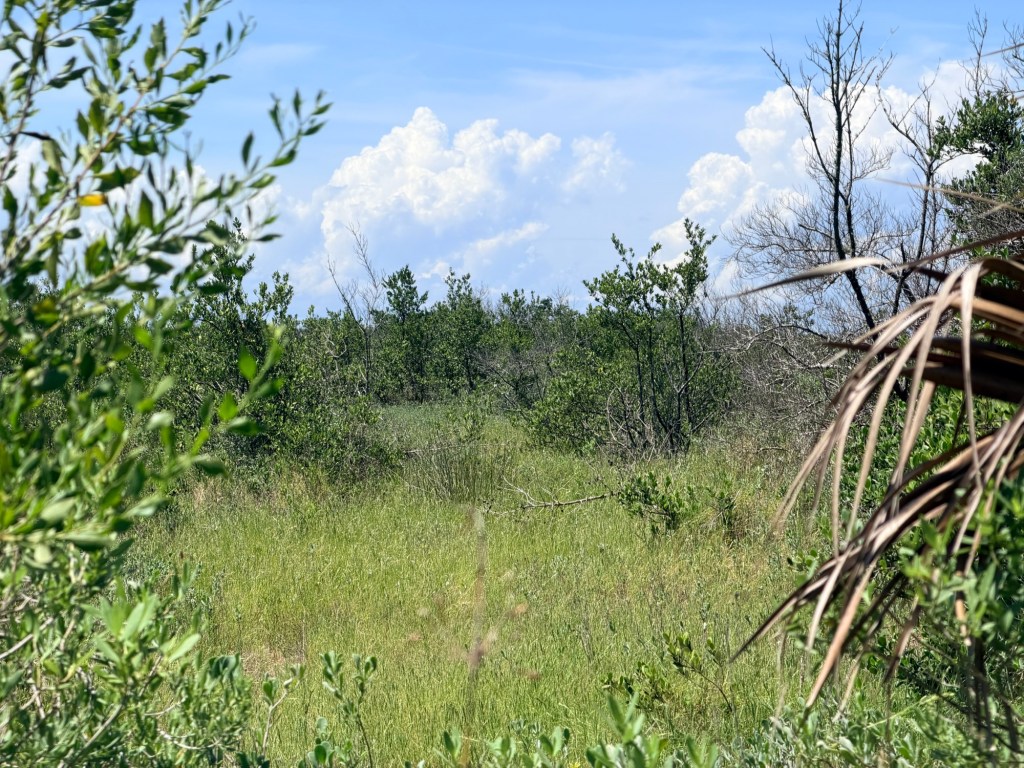
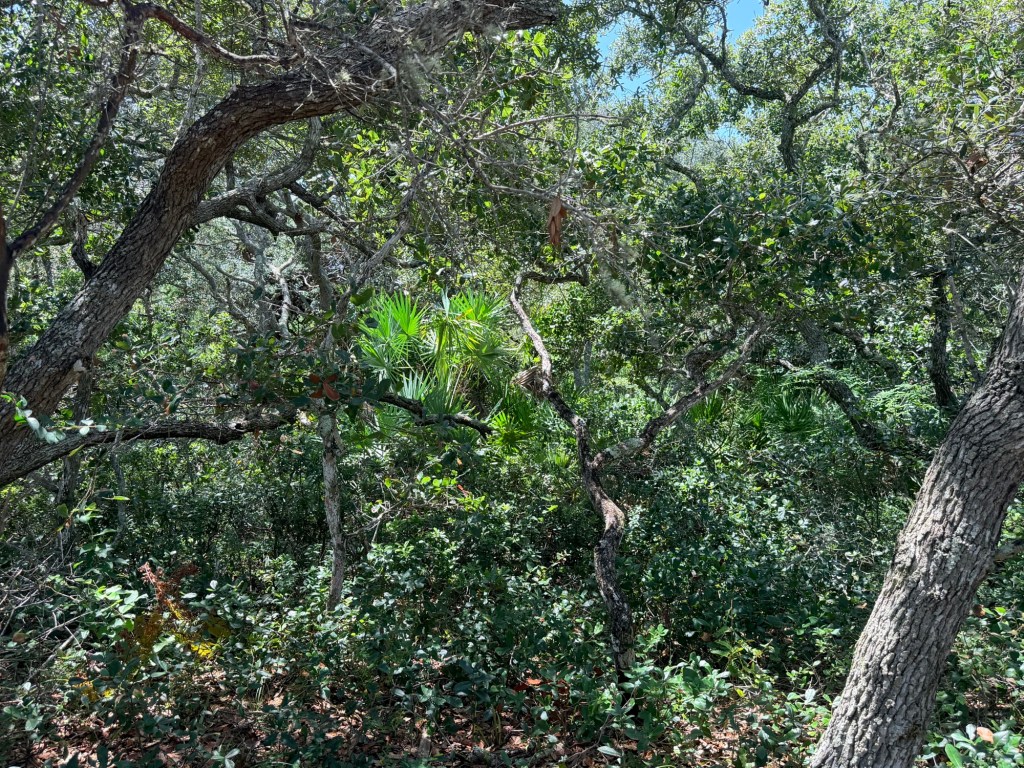
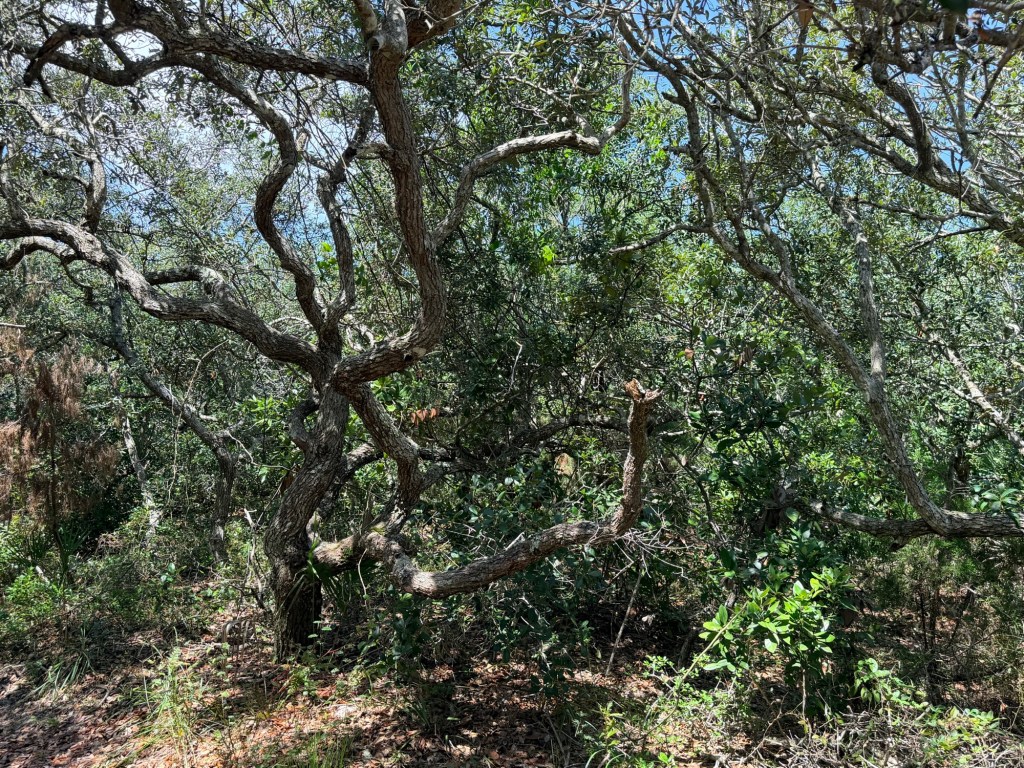
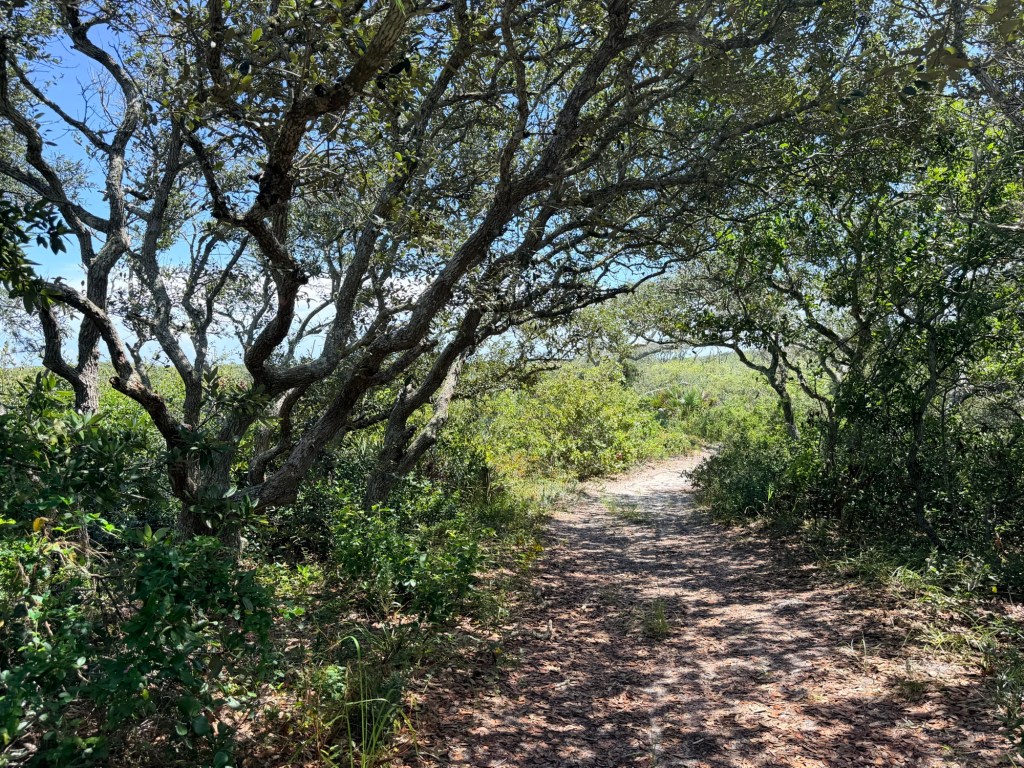
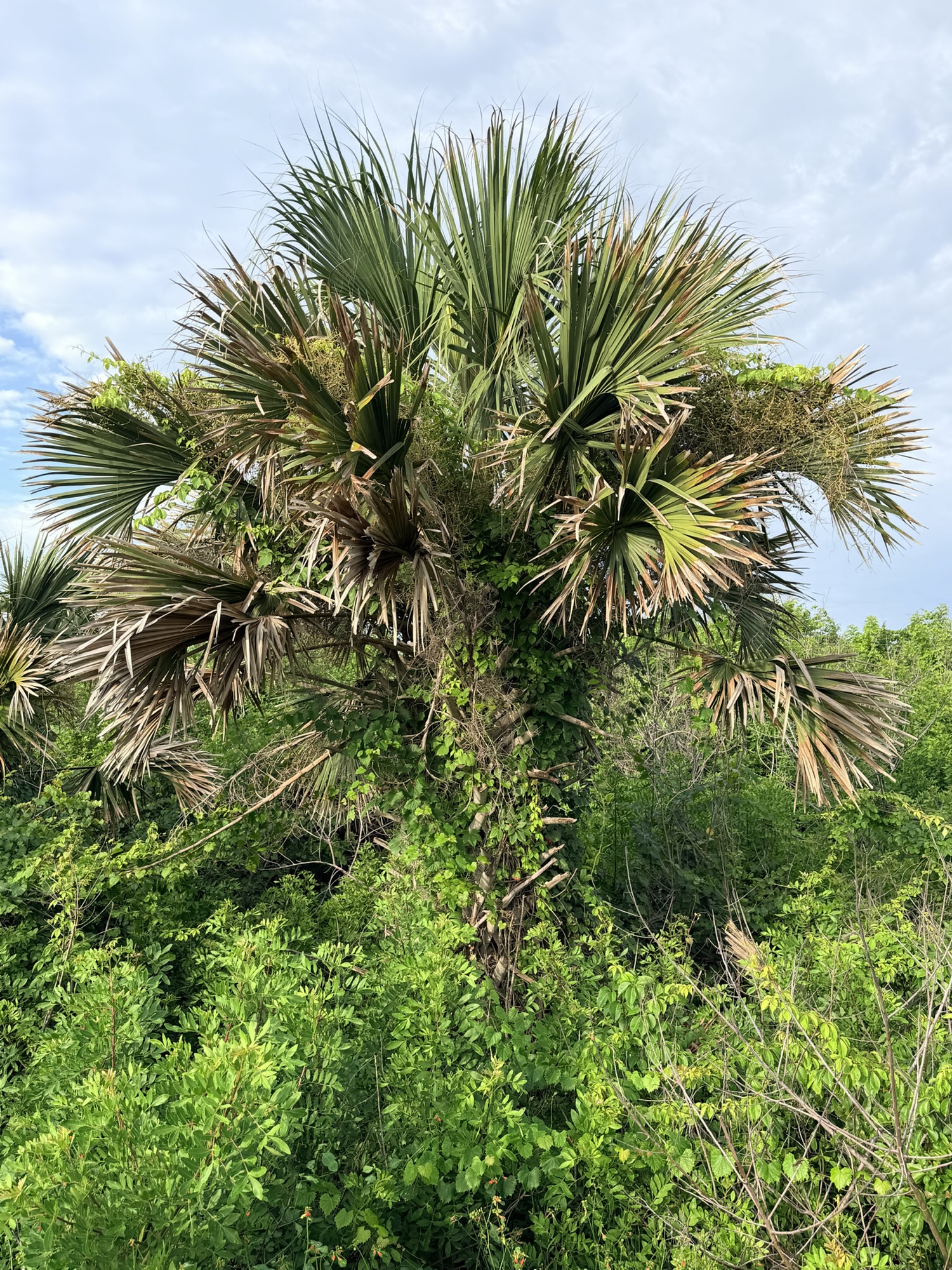
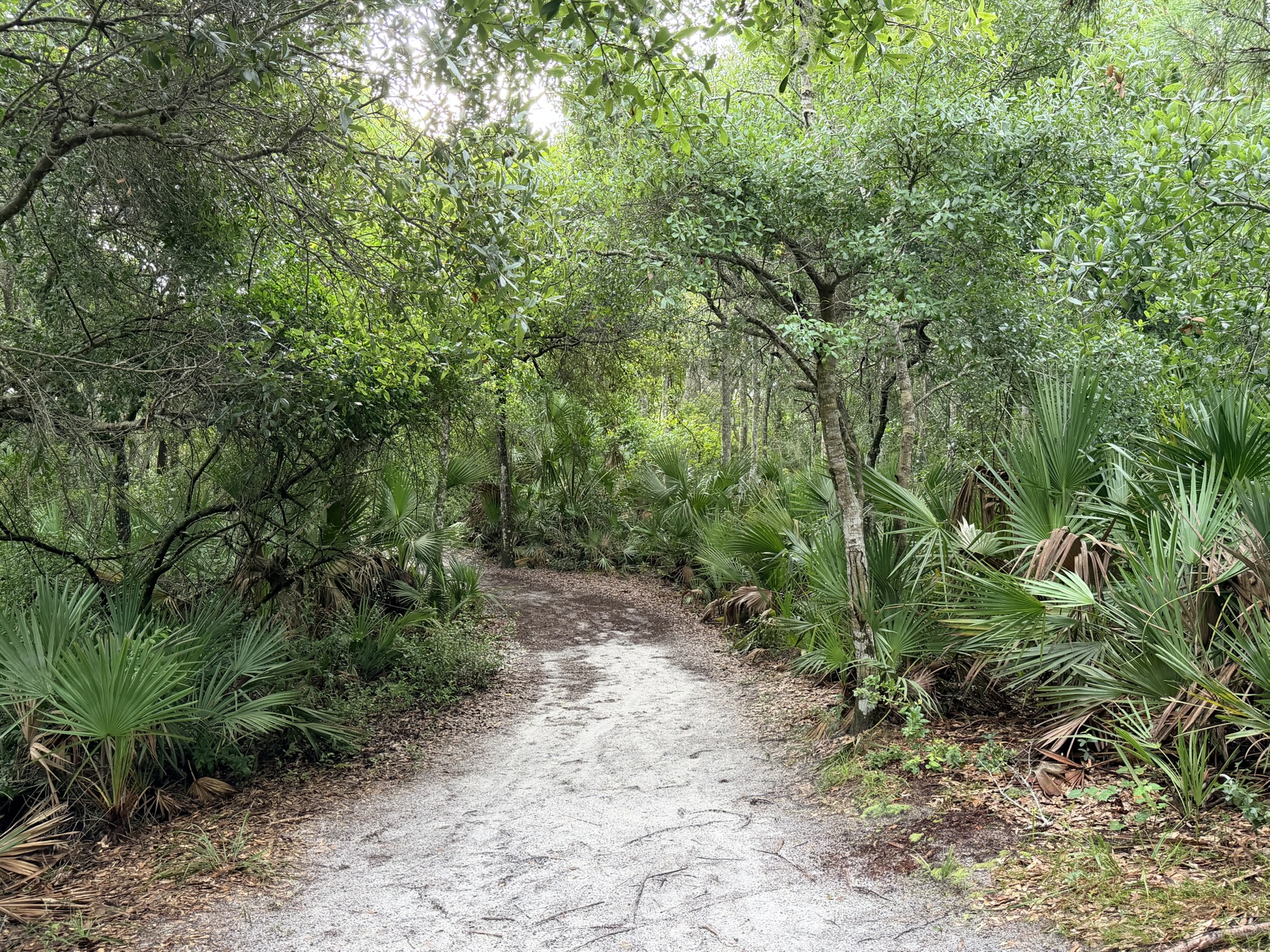
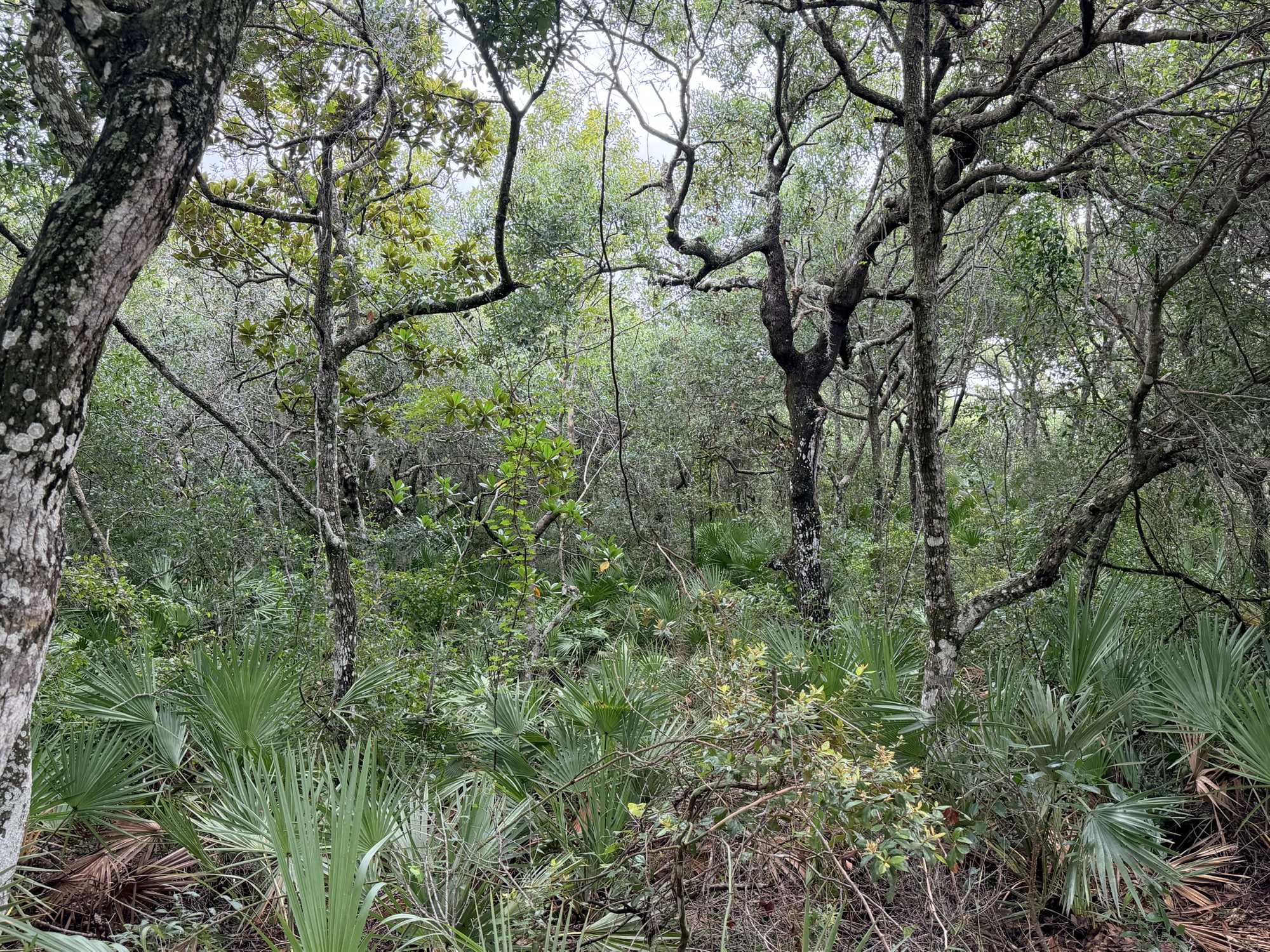
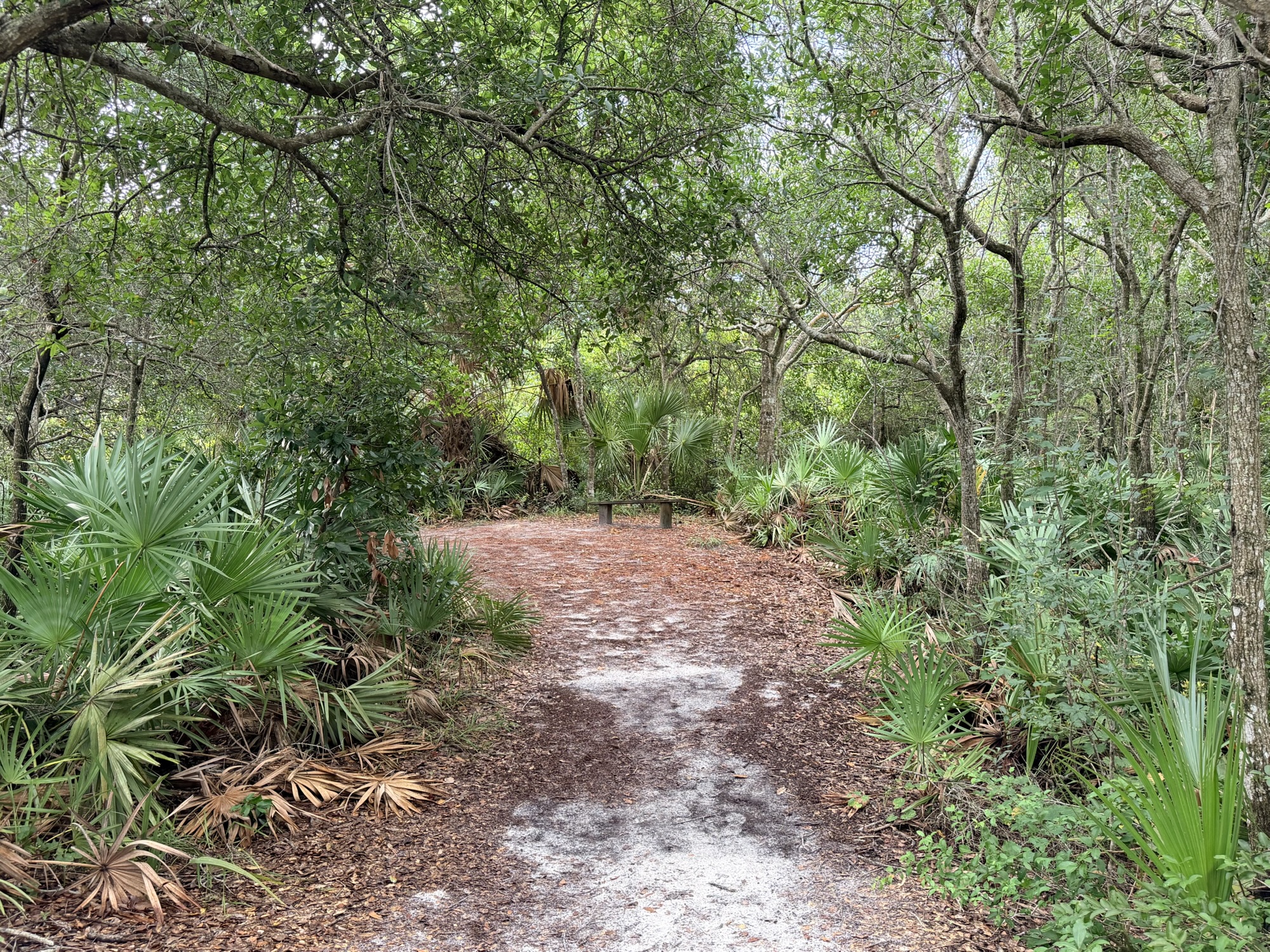
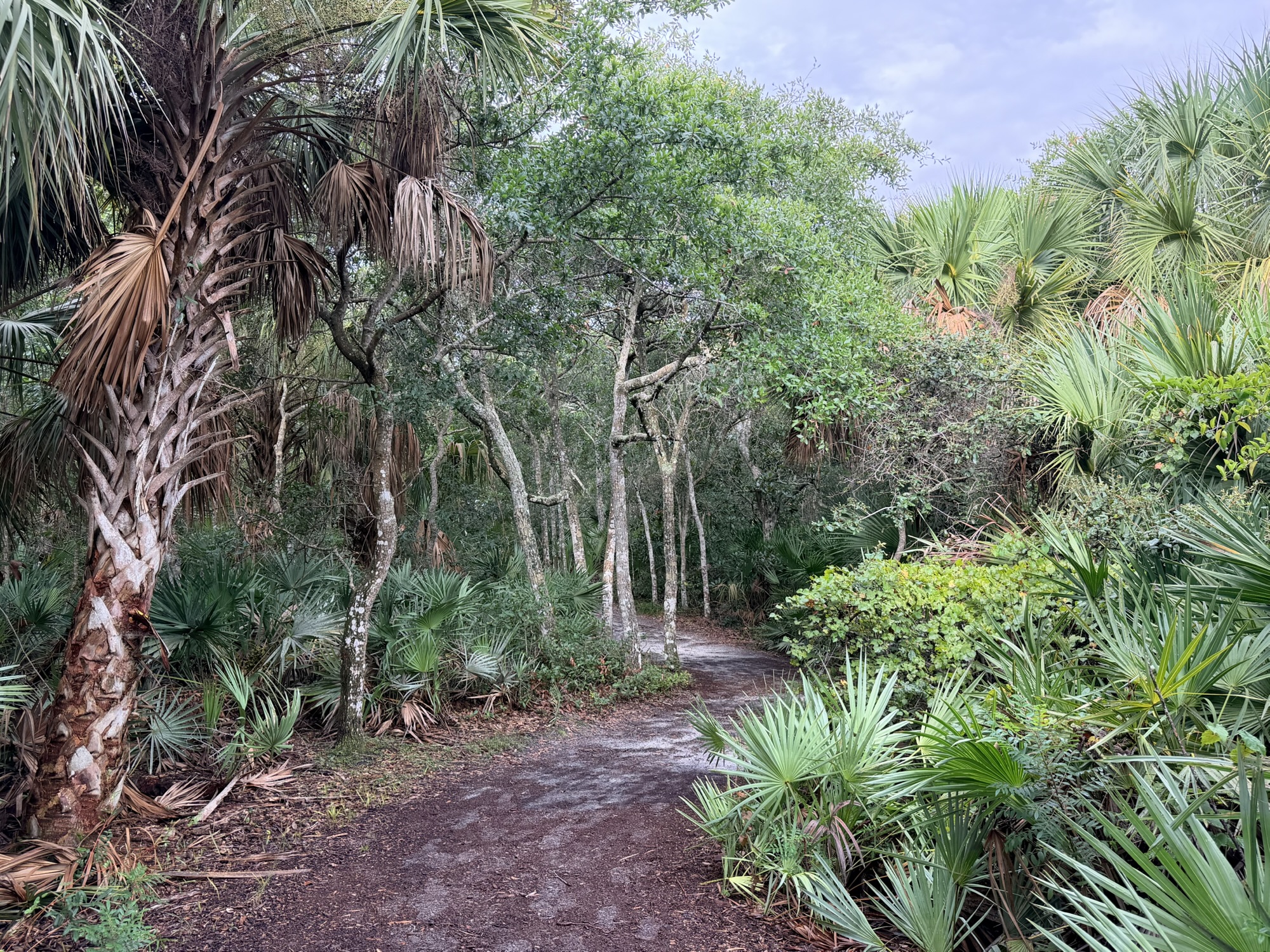
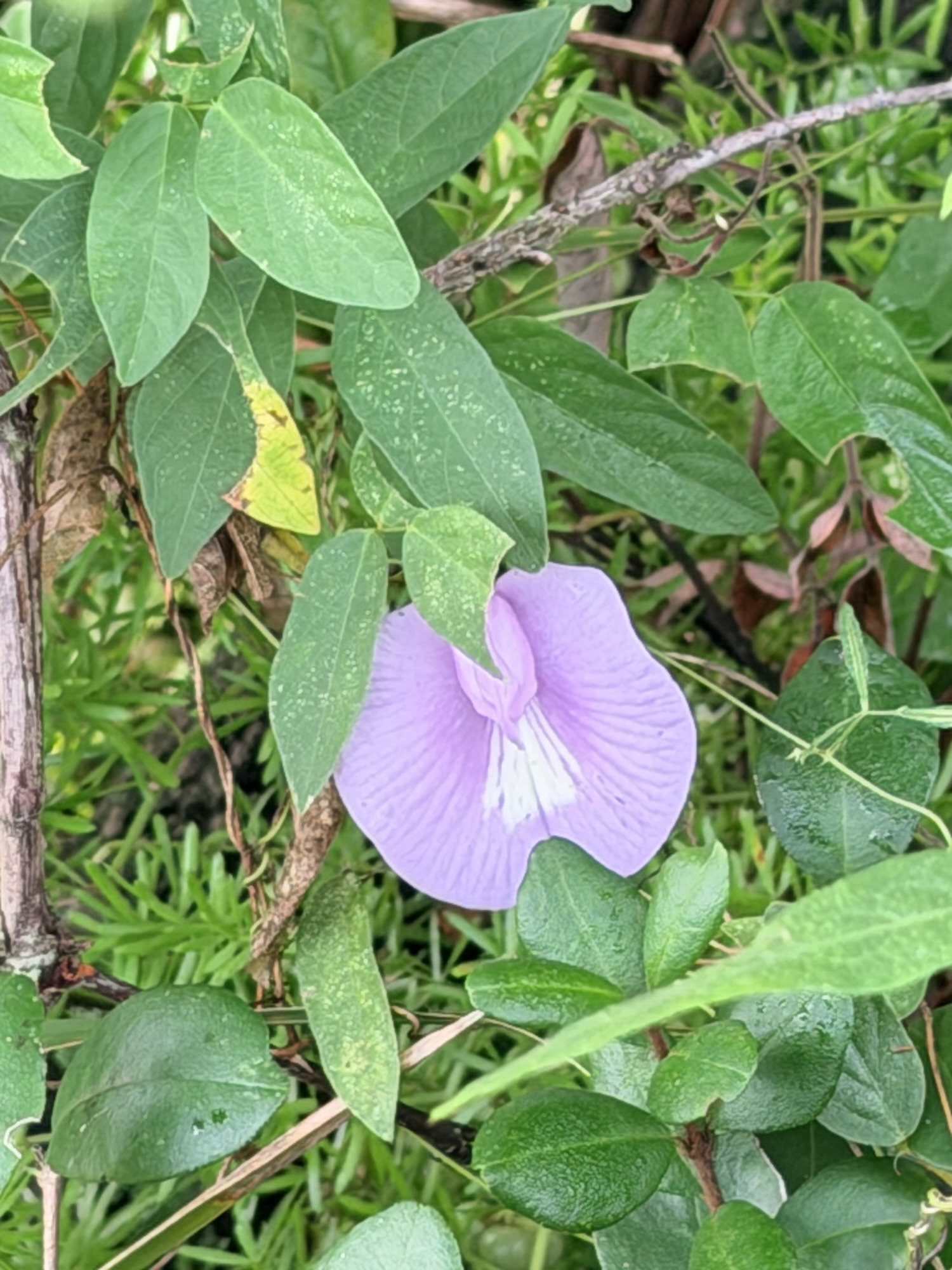
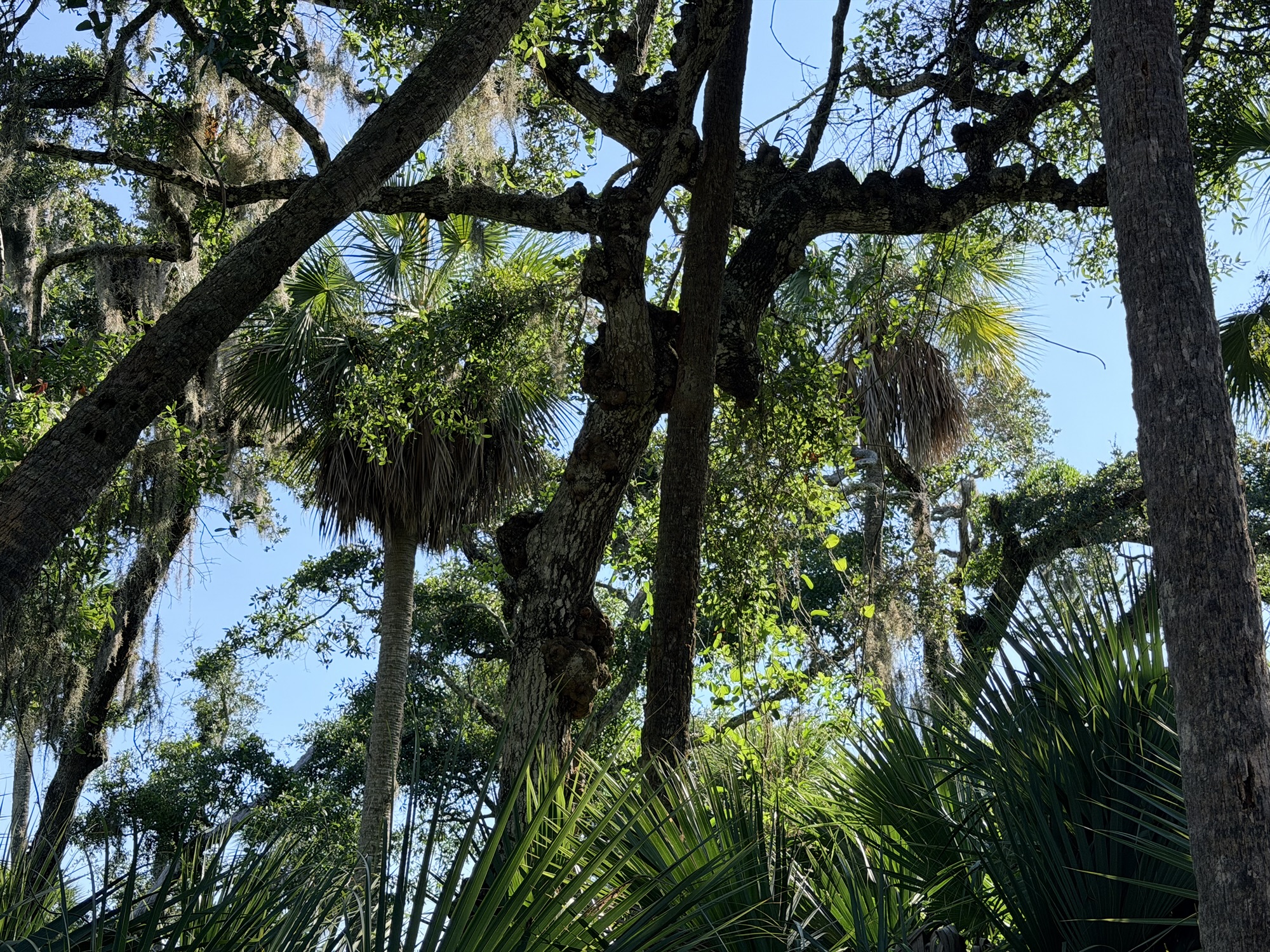
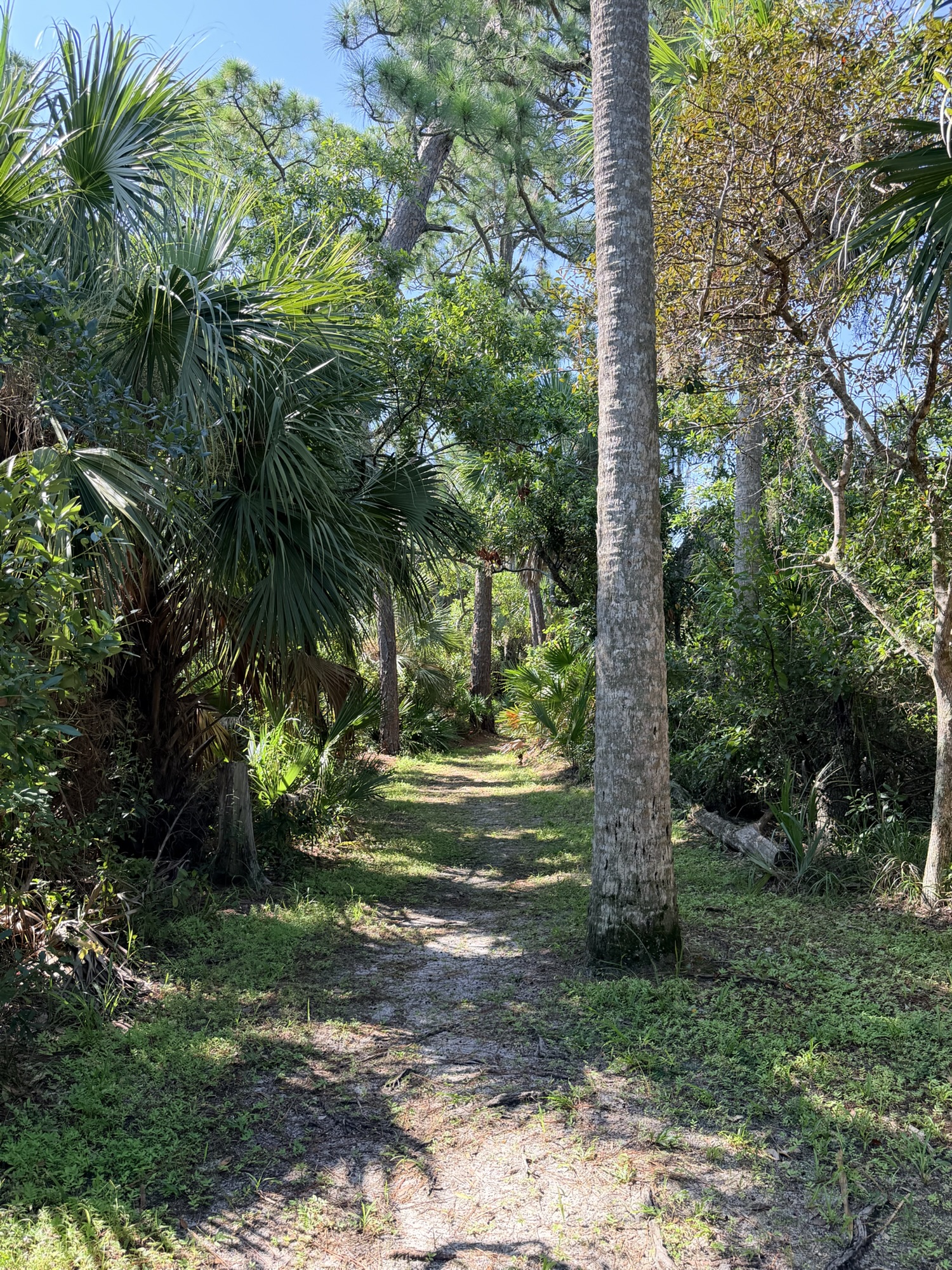
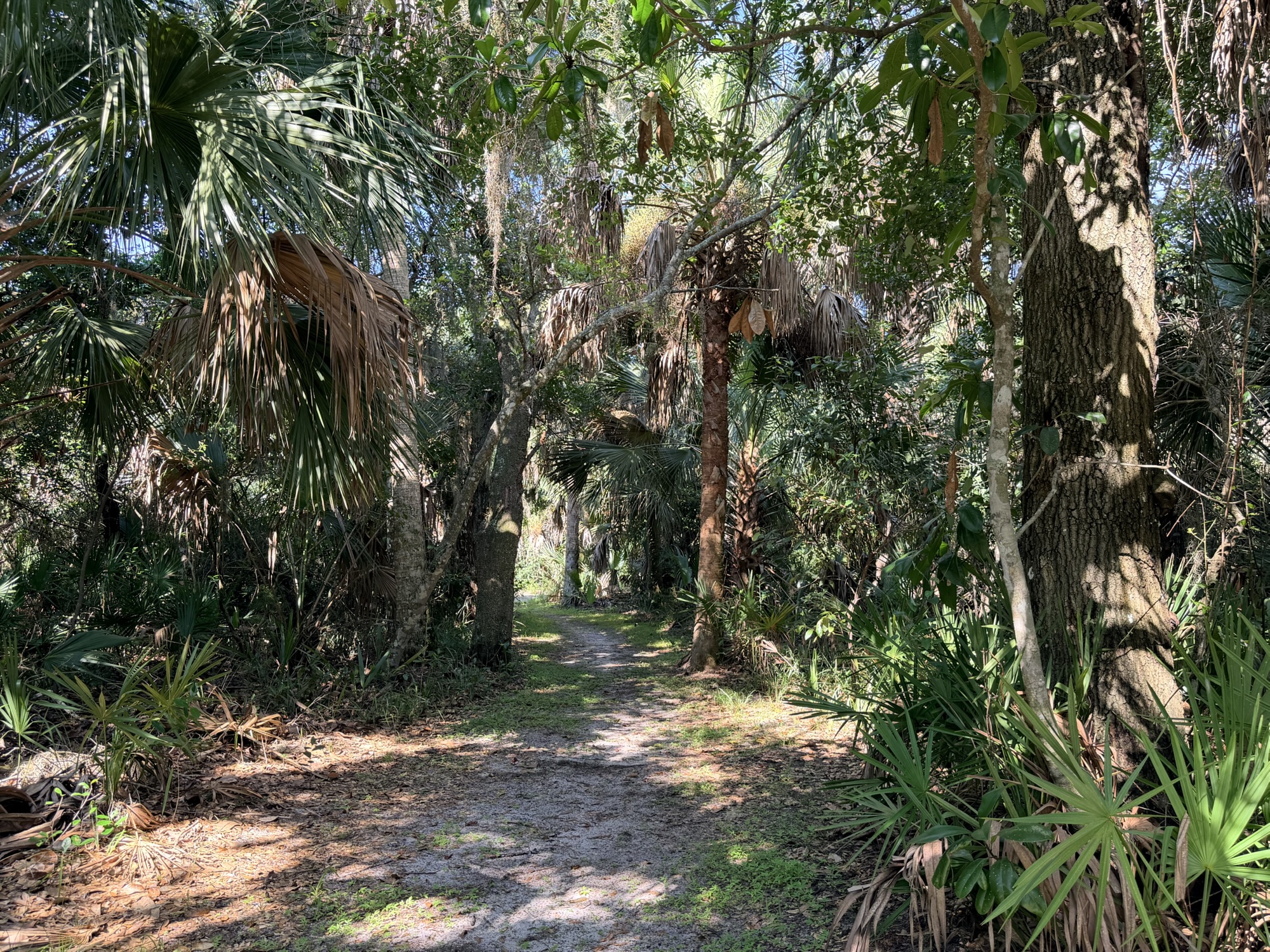
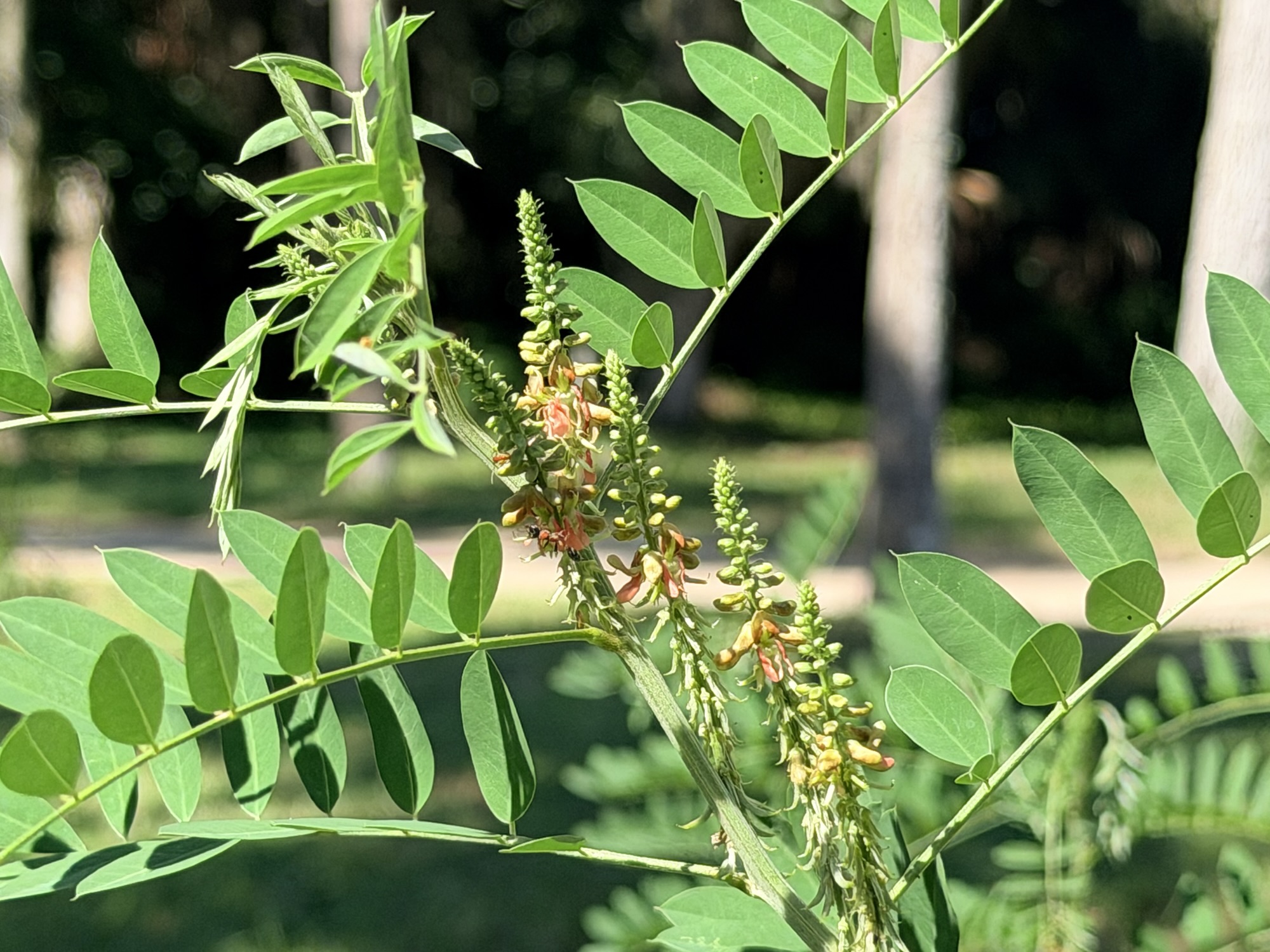
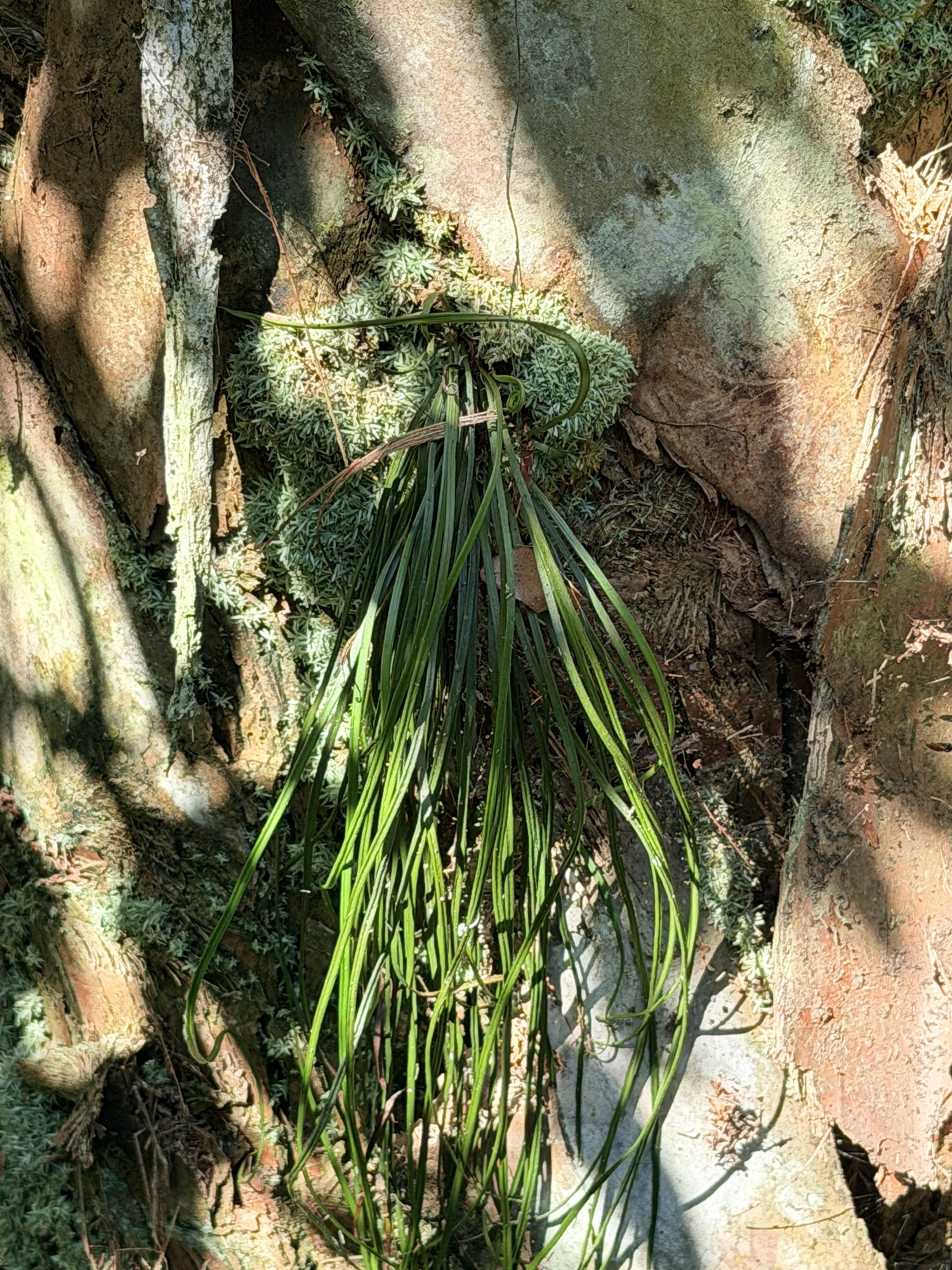
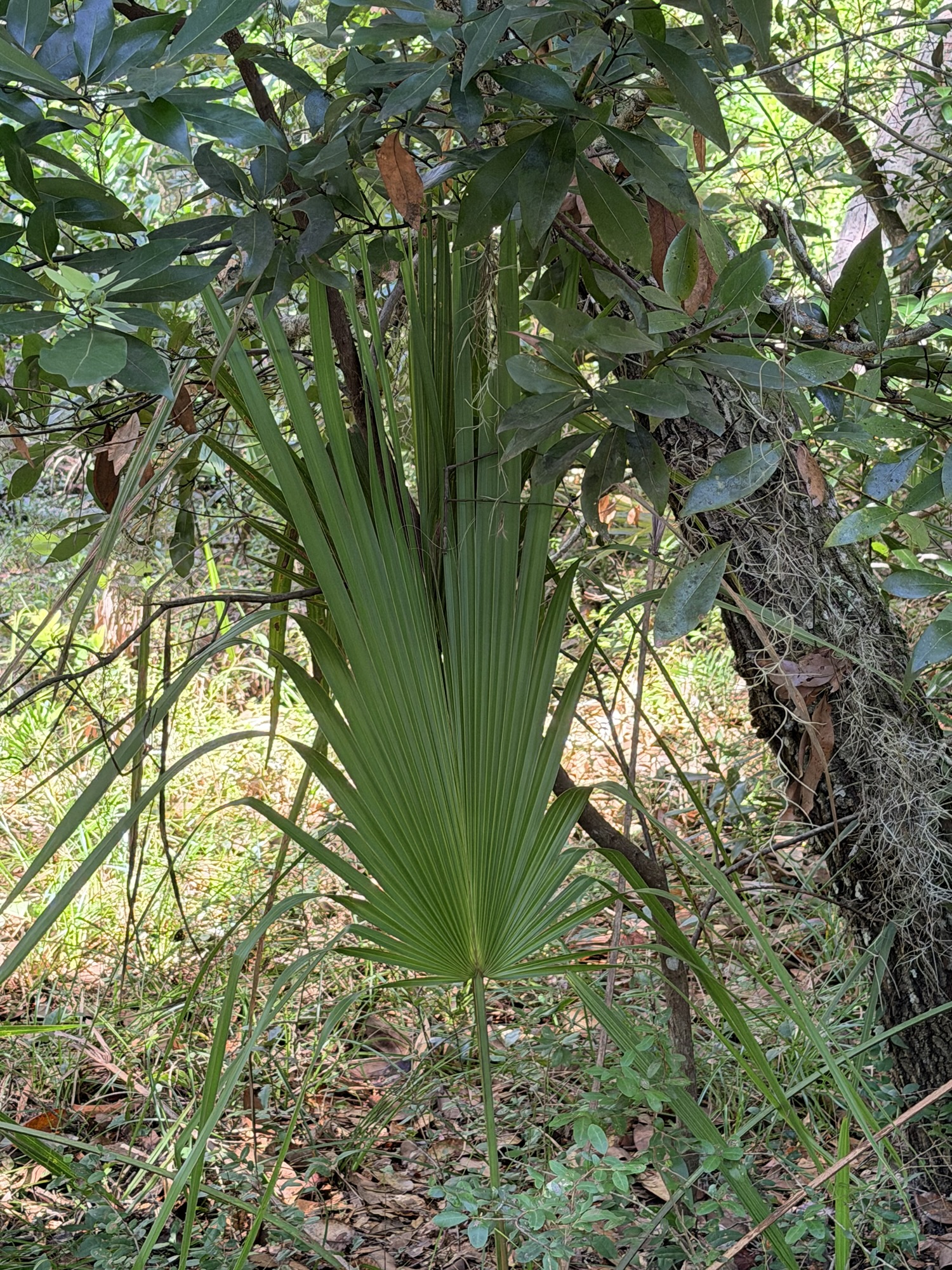
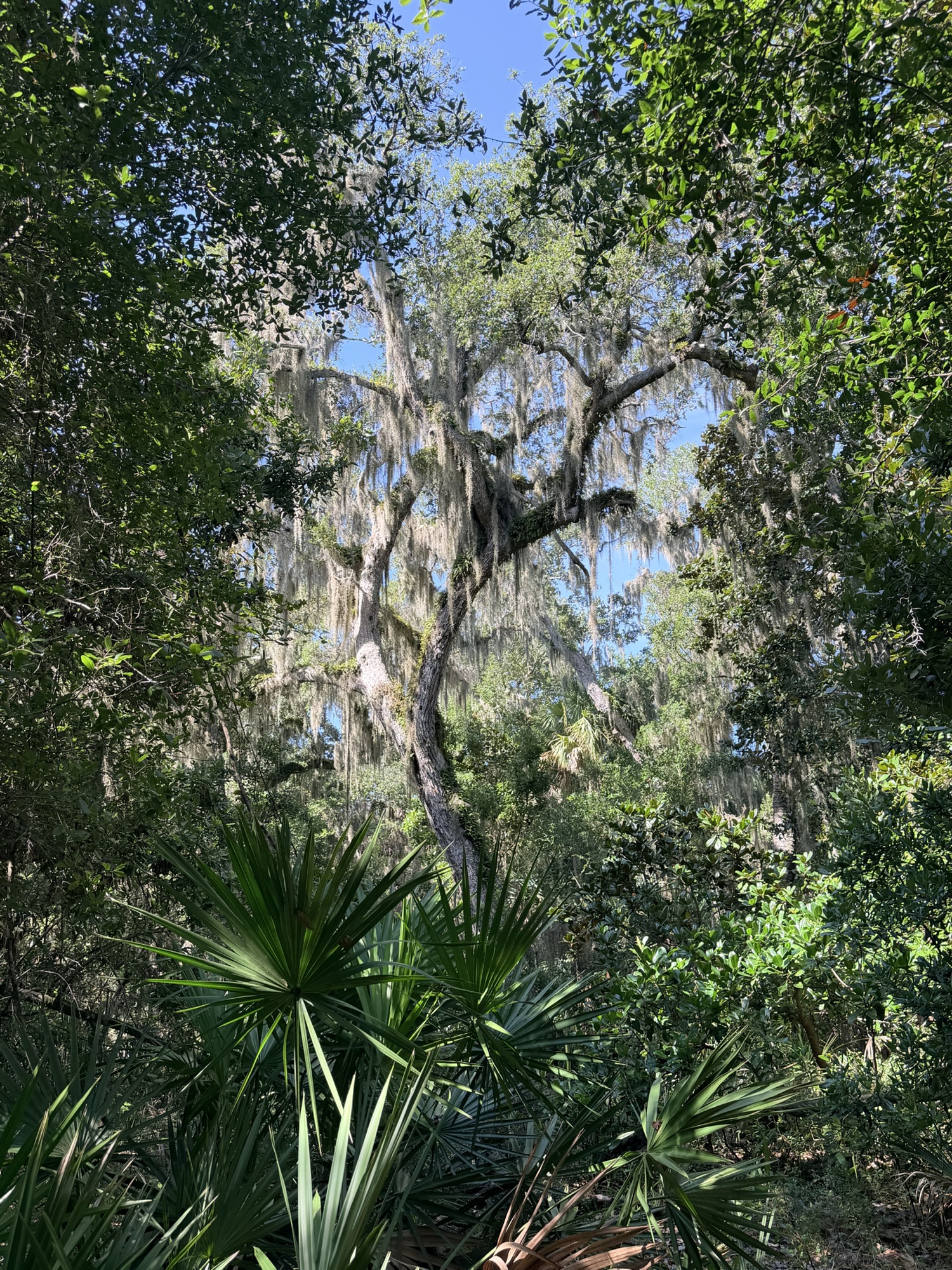
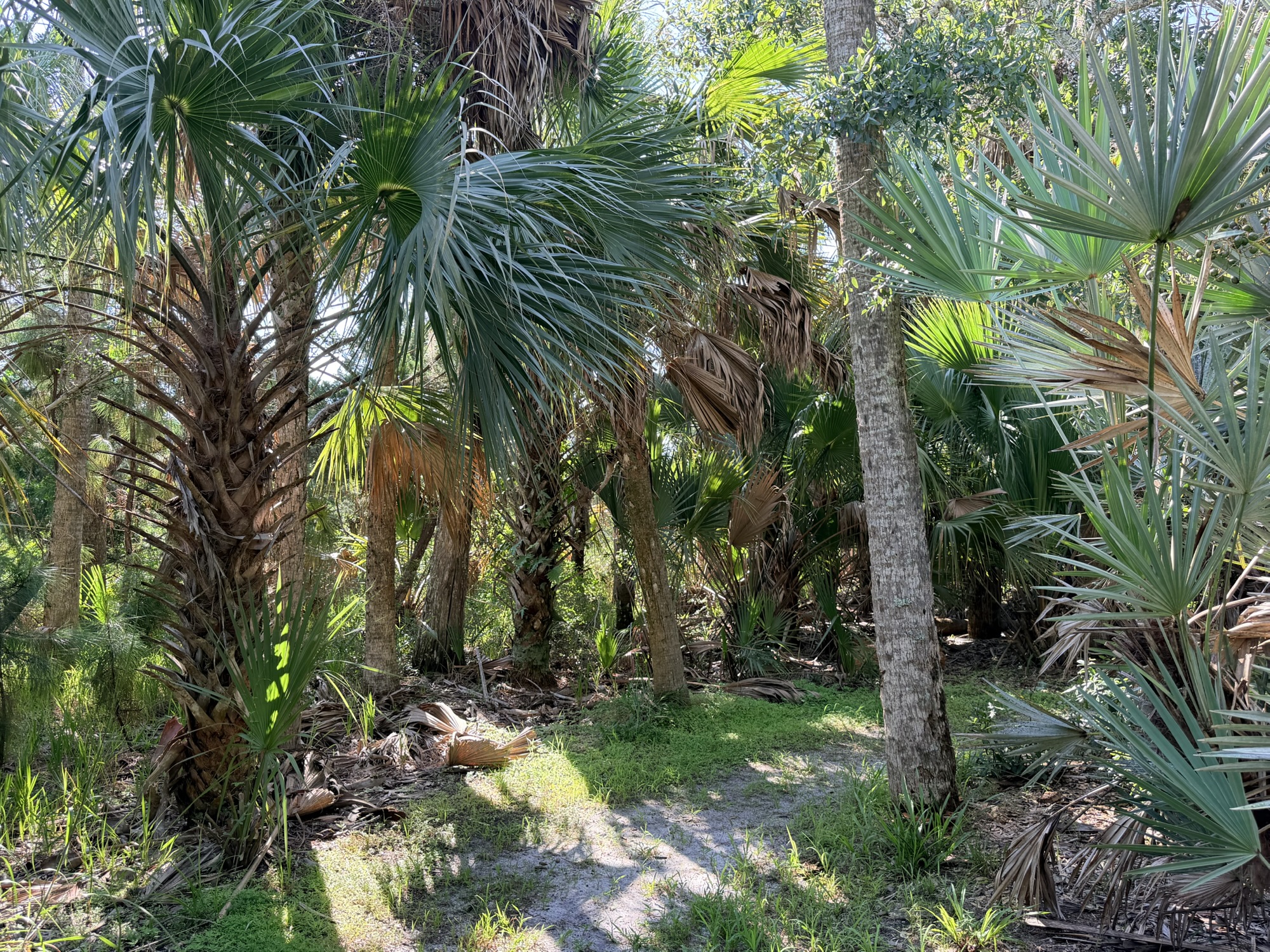
The woods is very uniform, with the same mix of plants throughout. I wonder how long it’s been recovering from being an indigo plantation? Here are some sights.
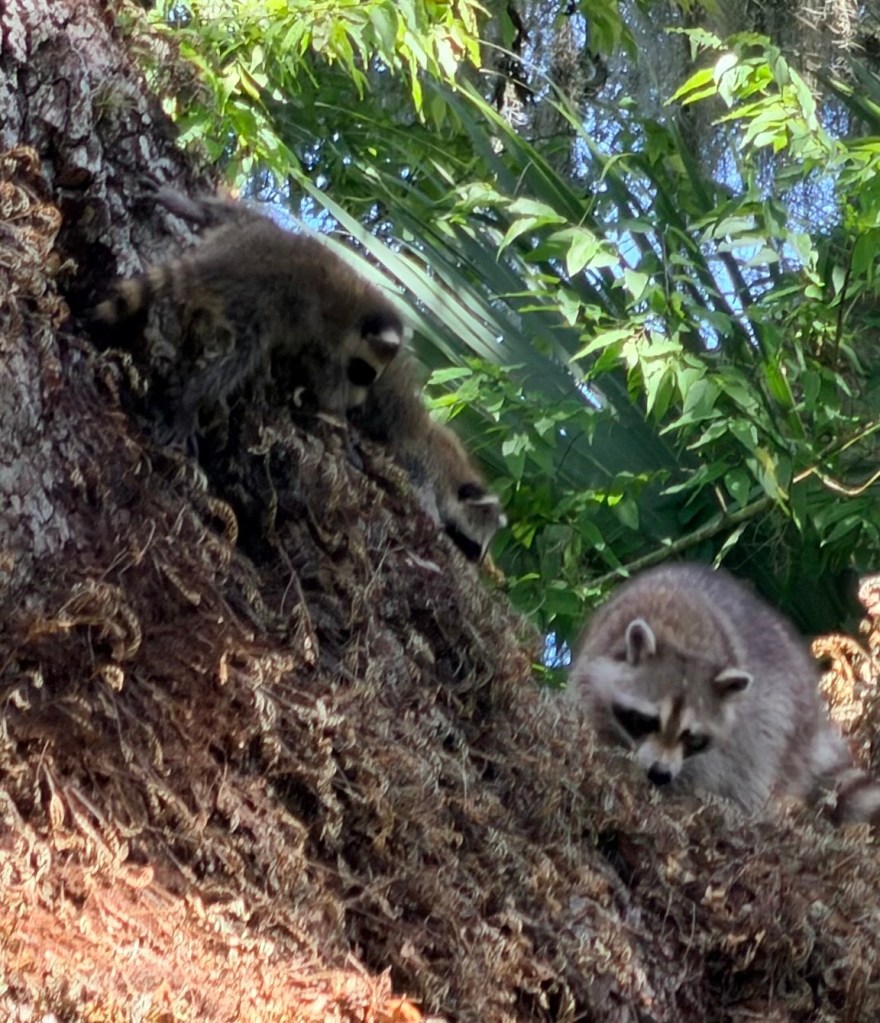
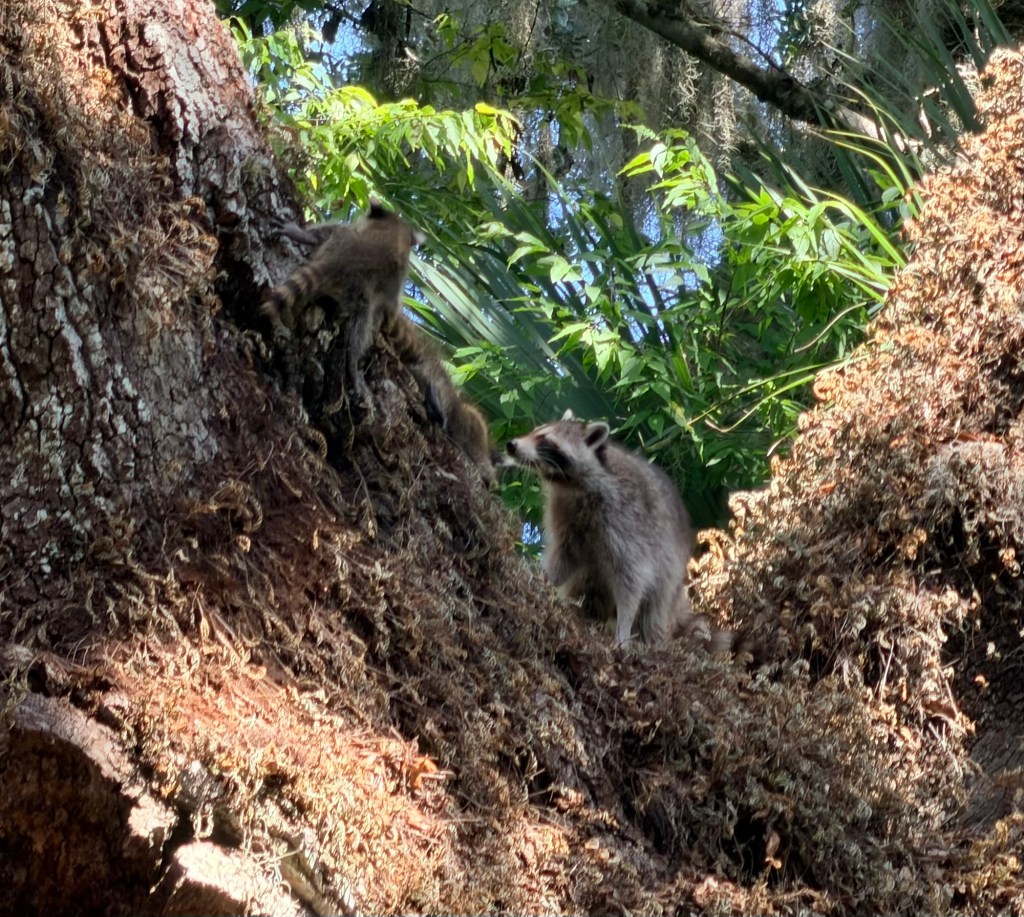
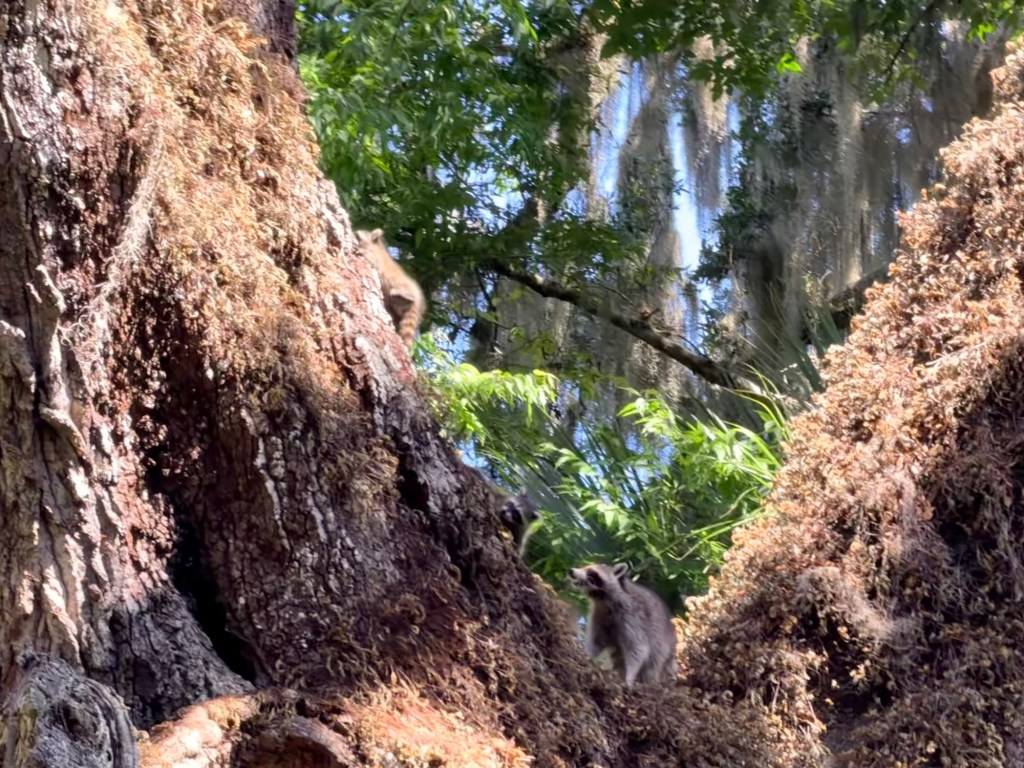
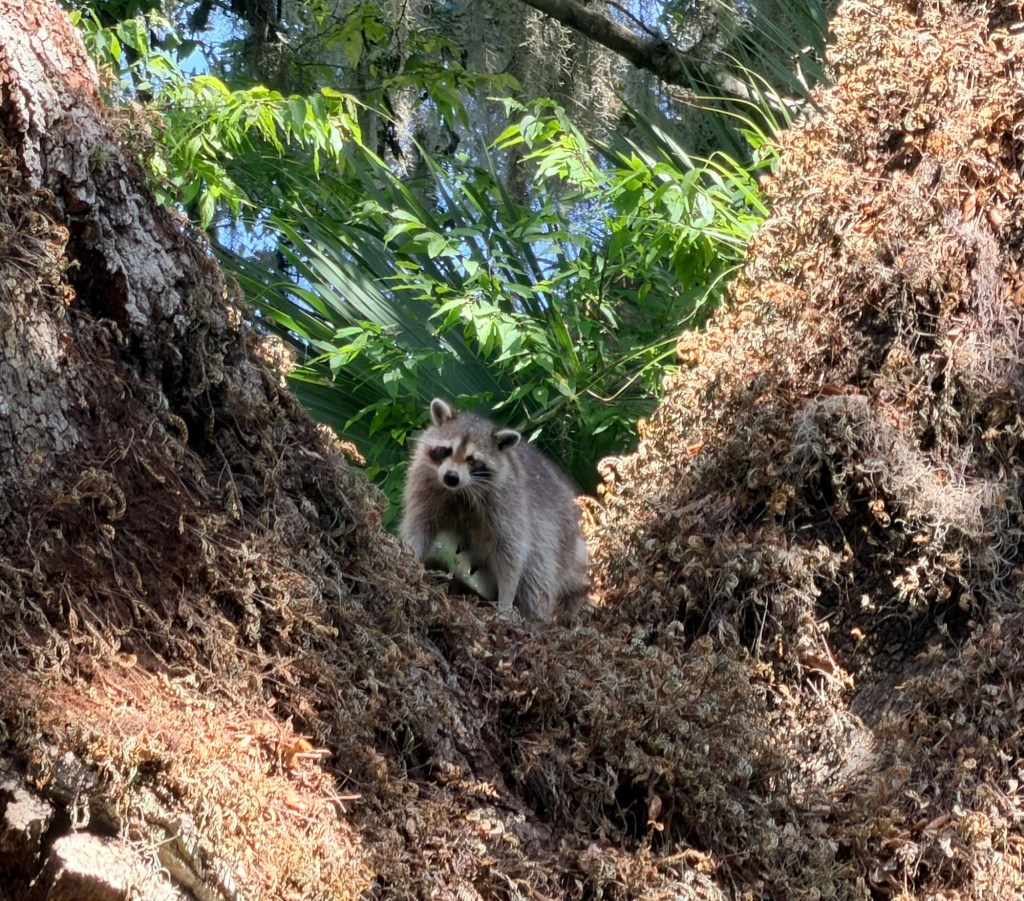
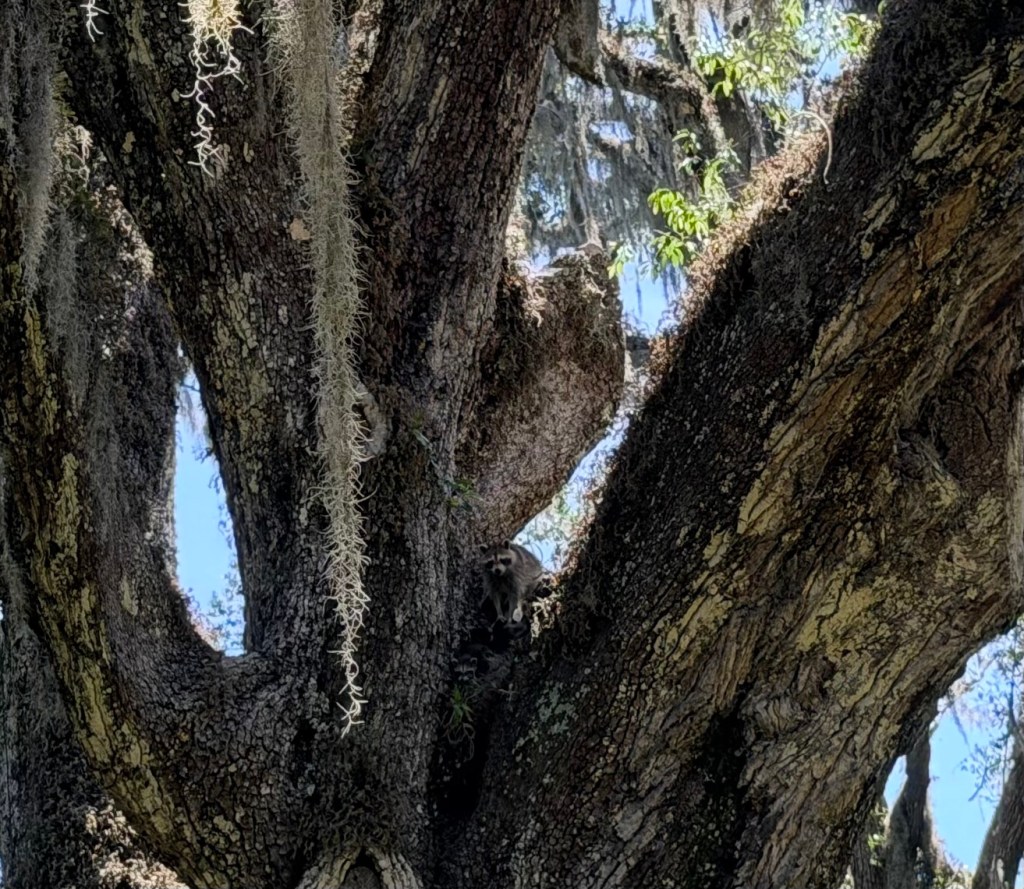
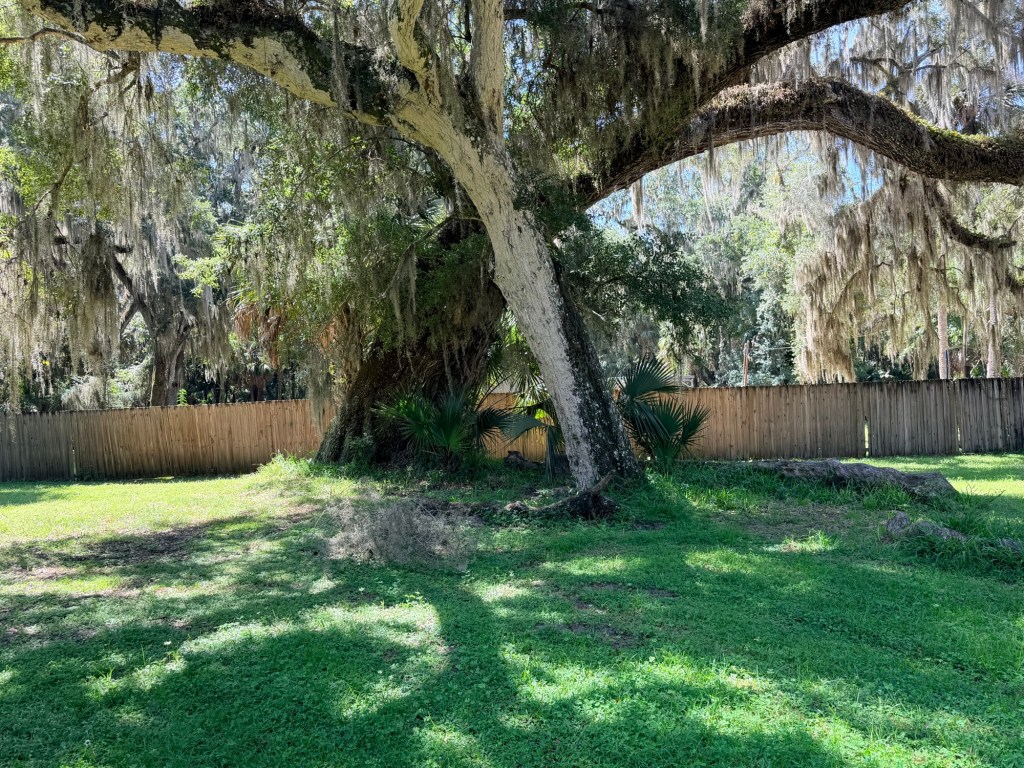
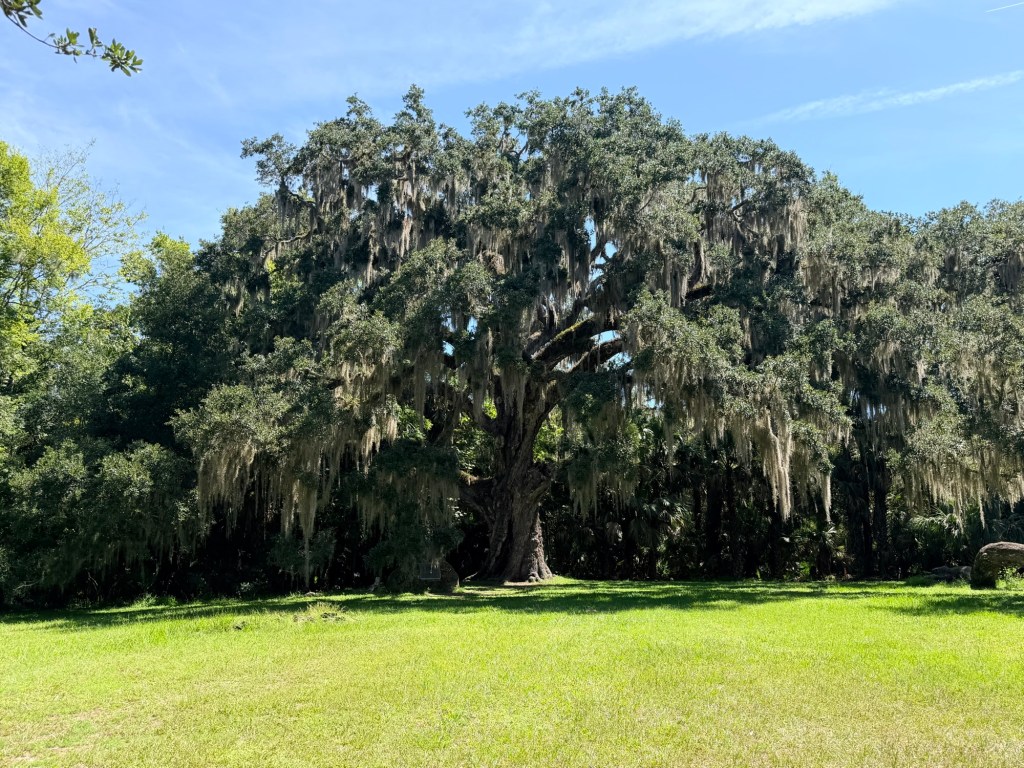
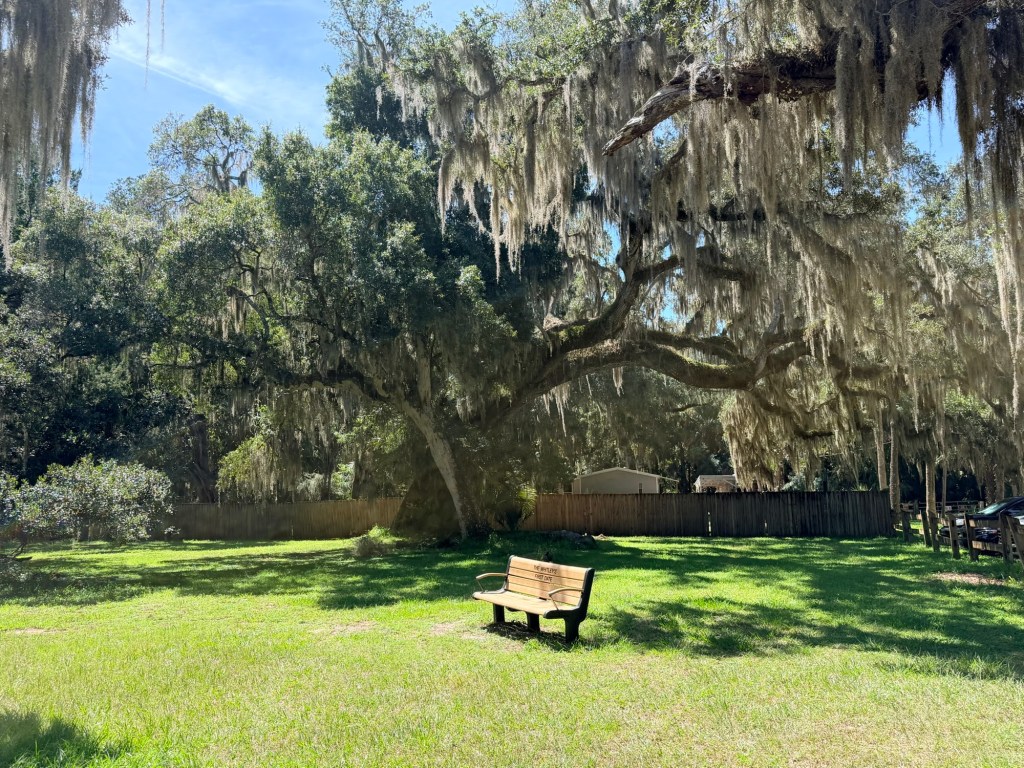
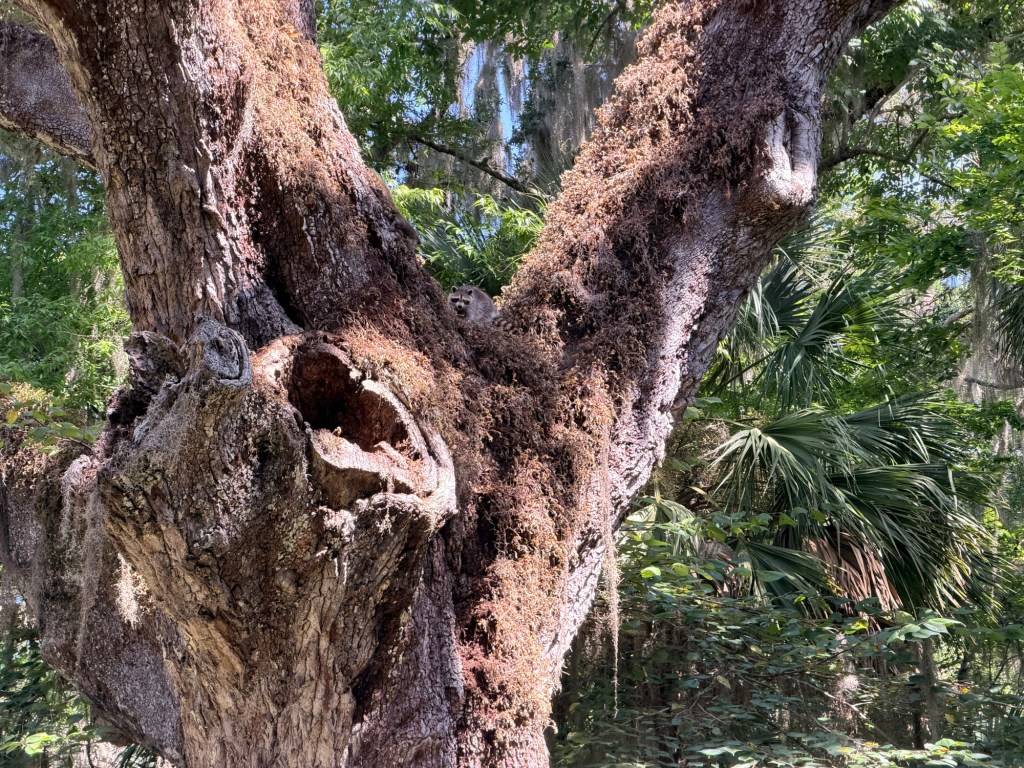
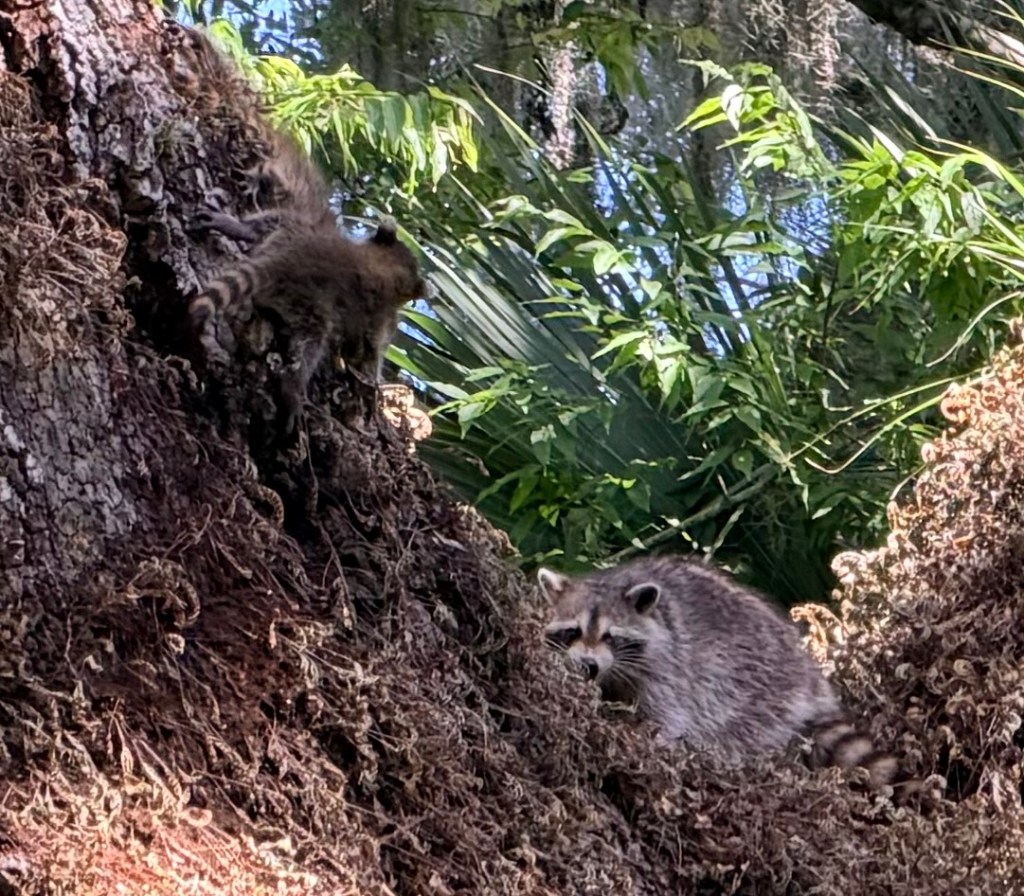
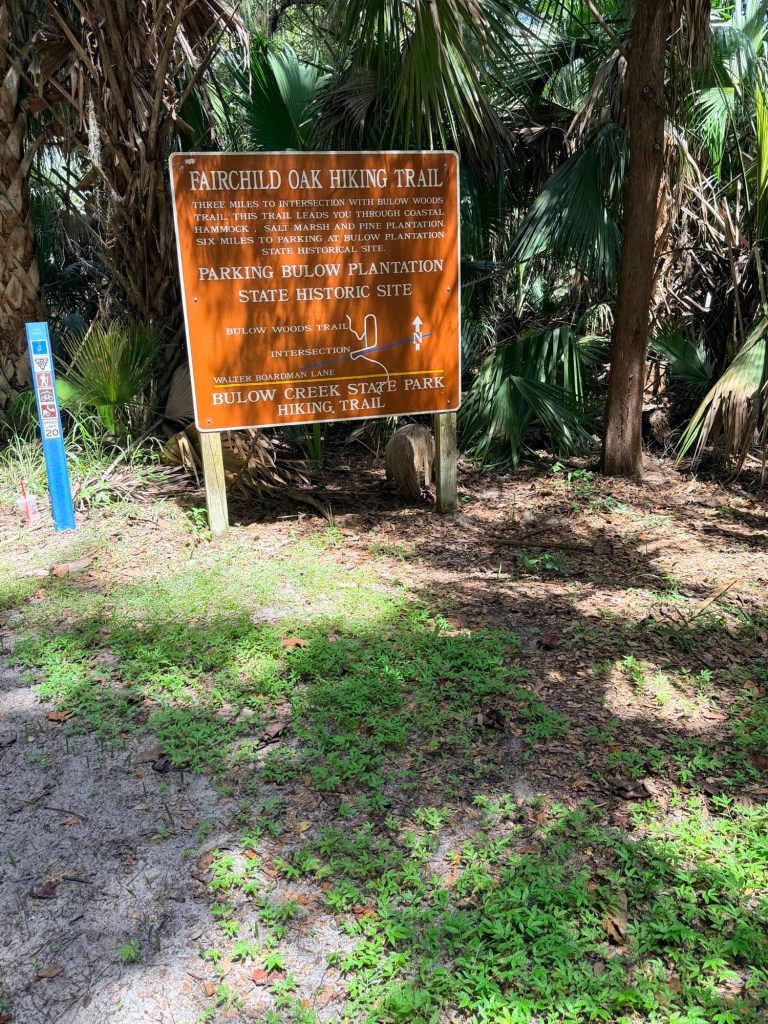
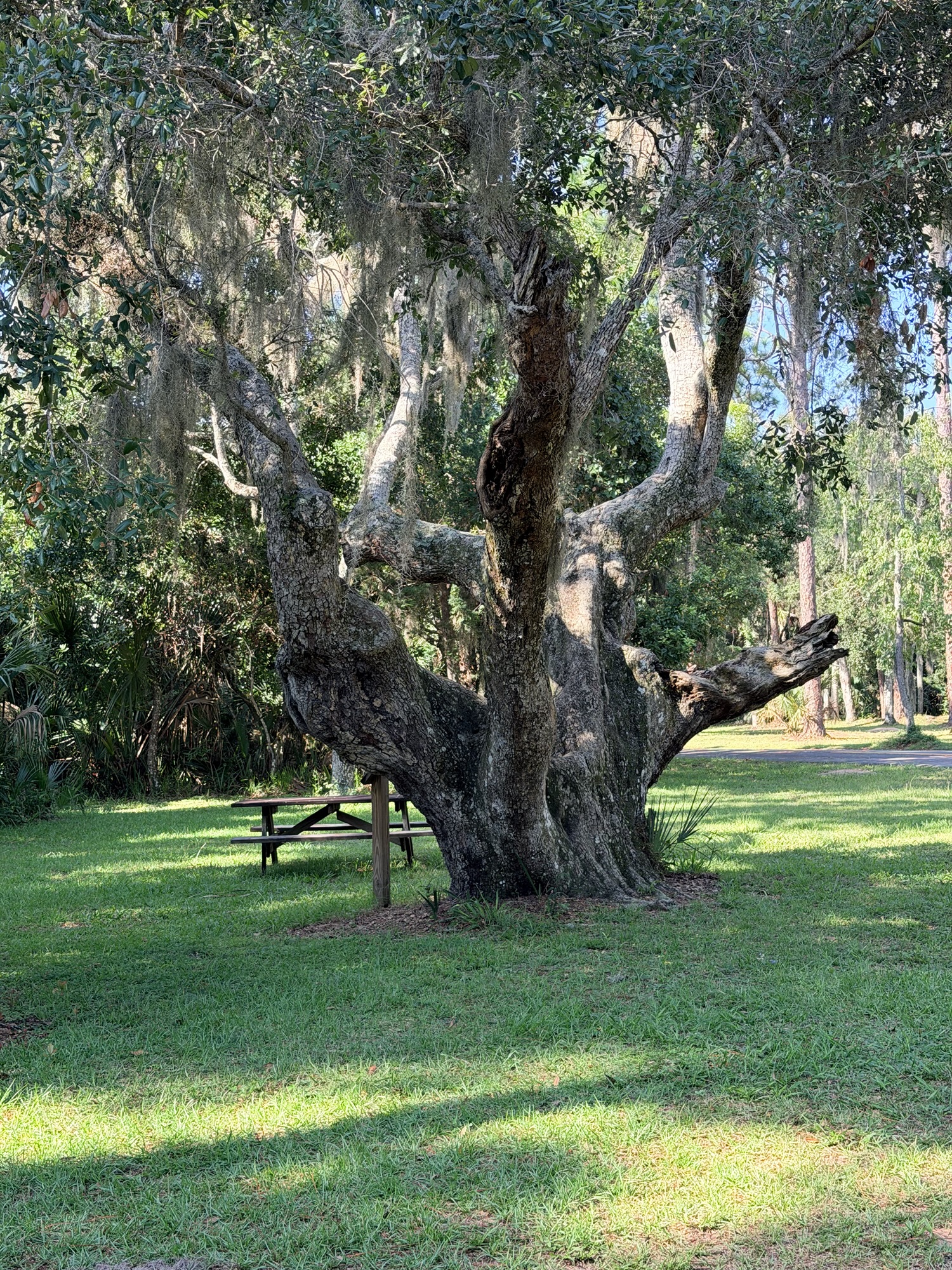
I left there and proceeded a few beautiful miles down the road to a truly special place, Bulow Creek State Park. Lots to see here! First I enjoyed the area around some huge, old live oaks, including the Fairchild Oak. All the trees are beautiful. My big surprise was spotting a raccoon family in the big old tree. Mom was trying to keep up with four very busy young ones. I enjoyed them a while, then showed them to a couple of other visitors.
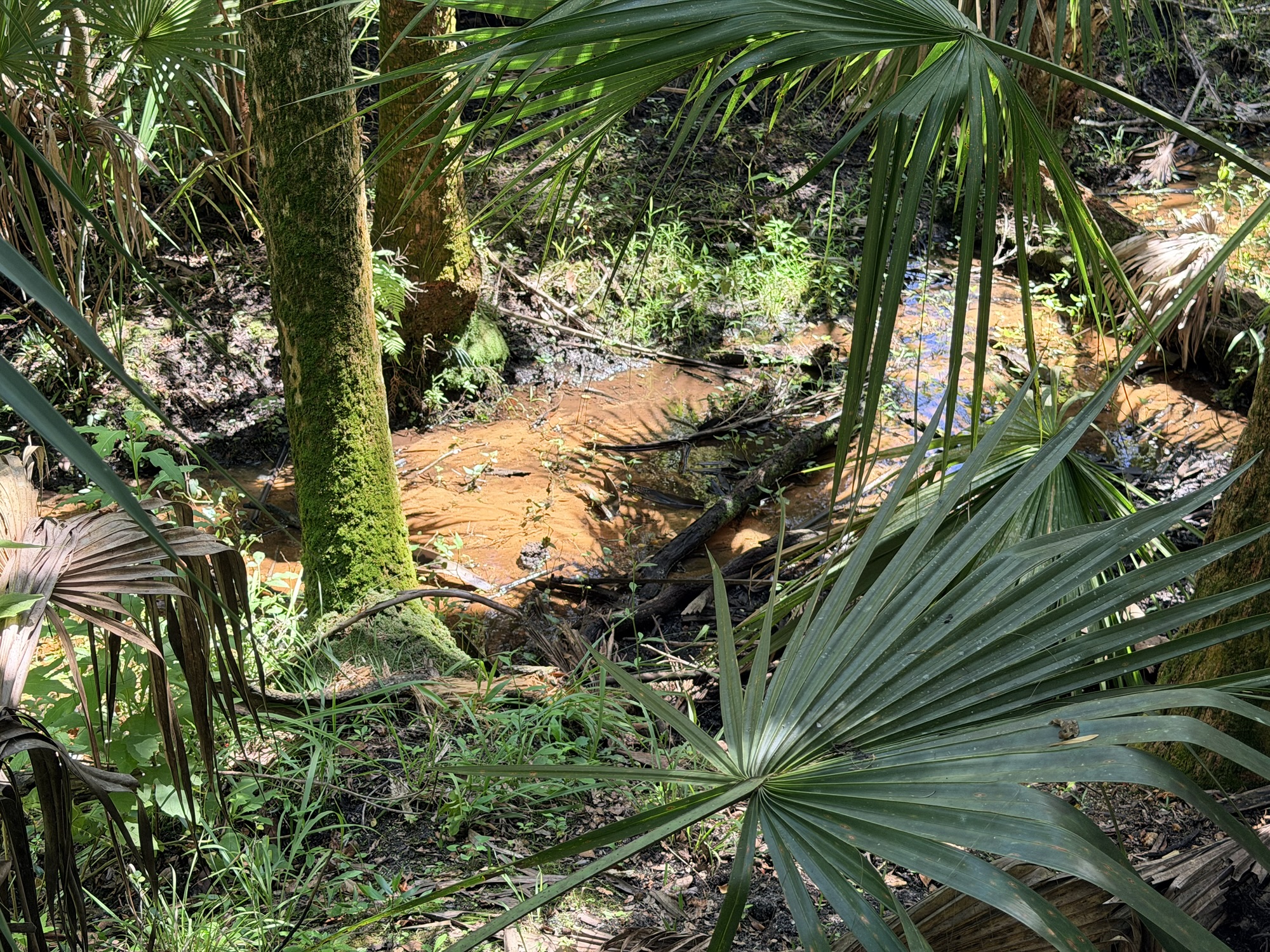
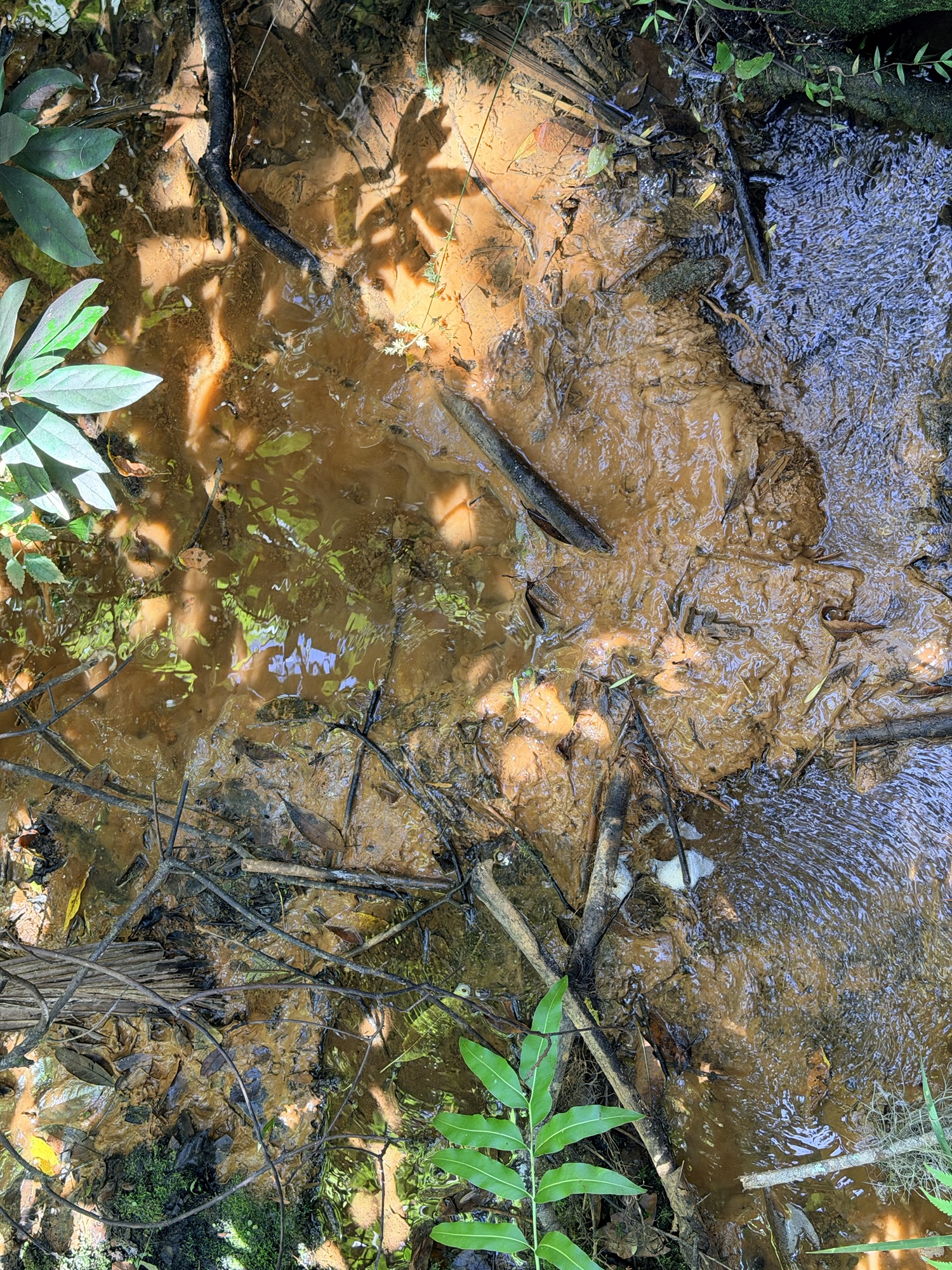
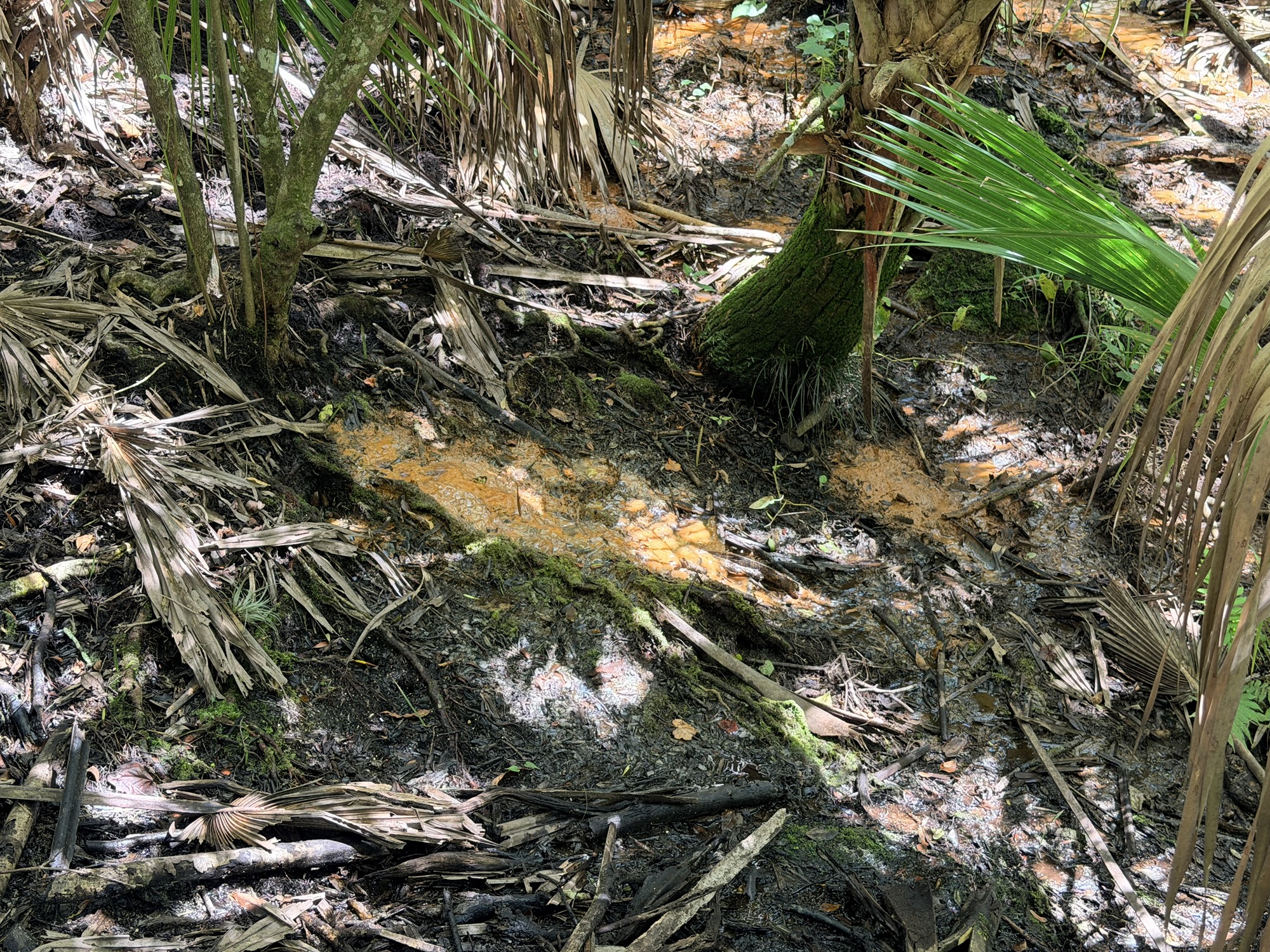
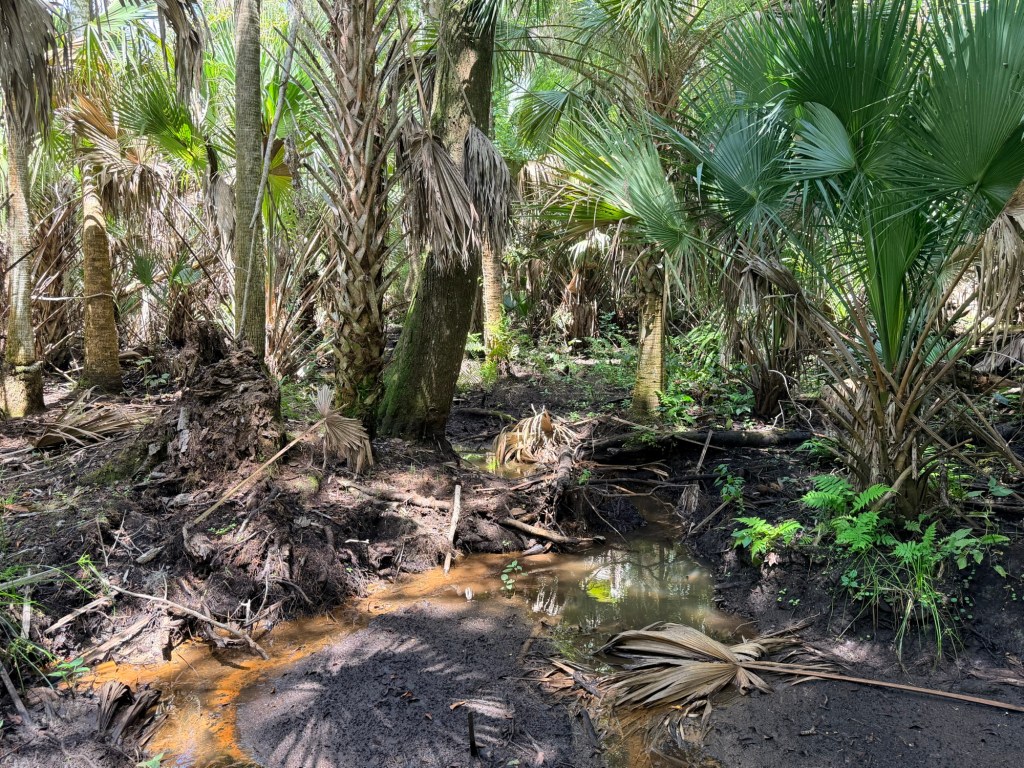
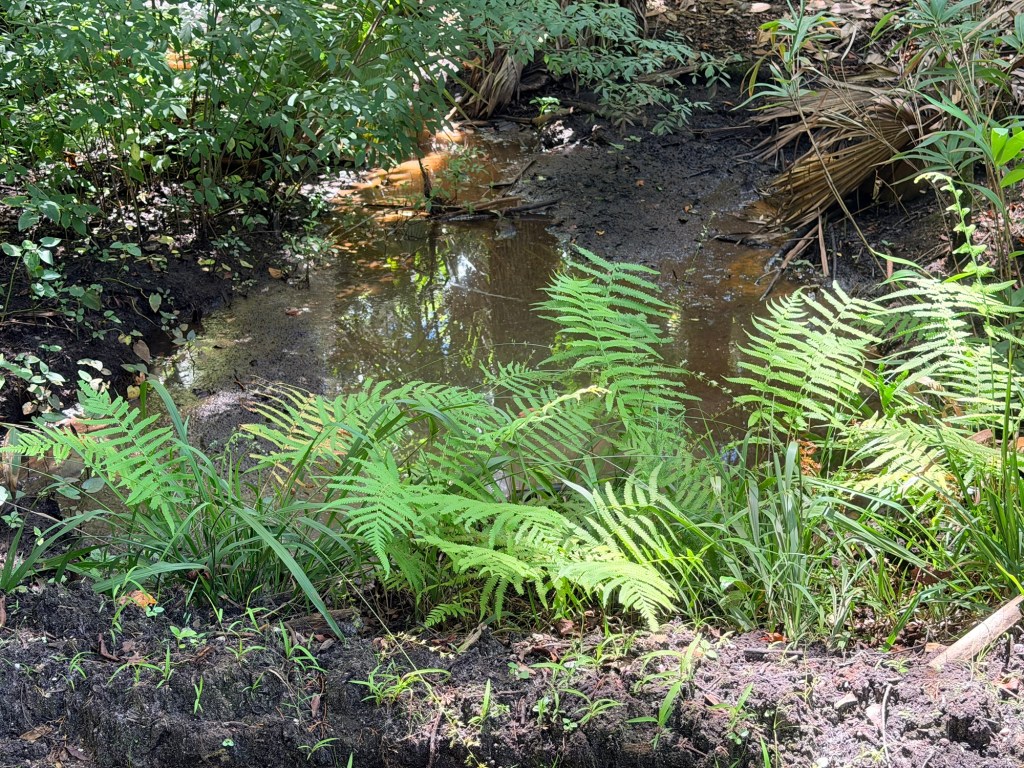
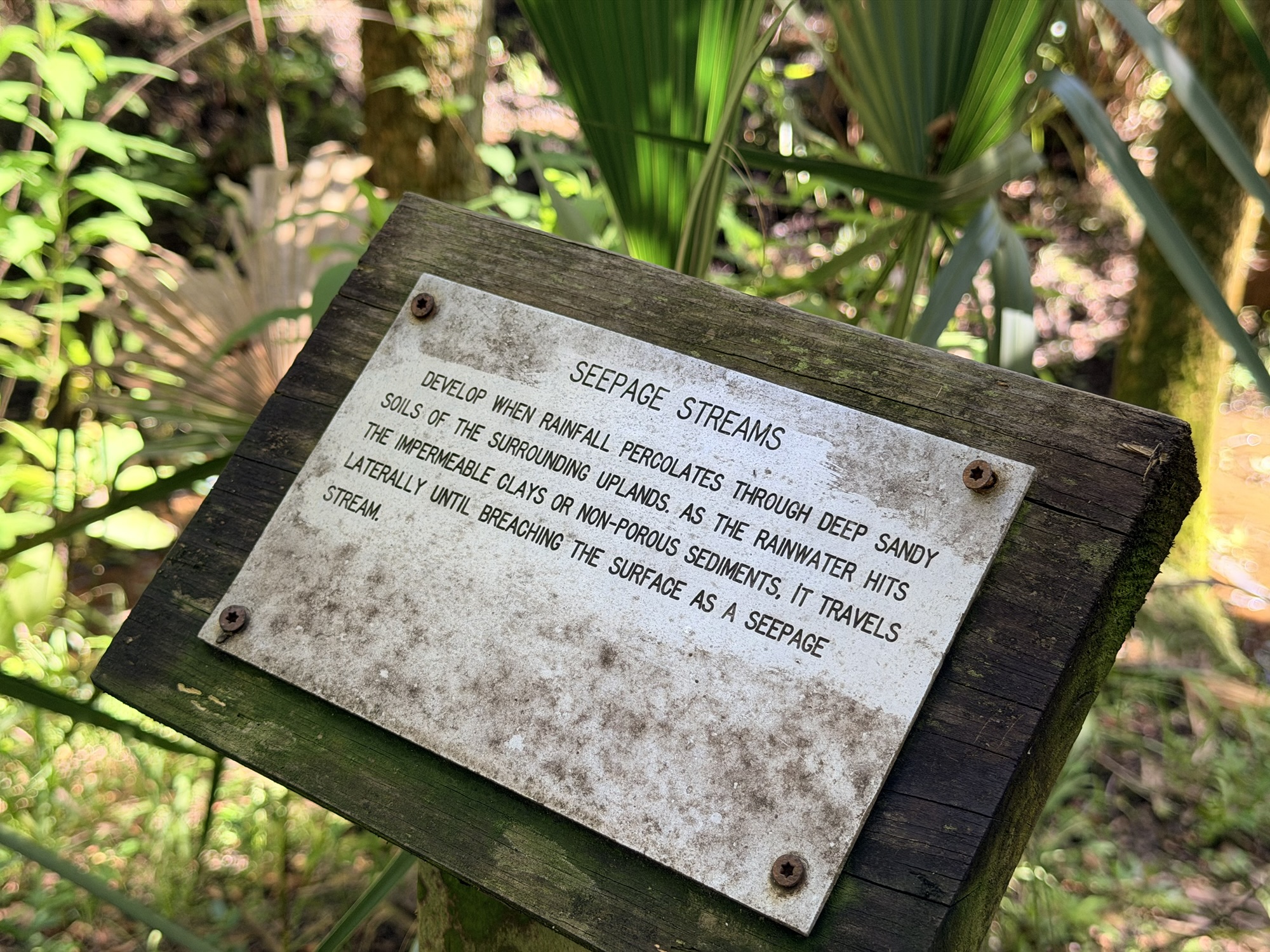
Next I took the shorter trail that goes through a wet area. It has a collection of fascinating seeps that flow across the clay substrate to form the larger creek. Since it’s rained recently, they were flowing nicely. They are very similar to the seeps on our property, and now I understand them more. It made my day (that and the raccoons).
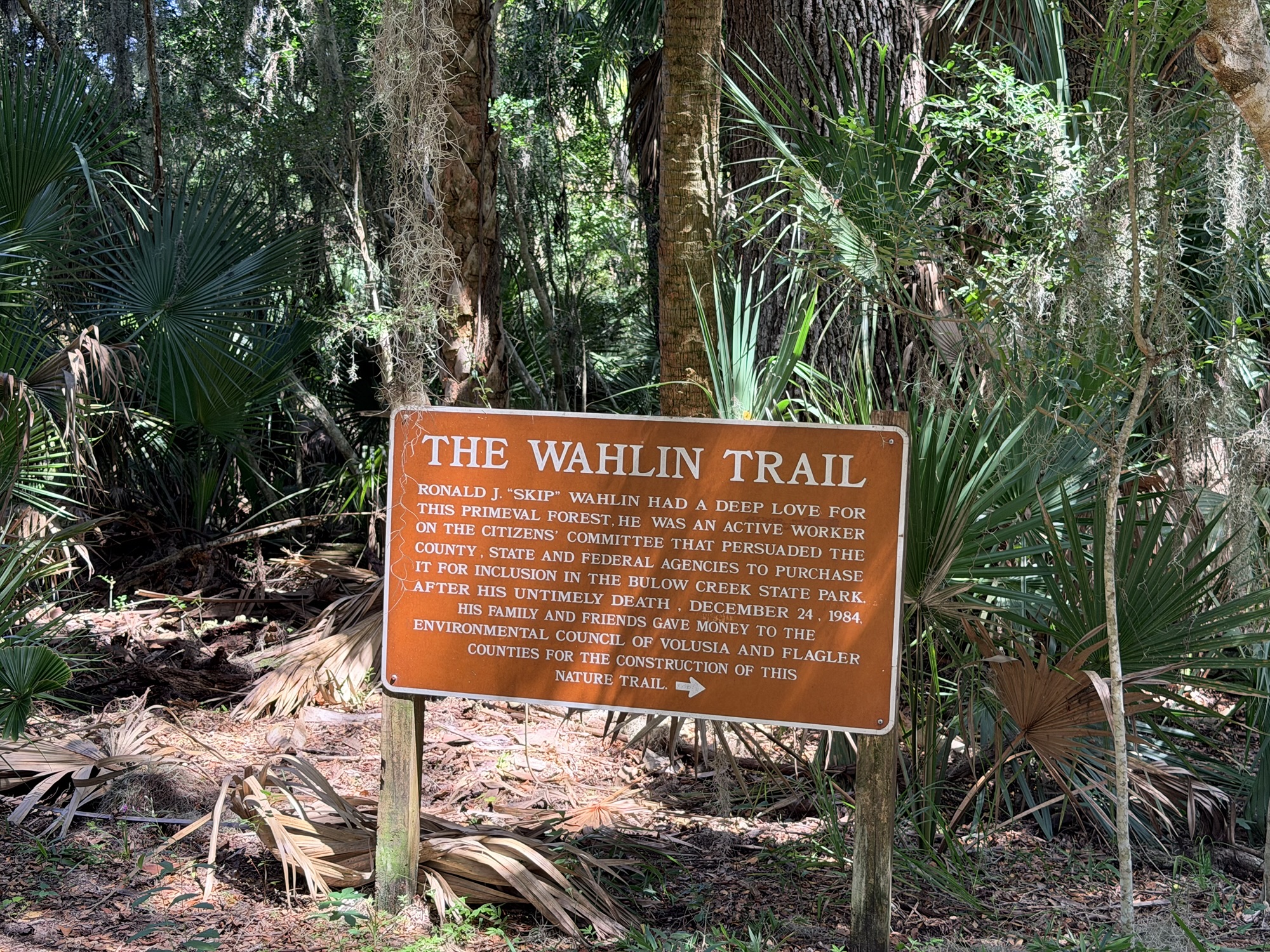
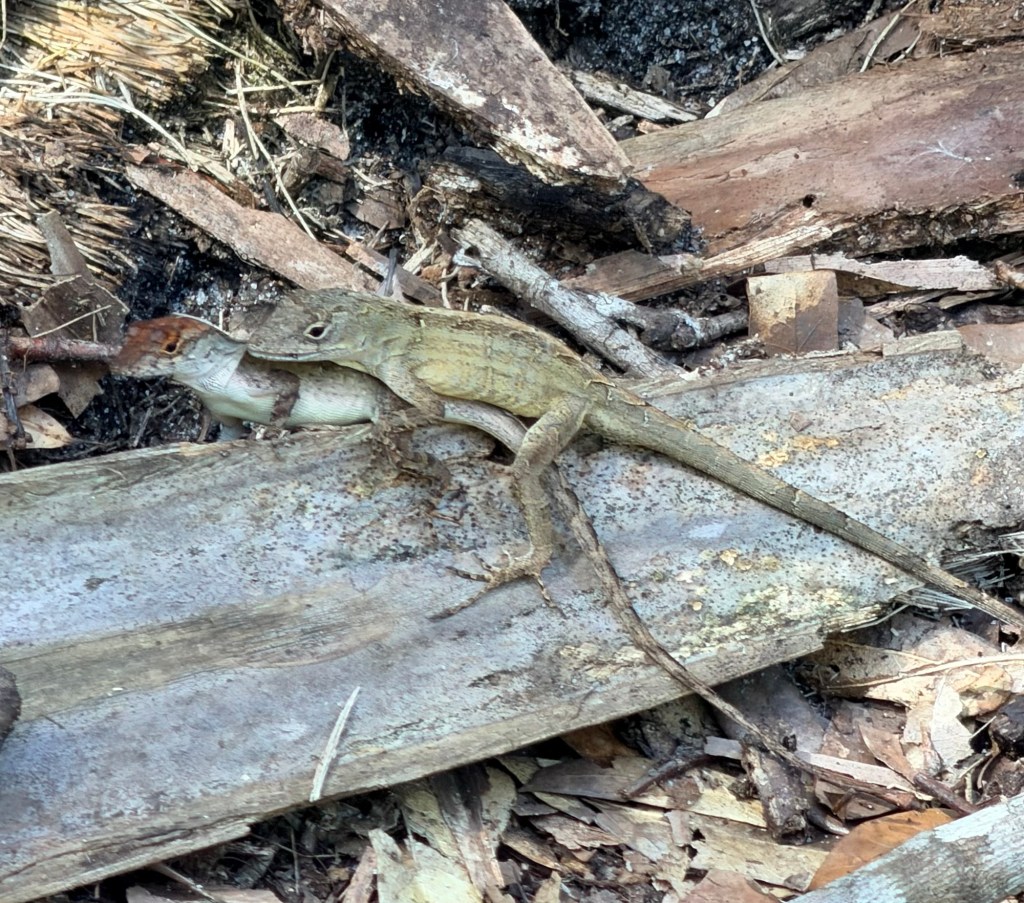
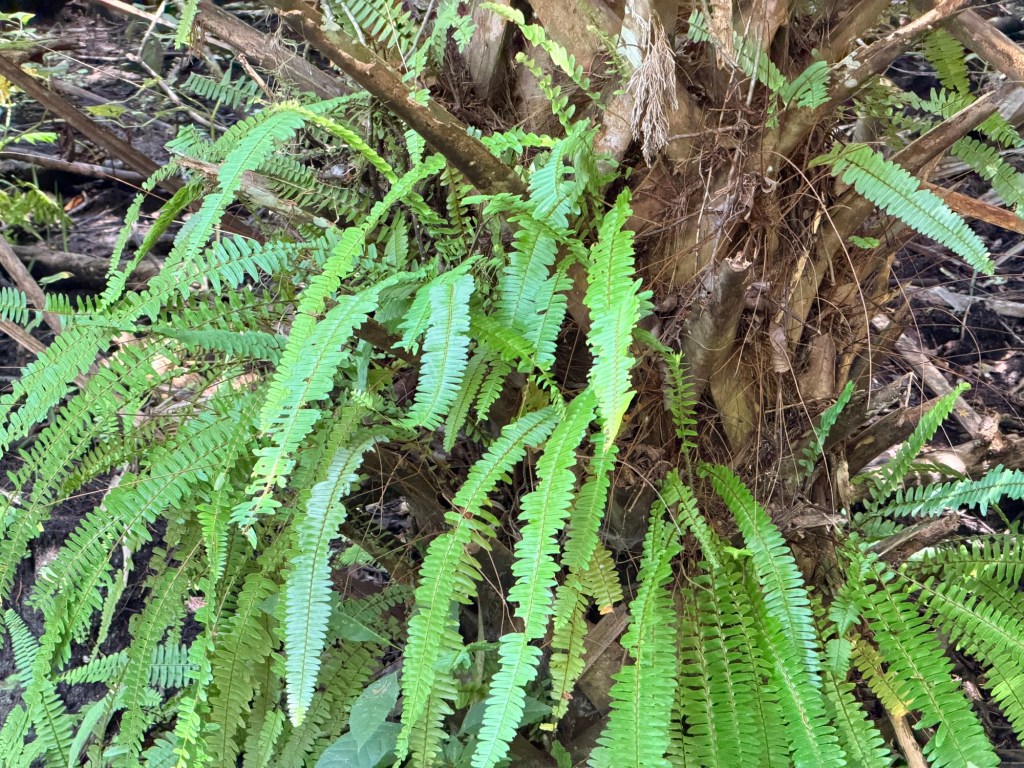
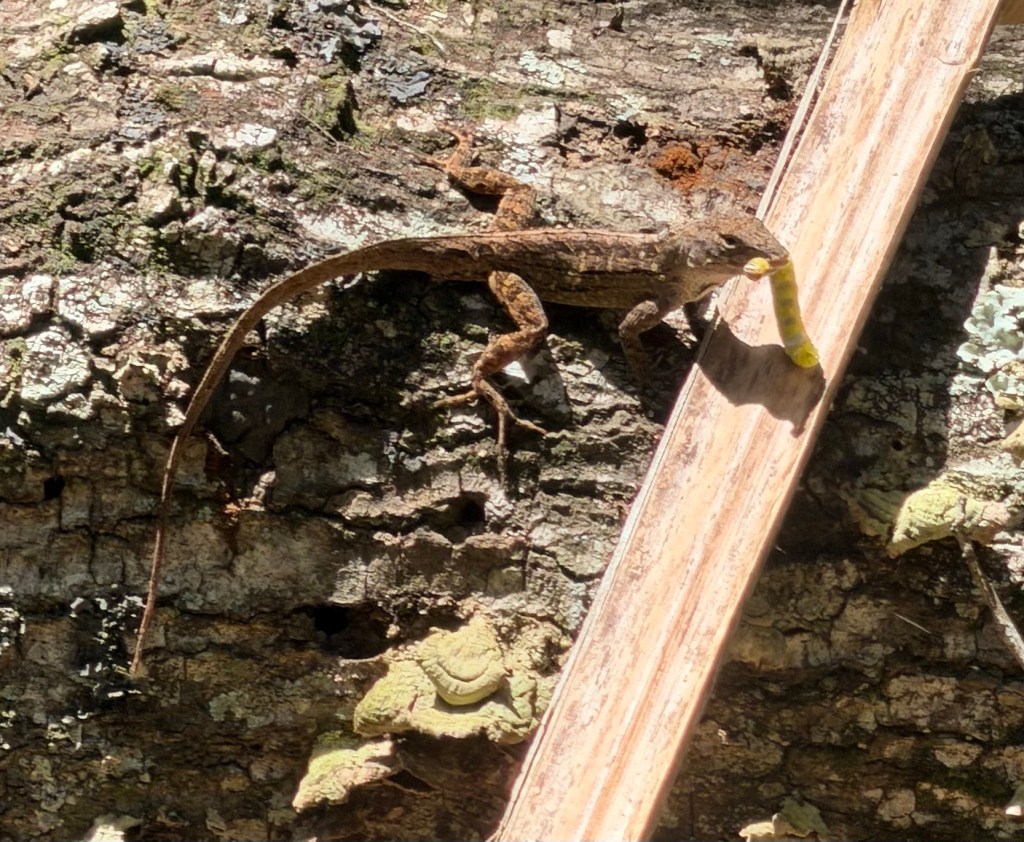
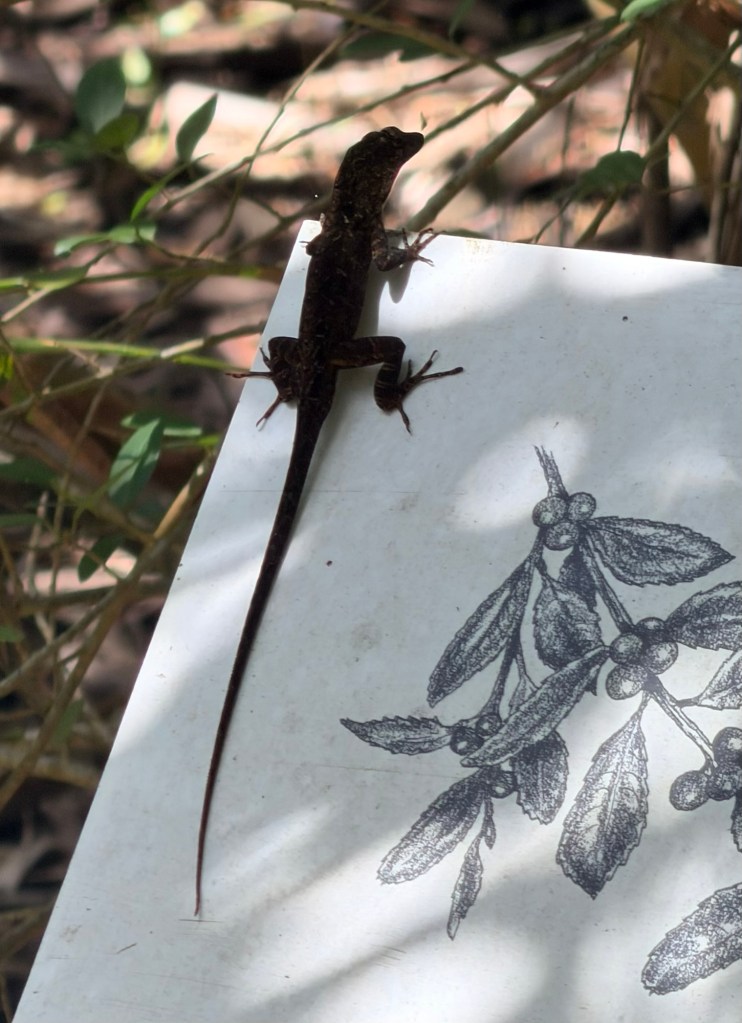
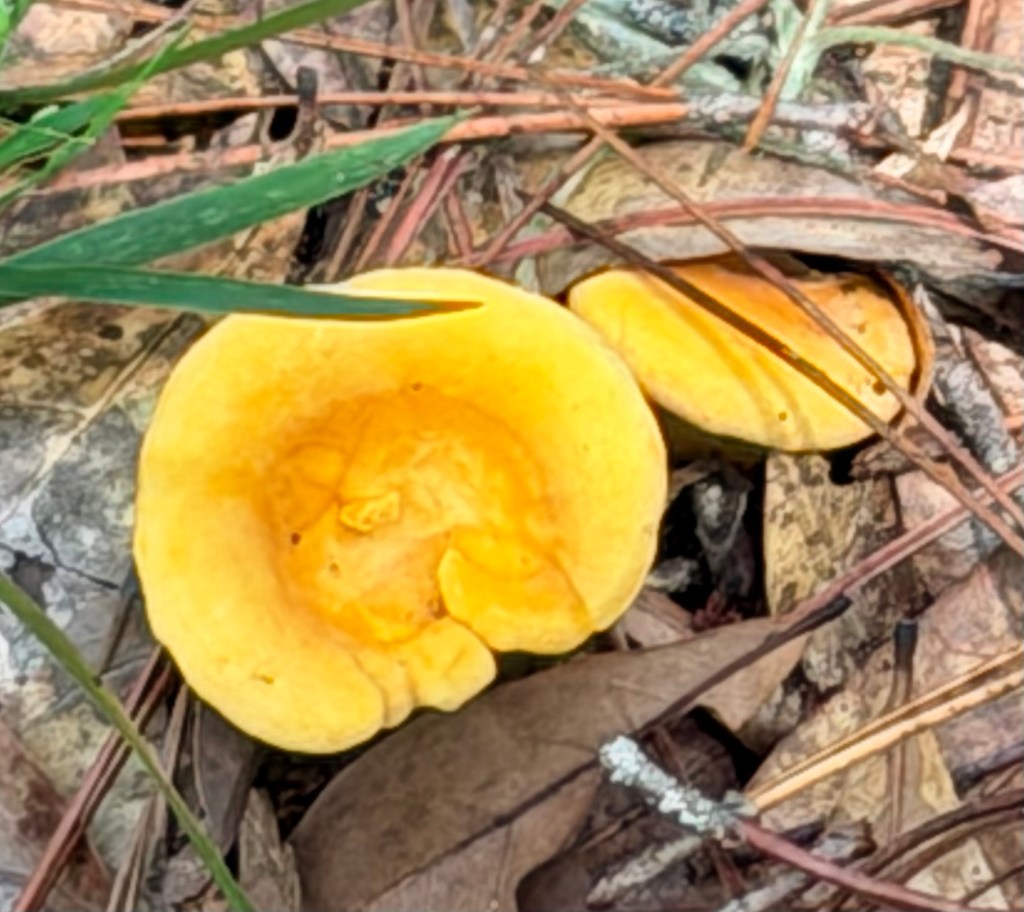
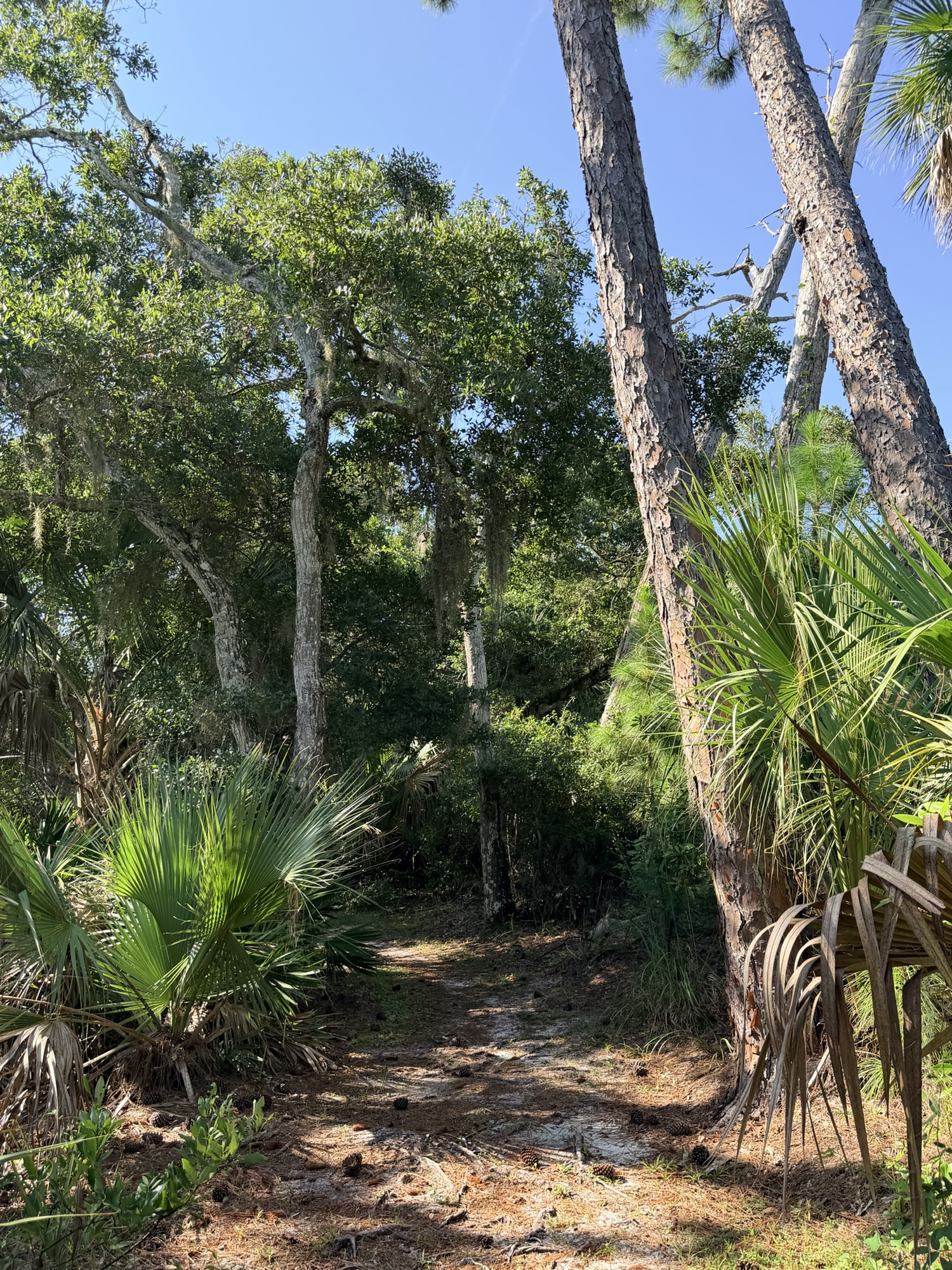
I endeavored to go on as much as possible of the next trail, which is a six-mile loop. I did not go that far. I did make it to where the trail turns and follows Bulow Creek before turning back. This was a lovely trail that even had some birds! I saw a Pileated Woodpecker fly by. There was also ample evidence of wild hogs. And since there was NO evidence of bears, I concluded that the large black animal that snorted at me was a hog. Yow. But the ferns, flowers, and trees were great. I also enjoyed many brown anole activities.
I had one more stop on my route, which made a nice circle. I wish I could have taken photos as I drove, because the drive between Bulow and North Peninsula State Park is through some of the prettiest wild east coast scenery I’ve ever seen. Woods making tunnels over the road lead to stunning swamps and to wide-open marshlands. I may take Lee there just to see it again. I also enjoyed going over a small drawbridge.
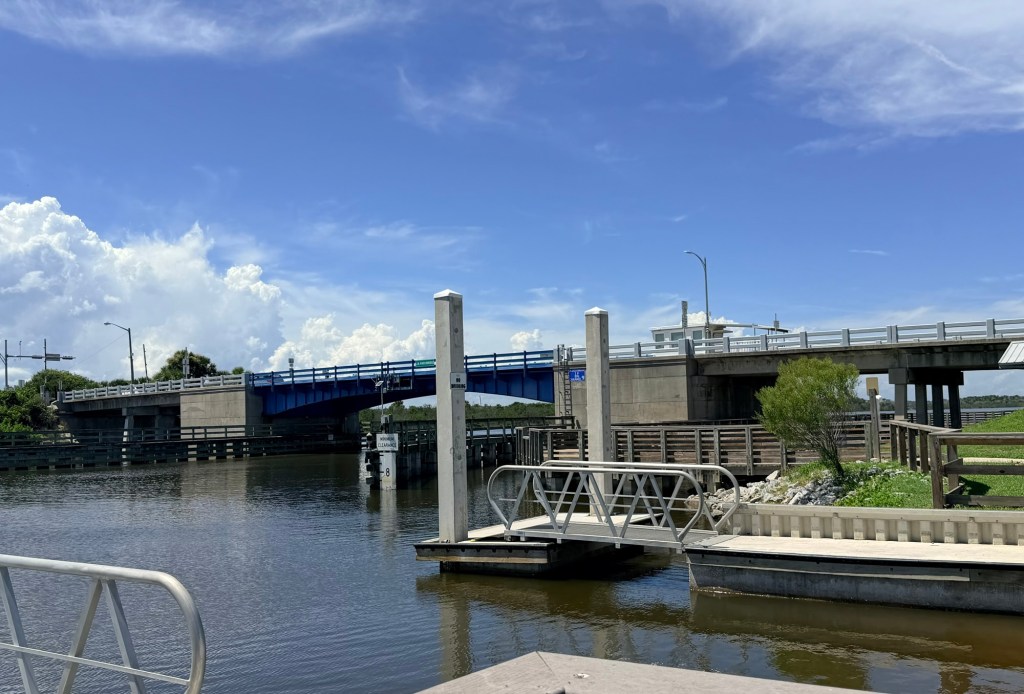
I didn’t get to see it go up.

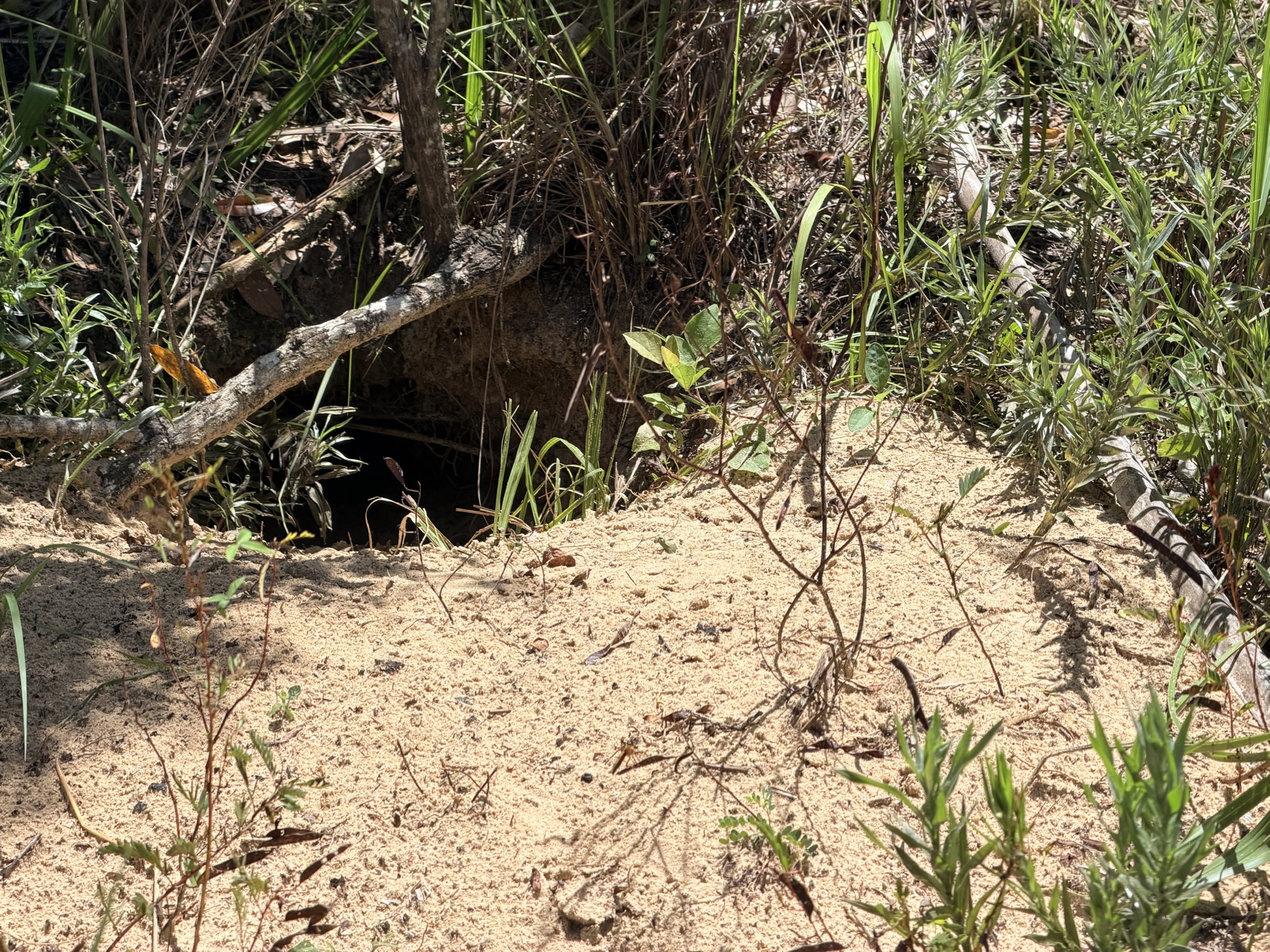
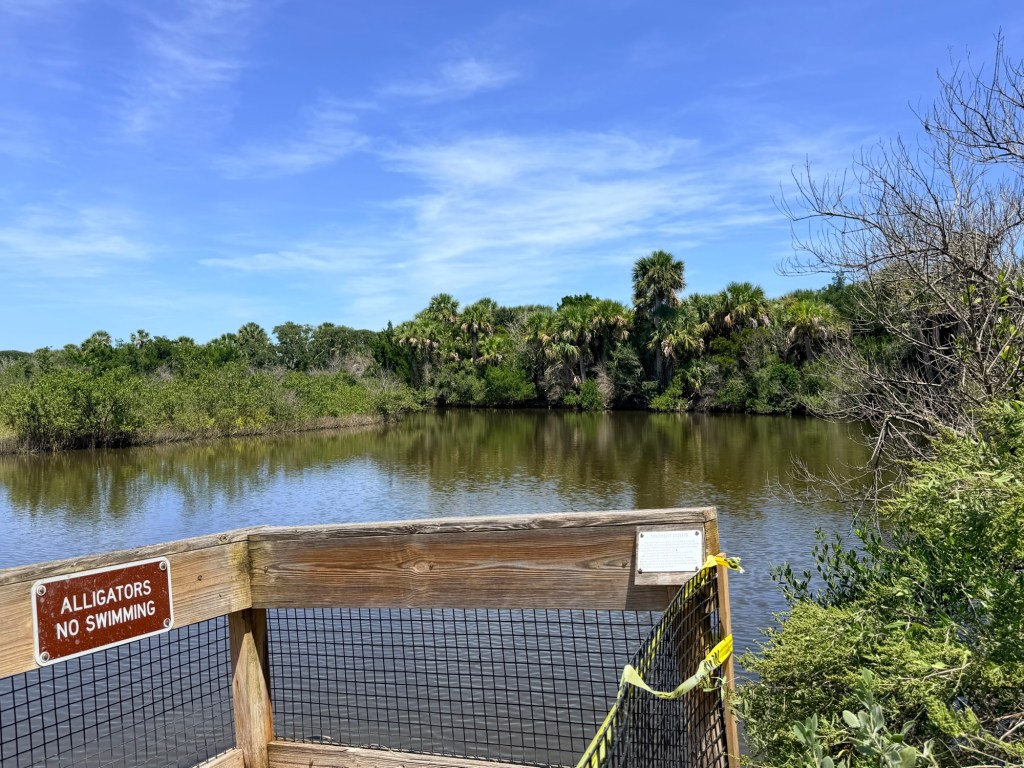
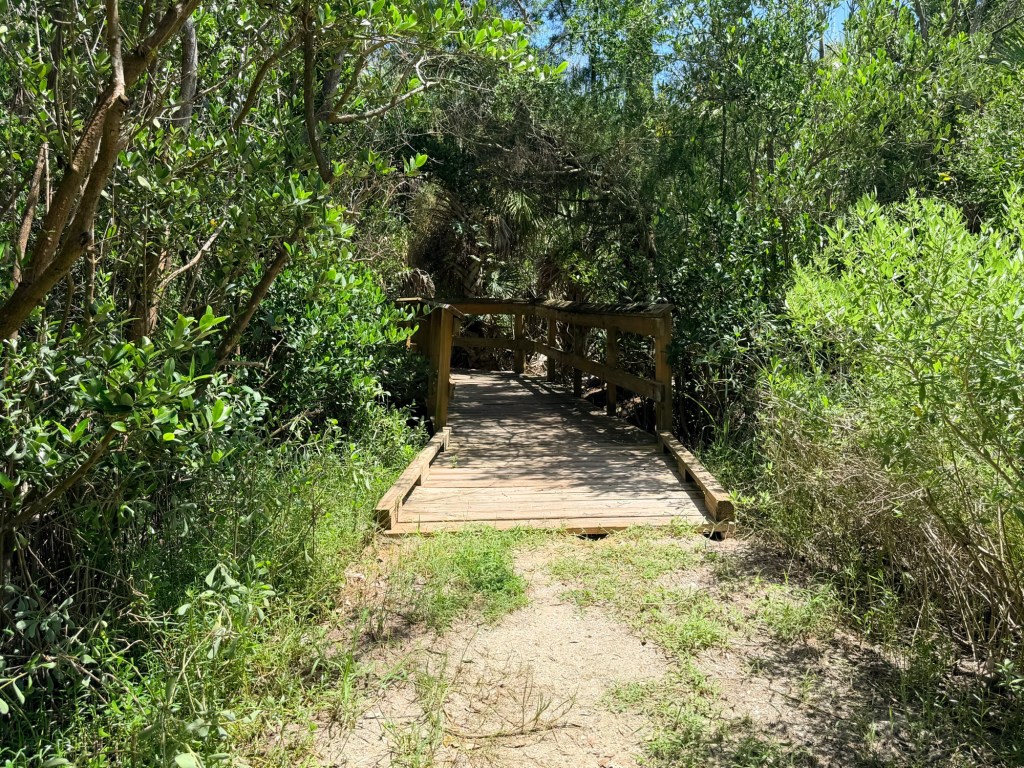
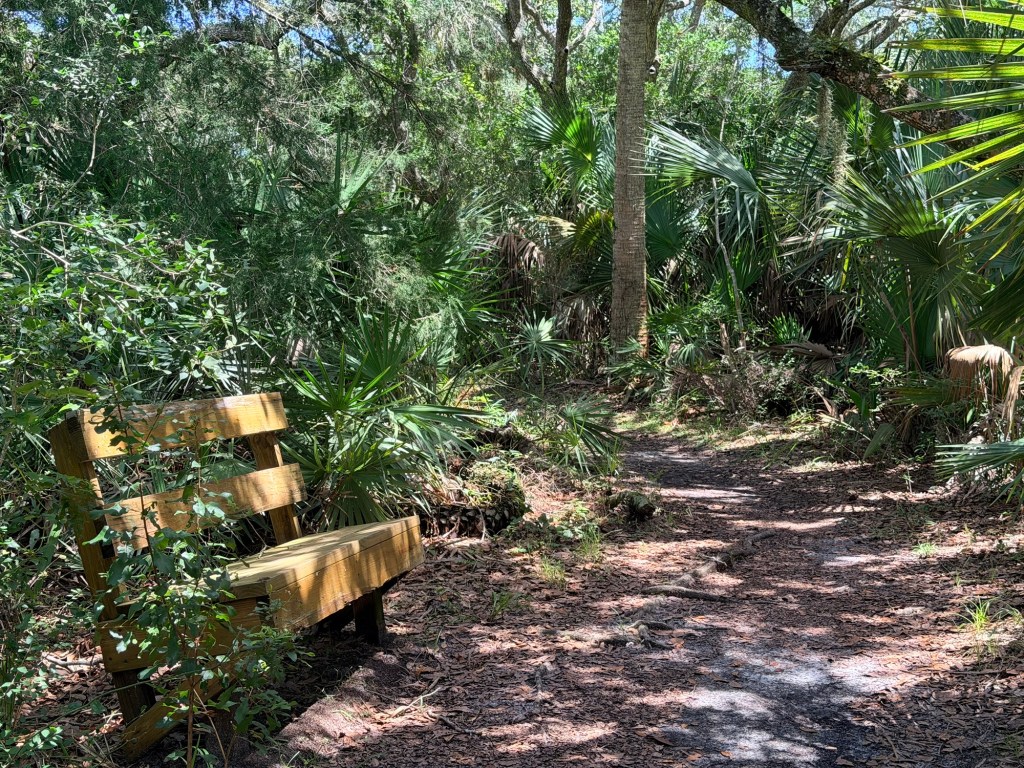
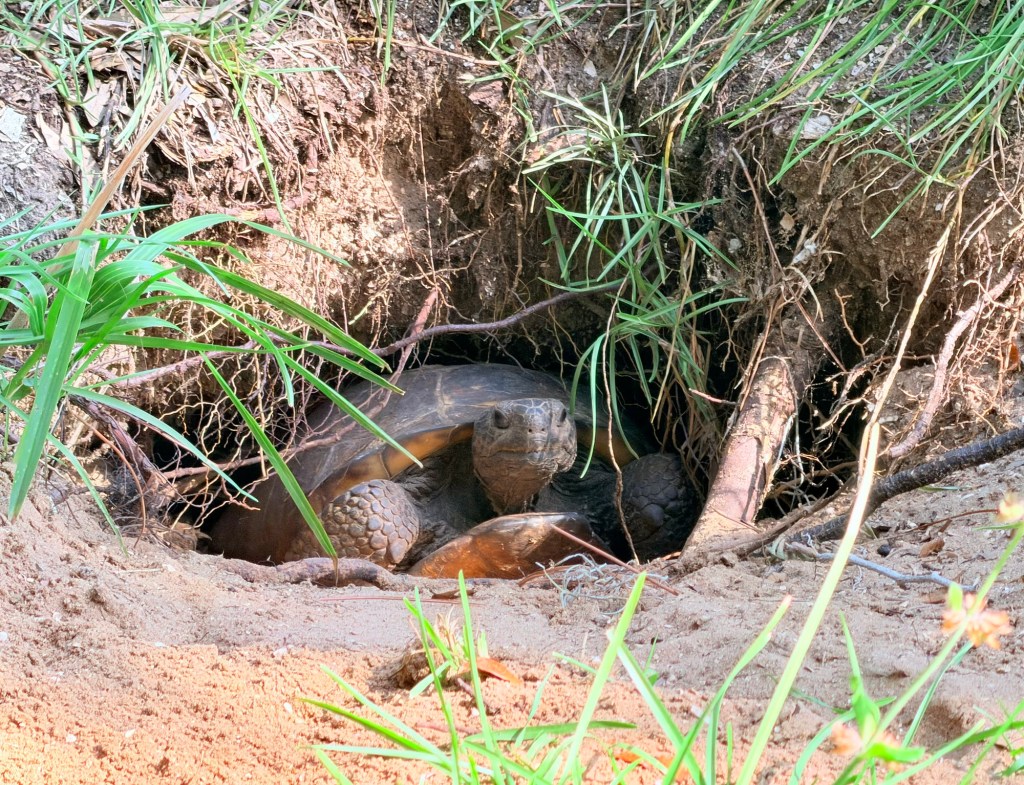
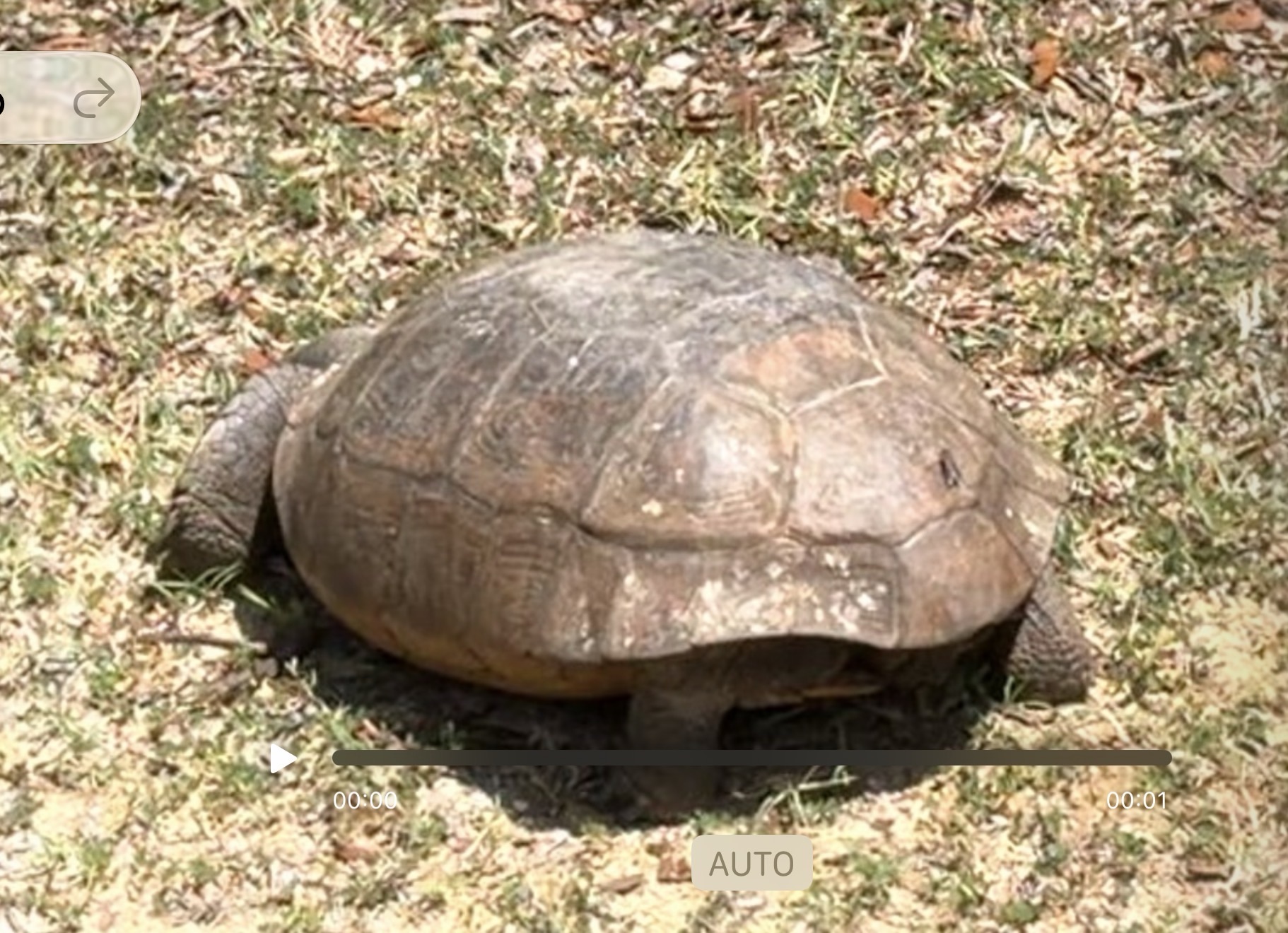
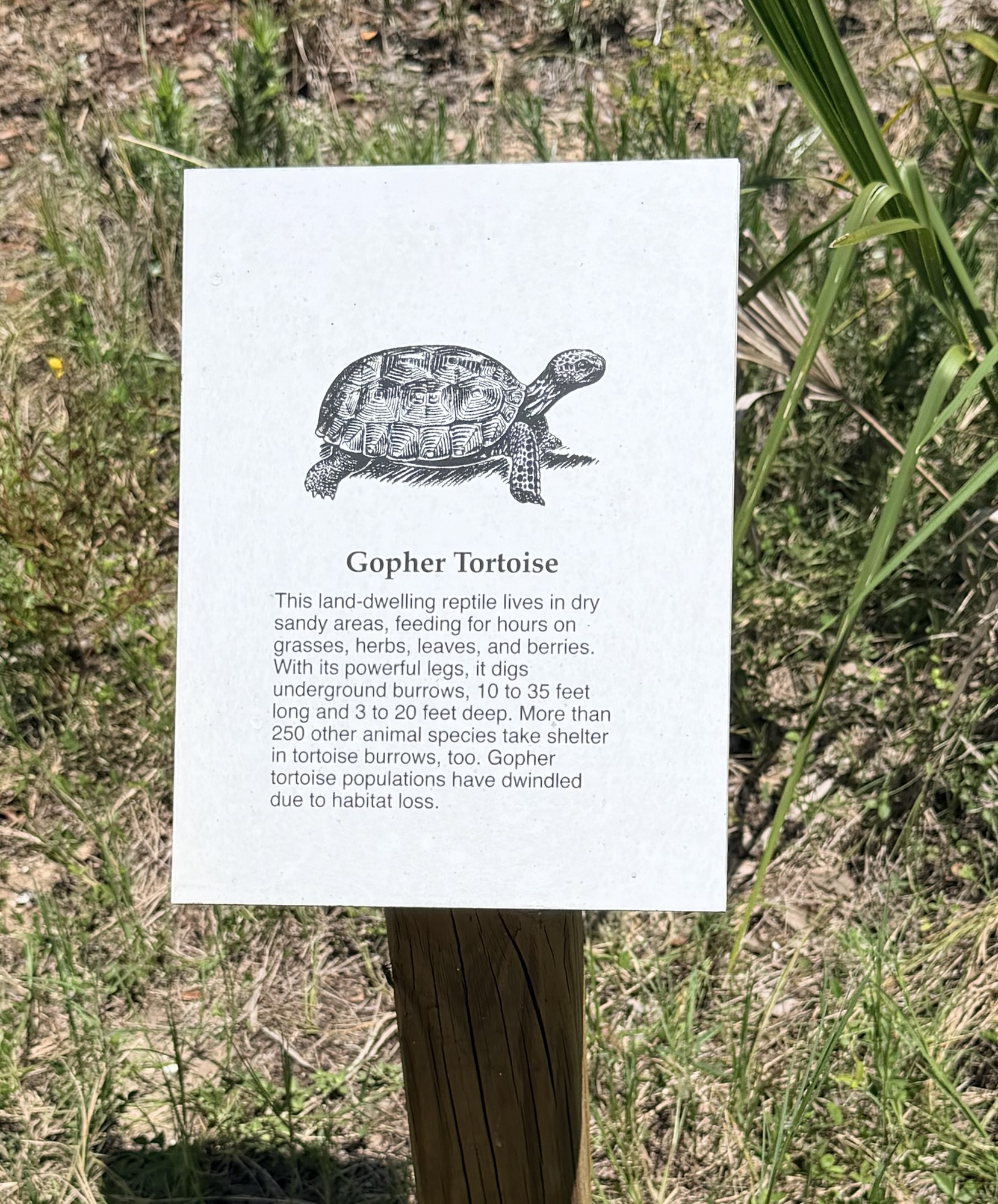
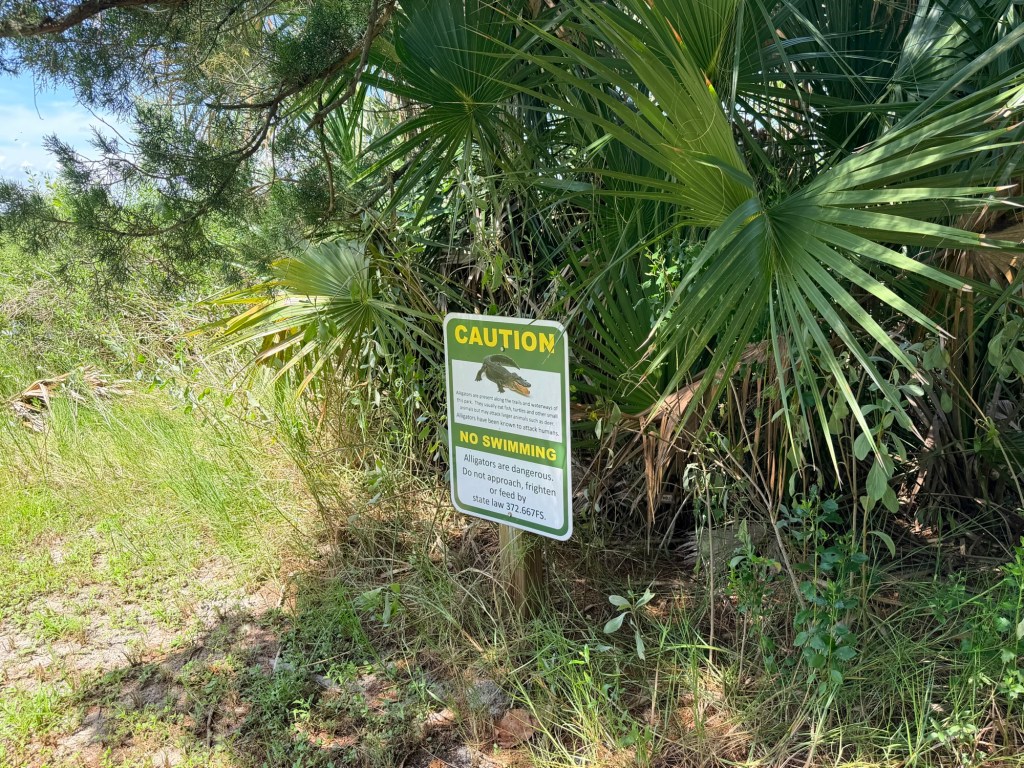
At this park I went on a trail that’s supposed to be a birding trail. I didn’t see any, nor any alligators. I did see a very large gopher tortoise. It made a noise at me for interrupting snack time. I also found what had to be its hole (huge) nearby.
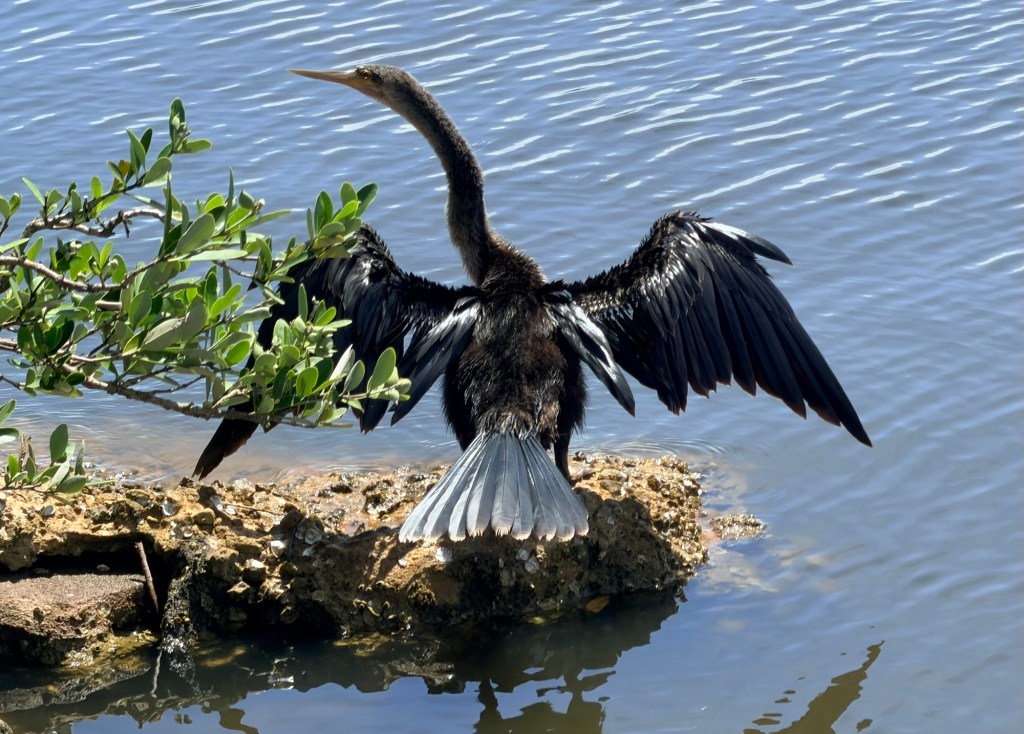
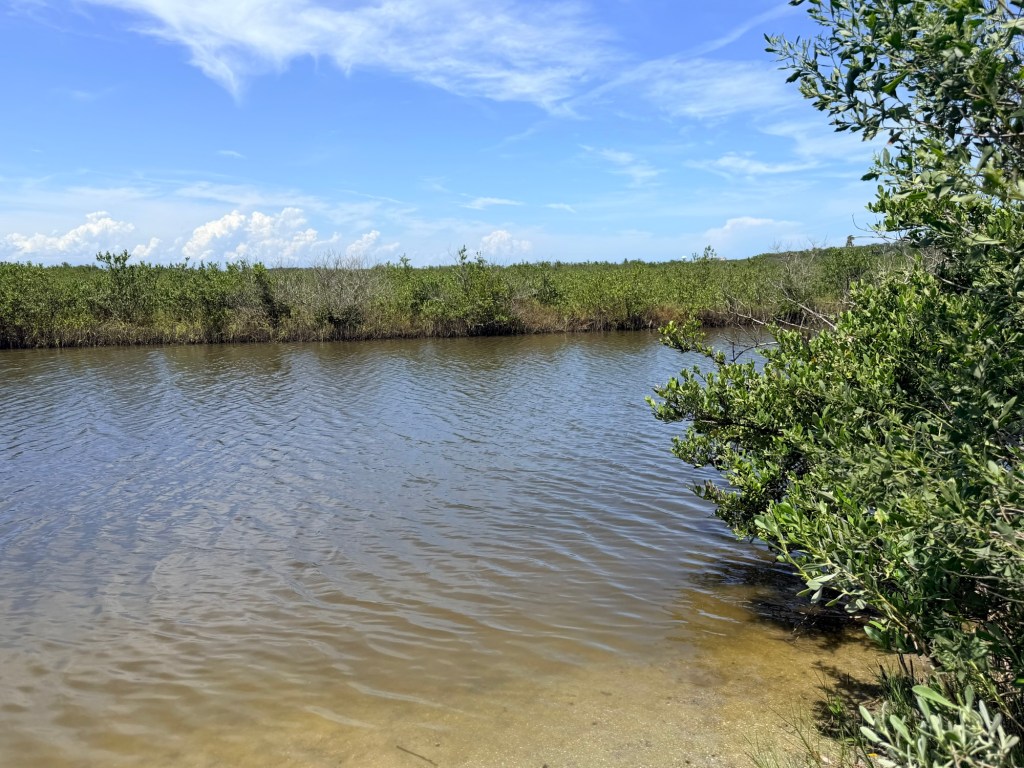
If it wasn’t so hot, I’d have enjoyed more of this trail, which crossed hammocks and scrub. But I got too red and knew I needed to get a drink and rest. That led me to a shiny Anhinga. A bird!
I came back to the condo and enjoyed putting my observations in iNaturalist and rehydrated. After cleaning up, I got Vicki and we had a fancy steak dinner at the fancy restaurant I ate at last week. Other than very happy and loud revelers next to us, we had fun.
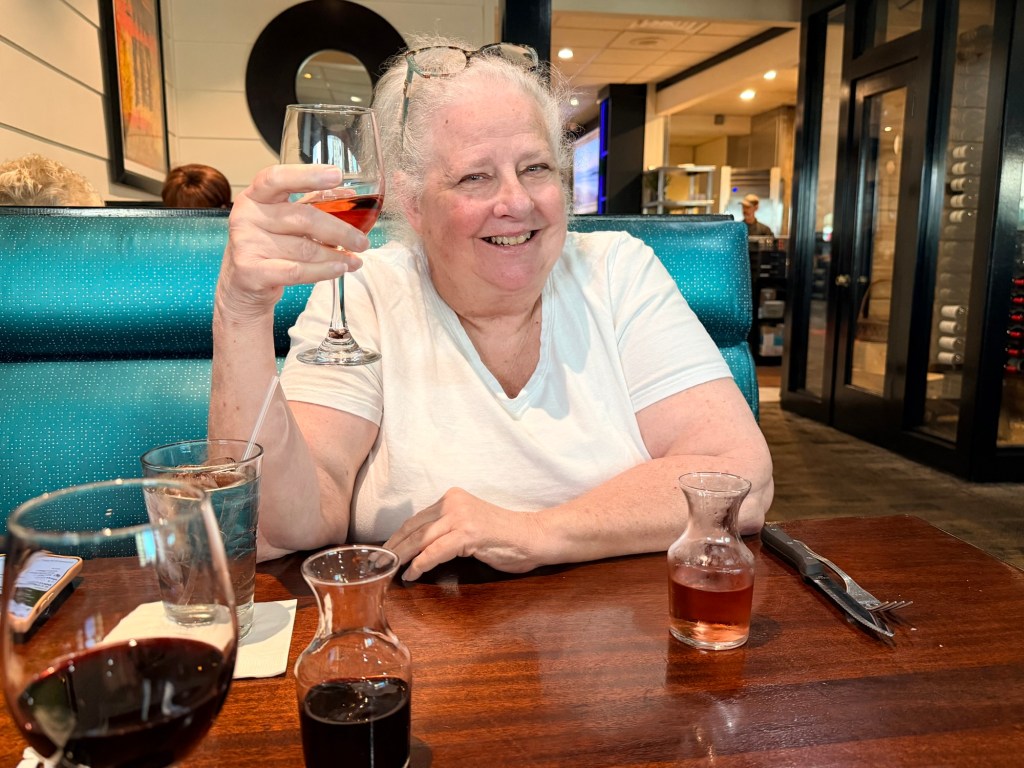
Ready to enjoy her pink wine.

Lee is halfway here, after dealing with bad traffic and wonky GPS. Tomorrow I won’t be alone in the condo!

Hope you enjoyed the photos. I sure enjoyed my day. All positive.
Drowning my sorrows?

Today I tried very hard to find happiness amidst sadness about so many good people passing away lately (famous and not-so-famous). I should get used to it, and normally I am. This is just a rough week.

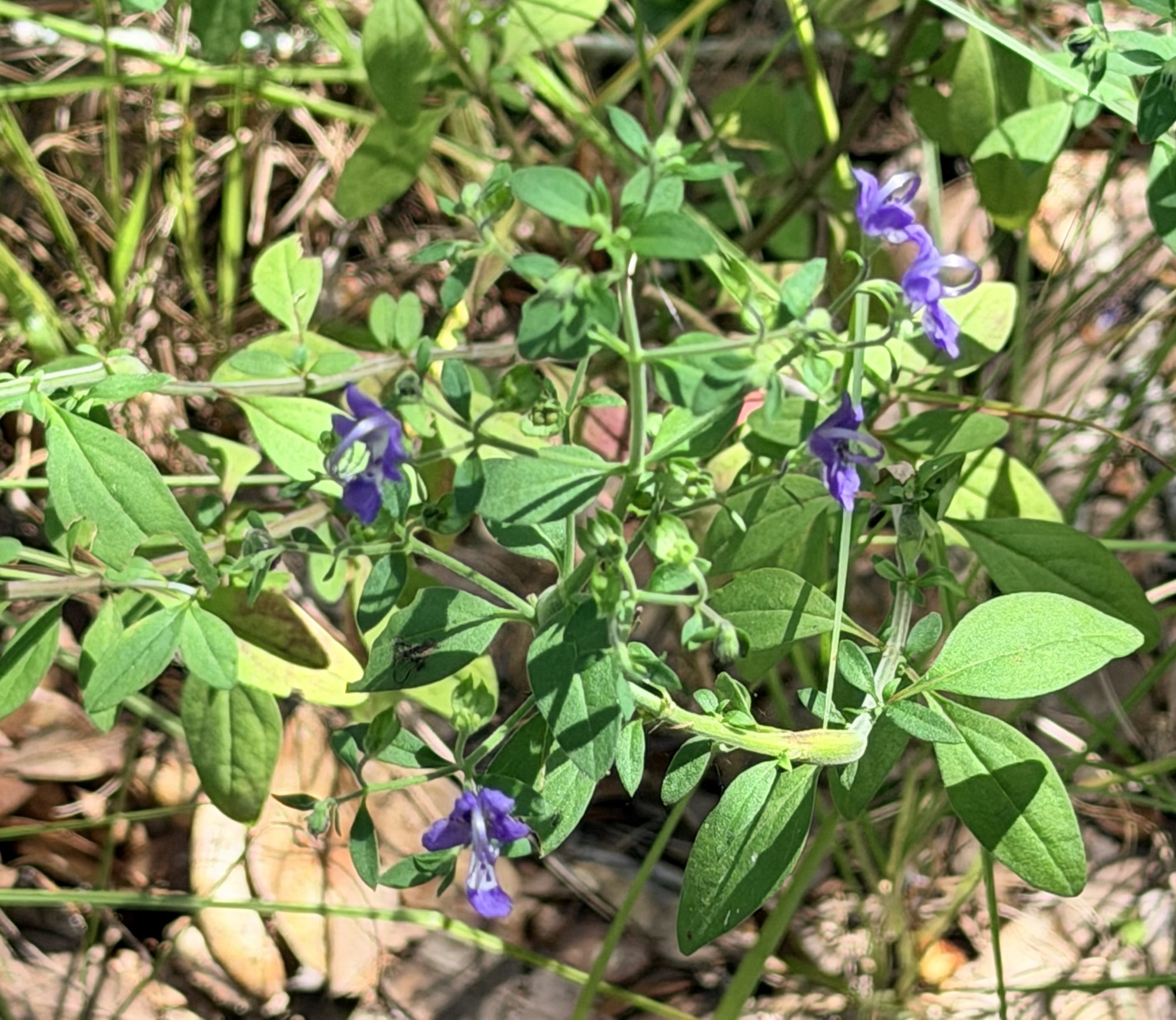
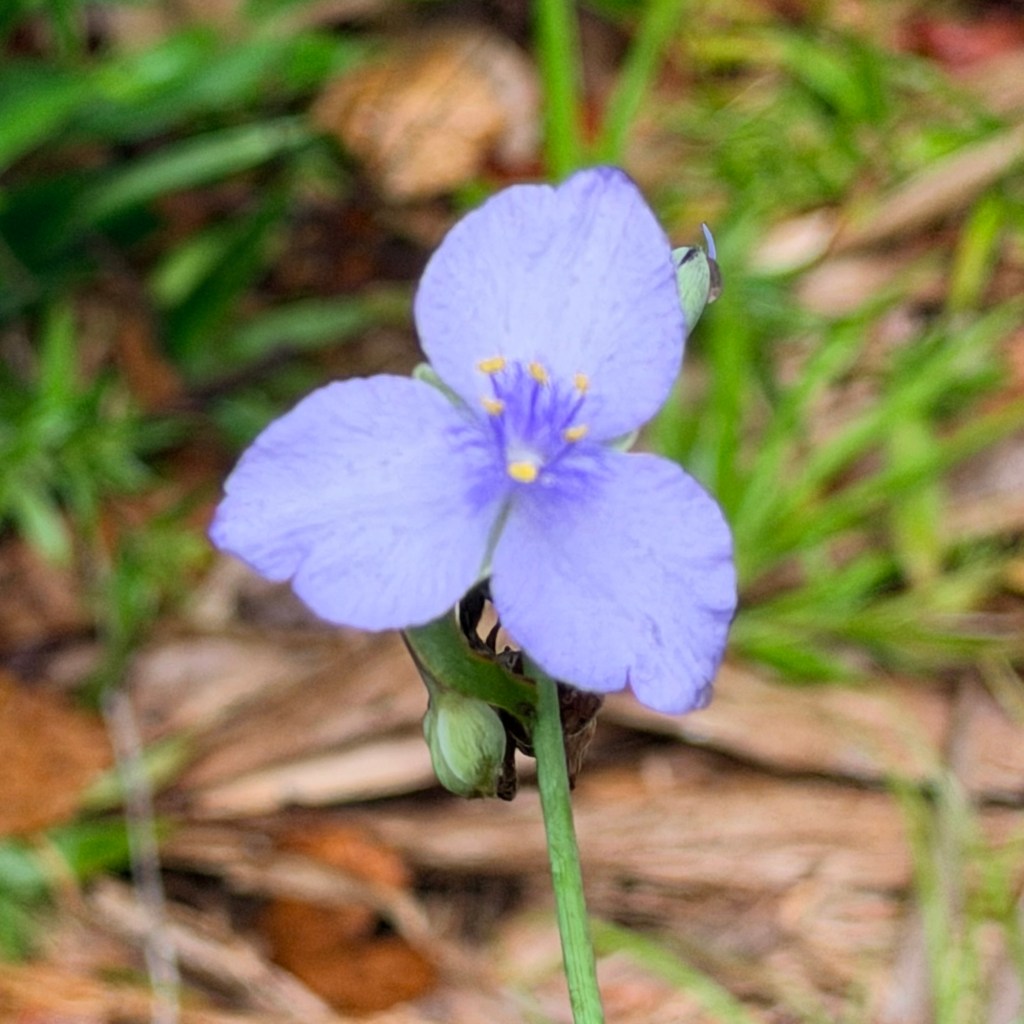
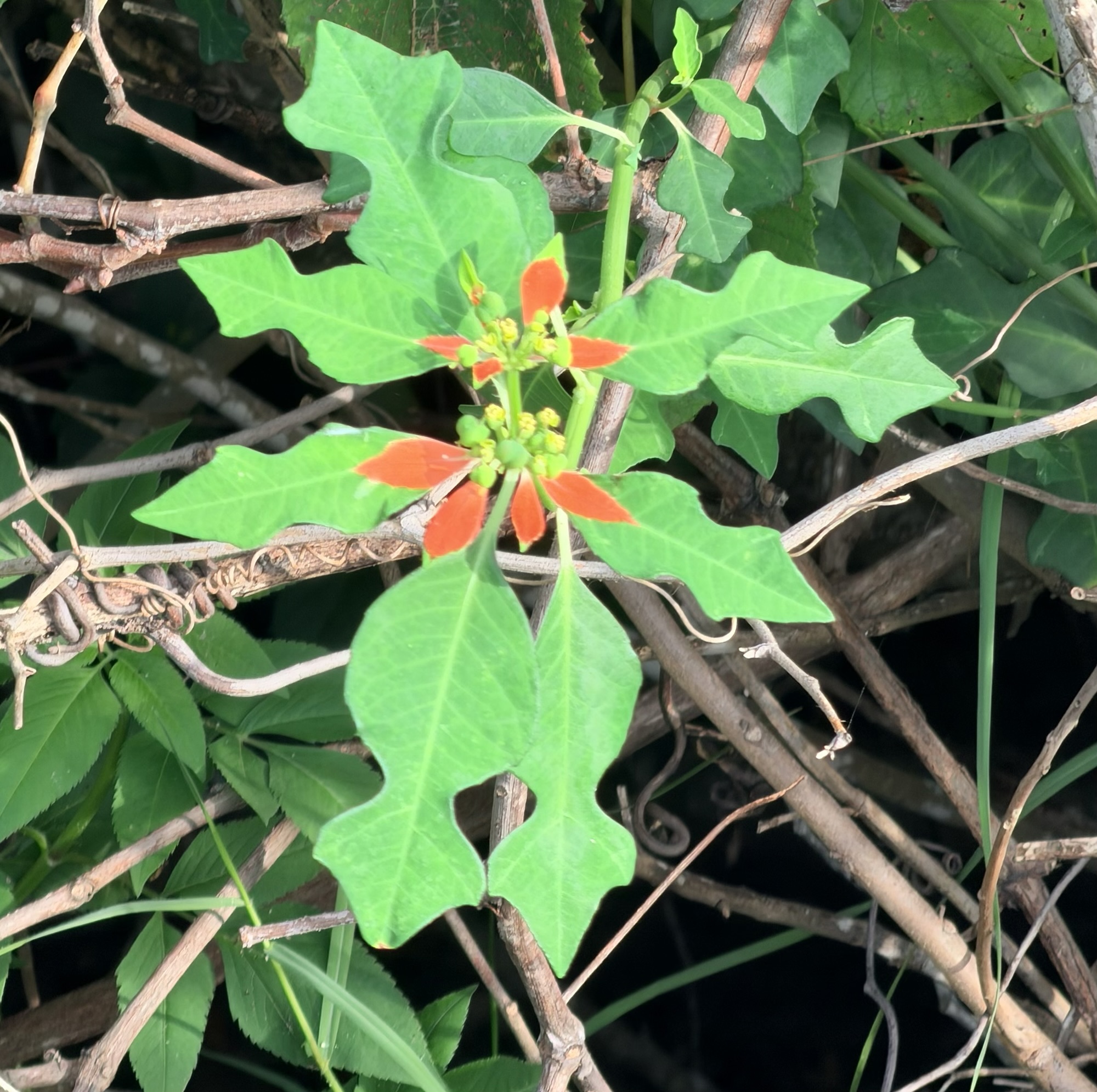
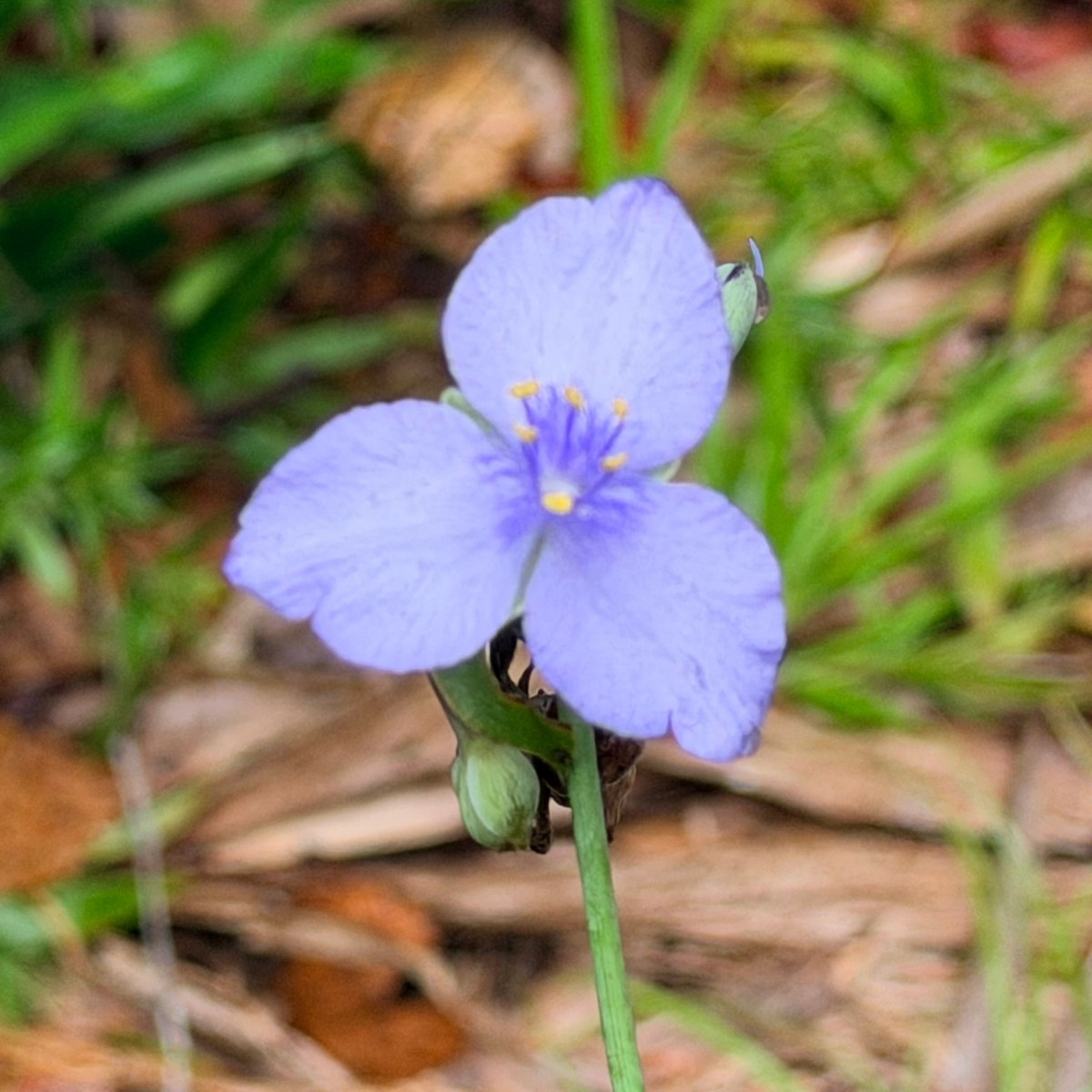
I did find beauty! This is Ohio Spiderwort.

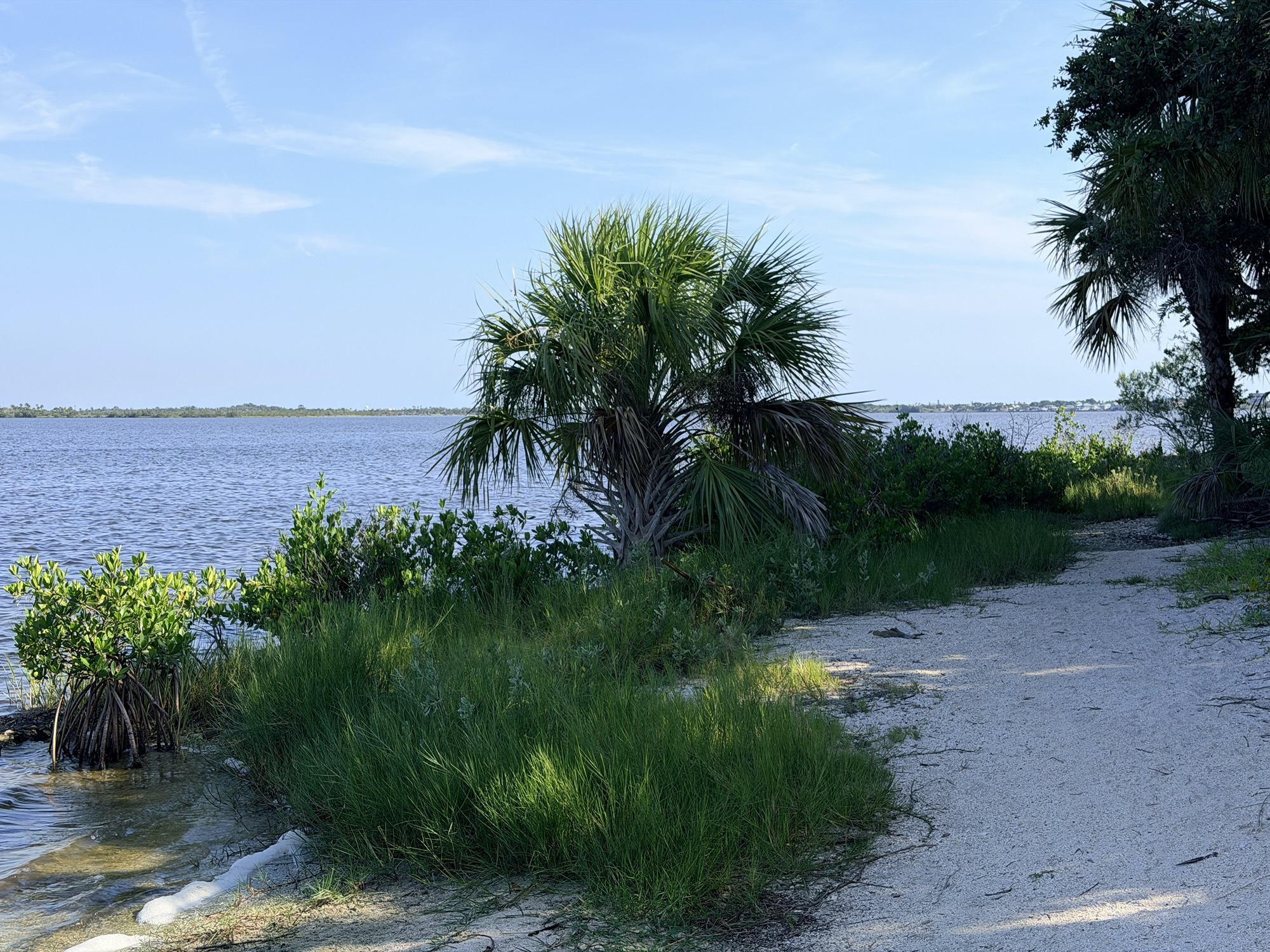
I got up early and dragged myself to a nearby park, Michael Crotty Bicentennial Park, where I wandered around and enjoyed many beautiful plants.

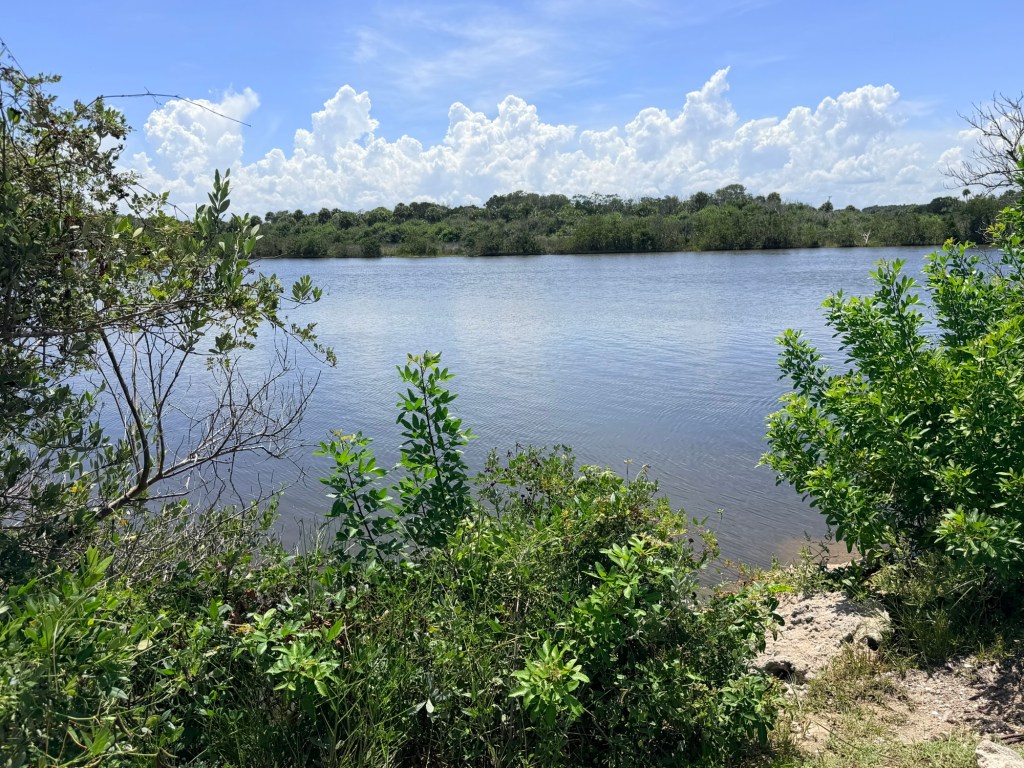
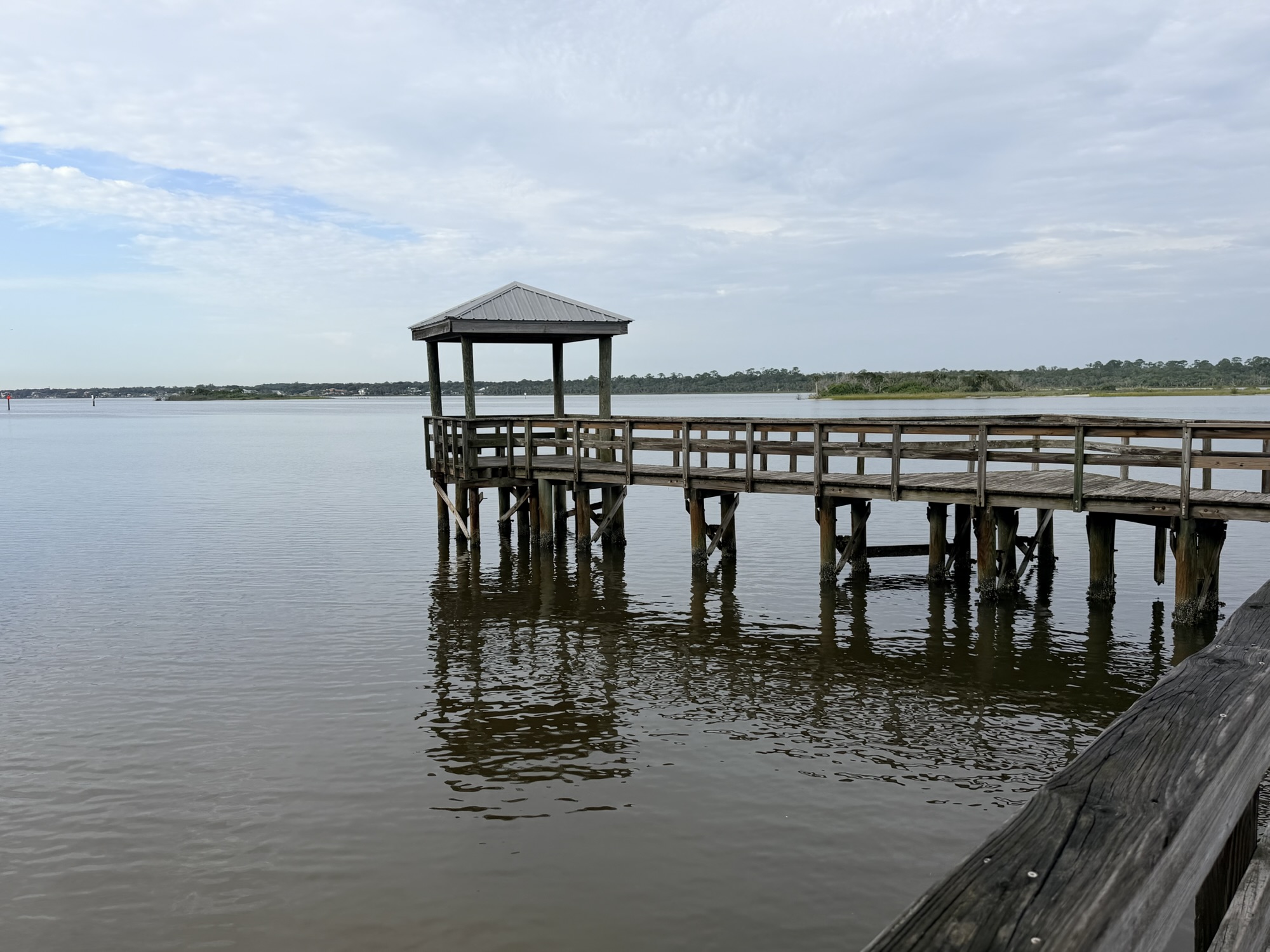
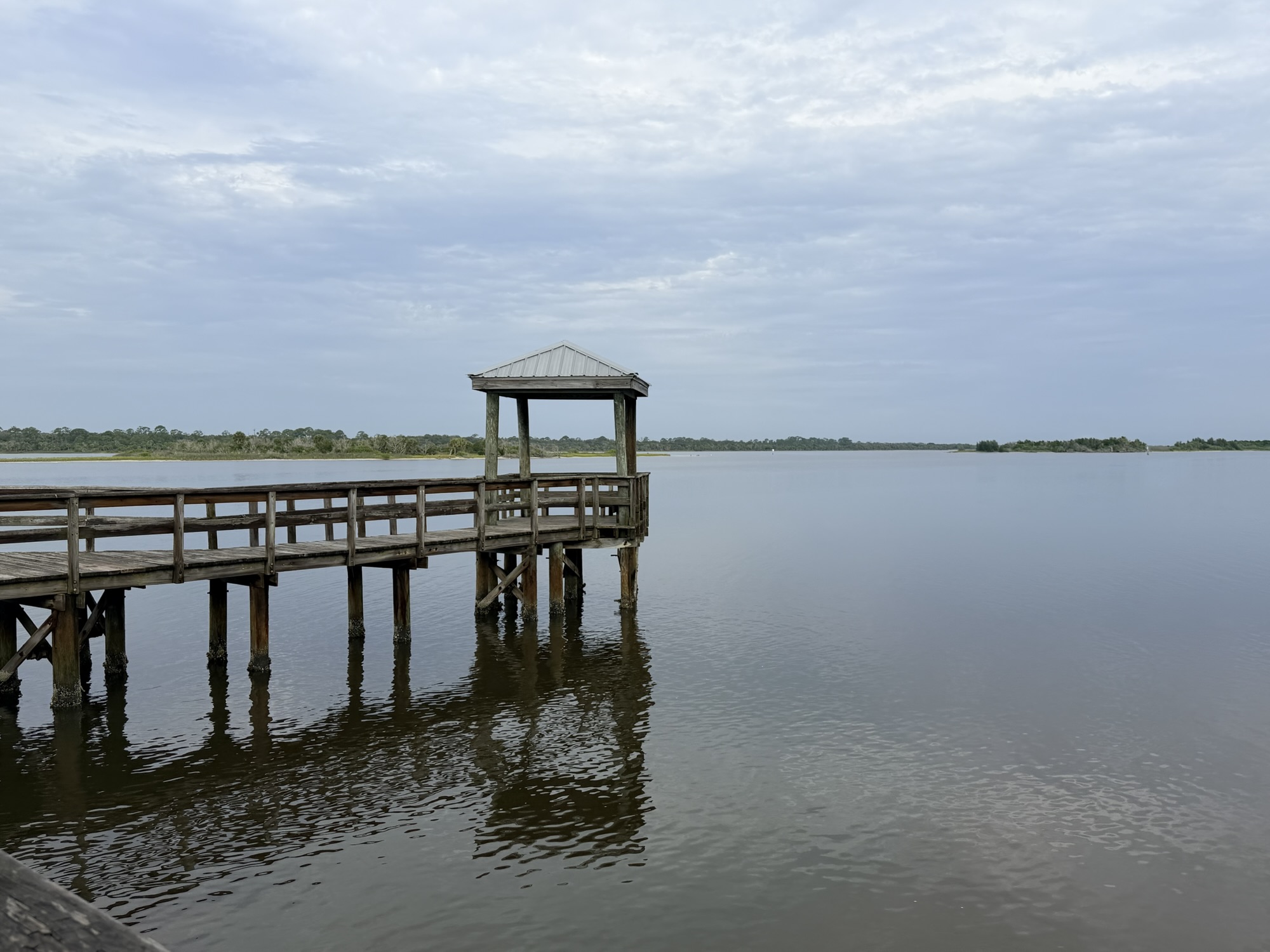
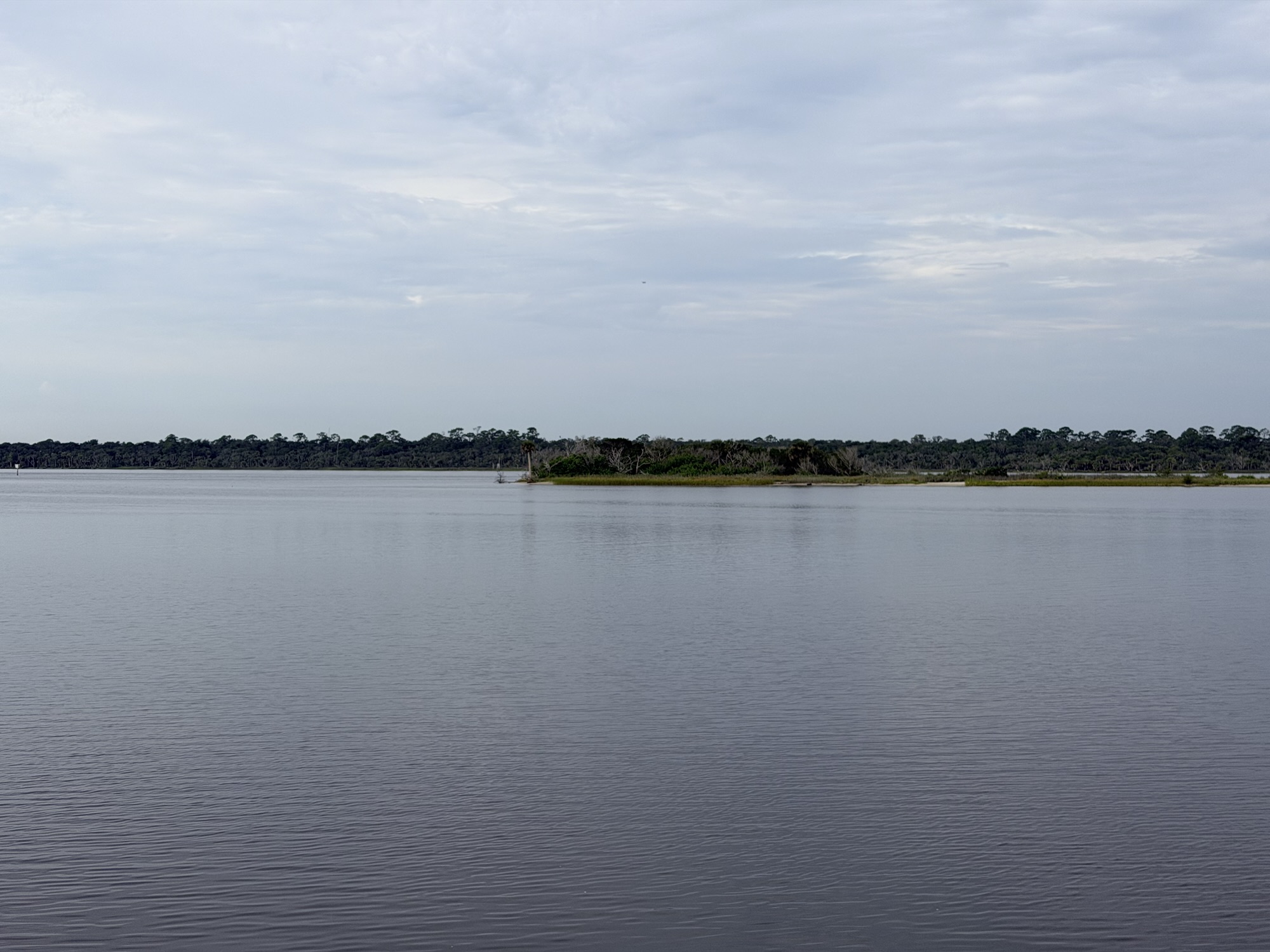
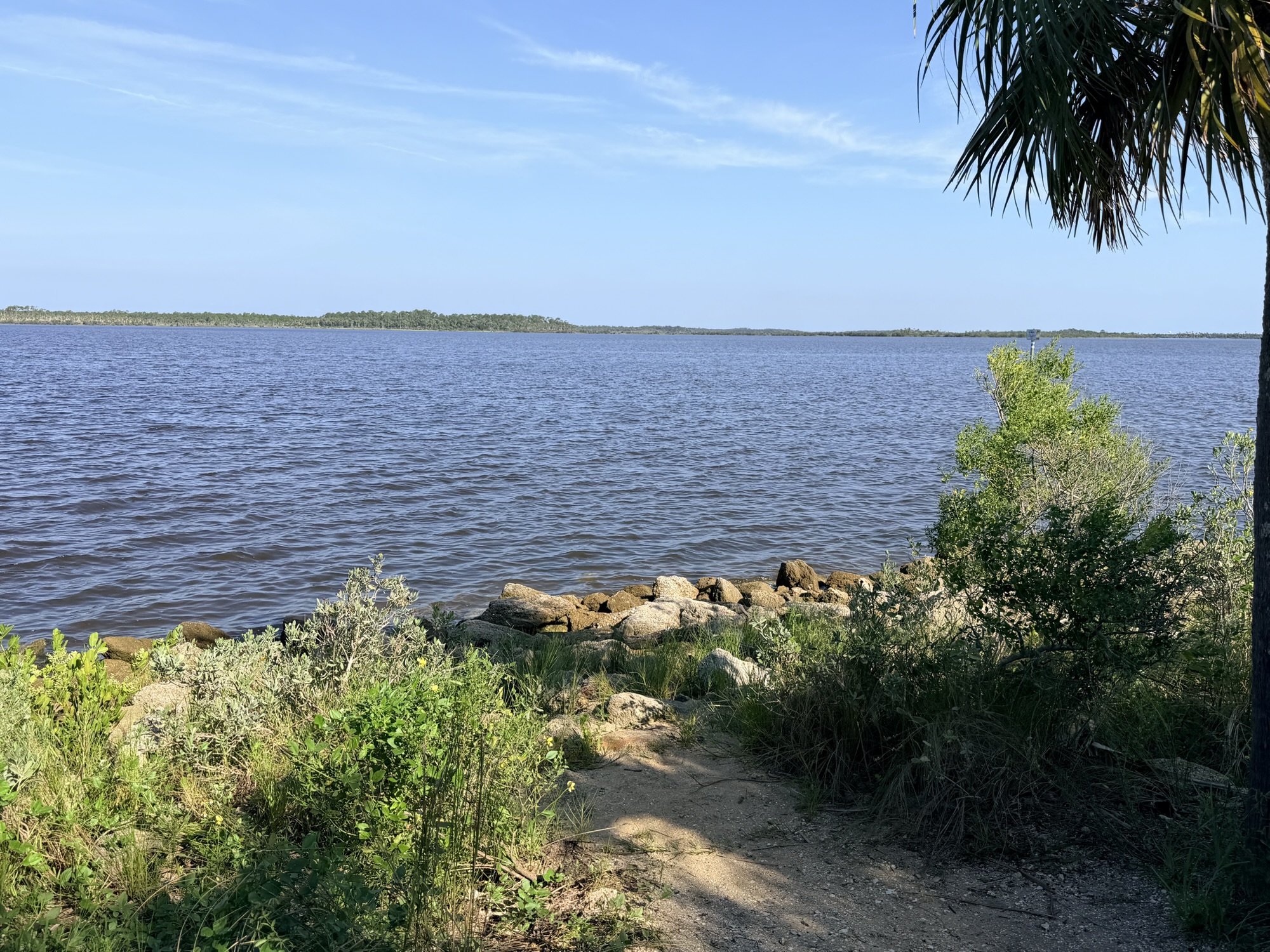
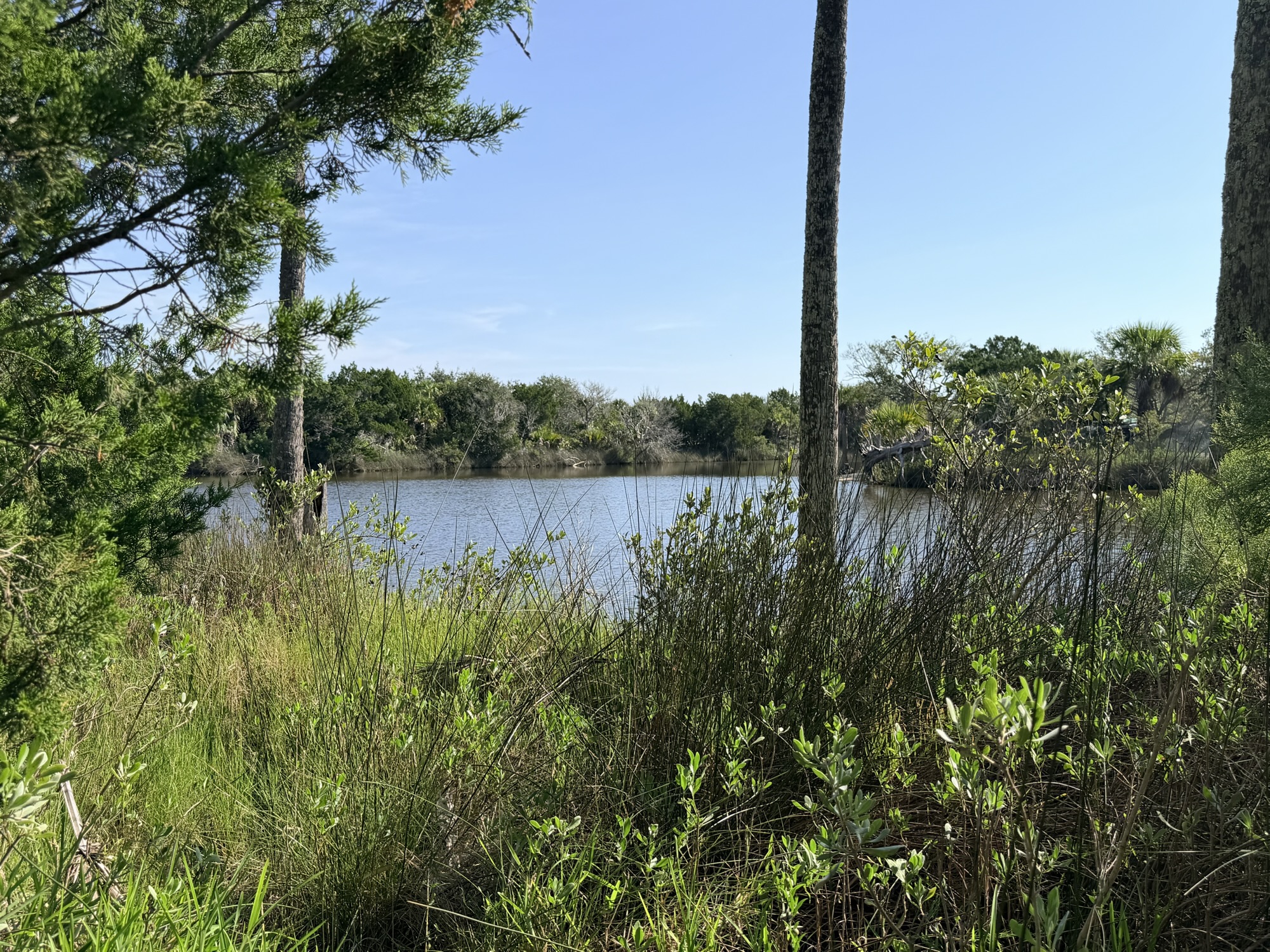
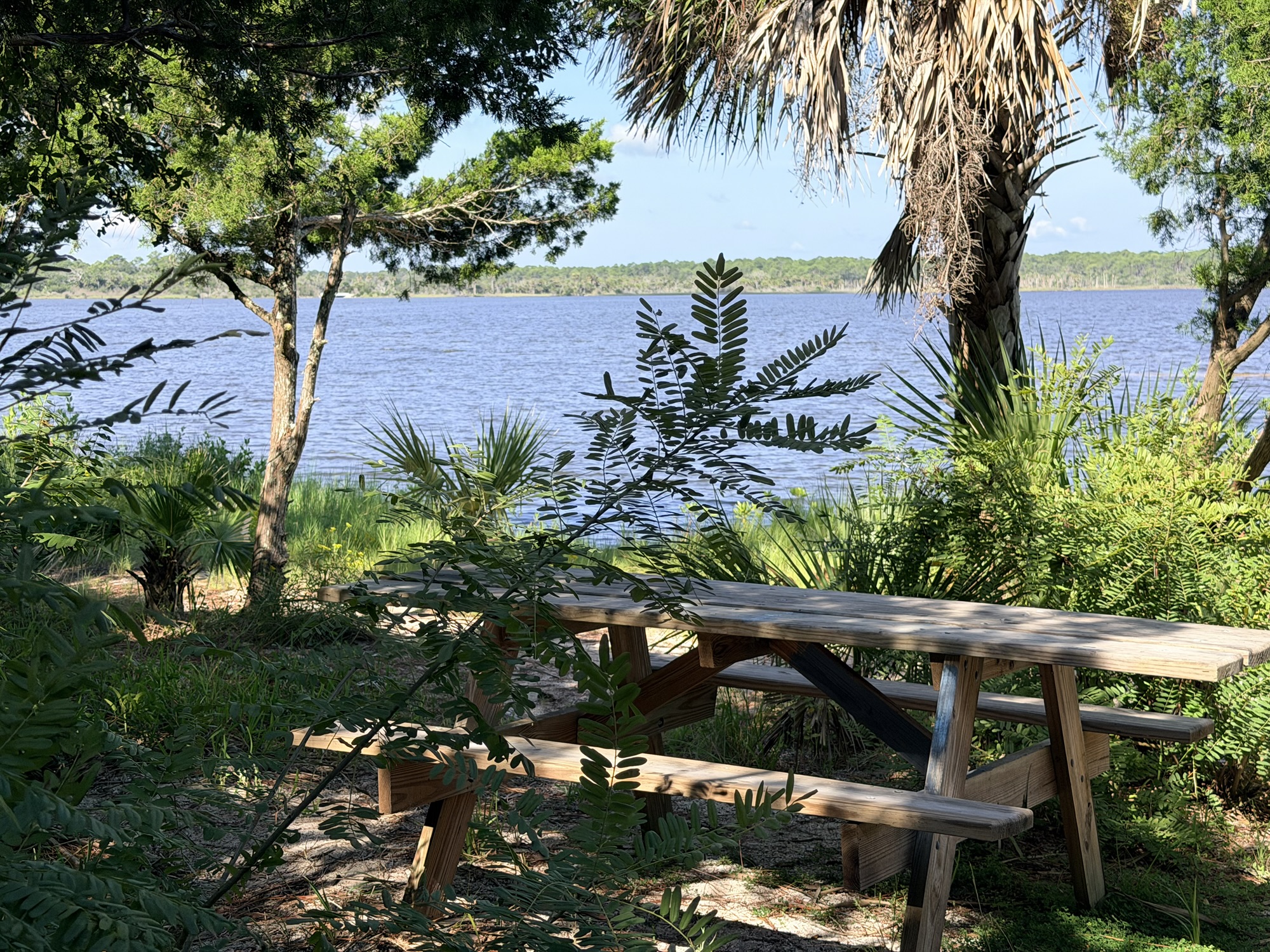
I then walked across the road to a nice dock with great views of the Intracoastal and native woods. I got to see birds and talk to a couple of nice folks. I still made it back in plenty of time to start work.

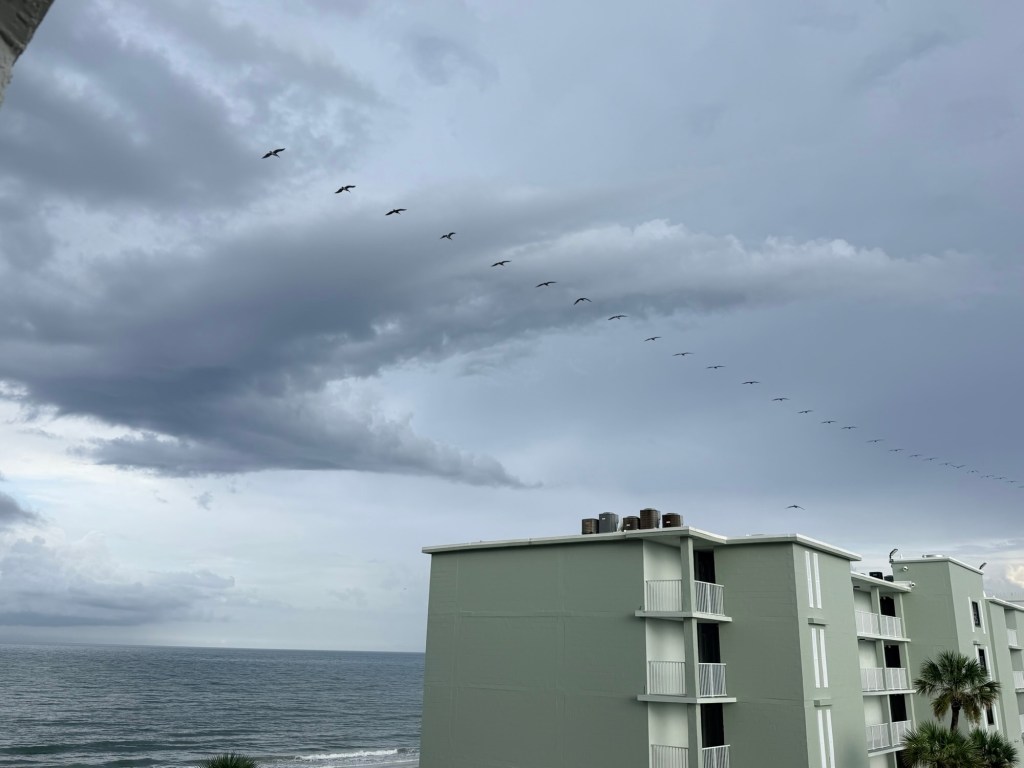
It stormed pretty spectacularly this afternoon, with lightning right on top of me. I enjoy watching rain over the ocean, and it brought peace except when the big booms came.

Stormy weather and pelicans

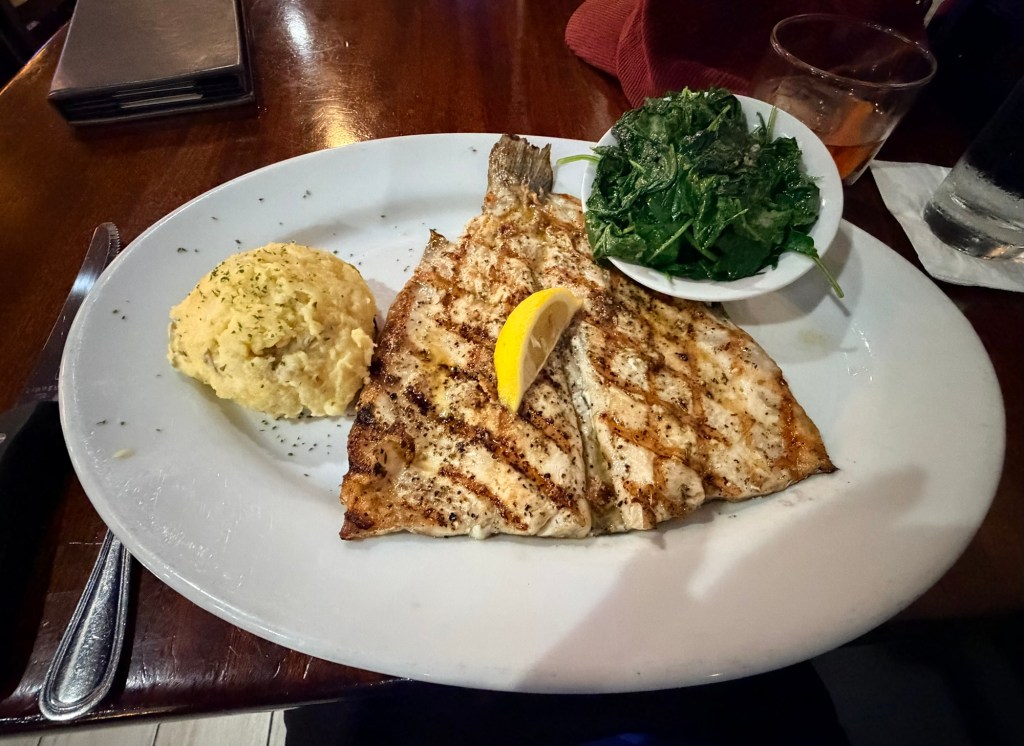
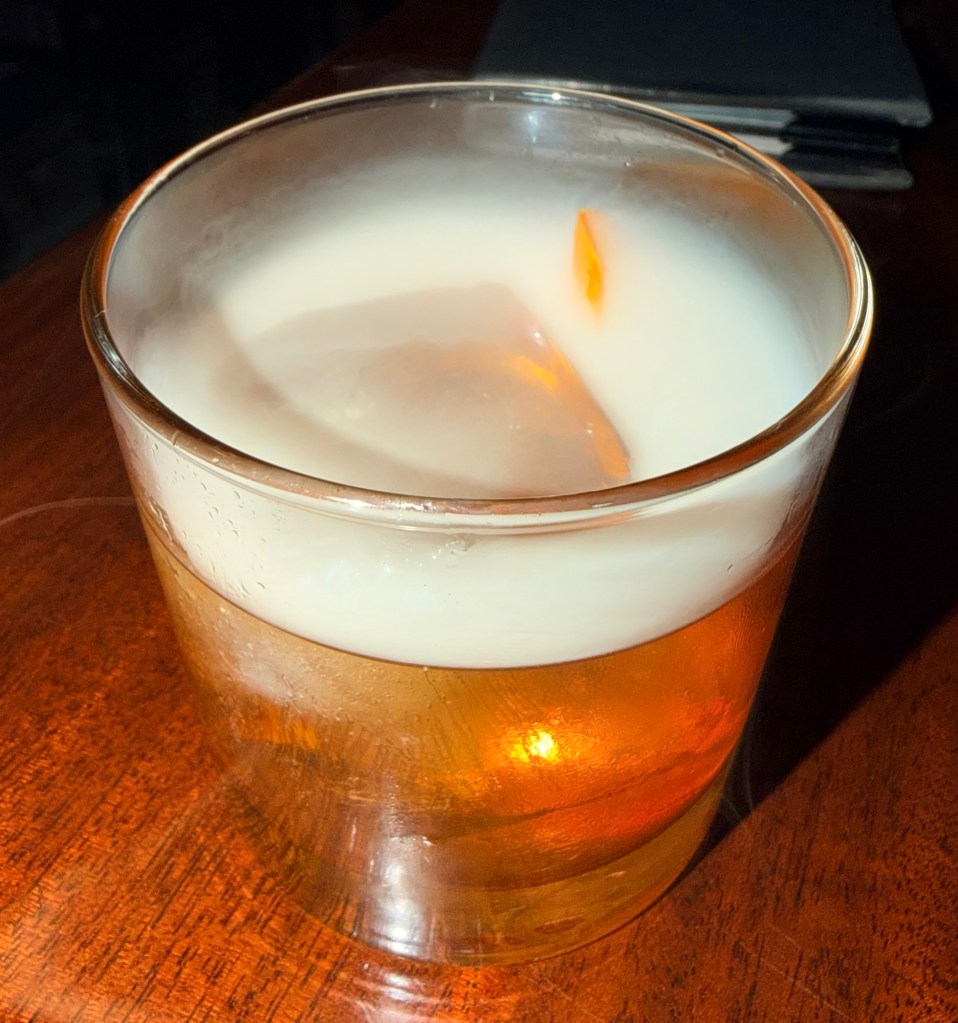
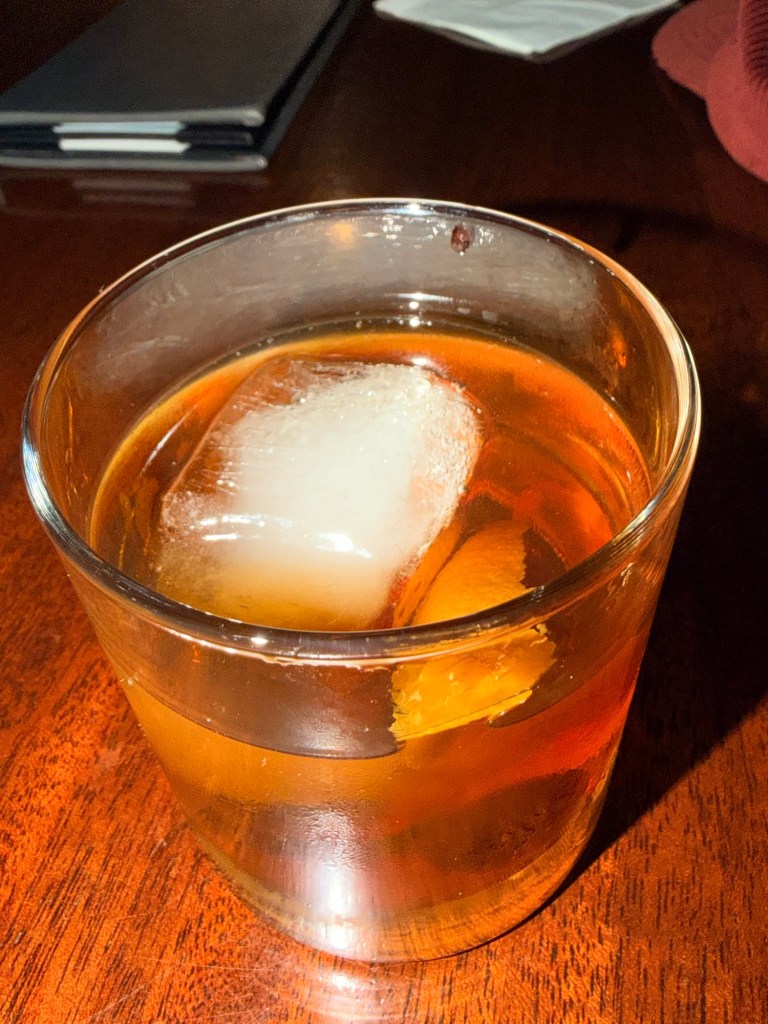
After work, I went for a nice walk. I ended up with more birds today than any other here so far. To reward myself for working hard and because I was kind of lonely, I took myself to a nice dinner right across the road from the condo. I had old fashioned and a dessert. Good thing my meal was nice heathy fish and kale!

I’m looking forward to reading and relaxing for a while. This condo might not be fancy, but it sure is nice and quiet. Time to reflect.

Also, thanks for all the good feedback on Stephanie’s poem. She is full of understanding.

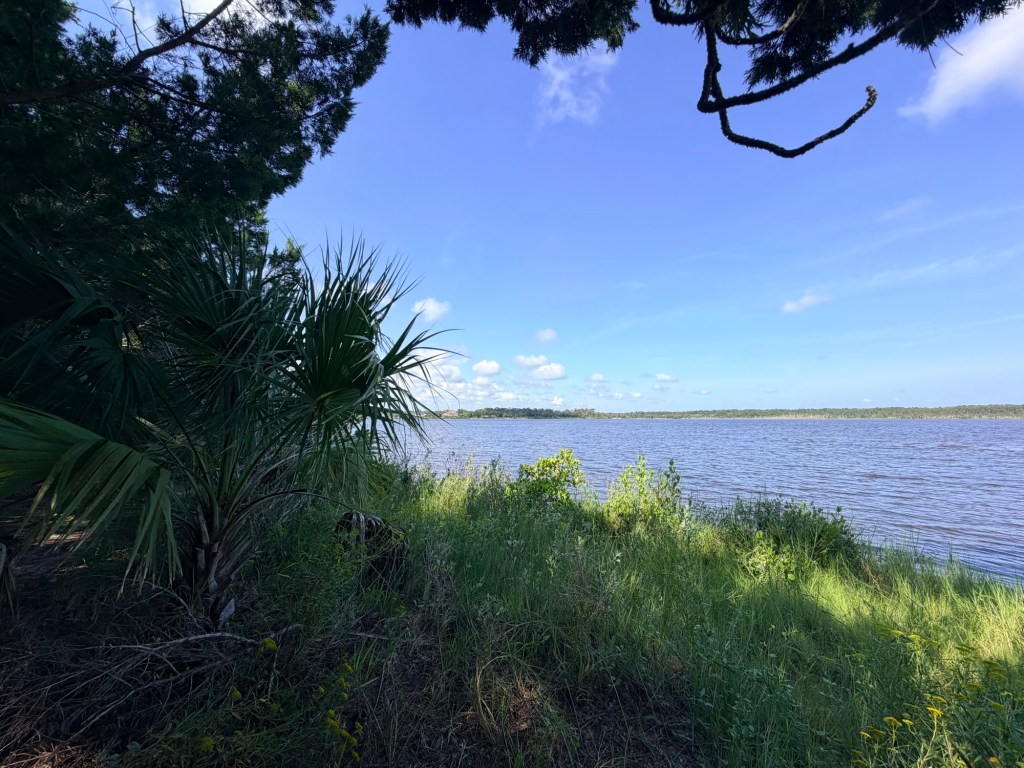
There’s a lot of water here

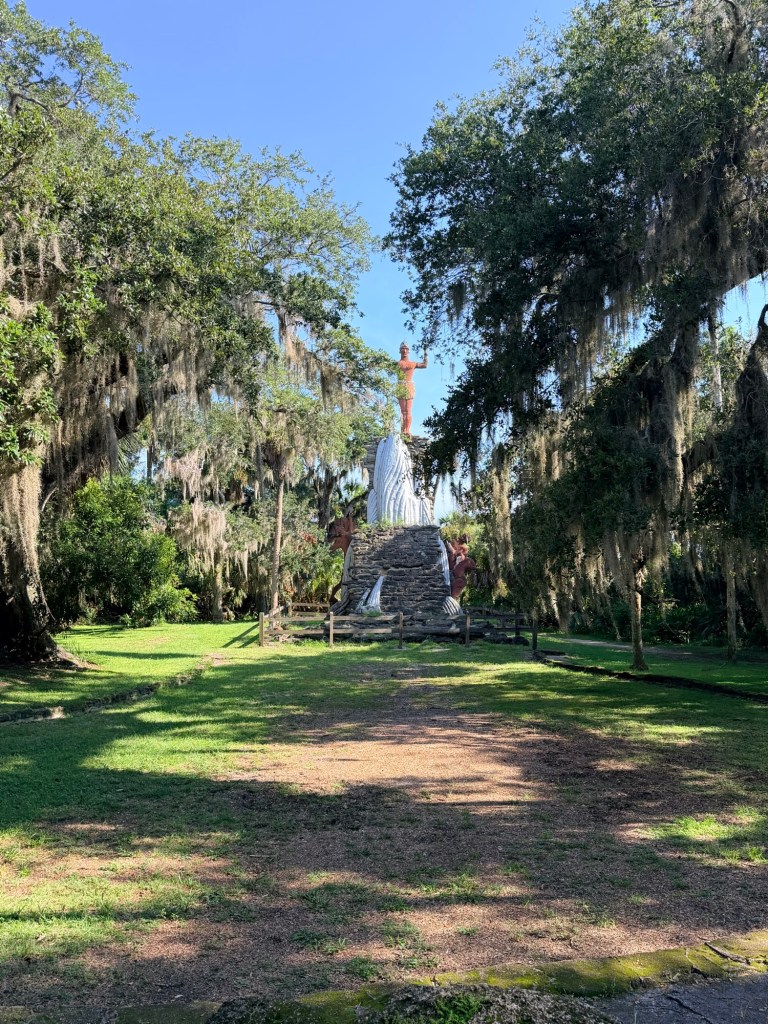
Since it’s Monday, I had to work. But since it’s Eastern Time, I didn’t have to work until late morning. So I took the opportunity to head over to Tomoka State Park, which is quite close to where I’m staying in Ormond Beach, Florida.

Statue of Chief Tomokie

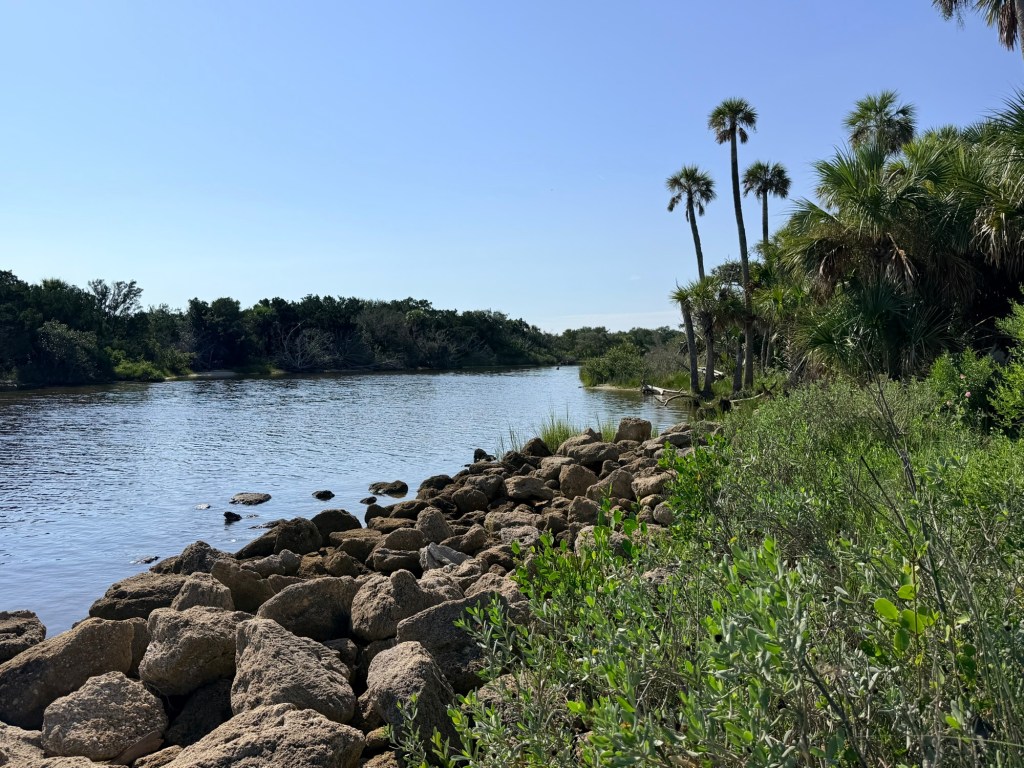
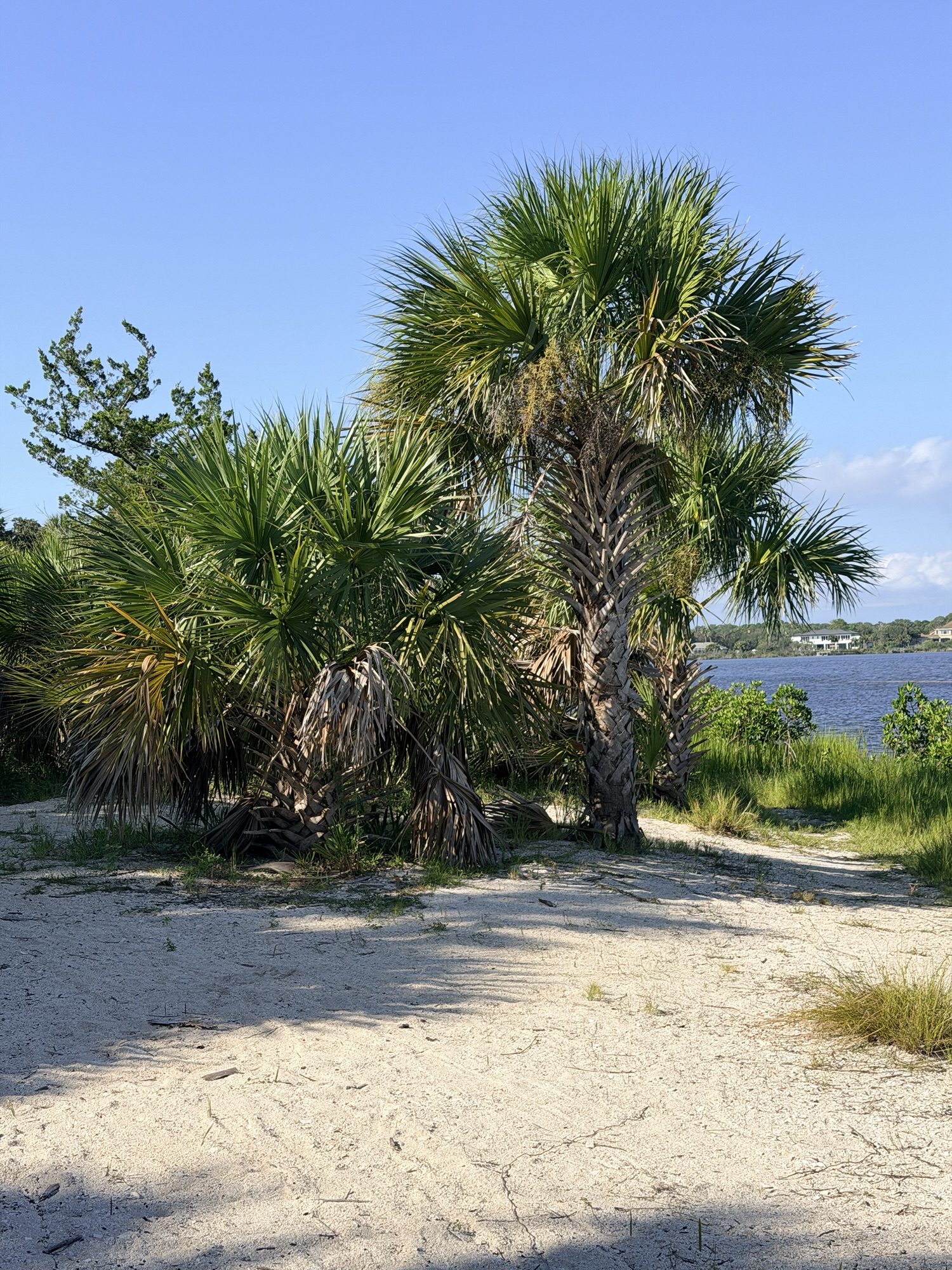
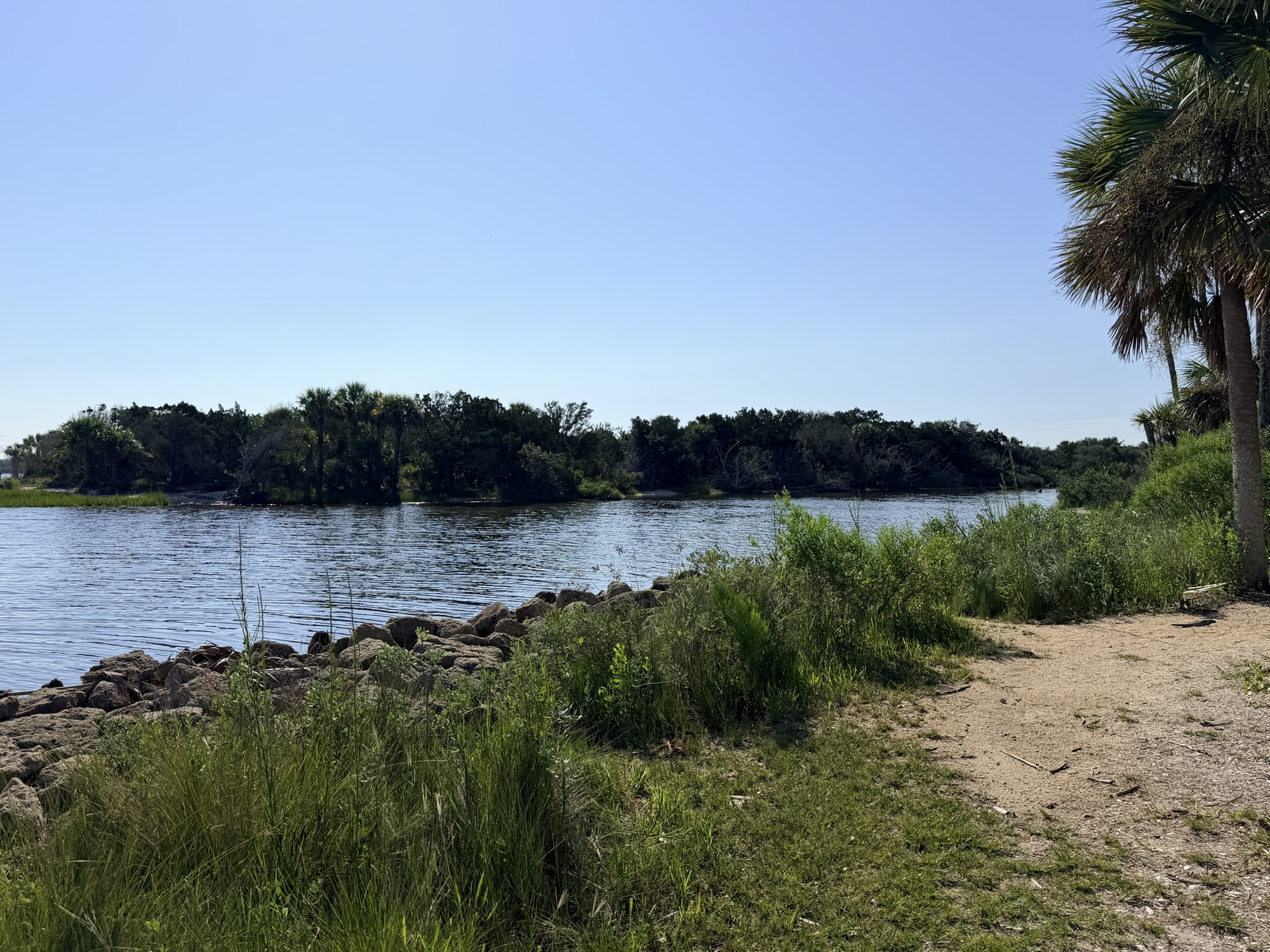
The park is surrounded by two rivers, the Halifax, which is also part of the Intracoastal Waterway, and the Tomoka, which joins the Halifax here. As you can imagine, there are beautiful views, many without any signs of humanity. My kind of place.

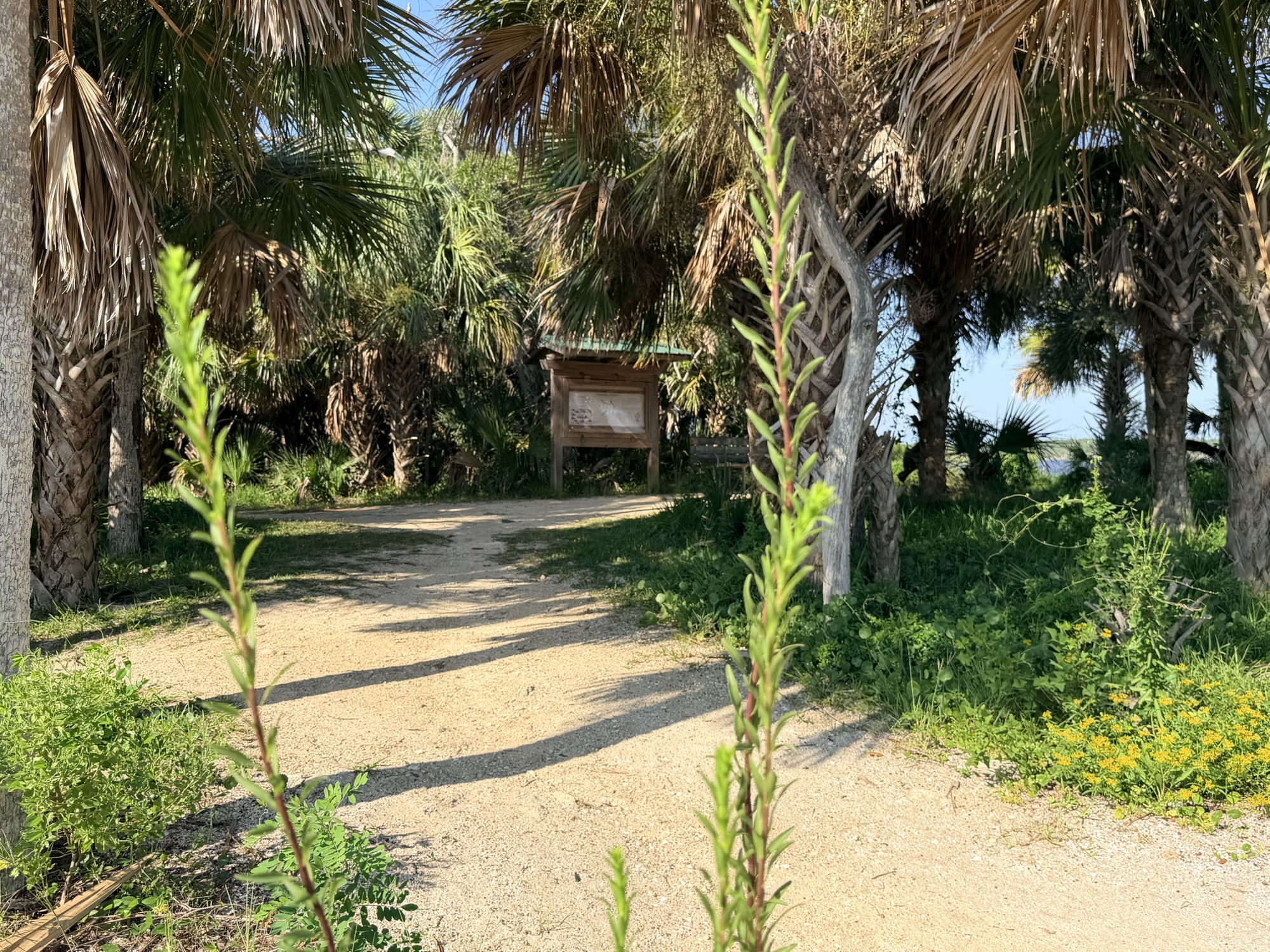
There are lots of kayak trails and camping areas. The nature trail and the trail around the point were what I focused on today, though I have plans to return and either go on a boat tour or hike another path.

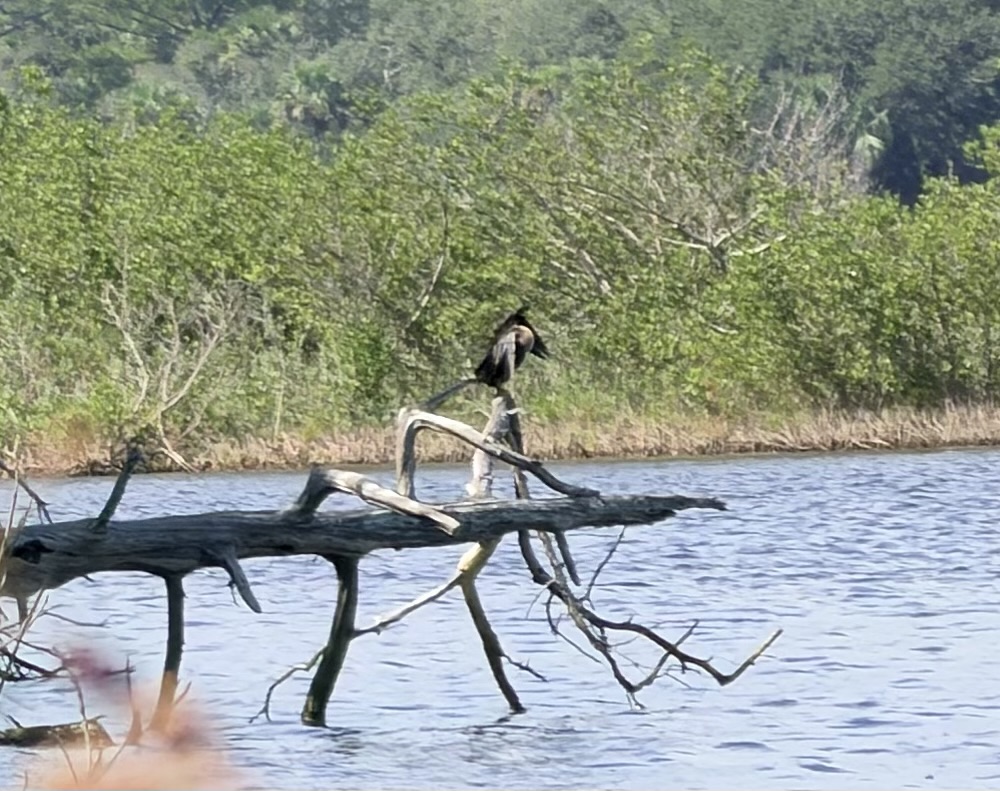
Oddly, I didn’t hear many birds, just a very persistent Osprey and a Belted Kingfisher were loud. Blue Jays, Cardinals, and Carolina Wrens rounded out the songbirds, and I spotted an Anhinga, some Ruddy Turnstones, and a Great Blue Heron. Nothing too exotic.

Anhinga drying off

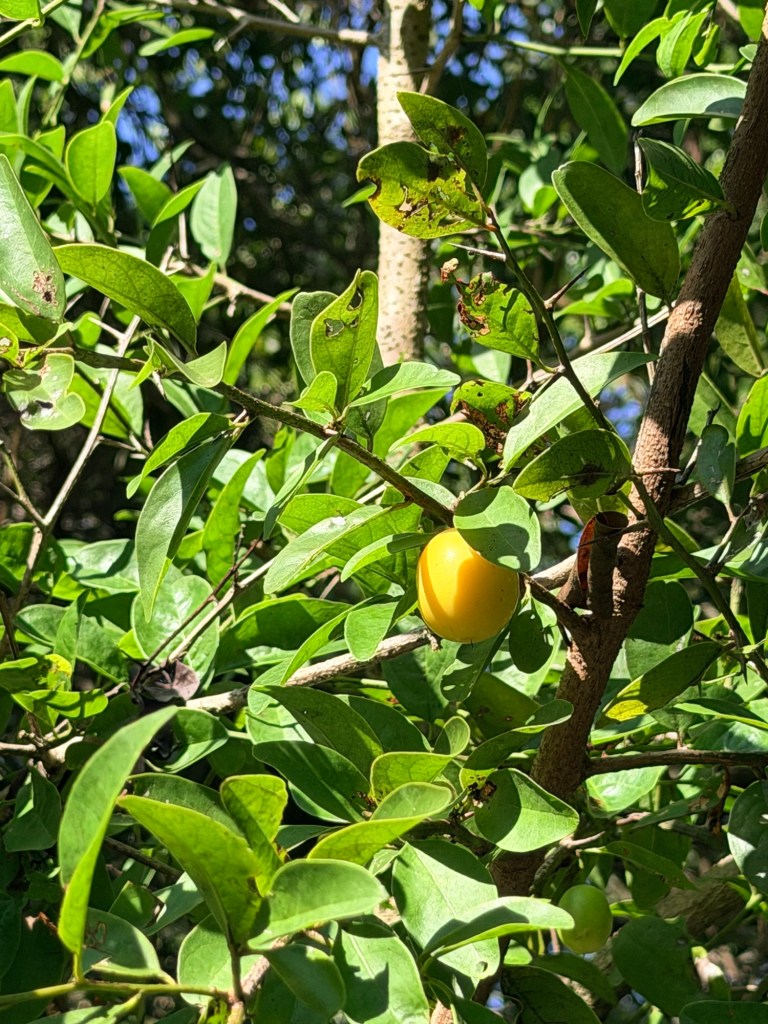
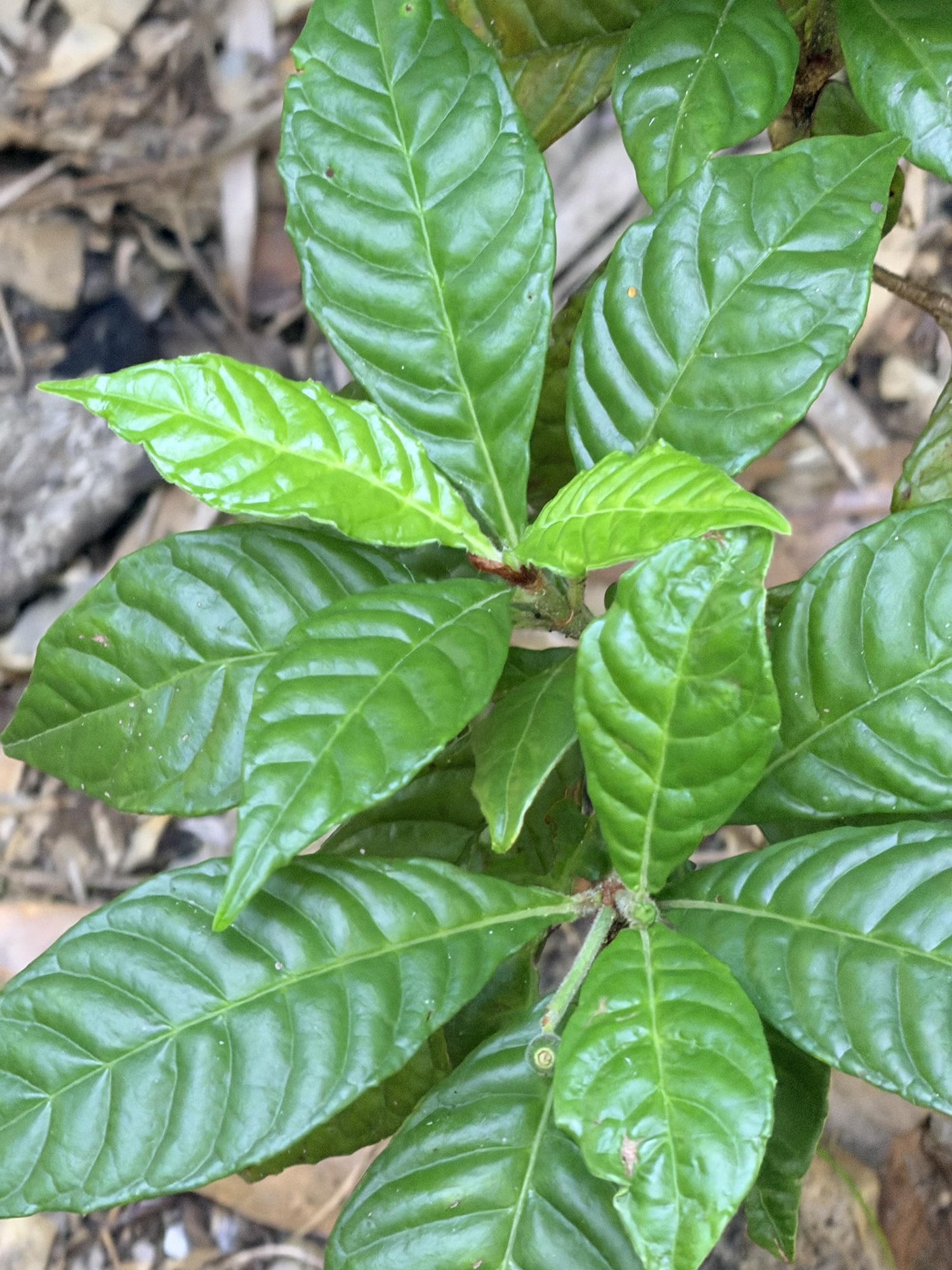
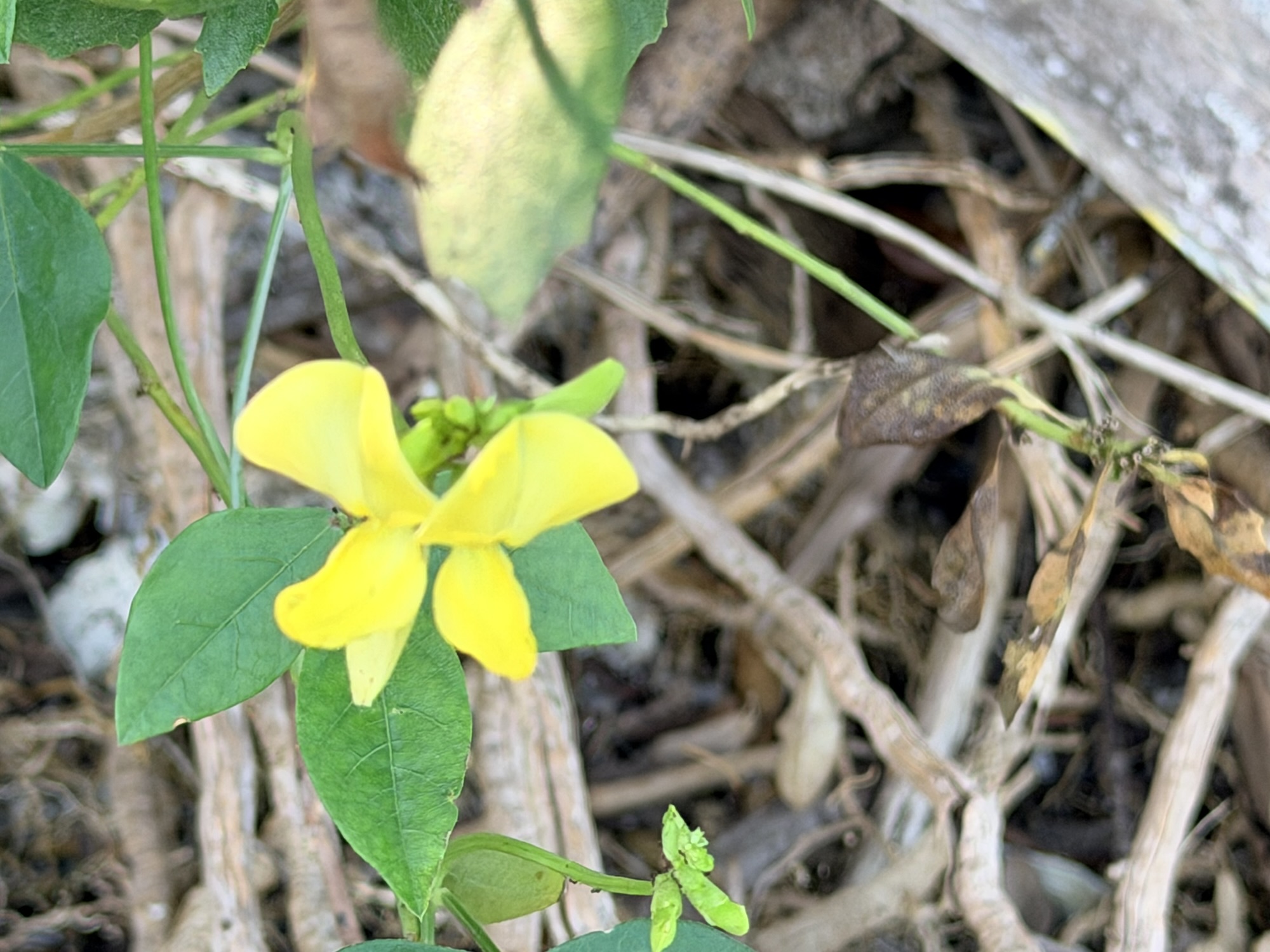
There were plenty of very interesting plants to distract me from the lack of birds, however. The scenery was lush and verdant, with some new plants, like a hog plum (Ximenia americana), also known as a sea lemon. Apparently they’re common on the Florida coast, but I don’t remember them.

Hog plum

Take the tour of the nature trail with me! It’s fun.

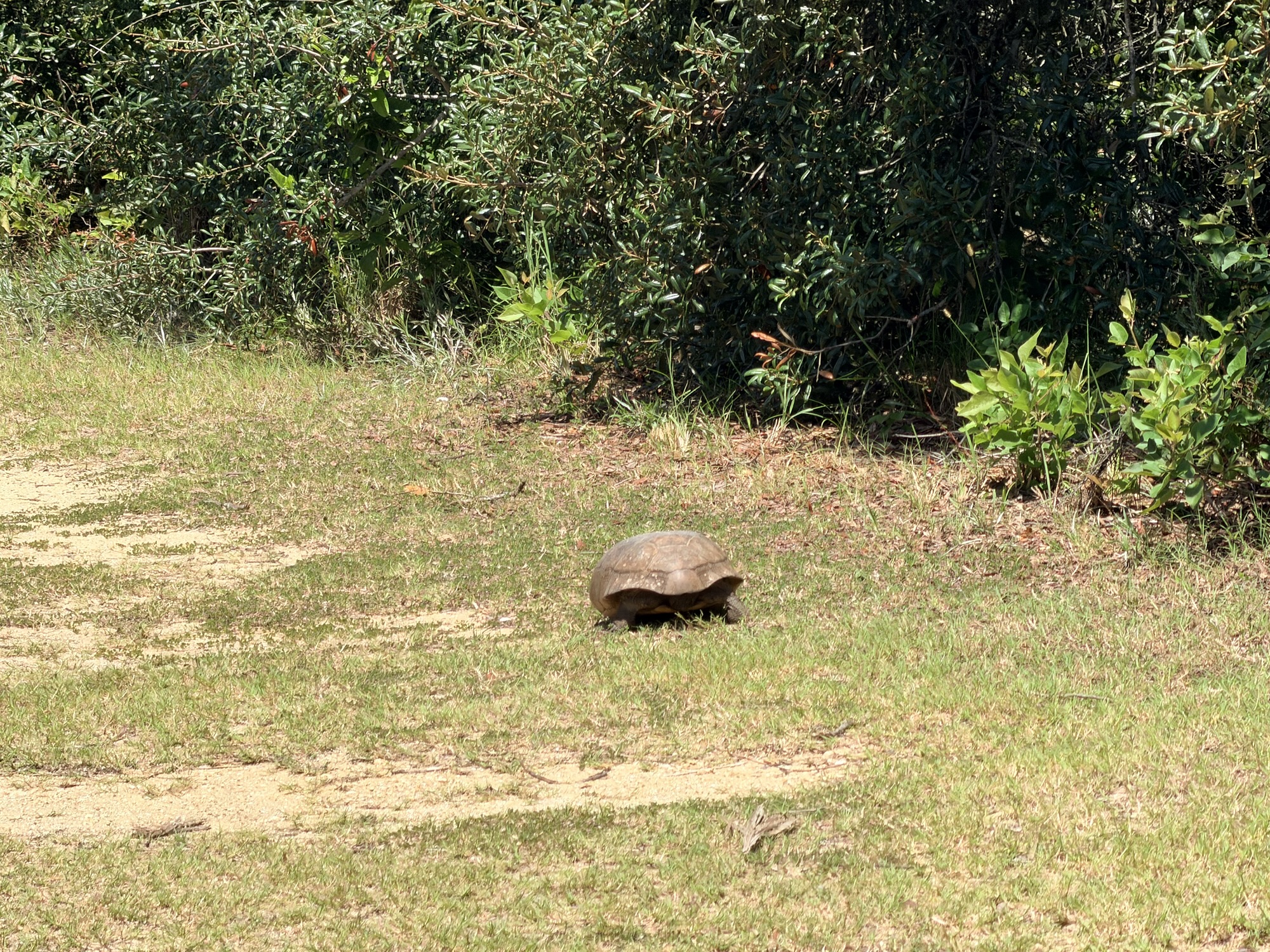
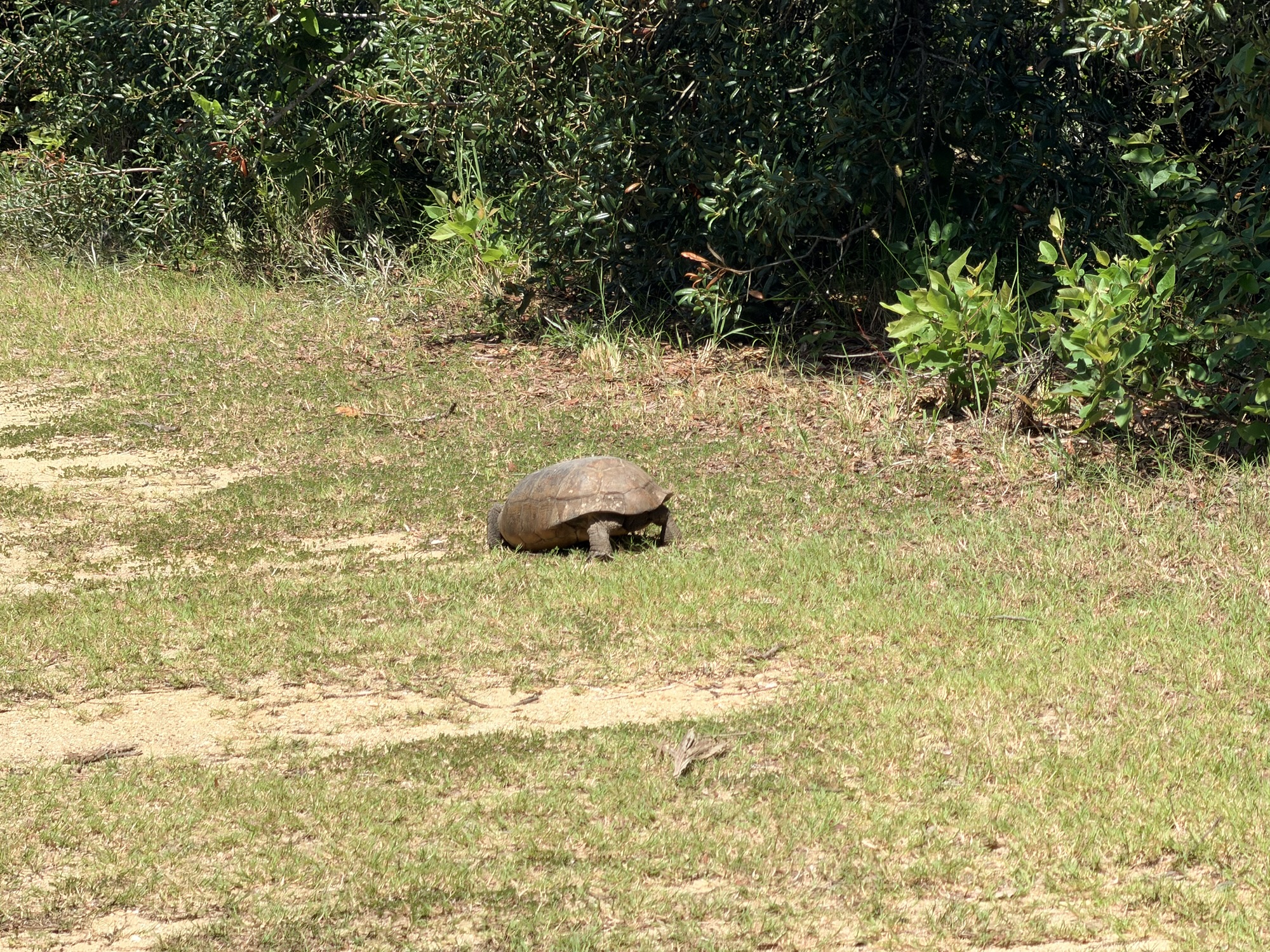
There was lots of turtle and tortoise evidence here. I saw a nest that had recently hatched and found a beautiful gopher in its hole. I sure enjoyed gopher tortoises as a child!

Hello!

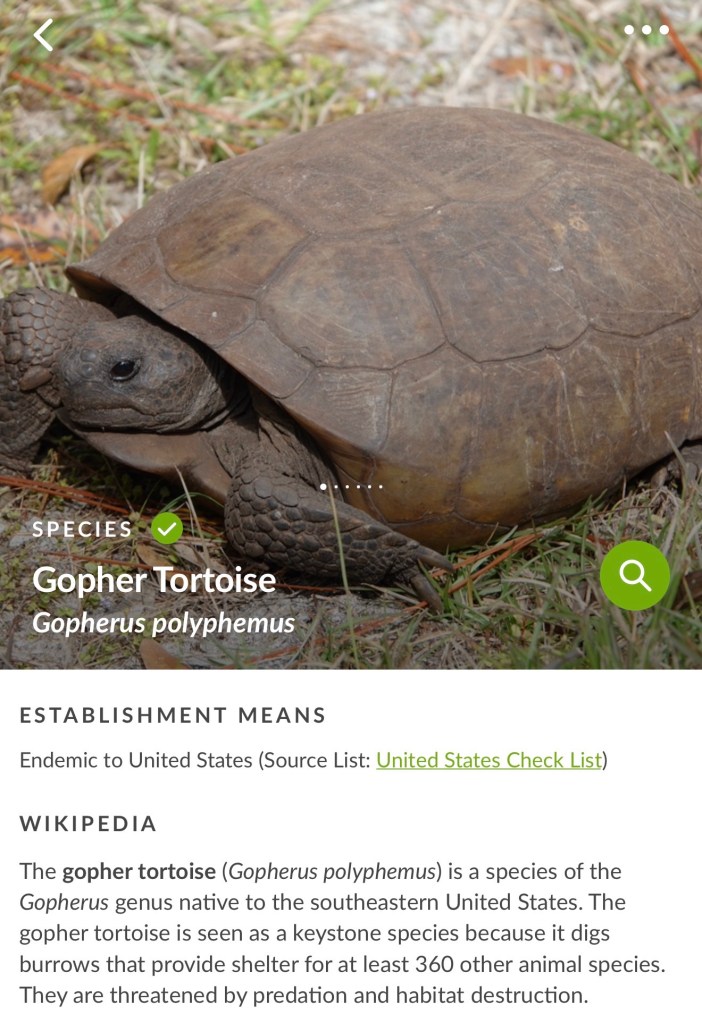
Here’s more on the Gopherus polyphemus.

The best!

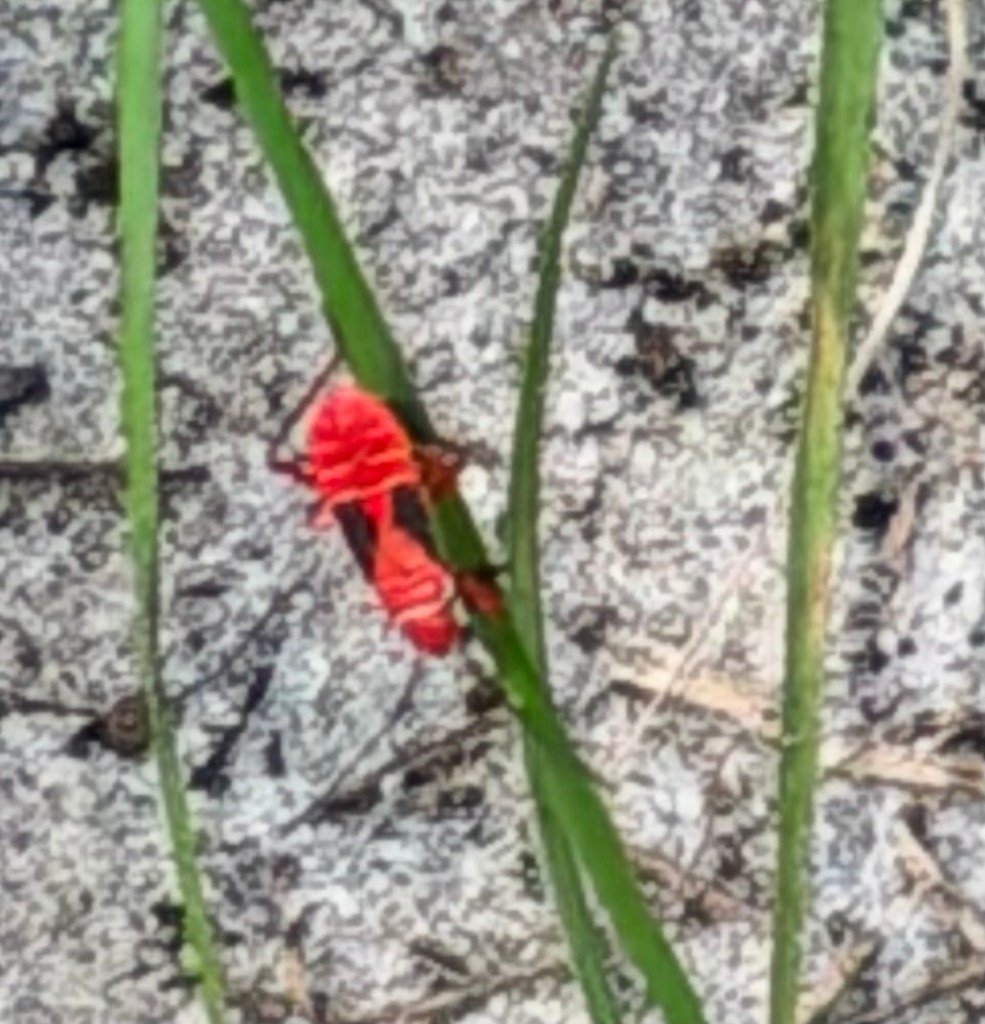
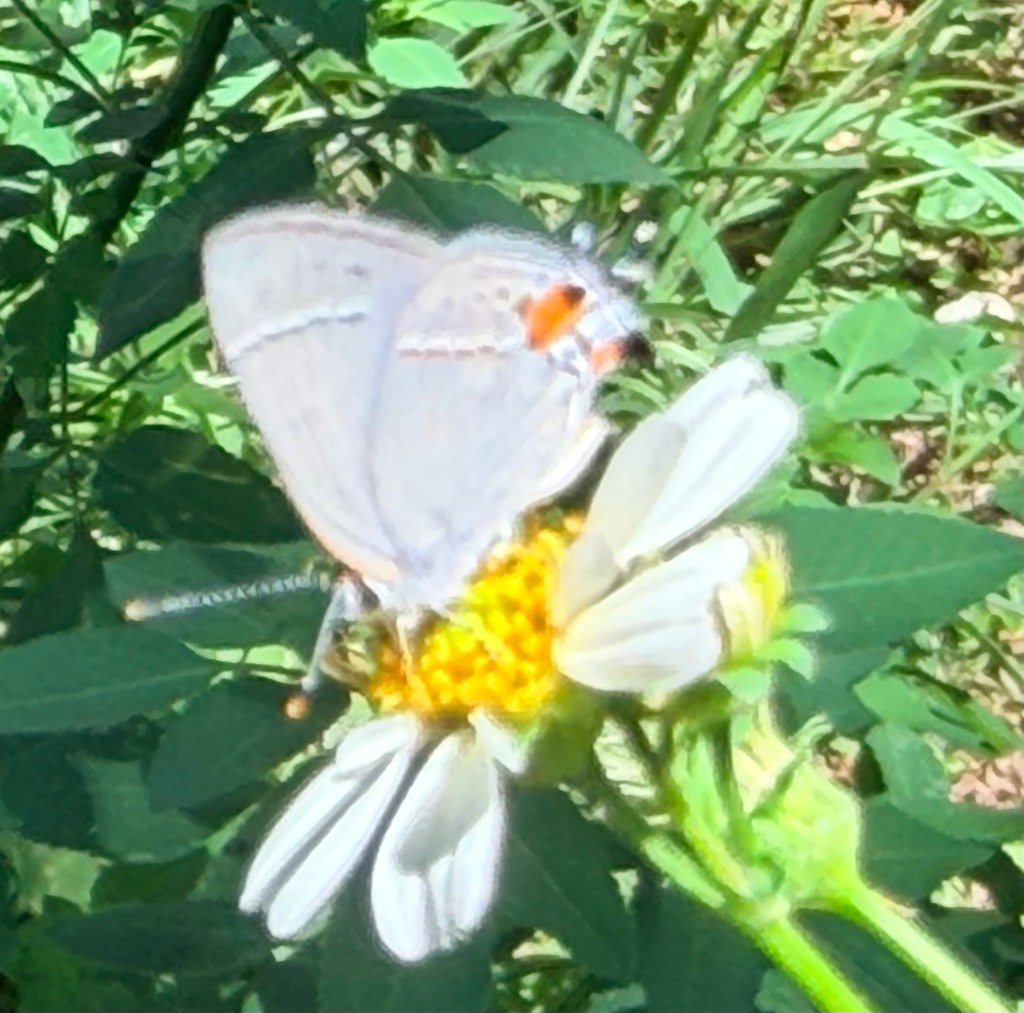
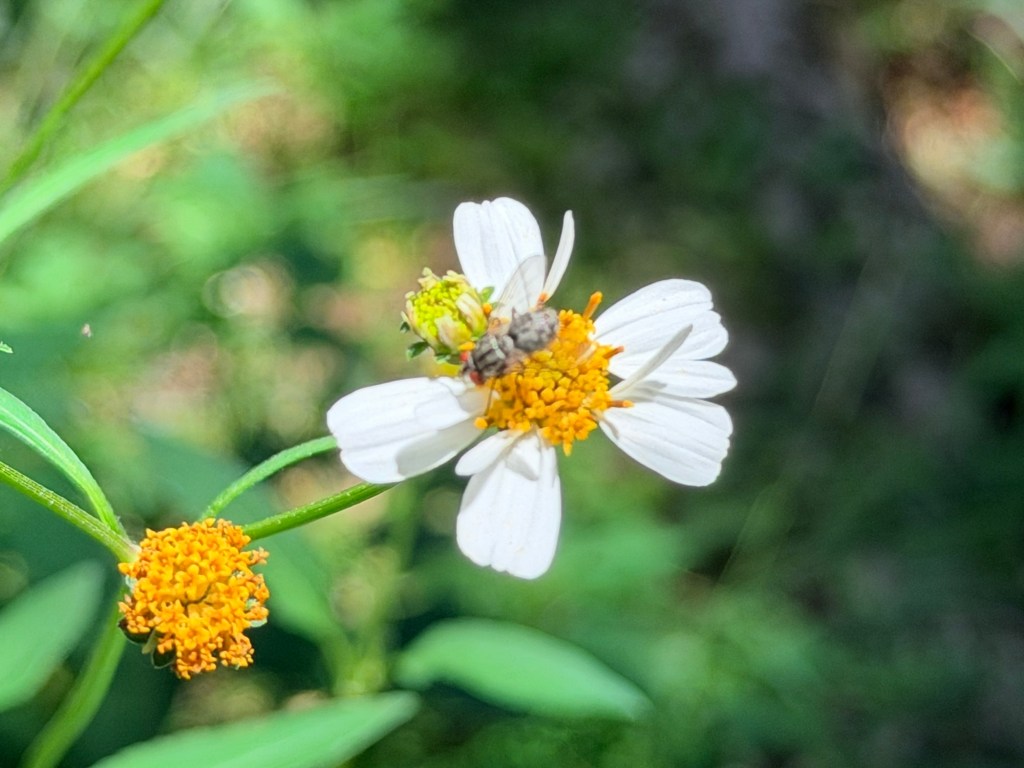
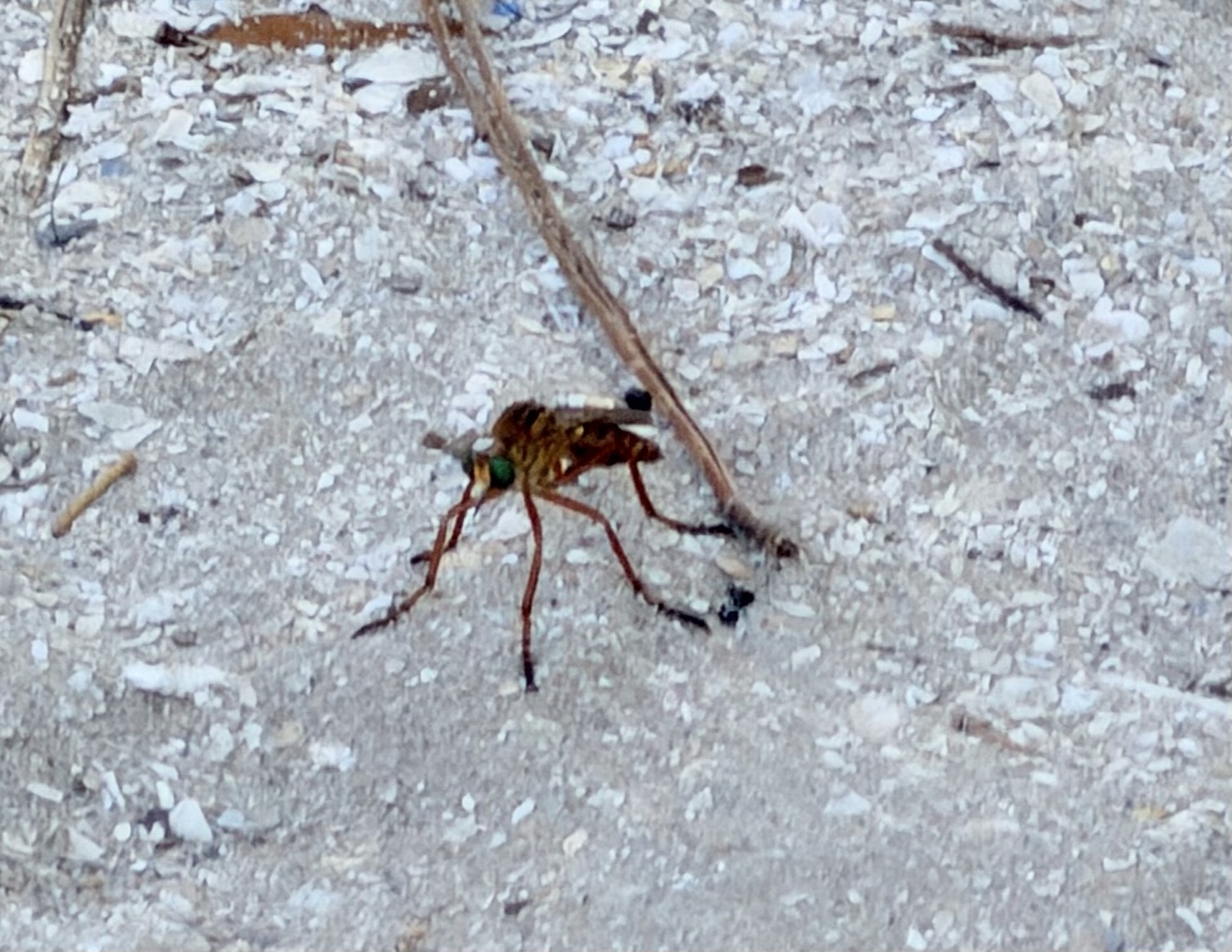
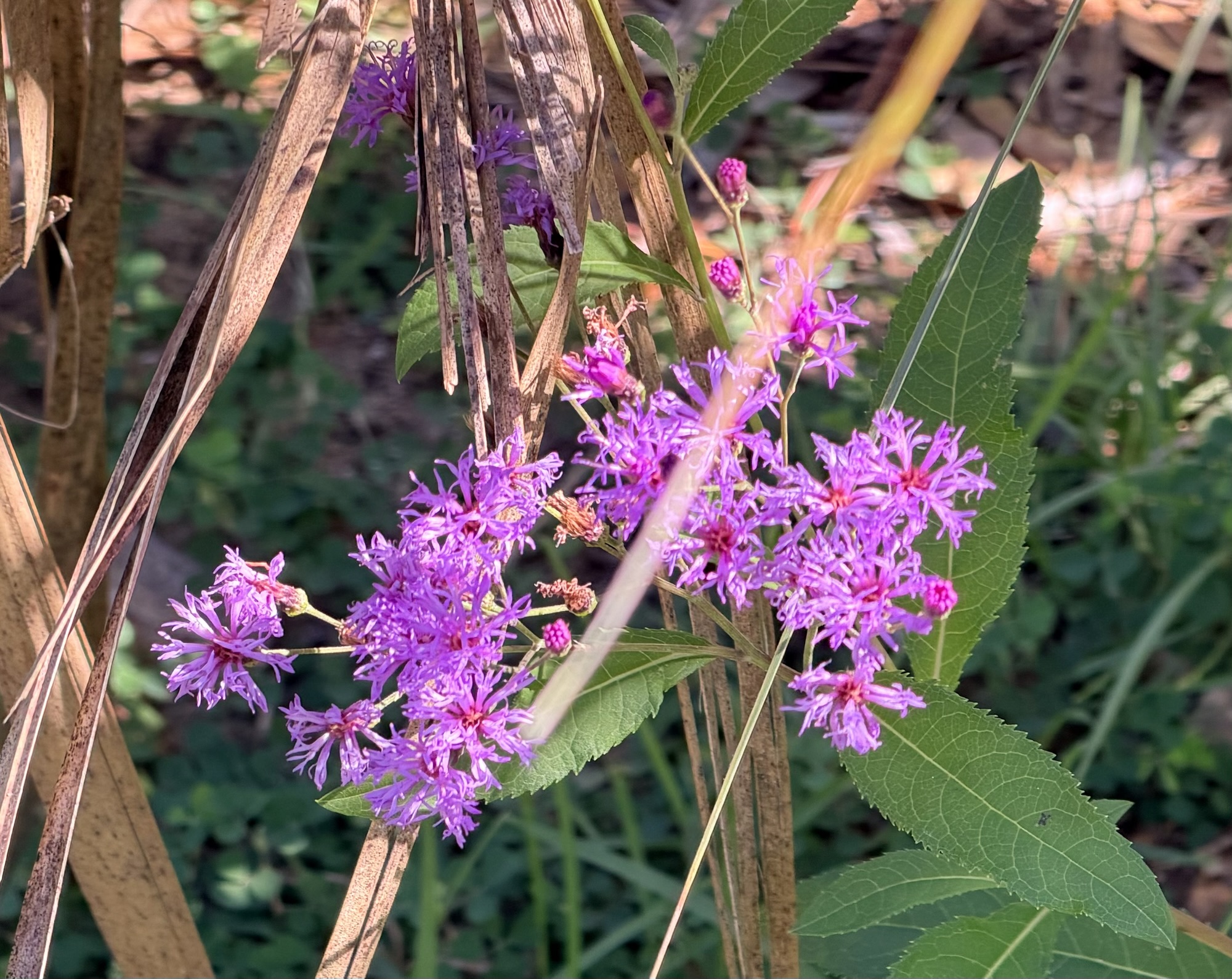
Okay, I’ll just share a few more interesting plants and insects I saw.

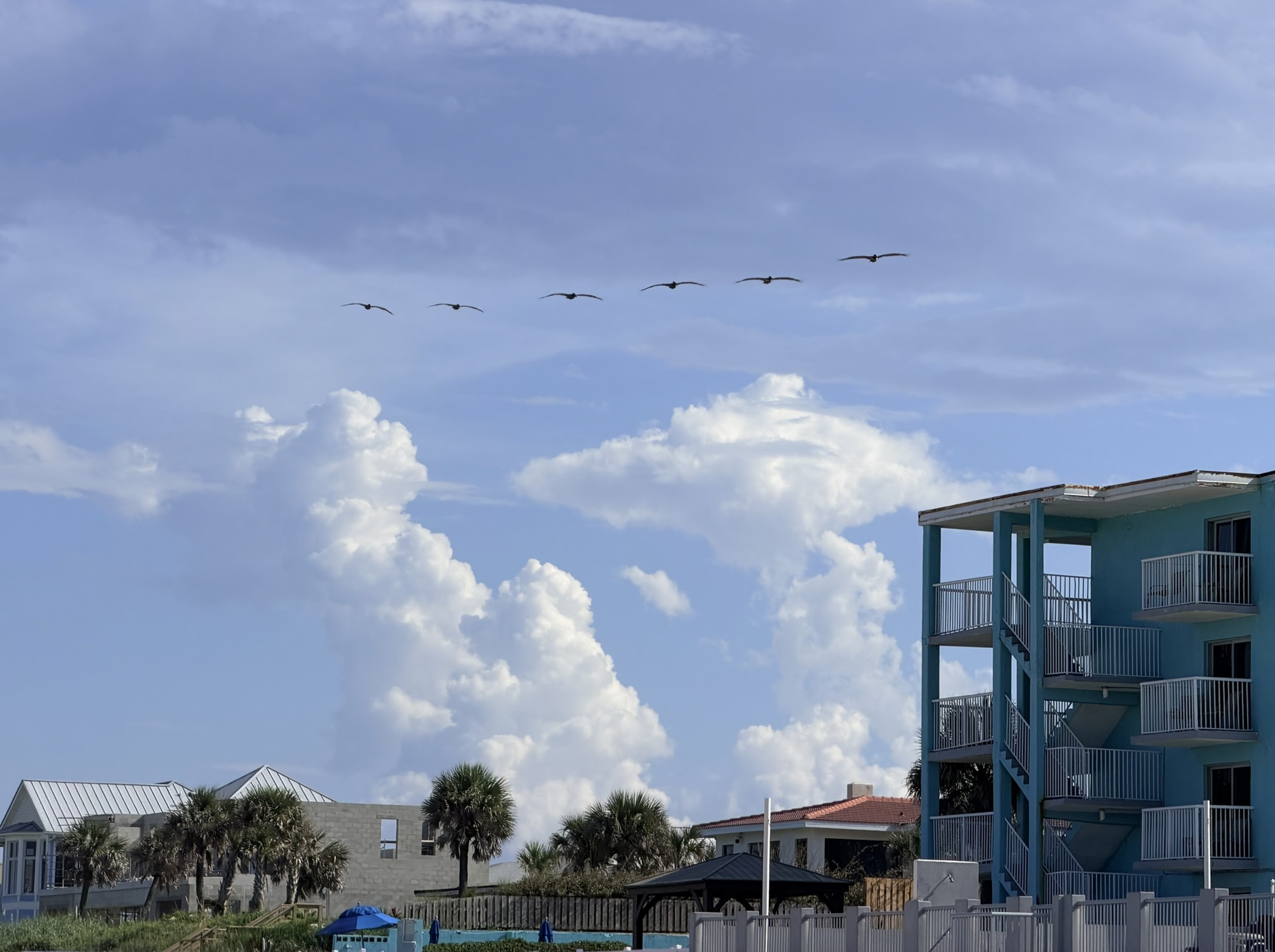
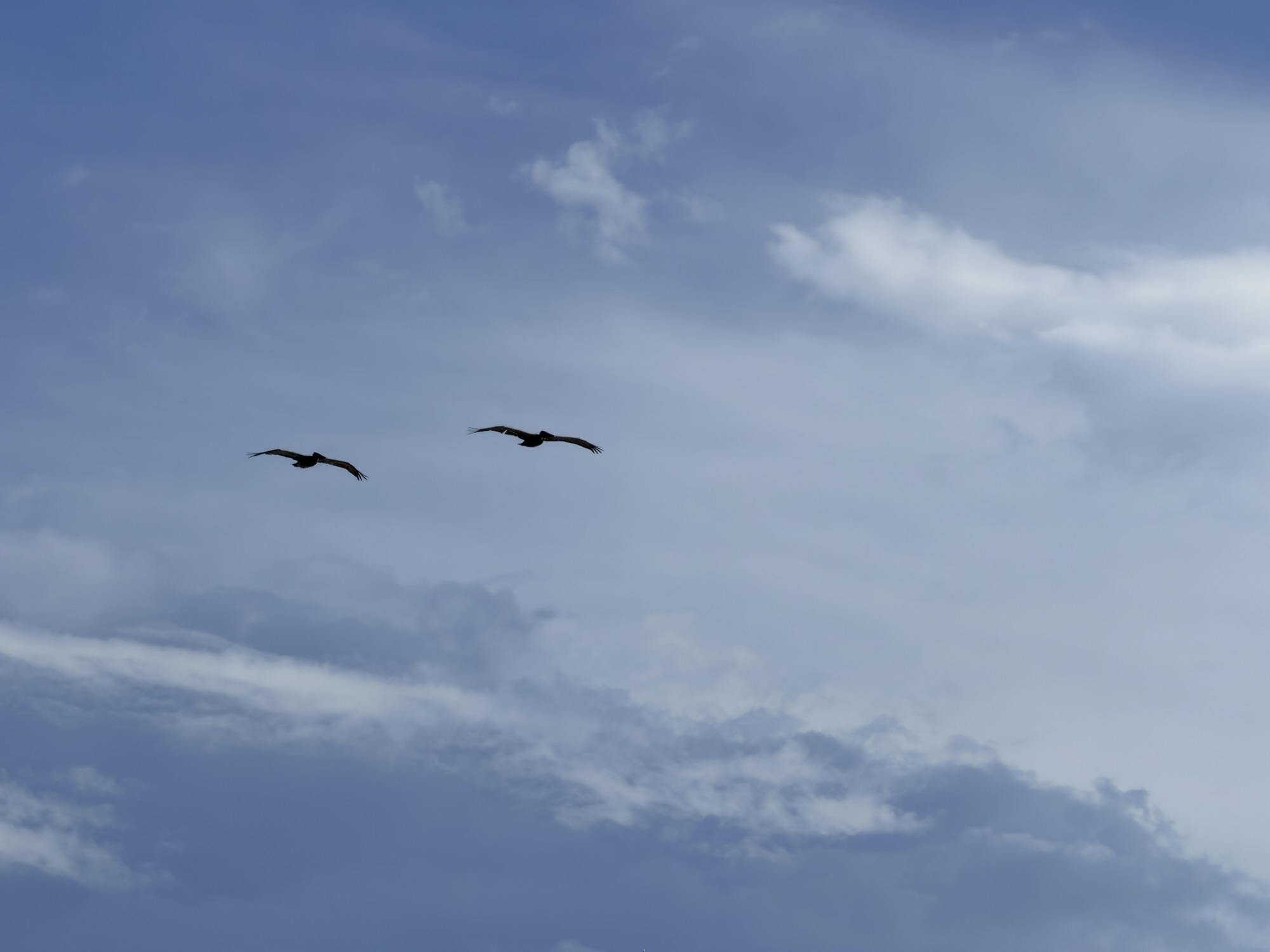
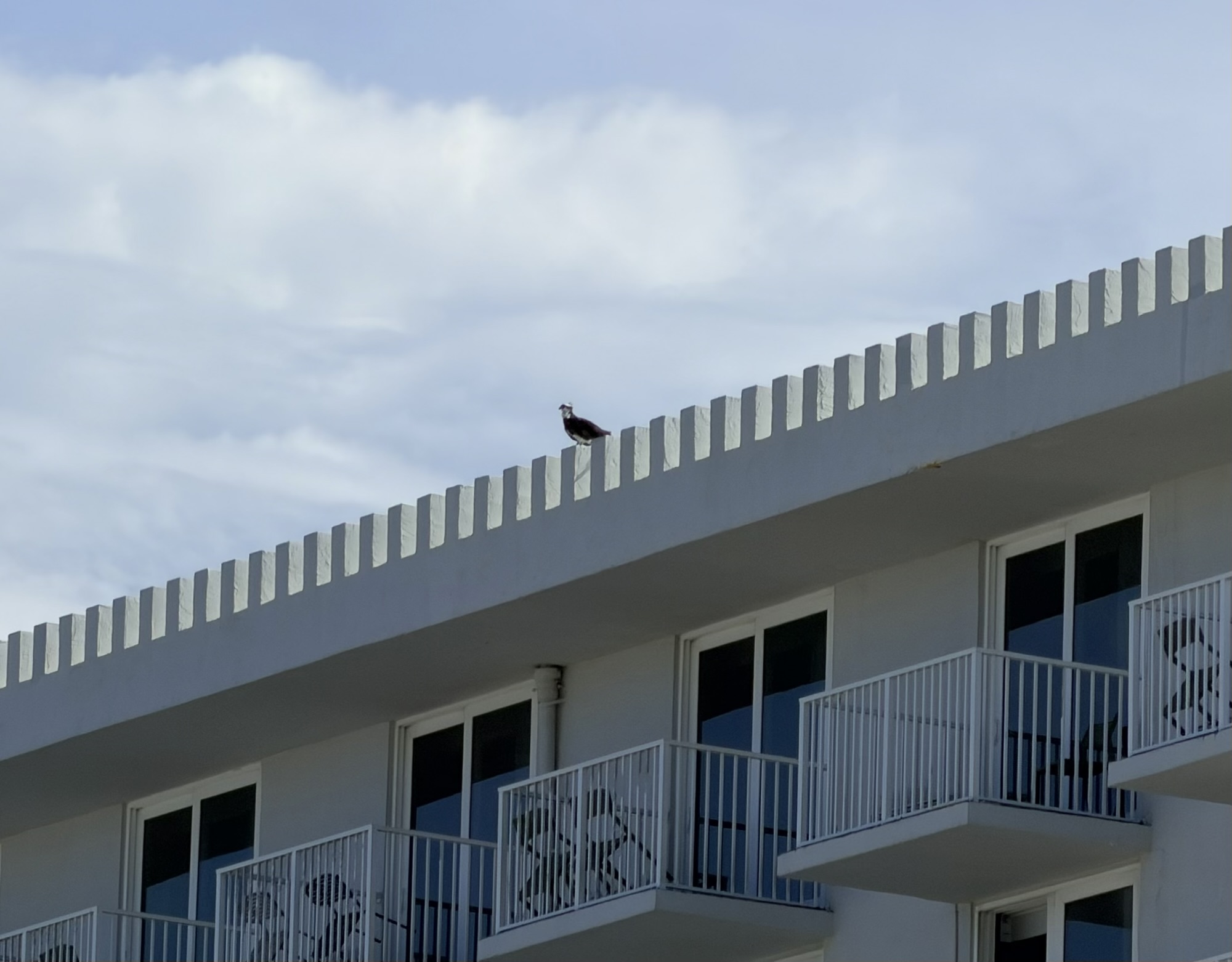
After exhausting my eyeballs from all this, I headed back to work and tried not to let the pelicans distract me as the majestically sailed by. The ocean was very blue.

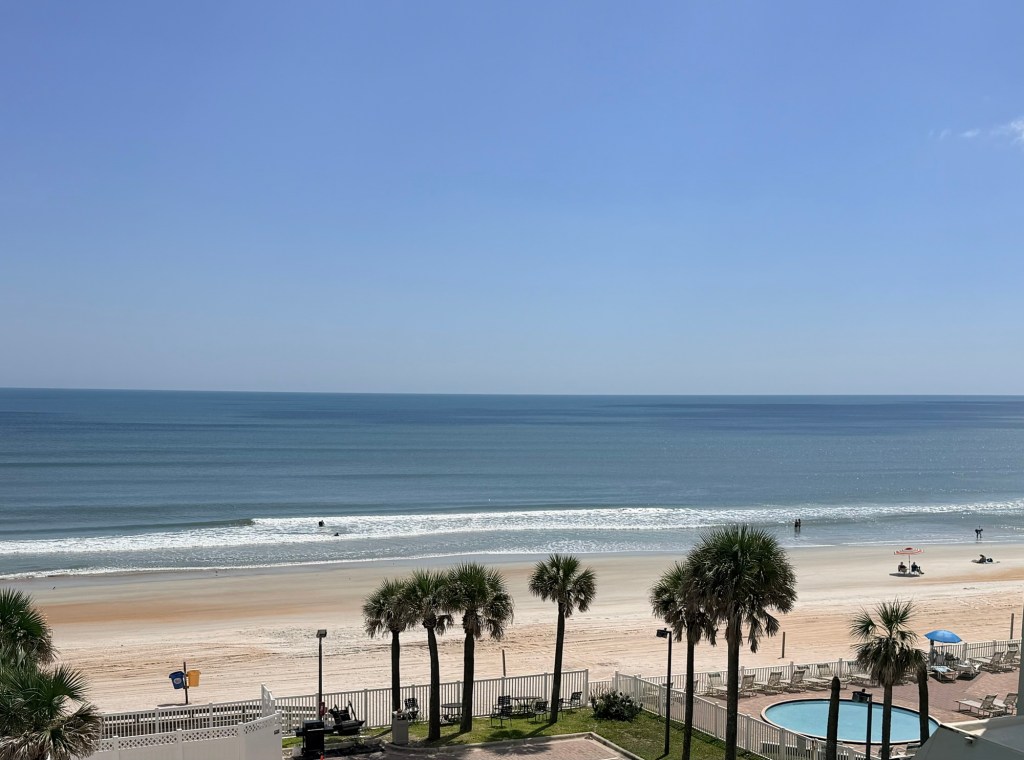
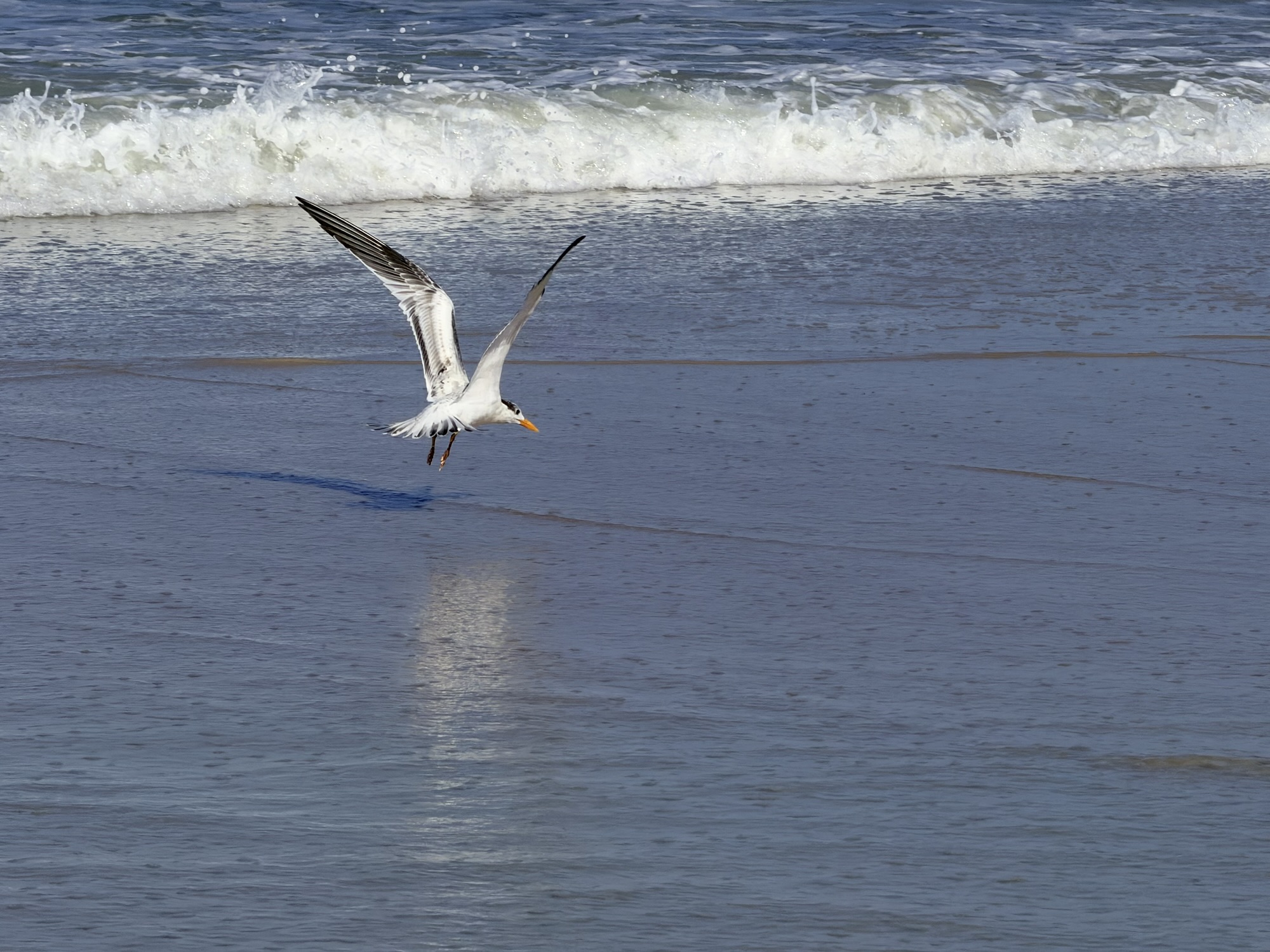
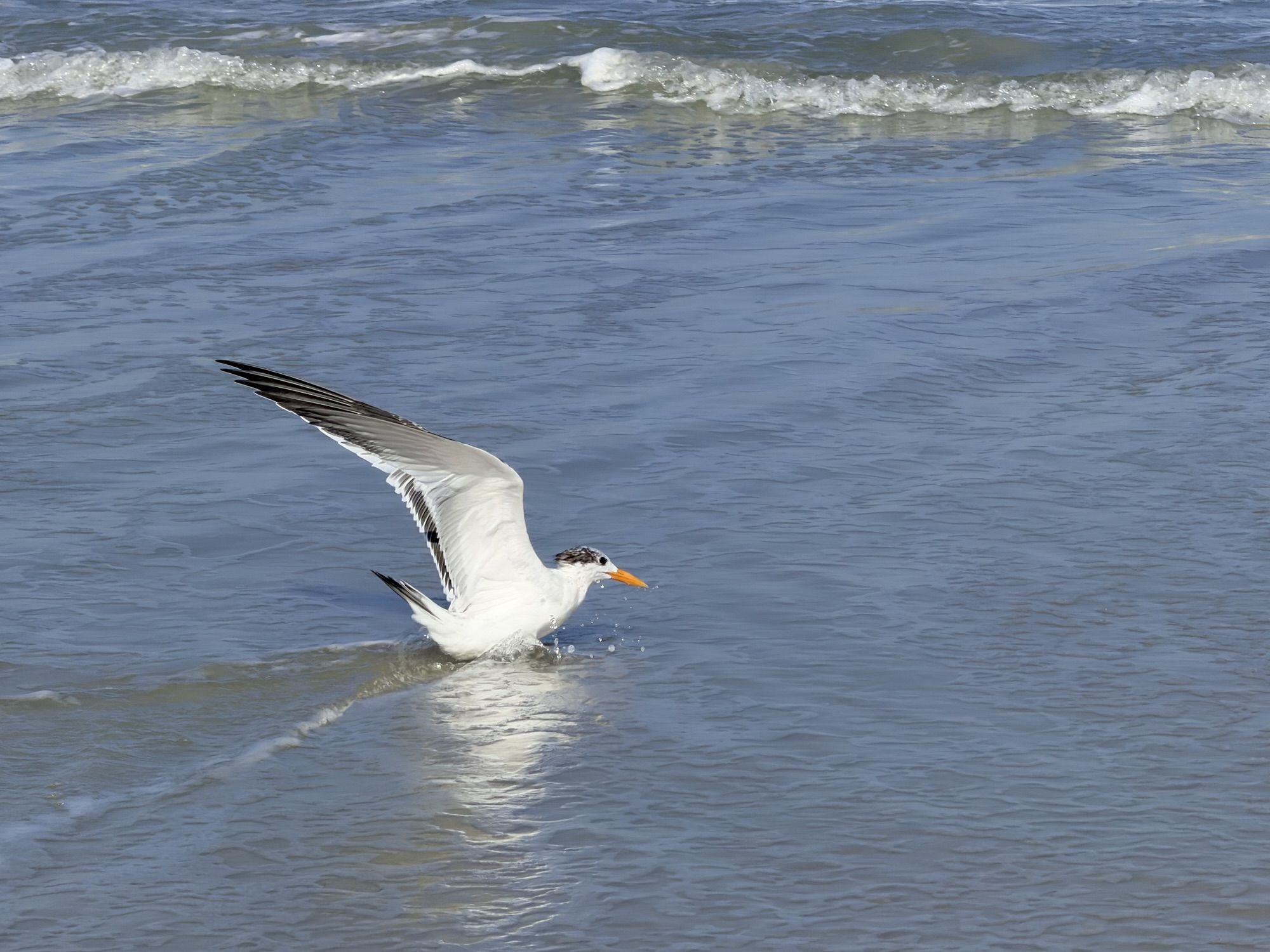
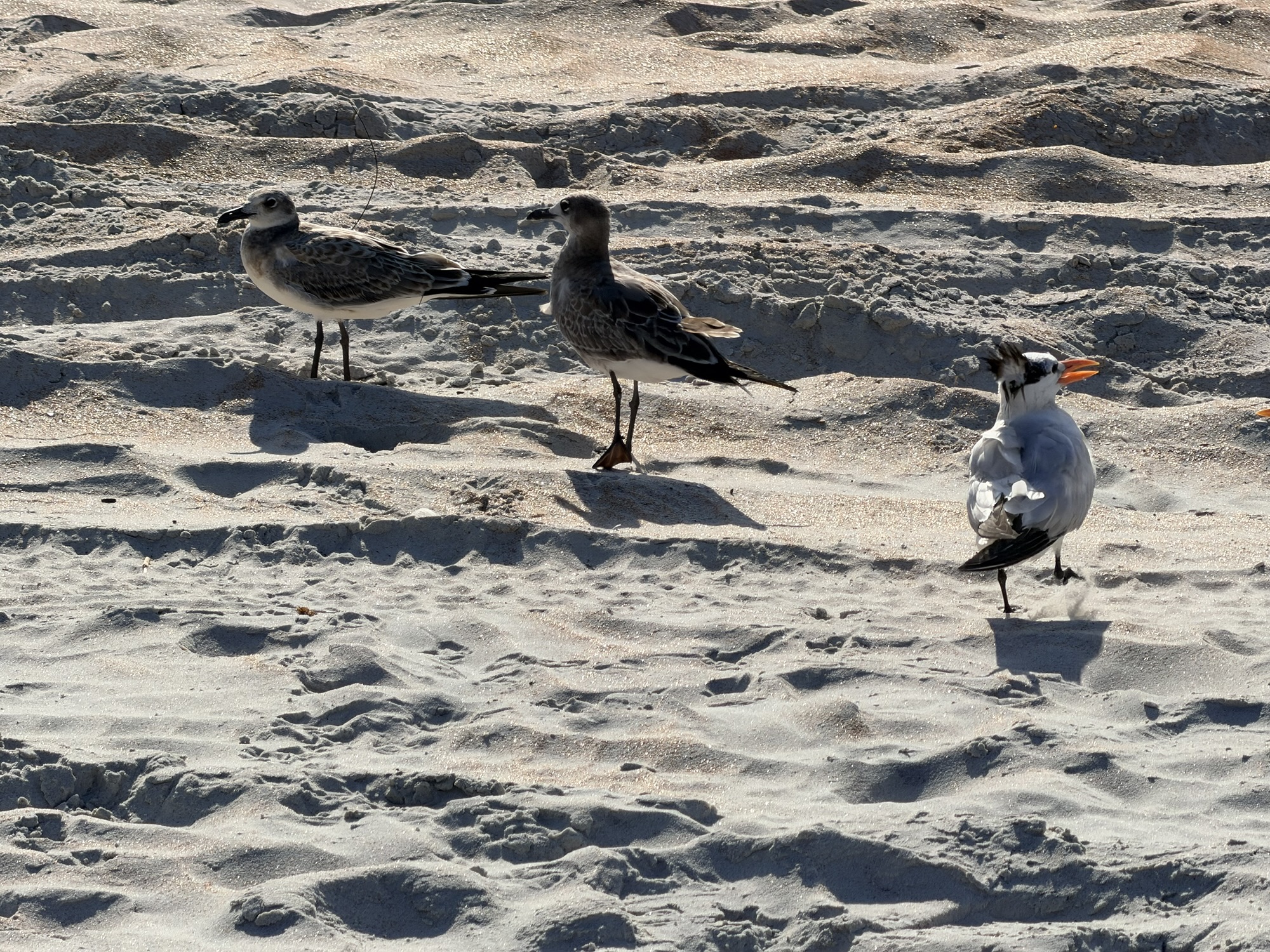
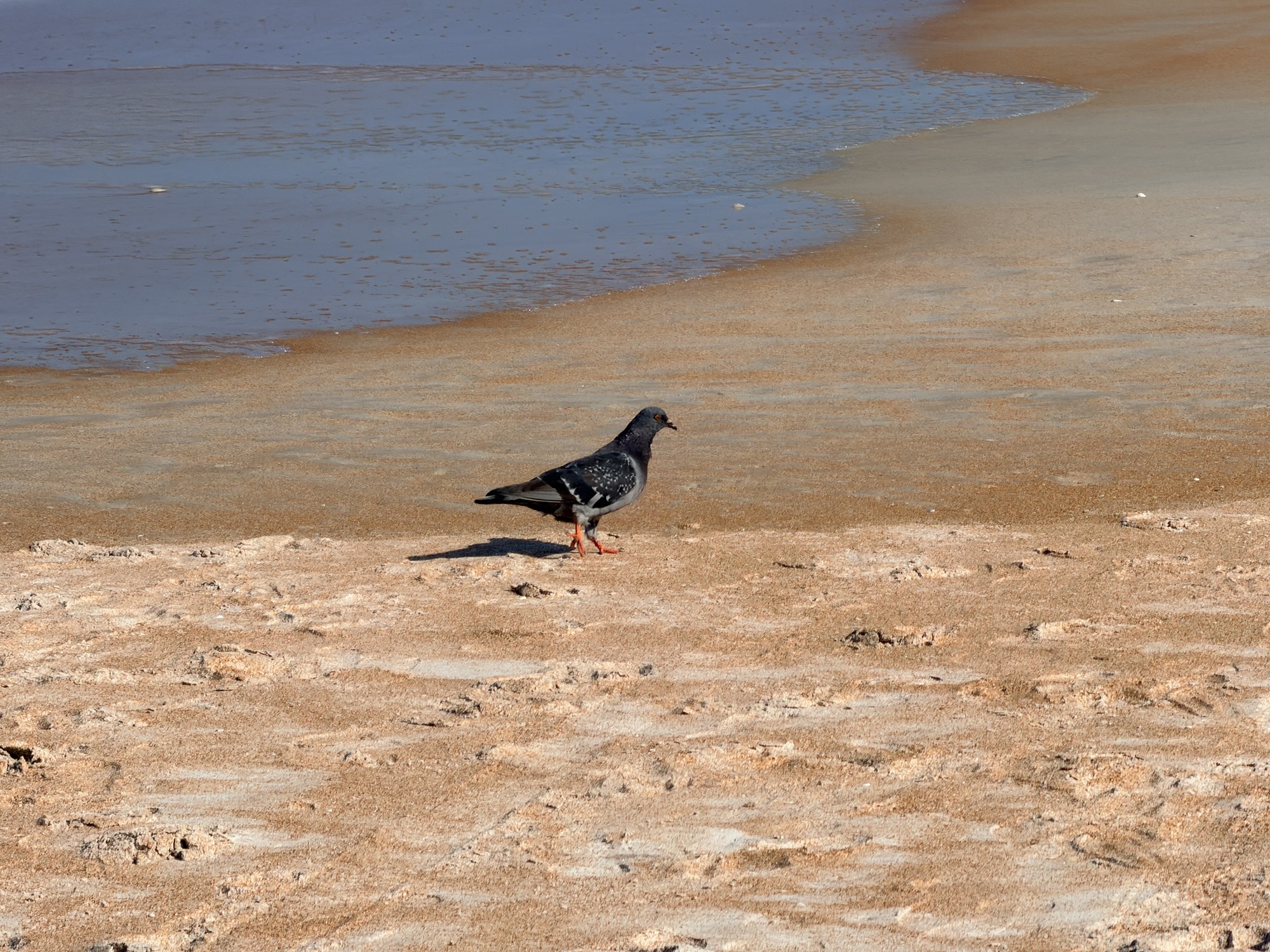
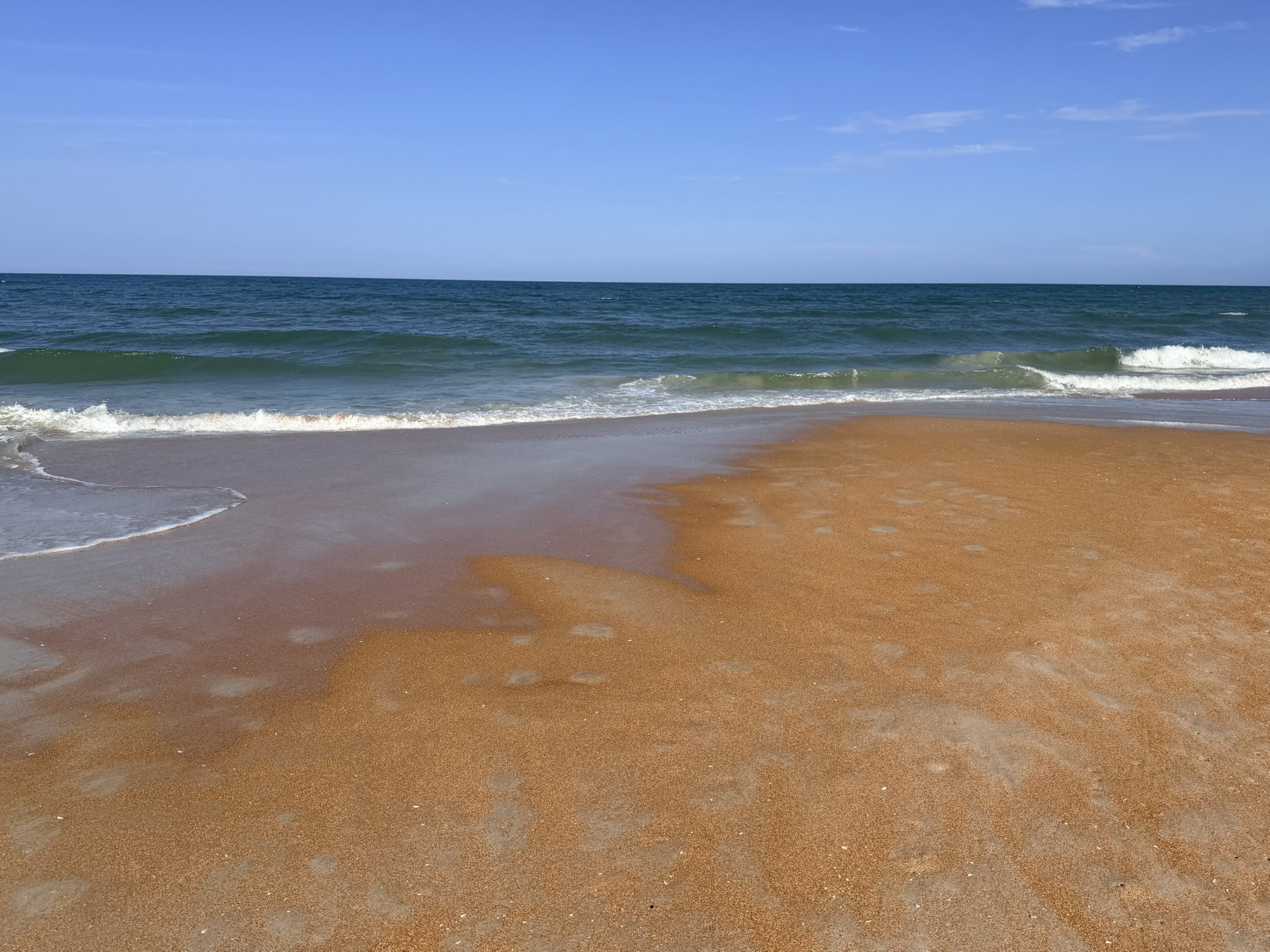
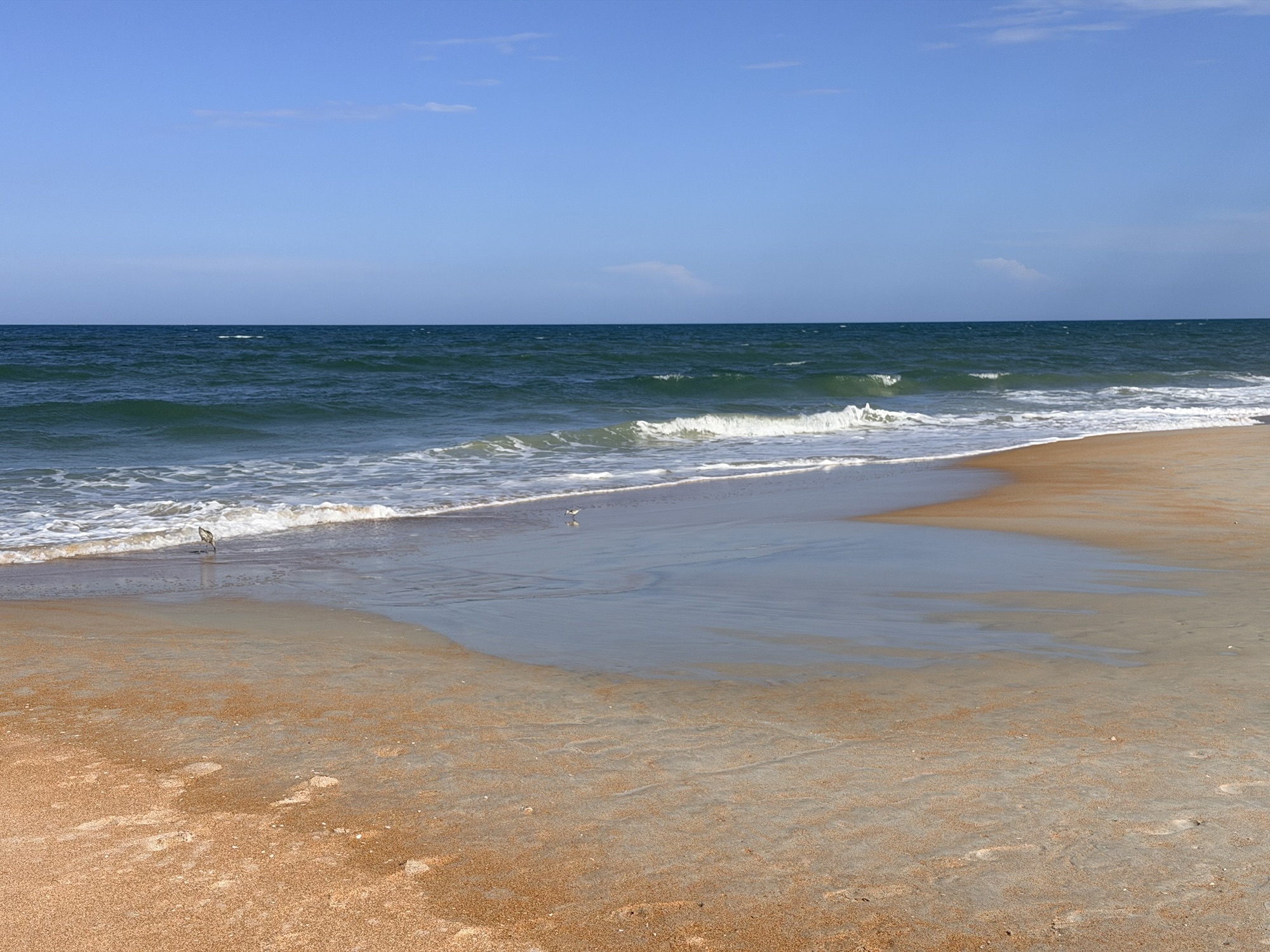
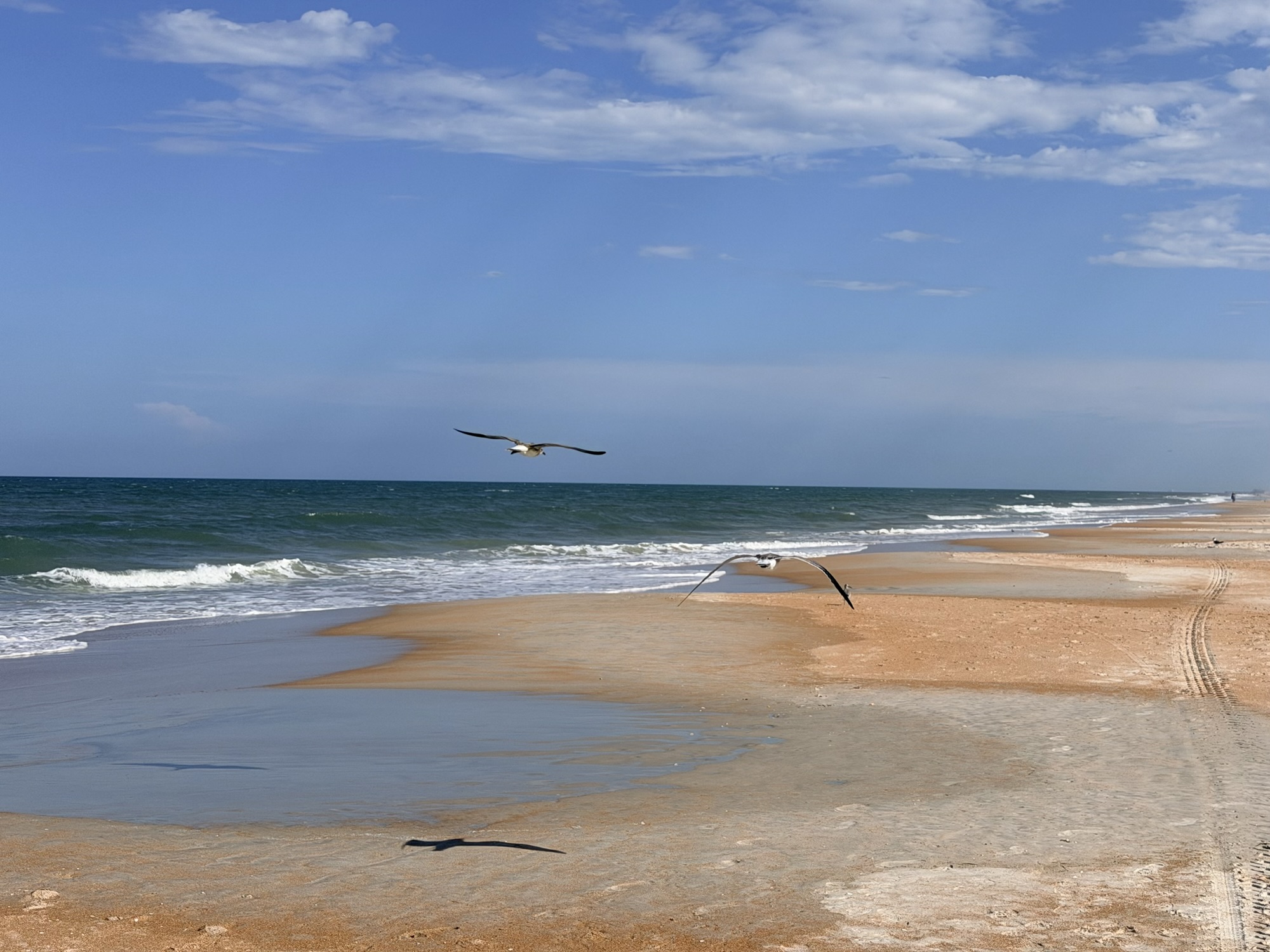
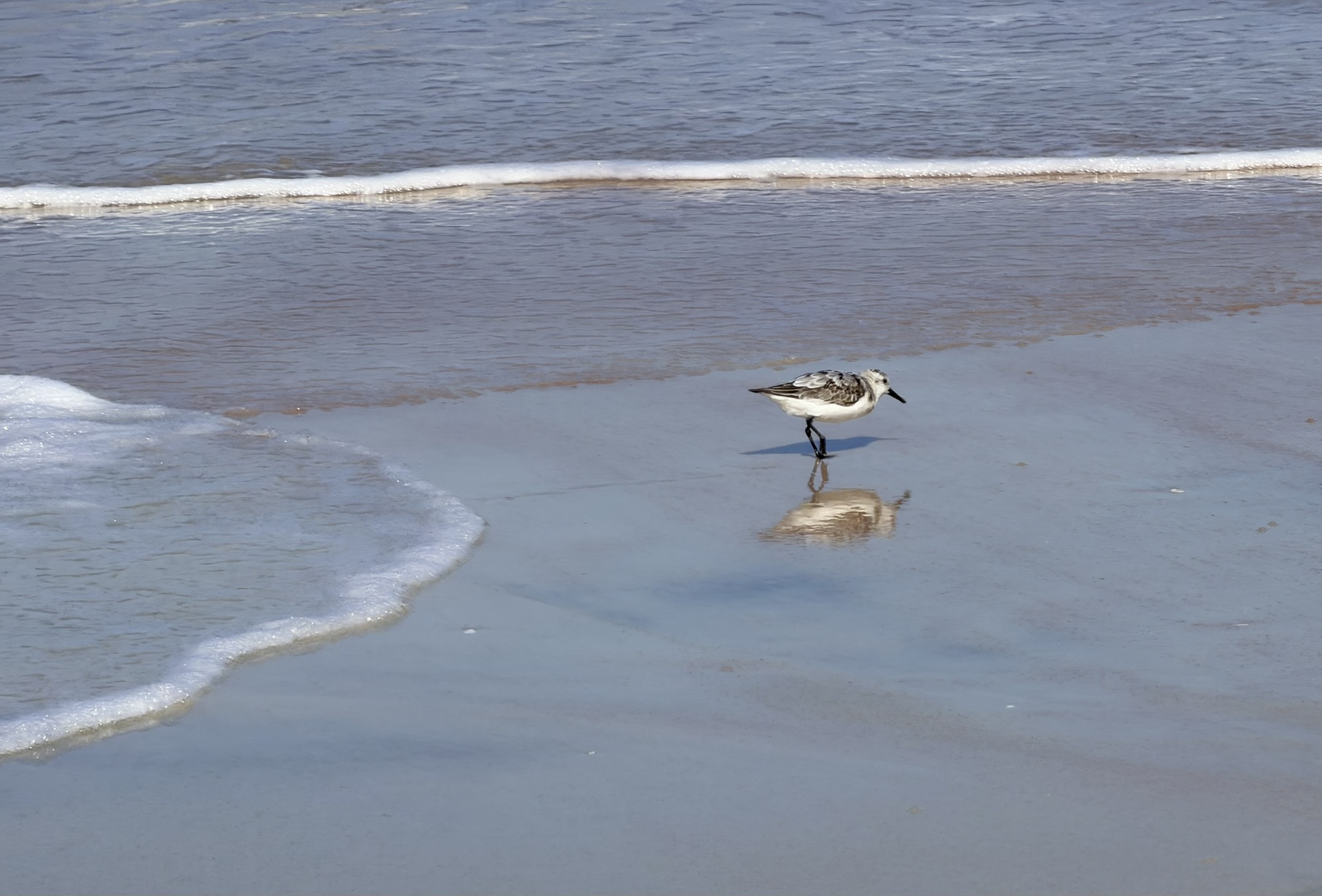
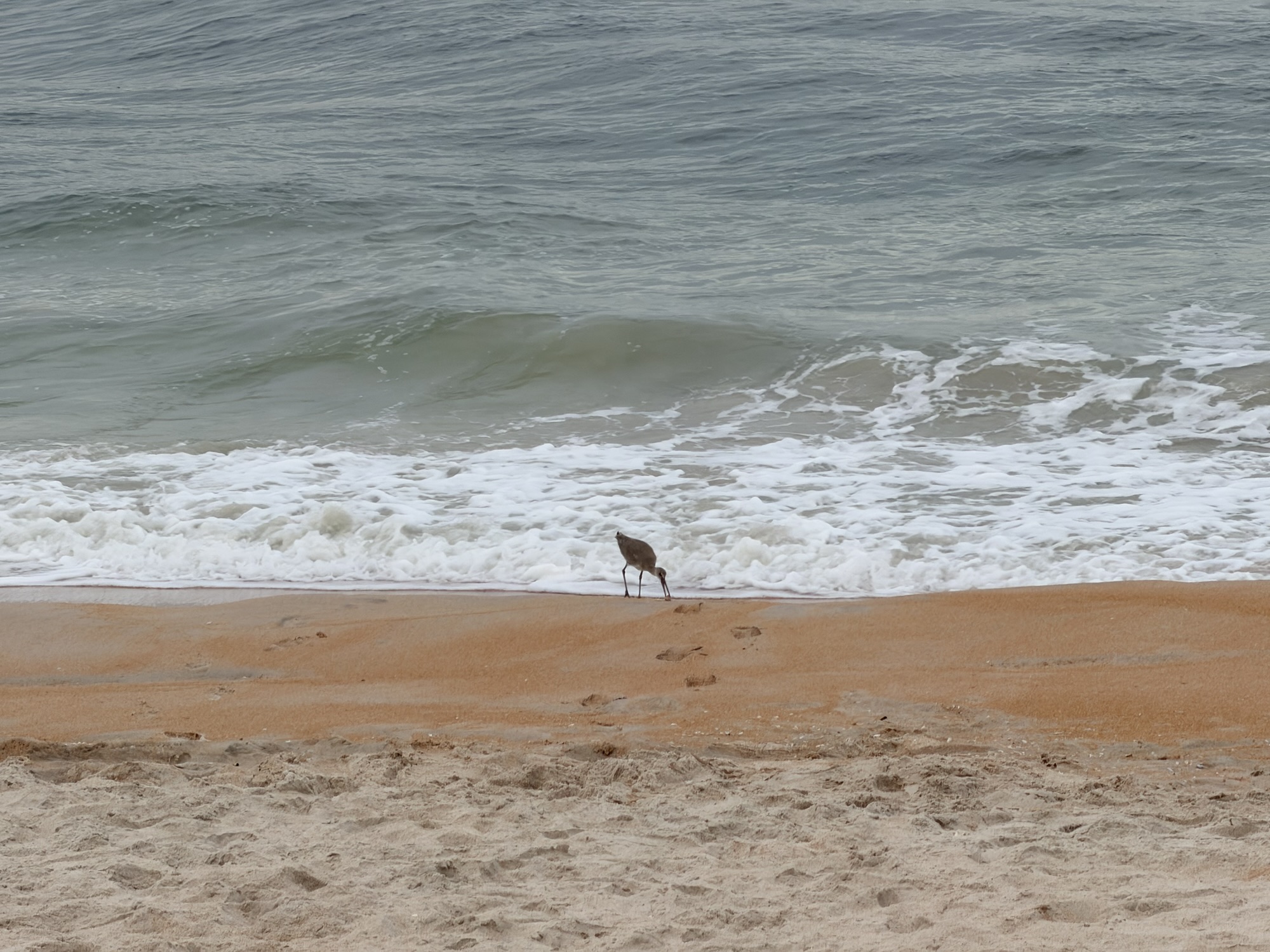
After working I took a short walk on the beach to enjoy the sea birds and the shifting sands. This is a great place to come in summer after school starts. It’s warm but quiet. There are so many beautiful colors to enjoy.

And finally, I got to hang out with Vicki, whose headache was over, thankfully. We ate at a fun place in a non-touristy area with a great ocean view. After an amazing grilled cheese sandwich and much conversation about taboo topics like politics and religion (where we disagree less now than at other points in our lives), we went to a quiet beach park and watched pelicans dive as the sun set. A fine day with much water!

Sleepy time!

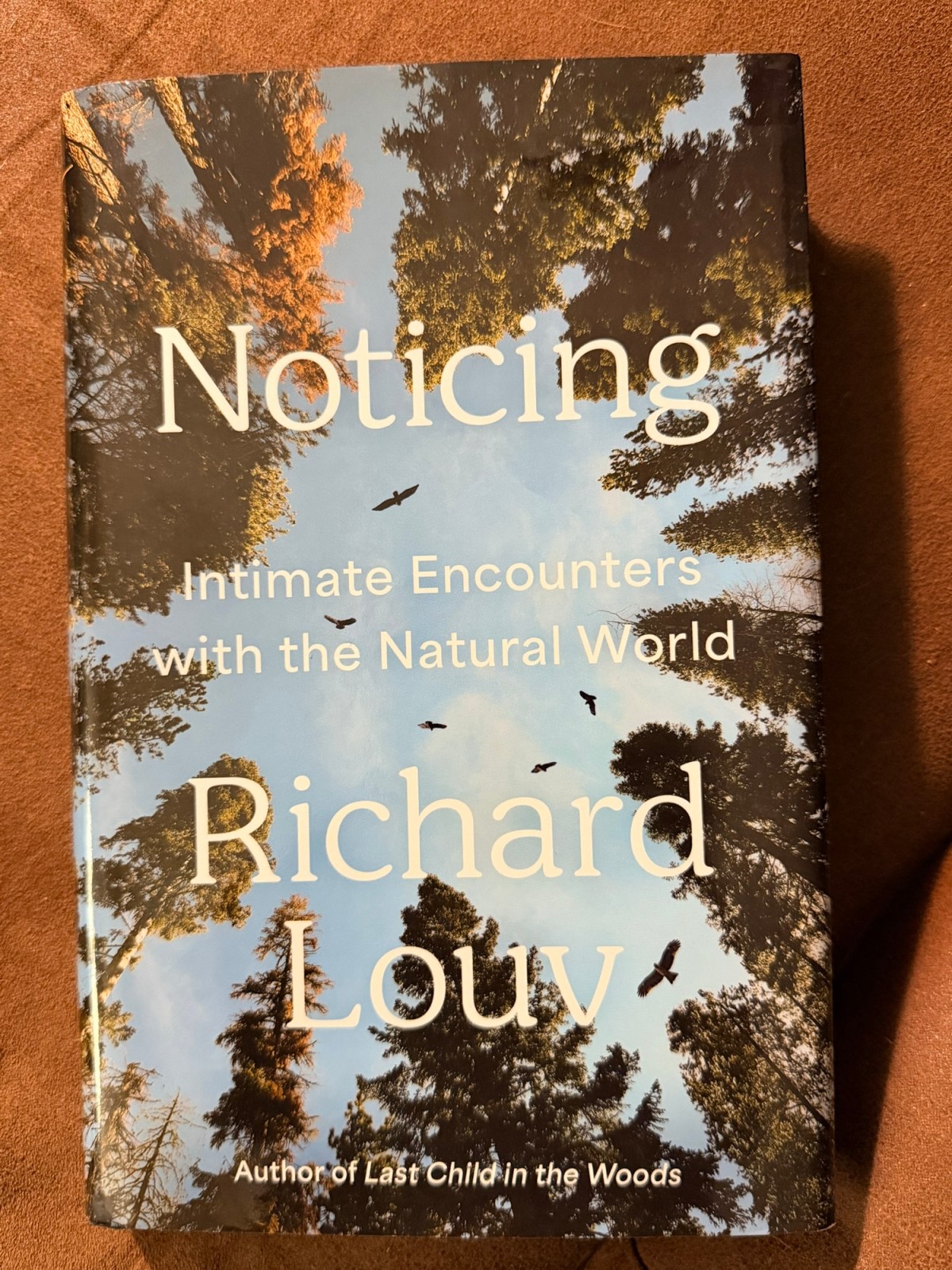
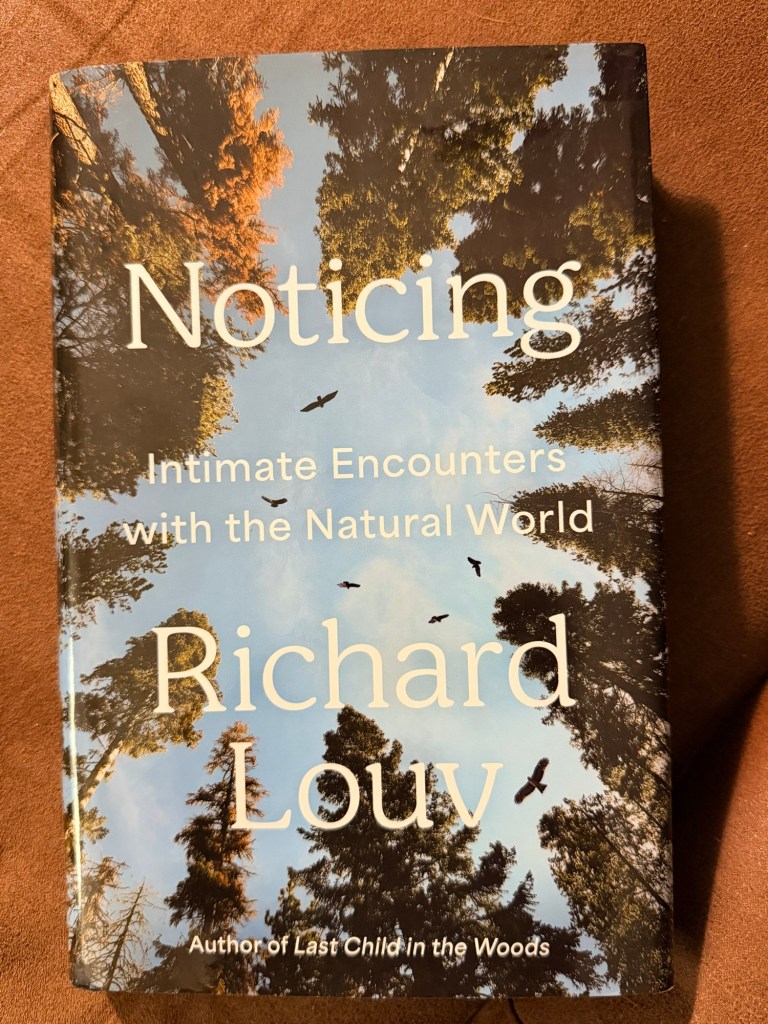
Book Report: Noticing

I’m on a real streak of fascinating nature books these days. Noticing, by Richard Louv (2026) is no exception. Lee found it in a bookstore and rushed it to me. Louv also wrote Last Child in the Woods a decade or so ago, which led many educators to try to get more natural world experiences into the curricula for young children.

Admittedly, most of the topics in Noticing are familiar to me, since I do spend a lot of my time, well, noticing. What I enjoyed were the interviews with researchers, artists, and philosophers about how being around nature affects us humans for the better. It gives me hope that humanity won’t completely lose its connections to the world of which we are a part–just a part, mind you.

Another reason I enjoyed going through this book is that it fulfilled my oh-so-human need for confirmation of my biases. Nothing is more soothing to me than going through hundreds of pages of discussion with people I completely agree with and who help me feel like I’m on the right track in how I live my life. It’s too bad there are so many folks out there who will go, huh? (I had a long talk with an old friend last night who literally shuddered at the idea of a life not surrounded by people and full of bugs and weeds.)

I guess she wouldn’t like this beauty from the chicken house, a Deduced Graphic moth

One of my favorite concepts Louv brings up in Noticing is that of having a First Place, which is where the book starts out. It rang so true to me. The first place you explore, get to know, feel grounded in, and feel a part of is your first place. Louv says:

Through the years, we live in newer places, and if we’re lucky, we bond with them. All these places become the geography of our lives. But there is only one First Place.

p. 13

My early memories of the first home I remember, in Gainesville, Florida, are very strong. I remember the plants, the insects, the heat, the wind, and the smell of camellias. I’ve written before about the fact that I am overcome with a profound sense of peace and “home” whenever I return. I think I’m attuned to the ley lines or some magnetic something that vibrates correctly with me.

I have not bonded with every place I lived. My last house in Illinois, the Bobcat house in Austin, and this ranch are the ones I feel most at home in. I find it a bit sad that I never could attach myself to the house in Round Rock where my kids grew up. I was interested in all the plants and animals in the surrounding area, but the crowded suburbs were too full of “noise” for me. Hmm.

That’s what the stories and science that intermingle throughout this book will do for you–send you off on tangents about your own experiences. If you are not someone who practices the art of active noticing, I hope you will read this book and give it a try. Your life will be enriched, you will feel more connection with the unity of the consciousness around you, and you will feel less alone. As the review on the cover by Carl Safina says:

This book is a how-to manual for getting back to your soul.

If nothing else, it’s important to remember what Louv shares in the future, which is we don’t necessarily have to fix things or bring them back to some ideal state. It’s also okay to simply observe how nature changes and adapts over time. That’s what it is supposed to do!

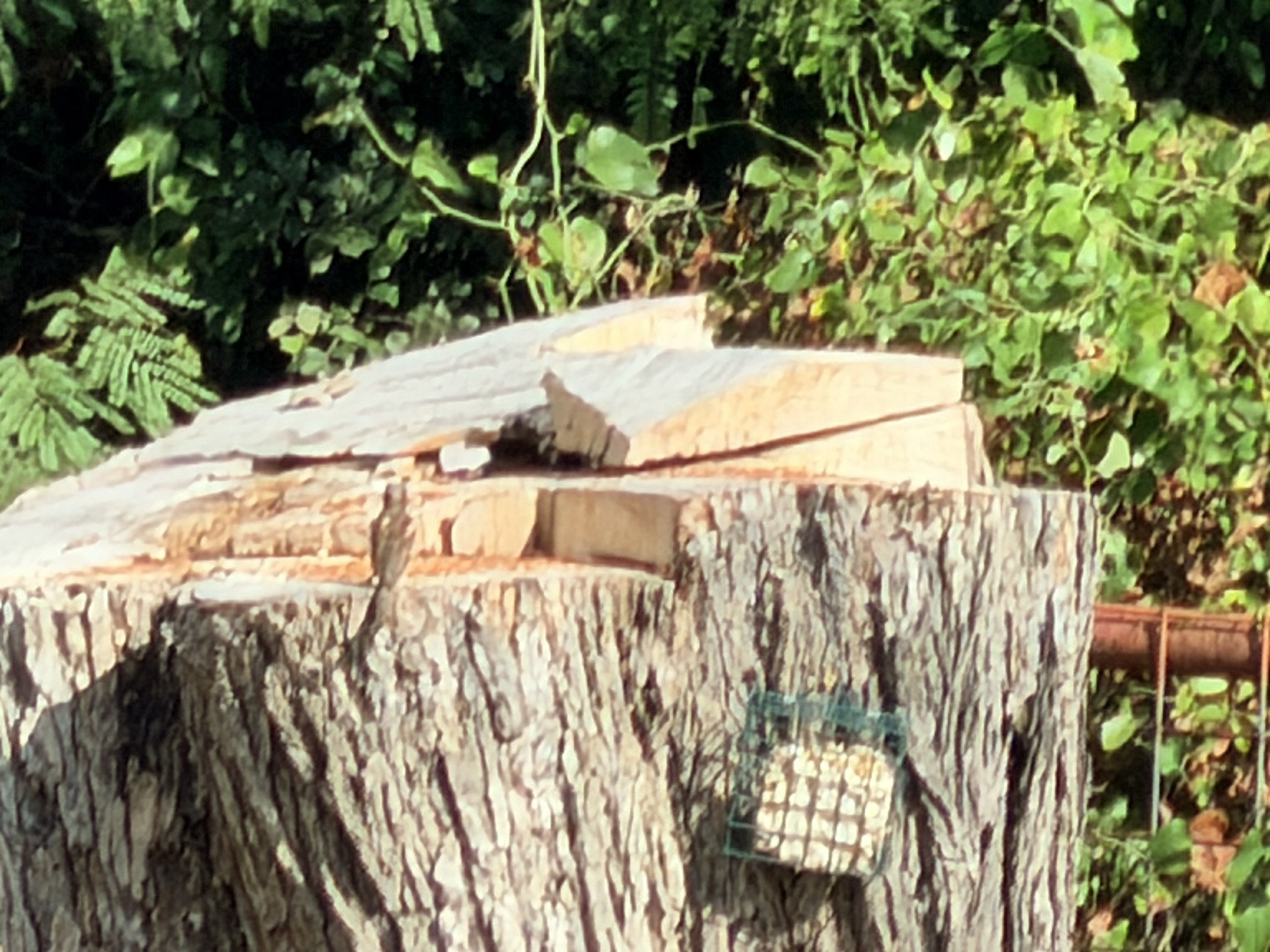
Stumpy success

Now, that took a while. The huge stump has been sitting in the corner of the back yard for months.

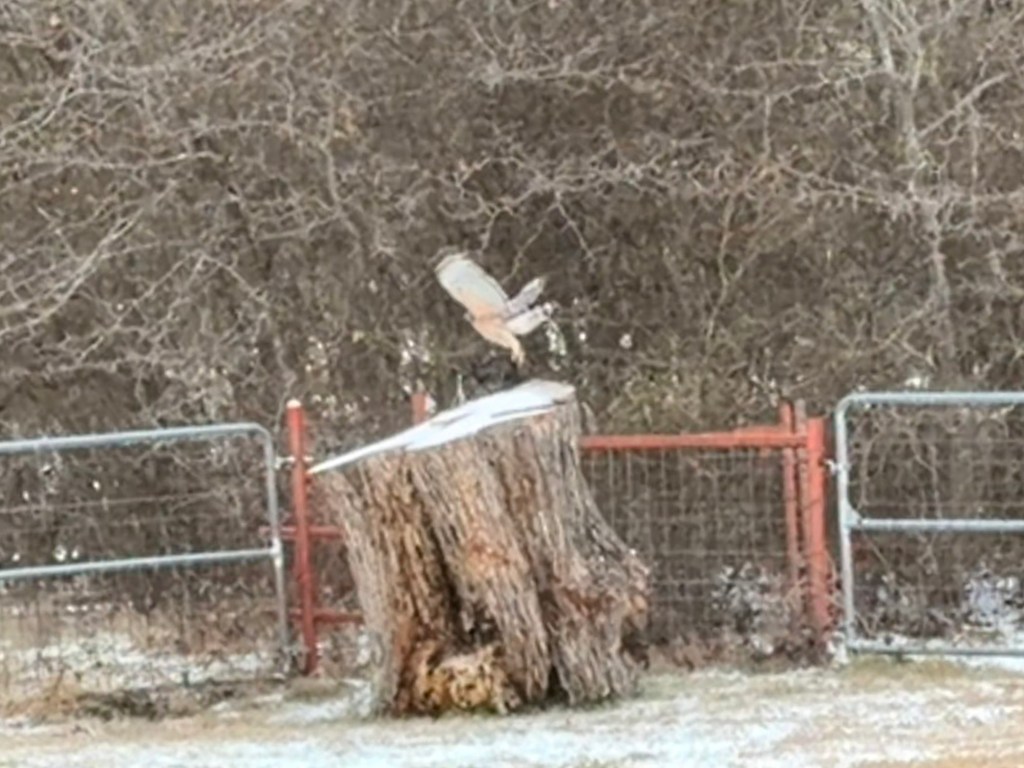
Winter Stumpy with hawk.

It’s been many weeks since flat bits were created on the surface.

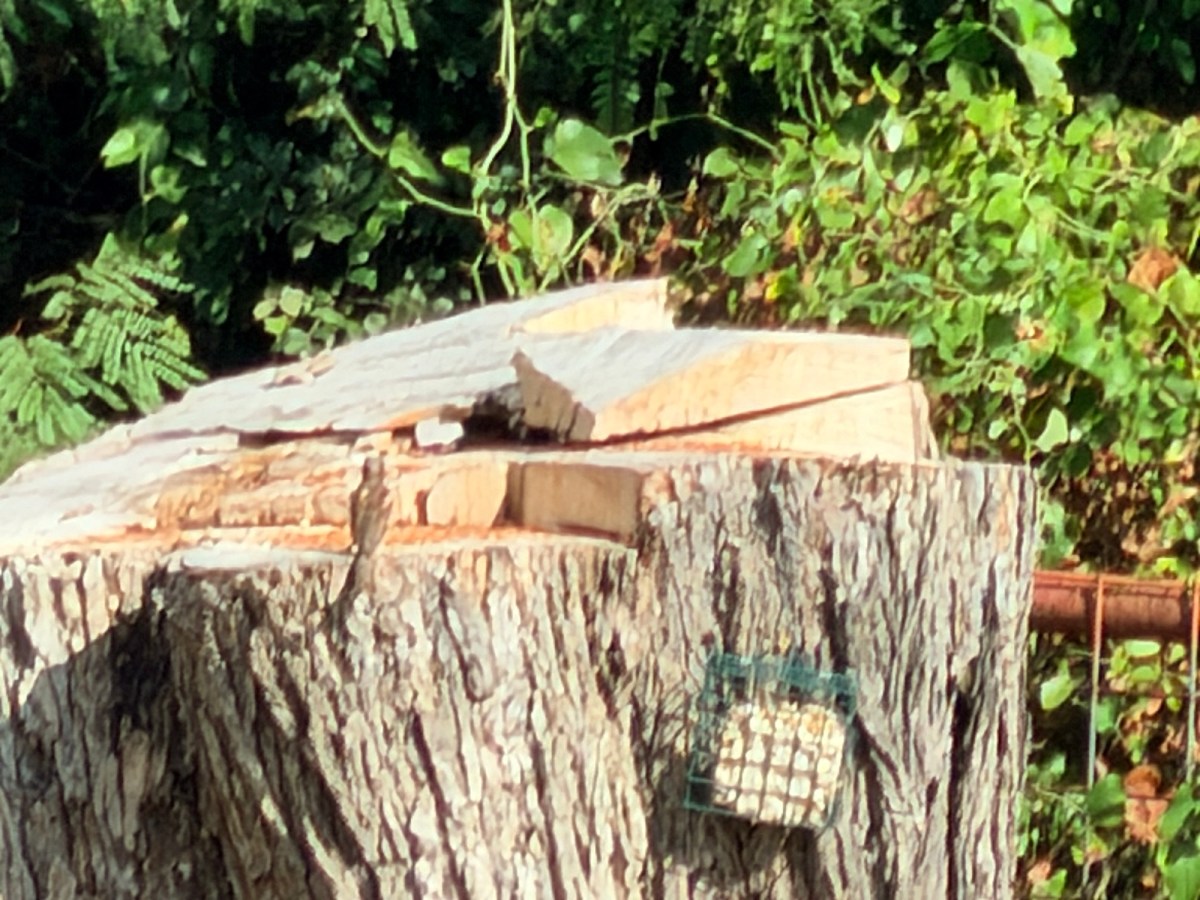
Spring Stumpy with bird bath fountain and flat spots.

I have been adding bird seed whenever rain or wind washed it off. I waited patiently, knowing the birds had plenty to eat after all the rain. But yesterday, out of the corner of my eye, I caught motion. A sparrow was eating some seed!

Honestly, there’s a bird.

Today I looked over at the stump every time I went out to check the bird phone for new birds (Swainson’s Hawk today!). Sure enough, the House Sparrows are eating my admittedly low-quality offerings.

Since I’ve established that birds have discovered Stumpy’s magical gifts, I can now give them better stuff. I even sprinkled some corn mixture on the ground to attract the doves who have been hanging around. Tomorrow I’ll break out some better seed mix I’ve been hoarding so maybe songbirds will see what’s there. I can store all the food safely in my birding hut, too, since I have a tightly sealed bin. Winter may be fun when all the various sparrows return.

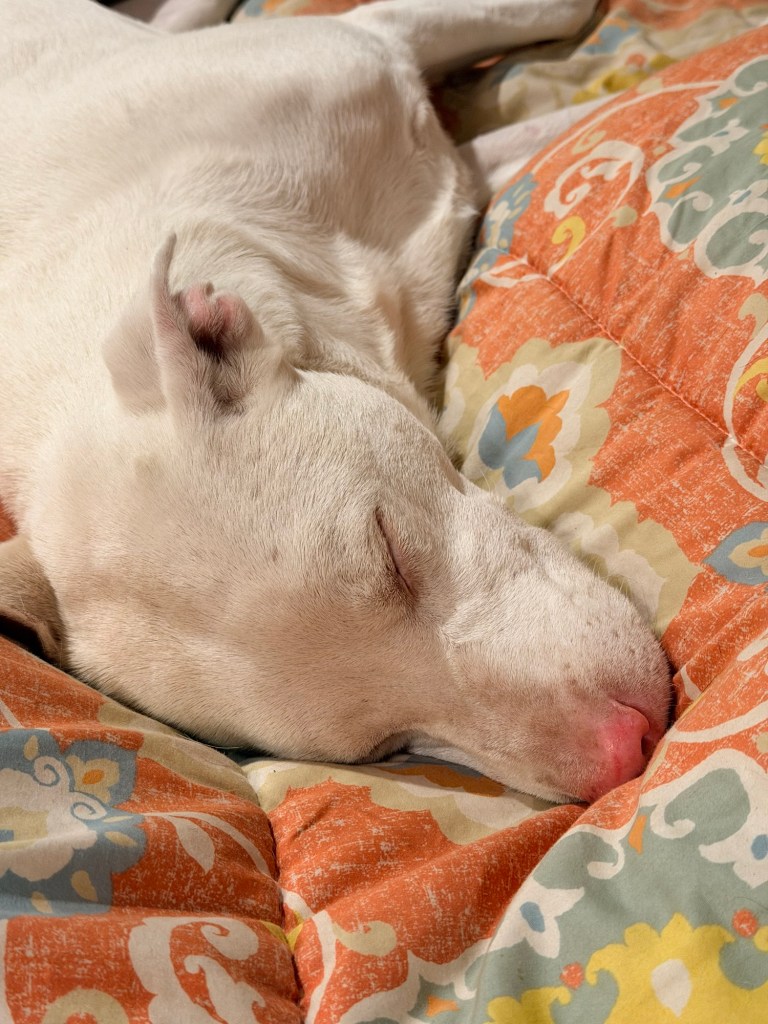
It makes me feel trusted when Carlton sleeps right next to me—he feels safe.

Looking and learning

I’m pretty much wiped out, but today was extra, extra fun. I enjoyed listening to and watching birds behind the hotel. I got to watch Lesser Goldfinches eating thistle seeds and the happiest Raven, who had scored an entire biscuit. I also saw unidentified animals in the hills.

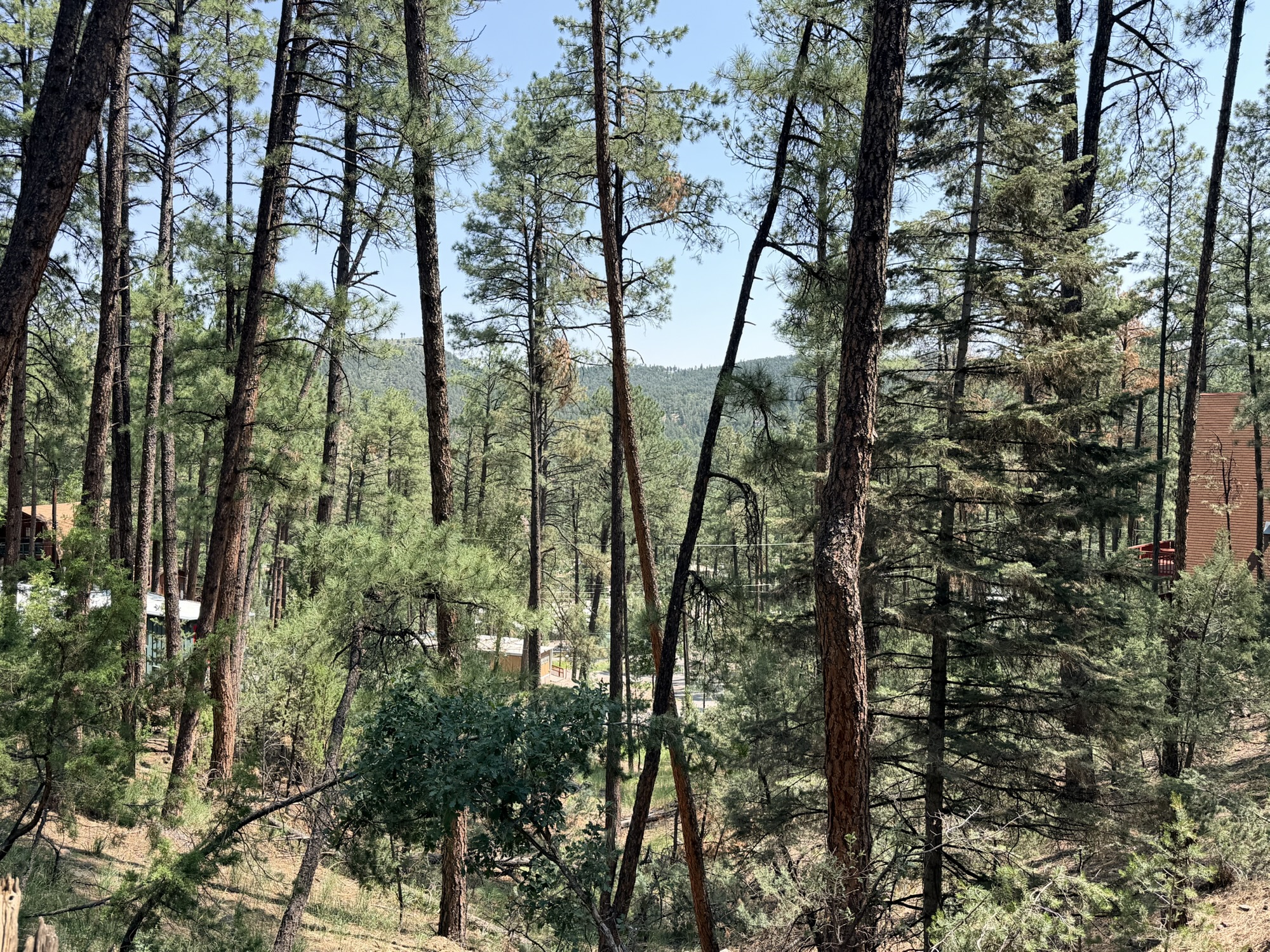
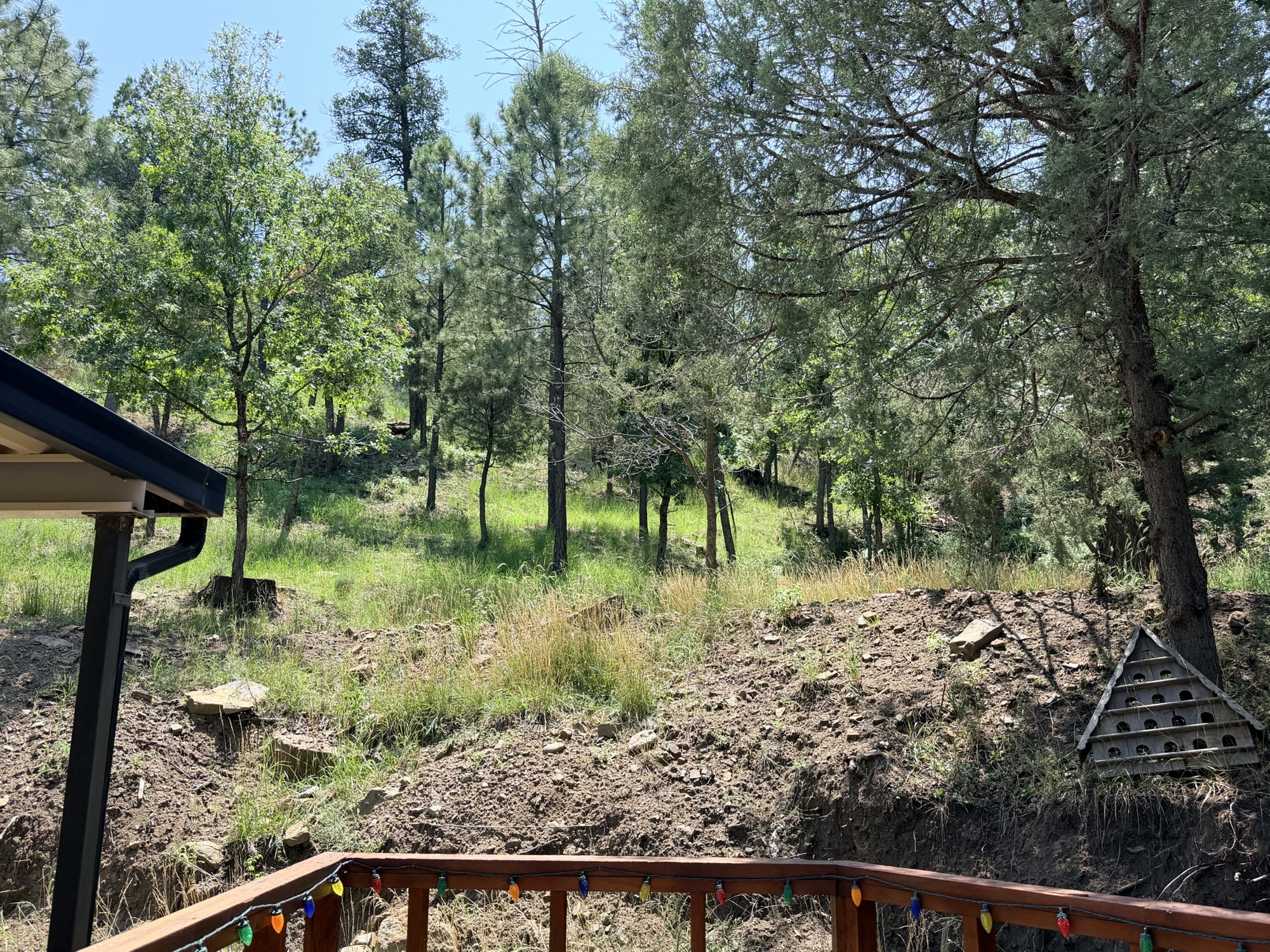
Hard to believe this is behind the business district.

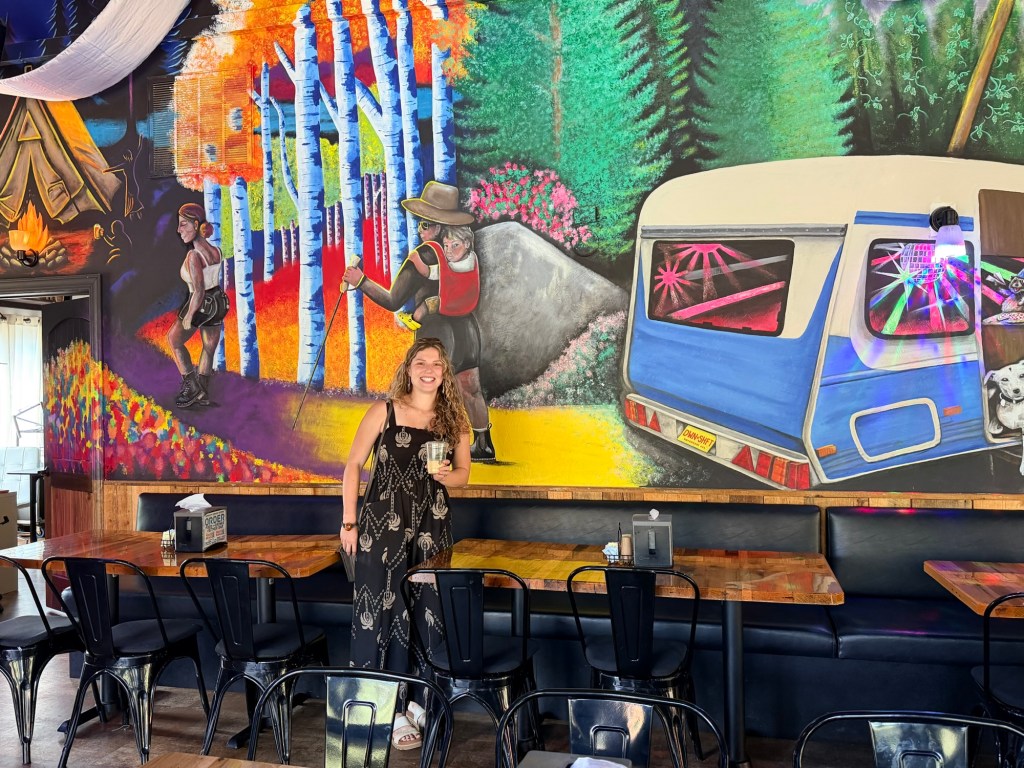
Next we met a fun young woman named Alison, who showed us some representative houses here that might work as summer homes. Alison was a lot of fun. We met in a restaurant where her fiancé painted a cool mural.

The mural had many fun features.

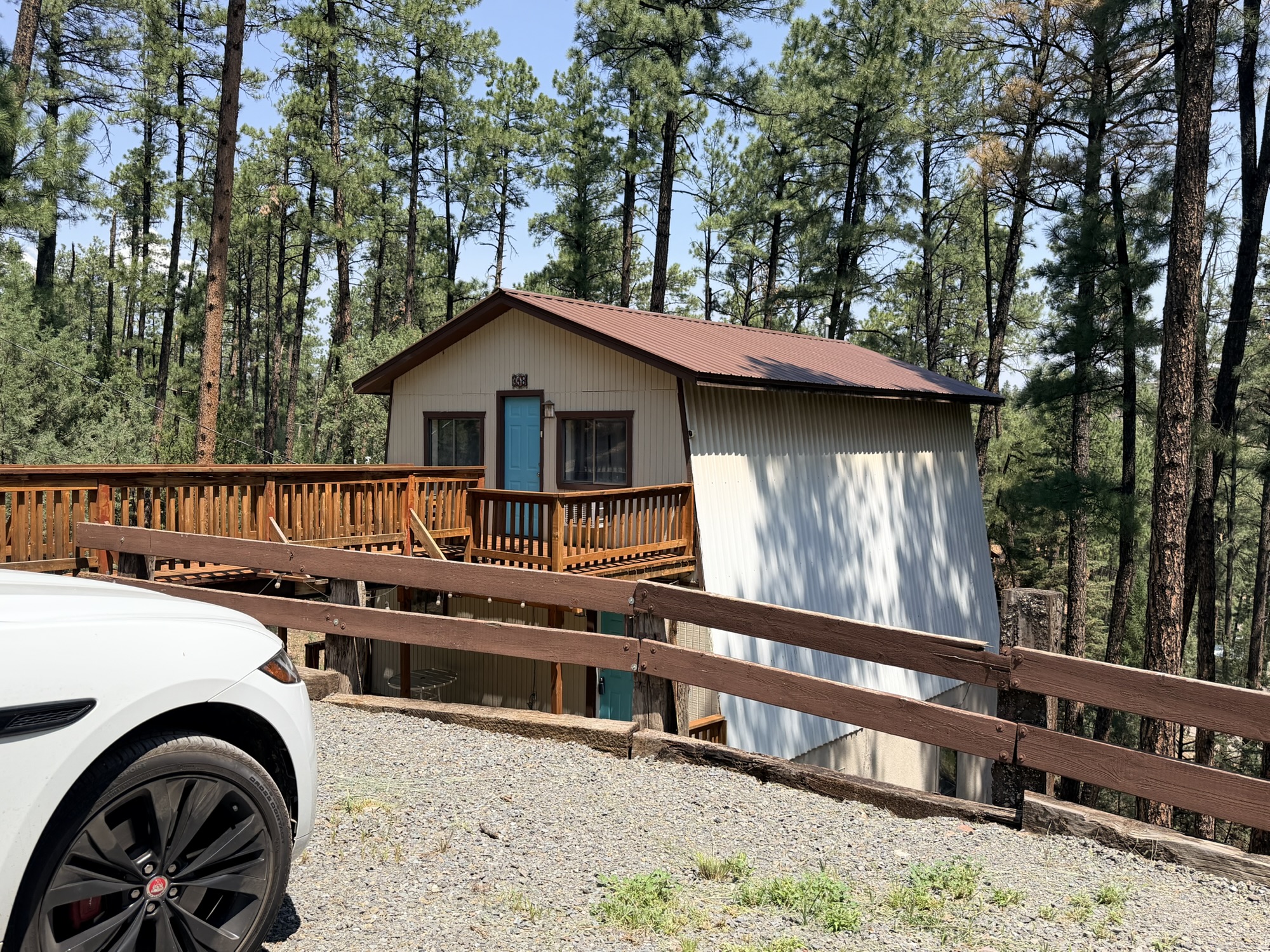
There was quite a collection of properties to see, ranging from sad small condos to rustic cabins to a house nicer than ours. It reminded me of the good old days when we bought houses and fixed them up.

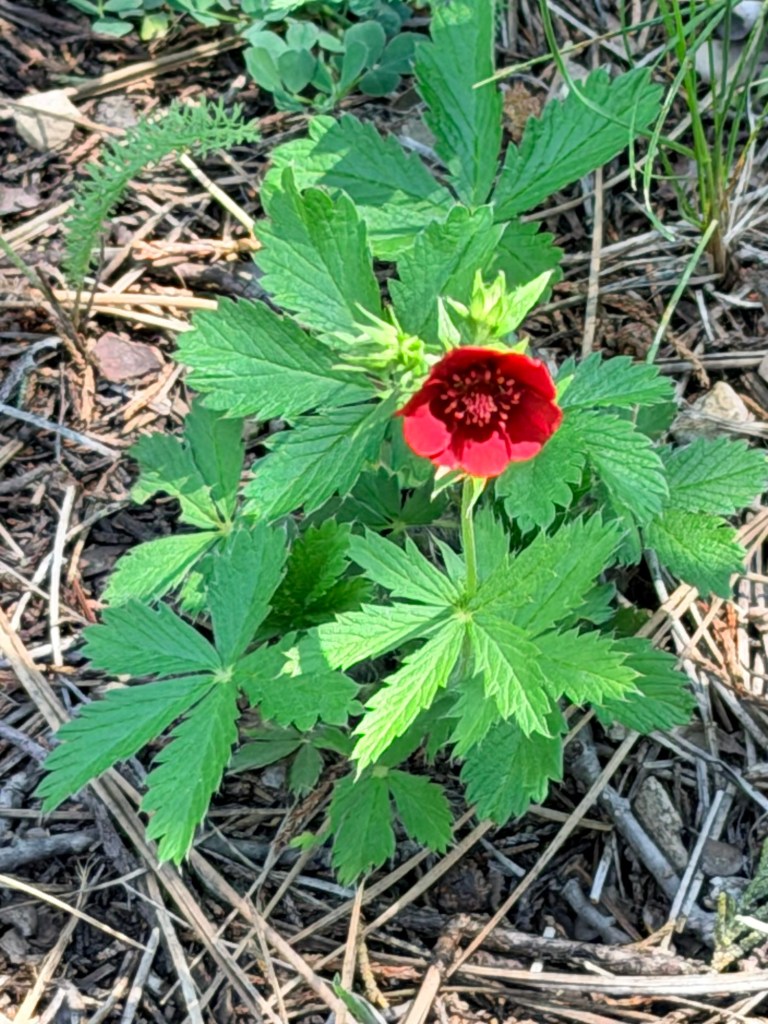
Of course, I also found flowers that elk hadn’t eaten. This is scarlet cinquefoil.

I didn’t think anything would match all my criteria:

  • Not too big
  • No close neighbors
  • Space to park an RV
  • Lots of nature
  • Attractive view

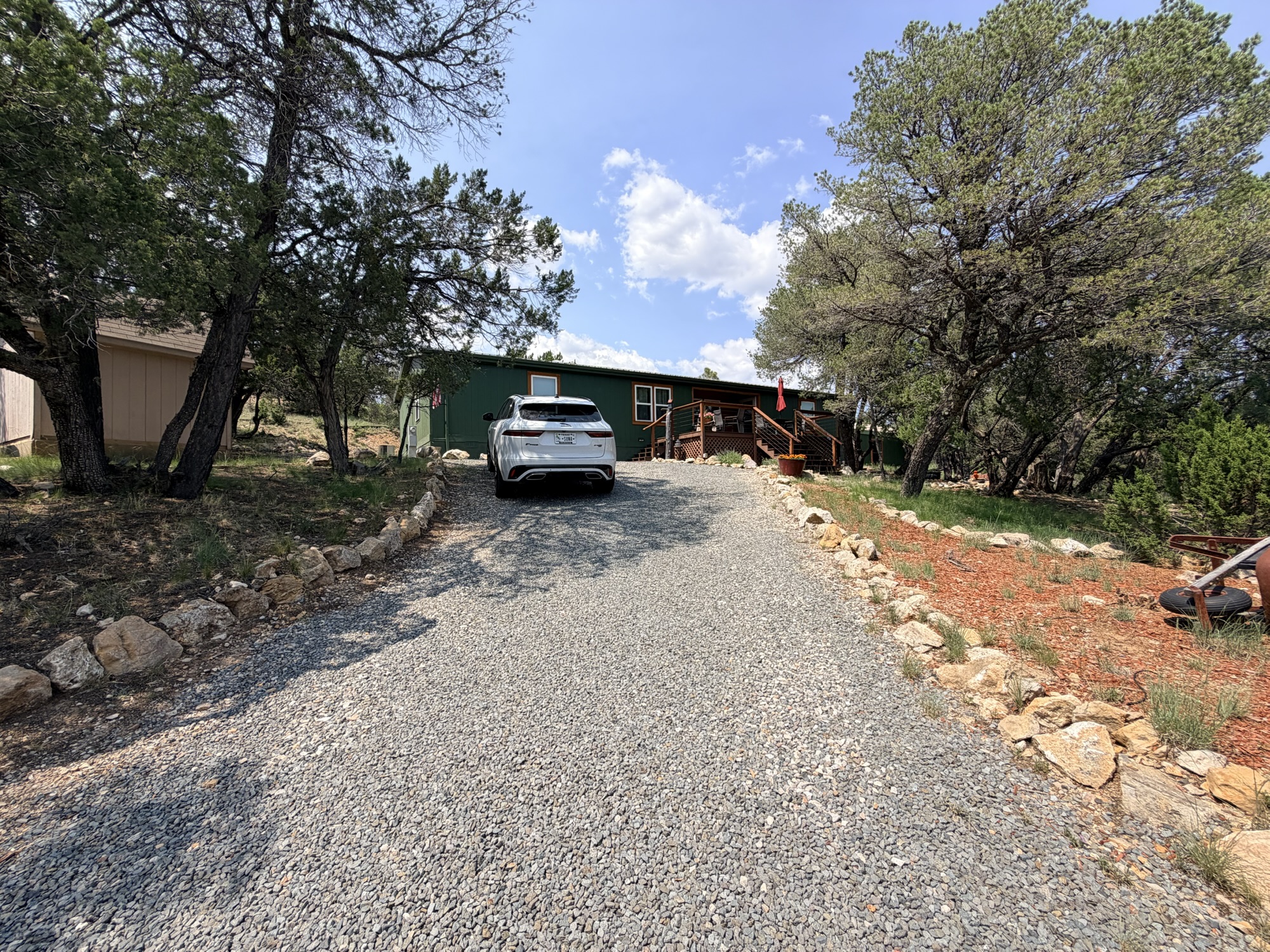
Two did. One rustic place in need of some TLC near town, and one doublewide in a more rural area in really good shape. (There are so many well preserved mobile homes here.) They both are quirky, which I like.

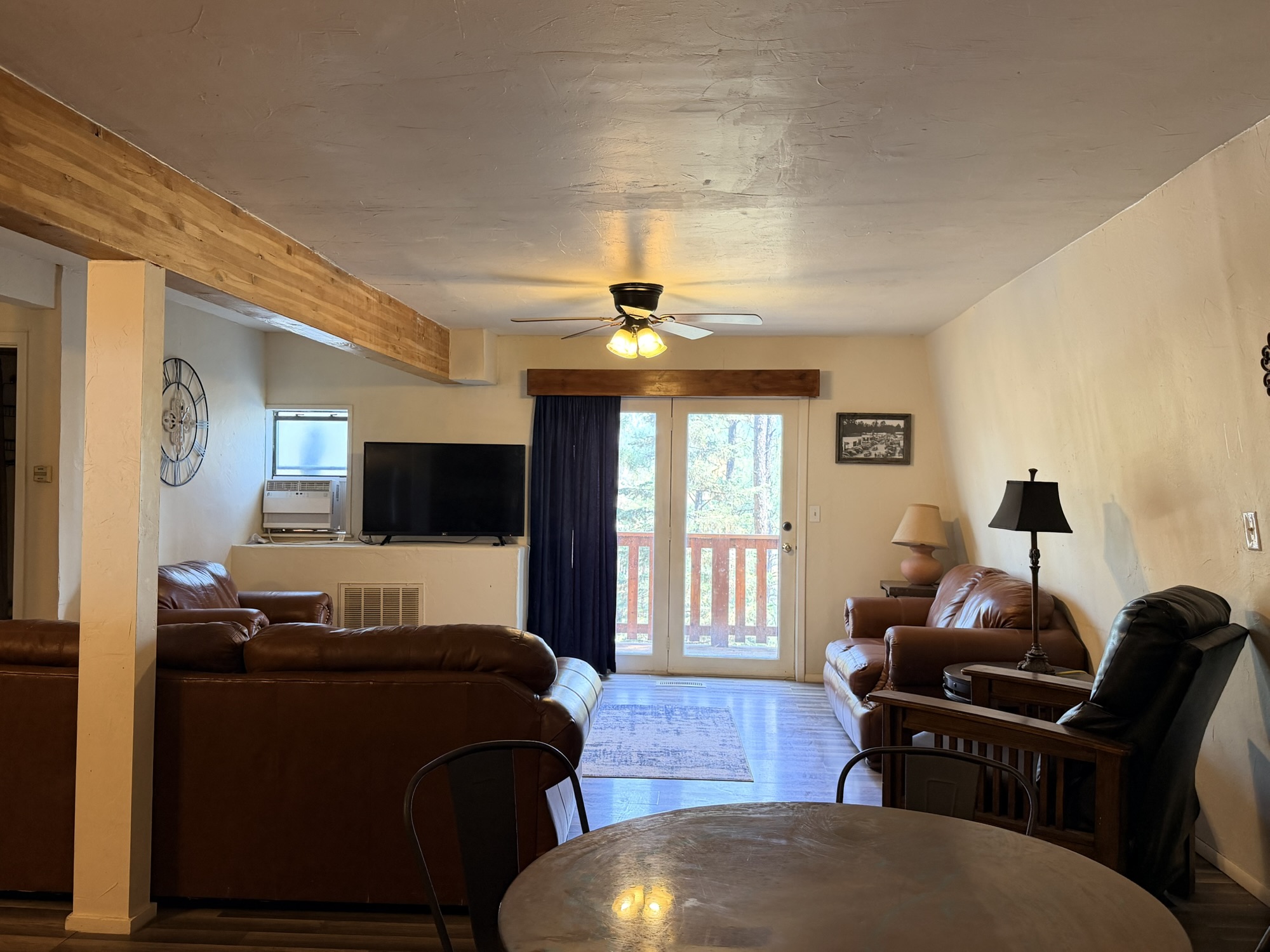
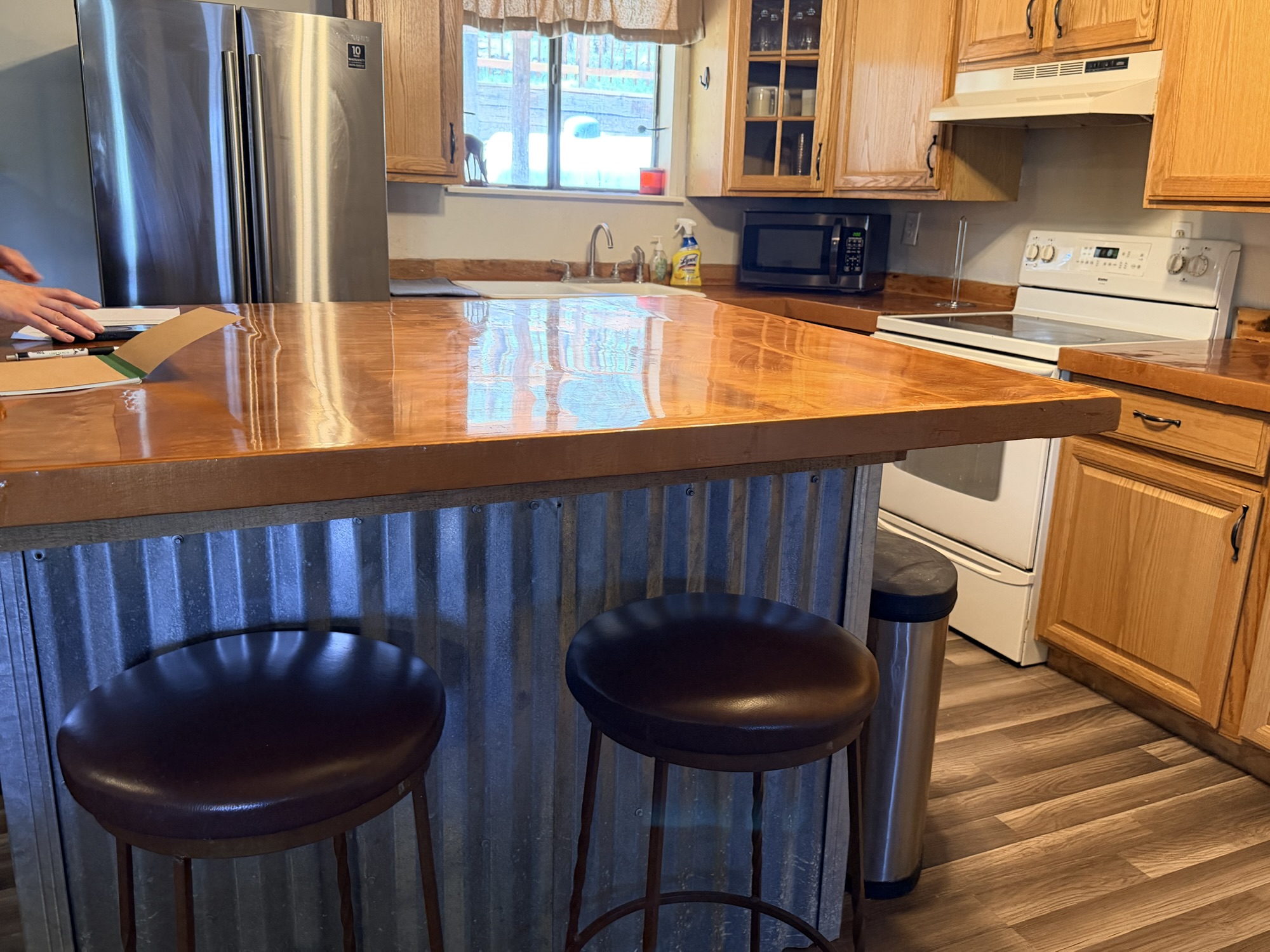
The lady who owned the rural house had taken great care of the yard, which I liked. It was very low maintenance. The other one needed occasional weed whacking. Anyway. Here are a couple things I enjoyed in other houses.

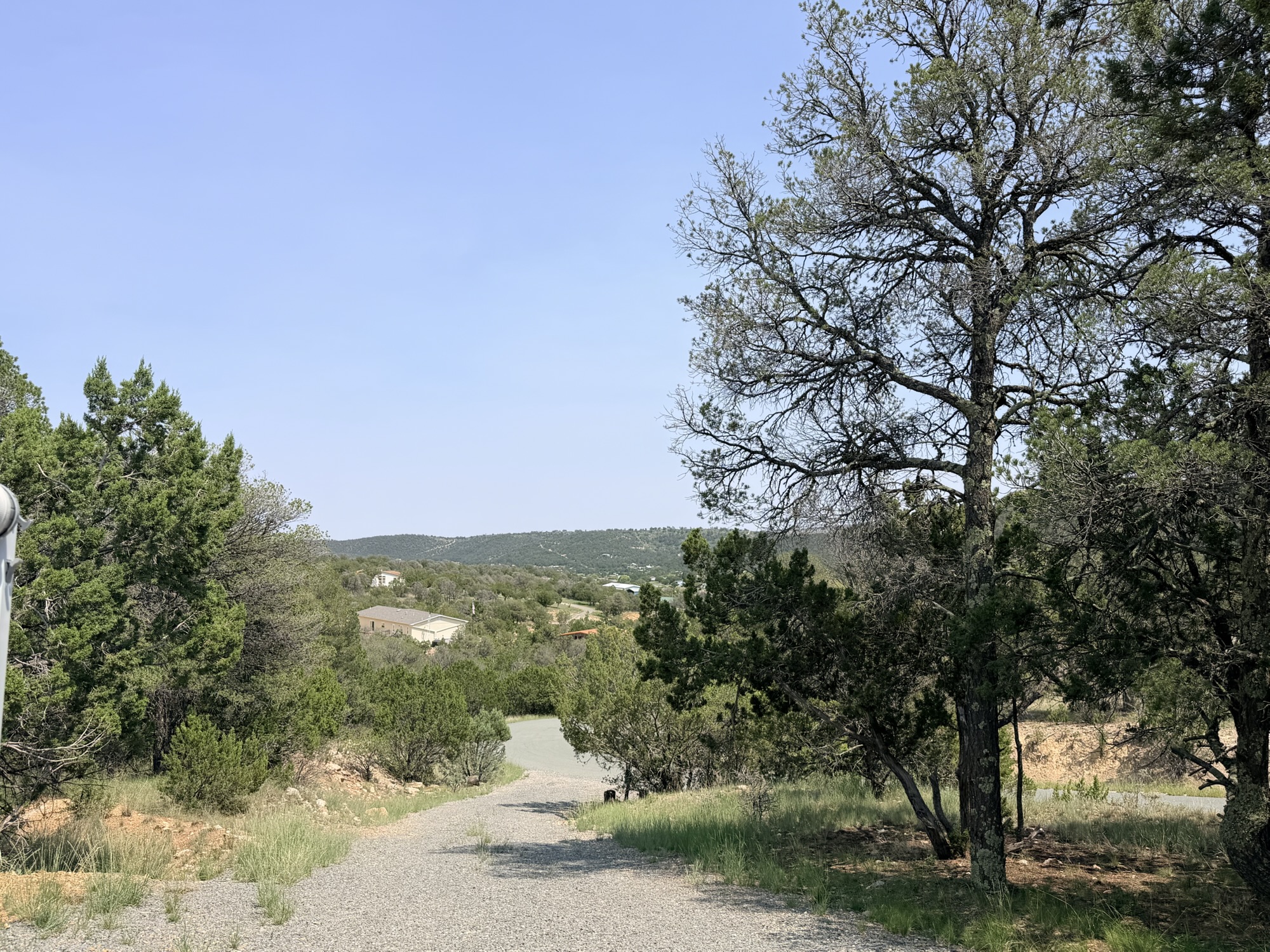
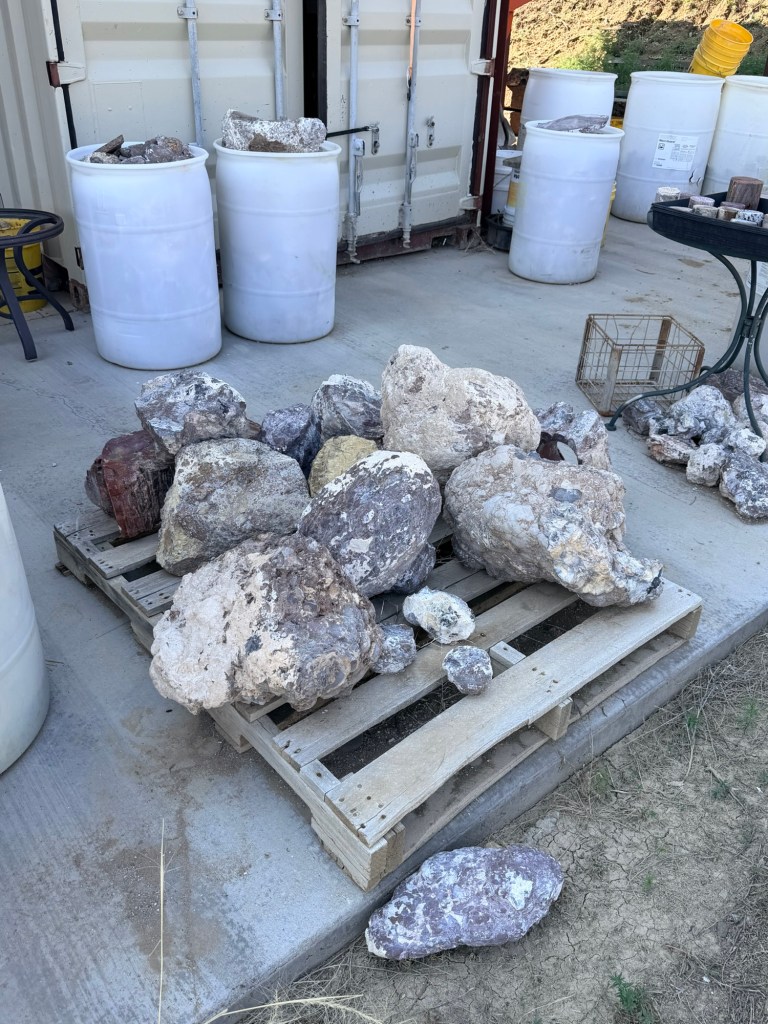
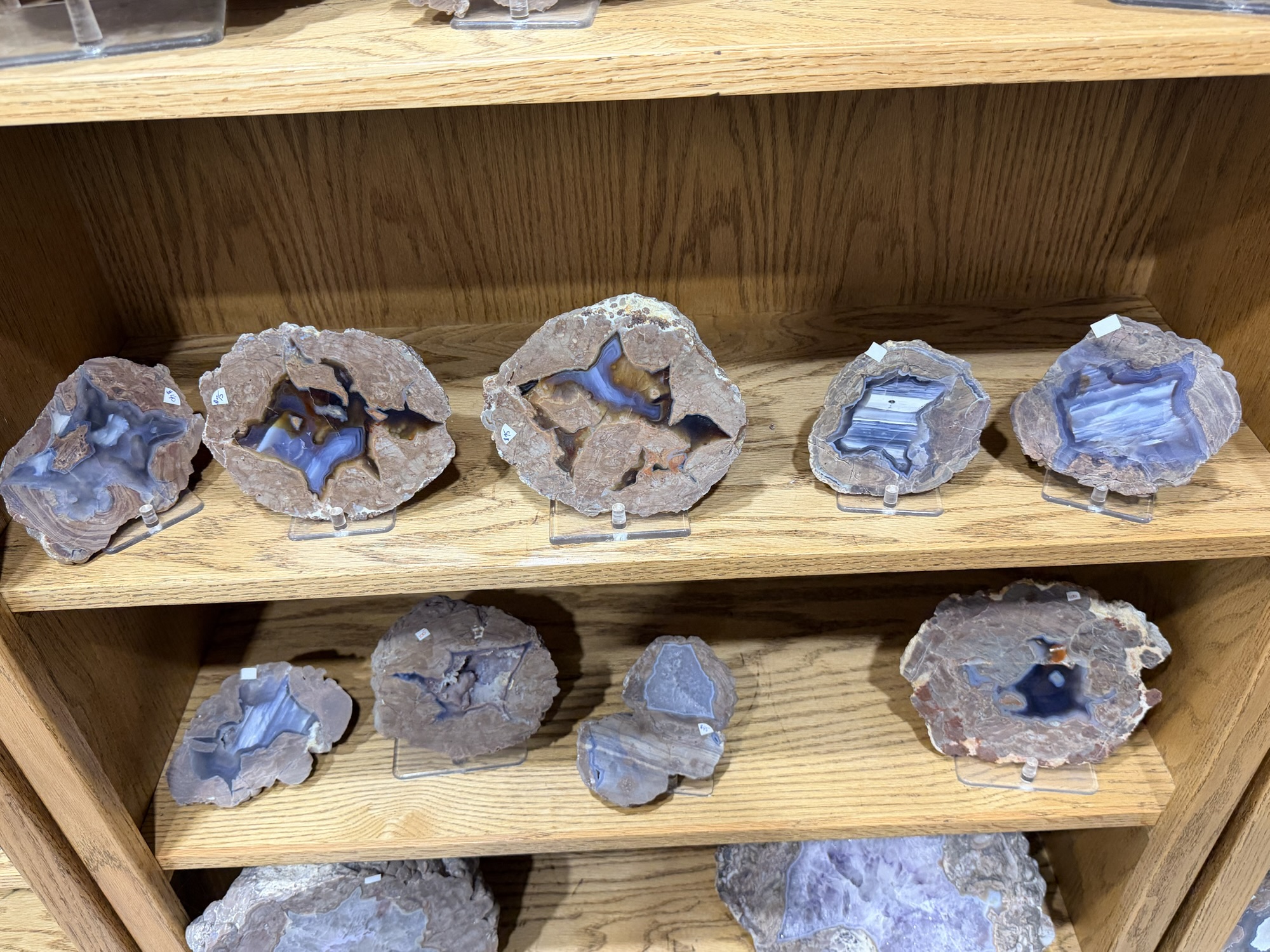
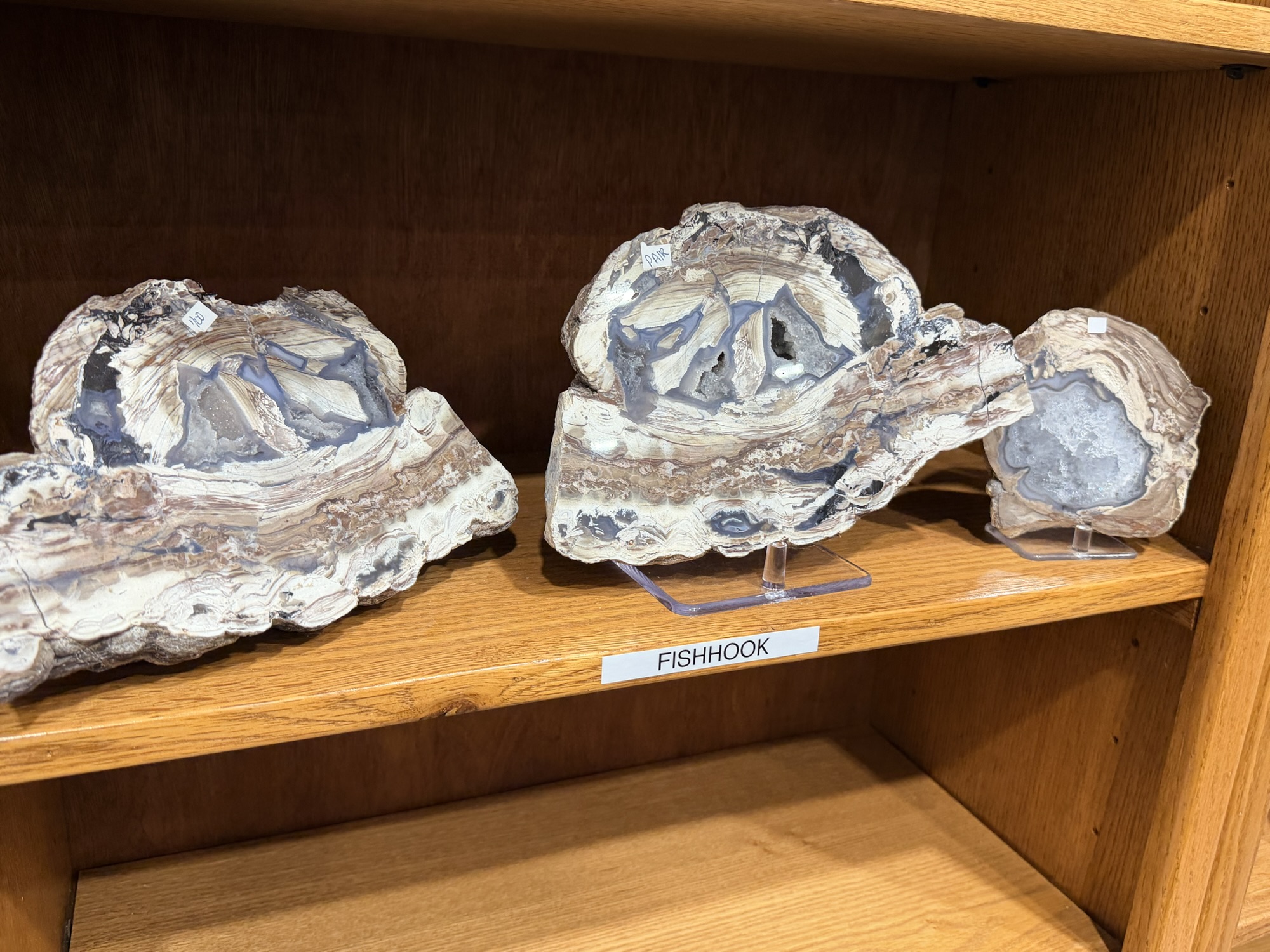
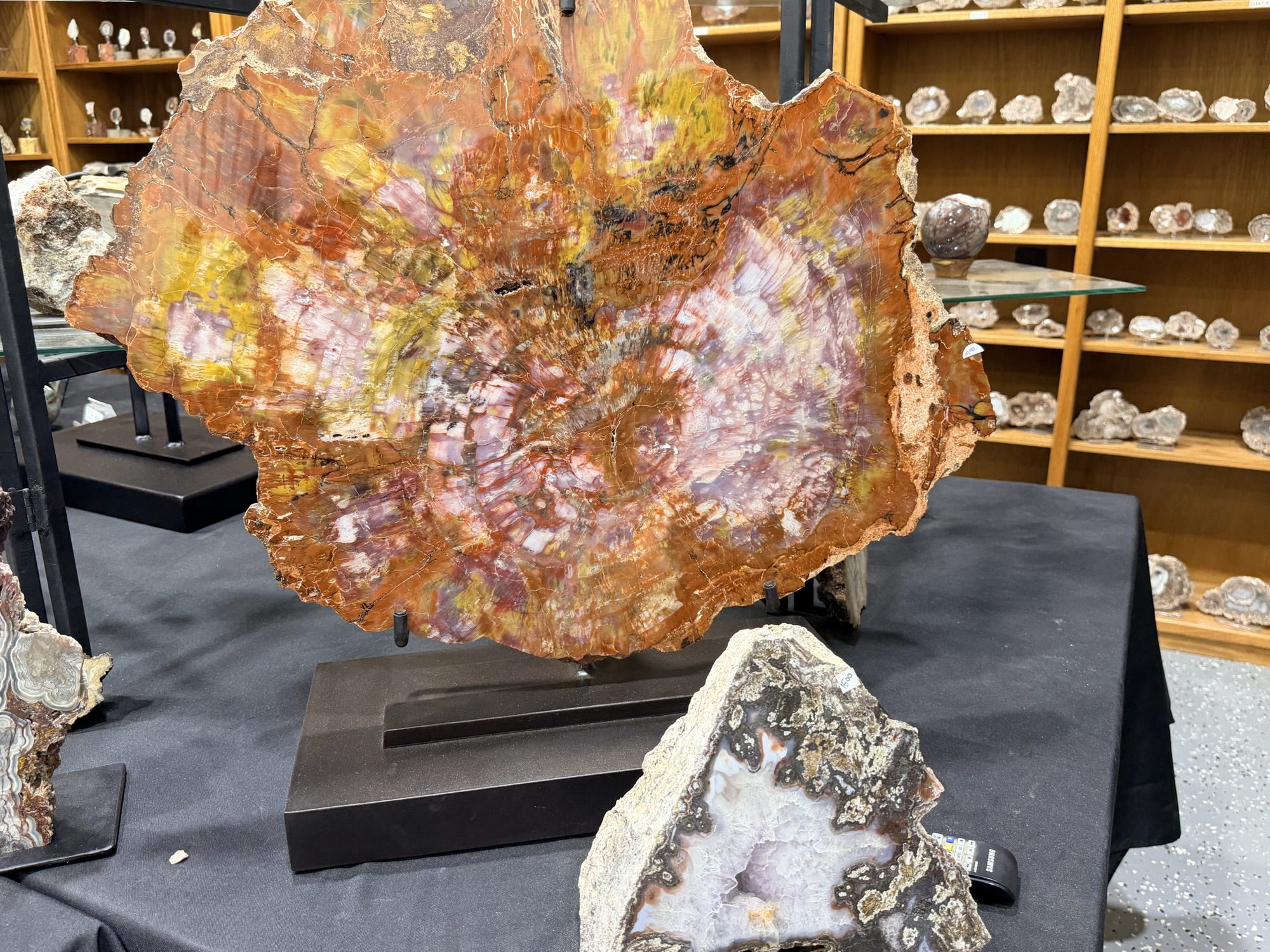
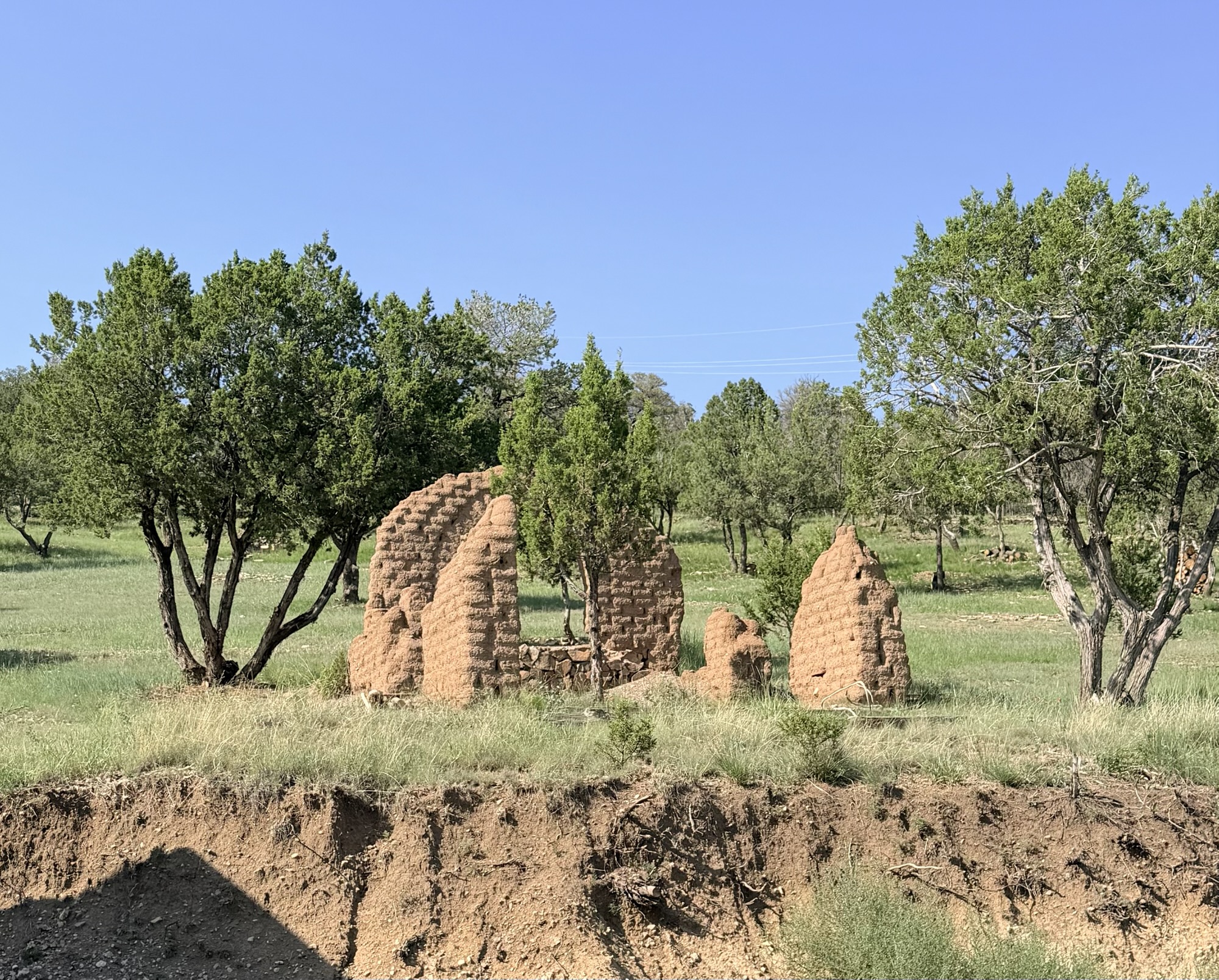
After a lot of driving around, we dropped Alison back off at the restaurant and went back to look at the area where the rural house is. It’s a big, green high mesa with a mix of double wides and nice traditional homes. There are also many horse properties nearby. However, the most interesting thing is in the middy of the neighborhood. A rock shop. Not just a shop, but the place where miners of fancy rocks with geodes and other beautiful formations inside process the raw material!

Raw material

We got to see all the grinding and polishing stations. It was fascinating! We got to look at beautiful examples of the finished products and watch a slideshow of how they mine the rocks (almost all in New Mexico). after mining, they put back all the dirt they dug and seed it with appropriate plants. I was impressed.

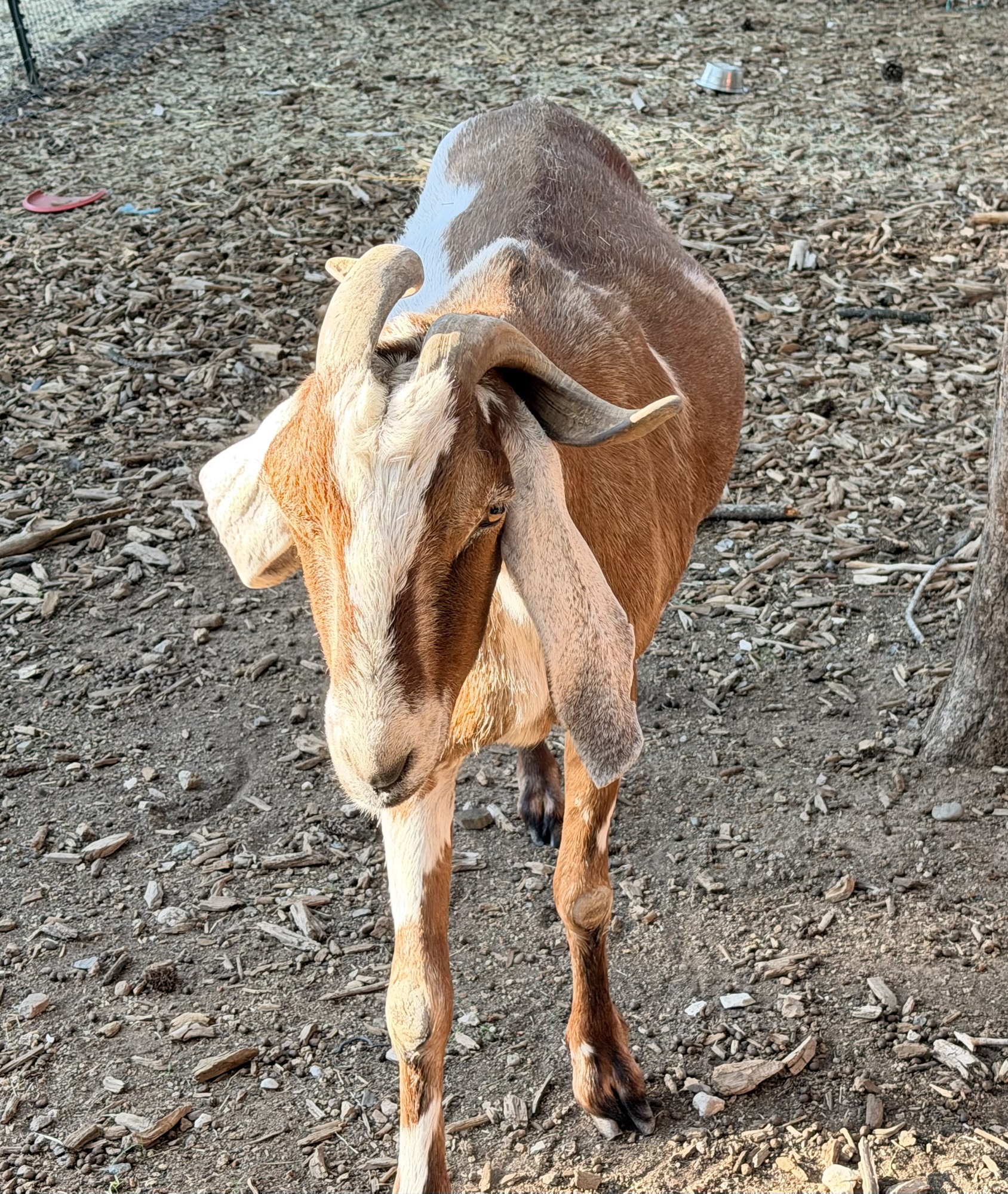
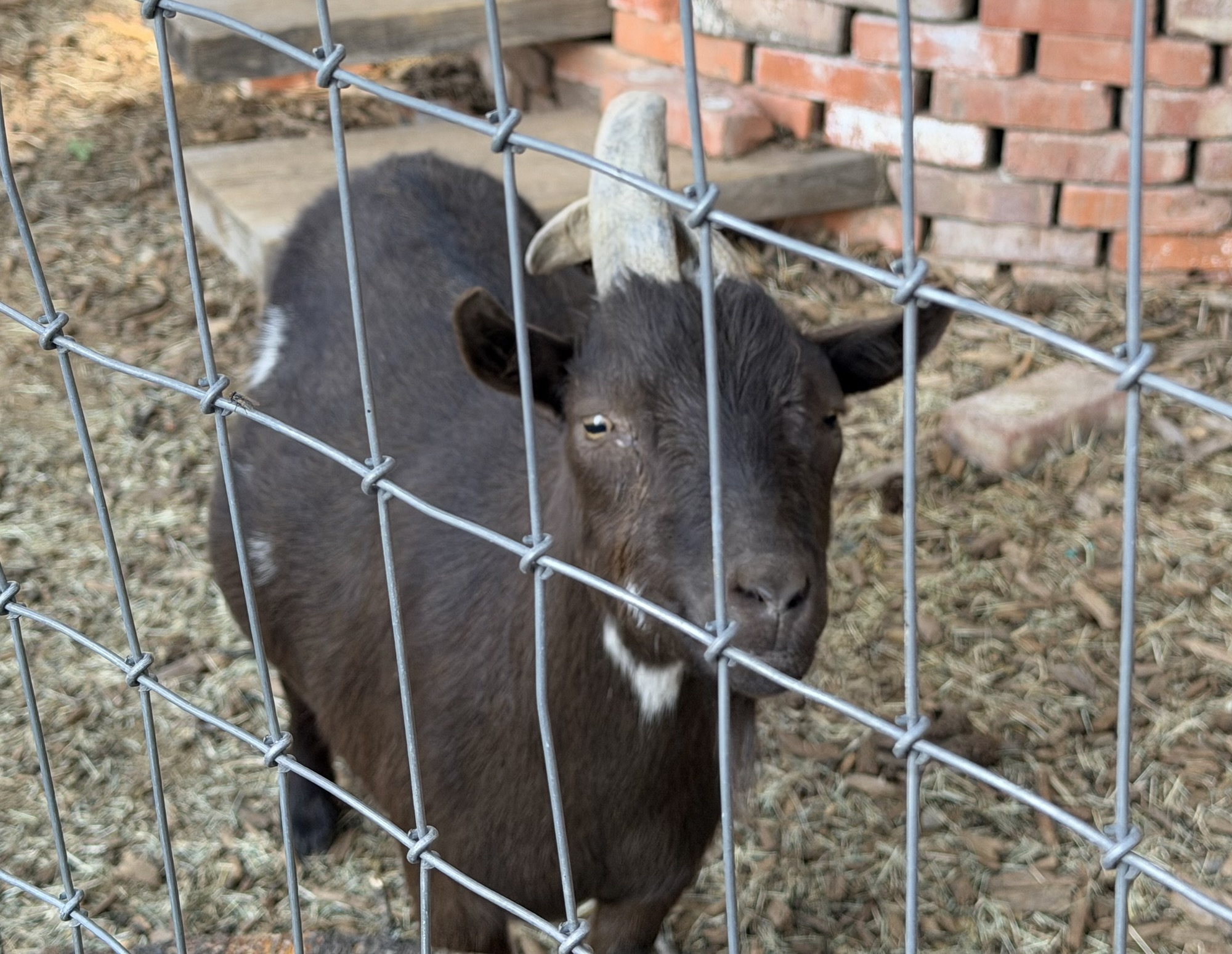
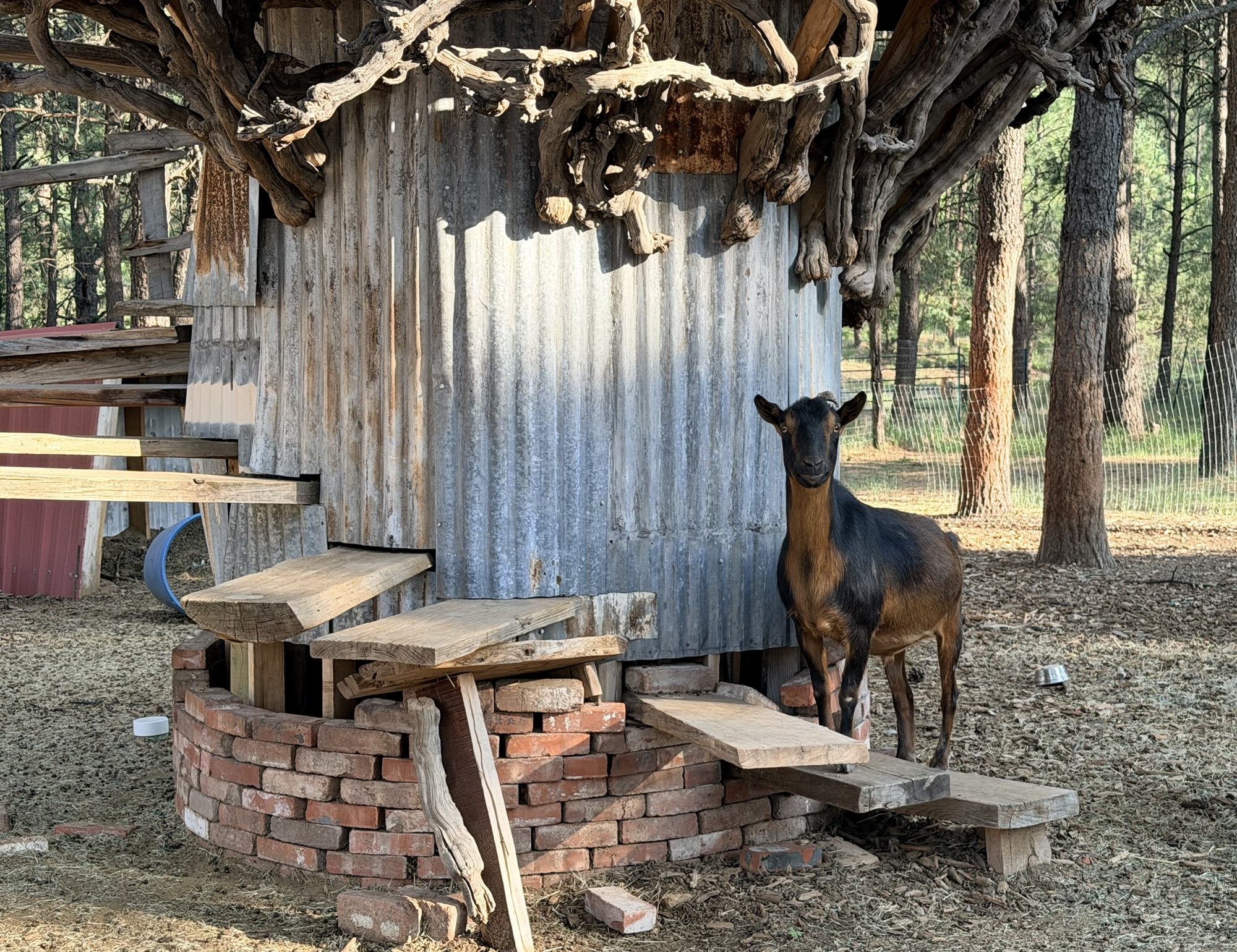
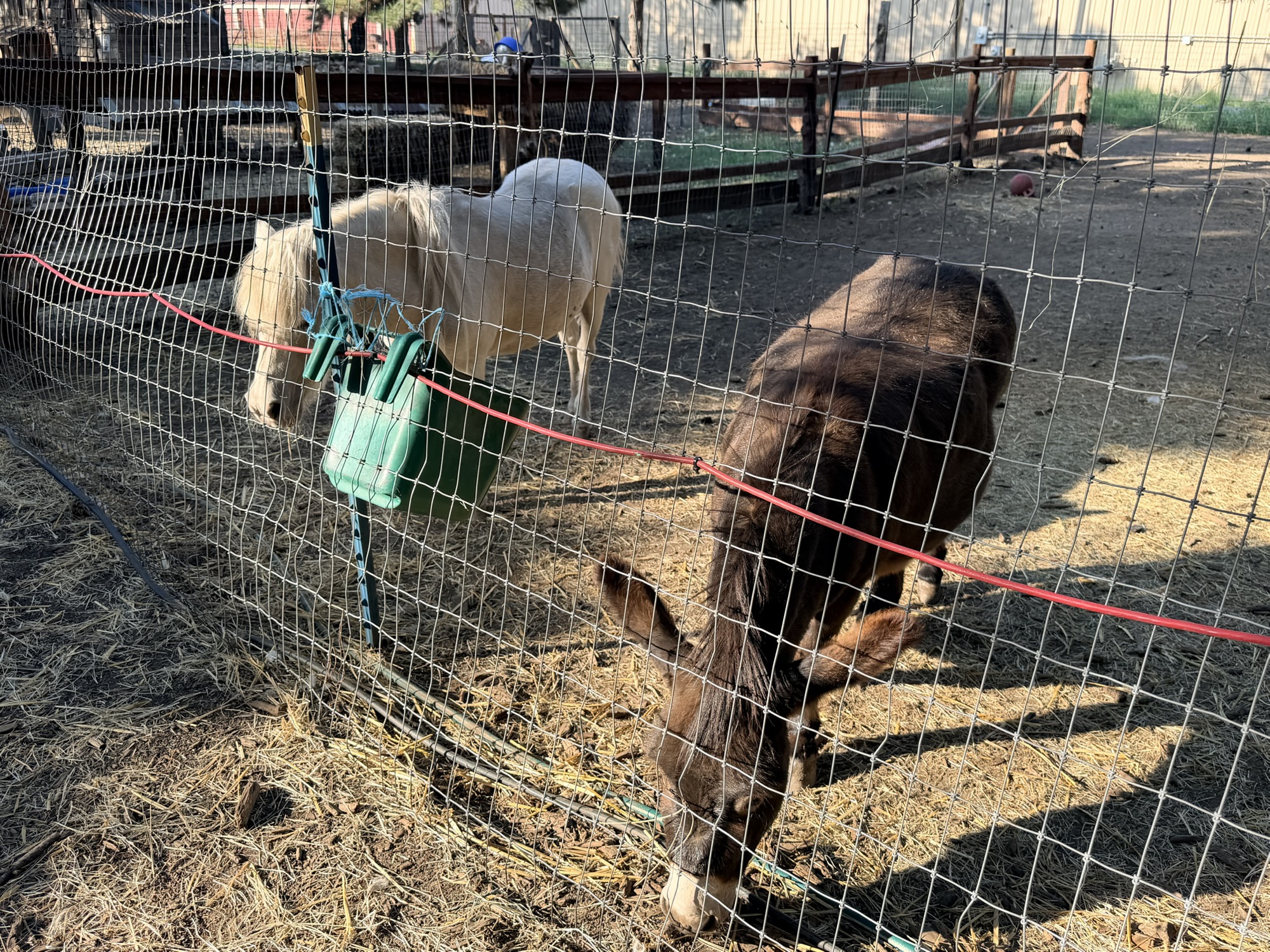
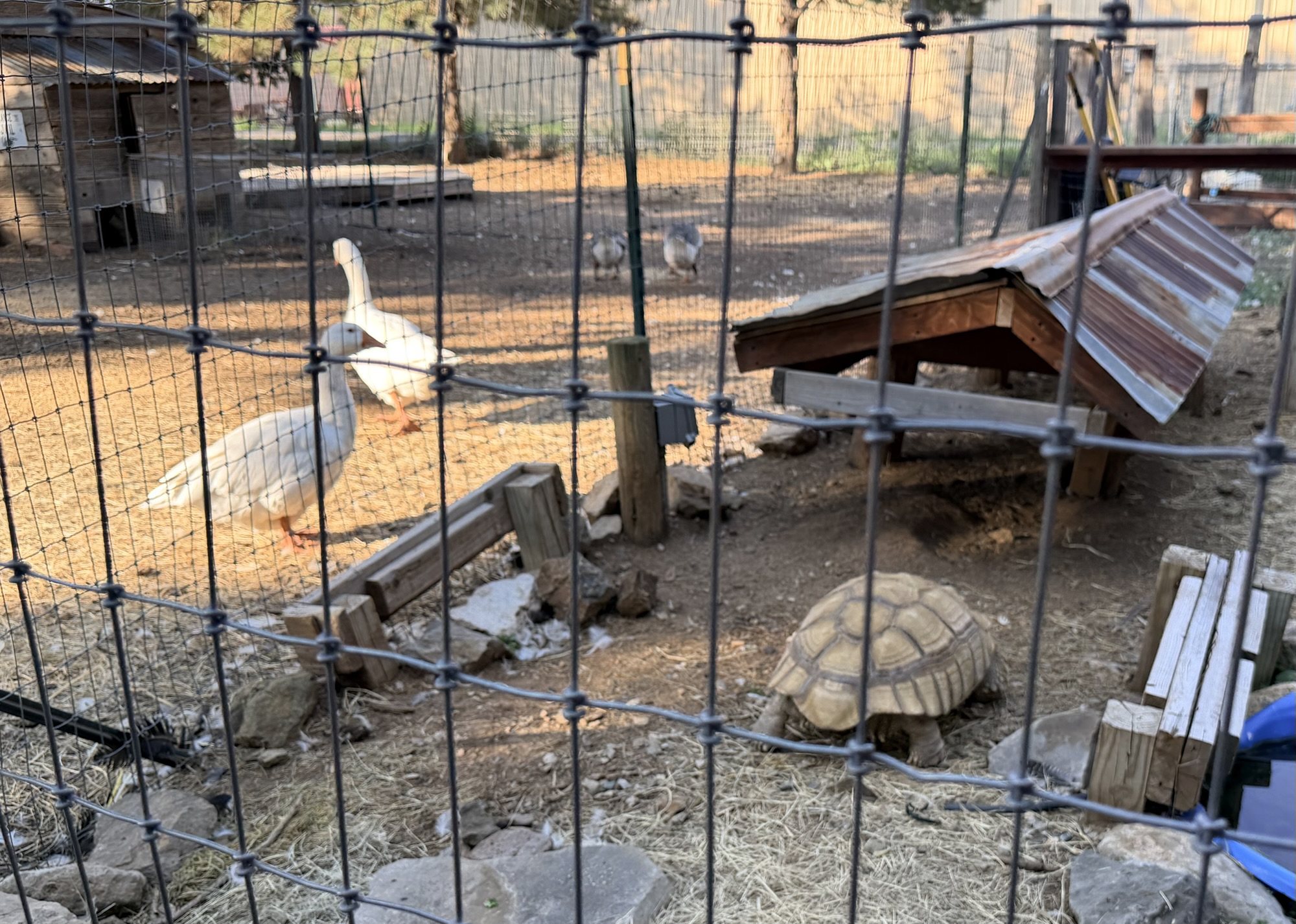
After that, Lee took me to the Noisy Water winery outdoor gathering place, where we sat under trees and drank wine and ate charcuterie. I also listened to birds. Of course. They had a petting zoo, so I went over and said hi to the goats and other residents.

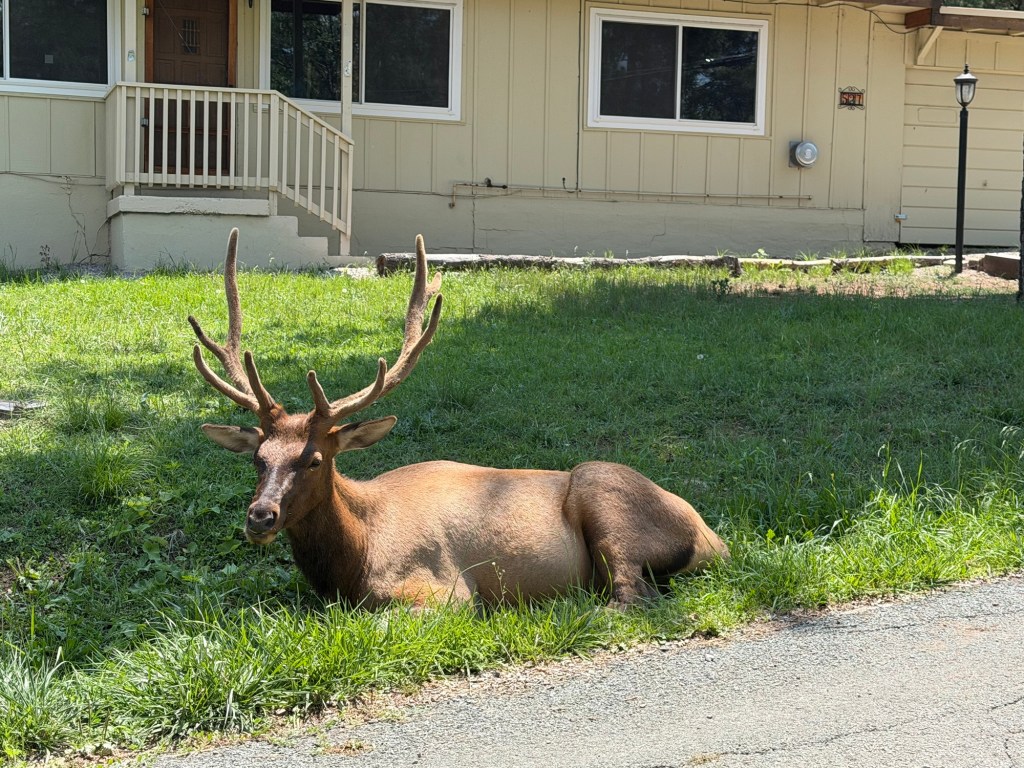
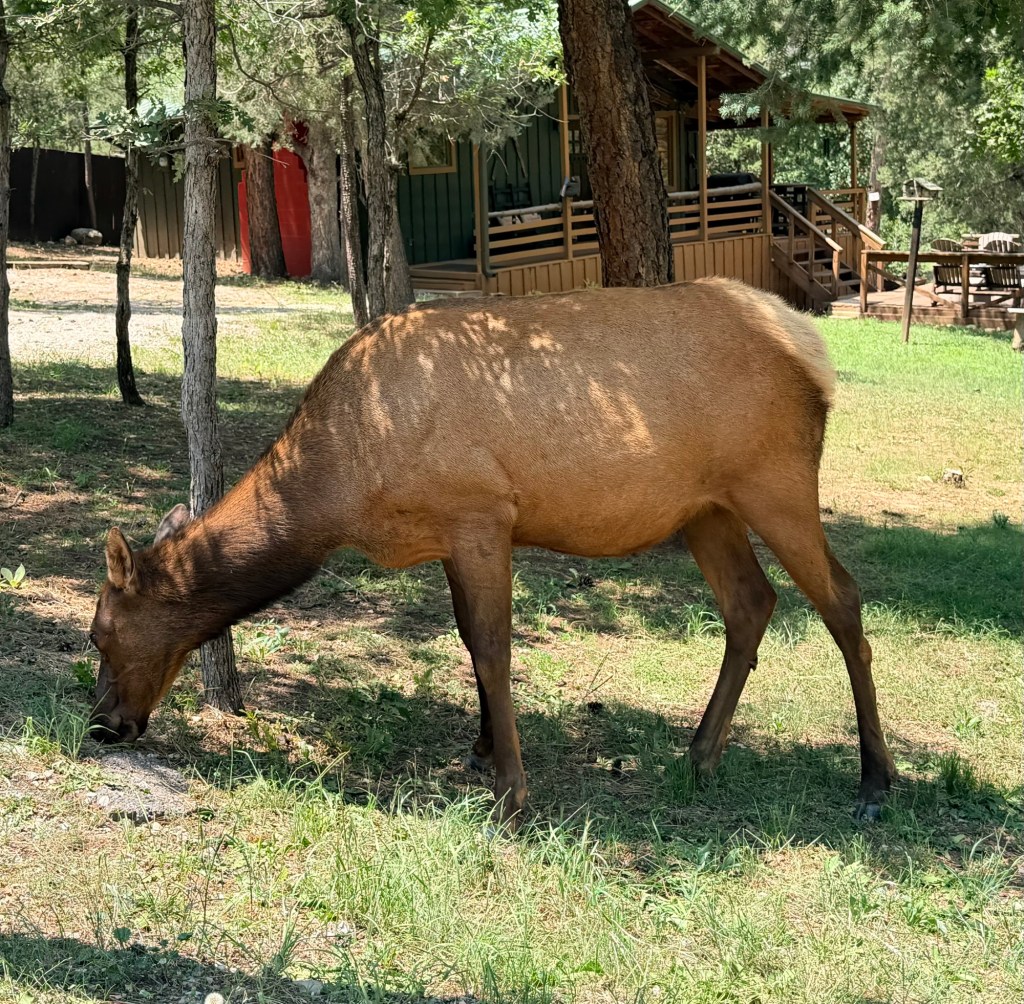
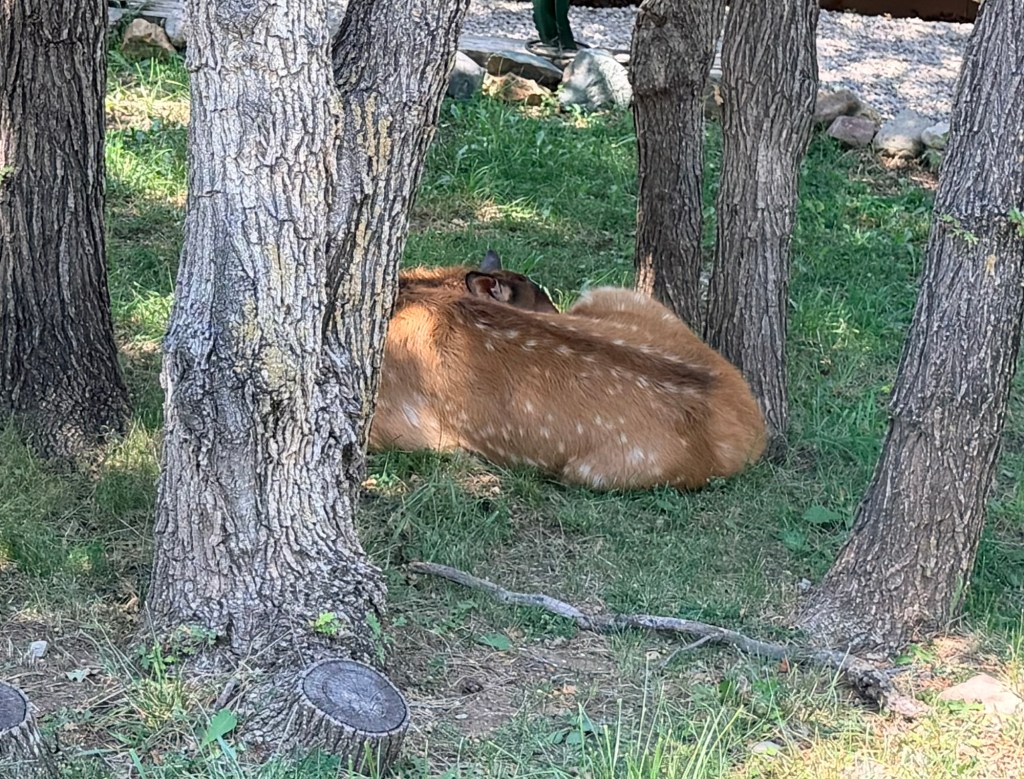
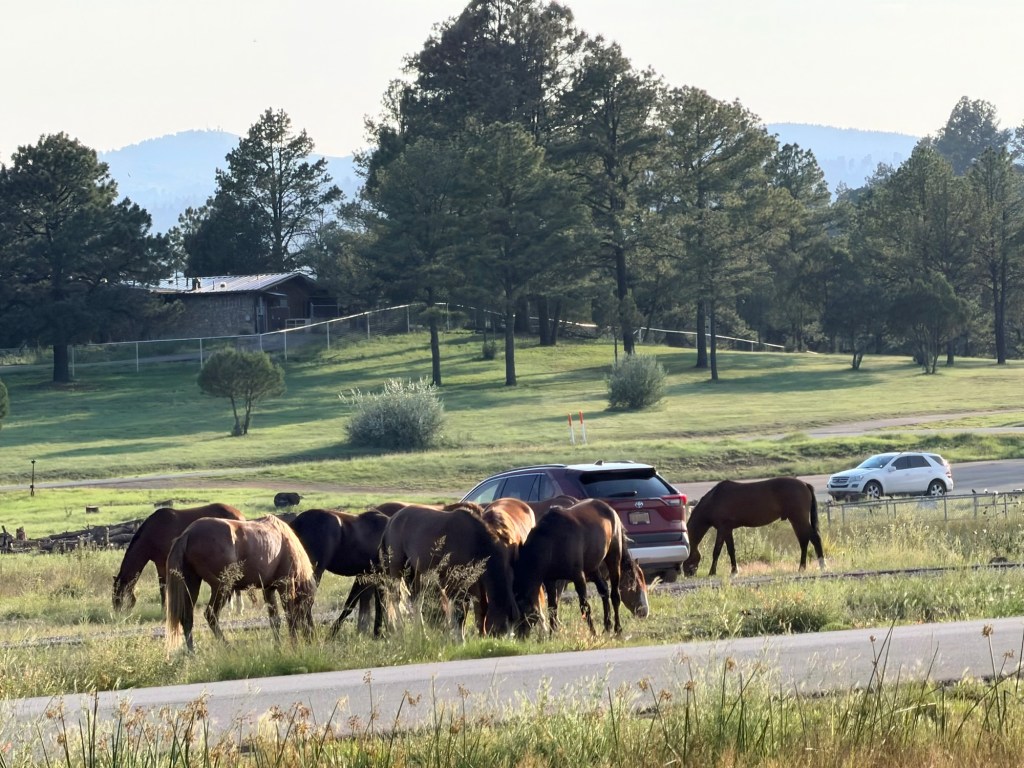
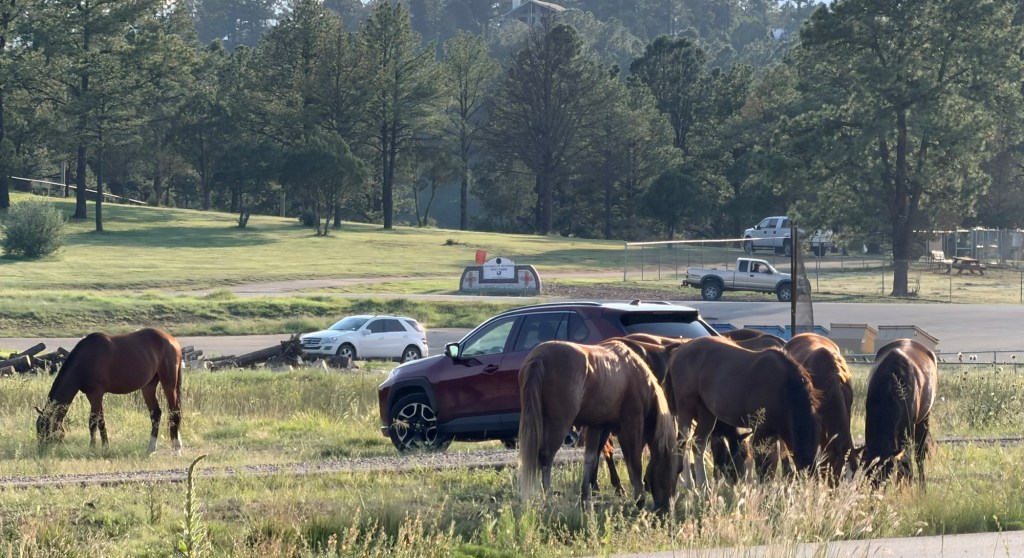
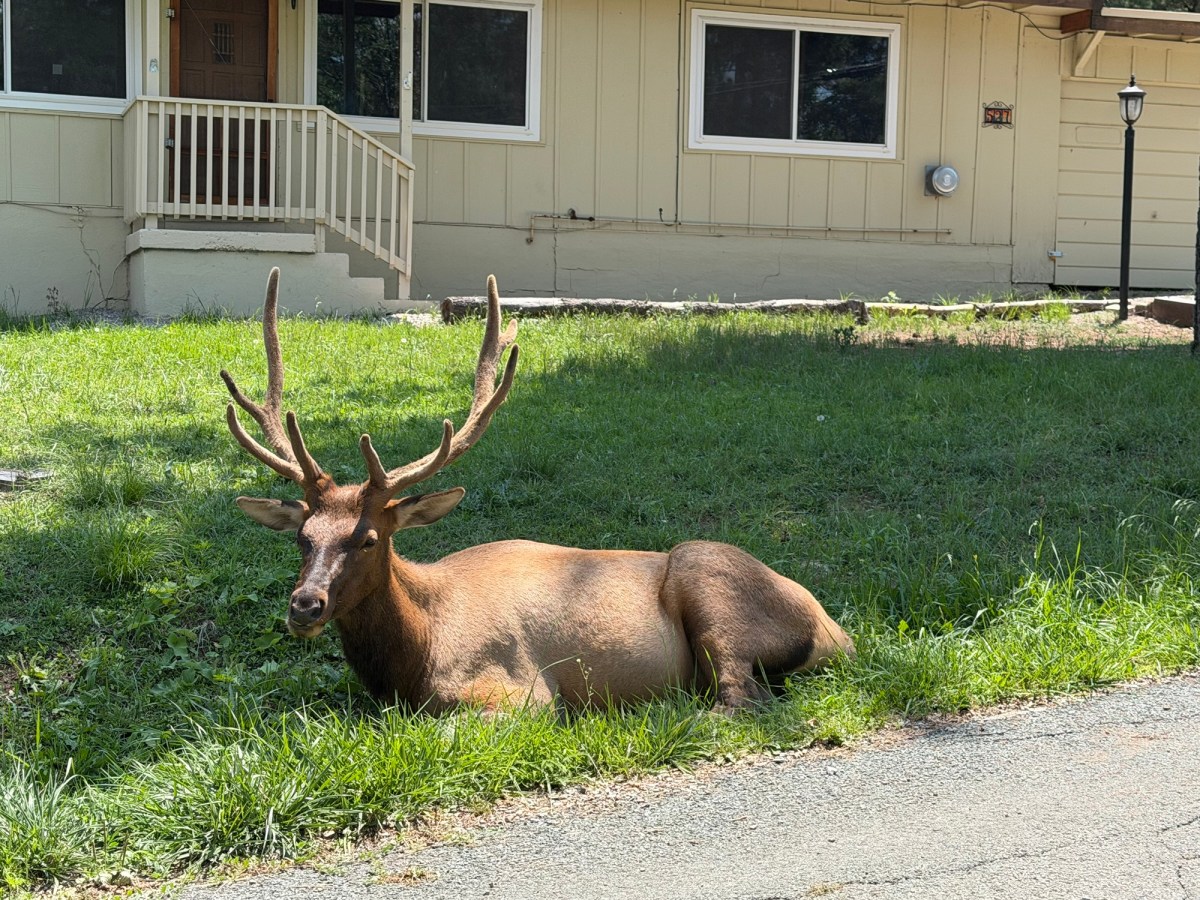
But wait, you ask. Did you see any interesting mammals? Of course I did. Many elk, of which I just share a few, and a herd of wild horses serenely grazing next to a parking lot. Apparently that’s common. That was the last fun wild animal I was looking for, so yay. No bears. That’s fine.

This was a fun whirlwind trip. I’m glad we are coming back in September so I can do non-real estate activities.

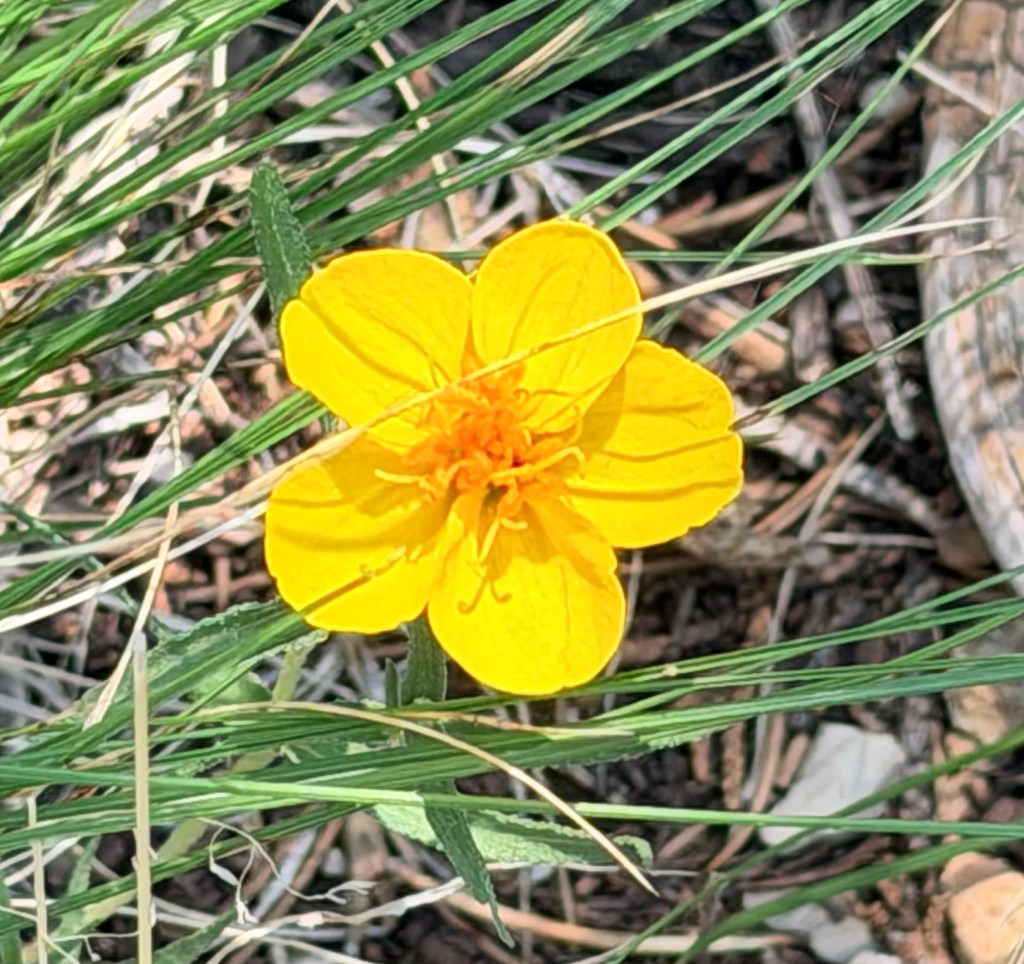
I want to look at more flowers like this Rocky Mountain zinnia

I have no idea if Lee intends to buy a property. I understand why. Texas is getting more scary to us as time goes on. But we love our ranch and don’t want to go away from our family there. A summer getaway would be ok.

Bays, bears, and bubbly

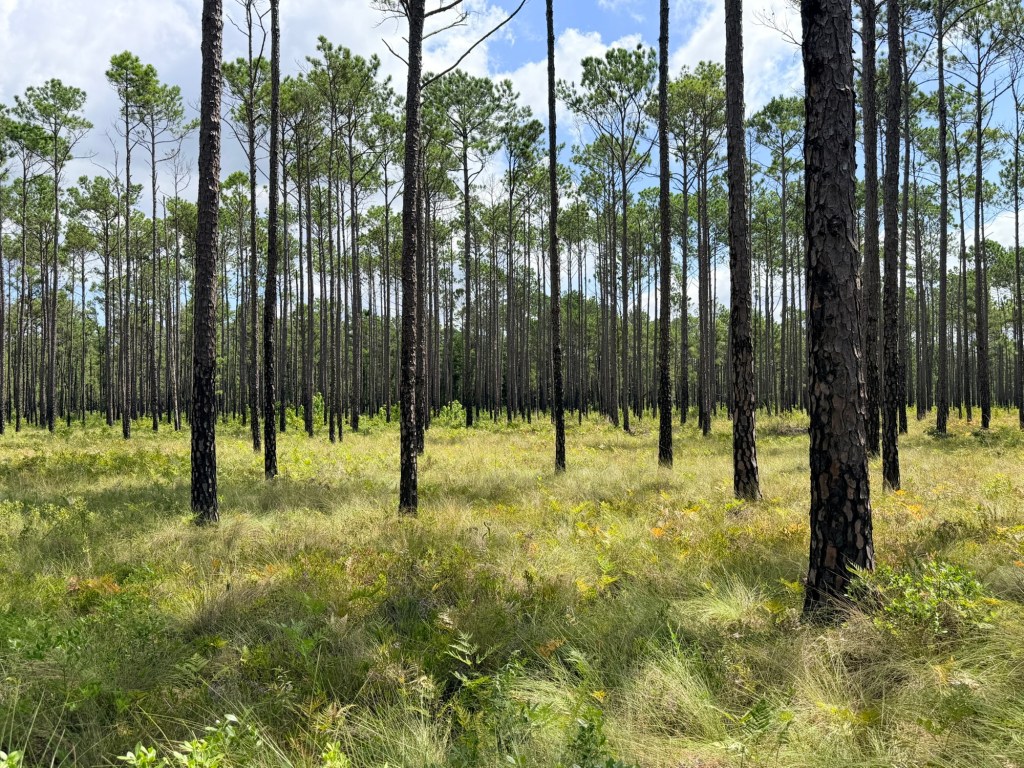
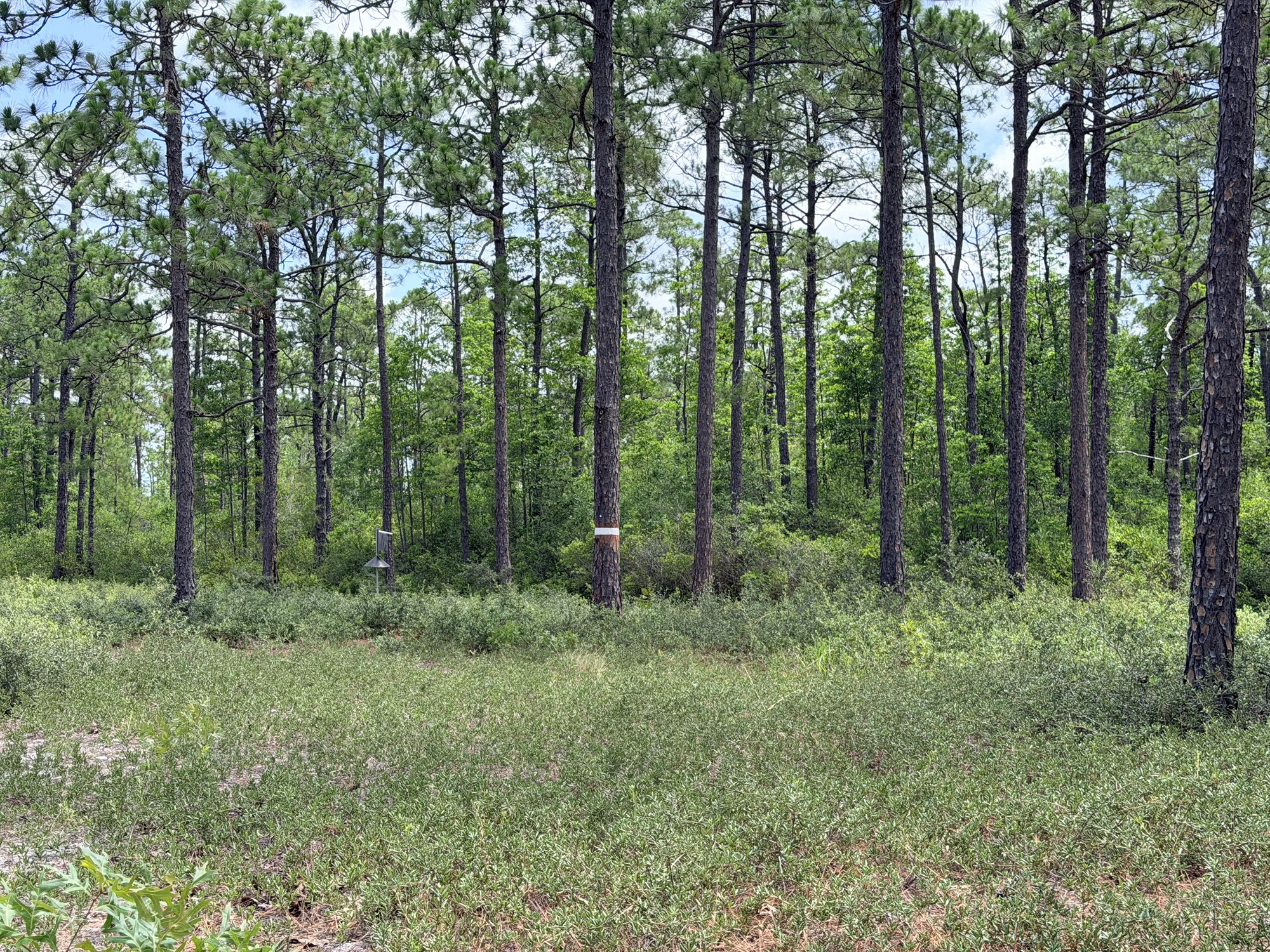
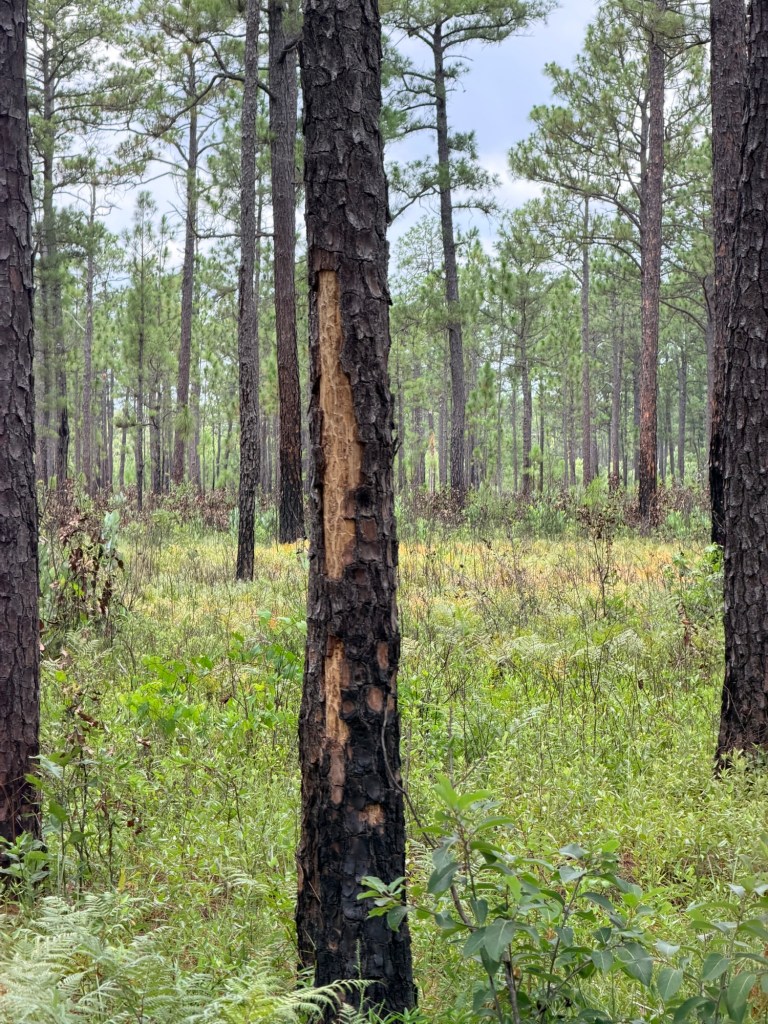
Today’s adventure in Myrtle Beach was to find the Lewis Ocean Bay Heritage Preserve. This is the huge protected area we learned about yesterday from the birder/salesman. It’s a beautiful pine forest maintained by prescribed burns. It’s home to a population of carnivorous plants (that we didn’t see, sadly) and many other interesting species that grow among the Carolina bays—shallow ovals that collect rainwater then dry up. They are dry now.

Nicely thinned underbrush.

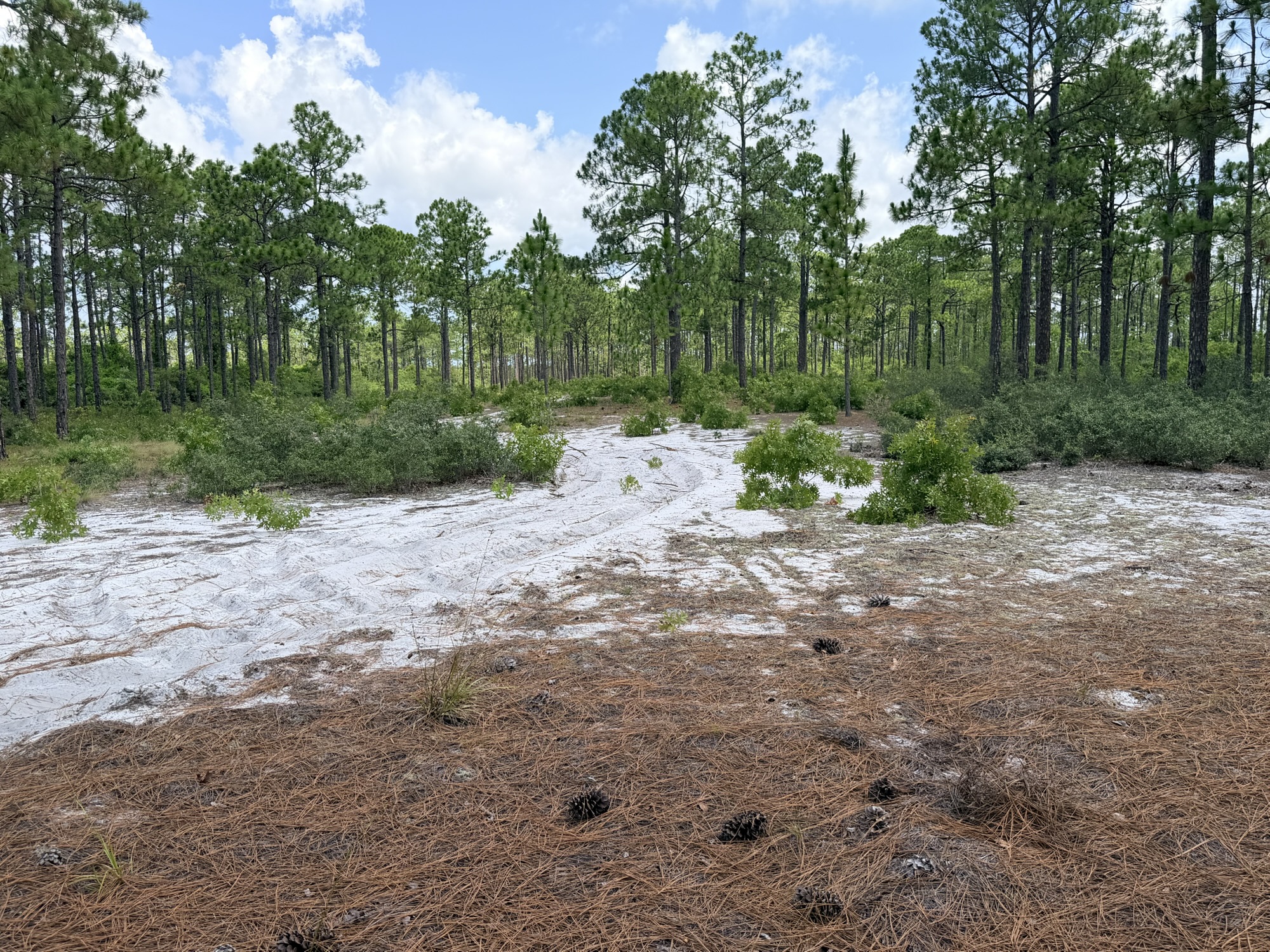
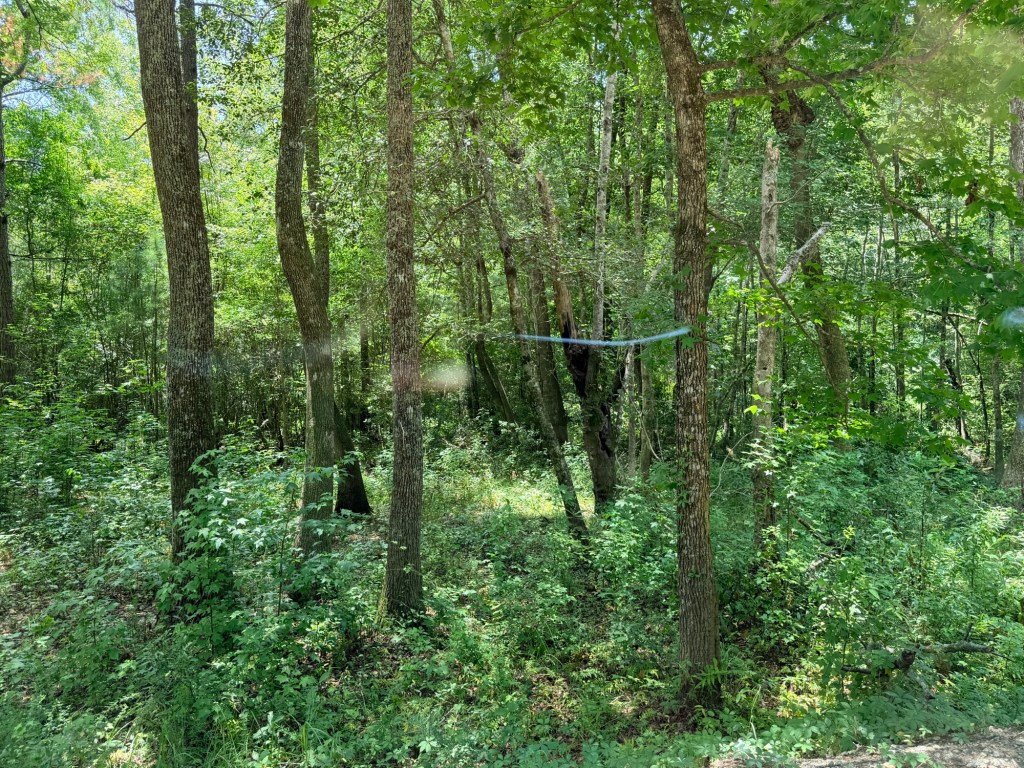
The bays are formed in incredibly white sand and look pretty weird out there in the forest.

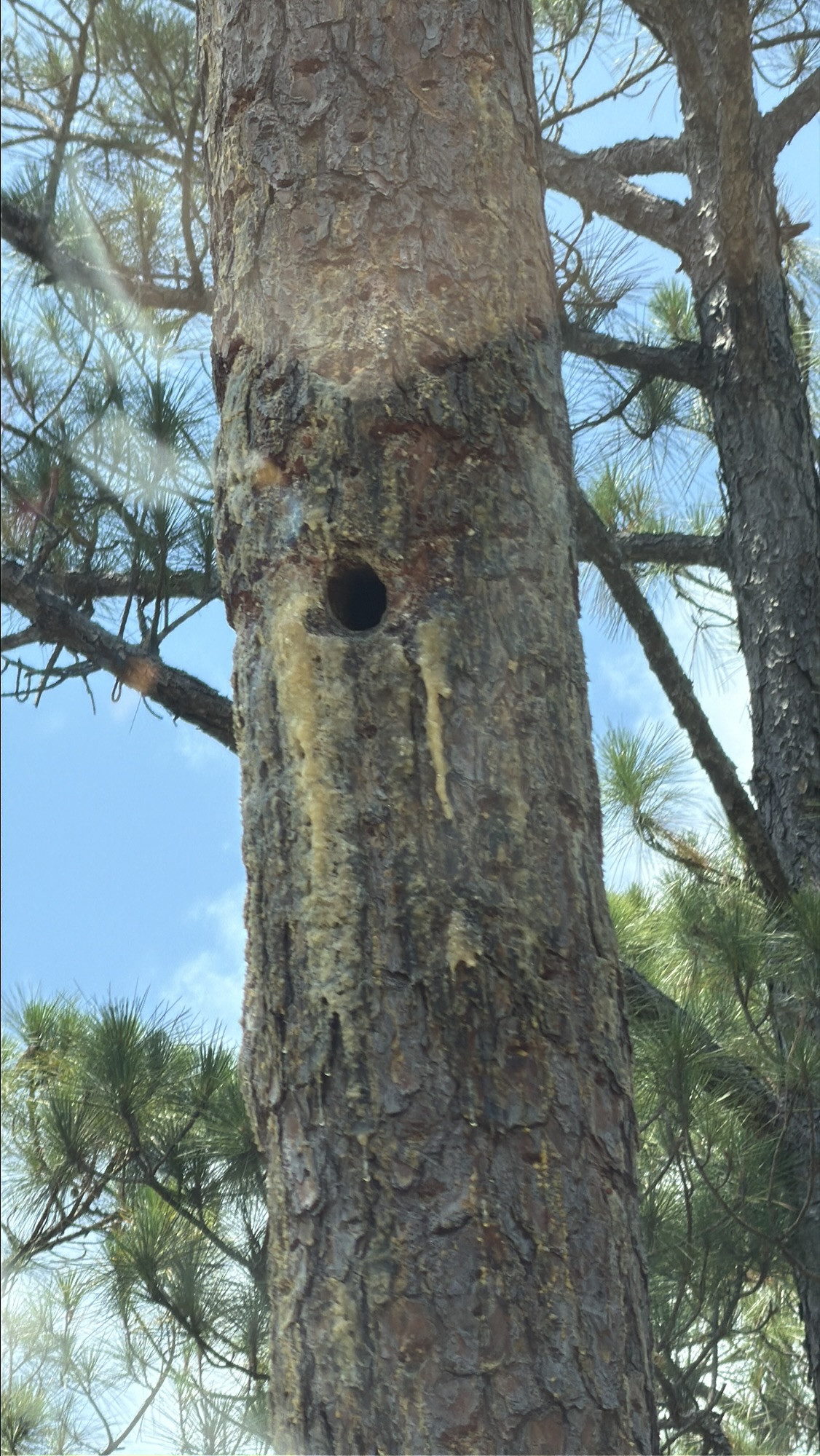
Anita and I drove all over, looking for trees with Red-cockaded Woodpecker nests. We found nests, but no birds.

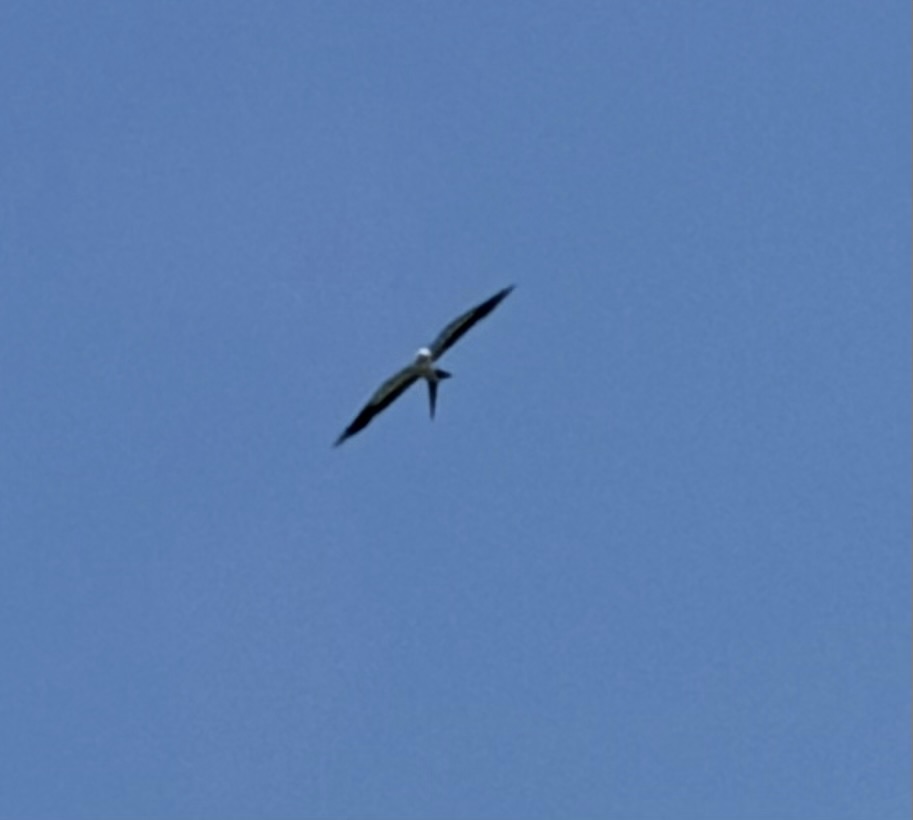
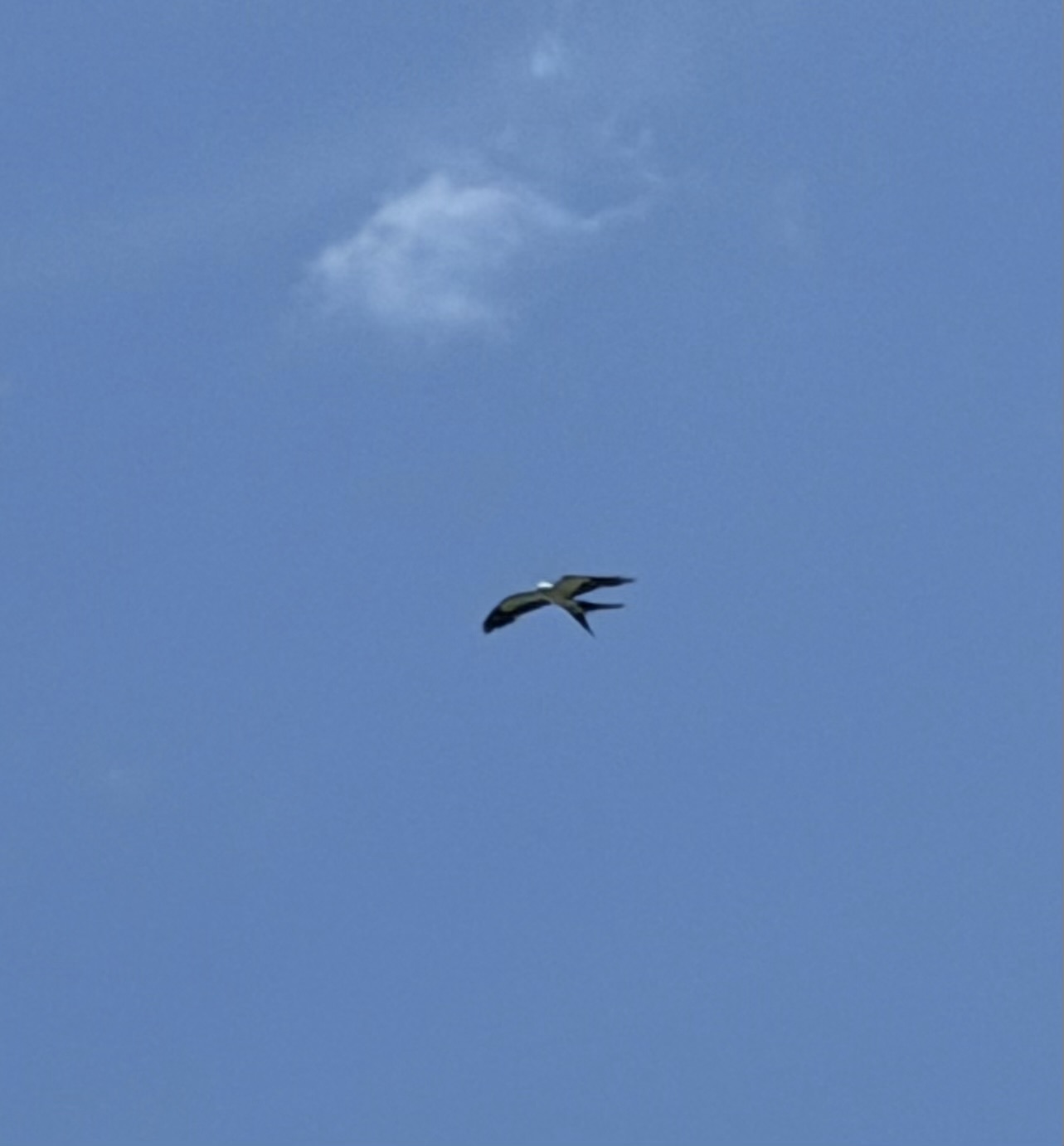
Luckily there were other birds, like Eastern Towhees, Indigo Buntings (even saw one!), Red-headed Woodpeckers, Brown Thrashers, and a beautiful Swallow-tailed Kite.

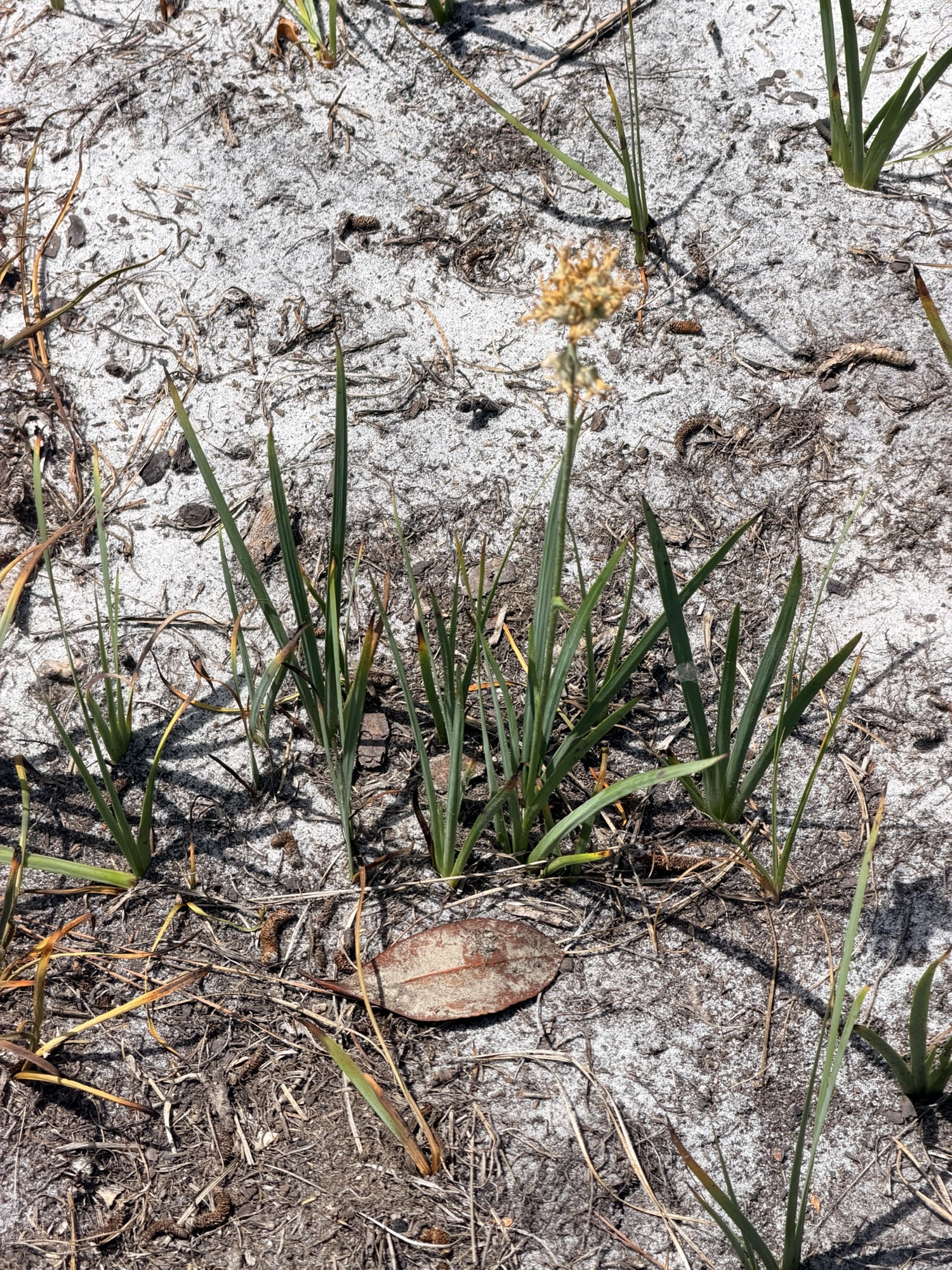
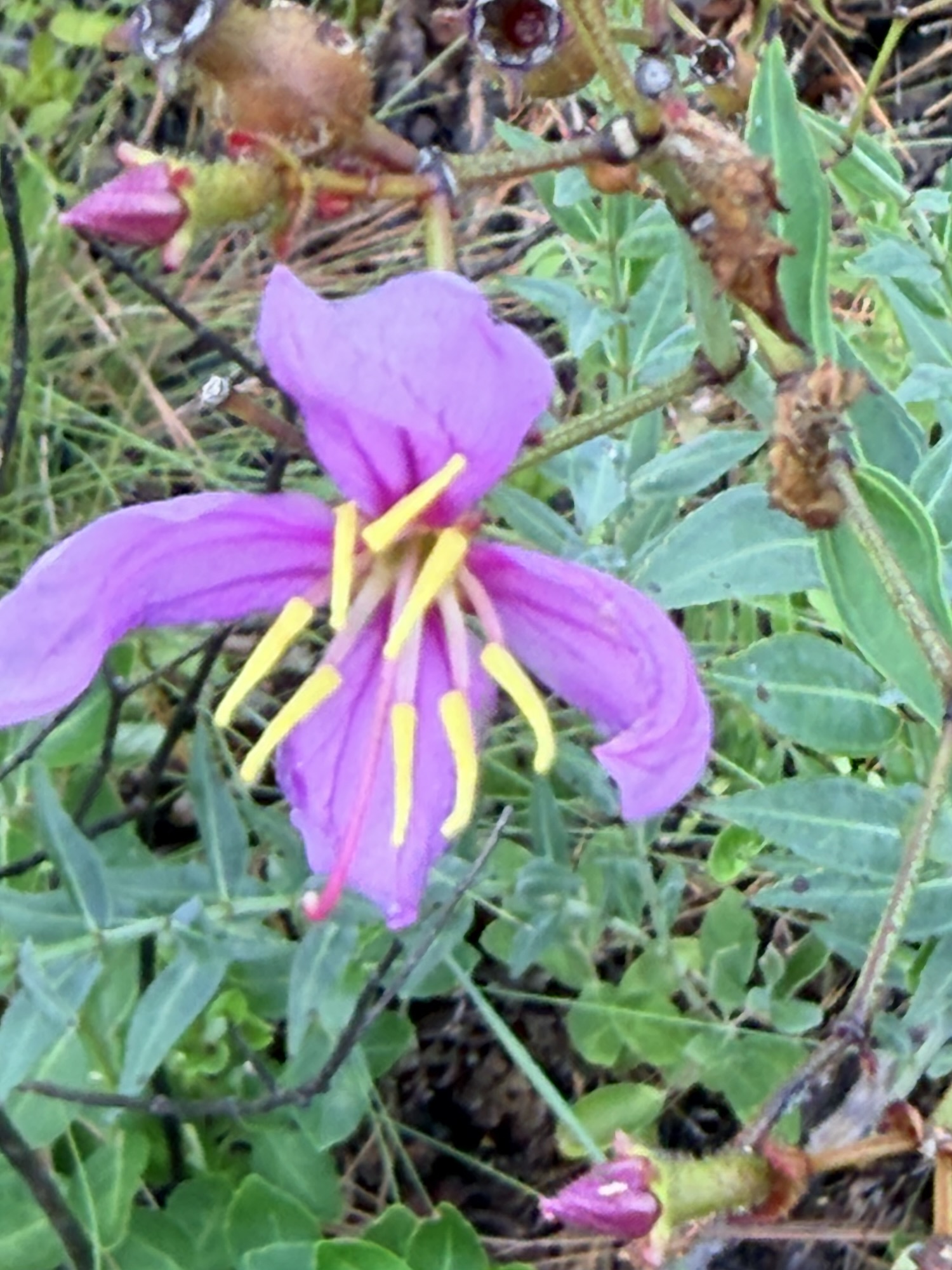
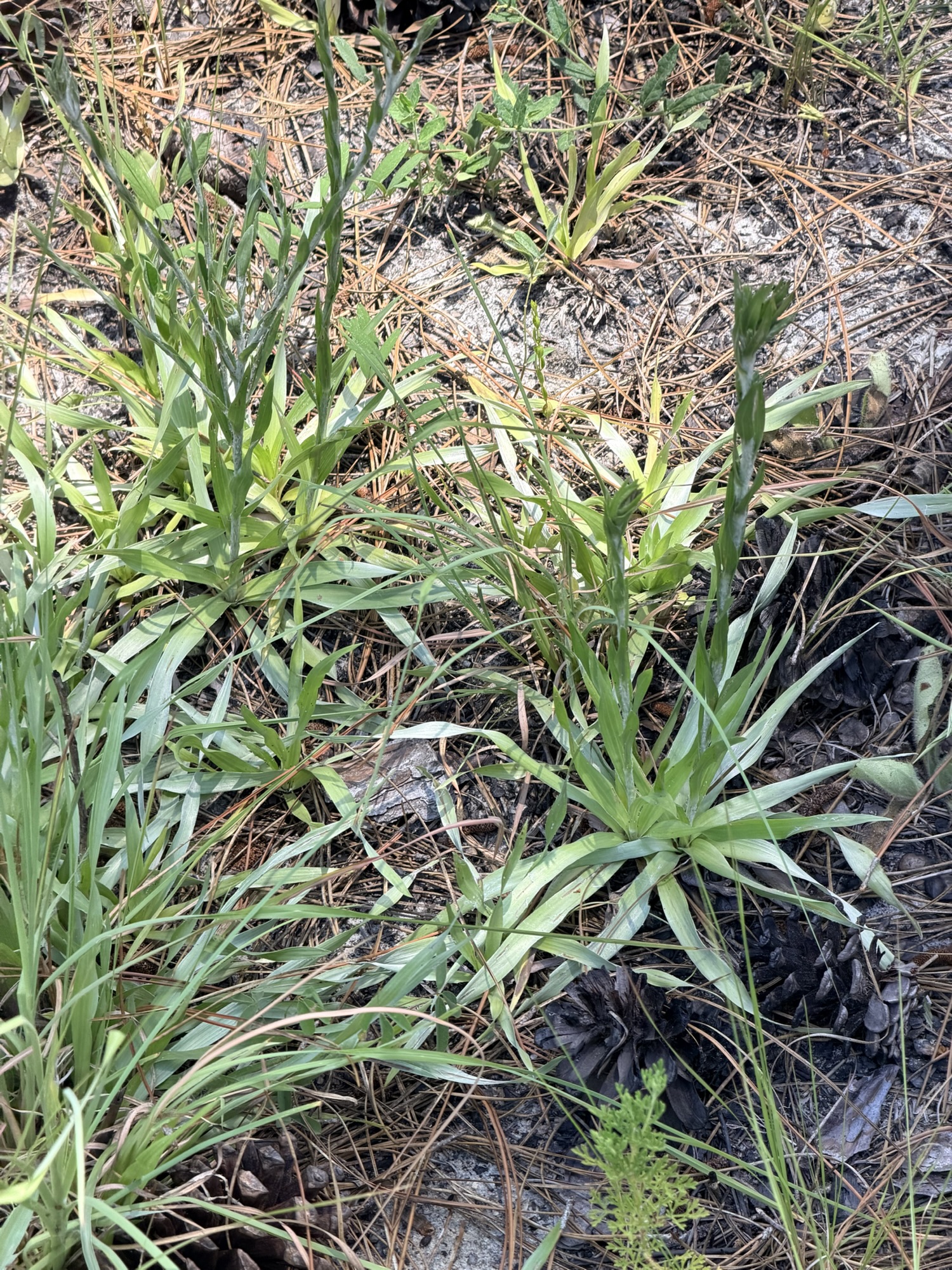
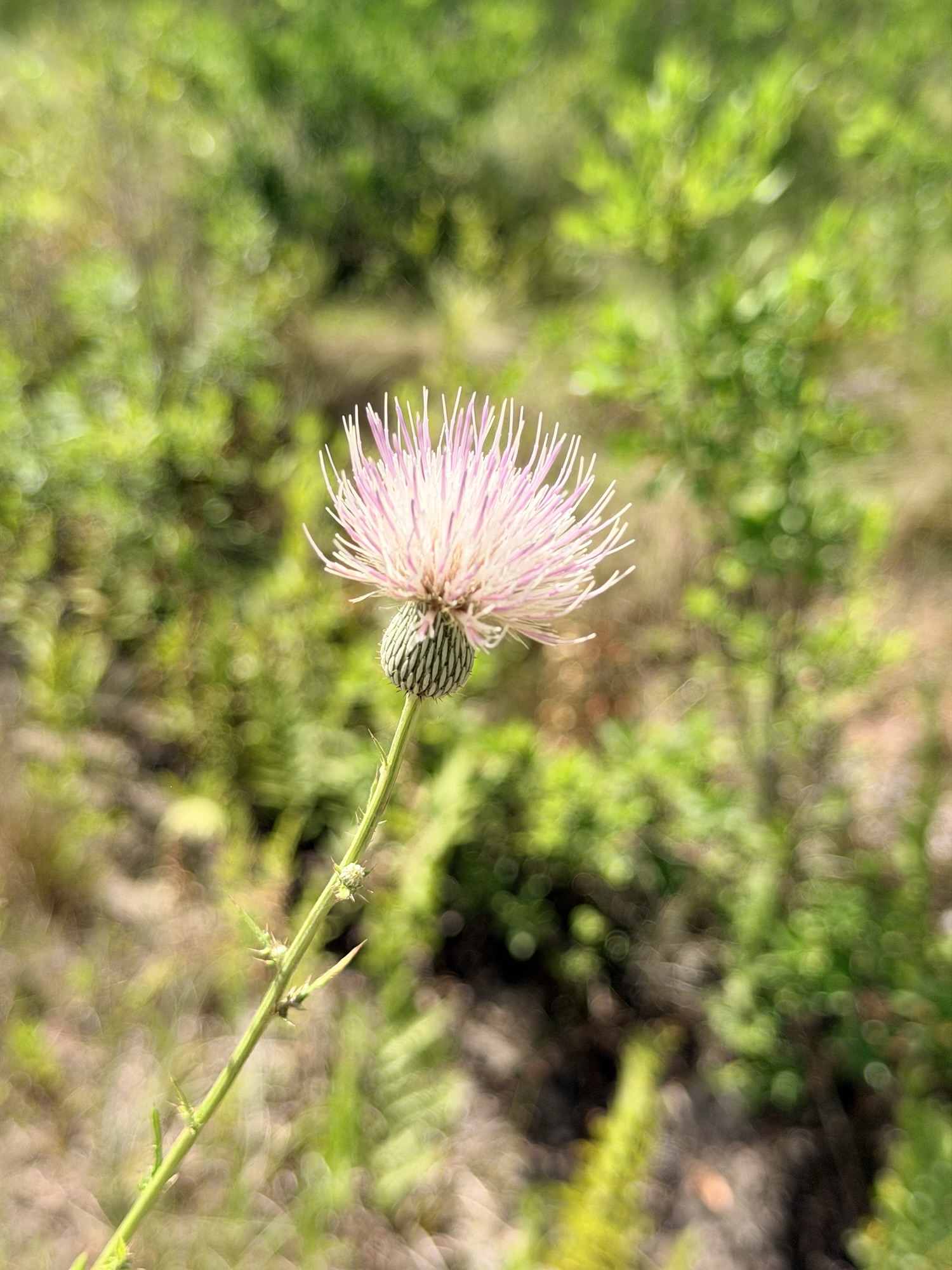
I found many interesting new plants, too. There were a few still blooming in the heat.

The most exciting sight was a young bear who trotted across the road a ways down the road from us. That was my first wild black bear sighting. This preserve has a thriving population. Amazing that it’s so near civilization it so remote.

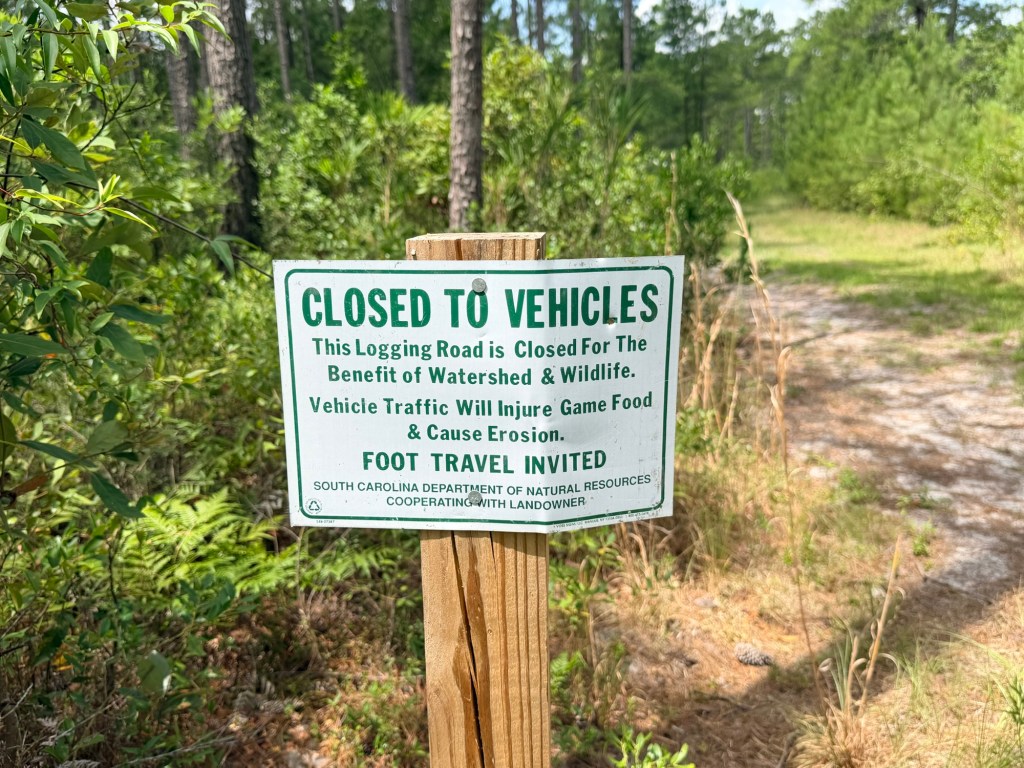
I’d love to come back at a time of year with more moderate temperatures, because there are many miles of trails to explore.

Inviting foot travel!

We headed out and found a Publix supermarket, which was kind of like visiting a tourist attraction. We got fun food to eat the rest of the week. Most importantly, we got beverages.

After afternoon rest, we picked up my book about the Cherokee wars of 1776 written by Kevin the bartender/professor. I like his views of history from different viewpoints. Then I had to take Anita to the Sea Captain’s House for a taste of old Myrtle Beach. It’s a ritual!

It’s an actual sea captain house.

The views were beautiful, the wine bubbly (Anita’s), and the food just lovely. We knew we needed to eat hummingbird cake for dessert!

Ire from our table in the patio area.

The visit so far has been pleasant. The traffic and crowds aren’t bad at all. Hooray for NOT coming during Bike Week!

It’s dragonfly season

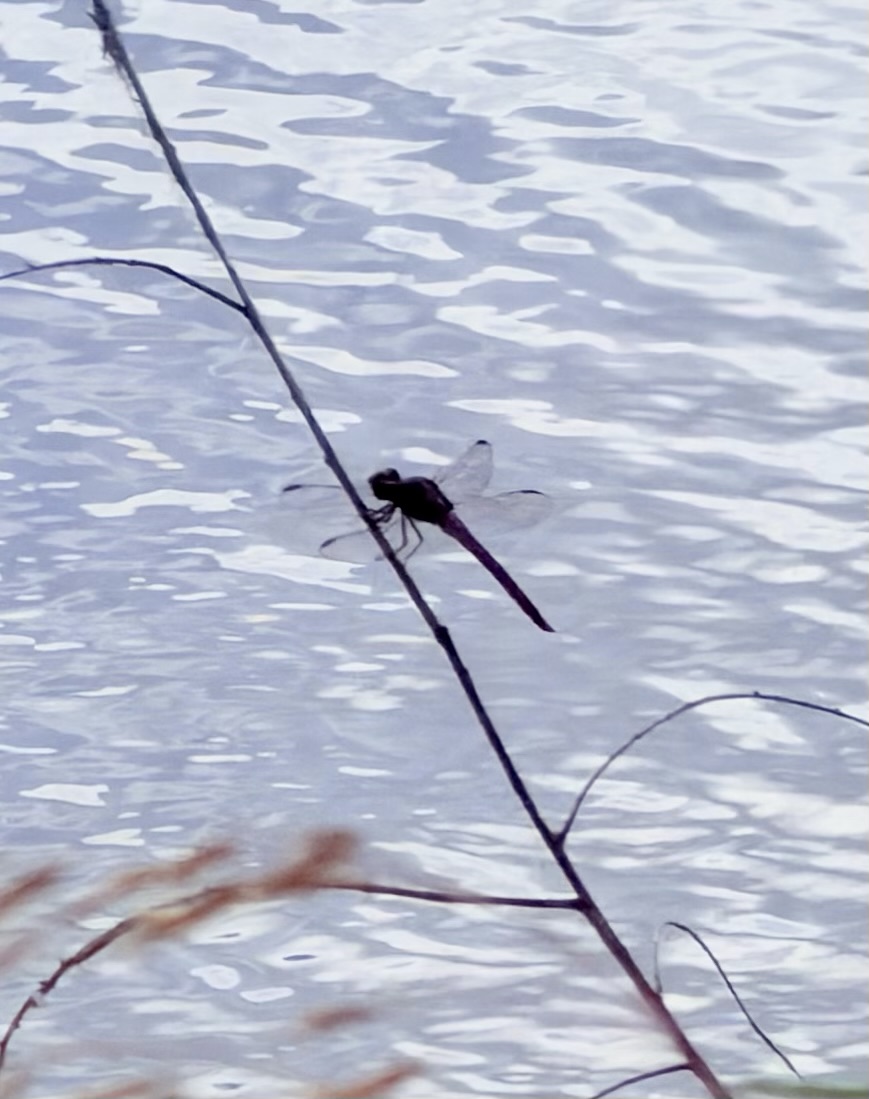
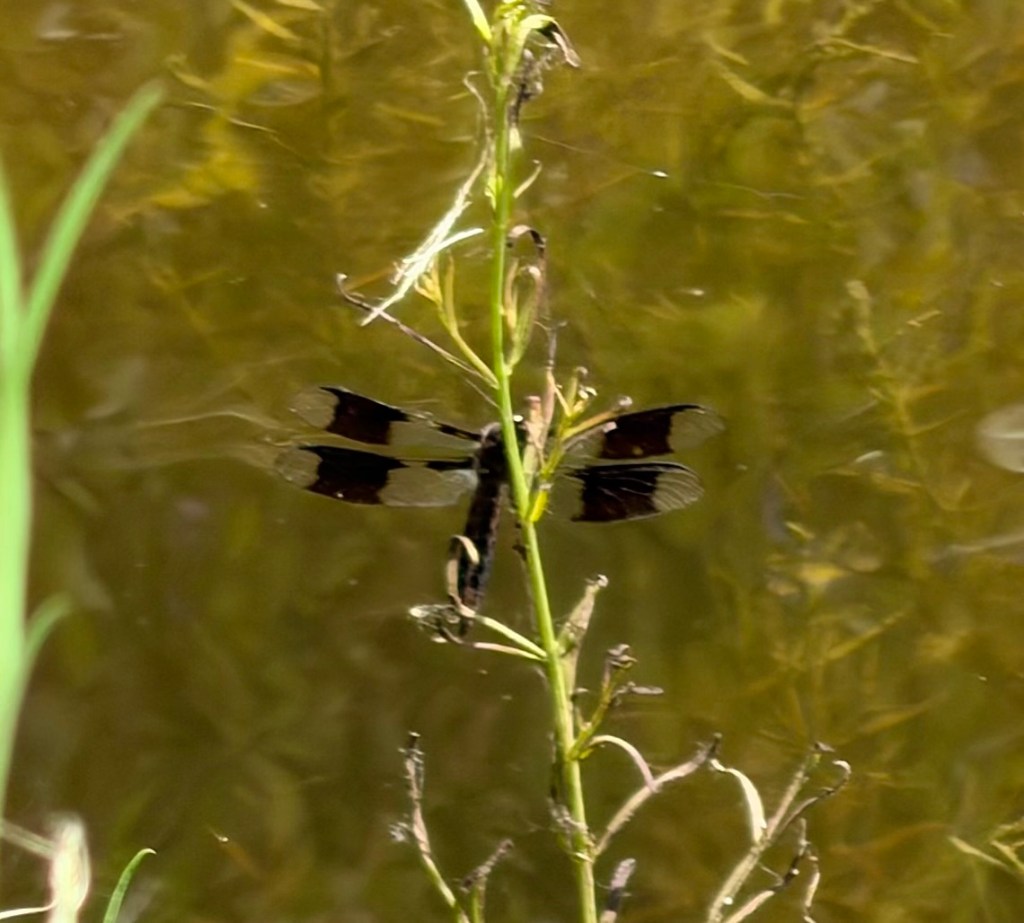
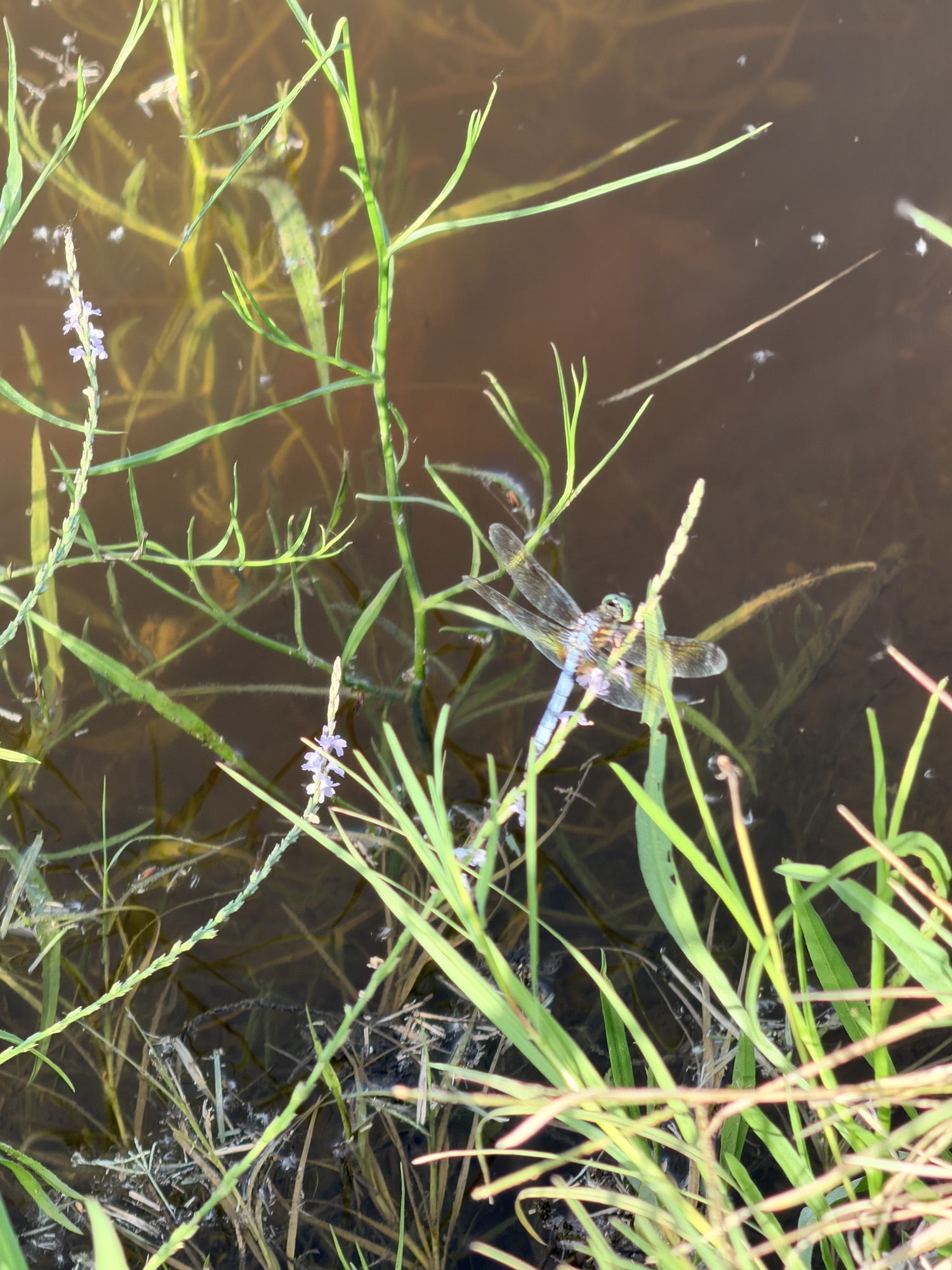
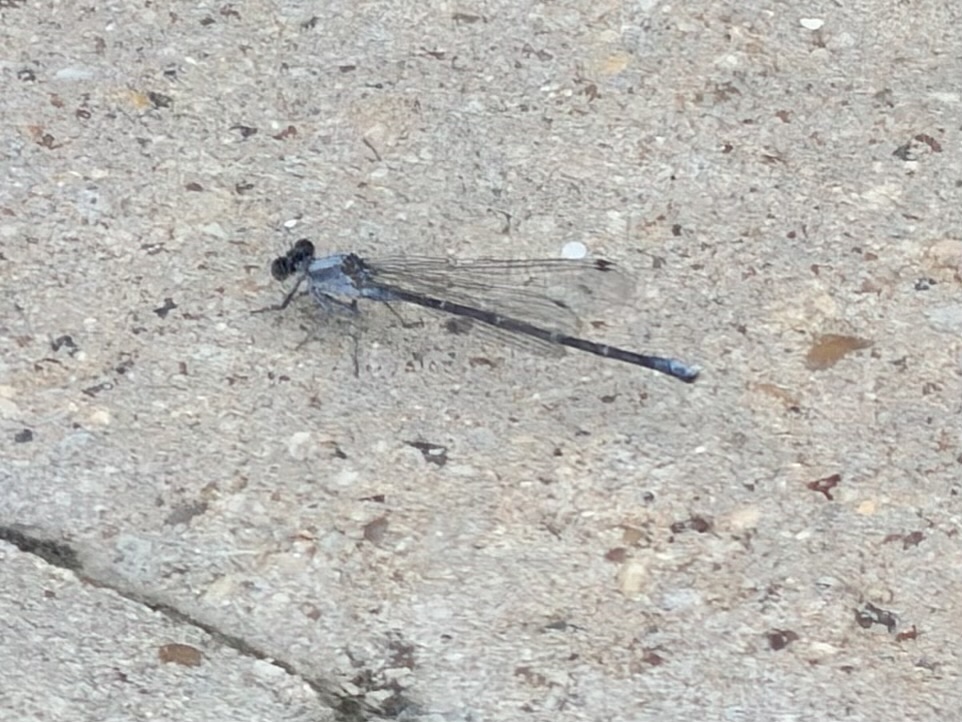
For the past week or two, I’ve been enjoying my friends in the order Odonata, the dragonflies and damselflies. They’ve been darting around the ponds and zipping around the driveway. I always look forward to the brightly colored pink, purple, orange, blue, and green shapes, especially when they hold still.

When they’re moving, it’s a blur.

Of course, even the less colorful ones are fun, since they tend to make up for it with interesting patterns.

Common whitetail, female. Plathemis lydia

I didn’t get any photos as pretty as the one yesterday, but I thought this backlit Roseate skimmer was artistic. These are gloriously pink in sunlight.

Orthemis ferruginea

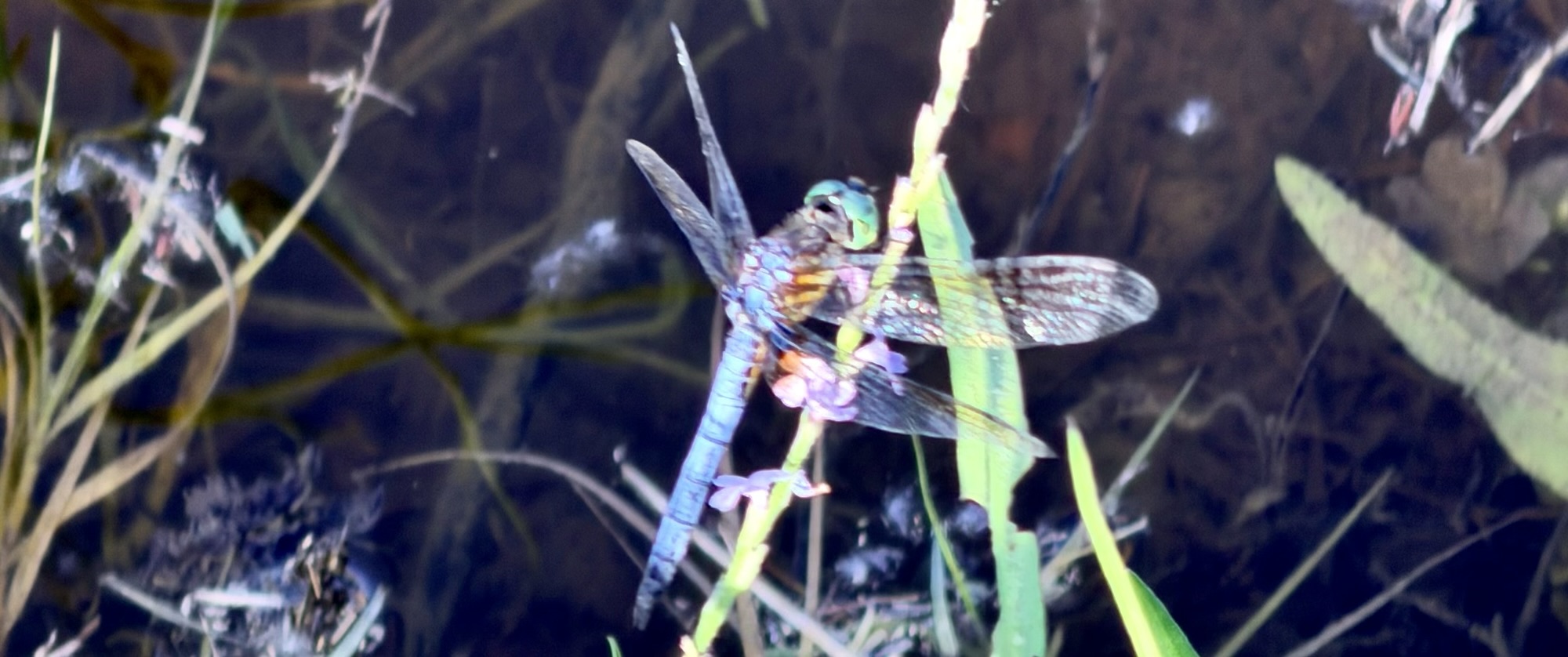
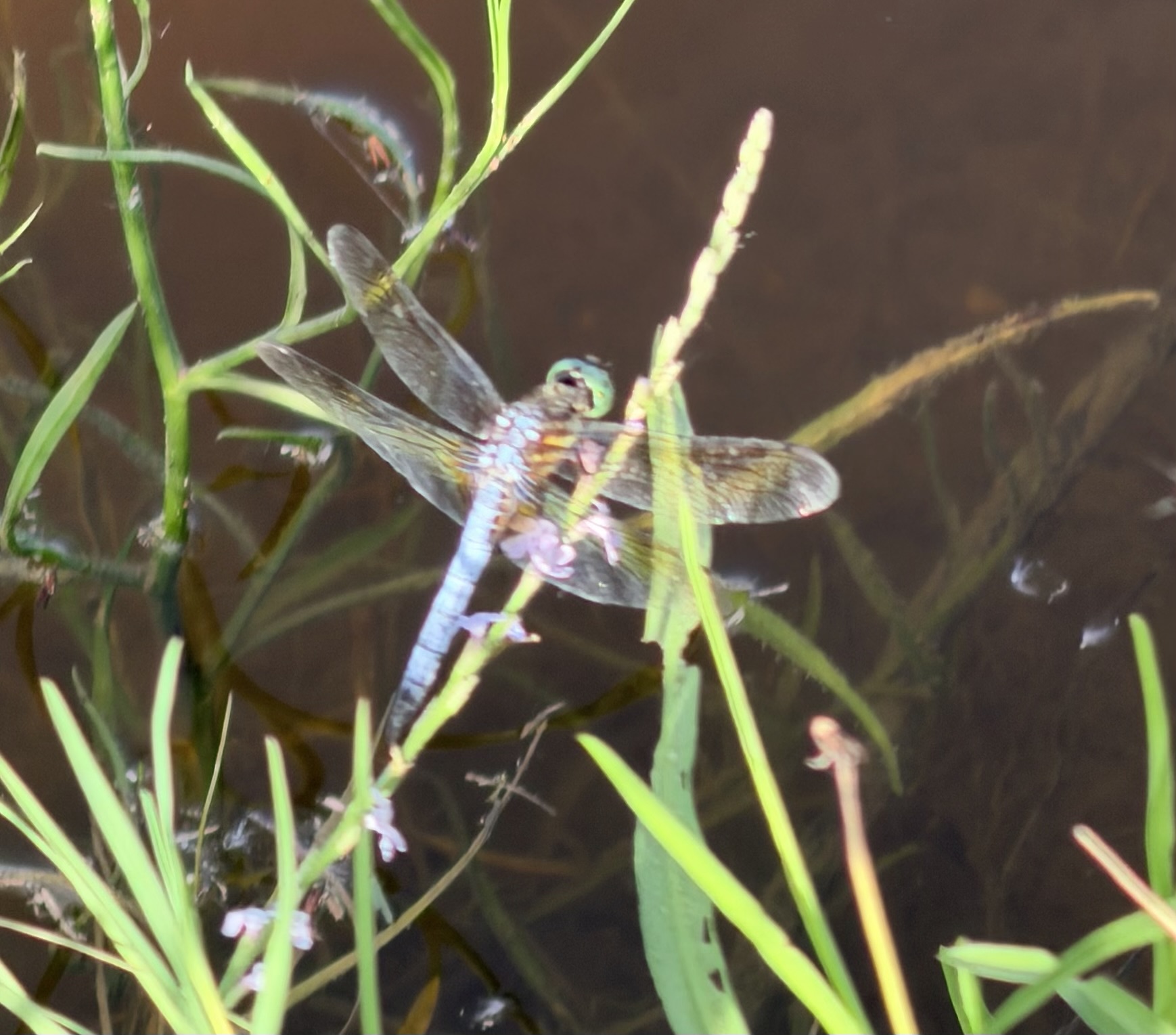
What the heck, here are more pictures of yesterday’s Blue dasher.

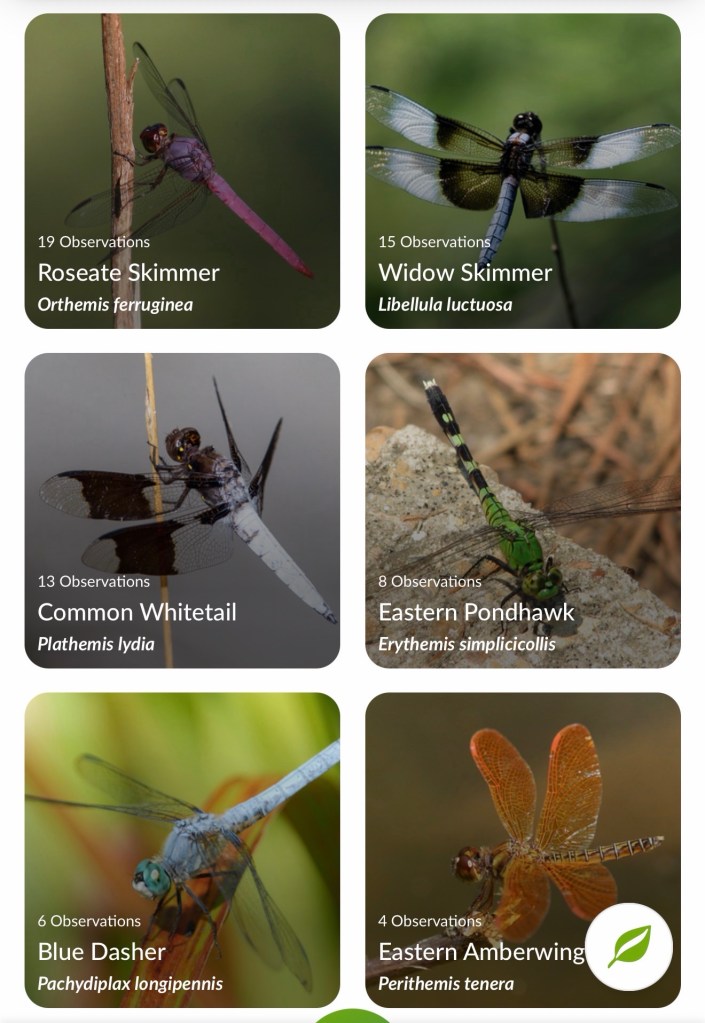
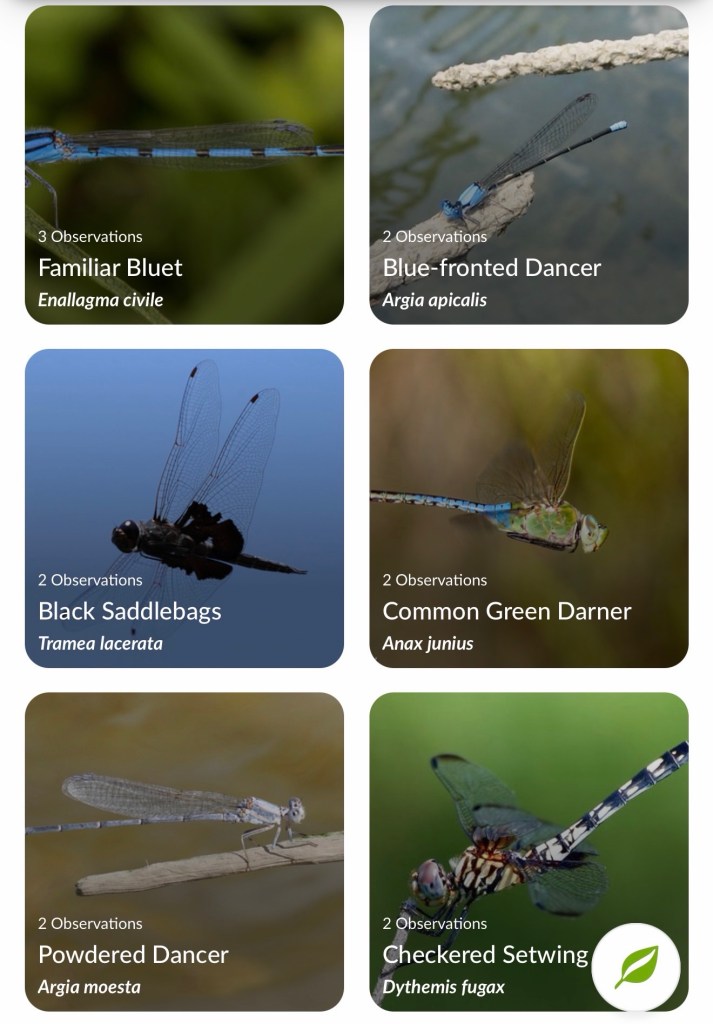
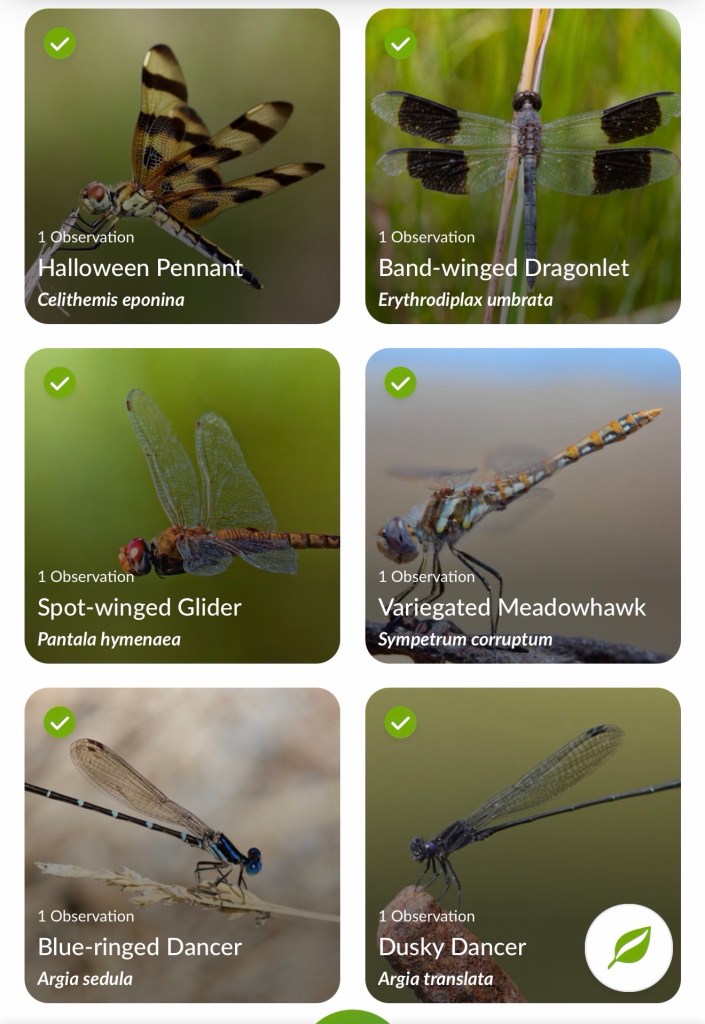
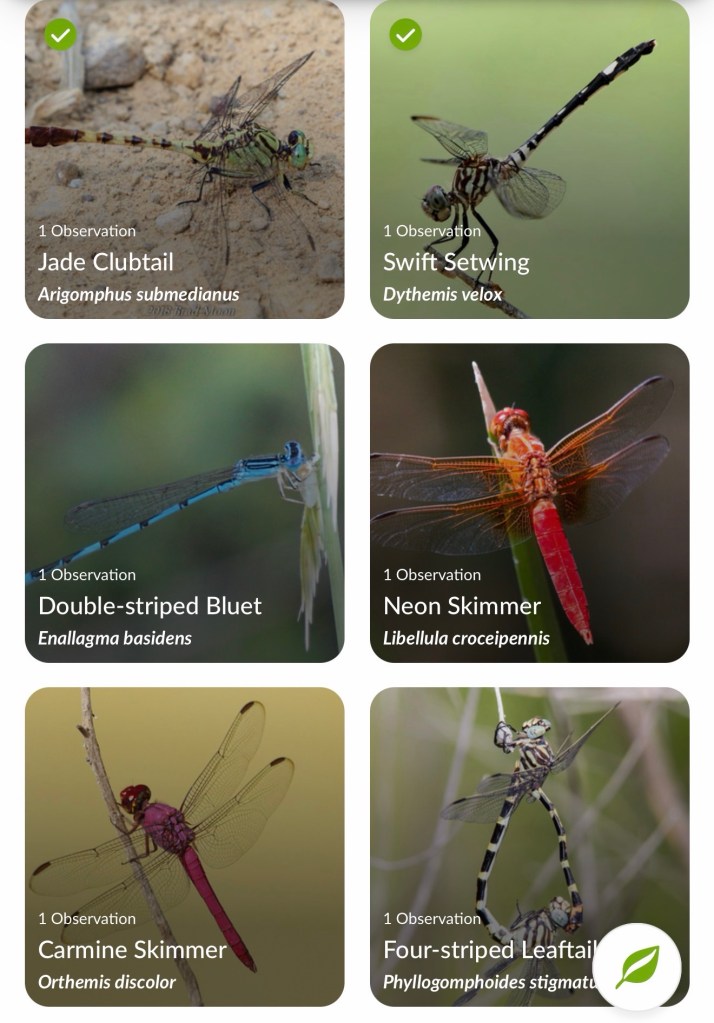
I got to wondering how many different Odonata species we’ve observed here at the ranch. Luck is with me, because I have an iNaturalist project of all observations on our original property and the one next door. Turns out there are 24 species so far. Look at all the variety!

I know I’ve seen some of these more frequently than it appears. But those skimmers are hard to get sitting still. I’ll have to try with the good camera. It doesn’t help that dragonfly season is also mosquito season, which means I also don’t want to hold still very long. I do see many amber wings and Halloween pennants, but they are quite busy so not so many photos.

And no, I can’t tell one blue dancer from another. I do know powdered dancers. They hang around the swimming pool with me.

Powdered dancer from last April

I’d love to know what dragonflies and damselflies some of you see elsewhere. I’ll have to look up their ranges.

Analyzing my bird sightings

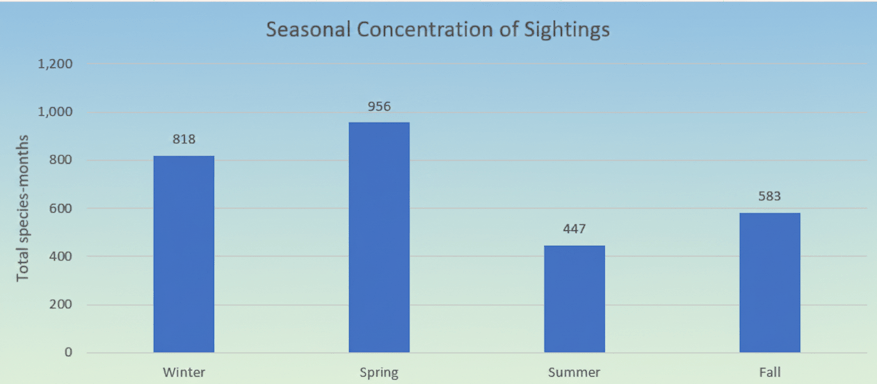
Yesterday I worked on adding up how many bird species I observed here at the Hermits’ Rest last month. I was happy to have seen 126 different species as the migration season drew to a close. I was wondering if there was a seasonal pattern, because I intuited that the spring and autumn migration seasons would bring in more species.

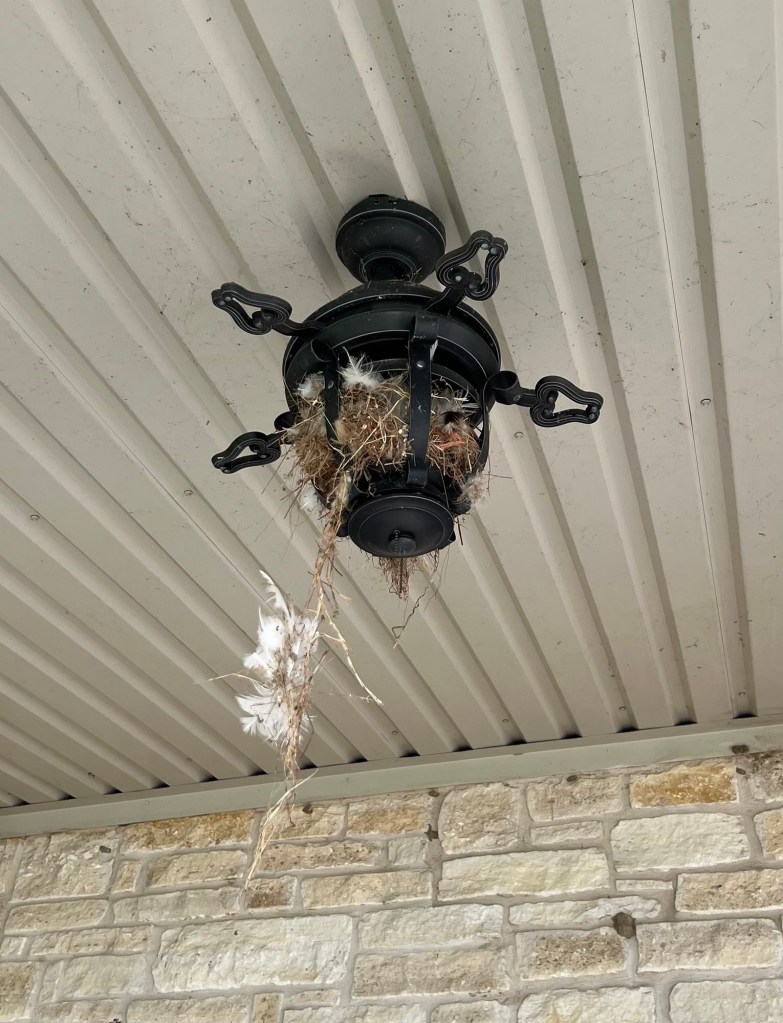
Speaking of birds, I’m not sure if this sparrow nest addendum was on purpose.

I don’t remember exactly what I did, but somehow Excel asked me if I wanted an analysis of the data. Well, yes, I did, because data analysis using spreadsheets is not one of my skill sets. I had all kinds of questions that I’d like answered, like what were the most common species, which species have been here every month, etc.

Like, am I a bird?

Suddenly, BOOM. a new tab opened on the spreadsheet. It had all the answers. Something had analyzed my spreadsheet. Oh no, I found a use for AI! Damn! I couldn’t not look at the results. I really wanted to know.

Right on top, there was a summary of my ranch bird data:

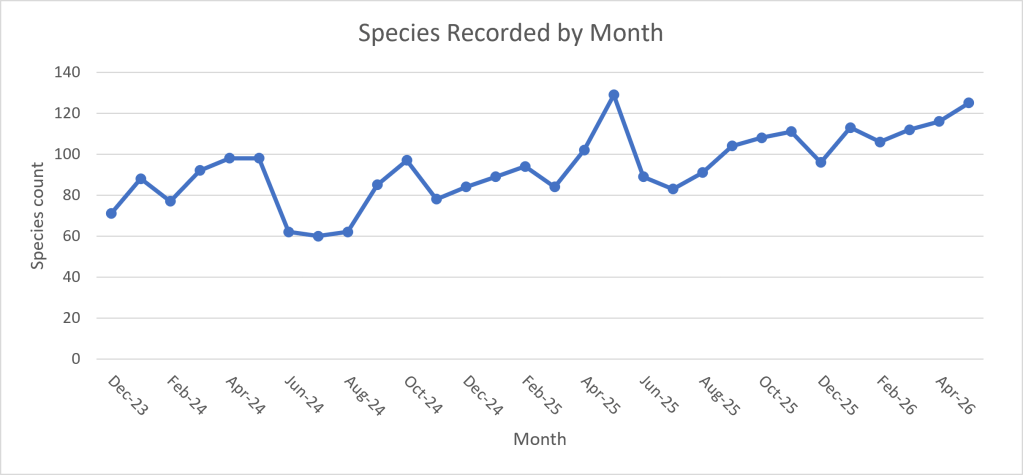
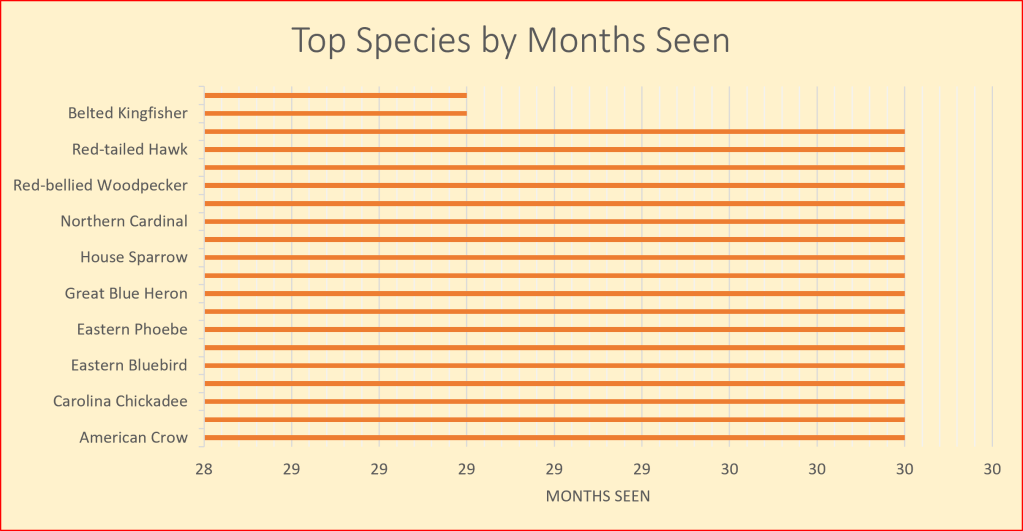
The sheet is a month-by-species presence matrix: an X means a bird was recorded in that month. Coverage spans Dec-23 through May-26, with 2,804 total monthly presence marks. May-25 is the richest month (129 species); Jul-24 is the quietest (60 species). 18 species appear in every month, suggesting reliable year-round residents. 30 species appear in only one month, highlighting possible migrants, one-off observations, or rare sightings.

That’s all the stuff I wanted to know! To top it all off, there were tables and charts! Look at this.

I was wrong about the seasons. Winter, with all those sparrows, has the second most sightings, after what I expected…that spring gets the most.

This one is probably my favorite. I wonder, though, how we got so many species last June, when the previous June, July, and August were so low (and this June is starting off pretty slow). What I really think is that I need another couple of years of data to see these patterns better. Here’s another graph:

These are the 18 birds we see every month, with two that occur almost every month. I am not at all surprised at the species I see here. I wasn’t sure that Eastern Bluebirds were here every month. I don’t see them every day, but I guess they are here. Okay, one final fascinating thing.

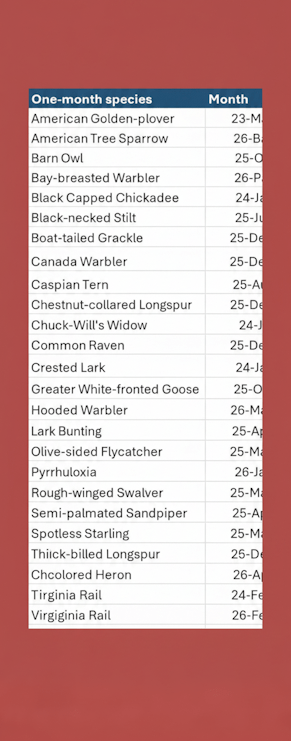
These are supposedly the birds we’ve only seen once. That’s pretty interesting, but look! There are weird spellings on the birds, which I assure you are spelled correctly on the original spreadsheet. I probably shouldn’t have asked for a red border. I wonder what a Swalver is? And I think those last two are both Virginia Rails. But it appears only once on my list. I went too far.

What are my conclusions? In summary, AI is helpful upon occasion, but AI always does weird stuff to the data. Here’s the actual data of birds that were only seen once.

  • American Golden-plover
  • American Tree Sparrow
  • Barn Owl
  • Bay-breasted Warbler
  • Black Capped Chickadee
  • Black Tern
  • Black-and-white Warbler
  • Black-necked Stilt
  • Boat-tailed Grackle
  • Canada Warbler
  • Caspian Tern
  • Chestnut-collared Longspur
  • Chuck-Will’s Widow
  • Common Raven
  • Crested Lark
  • Greater White-fronted Goose
  • Hooded Warbler
  • Indian Peafowl
  • Lark Bunting
  • Olive-sided Flycatcher
  • Pyrrhuloxia
  • Rough-winged Swallow
  • Semi-palmated Plover
  • Semi-palmated Sandpiper
  • Spotless Starling
  • Thick-billed Longspur
  • Tricolored Heron
  • Virginia Rail
  • Western Wood Pewee
  • Yellow-green Vireo

Dang, I’m ambivalent. But now I know stuff about my bird data. I am pleased about that.

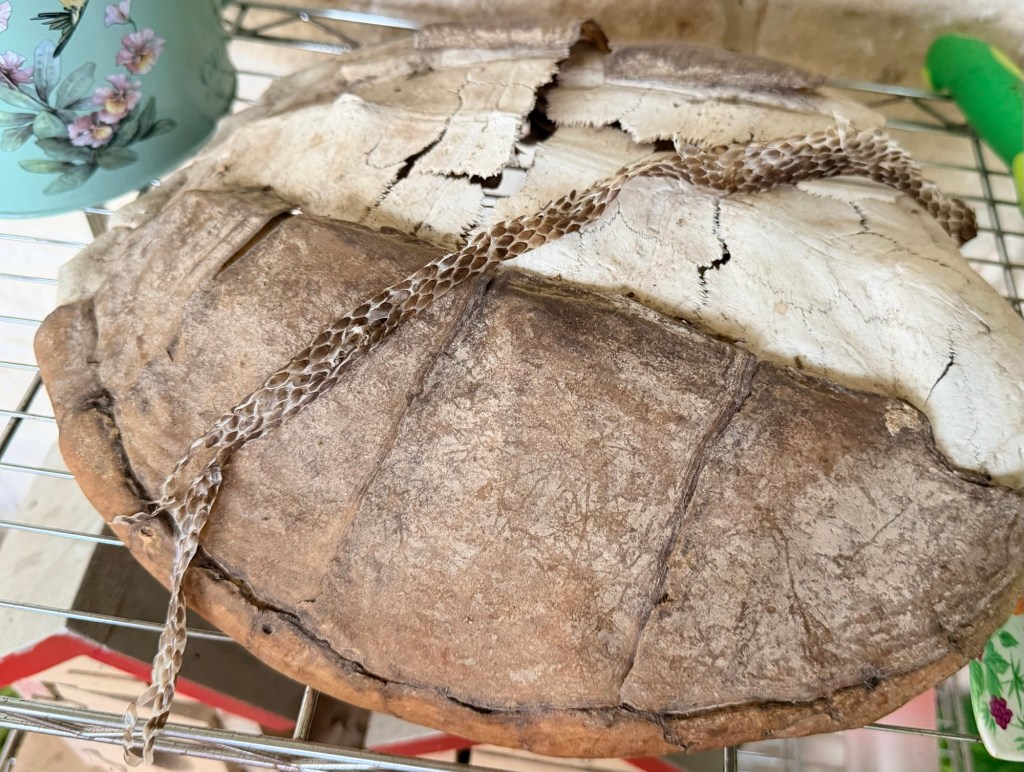
I was not quite so pleased when I sleepily ventured onto the screened porch to guzzle some coffee before my 8 am standup (once again it went 30 minutes over). I went to set my coffee down and spotted a snakeskin on the arm of my chair. You know I’ve lived here a while, because all I did was ask Lee if he put it there. Nope. I set the skin on my big turtle shell where it looks quite decorative.
It wasn’t a big one.
I guess the rat snake left the way it came in when it realized there were no birds or rodents to snack on. Ah, it’s always something!
The great outdoors? It’s great!

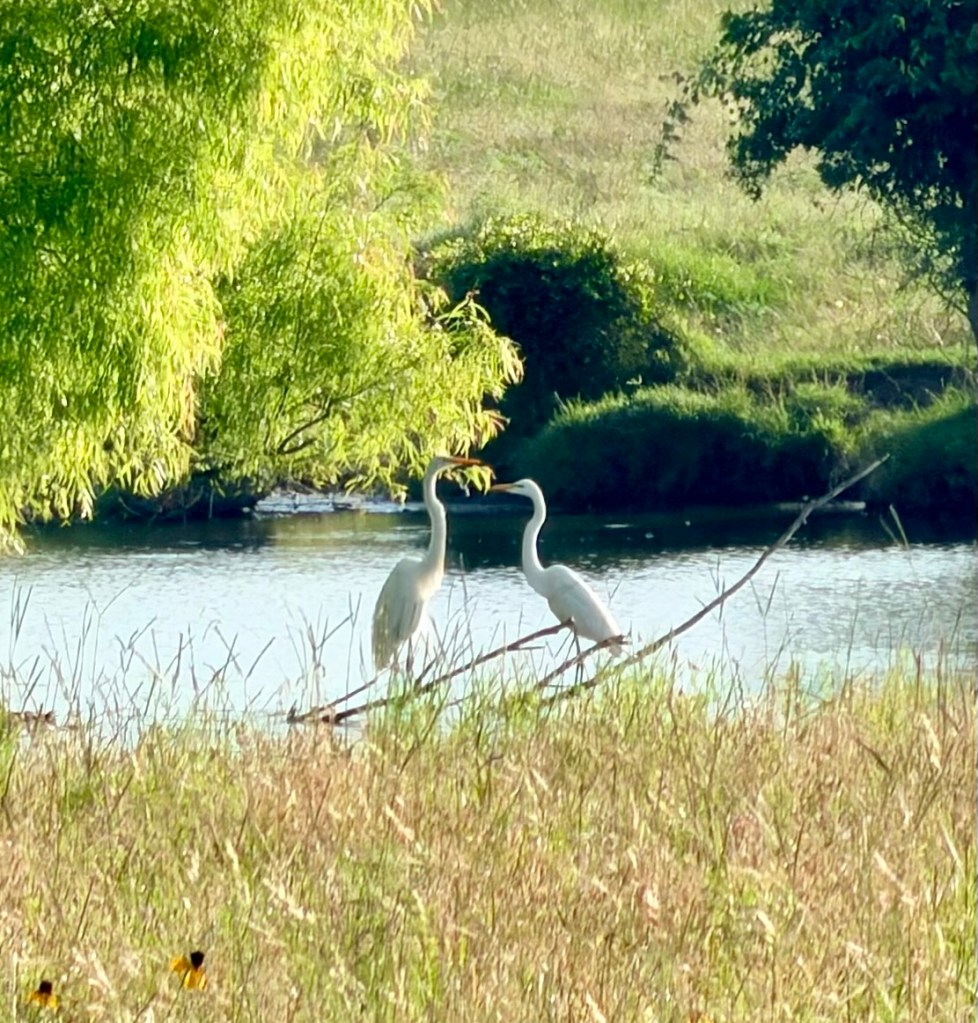
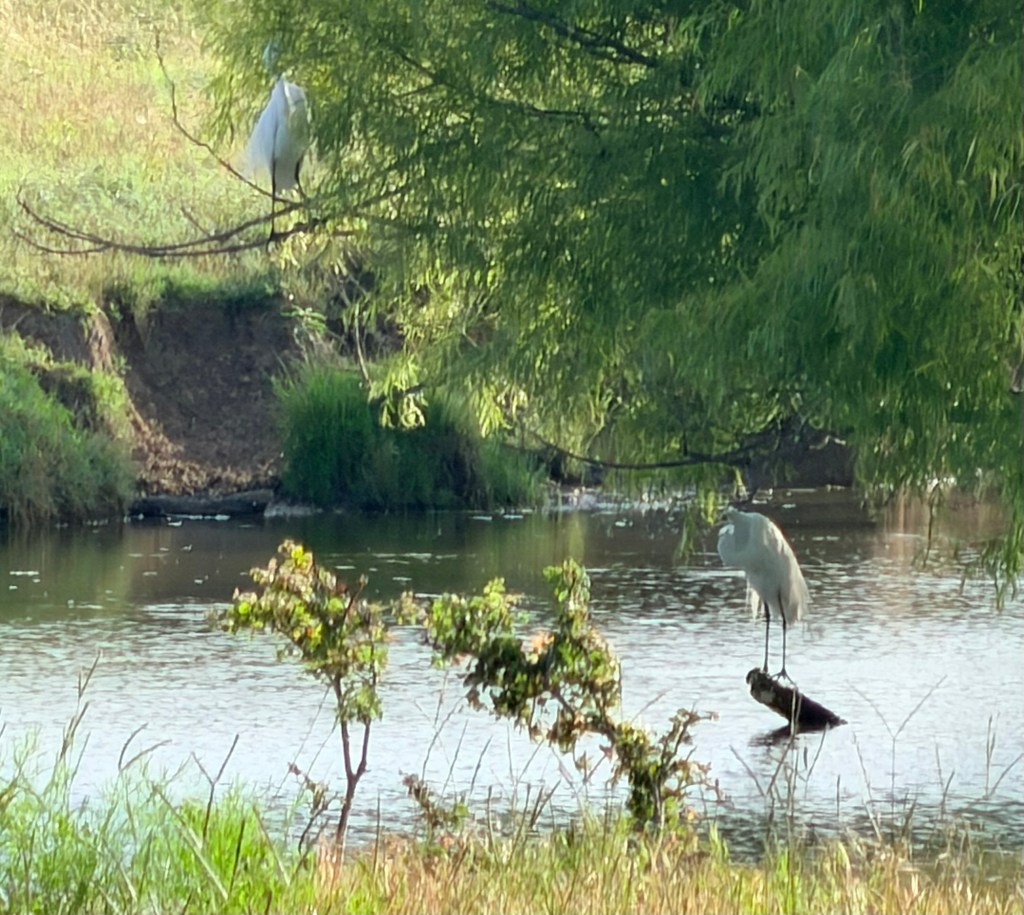
Today I took every possible chance I had to go outside and take a break. I was rewarded with some fun and educational sights. First thing this morning, I went out to check the rain gauge. To my delight, I spotted a pair of Great Egrets under the willow tree in the pond.
Love birds

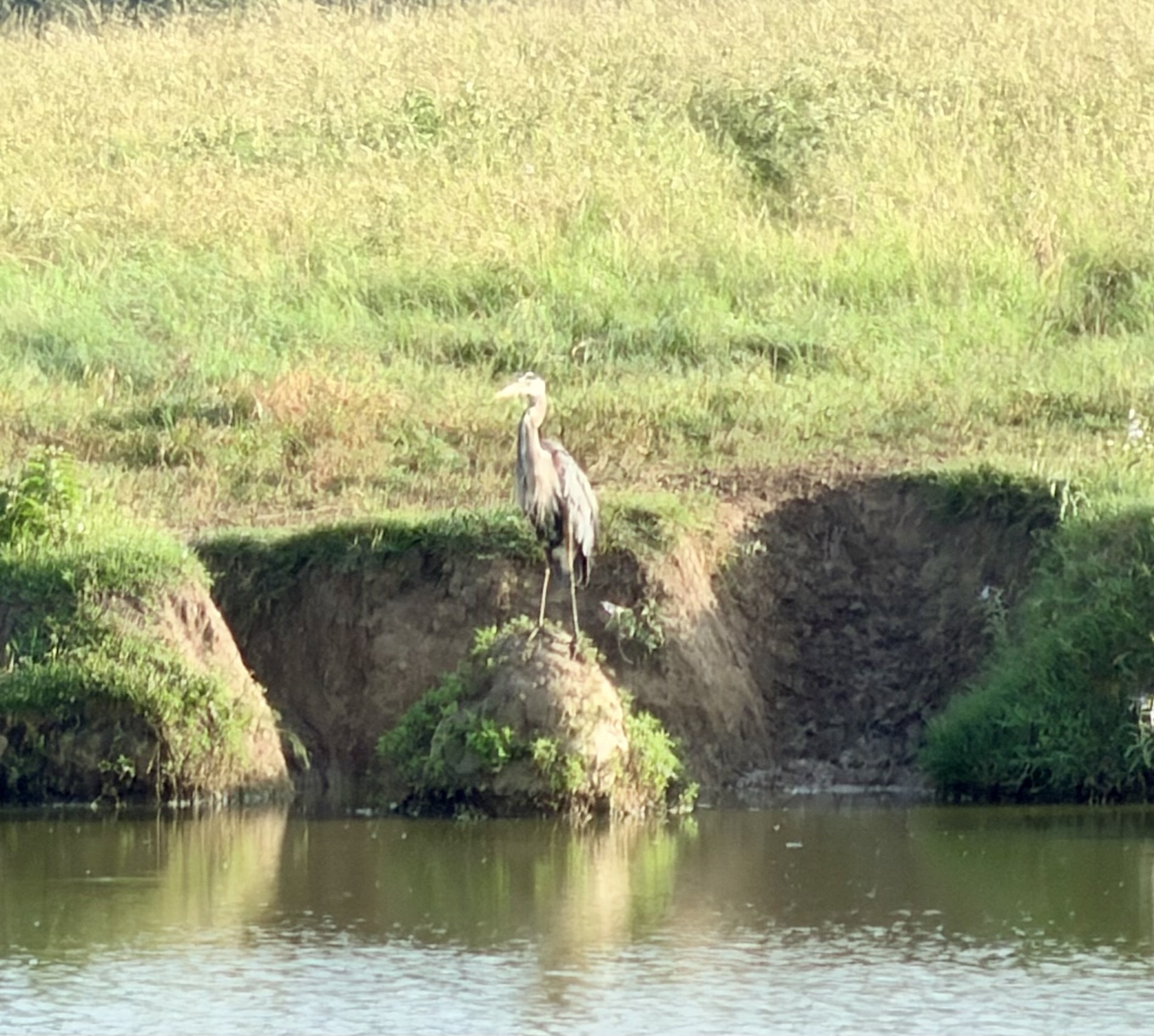
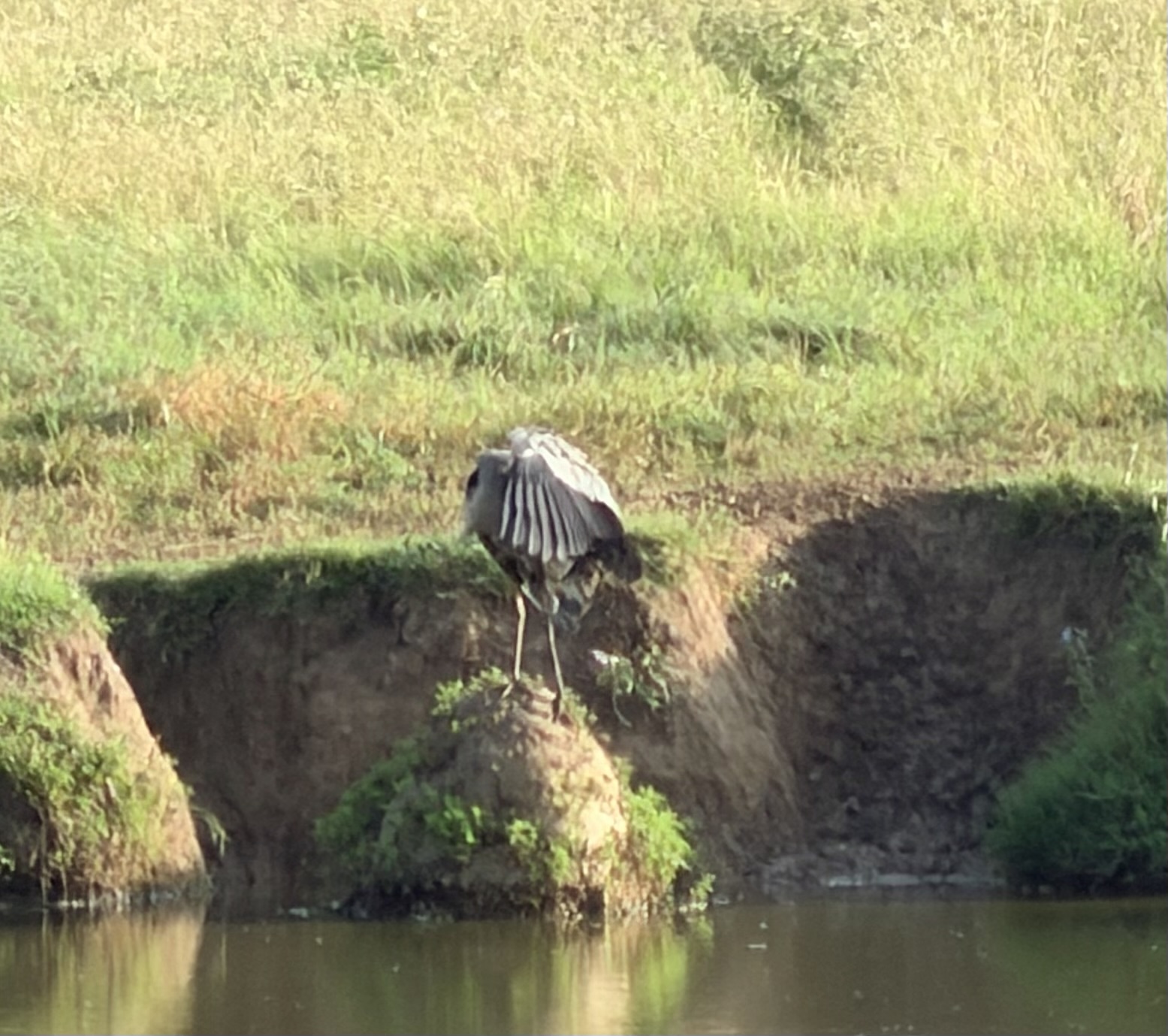
I enjoyed them for a few minutes. Then I got my binoculars out of the birding hut to see them better. I quickly realized there was also our Great Blue Heron on the shore, sitting on his favorite grass tussock.

I looked back over at the willow tree and found a third and fourth Great Egret! I wonder if they’re related?

More egrets!

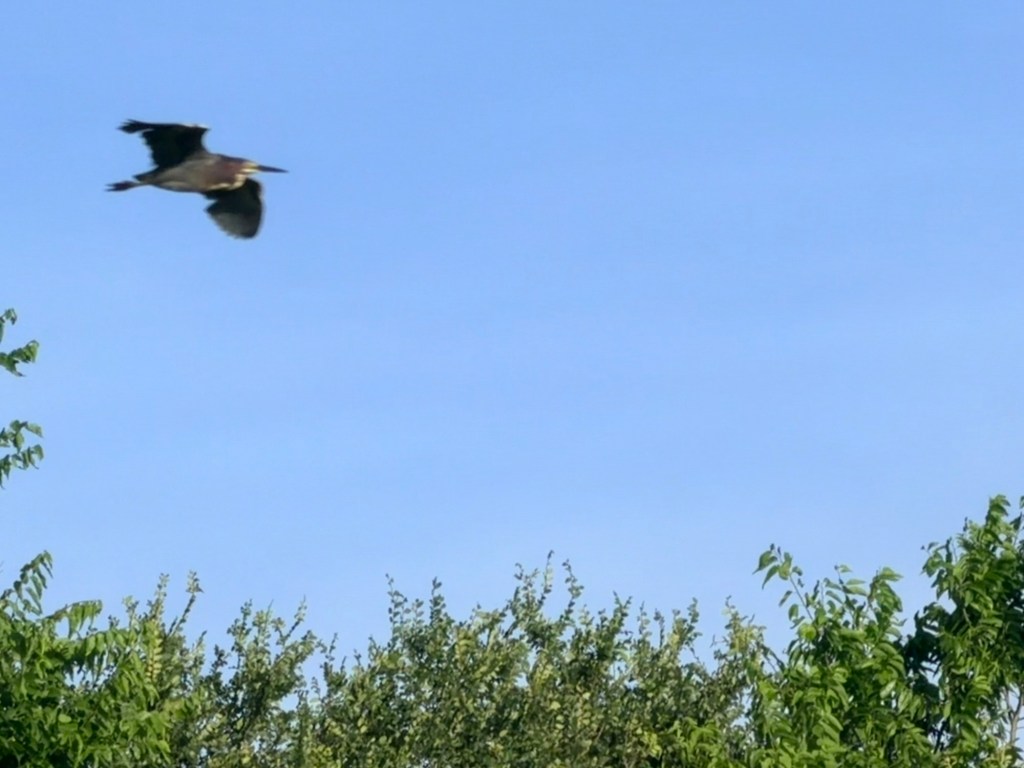
Just as I thought I was finished I heard a familiar squawk. Yes! A third egret! One of our nesting pair of Green Egrets came over to check out the action.

Coming in for a landing.

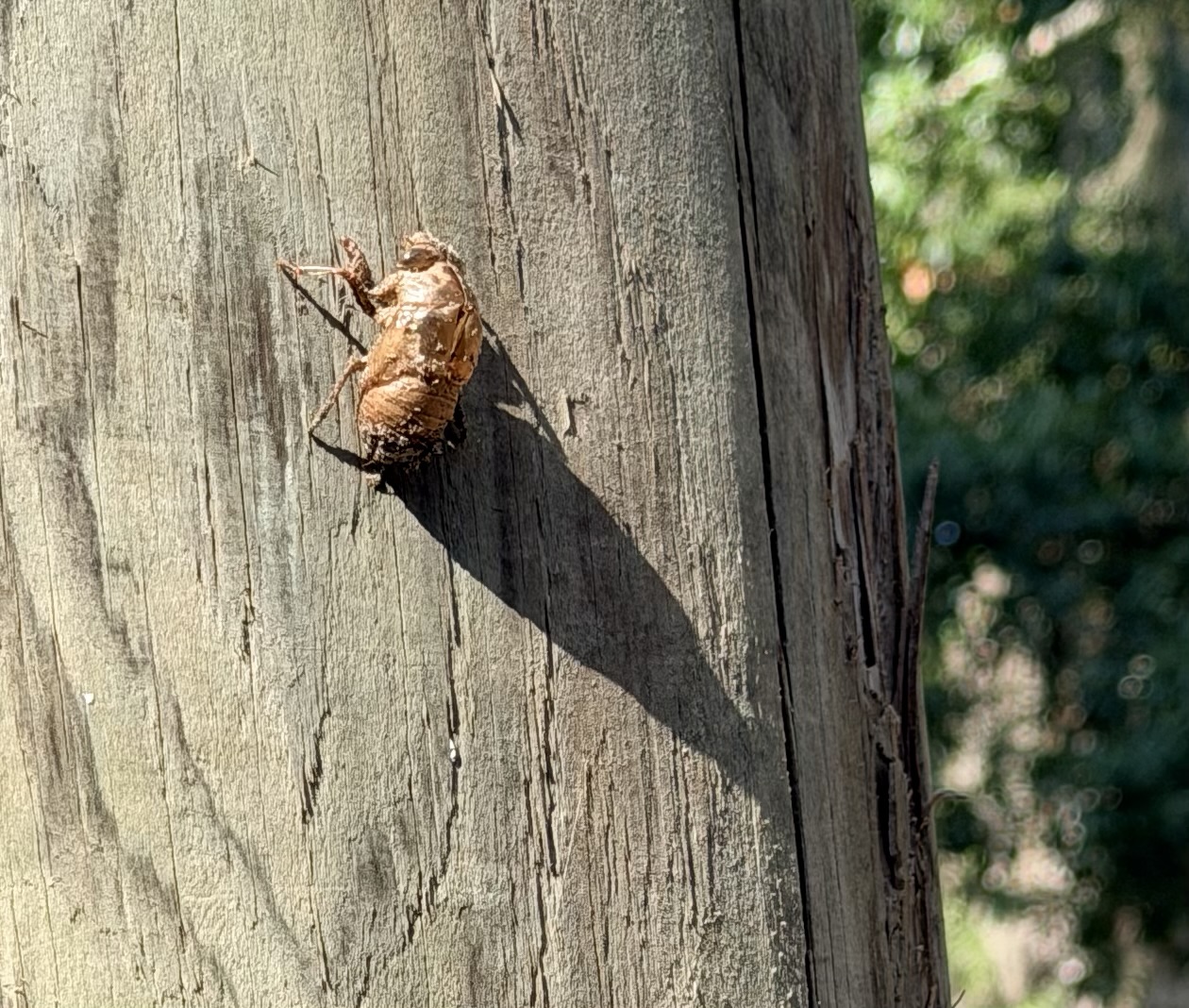
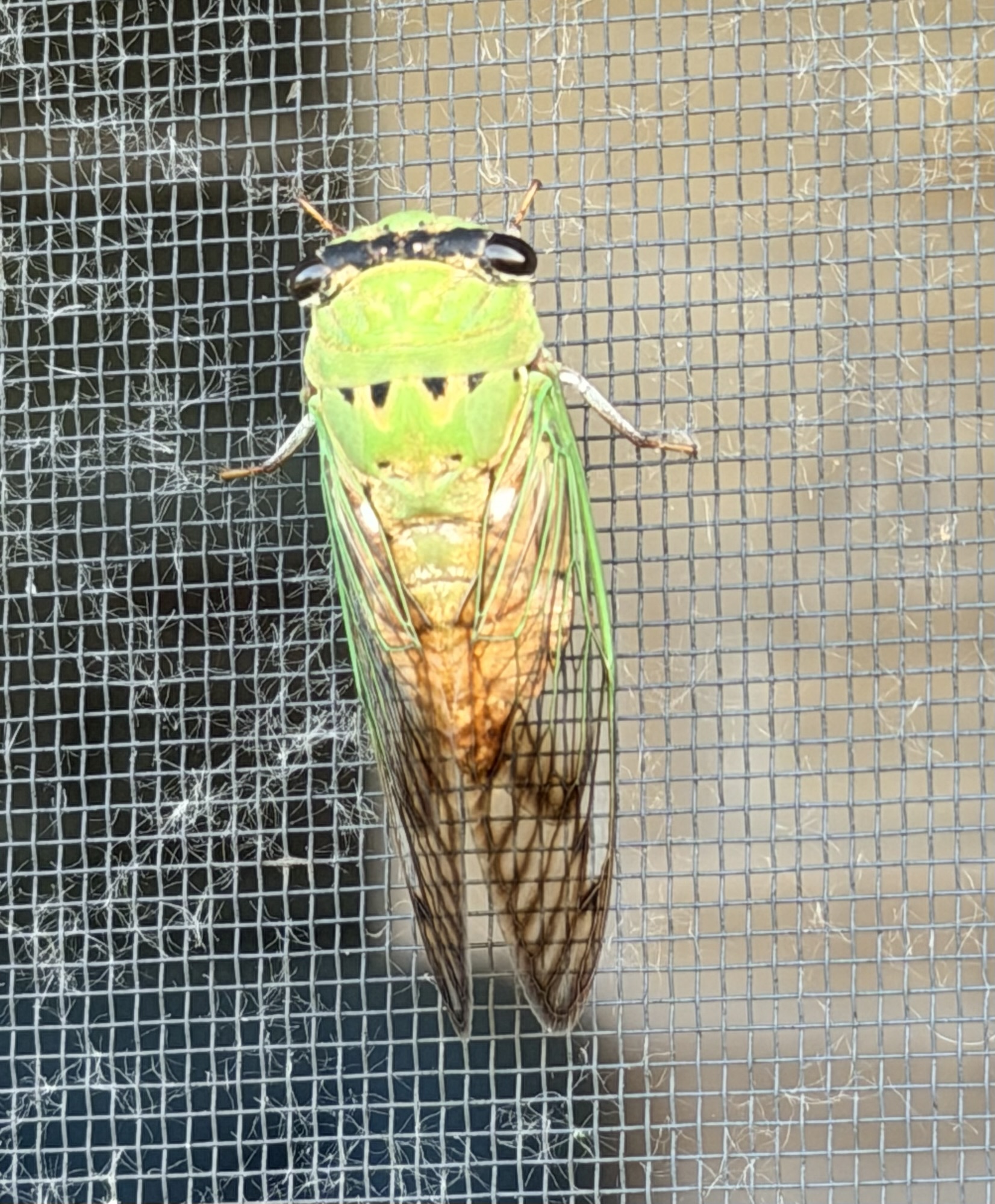
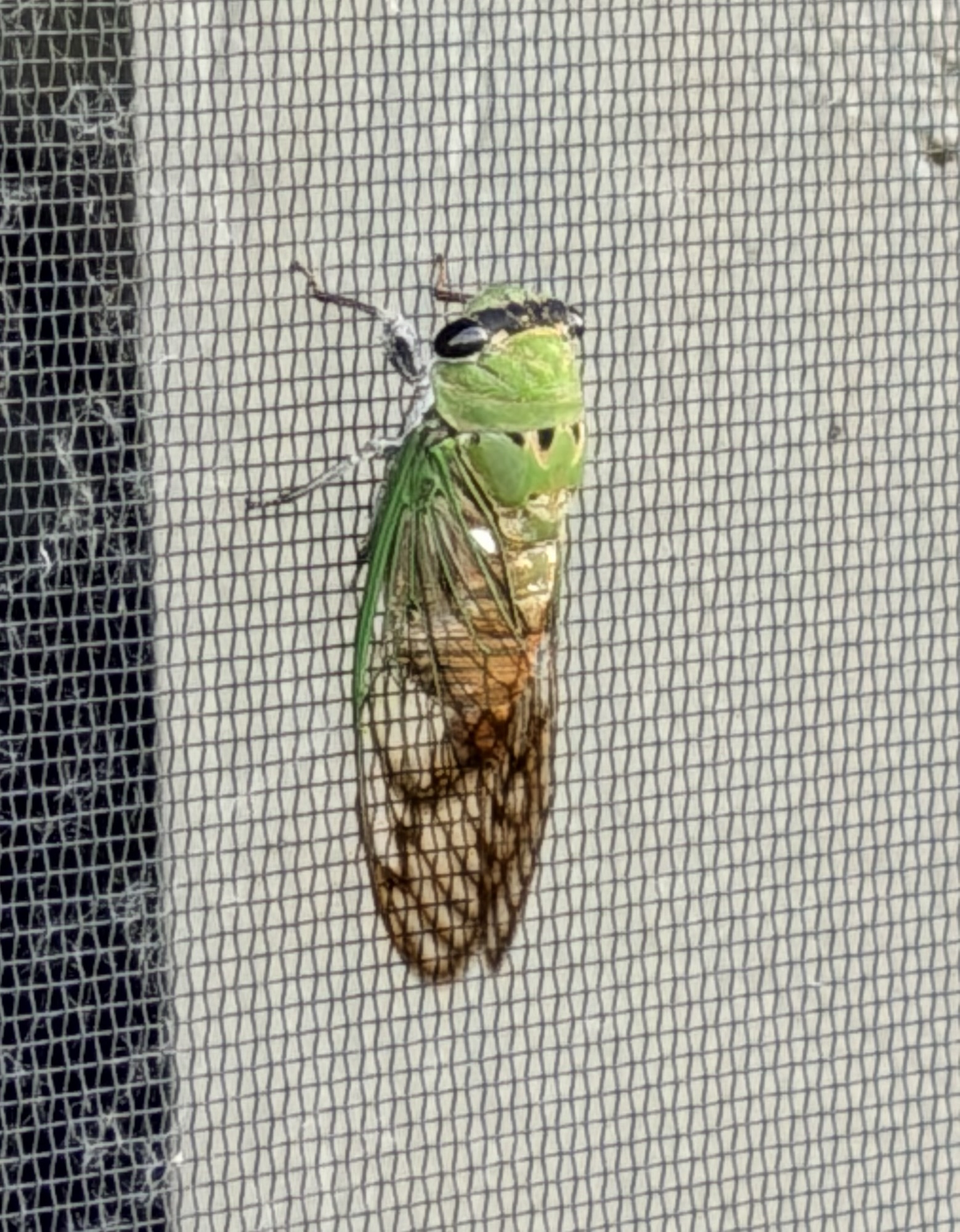
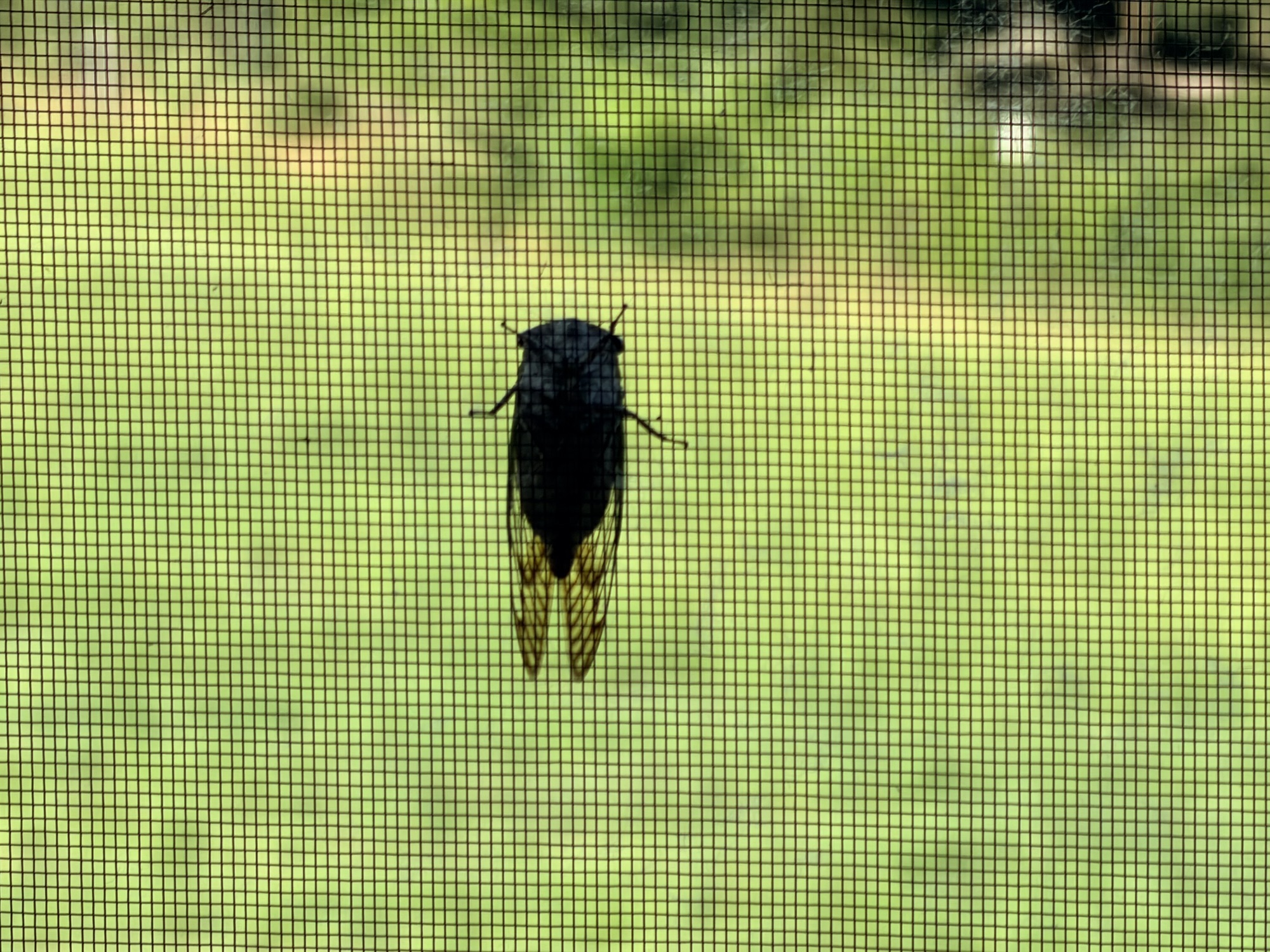
That was enough for me, but when I came back to the porch, Lee spotted our loudest summer resident, a Superb Dog-day Cicada (Neotibicen superbus). These buddies sure make my bird listening difficult.

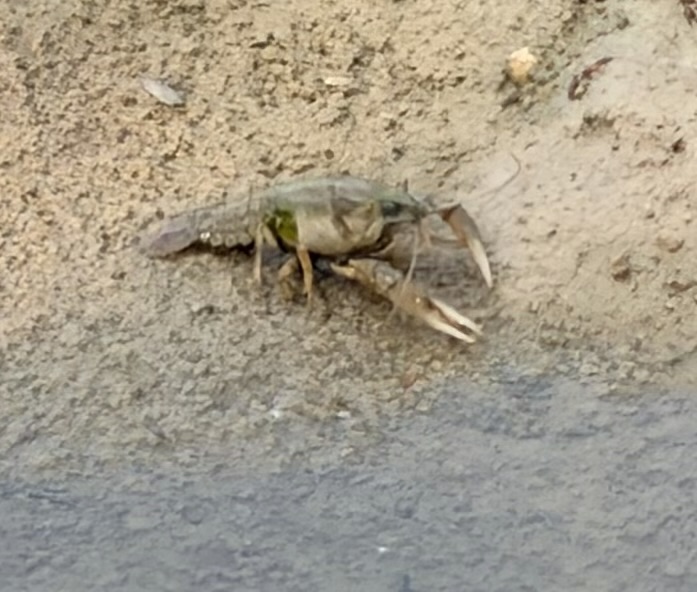
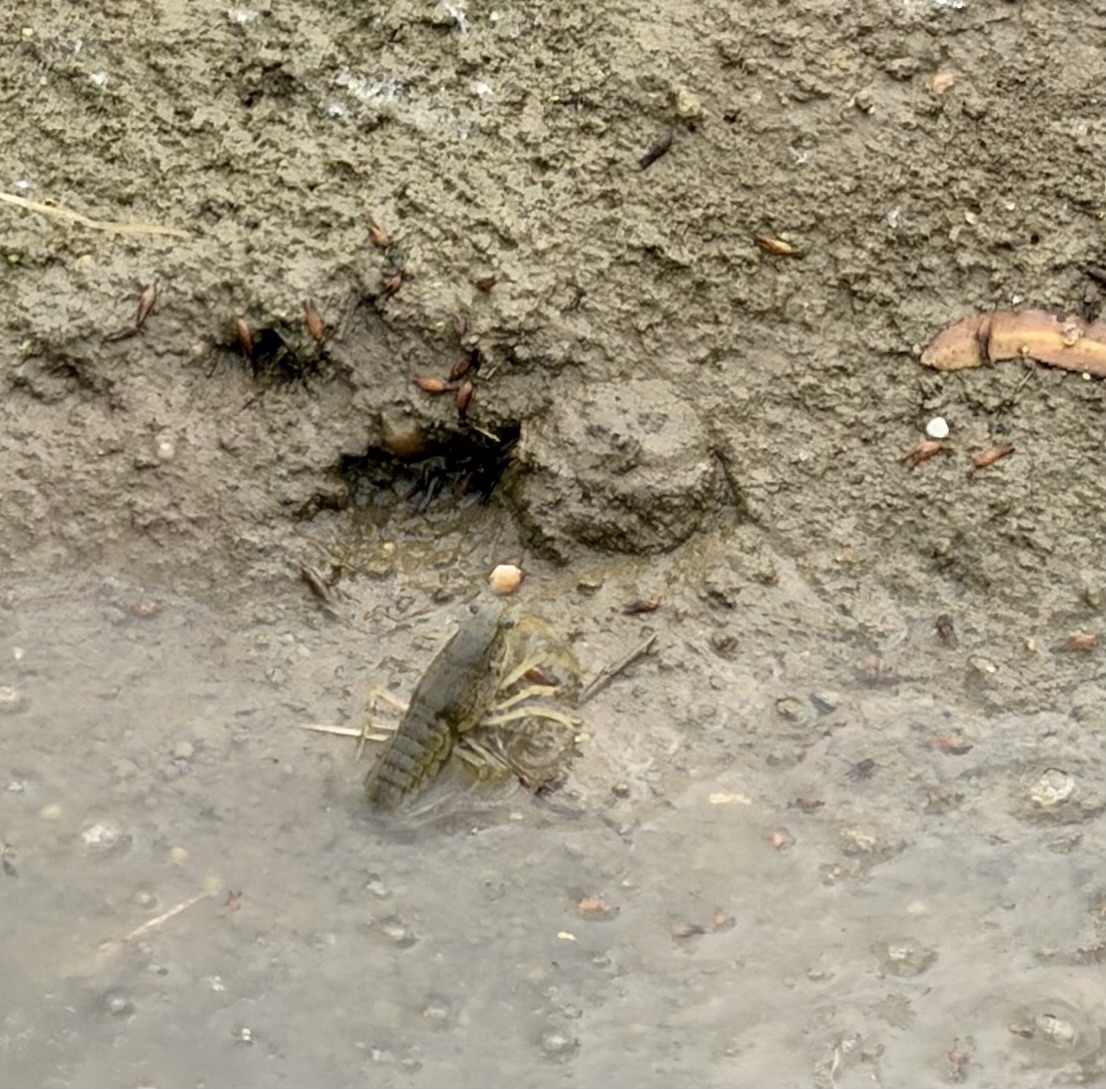
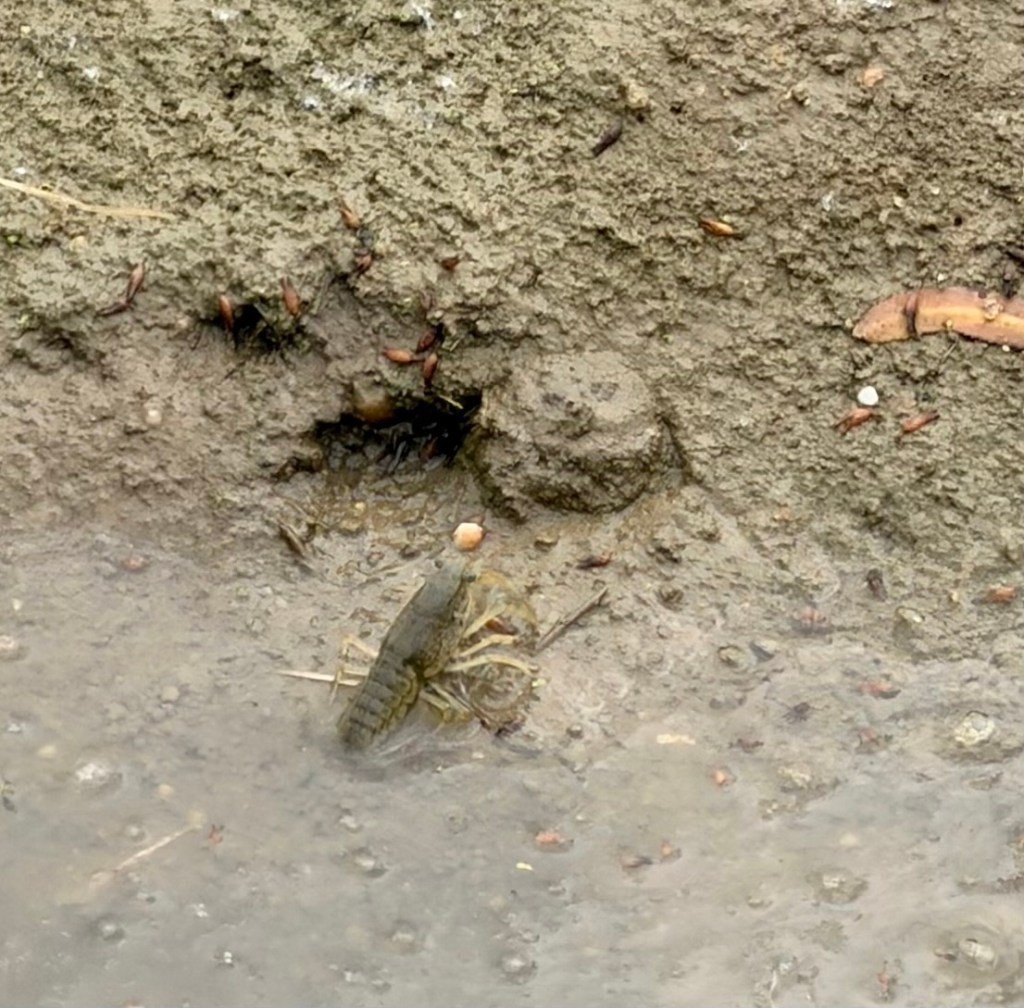
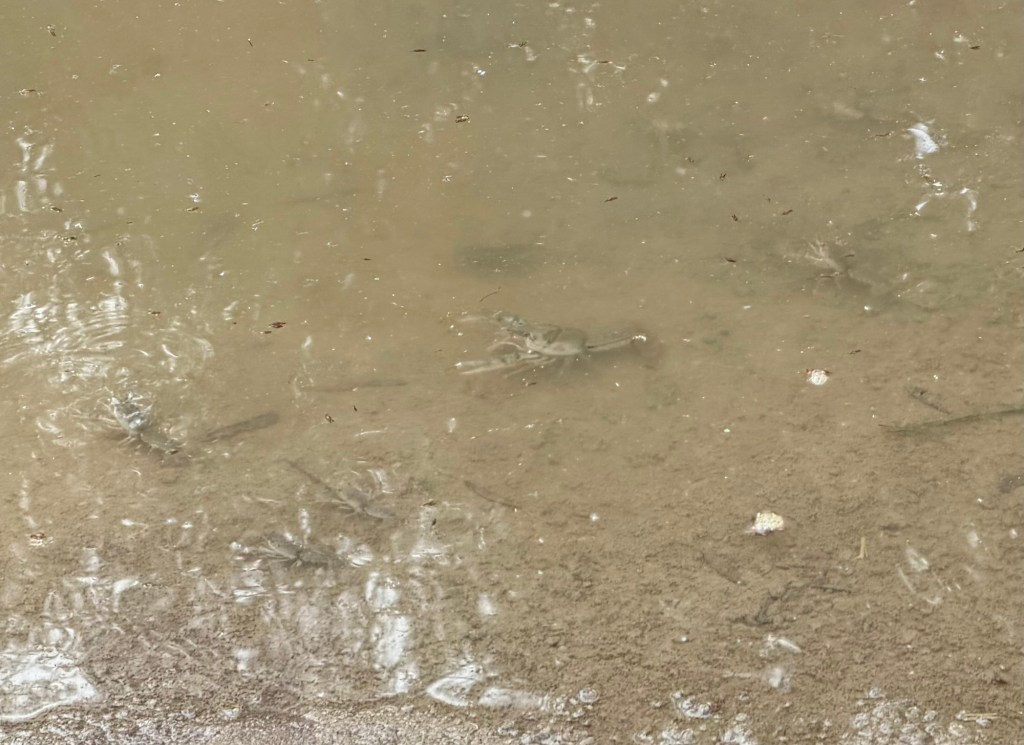
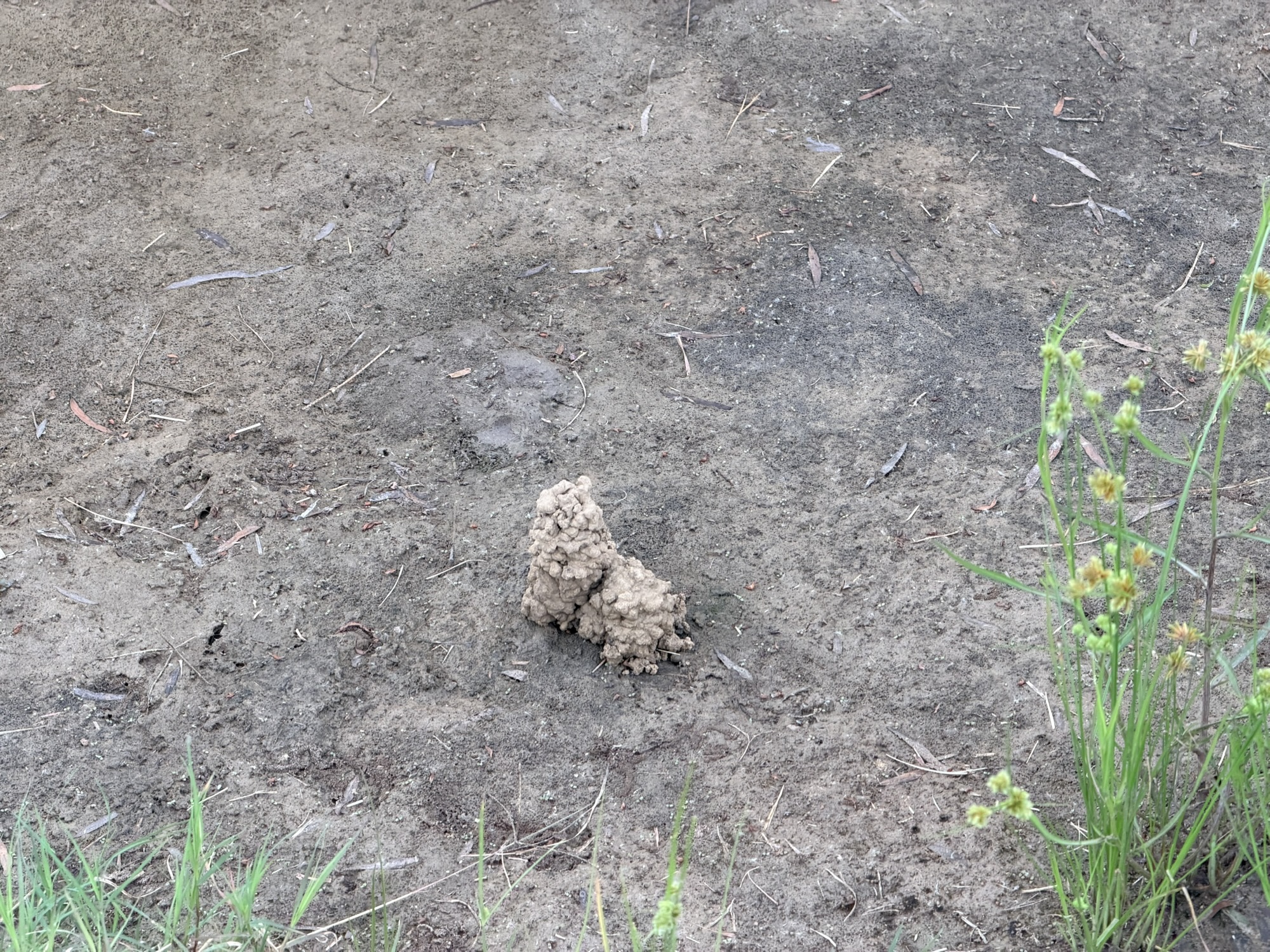
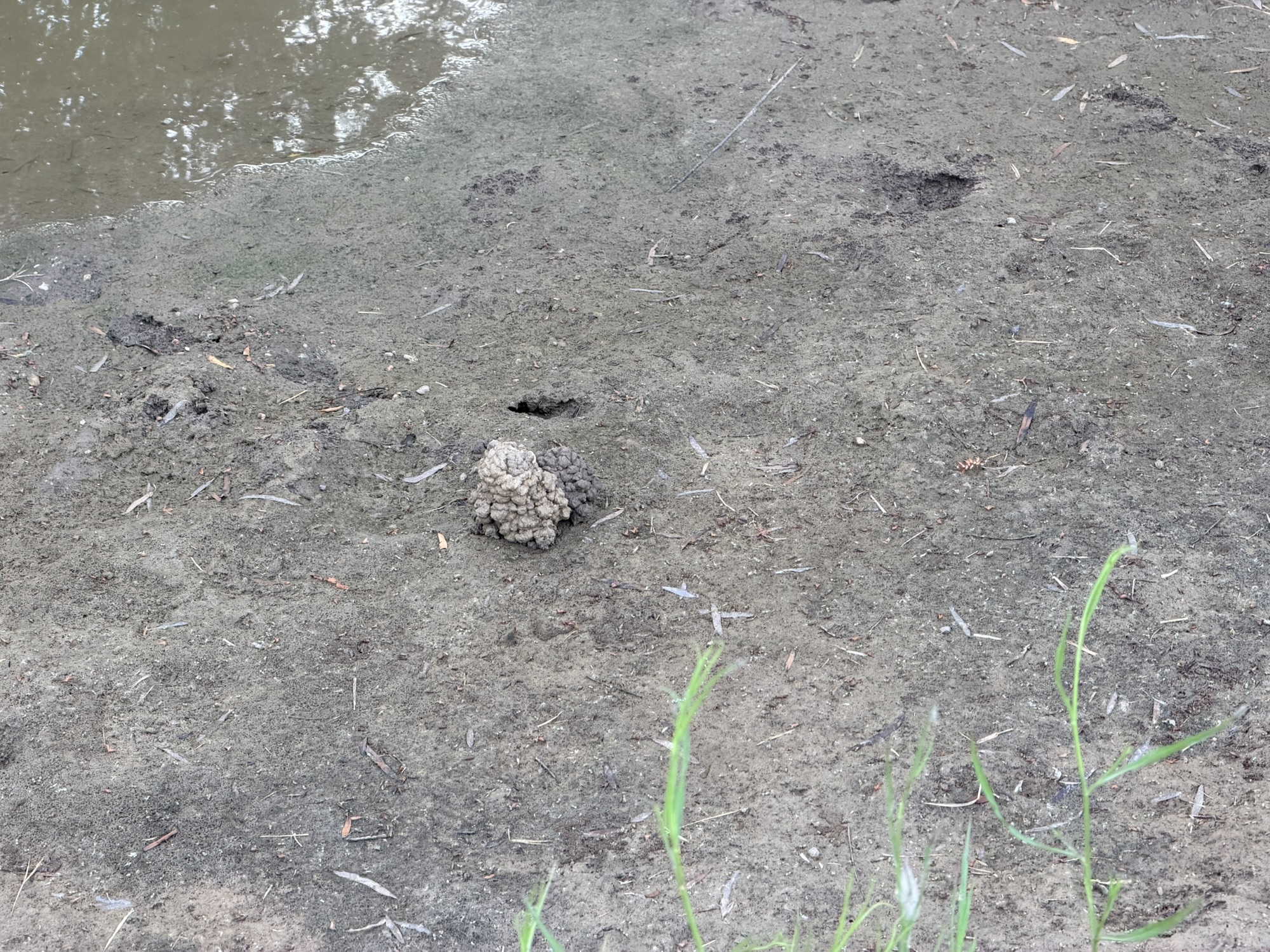
When I went out to check the mail, I stopped to look at our little mud pond by the driveway. I spotted a very busy crawfish moving mud around to build its home. I was fascinated.

I’ve always loved these guys, which we called crawdads in Florida. They’re mud bugs in many parts of Louisiana. They eat mud and filter nutrients out of it. Fascinating crustaceans!

After work, feeding animals, and eating a yummy dinner (ironically, featuring crawfish—Kathleen did not know I’d been looking at them), we went for a walk. Kathleen made it to the dumpster with a bag of trash, but I got all fascinated by the crawfish again.

Busy builder.

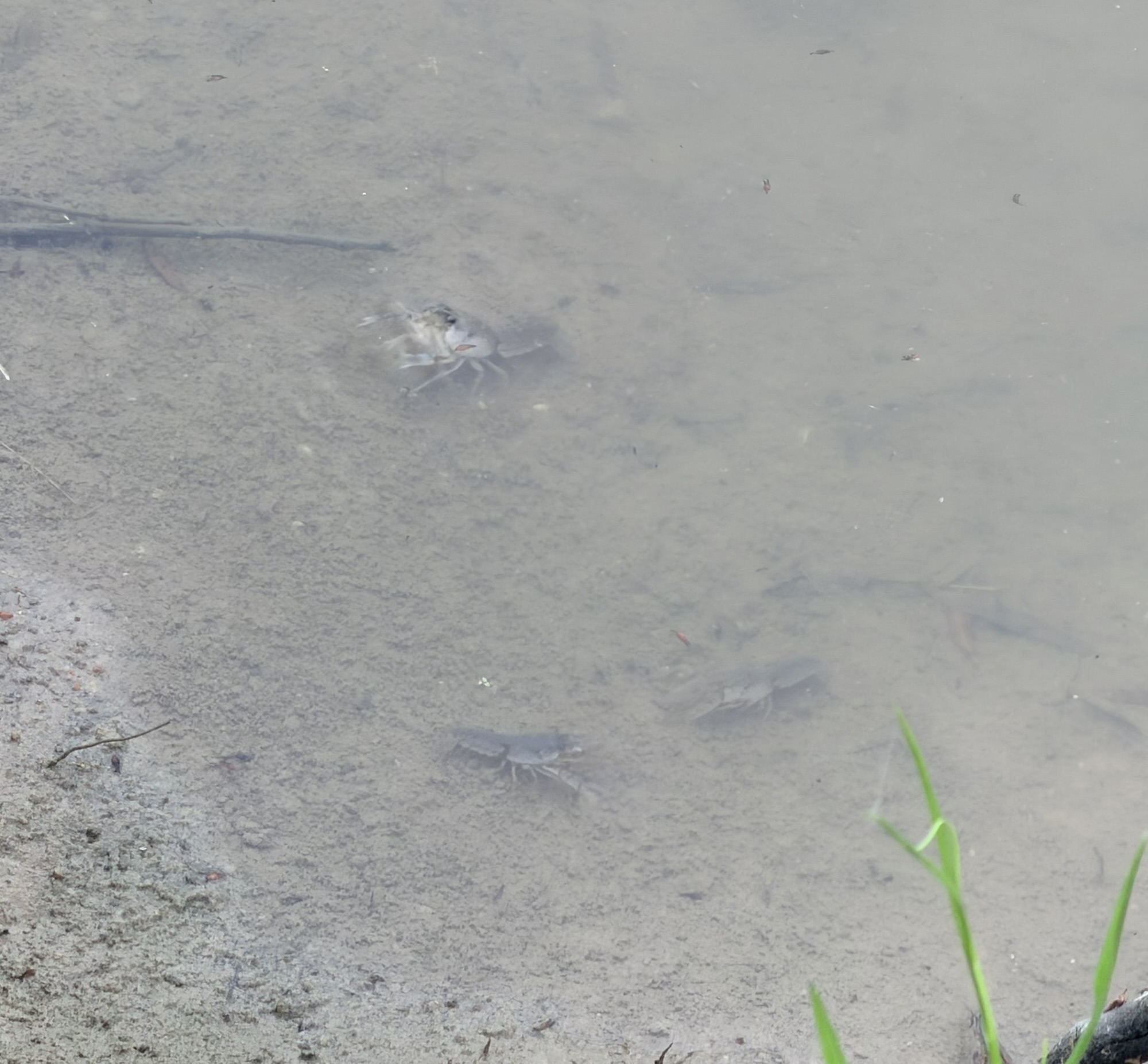
We realized there are dozens of crawfish in the little muddy pond, big ones and small ones, all busily doing whatever they do.

Lots of little ones.

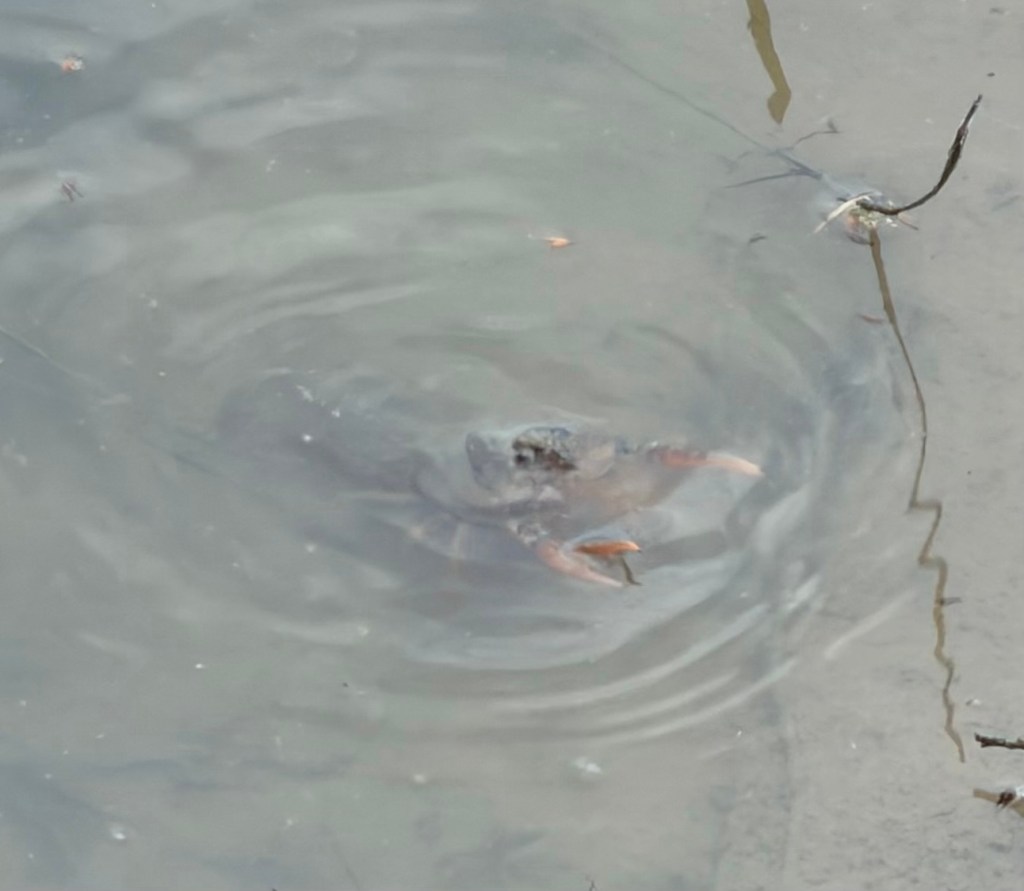
There was a small puddle being guarded by a larger one, who busily herded small intruders. Those claws stuck out above the water menacingly! We just stood there and laughed delightedly. We needed that.

Stay away!

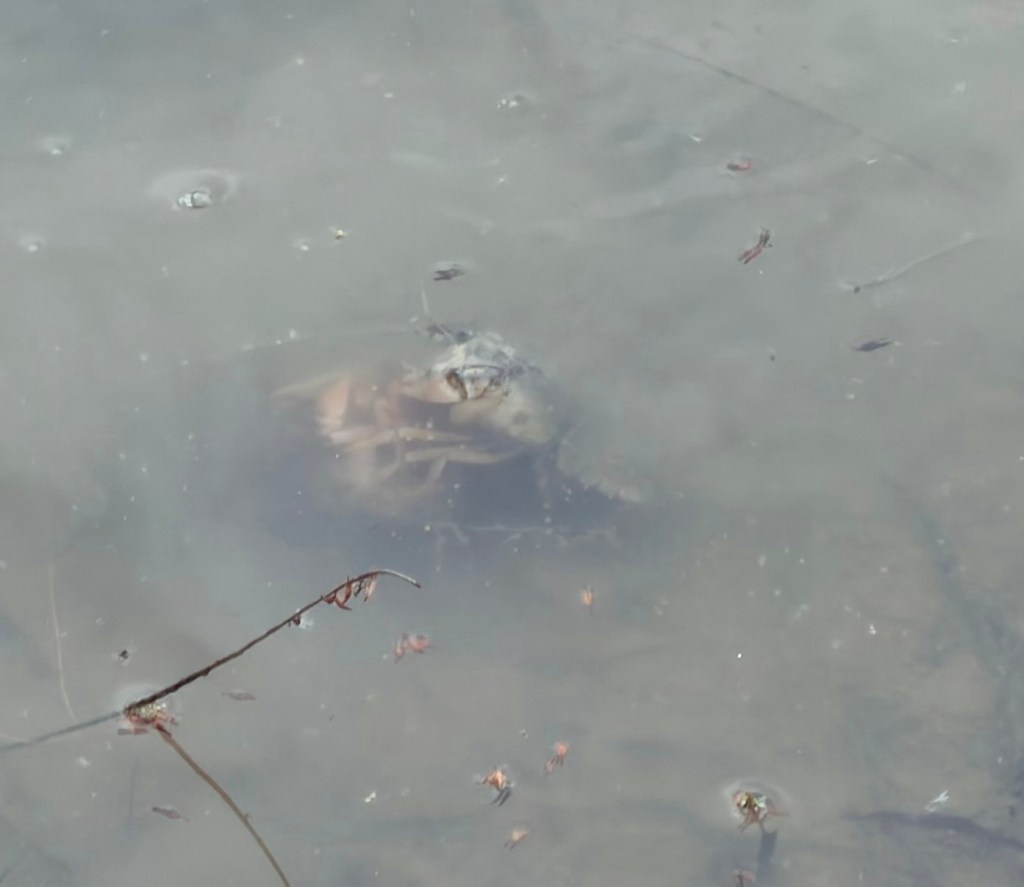
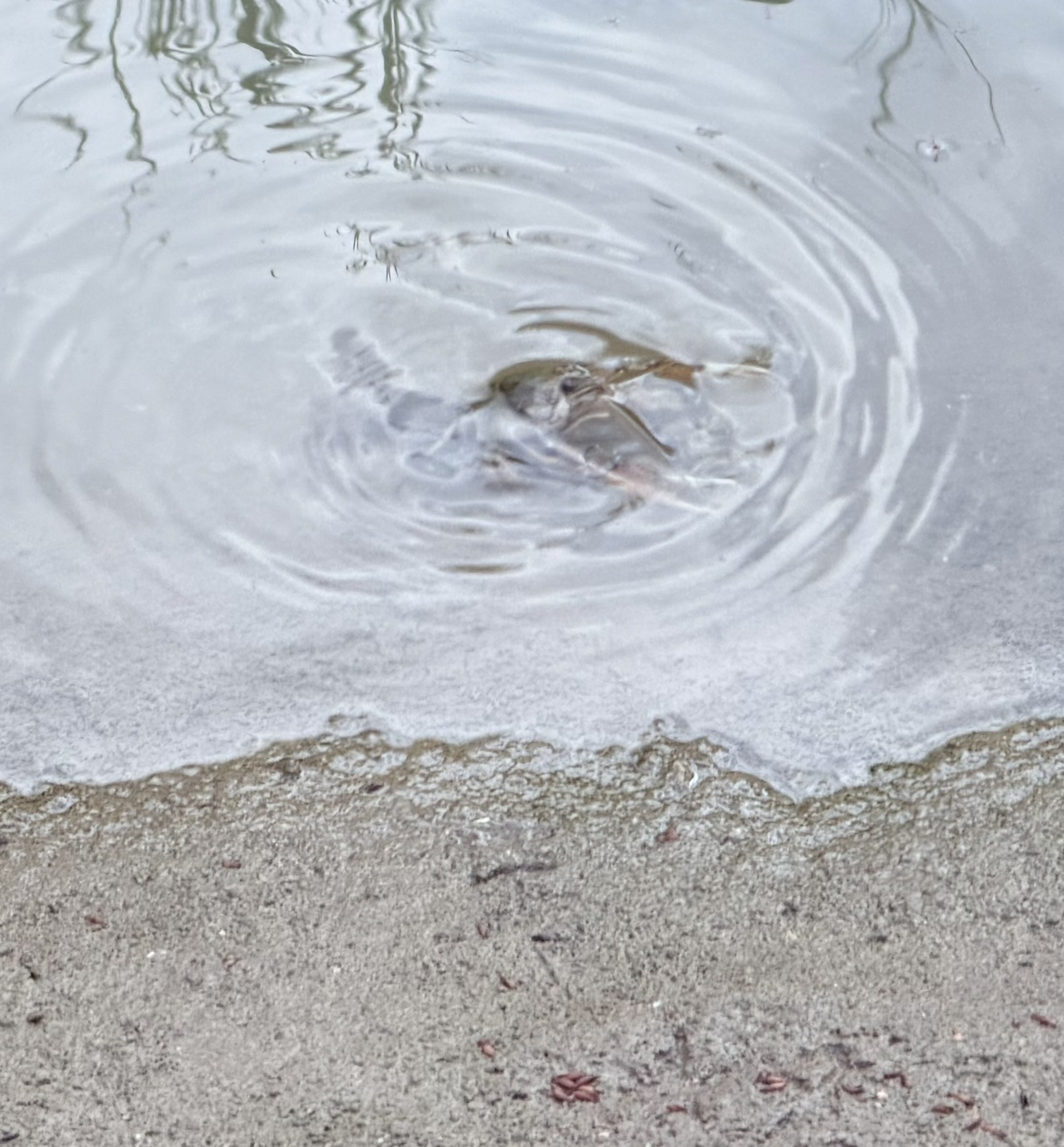
Then we witnessed crawfish mating, which came as a surprise. It starts with the female fighting the male, then they settle down to laying eggs and fertilizing. The female will carry the eggs until they hatch out as tiny versions of the adults.

Doing it.

Kathleen wondered why we didn’t see any shed exoskeletons in the water. I also was curious, so I looked it up. Turns out they eat them! they recycle the nutrients and skeletal material. Uh, they also eat their poop. I think I’ll do a longer article on crawfish for the Master Naturalist blog. I’ll be sure to share the link.

That was plenty of nature fun for one day. We are definitely easy to entertain, but that’s part of our charm, our husbands would say!