Well, I was born in 1958. The dawn of the transistor age. So, yep, my first video game was Pong. When you only have 2 television stations to watch, Pong is an entertainment option.
Now, that’s a UI. (Image from Wired)
That was probably the last video game I ever played enough to get good at, though I was OK at Pac-Man. I’ve saved a lot of time by not playing video games, so that I could knit, read, or listen to birds. Everyone gets to choose how to spend their downtime, and we all need it, right?
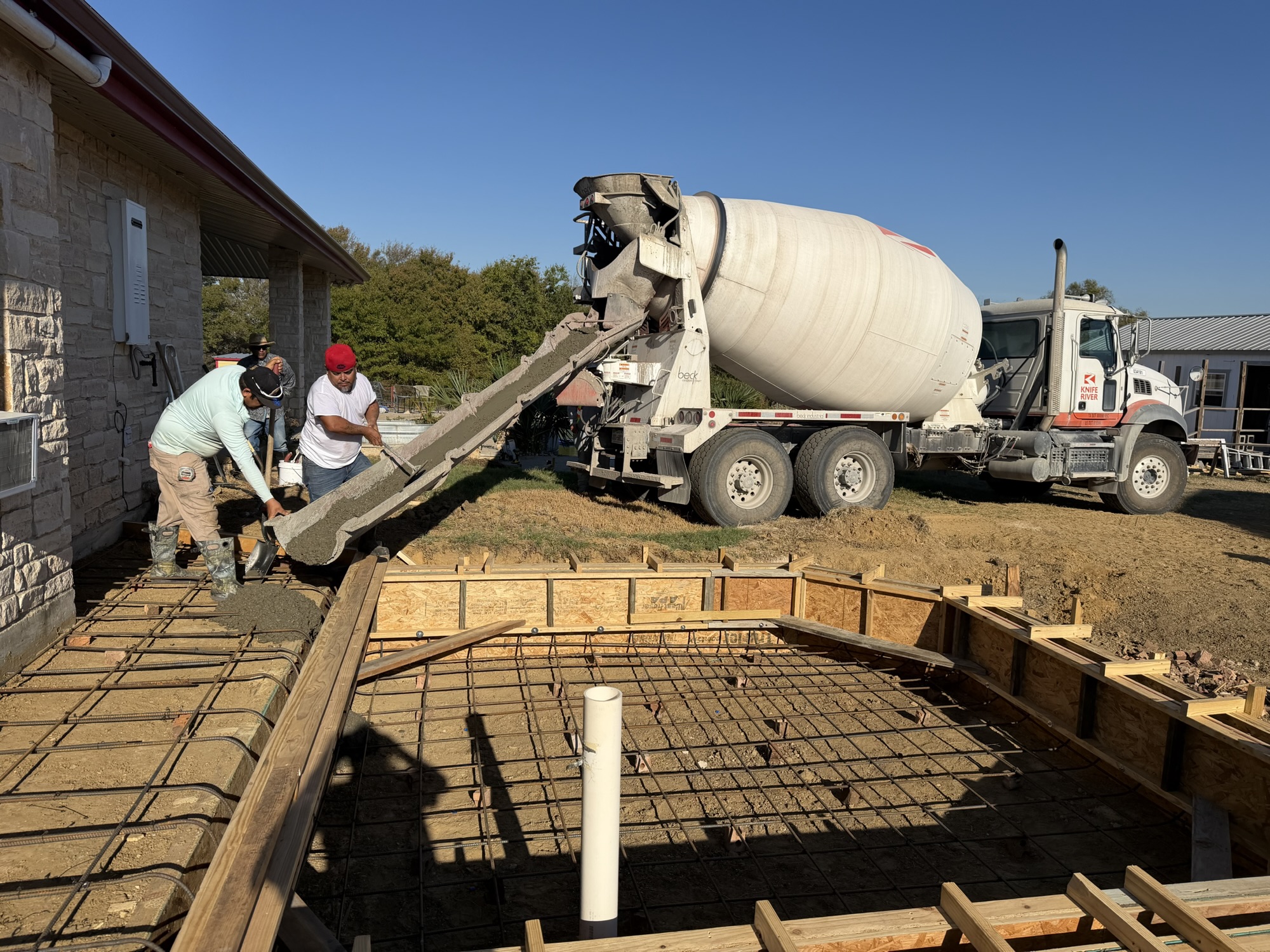
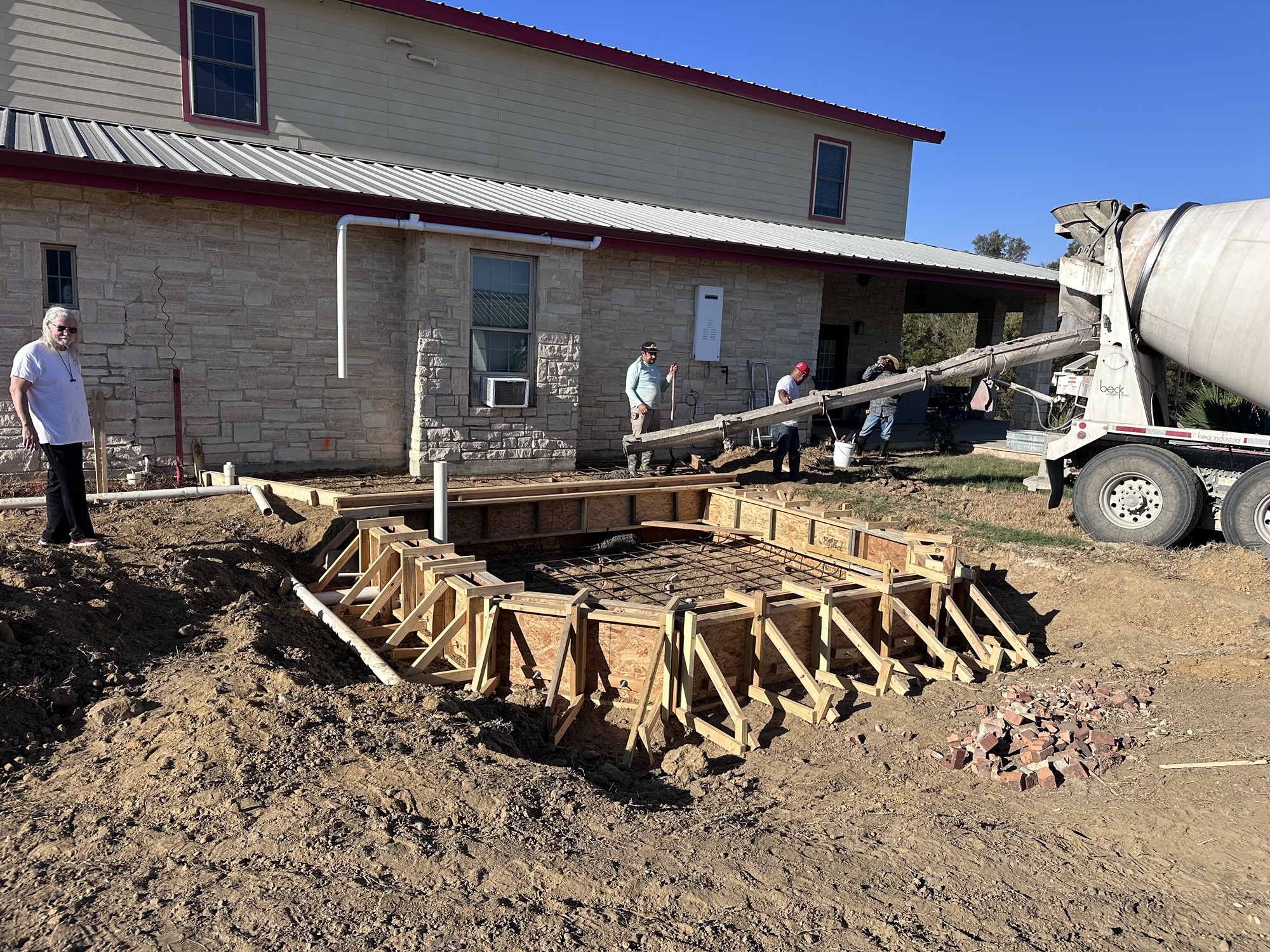
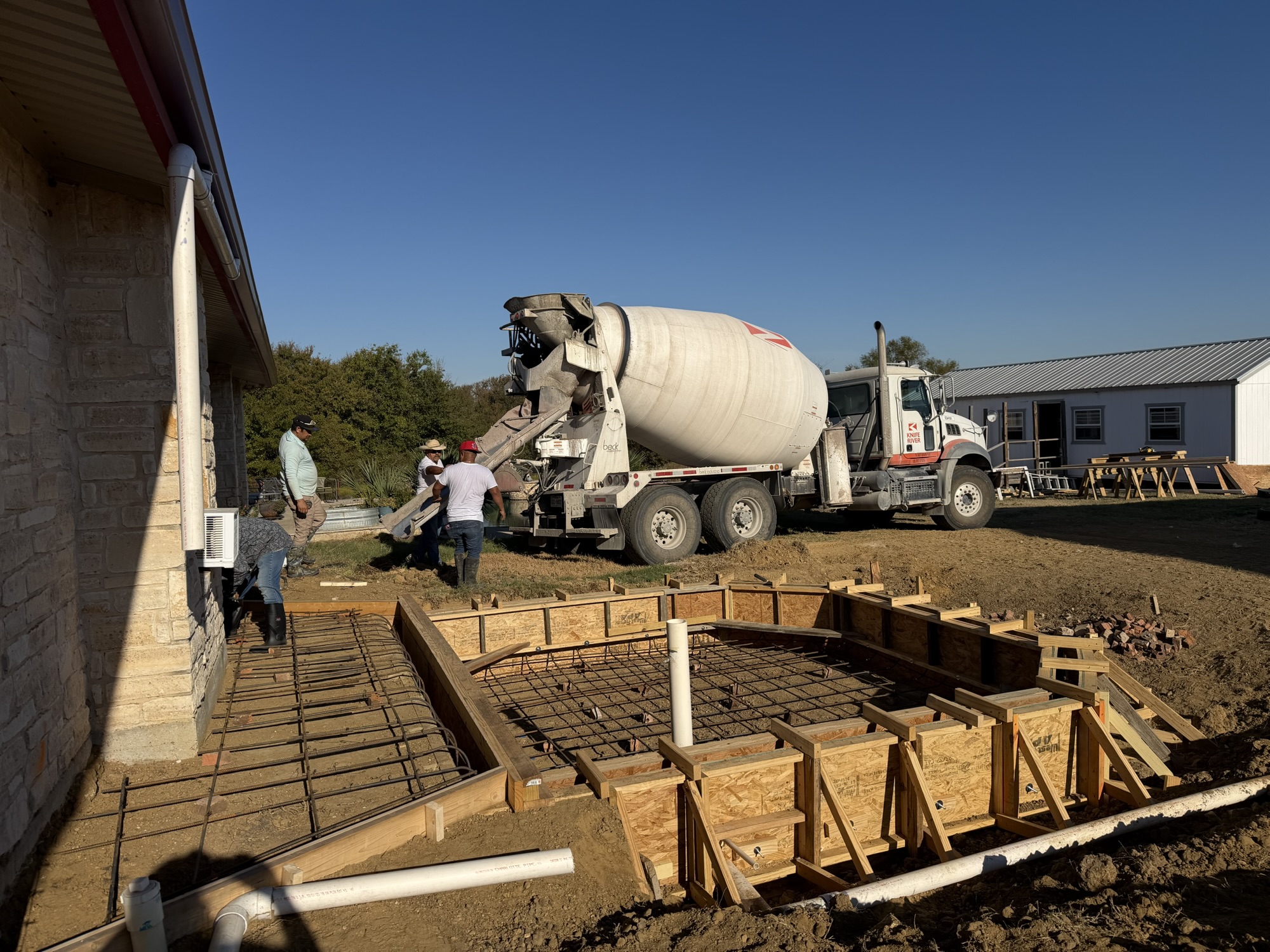
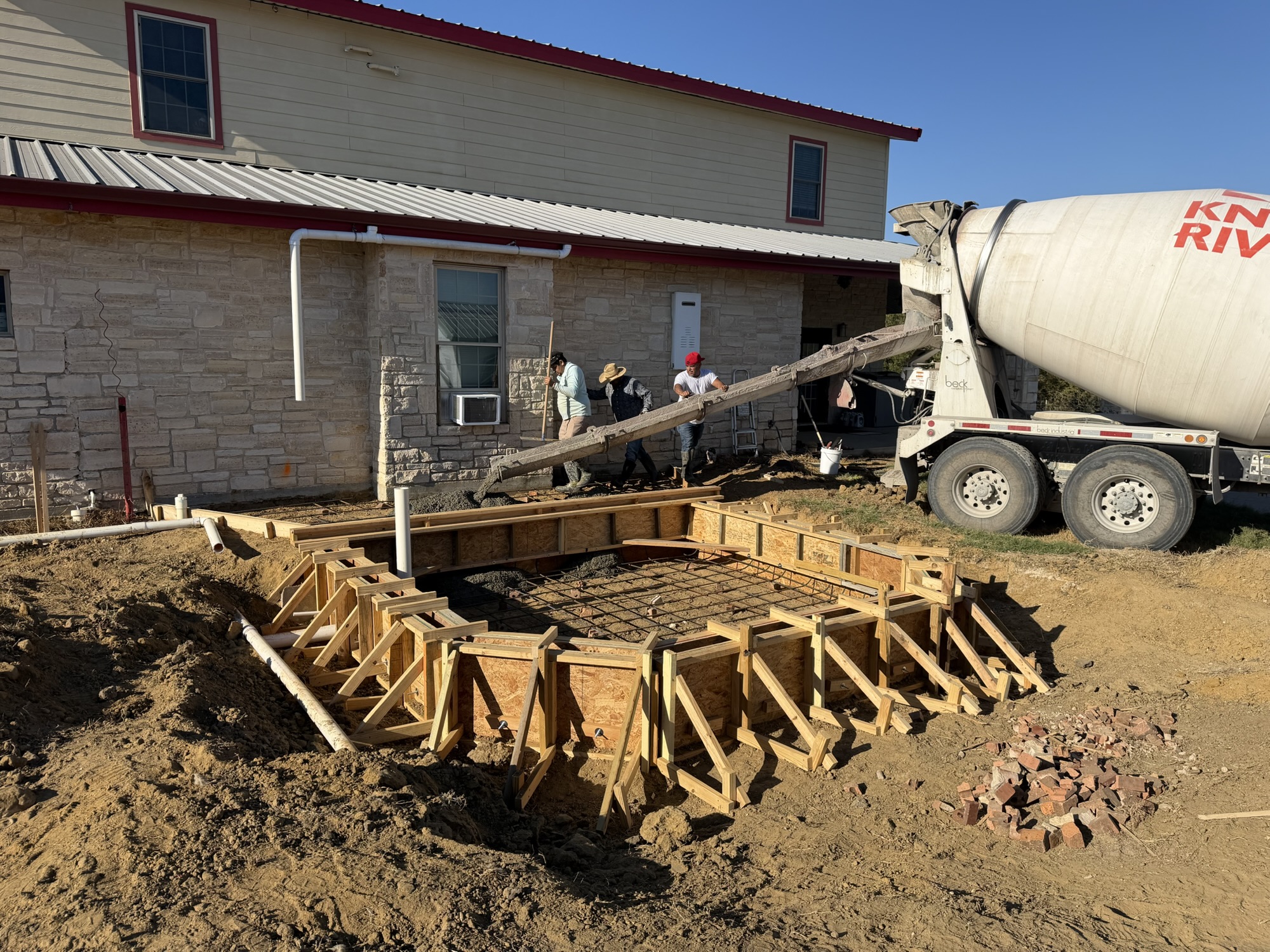
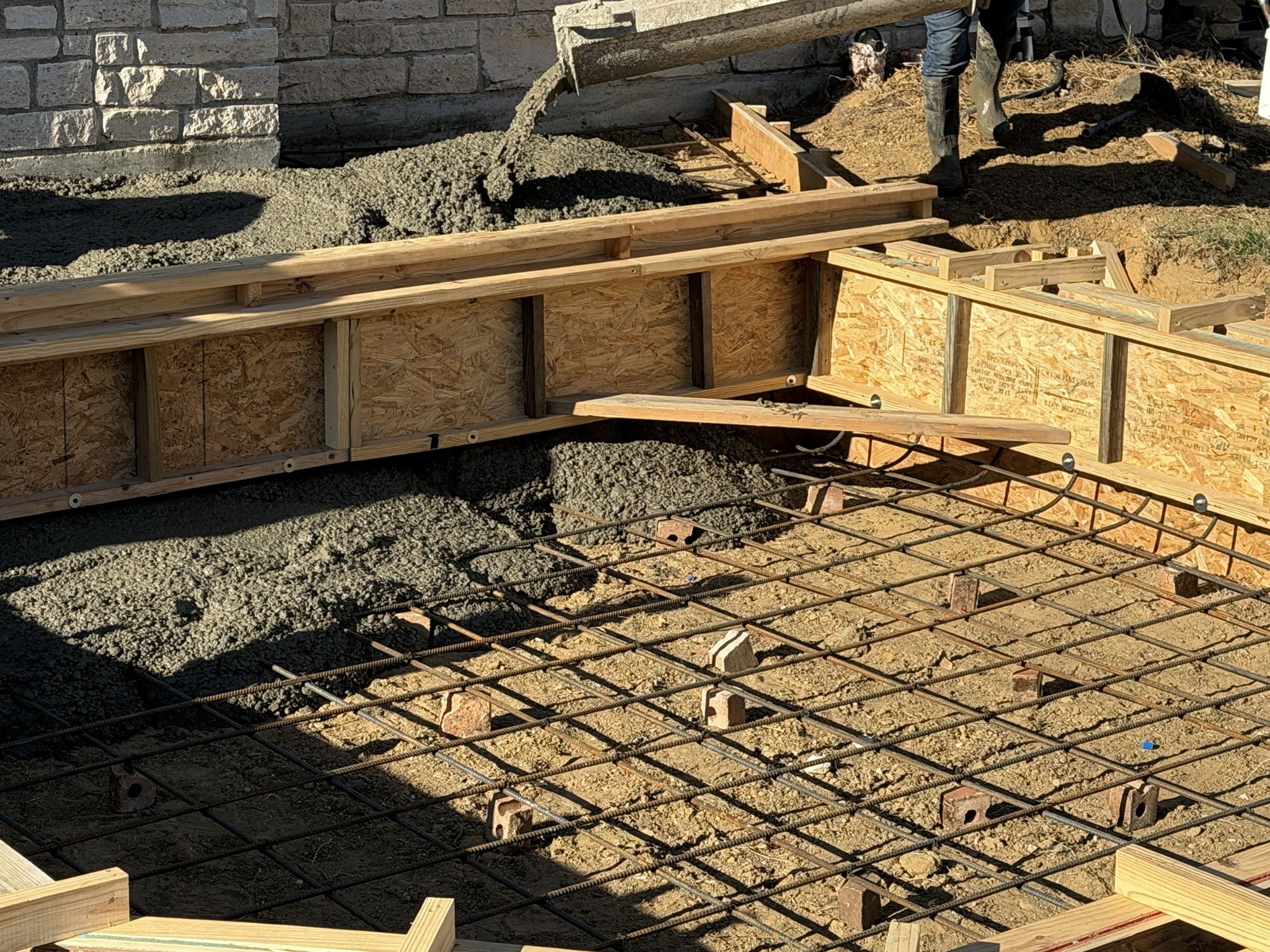
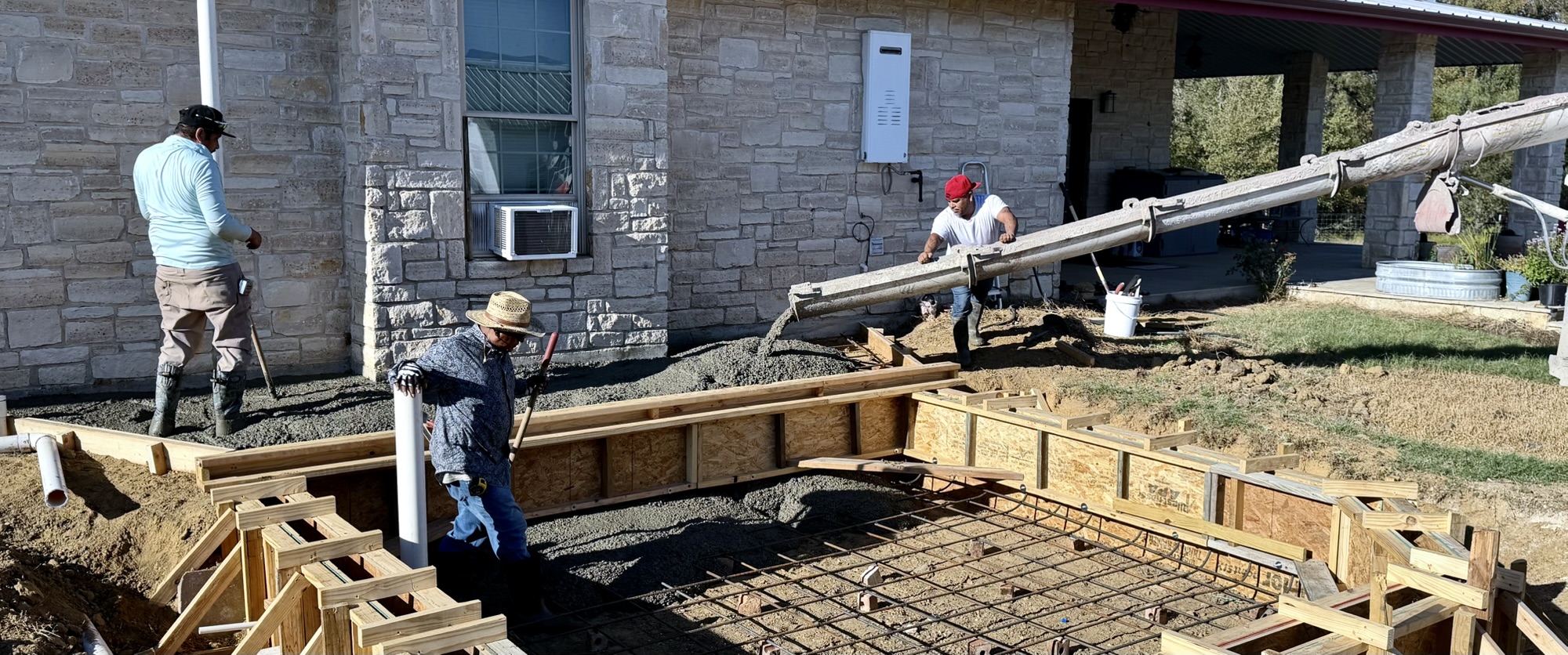
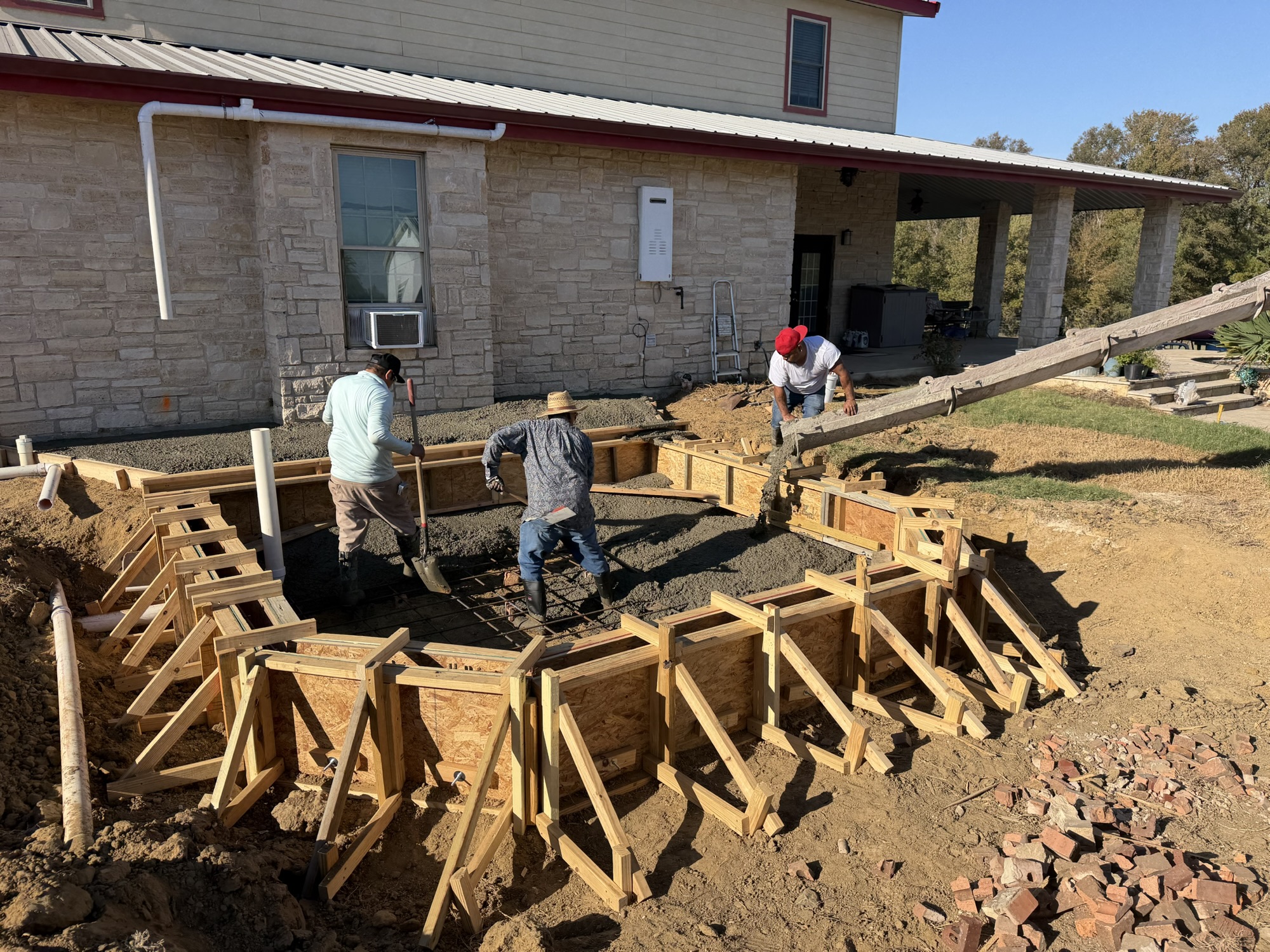
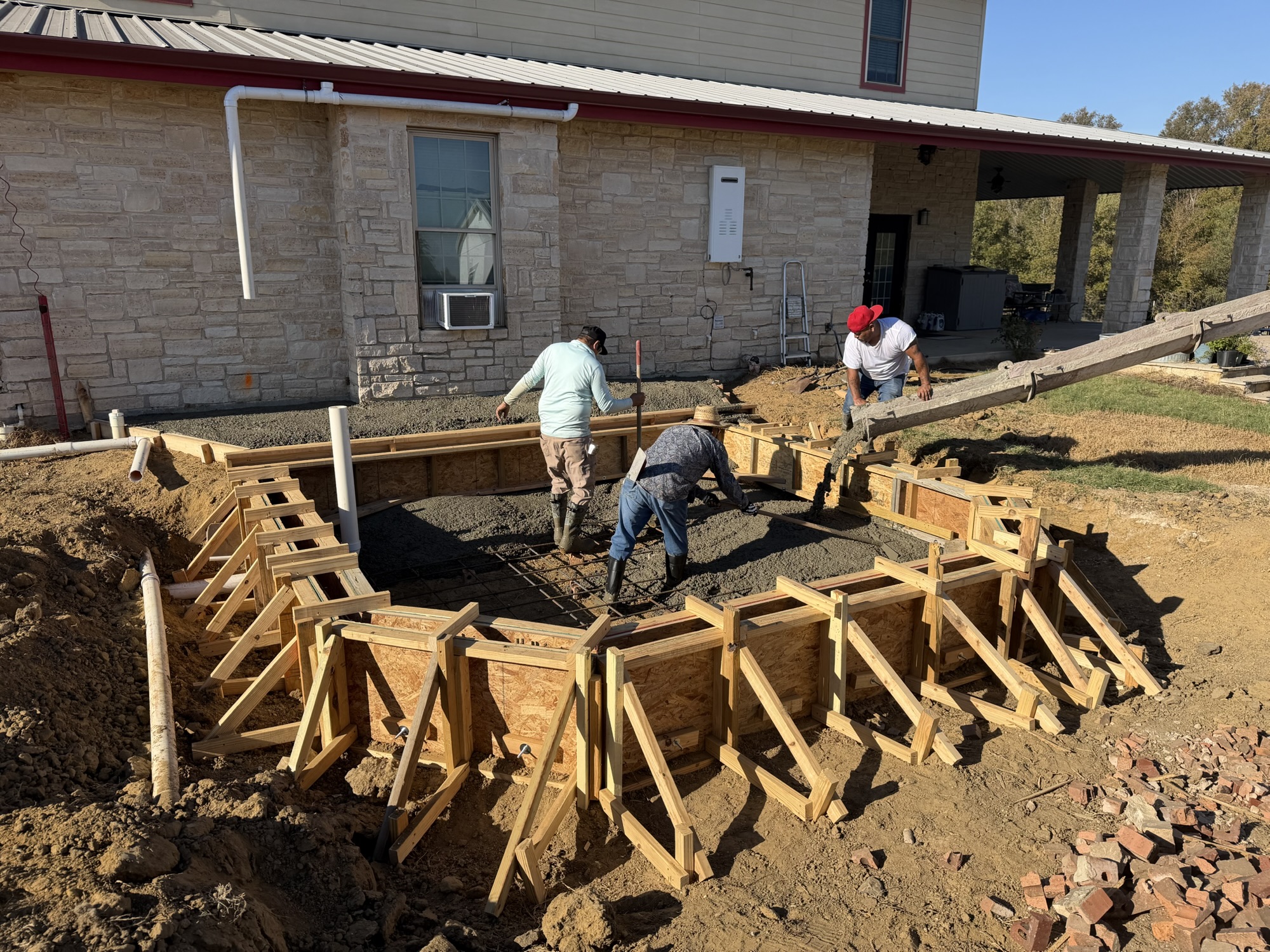
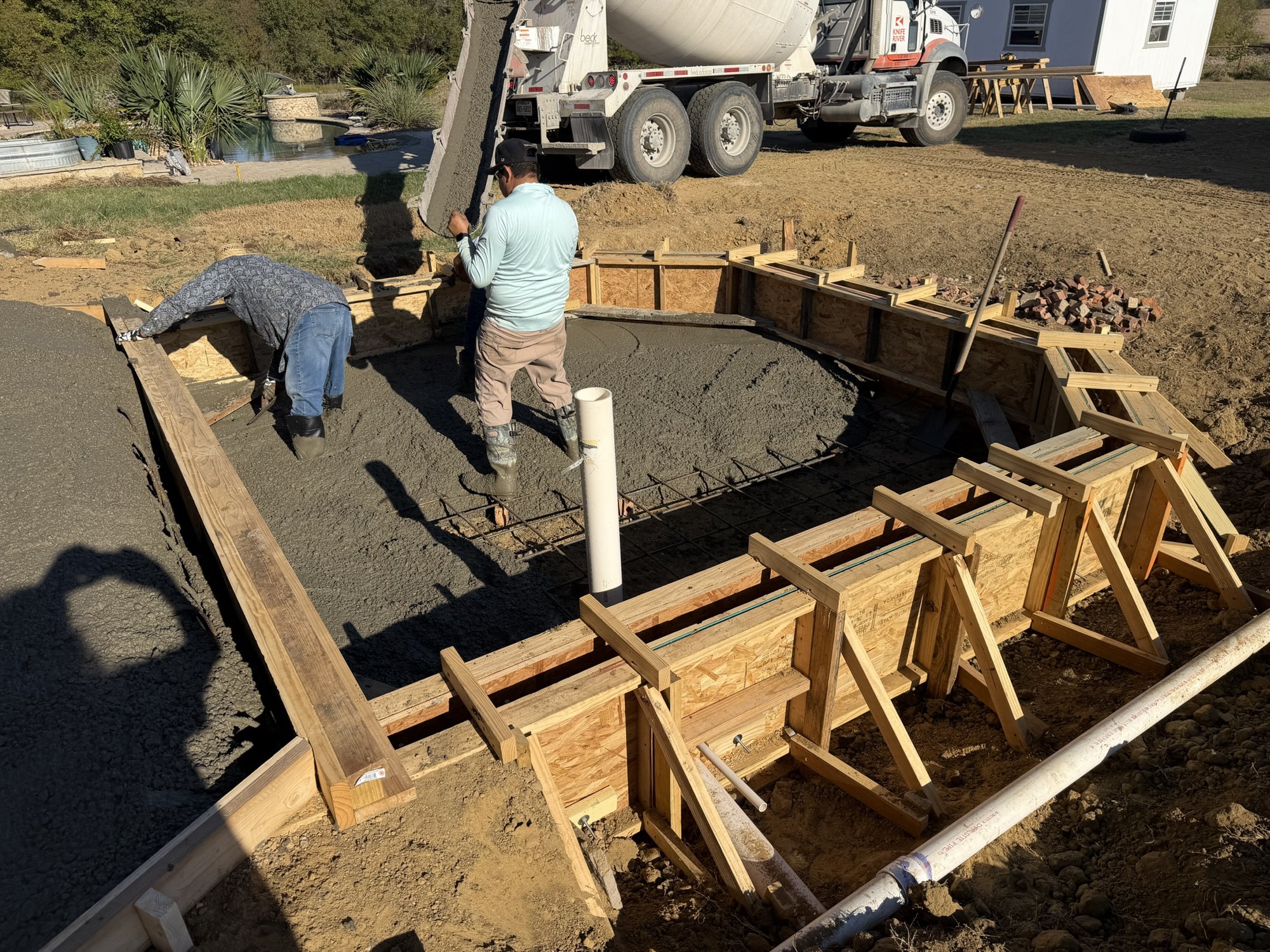
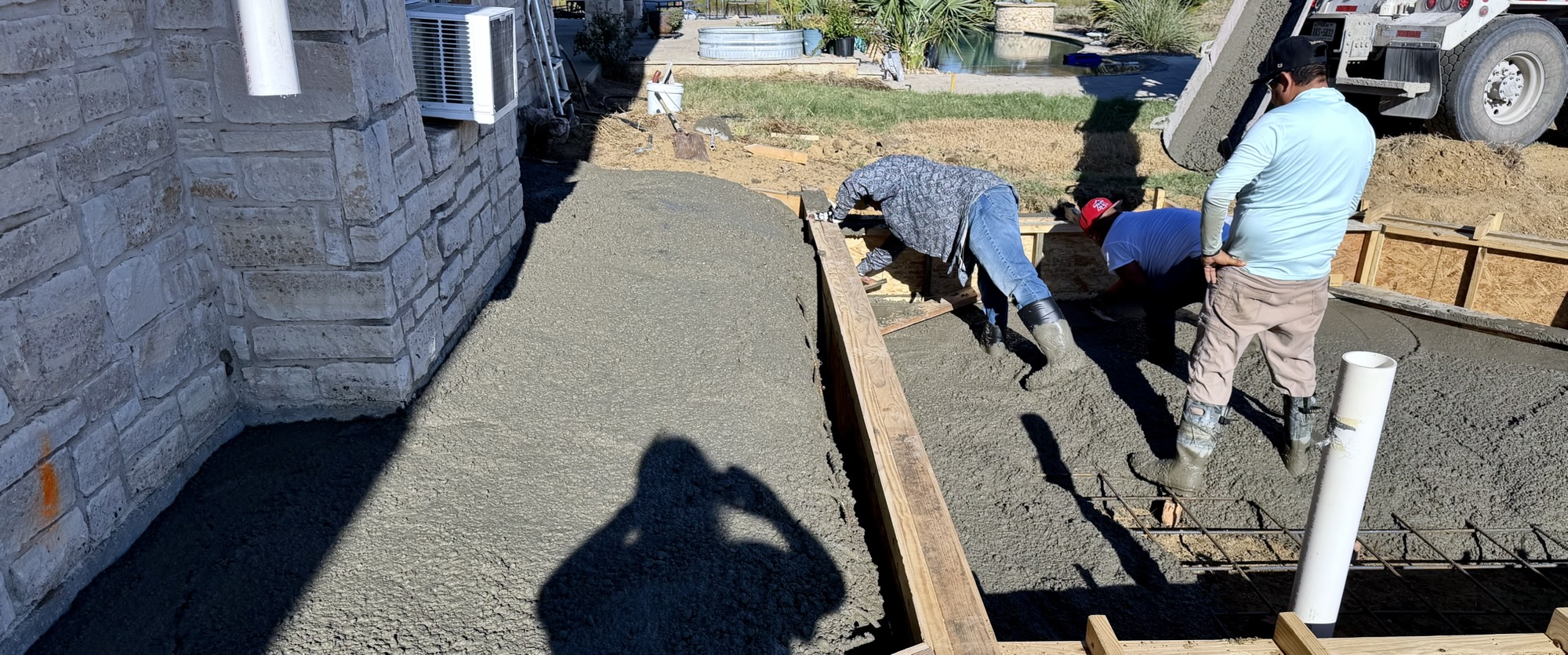
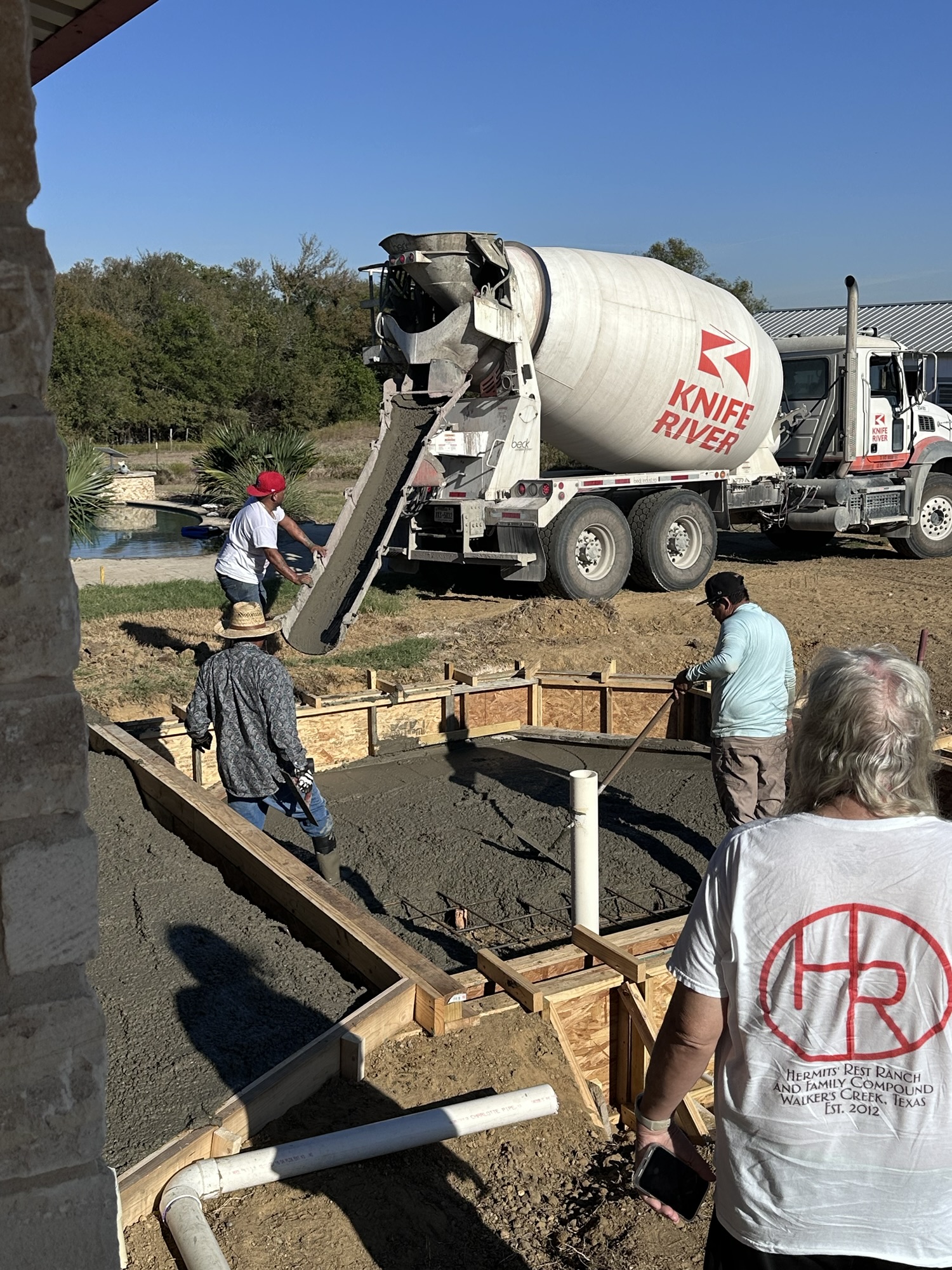
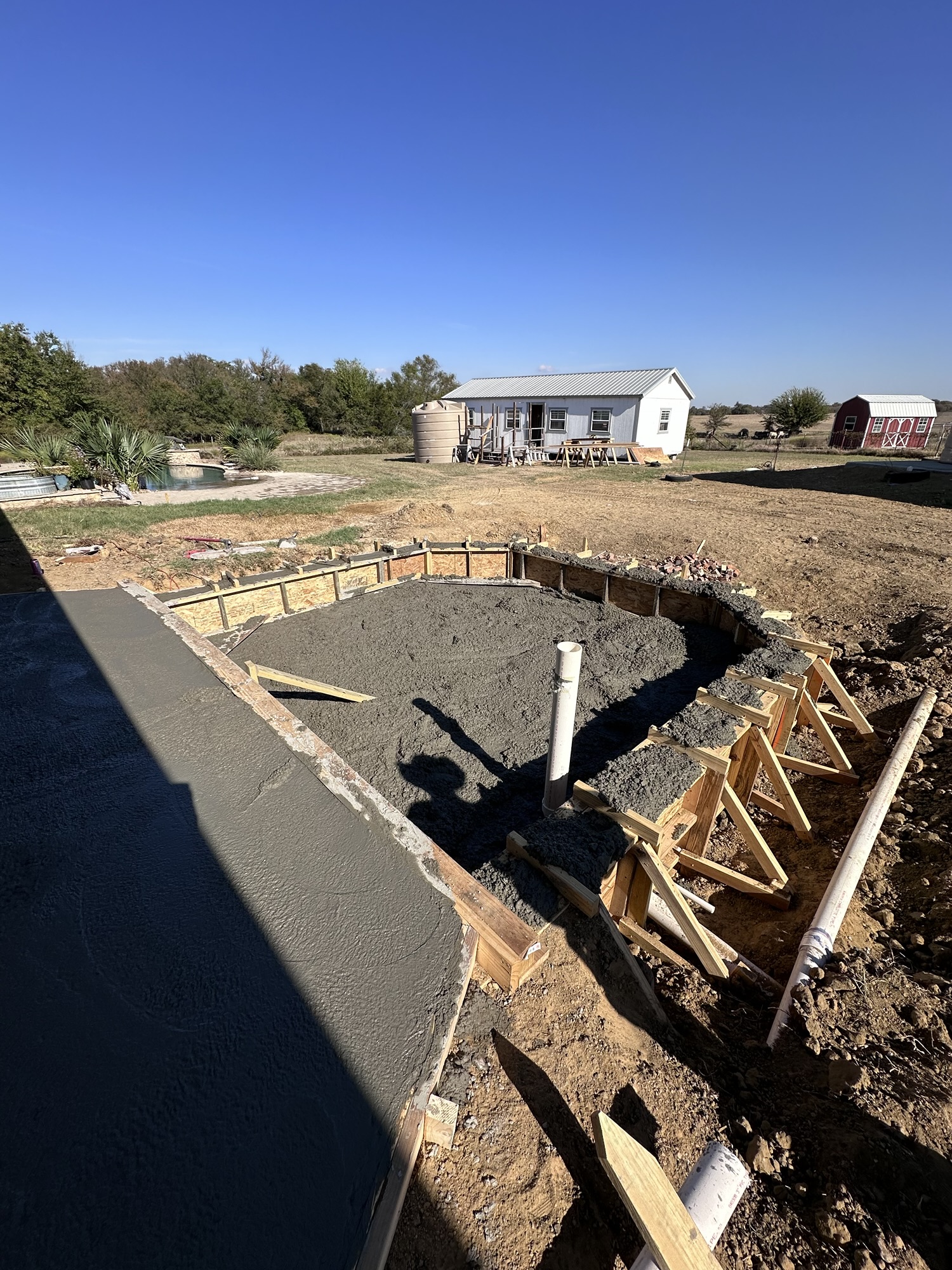
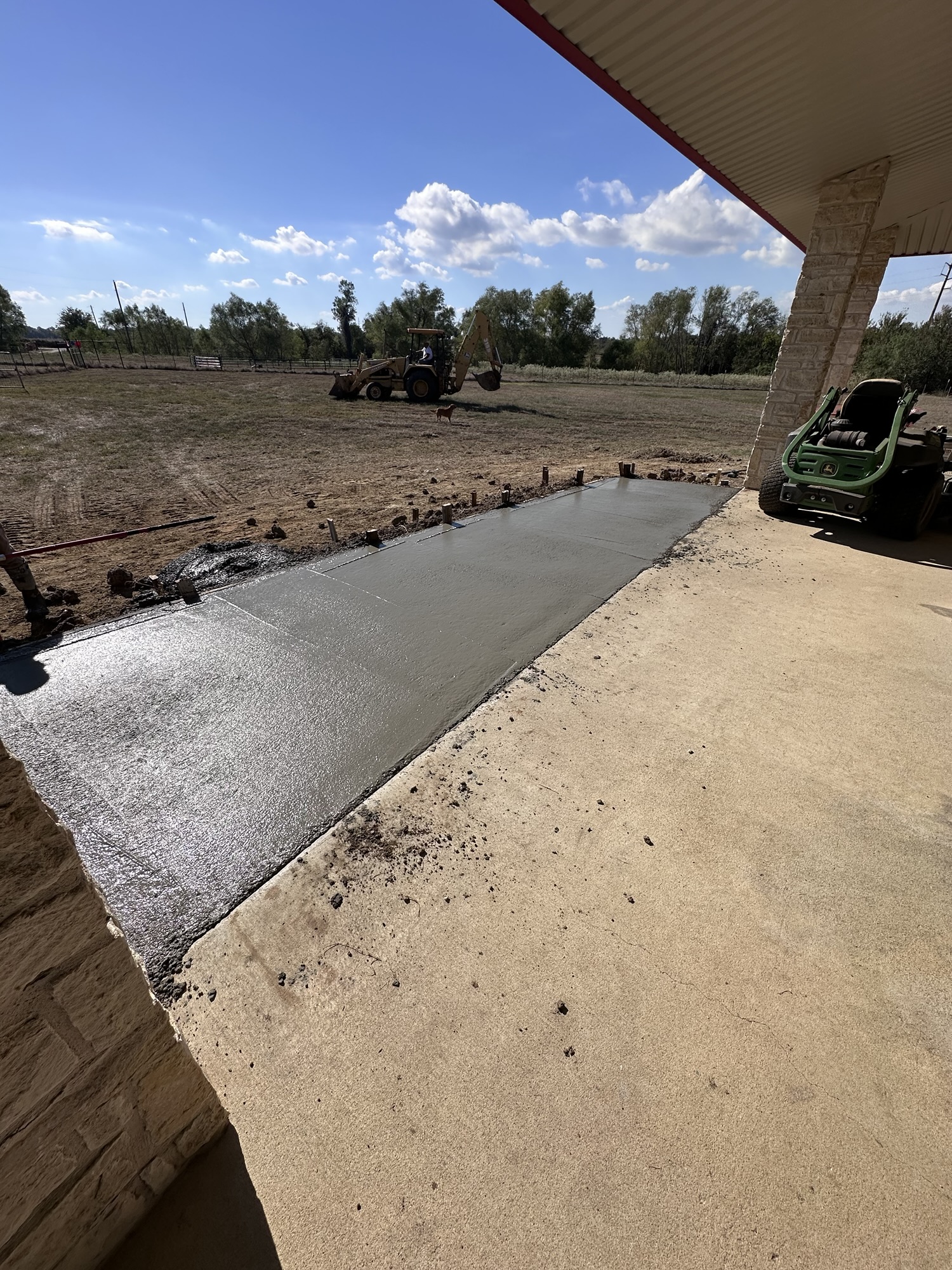
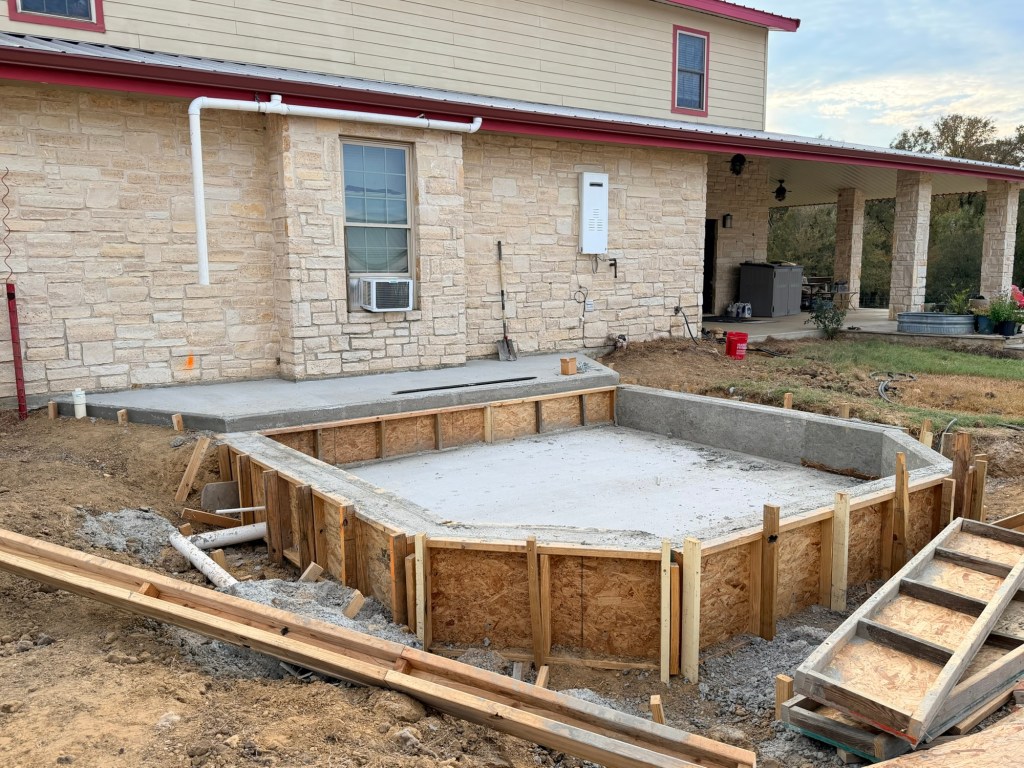
And now for concrete. I was a little bummed that I had to be in Waco when the long-awaited day of pouring the cement pad for the water storage tank finally arrived. But my family didn’t let me down, and my son and spouse kept me updated. They even sent a video.
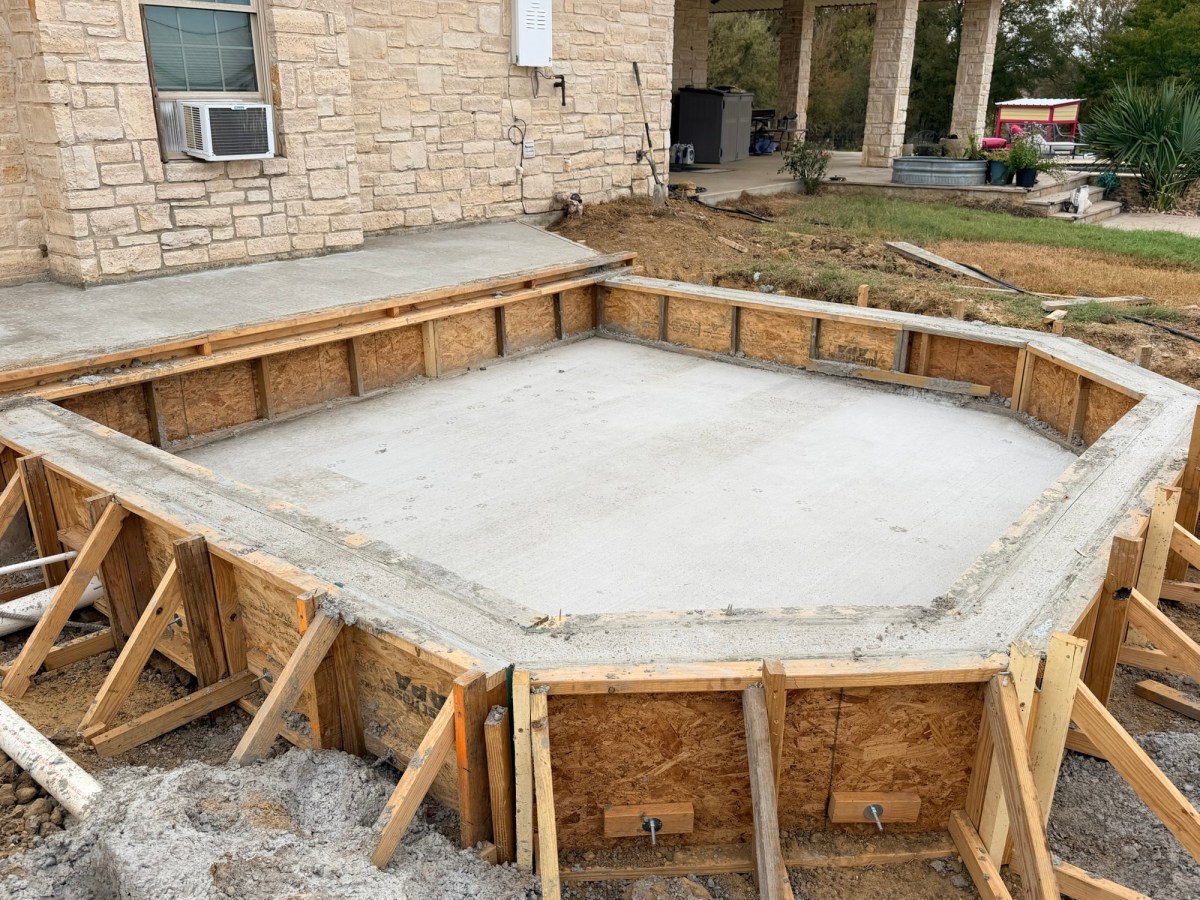
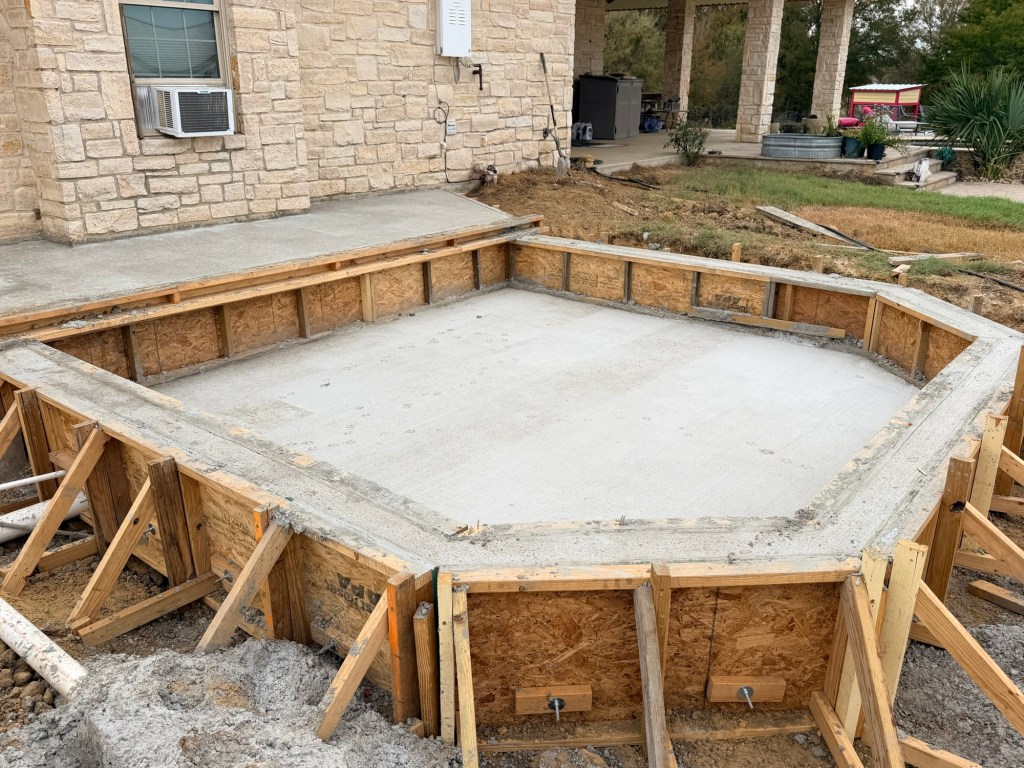
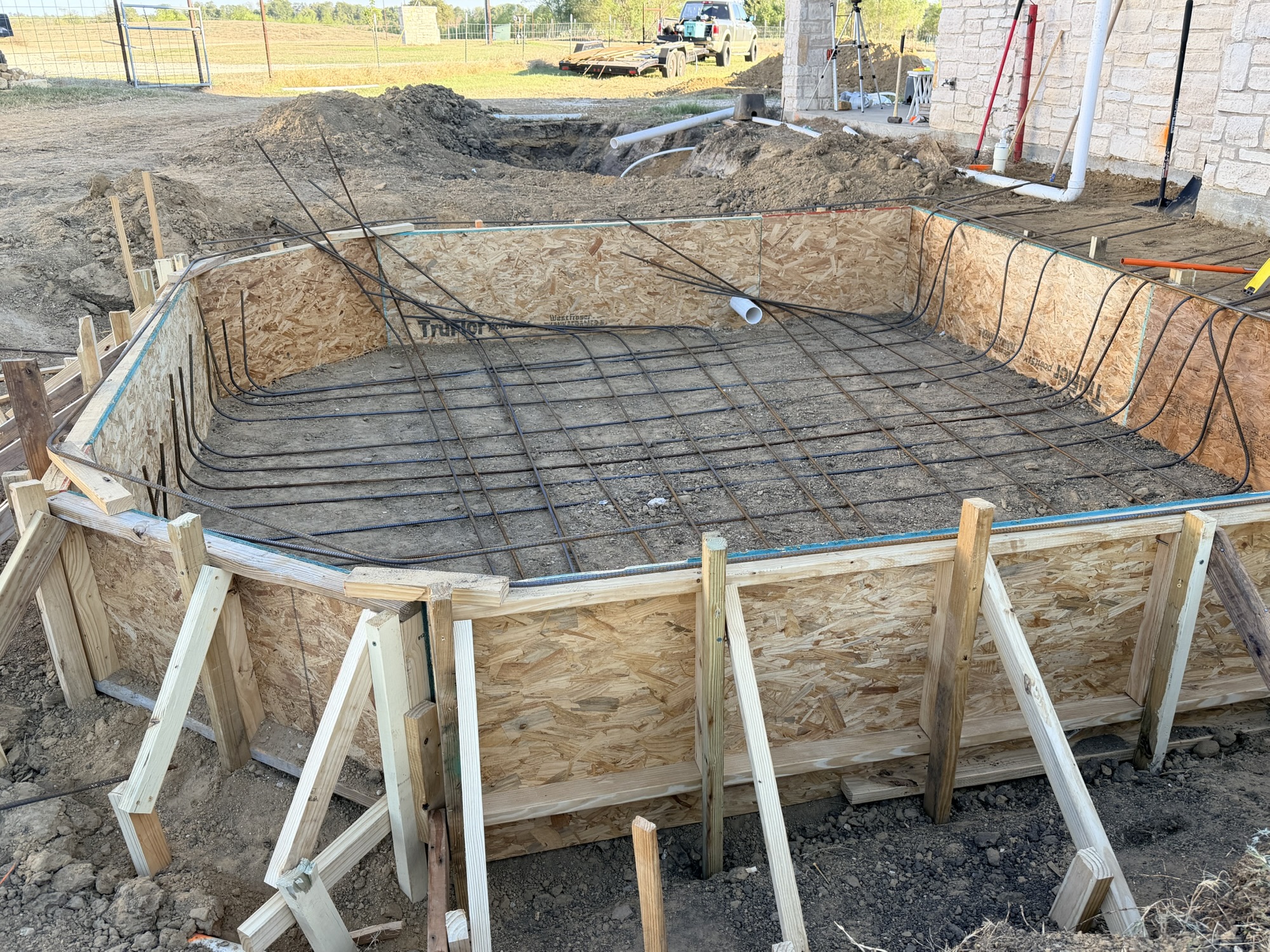
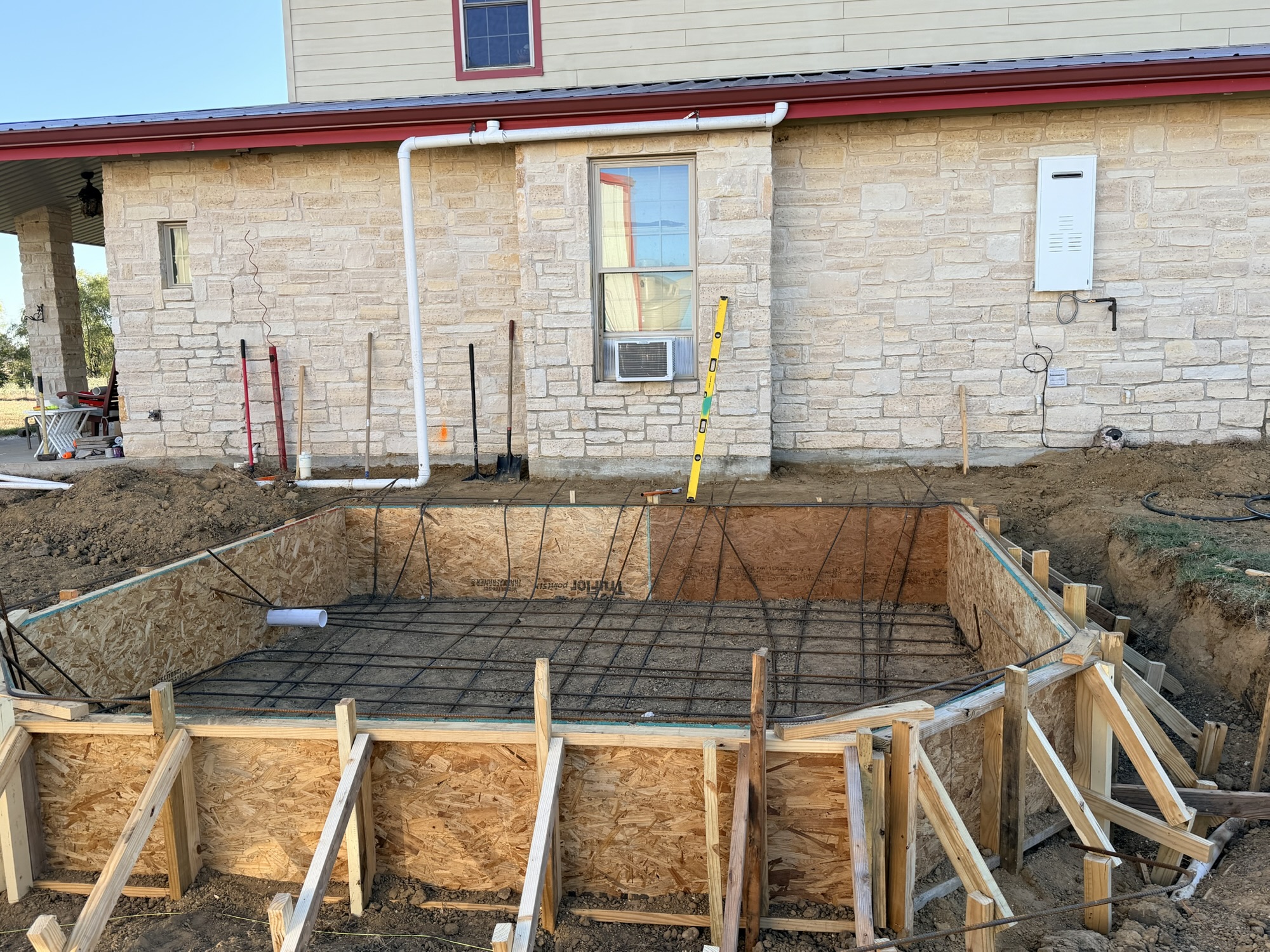
The pad is rather complex, because it has to be below grade to fit under the spouts coming off the roof. But our nephew is quite the engineering genius, so we have it in a depression with a raised lip that will capture any overflow and send it out toward the creek. It will work!
The big pour
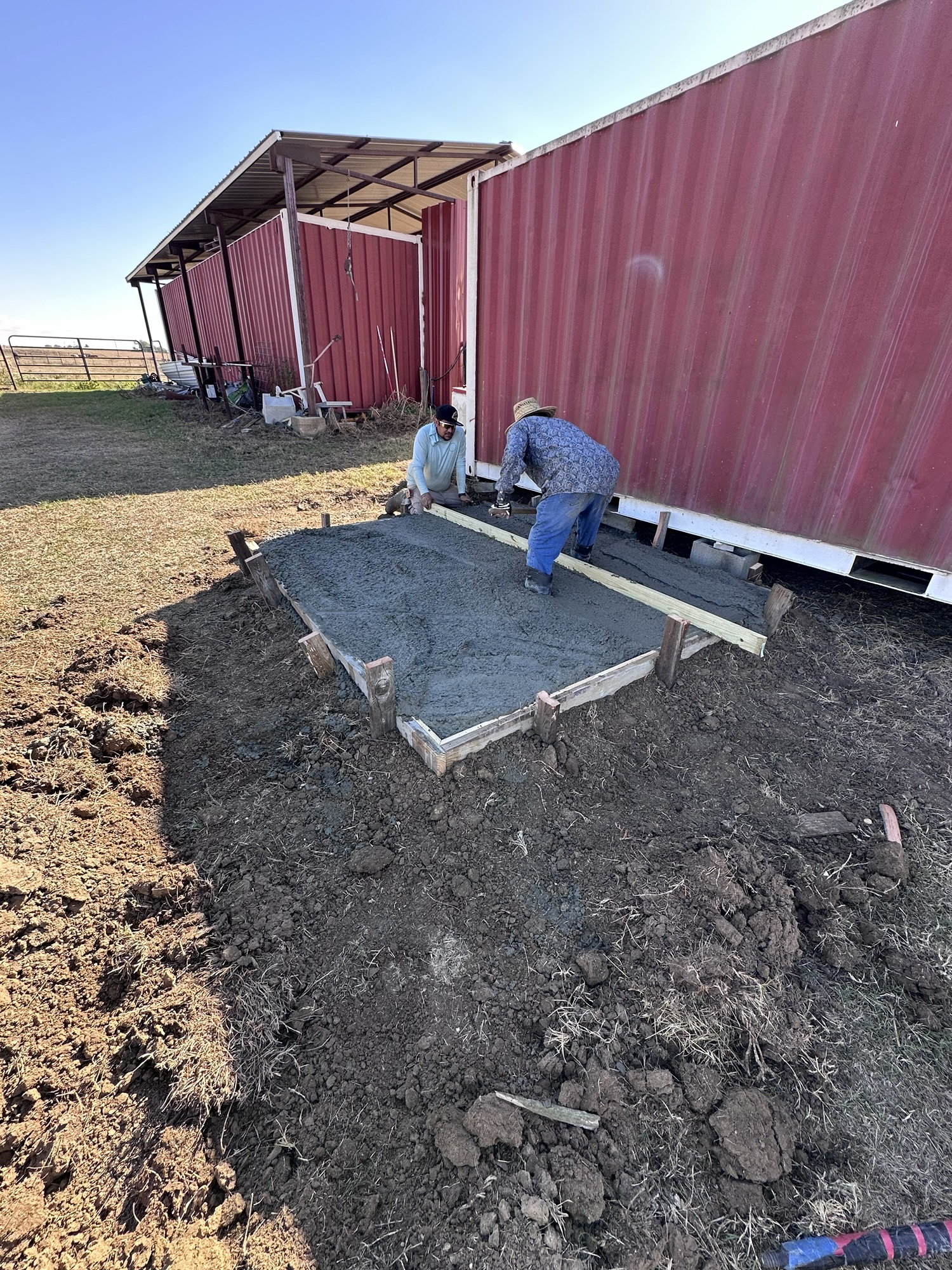
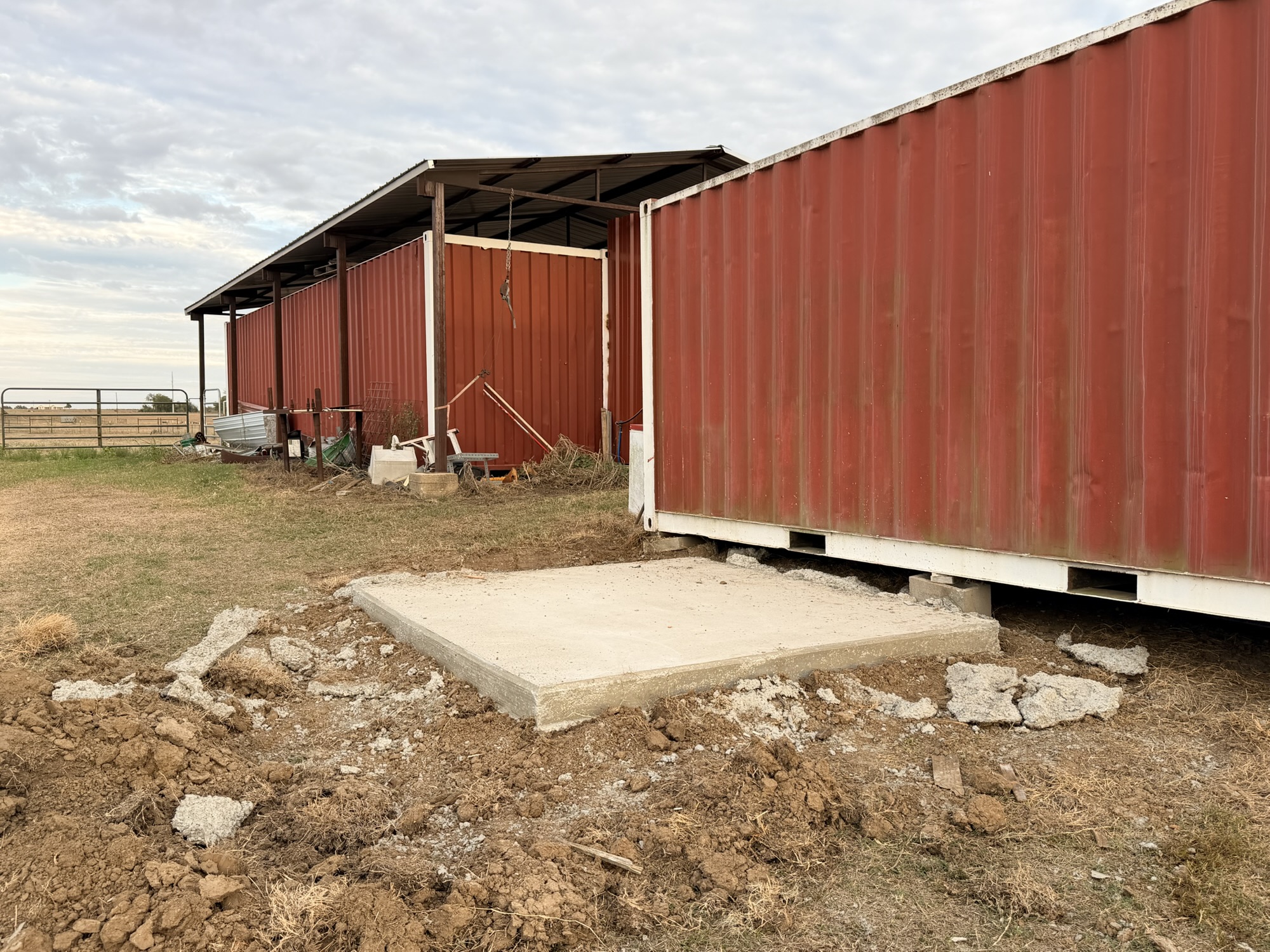
In addition to the pad, we now have a concrete pad that will be a horse maintenance station for washing, grooming, etc. The water spigot that’s awkwardly placed near a former fence will move over, and we will finally get a utility sink, if all goes to plan. We will see.
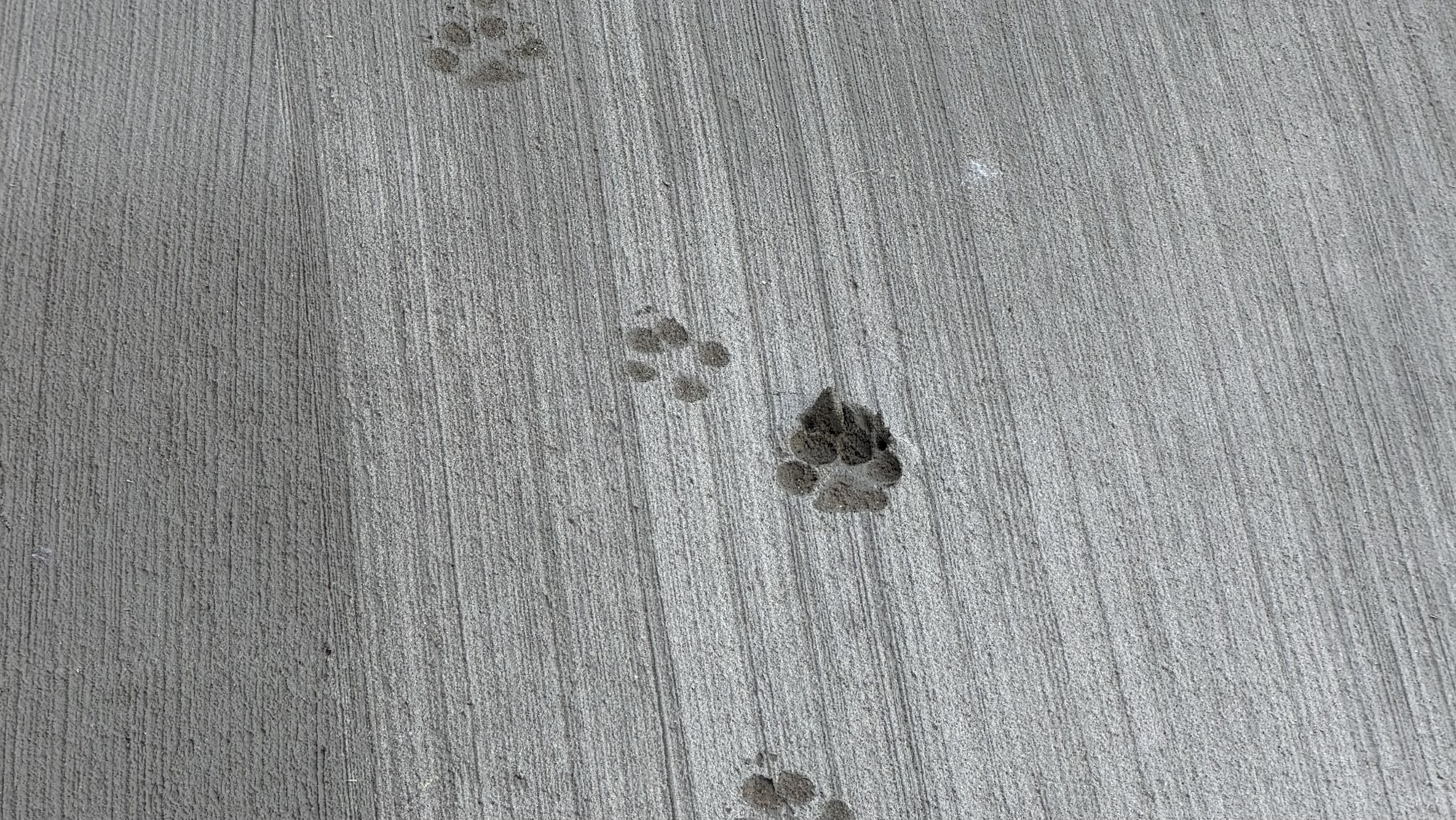
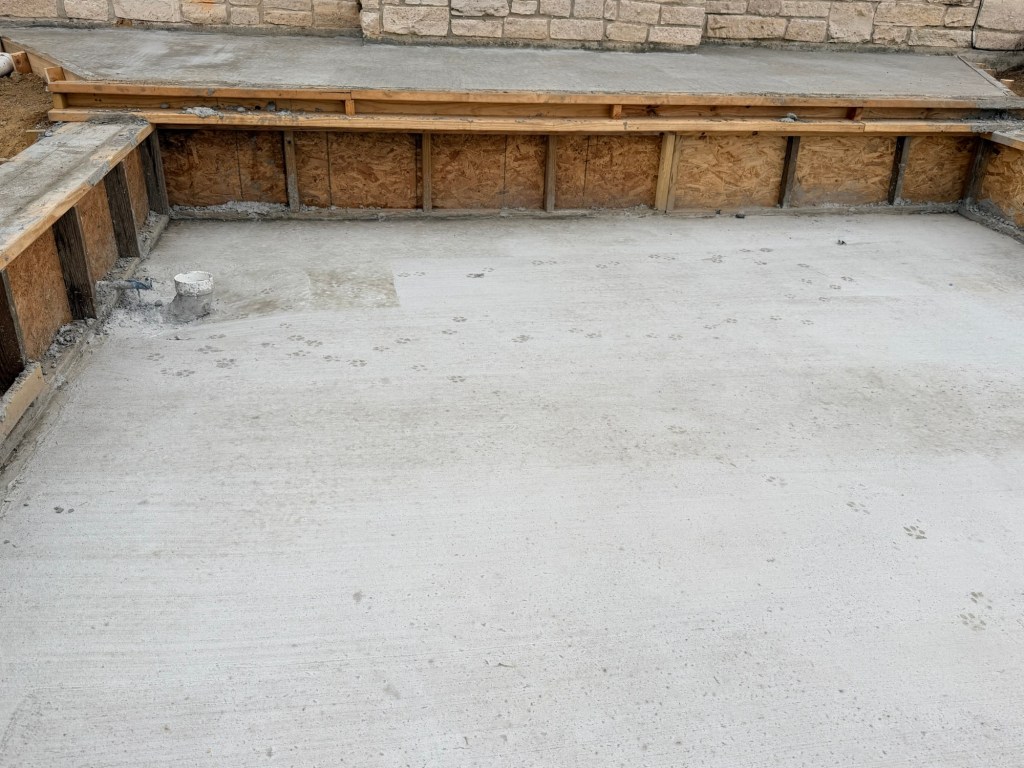
PouringTodayBeveled edgeDogs did sign the concrete
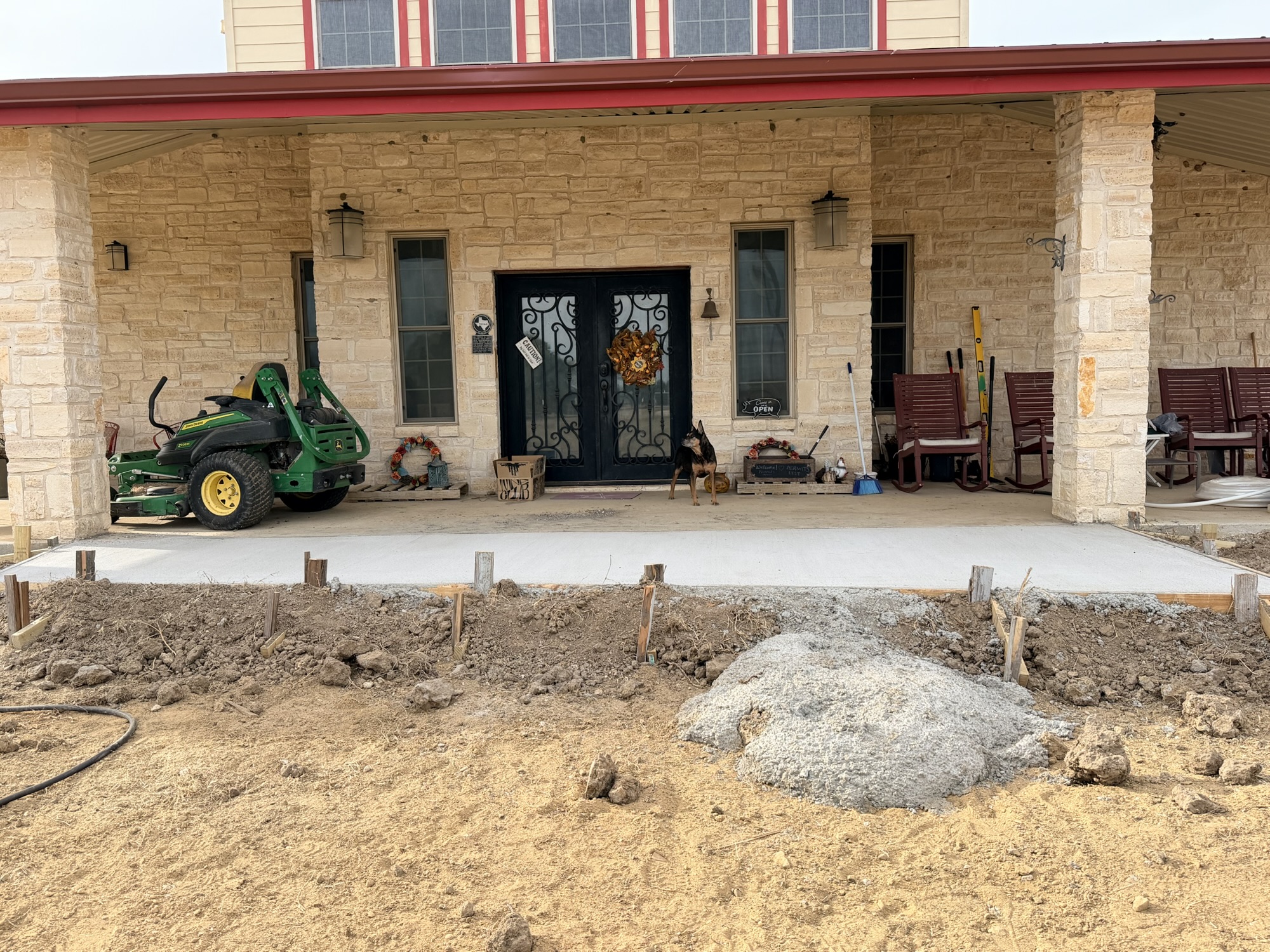
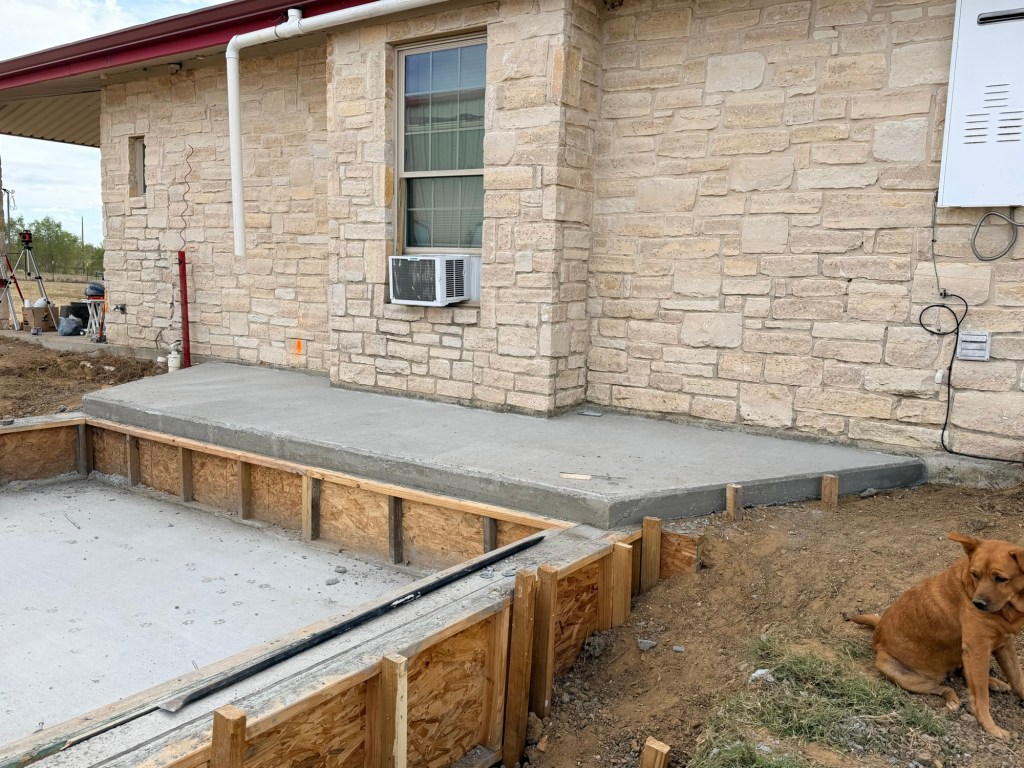
They had to get a bit of extra cement, so an addition was made to the front porch. It will eventually tie in to the second concrete project, walkways to the front porch and pool area. Fancy, I know.
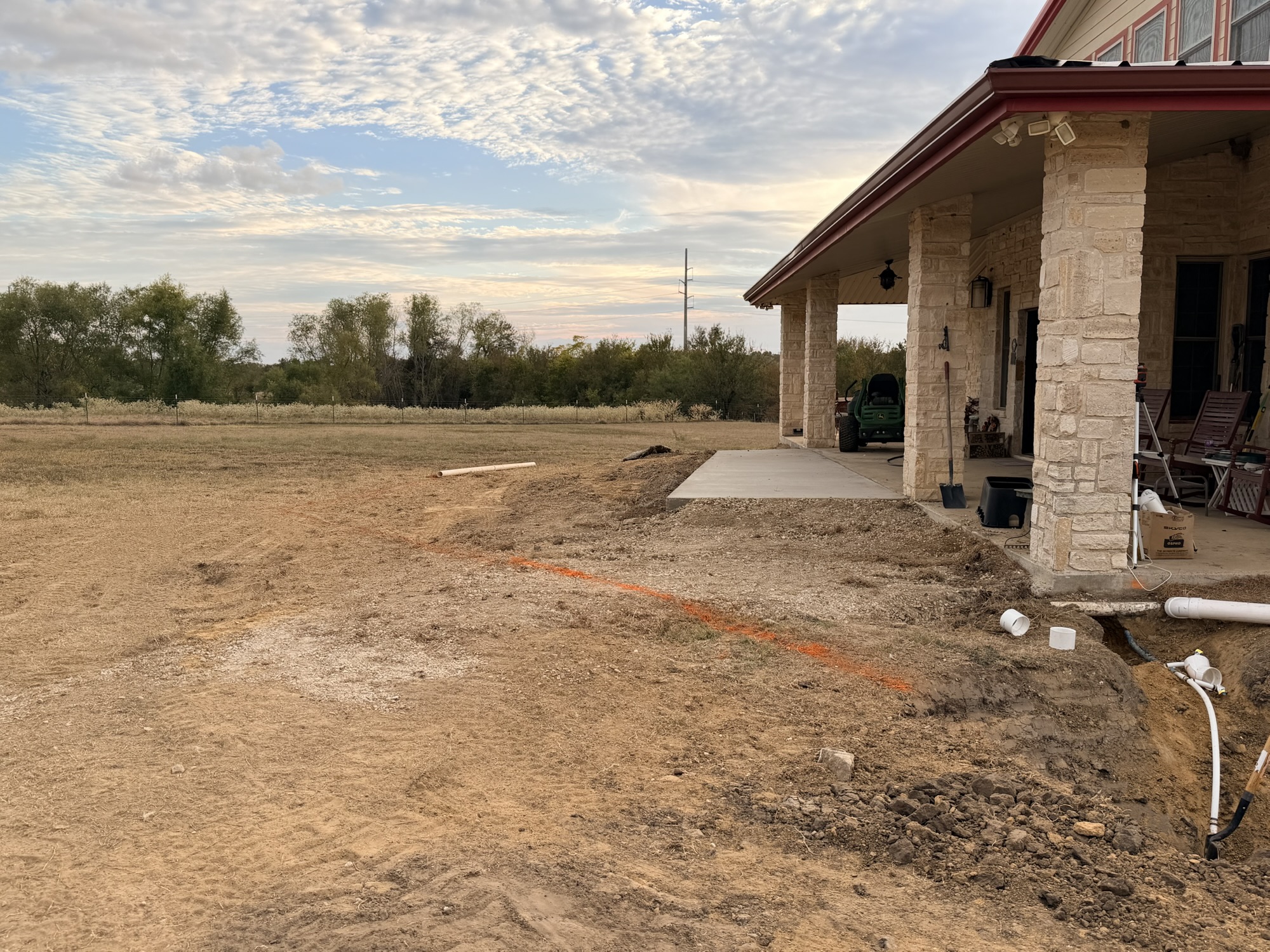
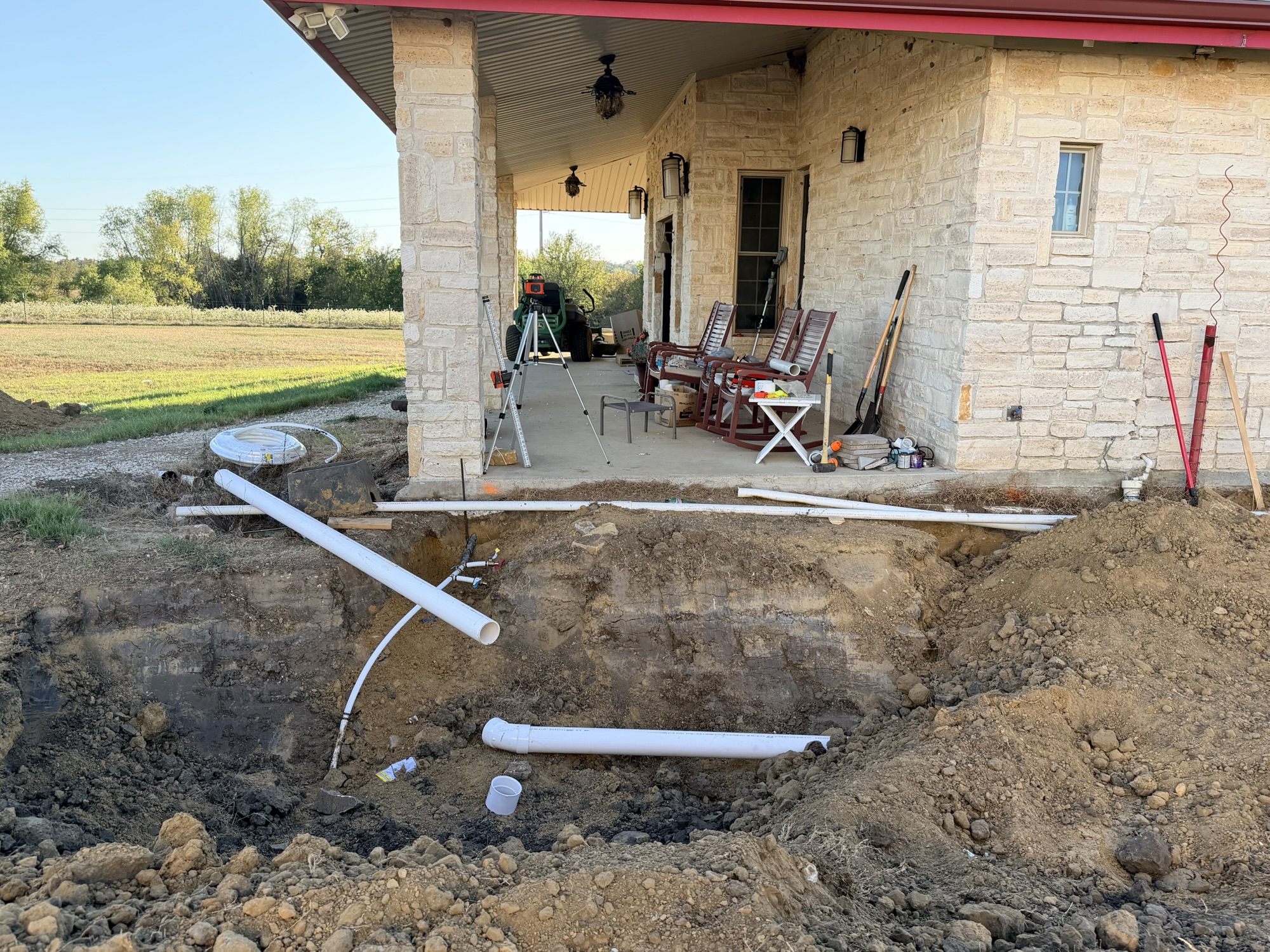
FreshWhen I got home. The blob is gone now. Forms removed and dirt smoothed. The orange lines are where the drain pipe will run, to the low spot in the front of the house.
Today the work of removing the forms for all the pads began. According to my son, that’s even harder than building them. Besides that, some of the supports were screwed in, and a few are now encased in concrete. Of course they can remove them, but ugh.
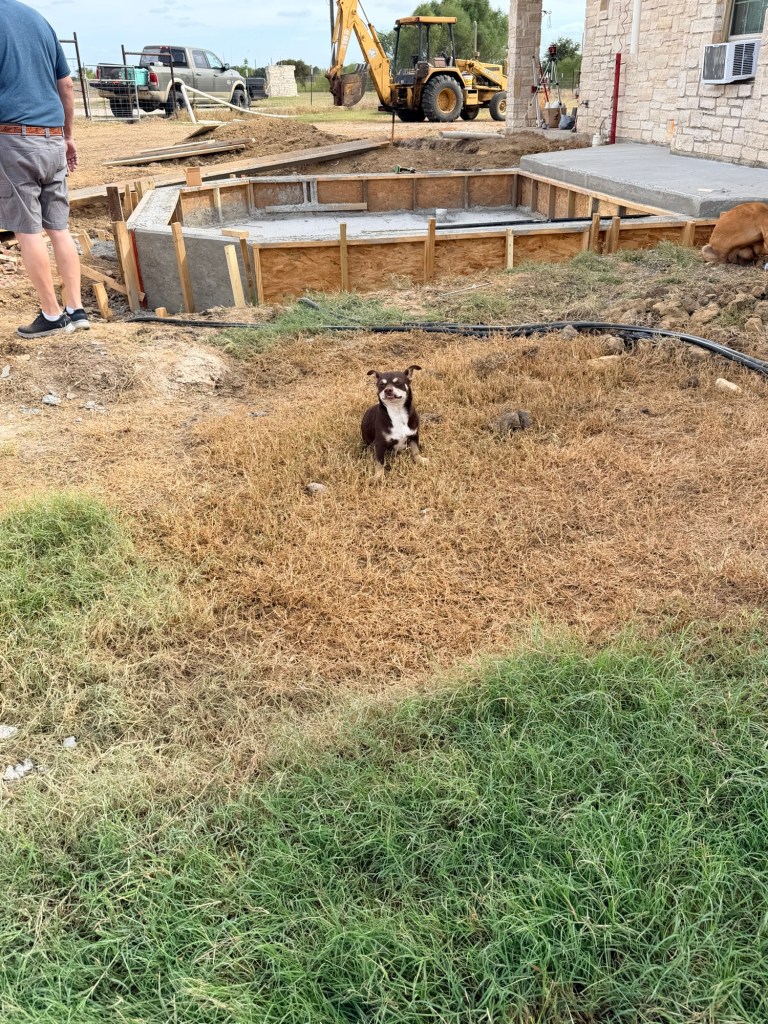
Why no, I don’t know how the inner forms get removed, or if. Drain pipe will be made level with the concrete Ready for equipment Supervision Look! Inner layer is gone on the far side!Beveled edge
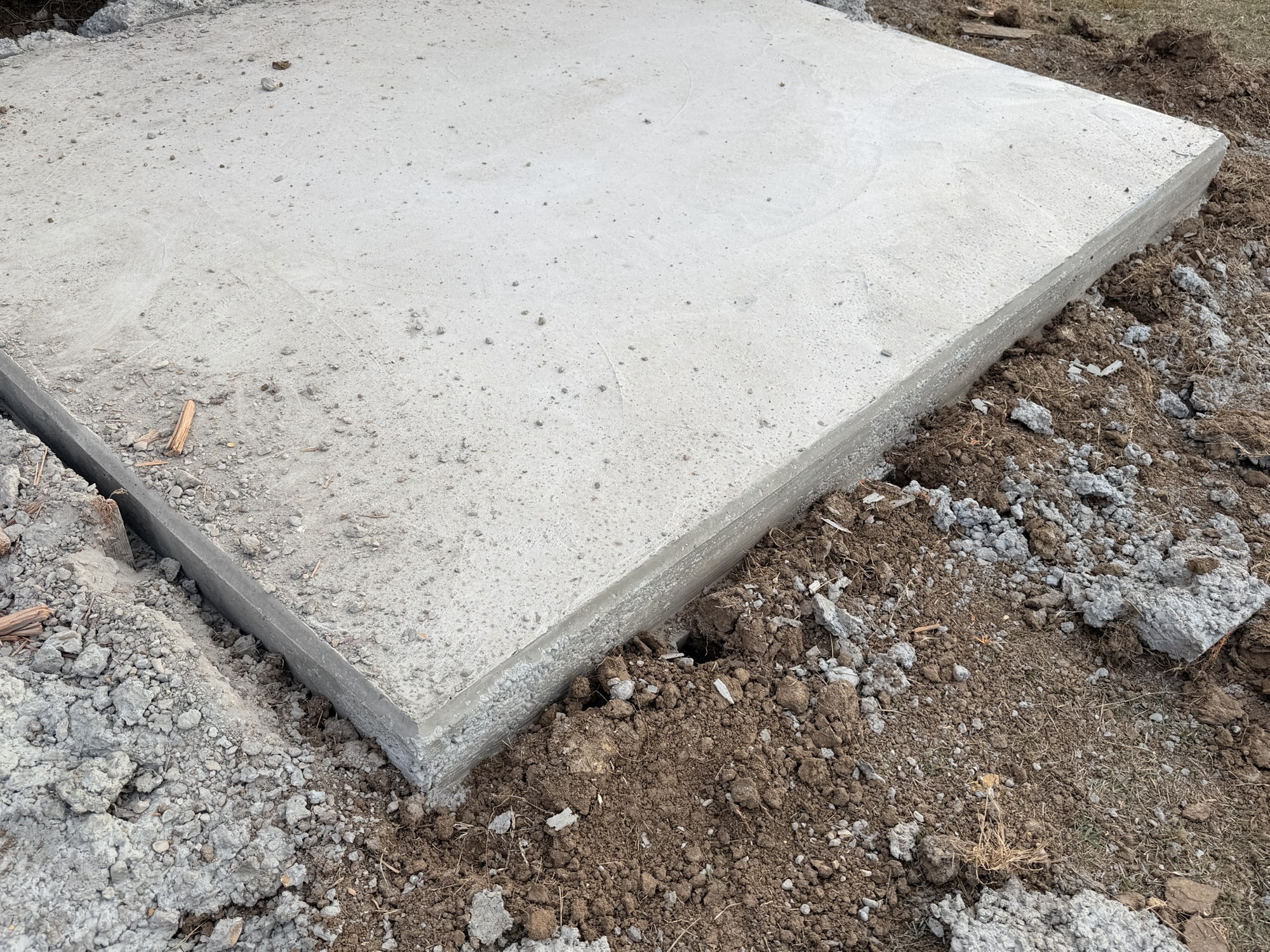
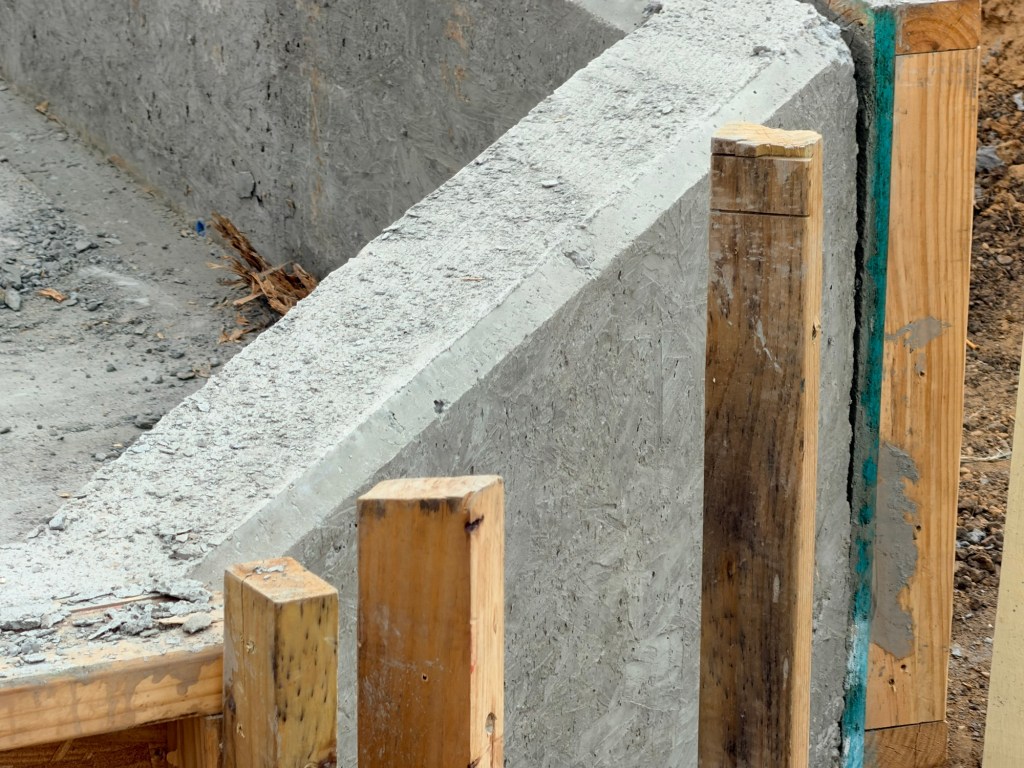
I like how the edges are getting beveled on the parts that stick up. The horse area is also beveled for safety.
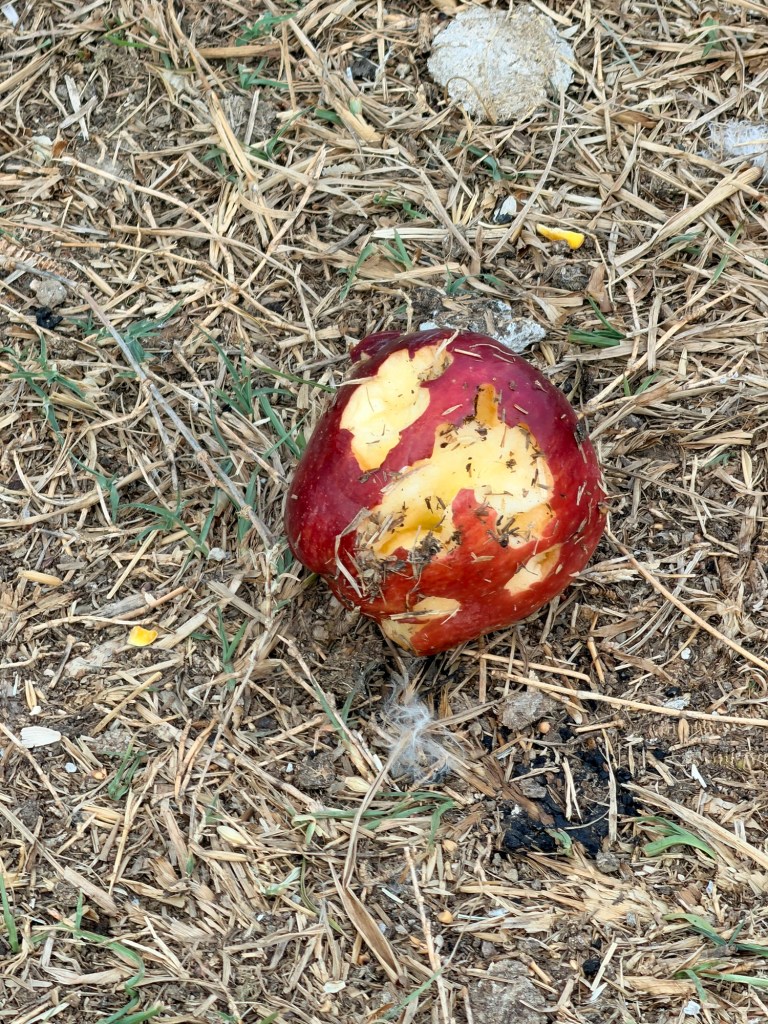
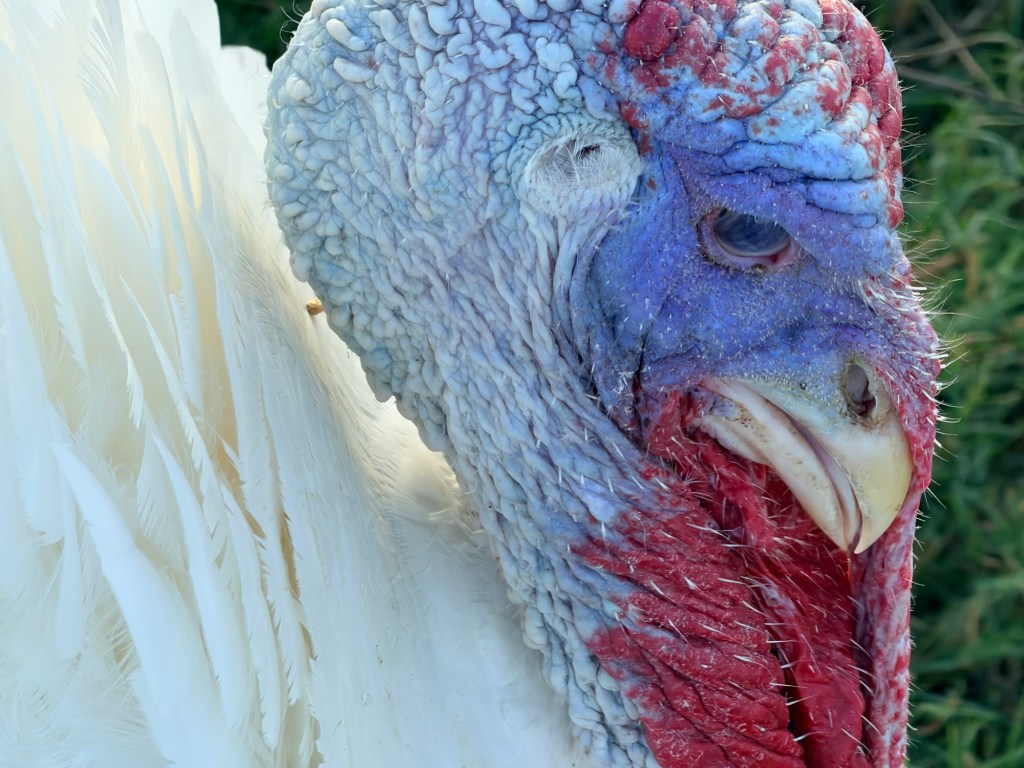
Note from the turkeys: we like apples.
There’s a lot of cleanup and dirt redistribution left to do, but the end is in sight! The pipes and other equipment needed to get water flowing into the tanks is next, plus pumps, filters, and purification equipment. This is a big project with so few workers. Thank goodness I have a talented family and they have a helper who is learning.
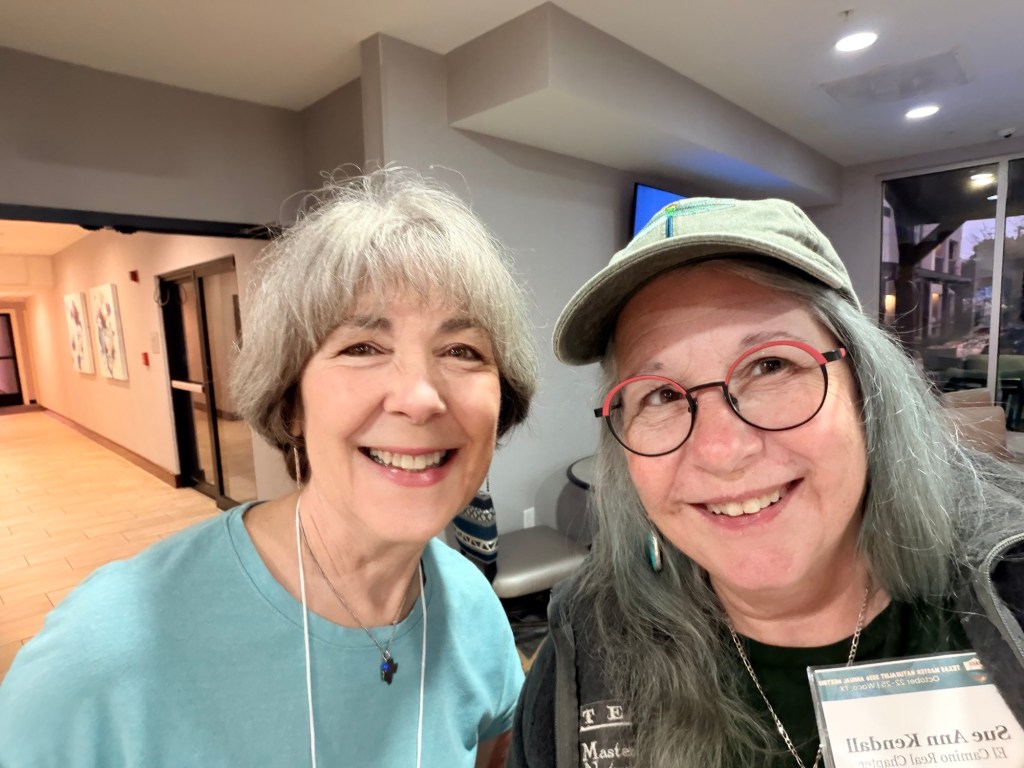
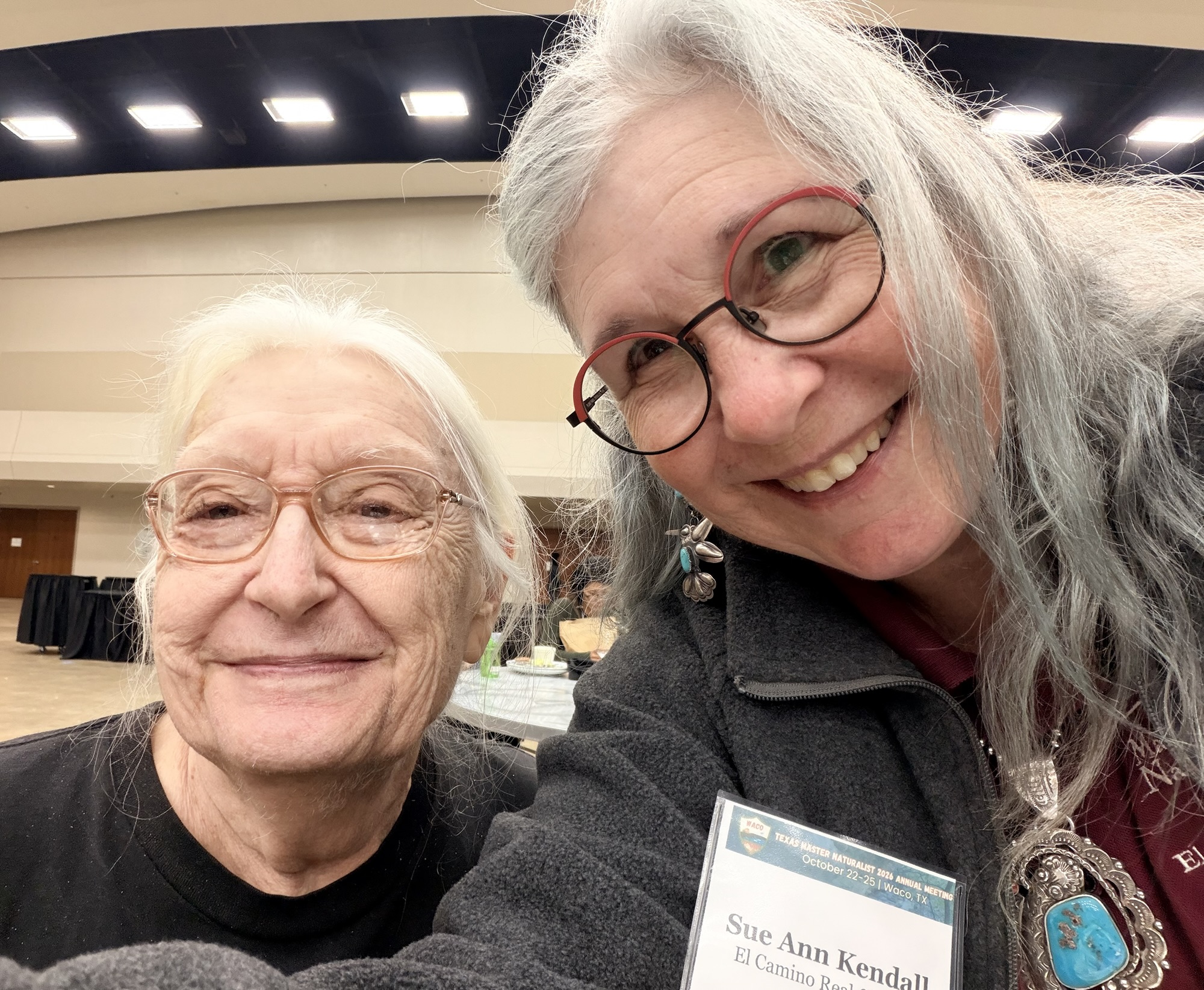
Well, this title works in two ways, both of which are good news for me. First, I got to chat with a colleague from when I first moved to Texas and was volunteering with La Leche League. Jean was a fellow Leader I enjoyed working with and getting to know. We are still Facebook friends, but I hadn’t realized she’d become a Master Naturalist until I saw her name last night as achieving a milestone. It was great to find her this morning and get to catch up briefly. She’s still so gracious and lovely.
And I still have crazy eyes.
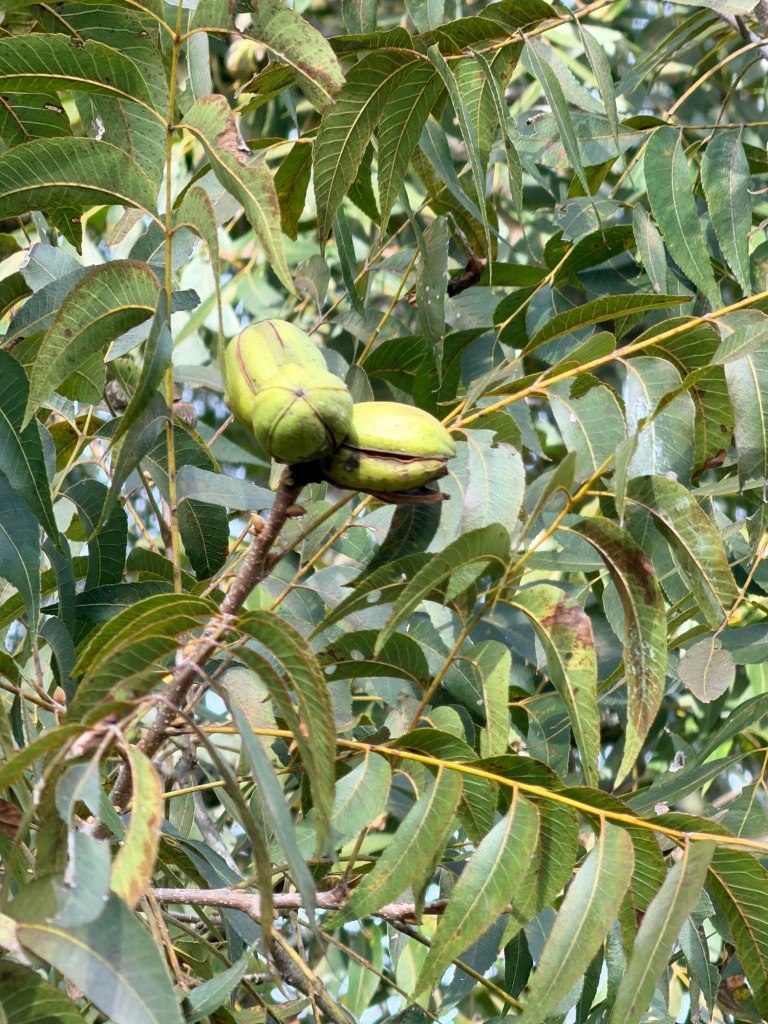
The only other highlight of the final morning of the Master Naturalist annual meeting was learning that our recertification pin will be a pecan tree. Everyone seemed fine with that choice.
The state tree of Texas
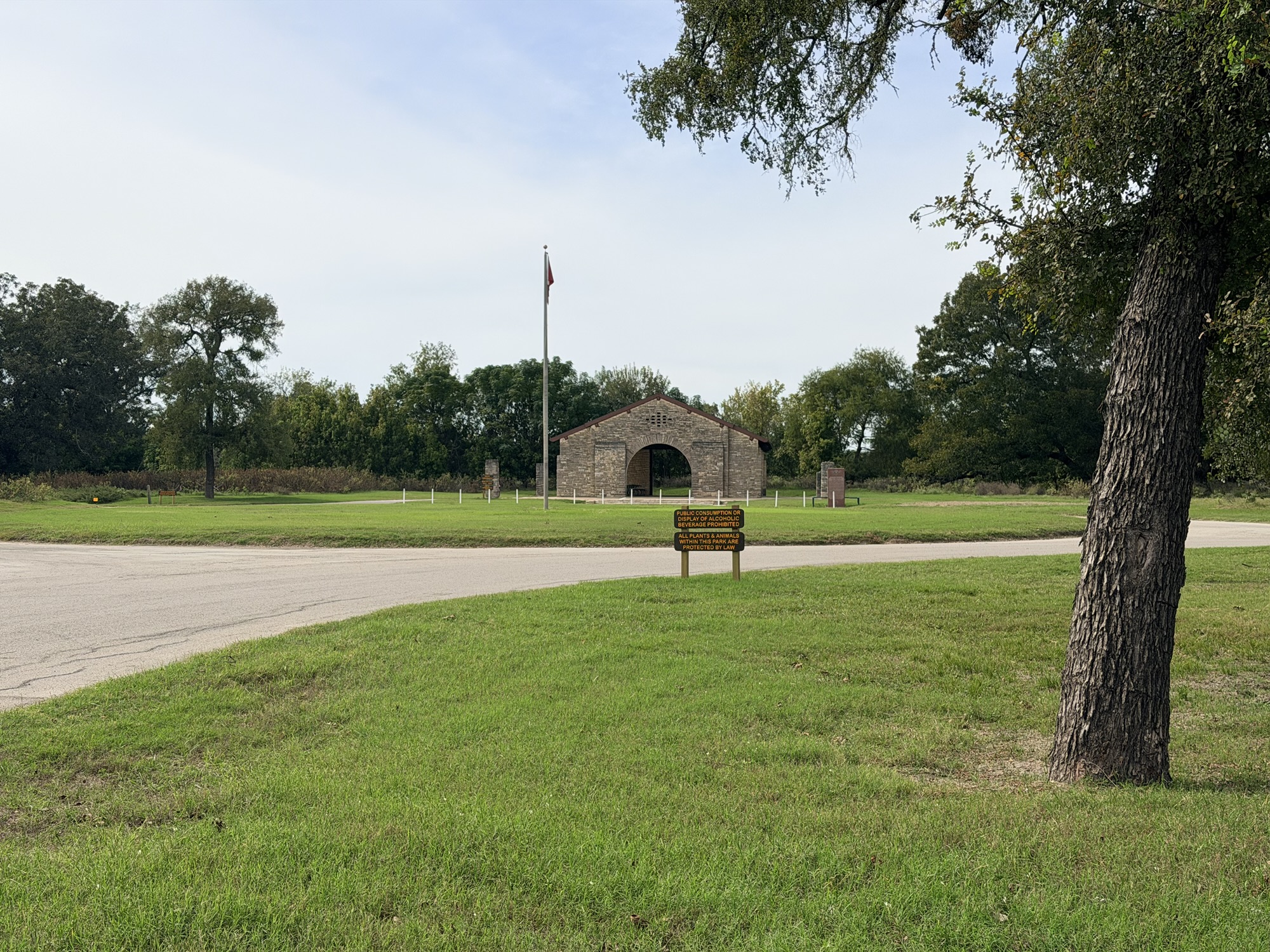
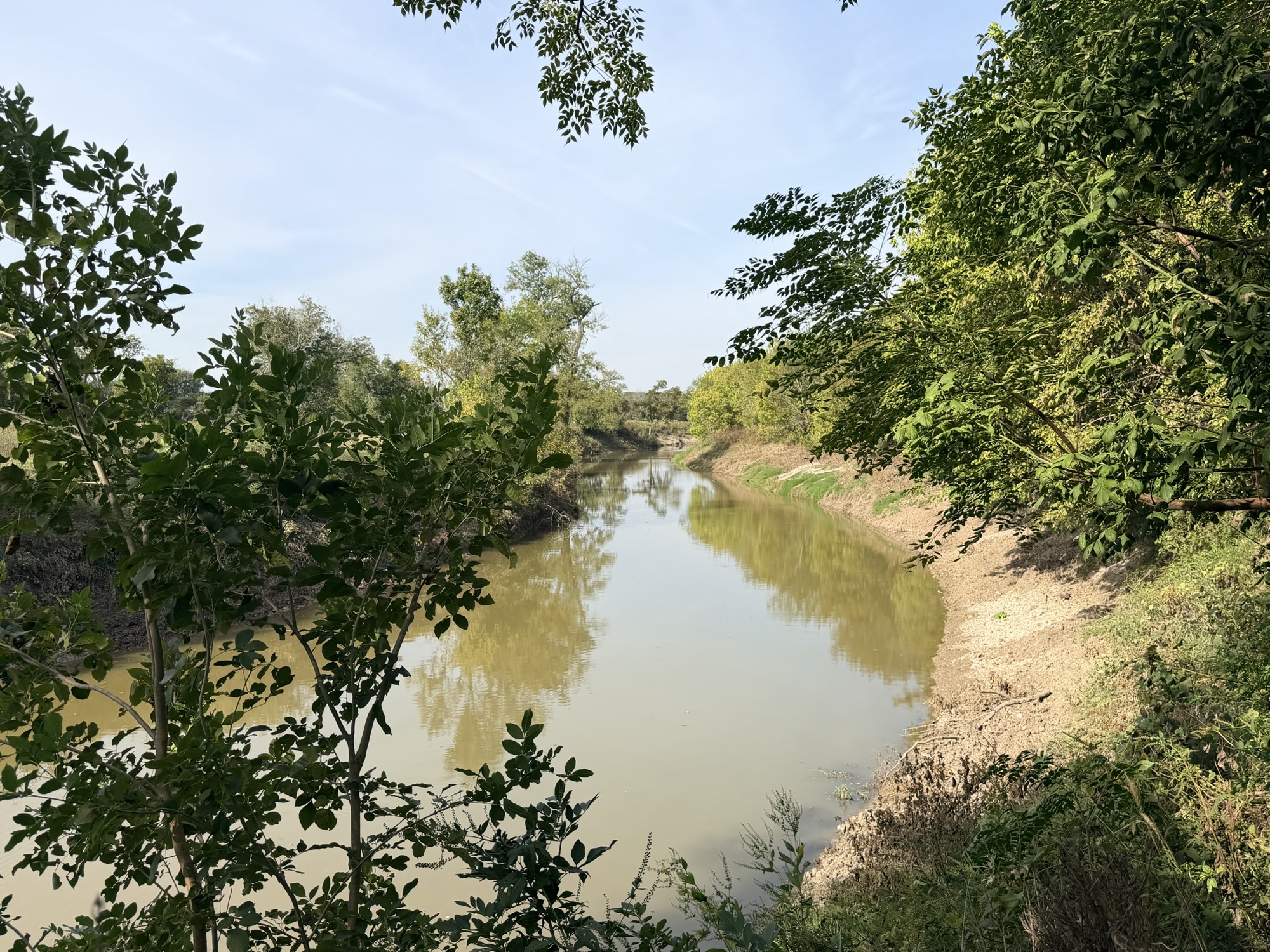
After saying goodbye to everyone, I drove over to Mother Neff State Park for the final field trip. This park is another old friend, which I’ve visited for Master Naturalist trips and to go camping. What makes it new is that over ten years after a major flood, the lower parts of the park have reopened. I’d never seen all that area before!
This is the old entrance. They’ve moved the entrance and camping to higher ground.
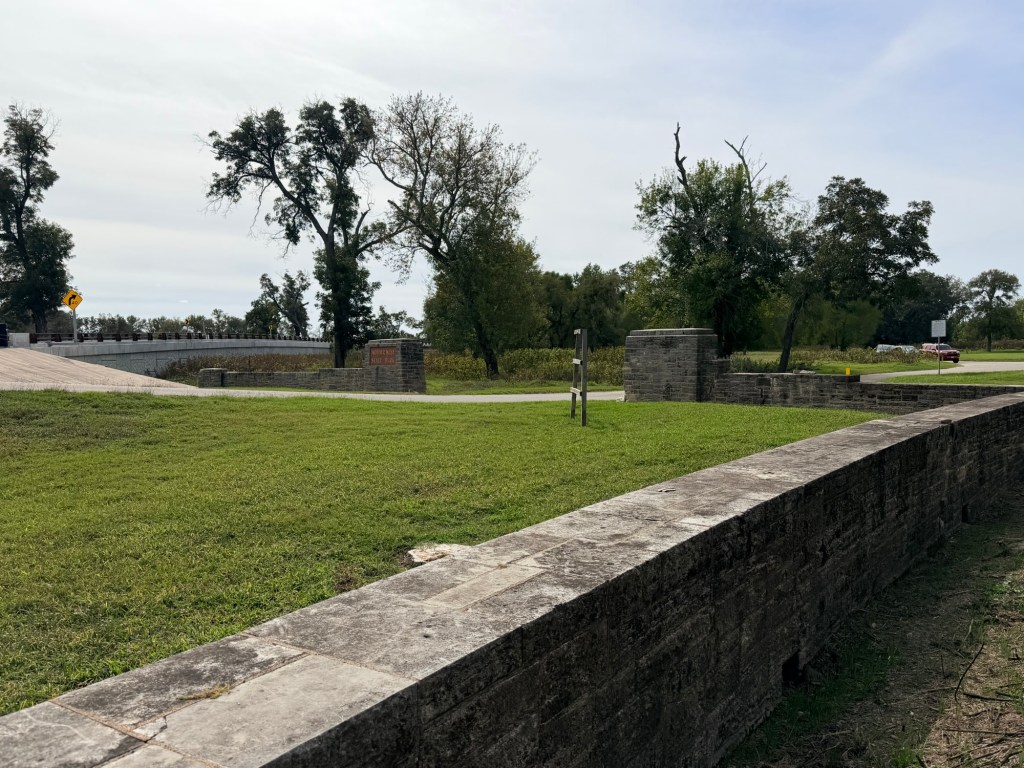
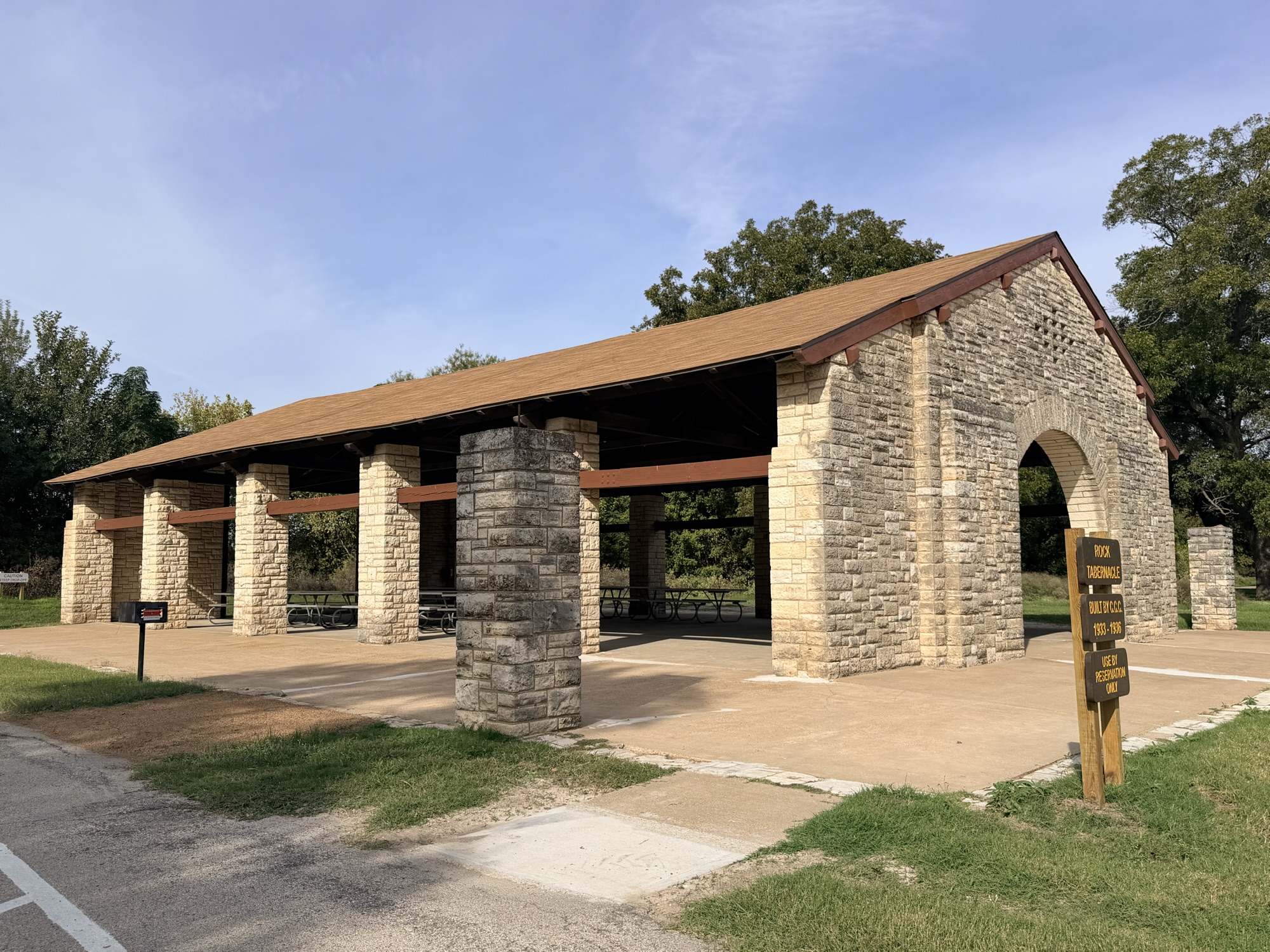
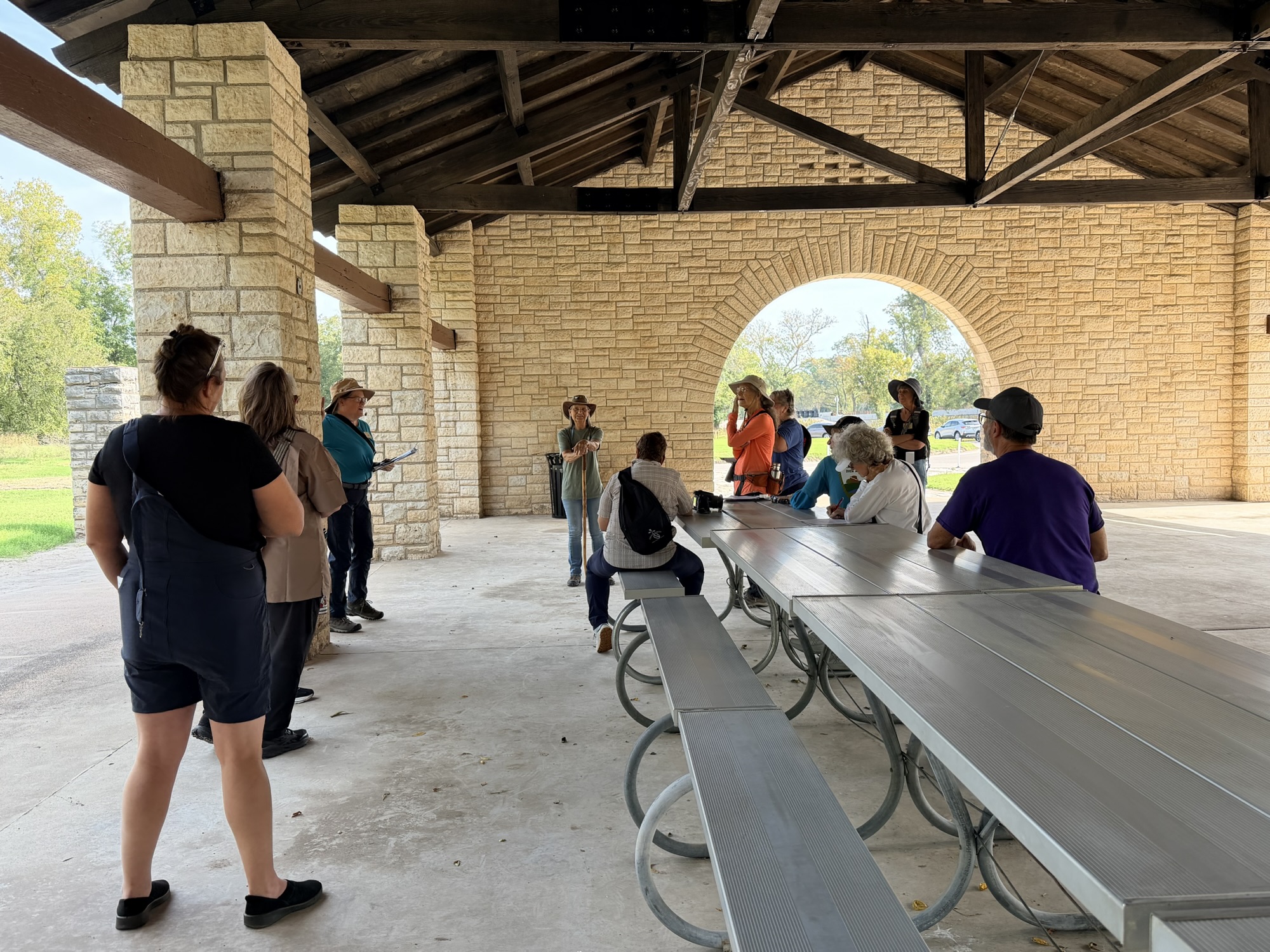
The old buildings held up through the flooding very well. In face, the Rock Chapel, where we met, looks brand-new after being power washed.
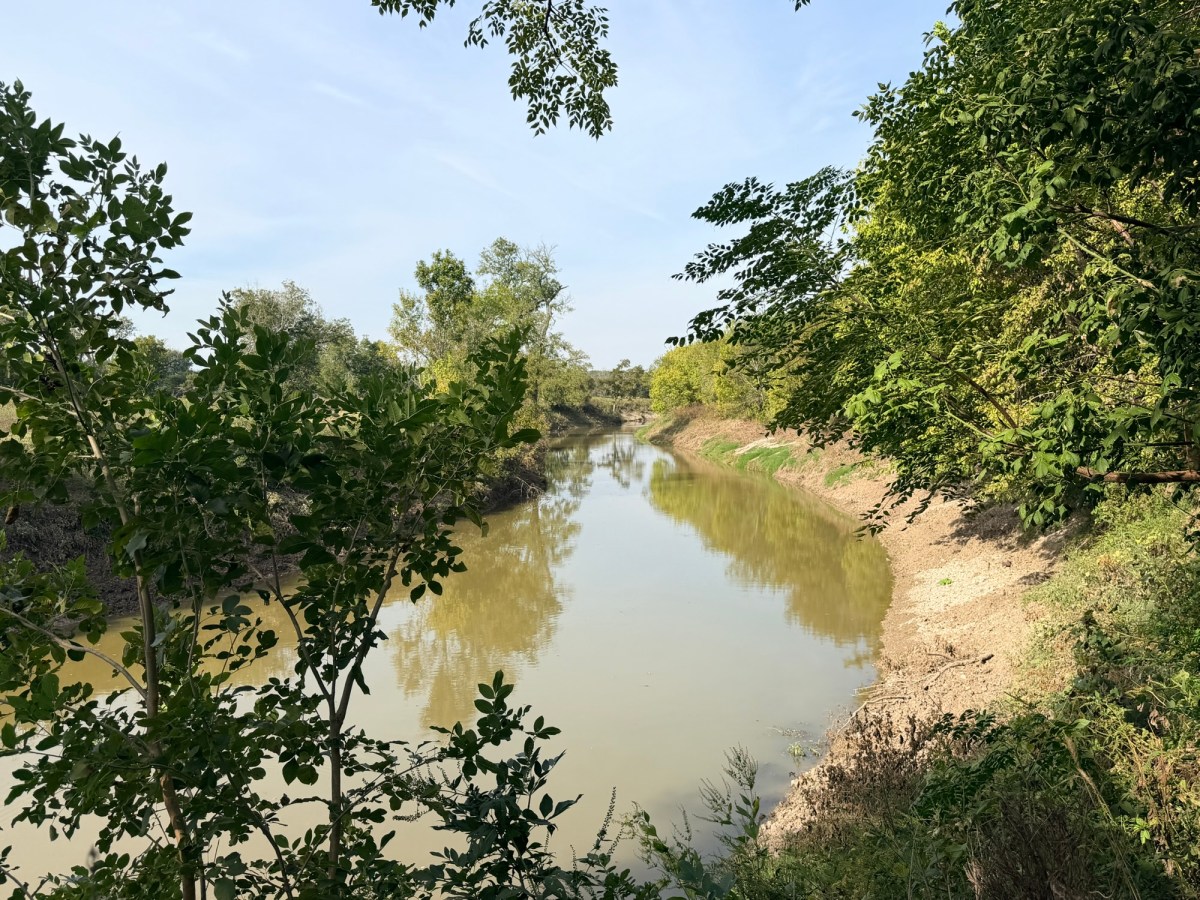
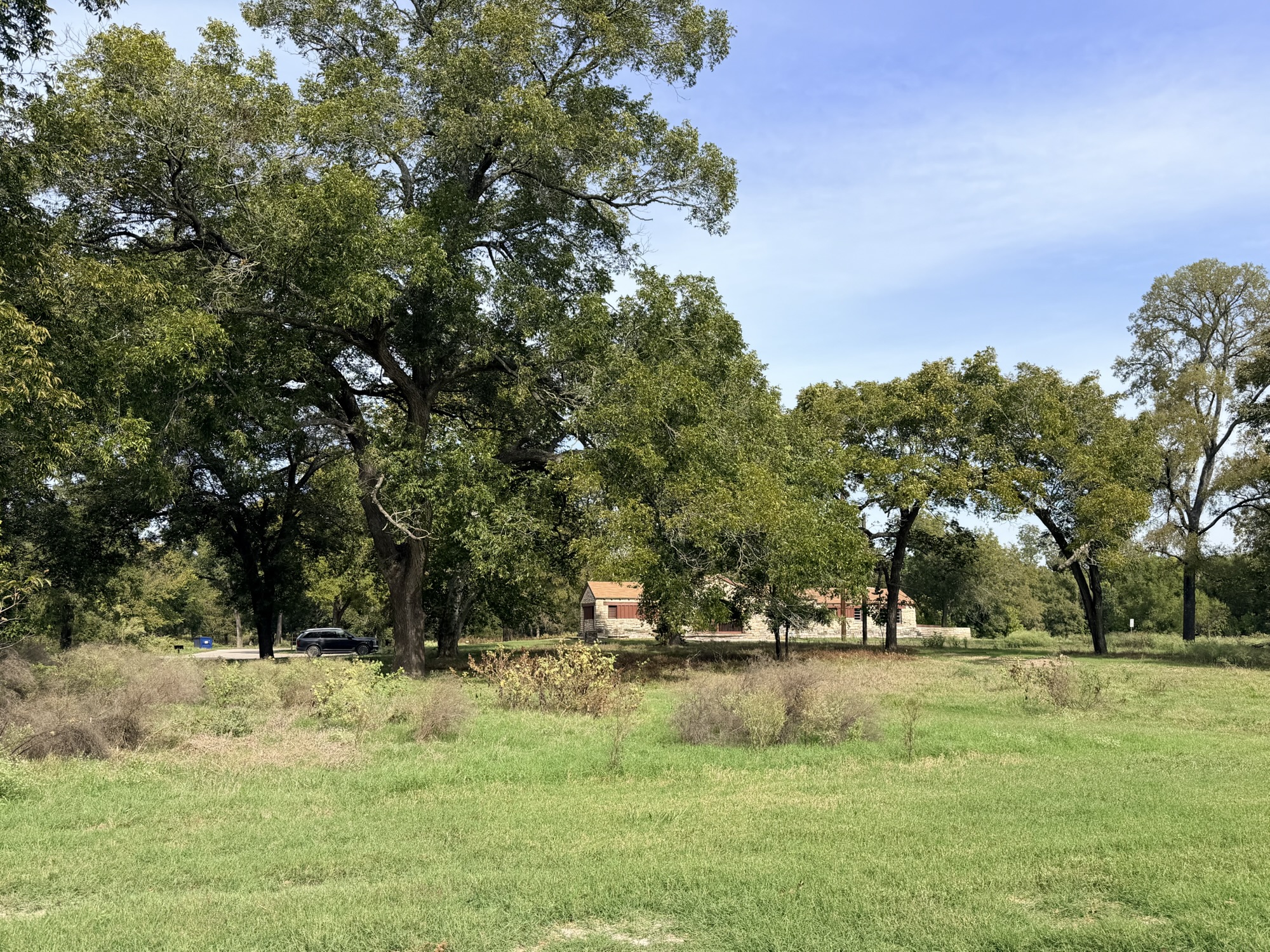
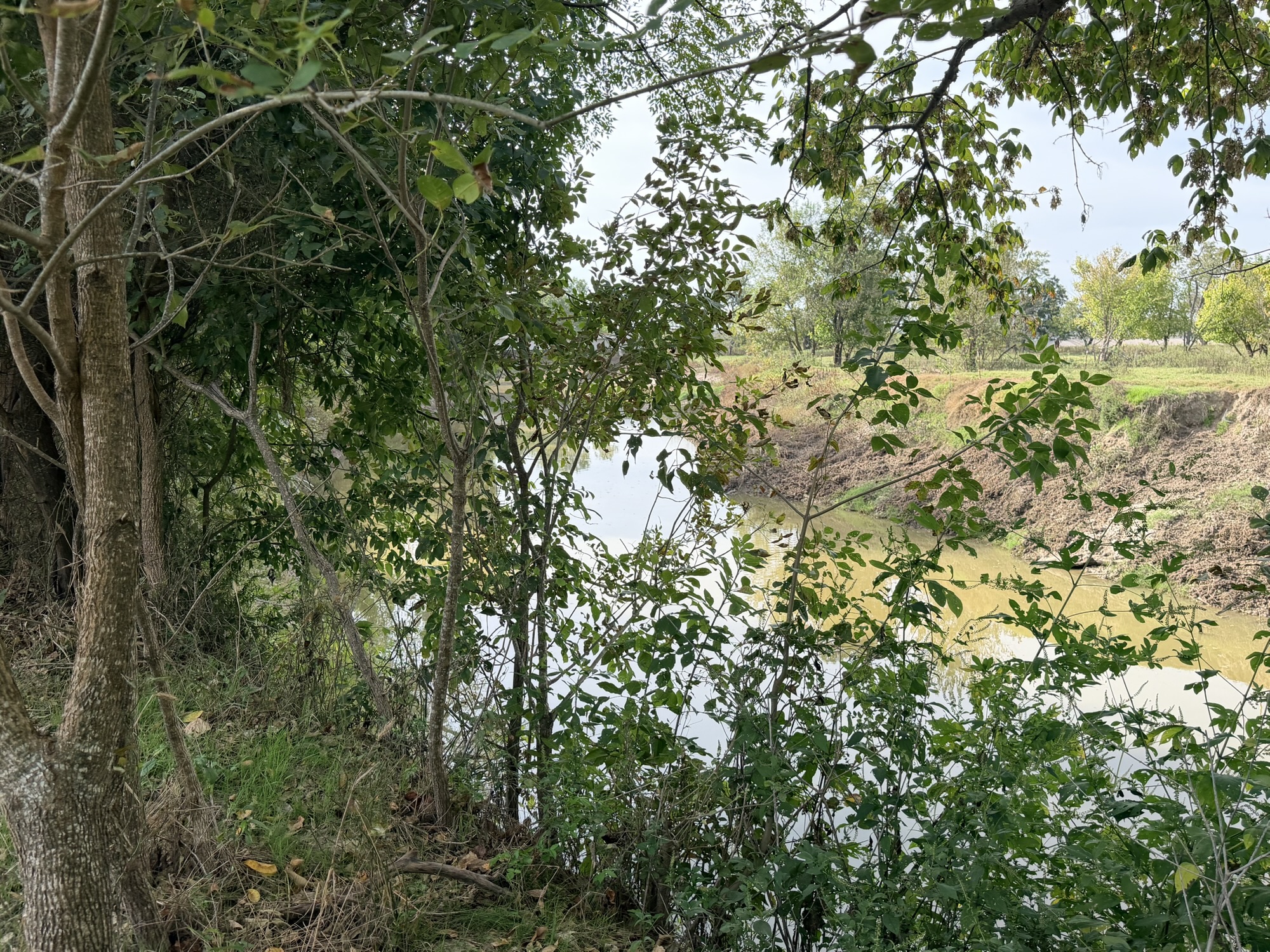
The settingThe outer columns were not cleaned Inside looks greatThis other building was also built by the CCC (Civilian Conservation Corps)The Leon RiverThe flooding source
I learned that so much silt was deposited that the mound the chapel building was constructed on is so longer there. The silt deposited by the flooding made it lower than ground level.
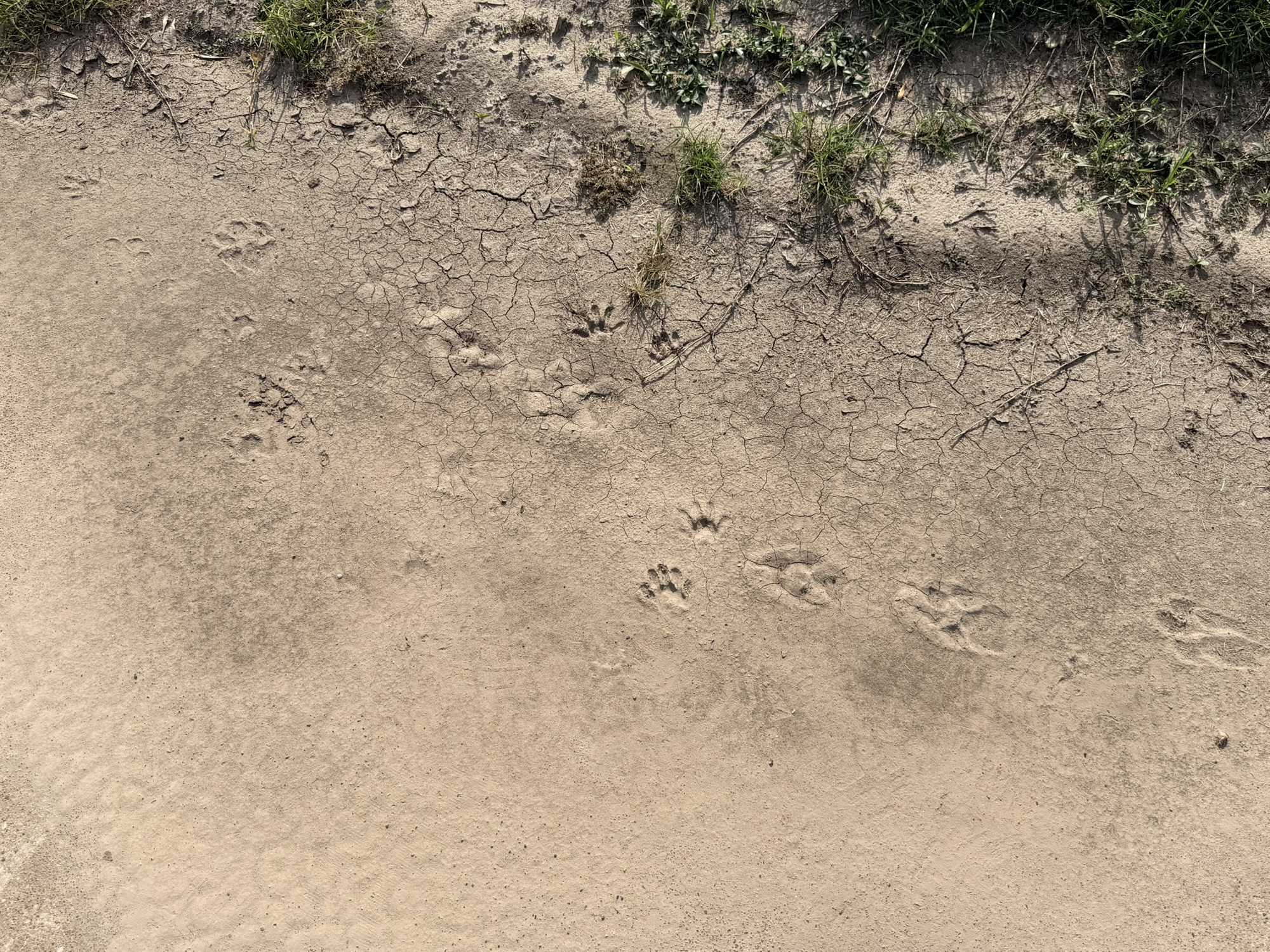
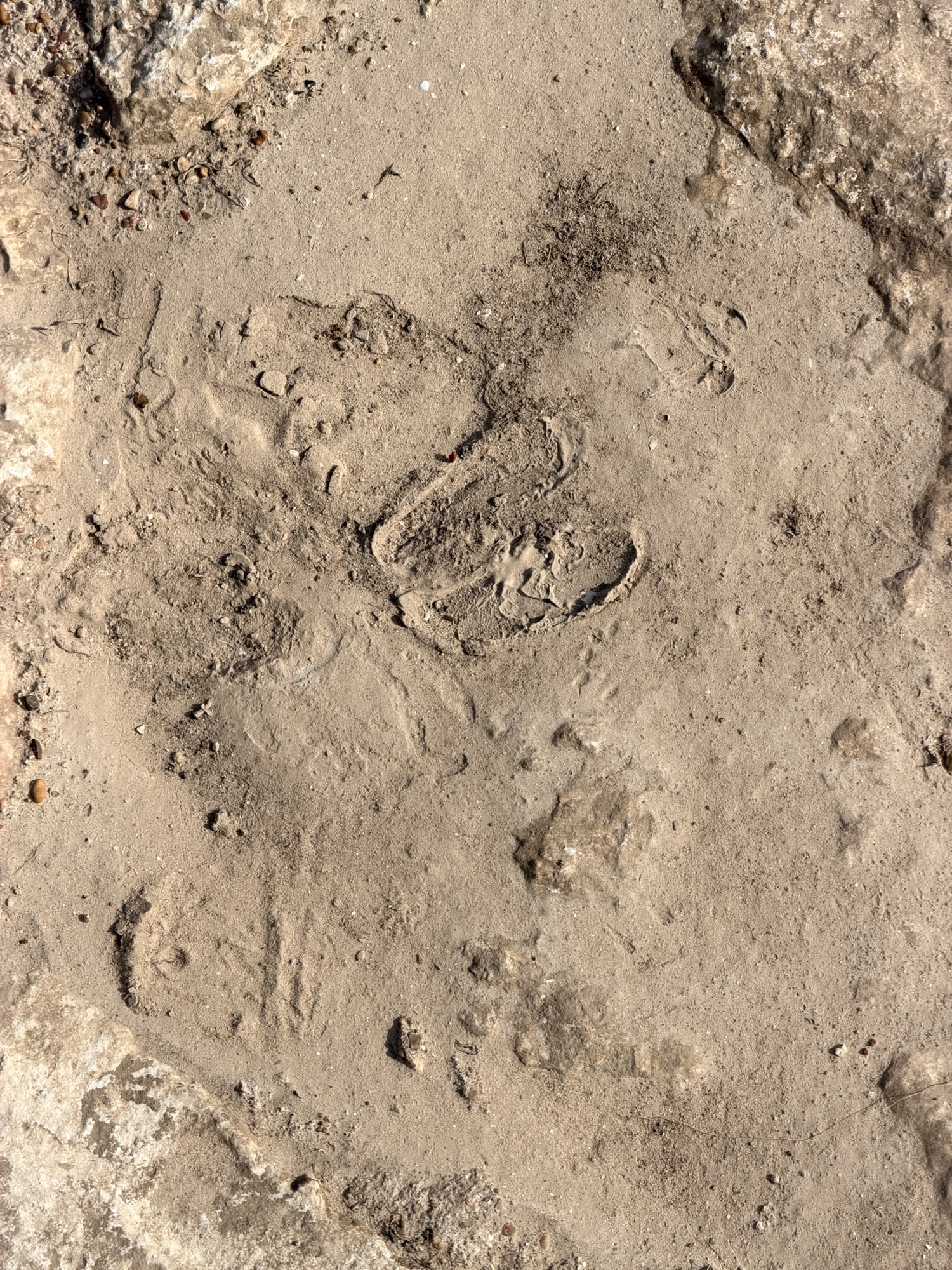
This silt with cool animal tracks is over the foundation. I guess they must keep sweeping after each rain.
After our learning, our group went on what was supposed to be a guided nature discovery walk. However, keeping Master Naturalists together is one of those cat herding situations. It doesn’t work. Still we learned some new plants and interesting historical tidbits from the leaders and participants.
One of the “cats” escaping the herd.
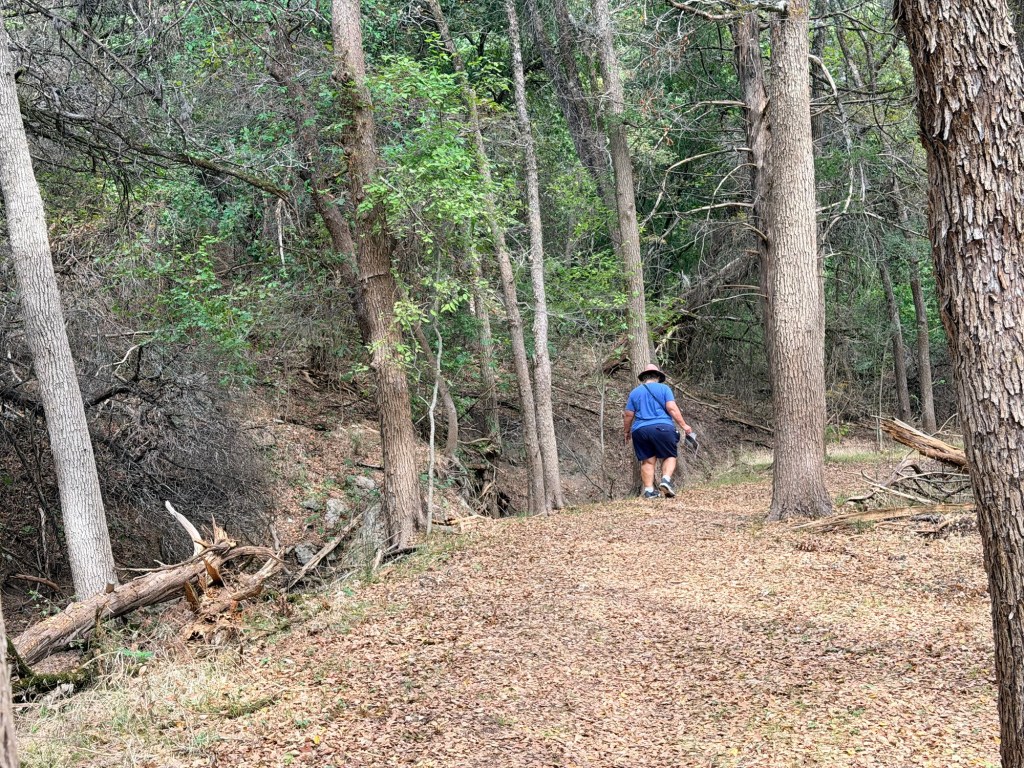
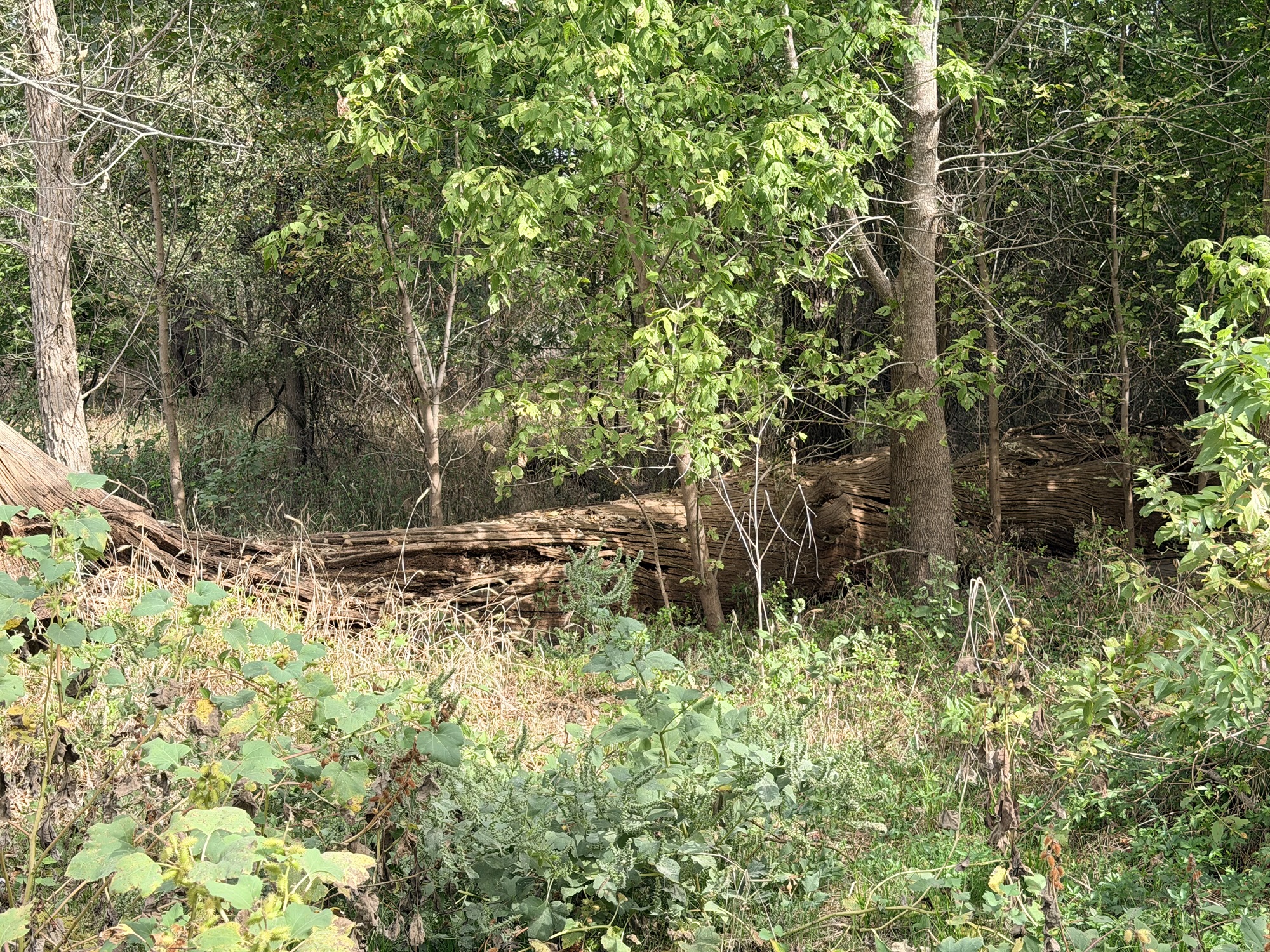
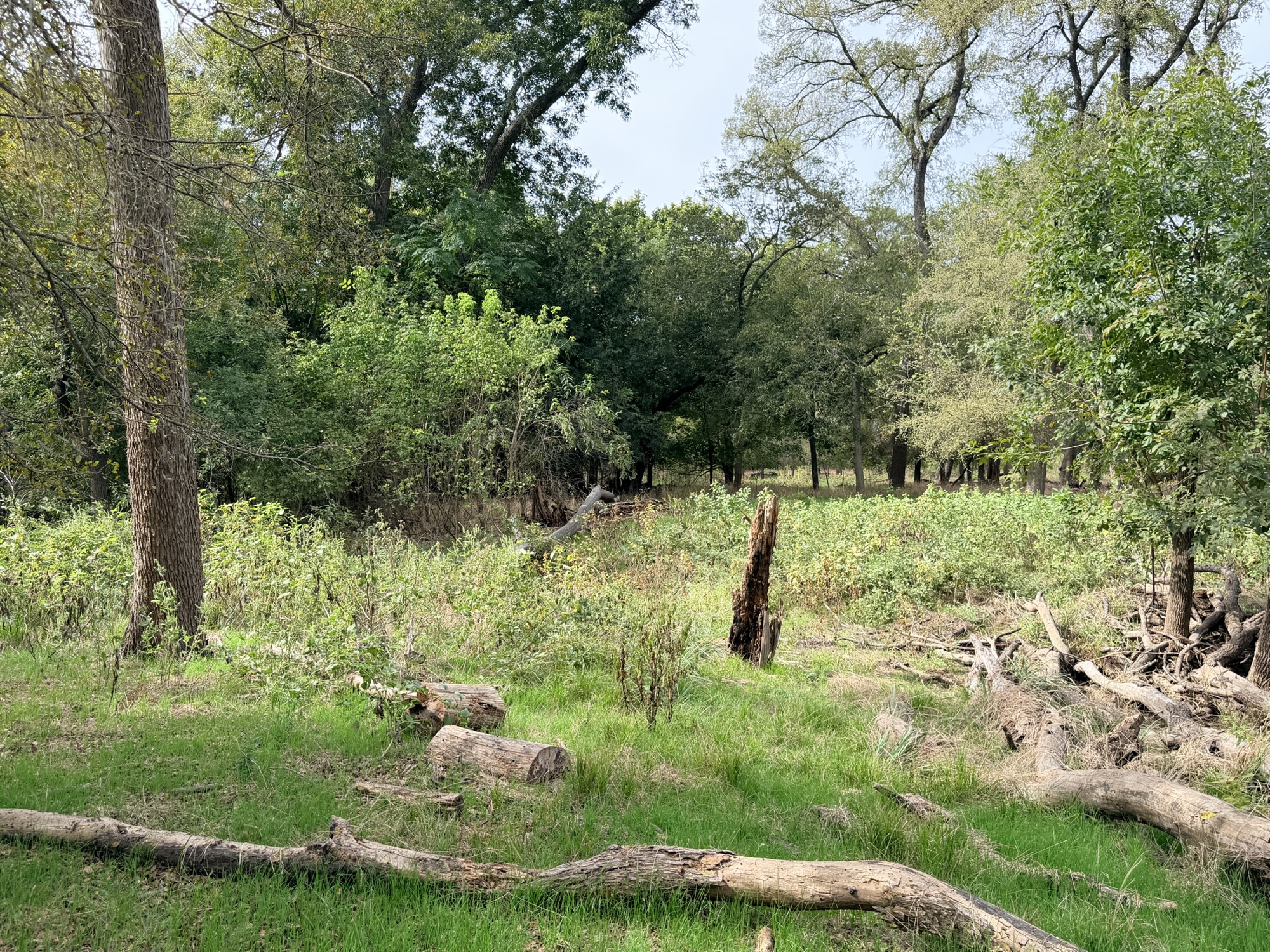
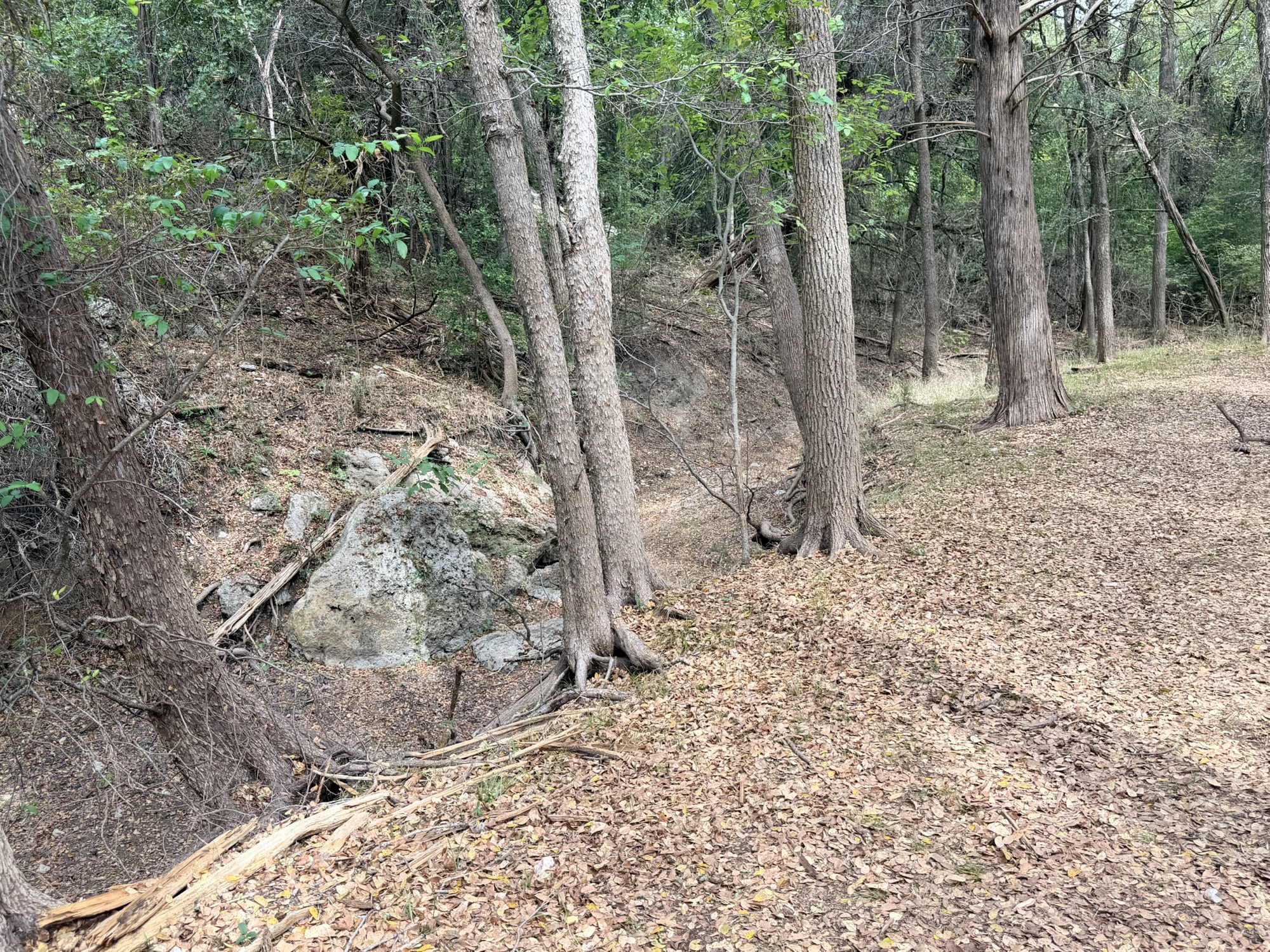
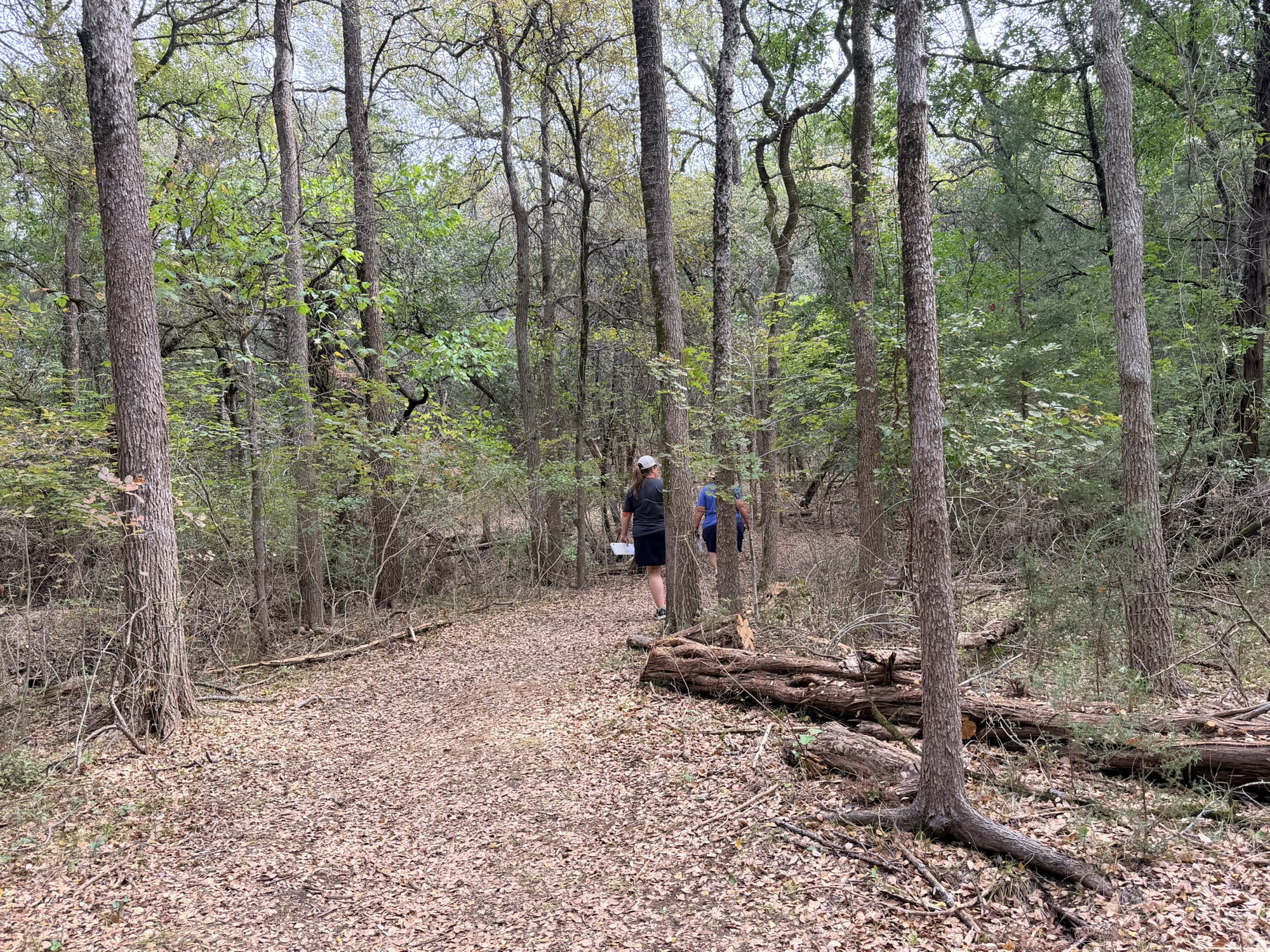
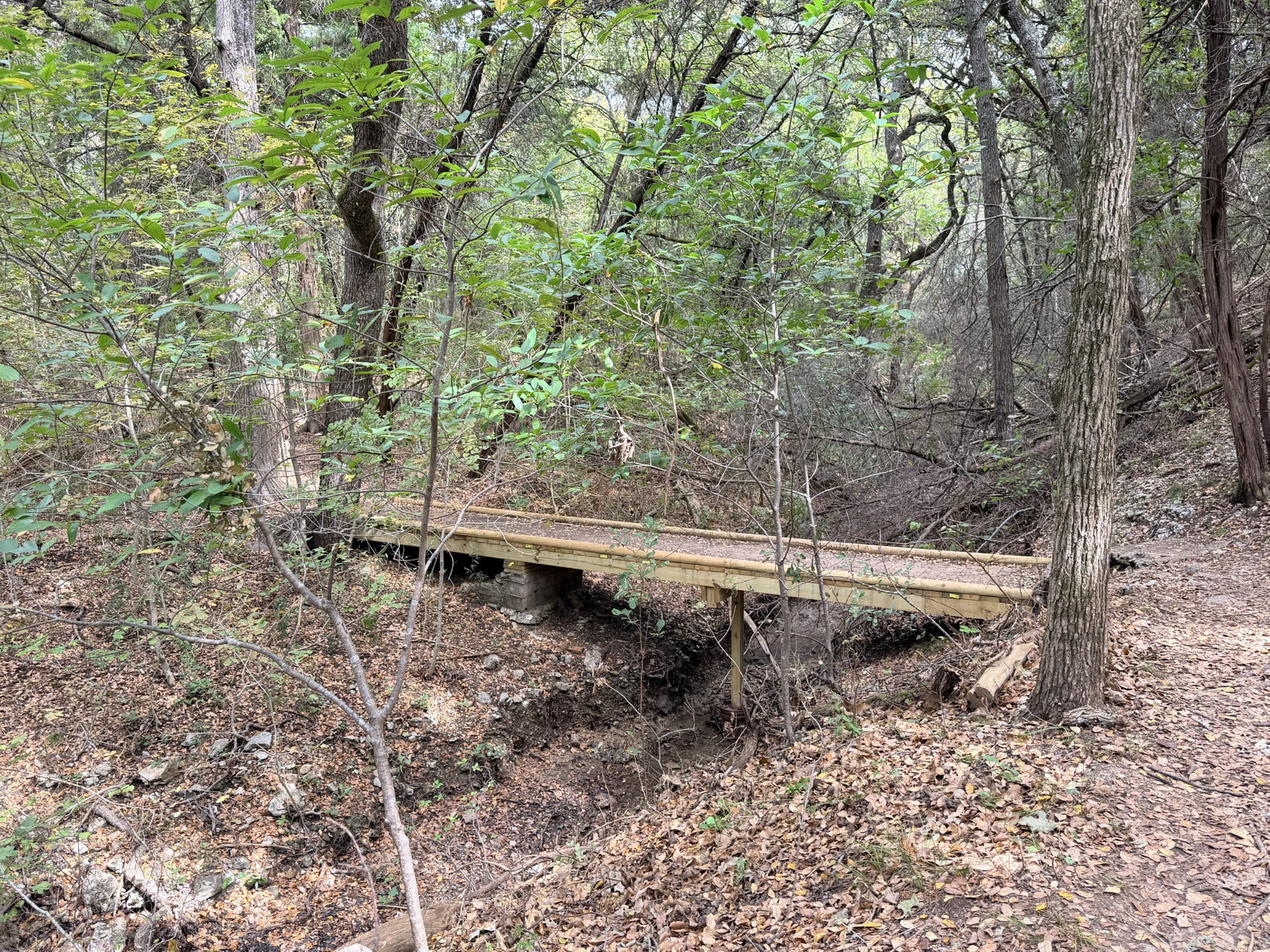
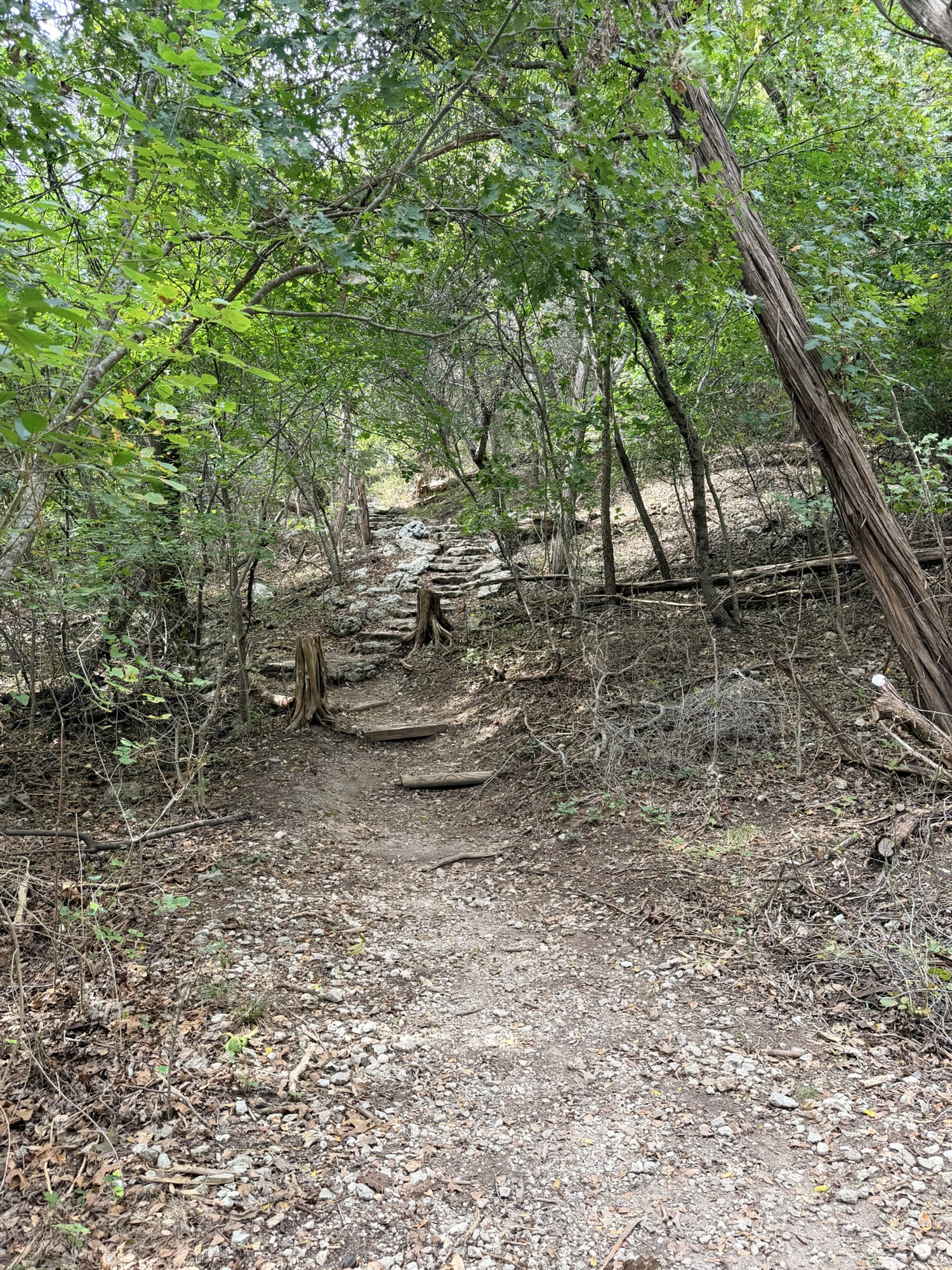
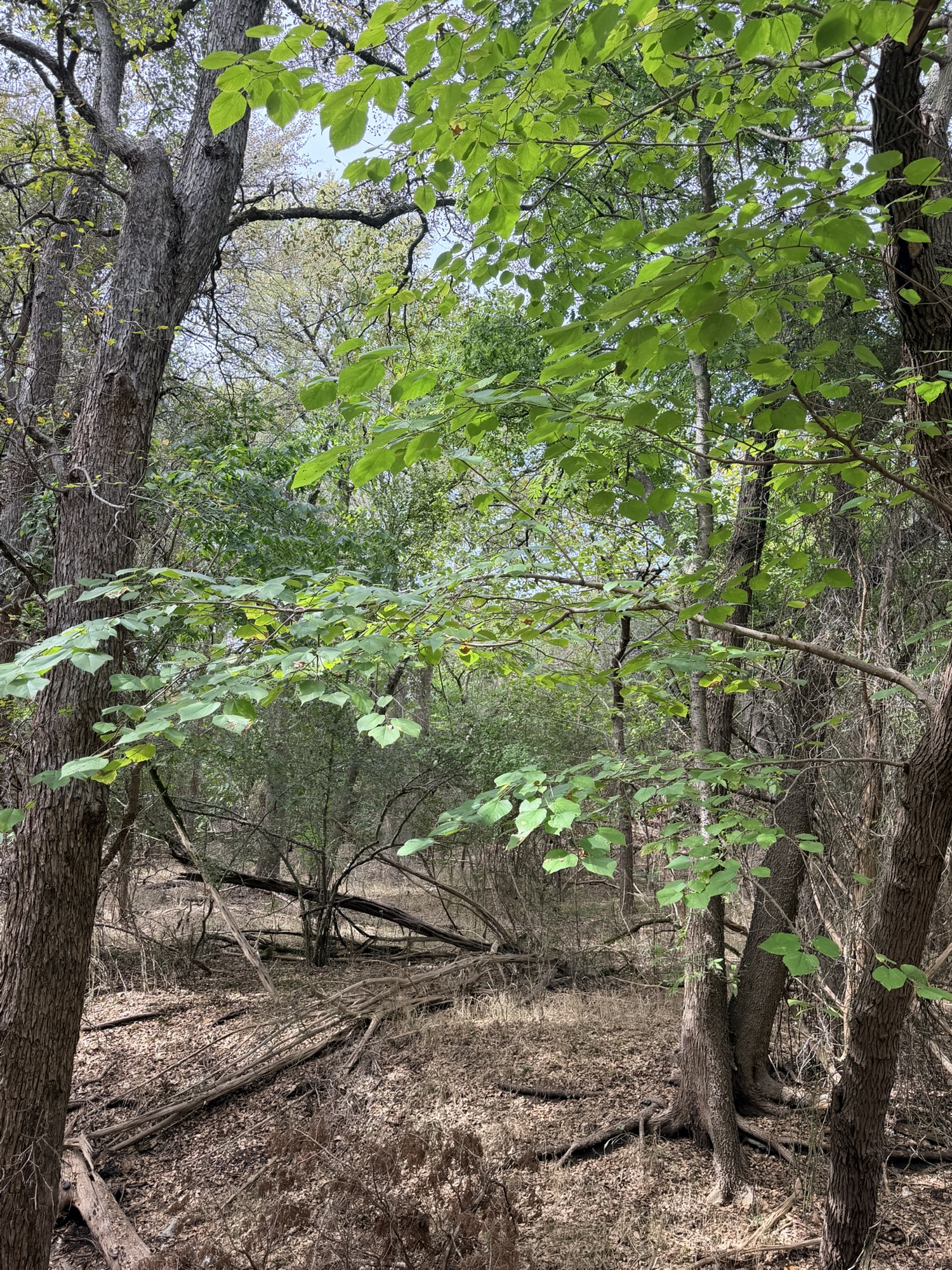
The trail is called the Lost Trail, since they found it after flood cleanup. It was interesting to see that many large trees survived and are thriving. Different trees are in different parts of the trail, because the terrain changes. Here’s some scenery.
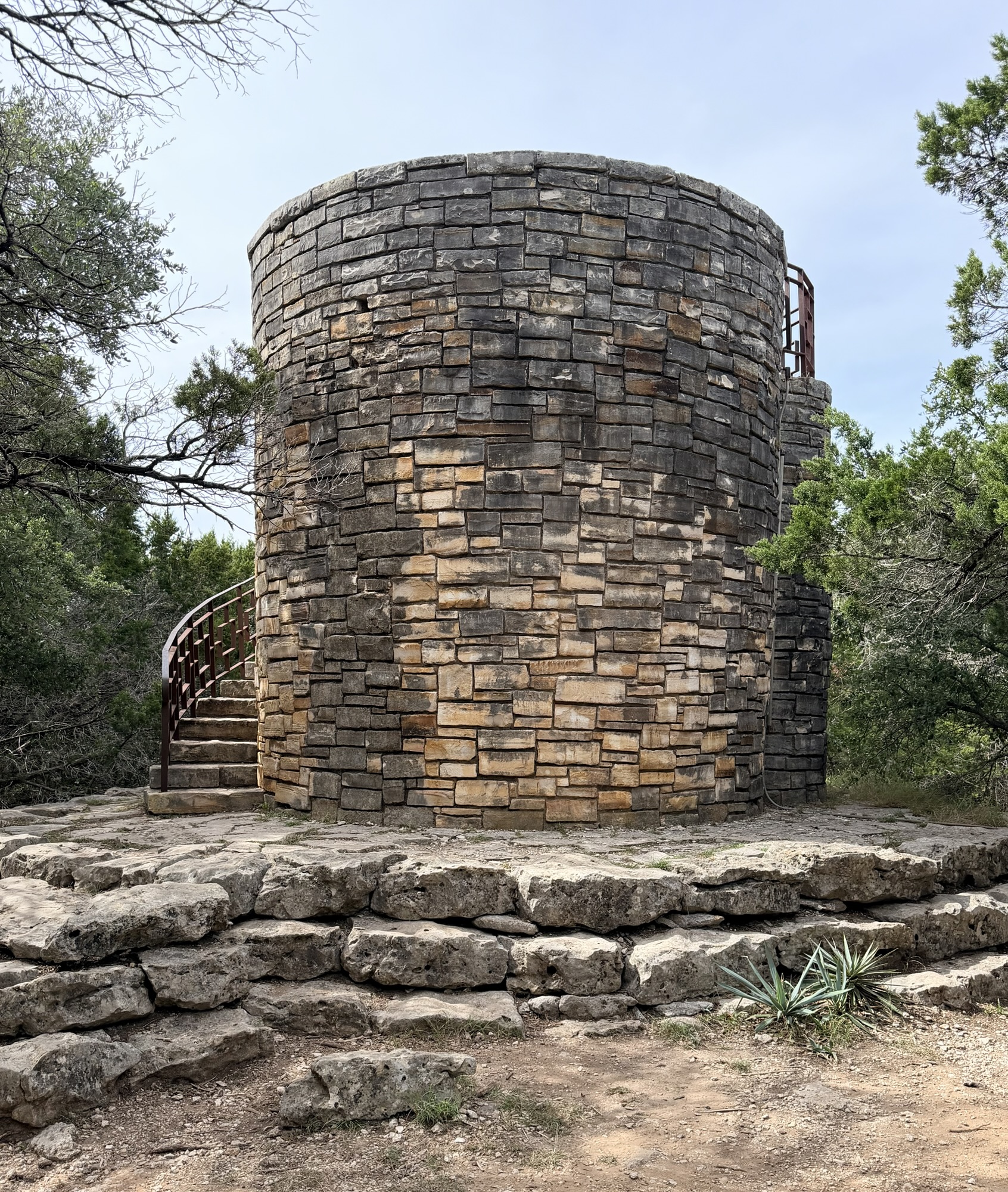
The tower is on the part that I’d seen before
Of course, I spent much of the time looking for plants and pollinators. Still, the woods were so pretty that I did remember to look at the whole woodland, too. I found many familiar flora and fauna, but there were a couple new ones for me.
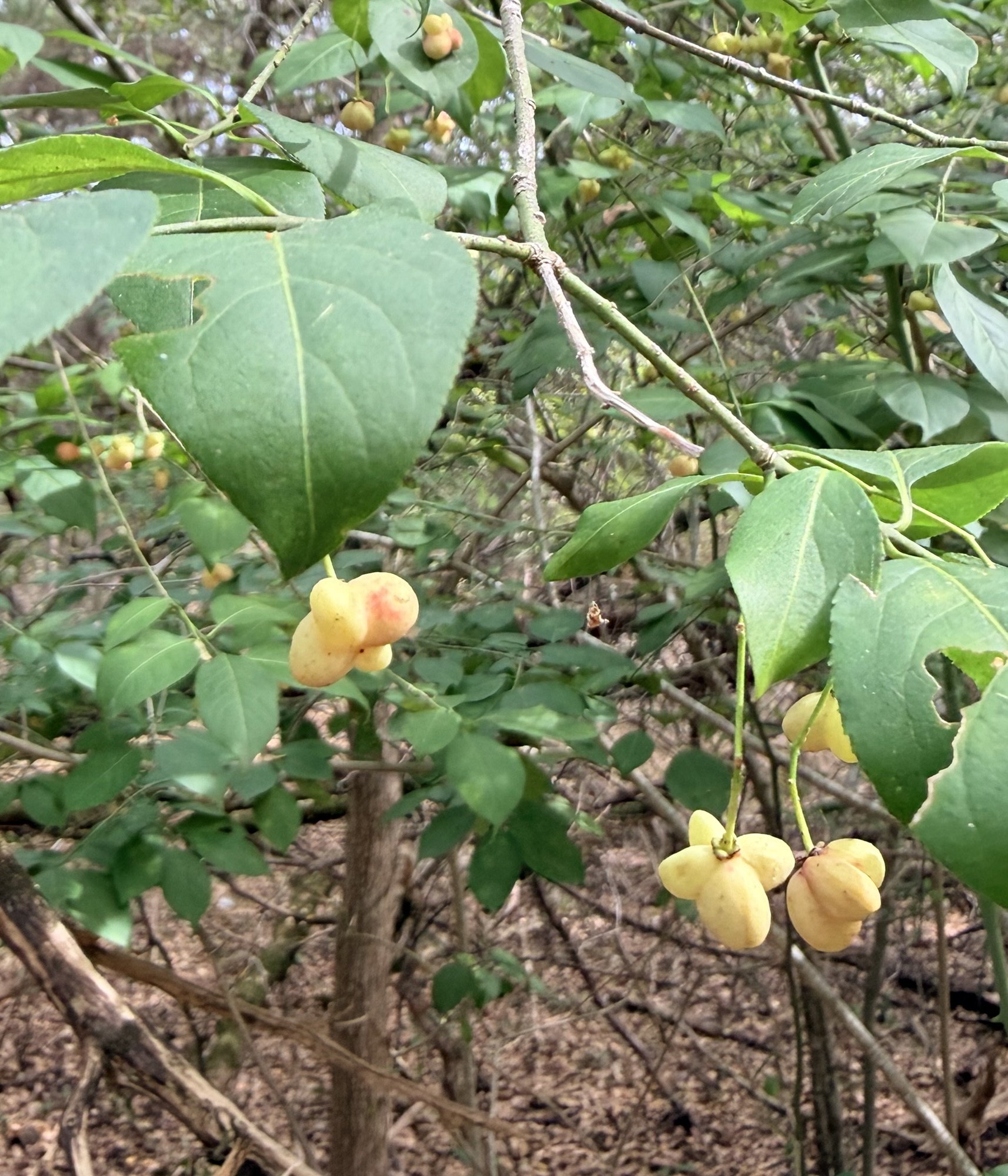
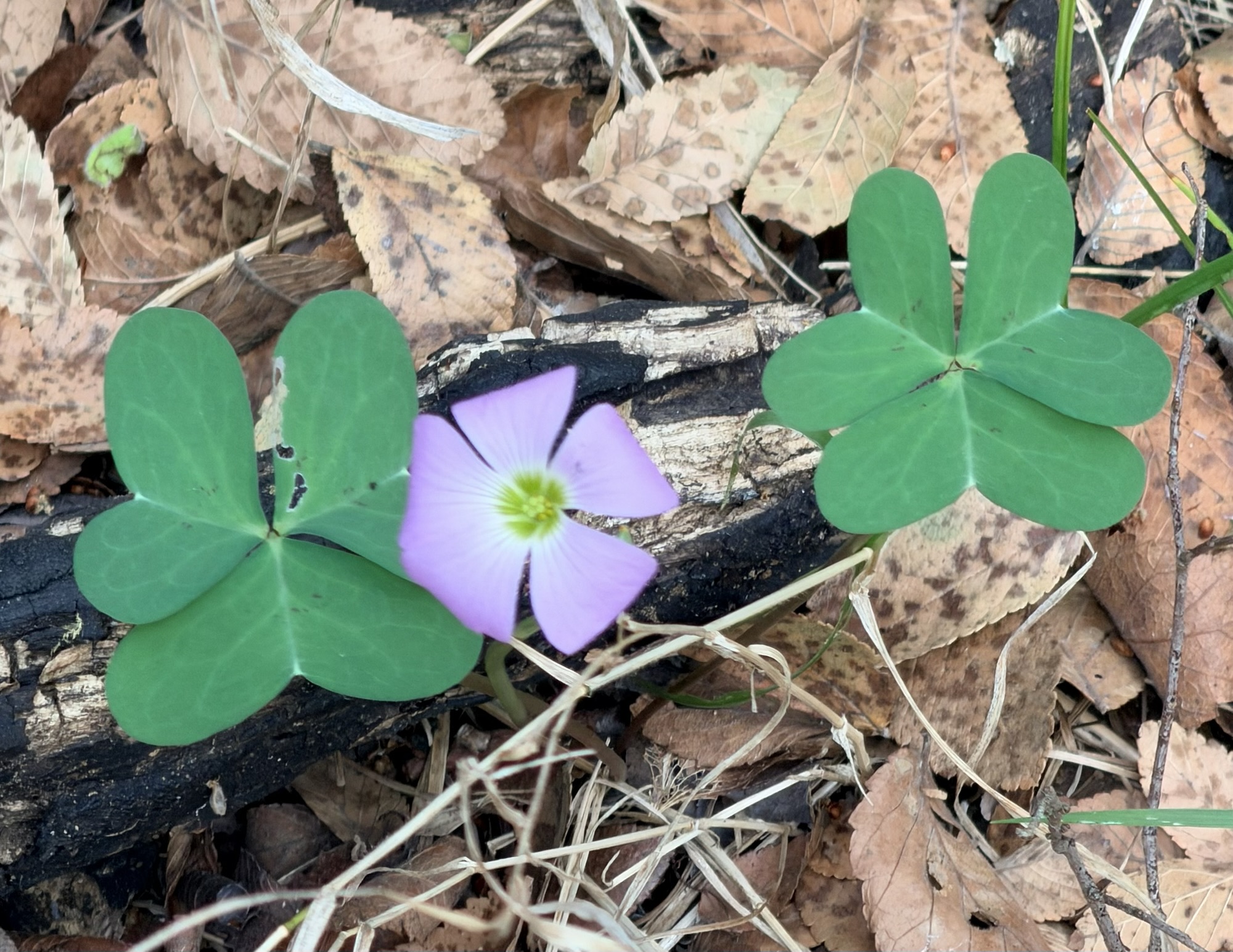
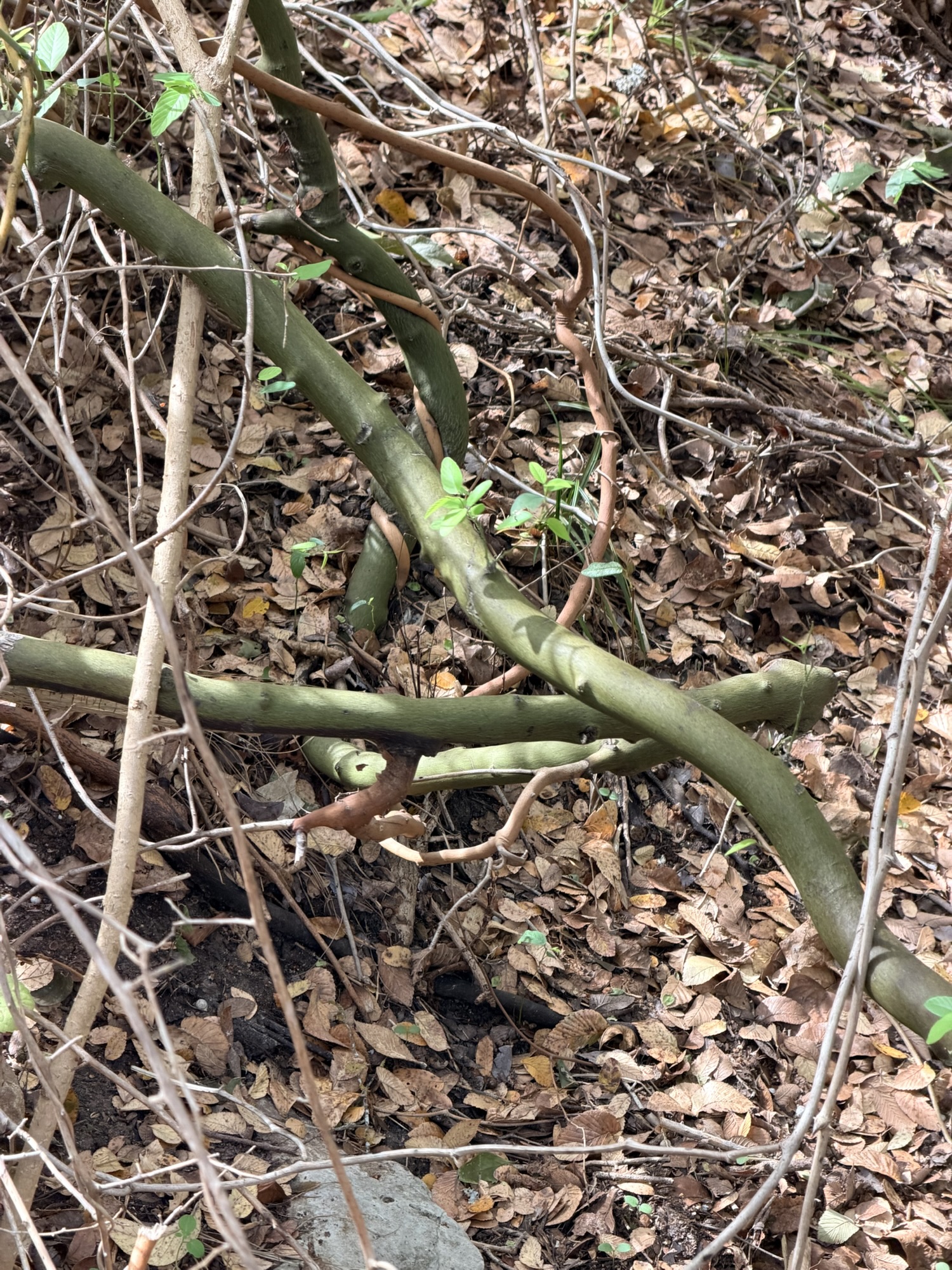
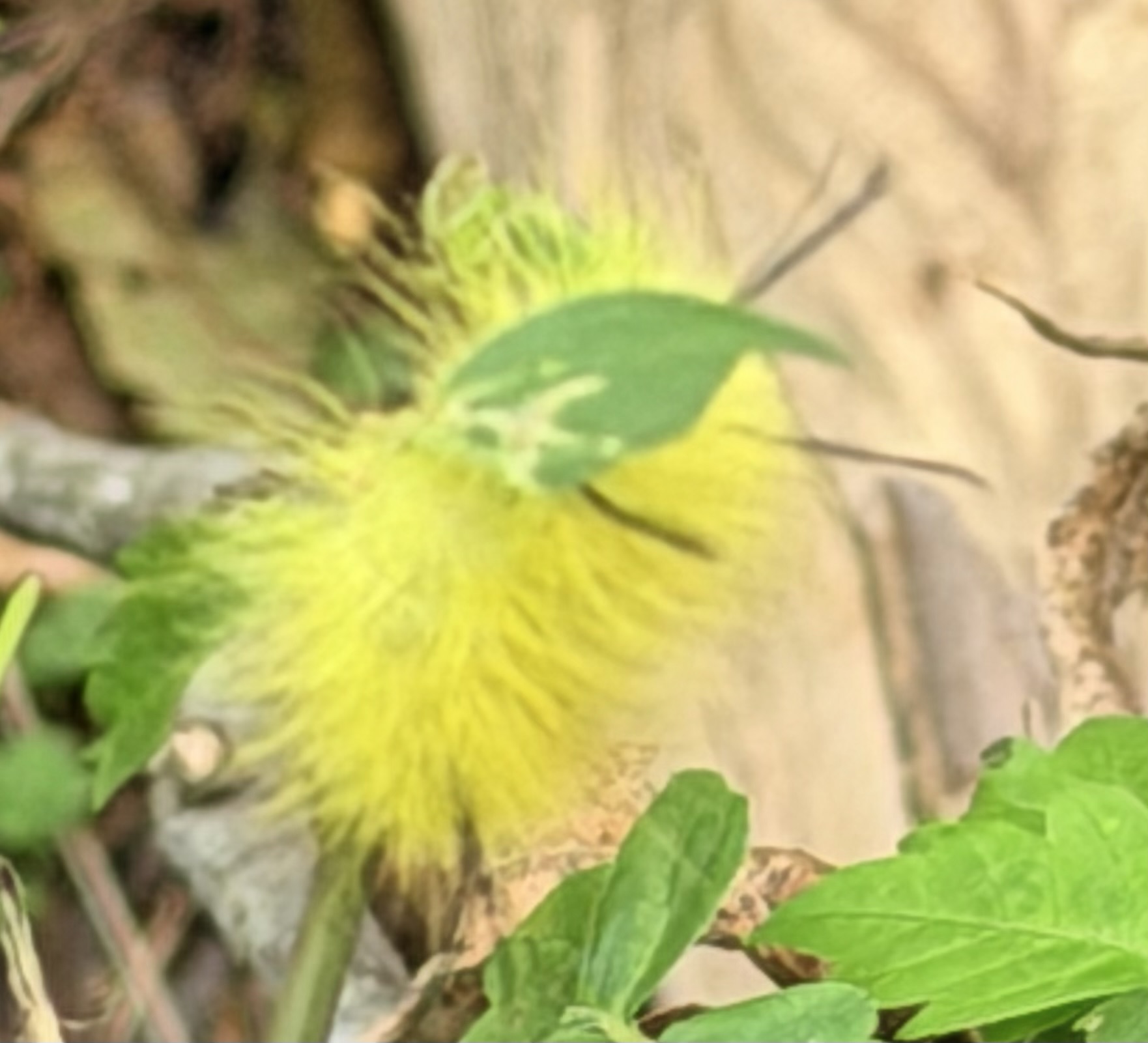
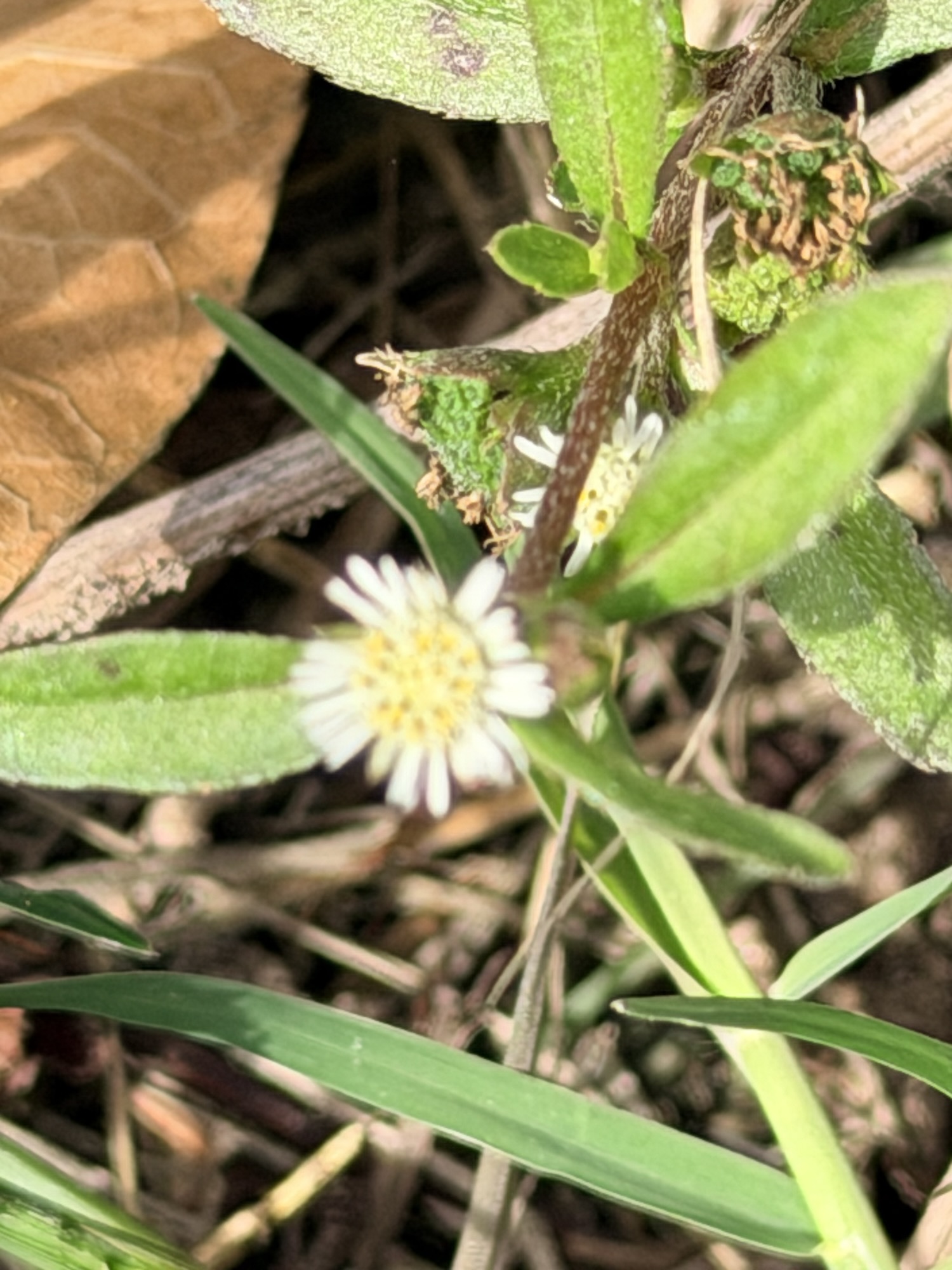
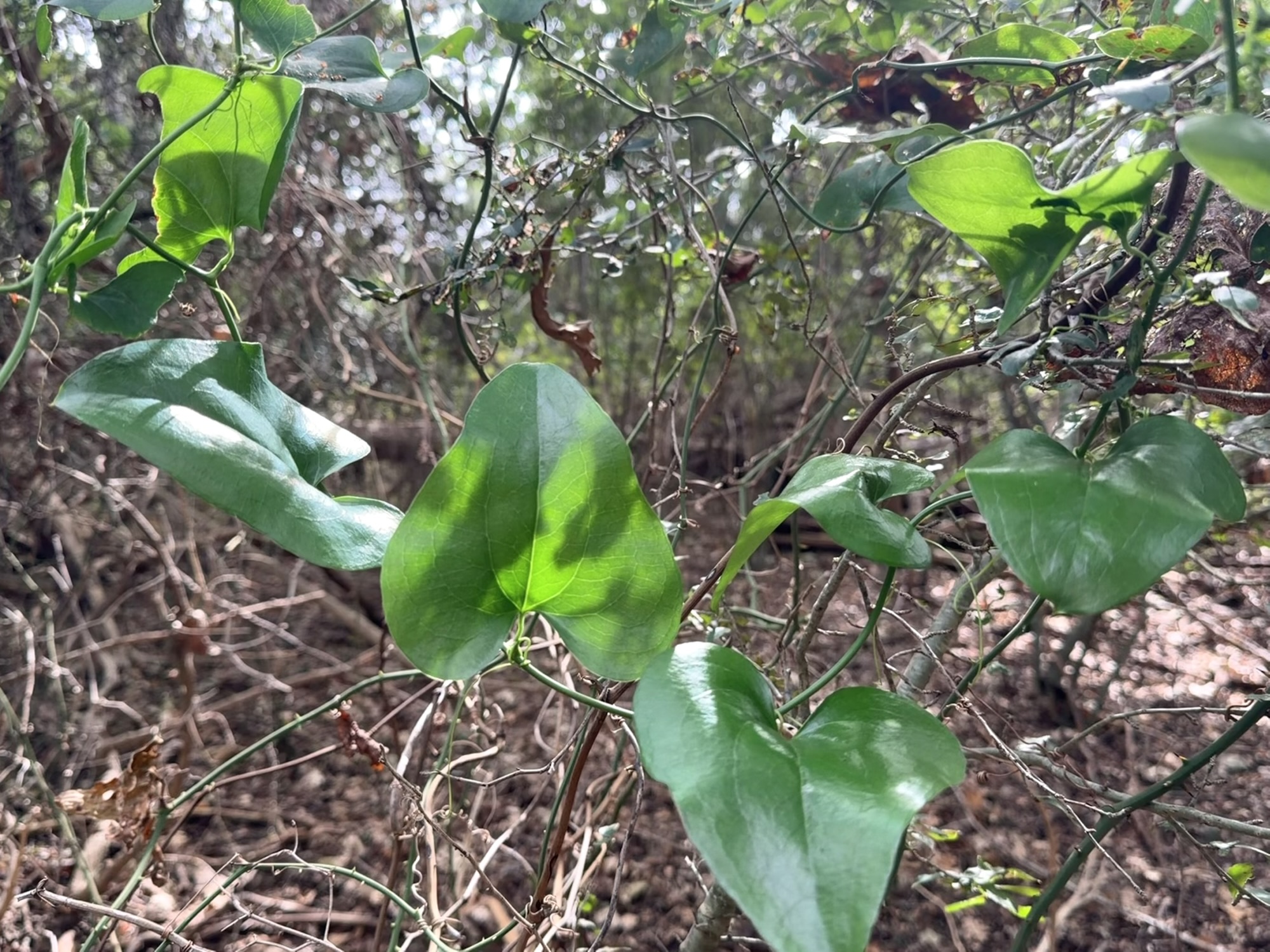
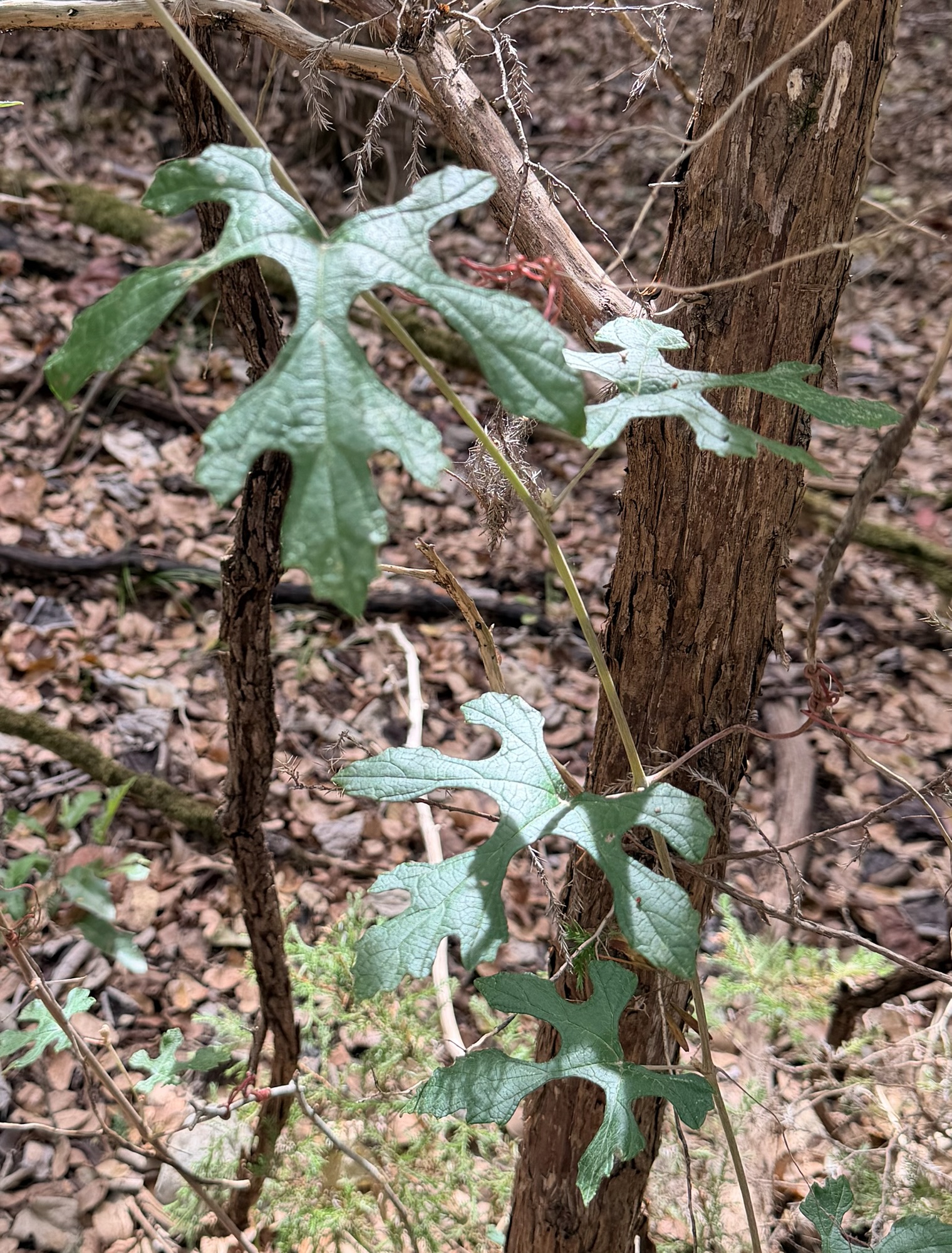
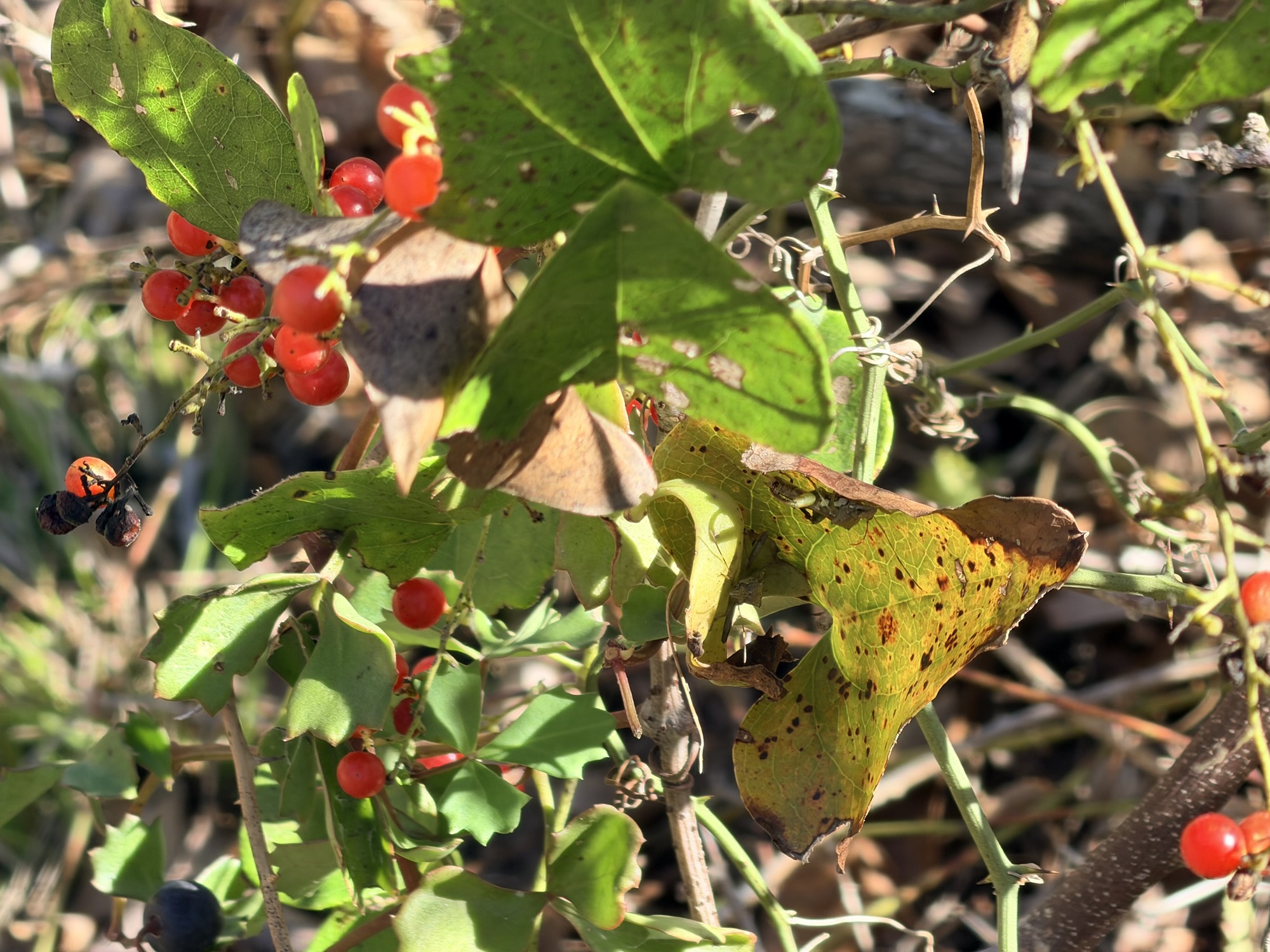
Wahoo (Euonymus atropurpureus) also known as Hearts Bursting with Love Drummond’s wood sorrel Supplejack vineAmerican dagger mothFalse Daisy
I grabbed a few nice images of more familiar plants, insects, and a mammal friend. I hope you enjoy them!
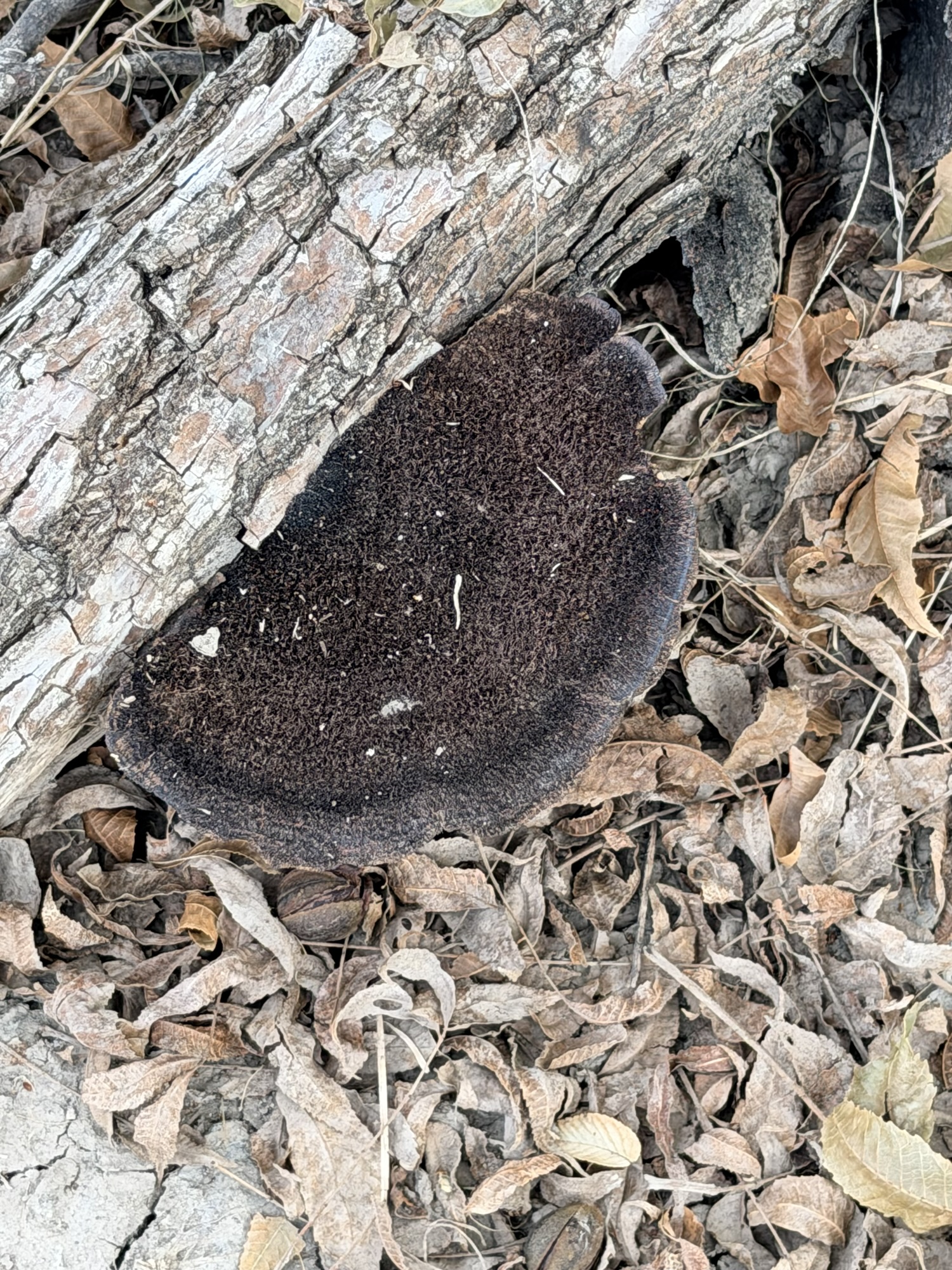
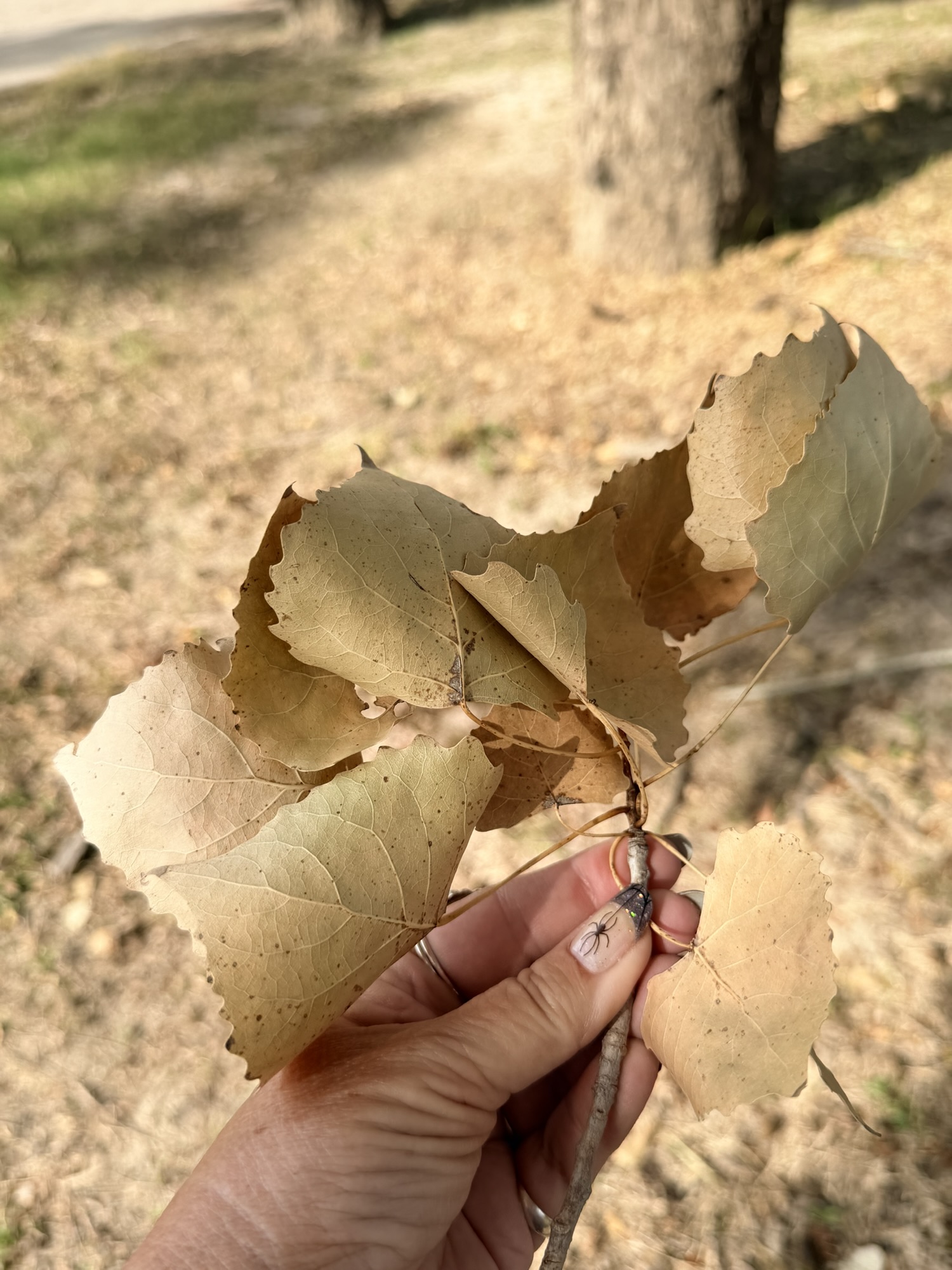
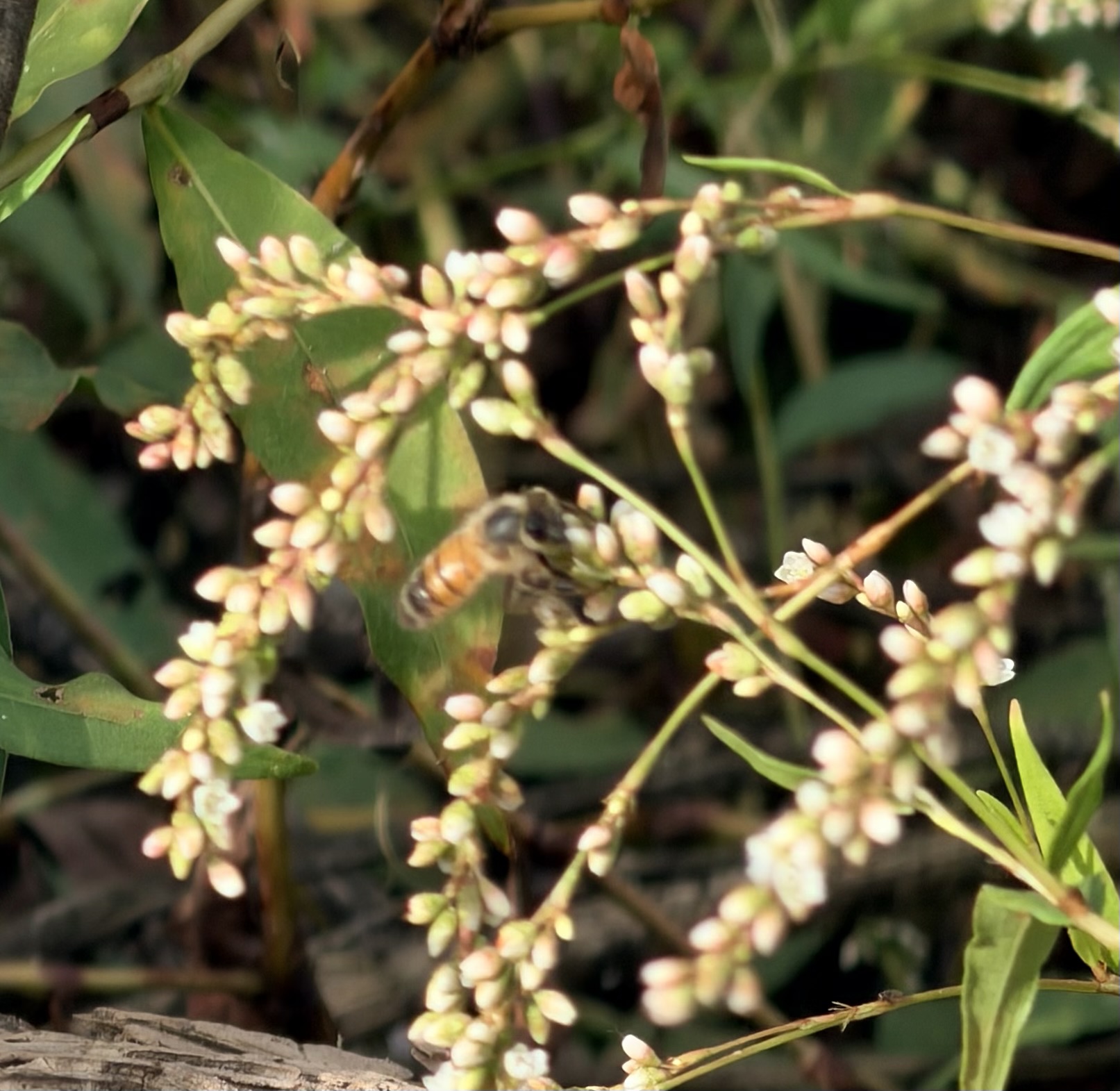
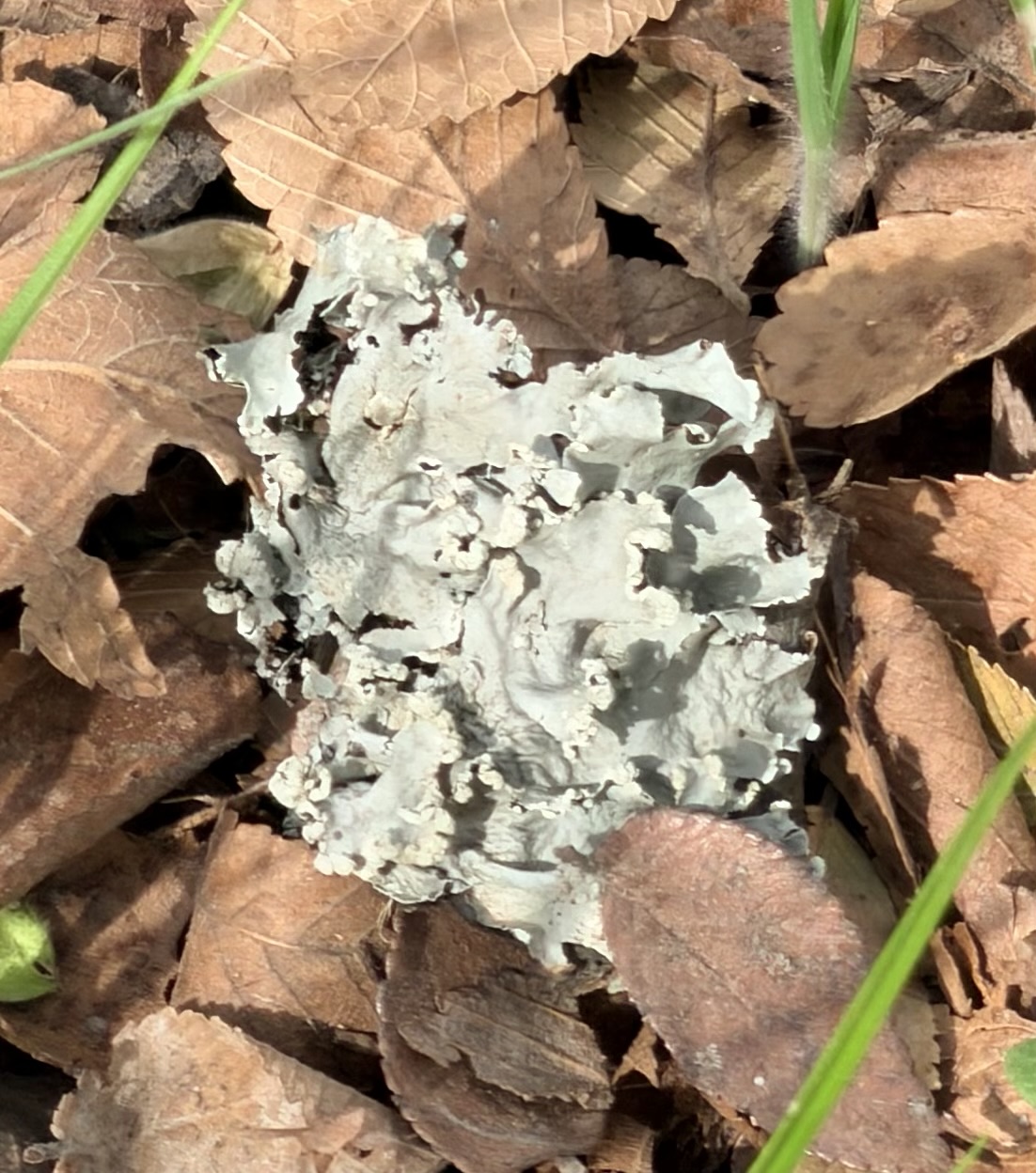
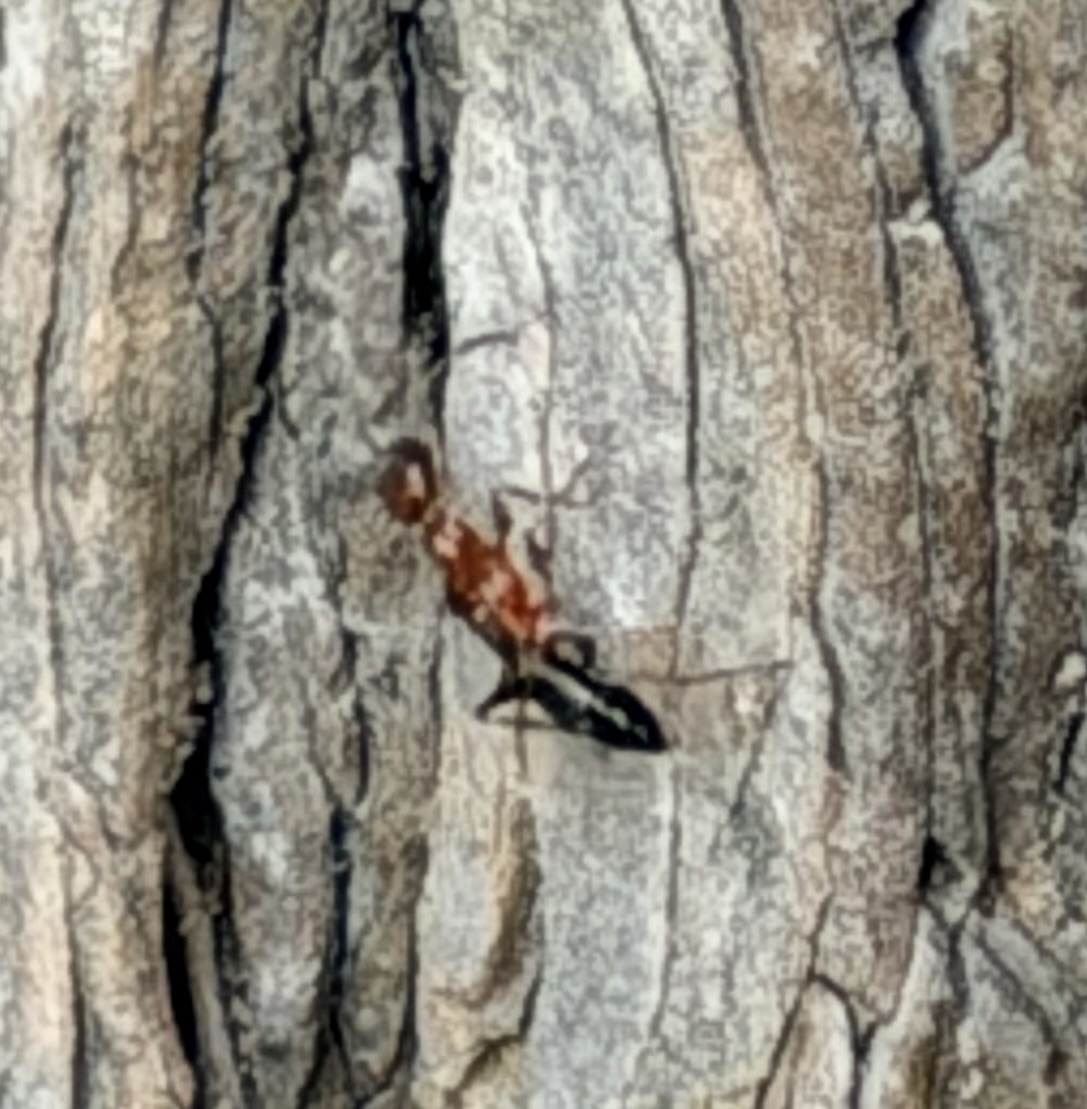
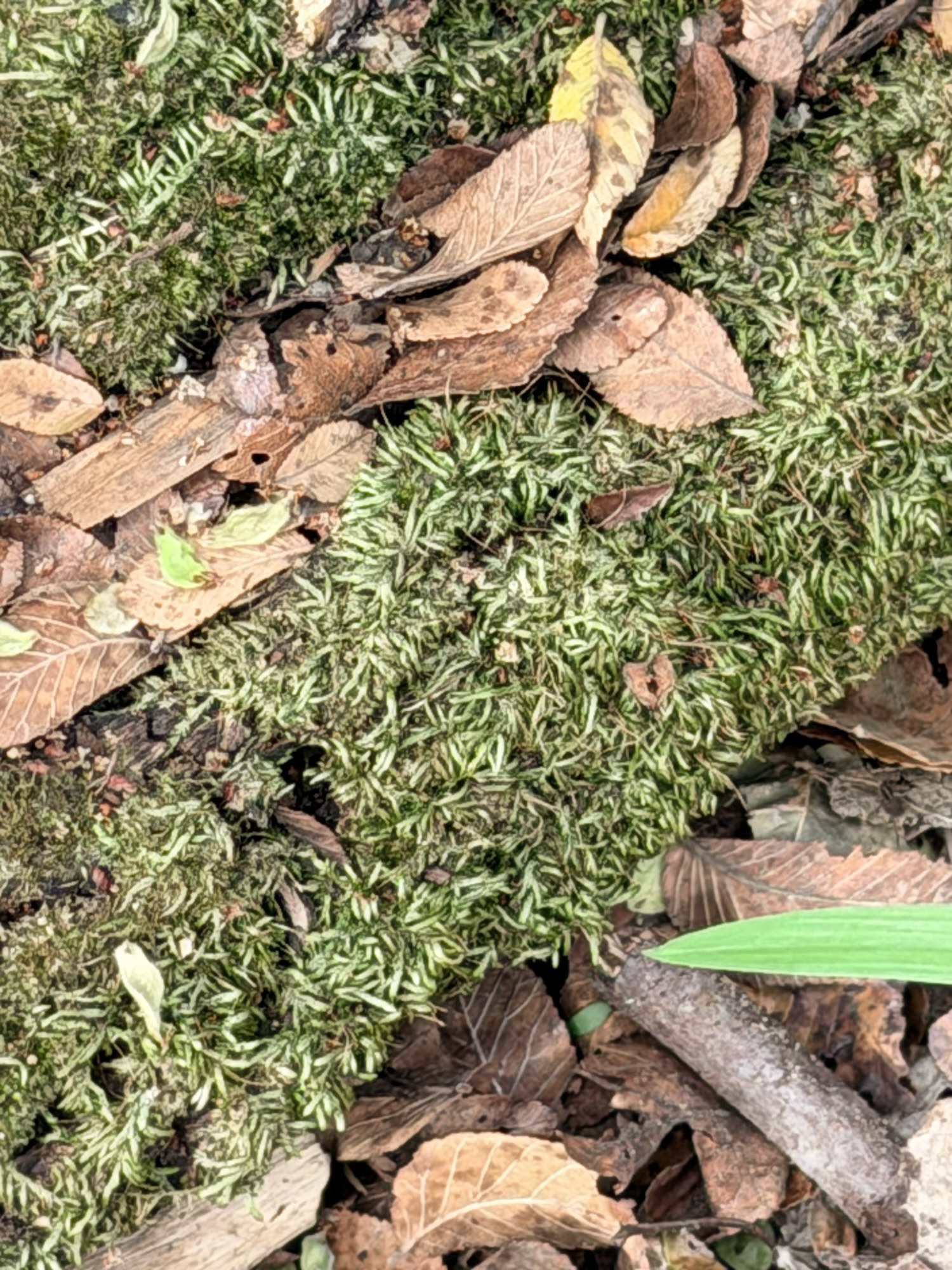
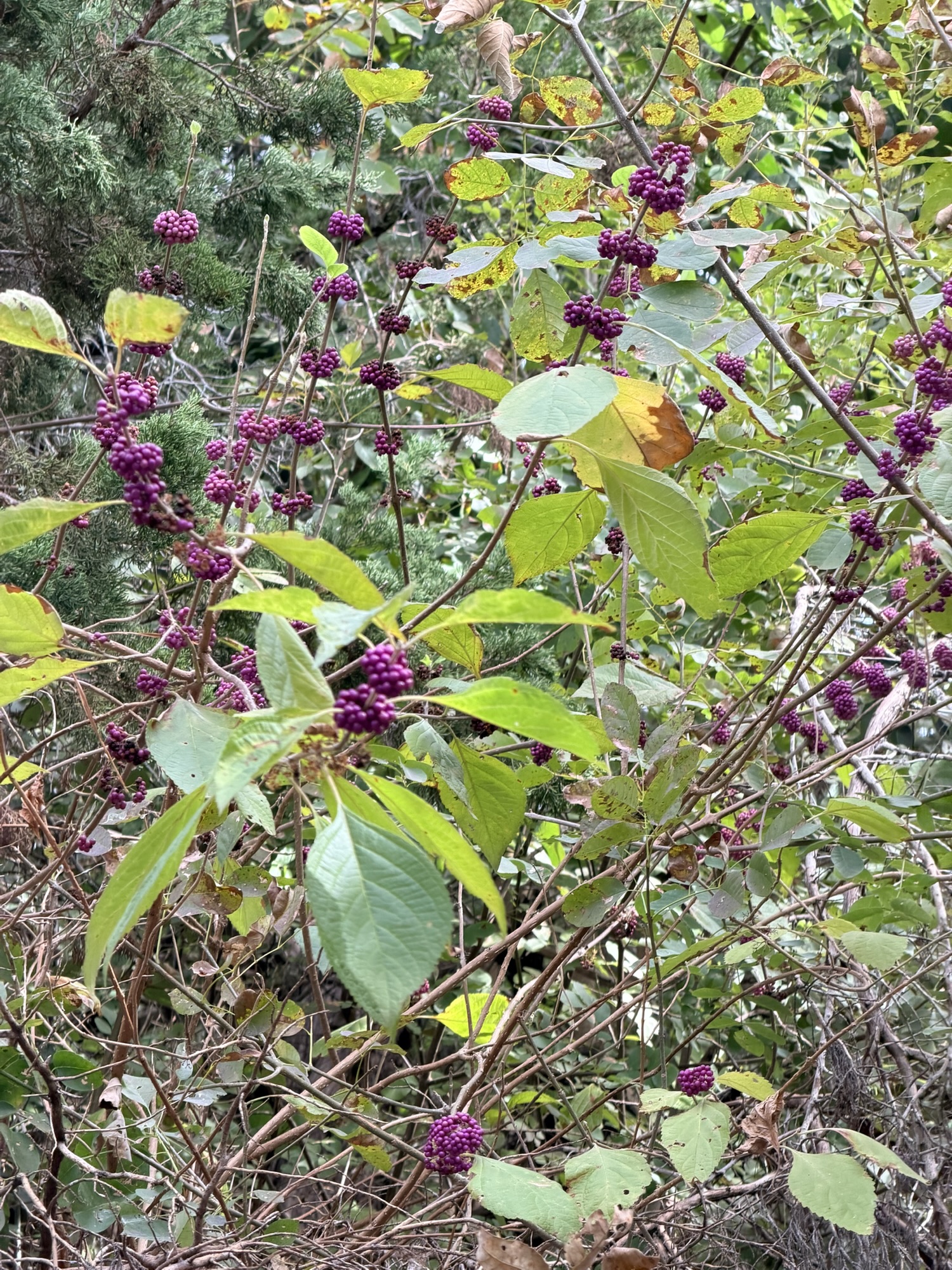
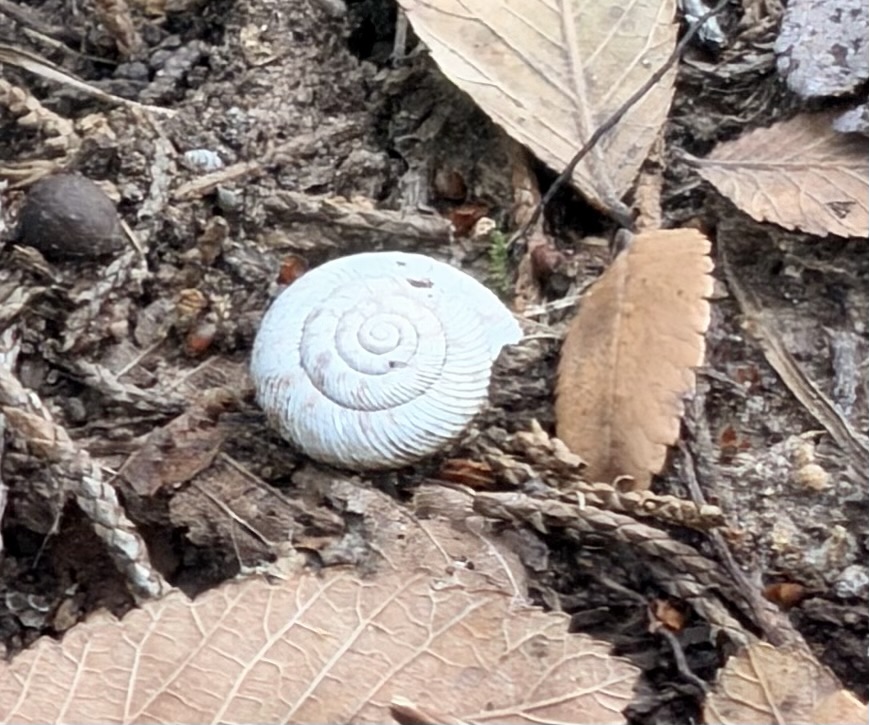
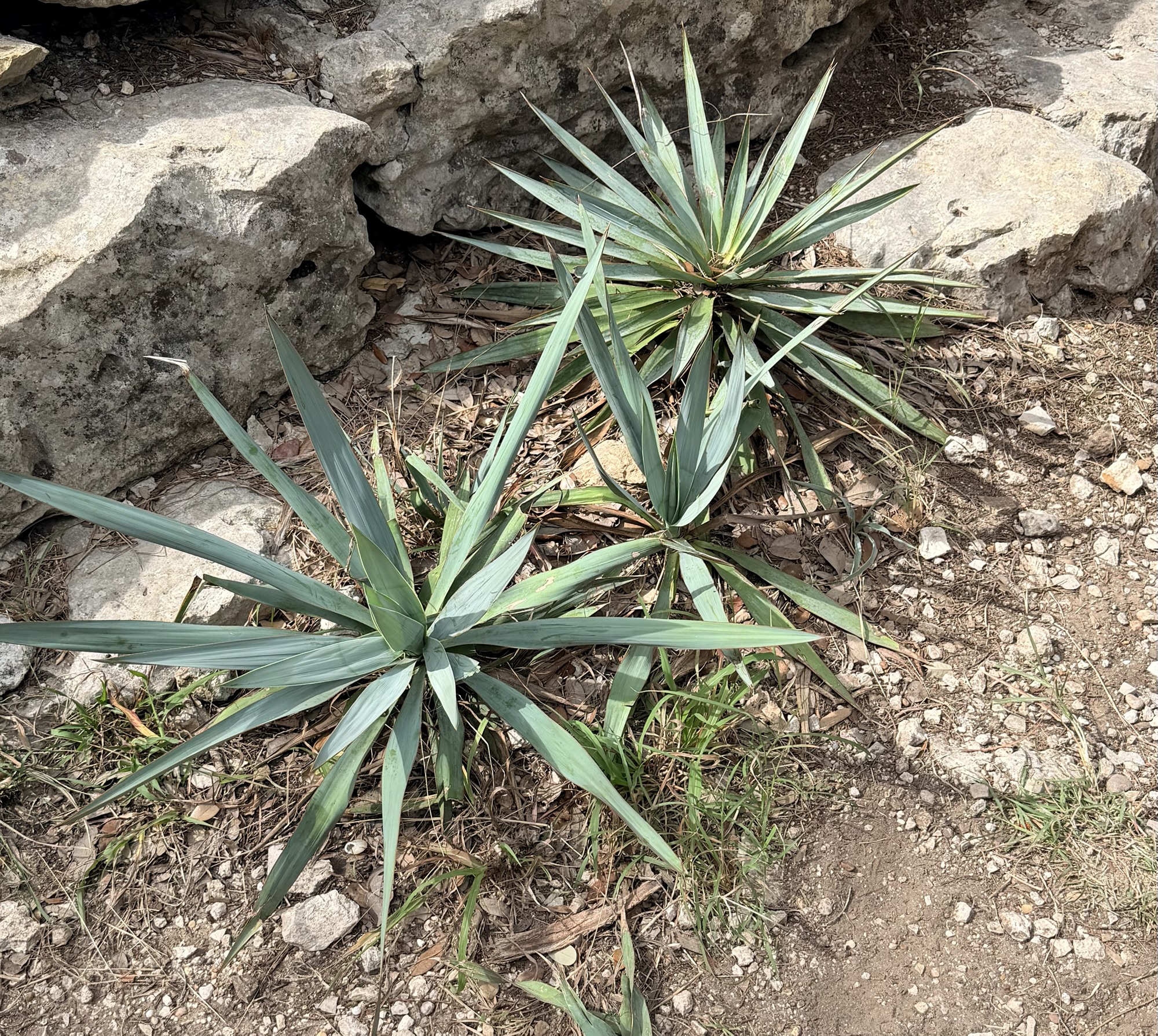
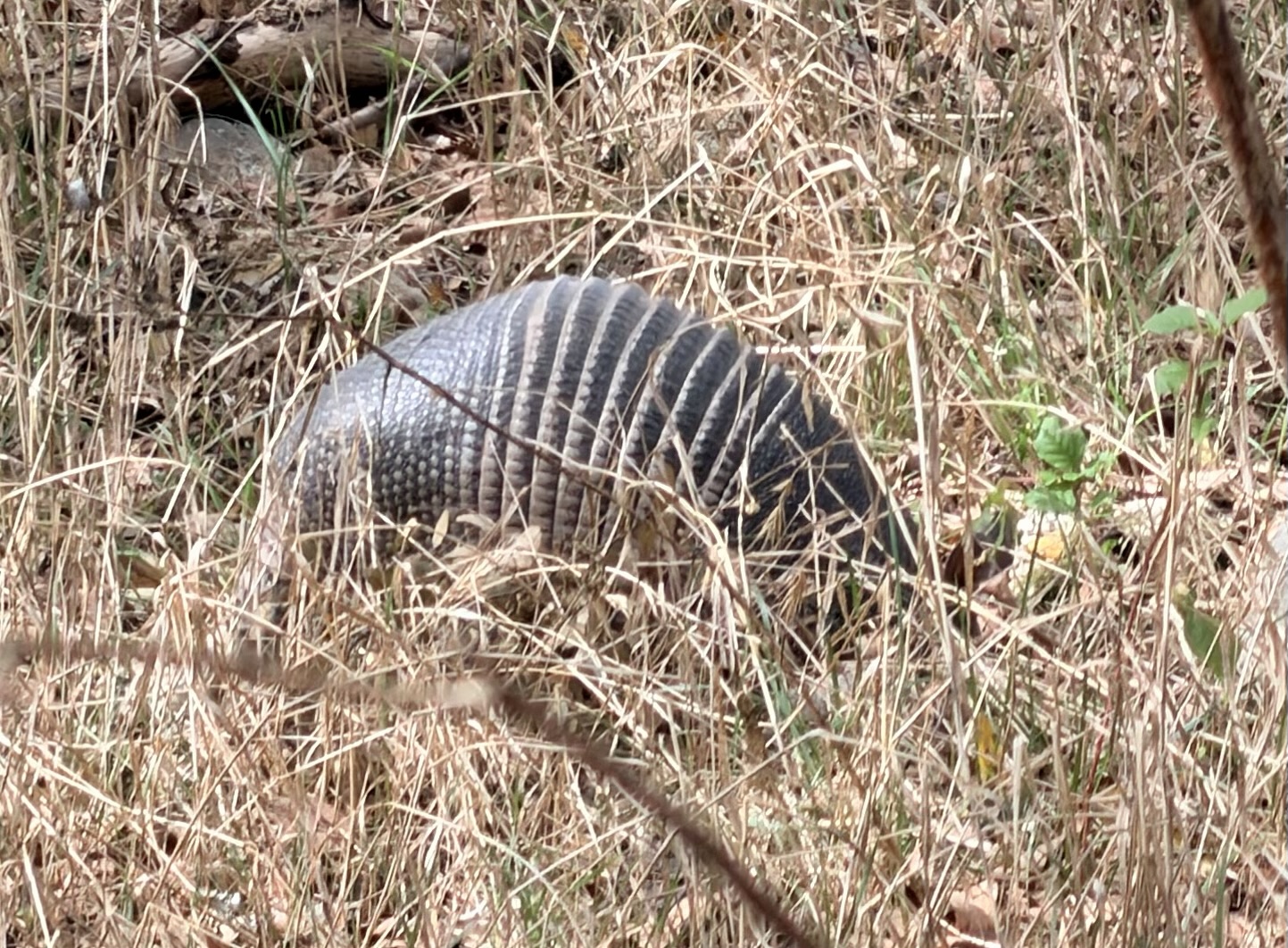
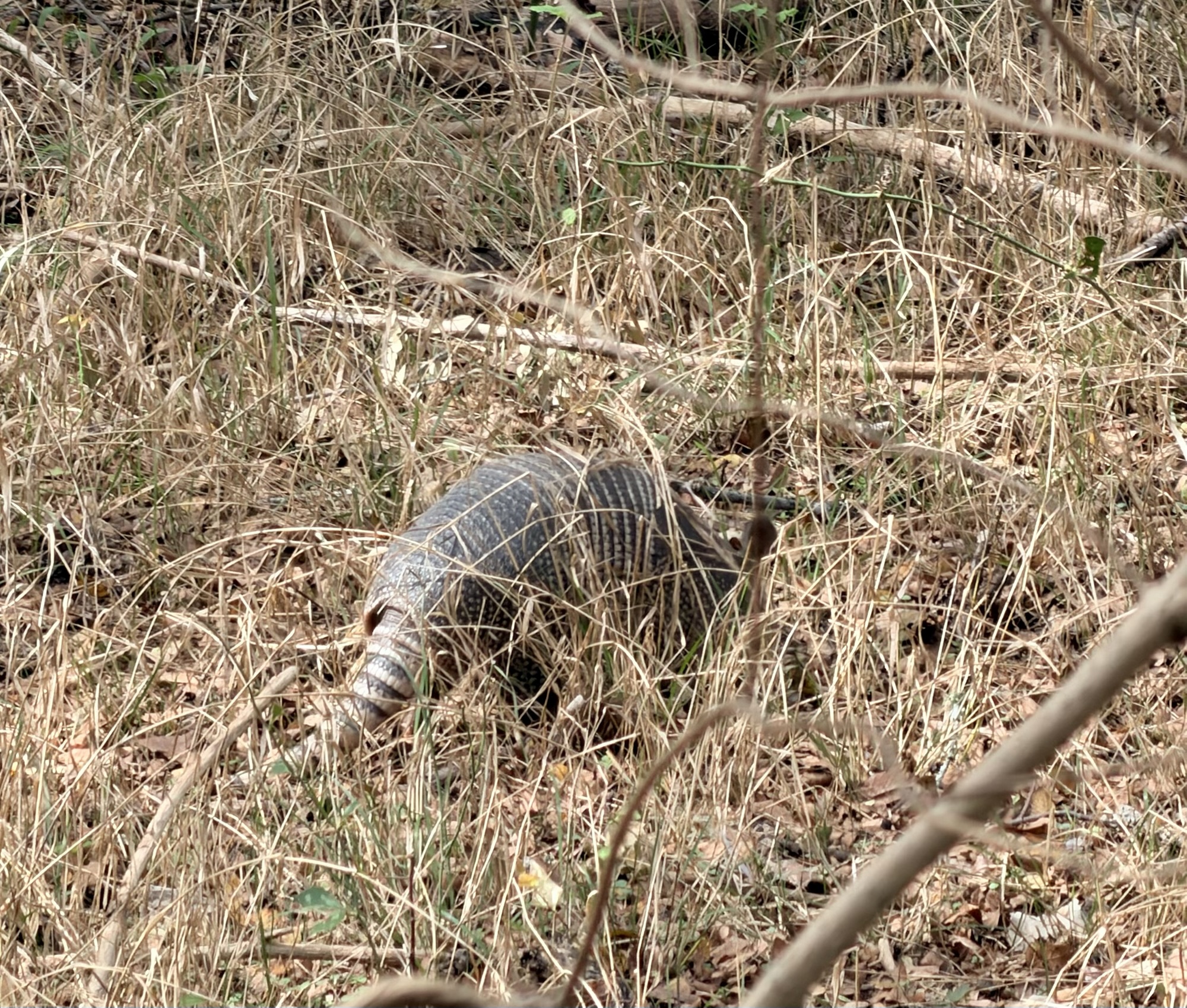
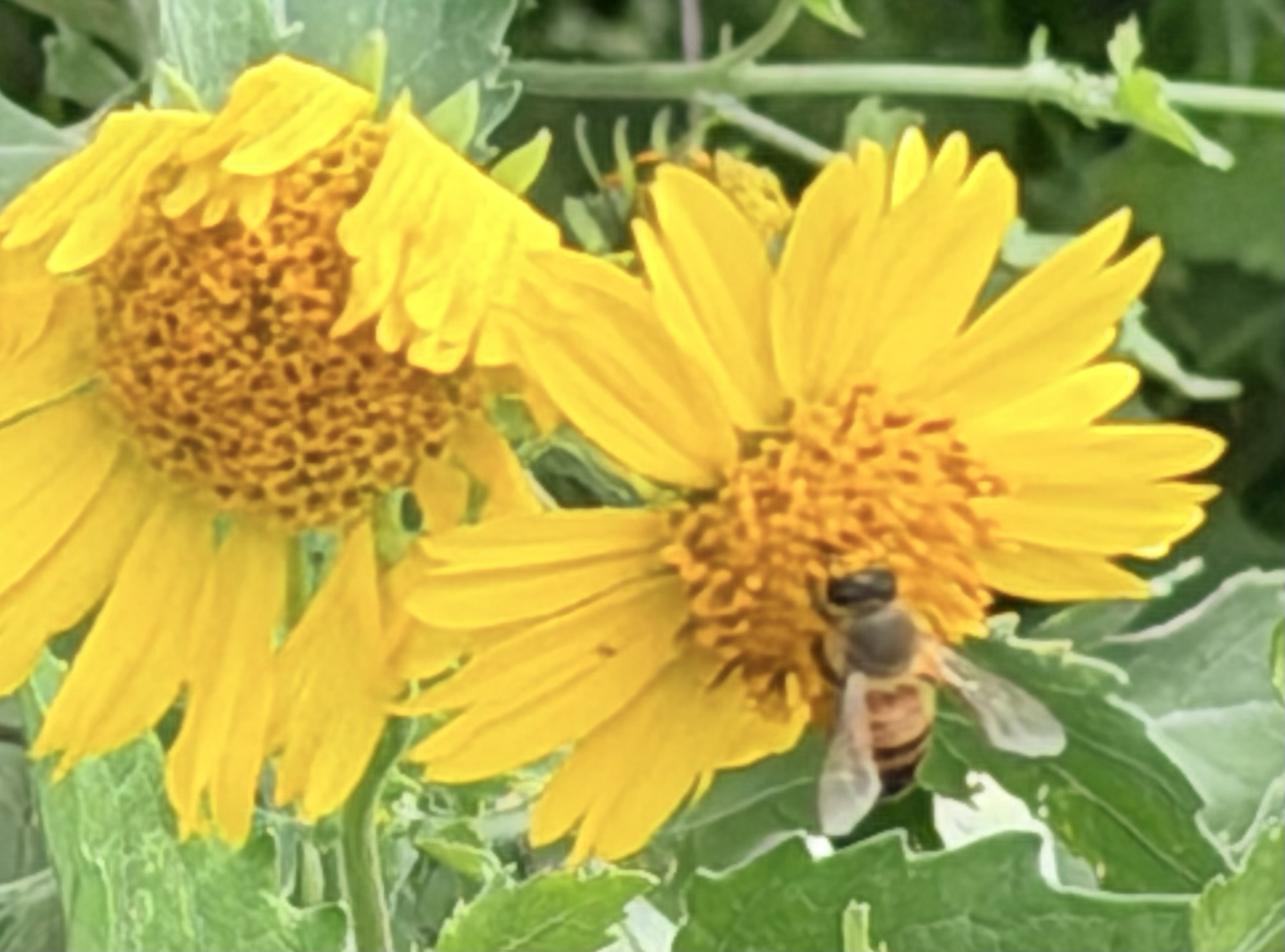
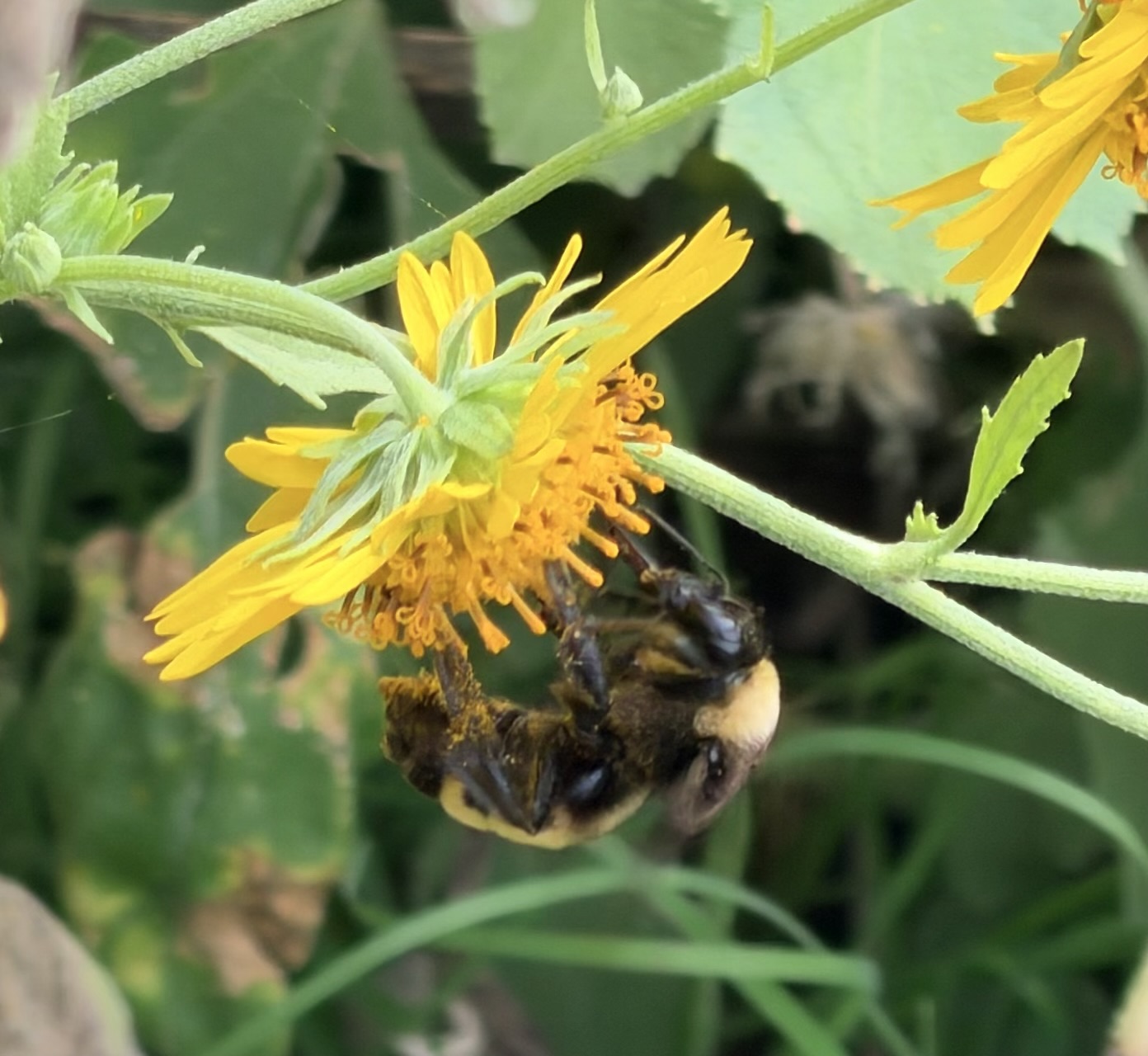
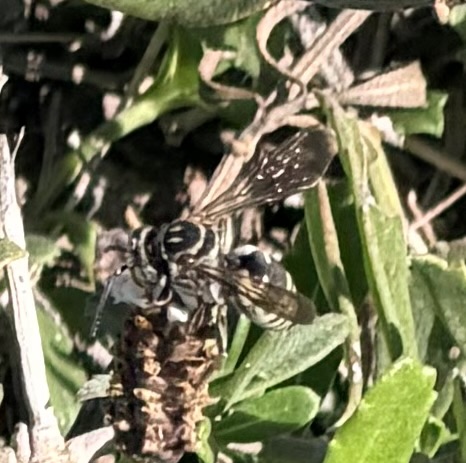
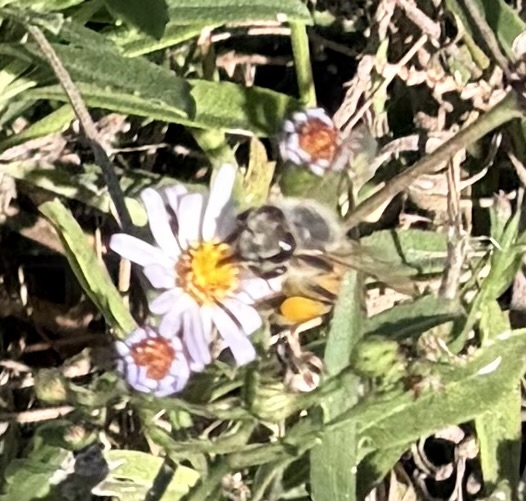
Hairy HexagoniaCottonwood leavesBee and smartweed Pretty ruffle lichenSome kind of cockroach wasp?Seductive entodon mossBeautyberryPerhaps a tiger snailPale YuccaJust pretty greenbrier Mustang grapeArmadilloHeading off to dig some moreHoney bee and cow pen daisyBumblebee and cow pen daisy
Before heading home I took a long and beautiful back road out of the old part of the park. It followed the Leon River, revealed the lush floodplain, then climbed a limestone hill. The road ended at a quarry. It was a wonderful way to wind up a nature weekend!
Lots of surprises and fun filled the last full day of the 2026 Texas Master Naturalist Annual Meeting. I was rested enough to get through the whole day, but not enough for after-session activities. Believe me, the day was full!
My first session was fantastic
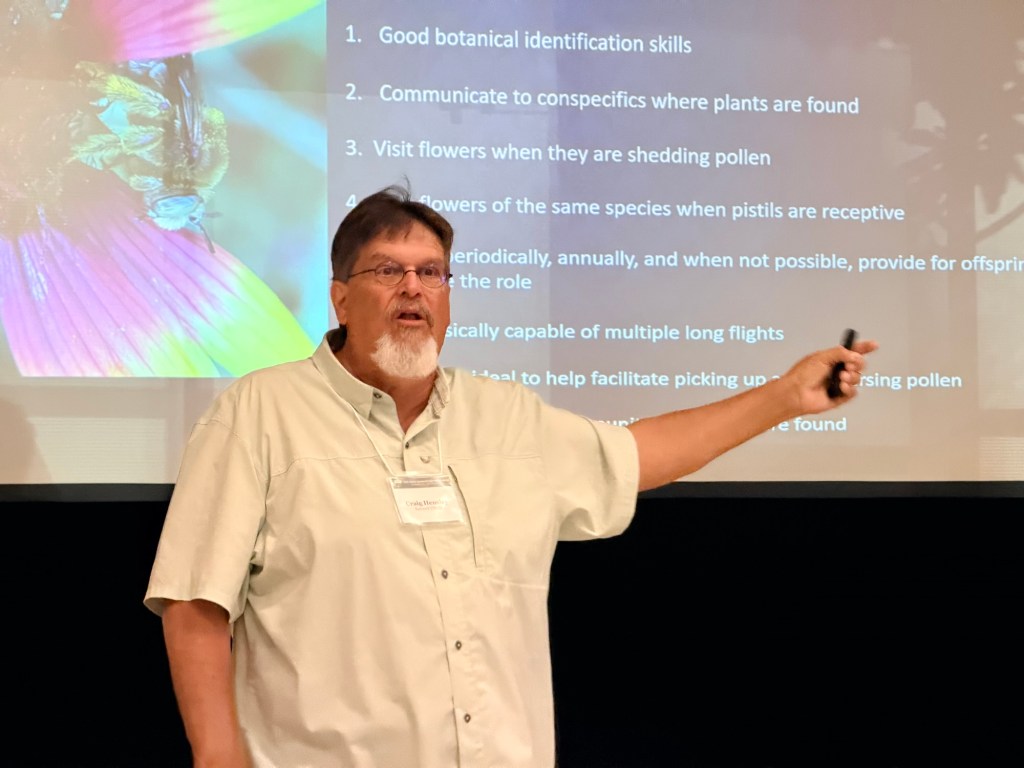
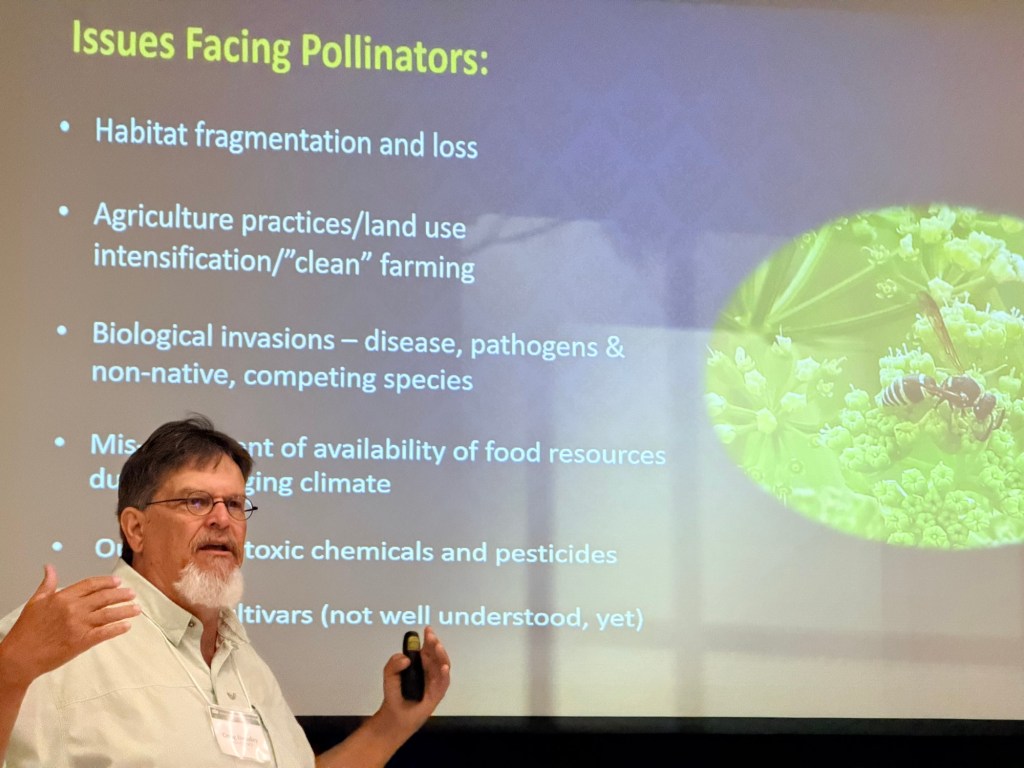
It was great to see Craig Hensley, who retired last year, come back to present a very interesting session on the best plants to attract pollinators and who those pollinators are likely to be. I learned so much about how beetles, bees, wasps, and of course butterflies/moths pollinate plants. He had nifty data, too. I know what I’ll be planting!
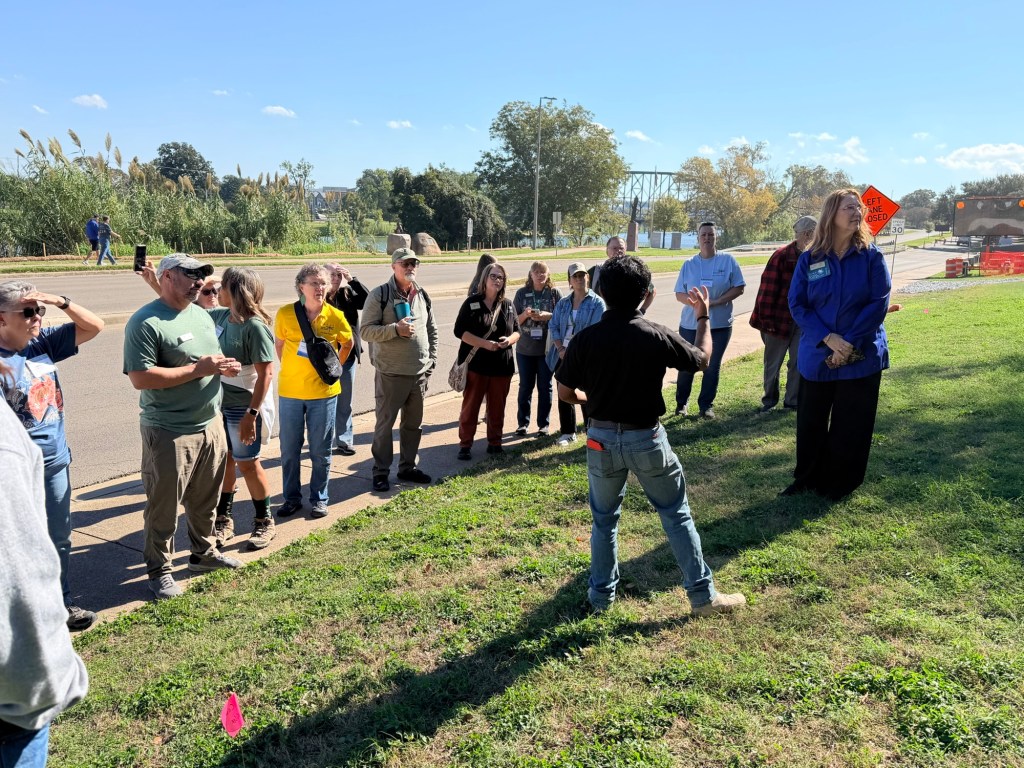
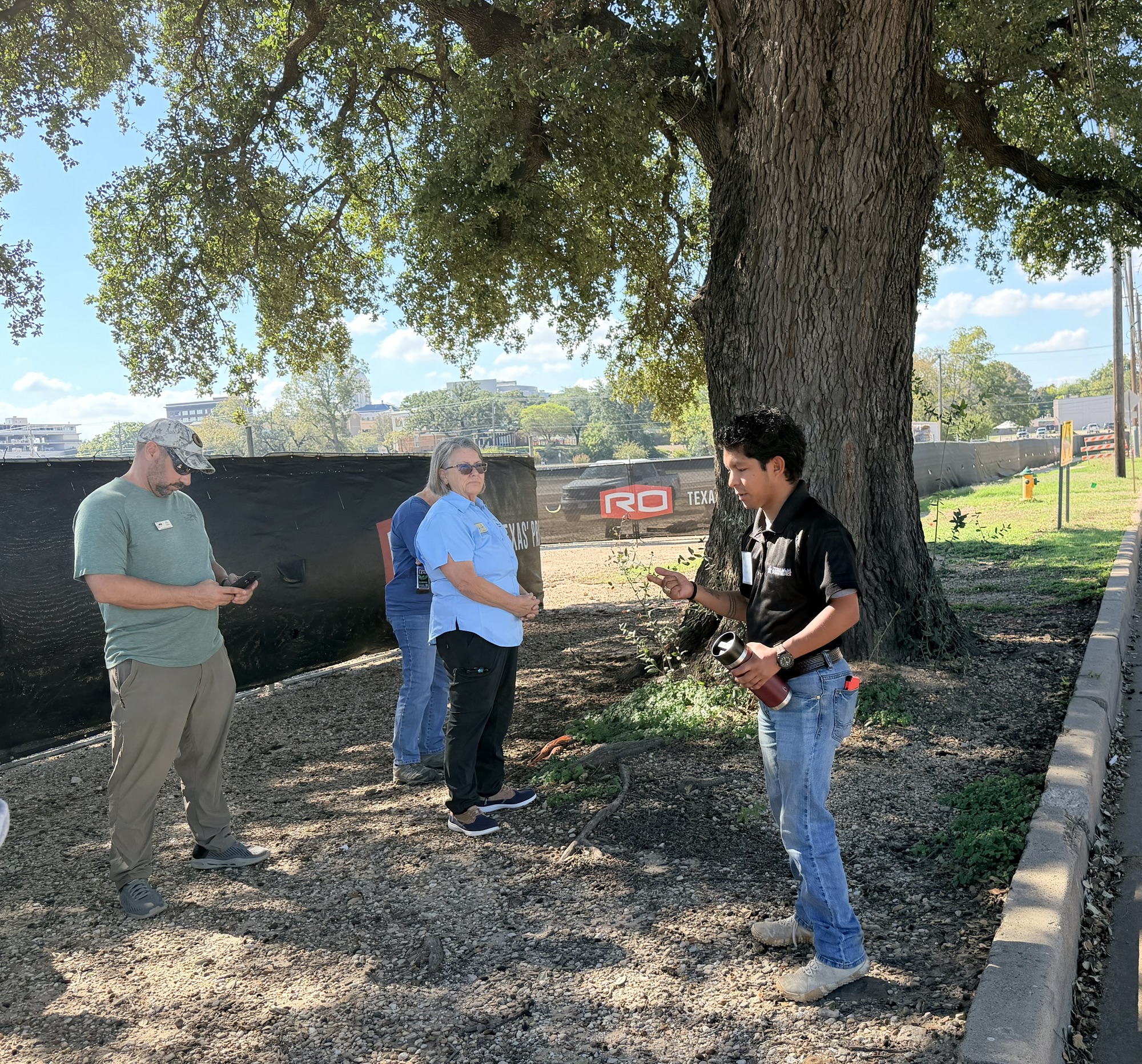
The next session I attended was on the Heritage Trees of McClennan County. It was led by an impressive young Mexican American man who is both an arborist and a firefighter. We learned about this program to save local trees, then went on a field trip just down the road to see a few of them.
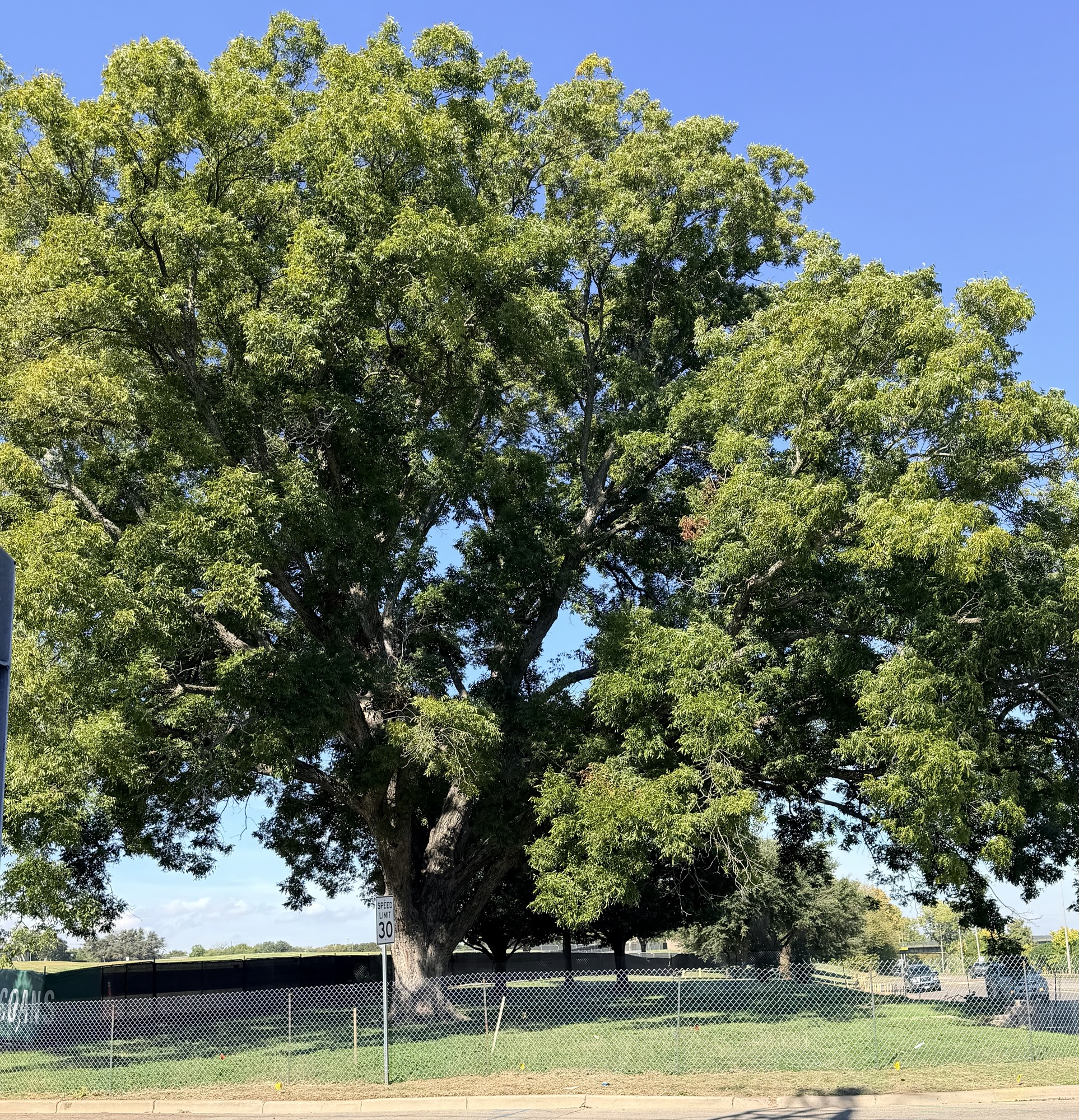
Hector showing us a huge pecan.
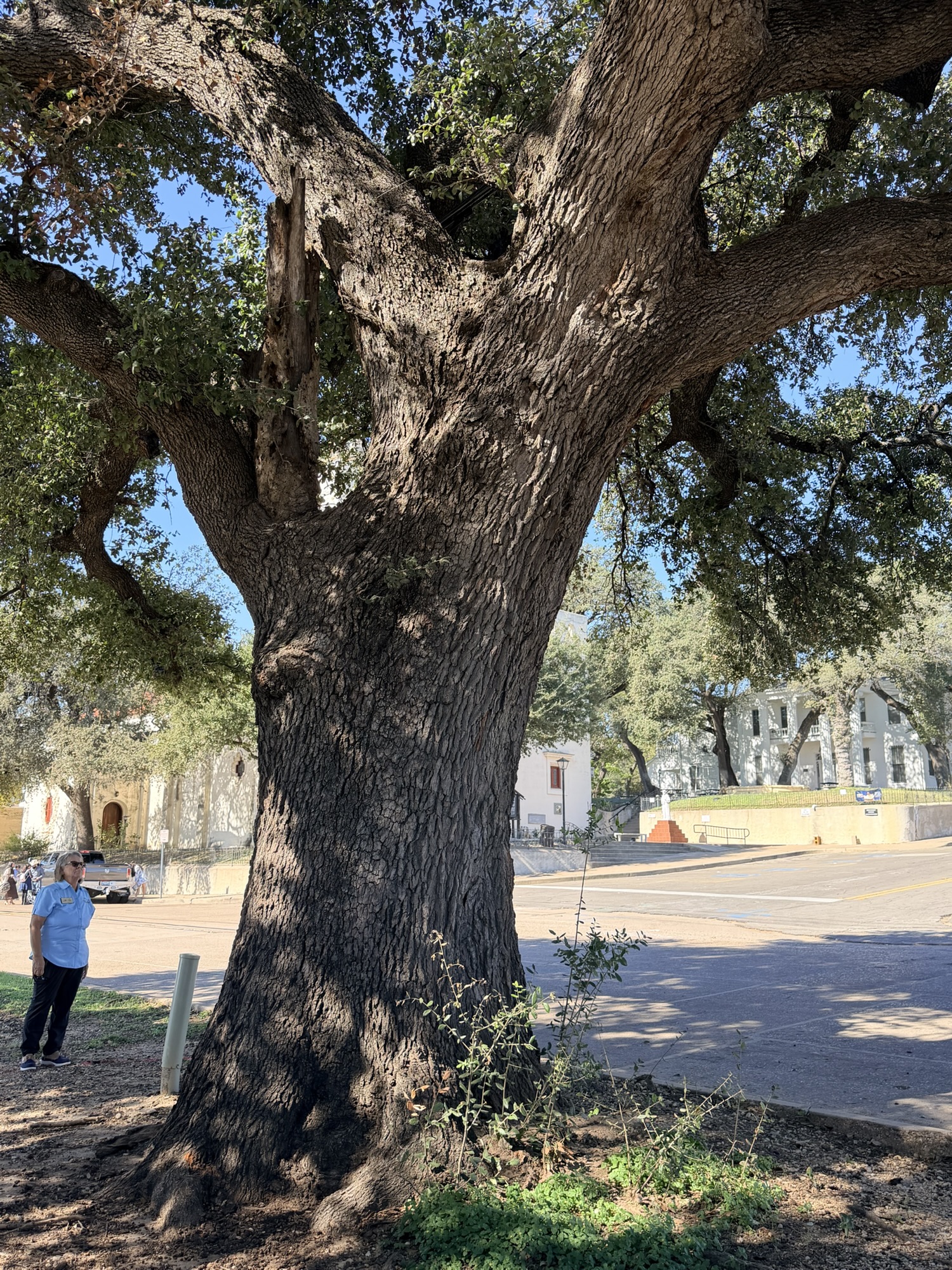
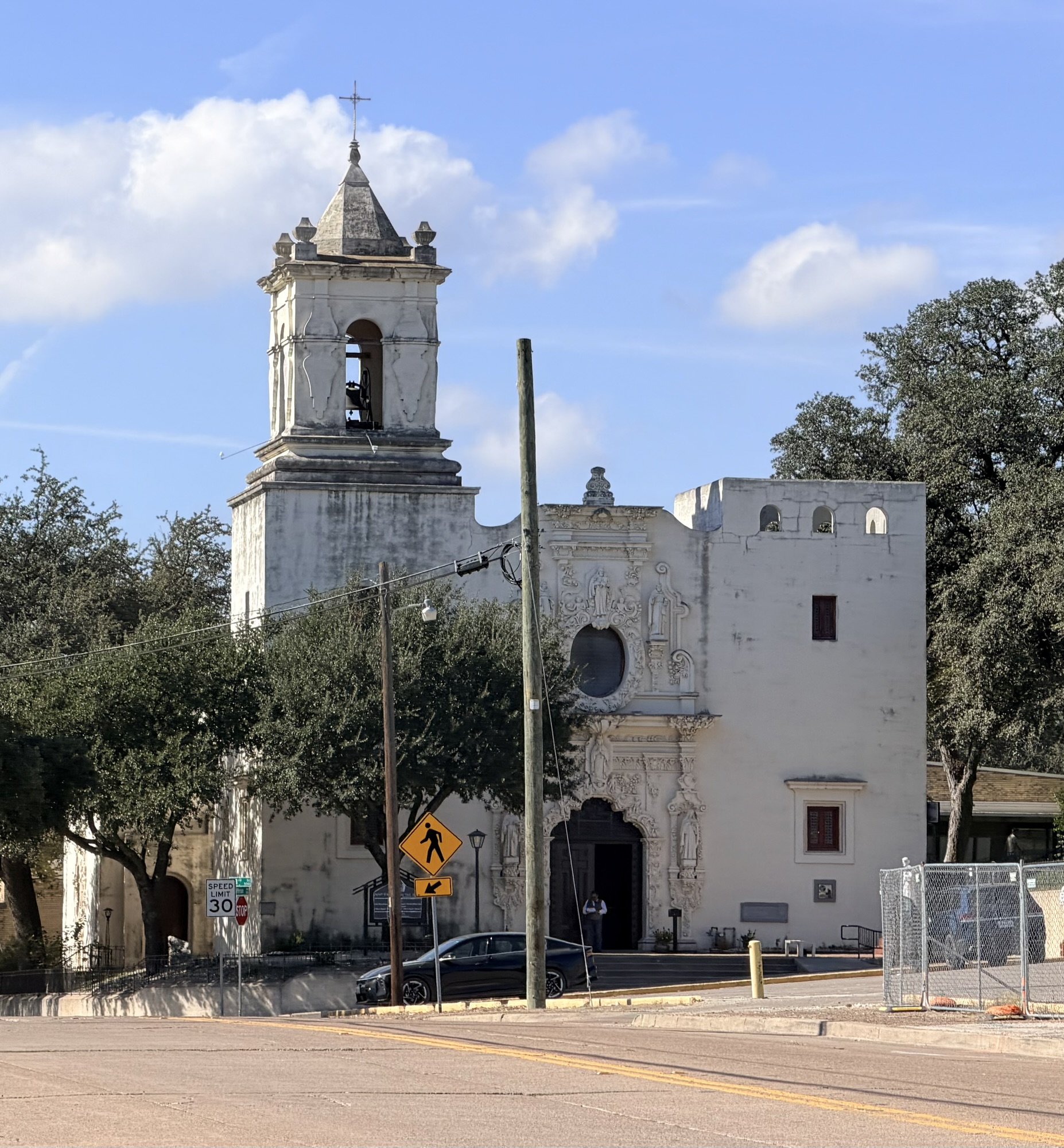
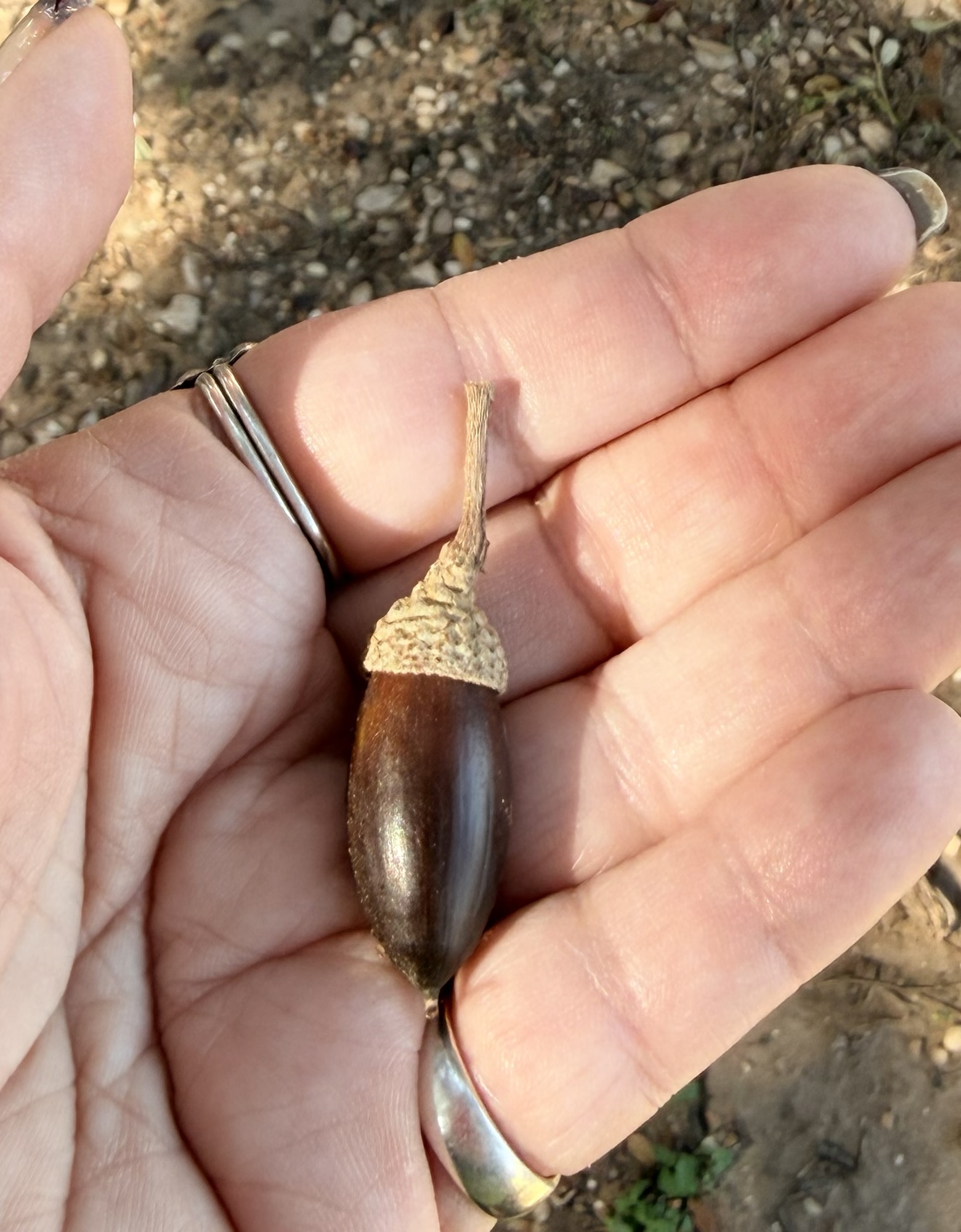
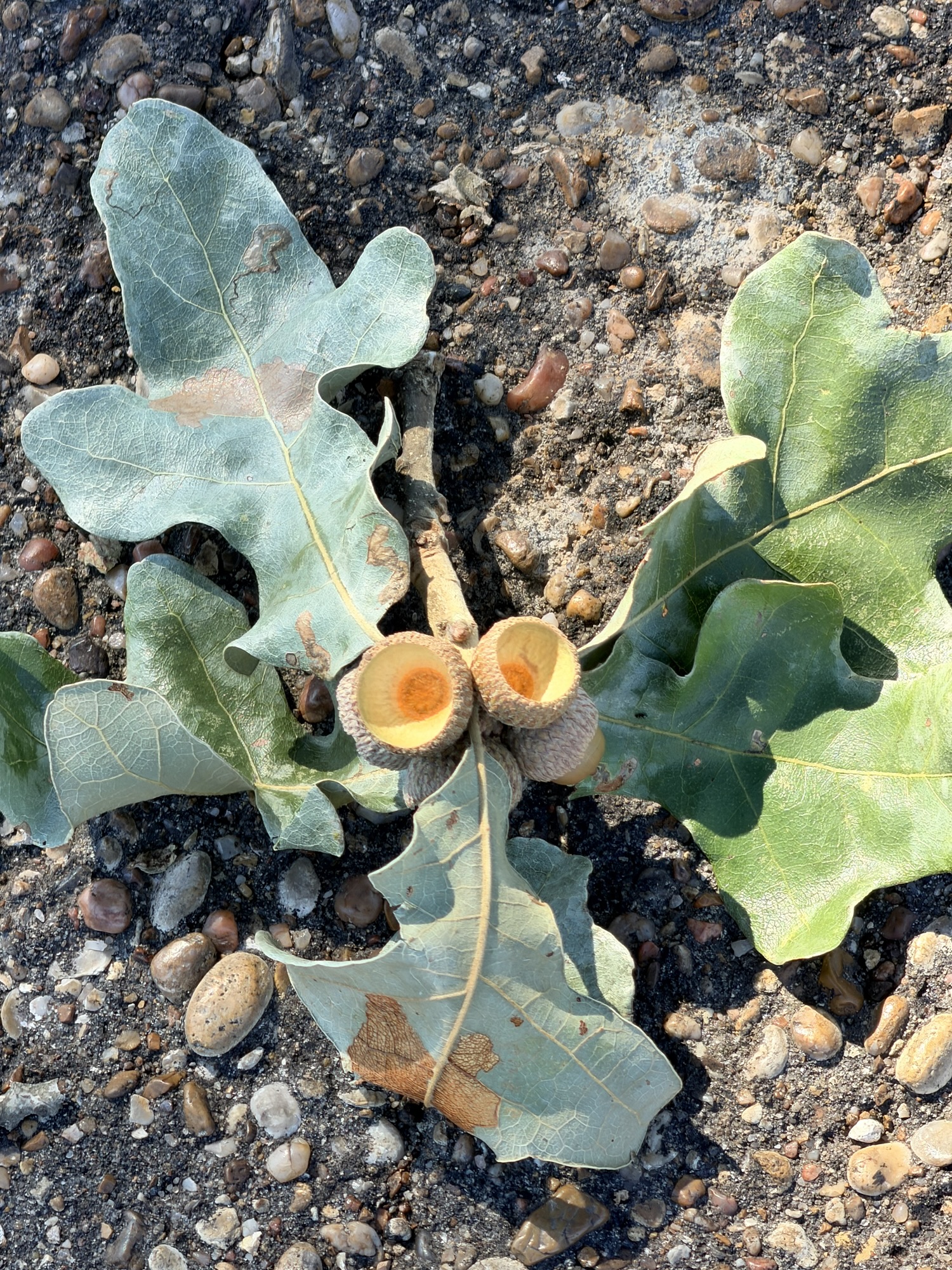
We visited the St Francis Oak, near a historic church and learned that it’s in the middle of a future road. Hector explained options for saving or preserving its heritage. I took a few acorns.
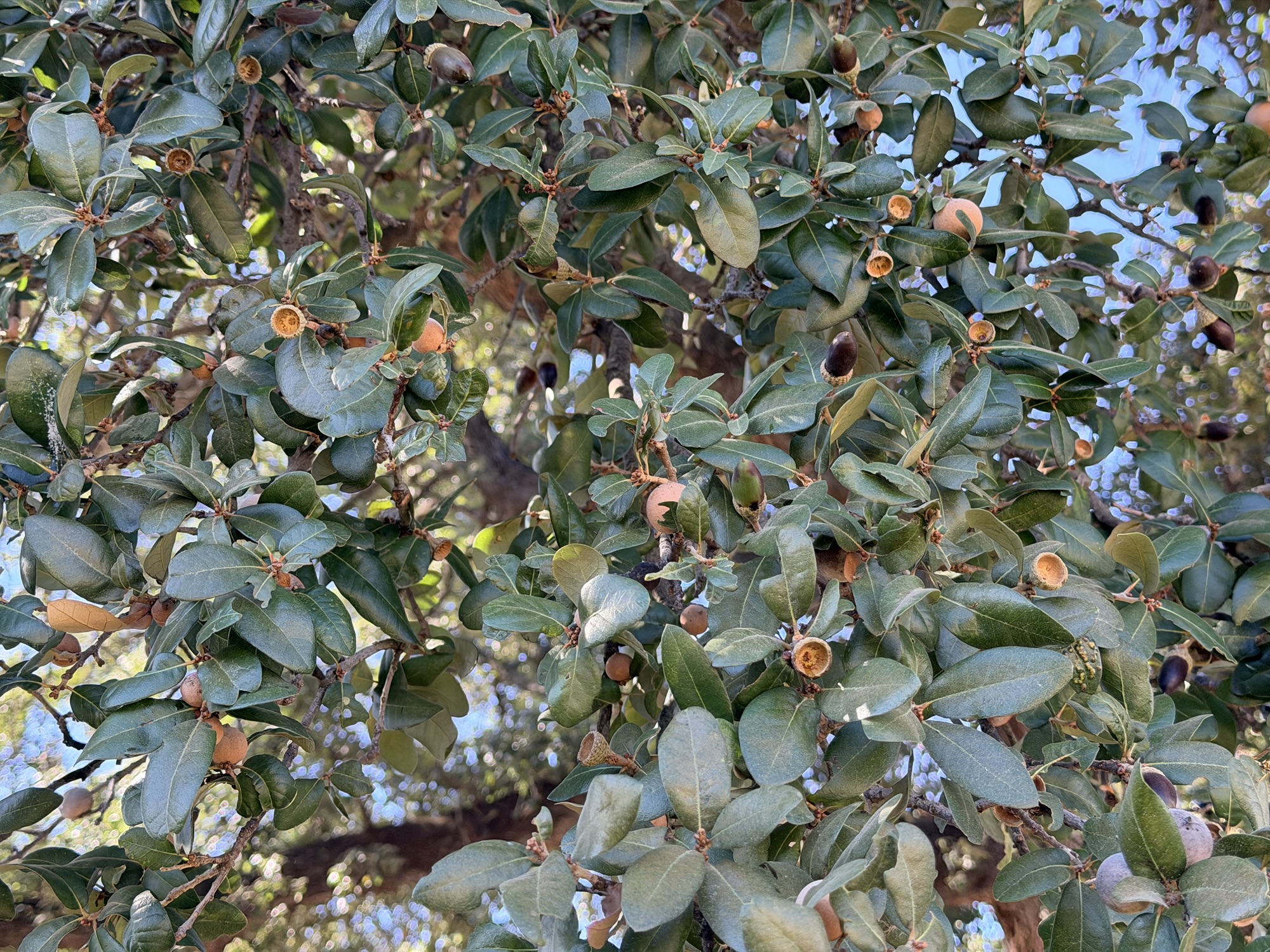
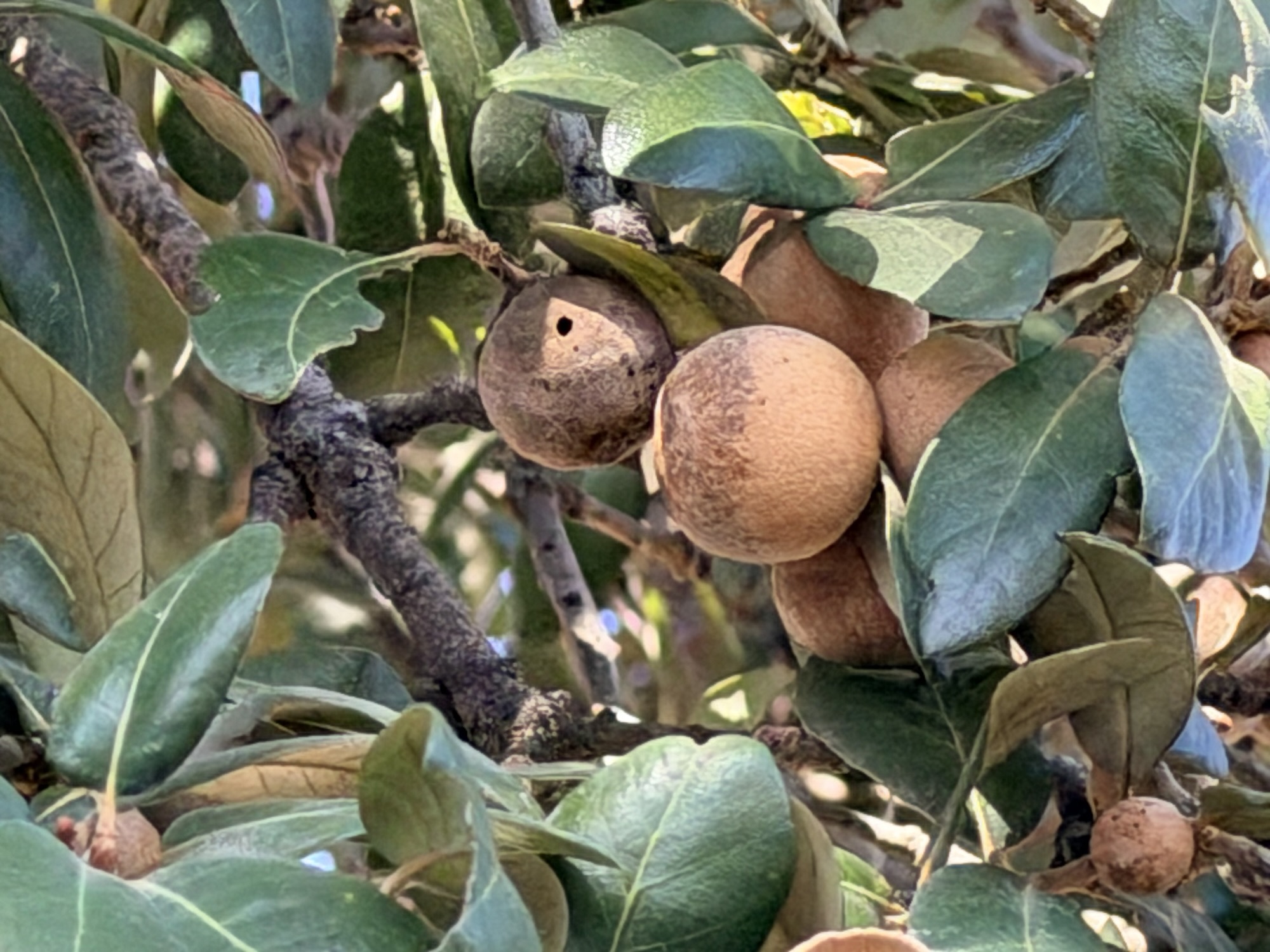
The huge pecansThe St Francis Oak, over 150 years oldEarly Waco churchLearning about the tree An acornThe tree is full of acornsThere were also many oak gallsThis tiny bee reminded me of the pollinator session
On the way back to the convention center, I took pictures of every plant I could find for the Pollinator Bioblitz. Might as well kill two birds with one stone (though I am not a bird killer). There were no exciting discoveries along the urban sidewalks.
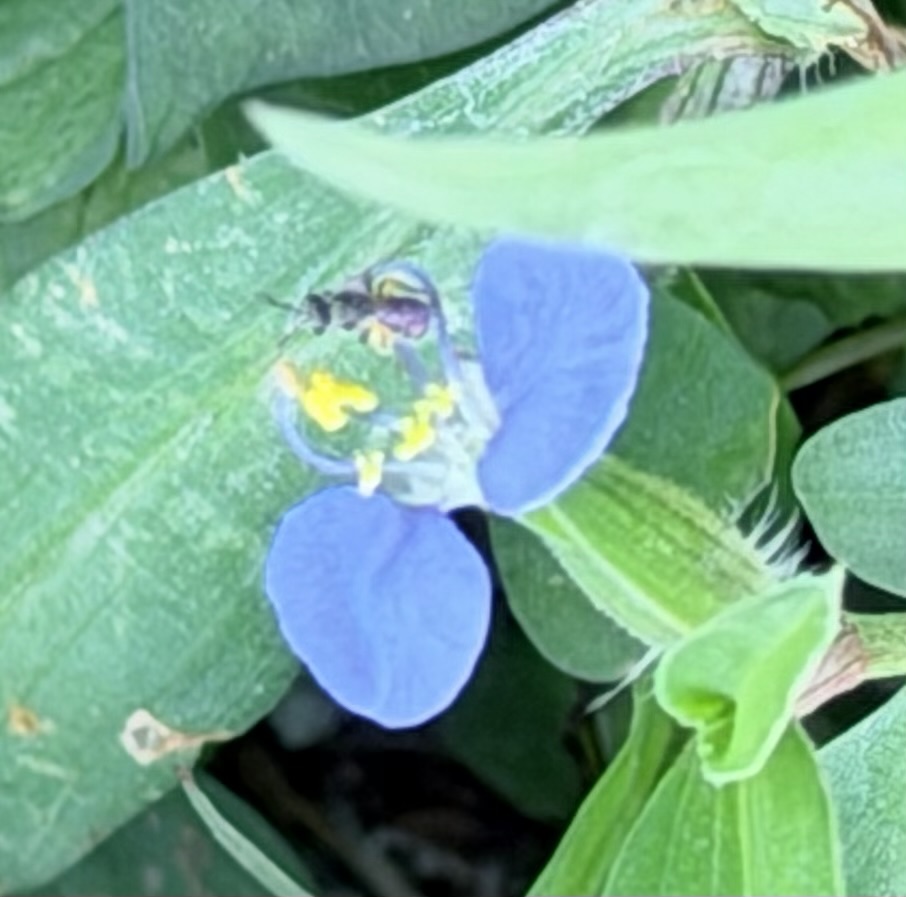
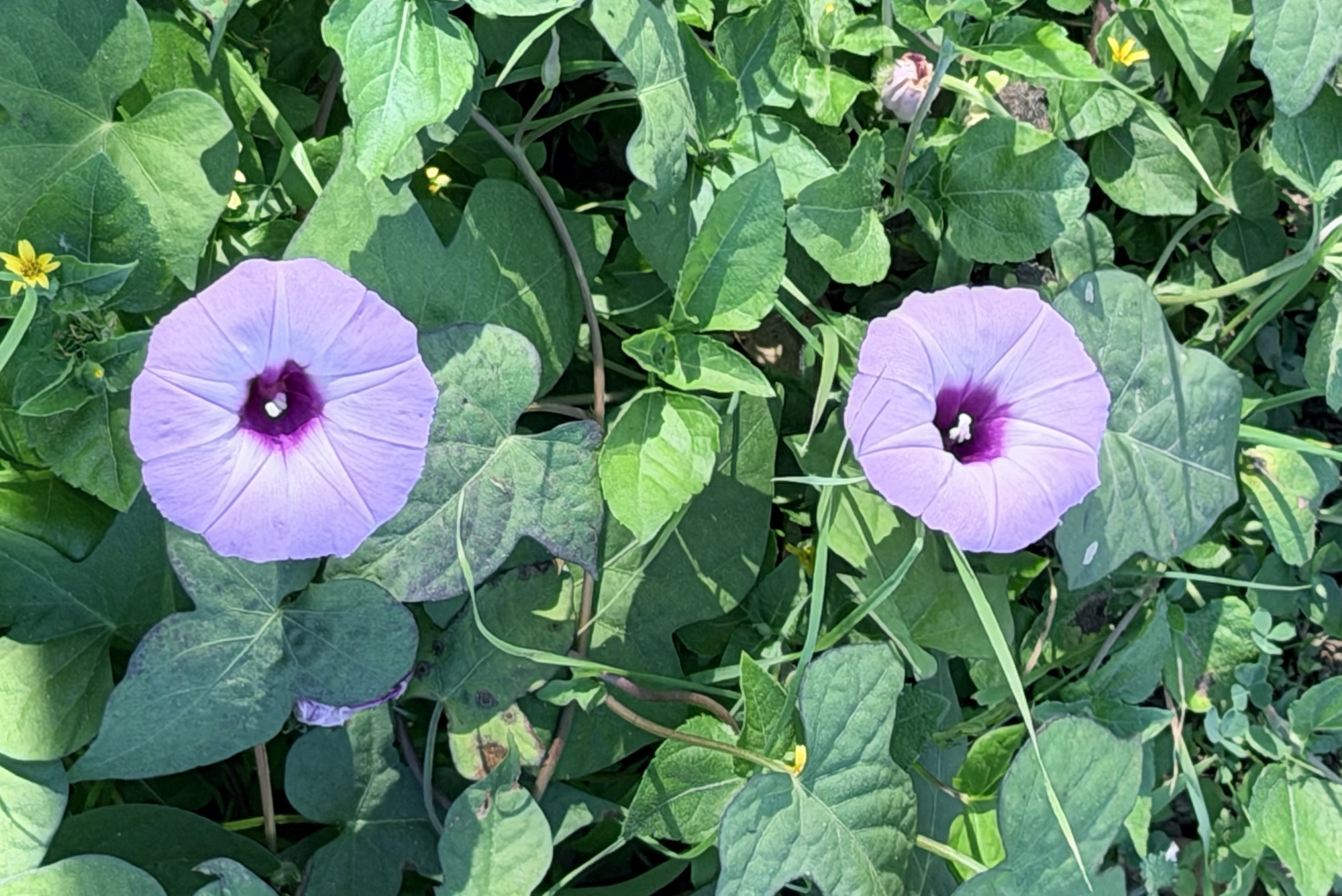
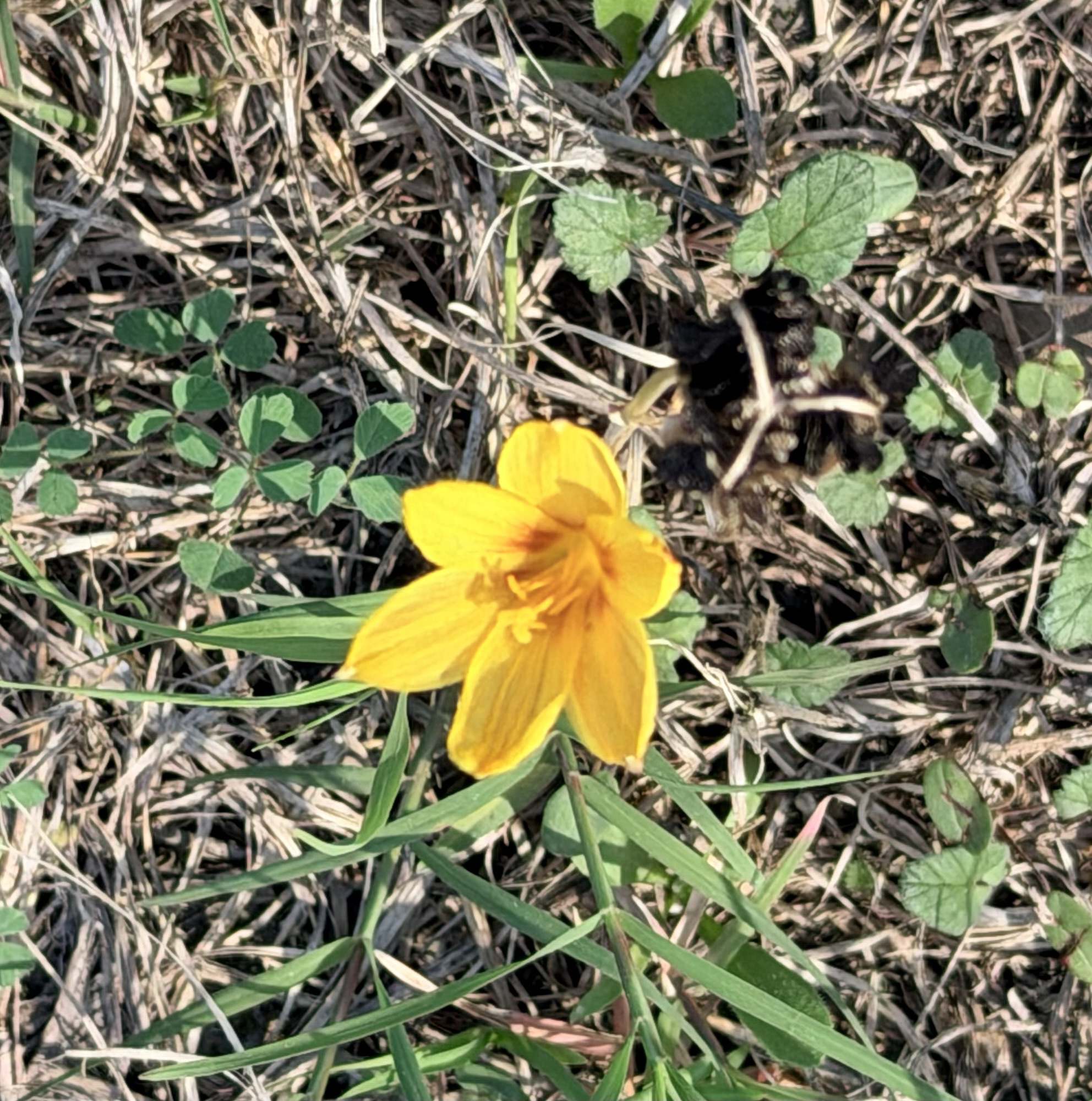
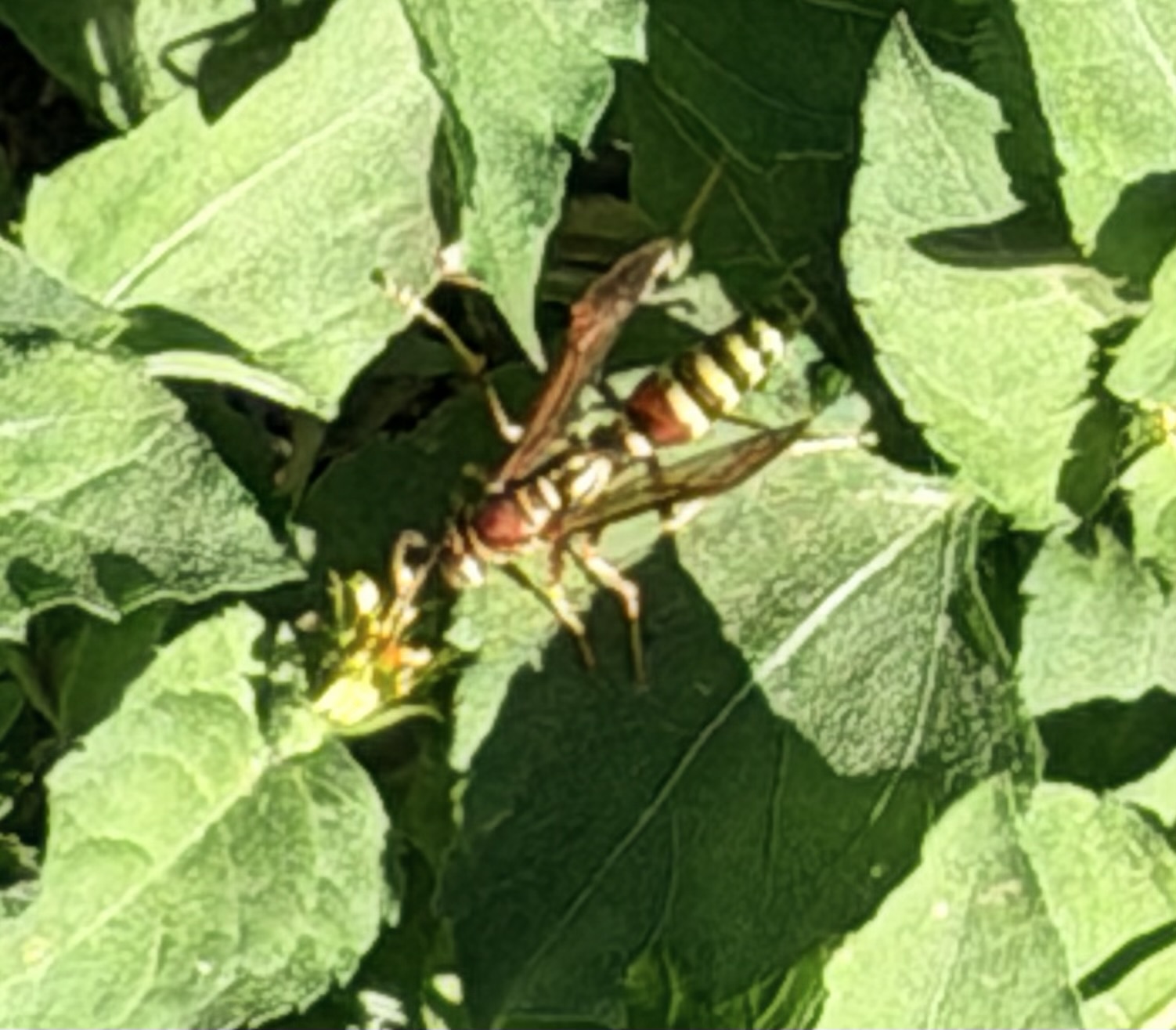
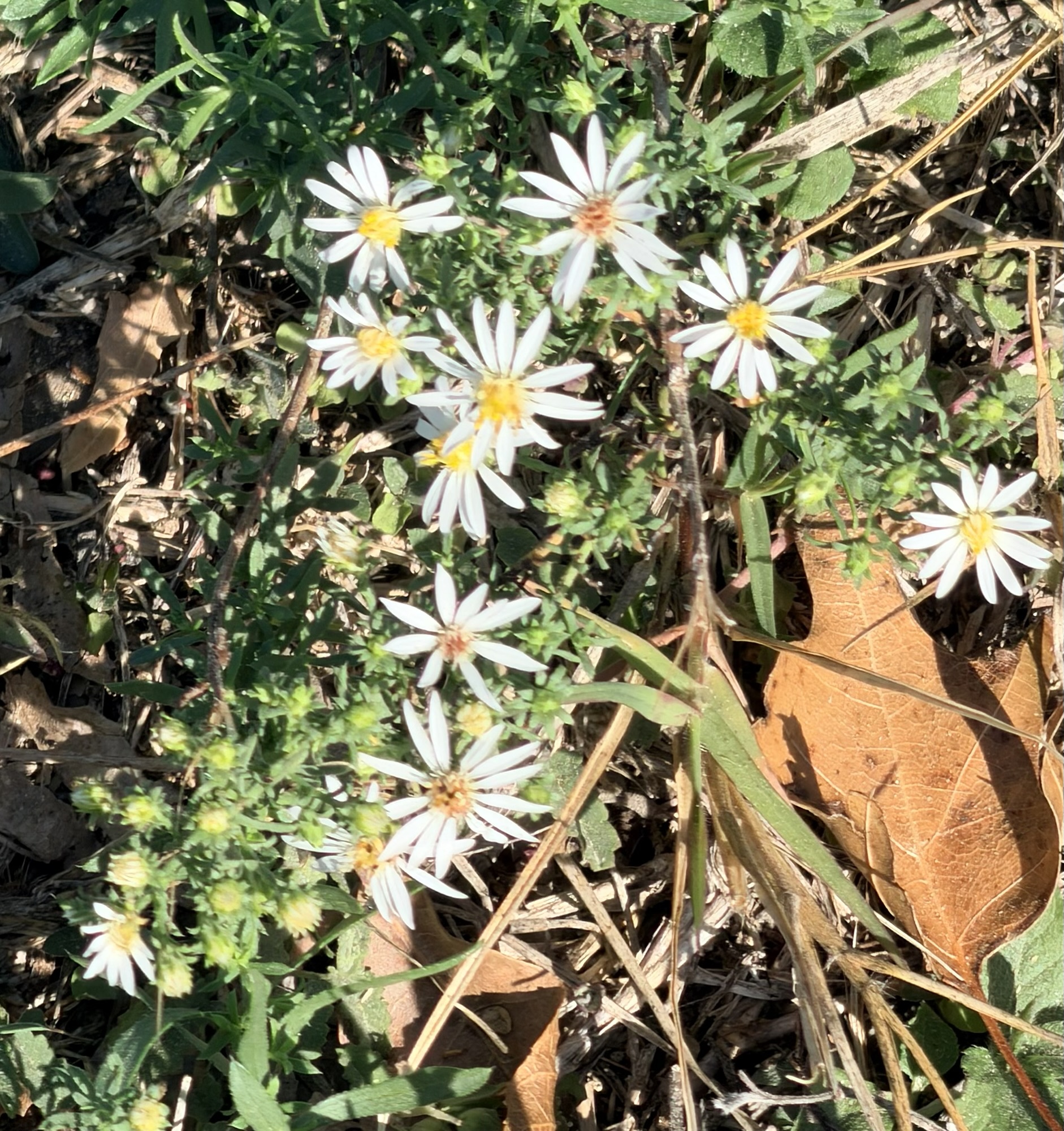
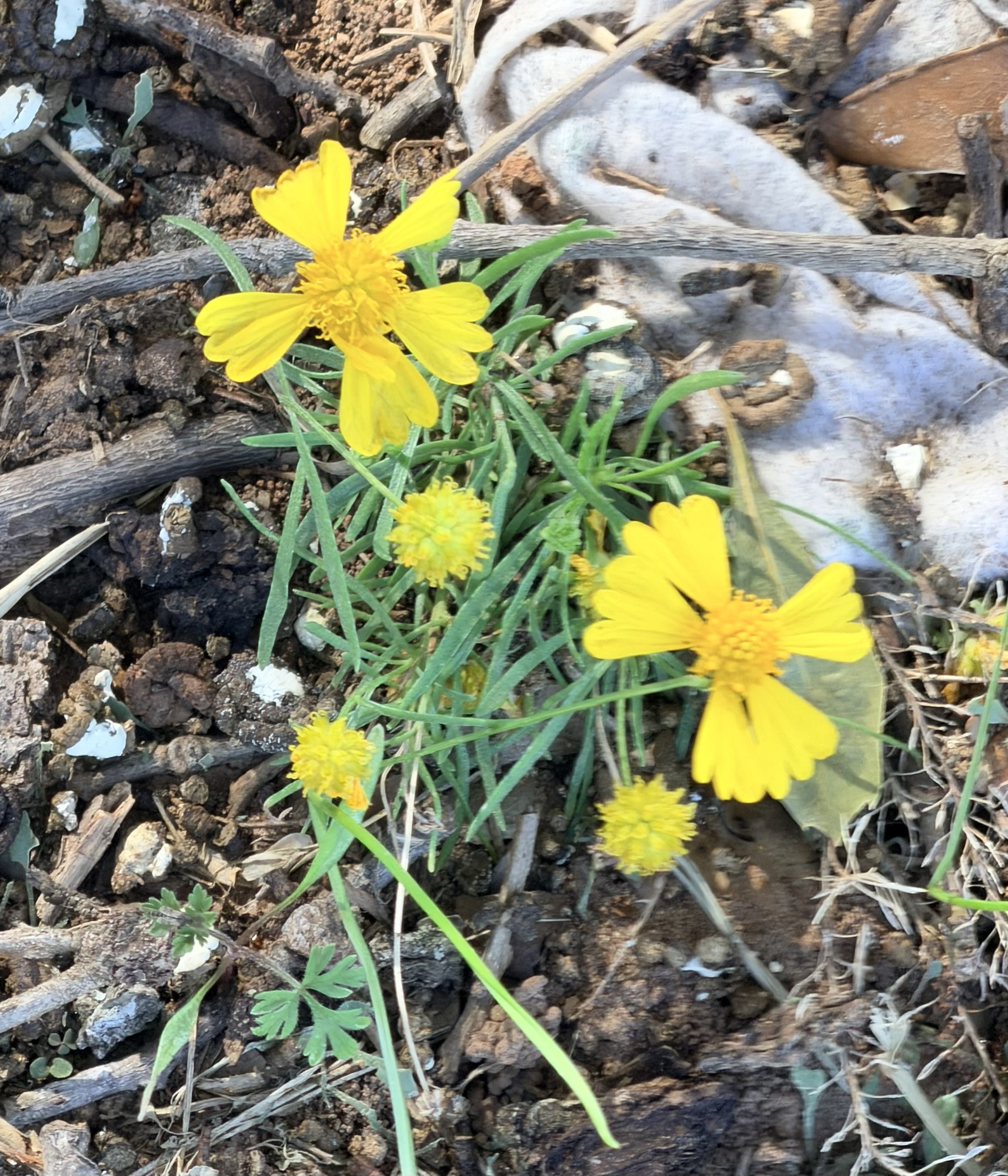
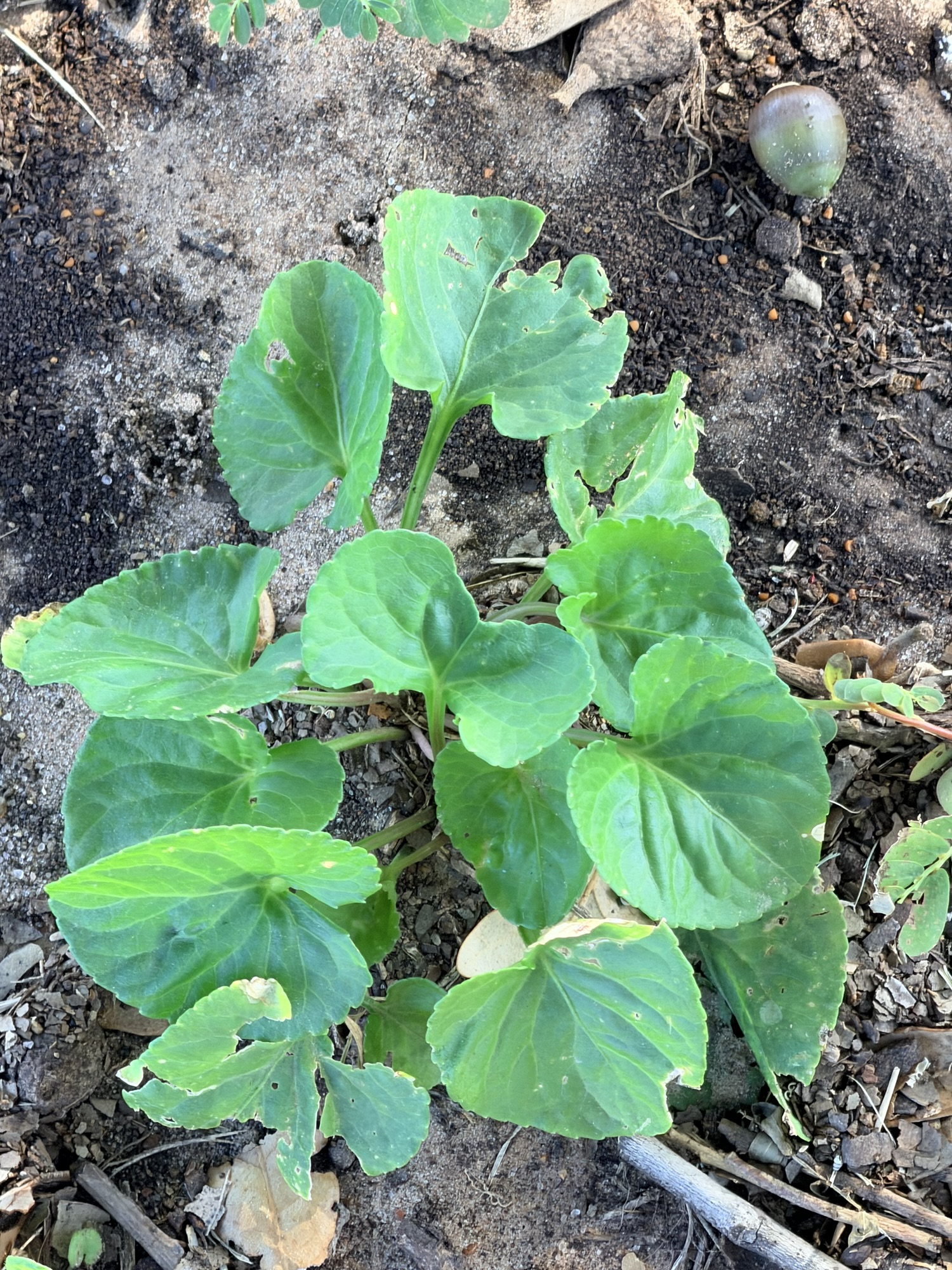
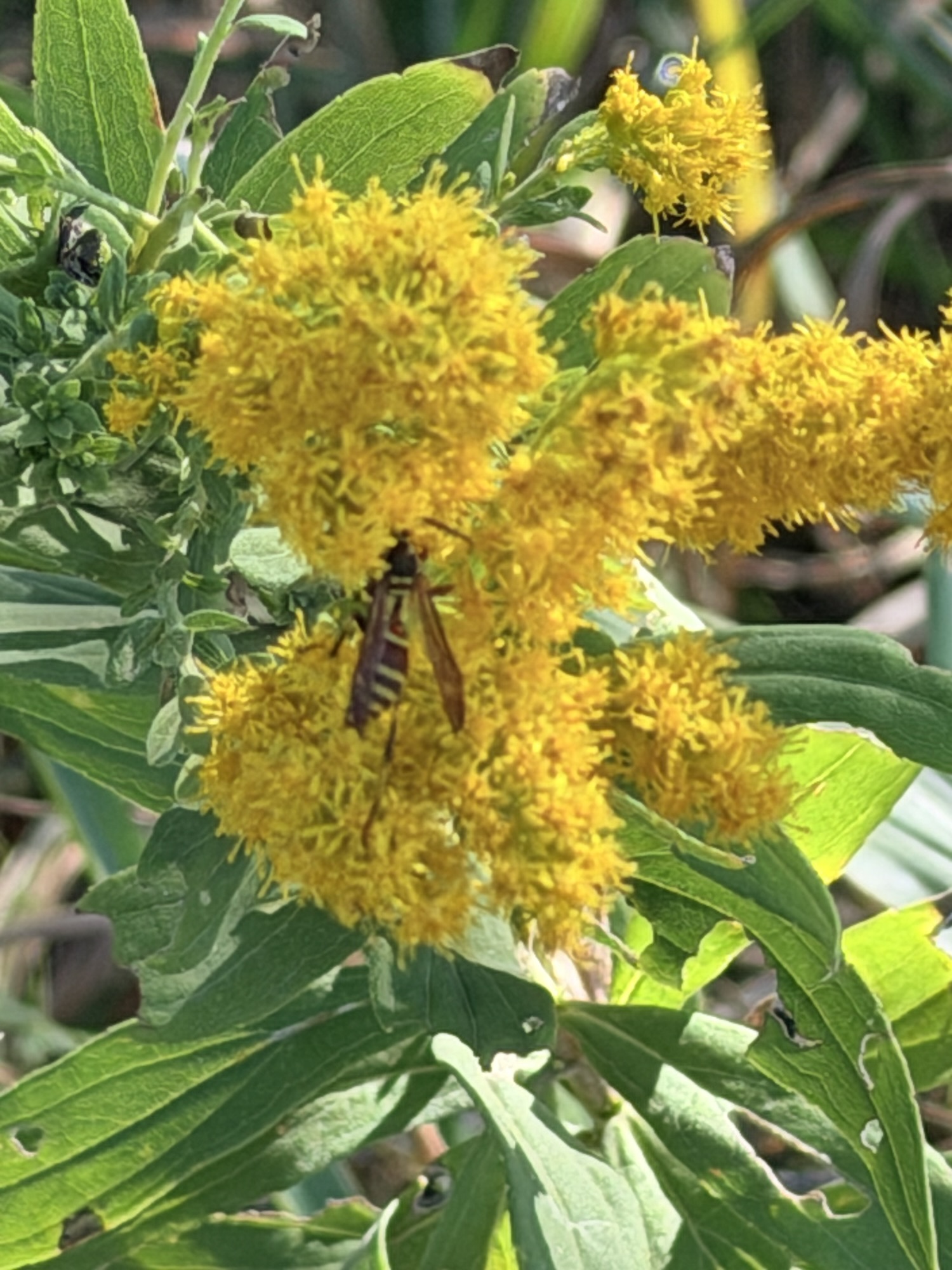
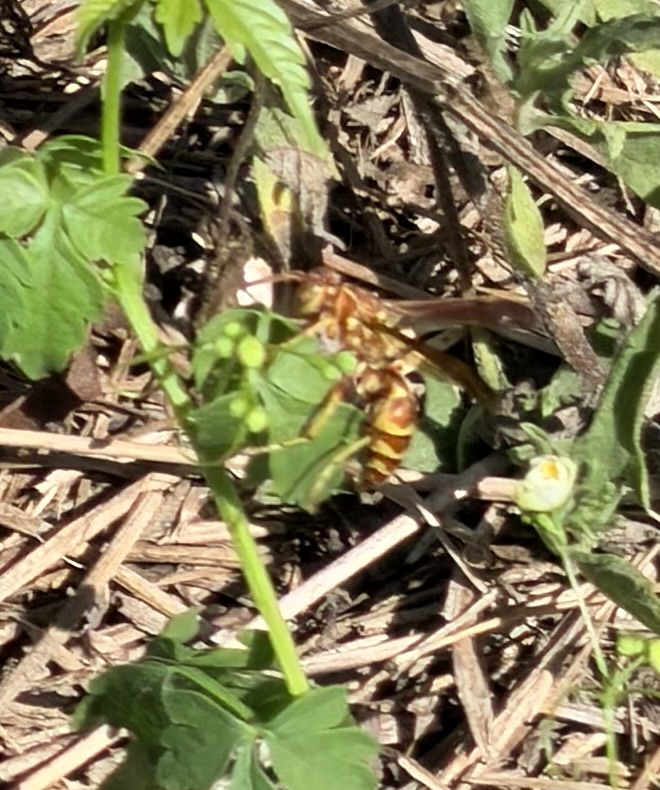
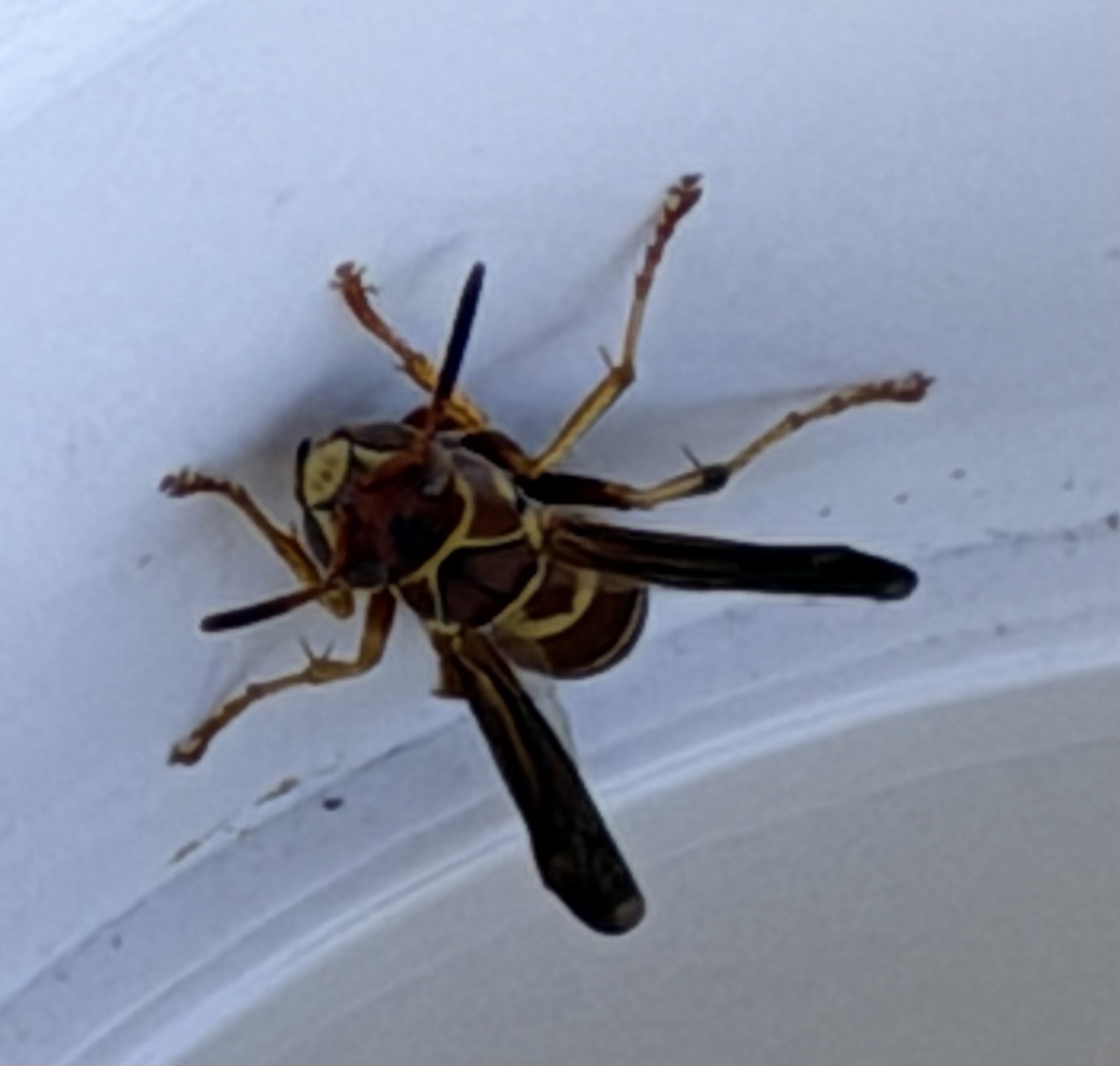
Tie vineCopper Rain lilyGuinea paper waspHeath asterBitterweed Violet
Lunch was good but they ran out of pasta and carrots. The servers were all very nice, though. Afterwards, I went to a session on who should care for wildlife. I got distracted because he used speech to text and it was really bad. He’s trying to be accommodating but I don’t think a hearing impaired person would have been able to figure out what the talk was about due to mistakes. Mike said it’s free software, so you get what you pay for.
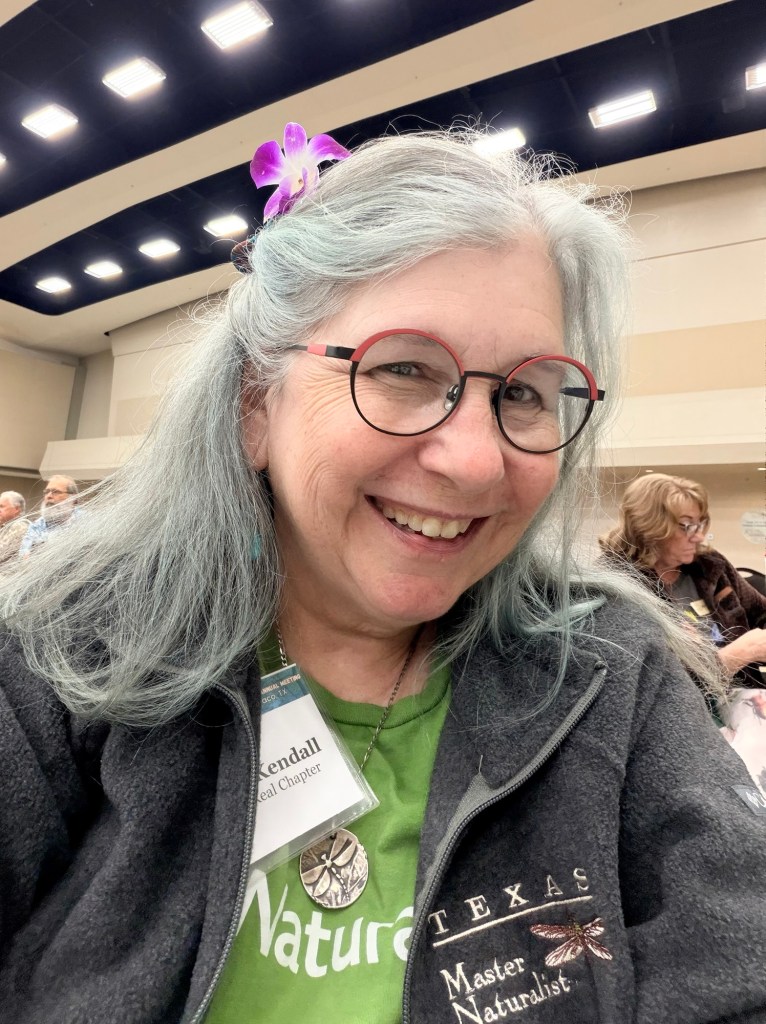
I got no photos in that session, so here’s me with a lunch flower in my hair.
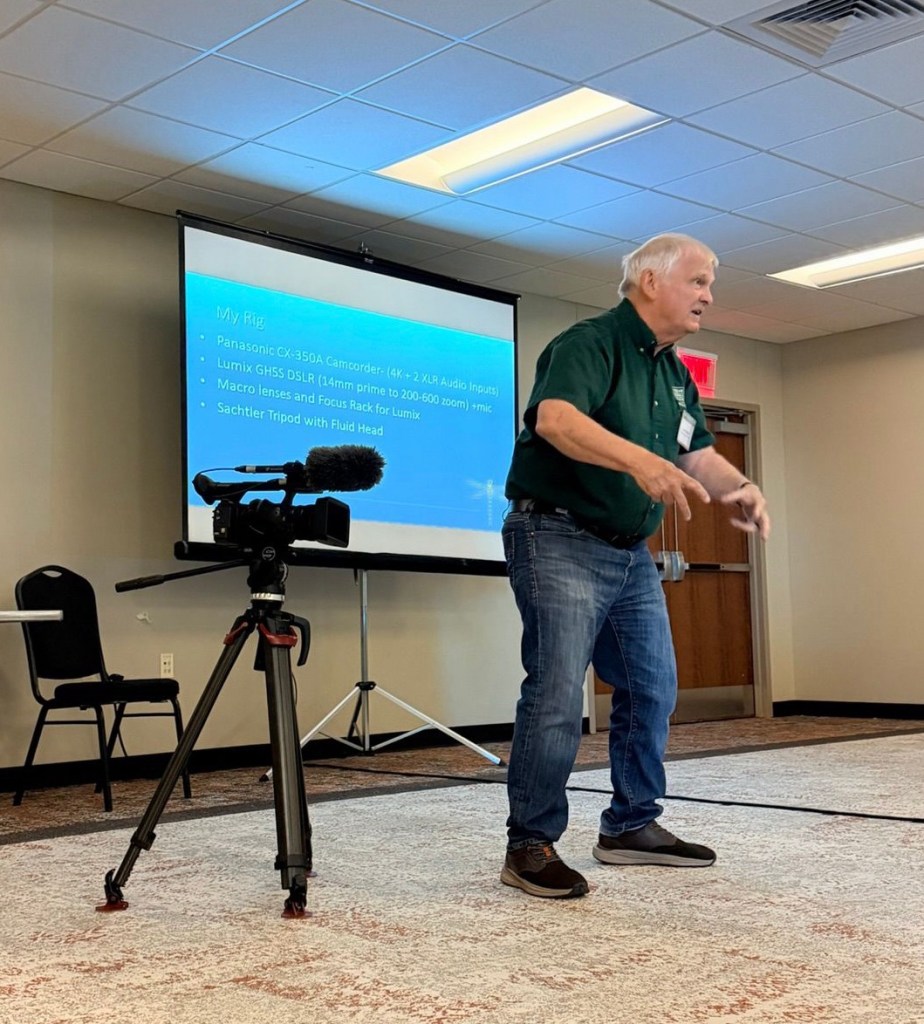
Onward to more learning. A session on techniques for nature photography, especially film, was really good. I learned lots of techniques to use in the future. The speaker has had a long and interesting career in television and film, including the television show for Texas Parks and Wildlife. Now he takes all our official photos, too.
Lee showing us how agile you need to be to get good nature shots.
I really didn’t care about his content too much, because I enjoyed the film clips he shared of ducks, cranes, deer, snakes (one drinking, so cool), and bats. His examples were so helpful!
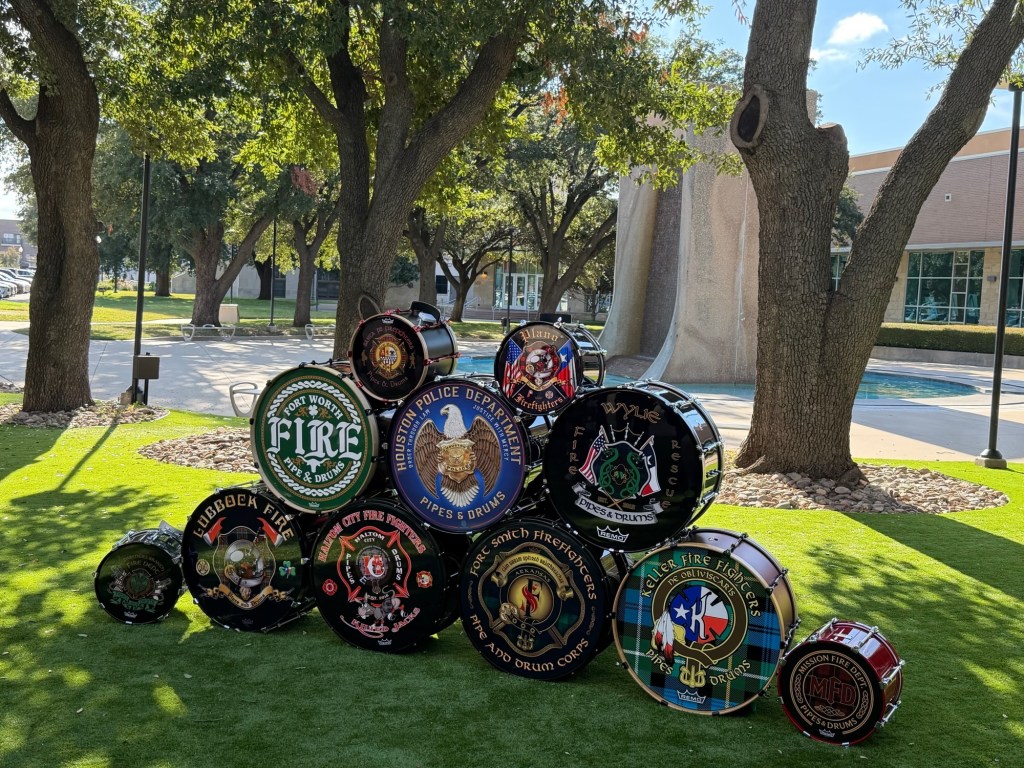
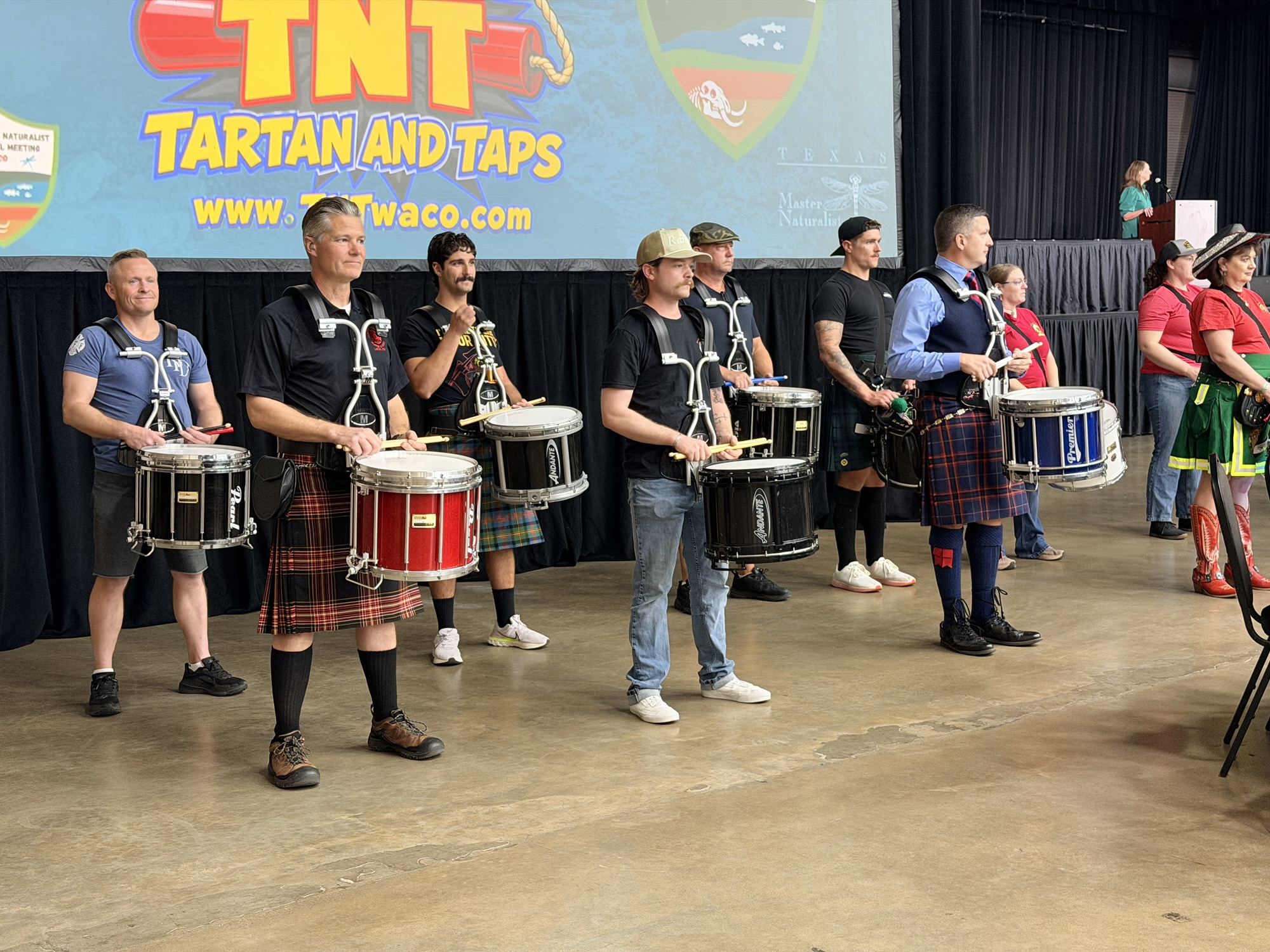
Drums, a hint of things to come.
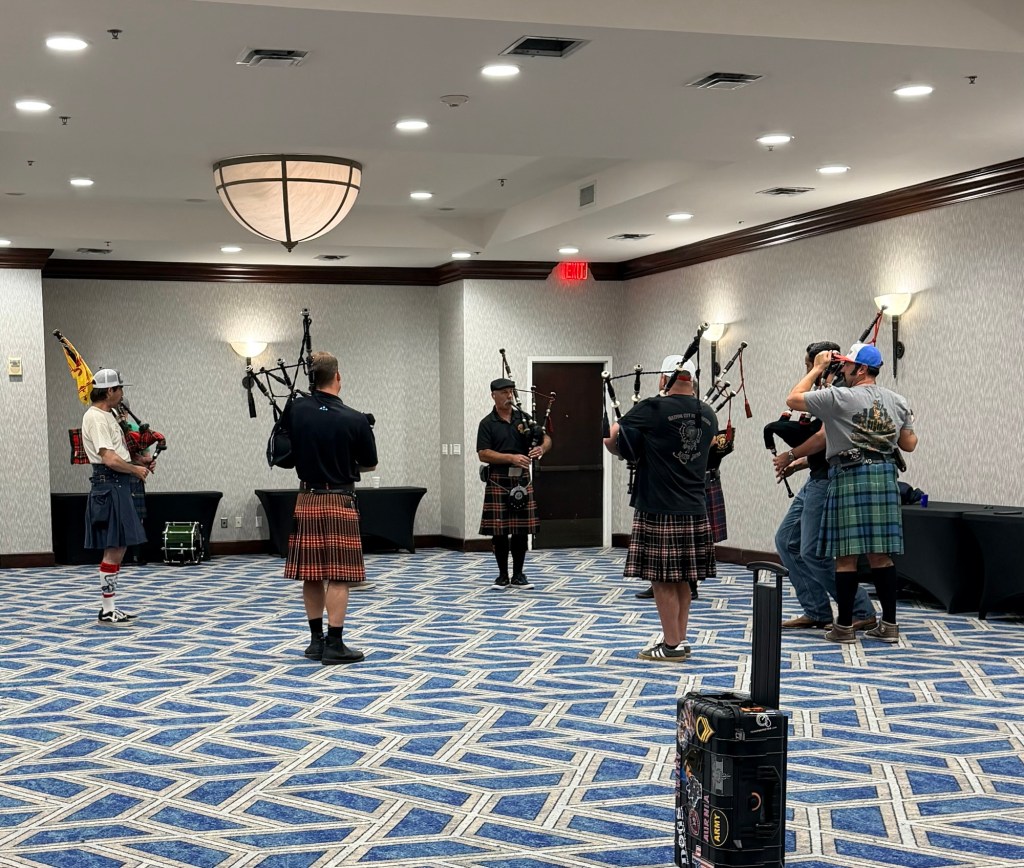
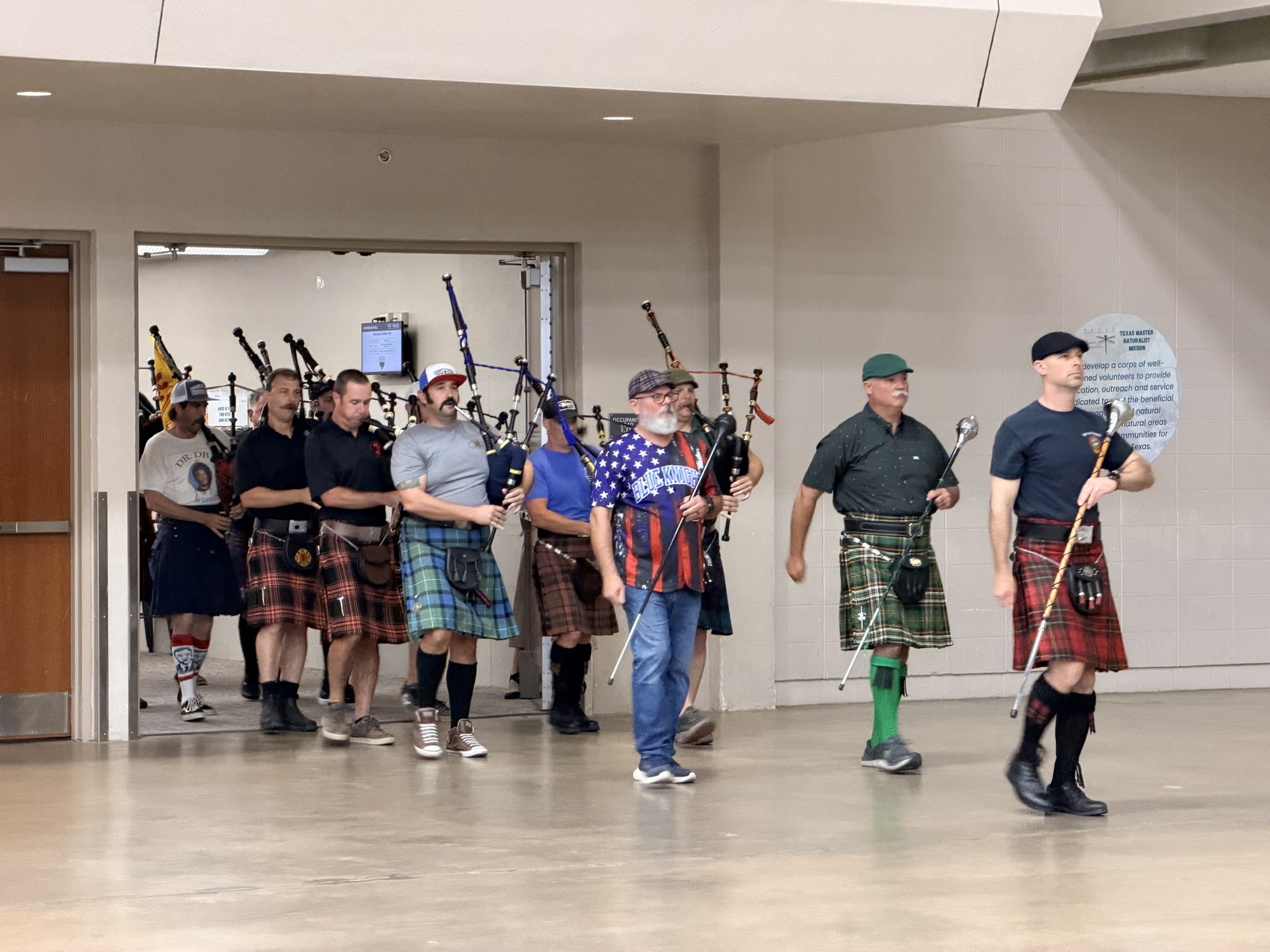
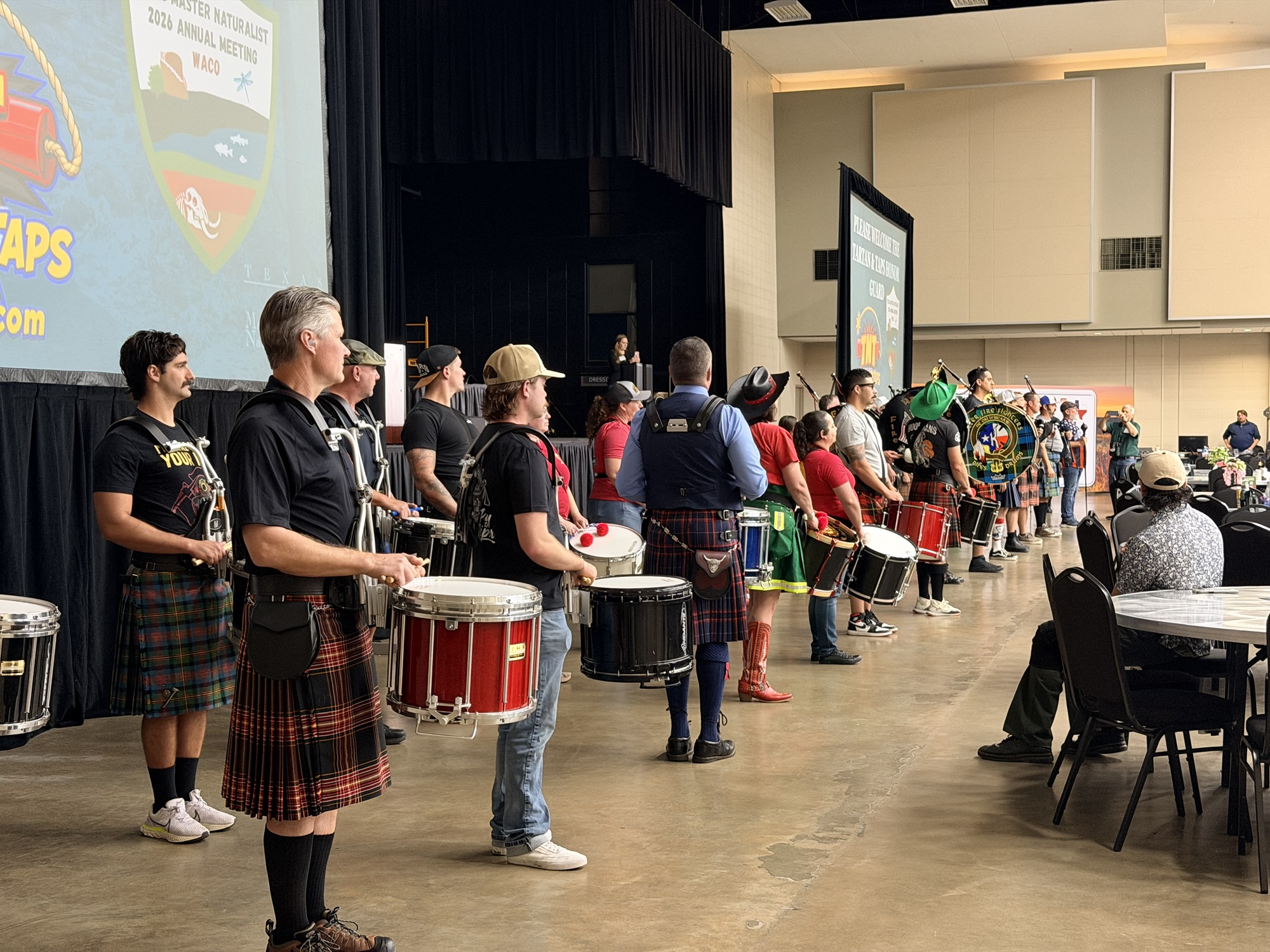
Some of our group went over to the Hilton bar to relax before dinner and enjoyed listening to bagpipes and drums rehearsing down the hall. They were part of a group of firefighters and I think police from around the state that performs at funerals and other ceremonies. They were giving seminars to other groups or something.
Rehearsing
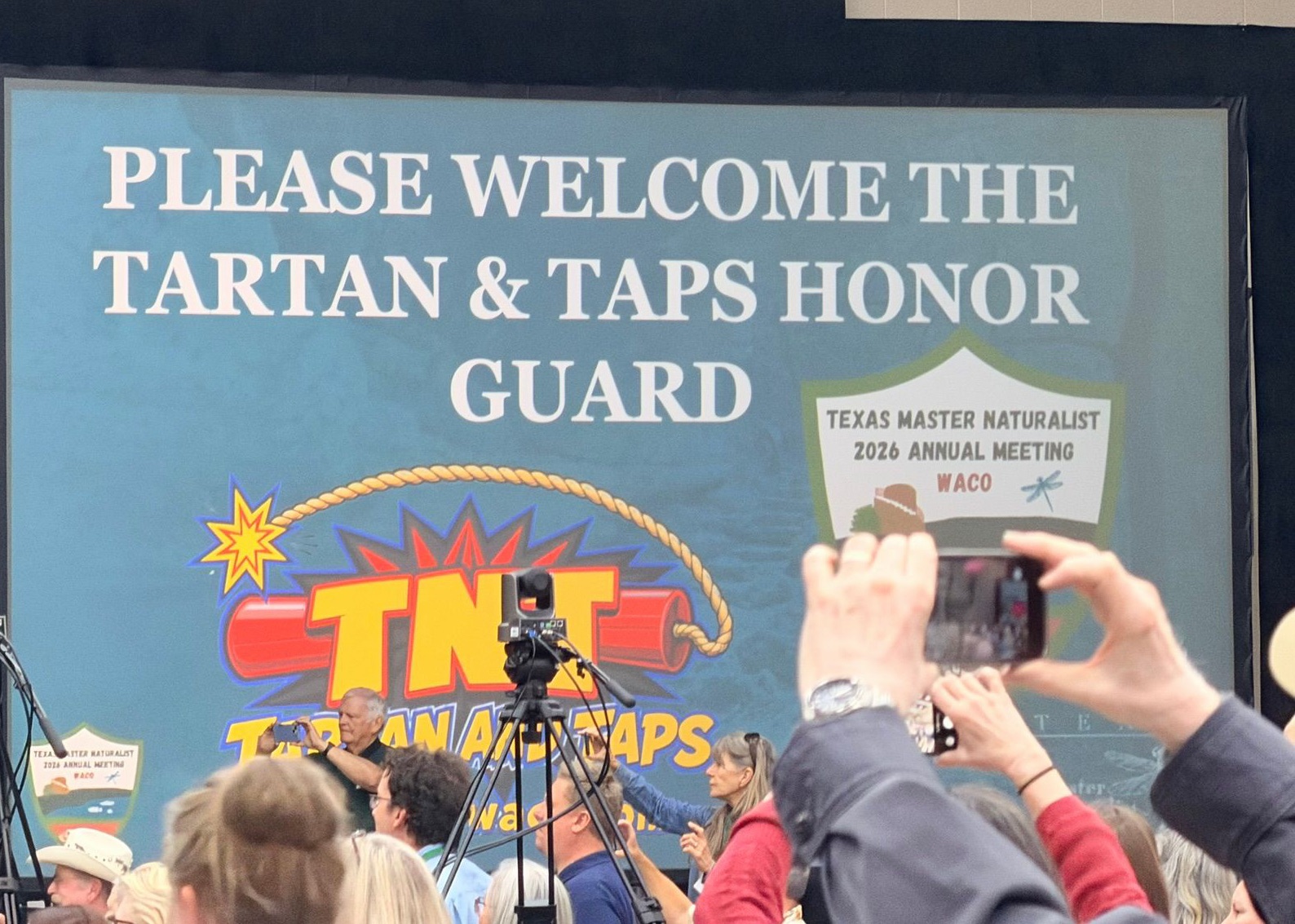
We were delighted to be surprised by a performance by the group before dinner! They’d agreed to do it on the spur of the moment when asked by our leadership. It was so good. All the flourishes and pageantry made me quite emotional.
I managed to film a bit of them marching out. So much dedication it must take to learn all this, and how good of them to honor the fallen.
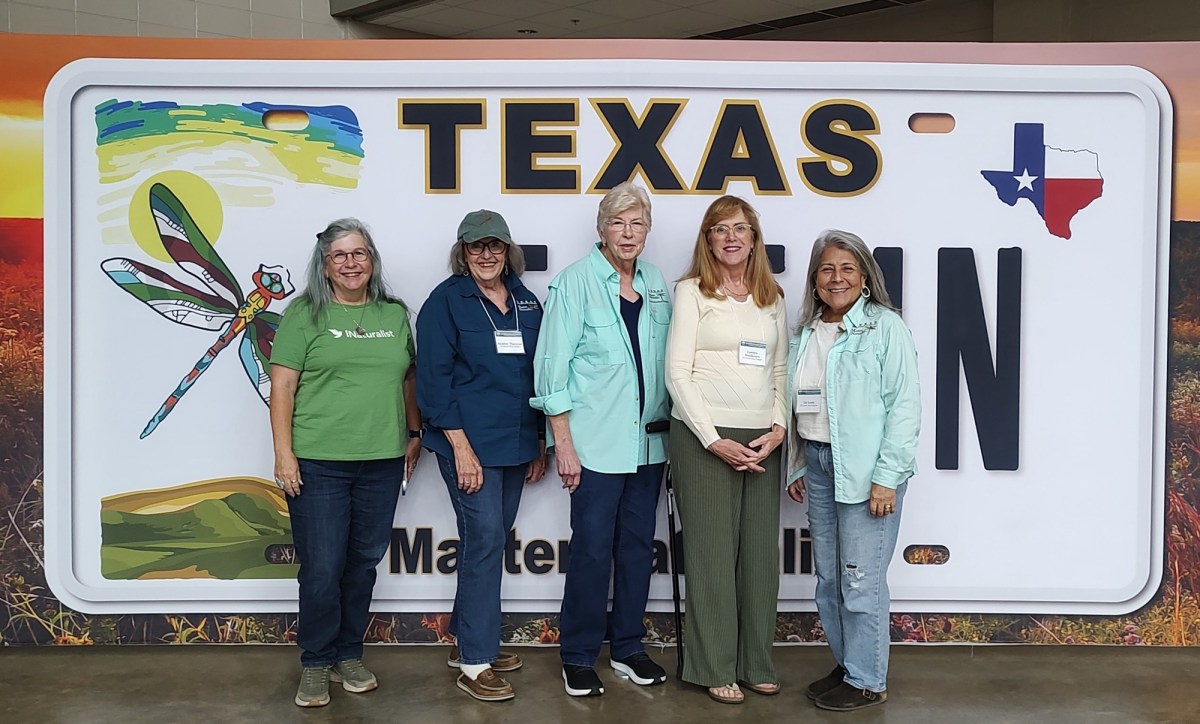
To continue the night on a high note, the food was good tonight and there was plenty. We even got a few group photos.
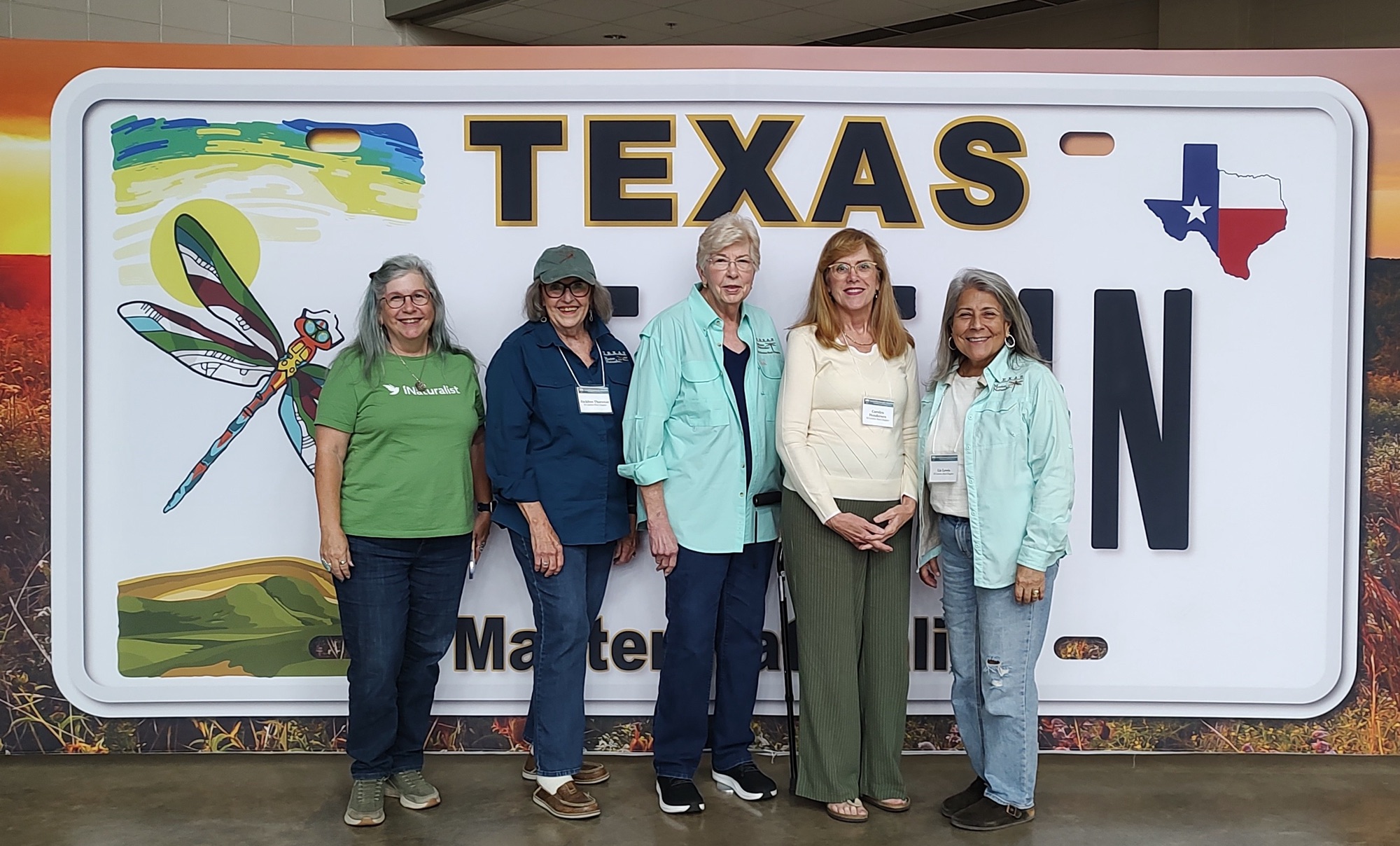
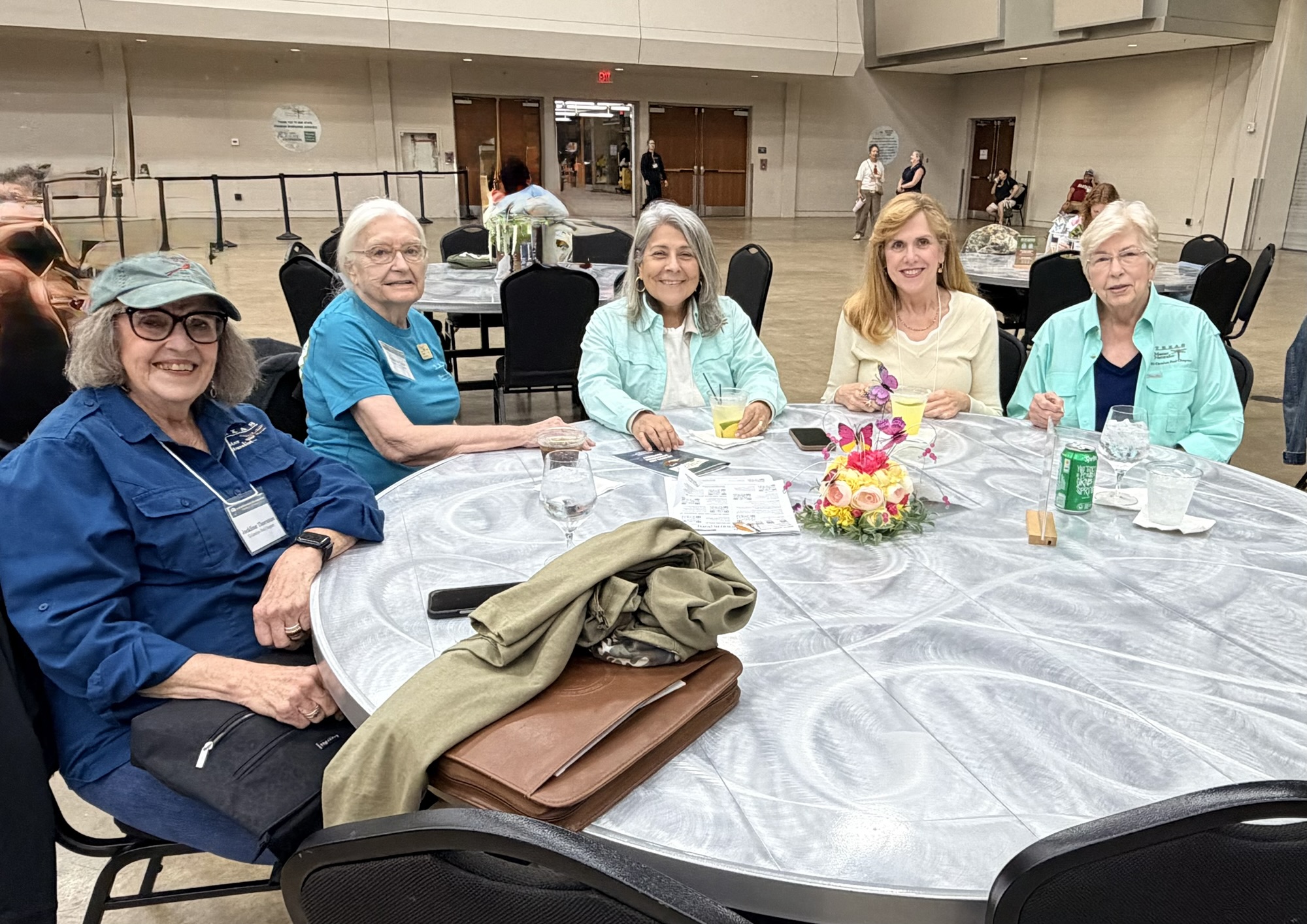
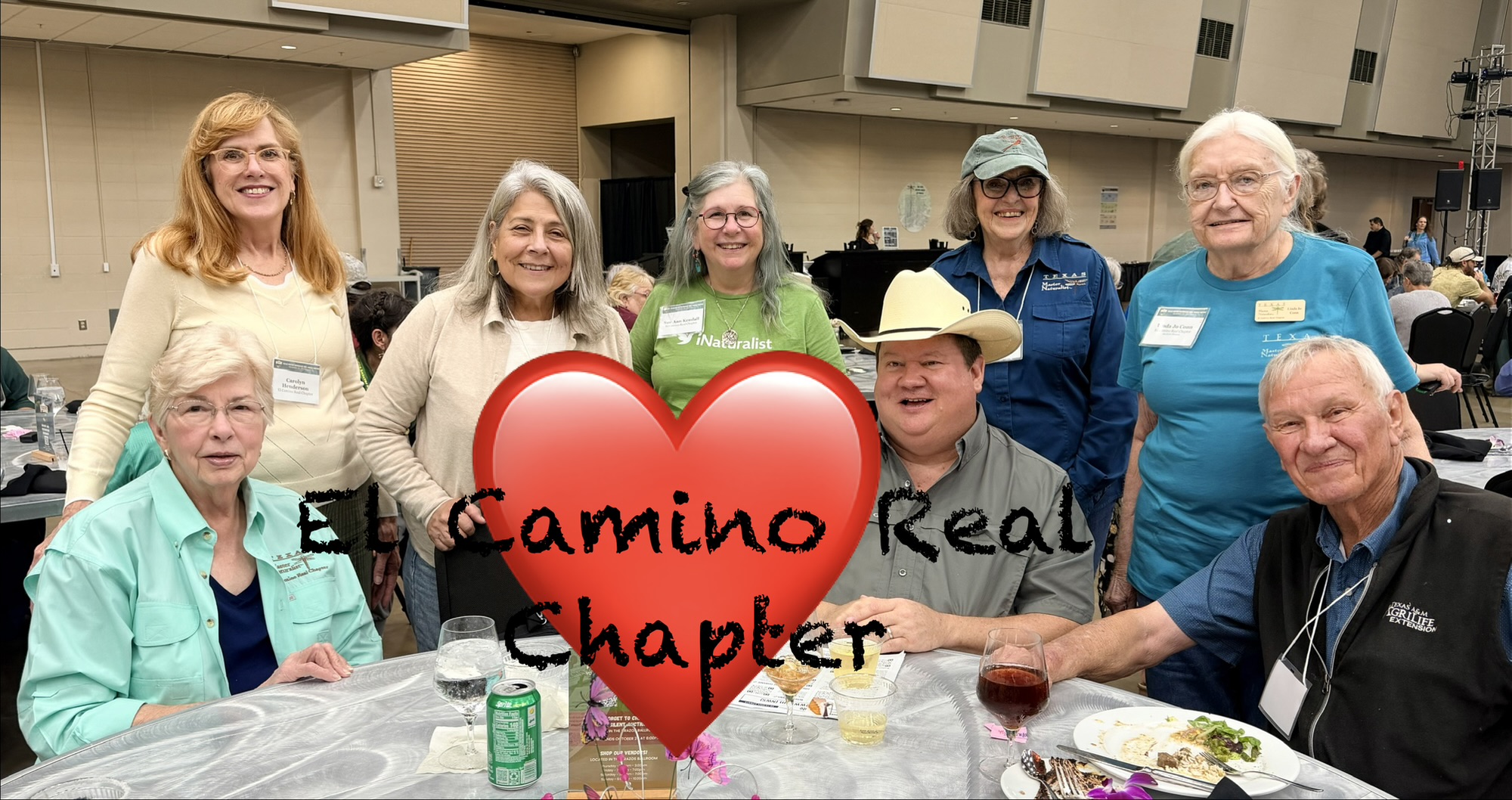
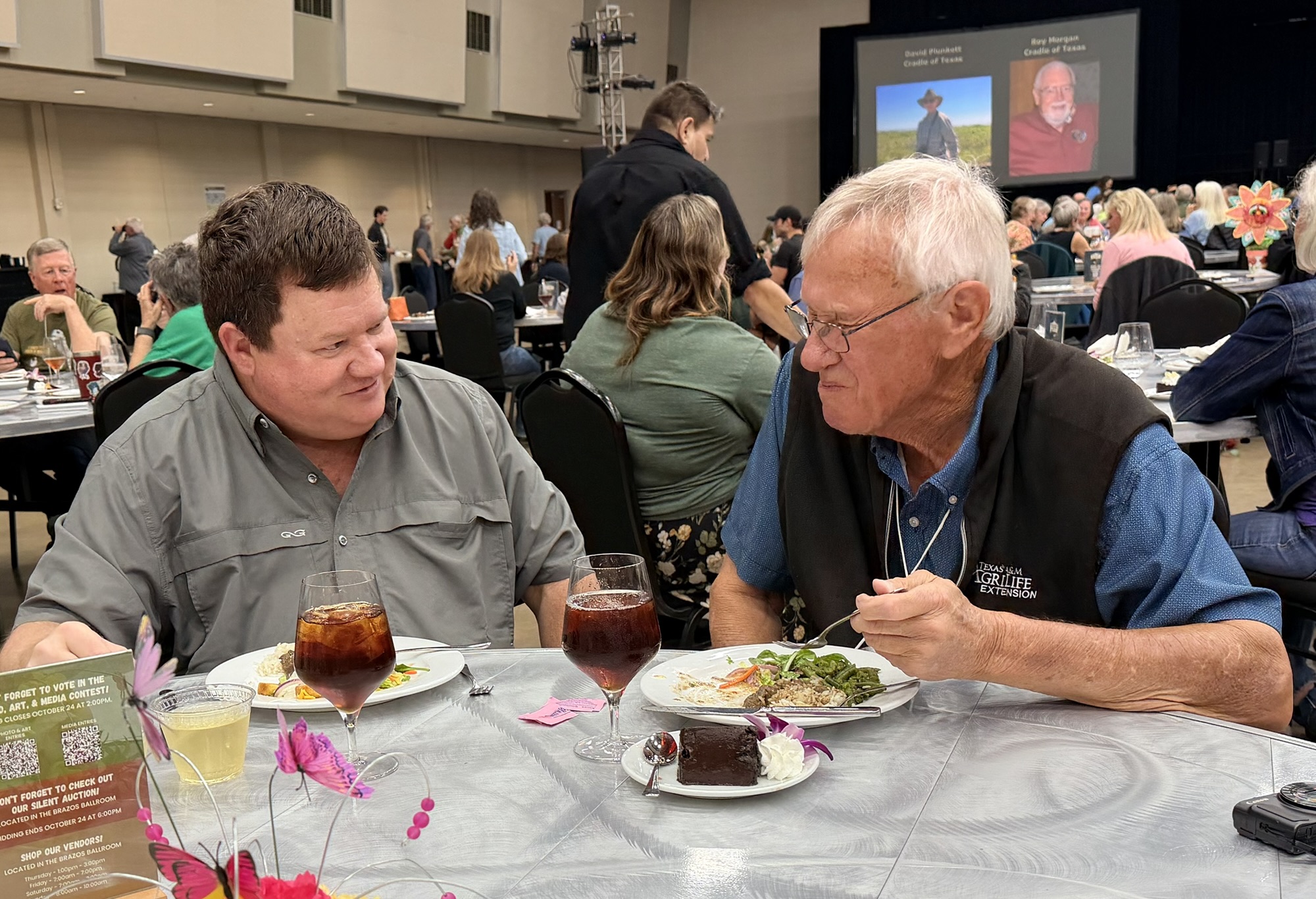
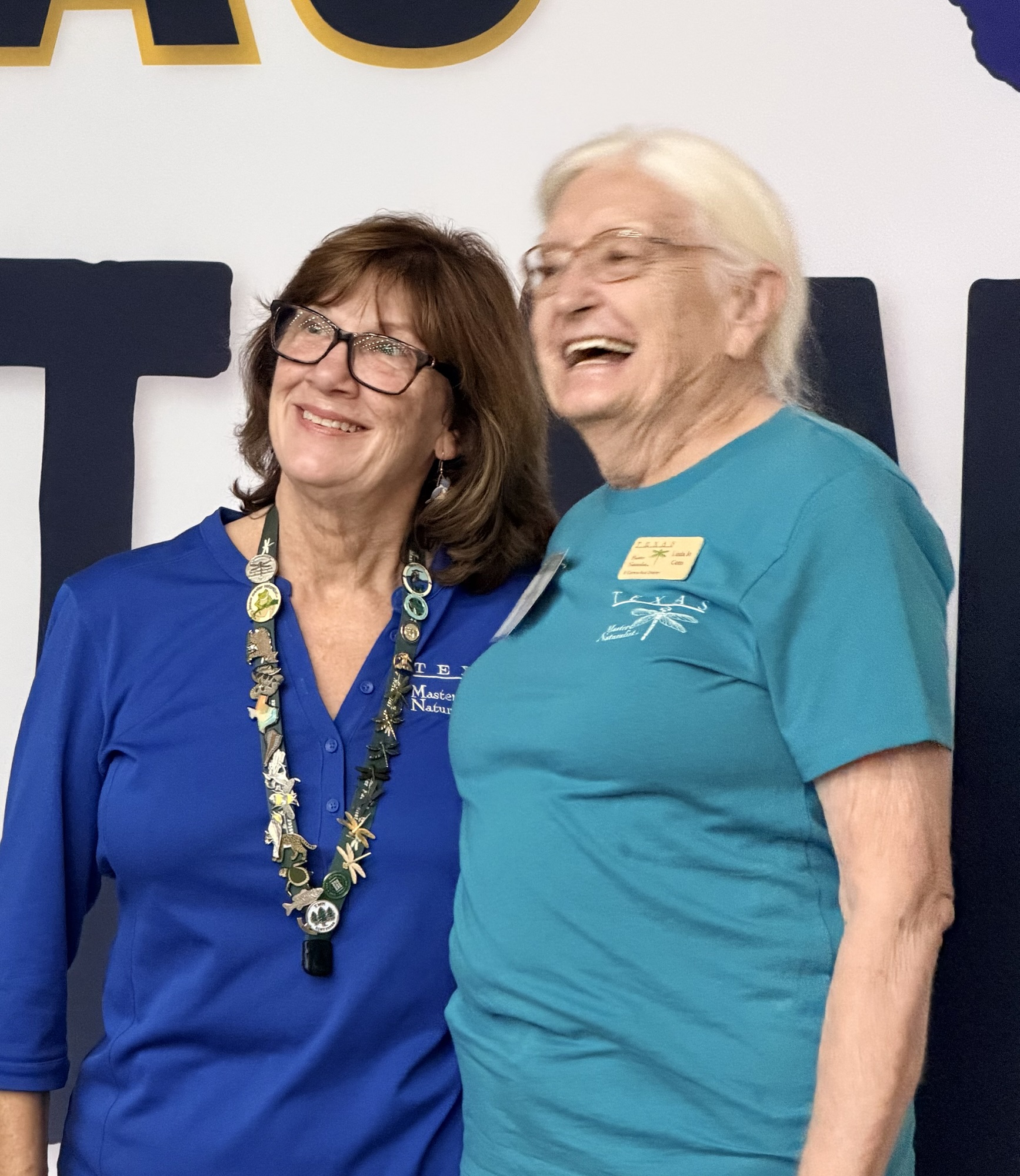
Looking good! Found Linda JoAll Milam County attendees Mike Mitchell and Dr Baron Rector were our guys. Dr R is from Milam County.
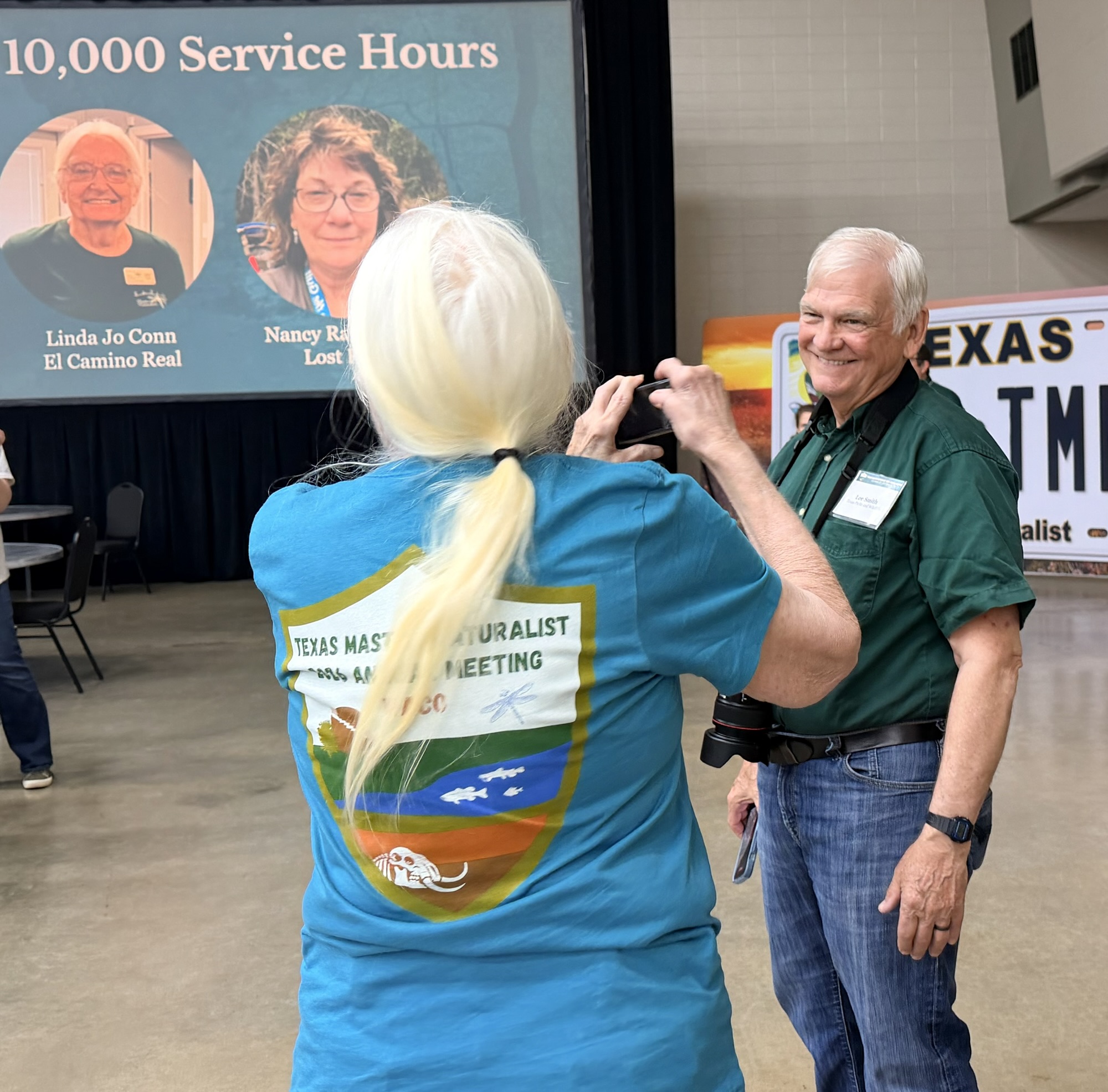
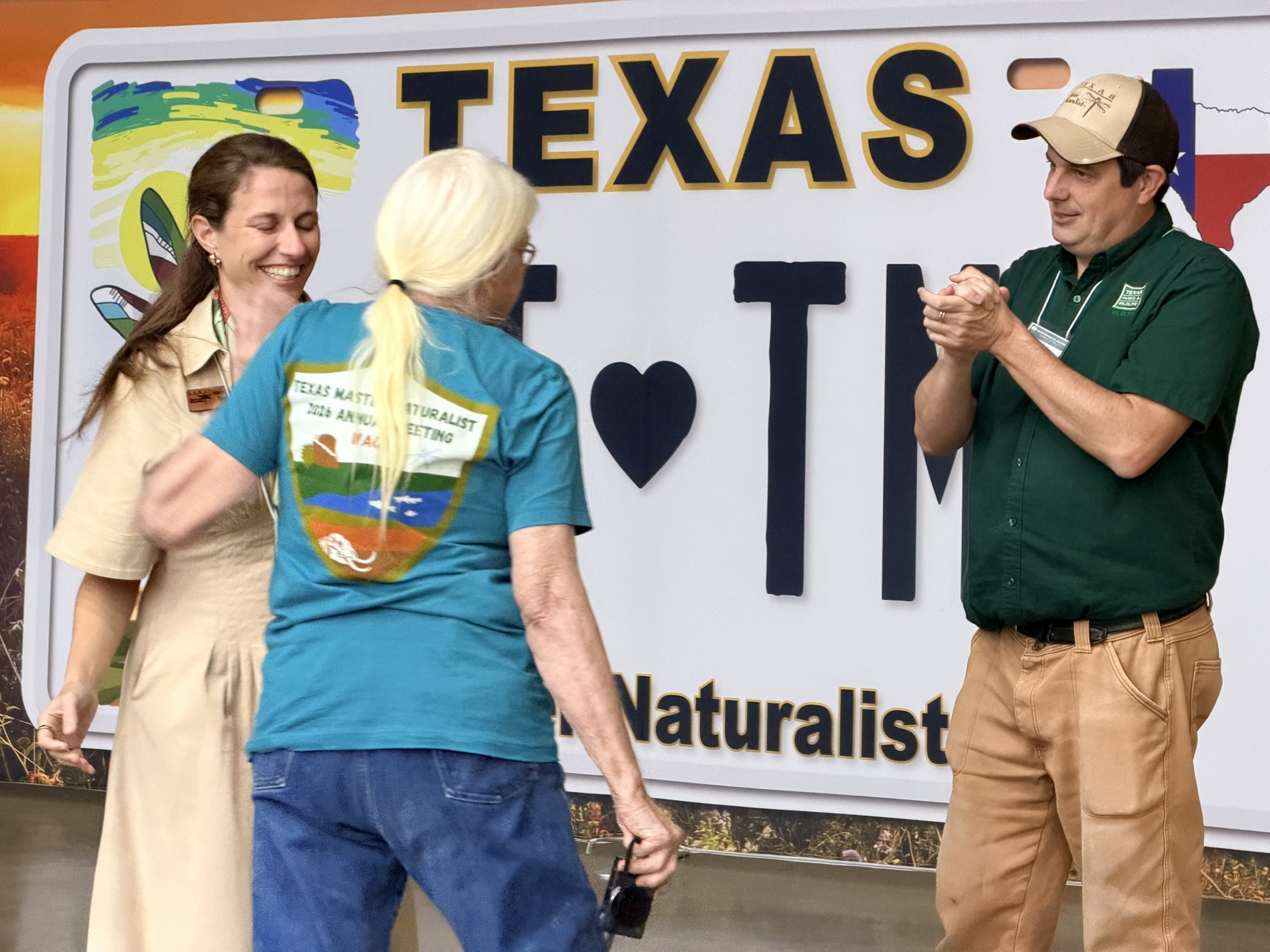
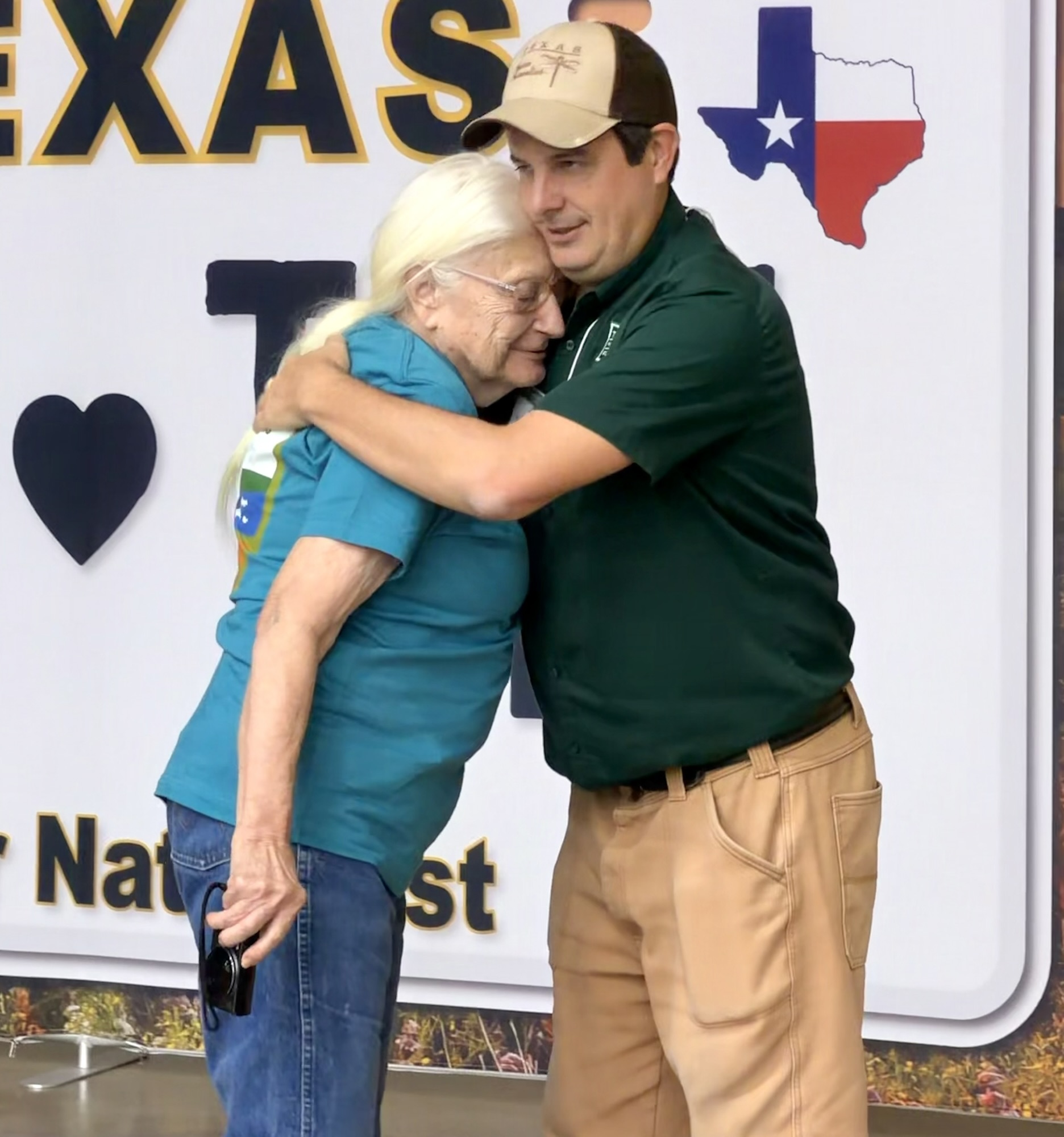
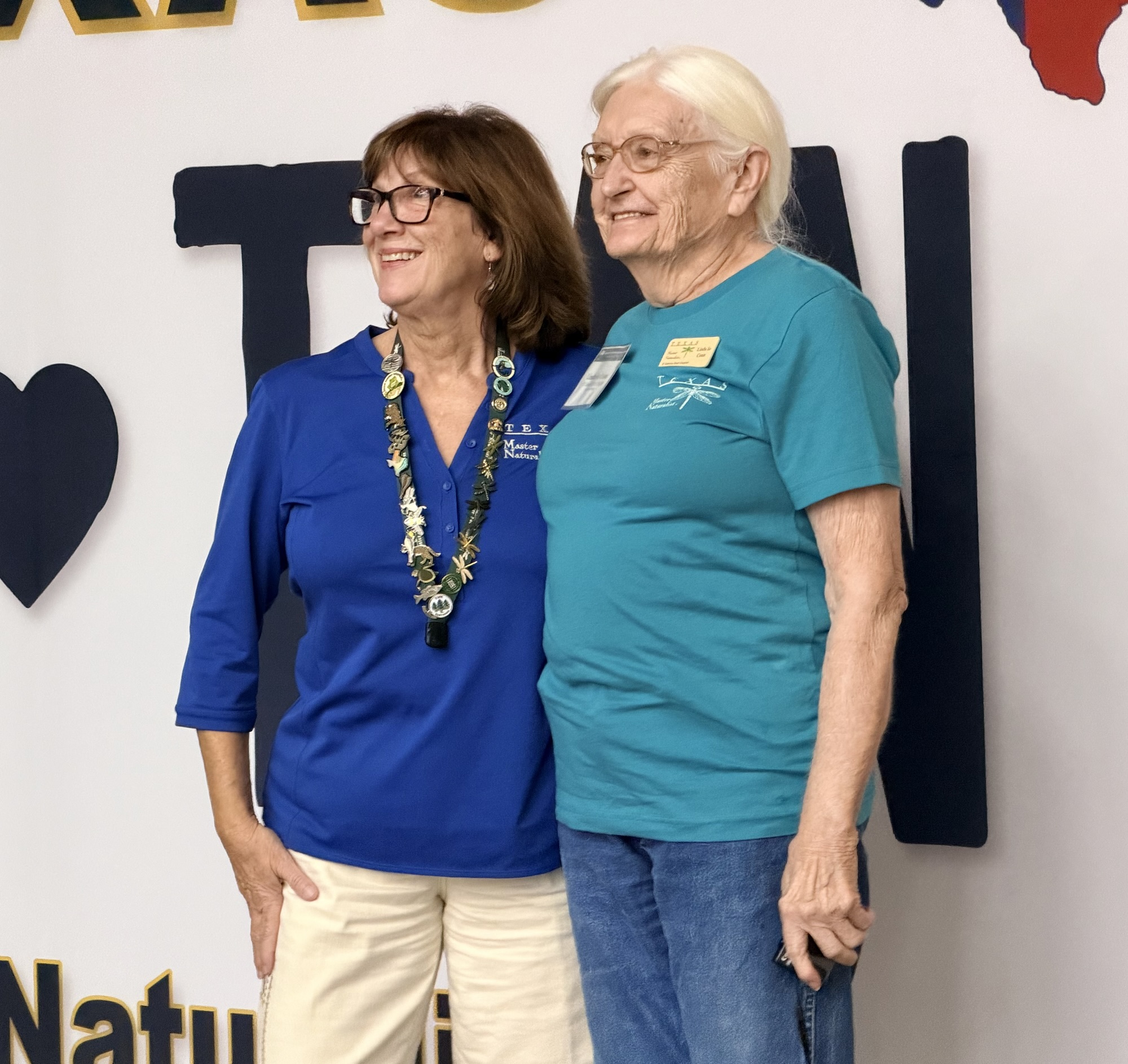
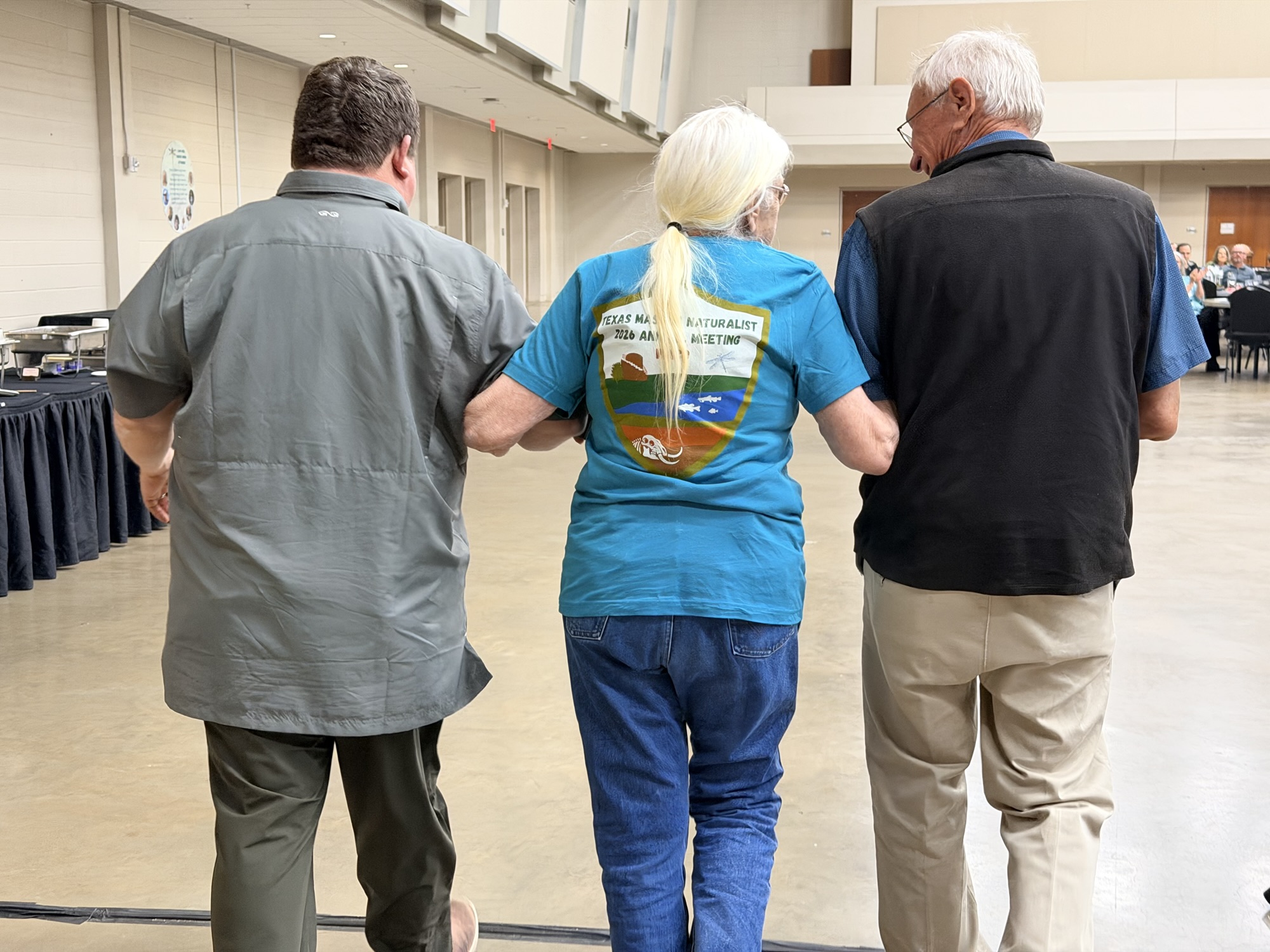
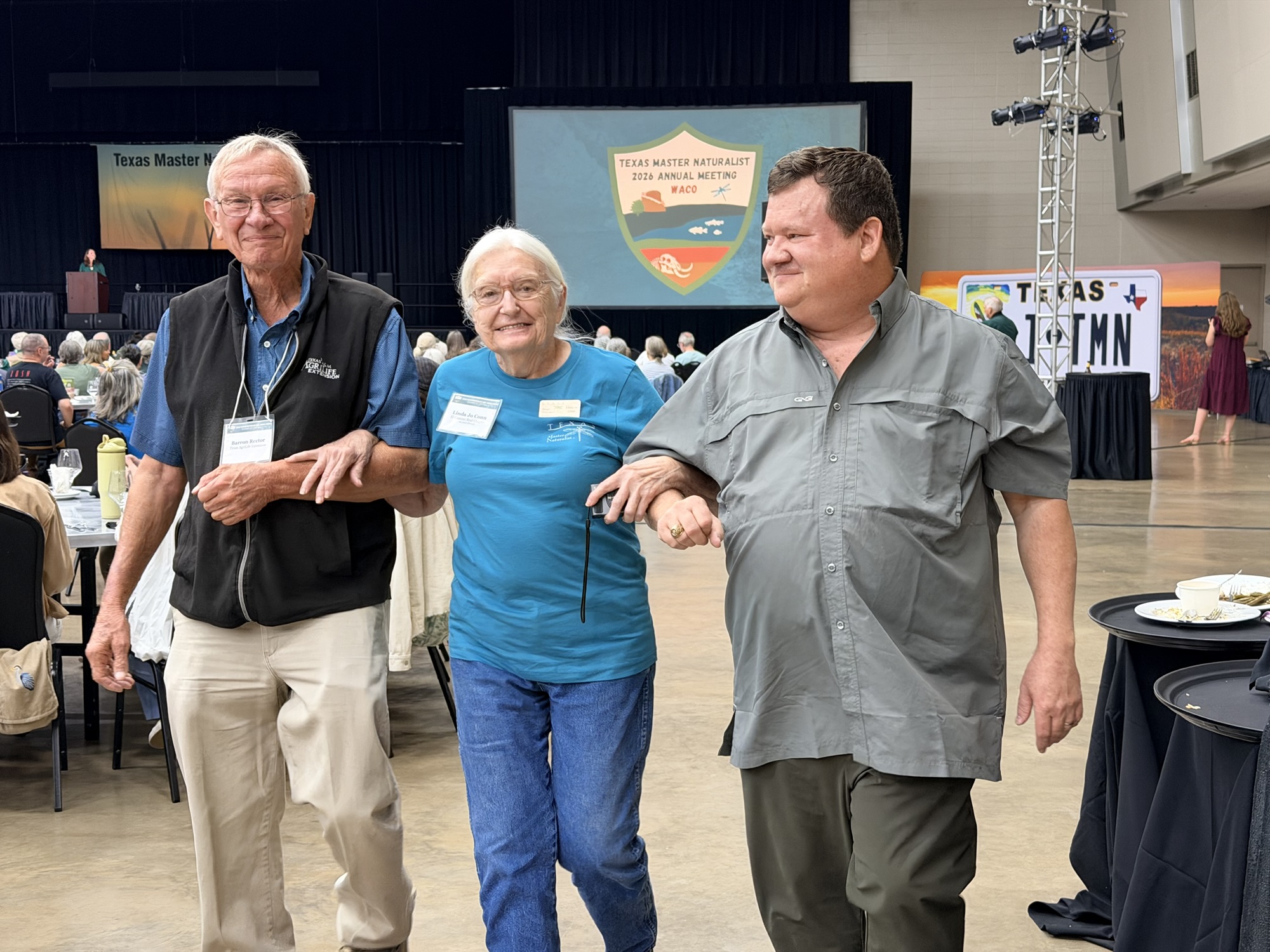
The best part of the evening was when they announced milestones for members. It was a true joy to see the reaction our Linda Jo got when it was announced she’d achieved 10,000 hours of volunteer service. I hope all the love made her very happy. Mike and Dr Rector escorted her back to her seat, which was so cute!
She photographed Lee, the official photographer Mary Pearl and Sam congratulated herWell deserved hugPosing with the other recipient, Nancy RabensburgLove this oneEscortingSo sweet.
To see someone I admire so much get well deserved recognition was the highlight of the whole event for me!
To those of you who get the blog by mail, I apologize that some text was missing. I’m not sure how it happened, but the online version has been corrected.
I’ve been enjoying the Texas Master Naturalist 2026 Annual Meeting for the most part. I learned many things that will stick with me. That’s a bonus.
Yesterday I attended a pre-conference session on efforts to mitigate future flooding and restore the Guadalupe River after last year’s horrific July flood. I now know so much more about how to deal with flood damage in ways that will help rivers heal themselves. For example, “trash” plants like sycamores and poverty weed that grow up after flooding are helping stabilize soil so important plants like cypress can establish themselves. I admit I got sad and had to leave after two hours, and spent time with friends.
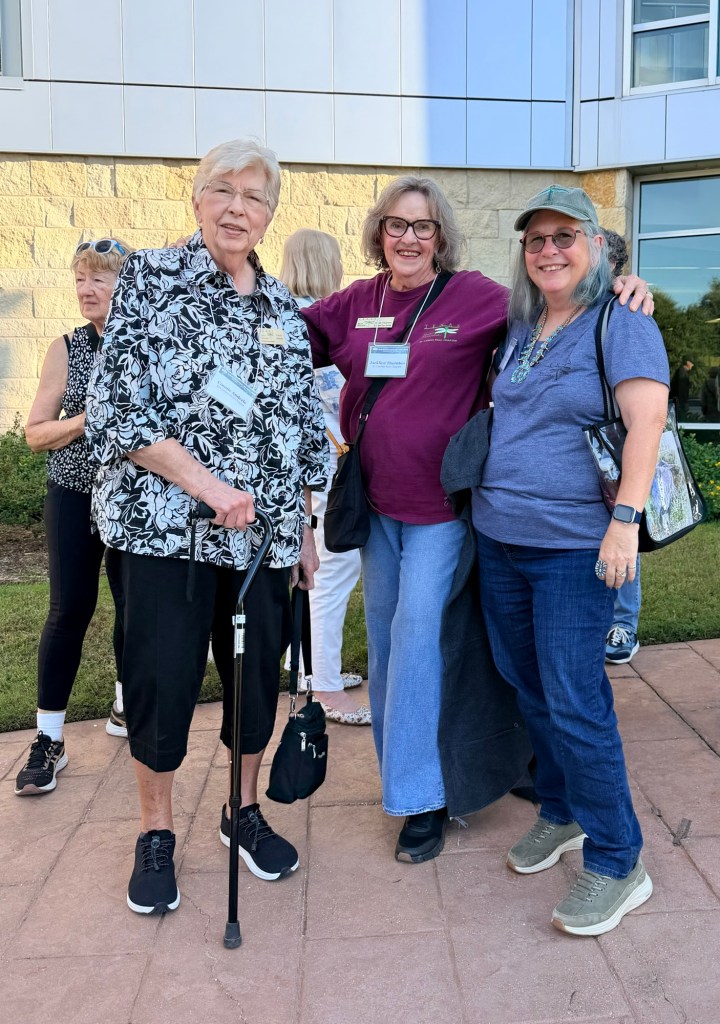
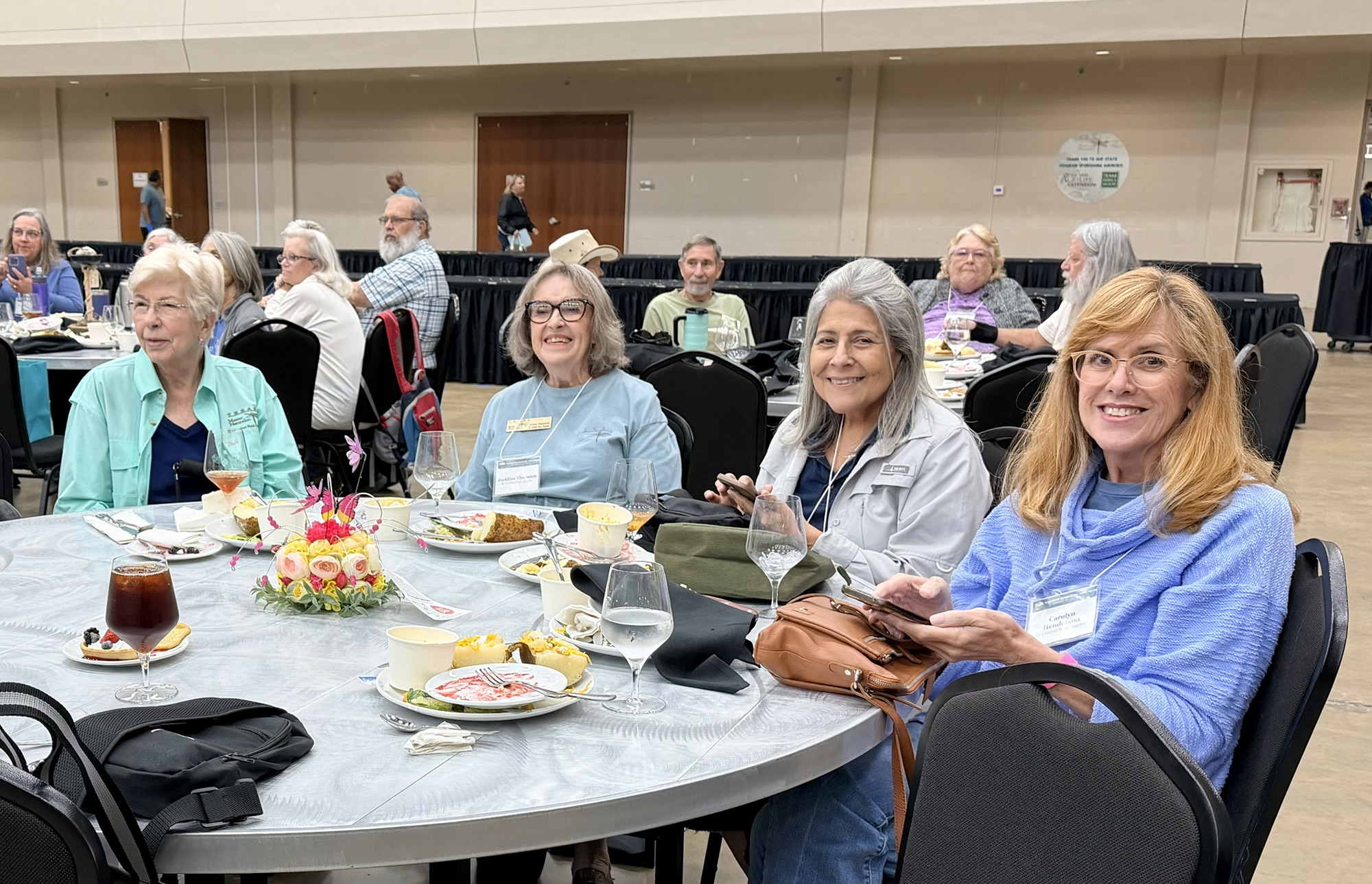
Connie, Jacki and me
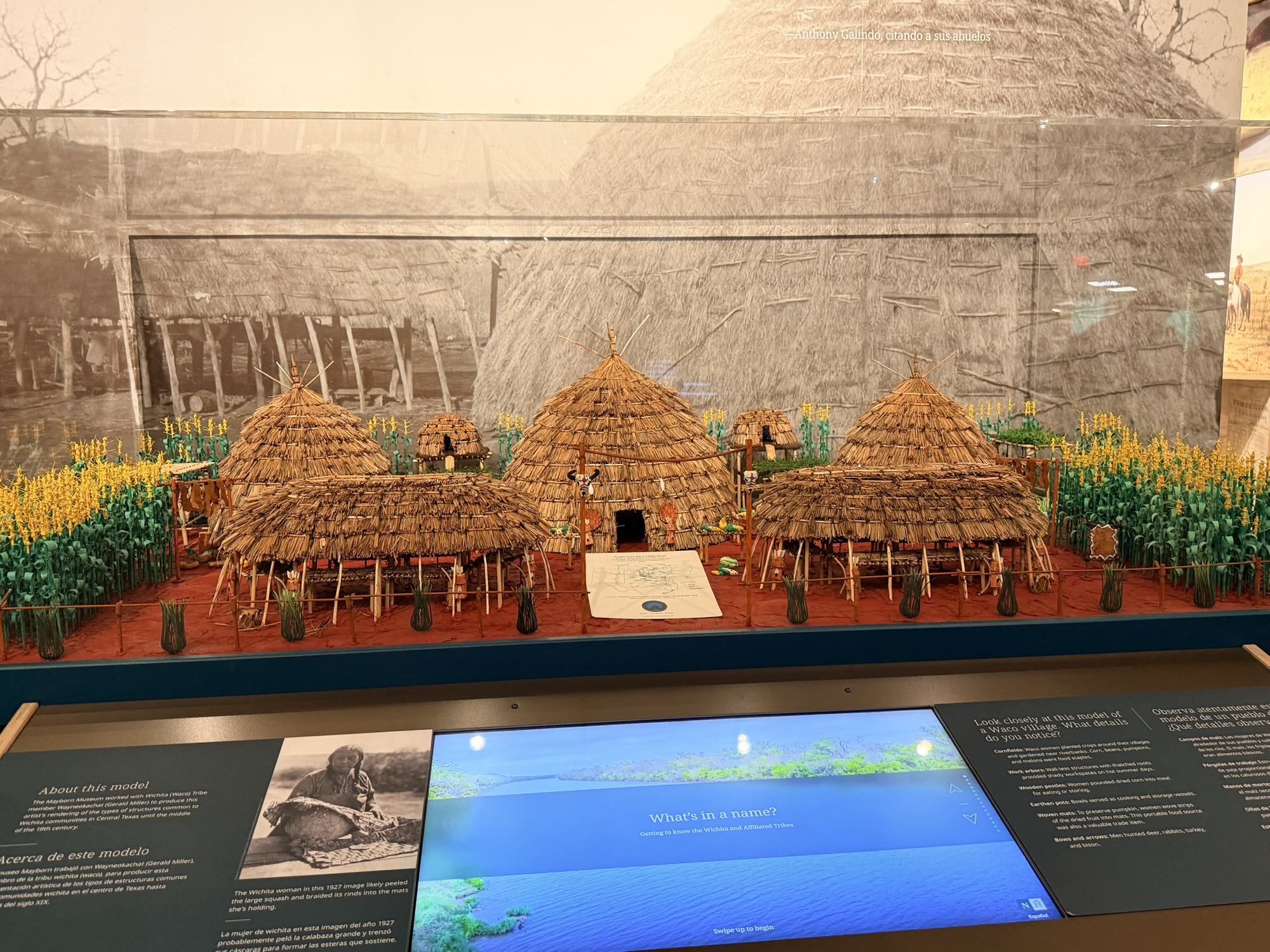
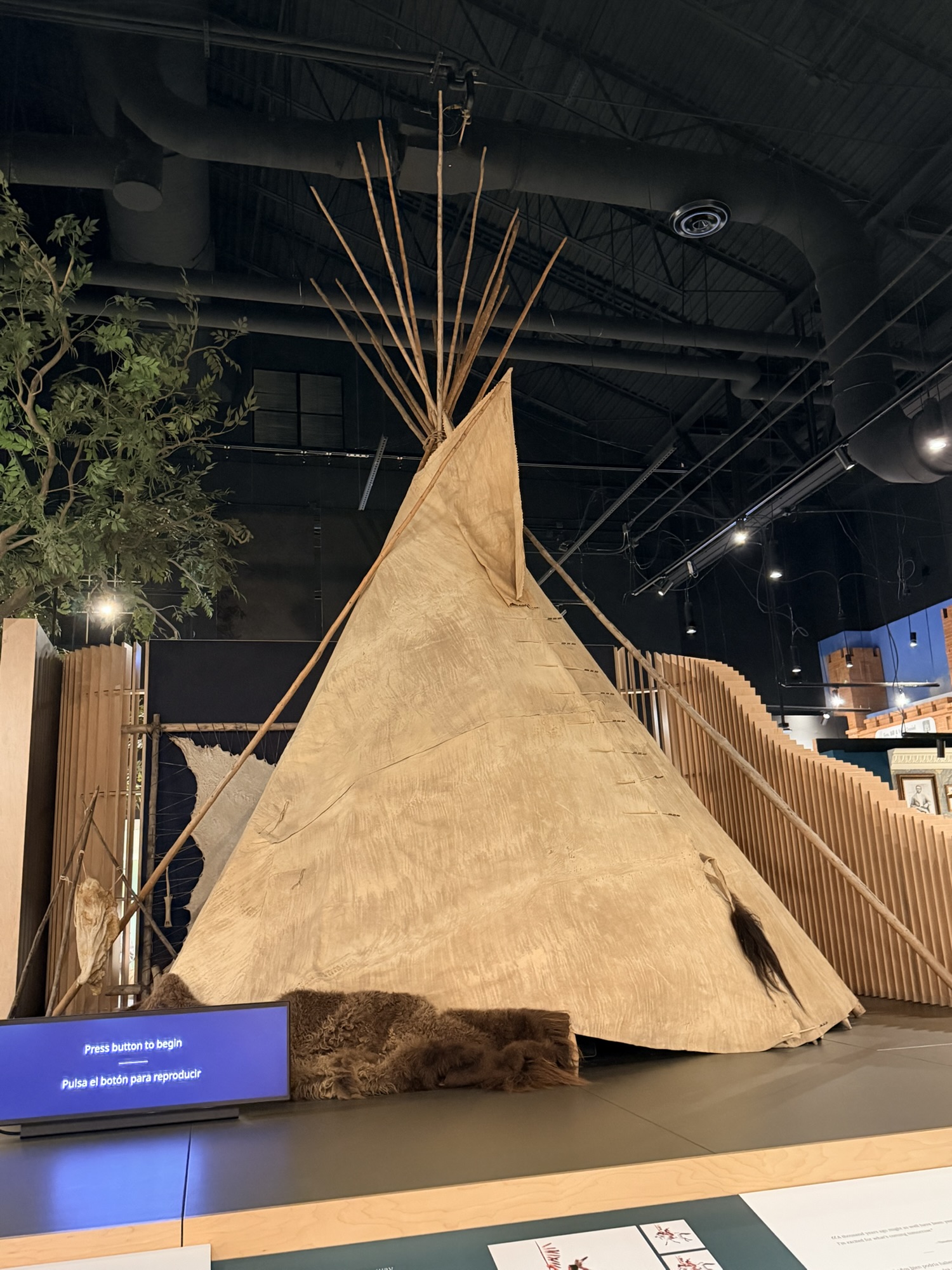
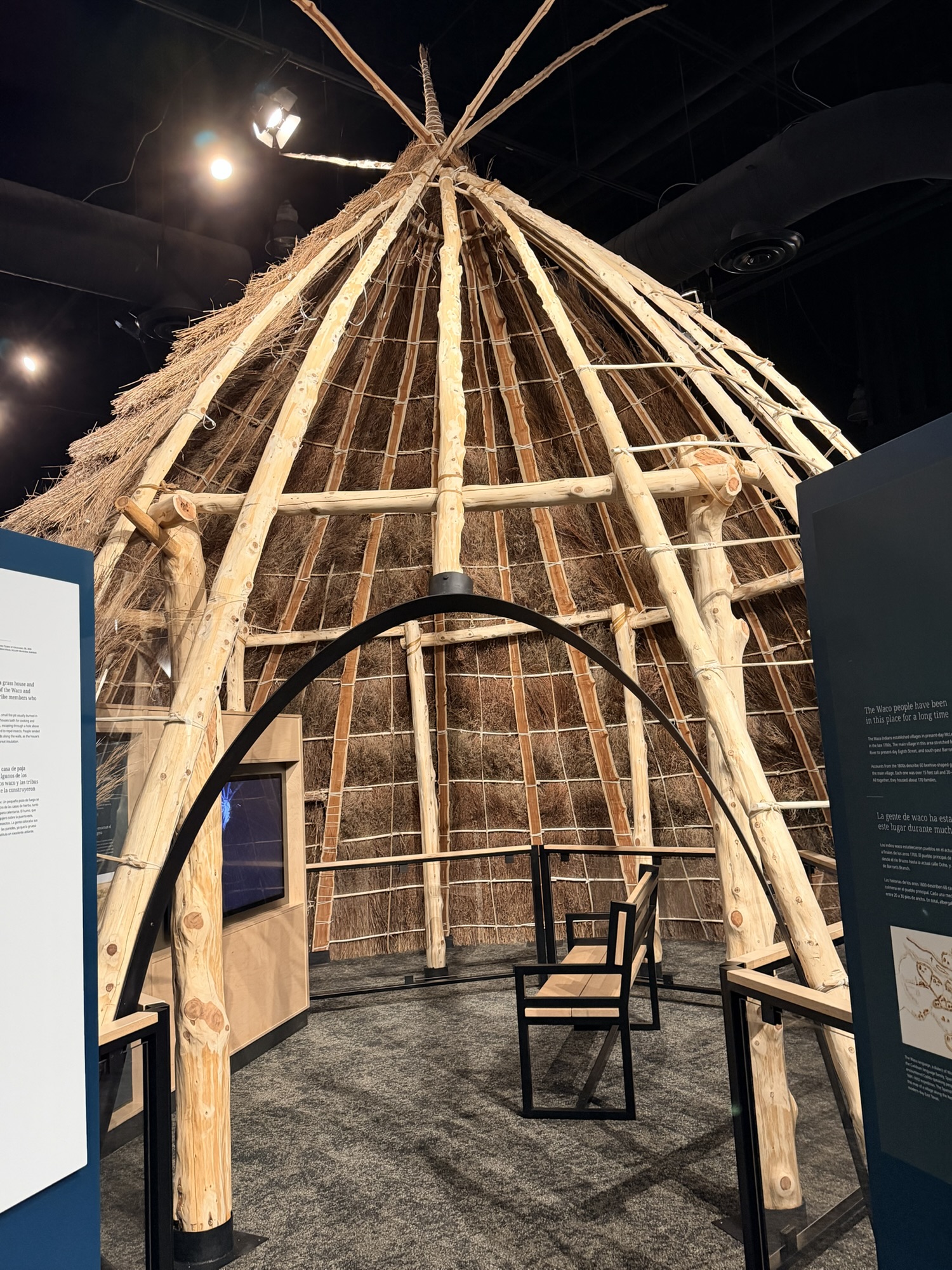
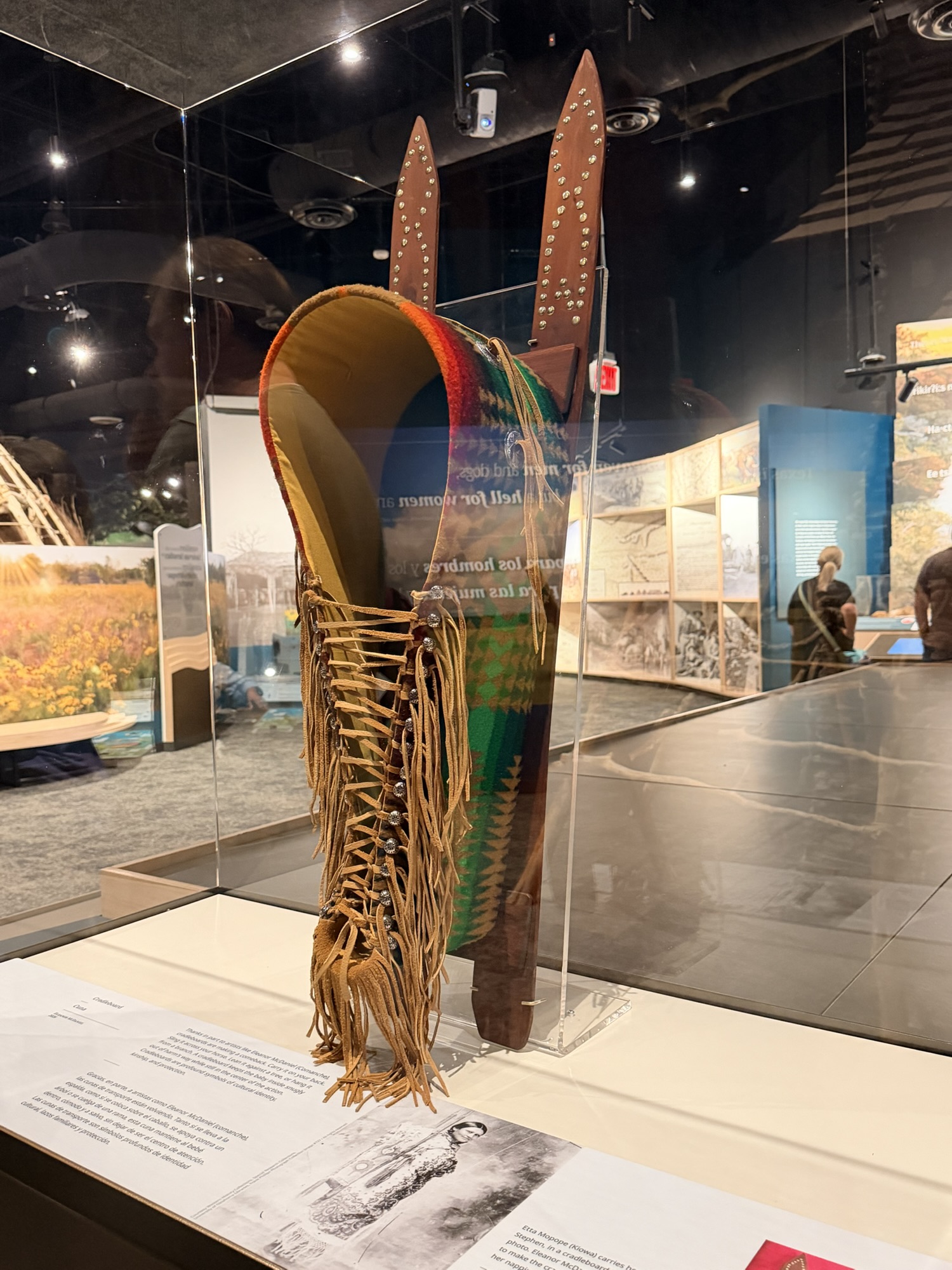
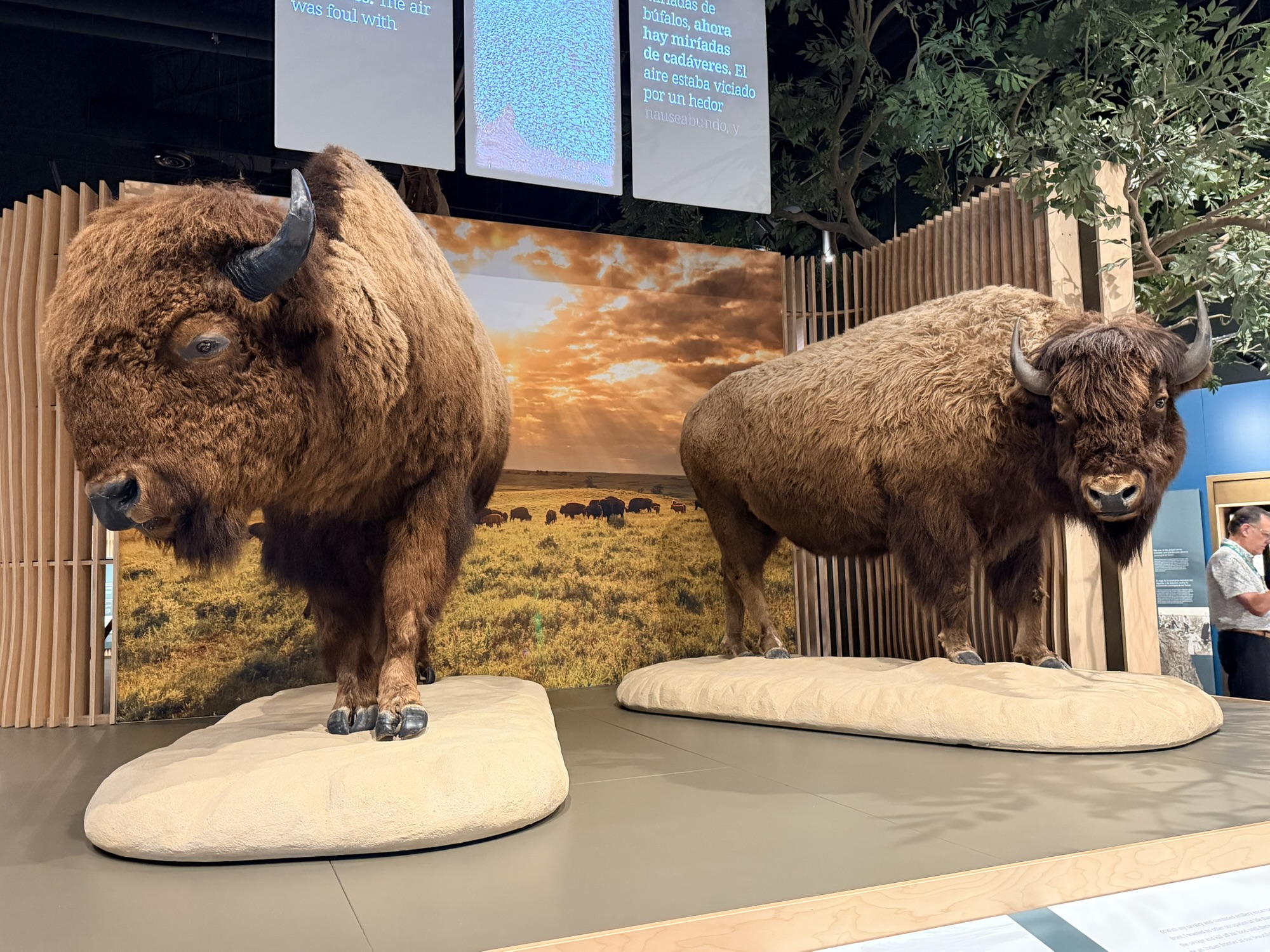
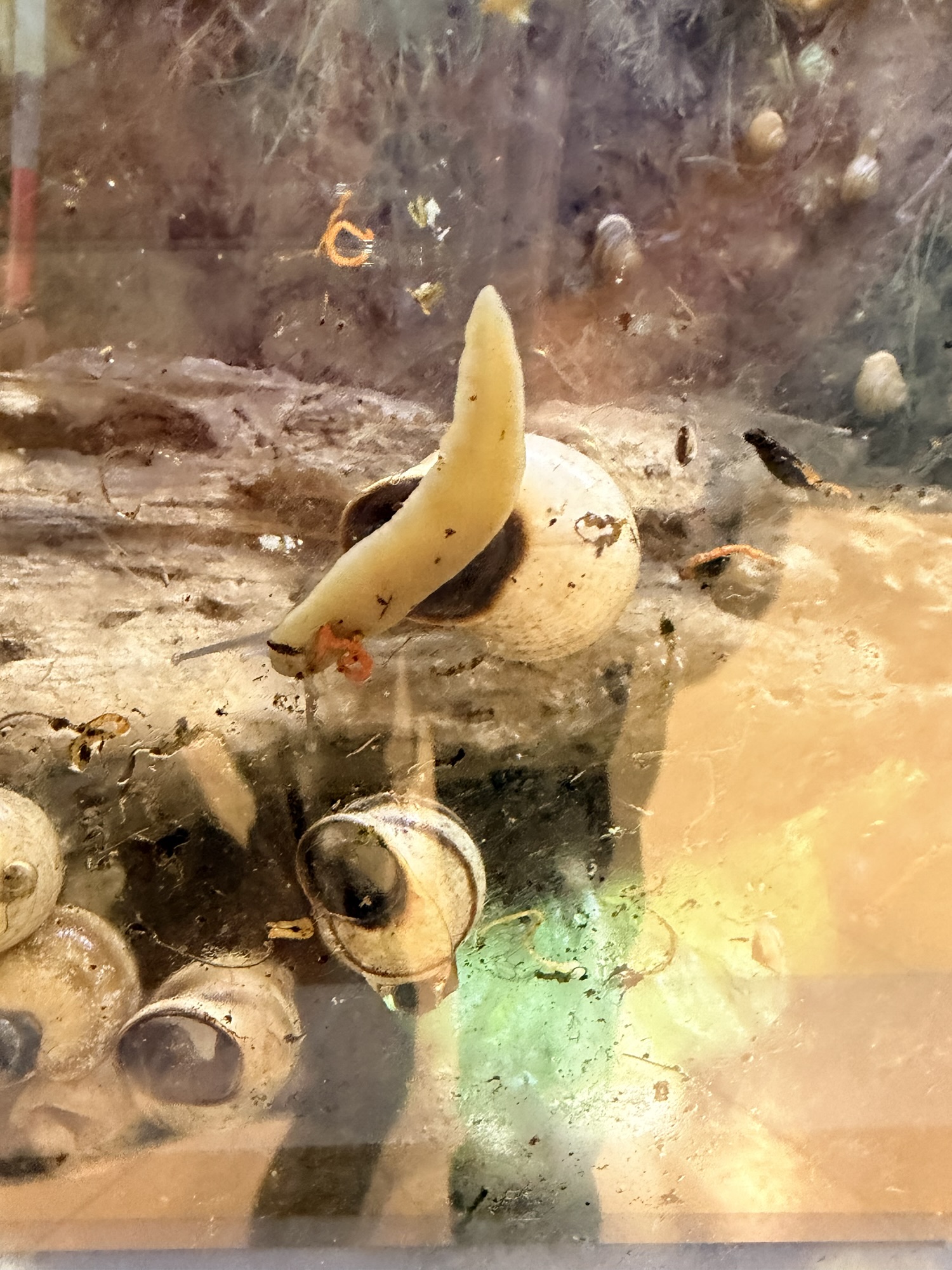
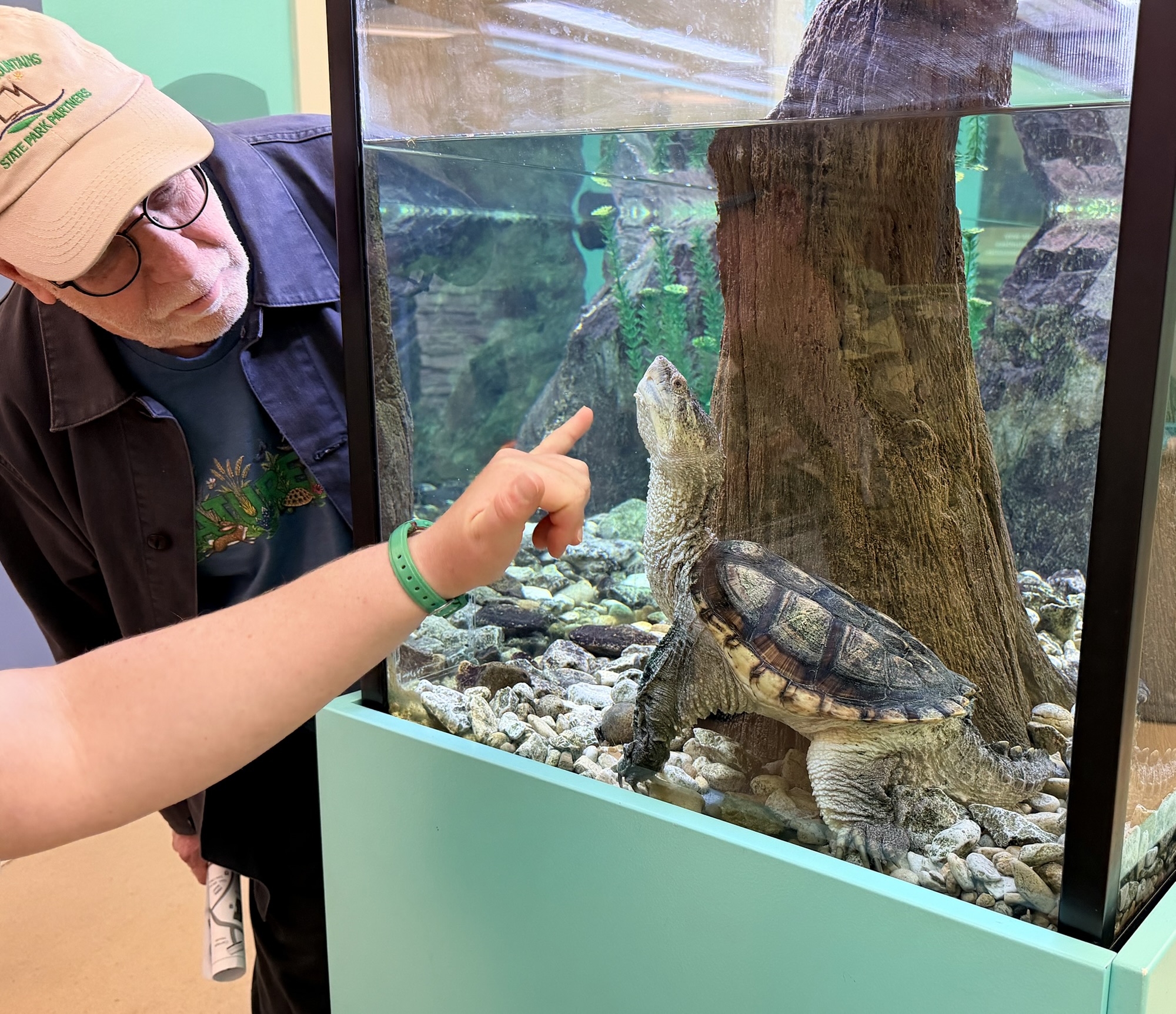
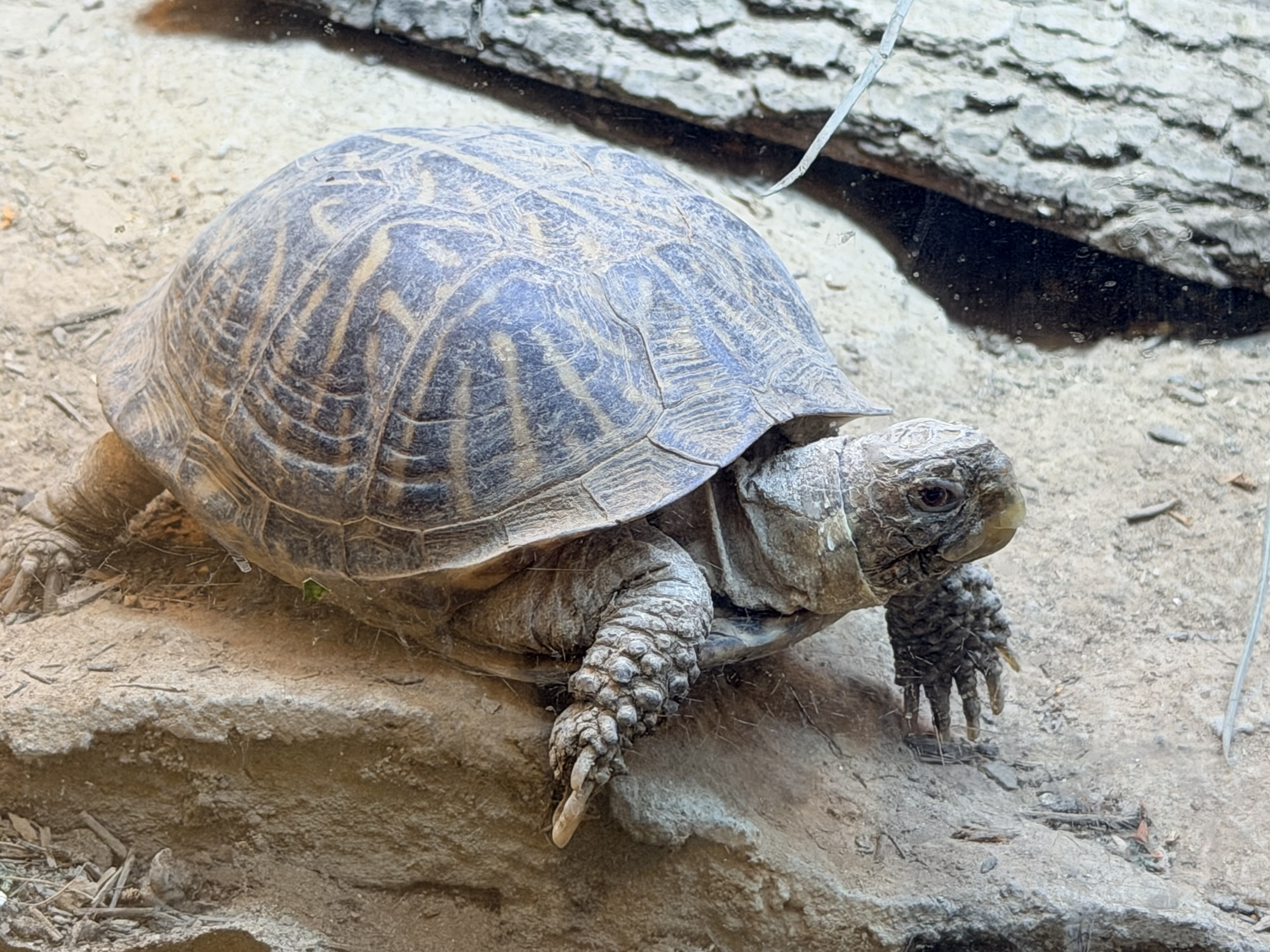
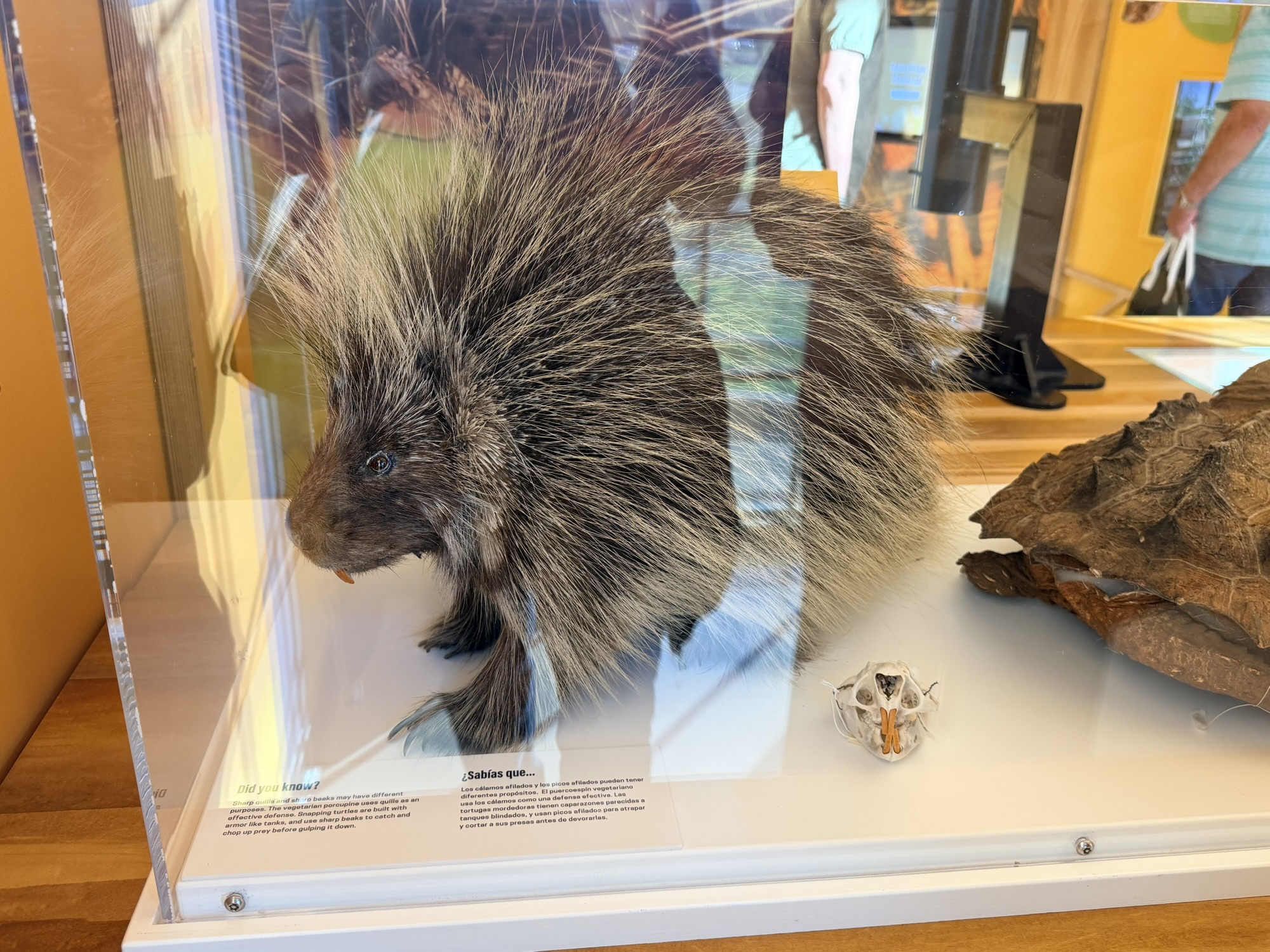
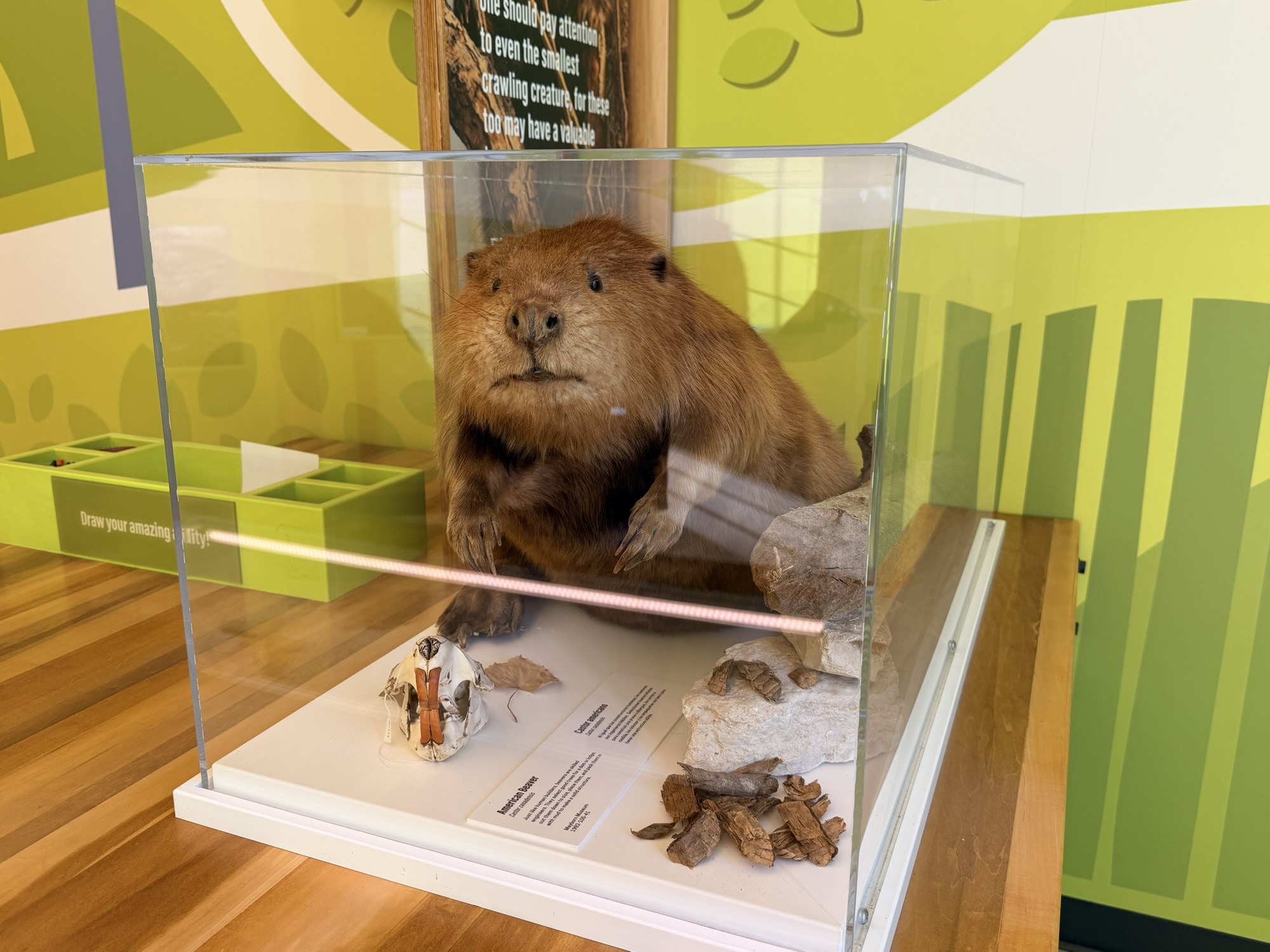
The opening reception was at the Mayborn Museum on the Baylor University campus, which is sparkling clean and full of fancy buildings thanks to wealthy Baptists. The museum admitted that fossils are old, which was a relief. We enjoyed the exhibits very much, though the cold hamburger didn’t thrill me. My favorite parts were the Native American buildings and the wildlife.
Village replicaTipiStraw houseBaby boardBisonSnailsLearning about snapping turtles Box tortoisePorcupine Beaver! So big.
Afterward, we retired to the bar at our hotel, and sat on the pleasant courtyard (by Mariott). Our buddy Mike Mitchell joined us as did the guy who was supposed to be playing music at the bar. He turned out to be a pathological liar, but his stories were so far-fetched that we kept listening to him. He was partially raised by JHW Bush and once owned a nuclear home. Examples. I hit a limit and left my friends to start asking him hard questions.
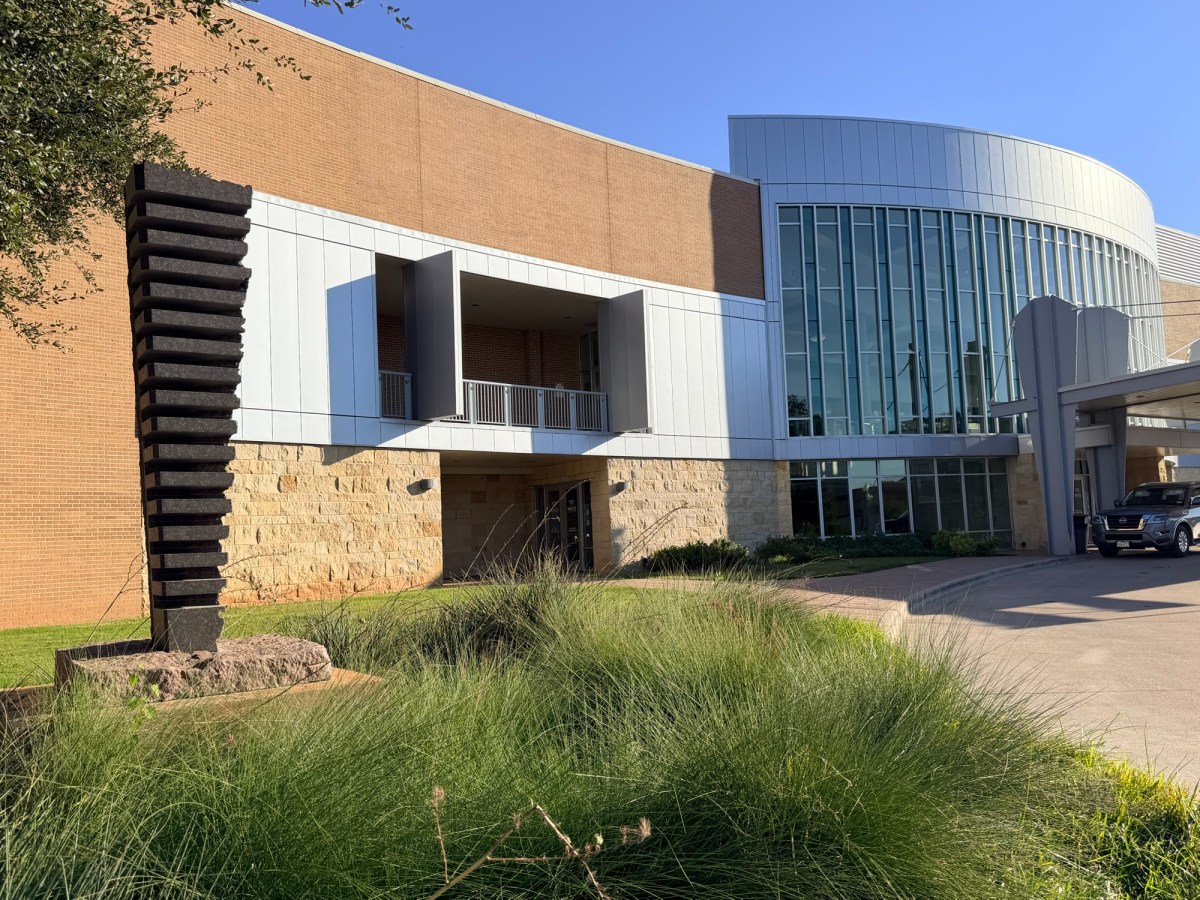
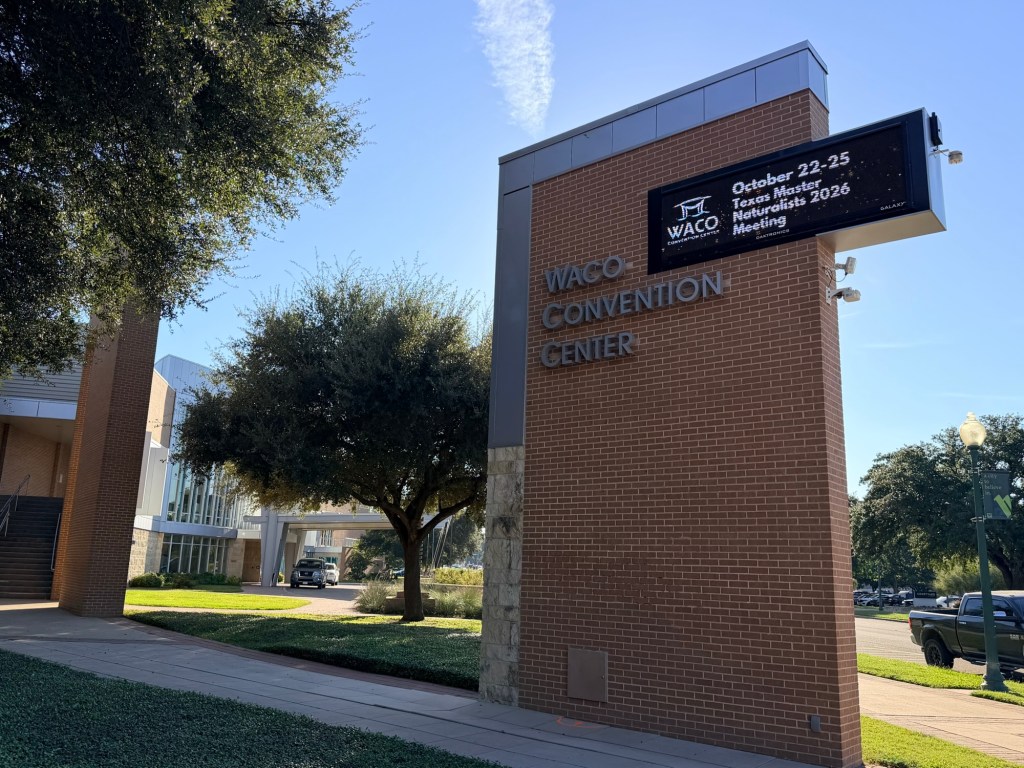
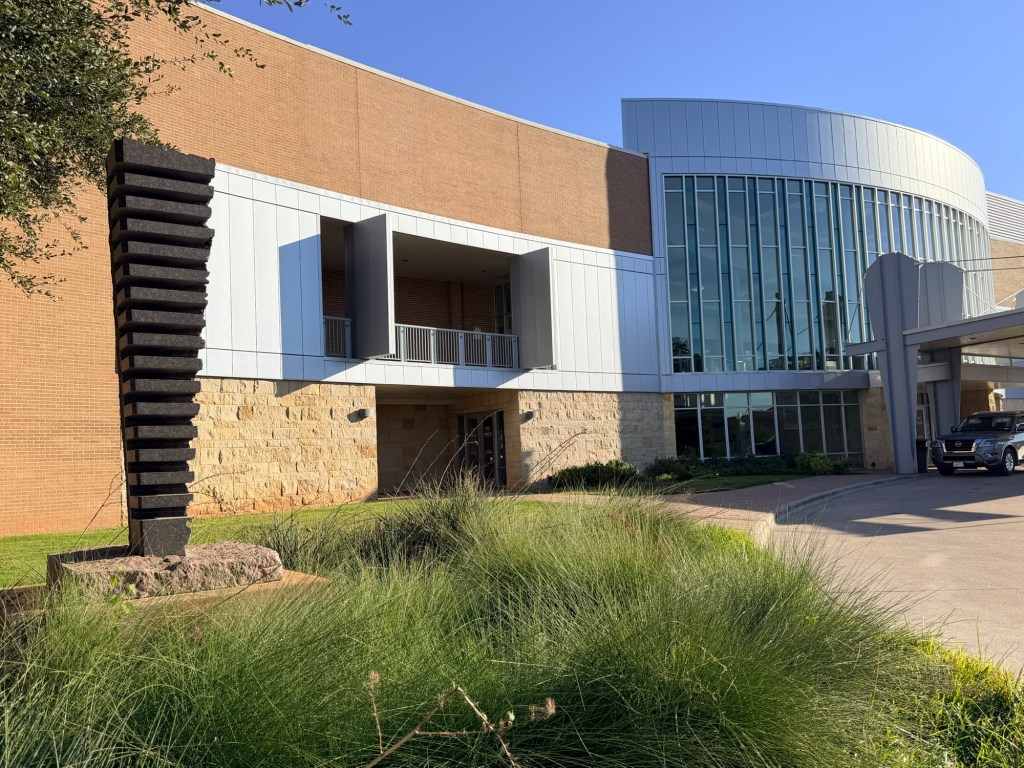
Convention Center.
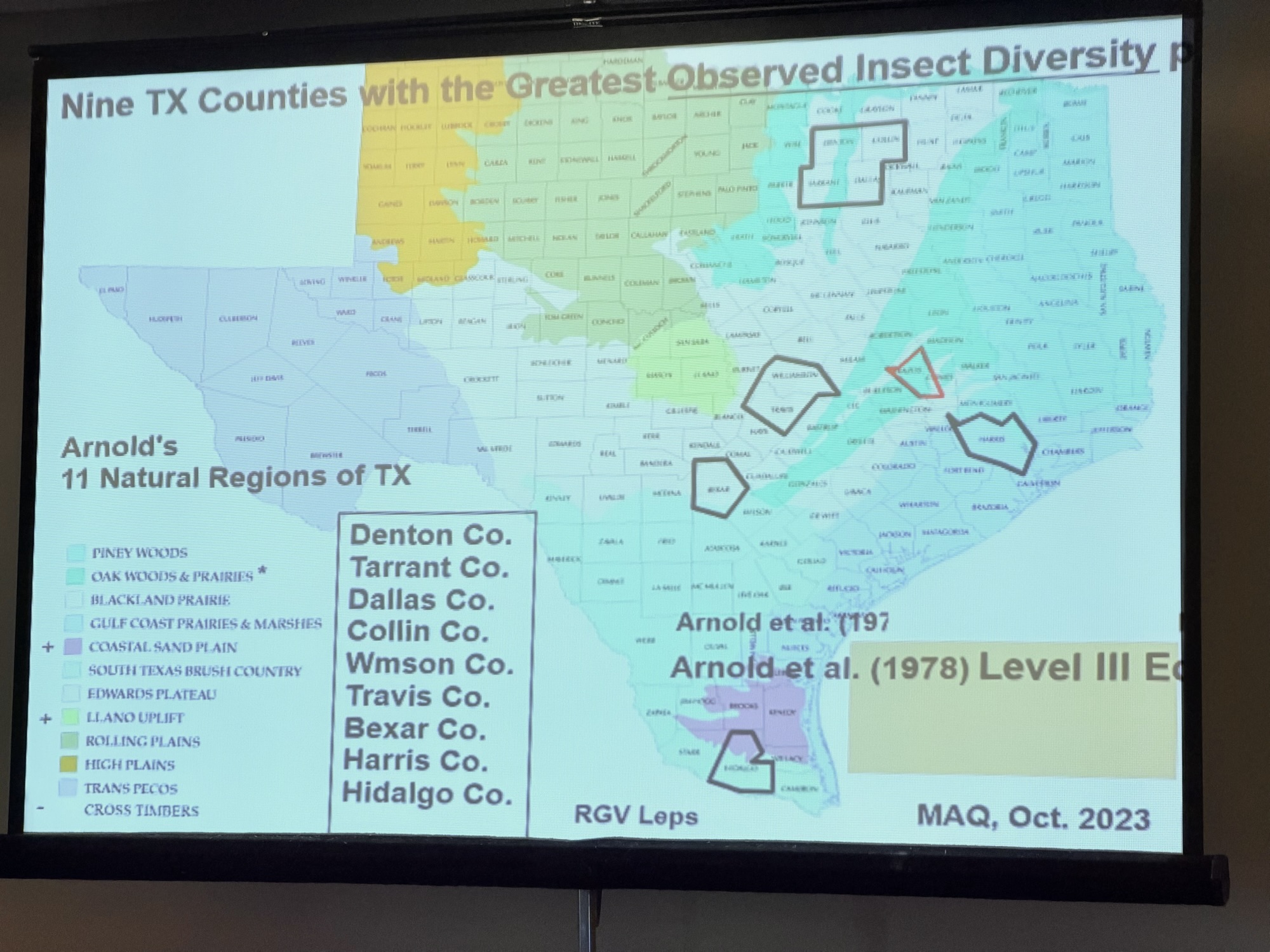
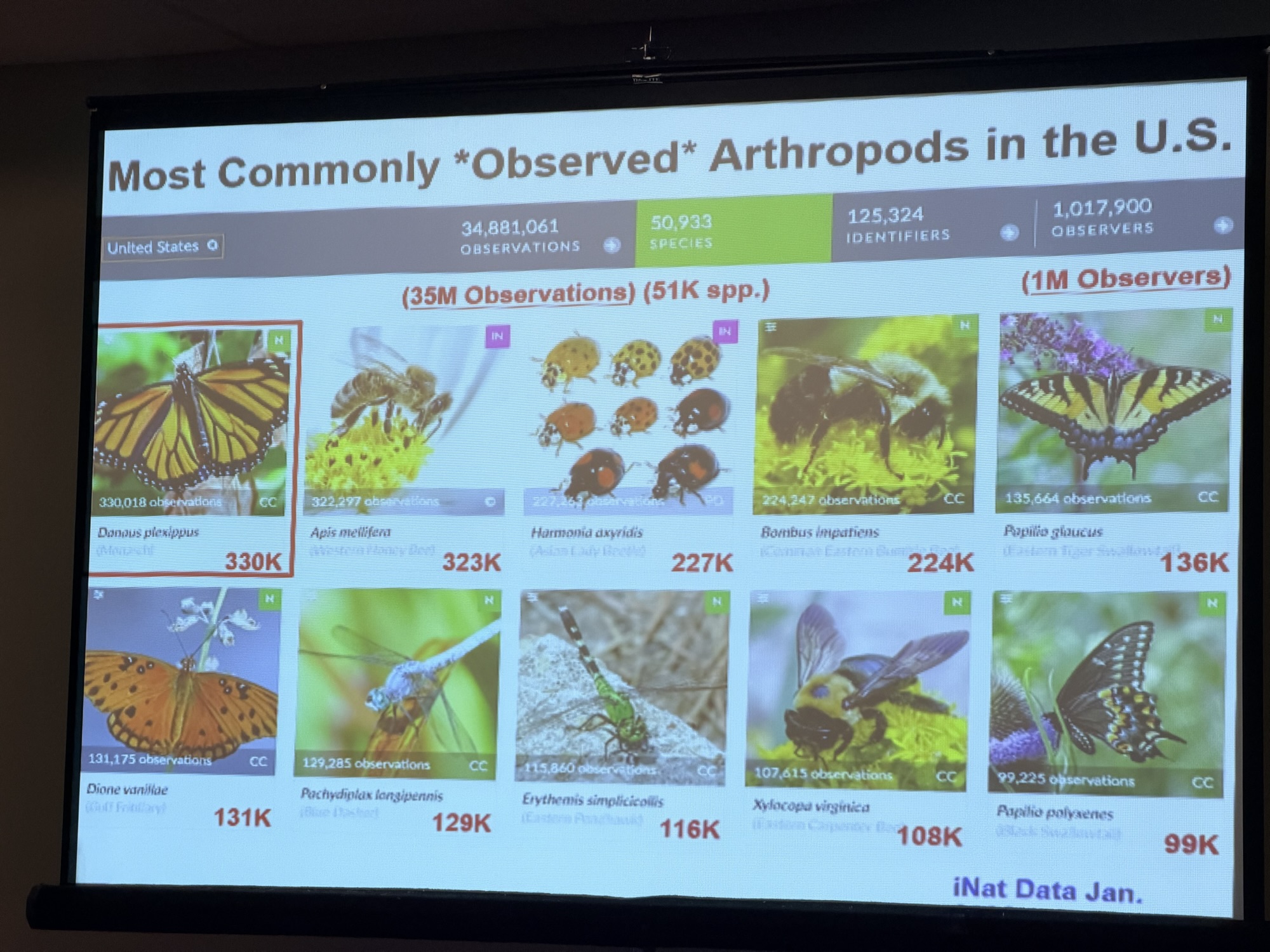
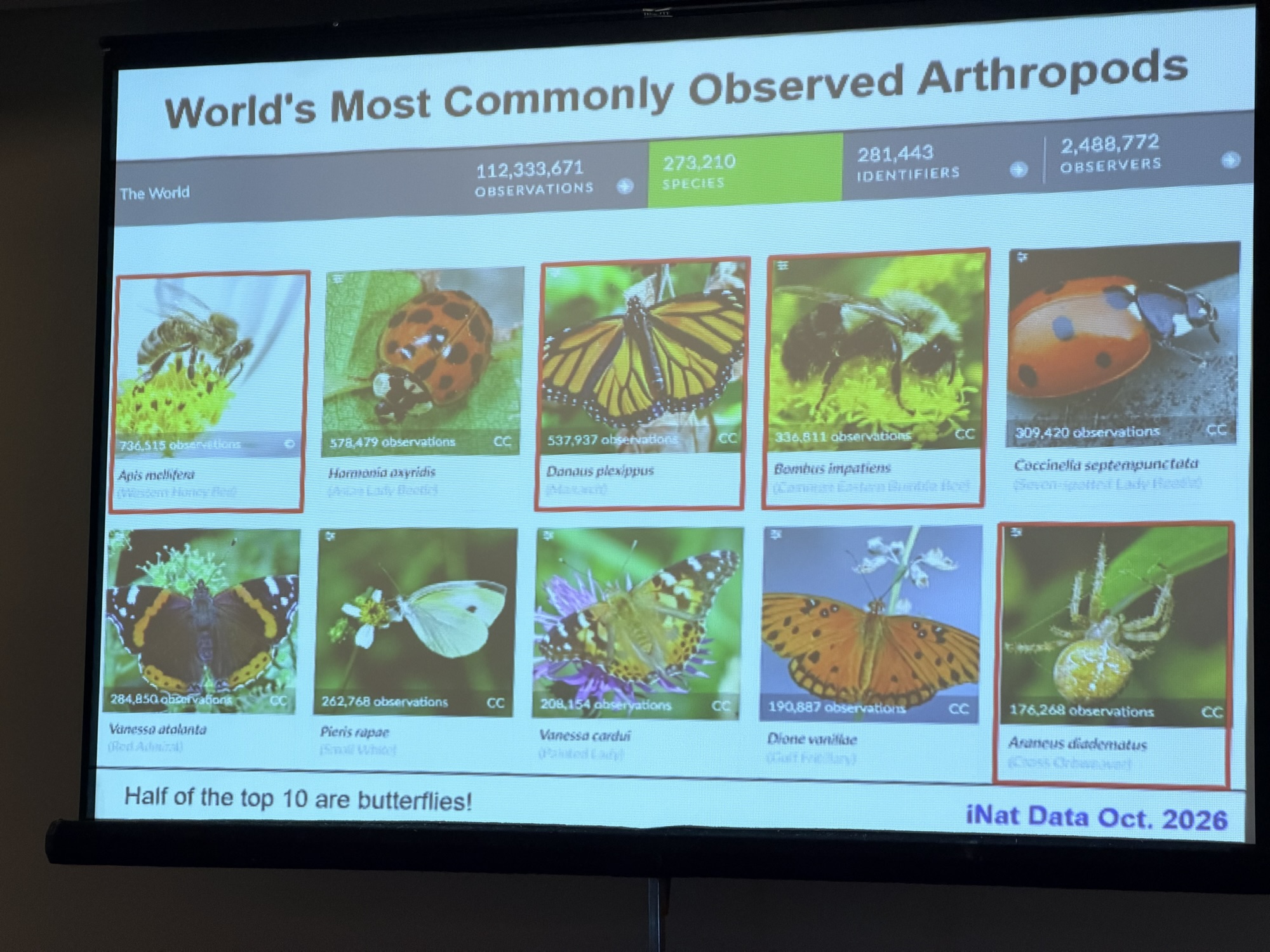
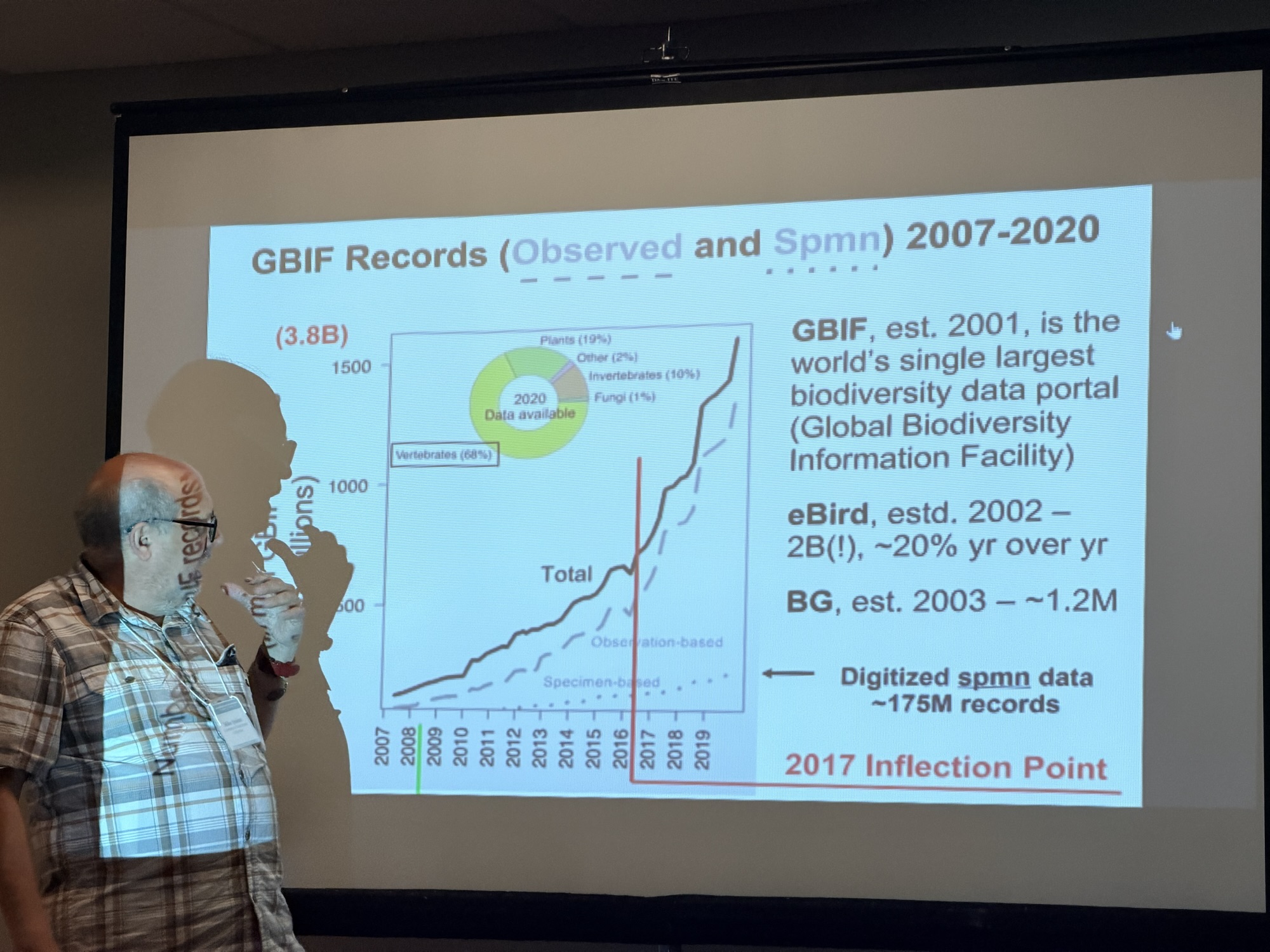
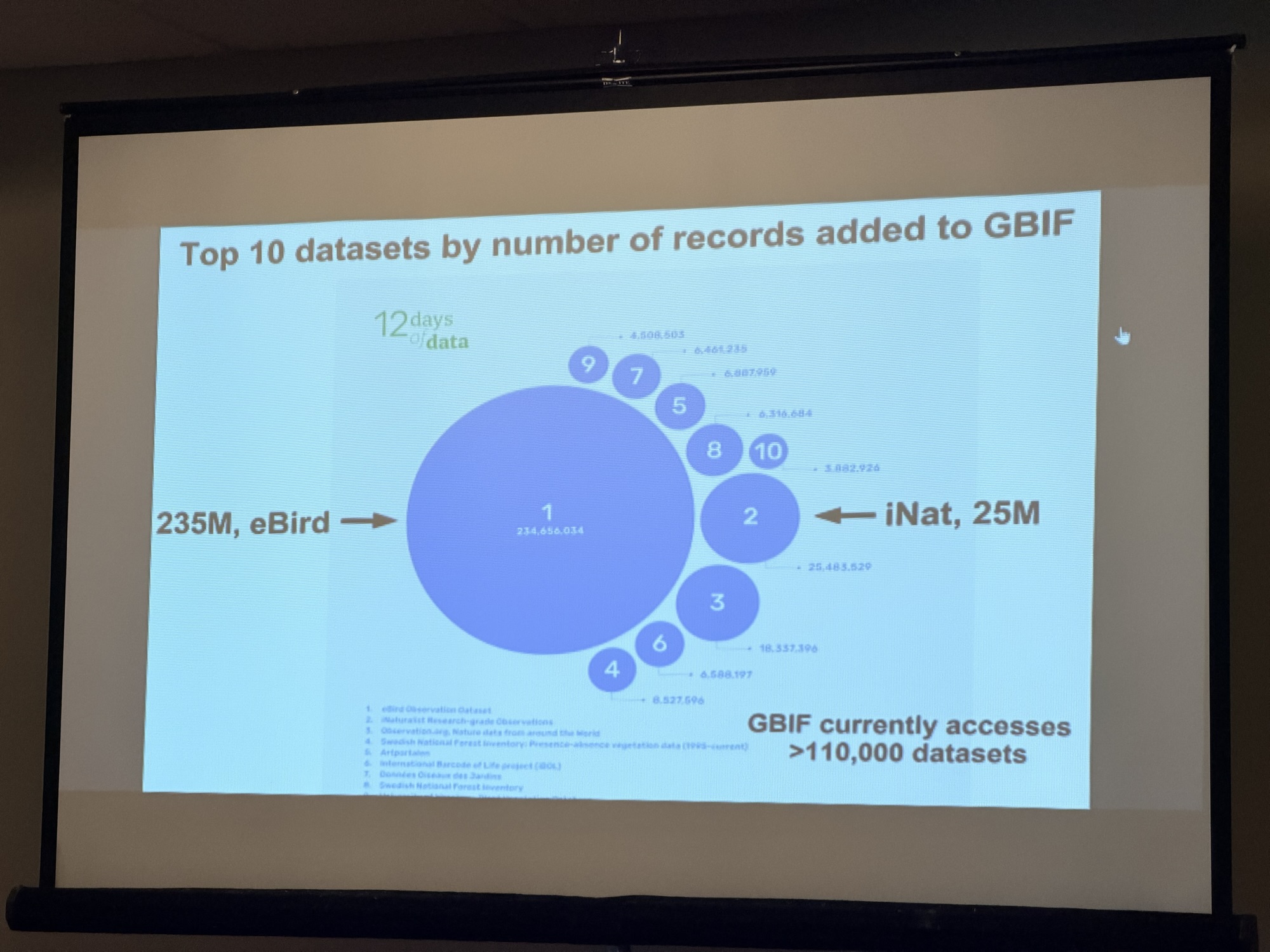
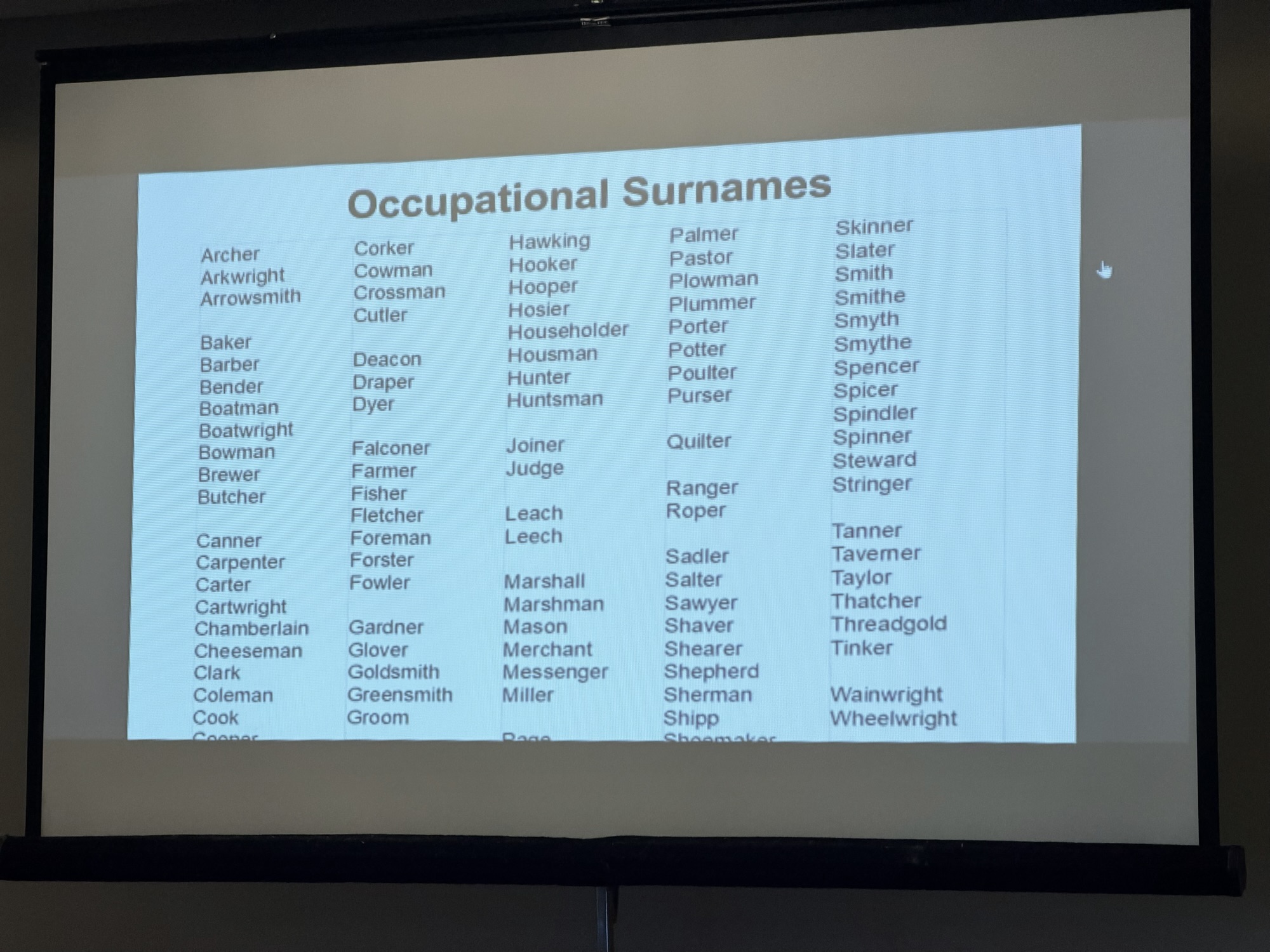
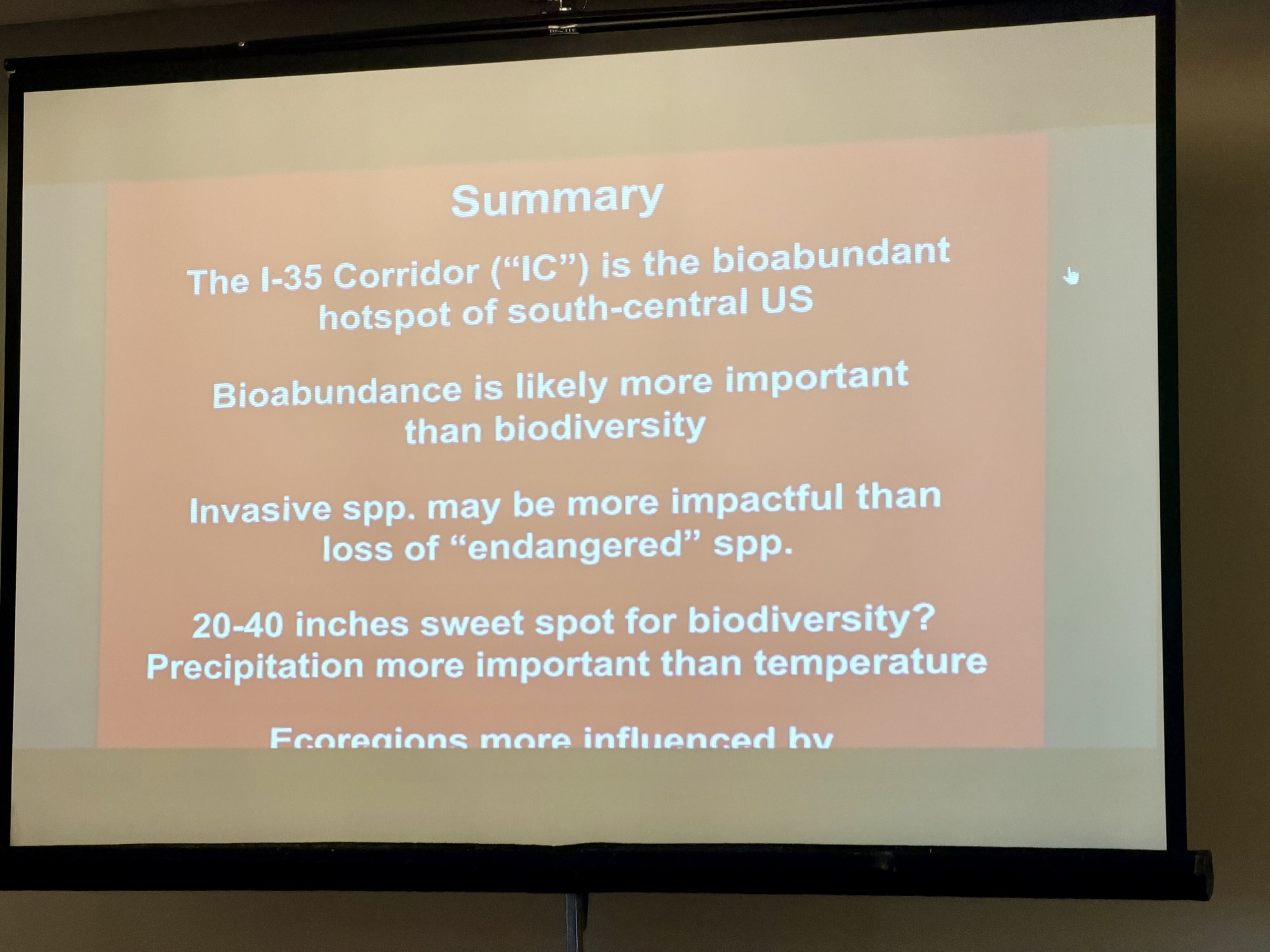
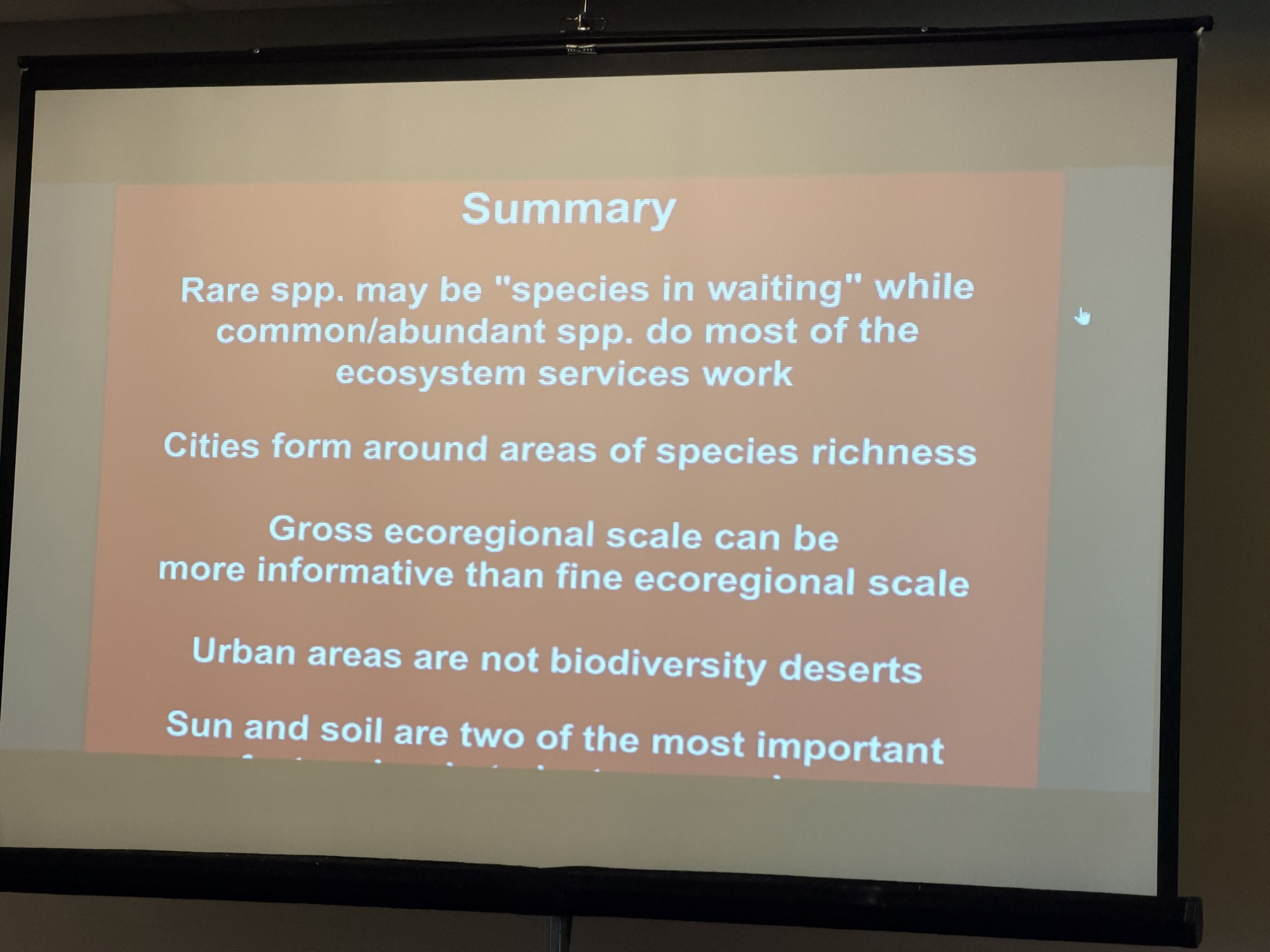
I had a hard time sleeping again last night which never bodes well for attending conferences. But I got through my morning session on iNaturalist data and how it correlates diversity data. It was led by a quirky fellow who made things hard to follow but was so unique and interesting that it was ok. He sure loved data. Here are some interesting tidbits.
Just enjoy the tidbits.
Lunch was undercooked baked potatoes. We had to stand in long lines and they kept running out of toppings and such. No one was happy. It was freezing in the room. We did smile.
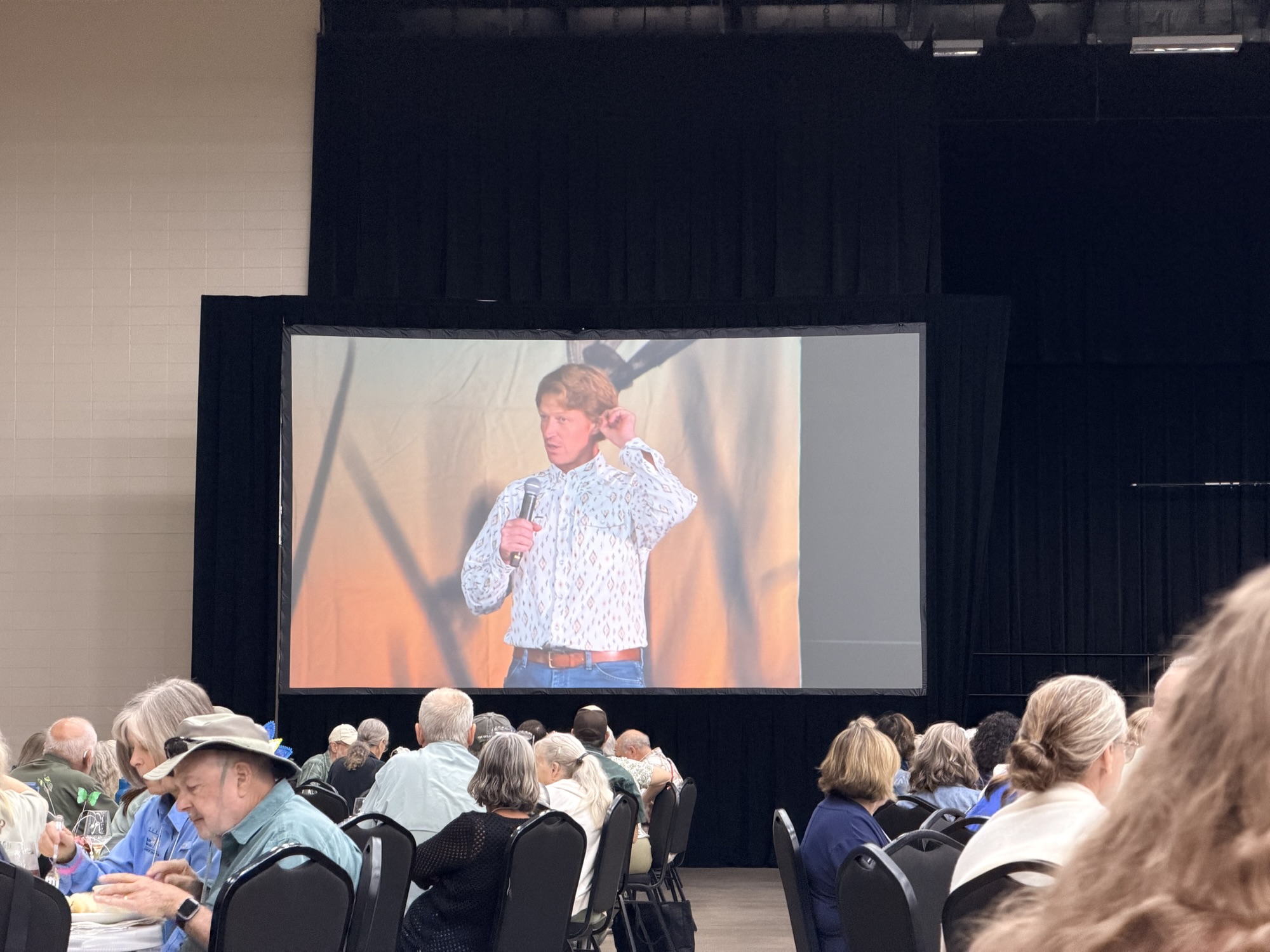
Mmm. Cold hard potatoes. Had to go grab Linda JoSpeaker is a nature cinematographer
I was most interested in the next session, on digital photography. It was good, and the room was warm. Unfortunately, that warmth right after lunch put me to sleep. I’m very grateful that the presenter shared his notes online so I can read them. So embarrassing. I went back to my room and crashed.
I spent some time in the exhibit hall and bought a nice loupe that will be fun on hikes. Then, boom, it was time to eat again. The dinner was better and included edible chicken, cold broccolini, and really good crawfish empanadas. However, it was cold. We made it through a sad movie about the flooding last year and a few speakers but had to flee. Even with my new cuddly jacket I was cold.
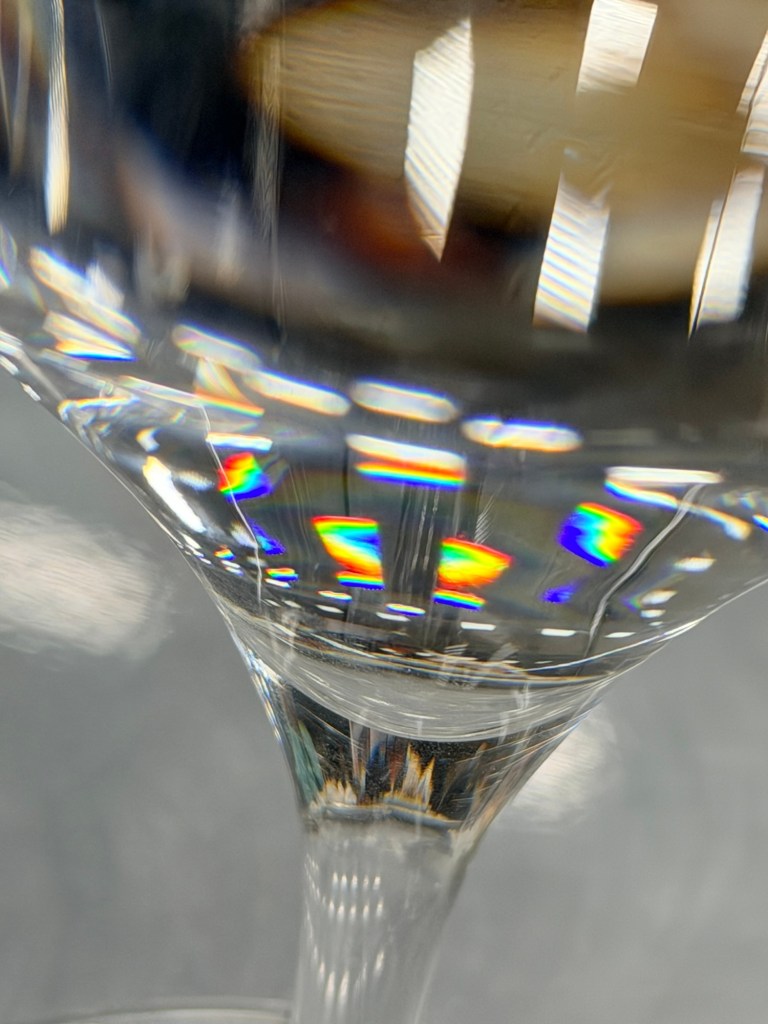
Artistic water glass photo
We (minus Liz and Jackie) went to the Hilton bar, where we met a perfectly nice man from north Austin and a friendly woman, both Master Naturalists. Of course we also were with Mike M. We had very pleasant conversations. It was good to see the finished renovations after staying there in the midst of the work earlier this year.
My hope is to stay awake tomorrow. I may need caffeine.
I’d planned to blog last night but I fell asleep uploading observations to iNaturalist. It didn’t help that I’d barely slept the previous night (no idea why). But yesterday was pretty good.
I worked until 1, managing to do so while driving to Waco, which worked out great. I was headed to Lacy Point on Lake Waco for another Bioblitz. I’m on a roll with those things! This was the first activity for the 2026 Texas Master Naturalist Annual Meeting.
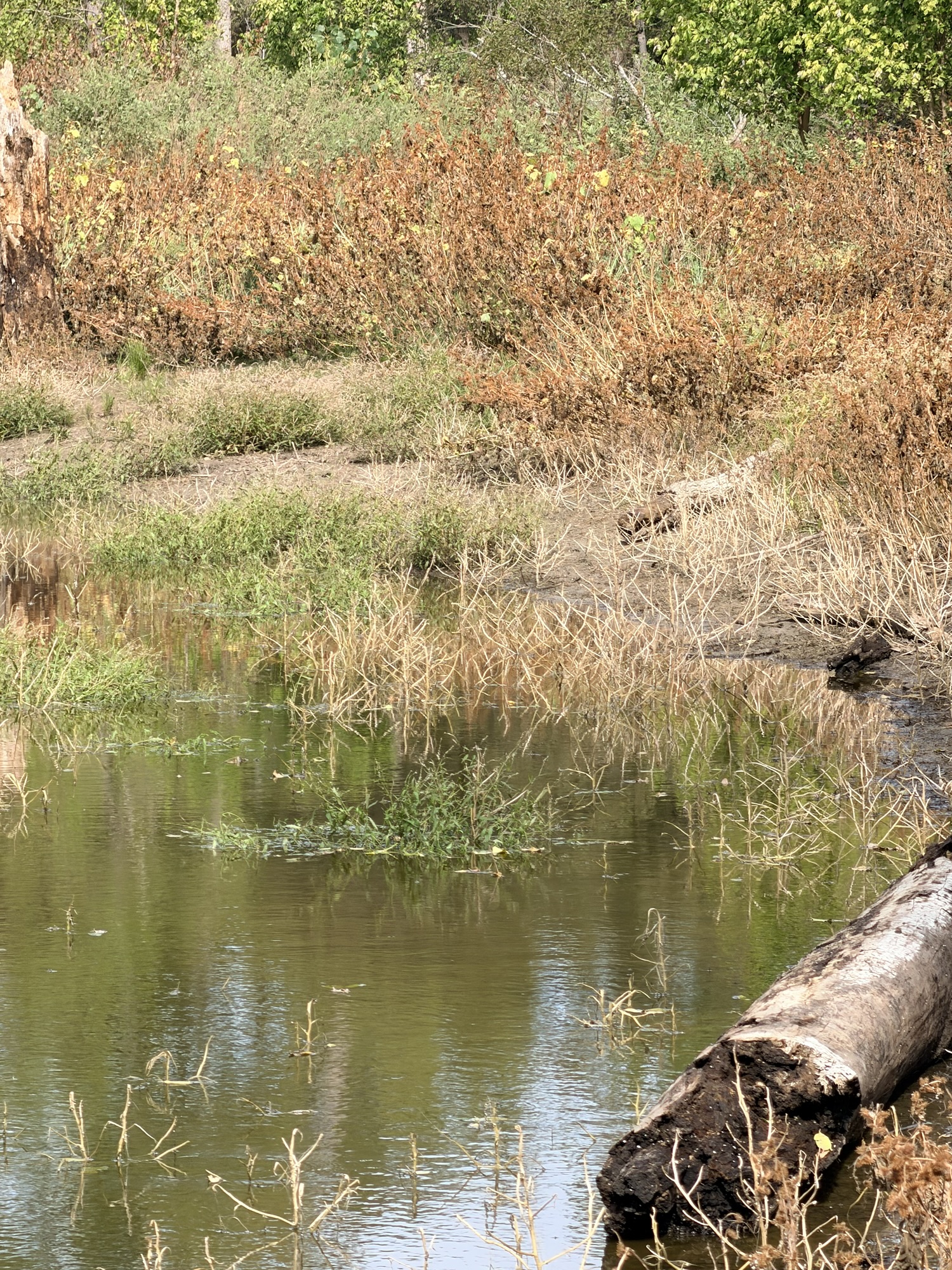
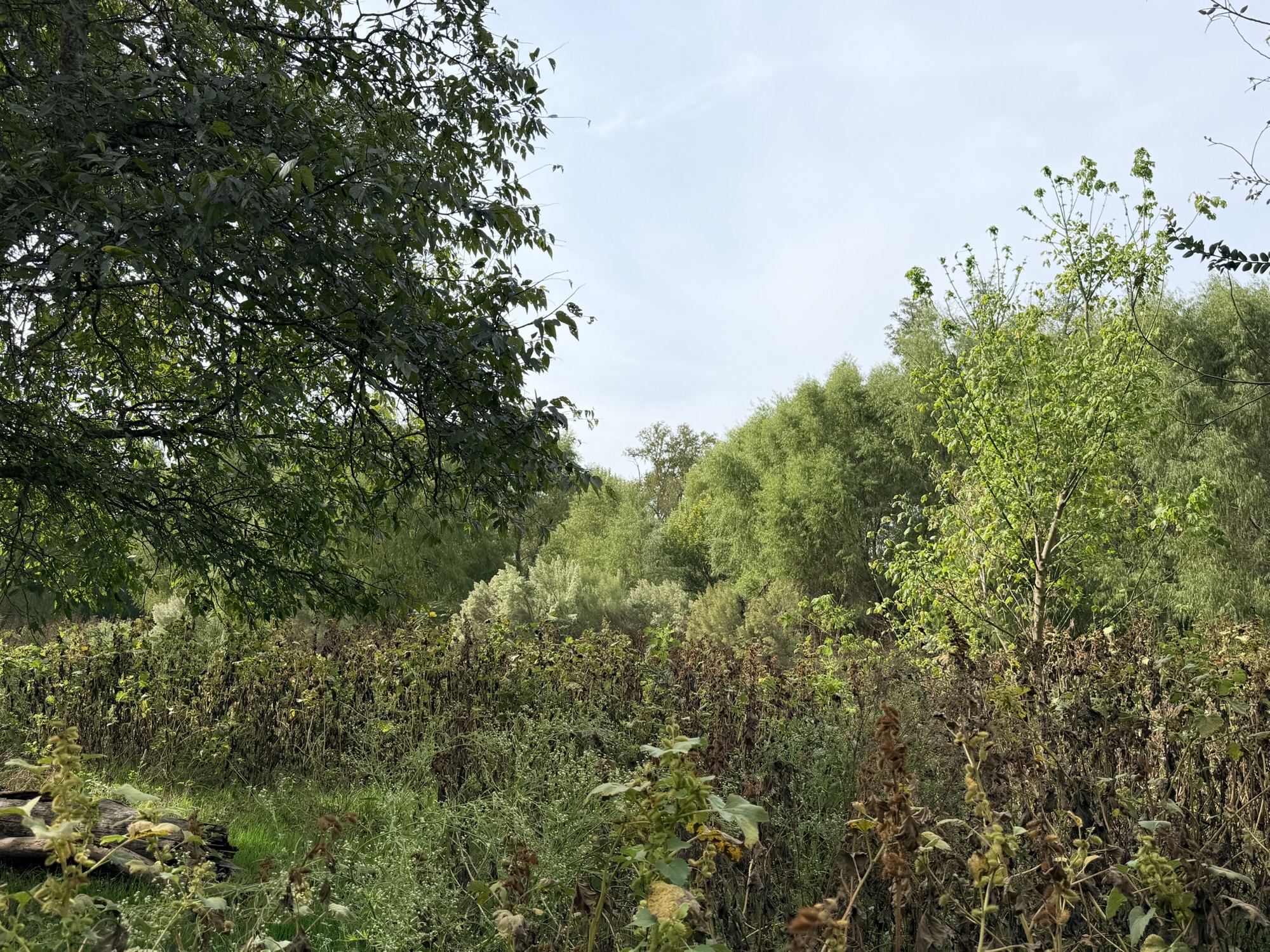
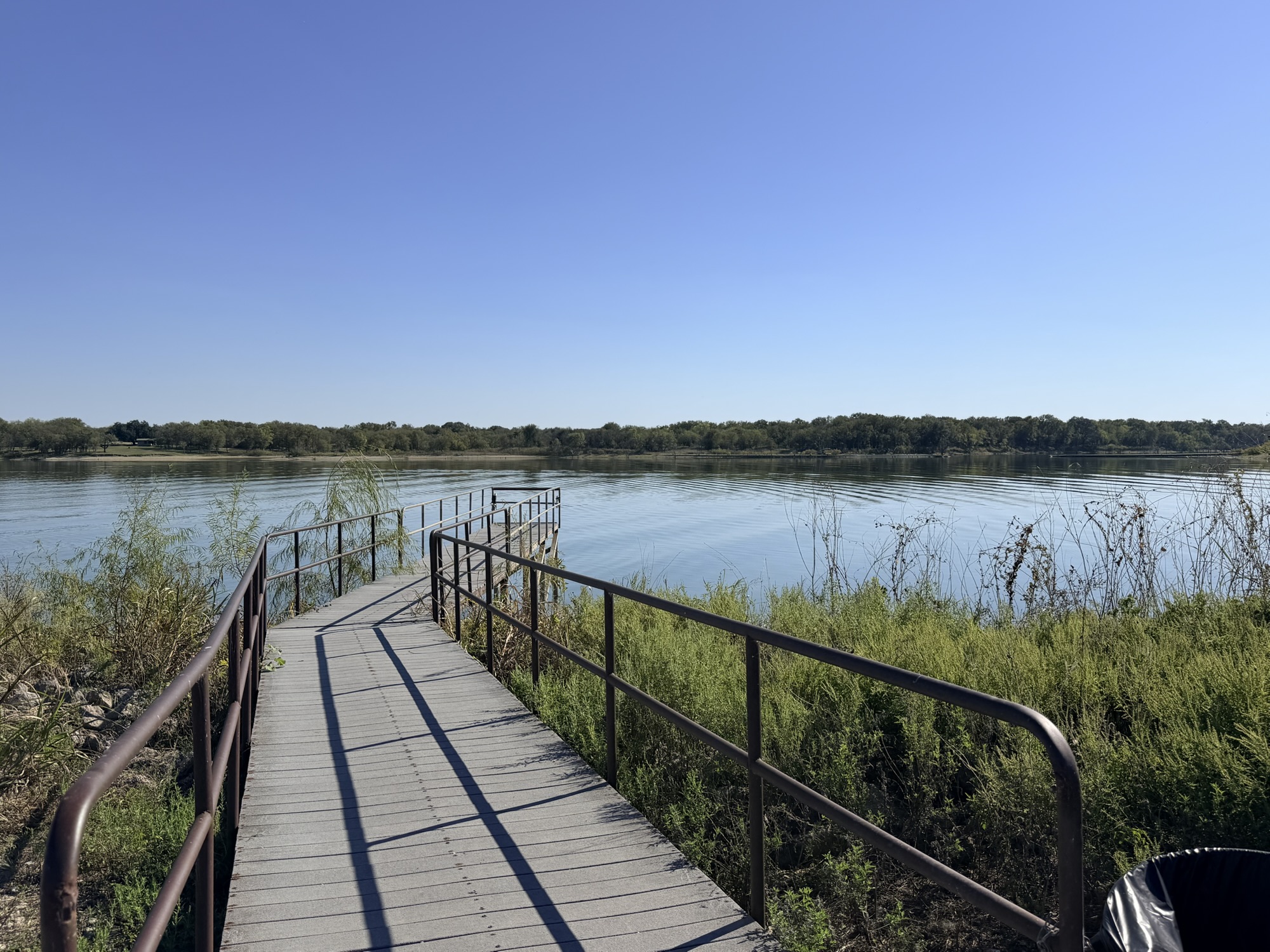
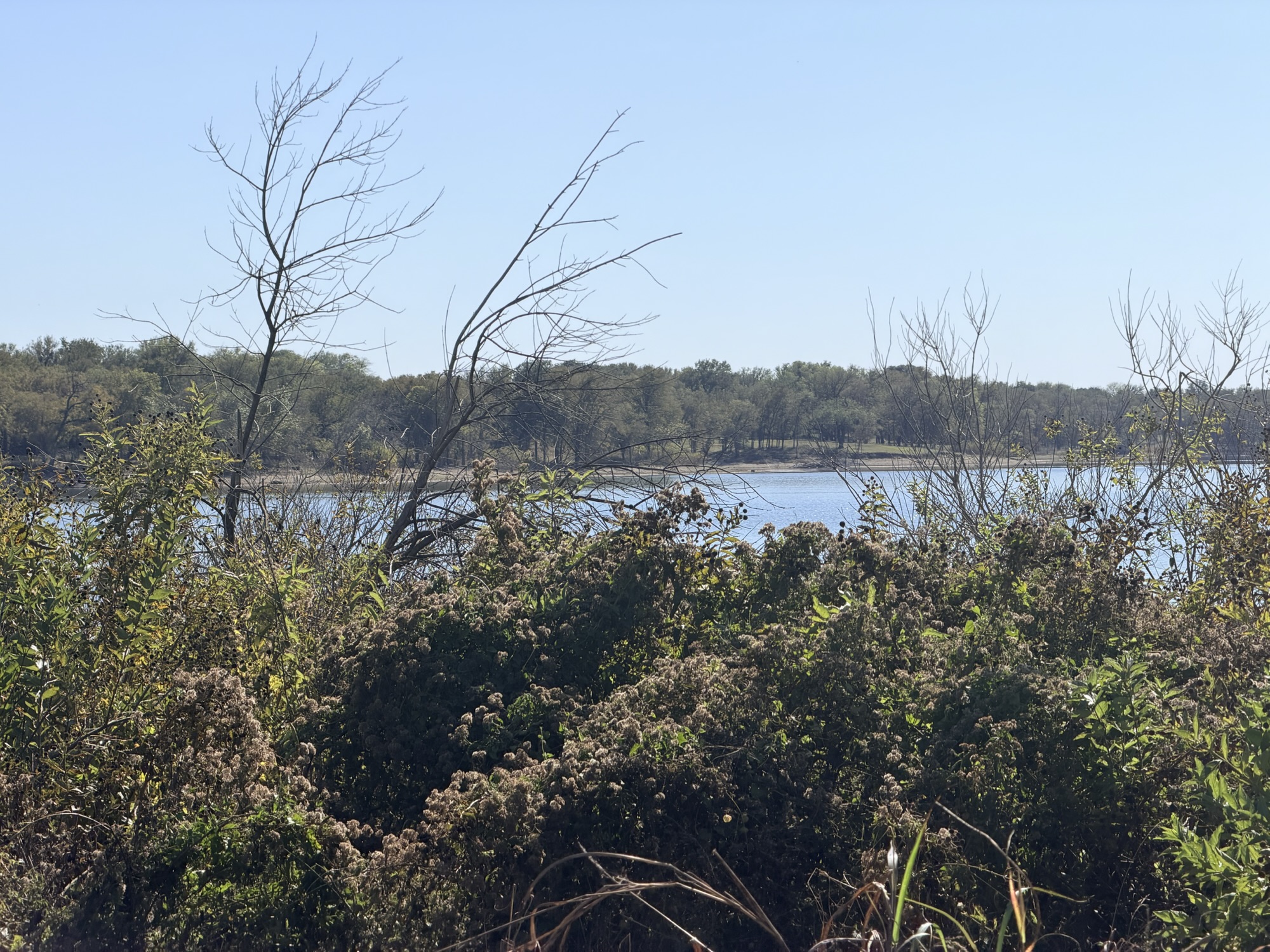
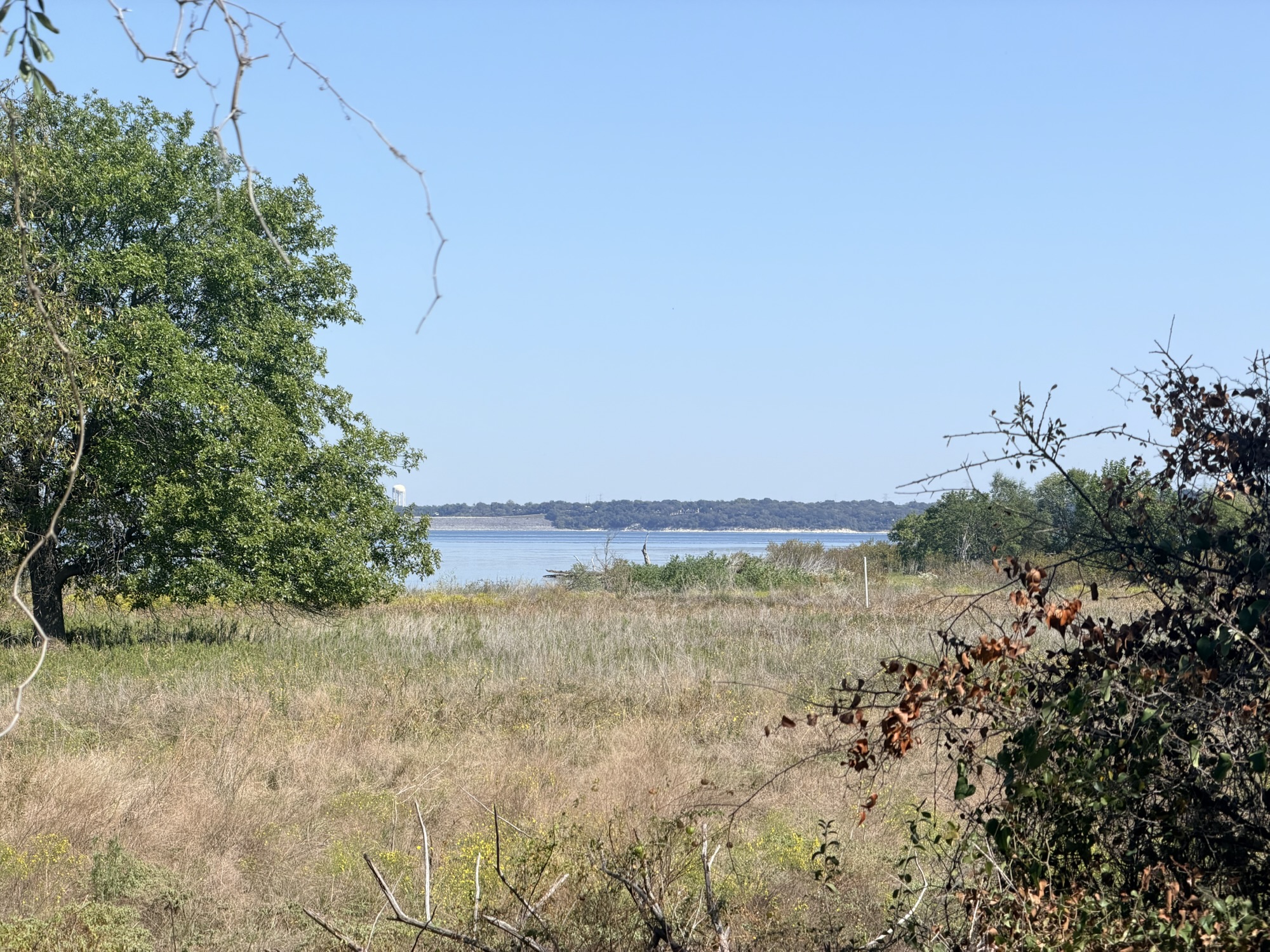
Scenery—it was pretty dry.
I hung out with a fellow Master Naturalist from College Station and did a nice 2-mile trail walk. There wasn’t a lot of variety of vegetation, but I ended up with 90 observations, so that was pretty good, plus all the pollinators counted for the other Bioblitz. Yes!
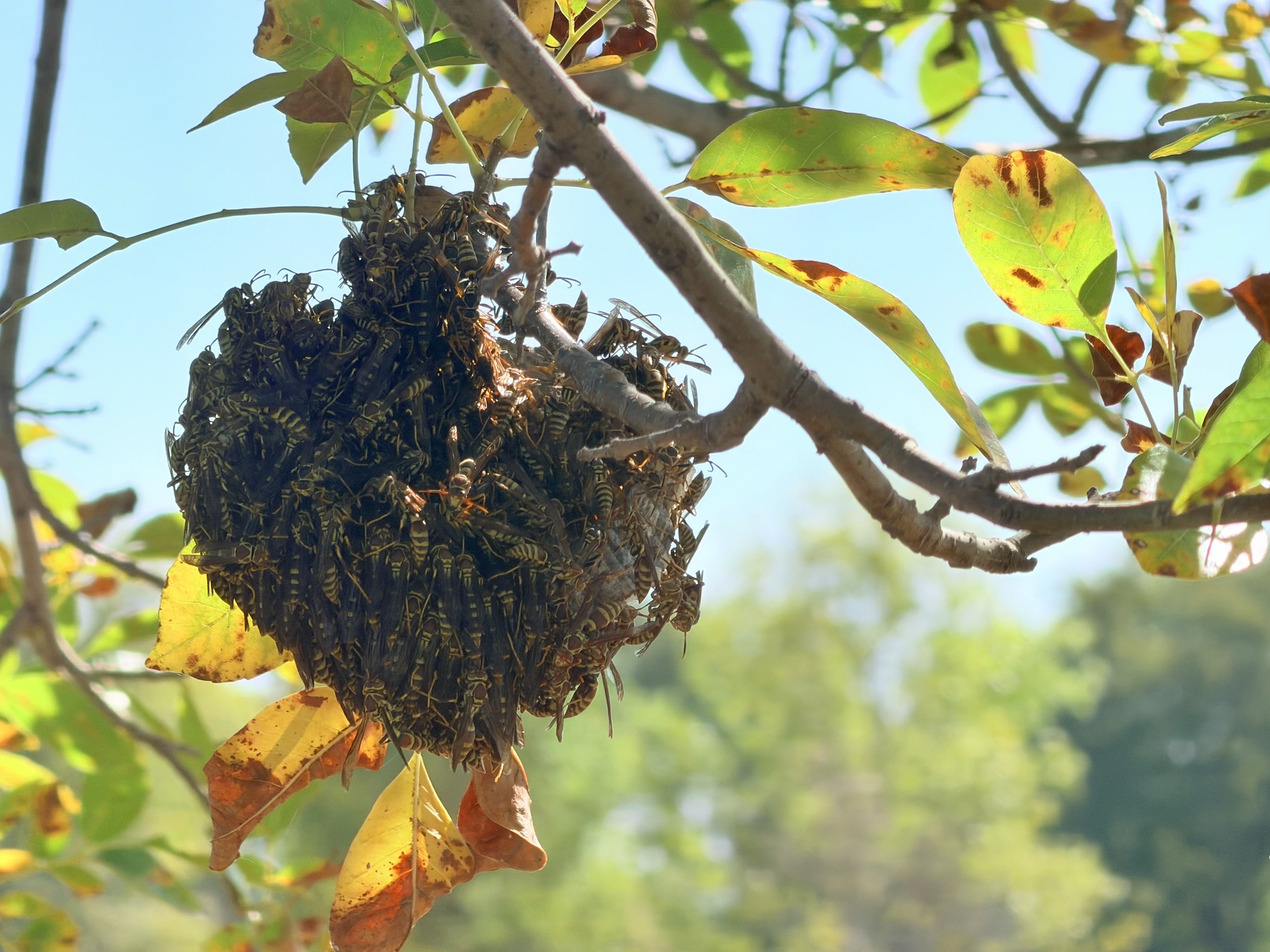
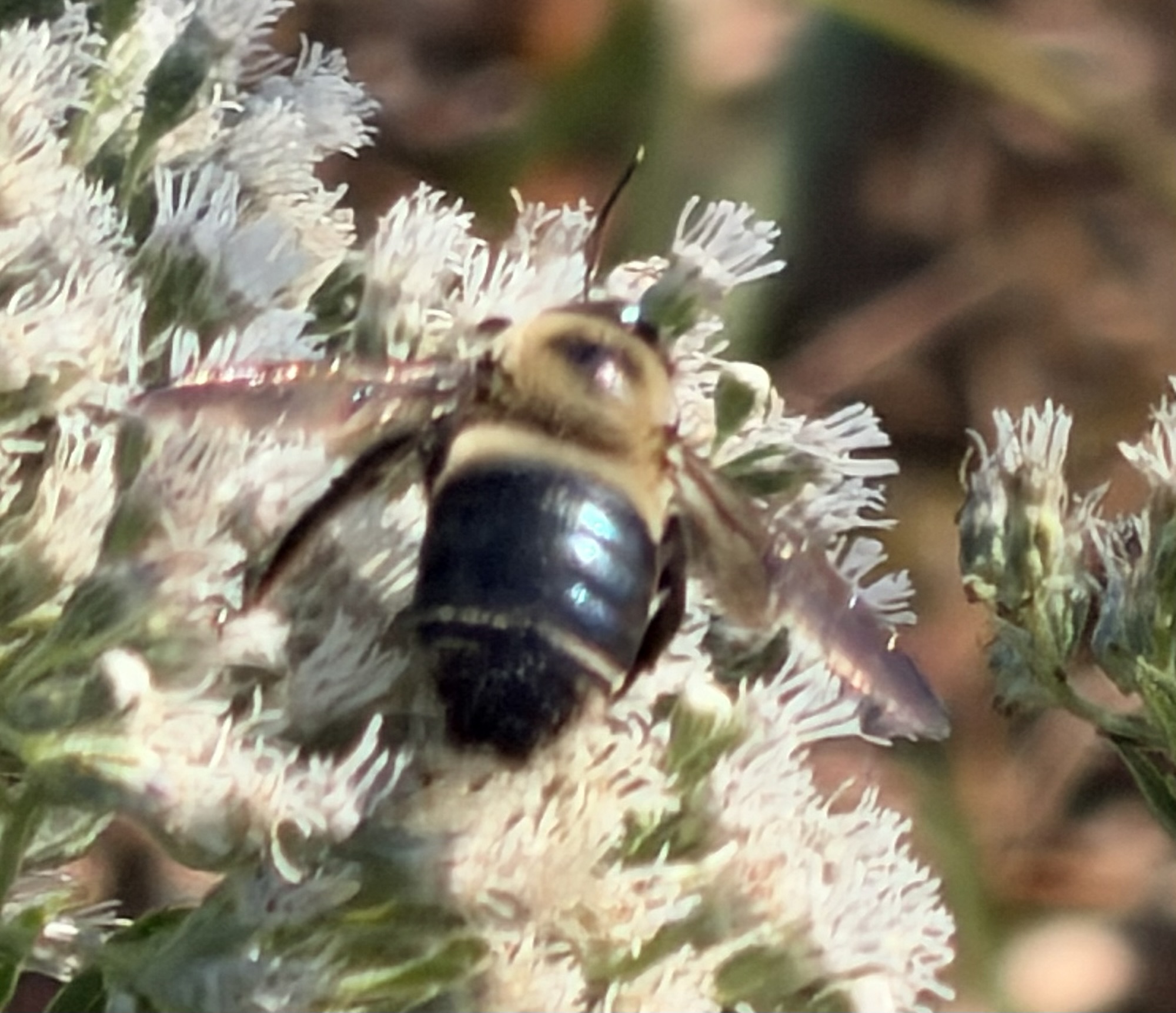
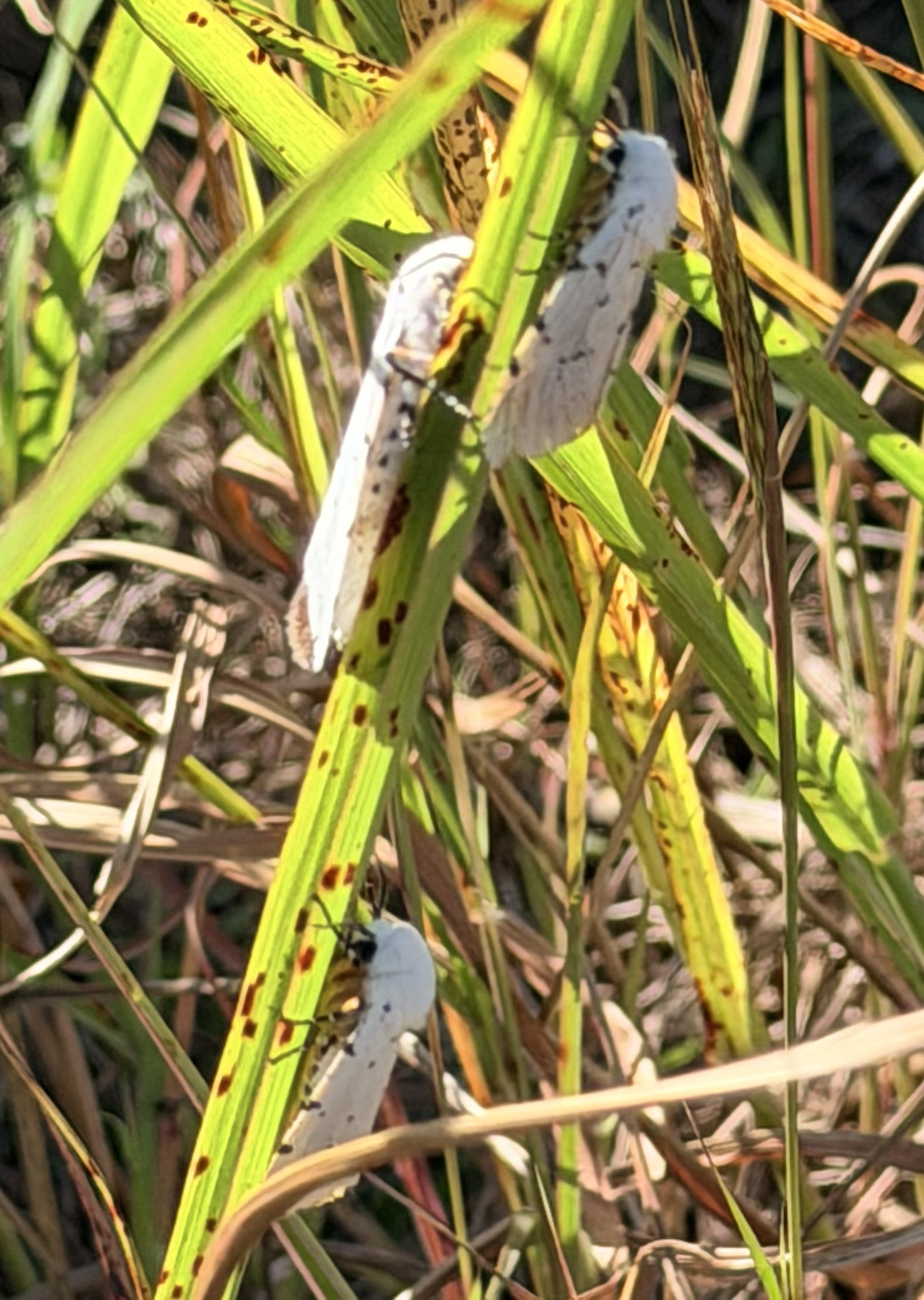
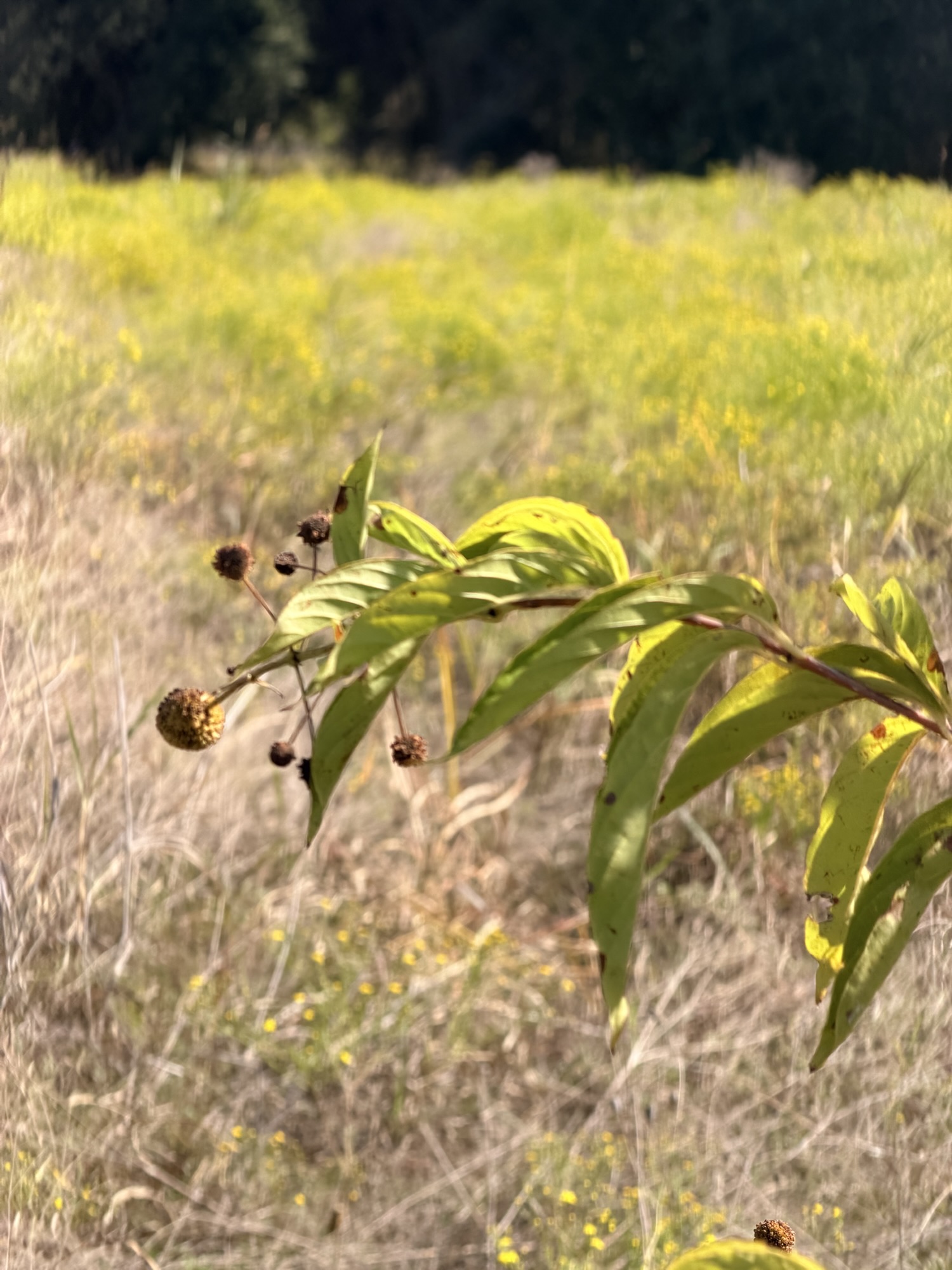
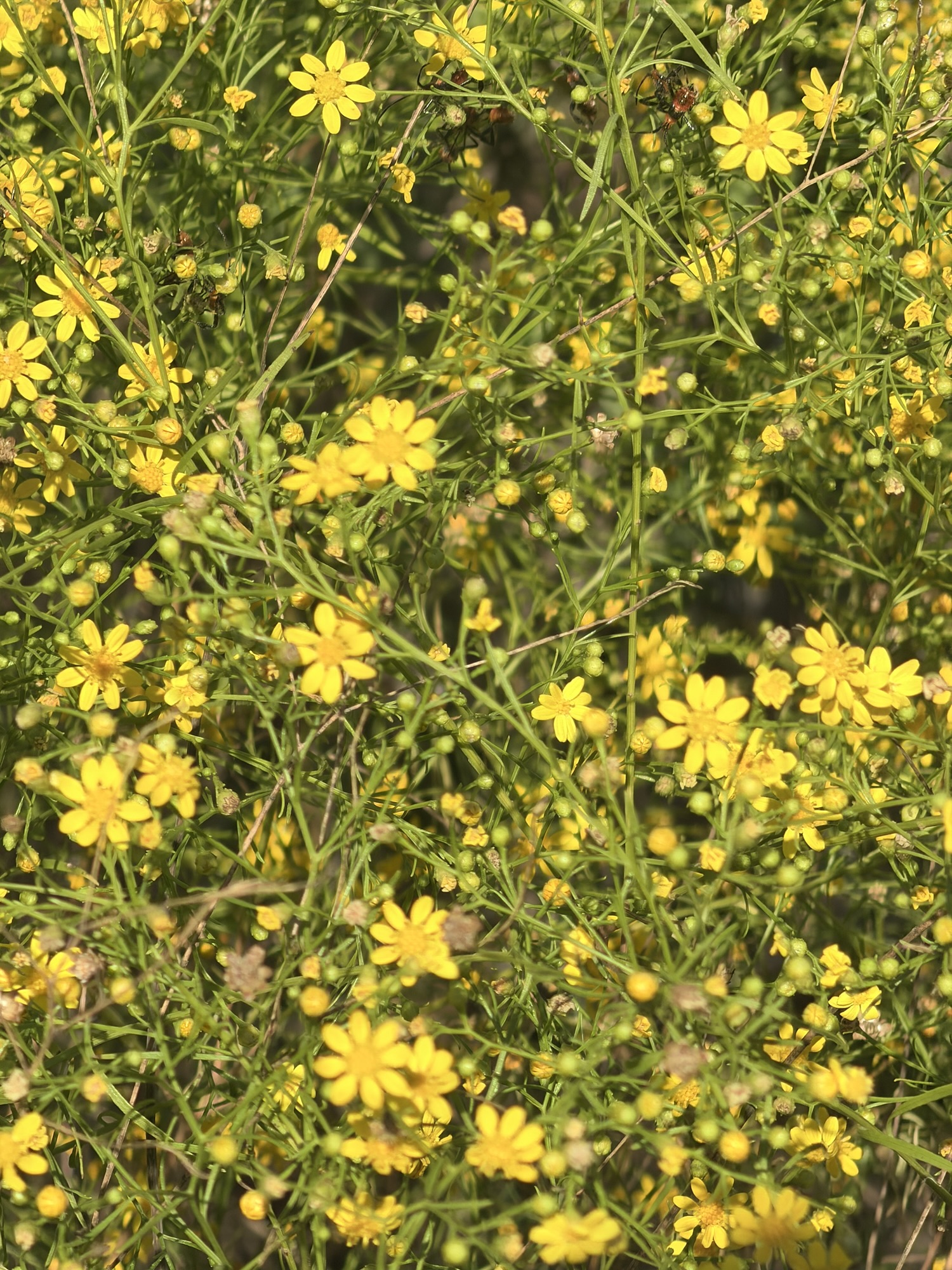
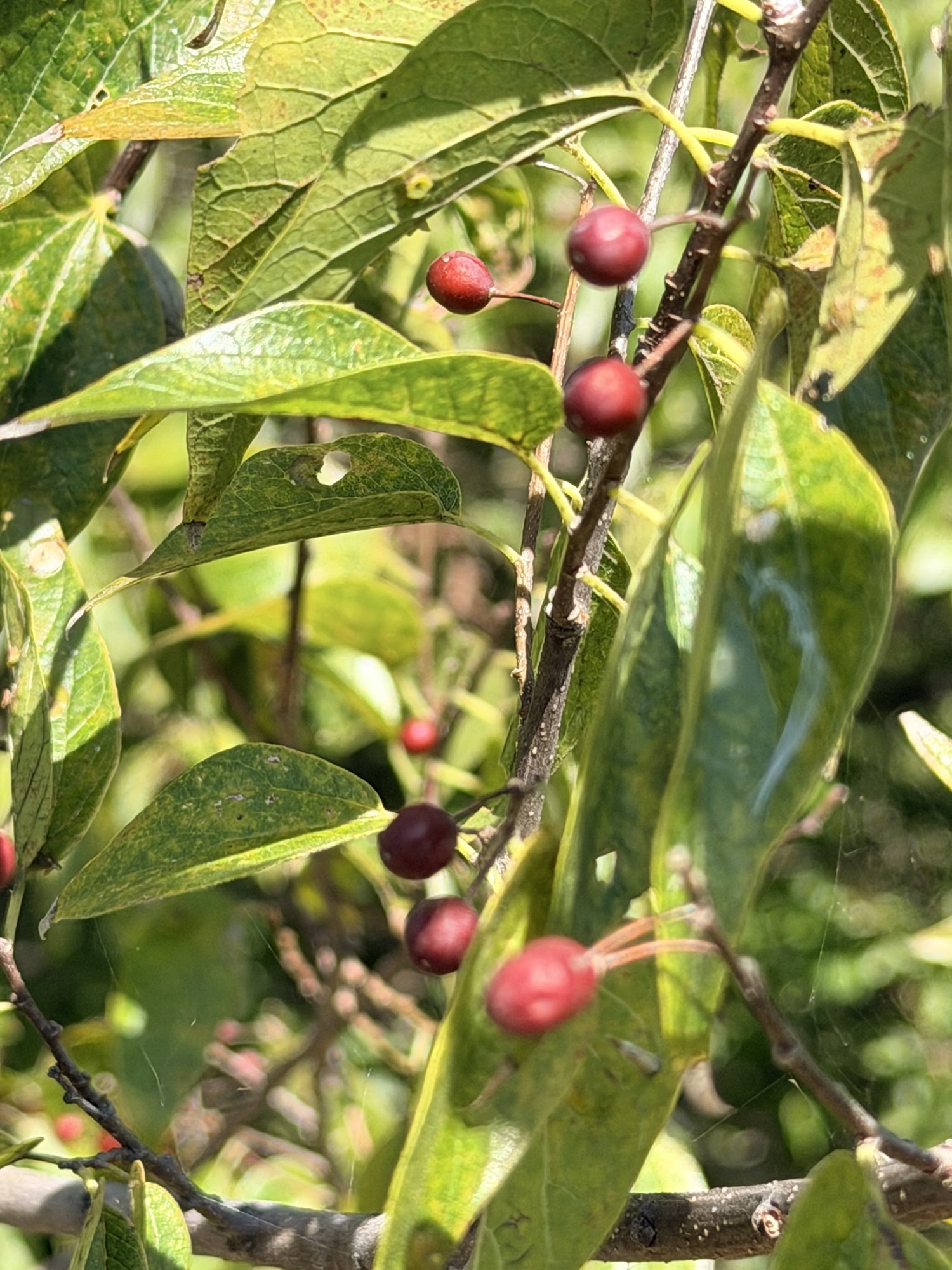
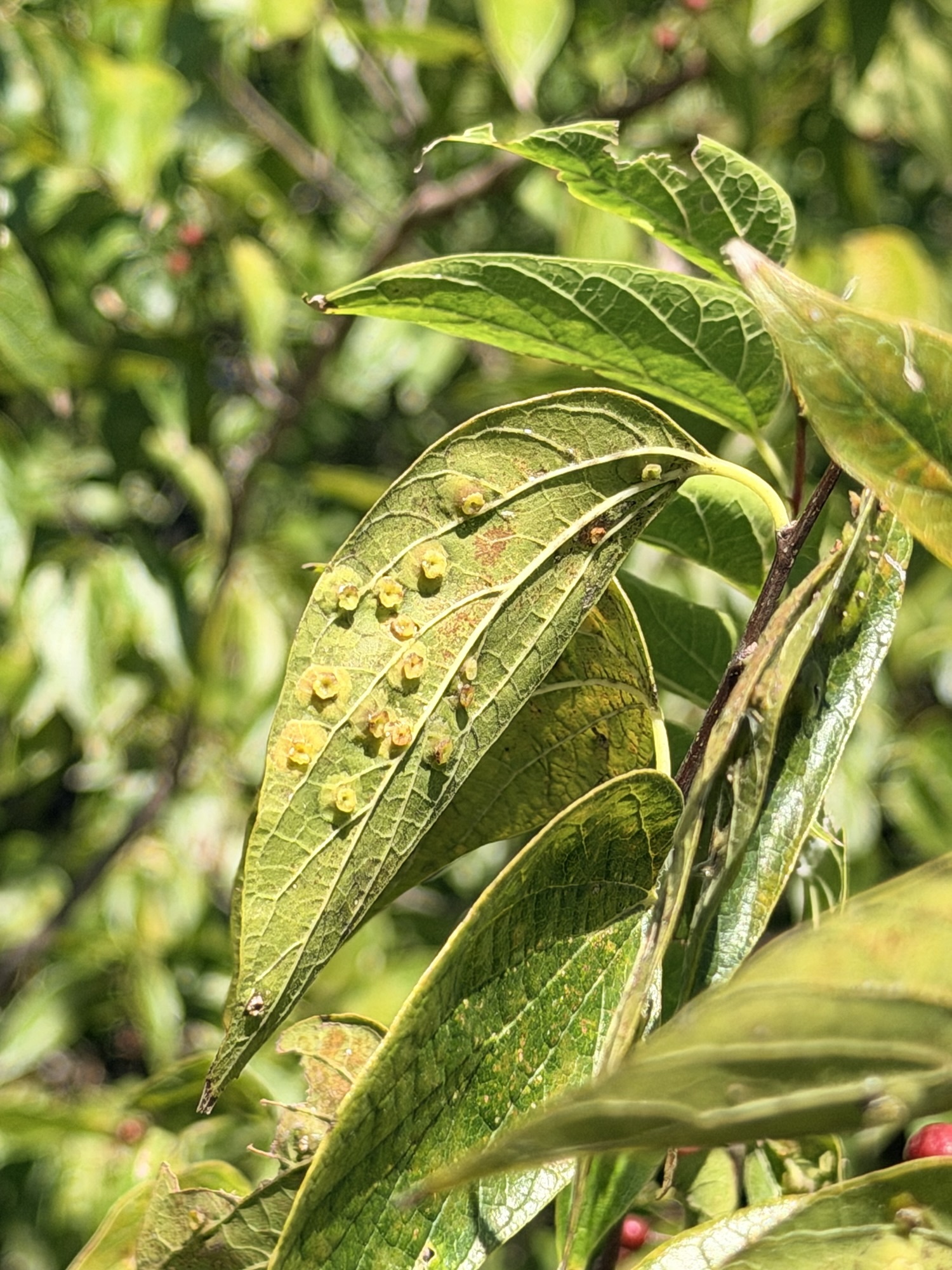
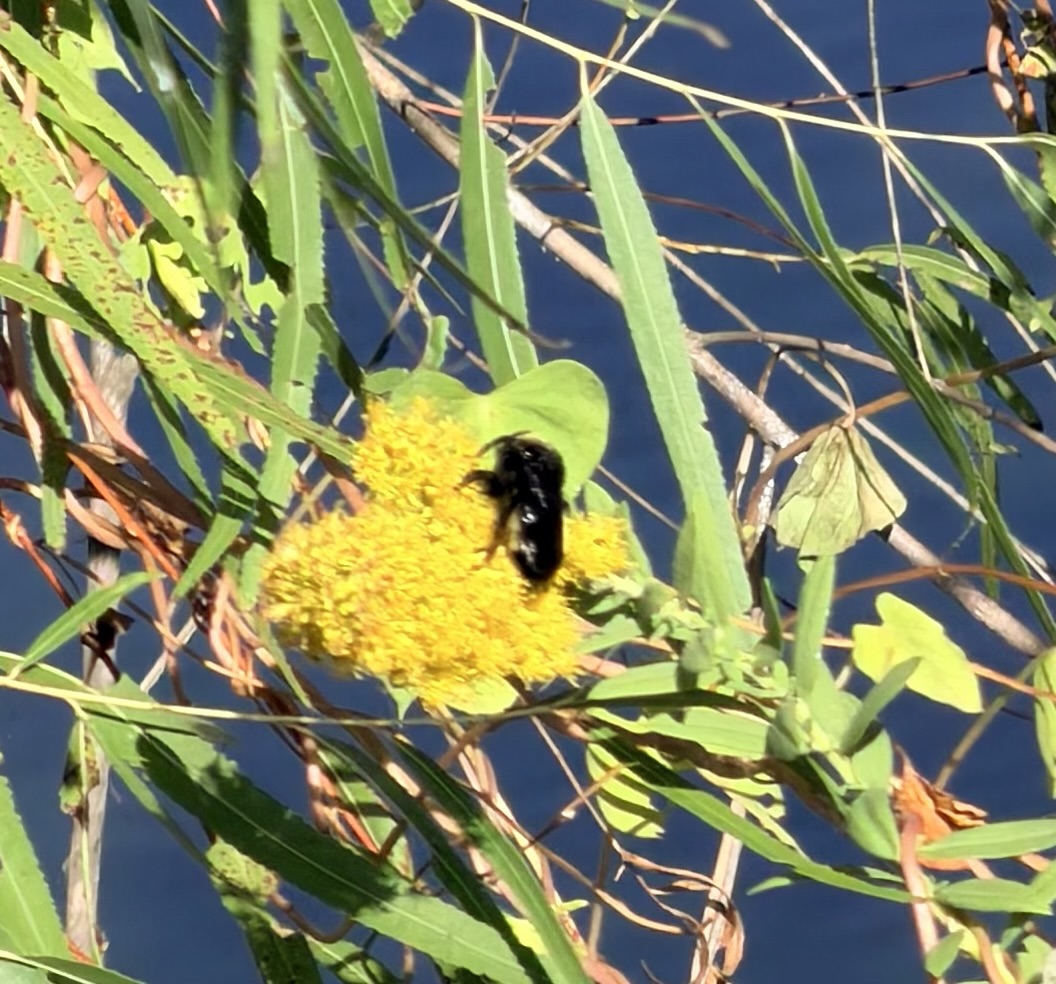
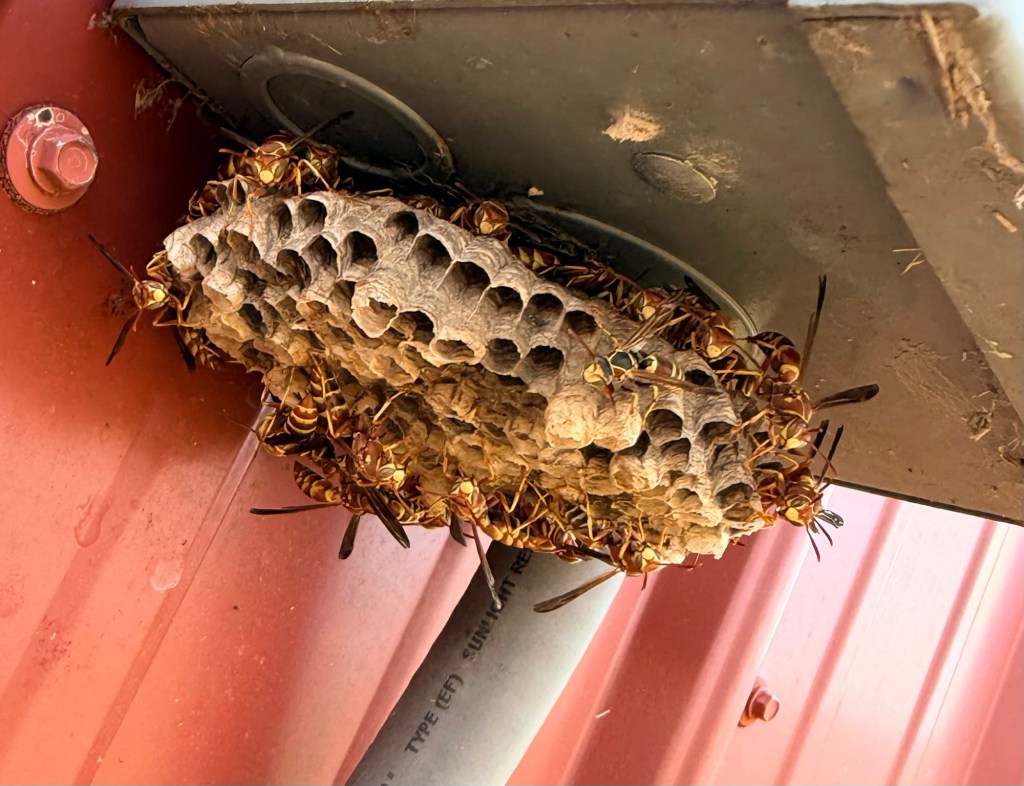
Spanish gold – Grindelia ciliata Cool snag (dead tree)So many paper wasp nests, just like at homeCarpenter beeSalt marsh mothsNot sure what kind of fly this is. longhorn?Lots of button bushBroomweed was everywhere Sugar hackberry Hackberry gall psyllium
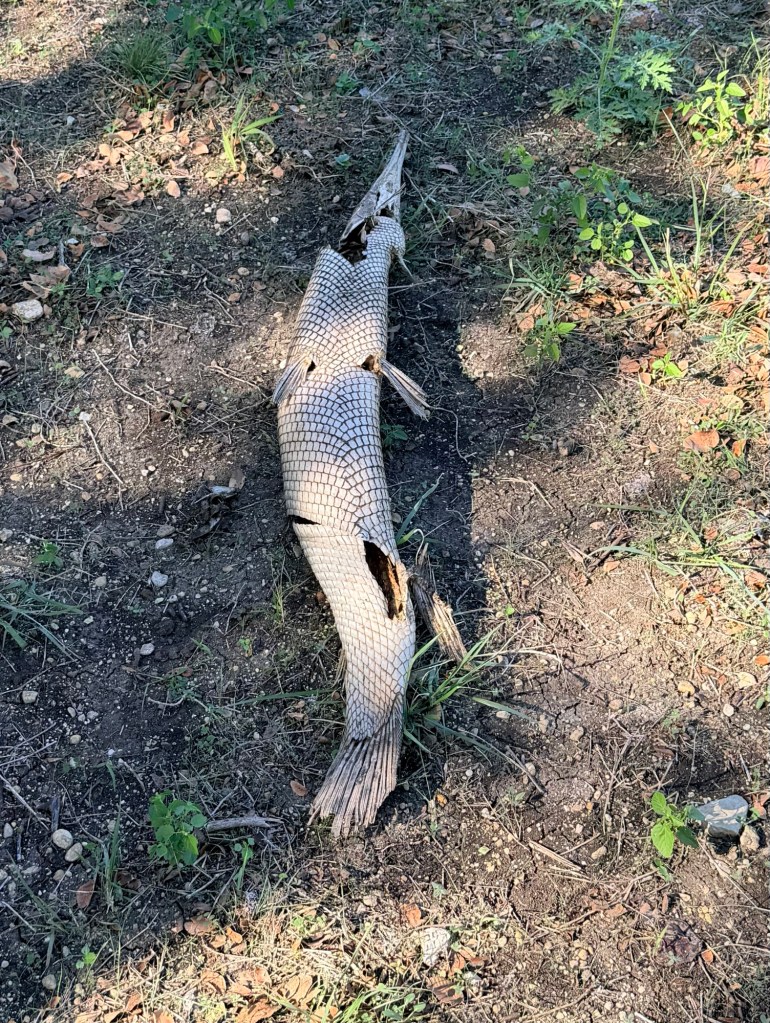
When I was done I chatted with my coworker next to this surprise. I sent it off to the coworker!
It’s a gar. I guess folk don’t eat them?
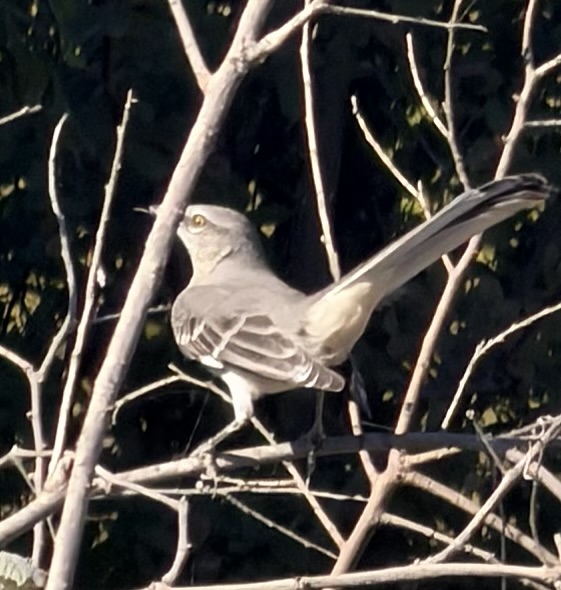
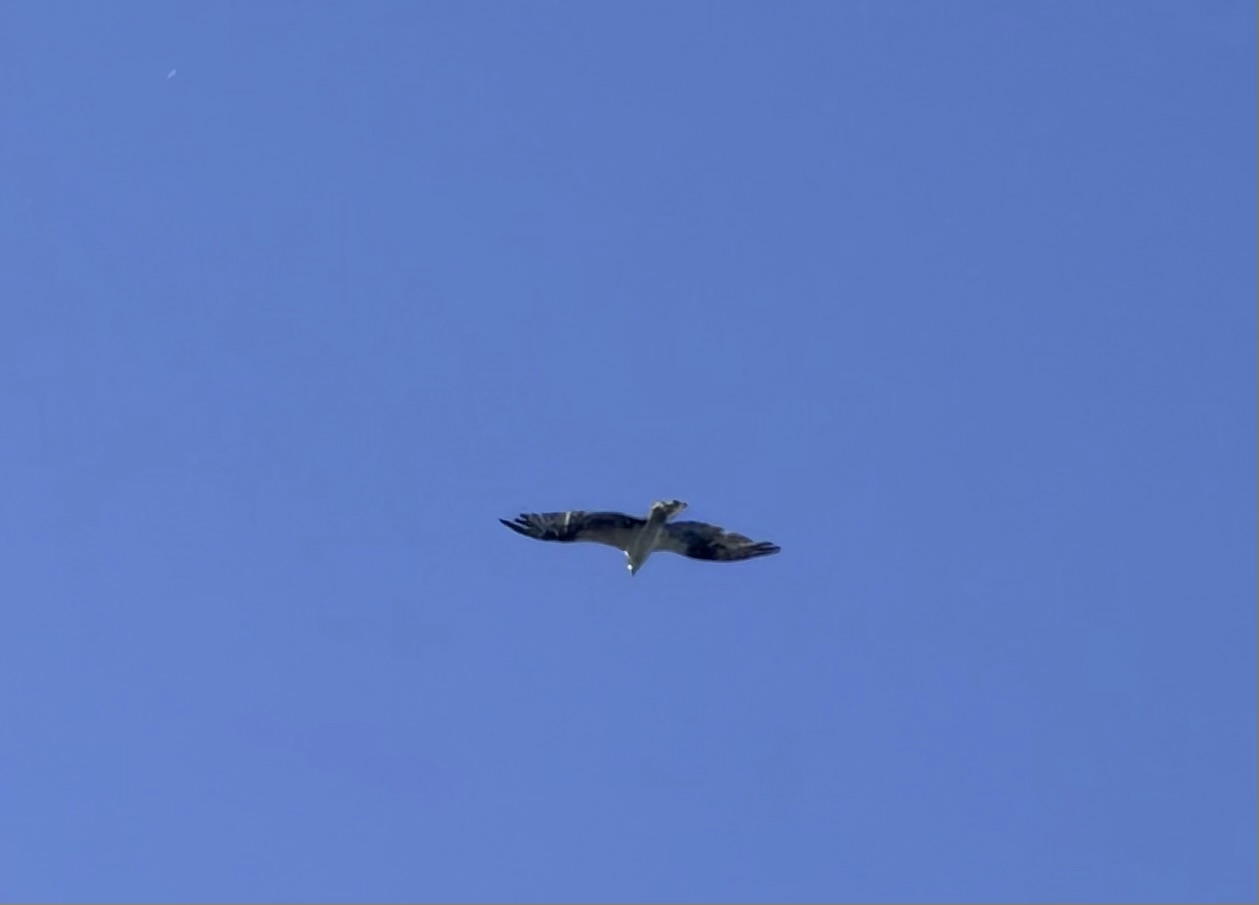
A good number of song birds were around, clumping around the trees for the most part. We enjoyed watching and hearing Red-tailed Hawks, Red-shouldered Hawks, a Sharp-shinned Hawk, and multiple Ospreys.
Mockingbird Osprey
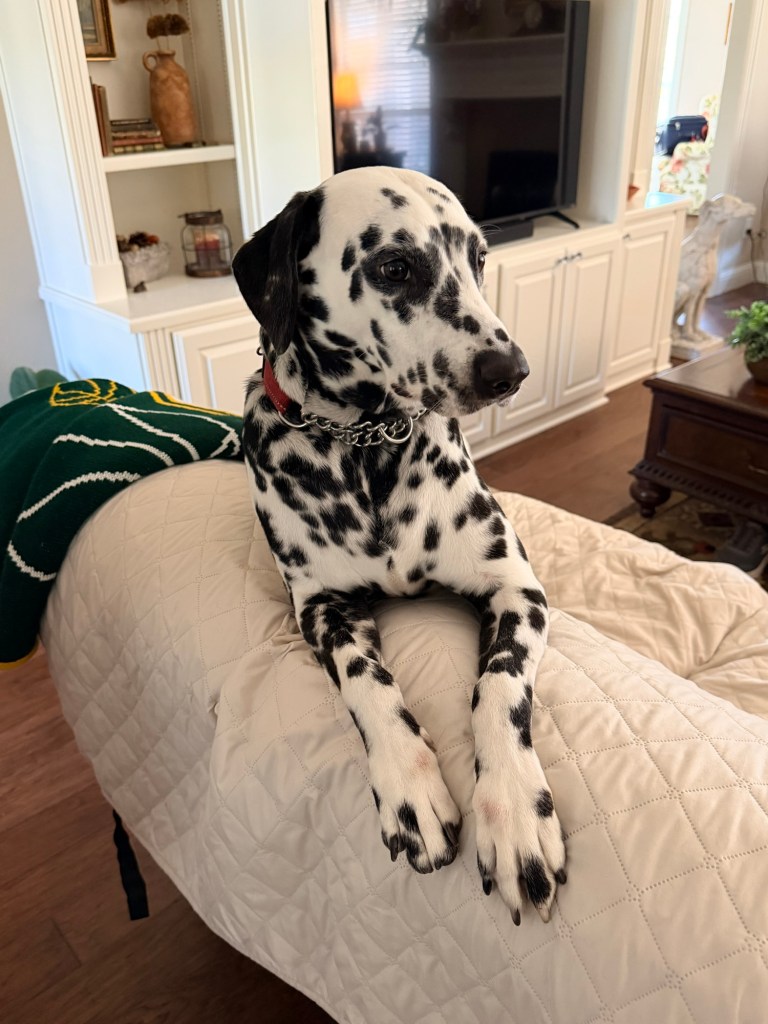
When I was done I headed over to my friend Kathy’s house to see her family and her new Dalmatian (the previous one, Daisy passed away soon after our last visit). Sally came through Milam Touch of Love, and I’m so glad she got out of the Casa where she was being held. Whew.
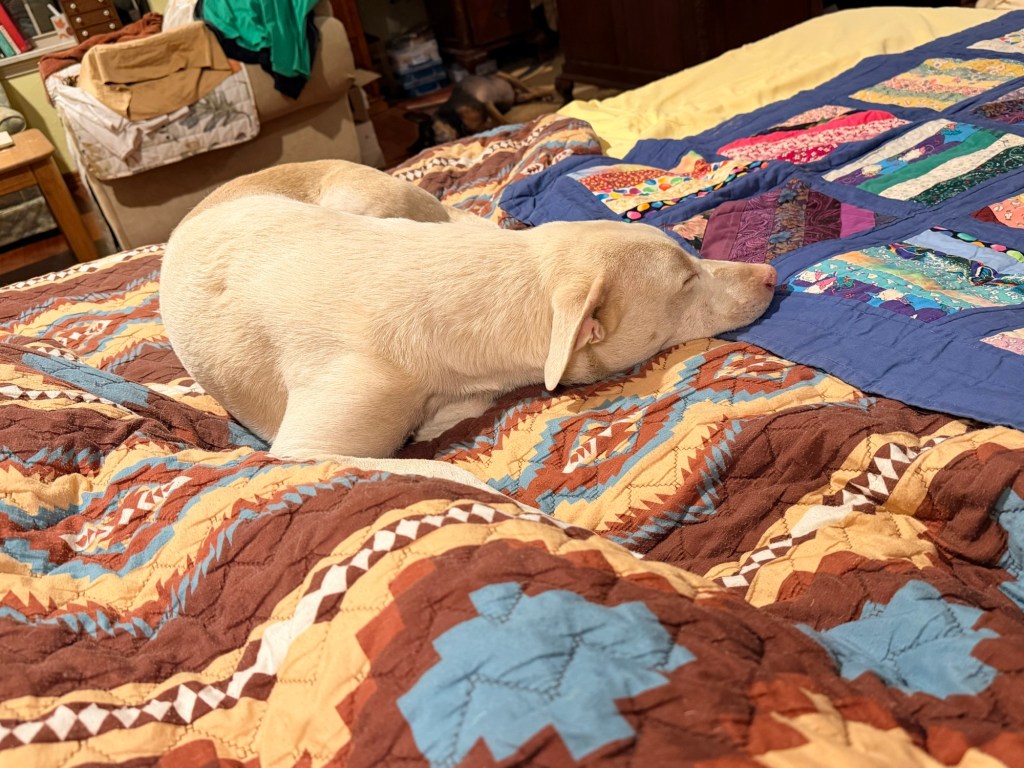
She’s a lovely dog, still getting used to her home.
It was a nice evening talking and eating and telling stories. Her daughter was there, who I hadn’t seen since La Leche League days. Kathy’s husband is also doing well and fun to see.
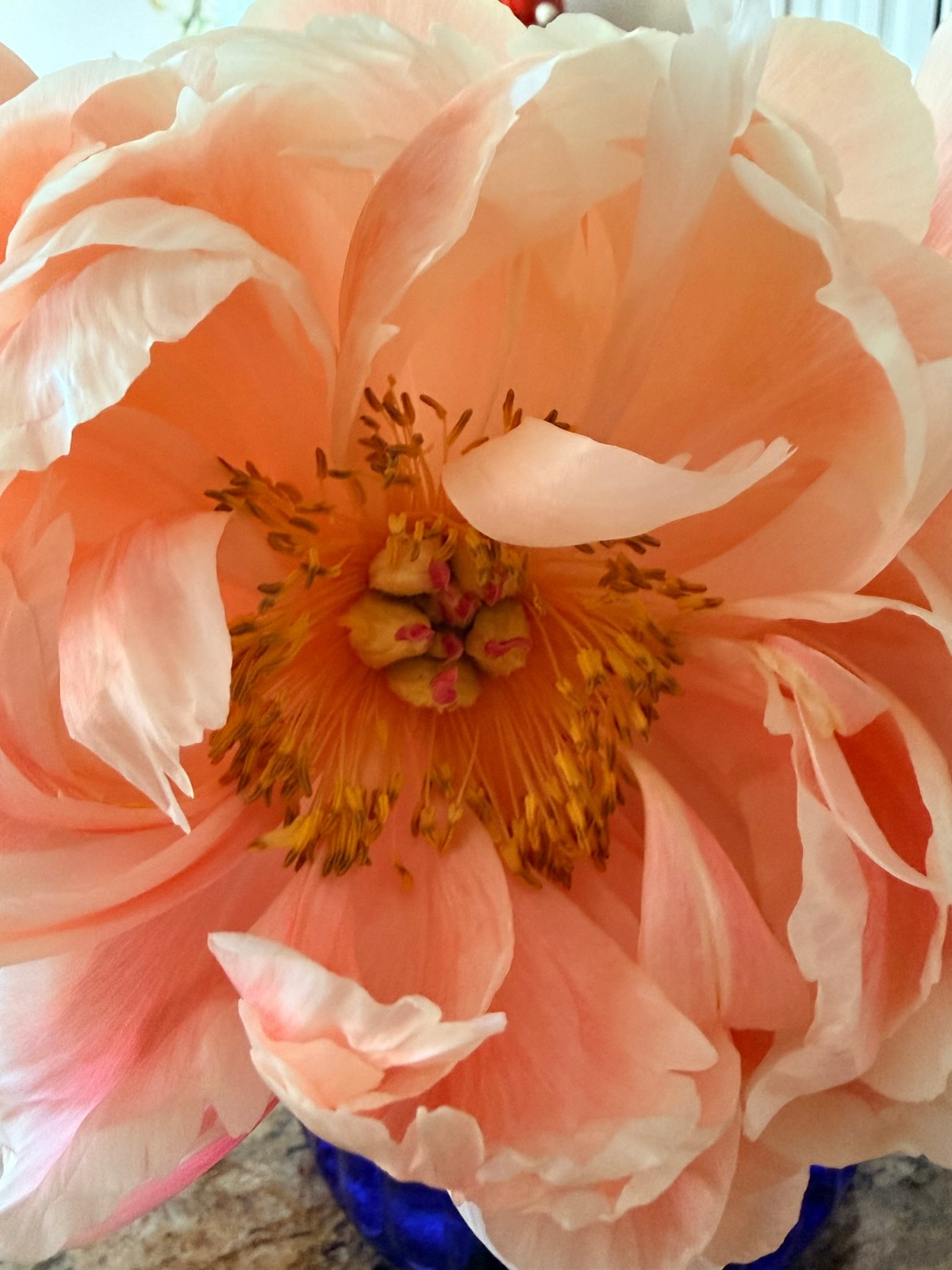
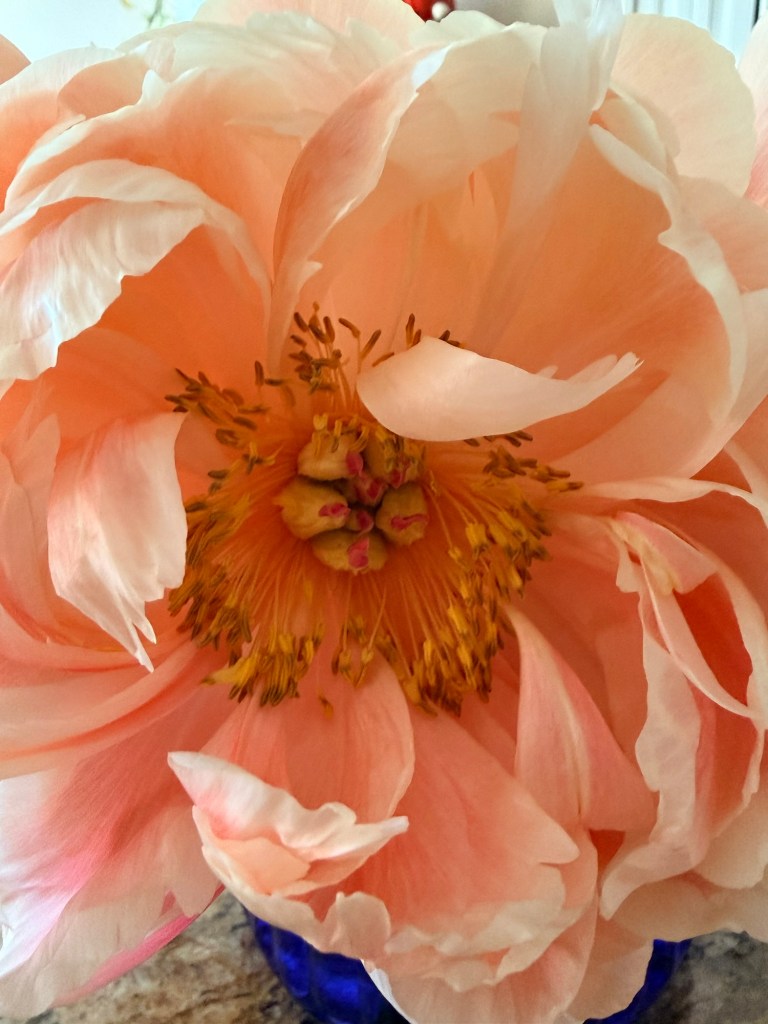
Peony in a vase. Real!
I was telling Kathy what a good job she’s doing dealing with a bunch of challenges, how patient and kind she’s being. She laughed and said she wasn’t always that way. I responded that I feel the same, that it’s so hard not to show how upset I am in public forums (fora?). Kathy said I was her role model in moderation and that she often thinks, “What would Sue Ann post?” (WWSAP)
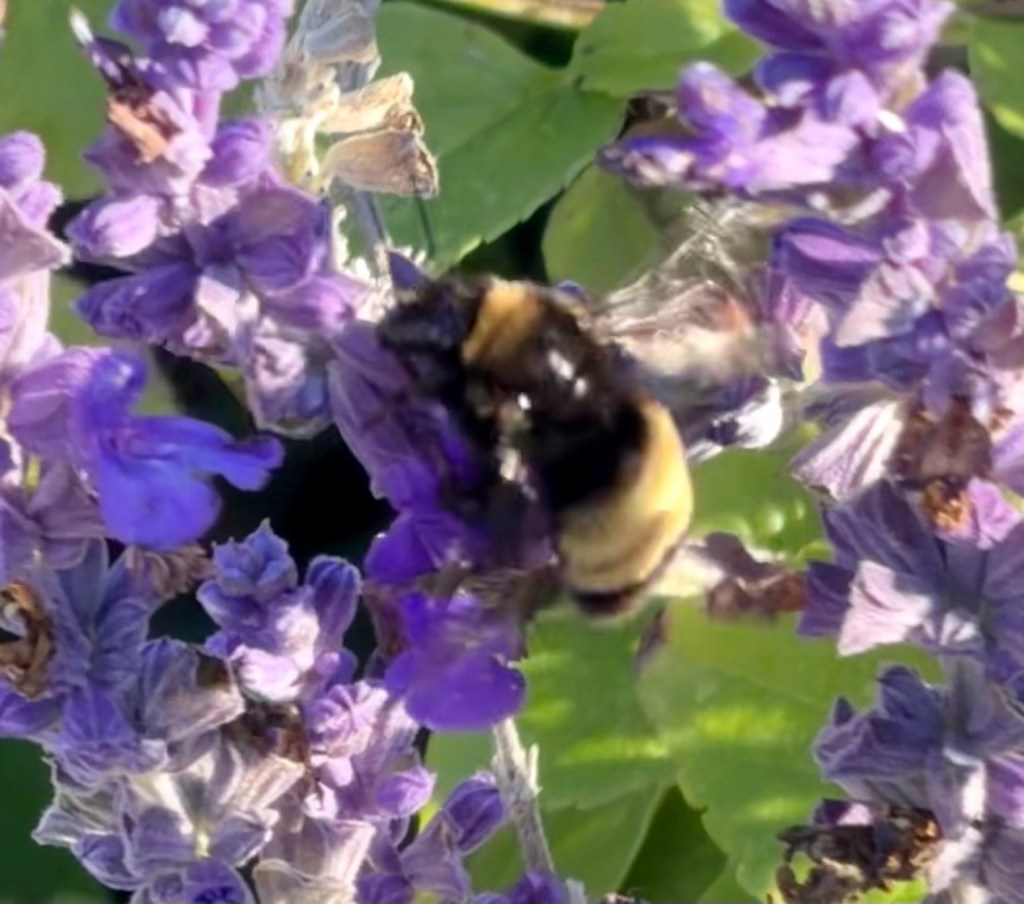
She has so many bumblebees!
That was the highlight of my evening! Just to know someone notices how hard I try. She should know, since she was there when my outspokenness did me no good. Learning and growing is the best, and being noticed is a bonus.
If you could switch lives with a famous person for a week, who would it be and why?
You know, being famous doesn’t appeal to me very much. I’d like to be appreciated by those who matter to me, but being famous and surrounded by “fans” is not appealing. Maybe I could switch with someone who’s famous for being an anonymous benefactor would be okay. I’d enjoy benefacting.
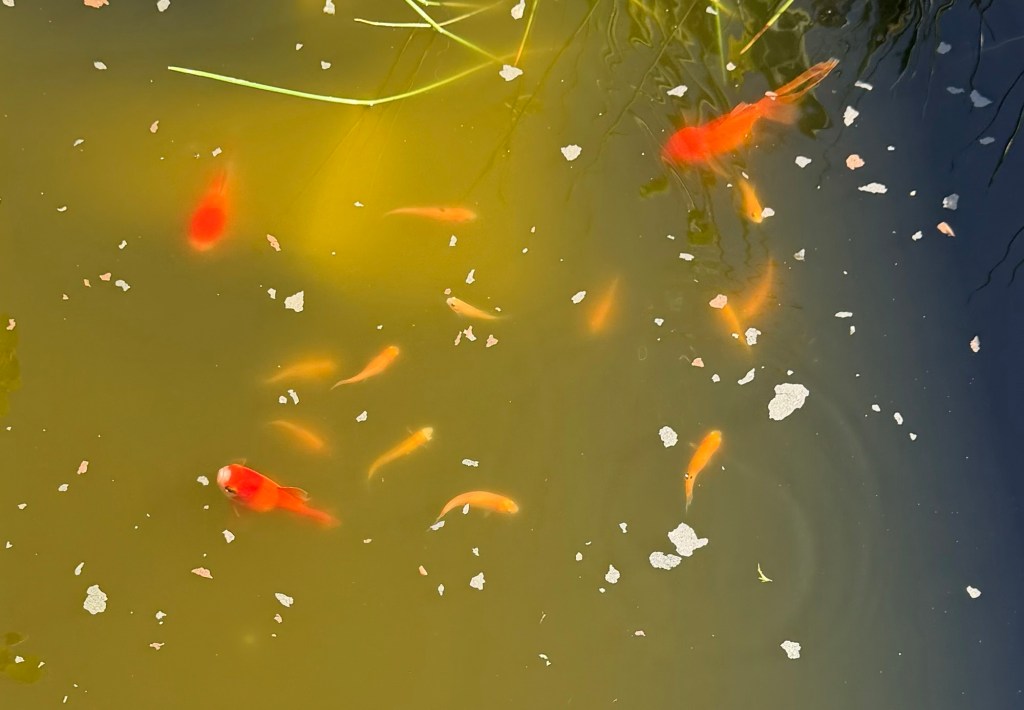
I always feel magnanimous feeding the fish.
Nah, I’m all accustomed to being me. I’m used to my quirks, my personality, my pleasantly average looks, and the friends and family who can put up with me (and vice versa). Since there’s always something new to learn right here being me, I’ll just stick with it through all the ups and downs.
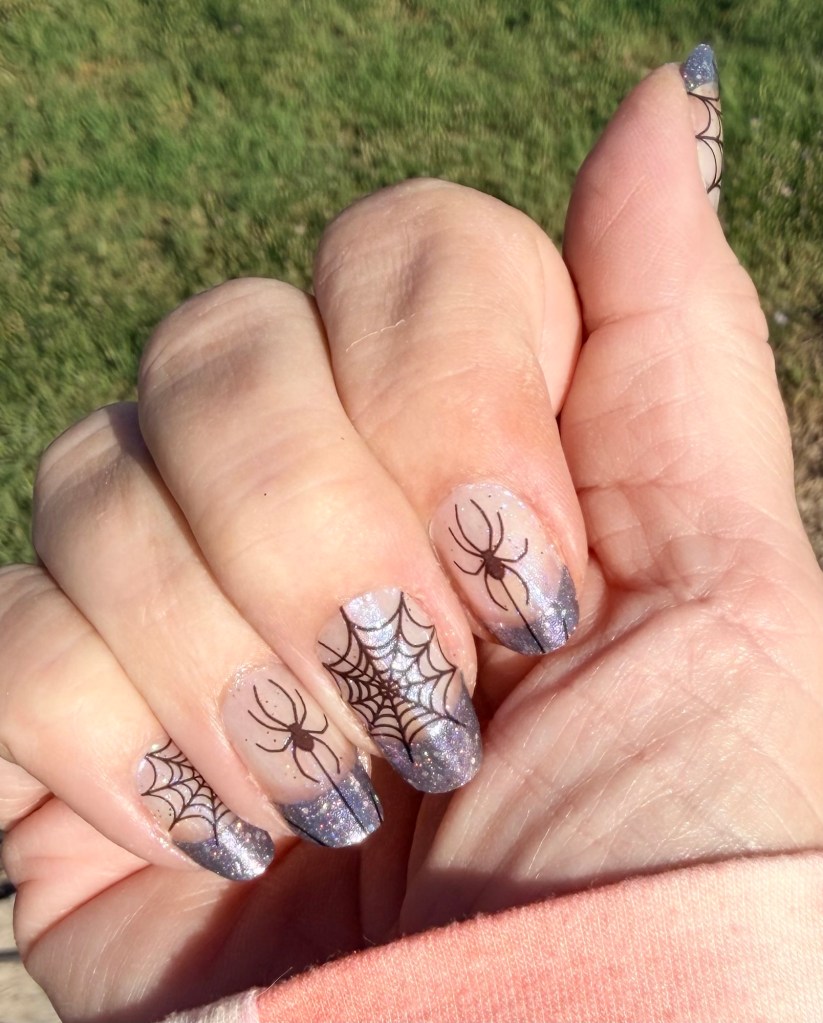
My nails are ready for the Master Naturalist annual meeting!
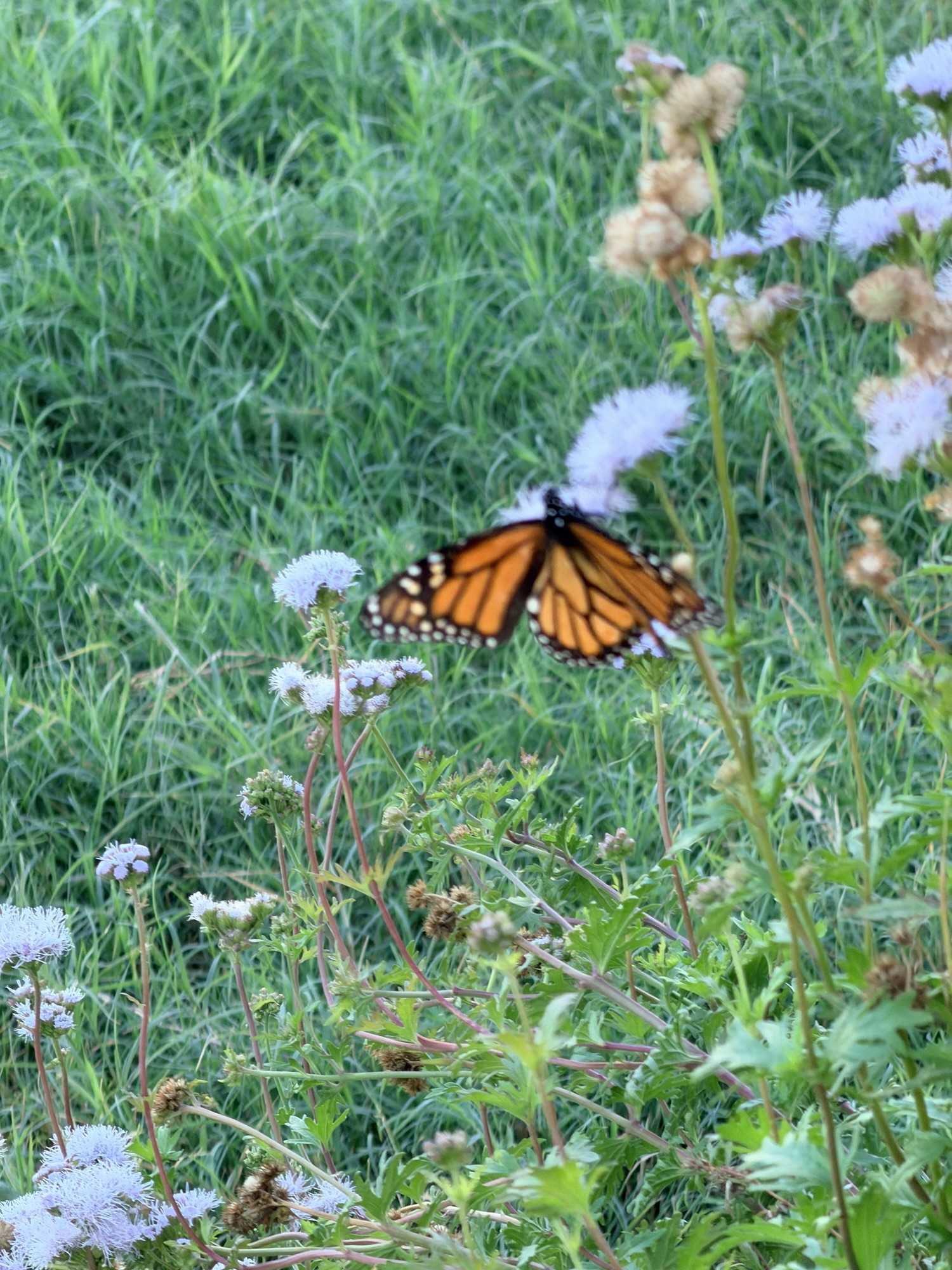
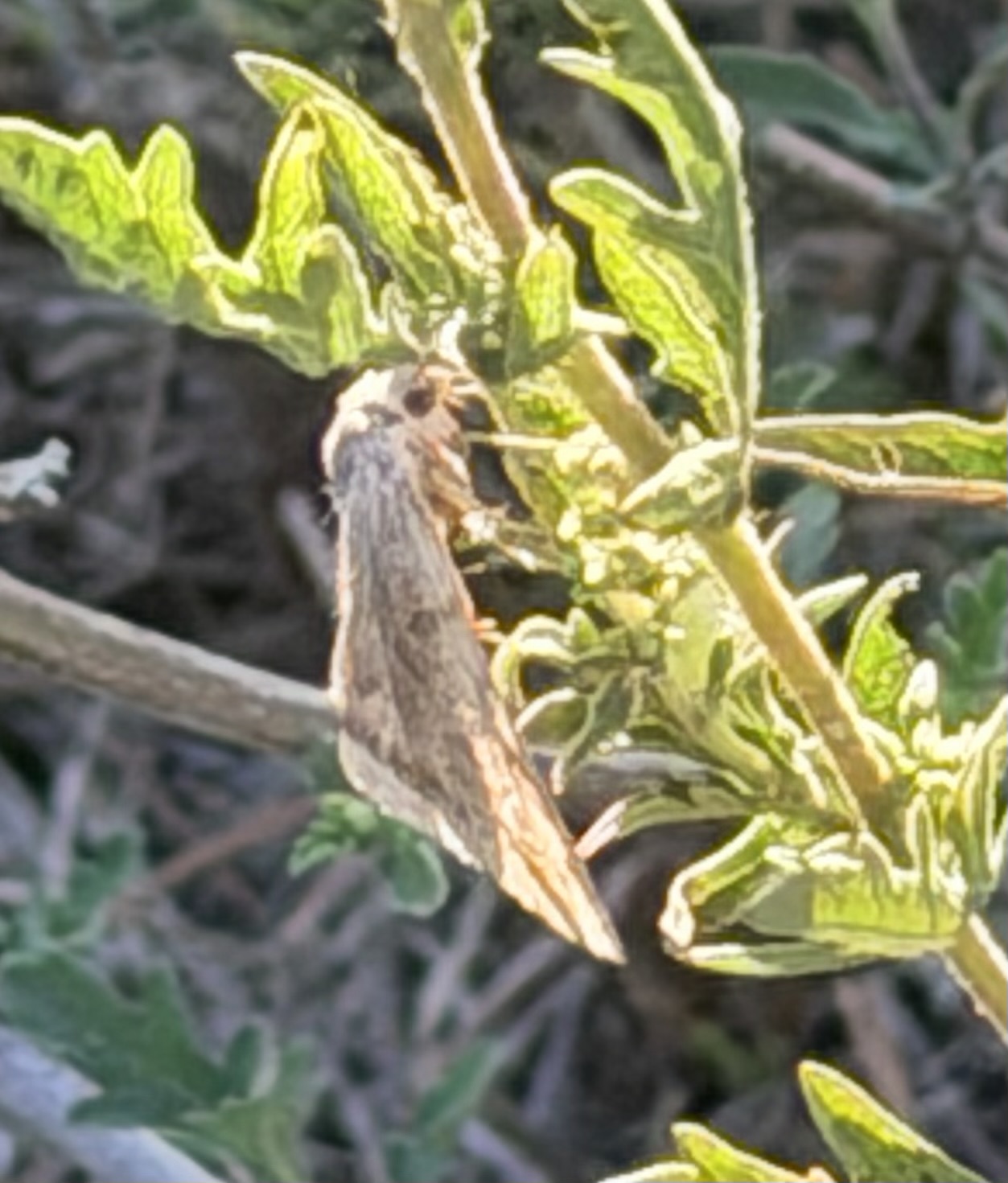
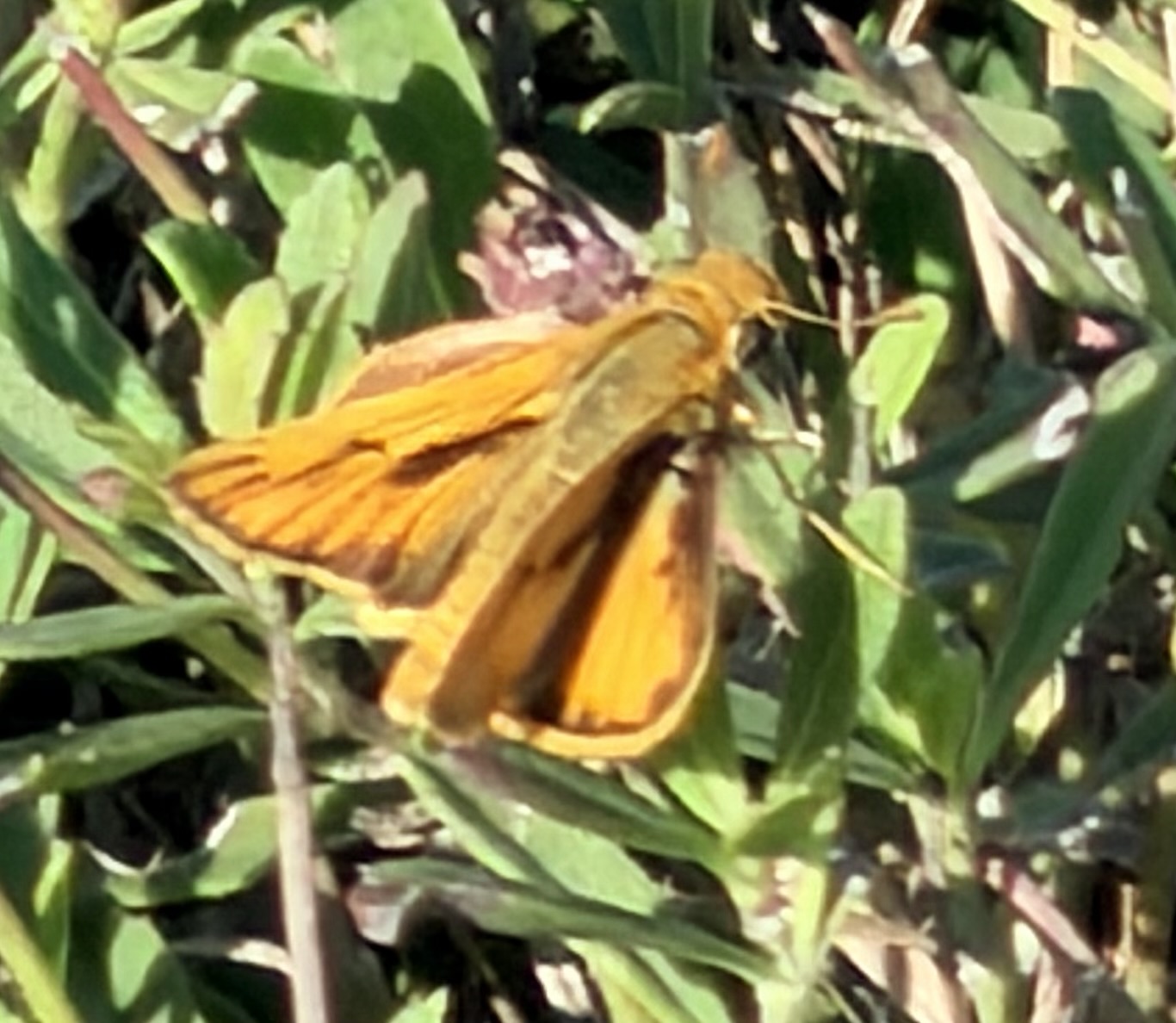
Here in the adequately interesting world of Suna, I found a few more butterflies for the Bioblitz, but I’m ready to blitz hard tomorrow in Waco.
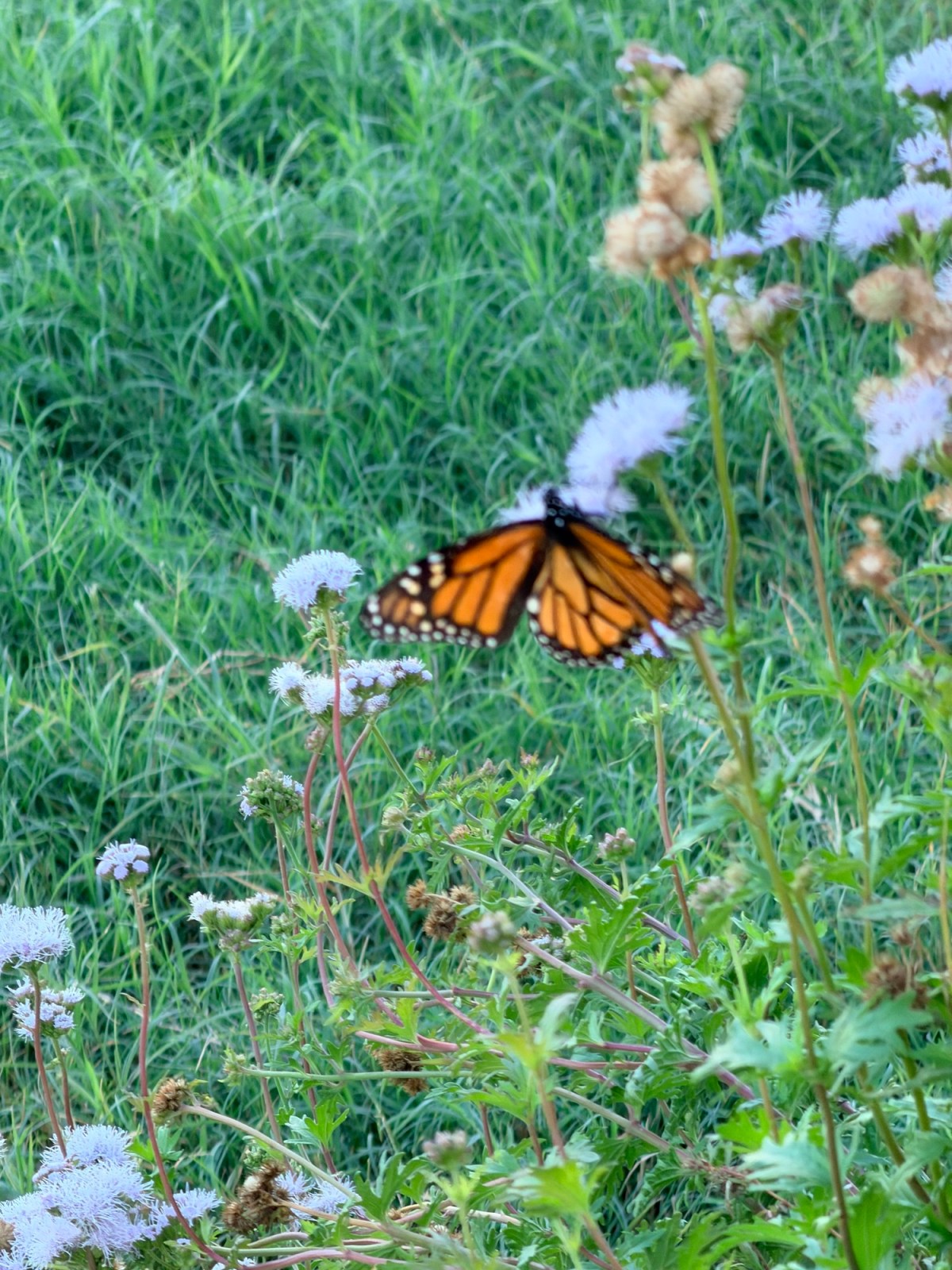
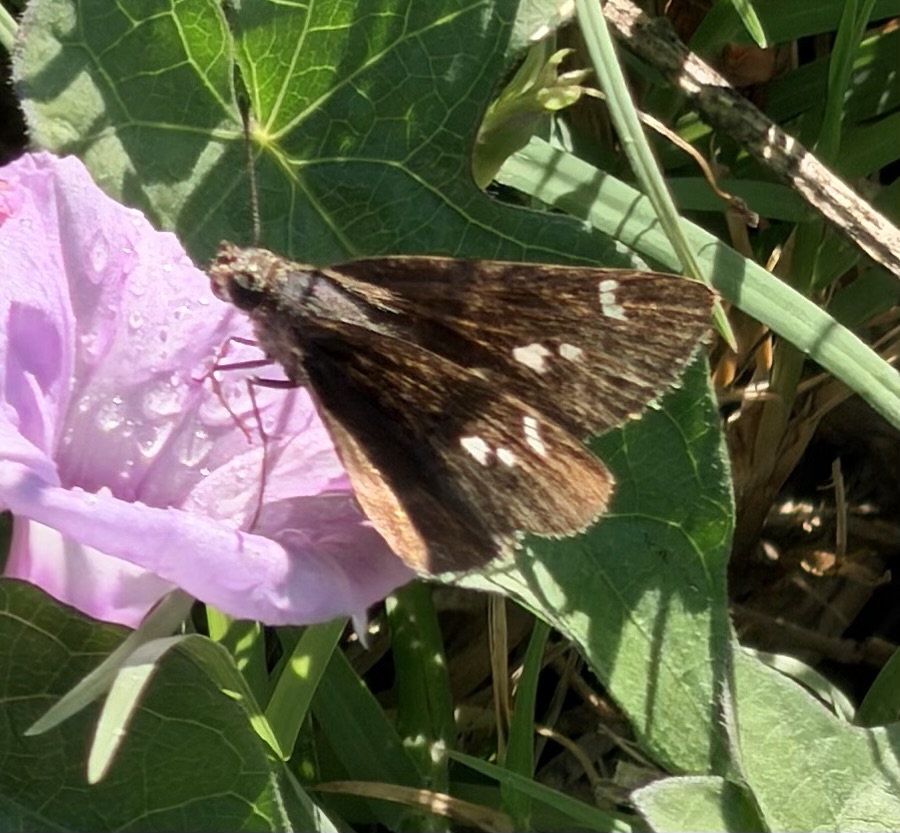
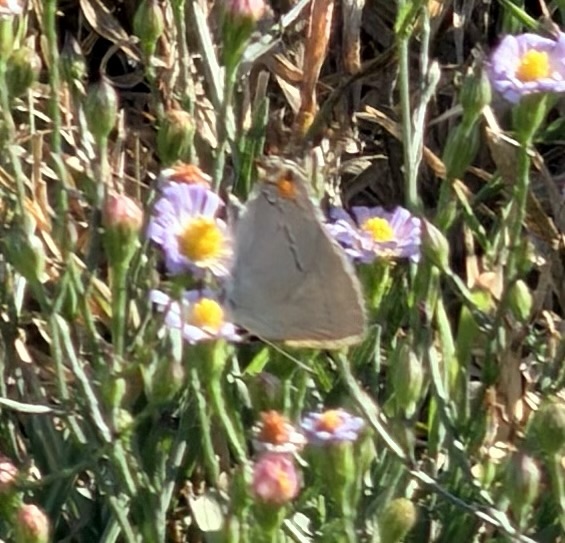
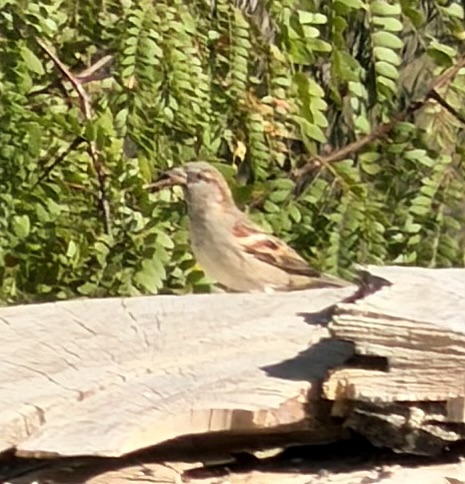
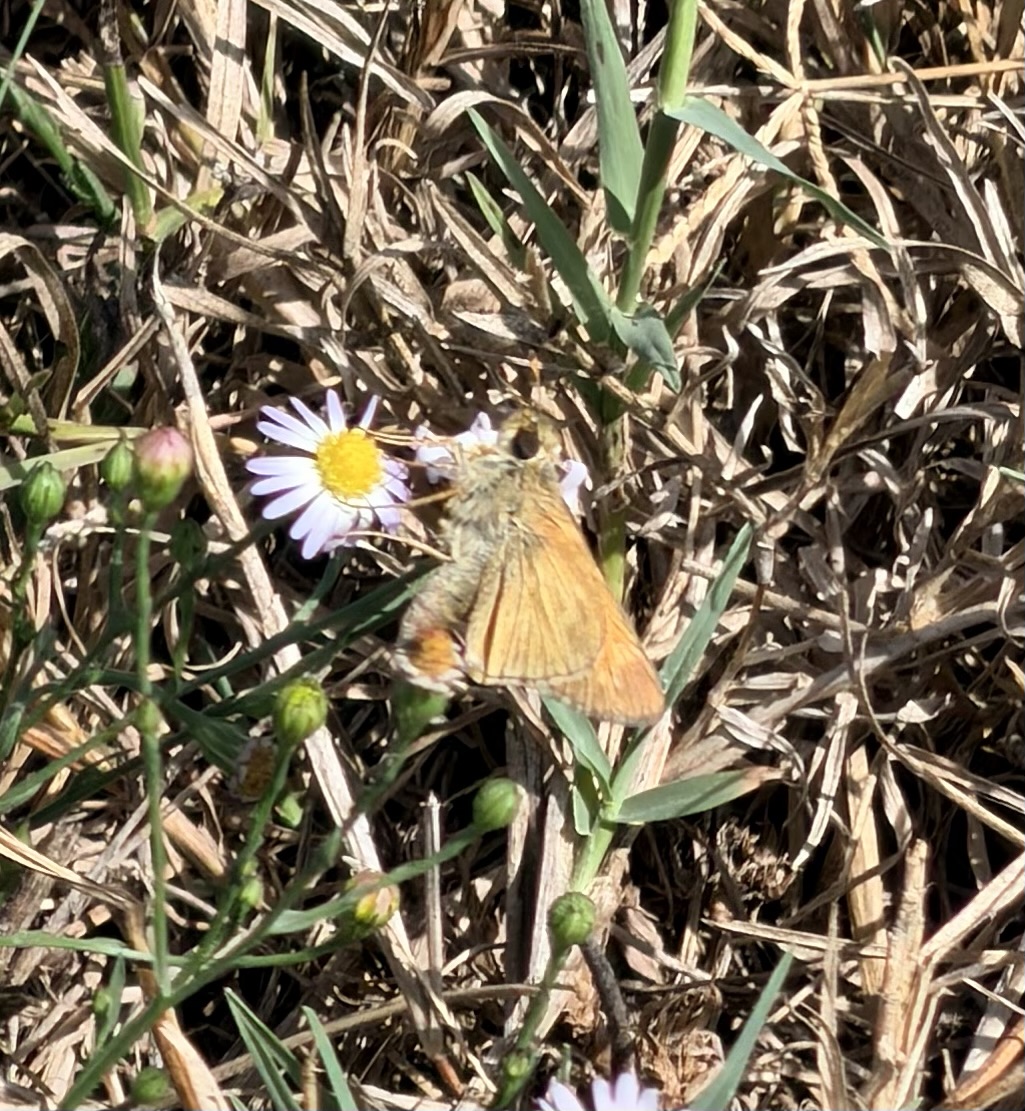
MonarchPerhaps a corn ear worm mothFiery skipperDusky skipperGray hairstreakBird! I’m sure you know this one.
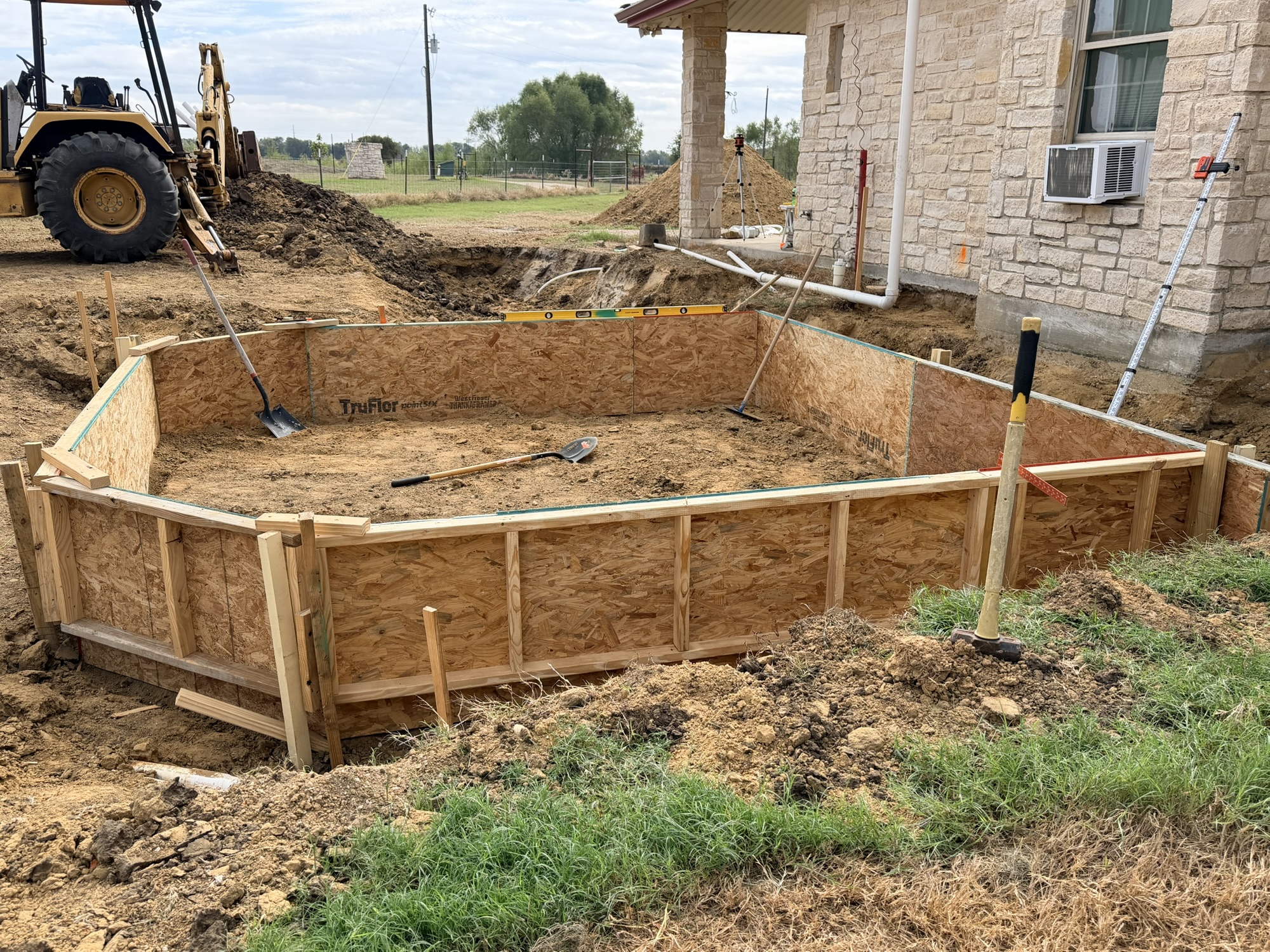
The team at KCC Construction was at full strength today, which means the form for the big slab to hold the huge water tank now has buttresses to hold the weight of the concrete, an area all smoothed for the pad to hold pumps and filters, and the drains set up. Plus much rebar has been bent for more strength. That pad’s gonna be solid!
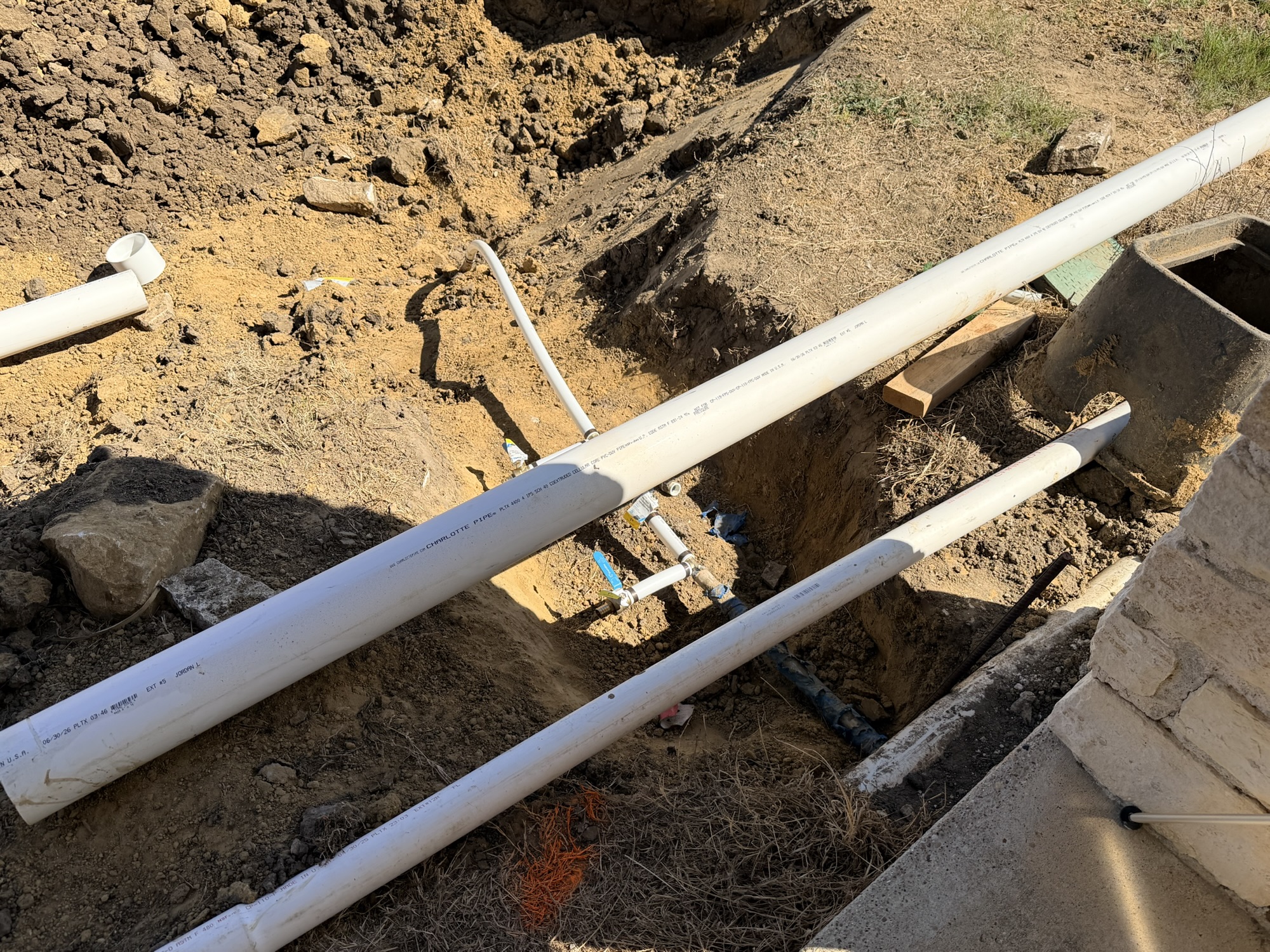
Yesterday’s progressImpressive The dogs really love the dirt pilesAll new water lines so we can switch back to city water if we need to. That’s the tank way back by the pool house. Rebar and supports are inIt’s a good lookAll this gets buried when all the water pipes are set up.
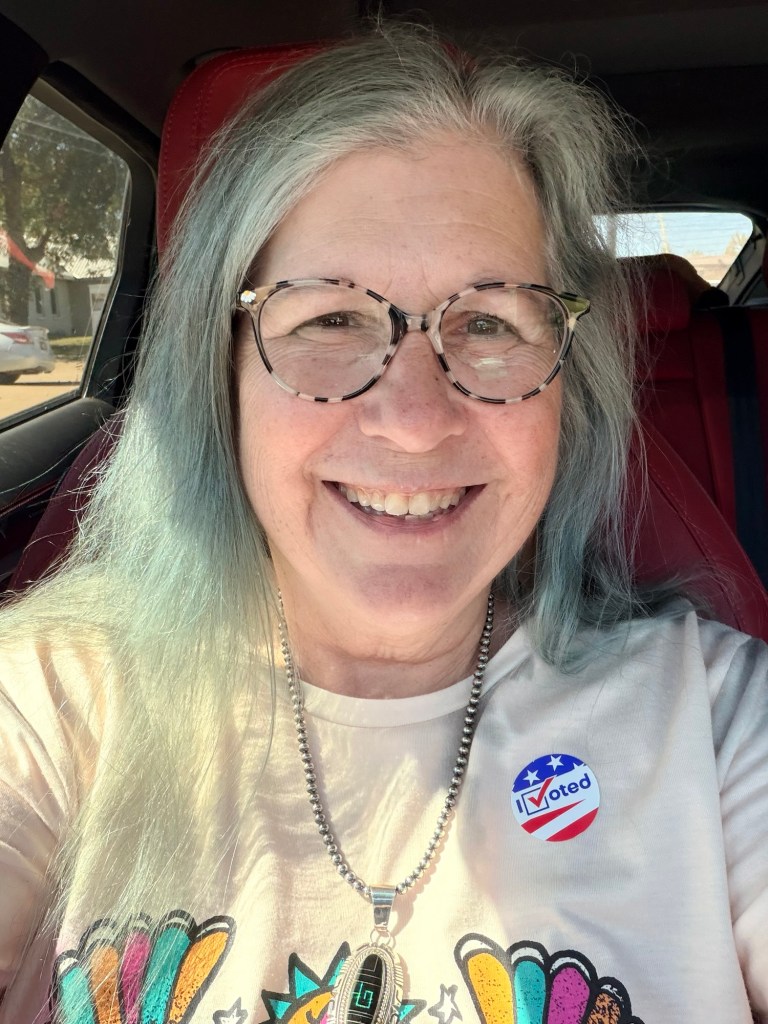
I tried to do two errands at lunch, but once again managed to hit the pharmacy during their lunch break. Sigh. However, Lee and I did manage to vote. It felt good to vote for people I actually know and like. I did have a bit of a panic attack when I was finished. I guess my internal angst about the outcome slipped out. I chatted with a friend and feel better now. I’ll deal with what happens later when it’s later.
See, I smiled when I was done!
Thanks for all the nice thoughts on what I share. I feel like I’m talking to very quiet people. Thanks, too, for your messages, texts, and calls.
This book gave me so much to think about that it’s taken me a while to share about it. Louis Busch is so transparent and open in his writing that you can’t help but admire him. Carry Your Heart: Indigenous Helping Wisdom and the Science of Psychological Flexibility is a challenging read in more than one way, but I’m very glad I stuck with it.
The first challenge for me was that I was unfamiliar with both the indigenous ways of thinking and the Western psychological framework that form the background for the teachings that Busch shares. I learned a great deal about both and came out of the book with some great perspectives on coping with life’s challenges.
Another challenge for me was that the book rambled a bit and changed focus suddenly from Busch and the people he interviews helping the reader to all of us hoping Busch can get the help he needs when his brother dies partway through the book. I was so concerned for Busch that I forgot all about trying to learn for myself. Of course, that probably taught me a lot about letting people deal with their own traumatic experiences in their own way (which I have needed to practice a lot lately, so it’s a very useful skill).
Nonetheless, I feel privileged to have had the opportunity to learn about resilience from the elders Busch talks to, mostly from western Canada, but also from all over Turtle Island, as I’m getting accustomed to calling our part of the world. I had to think a lot about how these Native Americans view pain, suffering, and sadness. The idea of carrying your heart, not hiding it but treating it gently, opened my eyes to a different way of coping.
I learned the important lesson that pain and sorrow can be your teachers that don’t necessarily leave you. They help you move on and gain wisdom that you can share with others you encounter. This really made me look at how I’ve lived my life differently. I’ve spent so much effort to bury my pain, not show my hurt, and “feel good,” that I’ve missed out on some potential lessons and the chance to act more authentically.
Honestly, some of my ideas about mental health and resilience have been shifted so much that I need to continue to dwell on what I’ve found in this book. I may need to re-read parts. I’m not going to usurp any Native American practices, though I found many of them fascinating. That feels like appropriating other people’s cultures. I think I can find equivalents of being in ceremony, offering tobacco, or doing a sweat lodge within my own spiritual heritage. That feels appropriate to me.
I may not have made much sense here, and this is the best I can do after a few days of introspection. If you are interested in different perspectives on life’s struggles and willing to put in the effort to take in new ideas that aren’t spoon fed (you have to work!), this book can help you learn to carry your heart toward wisdom and compassion.
Take it from this canine elder, spiritual peace takes work.
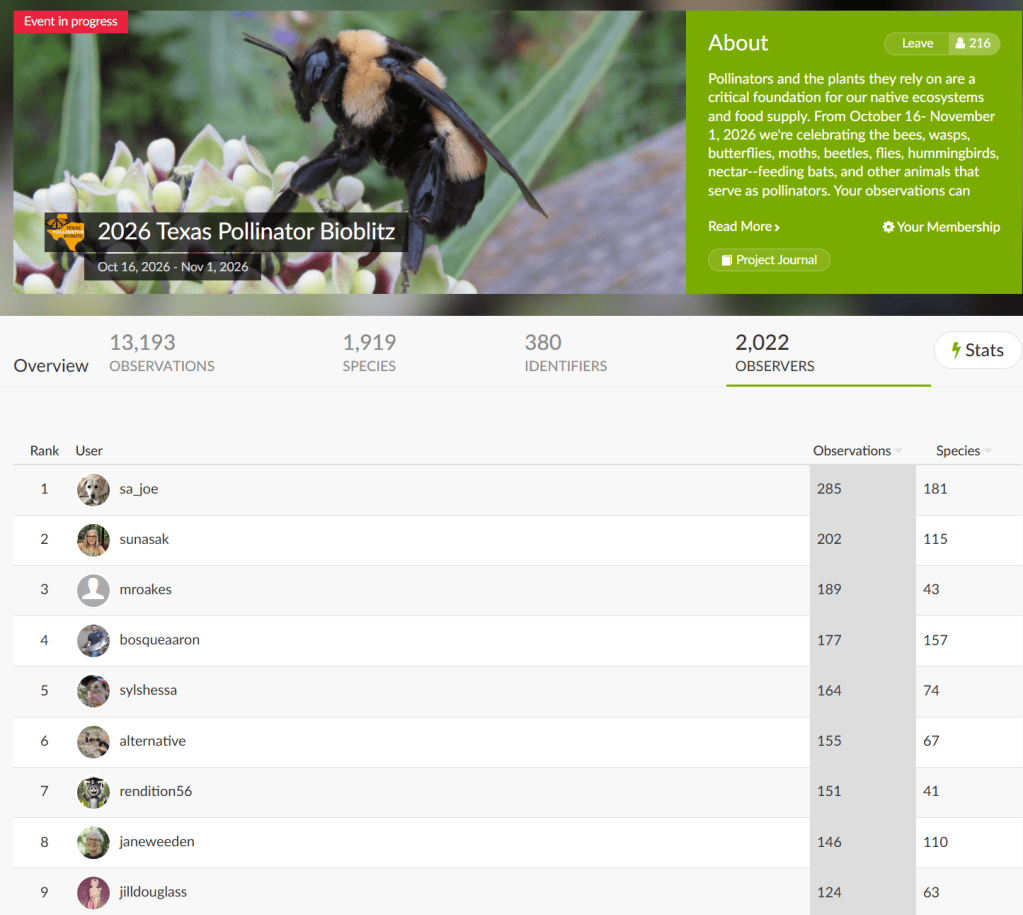
I’ve continued making observations for the 2026 Texas Pollinator Bioblitz this weekend. It’s like I went camping, only I stayed home, with all the walking, stalking and talking? No talking. I just took pictures but that does not rhyme.
I even climbed a hill, the only one around here.
After the incredibly windy day Friday, it was more pleasant to go look for pollinators and the plants they pollinate this weekend. But the wind had bashed a lot of the few plants that should still be blooming. For example, I’d really looked forward to getting pictures of Snow on the Mountain on my walk today, but I had a hard time finding any whose flowers hadn’t blown off.
Mostly little sticks, poor things.
Anyway, I’m doing okay finding things to contribute. Right now I (Sunasak) look like quite the little blitzer. However, the real hardcore participants include Texas Parks and Wildlife staff and people with good cameras who need to process their images. By the end, I’ll be more in the center.
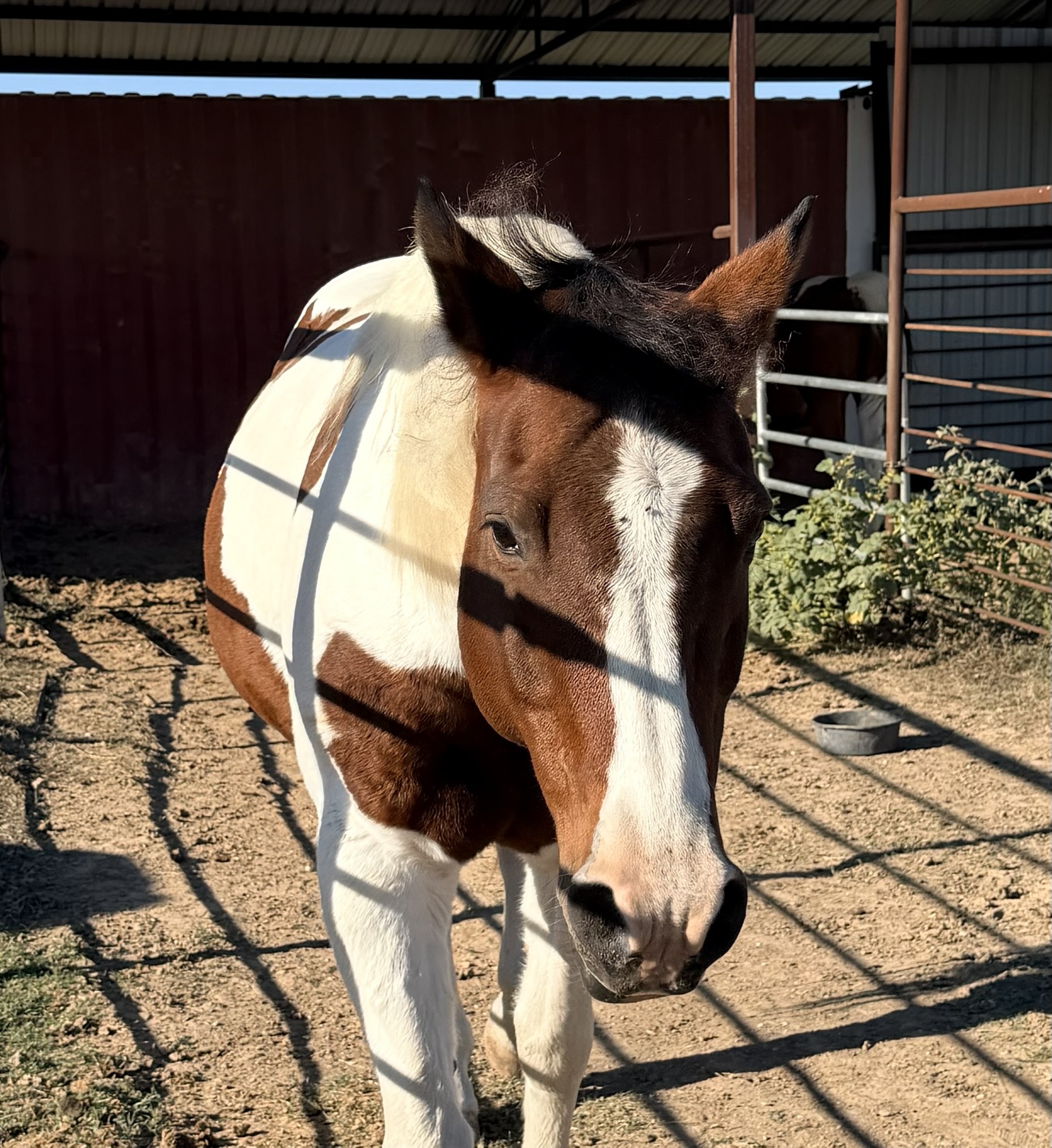
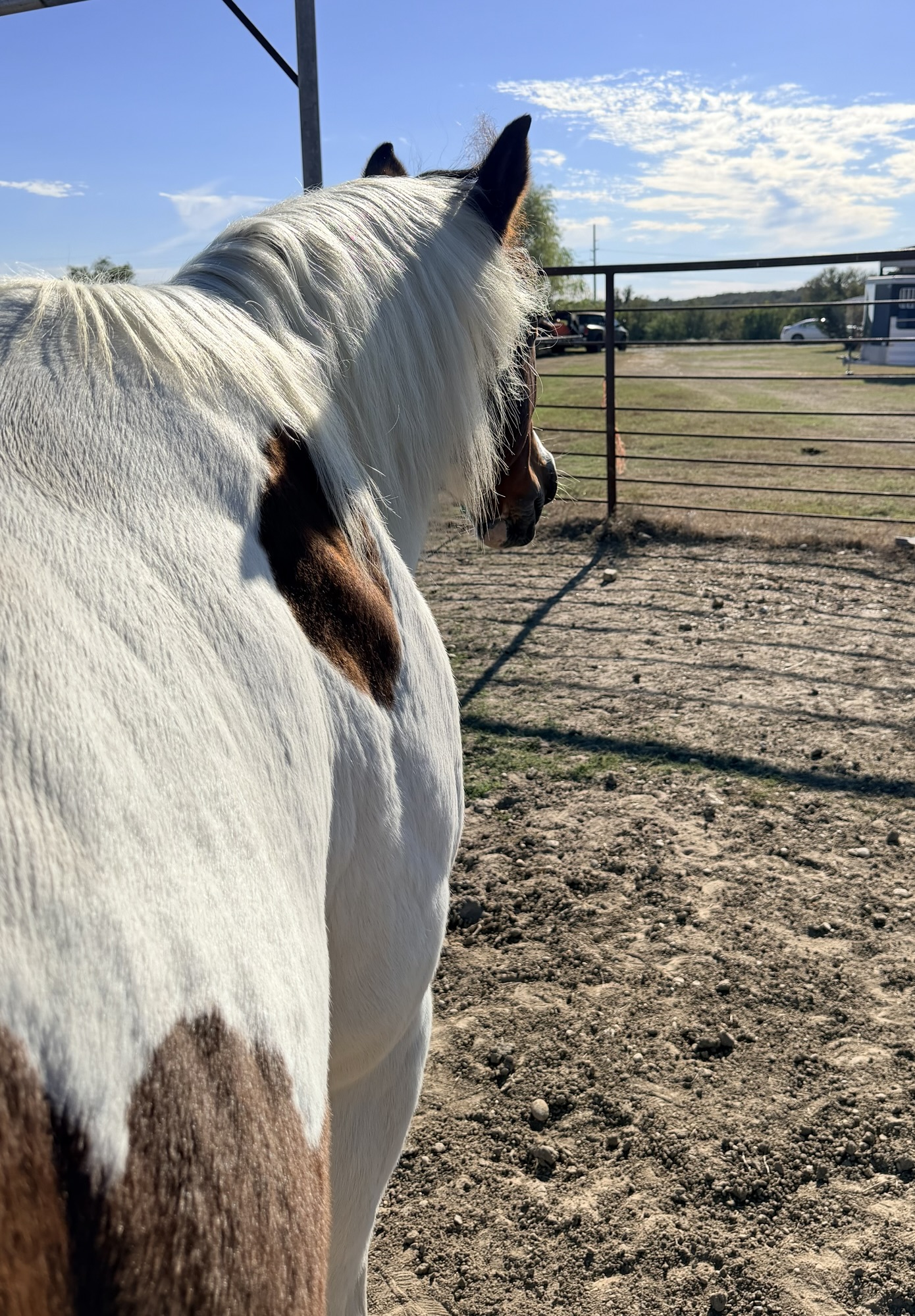
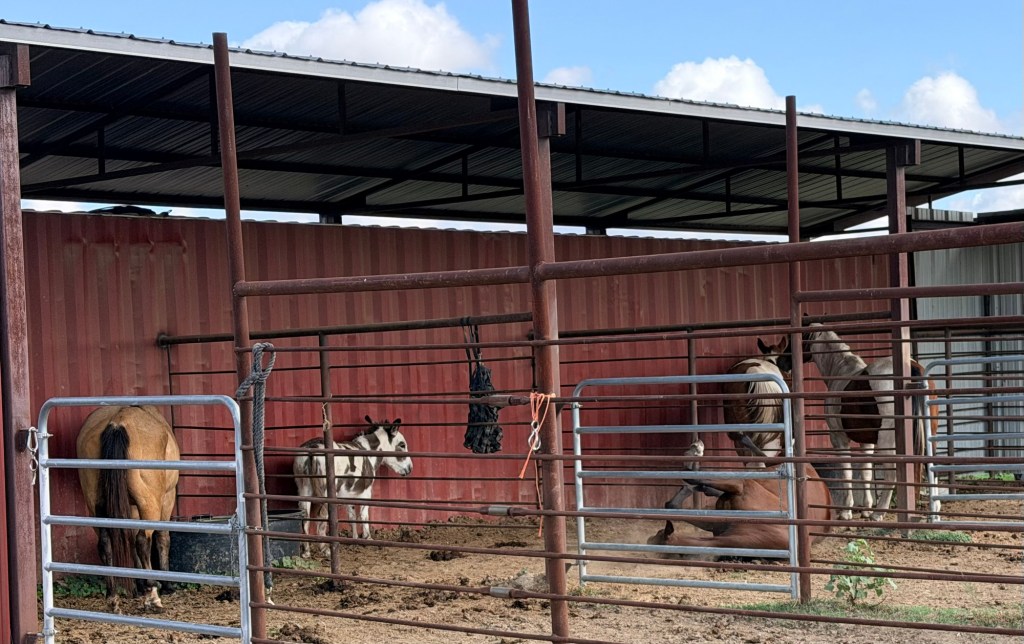
Anyway, at least it’s gotten me out of the house. The only other stuff I’ve done is feed various animals. Spice messed up the water trough AGAIN and the rest of the horses have found the cockleburs. Apache feels it’s his duty to take over from Drew, so he requires daily work. I don’t think he minds the added attention!
It’s my duty to collect bursThe teased look is glamorous, I think.
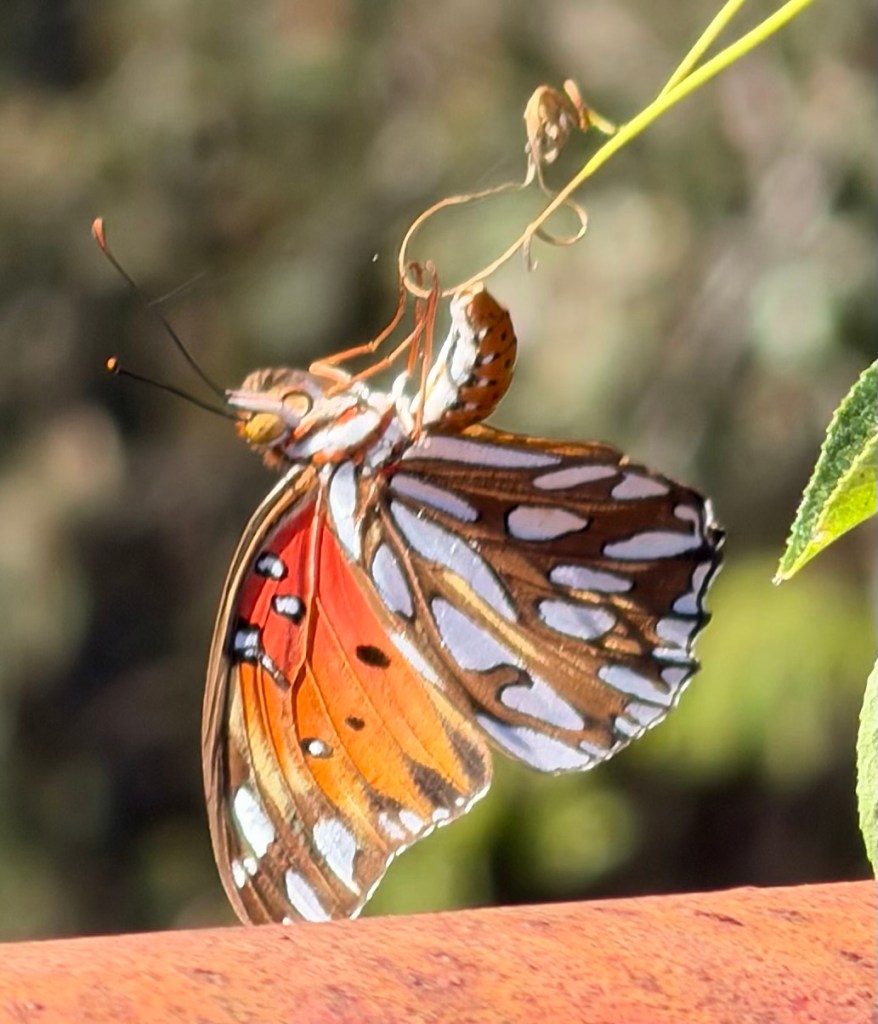
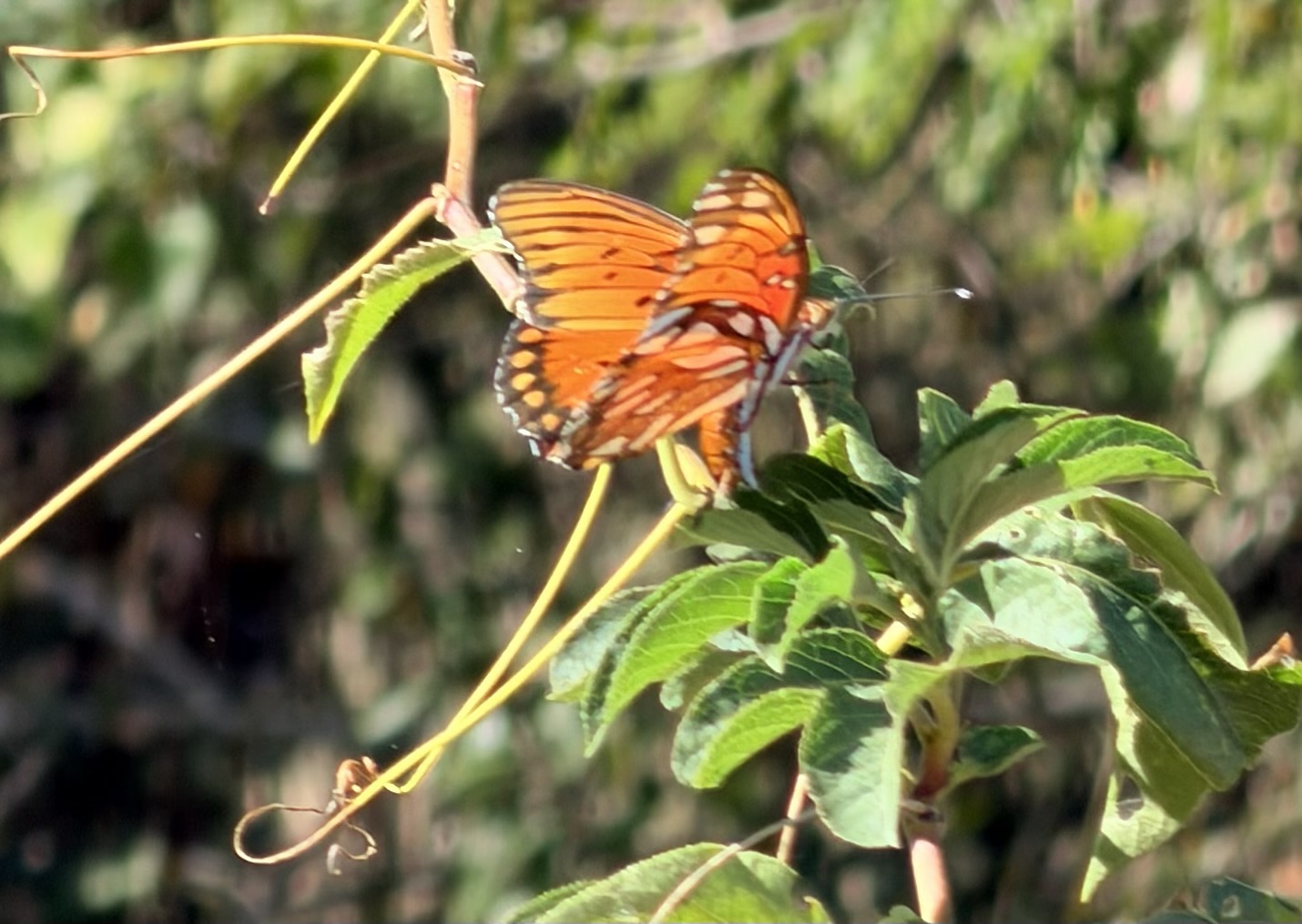
The number of butterflies I’ve seen is larger than I expected. The Gulf Fritillary family is still busy laying eggs on passion vines, so they were easy to get good photos of.
What a beauty.
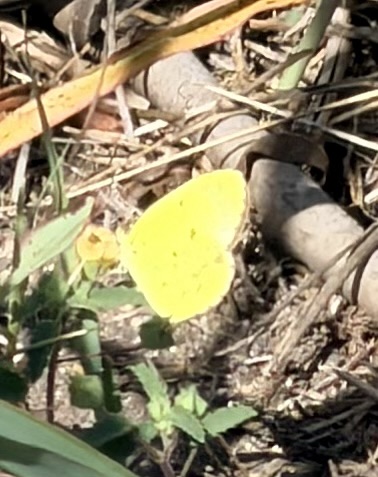
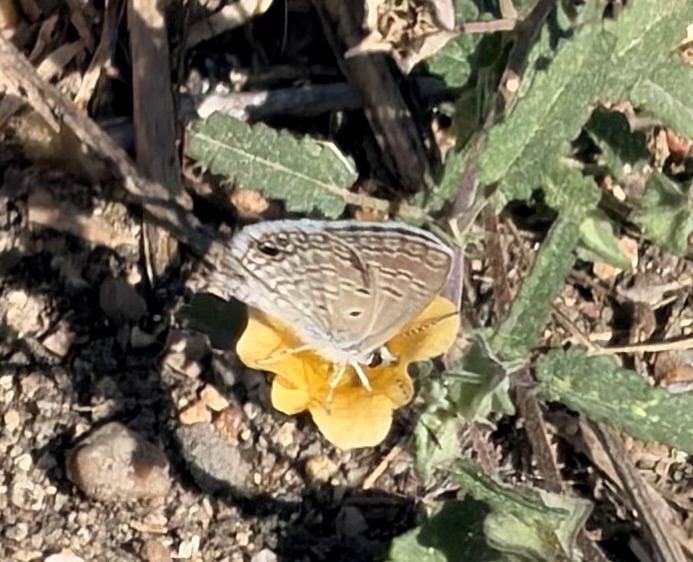
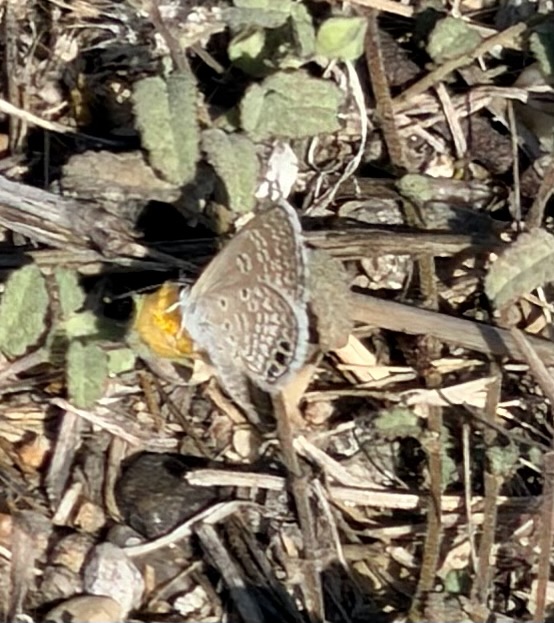
There are many tiny Ceraunus Blue butterflies yesterday, but a good number of others, too.
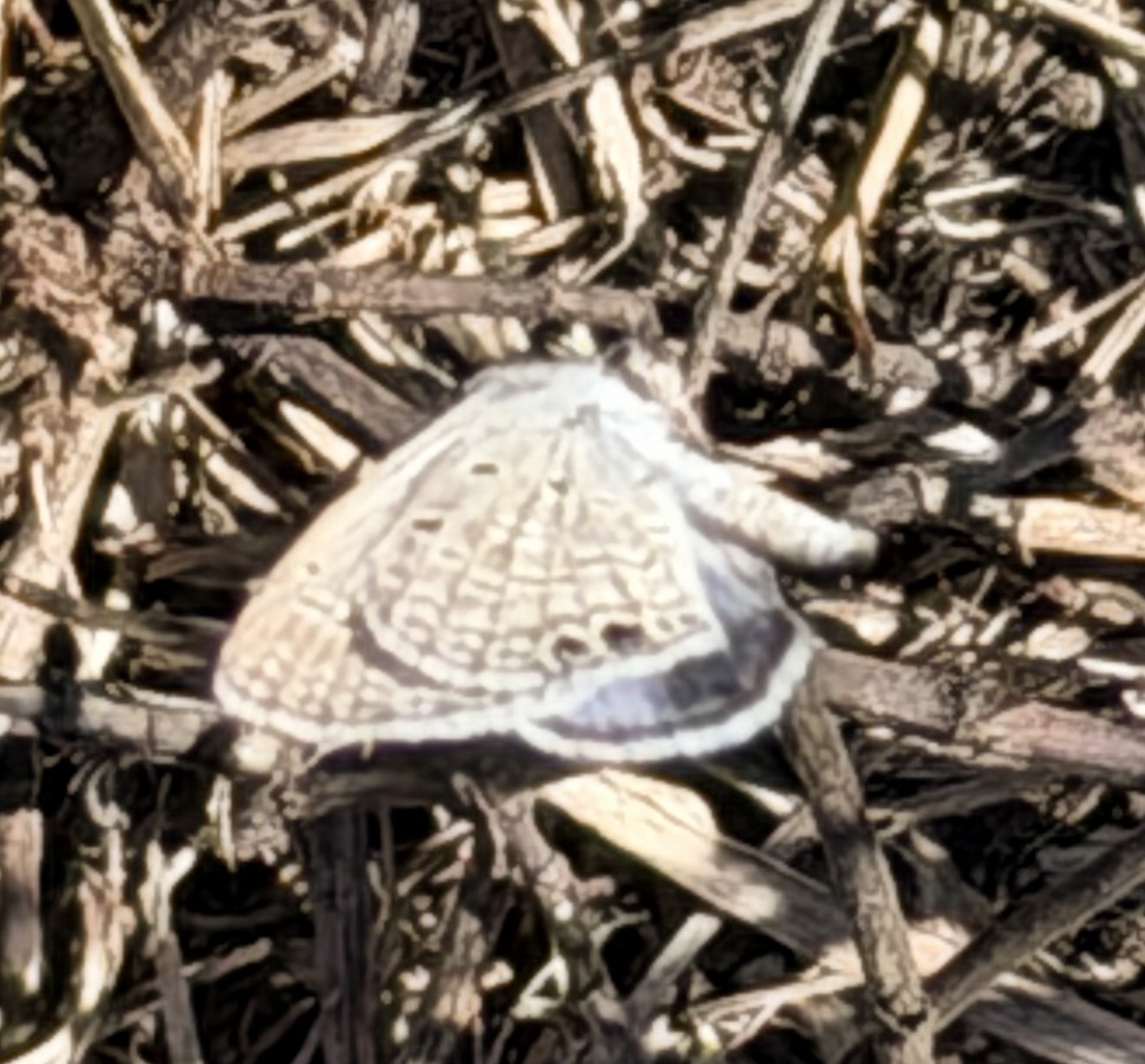
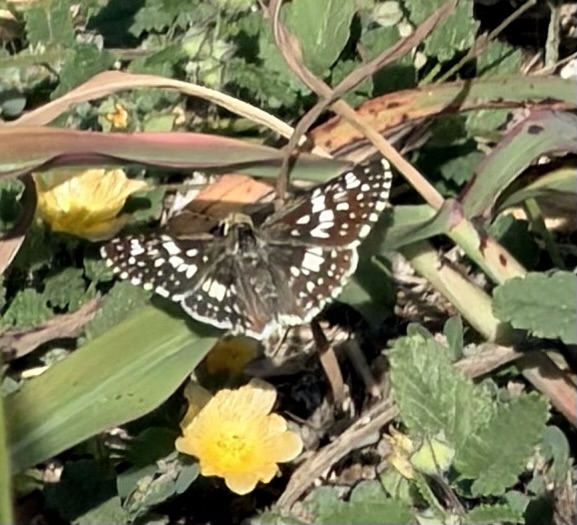
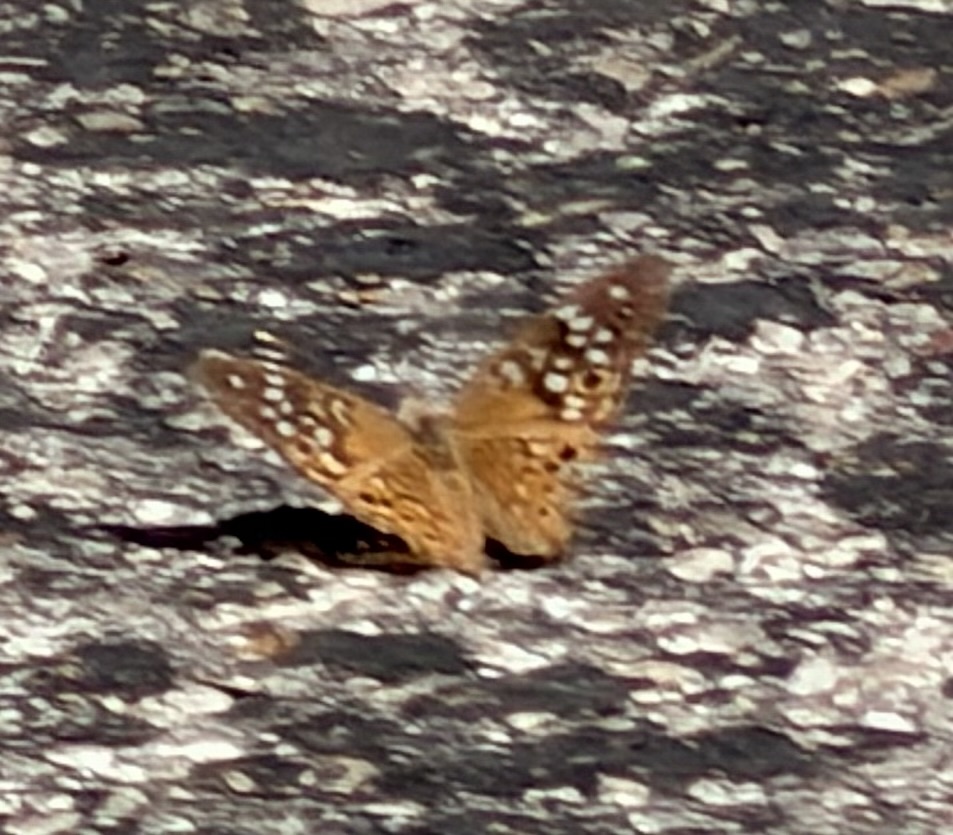
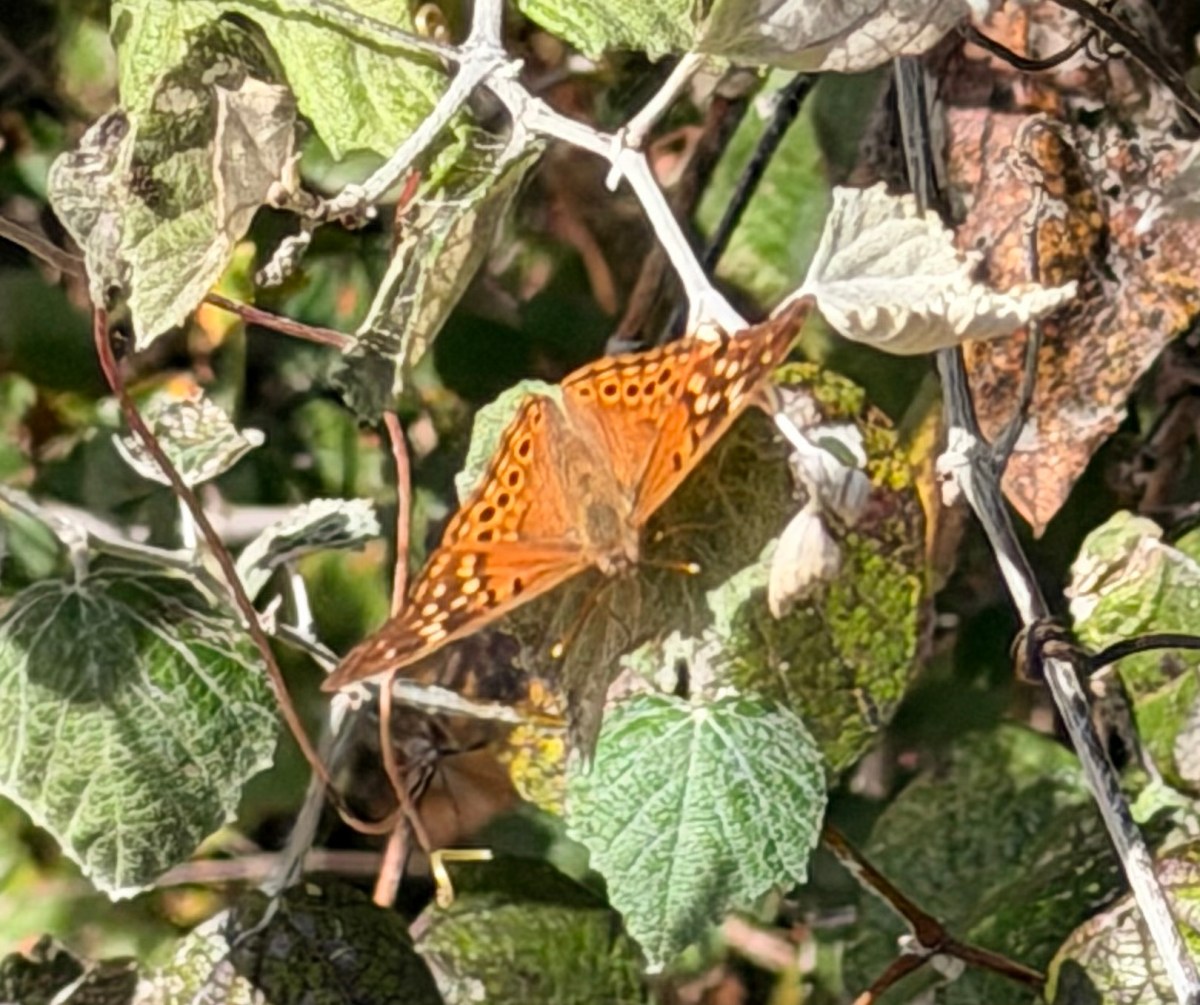
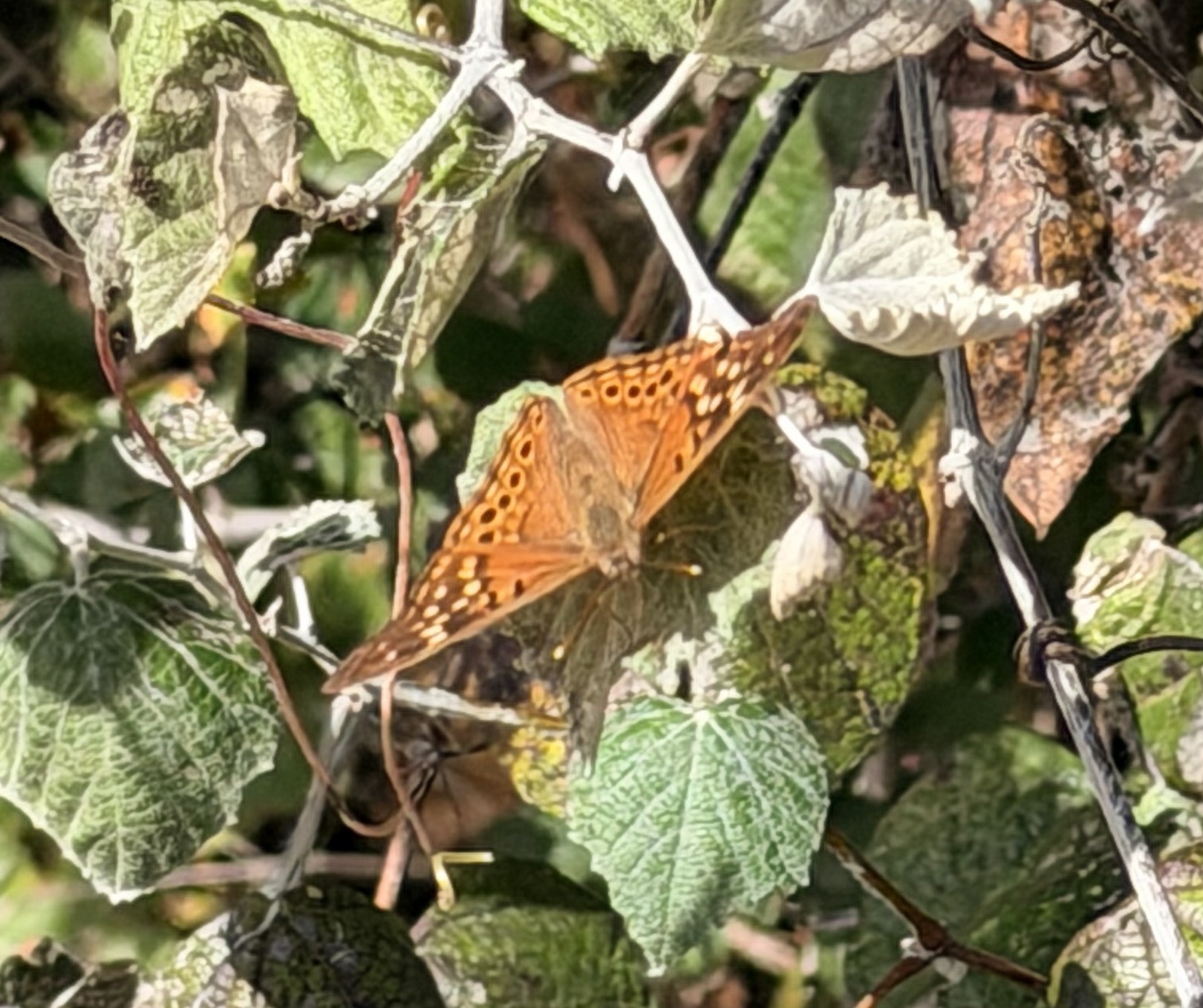
Another fritillary Little Yellow Ceraunus blueFrom yesterday From todayWhite checkered-skimmerTawny EmperorClouded Skipper
Of course, butterflies aren’t the only pollinators. I found plenty of bees, wasps, and other insects (which may or may not be pollinators).
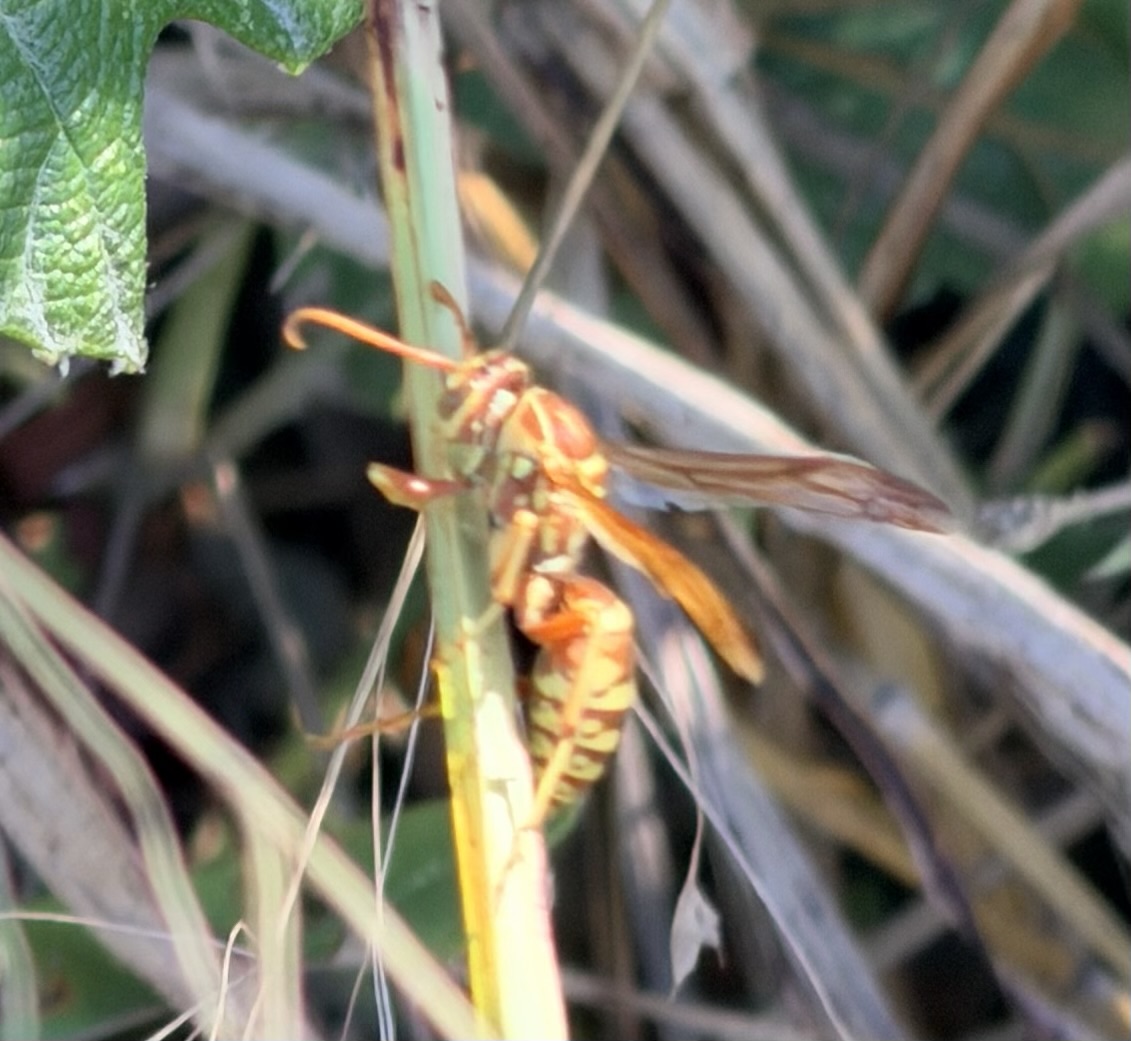
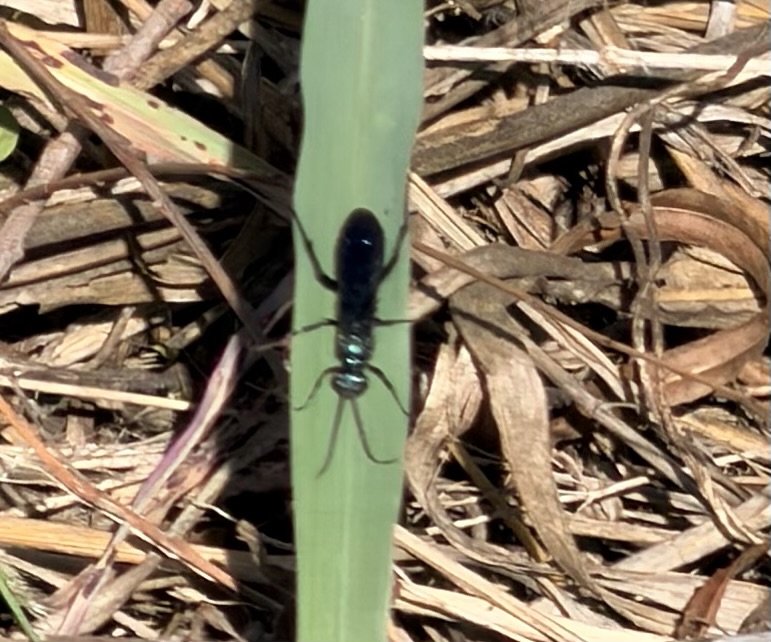
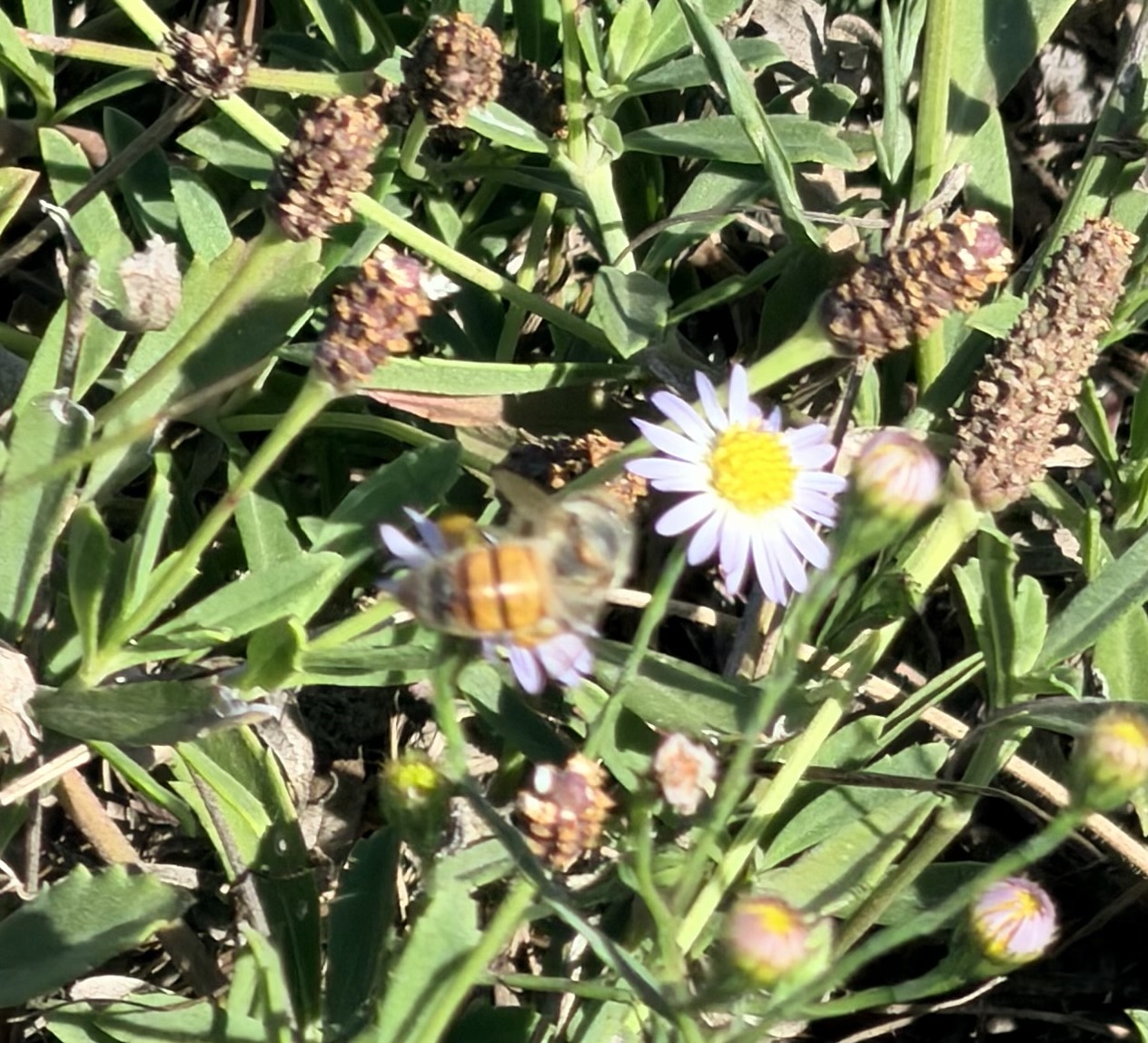
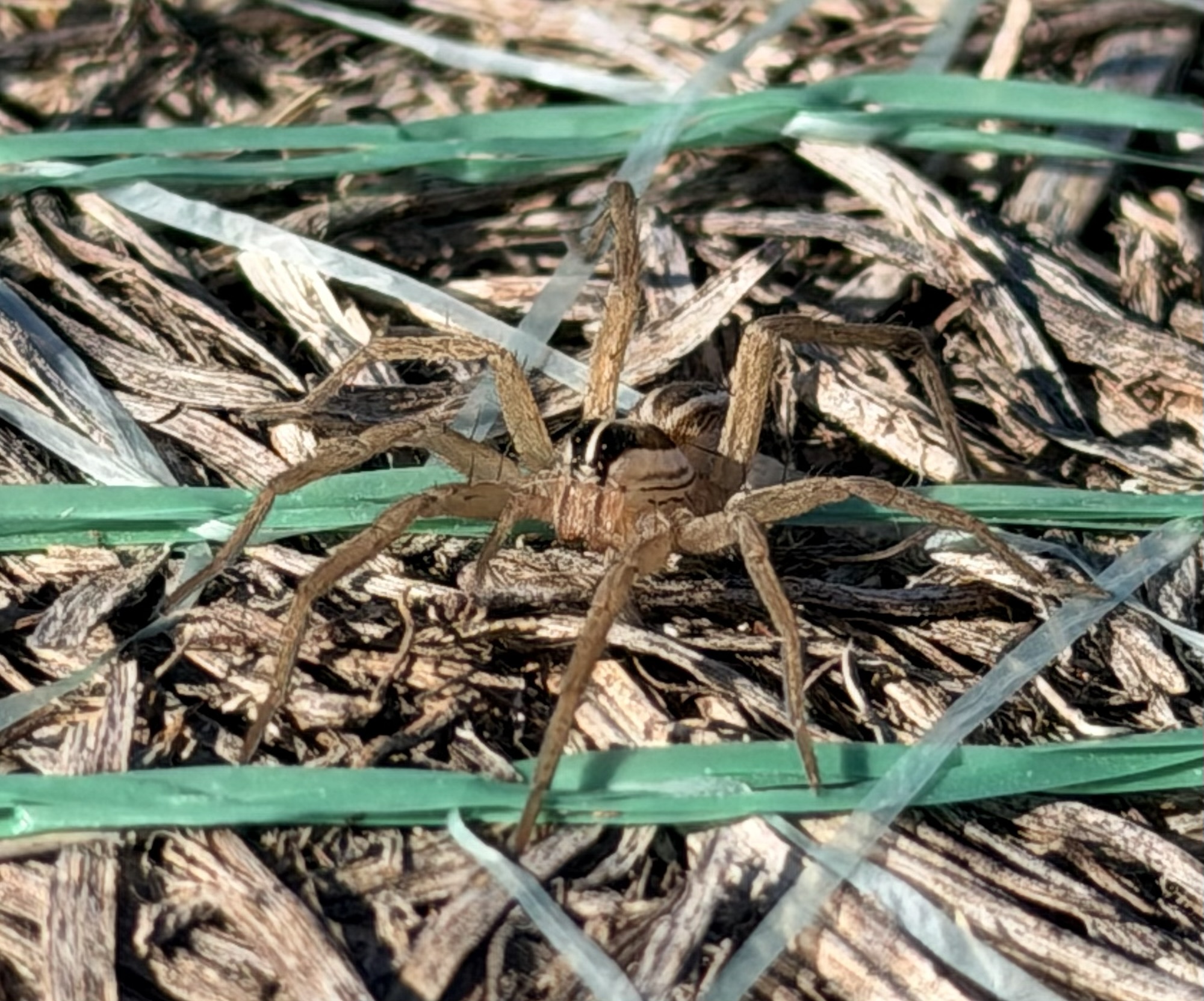
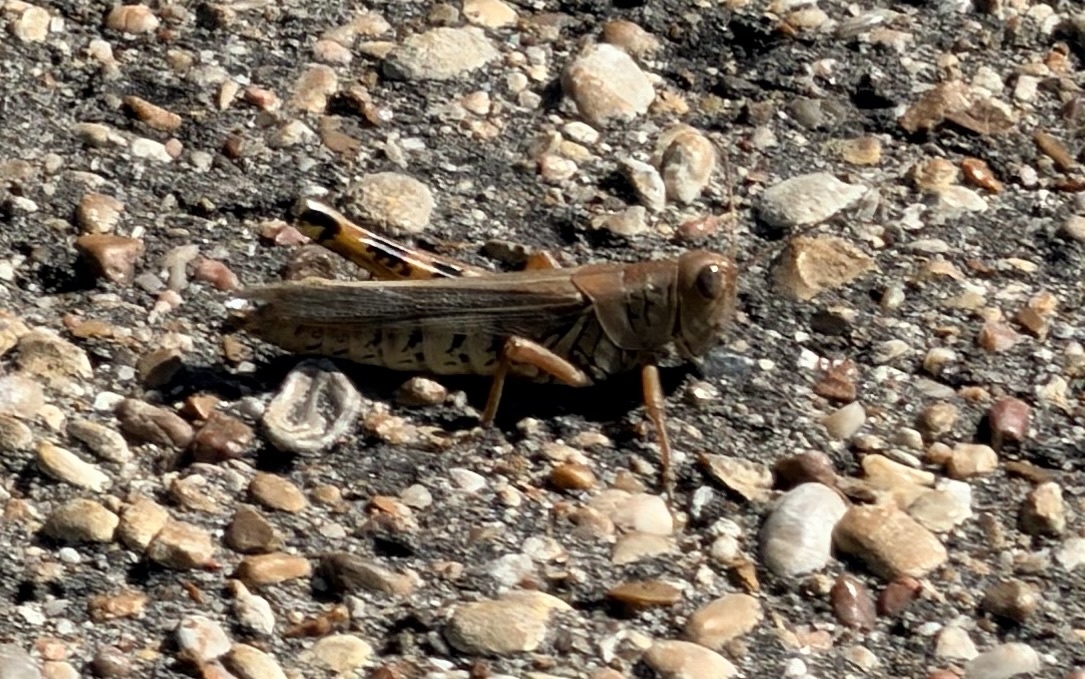
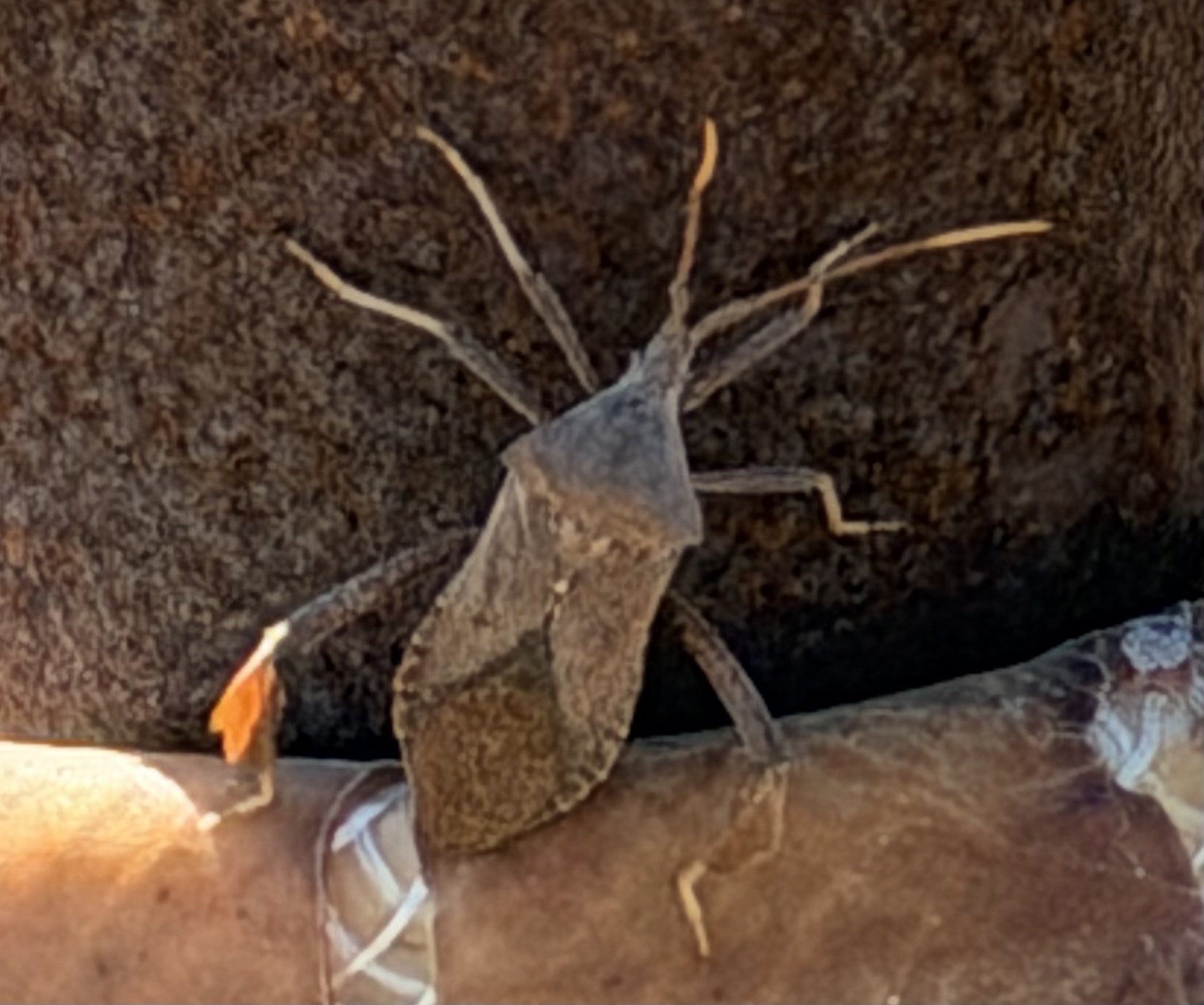
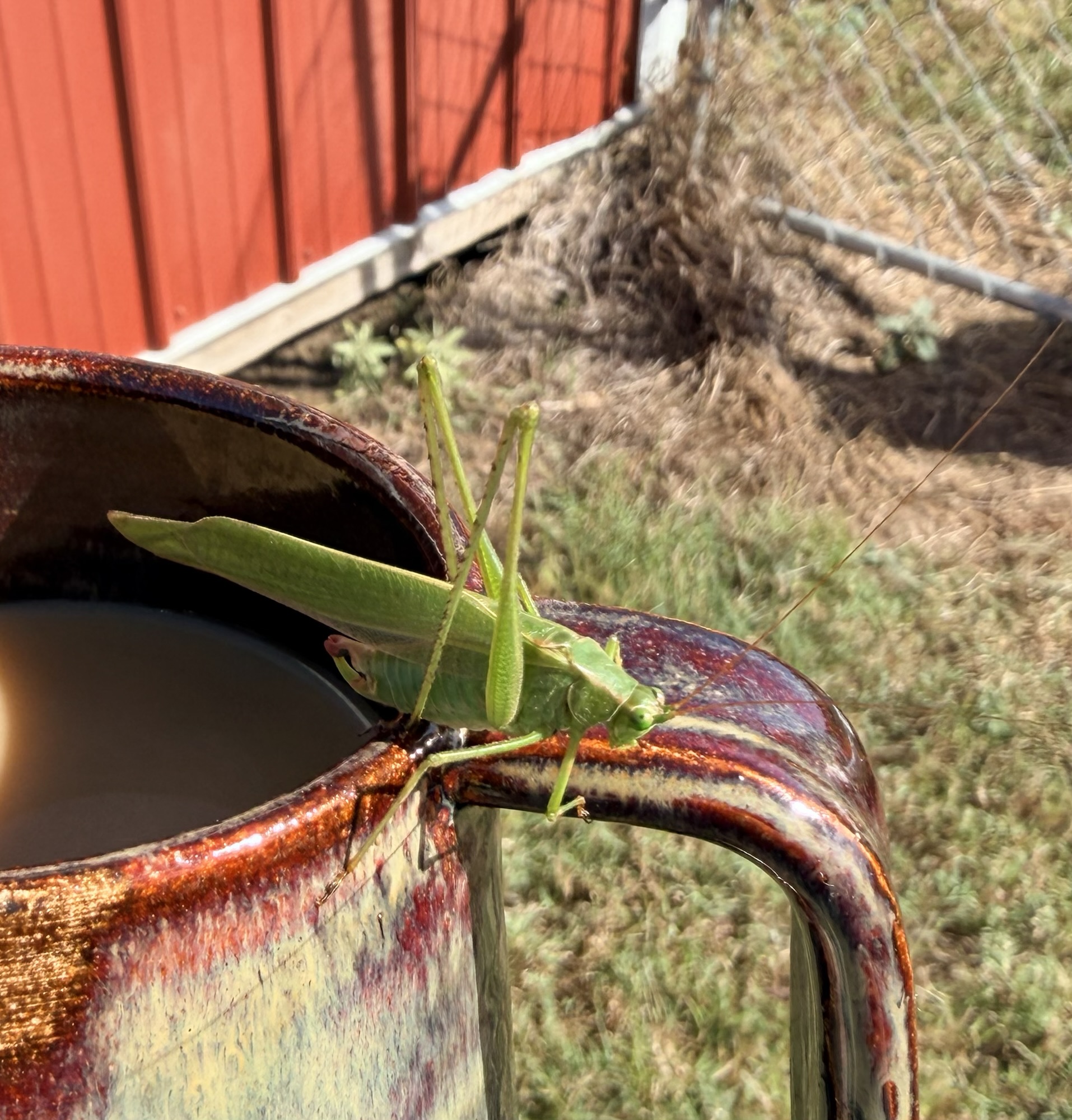
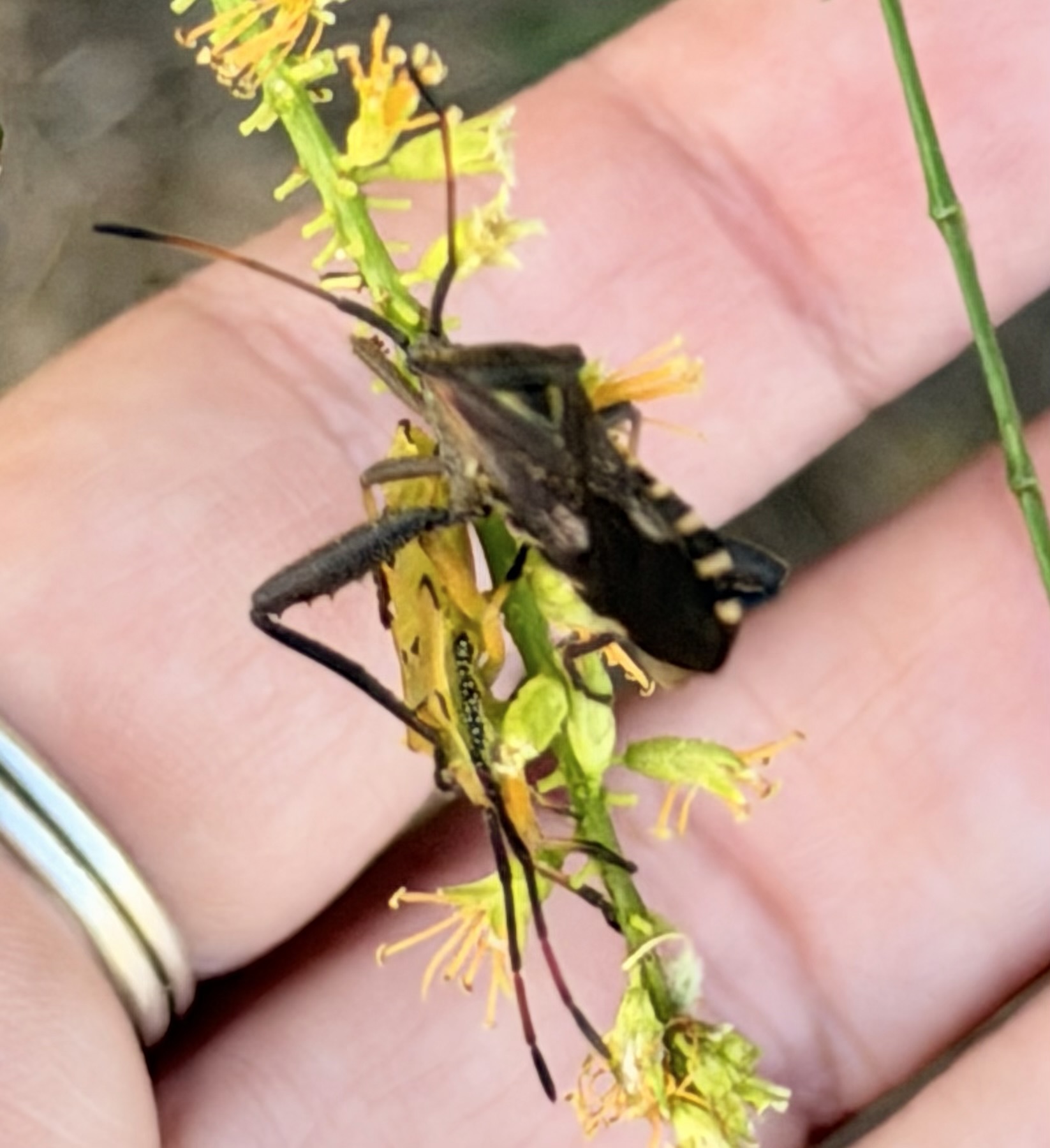
Apache Paper WaspAnother kind of paper waspWooly bee flyI can’t tell them apartBut they are cuteBumblebee Coarse-backed red paper waspPerhaps Hunter’s Little Paper Wasp. Mud dauber! Honey beeRabid wolf spider, smilingDifferential grasshopper or another oneDefinitely a leaf-footed bugKatydid who wanted my coffee
I did find a good number of plants, but not many great plant photos. This is not a good time of year for pretty plant images. It’s a good thing I know what a lot of plants look like when they’ve gone to seed!
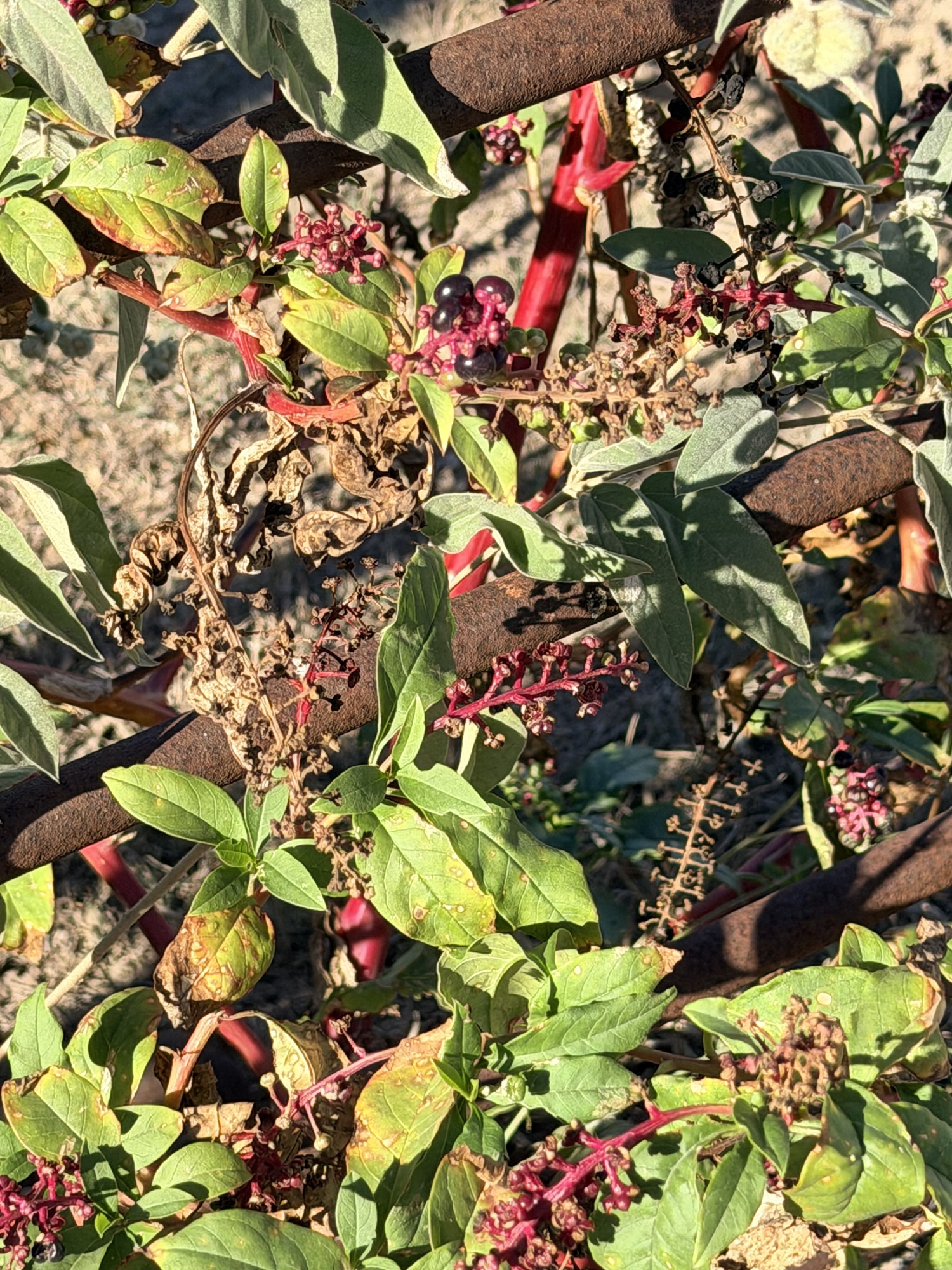
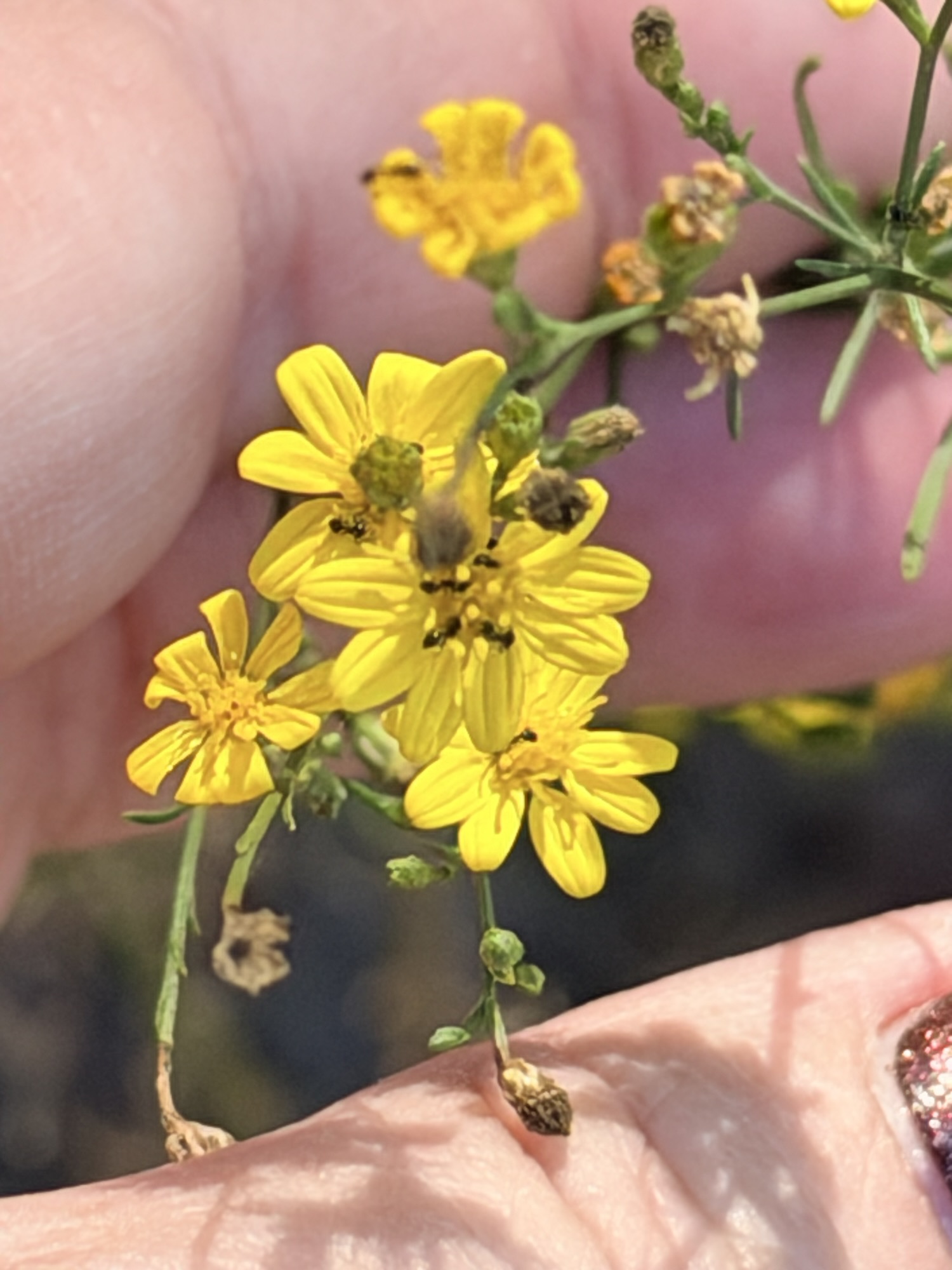
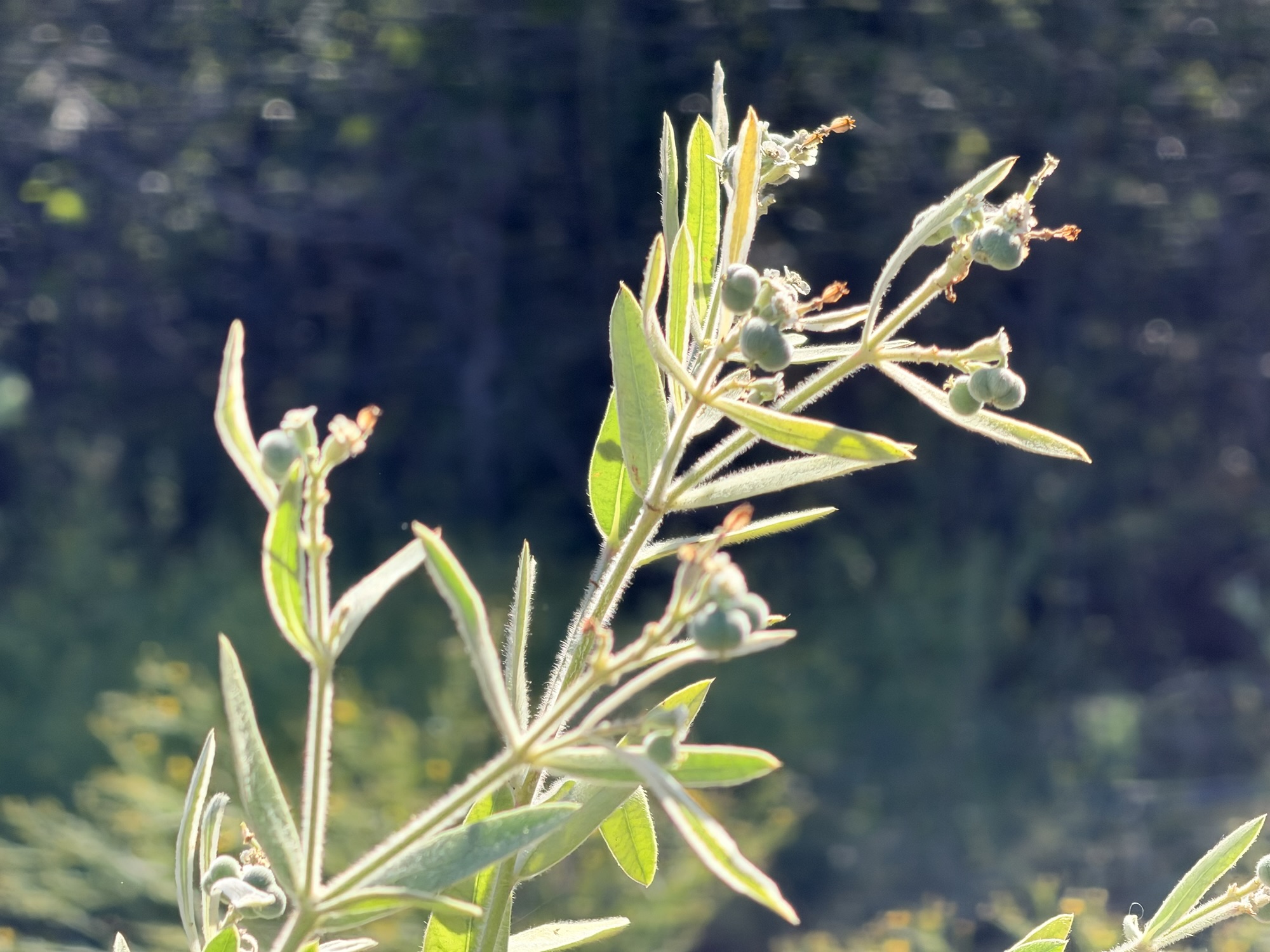
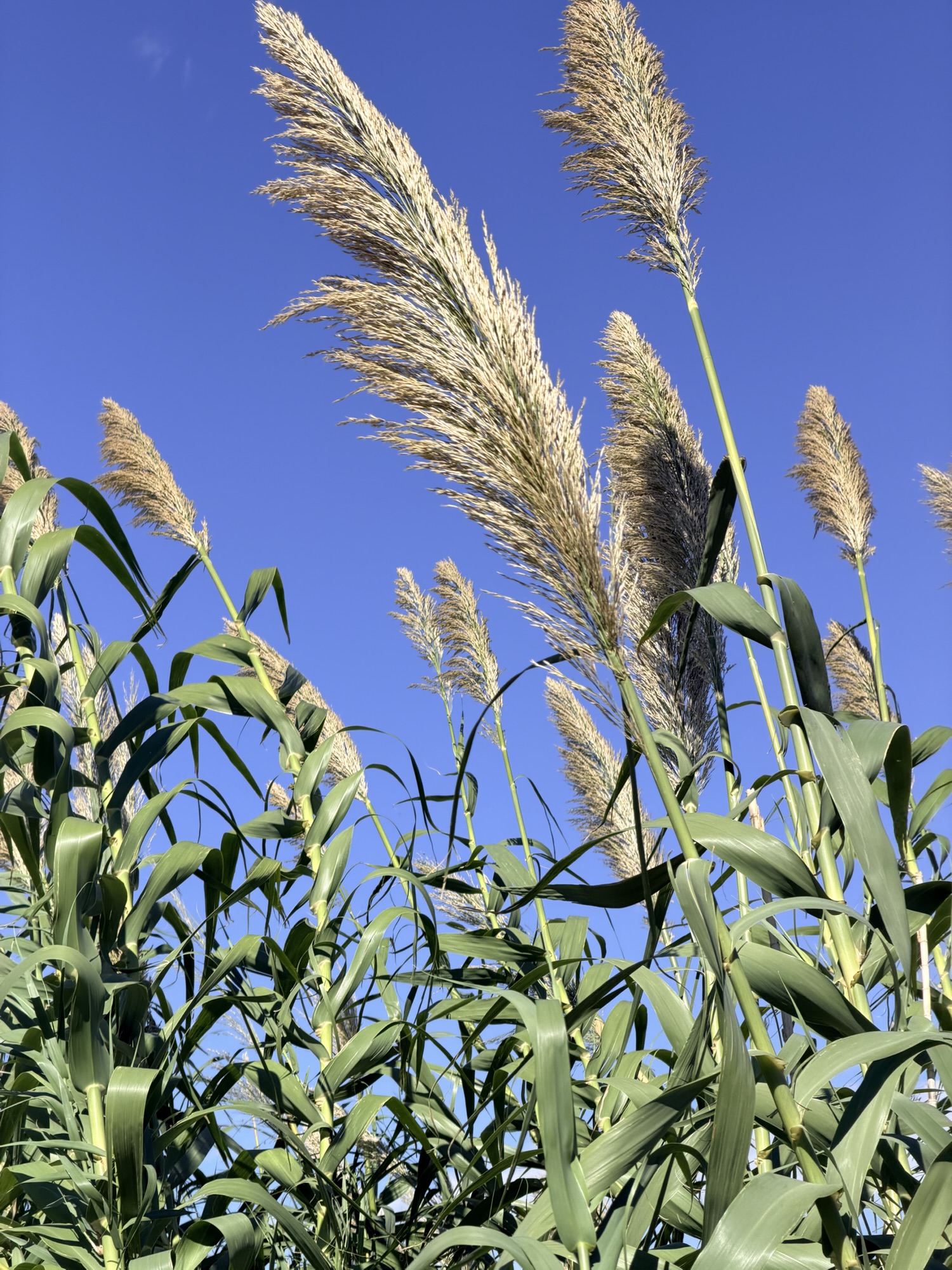
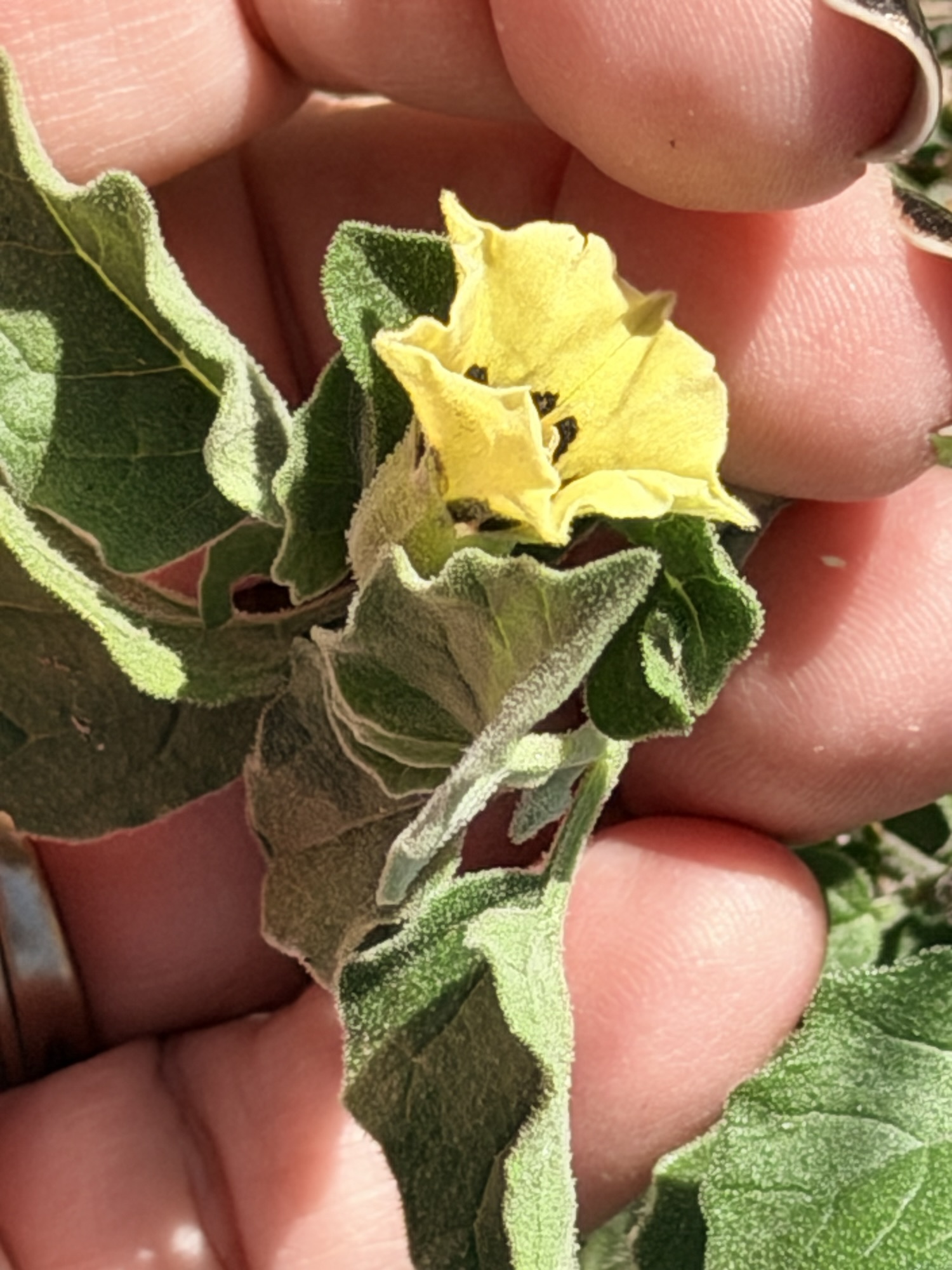
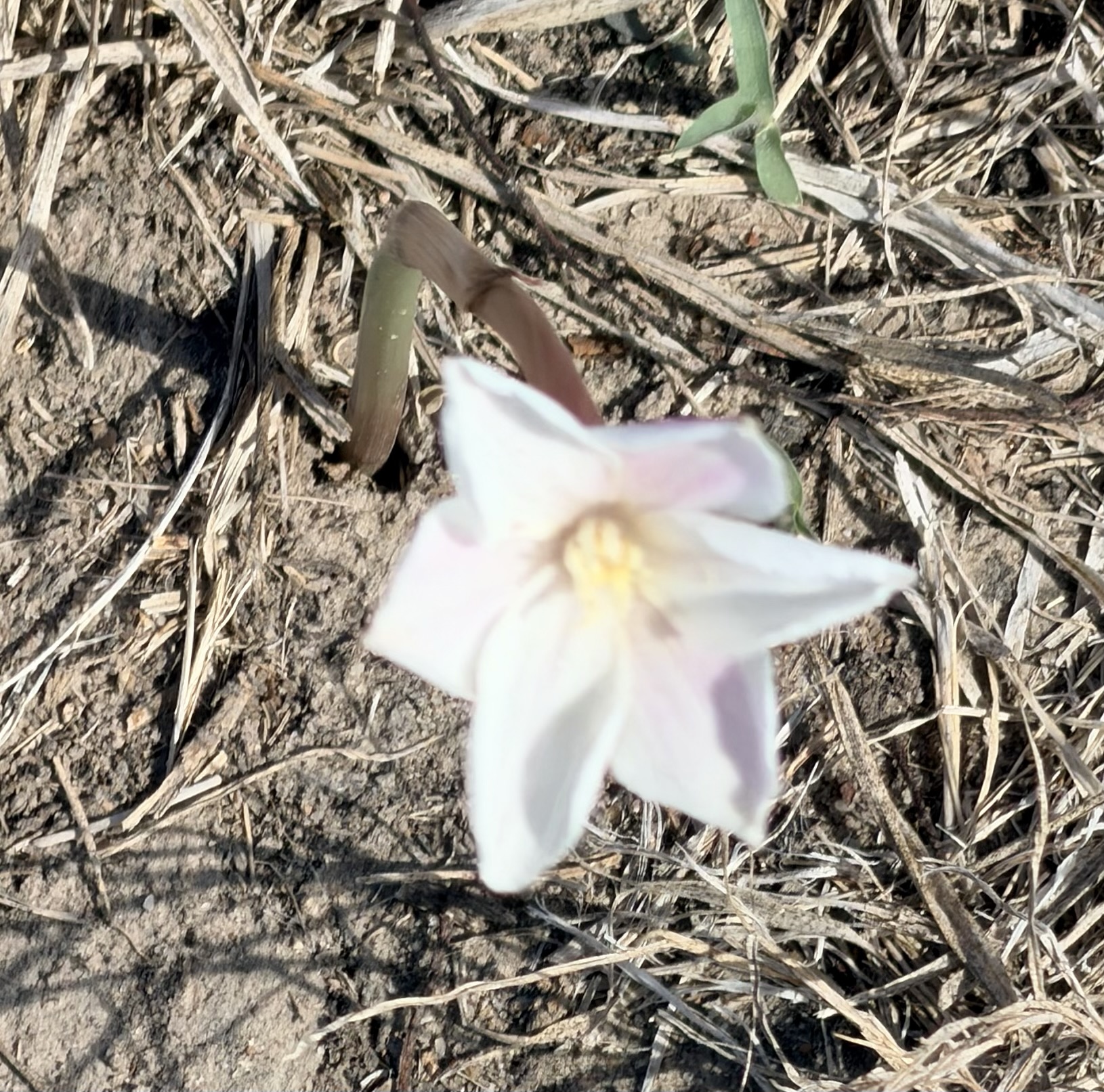
Pokeweed, our one specimen Texas snakeweed Post oak leaves blown down by big windCarolina SnailseedSnow on the prairie with flowersGiant reedSmall flower ground cherryThe only rain lily in bloom that I saw
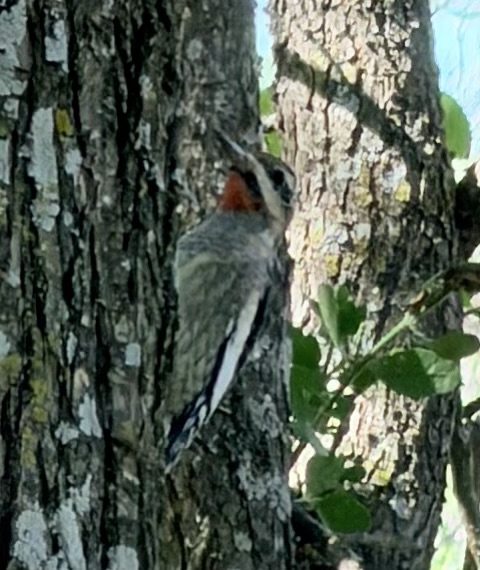
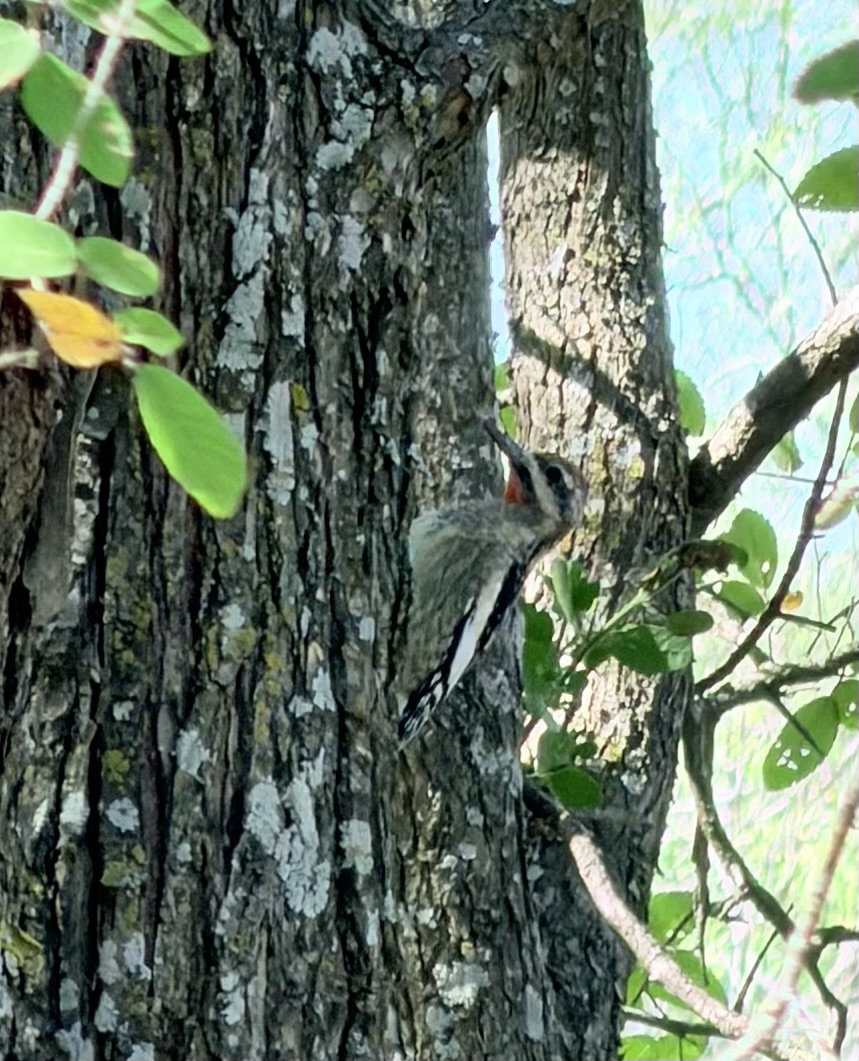
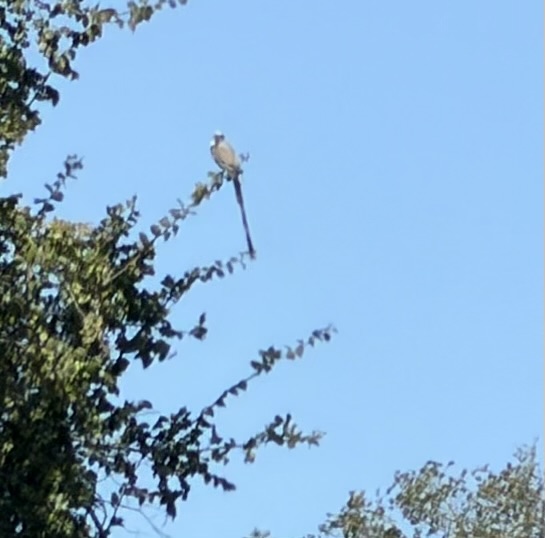
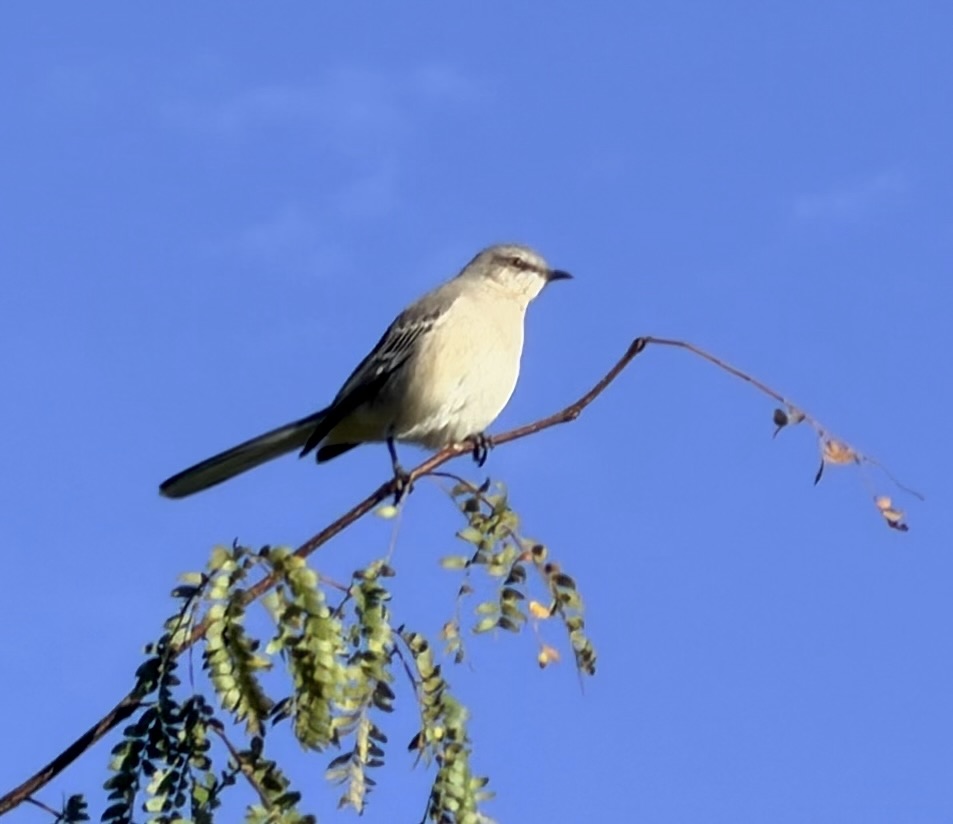
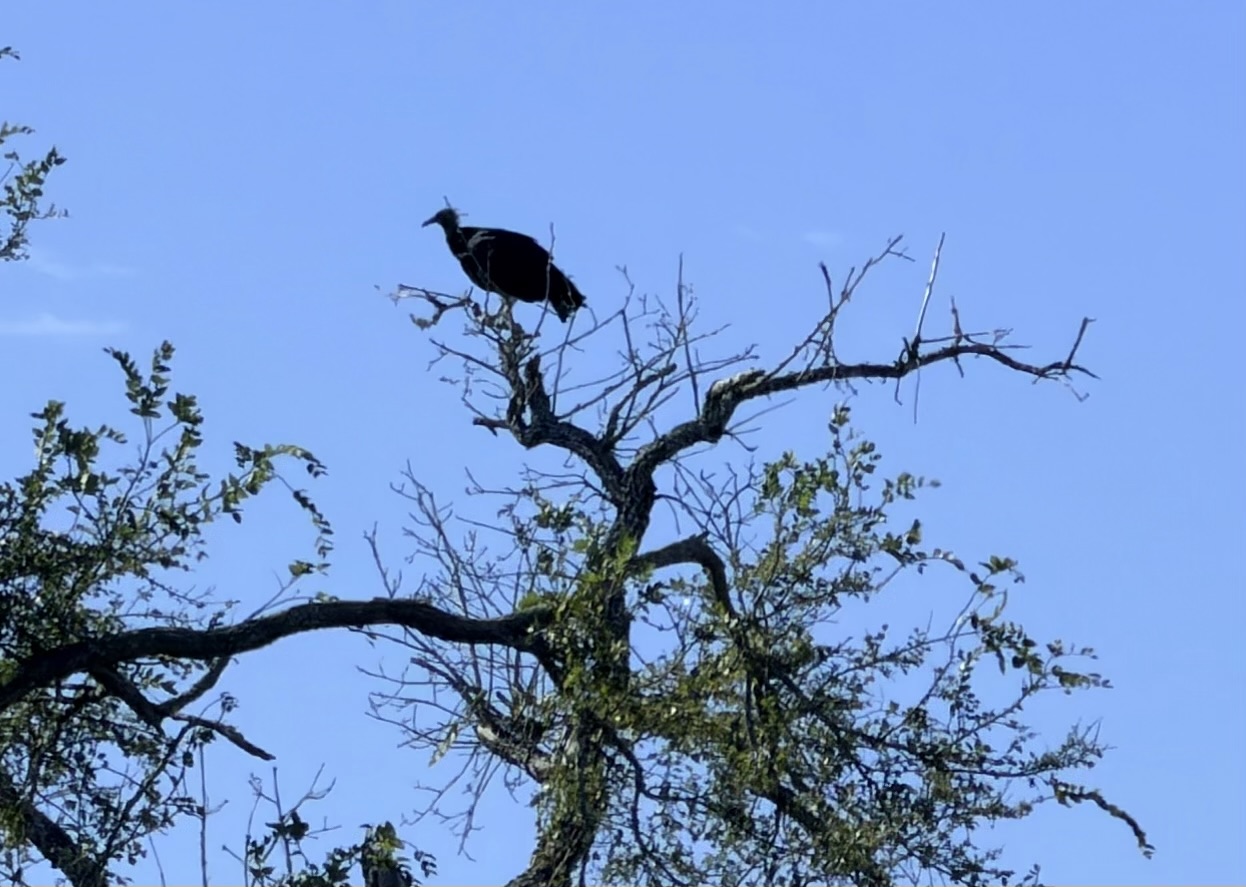
I also have to report on birds, even if they aren’t part of the Bioblitz. On Friday, with all that wind, I only had 11 species, but it was a bit better yesterday with the arrival of much cooler weather and my little buddies the White-crowned and White-throated Sparrows. Today has been quite good, with over 40 species so far (I’m writing in the early evening). The best part is that I got some photos, including a Yellow-bellied Sapsucker that Merlin didn’t register.
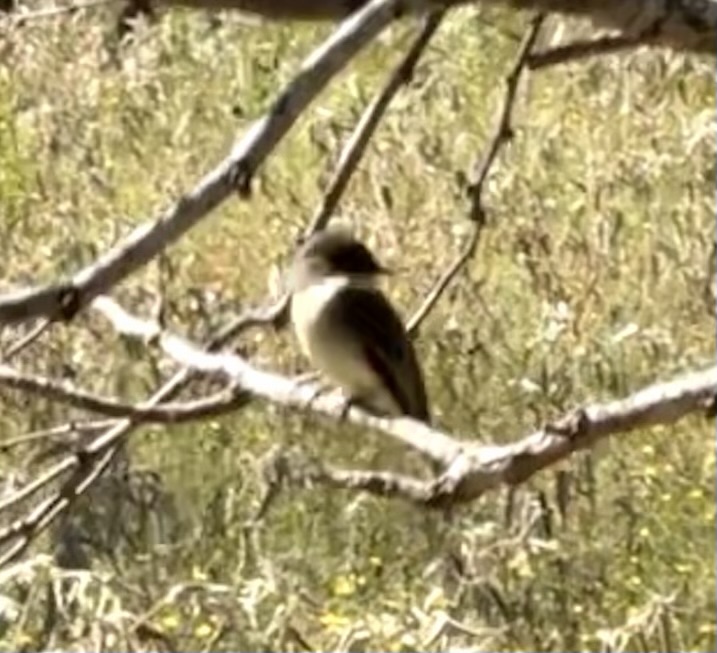
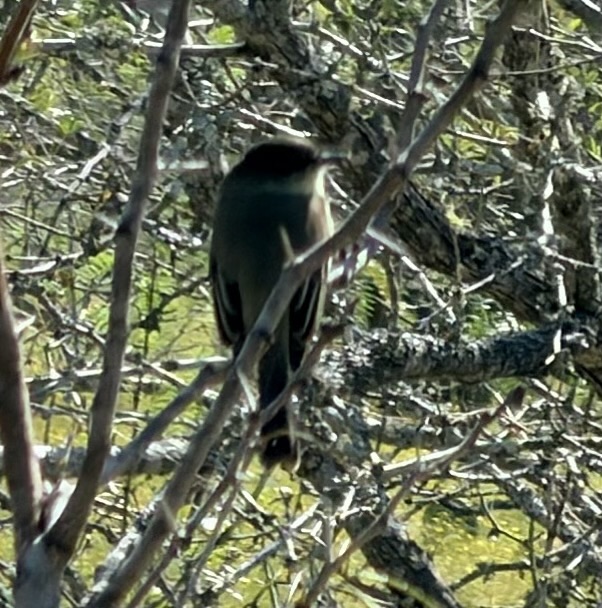
Yellow-bellied SapsuckerAnother viewMale Scissortail Flycatcher Northern Mockingbird Vultures enjoying their breezeBlack Vulture on the lookout Not a bird. The sparrows feedingEastern PhoebeAnother Phoebe
I’ll spare you the dog adventures this weekend. They were sort of unpleasant, but in the end, they’re all fine. I hope you are, too, or at least heading that way.
It’s not hot anymore! The weather today would have been quite pleasant, except that the cold front literally blew in. Like a leaf blower on steroids.
Looking breezy
Merlin only heard 8 bird species. Luckily my eyes saw three more, but 11 is a real low!
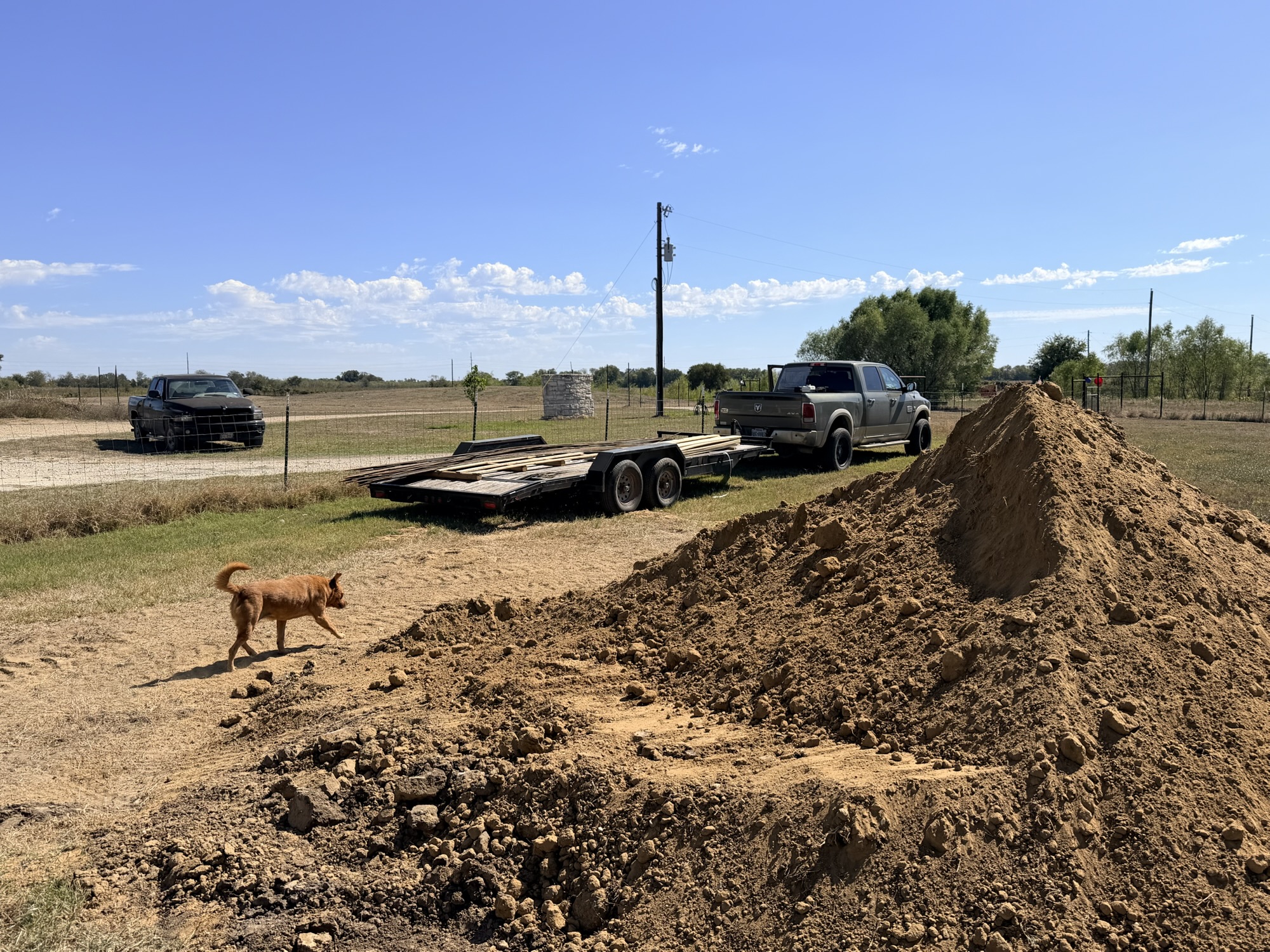
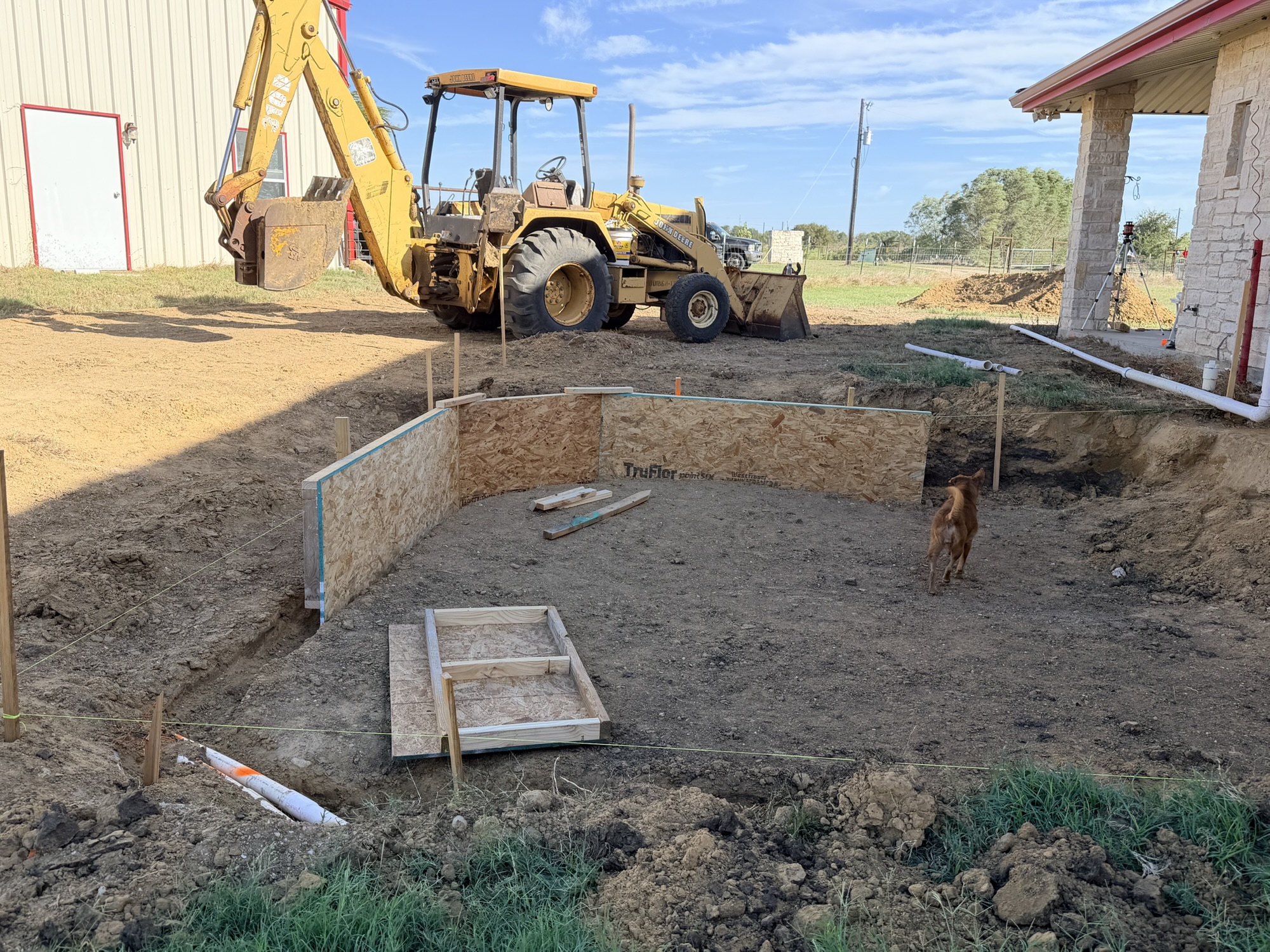
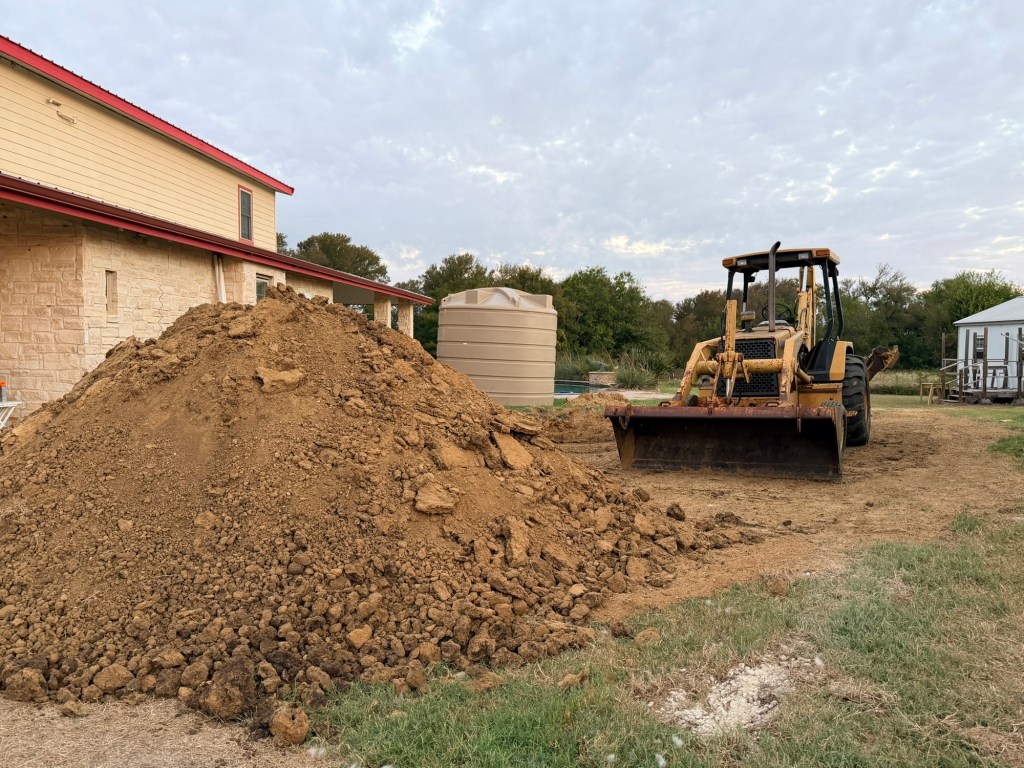
The mountain was gradually moved back to where the backhoe is, so the area could be smoothed down.
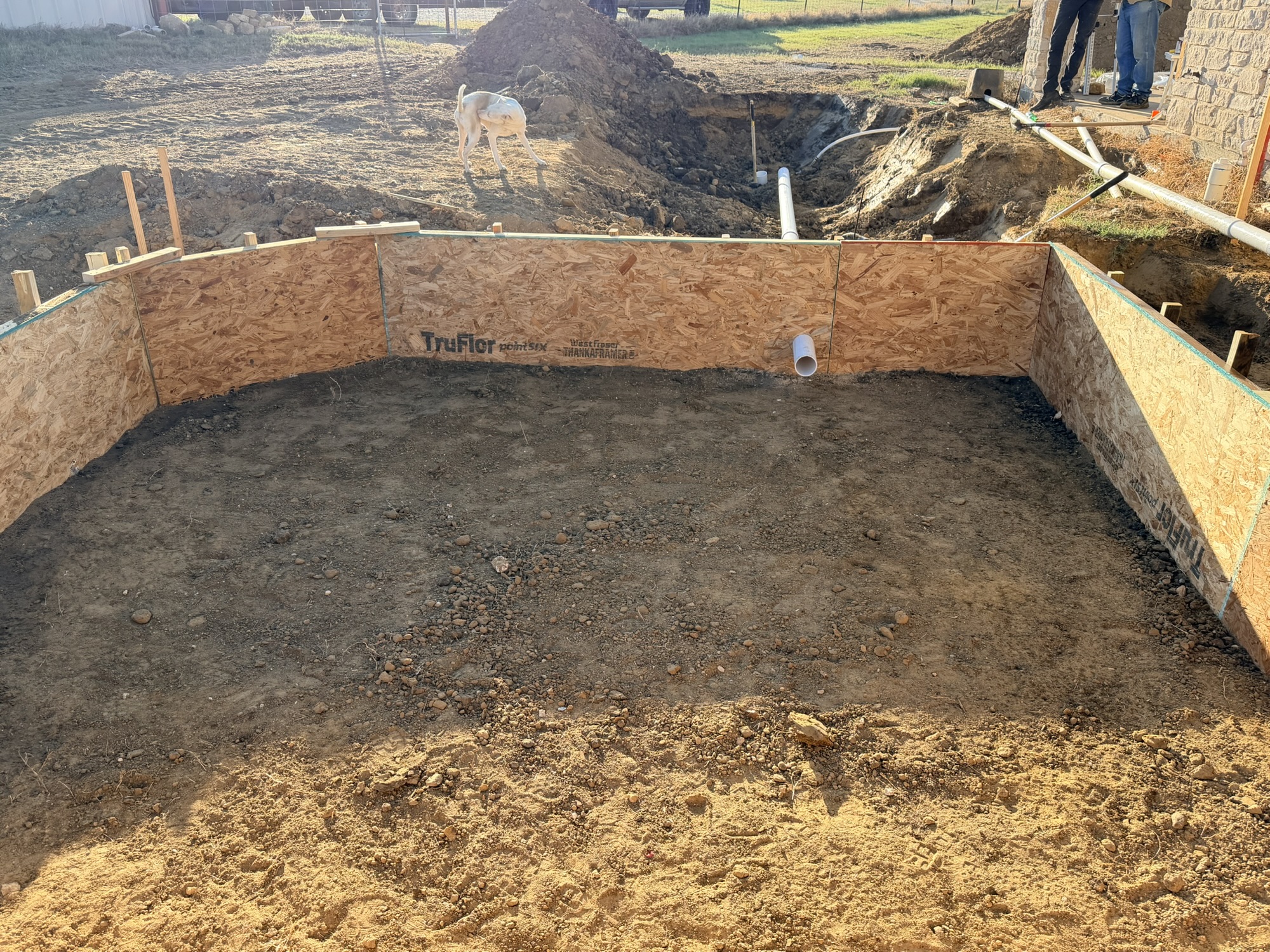
And the guys working on the forms for the cement pads had to be careful so pieces of wood wouldn’t blow them around. All the dirt moving also left a film of dust everywhere.
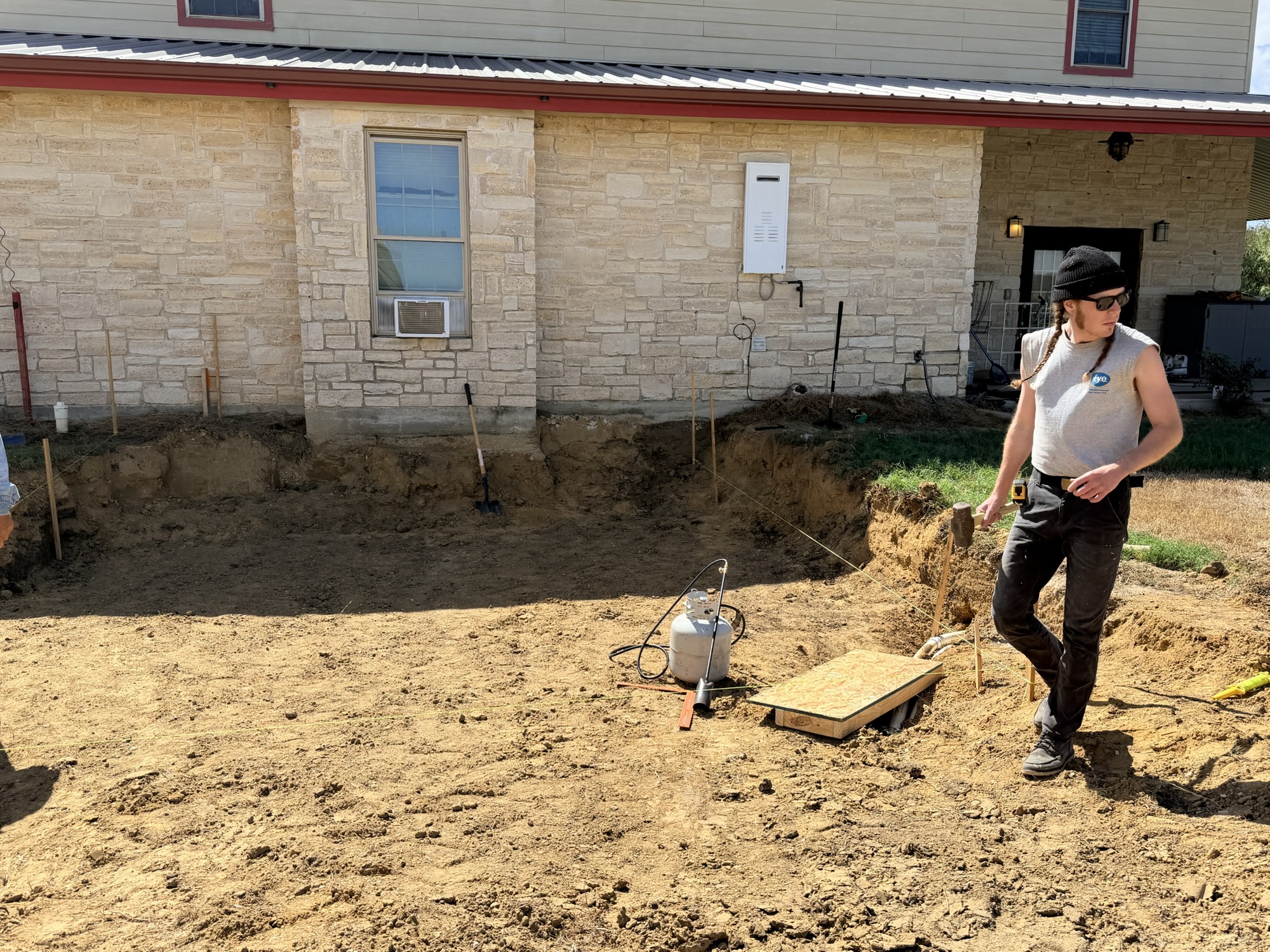
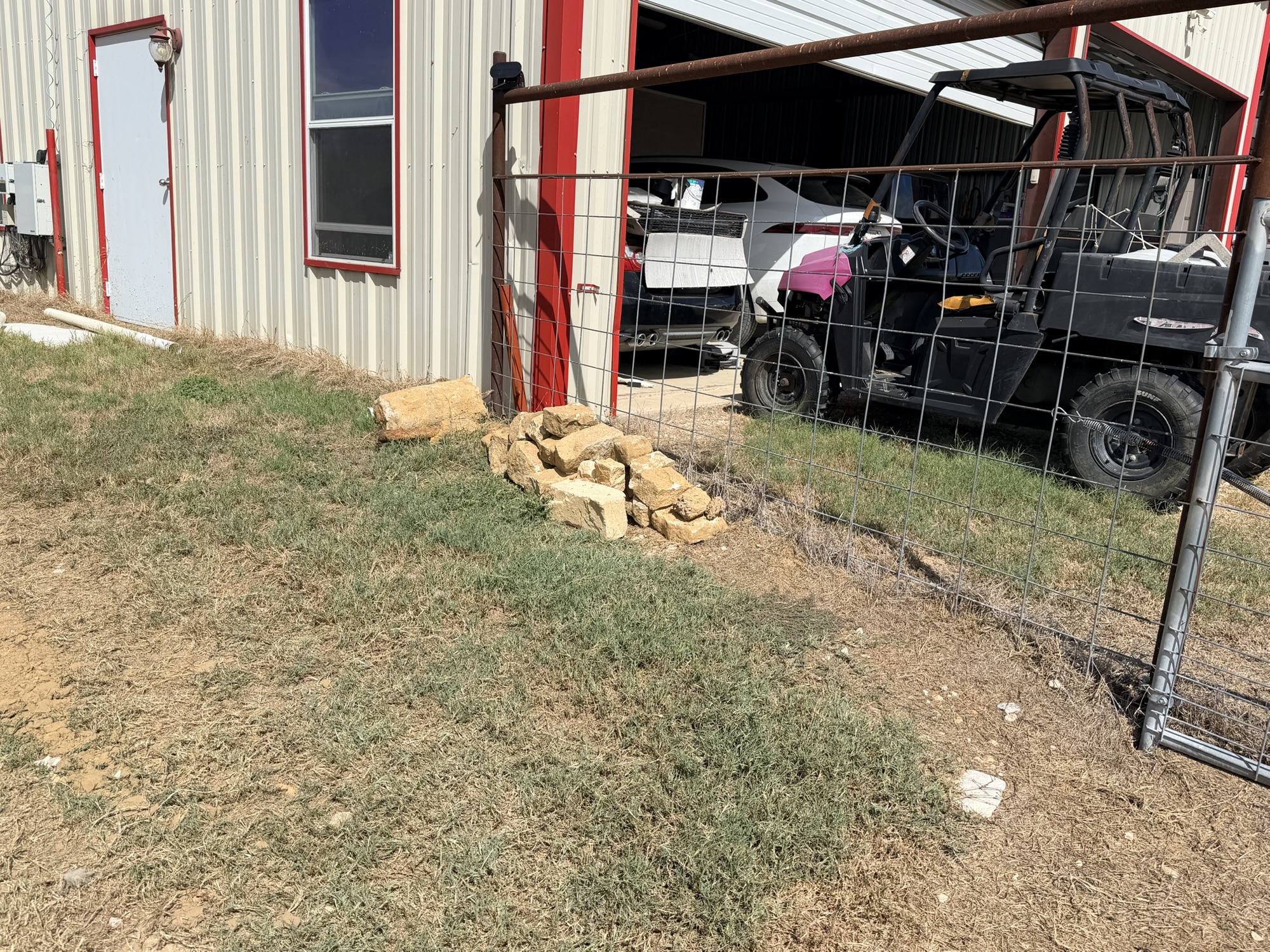
Mountain is moved!Area is prepped for forms. Worker, though slim, didn’t blow awayFirst of forms and all the stakes are inHa! If it rains again before the concrete pour, this temporary setup will send all the roof water away!Bricks from building the house were discovered.
Worst: the cattle ranchers had spread fertilizer yesterday. Everything smells like poop. I was looking all over the house to see which dog had pooped, sprayed Lysol all over the house, and was totally baffled until I finally remembered that tractor pulling something behind it yesterday. Dogs are forgiven, but some horse is in Trouble for messing up yet another water trough float. (Spice)
I didn’t do anything! I’m leaving!
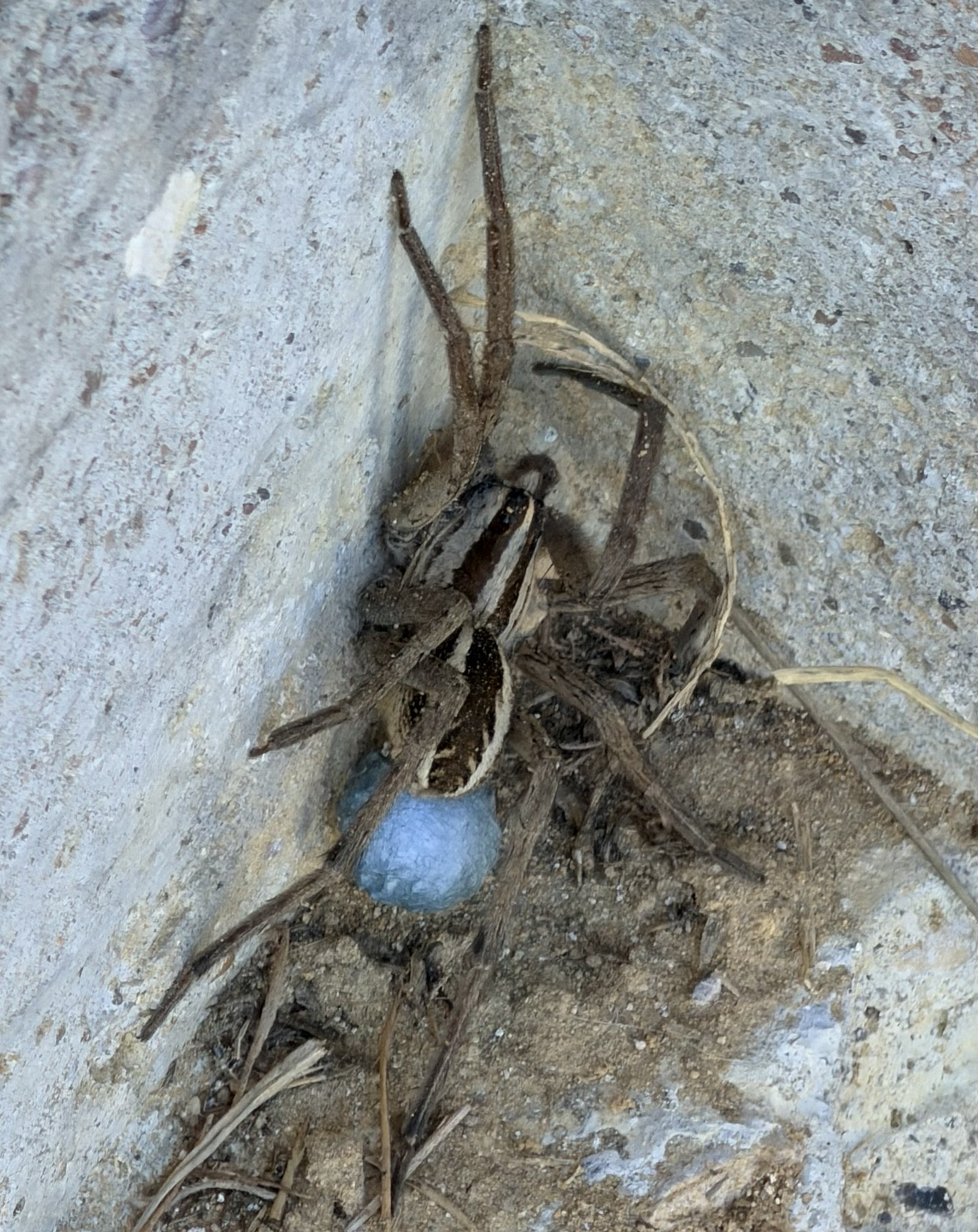
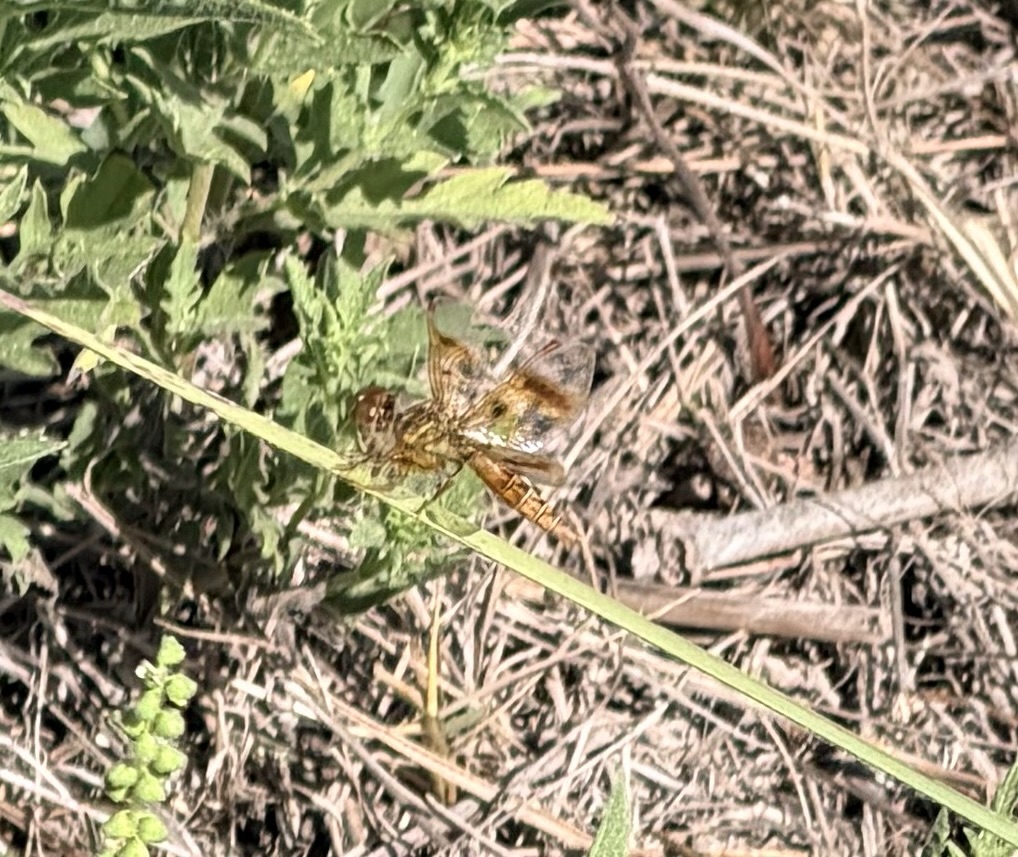
I did manage to get out and snap some pollinator photos for the bioblitz, though the plants were very wiggly. I was surprised at how many butterflies and dragonflies stayed still long enough, and the workers found me a cool rabid wolf spider with eggs (not a pollinator, but interesting).
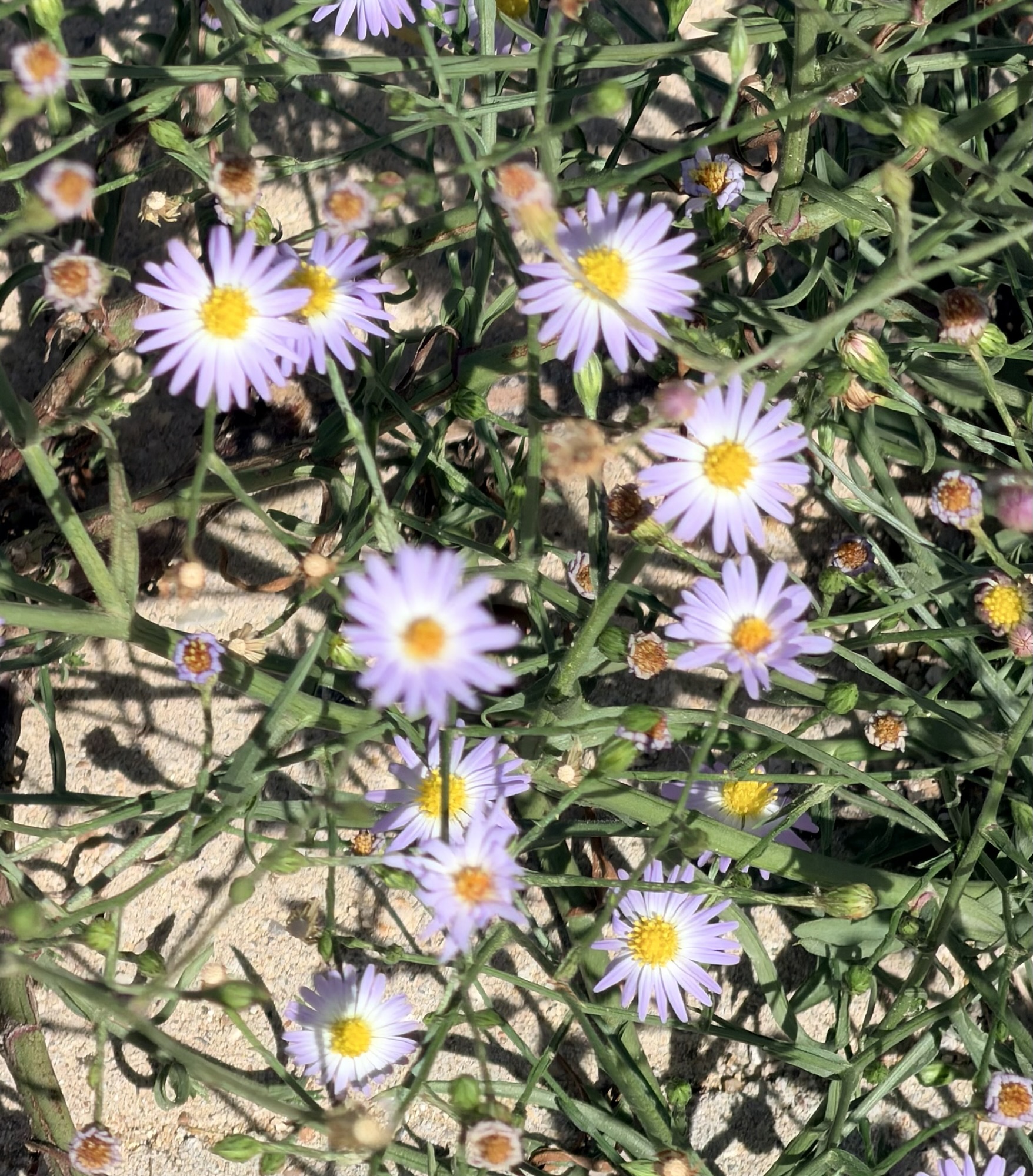
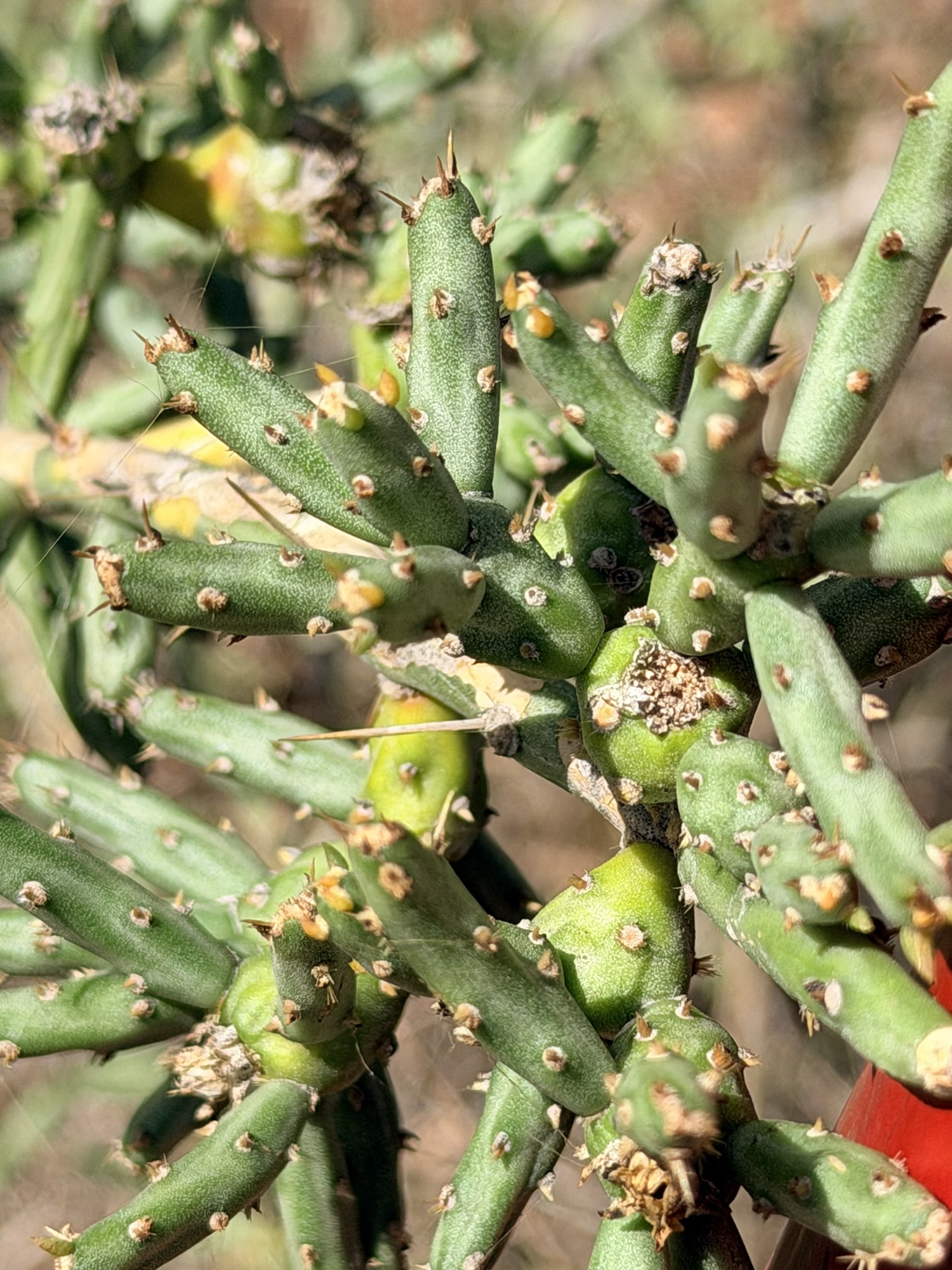
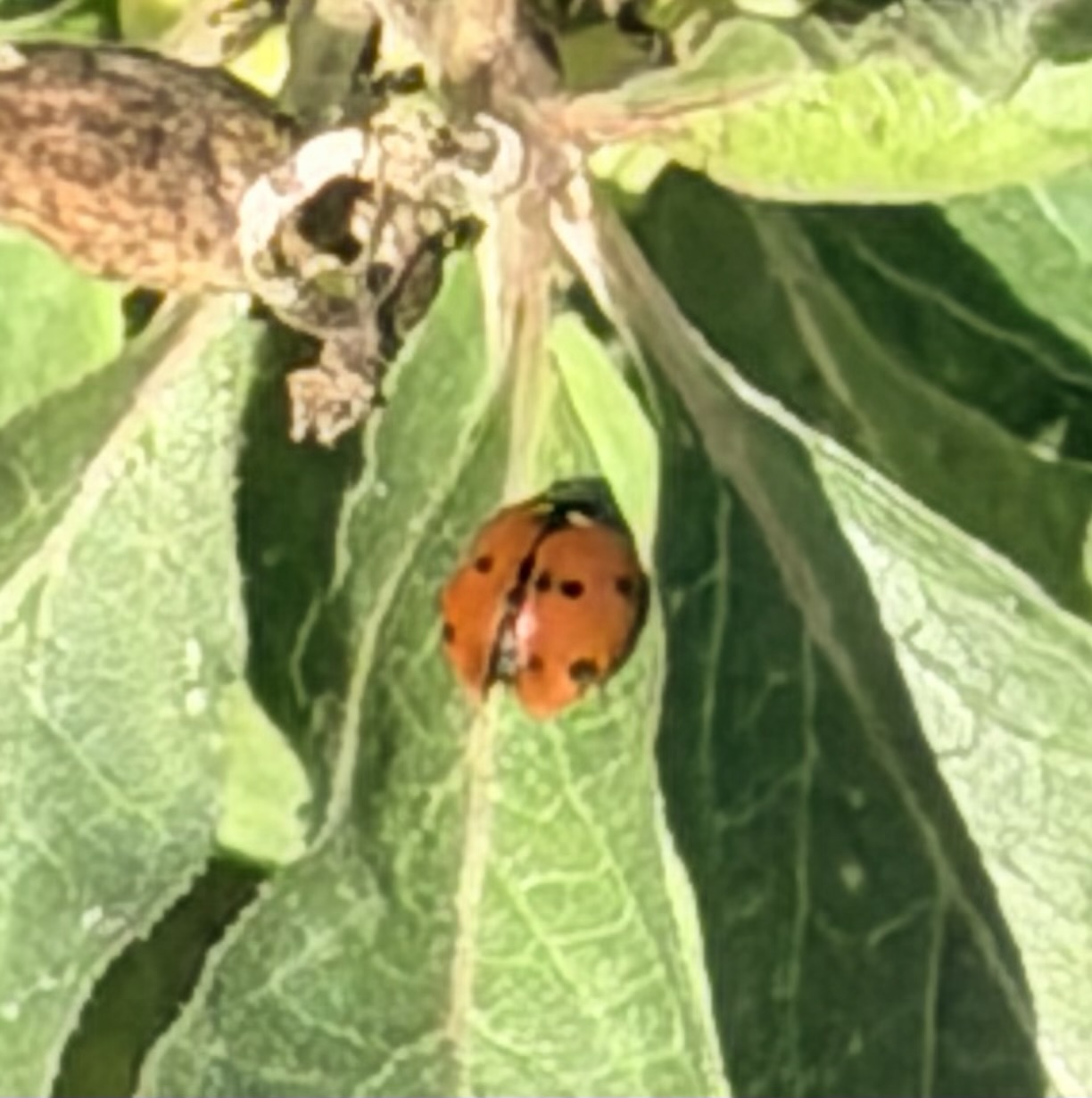
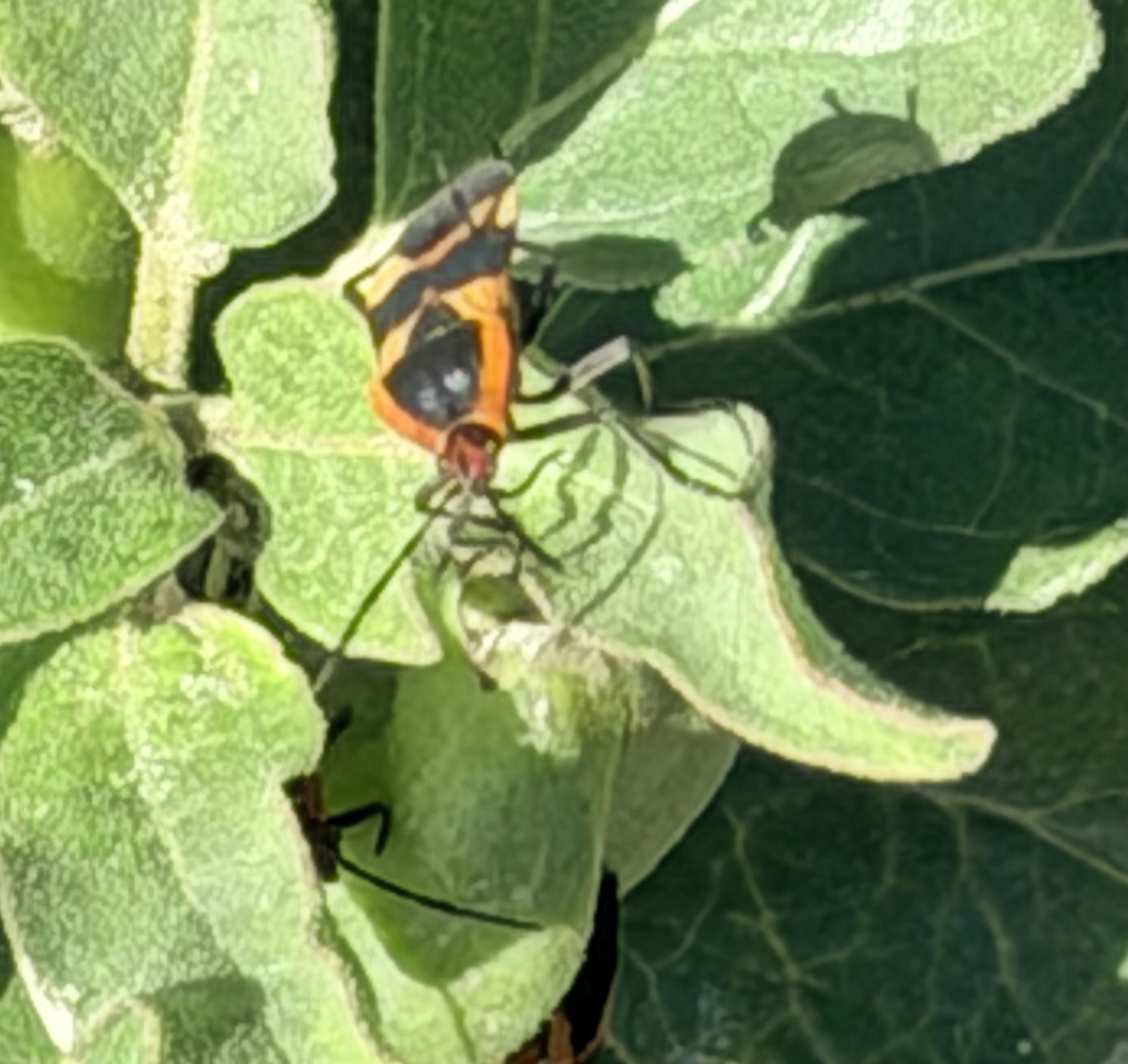
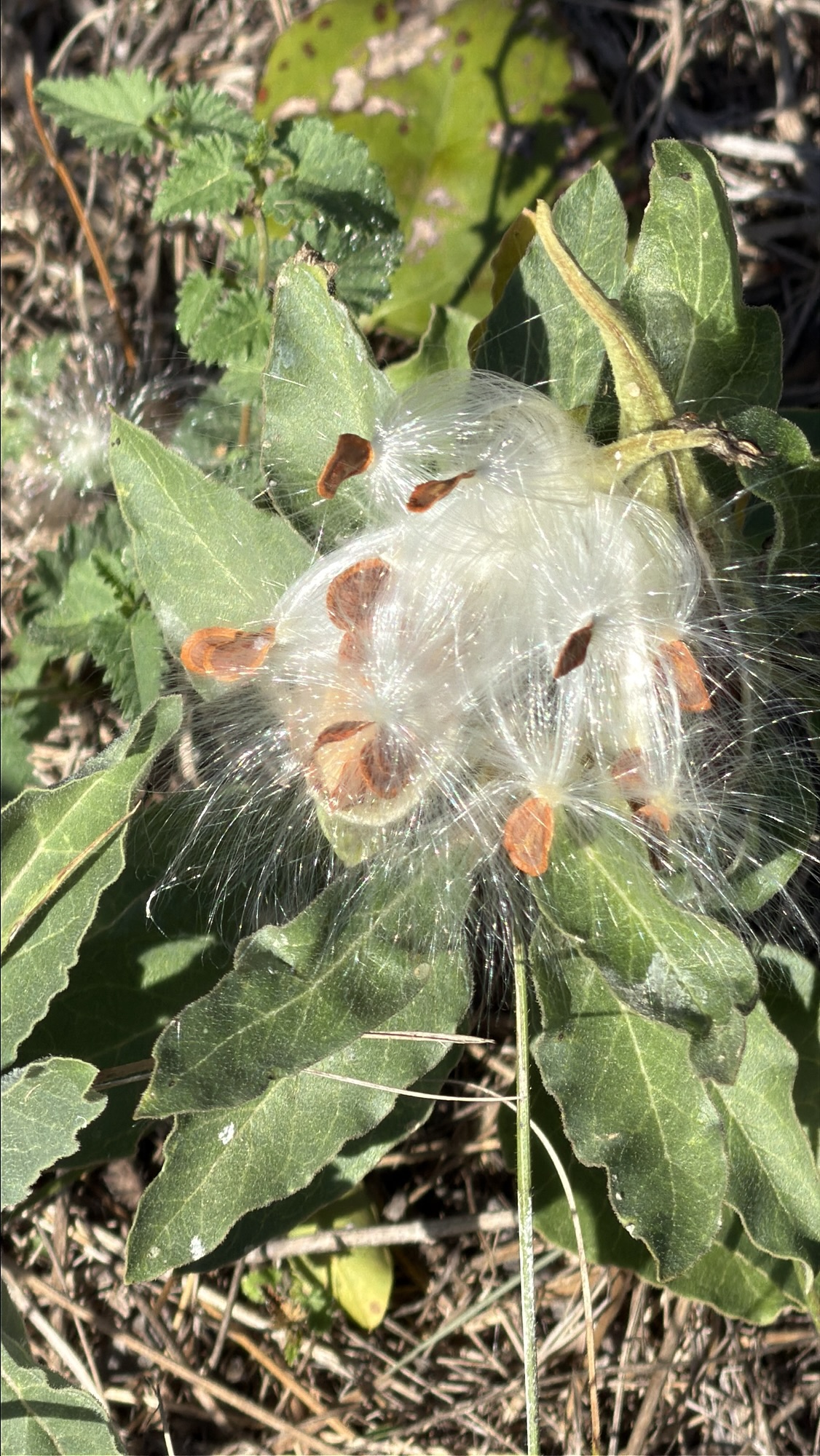
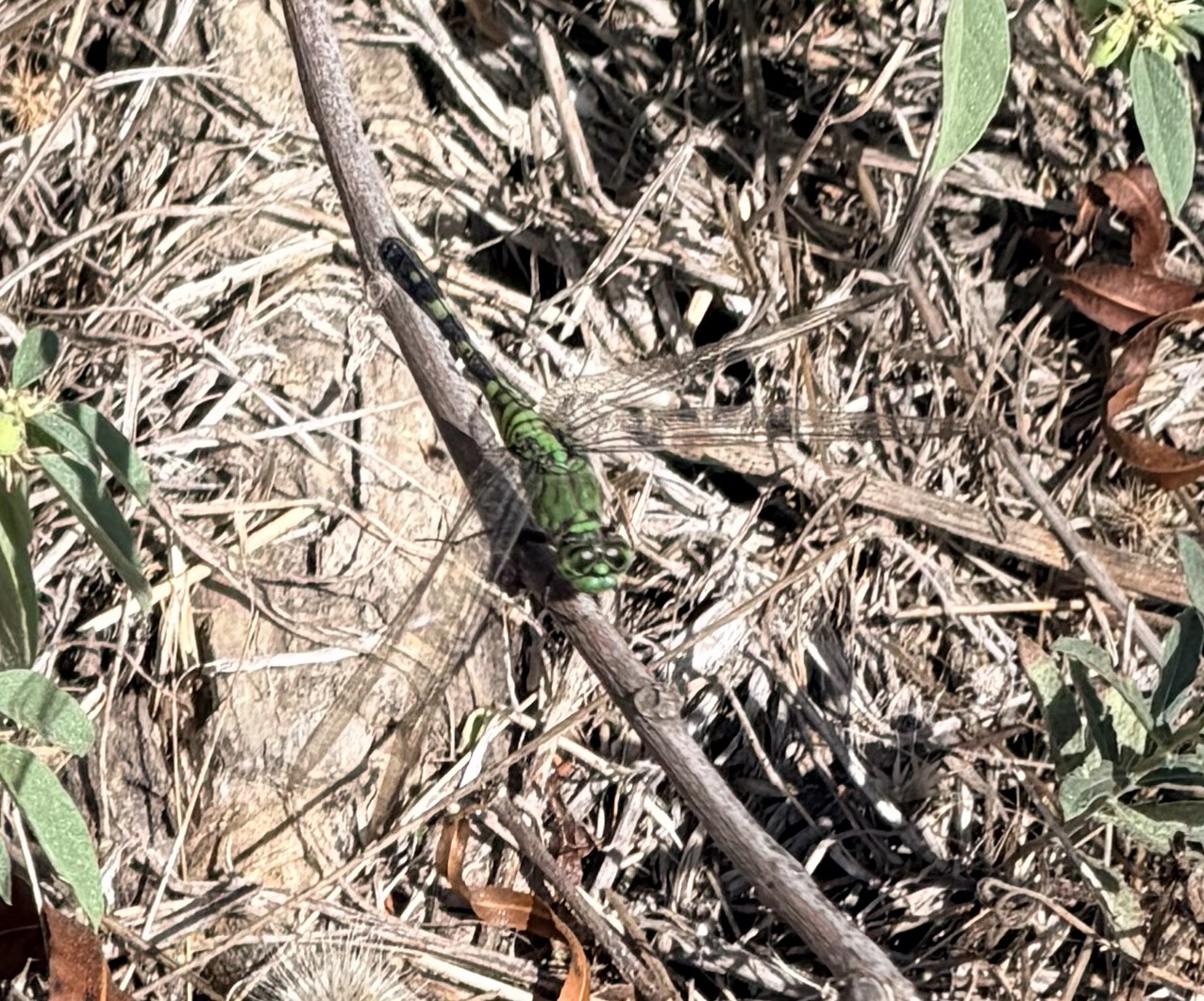
Salt marsh asterLeaf footed bugChristmas cholla Hunter’s little paper waspRabid wolf spider and egg sacPond amber wingTawny emperorSeven-spotted lady beetle Large milkweed bugGreen antelope horns seedsEastern pond hawk
The wind had started to die down when we went to eat some Mexican food this evening. That bodes well for a chilly tomorrow!
Folks, I’m still thinking about the book I recently finished, so I’ll share some ranch updates that I’ve been observing and enjoying.
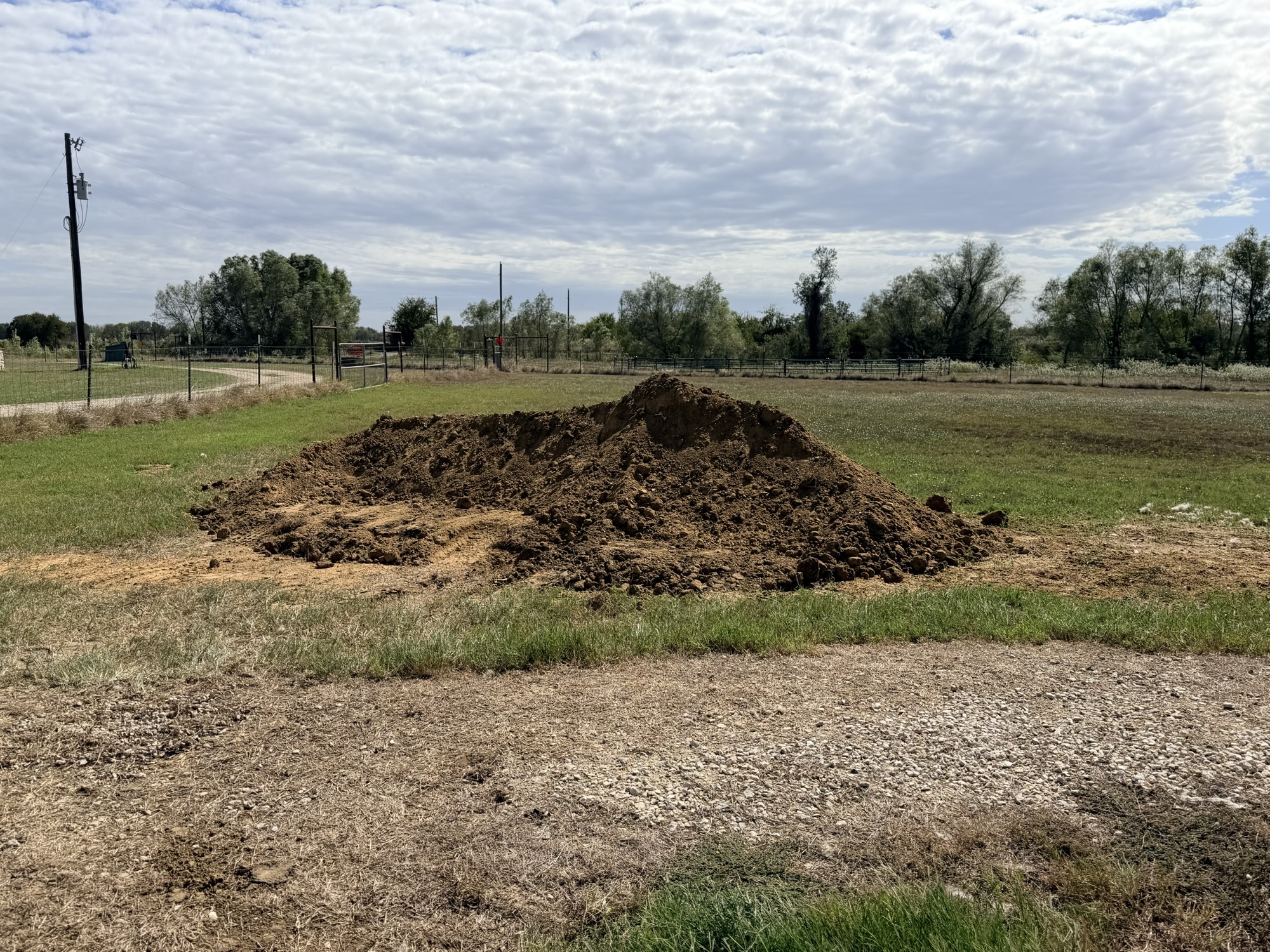
Someday this hill will be helping shape our drainage.
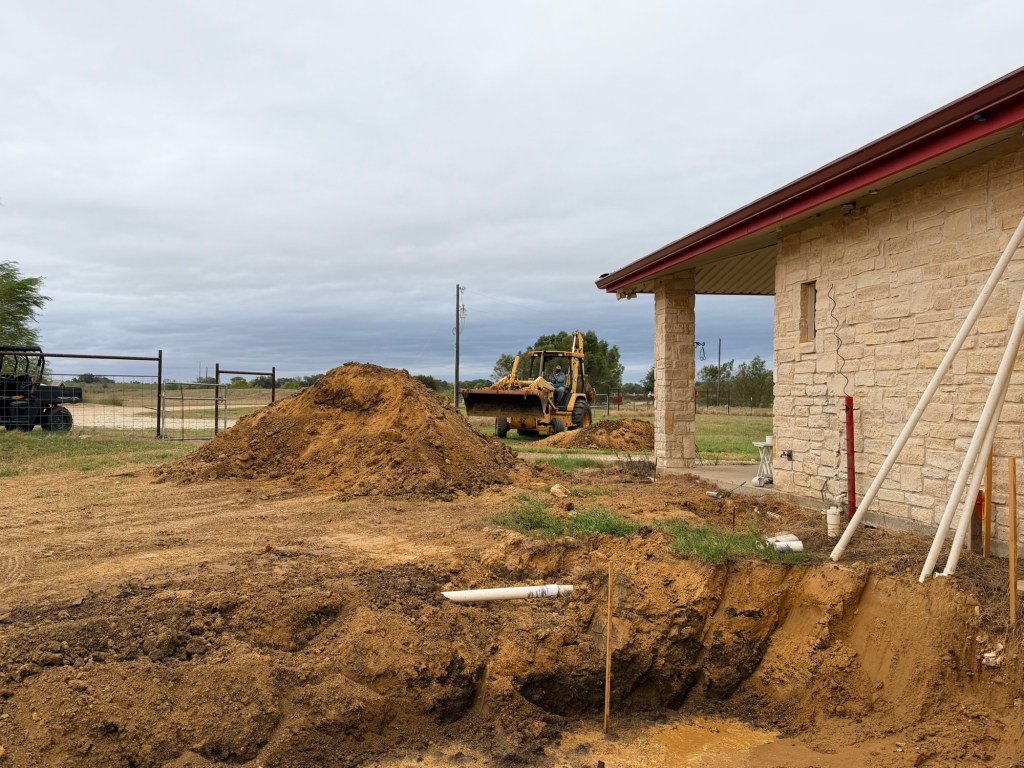
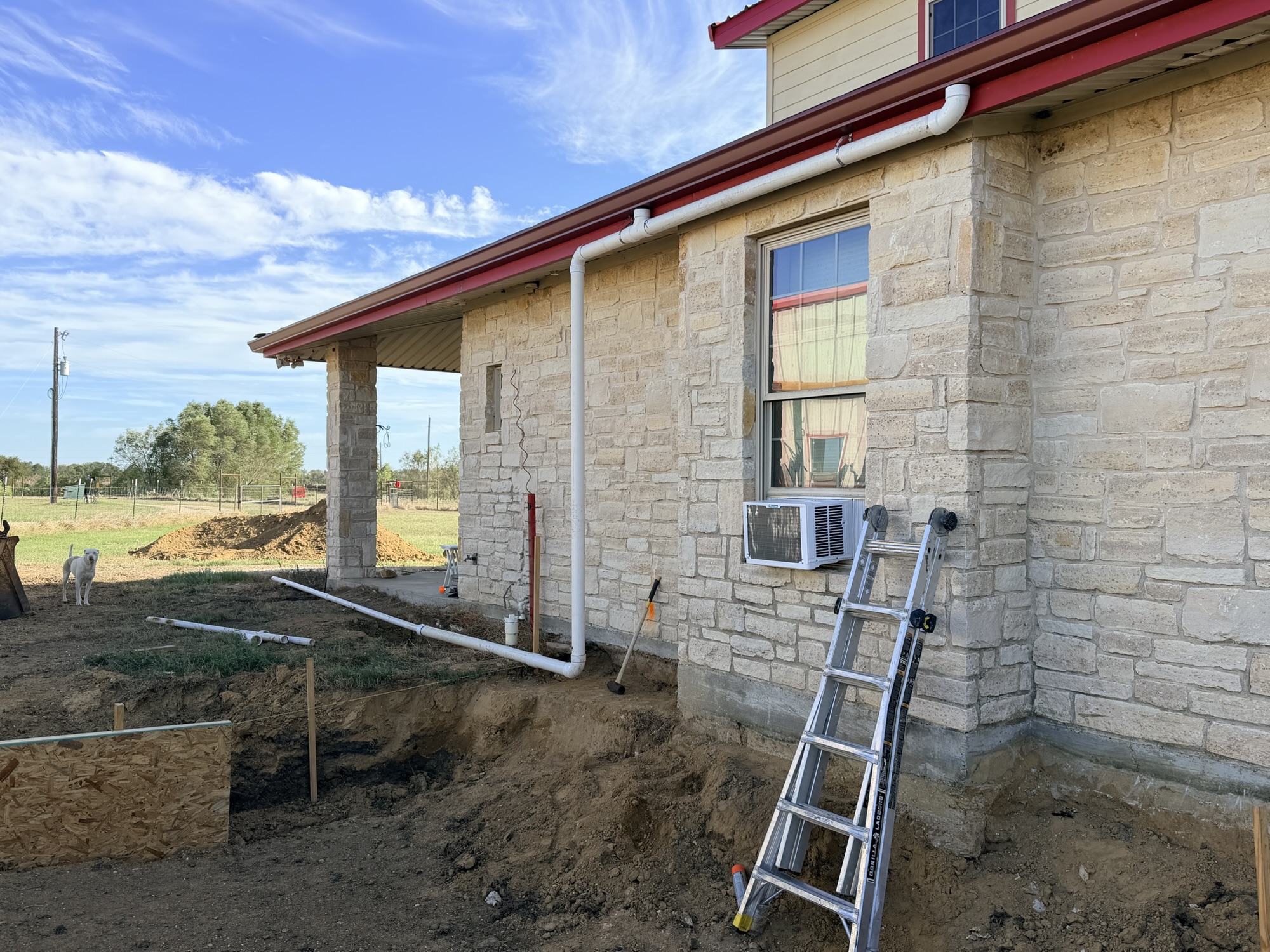
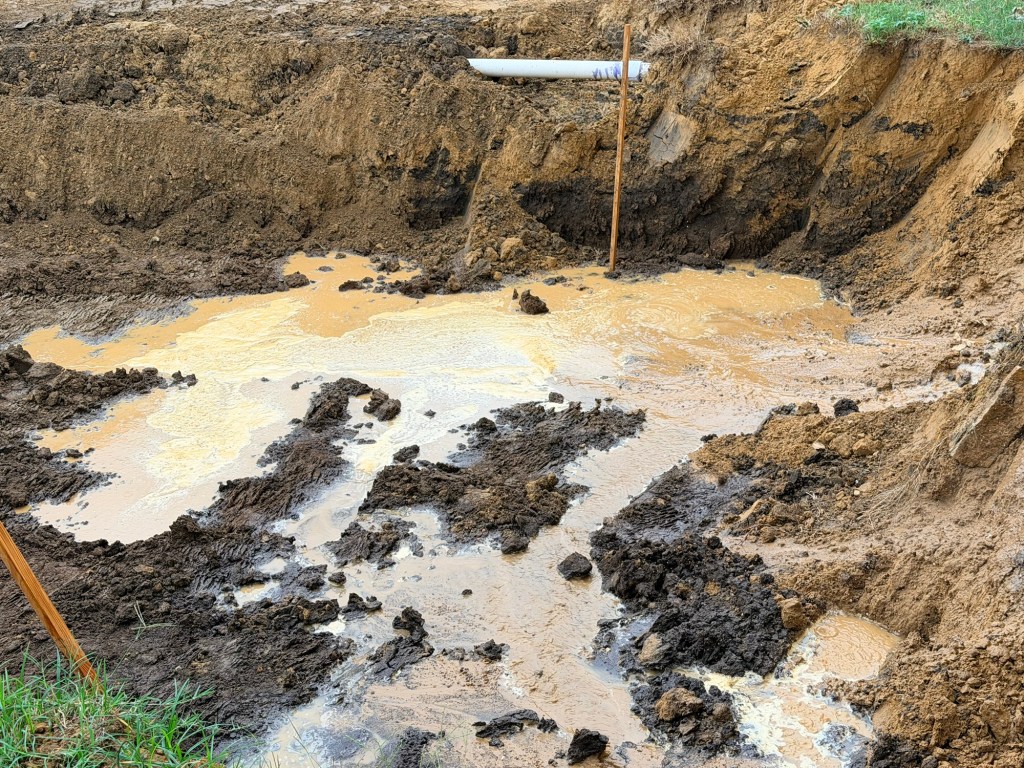
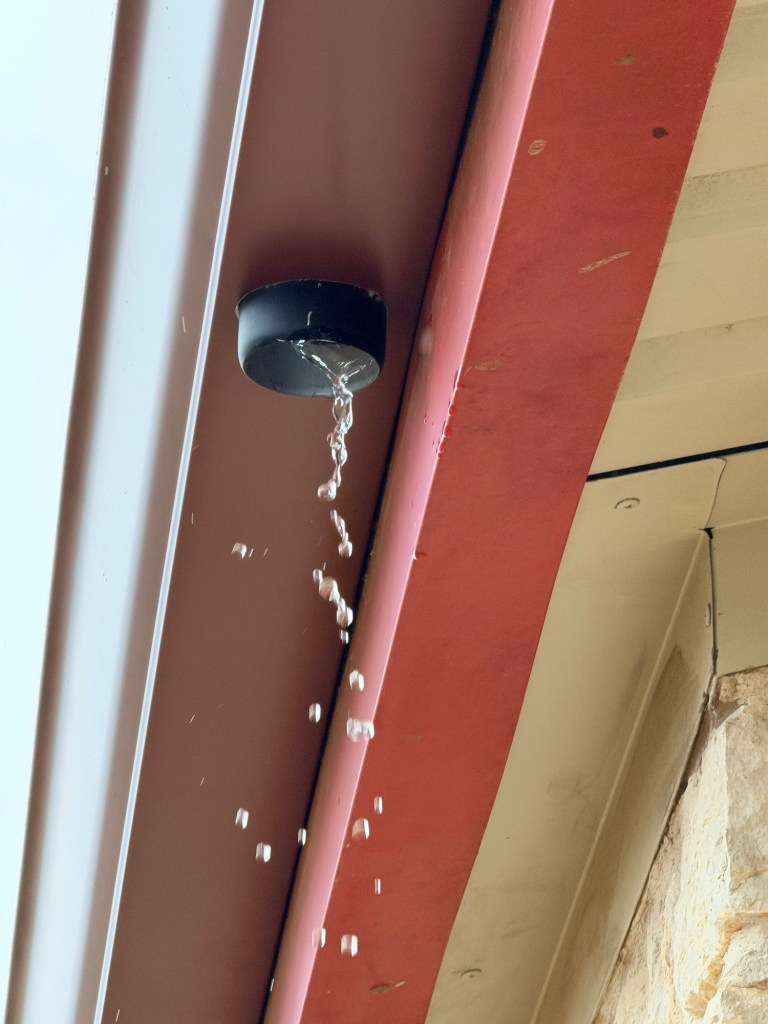
One thing that’s going on is that the project of setting up our huge water tanks to collect rainwater off the house and garage roofs is moving along, even though the least little bit of rain tries to fill the hole where the impressively deep concrete pad to hold the house’s tank is going to be.
Just a little rain started to make a new pond.
For example, it rained .04” yesterday, but because all the rain on the roof falls out of the same pipe, which of course is located on top of the hole, since eventually that’s where the tank will be. Even this morning’s heavy dew had a nice flow going. That bodes well for future dry spells, but not for setting up the forms to pour the concrete.
Where our future water will come from.
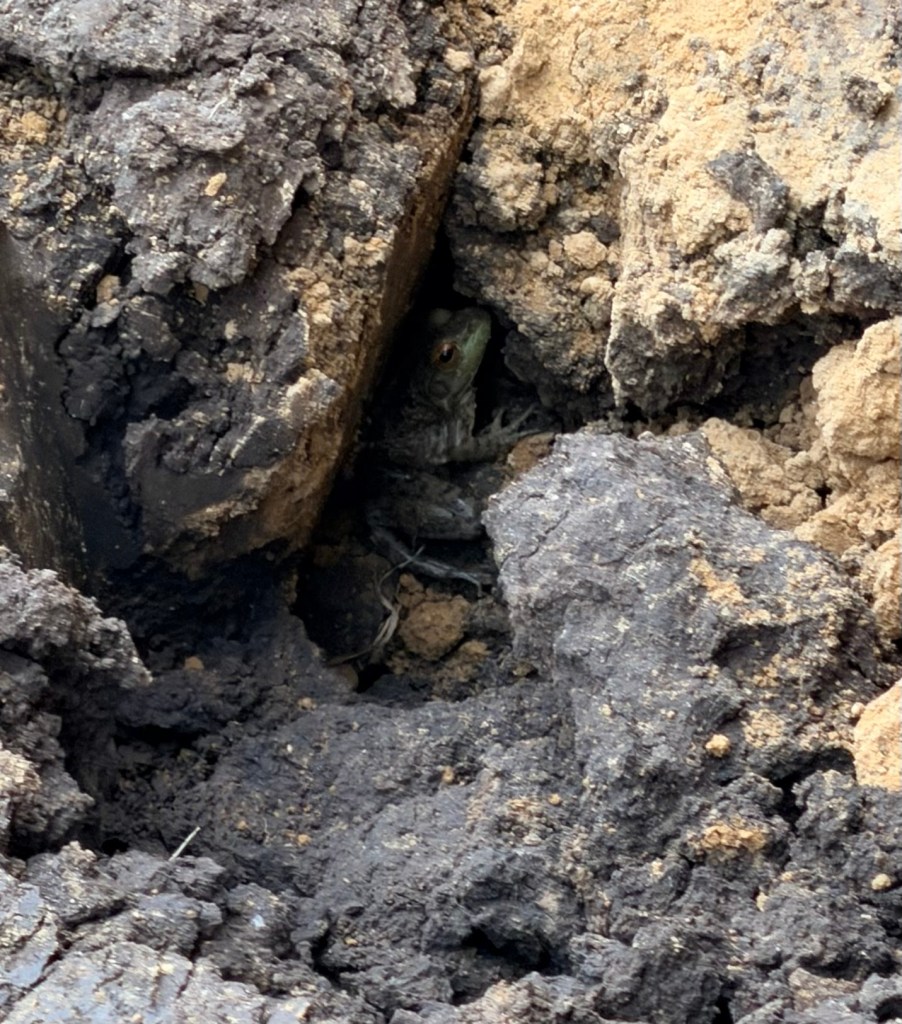
At least the amphibian population is happy.
I like it damp.
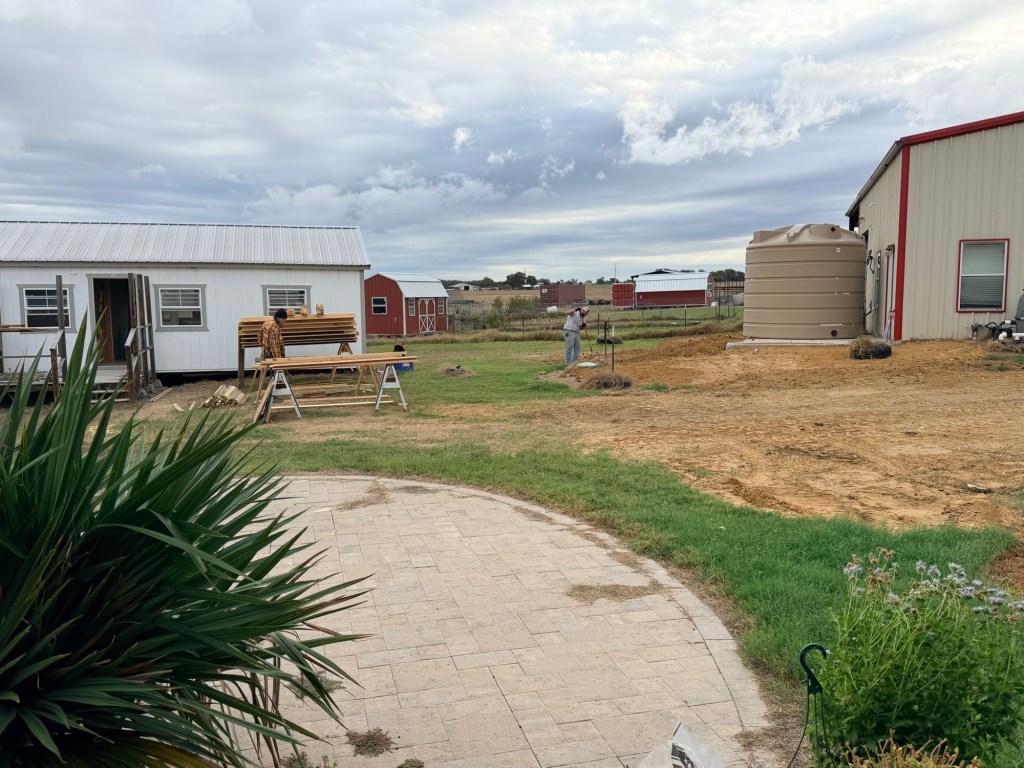
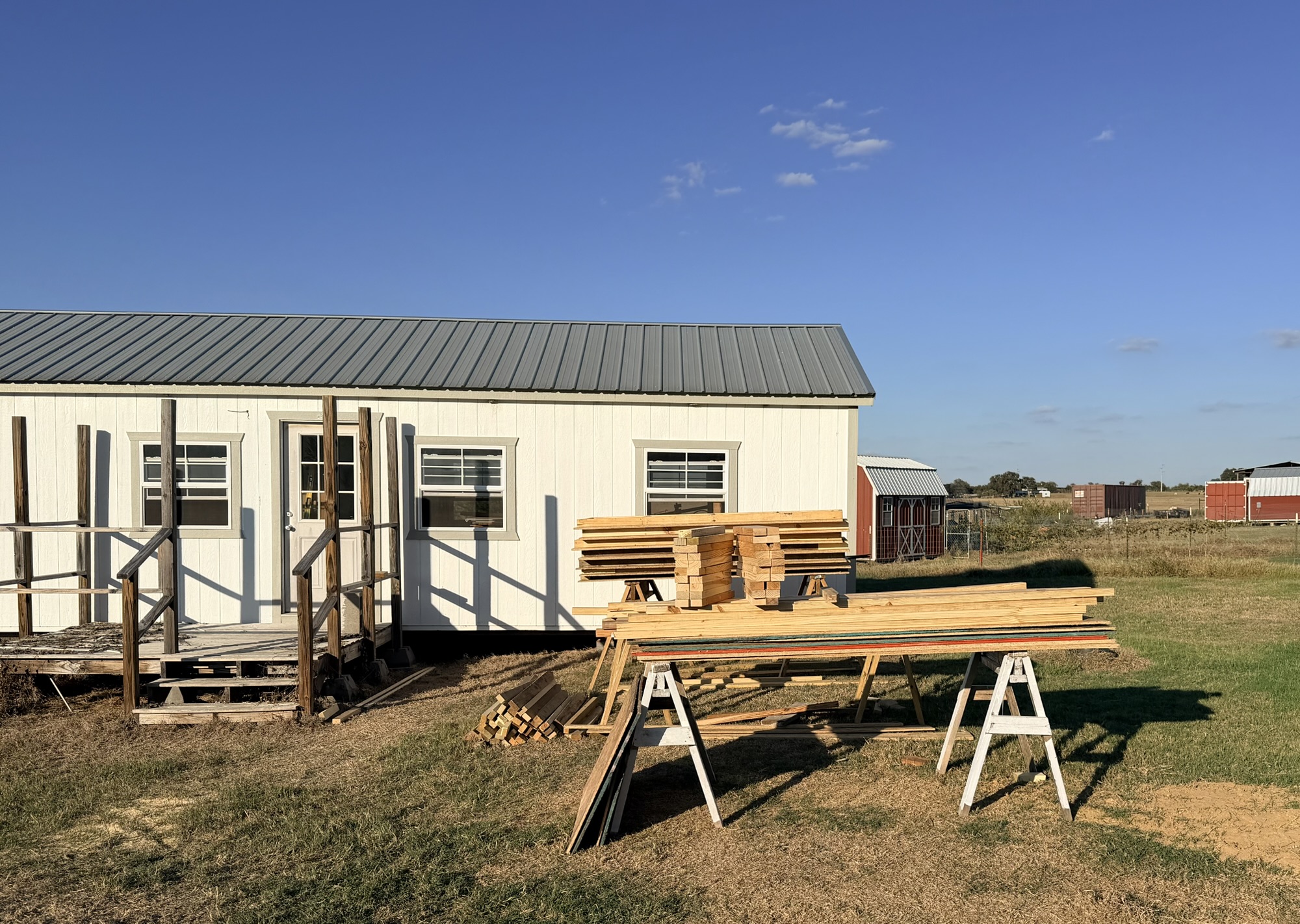
This week my son and his helper have been getting things in line to create the forms for the big pad and a bunch of paths/sidewalks leading from our entry gate to the house, the pool, and the pool house. We will be SO fancy! Imagine not tracking in mud and stickers! Imagine not tripping on holes the dogs and visiting critters have dug! It’s so encouraging!
These guys can really dig
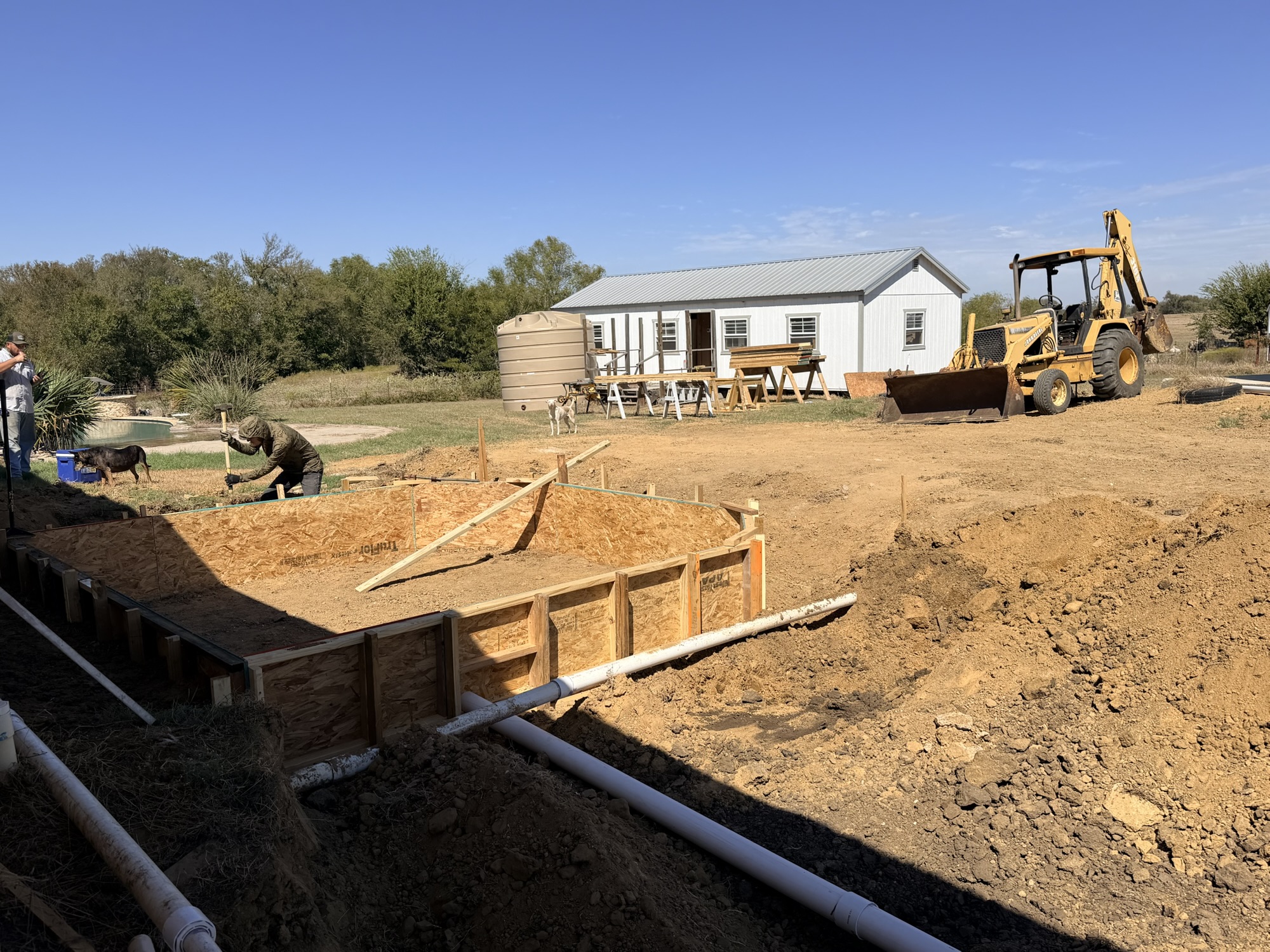
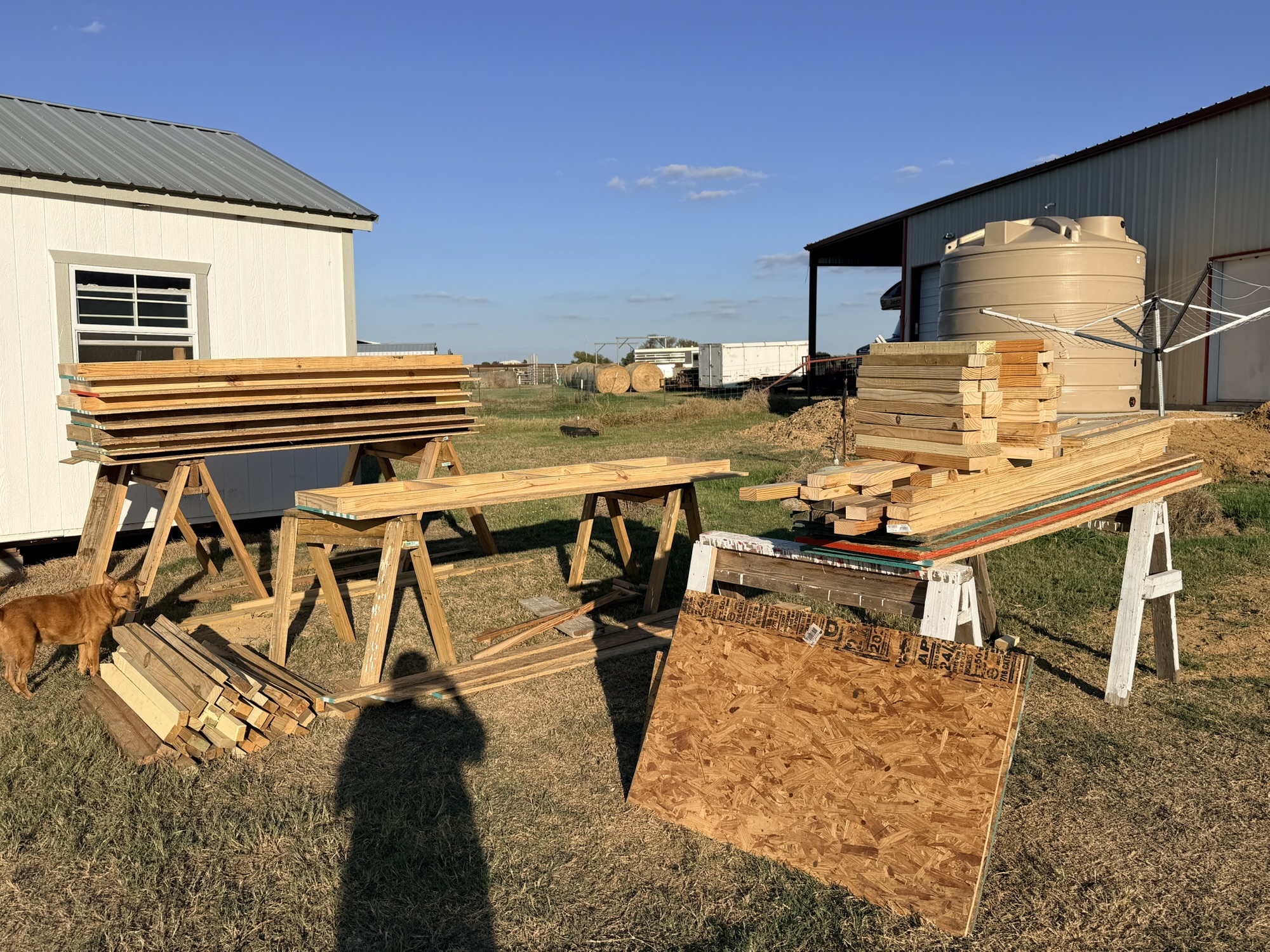
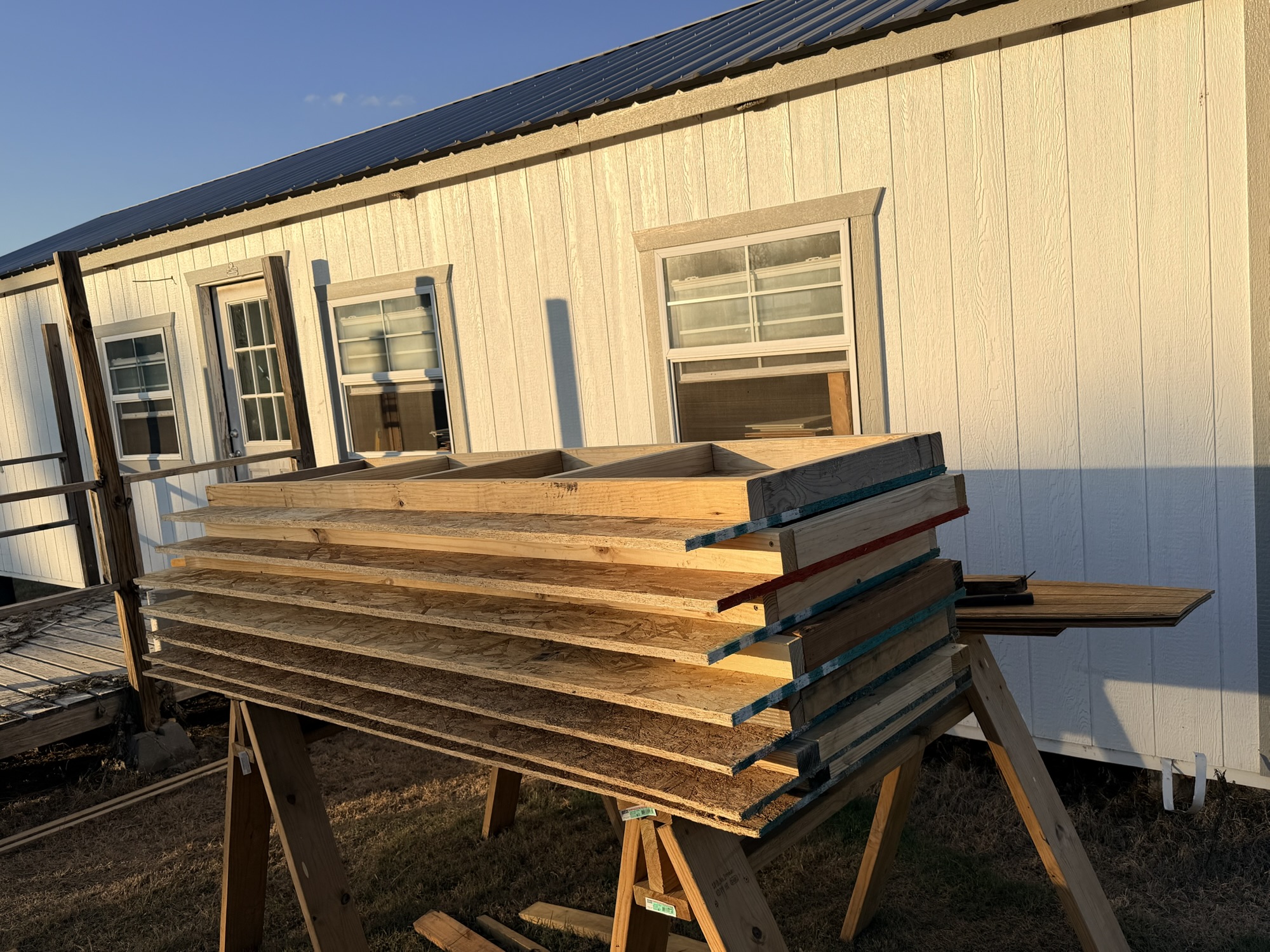
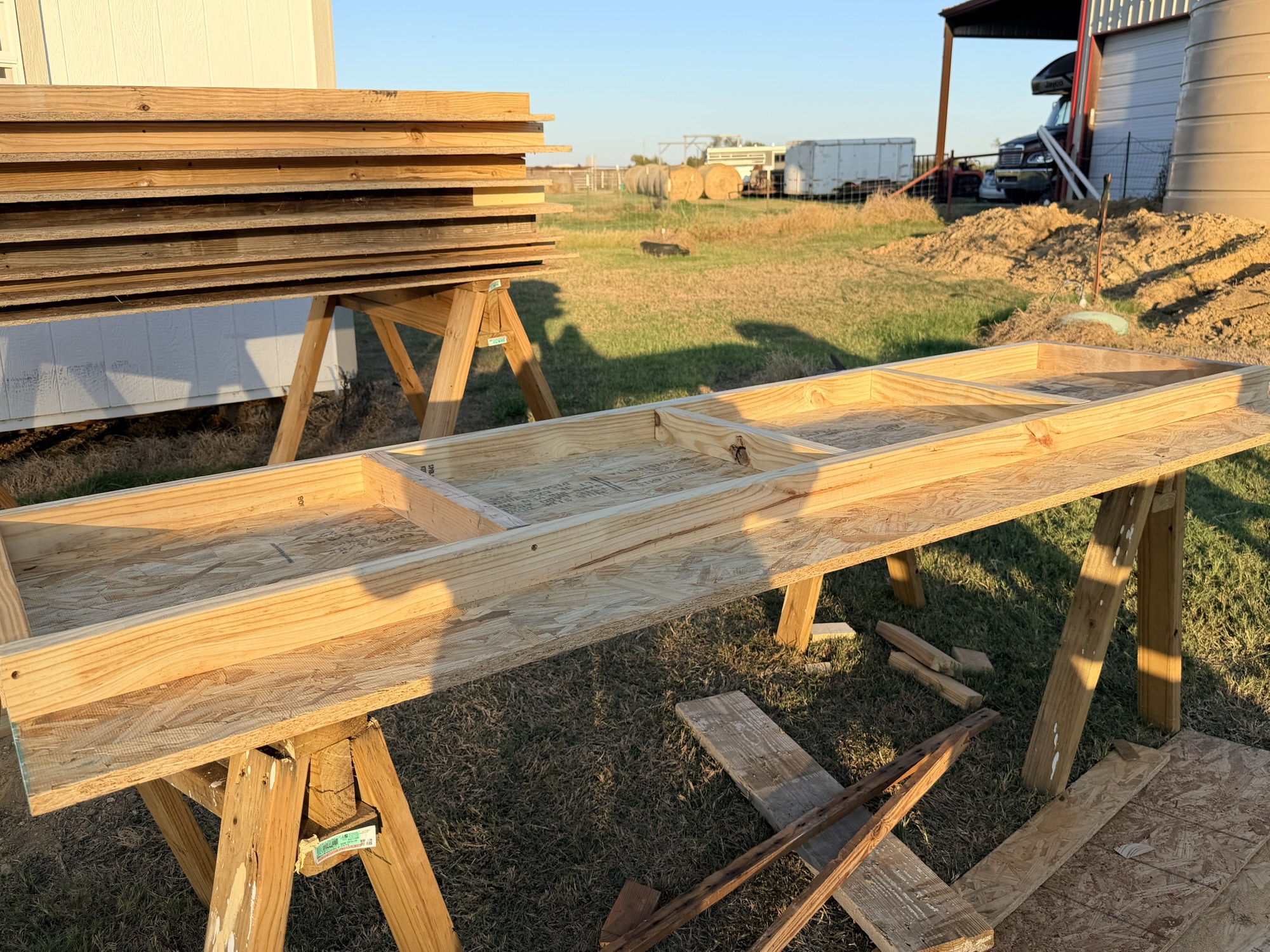
The guys have taken wood scraps we already have and cut or ripped them down to make stakes and holders for the plywood that will make the forms. As you can see, it involved a lot of sawing!
FormsCloseup of forms
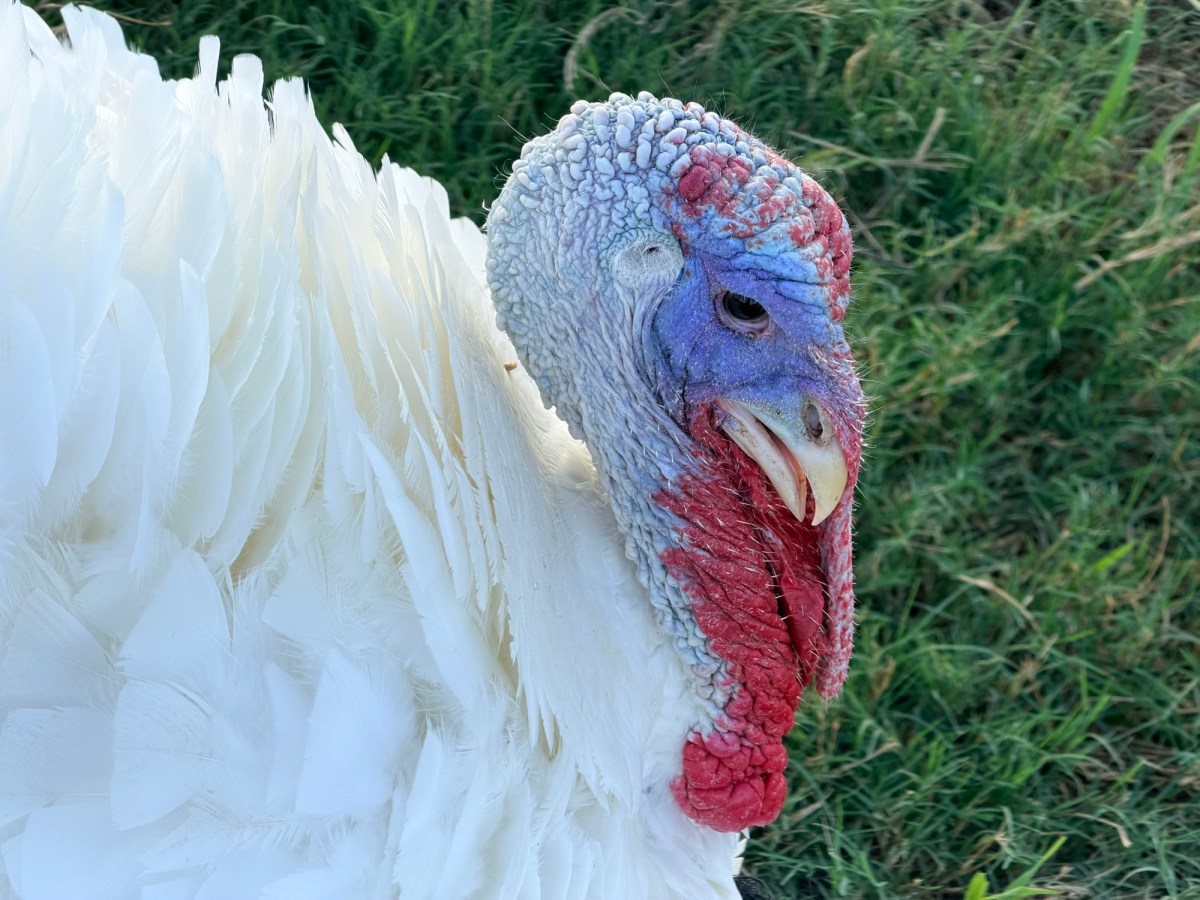
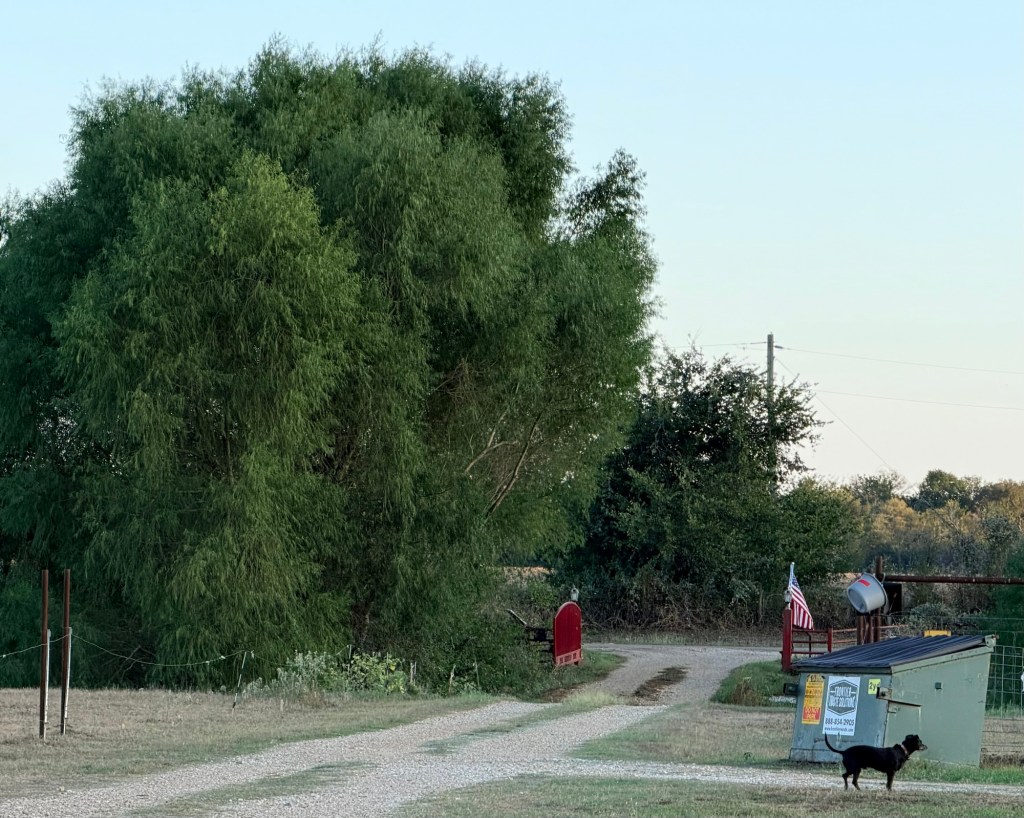
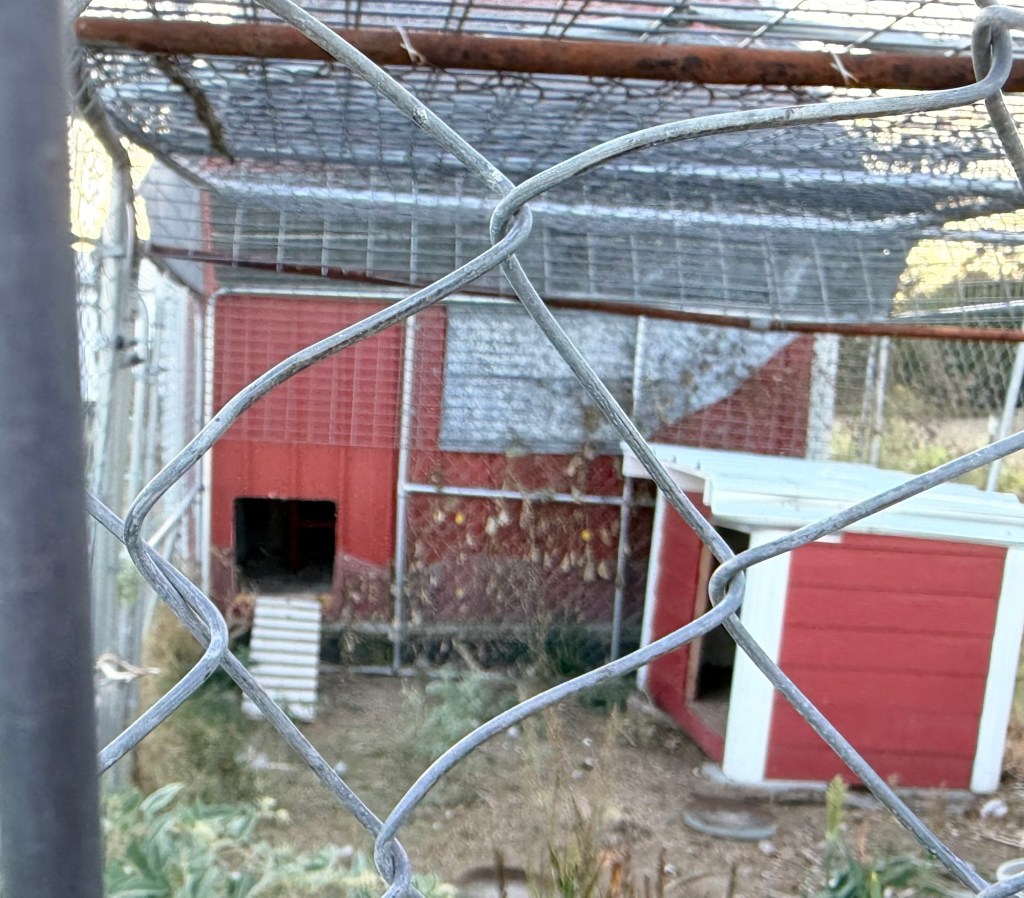
They’ve done a lot of other small jobs around the ranch, like trimming the willow trees beside the driveway, making the henhouse door larger so Darryl, the tom turkey can get in, and fixing two very vexing leaky pipes. Most important, the horses now have water again after the leaks got fixed. I’m so glad that our turn came!
Limbs no longer try to scratch vehicles. Horses indicate pleasure with repaired water sourceEnlarged henhouse entrance, creating a turkey houseYou expect me to go in there?
Tomorrow should see lots more progress, and a very happy change in the weather! It’s going to cool off and be very pleasant, at last. I’m looking forward to more time in the birding hut before and after work, and a pleasant experience doing this year’s pollinator bio blitz, which starts tomorrow.
Maybe these mofos will get all sluggish or something.
I do hope the beautiful swallowtail and queen butterflies are still here for my intense iNaturalist activity over the next couple of weeks! And since the Master Naturalist annual meeting is next week in Waco, I’m in a nature-mania mode! Or more of these.
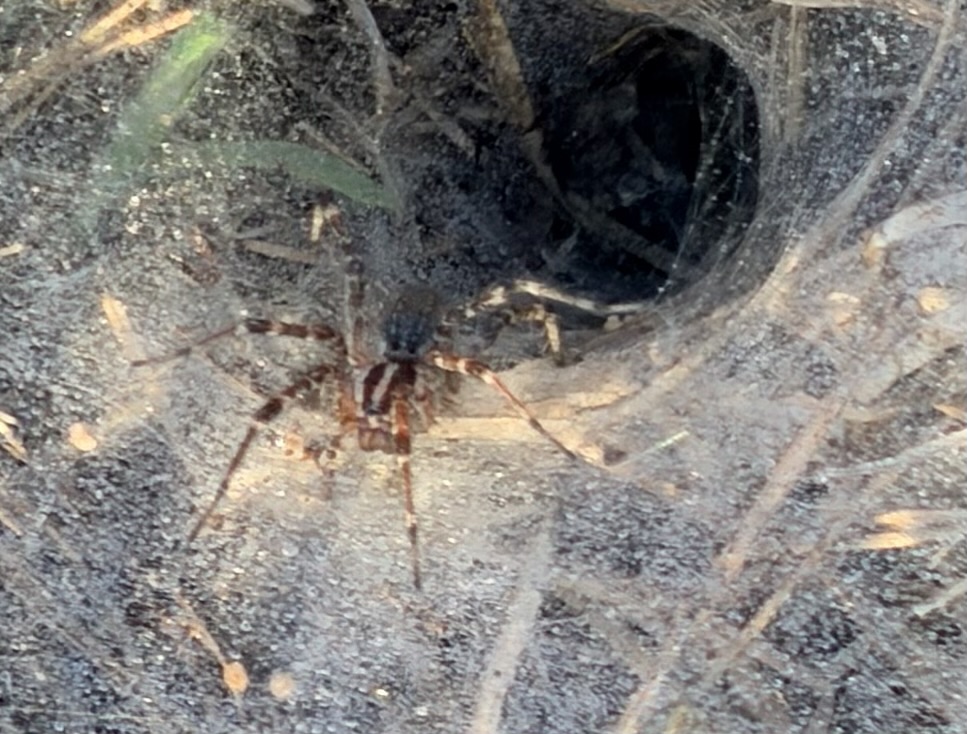
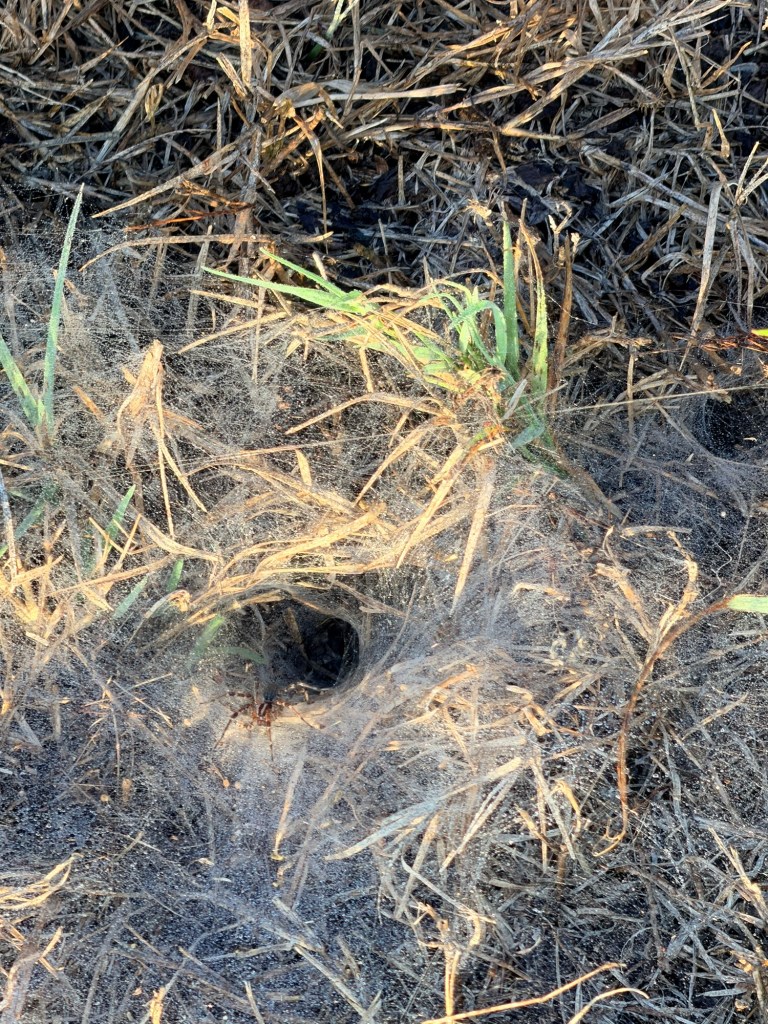
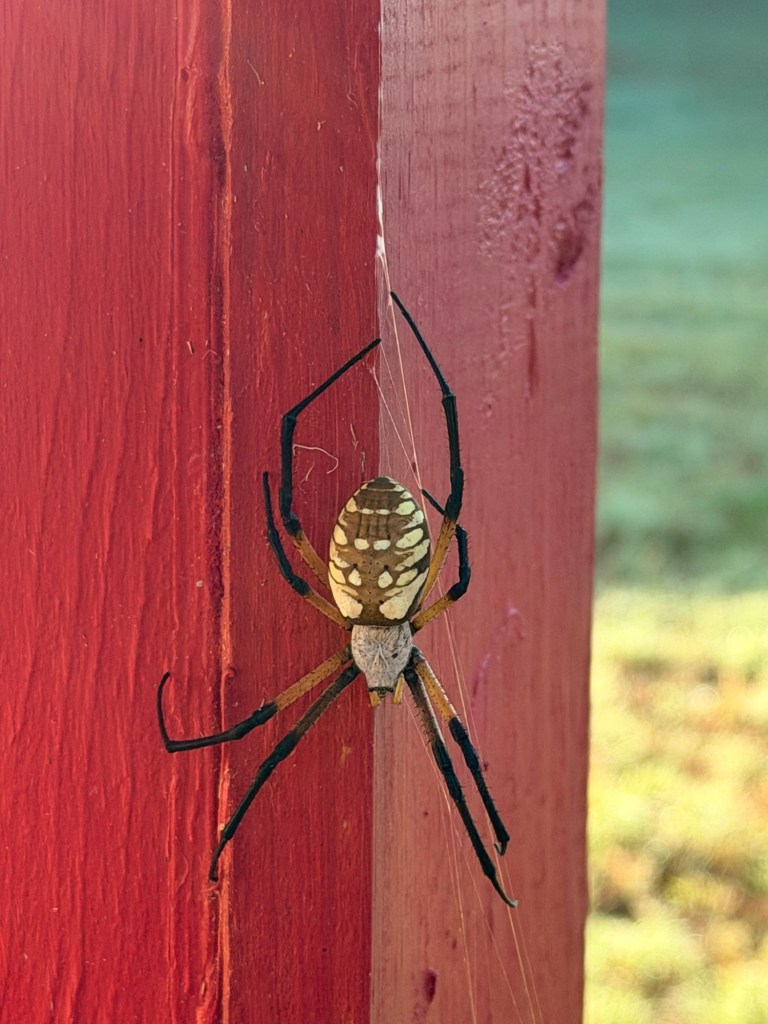
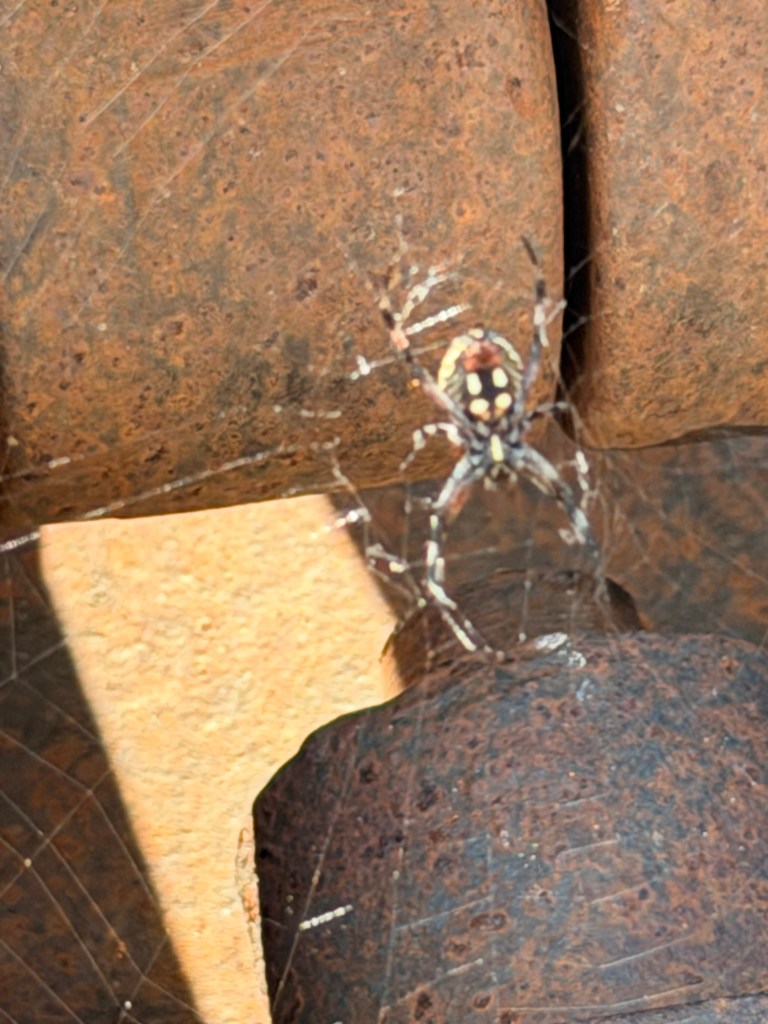
My new funnel weaver buddy, Barronopsis texanaHis or her lovely funnel My yellow garden spider companion at the birding hutA western orb weaver on the backhoe—we are at the eastern edge of their range