Must Surnames Be Sir-names?

This just POPPED into my head a few days ago. It’s not like I never thought about it before, since it was discussed a LOT in the 1980s among my grad school friends in linguistics and English. In Western society, the tradition for the past number of hundreds of years has been that women took the surname of their husbands upon marriage (you know, to show who they belonged to and who got to take all their property).

First names on a bulletin board
Somehow, we’ve always been freer with given names. I’m awfully disinclined to be Oflee, though. Image from @eliza_og via Twenty20.

Those of us who were in the feminist movement of the 1970s and 1980s got all worked up over this remnant of the patriarchal system we were trying to overcome. It was quite the hot topic, since for many of us, this tradition held sentimental attachments and symbolized “love” and “commitment” to them. Others didn’t want to feel like someone’s possession and didn’t want to change our names. Both sides have valid arguments.

A picture of Icelandic money
Iceland also has women on their money, and guys with cool hats. Image from @SteveAllenPhoto via Twenty20.

It’s often been pointed out that, well, if you keep your birth name (maiden name, not a popular term among my friends at the time), you are simply keeping a patronymic from the previous generation. Yep, that was totally true, unless you happened to be from Iceland (like Björk Guðmundsdóttir) or using a Gaelic system (Máire Ní Bhriain).

As alternatives, people thought about new ways to symbolize with their names that they have formed a commitment to make a family unit. A lot of people hyphenated their last names or used both, which I’m sure you’re familiar with, as it’s quite common. Sometimes both partners do this; sometimes just one of them do. Hmm. Others just added the new one to their previous one. I actually bowed to pressure and was SueAnn Kendall Crain for two years. I never got comfortable with it.

See, I even have things published under that name.

Some of us (me since the Crain episode) just kept the names we were given. However, I’d hoped to give male children their father’s surname and female children mine. Only little dudes showed up, though, and their names match their dad’s Irish surname quite nicely, so I’m okay with it.

The most fun names to me are ones where people combine their sirnames (yuck yuck) to make new ones. I knew a few people who did that back in the 80s, then didn’t hear much of it until later. I LOVE some of the combinations people come up with!

names on a wall.
Choose random syllables and have fun.

The option that bows the least to the patriarchy is where members of the family select a completely different name to symbolize their commitment. Why not? Genealogy students probably roll their eyes at this, but hey, at some point in history, that’s what everyone did. English people chose their occupation (Archer, Butcher, Tanner), where they came from (Kendal, in northern England), a personal characteristic (Whitehead), etc. Other European places made similar choices, while Gaelic folks stuck with their patronymic Mc- and O’ (son of) surnames (very few women continue to use the ní (daughter of) ones today). So if I wanted to be Suna Plantsinger, I could. Lee wouldn’t go for that.

Back to Combining Names

Where am I? I didn’t intend to write a history of surnames. I do believe one can look that all up on the googles. What I was trying to get to was how popular the idea of combining the last names of people who’ve formed family units is among my friends. I asked people this a couple days ago:

Thinking about surnames. What if you and your spouse (or partner) blended your surnames as a sign of commitment? What would you get?
A fun question

At this time I have had 171 responses. I guess there was some interest. Most people simply took the beginning of one name and combined it with the end of the other. Some really came out like names that should stick!

  • Kendall + Bruns = Kenduns, Brundall (Kens, Brunsken, etc.)
  • My neighbors Faivre + Mitchell = Fitchell or Maivre (best was Faivritch)
  • Lozano + Harris = Lozarris or Harrizano

It got more creative when people took random syllables and moved them around, or surrounded one name with parts of another.

  • Brukends is one I like for me and Lee.

Here’s a story someone shared, which I hope is anonymous enough not to be invading their privacy:

We have friends named FredRICkson and PeTERson who got married. They took the middle syllable of each name (the core of who they are) and now are legally The Ricters which I love. They used a scrabble tile themed sign to announce it after the ceremony.

That was so creative!

There were two couples whose name ended up nearly the same as each of their existing surnames. I guess that was destiny!

  • Peterson + Jensen = Petersen, Jenson

None of this solves the problem of our names being reminders of not-too-distant times when women could not own property, vote, etc., and in fact WERE property. But, it shows that today we can have some fun with it. I’m thinking of a party game or something, where folks could vote on the best blended names.

Desperate for fun? Ummm…maybe.


Did you know you can now support my blog and the podcasts that go with it? Yep. Totally optional, though.
I’m Still Thinking about the Effects of Labels for Mental Illness and Disability

Every once in a while, a subject gets into my head and just stays there, gnawing away at my free time and causing me to think and think. The topic of how often we refer to negative things in terms once used to describe people living with disabilities or mental illnesses just won’t go away. Now that I am aware of how often these terms are used, I see (or hear) them everywhere, especially in casual conversation, but sometimes even in more serious speech and writing. This has led me to a loose collection of not-all-that-related thoughts.

So much negativity! Image by @kelsen28 via Twenty20

Where do we see these terms?

I do NOT see these pejorative terms used (often) in the news, magazines, or academic books. That’s a good sign I guess. The one exception seems to be the “crippled economy” and the like. I am wondering of that persists because circumstances actually can cripple concepts like economies, degrees of debt, etc., by causing metaphorical injuries to them. Perhaps that word can be seen as more neutral, then?

I can see how people can easily get confused until they practice using alternate ways of referring to people. The subtle nuances of finding neutral ways to refer to people dealing with various challenges can take some time to sink in. Luckily, there are plenty of resources to guide you (but don’t read too many, because they can start to conflict). I’m just glad to see there seems to be at least some effort made in new media and places like that.

I want my talking heads to leave the name calling to the people they interview. Image by @amauritorezan via Twenty20.

Who’s most likely to use these terms?

Another understanding I’ve reached is that it’s no wonder people use these disability kinds of terms to put others down; as a whole, people are still pretty ignorant about actual facts about disabilities of all kinds. I found an interesting article from the UK about the language of 14-year-olds for putting others down about disabilities.

The authors found five themes in the data.

  1. Popular derogatory terms (nuts, psycho, crazy, loony)
  2. Negative emotional states (disturbed, depressed)
  3. Confusion between types of disability (disabled, spastic, dumb)
  4. Actual psychiatric diagnoses (depression, schizophrenia)
  5. Terms related to violence (scary) (I admit, I didn’t see this as violent)

There are lots of lists of words in the article, but the authors concluded that, for the most part, the young people didn’t really know what the words meant and were just using words for emphasis, especially the popular derogatory terms. They were surprised that actual diagnoses weren’t used much, and concerned that the violence words appeared as much as they did (though they were the least used).

We’re just kids, mimicking other kids. Cut us some slack. Or educate us! Image by @lelia_milaya via Twenty20.

The article cited above inspires me to cut folks some slack. How many people know where the words “loony” or “spaz” come from? I sure didn’t until I was a lot older than a teen. Many really hurtful utterances probably come from folks just picking a word they’ve heard others use that sounds sufficiently negative to emphasize a point.

I come to the conclusion, based on that emotional maturity stuff I talked about yesterday, that people who are still muddling along at the adolescent stage of emotional maturity, at least with respect to labeling others, are more likely to engage in using disability terms to insult or put people (and ideas) down.

Now I’m back to name calling

On the other hand, name calling, in general is one of my least-favorite human proclivities. It’s something I worked with my children to eliminate (fairly successfully, for the most part, though we did love the word doofus for gently chiding ourselves for making simple errors). People just LOVE labels. And so many people define themselves by the labels others (and they, themselves) assign to them. That’s why I don’t like name-calling and that type of put-downs. They can mess a person up.

Labeling Exercise

So, here’s something to think about. How many labels have people put on you, or you have put on yourself, throughout your life? I’m thinking both positive and negative, by the way. Here’s a list for me, with my internal labels in italics. (note that some of the items in the left column I don’t personally find negative, like sensitivity and agnostic, and some of my positives are negatives for others.)

NegativePositive
FatSmart
UglyTalented
TalkativeGood listener
StupidPatient
UnlikeableHard worker
UnfriendlyEmpathetic
SensitiveGenerous
UnpopularKind
Goody-two shoesBrave
HeathenFeminist
AgnosticSpiritually open
Femi-NaziLiberal
LibtardWell read
Intellectual snobAltruistic
HystericalCentered
NervousOpen minded
Self centered
Look, I made the columns kind of equal, though it was easier to think of the items on the left

As I look at my own list, I can see that some of the labels that have been applied to me sunk in and were very difficult to shake off. Others didn’t bother me at all. I’ll have to ponder why that’s so, but as a first stab (aha, a war metaphor), I’ll guess that labels that point to my insecurities (fat, unlikeable) stuck longer than put-downs that I’m actually proud of (feminist, agnostic).

So, I challenge you to see if you can come up with a list of the things people label you (or you label yourself with). Are they accurate? Have you glommed onto inaccurate ones and believed them at some point in your life? Have you broken away from some labels?

I’ll share more about this later, I guess.

Emotional Maturity Thoughts


Ooh, scary, I’m back to my deep thoughts again. You can blame my friend Louise, who is always sharing thought-provoking content. Or you can THANK Louise, after you read this!

This image has an empty alt attribute; its file name is img_6068.jpg
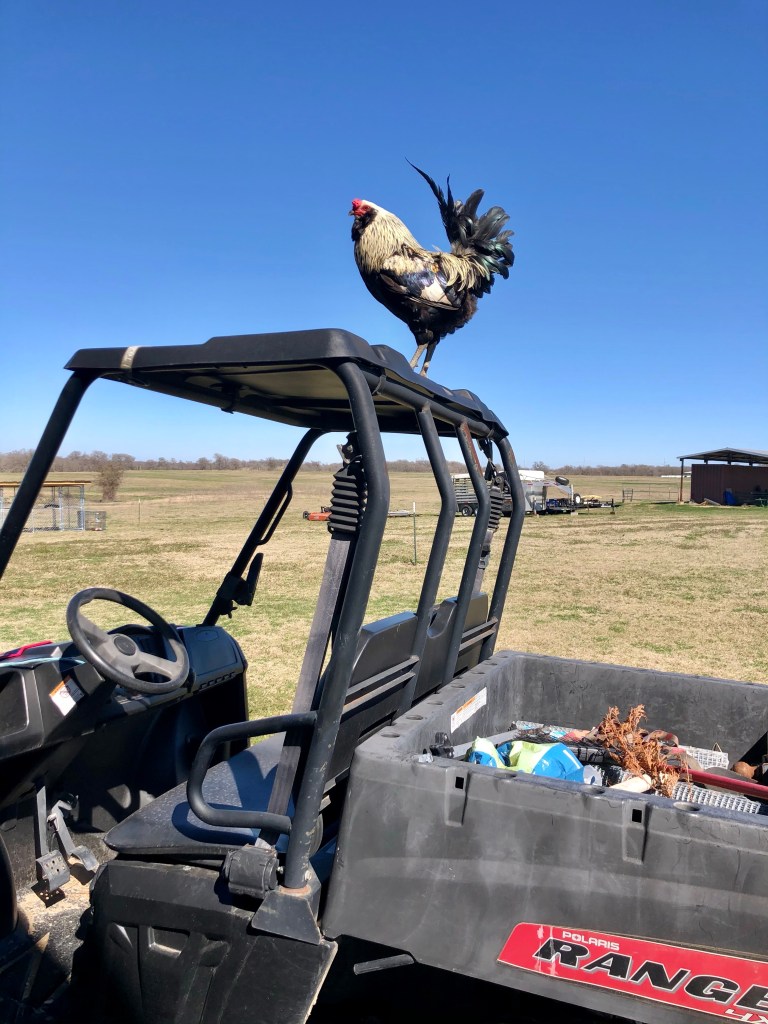
Good old Big Red is emotionally mature for a chicken. She knows what she loves (the horses, me, and her new food) and she takes care of herself.
This image has an empty alt attribute; its file name is img_6074.jpg

Come to think of it, though, a lot of my “musing” posts (which you can find in the Rants and Ramblings section of this blog) have been about my long and circuitous journey toward emotional maturity. This journey, which doesn’t end by the way, for any of us, is probably the one I care about the most in my life. When it comes down to it, my goal has always been to understand myself better, so that I can understand others better and treat all of us as kindly and gracefully as possible.

Looking back on my past, I realize a lot of the times when I judged others, put myself down, doubted myself, or blamed others for what happened to me, it’s been because I wasn’t emotionally mature enough to see clearly this:

Nothing is as black and white as you think it is, and perfection is an illusion.

And, as a correlation, when others behave “badly,” hurt me, or misunderstand my intentions, it’s for the same reasons. They have some emotional maturity gaps as well. For example, getting to where I am on my journey helps me be more patient with my son who hasn’t spoken to me for two years, knowing he’s always tended to be a black-and-white thinker and a blamer. He is working at his own pace, and may re-think things sometime. In the meantime, it’s my job to be understanding of that and not blame myself.

This image has an empty alt attribute; its file name is img_6073.jpg
No one is saying the journey is easy!

All this yammering has been brought on from Louise posting on Facebook the lengthy article I’ve pasted at the end of this blog post. I looked around and found its original source, but I’m displeased that it has no author attributed to it. Maybe I need to dig further. In any case, I find these items very helpful to check up and figure out how I’m doing on my journey, and thought you might, too.

When I review these, I can see how I’ve done an impressive job on some of the signs of emotional maturity (1, 6, 11, 15) but I can still do some work on others (9, 21, 23). That’s just fine, because, like I said before, none of us (except maybe bodhisattvas) are going to hit the maturity mark all the time. In fact, like #18 shows, we will all slip into earlier patterns, and that’s normal and human (or “hormal” as I first typed).

This image has an empty alt attribute; its file name is img_6072-1.jpg
Makes my brain hurt!

I invite you to read this article and think about it. How are you doing? What are your areas of strength and your areas for growth? Where are you muddling along somewhere in the middle.

Oh, and note that, thanks to all my reading on disability bashing, I replaced all the words in the article with more neutral ones in square brackets []. It was fun and enlightening to practice identifying these kinds of words and thinking of alternatives.

Continue reading “Emotional Maturity Thoughts”

Let’s Also Stop with the Fat Shaming

Content warning: discusses weight issues, bullying, and put-downs; also mentions diets

Oh, let me tell you, I’ve had enough of this one. My fat shaming began at Day 1 of life when everyone apparently laughed and laughed when I drank two bottles of formula (not the modern stuff, either) right after birth. Well, you would have, too, if your bone-thin mother’s smoking and drinking had kept you deprived of delicious nutrients while you were in the womb listening to her puff away.

Sturdy, that’s the word. Note Cracker Jack box.

My first diet was in 6th grade, after getting sick of being called fatso, water buffalo, elephant, and such. I was always tall and sturdy for a child, so all those stick children* thought I was fat. I lost ten pounds on that early version of the Atkins diet, and since I was also going through puberty, I grew my final few inches, so I both appeared slimmer and became comparatively smaller, since all the other girls were growing. That was the last year I was second-tallest in the class. By seventh grade, I was short, because the boys started growing. I remain short and sturdy, just like my dad.

My mother’s side of the family were thin people. I’m the big one.

Yes, it’s genetic. I didn’t get my mother’s natural slimness, I got my dad’s natural roundness. And that leads me to my point, which you can learn a LOT more about in this fine Highline/Huffington Post article from 2018 that I read yesterday, Everything You Know About Obesity Is Wrong, by Michael Hobbes. I think I read it before, but yesterday, since I was still sort of steaming from thinking about ableism, I really started pondering how this bias against fat people has messed with my mind and my biases.

Dad and I had the same build.

Because of all the labeling my family and friends did when I was little, I have always been fat in my mind, even when, looking back, I was pretty average. I blamed most of my problems on being fat (and ugly). I was sure that’s why I didn’t have boyfriends (never imagining it might have been how I acted or my personality).

Too bad. I liked my high school friends. I still like my high school friends, regardless of size.

And I went on diets and more diets, though thankfully I mostly did the “eat less, and eat healthy food, and get exercise” method, which is at least not harmful. I’ve only stopped with all that in the last year or two, and it is hard, hard, hard to just accept myself at the weight my body naturally stabilizes at. But, I’m close to being there! I’m me, and this is how I look! I am in good physical shape, can do lots of things, walk/ride horses/do chores a lot, and don’t eat too many things that are “empty calories.”

Here I am thin. It is because I was so stressed out I couldn’t eat. And getting this thin did not prevent my husband from leaving me, either.

So, my attitude to myself is better, and I’ve stopped labeling myself. But, all that talk I heard growing up, all the put-downs I heard aimed at myself and others, and all the media pressure really got to me. I can still hear people calling a kid named Larry “Lardo.” I remember my high school boyfriend and his best friend making fun of all my chubby girlfriends (except the thin one, who they made fun of for something else). (Hmm, making fun is not actually fun, it turns out.)

I’m afraid I’ve had a pretty bad case of bias against fat people my whole life. Sure, I made lots of strides, and have even been in a relationship with a very large man. My current spouse has always been on the larger side. And of course, plenty of my friends are in various sizes. But still, somehow, my first impulse upon seeing a large person is that they are dirty and lazy. That’s my unconscious bias sneaking out, like if you can’t control your weight, you don’t care about yourself or anything else. ACK.

This self analysis is exhausting (photo from 2013, a thin period).
I’m way happier in this larger photo than in all the thin ones!

My intellectual self knows perfectly well that my biased reactions are unfounded, wrong, and quite unkind. I mean, how many clean, energetic, amazing fat people do I have to know to get this gone? I could name dozens of people I admire, look up to, think are beautiful, and even love that do not fit my stereotype. It makes me very disappointed in myself and angry at society to think of how deeply ingrained my unfounded bias is.

Oddly, once I get to know people, the weight issue disappears for me. I don’t put my friends into fat vs. not fat categories. I may assign labels, but they are more like kind, funny, grumpy, brilliant, talented, or annoying. None of those things correlate with size.

What can I do?

As with all the unconscious biases we don’t realize we have most of the time, a great first step is acknowledging the bias. Once I saw it was there, I could work on retraining my mind to not implicitly judge people based on their weight. I know, having retrained my mind on things in the past, that it will take a bit of conscious work to not ignore or pass over fat people when I first meet them, which is what I always tended to do. It will be worth it in the long run, though, because I’ll get to make friends with all kinds of great folks faster than I would have otherwise.

If you catch me putting people down because of their size, their appearance, or other external qualities, please point it out. It will help me remember that judging people by appearances is not helpful at all (see, I didn’t say it was dumb!).

Back to the theme of the article I read, it really helps to remind ourselves that fat does not mean unhealthy, nor does thin mean healthy. People’s heredity, social circumstances, and many other factors affect weight, not just whether they eat too much of the “wrong” things. We need calories to live and thrive, including fat. Like almost everything else, our weight is caused by lots of factors. It’s not a character flaw.

Food is our friend!

I am convinced that if we studied how to use moderation in everything, like food, exercise, sleep, and work, we’d all be healthier. And certainly, with all the stressors out there, we don’t need to pile on more.

We are all doing the best we can, unless we don’t care, and then that’s our business, right?


*Note that it was pointed out to me, correctly, that calling thin children “stick children” was thin shaming. I shall endeavor to do better in the future, and appreciate this being pointed out!

Let’s Talk about Disability Talk

As you may be aware, I’m on a big kick to learn about my own unconscious biases, and as a former linguist, I’m very interested in how the language I use reflects these biases. I have already been thinking a lot about issues with and labels for neuroatypical folks, since they apply to many of my friends and family members.

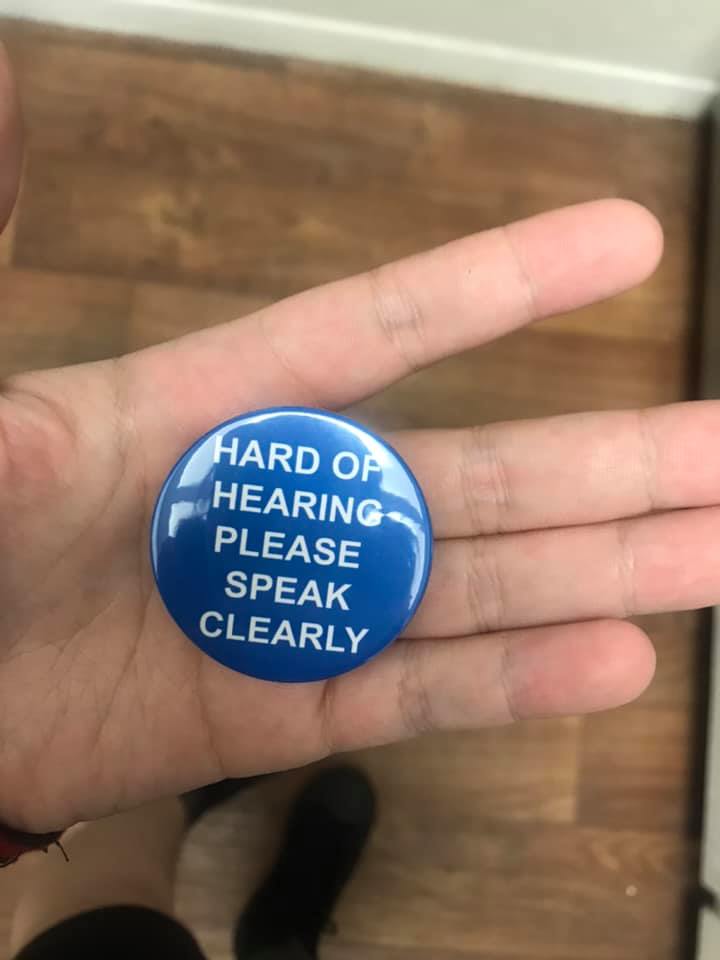
Helpful button.

My friend Rollie has been a great source of information and resources about labels, concerns, and the great diversity of people who fall into this category (it’s not just people on the autism spectrum). For example, just yesterday they posted about being hard of hearing, which means their audio processing is different from a lot of people’s, so they need to be spoken to slowly and clearly. They got a button to wear to let people know, which I find very cool. It helps an invisible challenge be more visible.

All this learning scrambles my brain, but it needs some scrambling.

The above shows how I am learning to use words like neurodivergent or neuroatypical rather than things like Aspie or whatever. I just have to ask people what they prefer, and that helps. That’s a great start, but when I start examining my own language, I realize I come out with some cringe-worthy utterances, all the time. Constantly. A lot.

I got started thinking about all this when another friend, Robin (who happens to be the offspring of my two favorite linguistic mentors), posted an article in Forbes magazine by Andrew Pulrang called “It’s Time To Stop Even Casually Misusing Disability Words.” Hmm, I mused, I think I do that without giving it a second thought. Could this be another one of my unconscious biases coming through?

Yeppers, it sure is. The best news about the article, for me, is that it’s directed at organizations and companies who are trying to focus on diversity and inclusion, another of my favorite topics right now. The opening paragraph sets a great tone, I think:

It’s not “oversensitive,” or too “new” of a concern for organizations and businesses to take a hard look at reforming ableist language. Ableism itself is not a new phenomenon, even if “ableism” is a new word to some of us. And avoiding offensive language throughout organizations isn’t just about preventing bad publicity. Curbing use of stigmatizing and problematic language makes workplaces safer for diversity, more productive for employees, and friendlier to customers and clients.

Andrew Pulrang, citation above

Most of us probably are aware that it’s not a great idea to use “retarded” in polite speech (or any speech unless you’re talking about how a plant’s growth was retarded in last week’s weather incident). What I hadn’t thought about very much was how often I and my friends say ideas or actions are stupid, lame, dumb, idiotic, moronic, and such. When we say something has crippled something else, that’s insulting people with physical disabilities. I’m pretty sure that in most people’s minds, these words are no longer labels for people, but that’s not a good excuse. As Pulrang points out:

The fact that a people still use such terms without intending to hurt disabled people doesn’t matter. They are harmful in all cases.

Andrew Pulrang, citation above

Sure, I know that asking people to find other ways to express that an idea is not great falls into the “politically correct” category for a large swath of people. I do get it that most people have no idea they are insulting others with their words. That’s because it’s a product of unconscious bias, not conscious. But, now that I am aware that I tend to talk this way, especially when I’m upset (another sign that unconscious bias is leaking out), I really want to work toward not using ableist language and monitor my speech and writing.

And calling me “politically correct” is not insulting, in any case. Speaking respectfully to people and taking their desired names, pronouns, or labels into account seems like a good thing. So there.

Well, what should we say, then?

That was my first question. Luckily, Pulrang shared some ideas. He cites a blog post by Lydia Brown titled Ableism/Language, that was updated in June, 2020. Brown writes more about ableist words and expressions, and offers a helpful list of alternatives for a wide variety of words and situations. I’m gonna refer to this often (and read more of her blog, which looks fascinating).

I also ran into this excellent diversity style guide that is fairly current (the preferred terms change frequently, as we know). Glossaries in the collection are very helpful for figuring out if you’re saying things in a neutral way or an ableist way.

Having to think about better ways to say things may well be to our benefit, too.

An added benefit of consciously reshaping our use of disability words and expressions is that it forces us to think more deeply about what we are talking about, and express our thoughts and feelings more precisely, maybe more humanely. “Crazy,” “insane,” “idiot,” and “moron” aren’t just offensive to people with mental illness or intellectual disabilities. They are also cliches that allow us to write people off without having to contend with their ideas and actions.

Andrew Pulrang, citation above

Are you feeling bad for frequently using some of the terms I’ve been talking about today? Don’t be, since you are just talking the way you have heard people talk your whole life. And as Lydia Brown points out right at the start of her blog post:

Note that some of the words on this page are actually slurs but many of the words and phrases on this page are not considered slurs, and in fact, may not actually be hurtful, upsetting, retraumatizing, or offensive to many disabled people. They are simply considered ableist (the way that referring to a woman as emotionally fragile is sexist, but not a slur). You’re not automatically a bad or evil person/activist if you have used random language on here, but if you have the cognitive/language privilege to adjust your language, it’s definitely worthwhile to consider becoming more aware/conscious of how everyday language helps perpetuate ableist ideas and values.

Lydia Brown, Ableism/Language

I find this all pretty darned fascinating and educational, which is why I have probably overwhelmed you with quotes. Please go read the articles I link to if you’d like to learn more about ableism and what you can do about minimalizing it and treating all your fellow humans with respect and kindness. I don’t want to insult people without intending to, so I’m glad to learn more.

Don’t be a doofus, go learn!

Wait, I think doofus may be one of those terms I should retire from my vocabulary. It sure is, because I found the definition: “A doofus is a dummy or a simpleton.” Wow, the definition gives me two more words to avoid. Off I go to learn more! It’s weird how excited I get when I glom on to a new topic to research.

Fascinating Feedback (and Lack Thereof)

Yesterday, I dared to propose that it is a good idea to work on not demonizing “the other side” so much. I keep proposing that, and it’s never very popular, but I’ll keep doing it, because from what I’ve read and experienced, everyone thinks their side makes sense. That, coupled with the fact that most actual people are in the middle, not on the radical ends of the spectrum, makes me think we could find common ground AND still keep our personal beliefs.

Sometimes seeing things from a higher perspective is uncomfortable and not fun.

I wondered what kind of response I’d get (if any), and who I’d hear from. To my surprise, the first people who responded on my Facebook post were two of my conservative friends. Now, as Lee pointed out, conservative friends I still have on Facebook are either relatives or people I enjoy having rational discussions with. And sure enough, they posted rational thoughts that I enjoyed and learned from.

My second surprise was, given that I have a poop-load of liberal friends, some of whom are extra-extra liberal, I initially didn’t hear a peep out of them on Facebook, either in agreement or disagreement. But, whew, I did eventually get the kind of feedback I’d hoped for, from all sides, in private messages, email, and other media. I’d like to share a few wise words, which I’ll keep anonymous but colorful.

Both my husband and this friend agreed that polarization is profitable:

“There’s a lot of money being spent from both extremes to convince the people in the middle who are getting along and helping one another — making things work, that there are more people working against them than working for them.”

A couple of people privately said to me that they hesitate to consider moderating their approach, because it might mean saying you agree with them or giving up your beliefs. This friend was sharing a link to some additional useful content that helped them (sorry it’s behind a paywall), and then shared a perspective that sounded all too familiar to me.

 “I think for myself, what scares me, is that if I move to the middle, if I try to find common ground, that I endorse all the things that have been so shocking and repugnant. I don’t have to list them here, after the last four years we know them well. But this program [link above], filled with wise, revolutionary activists, helped me to understand that there is a BIG difference between looking for common ground and listening and accepting what is unacceptable. I’m going to buy it, so i can go over it again, in my own time. Not only are the ideas helpful, it amplifies voices that I don’t hear often enough and that I don’t know well, but want to learn more about. I’m embarrassed to say that only Van Jones was really known to me. Anyway, I recommend this. I’ve always fought against the Hillbilly Elegy mindset and I’m not advocating a glorification of the rural racism, ignorance and misogyny I grew up with in the Adirondacks. I stand very firmly against those things. But when I dehumanize people without understanding their complexity and see them as trash, then to paraphrase Van Jones, my trash becomes Nazi or QAnon treasure. We will never get anywhere with hate and divisiveness. Brene Brown says much the same. We want to shame and hate-because we are very angry about what we see and for VERY good reason. We should be angry. As Brene says, it would be great if shame did work, because we could then shame the ever loving shit out of some folks. But it never, ever works to change behavior, more’s the pity. Folks have to change on their own and feel their own shame. It’s such a challenge to hold people accountable, without dehumanizing and shaming. But, it can be done, I hope.”

Yes, oh yes. This is why I want to keep caring about everyone! Things are complex, and turning them into black and white doesn’t solve complex problems.

Another friend admitted that the other side’s claims scare them, enough so that my blog post also scared them. I totally get that. I have a feeling a LOT of the people who didn’t say anything were in this camp. Most of my friends probably are. I can’t deny that some of the things I learn are scary to me. I just have to note that some of the things I believe scare others. Sad.

I wonder if my all-American liver and onions dinner would scare many of my friends?

One of the wisest people I know concurred with me, which helped me feel like I’m not some kind of fool:

“…unless we respect the right of others to hold a conflicting opinion and can be comfortable discussing them with each other we will never achieve the peace we say we want to have.”

And thoughtful local friend echoed the above:

“…my standard is that if you can’t argue your opponent’s side then you don’t know what you really believe. Not enough people seek the ‘true’ or facts but just believe so much fake, half truth junk. And sad is the fact that too many have lost sight that we can all love each other and be friends, yet still live on different political spectrums. But alas, we have to try to squash and kill anyone and everyone that is not of the same like mind as ‘we’ are.”

 Here’s one more, from a blog reader commenting on my desire to be on the team with people willing to look at the big picture (check out his entire comment on my post from yesterday for a helpful, if sorta sad, UK perspective):

“I think the team in question is Centrism, rational, liberal but also skeptical and factual. It’s a devastating gap in politics on both sides of the Atlantic right now.”

Yes. When you are advocating for being in the center, it does NOT mean believing in nothing and it does not mean accepting everything each side maintains as true. Let’s work toward keeping rationality, skepticism, and factuality in mind, even if we come from a conservative viewpoint, and maybe we’ll find goals we can agree on.

How the last few months have left me. How about you?

Thanks

I really appreciate everyone who was brave enough to share their thoughts on a controversial issue. I’d love to learn more from you all. If you take the time to read this, I respect your opinion! This is how we build community.

Celebrating All Wins

Along with Lee and two other business partners, I used to be a part of a real estate organization called FortuneBuilders. While it was an investment, the classes and networking ended up being well worth it. The leaders were a very positive bunch of human beings, and they brought in good motivational speakers and topics (I am a HARSH judge of motivational speakers, so when I say they were good, I’m not kidding).

Sometimes we had fun at those conferences

Anyhow, one of the things the FortuneBuilder folks stressed was that it takes a lot of small successes among even more setbacks and challenges to get ahead in whatever you’re trying to do. They encouraged us to “Celebrate All Wins” no matter how big or small (if you got a response to one of your annoying postcards offering to buy someone’s home, for example). They even gave out shirts emblazoned with CAW to people who shared their wins at conferences (ah, I remember live conferences).

They are also nice and comfy shirts. By the way, my closet is STILL organized and in good shape.

This morning, I was telling Lee about something that was challenging at work that I did a good job handling, and he said we need to make a bigger deal out of these things, like back in the good old CAW days. The idea works for home health agencies, software companies, horsemanship endeavors, fitness goals, and even interpersonal relationships. In other words, it works in all areas of our own lives!

Here’s Russell interacting with one of those motivational speakers

I’m going to take Lee up on it and celebrate my wins for the past day or two!

  • I started my bullet journal
  • I participated in that Bioblitz
  • I figured out a helpful process for working on our documentation at work
  • I reassigned two team members and they each like their new assignment better
  • The friend for whom I knitted the striped shawl received it and loved it
  • I got all but one chicken to sleep in the coop last night, rather than the garage (more on that in another post)
  • I made progress on my stepping off a cliff project. One step closer to flying.

I feel better already, just for writing all those things down! No wonder I have felt perky and chipper all day, even on day 5 of 8 AM meetings!

Just bullet journaling away for two whole days.

A Challenge

Here’s today’s challenge: Share your wins! Celebrate them! I want to know!

Stop and Pause

I came up with a goal today that I truly want to achieve. I want to stop my frenzy at least three times a day, pause, and notice what I’m grateful for wherever I am.

Yesterday I noticed the golden sun on swirling grass.

Here’s a thing many religious traditions get right. So many ask practitioners to pause to pray, reflect, chant or perform a ritual at intervals throughout the day. Think of all those nuns, monks, and traditional lay people who rise to pray, bow to Mecca, ring a bell, or whatever. They stop what they are doing and appreciate what they’ve got.

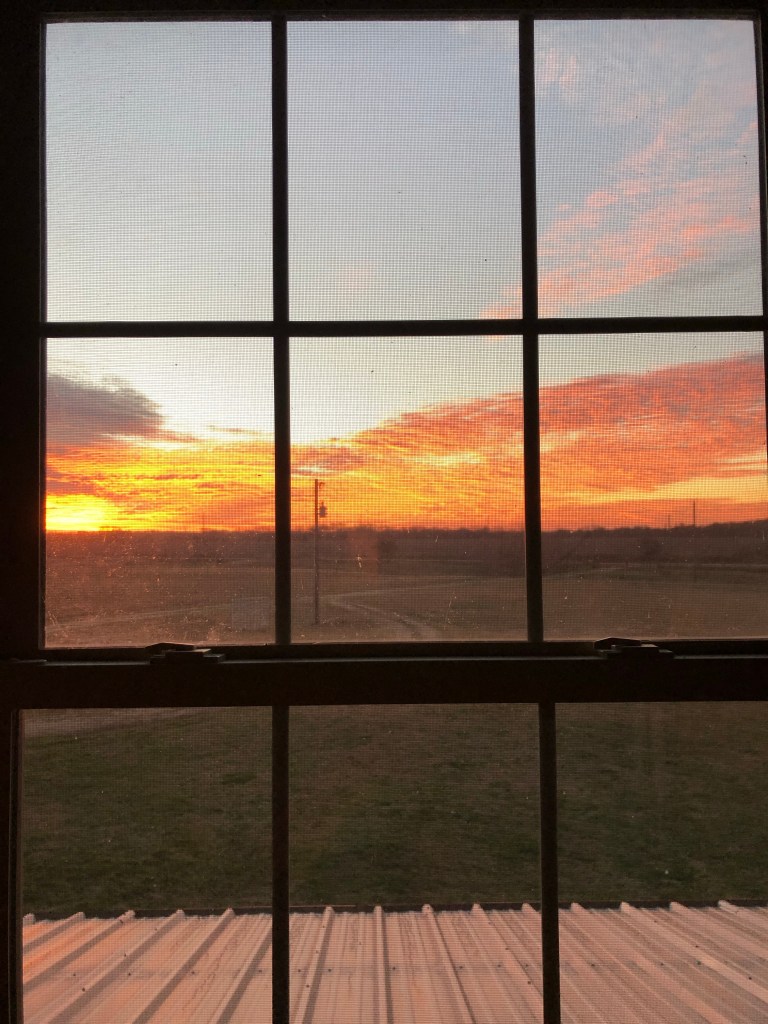
I paused to watch the sun rise this morning, as did many of my friends.

Slowing down to the speed of life is so good for the soul. It’s a gratitude practice any of us can do. Or it’s a way to stay close to our Source, whatever we call it.

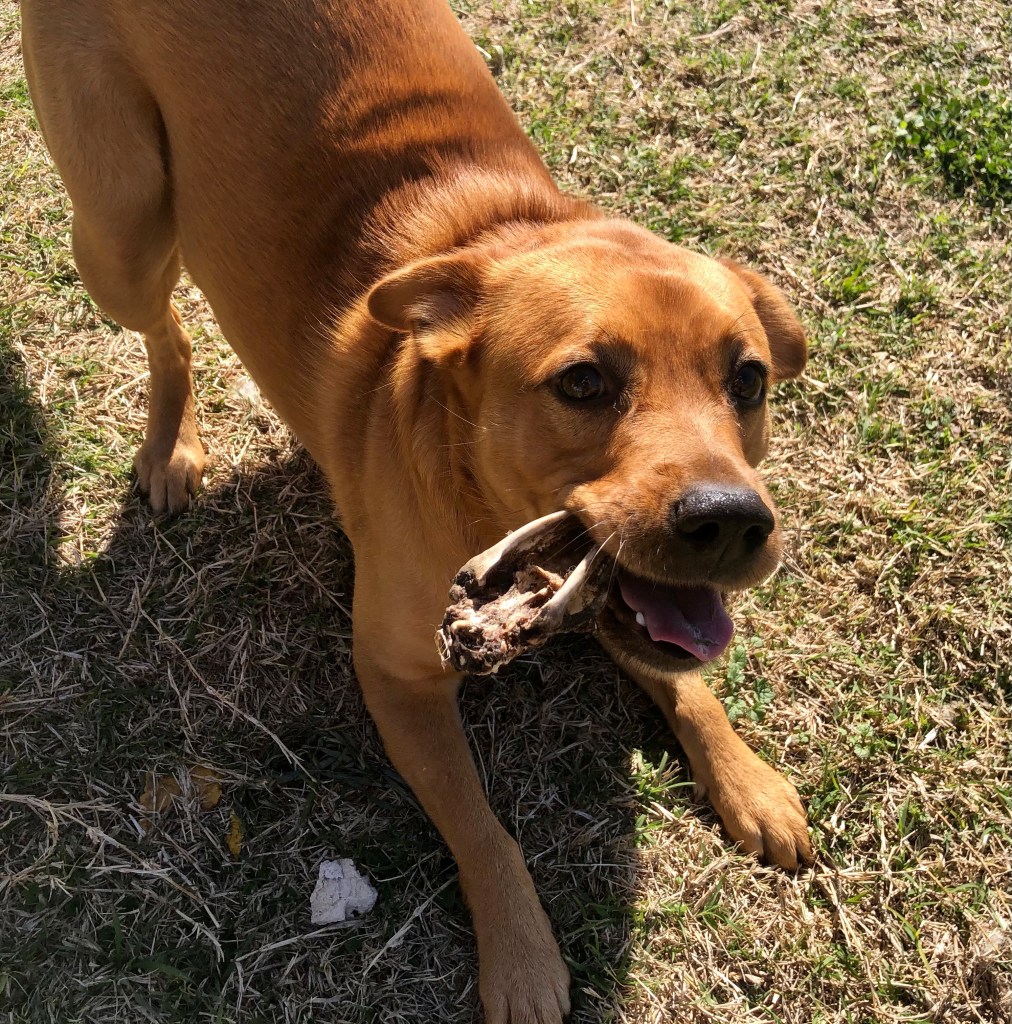
This afternoon I paused to be grateful for a very odd dog and her beloved possum skull.

One thing we’ve all become aware of lately is how quickly things change. It’s more obvious to me every day. So tonight I’ll appreciate the wool running through my fingers as a sweet, white dog curls up in my chair. I won’t have it forever, so I’ll treasure it now.

Chickens don’t live forever, so go ahead, Bertie, peck my shoe.

Every day, at least three mindful pauses! Go, Suna.

What if You Don’t Want to Learn?

As a fitting start to Black History Month, I’ve been thinking about all the learning I’ve been doing during the COVID year. Much of it has been about racism, the history of race, and unconscious bias. It’s really opened my eyes about a lot of areas for growth in my attitudes and actions, as well as confirming things that have made me uncomfortable my whole life. I’m glad I’m going through all this, and feel more grounded in reality every day.

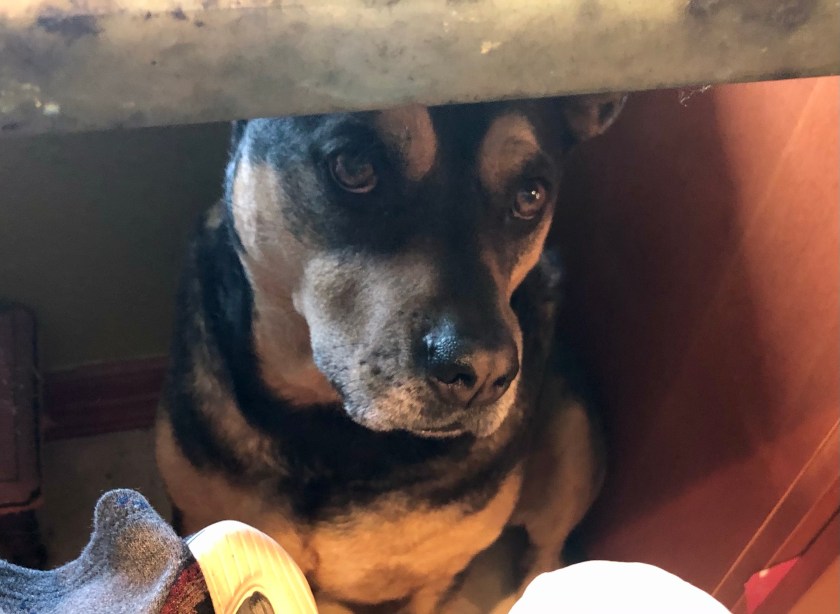
Harvey, under my desk, asks when it is going to be Black Dog History Month?

Now, I’m open to learning about this stuff, even knowing perfectly well that as a human, I’m programmed to detect “others” and be on guard for them. The book I’m currently reading (Sway) makes the point that just because there are things hard-wired into us doesn’t mean we can’t change. It also helps that I hang around with people who are also open to learning about this stuff, want equality for everyone, and are willing to work on it.

But, after hearing my sister tell a story about how surprised she was to find out that someone she liked lived in the alternate reality where many in the US hang out, I got to thinking about how many people are fine and dandy just the way they are, and are not open to changing how they think about others. Complacency seems to be pretty darned common.

I’m understanding more and more WHY the big divide in the US exists, from a big picture perspective. When you feel a real attachment to your “tribe,” where all your friends, family, and admired celebrities are, the last thing you want to do is not fit in. It’s a lot easier to tell yourself that these people’s beliefs are correct, good, and appropriate from you than to stick out like a sore thumb, get picked on, or even get ostracized from the group (which has happened to a lot of people I know!). Divisiveness pays!

I know that yelling your beliefs louder and louder is not effective in changing people’s views. Image by @FreedomTumZ via Twenty20.

There’s really nothing enticing about being open to changing your views, if all the rewards come from sticking right where you are. My current idea is that, if we want people to change, even a teeny bit, asking them to compromise probably isn’t the right tactic. There needs to be something in it for those folks. It seems to me that if there were some reward for being willing to learn about other points of view and maybe even changing your mind, people might be more willing to put in the effort and sacrifice some comfort for it.

I’m testing my hypothesis by trying to figure out what kind of reward it would take for ME to be more open to listening to the other side. One if family unity. I do listen to certain family members, because I want to keep them in my family more than I want to feel better than them because I’m on the “right” side. Another is satisfying my curiosity. I have always found it useful to figure out what some group is actually about when I have a strong gut reaction. That has helped me learn a lot about Islam, its various types, and the variety of ways it’s expressed. Now, rather than disliking a whole group of people, I only have an issue with a small portion, just the same as I do with Christians, Jews, and others.

Nope, a trophy probably won’t work as a reward. Image by @fabien.bazanegue.photography via Twenty20.

But, those seem like rather internally oriented rewards. I wonder if something more physical or tangible would help? What, like getting paid to learn all about Qanon (or whatever that is). That doesn’t work for me. I just want to know where all these ideas about people eating babies come from. I guess I don’t know elite-enough people.

So, I end up at a loss. I can’t think of any reward that would entice someone who’s perfectly happy as a racist, a sexist, a radical religious extremist, or a fascist to want to learn about what people over on my side refer to as “facts.”

Any ideas? Am I entirely off base? What could make people more open to learning about “the other” in their lives? Has anyone read a book that might guide me? (Like I need another book to read…not.)

Your COVID Precautions Are Perfect for You

Hey, so we’re all living through this pandemic, right? We all listen to our preferred news outlets, discuss it with family and friends, have our own experiences, and then decide how we are going to cope.

Very few of us are hiding and ignoring what’s going on, unlike Cozy Carlton here.

I know a lot of people, in Cameron and Austin, but also around the world. They sure differ in how they decide to live their pandemic lives. Here in Cameron, I know people who haven’t changed their lives at all, except having to deal with store closures. I also know people whose underlying issues and financial means make them most comfortable not leaving their house at all.

Most people are somewhere in between. My children have to work. Many people are in that position, so they do what they can, wearing masks and washing hands a lot. Some people go grocery shopping and such, but limit their trips. Others figure out what shops or services are not crowded or taking precautions and use them.

Penney stays home.

Nearly all of us have our mask collections, since we can’t go places without them, but some are more careful with their technique than others.

Here are Lee’s masks drying.

Why are you telling us this?

The point is that, as with so many other things, there’s no one right way to deal with the COVID outbreak. People choose to make decisions based on information that matters to them and act accordingly. There are a LOT of factors involved, like personal philosophy, your risk factors, and your comfort level.

Harvey points out that his comfort level is high.

Because of all this, I’ve made the choice to not judge people on their choices, even when I disagree or am not comfortable with them. I don’t know their reasons much of the time, and when I do know them, I figure it’s their business.*

What’s the issue?

I was a little surprised that when I shared my recent hair update, most of the comments were from people who seemed uncomfortable with going to salons. I felt a bit judged, I have to say. Of course every single commenter had higher risk factors that me (age, illness, immune system stuff, etc.). If I was in that group, I might have made a different decision, myself.

I can sure see how people who can’t get their hair cut might wish they could! I don’t blame them. I wish I could travel as much as some of my friends have. And I know people weren’t thrilled when I did travel. Yep.

I completely respect those of you who haven’t cut your hair in a year. You are doing what works for you, having evaluated the risks. But, I also evaluated the risks. I chose a small salon that has made many modifications in the last year. They require masks at all times, don’t let clients near each other, and sanitize like crazy. I know the hairdresser. I took the risk based on my comfort level.

We are all under so much stress these days. Let’s consider giving others a break and assume they are making their decisions based on what works for them, even when it’s not what you’d do.

Anyway, now you know why I didn’t mention my previous two haircuts! And yes, if I was under one of the endless quarantines I’ve been in, from being exposed to someone who’s been exposed to someone, I’d have canceled.

I like you! Unretouched photo of morning face.

Note that I love you all and want you safe and healthy. If you think I’m talking about you, know that I understand where you’re coming from, which is from concern for my well being. I appreciate all you readers, wherever you land on the precautions continuum.


* I realize that people choosing to take few precautions do endanger others. I’ve seen the results in my community. I still can’t MAKE people who disagree with public health policy make different choices.