
From the title, you may have surmised that I read yet another book about indigenous peoples (this planet is called Turtle Island in some traditions). But I’ve moved on from spirituality to food. Sean Sherman’s 2025 book is called Turtle Island: Foods and Traditions of Indigenous Peoples of North America. That’s a long one!
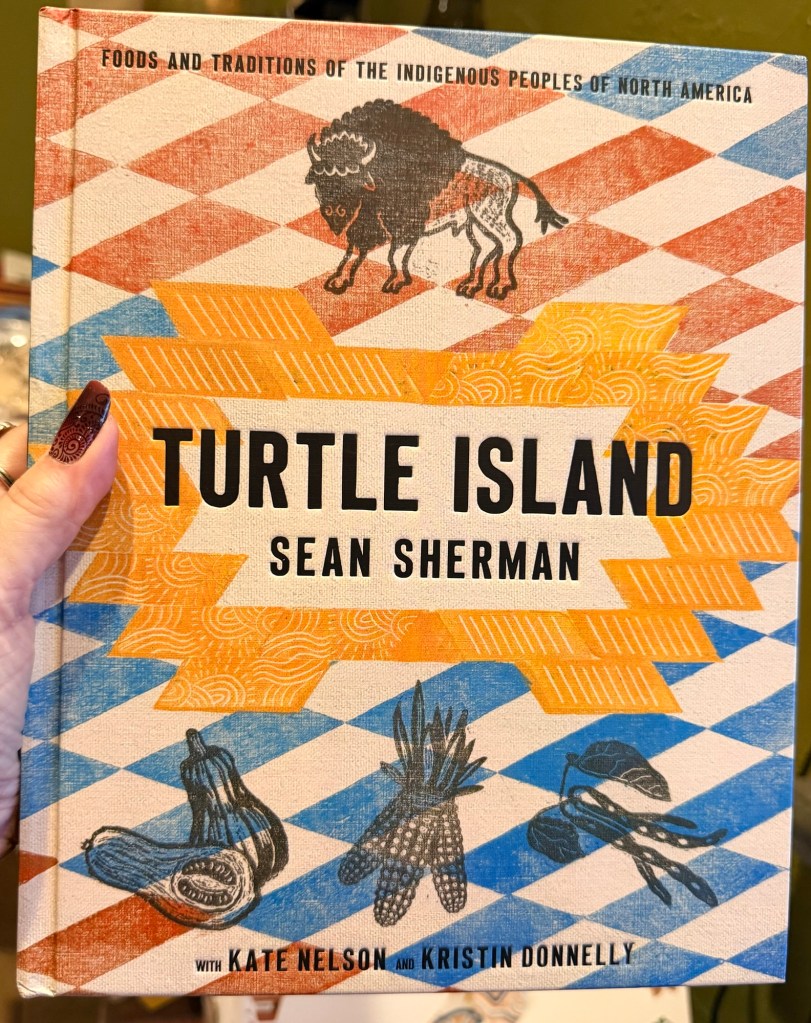
I heard Sherman speaking about the book on NPR, and like any good liberal elitist, I immediately ordered it. What a treat it was just to open this beautiful volume! It has nice, thick pages and lots of beautiful photographs of food and the places where it originates.
I didn’t have much of a clue about North American indigenous cooking or foodstuffs, other than the “three sisters” (corn, squash, and beans) and wild game. Well, now I sure do! plus I learned a lot of history from the perspective of the people who were here before my ancestors showed up, and learned about fascinating traditions. A lot of research went into this one.
As with most cookbooks I read, I probably enjoyed the parts of each section about the people, languages, history, and lifestyle more than the recipes, though I did diligently read them, too. Sherman’s recipes only use ingredients from this part of the world, so there’s a lot of maple or agave syrup for sweetness and sumac or other dried leaves for spice.
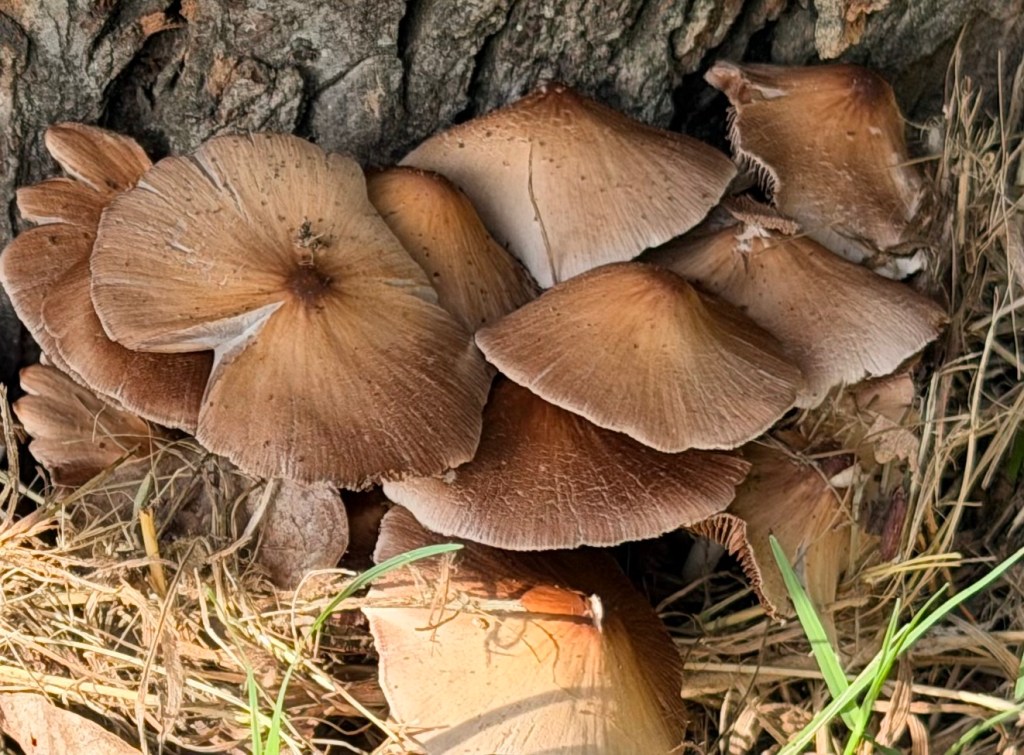
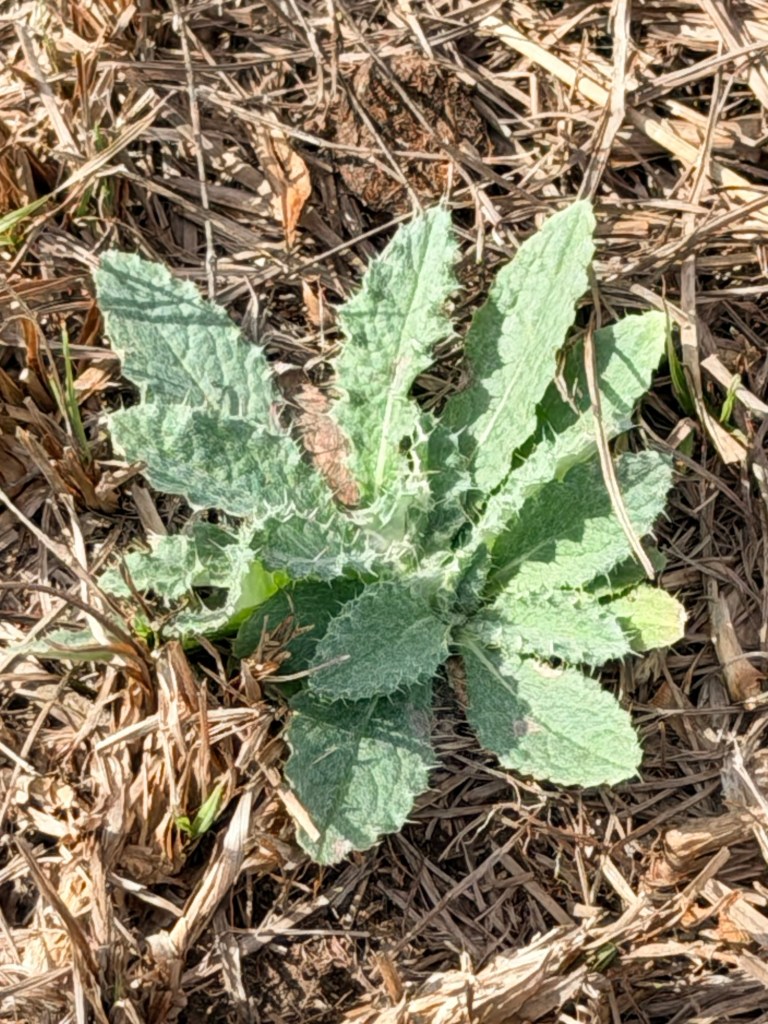
I was happy to learn how many of the “weeds” I find around the ranch are good to eat, though I’m still leery of the mushrooms. I need a class!
Turtle Island is organized into geographic areas, which makes sense. There are widely different foods found in such a huge amount of land. The book’s coverage goes deep into Mexico and far up into the Arctic. Everybody eats berries and wild greens, but they’re different in the subarctic compared to a rainforest.
Preparation of food also differs depending on climate and traditions. There’s a lot of smoking and drying to preserve food. I learned many ways to make tamales, how to make acorn flour, and how to create nut milk. Since there’s no dairy in the recipes (cows and chickens are imports), nut milk is important. I will, however, skip the whale and seal meat, and just acknowledge its cultural significance.
It took me a long time to read the book, but it was like taking an introductory class in the indigenous cultures. It makes me want to learn more about them in addition to fiber arts, jewelry, clothing, spirituality, and food. I wonder what I’ll find next?
Discover more from The Hermits' Rest
Subscribe to get the latest posts sent to your email.


