After spending the evening with friends, remembering a beloved community member who had passed, I tried to watch the US Presidential debate.
I’d had too much wine for it. I went out into the “quiet” in front of the house. As the night sounds hummer in my ears, I looked up at the moon, thinking of Lori and Dale, who are no longer with us. I sang my favorite hymn, to the waxing moon.
For the beauty of the earth, for the splendor of the skies, For the love which from our birth over and around us lies, Source of all, to thee we raise this our hymn of grateful praise.
I sent up my wishes for healing and peace.
Then I looked around. Four dogs had come out with me. All four were standing quietly, looking in the same direction as me. I’d swear they were praying with me. It was powerful.
Oh my. Here’s a book you probably should read. I guarantee you won’t “enjoy” it, but you may well be a better person for having read it. You know how they say there are things you can’t “un-see?” Well, this book hammers you with things that you won’t be able to “un-read” even if you want to.
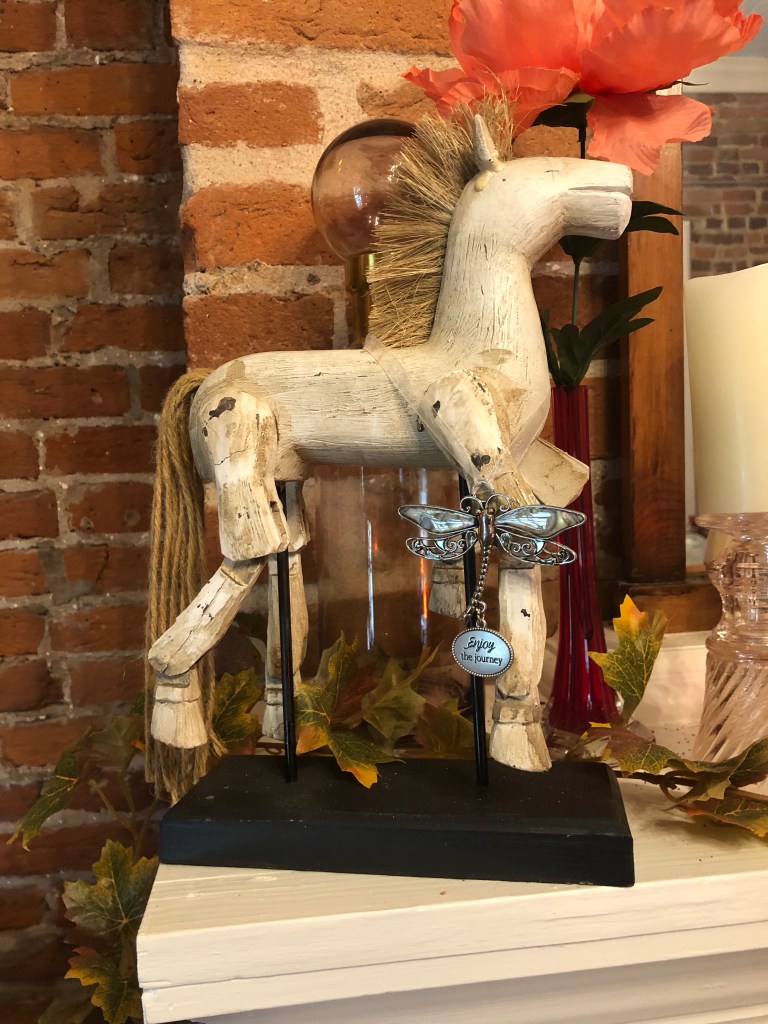
I set it on a pretty backdrop.
I had to stop reading Caste: The Origins of Our Discontent, by Isabel Wilkerson, for a couple of weeks, because I was having nightmares about lynchings and beatings. I was ignorant of how many there were in the 20th century, as well as how people came to see the lynched people, took photos with them, and even sent postcards of it, until the Post Office banned them. Nightmare stuff. This was in my parents’ lifetime.
That’s just one example of what Wilkerson shares as she lays out the history and consequences of what she defines as the two-caste system in the US, which is unique to this country. Oh boy, makes me so not proud. Makes me sick.
Taking a break to breathe.
She also makes it frighteningly clear how similar the US caste system parallels the way Nazi Germany was set up. What horrified me most was learning that they based their system for de-humanizing the Jews and others on how the high-caste people in the US made people from Africa into non-humans, to justify how they were treated in the slave economy. I got sick to my stomach just typing this.
Yeah, it’s a hard book to read. But it’s so important to look at the way Black people have been treated here in the US and (most important) how they continue to be treated up until the present. Especially for those of us who just happened to be born in the high caste, if you don’t have this information presented to you, right in your face, it’s easy to assume everything’s just fine, because, heck WE like our black colleagues and friends and treat them well. Oops. Not true.
Breathing some more. What a lovely morning sky. Sure looks like our electric pole is slanted.
No, things are NOT better, and no, people have not stopped treating lower-caste people as less than human. Yes, progress has been made, but all you have to do is look at how panicked a large portion of the white people in the US got when a Black man became President. Preserving the status quo turns out to be more important for this group than many things that might help them as a group (and that’s all I’ll say about this; read the book).
In good news, not all the book makes you sick to your stomach if you have any empathy at all for fellow humans. Wilkerson does talk about interesting historical parallels in India and talks about ways to make things better. Like I’ve always thought, she concludes that actually getting to know people and seeing their common humanity, one at a time, is how ANY of us can work to break the caste system down.
People who show a greater sense of joint responsibility to one another when they see their fellow citizens as like themselves.
page 353
It’s just that we still have a lot of work ahead of us, and it will go way slower if we don’t actually LISTEN to our fellow citizens, even when it hurts.
I did not exactly “enjoy” the journey through this book, but I’m glad I embarked on it. And I am glad I finished.
The chapter of Caste that gobsmacked me was the one at the end, where she shares the consequences of the caste system and the fear and distrust it engenders in the US. When put in the context of the rest of the world, this is one weird place. Examples from the book:
Americans own nearly half the guns in the world owned by civilians.
If the U.S. prison population were a city, it would be the fifth largest in America.
page 355
I know this is not a popular thing to say right now, but I can see why so many of my friends are moving to other countries. I’ve just been conveniently ignoring a lot of things that are right in front of my face, passively watching fellow Americans support and encourage the caste system, and failed to do the work needed to make this a good place for all of us. I’m so afraid of the dominant caste and the masses it’s indoctrinated that I’m not much better than them.
Well, that is changing, thanks to what I’ve been learning this year, and I’m just going to have to deal with the nasty consequences from fearful fellow citizens. It’s not like I have to be on the defensive every second of every day like so many Black people, the ones I know and care about included, must deal with. Because, as Wilkerson notes:
There are thriving, prosperous nations where people do not have to sell their Nobel Prizes to get medical care, where families don’t go broke taking care of elderly loved ones, where children exceed the educational achievements of American children, where drug addicts are in treatment rather than in prison, where perhaps the greatest measure of human success – happiness and a long life – exists in greater measure because they value their shared commonality.
pp. 353-54
I don’t know for sure how I came out this way, having grown up in the American South. But I don’t want to see people’s potential wasted just because of what they look like or where their parents were born. We need all the contributions of all the brilliant humans out there…so maybe we can live in peace. I’m still gonna try, no matter how cynical books like this make me.
Not gonna give up. Image from peaceoneday.org – Peace Day is September 21!
One of the guiding principles of my life is to assume that people have good intentions in what they do and say. That means that people are doing the best the can with what they know, and given their life experiences/culture. I’ve found that doing this allows me to easily straighten out misunderstandings, to listen with an open mind, and to learn from others. I find that almost every time I think someone is going something to be mean, unkind, or ignorant, they didn’t mean it the way it came across, or were missing some information that would straighten things out. It’s a good principle.
We’re all doing our best. Image by @BrittNashPix via Twenty20
Is this hard to do? Why, yes, it certainly is. It’s very easy to mess this up in more than one way.
I am the center of the universe. NOT.
First, you can slip into the mindset that everything revolves around you, so anything anyone does or says that upsets you must be on purpose. I had a graduate school friend who did this. Once I had to talk him down from leaving school just because a professor didn’t say hello to him when she passed him in the hallway. To him, it HAD to be because she disapproved of him, his dissertation topic, or something. To me, she could have been thinking about the class she was about to teach, an issue with her children, or many other things…she could have been just daydreaming. The discussion was painful.
Second, you can fall into the trap of making assumptions about motives. That’s the one that gets to me. I have been known to assume that people have some agenda that I don’t fit in, so they ignore me, or say things that appear to me to reject my input. That’s often not the case, as I find out when I snap out of it and have a reasonable discussion (or say something unhelpful, which also happens a lot, just ask my family).
Most religions say they are about peace, honest!
Third, you can put labels on people that over-generalize them and lump them together into some group you don’t have a high opinion of. That’s where we get racist, sexist, classist, and ethnic stereotypes that don’t give people a chance to be individuals with their own motives. I’ve lived around enough different groups of people that this one doesn’t trap me as much as the assumption one. However, it has taken me over 60 years to overcome some of the labels I put on members of certain religious groups. I’m very grateful to have met people who gently point out the fact that all religions have different factions and that I could probably find people very much like myself in all of them, if I’d just look. So, not all members of certain traditions don’t want to take my rights away or hate me because of my beliefs. I must remind myself of this!
What Makes It Harder
As you know (because you do not live under a rock) these are hard times to be reasonable people. All sorts of forces are conspiring to pit us against our neighbors in our towns, states, countries, and the world. We take our assigned label and cling hard to it, assuming that people we assign another label all have horrible intentions, are stupid, want to harm us, and are the reason everything’s so bad. Right? It’s not just here in the US. Check out the UK, for example, and yes, even Canada has its factions (read the news, you’ll see!).
I happen to know, live with, and interact frequently with people who are assigned different labels from me. I have to talk to them, work with them, and read their social media postings. Sometimes, since most of us don’t wear our labels on our lapels, the back of our trucks, or our speedboats, we get surprised to find out someone we like is one of “them.” Ooooh, noooo.
Well, they are still the same person you have something in common with, or you wouldn’t like them. Maybe they were brought up in a different community from you. Maybe they have had pivotal experiences that affect their thinking. And yeah, maybe they just follow along with their crowd, because it’s easier to do than pushing boundaries or sticking out. Hey, people on your side do it, too.
The challenge is to assume that they hold their beliefs, not because they personally hate you or your friends, but because the vast majority* of people you disagree with honestly think they are doing the right thing. They may be wrong, but for their internal value systems, it’s right for them. You (I) may be wrong, too. Confirmation bias and all that.
So, my plan is to work even harder on assuming good intentions for the next few months. This doesn’t mean I won’t work hard for causes I believe in, won’t vote as hard as I can for my preferred candidates, or won’t practice my own spiritual beliefs that work for me. It just means I’m going to try as hard as I can to remember the “other” side are people, too.
I will note that sometimes it will mean I can’t answer a question, because I can’t come up with a way to say things that won’t come across as insulting. And I’ll screw up. Some things really push my buttons. I bet you have buttons, too. And when I’m tired, overwhelmed with my work, or worried about things, I may be less than a sterling example of someone living their beliefs. But I’m going to TRY.
It’s a beautiful world, too.
In the end, we all have to share our world. It’s the one we have.
*Yes, some people are mean. Some people are full of hate. Some people really fit stereotypes; that’s how they become stereotypes. It’s just that I firmly believe that MOST people I disagree with are not this way.
Yesterday I was talking to my therapist (a thing I do, because I think it’s good for you). I started describing all the things that are making this a rather stressful time. I went on and on. I ended up with quite a hefty list of things that combine to make me, perhaps, not at my best right now. For example, these are so of the things running through my mind.
Suna’s Bulleted List of Concerns
My job changes
The new company
Family health issues
The pandemic
Presidential election
My kids’ issues
Wildfires
Hurricanes
Police killings of Black people
Isolation
Mean people
Etc.
Well, yeah, probably just a couple of those would be enough for one period of time. My neck tingling started up just by typing that. How shall I cope?
Just like the Pope Residence has endured many changes and challenges, so must we.
I don’t think it’s healthy to ignore the things that are challenging us or threatening people we care about; I have noticed that things you try to bury eventually emerge to bit you in the butt. I want to be able to acknowledge them, then set aside the things I can’t do anything about (viruses, fires, rain). Worrying won’t change these natural phenomena I can do little to affect.
That leaves me with the things I do need to deal with. I’ll just minimize contact with mean people, keep in better touch with the kid who talks to me, donate to elections, work hard to figure my job out without letting it consume me, be there for my family, and cheer on the new business without getting in the way.
See, I even have reminders to be full of gratitude for what doesn’t suck, right outside my office door.
As for police killings of Black people, I am continuing my own education about racism by reading Caste, by Isabel Wilkerson with a group. They are reading one chapter a day, so it will take a while, but they are serious and ask lots of questions. It would have been interesting to read How to Be an Antiracist that way. And as for concrete actions, I’ve volunteered to be on the diversity committee at work, though I have to say I also plan to work on supporting elders like myself and my LGBTQ friends.
Just by examining how I am dealing with the challenges the world is presenting I feel better and more like I am handling these hard times as well as any other imperfect human could.
The Rewarding Part
And, for my friends and followers who prefer to focus only on what is good in life and what they are grateful for, I will happily acknowledge that I DO stop and smile at the good things that surround me.
Simulation of what I saw. Image by @ashleytaylor1987 via Twenty20.
I wish I could have captured the moment visually, but this morning, as I stepped out of the house to go to my car, the sun had just risen, and was casting a golden glow (smoke particles, no doubt). The grass was heavy with dew, so heavy that the blades were all bending down from the weight of drops of water. Each water droplet looked like it was made of gold, thanks to the sun. I walked to the car in a glistening, gold and green carpet. Yeah, my feet got wet, but it was worth it!
What have you encountered on this day the Earth has brought us? Are you safe or in a storm? What comforts you as you deal with your own bulleted list of concerns?
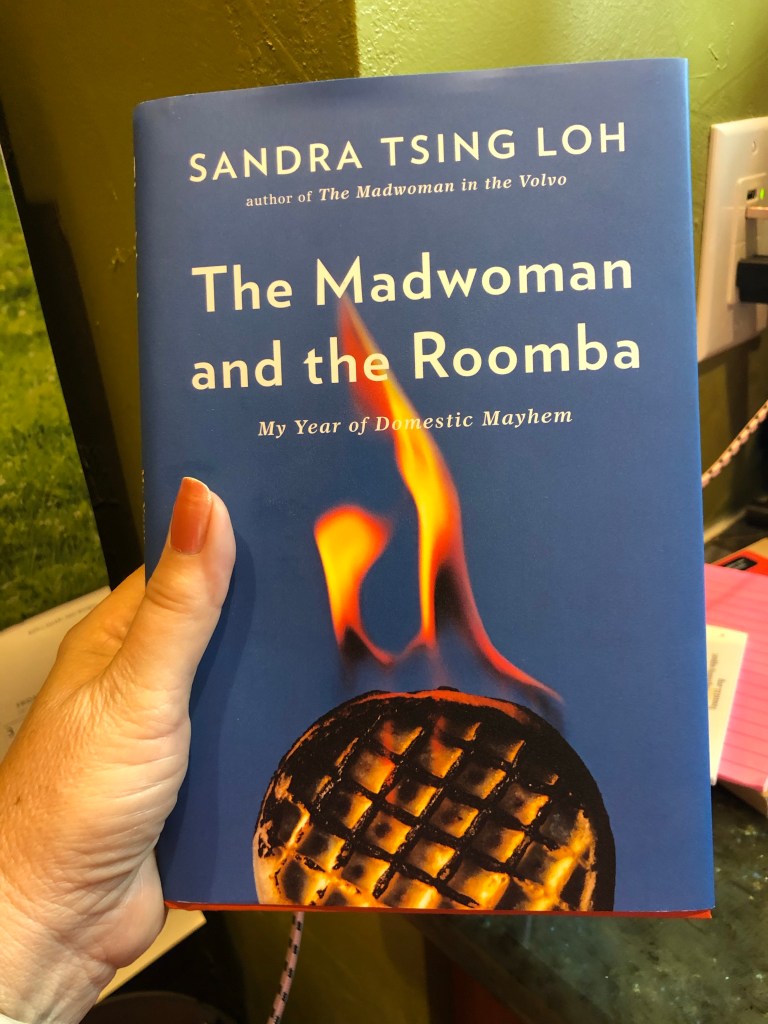
So, this book, The Madwoman and the Roomba: My Year of Domestic Mayhem, by Sandra Tsing Loh, was this month’s Austin neighborhood book club selection. I think we were all looking forward to a nice, lightweight comedy book to get us through yet another month of being unable to hang out together and hug.
The flaming waffle says it all.
Indeed, Ms Loh is a really gifted teller of tales, and her slice of middle-aged life in California stories are very funny. I laughed a lot. People in my age bracket who are a little hippie-dippy like me will see a lot of themselves in her desires to live in her Costco massage chair (we ALSO got the big discount), her honest assessments of her mothering skills, her ambivalence about having divorced her kids’ dad, and such.
I was really enjoying this trip through a recent year in her life. Then it hit me. This was a trip through 2018 or 2019, and certainly not 2020. I’d be reading along and suddenly think, “Ah, meeting friends at a coffee shop, I miss that,” or, “Look at her enjoying a relaxing trip to Costco, I remember just browsing and taking my time.”
Our massage chair from Costco does get used pretty often, but in between times, it’s one of Carlton’s beds.
In the end, the funny book about a woman’s quirky family and friends (I love her domestic partner, especially, and just about spit out my beverage when he was revealed to be a disciple of the hugging saint Amma *and a bunch of her entourage appeared) turned out to be a little time capsule of the past. I ended up doing as much sighing as I did laughing as I pretty much devoured every page of Loh’s writing.
I’ll probably read some more of her stuff when I need a humor break, though it might be more funny next year.
Look at all those clouds! It may rain today or tomorrow.
By the way, each chapter in the book suspiciously reminded me of a blog entry. I wish I were as funny as Loh, because I’d have a book ready to go. Mine would be rather more whiny and angsty, and totally devoid of other characters, because hardly anyone I know would want to be in a book. Well, I’ve talked myself out of THAT idea pretty quickly.
I hope you have a good book, television show (I recommend Star Trek:Picard), or project to fill your weekend with fun!
*I wondered how all the Amma followers are doing now that hugging is not such a great idea, so I looked it up. It turns out they are donating a lot of money to coronavirus research, and interacting online, like the rest of us. Keep spreading that love!
What follows won’t be my normal book report. I don’t know what it will be, really, because I’m not sure if I’ll be able to adequately explain the profound effect that The Sacred Enneagram: Finding Your Unique Path to Spiritual Growth, by Christopher L. Heuertz has had on me. Anyway, I knew I picked up those Enneagram books for a reason.
If You Don’t Know What an Enneagram Is, Skip This Part
I liked it. A lot.
By the time I finished the book, I realized I had mis-typed myself, and thankfully someone who understands this mumbo-jumbo better than I do helped me figure out why that happened. I feel good about things now, even if it turns out I am a Type 1 perfectionist. Ugh. But accurate. In my younger years, I veered off to the adjacent Type 2, who want to help everybody and everything, and since menopause, I have been leaning to Type 9, so no wonder I thought that was my type originally.
I’m grateful to my two friends named Victoria who talked to me and helped me figure that all out. It’s so good to have a sounding board when you know there’s something not quite right, but you can’t figure out what it is.
Here’s the Fascinating Part
At least it’s fascinating and surprising to me. The author of the book is a young man who has spent much of his life doing charity work and comes from a strong Catholic background. I talked about this, and how he even knew Mother Teresa, when I reviewed The Enneagram of Belonging, his other recent book. So, yeah, he sprinkled examples from his own spiritual journey throughout this book, as well.
The thing is, the way he wrote about the practices of his teachers, their attitudes toward God and Jesus, and their goals for their spiritual development really resonated with me. As I read on and on about the contemplative Christian tradition, I felt more and more at peace with their goals and practices.
Toward the end of the book, when Heuertz talks about ways of prayer that will help you find your spiritual home, I was deeply moved. The aims of these Christian prayers and practices practically mirrored my own, other than the words they used to refer to the Divine. There is centering, stillness, attention to your breathing and body, and invoking love. Just like what I do.
What works for me may not work for you. Image by @linnflorin via Twenty20.
It fits in very well with the kind of Buddhist teachings I am most drawn to, as well, which are the more nature-focused ones that view us on Earth as all part of one entity. Just like the Christian God being in us all and accepting us all just the way we are.
I even see where Brene Brown’s spirituality comes from, though she may well approach it from a different tradition. It all boils down to acceptance of our whole selves (not, in my case, the perfect self I keep trying to get to with all this self help, education, and introspection).
So, for me (and I would think to many readers who plow through the whole book), the Enneagram types and interrelationships all turn out to be a tool to use to figure out how to get past all that stuff. Wow. Mind blown!
As a non-Christian, the most intriguing part (and the one I want to know a LOT more about) is how these contemplative Christians fit Jesus into all this, since you sorta do have to be a fan of Christ to be a Christian. When Heuertz goes into stories about Jesus, it reminds me of my years stuck in a basement with two former theologians (supposedly writing our dissertations), where it dawned on me slowly that they knew perfectly well there’s a lot of analogy, metaphor, and interpretation going on when it comes to the role of Jesus in their faith.
One Thing This Book Did for ME
Going through this book, and reading a little more about the groups of Jesuits, Sufi, and other spiritual guides Heuertz talks about, woke me up to an area where I have needed to do more work. I realized, deep in my heart, that not all people in organized religions fit into my stereotypes. My history with Christianity has led me to some pretty unfair over-generalizations, which I’ve been trying to rid myself of, slowly but surely.
There are lots of paths to inner peace and oneness with the Divine. Mine now makes sense. I wish this for all of you, whatever your path.
This book did it. I now feel entirely comfortable with the Christian path trod by people Heuertz’s spiritual guides (and Jim Rigby, and Joanna Fontaine Crawford, and other Christians I know who are working so hard for equality, love and understanding among people).
I knew intellectually that religious folk are like any other group: so diverse that I can find people I feel kinship with as well as people I just don’t understand at all. Now I feel it in my heart.
Personal growth for the win!
PS: Of course this is just MY spiritual journey. Yours is just fine for you as long as it is helping you be the best you possible.
The last few weeks, I really felt like I’d lost my center. That’s one reason, I think, that I was letting things other people did or said affect me more than usual. Deep down, I wasn’t coming from my customary perspective of acceptance of my own worth, dignity, and humanity. I’d lost sight of my hard-earned understanding that what connects me with my spiritual core is the realization that I’m a mix of things I’m good at and things I’m working on, and both of those naturally will fluctuate, especially when there are a lot of outside stressors.
Does any of that feel familiar to you? Are you finding it harder to treat yourself the way you want to treat others, and they way you’d like to be treated! Have you lost your Golden Rule? Aha! Time for some centering!
Everyone finds their center differently, though there are common techniques many of us use. For me, meditation has always helped. Just breathing and not letting the cares of the day intrude for a while each day certainly can’t hurt. Other people call their meditation prayer or contemplation. It all works.
Could be a goddess. Could be Virgin Mary. Could be one of us. She sure looks like she’s centered, though. (It’s a statue called The Genius of Water, in Cincinnati, OH, USA. Photo by @CrosleySpelmanPhotography via Twenty20)
Deep breathing is a real help, too. Long ago, I noticed that when I am feeling super stressed I start holding my breath! Eek! As soon as I figured that out, I began to take that as a sign I need to stop whatever I’m doing and start a series of deep breaths, the kinds you do in yoga class, or in guided meditations. I have been known to pull into a parking lot and breathe a while. This aids when dealing with road rage (in self or others), too!
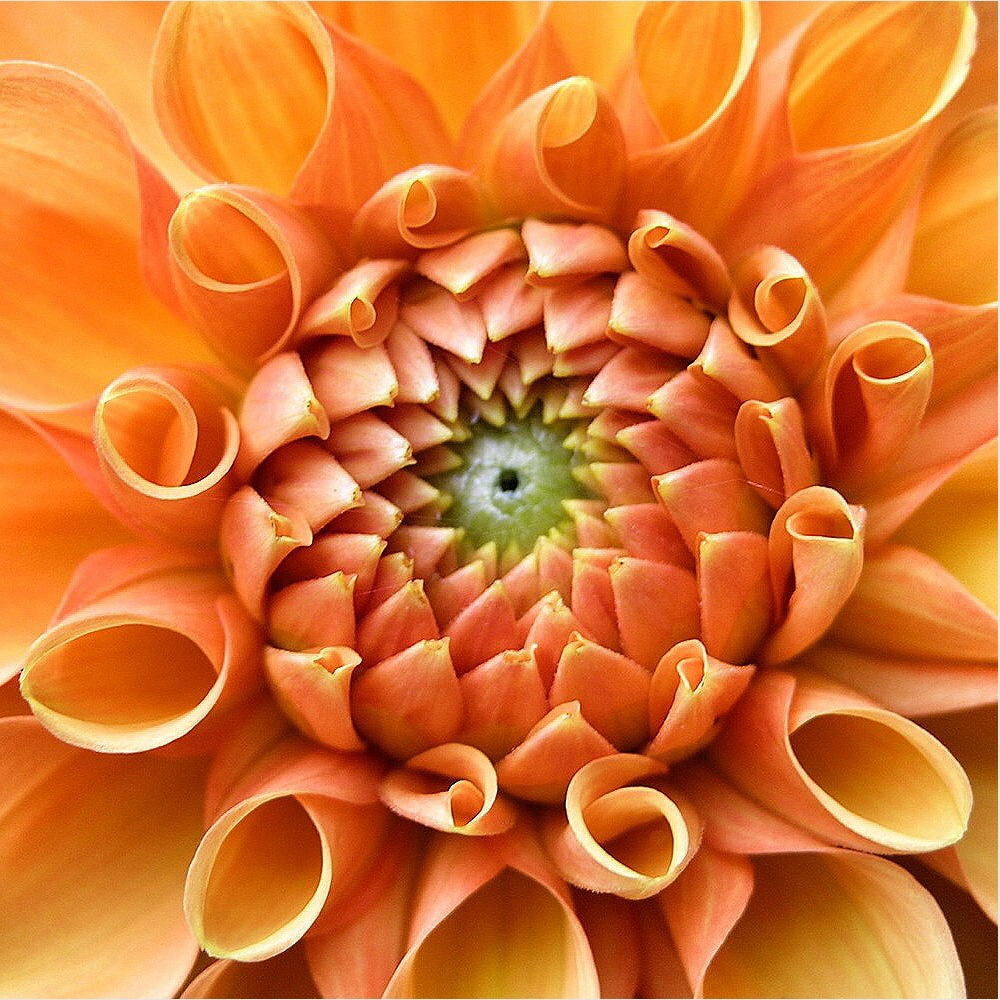
Over the weekend, I got a lot of time to myself to read and re-read helpful books (I’m working through The Sacred Enneagram, which has a remarkably helpful spiritual slant that makes me want to go thank a bunch of priests and is helping me deal with some of my prejudices and biases against organized religions). I had a lot of time to meditate. And like petals unfolding and revealing the heart of a flower, my center re-emerged.
I searched for “center” and the exact image I needed showed up. Miracle! Photo by @katjakholm.68 via Twenty20
I feel like myself again (hello, Suna)! And now that I’m coming from a much better mental space, all sorts of things are easing up. I’ve been able to deal with people I’ve found difficult in the past with grace and kindness. I’ve been a better family member. My work is going better. Funny how that works, right?
There’s still a lot to be done. I messed a lot of things up during my little bout with depression and hopelessness. I didn’t treat myself or others the way I’d want to, but I can be kind to myself now, learn from those mistakes, and move forward.
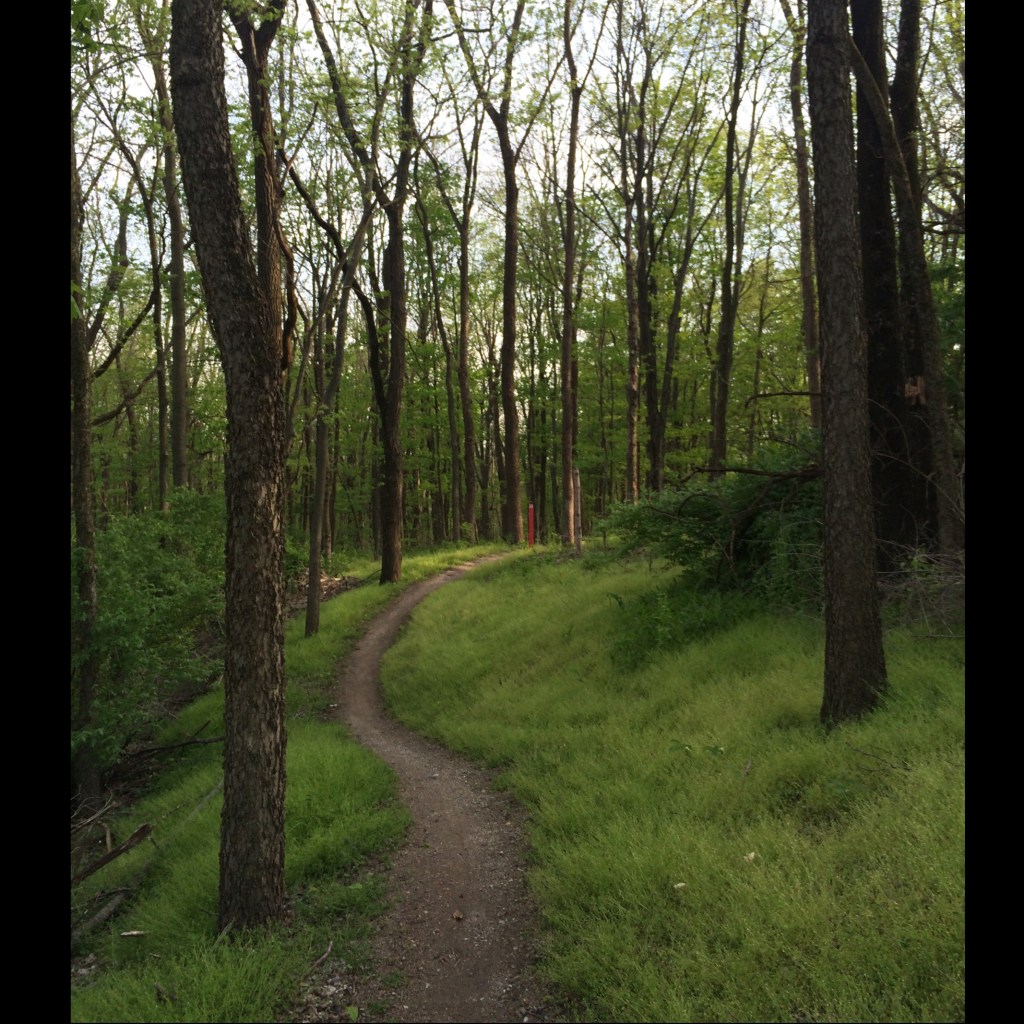
We’re all on a journey, as I like to remind myself. There are ups, downs, and curves along the road. Worse, we never “get there” until our life ends. Ya just keep going.
I chose this image because there’s only room for one person on this path, and that helps me remember we are all on our OWN paths, and they don’t look the same. I also like the marker up ahead, which reminds me it’s okay to set some goals, and maybe you’ll get to them. Photo by @trackin_scout via Twenty20
Failure and disappointment will show up. That reminds me: Chris read me a piece about failure this morning, which he said made him think of me. It talked about the opportunities that arise from “failing,” and was spot on. Once you fail, fall down, or regress, you get the opportunity to start again, maybe with some new knowledge or insight that will help you on your journey.
Insert platitude here! I’m full of them today. But I’m sincere. This is yesterday’s sunset, which looks much like the sunsets all week.
I’m wishing all of you peace and understanding, and encourage you to find the areas in your life where there IS hope, and insights into what your challenges can teach you on your own journey.
Expressing anger is difficult for some of us. Like Suna.
No, no, I’m not angry about anything right now! Everything’s just fine. If you’re looking for drama, I’m not serving that up today. I’m just thinking about anger.
The book club meeting I attended on Zoom (of course, no in-person meetings for me!) today got on the topic of things we struggle with, and I brought up the fact that I totally suck at getting angry. The very nice women in the meeting were quite supportive of me, and the consensus was not to expect to be great at something you don’t have a lot of experience with. They were right!
Even as a child, I was discouraged from getting angry. If my little brother pestered me, I was told to, “Just ignore him.” And if I did get angry and yell or hit back after he slapped me, I’d get spanked. So, I fairly quickly learned to bottle up any anger I had and to arrange things to be as peaceful as possible in my little world.
Hence, I ended up an Enneagram Number Nine. As the website says:
Key Motivations: Want to create harmony in their environment, to avoid conflicts and tension, to preserve things as they are, to resist whatever would upset or disturb them.
That probably also explains my initial resistance to change, even the good kind!
Another thing it explains is why I’m always trying to attain some sort of spiritual transcendence; it’s another way to escape the real world. At least I have the sense to know that “the only way out is through,” and am coming to terms with the whole “life is suffering” concept.
I just want peace, calm, and goodness.
Anyhow, I am just not good at getting angry. Not one bit. I can’t be like Anita, who often declares she’s angry at this that or the other, but she just expresses herself strongly. I keep thinking, “Why is she angry at that? I’m sad, or…some other emotion.” That’s because if I try to express anger, it scares the pee out of people. You know, I also learned from my family or origin how to have a very sharp passive-aggressive tongue. Oopsie.
I can actually remember the two or three times I let my anger spill out. After one time, I was never able to bring myself into a particular community again. I just left and never came back. I’ve only let myself express anger at my spouse a couple of times in all these years. I just get snippy on occasion then over-apologize for it.
Dang, I need to learn how to legitimately express anger when it’s appropriate without alienating people forever, or turning into a sniveling ball of self-abuse. Those seem to be my main anger outlets. I’m just not equipped to be an angry mob of one, I guess.
As my colleagues in the book club pointed out, it helps to remember you’re angry at a situation. (And I point out that it helps to remember people are doing the best they can; though when I’m angry at an institution, that’s hard to apply.) If kindness is my main value, I should apply it to both the object of my anger AND me, right?
This is pitiful, I know, but I Googled “effectively express anger” (because, how else do you figure things out these days?) and I got this:
Address An Issue Immediately Before It Escalates. …
Take A Walk. …
Try A Simple Breathing Technique. …
Try Getting In Some Rigorous Exercise. …
Journaling Can Be Another Great Way To Process Anger. …
Well, I do all that! That’s not expressing anger, it’s dealing with anger. Those are all the tools I use to maintain the peace and not rock the boat.
I turned to that oracle of knowledge, WikiHow, who went through all the above anger mitigation techniques that I already do, then FINALLY gave some advice on how to express it! That’s what I wanted!
Choose to express your anger assertively. Assertive expression of anger is the most constructive way to express your anger. Assertiveness cultivates mutual respect for each other. You can still express your anger, but you do so in a way that doesn’t accuse the other person. You have mutual respect for each other.
Assertive communication emphasizes that both people’s needs are important. To communicate assertively, give the facts without making accusations. Simply state how the action made you feel. Stick to what you know and not what you think you know. Then ask the other person if he is willing to talk. [9]
For example, you might say: “I was hurt and angry because I felt like you were belittling my project when you laughed during my presentation. Can we talk and work this out?”
Enough with the background colors. I didn’t mean to make you all sick.
Yeah! That’s it! Work on my tone!
After reading the information, I conclude that it makes sense, and sounds a lot like things I’d read in all my “how to get along with people” courses and such. I know I try to do that, and sometimes do. I just need to work on my tone, maybe.
In any case, if you have an anger problem, whether inability to express it or expressing it too much, how have you dealt with it? There’s so much anger in the world right now, it might be helpful to band together and make an effort to say what upsets us without turning the audience away completely.
I shall now go look at nice, happy animals and stop with all this self-analysis.
It happens. Happened to me. I was trying to be a good friend, but didn’t use good judgment. Did it go unnoticed?
Nothing goes unnoticed today, and by the end of the day, numerous people had reported to my spouse that I had made a mistake. Small town living at its finest.
Can I climb out? Photo by @gafutch via Twenty20
That kind of thing can make you feel paranoid! Or, in my case, a lot of the work I’ve been doing on my “stuff” can fall away, and I end up acting like teen Suna with all the negative self-talk bubbling up.
I’ll take that as an educational moment, and one that can provide helpful insight into how my inner workings work, and maybe how many of us work. We may work to change ingrained patterns and know what our triggers are, but every so often, we’ll fall back into that hole.
What’s important is to learn to quickly pick ourselves up, reflect on what we can do differently next time, and (most important) shake off that self criticism and crawl out of the hole more quickly each time it happens.
She did it; so can I. Photo by @paigeinrealife via Twenty20.
I even DREAMED I was climbing a rickety ladder, trying to get out of a hole. Like I’ve said before, my dreams contain very un-subtle metaphors.
Hug yourselves, friends. Our imperfect selves are here to learn to love and forgive not only others, but ourselves.
Wondering
How do you forgive yourself? Through prayer, meditation, invoking a higher power, or reading? Searching the internet for quotes by your favorite healing author?
What are some useful things to tell yourself (asking for a friend, ha ha)?
Some people say you can’t teach an old dog new tricks, and I am definitely an old[er]…person. I’ve always thought of myself as a realist, in that I see the beauty and good in the world, but I don’t deny the sadness, sorrow, injustice and pain that’s around me, either. Life is suffering, after all, says the Buddha.
Top that off with a healthy dose of empathy and sensitivity to the moods of others around me, and I end up not being the biggest little ray of sunshine in Central Texas. I have even railed about “toxic positivity” and “non-toxic positivity” right here in this blog, not that long ago.
For me, there’s room for each.
However, in the last few months, life has been conspiring to teach me new ways of walking through life, thanks to some people who just sorta showed up, or I just started paying closer attention to them. And it’s not just reading all those Buddhist articles that help you see that living in the moment is key.
You see, I used to avoid the relentlessly optimistic if at all possible. Always seeing the bright side of things, ugh. “Oh, no, I have the flu.” “That’s great! You can catch up on your reading!” I also got tired of the relentlessly negative, too. I know people who can suck the life out of any conversation by pointing out the negative consequences of anything: “It’s such a pretty day!” “Yeah, but you’ll get skin cancer if you stand in the sun.”
Depending on how you look at life, this may well be true.
I probably have mentioned before that I loathe being told to smile when I am, at the moment, not actually happy. Sure, I’ve read that forcing yourself to smile can make you happier, but sometimes there’s good reason to be unhappy, at least temporarily. Okay, fine.
Look at that happy face!
I’ve been watching the positive people in my life more closely, though. Here’s one you can watch yourself: go follow Emma G on Facebook. That is one positive woman. I happen to know that she’s faced some challenges in the year I’ve been reading her posts, but she never fails to find something good, some way a challenge has helped her grow, or a way something she’s learned can help others. I look forward to that smiling face every day, as she shares how she’s working on her musical career while minimizing danger from COVID-19.
Here, wine is helping us stay positive.
Living with Kathleen the past few months has also been a lesson at looking on the positive side of things. I have never seen anyone post so many cheerful memes in my entire life. Sometimes I’m like, geez, you have insomnia and are sick to your stomach, but you’re still posting “everything’s GREAT” all over Facebook. I see, though, that she’s trying to draw in the good stuff by sharing it (guessing it’s the power of attraction or something). Whatever it is, even when it irritates me a little, I can’t HELP but be reminded to look at what’s good in my own life, which is leading me toward a more positive outlook. She’s another person who’s had some real challenges to deal with in the past year but is finding ways to see the good. She’s never afraid to go talk to someone about our business and get some sort of positive outcome, too. Also, she’s one amazing idea generator. Now she wants me to have a donkey ranch.
This was taken just after Pam gave me a positive pep talk.
Another beacon of positivity is my friend Pam B. from the Breakfast Club here in Cameron. She’s another person who just radiates happiness and works hard to cultivate good in the world. Every time I talk to her, she says something about wanting to “elevate the good” or find joy or something to that effect. She is amazing at bringing people together for the betterment of this small but quite vital community (and is really fun to watch in community theater). Seeing how she works so hard to bring happiness to her friends, neighbors, and families is a real inspiration.
Here’s Eva with the sun behind her, making her even sunnier.
A final source of positive vibes is my coworker, Eva. I’ve known her since I started working at Planview, so I’ve had plenty of time to soak in her attitude. Especially in the past few years, she has provided a great example of how to take feedback that might upset someone or get them down, and turn it into an opportunity to learn more, find a new way to present information, or create a better product. She’s confident in the skills she has, and doesn’t take it personally when I mess with her grammar, because she knows perfectly well that the actual ideas are great. But it’s not just about work, but all aspects of her life that she brings along a sunny attitude and a lot of gratitude. It’s rubbing off, slowly but surely.
Here’s one of Kathleen’s memes.
People like this have been in my life before, some for many years, but I must be in a position to be more open to their input and to learning from them (thanks to those Enneagram books, I guess). I’ve been told that people come into your life for a reason, which is hard for someone like me, who has mostly been convinced that life is random. But, maybe there’s something to it, and something to the idea that if you surround yourself with positive people, you’ll be more positive, even if there’s a pandemic going on.
Another thoughtful meme that I have taken to heart. Some people may wish I hadn’t.
Do you know a relentlessly positive person? If you do, THANK them, and see if you can let a bit of that attitude rub off on you. Things in the world won’t change, but you may be better able to cope with it. I am, thanks to Emma, Kathleen, Pam, and Eva (and all you others I didn’t mention).
Okay, let’s all be SUPER HAPPY! Be a ray of sunshine like Emma, Kathleen, Pam, and Eva!