Lately I’ve been noticing more and more Texas Christians coming out of hiding and talking openly about how they feel betrayed and bullied by churches that instill fear more than faith, pit people against each other, and conveniently ignore teachings of Jesus.
No illustrations for this, but Penney looking at a Devil costume headband adds a note of humor to my religious post.
I’ve known many of these ethical people who lead lives I admire during my life, but they’ve been drowned out by louder voices. That’s why it’s refreshing to see Christians whose moral compasses align more with mine speaking out.
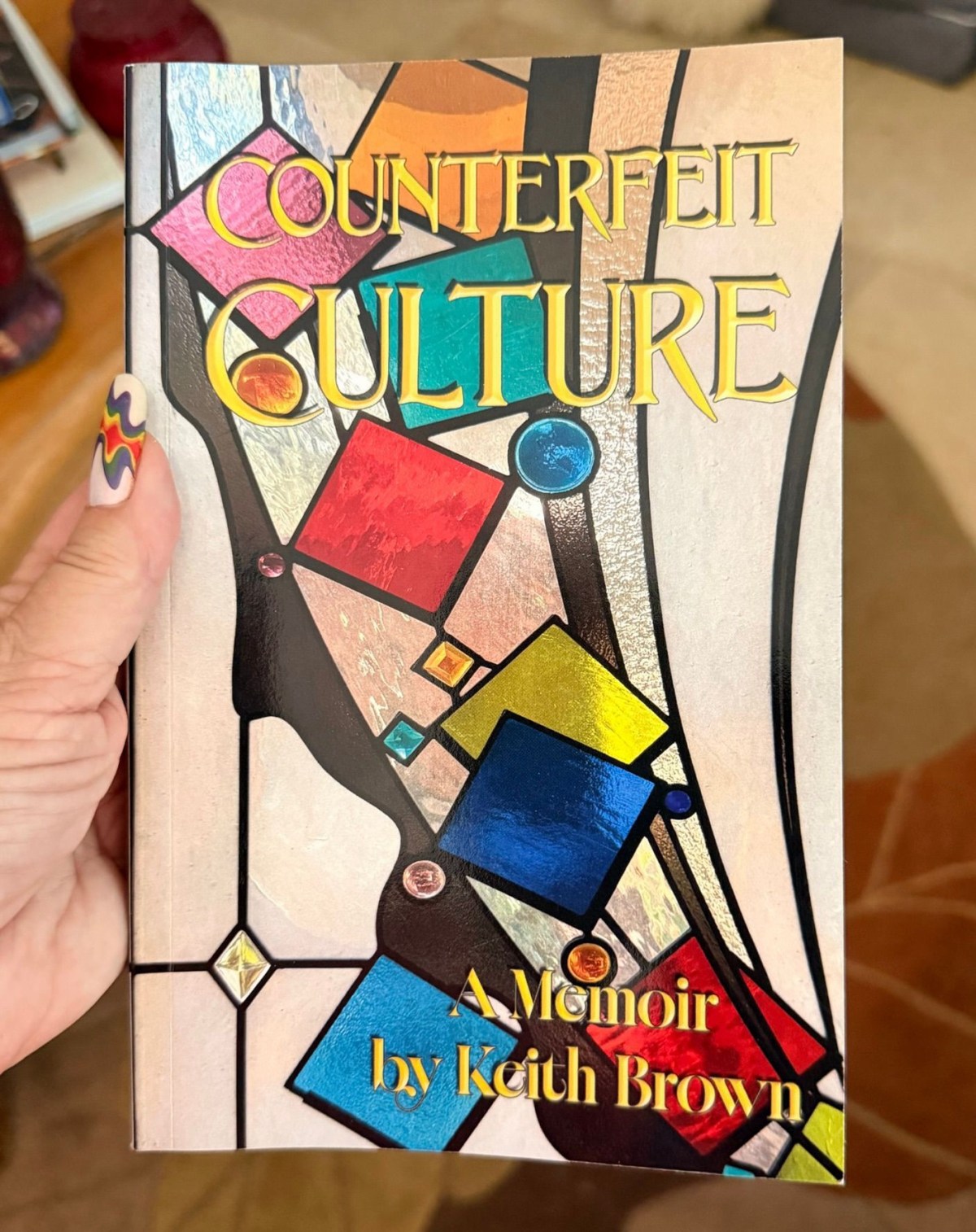
The woman I reviewed the book of last week, Keith Brown, admitted she’d been duped by a cult and emerged ready to live openly as someone who listens to her true spiritual leader.
I’m also impressed with the bravery and commitment of James Talarico, for whom I plan to vote in the Texas senatorial race in November. He’s such a good guy that his corrupt opponent can’t find anything real to pick on him about. I’m sure he is imperfect, since he’s human, but listening to this ministry student speak kindly about all people of Texas, as Jesus would, and speak intelligently about issues we all care about makes me proud to have someone to vote FOR, not against.
And in a surprising twist, I discovered that Clint Harp, a Waco craftsman I used to enjoy when he worked with Chip and Joanna Gaines, was not a secret Homestead Heritage shill, just because those people were featured prominently in his Restoration Road series (which I love anyway). He and Kelly, his wife, have started a podcast called On Couch with Clint and Kelly Harp. The first episode was a candid and open discussion of how important supporting LGBTQIA+ people is to them. They talk about how their Southern Baptist upbringing instilled fear in them of even acknowledging gays. They portray a kind of Christianity where all people deserve a good life and the blessings of their faith. (Also Clint was at a Talarico rally!)
These inspirational folks represent the kind of world I was hoping I’d get to live in, where Christians model love and acceptance, other spiritual paths are celebrated, and those of us who are more on the earth-based path aren’t treated as pariahs. I have a little more hope.
By the way, this is the most positive thing I’ve ever written about Christianity, so I’m grateful to these folks (and of course other dear friends and family whose spiritual practices I admire).
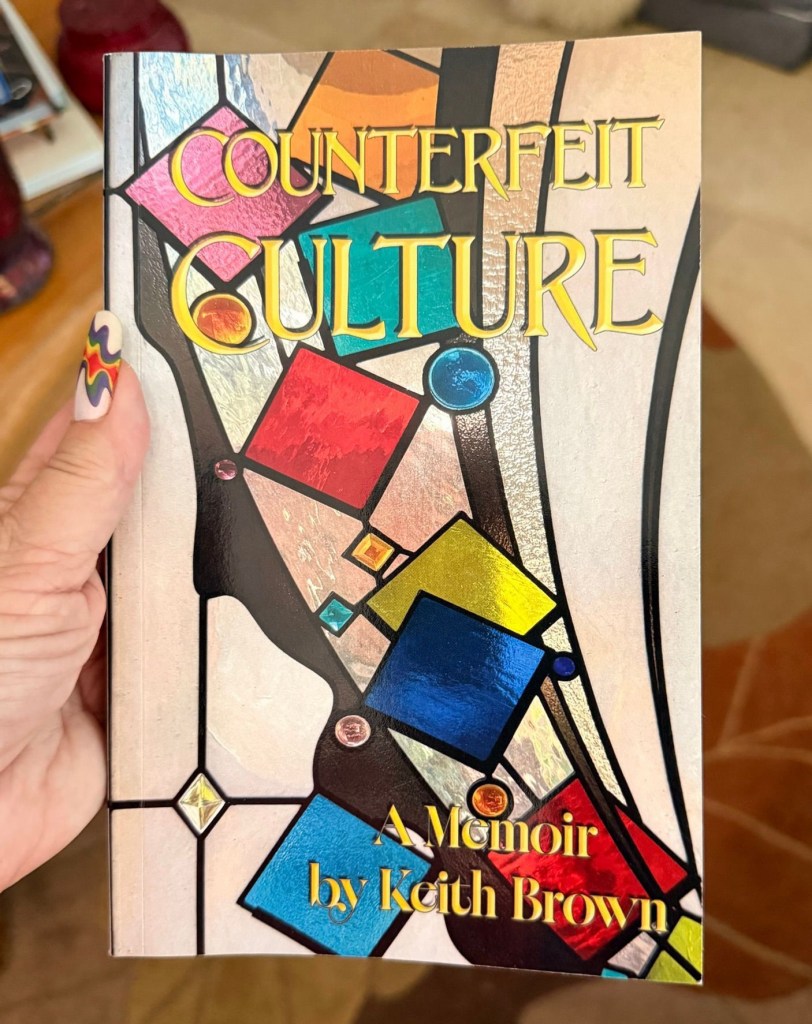
My friend Kathy in Waco lent me this book, CounterfeitCulture, by Keith Brown (3025). when I told her we’d checked out the Homestead Heritage place near there. Her church book club had read it, and it’s definitely a book with a Christian perspective and loaded with Bible quotes.
Keith Brown and her husband, Curtis, are the reason that facility is in Waco, because they provided the money to buy the land where all the Homestead Heritage stores and workshops are located. They were members of the “community” for thirty years before finally leaving.
If you’re interested in how sincere, intelligent people can get sucked into a cult with the best of intentions, you’ll find Brown’s book enlightening. Her personality and early life resemble mine, so I’m glad the only “cult” I nearly got sucked into was La Leche League in its worst years.
It’s pretty impressive that Brown has been able to forgive herself for her mistakes, apologize to her 9 (yikes!) children, and keep her marriage. The fact that she was able to keep her religious convictions also impresses me. She was able to see the loving God and forgiving Jesus that could give her strength. She points out that most people who leave Homestead Heritage reject religion. I can understand that.
Life in the group is exactly how you’d think a cult life would be. There are many good aspects, but there’s always a powerful leader and minions that use fear and intimidation to keep members in line. The rules kept changing, so you could do something that was right last week but elicit a reprimand this week. Worse, it sounded to me like how Communist China used to be, where people tattled on each other constantly, even family members.
Poor Keith Brown had to completely erase her outgoing personality and ways of thinking. I’ve only had to do that a little bit and for not too long and it gave me anxiety attacks. I am impressed she made it through to escape.
And by the way, the group buys most of the food it sells from standard sources, even the wheat. Sniff. I liked the gristmill. Almost all the members live in mobile homes bought by the group, too.
The book confirmed my fears that no utopian community stays that way long. And it opened my eyes to their finances, which involved a lot of borrowing during the years the Browns were there. I don’t know if it’s different now.
And still, if people are happy with the good aspects of Homestead Heritage and enjoy living there, I’m glad for them. They probably think I’ve been indoctrinated by crazy liberal ideas. I just wish power hungry despots didn’t end up requiring loyalty oaths and total obedience, there or here on the outside.
What follows won’t be my normal book report. I don’t know what it will be, really, because I’m not sure if I’ll be able to adequately explain the profound effect that The Sacred Enneagram: Finding Your Unique Path to Spiritual Growth, by Christopher L. Heuertz has had on me. Anyway, I knew I picked up those Enneagram books for a reason.
If You Don’t Know What an Enneagram Is, Skip This Part
I liked it. A lot.
By the time I finished the book, I realized I had mis-typed myself, and thankfully someone who understands this mumbo-jumbo better than I do helped me figure out why that happened. I feel good about things now, even if it turns out I am a Type 1 perfectionist. Ugh. But accurate. In my younger years, I veered off to the adjacent Type 2, who want to help everybody and everything, and since menopause, I have been leaning to Type 9, so no wonder I thought that was my type originally.
I’m grateful to my two friends named Victoria who talked to me and helped me figure that all out. It’s so good to have a sounding board when you know there’s something not quite right, but you can’t figure out what it is.
Here’s the Fascinating Part
At least it’s fascinating and surprising to me. The author of the book is a young man who has spent much of his life doing charity work and comes from a strong Catholic background. I talked about this, and how he even knew Mother Teresa, when I reviewed The Enneagram of Belonging, his other recent book. So, yeah, he sprinkled examples from his own spiritual journey throughout this book, as well.
The thing is, the way he wrote about the practices of his teachers, their attitudes toward God and Jesus, and their goals for their spiritual development really resonated with me. As I read on and on about the contemplative Christian tradition, I felt more and more at peace with their goals and practices.
Toward the end of the book, when Heuertz talks about ways of prayer that will help you find your spiritual home, I was deeply moved. The aims of these Christian prayers and practices practically mirrored my own, other than the words they used to refer to the Divine. There is centering, stillness, attention to your breathing and body, and invoking love. Just like what I do.
What works for me may not work for you. Image by @linnflorin via Twenty20.
It fits in very well with the kind of Buddhist teachings I am most drawn to, as well, which are the more nature-focused ones that view us on Earth as all part of one entity. Just like the Christian God being in us all and accepting us all just the way we are.
I even see where Brene Brown’s spirituality comes from, though she may well approach it from a different tradition. It all boils down to acceptance of our whole selves (not, in my case, the perfect self I keep trying to get to with all this self help, education, and introspection).
So, for me (and I would think to many readers who plow through the whole book), the Enneagram types and interrelationships all turn out to be a tool to use to figure out how to get past all that stuff. Wow. Mind blown!
As a non-Christian, the most intriguing part (and the one I want to know a LOT more about) is how these contemplative Christians fit Jesus into all this, since you sorta do have to be a fan of Christ to be a Christian. When Heuertz goes into stories about Jesus, it reminds me of my years stuck in a basement with two former theologians (supposedly writing our dissertations), where it dawned on me slowly that they knew perfectly well there’s a lot of analogy, metaphor, and interpretation going on when it comes to the role of Jesus in their faith.
One Thing This Book Did for ME
Going through this book, and reading a little more about the groups of Jesuits, Sufi, and other spiritual guides Heuertz talks about, woke me up to an area where I have needed to do more work. I realized, deep in my heart, that not all people in organized religions fit into my stereotypes. My history with Christianity has led me to some pretty unfair over-generalizations, which I’ve been trying to rid myself of, slowly but surely.
There are lots of paths to inner peace and oneness with the Divine. Mine now makes sense. I wish this for all of you, whatever your path.
This book did it. I now feel entirely comfortable with the Christian path trod by people Heuertz’s spiritual guides (and Jim Rigby, and Joanna Fontaine Crawford, and other Christians I know who are working so hard for equality, love and understanding among people).
I knew intellectually that religious folk are like any other group: so diverse that I can find people I feel kinship with as well as people I just don’t understand at all. Now I feel it in my heart.
Personal growth for the win!
PS: Of course this is just MY spiritual journey. Yours is just fine for you as long as it is helping you be the best you possible.