Book Report: My Name is Lucy Barton

Rating: 3.5 out of 5.

I’ve been knitting a lot in my spare time, but I need a break sometimes. Good thing I brought a bunch of books with me to Colorado. At least three of them are books by Elizabeth Strout, who wrote the Olive Kitteridge books I enjoyed so much. The first one I read is My Name is Lucy Barton (2016), which is apparently going to become a major Broadway play.

my  name is lucy barton cover

The book looks much more substantial than it actually is. That’s because it starts out with eight pages of praise for the book and ends with a book club guide and an excerpt from another book. Why did they need to pad it out so much? And my suspicion is immediately aroused when they spend so much paper on telling you how great the book is, rather than letting you figure that out for yourself by actually reading the darned thing. And check out the cover, which tells you how much the NY Times, the Boston Globe, and the Pulitzer Prize committee love the book and the author.

Now, I did enjoy this book very much. The writing is as spare and open as the other books I’ve ready by Strout. And the story, which revolves around a writer reminiscing about a long visit from her estranged mother, while she was hospitalized with mysterious complications from surgery. You get hints of an abusive past and damaged family members, but a lot is left to your imagination, because as Lucy points out she really can’t know what anyone else thinks, felt, or experienced. I loved that part.

And I really like some of the other themes that Strout repeats throughout the book. One is that people really seem driven to find ways to make themselves feel superior to others, even those at the bottom of the social hierarchy (which is where Lucy comes from – an entire family who lived in an unheated garage for many years). Lucy spelled it out this way:

I have said it before: It interests me how we find ways to feel superior to another person, another group of people. It happens everywhere, and all the time. Whatever we call it, I think it’s the lowest part of who we are, this need to put someone else down.

page 95

If you know me at all, you know that this is one of my big areas of concern, too. I like the way she talks about it at an interpersonal level rather than a cultural level. Lucy appears to remember every single person who ever looked at her as an equal or treated her kindly, having experienced so little of it as a child.

The other theme that gets repeated often (and by the way, Lucy is very explicit in her repetition, as in the above quote, where she reminds us that she’s repeating herself) is our inability to know what other people are thinking or feeling. Heck, she often points out that she is not sure what she remembers or what happened. This is so true, and if we are honest with ourselves, we will take this lesson to heart. I mean, I have had conversations with people from my past where our memories don’t even sound like memories of the same events, they come out so different. Lucy knows that, explicitly.

And because Lucy doesn’t really know what’s going on with other people, her readers don’t get a lot of information about any of the other characters in the book, like her mother, husband at the time she was hospitalized, neighbors, and siblings. You just find out how they affected Lucy. That’s an interesting perspective to me, and I liked it more than I thought I would.

Strout does an excellent job of showing how Lucy Barton is like a stranger in the society she lives in, often just with subtle word choices. And Luvy often shares that she has huge popular culture gaps, due to never experiencing things like television shows, movies, and the world outside her Illinois farm community (which she also portrays well – those cornfields and views resonated with my time in east-central Illinois).

But, sometimes I get to wondering how Lucy did all the things she did with such limited life experiences. Of course, she was smart, read a lot, and, as her truly weird mother would say, she just went and did things. She knew she had to get out of her abusive home environment, and she did. But how did she deal with college roommates, traveling, and things like that? How did she go from not understanding shopping to spending so much time in Bloomingdales? How did she manage to raise her daughters?

A final thought I wanted to share is that I admired how Lucy owned being “ruthless” as a friend of hers termed it. Sometimes she had to do things, even if she knew it would hurt others. I see that in myself a lot, especially when it comes to people in my family. Lucy knew that having to leave her husband was right for her, but perhaps not right for her daughters. This paragraph hit very close to home for me, and I see both my child self and my own children here:

Do I understand that hurt my children feel? I think I do, though they might claim otherwise. But I think I know so well the pain we children clutch to our chests, how it lasts our whole lifetime, with longing so hard you can’t even weep. We hold it tight, we do, with each seizure of the beating heart: This is mine, this is mine, this is mine.

p. 190

I had to suspend my logical mind’s questioning during My Name is Lucy Barton, but that was okay. And if you think of the book as more of a Zen Koan or a spiritual guidebook than a novel, you will come away with a lot of insight to think about later.

Life, Death, and the Little Things

First, thanks to all of you who sent me kind words yesterday as I talked about how my friend Terry’s passing made me feel. She was one of the people I talked about in my post Welcoming Death and Treasuring Lives, which I also published in our Friends of La Leche League newsletter, Continuum, in the most recent edition (that issue is just for subscribers, but back issues are available at the link, if you want to see what the newsletter is like).

Terry!

I know Terry’s legacy will live on, through her art, books she wrote and illustrated, the students she helped educate, and the many memories all of her friends have of her, like when her surrogate, Flat Terry, went all around the world visiting friends and giving them paper hugs. She was so creative, so very human, and a great friend. Was she perfect? No. Who is? We are all glad to have known her. I’m honestly not up to writing a long tribute, because I’m just so sad. But, here’s a nice tribute my friend Nancy Sherwood wrote.

Stephanie was one FUN woman.

Sadly, my online friend Stephanie Jordan, who was the other person I talked about living her life to the fullest, passed away yesterday. I’m just so impressed with how well she continued to enjoy every day, no matter how sick she got, and how wonderfully she prepared her children for life after she was gone. I’m so glad they got a lot of time to spend together and make memories. Again, rather than summarize her journey, I’ll let you read what Nancy S. said in her blog. I’m glad she was able to keep herself together and share these memories!

While people were commenting on my post from yesterday, another friend let me know of an LLL Leader’s passing, a woman named Beth O’Donnell. I didn’t know Beth (though I may have met her at one of those conferences where I met so many women), but when I read her lovely obituary, I realized how much in common I had with her and what great contributions she’d made to the world. She was a teacher of the Our Whole Lives curriculum that my children studied at our Unitarian Universalist church, so I know Beth helped babies, mothers, children and future children. Wow. But it was also just nice to read about her interests and travels. It’s like I got to know her a little.

I feel privileged that one of my volunteer “jobs” is to maintain the web pages for We Remember, which honors La Leche League Leaders (and others who have contributed to that organization) who have passed away. Their names are also inscribed in a book, which is taken to ceremonies – this year there will be a virtual ceremony at an online conference. I read every one of the obituaries that are shared, and I’m really happy how many of them include little tidbits that make the person I’m paying tribute to come alive again in my mind. I’m really grateful to the family members who pause in their grief to share the lives of the people they loved, so others can carry their memories as well.

I’m not sure why, but reading about these wonderful volunteers always inspires me. Go ahead, take a look! You can even post a memorial to someone who mentored you, share news of an LLL Leader’s passing, or make a contribution to Friends of LLL’s work in their name (you will see that I’ve done it a few times lately).

One of the first entries in this blog had a photo of Dr. Thoms!

And speaking of people who volunteer their time…yesterday, I also found out that one of our Master Naturalist mentors, an amazing human being named Alston Thoms had passed away in June, and we hadn’t heard about it (I did touch on this yesterday, but I want to say more). If you read his memorial page, you’ll see what a real treasure the world lost when his life ended. I learned so much about the Native Americans who lived in this part of Texas from him, and I always hungered to learn more. His teachings will live on through the work of his graduate students and the many Master Naturalists he generously taught through the years.

Here’s what I said about him in my blog from early in my Master Naturalist career:

We also had a very interesting speaker, Prof. Alston Thoms, an anthropologist from Texas A&M. He is an expert on Native American history, and focused the talk for us on what people ate in past centuries in this area. It was lots of roots and berries, cooked in earth ovens (which he does yearly for his grad students). The most “duh” moment came when he asked what the most common food source would have been. It took a while to realize that of course, it was the white-tailed deer. It’s been in the area as long as humans have, and always on the list for what’s for dinner!

I could listen to this guy all day long.

Proud of Me, May 14, 2018

So, please. If someone you care about is no longer with us, share your memories. They can mean a lot, even to people who didn’t know them, and the little things, their quirks, their stories, their adventures…they can mean more than you know to someone else.

Letting Go

How good are you at just letting go of things? I’m not talking about physical things, where you ate on the continuum between hoarding and extreme minimalism. I mean mental stuff, from past hurts and disappointments to things going on right now. How are you doing with that?

Wishing you could fly away doesn’t help…much.

Now, are you getting better or worse at letting go? In the current situation, where pandemics, wars, political differences, poverty, and growing inequalities surround us all, I notice people seem to be clinging to their grudges and gripes as if they are a lifeline.

I think we feel powerless much of the time and need somewhere to direct our frustration that we can’t fix the big things. So, we go after smaller things, like our friends and families. Or we repeatedly spread inflammatory content on social media or in person, just to feel like we’ve done something. Just so much acrimony.

I’ve considered being inflammatory lately. I walked away from the useless debate. You can see it wasn’t easy.

Since I’ve become more aware of this, I’ve been repeating my mantras more and more. I’ve also made more time for meditation and hanging out with plants and animals. An image that helps me a lot is one where I’m a mountain and the wind of other people’s burdens just flows over and around me, but doesn’t move me or get inside.

Let it flow.

I was never good at letting other people’s energies wash over me. I’d always pick up on it and mirror their state. Now I reflect it back, gently. This empath is finally getting the hang of protecting myself, and setting boundaries , but without abandoning others. How long can I do this? I don’t know! It’s hard!

But it feels good to see the struggles around me and reflect back loving kindness, not take it all in and add to my own struggles. It’s progress. And there will be twists and turns along the path.

How are you coping?

Helpful Little Mantras

Do you have little things you tell yourself whenever the things people do totally baffle you? I was just thinking today how many of those I have been accumulating on my journey not to take on other people’s issues, burdens, or problems. I’m sure you’ve heard this one:

Not my circus, not my monkeys

Lately there have been a lot of tempests in teapots, snits, disagreements, and misunderstandings in the Greater Sunaverse. I realize that much, if not most, of the time the issues are caused by something I didn’t have anything to do with in the first place, that my opinion isn’t really needed on, and that my contributions could only make worse. Especially when you’re trying to do something nice for people and they question your motives, your execution, and the amount of f***s you have to give about it…it’s time to let someone who is actually involved and cares deal with it.

Here’s one my therapist came up with for me to use when people start to get on my nerves or engage in repeated behaviors that annoy me and are not helpful.

That’s just Suna being Suna

Substitute whoever is bugging you for “Suna,” or if it’s me, keep the Suna. If you know Person X is always going to be late for every meeting, is always going to tell long stories with no point, or have a negative comment for any fun idea, you can’t really expect them to suddenly turn into someone else and not do that, can you? No, you can’t. So, you take a deep breath and remind yourself that they are just being themselves. You then hope other people do the same for YOU.

I think I’ll take a walk

I think the tail flip is important on this one. With the extra stressful times we are all in these days, you really need to get away and ground yourself sometimes. I’m pretty sure every member of my family has said this at one point or another in the past few months, and I don’t blame them at all! Reminding yourself to go out in the fresh air, breathe, and do something rhythmic like walking is the best medicine you can prescribe for yourself.

Everyone is struggling right now

This is the big one. Whenever someone snaps at me, is rude, says something out of character, etc., I realize that they are not at their best, and remind myself that we are all struggling. Every single one of us. And some of us are having the hardest times of our lives. I’m trying very hard to assume people mean well and are trying their best to do the right thing. And I’m still sending out all that lovingkindness, just assuming people are praying right back at me.

Whoa, do I wish I could get a bit more of that back in return. Thanks to all of you who have your own little mantras to repeat when you’re getting bugged, so maybe YOU won’t snap, be rude, or speak out of character…as much. Heck, we’re all doing it some.

Feel free to share your mantras!

Judgy Judgy Judgy

People are so darned judgmental. I know we’re wired to be that way, but why does it seem like so few people are even TRYING to let go of that? So many folks feel compelled to be all like, “I’m not normally judgmental BUT it affects me, so judge, judge judge.” In the past week or two, I’ve seen the effects of other people’s judgmentalism and compulsion to give unsolicited advice have hurt people I care about who are doing their best in their complicated and difficult lives (hey, isn’t that every single one of us?).

I find it easy to love everyone. What’s your problem, Suna?

So, here’s sort of a letter to myself, to remind me of my intentions. Writing them down helps. And, it might help some reader, even!

What Helps Me

I read a lot of Buddhist stuff, and a lot of my spiritual practice draws from that tradition. It’s helped me a lot as I walk my own path toward being less judgmental (just ask anyone who knows me, I have an issue with it, just like everyone else). Here are two things that help me, and they are things that can help you no matter what your spiritual beliefs are:

  • Breathing: By this I mean stopping whatever you are doing that makes you feel angry, annoyed, anxious, or worried and breathing deeply. If you concentrate on breathing from your core, you can’t also be worrying or judging. It gives your busy mind a break and helps you change your focus. This has worked for me for at least 50 years, so there has to be something to it! And I find it works with animals, too, especially horses. It really helps Apache. And no, it doesn’t have to be special yoga breathing, Zen meditation, or some fancy thing. Just breathing deeply and focusing on it works. The latest issue of Lion’s Roar magazine has great articles on this that would apply to anyone.
  • Lovingkindness: What’s that? It’s a Buddhist practice that boils down to sending positive energy/thoughts out to the world. You start with yourself, then your family, then your friends, then people you like, then people you don’t like/don’t know…eventually getting to the whole world. It’s like prayer, and I know there are several prayer practices much like this. One way to do it is just to repeat this, with broadening focus:
    May you live with ease, may you be happy, may you be free from pain. May you live with ease, may you be happy, may you be free from pain. May you live with ease, may you be happy, may you be free from pain.
    I just like the idea of lovingkindness (metta). It really helps me focus on caring about fellow humans, even ones I may disagree with. Read more by searching for it!
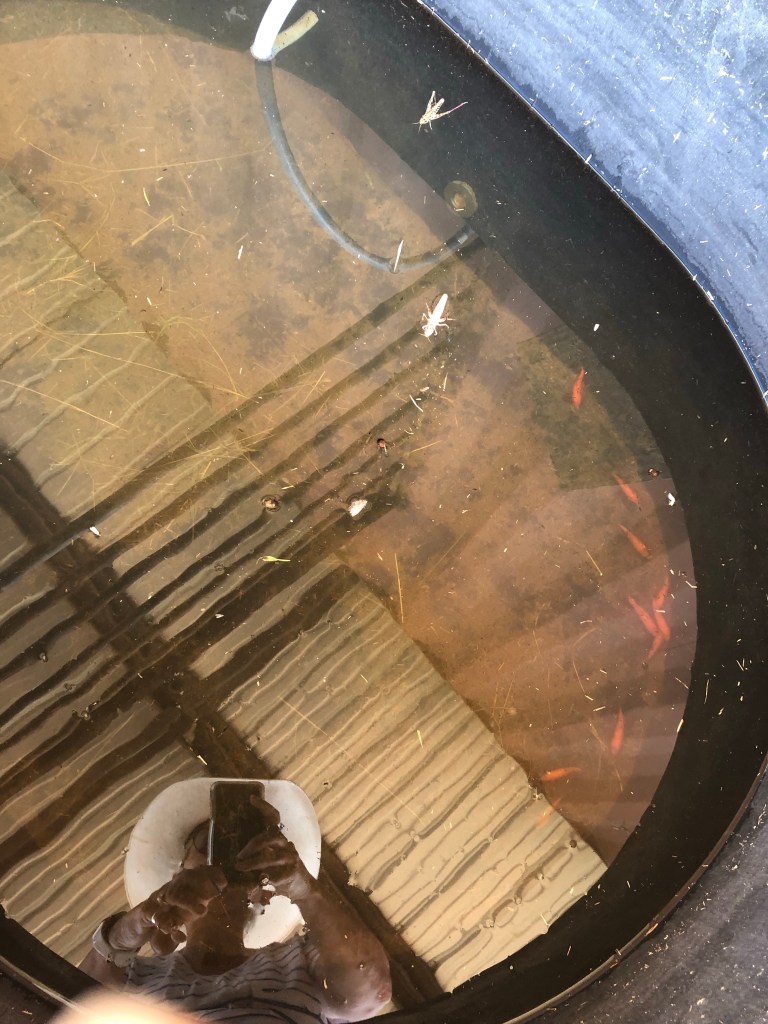
In ranching news, Lee and I got some fish for the water troughs. Here I am trying to get a photo of goldfish.

My Own Hard Work against Being Judgmental

I know I’ve had pretty harsh feelings and thoughts about people who differ from me, whether politically, educationally, culturally, or philosophically. Sure, I have every right to think I’m correct, since what works for me does work for me. But, I know darned well I’m a product of many things:

  • When I was born
  • Who raised me
  • How I was educated
  • The people who surrounded me as I grew up
  • What I’ve read (or watched), and not to forget this one…
  • How I’m wired genetically

The last one has been hitting me hard lately. I’ve done enough reading on how our minds and bodies work to know that about half of the people in this world see the world one way, and the other see it another…and these boil down into the various dichotomies that have been around throughout our time as humans. Right now it’s liberal vs. conservative in the US, and other things in other places. But it’s there. And it isn’t going to change.

So, for the last few months I have been cutting back on my participation in the divisiveness in the US that’s not helping anyone. I’m going to keep my beliefs, but I’m going to haul out the lovingkindness and remind myself that people who do things or think things I disagree with were raised differently from me, have had different life experiences, are surrounded by a different subculture, and most important, are wired differently from me. This does not mean I can’t get to know them, be friends, or learn valuable things from them. I’m DOING this, dang it.

I know that there will be judgments aimed at me as I try to be more open, because my efforts aren’t exactly being replicated all over the place right now. So, the next thing to work on is not being hurt by judgments thrown at me. I guess these efforts go hand in hand. The past few years, where I’ve lived in a town where I don’t fit in, live with people with vastly different points of view and life experiences, and have not hesitated to share my thoughts have been great practice in not letting other people’s opinions hurt me.

From Jack Kornfield’s version of the meditation.

That’s not easy! I get hurt sometimes! But, at least I know that just because others look at me one way, it doesn’t mean I’m bad…just different. The key is to take the nugget of truth or valid criticism to heart, and reject the negative attitude or intent. We CAN learn from people who aren’t always kind to us or agree with us without absorbing the negativity. I’ve got a ways to go, and I’m glad I have role models who are further along with this than me.

But, I can take my breathing and use it to help me get back to a good place, and send lovingkindness out to everyone. That will keep me going as I learn, screw up, learn more, and find new ways to screw up. Now, doesn’t that sound just like a life well lived? It does to me.

An Invitation

Let’s see if we can all work to be less judgmental and more understanding that we can’t walk in other people’s shoes or know all their backstory. Can’t hurt. It might help.

Welcoming Deaths and Treasuring Lives

It’s an interesting time for me, when it comes to life passages. While I’m fine and not going through a life change, I am privileged to know people who are heading toward the end of their time on this earth, as well as people who are honoring lives of loved ones whose spirits left before their bodies did. I’ve never been one of those people who feared death or worried about it much, but I have always been intrigued about the legacies our loved ones leave behind. So, I’m going to share some stories that have been causing me to think. Some readers who are mutual friends may be familiar with some of these, but I’m not naming names.

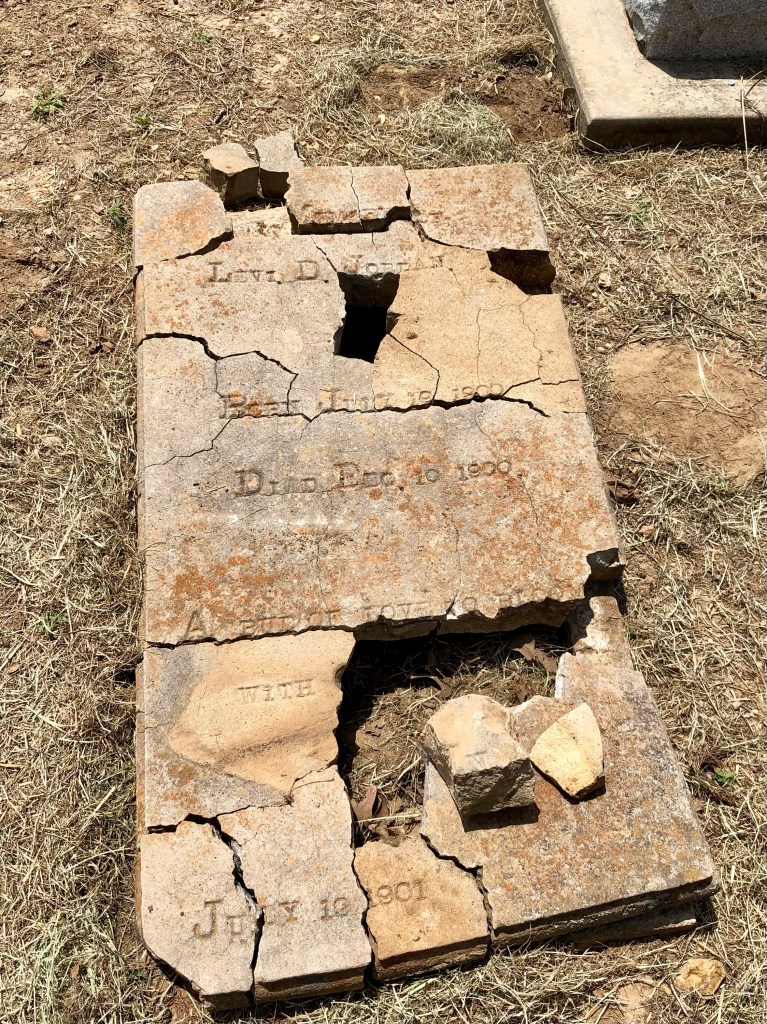
Coincidentally, I spent some time this afternoon with my friend Holly, who’s documenting graves at Walkers Creek Cemetery. This one was like a jigsaw puzzle.

The Strong Spirits

My colleagues at La Leche League tend to be people of great fortitude and spiritual depth. My very first role model in living a good life while facing death was my mentor, Roberta Bishop Johnson, who shared many insights and nuggets while she dealt with breast cancer in the 1990s. She made sure she was participating in the lives of her friends, offering up ideas, and sharing her love for her family right up until when she passed. That stuck with me.

Two of my other long-time LLL friends are nearing the ends of their journeys here with us, and both have been incredibly open about sharing their ups and downs, feelings about their bodies and what’s happening to them, and coming to terms with the fact that things are winding down. I really appreciate their openness and willingness to share.

Not everyone is up to doing this; I’ve known people who didn’t share what was going on with them at all, which is a completely understandable option, but takes away their friends and families’ ability to share life with them as fully as possible while they are here. But I get it; people don’t want to appear to whine, to bring others down, or to share the painful details.

For me, learning about how these two women have made sure to do things they’ve always wanted to do, while they can (one married the love of her life, and one made sure to get in travel with her children, especially to the beach), how they carefully planned for things after they are gone, and how they enjoyed their friends and family to the fullest all contributed to making me much more comfortable with dying on your own terms. I’m not saying they are lucky, but they do have the luxury of knowing what is happening and being able to plan accordingly. I know my dad would have liked that chance, so much.

One thing that comforts me greatly about knowing I won’t have these friends around much longer is that I know their spirits and legacies will remain. After Roberta passed away, I could still hear her tell me what she thought about what I was doing in my life. And I also still hear my dad (and tell him stuff; I can’t help it). We will feel these generous friends with us for years.

This tree growing around a t-post reminds me of the struggle to fight unwelcome things growing inside us. Sometimes you just have to accept them and keep growing anyway.

The Ones Whose Losses Happened before Death

Another set of friends I’ve learned a lot from in the past few weeks are two dear local friends whose mothers passed away recently, but had been gone in spirit since an Alzheimer’s diagnosis. These women felt like they’d lost their parents long before they actually passed away.

One just had the memorial get-together with her extended family, and it was more of a nice gathering to share good memories and enjoy each other. The mourning had happened years ago, when they lost her personality, or essence, or something. The other friend seems to have gone more into business mode, of taking care of details. She had been so kind to her mother, though, even with the difficulties of COVID. Who could blame her for feeling some relief and just wanting to move on to the next phase?

I feel a lot of sympathy for these people and their families. They’re sad, yet relieved that their parents aren’t dealing with confusion now (though, I know some people with dementia who are happy just as they are…it varies so much).

Takeaways

Watching all these events as a third party, not intimately involved like families are, has taught me some lessons, maybe not consciously. I think the reason I’ve gotten a second horse and plan to start lessons again is that I want to do these things while I still can. And getting a swimming pool installed and making the ranch house look better, too, were things I’d been putting off or giving up on. But, if I can’t have fun now, when am I supposed to?

To show how far I will go to make things fun, I spent quite some time trying to line up my head and my hat so it would look like I am wearing a tiny cowboy hat.

AND, as I’ve been telling myself for the last couple of years, I need to recommit to being with people who bring me joy and make my life pleasant, go places and do things that expand my mind, and take the time to find the fun in whatever I’m doing. I think that’s the key to enjoying whatever time we have here in this life–enjoying where you are and who you are with NOW.

With love in my heart for my friends heading toward big transitions or recovering from them, I invite you all to do something fun with someone you care about.

Helplessly Hoping

Oh, my friends, this anniversary of the pandemic lockdowns has not led to a bunch of happy, hopeful humans in my little world. The people who are struggling to maintain their equilibrium are just not doing it. And even those of us who’ve been keeping our heads above water feel like we are sinking. The hope that truly IS out there is just hard to see!

The little pink flowers of hope are hiding among the prickly cactus that is life with COVID-19.

Heck, I’ve been doing sort of okay most of the past year, but for the past few days, it’s been quite difficult to get through a day. It doesn’t help that my meetings seem to have meetings in them and I get really tired of Zooming. I put the image below on Facebook, and got a lot of support from friends who said this has been an extra-hard few days for them.

*then get back up and do the needful.

It’s weird. I’m NOT all afraid like my friends in the Other World (that’s what I’ve decided to call the Fox News watching crowd) keep telling me. I’m living my life. I’m getting my second vaccine today, actually, and I look forward to some travel in a couple of months. I do have hope, but it feels like helpless hope. I honestly think I just can’t believe positive news.

For example, President Biden gave a talk last night, and it was full of hope and positive energy. People in the US might actually get vaccinated. People who are not me are getting money from the government, too. He spoke kindly, stayed on script, and didn’t call anyone names. This normally would have made me feel better.

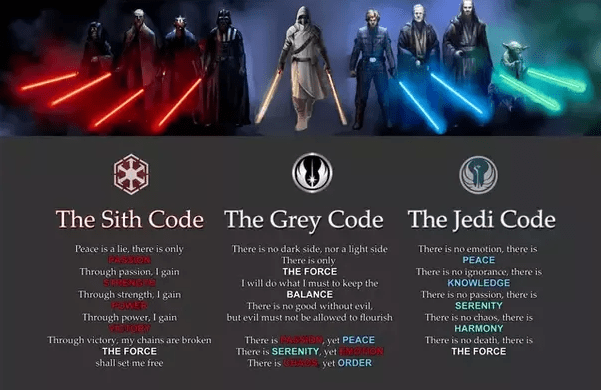
But no, the cycle I’ve gone through in the last few decades (Bush, Obama, the previous guy, Biden) has led me to not put any credence into good news. There’s always something awful just down the road. Don’t get me wrong, I am fully aware that life is suffering (I read Lion’s Roar, after all) and that there will always be positive and negative aspects to life, the dark and light sides of the Force, and all that. But the un-ending, pounding, grinding succession of challenges, struggles, meanness, and and obstacles the past year has brought with it have taken a lot out of me. It helps to know I’m not alone.

Don’t force yourself to choose unless you want to, says Suna the Grey.

I admire the folks who are hanging in there and posting the positive memes every day (like my dear niece who could find the good in our sun going supernova, I think). Hope is needed. But right now, I’m in a place that I don’t believe it, no matter how nice it is to see it in others.

All I have for y’all is some virtual hugs. I think I mentioned needing hugs just a couple of days ago! And I appreciate the return hugs and good energy. I’m absolutely confident that I’m just dealing with a passing depression episode that’s completely understandable. Just know that I’m still helplessly hoping, and some day I may even believe my hope and get back to all that cautious fun I was managing to have earlier in the pandemic period.


Oh yes, it’s my job to mention that I do have podcasts now of all my most recent posts. I usually record each blog post within 24 hours of posting it here. You can go to Apple podcasts, Spotify, and many other places, search for the Hermits’ Rest, and follow our spoken journey. I also promise to mention anyone kind enough to sponsor my podcast, which will help repay all the money I spend to bring you this blog!


Book Report: Women Talking

Rating: 5 out of 5.

Wow. There are so many things to say about this book that I’ll never get them all said! After I read All My Puny Sorrows, I wanted to read more from Miriam Toews, and selected this one, Women Talking, after reading the intriguing reviews. I said All My Puny Sorrows was a jewel of a book. Well, this one is like the Hope Diamond or something. There are so many aspects of it that are just…perfect…that it’s hard to find a place to start.

If this is soon to be a major motion picture, I think I’d have a hard time watching. It’s intense.

Well, I do know where to start, which is with the content warning. If you can’t handle books where there is discussion of rape, you’ll need to pass this one by, because the premise of Women Talking hinges around the effects of women of an entire community dealing with the consequences of it. It’s based on a true story, but the dialog and such are imagined.

The protagonists are a group of women in a Mennonite community isolated somewhere in South America, who at first thought they were being attacked by ghosts or demons in the night. The entire plot takes place over two days, as they decide how to deal with the men in their community who actually perpetuated the crimes.

None of these women have been allowed to learn to read or write, and very few of them have ever left their small compound. They have been trained to obey the men, never offer an opinion, and to simply do their jobs (cook, clean, farm, and reproduce).

They hold a series of secret meetings, when the men have gone to try to bail out the rapists, and they ask the one educated person in the community, the teacher, who’s an outcast, to take minutes of their meetings. August is not sure WHY they asked, but he is willing to do it.

Through his notes (and his unexpectedly complex asides and insights into his own history), we learn what a fascinating group of people these women are, gain many insights into the beliefs of their Mennonite community (by the way, NOT like all Mennonite communities…it’s a bit cultish), and see how brilliant, brave, compassionate, and feisty they can be.

When they start planning, reasoning, discussing theology, and supporting each other, you can’t help but be in awe. Toews shows how resilient the human spirit is, and truly draws you into their culture and concerns. There are so many details I’ll never forget, such as conditions they have to deal with all alone, with no real medical care (edema, fainting spells, pregnancy and childbirth, loss of eyesight, loss of limbs, etc.). And there are little things like how one of them manages to be a smoker, or how the two youngest women braid their hair together, or jauntily remove their head coverings and roll their socks down in rebellion.

You eventually see that everyone in the book has suffered, has tenuous connections to sanity, but have strengths, the depths of which they don’t always realize. And to get to that realization you get to enjoy the privilege of Towes’s spare dialogue, her knack for expressing things in ways that people from another “world” would say them, and her true love for marginalized people.

I admired the women in this book deeply. They stuck to their principles as I could only hope to do if I was challenged to fundamentally. And I admired August the note-taker, too, poor tortured soul.

This book affected me as deeply as The Handmaid’s Tale did way back in the 1980s. That means it will stay with me forever. Please read it.

Bring Back the Word of the Year. Enough.

For a few years, I participated in the practice of selecting a word of the year. The idea is to look at the year through the lens of the word you chose.

Inspired

I didn’t do it for a few years, and haven’t since I started this blog. But, through the miracle of figuring out where the option to search my old Facebook posts is located in the interface, I found my choices from previous years. It appears that the 2013 word was “Flexibility.” Good choice.

And here I found out the 2014 word was “acceptance” (that’s done me good ever since!) and 2015 was “vulnerability.” Whew. I’m glad I’m healthy for my age, because I can see how long it takes to really assimilate concepts that require fundamental changes in my outlook and mindset.

I’m not sure how I got out of the practice of setting a word for each year, because I enjoyed it in the past. Maybe 2016 was a hard year for focusing. It was the year we spent at the little casita. That was, indeed, a confusing year. Of course, I’m glad I didn’t pick a 2020 word, as interesting as that might have been.

2021

It took very little meditation to have this year’s word come to me. My year’s focus and mantra need to be this.

2021 Suna Word of the Year

Yes. Whatever happens, I want to find it to be enough. I’m not going to push this year. I want to appreciate what I have, how things are, who is in my life, and what happens. I’m not looking for perfection. I want to abide and accept my circumstances. It’s enough.

I encourage you to find your own word for 2021. Please share, if you would like to.

Religion, Politics, Grievances

Not sure if this is a rant or what, but I’m experiencing some righteous indignation on behalf of some people I know, in person and online. It seems like folks are really, really bored right now, and I get that. It’s winter and many of us are pretty isolated.

BUT

Nope. Not finished.

Just because you’re bored and you have an opinion about someone’s beliefs or actions does NOT mean you are obligated to share it with the rest of the planet. More important, you don’t need to tell people how wrong all the things they think and do are. Really, you do not.

Yes, people we know do stuff that bothers us. And, I have nothing against talking about things people, in general, do that bother us. I do it, as you may have noticed, and am doing it now, as a matter of fact.

However, just because you have the TIME to send a long email, text, or IM to someone spelling out exactly how wrong their beliefs and opinions are, it doesn’t mean you SHOULD do it. Think about it.

If you are happy with the religious path you have taken, which after all is a personal religious path, would someone telling you how wrong it is do anything other than make you think less of that person. It certainly would not change your religious beliefs. That happens between you and your deity or deities. No one has a right to call your beliefs into question (even Scientologists, ha ha).

Now hush.

If you have expressed your personal thoughts on a personal platform (blog, Instagram, Facebook, etc.) about politics of your country, policies in your area, or issues that need to be addressed, that does not (or should not) open you up to diatribes, name calling, meanness, or threats. Sure, people can express disagreement or other points of view, but why be mean about it?

Does insulting someone or disparaging someone’s beliefs EVER EVER EVER get them to change their mind and see your brilliant point of view as correct? (Hint, the answer is, “no.”)

Suggested Alternatives to Giving People a Piece of Your Mind

If you get a strong urge to tell someone exactly what you think about their life choices or viewpoints, here are things you can do that don’t involve attacking them with your scathing words:

  • Donate money in their name to your favorite cause. That always feels good. I’ve done it!
  • Write the horribly misguided person a long letter by hand, on a piece of paper. Then stomp on it really hard to get your frustrations out, followed by violently wadding it up and throwing it in the trash.
  • Take a long walk around your property while muttering dark and foul thoughts about your target, until you get distracted by something naturally beautiful and you start feeling all sorts of oneness and your hostility dissipates (works for me).
  • Call your best friend and declare that it is time to vent. Rant and rave and complain your head off. The friend will say soothing things. Then you will agree that there’s no point in telling the wrong-thinking person off; they just won’t get it.
  • Wait until Festivus, then stand by your Festivus Pole and air your grievances. That will be okay, because it’s a holiday activity.*

By the way, it’s FESTIVUS! Let us air our grievances!


(*The article I link to above explains how Festivus is the perfect pandemic holiday and is pretty cute. Also, if you Google Festivus, there’s a Festivus pole in the margin! Hilarious!)