Book Report: Beaverland

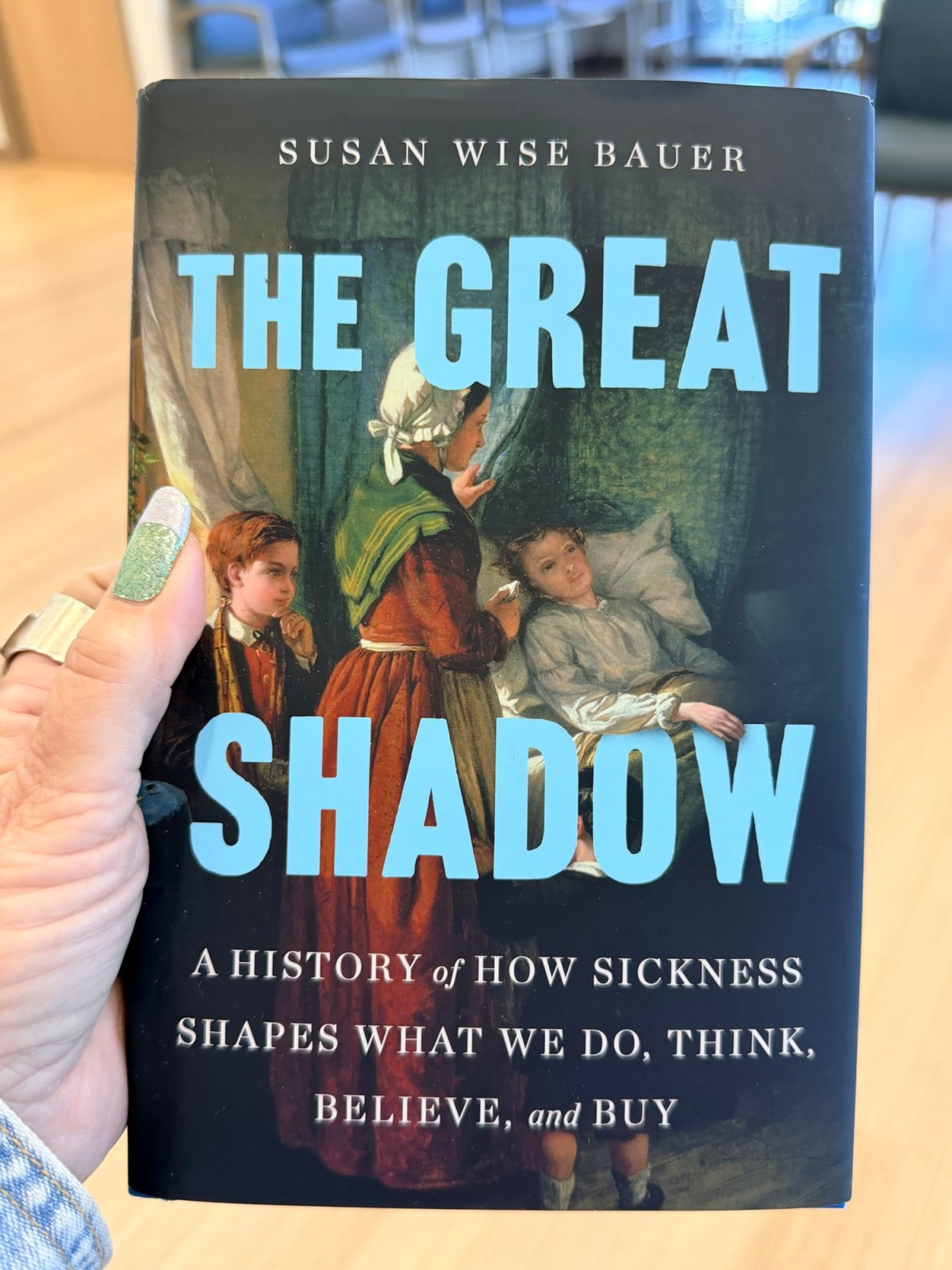
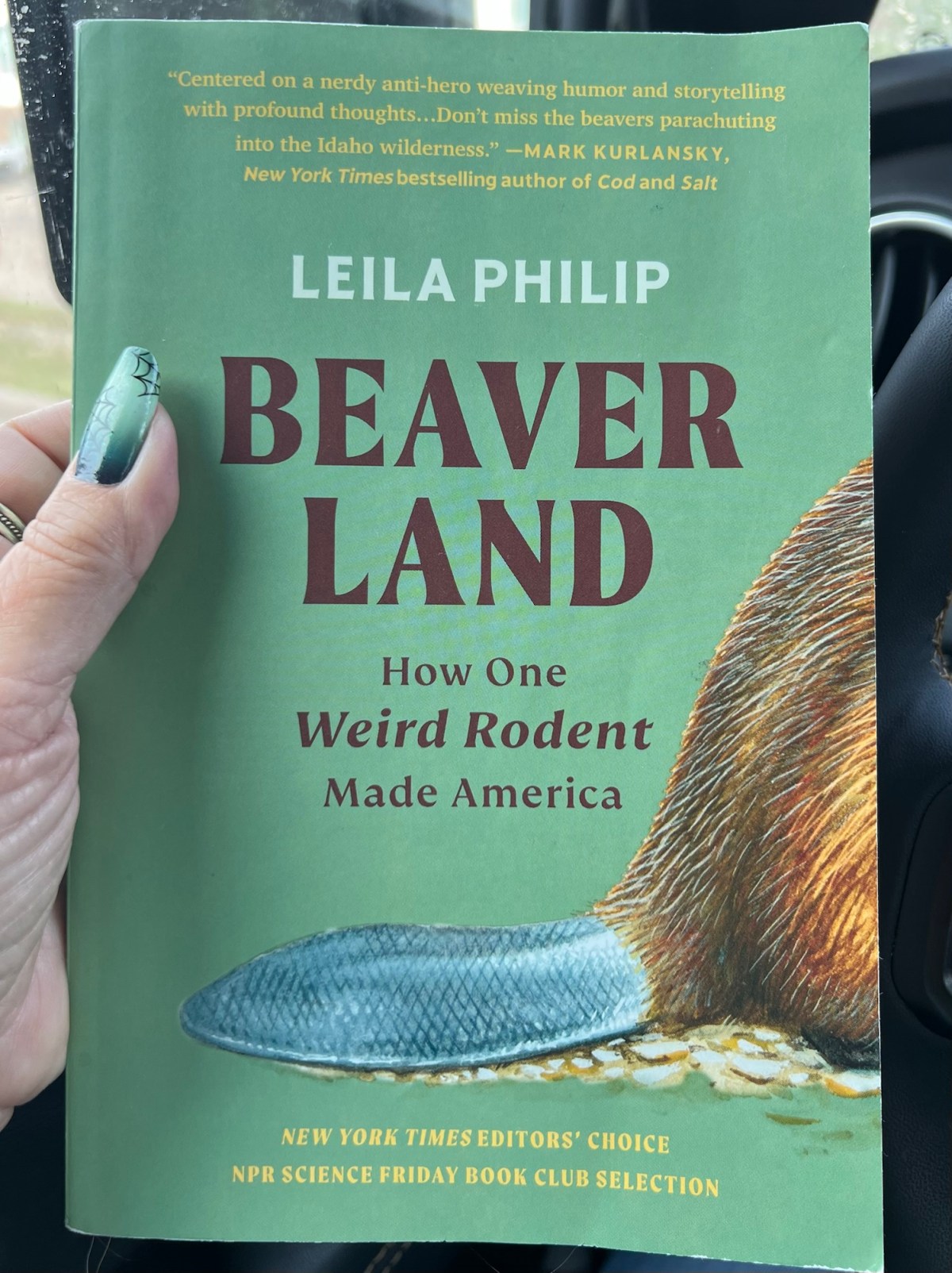
I recently finished this fascinating book about beavers, which opened my eyes to a lot of possibilities for healing the earth thanks to these helpful animals. Leila Philip is a New Englander who became interested in beavers when they were in the pond behind her house, so she spent a couple of years researching Beaverland: How one weird rodent made America (2022).

I like that Philip researched so many aspects of beavers’ presence in North America. The historical background was fascinating/horrifying. Fur trapping completely eliminated beavers in the eastern US and Canada but when reintroduced, numbers came back very quickly. That’s good.

Philip spent a long time learning about modern-day trappers and I commend her open-mindedness as she not only talked to trappers but went out with one as he checked his traps. This guy had incredible knowledge of the wildlife and terrain and a deep knowledge of beaver behavior and habits. I was fascinated, and came to accept that a reasonable amount of harvesting keeps numbers at a good level and provides hides that are used for hats, etc.

What boggled my mind, though, was finding out how beavers (and the prolonged lack of beavers) affect our waterways, water quality, and health of the surrounding countryside. Rivers didn’t look like they do now before trappers arrived. No straight lines and eroded banks. When there are beaver dams, water moves much more slowly toward the ocean and is cleaned of toxins. Oh there’s lots more, but I don’t want to rewrite the whole book!

Speaking of writing the book, my favorite part came at the end, where there’s a section called “The Story of the Book,” that provides context for her travels and research for the book. It’s just as interesting as the main book, and a lot more fun to read than typical endnotes, though it serves the same purpose.

My only quibbles with this wonderful book are that sometimes information is repeated almost verbatim, and Philip feels compelled to describe everyone she meets through a sort of annoying subjective lens. I’m not sure I need to know how messy someone’s hair is or the details of their clothing in every situation.

I’m in a grumpy mood, so take my criticism with a grain of salt or two. If you’re a naturalist or nature lover, you’ll treasure this book and the perspectives it provides.

Book Report: Coming Up Short

Full disclosure: Robert Reich is the American I admire most. So it’s no surprise that I hoped to enjoy his new memoir, Coming Up Short: A Memoir of My America (2025).

Yes. Punning is involved. He’s short.

Wow, this is an insightful book, both from a historical and philosophical standpoint. I think that, at last, I have a grasp on what was going on in the United States during my lifetime. I think I only had a superficial understanding of who won elections and who promoted wars, improved lives, made rich people richer, etc.

Robert Reich has known so many important political and intellectual figures in his lifetime, from all parties and perspectives. His first-hand accounts of historically significant events clarify my understanding of turbulent times and remind me that ours isn’t the only time of upheaval in the US. He freely admits where he made errors, too, which makes him much more credible than someone who’d claim to have never made mistakes.

I found his detailed analysis of how we got where we are today fascinating. I can see the current US leader’s appeal to disenfranchised citizens and how those folks have been distracted from their actual enemies, which are corporate interests out only for their own profit. I think we educated elites are also being distracted into thinking the enemy is Christian nationalism rather than corporate greed. Yikes.

Reich is someone whose thoughts and commentary I read daily, even though I get pretty alarmed sometimes. He does also try to point out where people are doing good work, speaking out, and standing up to bullies. It’s good to have a little hope. In that spirit, I give you this passage on patriotism from Coming Up Short:

“White male Christian nationalism has nothing to do with patriotism. True patriots don’t fuel racist, religious, or ethnic divisions.

“Patriots aren’t homophobic or sexist, nor are they blind to social injustices, whether ongoing or embedded in American history. They don’t ban books or prevent teaching about the sins of the nation’s past. They don’t censor truths that may make people uncomfortable, facts that are inconvenient, realities that people would rather not face.

“True patriots are not uncritically devoted to America. They are devoted instead to the ideals of America- the rule of law, equal justice, voting rights and civil rights, freedom of speech and assembly, freedom from fear, and democracy. True patriots don’t have to express patriotism in symbolic displays of loyalty like standing for the national anthem and waving the American flag. They express patriotism in taking a fair share of the burdens of keeping the nation going, sacrificing for the common good. This means paying their fair share of taxes rather than lobbying for lower taxes or seeking tax loopholes or squirreling away money abroad. It means refraining from making large political contributions that corrupt American democracy. It means blowing the whistle on abuses of power even at the risk of losing one’s job. It means volunteering time and energy to improving one’s community and country.”

P. 317

In summary, this is an important book for anyone who still cares about truth and ethical behavior. It’s also full of enjoyable anecdotes from a brilliant yet humble man. He will go down as a great American.

Investigating Near and Sorta Far

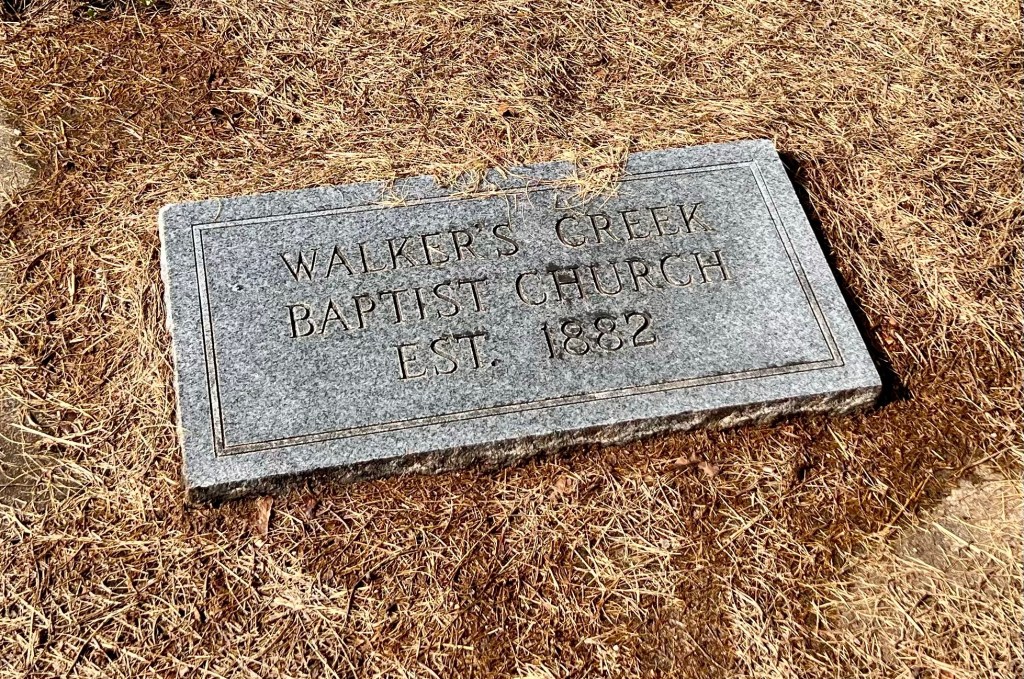
Today was hot, but otherwise a fine Sunday. I started the day by listening to birds, as usual. I felt like getting some exercise, so I took the long walk to the cemetery. It looked very spiffy, and the birds were happy with how nice things looked, both there and at the old school/church property.

I found out later that whoever the Walker’s Creek people are will be holding a picnic there next week! Maybe it’s people with plots in the cemetery—they do that at other cemeteries in the area. what a nice tradition.

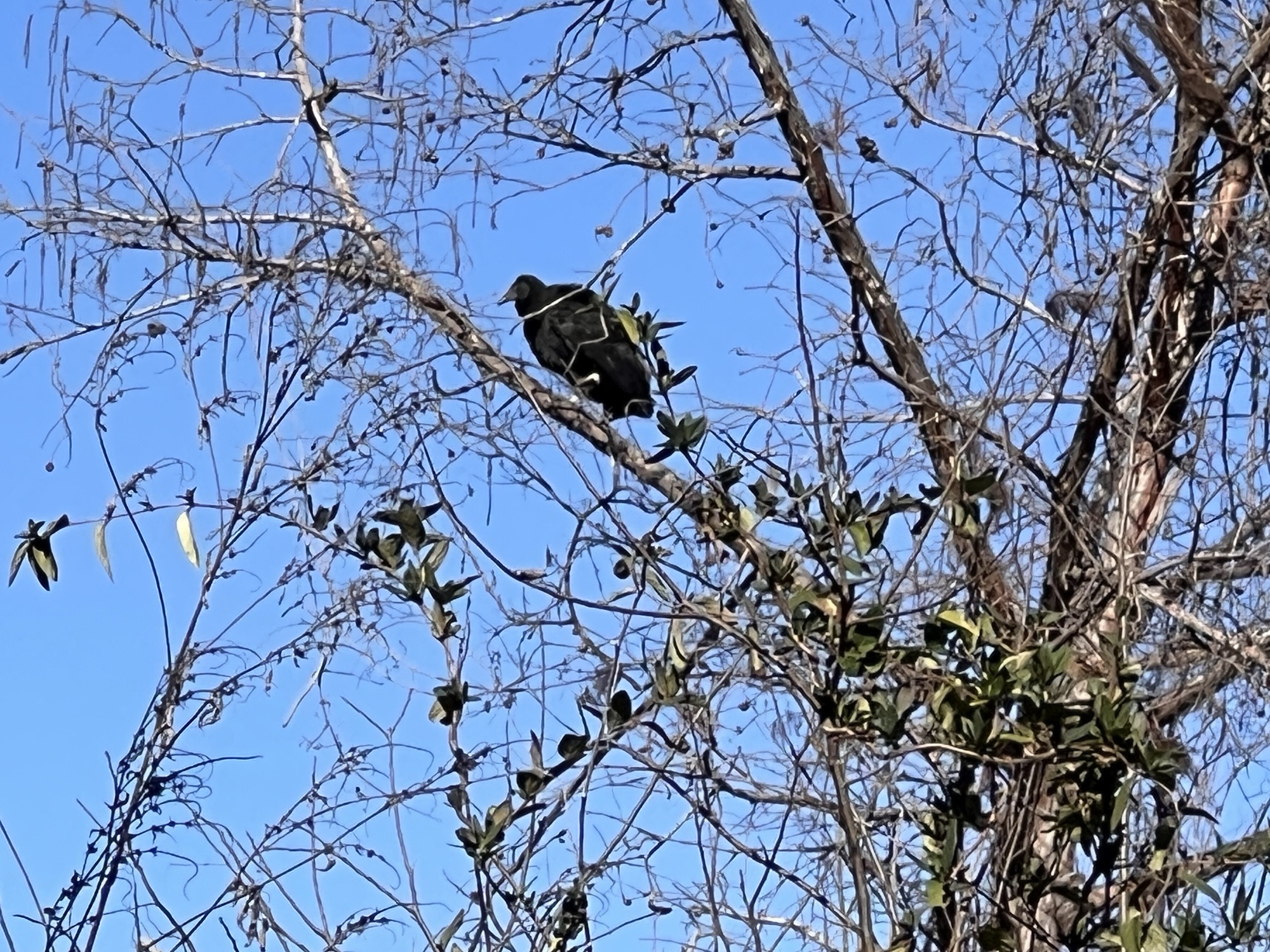
While I was there I noticed many Black Vultures gathering in two of the grand dead oaks adjacent to the old “town center.”

That’s a big gathering.

I also heard lots of dogs barking and a familiar voice telling them to stop. Were they barking at me or the birds? I went around the corner to Vicki’s house to find out. The answer is that her dogs really don’t like those birds, or they DO and are enjoying themselves. Since I was already there, I paid a visit (so un-hermit-like) and checked out an Australian saddle she’d bought to try to use with Drew.

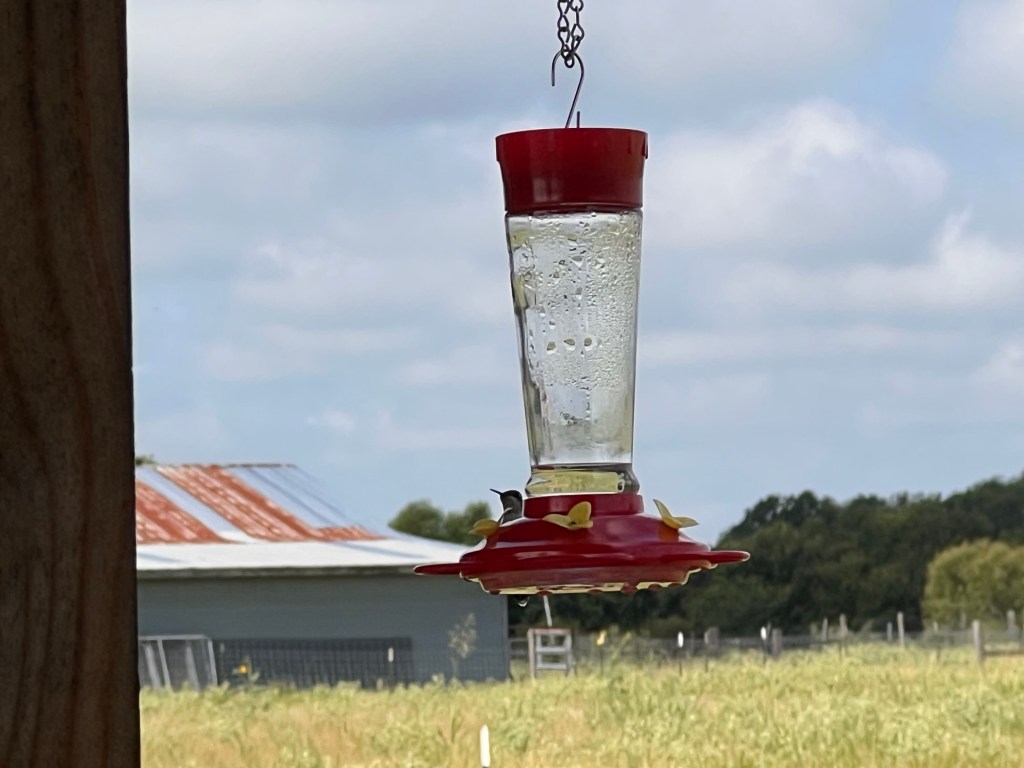
I also got to see a hummingbird!

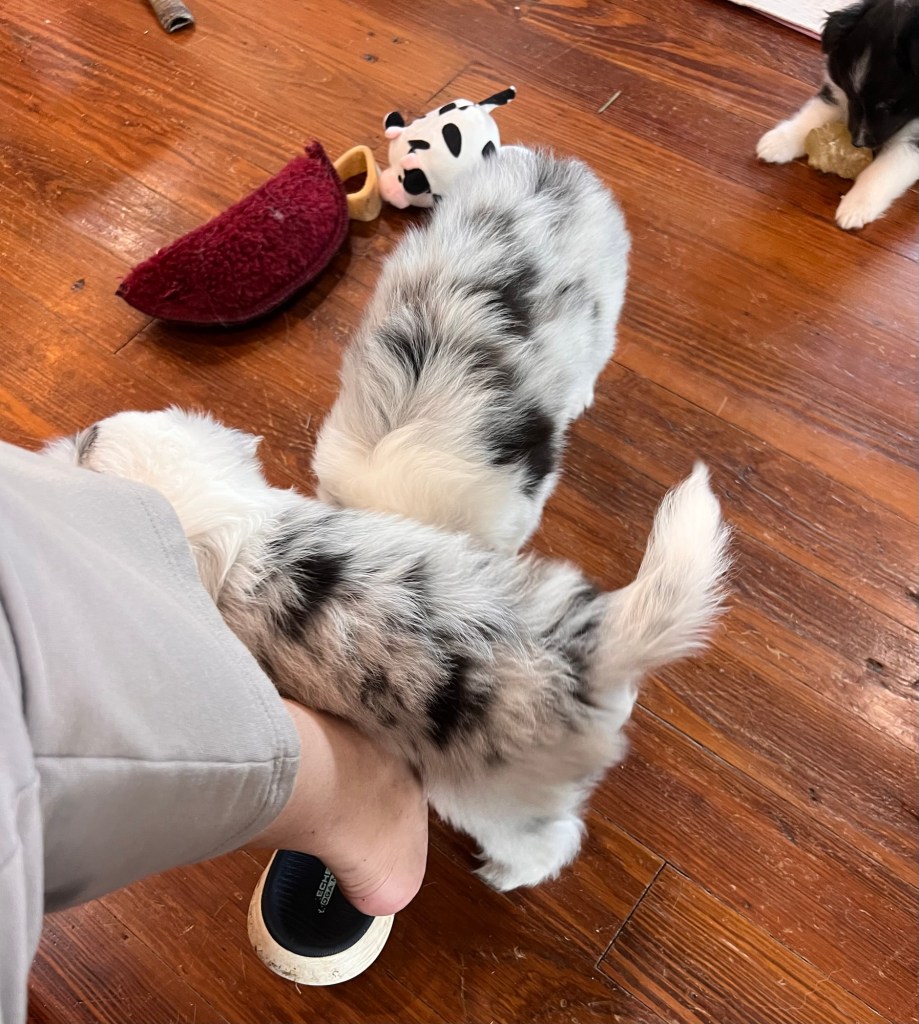
And, since I was there, I got to go inside and see extremely cute Sheltie puppies. They are very fluffy and bounce around most charmingly. They are destined for great things, given their lineage.

They are very wiggly and hard to photograph.

I had so much fun being a new stimulus for them. Much tummy rubbing and fur ruffling occurred. I also got to see the brand-new puppy whose mother is a national reserve champion herding dog. There was a lot of dog beauty and skill in that house!

I dragged my self back home for a shower and some rest. I don’t know why I showered, since I was soaked with sweat after working with Apache and dealing with the water trough Spice had managed to overturn. She, Drew, and Mabel seemed mighty pleased to have done that. At least Apache was good. He’s really getting used to the paths in the front field. He likes the Johnson grass and goldenrod and I like the shady areas.

No horse photos today, so here’s a tired Spicebush Swallowtail.

But, I’m out of sequence. Before horse time, Lee and I took one of our random drives, since he hadn’t been exploring all weekend like I had. We saw lots of crops, which we have in this area because we are east of Interstate 35. The soil is completely different on the west side, because the road follows a fault. Fertile farmland to the east, and alkaline karst formations to the west. Anyway, we saw feed corn being harvested, cotton in bloom, and to my surprise, a rice field. It was irrigated by the Brazos River.

We ended up in Calvert, Texas, which is fairly close to Cameron. Lee saw that some of the antique stores there were open, so we stopped by one, which is in the tallest building in the town. The building was erected by the first Black millionaire in this area as headquarters of a benevolent organization. This is probably inaccurate and no doubt a local person can set me straight.

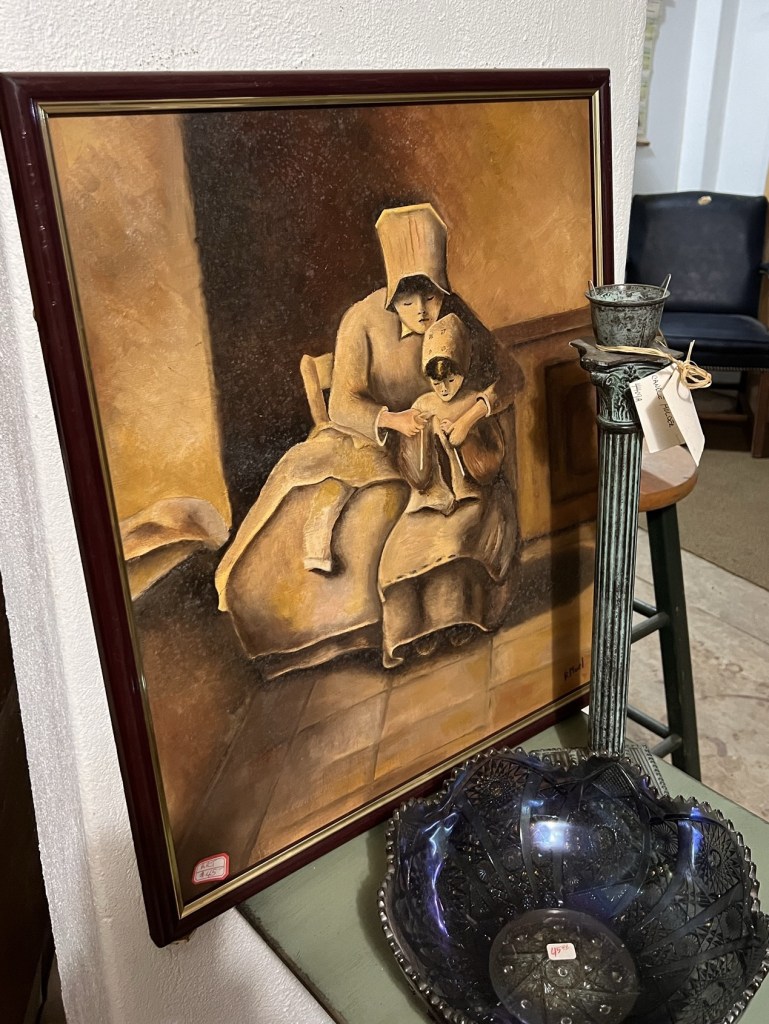
Picture of a woman teaching a little girl to knit.

The shop had lots and lots in it. Luckily there wasn’t much of what I want, but I wished I had a space for this embroidered screen. It’s very cool. I’d love to restore it.

I did end up getting a planter with pansies on it. I’ll show you once I get it set up. I didn’t get these. They had two similar pairs.

The Queen of England and her spouse as bedroom slippers. Classy.

Enough blather about my day. But I investigated many things, ranging from cute to weird!

Book Report: Spare

I’ve read a few books lately. This was the first. I picked it up at the airport on my way to Hilton Head and finished it when I got home. Honestly, I’m not a huge fan of the British Royal family, nor do I dislike them, but I read so many conflicting reviews of this book by England’s Prince Harry, so I decided to read it.

Spare was a pretty interesting book, really. It showed how human and fallible Harry was, for sure, and how utterly strange the world the Royal Family exists in. I don’t know how anyone could survive in that setting without some big time PTSD and anxiety.

I mostly ended up feeling sad for these folks and blaming their blind adherence to outdated traditions for how things have ended up today.

Prince Harry came across as very honest about his own failings and his sincere desire to do something that mattered. Wow, that young man could use drugs with the best (or worst) of them. He really seemed to crave numbing and distraction. His love of flying helicopters and of ascetic African pilgrimages both seemed to be ways of keeping his brain occupied with something other than Princess Diana and all those Royal protocols.

The writing is surprisingly good and Harry’s voice is clear. I do hope that he’s able to keep helping others and gets some peace after being chased by paparazzi for so long. That has to be difficult even for people with strong boundaries and good mental health. For sensitive people like Harry, well, I can see how he got so messed up.

After reading this, I feel empathy, which I guess was the goal of the book. I’m aware, though, that there are other sides of this story. I wonder if any other aspects will clarify Harry’s story someday? At least he’s no longer needed as a “spare” anymore.

Ancient and Avian Wonders

Yesterday was our last day at Hilton Head, so we did those last few things you hadn’t done yet. One was eat at Hudson’s, my favorite restaurant. Even though we tried to get in at a less-busy time, we would have had a 40-minute wait for outdoors. Indoors wasn’t as fun, but I enjoyed some oysters anyway.

Happy Snowy Egret

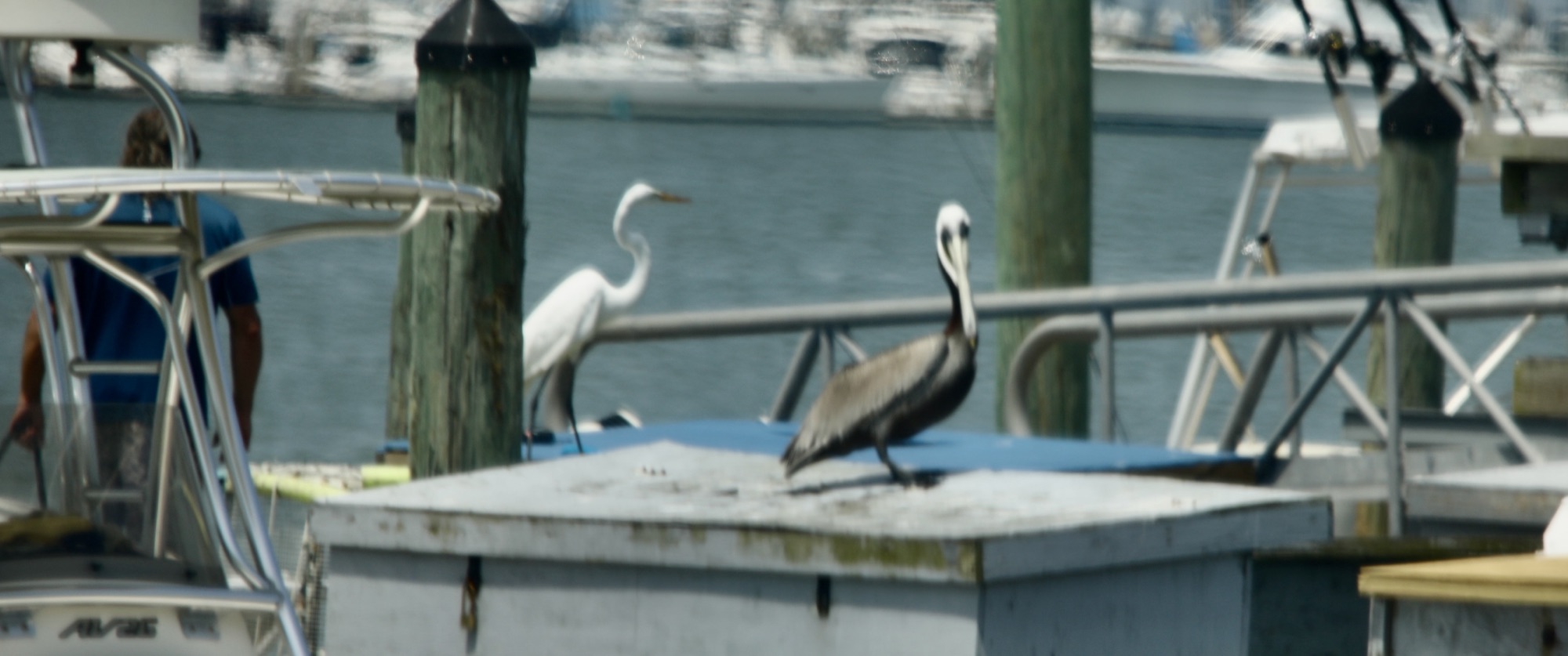
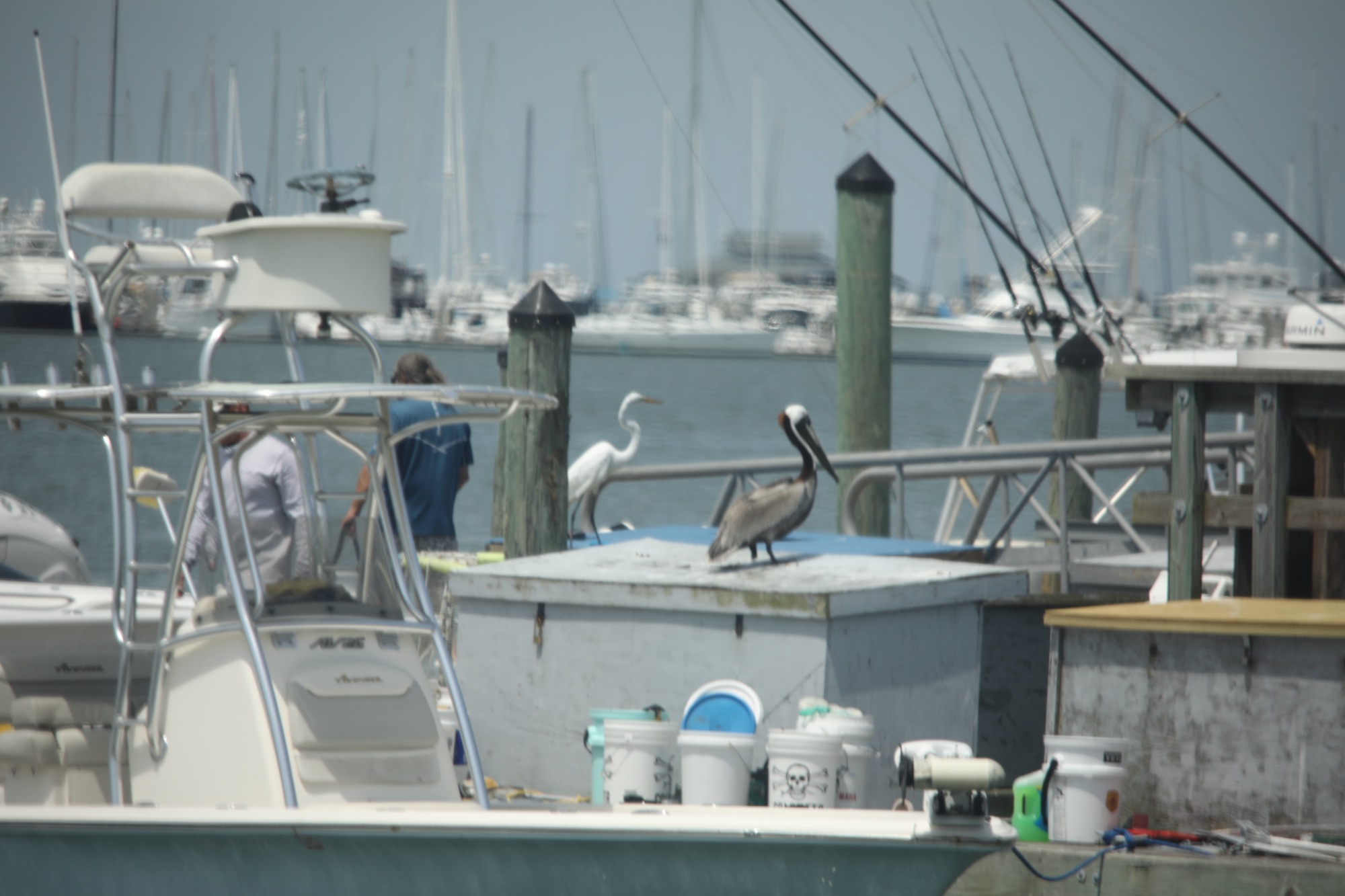
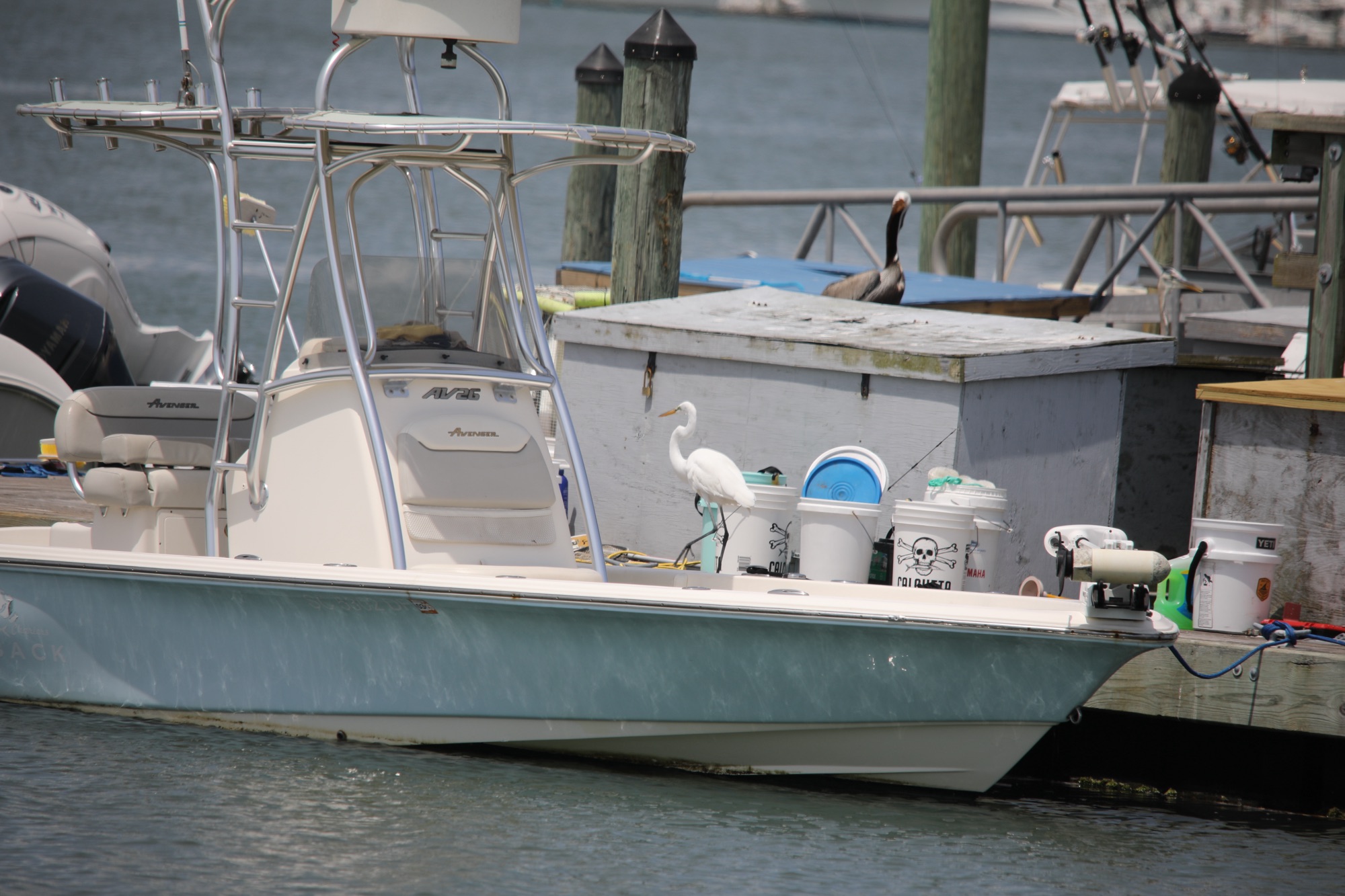
We found a Brown Pelican, and a Snowy Egret to take photos of, which made for a fun dessert!

After that we headed over to the Coastal Discovery Museum, which is a former hunting lodge that was donated to the island when the last owner passed away.

Too many gorgeous trees to get a good building photo.

They have turned the main house into a museum about the environment and history of this area. There was also an exhibit of art by local high school students, which was impressive. The exhibit I liked best was live horseshoe crabs swimming around and playing with the bubbles in their aerator. I’d never seen one alive.

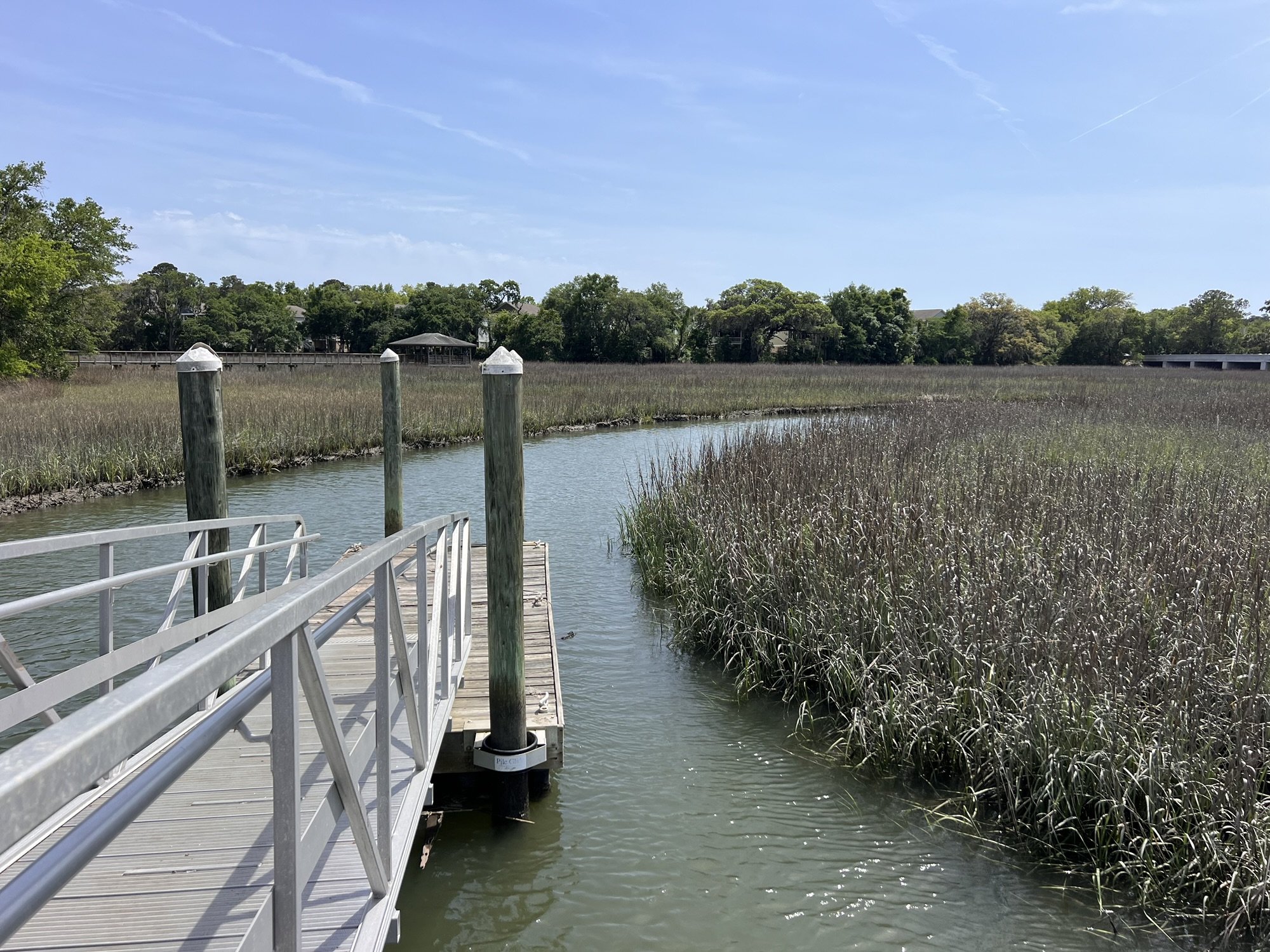
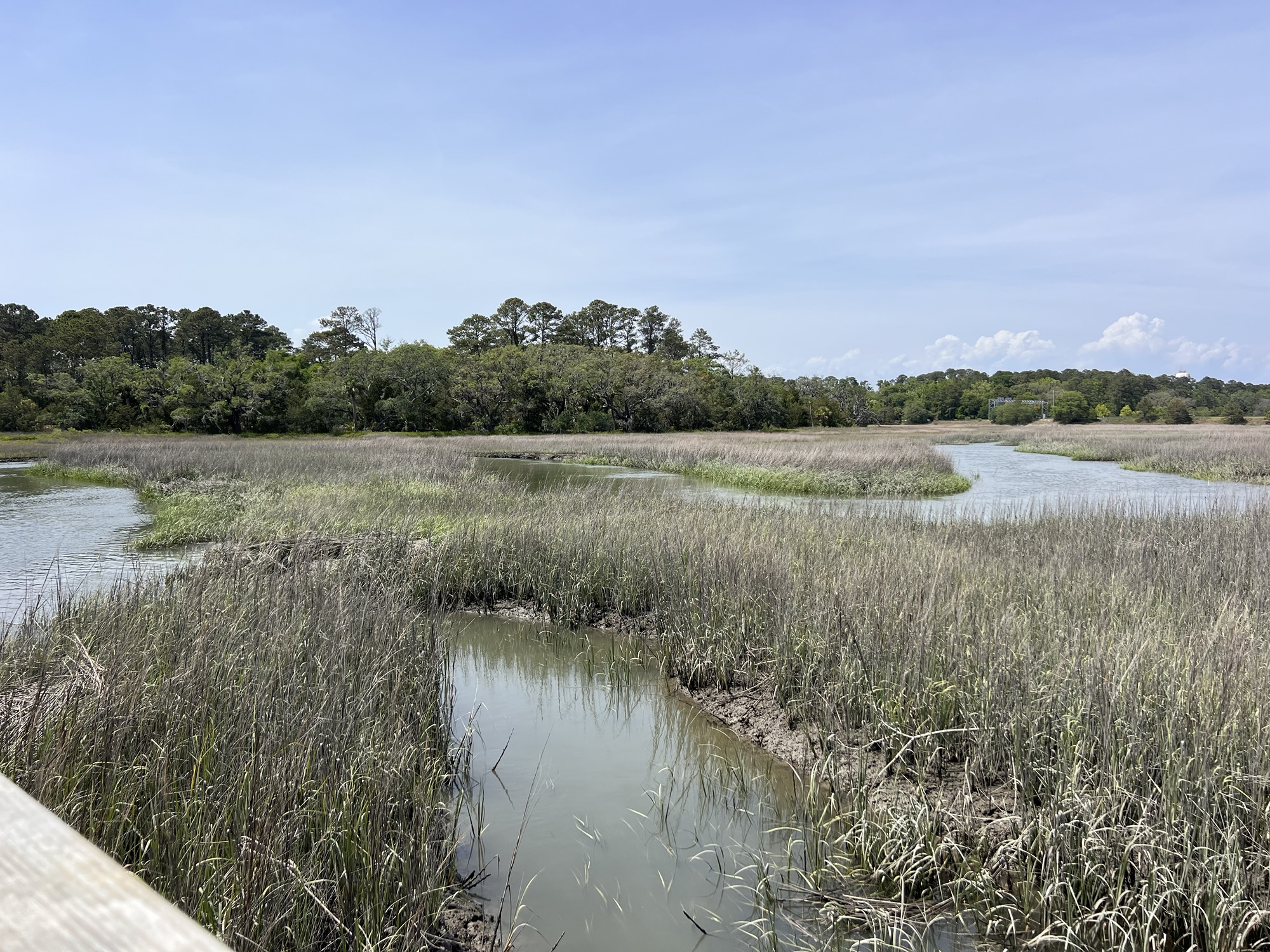
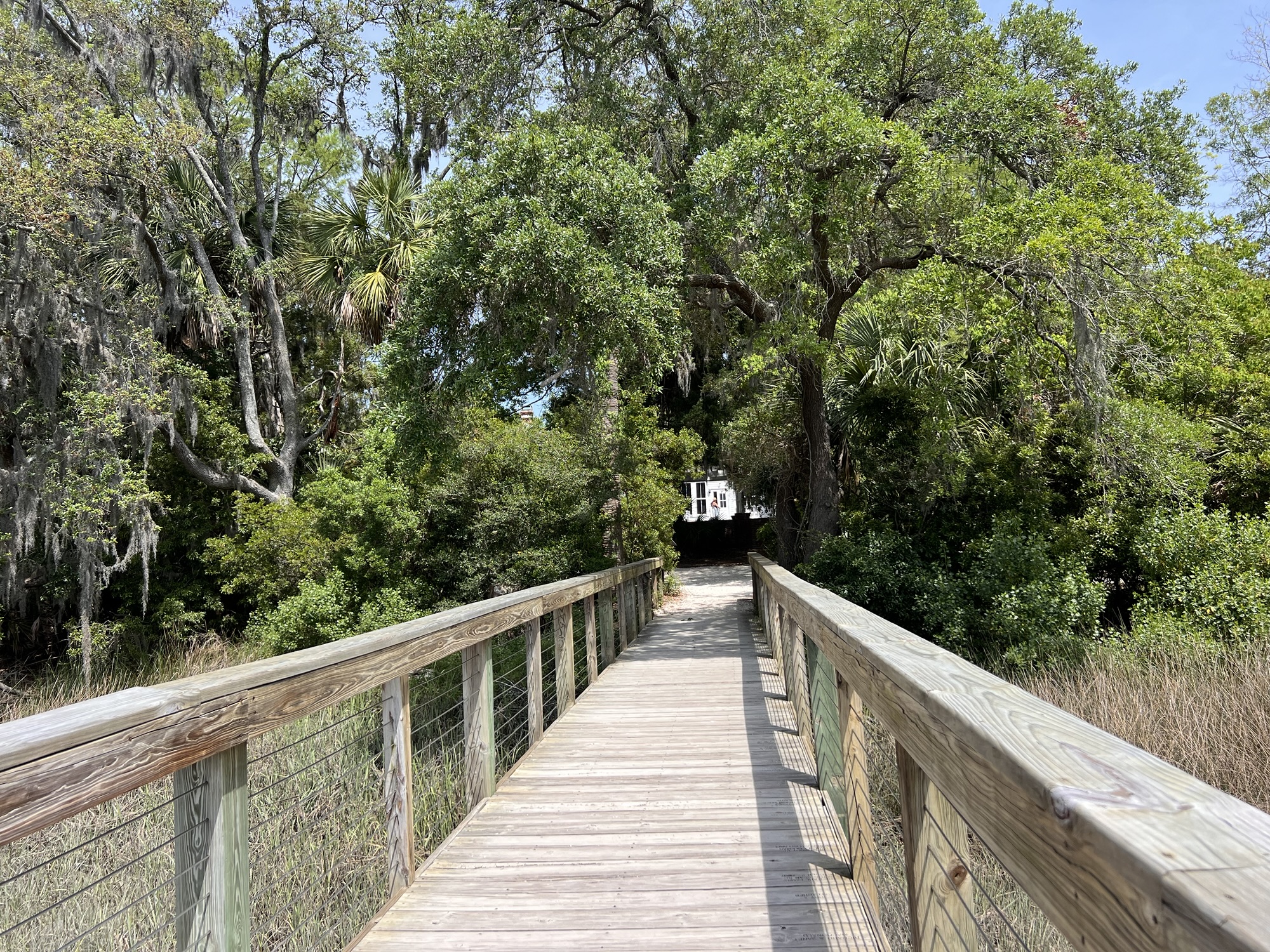
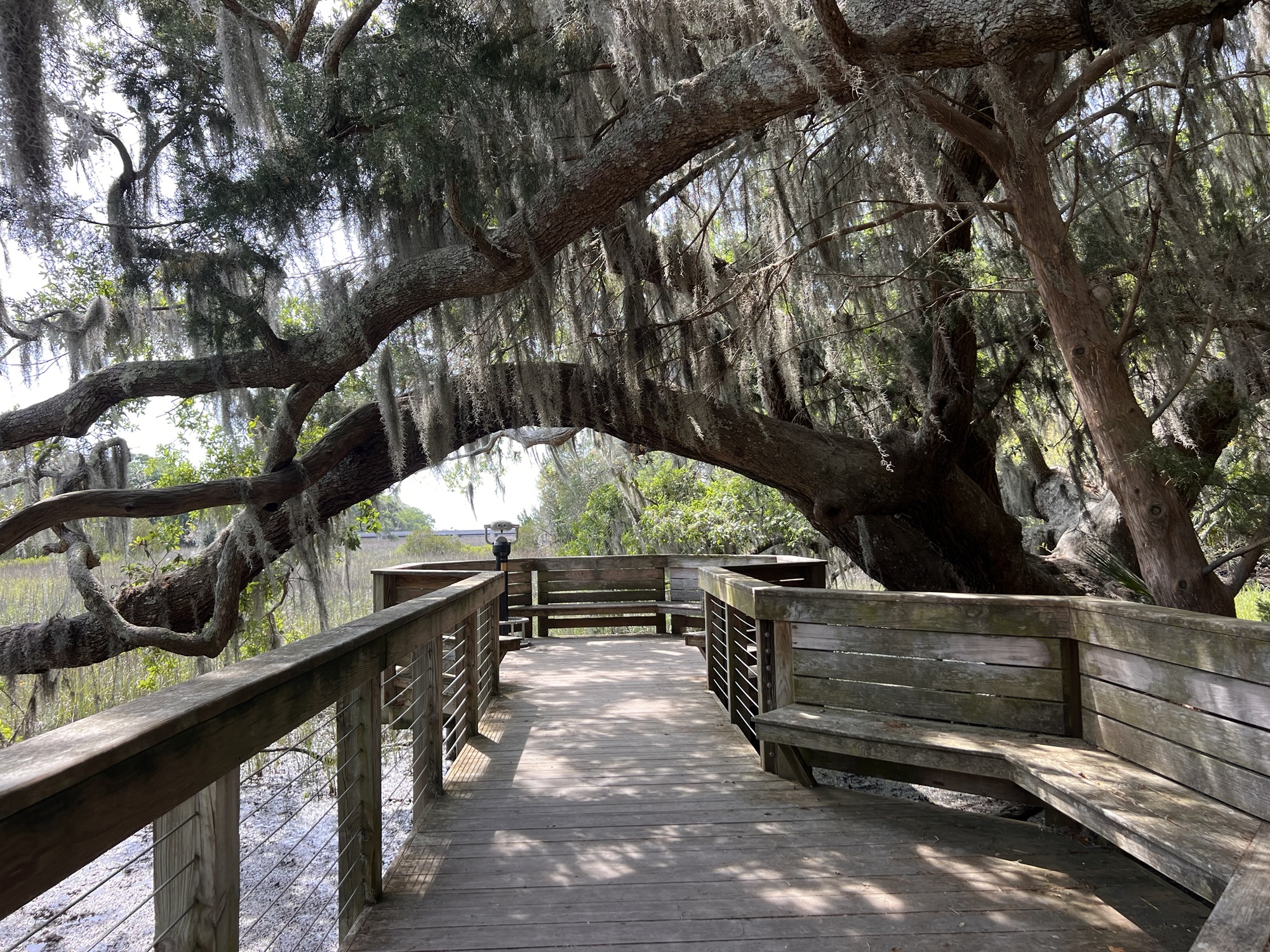
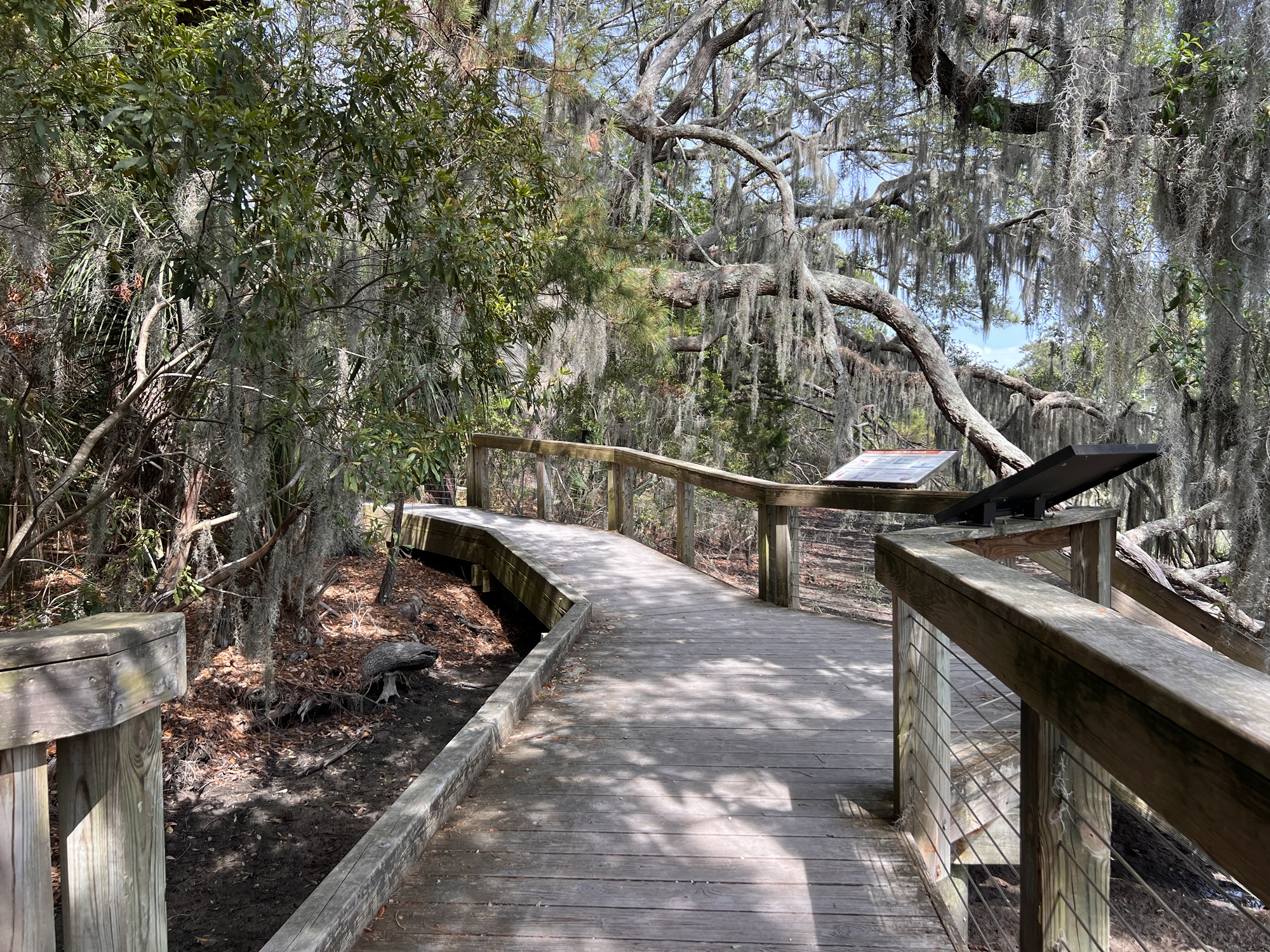
The best part of the visit was the outdoor exhibits. There were boardwalks leading onto the tidal marsh, which was wonderful, with many birds and rushing water.

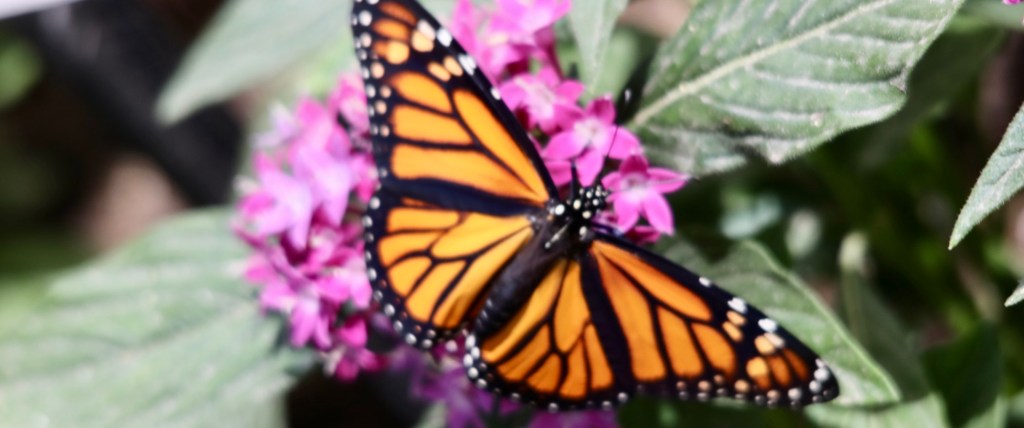
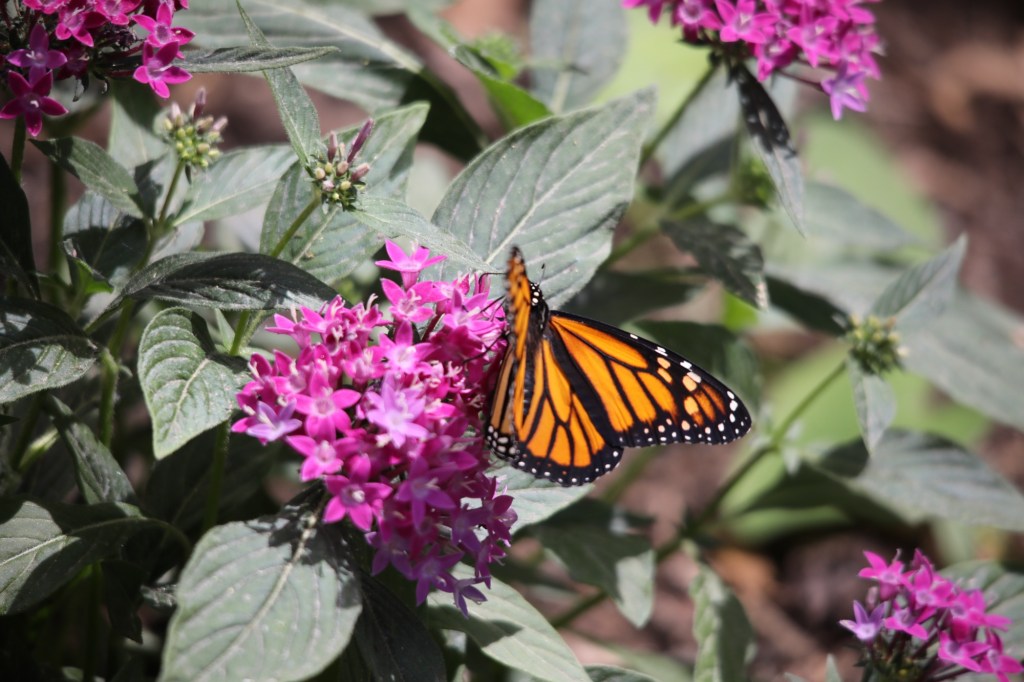
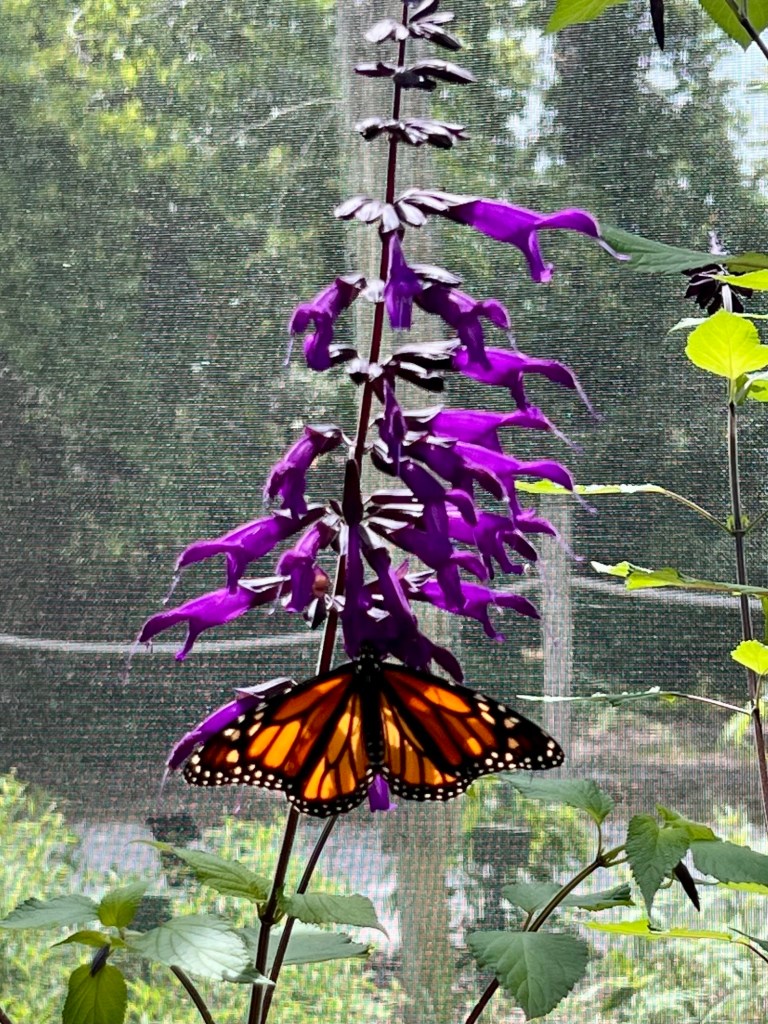
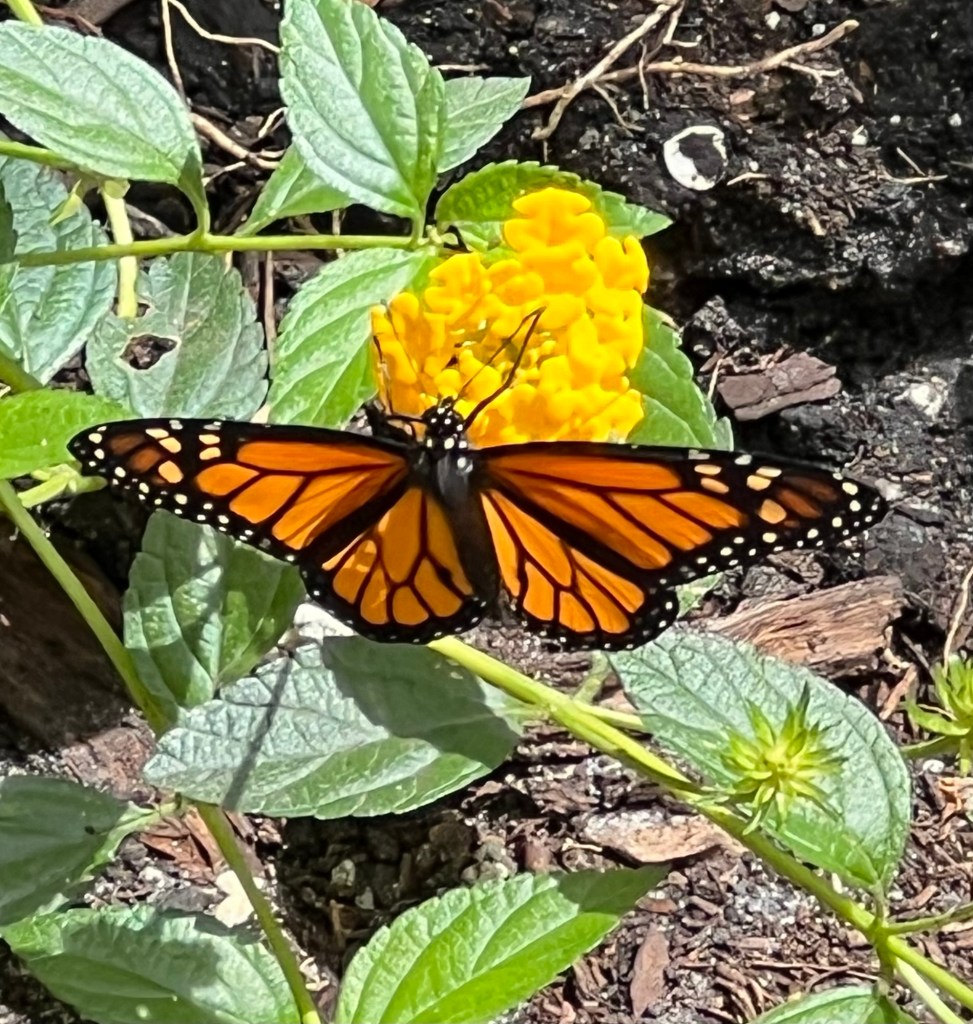
There was a butterfly exhibit with many monarchs flying around and lots of lovely plants to photograph them on. We were very glad Lee had brought the good camera, because some of the images are gorgeous.

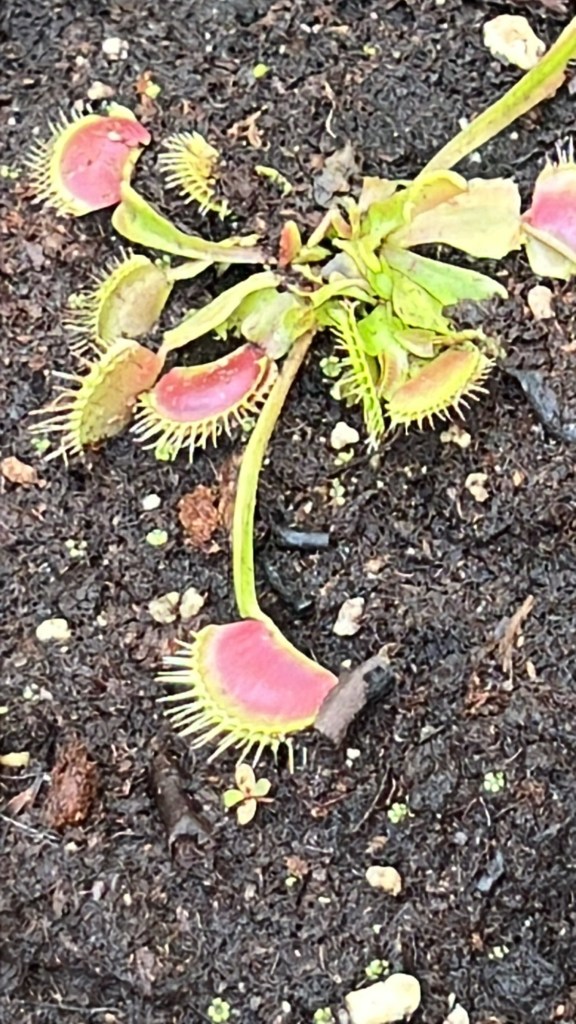
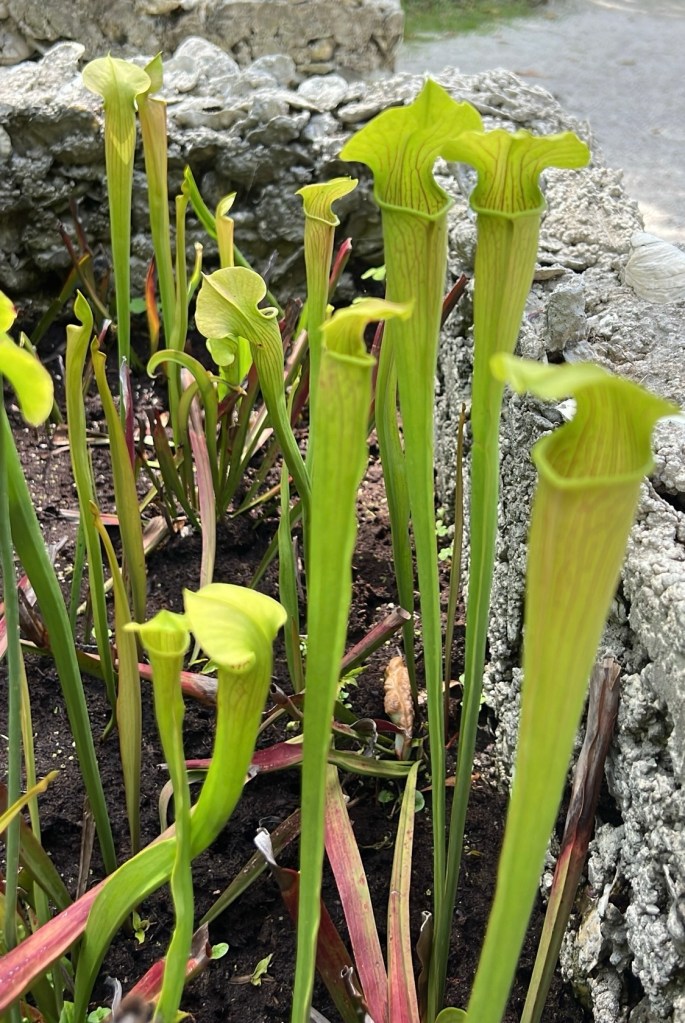
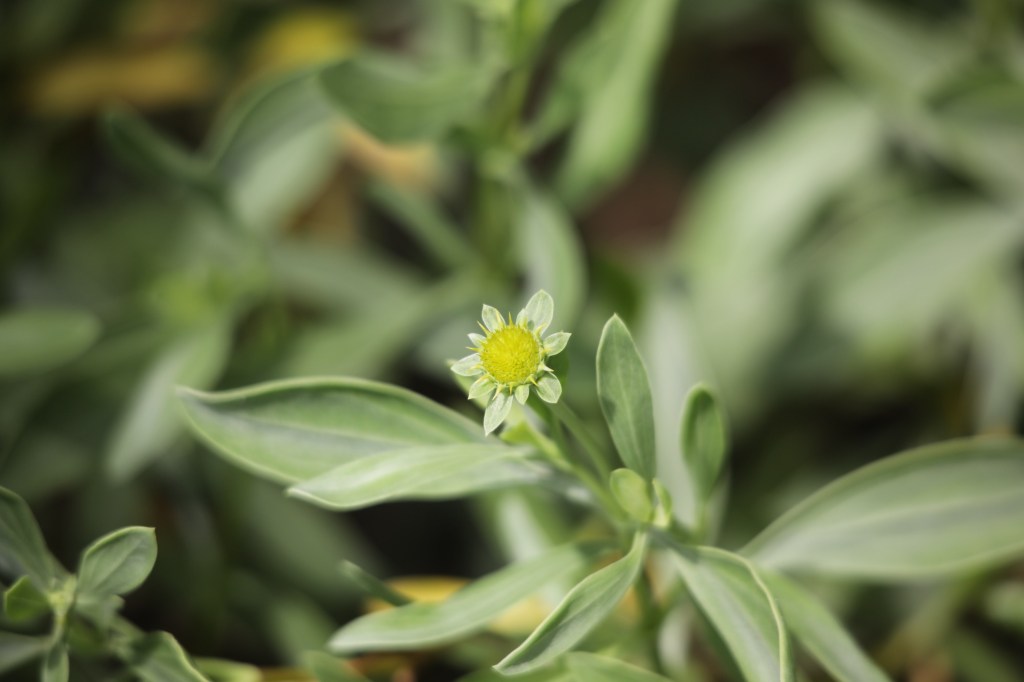
There was also a carnivorous plant exhibit, and you know how much I love carnivorous plants! I also found a beautiful fly on one of the pitcher plants. I added some pictures we took of flowers, because they are so pretty.

Lee went to sit and watch birds with the camera while I explored the rest of the place. He got some good shots.

Meanwhile, I looked at the dragonfly pond, which didn’t have any dragonflies, but did have an alligator that I almost didn’t see.

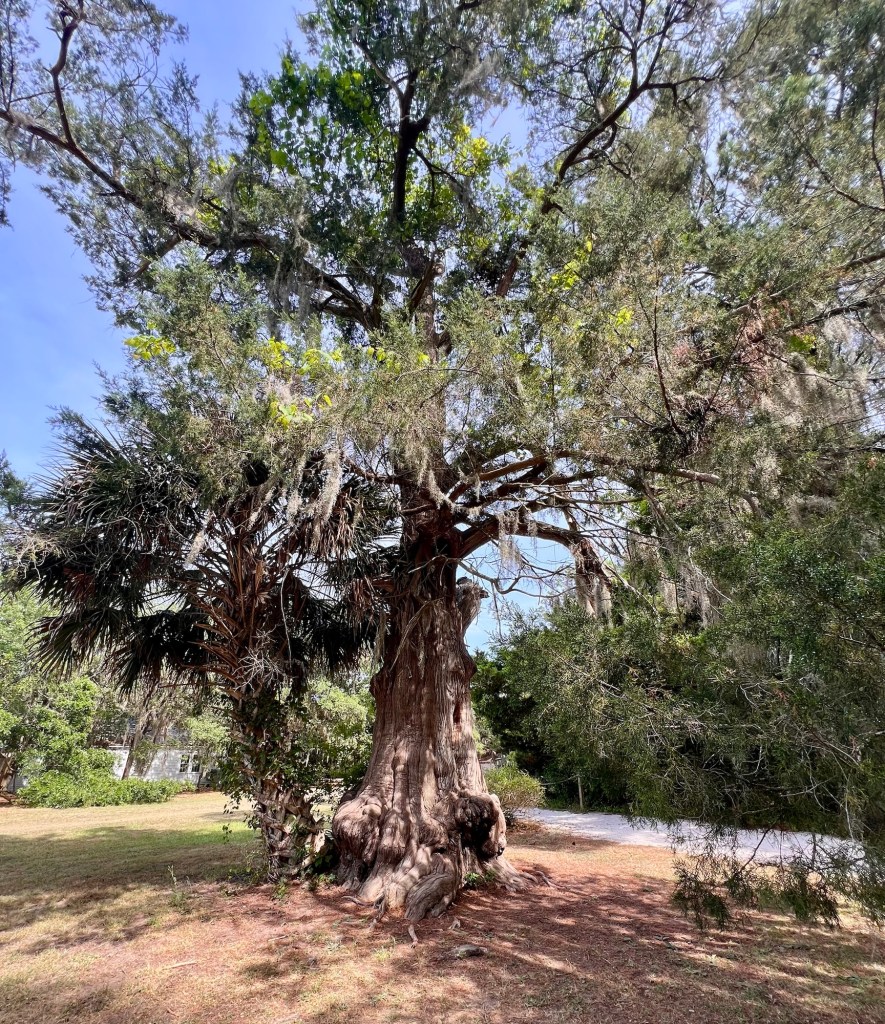
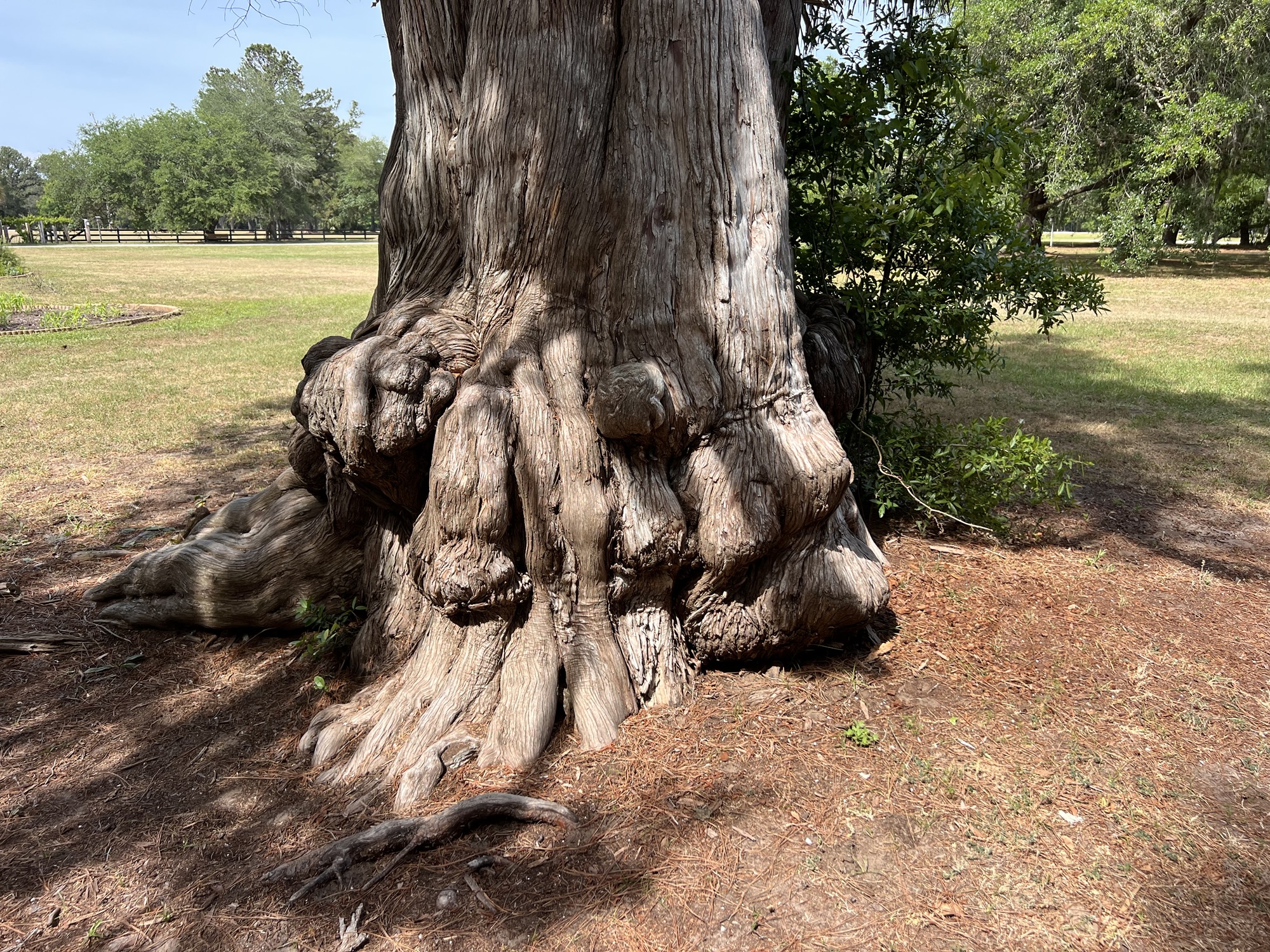
A big highlight of the museum grounds was the largest red cedar tree in South Carolina. Even before I read the sign that said it probably started out in 1595, I thought to myself that I’d never seen a cedar with such an impressively gnarled trunk. What a treasure!

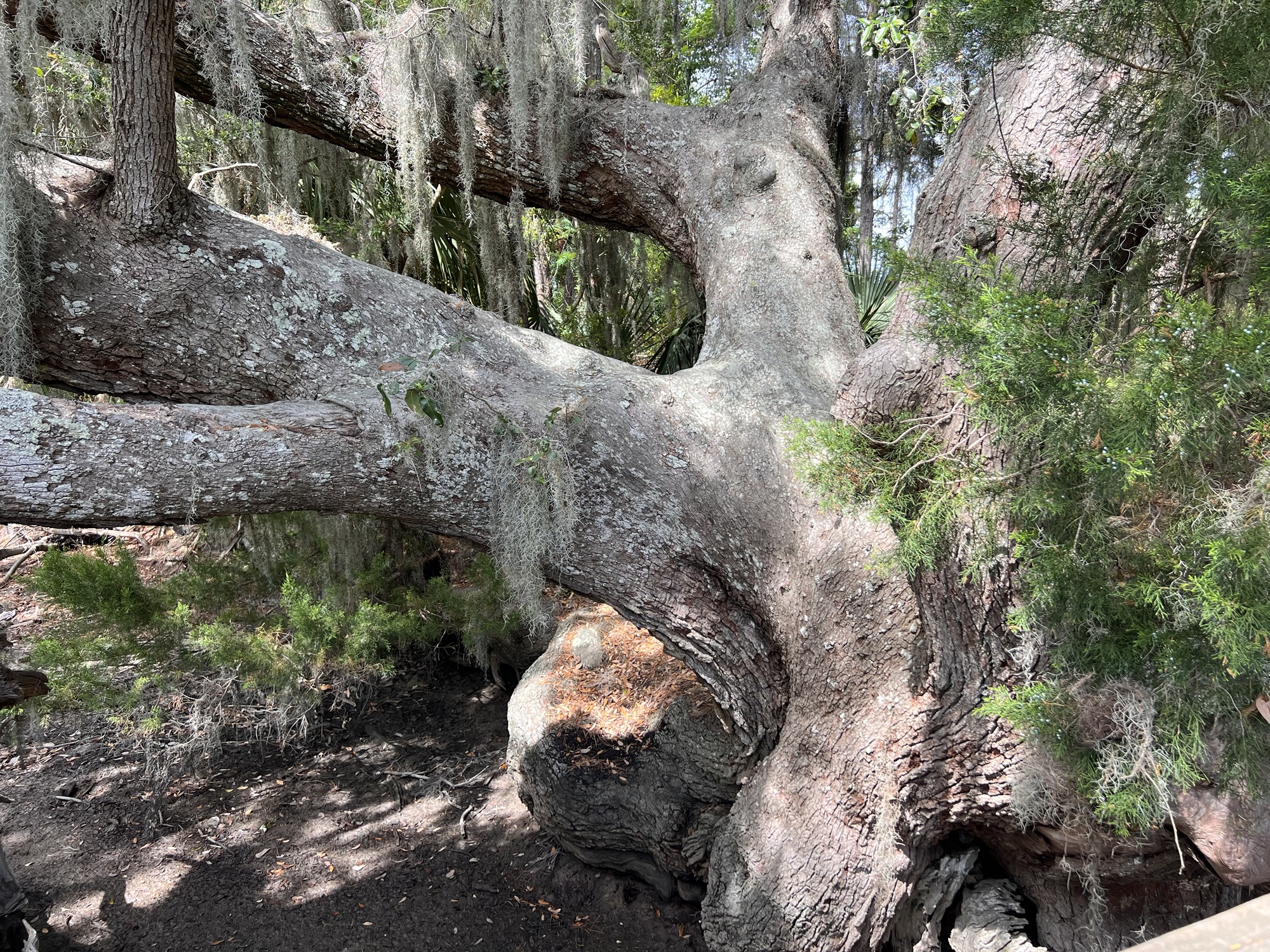
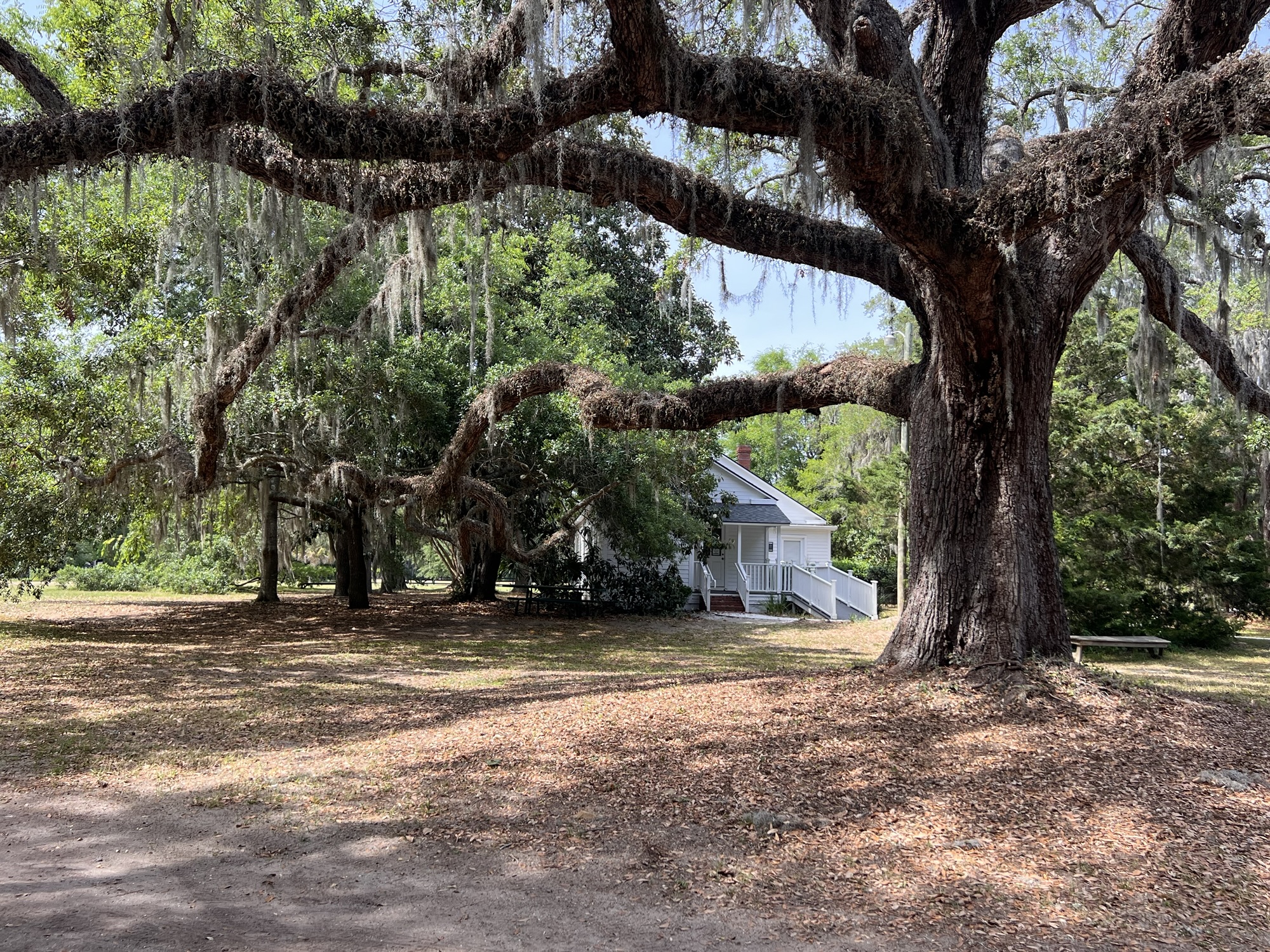
I saved the best for last, though. The final boardwalk went through a motte of ancient, ancient live oaks, the kind I just want to hug and sit with (which I may have done). These were some of the most beautiful old friends I ever met.

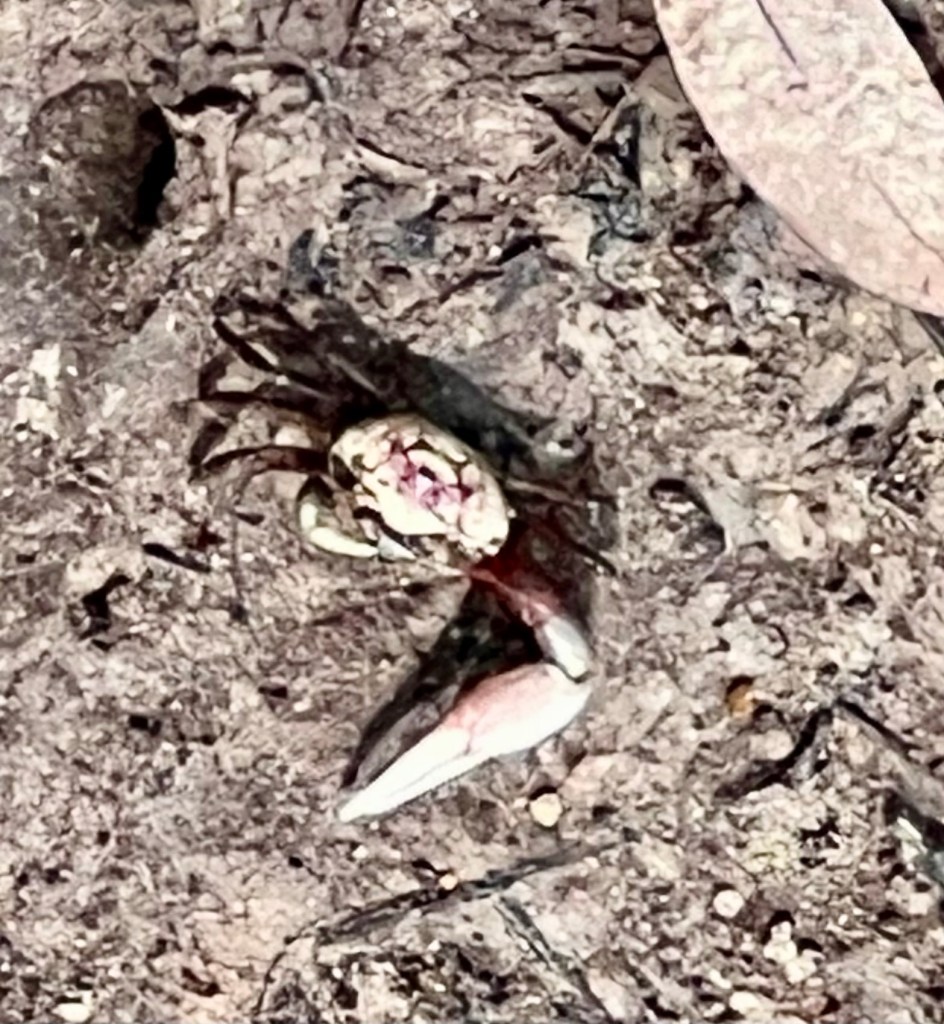
Plus there were lots of fiddler crabs to enjoy. I like how they are all slightly different.

I’m so glad I finally went in there, persuaded by Lee. I think I had the idea that it was a kids’ place. I’ll be back to walk the whole trail, which happens to abut Jarvis Creek Park, another location I want to return to next time. Oh yes, there will be a next time.

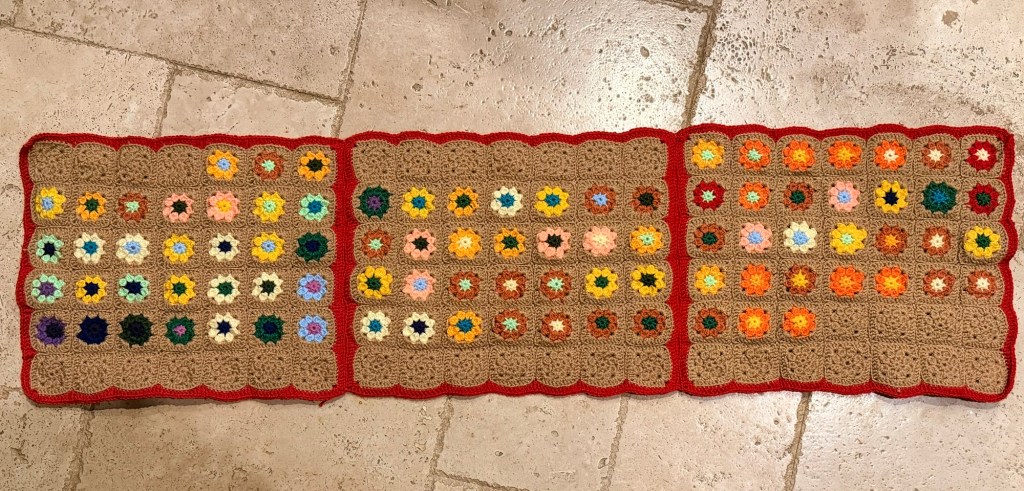
Completed April temperature blanket

Don’t Feel Like It

I just don’t feel like writing. I think that’s okay, because judging from my stats, no one feels like reading chatty blogs about nature and pets, either. Our thoughts are elsewhere. We’re concerned and distracted.

I think Carlton knows I’m not at my best. He’s really attached these days. Here he’s “helping” me check the rain gauge.

So, I wish you peace and safety. I’ll be back after the Martin Luther King, Jr. holiday.

I’ll watch over Suna tomorrow.

The Day Got Better, and Warmer

It got very cold last night and once again, the non-propane heater stopped heating. It was 44° in the bedroom this morning! Luckily I had lots of warm blankets, but getting dressed made me wonder how people who live in igloos do it. Brr.

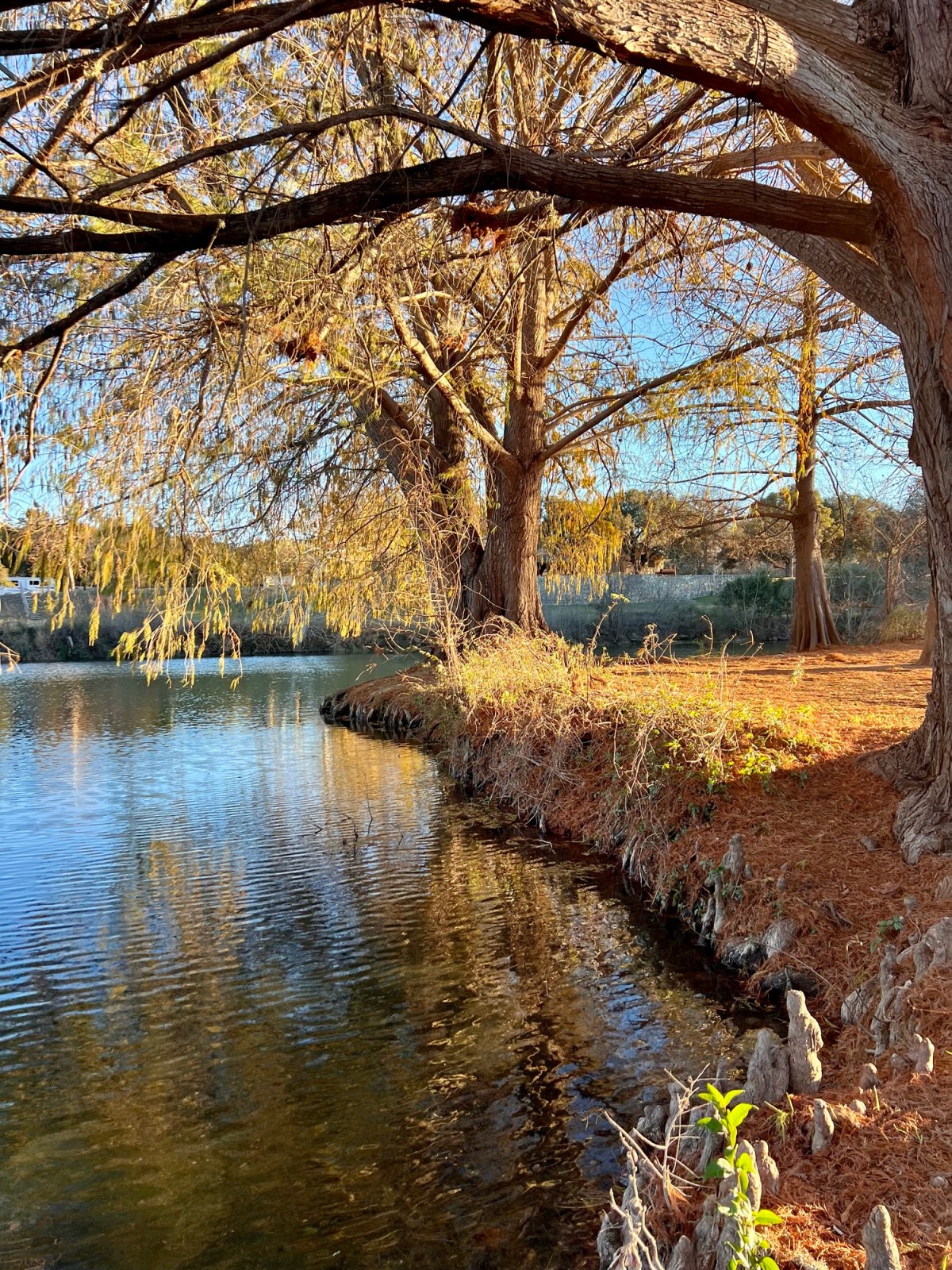
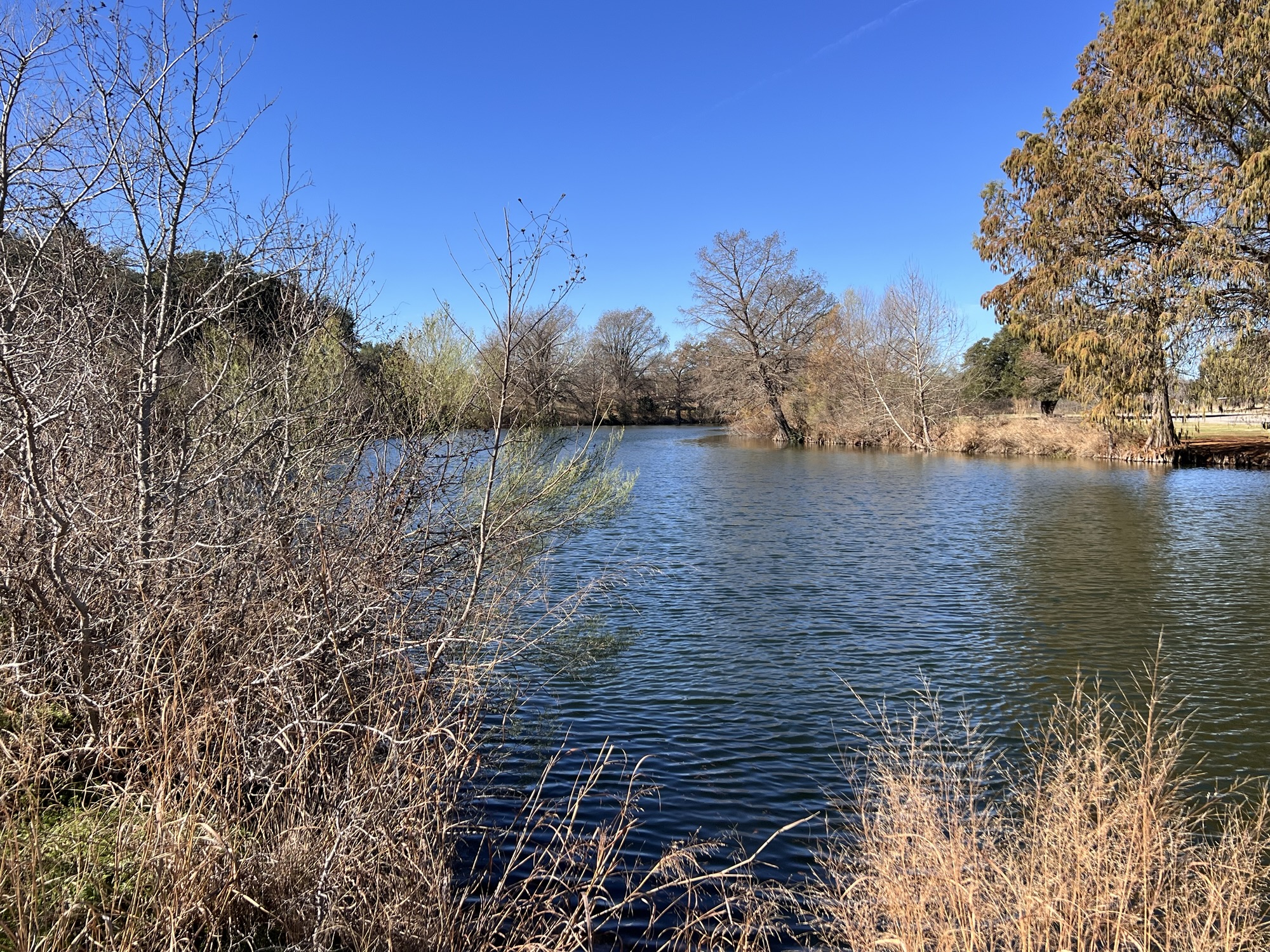
Though its wintertime, the Blanco River is beautiful.

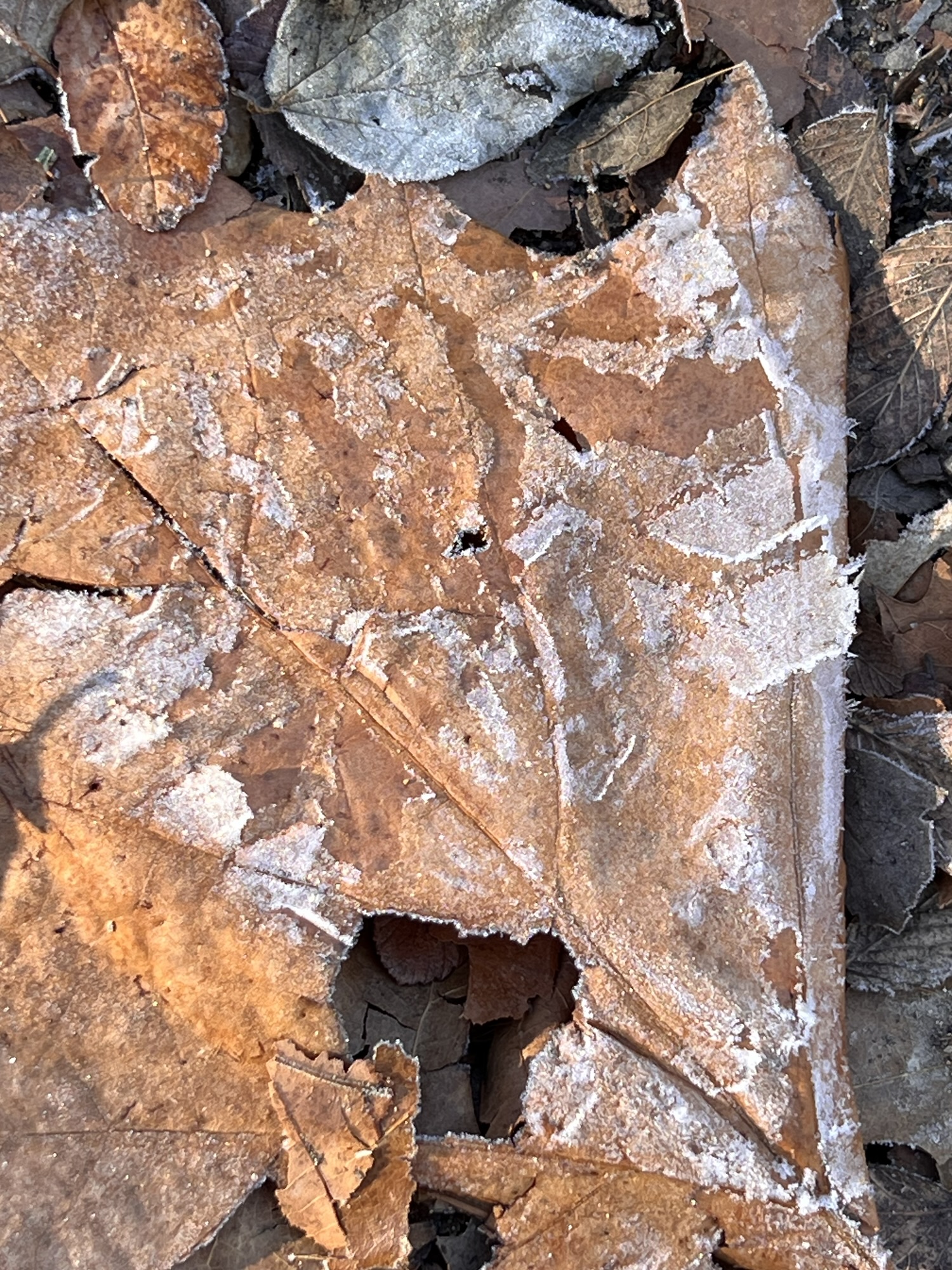
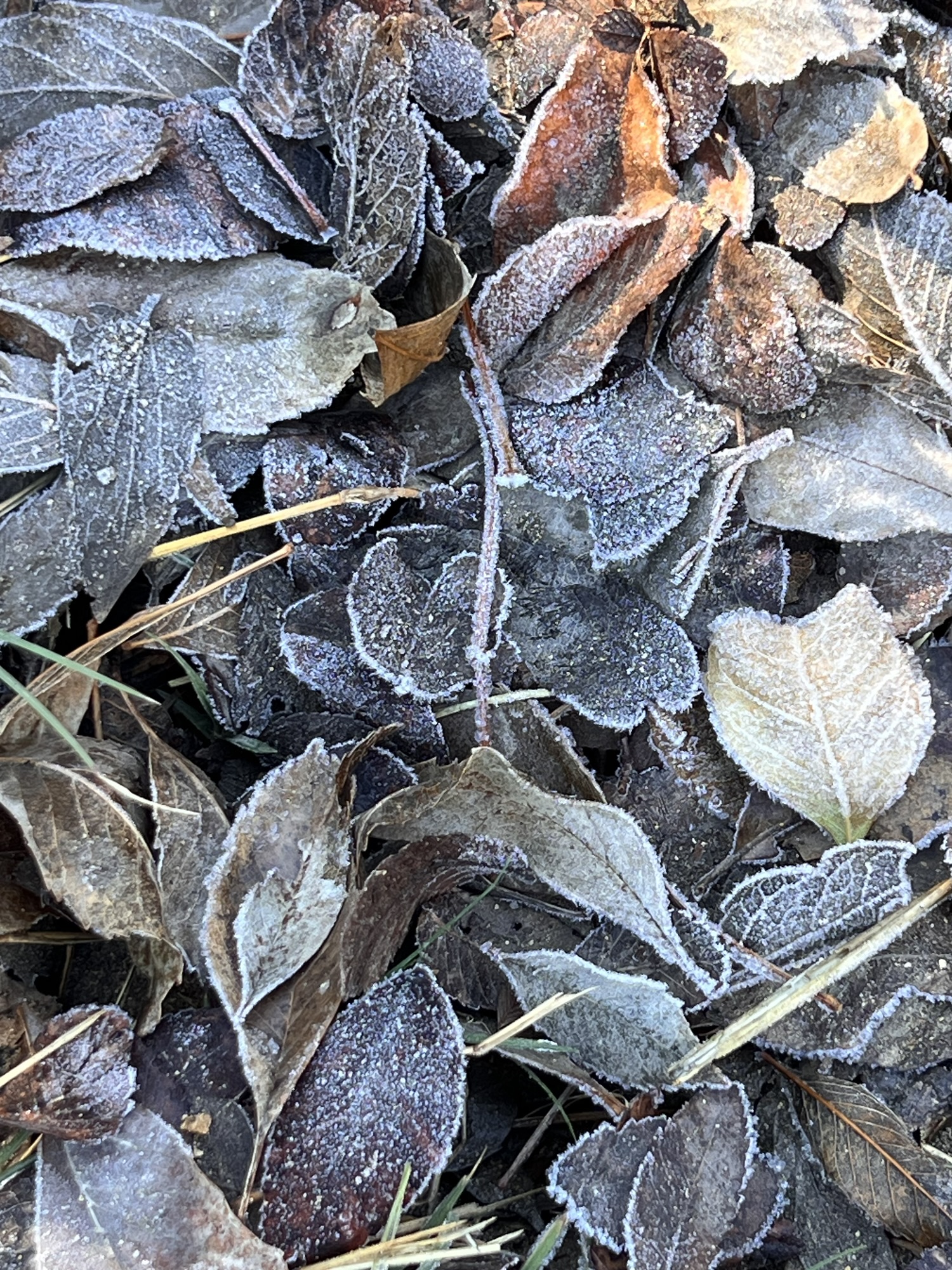
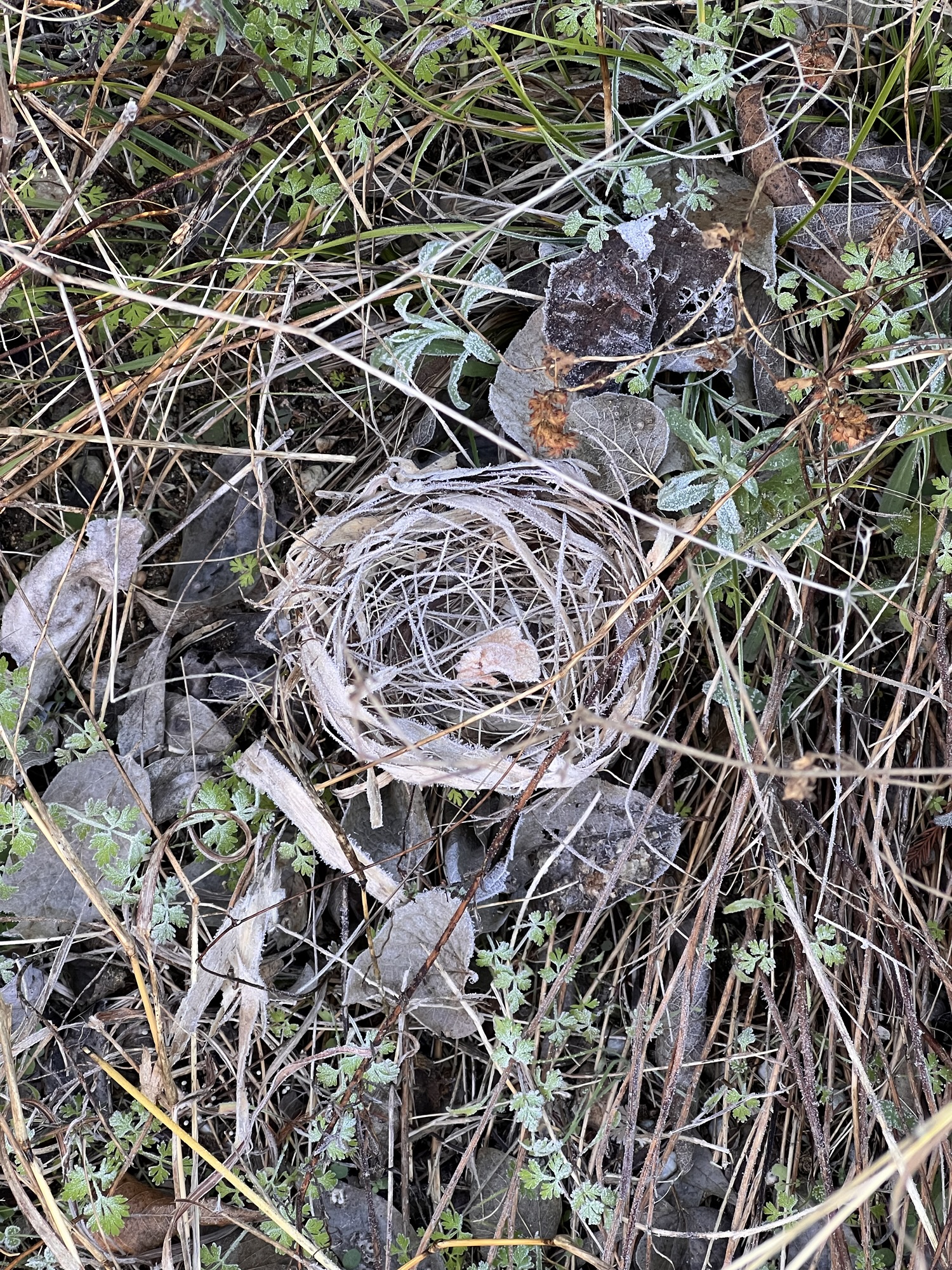
I went out in late morning and it was sunny, which helped. I took lots of pictures of things with ice crystals on them, and was relieved to finally hear a few birds here at Blanco State Park.

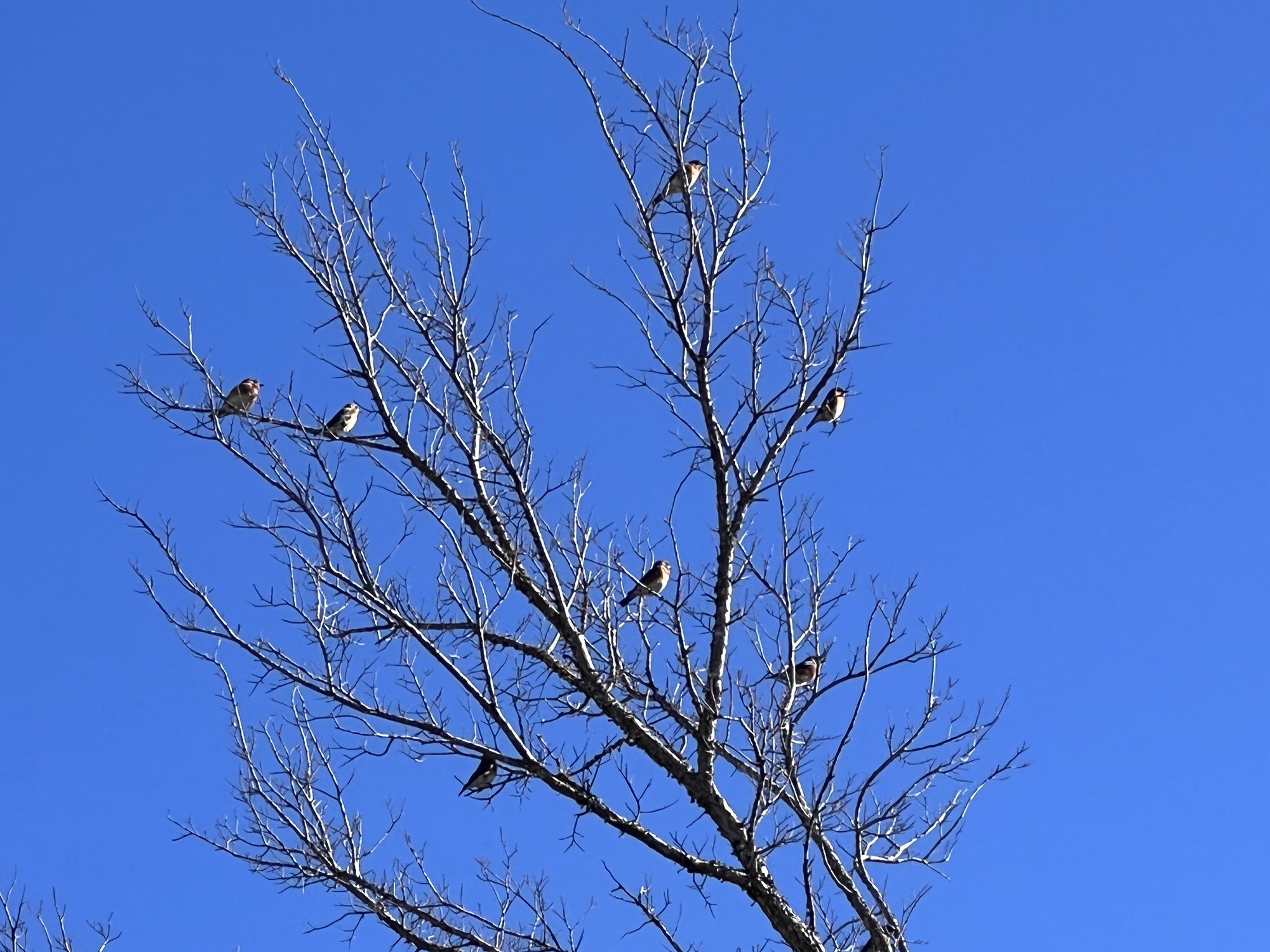
After my walk, Lee and I went out into the Texas Hill Country (the middle of it this time), ostensibly to get some space heaters. We first stopped at Lyndon B. Johnson State Park (also a National Park, to get our park passport stamped and a magnet for our collection, though we’d both been there before. I still really like this place, even in winter with no wildflowers. You could see birds, though, and I was delighted to observe a flock of Eastern Bluebirds in a nice leafless tree.

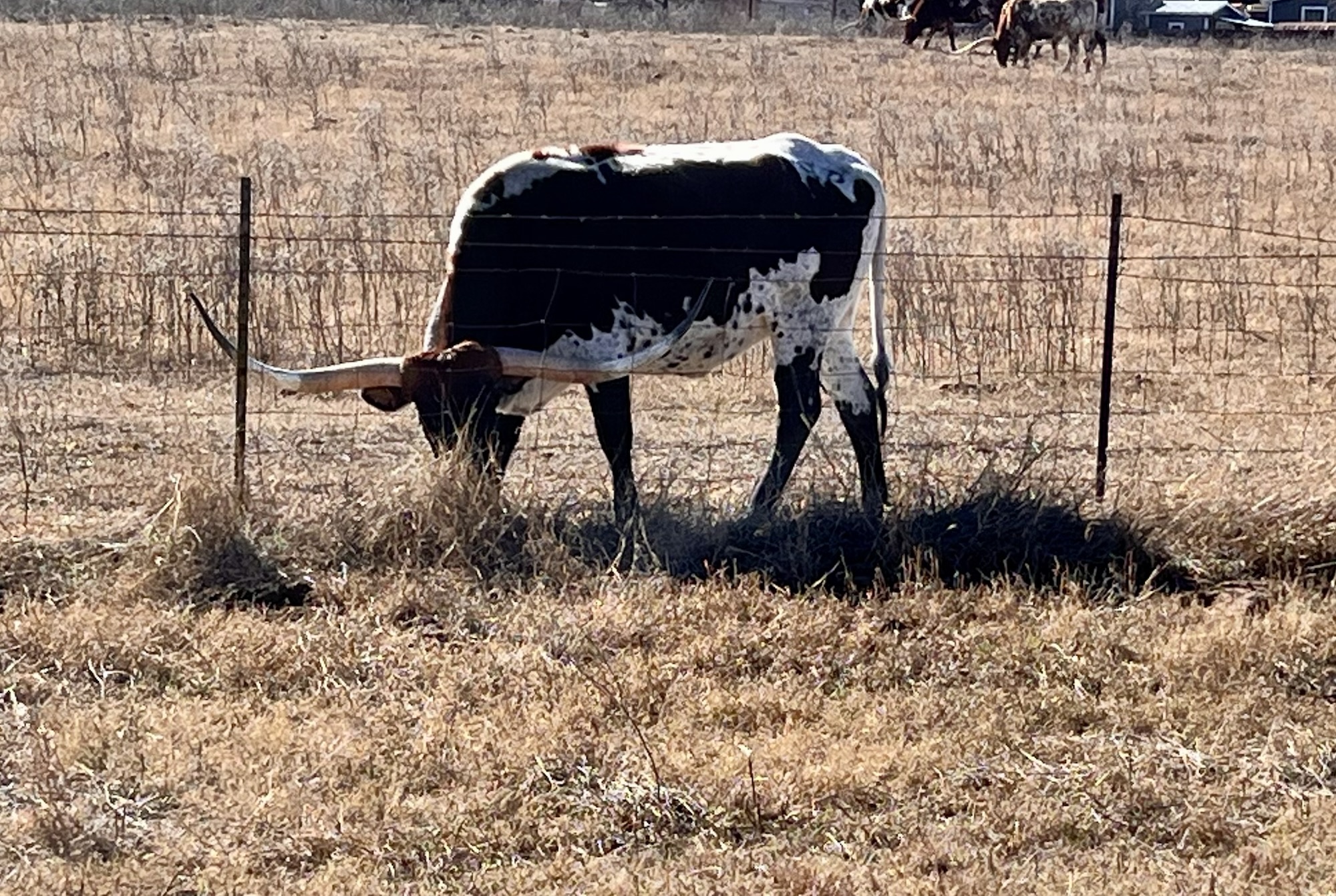
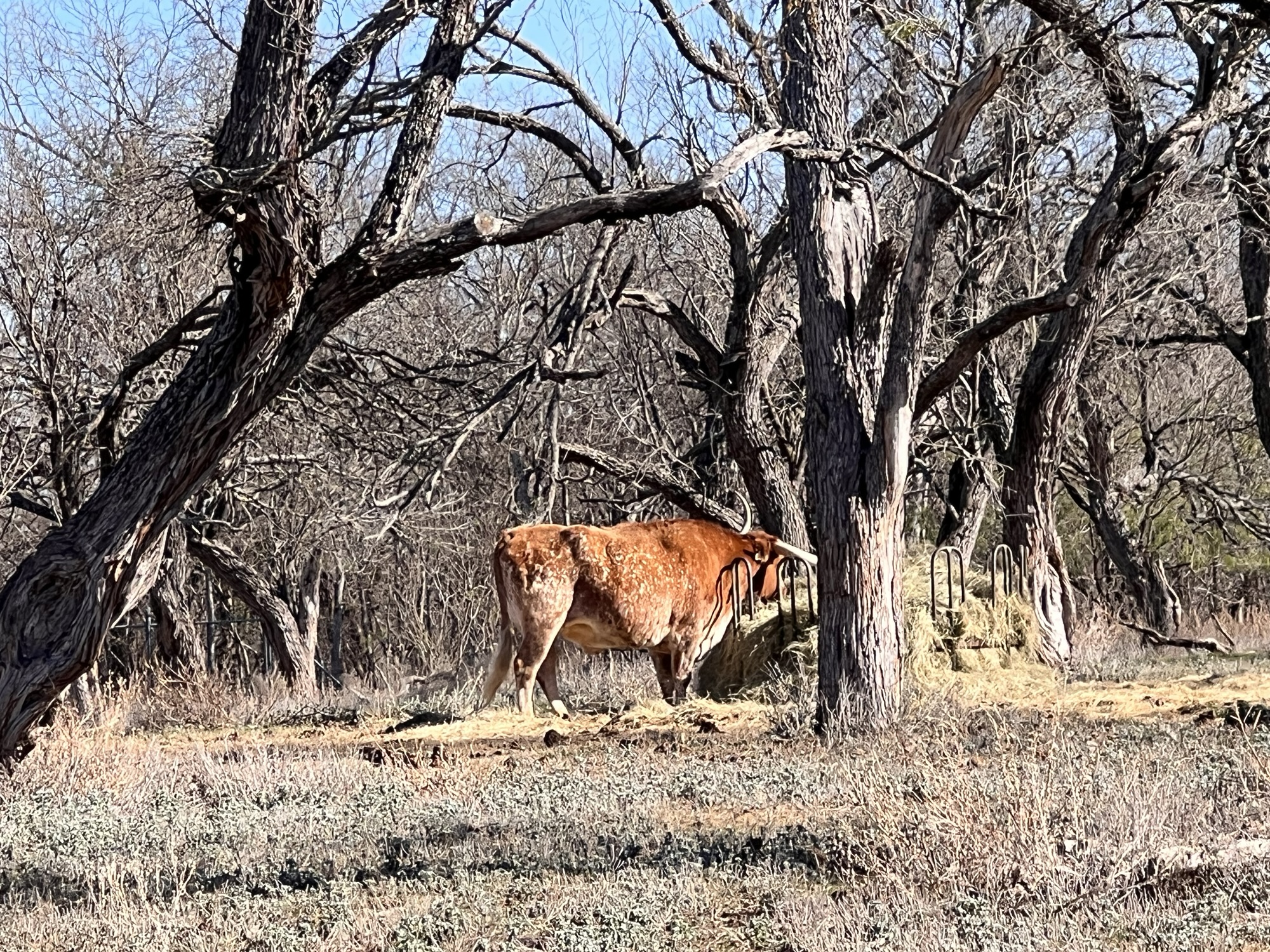
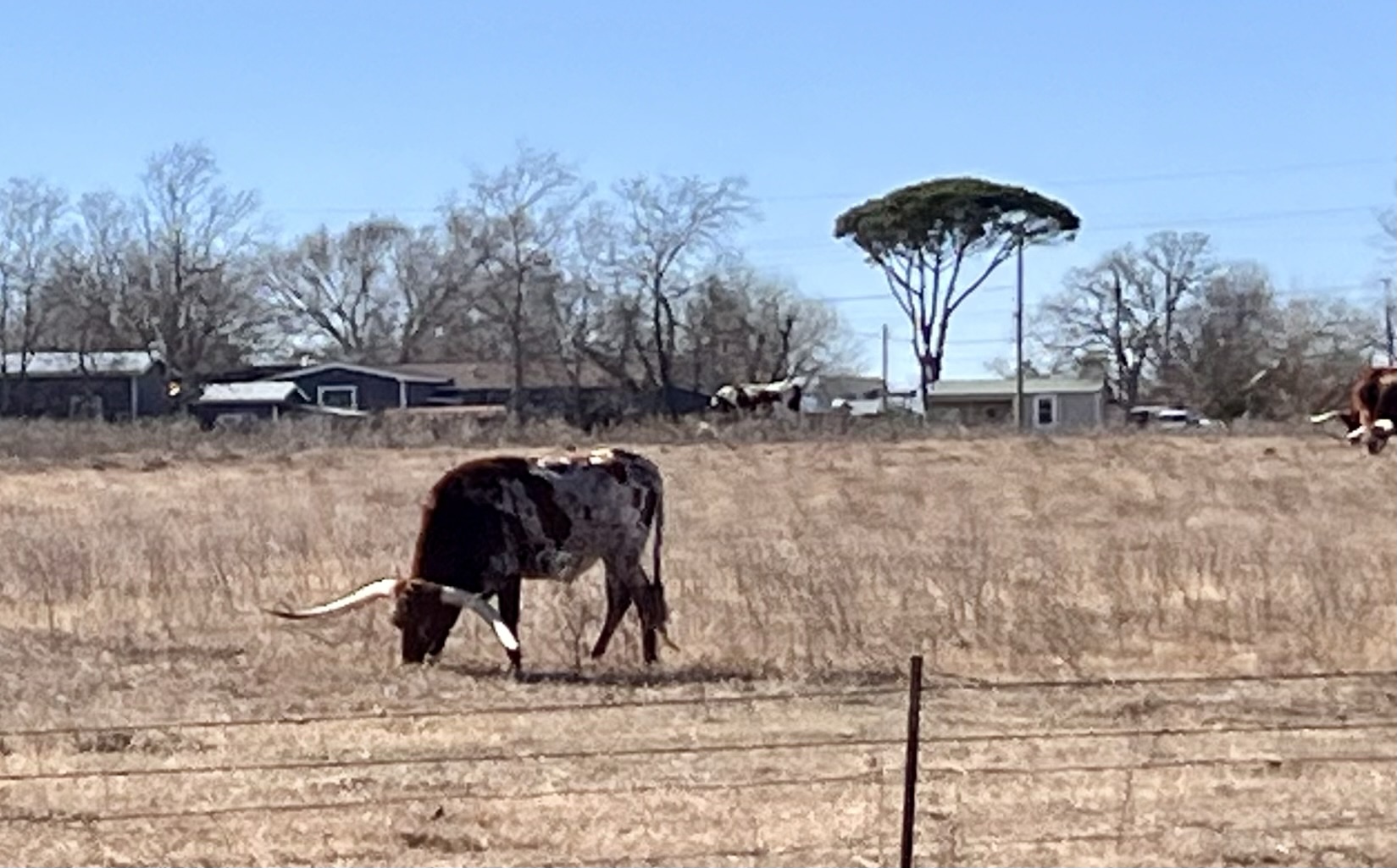
We also saw a lot of Longhorn cattle, but no real bison. That was fine.

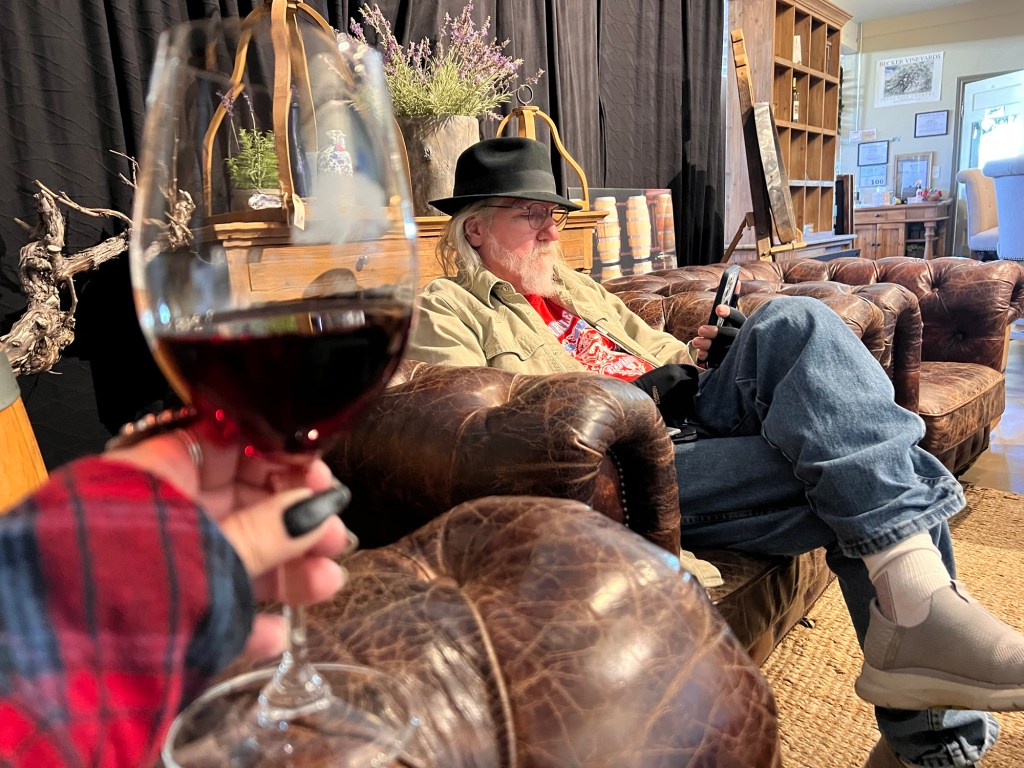
Since we were already nearby, we kept going and visited Fredericksburg, where I enjoyed my free glass of wine at the Becker Vineyards store and got a couple of bottles of types I’m out of.

Lee did crossword puzzles

Lee was hungry, so next we ate at the small German restaurant I enjoy the most in Fredericksburg, a town teeming with German restaurants. The food there is just perfect.

Finally, we did get the heaters, the kind that look like a radiator. I like those better than ones with visible heating elements. Of course, it won’t be so cold tonight.

The squirrel put down her acorn to tell me it would be warmer.
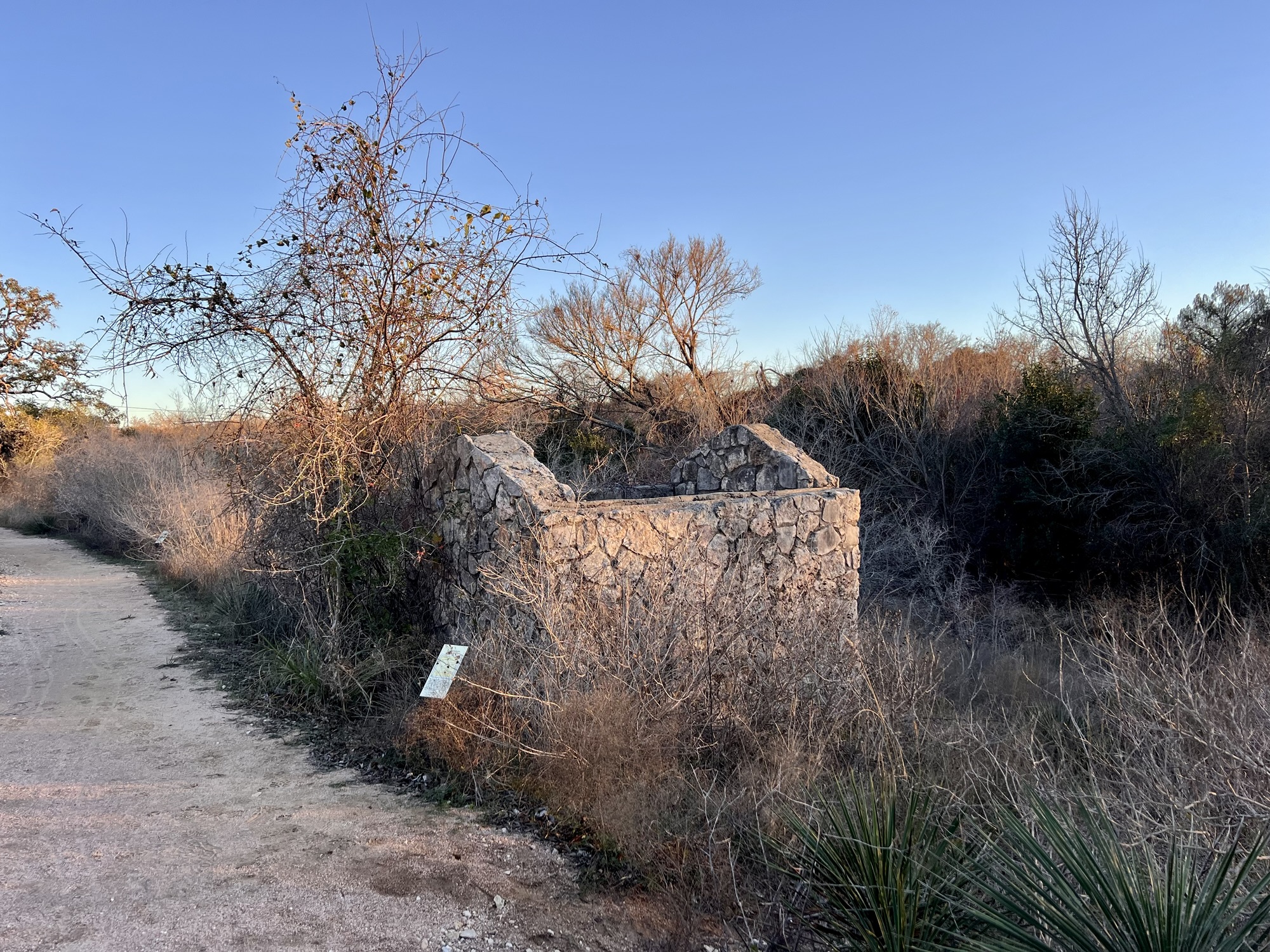
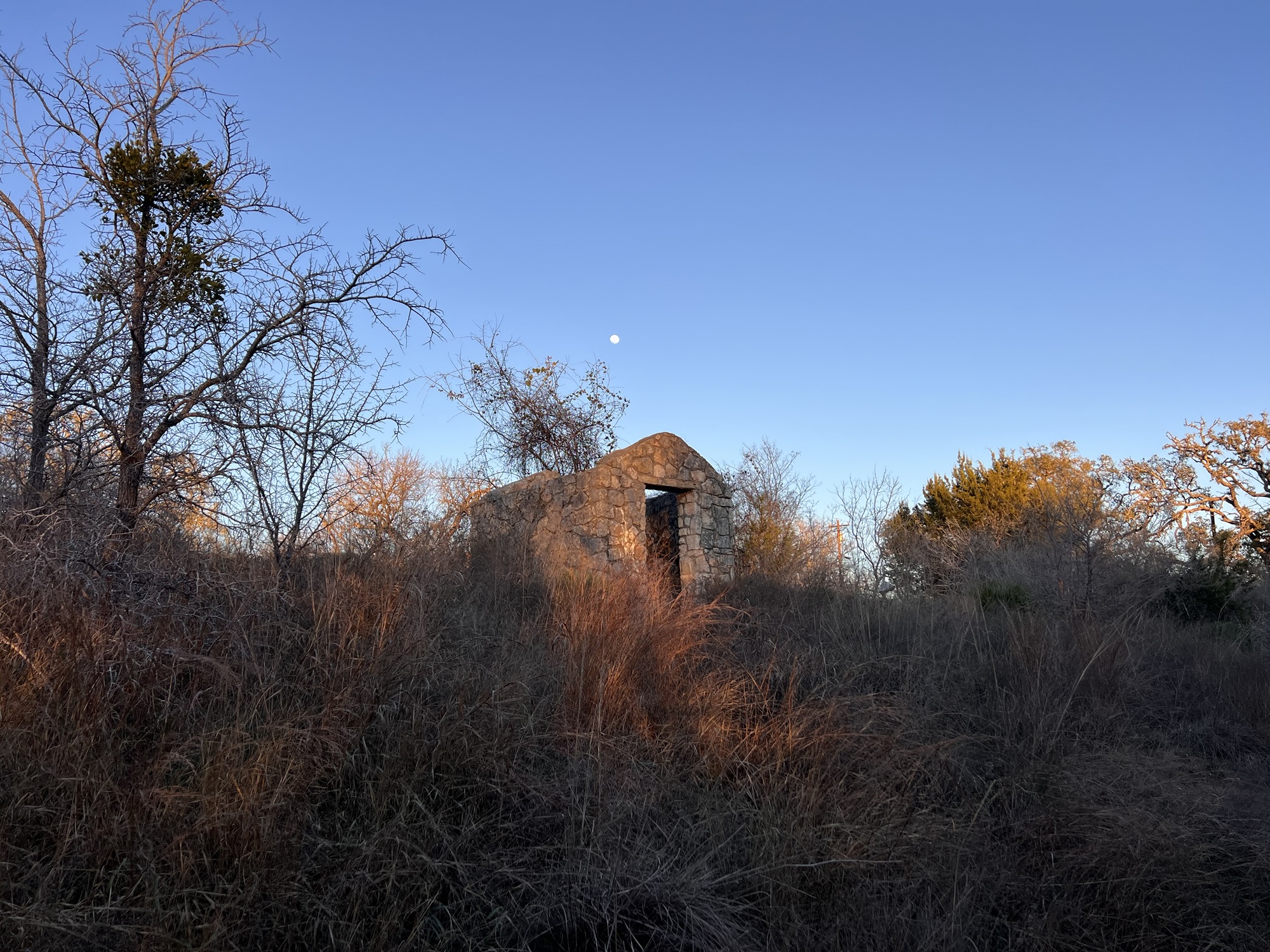
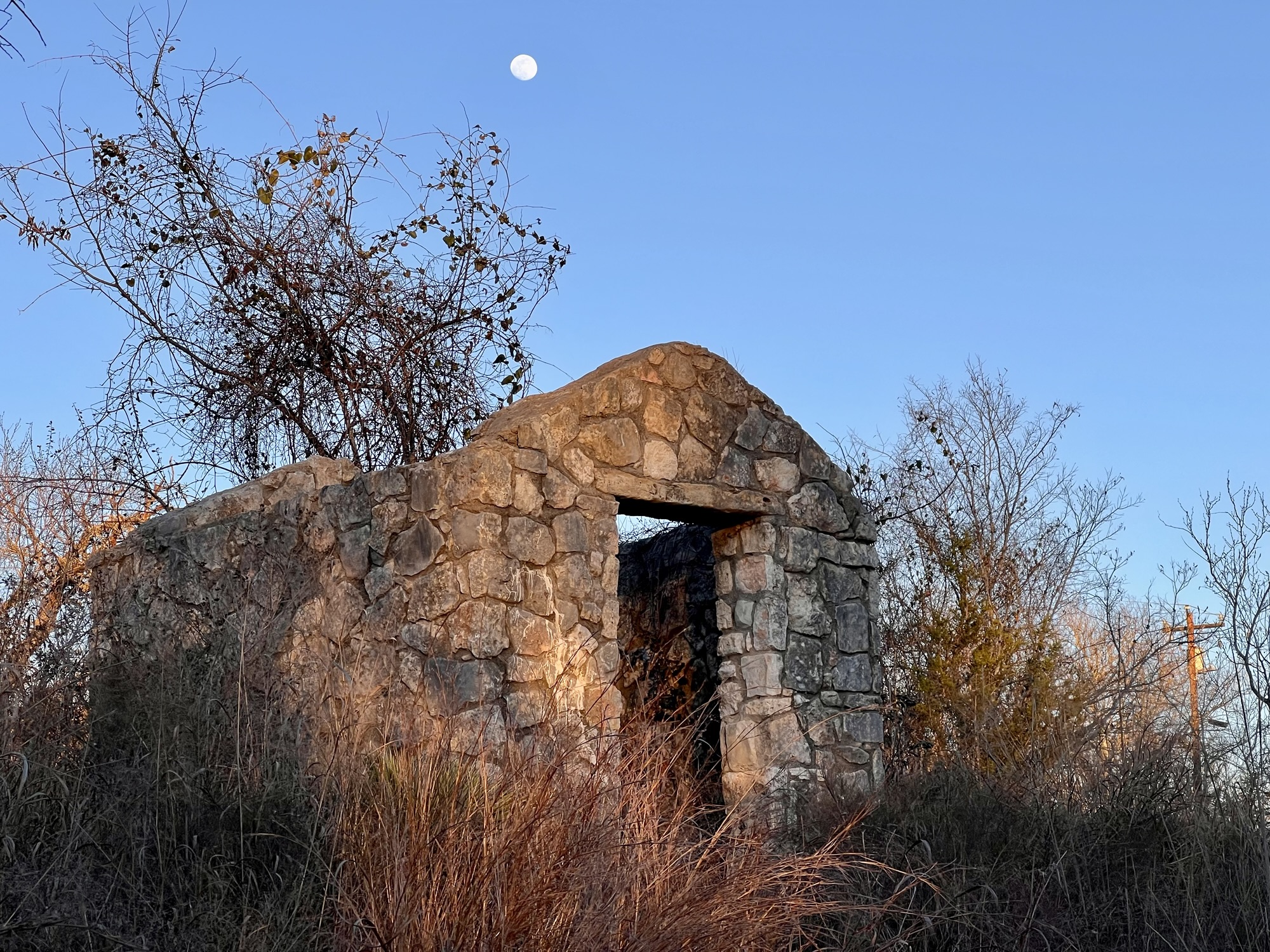
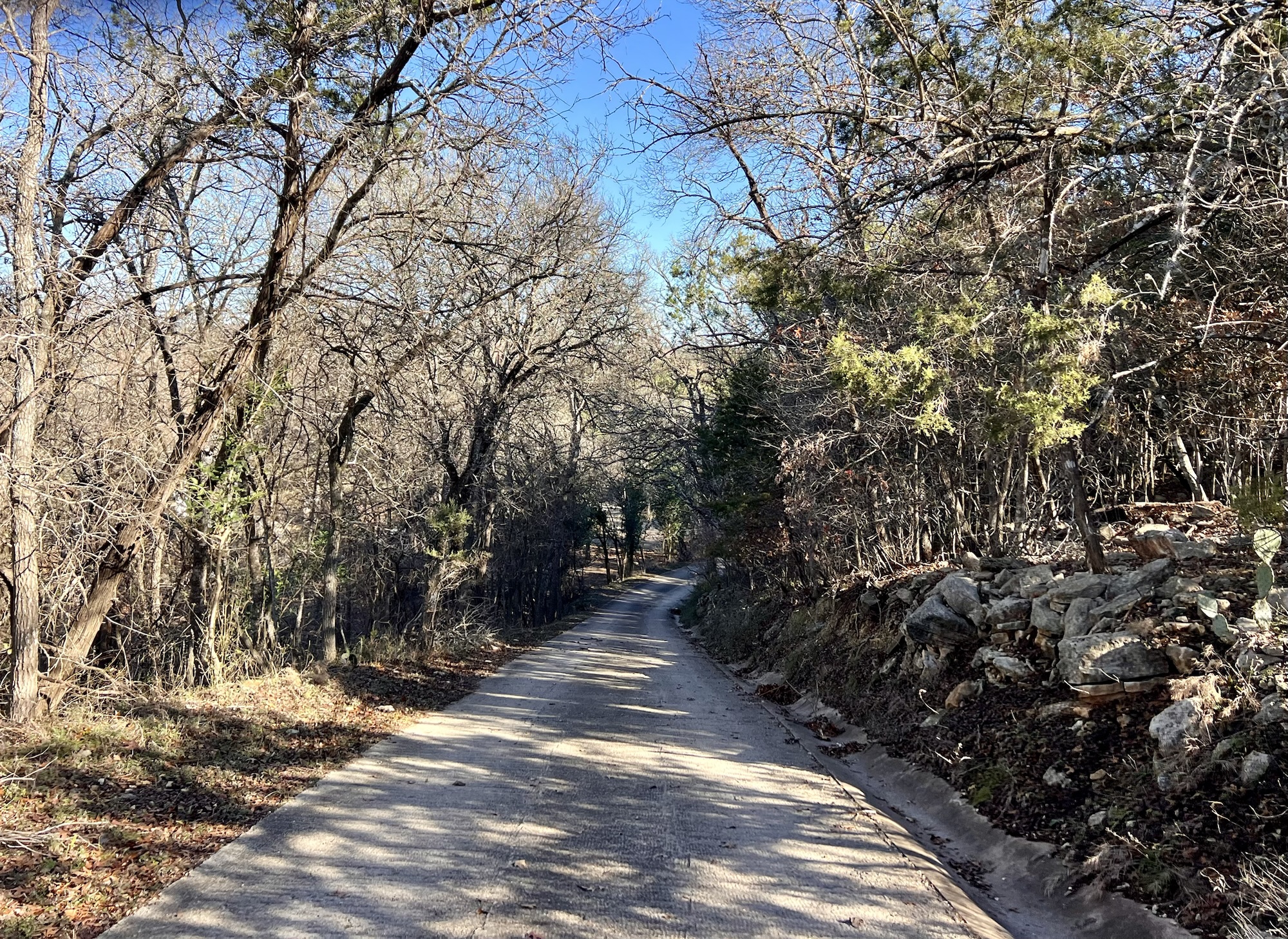
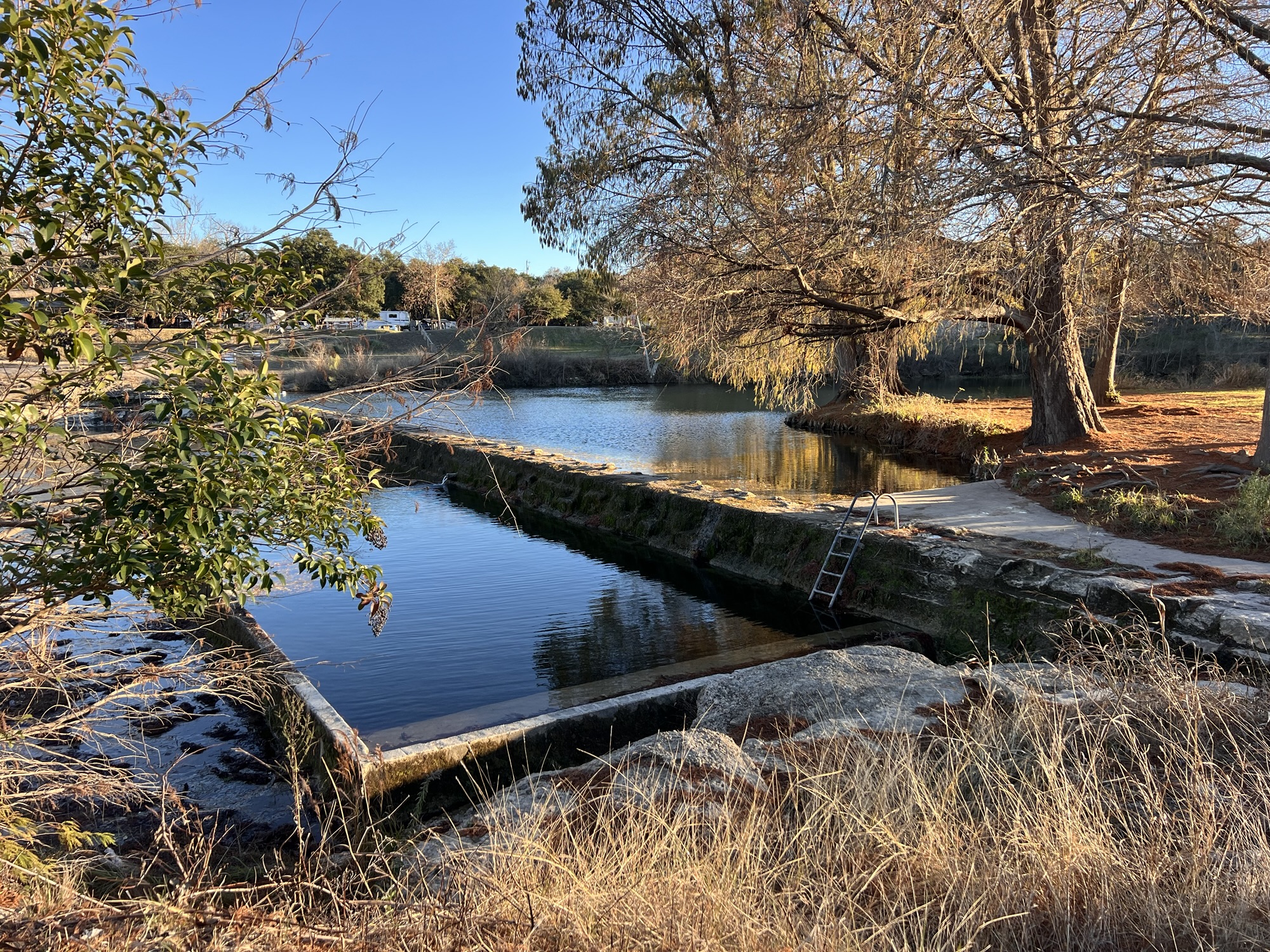
We got back to Blanco in time for me to take a short hike along the river to an old pump house. I like my photos of it.

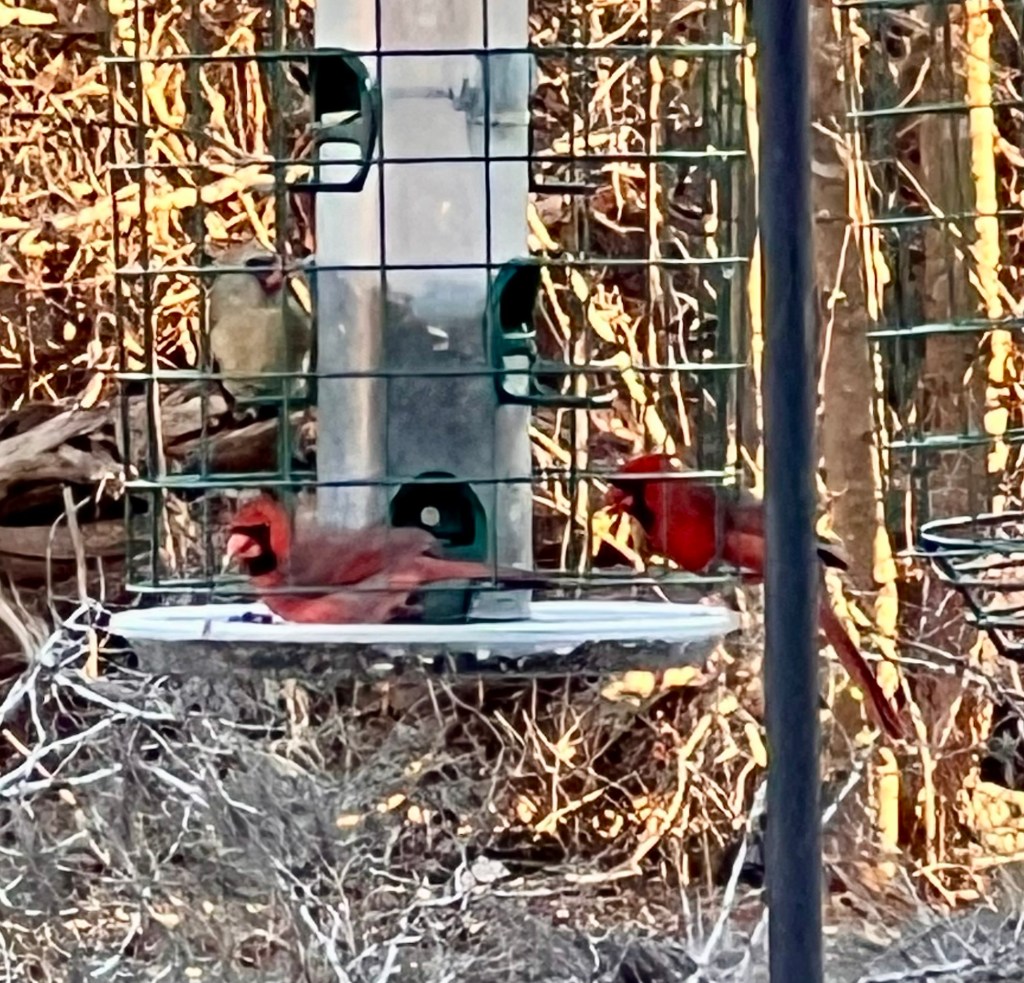
There was also a very nice bird blind, but it only had Cardinals. I took their pictures anyway.

By the way, I thought it was sweet that Lee introduced a young couple camping near us to Merlin Bird ID. I then talked to them, and hooked them up with iNaturalist to help identify mushrooms, which is their hobby. I did my community outreach! And now, more pretty photos.

Black-eyed Peas at New Year’s

I was asked how I cook black-eyed peas for the big meal on New Year’s Day. Now, if you’re used to reading monetized blogs, you’re probably ready to have to read a long story, scroll past many repetitive ads, and suffer through much blathering to get to the recipe (or knitting/crochet pattern, etc.).

In 2021 I had added deviled eggs because a relative liked them.

This blog is for me and random people who care about nature, horses, and/or anxiety, so no monetizing will occur. And I just have a brief story about black-eyed peas at New Year’s.
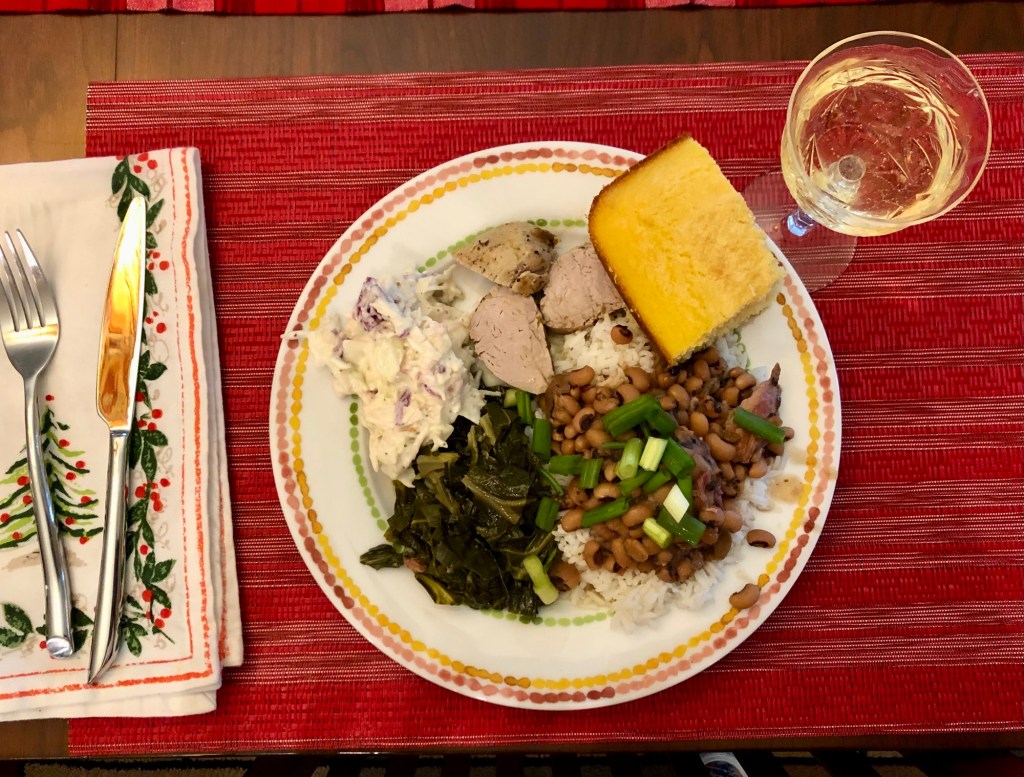
I have mentioned that this is my favorite meal probably every year since 2018 and no doubt I mentioned it in my two earlier blogs as well. I like to blog and eat peas, usually not simultaneously. I love this meal for the flavors, but also because it’s one of the few connections I have with the past few generations of my family. Rural families in the Deep South always must have their peas for good luck and greens for money (the meaning varies).

2018 classic meal

In my family growing up, that meant black-eyed peas cooked with ham hock, rice to put the beans on (not cooked together), collard greens cooked with more ham hock or bacon, cornbread, and green onions sliced up for garnish. You were encouraged to put homemade hot pepper vinegar or something similar on the beans. I thought this was a gourmet meal, not very inexpensive ingredients combined to be delicious. I did realize it was also what Black people ate, since we exchanged dishes with black friends (in the 60s that was my grandmother’s maid and her extended family).

In 2022 I had Cole slaw.

I still make the same meal, carefully passed down from grandmother to mother to older sister to me. Its ingredients vary depending on what’s available, but it’s always good. I do. Now I have to add a pork loin or ham for people who insist on a slab of meat at each meal. Traditions change! It’s all good. Okay, recipes, or guidelines:

Black-eyed Peas as I Make Them

Peas from 2021

Note: ideally start this the night before

Ingredients

  • 1 package dried black-eyed peas
  • 4 cups broth (your choice; we can’t use chicken unless one family member is absent)
  • 1 onion chopped
  • 1 smoked ham hock OR package genuine andouille sausage sliced up OR leftover Christmas ham OR bacon (least favorite option)
  • Cajun seasoning OR Oh Shit seasoning
  • Optional bay leaf if your spouse doesn’t hate it
  • Additional salt and pepper

Night before or early in the morning, rinse the peas and cover with a lot of water. Soak overnight in a large pot or at least four hours. Beans will expand.

Next day drain and rinse the peas and return to the pot. Cover with the broth (this adds flavor; vegetarians can use vegetable broth and skip the meat). You will probably have to add water to keep the peas (really beans) covered. Add onion, meat, and seasonings.

Bring the liquid to a boil. Do not be concerned if there’s scummy froth; just stir it back in. Turn down the heat and let cook until you have the right amount of delicious liquid in with the solids, then cover and simmer a long time.

The key is to cook them to the mushy stage. So I cook at least three hours. The longer it cooks, the more the flavors merge.

Serve over rice and top with green onions and any hot sauce you like. But taste it first. It’s so good.

Bonus: Collard Greens

  • 2 or 3 bunches of collard greens. They have huge dark green leaves. Mustard greens are good, too, but more bitter.
  • One chopped onion
  • Broth to cook in )amount varies). I also use Better Than Bouillon sometimes.
  • Meat for seasoning—the same meat you used with the beans or something different. You don’t need much; add it to taste.
  • Salt, pepper, and a pinch of sugar (my mom said to do this to cut bitterness)

Chop the greens. Important: slice off the thick stems. Fold the leaf over and you can quickly eliminate them, so your chickens can eat them. Greens are more pleasant to eat without stems. But some people like them. Chop them enough that people won’t get huge long strips of them on their forks.

My previous chicken flock with their stems. I didn’t take pictures yesterday.

This will look like a lot of greens. It isn’t. They shrink.

Put them and the onions in a pot big enough to cover them. Add 1-2 cups of liquid and cook covered on high, stirring a couple of times until they are wilted and you see there really aren’t that many.

Add the meat and seasonings. Simmer a ridiculously long time. You can eat them after an hour or so, but the flavors develop during the long cooking time.

Serve along with the peas and rice. Use cornbread to soak up extra cooking liquid (pot likker).

If you are lucky enough to have leftover cornbread and greens, pour warmed up liquid over a slice of cornbread and eat it for breakfast.

Yeah. That was concise…not really.

An Ancestral Home

Do you have a favorite place you have visited? Where is it?

There are a few places I would call “favorite” of the relatively small number of locations I’ve visited. I wrote about one, the springs at the head of the San Marcos River, in October. Like my other favorite spots, this resonated with me, like I was meant to be there, or attached in some way I don’t understand.

Often such places contain oak trees or springs/wells

Today I’ll tell you about another place where I felt an overwhelming sense of connection. I’ve only been there once, when my sons were very young. We had spent some time in England while the kids’ dad worked, then we visited members of his family and other friends. The time had come, however, to go to Ireland to see the boys’ grandparents and other kin.

There we were.

We had a rental car, so we intended to take the ferry to Dublin, which was extra conveniently located near the grandparents’ home on Dublin Bay in Clontarf. I doubt you give a fig about these details, but in case my mind is going, I’m writing them down.

This isn’t exactly where they lived, but this was the view of the harbor.

To get to the ferry we had to drive through Wales, one of the most ruggedly beautiful places I’ve ever been (outside of quarries, mines, and such). After oohing and aahing at little trains and slate roofs, we crossed over into Anglesey Island, to catch the big car ferry out of Holyhead.

Everything was damp there it seemed.

Here is where you get proof that my previous husband is a good guy. We didn’t go on the zippy motorway. No, we went all around this amazing bit of land that’s just crawling with my favorites: standing stones, stone circles, and holy wells. It would have been more fun if there weren’t a gale wind blowing so hard that waves went over the road occasionally. There were even places where streams or creeks crossed the road. The kids liked that.

I made that poor man stop at many of these. Neolithic wonders. From Pexels.

At one point, on the east coast, there was a sign saying something about ancient dwellings. It was a place called Din Lligwy and it’s one of the oldest ruins of ancient dwellings in the islands off of Europe. There are very early Roman ruins and evidence of people living there long before Romans showed up.

These photos are from this lovely article.

I got out of the car and asked for ten minutes or so to see it. Rain was falling. Waves were crashing, and a bitter wind blew. I barely noticed. I stood there amid the foundations of the homes that were beside workshops and barns. I felt as if I could see my foremothers tending fires, nursing their babies, and creating homes, just like I was doing with my little family. This place felt like a home to me.

Anglesey Island, from Pixels

Of course I ran back to the car all wet and jibbering, but my ex was used to me and my ancient landmarks, and the boys liked my stories. I’ll never forget the short time I stood looking at the Irish Sea during a storm, like so many other mothers had before.

Yep. Ferry.

By the way, the weather did not improve and we all got very sick on the ferry. But it was an adventure!

Book Report: The Power of Trees

I started reading The Power of Trees (2021, English 2023), by Peter Wohlleben, the German forester who also wrote The Hidden Life of Trees, last year. I had to put it down, because it was so depressing. It sure sounds like Europe’s trees are messed up and not much hope is shared in this book.

The book and many representatives of tree friends.

So, what a great book to read during an election where the non-environmentally friendly folks won bigly? But I got through it. I learned why forestry, with its great fondness for monoculture and treating trees like products rather than fellow citizens of the planet, has led to massive death in forests and loss of uncountable other species that support trees (what lives in the earth and helps trees do their work).

Trees get so tall when left alone.

Wohlleben shows how allowing natural forests to regenerate on their own and create old trees that are allowed to live on would help restore a healthy climate (trees cool it) and still provide for human needs, especially if we recycle old wood products rather than always making new ones.

We do a lot of that at home.

You’ll learn a lot about the complex interrelationship between trees and the other life around them as well as lessons that apply to forests around the world.

It’s wonderful that there are protected remnants of coastal forest here on Hilton Head. It helps that it was hard to reach for so long.

I always feel drawn to helping woodlands, knowing how many mighty trees in Florida my grandfather sent to sawmills in the early twentieth century. As I have resolved to focus on doing something kind every day, I’m keeping the remaining native woodlands in mind.

My grandfather dwarfed by the trees that are about to be killed.