Greetings from the Polar Vortex where it finally got cold, even way down here in Texas.
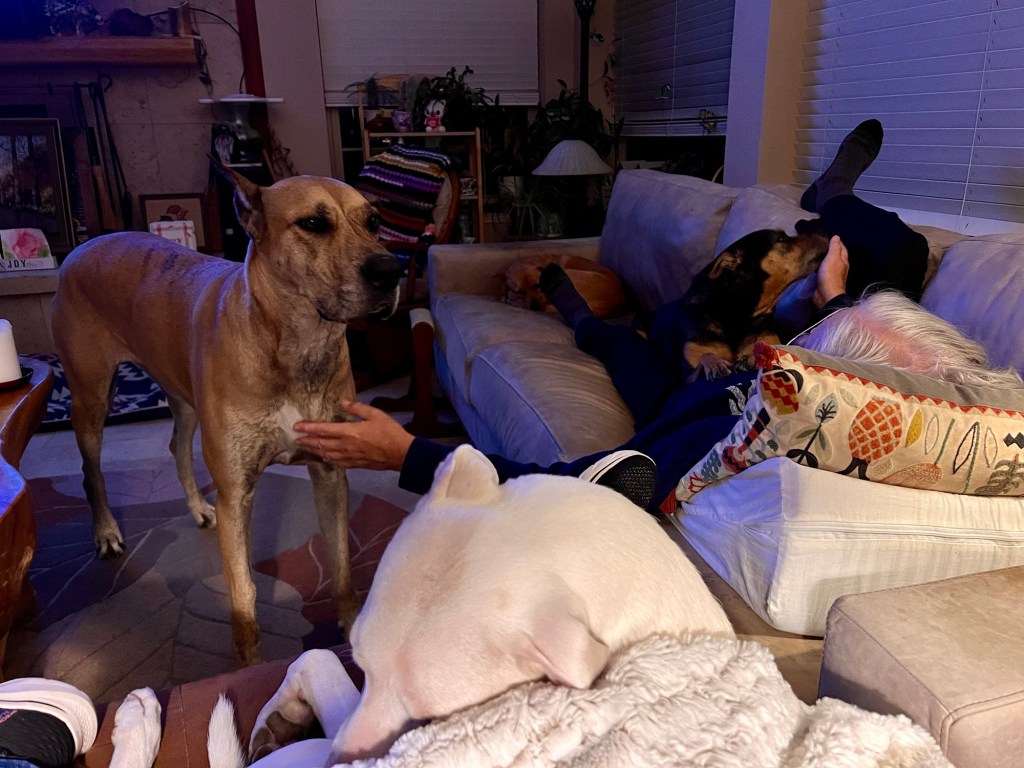
We’ve been busy keeping ourselves and the dogs warm
Today’s question is harder than it seems. It forces me to admit something that kind of makes me sad: I’m no longer an internet pioneer. Y’all, I’m even in a couple of books for being an early feminist voice on the ‘net. I made websites before color monitors existed. I had email way before most people did, thanks to being at the University of Illinois.
I helped make online communities before Facebook. So what? Yep. That’s the past. Zzz.
I no longer keep up with things. Twitter bored me, I have to admit. I also don’t enjoy watching videos for very long (amusing since I create them every day at work). So I’m not on YouTube for hours. And I cannot tell you how annoying and boring I find Tik Tok and Reels and social media influencers.
Please enjoy them and tell me about it, though. I am fine experiencing those things second hand.
So. Boring senior citizen Suna communicates online mainly in Facebook and communities there, and by reading and writing blogs.
I text friends and family a lot, and enjoy my text groups with them. Certainly I’m up on Cameron news thanks to that! I also really enjoy online Zoom meetings that started in the pandemic but are now just nice ways to keep in touch with people I used to email a lot. I feel so close to friends all over the place!
Email is there still, but mostly for work or nonprofit stuff. The few email lists I’m still on don’t get much of my attention these days, because I run out of time.
For what it’s worth, that’s that. I enjoy the online communities as much as the in-person ones, though. I like blog comments and interacting with readers, a lot. So thanks to you commenters and silent readers. You know who you are!
It’s too cold to have a daily bird, though I did enjoy looking at puffy sparrows today. It’s supposed to snow tomorrow. I know the chickens are enjoying their heat lamps and the horses appreciate the new shelter. I tested both of them out today!
Thanks.
Our heater is still working, so us humans are coping well with 19° F weather. The heat pump unit got wrapped in insulation, so it’s not failing when it got into the 20s like it used to. We are getting stuff figured out, thanks to the brain power of the ranch commune.
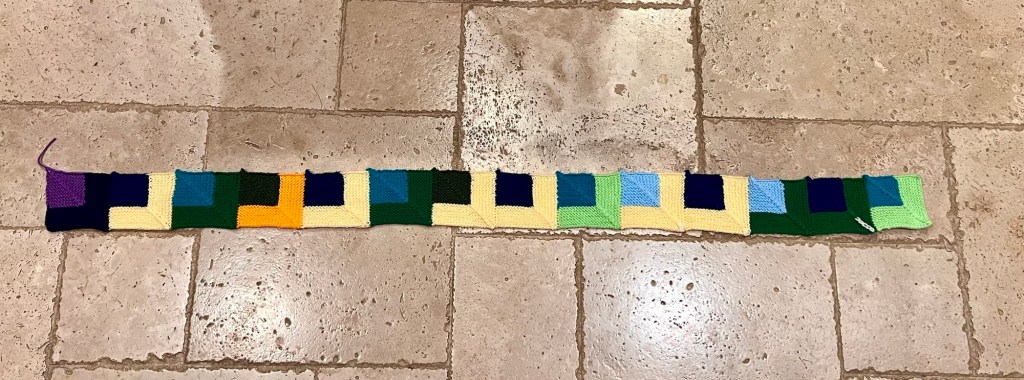
The far left square is today. That’s the coldest day I’ve recorded!
It may snow tomorrow! I bet I take pictures. What do you think?
It’s a good time for that question, because I started a new book a few days ago, The Invention of Nature (2015). It’s about Alexander von Humboldt, whose work was very important for people like me.
Great cover
I have it because folks were discussing naturalists and people who have a lot of species named after them. It became apparent that I wasn’t very familiar with von Humboldt, compared to Aldo Leopold. So, my friend “JC Maxwell” (a pseudonym) said she’d send me a book.
Sure enough, it showed up, along with a book called Regretsy, a humorous look at awful things sold on Etsy. I admit I read that first. It made me laugh aloud.
The author tells funny stories about herself, too.
Back to Humboldt. So far he’s still pretty young, but he’s been running all over Prussia and its neighbors being an eccentric genius and meeting famous people. I guess that’s what you did back then. He seems to have had a lot of time off from his job looking at rocks in mines.
Right now he’s hanging out with Goethe and the king of some small chiefdom or whatever it was before countries emerged in central Europe. They eat a lot and discuss poetry and new ideas about how the natural world works. Plus, of course he knows Charles Darwin.
I’ll get to the parts where he goes off and identifies lots of plants and animals soon enough. Right now he’s just way over-studious and energetic.
Did you know in the 1800s he was the most famous person in the world? That’s what the book says.
Today was full of chores, but Anita and I had fun grocery shopping for Thanksgiving at her favorite H-E-B store. We also visited Target and a couple of other places.
I still got home in time to horse around with Drew, who calmed down a bit today. All good.
Daily Bird
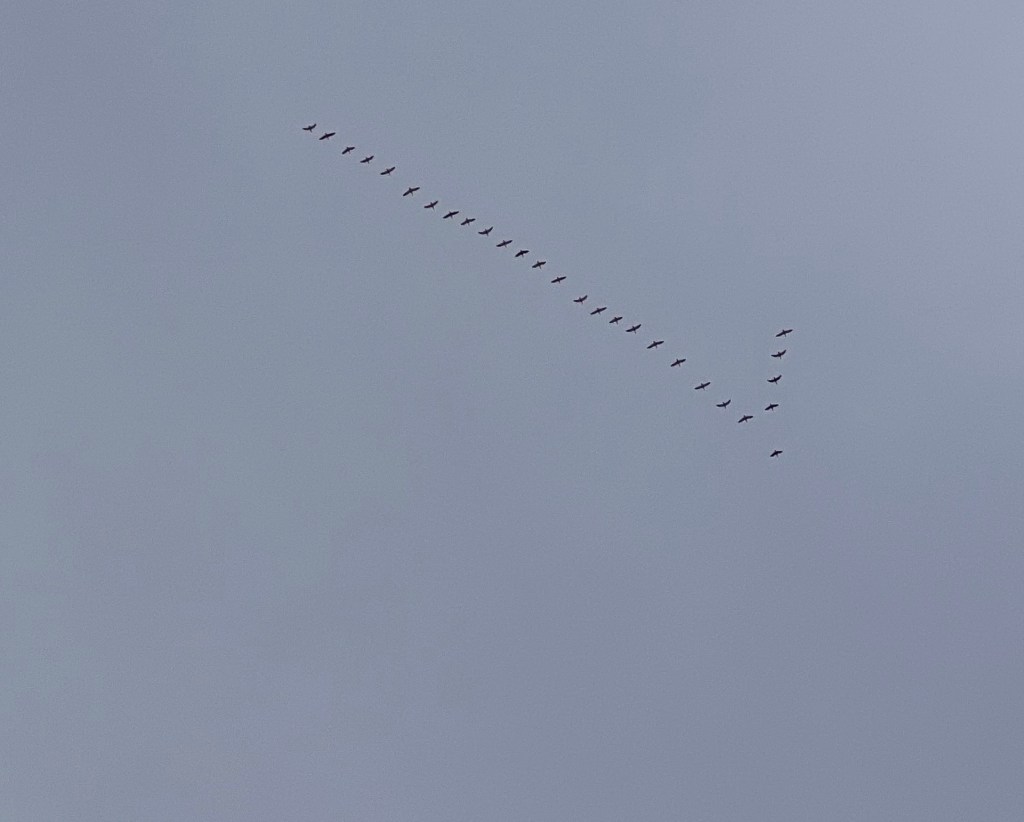
Today I went out on my usual morning walk and animal inspection. I heard an interesting hoot/honk sound. I looked down at the Merlin app and it said snow geese! Sure enough, they were flying over.
Blurry, but obviously geese.
These guys are only here during migration, so I was lucky to get a glimpse. We saw tons at Bosque del Apache wildlife refuge in New Mexico when we went there. Beautiful birds.
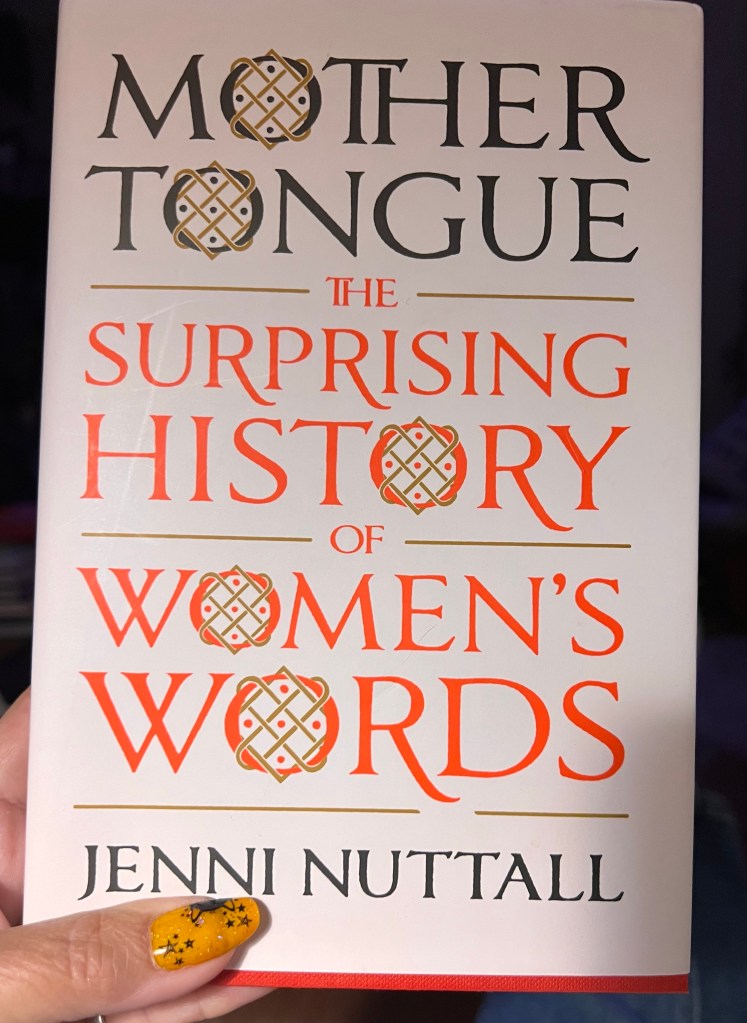
It’s a good book to review on Samhain/Halloween, since it has an entire chapter on witches, and there’s a good deal of discussion of how all kinds of words became derogatory terms for old women, the kind you see depicted in Halloween decorations. And who can complain about a book about etymology? Not me, that’s for sure.
Nuttall is an expert on Old and Middle English, so it’s fun to read her easy translations of old phrases (and to try to figure them out before she translates). I’m inclined to be sympathetic to fellow linguists, of course, and to fellow feminists as well, but dang, this woman comes across as grumpy. She also comes across as defensive about her life choices. I don’t think parenting is her favorite stage of life and she certainly doesn’t have much good to say about breastfeeding and hanging out with your baby. I think she’d have liked one of those wet nurses she talks about in the mothering chapter.
The other small complaint I have is probably just me. Since I spent a lot of my early adulthood reading (and writing) about how women use language in more recent times, I was hoping for a lot more detail, more examples, and more juicy stories about the language of and about women in early English. She doesn’t seem to have many other choices than Chaucer. It does occur to me that there may not be many written sources for her to draw from, so I’ll grant that.
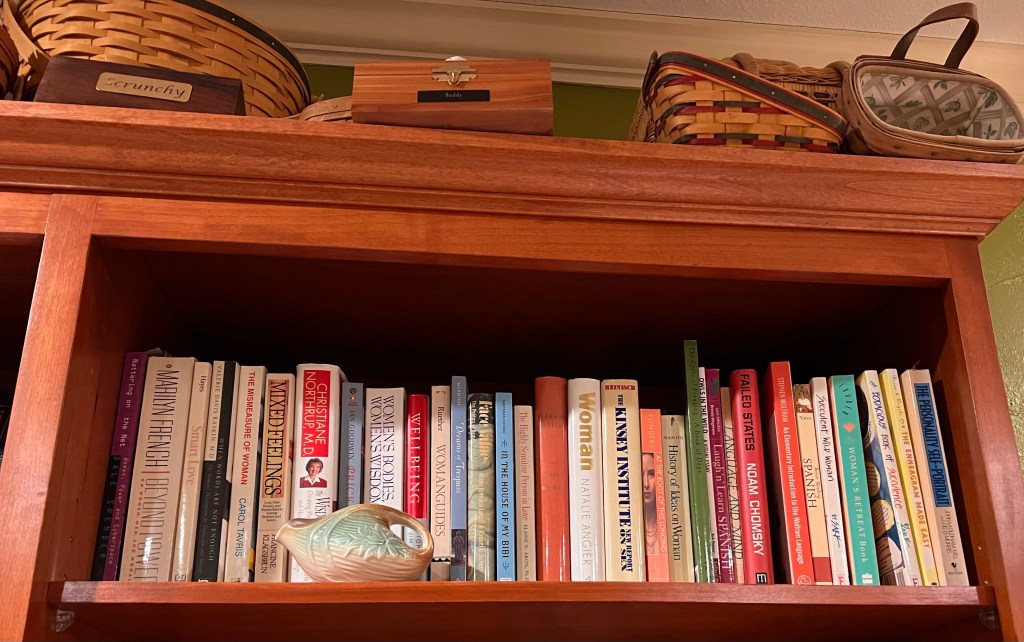
I have a lot of books on women’s language and sexuality. Some of them are here. Others are still in a box.
One of the fun things about Women’s Words is that it’s written in British English, so I got to learn some new modern slang. That was a real bonus. But since she’s English, I wish she could have added some words about women from former British colonies like India and the Caribbean.
Honestly, though, I wouldn’t discourage anyone who has an interest in the English language through history and cares about all English speakers, not just the ones who fancy themselves to be in charge. You’ll find out some interesting derivations, like the fact that the history of “girl” is shrouded in mystery. You’ll learn about words for childbirth, marital states, and the work women do. Go ahead and check it out. Don’t listen to grumpy Suna.
PS: if you write a book about women and language, don’t name it Mother Tongue. There are lots of books called that, so you’ll need a good subtitle.
Ha ha, I thought to myself when I saw this prompt. It’s perfect! I’ve been putting off sharing some cool stuff I learned and saw at the Master Naturalist Annual Meeting. And I have to put things off again after taking 12 hours to get home today. I’m zonked.
Don’t get me wrong! It was because I was having a wonderful time that we took so long! Oh, yes, my smile muscles were hurting.
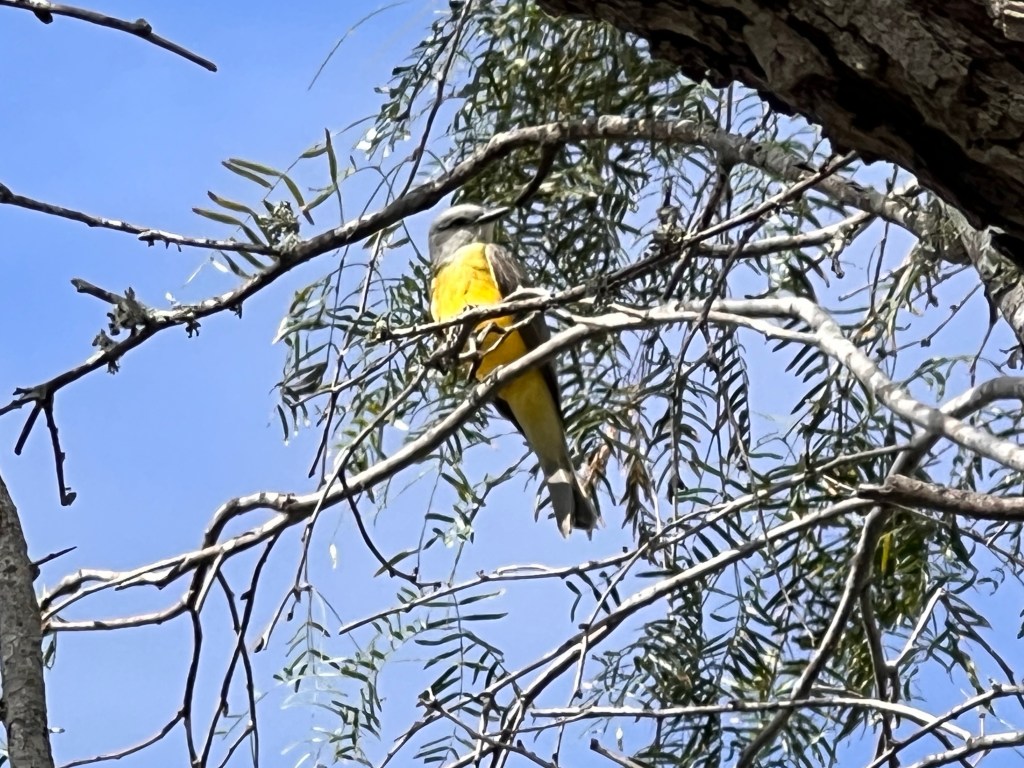
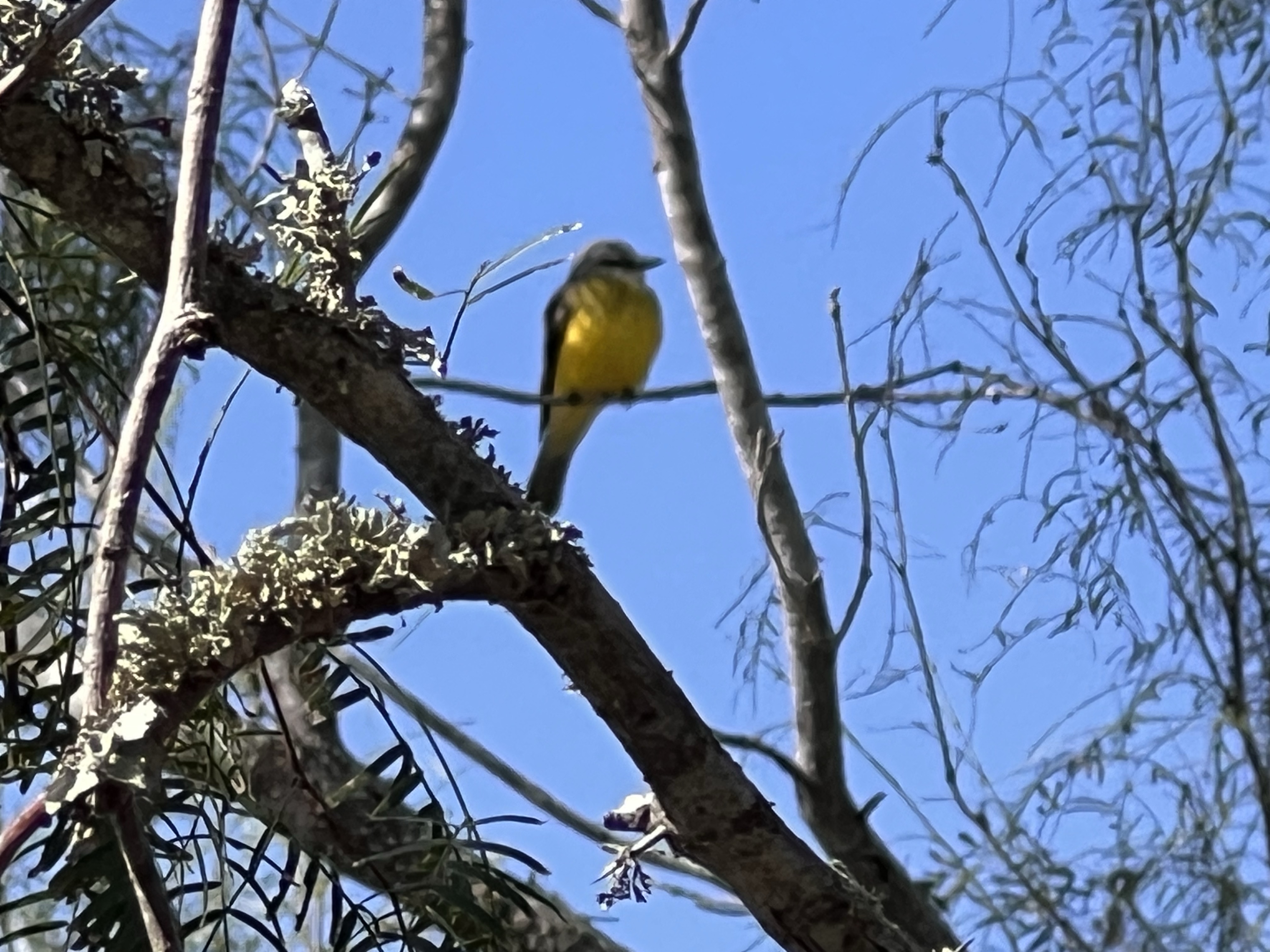
Because nature is beautiful, says the Couch’s kingbird.
We skipped the end of the conference to go to one of the places I’d learned about in one of my sessions, La Sal Del Rey (the king’s salt). It’s near Edinburgh or San Manuel Linn, Texas.
Enlarge to read.
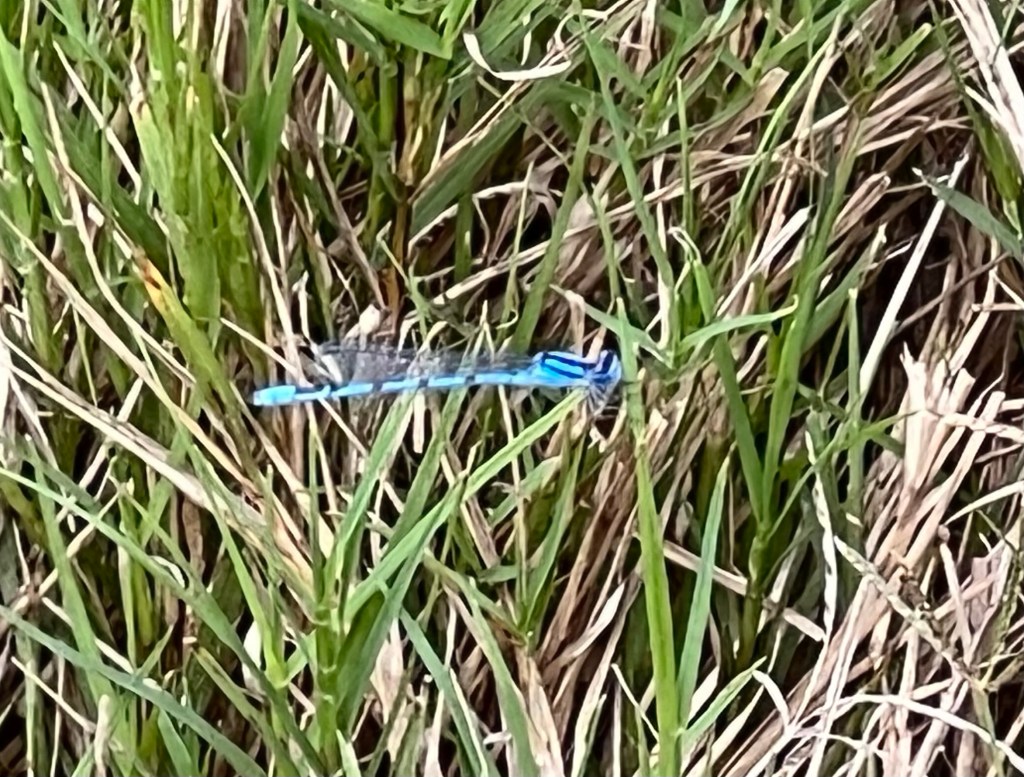
It’s really an amazing sight, so please visit the link above to read more. We saw animal tracks galore around the lake, and dozens of new birds and mating dragonflies around the nearby freshwater lagoons. Paradise.
My first javelina or ringed peccary. These are native. He was not bothered by us.
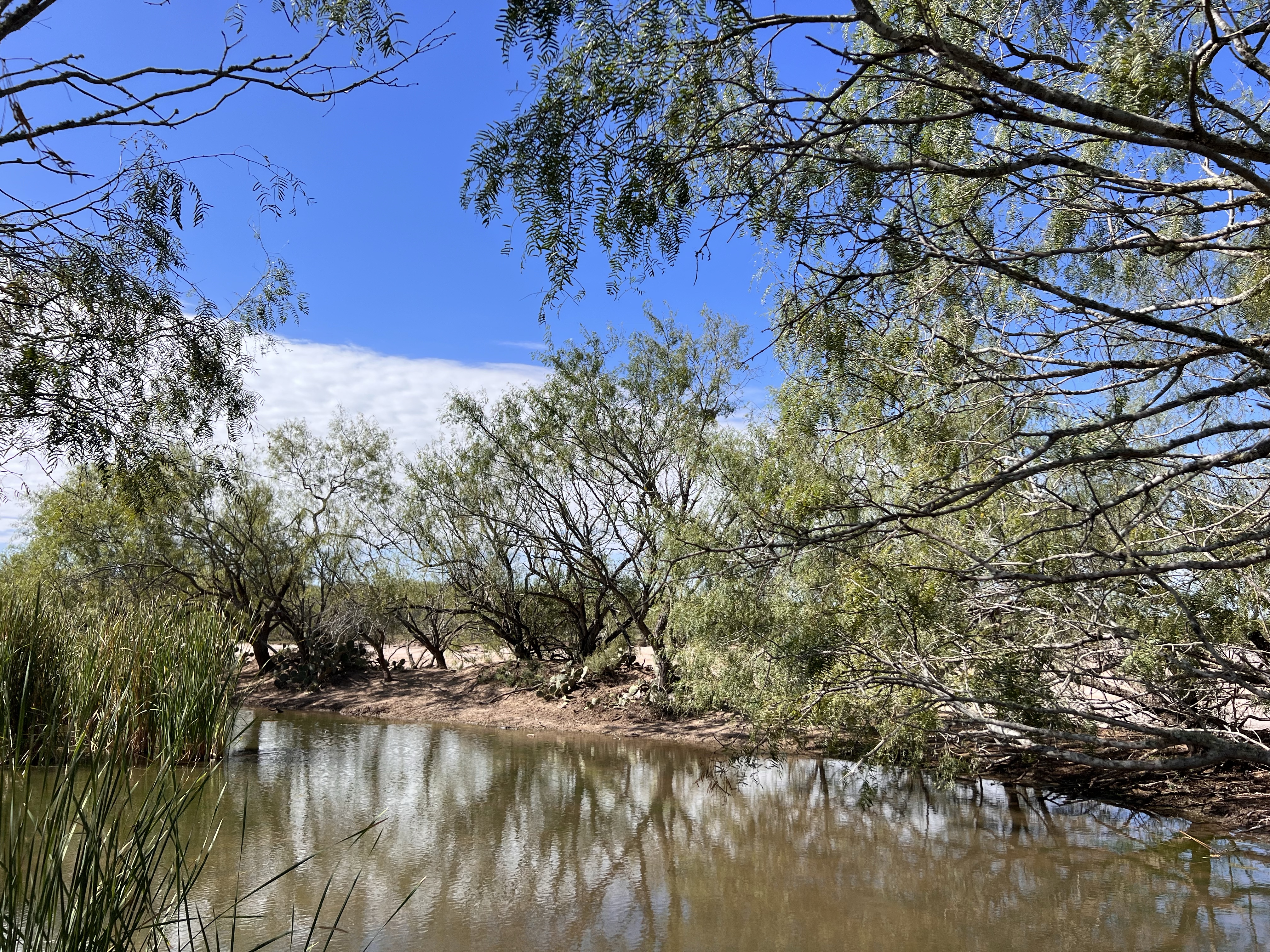
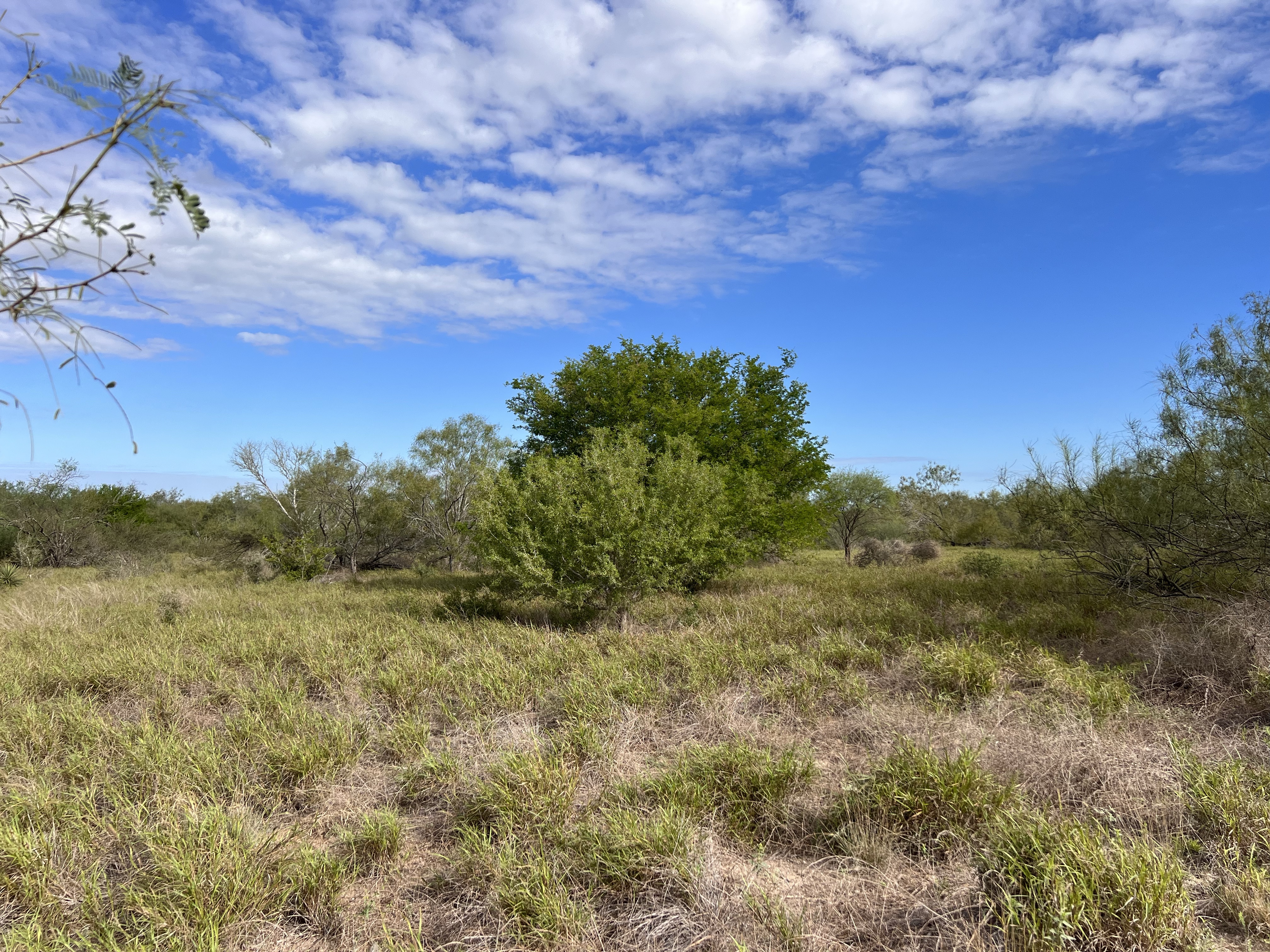
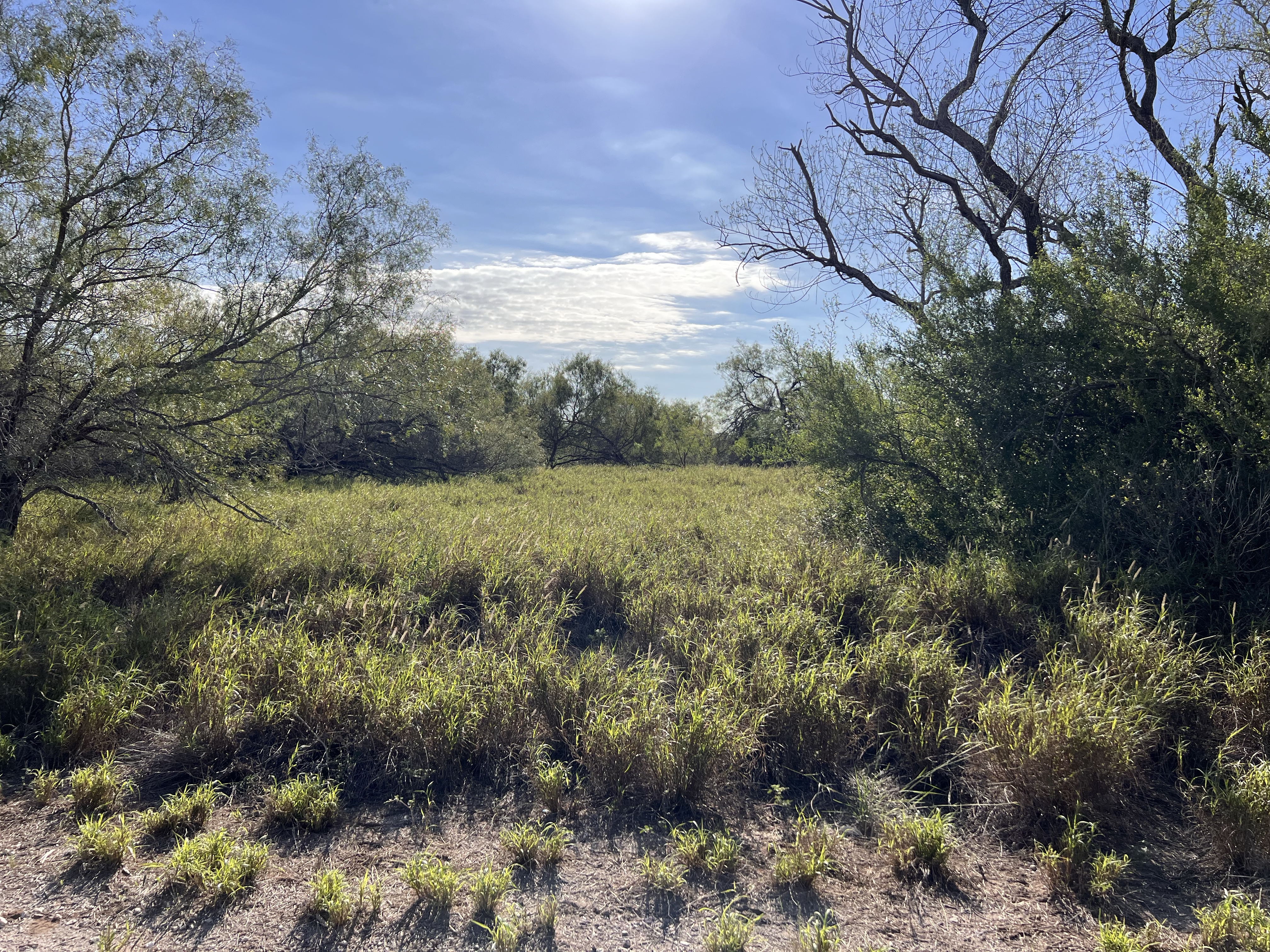
Everything sparkles in the sun there from the salt crystals. Awe inspiring. Because of deep exhaustion I’m not going to show you and name all the plants and other wildlife. Here are a few plants and birds, along with scenery of the lake, thorn scrub, and mesquite/prickly pear forest.
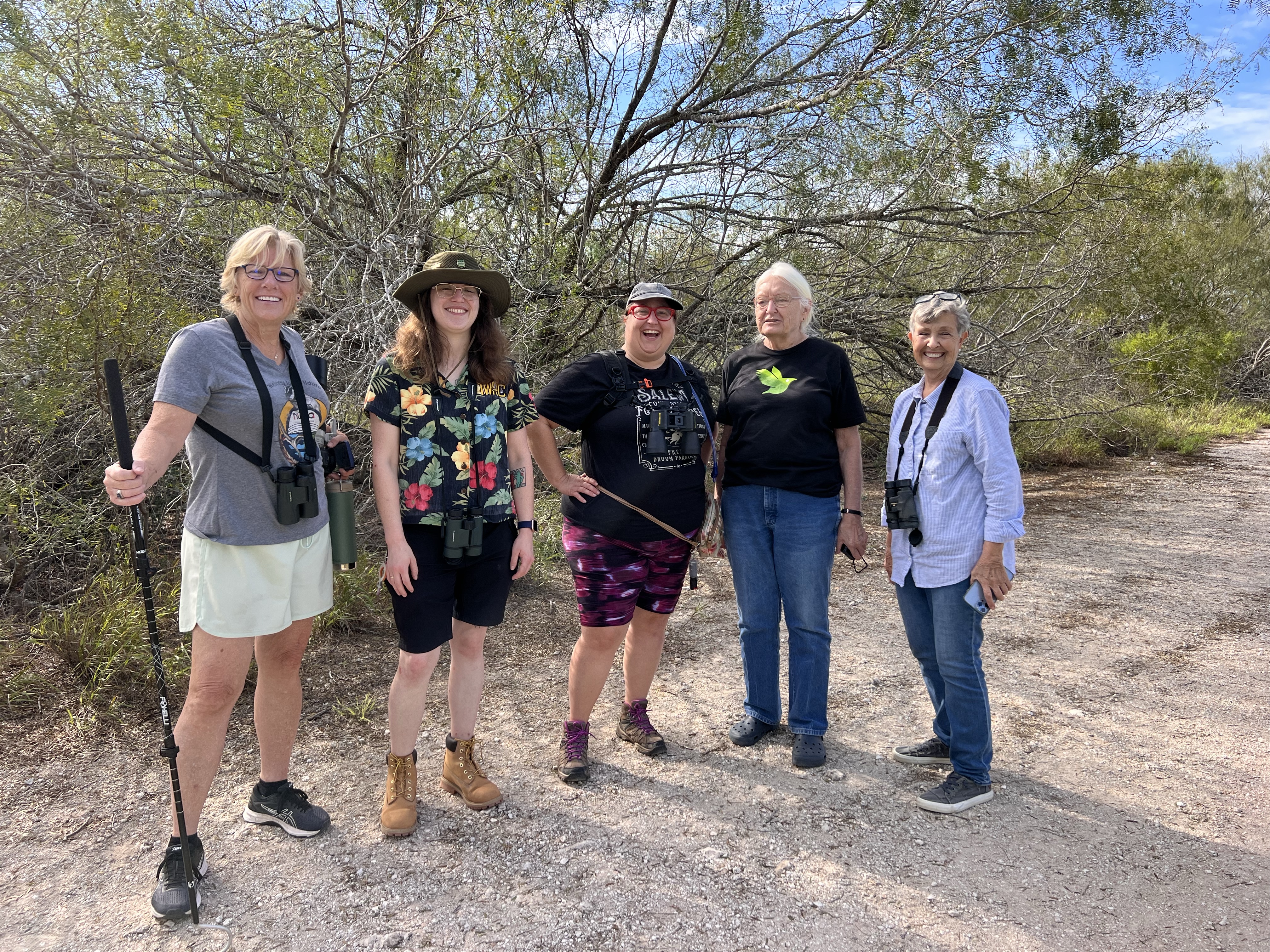
Blurry, but my first vermillion flycatcher Ann and Linda Jo capturing iNaturalist imagesWe found Master Naturalists!
I’m so glad I got to finally see South Texas. It’s so different and interesting!
When was the first time you really felt like a grown up (if ever)?
I’ll write about my day and viewing the eclipse tomorrow. For now…
I first felt like a grown-up was when I found out my first son was on the way and his dad and I had to put together a wedding in a few weeks, buy a house, and plan for parenting.
I was 32.
Dragonflies symbolize transformation. Becoming a parent transformed me.
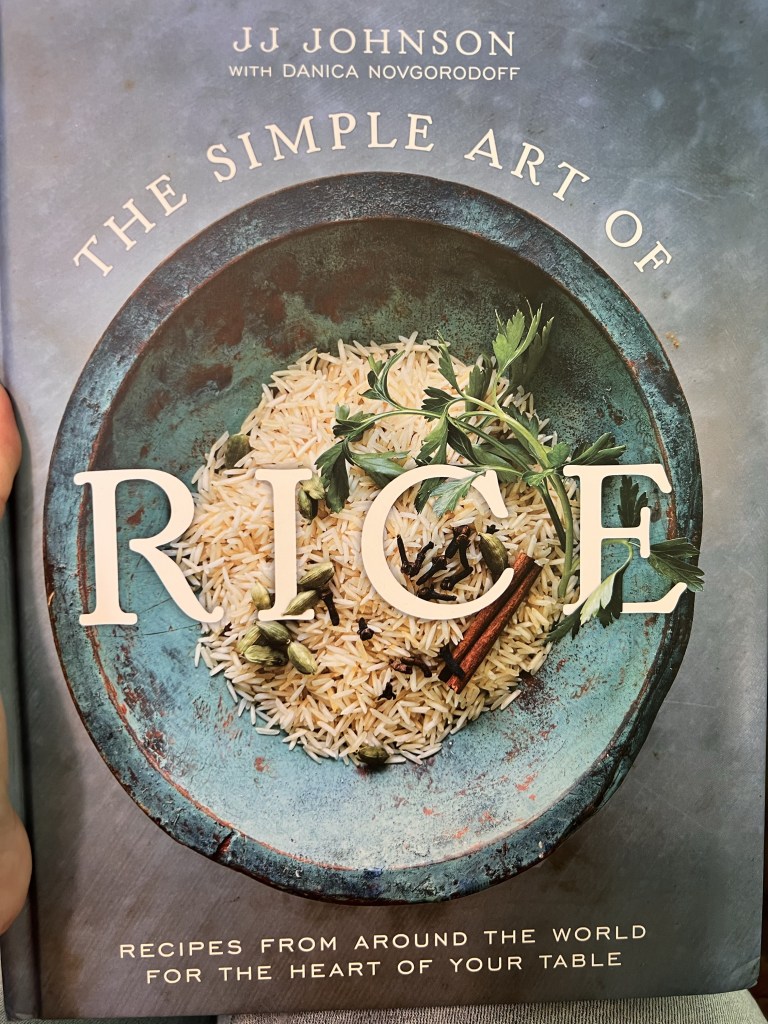
Few things are as frustrating as reading a cookbook all about a specific ingredient, knowing full well that you are completely out of that ingredient. But I did it, I read this fascinating rice cookbook in one of the very few times in my adult life that I was out of rice.
I thought there was another giant bag of rice in the freezer, but there wasn’t. Luckily, Lee got me some Basmati rice today when he grocery shopped. But now that I’ve read The Simple Art of Rice, by JJ Johnson (with Danica Novgorodoff), I know I need more kinds of rice, like my beloved sushi rice, brown rice, and black rice.
I discovered this book the way I discover so many, on an NPR interview. It’s a good thing I’m not in the car listening as much as I used to, because I found two books in one day driving to and from College Station.
Anyway, this book is gorgeous, with lovely photos of the rice dishes from many cultures as well as elegant watercolor illustrations by the co-author. I love a substantial hardback book.
Sample illustration.
Most importantly, the content is interesting, with a nice mix of rice history, stories of cultural ties to rice, some science, and a well rounded collection of recipes that Johnson collected from workers at the many restaurants where he’s worked.
Now JJ Johnson is a famous rice chef, but I enjoyed how he didn’t re-do traditional recipes, just added a little to some. I enjoyed learning African, Asian, Caribbean, and American traditions and how they are interrelated, often due to the forced African diaspora to North America and the islands around it.
Most of the recipes would be easy to try for the average cook. They all sound very flavorful. Some call for special ingredients from cultures whose grocery stores are not near Milam County, Texas, but maybe I can get some in Austin. I expect I’d be the only one to eat some of the ones I’d like to try most, because they’re full of cilantro, very hot peppers, and the dreaded curry. But that would give me more leftovers!
Extraneous giant swallowtail for you
I suspect my family would love some of the desserts, though. And dishes I know they love are in there…with so many variations of beans and rice! We eat that!
All in all, I had a blast reading the stories, interviews, and cultural nuggets in this book. The recipes are like a delicious bonus! This is a great addition to any collection of cookbooks, especially of home cooking.
This visitor to the ranch is glad there were no turtle gumbo recipes.
What aspects of your cultural heritage are you most proud of or interested in?
As a Euro-American white person, I’ve been learning a lot about the negative aspects of my ancestors. There’s a lot to tell, and I’m pleased that it’s not being swept under the rug anymore. But there are things to treasure, things to puzzle over, and things to horrify you no matter where your ancestors originated. That’s because people are talented, complex, and often cruel. Everywhere and throughout history.
So, today I’ve been thinking of my ancestry and what parts I’m proud of.
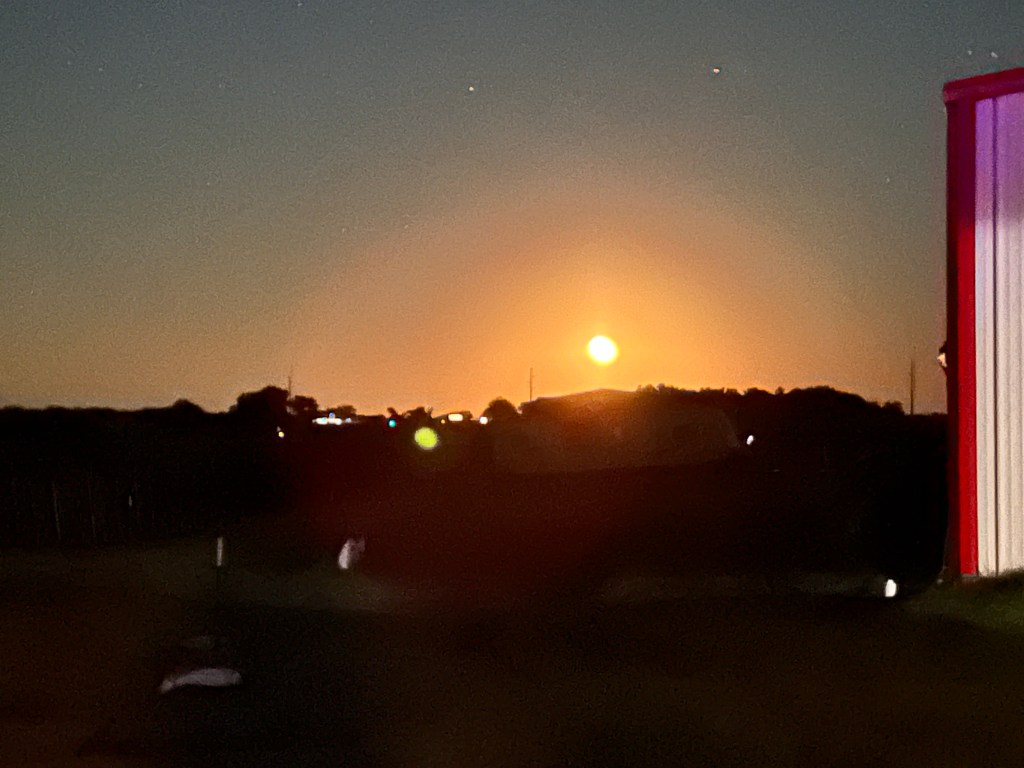
Oh look, Harvest Moon. slightly bigger than last night.
Most of my ancestors on my paternal line came from England. The Kendall family is very old, but I’m most proud of how the first father and son to come over in the 1600s took their indentured servitude and used it to do very well once they were free. That’s the Early American Dream. Then they fought on the winning side of the War of Independence and headed south. Then they lost the next big war and ended up sharecroppers living right along with former enslaved people. I also like that those folks came here to be able to feed themselves, not to foist weird religious beliefs on others.
I wonder if any of them were fascinated by tiny hover flies?
Now, on my grandmother’s side there were some French Huguenots. They were among the many religious fanatics to come to the US to escape persecution and promote their cause. The other bunch on that side were Scots-Irish. Yep. Getting away from religious stuff. Well, that and famines. They all ended up nice, Appalachians, some who did well and some who didn’t. Typical American white immigrant story.
Maybe some were herbalists and inspired my love for wildflowers.
I do love the folk tales, wisdom, and pre-Christian spiritual traditions of Great Britain and Ireland. They tie me to a much more distant past. And yes, I realize those people could be cruel as well as kind, just like the Romans and all that.
I was fascinated by the sun on flowers this morning.
I’ve written a lot about my mom’s ancestors being brought to Florida from Menorca to be slaves on sugar cane or rice plantations. It’s a fascinating little tale, and I’m really proud of the Canova folks for escaping and hanging out with the Native Americans until they could come back and become prosperous business owners in St. Augustine. Those were some strong Mediterranean people.
Strong as a tie vine!
My maternal grandfather was Swedish. I like that his ancestors stayed together in the same villages for many generations. I’ve never experienced a community with such deep roots. Still, the Andersons finally headed out in the very early 1900s, again because they were hungry. Most of them went to Minnesota, but my grandfather was an adventurous guy. He left there to work on the Panama Canal as a surveyor and ended up in Florida, where I’m sure he seemed quite exotic on his fancy white horse. (Maybe he’s where my horse-loving genes came from.)
A horse and donkey I love.
I guess I’m proud that my ancestors took big risks and got through hardship. No doubt we’re all descendants of the people who survived the risks and danger long enough to reproduce, huh?
Back then, they didn’t even have bad county roads to travel on.
And when you look at what they went through, the persecution, the ignorance, the huge changes, you can get some perspective to use on today’s challenges. Humans have never had it easy, and never has there been a time or culture without suffering and joy. I’m sure you already knew that.
I just like the swoopy lines in this one. Those are starlings, also European immigrants.
In summary, I don’t think my heritage is better or worse than anyone else’s. I’d like to think I’ve learned from some of their mistakes, and can benefit from some of their contributions to the world.
Now let us ponder the shoe on a fence post. It’s always there if someone needs it!
I am not looking forward to answering this. The past few years holidays have been very confusing, because it’s hard to plan. With all the emergencies and life changes, we never know who will be around to celebrate or when. And I’ve lost two family members (they aren’t dead; they just consider me dead to them). It’s a good thing I’m not big on Christian holidays. I’d be miserable.
I really miss Christmas trees. I used to have lots. This was my Nature Tree in 2014.
I guess we’re not alone. So many families have so many branches that want to see each member. Divorces, marriages, and squabbles make holidays hard for lots of us. So I won’t complain, just note that I sure liked holidays when I had a little nuclear family.
I used to enjoy setting a nice table.
And I’ve finally stopped giving so many gifts. I really used to love watching family open presents. But when I found things I knitted for someone stuffed under a bed and saw things I’d carefully picked for people never move from the spot they set them, I realized I was just piling unwanted things on people. I do love a thoughtful gift, myself. I have nearly every gift my children gave me displayed so I can look at them.
This is the reaction I always hoped for.
For a few years, when we had both kids and Declan’s partner to enjoy Christmas with, we traveled for Christmas. That was wonderful. There were such good times hiking, making music, eating, and exploring.
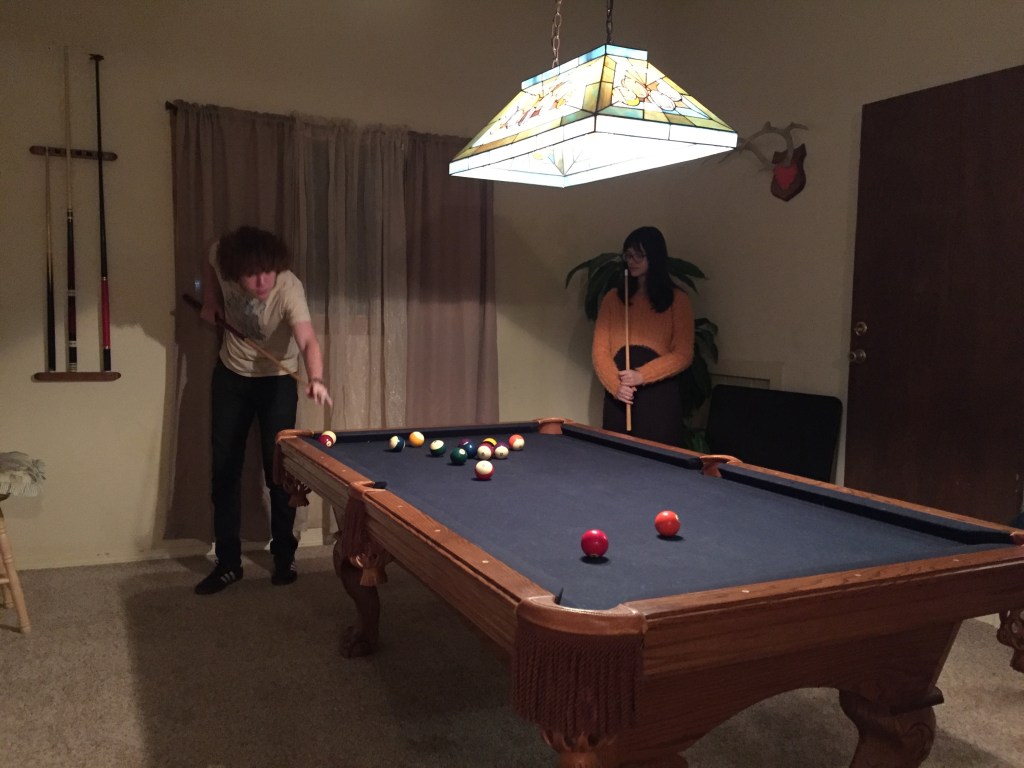
The place in Ruidoso had a pool table. Fun!
No matter who’s here, I do enjoy a traditional Anerican Thanksgiving. I love the familiar dishes, along with the ones our many attendees bring from their families, like Anita’s “damn yams” that are ridiculously sweet. I’m one of the few who like my homemade cranberry-orange sauce, so we always include the can-shaped stuff, too.
My favorite holiday to eat at is New Year’s Day, since I insist on cooking what I ate growing up, but add pork loin for the manly nest-eating men who don’t find black-eyed peas and collard greens as appealing as I do. (I do make the greens delicious, though.)
New Year’s 2022 included cole slaw
Other holidays we don’t do much for anymore. No children come trick or treating out here, and I don’t do Easter eggs for similar reasons. I’m not into any special activities for the Patriotic holidays other than putting out a flag.
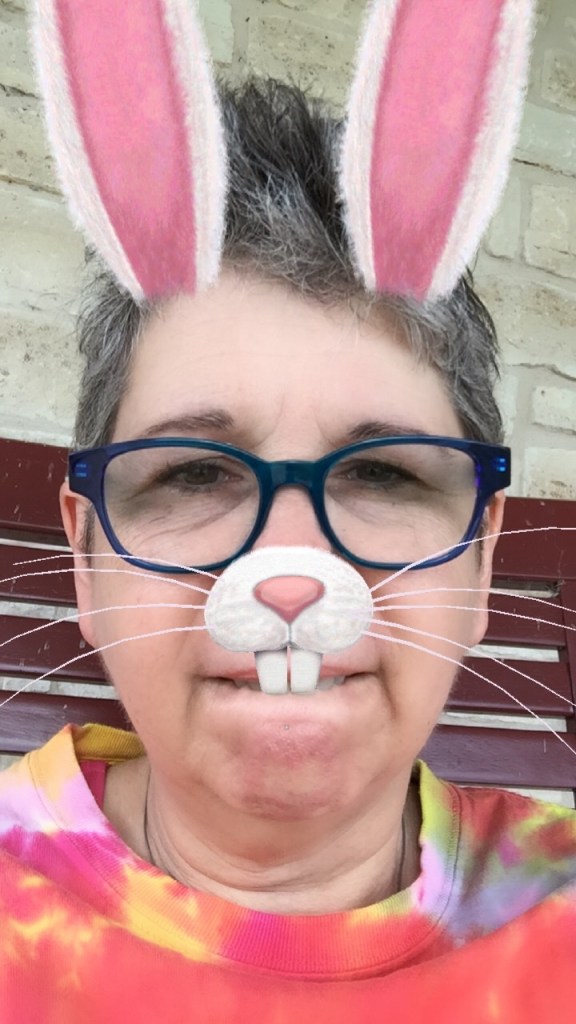
I did an Easter Snapchat in 2017.
I enjoy traditional Celtic Wheel of the Year observances, but I do it more privately now than I used to. I’m trying to blend in more now that there’s so much violent energy being directed at people who don’t fit the MAGA profile.
The wheel moves to Mabon at the equinox.
Still, it’s fun to watch how other families celebrate their own traditions. Holidays in nearly all cultures seem like fun and a good way to relax. I hope we get to continue to be a multi-cultural society.
Everyone likes a flower, even from a Buffalo bur
Let’s celebrate! I’m going to try to stop missing old ways of observing holidays and find something new!
Bonus hawk Declan and I saw while chatting this morning.
Name the professional athletes you respect the most and why.
Many of my friends aren’t fond of professional sports or the players. Trust me, I won’t argue that there are plenty of negative aspects, like head injuries, young people being taken advantage of, ridiculous ticket prices, gambling, drugs…etc.
But I can’t help being impressed with what some very wise athletes have done with their fame (in addition to making funny commercials and getting oh so wealthy (I see you Mannings and Mahomes). So, here are a few I admire.
Billy Jean King. It’s hard not to admire her. She took her platform as a tennis player and has not stopped using it to promote women’s rights and health. She’s still doing good work, with her weirdly brown hair for someone age 79.
Dak Prescott. Not only is he my favorite player on my favorite football team (Dallas Cowboys, for anti-US sports readers), but he won the Walter Payton NFL Man of the Year for his extensive charity work. He has a good sense of humor, but seems very intelligent and willing to share his ridiculous income with others. He doesn’t seem busy only buying bling, dressing weird, and putting shiny stuff on his teeth (OK, I’ve seen his outfits; he does wear some unusual fashion). But heck, he’s exactly one month younger that my son, so he’s still a kid.
Me and my Dak Bobblehead.
Kareem Abdul Jabbar. I’ve always admired him as a human being, even when I was very young. Yes, he was one of the greatest basketball players ever, but he’s also a brilliant thinker on history, race relations, religion, and more. He is a great speaker and writer, too.
So that’s the answer to the prompt. For those of you who don’t know me personally, I thought I’d share my rough afternoon. Here’s my Facebook post:
I get so tired of being weak and wimpy.
I’m very grateful for my kind horse.
I overheated riding today because I’d convinced myself it was “cooler” outside. I didn’t realize it, but I guess Apache did, because in the middle of our exercises he broke free and zoomed to the tack room and stopped. I was thinking, ooh, he’s not listening, so I need to get him to pay attention before I get off, so I tried to walk a few steps then stop. After the second time, he zipped to the round pen, where his halter was, walked a circle for me and stopped.
As we stopped I realized I was shaking all over and dizzy. When I dismounted I was nauseated. Apache walked slowly with me to the shade and just stood by me as I sat down to call Lee to come get me.
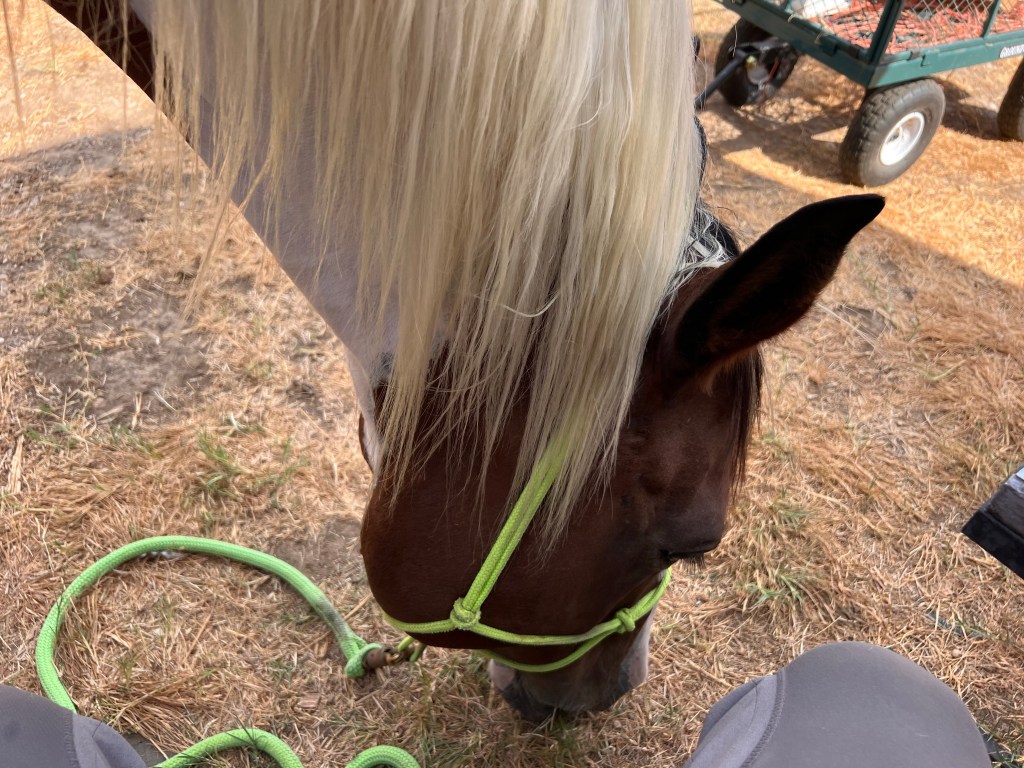
Here he is hanging with me
We both got hosed off, which helped. Now, maybe Apache had his own reasons for acting weird, but I appreciate that he got me to get off sooner than I’d planned. I wish the promised cooler (previously there was a “coojer” typo that was pretty funny) weather would show up! I’m hardly able to get anything done with the horses other than feeding and ground work.
Interview someone — a friend, another blogger, your mother, the mailman — and write a post based on their responses.
Hmm, already I am wondering if it was a good idea to do this project where I answer the daily prompt for the month of September. I was stumped about who I could interview that wouldn’t take forever and would be somewhat interesting.
Then I realized I have lots of friends who are good writers, and that actually, everyone is interesting; So, I narrowed the list of possibilities down to who I figured could type fast and was bribable. Okay! So, I promised to pay to take Anita to the Barbie movie if she’d introduce herself to all five of you who read this blog!
And if you want to answer these same questions, you can be a blog post, too. It’s like the blog will practically write itself.
All About Anita
(In her own words)
My friend Anita
Where were you born? Did you stay there long?
Stoneham, Massachusetts. We left after 6 months because my dad’s mother died and he wanted to go back to Delaware. And probably also because I crawled out the front door of the house and into the front yard without anyone noticing for a good while. I distinctly remember doing this. The first, but certainly not the last, time I tried to run away from home.
Shortly after birth
Where were your ancestors from?
Scotland, England, Ireland. I am as White as White can be.
Any siblings?
I had an older brother who died in 2007 of brain cancer. On Mother’s Day. But before that, he spent a lot of time tickling me, holding me up to the ceiling, or hanging me over the toilet and threatening to flush me down, all of which I thought was great. He was a very cool guy with a dry sense of humor and great taste in music.
Share three good or funny memories of high school
Uhhhh, hmmm, hanging out with you in your bedroom, playing records and talking and writing; skipping class to go to the beach in Boca Raton; cutting up confetti and bringing a giant black sign with the middle finger painted on it in white to high school football games (of course, I got in some trouble for that; The Man also didn’t like the confetti much. Huh.).
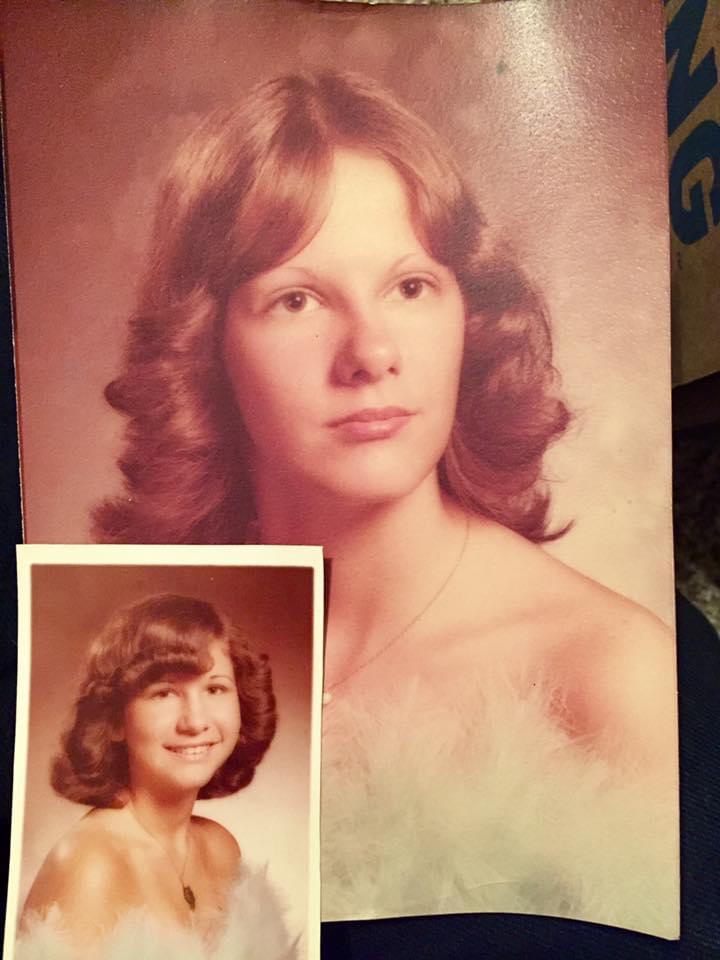
Anita and me in high school. Nice hair!
Share the three things you liked least about high school.
9th grade English: My life was threatened a number of times by a classmate, and also the teacher was incredibly incompetent. A certain “friend” who thought she owned me. The snobbishness and rudeness of some of the more well-off kids toward those of us who were considered weirdos or were living in poverty.
High school friends we like.
Where did you go to college? What was your major?
East coast South Florida. My initial major was journalism, but the program at my upper-level school was garbage (and my time working at a major newspaper kinda ruined it too), so I switched to Film, which I loved and still love to this day.
What kinds of jobs have you had as an adult?
Somewhat boringly and consistently, I have been an editor in the hard sciences all of my career. I’ve also rehabbed some houses, one in keeping with local and national standards of historic preservation (it was a 200+-year-old house).
What’s your favorite kind of food?
I love Mediterranean cuisines. And Indian food. And sushi. And a good brownie hot fudge sundae.
Ready for an Italian dinner
Tell us some of your collections.
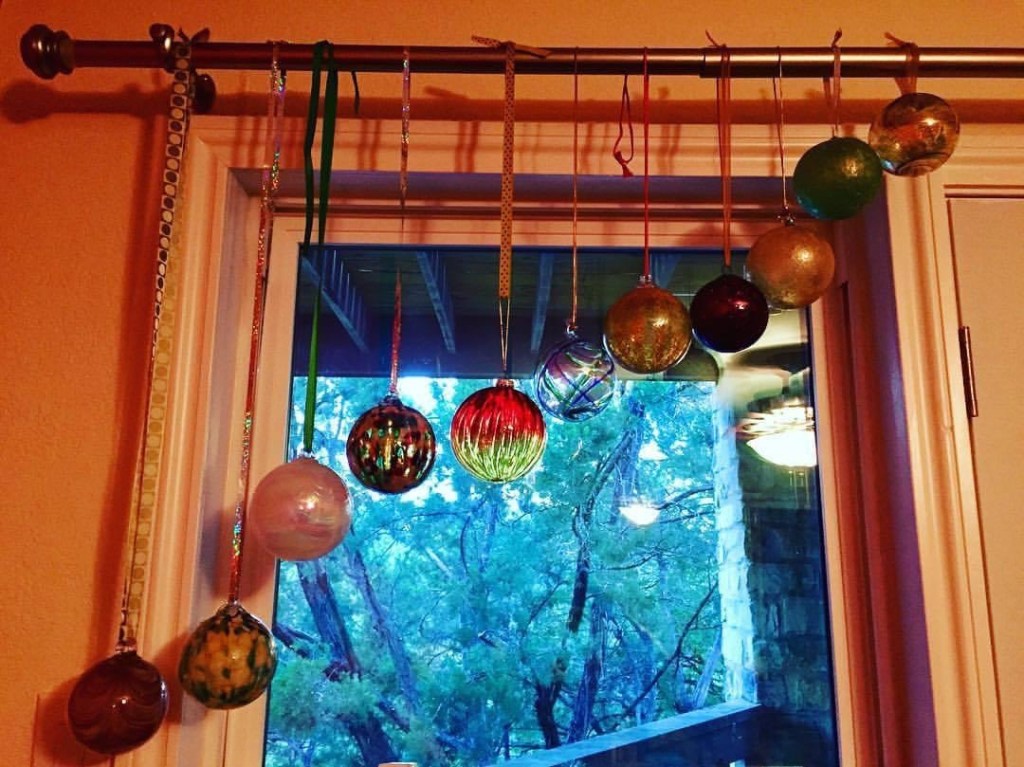
Oh my. Pez, CDs, old movie DVDs. Pueblo pottery, southwestern/turquoise jewelry, books about strange/controversial subjects, cacti, rocks/minerals, glass balls, magnets. diner memorabilia, oddball Xmas decorations, objects from Baltimore. I think that’s it, but I’ll probably think of more later.
Her collection of glass balls
What’s your spiritual path? Your philosophy?
I believe there is a creative force or energy in the universe not named God or Jesus or Allah or whatever. It is not an old bearded White dude, sitting on a throne, telling me I have to be good or I’ll go to hell and suffer for all eternity. I believe the world would be a better place if we could be our true selves, without all the worries, pain, and suffering society puts on us. I want to live in harmony with nature; I don’t always succeed, but I try. I will hug a tree, dammit.
Do you believe in true love?
I did once, but “life” had other plans for me. And that is heartbreaking to me at times.
Not her true love. But close.
Which of your past pets is or was the weirdest?
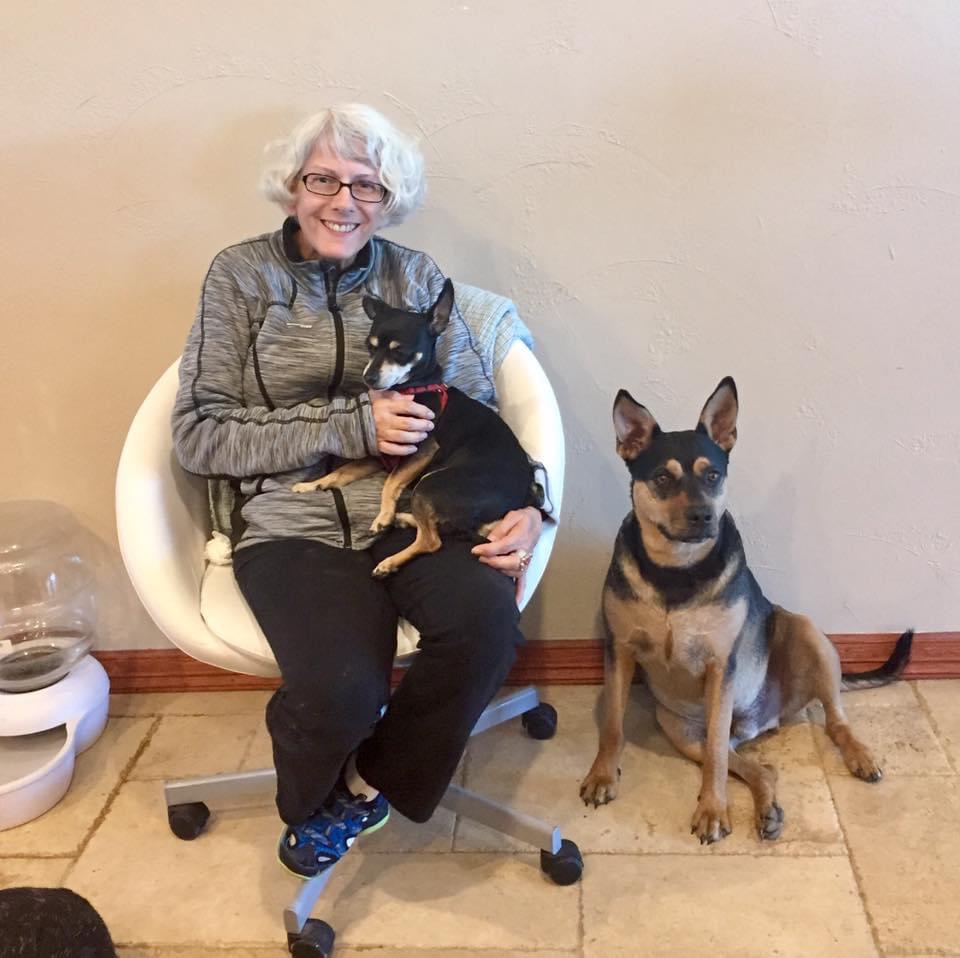
Wow, they have all been super-weird in some way. Fiesta, a cat I had with my ex-husband, was a complete lunatic, but adorable. Pickle, my current dog, has many, let’s call them, quirks.
Pickle, with my weird dog, Harvey
Introvert or extravert?
I would say both, depending on the situation and my state of mind. I am not a natural at parties/gatherings where I don’t know the people. I can be rather shy. But if I know you and I like you, I’m pretty much all in. I’m a strong believer in telling people you love them. You just never know when your last day together will be and you don’t want to miss the chance.
Partying
Favorite color?
Green green green all the day long. And then orange and yellow.
Green. Pickles.
Thanks so much! I love you too, my long-time friend.

























 The Hermits' Rest