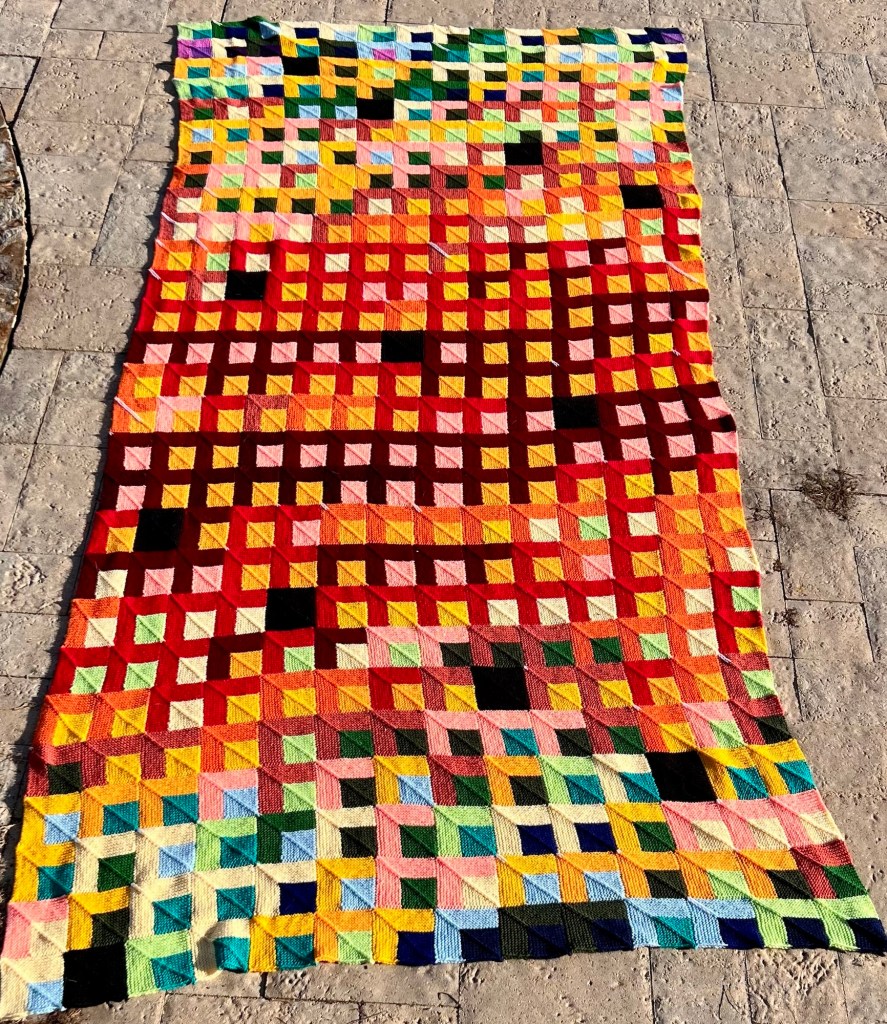
I’m too tired to write much. Well, honestly, my back hurts too much to concentrate. Spending 3.5 hours in the seating at the place where our Master Naturalist meetings are held is too much, even with cushions. However, it’s good that we started a new member class and that I got going on borders for my temperature blanket from last year. Here it is in its lengthy glory:
Last January is at the top, and the last row is December 31-January 12.
I’m not sure how I didn’t realize the year would end with one day on the last row. So I added the beginning of January. At least that put a few cold days on that end of the blanket. I plan to do the black border wider on the long side to make it more balanced. we will see.
Close-up of summer through winter. You can at least tell it cooled off a bit.
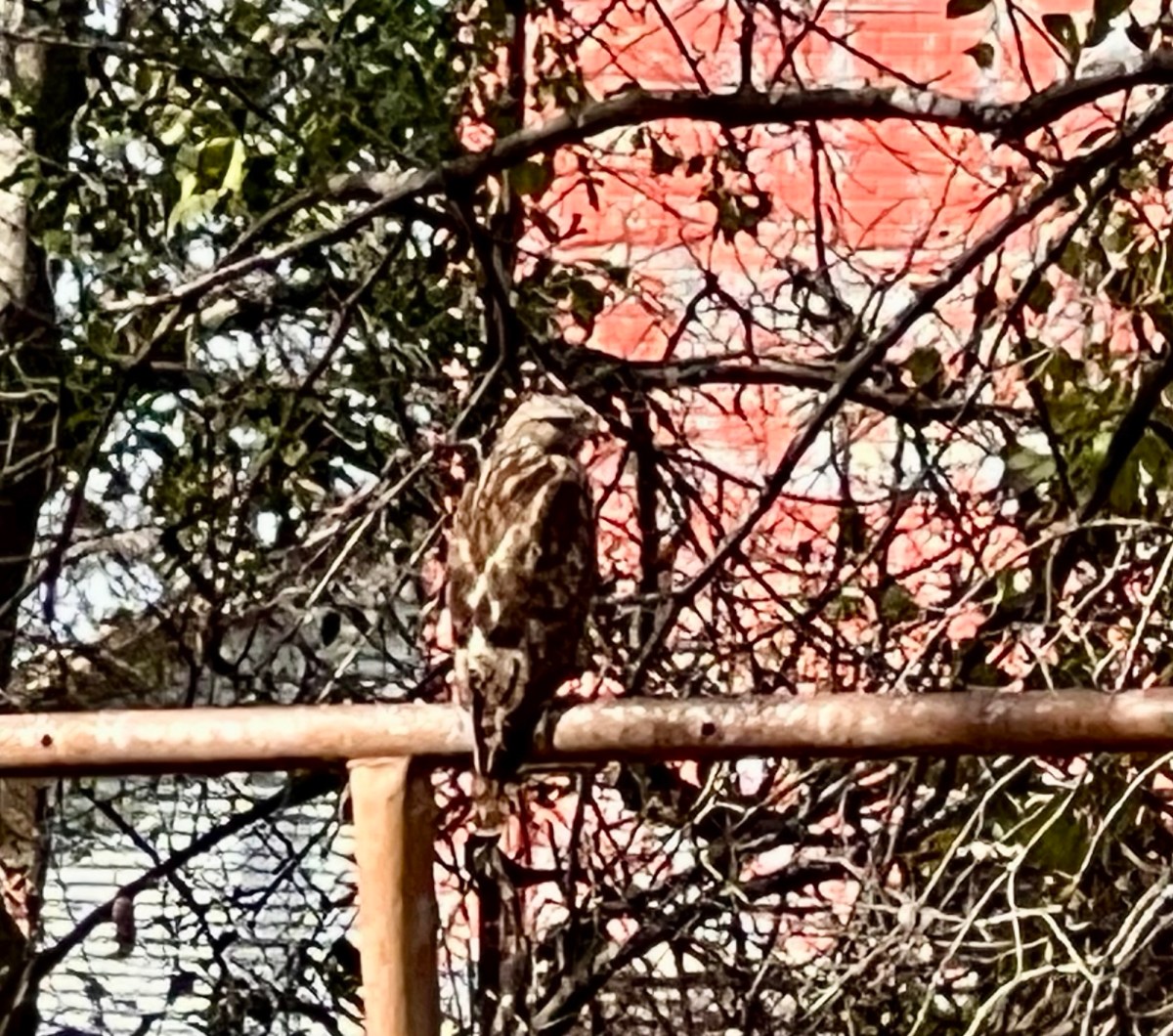
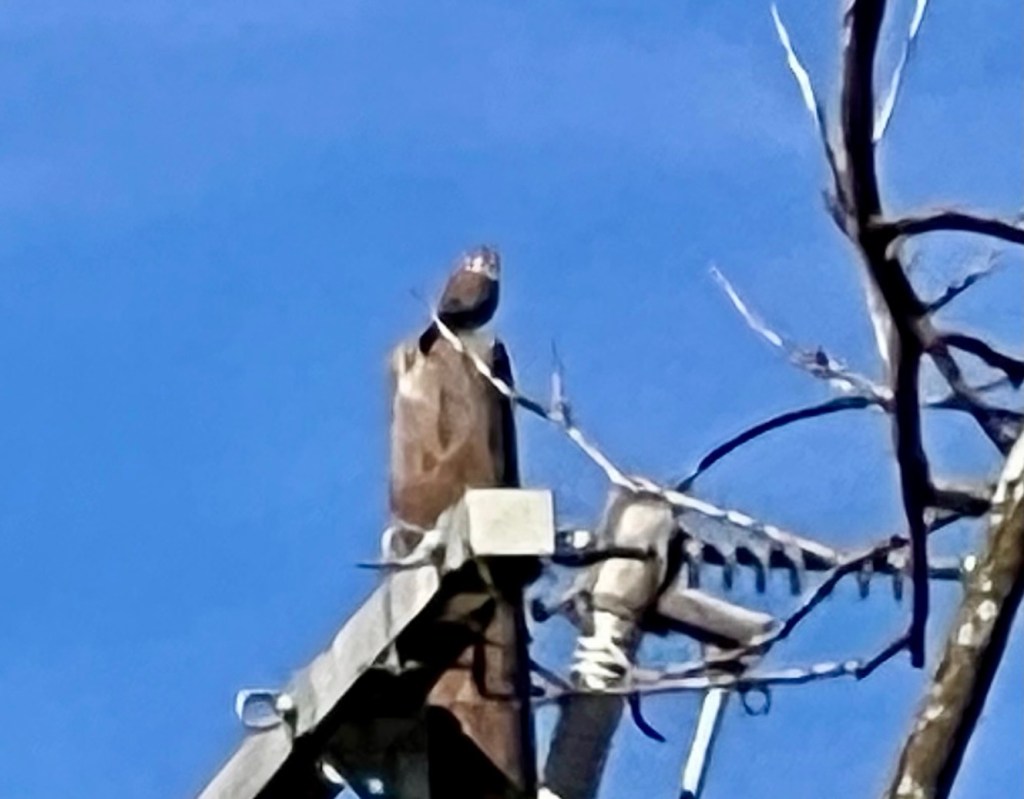
It was another pretty cool bird day. The highlight came when I was standing in the back yard of the house we are incredibly slowly renovating. Suddenly a Red-Shouldered Hawk landed on the old clothesline support, just a few yards away. We were impressed! And she stayed there. We left, not her.
This perch is perfect.
It’s really fun to share an interest in nature with a family member!
Maybe tomorrow I’ll be perkier! I did enjoy the class this evening. The new students are interesting people.
It’s all good today. The space heaters did their job and the temperature ended up perfect for sleeping last night. It also wasn’t quite so cold, which I did not complain about.
So let’s go for a walk!
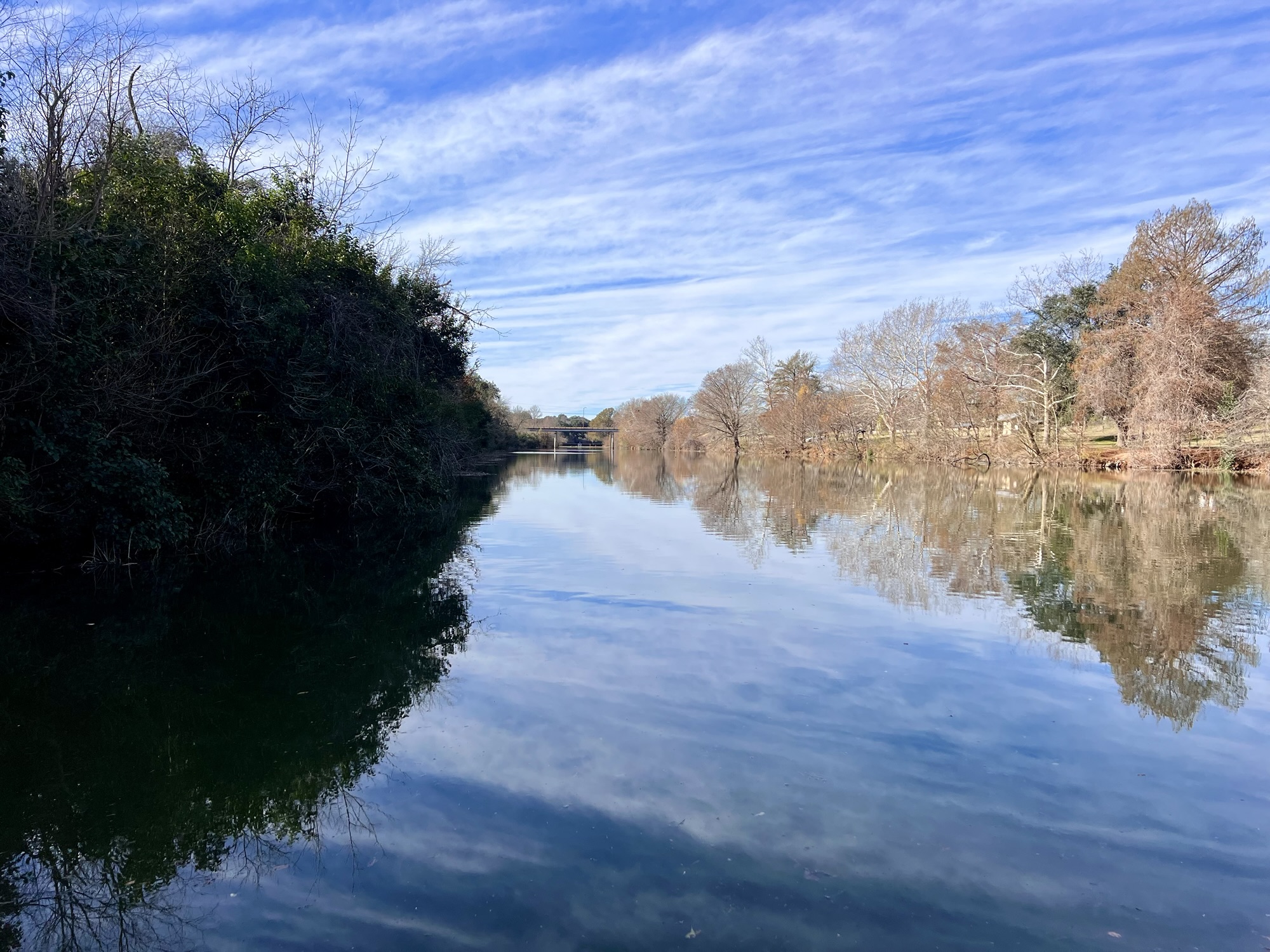
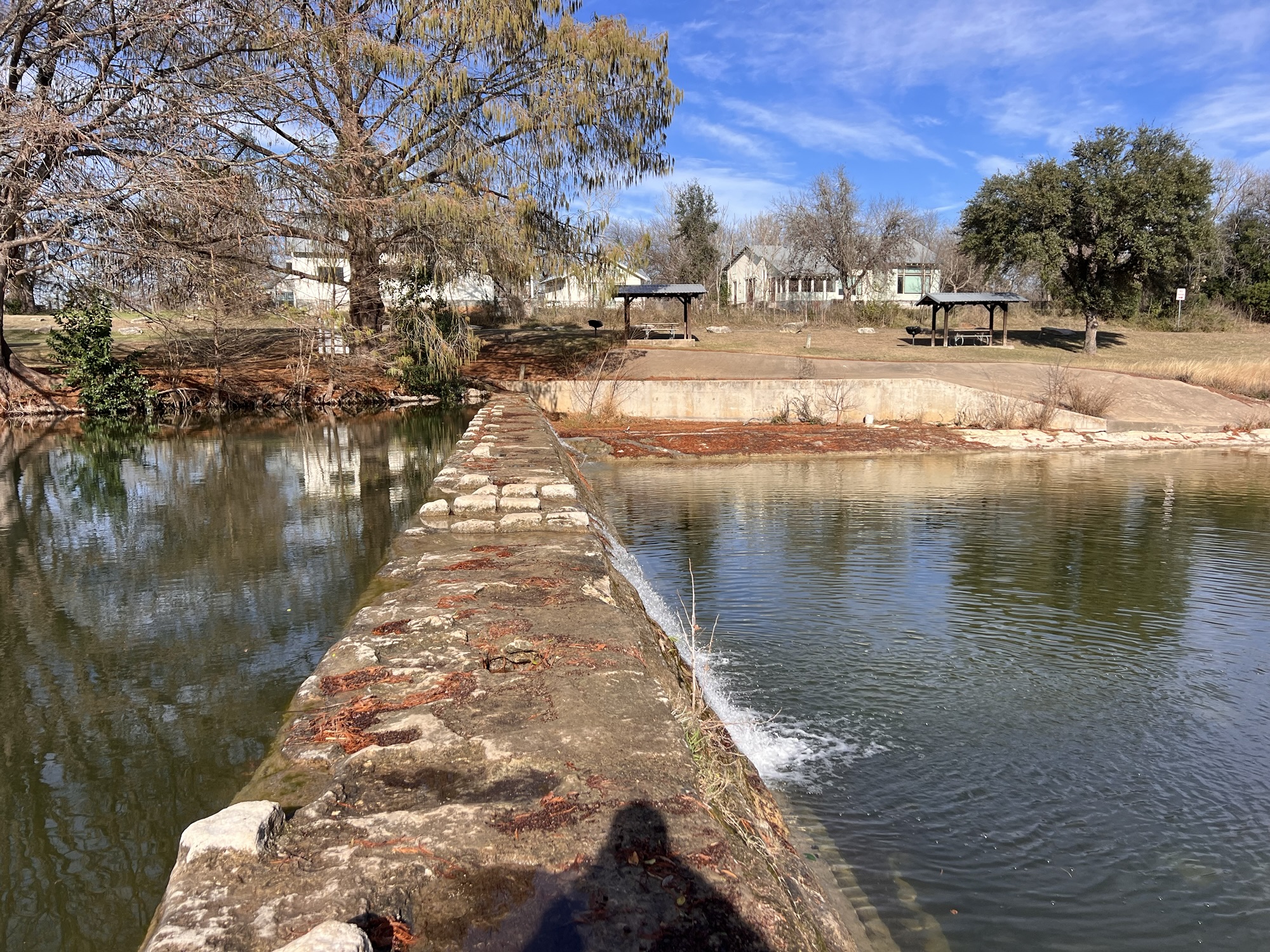
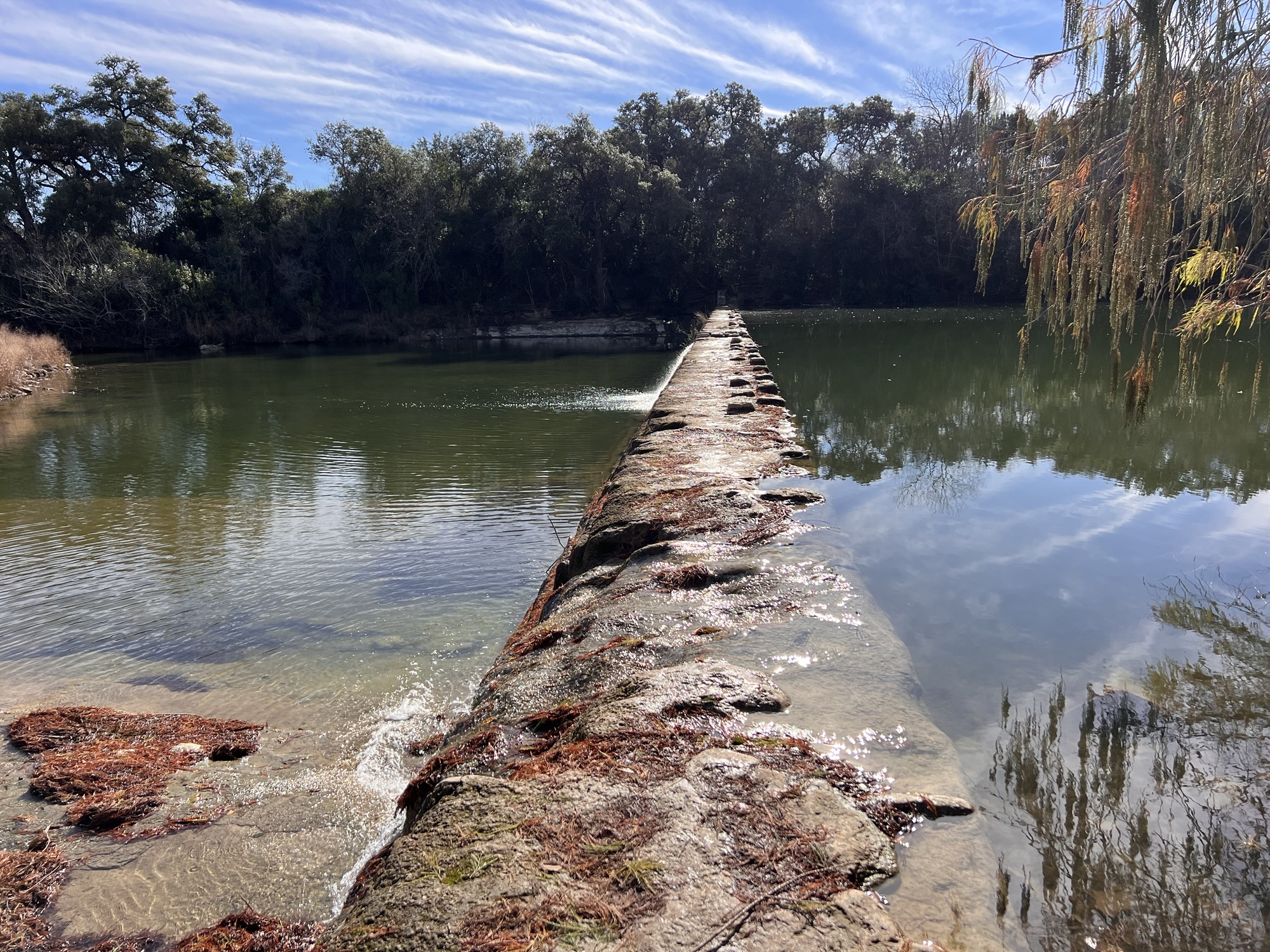
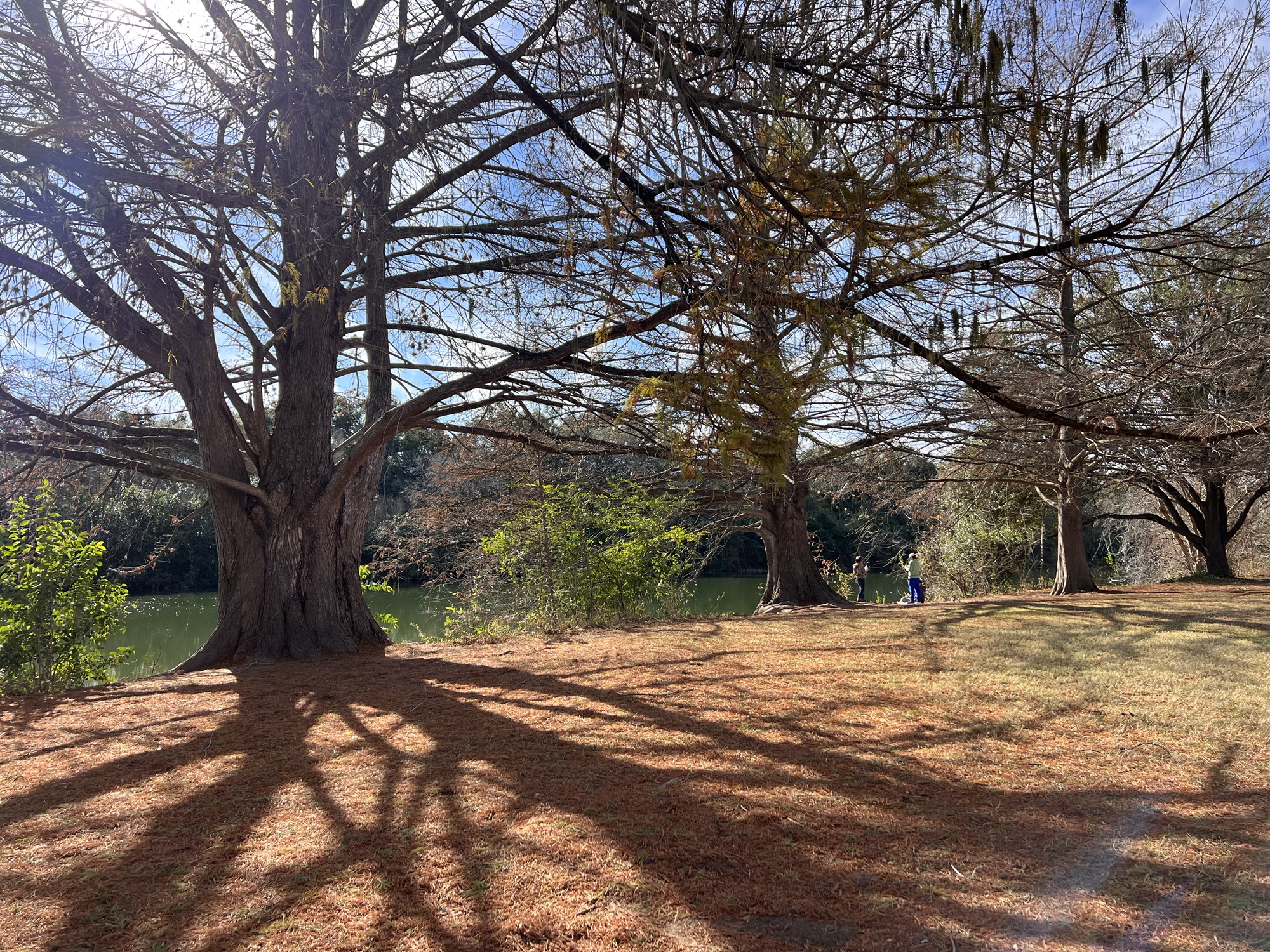
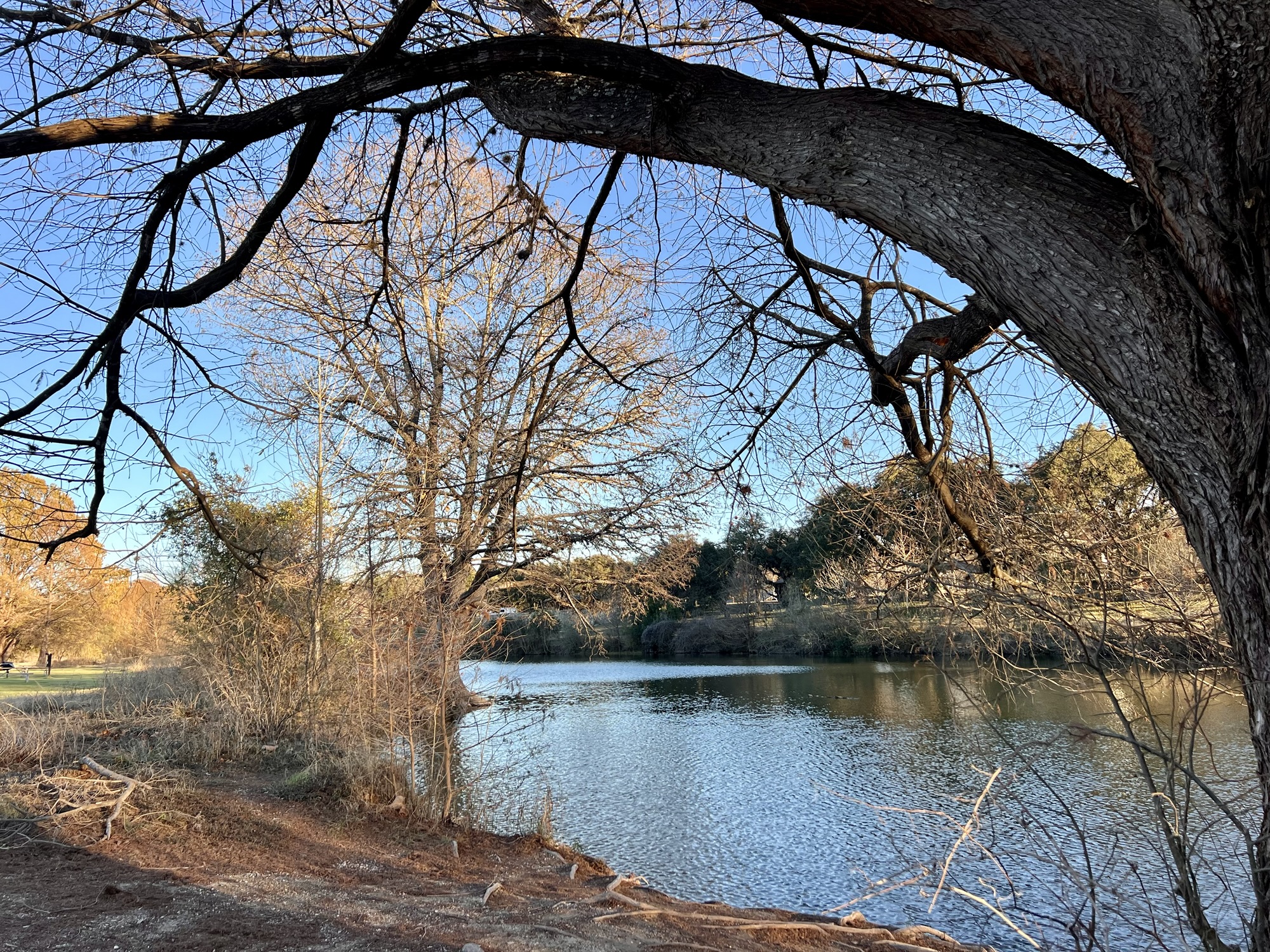
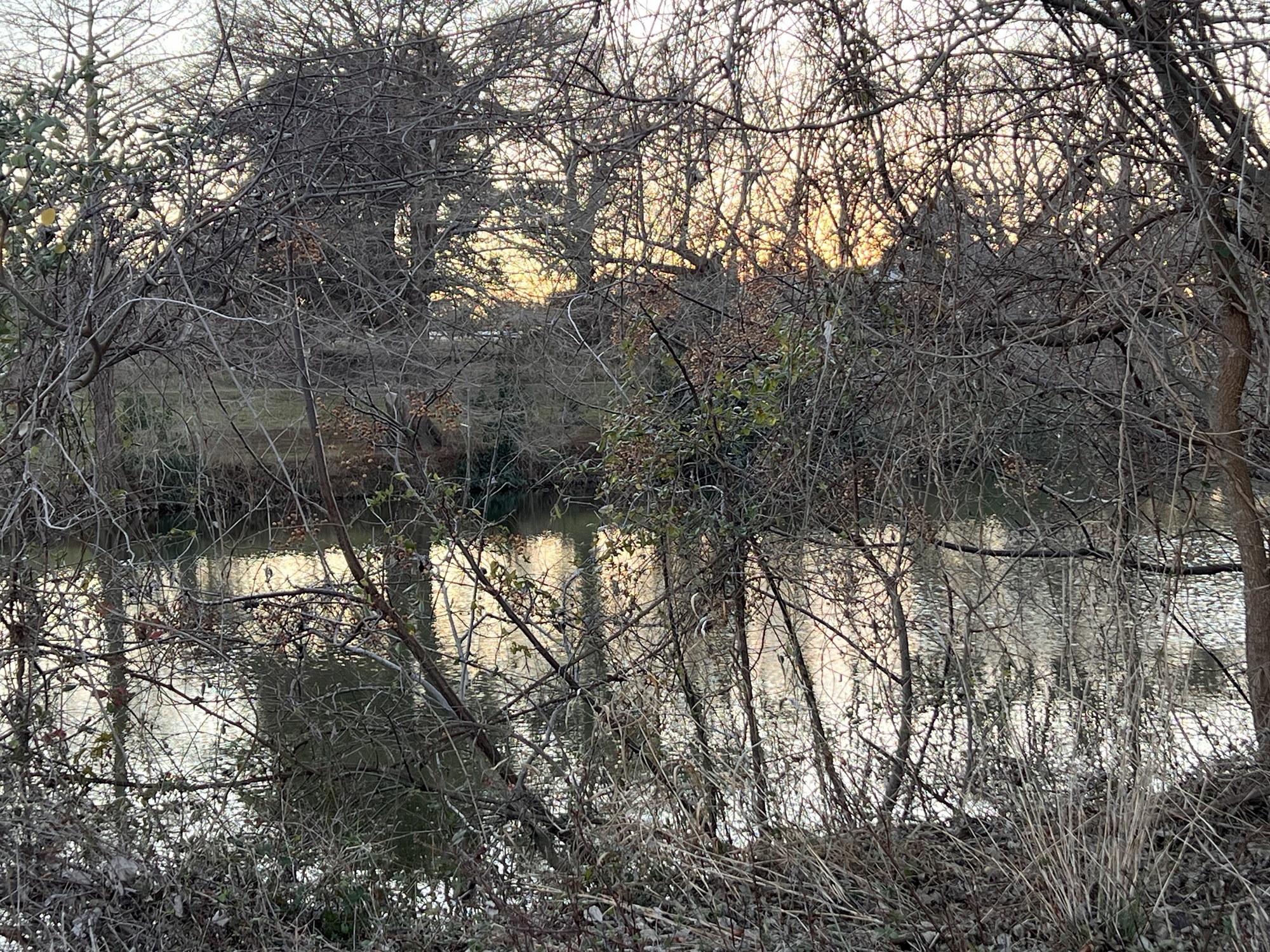
After a nice morning, I ended up walking on every trail in Blanco State Park, enjoying the beautiful sky and the reflections in the river. I especially enjoyed crossing the river on the dams and watching the water flowing.
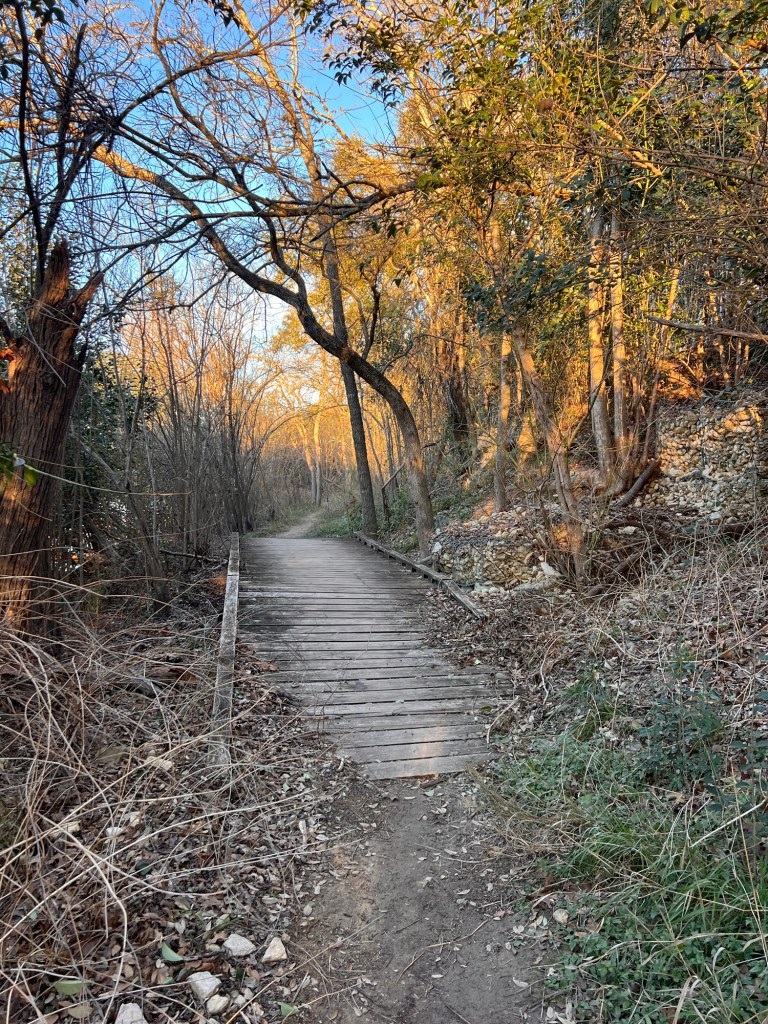
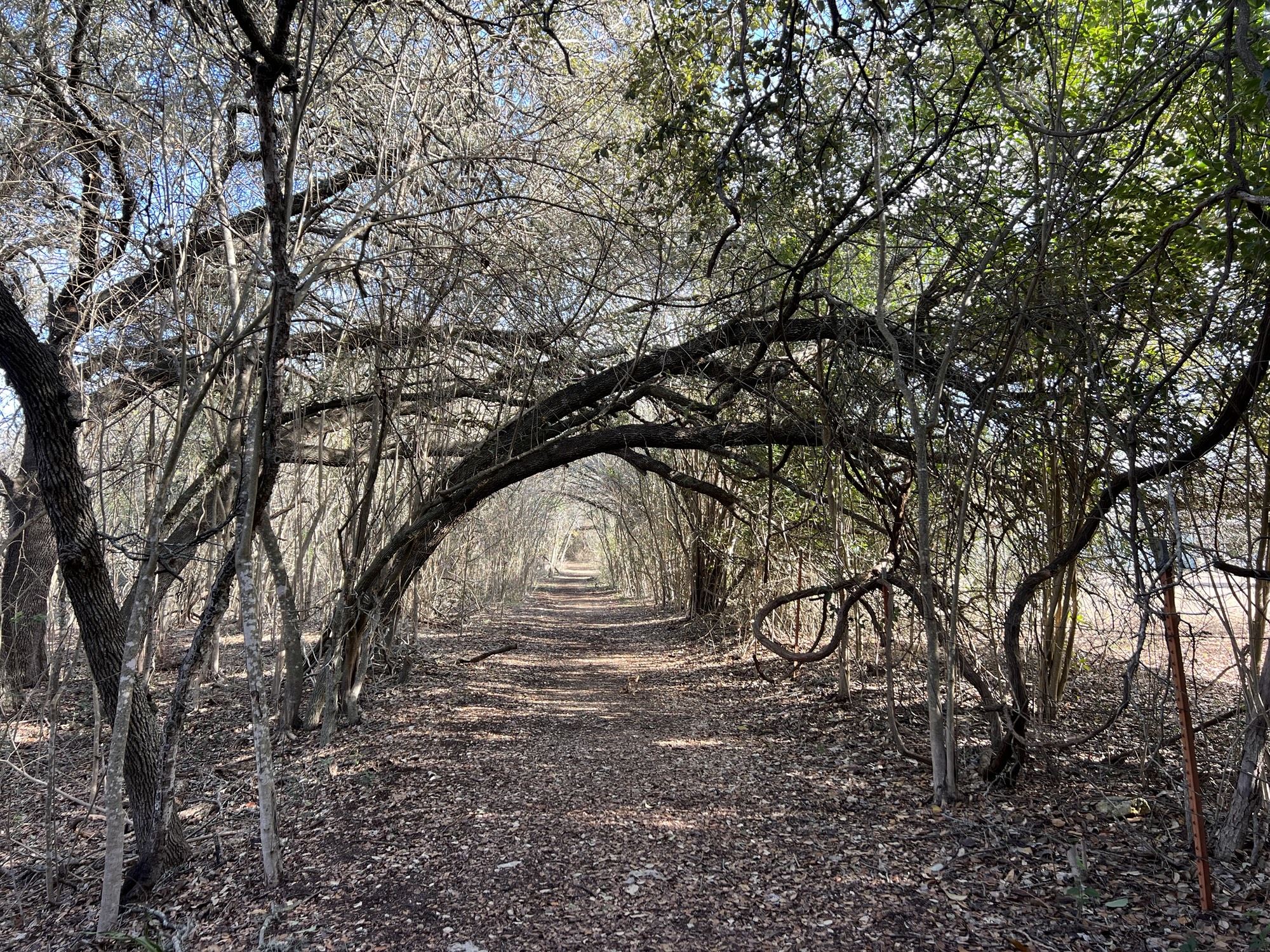
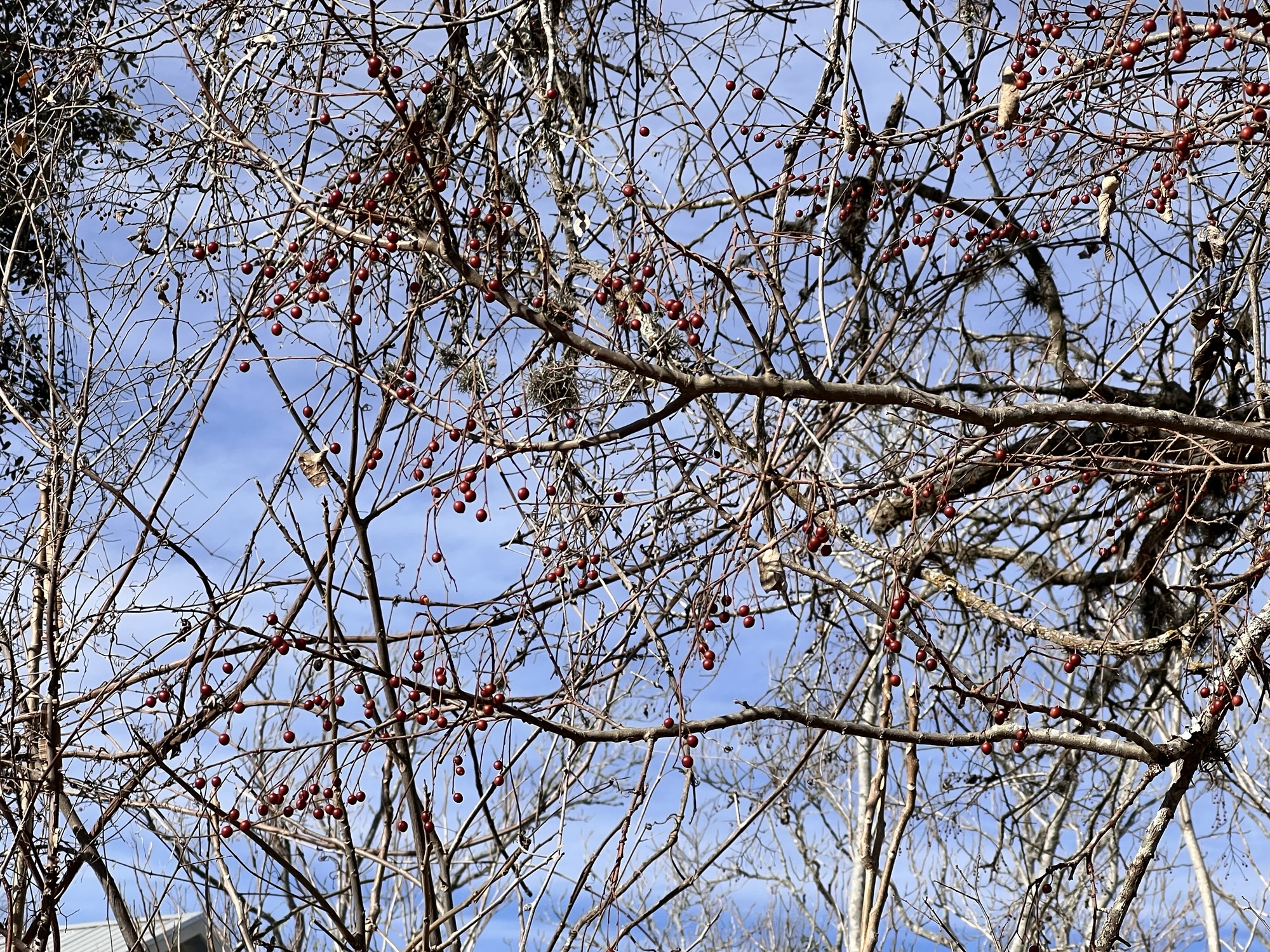
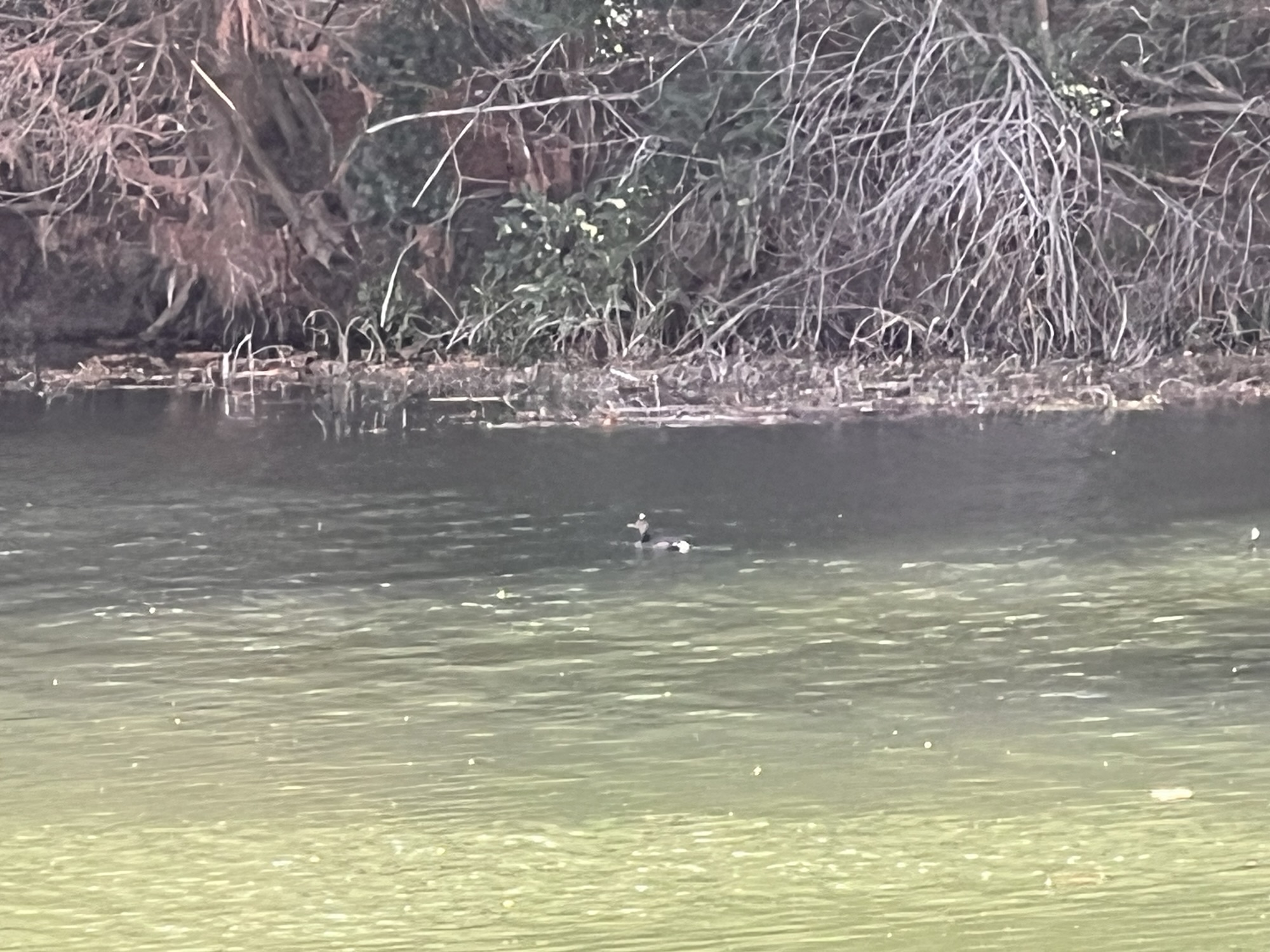
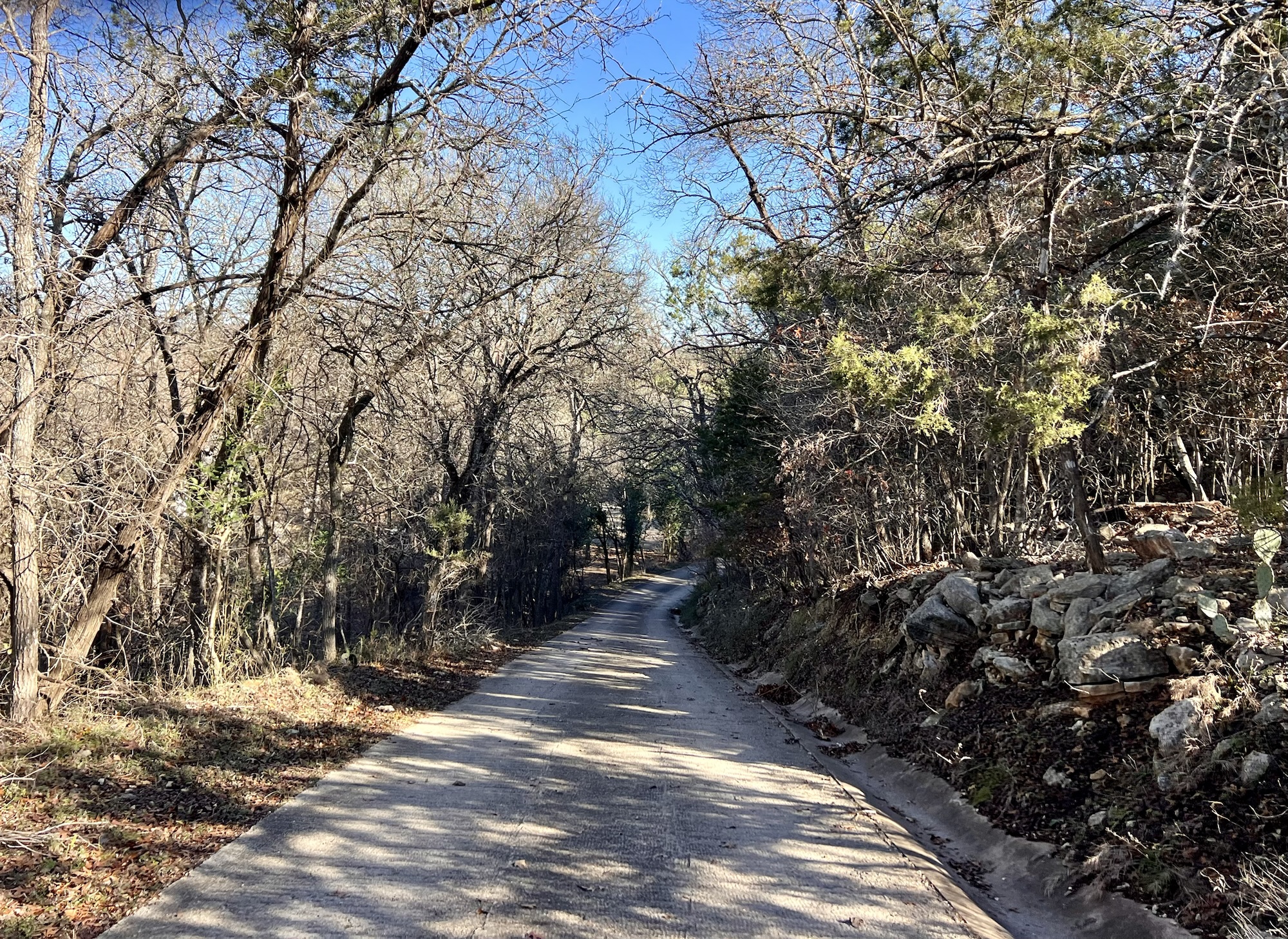
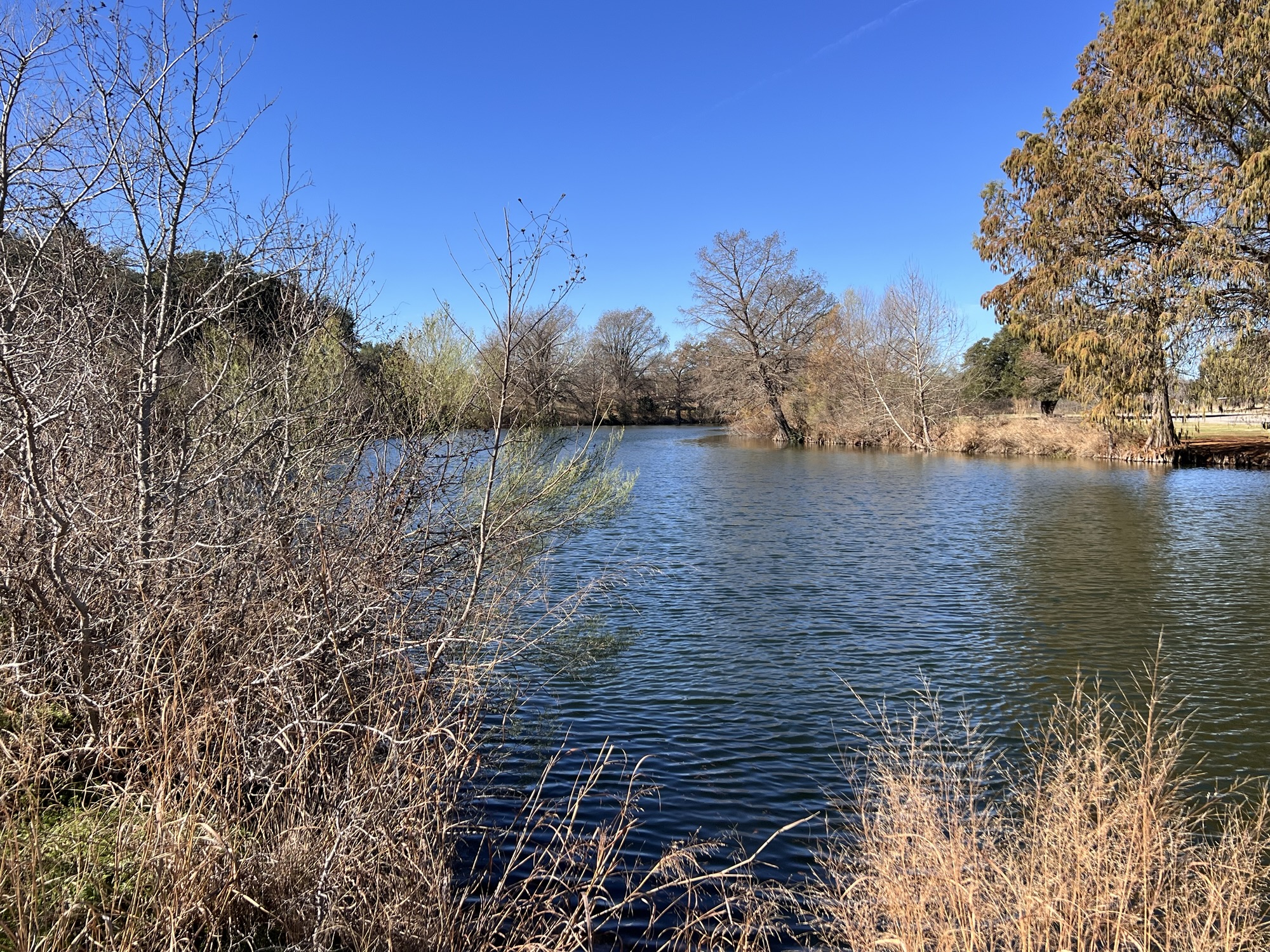
I love a good tree tunnelRiver and skyMy favorite photo. The reflection is perfectSee how clear the water isA damAnother damHuge cypressOriginal park bridgeFried shore grassBerries and more berries Pied-bill GrebeBlack willow
I even have a dam video for your enjoyment!
This is the park boundary. Those are greenhouses behind the dam.
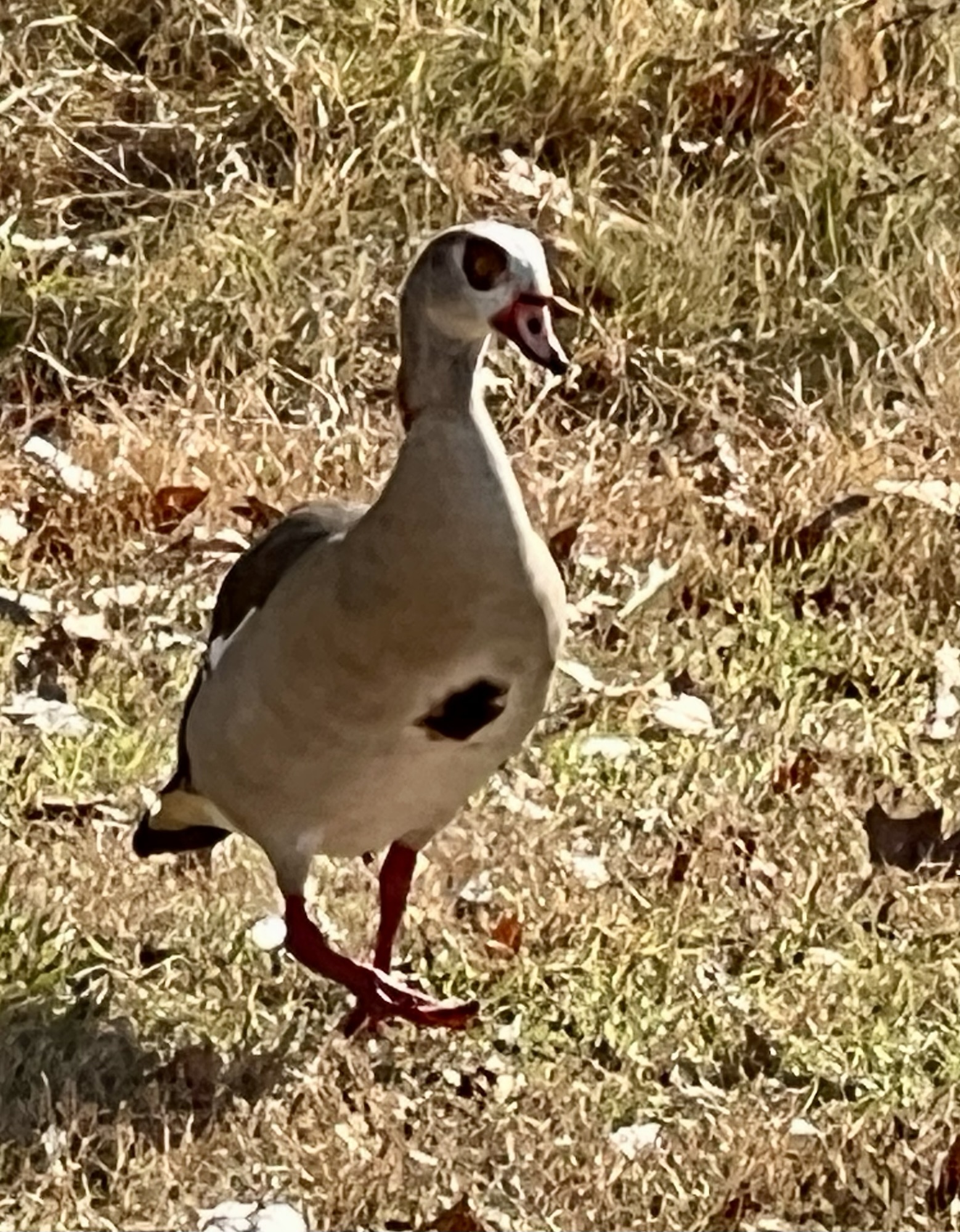
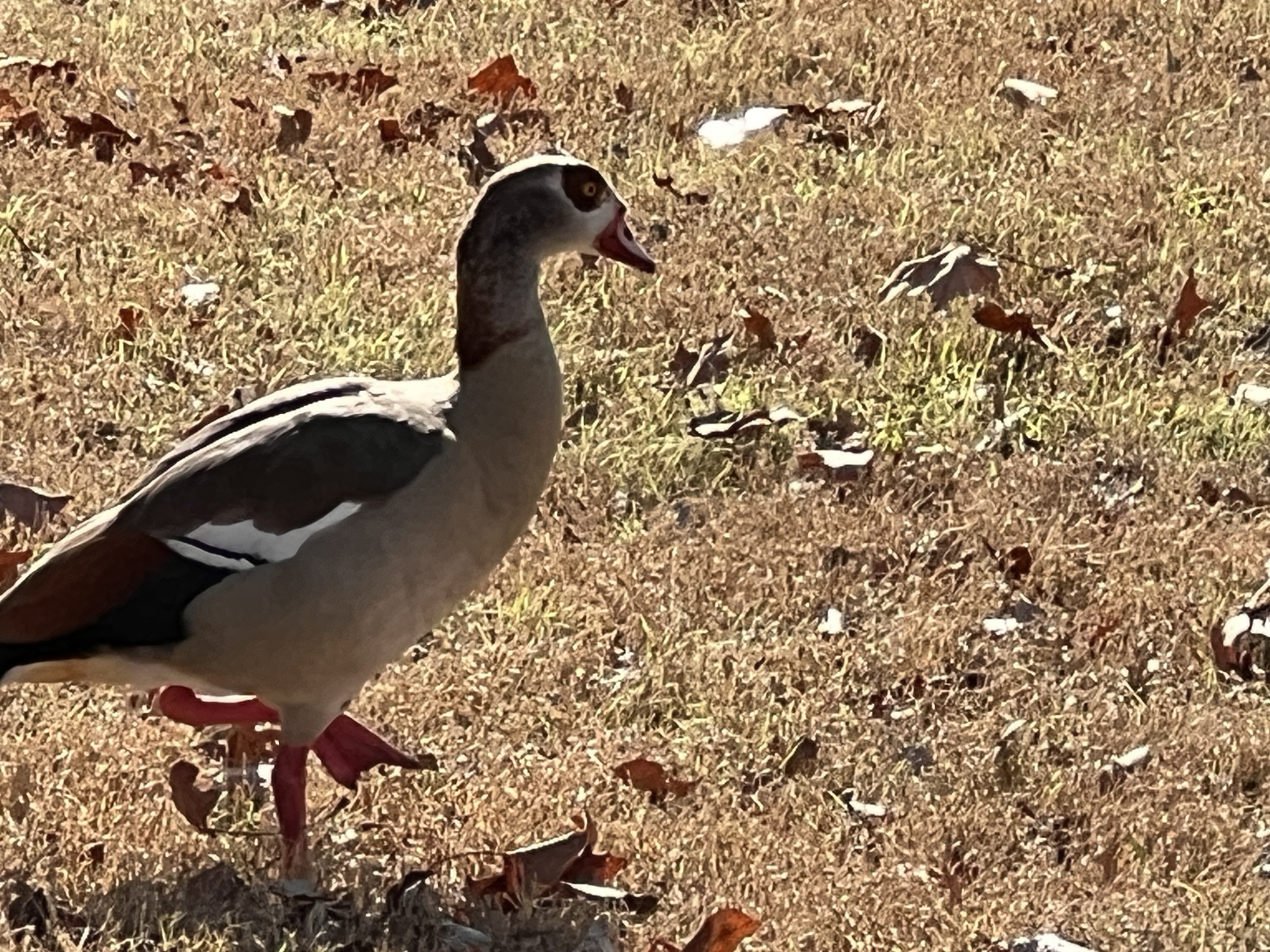
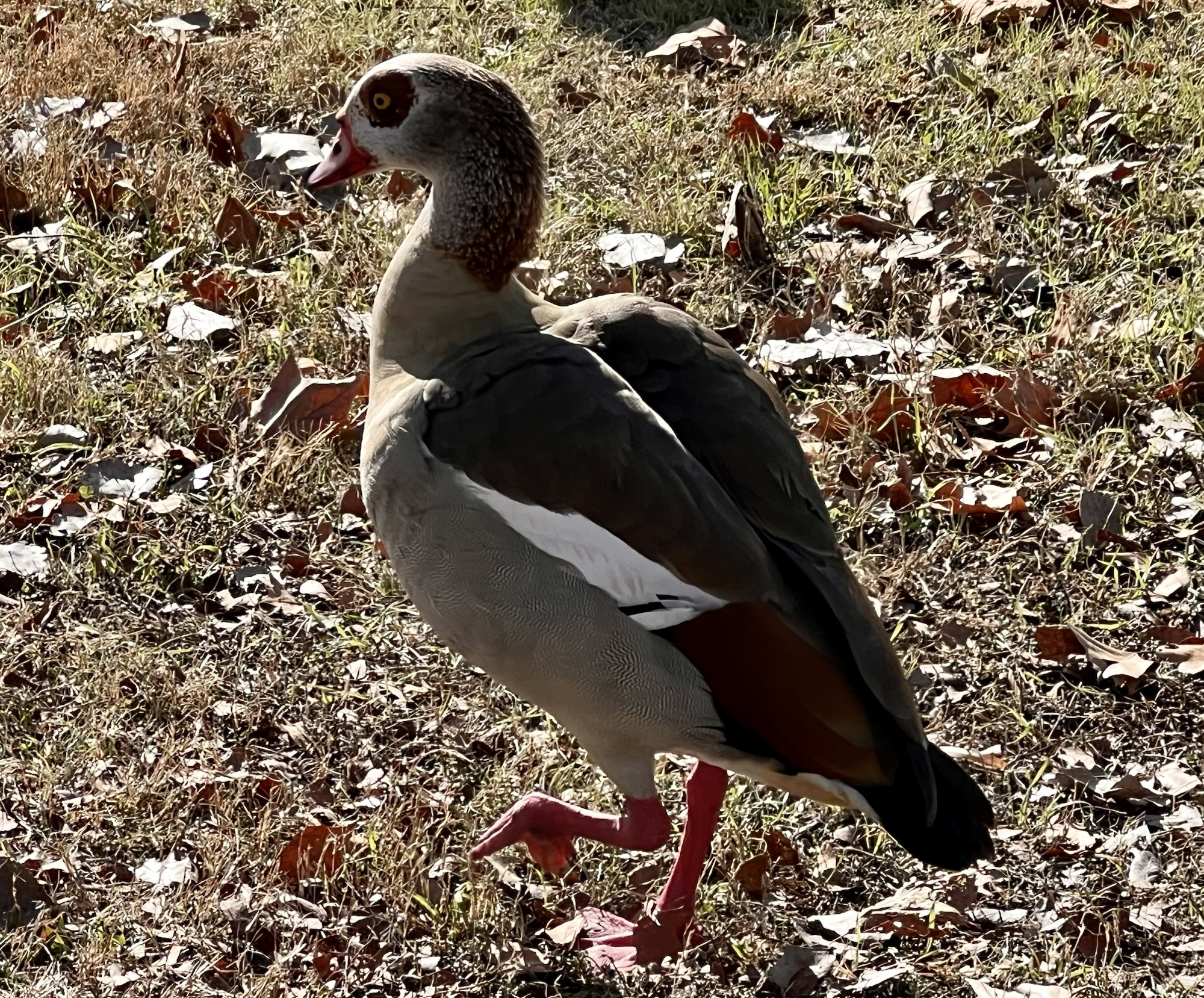
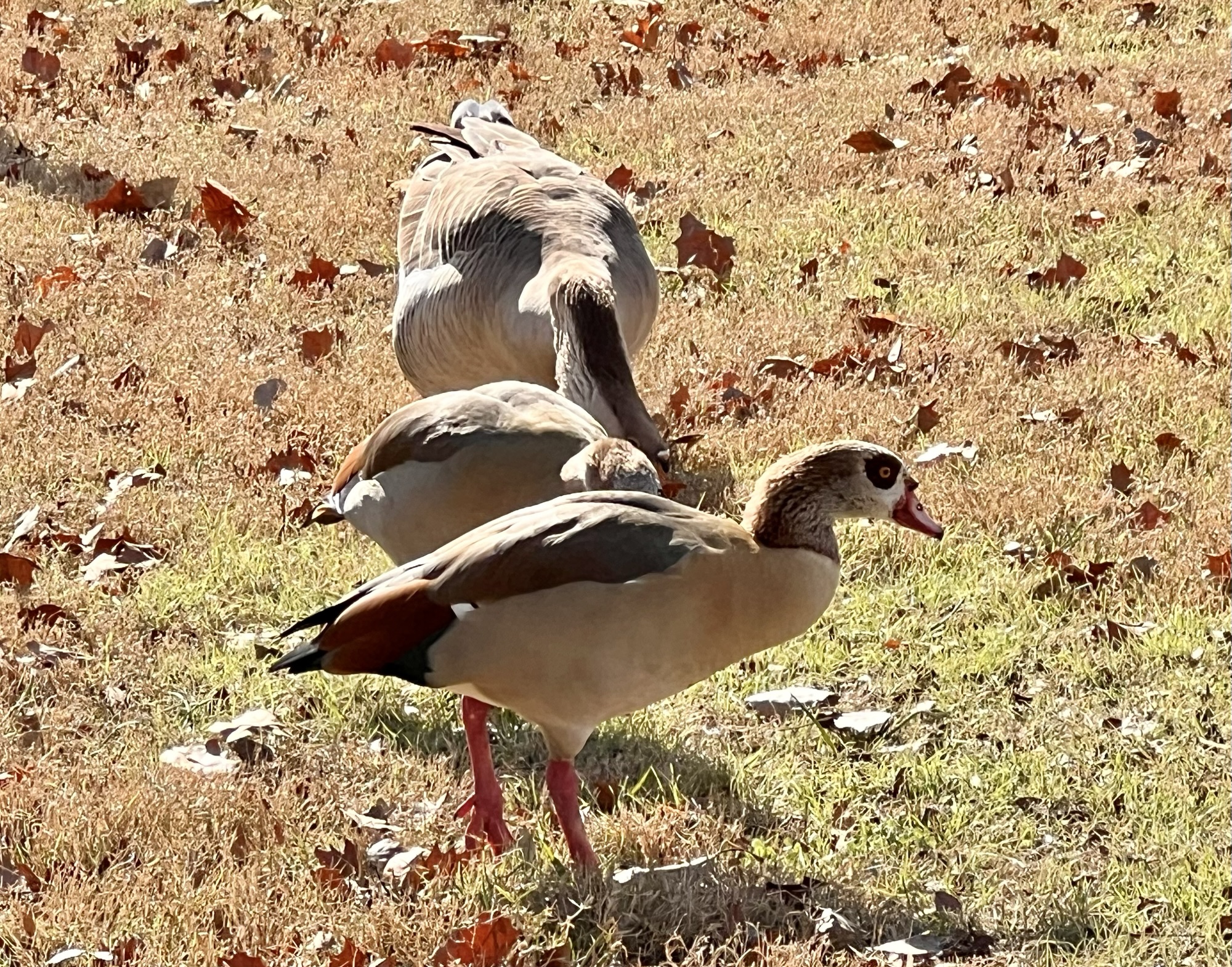
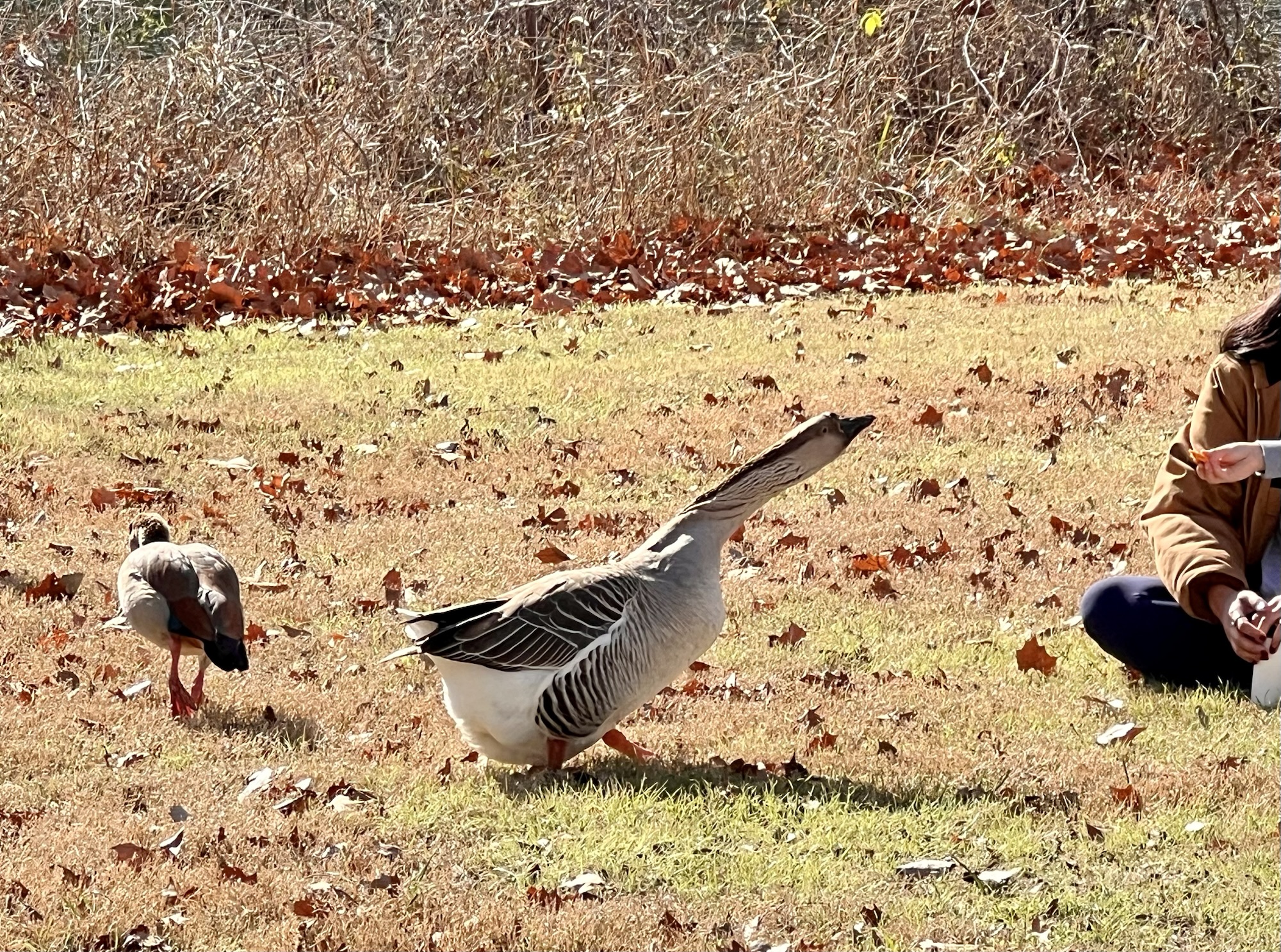
Birds were a bit more numerous today, and I got to have fun with them. First, I talked to a family who were feeding the family of Egyptian Geese and sleepy Muscovy Ducks at the park. I decided that I’d not mention the rule about not feeding Cheetos to the wildlife, since the birds weren’t natives. I did tell them about the birds, though.
Sleepy Muscovy DuckSleepy geeseMamaLove the dot on its chestWalking like an Egyptian, as my friend Joan saysSo fancyThey want food. Mama is stretching out for a CheetoMore Egyptian walking. Click to see images better.
I kept going and went back to the bird blind, hoping to see something more than Cardinals, which I did. There was apparently a Mountain Bluebird, which I did not see. I did get to watch exciting House Sparrows, Black-crested Titmice, and White-winged Doves fussing with each other. Then, suddenly something swooped in, a hawk that I guess was a Coopers, but am not sure. Every single one of the dozens of birds at those feeders took off at once, in a flurry of feathers and dove noises. The hawk sat in a tree for a minute, hoping for a meal, but soon left without a morsel.
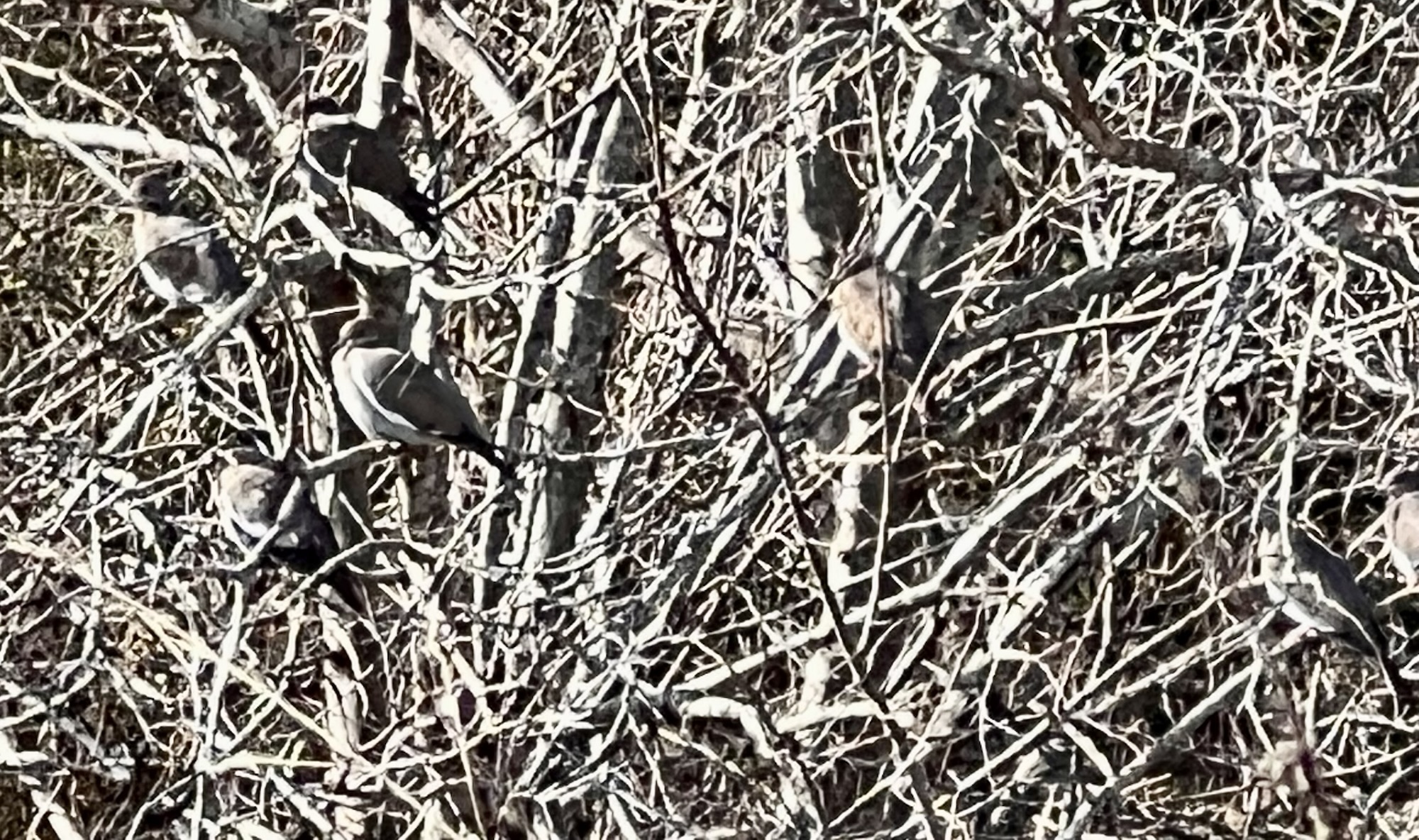
Bird buds Black-crested Titmouse Feeder funThere are 7 doves in this tree. Doves are the color of branches.
I also saw a Kestrel fly up to a tree, then before I could photograph it, swoop down and get some kind of morsel. It must have been an insect, because it finished quickly and went to a telephone pole to look for more prey.
Kestrel is on the grass. Really.Here it’s on the pole.
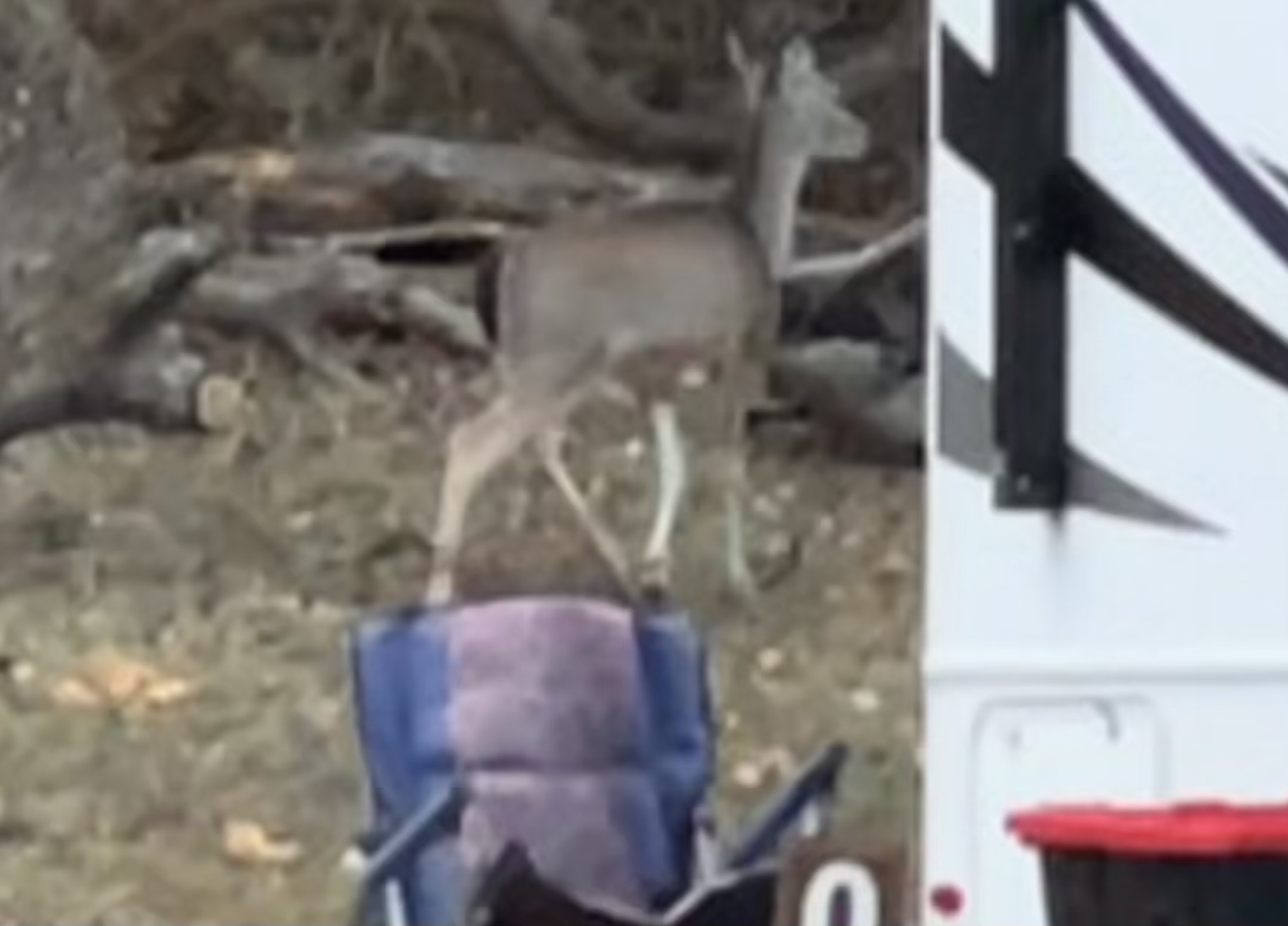
After some football and reading I went back out a couple more times. I got to see the Kingfisher fly by at sunset, which was a lovely highlight. The weather was so nice, I just had to keep wandering around. I tried sneaking up on some deer but failed. Deer sure are the color of the woods.
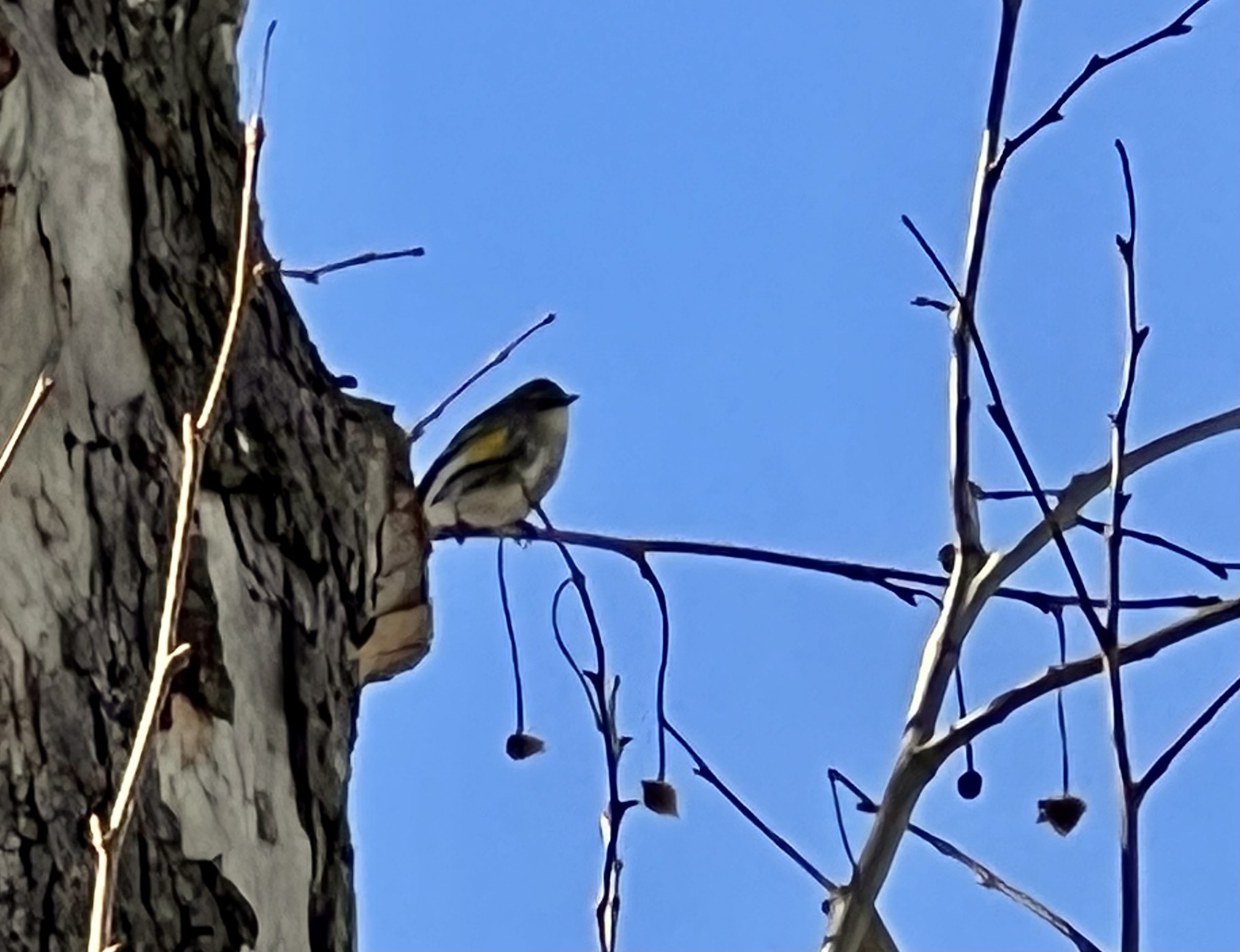
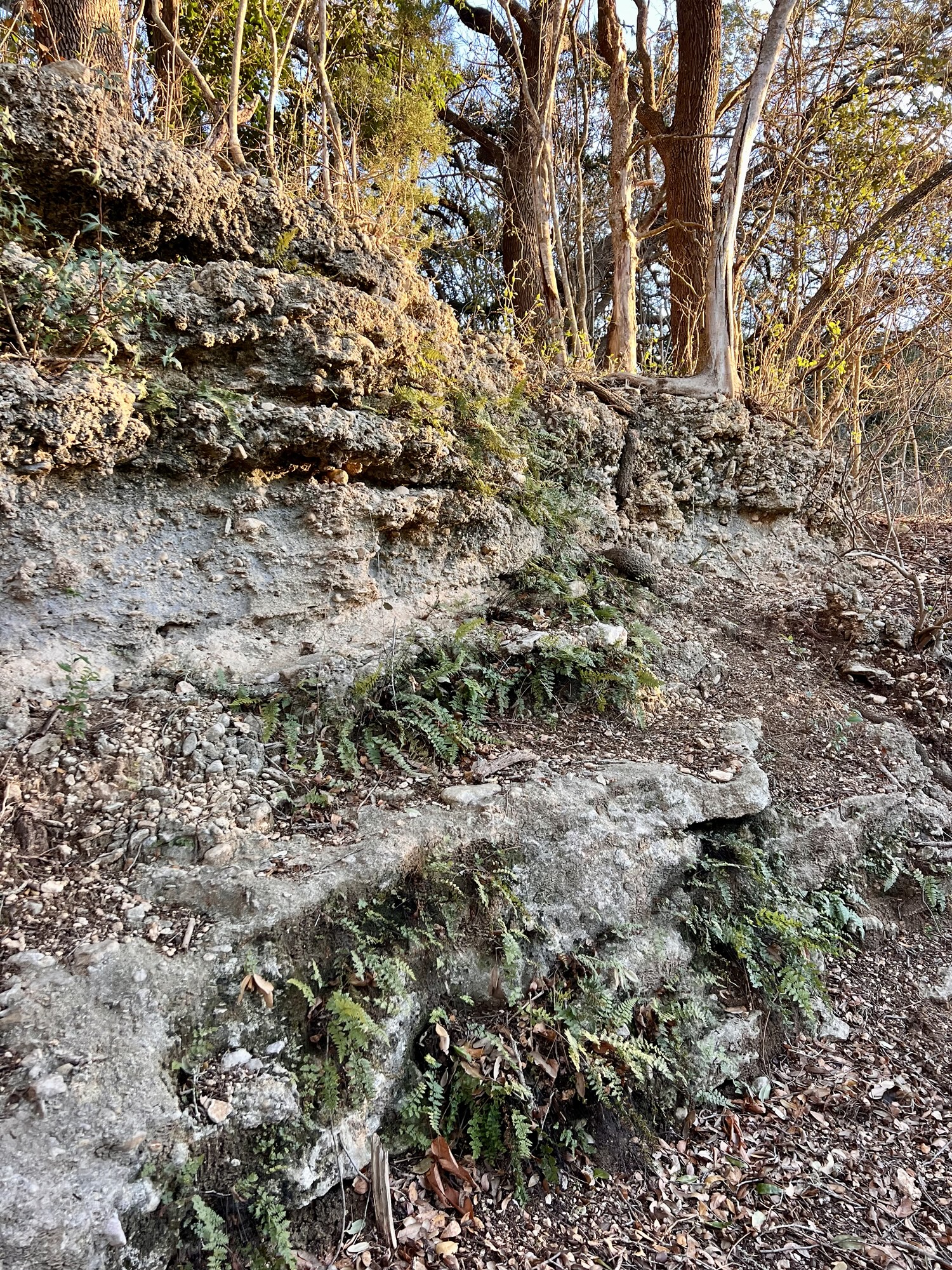
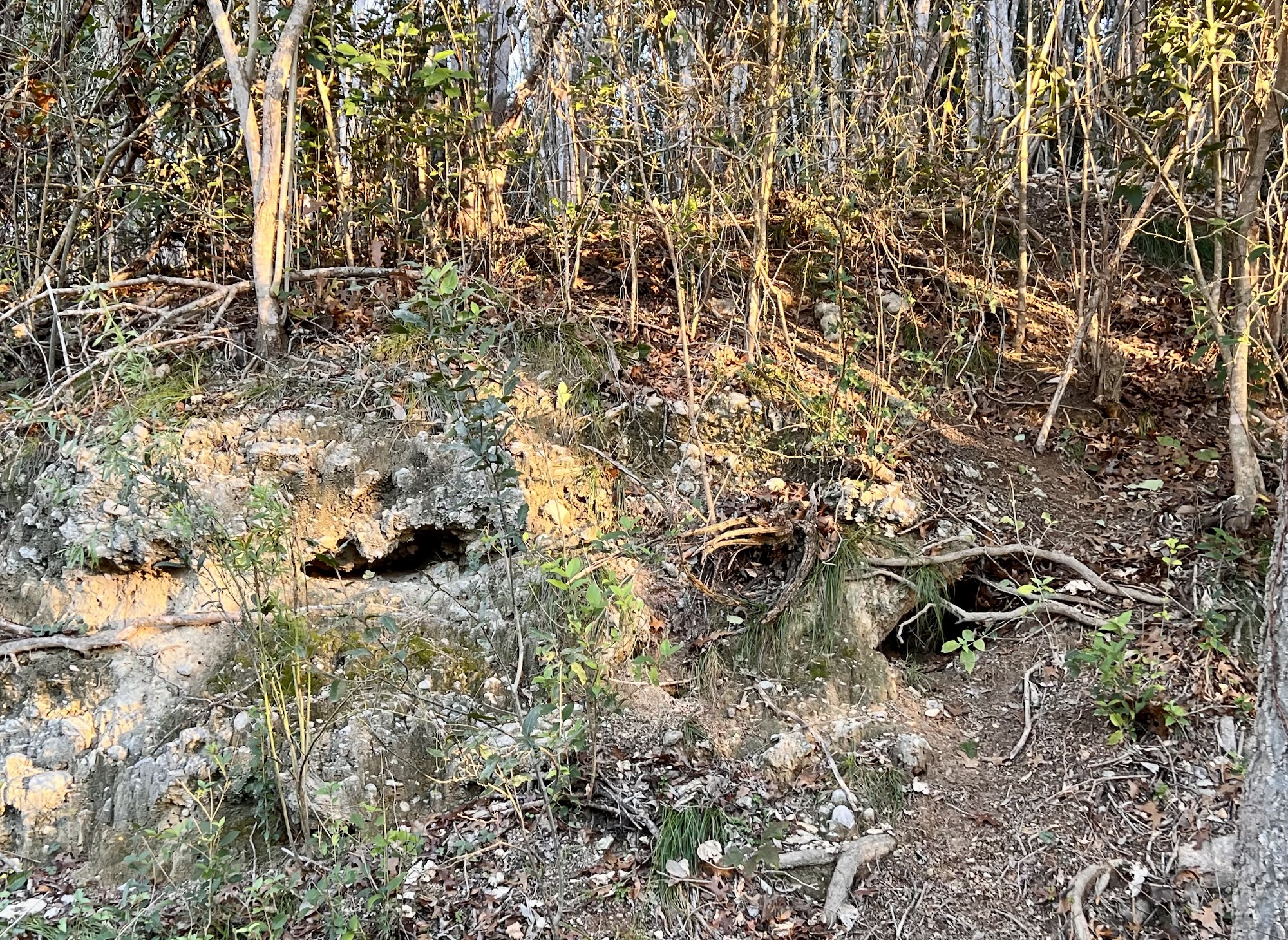
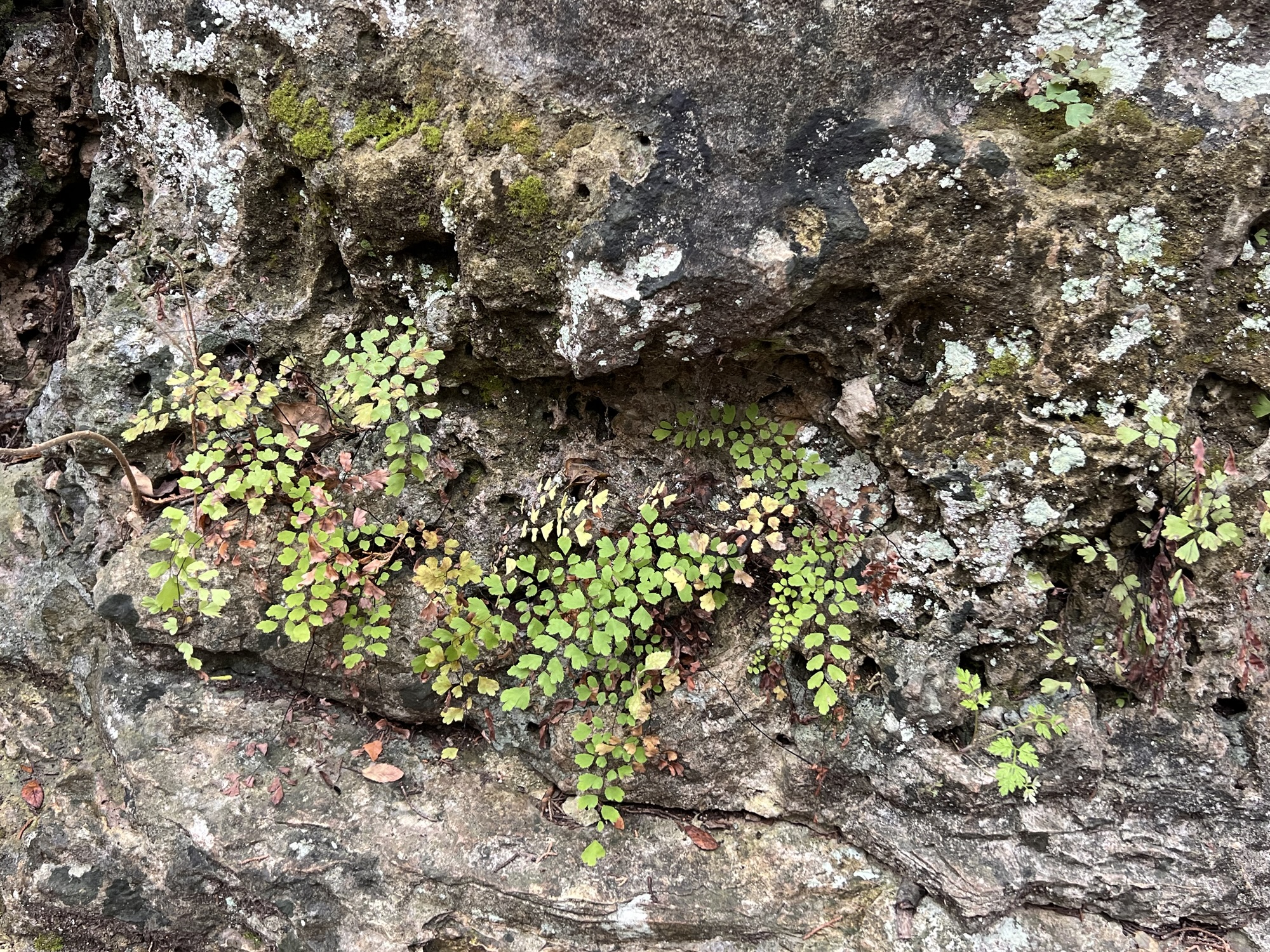
Eastern PhoebeYellow-rumped Warbler Same warblerBeautiful ferns on the limestone cliffsLittle caves for creatures. Don’t take my picture Really, I’m leavingHa ha, Suna, you missed it. I’m looking at you. And I’m outa here.
I’m so glad we’re able to hang out in nature like this. We are lucky to have my son to care for the animals, people, and mail back at the ranch. It’s really important right now to grab every bit of fun and relaxation that you can. Great memories are made that way to comfort us as time goes on.
It got very cold last night and once again, the non-propane heater stopped heating. It was 44° in the bedroom this morning! Luckily I had lots of warm blankets, but getting dressed made me wonder how people who live in igloos do it. Brr.
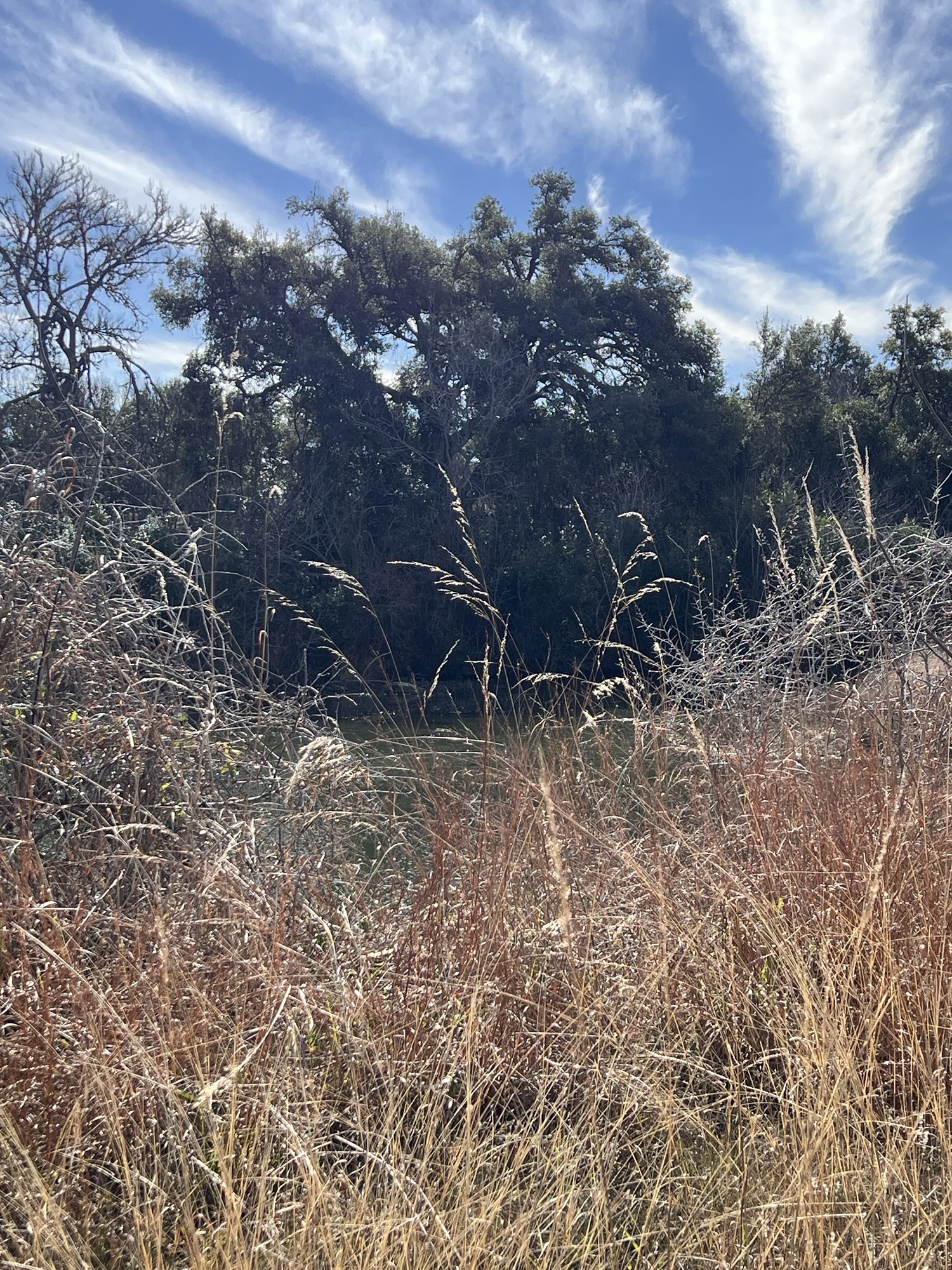
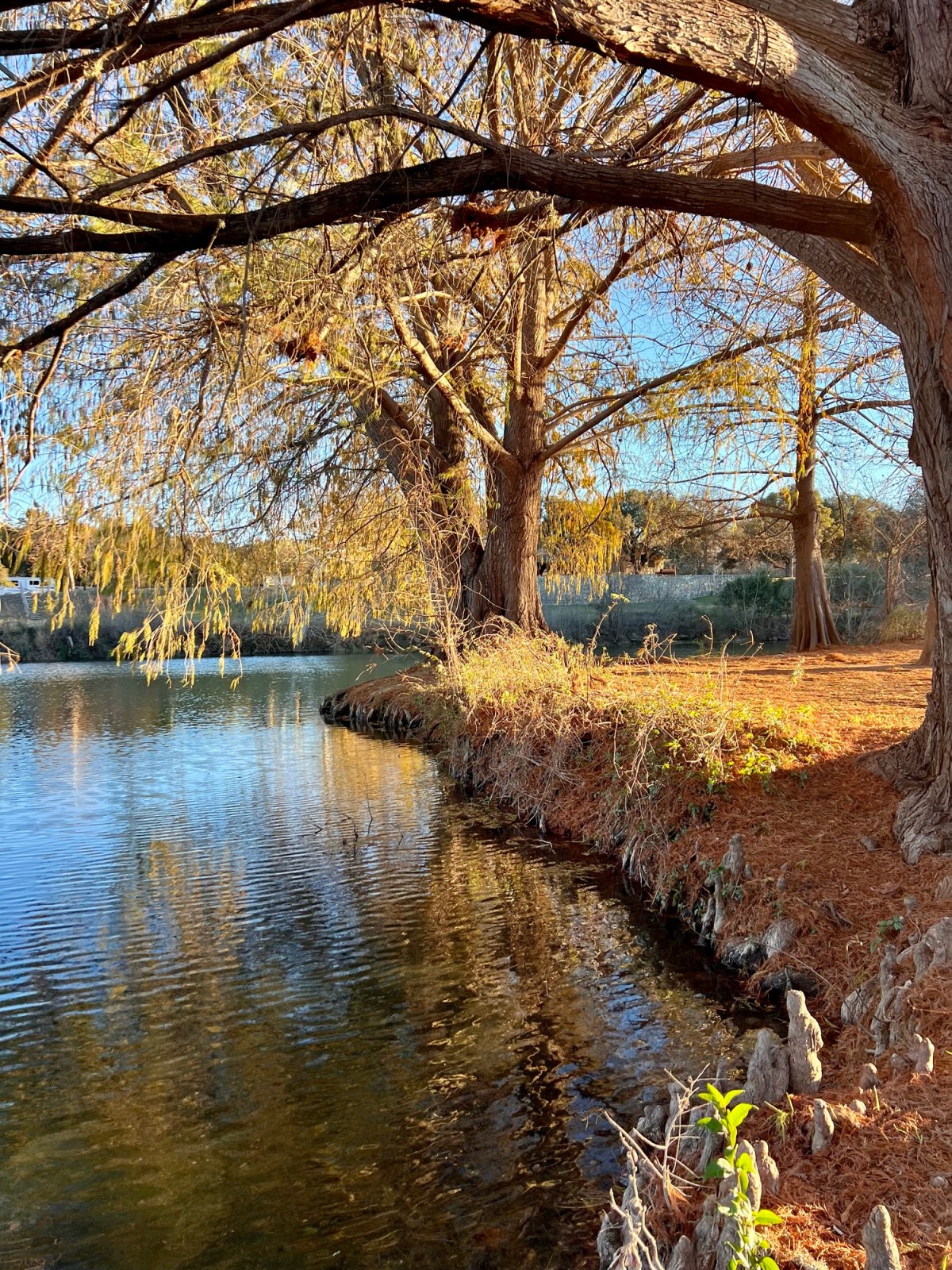
Though its wintertime, the Blanco River is beautiful.
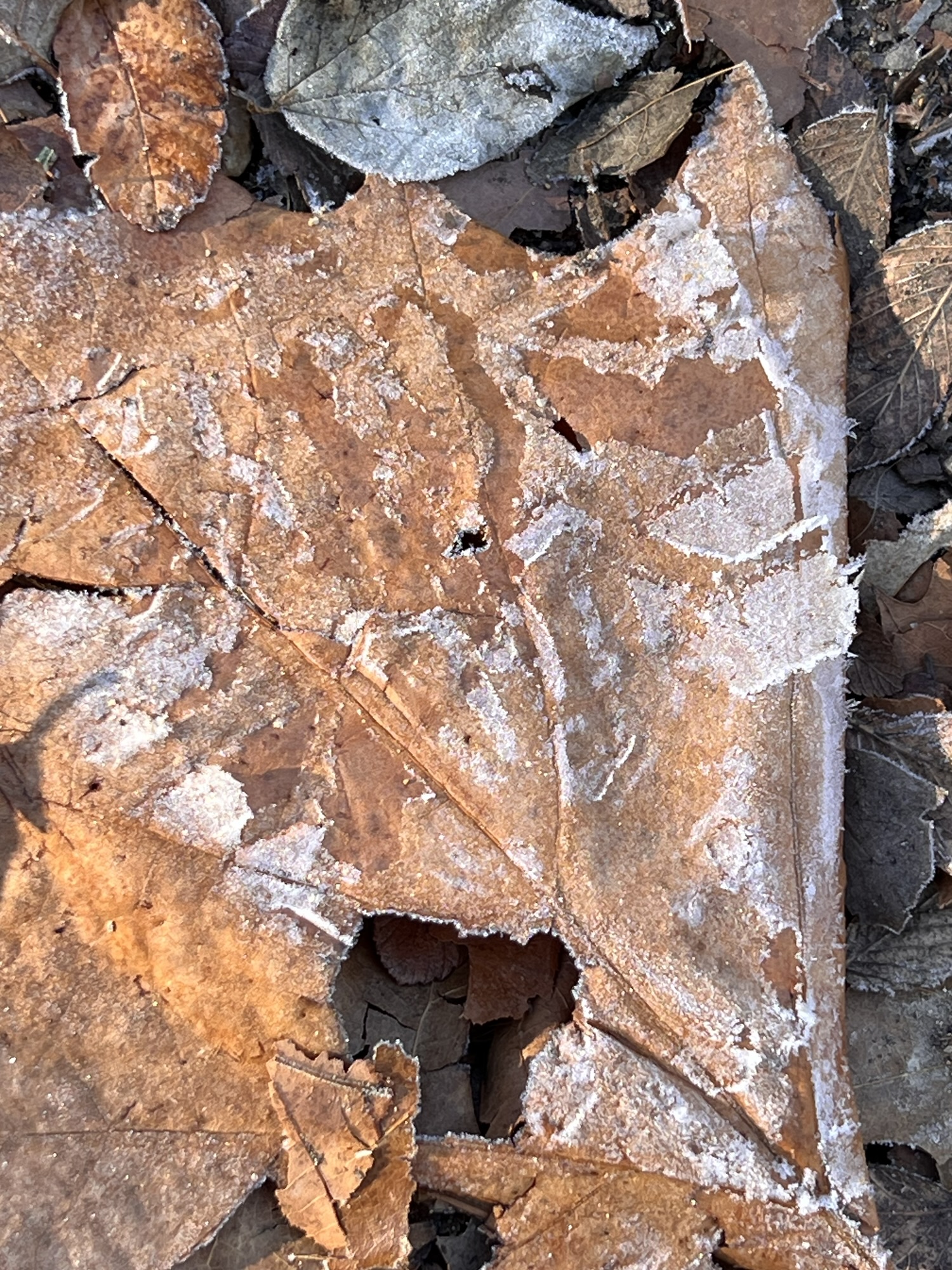
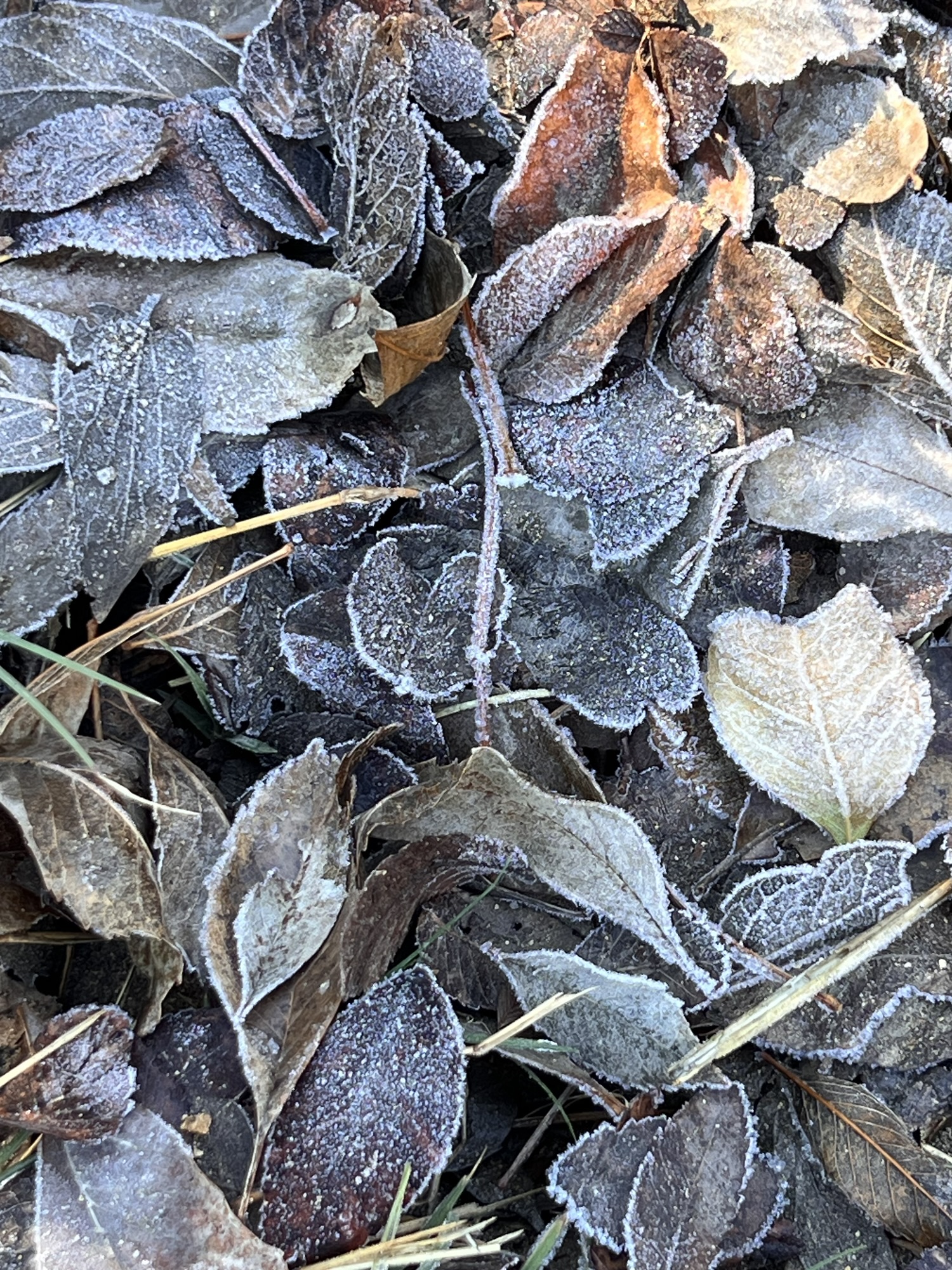
I went out in late morning and it was sunny, which helped. I took lots of pictures of things with ice crystals on them, and was relieved to finally hear a few birds here at Blanco State Park.
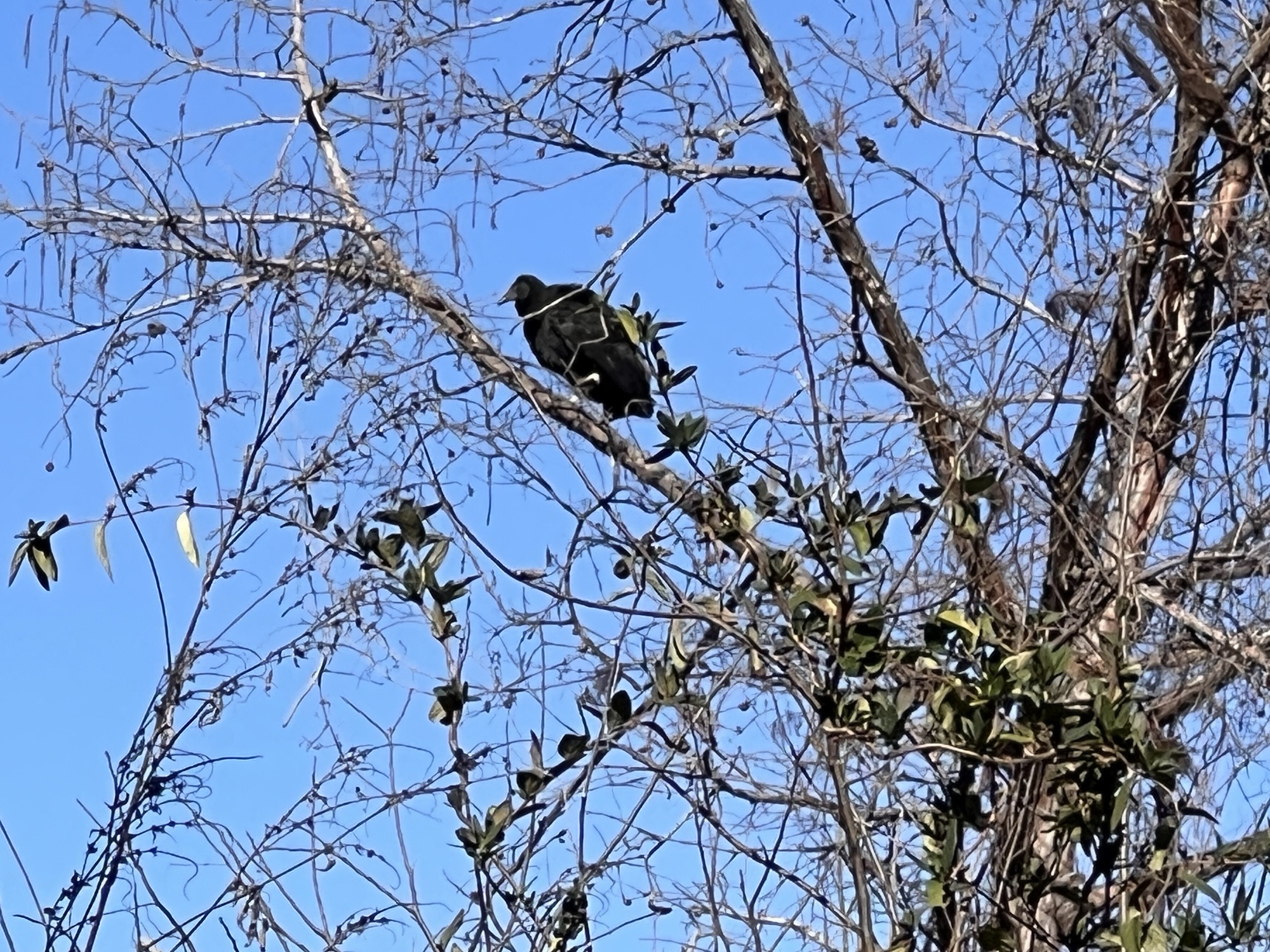
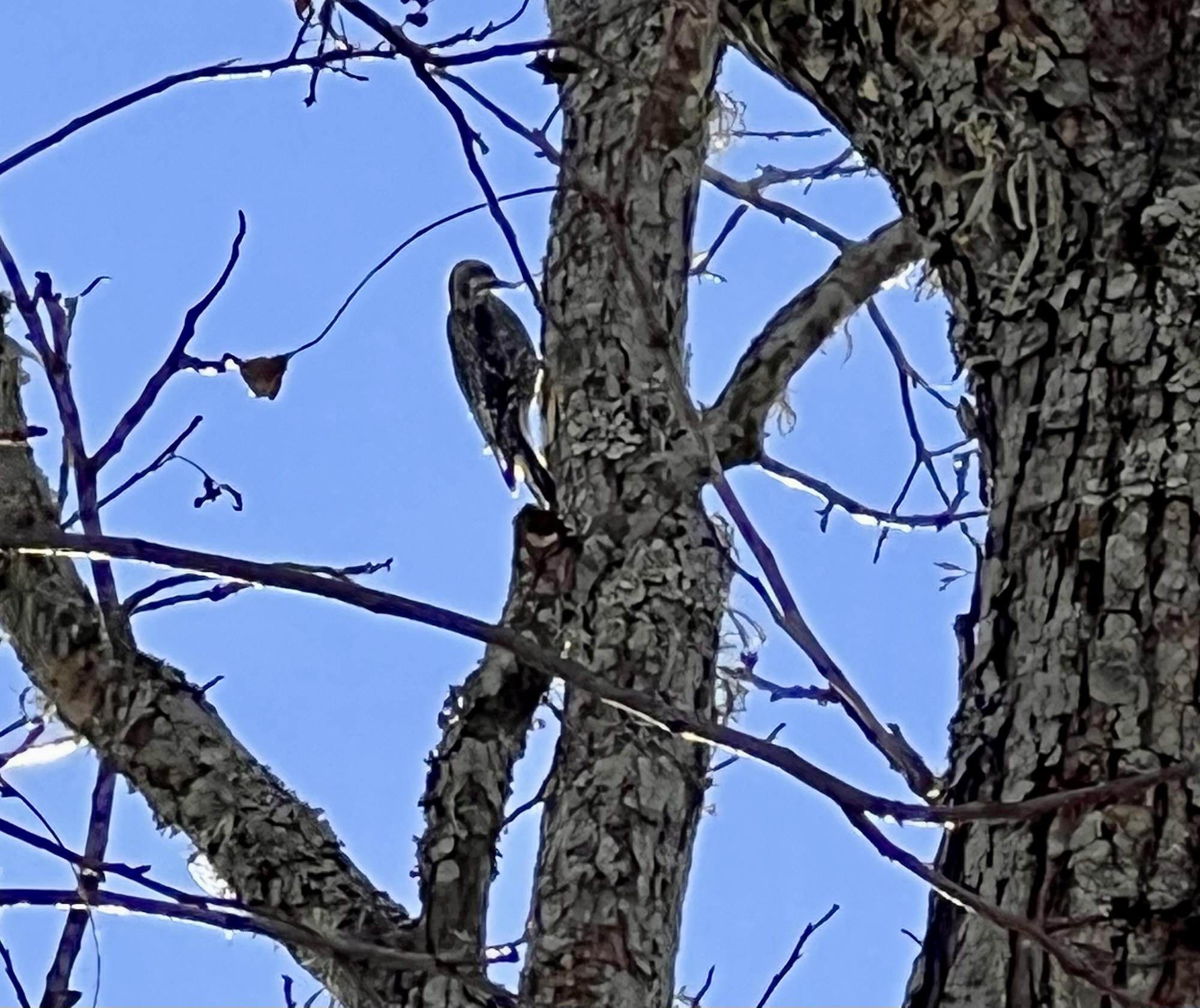
Black. UktureYellow-bellied SapsuckerGraylag geese. Not native.
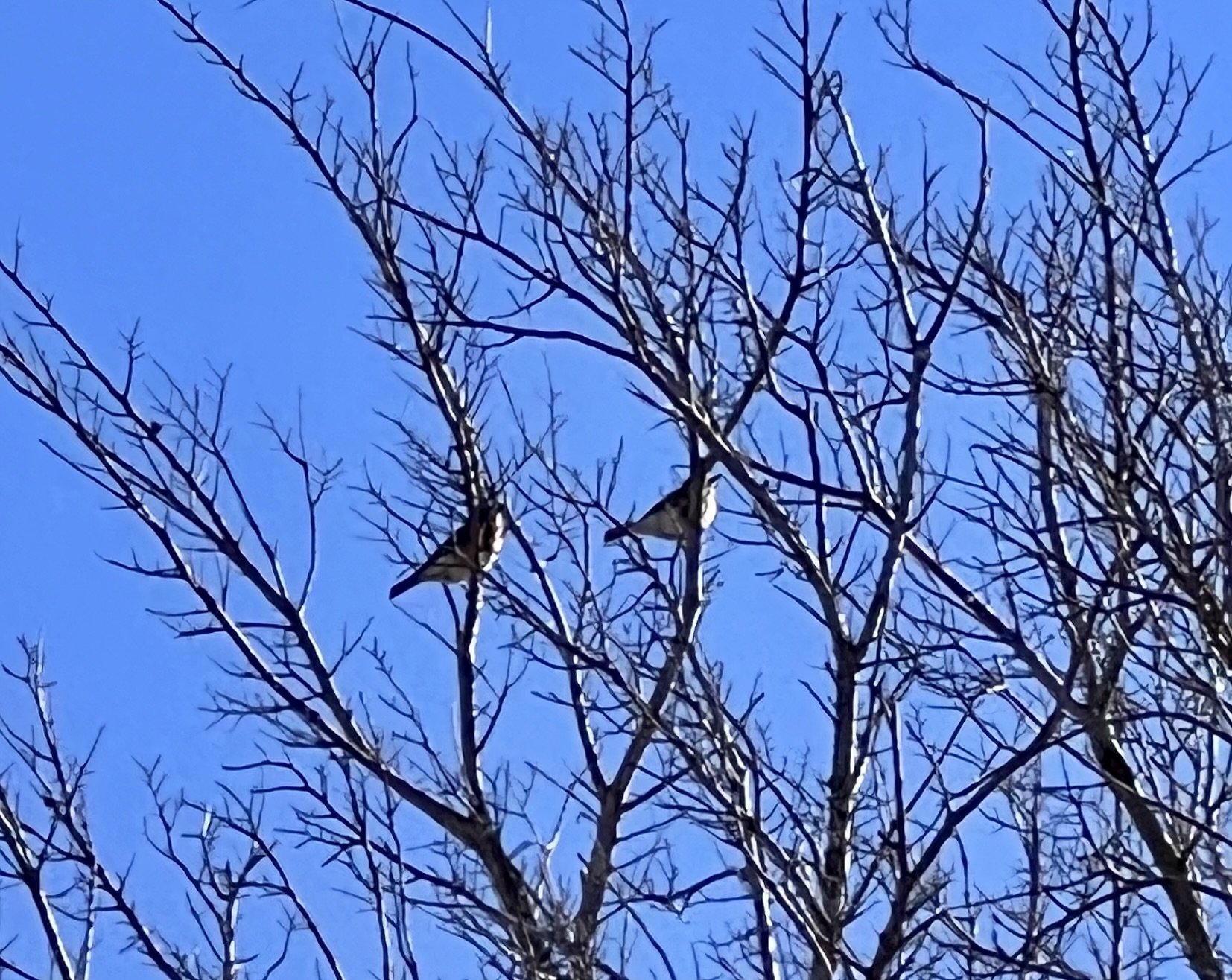
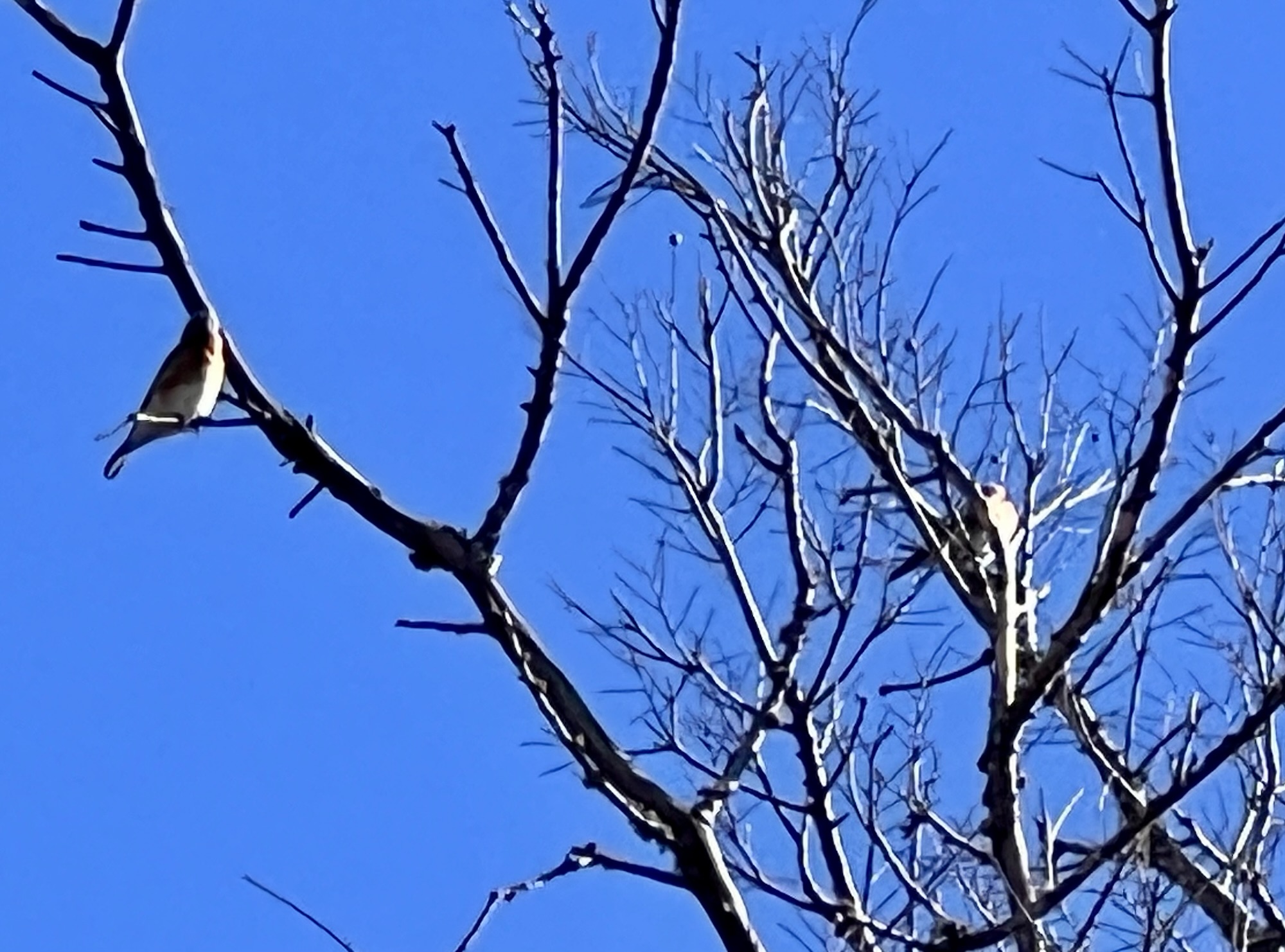
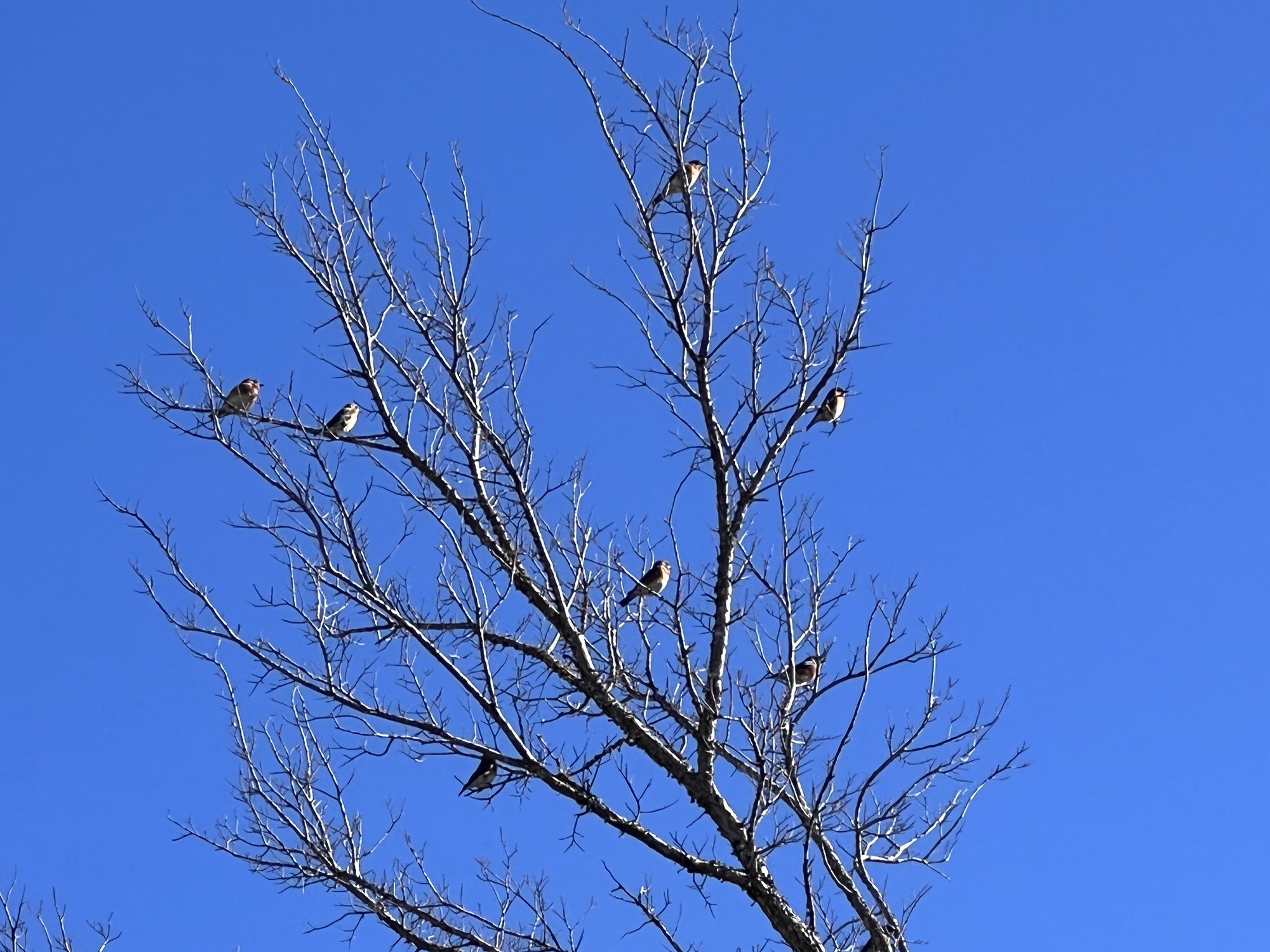
After my walk, Lee and I went out into the Texas Hill Country (the middle of it this time), ostensibly to get some space heaters. We first stopped at Lyndon B. Johnson State Park (also a National Park, to get our park passport stamped and a magnet for our collection, though we’d both been there before. I still really like this place, even in winter with no wildflowers. You could see birds, though, and I was delighted to observe a flock of Eastern Bluebirds in a nice leafless tree.
They looked to be one male and a lot of females/juvenilesBlack-crested TitmousePresident Johnson pointing at the Pedernales RiverBirds and a President of the USA
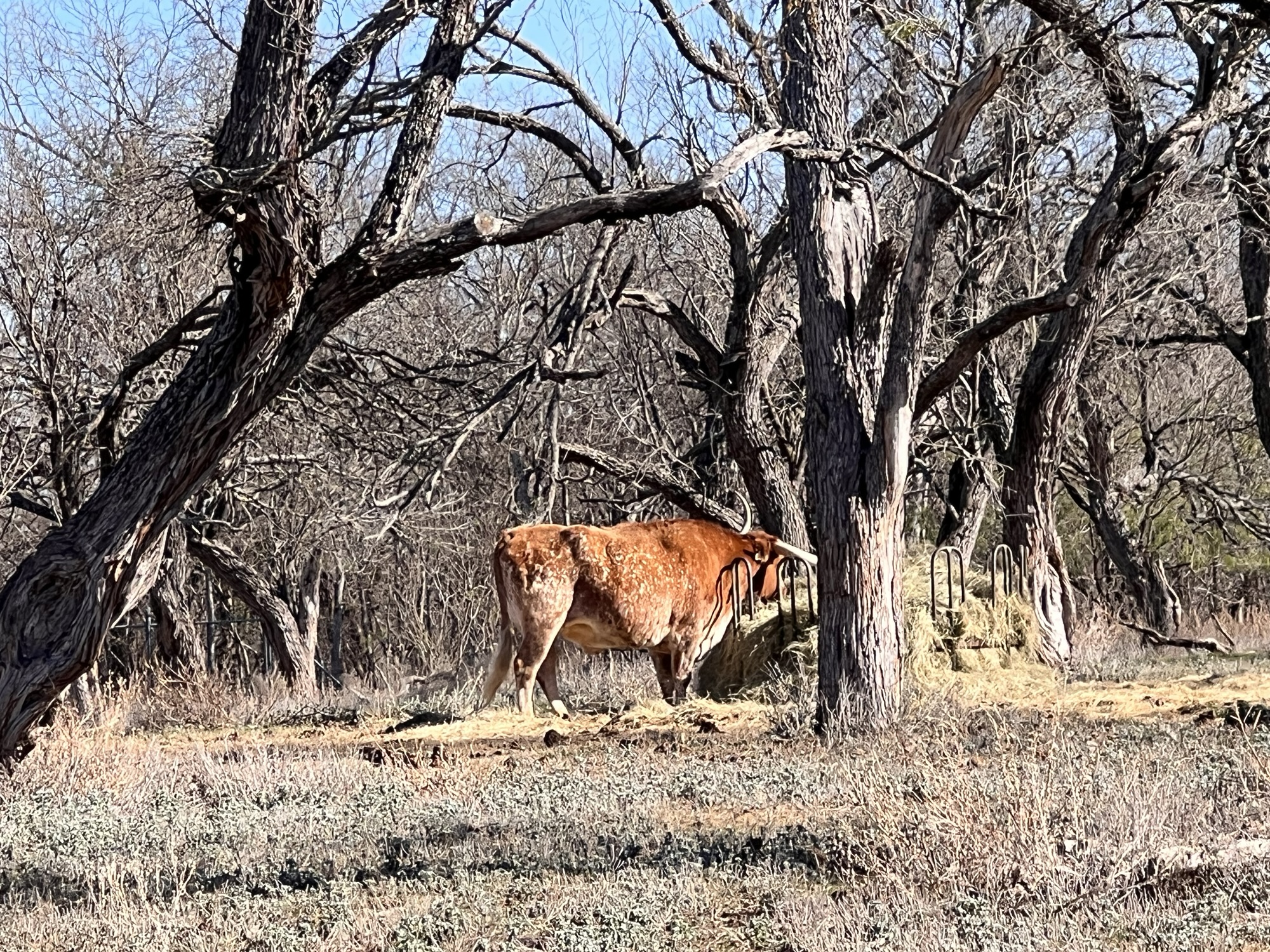
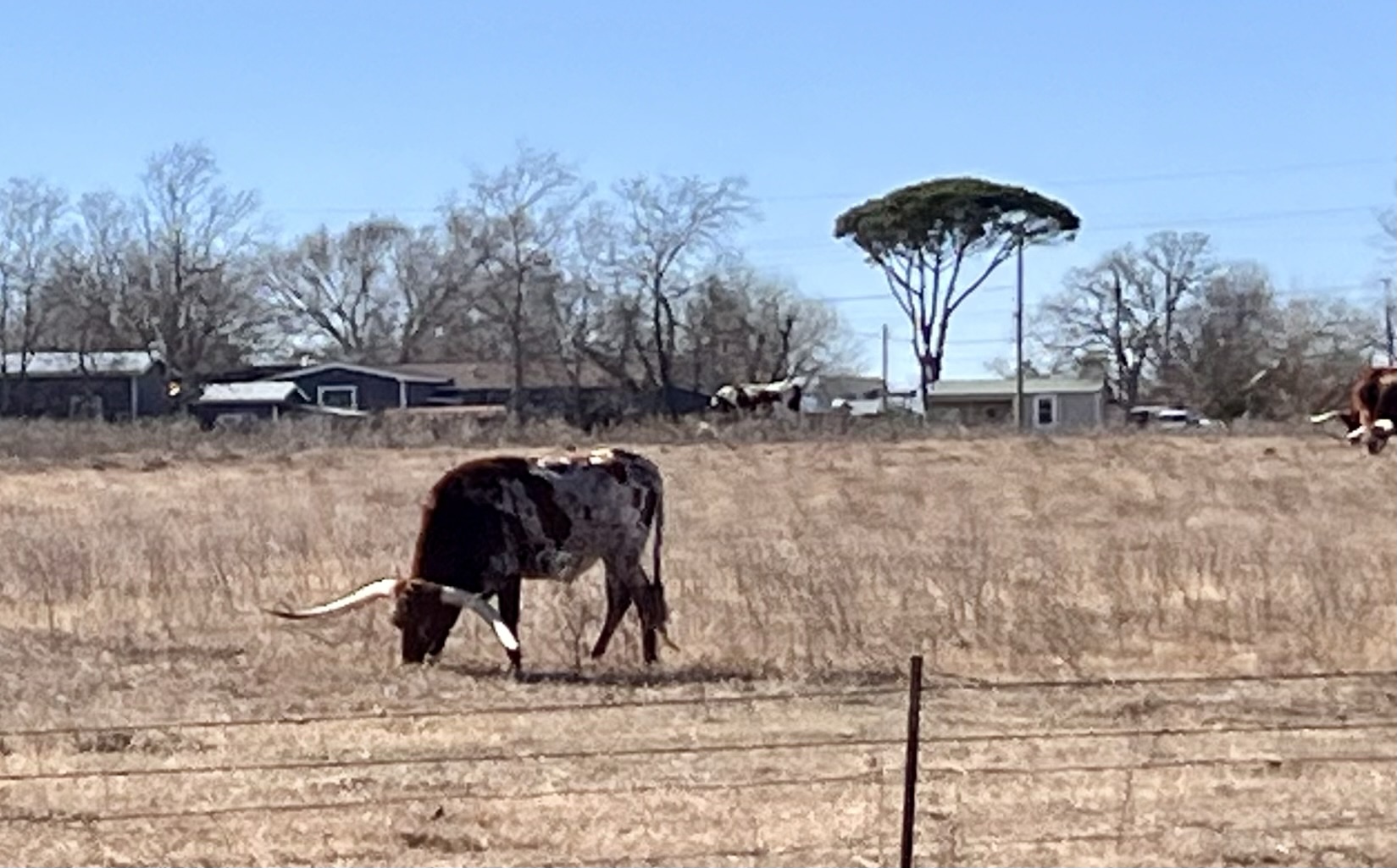
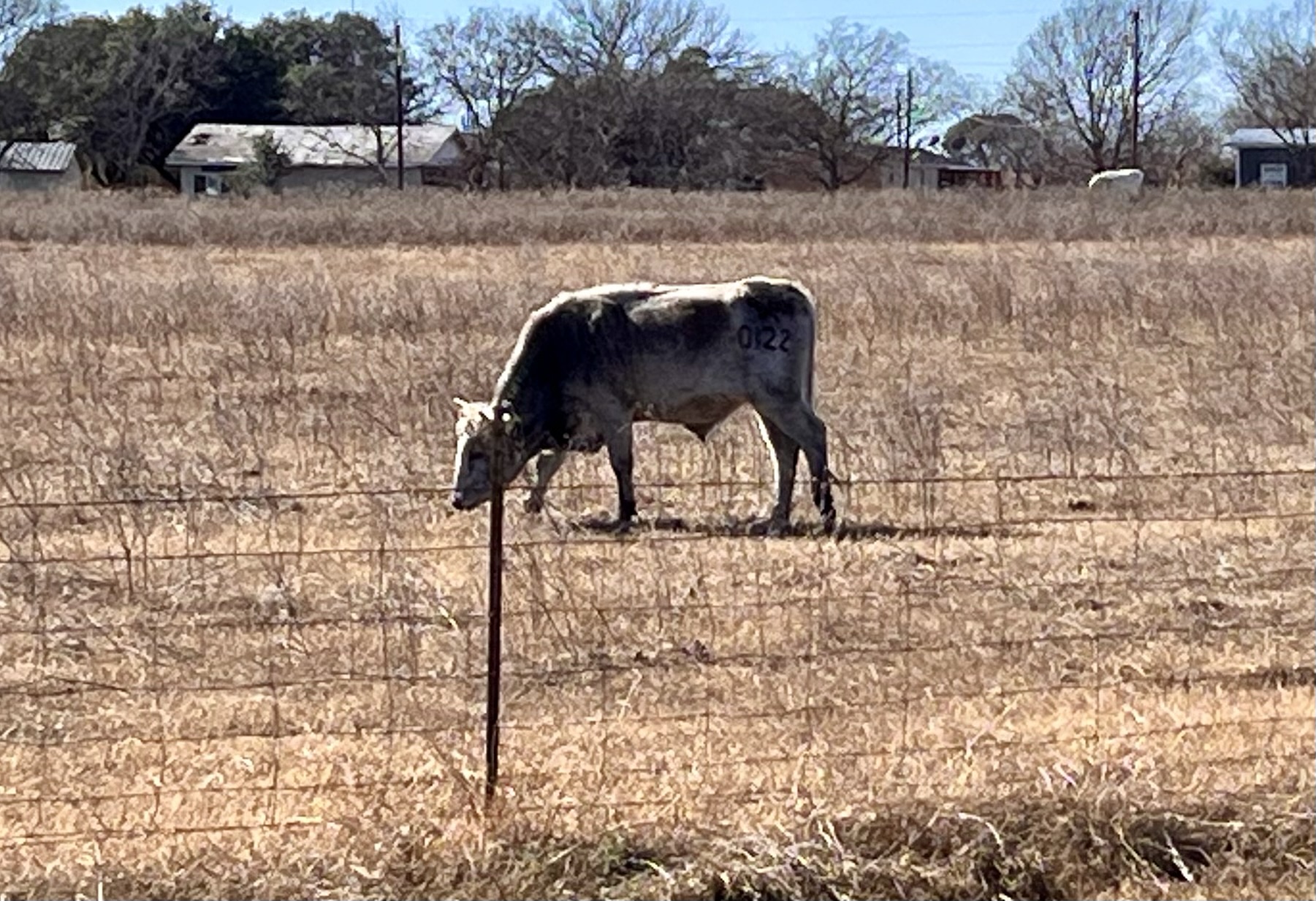
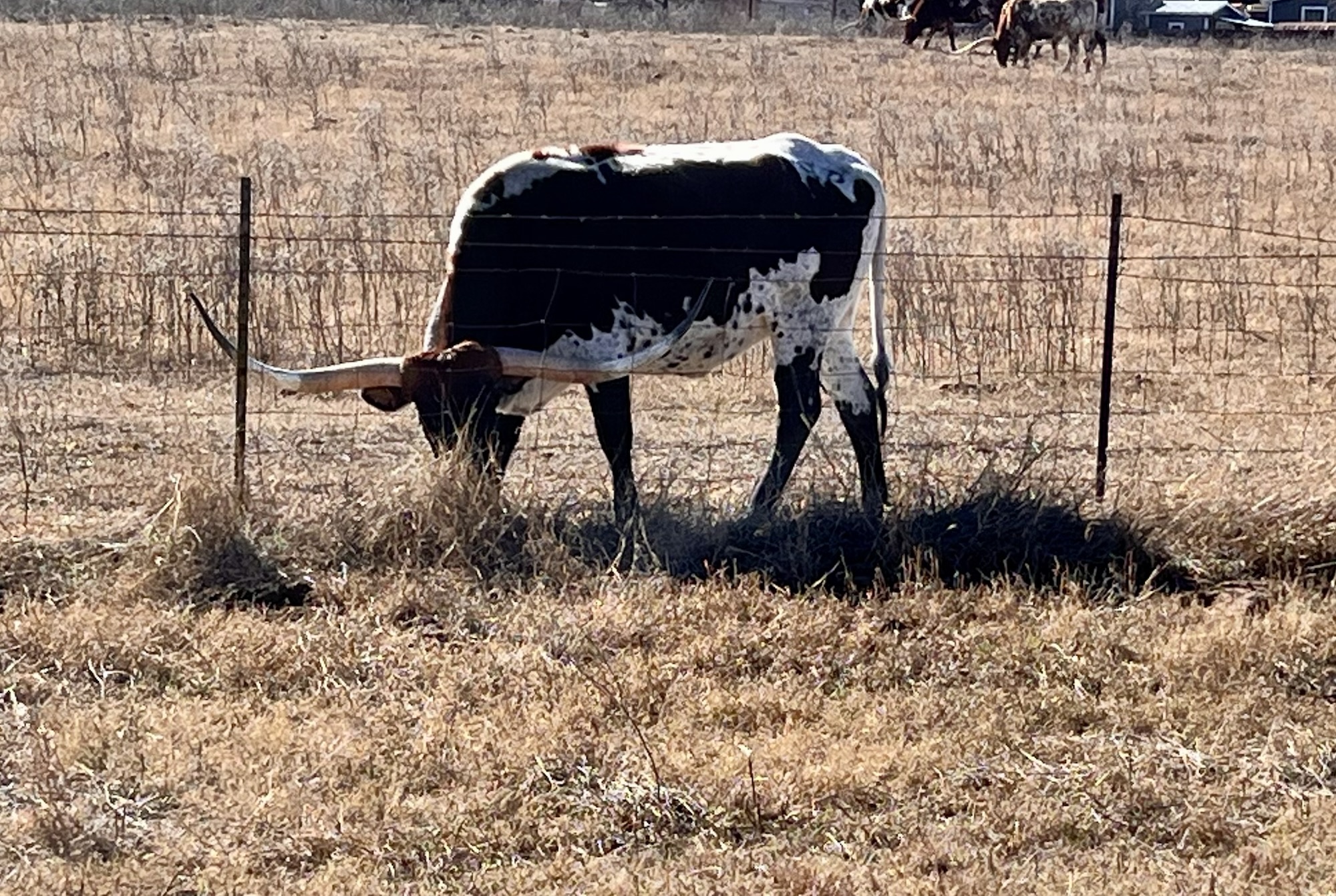
We also saw a lot of Longhorn cattle, but no real bison. That was fine.
LBJ State and National Park
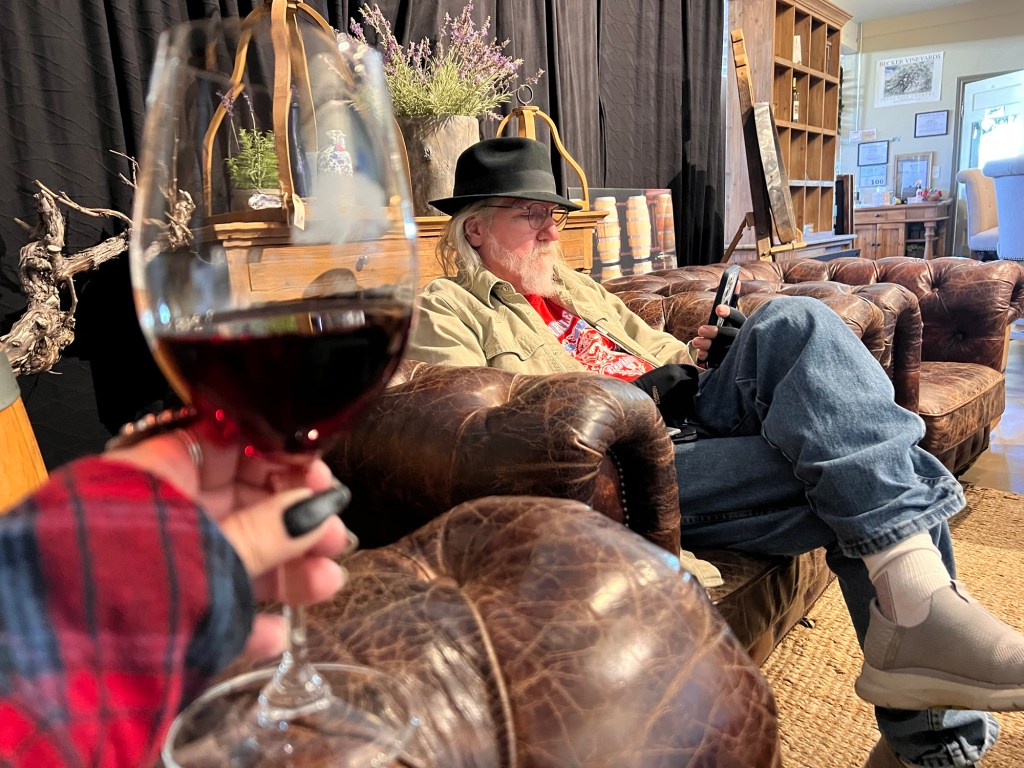
Since we were already nearby, we kept going and visited Fredericksburg, where I enjoyed my free glass of wine at the Becker Vineyards store and got a couple of bottles of types I’m out of.
Lee did crossword puzzles
Lee was hungry, so next we ate at the small German restaurant I enjoy the most in Fredericksburg, a town teeming with German restaurants. The food there is just perfect.
He looks happier here. More wine. Probably not a great idea.
Finally, we did get the heaters, the kind that look like a radiator. I like those better than ones with visible heating elements. Of course, it won’t be so cold tonight.
The squirrel put down her acorn to tell me it would be warmer.
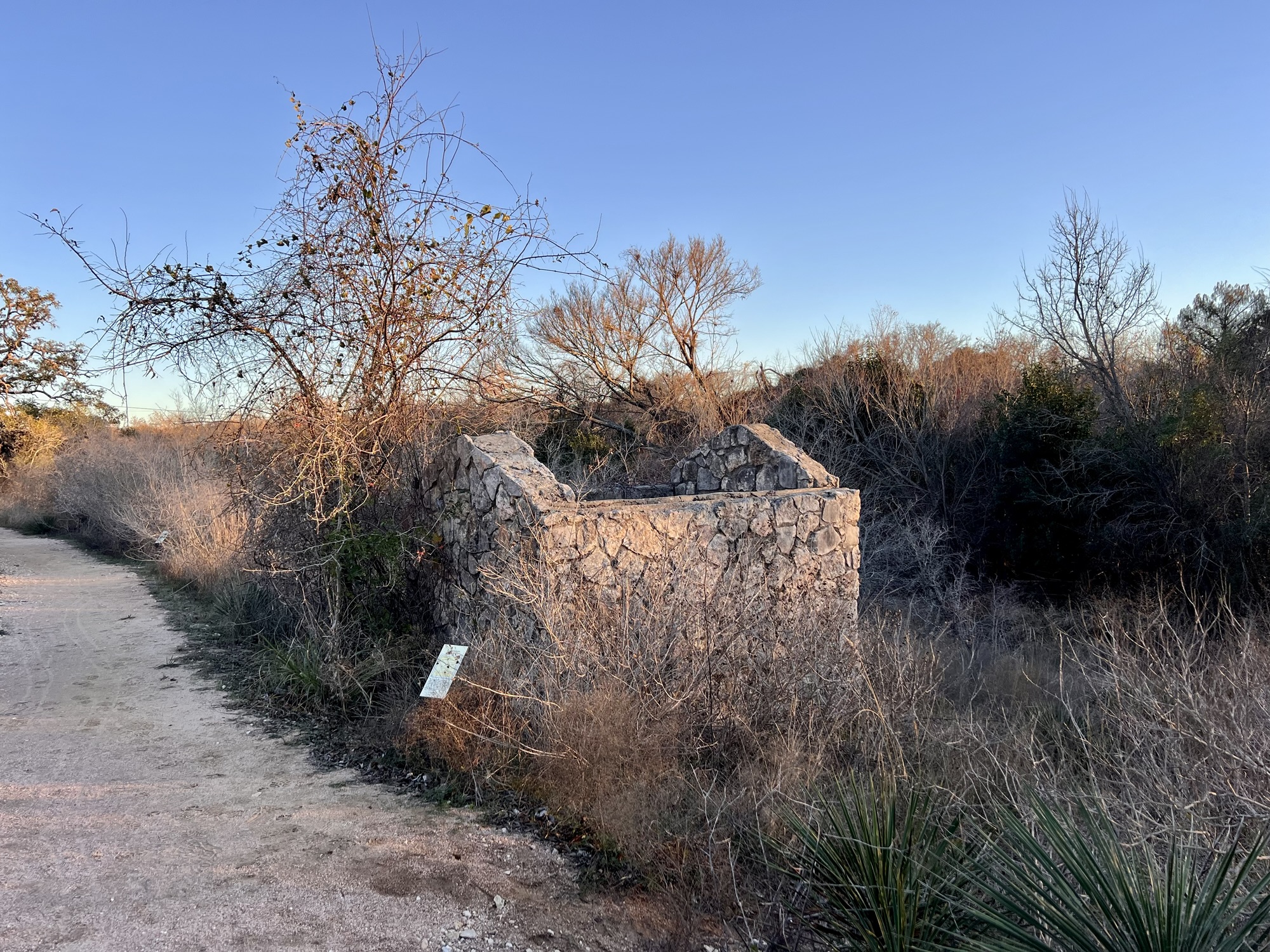
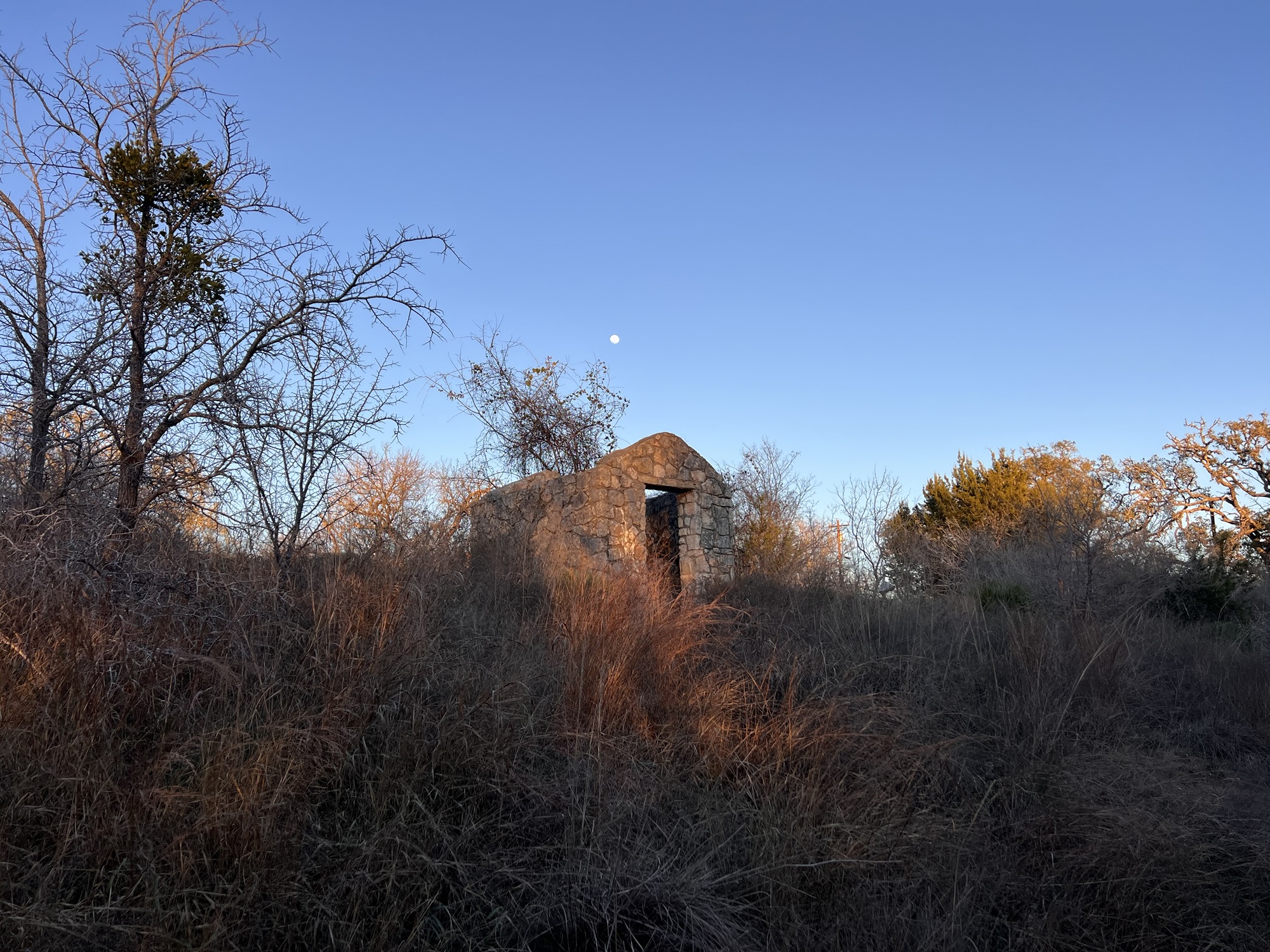
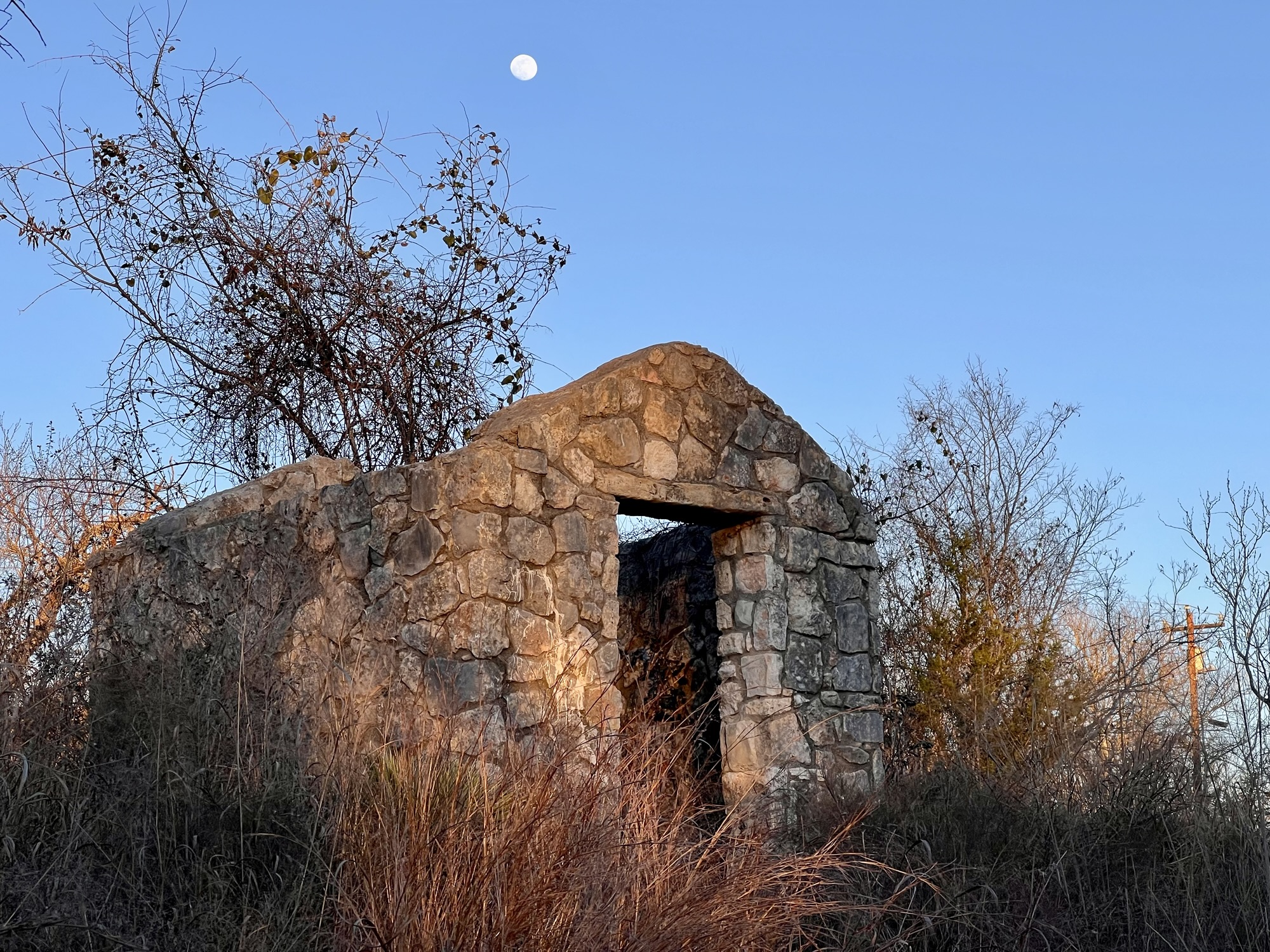
We got back to Blanco in time for me to take a short hike along the river to an old pump house. I like my photos of it.
My favorite, either the moon. Old Pump House
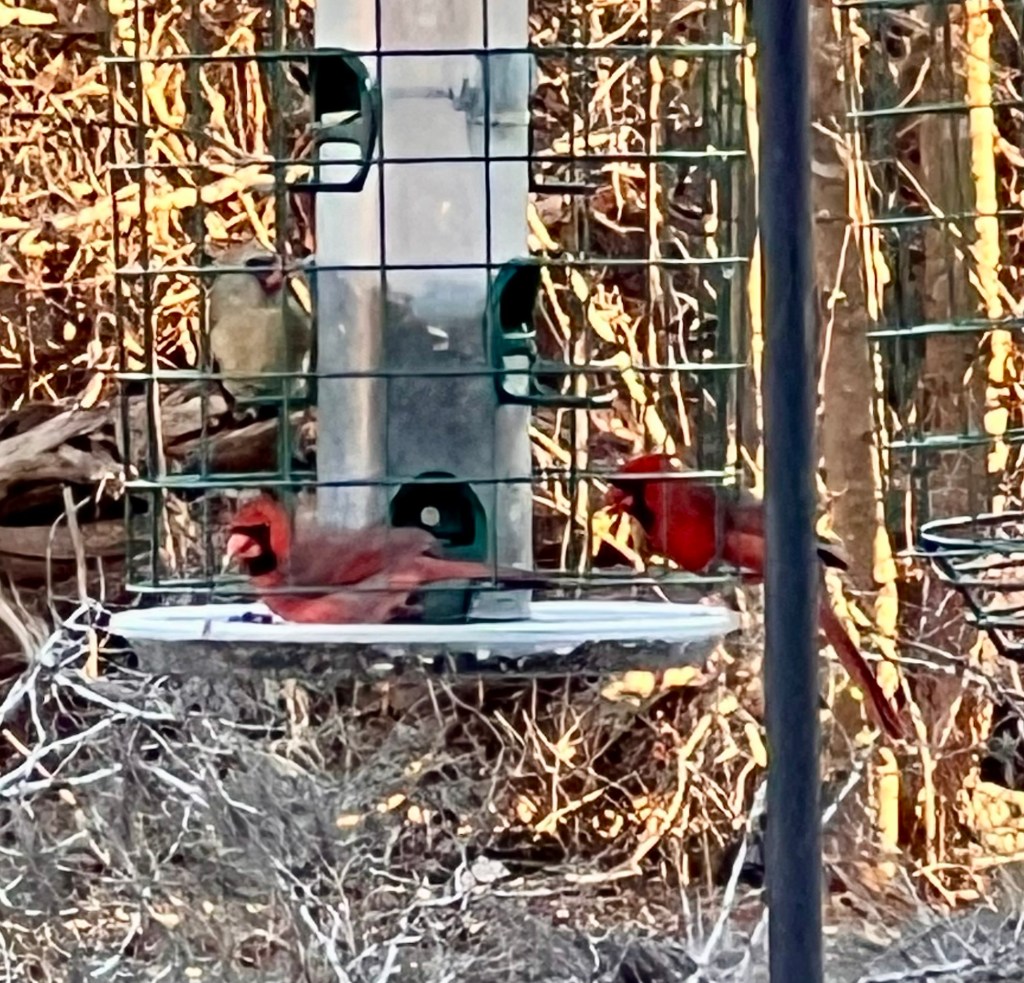
There was also a very nice bird blind, but it only had Cardinals. I took their pictures anyway.
This is the guys’ feederThis is the gals’ feeder
By the way, I thought it was sweet that Lee introduced a young couple camping near us to Merlin Bird ID. I then talked to them, and hooked them up with iNaturalist to help identify mushrooms, which is their hobby. I did my community outreach! And now, more pretty photos.
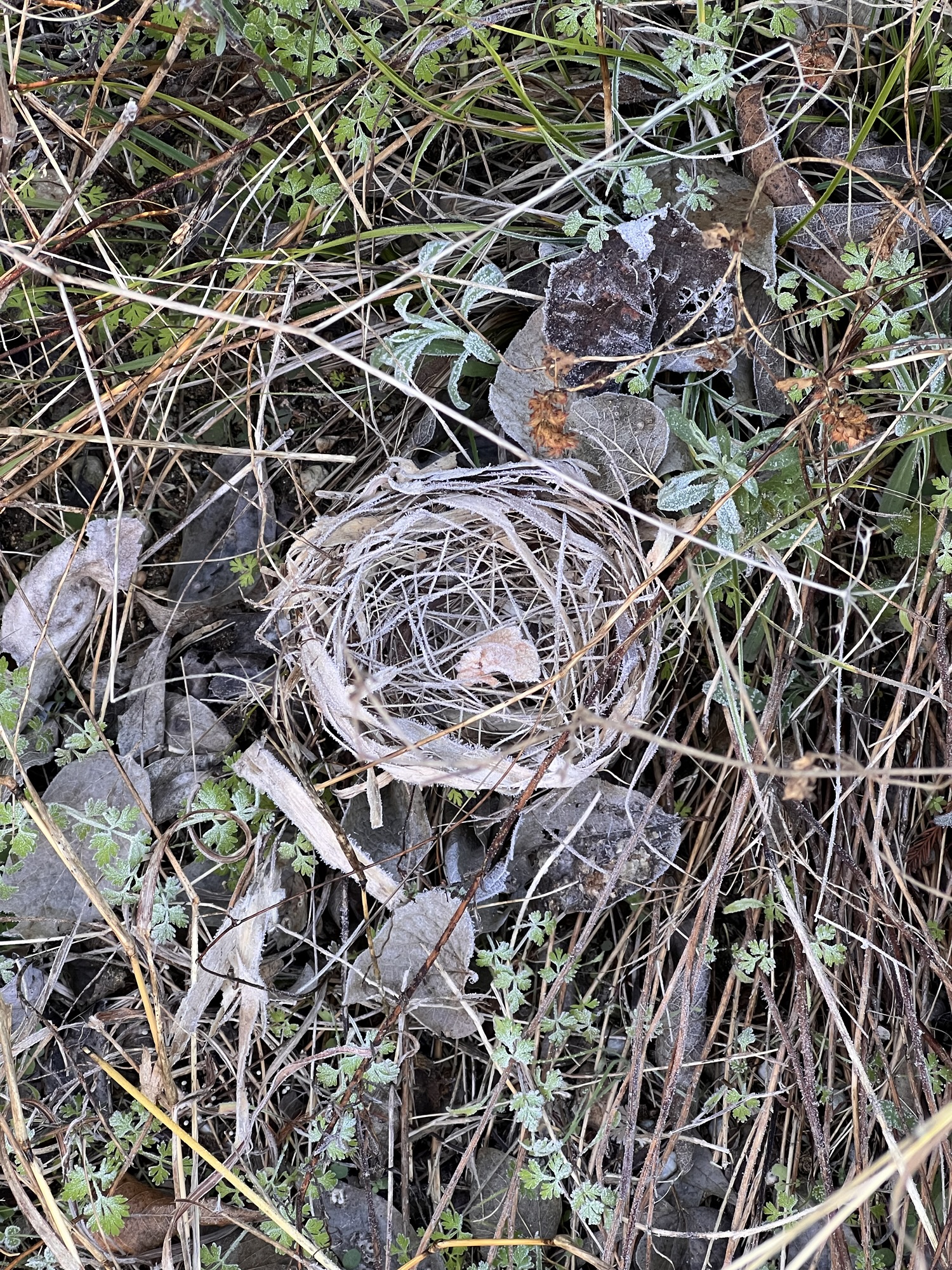
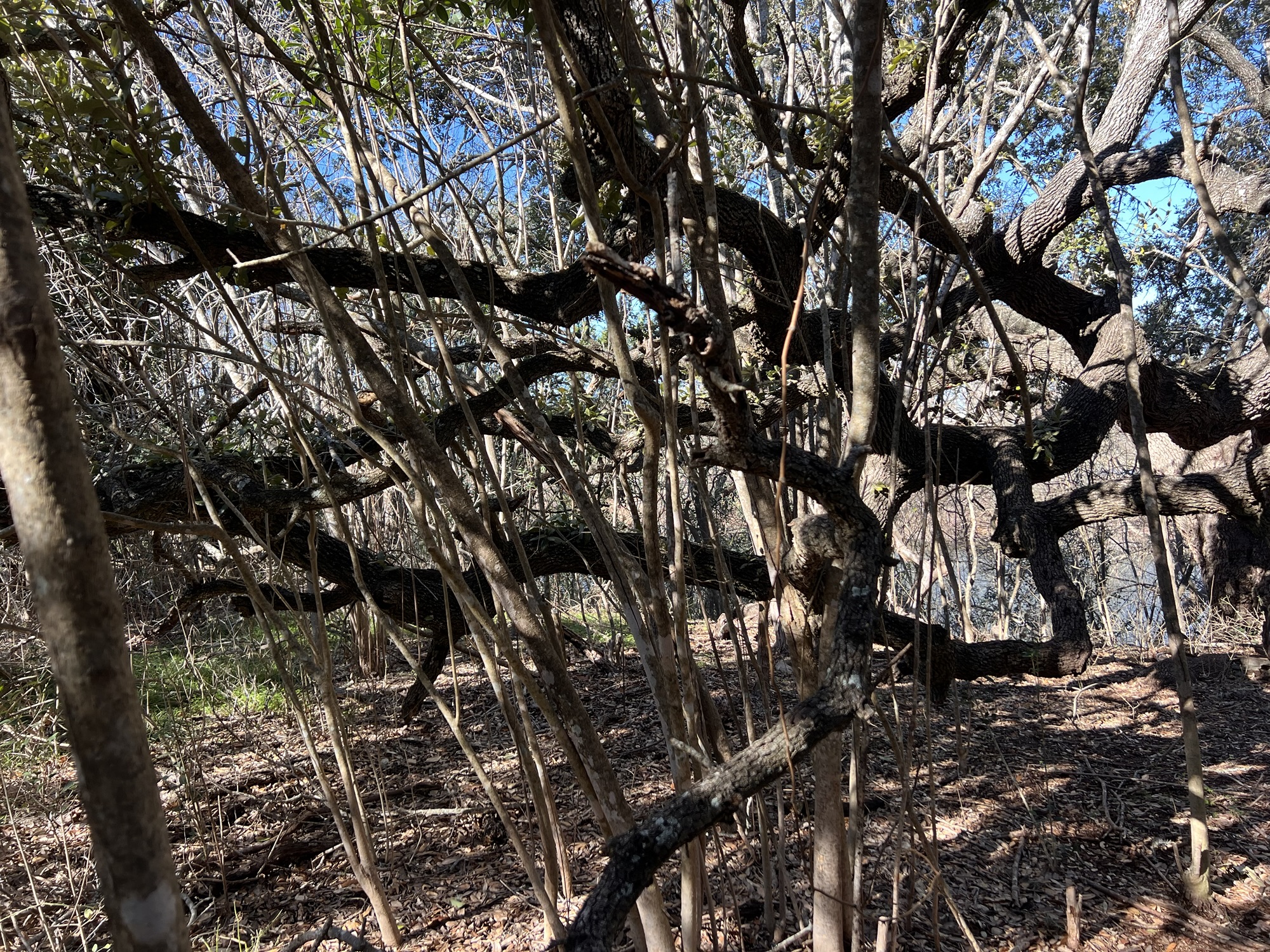
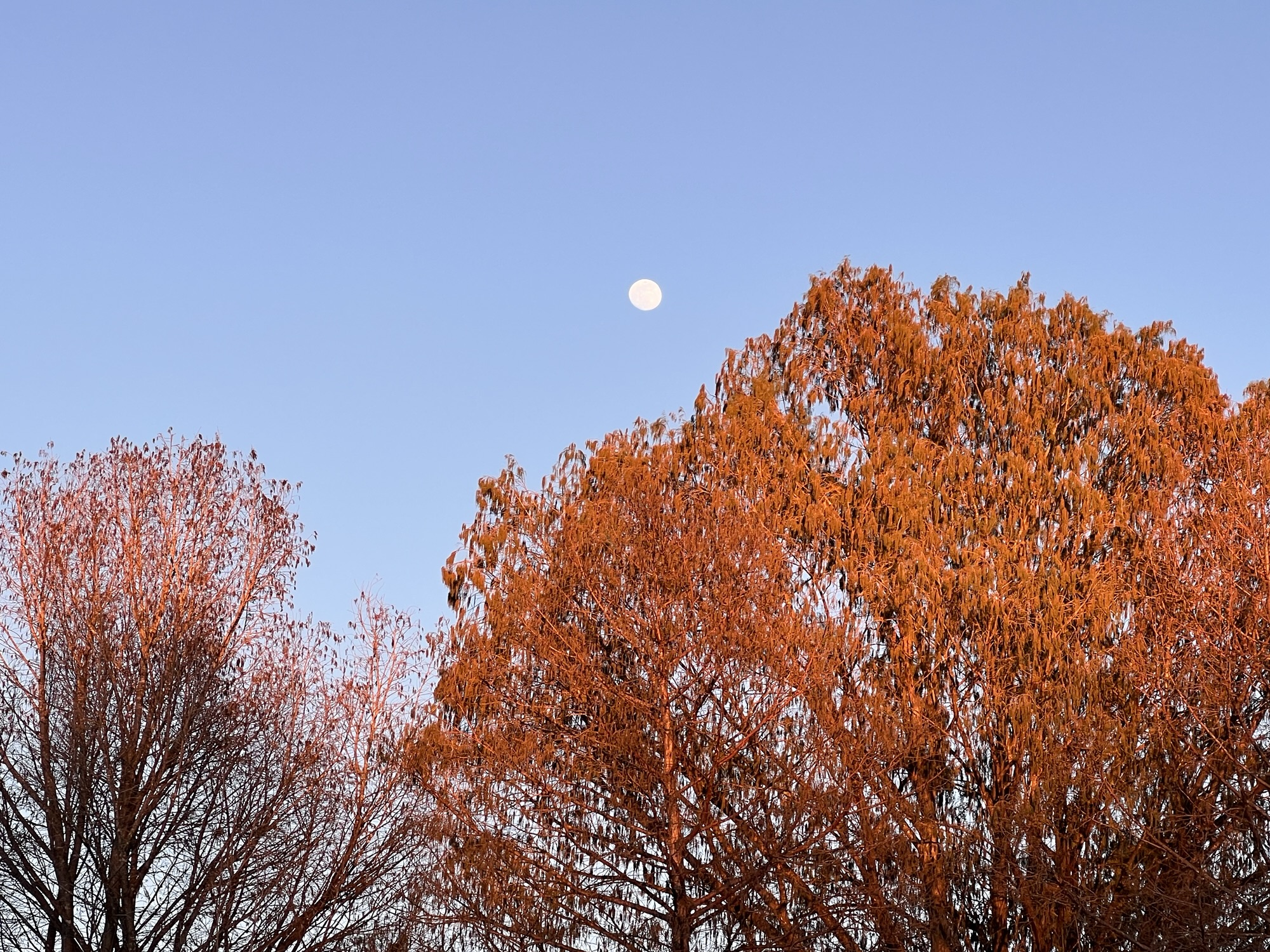
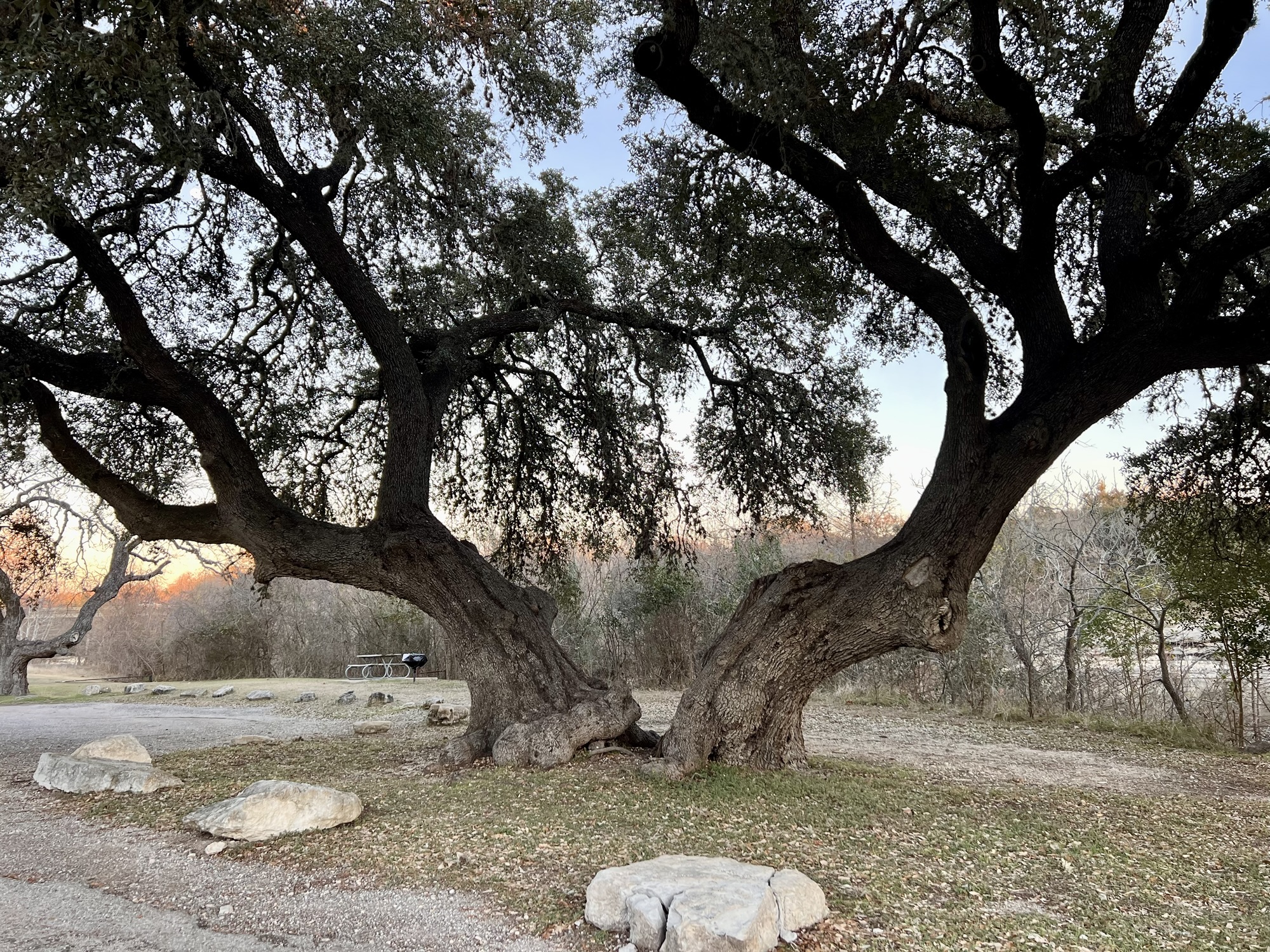
Road I checked out this morning. Hiking path I’ll go back on tomorrow. River damNestCool oak limbsBlanco RiverSycamore treesBabu bluebonnet Sunset oakOther side of damMy favorite photoStately cypressSotol leavesEscarpments look like stairs Setting sunSunset moonThe big oak is really two friends.
Finally we are having the kind of rain that might refill our ponds and creeks. We are very lucky to have been only a few miles south of the “wintry mix” section of the precipitation band, and well removed from the snow that has blanketed North Texas.
Current weather
I meant to get a screenshot earlier today. Oh well, I had lots of meetings today so not much time for extraneous activities.
I’m so glad we just got rain, because that let me get to my Master Naturalist meeting tonight. I always enjoy them and tonight was quite fun. First, I was kind to someone who needed some kindness, and he just beamed with joy and gave me some stew. It’s very good stew.
Pretend it’s this stew, only with olives, not pomegranates. Stock photo.
Then I said something funny and almost made water come out of someone else’s nose. I consider that a triumph, but am sorry she got her drink all over her shirt. We all made the best of a very rainy night.
It makes me feel good to see the group being enthusiastic about our training class, bats, and other activities. It’s taken a long time to recover from the loss of the group’s leader followed by COVID, but I think they’ve done it.
Carlton would like me to stop writing and go to bed. I guess I will.
That’s it for today. Both dogs are healing well. Sending love to friends near the LA fires and to my cousin/friend. So many out there needing support right now with illnesses, stress, etc. send out your spare good thoughts!
To be truthful, I get irritated at people who talk and talk as they go down trails, ruining my precious silence and bird listening. That makes me a hypocrite, because given the chance to talk to someone I hadn’t talked to in a good number of years, I’ll talk my butt off, even on slippery rocks.
Not a rocky part of the trail
Yes! I went on a nice hike with a friend! Rebecca was the choir director when I sang at Live Oak UU Church, and we also sang together in other choral groups over the years. She’s one of the people I’d missed most when I left Round Rick for weekends at the ranch.
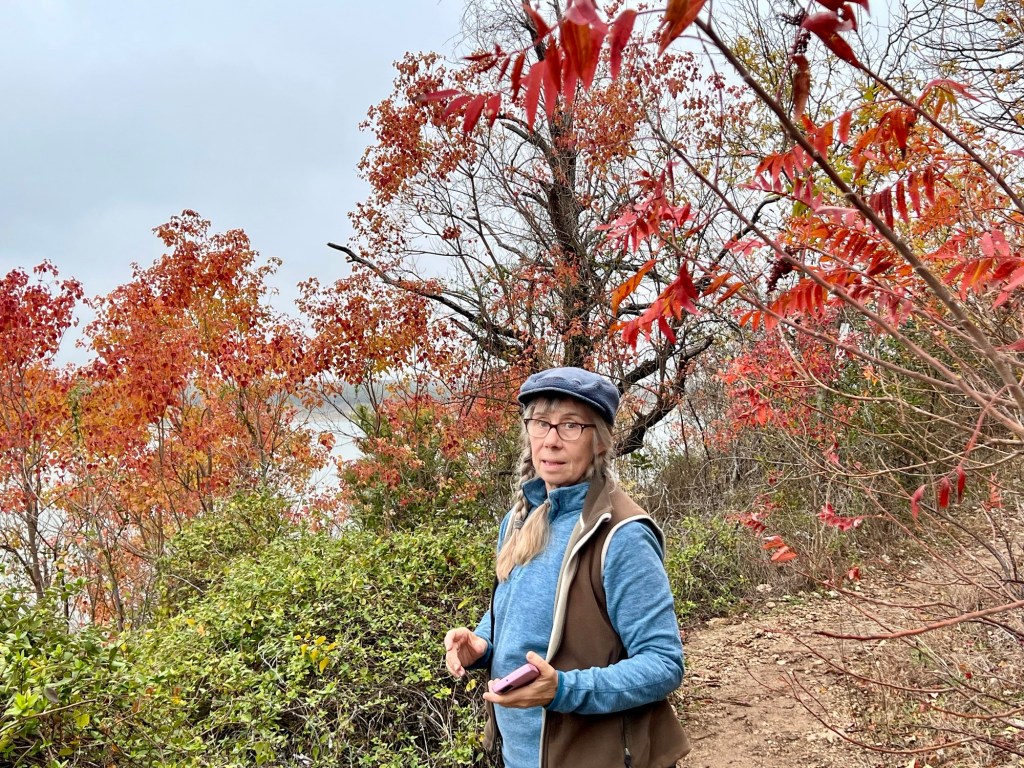
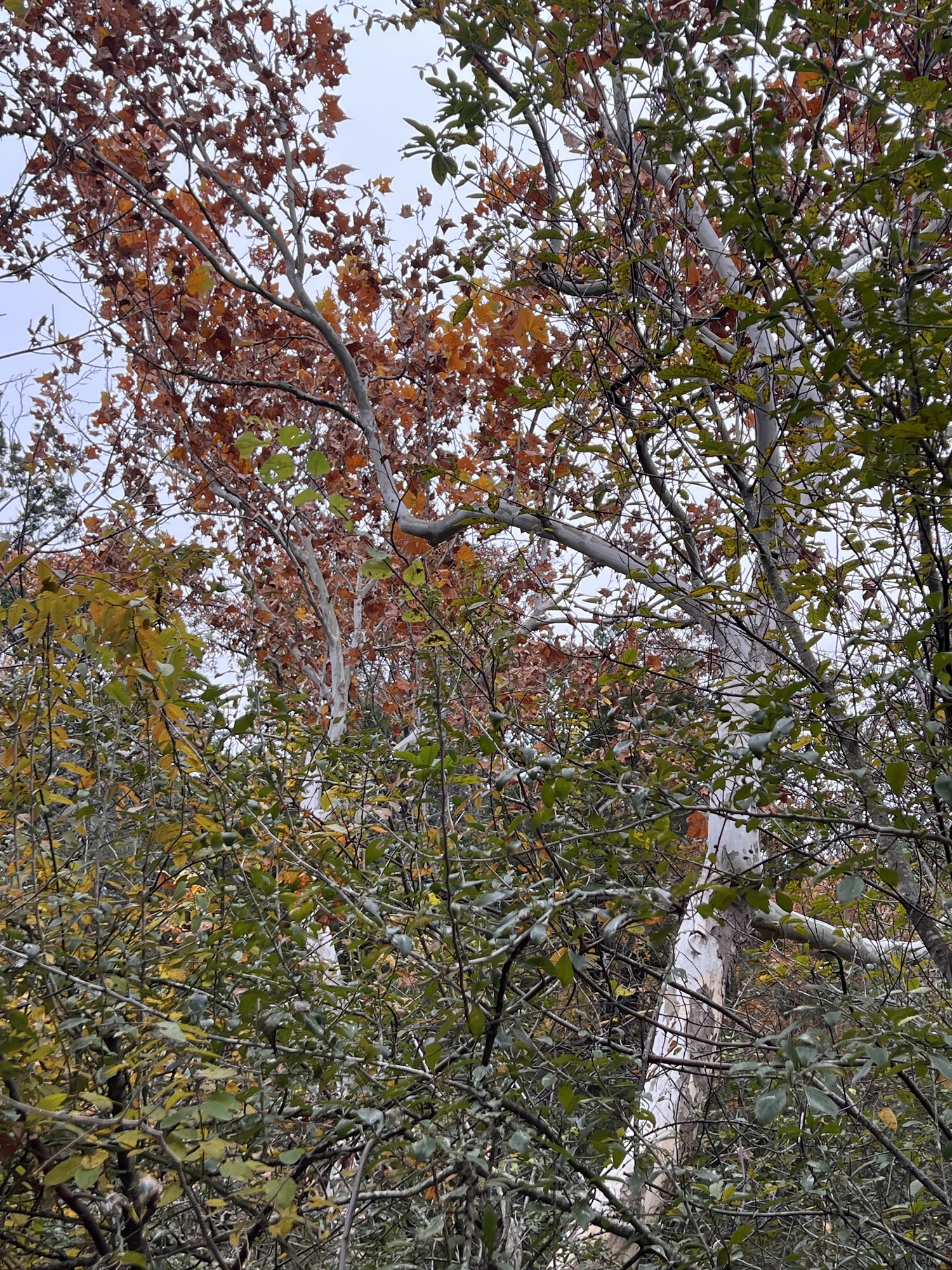
The gray sky made the red leaves more vivid.
After seeing each other again at the recent memorial service, we decided to do stuff together, and decided to hike at Cedar Breaks Park on Lake Georgetown. It took us the same amount of time to get there, coming different ways, so Rebecca made a good choice.
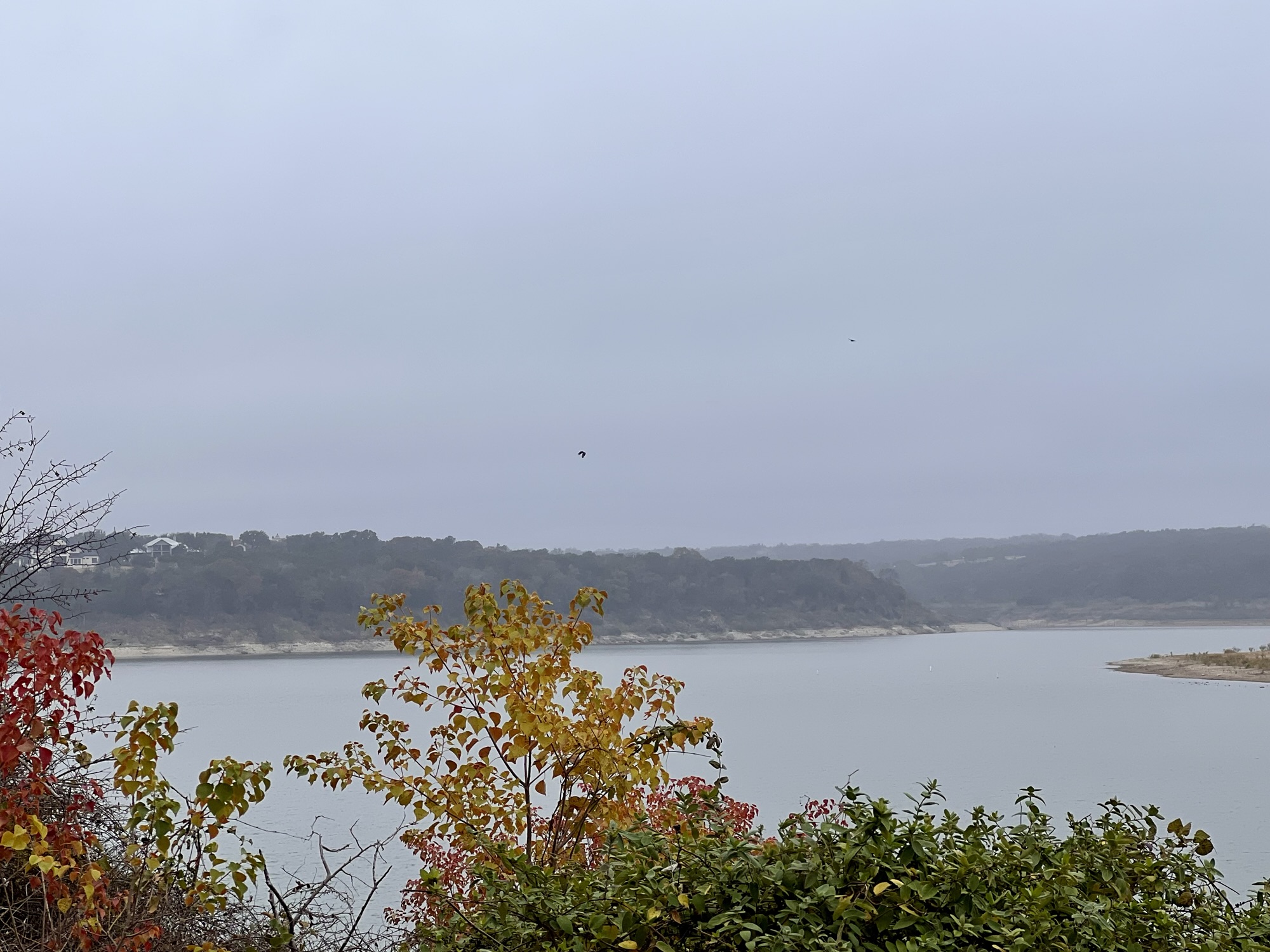
Scenic, misty Lake Georgetown
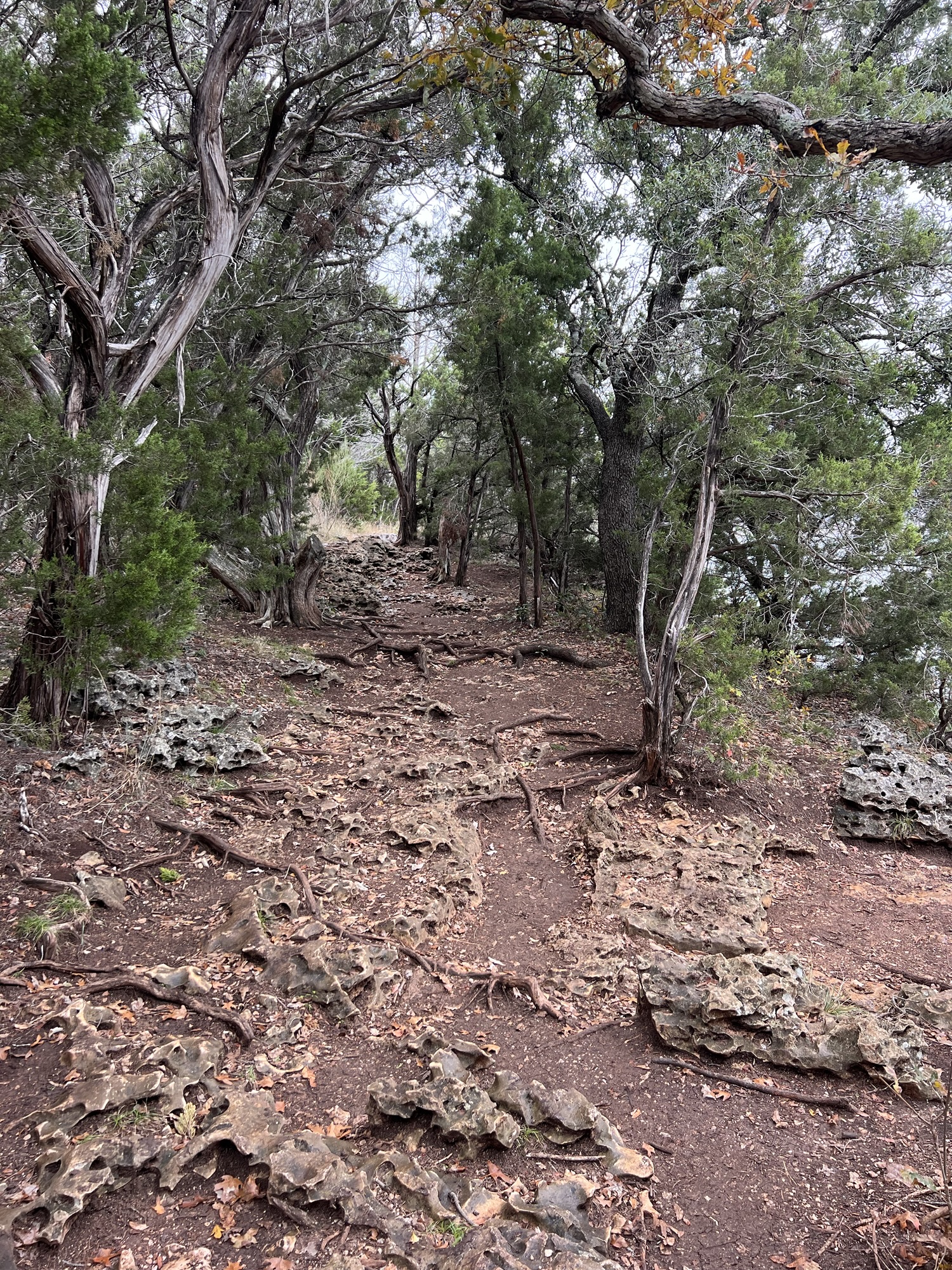
There is a lot of confusing construction around the park, but the trails weren’t very crowded, thanks to a misty drizzle. But it wasn’t too cold and the fall colors were striking. It WAS rather slippery on the limestone along the trail, but we were careful.
Lots of limestone
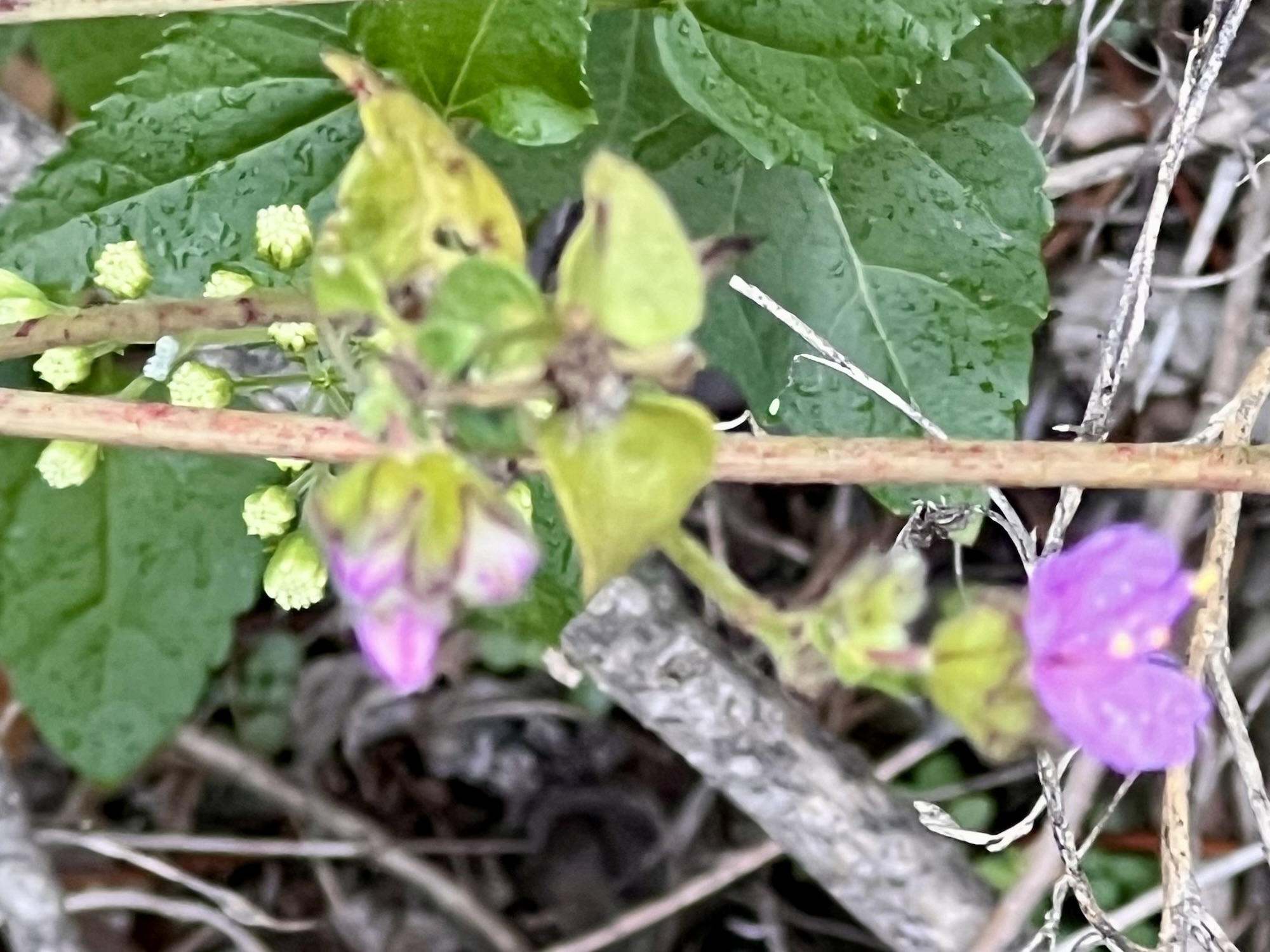
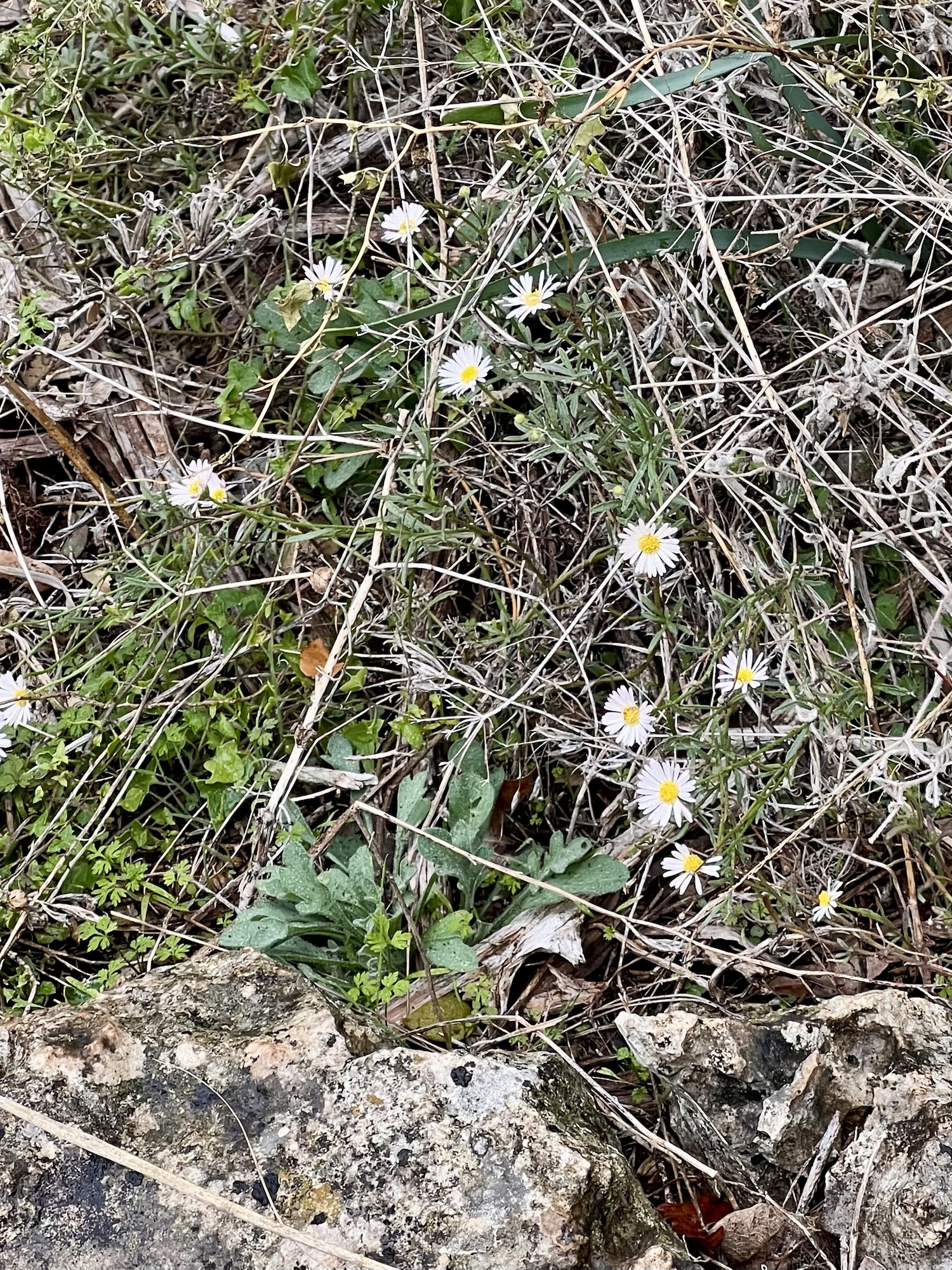
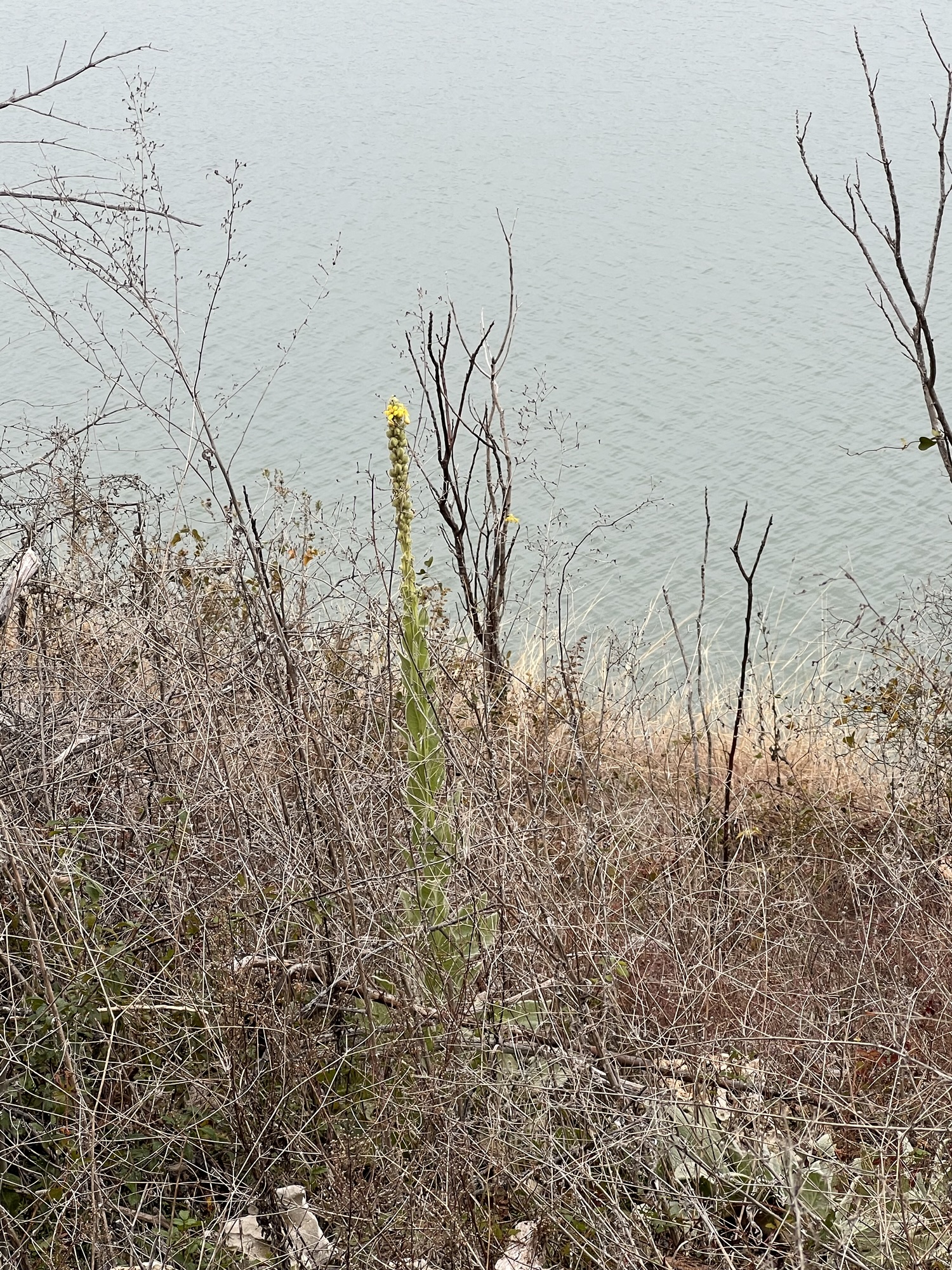
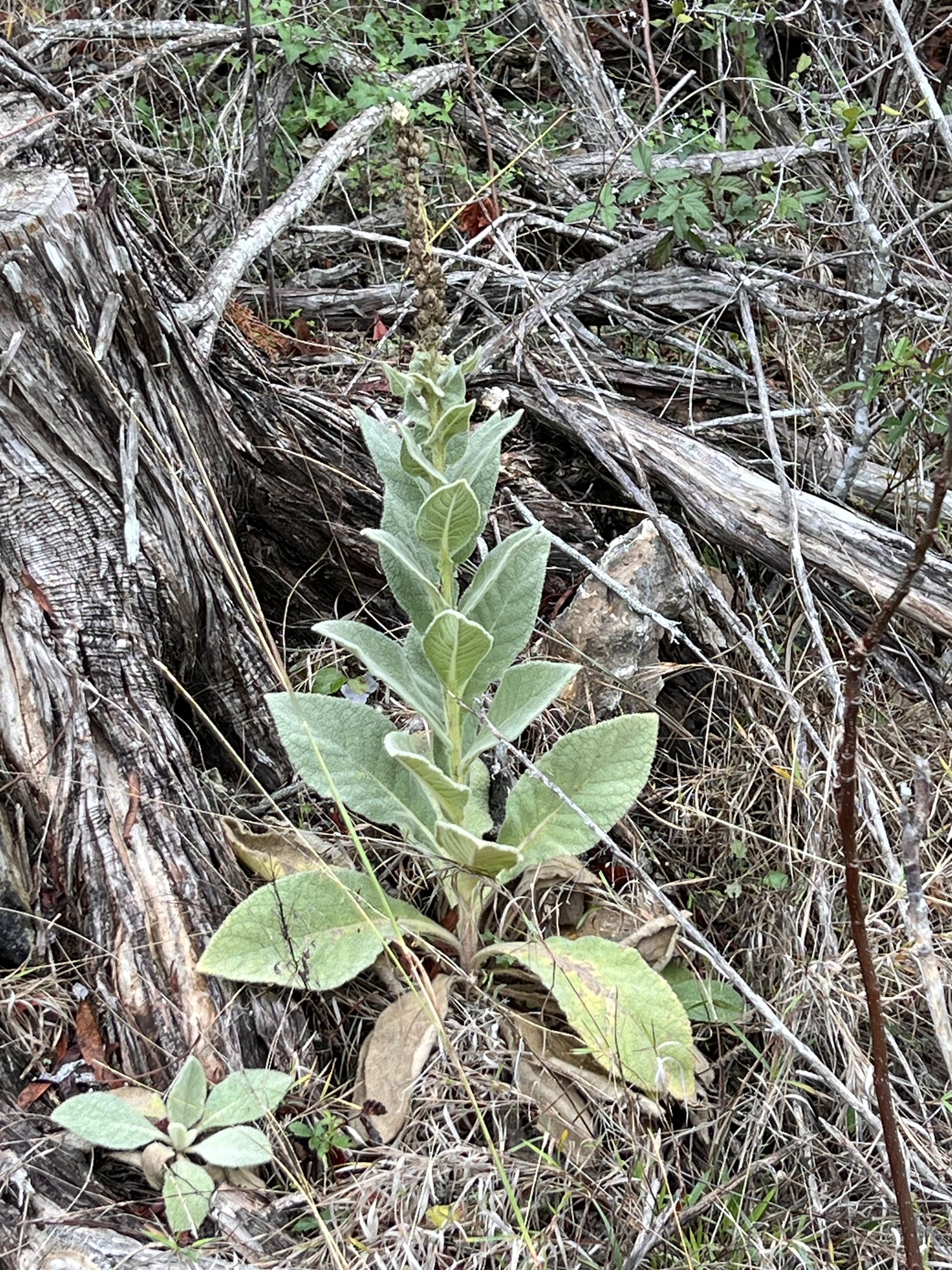
It was great catching up with each other and identifying plants. She’s a Master Gardener now, so we’re both all educated. I was surprised at how many plants were still blooming or budding out.
Snapdragon vineWild four o’clock. Hmm. Shrubby boneset or white mist flowerAsterStraggler DaisyMullein in bloomAnother mullein. Buckleys oakBristled para hitsI ate maiden fernChinese pistacheChinese tallow
There weren’t very many birds in the oak/juniper forest, but hearing a Canyon Wren made up for it. That was only my second one. you need a canyon to find them, and we had them on the lake.
Scruffy me. A little stream we passedColorsMore colorThere were Mallards, Cormorants, and a Forest Egret on the other side of the lake. TrailDecorative Chinese Tallow. Nuisance tree, sadly. Twisted yuccaMaidenhair fernSycamore leafSycamore tree.
After we got back, we headed into Georgetown for a nice lunch at the Sweet Lemon Cafe. It was cute and the food was very nice. We wished it wasn’t rainy, so we could visit nearby shops, but maybe we can try again.
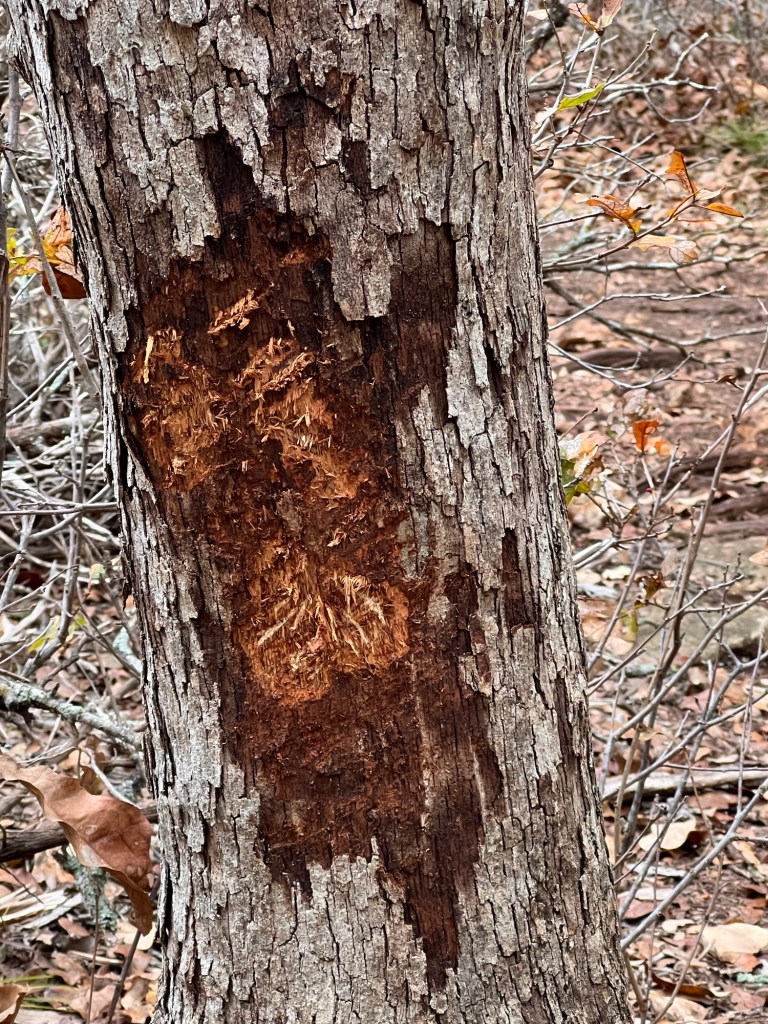
So, what caused this tree damage? It’s fresh.
We already have an idea for another adventure. I sure feel good about breaking out of hermit-hood a little. As a matter of fact, I’m going to keep trying! Tomorrow I drive up north and hope the rodeo traffic is confined to the west side of the Dallas-Fort Worth metroplex.
Please remember that not all bloggers live in urban or suburban locations. Out here in a rural part of a very empty county in a state as big as many countries, we do see (more often hear) wild animals. We call them native wildlife.
Someone is tired from warding off wild animals.
Today’s count included 37 bird species, an unknown number of coyotes, around four pond cooters (who I thought might have dug a hole by now; it’s chilly), two very vocal squirrels, a large rat or mouse, two cottontails, and some number of swiftly moving deer.
We are usually in the bushes
It’s too cold for snakes right now, and the armadillo population is staying away from Goldie. I hope she and Alfred are also intimidated the feral hogs (I have seen little evidence lately).
I’m very far from Goldie
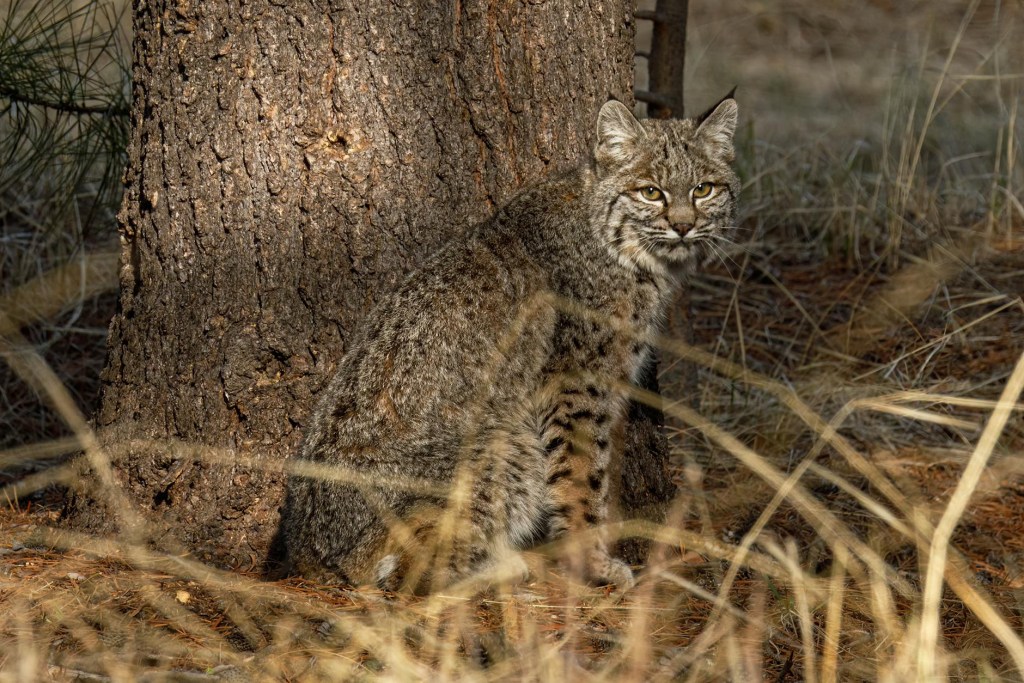
Neighbors report hearing cats, which could be feral house cats (usually dispensed with by raptors), bobcats (plenty of those), or the big cat that was last seen by the farrier.
As you can see, we blend in.
I often see opossums, skunks, and raccoons here, along with shrews and mice (ugh). Foxes have raised families next door at Sara’s!
This one did not spray any of our dogs.
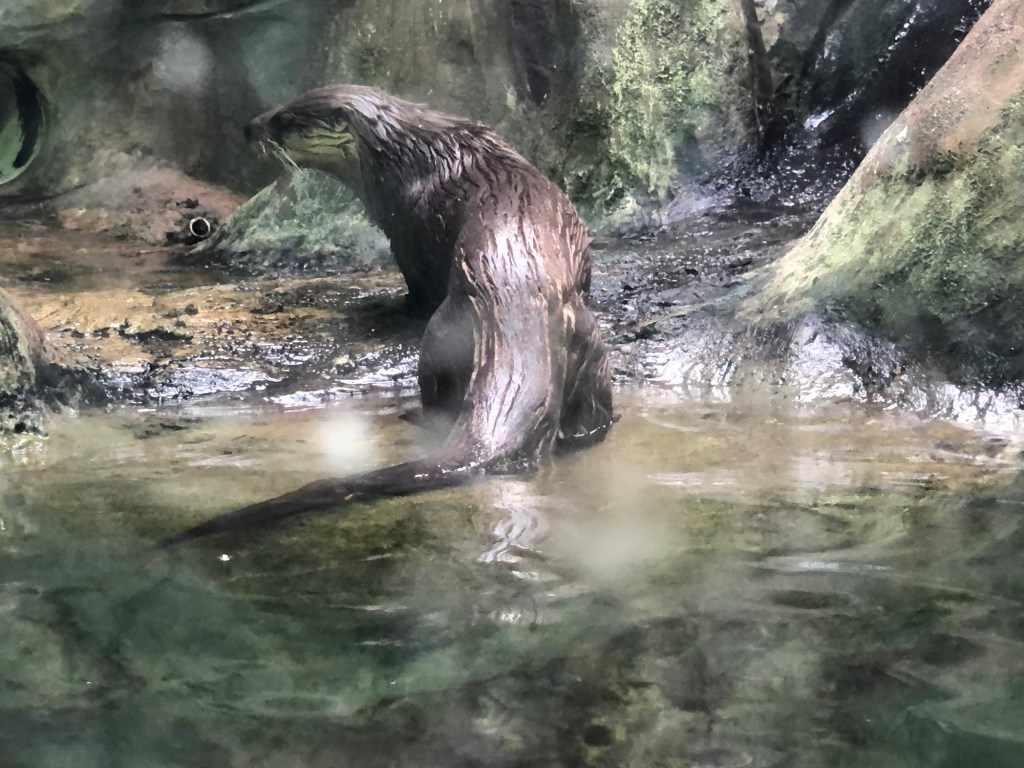
A couple of times river otters have visited, and beavers live nearby, but I haven’t seen them. Oh, and pocket gophers, which are here, but not on the part of the property I hang out in.
This one was at a zoo, not here.
So yes. I do see wild animals. Thanks for asking. I’ll do you a favor and not list the insects and arachnids. I do have lists on the blog site, though.
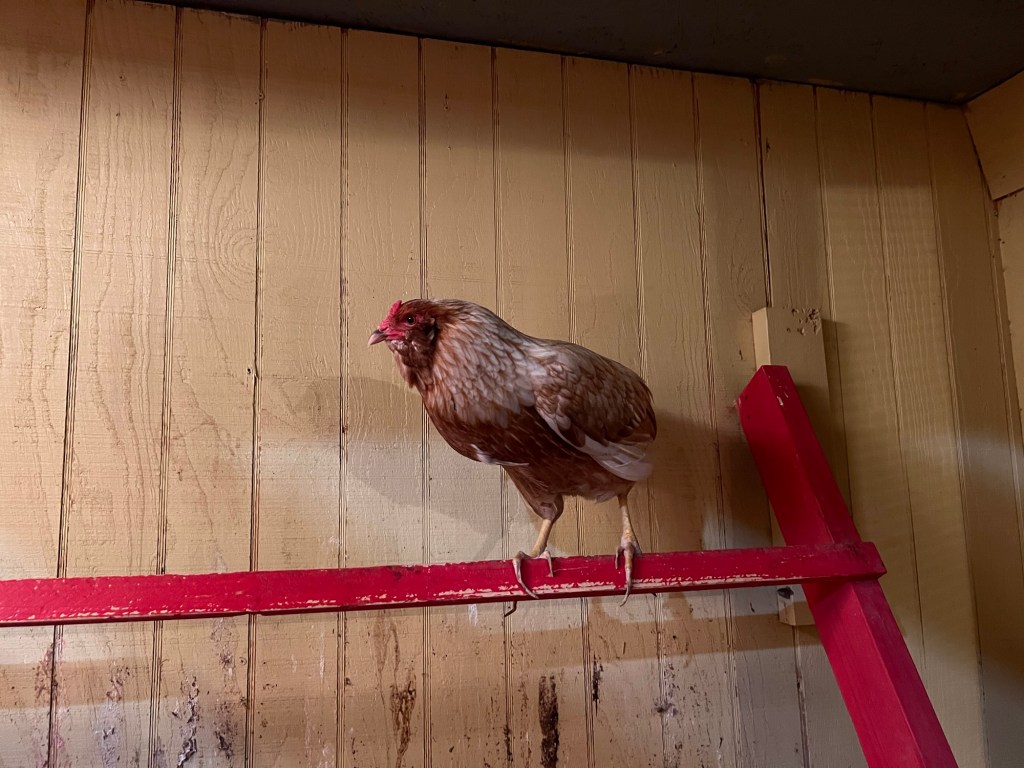
I didn’t look it up, so I’m not sure what the official gift is. But, according to my friends Tarrin and Teddy, the gift is a nice rooster ( as opposed to a mean one).
As-yet unnamed rooster.
The rooster magically appeared on their property, where he tried to fit in, but was chased by cattle, horses, dogs, and the roosters who already live there. He was too nice to just dispose of, so I volunteered to take him, since I still miss Bruce, our previous very nice fellow.
I’m suddenly feeling maternal.
I put him in the roost with Bianca, figuring they’ll sleep together and be more likely to get along. Maybe he will encourage the Cochins Cathy and Cindy to sleep indoors. I hope so, since it’s cooled off and rain is forecast.
More fowl news to come soon, so stay tuned.
In addition to a horse lesson and chicken pickup, I spent a little while with my friends Pamela and Linda Jo, doing a BioBlitz across the road from Pamela, where the landowner intends to clear all the plants to create a pasture. We recorded all we found, including a variety of native trees.
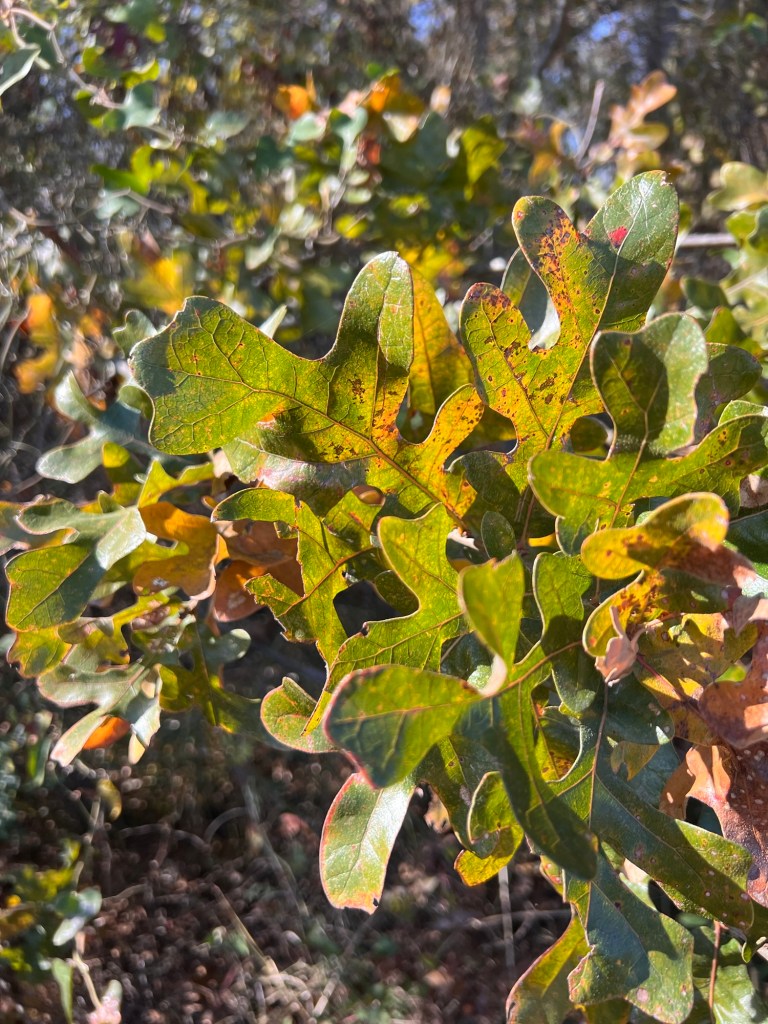
Pecan I think Cedar elmTed oakTexas ashEastern red cedar Gum BumeliaPossumhawCarolina ash ir maybe Texas ashHoney locustCoral berry, not a tree.
We found 78 species, which shows the diversity hiding in our Milam County landscape.
There may be more observations uploaded to our iNaturalist project, which I look forward to. I’m finding a bit more peace being around people who are good friends and love our plants and animals.
(Written yesterday but only got enough bars to update today.)
After thinking good old Seneca wasn’t going to make it, Lee and I managed to leave town yesterday to have a quiet Thanksgiving and 16th anniversary trip to Cleburne State Park.
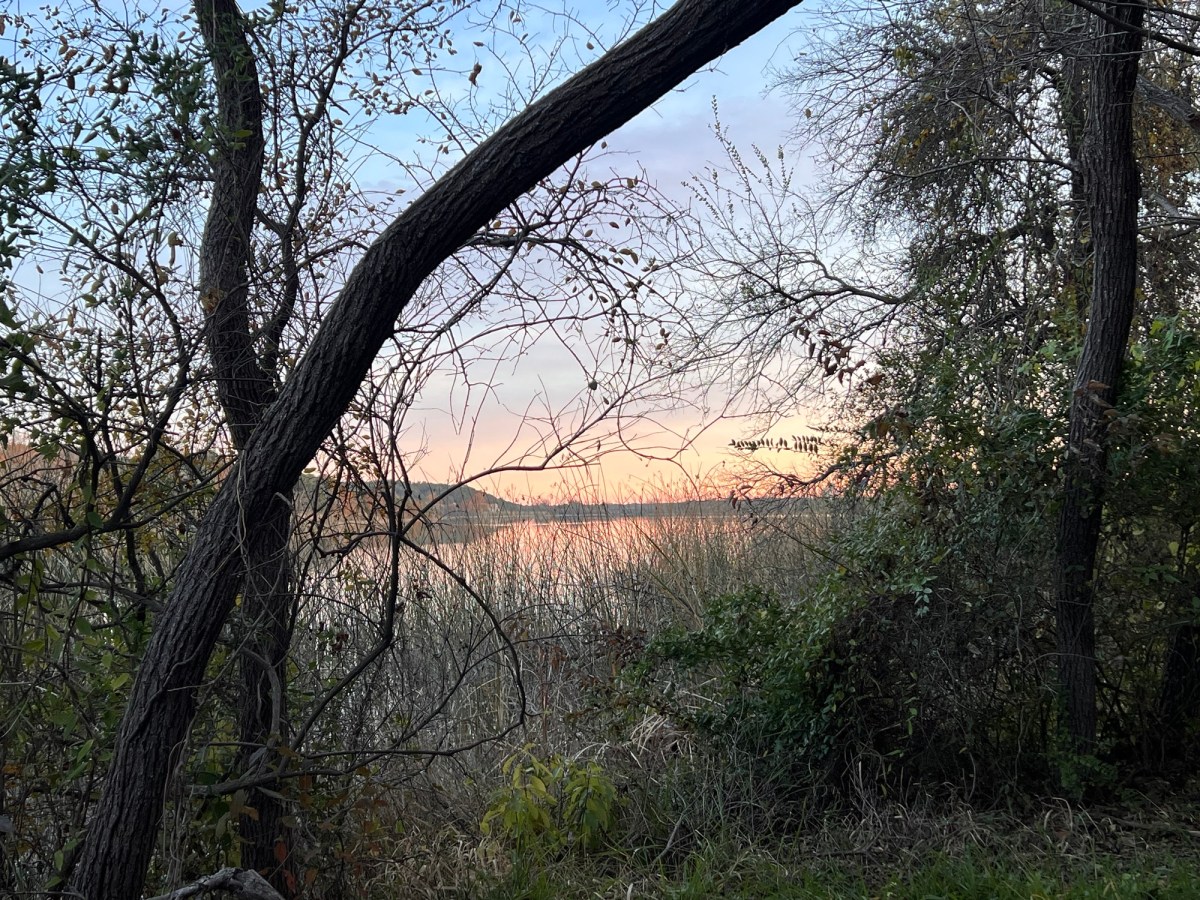
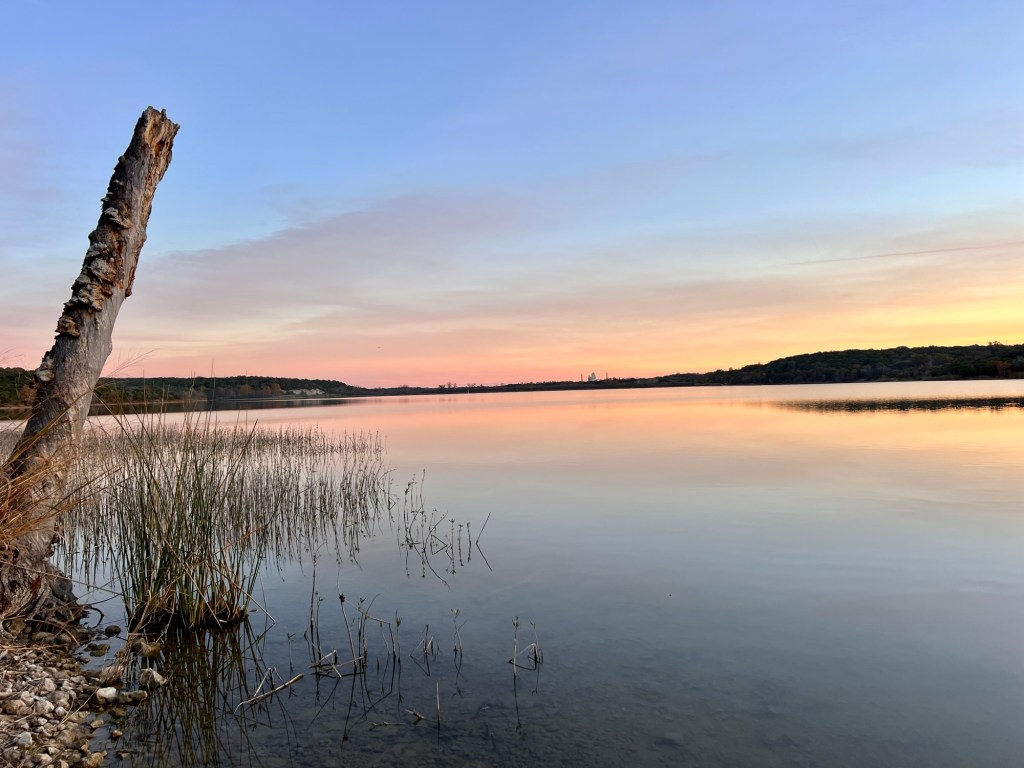
A lake view
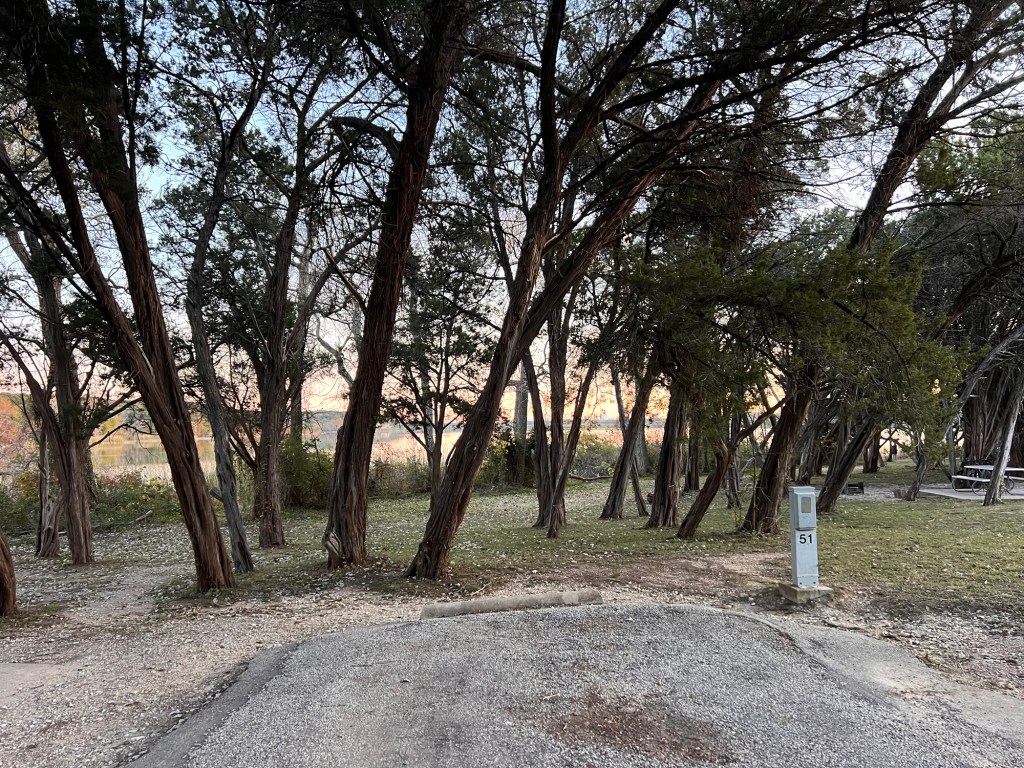
There was little traffic, so the trip up near Fort Worth wasn’t too bad. Our campsite is very secluded and right on the lake. Last night we just managed to get set up before we were zonked, so we put off the big meal until today.
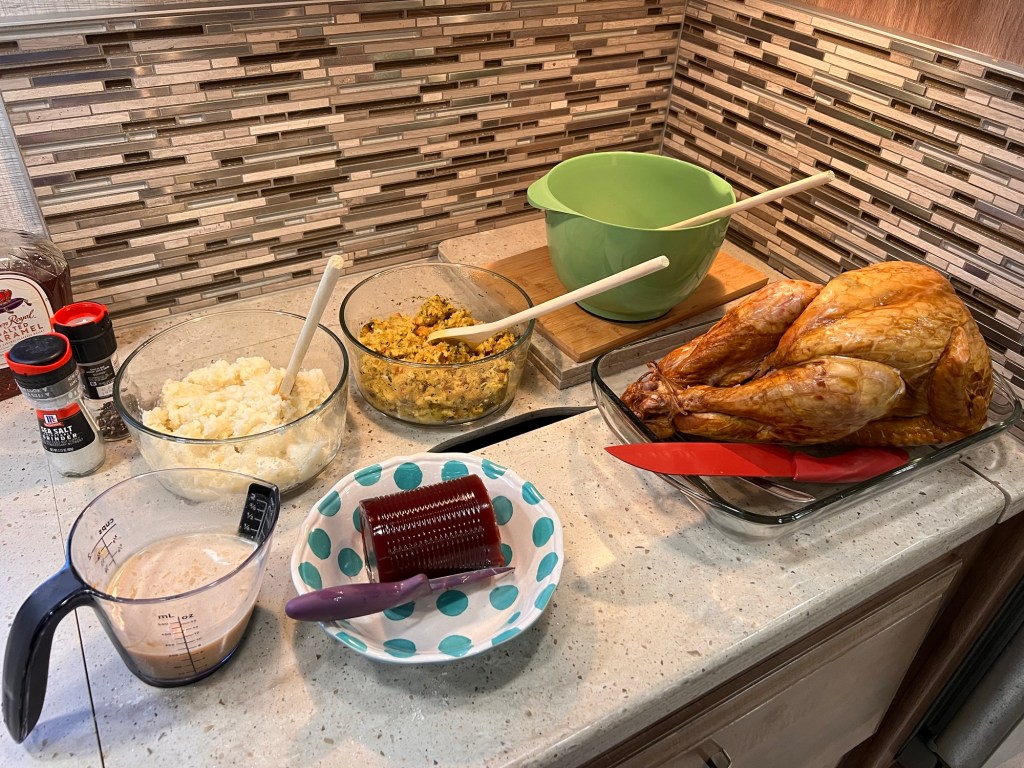
Dinner
Lee bought this nice pre-cooked smoked turkey that we ate cold I made stuffing, green beans with mushrooms, mashed potatoes, and gravy, all with the microwave. I choked down canned cranberry sauce. It was fine. And there was sweet potato pie for dessert. I’m glad we bought the glass storage dishes, since we needed them.
Before we ate, we got groceries at Kroger in Cleburne. When you live in Cameron, finding new flavors of Pop Tarts can make your day! I enjoyed the store, in other words.
Also we found where Goldie was getting all that money we find buried in homes she dug with her one good paw. (Kidding)
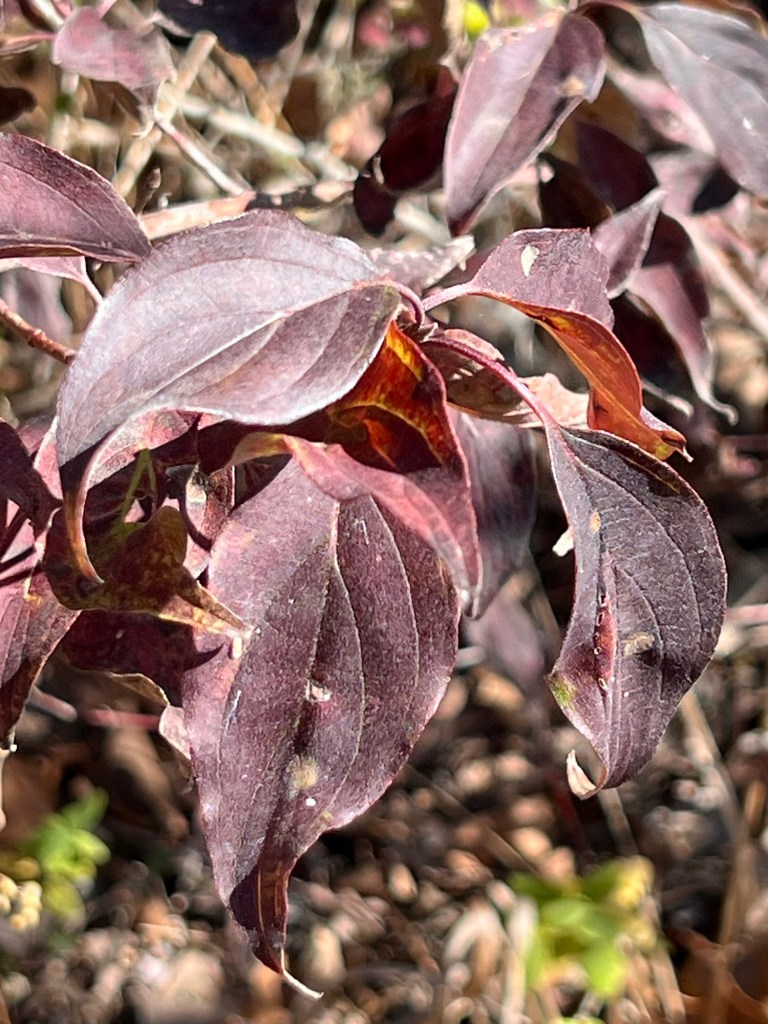
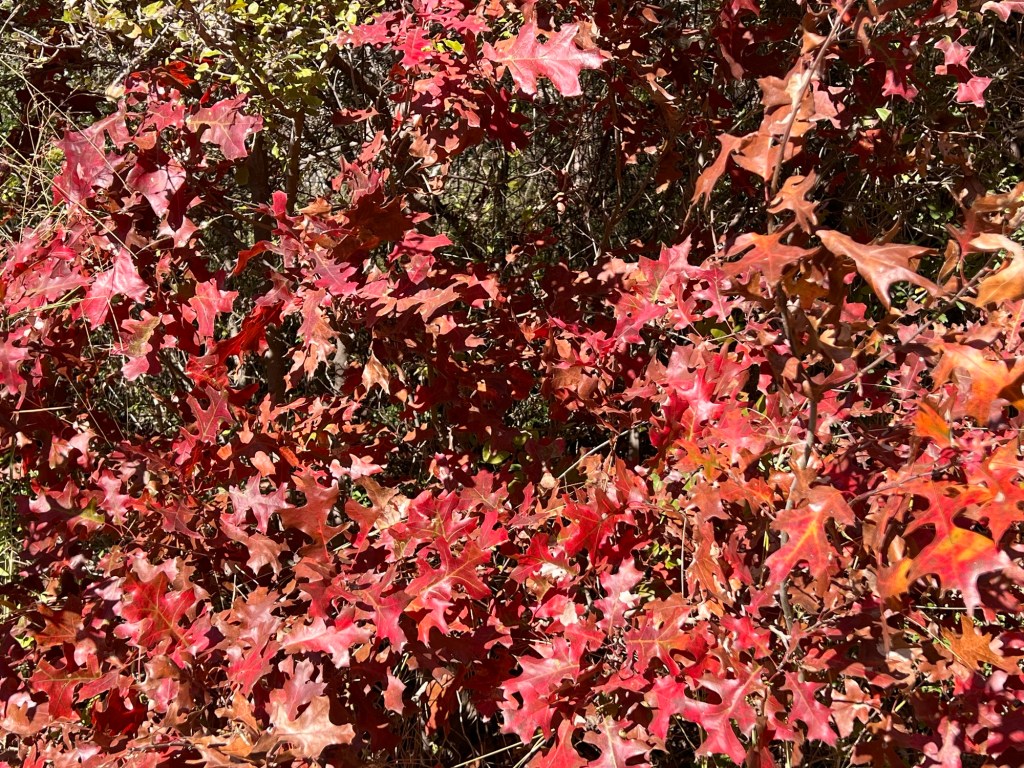
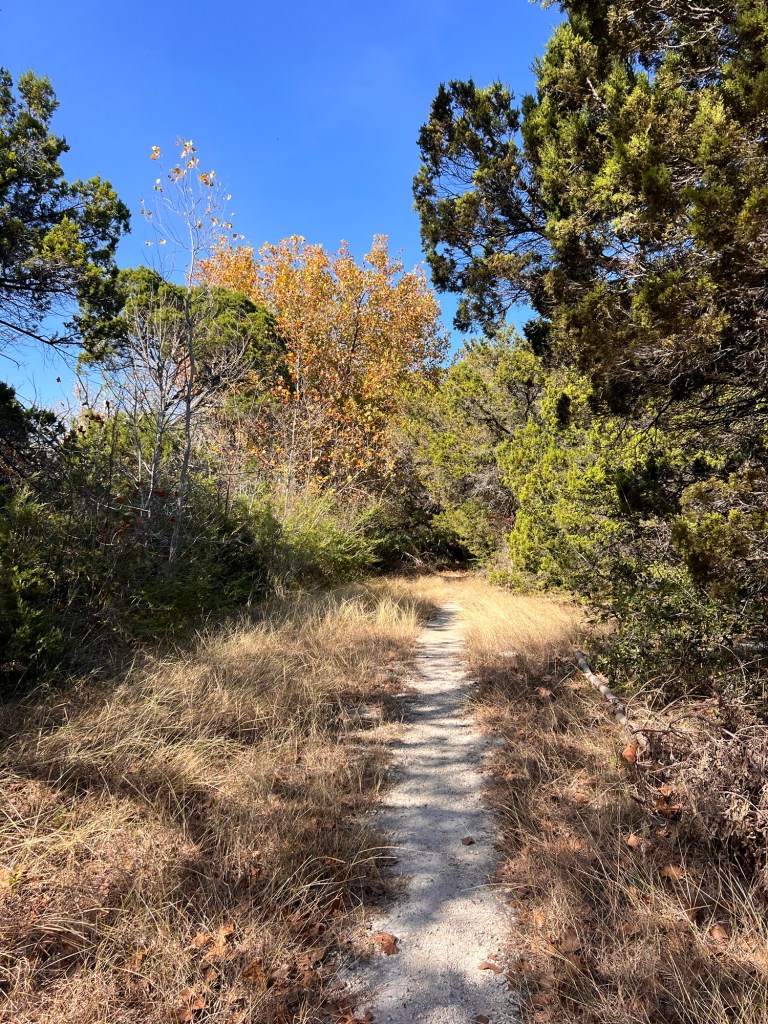
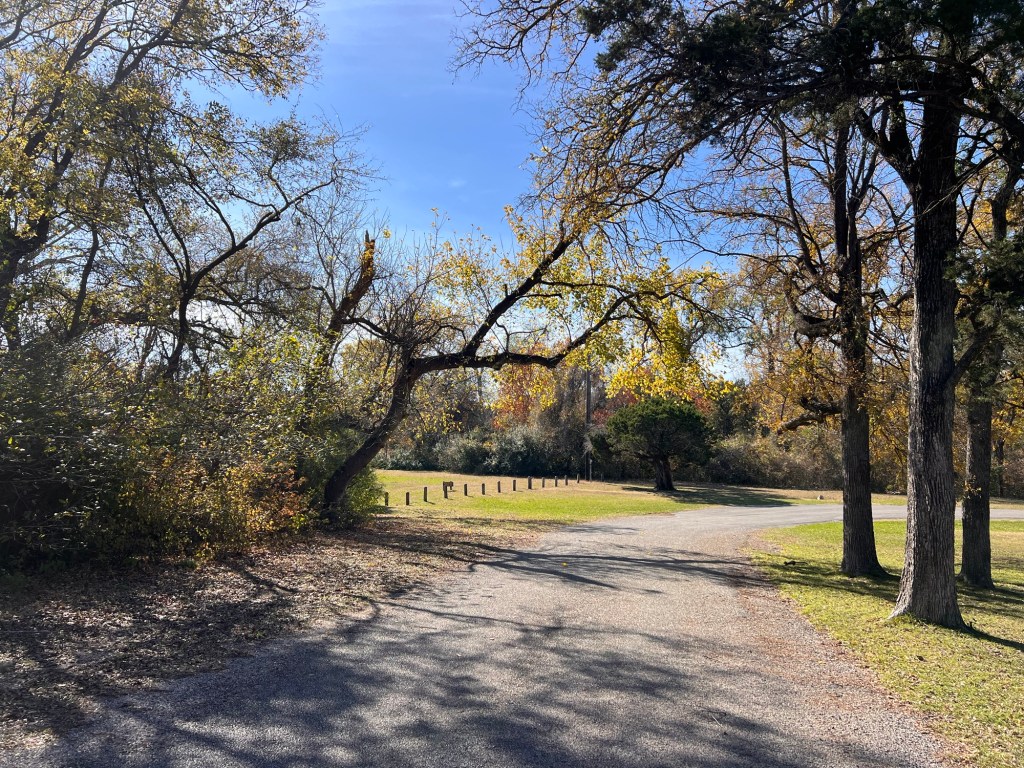
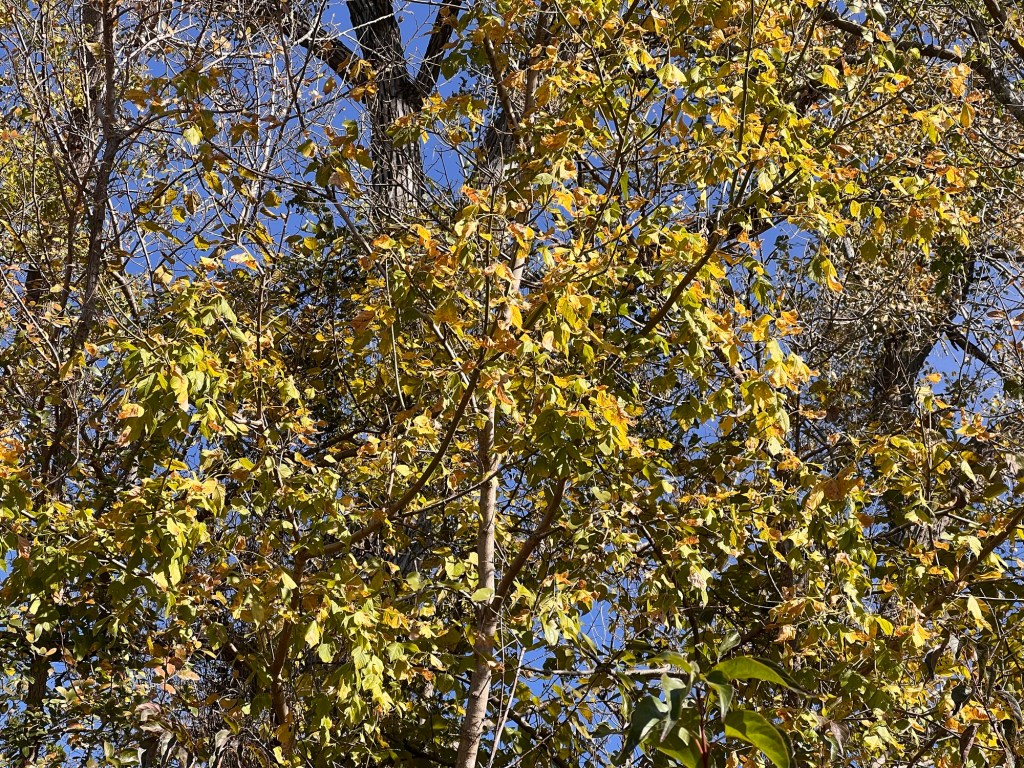
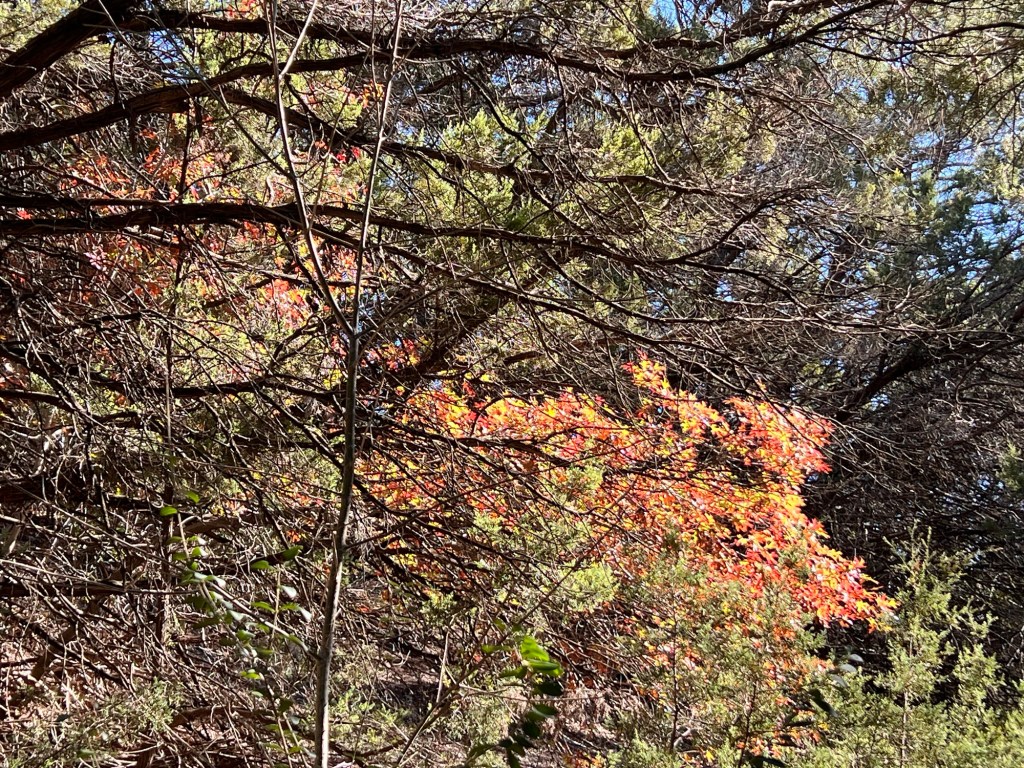
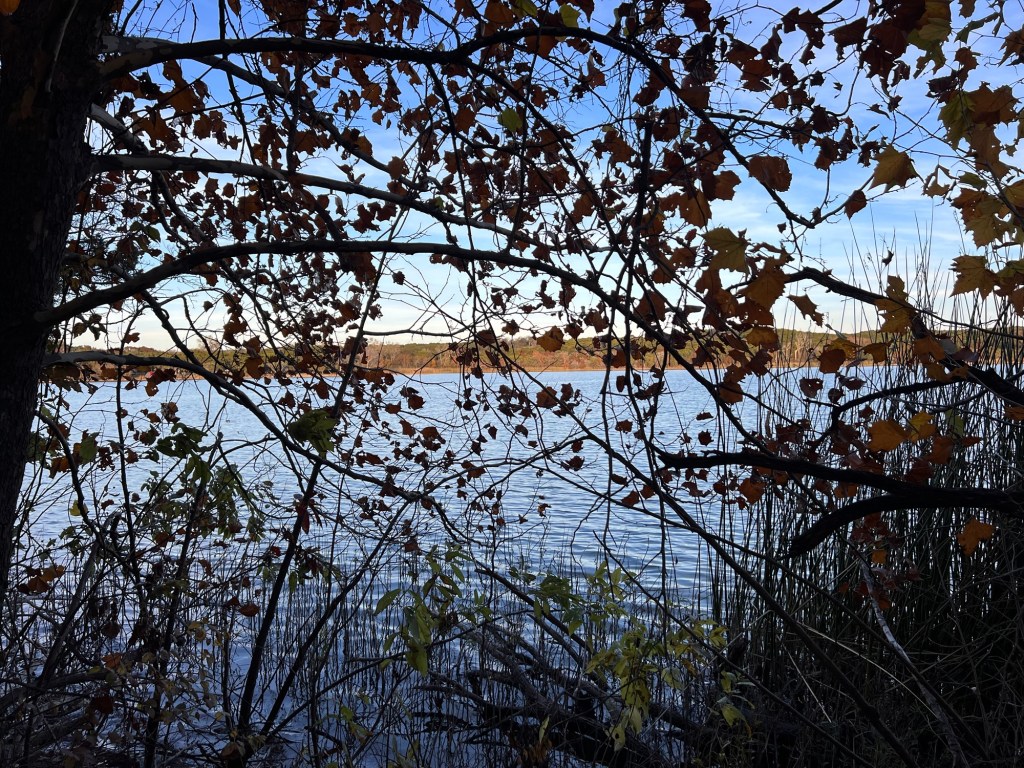
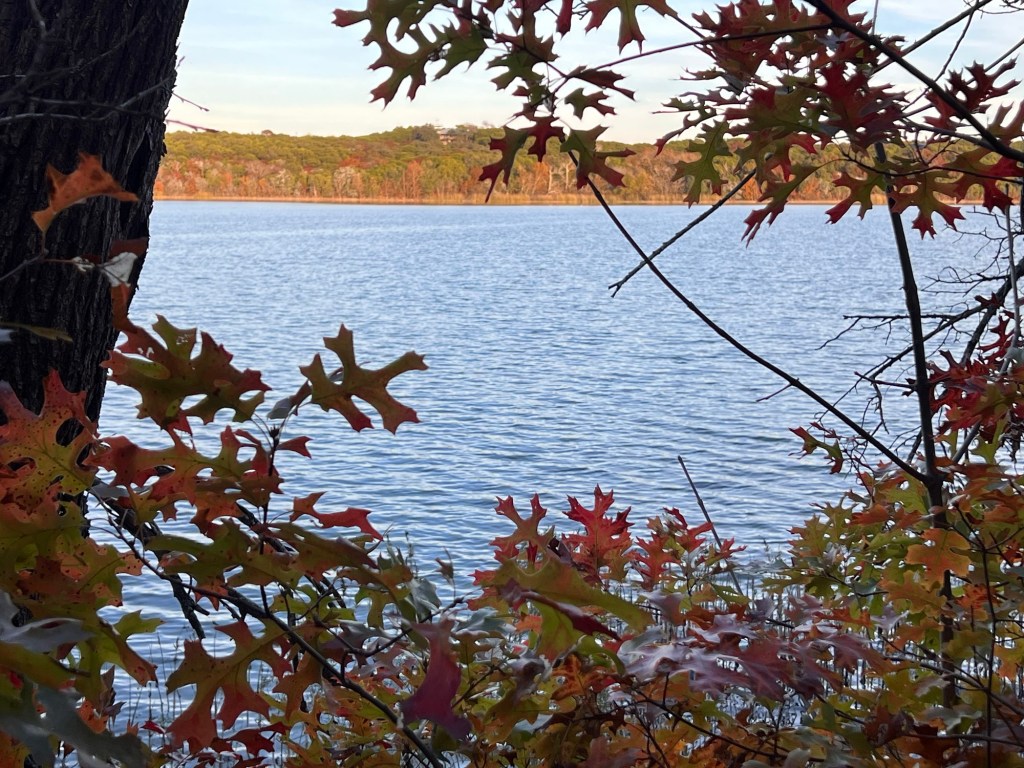
Then, after it warmed up a bit, I went on a nice walk around the park. There aren’t that many birds here, or I was out at the wrong time. But all the red oaks, sumacs, sycamores, and other trees are putting on a nice show of fall colors, as they go in Texas, anyway.
The hike I took went up and down some limestone hills, so I got a bit of a workout. This area is apparently the northernmost part of the Texas Hill Country. That explains the Ashe Junipers and the nearby quarry.
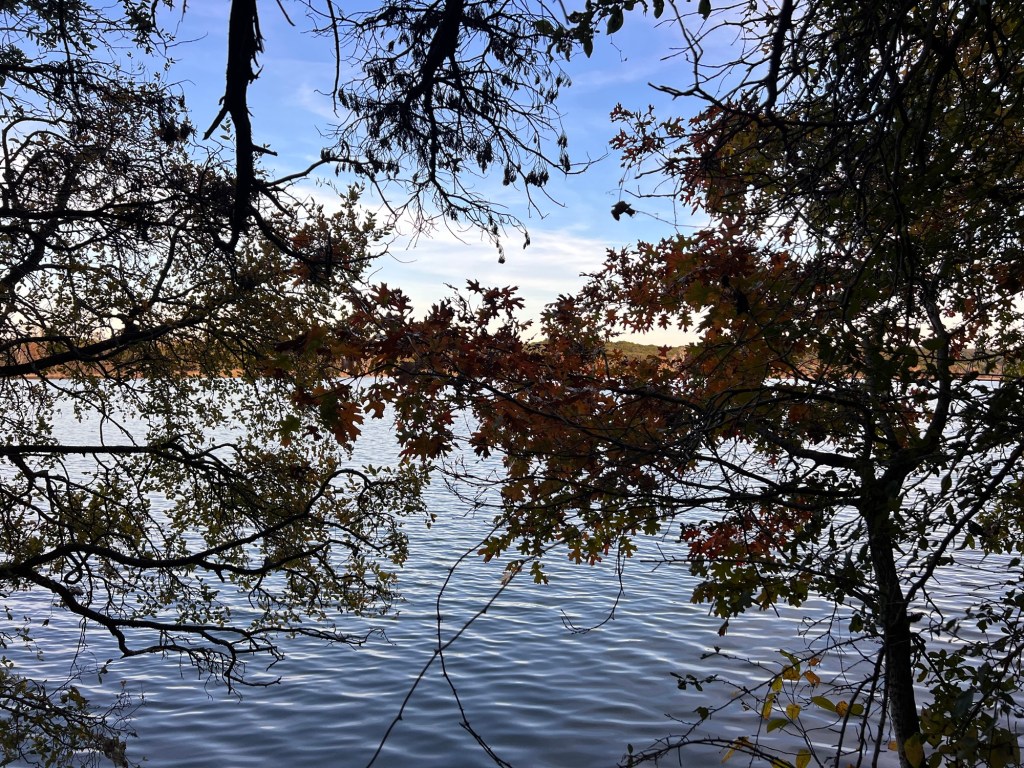
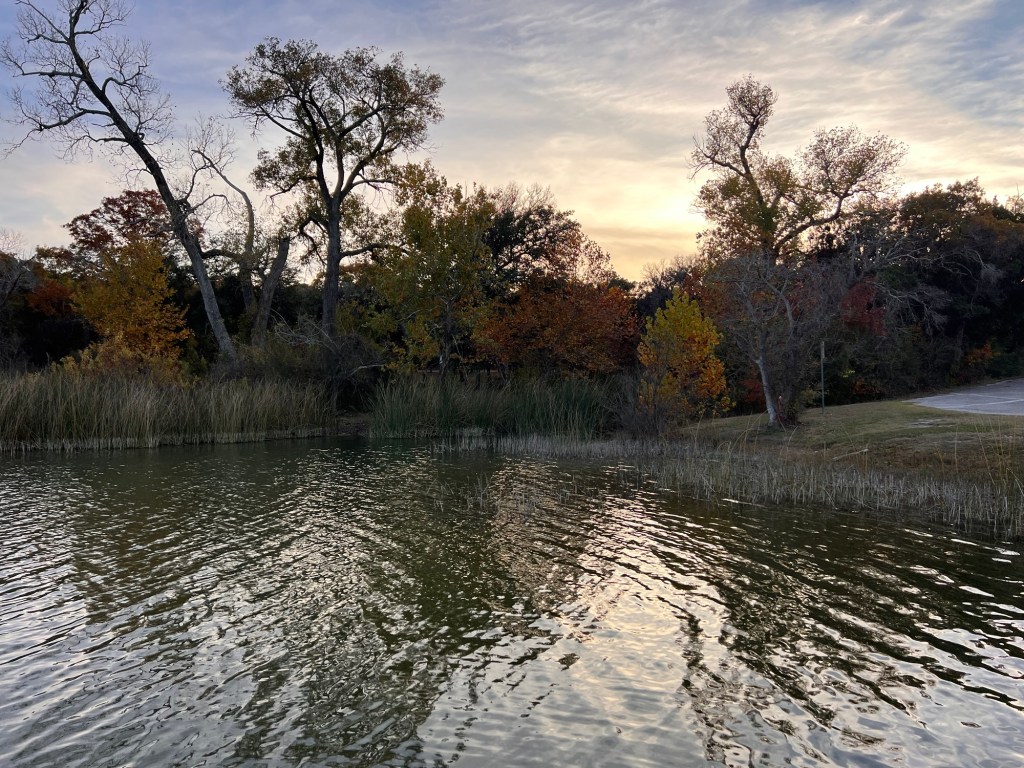
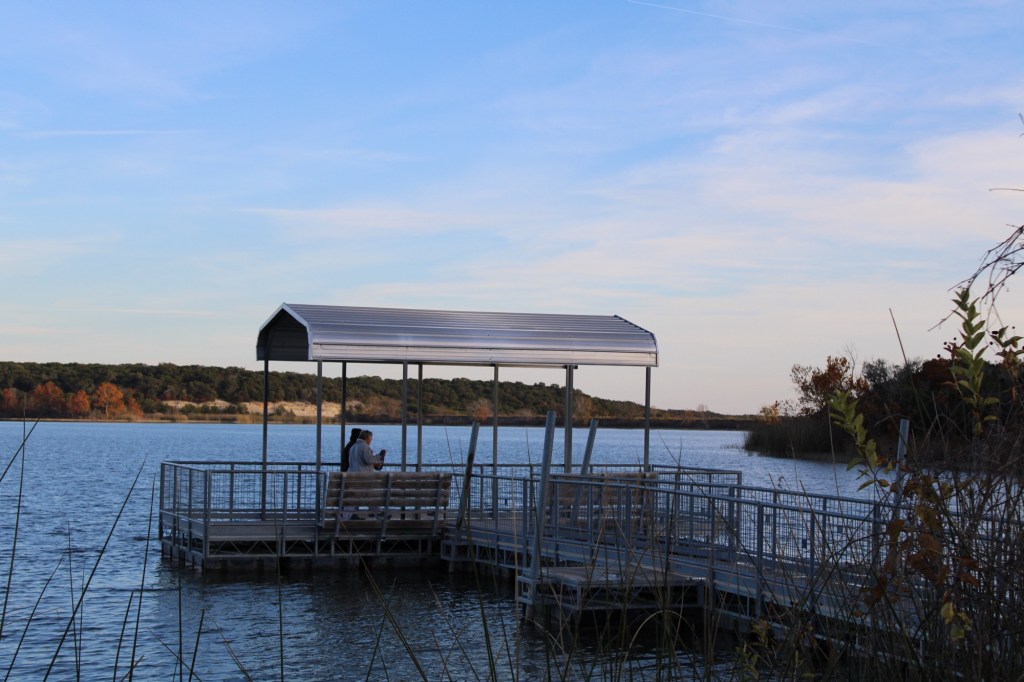
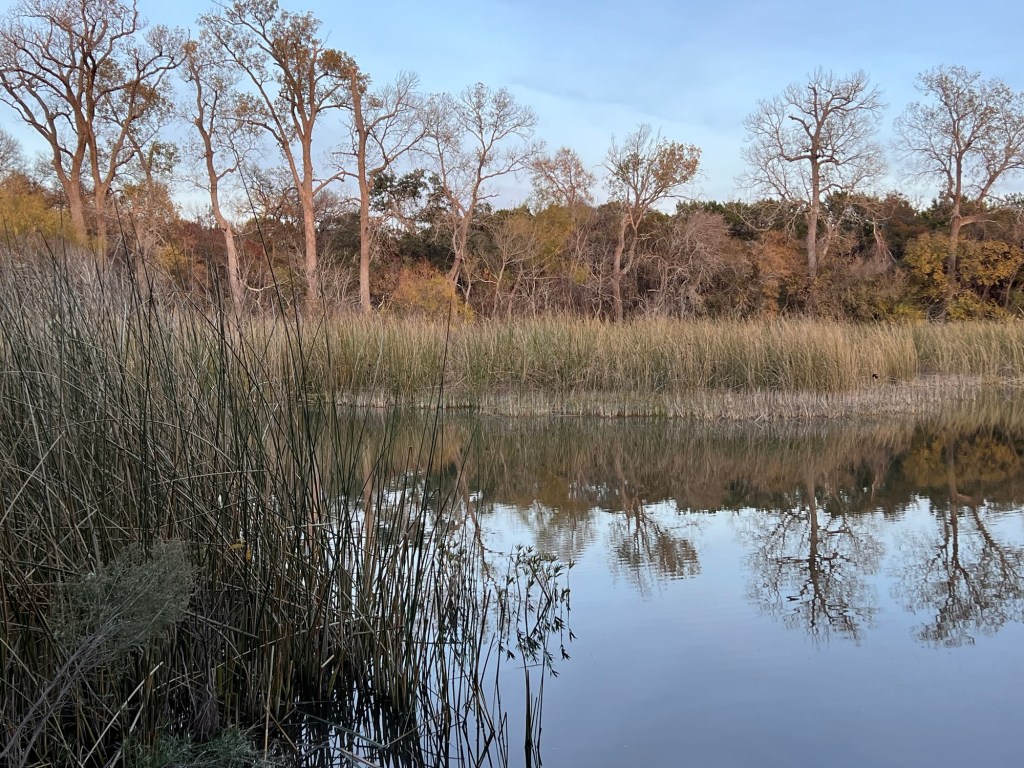
Later, after our meal, Lee and I went to the boat ramp area across the lake from our camping site. The light was great for moody lake and foliage shots with the new and phone cameras.
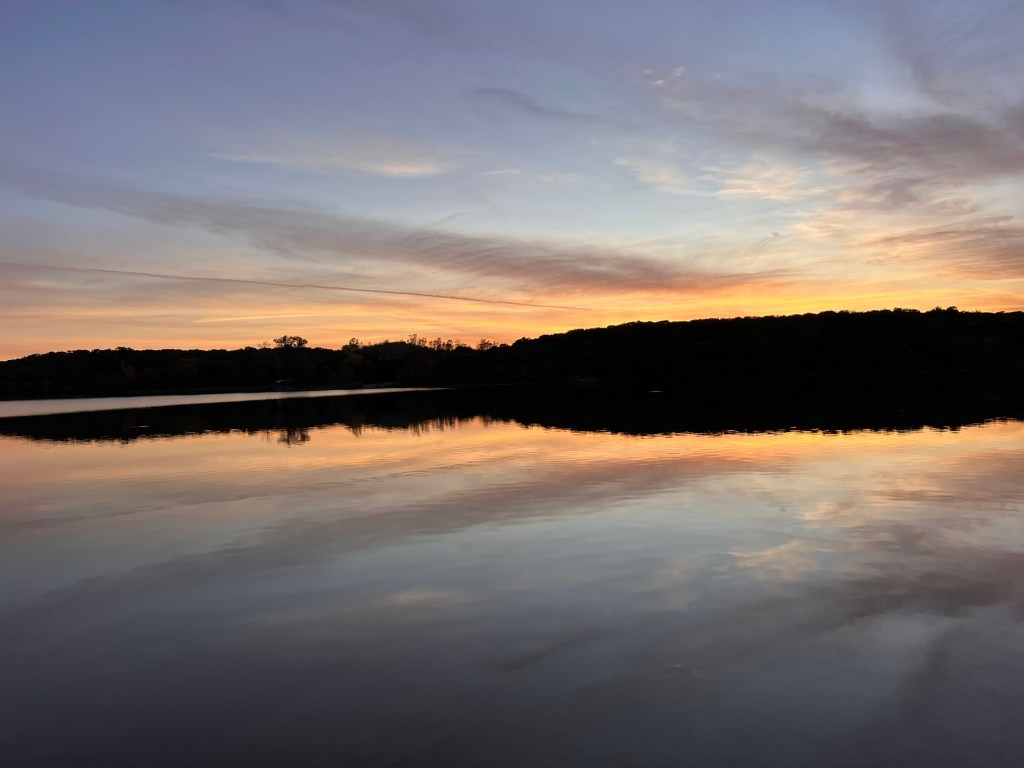
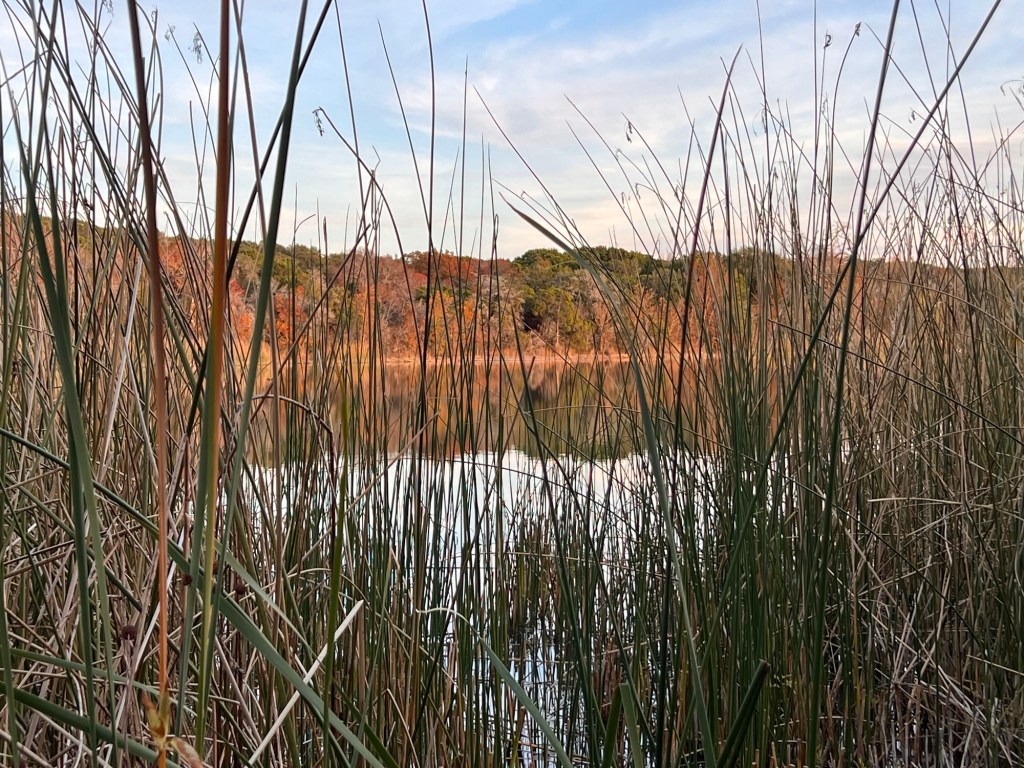
When we got back to our site, we got some sunset shots and watched blackbirds coming in to roost in the reeds. There was also one Hooded Merganser making its odd call. All that lake fun was good for me.
I needed this outing. I keep hoping that my mental state will improve. It doesn’t. By Wednesday I was barely functioning. It was like a constant panic attack with no way to turn it off. I was fumbling for words and emotionally fragile. I have tried very hard to not break down, because people around me don’t cope with it well. I also don’t like acting weird.
And the small amount of Prozac I’d been on was helping me feel normal and have reasonable emotional highs and lows. The last few weeks I have suffered, though. I feel like I’m watching a ticking time bomb and powerless to do anything about where its shrapnel will fall. I have my recurring Holocaust dreams. Oh, ick.
(Note: I am completely aware this is irrational, which is why I’m so disappointed in myself).
Wednesday I finally went to my doctor, who reassured me that if I took my other medication and a stronger dose of Prozac for a while, I won’t become addicted or a Zombie. So I’m doing that while on this news-free camping trip. Heh, it’s practically Internet feee!
Seneca has also had a hard time staying balanced. The site is not very level.
The reason I shared this is because I’ve talked to more than one friend who thought they were the only one coping poorly right now. Even friends with different viewpoints than mine say it’s a worrisome time. So if you think you’re over-reacting or being silly, you aren’t. What we are going through is a normal reaction to grief, fear of the unknown, and feeling powerless. Let yourself feel your feelings, it don’t be afraid to ask for help if you need it. That doesn’t mean you’re weak. You are probably sensitive or have empathic tendencies.
Stick with your community! I’m SO grateful for mine. And I hope I’m better soon!
My whole life I have enjoyed those nature films where they show those fascinating plants that consume insects. In fact, I just read an article about them, I think in Texas Parks and Wildlife No, not there; it was a television show. I learned that they eat insects because the places where they grow, like boggy areas, are low in nitrogen or other nutrients. As much as I was interested in them, I’d never seen any in person before (haven’t traveled to the right Texas state park yet).
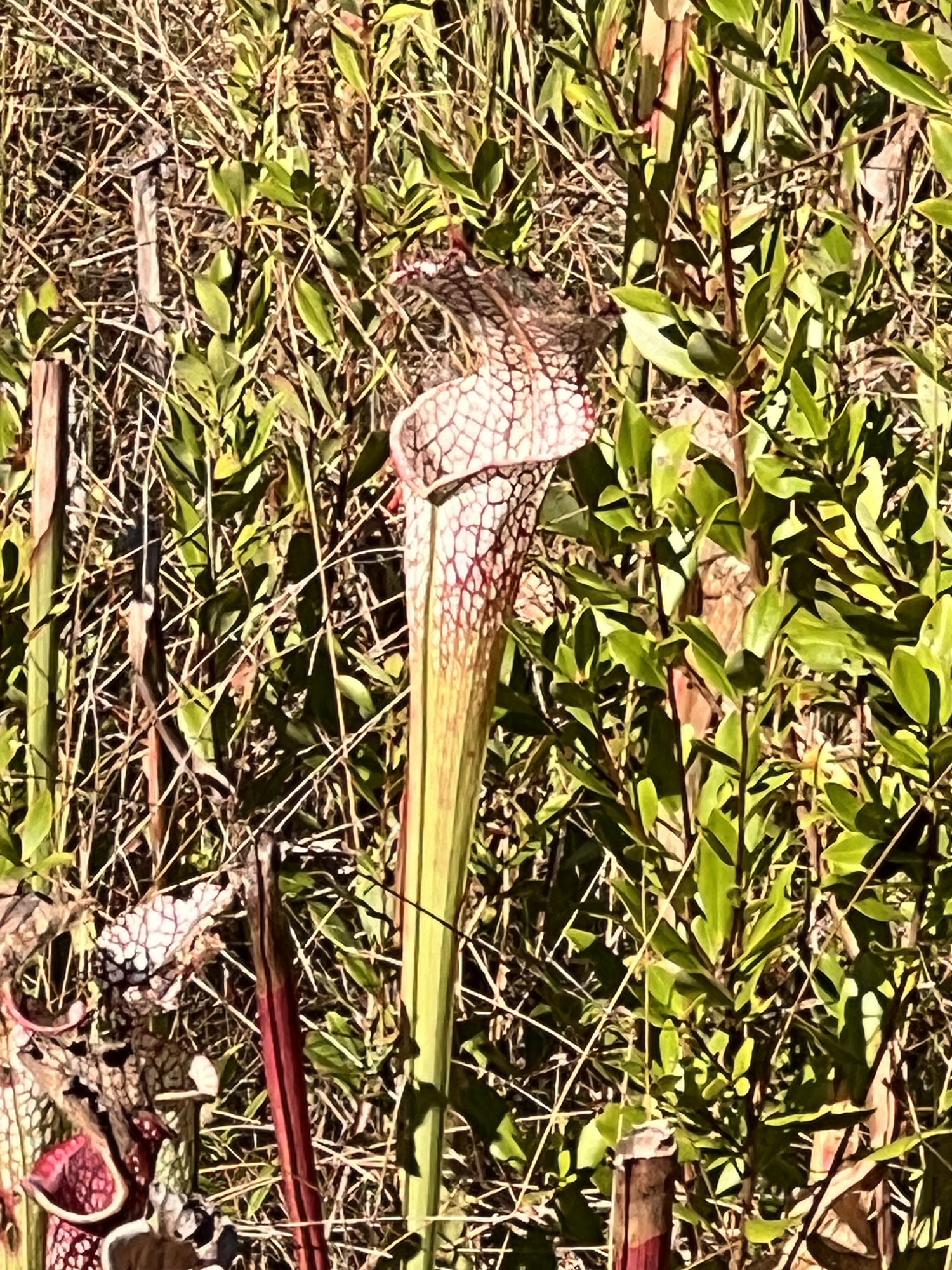
A pitcher plant
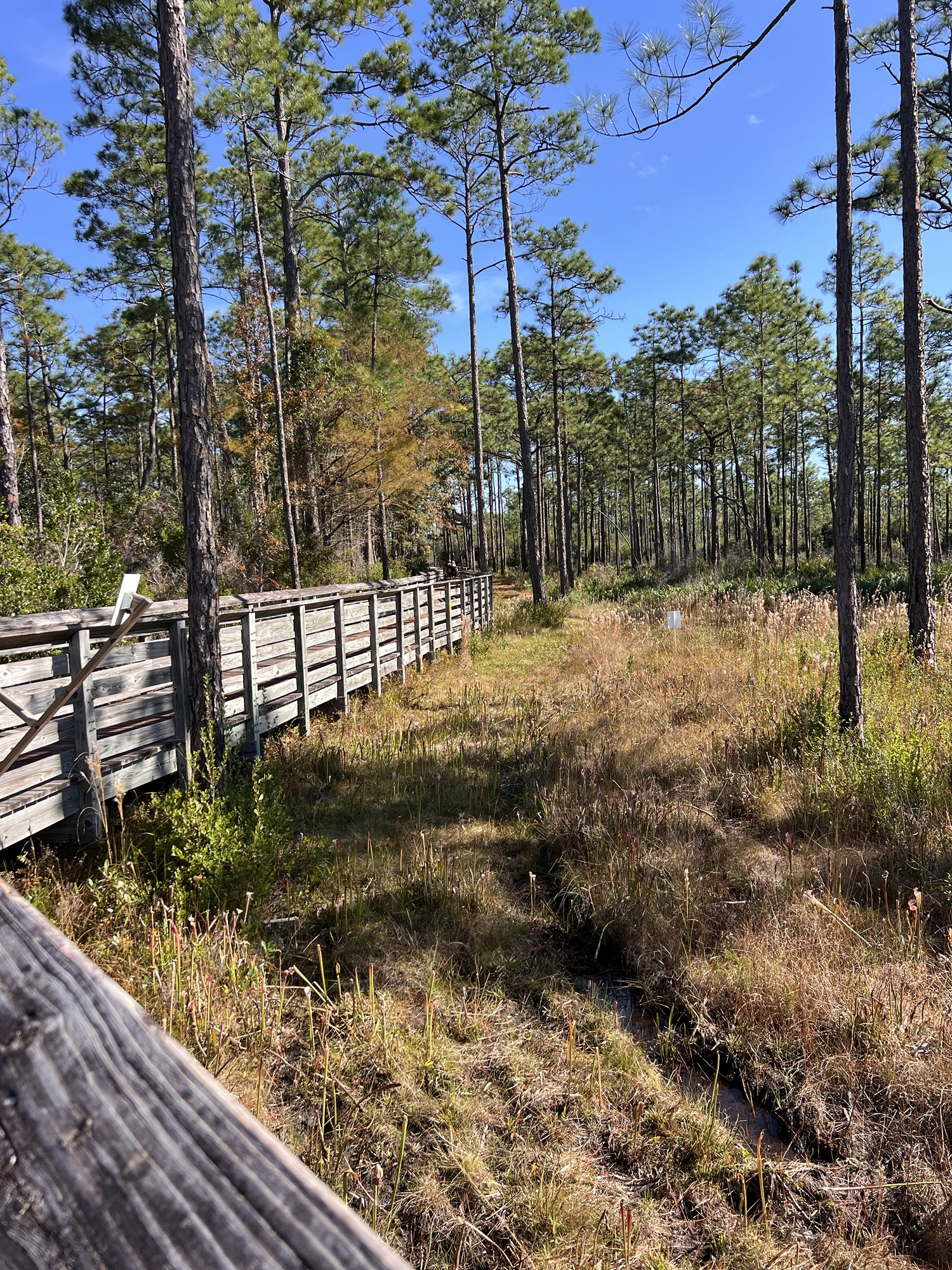
Sure enough, I found some, in a boggy area today, twice! It’s like we planned it.
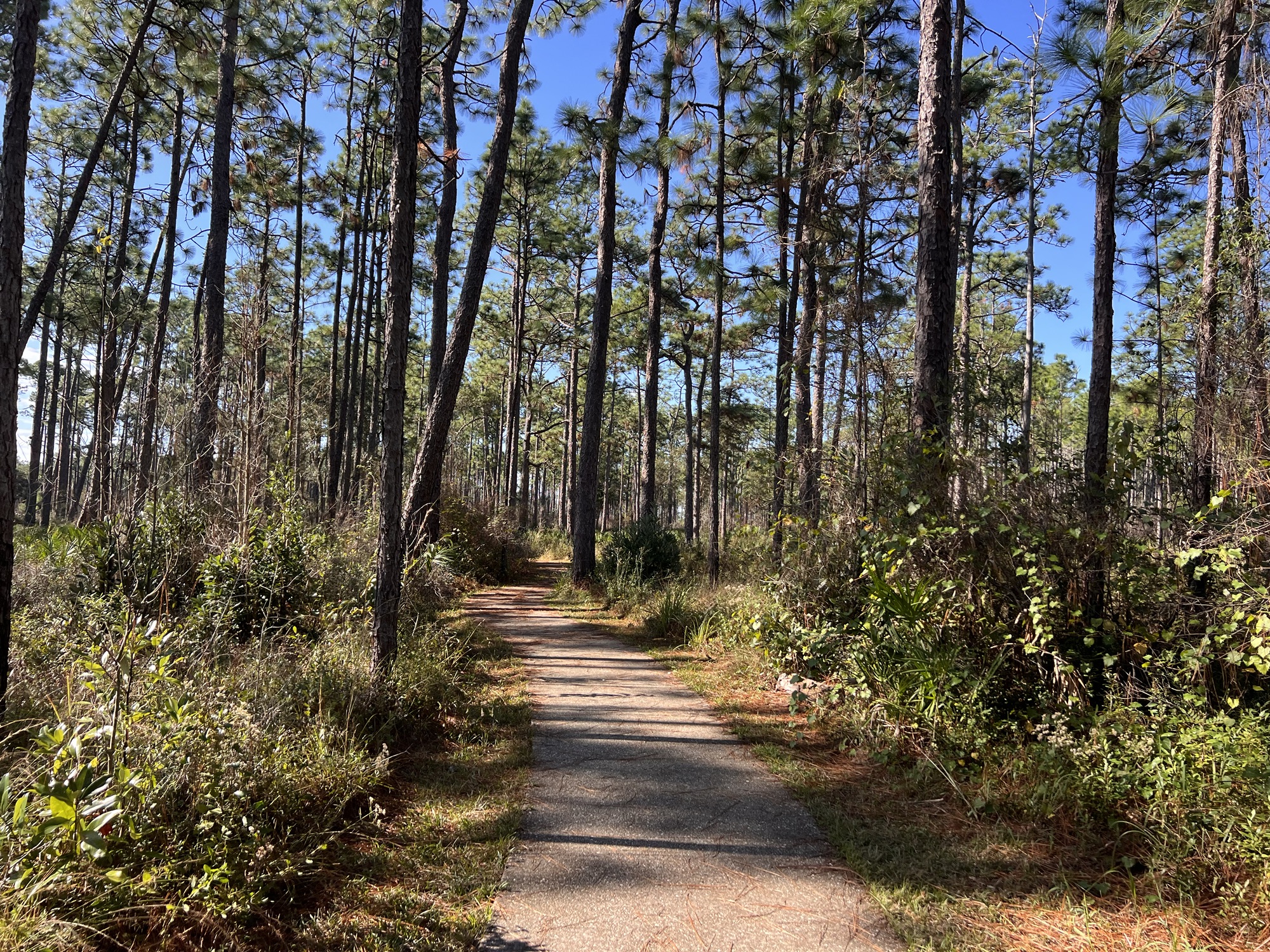
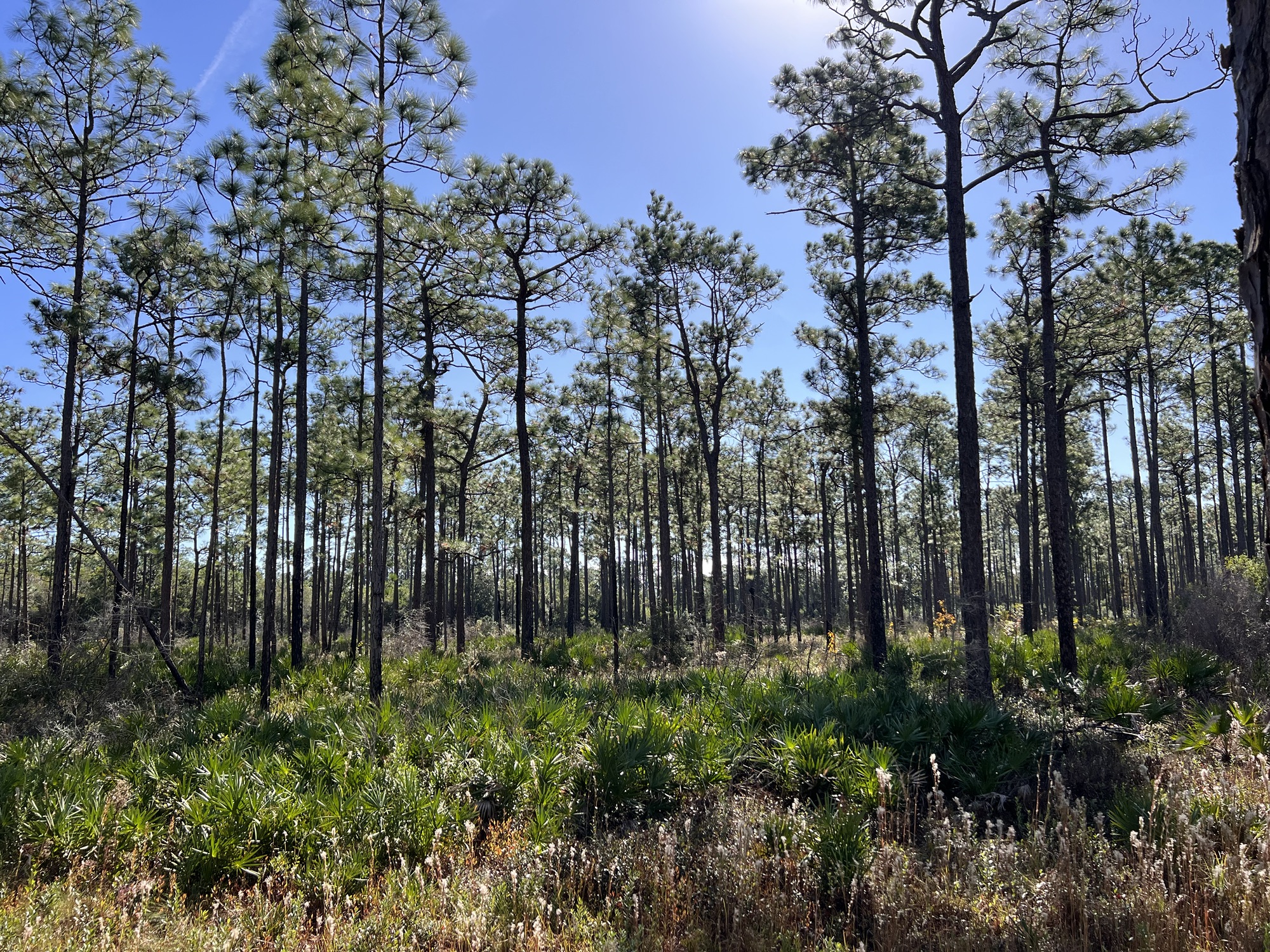
Pine bogs are beautiful.
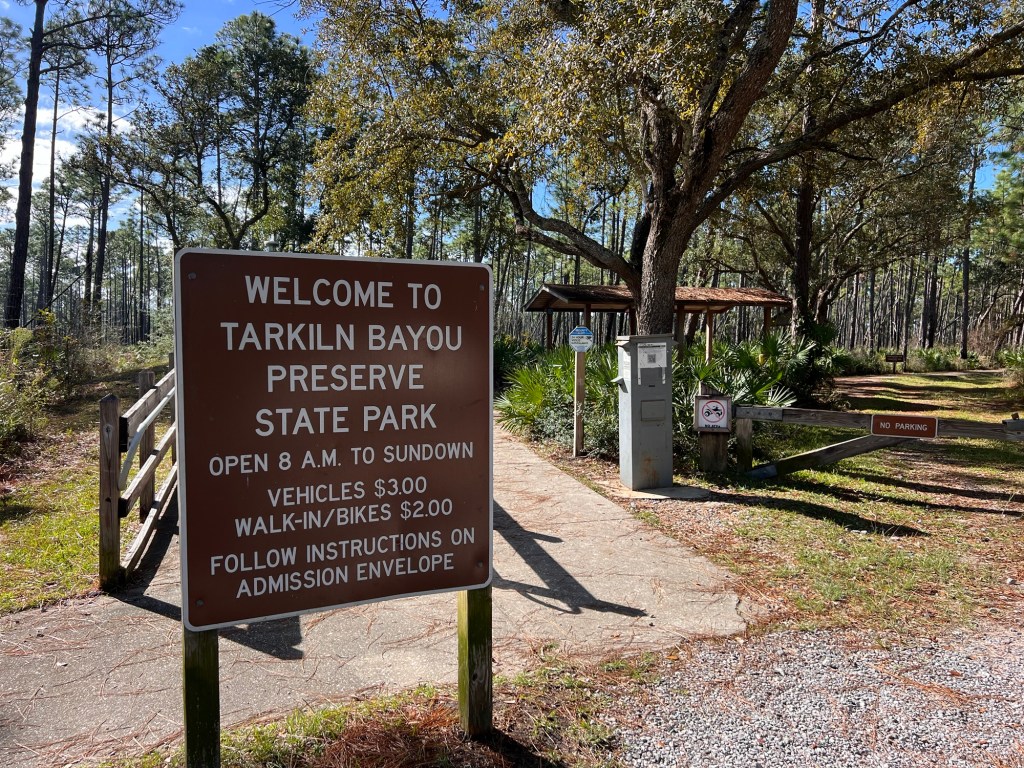
You see, today we had some extra time, because this is our short driving day. Lee suggested we find some places to look at nature. I found a state park in western Florida that said it had a boardwalk that had views of pitcher plants. They’re carnivorous! So we headed off through some beautiful coastal scenery to the well hidden Tarkiln Bayou Preserve State Park.
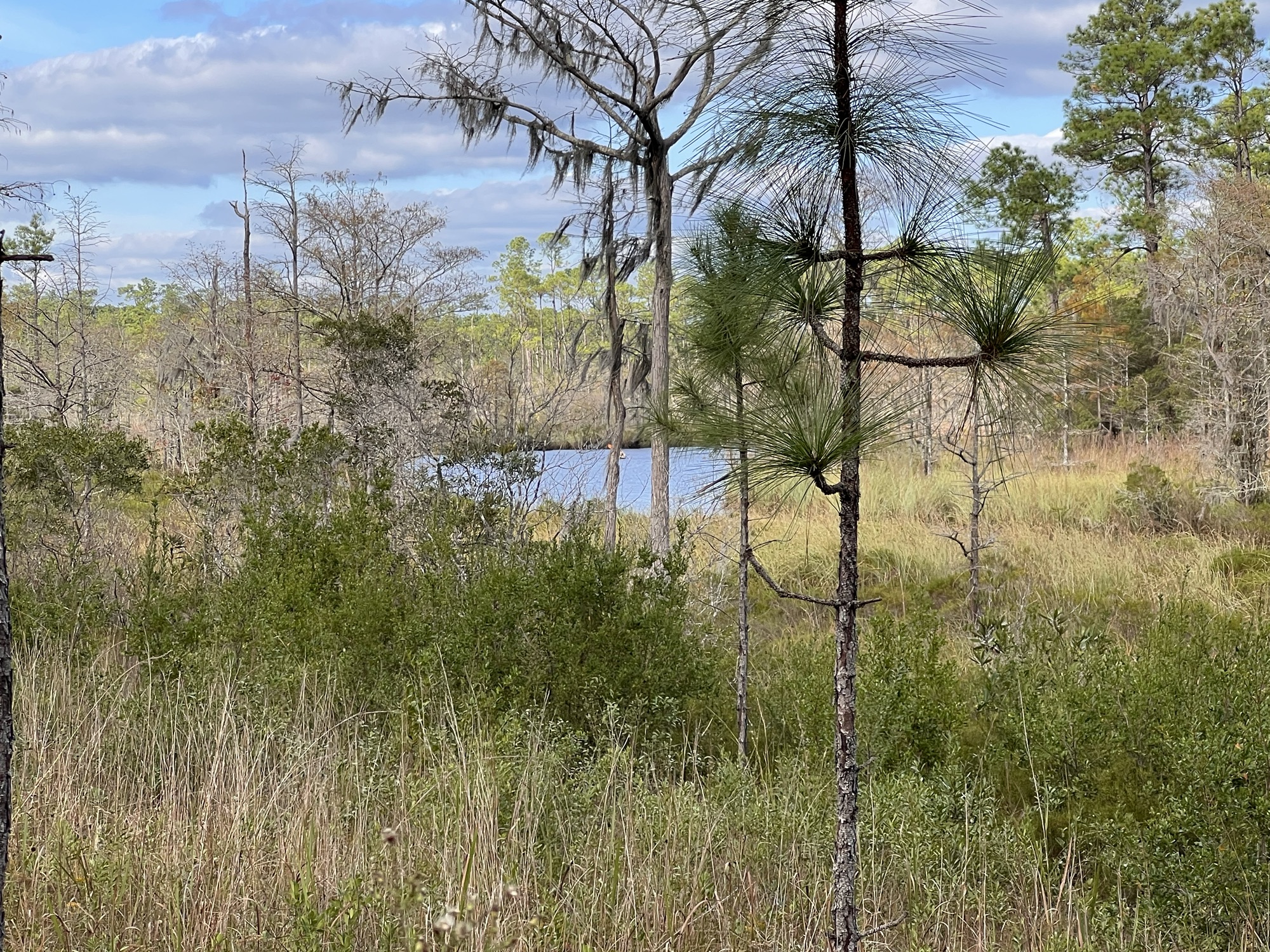
It’s in a beautiful wet pine forest with lots of wet areas leading to the serene and quiet bayou.
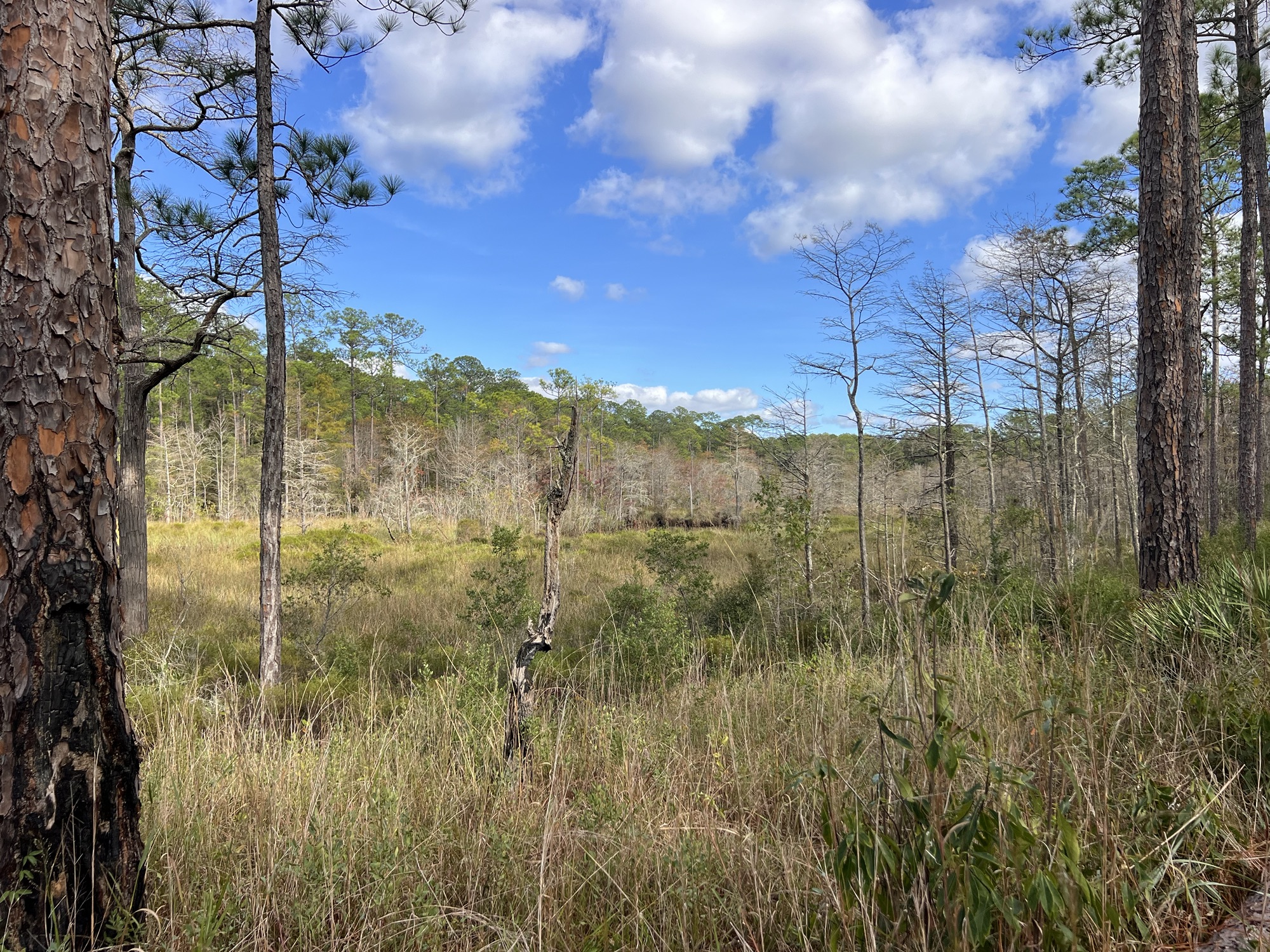
Wet pine forest, an ecosystem I’d never heard about until today.
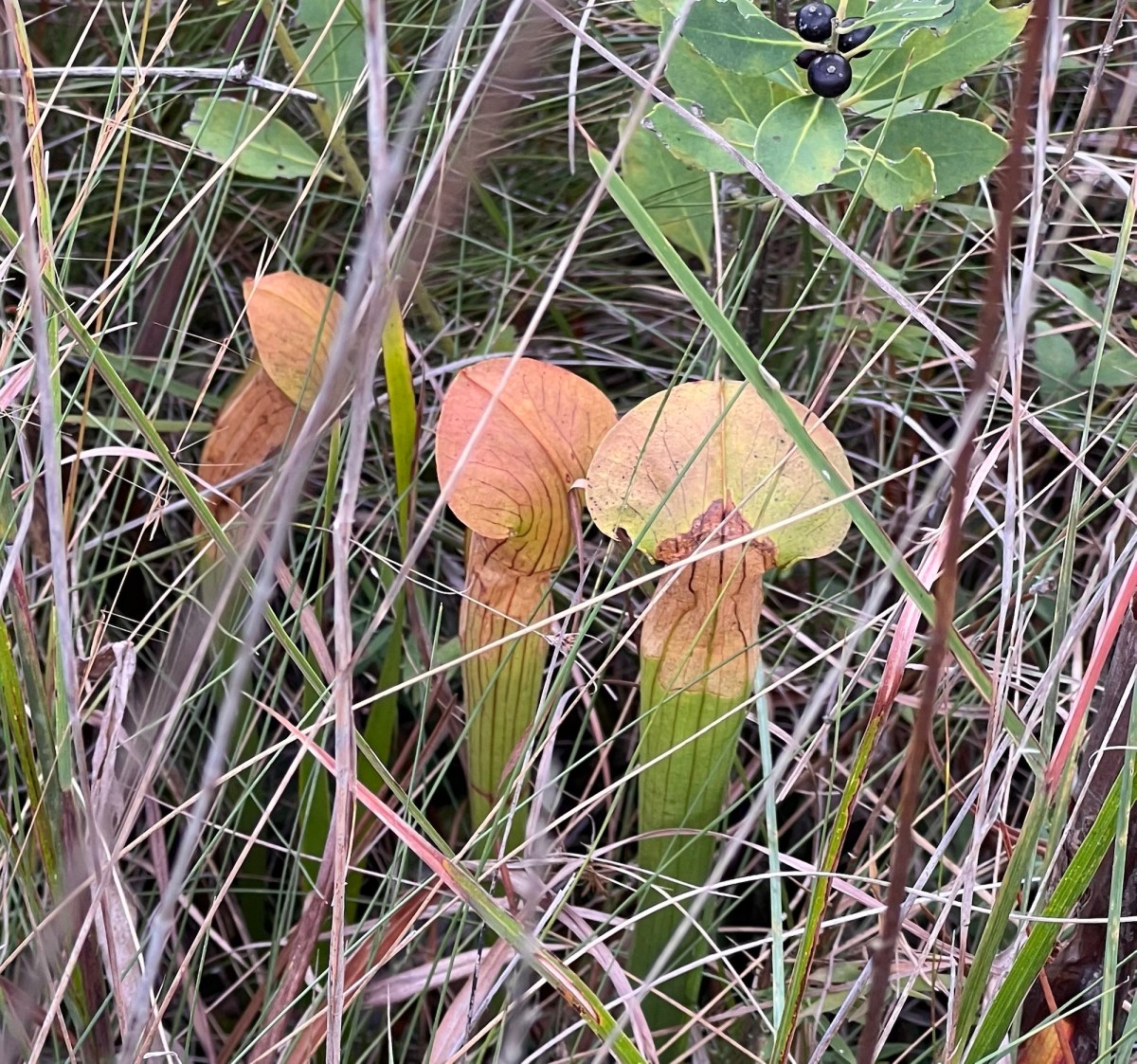
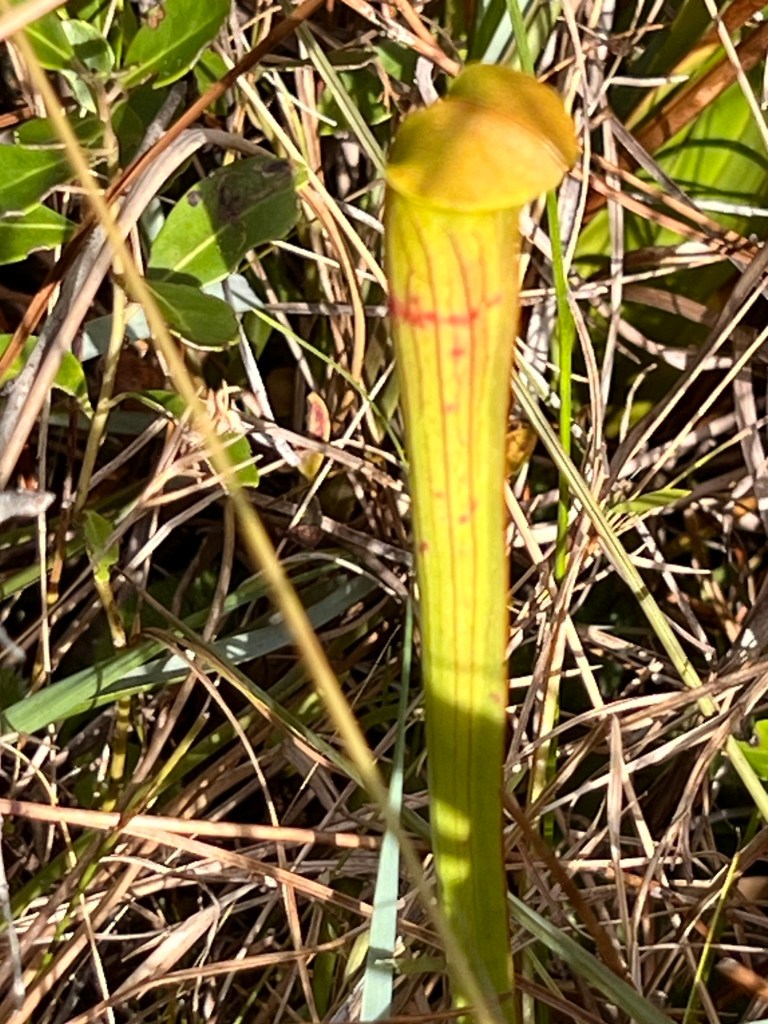
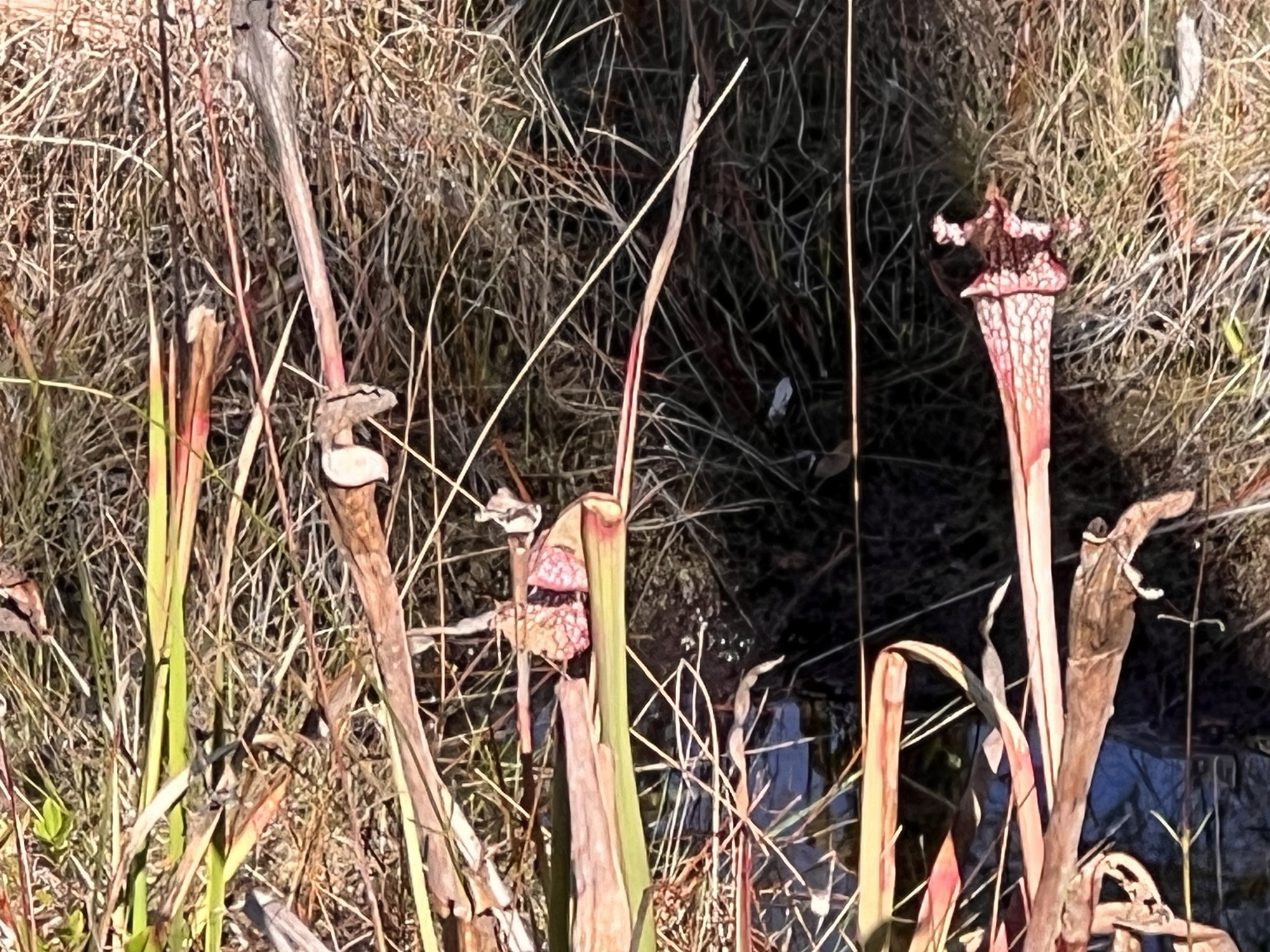
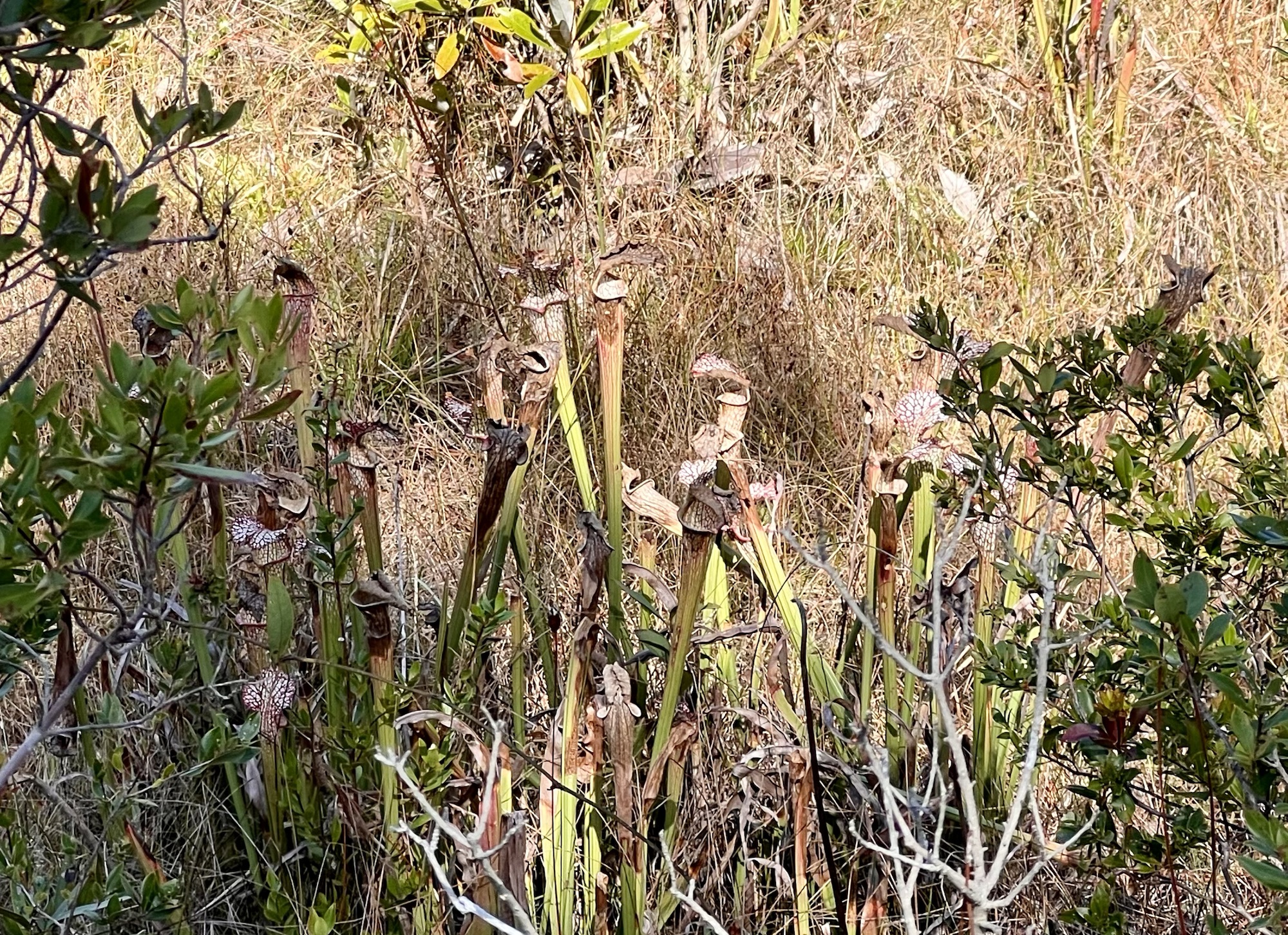
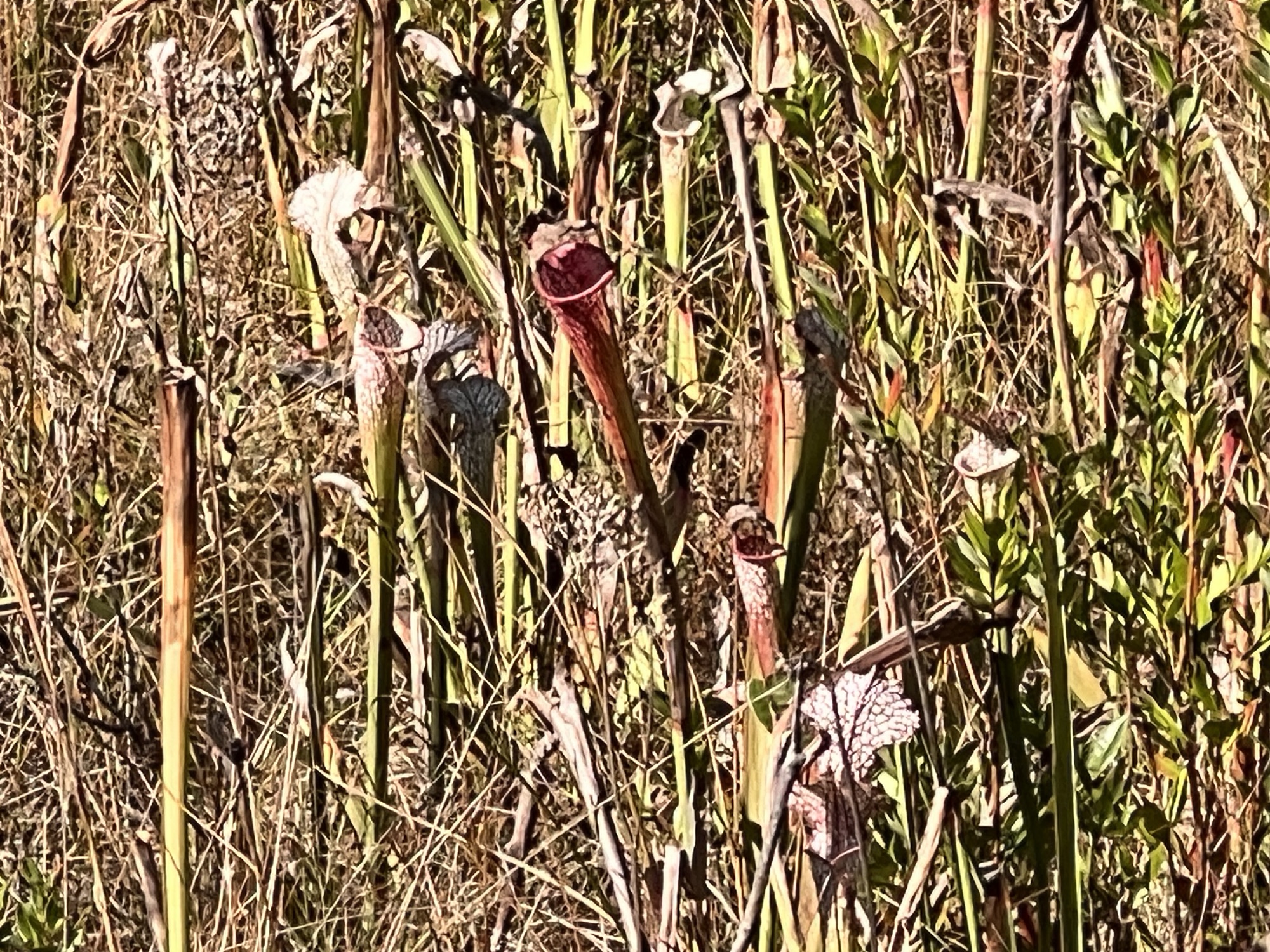
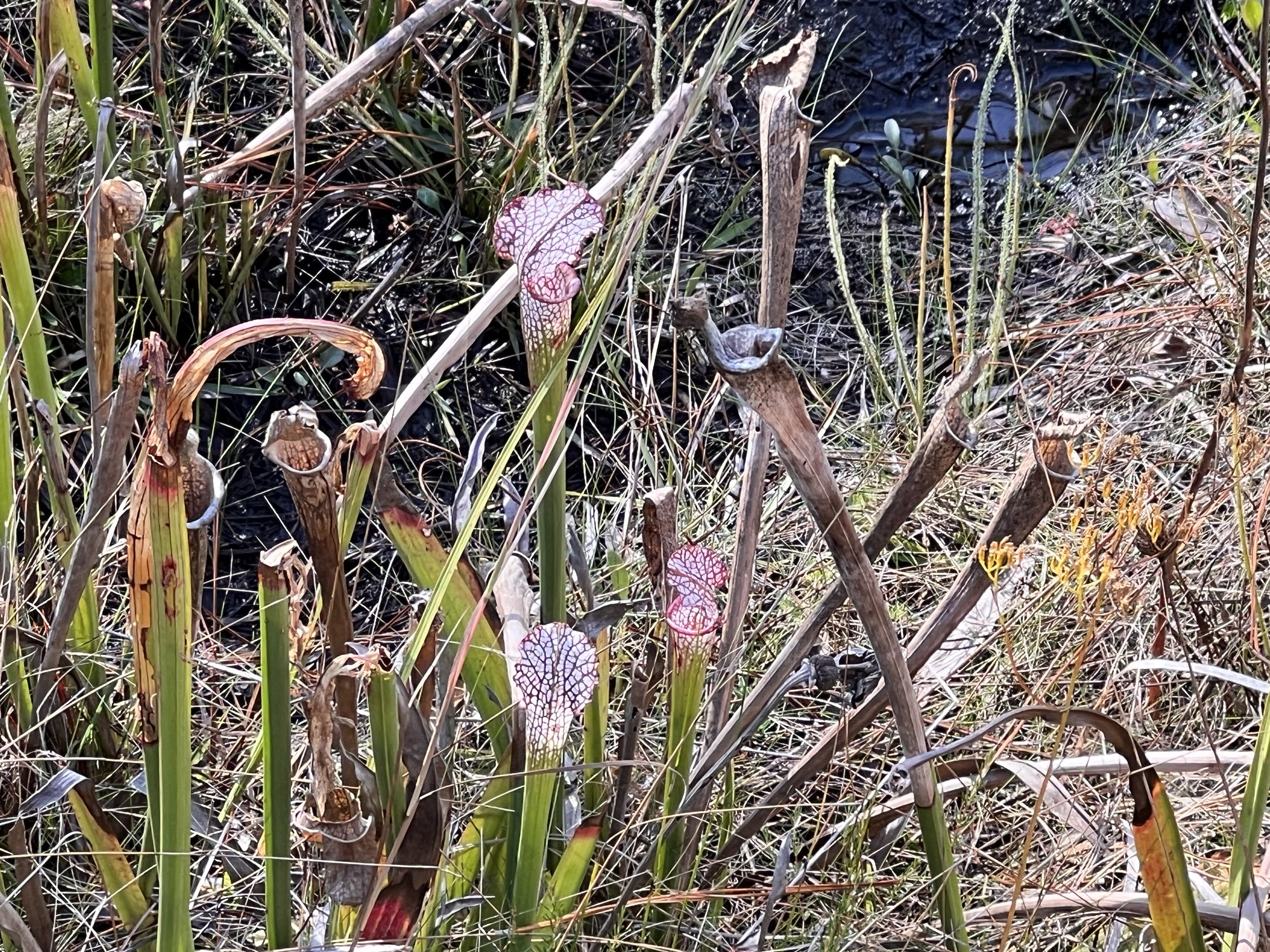
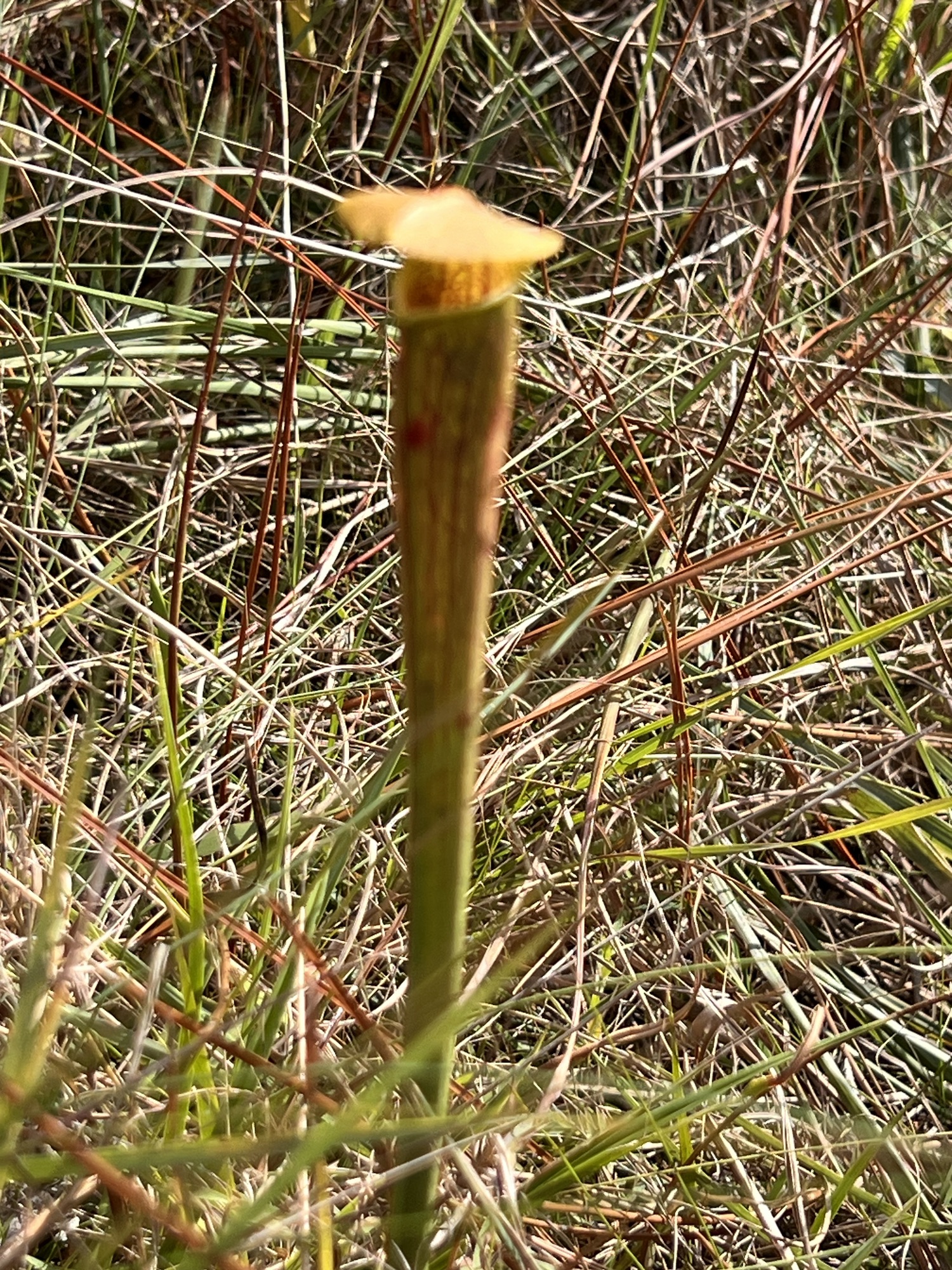
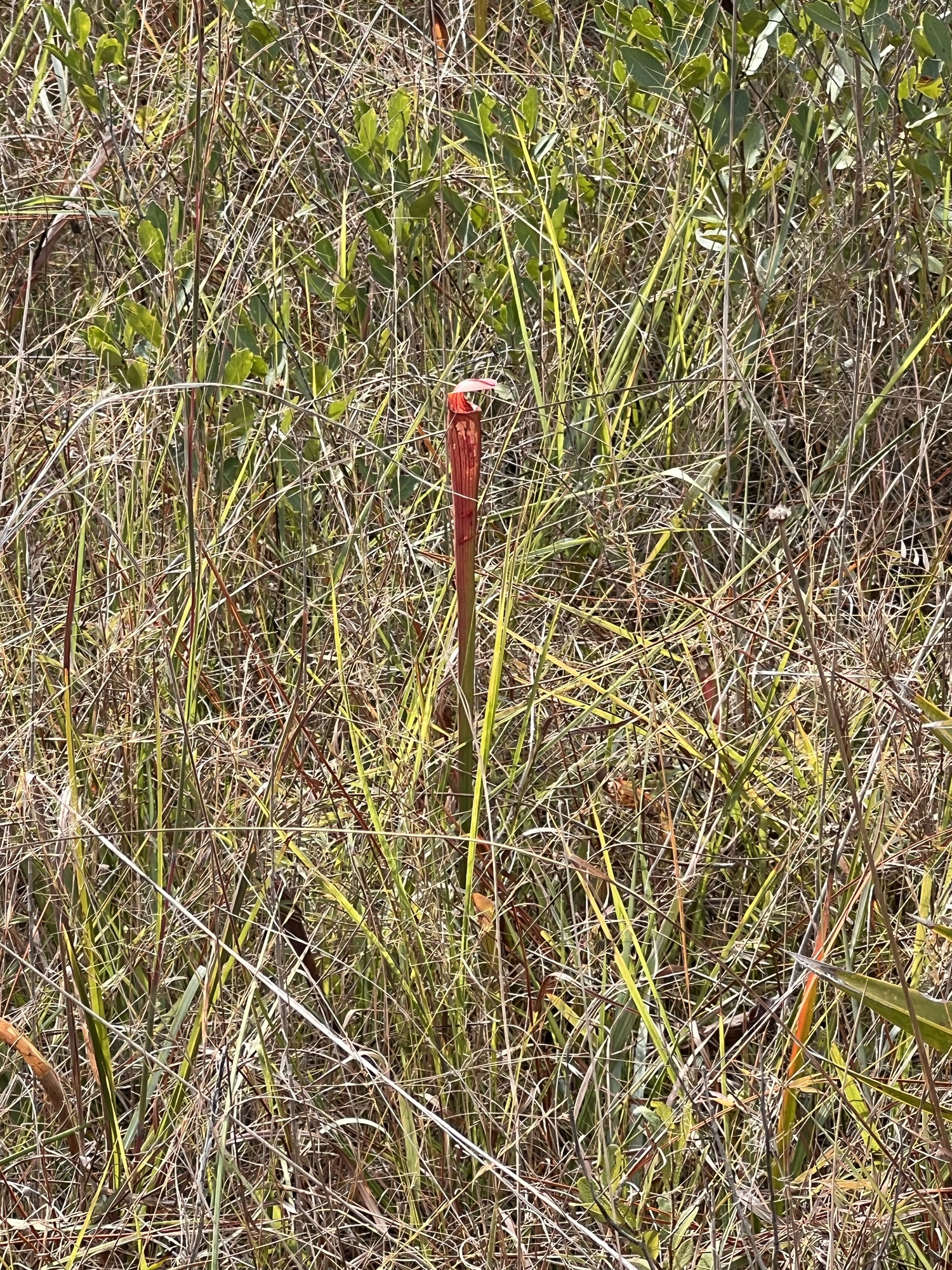
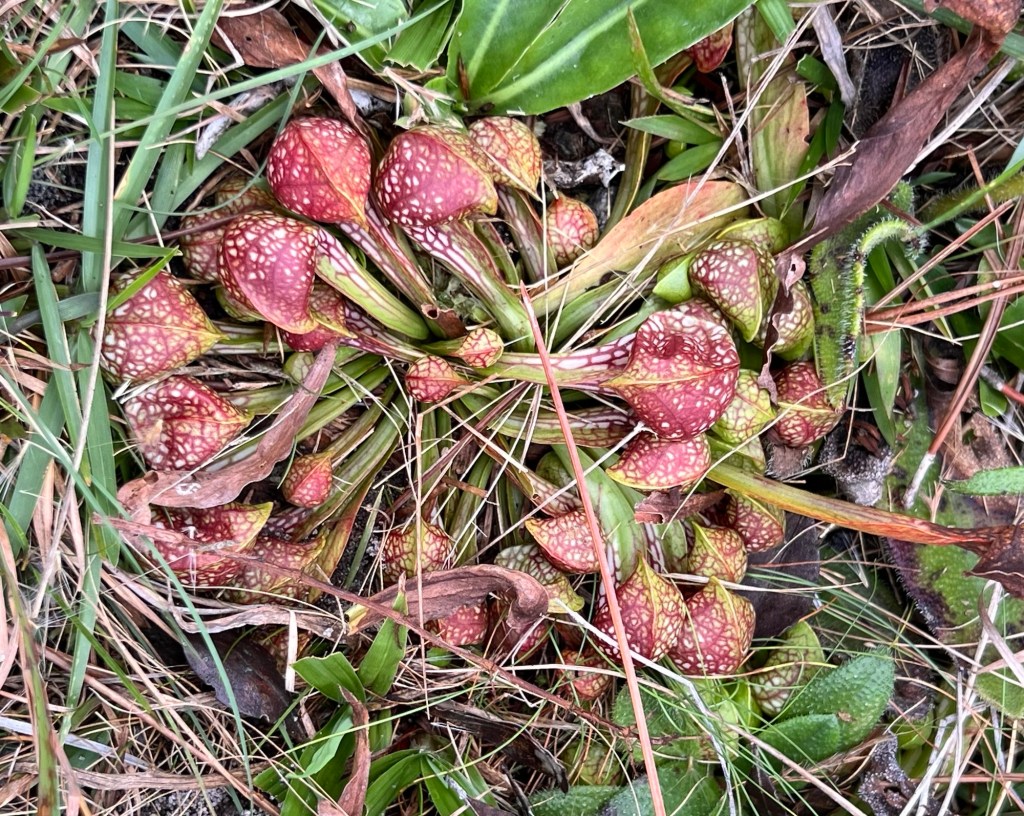
Sure enough, white-topped pitcher plants ( Sarracenia leucophylla) were growing in lovely swaths along the boardwalk. They shown in the sun and looked quite mysterious. I didn’t see any flowers; the “pitchers” are leaves.
While we were there, I looked for birds, but there weren’t many. We did meet Phil, a very interesting birder with some great equipment. He gave me lots of good information, so it was worth it. The only new bird I found today was a Scaly-breasted Munia (non-native) in the hotel parking lot.
All my bird pictures are backlit! Ugh.
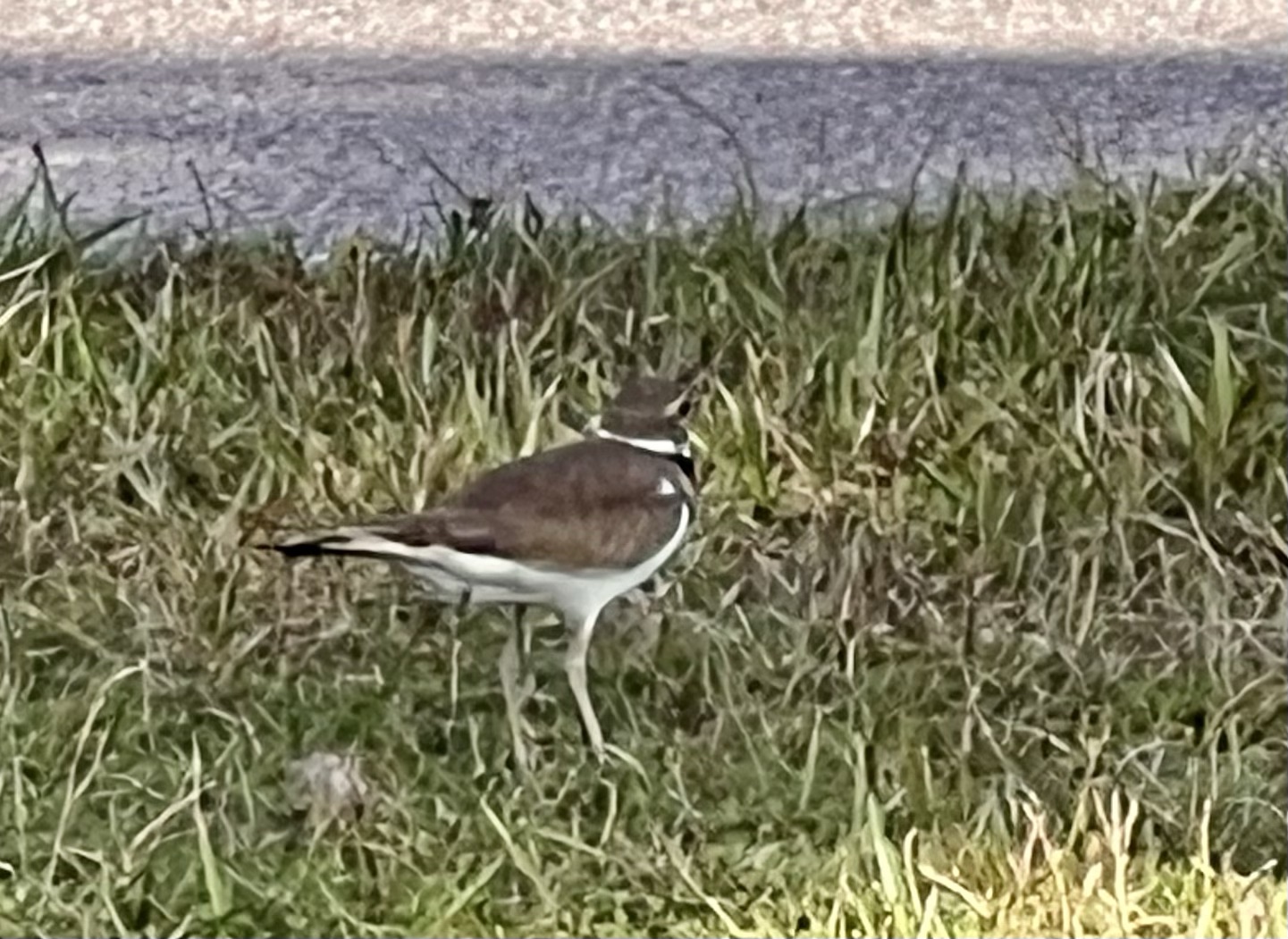
We headed out to Alabama (a half mile away) and got gas and snacks at Buc-Ees. Then Lee got the idea to stop at rest stops to find birds. The next stop, at the Mississippi line, was a great one, where I saw Killdeer, which surprised me.
Test stop killdeer Beautiful rest areaCheerful yauponThis weird stuff is Swamp Titi Cyrilla racemiflora
While I was taking pictures, Lee went inside and asked if there was anything interesting bird-wise nearby. The lady told him there was a Sandhill Crane sanctuary nearby. Off we went to the Mississippi Sandhill Crane National Wildlife Refuge.
Wet Pine savanna
We did not see one crane, only Chipping Sparrows and Brown-headed Nuthatches. But who cares, because this place, a wet pine savanna, is a treasure trove of rare plants, including three kinds of carnivorous plants! Whee!
Also, many fun trees.
The pale pitcher plants (Sarracenia alata) were most numerous, and amused me, because they looked like little mouths.
White pitcher plants
There was also a parrot pitcher plant (Sarracenia psittacina), whose hoods look like parrot beaks.
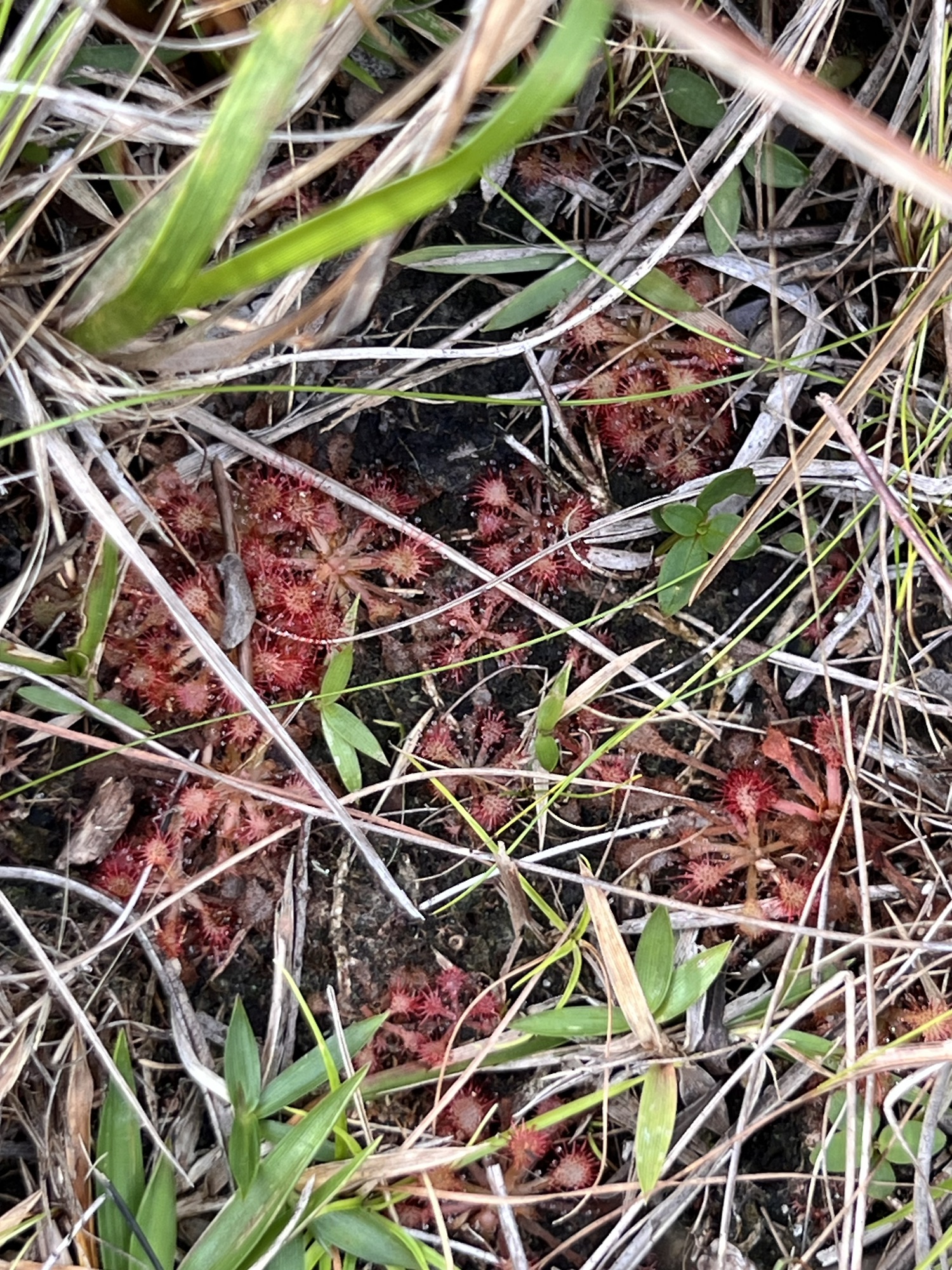
But the best to me were the pink sundews (Drosera capillaris). They are so tiny! Their little jewel-like sticky traps were mesmerizing to me.
Sundew
That’s not all, though, the trails took us through many areas with plants that were new to me.
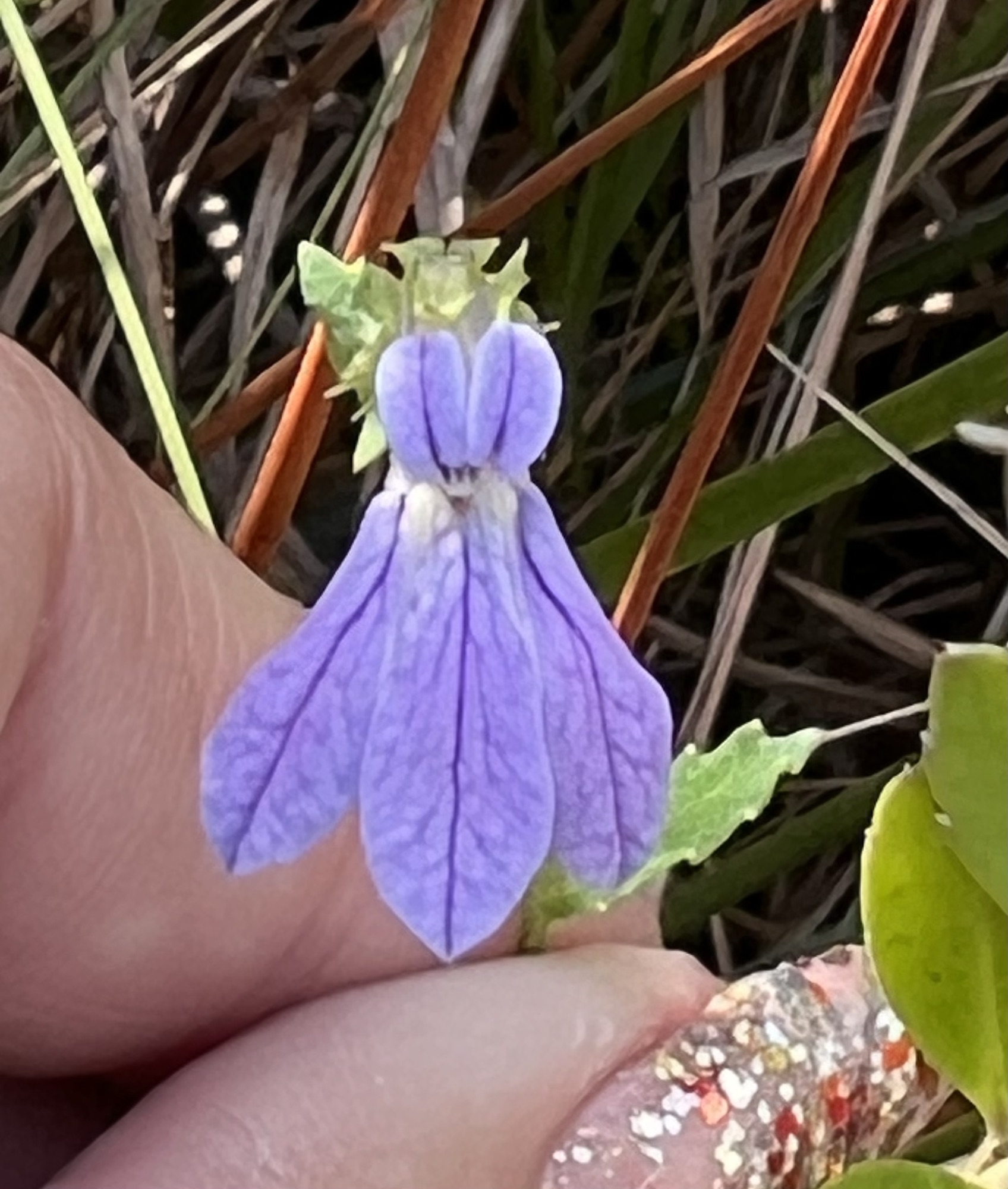
Saltmarsh umbrellas sedgeOrange milkwortPipewortPipewortSand swamp white-top sedgeA wild lobeliaFoxtail bog clubmossA new aster for me
Tantalizing and nearby was Bayou Castelle, which was off limits, because it is pristine and hosts many rare plants and other life. I heard there are orchids!
Bayou area
What a wondrous place to see. I’m grateful to Lee for making the effort to find out about it.
Shining!
The rest of our ride was through sparsely populated parts of Mississippi and Louisiana. There were many very pretty towns, farms, forests, and sights. We are now in Covington, Louisiana in a very tired Hampton Inn. But it’s clean.
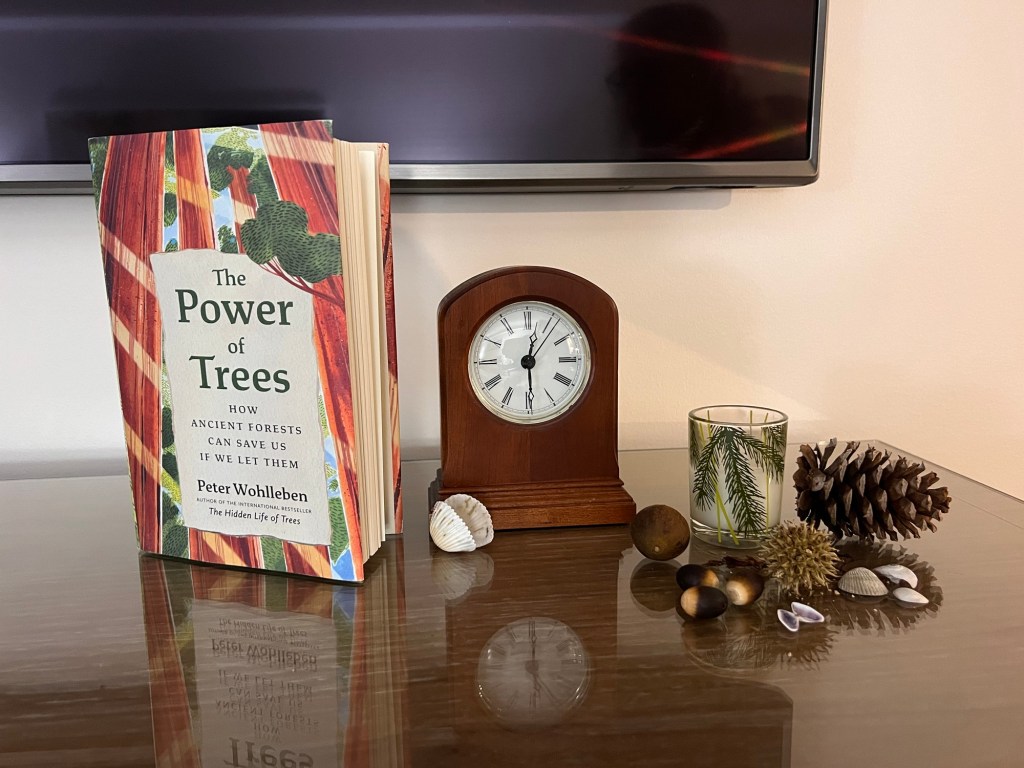
I started reading The Power of Trees (2021, English 2023), by Peter Wohlleben, the German forester who also wrote The Hidden Life of Trees, last year. I had to put it down, because it was so depressing. It sure sounds like Europe’s trees are messed up and not much hope is shared in this book.
The book and many representatives of tree friends.
So, what a great book to read during an election where the non-environmentally friendly folks won bigly? But I got through it. I learned why forestry, with its great fondness for monoculture and treating trees like products rather than fellow citizens of the planet, has led to massive death in forests and loss of uncountable other species that support trees (what lives in the earth and helps trees do their work).
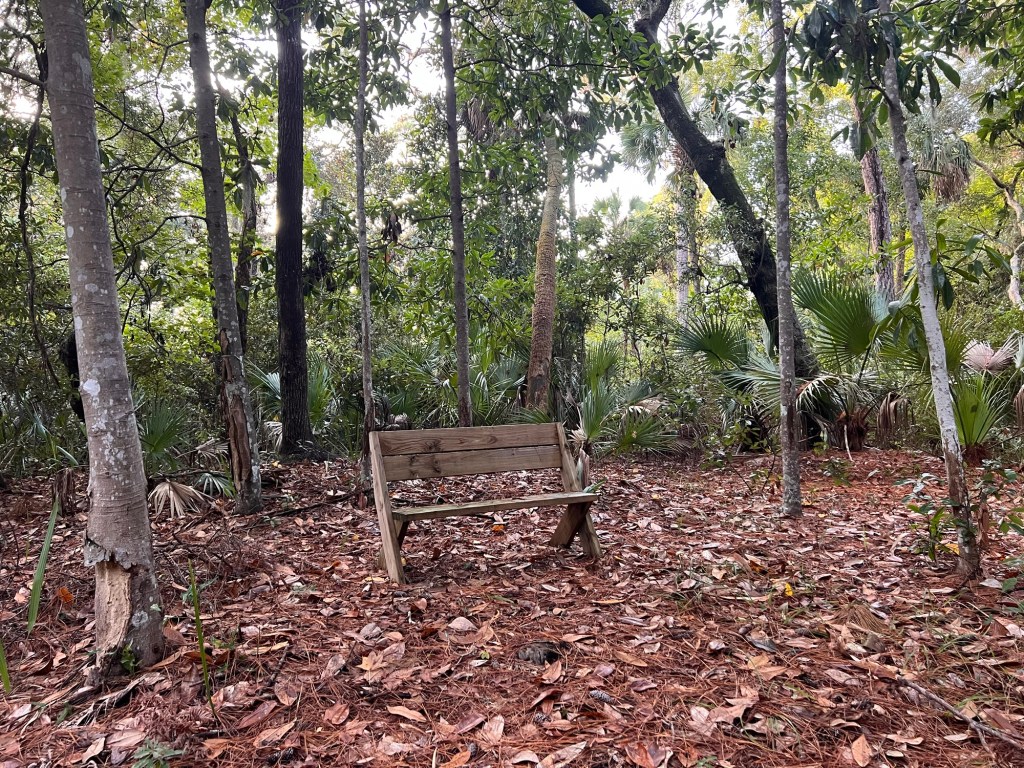
Trees get so tall when left alone.
Wohlleben shows how allowing natural forests to regenerate on their own and create old trees that are allowed to live on would help restore a healthy climate (trees cool it) and still provide for human needs, especially if we recycle old wood products rather than always making new ones.
We do a lot of that at home.
You’ll learn a lot about the complex interrelationship between trees and the other life around them as well as lessons that apply to forests around the world.
It’s wonderful that there are protected remnants of coastal forest here on Hilton Head. It helps that it was hard to reach for so long.
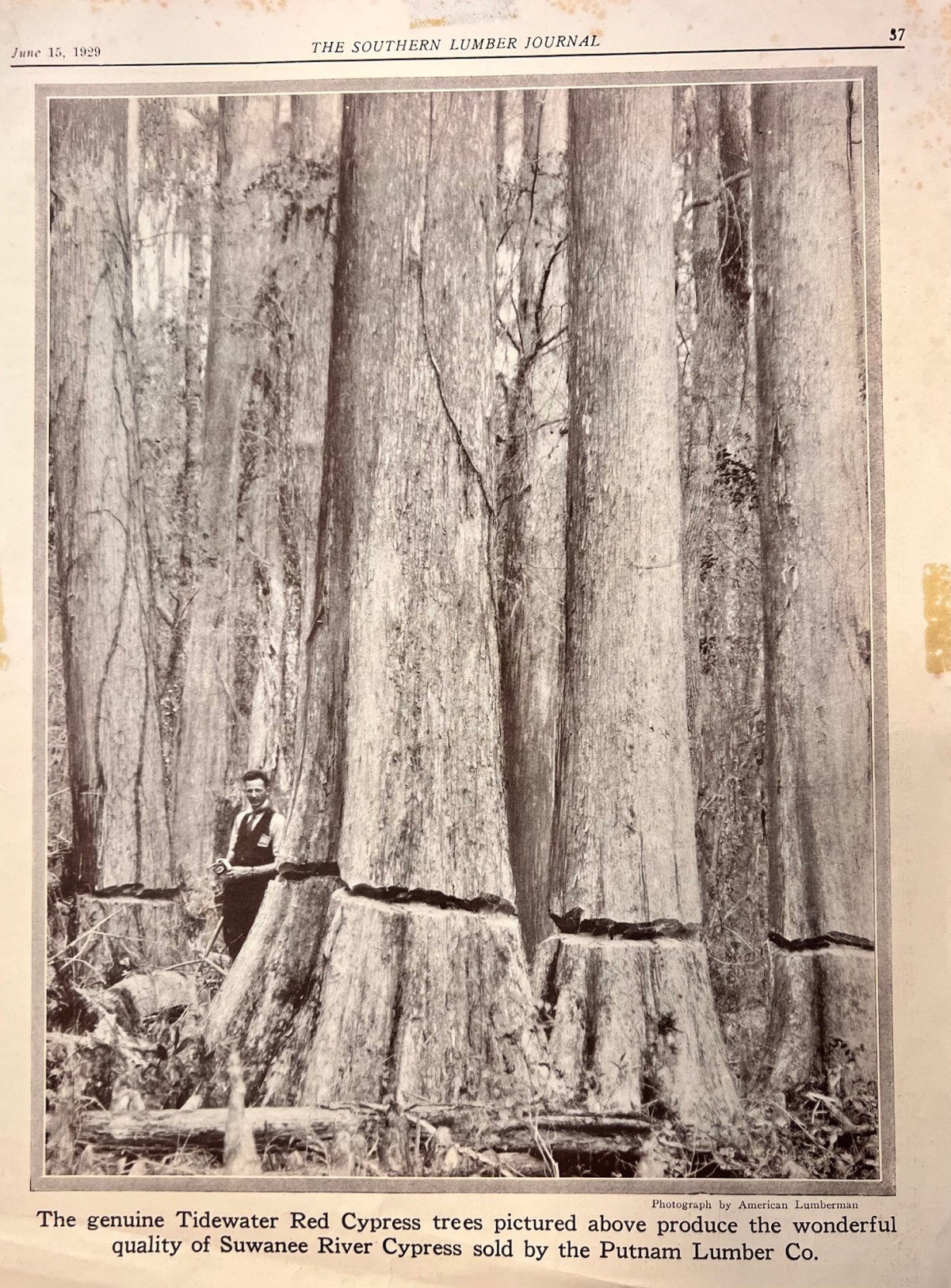
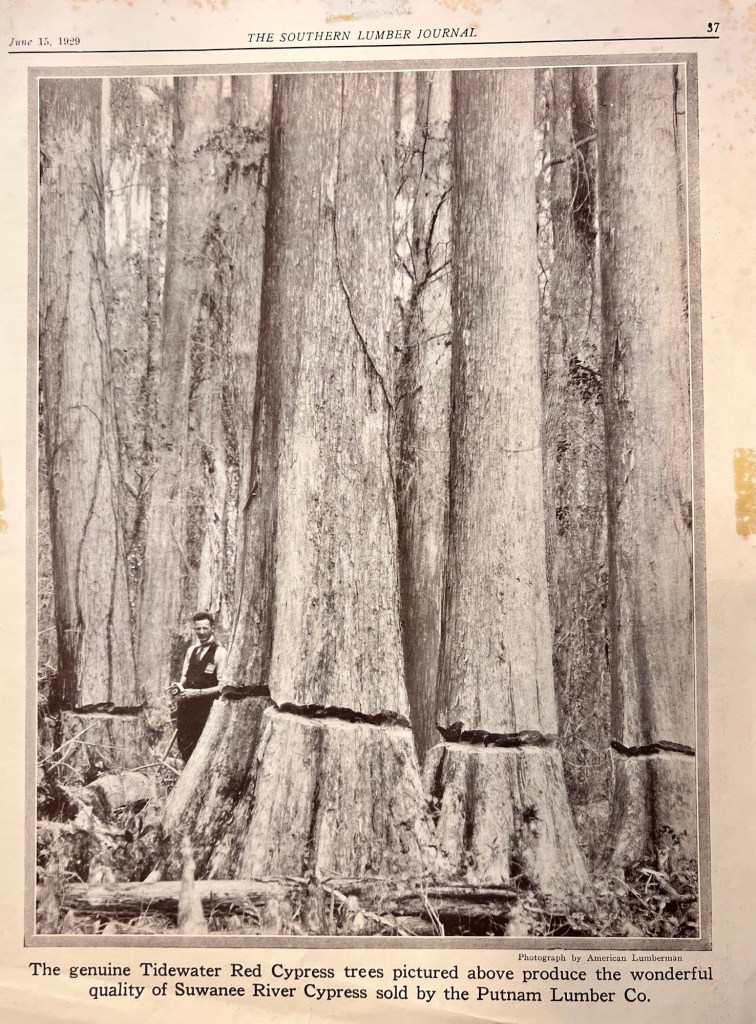
I always feel drawn to helping woodlands, knowing how many mighty trees in Florida my grandfather sent to sawmills in the early twentieth century. As I have resolved to focus on doing something kind every day, I’m keeping the remaining native woodlands in mind.
My grandfather dwarfed by the trees that are about to be killed.





































































































 The Hermits' Rest