Admittedly, I was excited to go to Galveston Island, because I had the thought that a lot of the migratory birds would still be hanging around and I could see them. I didn’t count on it being a rather dismal day for photography, in which everything around was the same shade of brownish gray.
We certainly couldn’t see anything from our hotel room other than exotic Beach Pigeons (same as any other pigeon). The birds were probably all frightened away by the belching pseudo-volcano at the Rainforest Cafe that was the primary view from our balcony (we could also see the Gulf, when the fog lifted slightly).
Here I am pretending that the Rainforest cafe is 1) open or 2) fun.
Once we were awake (-ish, since the hotel didn’t have any reasonable coffee), we took a walk on the beach. This proved to us that it doesn’t have to be a warm and sunny day to enjoy the shore.
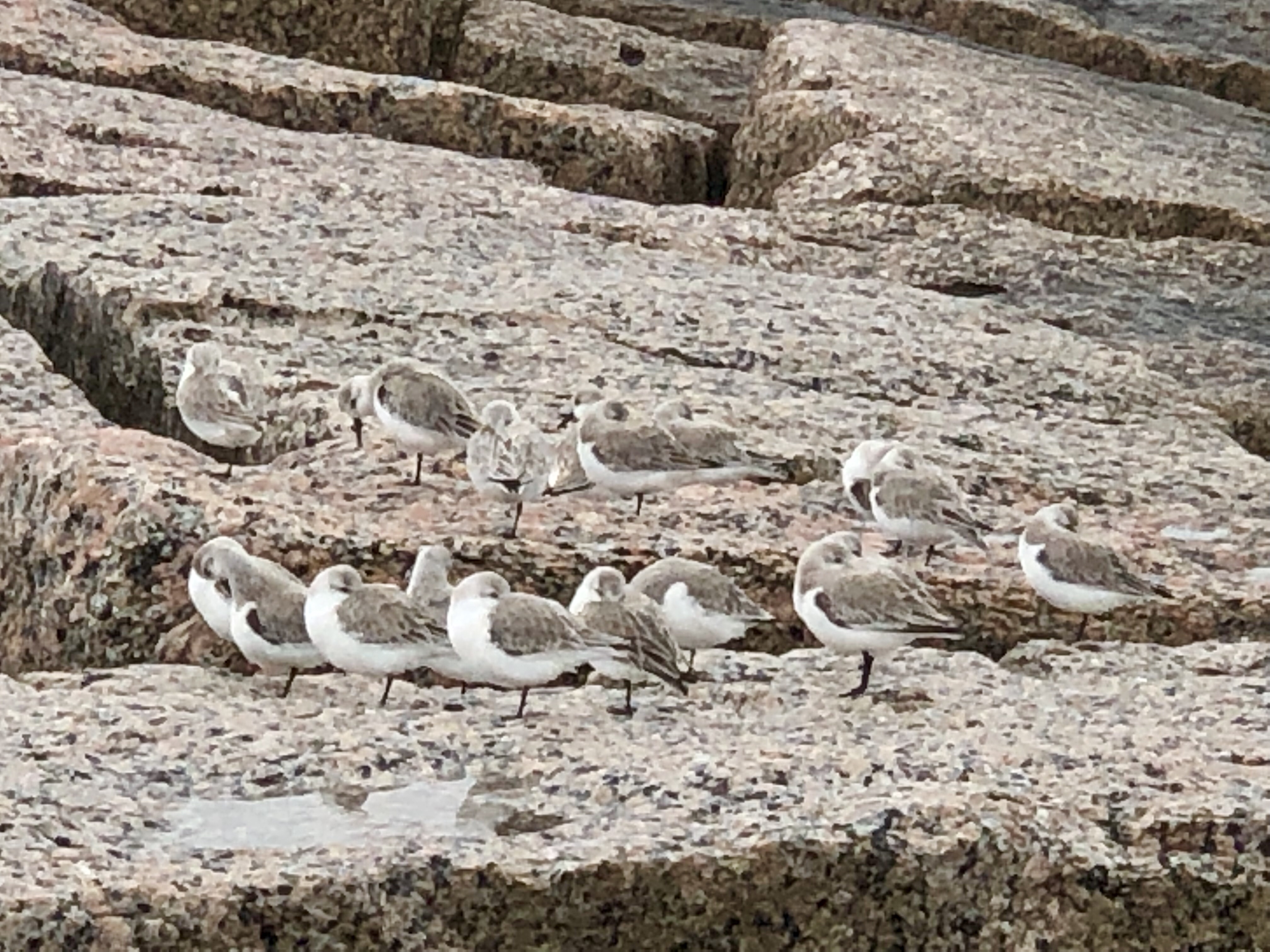
Look how well these birds blend in with the rocks and surf.
At first we didn’t see anything other than gulls, pigeons, and grackles, but once we walked down the jetty, we adjusted our eyes, and boom! There were some beautiful little ruddy turnstones busily picking at the moss and seaweed growing on the granite (from Marble Falls!). They were very industrious and blended amazingly well among the blocks. You really only noticed them when they moved.
Evrybody’s head is all tucked. Nap time?
We kept walking down the jetty until Lee stopped me and said, “Look!” Sure enough, there was a flock of what appear to me to be sanderlings, huddling together to stay warm, or something. They were at least a little easier to spot. They let us get nice and close, so I could get a good photo.
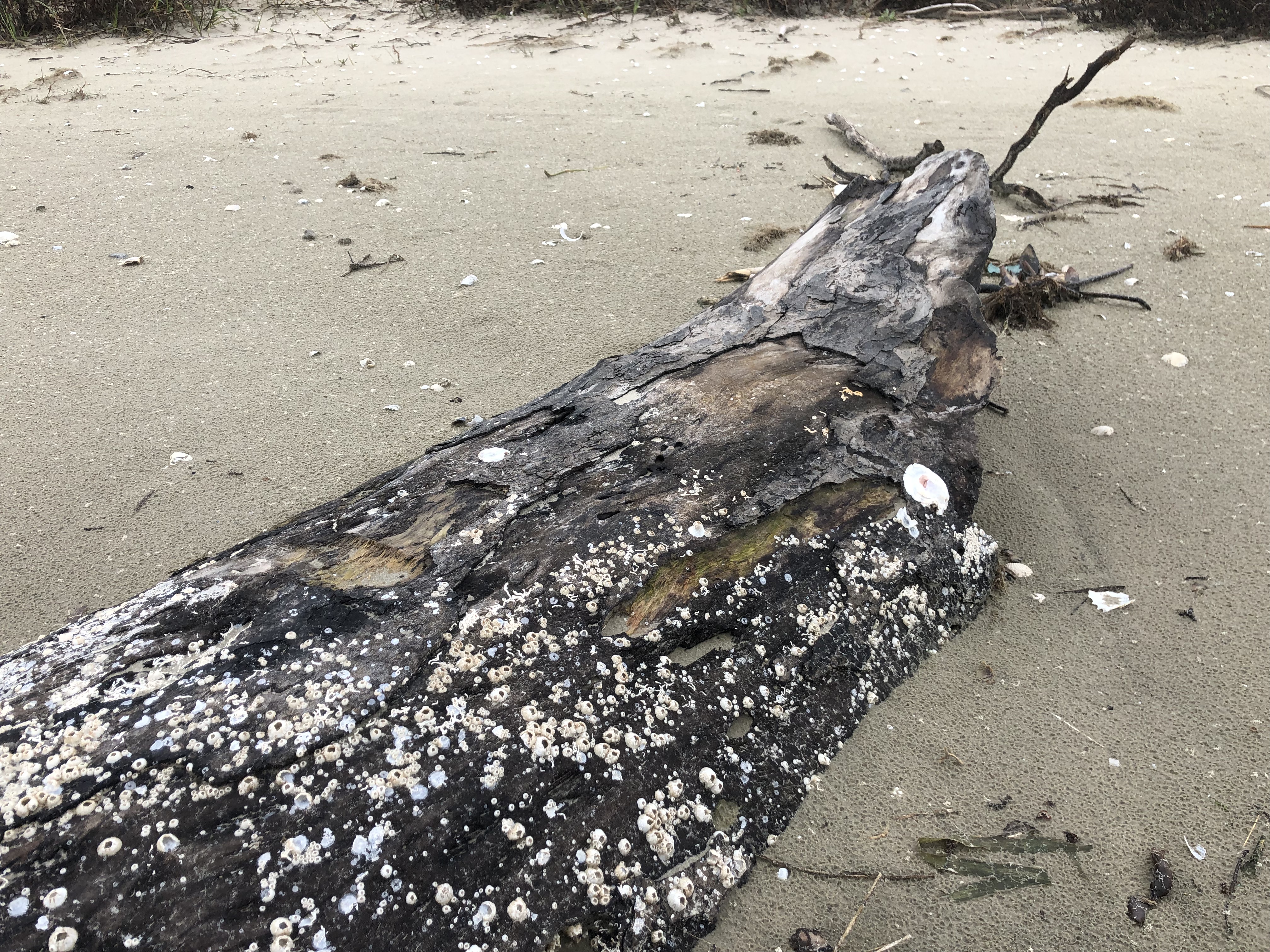
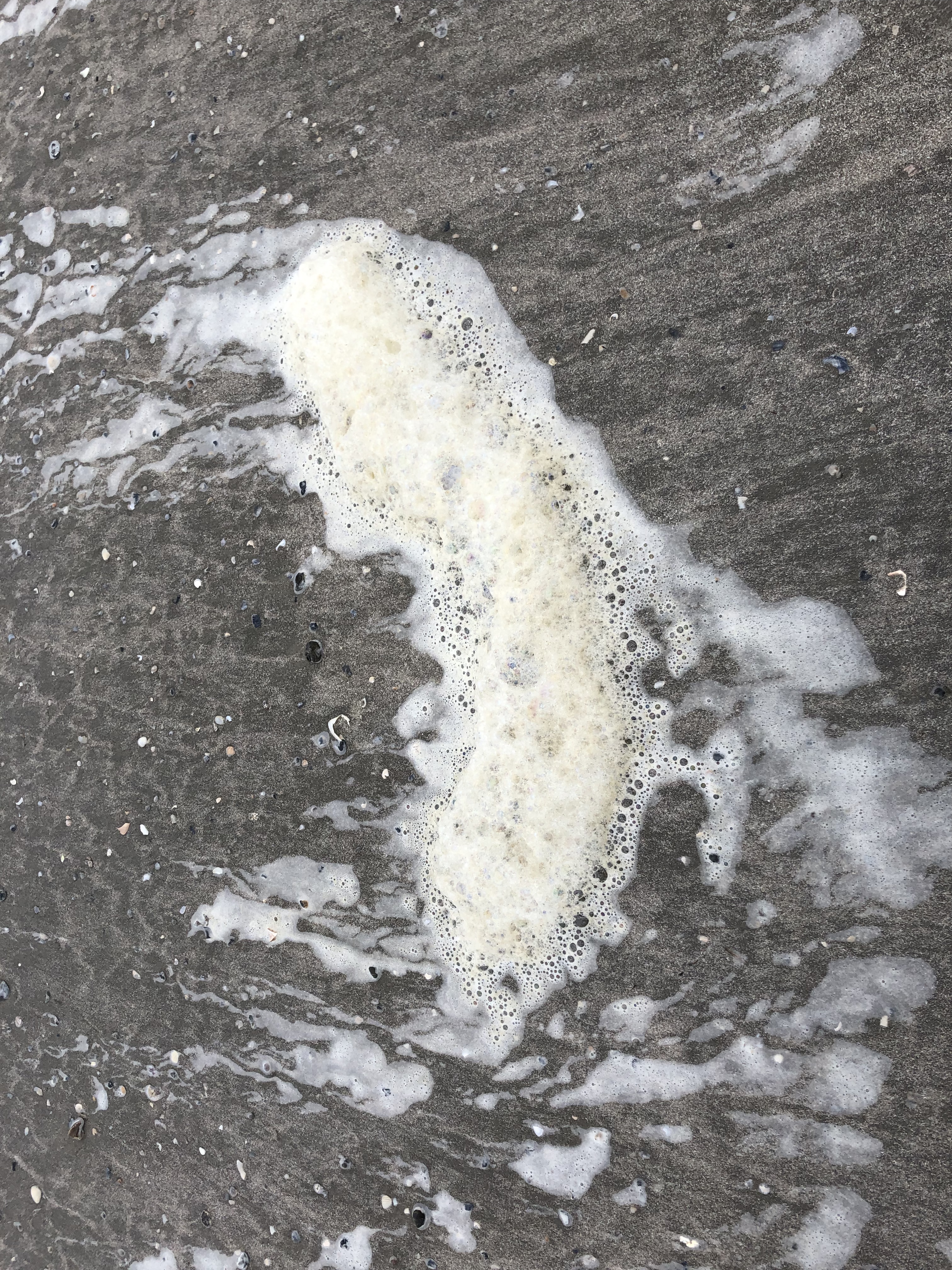
We spent last night in a misty Galveston Island, Texas. I’ll write more about it later, but thought I’d share a few pictures of things I found washed up on the beach.
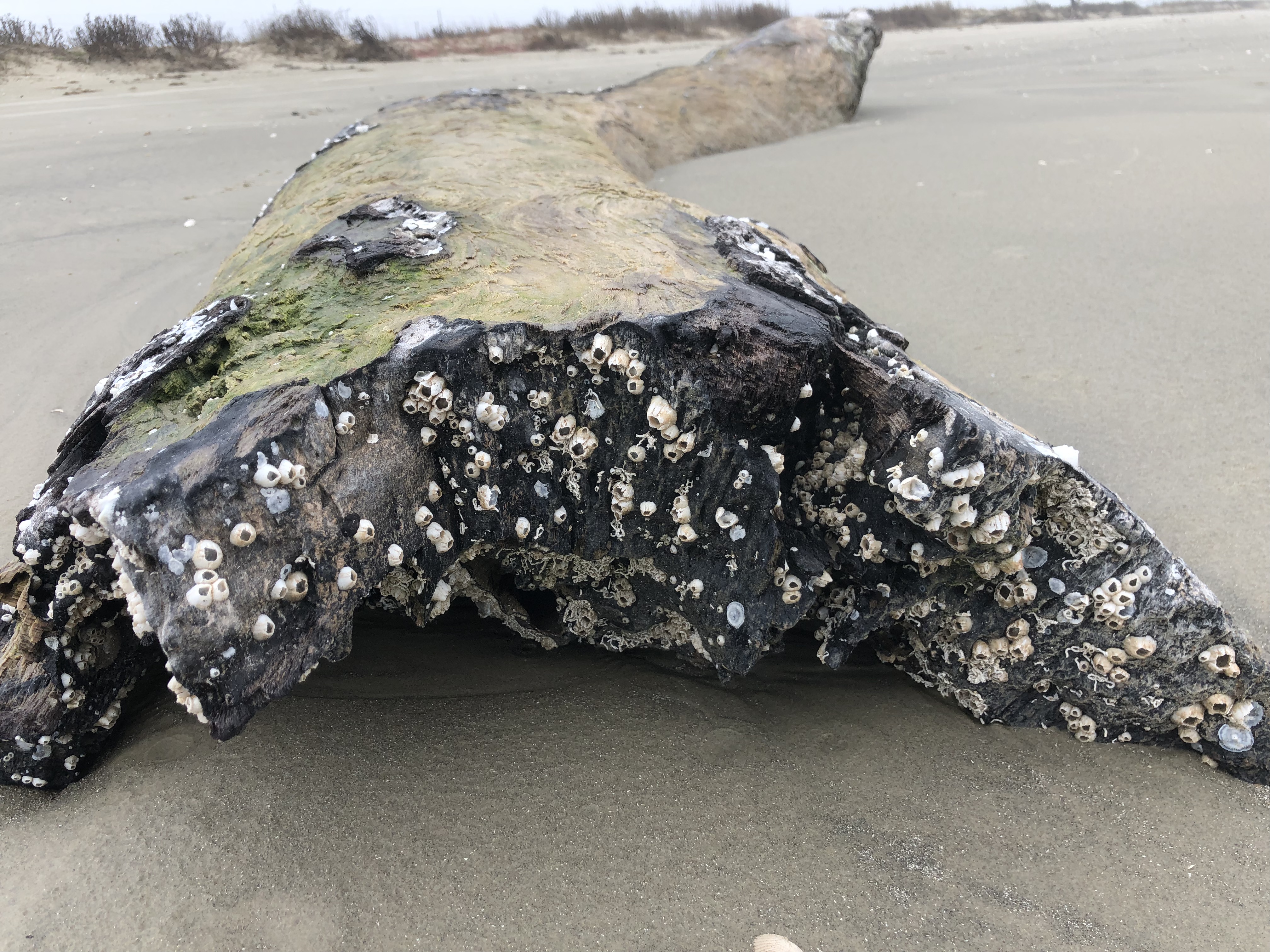
The tree looks like a whale from this angle.
One particular piece of wood that had been in the water enough for barnacles to grow on it really seemed beautiful. Such a mix of land and sea.
What’s your guess as to what this is?
We also found another rock or piece of tree or coral. It was hard to say. But there were some cool worm tubes on it, too.
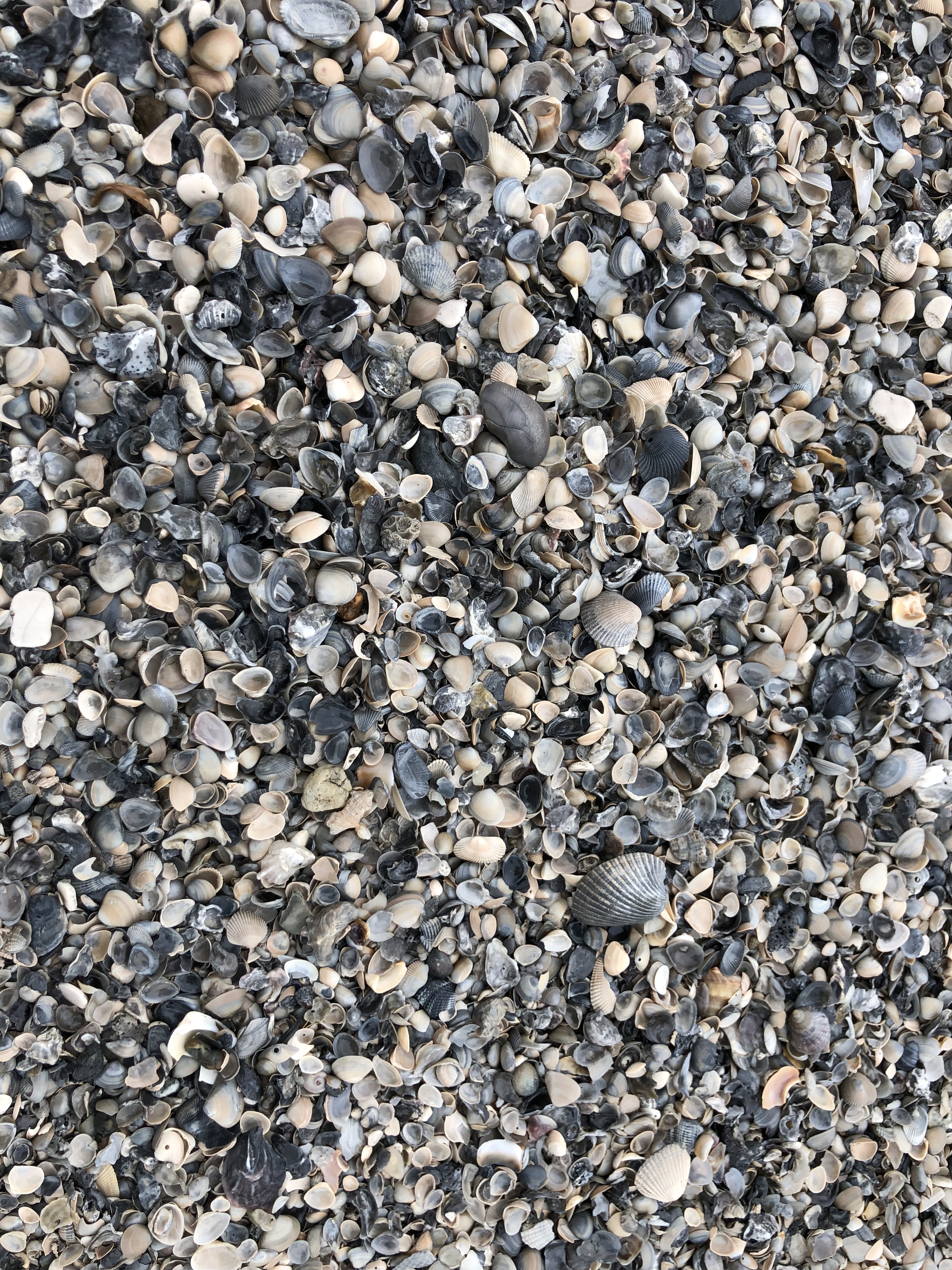
Little shells in a heap.
Of course there were shells, mostly broken up, but in many shapes and colors. Where they washed up in piles I kept thinking they’d make a great computer monitor background.
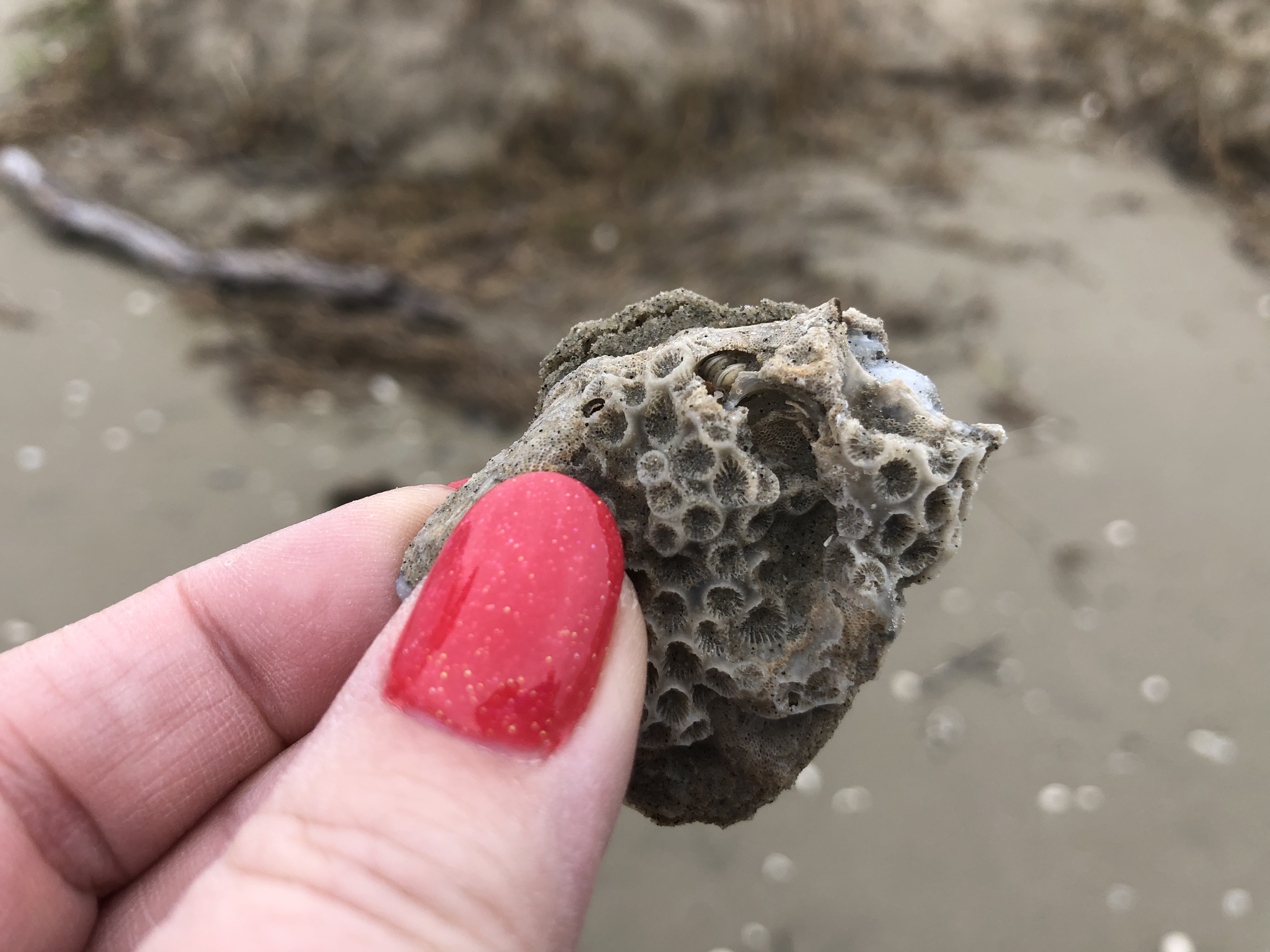
Coral, and my Valentine nails, which are red, pink, coral, or watermelon.
I did find a small piece of coral, too. I have to say these and the oysters in the bay kept distracting me from my bird and plant recording duties, but that’s okay. I had time to enjoy all the gifts the ocean and wetlands gave me.
Wow, yesterday was just one amazing discovery after another around the ranch! The wind finally died down, which made it much easier to be outside, so I engaged in a lot of running around with dogs and exploring things, once the cattle moved off and the cattle torture ended.
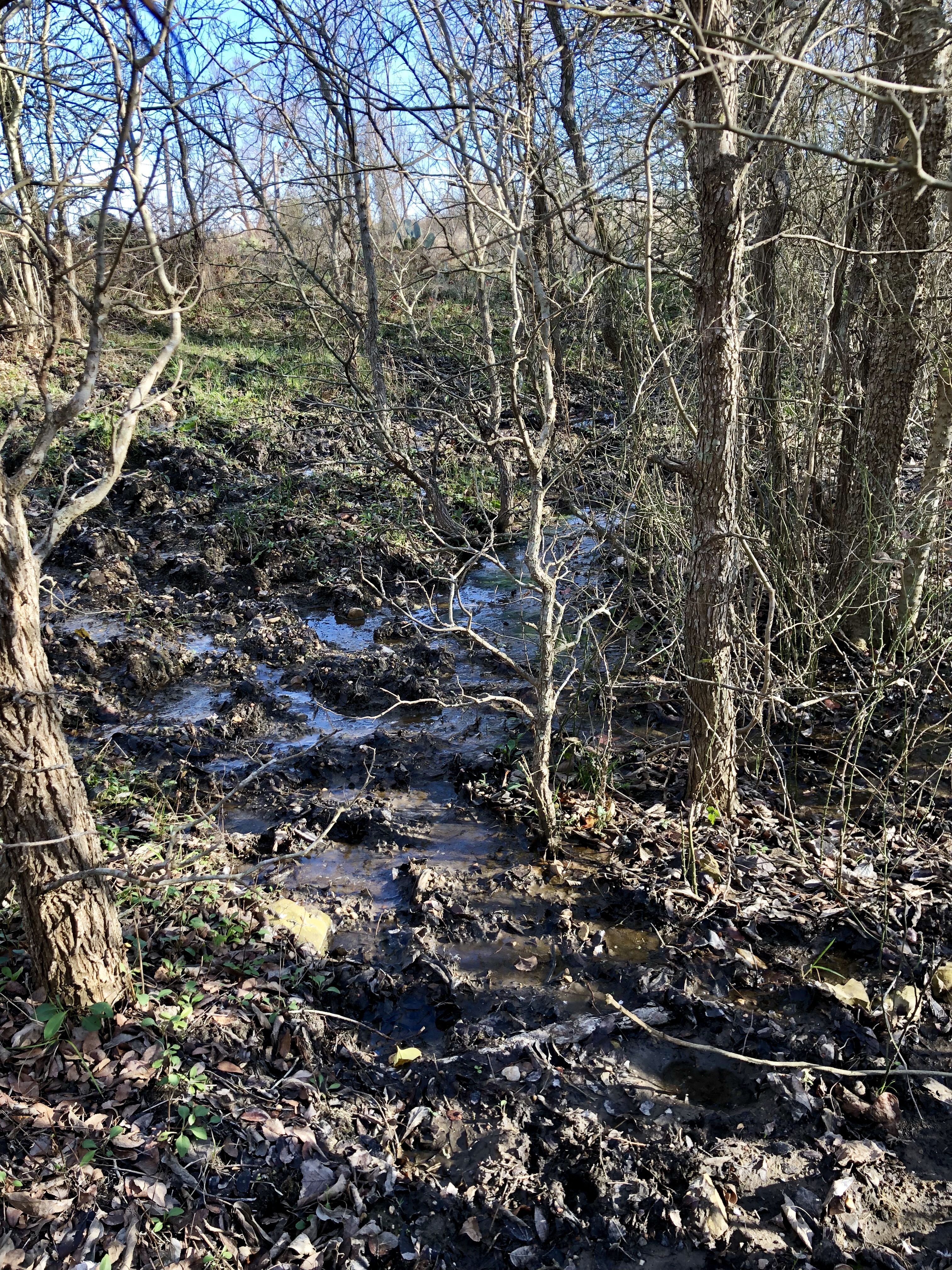
This is the “springy” area of the woods. It’s on a slope, and the water drains down to the Hermits Stream.
Our neighbor Mike came over earlier than usual in the afternoon, so that we could go check out a few things in the woods. Of course, the dogs went, too, which gave them more opportunities to irritate the cattle. Sigh. But the good news is that we found an old food storage container that had slipped out of Lee’s hands and disappeared into the woods during the summer, when you can’t see a thing in there.
There is a lot of moss, algae, and other moisture-loving foliage here. I wonder what the area would look like if cattle weren’t stomping all over it.
But, WAY more important was that I confirmed my suspicions that the last remnant of the big drought that was going on when we first came to this area is going away. It’s quite clear that our springs are back!
I’d been seeing a wet area from our side of the fence, but we wanted to see it up close. Sure enough, water is seeping out of the ground and heading toward the stream. I’d heard that there were springs in there before, but other than getting a little muddier than the rest of the area, it hadn’t showed any signs of flowing.
Carlton investigates the babbling brook. The tree bridge is getting less and less sturdy as time goes by.
We also noted that the little brook/stream that flows into Walker’s Creek is flowing pretty briskly. Two things could cause that. Either the pond is still getting water from runoff and flowing through the arroyo, OR the other spring is working. Mike and I confirmed that the culvert is barely dripping, so that brisk flow of water must mean that the big, deep spring is flowing on its own again. Hooray! There’s water under the ground again!
Heron or egret footprints in the mud.
Now that the flooding has died down, we can see lots of tracks in the mud that the flooding deposited. One thing is for sure, those herons are BIG birds.
And the chickens?
I am very happy to report that the longer days, increased food, and/or less owl stress have combined to ramp up egg production. We were afraid that the one who was still laying had been the last owl victim, but, hooray, we had three eggs today, and since two of them were white, there are at least two laying now! Of course, we are down to a dozen chickens, so we won’t have what we did before, but it’s an improvement.
THREE eggs! And the beautiful cutting board the neighbors gave us for Christmas.
And, by the way, Mandi is ordering some netting to help foil the predators.
And more mooning
A picture-perfect end to the day.
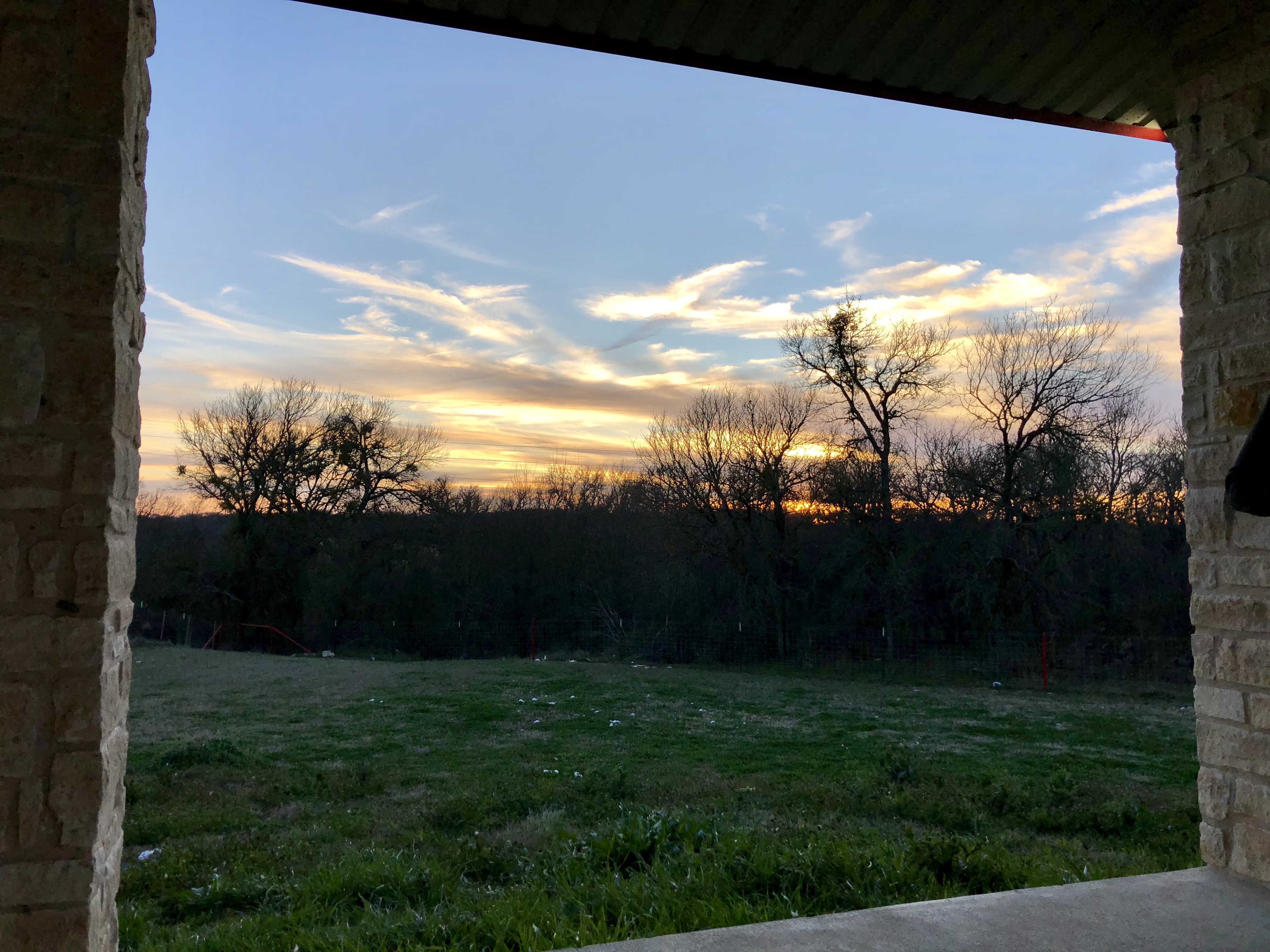
We got back home and sat on the porch (it was cool, but not too cold) to enjoy blackberry wine and yet another lovely sunset, which I managed to frame in the porch, like a painting on a wall.
Here comes the moon!
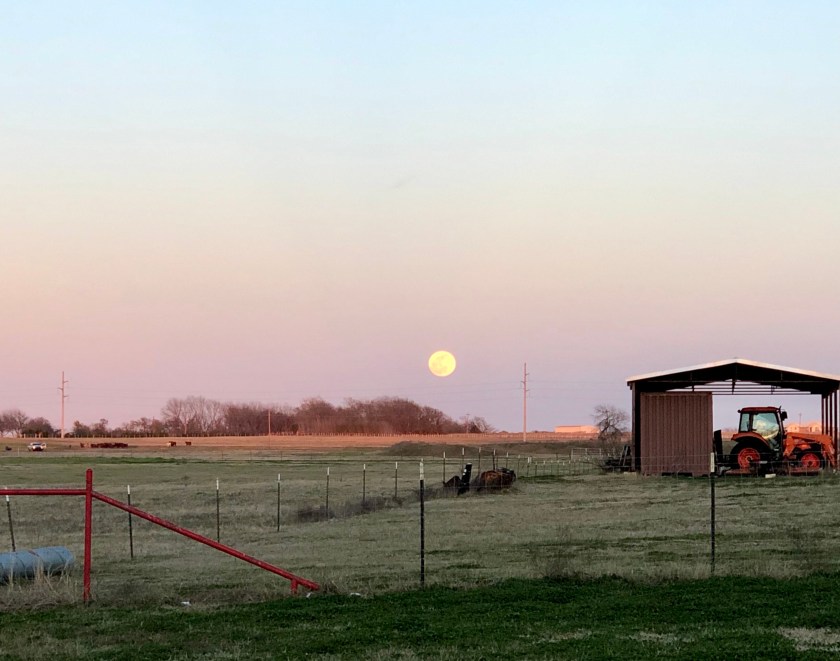
Then we turned around to see the super moon rising in the east. Wow, that thing was big. My phone doesn’t do very good eclipse photos, but the red moon was very cool. I wish that happened more often. You know that sight must have been confusing to ancient people who didn’t know how the sun. moon, and earth coordiate!
I’ll have a long and thoughtful post in the next few days on another topic, but until then, maybe I’ll just spew forth random comments from the past couple of days.
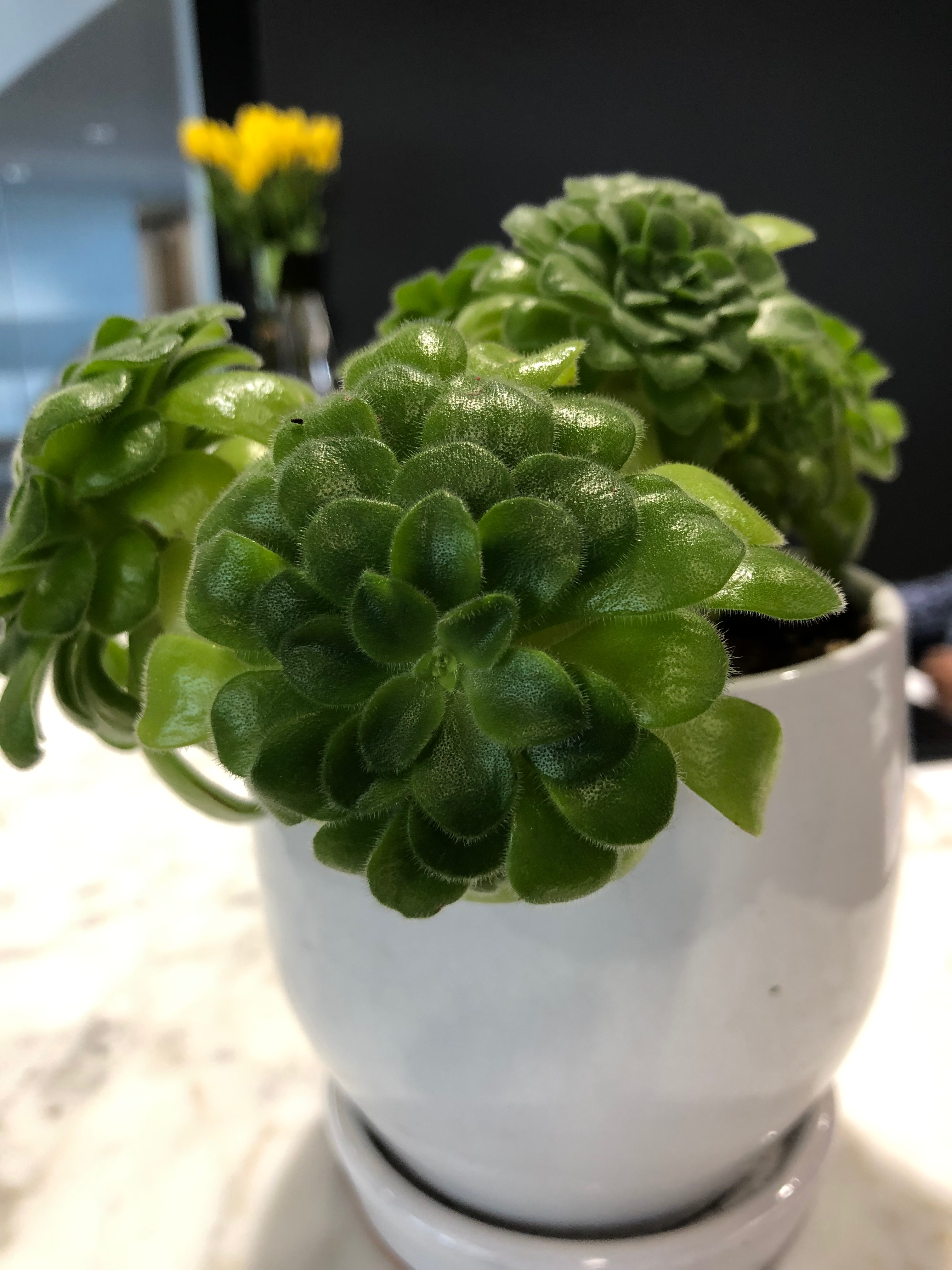
Maybe they aren’t really s pirals, but the symmetry attracted me.
I’ve been seeing spirals everywhere lately, even in the plants at the reception desk where I work. I wonder what all that’s about?
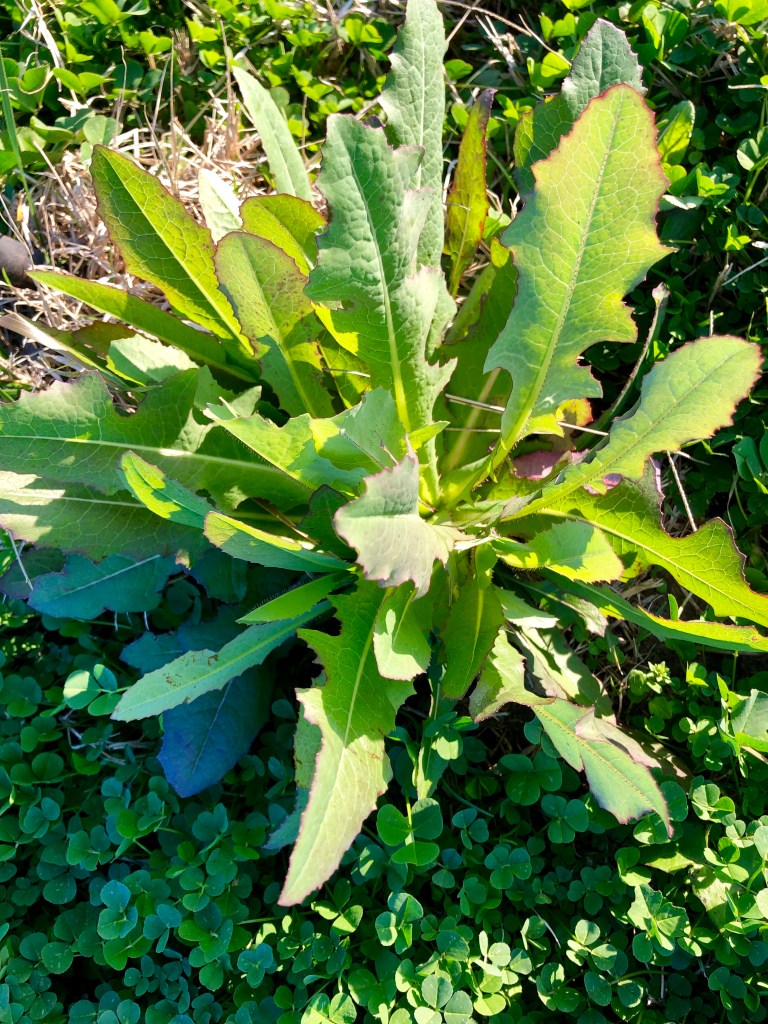
It’s prickly but darned pretty.
Maybe it’s just the time of year, when everything’s sprouting. I mean, wow, that is one attractive thistle.
All these lovely dandelions make me hungry for a salad or spring tonic or something.
Maybe it’s reminding me of recycling, which has as its theme image a mobius strip (which I didn’t realize until Joyce Conner mentioned it at our Master Naturalist meeting last week! Duh!).
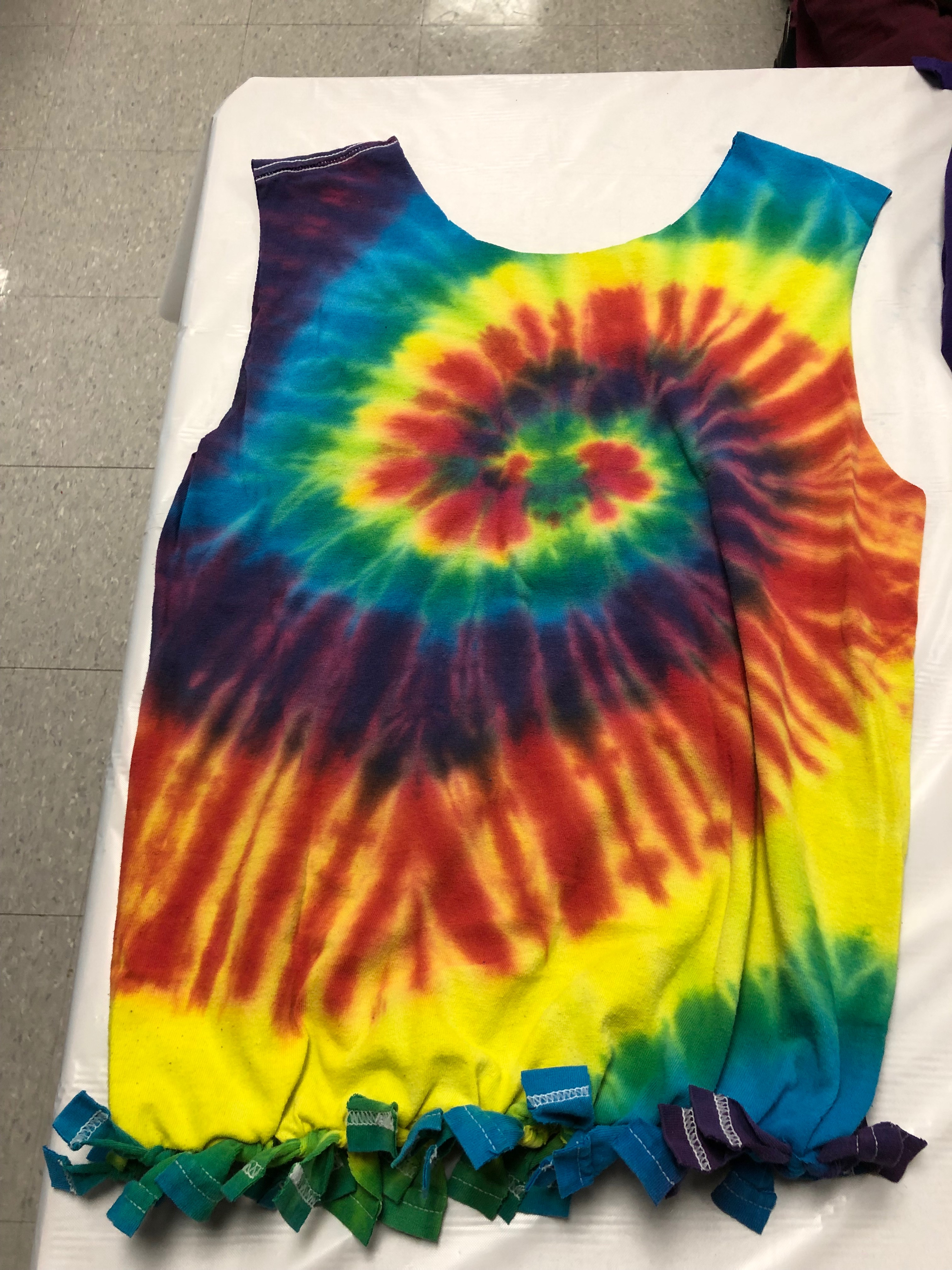
Spealing of recycling, we recycled old t-shirts into tote bags to give out on Earth Day!
Joyce is a very thoughtful person, and she has been putting a great deal of thought into recycling, its benefits and its issues. She shared a lot of them at our meeting, which no doubt got everyone thinking about their own beliefs about recycling our waste.
I attempted to recycle myt-shirt sleeve into a visor. I think I failed.
Joyce showed us how much of the stuff we carefully recycle goes straight into landfills, because no one wants to recycle it. Apparently, we used to send a lot to China, but they don’t want it anymore.
In the end, she suggested that we concentrate on the reduce and re-use parts of the reduce, reu-use, recycle trio. That made sense to me. We try to re-use a lot of the glassware we buy things in, and I have started recycling boxes by decorating them and using them for storage, rather than buying decorative boxes.
Many of my friends re-use yarn rather than buying new, too.
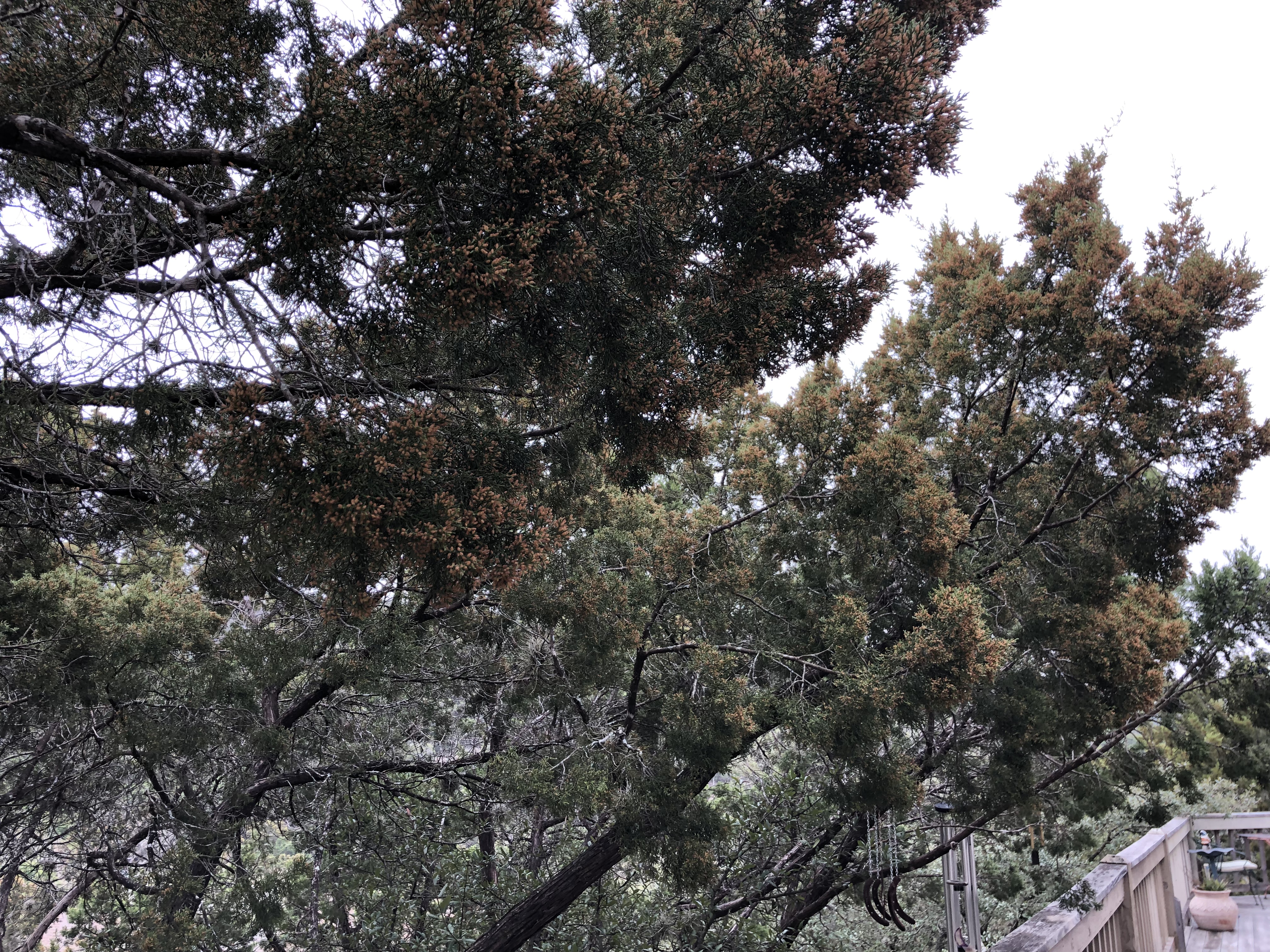
We are in the middle of no one’s favorite season in the Hill Country of Texas, and that’s the “Cedar Fever” season. According to many news reports, this was supposed to be one of the worst seasons ever. If you’re reading from outside of Texas, you may be saying, “What the heck?”
If Anita and I WERE cedar fever sufferers, our front deck would be a scary place this time of year.
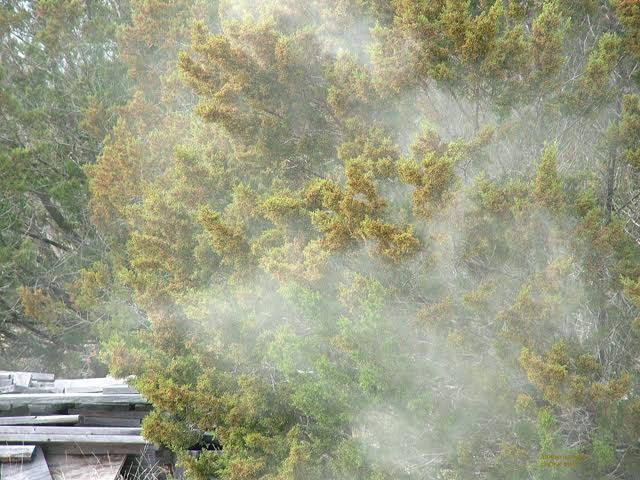
Lots of people call the tree found all along our hills Mountain Cedar, but it’s really Ashe Juniper. I first noticed them, like many new residents, during my first winter in the area. I was walking my baby around the neighborhood, which was still under construction, looking at all the limestone and stuff, when the tree in front of me started to smoke! I said some version of, “What the heck,” and called my La Leche League co-Leader (the only native Texan I knew) to ask her what was up. “Ah, the cedar is pollinating,” she told me.
This is what I saw when I was out walking in my neighborhood. Scary.
What is this plant? The Ashe Juniper has been around this area since before Europeans showed up, but it’s thought that they spread out of their native “cedar brakes” to take up more of the area once cattle showed up and messed with the delicate balance of native grasses and trees. Thanks, Euro-Americans.
Looking out over the Texas Hill Country’s first hills as Nature gives us a fiery farewell to 2018.
Well, according to the calendar used by most of the world, it’s a new year. I celebrate it as the day I start scratching out the wrong year and changing it to the right one. And it’s a day off, so this is the only blog I’m writing in.
This is looking to the east, a bit earlier than the previous photo. Only the rich people houses peeking up remind me I’m in Austin.
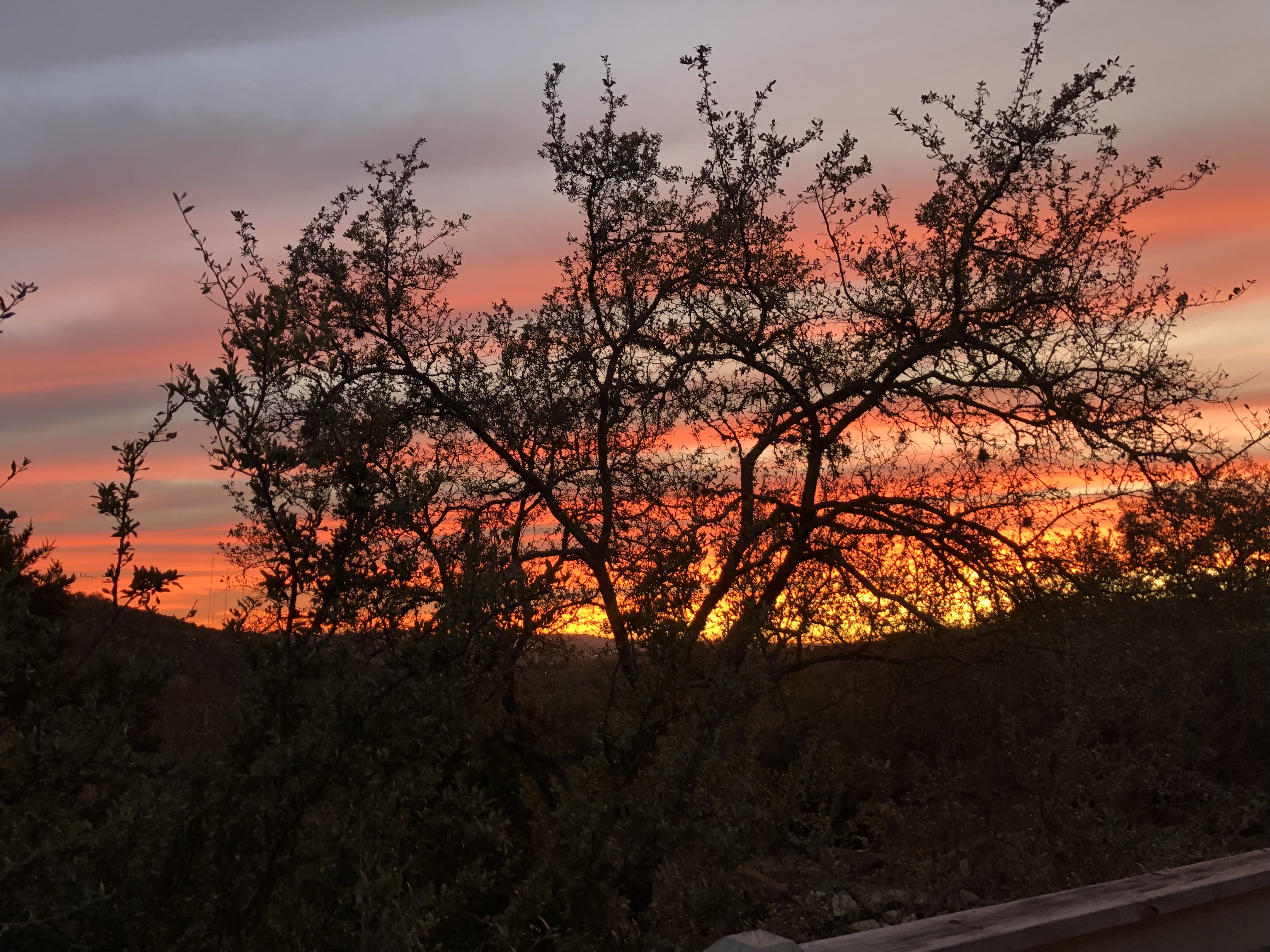
At least we got a lovely show from Mother Nature last night, as the sunset was pretty darned spectacular. I enjoyed seeing many views of the same clouds from different places in my Facebook feed. Since some of you readers may not be in central Texas, I’m sharing a couple of my photos. I especially like the stripey one by the hill.
Speaking of Blog Readers
Since this is the first year of this blog (though the Hermits’ Rest Ranch Facebook page goes back a lot further, to October 25, 2014), I thought it would be interesting to check out how we’re doing, readership- and fan-wise.
There’s always an Audubon Society-sponsored Christmas bird count that naturalists and bird lovers do every year. While I didn’t do that, I did enjoy the easiest bird watching ever, right outside the door of our rental house.
I shared the photo above on Facebook already, so you may have already seen it, but I was so happy to get a good shot of the cedar waxwings taking off from the tree where they’d been feasting on berries. I love all the different wing positions.
The waxwings were there all day, singing harmony when my kids were playing music, and just being beautiful.
I did try to get photos of the other birds, but I had to do it through the patio door, and that was awful. So, here’s a plain old list of who I saw!
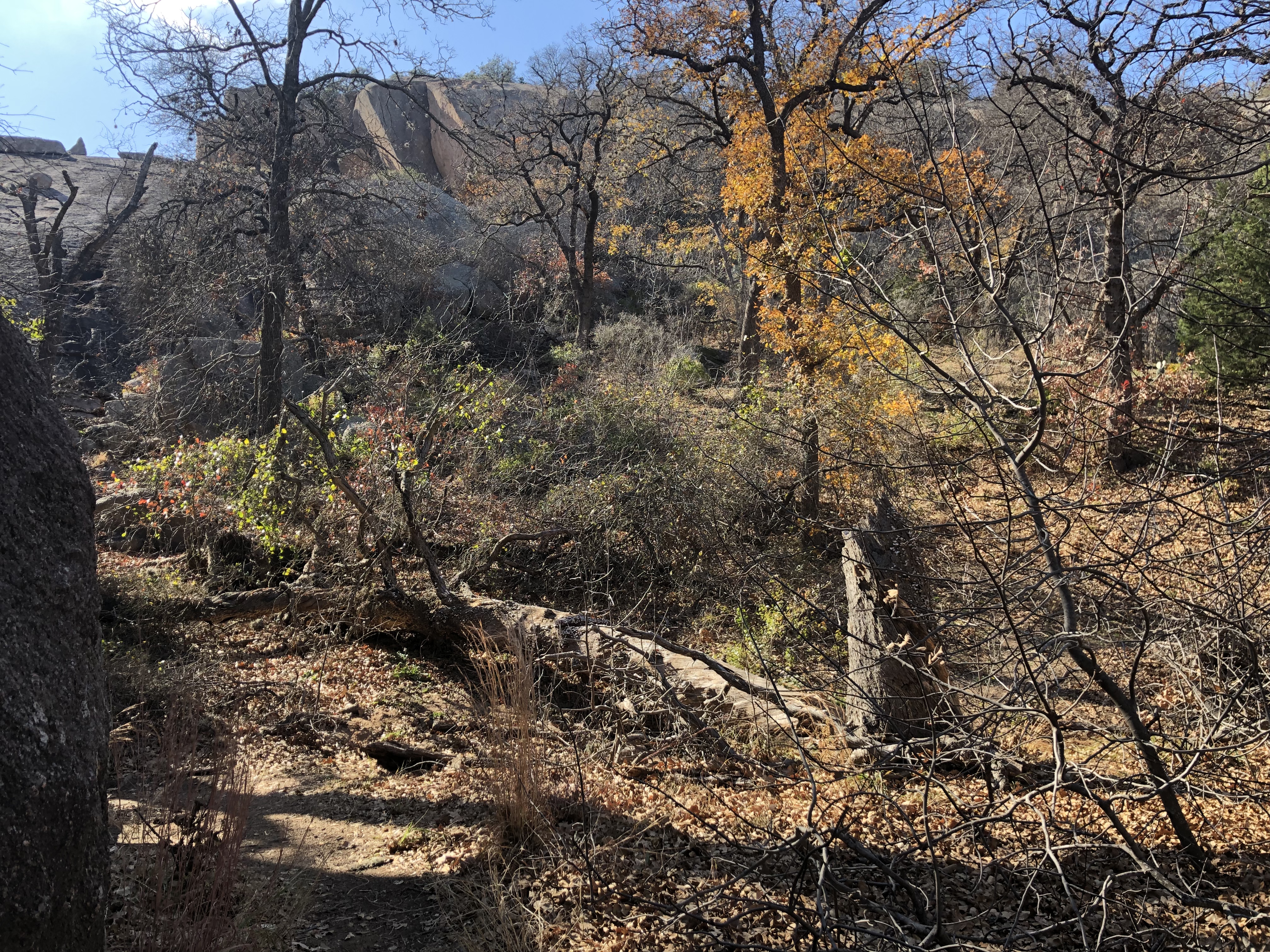
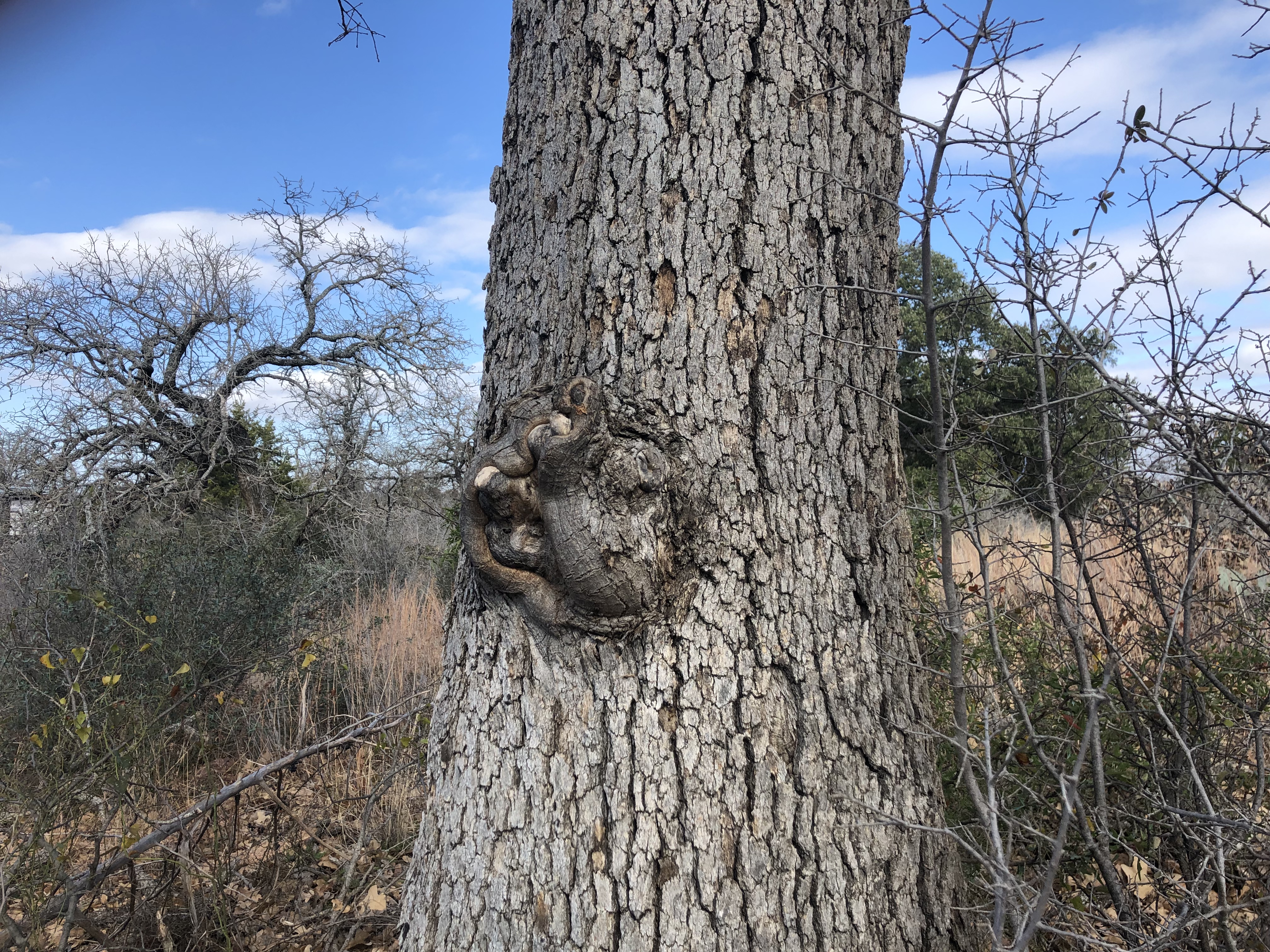
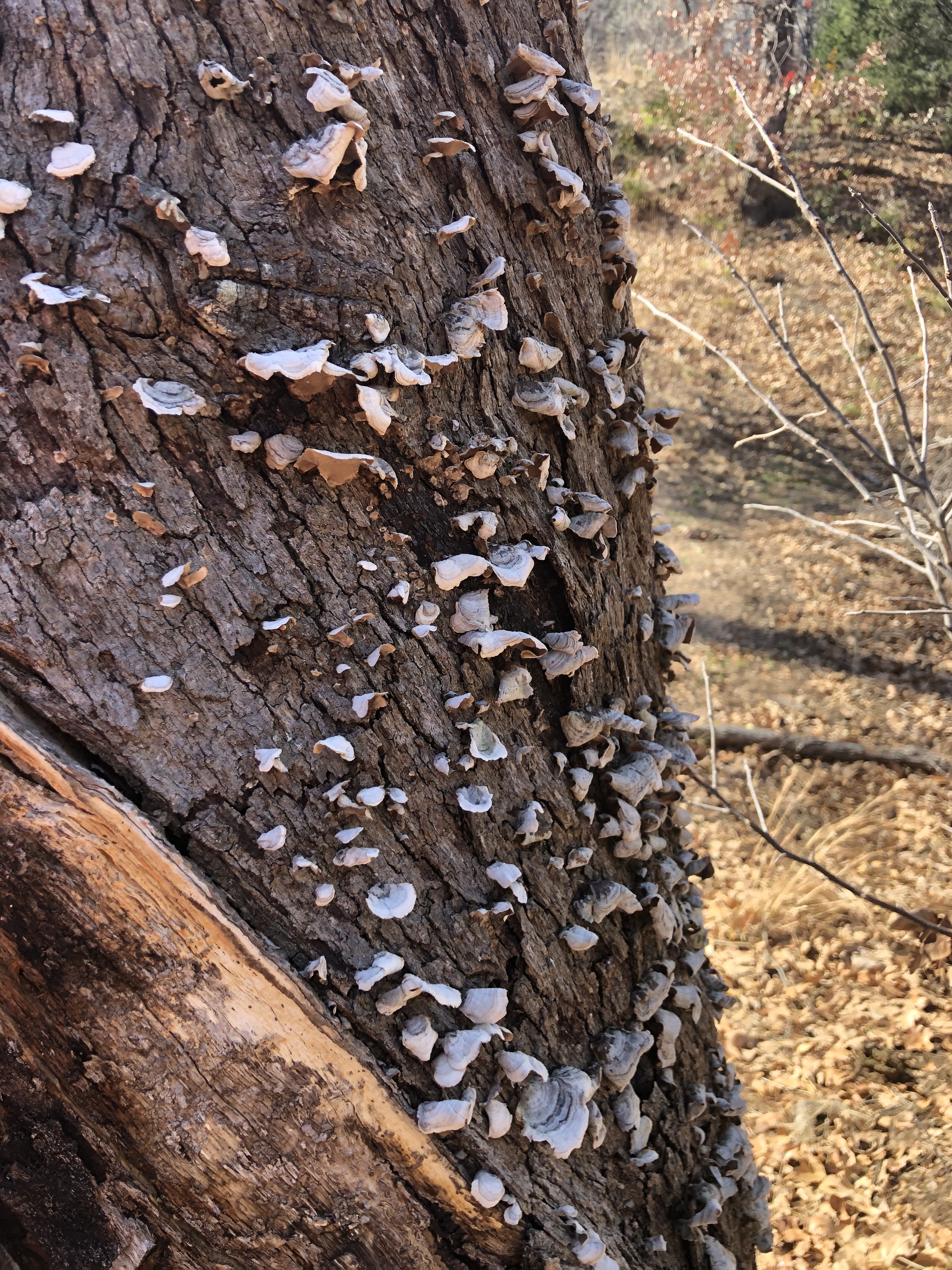
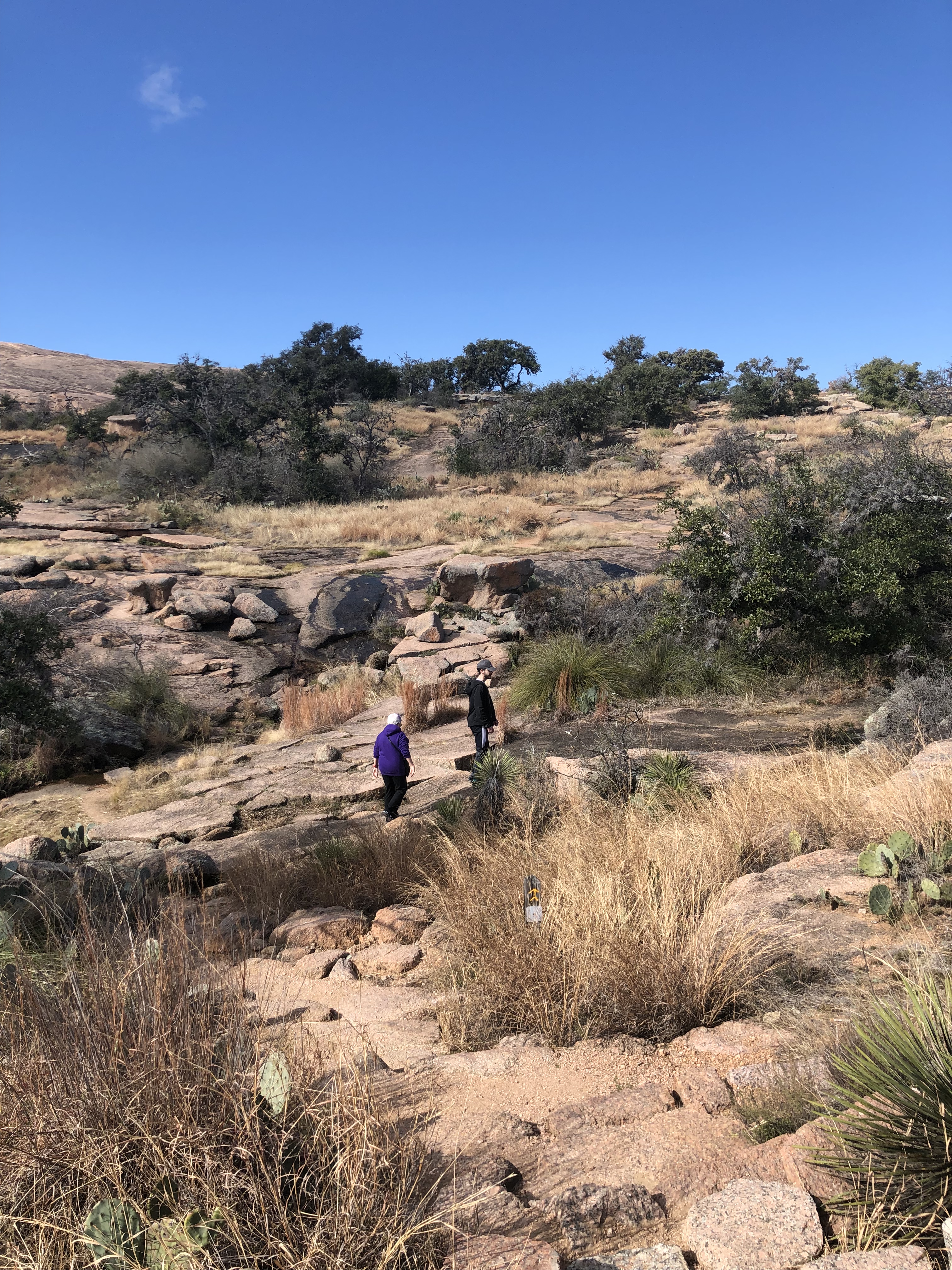
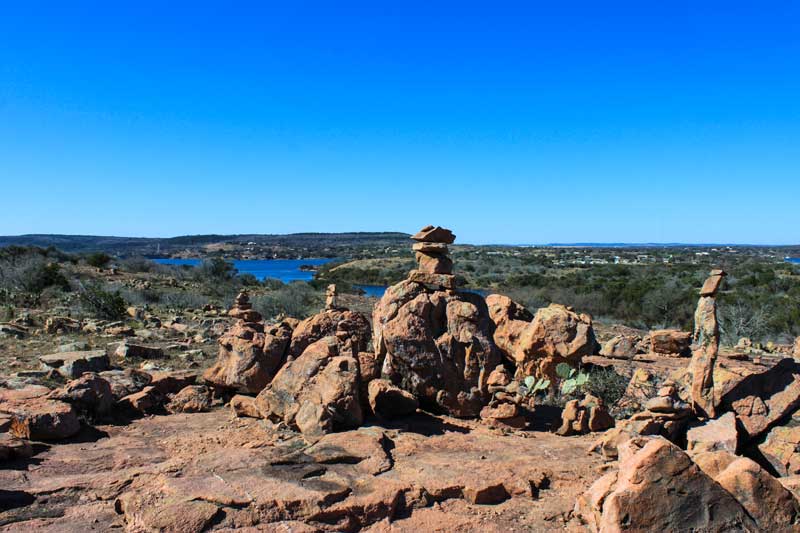
If you’ve had enough of lights, commercialism, and noise, come join me in remembering the timeless beauty of Enchanted Rock. Anita, Kynan, and I climbed to the top, then scrambled through the Echo Canyon train and the trail around the park.
The beauty in winter is that you can see for so many miles, and when you do hit upon a bright spot of color, it feels really special. No more talking, just pictures.
Expect scenery posts for the next few days! Sadly, I don’t have any great scenery from yesterday, because I was driving, and I’m not one of those folks who uses their phone and drives, especially on hilly two-lane roads. Forgive my stand-in photos.
Yes, Anita and I spent three wonderful hours (minus 15 minutes on Interstate 35) traveling the back roads between Cameron and Fredericksburg. It was glorious. The first part of the trip, heading to Florence, was all new to me. There are some lovely fancy ranches on the road we took.
When we got to more familiar territory for me, I got to show Anita all my favorite small towns, like Bertram, Burnet, and Buchanan Dam. This is the heart of the Texas Hill Country/Highland Lakes area where Lee and I looked and looked for just the right property to retire to before calling Sara and deciding to buy the Hermits’ Rest, instead.
There are beautiful hills, long vistas, the lakes along the Colorado River, and the BEST thing: the karst! All around Inks Lake and Marble Falls is the beautiful red granite (the same stuff that makes up Enchanted Rock). Much of it is right on the surface, creating breath-taking views.
This is our second year using the pop-up tree in a vacation rental. This also makes me happy.
I have to admit that when we crested a hill and I saw the lakes and the rocks, I got all emotional and started to cry. I really, really love this part of Texas. My heart filled with joy and I had to slow down to look at it all.
This area has the Canyon of the Eagles where you can take a boat tour that I have never been on, plus Longhorn Cavern, and so much more. Go there, if you ever get the chance.
Tried to get a free photo of a sunset as good as the one last night. Photo by Francesco Ungaro on Pexels.com
As we headed towards Fredericksburg, the sun was going down. Oh wow, there were shades of orange I’d never seen in a sunset, sort of melon orange. And as it got more and more purple, even the dead grass on the sid of the road reflected it, and the earth was awash in pink and purple. You can use your imagination, but it won’t do the real thing justice. It will live in my mind!
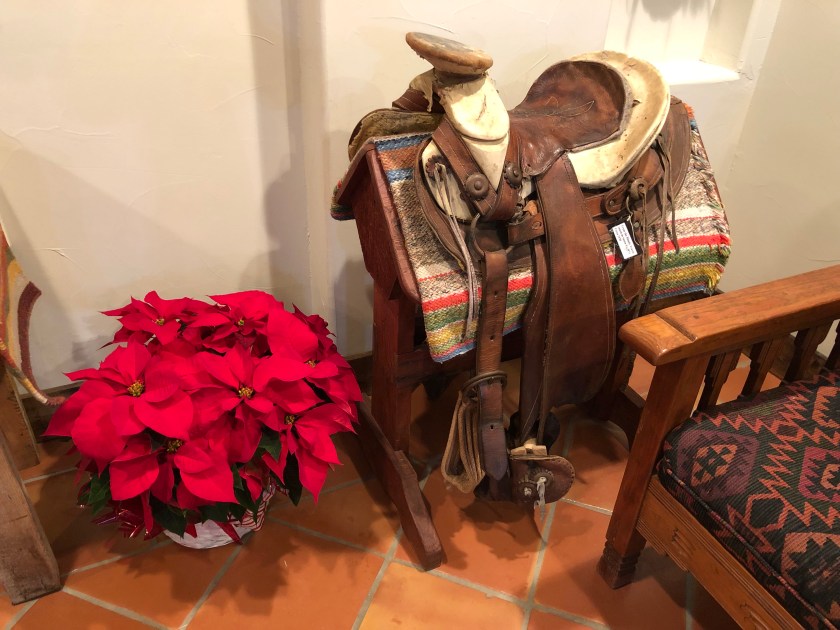
For the first day of a vacation, this was about as good as it gets. We got to our rental house, which is incredibly thematic. If there’s a Santa Fe kind of item, it’s here. We are really enjoying the rugs and pottery, and I’ll share more about it later.
We decorated for Christmas, and are ready for fun!
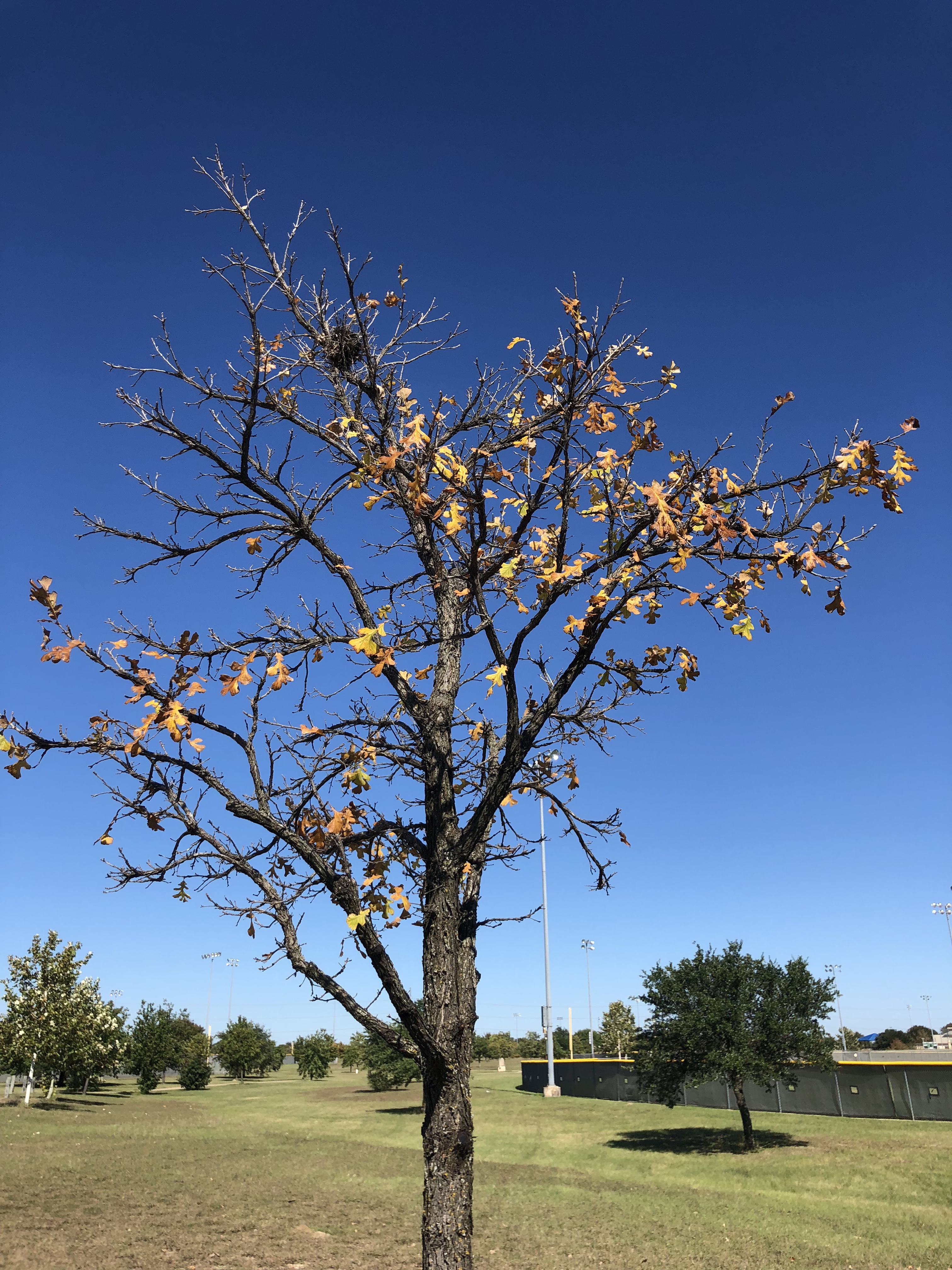
A loggerhead shrike nest in a bur oak tree in Old Settlers Park, near baseball fields.
My time with the Master Naturalists ended on a high note with a post-conference outing to Old Settlers Park in Round Rock. The idea was to observe how a declining species, the loggerhead shrike, has adapted to using the park as a habitat, and is thriving.
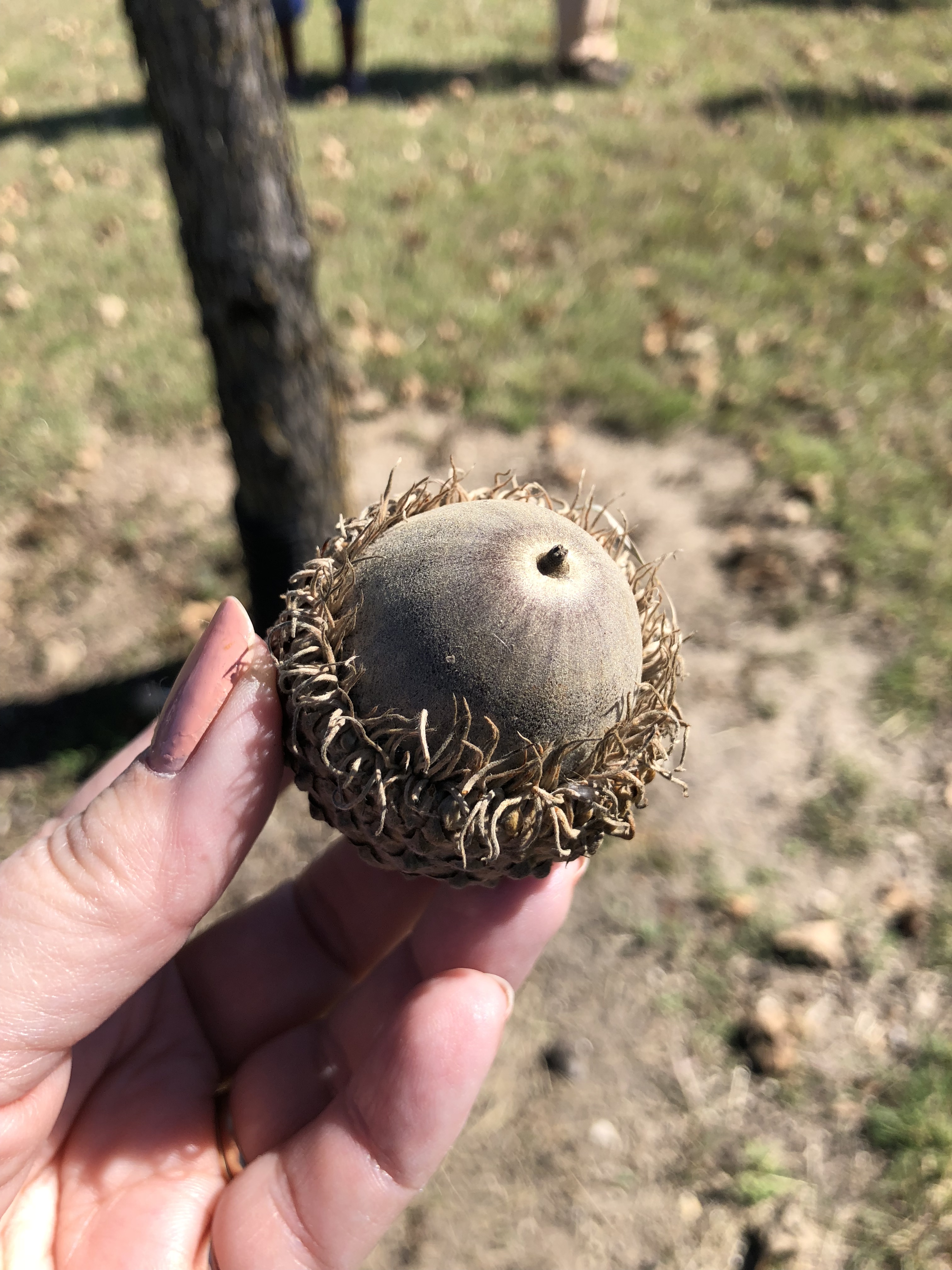
Bur oak acorn. Huge and tasty.
Before the outing, I’d attended a session led by Jim Giocomo on “The Geography of Grassland Birds: How International Bird Conservation Efforts are Linked.” He talked about how agencies and Master Naturalists can help provide these birds with more appropriate habitat, track their locations, etc.
Jim Giacomo (center) and some of the other experts he brought to our field trip in Round Rock.
In that talk, he mentioned his own work with the loggerhead shrikes (the only songbird that is a predator), which conveniently nest right near his house and showed us some great footage of baby shrikes. In one film, the parent birds keep trying to stuff a dragonfly in the mouths of the babies, but it keeps getting stuck. It was hilarious.
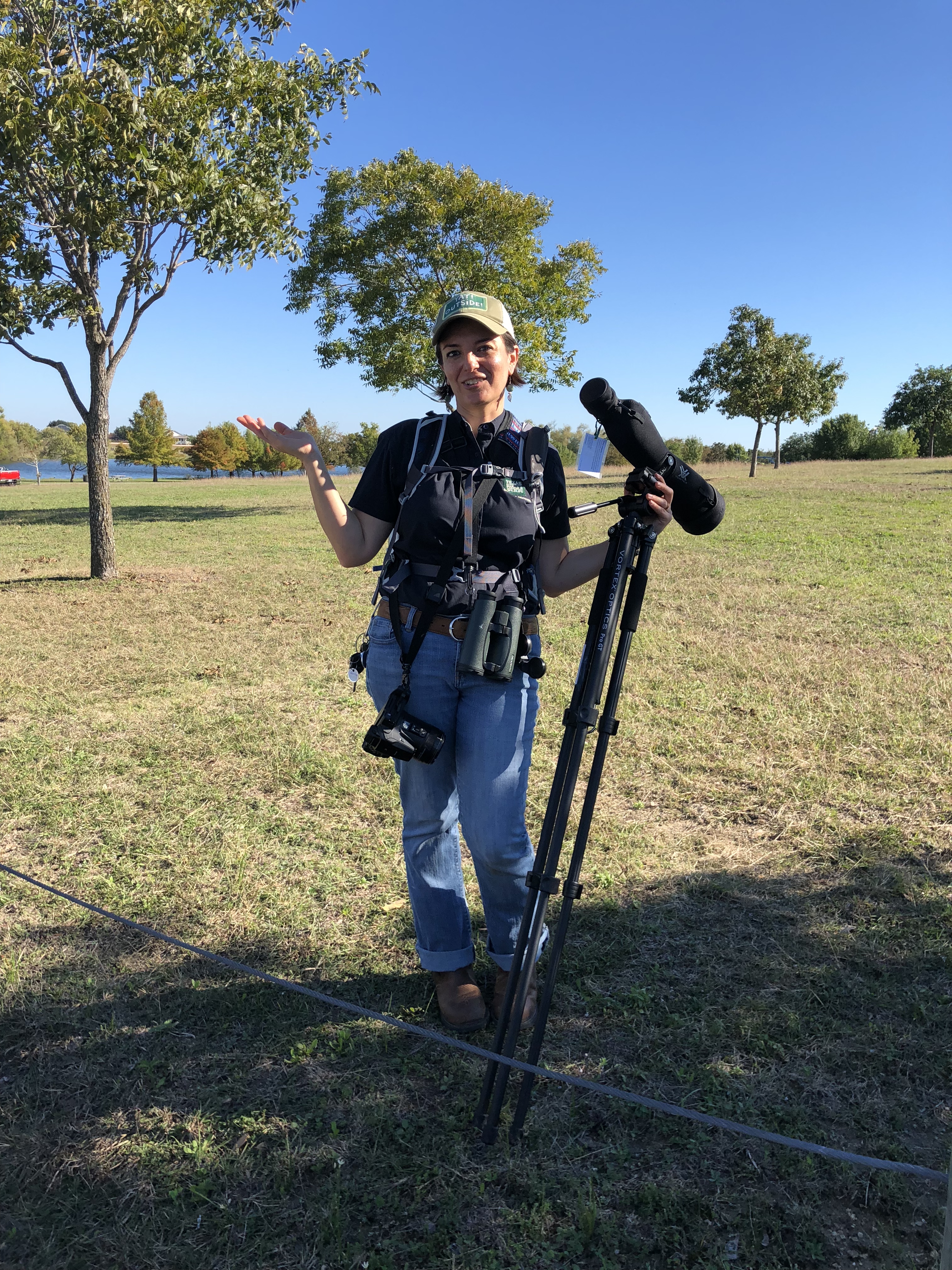
Tania’s Halloween costume was “nerdy birder.”
Jim’s luck in finding birds to observe over entire breeding seasons has given him lots of insights, so it was really fun to go with him and fellow biologist Tania Homayoun out in the field to see what he sees.









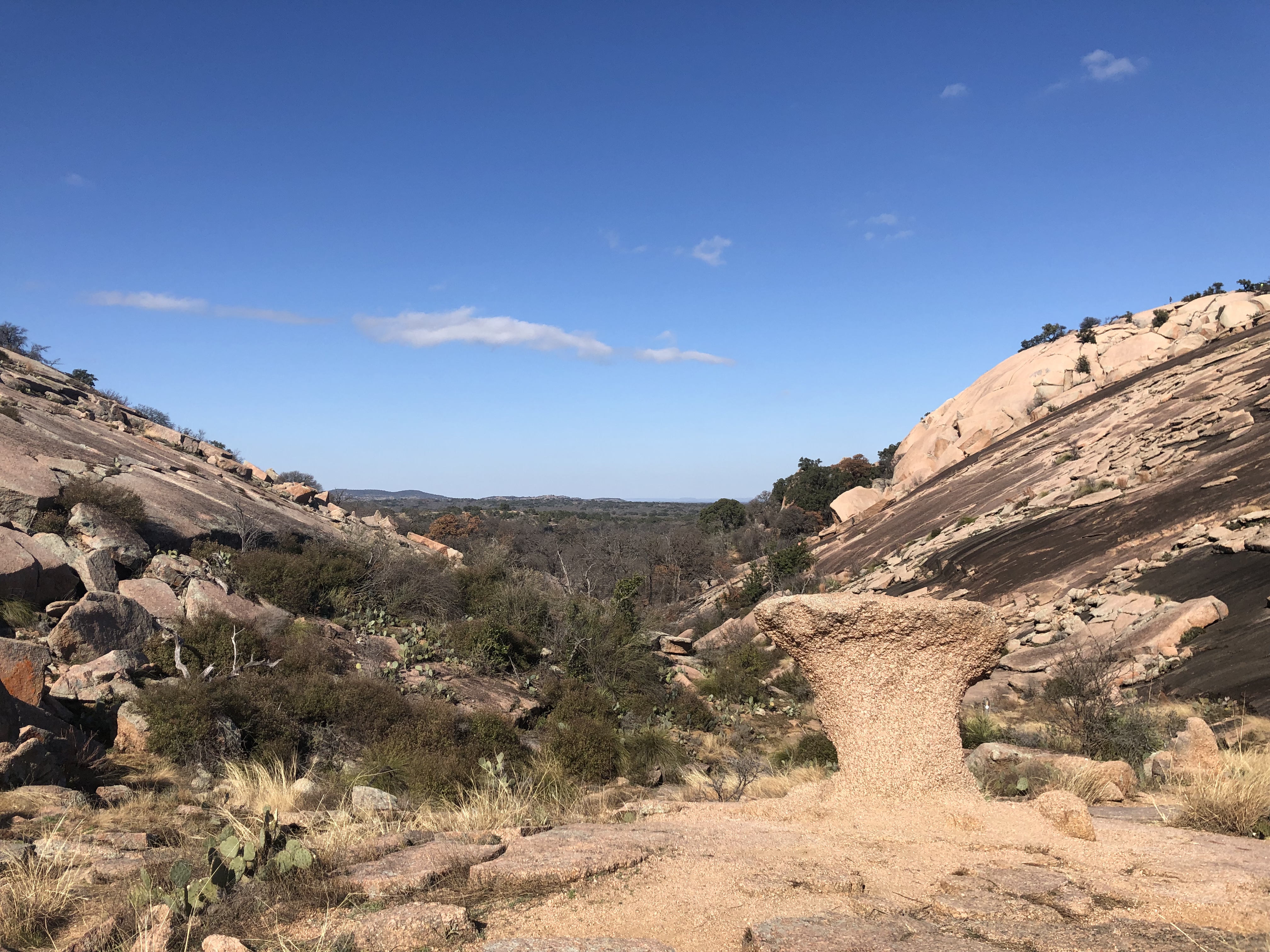 If you’ve had enough of lights, commercialism, and noise, come join me in remembering the timeless beauty of Enchanted Rock. Anita, Kynan, and I climbed to the top, then scrambled through the Echo Canyon train and the trail around the park.
  The beauty in winter is that you can see for so many miles, and when you do hit upon a bright spot of color, it feels really special. No more talking, just pictures.