Caving in the Old ‘Hood

cave1
I had always known the mysterious fenced off areas in the middle of the neighborhoods, and some of the seemingly random “parks” were really where developers were hesitant to put houses because of caves.

My bucket list is one item smaller. Ever since I saw sealed over cave openings in my old neighborhood (the Brushy Creek/Cat Hollow/Avery Ranch area in Williamson County), I wanted to see what was under the neighborhood. The area is in a limestone karst formation (quite near many limestone quarriees). After a cave collapsed pretty near my old house last year, I REALLY wanted to go in, so when I saw a session at the Texas Master Naturalist Conference on “Caving in Avery Ranch” I signed up.

cave4
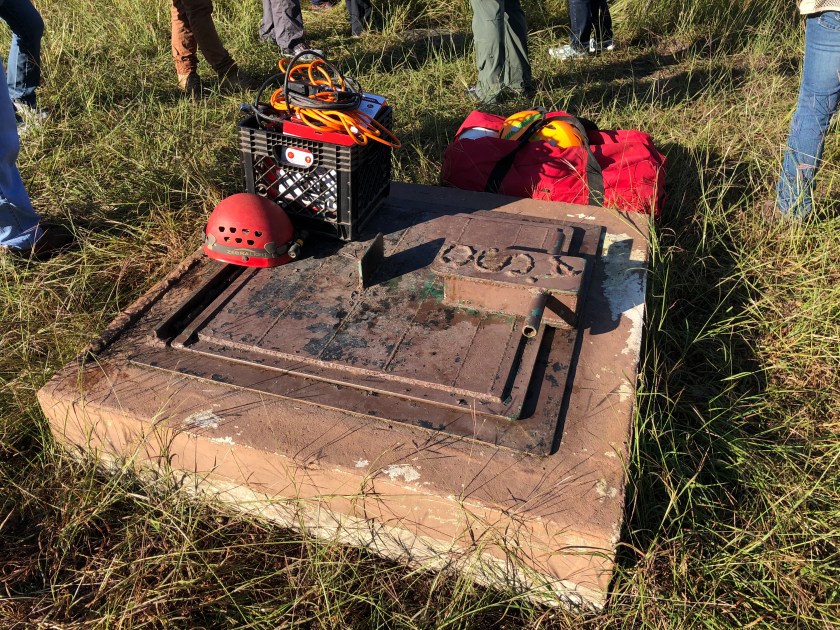
The mysterious entry, and all the caving equipment. Note helmets!

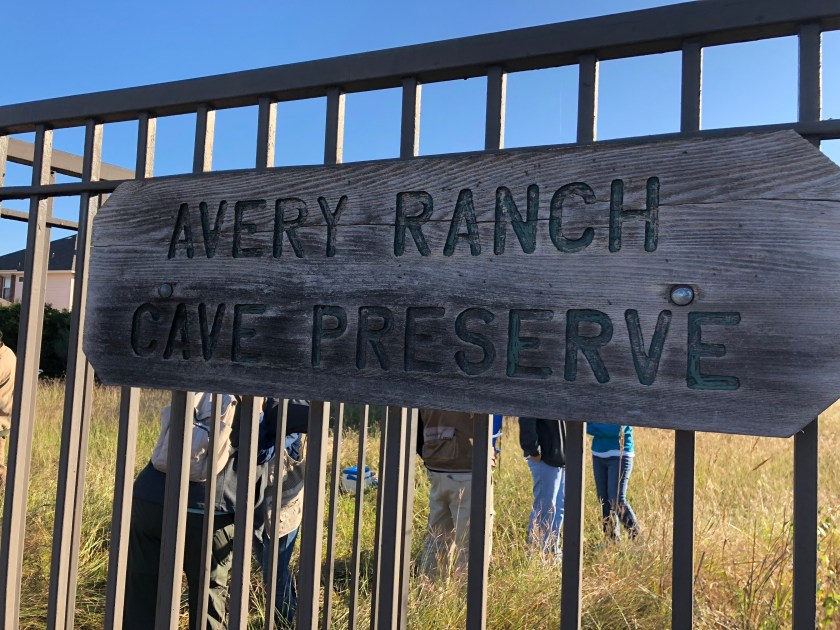
We carpooled over to the Avery Ranch Cave Preserve,* which is always fun (we learn so much from each other). Sure enough, there, right across from a park and another fenced in patch of land (hmm, wonder why?) is this little preserve. In it, was a locked metal door. Mysterious!

Continue reading “Caving in the Old ‘Hood”

Get Ready for a Lot of Posts!

group
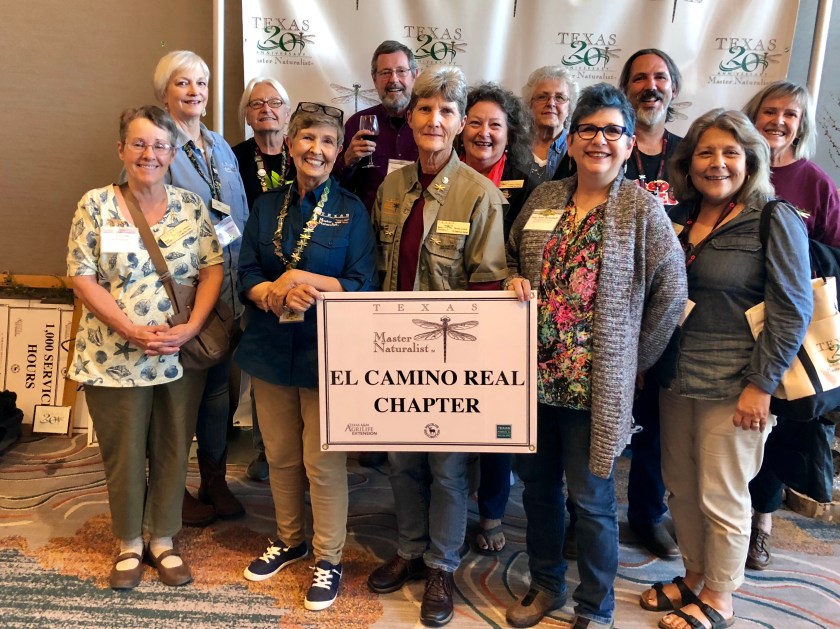
Here are twelve of our group, looking happy (many of us are hiding our wine glasses behind us, so we were happy).

While you haven’t heard from me in a while, you will now. I wasn’t posting about nature, because I was out in nature having experiences, as well as learning new things, at the Texas Master Naturalist Conference over the weekend. I haven’t had so much fun in a long time.

Before sharing all my activities, I wanted to acknowledge our group, the El Camino Real Chapter, who sent 14 or 16 (I forget) people to the conference. That is impressive for a small place like Milam County.

anniv
It’s the 20th anniversary of the whole program, so it’s impressive to see how many are that old!

Our group was acknowledged for ten years of being active. And I learned a lot about those ten years talking with people over the weekend. Sigh. All volunteer organizations have similar issues, but still manage to hang together!

Donna
Only 4 folks got this far this year. Way to go, Donna. In comparison, I have just over 100.

We were all very proud of Donna Lewis, our Vice President, who was one of only three people honored for achieving 5,000 volunteer hours. That is one active volunteer in a place with fewer options than most (we don’t have any state parks, etc., to volunteer at).

Next I’ll share some of my adventures with you. Stay tuned.

Looking Forward to a Master Naturalist Weekend

I’m all a-twitter about getting to go to my first Texas Master Naturalist conference in Georgetown this weekend. I’ll get to spend time with my friends from the El Camino Real chapter, and meet lots of new and interesting folks, I hope.

snail
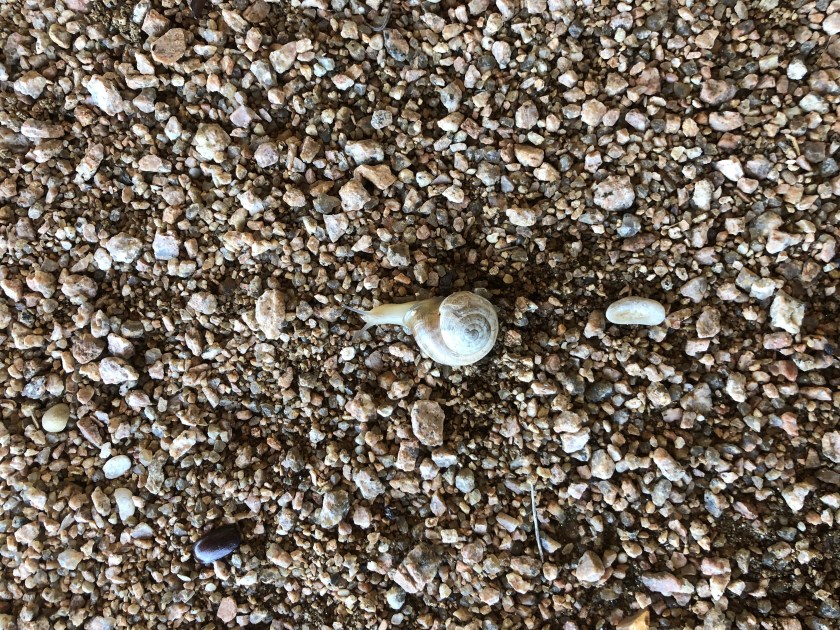
Hey look, a land snail! I find them fascinating!

I made Anita laugh a lot when I got so excited about an email last night that I had to run downstairs to ACT on it. What was it? Why, it was a notice that a spot had opened up in the session on “The Land Snails of Texas.” I have NO idea why she thought my excitement was sort of hilarious. I really want to know more about those snails I see everywhere, especially on the walls of the Dutchtowne Cafe in Cameron.

Of course, snails aren’t ALL I’m looking forward to. I also get to go look at a cave in the neighborhood where I used to live, the Brushy Creek/Avery Ranch area that straddles Austin, Cedar Park, and Round Rock. We always knew there were caves in the limestone below the area, but when one collapsed recently, it became big news (the article I link to here has lots of cool pictures of the cave before it got all cemented up)! The one we are going to look at is NOT directly under any houses, and is apparently a good size. I love the karst and limestone, I guess because I lived on it for 20 years.

You readers will like that I am going to two sessions on taking better photos of plants and wildlife. I hope to learn some iPhone techniques and to take good notes on what I can do when I get my other camera going.

I’ll share more of what I learn in the coming days.

rain2
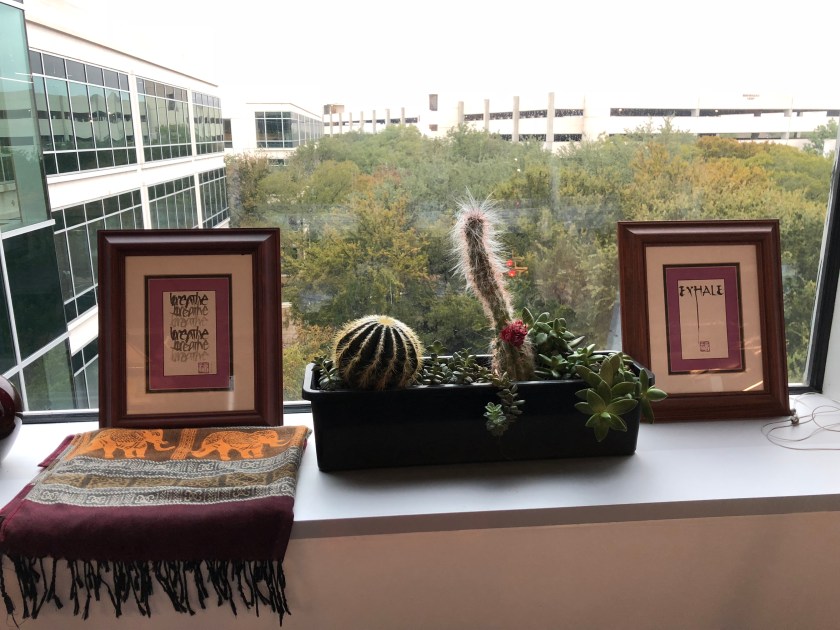
It’s dreary in north Austin today, but at least I have my reminders to breathe and exhale. And happy plants.

And as for the weather

It’s all rainy AGAIN. Austin has been under a boil order since Monday, which is a pain, but it’s not like we were hit by a tornado or hurricane or anything. The hope is that clearing will happen for the weekend and all the outdoor activities. There’s a real good chance!

At least it’s cooled off and we’ve enjoyed 50s and 60s outside for the last couple of days. That’s nice. Ahhh.


Ranch Management for Women, Part 2

Yesterday I told you about the classroom day of the Bennett Trust Women’s Conference, which I just discovered was called “Empowering Women — New Stewardship Traditions.” I went to this week. Now for the real fun, when we got on a bus and road out into the sunrise for hands-on fun! (I do wish I hadn’t been so sick; I slept on the bus a lot.)

archer
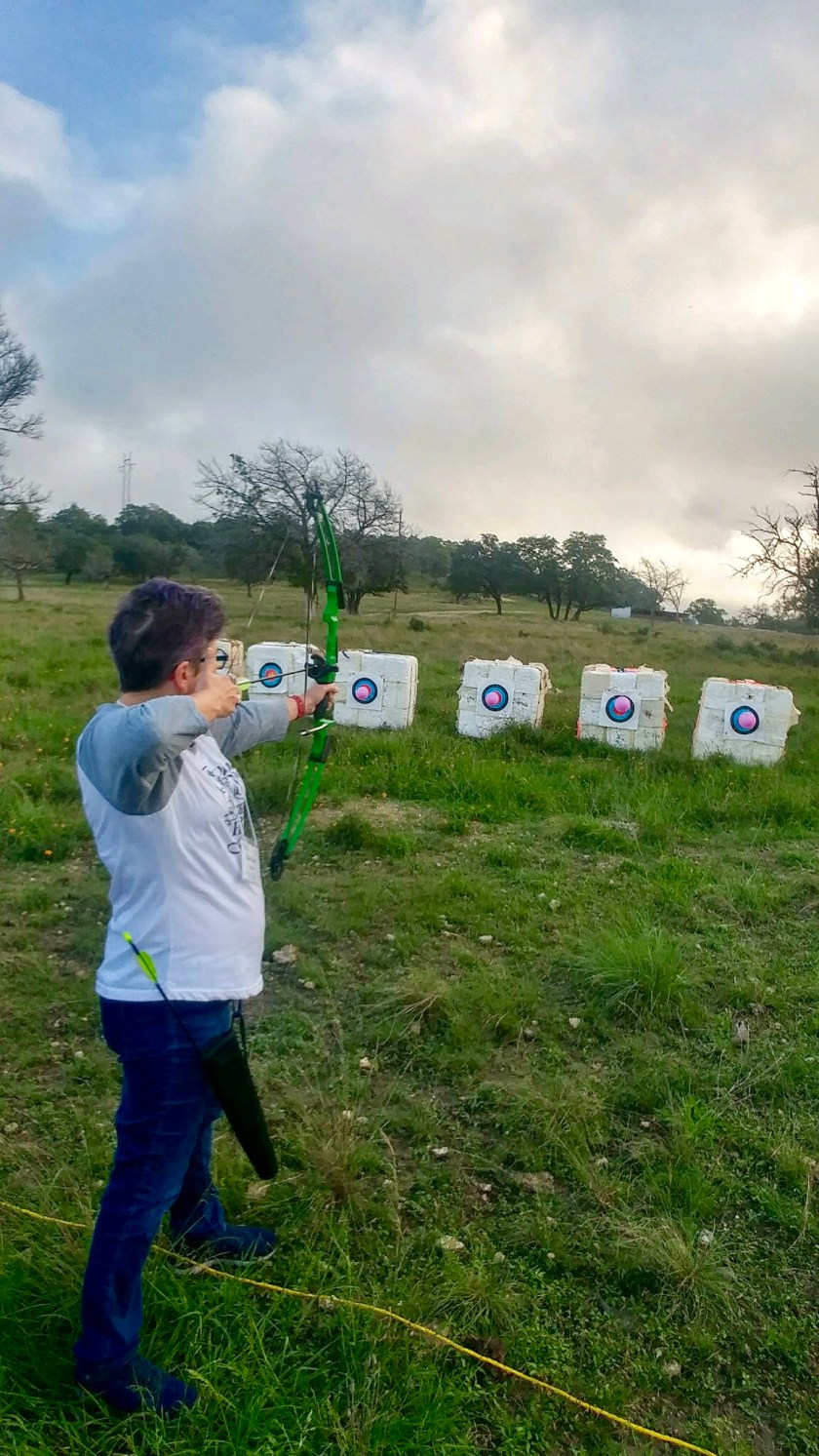
I did hit the target. Photo by the Other Sue Ann.

Ranch Skillz

Day 2 was called the Wine and Roses Tour, and we took a nice bus to a ranch outside of Kerrville. It has typical Hill Country terrain, and there were typical Hill Country angora goats grazing nearby (but out of the way of projectiles). We spent a very enjoyable morning rotating through introductions to ranching skills: archery, skeet shooting, animal tracking, and range grass identification. I did fine, but didn’t shoot because of my precarious shoulder situation that I’m about to start physical therapy on (thanks, Carlton the Dogman)

I got a real kick out of some of the women who were very proud that they turned out to actually be good at the archery or skeet shooting. There were a couple of experts among the attendees, too, including one woman who brought her own shotgun. She got to go for two clay birds at a time.

quail
You can see that our tracking trainer is holding her very content quail, while the tarantula is trying to escape.

The woman who showed us all the animal tracks was obviously a true lover of all living things. Not only did she bring along her pet scaled quail (oh so cute), but showed us a large, black tarantula she found on the side of the road, and one of the big ole brown lizards that live in the Hill Country. We loved her asides!

Continue reading “Ranch Management for Women, Part 2”

I Can’t Walk, but I See Birds

birds3
What we have here are three wood storks, two roseate spoonbills, and a great egret.

Well, it’s poor timing that I’m still limping around from my injured tendon and I have a long weekend! Being gimpy has not stopped me from making observations, and I had a DOOZY on Friday, and thanks to my neighbor, Ralph, had a good one yesterday, too.

I was looking out the window at the tank behind the house, like I always do, in case there’s a bird there. Yep. Lots of birds. I did a double take. That “egret” had a black head and black on its wings. Woo! The wood storks were here for their yearly visit!

I limped outside with the camera, hoping to get a close picture. I zoomed in, and got another surprise! Some of those “storks” were roseate spoonbills! Snap snap. I knew I’d have to snap fast, since the dogs had followed me out.

birds4
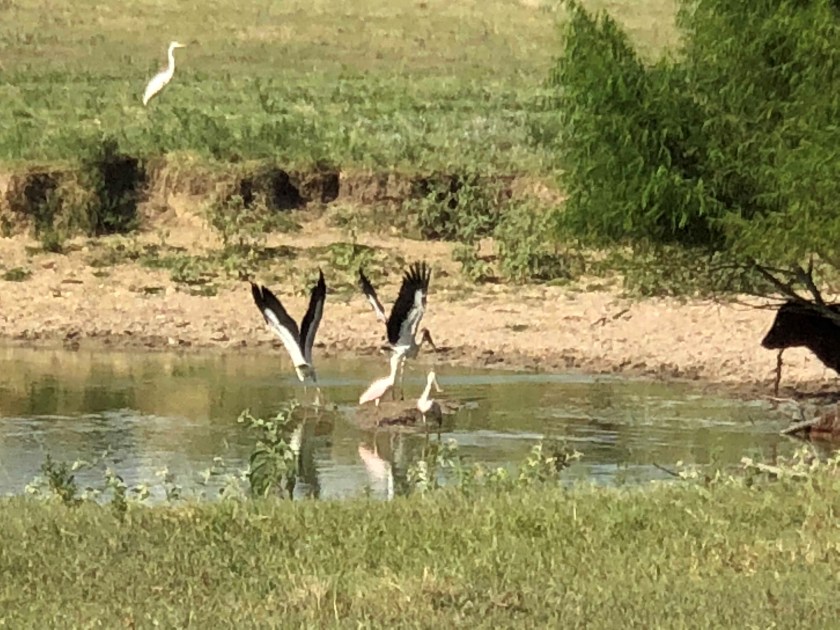
We’re out of here. Plus that cow is butting in on our territory.

Sure enough, the storks had enough of us interlopers and took off. That’s how I got this nice photo. I did get enough time to watch the storks going after fish like crazy. The water is so low that it’s got to be easy pickings for them.

Continue reading “I Can’t Walk, but I See Birds”

Enchanted

tie
Summer color at Enchanted Rock. A tievine flower and some colorful lichen.

My housemate in Austin, Anita, and I are taking a quick mini-vacation to Fredericksburg, Texas. I haven’t taken her many places since she moved here, and I knew she’d love the Hill Country, even while we are enduring weeks and weeks of incredible heat.

Yesterday, we drove out to Enchanted Rock State Natural Area, a place you should also go, if you’re visiting the middle of Texas. It really is fascinating, especially in the spring or after a rain (due to flowers and little pools of water with tiny shrimp in them).

However, it’s very crowded in the spring and fall, so we discovered the great advantage of heading out early in the morning in midsummer is having the entire rim trail to ourselves (we saw one other hiker). We took Anita’s dog, so we didn’t try to climb the summit. Also, heat.

skeleton
A Texas Skeleton Plant. That’s a new one for me! Big, pretty blossoms!

What I DID do, though, was put on my Master Naturalist hat (figuratively–I’d brought hiking boots, but forgot my hat), and see what kinds of plants, flowers, and other things I could spot. I’d never been to Enchanted Rock in the summer, so I did find some great surprises! And of course, I entered them all in my iNaturalist observations. Enjoy the photos, while I tell you about some of my favorite discoveries.

Continue reading “Enchanted”

Rain Brings Rain Lilies (and Bees)

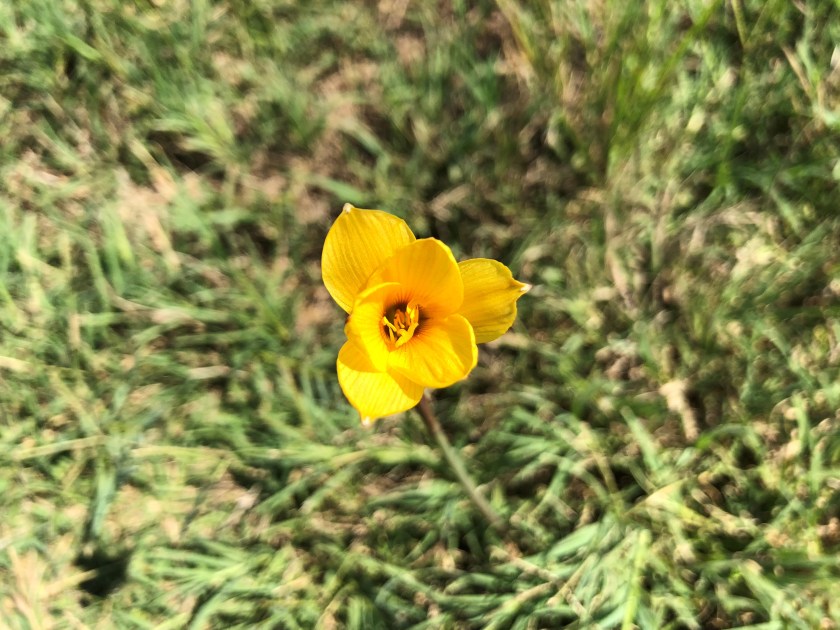
copper lily2
This is called a copper lily, but it’s in the rain lily family.

We had a big surprise rain event yesterday. No one was expecting it, but they were happy nonetheless. I hit some really hard rain in southern Milam County and was very glad for the rain mode in the car. There were waves on the road.

But the real topic today is rain lilies. Rain lilies (white ones) are a common plant around here. They pop up some time in summer, usually, in large masses after a good rain. I found it interesting that the Wildflower Center has two Latin names for rain lilies:
Cooperia pedunculata and Zephyranthes drummondii. Apparently, the ones that bloom in the spring are different from the ones that bloom in the fall (no clue what the summer ones are). It has some cool alternate names, too: Hill Country rain lily, Prairie lily, Rain lily, and Flor de mayo.

Here at the ranch, we have always had these really pretty yellow “rain lilies” that pop up around the same time as the white ones.

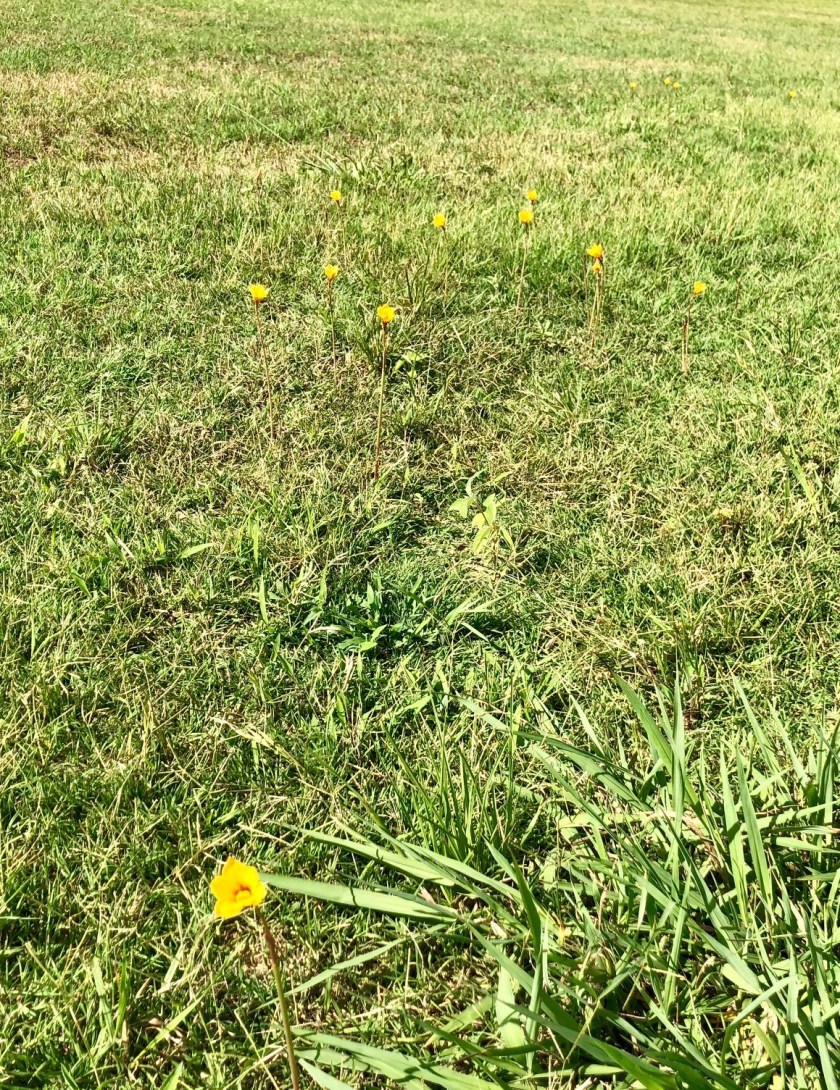
copper lily
Here they are in a field.

When they came up this year, of course the first thing I did was look them up on iNaturalist, which is how I found out they were called copper lilies or Rio Grande copper lilies (Habranthus tubispathus). It says they are escaped ornamental plants from Central America that have naturalized. I can’t imagine anyone planted them in our pasture, but who knows? They definitely seem to appear most often in Texas.

Continue reading “Rain Brings Rain Lilies (and Bees)”

A One-Hour Urban Experiment

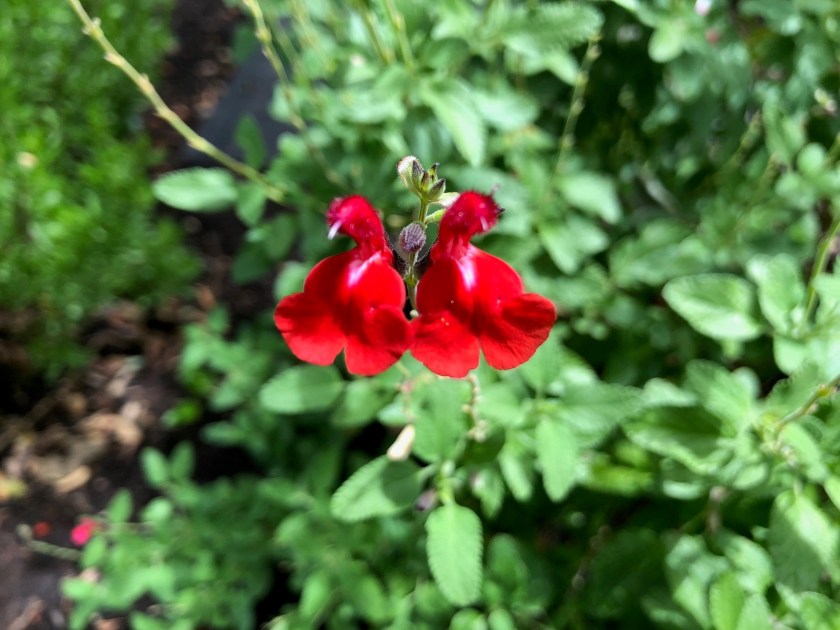
salvia_gregii
Salvia gregii is a really popular landscape plant. It’s supposed to be native, but I’ve never seen any that wasn’t put there by someone.

During the four days of the week when I’m in Austin, I do yoga three days at lunch. But on Wednesdays, I’m on my own. Sometimes I just work, but often I take a walk around the area, which has some interesting plantings and natural areas as well. The office is on land that used to be full of deer when my kids were little. Now there is a lot more office space and less deer land.

Anyway, I decided to give myself a challenge last Wednesday, which was to see how many new iNaturalist observations I could make during the lunch hour. I wanted to focus mainly on things that were blooming or bearing fruit, but if something else interesting showed up, I’d take advantage of that.

So, off I went with my trusty iPhone X, which takes reasonable pictures, sometimes. I took pictures of the native/nativized plants that had been planted around the buildings first. There were some really beautiful agaves that I just had to record, even though I know they are landscape plants. Look at this Queen Victoria Agave!

agave
It’s pretty, even if it’s not native.

Continue reading “A One-Hour Urban Experiment”

Grass Is a Pain in the Rear

rescue
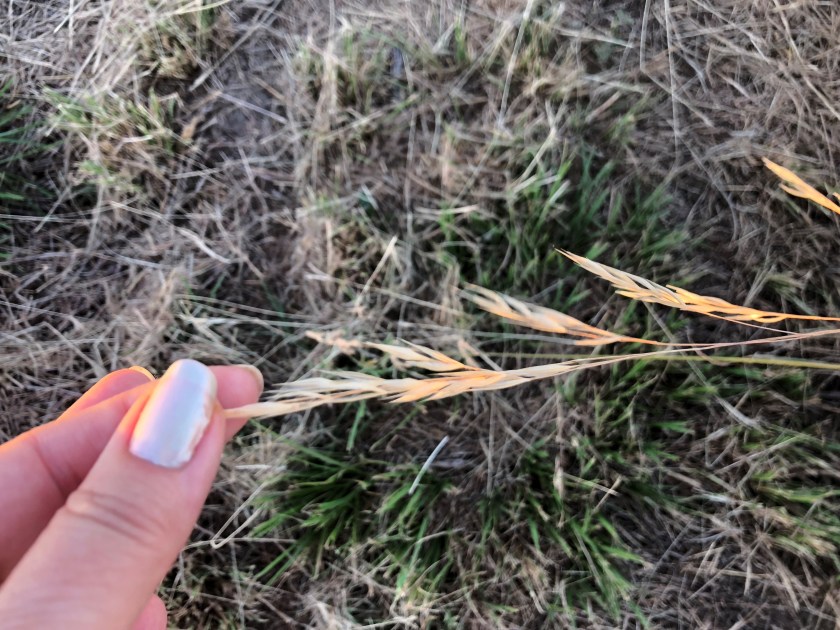
Rescue brome! Cool name, Never would ahve guessed this.

In my zeal to record all the things blooming around the Hermits’ Rest, I’ve been wanting to record all the lovely grasses that are producing their seed heads this time of year. They’re actually just glorious to look at right at sunset, when the silver bluestem practically glows as it waves in the wind. Heck, even Johnson grass (the bane of Texans’ existence) looks pretty that time of day.

I enjoy the grasses, especially since one of our field trips was to the herbarium, where we learned to use the keys to identify grasses by their seeds. Unfortunately, that is not a skill I have. Nor do I have a microscope, or even a really good camera. This means, sadly, that I sort of stink at grass identification.

Still, I throw my photos up on iNaturalist in hopes that someone will know what I am looking at. Sometimes it works, as in that rescue brome up there, but often it doesn’t.

Thank goodness for the helpful naturalists on the site, though. One of the Texas Parks and Wildlife urban wildlife biologists, Sam Kieschnick, has often consirmed my observations. His profile on iNaturalist proclaims his love of the project. The number of contributions he makes confirms his passion. I admire how he helps educate so many peopleand helps them contribute to scientific research along the way.

Continue reading “Grass Is a Pain in the Rear”

Katydid Awareness

katydid
Katydid on the garage entry thing in Austin.

My whole life I’ve heard about katydids but, I guess I’d never seen one in person until yesterday. I was driving into the parking lot at work, when I saw a bright green leaf, but the leaf turned out to be an insect.

I quickly parked my car and went over to see what it was. Of course I took a picture so I could upload it to iNaturalist. What a cool bug it was, too!

When I uploaded the photo, I saw lots of potential katydids, but I figured it was probably the most common one. That turned out to be wrong, as the person who reviewed it for iNaturalist said it was actually a Central Texas Leaf-Katydid, which is more rare and more local. That’s cool!

I also sent up two flowers to be identified after I got to the Hermits’ Rest yesterday. They are two of the more late-blooming wildflowers. I am pretty sure I got the ram’s horn right. That’s one I look forward to every year. We only have a few:

ramshorn
I guess I like these because although the flowers are delicate in appearance, they are really big.

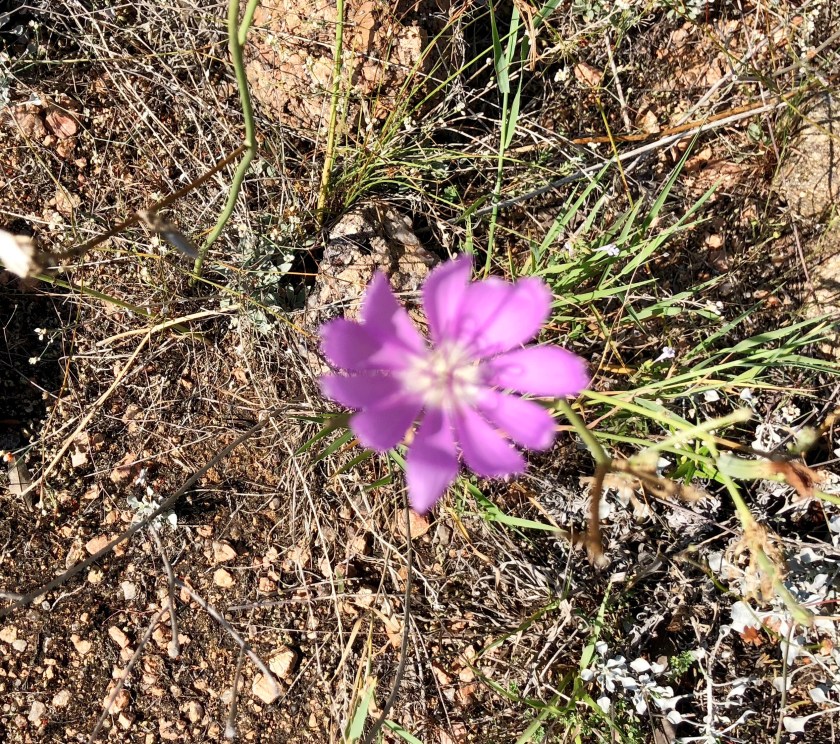
The next plant I am not so sure of. We have quite a bit of it, but when I uploaded it to iNaturalist, there wasn’t much about this one, if, in fact, I identified it correctly. It appeared to be Lady Bird’s Centaury, which must be named after Lady Bird Johnson, right? It said it had not been reported yet. That sounds fishy to me, so I am awaiting a correction from one of the botany experts by morning. It’s great to have the opportunity to learn this way.

centaury
It was really windy when I took this, so I had to hold the plant.