Book Report: A World Appears

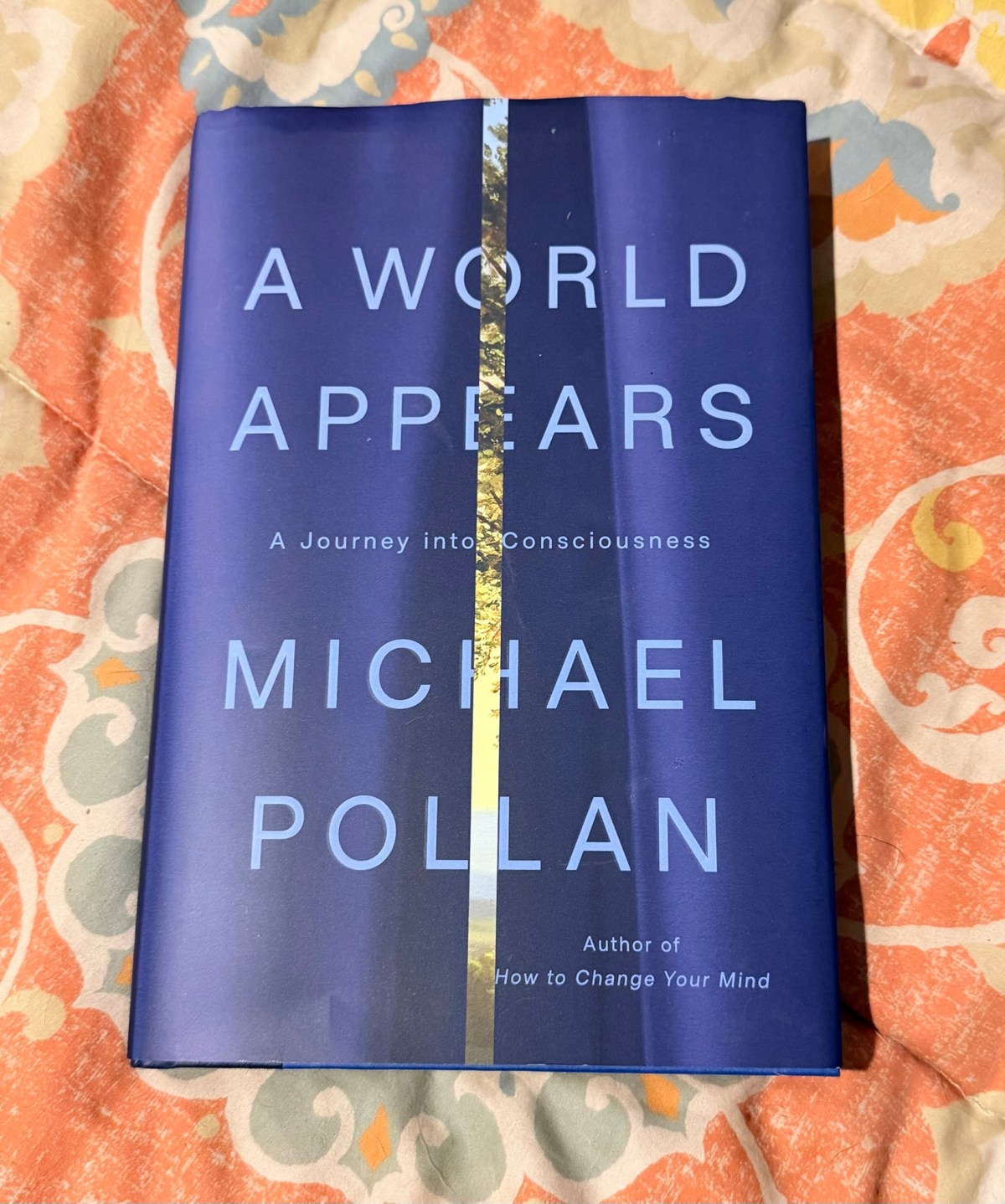
It’s no secret that I’m a big fan of Michael Pollan. He fearlessly investigates what makes us human and is delightfully unafraid to test out his own ideas and find them wrong. A World Appears (2026) is his latest, an exploration into what it means to be conscious, and for that matter, what exactly consciousness is.
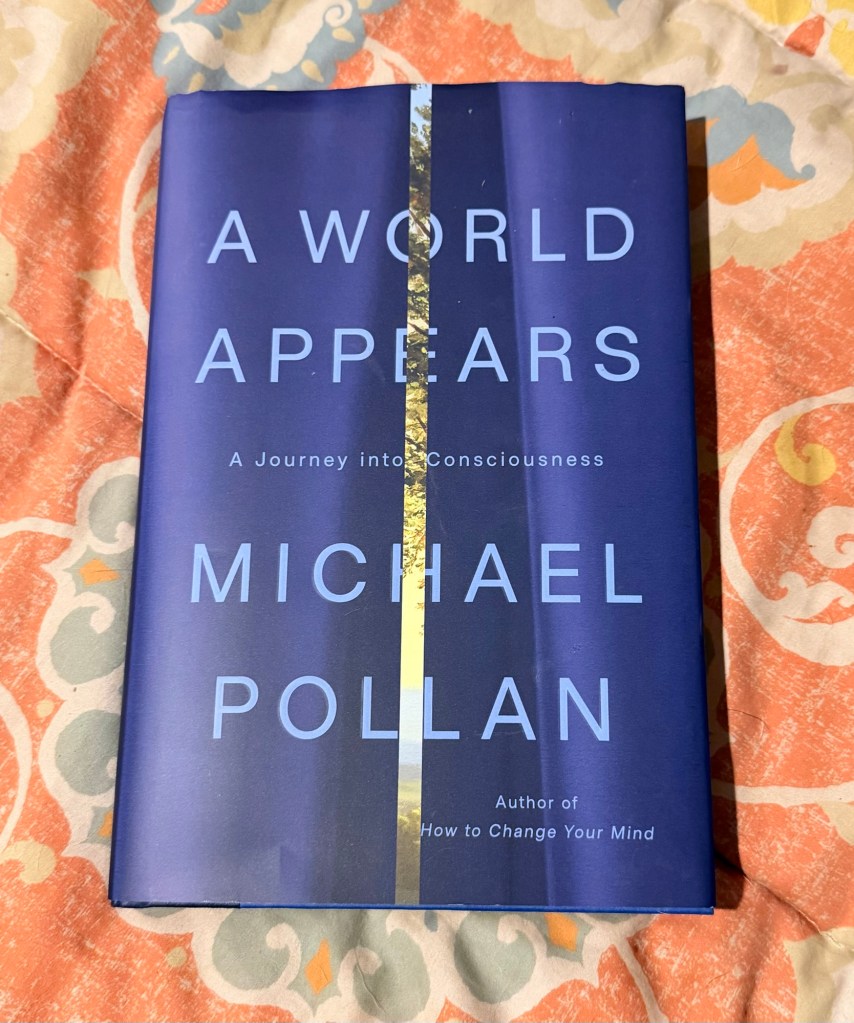
The title refers to what happens as we open our eyes from sleeping. A world appears. How does that work? Hint: the answer to the consciousness question is not really the goal of the book. The goal is to explore various ways of addressing “the big question” and how close they come to an answer.

Pollan interviews a wide range of fascinating scientists, deep thinkers, academics, and spiritual leaders in his quest. Some think they have the answers, some think they’re getting close, and others doubt we’ll figure consciousness out.

Mostly, Pollan drinks a lot of tea. If you listen to the audiobook you can make a drinking game where you down a shot of an interesting beverage every time he sits down with a pot of tea to interview someone. I guess consciousness scholars aren’t coffee drinkers. (Aside: Lee and I have a drinking game for every time an HGTV host says “pop of color”.)

Other than that quirk, I enjoyed reading along as Pollan thinks about what the experts tell him and points out where he thinks they have a point or are a little off. I was fascinated by the idea that consciousness is controlled by the cerebellum, not cortex, and I loved learning how many other living things may well be conscious, depending on how it’s defined.

Other parts of the book delve into whether machines can be conscious. All sorts of conflicting ideas come up in this part of the book. I will say I’m hoping Pollan’s conclusions on this one are right.

Fans of Pollan will not be surprised that psychedelics come into play when trying to figure out how to escape consciousness. Meditation is also invoked (and I’m more familiar with the brief flashes of transcendence from this method—brief—that’s why it’s a practice). It’s all fascinating.

One thing missing from the book is what happens when we are asleep. Are we completely unconscious? What do dreams have to do with our stream of consciousness? Maybe that’s another book.

All in all, this was a fun book that gave me much to think about and more tools in my toolbox to figure out what “I” am. It’s deep!

Benito is pondering his consciousness

Three Jobs I’d Love

List three jobs you’d consider pursuing if money didn’t matter.

Oh good, here’s a question that I don’t have to be as careful answering as yesterday’s (thanks for the positive feedback). I know the things I’d love to do if it weren’t for that pesky needing an income thing.

Knitting Teacher. I truly loved the years I spent teaching people to knit at a yarn shop. I’ve been teaching knitting and crocheting informally most of my life, but I really got a system going there toward the end. It’s so rewarding to taking someone from being sure they’re unable to learn something straight to competency. And once you can knit, you’ve always got something to do!

Here’s a good starter project.

Nature Interpreter. This is a real job. You share with people about the nature around them, help them learn to see things they might not have noticed, and show them the unique qualities of the place where they are. You can do it as a volunteer in some parks, but Milam County lacks State Parks. Maybe the Ranchería Grande site folks are working on that’s in this county will need interpretation.

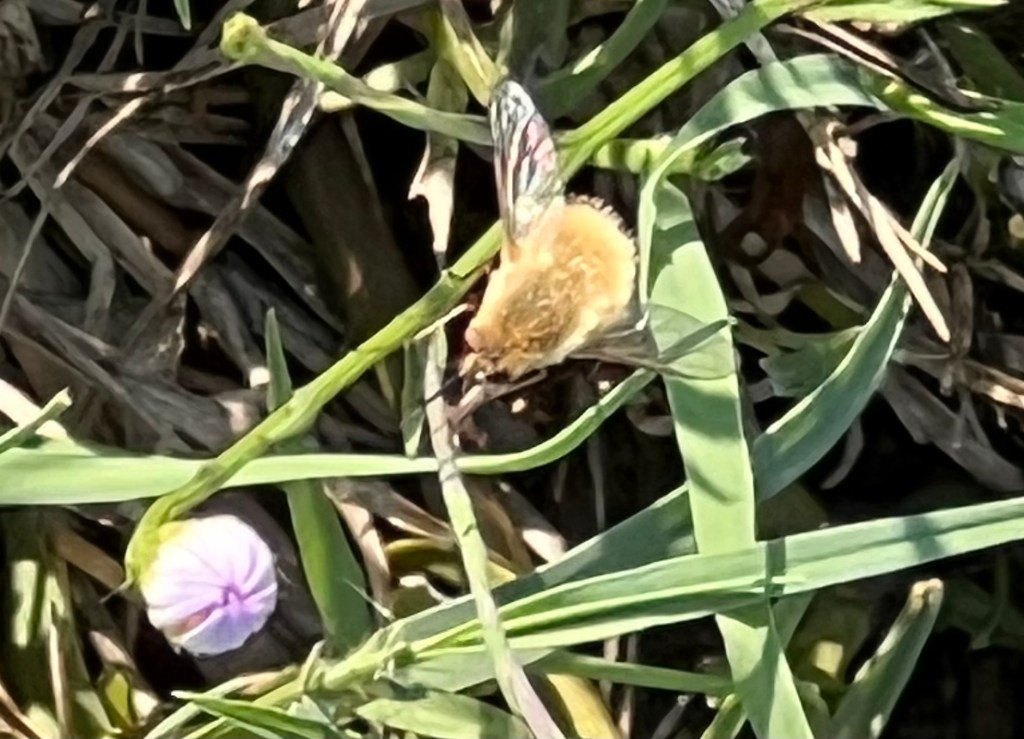
I could show folks that they aren’t just walking through a field of weeds, but that the asters are alive with tiny fuzzy bee flies.

Backup Singer. I love(d) to sing. I like being in front, but it’s especially fun to do harmonies behind a singer. I miss performing. I miss the teamwork and cooperation of being in a band, vocal group, or chorus. And sometimes backup singers get to travel! I love staying in hotels, too!

This is the group my friend Sharon is in, the Studebakers. They take turns singing lead and harmonies.

Given a fourth choice I’d be a field worker in biology. I’d get to both be outside and explore nature AND write scientific papers! I actually do know how to do that.

I’d study birds.

Mind Blind? On the Contrary!

A bunch of my Facebook buds have been posting a link to a BBC article that came out in 2015. Go read it; I’ll wait.

Oh, okay, it’s about the fact that a significant number of humans do not picture scenes in their minds when thinking. It’s called mind blindness, or aphantasia. I have to admit that, in all my endless reading about how brains work, I had never realized that this is as common as it is. Apparently it affects 2% of the population!

What do you mean, some of us see stuff others don’t!? From chiller856 via Twenty20 (original and appropriate caption: The eyes are useless when the mind is blind…💀

When someone posted a link to the article and said they were mind blind, I was really surprised. I’d never have guessed. Later, people said they found out their spouses were that way and they’d never known. I got suspicious, and asked my own spouse, whose perceptions have sometimes baffled me. Yep, he has it at least to some extent, and definitely has the related issue of being face blind (THAT explains why he found me attractive!). Well, huh. I knew he was color blind (try picking out paint with that guy), but I hadn’t known this!

The article goes on to say some people become upset when they find out other people have movies going on in their heads. I don’t know; I think if I was born a certain way, it would feel normal, like being short, or prone to being gassy.

I also wonder if there’s research to show that people who are mind blind prefer to read nonfiction over fiction, as an anecdote in the article suggested. I guess it’s nice that if these folks read a book and see a movie, they aren’t bothered that the characters don’t look how they pictured them!

This also makes me wonder if some other traits correlate to mind blindness. Some of my friends have suggested their attention-deficit traits and/or social skills issues associated with the autism spectrum may go along with this. However, many people I know don’t report this. I want more research! (Here’s an article with more research, but not on my questions.)

The Other Side

What’s going on in there?

Why was I not surprised to learn that there’s another way of perceiving things called hyperphantasia, or super-visualizers. These folks have very detailed mental images and can describe what they see easily. They are folks who have been termed to have “very vivid imaginations.” According to the researcher in the article, people usually fall somewhere in between aphantasia and hyperphantasia. That makes sense, knowing how mental traits tend to work out.

Continue reading “Mind Blind? On the Contrary!”

Book Report: The Body: A Guide for Occupants

Ooh-wee am I excited to share this book report! I’ve been making myself obnoxious the entire time I’ve been reading it, because I keep telling everyone little tidbits I’ve learned or recommending it with great abandon. I sure liked The Body: A Guide for Occupants, by Bill Bryson. I am a complete sucker for nonfiction that both informs and entertains, and this book certainly achieves those goals and more.

Even Penney the dog liked this book, at least at first.

Bryson, who is many people’s favorite nonfiction writer, according to the many people who told me that, takes you on a tour of the human body and all its systems, and he shares lots of current information (the book just came out) as well as fascinating stories of what people used to believe about various aspects of ourselves.

Continue reading “Book Report: The Body: A Guide for Occupants”