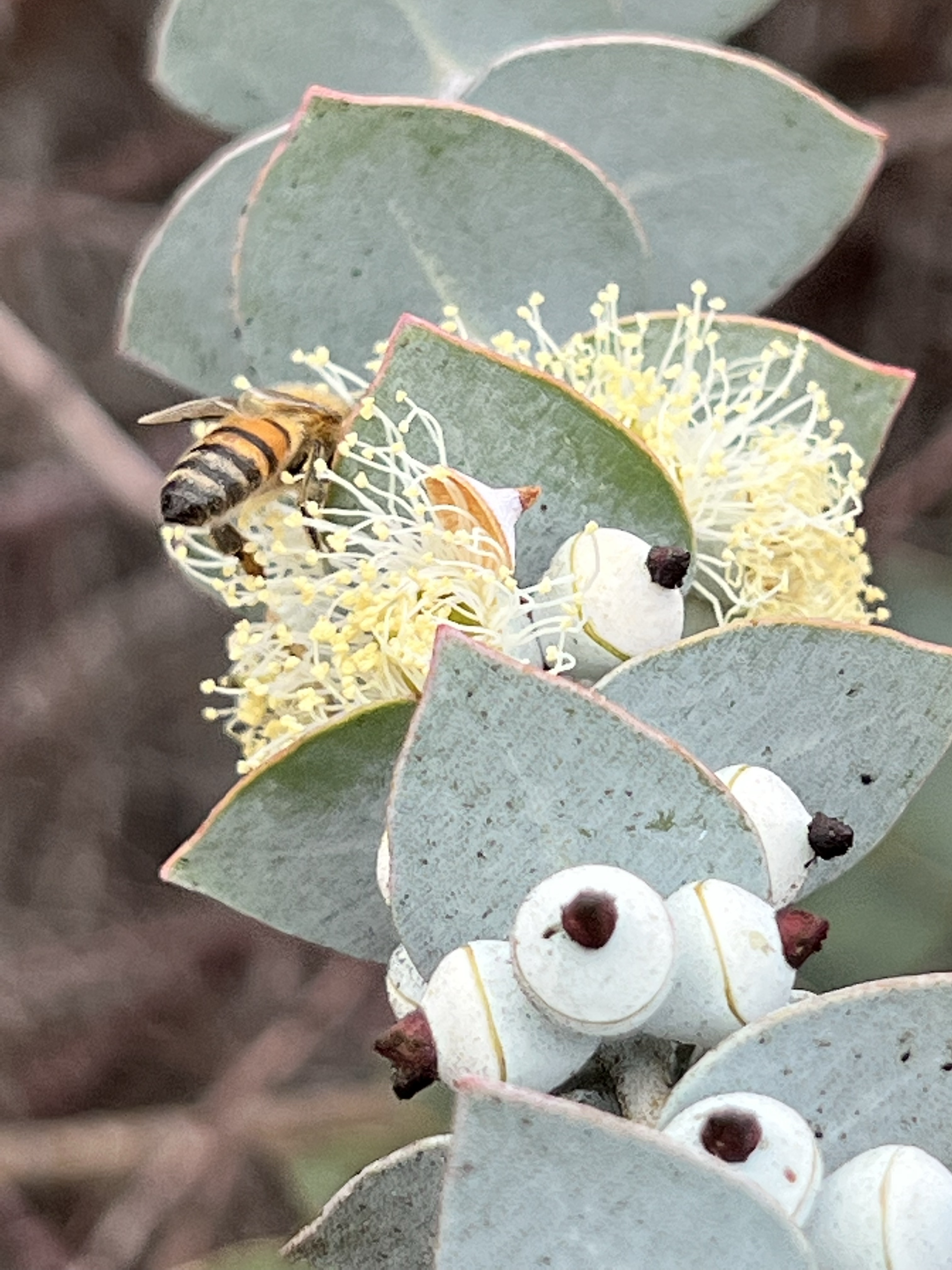
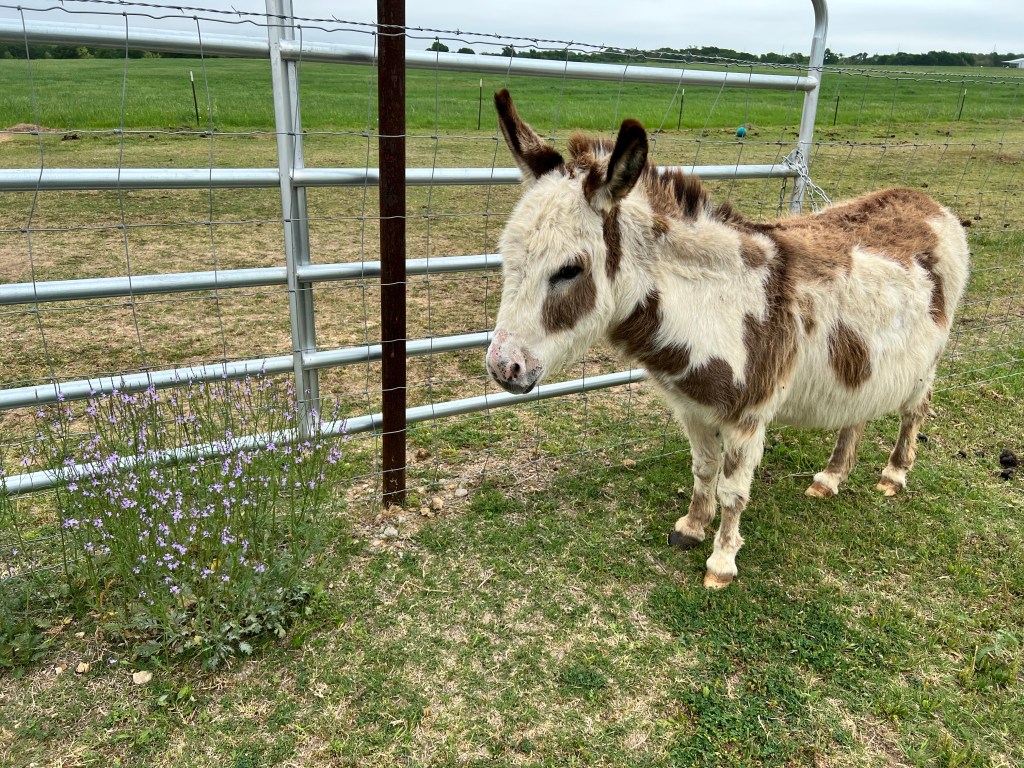
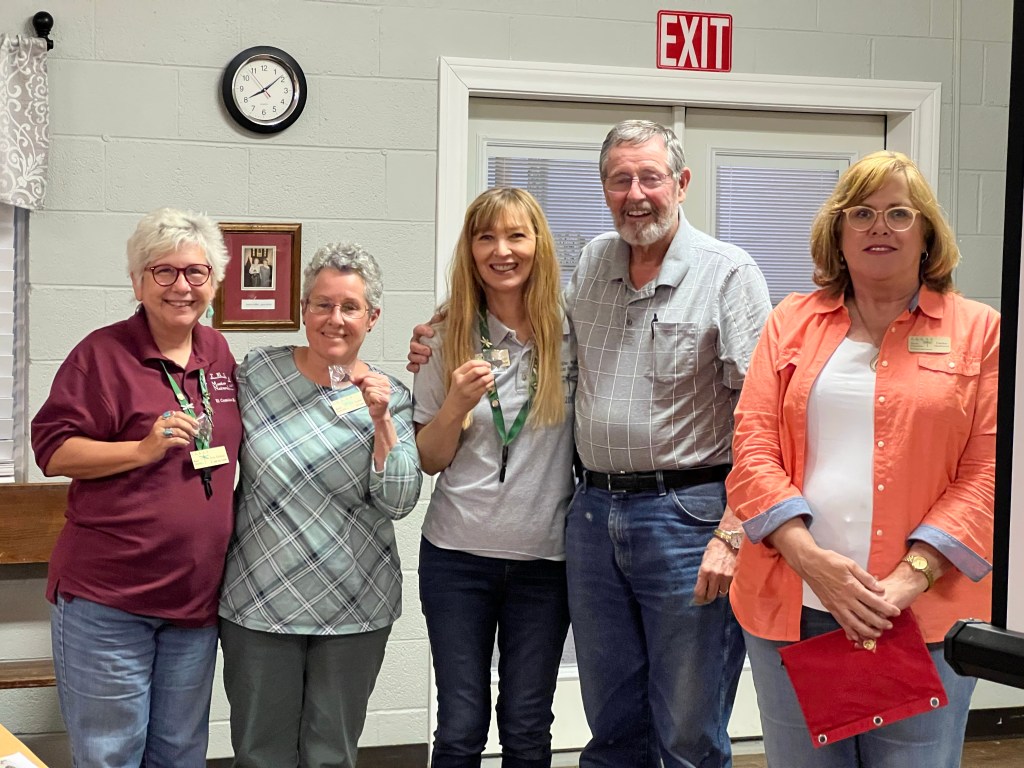
I’m so glad the Bennett Trust conference for ranch women is back at last. The conference started at 7 am and the wine hour was still going on when I left to watch football, along with my new friend, Mim, who’s originally from Rockdale. We bonded.
Post conference relaxation, with pumpkins.
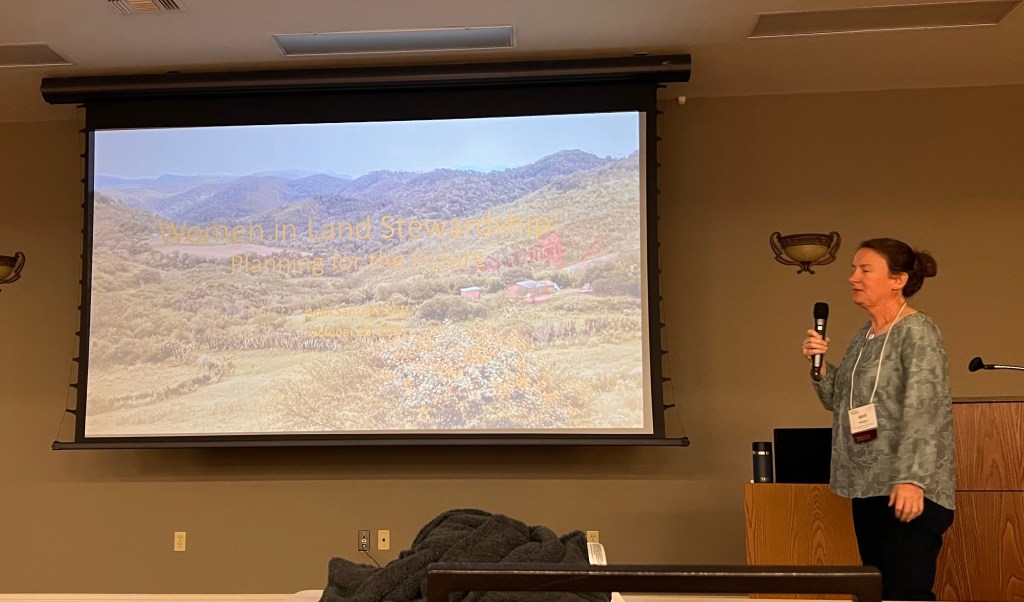
Not only did the legacy of the Bennetts (very nice people who left a trust to pay for these events) pay for excellent food, but there were really interesting speakers on various aspects of taking care of your land. the keynote was on women and land stewardship, and April Sansom was inspiring to all of us who want to leave the land better than we found it.
She’s helped women use small agricultural projects to better their lives all over the world thank you the Peace Corps, and now educates people at the Selah Bamberger Ranch preserve (including Master Naturalists!). Her love of the planet shown through every word.
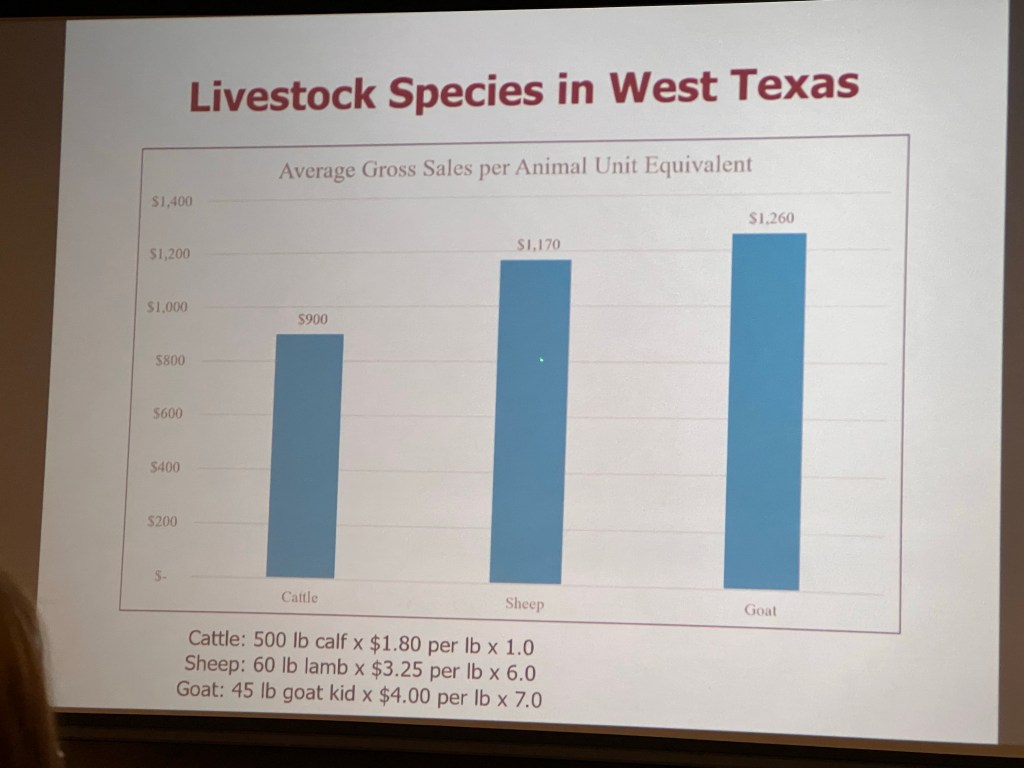
I heard a lot about how cost effective goats are to raise and sell. The speaker, David Anderson, even explained what all the types of livestock sales mean. Now I’ll understand the livestock report on KMIL better.
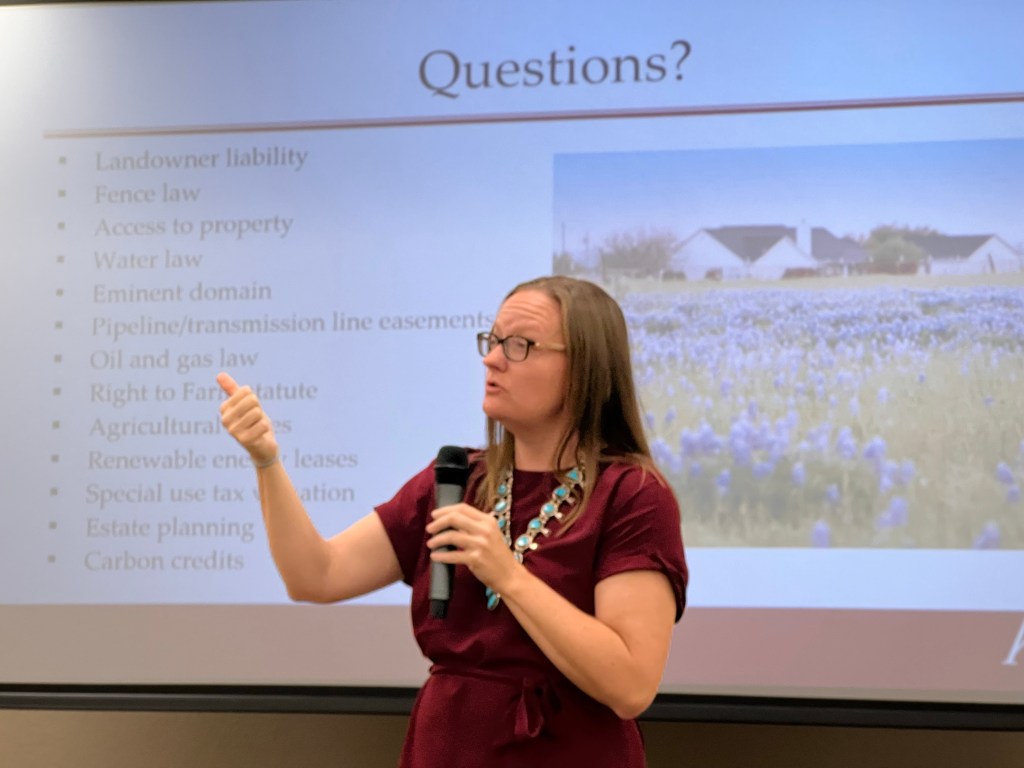
One fun segment was by a ranch land lawyer. She answered so many questions about fencing, trespassing, and the usefulness of forming LLCs.
Tiffany Dowell-Lashmet and her list of topics
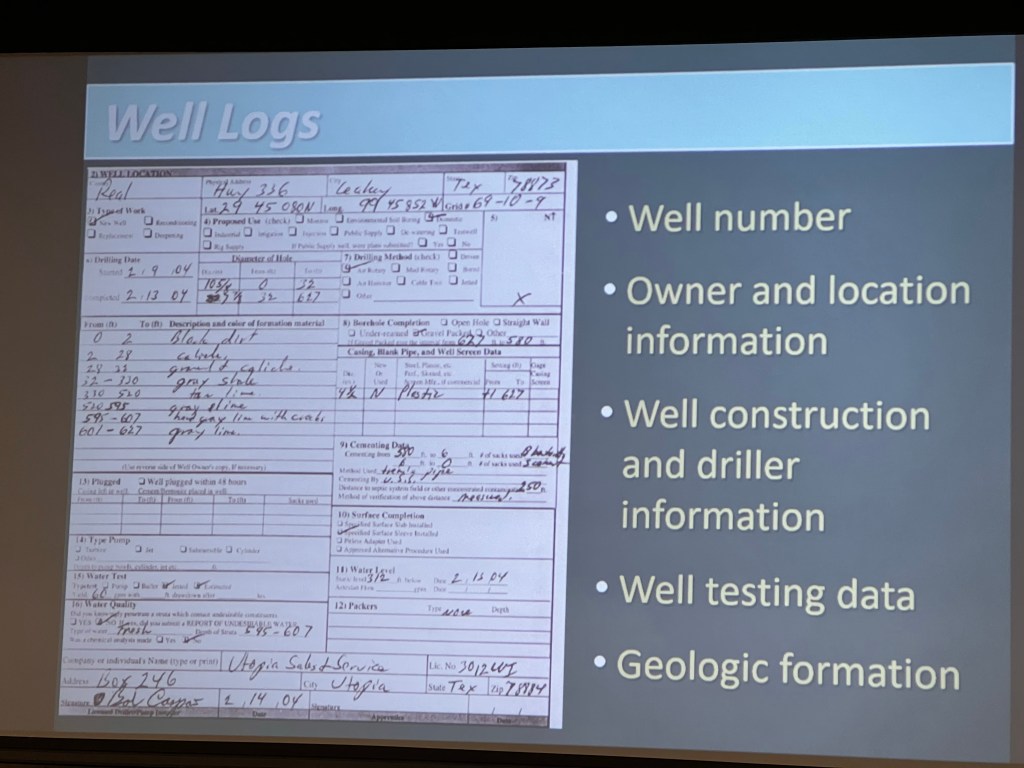
Then, I learned more than I ever thought I would about wells and well water. Luckily, since I can’t remember it all, Joel Pigg gave us lots of excellent printed material that I can’t wait to read and share. Major learning: wells should be uphill from septic systems.
Also, your well should have a log.
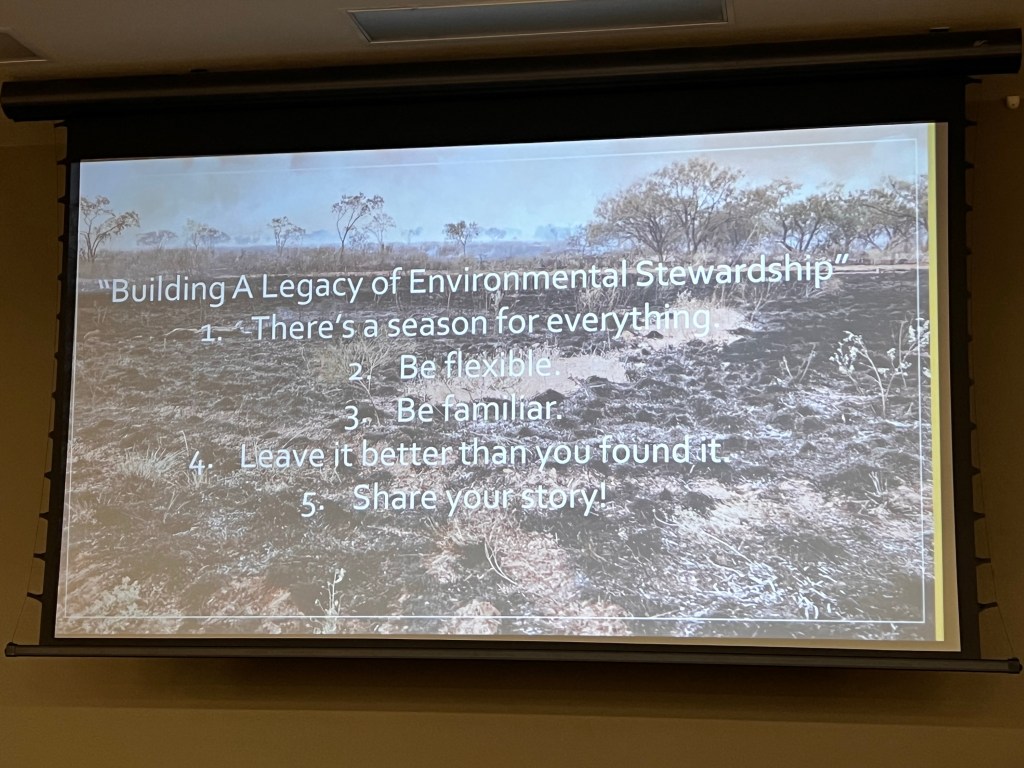
Probably my favorite speaker was Morgan Treadwell, whose husband is from the family that owns a historic Texas ranch. She knows her brush removal and how to use fire. What I learned, though, was how to get rid of brush cost effectively.
Great quote.
Morgan really had a lot of information that was new to me. For example, weaken mesquite with a controlled burn, then bring in goats to eat new growth. Huh. Goats again. Also fire won’t kill them when over 3 years old, so do small maintenance often rather than a huge effort every decade or so.
Rules to live by
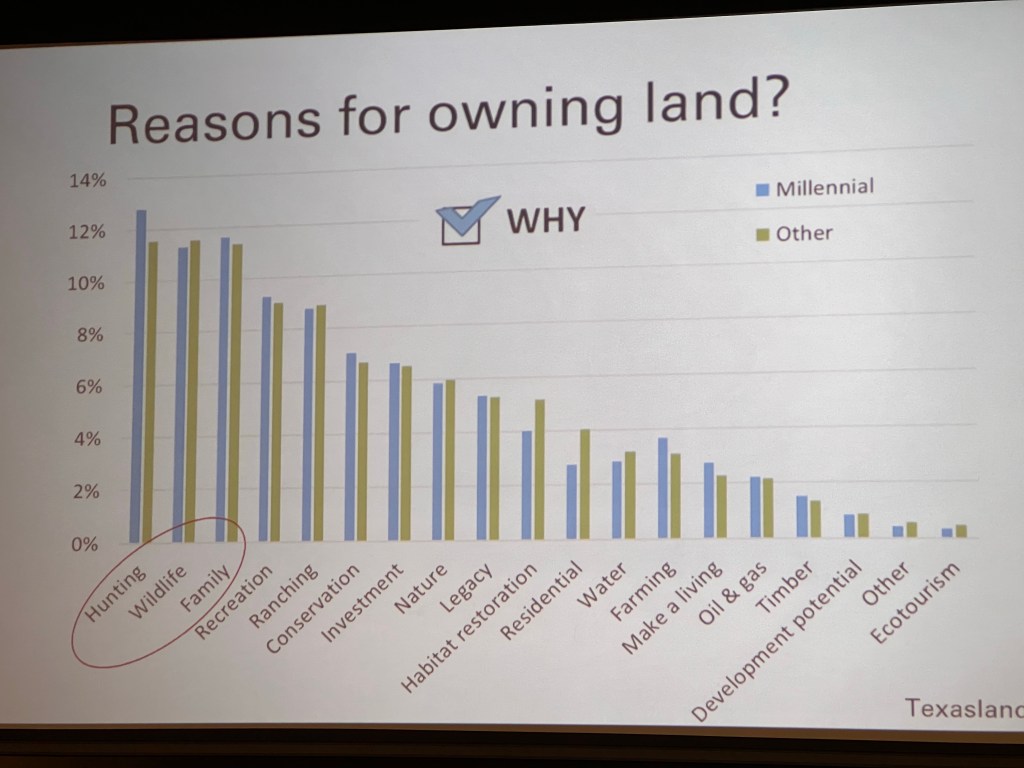
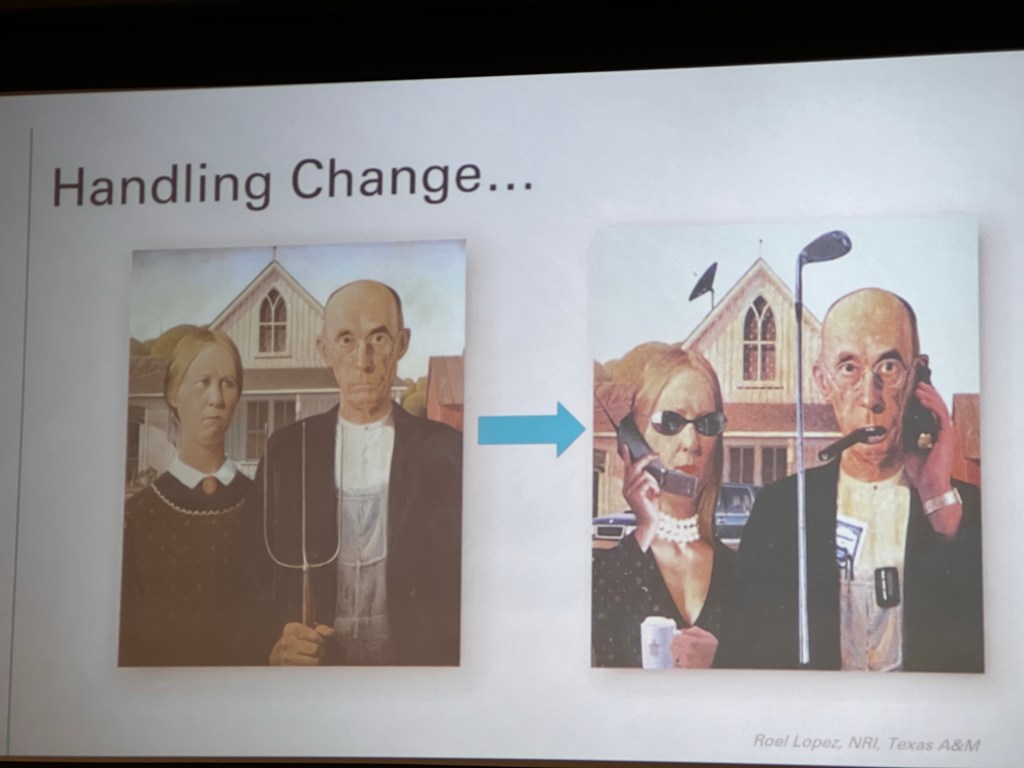
The final talk was by a woman named Megan Clayton. She talked about how newer land owners may want to do different things with their land, and that women play a huge role in new things like agri-tourism and farm-to-table operations.
How reasons for owning land change by generations.
Clayton shared a lot of fun websites with us, including a cow poop analyzer, which I must try out at home. She then paired people with mentors and mentees. I ended up being a mentor because no one wanted to admit they knew anything.
This made us laugh.
Anyhow, this was a lot, but I learned so much. And the food was so good! I enjoyed meeting a lot of interesting women and was pleased to see the diversity of attendees. I’m looking forward to a day of ranch tours tomorrow!
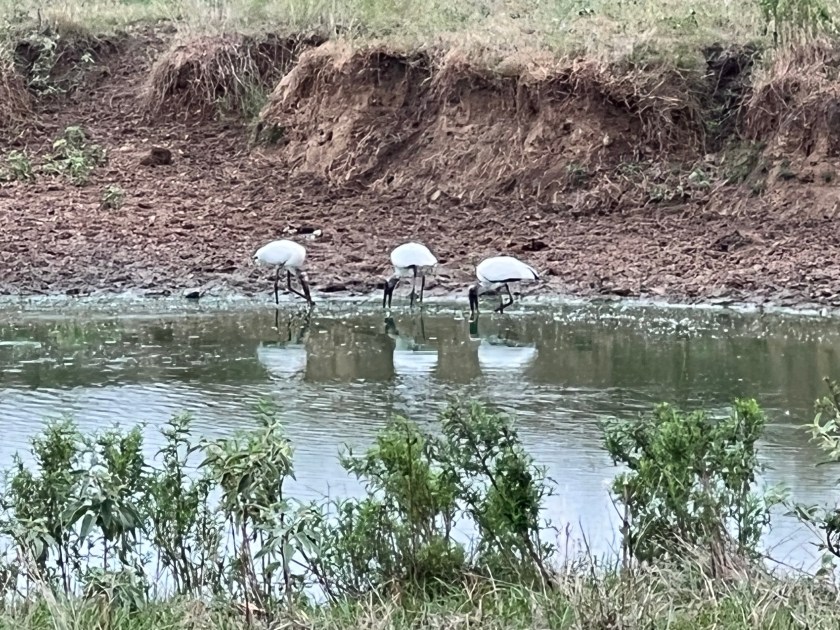
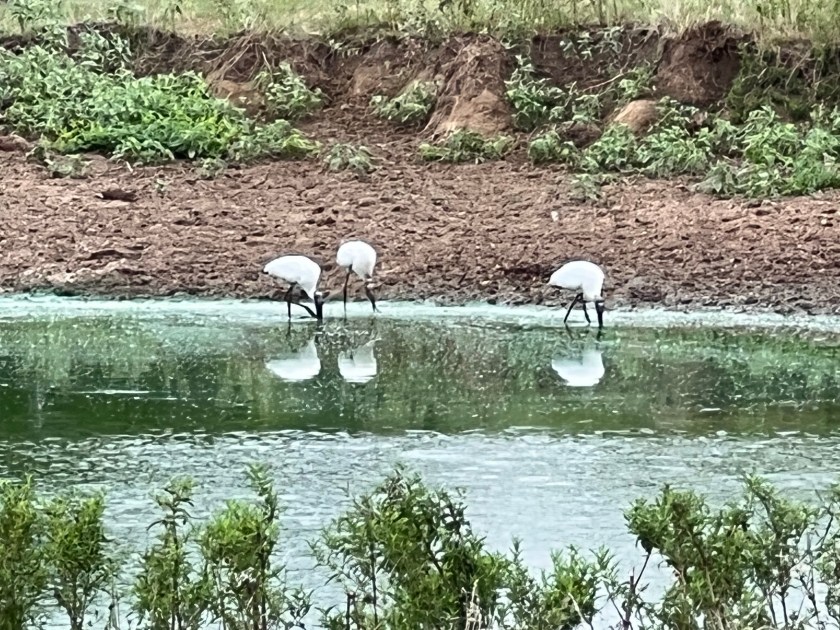
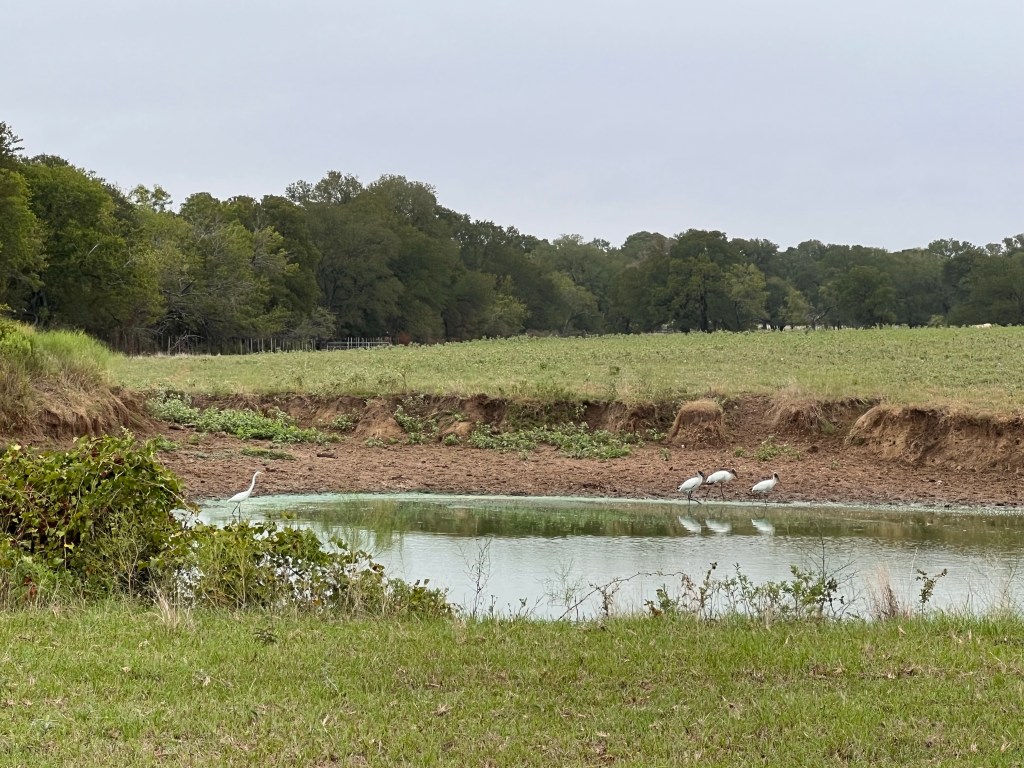
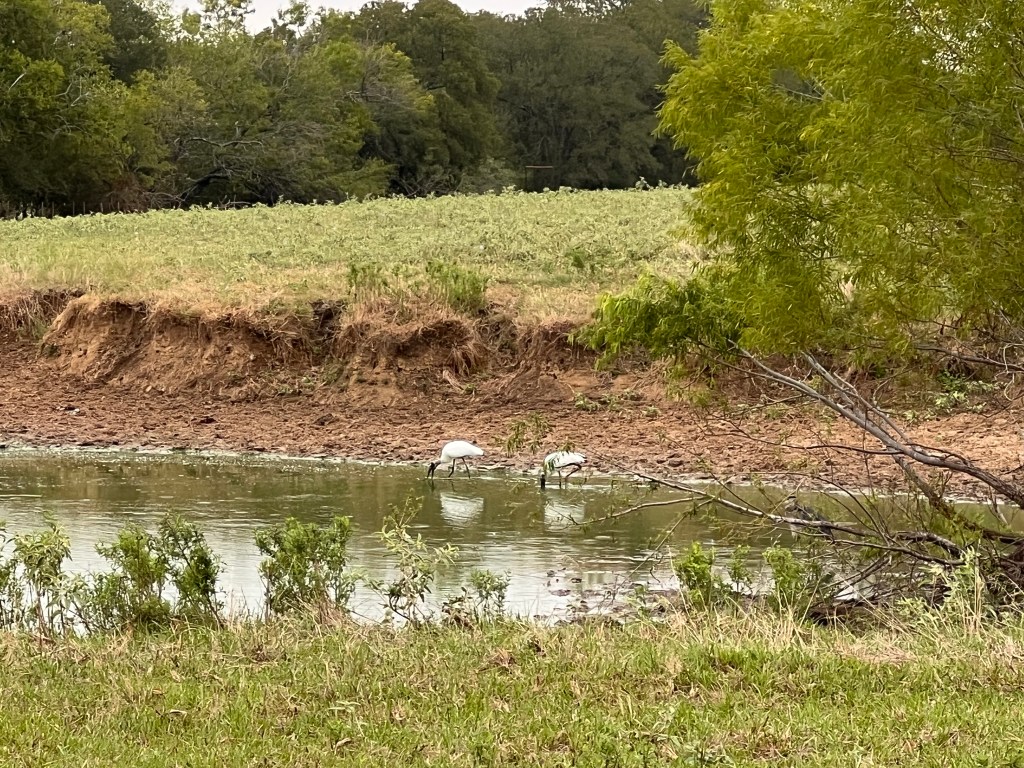
This morning there’s thunder everywhere, so I went out early to feed the chickens. I’m glad I did, because when I looked into the pond behind the house, I saw something in addition to the usual great egret and blue heron: wood storks!
At first there were just three. I love how their shadows look.
They used to visit for a while periodically, but lately they just drop by and move on. I’m so glad I got to catch them before they left. They are such gorgeous birds, with white bodies, black heads and black wing tips that make them easy to spot when they are flying.
mmm, minnows
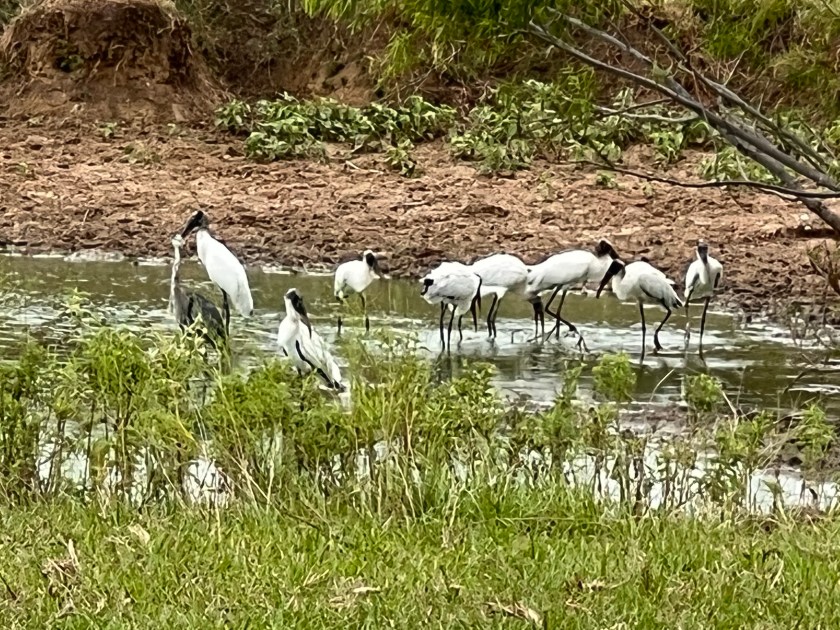
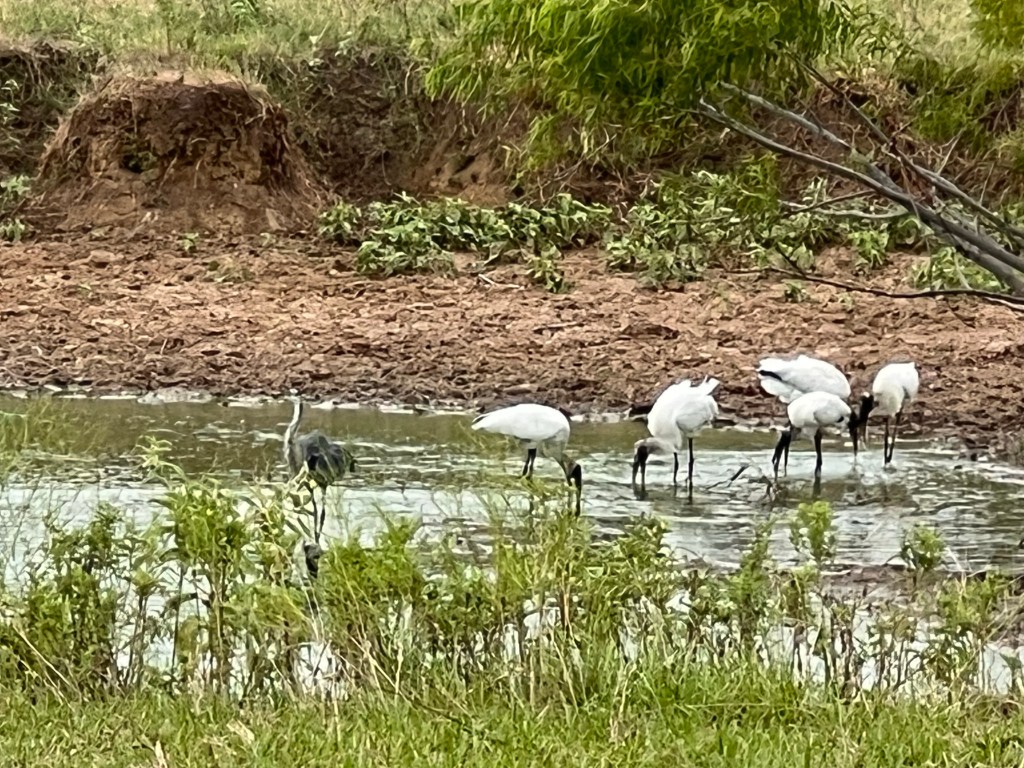
You know they are big when you compare them to the resident blue heron, who is HUGE thanks to all those catfish and minnows it ate while the ponds were drying up.
Later there were lots of them, to the annoyance of the blue heron.
Wood storks (Mycteria americana) are the only American stork, and they move around with the seasons. Interestingly, they must have shallow water to feed in, because they feed by touch. That’s why they breed when water levels are falling (in South America). They are predominantly subtropical birds, which is why they hang around here only when it’s warmer. They are listed as a threatened species in the Western hemisphere, because of predation (bad ole caracaras) and believe it or not, ecotourism disturbing their nesting colonies. (Source: Wikipedia via iNaturalist)
You can see the wing here.
I’m extra happy to have gotten some videos. The one of them flying away is so lovely. I hope they visit again soon!
Very short, but pretty
Goodbye! Thanks for visiting!
PS: Yes, we had a good amount of rain yesterday, and should have more today. Happy news for all the plants around here!
This one shows the great egret that was also presentA few more pictures
I’ll write more in the Master Naturalist blog about this (update, I forgot to do so), but I did enjoy a visit to the Texas A&M Biodiversity Research and Teaching Collections this morning. My friend Pamela and I drove over and met up with another Master Naturalist and her granddaughter, who’s high school age, and enjoyed it as much as we did, I think. We were sad that more of our group couldn’t join us.
Art is from 3D images of animals.
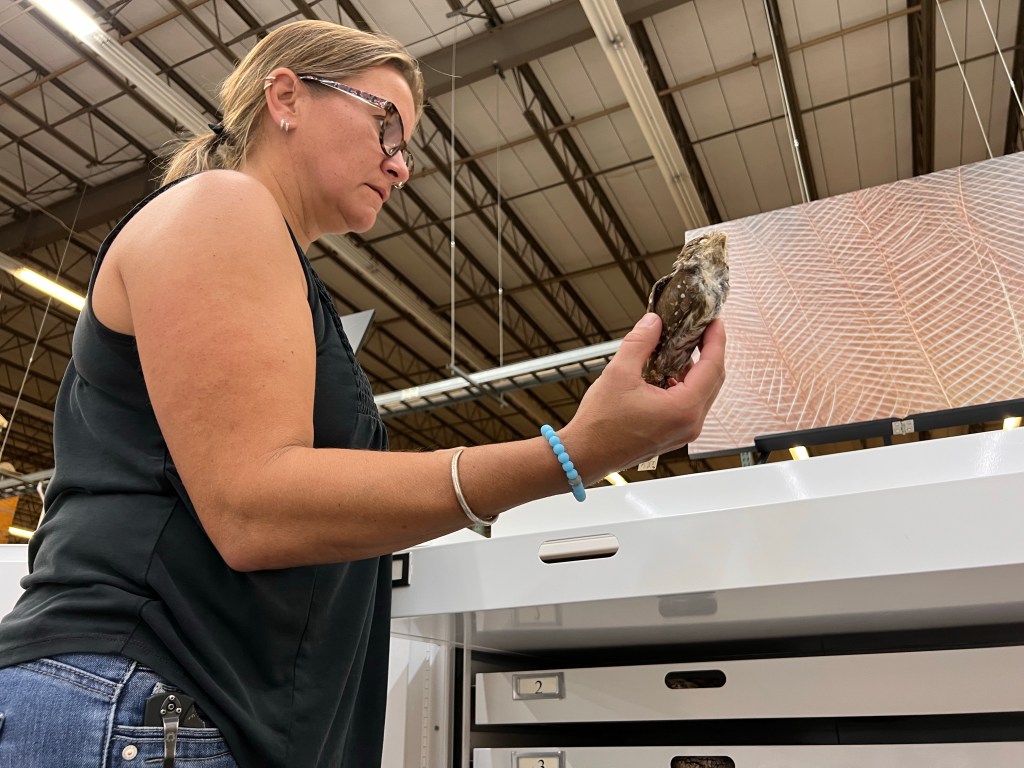
Our guides were curators Heather Prestridge, an ichthyologist, and Gary Voelker, an ornithologist. They were informal with our small group, informative, and entertaining as well. I had a blast learning about how many specimens they have, how long the collection has been growing (since the 1930s), and how they preserve the animals for research.
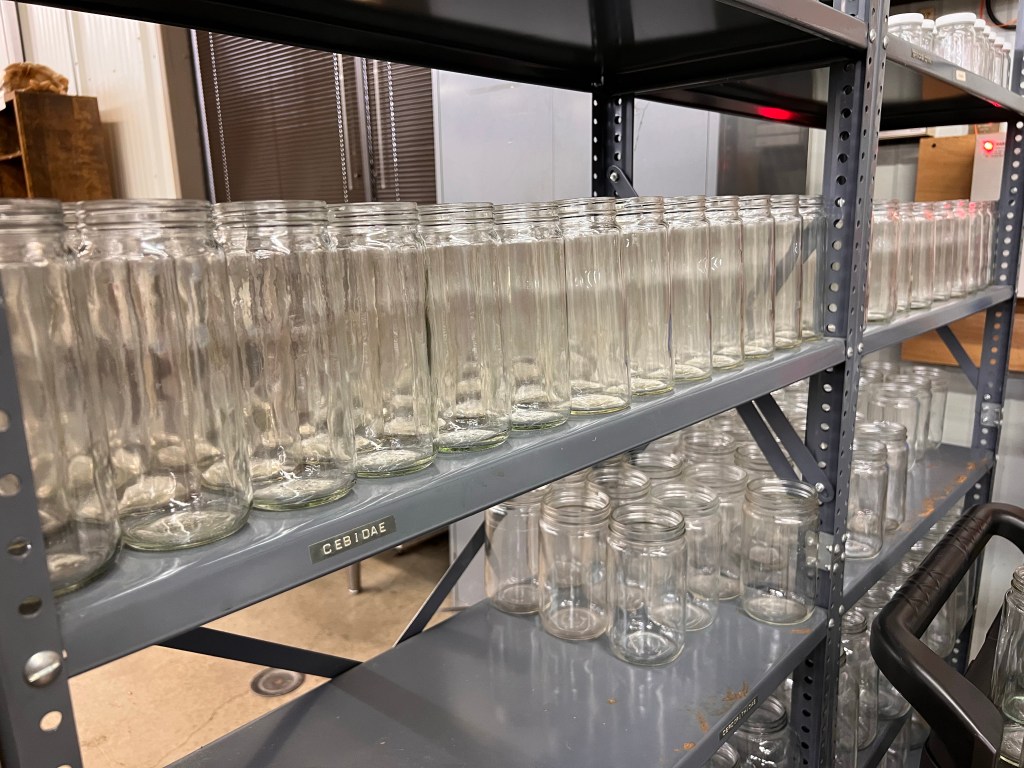
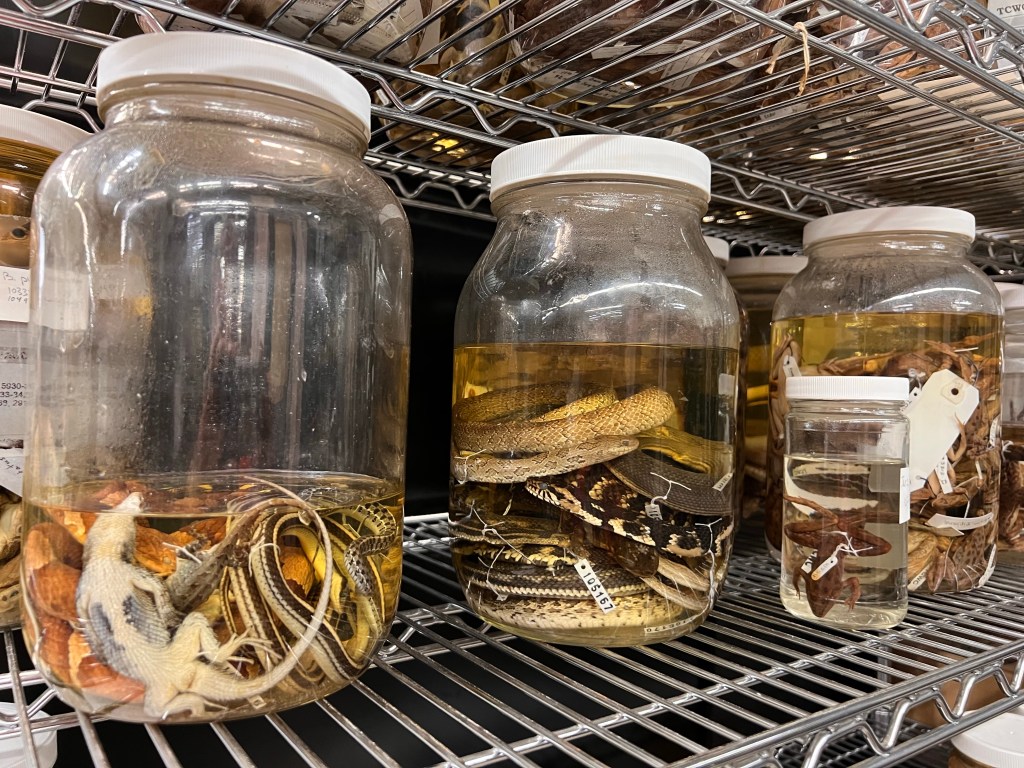
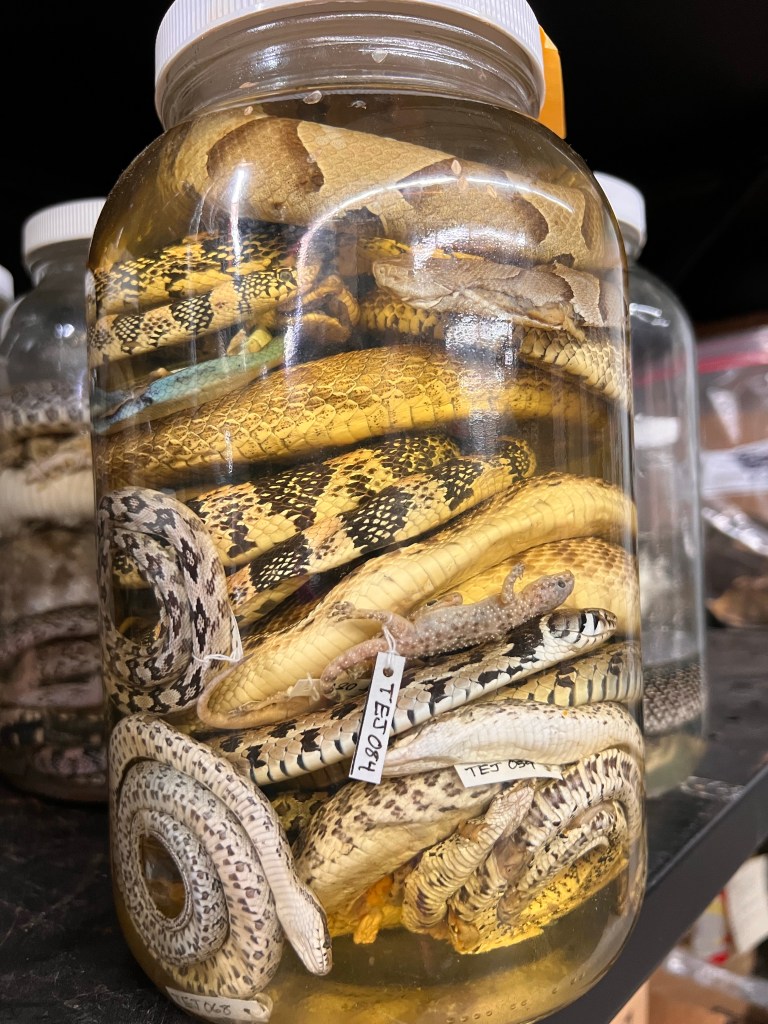
Specimen jars. Stop here if you don’t want to see preserved animals and such.
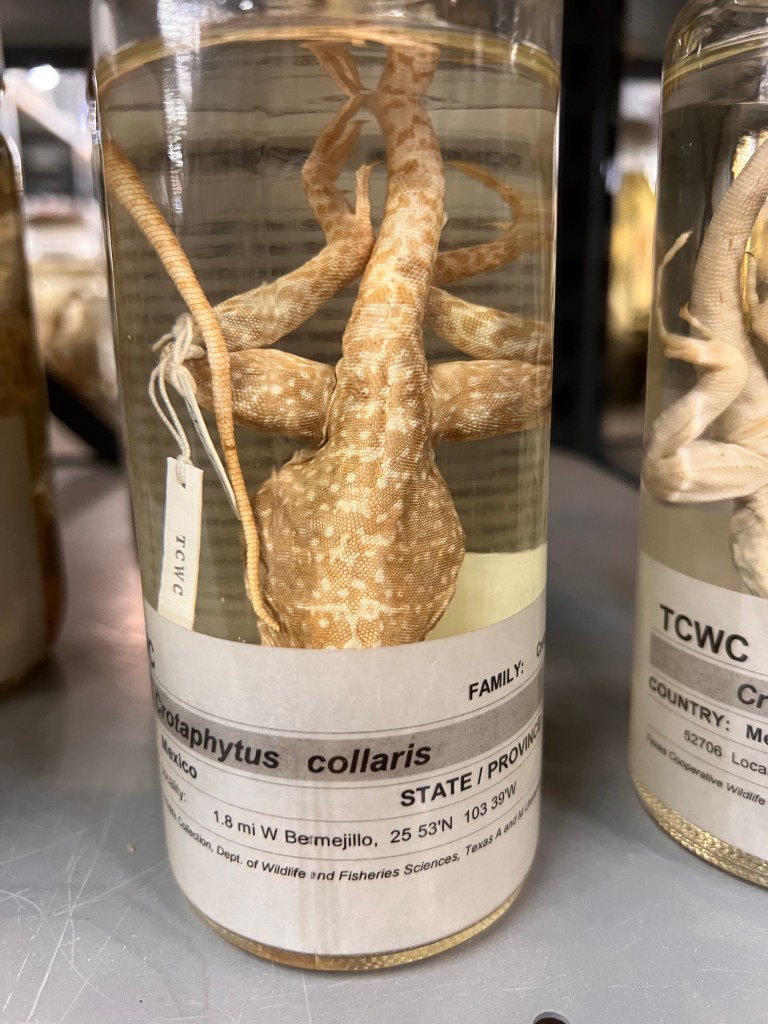
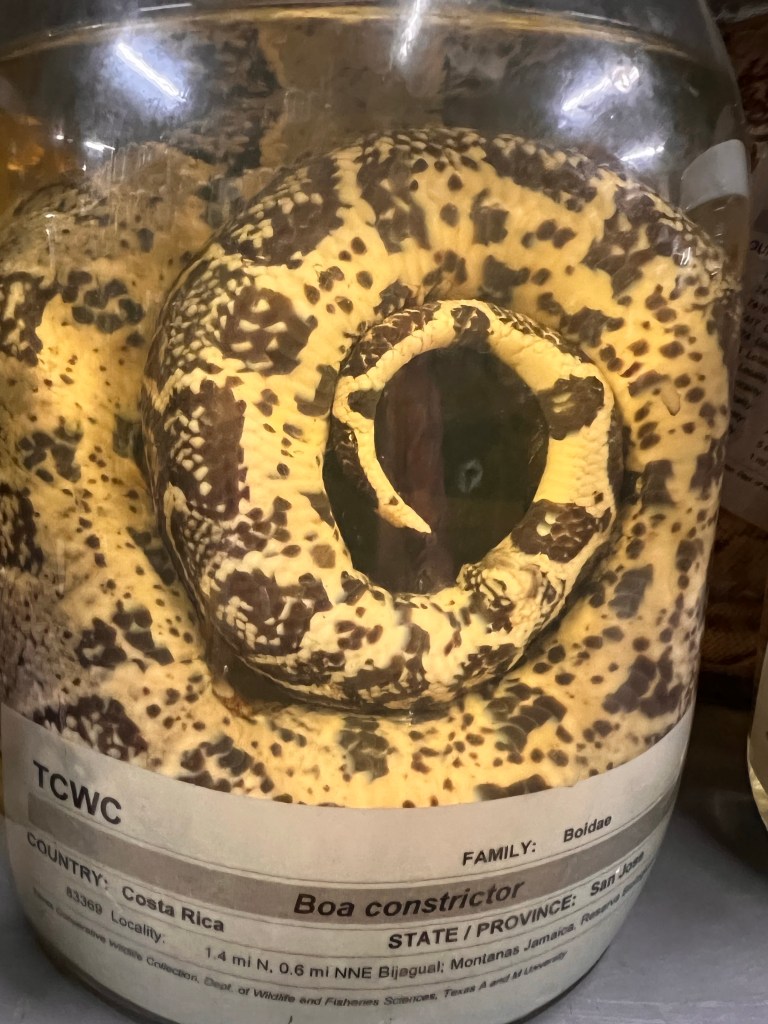
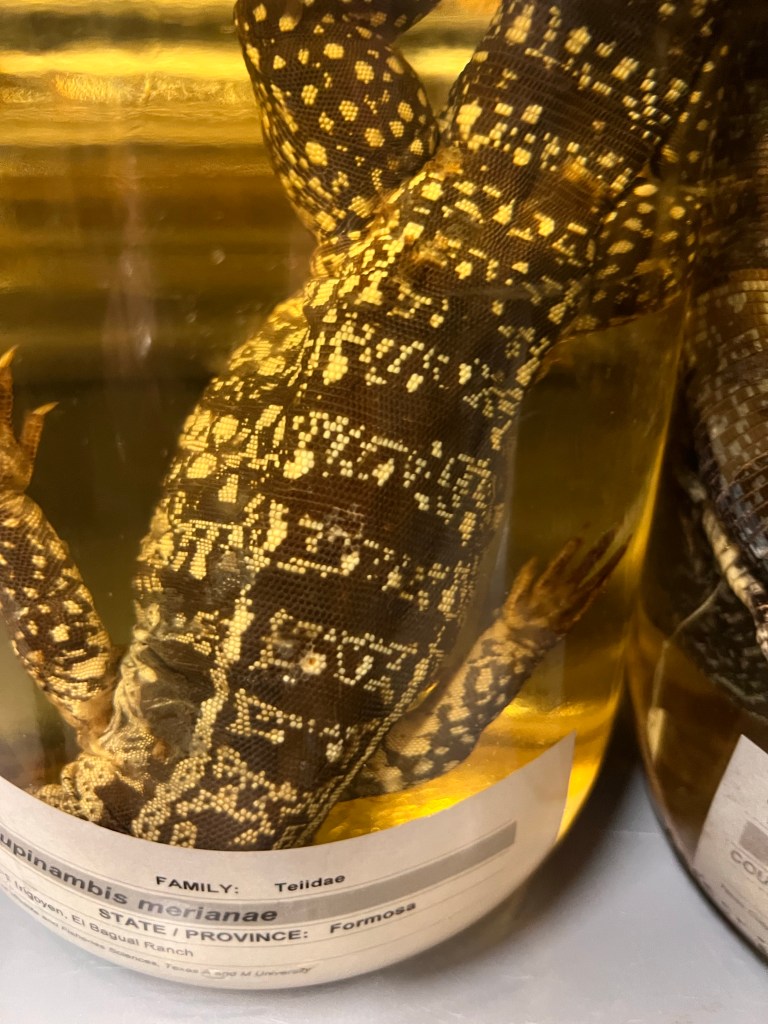
The collections of herps (snakes, lizards, frogs, etc.) are immense. It’s cool to see where they all come from. There is much from Texas but also around the world. They are preserved in formaldehyde.
Snake stackBoa constrictor I want to knit this lizard pattern from Taiwan
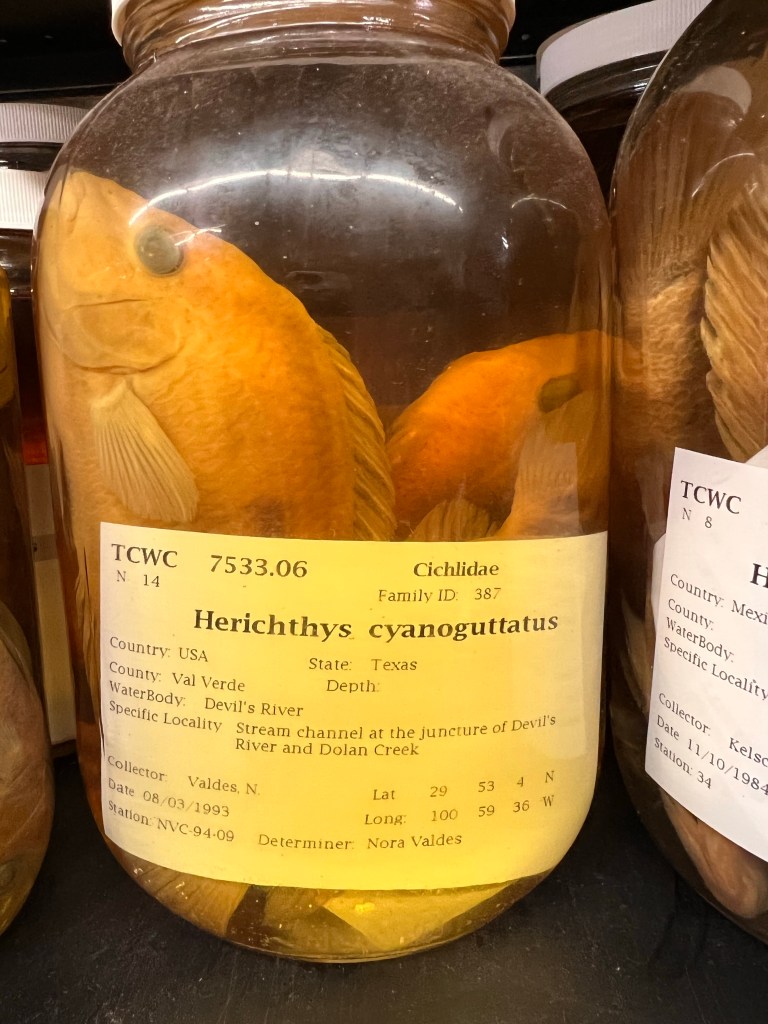
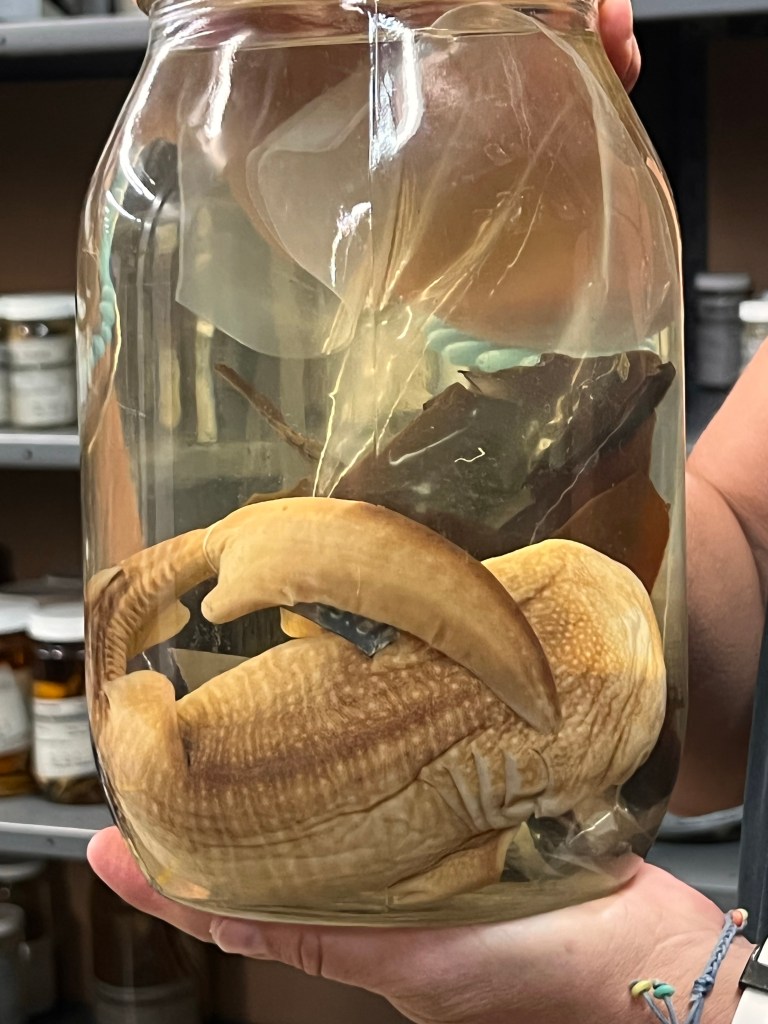
The fish were fascinating as well. My favorite was the box fish. There were just so many to categorize. Wow. There’s a lot of work for their grad students and volunteers! The other thing they do with the specimens is take tissue samples and freeze them (really cold) for future research on DNA and the like. What a resource this is!
Rays always look like they are smilingBaby deep-sea shark and egg case. The first ever found. 1950sEyeball of a giant deep-sea sunfish. Biggest eye I ever saw. Box fish.
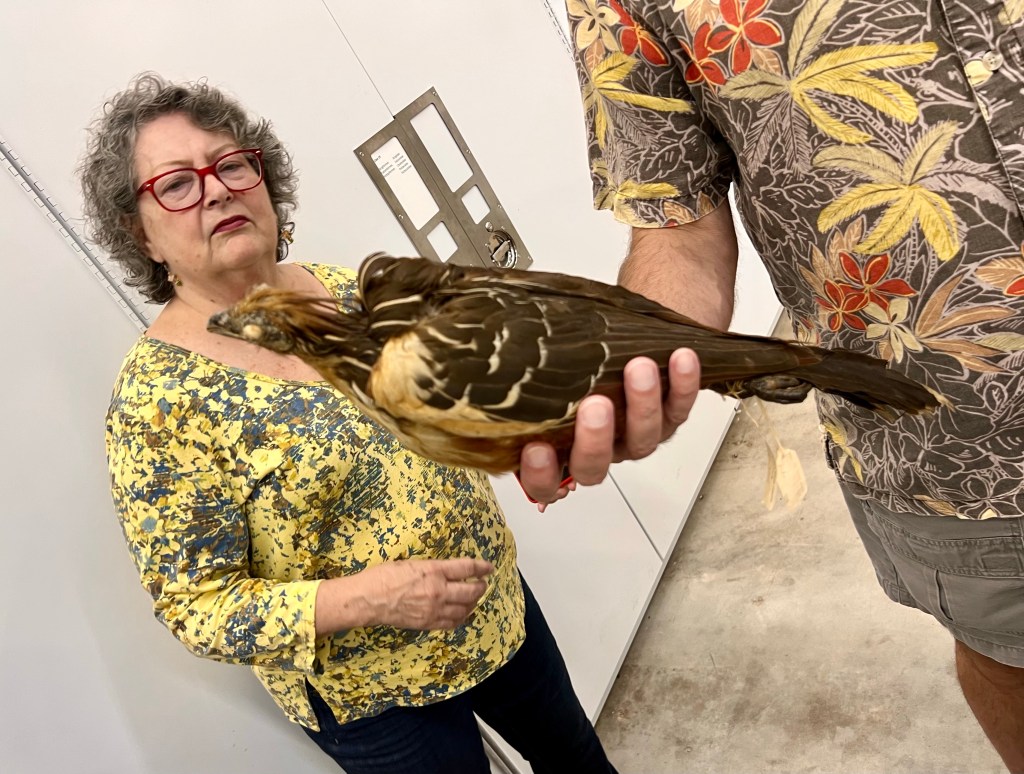
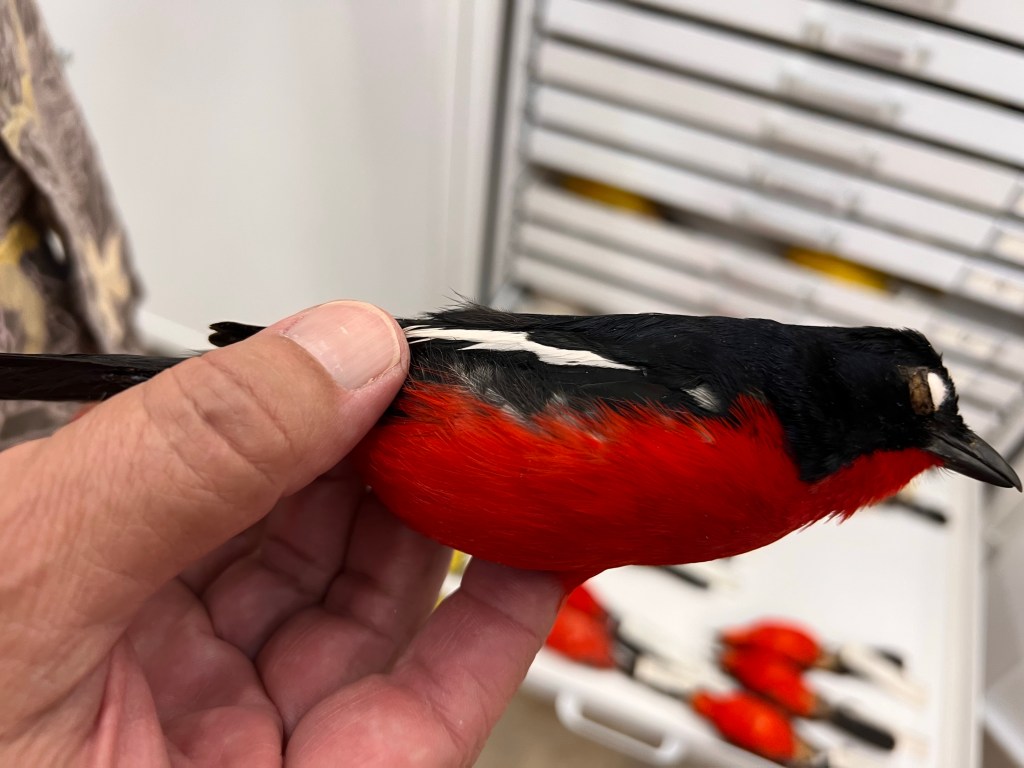
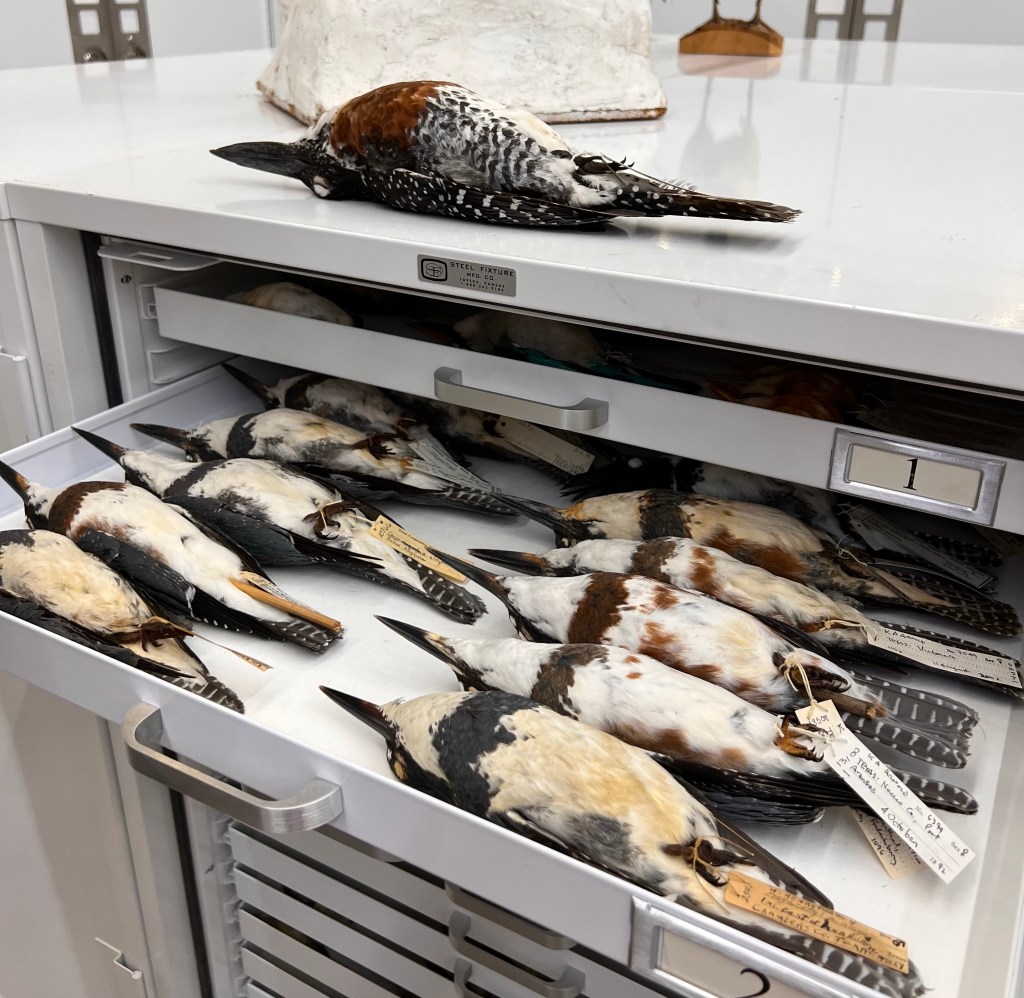
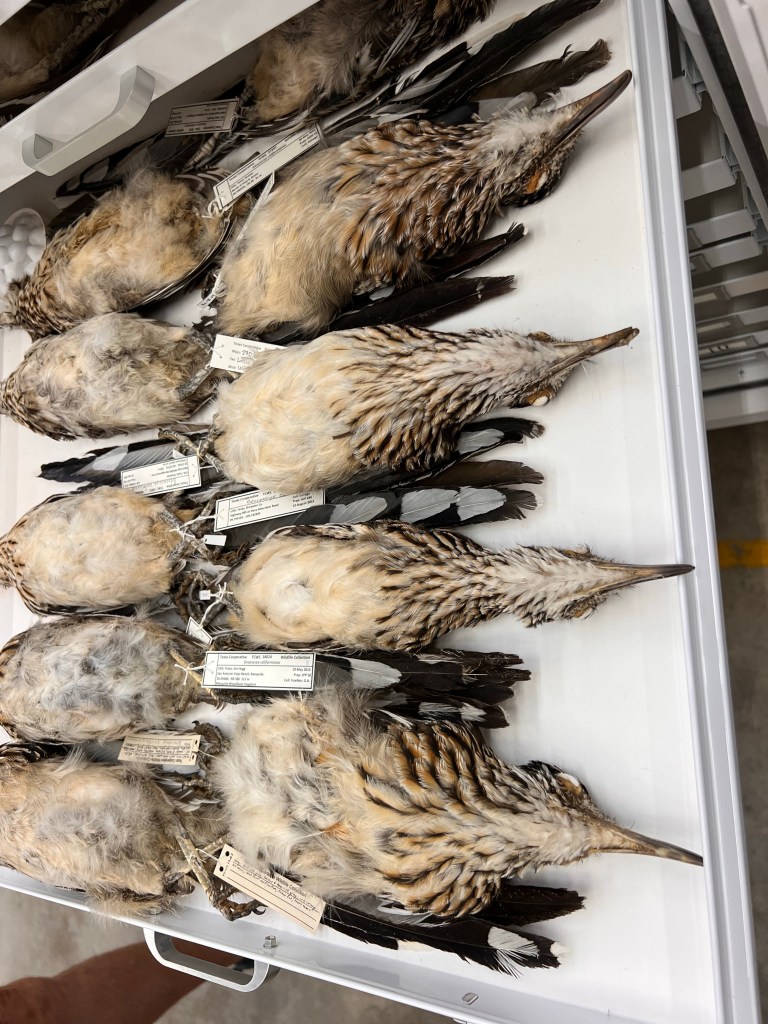
Of course the birds fascinated me. I was probably really annoying with all my questions but wow, there were things here I’d never seen before, like the Hoatzin. What the heck. This bird’s young have claws on their wings!! It’s also called a stink bird, because it digests food in its crop, which is smelly. It’s a really different bird!
Pamela is amazed at the hoatzin bird
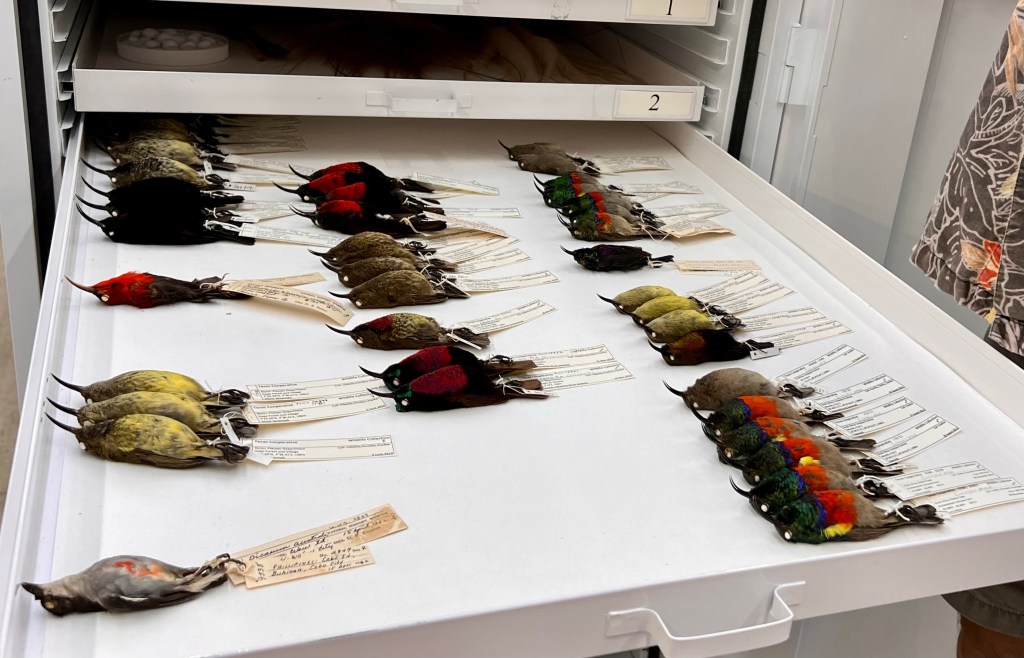
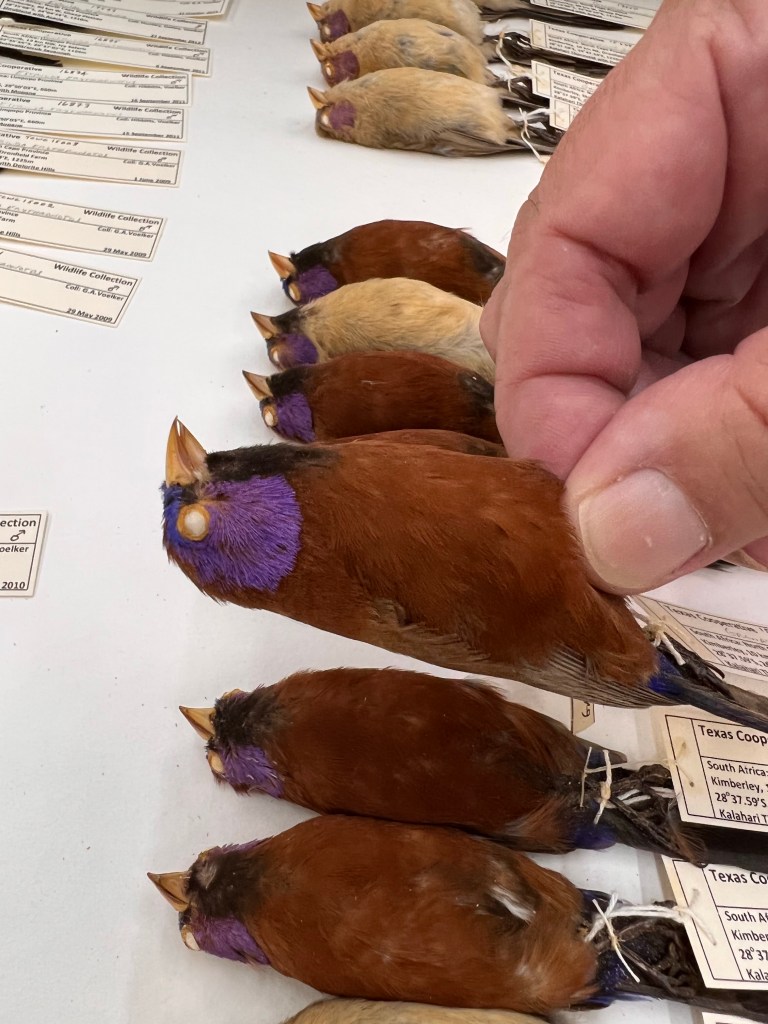
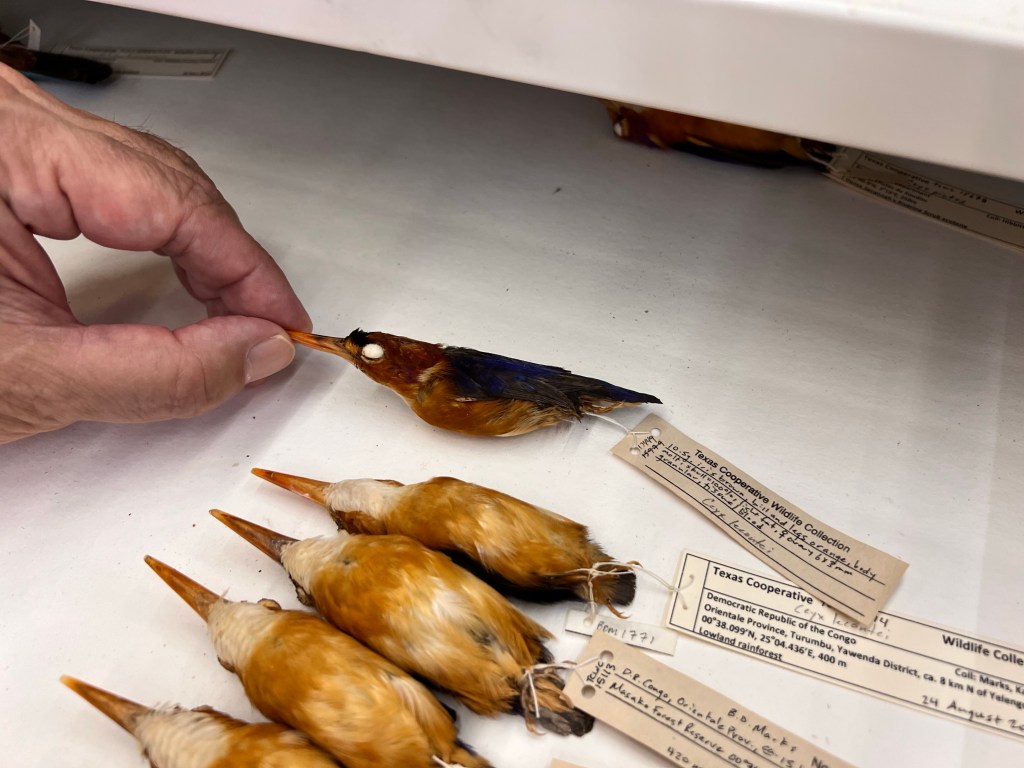
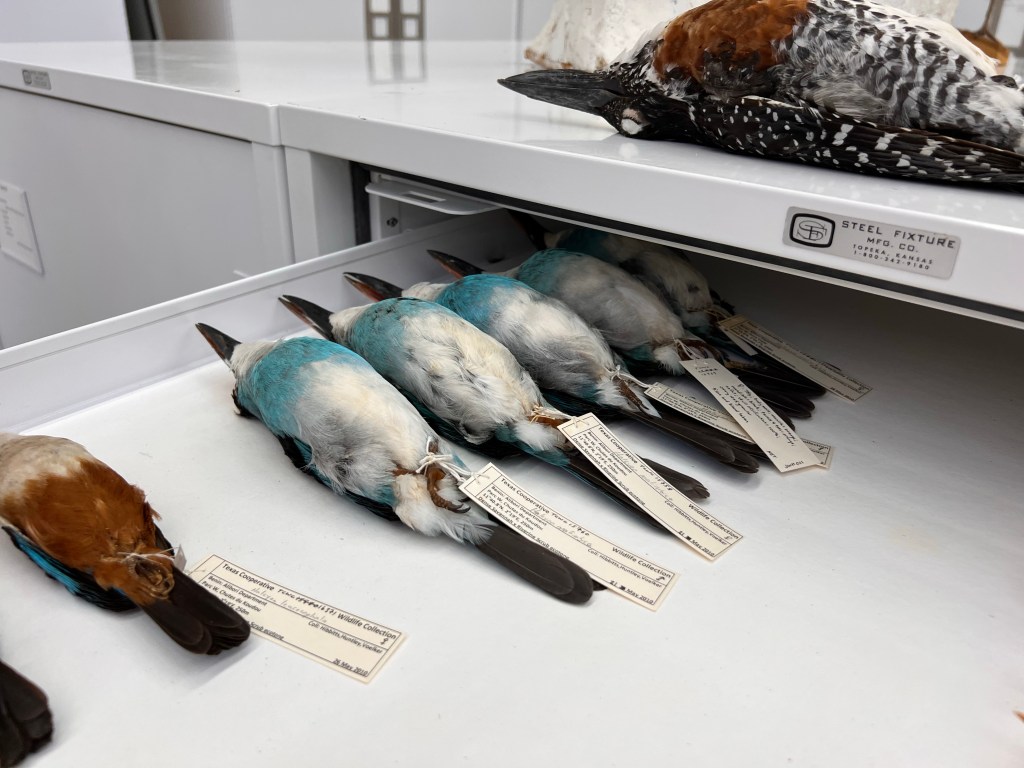
Dr. Voelker was great at sharing information about the birds. We saw the largest and smallest owls and an awesome variety of kingfishers, some that were an indescribable blue. Africa has some darn colorful birds.
Birds of paradise Whooping craneColors!Lots of kingfishersExtra blue one!Kingfisher beautyThe trays are so nice, but whew, they smell like mothballs!
Look at these roseate spoonbills. They are so many shades of pink. and I was fascinated to see the bill up close. Such specialization!
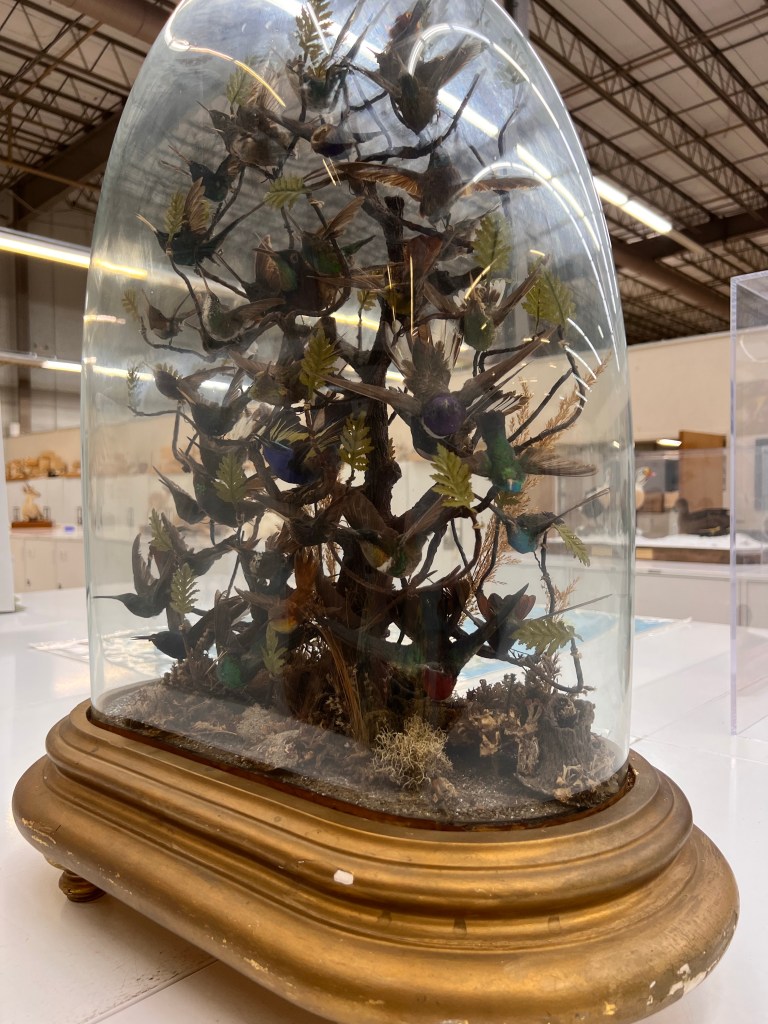
There was a lovely domed collection of hummingbirds that had been donated to Heather. Someone had it in their family for years!
That’s something else!
I’ll spare you the details but we learned about 3D imaging and printing of specimens. They find what’s in the animals’ stomachs and can ID them. Huh.
And look! A giraffe skull! Look at the horns!
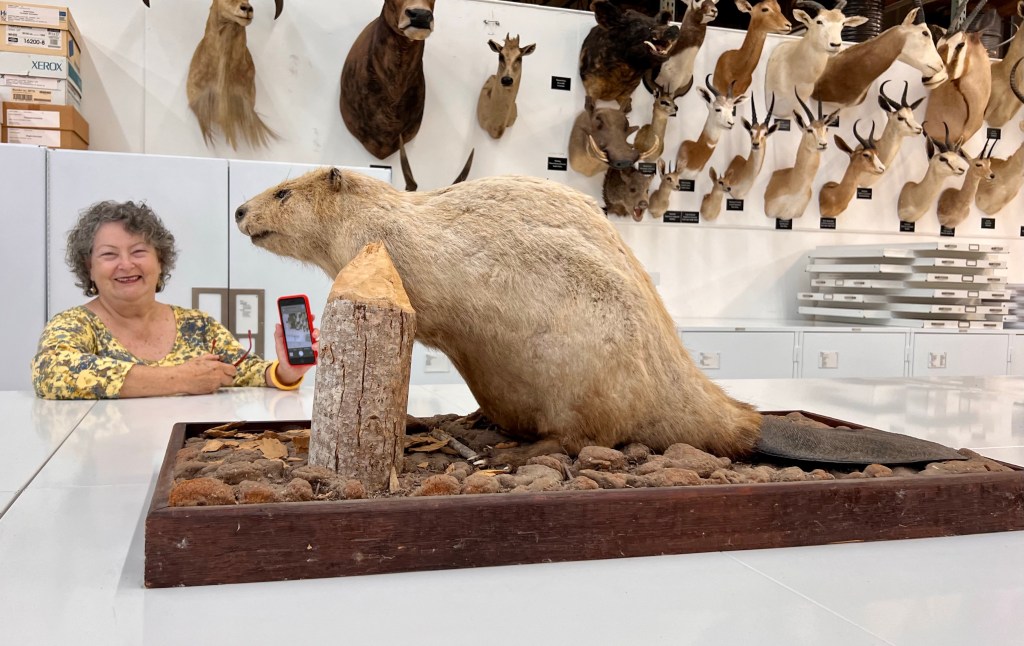
They didn’t talk much about boring old mammals but I checked them out.
I was dazed.
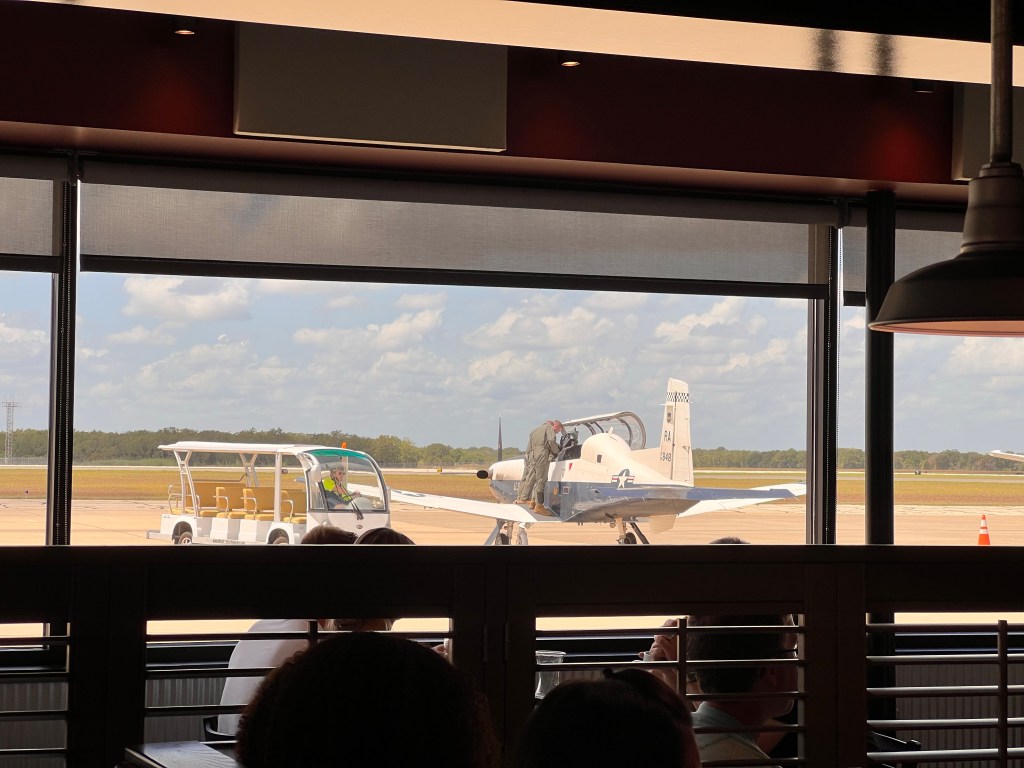
Believe it or not, I managed to get hungry after all those dead things. Good thing we’d arranged to meet our friend, Lynn at a restaurant at the old airport terminal. Ah. A nice restaurant. And airplanes! What a good time.
No, not people and what they do. It’s bugs. And they are bugging me in a good way, because at least they give me something to look at. There isn’t much else out here. People keep commenting about how quiet it s at night. Drought is no fun.
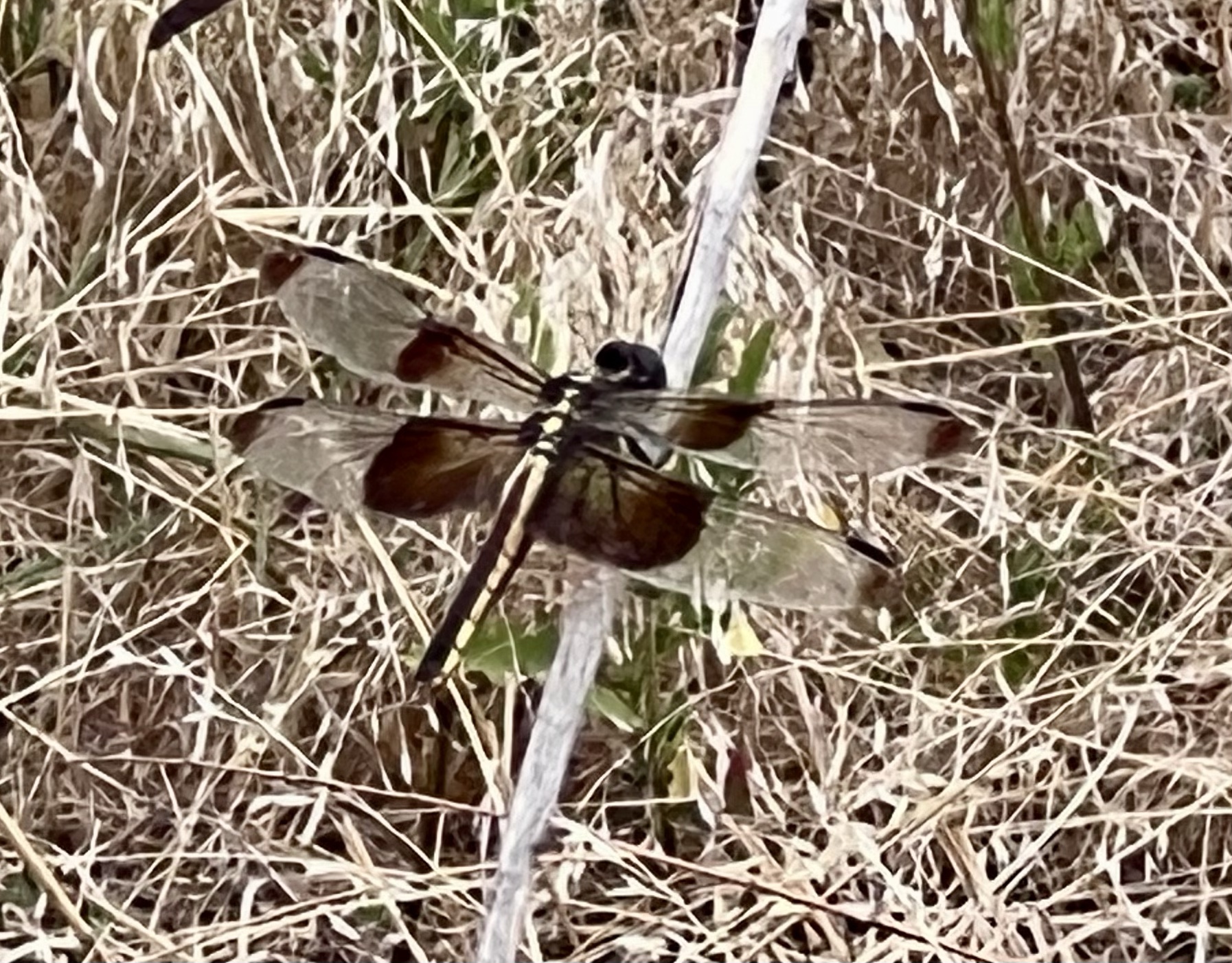
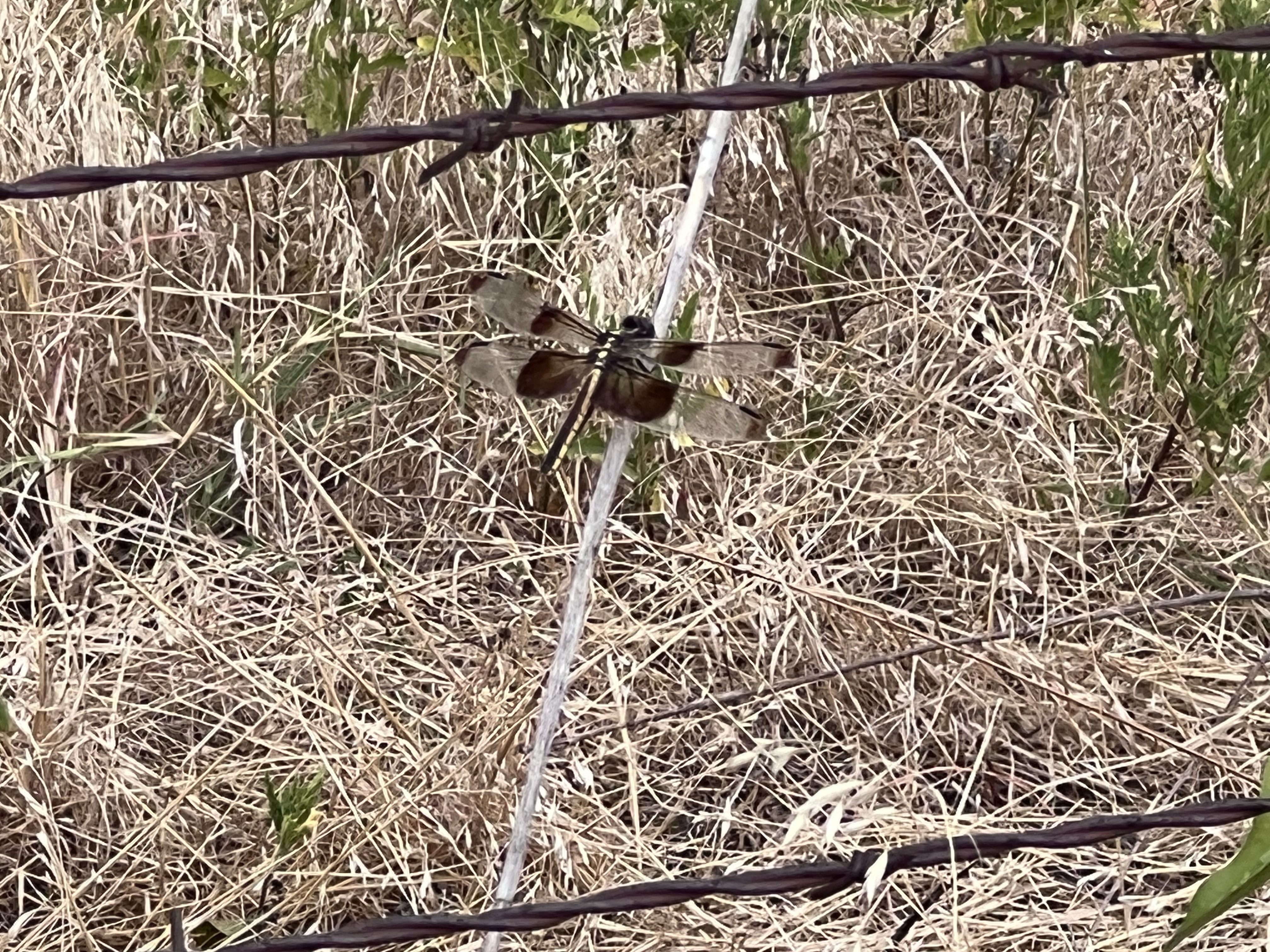
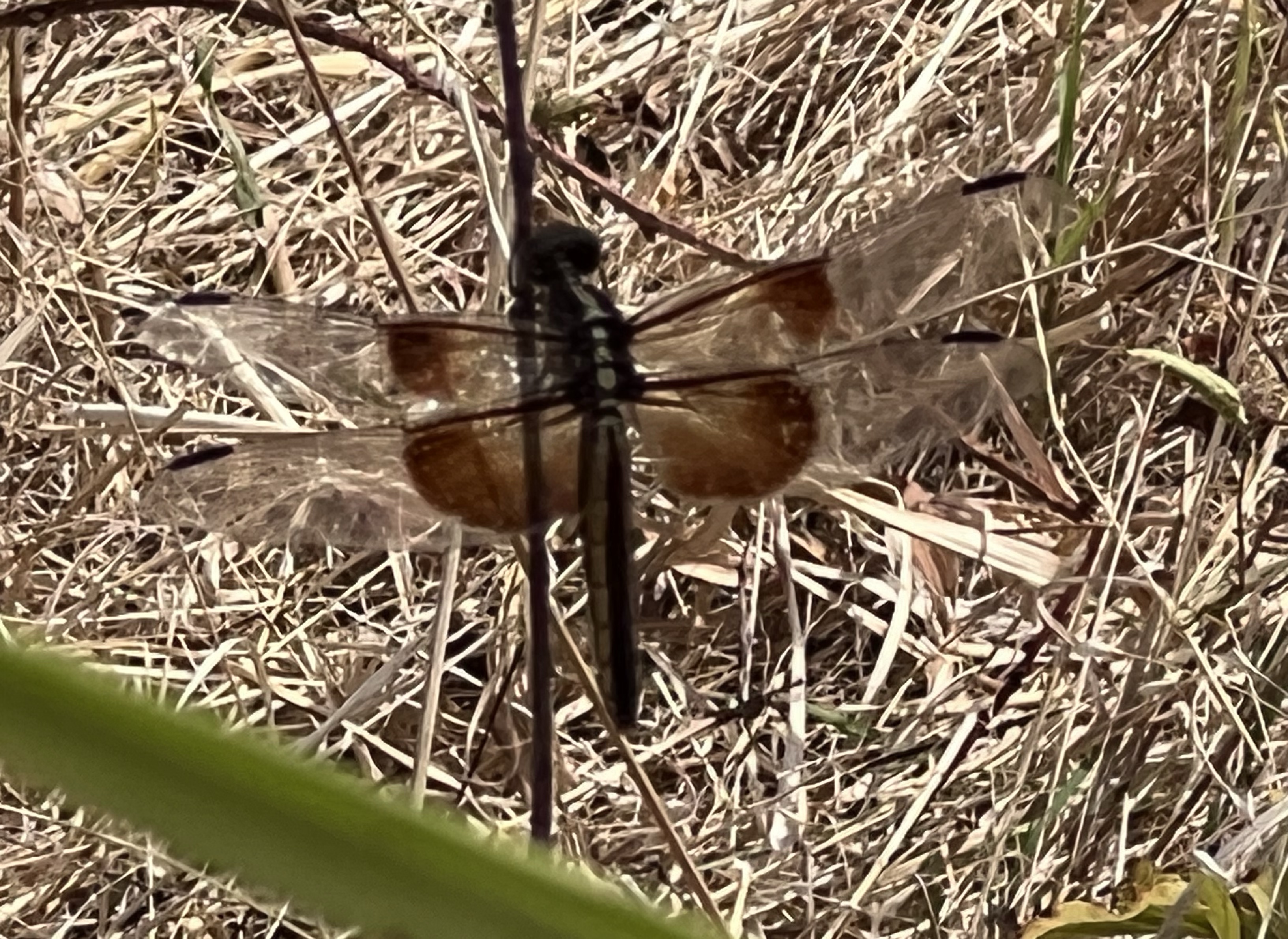
Thank you, Mr Widow Skimmer, for entertaining me today.
I’m so glad for the willow trees by our driveway, because they give me a shady place to enjoy insects when I go check the mail. Today there were many dragonflies, though I only got photos of three species.
Eastern pond hawk, female (green)
I also saw a damselfly and a Halloween pennant, but they were too busy to stop. This one was very pretty, though it didn’t photograph well.
Blurry skimmer, roseate or neon.
The widow skimmers were posing, though. I got enough closeups that you can see good details on both the males and females. the top four are the females.
Widow skimmers.
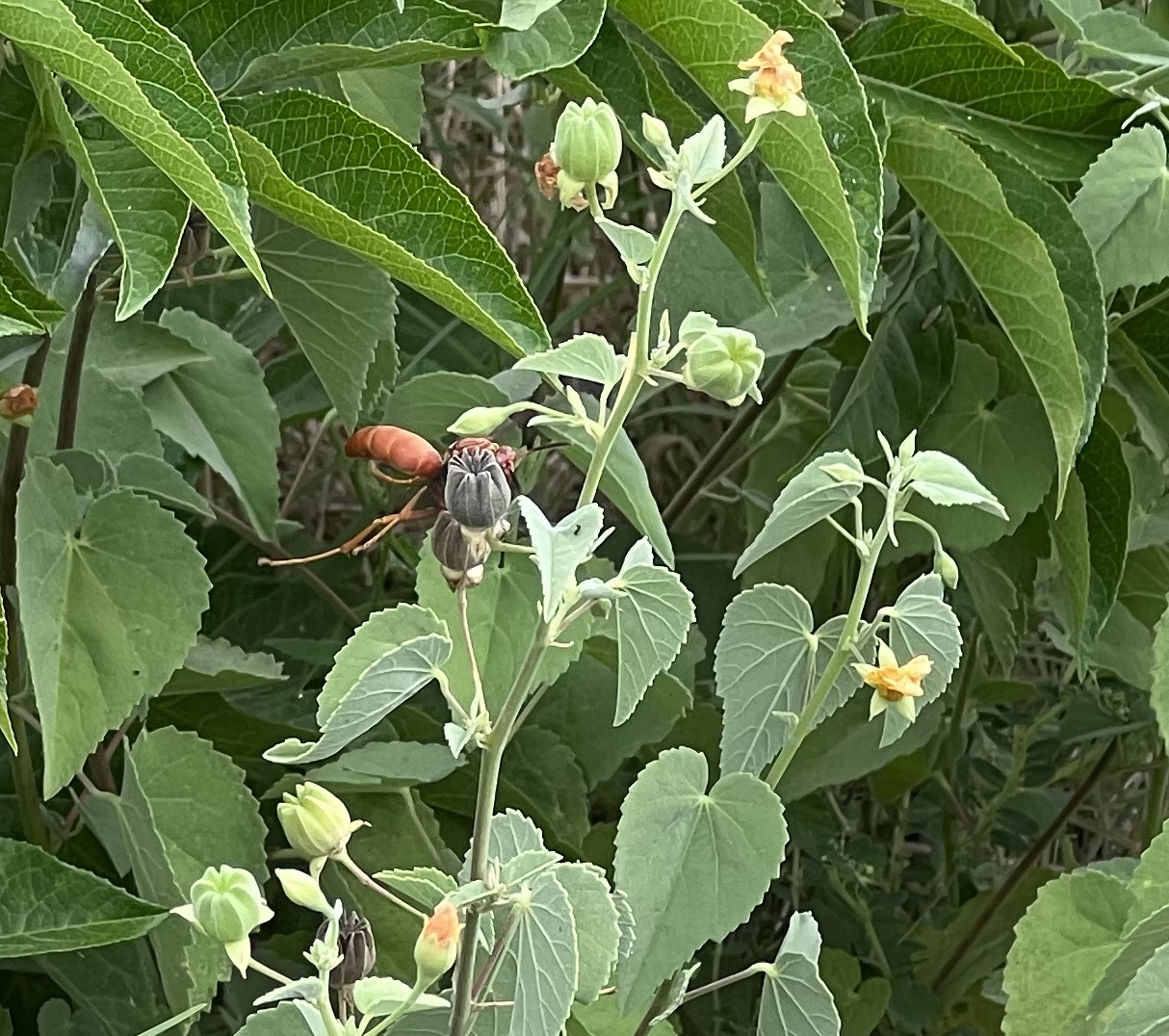
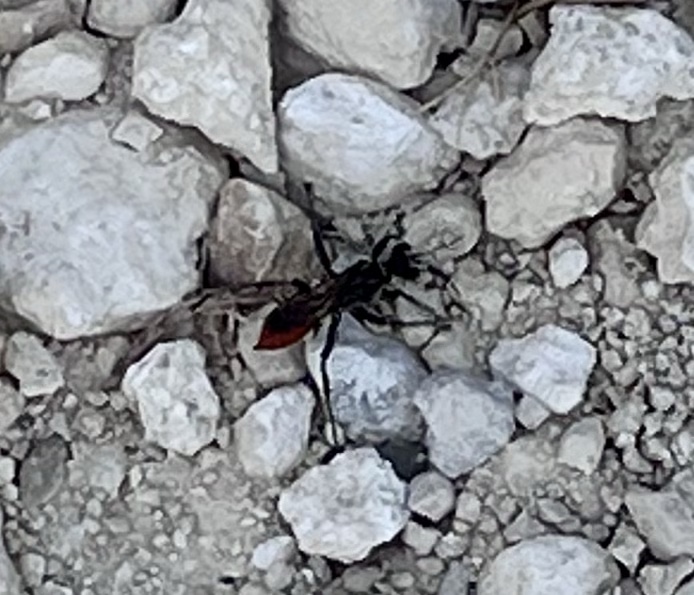
I also see lots of wasps ever day. Usually it’s mud daubers, yellow jackets, and such, but I also see very pretty orangey-red wasps, and today one I don’t see much, black with a red abdomen.
Much brighter in sunlight, but it was hard to capture.
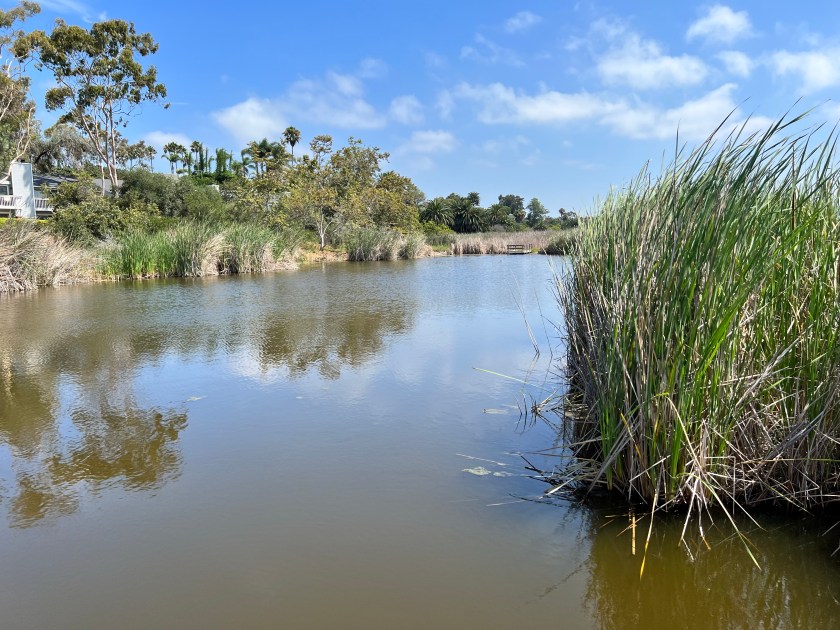
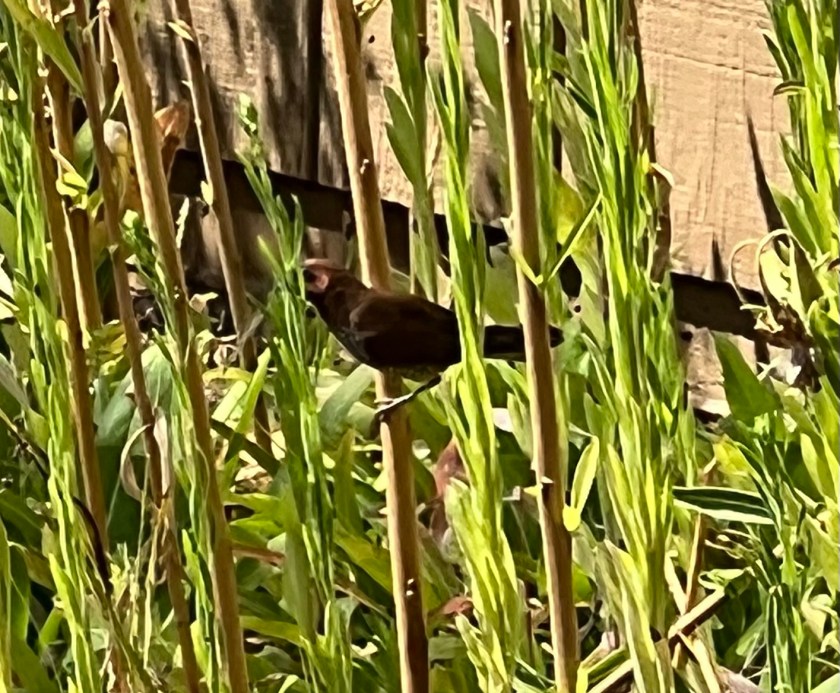
There are still birds around, but not in the usual numbers. There’s the woodpecker I always hear, a few remaining barn swallows, cardinals, mockingbirds and lots of thirsty starlings. The egrets and herons (blue and green) are still here because one pond in pretty full. Today’s exciting birds were this tiny orchard oriole (they are here this time of year) and a beautiful red-shouldered hawk I saw from the car. I love summer hawk sightings.
Or a warbler.
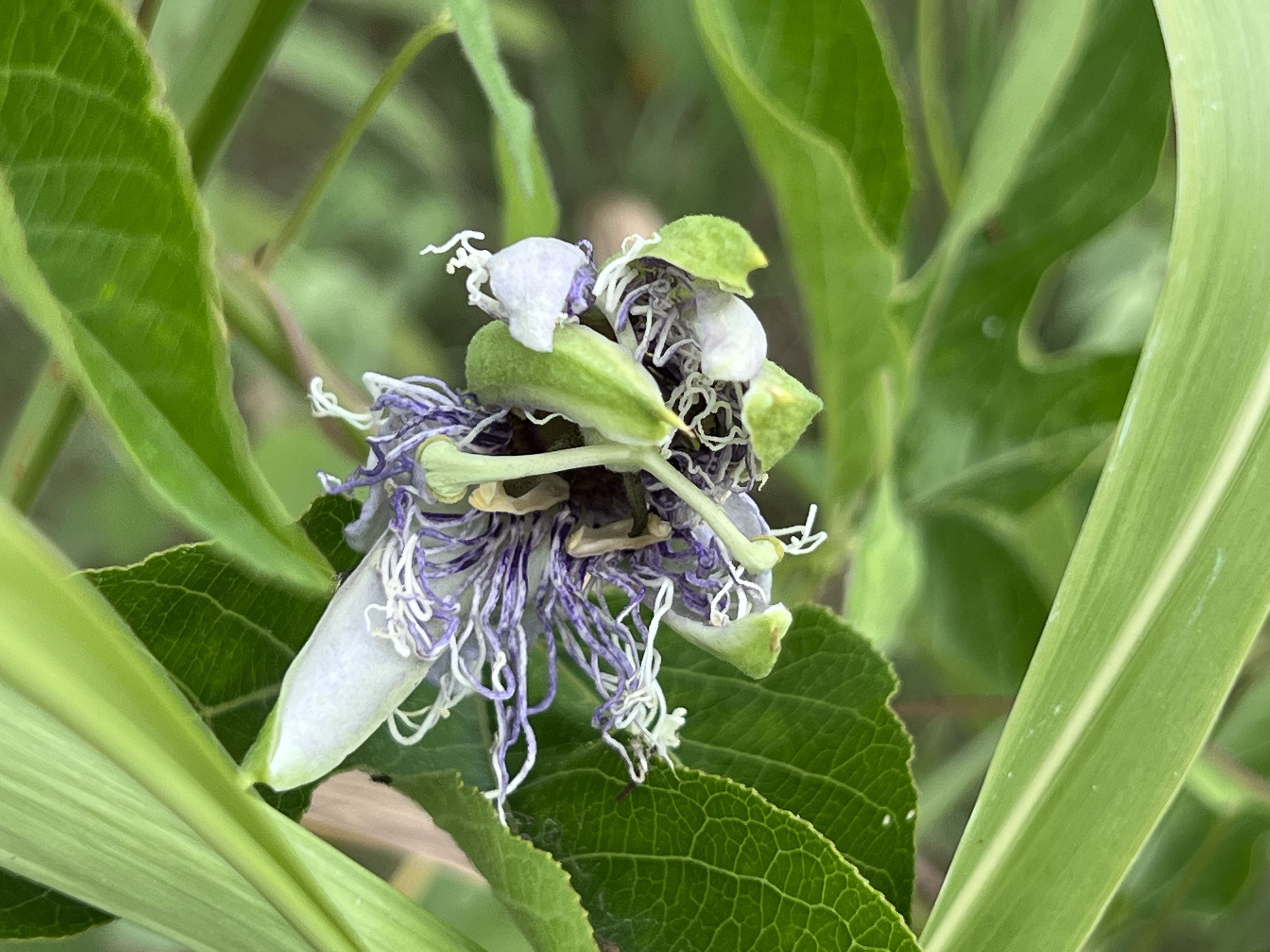
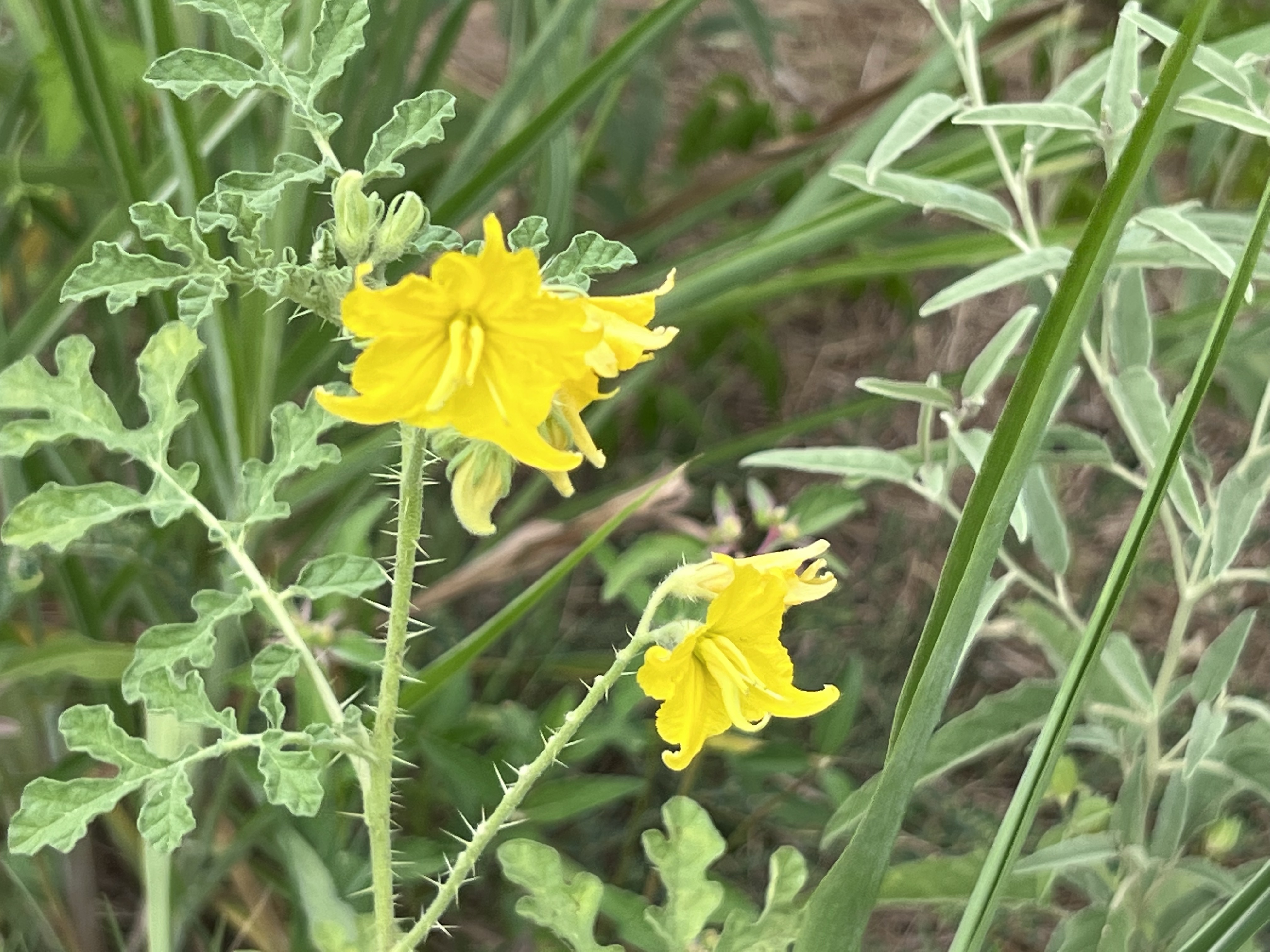
There are a very few flowers blooming, but I found a couple. There are lots of passion vines, but the flowers look funny. I guess the herbicide got to them. And there was one sad Mexican hat flower. Of course buffalo bur is blooming and one or two others that nothing can stop. Ooh and in the best plant news: I found milkweed seeds blowing around! More for the butterflies.
Weird passionflower. Brave little hatsHey, we are cheerful. Milkweed!
I figured I should do a nature post since I had my Master Naturalist meeting tonight. It was on turkeys! The speaker had a beautiful turkey shirt on, too.
Yesterday’s daily expedition in the Carlsbad, California area was to the Buena Vista Audubon Society’s nature center in Oceanside. It’s on the Buena Vista lagoon, which is a former saltwater marsh that was dammed 50 years ago to create a freshwater pond. One of the things we learned at our visit is that the nature center folks and friends are about to open it back up to its original state.
Quiet in the middle of urban beach world
The center is surrounded by plantings of native vegetation, which attract lots and lots of birds. We saw California towhees, brown-headed cowbirds, hummingbirds that were too distant to identify, and something green (kept hiding).
Shy towhee
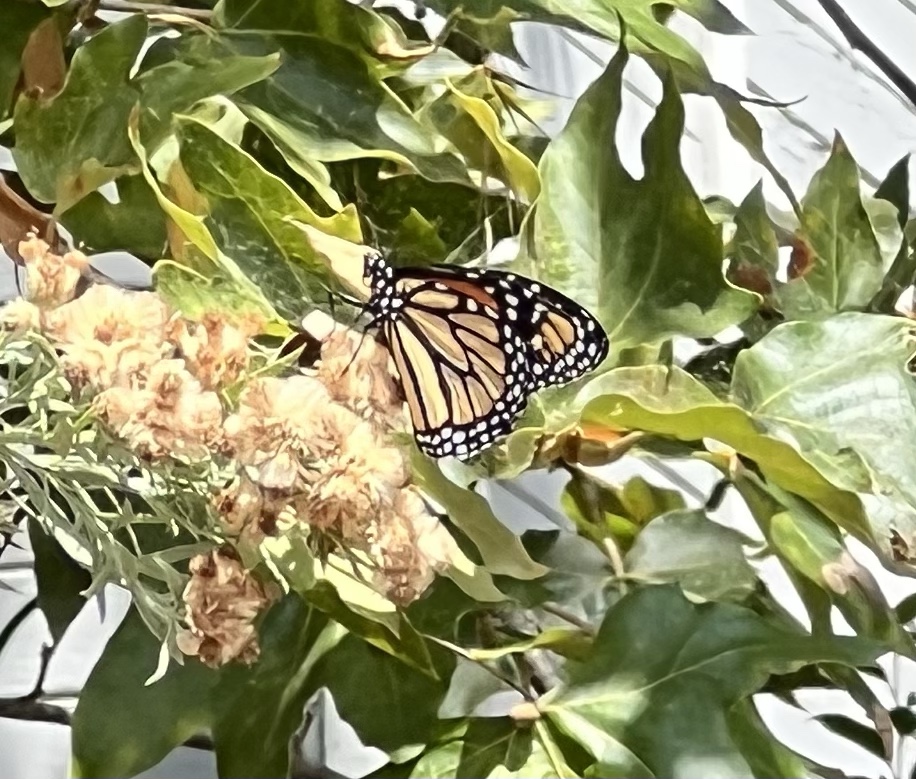
We also saw many butterflies. There were many monarchs and fiery skippers, plus whites and some other skippers.
Hooray for monarchs. My fiery skipper images are too blurry to share.
I have to say the highlights of the wildlife were this gorgeous lizard, an ornate tree lizard, and one resident we only heard, an American bullfrog. It had a lot to say, that’s for sure, and was so loud! Ours don’t make that much noise.
She posed for me. Look how well the colors blend in with wood.
The docent we spoke with was full of information. She said the lagoon will no longer be crammed with cattails once the salt water comes in, which will be welcome to observers. The center itself was just beautiful and obviously well loved by society members. They also had prepared beautiful maps of the trail with important plants labeled, and a really good guide to the plants for young people that encouraged them to interact with some of the more interesting specimens like the lemonade berries and the rushes. I learned from the brochure, too, about how pickleweed traps salt in little growths and then drops off the stored stuff in little red segments.
Views of the nature center trail
I also learned a bit more about that alkali water. It comes from an aquifer under Carlsbad and is full of calcium. Now I want to try some!
They cut down some cattails to provide a view.
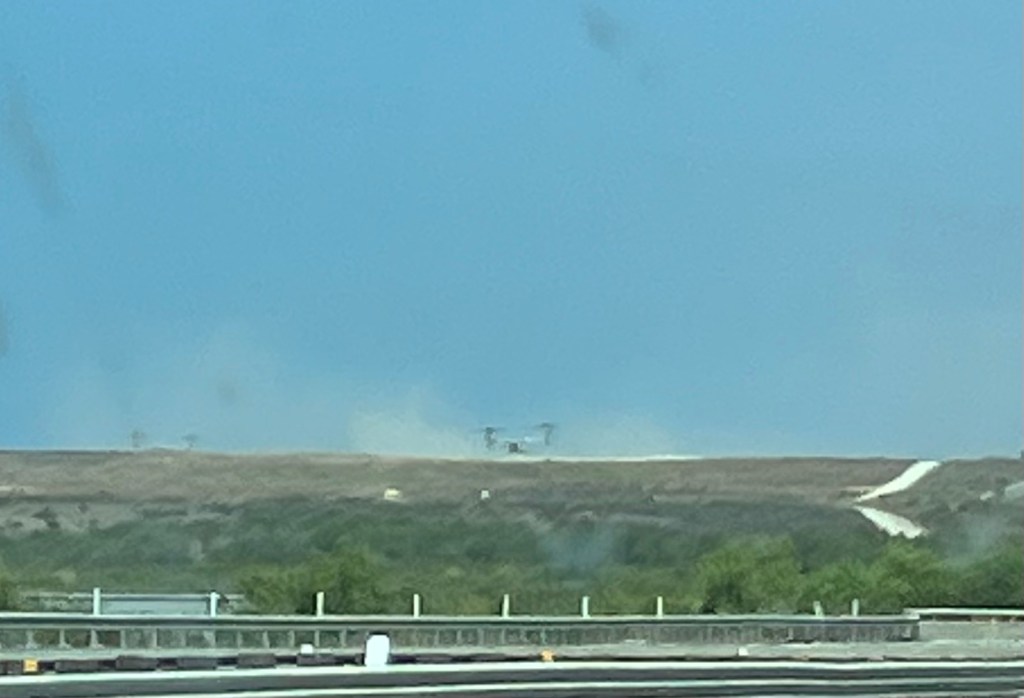
After we left, we drove by Oceanside beach and watched some surfers. It was a beautiful day at the beach, which meant not much parking. We took a wrong turn and ended up at the entrance to Camp Pendleton, where my dear friend Mike spent many years. He shared some stories with me and told me all about the cool Osprey planes I saw practicing landings and takeoffs as we drove past the base. That made our wrong turn worth it. I’d never seen an Osprey (the plane, not the bird) in person.
We ended the expedition with another piece of culinary luck. We found a real taco stand hiding in the same shopping center where I bought my yarn (though I didn’t realize it at the time, since we approached from the other direction). I got to eat real fish tacos, and Lee had a most impressive burrito. We were the only Anglo customers the whole time we were there, and we could watch the cook make everything from scratch. Now, that’s some Cal-Mex cuisine! I’m doing pretty well at choosing random restaurants on this trip!
So fresh, even the taco.
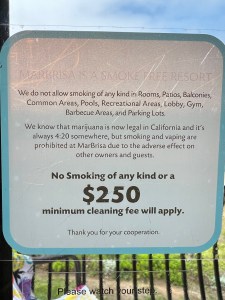
Hilton humor
One more piece of humor for any of you who aren’t on Facebook with me. This sign has been on the door of our condo since we arrived, but I’d only read “no smoking” and the fine until yesterday. I got such a good laugh out of it that I had to share it with a family member, who shared it with all the nurses who came to her room. I cheered up an entire hospital!
Otherwise, I’m continuing to rest a lot, crochet away, sit in the quiet hot tub area, and work on my mental health. It’s going well.
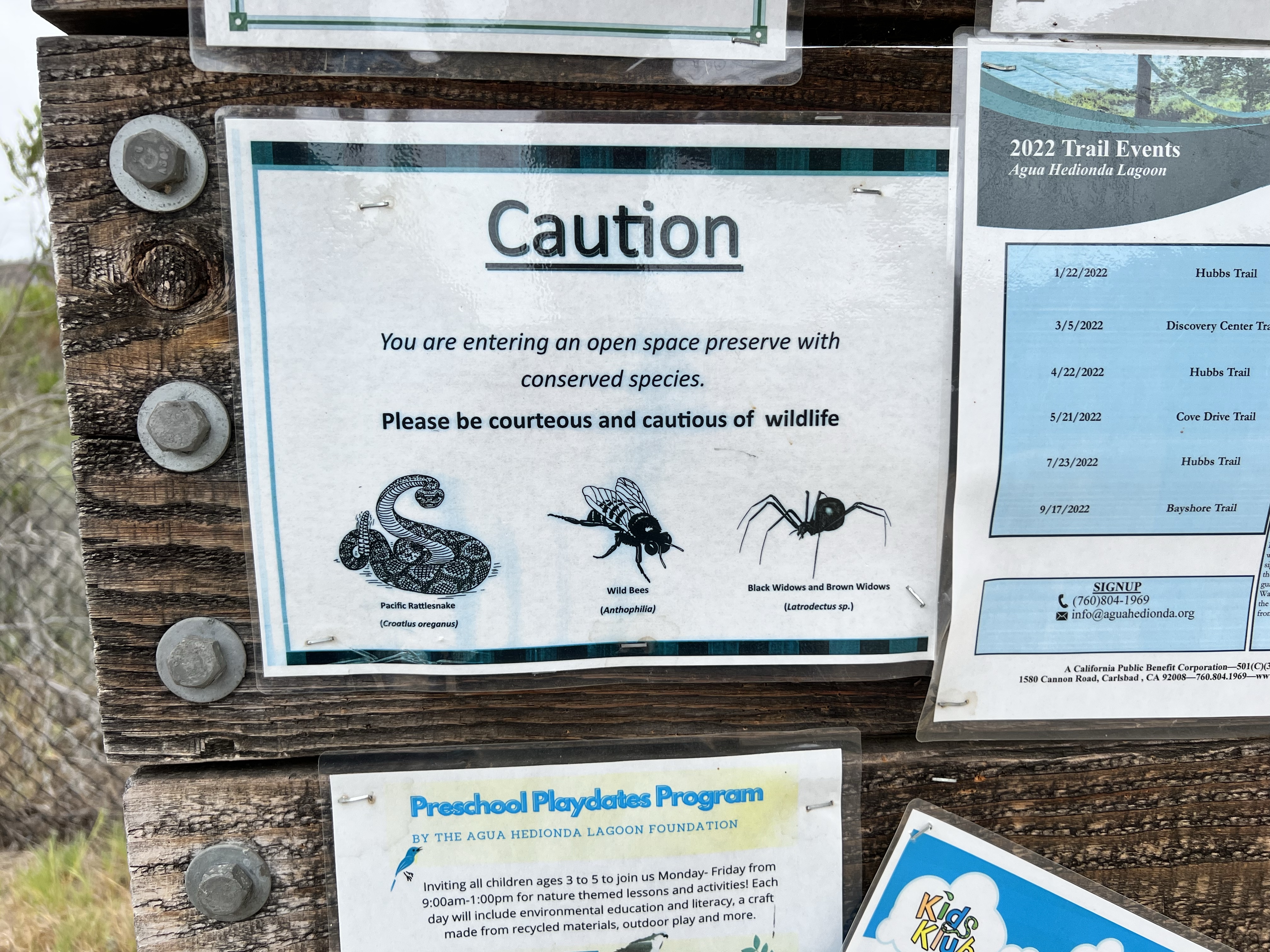
Yesterday’s non-hermit activity was going to a nature place less than a mile from where we staying. It’s on a fascinating tidal lagoon.
Lagoon from the trail
The place was CRAWLING with wee ones. It’s actually one of the nicest interactive nature exhibits for children that I’ve ever seen. There was so much for them to do and see, from making kites to painting rocks to interacting with the birds and reptiles the place takes care of.
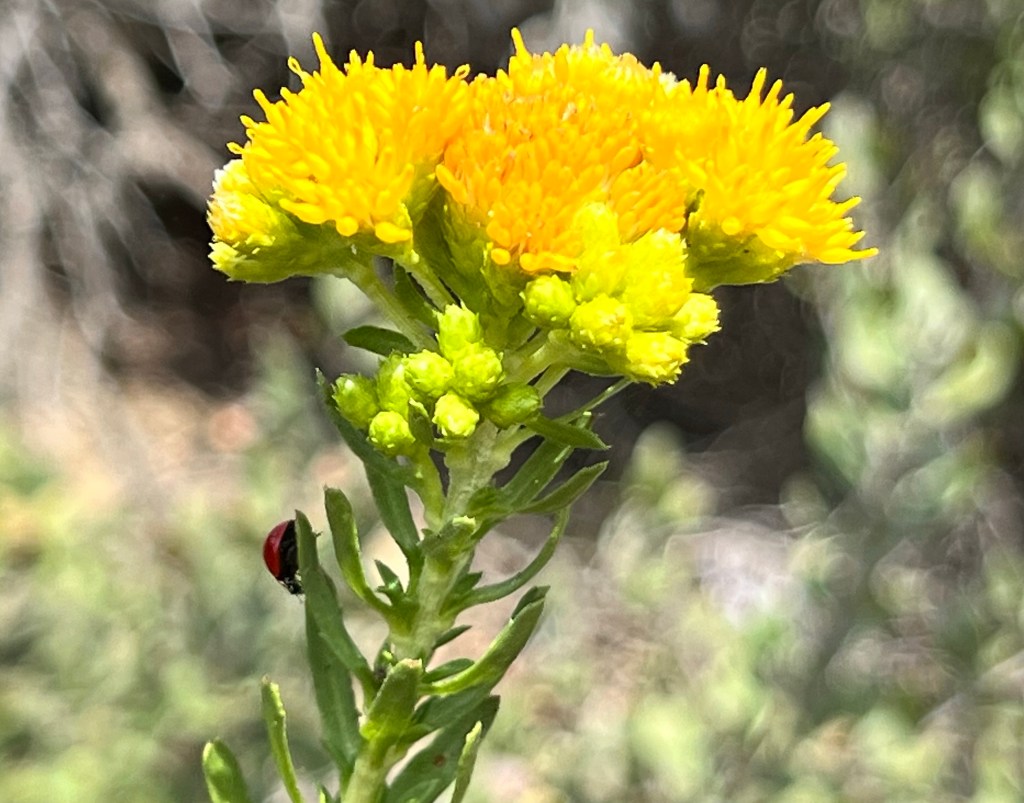
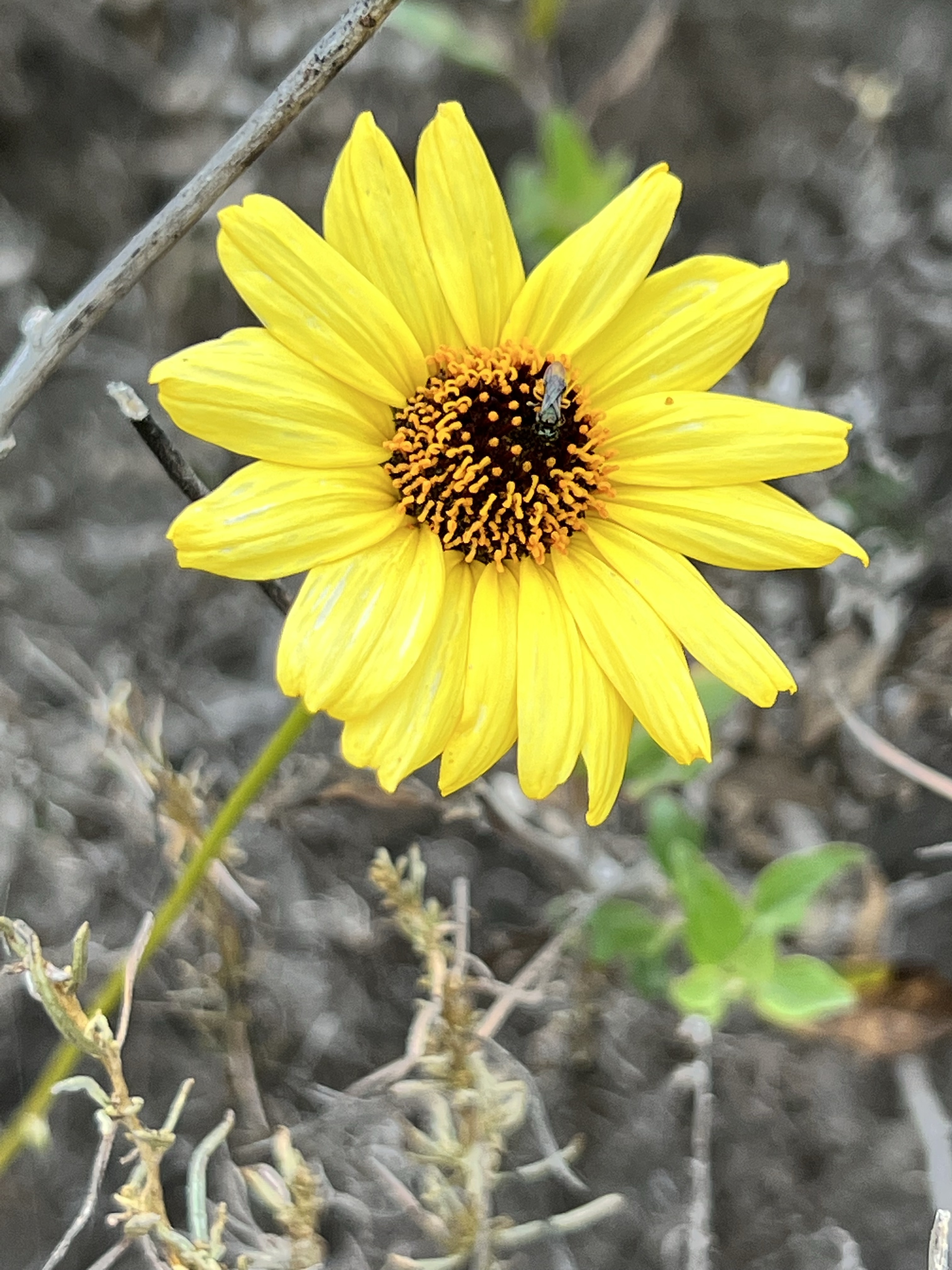
Coastal golden bush. Bugs, too.
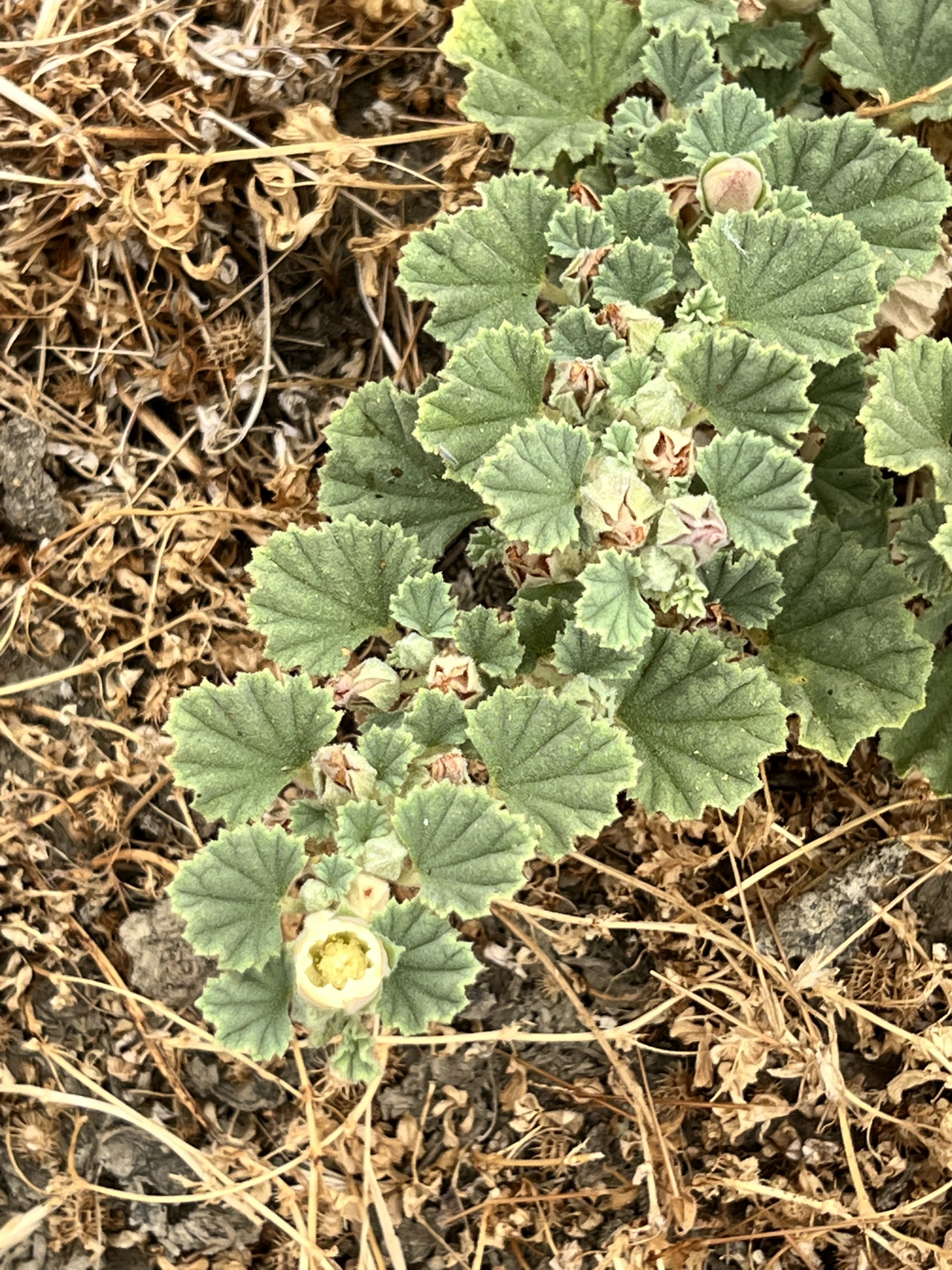
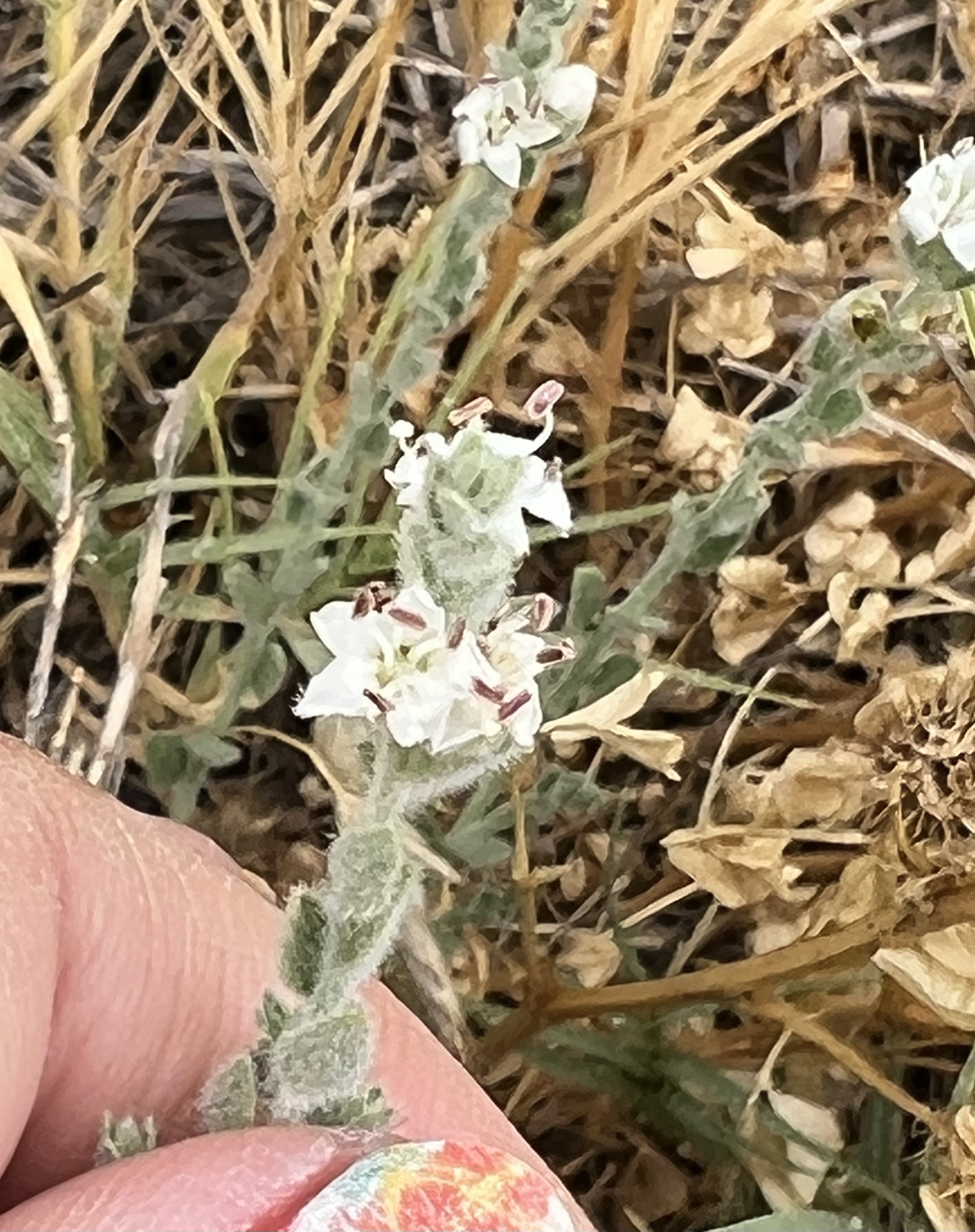
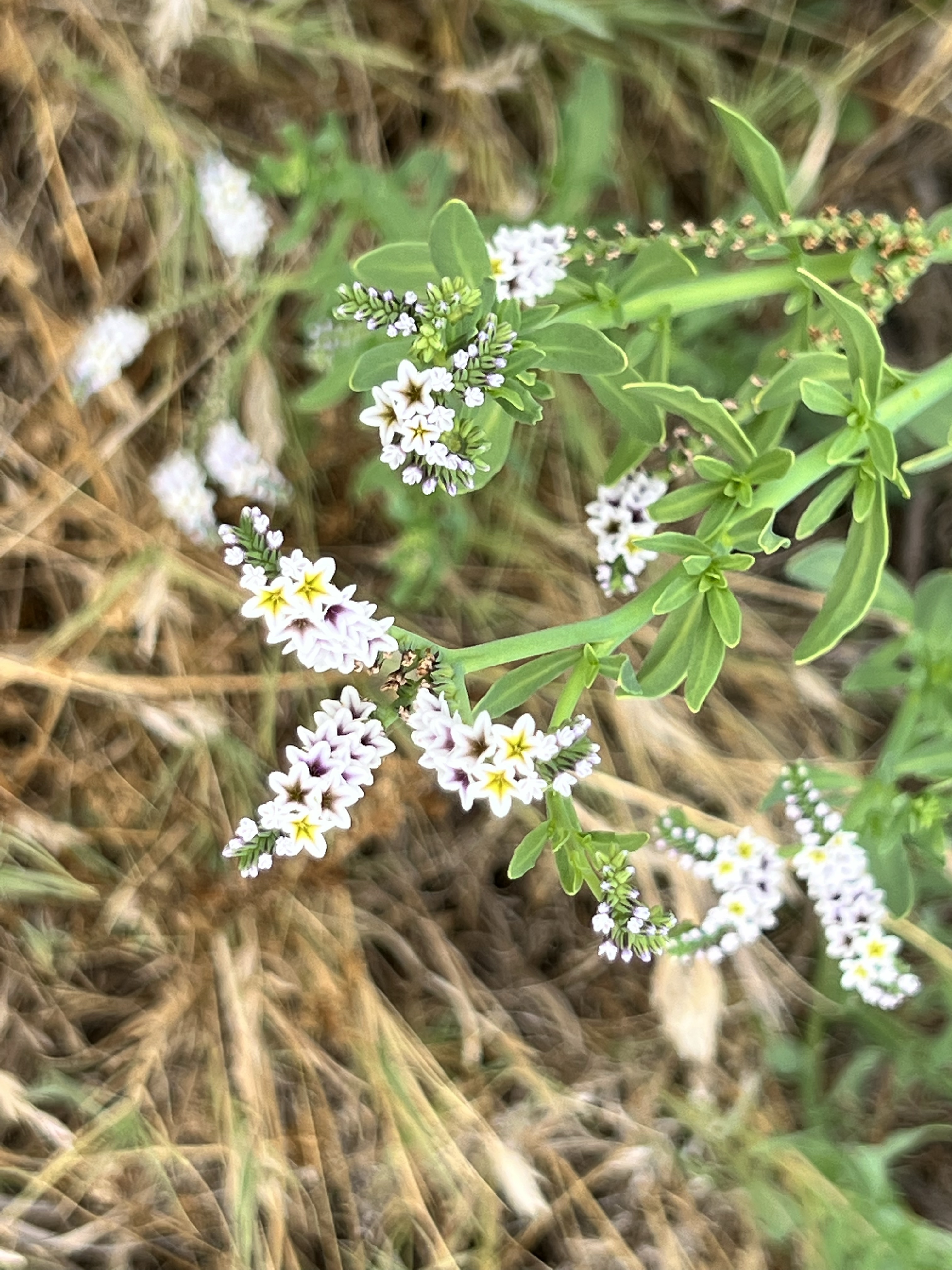
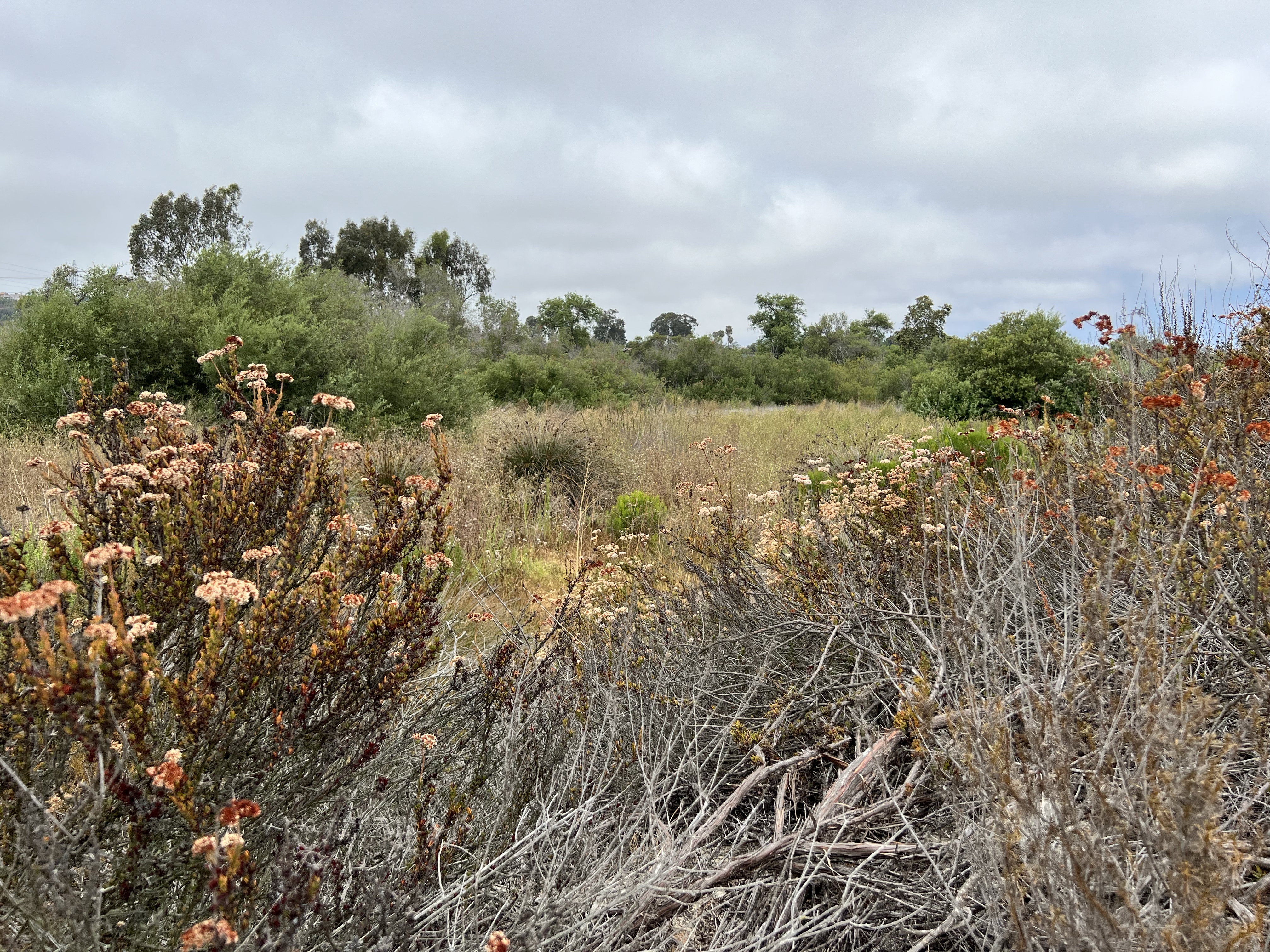
It’s the Agua Hedionda Lagoon Foundation nature center, discovery center, or something. As I took photos of the native plants around the trail, which was relatively child free, I discovered that many of the plants are specific to the Pacific coastline. Lots of them have “alkali” in their names.
Interesting, huh? Carlsbad is actually famous for alkali water, which I didn’t know before. The area we were in consists of vernal pools, which have lots of marsh and alkaline-living plants. I learned something! Vernal pools are common in the Mediterranean, but are also found in California.
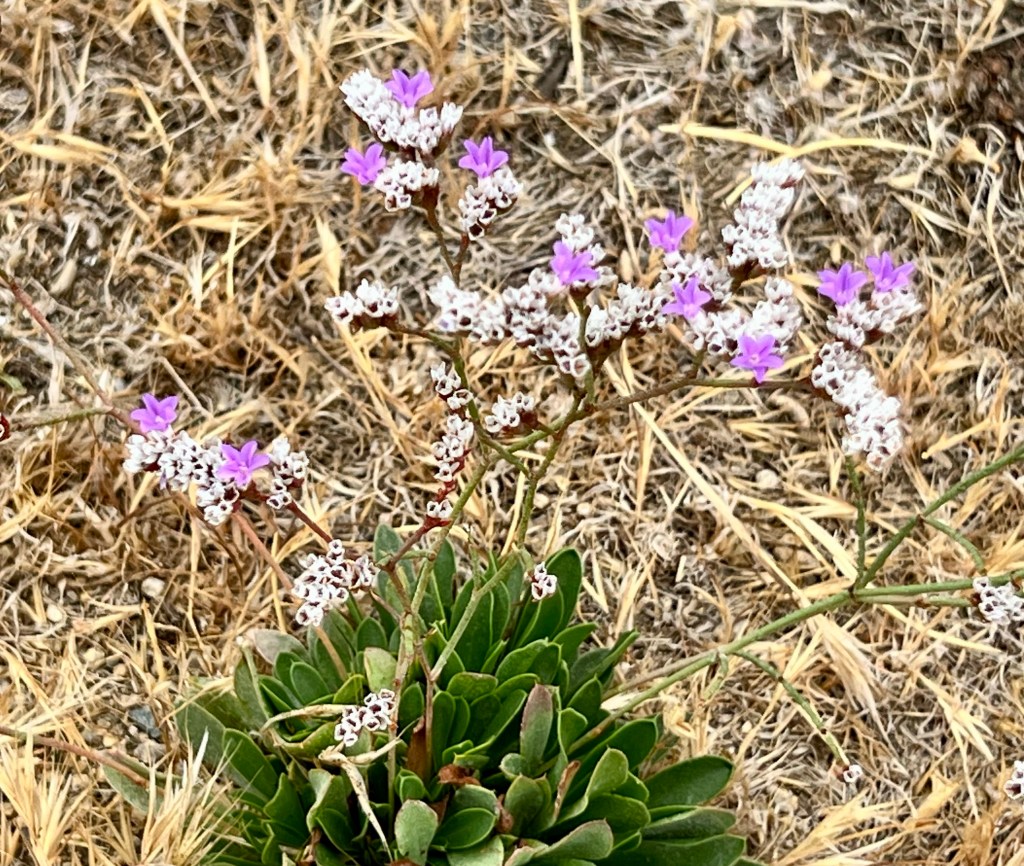
This gorgeous thing is Algerian sea lavender. Obviously introduced, as are so many plants here.
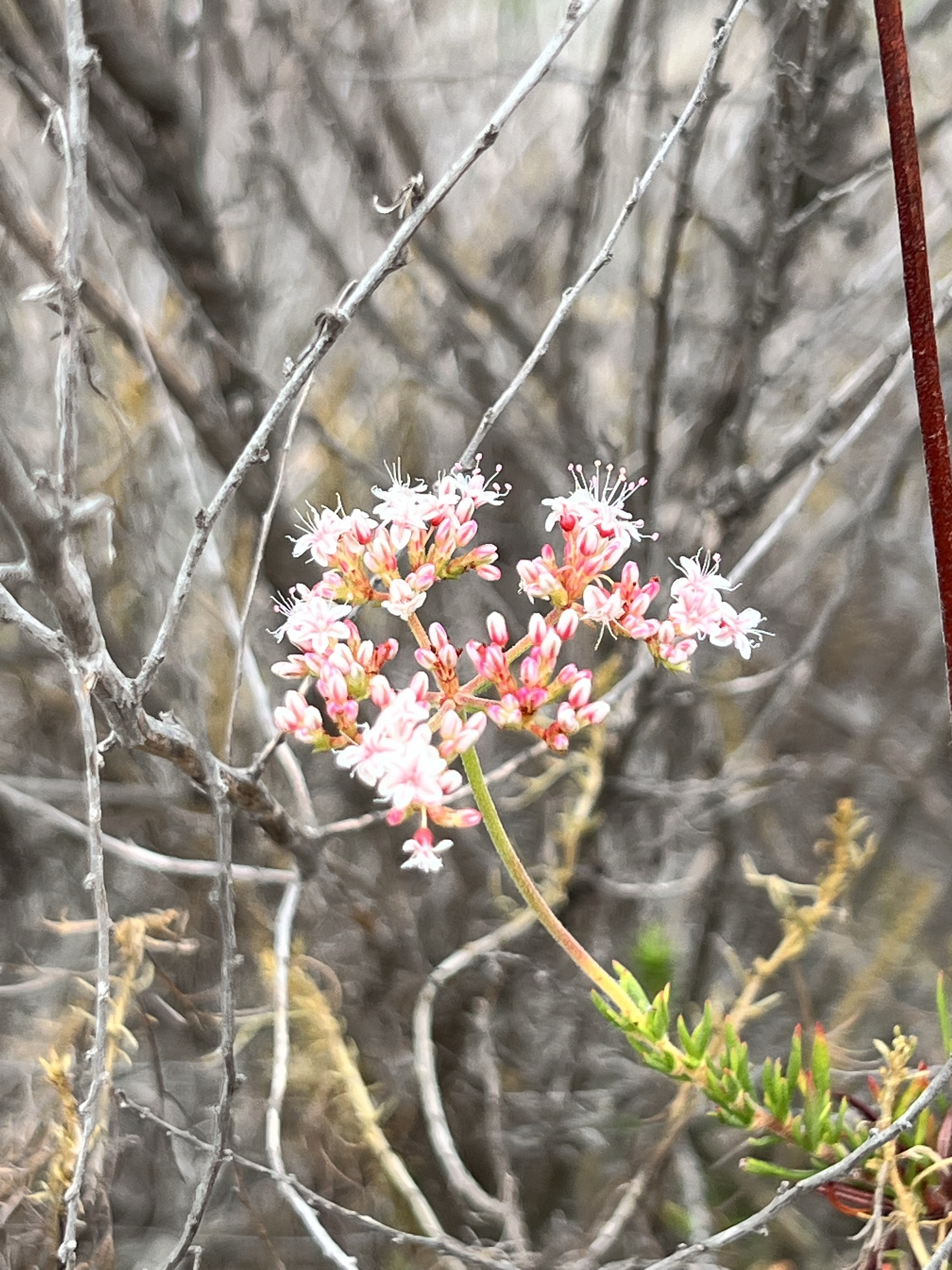
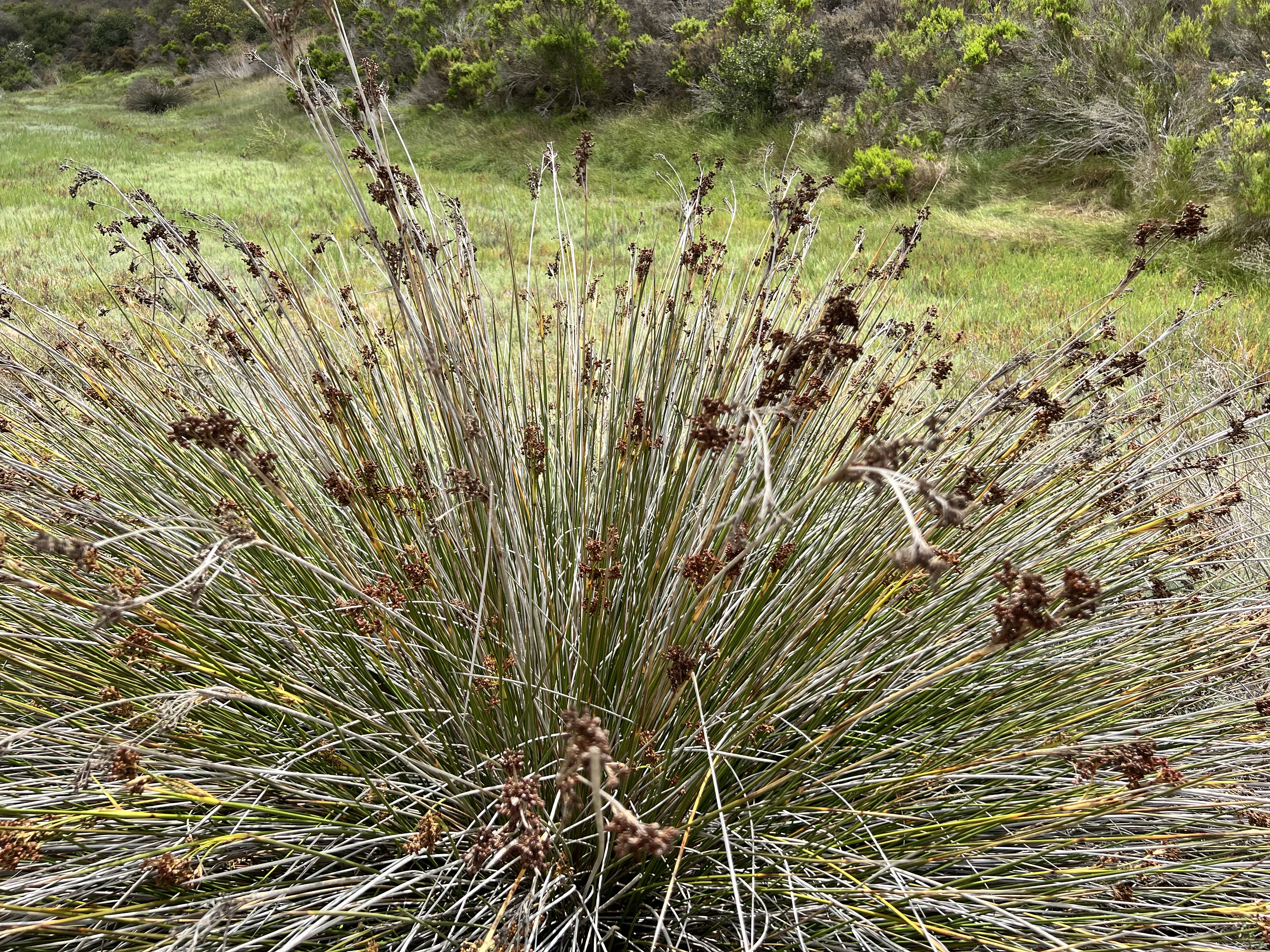
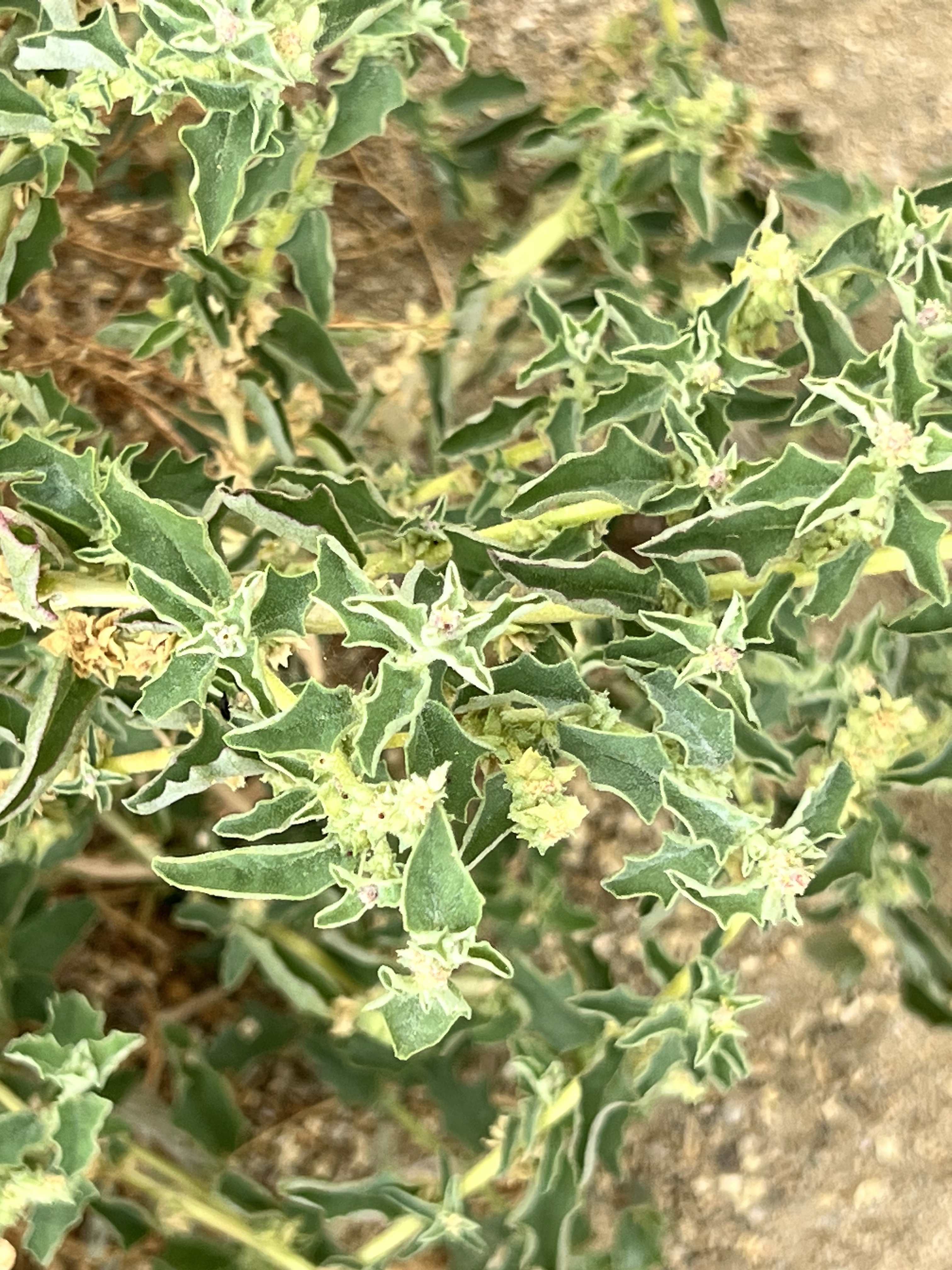
I really enjoyed the walk and all the new plants I discovered. It’s obvious that it’s very dry here. I can see why the fire danger is so high. The natural areas are so brown. But there’s beauty. Here are some more plants.
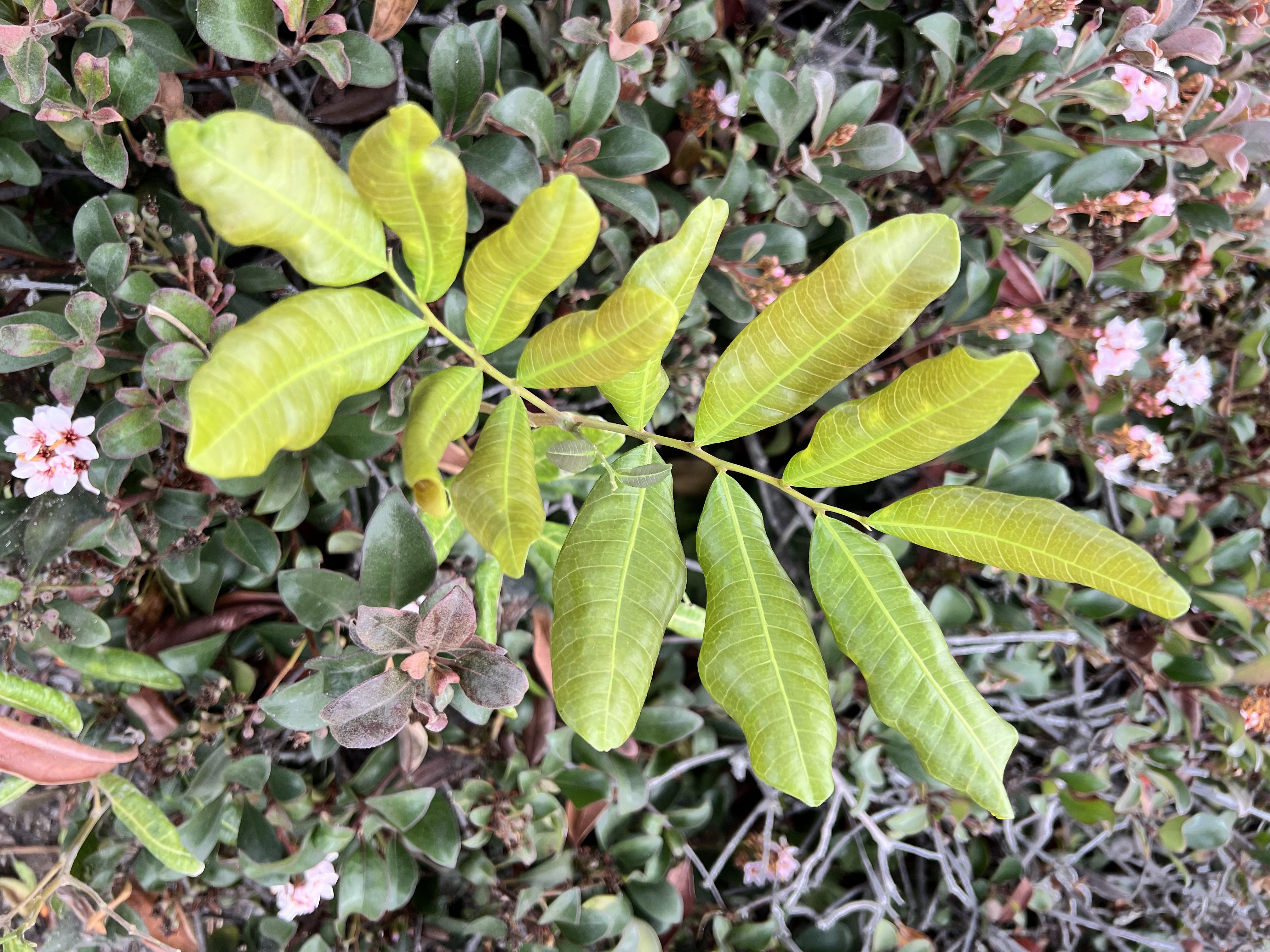
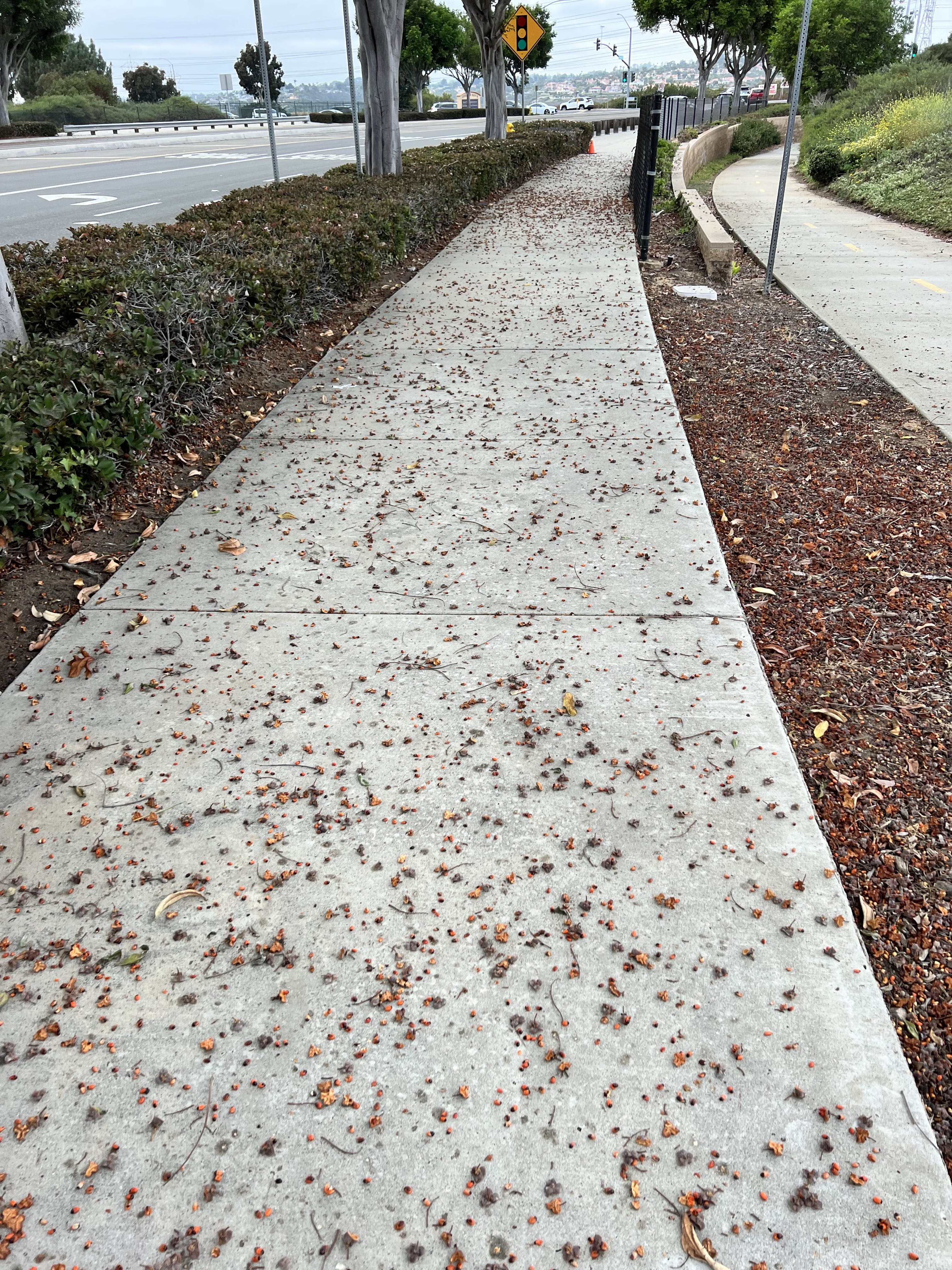
Later yesterday we walked around the resort. Again, I was amazed at how many Australian plants they’ve put here. There are lots of these tuckeroo trees with annoying seeds all over the paths. I guess they have other redeeming qualities.
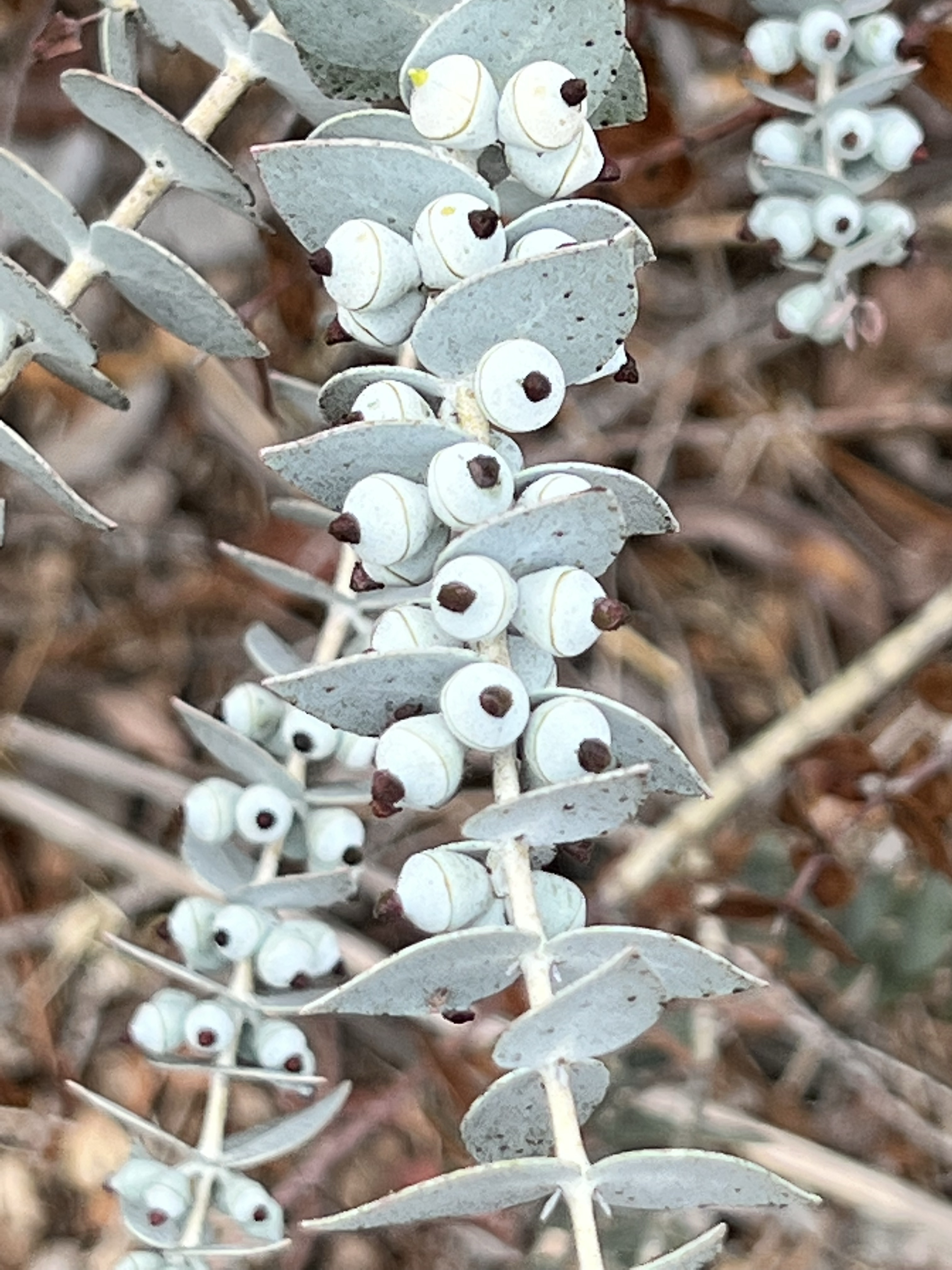
And there are tons of eucalyptus trees. They smell just like eucalyptus!
Yep. This is an interesting place. I’m glad I’m getting to learn about these different ecosystems. That’s my idea of vacation fun.
First, I do not have anything contagious; my lunch (which was delicious) disagreed with me. And I felt okay this morning, when I worked on so many different things that it made my head spin.
I need to stop and admire the flowers, like Fiona.
After a fun time telling a new coworker fun things to do where she lives (one neighborhood over from where the kids grew up in Brushy Creek), I headed out to lunch with Anita for our newly traditional weekly gab-fest. It was so nice to just share our week together like we used to.
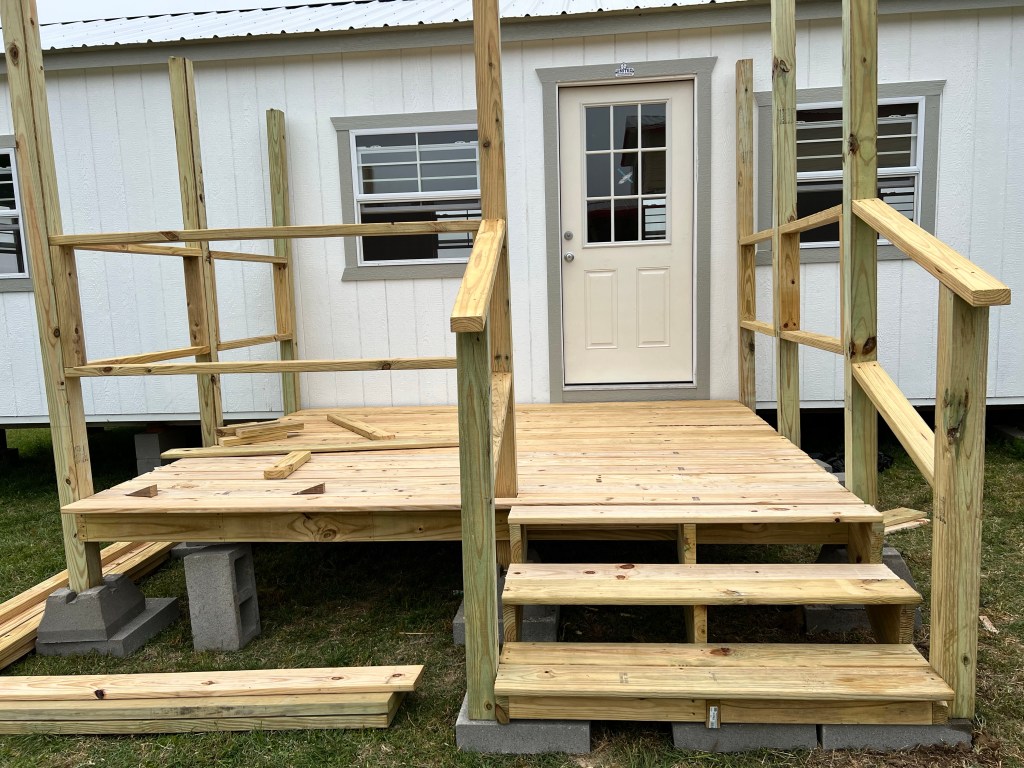
I told her they got this far on the pool house deck.
By the time I finished getting groceries that Lee had missed when he went out (plus ice cream—why I usually stay home), my stomach was sad. Rather than go to bed and rest, I instead dove into every work project I could think of, including some stuff that hurt my head. Me learning SharePoint is probably like my coworkers trying to learn Planview. It is counterintuitive and won’t let me do what I want to do.
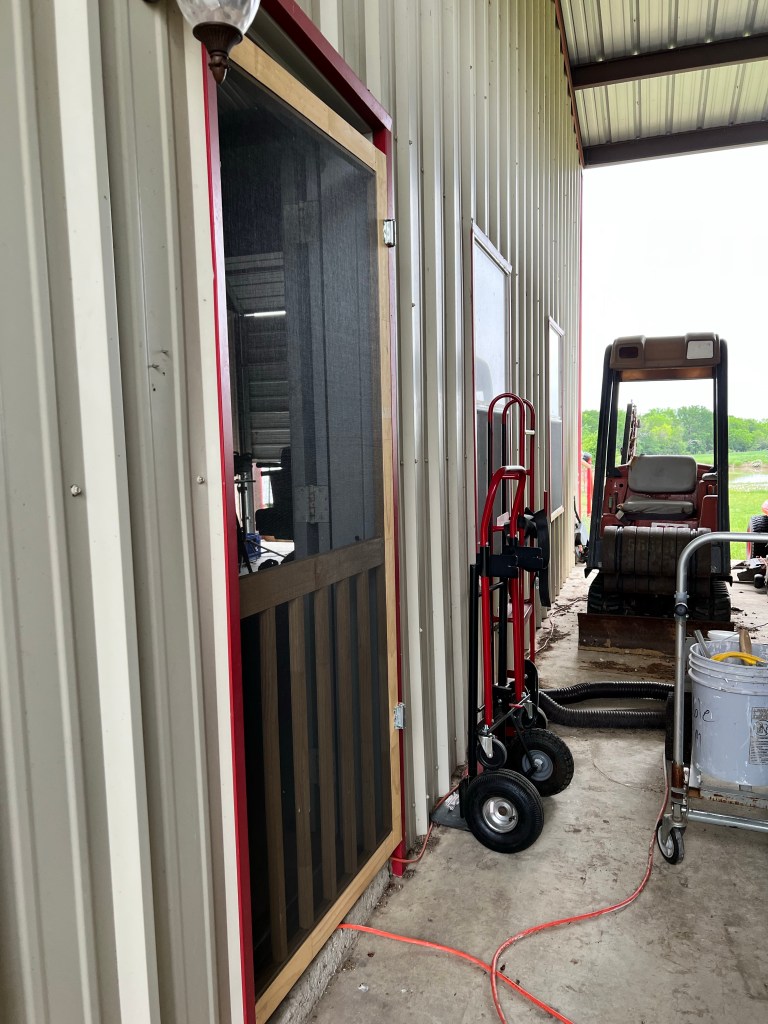
Another exciting home improvement is this screen door to the garage. No chickens allowed!
Actually it is probably descended from the bane of my existence when I did websites, the dreaded Microsoft FrontPage, which let you make any website you wanted, as long as it looked just like one of its templates. I digress.
Goldie says, “Focus, Suna.”
But by golly, I made a thing I find absolutely hideous, but is quite SharePointy and full of big margins, giant useless images, and not enough information to tell you anything. Yay. It did, however, take my mind off my stomach hurting.
I’ll clean your ears.
I then wrote a bunch of blogs for other organizations, did miscellaneous to-do items, and nearly checked off all the bullets in my bullet journal for the day. So far I only have one bullet for tomorrow. Ah. Horse stuff with Sara!
Another Topic
By the way, I got recertification for another year as a Texas Master Naturalist! I’m enjoying it more this year, since it’s a lot less stressful just being the secretary. And no, I will not take over the website until I retire from paid employment. Boundaries! I have them!
Hey, look, I’m with my most faithful blog reader, Catherine!
I’m quite proud of my fellow volunteers, though, and so glad I get to see them again. I just had to hug a couple of women I’d missed so much. And I was very sad to learn that Sam, one of our members in the last class, had passed away this week. He was so helpful to our older members and did some good work.
So yes, life’s short. That’s why I spent good time with my horses and Fiona this afternoon. I groomed and loved on them as hard as I could. It was my reward for getting through the afternoon of mental and physical owies. It’s just so peaceful when everyone is in a good mood and crunching away on their dinners.
It’s not peaceful on the patio. By the way, Alfred is just to the right of the photo, pawing for attention.
Whatever you are celebrating this weekend, enjoy it. I’ll enjoy what everyone else is celebrating, with thoughts of peace and kindness to all, even those who want to cause you pain. I’m just not letting it happen!
I originally posted much of this content on my Master Naturalist chapter’s blog, but also wanted to share it with you all. I’m amazed at what I see around the Hermits’ Rest and want to share it with my friends around the world. If you have trouble seeing anything let me know.
It’s beautiful this time of year, and these potential rain clouds are an added bonus.
Sporty Sports
As I continue to monitor the new flowers that are blooming in northern Milam County, I’ve found a few interesting ones. Occasionally a plant will produce a flower that’s different from its usual form or color. These sports are how new cultivars can come about, especially if humans show up and start breeding them intentionally. Out here, though, they just show up and we enjoy them.
This is a Texas paintbrushCastilleja indivisa found on County Road 140 near Walker’s Creek.
Here’s my mandatory Wikipedia quote about sports in botany, in which I left the links in case you want to learn more:
In botany, a sport or bud sport, traditionally called lusus, is a part of a plant that shows morphological differences from the rest of the plant. Sports may differ by foliage shape or color, flowers, fruit, or branch structure. The cause is generally thought to be a chance genetic mutation.
The beautiful flower you see above was a pleasant surprise on my morning walk down the road in front of our property, where I was looking for new things and admiring the bluebonnets. What the heck is that yellow plant, I wondered? It looks like popcorn. When I got close, I was taken aback by how beautiful this sport of the normally orange-red flower was. I guess if I was a nursery owner, I’d have collected some seeds in a few weeks. Instead, I looked up more information and found that pale orange and yellow variations do occasionally occur.
More views of the yellow paintbrushes and their friends
Here’s now 99% of the native annual Texas paintbrushes, which are a parasitic plant, by the way, look where I live:
That looks more familiar!
The more I have been looking closely at my roadside wildflower friends, the more variations I’ve seen. Have you seen any of these? I know that the pink ladies/evening primrosesOenothera speciosa vary widely in their pinkness. We always have a patch of the whiter ones here. I’ve also run across a light purple bluebonnetLupinus texensis that I found quite charming (more so than the burgundy ones), as well as a white Texas vervainVerbena halei, which I had never seen before.
bonus assassin bug
You might call me paranoid, but I wonder if the reason there are so many variations in the colors of the flowers on that stretch of road is because of the chemicals sprayed every year on the field across the road (which is the only field in miles in any direction that’s managed using fertilizers and herbicides sprayed by an inaccurate plane). I’ll never know, but I have my suspicions, especially since tomatoes and peppers always die after the spraying. I’m pleased that this year they have winter rye or some silage thing that they don’t spray.
This is the field to which I refer. Apparently the chemicals do not bother the verbena.
Speaking of herbicides that I don’t use…
Dandy Lions
Someone on Facebook recently was complaining about how chemical companies always use the common dandelion as their generic image of an ugly weed that must be eradicated. We all know that you can eat the young leaves, make wine from the flowers, and dye using the roots, of course. They have many health benefits, from what I read.
They are also vitally important to our pollinators in the early spring. Last month, they were among the few blooming plants out there for the bees, tiny wasps, and butterflies to feed on. Until the rest of the flowers showed up, later than usual, they kept the beneficial insect population going. I was very glad to see so many healthy common dandelions out in my pastures.
This gal was also happy to see a dandelion.
But, have you noticed how many members of the dandelion family are actually out there in our fields, pastures, and yards? I have been greatly enjoying some of them, including the tiny weedy dwarf dandelionKrigia cespitosa, the shy smooth cat’s earHypochaeris glabra that spends most of its time tightly closed up, and the extra prickly one, prickly sowthistleSonchus asper.
click to see the whole image. Aren’t the seed heads pretty, though?Tiny!These I consider weeds. Sorry sowthistle.
One more interesting thing about dandelions. I just discovered today, when I was researching which flowers I’ve been seeing were in the dandelion family, that what I called dandelions my whole life, and the only ones I saw as a child, were in fact false dandelionsPyrrhopappus pauciflorus, which is a member of the aster family. Now I know.
They are beautiful, anyway.
Miscellaneous
And while I’m here, I may as well share what else is popping up around here. I saw my first winecup and fleabane this week, and my first Englemann daisy, sikly evolvulus, and tie vines today (forgot to take a picture of the latter). My heart leapt for joy when I discovered I DO still have baby blue eyes on my property (someone “cleared brush”). For added pleasure to those with allergies, the black willows are blooming, too.
winecup mallowplains fleabaneEngelmann daisysilky evolvulusTexas baby blue eyes!
All I can say is keep looking down. You’ll see plenty to keep you entertained for hours. We live in a beautiful place and have so much we can learn if we are observant!
There’s always something to see on a Texas country road in spring.
[This is a re-post of something I wrote in our Master Naturalist Chapter blog. I just thought I’d share these new photos.]
I have a project on iNaturalist where I record the flora and fauna on the ranch where I live. I started it right after I became a Master Naturalist in 2018 and am still contributing to it. My goal is to eventually analyze the data to see if flowers or birds are appearing around the same time or if there’s difference due to weather or climate, or what.
I especially love the tiny flowers, like this birds-eye speedwell.
I accumulated a lot of Master Naturalist hours while working on this project, since I go out on almost every nice day to see what’s new on the property. But, last year the program changed its policy, and now we don’t get credit for hours spent observing nature on our own property. I can see not wanting observations of the same twenty plants in a suburban yard, but we have 500 acres. I stopped for a while, but then I realized the project is still important to me, so I am still taking pictures and uploading, especially in the spring.
Last week I shared some of the earlier flowers in our fields and woods. This week some new ones have showed up, which always thrills me. I’ll share some photos of the new arrivals below.
We are also losing some birds and gaining others. The hawks are still here, red-tails and red-shouldered, along with the tiny merlins and peregrine falcons. And our resident harrier keeps hovering over the fields, hopefully eating a LOT of mice.
The amazing pair of great blue herons seems busy bonding, and the belted kingfisher who showed up over the winter is still flying around and making its unmistakable chirps. In addition to the crows and starlings, we have some visiting blackbirds that make a beautiful sound. I’m not sure what type they are but enjoy listening to them. And cardinals. Wow, do we have a LOT of cardinals, too. I never knew they flocked until I moved here.
Just one male cardinal
Action shot showing the beautiful tail of this barn swallow.
Yesterday, I looked into a willow tree behind my house with my binoculars and saw a loggerhead shrike, a dove, English sparrows, a pair of cardinals, and a festive group of tiny chickadees bopping around. That’s my kind of decorated tree. Oh, and some red-eared slider turtles were holding down the trunks (this was in a tank).
I was happy to see barn swallows already in their nests just a couple of days after they arrived. The tiny insects are here, so they are looking pretty happy.
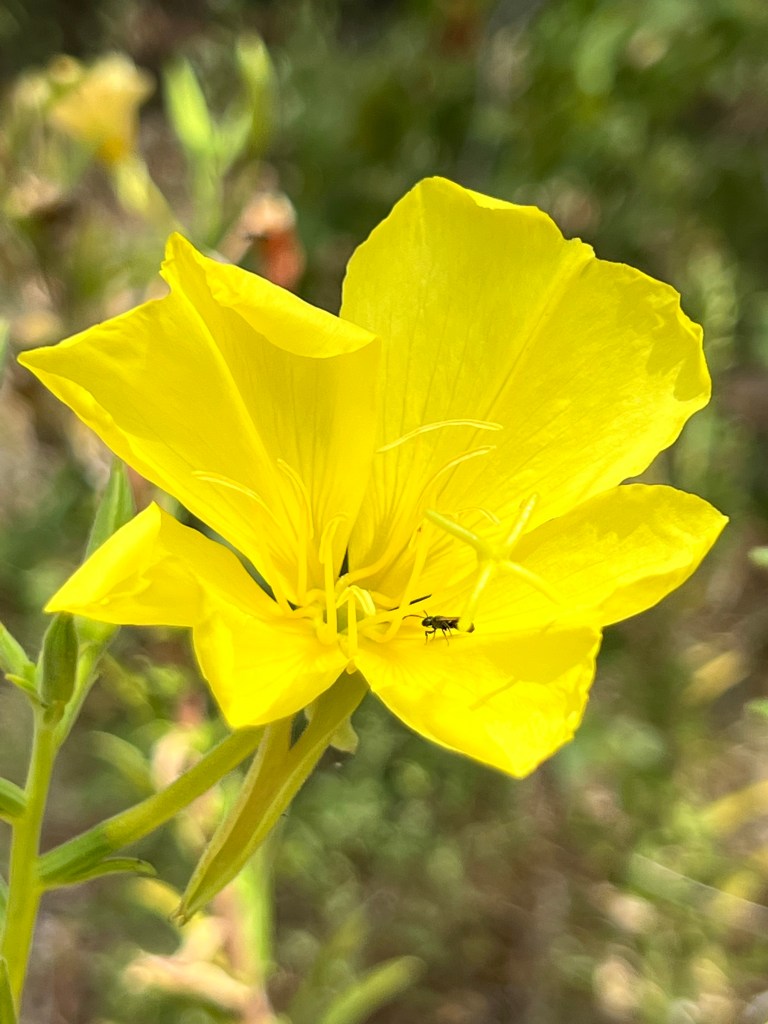
Speaking of tiny insects, I am always seeing tiny flies and bees on the flowers. They are pretty hard to identify. For example, the fly or bee in this picture is much smaller than you’d think. That is a dwarf dandelion it’s on, not a regular one.
Bee, fly?I put a regular dandelion in the picture to show you the size of the dwarf ones in comparison.
So, yes, it’s a fun time over where I live, and I’m glad I’m able to document the variety of life here in the northern part of Milam County. I look forward to seeing what others are observing. I’ve noticed lots of plum and redbud trees elsewhere, but I just have the buds on cedar elms and coralberry.
The first Indian paintbrushwood sorrellEarly bluebonnetMouse-ear chickweedEarly mock vervainRegular ole chickweedsmooth cat’s earFirst leaves on the trees
Besides all this, I’ve seen a lot of butterflies, such as sulphurs and red admirals, but no one will hold still for me. I even saw something big and black from a long way off. I look forward to more!
Thanks for visiting my part of the world. No matter what, the rhythms of nature keep on going, and that’s a comfort.
Well, I had to tell our beautiful Easter Egger hen, Betsy, that I was sorry I’d been putting her down for so long. I was telling everyone what a useless hen she was, because she hadn’t laid an egg yet, and I’d had her a long time. I mean, even little Billie Idyl was finally laying.
How dare you doubt me? And look, I have pale ears, which means pale eggs!
But today when I went to look for eggs, she was in the box, sitting like she was going to lay! And she kept making those noises hens make when they’re working on an egg. I was all excited that finally I’d get a beautiful green egg. Nearly all of these hybrid chickens lay eggs of some interesting color or another.
I also have a fluffy butt.
An hour or two later, I checked back in and found a gorgeous blue egg…which I knew was from Blanca, the Whiting True Blue hen. And there beside it, was this little darling.
It’s darker than ivory, but lighter than tan.
That is a light brown egg. In fact, I’d gotten a light brown egg every day for the past three days, thinking it was one of Billie Idyll’s that was just a little darker than usual. Betsy HAD finally started to produce, along with the rest of the newer chickens, who think it’s now spring.
The new ones are on the right.
I’m sorry, Betsy. Now all four of last year’s hens have laid eggs, and good ole Star is also laying. They are going to be all surprised when it gets cold this weekend. But I’m happy to be getting enough eggs again that I can share them with Lee’s brother, who loves eggs almost as much as I do.
In other news, we still have interesting bugs, not only a wheel bug (I love those), but also one of these guys, a painted hickory borer (or a mesquite borer, but it matches the hickory one better on iNaturalist).
Wheel bugPainted hickory borer
And in just a bit of horse news, Sara and I are feeling good about our horses. She and Aragorn came over today, and he was so calm and centered! He has made a lot of progress in his ability to come here to visit. He even trotted calmly and collected. What a guy. And Apache did extremely well today in the round pen. Sara was impressed and just smiled so much at me. I felt good. He’s still not good outside the pen, but he was doing his stopping and backing so well. I just wanted to acknowledge that improvement.
No horse photos today, but here’s where I wish I could ride.
Our animals are such a source of joy, and we really need it right now. Everyone seems to be getting sick, no matter how hard they try to stay safe. Traveling friends are faring the worst, and it makes me so concerned. The flu is also going around here now. Great. But all my family and friends who are struggling are finding support from their communities. I’ve had some good reminders of that lately and am very grateful.