The person behind The Hermits' Rest blog and many others. I'm a certified Texas Master Naturalist and love the nature of Milam County. I manage technical writers in Austin, help with Hearts Homes and Hands, a personal assistance service, in Cameron, and serve on three nonprofit boards. You may know me from La Leche League, knitting, iNaturalist, or Facebook. I'm interested in ALL of you!
Two woman I admired very much passed away within 24 hours of each other. Both from breast cancer complications, to simplify things. I’m glad they each had so many friends who treasured them. We have so many shared memories.
I can’t tell you to go out and hug your friends. That’s because COVID is also hurting people I care about right now. It’s way too close for comfort.
So…reach out to people you care about. Maybe a couple a day. We never know how long we will have with people we care about. Or how long we have in this life.
Thanks to all of you for being one of my connections.
I haven’t posted a renovation post in a while, have I? That doesn’t mean nothing’s going on! The main improvements have been to the second floor of the Pope house, where we had to expand sooner than expected, thanks to the growth of Hearts, Homes and Hands (a good thing – we sure are thankful to Kathleen and the team for that!).
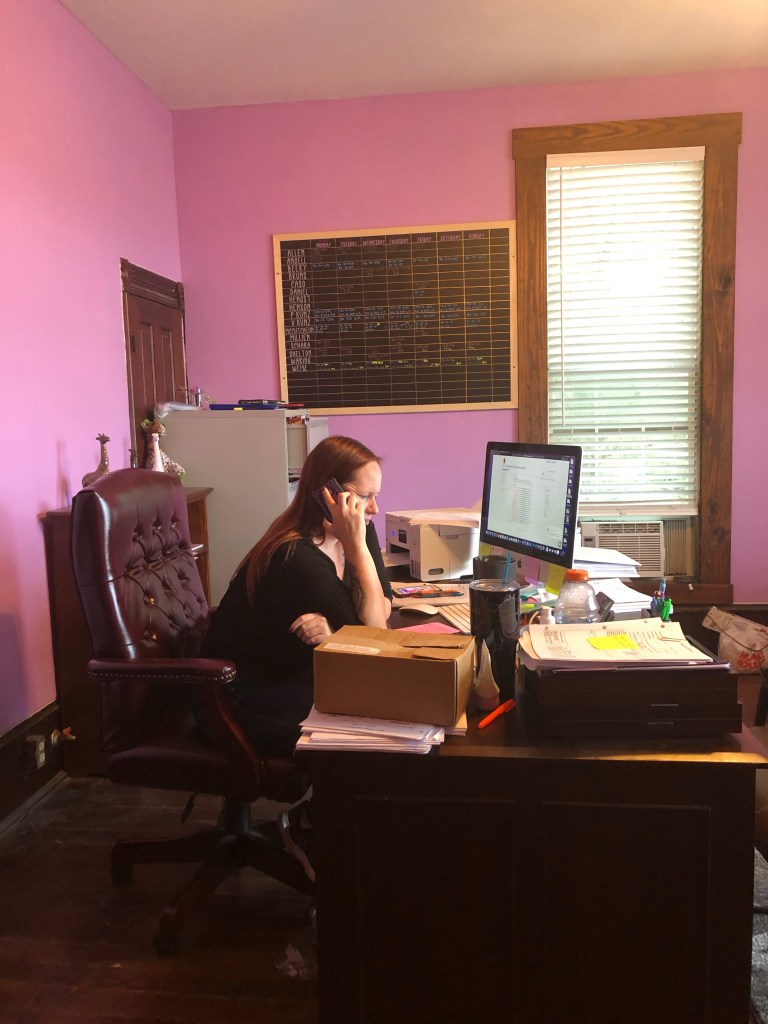
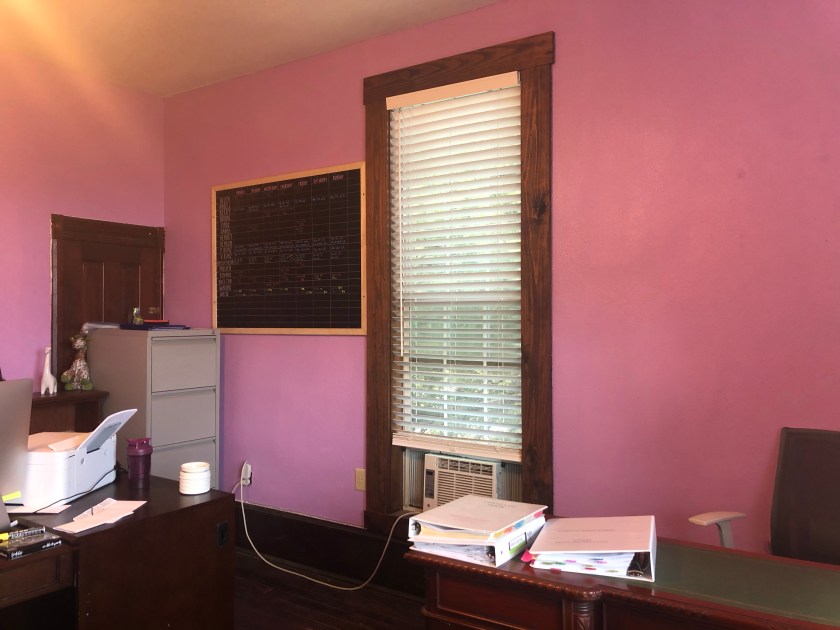
Our care team now has an office on the second floor, with a great view of trees and the balcony. Meghan has a great command center for scheduling, keeping records, and filing, while there are two other desks for care team members who help her out. It’s hard to believe it’s grown that much since we opened for business last November!
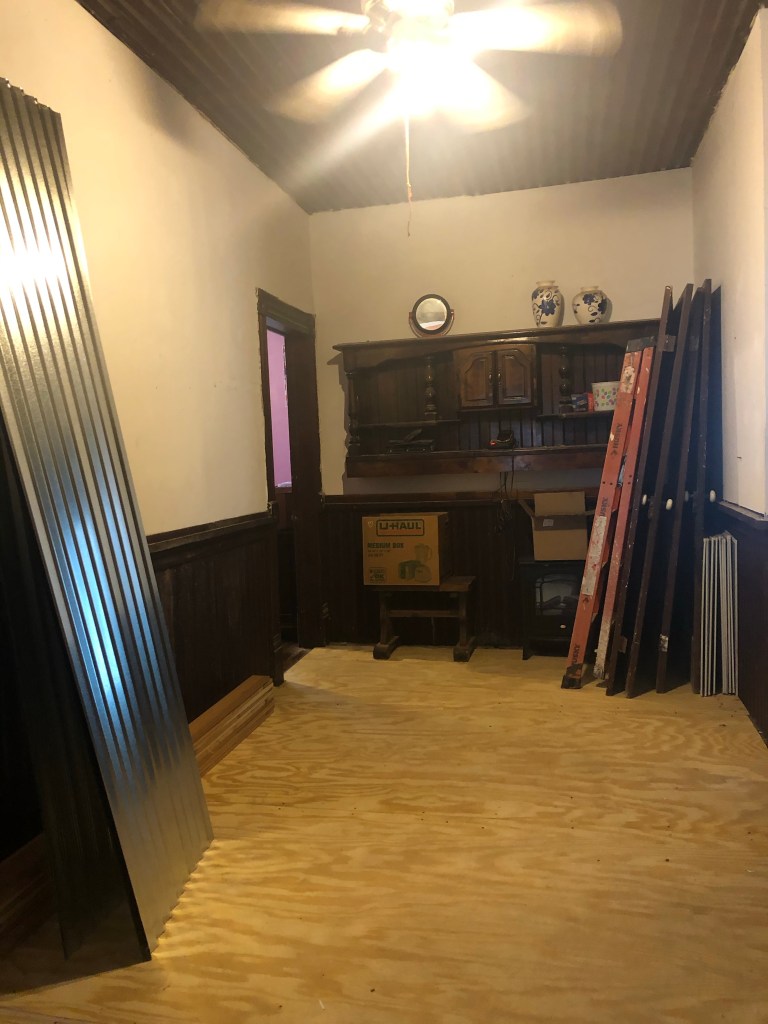
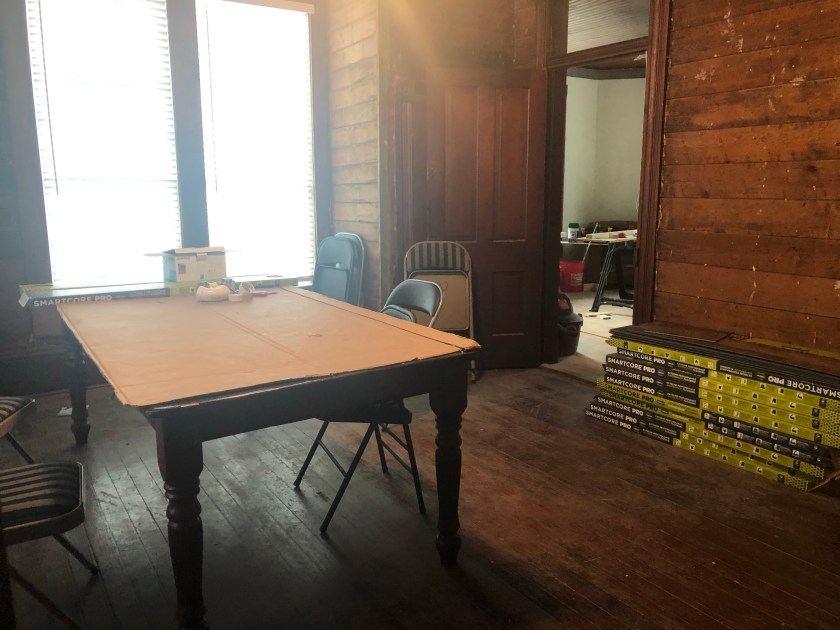
Before we could get that office going, we had to get a nice, strong sub-floor in the upstairs hallway. The next improvement will be to remove the weird kitchen-y room, so people can get to the balcony without going through the future conference room (you know it’s a conference room, because we put the conference table in there).
Subfloor sturdiness
Future conference room
It’s a good thing that the plumbing was all inspected on the second floor, because that let us set the upstairs bathroom up for the team to use. Right now, it’s functional, but not quite done. When it’s finished, it will be very cute and rustic, to match the theme of the building.
Work in progress!
Those of us who work in the office have really been enjoying all our fall decorations and the atmosphere in the building. I even get to eat lunch in my little break area.
Looking down at the break area and my office.
Hoping you are taking the time to enjoy what you’re doing, right now, and where you are. Take some time to look around. We’re alive, so let’s make the most of that time.
Maybe it’s irritating; maybe it’s righteously indignant; maybe it’s newly awakened evangelism. Whatever it is, I can’t stop talking to all my friends about the Caste book I just read. I keep retelling the parts about the lynching postcards, Hitler’s use of the US as a model in how to de-humanize Jews, and the clear explanation of why poor whites identify more with powerful elites than to other poor people. Apparently, I have been deeply affected by Isabel Wilkerson’s scholarship, and I simply MUST share.
This woman is inspiring.
Have you ever read something that you can’t shut up about? I was recently that way about Nature’s Best Hope, which I begged everyone I knew to read (and at least I know all my Master Naturalist friends will read after hearing Doug Tallamy speak in person. I can remember being that excited over The Color Purple, too, as well as the first book on feminist spirituality I ever read. But, it doesn’t happen often, so forgive me, if you know me in person, if I keep going on and on about things the US has institutionalized to maintain an artificial difference between two groups of people.
These are the kinds of things that just get me angry at my fellow white people.
You will be either pleased or annoyed to know I just got Wilkerson’s first book, The Warmth of Other Suns, which is about the immigration history of the US. I can’t wait to learn which group of misfits gets scapegoated decade by decade. I’ll try to keep my enthusiasm to a dull roar, hee hee.
I’ve been thinking, though, about what gets me all riled up into a pile of agitated activism. It always seems to center around people or other living beings not being treated fairly. That’s what sparked my religious outrage in the past, nearly all of my strong political feelings, and my advocacy of child and animal welfare. None of us is ACTUALLY any better than anyone else, people, animals, plants, rocks, whatever. At least that’s what I’ve been socialized to believe.
Just shut me up. Hey, at least this stuff keeps me from dwelling on other things that annoy me. Yeah, Suna, just keep on shaking your fist at the status quo!
Thanks to all the reading I’ve done lately, though, I can see how other people come to view things differently. I may not think it’s right all the time, but it’s odd how learning about the treatment of minorities, indigenous people, and disfavored groups has led me to a better understanding of how desperately people cling to anything that lets them believe they are members of favored groups.
I’m still thinking. In the meantime, what book (or movie or television program) has led you to get all riled up and ready to take action about injustice?
I’ve been thinking about traveling lately. Getting out and seeing different parts of the world is really good for my soul. It reminds me, at the same time, of how much similarity there is in all these places, as well as how different places can be. For example, on my field trip last weekend, I saw many of the same kinds of trees I do here (post oaks, live oaks, cedar elms, eastern red cedar), but I also saw many kinds of plants that were very different, like the rattleboxes (repeated from yesterday, but they are so cool!
These make all sorts of sound when it’s windy out by Edwards Lake!
Now that we are mostly working from home, it seems to me that I could travel and work at the same time. As long as I have the laptop and Wi-Fi, I’m set! Zoom is only a click away!
So, I have booked some travel that’s not vacation, just living in a different place. I’ll just have to be really careful getting where I’m going, but that’s not impossible. Once I’m there, I can get all cozy in my rental accommodations, look out the windows at different scenery, and pretend I’m someone else, in a less awful time. At least I’ll be somewhere else!
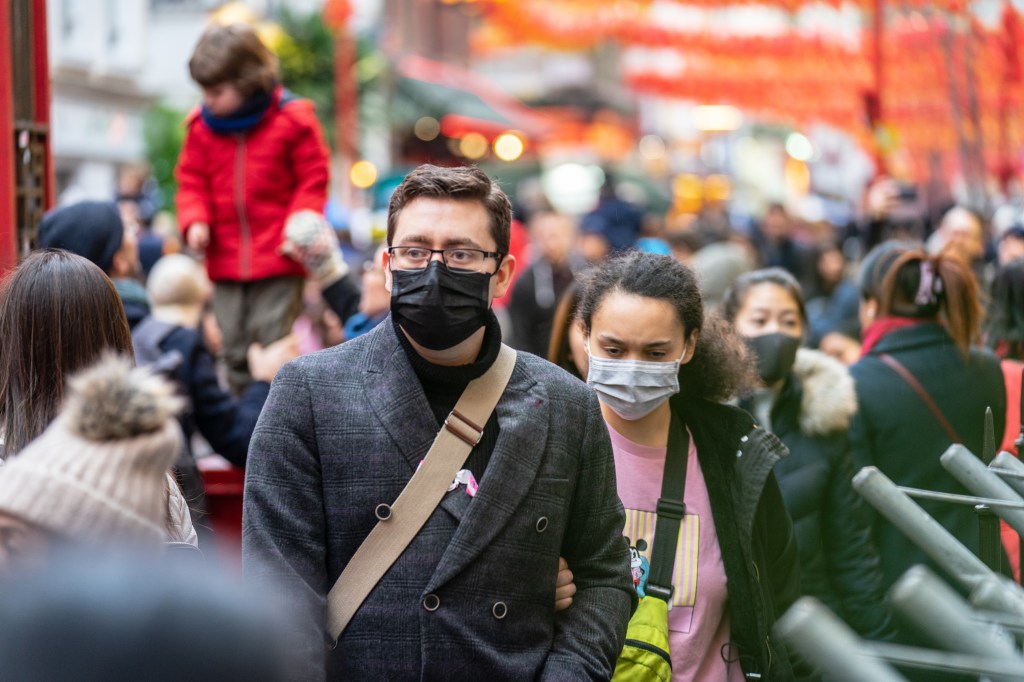
London, January 26, 2020. People wearing a face masks to protecting themself because of epidemic in China. Selective Focus. Concept of coronavirus quarantine. MERS-Cov, middle East respiratory syndrome coronavirus, Novel coronavirus 2019-nCoV.
I don’t want to get sick, which means, boo hoo, my shopping habit won’t be indulged in. But I can certainly take walks on paths and trails that are not crowded, enjoy parks, and order fun food delivered to my room, right? I’m hoping that this “middle way” of not acting foolish, but not sacrificing the few years of being able to travel that I have left, will get me through the rest of this year and next year.
So many people I know think the risk of getting COVID isn’t real. They aren’t taking precautions, and that’s their right, I guess.
Knowing people who’ve had it, I can’t say that nothing will happen to travelers. But I also think the reasonable solution to the problem is avoiding crowds and keeping clean. That, I can do. And I won’t go anywhere that doesn’t have a lot of safety measures in place. (I’ll tell you where I’m going when I get there!)
I’m not going here, though I’d like to. Image by @omom via Twenty20.
Feedback? Am I being foolish? Do you have any fun ideas for out-of-town activities one can do?
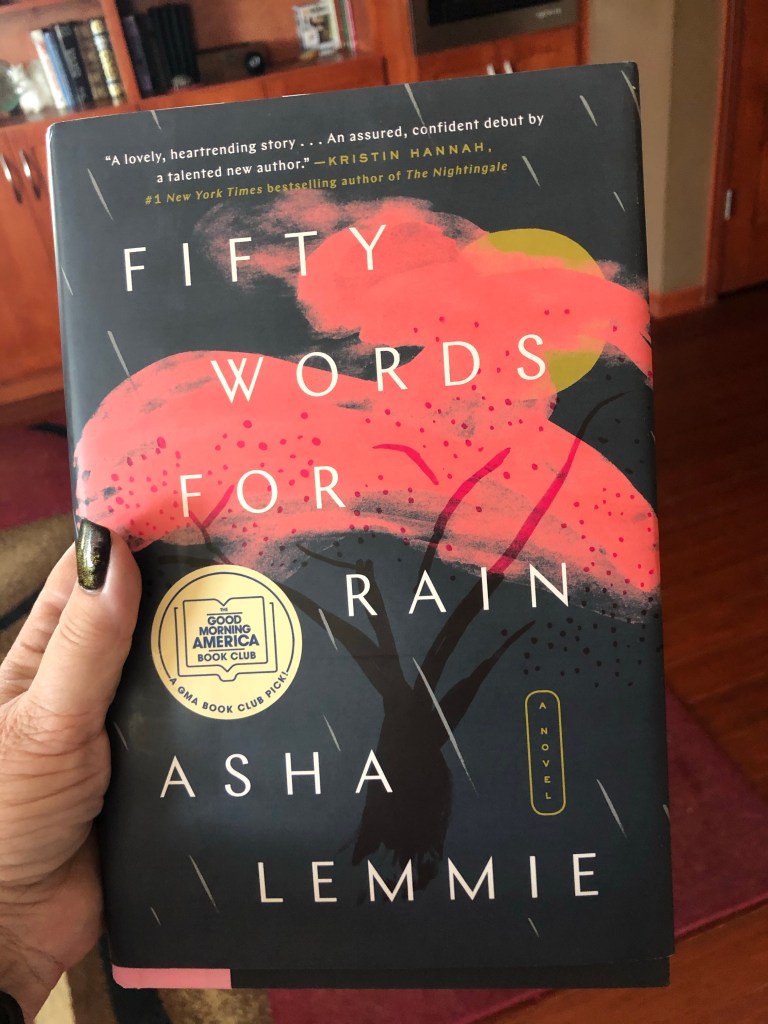
After the emotional turmoil of reading Caste, I wanted something less intense and not about race. Well, the next book I read, Fifty Words for Rain, by Asha Lemmie turned out to be intense and about race, but it also had fun elements, so it was a bit of a break. Here’s how the Amazon description starts out:
Kyoto, Japan, 1948. “Do not question. Do not fight. Do not resist.”
Such is eight-year-old Noriko “Nori” Kamiza’s first lesson. She will not question why her mother abandoned her with only these final words. She will not fight her confinement to the attic of her grandparents’ imperial estate. And she will not resist the scalding chemical baths she receives daily to lighten her skin.
Turns out little Nori is half Black, and that was quite a problem back then, especially for a member of the Imperial Family. The poor girl certainly has a hard time, but she’s one of those resilient types, thankfully. I found it interesting how she made the best of whatever situation she was in, and was able to learn and grow into an amazing person. She is amazingly good at being alone, that’s for sure.
Pretty cover.
Other than a few annoying repetitions (how many times must Nori bite her lips so hard that she tastes blood?), I enjoyed the writing and the fascinating (if sometimes scary) characters Nori encounters. Her family puts the D in dysfunctional, to put it mildly.
The other part that was fun for me, in particular, is the Japanese language and culture from the times I’m most familiar with that is spread through the novel. I’m way better with formal Japanese than colloquial, so I understood most of it (I was trained by a fairly formal Japanese speaker, or actually, I’m glad Swann-sensei didn’t teach us what he did know; that would be fifty words for alcoholic beverages). At least some of the horrors of that culture didn’t shock me, since I knew about them. Other readers might find some of the book a little disturbing, but that’s what you need in a novel, right? Something to get you to turn the pages!
I predict Lemmie’s writing will only get better, so I look forward to future work by her. Even if the race theme keeps popping up to remind me not to become complacent, it’s worth it. Go ahead, get it! It will give you a nice break from reality. It certainly improved my Saturday afternoon and evening!
I wanted to know. There are very few iNaturalist sightings there that weren’t made by Eric from my Master Naturalist chapter. He, along with Alan, who lives on and runs a fish farm near Somerville, wanted to do something about that!
Near the main house
So we met up at the property today, to see what kind of fun field trip we could come up with to educate chapter members about the area, how Alan has been managing the water — fish ponds, lakes, streams, etc.
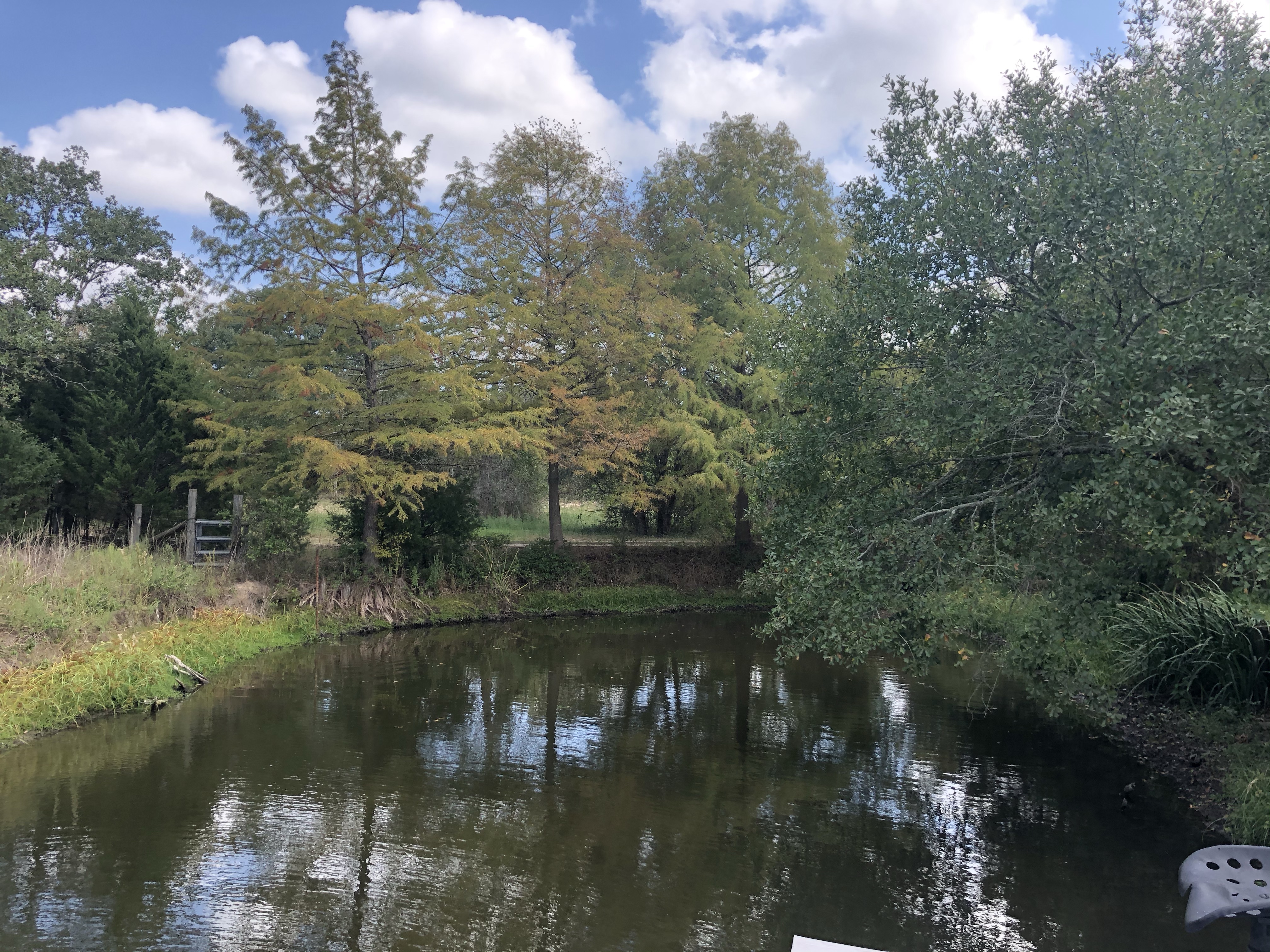
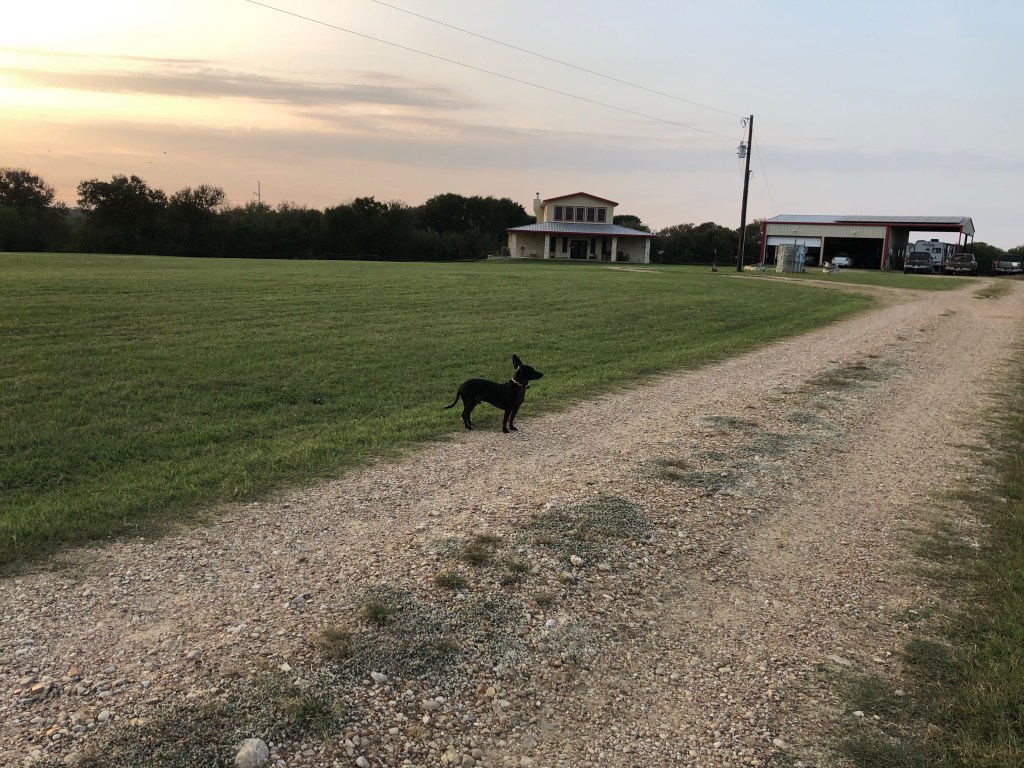
One of the ponds, with Bad Patty, the dog.
Of course I had to get a tour! Let me say that was fun! Alan is a great tour guide, and I got to see all kinds of new plants and insects. The lake is great, and there are many different micro-climates on the property.
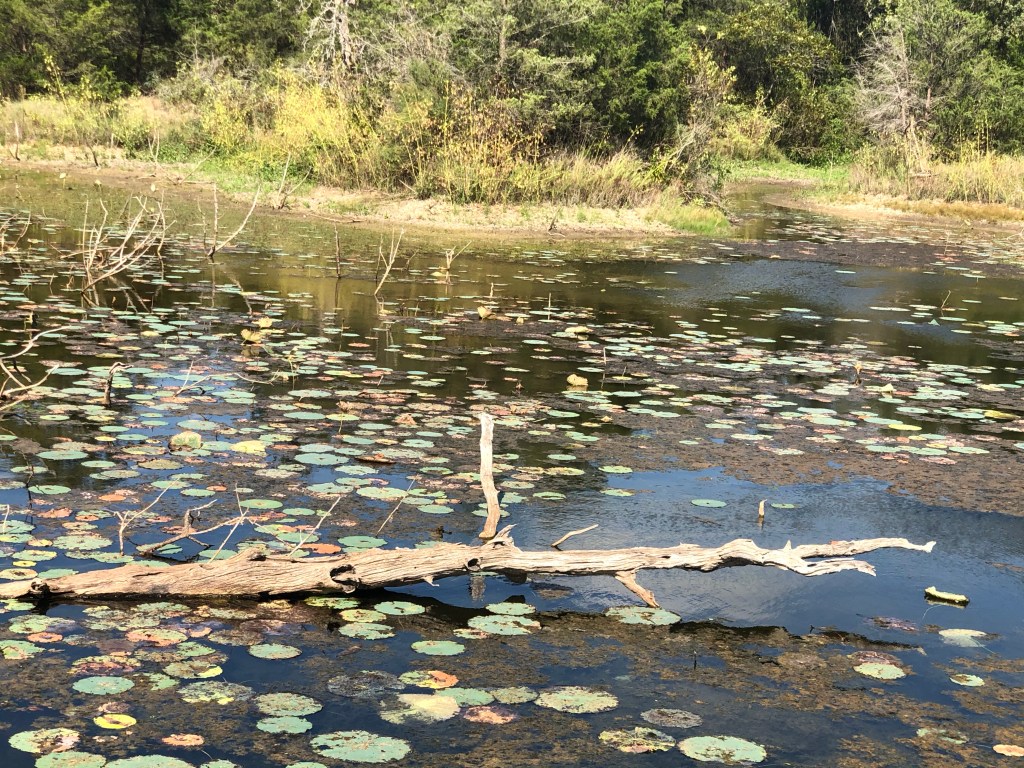
American lotus
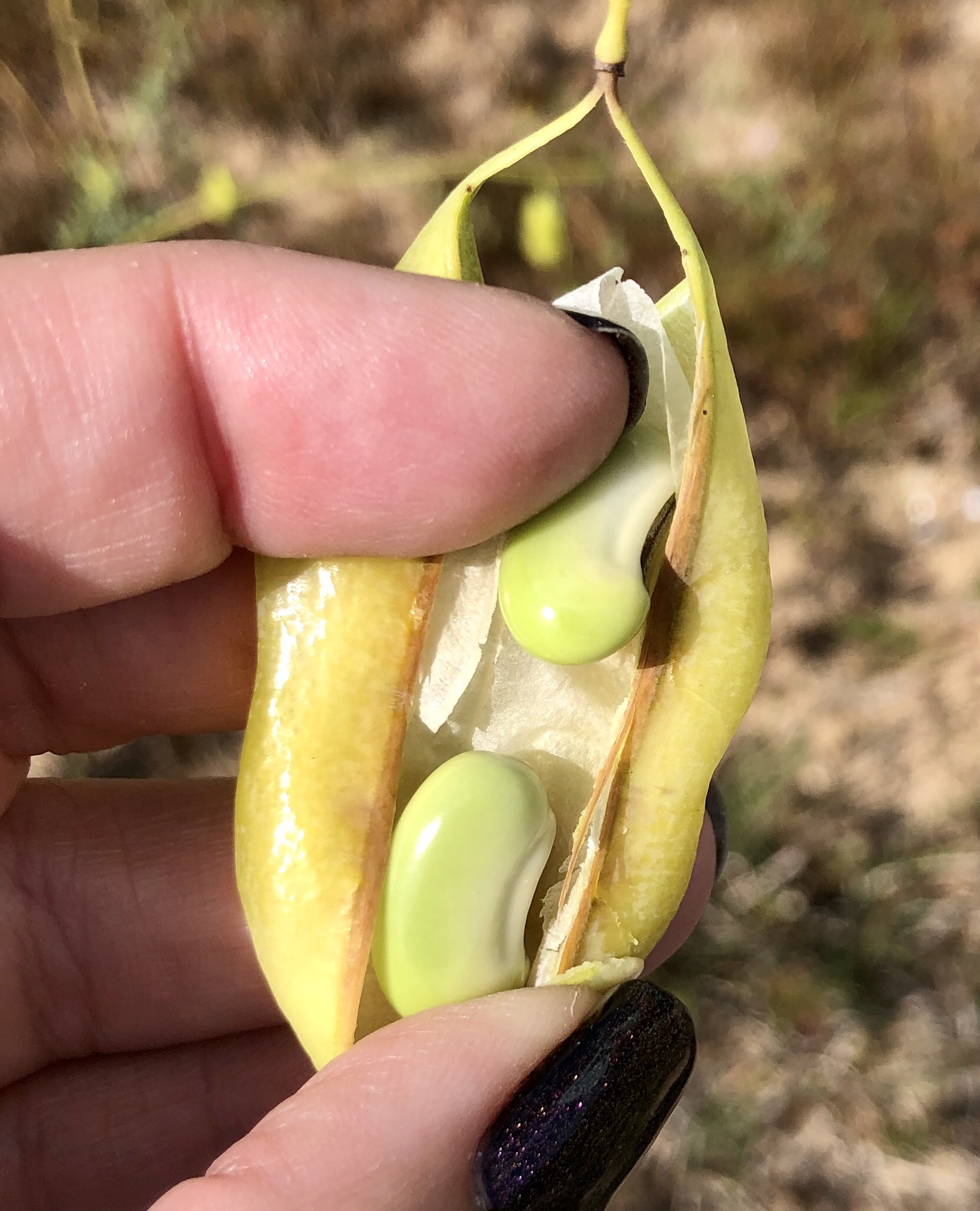
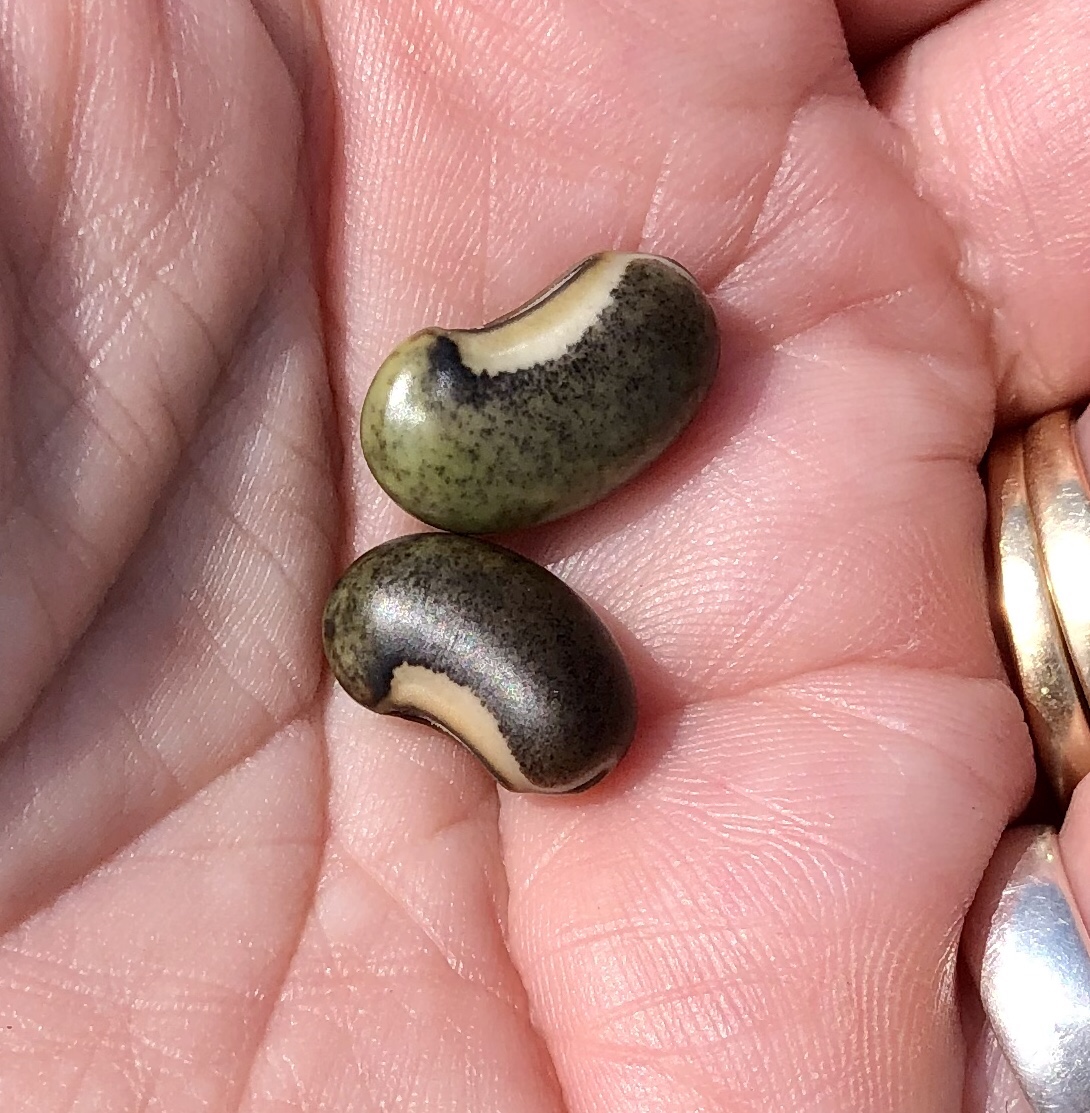
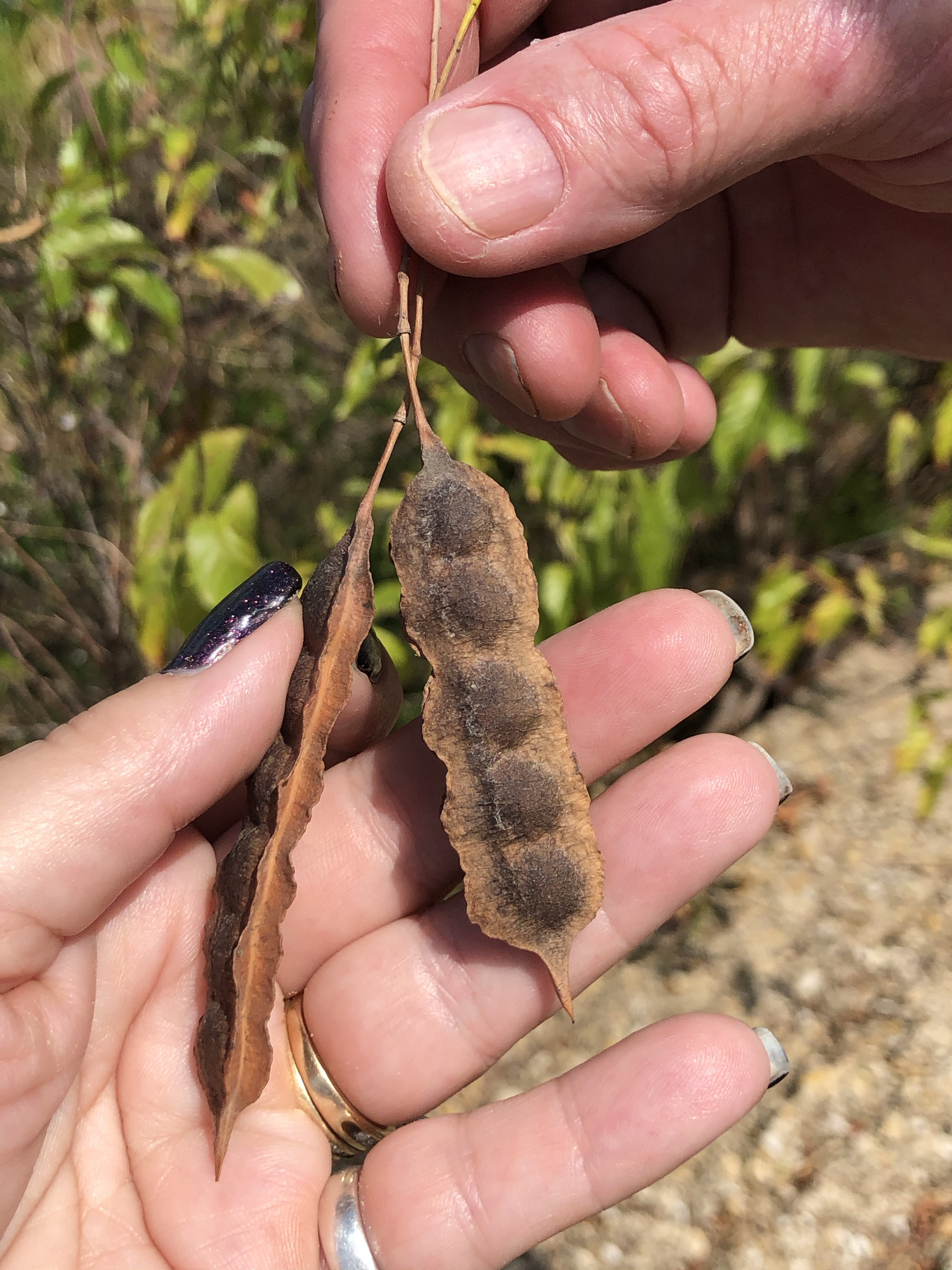
My favorites were plants whose seeds rattle when they dry. And all the water plants!
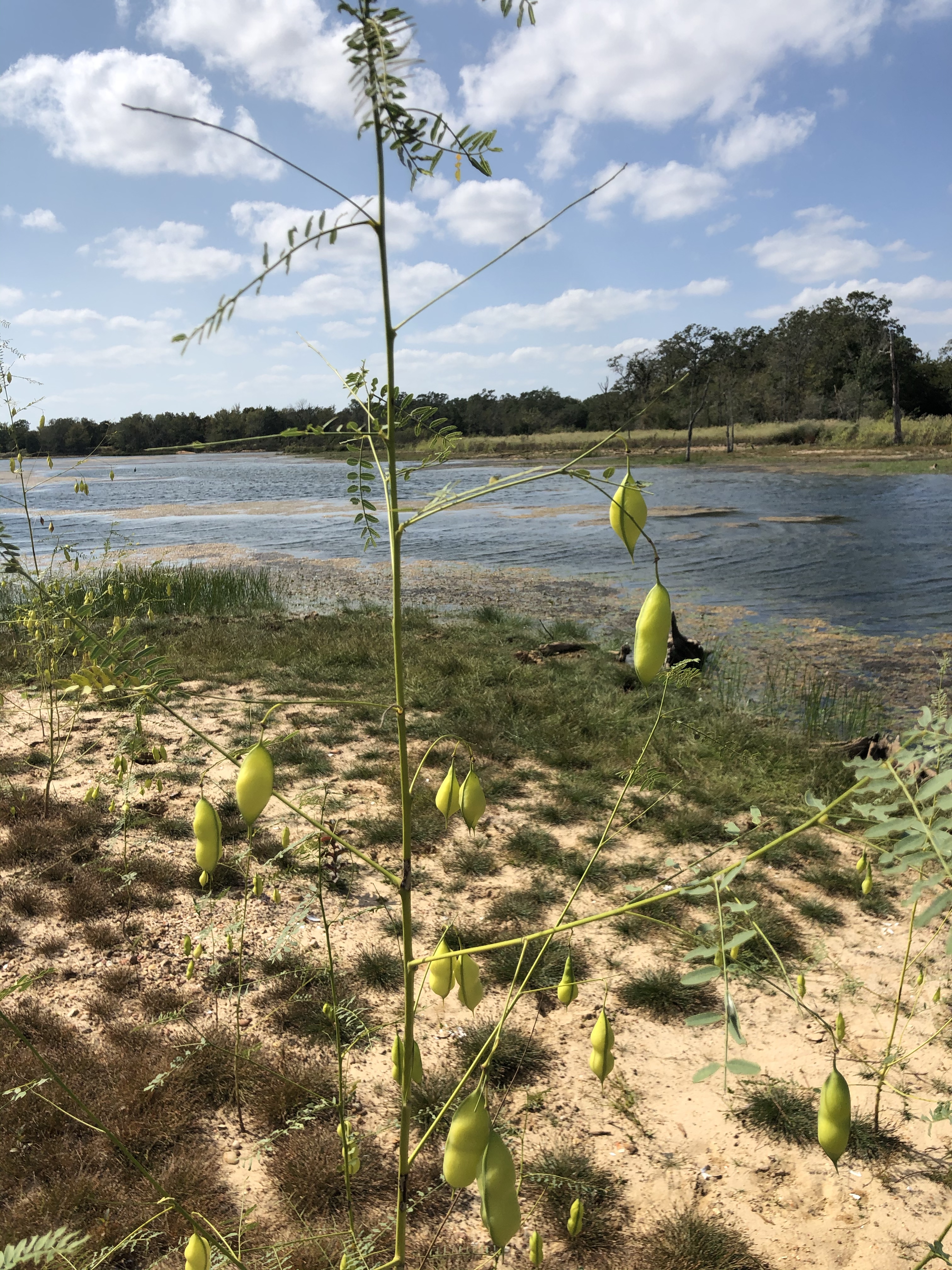
Rattlebushes and bladderpods
I enjoyed talking to my friends and learning about raising fish, grasshoppers, and so much more. I can’t wait to go back. It’s outdoors, we stayed apart, and the weather was great.
I also made this weevil friend. It crawled all over me for a long time. It’s Eudiagogus rosenschoeldi.
Remember my resolve to have more fun? I’m still working on it! And doing it! Not all serious all the time!
I’ve enjoyed the Texas Master Naturalist Annual Meeting, for the most part. There were a couple of dud presentations (I won’t say which ones those were), but I managed to learn a lot. I really missed interacting with others before and after sessions and being able to interact.
But I did learn a bunch. I’m really glad I went to the brown recluse spider talk, because now I know how few people get bitten and that females don’t even walk around. If you see one out, it’s a male.
Hmm
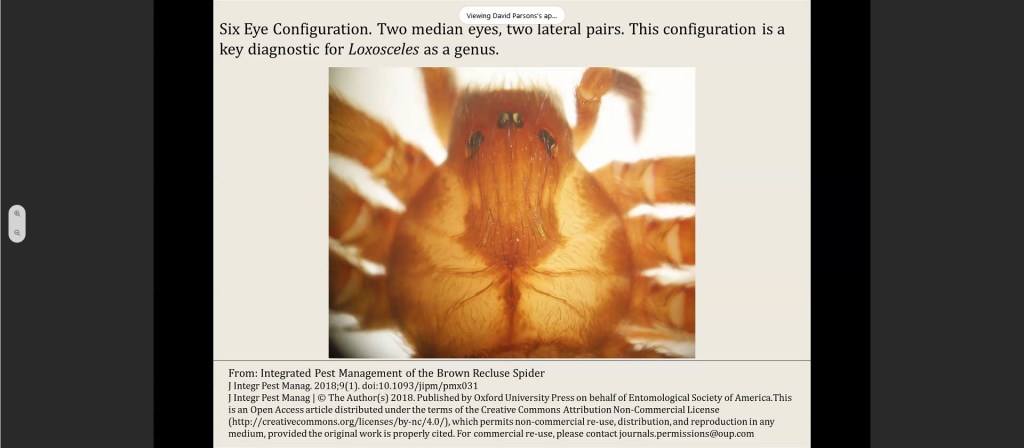
They have six eyes, paired as in the photo. Easy to tell from other spiders, though I doubt I’ll get that close.
Unrelated to these guys, I found out the baby spiders that parachute across the fields are the jumping spiders. They are my favorites. They are all so pretty and friendly. Sara and I talked to one for a while yesterday. Yes, we’re weird ranch gals.
I learned about corvids, which include ravens, crows, magpies, and jays, among others. The surprise there is how similar their brains are to ours, just more densely packed. Really amazing birds.
More on recluses. I didn’t get bird images.
Another interesting talk was on fungi, but I realized I need images in my sessions. I am not an auditory learner, I guess. The speaker had very few slides, and I got lost. Luckily, she recommended a book I’ll go buy. That makes, I think, four I must have thanks to the conference!
Finally, I got a kick out of the presentation by a very sweet and very Texan Master Naturalist on cochineal. I could tell he’d learned way more about the fashion industry than he had intended to. But it was a lot of fun sharing his amazement about the ups and downs of these tiny insects, some of which happen to be right outside my door!
I’m gonna have to smoosh some up, use lemon juice as a mordant, and dye something red! I’ll read the books and report more later.
Well, I have an adventure to go to, so that’s it for now. Have fun on your Sunday, too!
Oh my. Here’s a book you probably should read. I guarantee you won’t “enjoy” it, but you may well be a better person for having read it. You know how they say there are things you can’t “un-see?” Well, this book hammers you with things that you won’t be able to “un-read” even if you want to.
I set it on a pretty backdrop.
I had to stop reading Caste: The Origins of Our Discontent, by Isabel Wilkerson, for a couple of weeks, because I was having nightmares about lynchings and beatings. I was ignorant of how many there were in the 20th century, as well as how people came to see the lynched people, took photos with them, and even sent postcards of it, until the Post Office banned them. Nightmare stuff. This was in my parents’ lifetime.
That’s just one example of what Wilkerson shares as she lays out the history and consequences of what she defines as the two-caste system in the US, which is unique to this country. Oh boy, makes me so not proud. Makes me sick.
Taking a break to breathe.
She also makes it frighteningly clear how similar the US caste system parallels the way Nazi Germany was set up. What horrified me most was learning that they based their system for de-humanizing the Jews and others on how the high-caste people in the US made people from Africa into non-humans, to justify how they were treated in the slave economy. I got sick to my stomach just typing this.
Yeah, it’s a hard book to read. But it’s so important to look at the way Black people have been treated here in the US and (most important) how they continue to be treated up until the present. Especially for those of us who just happened to be born in the high caste, if you don’t have this information presented to you, right in your face, it’s easy to assume everything’s just fine, because, heck WE like our black colleagues and friends and treat them well. Oops. Not true.
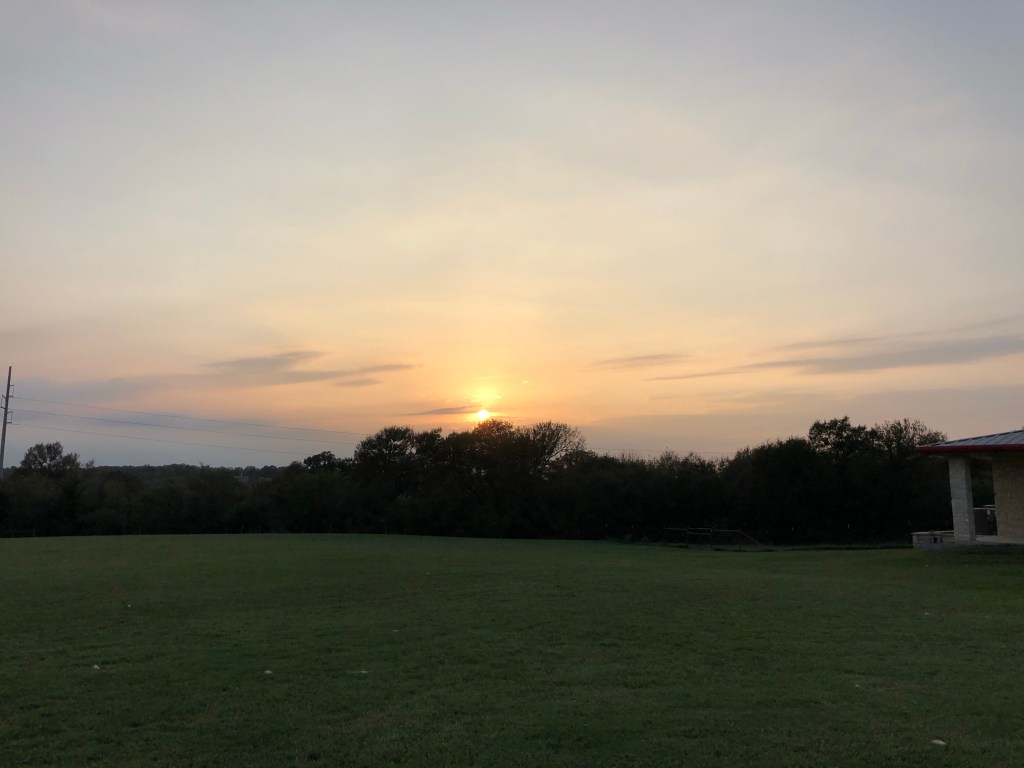
Breathing some more. What a lovely morning sky. Sure looks like our electric pole is slanted.
No, things are NOT better, and no, people have not stopped treating lower-caste people as less than human. Yes, progress has been made, but all you have to do is look at how panicked a large portion of the white people in the US got when a Black man became President. Preserving the status quo turns out to be more important for this group than many things that might help them as a group (and that’s all I’ll say about this; read the book).
In good news, not all the book makes you sick to your stomach if you have any empathy at all for fellow humans. Wilkerson does talk about interesting historical parallels in India and talks about ways to make things better. Like I’ve always thought, she concludes that actually getting to know people and seeing their common humanity, one at a time, is how ANY of us can work to break the caste system down.
People who show a greater sense of joint responsibility to one another when they see their fellow citizens as like themselves.
page 353
It’s just that we still have a lot of work ahead of us, and it will go way slower if we don’t actually LISTEN to our fellow citizens, even when it hurts.
I did not exactly “enjoy” the journey through this book, but I’m glad I embarked on it. And I am glad I finished.
The chapter of Caste that gobsmacked me was the one at the end, where she shares the consequences of the caste system and the fear and distrust it engenders in the US. When put in the context of the rest of the world, this is one weird place. Examples from the book:
Americans own nearly half the guns in the world owned by civilians.
If the U.S. prison population were a city, it would be the fifth largest in America.
page 355
I know this is not a popular thing to say right now, but I can see why so many of my friends are moving to other countries. I’ve just been conveniently ignoring a lot of things that are right in front of my face, passively watching fellow Americans support and encourage the caste system, and failed to do the work needed to make this a good place for all of us. I’m so afraid of the dominant caste and the masses it’s indoctrinated that I’m not much better than them.
Well, that is changing, thanks to what I’ve been learning this year, and I’m just going to have to deal with the nasty consequences from fearful fellow citizens. It’s not like I have to be on the defensive every second of every day like so many Black people, the ones I know and care about included, must deal with. Because, as Wilkerson notes:
There are thriving, prosperous nations where people do not have to sell their Nobel Prizes to get medical care, where families don’t go broke taking care of elderly loved ones, where children exceed the educational achievements of American children, where drug addicts are in treatment rather than in prison, where perhaps the greatest measure of human success – happiness and a long life – exists in greater measure because they value their shared commonality.
pp. 353-54
I don’t know for sure how I came out this way, having grown up in the American South. But I don’t want to see people’s potential wasted just because of what they look like or where their parents were born. We need all the contributions of all the brilliant humans out there…so maybe we can live in peace. I’m still gonna try, no matter how cynical books like this make me.
Not gonna give up. Image from peaceoneday.org – Peace Day is September 21!
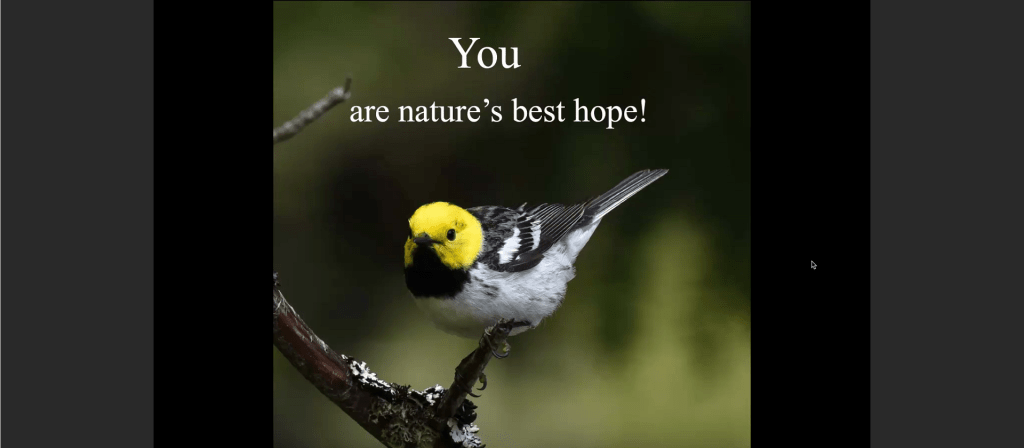
Wow. Just wow. My life is now so much better, having heard the amazing Doug Tallamy speak at the Texas Master Naturalist meeting. He’s just about as inspirational as a speaker gets, and I now have my answer when people ask what famous person I’d most like to have dinner with. I could talk to him for hours, or more likely, listen.
I recently read and reviewed his book, Nature’s Best Hope, and once again I must encourage everyone to read it. It’s one of the few books I’ve read lately that made me feel empowered to go out and actually make the world a better place, right on my own property.
Listening to him speak to us, sounding just like some nice guy you’d talk to at your meeting, but with an amazing wealthy of information, was a mind-blowing experience. And the information he shared about how he and his wife turned their property into a place that is both beautiful AND attractive for natives was nothing short of inspirational.
Tallamy reminded me WHY I don’t want all the land around the ranch scalped into a beautiful monoculture lawn and why I ask that the wildflowers be allowed to grow, bloom, and seed each spring. They support so much of the diversity of animals and insects that we are rapidly losing.
When he shared how many different moths grow on the goldenrod on his Pennsylvania property, my heart swelled, since you may recall just yesterday I wrote about how much I saw growing on goldenrod plants (and I skipped a wasp that I couldn’t get a clear photo of). I feel like at least some parts of our ranch are helping the earth heal itself, while still providing food for people. I think it’s a win-win.
He provided lots of useful links, but I was too enthralled to take many screenshots. But here’s something you might be interested in, which is the keystone species that support the most insects, birds, etc.
The Hermits’ Rest has lots of these! Just not many maples.
I’m not going to write down everything Tallamy said, but I hope you will go to his website to learn more. There’s TONS of fascinating stuff there. This one point he makes sums it up for me:
From the Bringing Nature Home website
We ARE part of nature and need to live with it, wherever we are. I’m going to hold that in my heart and work as hard as I can to help Professor Tallamy achieve his goals.
His final slide.
I encourage those of you who want a better world for the children who are around today to read his books and take action. It’s awfully easy to plant some native plants. Many of them just show up, after all (“weeds”). And as soon as you have them, insects will follow.
Even if all you have is a balcony or some space outside your office, you can make the world a better place. Now, that’s awesome.
Dystopian? That sounds cheerful, doesn’t it? Well, it’s just a weird day. It’s still all hazy, which makes it feel like I’m walking in a science fiction story.
It really never cleared up all day.
And it’s so windy that chairs, empty troughs, and the chickens’ shelter blew all over the place. I had trouble walking to see the horses! Vlassic even spooked a couple of times (but was good with cows).
My ears may blow off. Or I may take off.
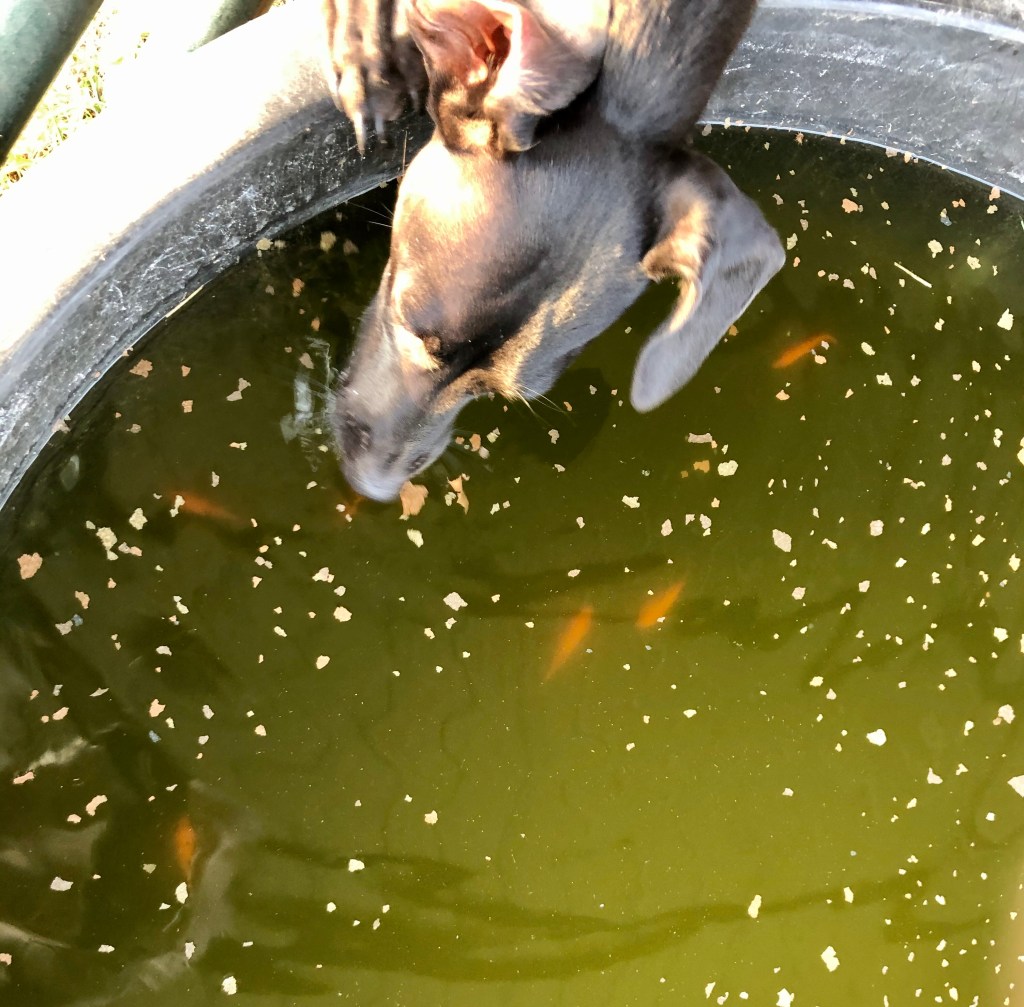
It’s not all bad, though. I checked on the new goldfish, and I was happy to see the water in the trough already more clear and with fewer mosquito larvae. I swear they have grown!
Vlassic likes fish food.
We’ve lost only one fish, which surprised me, considering how green the water was. At first I couldn’t see the fish if they weren’t at the top!
We’re working hard!
Other things are actually doing okay, even in adverse circumstances. My poor fennel plant that got replanted near the “folly” had been weed-eated and mown by Jim (he likes a smooth lawn) is coming back! I thought it was a goner. I put a bunny next to it, to remind him it’s there. Fingers are crossed!
Grow, fennel!
Even more amazing is that my asparagus patch, which had been treated with RoundUp, has come back! The weeds are in way worse shape, so maybe we can get that bed in shape.
I’m alive!
Even in the wind and haze, I keep finding cool living things around the ranch. Look at this beautiful insect! It’s a nuptial scorpionfly. Huh.
So pretty! I wonder if it stings?
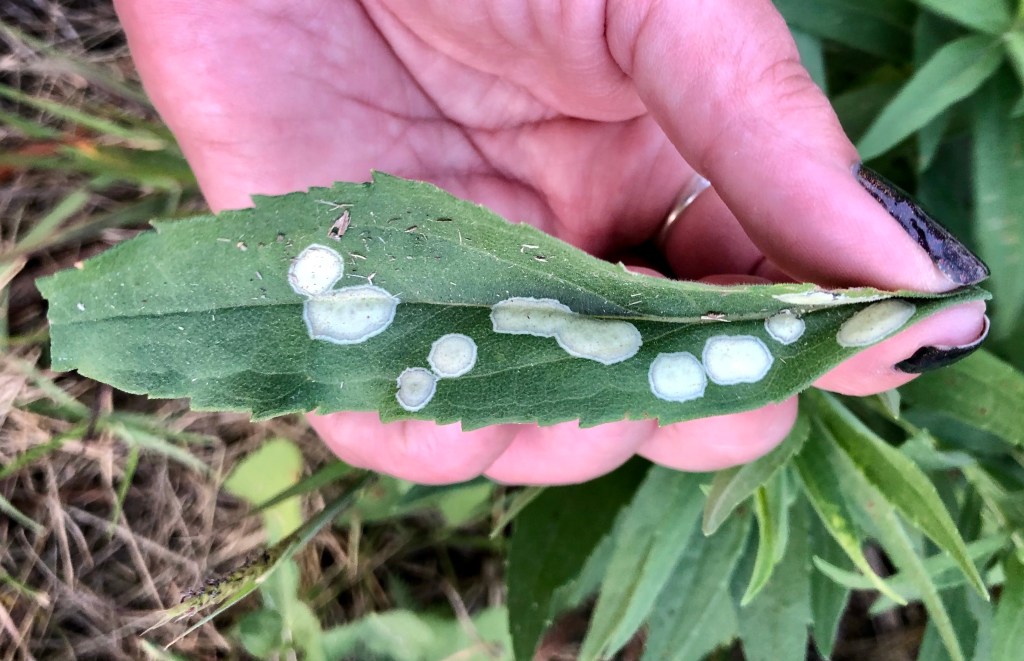
And this caught my eye as I was going to check the mail. I wondered if it was aphids or some kind of goldenrod beetle. I guess I thought that since I recently found milkweed bugs and aphids.
White things…
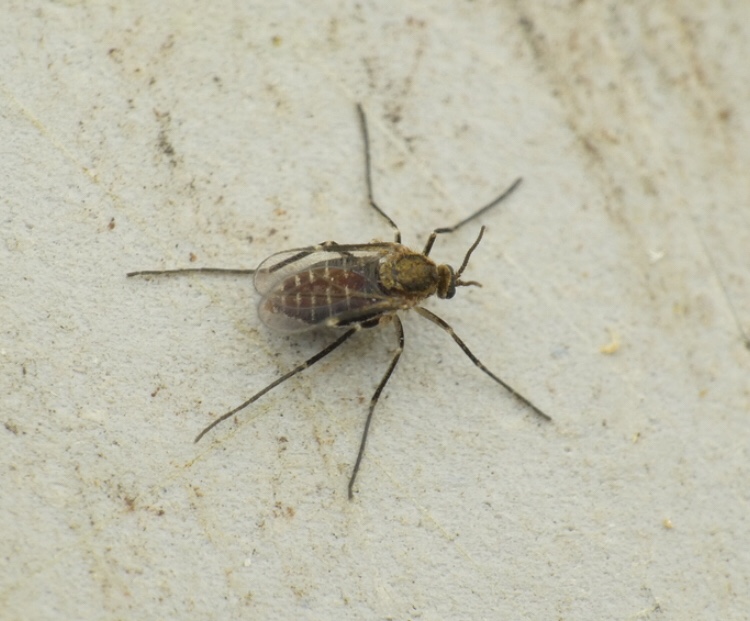
I looked it up on iNaturalist and discovered it WAS something associated with goldenrod, but each white thing is a gall created by some tiny insects, Carbonifera goldenrod gall midge. That’s a new one for me.
Midge photo by David, CC BY-SC-NA
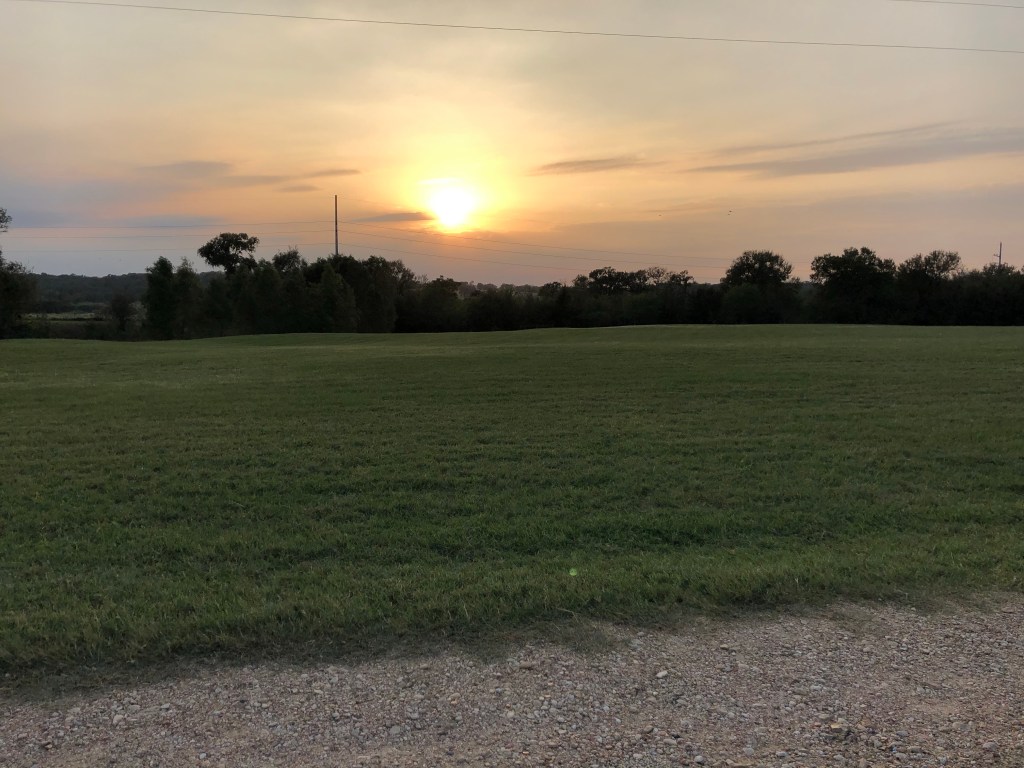
Always something new, even with the weirdness of 2020 continuing. The sun will come up tomorrow, dimly.















 The Hermits' Rest