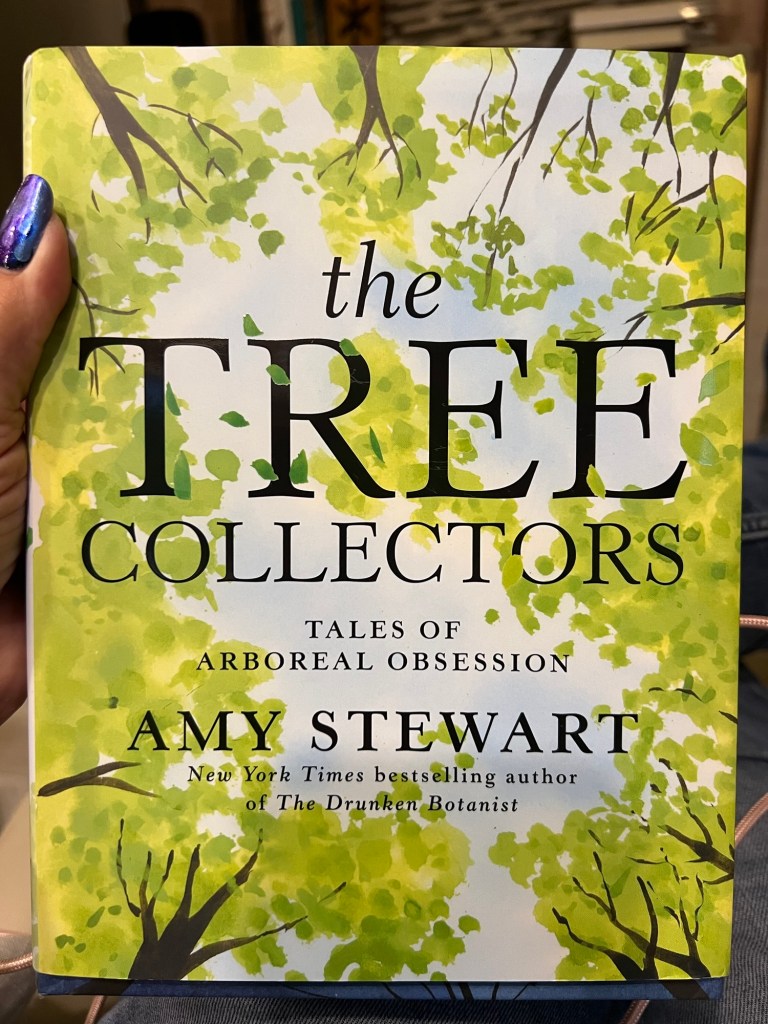
This is the book I needed right now. I needed sweet stories of people who love trees and are willing to go to great lengths to show that love. I also needed simple but beautiful watercolors of trees and the people who love them. The Tree Collectors: Tales of Arboreal Obsession, by Amy Stewart (2024) gave me just what my fascism-weary brain needed—a beauty break.
First, the book is beautiful. Even the cover hiding underneath the dust jacket is a watercolor painting.
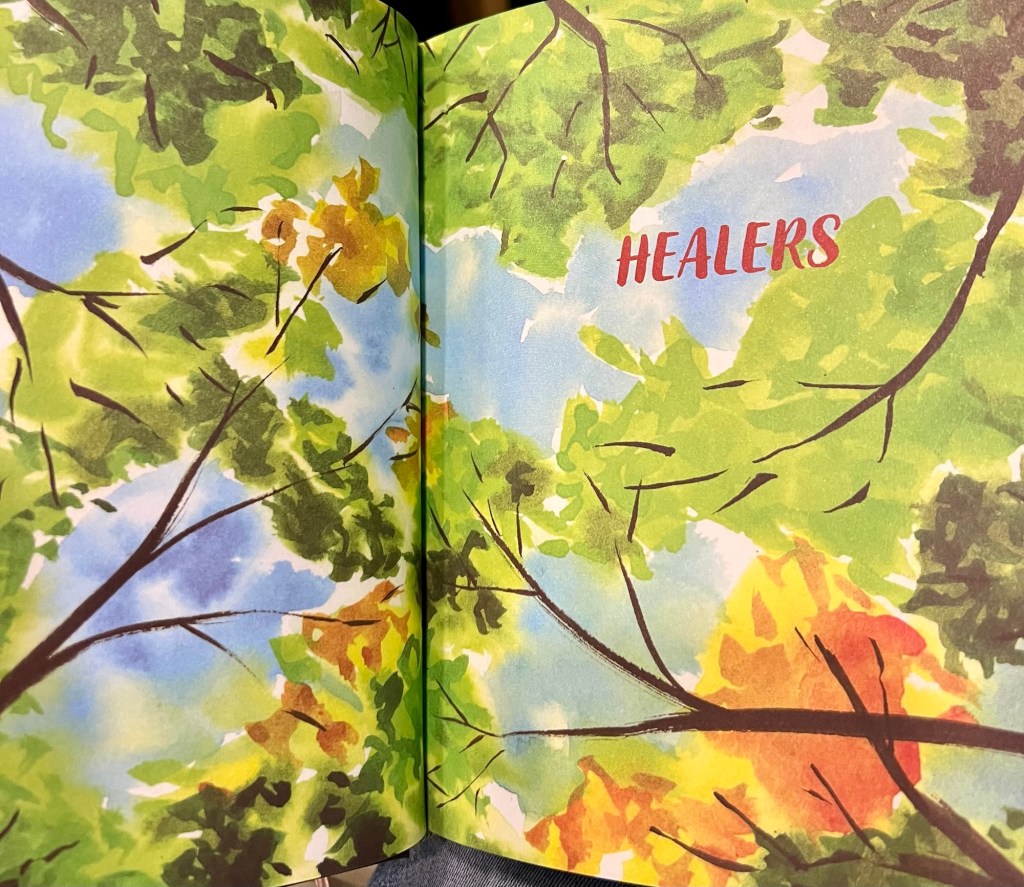
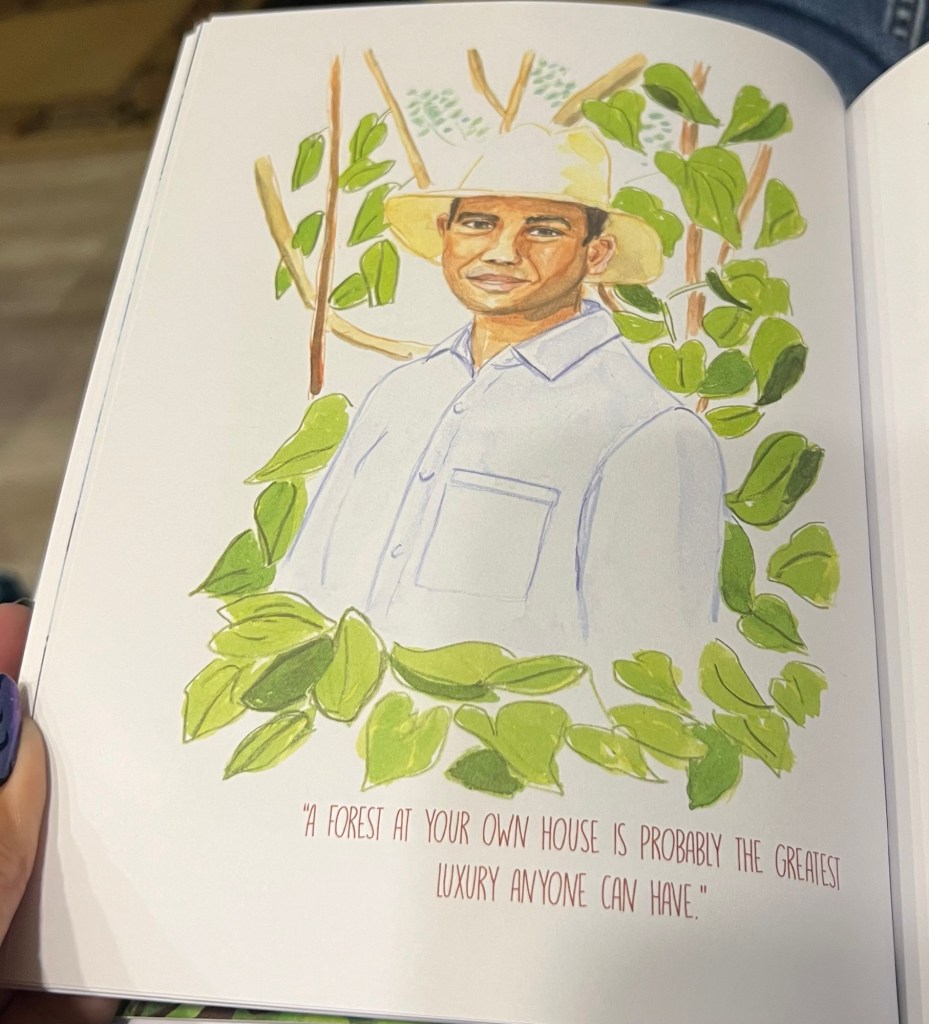
And the section headers are so fun that I just want to go try to make a painting like them. All the art is by Amy Stewart, including portraits of each of the people she profiles in the book (either their favorite plants) and all the other illustrations. (Oh yes, the headings are also in a fun font.)
Section headings
This visual extravagance might be enough to enjoy, but the words in the book are very enjoyable and encouraging as well. It feels so good to read about people around the world who collect trees in many different ways, from embroidering holes in leaves to scientific DNA manipulation. There’s a lot in between, too.
One of the profile illustrations
Some of the people Stewart profiles seem so kind and dedicated that I just want to hug them. The best part is that she uses the words of the collectors themselves to explain their obsessions. I got a real kick out of the way an urban man with a checkered past described his passion for planting trees surreptitiously around neglected overpasses. His street vocabulary doesn’t diminish his love of trees and of beautifying his neighborhood.
The Tree Collectors would be a great gift for any tree-hugger you know. There are so many ways you could enjoy it and savor it over time. The chapters are short enough to read aloud before bed, but you’d have to show the photos. It would also be a fun book to leave in your guest bathroom for entertainment.
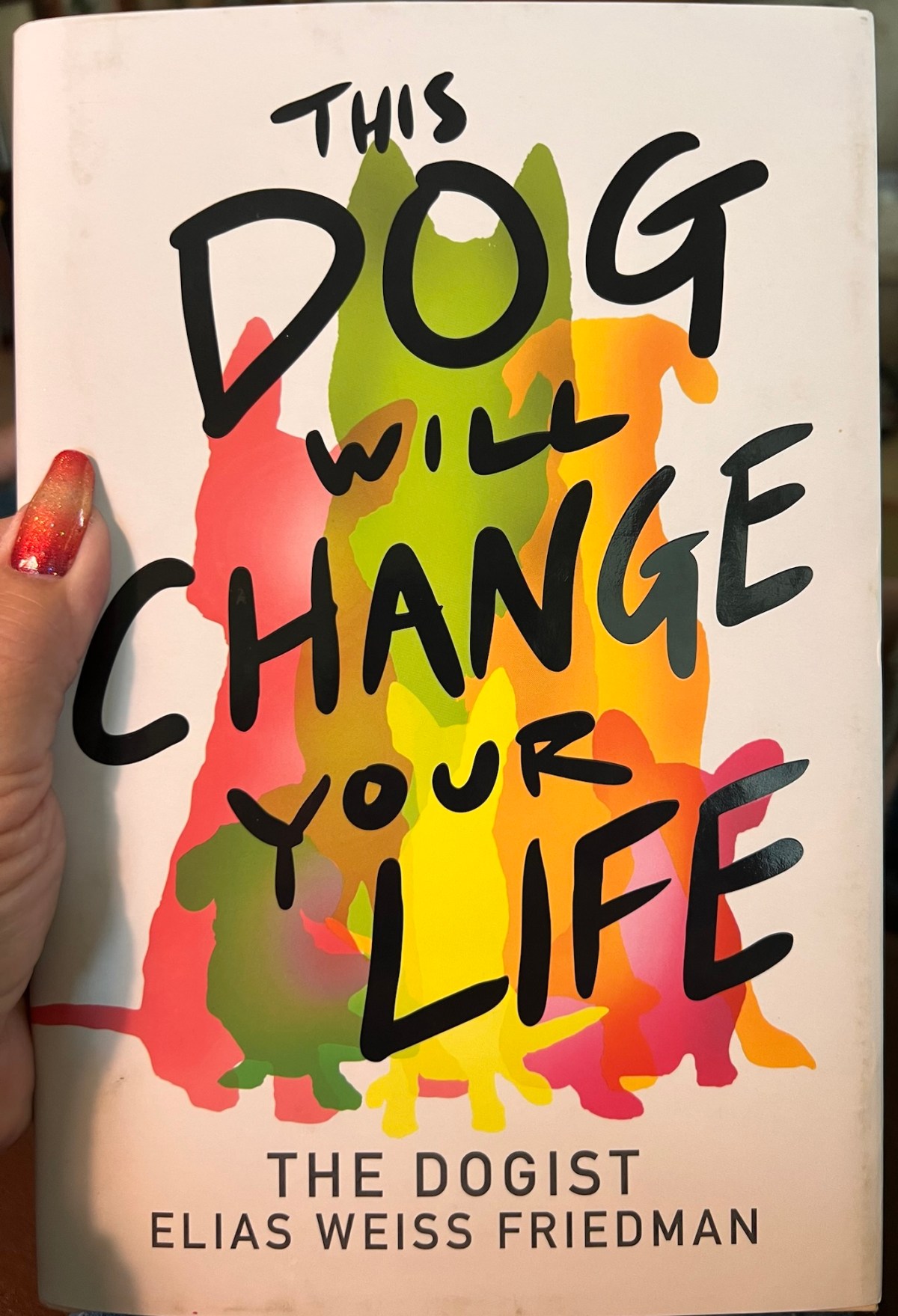
I was looking forward to This Dog Will Change Your Life, by The Dogist, Elias Weiss Friedman (2025), because I was in the mood for something light-hearted and perhaps funny, to take my mind off current events. Plus, as you may be aware, I’m fond of dogs.
Well, the book does have dogs, many dogs, even. And they’re good dogs, yes they are. But, not being familiar with the media influencer known as The Dogist (Elias made that name up himself), I didn’t know what to expect. I’m going to be charitable and say that his little quotes from dog owners must be more interesting accompanied by their supposedly very cute photos. Unfortunately, there are no photos in the book, just quotes from his Instagram:
Mister, German Shepherd (6 years old), Washington Square Park, New York, NY •
“He’s new to the city from Portland, Oregon. He’s a softie-he craves attention in a very un-Germanic way.”
Ok. Great. This was one of the better ones.
The book rambles around while Elias tells us about places he went to take photos of dogs and how interesting he finds it. He’s very happy that people recognize him and that he gets to go fun places to look at dogs. The dog parts of the book are okay, but there’s an awful lot about Elias and his life, which is nice but not very interesting.
I couldn’t really figure out the structure or where the book was going. Each chapter is a story about a dog that makes someone happy. I didn’t find much humor in the writing, though. Bland but well meaning is the best way I can describe it. And all that required a co-writer, Ben Greenman, who has ghost written for others.
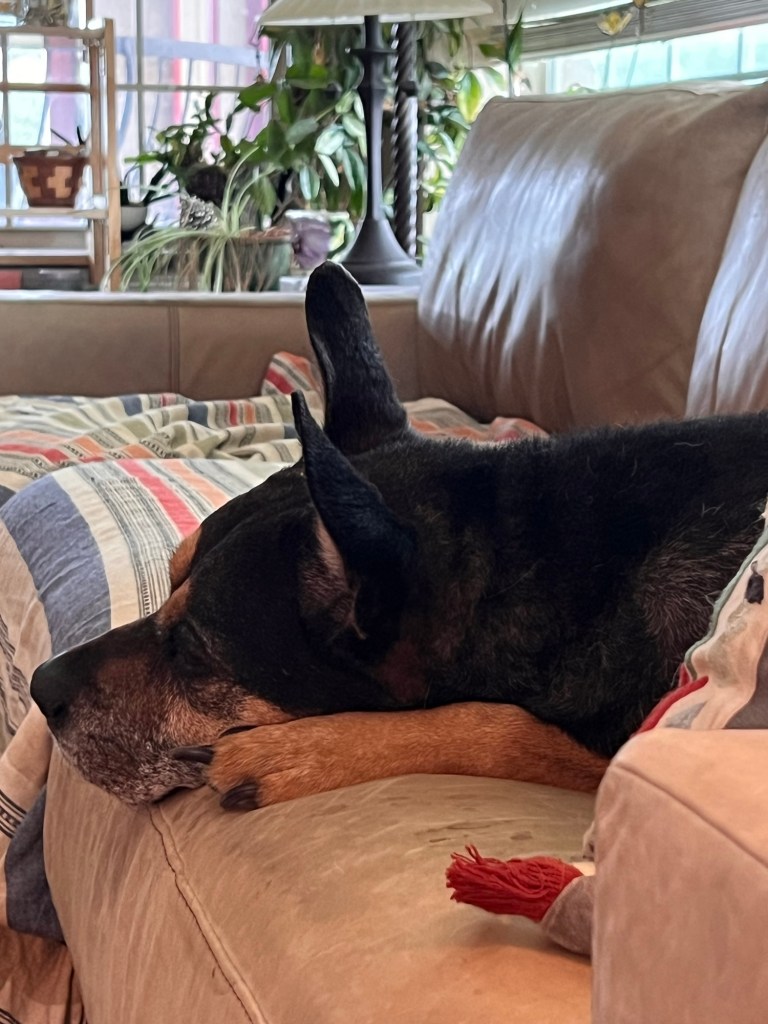
Harvey says I should just pet him if I need dog content.
I think media influencers may not be very experienced in writing more than a few sentences and linking them together. That makes sense, because they aren’t required to do it to gain their fame. My guess is that The Dogist is a really good photographer who puts his notes by photos of cute dogs, very well. I hope he sticks with it in the future.
Sorry to give a negative review. But this book was just not for this dog lover.
List three books that have had an impact on you. Why?
I have chosen three books (I actually discuss five, but one is a runner-up and two are related) that shaped me in that magical period when I was transitioning into an adult and my capacity for intellectual growth was at its peak. Each book was written when I was testing limits, making poor decisions I search of good decisions, and preparing to emerge a more rational and stable human. I’m grateful to have learned from these authors.
Metaphors We Live By
This book is by George Lakoff and Mark Johnson, two important scholars in pragmatics, the field I studied in graduate school. The thesis of the book is this:
The book suggests metaphor is a tool that enables people to use what they know about their direct physical and social experiences to understand more abstract things like work, time, mental activity and feelings. Wikipedia
My thinking about how society works, how media persuades audiences to, and how politicians manipulate the public have all been deeply affected by the ideas in this book.
My favorite example is the pervasiveness of the war metaphor. It’s one reason I can’t stand the phrase, “shoot me an email.” Business communication is just crawling with war terminology. Business is war. Politics is war. Love is a battlefield. This book was the impetus for me being me.
I recommend George Lakoff’s other works, as well. Once you start to see metaphors embedded in the language around you, you can’t forget it.
The Color Purple
I’m guessing most of you have been exposed to this work, originally a 1982 book by Alice Walker, in one form or another. I read it when it first came out, having read no reviews and knowing nothing about the author. This means my experience of The Color Purple wasn’t influenced by any preconceptions.
I was 24 when I read it. I’d never read an epistolary novel before, so I was charmed by the letter-writing format and how clearly the writer’s voice came through in each letter. I was also still fairly naive about how horrible humans can be to each other. The resilience and bravery the characters in the book affected me deeply.
The Color Purple told me that I, too, could survive and thrive in a world that threw many challenges at me. The characters have never left me and I’m not sure why.
I did love the film with Oprah Winfree in it. I just experienced it differently and got additional insights into the strength it takes to be your authentic self. I haven’t seen any other version and I’m okay with that. This is my favorite novel.
Runner Up: The Handmaid’s Tale, by Margaret Atwood (1985). I can’t bring myself to watch the television series. This book was too prescient.
The Woman’s Encyclopedia of Myths and Secrets and The Skeptical Feminist
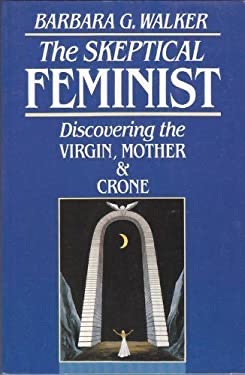
These are two books by Barbara G. Walker, also a prominent knitting writer of this time period. Both came out in the mid-1980s. These books introduced me to the idea of the maiden, mother, and crone archetypes.
The encyclopedia was my first introduction to feminist theology, and though it suffered from the same issues as many early neopagan writing (interpreting historical references and artifacts to support a mythical matriarchal past world, etc.), it still taught me enough to get me started on a lifetime of spiritual exploration. I can still remember sitting in my bedroom in Urbana, Illinois devouring this book when I should have been dissertating.
Bad image, sorry
The Skeptical Feminist may not be in print anymore, but it reassured me that my weird philosophical leanings since childhood weren’t signs of insanity—I just didn’t have the words and concepts to explain my vague yearnings to be one with nature. It also reassured me that I don’t have to “believe in” some deity to apply archetypes and metaphors (them again) as I forge my own beliefs. Whew.
I use this information today as I draw from the wisdom of Jesus without identifying as Christian and take comfort in Buddhist ideas without adhering strictly to any form. It’s so helpful in these times.
I had to read it! It’s in Oprah’s book club! Oh, just kidding. I actually read a review of Matriarch: A Memoir, by Tina Knowles that made me want to check it out. Also it’s shiny and pretty. The picture frame effect is very nice
This book was a gift from my spouse. I’m trying to shop local, if I shop.
Truthfully, I was very pleased to have the chance to read this book. I learned a great deal about the early years of my life from a Black perspective. Knowles did a fantastic job of painting a rich and realistic picture of Galveston, Texas in the late 1950s and early 1960s. I also learned so much about the role of Galveston in the history of Black Texans. That was worth reading the book right there.
The end papers for the book come from the cover painting. Very pretty.
I was surprised but pleased to learn how much I have in common with this woman who pulled herself up from poverty to create thriving businesses and became a renowned fashion designer, thanks to her mother’s teachings. Yeah, on the surface we’re quite different. None of my children are rich and famous, for one thing!
But underneath, Knowles had an upbringing that led her to have a similar fear of abandonment and drive to mother every needy soul who showed up in her life. She succeeded at being a great (though flawed and human) mother figure, and ended up having relationships that reminded me way too much of my past messes.
Knowles is brutally honest with herself, but does an incredible job of being gracious to others. There’s no long litany of blaming and accusations against others in this memoir. I’ve read so many where the author never acknowledges their own failures and mistakes, but Tina Knowles accepts her responsibilities and does her best to forgive or understand those who hurt her. Well, except she didn’t forgive those nuns in her first school…once again I thank my dad for not sending us to the Catholic school right down the road from us.
The parts of the book where she’s struggling to work and raise her girls and when Destiny’s Child is starting were interesting, mainly because I’m not familiar with the world they were living in. But by the end, when they’re all floating around on yachts with helicopter pads and renting out entire islands for parties, I didn’t have much to relate to. Good ole Jay Z can sure spend money.
Now, lest you think Knowles has ended up all jaded and materialistic, I note that she has started many philanthropic organizations and works hard to help young people living in poverty or other bad situations. Honestly, who knows what I’d do if I ended up mega-wealthy? And I can’t begrudge any of her family the rewards from their hard work, because not one of them just stood around and became famous.
Yes, that’s probably the best lesson I learned in this book, that my prejudices against ultra-rich people need to be tempered. Everyone in the Knowles family, from her ex-husband to her famous daughters to the people in their larger circles worked very hard to become great at what they do. That’s important to remember.
Oh, another thing I learned from Matriarch is that I am completely ignorant of every bit of Beyoncé’s music. That entire genre is a mystery to me, though I certainly know what the musicians look like and what interesting clothing they wear. Sigh. At some point popular music and I parted ways.
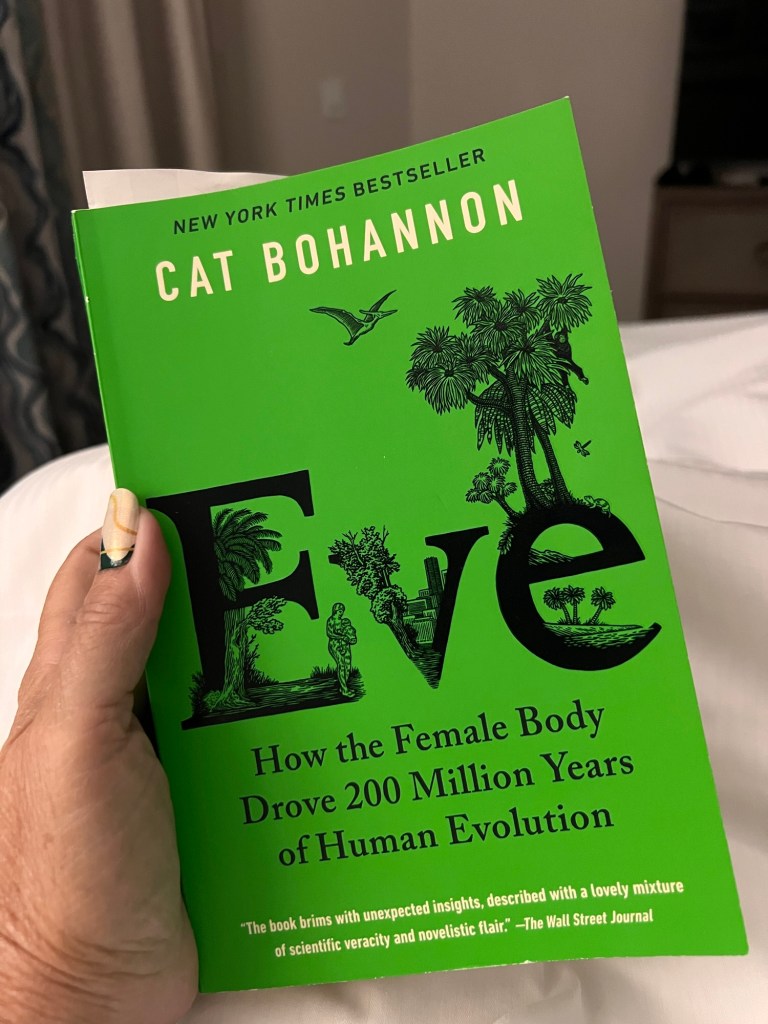
Hey, look, I finished a book that I like enough to write about! I’d would wager (if I did that kind of thing) that any like-minded friend of mine would love Eve: How the Female Body Drove 200 Million Years of Human Evolution, by Cat Bohannon, as much as I did. It has footnotes and endnotes, too, which hints at some thorough documentation, yet there’s lots of humor scattered throughout, so it’s not boring one bit.
I got it at the airport on the way to Hilton Head. Those nails are so two weeks ago!
Bohannon tells the story of “Eves,” who are archetypal women of the past whose developmental firsts made big impacts on the evolution of humans. All my La Leche League friends will love the chapter on breastfeeding, though perhaps some more intense fans of this method of feeding might find flaws. I didn’t, and I even learned a little.
Newest nails. Call me the Eve of Girly Gender Neutral Confusion.
You learn a lot about the history of hominids, as well as how mammals developed, told charmingly through example animals. You get all wrapped up in their little lives as you see how traits we still have made a difference millions of years ago. The book is a lot of fun.
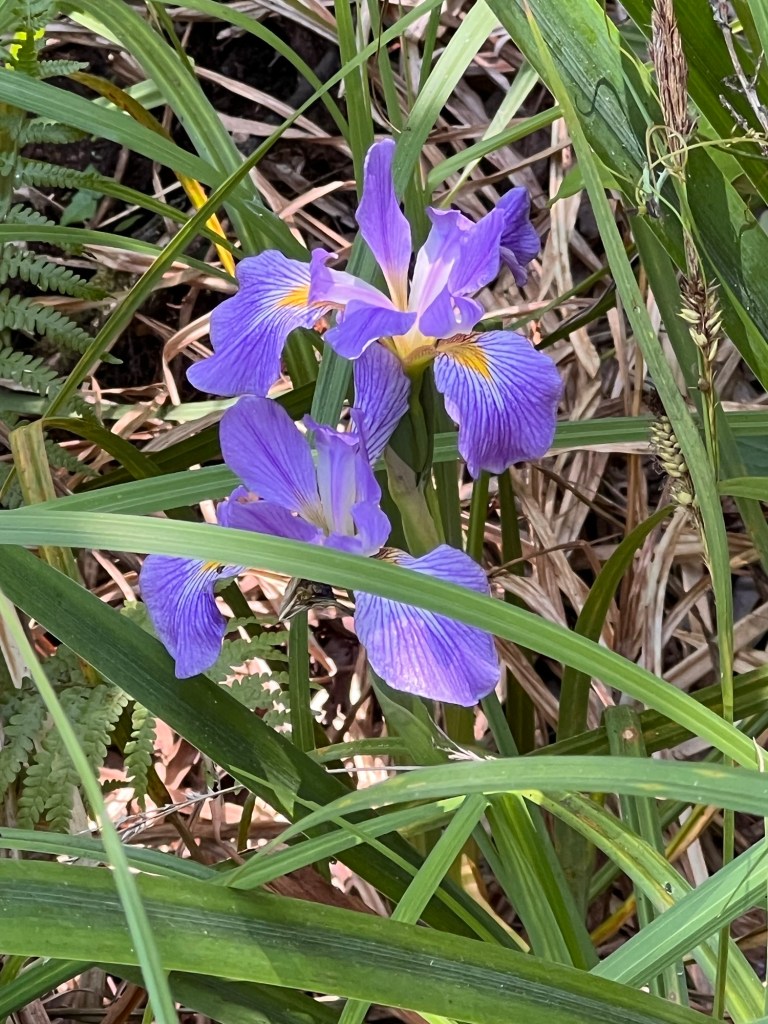
As are these blue flag irises. I’ll now stop with random photos.
I also have to hand it to Bohannan for being “woke” in the best possible sense. That woman doesn’t put down anyone, even inadvertently, and she navigates our world of gender dysphoria and sexual choices like the consummate professional she is. I was duly impressed, and if I were trans or XXY or whatever, I’d feel like I’d been talked about respectfully. But she doesn’t make things awkward–if she chooses a typical example, she always acknowledges possible exceptions. I hope her terminology holds up now that there’s a (scary as heck to someone who fought for women’s rights) sudden devolutionary trend in women’s rights and roles in the US.
My only criticism, if you can call it that, is that Bohannon doesn’t talk about the effects of hormone replacement therapy in post-menopausal women. I’d be interested to know if the current trend of using bioidentical hormones has a positive or negative affect on women’s health and longevity. Maybe that will be in her next book.
This is a hefty tome, for certain, but remember at least a third of it is end notes, bibliography, and index. You’ll wish it kept going.
I didn’t write last night because I was being a self-indulgent vacationer. After a truly excellent walk to the lagoon area near where I’m staying on Hilton Head Island, I had an indulgent lunch of eggs Benedict and grits, then spent the rest of the day indulging in various media. I don’t think I’ve ever done this before. It felt weird, mostly because I sat in one place for so long. I’ll get to that momentarily.
I would like to know the story of this poor pizza I found lying on the ground. It’s well cooked, all right.
The birding walk was most excellent. I saw and heard all kinds of birds I don’t usually run into, including a pair of Eastern Kingbirds, an American Redstart, and an Ovenbird. The trees were alive, both by the lagoon and at the nearby park, where there were also many turtles and a little alligator that really got kids excited. The only downside was that, even though I wore jeans and closed-toe shoes, I got all bit up by mosquitoes. I now need a Benadryl, which will probably put me to sleep.
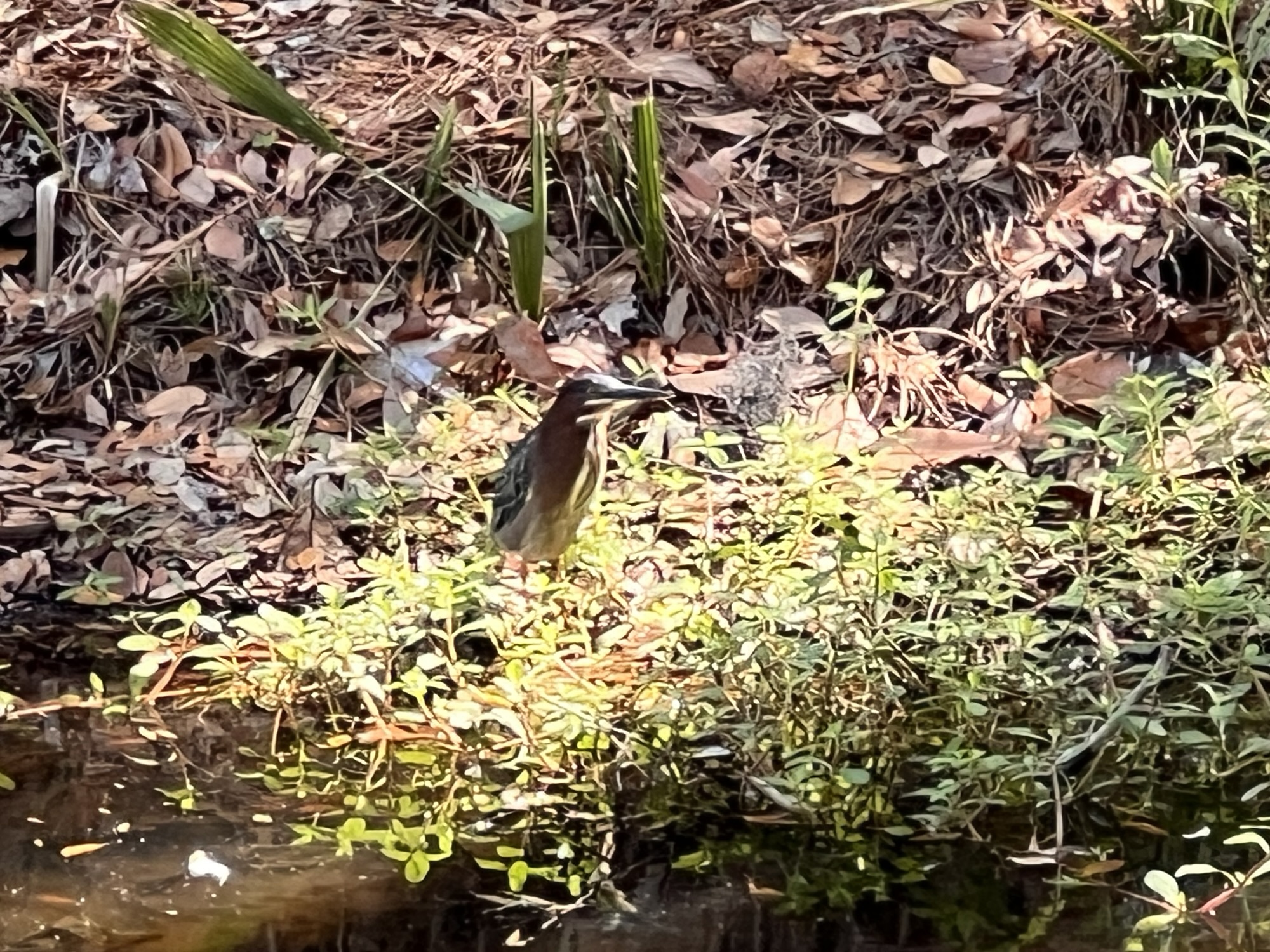
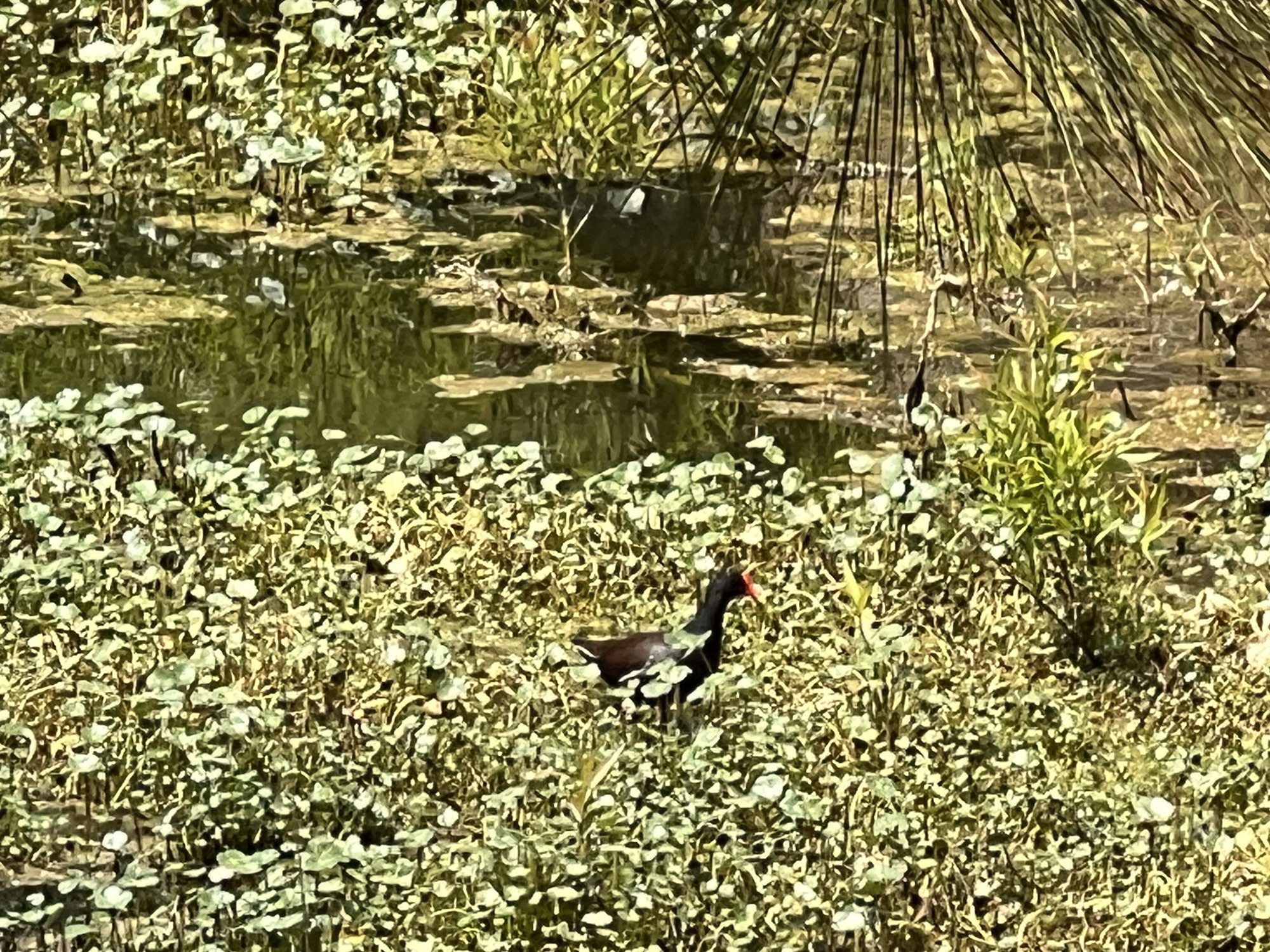
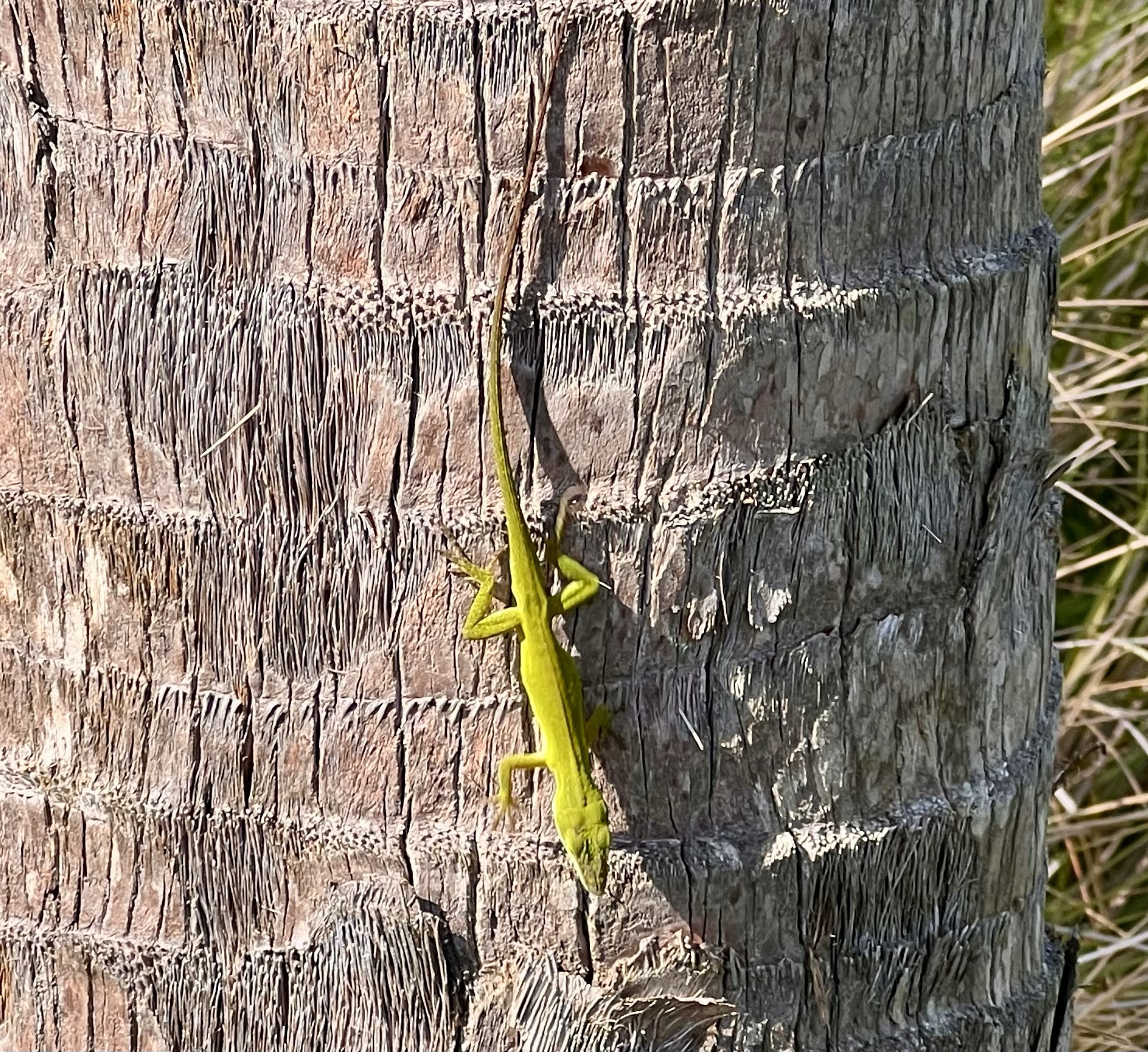
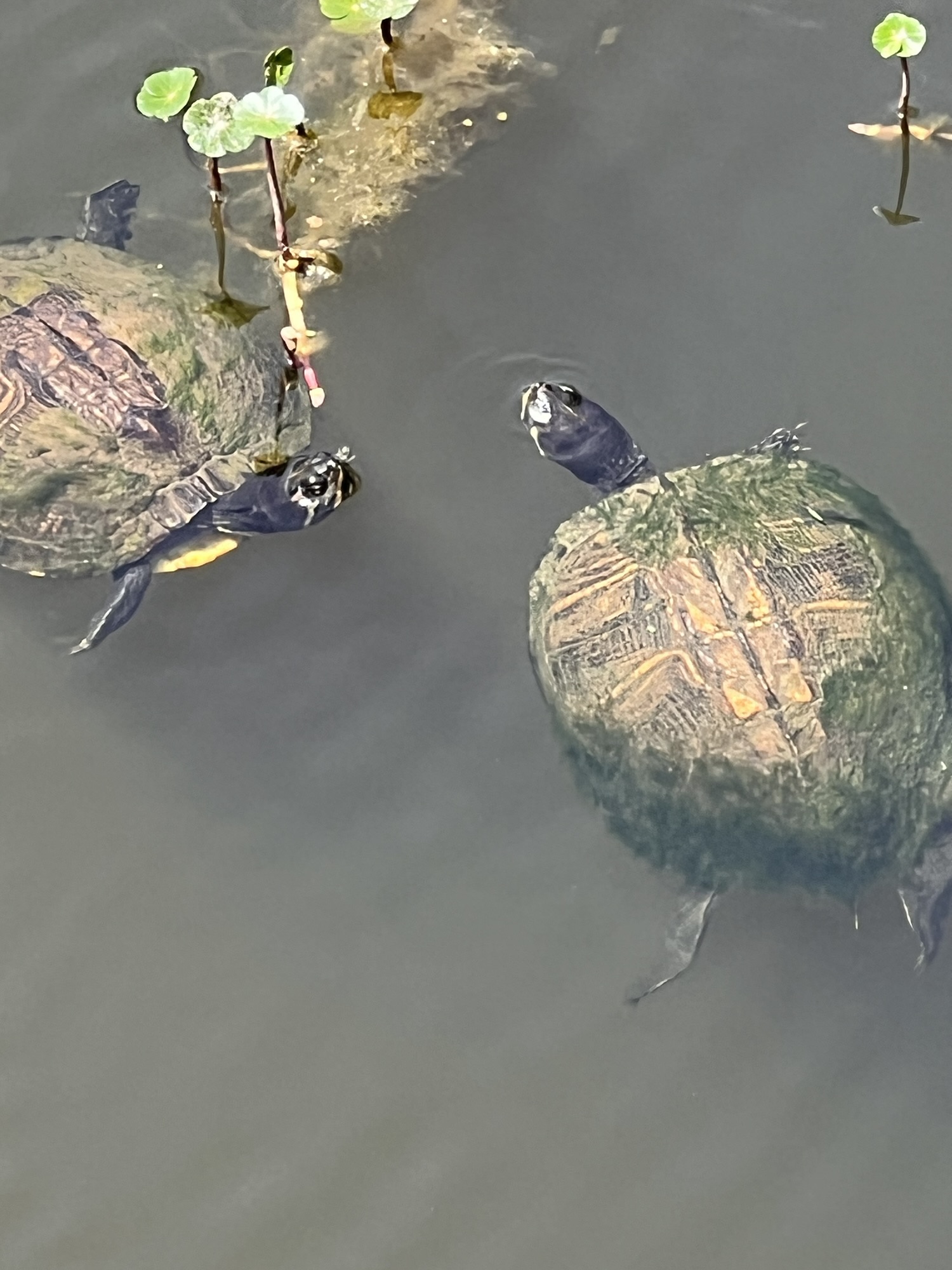
Great Egret taking offCalmer egretTufted TitmouseGreen HeronI think a Common Gallinule.Anhinga doing its thing.Eastern KingbirdYoung alligatorVery green anoleTurtle confab
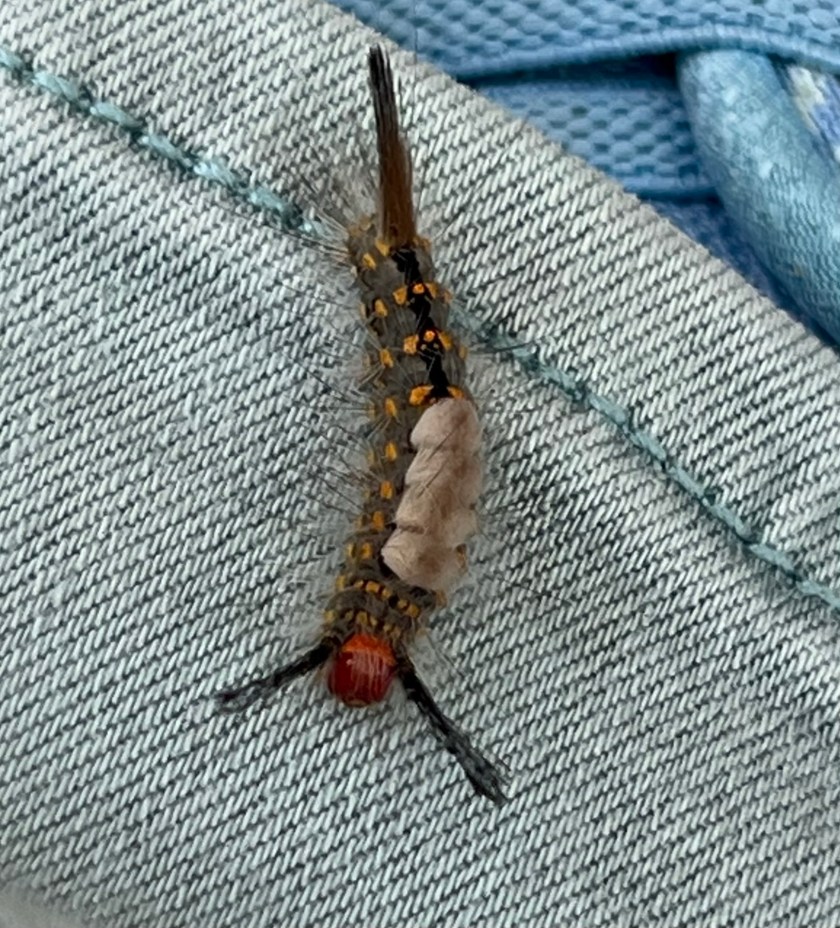
The highlight of the walk was the payoff for standing quietly in an alcove at the end of Lagoon Road and watching all the birds. I was thrilled to see a Barred Owl fly right in front of me and land nearby. As I was trying to see where it was, a second Barred Owl also flew by! I figured I’d stay and see if they made any calls that Merlin could hear. I also got quite distracted by an interesting caterpillar that crawled onto my pants. This thing has many bells and whistles on it.
It’s a Fir Tussock moth, Orgyia detrita. I read the Wikipedia article on Tussock moths, and it told me those white tufts are the tussocks. I was also wise not to touch it. Those long hairs sting. Also, in the moths, the male is large and attractive, and the female is very small. Read the article!
I guess that moth really excited me because I didn’t notice the owls moving. As I was about to leave, I turned to look once more, and there was one of the owls, sitting close enough to me that even in the dark shadow, I could get a reasonable photo, once he or she moved their head. Interestingly, there was a crow sitting close by, glaring at it. As I’ve learned at home, crows aren’t very fond of owls.
This is the closest I’ve ever been to an owl. The ones at home hide.
I got to show the owl to a couple of folks walking down the path, which was rewarding. I headed back to the Coligny shopping area, where I truly enjoyed that breakfast, all by myself. I also had a bloody Mary. I’m trying to learn to enjoy this retirement thing.
I was impressed that my meal matched my nails.
I came back to my condo and thought I’d watch another episode of the Netflix series, The Residence, which many people had recommended to me because the detective in the series is a birder. I also discovered it is set in the White House, and as a fan of The West Wing, I wanted to see how they treated it. Well, many hours later, I finished all eight episodes, the last of which was 1.5 hours. Some of the humor is very subtle, which I loved, and the birding part is okay (though the bird names were not always accurate). But I LOVED the heroine, a large Black woman who is a genius. It’s about time we had more protagonists who are different from the norm. Most of the characters were fun. I recommend this if you have a Netflix subscription. By the way, I figured out how to stream from my phone all by myself. Maybe I am the technology whiz people keep accusing me of being.
The place I watched television from. Look, I bought healthy bananas in addition to Goldfish crackers.
I figured that I was already watching television, so I made myself a delicious Publix meal for one, got out my temperature blanket, and caught up with all the sitcoms I secretly like to watch. Lee is not fond of sitcoms, and I can see why. They are often predictable and dumb (especially poor Reba on Happy’s Place, which I doubt gets renewed – edit, Wikipedia says it did). I got that one out of the way and well into St. Denis Medical (which also got renewed) by the time I finished eating and crocheting.
Spiderwort, the Ohio kind that’s more common than the Texas ones.
I’m not totally mindless sitcom fodder, though. I did read the Eve book I talked about in my being judgy post until I fell asleep. Learning about the history of human development from a female point of view is fascinating. Much of it I didn’t know about, though having read the book about the senses a while back, I did know how male and female vision differ. I’ll write a full book report when I’ve digested all 500 pages, but now it’s time to go fight the mosquitoes and listen to more birds.
I always think of my mom when I see bottlebrush trees. She thought they were so cool, but had to explain what exactly a bottlebrush was to us as kids.
I admit it. I have read many books by Brené Brown more than once. I think people need different kinds of support at different times in their lives. When I needed to drag my self esteem out of the gutter and stop telling myself I kind things about myself, her stories and ideas were there to push me toward healing. I’m forever grateful that she writes in ways that reach me.
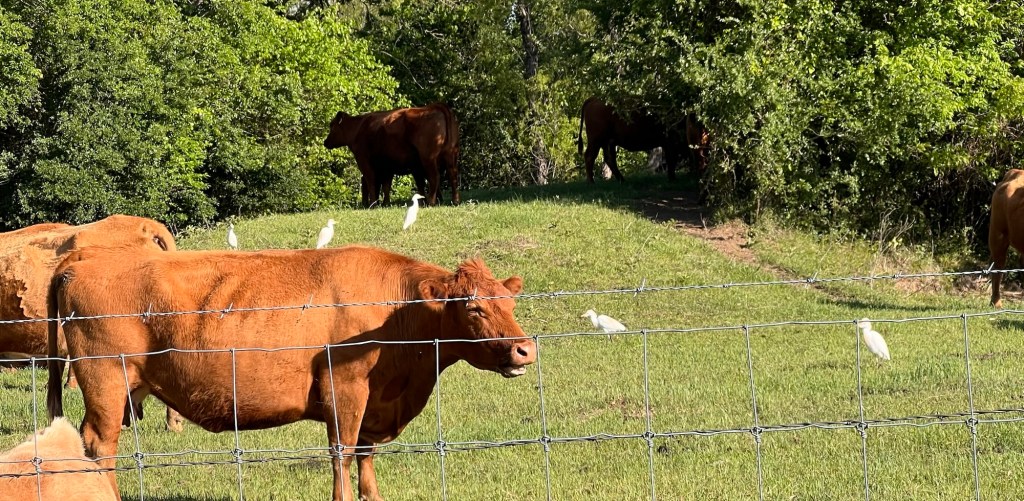
Just a picture to note that Cattle Egrets have arrived.
Her writing taught me I wasn’t alone and I wasn’t awful. What a gift!
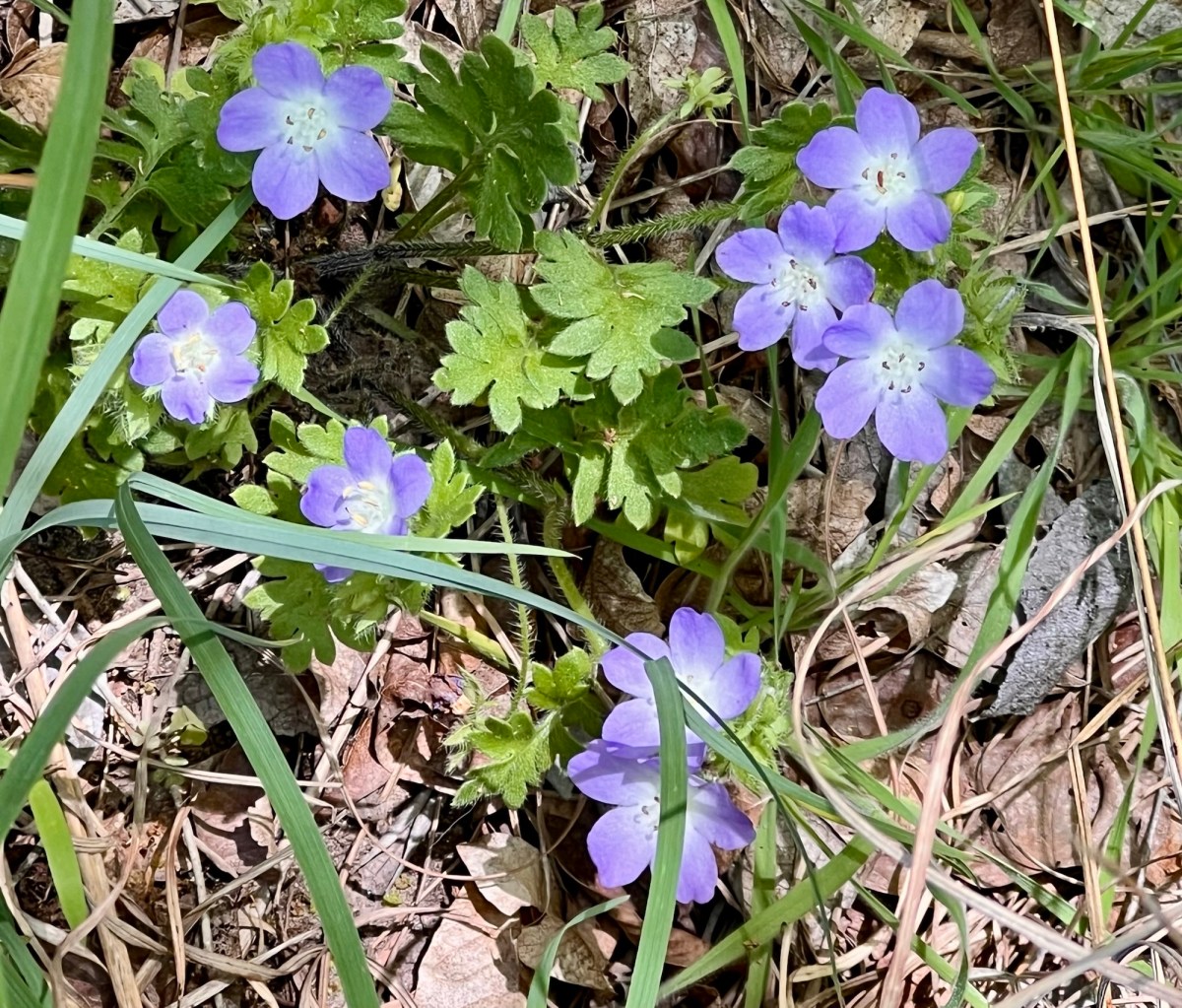
Here’s a gift. My favorite wildflower, Texas Baby Blue Eyes.
I’ve mentioned before that I must have read Black Beauty, by Anna Sewell, dozens of times as a child. It shaped by love of horses and all animals and set me on a path of kindness to our animal friends.
I do try to be kind.
Speaking of my animal friends, Apache and I had a hard lesson today. He is not fond at all of Tarrin’s gate obstacle. I got a good lesson in patience (though I did lose my patience once). He learned he has to trust me when I ask him to do things, and I learned I still have work to do on quietly repeating instructions and not showing my frustration.
It’s like the dung beetle. You just keep pushing until you get there. No need to get upset.
He’s such a good guy most of the time that I know Apache has his reasons for disliking the gate. We will work through it! After all, Brené Brown taught me that being imperfect is how we grow.
I’ve been meaning to write about the latest Elizabeth Strout novel, and since I was wrong about going camping this afternoon, I suddenly have time. I guess I should have asked someone if we were leaving the day we originally planned. That’s what you get for making assumptions. I make an a** out of me. And, sigh, we have to leave a day early because I have jury duty Monday, I’m a bit pouty. I really want to go camping. We haven’t been in so long.
Must deal with these results of the investigation into why the bedroom slide won’t move. It needs professional help.
However, I did read this book, so let’s talk about Tell Me Anything (2024). As soon as I realized there was a new book in this series (I’ve reviewed them all on this blog, so you can search for Strout and find them), I ordered it. I was very interested to find out what was going on with the characters in Crosby, Maine, since the pandemic, so I dove right in. I was happy to see that this installment concentrated on good old Lucy Barton and her friend Bob Burgess, as they cope with a local murder.
As with most of Strout’s books, the plot is secondary for me. I just enjoy how she tells stories. Her style is so spare, and her use of repetition and the narrator jumping in with bits of information, just enough information. And as always, you get insights into how people think, act, and work from points of view you’d never considered before. I just love the pithy parts.
An imaginary Maine coastline.
I underlined and marked many passages that I can no longer see, but my favorite one was this part of a conversation about the meaning of one of the stories two characters shared with each other:
That was about the same thing that every story Lucy and I have shared is about. People suffer. They live, they have hope, they even have love, and they still suffer. Everyone does. Those who think they have not suffered are lying to themselves.” p. 315.
Actual small town in Maine. Photo by Leah Newhouse on Pexels.com
The people in the book are also fun for me. They are all so fully formed, with wonderful features and fatal flaws. They are real in the best way. I love how married couples are treated here. They have days where their spouses get on their nerves, then days where they don’t know what they’d do without them. And there are divorced people who don’t hate each other, but are glad to no longer be married. It’s refreshing to be able to feel empathetic with human beings who can be inconsistent, think judgmental things about others, but still be doing their best. I feel less alone.
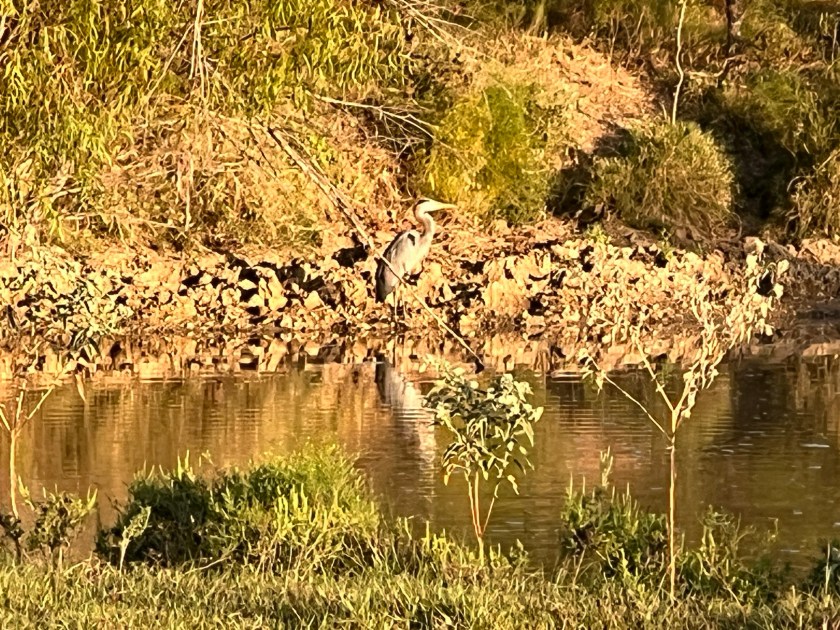
There’s always time for reflection, like the heron is doing. These books inspire you to reflect on universal truths and intimate insights.
One more thing is that I was glad to see that Strout introduced a few new characters, since the “old” ones are mostly getting old. Olive Kitteridge is now 93! I can’t wait to see how she weaves them into the continuing saga as she follows them on through the scary 2020s.
Ah, I’m answering this question rather than sharing my current thoughts. They’ll be more refined tomorrow.
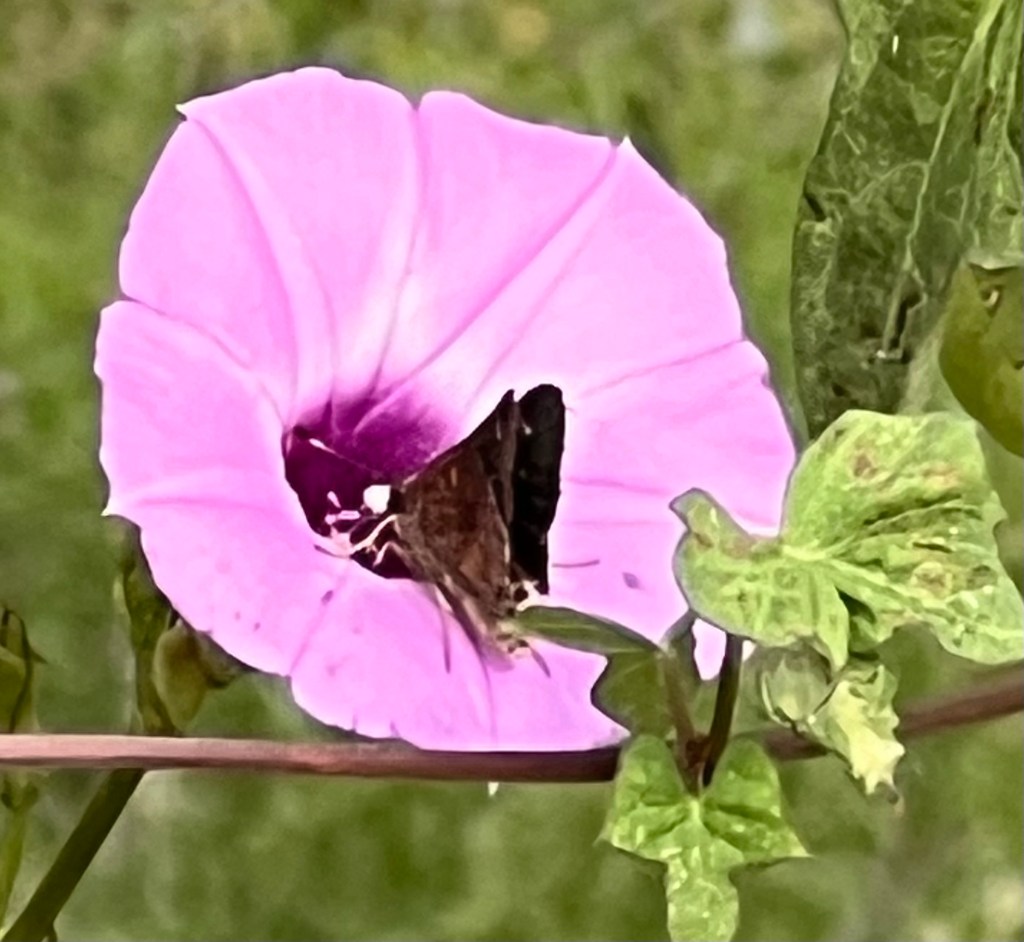
No AI here! It’s a clouded skipper.
For certain, what my husband will tell you makes me lose track of time is nature walks. I just disappear and re-emerge with no idea how long I was gone. I’m completely enthralled by the sights, sounds, and smells of new places or new things in familiar places. I don’t want it to end.
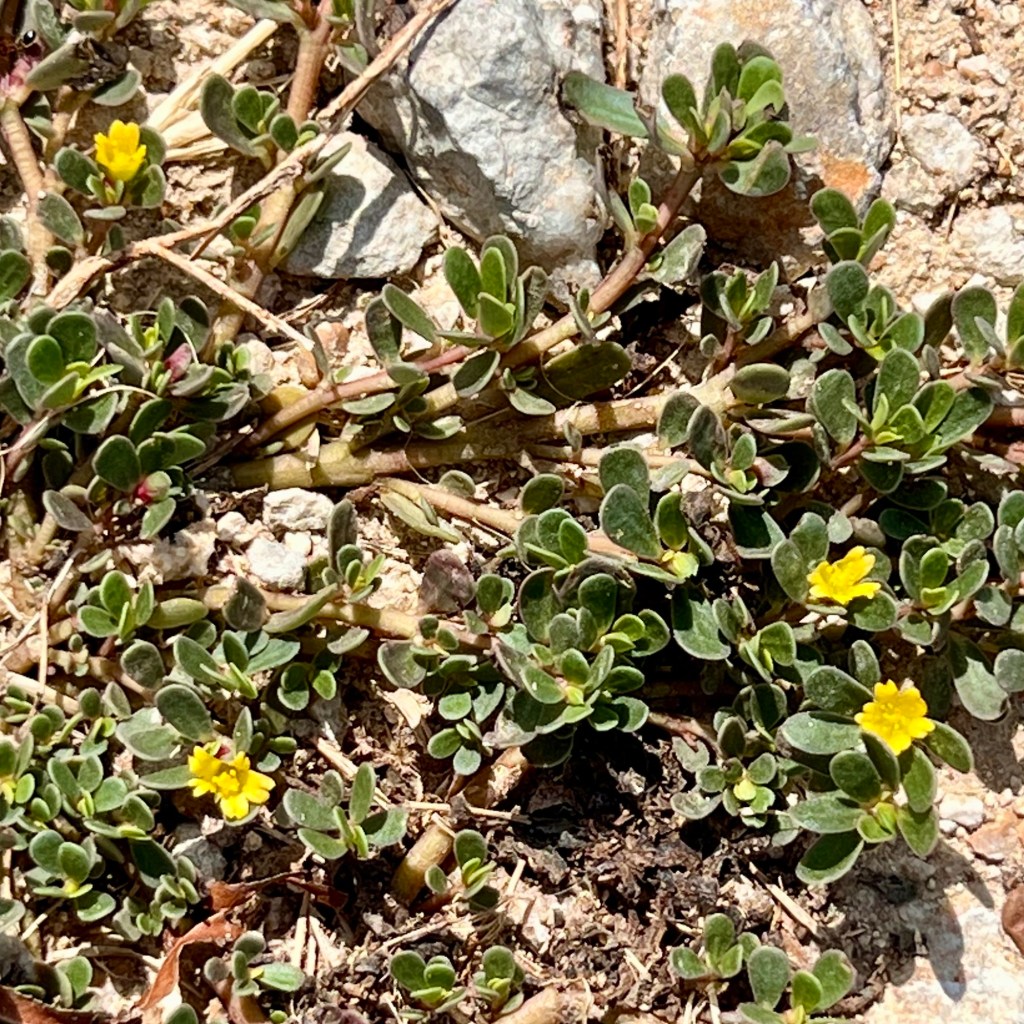
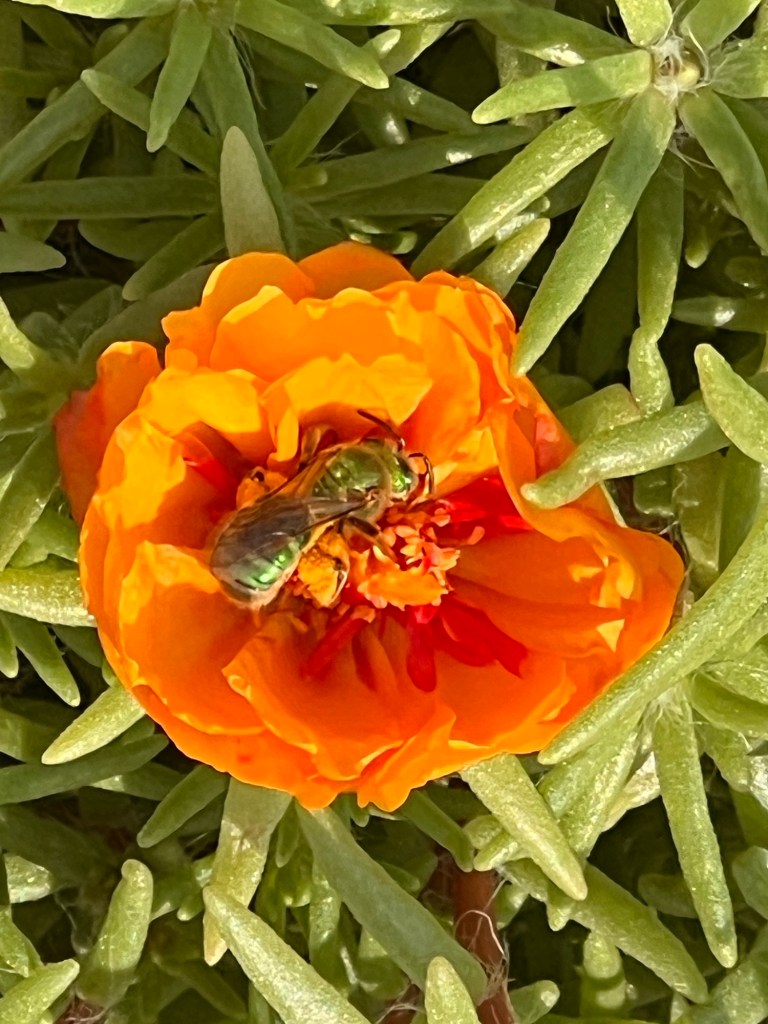
Here’s a new thing I found in the driveway! It’s delicious common purslane, a portulaca (Portulaca oleracea) just like the cultivated one below. Look at the beautiful Texas Striped Sweat Bee in my volunteer portulaca/moss rose
Hanging out with the animals also can make me lose track of time. I’ve just spent twenty minutes thinking about how beautiful Carlton is to me. My love for this guy never ends.
Carlton the Dogman
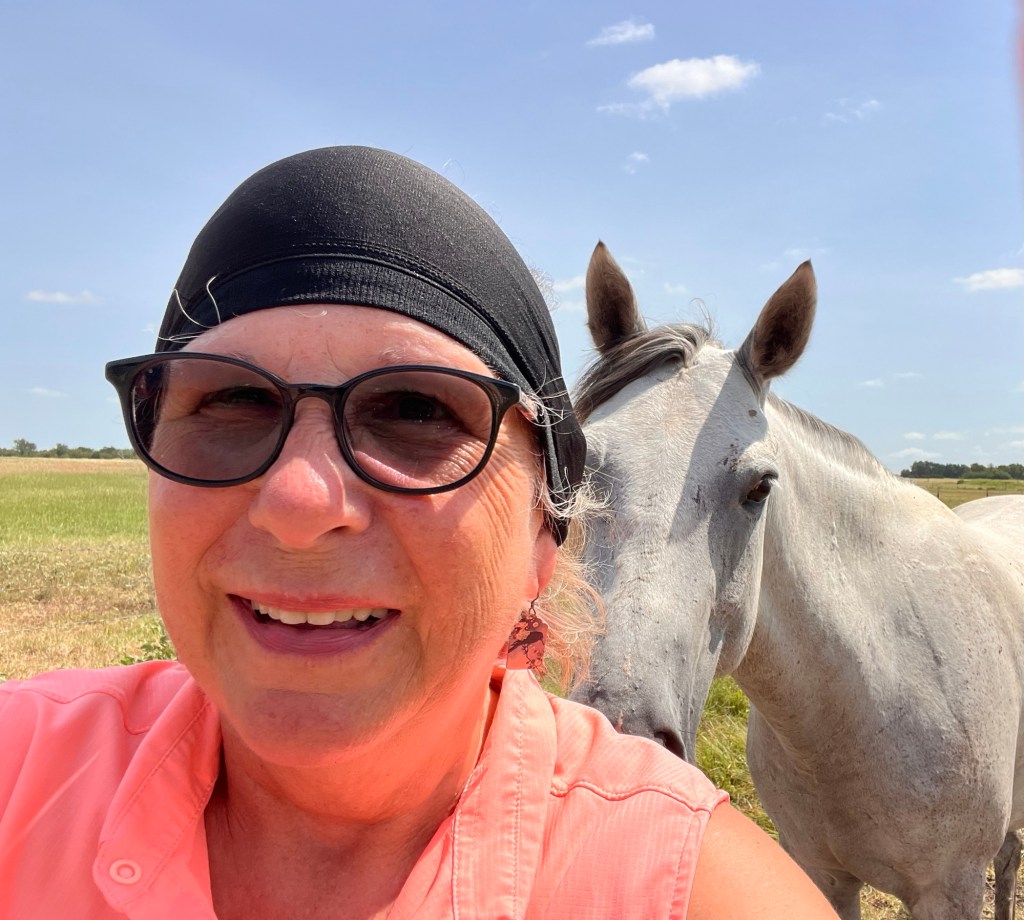
I ended up spending more time with Drew today than I’d intended, too. I’d walked to the next-door unused mailbox to drop something off, and decided to come back through the horse pasture, you know, in case there were any interesting plants or insects. So, I was concentrating on plants when I got a feeling I was being followed.
Hmmm. (Re-enactment)
I kept going until I felt something hot on my neck.
Ehhhh
Then I realized Droodles was sneaking up on me.
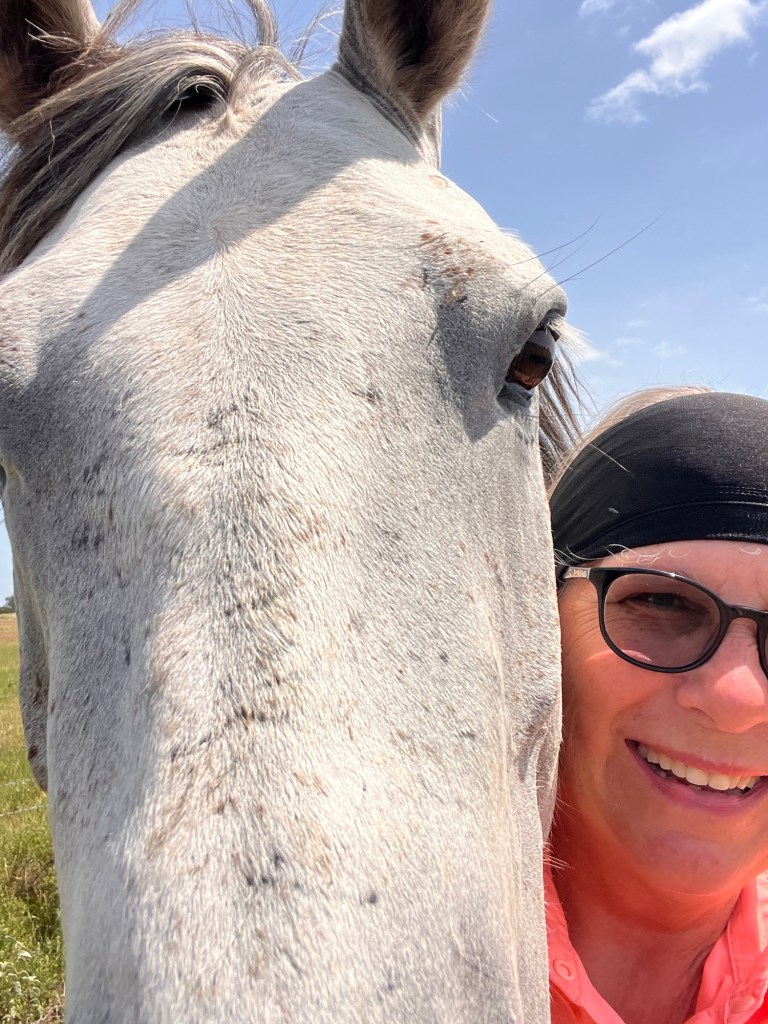
Hi, Mom!
We ended up hanging out for quite a while just enjoying each other’s company. He didn’t push me around looking for treats, just rested his head on me and asked to be scratched. It’s so good to get along with each other again!
Mostly. That ear is showing some mischief is afoot. Yes, I’m not much of a fashionista in this weather. That shirt is very orange and the head covering looks silly but keeps hair out of my face.
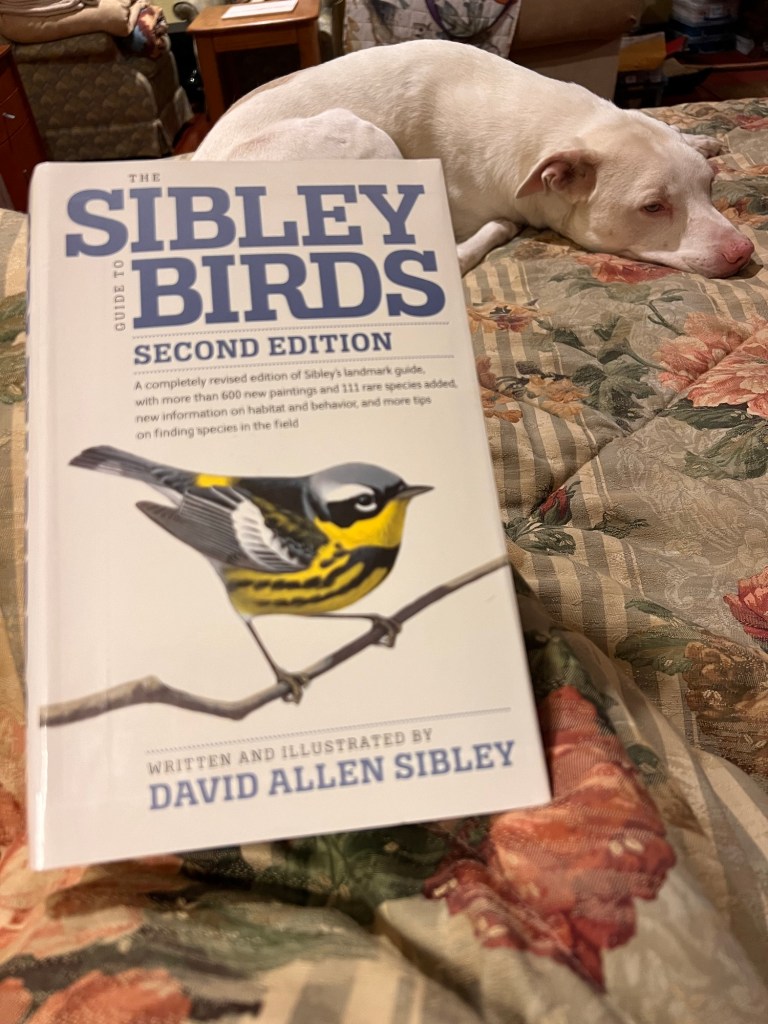
Not surprisingly, the other activity that leads me to lose track of time is reading. I’ve been reading Sibley Birds, Second Edition since I bought it in New Mexico. It’s only 600+ pages. I can’t stop looking at all the birds, learning new things about familiar ones and finding out what else might be out there in Texas (and wherever else I go).
Bonus Carlton again.
I will admit to skimming Arctic residents and ocean birds. Otherwise, I’m reading it all. But I’m in the oriole section! I’m almost done! Do not worry. I have a nice long book about animal tracks lined up. That’s what happens when people stop mailing me novels, I guess. (I’m fine for novels! I have some enqueued.)
If I’m repeating myself, forgive me. I’m working on changing my mindset and that can wear me out until I’m through the hardest part (letting go of an unproductive mindset).
Thanks for being there, friends and family. You are appreciated even when I don’t show it well.
Do you remember your favorite book from childhood?
Surprise! As a child I was very fond of, you guessed it, horse books. I read every horse book in the Sidney Lanier Elementary School library by third grade. The last book the librarian found was Steinbeck’s The Red Pony. She soon learned that sensitive young girls should not be given that book, even if they have advanced reading skills. I cried a lot and had nightmares.
I didn’t like the thought of horses dying gruesome deaths.
I’m glad they now have books for young people with high reading levels that are still children.
My favorite childhood book, Black Beauty, by Anna Sewell, also depicted bad things that happen to a horse, but after I’d read it once, I knew there would be a happy ending, so I let all Sewell’s animal rights propaganda seep into my future Master Naturalist brain by reading my poor copy dozens of times.
This was the 1955 edition I owned. Goodness, that horse has small eyes.
I can tell you what the cover looked like, and how I regretted that I let the plastic coating on the cover peel away. I can smell the book, even. It was the most beloved of a set of beloved horse books, a few of which I still have.
My second favorite. I still have this.
No wonder it was so important to me to find a trainer who was kind to horses and understood them. It’s probably a good thing I waited until I was getting on in years to start formal lessons, so that natural horsemanship could become a “thing.” I wouldn’t have been good at the showing the horse who’s boss by beating them school of training nor the cruel bits/painful sours tack they’d use. Black Beauty didn’t like that either!
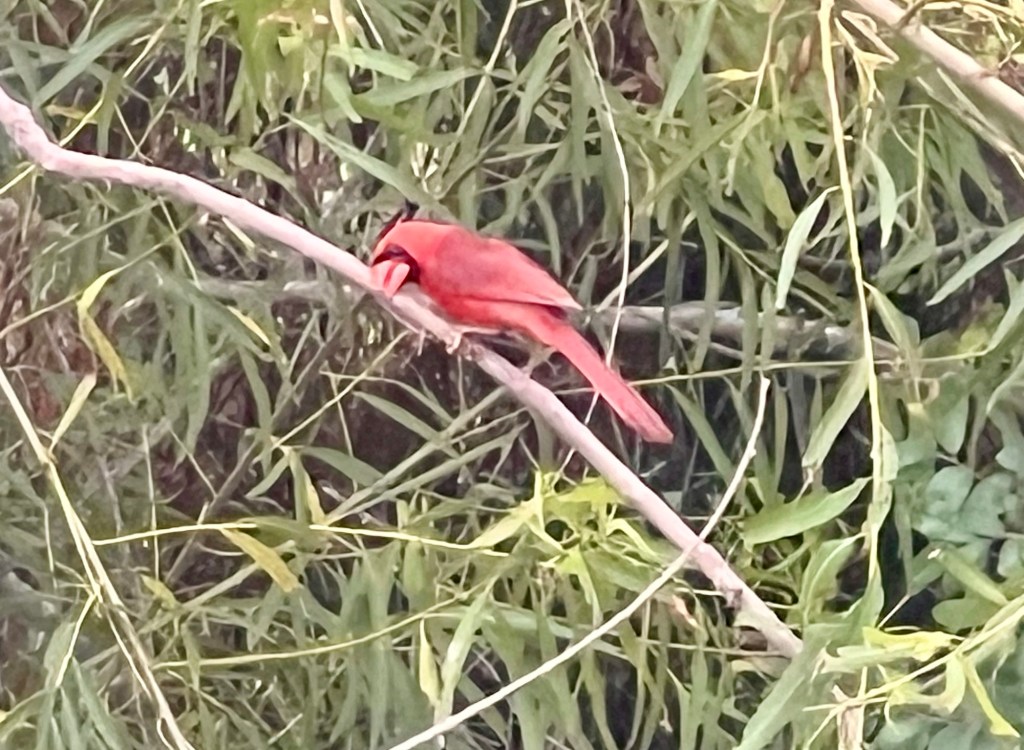
That stuff’s for the birds, says Mr Cardinal.
Today was a great example of how Tarrin Warren, my horsemanship coach and horse trainer, works with each horse and rider pair differently, according to the needs and skills of both the horse and the human.
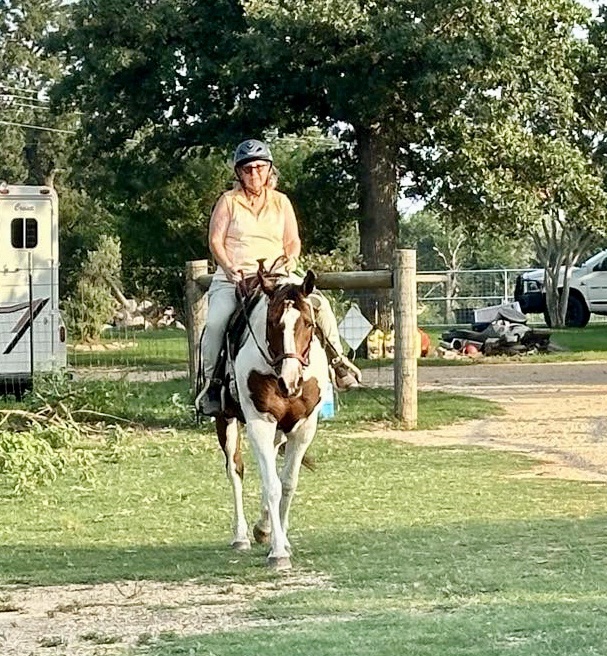
Check this out! Me and Drew happily riding outside of the arena! Happy faces.
I had lessons on both horses, and doing the same exercise I used different techniques to bring out Drew and Apache’s talents and help with their issues, all the while building my skills. This helps me with my confidence in other areas, too.
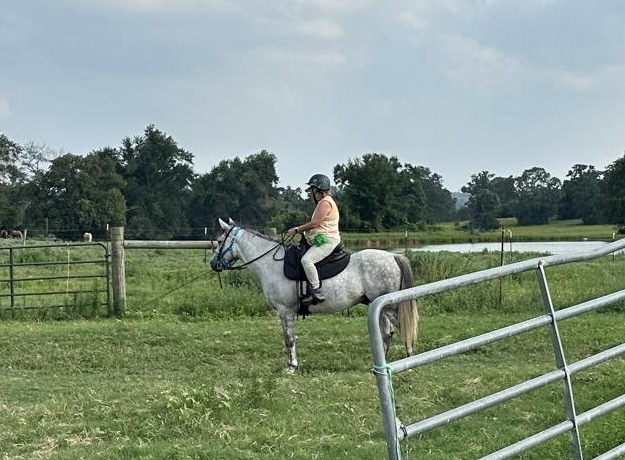
This horse right here calmly walked by neighing horses, a loud RV, and the previously hated trailer.
Horses are good for people. And looking at Apache’s shining eyes and willing body makes me think maybe they get something from us, too.
I love you, Suna, in my horsey way.
Drew is completely back to his normal self, too. It’s like the past few months never happened. We have fun and I feel perfectly safe with him, even when his leg collapses under him. Heck, today I gave him his shot like a pro, and had ZERO issues bridling him. Those are two things I’d never have believed I could do before.
Calm and happy horse and rider.
So yeah, as much as I loved learning about horses in books as a child, I’m loving it even more with actual horses. Yup, even with all the ups and downs.
Here we are, looking forward to the future. Or looking at Tarrin’s new house.
Tomorrow I promise to write about something other than horses! Or birds. I’m getting rather stuck on topics, but it helps me avoid controversy.
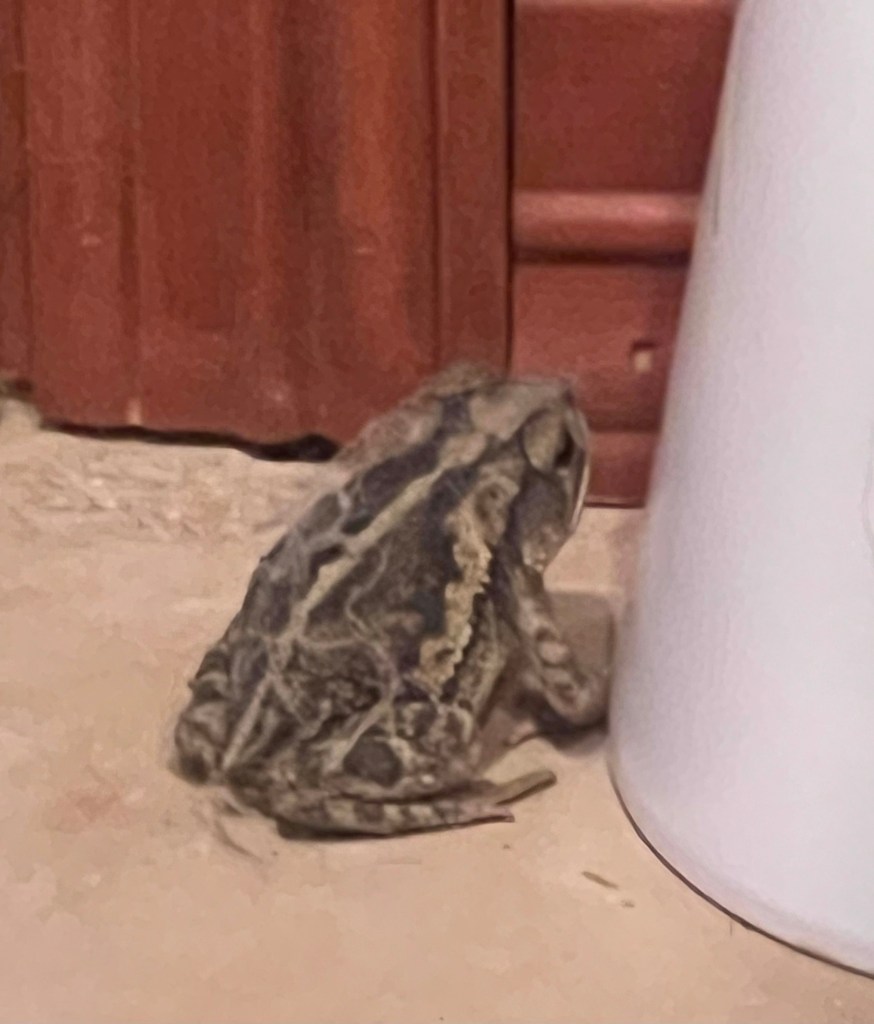
But we birds are fascinating, says the Red-Bellied Woodpecker. I’m also interesting! (Giant Walking Stick)What about me? I came in Suna’s house and she rescued me before dogs found me. That’s interesting. (Gulf Coast Toad)