Let’s see. What I’m trying to say here is that I have a hard time maintaining a poker face when my world takes a sudden shift, and I have an equally hard time rapidly processing sudden changes when I’m told about them. This isn’t a problem if I’m reading about something, all alone in my home or office. I have time to think about what’s going on, mull over the implications, push aside my knee-jerk reactions, and figure out what good spin I can put on it.
Message to self. Photo by @kristi_shlimovich via Twenty20.
In person, though, it’s hard. I’m guessing it’s hard for most people, to be honest. When your adrenaline starts running like crazy and you go into survival mode, your higher brain functions get sacrificed (it’s one of the things I learned in the Behave book I read a while back). The best I can do at these times is nod and plaster a smile on my face.
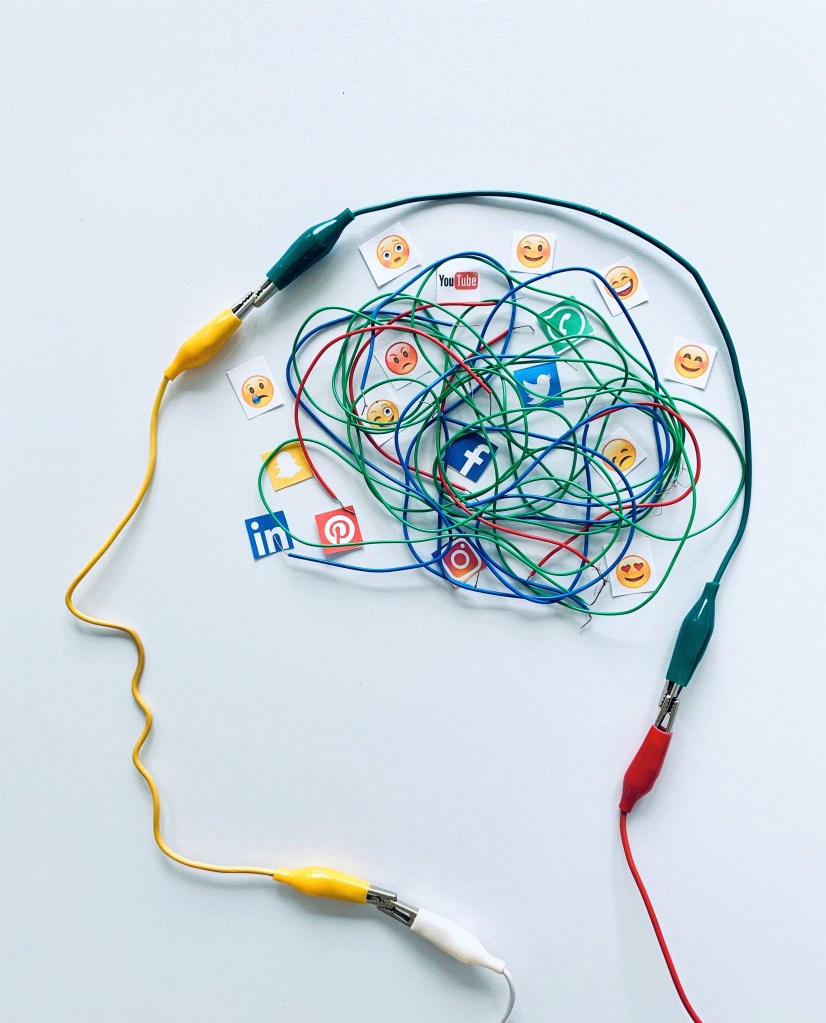
My brain trying to process a lot of new information at once. Image by @mylove4art via Twenty20.
For instance, yesterday in a work meeting, some changes were announced to our leadership team. Now, we knew something was coming, and probably most of us had an inkling of the kind of thing it was. But, with little prelude, we were shown a chart with all sorts of people, positions, and roles on it, many of whom we weren’t familiar with. The boss asked, “Do you understand this?” The other two colleagues, who are way better at office politics than me, nodded. I shook my head. Well, I didn’t understand it!
I’m the only one who asked for clarification, to help me process the shit ton of information I was supposed to internalize and grasp in 30 seconds. I did ask a few questions, to help me understand what was going on, since I will have to explain it to the people currently on my team. I’m guessing I was supposed to just say, “Okay,” and figure things out as I go along. But, I probably looked confused/annoyed and came across as a grumpy person who hates change.
I don’t hate change. Things change all the time. I simply find it easier to process with some context, reassurance that the sky is not falling, and some explanations of the rationale behind them. So, I didn’t get that, this time. That got me thinking.
If I have this kind of trouble, I should probably think about this experience next time I have to change something significant, change a process, etc. I think I do. I feel like I owe it to my team to provide context and rationale, rather than just say, “Here’s how it is now.” It’s not going to change the fact that a change is made, but it might help make it more palatable, gain buy-in on the new ideas or processes, and earn the trust of those I work with.
So many gears. No wonder I’m confused. Image by @rohane via Twenty20.
There’s a whole field of change management. I know it involves getting buy-in, setting expectations, and building up to the change. Maybe I’ll go study that some more and try not to do to others what was done to me. I had nightmares about having to implement something I didn’t know anything about!
Poor rigid Suna, ha ha. It’s just another effing growth opportunity, right?
Sometimes, when you’re walking on a hot day and trying to ignore the pain in your legs from climbing hills (you can tell I was in Austin), you get a sudden insight into how communication works and doesn’t work, and your life suddenly becomes better. Well, it happened at least once, and that was yesterday.
I was just enjoying myself not thinking about work during my one-hour break between meetings, and I started to think about how some of the people in my life announce their plans/intentions/commitments. They state them very firmly. “Things will be this way from now on.” “I will act on this plan going forward.” Things like that.
The post is about language, and I think this is cute. Photo by @NAO via Twenty20
In my little head, I interpret such statements as firm commitments. I then adjust my own expectations to go with these plans. If someone says, “I’m going to do this twice a week,” I expect that to happen twice a week. If someone says, “This is the next project I plan to do,” I get my inner expectations set that way.
This is not the other person’s problem; it’s mine. This leads to much disappointment and confusion when life happens, plans change, or the dreaded “spontaning” occurs (that’s what Lee and I call being spontaneous). I get worked up about people not keeping their commitments, or confused when I hear the twice a week thing didn’t happen starting the next week.
Javascript is inside my head. No wonder I get confused. Image by @Mehaniq via Twenty20,
My insight was that when people around me make these declarations, they are not stating a commitment, they are stating an intention. They’re not stating a definite plan, but more of a tentative plan for the moment. And that’s perfectly fine, because that’s how stating plans or intentions work for them. And besides, even people like me, who state things with all expectations that the plan will be stuck to, sometimes have to change things when circumstances change. Huh, I’d been being rather rigid in my expectations of others!
They sure do. Image by @MPstockart via Twenty20
So, now that I’ve reset my expectations, I’ve a word of advice for those of you who didn’t get this concept hammered into their heads while studying linguistics (almost everyone!).
Your internal set of meanings for words and phrases may actually NOT coincide (probably don’t coincide) exactly with other people’s.
me
Language is really, really ambiguous. That’s why we rely so hard on tone of voice, facial expression, past knowledge of the person we’re talking to, and sincere hope to communicate anything at all. We all have our own internal grammar, semantics (meanings for words), and pragmatic style.
Now you know why I only communicate with snuggles. They are universal.
So, when there are misunderstandings, which there inevitably will be, let’s not be so hard on each other. It’s a miracle that we manage to communicate at all!
I bit the bullet and got my hair cut today. The place I go made a lot of changes for safety, like a whole bunch of plexiglass, so I wasn’t too worried about going. I waited in my car until I was called in, then went over to the stylist’s station. I stated that I wanted my hair cut, then we headed over to get it washed.
Hair is much shorter but still pale blue.
That’s where I saw it. Some lovely young woman was sitting in the chair closest to the hair-washing sinks. She had her mask on, all right, but her perky little nose was poking proudly out above the top of the mask. It surprised me, because I guess I thought her stylist would have reminded her how one is supposed to wear a mask to protect others from your germs.
Proper mask wearing, though crooked (pre haircut)
Since I was so surprised, I just gave her a long look through my squinty li’l Suna eyes, hoping they conveyed my disapproval.
As I sat in my chair watching Dan cut little triangles of hair, I kept wondering if I should have said something to the nose displaying woman. Excuse me, but your mask has slipped down? Hey, I can see your appendage!
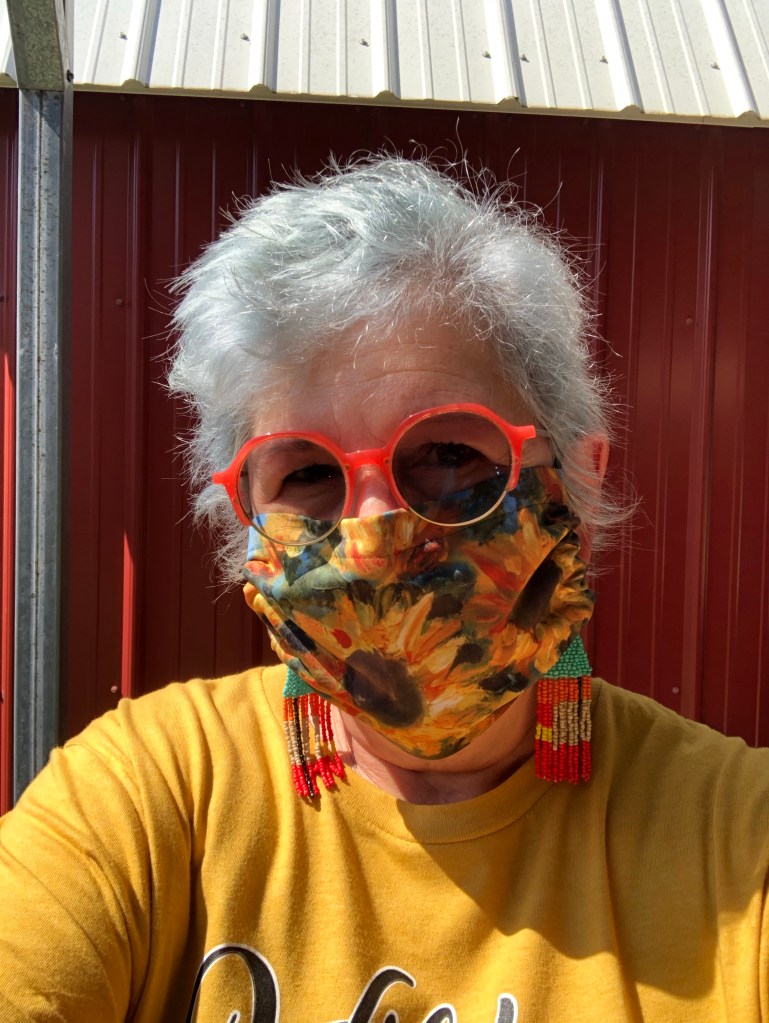
Gaudy mask with giant earrings. Still safe!
Then I countered myself with the fact that I was far from her and she was facing the other way. And is it any of my business to tell her how to behave in public? People are pretty edgy about masks in the US, after all. Why start a fight? She wasn’t coughing on me.
On the other hand, we were indoors, which is risky even with all the plexiglass. She was being inconsiderate, at the least. Dangerous to some people’s thinking. What to do?
I look as tired of pictures of me in masks as you probably are. Also my eye size discrepancy is getting worse as my eyelids droop.
Well, I did take care of the people around me. I kept my mask on, even when big hunks of hair fell in it. I even tightened it when it began to slide. So, I was a good role model.
I wore this sloth mask today.
But I keep second guessing myself. What would you do?
This morning, Lee was reading over my recent posts, and he spotted a couple of typos. While I was fixing one, I found another. It’s great to have another set of eyes to look over things for you.
One of the errors was pretty funny, in which I called Lee’s brother, Jim, his father. He’s Chris’s father, not Lee’s! That gave us a good laugh.
Then, Lee said he wrote about being grateful for typos in his journal today (he always says what he’s grateful for as he plans his day and does the dozens of other activities his journaling system entails. He kindly shared it with me:
That says:
Gratitude: Typos and awkward, ambiguous sentences are mistakes we all make and I believe we can all admit to. They give us the opportunity to practice gracefully admitting our imperfections. Hopefully we can apply these lessons to other areas of our lives.
Lee Bruns, personal journal
I thought that was a lovely way to look at our human slip-ups, as chances to practice grace and acknowledge our all-too-human slips.
What’s not to love?
That said, you can always let me know if you see a typo, or if you don’t understand something I’m trying to convey here. Since I’m mostly just “thinking as I type” here, I’m bound to get lost at times. I appreciate the chance to interact with readers, anyway!
And now, I must shift to what will be a difficult volunteer group meeting, if they get to the hard topic before I have to leave for a paid work meeting.
Sometimes I’m really grateful for blog comments, because they can get me thinking about things that are important to me. Recently, a comment was shared by Edith on my May 6 Toxic Negativity post. In addition to some lovely personal sharing, she made this point:
I’d be interested to hear more about what you get out of communication as well, because I believe most people do it to exchange and amplify emotions they wish to experience whereas while I do enjoy exchanging wanted emotions I mostly want to exchange ideas so sometimes I bring up something negative because I want to solve it, without realizing that not all problems are solvable and that not chewing on it might be better.
Blog comment, July 30, 2020
This is the kind of topic a person with my background in linguistics and pragmatics lives for. What Edith’s wanting to know about is not what the things I say mean (semantics) but what I’m trying to do with my words (pragmatics). Guess what leads to confusion and mis-communication? When you say something with one intent, and your communication partner interprets it another way.
Here’s an example:
Me: There’s Alfred hair all over the floor. Lee: Hey, I’ve been doing the books all day – I don’t have time to sweep.
So, maybe I was just noticing that the hair is there, not judging Lee’s housekeeping skills. Or, maybe I was thinking I should be doing some sweeping. Or maybe I was actually judging Lee. How to tell?
Alfred DOES shed a lot.
Well, if we were talking in person, Lee could tell by my tone of voice (stern, teasing, surprised), or he could see by my actions that I was heading to get a broom or crossing my arms in irritation. Those are among the many ways we can infer motivation to other people’s speech.
One method of communication we aren’t using so much these days. Photo by @Nodar via Twenty20
But these days, a lot of our communication comes via text, Twitter, Facebook comments, messenger app, or email. We lack a lot of those tone of voice and mannerisms tools for conveying additional meaning. We do have ALL CAPS and emojis, of course. But you can easily see how it can be a lot harder to figure out what someone is actually trying to convey outside the literal words they’ve typed.
I’m pretty sure Edith has been reading a lot of emotion-charged content lately, especially on Facebook/Twitter, etc. I see a LOT of content that repeats time-worn phrases or buzzwords that do seem to me that they aren’t intent on conveying information, but rather to vent, convey frustration, state which “team” they are on or show their disapproval of others. I even see them getting irritated when folks want to talk about what they actually SAY.
Yep, sometimes technology obscures intended meaning. Image by @Mehaniq via Twenty20
In fact, I often see that when people are genuinely wanting information, they specifically say so. They’ll say, “I really want to know,” or something like it. So, it seems to me that a lot of us are interpreting things we read and even hear as just folks blowing off steam.
That’s great unless you’re someone like Edith, who doesn’t work that way, and really just wants to respond to what the words are saying, not underlying implications.
What to Do?
Well, one thing that helps is to ignore people who just seem to be blowing off steam. They don’t really want to exchange ideas, information, or heaven forbid, facts/evidence.
If you think someone may actually want to be conveying information or getting your input, though, you can always try my favorite from back when I helped mothers breastfeed, “active listening.” It includes the technique where you paraphrase what you think the other person is trying to say, and get confirmation or clarification. You say something like, “What I hear you saying is X; is that right?” and the person either confirms or explains. (Summarizing, below)
Thanks to Education Corner for the graphic.
While this can get annoying REAL fast if you repeat it throughout a conversation, used sparingly it can head off those occasions where you get ten minutes into a heated discussion only to realize you were talking about different things.
You can always try the reflecting part of active listening, “When you say X, it makes me feel Y,” which is supposed to be better than blaming, name-calling, or labeling (for example, “That was stupid”). The idea is that you’re pointing out that the words are the problem, not the person saying them. This is another technique that can easily backfire (So, don’t say, “When you say those Confederate statues are your beloved heritage, it makes me feel like you don’t think black lives matter,” because that conversation will turn ugly very quickly.)
This takes me back to the first option, which is ignoring stuff you know isn’t really about exchanging information. Occasionally, with people I know or am related to, I will ask if they really want to start a conversation about Topic X, because I actually do know something about it and can share information. There have been times where one of us learns something that affects our feelings one way or another or gets us to re-evaluate and think about the topic based on new evidence, which is the goal of a good discussion, isn’t it? (That is opposed to a good venting session, the goal of which is to get hearty agreement that our way is RIGHT, and those other people are doofuses. Sometimes we need these, but we need to know when we are in a venting or information exchange interaction!)
Fill in the blank, venting, chatting, lecturing…
I guess my conclusion is there’s lots of reasons to communicate, and lots of WAYS to communicate in addition to the face value of the words in sentences. To succeed, whether you want to share information, educate, insult, or vent, you need to first agree on the mutual goal. Otherwise, we’re just talking (or typing) at each other rather than with each other.
I don’t know if any of this has helped at all. There is more I could say, but no time to say it, since lunch is over, and I need to go to some more work meetings and nod my head and smile a lot or help someone solve a problem (I like the latter kind best).
The Next Day
Someone said they couldn’t follow this well, because it’s written, not spoken. Then I couldn’t tell if they were joking or serious, because there were no emoticons. I rest my case.
Having written posts on toxic negativity and positivity in the past, I was really happy to hear the last part of an NPR presentation on toxic positivity this morning. I wanted to hear it, so I searched and couldn’t find it. I was bummed, because I liked the fact that the therapist being interviewed talked about how not all positivity is bad and that some negativity may well be justified.
This was my sweaty face of negativity when I found out someone spoofed my Instagram account yesterday.
Finally, my brain kicked in and I found the article on the website of my local station, KUT. They have great original programming, too! If you get a chance, read the transcript or listen to the interview.
So, in her discussion with the KUT reporter, Junice Rockman makes the point that a lot of us are looking for the good things in life right now, since there’s so much ickiness going on in 2020 (obviously she didn’t say ickiness). And that’s fine. As the interview pointed out:
“…there is nothing wrong with positivity, as long as it is not used to:
deny
disconnect
disregard
disassociate, or
dismiss someone else’s ideas.”
That rang true to me. Some of the things I’ve heard and memes I’ve read seem to insist that you’re not good enough if you can’t always be positive. Your just not trying hard enough, don’t love yourself enough, or are just trying to be Debbie Downer.
Who me? I’m Penney Positive!
The heart of the matter is that it’s unrealistic to expect people to be either happy all the time, or eternally sad failures. To me that’s just common sense. Rockman says this kind of all-or-nothing thinking doesn’t work.
It’s like a pendulum. It has to be all one thing or not. It’s helpful for us to move away from that all-or-nothing thinking. It doesn’t have to be either-or. It can be both.
Junice Rockman, KUT, 7/29/2020
By the way, to make me positive, just show me a picture of my son and his little family. Aww. Photo shamelessly appropriated and used without permission.
And that’s it. We can be positive about one thing and negative about another, and they can coexist! These days a lot of us are having a hard time. We have lost jobs, are lonely, are sick, or upset by the news. That is absolutely okay, and it can’t hurt to also find what’s still pretty good. Really, isn’t life always this way?
Even in good times we have challenges. My goal is to have a healthy viewpoint and put my feelings into perspective. That means when I climb out of despair, I don’t run straight up Pollyanna Mountain! When I talk to people in my life, I’m going to mention things that bother me as well as things that bring joy.
And if someone judges me for veering off to one side or another, they may need to check for their own toxicity and cut me some slack. I’ll return the favor. My brain is too full to be all judgy right now. I love everybody who’s doing the best they can.
At this very moment, I’m not in a negativity spiral; in fact I’m feeling as normal as a person getting ready for a reorg and dealing with sick people all around me can feel. But, from what I hear and from my own experience, the negativity can jump out and make its presence known quite suddenly and quickly. I think even the most resilient among us is finding it challenging to keep looking to the bright side these days.
The shift from negativity that Kogan refers to is what intrigues me. It seems like there may be lots of ways to accomplish this, and I’d be interested in knowing how some of you do it.
A couple of my strategies are:
Get going with the supportive self talk. Remind yourself that you are doing your best and your best is good enough, in fact, great!
If it’s someone’s actions or words that send you toward negativity, see if you can come up with a possible motivation or intent that is positive; remembering things don’t always come across the way people intend them to.
If you’re overcome with a mood out of nowhere, quickly engage in your favorite mood-changing activities: take a walk, do deep breathing, sing, visit your favorite funny meme or video site. The sooner you do it, the less chance that a mood can grip you for long.
Being good to ourselves really helps us be more resilient and optimistic (okay, some of us are aiming for neutral, I know). Nataly Kogan also gave out these ideas today, so I’ll share them, too:
Thanks, Nataly!
While I’m at it, I’m going to reach out to a couple of people I know are not feeling well, which always helps me feel more positive, myself.
As I was reading my morning news/opinion pieces, I was reminded by the Rev. Jim Rigby that it’s important to remember that there’s good stuff going on today. Go to his Facebook page to see his ten reasons to be grateful today. What struck me was this:
What a shame it would be if we forgot to celebrate the fact we are alive, that we are all connected to each other, or that underneath all our problems we are still expressions of a cosmic process. What a shame if, in the middle of this terrible storm we did not pause to appreciate the courage and nobility of those who struggle on our behalf.
Jim Rigby, Facebook, July 27, 2020
To that I want to add that we continue to celebrate that life and death go on, regardless. While I heard of the death of an old colleague this morning, I also saw beaming baby photos from three other friends.
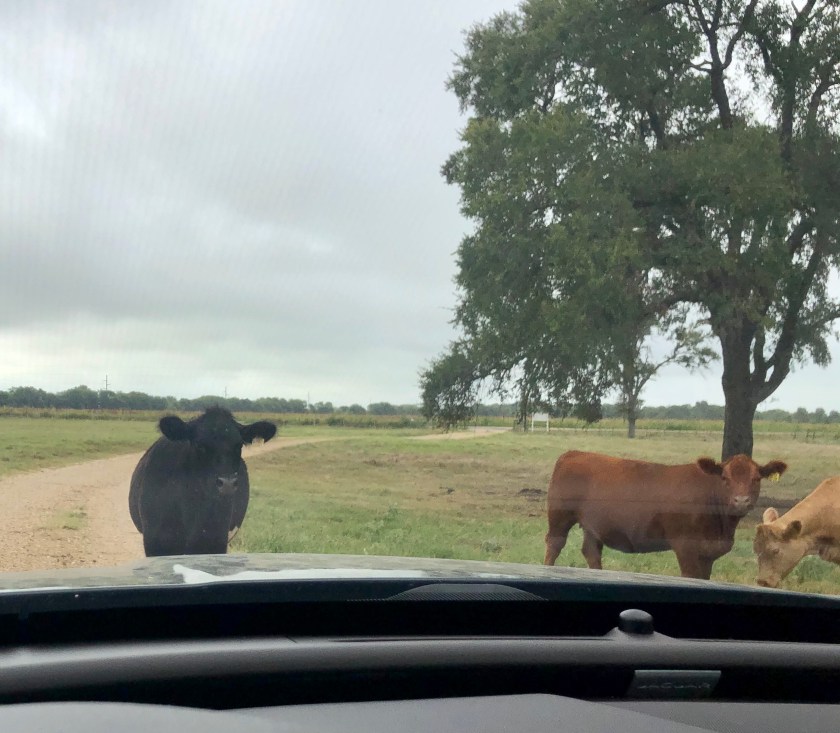
My morning also featured this new heifer, who doesn’t seem to understand that cars have the right of way! The old ones politely moved.
And last night, when I went out with Lee to look at the frogs, he asked me what a particular plant growing up out of the disturbed earth was. Usually what we see are the plants that typically come up in disturbed soil, but this one looked familiar.
It’s a leaf, all right. I didn’t take a picture of the whole thing.
It was not a hackberry or a cedar elm, even if the leaves have serrated edges. It looked like, hmm, what is that tree in the field on the other side of the woods? Thank goodness I have iNaturalist!
Sure enough, it’s a cottonwood, which is also a native tree, but we only have ONE on our property. We had just been talking about how we REALLY need some trees. And boom, we have one! New life to be happy about.
We may or may not move it. It might look nice next to the little pond. I know their seeds are a big messy, but I love the way the leaves shimmer in the wind and the seeds fly around like snow. We only have the one tree, because cattle eat up any saplings in the pasture. Now we have one with a chance to become a nice shade tree, eventually.
The rain that fell all over the county completely missed our ranch. There was a little peninsula of nothingness, and we were in it. But we got a nice sunset.
Now I just have to mark it so no one will weed-eat it or pull it up! I’ll just stay optimistic about this, and carry it into the rest of life today. Back to work on the ole kanban cards.
Are you tired of people going on and on about their online meetings? Me, too, but I still have things to say about it. In the past few days I’ve had a number of talks with friends and colleagues (mostly on Zoom) about how the pandemic and issues around it have changed their interactions with others. I’ve found it pretty interesting.
I pretend this is what I look like on Zoom with my headphones all jaunty and wearing lipstick that would stain the heck out of my mask if it were real.
This week I spent at least half of every day with my headphones on smiling at little square images of people who are smiling back at me. At least on Zoom, people can tell you are smiling, which is good, since my mask only accentuates my resting grumpy face. And I smile a lot, hoping it helps the moods of my friends and coworkers.
Since I work (and volunteer work) Zoom so often, I limit my personal Zooming pretty strongly. I have the world’s comfiest headphones (by Jabra), but they still get to me after many hours. Most of my personal conversations, like with my son and sister, are by text and Facebook Messenger, because that lets me multi-task, and frankly, I type more coherently than I talk. I can fix typos, but not speak-os.
Un-retouched Zoom me. Note wrinkles and frown lines.
Phone calls I just do with a couple of folks (hi Mike). I don’t mind them as much as some younger people do, but I don’t like yelling at the speaker phone where people can hear my whole conversation as well as what the other person says, but my ears need a rest from those headphones, so I don’t want to hold up the phone. And of course my fancy iPhone earpieces make me sound like I am talking from inside a well. Thanks, technology.
The COVID Effect
I’m pretty sure, though, that I communicate more often, and also communicate more deeply with others since the pandemic started. The threat over each of us that an invisible thing can come get us any time, anywhere, really makes me, at least, treasure my connections more.
What happens when I am on Zoom all day then open SnapChat. This is scary.
Many of my recent work meetings have turned into personal conversations, as well, since we agree that we need someone to safely talk about our concerns who doesn’t live in the same house with us. I’ve heard a lot about the difficulty of negotiating the current list of hot topics with relatives, talking to children about illnesses, and how important our pets are to us (see, it’s not just me!).
In some ways, I’m getting to know people better than I did before, when you tried so hard to just stick to the topic at hand. We all realize we NEED a little down time and that building relationships is important. Now, that’s a great bonus from all this isolation, for me.
Being able to see each other’s homes, our personal work spaces, our pets, or our back yards, reminds us that coworkers are way more than the spreadsheet maker, the project manager, the programmer, or the writer. That’s a key for greater understanding among all of us, which I’ve repeatedly stated: we all have more in common than we often realize. When you see that people in Israel or South Africa have the same collection of kitchen stuff on their counters as you do, the world gets smaller.
This meme hits way too close to home, doesn’t it?
2020 really has been a challenging year so far. Maybe these new connections will help us as we figure out what to do in the brave new, potentially even scarier, world of next year. Until then, I’ll keep on Zooming, texting, chatting, and writing.
Yow, there are a lot of ways today’s post can go, because I’ve been busy trying to come up with ways to be safe, treat others well, meet my own needs, and meet the needs of others. That’s a lot, combined with concerns about work and world events. But, most of us are in the same situation, I have a feeling.
Two recent influences in my life have combined to remind me to not forget what I want out of life. My reading on the Enneagram, while confusing in some ways, has brought a lot of clarity in others. (While you are only supposed to be ONE type in that system, I keep seeing parts of three in the more shadowy aspects of me, which could explain why I’m internally confused.) In the past few weeks, I’ve needed to make important decisions, and I keep running into the Type 9 proclivity to place the highest priority over creating a peaceful environment, which causes me to not advocate for my own perspective as hard as I could.
I hope this meme I made helps me realize I’m fine like I am. Even with my unhelpful aspects.
And, when someone close to me asked me what my fondest dreams for the future were, nothing came up. What the heck? I was taken aback. I realized that I basically wanted to support my spouse’s dreams, and hope some things I enjoy would come along as part of that.
Well, yuck! So, I began to wonder if this was a pattern (it was – ask my why I am in Texas, why I am where I am now, etc.). Now, I’ve had a good life, and am not whining about this state of affairs. I just genuinely got curious as to what the heck my own dreams were or are?
I realized that I have met two of my life goals. One is that I always wanted a house in the trees in a place I felt like I belonged, like when I was a child. My Austin house meets that need, so no wonder I fought to long and hard for it and want to keep it in all its total impracticality (especially right now).
It’s the Austin house (Bobcat Lair) showing lovely dark rain clouds. A house in the trees where I feel safe.
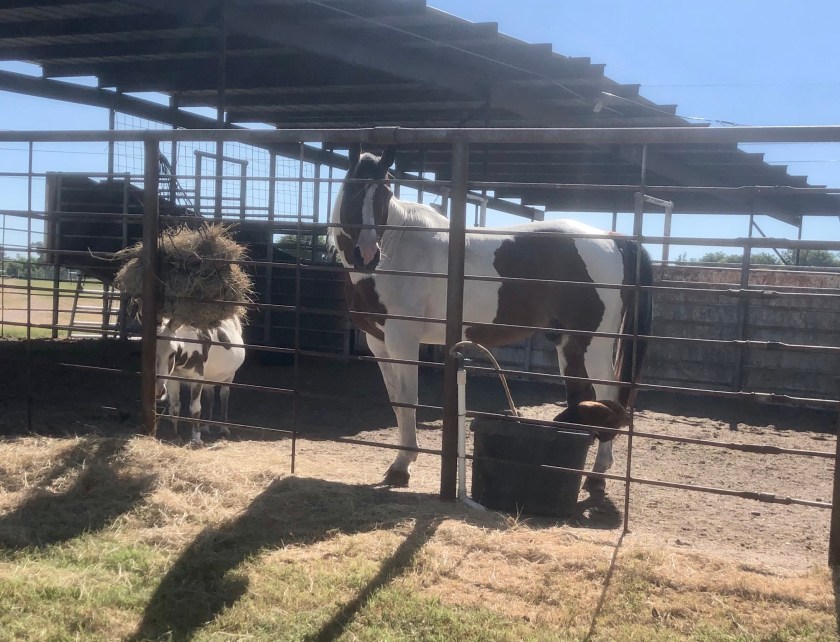
The other, as I have mentioned before, is that I always wanted to share my life with horses. I was drawn to them as soon as I met one as a child. Now that I have Apache and Fiona in my life, I won’t desert them, even if Apache has foot problems and Fiona doesn’t do any work (such animals are not popular on ranches, I have learned).
Hooray for the equines. And the chicken (on water bucket).
So, see, I HAVE managed to keep my dreams going while still supporting Lee’s (just one example, not picking on him – he’s a good guy with good dreams).
Apache Newsbreak
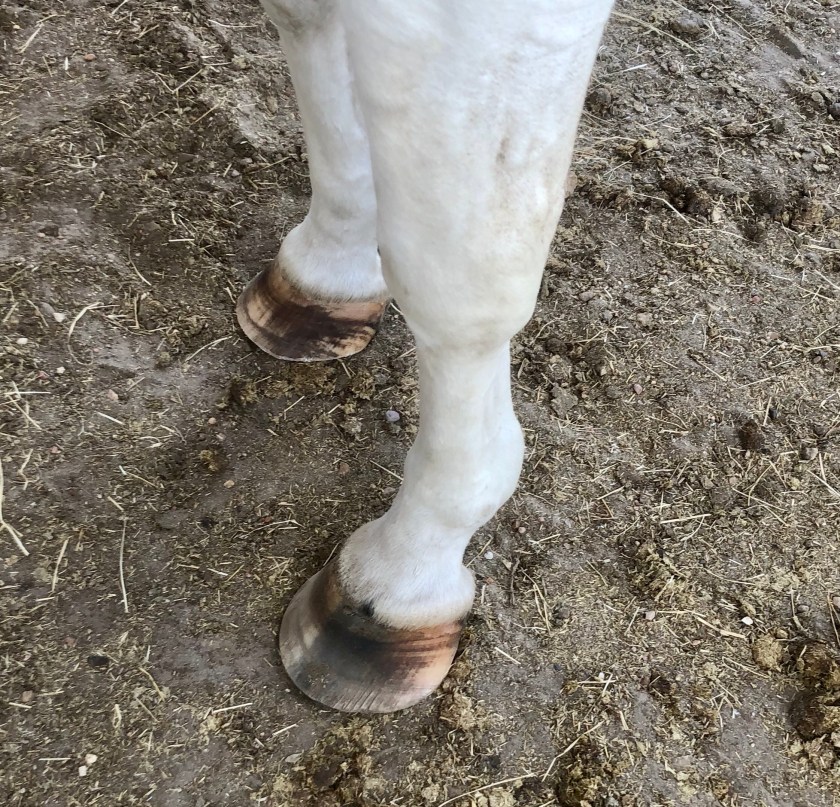
Trixie was here yesterday to check on Apache after his recent setback, and to do some other work on our little herd. His feet look remarkably good for a horse dealing with his challenges. There was just one little area of redness, which could have been a stone bruise.
The outside of his feet look good. The inside did, too, but I didn’t want to get that close, due to ye olde virus precautions.
I reckon he might have hurt himself a bit on rocks when he was pitching all those fits and not wanting to go anywhere. He also seemed to be favoring one of his shoulders, which could have happened when he was bouncing around on uneven ground. Now I wonder if his feet were already hurting then? Hindsight…
I always liked his stripey feet, even if light feet are more trouble. OOPS. I had to crop his happy “member” out of the picture. It’s a GP-rated blog.
Anyway, she’ll be back in another 4 weeks to see how things are going. Fiona also got a trim. She grows very long toe areas. All fixed now.
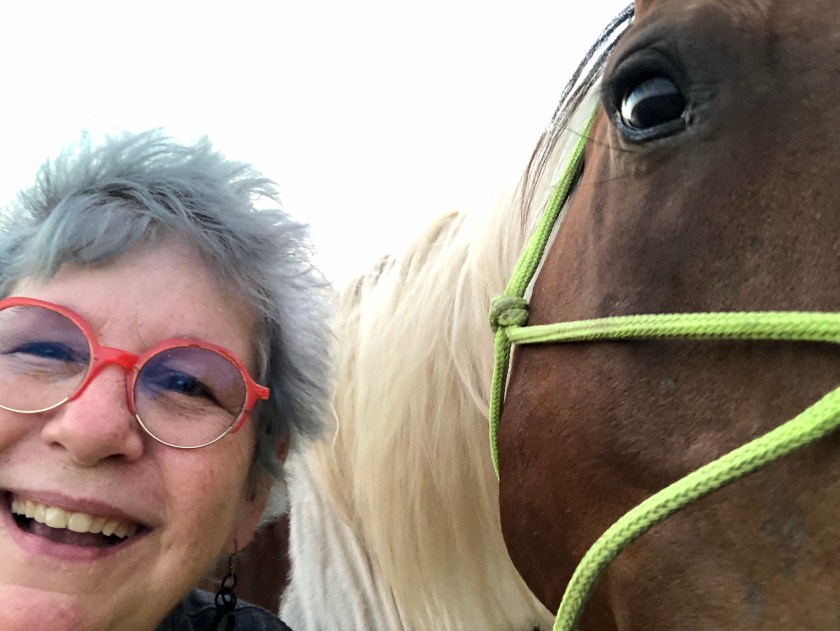
I always really enjoy these long times with my equine friends, and they seem to, as well. A great deal of mutual admiration is expressed.
Back to Balancing
I don’t think I want to change who I am and put my needs ahead of others or cause more of a ruckus than I already do. I am who I am. But, I think working to balance my own needs and goals with those of my family and others in my circle is a reasonable and attainable goal. Sticking up for myself and saying no to things that make me feel unsafe or anxious doesn’t mean I don’t care. I expect others to take care of themselves and THEN take care of others (like with airplane oxygen masks…remember planes?). I can do that for myself and it will be just fine.
Well, apparently today’s blog post was supposed to be a pep talk to me about myself. What a surprise (not a surprise at all.) But, I know I’m not alone in wanting a balance between my own needs and the needs of people I love. I’m not alone in getting so involved in someone else’s dreams that I lose my own.
I’m not all lost, I have my center and my spotted emotional support buddy.
All we can do is keep moving forward. I’ll find a way to meet my own needs while still supporting my inner circle. Both are important.
Is this balance easy for you, or hard for you? I think it really depends on our inner wiring, but who knows?




















 The Hermits' Rest