Earth Day at 50

As a certified Master Naturalist, I am obliged to acknowledge that today’s the 50th anniversary of Earth Day. As a human being, I relish the opportunity to dwell on my concerns about the planet we all share and to remind myself to keep doing the things I do to help our green and blue mother stay a welcoming home for us all.
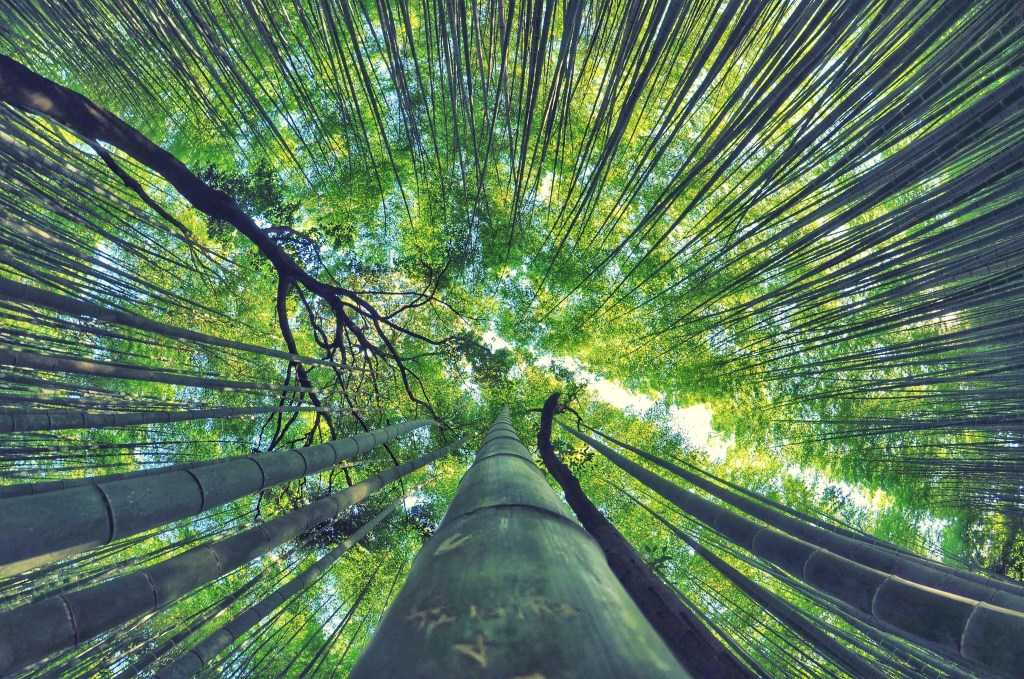
Thanks, Earth, for bringing us sights like this. Photo by @simogarb via Twenty20.

It’s hard to think about the Big Picture when so much little stuff is on our minds. But, it can do us a lot of good, too. We get presents from the Earth every day. Surely we can give back some, too!

This is little quaking grass. It’s seed-heads look like rattlesnake tails, or tiny Christmas trees to me. Behind it is our doggy swimming hole, which is FULL of tadpoles right now. Thanks, Earth!

What Can You Do?

Sure, we’re all avoiding big gatherings, so our Master Naturalist chapter isn’t doing an event like we usually do (actually, we’d canceled anyway). But the internet is just full of ideas. Here are some things I’ve read as well as my own suggestions:

  • Do some of these great ideas from the Kresge Foundation. They include live virtual events, social media ideas, and even a musical playlist.
  • Read a book! Head on over to my Book Reports Page and find one of the many nature books I’ve recommended over the past two years, or go ahead and get Nature’s Best Hope. We all need that inspiration sometimes, and reading takes our minds off “stuff.”
  • Go outside! Take a walk with your eyes, your ears, and your mind open to what the Earth has to share with you. Do you hear birds, squirrels, dogs, or coyotes? Do you see butterflies and moths? Are there plants growing in all sorts of places you don’t normally see? Make a list; you might be surprised at what the Earth has for you, no matter where you are.
  • Share with others. Remind people you know that it’s Earth Day and that they can do something to help. Use Facebook, Twitter, Snapchat, email, your Zoom meetings…whatever! Word of mouth is always the best way to encourage new learning.
  • Start a new tradition. My friend Donna just told me that she has planted a tree every single Earth Day for the past 50 years. Hers is already in the ground. You can start your own Earth Day practice now!
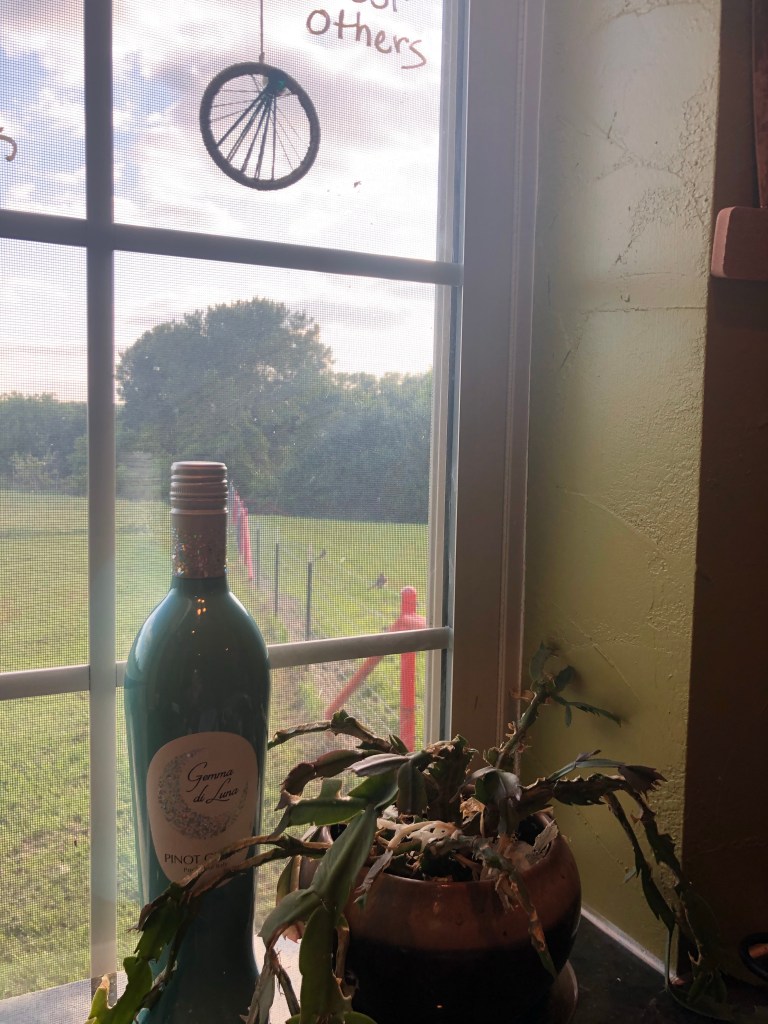
  • Recycle something. Even better, re-use something you already have. I’ve made chicken feed scoops from plastic containers that have lasted months and months. I’m saving wine bottles and corks for projects (can’t wait for all my shiny bottle trees to start sprouting!). Let us know what YOU do!
Venus’ looking glass was my gift from the Earth yesterday.

I hope that’s given you some ways to celebrate Earth Day from the comfort of your property. The Earth is our home, and it never hearts to tidy her up, make her beautiful, and keep her safe.

Happy Earth Day #50!

Book Report: Nature’s Best Hope

Do you care about our planet and the life it supports? Then, stop reading this blog post and go order this book: Nature at Its Best: A New Approach to Conservation That Starts in Your Yard, by Douglas W. Tallamy. Consider it an early Earth Day present to yourself and the Earth. Get ready for some gushing now.

Why encourage caterpillars? Birds need them to make more birds!
Wow, this is a great book, which you might guess, given that I devoured it in a weekend. It’s got proper footnotes and references and such, but is written more for a lay audience than Behave! was. (Since I really don’t want to take pictures of the pictures in the book, I’ll share my own happy nature pictures from the weekend to encourage readers to make environments where they can see these for themselves, like the book describes!)

This is the book you want to give people who are not naturalists or environmental activists to explain to them that a) all those horrid weeds and bugs are what’s keeping the world alive and b) you can make a beautiful planting area on your property that encourages birds and other wildlife without going to a lot of trouble and effort.

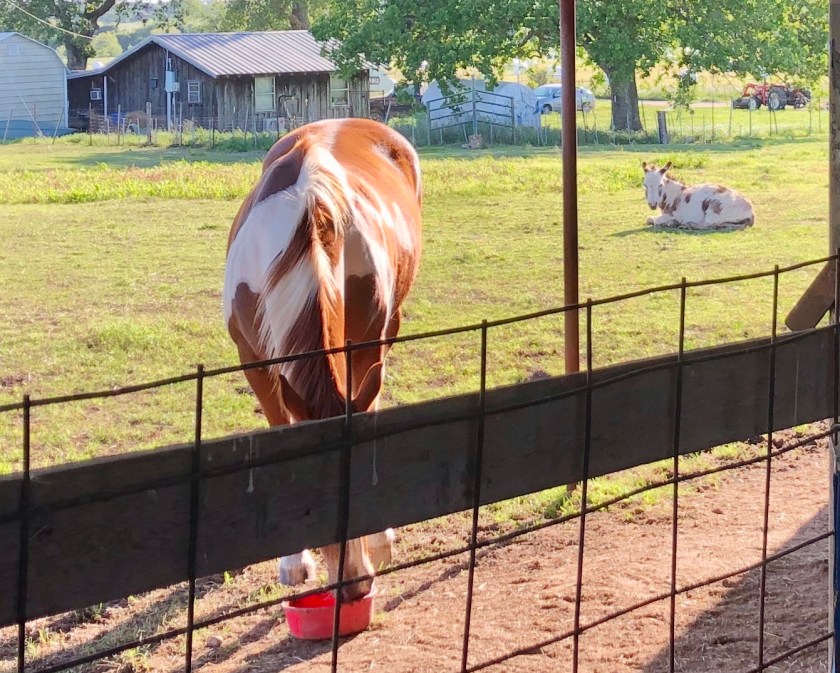
While not part of creating a landscape of natives, donkeys and horses have a place, at least in my heart. (Spice and Fiona)

Tallamy makes so much sense in this book! Wow! He calls using native plants in naturalistic, yet attractive, settings creating Homegrown National Park. The main point of the book is that if people did this instead of planting endless swaths of turfgrass and non-native plants, we would be well on our way to saving the beauty all around us, benefiting us (we get to watch birds, butterflies, and animals) and the planet (diversity will be maintained, etc.). And Tallamy points out that turfgrass does have its place, for making nice paths.

Urban wildlife! Duck party at the Pope Residence.

I especially enjoyed all the beautiful photos he includes in Nature at Its Best, to show the kinds of sights you can see if you just make an appropriate setting. And that’s important, because exposing kids (and adults) to the natural world right where they live will make such a huge impact (as opposed to visiting nature in very carefully structured short trips). I say yes to all this, as do my fellow Master Naturalists.

You just can’t help but get all fired up and ready to drag in some native trees and shrubs and stick a rotting log or two around the place for moths to pupate in. And, conveniently, Tallamy provides links to two excellent websites to help you select what you should plant where YOU live:

  • Native Plant Finder: uses your postal code to help you find trees and herbaceous plants for hosting caterpillars. This is EXTREMELY cool.
  • Plants for Birds: same deal, but for hosting birds. I’ve already looked up both my houses.
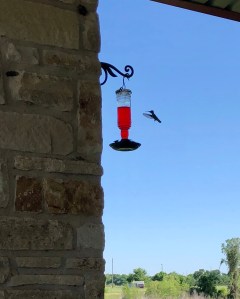
Don’t worry, we are just using up the last of the red hummingbird food. We’ll make more of the correct kind!

I’m impressed that the work of one person, Kimberly Shropshire, created the original database for these, working with Tallamy. She must be an amazing person!

Honest, this book encourages citizen science at its BEST. I’d really like to spread the word about this resource. If you know people who enjoy nature and gardening, please share this post or the name of the book. And order it, even if just for the pretty pictures!

Those of you who prefer novels to nonfiction, rest easy. My next book is a fun historical novel.

One Day at a Time

That’s how I’m getting by right now. How about you? I celebrated finishing that 40-day project by not writing anything yesterday. I was blissfully involved in a work project that takes all my concentration and passes time quickly, which was a real relief, but left no time for blogging here. Everyone needs an occasional break.

I’ll just keep fiddling while the boat goes down. At least the sunset’s pretty.

As if the days didn’t blur together badly enough these days, I’m in a holding pattern on lots of things right now. Just taking one step at a time is not only all I’m able to do, but the right thing to do right now. I’ll get back to figuring out the future plans and options later, when my head’s clearer (all my stuff is just related to various jobs and their various stresses, nothing horrible).

Randomness and Birds

It’s been nice to have Kathleen doing “stress cooking.” I like it when someone cooks to take their mind off things. She made me the best baked chicken on a bed of collard greens last night. I truly love collard greens (weird southern girl thing), and these may be the best I ever ate. I’m so grateful that she and Chris are here helping me and Lee out right now.

The spring air is making everyone sniffly here, but it’s really been nice to see what kinds of creatures are doing their regular things. My friend Donna, who is not a tech person, wrote a little blog on this topic, if you want some more nice photos. I’m really happy to see her getting out of her comfort zone.

I’m not sure what kind of moth this little guy will grow up to be, but wow, what a pretty caterpillar!

In fact, just this morning I was thrilled to see that bluebirds are nesting in the dead tree by the road again this year. There used to be woodpeckers in there, so I guess they made a nice house. The phoebes are nesting in our garage and spend most of their days screeching PHOEBE at each other and eating bugs. They are a lot of fun to watch.

The phoebes ate dozens of bugs while I was on the phone at my ranch office last evening.

The bug population is doomed around the Hermits’ Rest, or at least less awful than it could be, thanks to the handy birds. The scissortails are back at work, and there’s nothing prettier than watching a male go after a bug. The swallows are in full force, as well as those phoebes. I watch the little sparrows go after bugs every afternoon when I go feed the horses. Just think how many mosquitoes and other bugs we’d have after all this rain if we didn’t have our avian buddies!

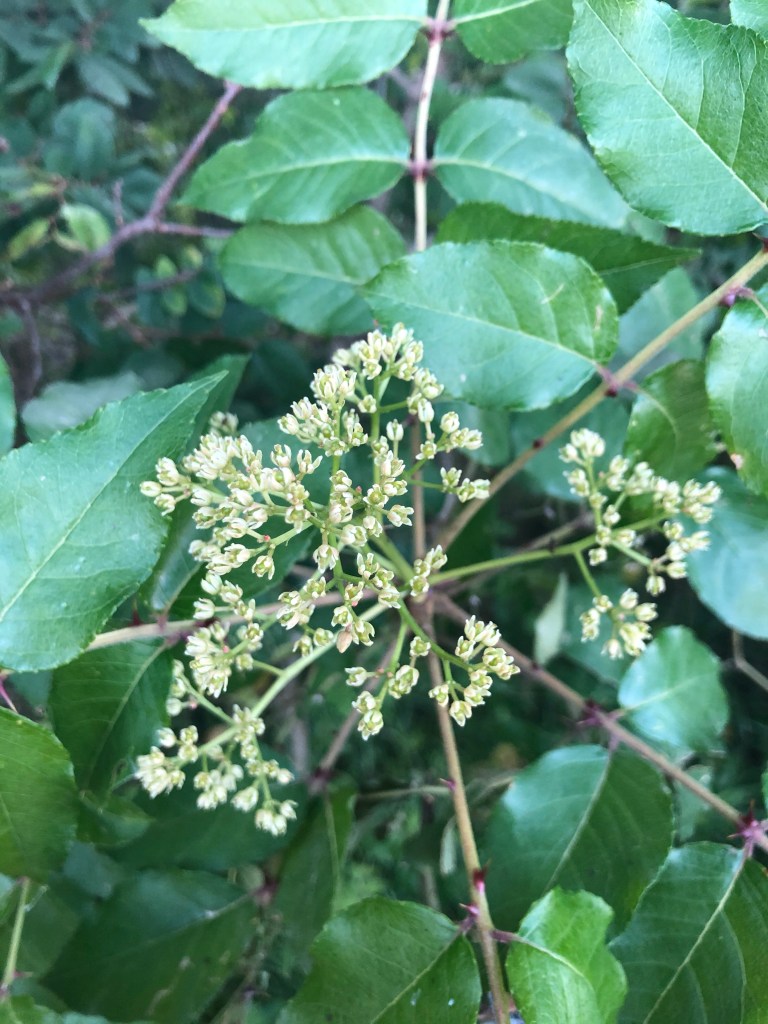
Producing pollen this week is the prickly ash. Go tree, go!

Today I’ll head out and see what new is blooming. I’ve seen a couple of winecups, and we have our eyes on the dewberries. Yum. Back to basics. It’s good for you.

Share your coping mechanisms if you wish!

Resilience. Can We Do It?

Right about now, lots of folks are finding their resilience tested. It’s another really appropriate word for UU Lent. Every day we try our best to bounce back, face the day, move forward, and support those who need our support. It ain’t easy, especially for my family and friends who’ve lost loved ones, have sick friends, have lost their income, or are trying to teach children AND do the job they still have.

Am I feeling resilient today? Not really.

Some people are born more resilient than others. I’ve read all those studies about how some people will thrive no matter what circumstances they are thrown into. You hear stories of people who have overcome really sad situations in their youth to become amazing contributors to the well-being of others.

Others of us aren’t resilient by nature at all. Still, with support and care, many of these folks can learn coping skills and do very well in life.

The rest of us are somewhere in between, and do better or worse due to our environment and other support systems. It’s the support systems, I think, that matter the most, which is why I’m grateful to all the people around me who are supportive.

I’m pretty sure the hackberry tree will be around long after the rest of us. It has resilience and then some!

Input

My friend Pam shared the types of resilience she’s working on, in a comment that doesn’t show up on the Instagram photo. They are too helpful not to share. Here’s what she said:

8 forms of capital I have been working for quite some time to strengthen my resilience in. Some days are easier than others. Time, social, cultural, emotional, knowledge, material, living and financial are the 8- sending you peace and love and light today Suna💕

Chris Martenson, PhD and Adam Taggart in their 2015 book, Prosper! How to Prepare for the Future and Create a World Worth Inheriting

I love getting helpful feedback with resources to help out, so thanks a lot, Pam!

Nature and Resilience

One of the things we learn about in our Master Naturalist training is how resilient things are out there in nature. We learn how forests recover from fire, how ecosystems can regain their balance once important species are re-introduced (wolves, reindeer), and so on.

I hope the toad makes it. Nice to get comments on a post!

We also learn about the most fragile members of ecosystems, like frogs, who just can’t take all the rapid change. The most resilient plants and animals get to keep going (why we have so many medium-sized mammals and so few giant dinosaurs now).

I guess one day spiders will rule the earth. Phidippus arisonensis.

It’s just hard to watch entire groups of plants and animals going away because of the actions of humans. We have re-shaped the planet in so many ways, with our agriculture, selective breeding of animals, depleting resources like trees, and taxing the ecosystem with our large population.

I once read that plagues happened when there were too many people in a place. Is Nature trying to tell us something? Can we stay strong and get through to better (or at least different) times?

Stay resilient, friends.

Bloom Where You’re Planted

Those of you who haven’t been quarantined your whole lives have probably heard this saying before. It’s the first thing that popped into my head when I saw that today’s UU Lent word is bloom.

Let’s see how to do that. Image by @dmotif via Twenty20.

It being spring in glorious central Texas, you see blossoms everywhere. They look especially vibrant this year, since it’s been cloudy or rainy most of the time, and there is a lot of very green grass to contrast with it. I don’t think they are what I’m going to talk about today.

Bloom is a verb. When a plant blooms, it puts all its energy into reaching out to other plants, insects, birds, and animals. It sends pollen out to make seeds. Then the females put even more energy into taking what they got and making fruit.

That’s how I see the idea of blooming where you’re planted. Just like a plant, we don’t get to choose where we do our growing. Some of us get nice rich soil and lots of nurturing, others of us get placed on the sidewalks of life.

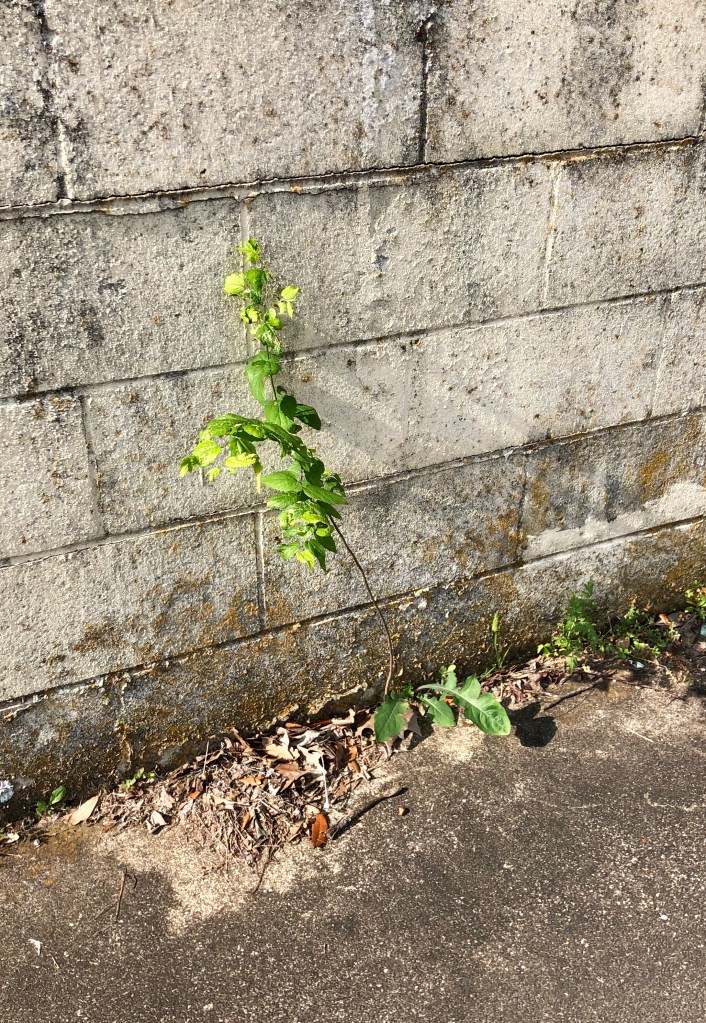
Burr clover can bloom on the driveway.

Right now a lot of us are planted in an isolated place. I’m even in a basement, for heaven’s sake. What is helping me a lot is taking the situation I’m in and learning from it. While I’m all cozy in here, I’m thinking of ways to be a better person, do my work better, and contribute to my community.

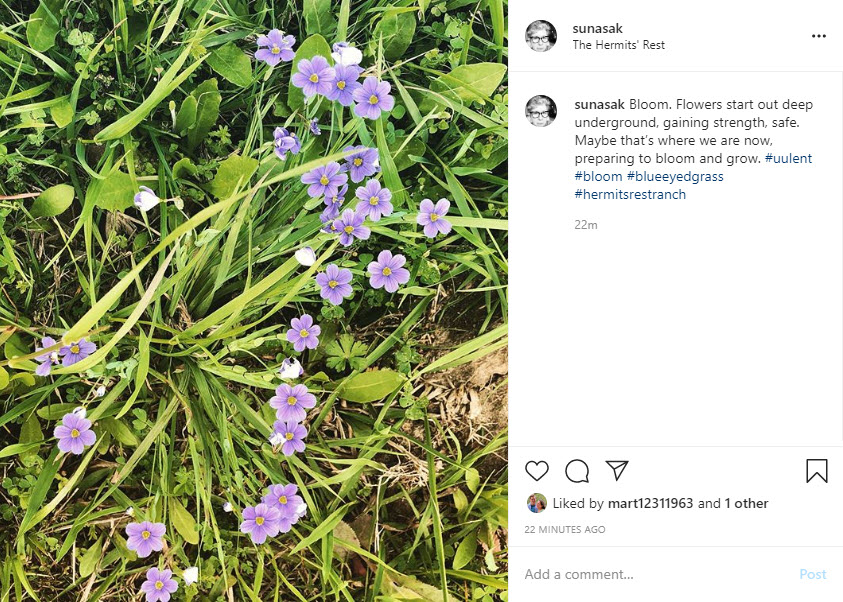
Blue-eyed grass is one of my favorite signs of spring at the ranch.
I’m planted right here, Mommy. I’ll bloom later, okay? I’m also metaphorically exhausted.

When I bloom, I’ll be able to make the best possible flower, and we can all do that, no matter where we’re starting from. You take what you’re given and make the best of it, or not, I guess.

Let’s hope that the fruit we eventually make from all the introspecting, preparation, and hard work we are doing to grow and bloom will be sweet, nutritious, and strong, so we can plant more ideas.

I’m metaphorically worn out now. Are you? What do you think about when you think of blooming?

Need Inspiration? Here’s Some!

Now, here’s a thing. Hard times bring out the best and worst of people, right? It seems like a lot of folks are concentrating on the stuff that makes you just shake your head. The economy is more important than the lives of the elderly, having a lifetime supply of paper products is more important than other people having it, the world is just going to fall apart if you don’t have bread NOW. Wipe those thoughts away, right this second!

The UU word for today is inspiration, and that sent me right off into a wonderful frame of mind, where I realize that I am inspired by people near and far, ever single day of the Great Isolation.

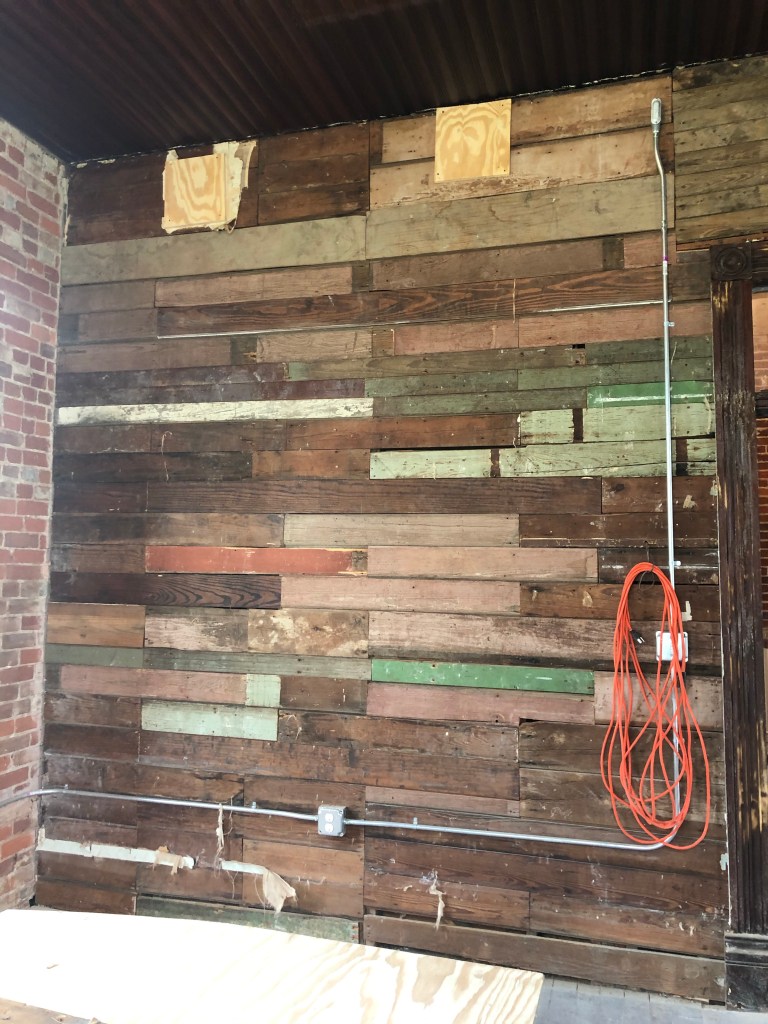
Be inspired by our revamped shiplap wall. Lee and Chris worked so hard on it. I later cleaned all those bits of wallpaper off.

My family come first when I think of inspiration. We’re all sticking it out as best as we can. I wish I could be with my kids, but I’m impressed by how well they are handling themselves. I drive by my sister’s house every day and wave, knowing it’s safer to stay distant, but proud of how she’s coping.

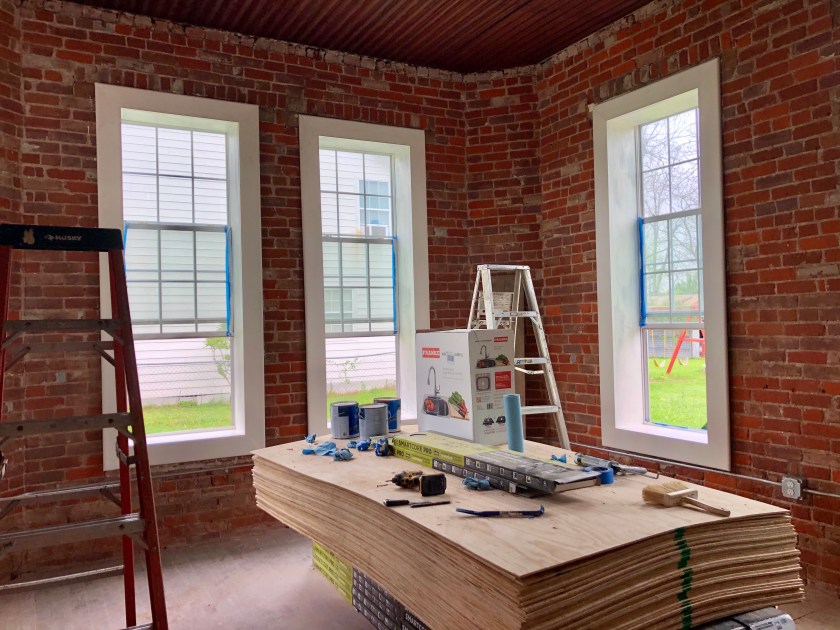
Look how light and bright it is in Lee’s office with new window trim.

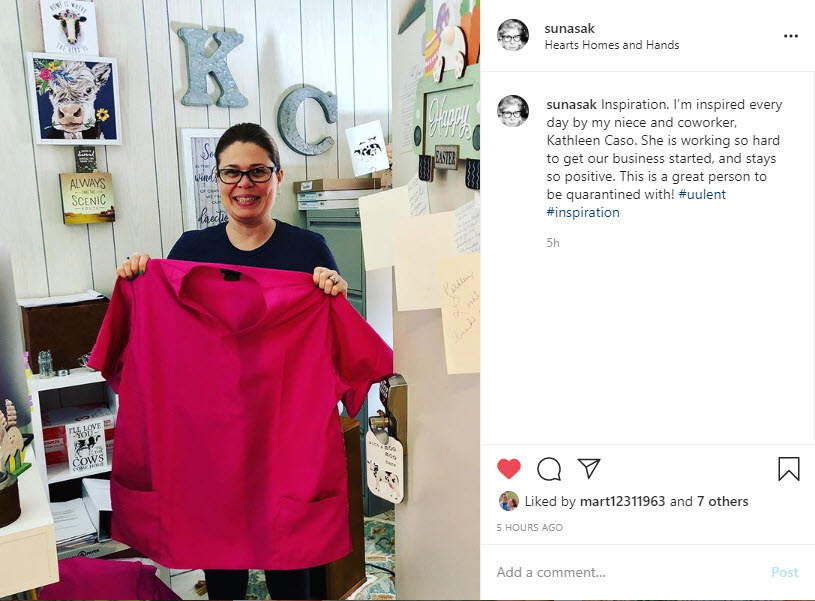
And then there’s the family I live with. Kathleen has been working herself so hard to get our business going in these hard times, and by golly, she’s succeeding! We have so much business that we have more staff and had to buy a bunch of scrubs for everyone to wear. And all the safety and health precautions keep adding up, but she keeps everyone on track. And I think I’d explode if I had to print as many forms and information as she does. She’s a real inspiration to me and to the rest of us. You just deal with what you get!

Kathleen says I can have these lovely, huge scrubs.

I’m also inspired by Chris, who is keeping our renovation project going with just occasional help from Easton (because Easton is also working for our business). He has so many great ideas and the skills to make them come to life. It’s really awesome to see someone find creativity in physical things and get as much joy out of it as I do with writing and making help systems.

Chris surveying his domain.

In the rest of the world, I see so many ministers out there helping people in new and innovative ways. They inspire me to keep in touch and support the folks who depend on me, as well (shout-out to the Live Oak UU team and so many others). People need spiritual support, and these folks are figuring out ways to provide it.

Bluebonnets on the sidewalk. Inspirational beauty.

And, well, you know this was coming. Every day I’m inspired by Mother Nature, as spring keeps on springing, butterflies and birds are mating, and the grass is so green it hurts my eyes. That’s inspiration to keep on keeping on: just the chance to enjoy one more spring.

Mellow Yellow Overload

Now, for something completely different. I did a fun (to me) project yesterday that didn’t require any human contact nor leaving the property where our office is. I decided to see how many different yellow flowers I could find in the weed/wildflower collection known as our empty lot. As you can see, I managed to fill a whole screen in iNaturalist!

Most of the field LOOKS purple, because there is so much storks-bill growing in it, but when you look closer and closer, the yellows dominate (purple is in second place, with field madder and a little patch of grape hyacinth that must be left over from when there was a house here – I plan to replant them in the “flower bed” I’m making).

What have we got? Let’s take a look. Many of these flowers look really similar, but are different sizes or have other subtle differences.

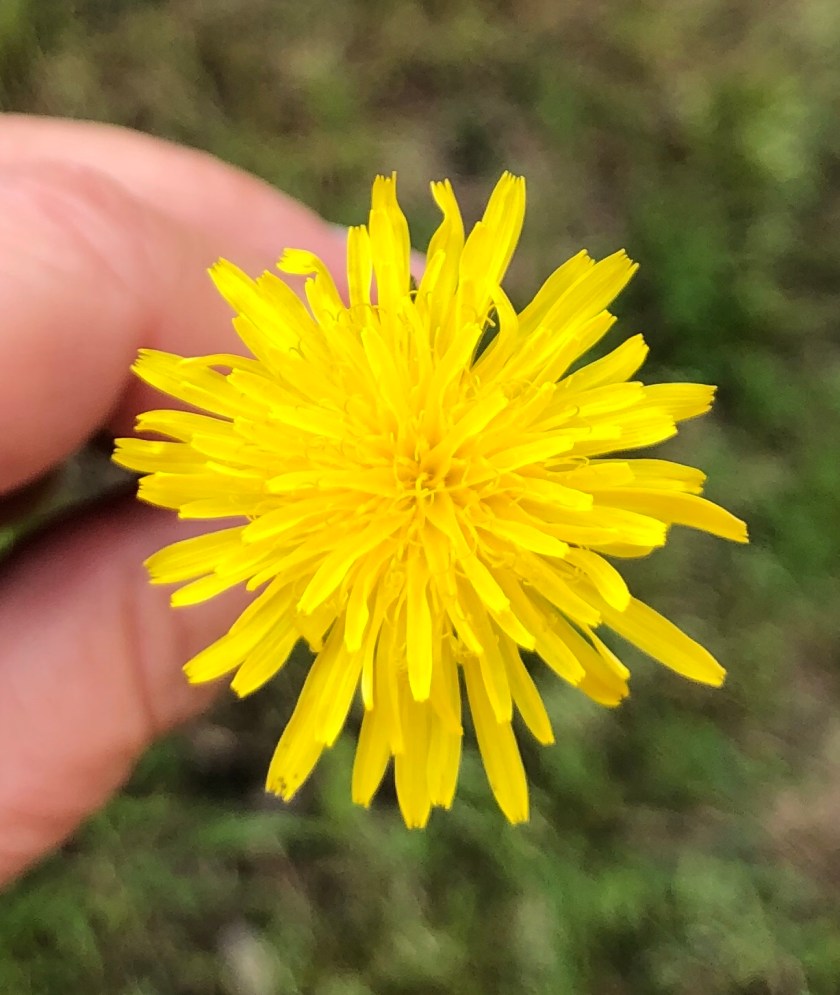
Common Dandelion. Taraxacum officinale. Delicious and nutritious. Bees love them.

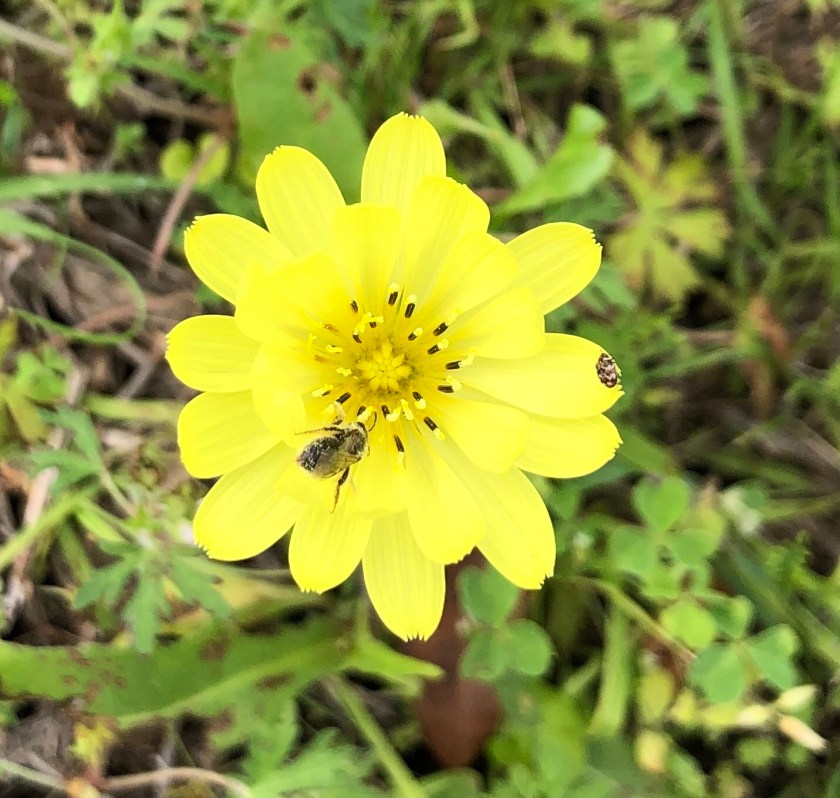
False Dandelion.
Pyrrhopappus pauciflorus. Plus a tiny wasp and tinier beetle.

Prickly Sowthistle Sonchus asper. It’s everywhere. And very prickly. Note that there are aphids or something on it.

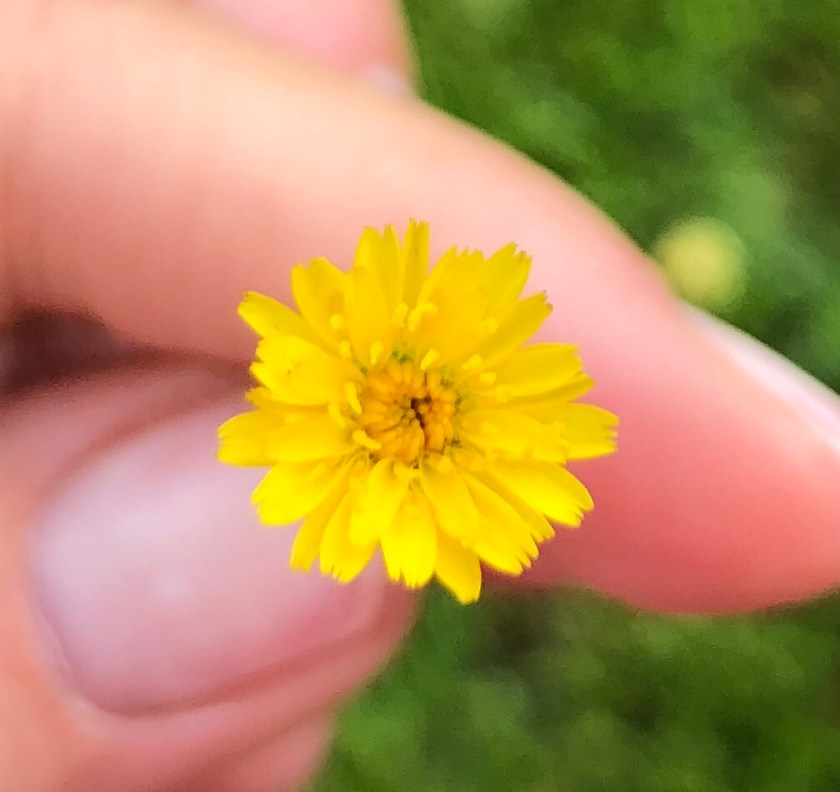
Smooth Cat’s Ear. Hypochaeris glabra. Looks like a teeny dandelion on a very long stem. Compare to the first dandelion and you’ll see how small it is.

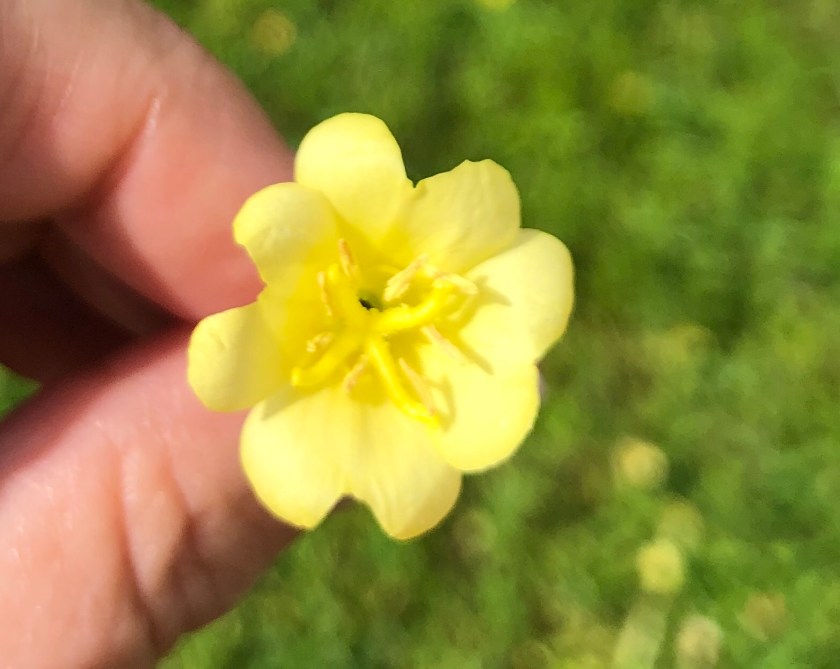
Cutleaf Evening Primrose. Oenothera laciniata. Smaller than most evening primrose, but a beautiful buttery yellow.

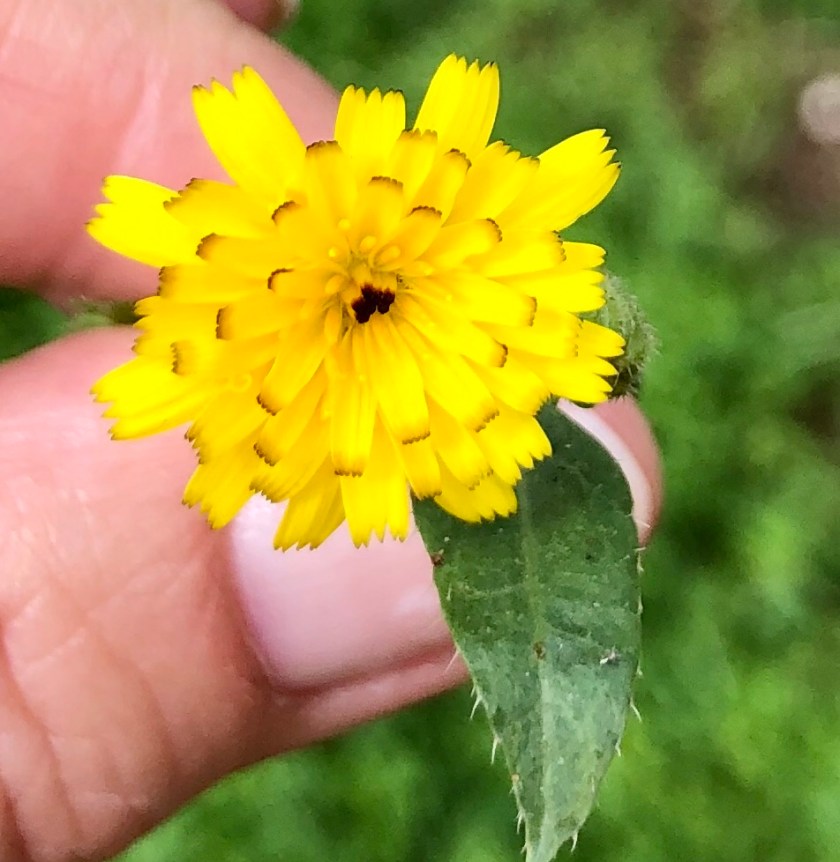
Crete Weed. Hedypnois cretica. I thought it was a dandelion, but look at the leaf and the cool petal shape.

Woodsorrels. Genus Oxalis. I’m not sure which one it is, but it’s certainly oxalis. Sour tasty leaves!

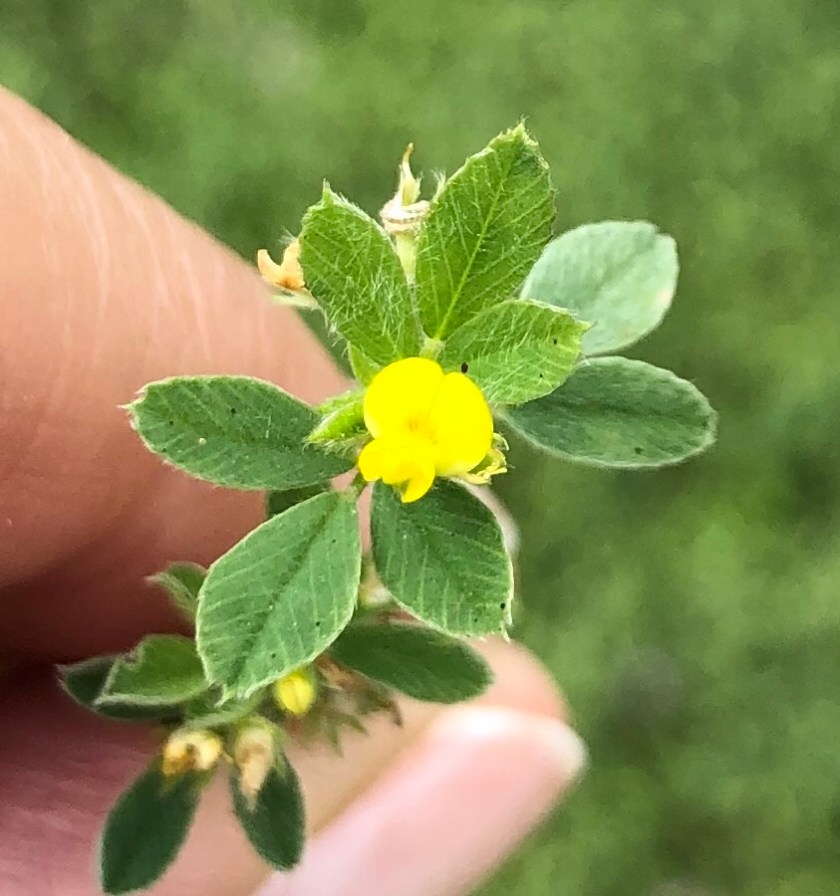
Bur Clover. Medicago polymorpha. It’s about finished blooming and starting to make burs. Yellow is a hard color for my camera, and I couldn’t get a good shot of these.


Straggler Daisy
. Calyptocarpus vialis. Lots of leaves, tiny flowers. They are pretty up close, though.

I got a lot of bugs and other things, but I’m just going to leave this parade of yellow-ness alone, in all their glory. I’ll see what other themes I can come up with over the next few weeks as all the flowers bloom away.

Book Report: Stories of Your Life, and Others

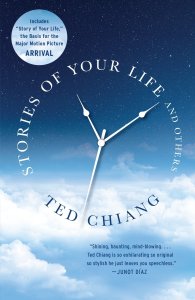
The informative cover.

Well, we have plenty of time to read books, at least most of us do right now. I had a big backlog of magazines when I got back from vacation, but I finally got around to finishing this month’s book club book, Stories of Your Life, and Others, by Ted Chiang. I am told by the book cover that “Story of Your Life,” was the basis of the movie Arrival. I have not seen it, but now that I realize it’s about linguistics, I probably should!

It was a nice change of pace, because it’s a collection of science fiction stories rather than a novel or work of nonfiction. We were only supposed to read a couple of the stories, but since they turned out to be right up my alley, I read the whole book.

Chiang is a very scientific science fiction writer, which I enjoy a lot. I also like that he just changes one or two things about “normal” life in many of the stories, which makes it very easy to immerse yourself into them and think about what your own life would be like in that version of Earth.

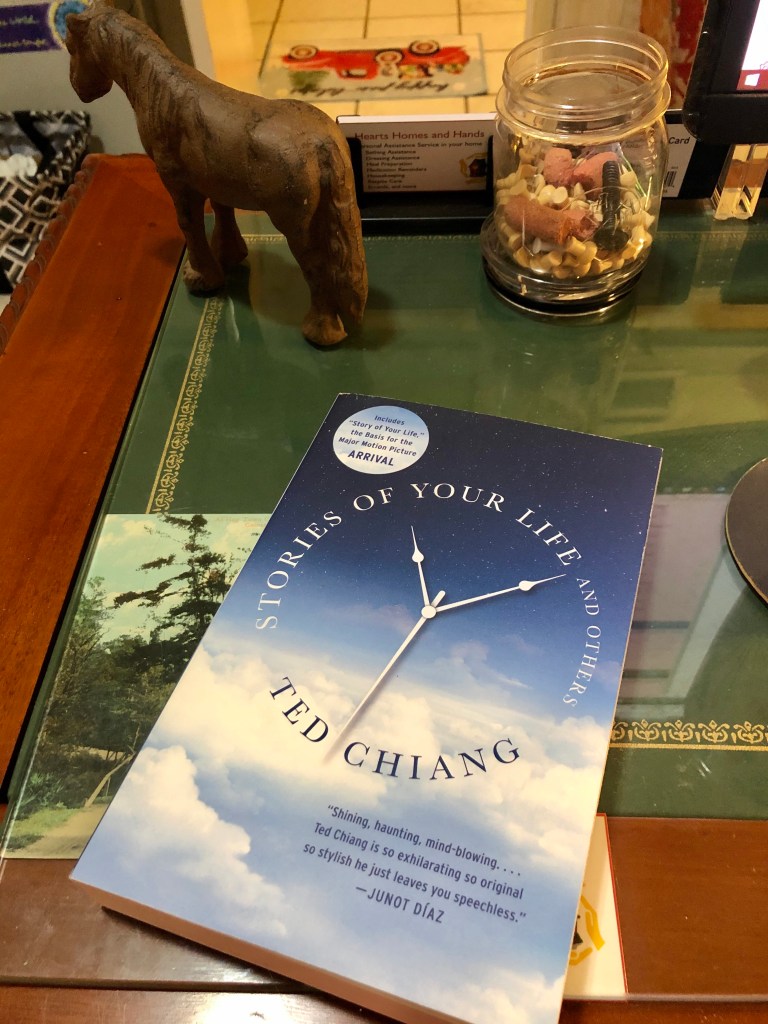
Here’s the book sitting on my desk.

For example, there’s a story in which angels, Heaven and Hell are all real, called “Hell Is the Absence of God.” Angles are always showing up and messing with people. I decided very quickly how I’d lead my life in THAT world. I’d probably have gotten myself to Hell as fast as possible. It seemed nice. But what an interesting world it was!

The title story is all about a linguist figuring out an alien language. The results were predictable if you know how language and the brain works, but it was still fun to read.

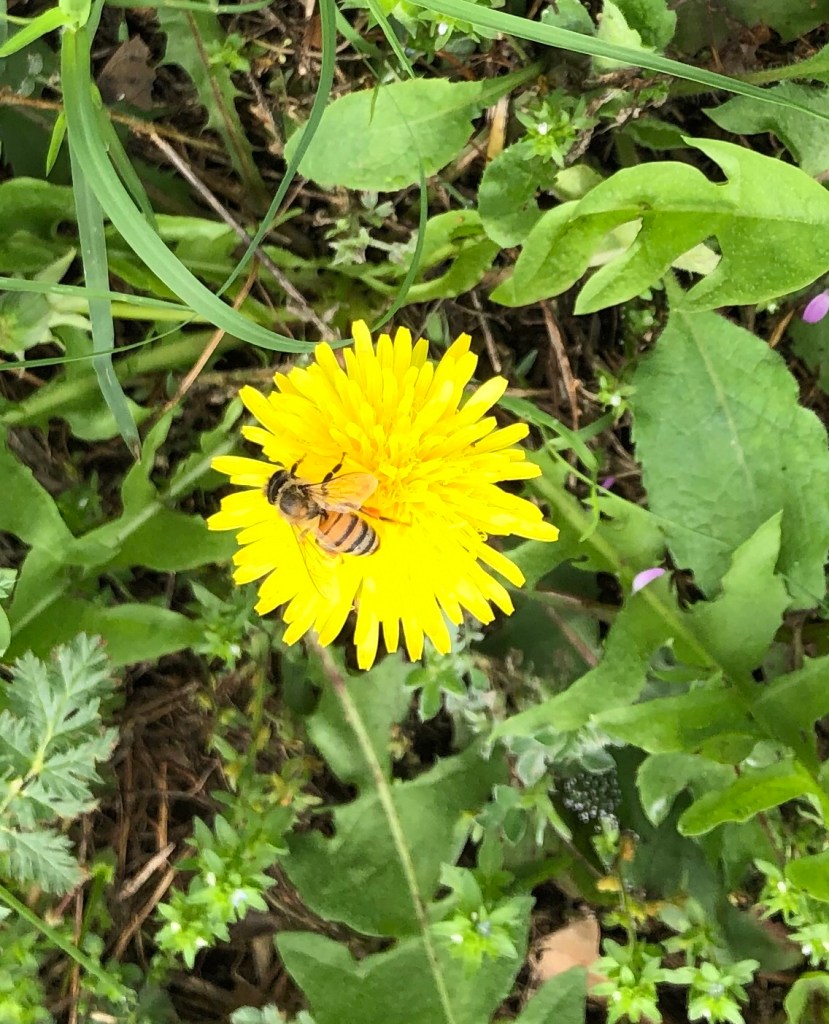
Enjoy a dandelion and a bee.

In another story, “Seventy-two Letters,” science was more like alchemy combined with the kabbalah or magic, where names could bring things to life. The way human reproduction worked there was very different, but logically consistent. That would also be a fun world to live in for a linguist.

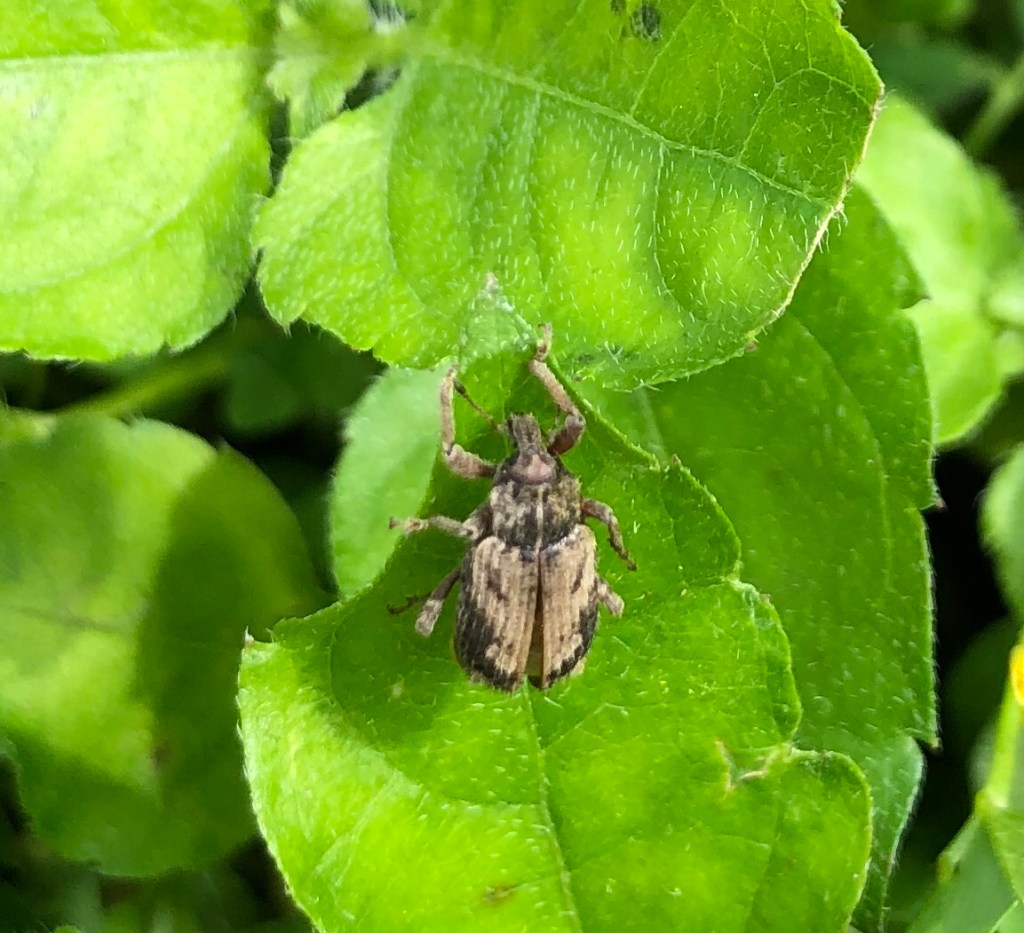
It’s a weevil. No idea what kind.

My favorite of all the stories in the book wasn’t about linguistics, really, but about the science behind the “Tower of Babel,” as if the world was like in the Old Testament, and you really could build a tower to Heaven. The ending was GREAT, and I just loved all the people in this world.

I guess I’ll be reading his next book, even though I’m told it isn’t quite as outstanding as this one. Any of you who’d like to go immerse yourselves in another world, though, should run out and get this paperback, or get it in Kindle. All the stories are fun and get your mind thinking about possibilities of how things just might have been on another timeline.

Remorse Is Complicated and Unhealthy

When I saw that remorse was the UU Lent word to think about today, I got a sinking feeling. There’s something I’m familiar with and that I’ve really had to grapple with a lot.

Remorse is a distressing emotion experienced by a person who regrets actions which they deem to be shameful, hurtful, or wrong. Remorse is closely allied to guilt and self-directed resentment.

The Wikipedia

The key here is that remorse has to do with something that a person deems to have been wrong, not that anyone else might necessarily view it that way. And the part about guilt and self-directed resentment sounds really, really familiar to me. I don’t know that remorse is something we should be cultivating for good mental health.

Way too much of my life, this was my internal monologue.

I know. I did some things in my twenties that really were unfair to people I loved, hurt them, and in retrospect, I see are very wrong, even though I couldn’t see it at the time in my immature and very confused mental state.

The remorse I felt after that led me down a path of further poor decisions, because I was so upset with myself that I felt I didn’t deserve to look for a happy life, a good job, or close friendships. I felt like I’d just let everyone down. And the poor self image my remorse led to absolutely ensured I’d lose friends, chase away partners, and treat myself unkindly. Ugh.

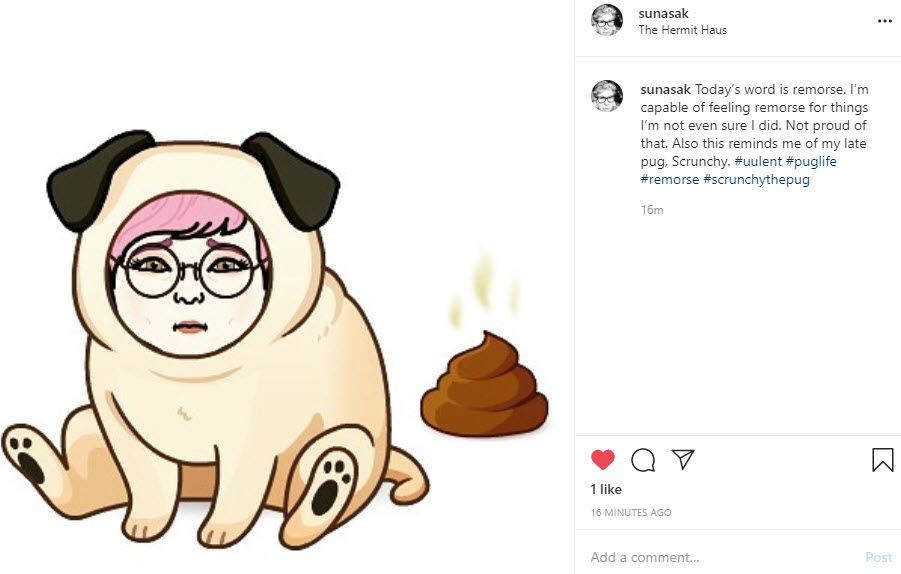
The Instagram of the day. I did love that poopy, butt-scooting pug.

It took a lot of work after my divorce from my children’s dad to learn to forgive myself of my mistakes and stop trying to make it all better for people I disappointed. I learned to move forward and learn how to deal with my hormones and childhood abandonment issues in a respectful, adult way (with the occasional totally human slip-up).

My dog forgives me, so should I.

If you are feeling bad about yourself, you can get to a new place, too. Therapy is your friend. So is Brene Brown.

Right now, I’m experiencing periodic remorse about what happened to my relationship with my older son. I’m not even sure if I did something awful or he’s embarrassed about something or what. I try to stick to sadness over the loss of a relationship to dear to me, rather than blaming myself or imagining hurtful things I might have done. It’s tough. Remorse is hard.

Spiderworts behind the Pope Residence say hello, and are happy, even after being mowed.

Enough brutal honesty for one day, right? I’d love to hear your thoughts. enjoy some flowers.

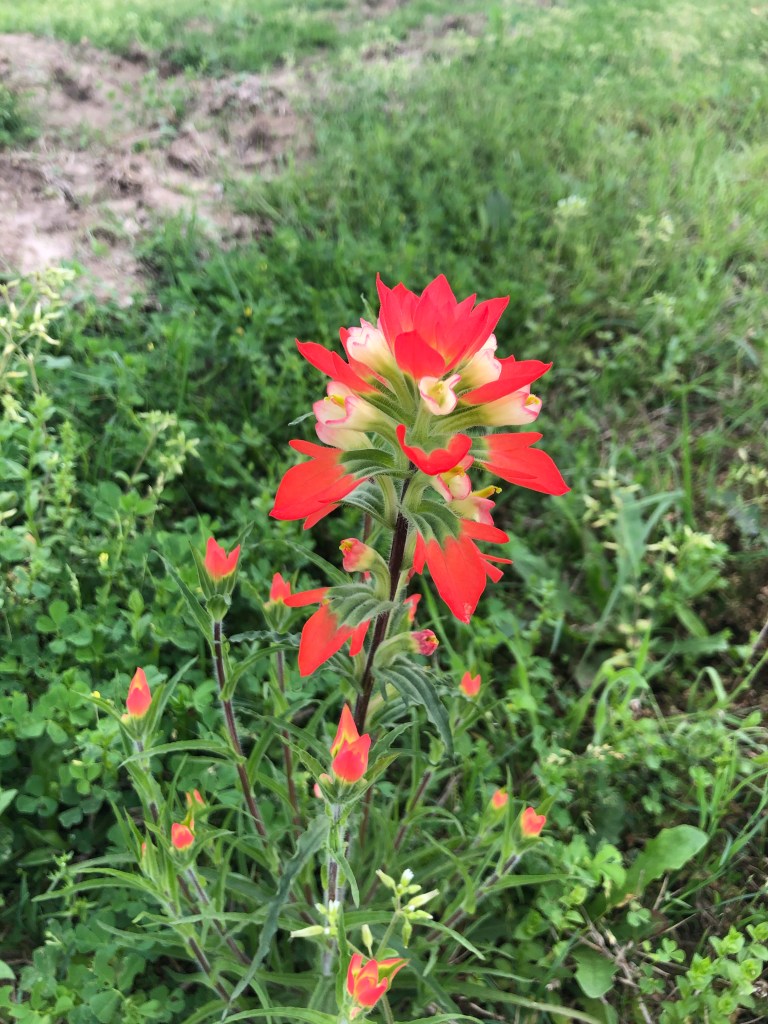
It’s a parasite, but it feels no remorse (Texas paintbrush). At the Hermits’ Rest.

Rolling with the Changes

Change. I guess most of us are dealing as best as we can with all the changes to our daily routines. Nobody doing the UU Lent challenge will have any trouble with this as a prompt.

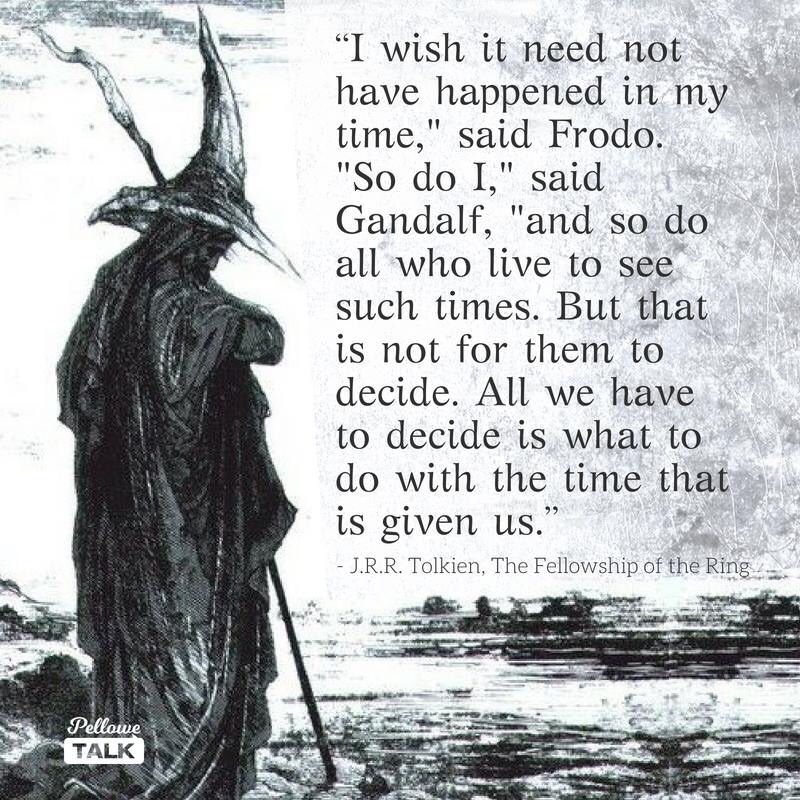
My friend Sara posted this message. A good one.

I’ve been trying to put things into perspective. There are always changes and challenges, big and small. My generation is lucky to not have been hit by something that requires sacrifice in a long time. But we managed 911 and the threat of atomic bombs and so on. If we stick together, we’ll handle the virus crisis.

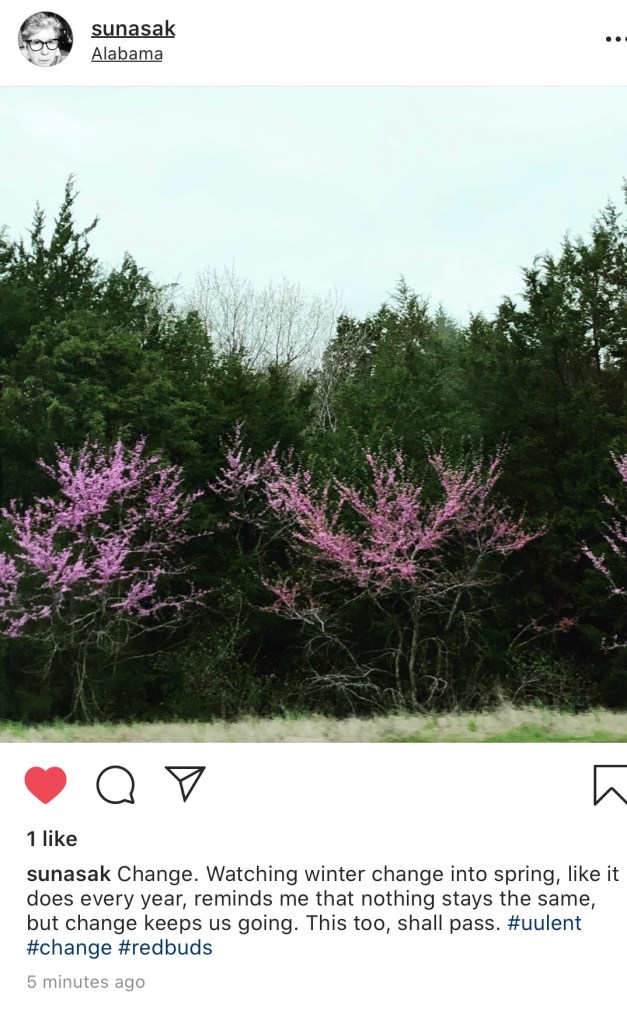
Instagram of today.

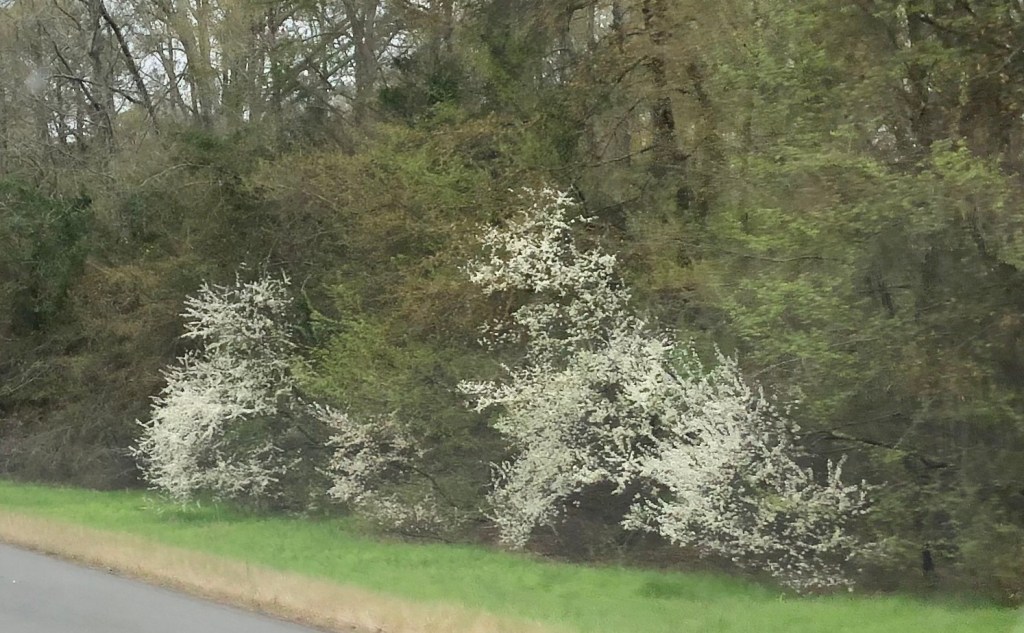
I’m very glad for the perspective on change that my I’ll-timed trip has given me. It’s let me see that even from one week to the next, our planet changes. On the way out, the trees were bare and only white trees and red maples were blooming.

Still some beautiful white trees are in bloom.

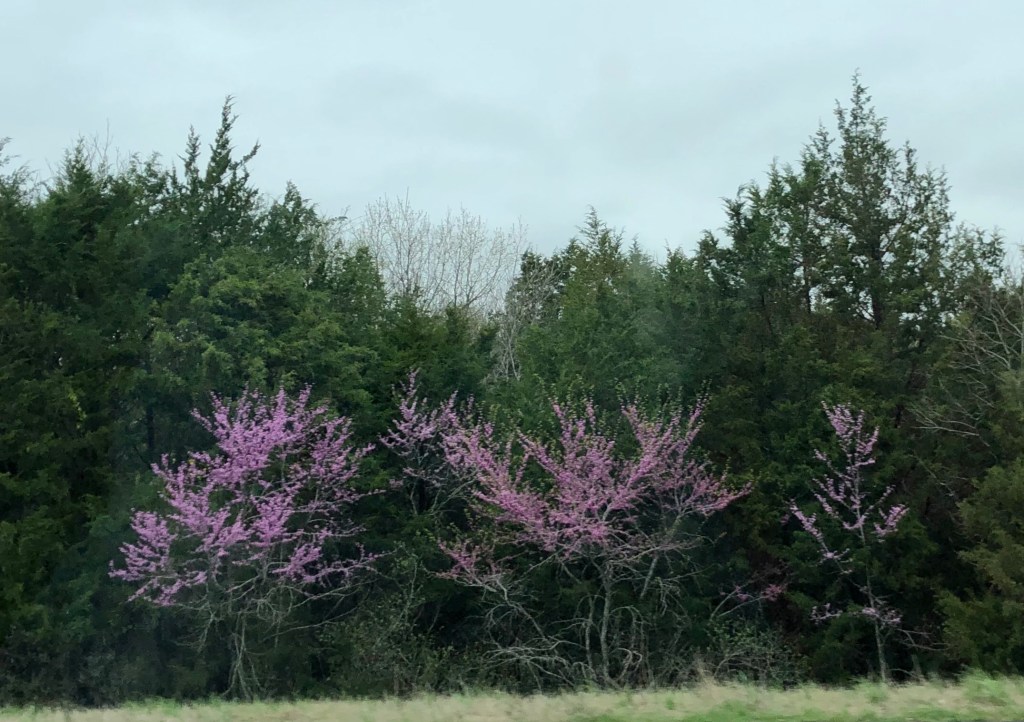
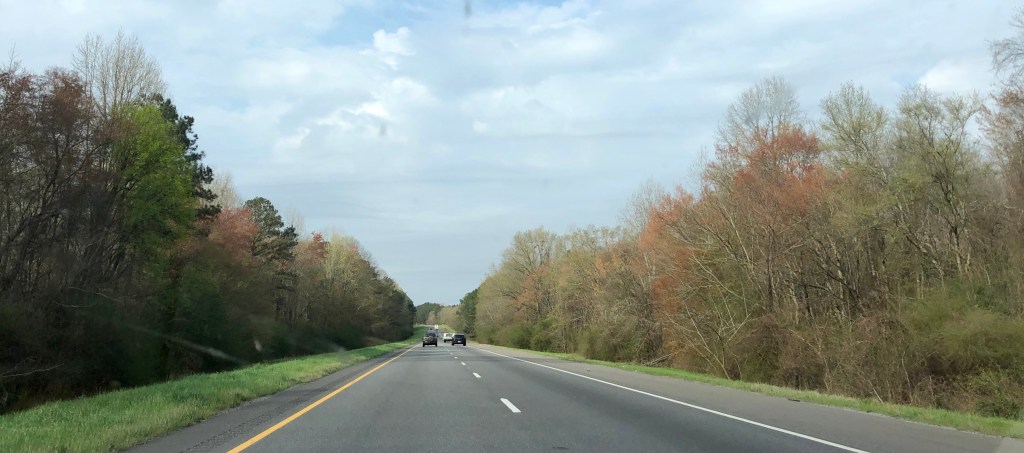
Now, it’s a riot of colors. There is yellow jessamine throughout the trees, oaks and elms are going crazy, and the beautiful red bud trees say hello through the diverse woodlands we are driving through. Every week the show changes, and soon enough autumn colors will arrive.

More red buds.

I think this is why it’s so good to go out in nature, especially now. You can see the big picture and remember you and your problems aren’t the center of the Universe.

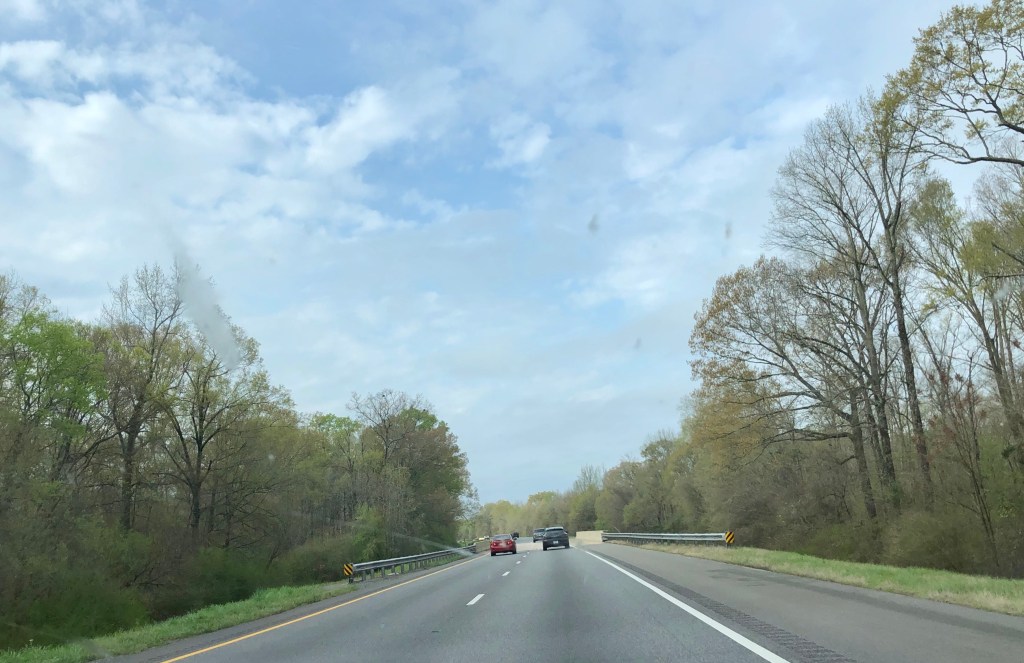
Not a bad view. We’re rolling along in the Mobile Social Isolation Unit!

I haven’t had too much to write about for a while, but I know there will be lots of changes to come once we get home. I can’t wait to see the progress on our offices, assuming that’s still going on. And then I hope to share more about our next project. Life will go on, even though I’ll be confined to home and the office.

This fills my heart with peace.

Roll with those changes, friends.