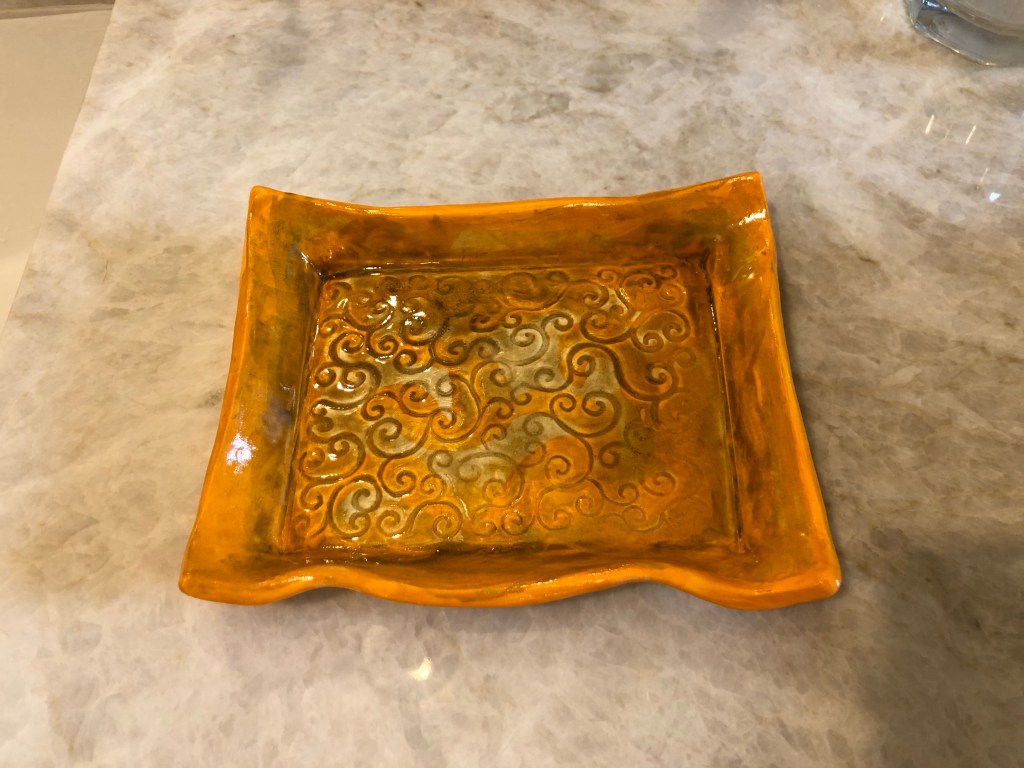
Quick update. My friend Pamela dropped off my finished soap dishes yesterday. I was happy to see how shiny they were, but not overly thrilled with my glaze, as usual. Still, Pamela’s designs are pretty, and they will liven up my bathrooms.
The gold one
The gold one is very bright. The dark parts are what I wanted, but the second gold color looks weird.
Here it is with soap, doing its job.
I’d put my lemon soap in there, but I like the lavender.
I also got a surprise! Pamela makes these little dishes as gifts to our Master Naturalist speakers. I’m glad to have one for all the talking I do at meetings.
I love the swirls on this one.
This one came out more pink than red, because the red was pinkish. Again, I don’t like my accent color. It’s a bit purply. But, I think it will look great in my work bathroom. Too bad I left the dish at home. I remembered the soap, sigh.
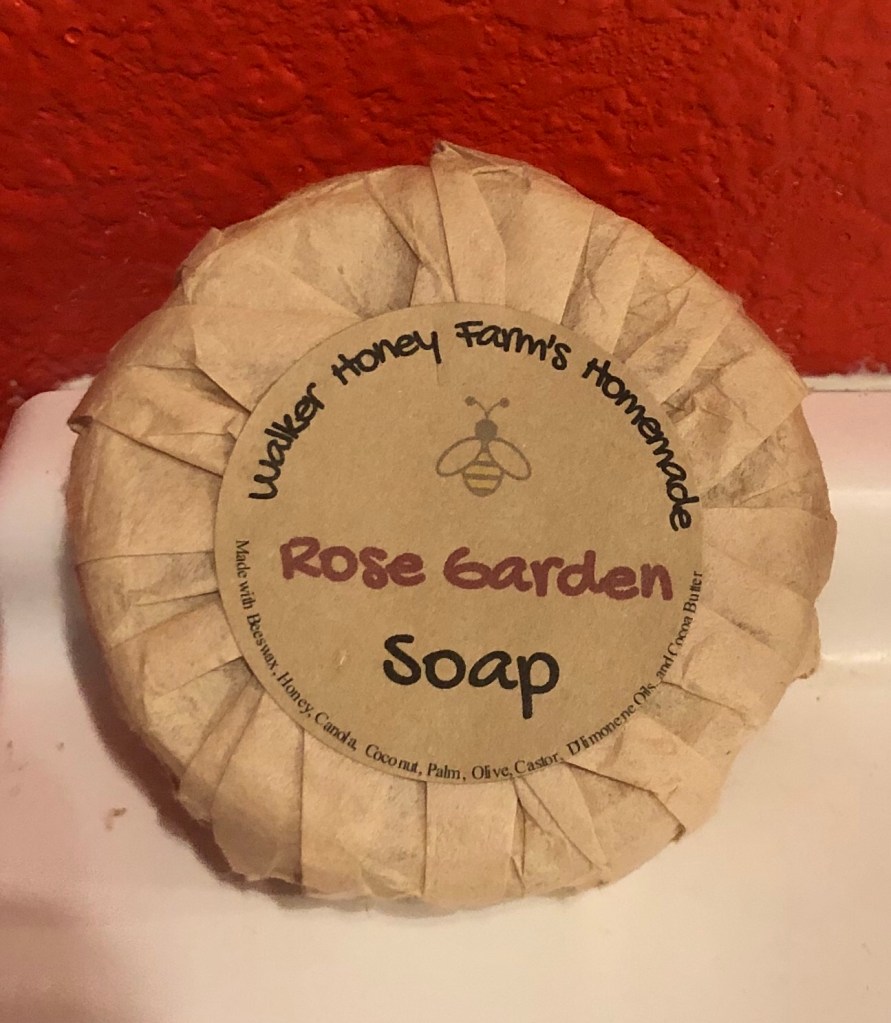
And this stuff smells GOOD.
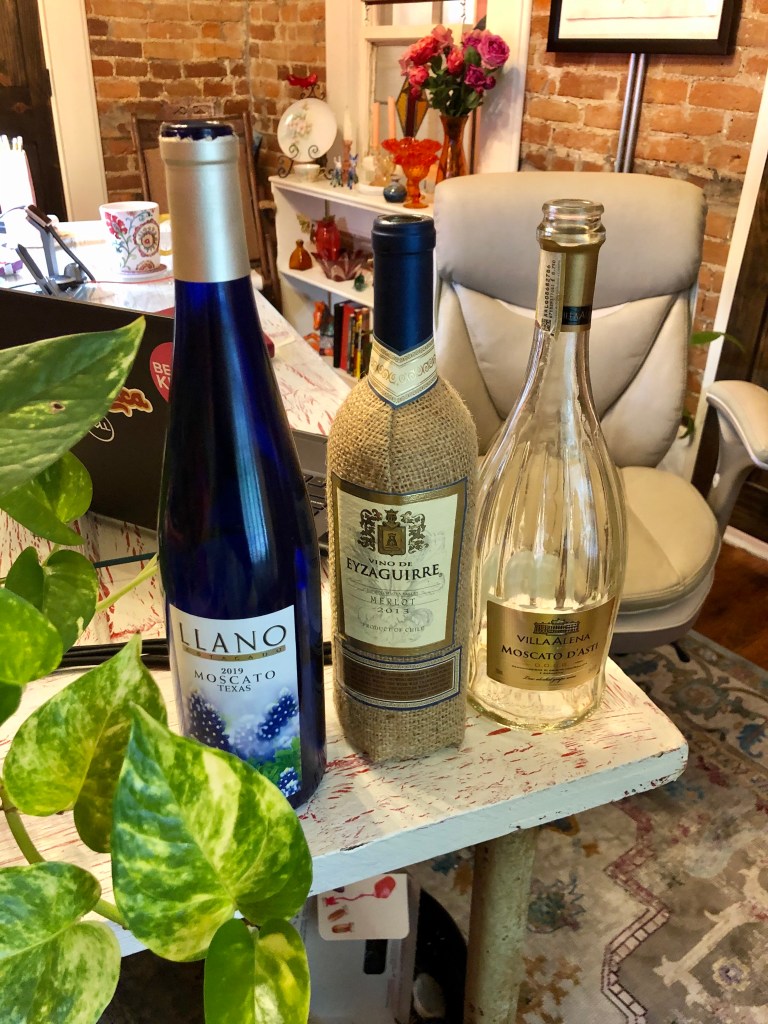
More craft excitement is coming up. I’m gonna do something fun with these three bottles.
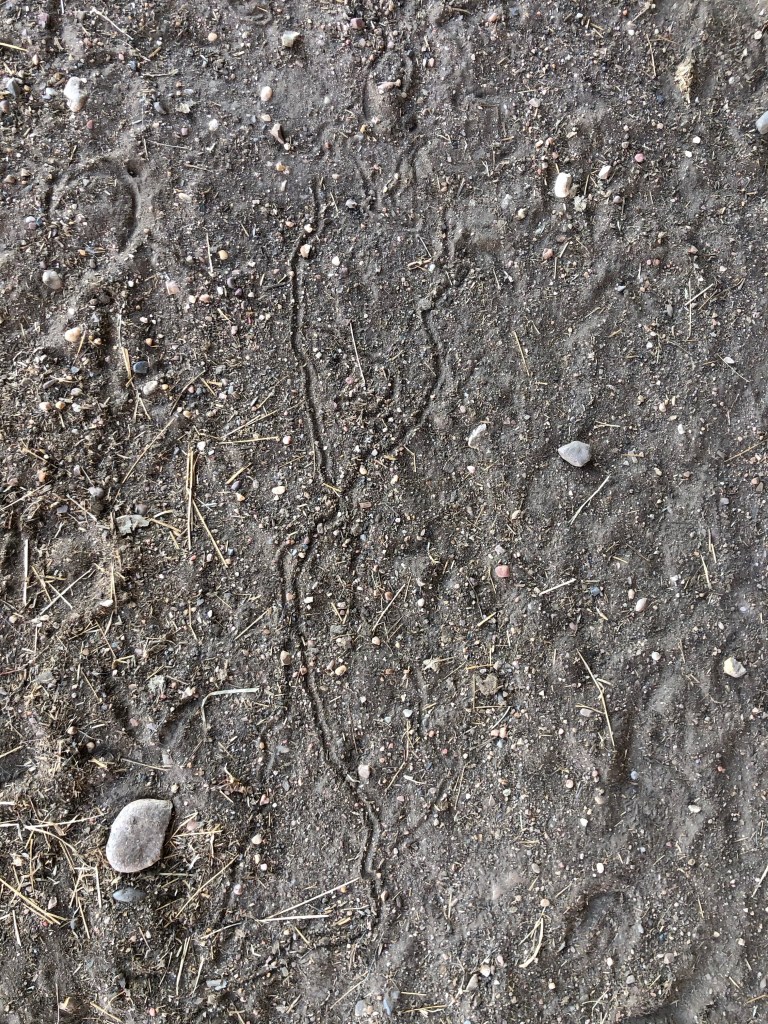
A set of fortuitous circumstances have led me to have something more in the naturalist vein to write about. I’ve been missing those things! It all started when I was in the horse pen, and noticed all these cool paths in the dirt.
In addition to the trails, there are a couple of donkey hoof prints, to liven things up.
I couldn’t remember what made those trails, though I was sure I used to know, so I posted about it on Facebook. I got some cute and silly guesses, then, as I’d hoped, someone from around Cameron reminded me of the answer. Burton, who’d been in my Master Naturalist class, identified them as ant lion, or doodlebug, trails. These Myrmeleontidae (it means ant lion!) are commonly called “doodlebugs,” because their trails make them look like they’re doodling around.
I knew THESE were ant ions!
The reason I should have known that the trails are from ant lions, is that I knew perfectly well that the conical holes all over that part of the ranch are ant lion traps. They call them ant lions, because it’s often ants that fall into their traps, and they are fierce little lion-like dudes in their larval phase. I don’t have any pictures of one running around the ranch, but here’s the general idea of what they look like:
Those are some scary mandibles! Photo by @LASPhotography via Twenty20.
From what I’ve read, these insects stay in their larval stage up to a few years, so this will be how they live their lives, hiding in their holes or doodling around thinking about making another hole.
I love the perfection in the dirt they throw up in little perfectly circular volcanoes. Finding them under the horse shelter is no surprise, as I discovered in an article on how beneficial they are:
Pits are oftentimes constructed under the shelter of farm buildings, under houses that are on piers, etc.
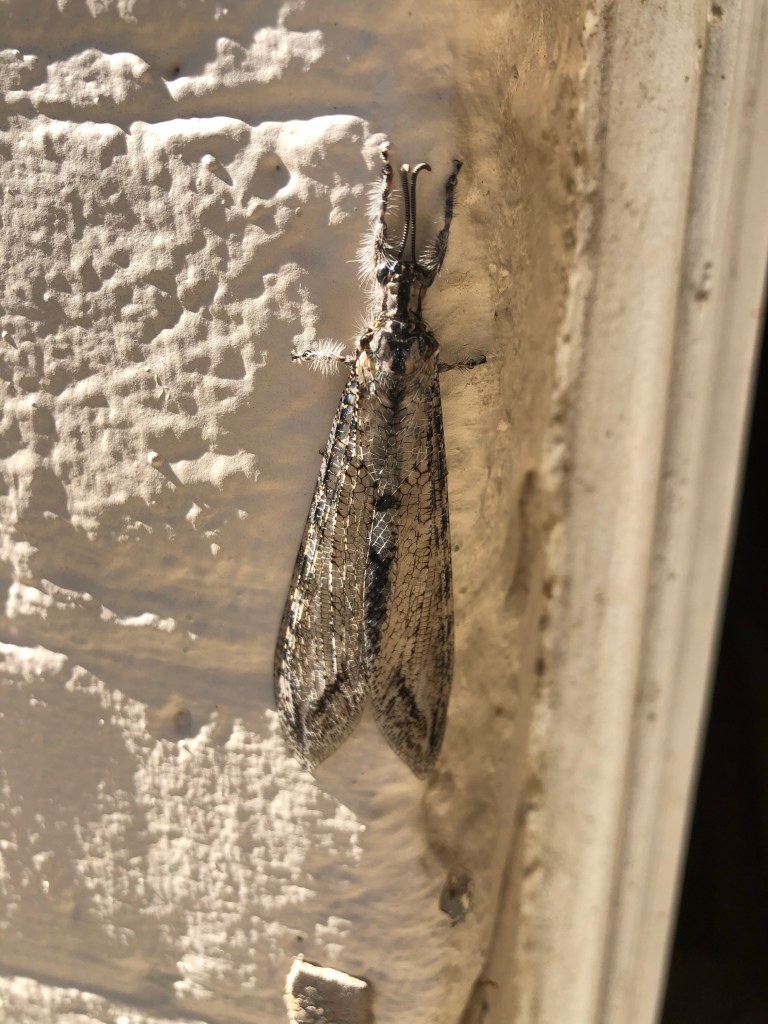
The adults are pretty spectacular, and I had never seen one, that I know of, until this morning, when I went to enter the Pope Residence and saw a beautiful, large winged insect. I grabbed that camera and took this picture, which told me I’d found the adult ant lion, in all its glory.
Look at how the sun hits the bristles on its legs. Looks like little bottle brushes. If you’ve never seen a bottle brush, that’s what they look like.
The antennae are what give it away for certain as an ant lion, since the club shape is pretty distinctive. I feel lucky that I found this one in its resting spot, since their active period is at night. By the way, the iNaturalist identifier says this Vellafallax,
I’d always figured ant lions were friends, not foes, just because they ate ants, but I was happy to learn that they even eat fire ants. That puts them well into the beneficial insect category!
Let me know if you see any evidence of ant lions where you live. Sandy soil is what they prefer, so if you have sand, check around for the mounds, and welcome our fierce little buddies into your ecosystem!
This will be a fun weekend! It’s already been great, because I got to go meet my friend Janet at Bird and Bee Farm, because she needed new hens. Her “ladies” are all retired. I’ve known Janet since soon after I moved to Austin, and we have had many adventures together. Many adventures. She now lives in Groesbeck with her partner and horses, just far enough away to make visiting not too easy. So, we haven’t seen each other in a while.
So, we were glad to see each other at the chicken farm. I showed Janet all the hard work our Master Naturalist team had done with the Wildscape project, and she really liked some of Catherine and Rosie’s great recycled decor ideas.
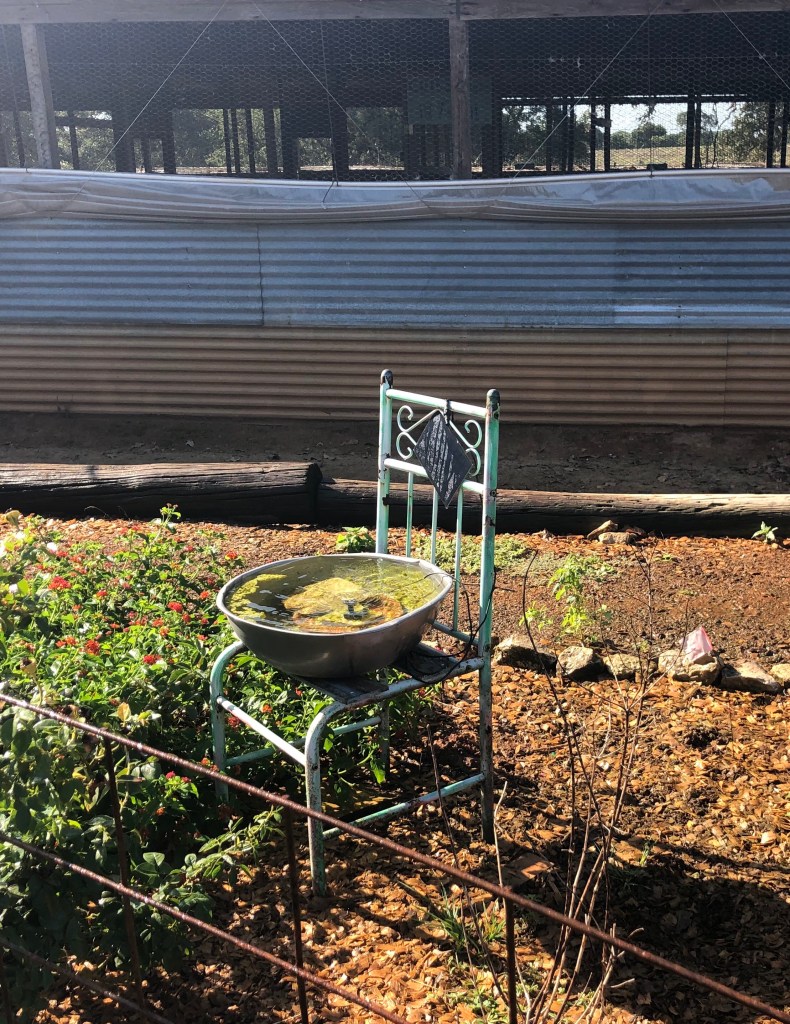
This chair fountain’s particularly cute.
I was all excited about some butterflies, and tried really hard to get good pictures, but these pipevine swallowtails are not the kind that sits still. My best picture had something weird in the background.
What’s that behind the butterfly?
It was one of the resident guinea fowl, just clucking away at me and peeping over the flowers.
Howdy!
Eventually we got in, after we convinced Gene I wasn’t here just for Master Naturalist stuff. Janet was after black hens, because apparently hawks don’t go after them, because they look like crows, and crows are mean to hawks. Huh. She got three young Jersey Giants and three australorps, all lovely and dusky beauties.
Native Rio Grande turkeys, since I didn’t get photos of Janet’s new pullets.
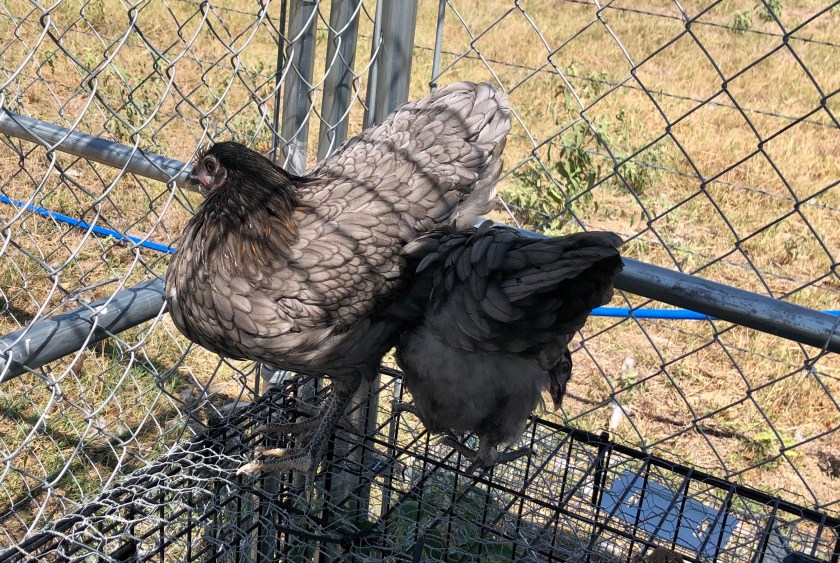
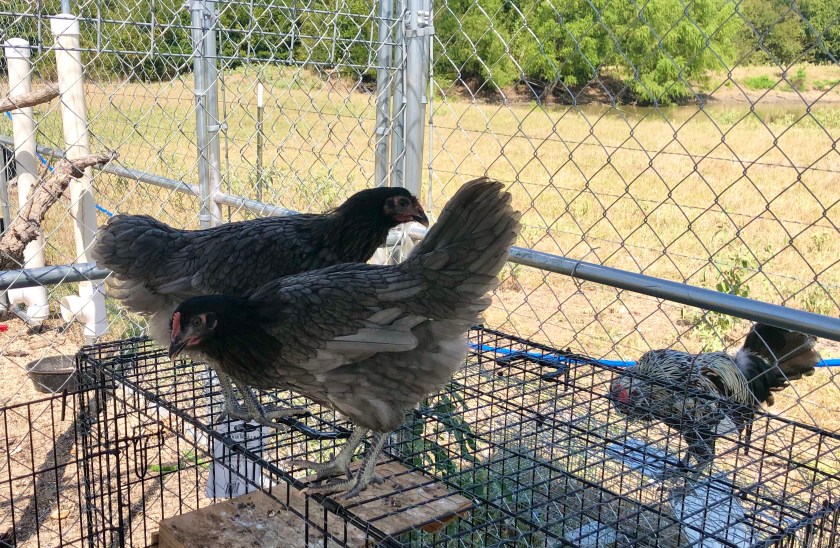
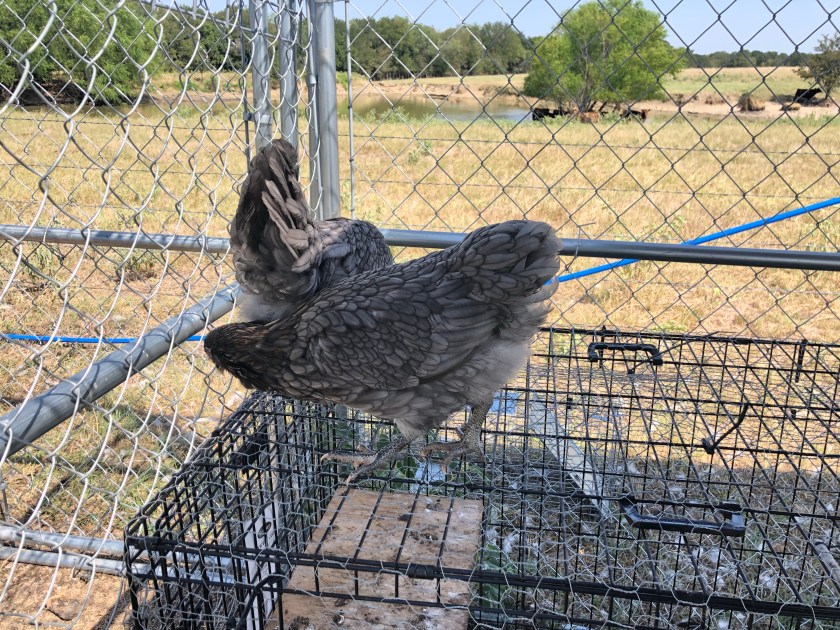
Well, I couldn’t exactly go there and come up empty handed, especially since our hen to rooster ratio is so low. I needed three hens. Conveniently, the oldest pullets they had were beautiful, as well. They are called Blue Star or Sapphire Gem, and apparently are a new heat-tolerant breed from Czech breeders. I got two of them, one of which has some gold in her neck feathers. She’s Star and the other is Sapphire. I am not creative today.
At least one is in the sun here. That’s Star.
Sapphire is in front. Bruce wants some action.
You can sorta see the pretty feathers.
My favorite thing about them is that they are large. They won’t have to stay separated too long, though they need growth food another month or two. They have beautiful dark brown eyes, too.
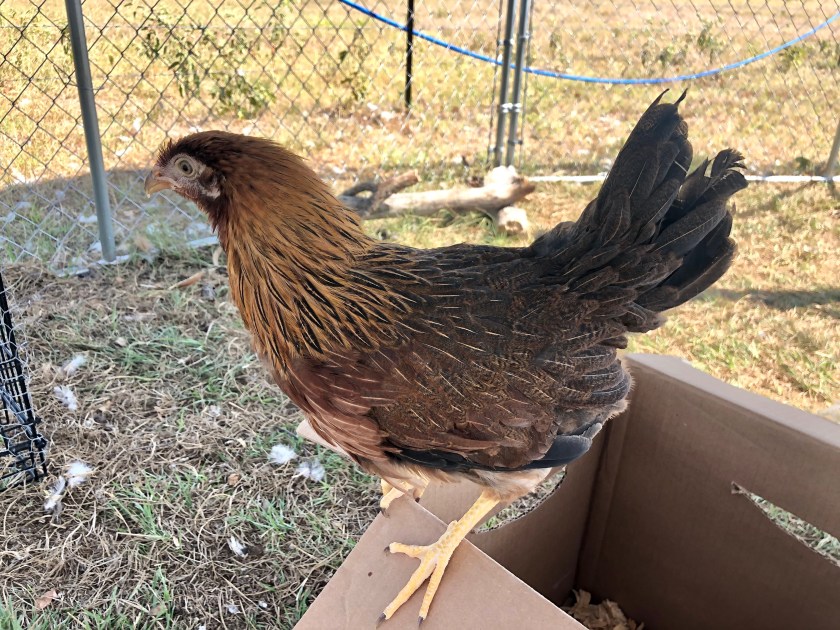
The other pullet I got is a Welsummer, which I had one of before in my first batch, but didn’t last too long due to the owl. No owl will get Butternut, though! She’s safe with us in the cage. I love her buttery yellow legs, which gave her the name, and she has cool light brown eyes that match her body feathers. She’s a bit smaller than the other two, and pretty friendly.
Pretty baby.
I’ll need to re-hook the water hose, and maybe move one of the pipe feeders over to the baby area, but otherwise, they should be fine. Now if I can just figure out how to stop Clarence from crowing under Jim’s RV. That has to be loud!
Anyhow, it was wonderful to catch up with Janet, who I’m going to spend more time with not on a mission very soon. We just wish we could set and eat a meal together, but neither of us wants to chance the germs.
I think the long saga of me needing hay for Apache is over for a while, at least. It’s nice to have kind Master Naturalist friends to come to my rescue.
I thought I was getting square bales from Pamela, who lives nearby, but it turned out her baling guy would make no fewer than 200 bales (understandably). I just don’t have the funds for that.
Pre-moved hay and great sign.
So then my other Master Naturalist friend, Cindy, said she had some old hay for my preferred price (her new hay was too expensive, and besides, the older the better for Apache). That’s probably the best for us, anyway.
That is one neat tack room.
So, after work, Chris and I took a trailer down to Cindy’s place, which is even more beautiful than I imagined. It’s a Suna Dream Property. While I enjoyed her Tennessee Walking Horses, Chris loaded the hay with the help of another Master Naturalist, Sam, and another nice helper.
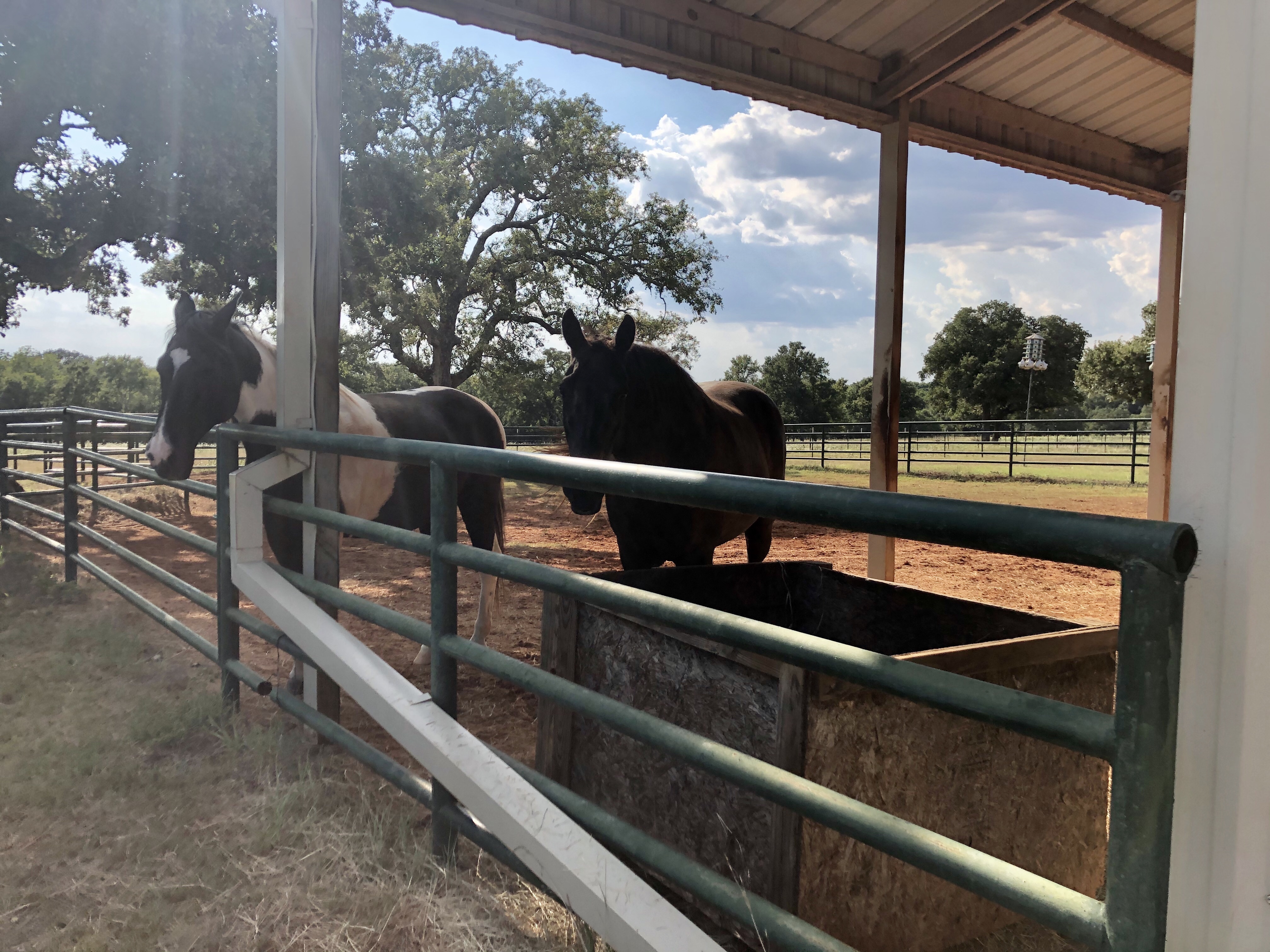
Sweet pretty horses
They’d already taken the hay out of the hayloft, so it went quickly.
We got to look around and chat, too, which was so nice. I miss my friends! It was worth sweating away in masks! It’s a fine bonus to getting the hay. Also, I was so busy looking around and chatting that I didn’t get many pictures.
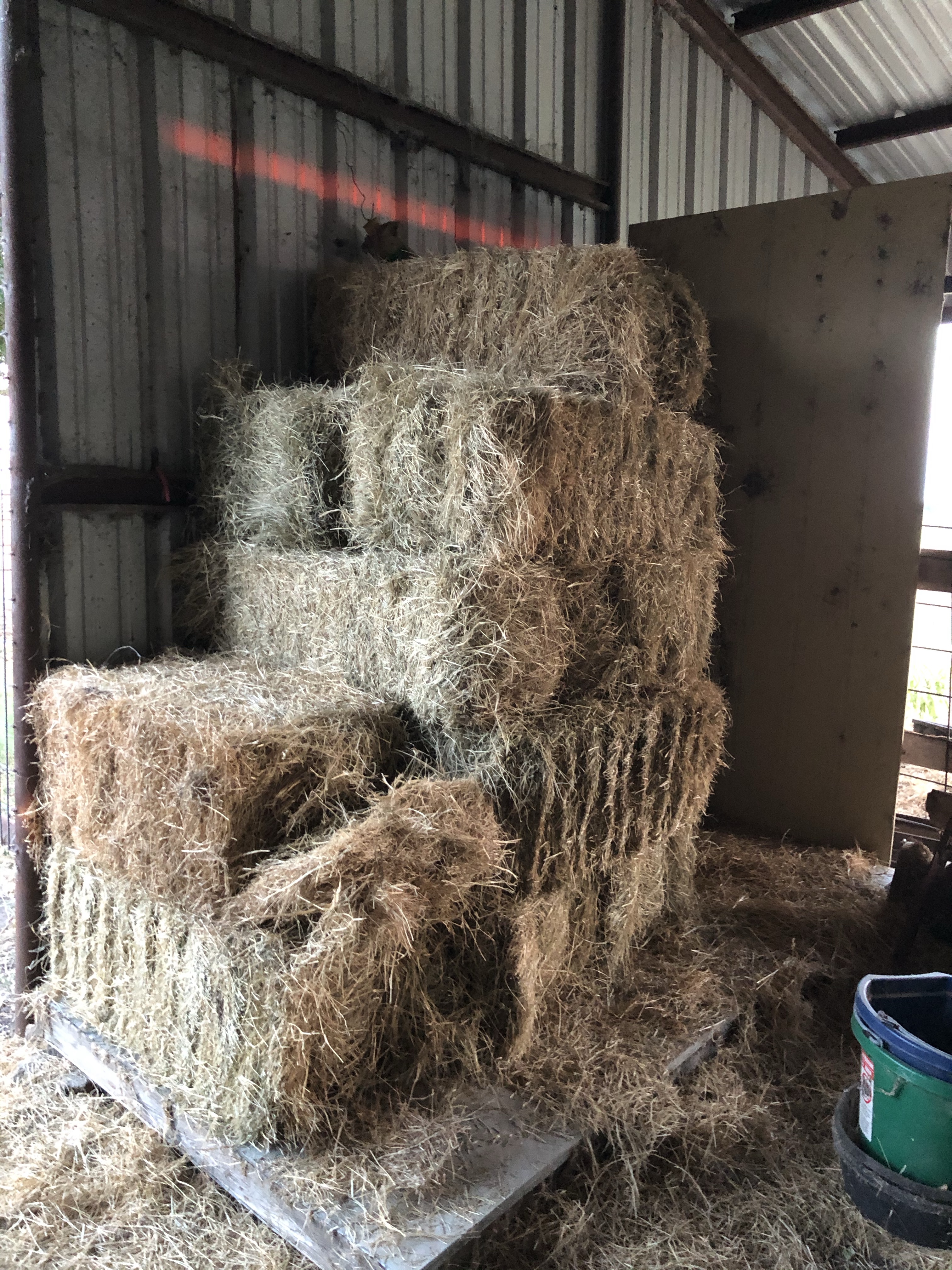
I also didn’t get any pictures of unloading the hay. At least here’s a picture or two of the loaded hay.
Loaded hay!
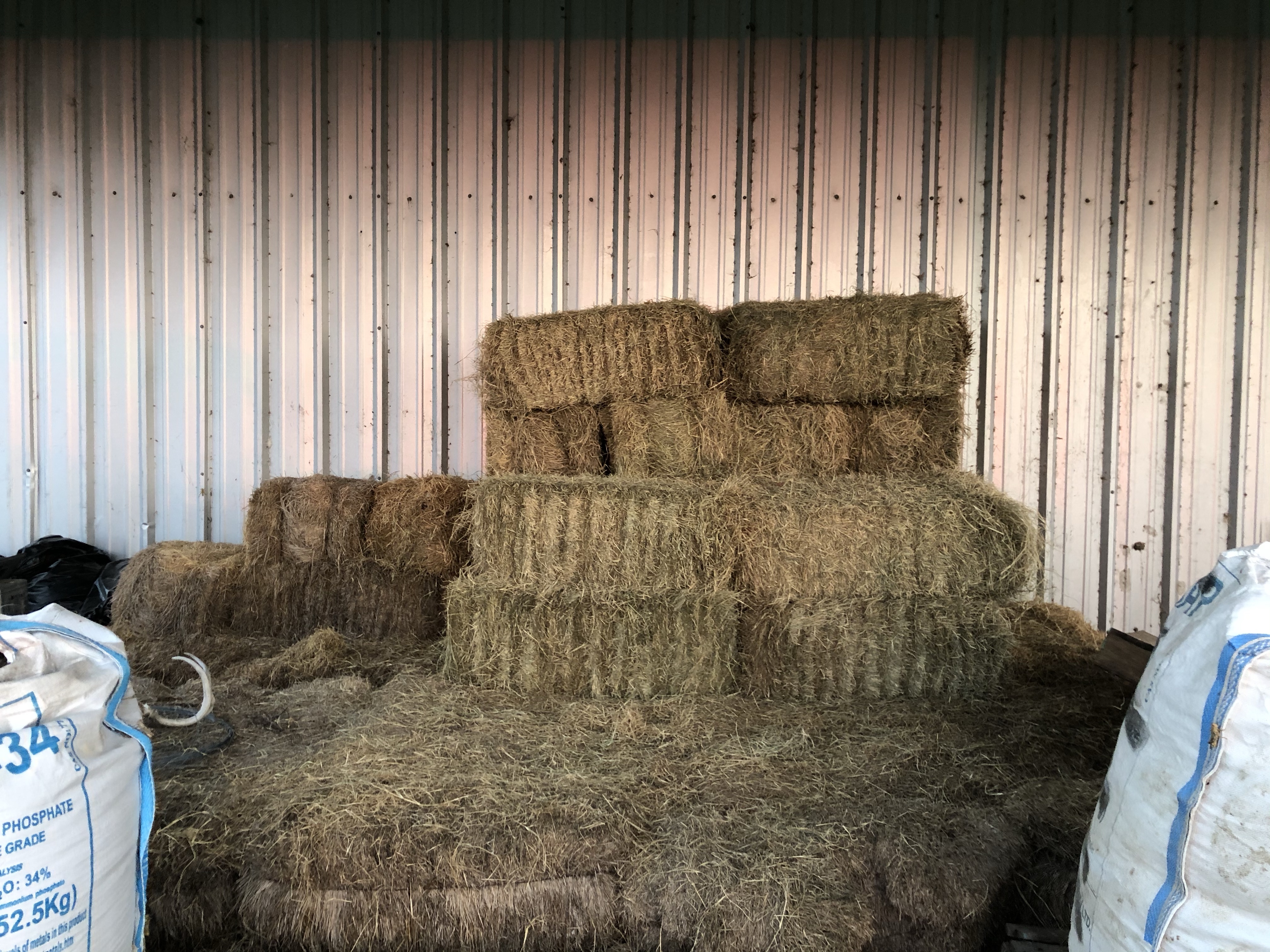
I went to get Lee’s brother a burger, and the onion rings took so long that I totally missed unloading the hay! But the food was good, so yay. And I did get photos of the beautiful stacks Chris made.
Yay for hay!
Speaking of beautiful, I tried to get a gorgeous picture of Fiona and yet another fine sunset, but every time I stepped back to take a picture, she followed me. This is my best try!
Here I come, Mommy.
By the way, my friends’ beautiful horse property is for sale. Want to bring your horses and come live near me?
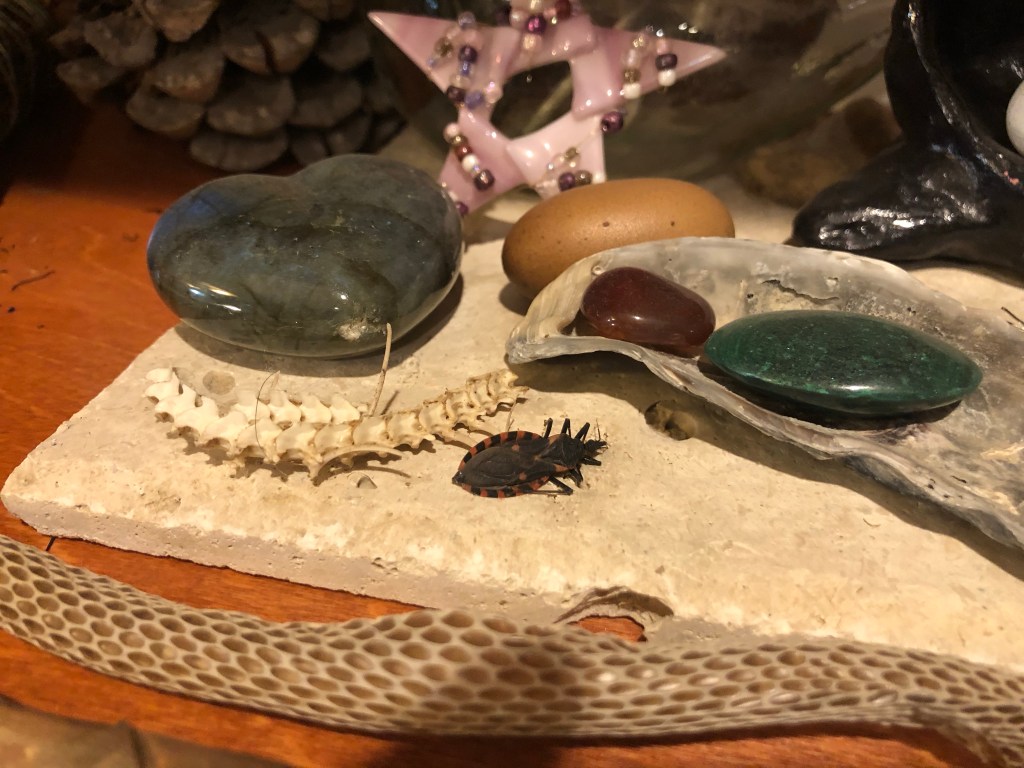
I was telling Lee how glad I was that all the Master Naturalist stuff has helped me be less squeamish about bugs. I’d just seen a dead bug on the floor and stopped to pick it up and take a picture.
Cool stripes! Cool head!
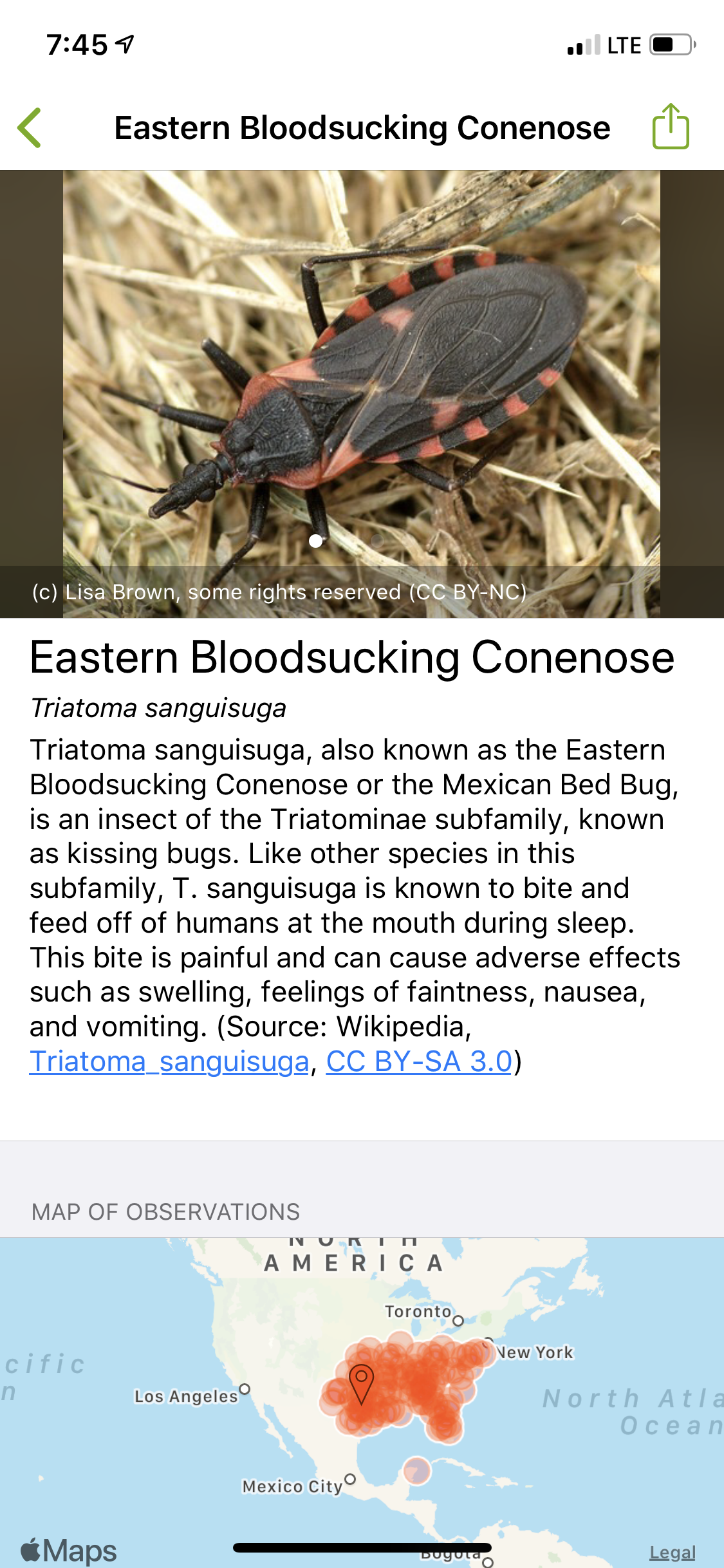
We went outside (even though it was 99 F today), I checked my rocking chair for black widows, and I proceeded to look the insect up in iNaturalist. Oh, look, that one was easy! Let’s read all about it.
It’s a WHAT? It bites WHERE? It does THAT to people? It was in my HOUSE?
Nature, I love you. But I’d sure rather keep my distance from some of your creations, even if I’m a Naturalist.
If you see the eastern blood-sucking conenose, remove it from your home.
Its name is nowhere near as funny as yesterday’s grasshoppers. Texas. Everything not only bites or stings, but some of it sucks. On the other hand, I have a new thing to tell jerks: “Don’t be a bloodsucking conenose!”
I put it on my altar to represent darkness. Next to snake stuff.
Ick. So, what’s the most disgusting thing at YOUR house?
Not much is going on this weekend. I had two good rides on Apache, and Sara helped me figure out the last thing I needed to keep progress going, which was shorter reins.
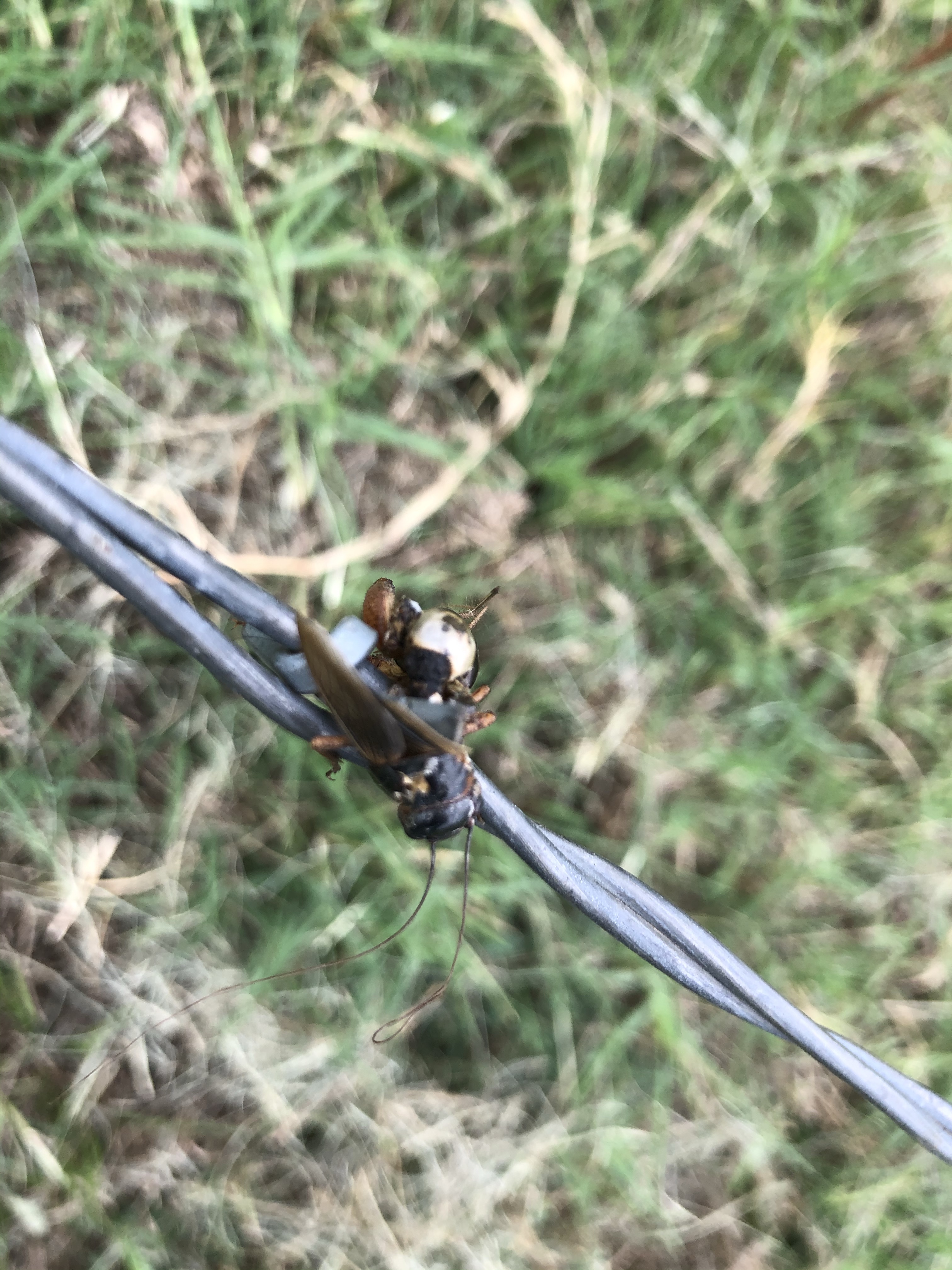
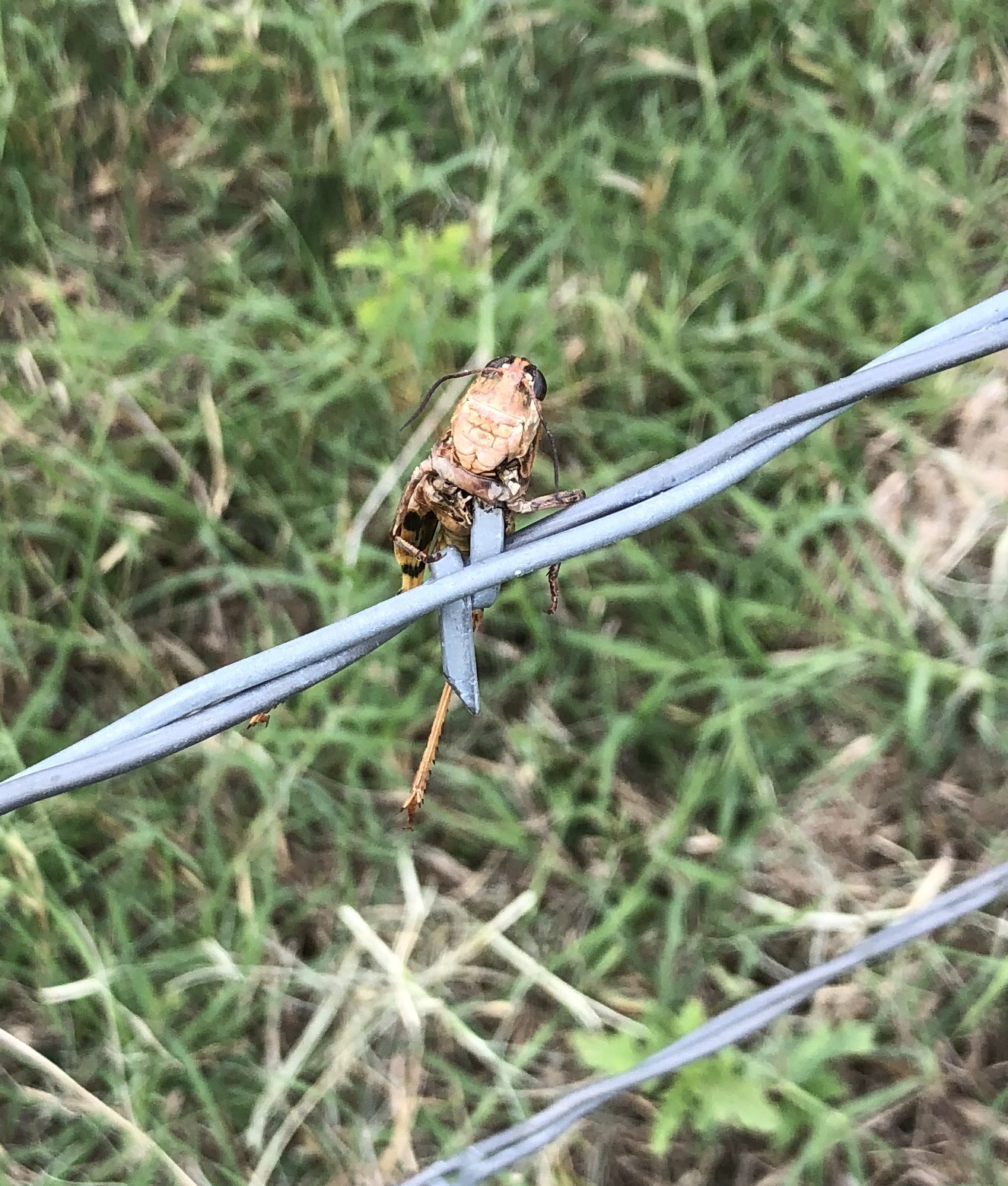
Showy grasshopper
Other than that, I’ve been watching summer insects. I’m still trying to get better photos. Perhaps I should try the real camera again.
Differential grasshopper
I did get some reasonable photos today, when looking at a friend’s garden.
Maybe a ponderous spur-throat
As I uploaded them to iNaturalist, I was thoroughly entertained by the common names of the grasshoppers. They are so creative and grand. Here are some names:
Admirable grasshopper
Ponderous Spur-throatedgrasshopper
Differential grasshopper
Devastating grasshopper
Barbarian grasshopper
Wrinkled grasshopper
Boopedon (my favorite)
Prairie boopie
Plains lubber grasshopper
Grizzly Spur-throat grasshopper
Two-striped slant-faced grasshopper
Obscure grasshopper
What cool names, huh? Maybe I’ll find some of these. And maybe someone will help me ID them.
Today I have a hodgepodge of stuff to share, but first I want to talk about what’s lurking around the ranch these days. That would be things that bite, and things that jump. Yesterday, I went to sit down on one of the front-porch rocking chairs, when I saw something on the seat.
A member of the widow spider family.
I am very glad she was pre-dead, and that I saw her before I sat. Certainly it confirms my habit of checking for creatures before plopping down anywhere around the Hermits’ Rest! I’m not sure what kind of widow spider she was, but I don’t want any of them biting me. These are the main reason I continue to support having pest control come around the house.
The second reason is scorpions, which I haven’t seen any of, but Lee and Kathleen have killed a few. I love them out in the woods, but not in the house. And I love the spiders, but not ones that could really mess with my health.
I’ve apparently become allergic to mosquito bites, and they make huge welts, so I could do without those right now, too. And biting flies! Argh. There are black flies around here, and horse flies (thankfully not around ME), and deer flies. Whatever. One of them bit me on my FACE this morning. That could have to do with how much poop we have at the ranch
Cool poop mushrooms
Horse poop with plastic in it. GRRRRRR.
Sara disposing of a bag, so a horse or donkey won’t poop it later.
Poop, and things that show up in it.
Nonetheless, I am heartily enjoying discussing different kinds of flies and grasshoppers and stuff with Eric in our Master Naturalist class. He not only has good eye for finding them, but he has a good camera, and the patience to work hard to identify them.
Eric wrote me an email today about the coolest thing he saw (a “mystical experience,” in his words), which was he was trying to photograph a large grasshopper:
It jumped off the path into the high grass and when it landed it appeared to turn into at least a dozen tiny projectiles which flew off in all directions like a firework. A closer look uncovered a great concentration of grasshopper nymphs in the area.
Eric N., email 6/6/2020
Of course, he didn’t get a picture, but WOW, what an image!
My grasshopper experience this morning was also something you couldn’t photograph. I was walking back from horse riding (it went well), noticing that it’s definitely grasshopper season. Then I noticed the sound. As I walked, I was disturbing dozens and dozens of them (small ones, since they aren’t adult yet), and my walk seemed to have a rhythm section accompanying it. Tap, tap, tap, tap, tap-tap-tap.
I k now a lot of people don’t like grasshoppers (like my sister), and I admit they are annoying in the summers when there are hundreds pelting me as I drive the utility vehicle. At least they don’t bite often or hard. But they are so varied and interesting. I have an AWFUL time photographing them, so I think I’m going to get a good butterfly net soon, so I can get some to hold still.
That’s blurry
That’s blurry
I can’t find anything in this picture.
What Doesn’t Bite?
Roaches. Secretly, I have never been fond of roaches, due to childhood trauma, but I am doing better since I started doing iNaturalist. I recently even found one I thought was interesting to look at. It also lived outdoors, where it should.
Fairly attractive pale-bordered field cockroach
And non-venomous snakes don’t bite humans, often anyway. So, I was sad to see this one in the road this morning. Rat snakes are my buddies as long as they aren’t eating my hens’ eggs.
Poor snakey got hit by a car.
Okay, time to go see what’s outside that will hurt in some other way…
Last week I had a lot of Master Naturalist fun participating in the Texas Invasive Species BioBlitz 2020 that got set up by Texas Nature Trackers. You may remember I talked about it a bit last week. The idea was to see how many observations you could get from a list of invasive species found throughout the state. I knew I had easy access to a few, so I figured I’d try.
Here’s the main page for the event.
I got a good number of invasives pretty quickly, since I knew right where there was some Arundo donax (river cane), Johnson grass, and a lot of nandina on my own properties. I must have spent 3 hours the first weekend looking for invasives (and observing lots of other things, too).
Arundo donax
Common dandelion
Common lantana
Johnson grass (with prickly pear)
Glossy privet
Nandina (heavenly bamboo)
Bad photo of common hedge parsley
By the time I went to Austin on Tuesday, I was doing okay on the leaderboard. Just a few walks around the neighborhood of Bobcat Run produced more “goodies” like Japanese honeysuckle and privets.
My final list of plants.
By the time the week was over, I was proud to be in the top twenty of number of species observed, and doing okay with number of observations as well.
Here I am, number 17, and Linda Jo number 2 (I couldn’t fit number 1 on the screen, darn it.)
Of course, my fellow Chapter member Linda Jo Conn was in second place in number of observations and first place for species. Some other guy had way more observations, because he had multiple photos of some of the species. I did a few, like things I saw both in Austin and Cameron, or ones in distinct locations. However, I could have ROCKED the numbers by just walking across the lawn and taking pictures of Bermuda grass (I would NOT do such a thing, of course).
Regrets
Darn the luck! The day after the bioblitz was over, I drove down a street I don’t usually go by, and there were a whole bunch of mimosa trees taunting me with their fluffy pinkness. Argh!
Beautiful invasive mimosa tree, just one block off of where I usually drive every day.
Then, yesterday I walked to the horse barn (I’d been driving our utility vehicle because I have a sore tendon), and right on the side of the driveway was a cheerful annual bastard cabbage/ wild mustard plant. I’d been looking and looking for one, because I knew they were there! So, that’s two more I could have found if I’d been a bit more diligent.
What Did I Learn?
I think the project did what it was intended to do: it got me much more aware of invasive species wherever I saw them, and because I kept talking about it to friends and family, I raised awareness as well. That’s exactly the kind of thing I want to be doing as a Master Naturalist.
Oh, and also, I had fun. What have been your fun projects while we’ve been not gathering in large groups and such?
I miss all the good stuff. Last night at the ranch, while Vlassic and I were safely snoozing in our Austin bed, the ranch dogs started barking like crazy and would not stop. Lee got up and looked out the front door but couldn’t see anything.
They continued to bark, and apparently the whole family yelled at them a lot.
Then, as Lee and Chris were going to bed, they found out what all the ruckus was about: a three-foot plain-bellied water snake. According to eye witnesses, all the dogs were hiding around the corner, in order of size, with Alfred peeking his head out, barking and ducking back behind a wall. The rest were his backups.
Head of snake. Chris graciously fished it out of the dumpster for me.
Chris got the snake out with a broom, then it chased him, then he took his machete (I do not know where that came from unless it was MY machete that I won in some raffle once) and made the snake dead. Boo hoo. I was not there to convince them the snake wasn’t venomous.
Body of snake
The family believed it was a water moccasin, due to its head, which is all mushed up at this point, so the pit viperness is obscured. It does look a little triangular to me, too. I’m glad my iNaturalist friend aguilita identified it for me quickly as a regular ole water snake. In any case, it doesn’t belong indoors.
Bottom of snake
They think it must have come in when the wind blew the back door open. We are all glad the dogs didn’t go sniff it, since there are a lot of dogs getting bitten these days (Cathy J of Master Naturalists reported one rattlesnake bite and one copperhead bite just last week). Ah, rural Texas.
Vlassic, mighty disappointed that all he got out of this incident was a bit of dead snake smell.
I’m so glad to be back in Cameron. I’m also very glad to have naturalists who will help with identifying wildlife!
It’s been so much fun checking out what’s growing in my tiny garden outside my office. Every day, there’s a little bit more to see in and around it. This little space supports so much life!
This morning, I found the Inca doves poking around in the area where there’s dirt. I wondered where they were living, and then they were kind enough to show me! They have a nest right above our carport light! I love these birds, because they are calm, busy, and beautiful when they fly. The underside of their wings is a russet red, which makes them easy to identify, and looks beautiful.
Hello from the Casa de Inca
I looked a little closer before I went into the office, and saw even more life, on a tiny scale. I saw something yellow on the milkweed plant and was all excited that it might be monarch eggs or something, but when I got closer, the yellow dots moved. They are very bright aphids with little black legs. Turns out they are oleander aphids, which are also, conveniently enough, known as milkweed aphids. Well, the plants are supporting their tiny life, so I let them keep sucking away.
MMMMMilkweed! (I don’t know what the black aphids are)
Over to the left, something moved on a common lantana flower (which Linda Jo, my iNaturalist identifier, called “not one of the good ones”). There was a tiny, tiny fly. It has stripes that make it look like a bee or wasp, but it’s one of the little flies that lives on nectar from flowers, a calligrapher fly. I guess it does look like it has writing on it!
I can’t write calligraphy, but I am pretty.
And finally, when I stood up, I saw one little dayflower that did not look like all its beautiful blue friends. It’s a white sport! I love it when I find the oddballs of nature smiling up at me.
I’m a standout
What a great way to start one’s day, just noticing the bounty of life around me. This really is a little garden that could…be full of life!
What about me? I’m living in the little garden, too!
One More
I have to share, because it’s so pretty, this black swallowtail caterpillar on my bronze fennel plant at the ranch (one of two herbs that didn’t die in my planter). I’m so happy to support future beautiful butterflies!
I’m pretty even before metamorphosis! And this fennel is delish!