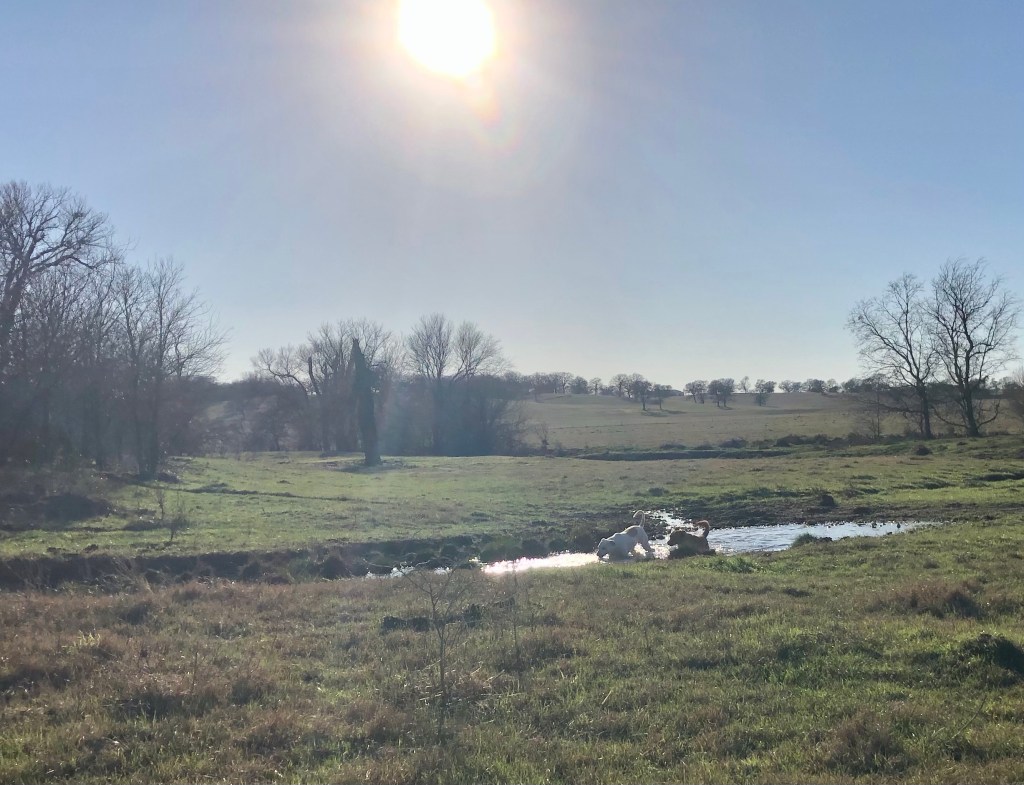
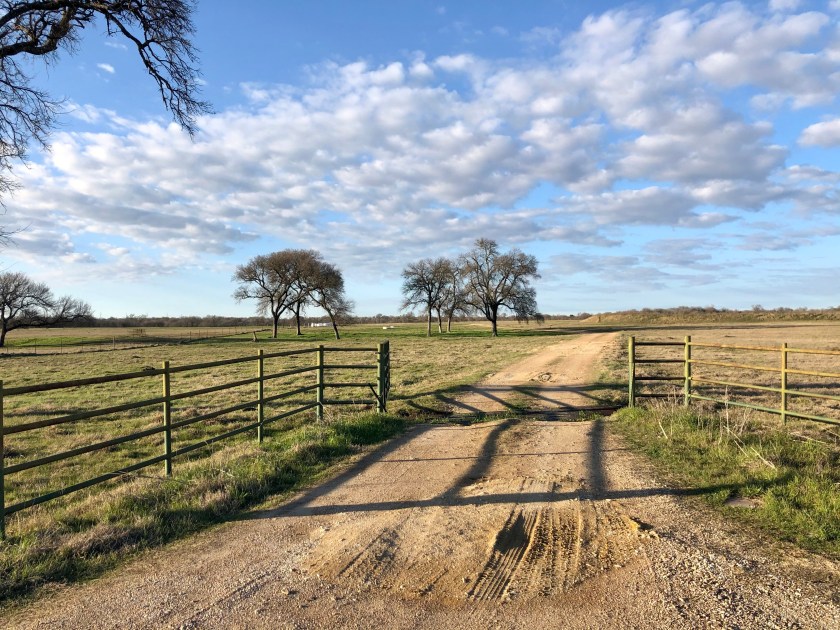
It’s been a heck of a work week, giving me little time to think or write about. We’ve been doing real estate stuff, but I hesitate to write about that anymore. So, I’ll tell you about the highlight of my day, which has been participating in the Winter Bioblitz for our Master Naturalist chapter.
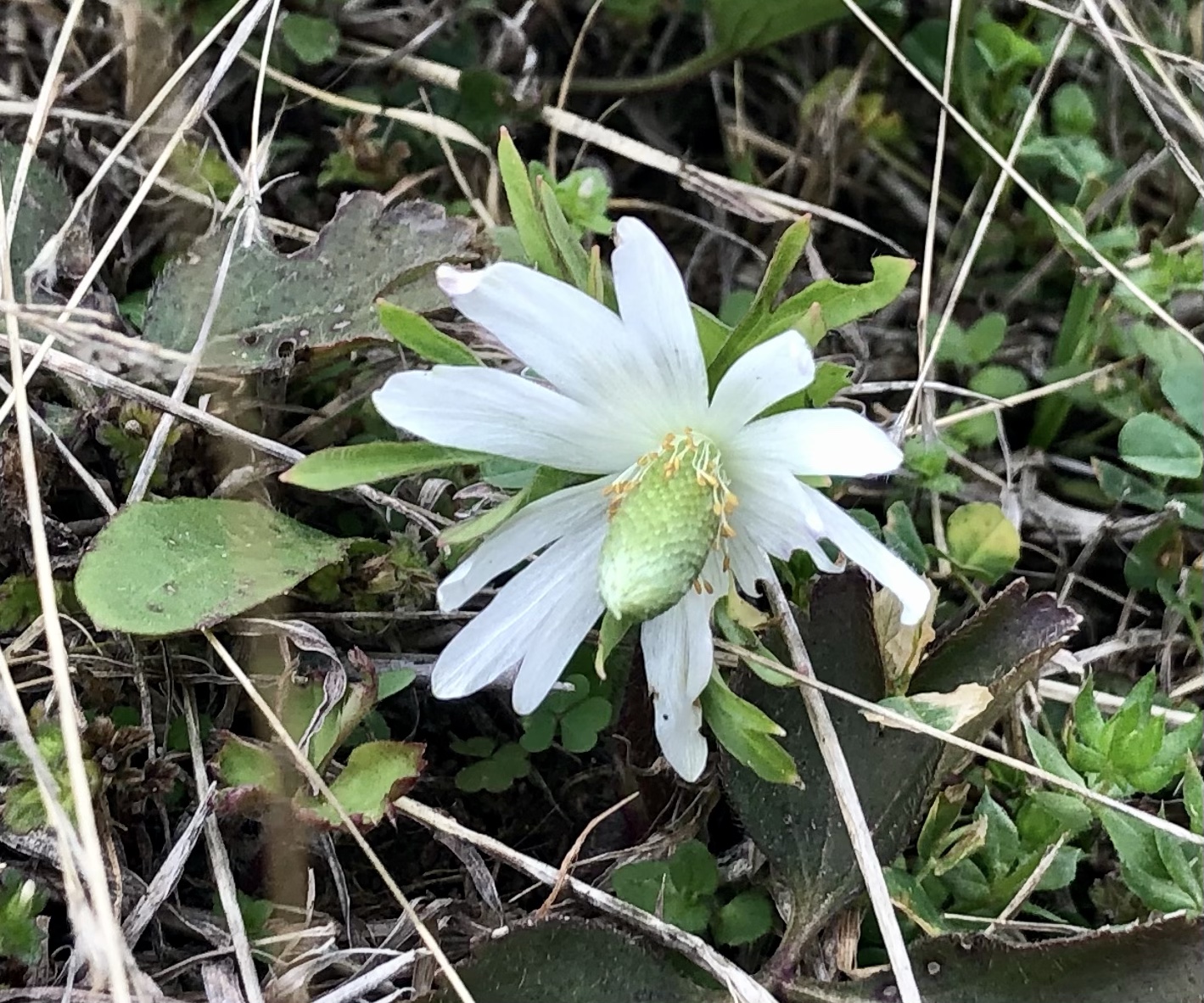
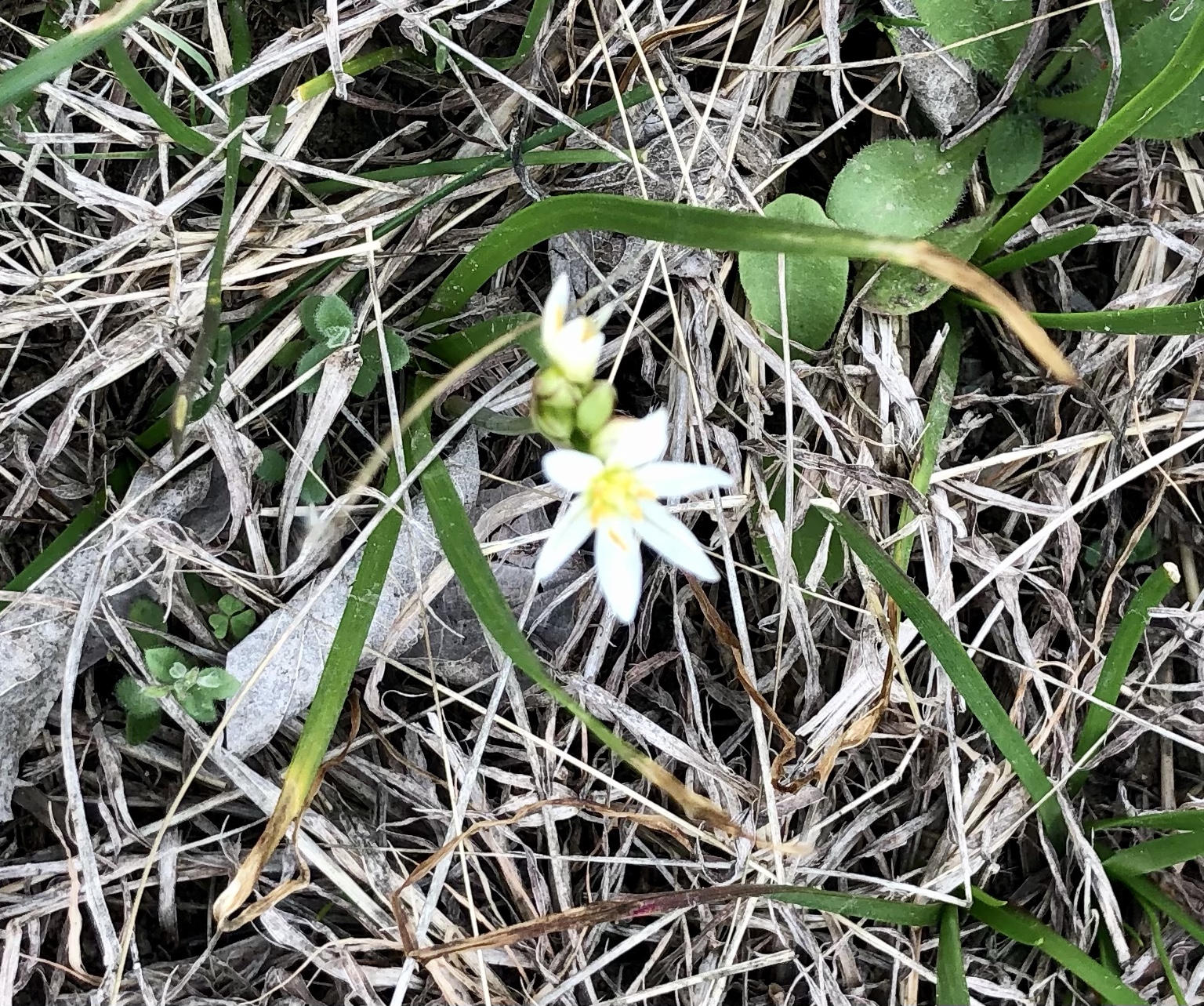
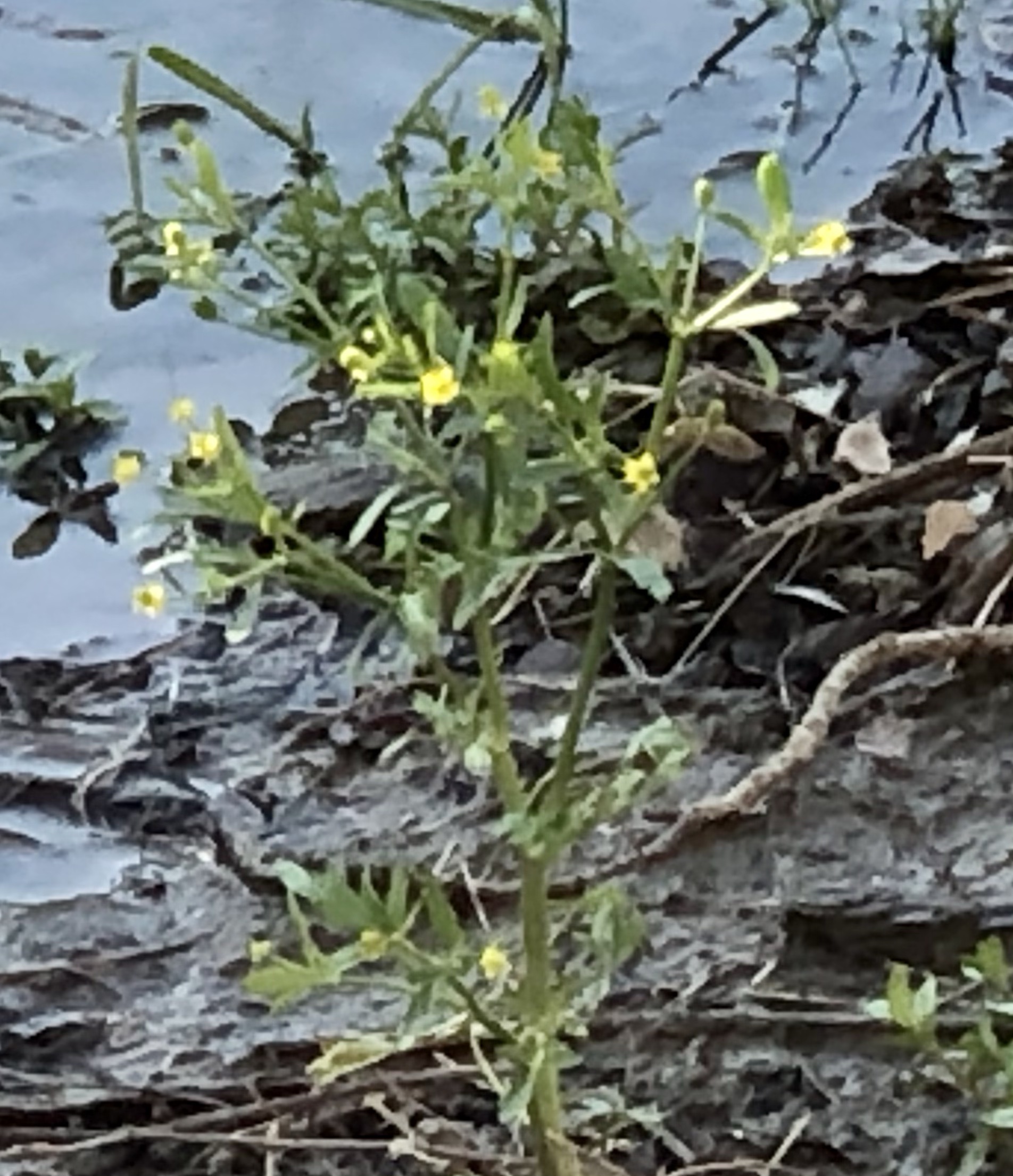
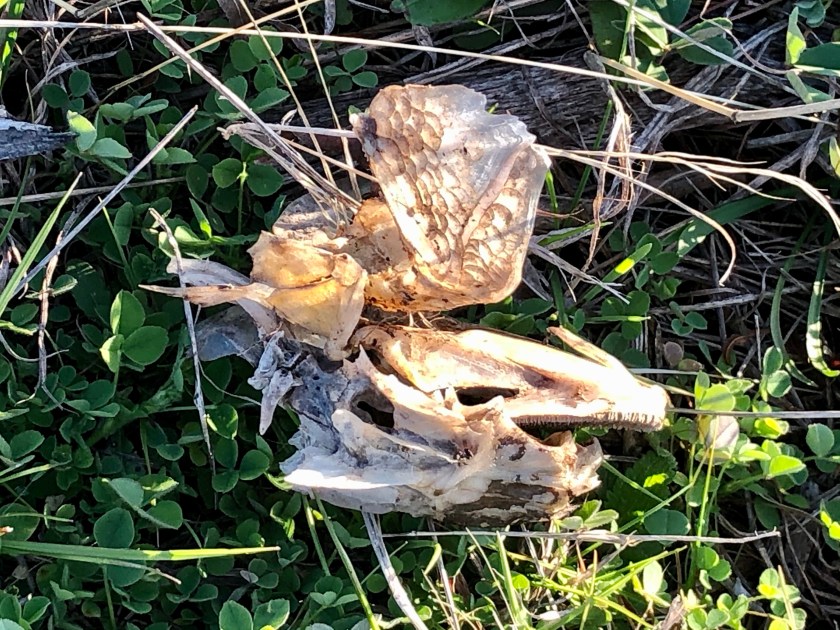
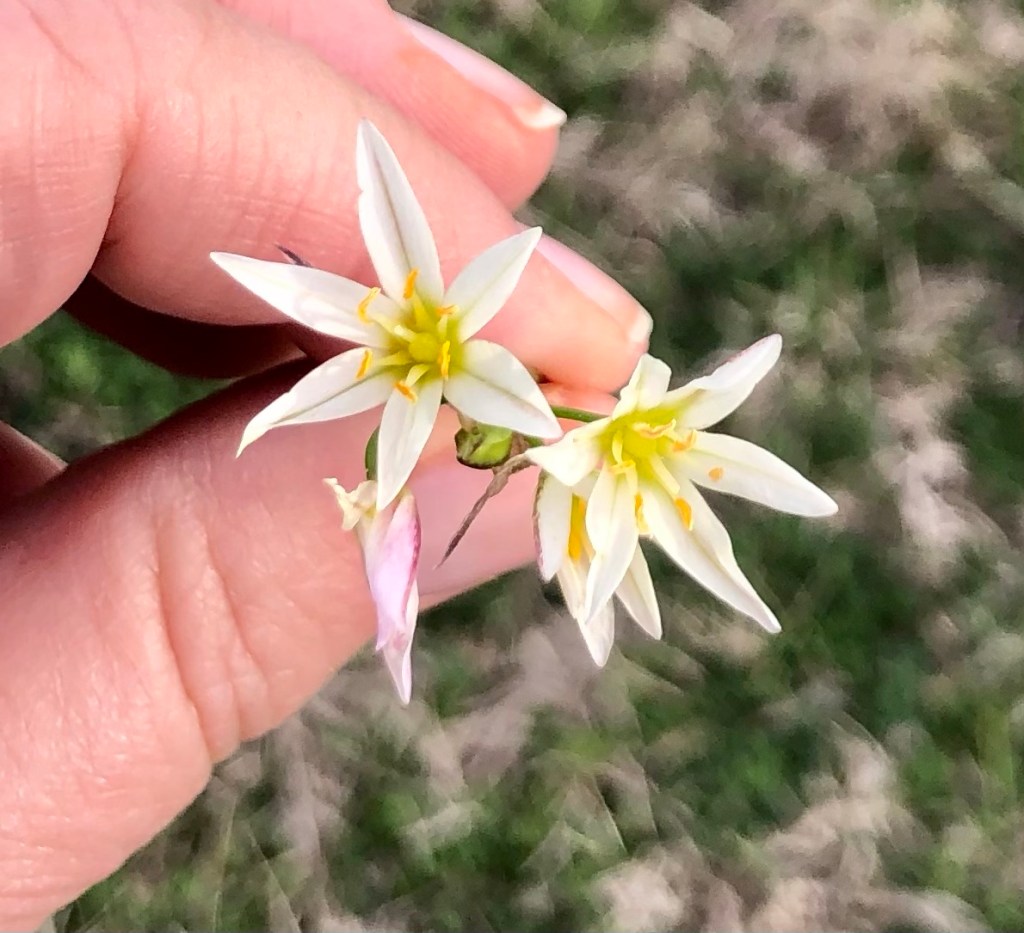
Crow poison
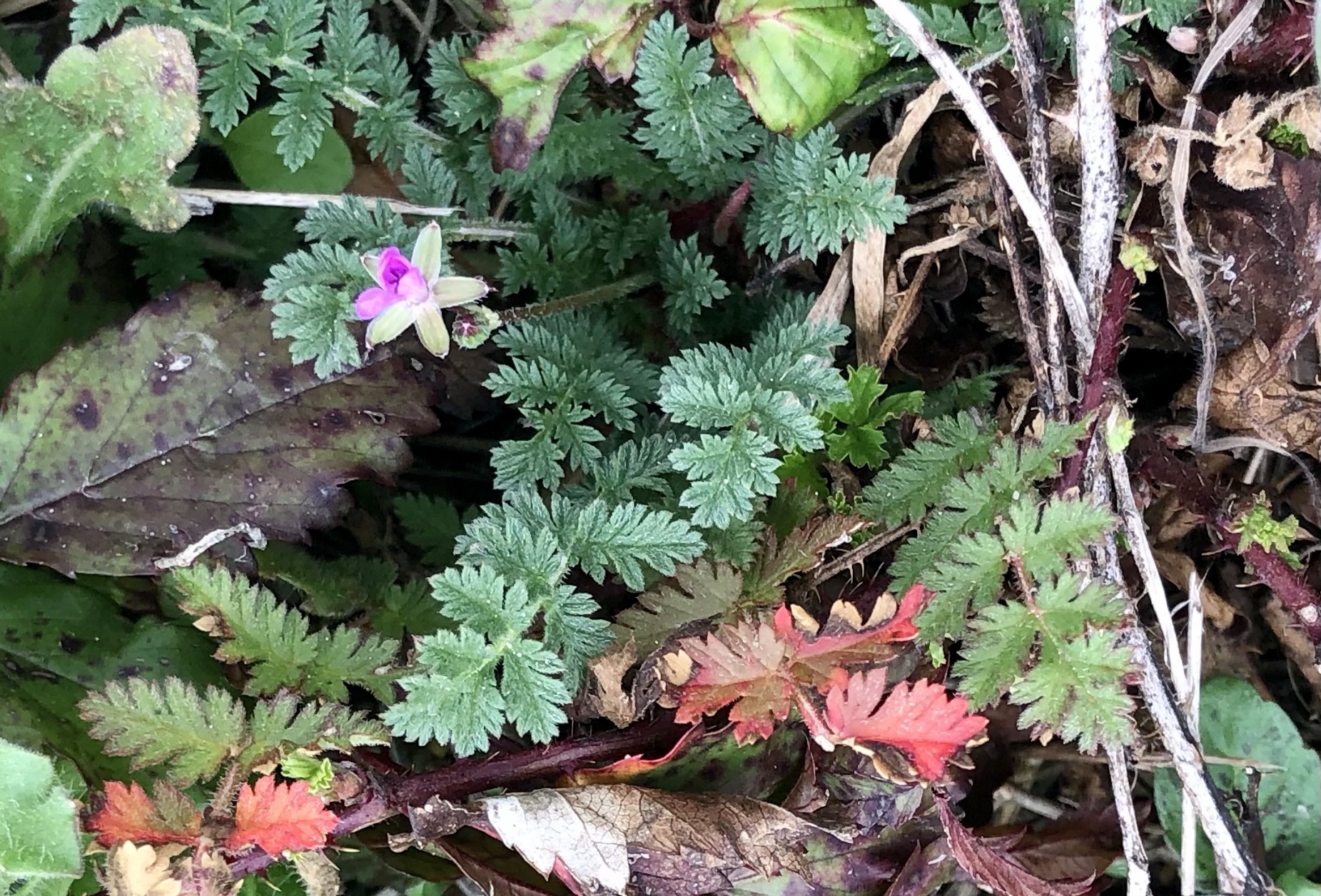
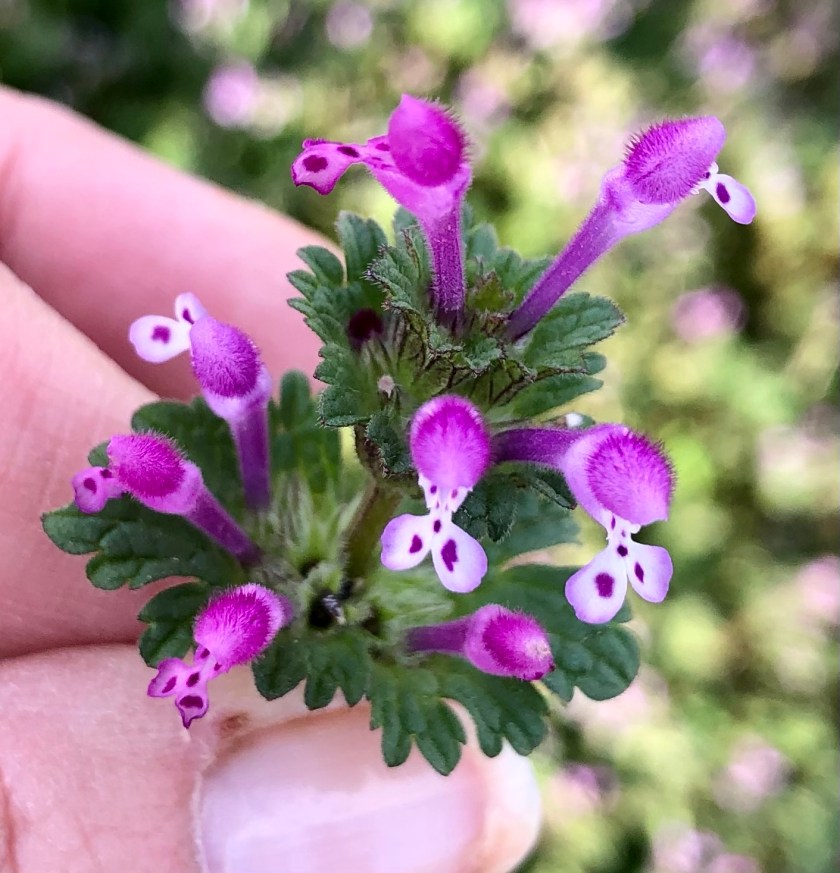
I made 62 observations today, which was a feat, since I only did it on breaks and at lunch. It’s also a feat, because the vast majority of the plants I can identify right now are henbit, chicory, and clover.
Look at all those observations
The highlight of my morning was reaching 2,000 iNaturalist observations. I’ve been going more slowly lately, so this meant a lot to me. I enjoy contributing!
Some really pretty dandelions
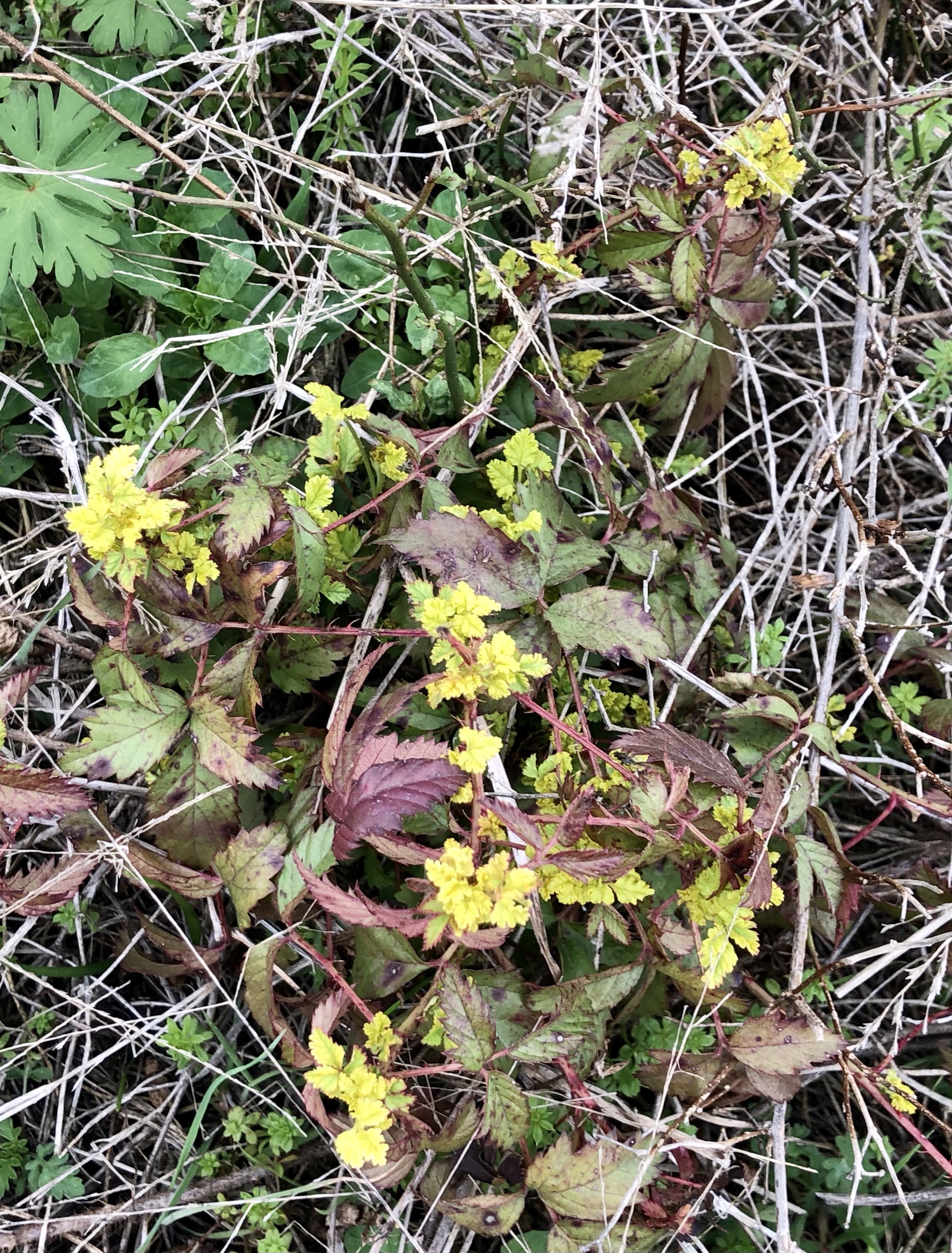
It was good I knew where a lot of things are, so I could confidently say, “This is poison ivy!”
That’s one thick ivy vine.
Other chapter members got out and took some pictures, too. Carolyn took a picture of a cat and uploaded it, which gave me a chuckle. I know lots more will join in!
Ooh, snails and mussels from Linda Jo.
Anyway, I’m enjoying my nature pause and finally able to get Master Naturalist hours for my iNaturalist work around the ranch. That makes up for whatever challenges I’m facing.
As I’m noodling around with the idea of “goals,” I decided one would be to learn something about nature every day by getting outside and focusing on my surroundings. I get to start out by participating in our Master Naturalist chapter’s winter Bioblitz (follow along with us, if you want to!), for which I’m really thankful to our iNaturalist guru Linda Jo. I can now observe things on the ranch for a week, starting tomorrow! I am hoping to maybe get some bird photos.
Speaking of birds, for the first time in a long time there were eastern bluebirds on the fence with the gray birds! The blue on the males is so striking! Of course, the mockingbird chased them off, so I couldn’t get a picture, but my eyes enjoyed them.
Spending time observing non-humans and watching them through the seasons makes me happy. It’s easy to do, since I usually walk over to the horses every day, often go on longer walks, and like to hang out in the woods. Making getting out and observing my surroundings an actual goal seems like a fine self esteem ambition.
Even with all this knitting, I am still reading a lot. This one will not be the last in my color series for a while, because I think there’s a yellow book in the queue at the ranch. But on to this one.A Perfect Shade of Red: Empire, Espionage, and the Quest for the Color of Desire, by Amy Butler Greenfield (2005), was recommended in the Master Naturalist session I took on cochineal. I’m glad I picked it up and read it, even though I’ve already read two other books on the color red. The history part was a lot of fun.
The book, along with the back of the stole I’m working on.
This book concentrates on the ups and downs of using that little Mexican insect, cochineal, to dye things red, starting from the very beginning and continuing to current times. One thing I learned is that, unlike the wild cochineal that grows out at the ranch, the kind that has been developed in Oaxaca to produce the most dye is a finicky thing. No wonder Spain held on to its secrets for so long and monopolized its import (when those pesky English pirates weren’t stealing it). They just couldn’t get it to grow well other than its native territory for hundreds of years.
I wonder if they used cochineal to dye the leather for my journal?
Without the exact right climate with not too much rain, not too much wind, and not too much cold, they keel over pretty fast. The other books I’ve read didn’t go into as much detail about how many places tried to grow cochineal. It failed spectacularly all over the world, and was particularly unsuited to being grown by slaves like sugar cane, corn, or cotton. Oh well.
Random red objects for you to enjoy.
I did learn that eventually, patient people finally got it to grow in the Canary Islands and Guatemala, of all places. They even surpassed Mexico toward the end of the popularity of cochineal dye.
Another thing the other books didn’t tell me was that thanks to Red Dye No. 2 being identified as so poisonous, cochineal began coloring foods in modern times again, but it’s not popular with vegans and there ARE people allergic to it, too. Huh.
The book kept insinuating that red clothing can be gaudy. I don’t know where they get that idea. This is my holiday shirt for this year.
Even if you’re less than fascinated by dyeing things red with little insects, this book is a fun read, because you get an interesting perspective on European history from it. Much of the book makes England seen like a pretty nasty place, but the descriptions of Hapsburgs and their jaws made me rather sad for European royalty. What an inbred mess. All the intrigue between kings, queens, pirates, merchants, chemists, and others is a lot of fun.
It appears I have another race book and a novel ahead of me, though there IS a memoir I may sneak in. Thanks for bearing with me on these book reports.
Oh yes, I am enjoying being all by myself up here in some mountains that are hard to see because of all the resorts and construction. But it’s wonderfully quiet in my condo, and I have the windows open for fresh mountain air! Since they knew I’d be here for three weeks they put me at the back of the resort, with no next-door neighbors and as far as humanly possible from building noise, other than the occasional backup beeper (supplies are kept next to the building). But, it isn’t bad, at all.
Some funny things have occurred to me, though, so for those of you who, like me until yesterday, have never traveled anywhere this high up, I have a few hints, mostly to do with opening things.
First: all the containers of creams and liquids that you bring with you will remain on lower pressurization. I found this out in my ride from the airport, when my hand sanitizer ejaculated all over me. I had some very antiseptic pants!
Things that splatted all over the place since I got here.
It didn’t stop there. I went to put on hand cream, but did I use the one here at the condo? No, I used the one I brought from Austin. SPLAT.
At least my toothpaste was fine. But, then I went to apply my makeup this morning. The moisturizer is sort of thick, so I was able to control its oozing. But, then my foundation. The expensive foundation. I think I lost a month’s worth of that stuff. It would not stop, so I crammed the lid back on, and don’t look forward to tomorrow. And yes, I wear makeup. Gotta look good on Zoom, you know.
But the good stuff!
I’m being careful and not over-exercising, so I won’t get altitude sickness. ANd I’m taking in a lot of liquids, like the instructions say. Those are my other pieces of advice.
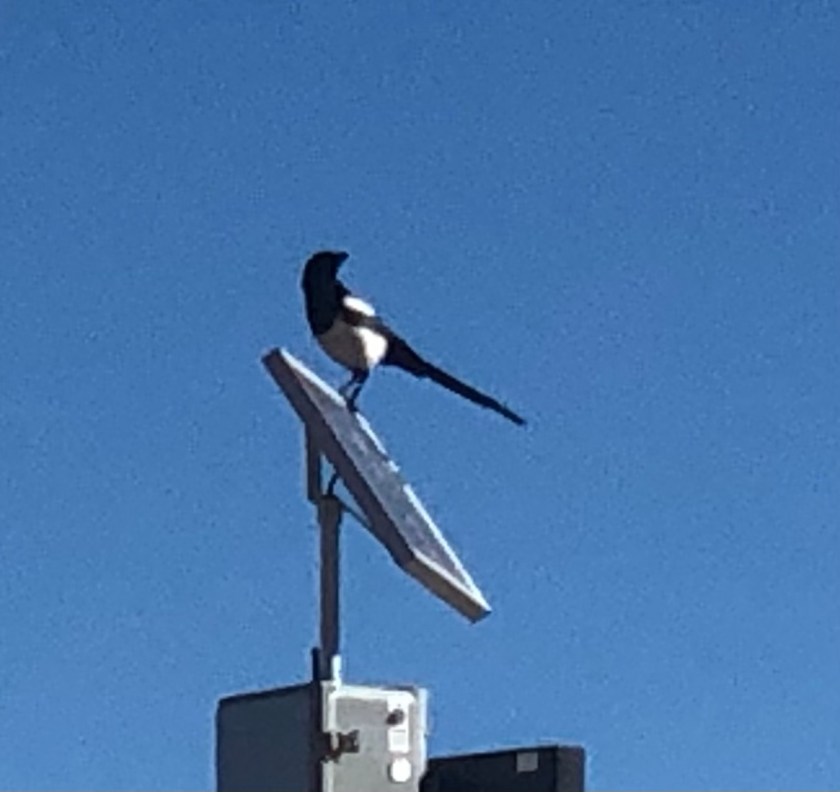
But I did take a little walk around the area. I had been concerned that I hadn’t seen any wildlife at all since I got here, but the walk helped a lot with that. I only saw two birds, but they were both very friendly, so I got reasonable photos of a magpie and a mountain chickadee.
A magpie on a solar panel and a chickadee in an evergreen.
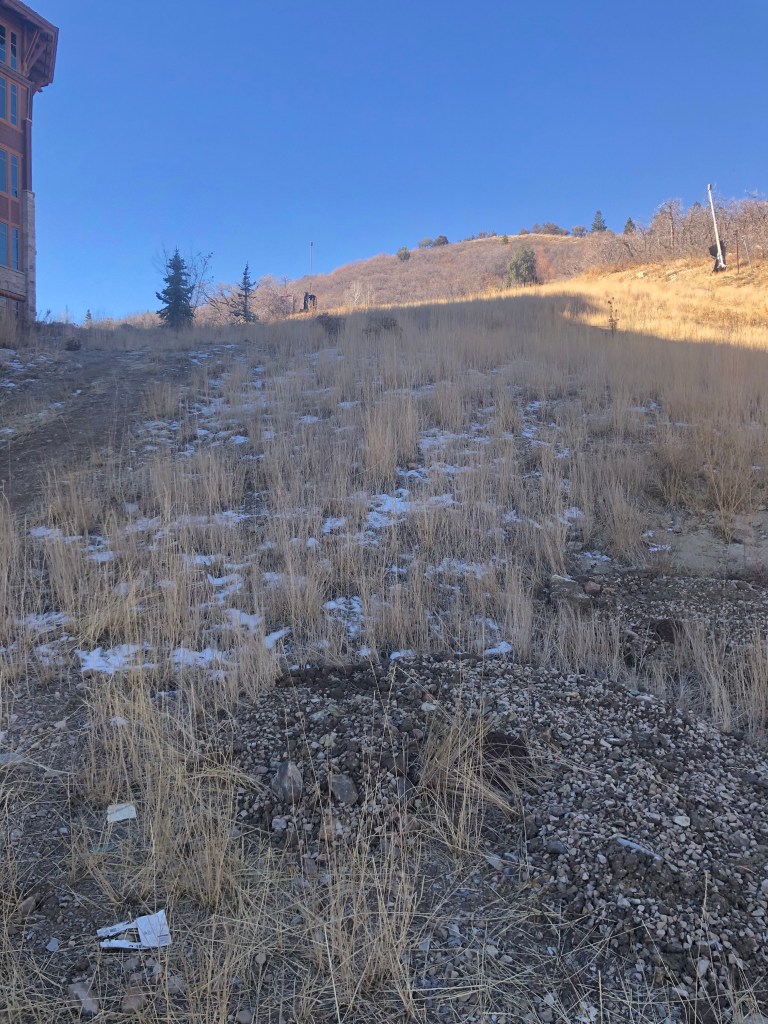
And when I found the ski lift entrance, I got to see what was left of some nice wildflowers, and poop that is either from deer or elk. Good. I didn’t take a picture, but it looked like big deer poop.
Thistles, a ski life, and a little snow.
I didn’t get too tired, but my exercise app is going to be happy. With all the hills, I’m getting lots of “stairs” and heartrate-boosting effort.
I’ve enjoyed the Texas Master Naturalist Annual Meeting, for the most part. There were a couple of dud presentations (I won’t say which ones those were), but I managed to learn a lot. I really missed interacting with others before and after sessions and being able to interact.
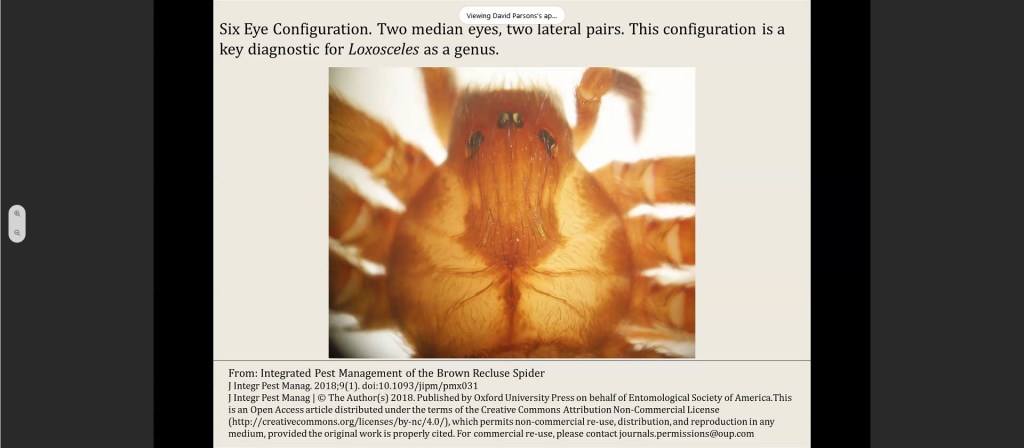
But I did learn a bunch. I’m really glad I went to the brown recluse spider talk, because now I know how few people get bitten and that females don’t even walk around. If you see one out, it’s a male.
Hmm
They have six eyes, paired as in the photo. Easy to tell from other spiders, though I doubt I’ll get that close.
Unrelated to these guys, I found out the baby spiders that parachute across the fields are the jumping spiders. They are my favorites. They are all so pretty and friendly. Sara and I talked to one for a while yesterday. Yes, we’re weird ranch gals.
I learned about corvids, which include ravens, crows, magpies, and jays, among others. The surprise there is how similar their brains are to ours, just more densely packed. Really amazing birds.
More on recluses. I didn’t get bird images.
Another interesting talk was on fungi, but I realized I need images in my sessions. I am not an auditory learner, I guess. The speaker had very few slides, and I got lost. Luckily, she recommended a book I’ll go buy. That makes, I think, four I must have thanks to the conference!
Finally, I got a kick out of the presentation by a very sweet and very Texan Master Naturalist on cochineal. I could tell he’d learned way more about the fashion industry than he had intended to. But it was a lot of fun sharing his amazement about the ups and downs of these tiny insects, some of which happen to be right outside my door!
I’m gonna have to smoosh some up, use lemon juice as a mordant, and dye something red! I’ll read the books and report more later.
Well, I have an adventure to go to, so that’s it for now. Have fun on your Sunday, too!
Wow. Just wow. My life is now so much better, having heard the amazing Doug Tallamy speak at the Texas Master Naturalist meeting. He’s just about as inspirational as a speaker gets, and I now have my answer when people ask what famous person I’d most like to have dinner with. I could talk to him for hours, or more likely, listen.
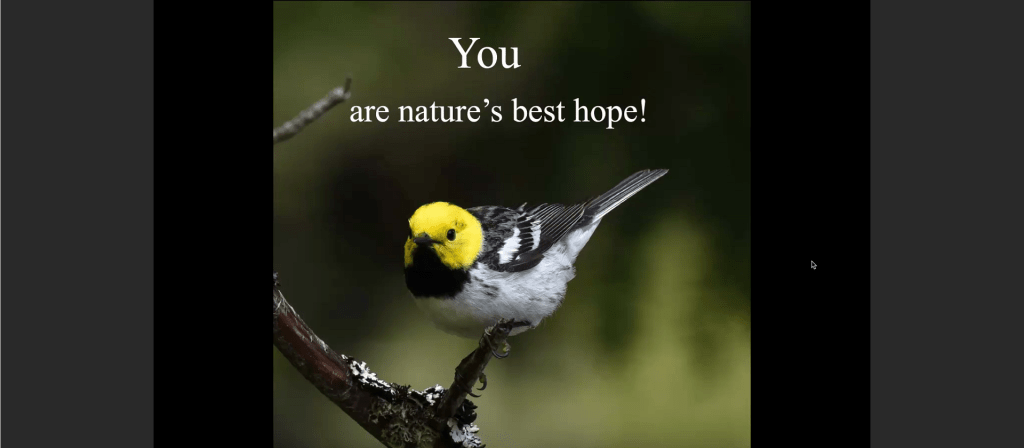
I recently read and reviewed his book, Nature’s Best Hope, and once again I must encourage everyone to read it. It’s one of the few books I’ve read lately that made me feel empowered to go out and actually make the world a better place, right on my own property.
Listening to him speak to us, sounding just like some nice guy you’d talk to at your meeting, but with an amazing wealthy of information, was a mind-blowing experience. And the information he shared about how he and his wife turned their property into a place that is both beautiful AND attractive for natives was nothing short of inspirational.
Tallamy reminded me WHY I don’t want all the land around the ranch scalped into a beautiful monoculture lawn and why I ask that the wildflowers be allowed to grow, bloom, and seed each spring. They support so much of the diversity of animals and insects that we are rapidly losing.
When he shared how many different moths grow on the goldenrod on his Pennsylvania property, my heart swelled, since you may recall just yesterday I wrote about how much I saw growing on goldenrod plants (and I skipped a wasp that I couldn’t get a clear photo of). I feel like at least some parts of our ranch are helping the earth heal itself, while still providing food for people. I think it’s a win-win.
He provided lots of useful links, but I was too enthralled to take many screenshots. But here’s something you might be interested in, which is the keystone species that support the most insects, birds, etc.
The Hermits’ Rest has lots of these! Just not many maples.
I’m not going to write down everything Tallamy said, but I hope you will go to his website to learn more. There’s TONS of fascinating stuff there. This one point he makes sums it up for me:
From the Bringing Nature Home website
We ARE part of nature and need to live with it, wherever we are. I’m going to hold that in my heart and work as hard as I can to help Professor Tallamy achieve his goals.
His final slide.
I encourage those of you who want a better world for the children who are around today to read his books and take action. It’s awfully easy to plant some native plants. Many of them just show up, after all (“weeds”). And as soon as you have them, insects will follow.
Even if all you have is a balcony or some space outside your office, you can make the world a better place. Now, that’s awesome.
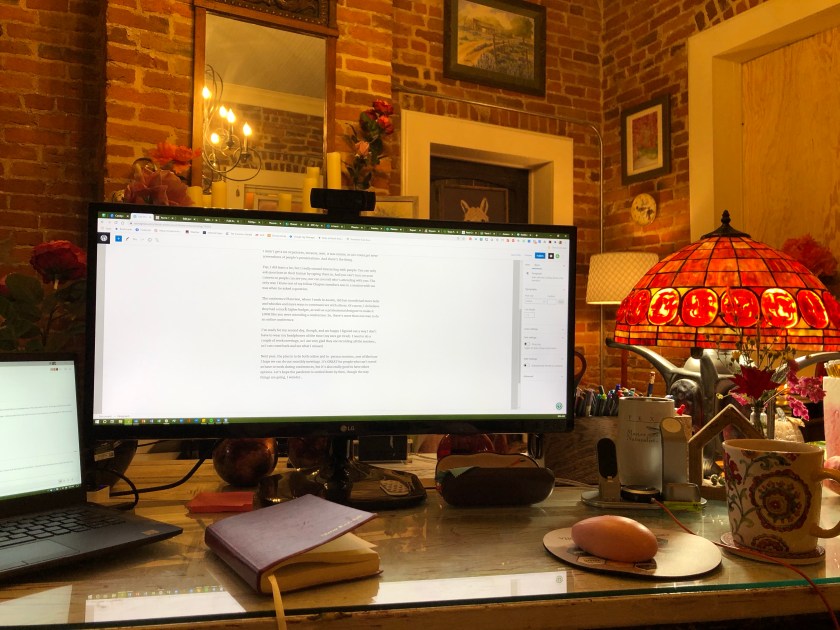
I’m off work this week, sitting at the same old desk (nice desk) but attending the Texas Master Naturalist Annual Meeting. Online. First, I must praise the conference organizers, because what a HARD thing it was to get it all set up! And they stay so cheerful. Bless those women.
My happy conference-attending seat! And this blog post getting written.
I enjoyed my sessions yesterday, and I did indeed learn some useful things, like there is an overpass in Houston that’s bigger than the city of Sienna, Italy (or some famous city). Houston is big (surprise!) – but only ONE drop-off for mail-in ballots. Digression.
I didn’t get a lot of pictures, because, well, it was online, so all I could get were screenshots of people’s presentations. And there’s the thing.
I liked this information about how nature can help with stress. Interesting stuff in that second bullet.
Yep, I did learn a lot, but I really missed interacting with people. You can only ask questions in their format by typing them in. And you can’t turn on your camera so people can see you, nor can you tell who’s attending with you. The only way I knew one of my fellow Chapter members was in a session with me was when he asked a question.
The conference Planview, where I work in Austin, did last month had more bells and whistles and more ways to communicate with others. Of course, I do believe they had a much higher budget, as well as a professional designer to make it LOOK like you were attending a conference. So, there’s more than one way to do an online conference.
This information I found handy for my colleagues at Hearts, Homes and Hands!
I’m ready for my second day, though, and am happy I figured out a way I don’t have to wear my headphones all the time (my ears get tired). I need to do a couple of work meetings, so I am very glad they are recording all the sessions, so I can come back and see what I missed.
Next year, the plan is to do both online and in-person sessions, sort of like how I hope we can do our monthly meetings. It’s GREAT for people who can’t travel or have to work during conferences, but it’s also really good to have other options. Let’s hope the pandemic is settled down by then, though the way things are going, I wonder…
Okay, I have a little something to say. After all that iNaturalist work last weekend, it was this weekend where I met some goals, or desires, or whatever.
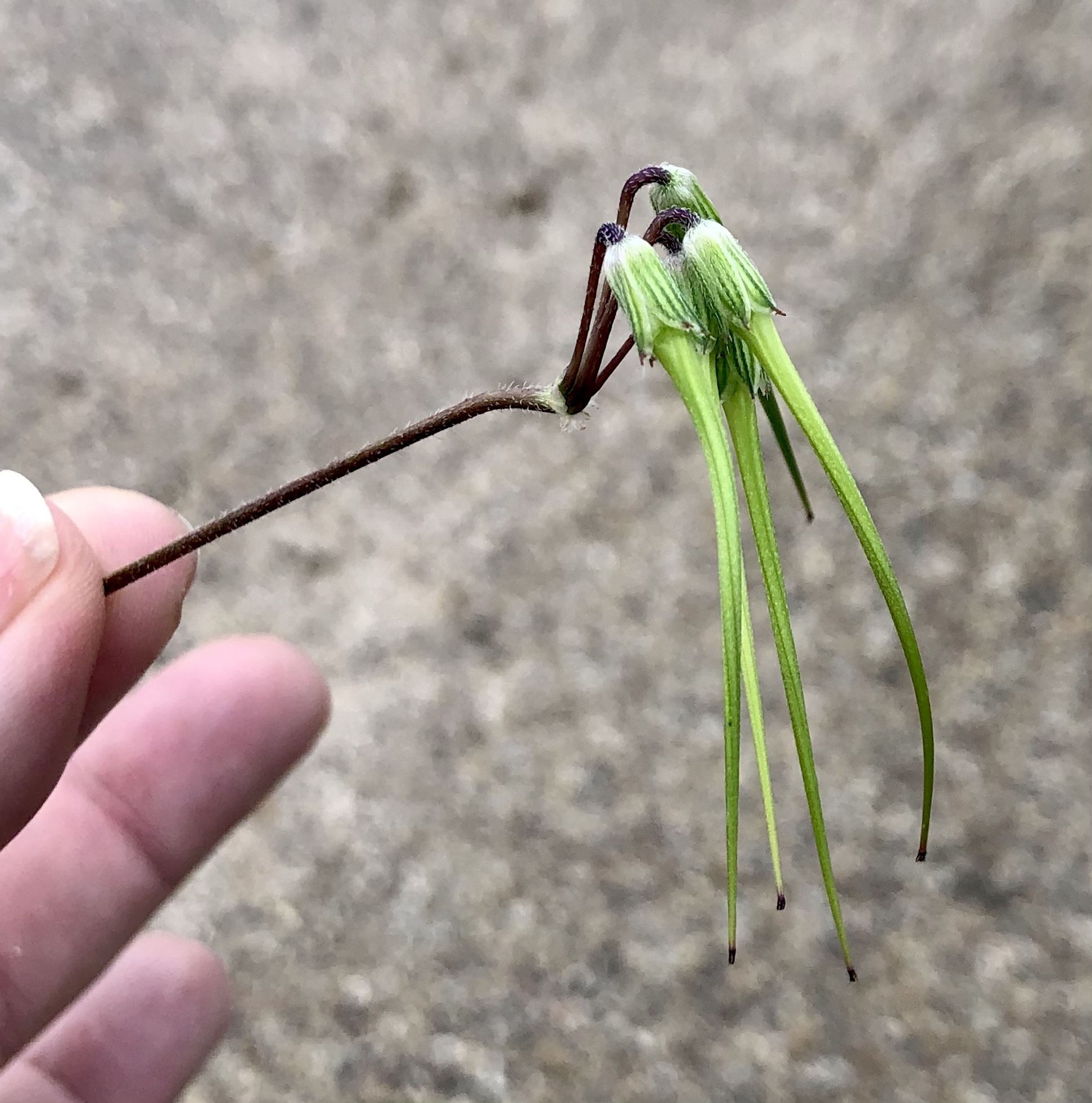
While walking around, I remembered to open up a balloon flower to find the seed. My friend Linda Jo was right! They look like little yin-yang symbols!
Balloon vine seed, and my fingerprints.
While we were walking the horses, Sara very patiently let me try to get photos of all the butterflies and moths swarming in the pasture, even when her horse stepped in fire ants.
Waiting for Suna to take pictures.
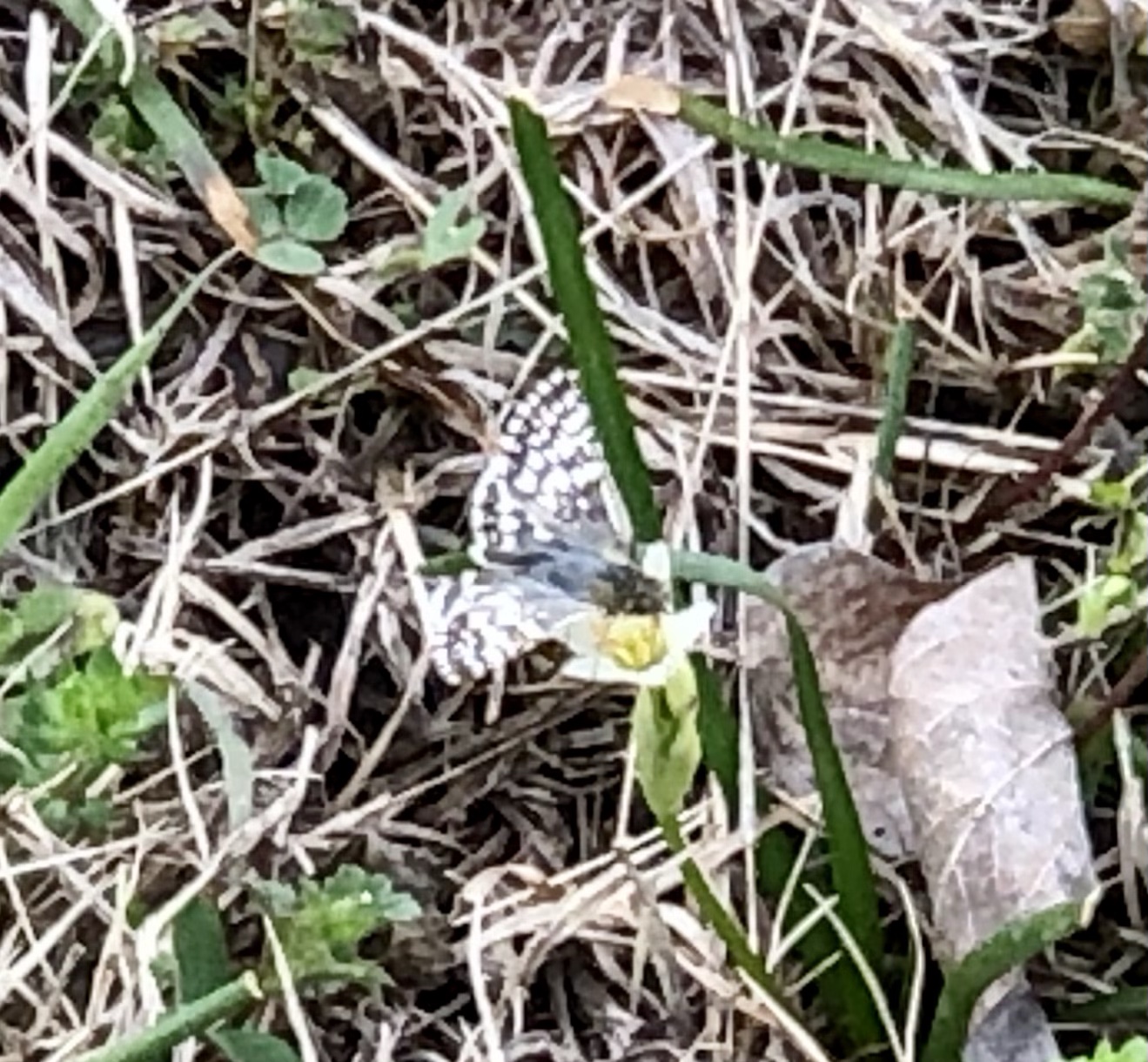
Everyone’s patience was rewarded, though. I saw a butterfly on the fence. It sat still. I got its picture! It was an American snout, the ones we saw so many of last week! Finally one stood still.
No, not a great photo, but you can see the snout!
After achieving that goal, I felt fine. Then, on my way home, one of the dragonflies I’d been seeing all summer finally stood still. I was really curious what they were called, but they are very dart-y ones.
Hello, black saddlebags!
These always look like two mating to me. I was happy to see what they actually look like. Cool insects, and another goal met.
I looked at my iNaturalist totals and was happy to see I hit 1800 observations today. I’d been disappointed not to get there last week. Luckily, there are lots of interesting things to see on the Wild Type Ranch, where we walked!
Most recent observations. Over 1800!
I think that’s good for someone who has jobs and stuff. Still, I look forward to lots more in the future. We hope to visit neighboring counties with few observations and see what’s there!
Here I am looking for bugs with my “helper.”
Glad I found my voice. Sometimes I just need to shut up. Hee hee.
It’s about time I paid tribute to some trees again, don’t you think? Enough of that introspection hoo-hah! Today I was inspired to write a little something about my favorite Texas tree, the cedar elm (Ulmus crassifolia), because it just keps showing me how wonderful it is.
Also these beauty berries keep telling me they are beautiful, so okay, I put them in here. There are cedar elm leaves around them.
The cedar elm was the first native tree other than the live oak that I learned to identify. Yes, before the Ashe juniper (the one that’s not cedar, but is called cedar). There was one in my neighbor’s front yard, and it looked so different from the other lucky natives the developer had left that I just had to look it up. Then I got confused. Is it a cedar, or is it an elm? Apparently, it’s an elm. Here, read what something official says:
The common native elm in east Texas where it is planted for shade. Called Cedar Elm because of the rough, cedar scale-like texture of the leaves and because it is often found in the western part of its range with Ashe Juniper (Juniperus ashei), which is locally called cedar. The Latin species name means thick leaf.
The ranch is chock full of them, which makes sense. We have their favorite terrain: near water, flat, and with a saucy hint of limestone to make them happy. The limestone is why they’re all over the hill country. The terrain is why they are all over Milam County.
Don’t confuse the cedar elm seeds with these inland sea oats. Of course you wouldn’t; this is obviously a grass, right?
Cedar elms are very easy to identify by their leaves, which have sawtooth edges and aren’t very big. Nature conveniently deposited one on my arm today.
Cedar elm leaves turn yellow just before they fall to the ground. Then they turn brown.
They’re deciduous, which makes me happy. That way I see a lot more in the woods at the ranch during the winter. Their leaves are dropping right now, and it’s like a gentle rain.
They make pretty displays.
As the picture above shows, they shed their little fruits and seeds at the same time that the leaves are falling. That’s a rare trait in the elm, and an easy way to know you have a cedar elm. Squirrels will eat them, if there aren’t nice juicy acorns nearby. Check this out!
By September or October, the branches are thick with clusters of flat, oval seed packets called samara. The samara looks much like a tiny green round ravioli, or those dots of explosive caps for toy guns of the past. These are the fruit of the elm tree, with the seed forming a reddish bump in the middle.
Here are little branches blown down by the wind that show the seeds and leaf size. Look at all those leaves on the patio (those are just from today, since the building staff obsessively sweeps).
Since these are native trees, they also feed lots of native creatures. Here’s some sort of tent caterpillar or something that has made a home on a cedar elm branch.
Looks yucky, but, yay Nature.
The seeds appear pretty prolific, because they can easily become over crowded. We have some that need to be thinned out, which is always hard for Ms. Tree Hugger. But they can really grow thick, which makes it hard for them to grow tall and strong.
I’m happy to have them, filling the cedar brakes (limestone landscape common in the center of Texas) with something to break up the monotony of those dang Ashe junipers!
I guess the family isn’t used to me really, really enjoying myself. But I did this weekend. I didn’t have to worry about work issues, people issues, or world issues. I just hung out with nature and relaxed. I recommend that.
Camphor-weed. I got that right!
I’m a taxonomists at heart. I like labeling things. That’s why I feel such satisfaction identifying things successfully on iNaturalist. It tells me where things belong (when I get it right).
Couldn’t figure this one out. Had to upload it as unknown! All the suggested flowers had five petals.
I also enjoy helping research on what grows in Texas, especially places that hadn’t had much coverage. While Jacob’s Well had lots of observations, since Master Naturalists volunteer there often, the place we stayed at had only three that weren’t by me, all from 2018! I did science! No wonder I was happy.
You can see where I walked!
Plus, I got to “spontane.” I could go wherever I wanted, as long as I wanted. No one told me to stop taking pictures, walk faster, or stop talking to the birds and cows.
This one had five petals. It’s a bluebowl or Giliastrumrigidulum. It’s only found in the part of Texas where I was.
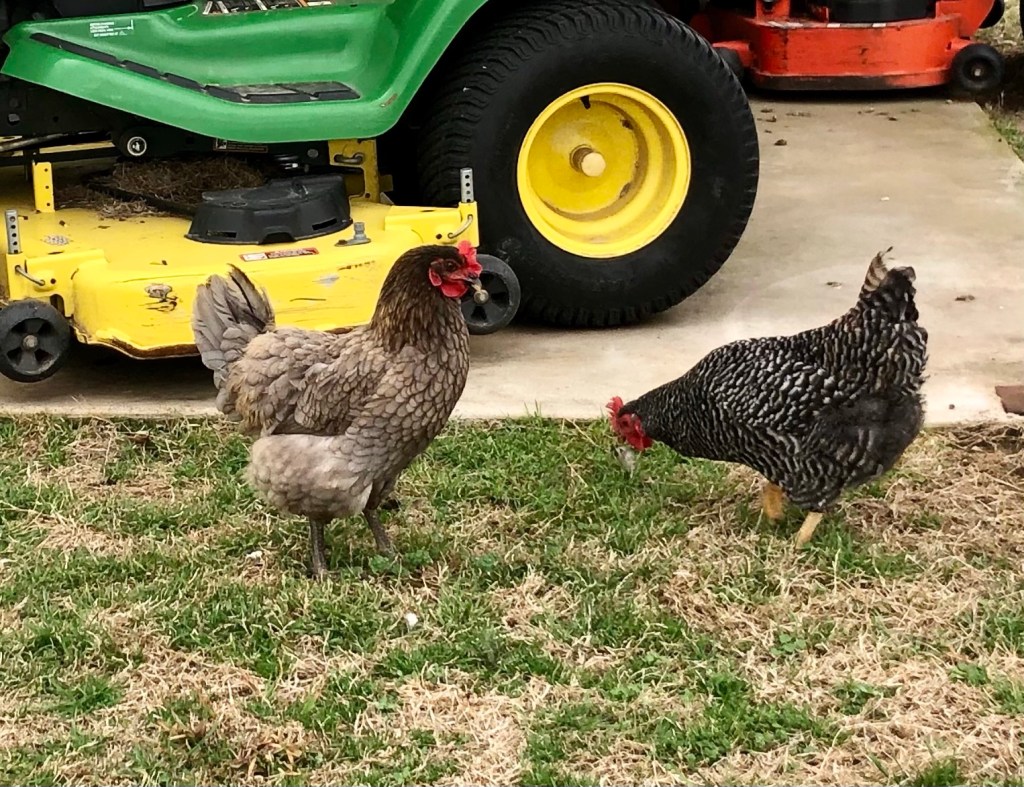
And there was something new around every corner. Yes. I WAS happy. I still am. I got to see my animals tonight, including the chicken that just doesn’t seem to lay eggs, ever.
Suna, that’s not a hen in that henhouse.
Before I get back to thinking about Kanban cards (and yes, I dreamed I was trying to capture my weekend activities in Agile stories), I’ll leave you with a few more interesting plants I saw. I can’t believe I made over 100 observations this weekend. All fun.
Biggest spray of cardinal flower I saw.
One lonely dandelion
Texas creeping oxeye. It was everywhere.
Trailing lespedeza.
Woolly vervain clump
Pink sorrel.
Edwards plateau five-eyes.
Scarlet pea
Pasture heliotrope (in a pasture)
Dakota mock vervain
Maybe they’re weeds. Maybe they’re wildflowers. But I know who they are!
I say to you, go find your fun. Now more than ever, we need to balance our lives and bring in some fun. Have a good work week!
Switchgrass. I even got a GRASS right! This was in a beautiful prairie restoration with many blue stems, gramas, and other native grasses.