Book Report: How Stella Learned to Talk

Rating: 5 out of 5.

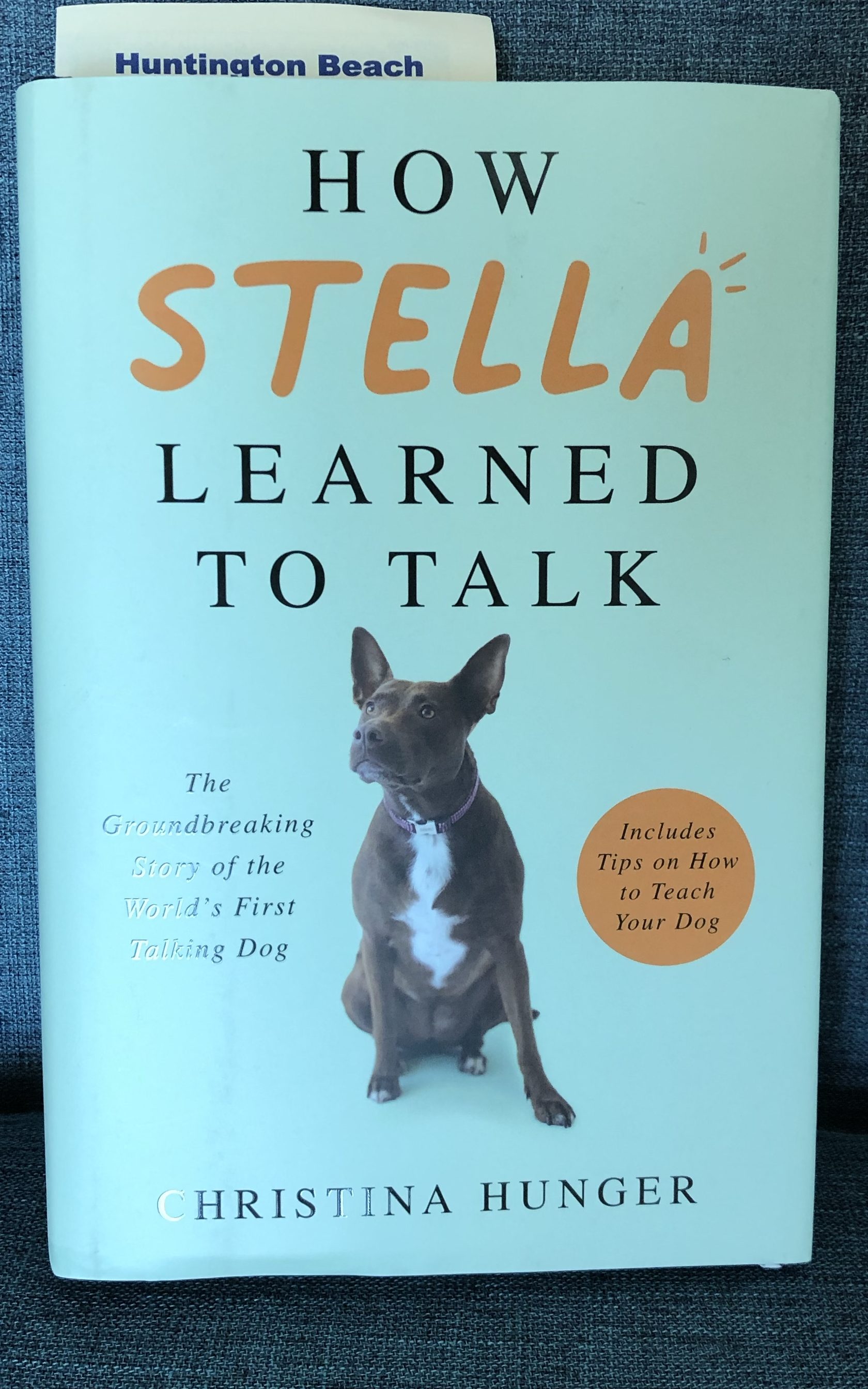
Oh goodness, what’s not to like? A book about a dog named Stella who’s half American Cattle Dog? A book about language acquisition? A book with scientific evidence to back it up? Nice people to read about? For all the “yes” answers this book provides, I rather raced through How Stella Learned to Talk: The Groundbreaking Story of the World’s First Talking Dog, by Christina Hunger. I was pretty darned impressed and excited with all I learned.

I was not out shopping for a dog language book, but when I saw it, I had to get it. Like the author, I’ve always thought animals had a lot to say to us and were probably often frustrated that we were not doing a good job understanding their signals. Unlike me, she was a newly certified speech and language pathologist when she got her beautiful puppy and happened to work with augmentative and alternative communication methods (AAC), which allow many nonverbal people to communicate with their families and friends using technological aids.

Hunger was also curious, and when she saw the puppy going through similar developmental phases to babies and toddlers, she wondered if they could learn to communicate similarly. She uses buttons on the ground that “say” particular words, and slowly enabled Stella to build up a vocabulary.

What impressed me was when Stella began to string together words, use repeated words for emphasis, and create novel strings. That dog can talk!

This is a charming book, and you get to enjoy Hunger and her husband, Jake, as the fumble around figuring things out along with Stella. Well, they aren’t fumbling, since Hunger has the background to know things that are likely to work, just not exactly how they will work or how long it will take.

Knowing that many people will want to start working with AAC and their own dogs, there are hints for working with your dog at the end of each chapter, and they really make a lot of sense to me. I just love how she discourages the use of treats, forcing dogs to use the buttons, and other means of making them use their words. She found that Stella was motivated to communicate on her own and did better if allowed to figure things out herself.

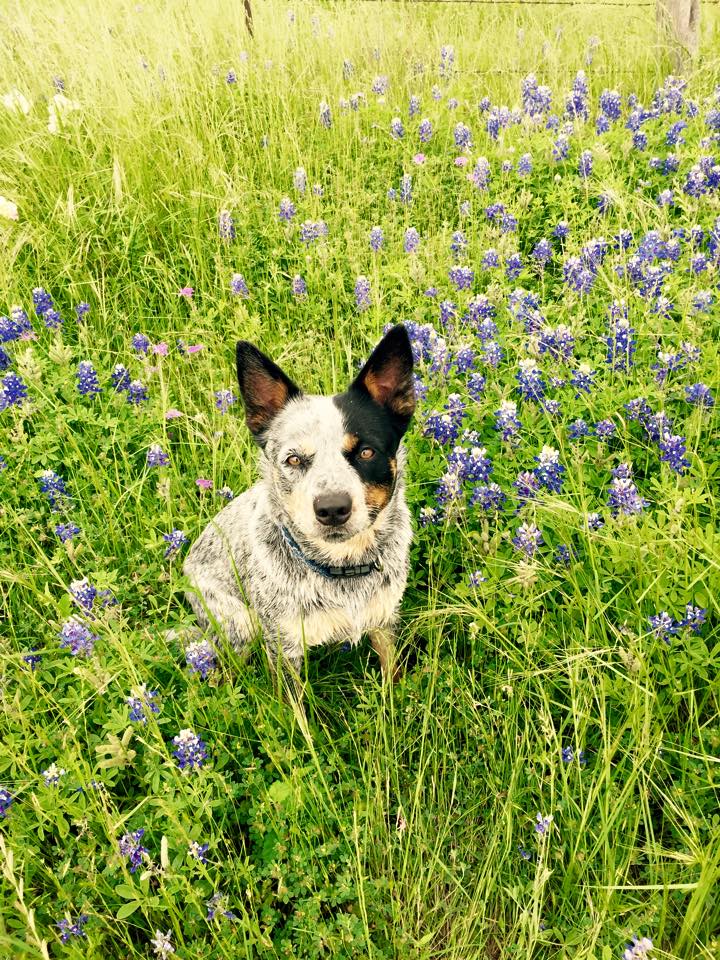
This was our precious Stella in 2015. I never have stopped thinking about her and mourning her passing.

Hunger also points out that they let the dog have an opinion, include her in decisions, and treat her as someone with an equal say in the household, even when everything she wants can’t happen. Respect for Stella has certainly led to a happy family.

That reminds me so much of how we work with horses, where we pay attention to their nonverbal “statements.”

I’m sure it would have been fun to try this with our own Stella, back when we just had one dog. I’m not sure our household is cut out for AAC, but I certainly can pay more attention to our dogs’ cues. And hey, if you’re interested in learning more, you can visit the Hunger for Words website or search for Hunger4words, their Instagram page.

Book Report: Susan, Linda, Nina and Cokie

Rating: 5 out of 5.

With all this extra time at the beach and having mostly run out of things to do that actually appeal to me, I’ve had a lot of reading time. I bought three books on Amazon a few days after we got here, and have already finished two of them.

One fine book

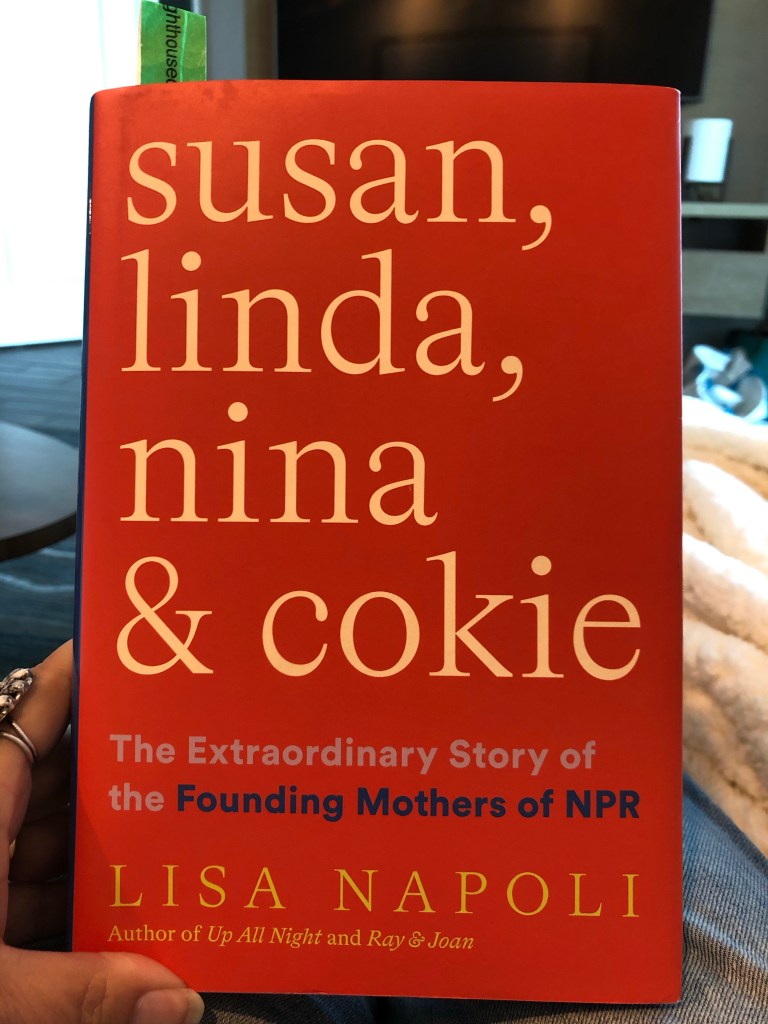
The minute I heard that Susan, Linda, Nina and Cokie: The Extraordinary Story of the Founding Mothers of NPR, by Lisa Napoli was out, I ordered it. I have listened to National Public Radio for many years, even when my kids were young, because they would listen to stories and stop the chatter briefly (love those kids, but they had a lot to say…perhaps that’s from being related to me?). I knew they’d had some troubles at some point, but I started listening long after that. What I did know was that I loved listening to all the varied voices I heard, especially Susan Stamberg, Linda Wertheimer, Nina Totenberg, and Cokie Roberts.

What a fascinating story of how women came to be “allowed” to be public-facing voices in the news media! And what interesting people these four are/were! My favorite has always been Nina, because I love hearing her describe what goes on in the Supreme Court. It’s like a soap opera. I knew her father was a famous musician, but it was great to learn his story along with hers. And Cokie Roberts, now there’s someone I probably would have hated in college, to my detriment, since she was actually incredibly talented, versatile, and smart. Susan broke the ice for everyone else, and her story of courage and tenacity is most inspirational. It’s similar with Linda, who was so focused on her goals that she just made them come through.

The stories about the history of NPR are just as captivating as the stories of the founding mothers’ lives. A real parade of quirky, visionary, and sometimes not-so-helpful leaders showed up and left. The dude who just let them go bankfupt because NO ONE was watching the money, Frank Mankiewicz, was the villain in the book, and he never shut up after his big screw-up. What impressed me the most was how most of them remained fiercely devoted to NPR even after they left or were shown the door. Public radio is very popular with its fans!

Napoli does a really fine job of weaving fun anecdotes and insider stories about all of the characters in this group biography, and it makes you feel like you know these inquisitive, tough, chain-smoking news geniuses yourself. I appreciate that Napoli doesn’t make these women into saints, but shows how ruthless and cut-throat they could be at times. Their devotion to the news and the truth is fierce and strong, as apparently is their ability to love, since they all seemed to have great spouses to cheer them on.

Yep, this book impressed me and brought me a lot of joy. It easily took my mind off of what is going on in the world around me, but let me pretend I was paying attention to the news; it was just news in the 70s and 80s.

Book Report: Yellow, the History of a Color

Rating: 4 out of 5.

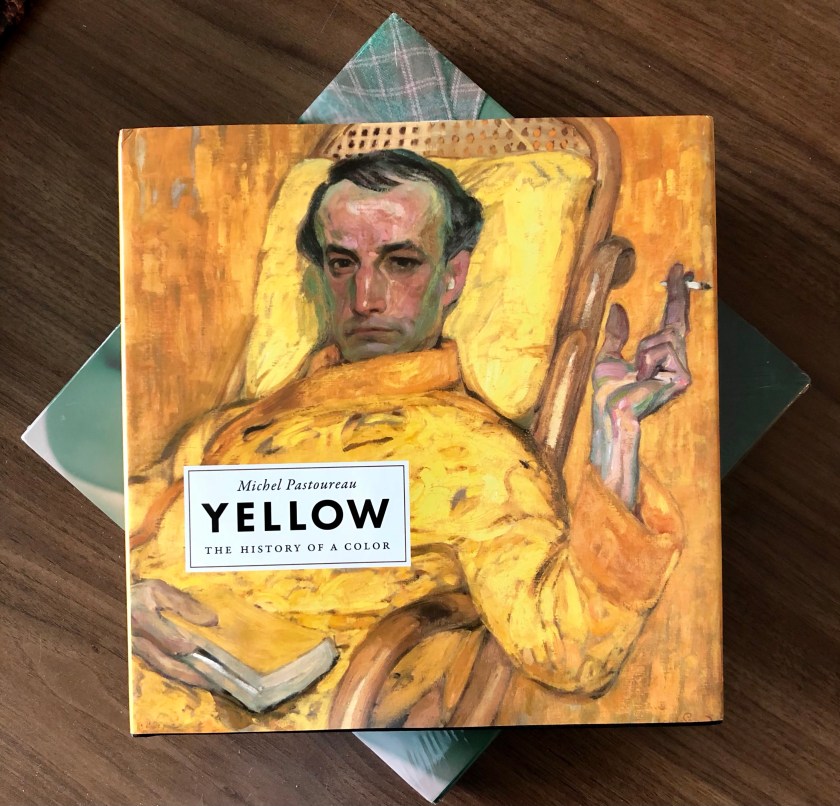
There’s a reason you haven’t had any book reports in the past week or two, and that’s because it’s taken me a while to get through Yellow, the History of a Color by Michel Pastoureau (2019). This is one in a series of works by this French author, all of which detail how a particular color has been used in European history. I’ve already done his book on red and his book on blue (apparently before I started this blog), and I still have green and black to go through. Not only are these books fascinating to read, but they have rich illustrations, are on thick, quality paper, and look darned good on the coffee table.

The work of art on the cover reminds me so much of my friend JD in New York. Such ennui.

The cover of the book shows a painting called “Study in Yellow,” I think, and it depicts a man sitting in a wicker chair, dressed in a yellow robe, holding his finger in a yellow book to keep his place, and dangling a cigarette out of the other hand. He is looking right at the observer as if to say, “Leave me alone in my foppish revelry.” It’s a good image for the color yellow, which has seldom been a popular color, no matter how cheery yellow flowers are.

Nonetheless, I got greenish-yellow alstroemeria to decorate the condo while we are in South Carolina (greenish yellow is particularly unpopular through history).

One of the most important issues surrounding yellow is that its association with gold at least got it some popularity in ancient times. And, it was one of the earliest colors humans could draw or dye in. So, it did okay, especially with the Greeks and Egyptians.

As time went by, yellow got more and more negative associations. Judas, who betrayed Christ, always wears yellow in paintings (though the Bible didn’t say anything about that). Countries made Jewish people wear yellow hats, insignia, or clothing, long before World War II. Yellow was associated with liars, cowards, prostitutes, and other people of questionable morals, including musicians. It got pretty depressing for a long time. Protestants didn’t help, with all their modesty, dislike of adornment, and fondness for black and grey. Fun times.

Painting by Giotto, showing bad ole Judas with his yellow robe, red hair, and sack of betrayal coins in his bad ole left hand. Plus a Devil.

Thank goodness for the 18th Century, because everyone was happy and people could wear yellow for fun. Then came the 19th and 20th Centuries, which were somber and drab. And thank goodness for painters who used it more and more. There’s a lot of useful information on pigments and dyes, and Pastourneau theorizes that one reason people didn’t wear much yellow is that unless you used expensive colorants like saffron, most yellows were drab and dreary, and not very colorfast.

This painting by Jan Steen is one of my favorites. Not only does it show that Dutch peasants wore yellow, but there’s a dog, a broken egg, and a kid looking right at you.

What’s the good news? Yellow is back in this century, and it’s used more in clothing, homes furnishings, and other areas. I know I personally have a yellow bedroom, and it cheers me up. I’m not down on yellow! Living on the ranch, surrounded by yellow flowers, golden hay and grass, golden autumn willow leaves, and such, I have come to love yellow. So, I’m glad it’s back!

There is so much more about yellow in this book that I can’t summarize well enough to include; it’s worth getting or borrowing from the library. It’s not a good audio book, because the illustrations are half the enjoyment. I’m happy that I still have the green book and the black book to read later.

Much of this morning, you could not tell where the sky stopped and the sea started.

But, now I’m going to finish my knitting project or ELSE, and do some serious work on what’s going on with my mental health. At least I can ruminate with an ocean view!

At least there’s foam to brighten the gloom.

Book Report: Inclusion

Rating: 3 out of 5.

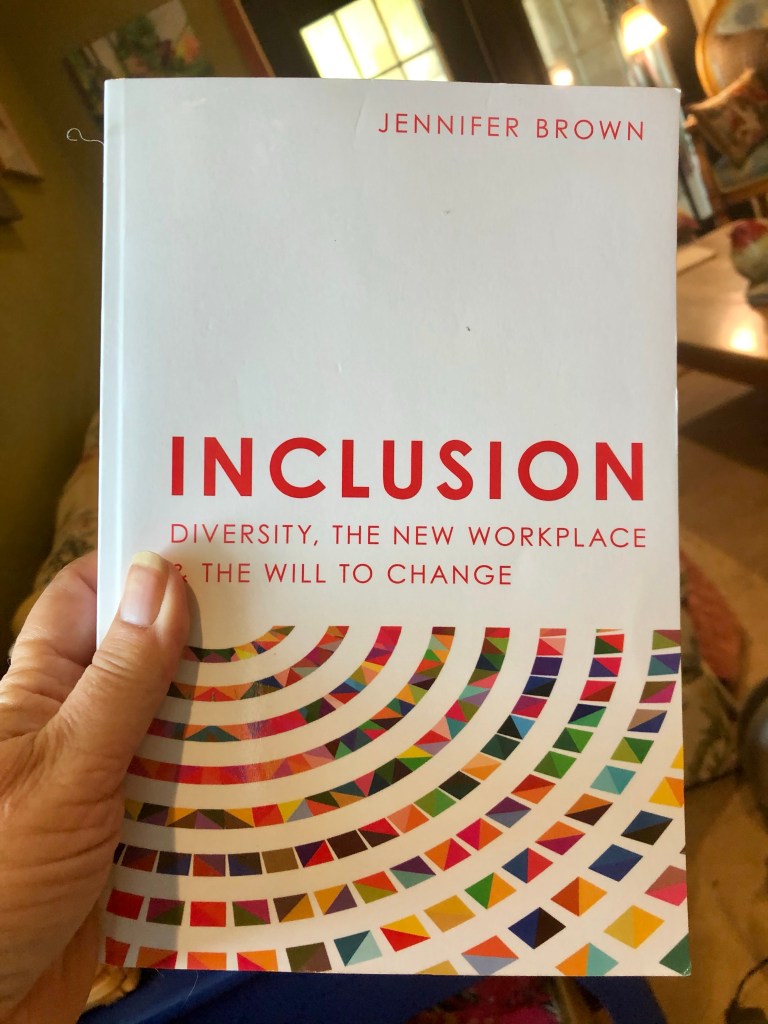
I just finished Inclusion: Diversity, the New Workplace and the Will to Change, a 2016 book by Jennifer Brown of JBC (Jennifer Brown Consulting). I had a kind of odd experience reading it. I’d be all interested in a part, then it would feel repetitious and I’d zone out. That’s unusual for me. There is lots and lots (and let me say it again, lots) of information here that would help any company wanting to increase inclusion and diversity among the workers.

One thing I found very useful was that Brown stresses that the younger people and non-people managers need to be both consulted and listened to, since that’s where the diversity is usually found. Including these voices and perspectives in decision making is one very helpful way to create a more inclusive workplace.

In fact, Brown had a message just for me:

The golden rule, treating others as you would like to be treated, is out. The platinum rule is in: treat others as THEY would like to be treated. You will have to learn to ask what that entails.

(p. 46)

I’ll be revising all my little sticky notes at once.

Since I work with ERGs (Employee Resource Groups) where I work, I especially enjoyed Brown’s history of ERGs and thoughts on their future. She rightfully notes that you can’t just start them and ignore them; they need to be nurtured and their contributions valued. Employees also need to know that the work they do on ERGs reflects well on them. There’s also information on how ERGs may change in the future, once the more diverse and inclusive workspaces become the norm.

Someday all offices will look like stock photos, but maybe with someone over 30 and with a woman doing the talking. Image by @criene via Twenty20.

And then, what do you do with all the straight white cisgender men? Do you leave them out! Not at all! I love how Brown carefully lays out roles and opportunities for participation and inclusion in ERGs for them. She knows perfectly well that a lot of her readers will BE these guys, many of whom want to help make a better workplace for all, but don’t want to be perceived as trying to dominate. I also got quite a few “aha” moments out of a section (which I’d like to share at my workplace) about how helpful executive sponsors can be when they really understand the role and embrace it.

And about those open offices

My little heart welled up with satisfaction when Brown talked about whether the new open-plan offices really spark creativity, foster communication, and increase transparency. This is done for millennials AND because it costs a lot less than cubicles or enclosed offices. A large survey found that the most satisfied workers had enclosed offices. And that wasn’t just introverted technical writers like me!

Let me just slip in that I’ve not been impressed with the industrial/open setup we have where I work, mainly because I so rarely ever see anyone using those open collaboration areas. I’m glad, because when you do, everyone can hear you and it’s disruptive. When we were all together, it was really distracting when everyone around you was on a separate Zoom call, and you could certainly hear everything. So executives would have to go hid in tiny “focus rooms” to talk about sensitive issues, where they could not use their large multiple monitors and other helpful things. Oh well, there I go again.

No where to talk privately, nowhere to hide. My nightmare. I do like red, though. Image by  @Luis_in_nyc via Twenty20

The really helpful parts of the book that I’ve just talked about are why I’d recommend this book to anyone interested in creating a workplace where everyone’s talents, perspectives, and abilities are valued. I did find myself becoming annoyed by how much Brown talks about how great her own company is, and I am not at all sure why, but some of her attempts to share her personal stories fell a little flat with me. You’d think I’d be feeling all empathetic to someone who also wanted to be a classical singer (she did opera, I did choral music) but ruined their voice.

Well, we can’t like everyone right off the bat, can we? And maybe I had too much in common with her, so she annoyed me. I get told I brag a lot, so that’s a grain of truth I’ll mull over. Also, why do I turn everything into self-examination? My introspection can even annoy me!

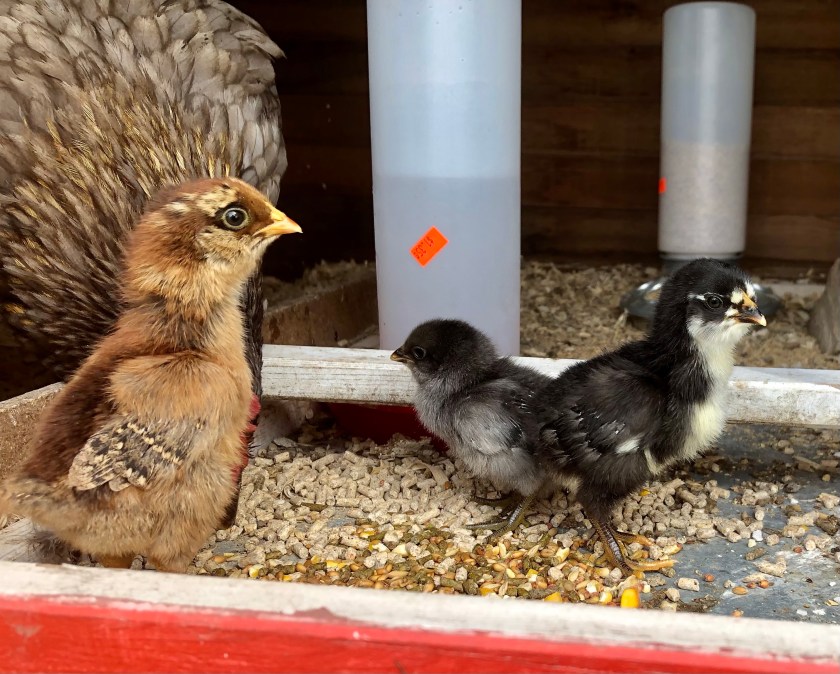
Here, have a chick break. I think tail feathers are coming in. Here, they are all excited about Star’s food. Go back and eat the chick food!

Back to the book, shall we? It has a glossary that has got to be helpful for Boomers who don’t know all the current words for concepts around diversity and inclusion like cisgender, executive sponsor, LGBTQ, etc. I even encountered some new terms, like this one:

Holacracy: an organizational management strategy in which a company’s governance and decision making are distributed evenly among self-organized teams. Individual employees are viewed as both a whole group and part of a larger group.
[There aren’t many of these, she says.]

(p. 192)

I think many parts of this book are designed to make you feel uncomfortable, and that’s intended. Brown is yet another expert who wants us all to get uncomfortable with discomfort, which is what many groups of people have no choice about. It’s a new world, and it takes flexibility and some vulnerability to embrace the good parts of it, while accepting that it isn’t perfect either.

I figure, I either accept it or I retire, like the remaining few of us younger Baby Boomers!

Unconscious Bias? Just Ask Marcus Aurelius

My spouse, Lee, has been studying Stoicism for the past year or two. He really enjoys The Daily Stoic podcast, by Ryan Holiday, who happens to be my boss’s best friend. Small world! Who knew? Holiday has a new book of meditations out, with new translations of the Stoics into modern English by Stephen Hanselman. Of course, Lee’s enjoying it greatly. He even got a special journal to record his own thoughts. That man LOVES to journal almost as much as I love to blog!

So, the passage for yesterday was:

Do away with the opinion I am harmed, and the harm is cast away, too. Do away with being harmed, and harm disappears.

Marcus Aurelius, Meditations, 4.7, as quoted in The Daily Stoic, p. 119.

This is one of those topics we linguists love, especially those of us, like me, who are enamored of pragmatics. Not only do words have different meanings in different contexts, but tone of voice and intention can also change meanings. PLUS, the person hearing the words will interpret what is said through their filters. The same sentence with the same intonation can engender a hearty laugh or a world of hurt, depending on how it’s taken.

You have to like a guy who was a good horseman. From Britannica.

Assuming good intent is what it boils down to, right? It’s just like with the Little Free Library story yesterday! Susan could have interpreted the stolen books as an act of aggression or malice, but she instead chose to interpret it as a cry for help. I often find myself interpreting comments that could be taken as mean or passive aggressive as being the result of some issue I have no clue about. Thus, I do away with the harm, and it’s gone. Easier said than done sometimes, I must admit.

Continue reading “Unconscious Bias? Just Ask Marcus Aurelius”

The Unpopular Kid at School

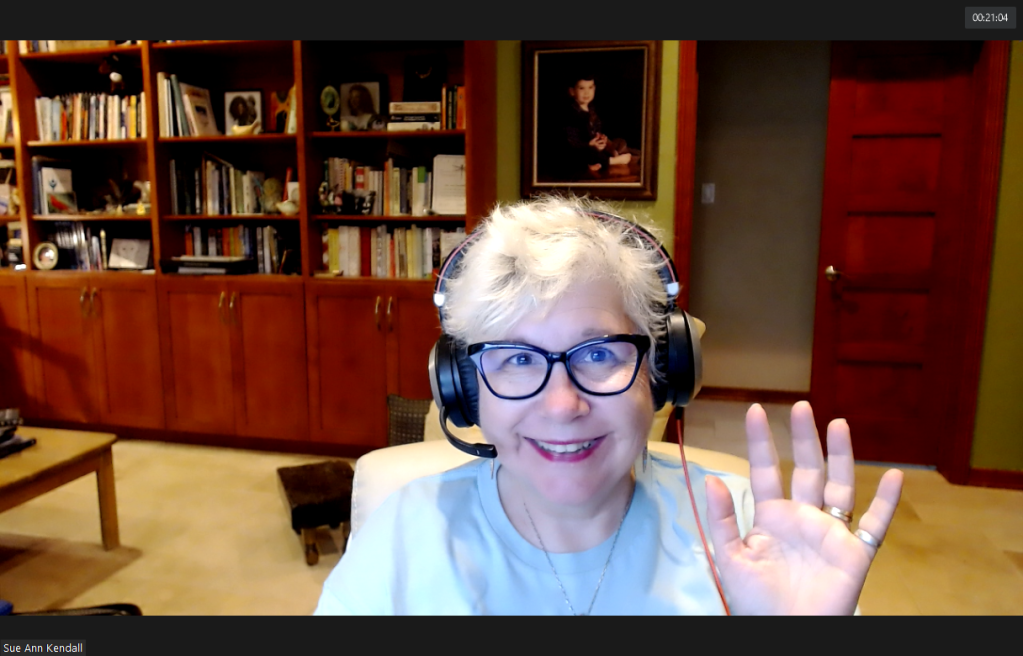
That’s who I feel like this morning. We invited a lot of people to join a book club on unconscious bias at work. There are two meetings, one early and one at mid day, so people in different time zones can attend. There were at least ten people who accepted, were tentative, or hoped to show up. It’s halfway through the meeting, and the only thing I see on Zoom is darned familiar looking.

That sure looks like me.

It sure is easy to fall into old patterns, insecurities, and negative self talk. Luckily, it didn’t last too long. I’m mature enough to know that people were busy, or they are too uncomfortable with unconscious bias to want to talk about it (very likely), or they forgot. I’m not the center of the universe, after all. I think I’m over somewhere near the edge, to be honest. Still, I have lots of other stuff to do besides Zoom, so it was irritating to have to just sit there and try to look cheerful, in case anyone showed up.

Ah well. I’ll end the meeting and see if anyone shows up at noon! I think some of the more interested people are on the West Coast, and by all rights they should still be asleep!

Time Marches On

Since I wrote the above, I’ve received a lot of kind feedback, most of which says it’s hard to get people to show up to book clubs at all. I think the only reason we had a good group at our previous work one is that we started pre-pandemic in person. The other reality is that unconscious bias is a difficult topic that many people might be reluctant to discuss. That’s valid.

Our learning and development group came up with some other ideas for discussion that aren’t book clubs, so we’ll try those, too. We just know people need a chance to talk about workplace concerns AND get to know each other, so we’re going to keep trying!

Hooray!

We had a great discussion at the second book club meeting! The West Coast contingent did show up! So glad I was patient. I enjoy facilitating meetings so much. It’s probably what I would do for a living if the introvert part of me didn’t get so darned exhausted from it. I truly get a LOT from hearing what other people think, and it always gets me thinking more. I’m going to really enjoy our unconscious bias book club! We’re reading The Leader’s Guide to Unconscious Bias, which has so many good questions to talk about!

Book Report: The Nature of Oaks

Rating: 4 out of 5.

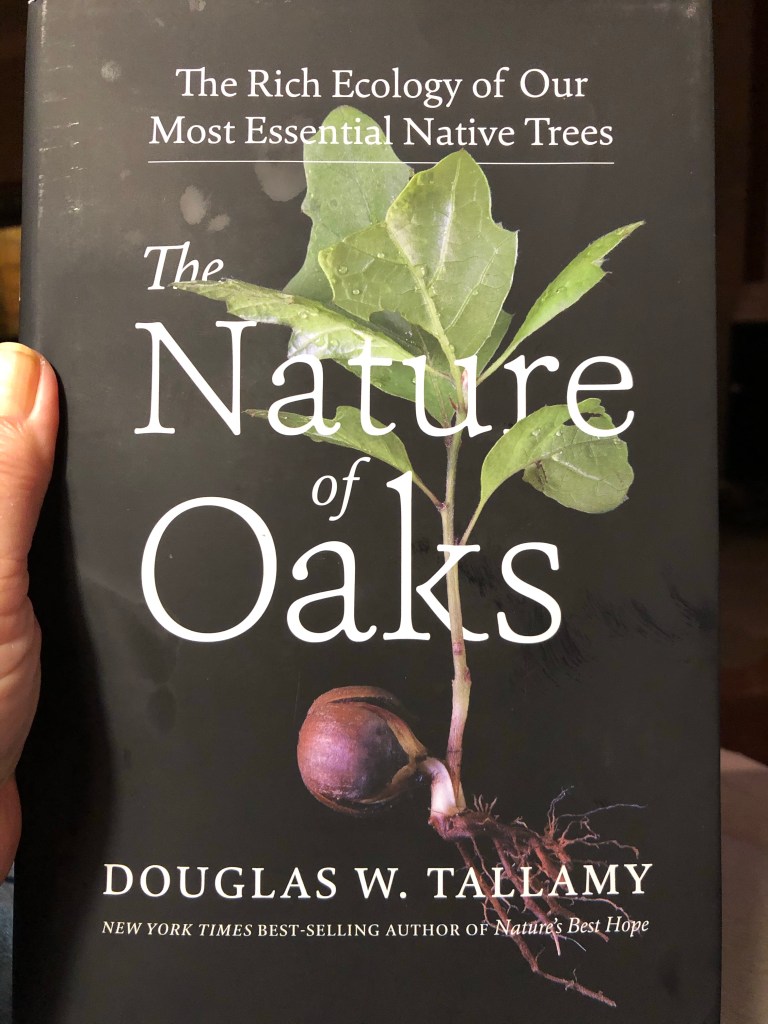
Admission: I only gave this book 4 stars because I wanted it to be longer. I dwell on every word Doug Tallamy writes, so I selfishly want more of them. The Nature of Oaks: The Rich Ecology of Our Most Essential Native Trees is his latest book, and it was only published two days ago. I snatched it out of the packaging and started reading it immediately! I’m really glad Tallamy mentioned this when I heard him speak in February, so I knew to pre-order.

Now, not only is Doug (I’ll call him Doug, because I consider him a friend, though I’ve never really talked to him) my favorite current naturalist writer, but oaks are my favorite trees. How much better can it get?

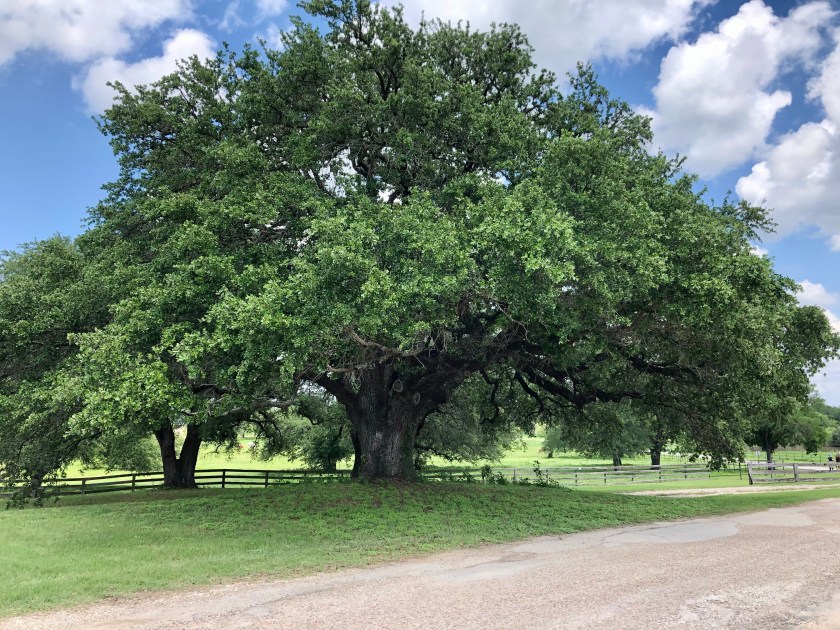
Oak trees and I go way back. One of my mom’s favorite stories about toddler Suna is that she used to go outside and find me talking to the trees in my yard. I thought there was someone in there, you see. I spent my childhood in something like a paradise for plant lovers, a small cement-block house on two lots, covered with large live oaks, along with a few other lovely native Florida trees. I was, however, not at all fond of pine trees (ironic, since my grandfather worked for a company that planted pines for paper-making). I liked oaks. They always had something going on, with all that Spanish moss dripping off them, possums and squirrels running around, and of course an endless parade of songbirds.

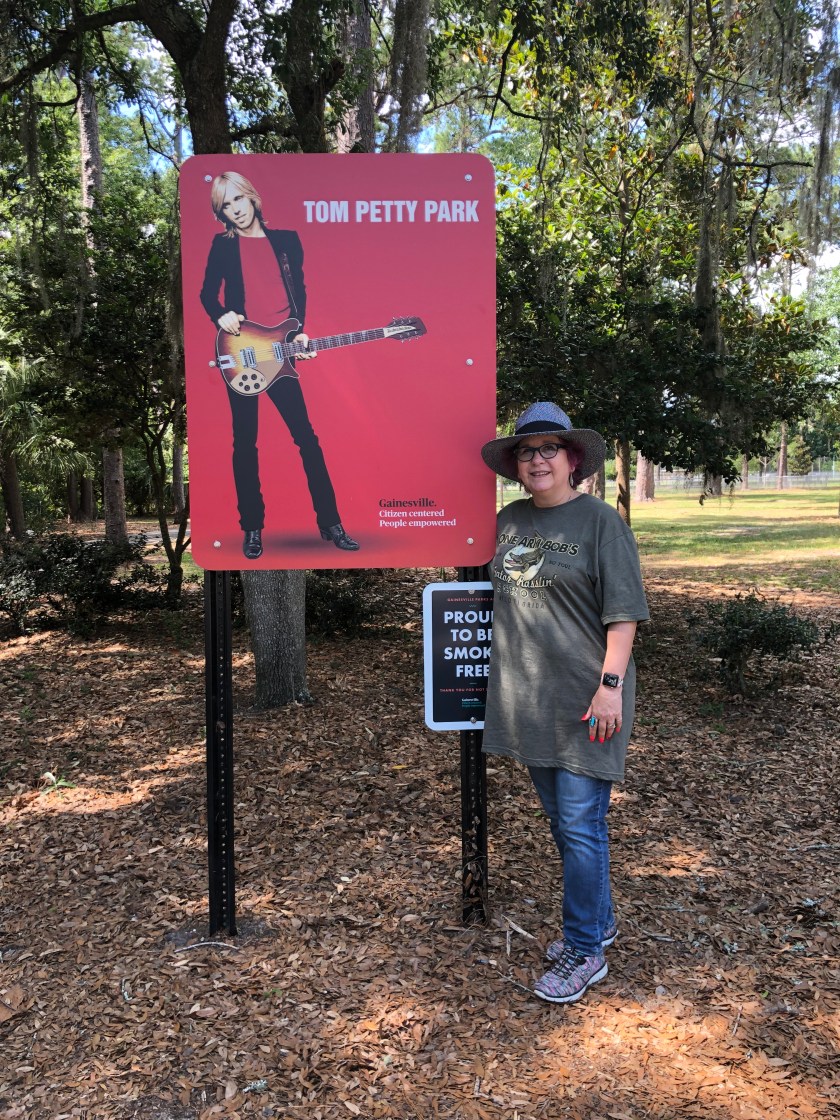
My most recent visit to some of my favorite trees, at the park I played in a child (as did Tom).

I loved those trees like family members, as I followed my dad around helping him landscape the yard and make lovely flower beds around the oaks, all mulched with their leaves. Little did I know he was doing the exact right thing by planting the dogwoods, redbuds, azaleas, and such under the larger trees to mimic a natural understory. Most important, the leaf mulch supported all sorts of wonderful insects that contributed to the ecology of my little world. Thanks, Doug, for confirming my dad’s innate wisdom!

The oaks and I continued our love affair, and I continued to visit ones I particularly cared about as long as I lived in Gainesville, and I still check to see if certain trees are still there (most are, 50+ years lager). And when I moved to Illinois and then to Texas, I learned about more and more types of oaks, which shed their leaves in the fall like normal trees (not like live oaks, who shed in the spring). My favorite tree in my first yard in Texas was a bur oak we planted, of course with an understory of Texas mountain laurel and native plants. It’s a gorgeous specimen now.

All this background is to explain why I was so happy this book was written. It turns out, I was right, there was “someone” in my oaks! They support more moths and other insects than any other type of tree. They teem with life! I enjoyed learning a lot about the various caterpillars and moths Doug finds in his Pennsylvania trees (he also talks about other areas, too, though).

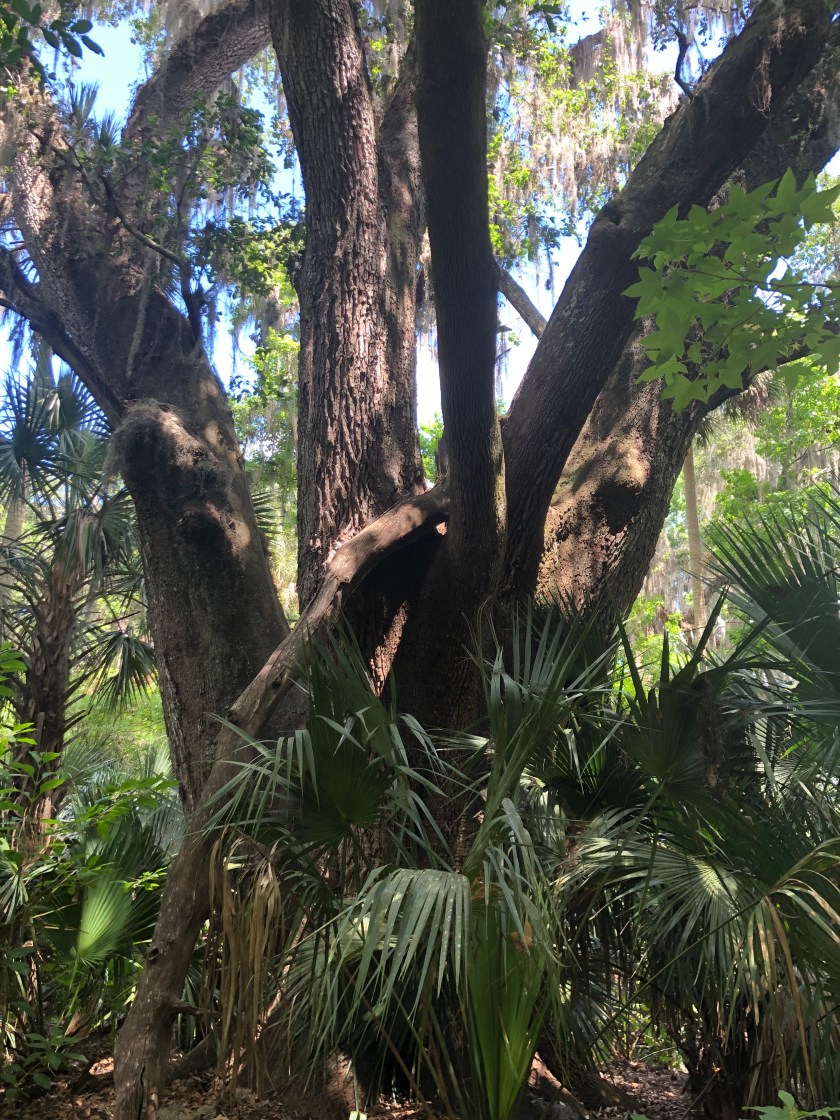
An oak out in nature in Florida

He also satisfied my curiosity as to what the heck oak galls are, what they’re made of, and who lives there. Well, little larvae live in there, but the galls are somehow inspired to grow from actual oak material by the wasp who lays her eggs on the leaf buds. All sorts of insects want to eat the larvae, but galls protect them well. Then, when they leave, they make a nice hole, which then can be used by certain ants as little homes. I never knew that!

So, there’s just one example of the kinds of things you learn about amazing oak trees in this book. It’s enough to make you want to run out and plant some. That’s exactly what Doug wants you to do. Like to many trees, their numbers have diminished. We need them to store carbon, to support life, and to clean the atmosphere. You’ll find fun information on starting oak trees from acorns, as well as comprehensive lists of the best oak varieties for different parts of the US (by size, too).

You’ll also be sure to enjoy the color photos of trees, insects, and all the denizens of the oak world. I guess Doug’s now famous enough that he gets to have color photographs in all his books. We win!

This little book is a treasure, and I’m so glad it confirmed my bias toward the gentle old trees I’ve loved my whole life. I plan to take the book off its shelf and hug it occasionally. It’s my friend, I guess.

Want to read more by Doug Tallamy? I have a review of his previous wonderful and inspirational book, Nature’s Best Hope that you might enjoy.

Book Report: Everyday Bias

Rating: 5 out of 5.

Did you think I was finished with unconscious bias books? You’d be almost right. I just have this one more book to talk about before I move on to books about diversity and inclusion. Totally different, yep. This one’s really good, though, even though it talks about many of the same topics as the previous books did. Everyday Bias: Identifying and Navigating Unconscious Judgments in our Daily Lives (updated edition), by Howard J. Ross (2020) is guaranteed to get you thinking, challenge you, and to my immense relief, offer some hope for humanity.

I really like the “voice” of Ross, which shines through all the book’s content. You feel like you’re right there with him figuring out that we’re all acting on our biases 24/7 and that’s just the way we are built. He shares lots of data about our friend, the amygdala, and how it’s apt to put us on autopilot any time something stressful or scary happens. And he notes that we can’t make that thing stop!

Somewhat garish cover, but great book!

Ross also reminds us that we can’t exactly help where we were born, in what community, and to which parents. All of these things get us wired in certain ways that we can’t control. I like that he declares it a waste of time to constantly apologize for being biased or to poke at people for having them. His best point in the whole book is that by constantly reminding people of the harm their biases causes others (like women telling men how they’ve been harmed, black people saying the many ways white culture has affected them) we aren’t going to make things better. The reverse is often the case, and can perhaps explain all the racist and sexist groups we are hearing from more and more these days.

I think it’s true that some folks are just going to continue on their merry ways with their biases against certain other people and groups, and there’s not much we can do about it. No one’s immune, so we are just gonna have Jews who are biased against blacks, gays who dislike Muslims, or so on and so on. No group of humans is without us versus them ingrained in us, because it’s normal.

Luckily, Ross reminds us of neuroplasticity, which is the ability of our brains to change. He then spends the last part of the book providing clear, helpful ideas for working to mitigate the effects of our bias in the workplace and in our personal lives. He gives great information on six things to work on in Chapter 7:

  1. Recognize that bias is a normal part of human existence. (Stop judging others so much and work on your own self. I have a few super-judgy trolls in groups I maintain that need this.)
  2. Develop a capacity for self-observation. (It turns out that relaxing, meditation, etc., can calm that amygdala right down and let you think about your thinking.)
  3. Practice constructive uncertainty. (Stop to figure out WHY you have a strong reaction to something.)
  4. Explore awkwardness and discomfort. (Figure out your triggers.)
  5. Engage with people in groups you may not know very well, or about whom you may harbor biases. (Get to know an Other!)
  6. Get feedback and data. (Facts!)

In the next chapter, he lists eight ways to work on eliminating bias in hiring, promotions, and that sort of thing in businesses. It’s quite helpful.

And finally, what warmed my heart is that Ross truly feels that if we pay attention to our biases, we can create a better world. He talks about how what appear to be groves of individual trees are in reality one big, connected organism (as I’ve read before), and uses it as a metaphor for people:

We look at the “other” as if he or she is separate from us. We see the other group as a threat. And yet, we are all deeply connected. We share a common destiny on this planet. We all seek pleasure and do our best to avoid pain. We all want what is best for our children and grandchildren. All of us are the products of that which we have seen before. And we are all (for the most part), unconscious about the “programming” that runs our thoughts and our lives.

We can transcend. We can, through discipline, practice, and awareness, find a new way to relate that honors our differences yet also builds upon our similarities.

Howard J Ross, p. 148

I think he finally put into words all the reasons why I have been so doggedly introspective for the past few years. I want to GET THERE NOW and do my part to fix some of my ingrained biases. It’s not possible to know all that’s going on in our busy brains, but with at least some of us trying to raise awareness of some of our areas of bias, it’s a start.

Fine book. Made me feel empowered.

Book Report: A Short History of the World According to Sheep

Rating: 3 out of 5.

I buy most of my books from Amazon, and they, of course, keep track of your buying history. They know I like books on wool, sheep, knitting, and so on, so I got this book, A Short History of the World According to Sheep, by Sally Coulthard (2020), on Amazon’s recommendation. I also thought the cover was pretty.

Beautiful cover, isn’t it?

Absolutely, I was right; the cover is great, a pastoral scene of grazing sheep by Nathan Burton, beautifully printed on textured paper. The book is a great tactile experience all around. These days you don’t often get books bound this well, so kudos to the Head of Zeus Press, whoever they are. I guess quality bookbinding is still alive and well in England today.

This sheepy little tome is indeed quite British, which lends a lot of charm. There are so many mentions of the names of tiny towns and villages in England, Scotland, and Wales that I got an urge to go look up photos of the whole lot of them. Sadly, there are no photos of sheep or villages to be found, though each chapter begins with a really lovely etching of something to do with sheep or wool.

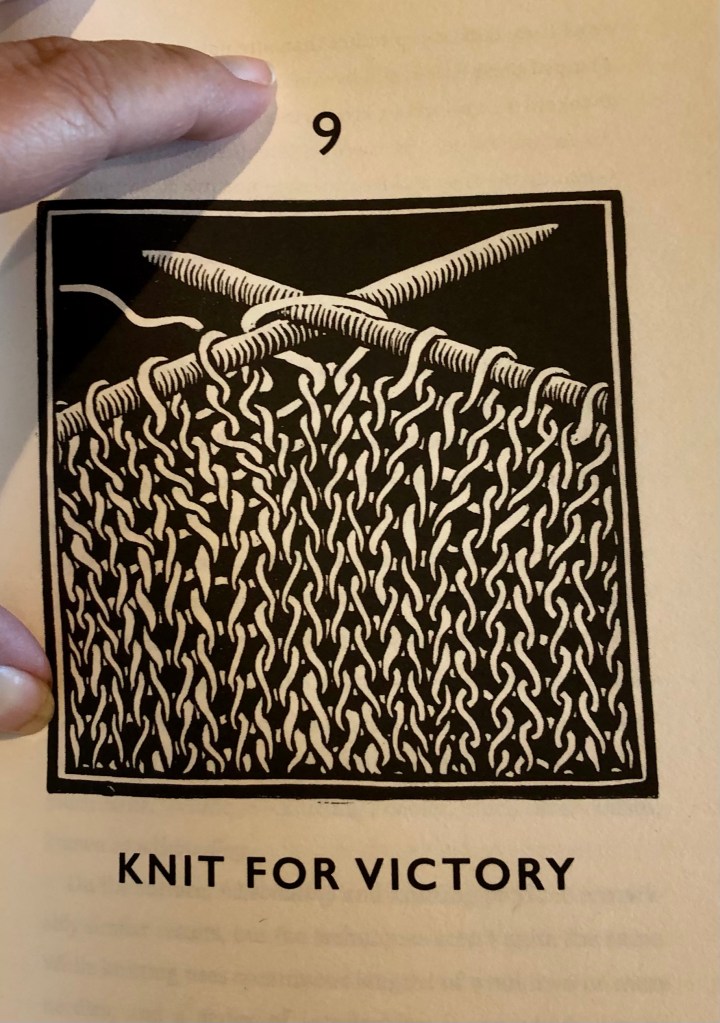
The illustration of the chapter on wartime wool use.

I guess I should get around to Sally Coulthard’s content. It’s quite charming, and just full of fun tidbits about sheep, wool, word origins, and such. There are a LOT of English place names that refer to sheep and wool. And a bellwether was not a type of stock originally, but a very tame neutered ram who wore a bell to lead sheep where the shepherd wanted them to go. I want a bellwether. Well, I want any kind of wether, actually. I am so fond of them.

Each chapter in the book moves along through history and tells how sheep and humans have coexisted throughout history. There’s no doubt about it: sheep have shaped human life in many ways. They are darned useful animals, and Coulthard’s delightful way of telling stories about them makes for a pleasant read. I admit I could have used more details, but then, I’m a detail-oriented reader.

If you’re like me and enjoy reading about history through the lens of one particular commodity (after all, I’ve read books on salt, the pencil, various colors, and so on), you’ll get a lot out of this charming book. If you get bogged down by a bunch of place and people names with which you’re not familiar, or really aren’t enthusiastic about sheep and wool (how could you?), then you may want to go find another topic.

I’m glad to have read this one, as it cleansed my palate before starting the last unconscious bias book in my current stack of books.


An Offer!

Speaking of wool, I have a wooly offer for those of you who listen to the podcasts I make from these blog entries. The first person who sponsors my blog on Anchor for over the minimum $.99 a month will get a knitted throw by ME (and you can choose colors). The first ten people will get TWO knitted cotton dishcloths. Now, don’t you want to run over to subscribe?? Go to anchor.fm/sue-ann-suna-kendall/support to get set up!

Of course, you can make me (and maybe yourself) happy simply by following the The Hermit’s Rest podcast on any platform you like (here’s the Spotify link) and listening to an episode or two. My friend Mandi said it’s so much like talking to me that she kept trying to answer me back.

Book Report: Blind Spot

Rating: 5 out of 5.

Hooray, it’s time for another in my series of reviews of books on unconscious bias. I had to give this one five stars, because I learned so dang much from Blind Spot: Hidden Biases of Good People, by the thoughtful, introspective, and extra-scientific duo Mahzarin R. Banaji and Anthony G. Greenwald (Tony) (2013). I’m not sure why, but even though the conclusion of the book is that it’s pretty much ingrained in us to be biased, and we can’t stop it, I felt encouraged in the end.

It’s worth reading!

First of all, I just want to go shake the hands of the authors, who you really get to know while reading Blind Spot, because they very openly share their own experiences and reactions to research. They speak as one, but refer to each other in the third person, like “Mahzarin is hard on herself because of this,” or “Tony can’t keep from shaking his head” when they want to stress individual experiences. I enjoyed that technique.

Also these two are extra famous in their field. They INVENTED the IAT Test (Implicit Association Test, found on the Project Implicit website) that is used around the world to measure unconscious bias in all sorts of respects (racial, gender, age, religion, etc.). They are also amazing researchers in social psychology and back up everything they say with lots of data. In fact, about a third of the book consists of fascinating appendixes, like “Is America Racist?” that answered a lot of my questions on this topic.

Stereotypes applied to me.

It’s a lot of fun to read Blind Spot, especially if you go and take the tests when prompted. You get a real education in your own biases, and when it turns out you exhibit a white = good bias, you feel a little better when the authors admit they have it, too, and repeatedly taking the tests even when they KNOW what it’s testing didn’t change the results. You can’t change what’s hard-wired in your brain, but you CAN work to mitigate it.

And that’s what fascinated me. After the authors painstakingly show how many biases we share (and that many groups show bias against themselves, thanks to the society they grow up in), they do talk about how things HAVE changed. The data is showing that younger people exhibit markedly less of the stereotyped biases than did their grandparents.

I was really interested in the research that showed how early babies learn to distinguish their own cultural group from another, showing preferences for their mother’s race VERY early. What gave me hope? Exposure to other races when very young strongly lessened future bias. HUH!

Another thing that Blind Spot goes over is that we need our stereotypes so that we can function in society. We have to be able to make decisions quickly, and going on past experience is actually very helpful much of the time. They talked about how you may have stereotypes about women, blacks, Muslim, professors, and lesbians, for example. That will lump large groups of people into one generic type. But, if you picture one person with all those traits, you would end up picturing someone much more distinctive.

It appears that I could go on at length, but I don’t want to tell you everything that’s in this book. I want you to read it, think critically about its findings, and see if that changes your perceptions of the people around you or changes your actions. I know I feel like I know my fellow humans better, understand more about how they get to be the way they are, and feel more likely to cut people some slack, including myself. Lots and lots of GOOD people, who are trying to do the right things, consciously, are dealing with unconscious biases they can’t do a darned thing about except acknowledge them and make an effort to mitigate them.

Who knows, maybe we CAN find peace!

That’s probably most of my own friends and family, including me. How about you?