
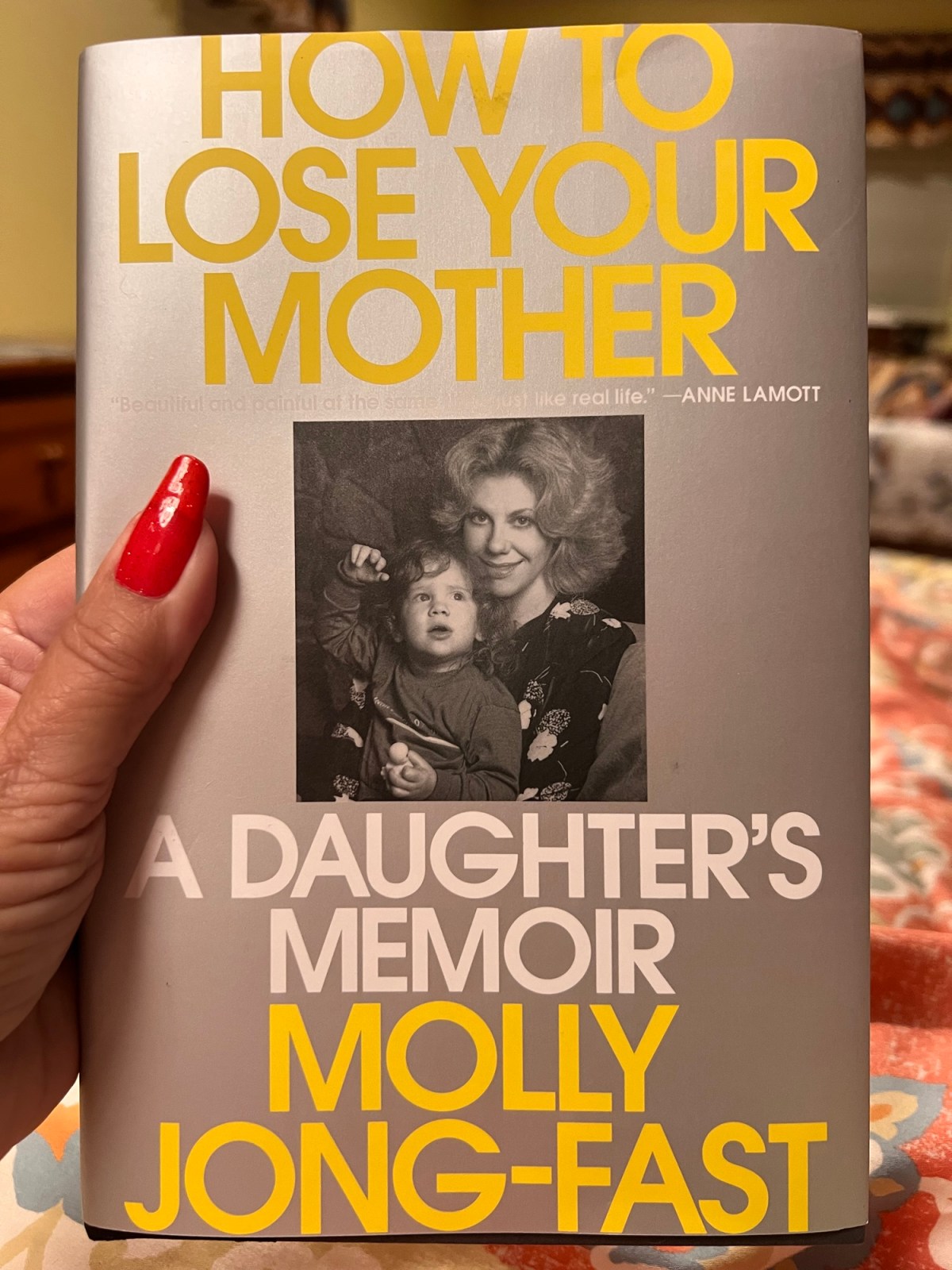
Resilience. That’s the first concept that comes to my mind when I think about Molly Jong-Fast, the author of How to Lose Your Mother: A Daughter’s Memoir (2025). To have made it to adulthood as a functioning human being after experiencing her childhood defines resilience. Some people wouldn’t have made it. Sure, Jong-Fast is a bit messed up, but by gosh, she’s here analyzing the heck out of politics with her inimitable New York accent (Lee loves her podcast).

This memoir covers a pretty crappy year in her life, during which she spent any time not dealing with sickness or death of those around her mulling over the truly baffling history of her relationship with her mother, Erica Jong, author of semi-autobiographical books that were shocking in their time (Fear of Flying, etc.). Jong-Fast spends many pages going over how famous, talented, and interesting her mother was or wasn’t. Mostly, Jong-Fast believes she wasn’t any of those things.
What I found most interesting about this book was that although we have much in common mother-wise, I really had a hard time emphasizing with Jong-Fast. I think I like her, but her negative attitude towards herself got under my skin. I can’t tell you how many times she says she’s a bad daughter or how insistent she is that Jong is a bad mother. She is unable to give either her mother or herself the benefit of the doubt other than a few token attempts.
I guess I’d hoped that all the AA meetings she’s been at would have helped Jong-Fast be kinder to herself, but here she is, still berating herself for not making her mother happy. Sigh.
Yes, Jong was not your average mother. I don’t think she could have been, because other than her final husband, she really only liked or was interested in herself. I honestly can see how her daughter would end up unable to love her like other daughters love their mothers. They both have tried their best, for who they are.
Boundaries. Yeah. They both have problems with boundaries. Jong can’t separate her consciousness from her unconscious self, and Jong-Fast can’t let herself stop trying to get in there with her mom.
Who am I, a therapist? No. So I will stop. Everyone in the book has a therapist of their own anyway, right down the block, like every other service they need. New York is so foreign to me!
So…how to conclude this? The people in this memoir are fascinating and (to me) not like people I know. They live in a world new to me and have experiences unlike mine. Quite educational! And you will certainly find Jong-Fast to be a fascinating human. I just can’t quite figure out the moral to the story unless it’s that you never do know your parents and you certainly can’t fix that when they have dementia.
Cheerful stuff it is not. Well written, though!





















 The Hermits' Rest