I’ve been meaning to write about the latest Elizabeth Strout novel, and since I was wrong about going camping this afternoon, I suddenly have time. I guess I should have asked someone if we were leaving the day we originally planned. That’s what you get for making assumptions. I make an a** out of me. And, sigh, we have to leave a day early because I have jury duty Monday, I’m a bit pouty. I really want to go camping. We haven’t been in so long.
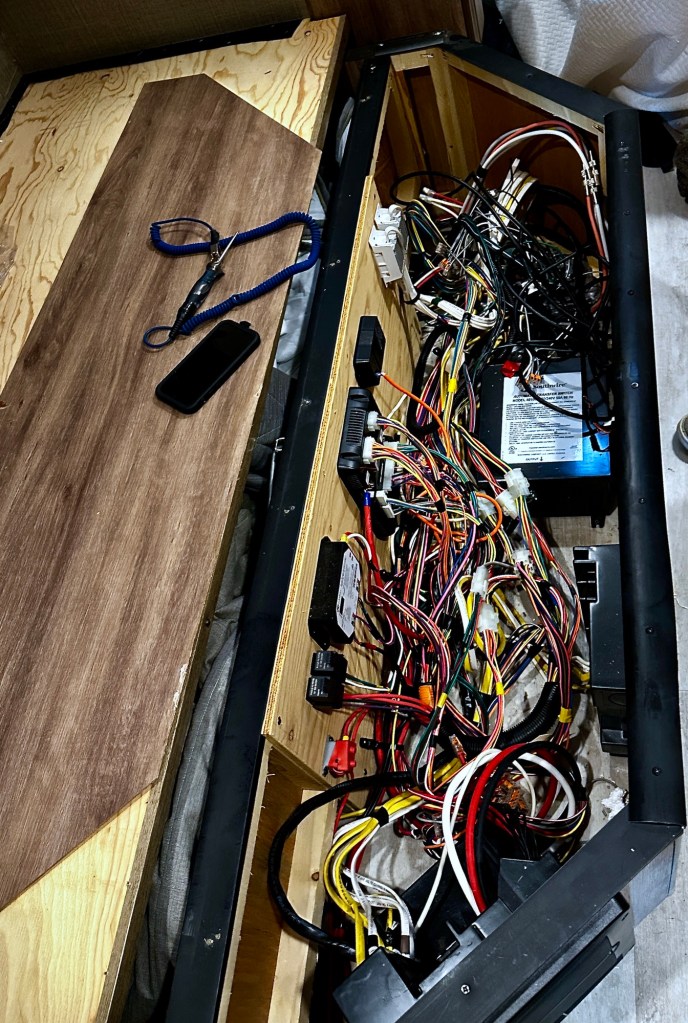
Must deal with these results of the investigation into why the bedroom slide won’t move. It needs professional help.
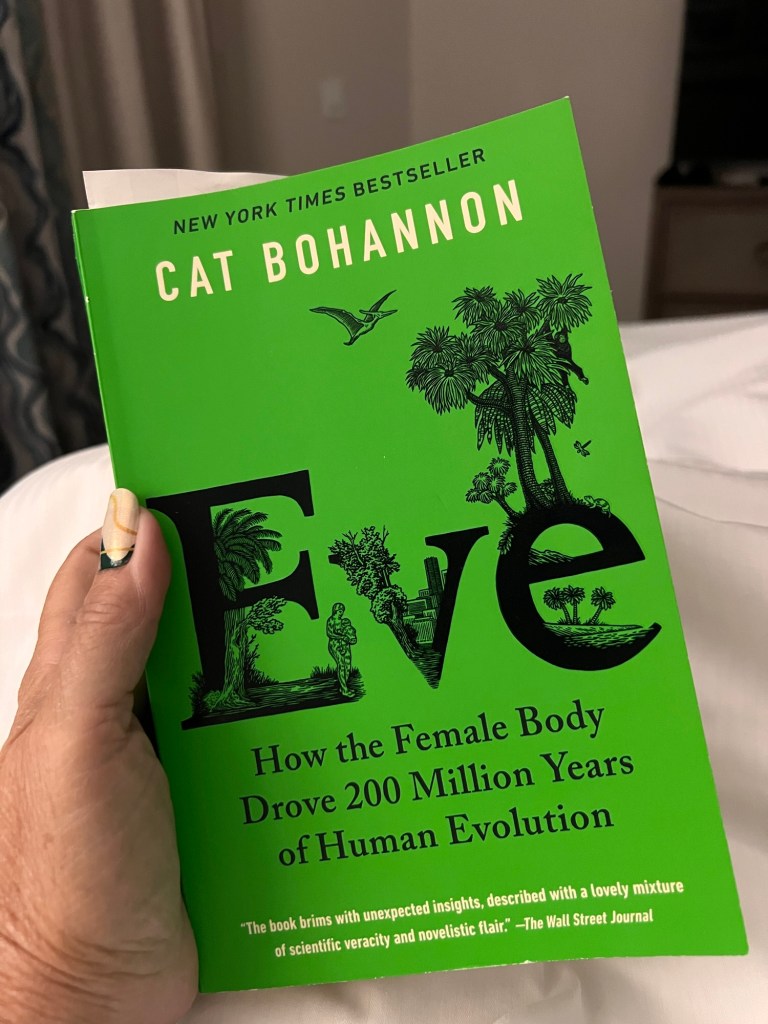
However, I did read this book, so let’s talk about Tell Me Anything (2024). As soon as I realized there was a new book in this series (I’ve reviewed them all on this blog, so you can search for Strout and find them), I ordered it. I was very interested to find out what was going on with the characters in Crosby, Maine, since the pandemic, so I dove right in. I was happy to see that this installment concentrated on good old Lucy Barton and her friend Bob Burgess, as they cope with a local murder.
As with most of Strout’s books, the plot is secondary for me. I just enjoy how she tells stories. Her style is so spare, and her use of repetition and the narrator jumping in with bits of information, just enough information. And as always, you get insights into how people think, act, and work from points of view you’d never considered before. I just love the pithy parts.
An imaginary Maine coastline.
I underlined and marked many passages that I can no longer see, but my favorite one was this part of a conversation about the meaning of one of the stories two characters shared with each other:
That was about the same thing that every story Lucy and I have shared is about. People suffer. They live, they have hope, they even have love, and they still suffer. Everyone does. Those who think they have not suffered are lying to themselves.” p. 315.
Actual small town in Maine. Photo by Leah Newhouse on Pexels.com
The people in the book are also fun for me. They are all so fully formed, with wonderful features and fatal flaws. They are real in the best way. I love how married couples are treated here. They have days where their spouses get on their nerves, then days where they don’t know what they’d do without them. And there are divorced people who don’t hate each other, but are glad to no longer be married. It’s refreshing to be able to feel empathetic with human beings who can be inconsistent, think judgmental things about others, but still be doing their best. I feel less alone.
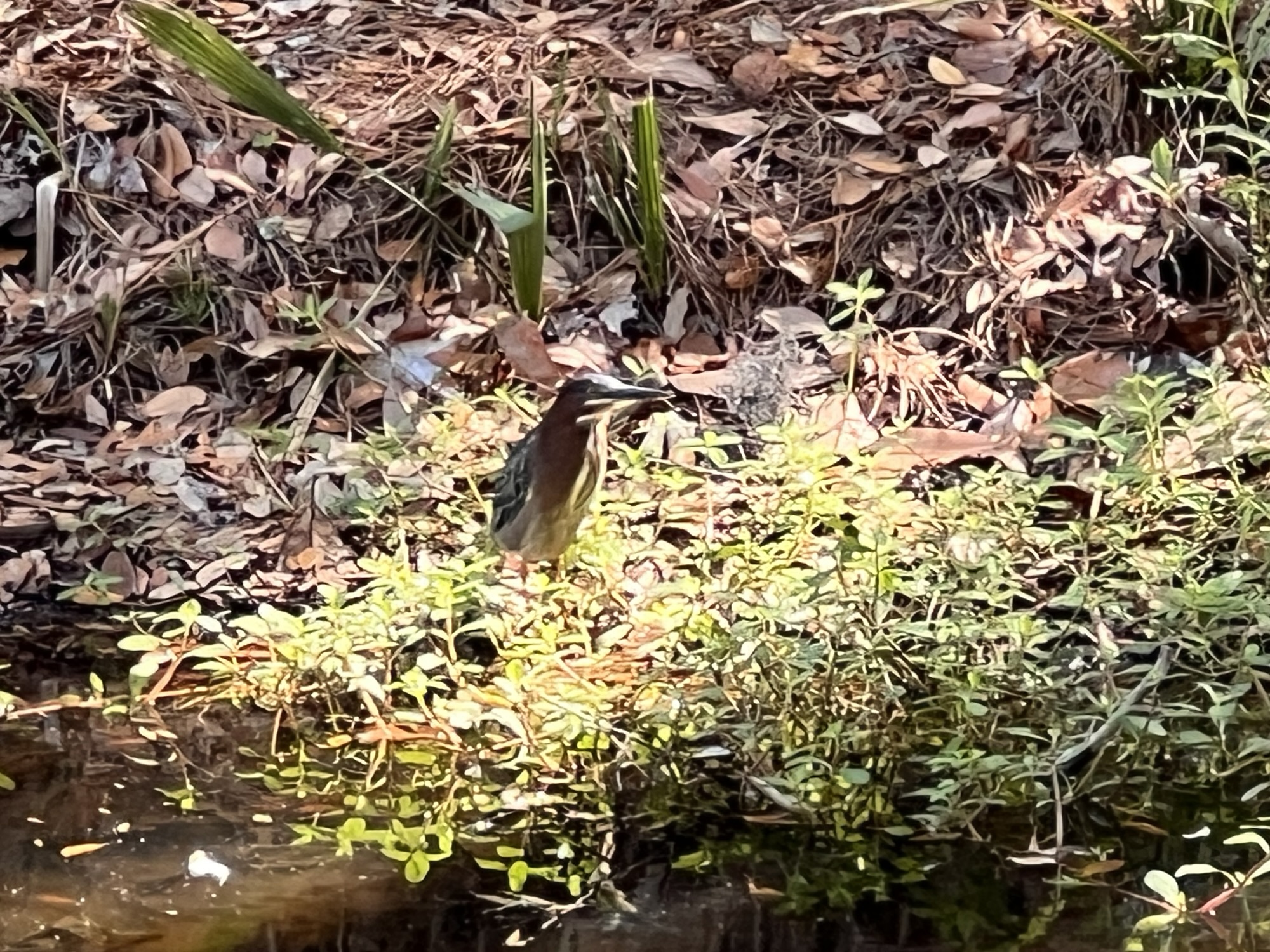
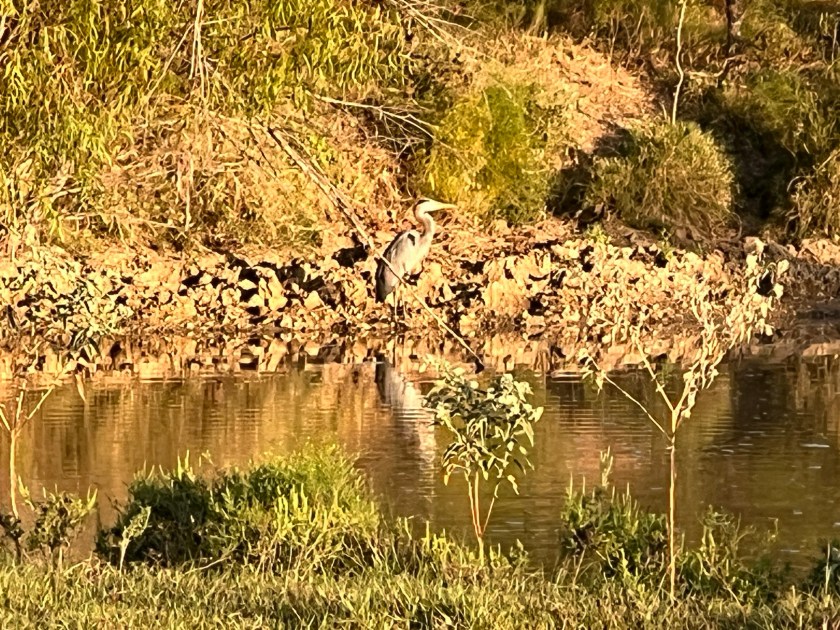
There’s always time for reflection, like the heron is doing. These books inspire you to reflect on universal truths and intimate insights.
One more thing is that I was glad to see that Strout introduced a few new characters, since the “old” ones are mostly getting old. Olive Kitteridge is now 93! I can’t wait to see how she weaves them into the continuing saga as she follows them on through the scary 2020s.
Ah, I’m answering this question rather than sharing my current thoughts. They’ll be more refined tomorrow.
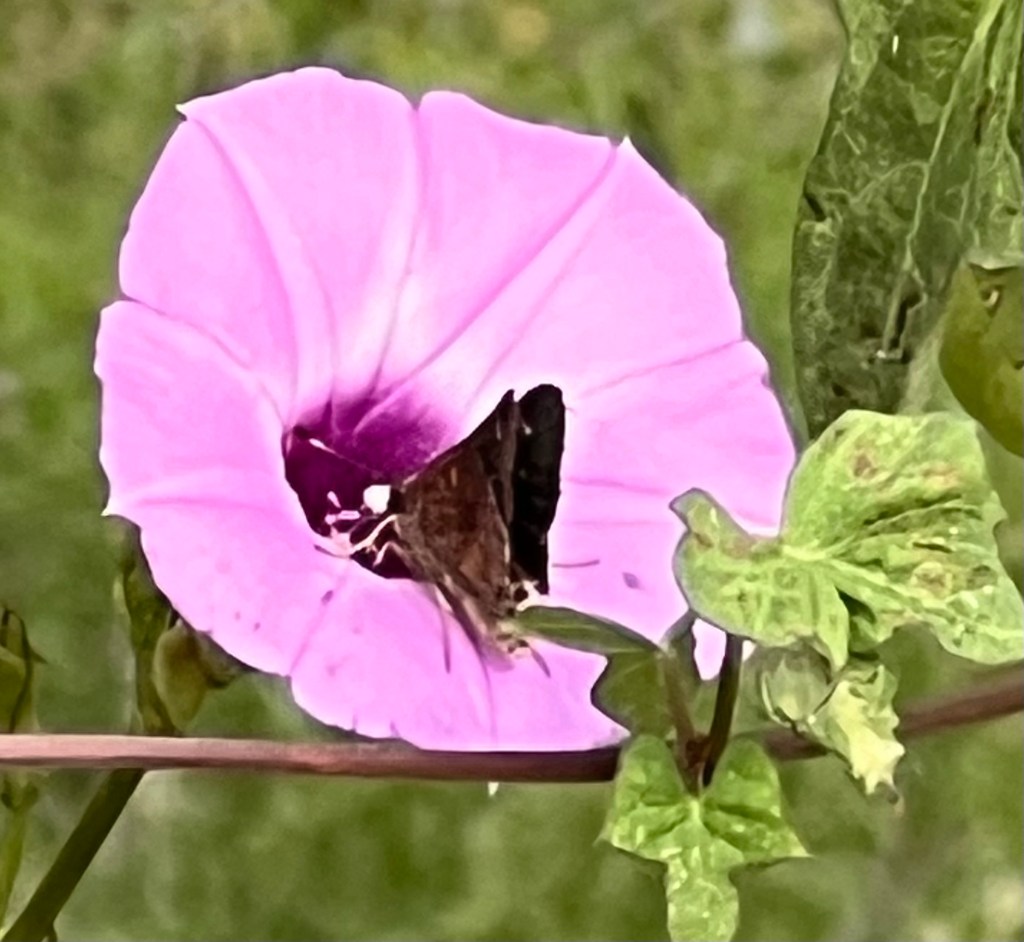
No AI here! It’s a clouded skipper.
For certain, what my husband will tell you makes me lose track of time is nature walks. I just disappear and re-emerge with no idea how long I was gone. I’m completely enthralled by the sights, sounds, and smells of new places or new things in familiar places. I don’t want it to end.
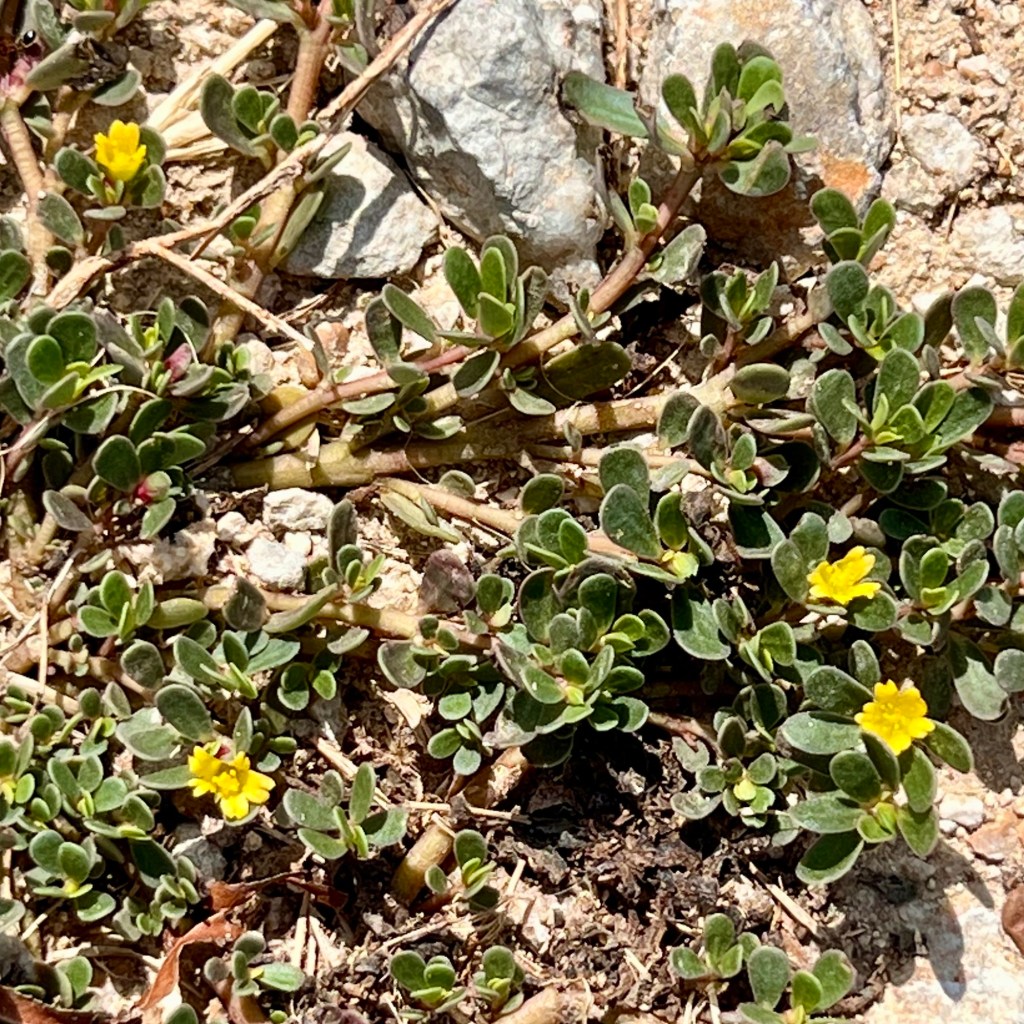
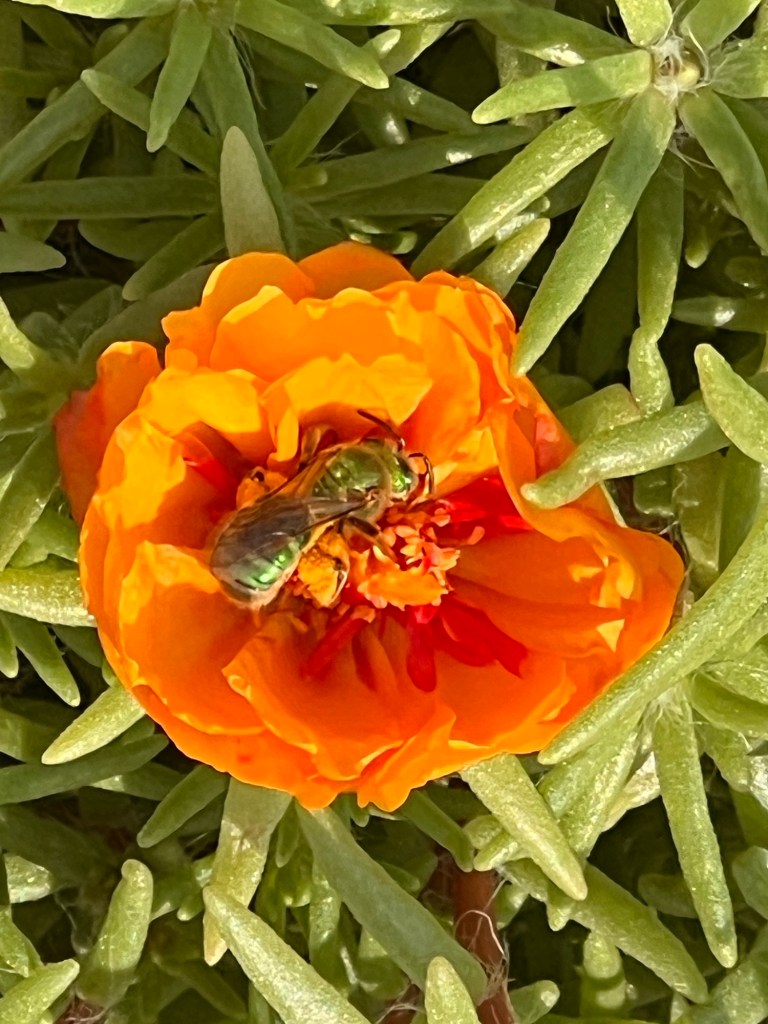
Here’s a new thing I found in the driveway! It’s delicious common purslane, a portulaca (Portulaca oleracea) just like the cultivated one below. Look at the beautiful Texas Striped Sweat Bee in my volunteer portulaca/moss rose
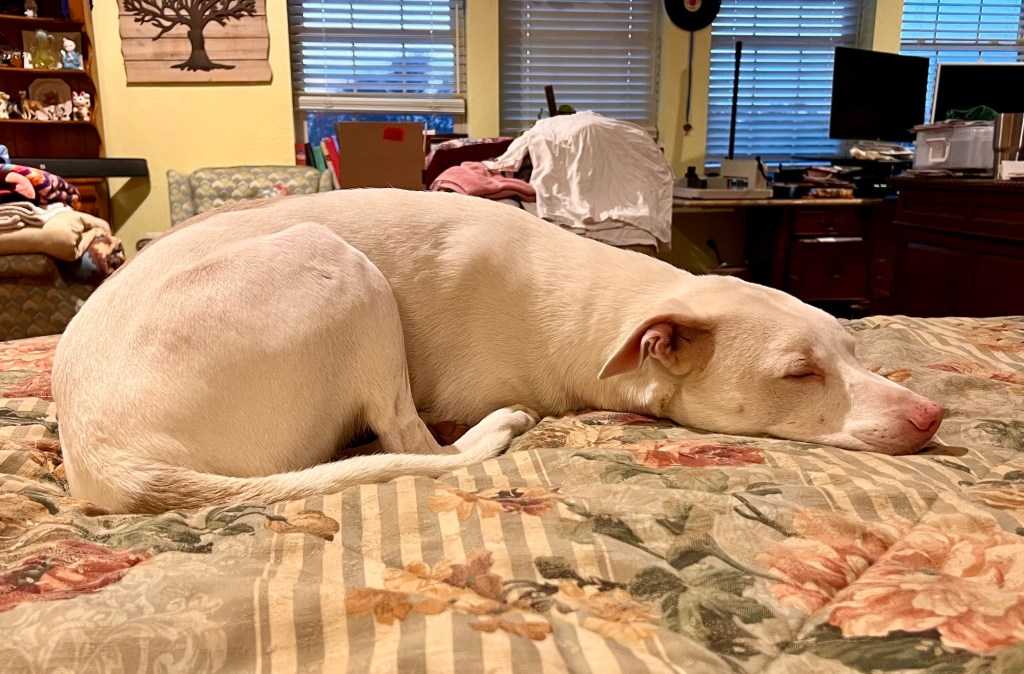
Hanging out with the animals also can make me lose track of time. I’ve just spent twenty minutes thinking about how beautiful Carlton is to me. My love for this guy never ends.
Carlton the Dogman
I ended up spending more time with Drew today than I’d intended, too. I’d walked to the next-door unused mailbox to drop something off, and decided to come back through the horse pasture, you know, in case there were any interesting plants or insects. So, I was concentrating on plants when I got a feeling I was being followed.
Hmmm. (Re-enactment)
I kept going until I felt something hot on my neck.
Ehhhh
Then I realized Droodles was sneaking up on me.
Hi, Mom!
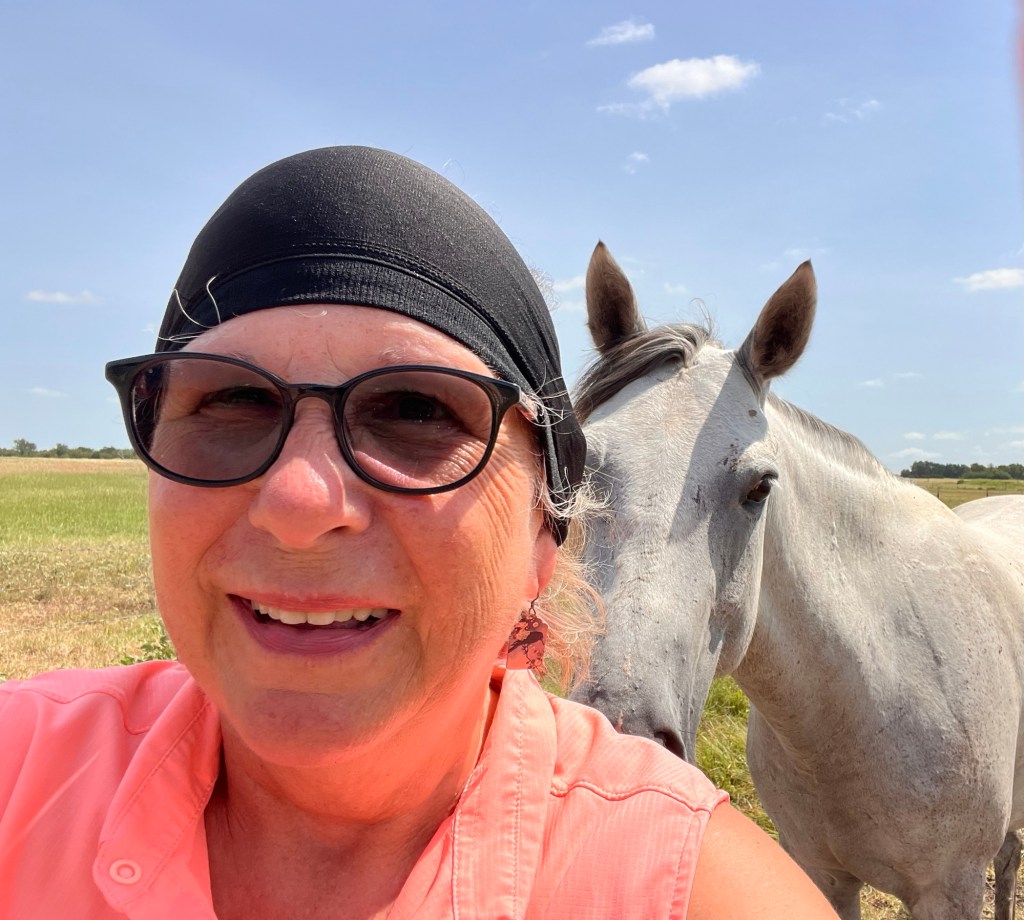
We ended up hanging out for quite a while just enjoying each other’s company. He didn’t push me around looking for treats, just rested his head on me and asked to be scratched. It’s so good to get along with each other again!
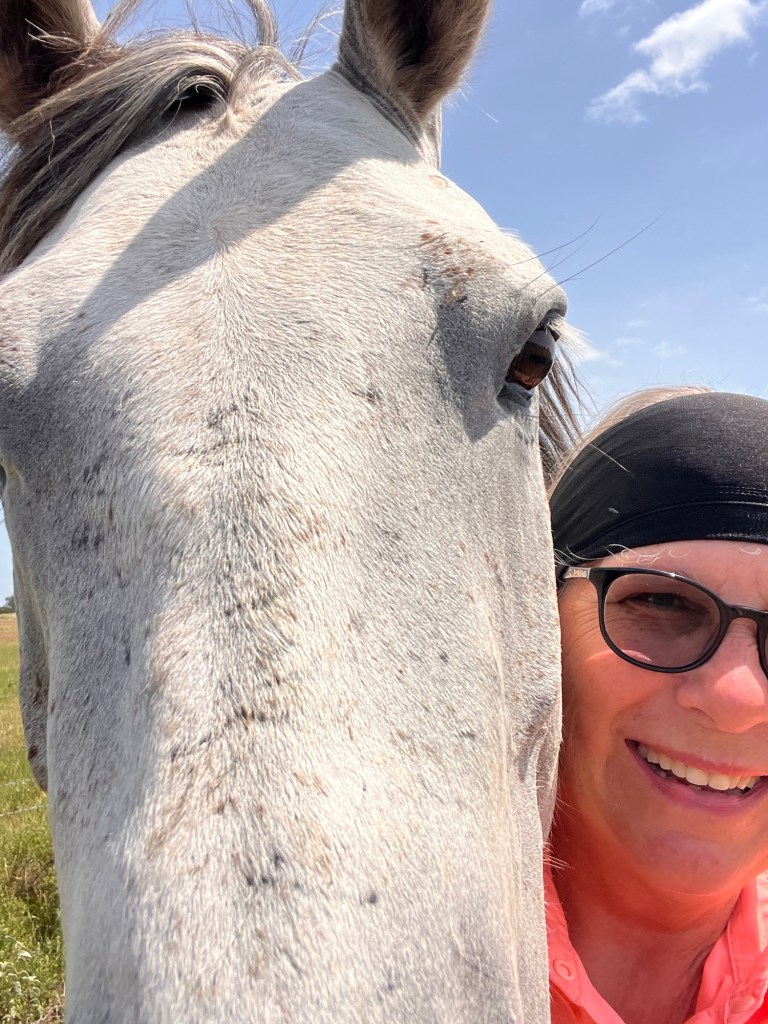
Mostly. That ear is showing some mischief is afoot. Yes, I’m not much of a fashionista in this weather. That shirt is very orange and the head covering looks silly but keeps hair out of my face.
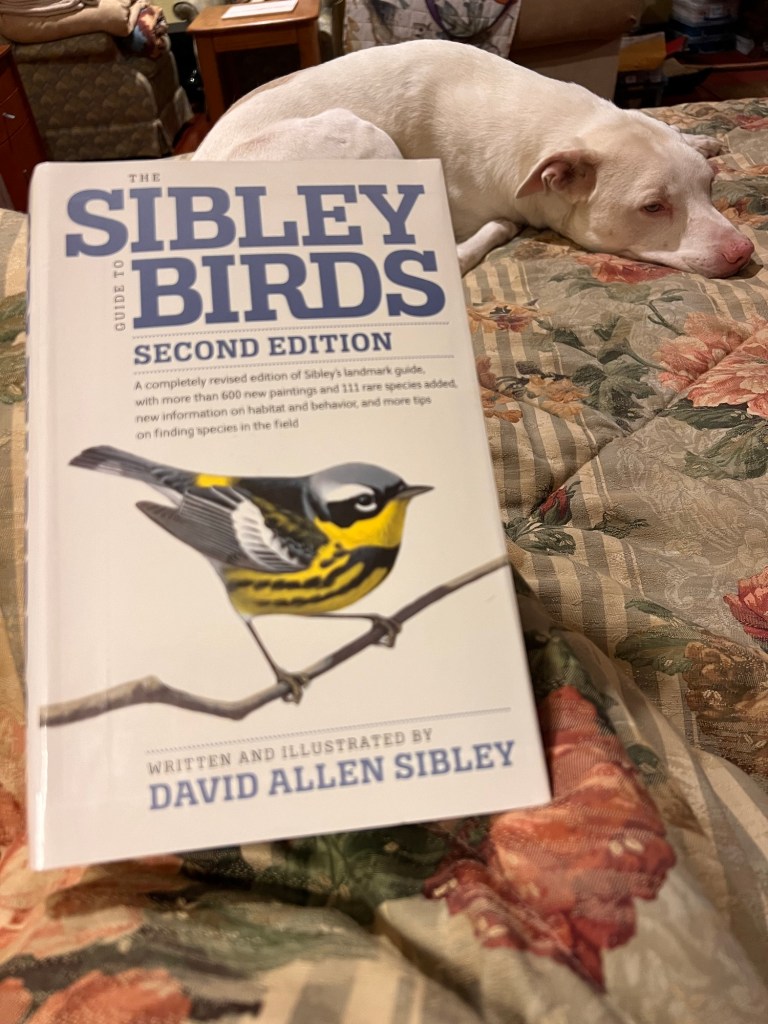
Not surprisingly, the other activity that leads me to lose track of time is reading. I’ve been reading Sibley Birds, Second Edition since I bought it in New Mexico. It’s only 600+ pages. I can’t stop looking at all the birds, learning new things about familiar ones and finding out what else might be out there in Texas (and wherever else I go).
Bonus Carlton again.
I will admit to skimming Arctic residents and ocean birds. Otherwise, I’m reading it all. But I’m in the oriole section! I’m almost done! Do not worry. I have a nice long book about animal tracks lined up. That’s what happens when people stop mailing me novels, I guess. (I’m fine for novels! I have some enqueued.)
If I’m repeating myself, forgive me. I’m working on changing my mindset and that can wear me out until I’m through the hardest part (letting go of an unproductive mindset).
Thanks for being there, friends and family. You are appreciated even when I don’t show it well.
Do you remember your favorite book from childhood?
Surprise! As a child I was very fond of, you guessed it, horse books. I read every horse book in the Sidney Lanier Elementary School library by third grade. The last book the librarian found was Steinbeck’s The Red Pony. She soon learned that sensitive young girls should not be given that book, even if they have advanced reading skills. I cried a lot and had nightmares.
I didn’t like the thought of horses dying gruesome deaths.
I’m glad they now have books for young people with high reading levels that are still children.
My favorite childhood book, Black Beauty, by Anna Sewell, also depicted bad things that happen to a horse, but after I’d read it once, I knew there would be a happy ending, so I let all Sewell’s animal rights propaganda seep into my future Master Naturalist brain by reading my poor copy dozens of times.
This was the 1955 edition I owned. Goodness, that horse has small eyes.
I can tell you what the cover looked like, and how I regretted that I let the plastic coating on the cover peel away. I can smell the book, even. It was the most beloved of a set of beloved horse books, a few of which I still have.
My second favorite. I still have this.
No wonder it was so important to me to find a trainer who was kind to horses and understood them. It’s probably a good thing I waited until I was getting on in years to start formal lessons, so that natural horsemanship could become a “thing.” I wouldn’t have been good at the showing the horse who’s boss by beating them school of training nor the cruel bits/painful sours tack they’d use. Black Beauty didn’t like that either!
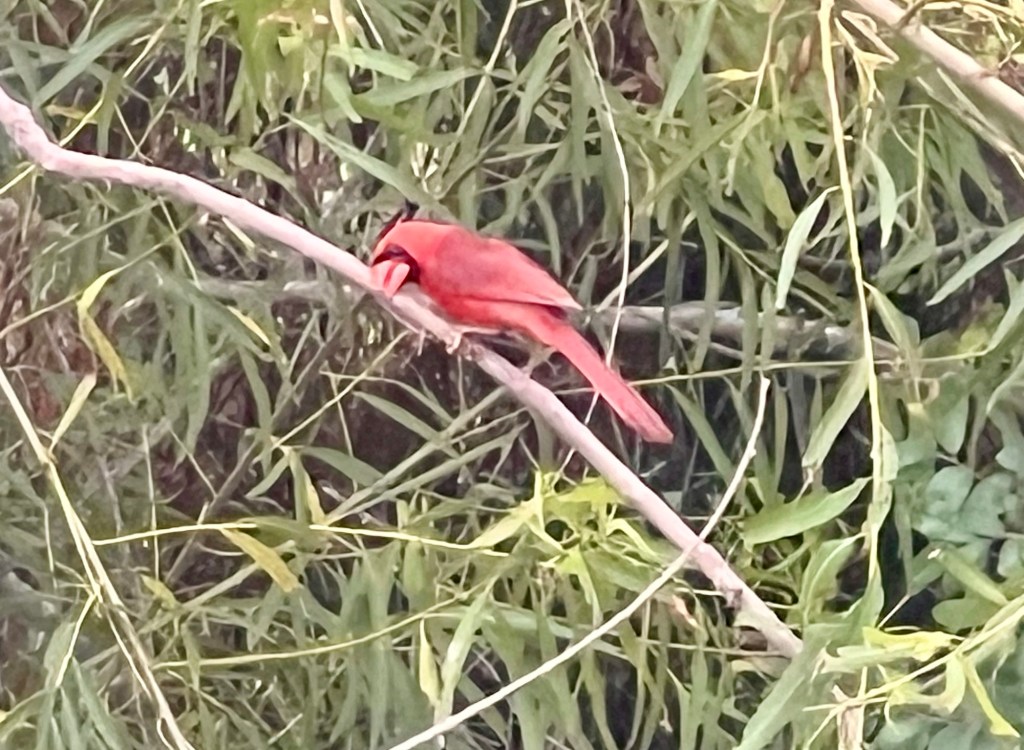
That stuff’s for the birds, says Mr Cardinal.
Today was a great example of how Tarrin Warren, my horsemanship coach and horse trainer, works with each horse and rider pair differently, according to the needs and skills of both the horse and the human.
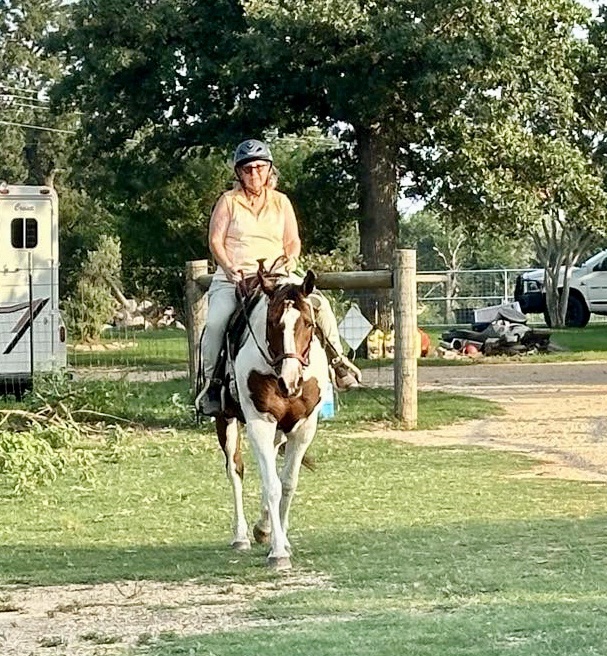
Check this out! Me and Drew happily riding outside of the arena! Happy faces.
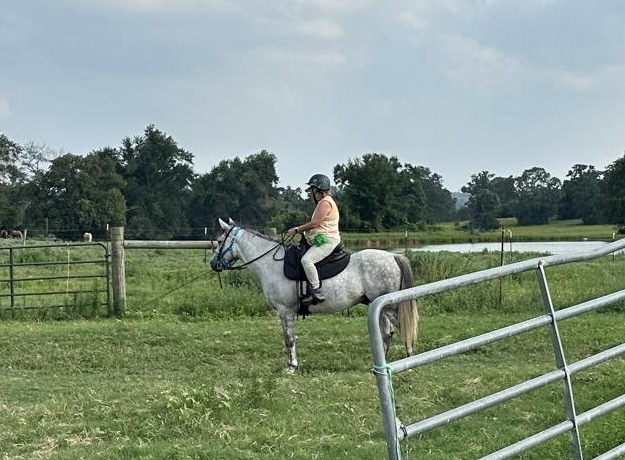
I had lessons on both horses, and doing the same exercise I used different techniques to bring out Drew and Apache’s talents and help with their issues, all the while building my skills. This helps me with my confidence in other areas, too.
This horse right here calmly walked by neighing horses, a loud RV, and the previously hated trailer.
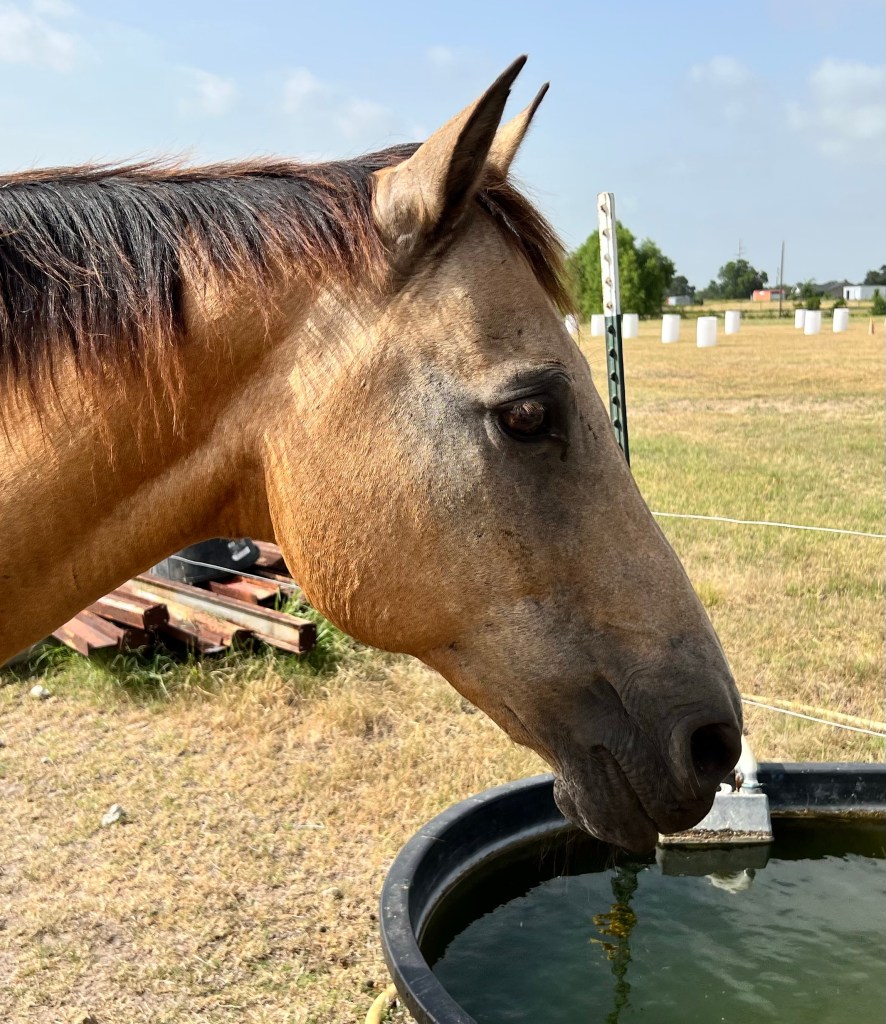
Horses are good for people. And looking at Apache’s shining eyes and willing body makes me think maybe they get something from us, too.
I love you, Suna, in my horsey way.
Drew is completely back to his normal self, too. It’s like the past few months never happened. We have fun and I feel perfectly safe with him, even when his leg collapses under him. Heck, today I gave him his shot like a pro, and had ZERO issues bridling him. Those are two things I’d never have believed I could do before.
Calm and happy horse and rider.
So yeah, as much as I loved learning about horses in books as a child, I’m loving it even more with actual horses. Yup, even with all the ups and downs.
Here we are, looking forward to the future. Or looking at Tarrin’s new house.
Tomorrow I promise to write about something other than horses! Or birds. I’m getting rather stuck on topics, but it helps me avoid controversy.
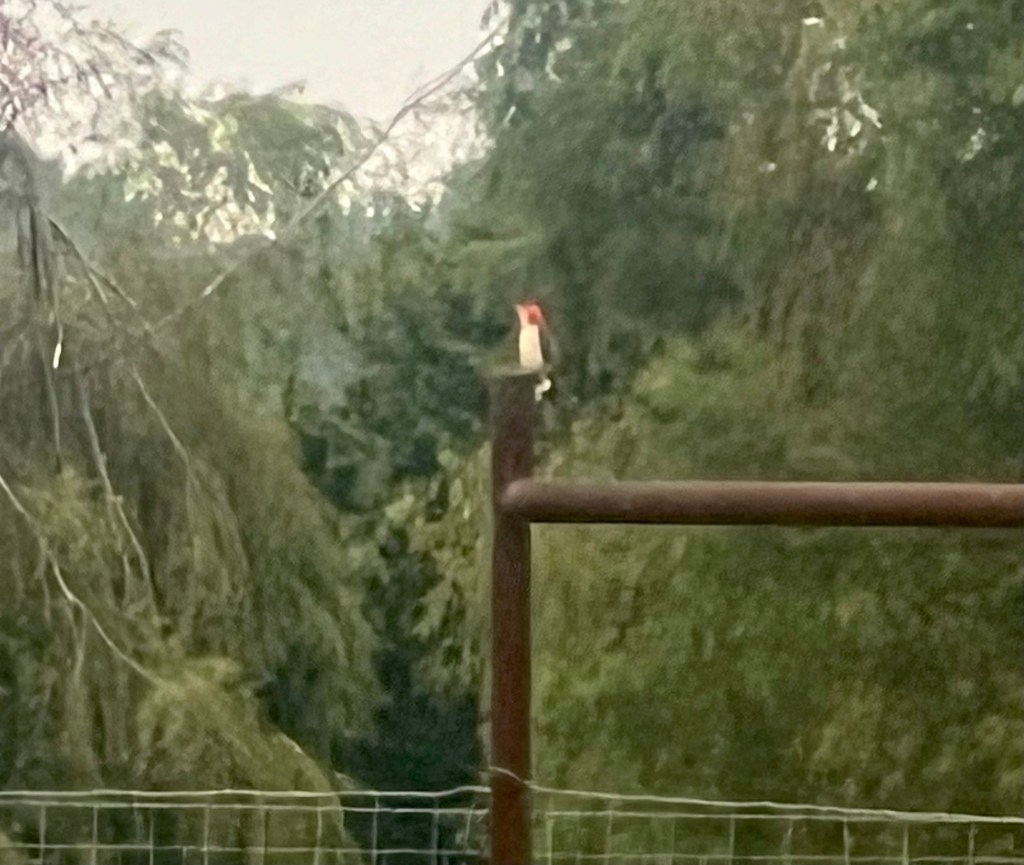
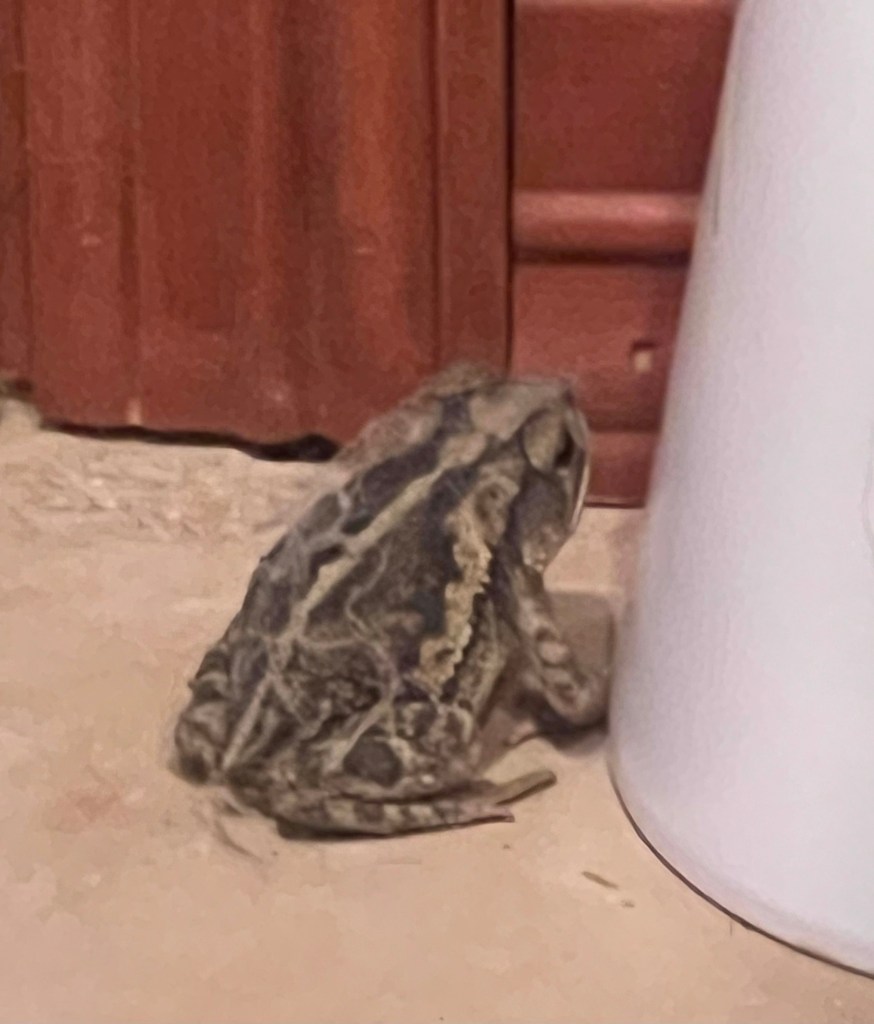
But we birds are fascinating, says the Red-Bellied Woodpecker. I’m also interesting! (Giant Walking Stick)What about me? I came in Suna’s house and she rescued me before dogs found me. That’s interesting. (Gulf Coast Toad)
My friend Phyllis loaned me this book after a conversation we had about how history’s narrative differs depending on who’s version is being told. In the Shadow of Liberty, by Kenneth C. Davis (2016), is one of many books that have come out in the past few years that provide perspectives on events in North America from people who aren’t white, male, Christian, or wealthy. As one of those non-priviledged people, I appreciate these insights! (Of course I have plenty of priviledge, just not as much as I would have were I male or a declared Christian).
The book is not about me, though, it’s about people who were witnesses to a lot of the early history of the USA, though they were only 3/4 of a person legally and also enslaved to a wealthy landowner who happened to also be a President of the USA. Because of their proximity to people who wrote a lot and got written about a lot, they managed to get at least glimpses into their lives recorded for people in the future to learn from. As Davis points out there were thousands of people who toiled in the fields anonymously who never got to share their side of life in the 1700s-1800s.
Davis makes it clear that the history of slavery and slave-ownership isn’t as black and white as we make it out to be. Slave owners were known to change their minds over time or treated some enslaved people way differently than others. Some were cruel and some were more humane (a relative term, of course. I found it interesting to see how each group viewed the other and how differently their lives played out.
I’m not going to detail each chapter of the book, which has lots of interesting photographs, timelines, and illustrations to help us understand the times when the protagonists lived. What I do want to point out is how well Davis conveys the whole context of the Presidents and their families, as well as the families of enslaved people around them. It becomes very clear, for example, that George Washington both admired and trusted Bille Lee, who accompanied him on most of his battles and campaigns, yet he always referred to him as “his mulatto man, Billy.” I guess that’s just how people talked back then, but it made me sad.
You’ll find lots of information you may not have heard about before when you read this book, which isn’t very long and is more of a popular book than a scholarly investigation. Some of the people focused on are now pretty famous, but some have faded into the shadows (of liberty).
Reading this book now in 2024 will remind you of how important it is to not backslide on the freedoms we have fought long and hard for in the US. There are still people who would be happy to go back to a time where people could own each other (and it still occurs in the shadows, just a little differently). We all deserve to live our lives safely, with our families, and with meaningful paid work. No “but not these people…” should be allowed.
I started to read The Promise of Unbroken Straw, by Ken Steele (2024) because I know the author and want to support people who are brave enough to publish their writing. I finished reading it because I was fascinated by the people and the setting of the book. Most important, Steele is a very good writer and I didn’t get annoyed by any amateur errors like you sometimes see in books you read to be nice to your friends.
Ken and his wife, Cathy, who I met in an online email group decades ago.
I’m here to tell you that if you are a fan of historical fiction, you’ll enjoy this book very much and become totally immersed in the setting, which is Oklahoma during World War II (and some of today as well). You’ll become fond of many of the folks you’ll encounter, as well, and dislike the villains just as much. There’s a lot of angst, sadness, failure, and trouble to be found, but of course some ultimate redemption.
The book
I loved the way Steele portrayed his protagonist, Paul, as a somewhat clueless young teen who really didn’t understand a lot of what was going on around him, but kept trying his best, anyway. You can take a good lesson away from Paul, which is that sometimes what you think is happening and how you perceive events in your life may not be exactly what you think. At least Paul eventually figures that out.
The book resonated with me, because part of the drama revolves around oil being discovered on one’s property and trying to figure out what to do about it. That all played out down with my family here in Texas not so long ago, too, and the feelings are all-t00 familiar. I had a lot of empathy for Paul’s father and grandfather as they tried to do what is right but were tempted by visions of dollar bills dancing in front of their faces.
Ken took this photo of me being colder than I’d ever been in my life.
I’d recommend this book even if Ken weren’t the greatest host in Colorado, but I’m thrilled to be able to encourage all of you to check it out.
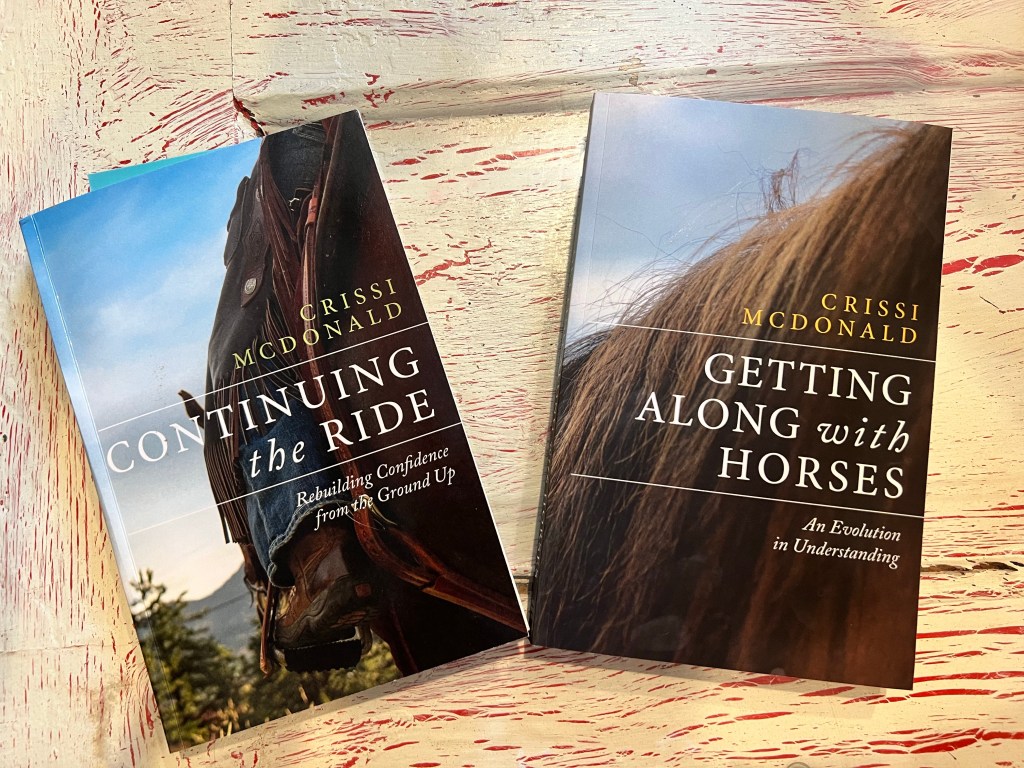
I recently finished two books by Crissi McDonald, a horse trainer and clinician who lives in Colorado with her husband Mark Rashid, who wrote the previous books I read. I had a theme.
Here are the books.
I think they are self-published, but the quality is quite good. She must know a good proofreader. The books are Continuing the Ride, in which she talks about recovering from a bad injury from a horse accident, and Getting along with Horses, which talks about how your attitude can affect your experience with horses.
Here’s Apache. We have had a long and challenging relationship, but we will always like each other.
McDonald is an engaging writer who has honed her craft through blogging and participation in writing groups. In fact, Getting along with Horses started out as blog posts. Good idea! She is good at both telling stories and sharing what she’s learned. I’ll sprinkle some quotes in this review. Here’s one (and I forgot to get the page number, but it’s from Getting along with Horses.)
Riding a horse, or being around horses, is a shared experience. Horses are power sheathed in silky coats. They sweat, they feel a full range of emotions, and they’re accepting of humans and all our crazy ideas. They can’t be fully controlled. And yet. The thrill of a gallop is a freedom mutually felt. The serenity of grazing is something we can be included in. As we share experiences with our horses, we come to see the world through eyes that aren’t blinded by our particular definitions of the world. This world doesn’t belong to just us. We share it with every other living creature, plant, and river. Being with a horse allows us to consider other ways of life, and what is important to them.
Crissi McDonald, Getting along with Horses
What made me happiest is that much of what she says about working with horses applies to dealing with humans, so I got lots of food for thought about dealing with people around me as well as my equine companions.
Andrew. We’re a pair. I love him intensely.
When McDonald talus about recovering from her injuries I could see how her words would help anyone dealing with trauma. She shared how giving herself permission to go as slowly as she needed to go actually sped up recovery. And I love that she didn’t bring anger or blame into the discussion. Things just happen and dwelling on blame just makes it harder to go forward. That is not just a horse thing!
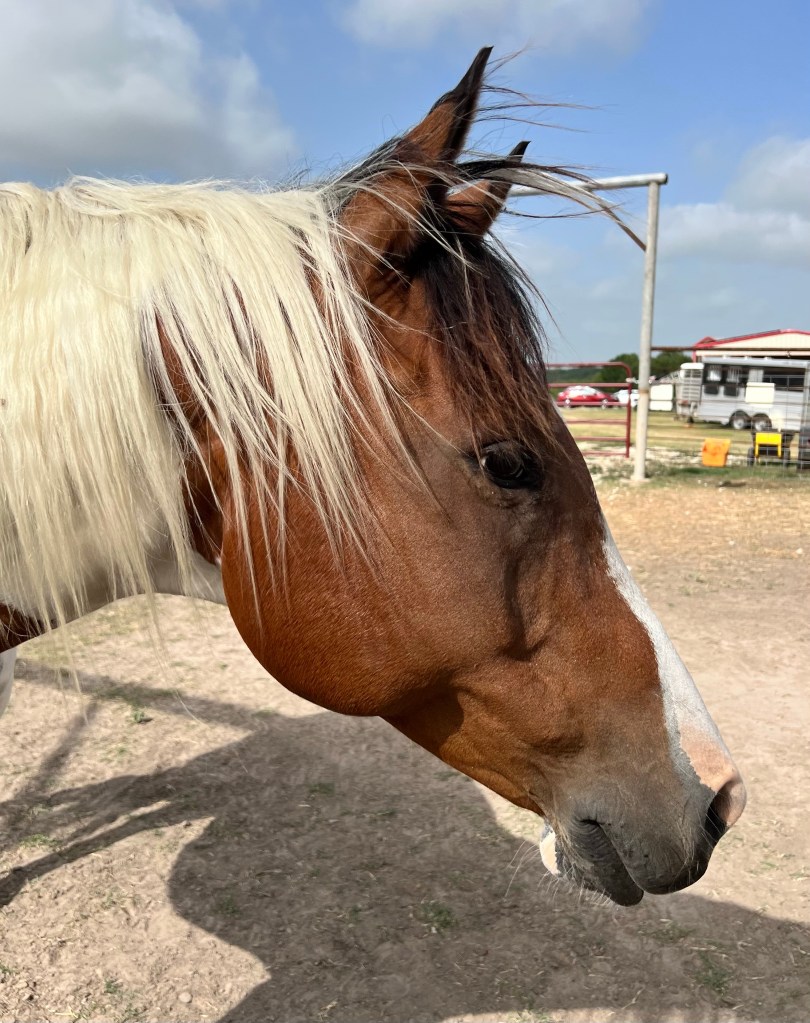
Dusty always seems concerned about something. Look at the wrinkles around his eyes and mouth. But he loves attention.
Fear makes it hard to do your best with your horse partner, but it’s so reasonable to have fear. Horses are unpredictable, large, powerful, and easily frightened, themselves. I’ve had to work through my own fear with Apache after my own fall (not a bad one at all) and my lack of confidence in both him and me. No wonder we’ve had all the issues.
Mabel is doing so much better. She’s not shut down, asks for attention, and has life in her huge eyes now.
What I like best about these books is that McDonald doesn’t come across as preachy or authoritarian, just as a fellow horse lover who’s trying to figure things out, just like you are. She’s also willing to follow her instincts, even when they aren’t all scientific. I do that, too.
When she talked about the importance of your intentions in horse work, I felt relief. A lot of people avoid that, since it comes across all woo-woo or something. But intent has always been a powerful force in my life. Just because we don’t know how something works yet doesn’t make it real. Like gravity and germs, you have to get to the point where people can measure things! I digress.
Two Quotes That Apply to Us All
I’ve written a lot about the importance of remaining calm in the midst of chaos. During the coronavirus pandemic, the chaos waits for us every day. We see that the pleasures and places we thought would always be there no longer are. We watch the numbers affected by the virus go up. No one knows where this train stops. Or even pauses.
As much as anyone can, I’ve tried to stay informed without spinning emotionally out of control.
Crissi McDonald, Getting along with Horses, p. 105
My Favorite Topic!
Name-calling a horse, or anyone for that matter, may be borne of frustration or anger, but I can guarantee you that the only result will be to perpetuate an adversarial relationship. Name-calling is a lack of imagination, it shuts down our innate curiosity, and it smothers learning. Wanting to have a partnership with your horse and name-calling are at opposite ends of the spectrum. Since when does seeing your horse as an enemy to be vanquished yield a harmonious and pleasing relationship?
Crissi McDonald, Getting along with Horses, p. 19
Anyway, these two books felt like hugs to me, much needed hugs. I feel validated on my path with horses, and I have new insights to help me on that path. Guess I better go follow Crissi McDonald on social media!
There’s one final book review for this year, and it’s a book I always wanted to read: the history of alphabetical order! Be still, my heart! A Place for Everything: The Curious History of Alphabetical Order, by Judith Flanders is a book that begged me to read it. And with its huge index (alphabetized, of course), end notes, and all the hallmarks of a modern nonfiction book, it did not fail to disappoint, at least if that’s the kind of reading material you like.
Nice cover!
I’ll have to resort to memoirs to explain my excitement at finding this book. You see, when I was in second and third grade, I was annoying to teachers. They could not find enough work for me to do to keep me quiet, and I kept raising my hand to answer all the questions. I probably annoyed other kids, too. To remedy this, they passed me off to the patient librarian at Sidney Lanier Elementary School in Gainesville, Florida (also at the time home of education for deaf, mentally handicapped, and otherwise challenged kids, which was GREAT for teaching us that those are regular kids that are fine for playing with at recess). And yes, I know now that Sidney Lanier served in the Confederate military, but we were told he was a poet. The End.
Anyway, I proceeded to read through the contents of the library that matched my reading ability. I also needed books that matched my social development, which means not books with a lot of sex or overly “adult” themes that would confuse me. The librarian was very glad that I loved horses, because that made it simple. Just give Sue Ann books about horses, she thought. Then, she taught me how to find them myself in the magical card catalogue. OOOOOOO.
I loved the card catalogue. I’d just browse through it, amazed at its orderliness. I aged a bit and started my own collection of books, of course starting with Black Beauty. Duh. Once I had more than a few books, I was compelled to alphabetize them, by author, of course. There WERE a few I organized by size (which I learned from the book I’m supposed to be reviewing was common).
By the time I was in middle school, I had my own card catalogue (always spelled that way in my mind), made from index cards. I had a title index and an author index. Each card said when I got it and had an indication of its type (mainly F, NF, and SF for fiction, nonfiction, and science fiction (I moved on from horses)). This went with me and was updated throughout high school.
Sigh, alphabetized by author, but not title.
Even as I got older, I obsessively alphabetized my books. It made me happy. It also made finding books easy. I was an academic. I had a LOT of books, but added categories like Japanese, linguistics, knitting to the system.
Once I had children, I gave up and just shelved books by type. Every time I’d get them alphabetized, something would mess them up, so I gave up.
Back to the Book
Judith Flanders taught me a lot about books and their organization, or lack thereof. First off, there weren’t many books for a long time, and they were often bundled together randomly. That’s parchment books. Papyrus ones were scrolled, of course. And you generally read a book from start to finish, so there weren’t many organizational helps like subtitles, page numbers and such. All those things had to be invented!
Once libraries showed up there were lots and lots of ways to organize them. Some organized by size, some by topic, and some by the conventionally used systems of organization, which were fascinating hierarchies. God always came first, then rich people, then other subjects. That’s how lists of all sorts were organized, not just books. I have no idea how anyone found anything in the olden days. People also wrote all over books, and no two copies of any book were the same, since they were hand copied. Challenging.
Eventually, typing and carbon paper made organizing correspondence less complex, while double entry bookkeeping made financial stuff easier, but that all depended on having notebooks and files. So many things we take for granted today are NOT that old, like filing cabinets, file folders, staples, desks, and more. This book will blow your mind and really, really make you respect all those humans of the past who had to memorize everything.
So, as you can see, Everything in Its Place shares the history of a lot more than ordering systems! There’s writing systems, ways to permanently or impermanently record things in writing, storage methods, and of course, organizing systems.
Today’s shelves are beautiful, but disorganized. We are still unpacking books. I still have a lot in Austin. Eek.
That brings me to my favorite discovery in the book, which is about Dewey of the Dewey Decimal System. I was always very annoyed by this whole thing. Topics just didn’t make sense to me, especially the order in which they were arranged (all that Christian stuff in the beginning with lots of numbers, but then just one number for each other religion, for example, and science was weirdly arranged). I never arranged my books by that system, nope.
Was I ever thrilled to discover that Melvil Dewey was an asshole! A sexist! An anti-Semite! A homophobe! A creep! I just knew it. And these biases of his made finding certain topics really hard (there were changes made…but now I see why they use other systems now).
In the end, while Flanders didn’t make the book overly exciting, she did add some fun footnotes that I enjoyed, and she was certainly thorough in her research, which was complicated by the fact that there actually hasn’t been all that much research on organizational systems and alphabets. People just take them for granted. I was glad she addressed how to organize information in non-roman alphabets, like Chinese, Japanese, Korean, etc. I really feel bad that typewriters are still based on Western principles, which can make typing and printing take a while.
Sure, weirdest Thanksgiving ever. But it’s an adventure. I’m making turkey and sides, but not dressing. I’m incapable of making small quantities of dressing. But it’s just me and Anita. Poor Declan can’t come, because there was an exposure at Rollie’s workplace. We will miss them.
Lee is at the ranch with his brother. My sister is alone at her house, but also cooking. And Kathleen and Chris are alone at the farm in Yorktown. Whee! But by gosh, we’re keeping our germs to ourselves!
Anita peels potatoes.
Hopefully after we eat we can visit neighbors in the cup-de-sac. That will be nice, even if it’s just us and Ruth next door. We have community!
And speaking of community, I’ve made a couple of calls to people I care about, as I said I’d do yesterday. And last night I went to a Zoom birthday party for my friend Mike’s mom. I laughed so hard at their Zoom confusion that my face hurt. But seeing the joy of the family getting together was worth it. Plus, I got to see the amazing cake her children got her.
All her passions are on the cake.
I hope you have things to keep you busy this holiday (or regular day if you’re outside the US). I’ve got that knitting.
It’s getting long!
And I have three new books. I’m so excited about the book about alphabetical order! But I’m reading the Obama book first. Wow, he is a good writer.
New books.
That’s it from me today. I’m grateful to have a blog and readers. And of course for having a healthy and safe family, which is quite extended. Virtual hugs to all of you.
It was nice to get home from work and think about what’s eternal.
One thing is learning. I’m loving the book I’m reading, perhaps too much. The person who wrote How to Be an Antiracist has managed to clarify all sorts of muddy questions and gut feelings I have about race, class, and political systems. Perhaps this is not the most relaxing book ever, but it makes so much sense that my brain feels tidier or something. More on this when I’m done!
The other eternal thing is life going on about its cycles. I’m surrounded by birth, death, old age, and metamorphosis every day. The new calf, Nicole’s son who will arrive in a month, the lady in Cameron who died in the fire and had cooked all those burgers, Lee and me, a butterfly. I treasure all of it!
Now to stop writing so much and share photos of what relaxes me.
Tomorrow will be Rip’s week-a-versary. He liked head rubs. Gulf fritillary. Happy to enjoy our golden years (ha ha) at the Hermits’ Rest.
Ever since I joined the neighborhood book club, I’ve been reading more books that other people might consider reading. (Usually, I read really dry nonfiction that mostly only I would care about.) But, today I will share the past couple of weeks’ worth of reading. It’s better than ranting about Facebook and the internet, but will get fewer hits, I wager.
Book Club Book
This month, we chose my favorite genre, the memoir, as our book. Becoming, by Michelle Obama, had everything in it I like in a memoir, including figuring out how she ended up where she is, stories about interesting mentors, and from what I can tell, honesty. I always like it when I find things in common with others, and there were a few times when good ole Miche said something like it was coming out of my own mouth. It’s worth reading, especially if you’re familiar with Chicago and can enjoy a trip down memory lane.