I was not productive during my usual most productive times today, because we had a couple of waves of rainstorms come through. But generally, I do best between around 9 and 2 pm. I’m a little slow when the day starts, and by mid afternoon, I hit a slump. I think that’s pretty normal.
Rain aftermath
Today being Sunday, I’d planned to spend my productive hours exploring the more distant parts of our ranch complex for the City Nature Challenge, then I’d hoped to ride Drew for the first time since he got back (I’ve been exercising him, just have had vet visits, birthday dinners, and such getting in my way). But, I was determined to get my observations in and my exercise accomplished, even if it meant dodging raindrops.
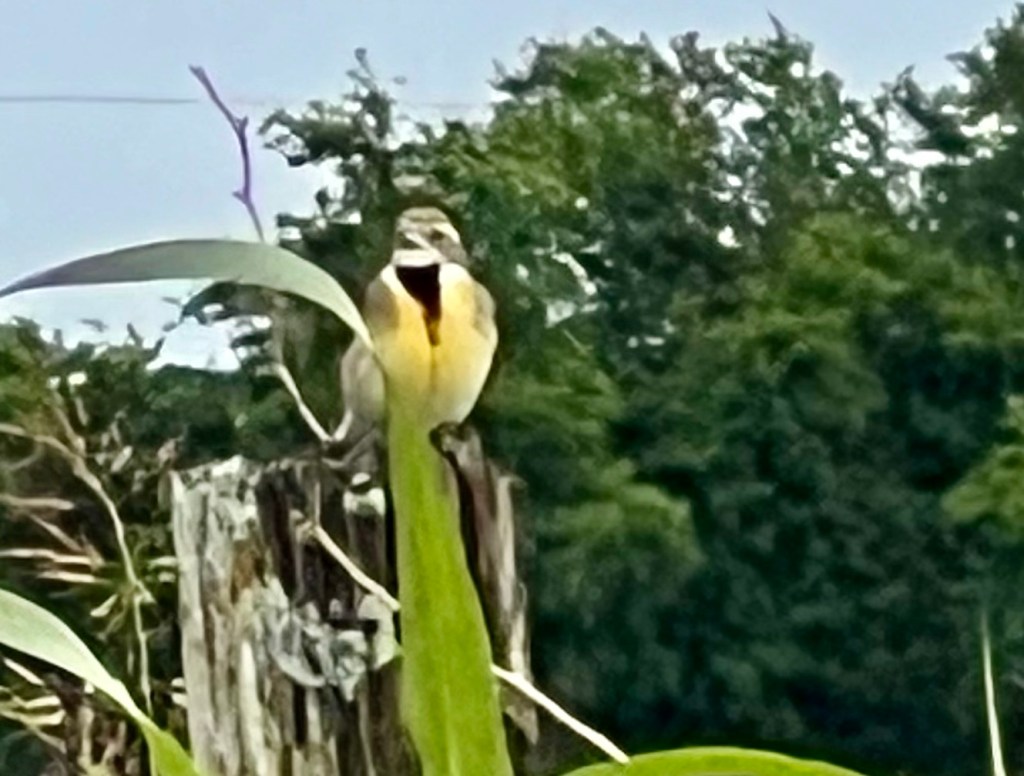
I was also determined to photograph a dang dickcissel, which I did.
I felt like I sat on my rear end a lot today, but I also crawled under electric fences, climbed muddy embankments, and walked a few mikes, some of it briskly. I think the rain may have given me more opportunities to see things, so it all worked out.
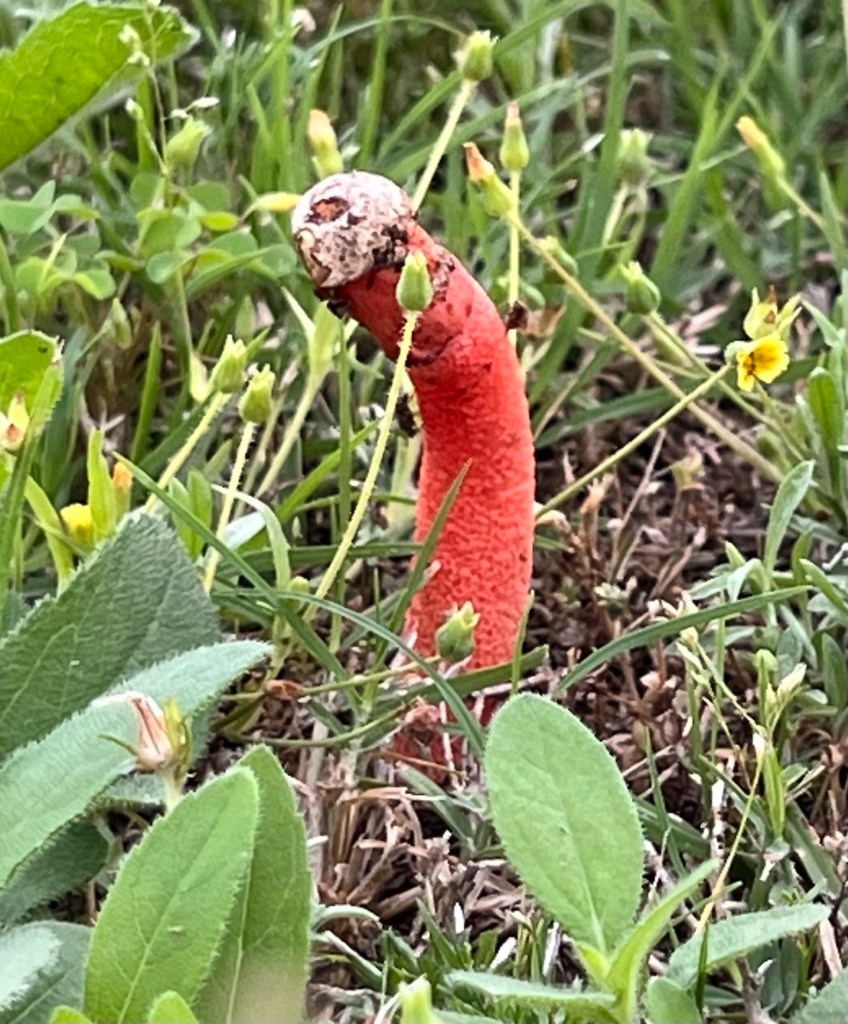
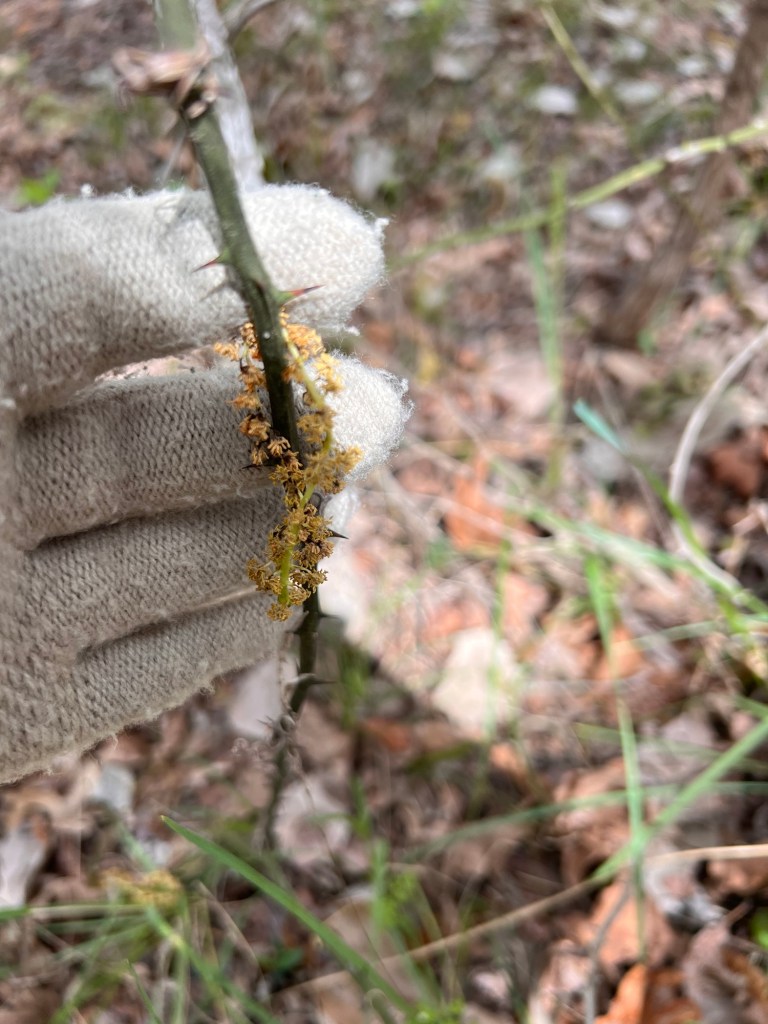
Crawling on the ground helped me spot this excellent stinkhorn, for example.
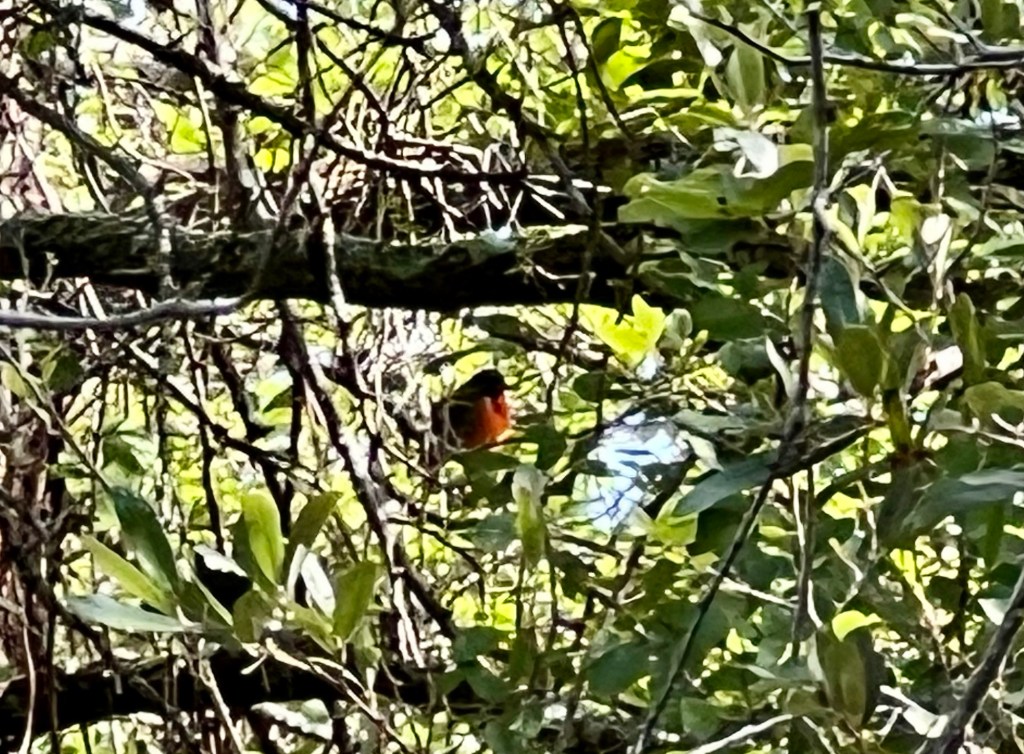
I had hoped to photograph more birds today, and I did, though many were pretty bad photos. I was so excited to finally see an indigo bunting this afternoon that I didn’t care how bad my photo came out, as long as I could tell it was blue. Now I’ll believe Merlin when it says it hears one.
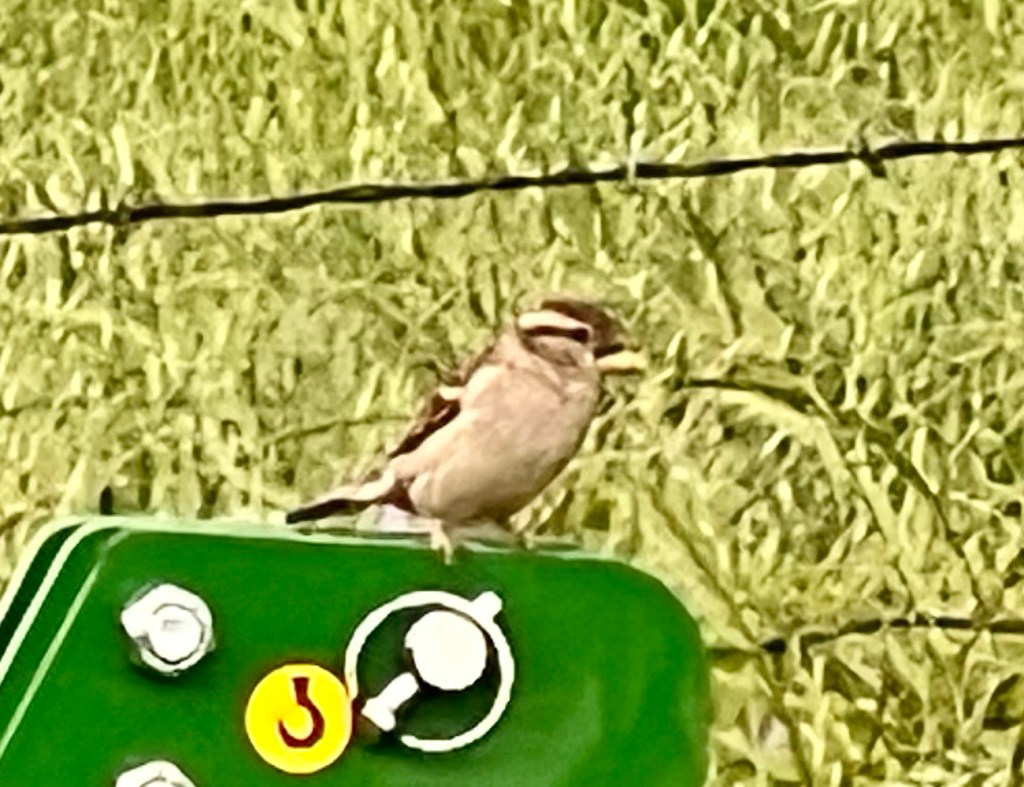
Turkey vulture Flying turkey vulture Indigo bunting. It’s blue!Two crested caracarasMockingbird. Decent photo. Lark sparrow2 female and one male scissortailDifferent arrangements If you know birds, you can tell they’re mourning dovesMale red-winged blackbirdDickcisselFinally out of the treesHere I amBarn swallow, near a barnHouse sparrow waiting to eat my chicken foodGreat blue heron looking for crawfish Birds birds birds
The rain smooshed most of the flowers, but I did see a good number of insects. I don’t think I realized we had so many kinds of butterflies before I started recording them. I think that’s a good sign we have left enough native plants around.
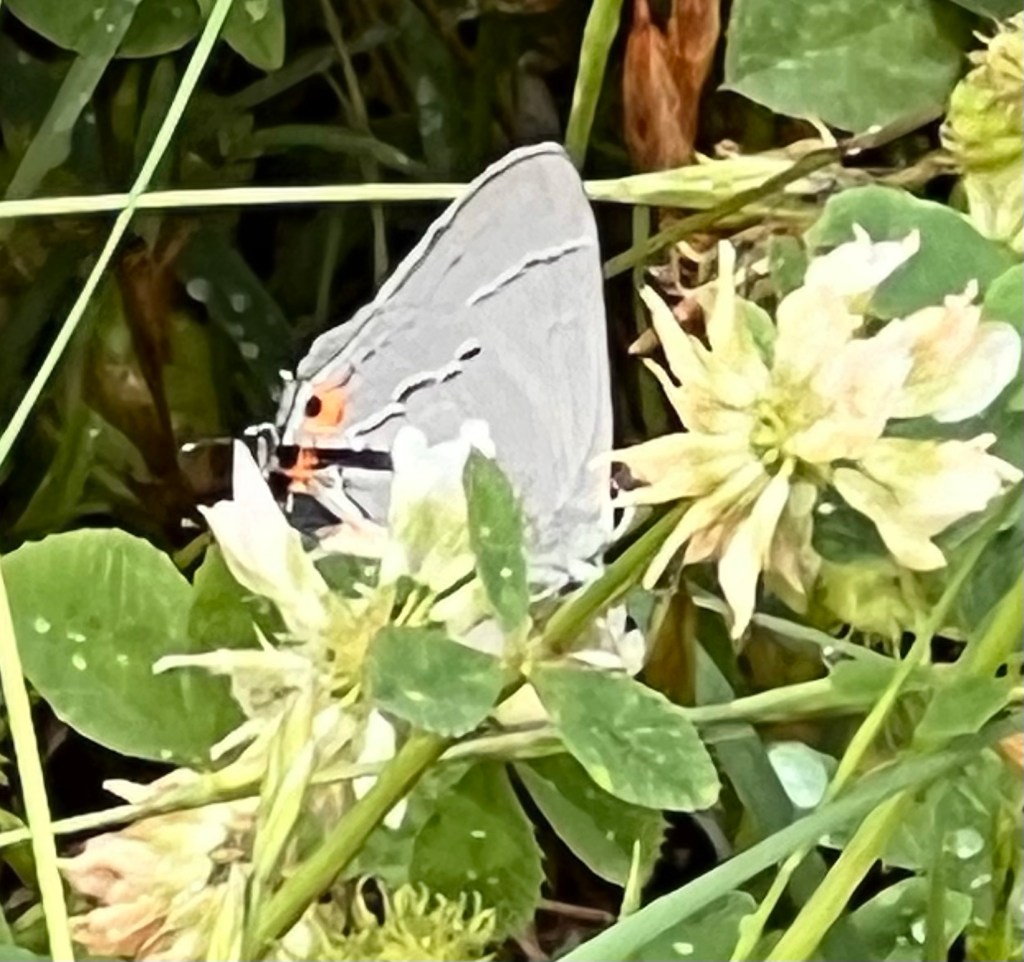
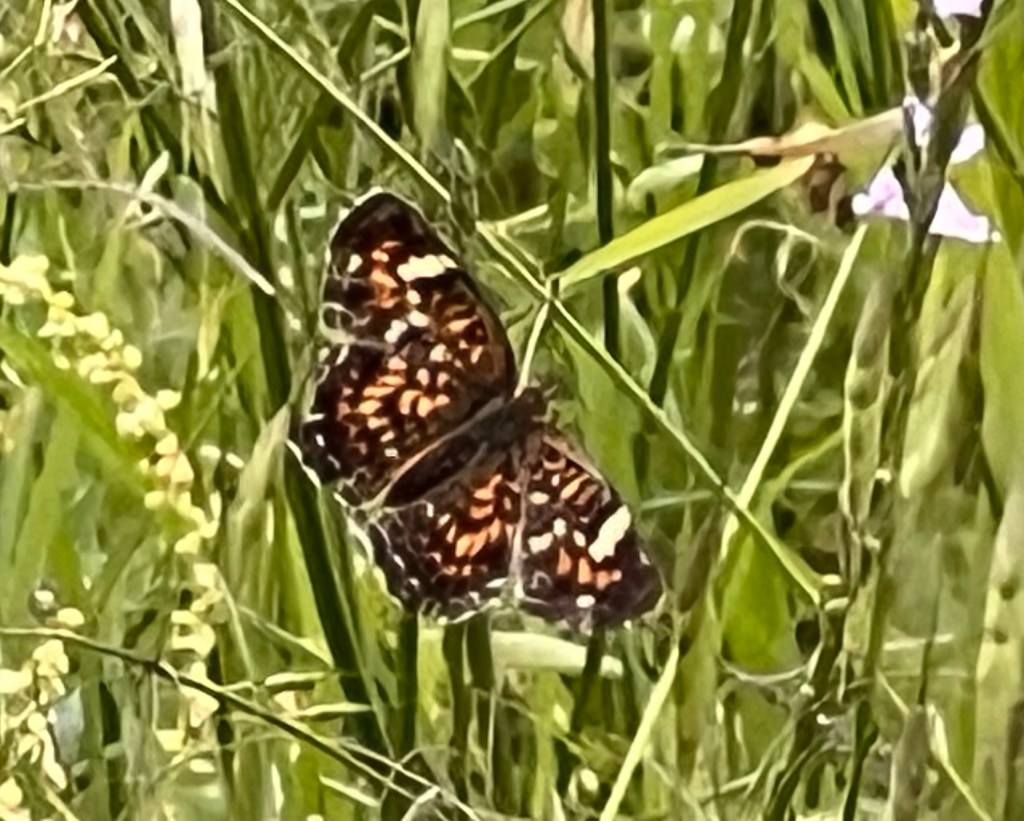
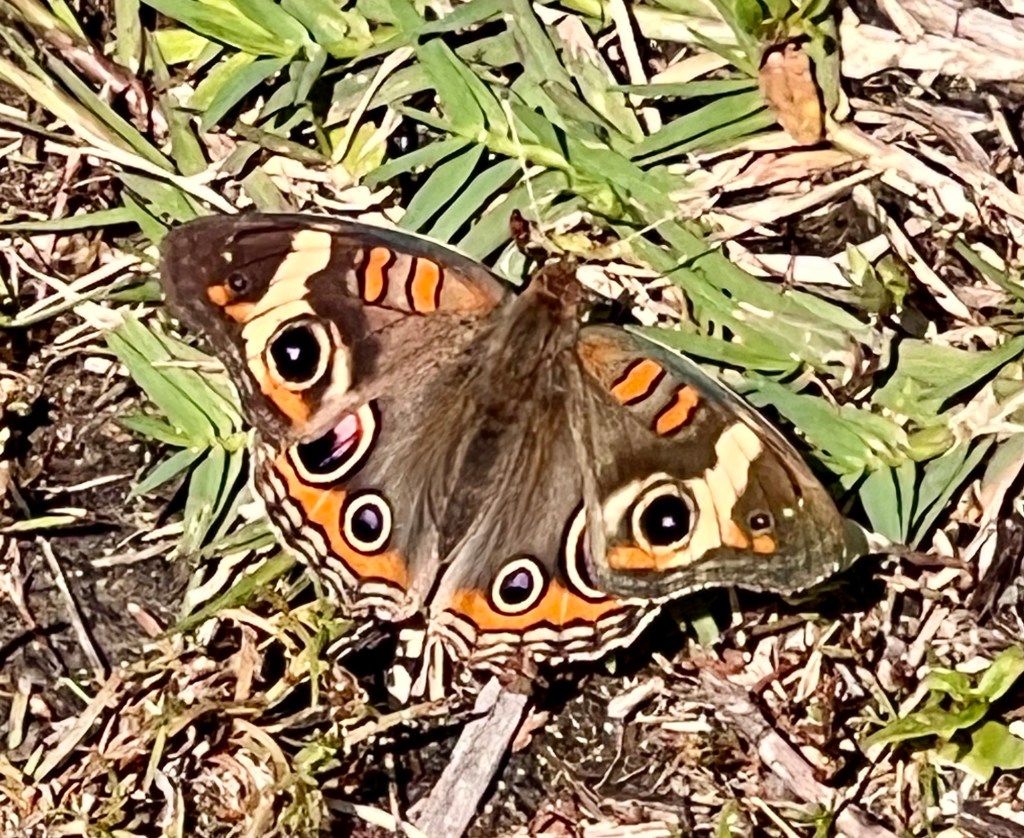
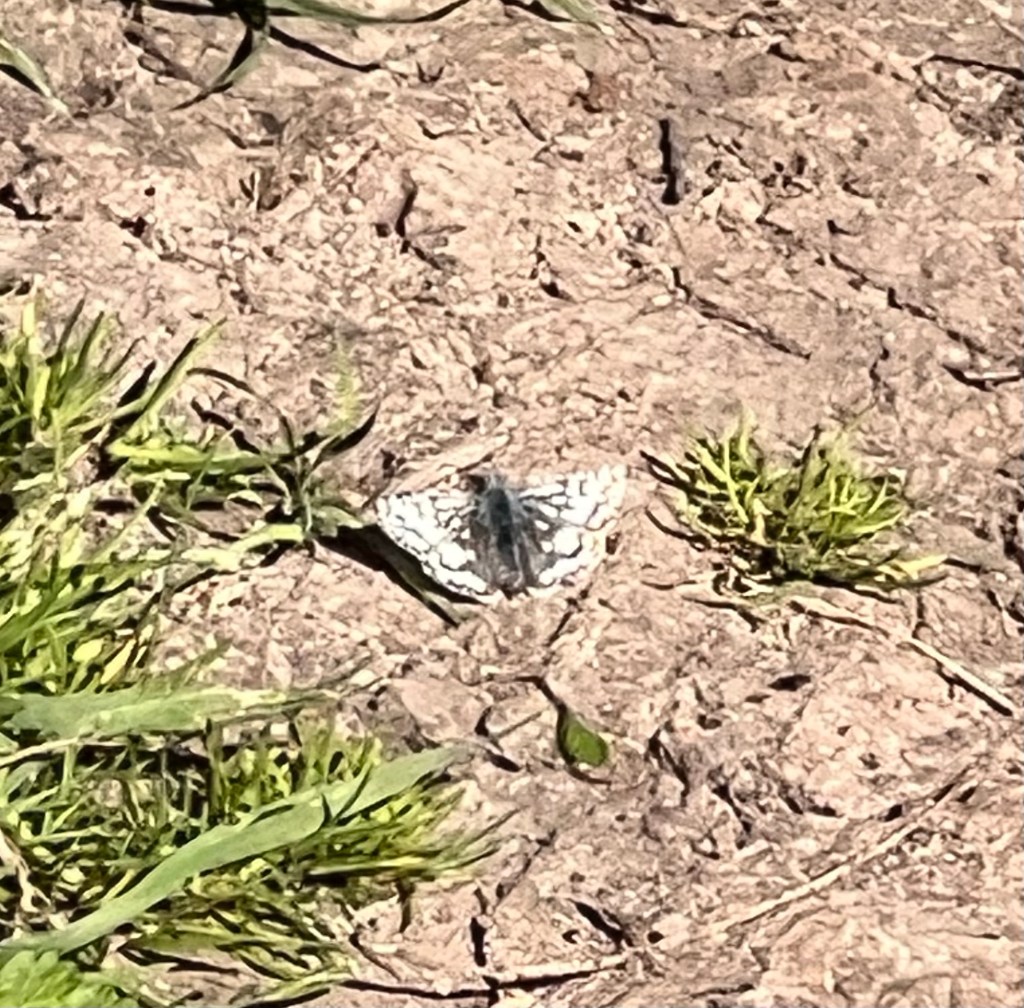
Common eupithecia mothFall armyworm mothGray hairstreakDittoPhaon crescent SkipperBold jumping spider (not an insect)American ladyMonarchCheckered whitesDittoVariegated fritillary I forgetConvergent lady beetleOrange blister beetle Bugs bugs bugs
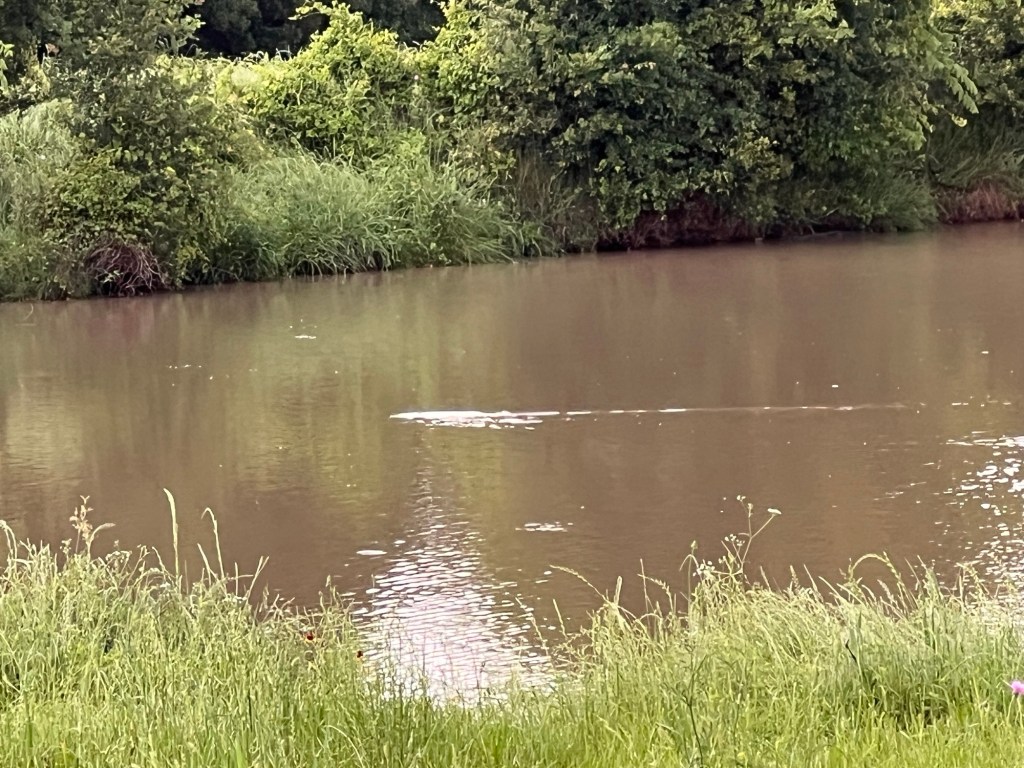
Whew. But wait, there’s more. I observed lots of interesting water snake behavior today. In the morning, while looking at the heron, I saw at least four snakes traversing the pond behind the house. I got blurry images, so no ID.
Snake is to the right of the log. That pattern is how you recognize a swimming snake
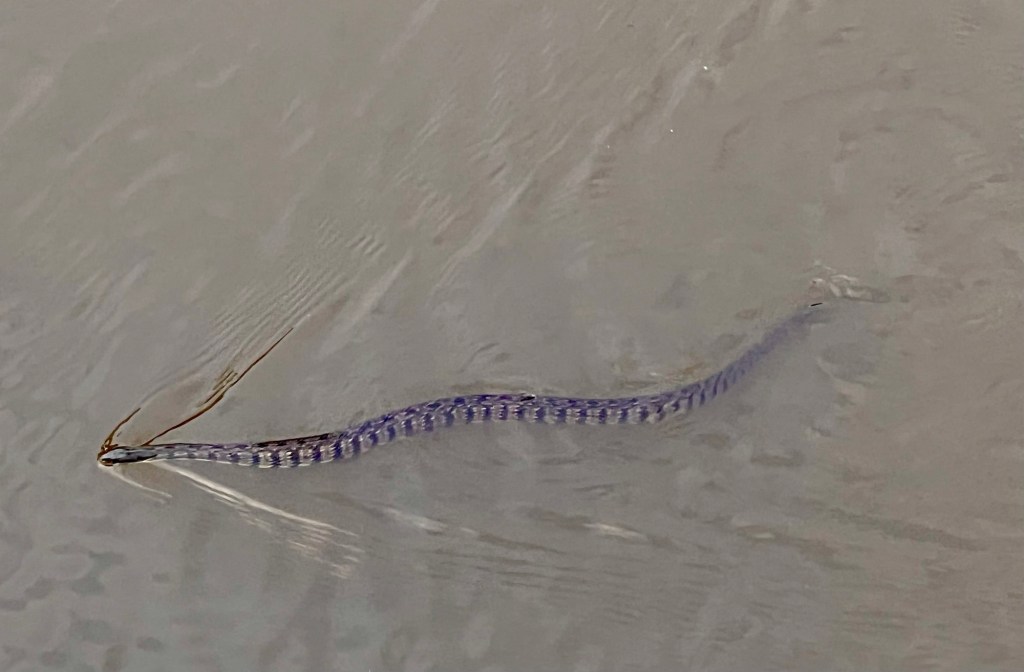
Later, around 6 pm when I decided to get the rest of my exercise goal accomplished, I noticed a snake near the shore of Walkers Creek. As I watched, I saw two more. The creek was quite still, so I could see them real well. Then they obliged me and swam up to the bridge. That let me ID them as nonvenomous diamondback water snakes. What a sight!
Snakes in the creek
All this makes me more firm in my decision to not swim in the ponds or creeks here. Interesting aside: when I came back from my walk to the cemetery, the creek was rushing and gurgling. It was at least three inches higher. That’s what flash floods are all about!
Today Lee and I spontained, which is our cute couple’s word for doing something on the spur of the moment. He needed to get out of the house, so we did. We ran off to Waco (because any iNat observations I made there would count for my City Nature Challenge totals).
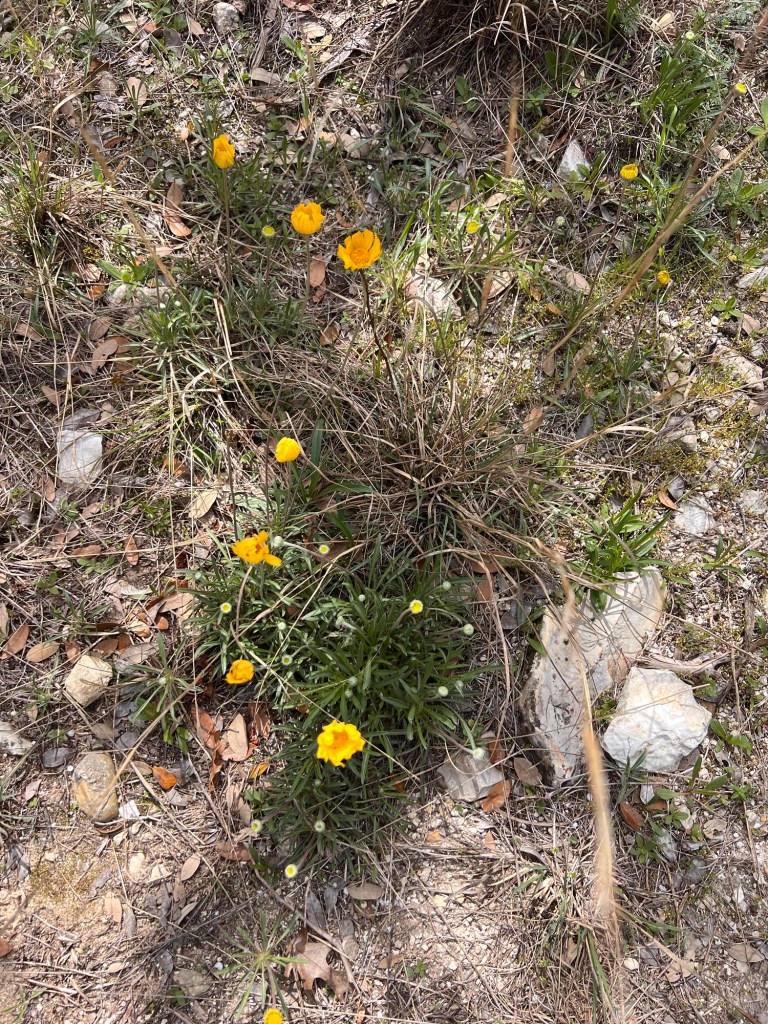
Pearl crescent on Indian blanket.
We went to the Waco Mammoth National Monument, which neither of us had ever been to before. I hoped to get lots of iNat observations, but it didn’t matter much, since I’d already gone out in the morning and got sightings of crawfish, a turtle, catfish, and Ssssindy the snake.
Wow, Suna, that’s a great photo of a crawfish.
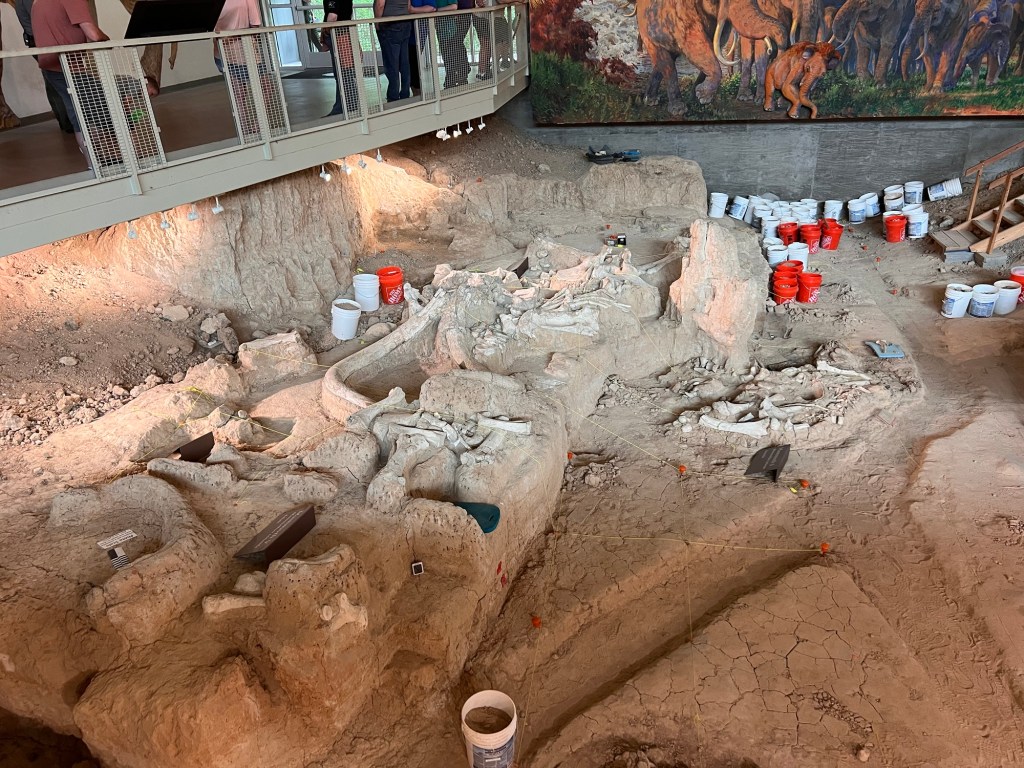
We enjoyed the monument very much. The actual mammoth dig site is preserved with a cool roof and walls system that protects it. The walkway people go on in tours is suspended from the ceiling, so the bones are safe.
You can see the walkway and the site here.
I don’t think I realized before that this site has lots of mammoth fossils (and a camel). It’s the only such “nursery herd” site ever discovered in the US. Many bones are in a museum at Baylor University, but the ones we saw have been left in situ, and work is still ongoing with them.
You can see they are still working.
It’s incredible that this mass death of mammoths happened, apparently more than once, when the Bosque River suddenly flooded. I’m amazed that these animals were here only 10,000 years ago, too.
More of the mammoth dig site
Anyway, we enjoyed talking to a college student who was there with her archeology club, to another young adult who helped me get my National Park stamps going, and to the park rangers. I know that helped cheer Lee up.
And after looking at the dig site, we walked on some trails and found some plants and insects. Mostly it was hedge parsley and more hedge parsley, but we found other stuff.
Flower scarabMore salt marsh moth caterpillars were here. Didymium spongiosum or dog sick slime moldRed wasp and future victim. A few non hedge parsley finds
It was nice having Lee help me. He spotted a few bugs! I must be rubbing off on him.
Hi, Lee
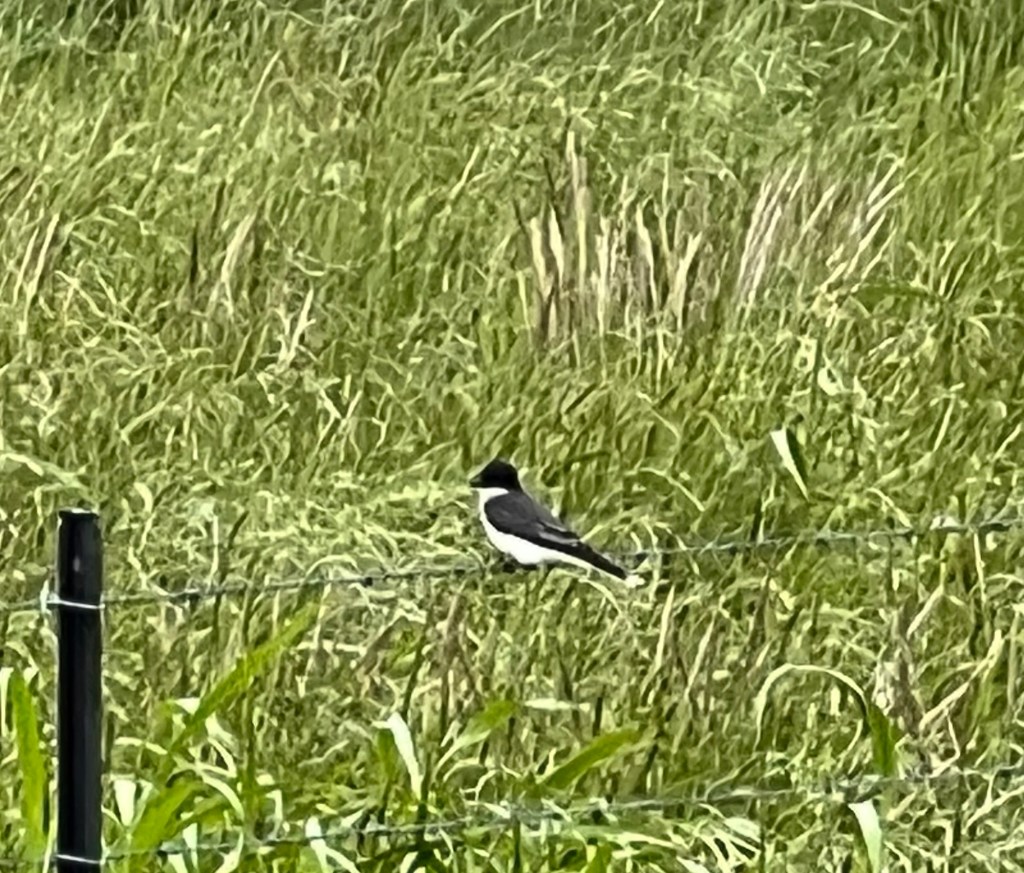
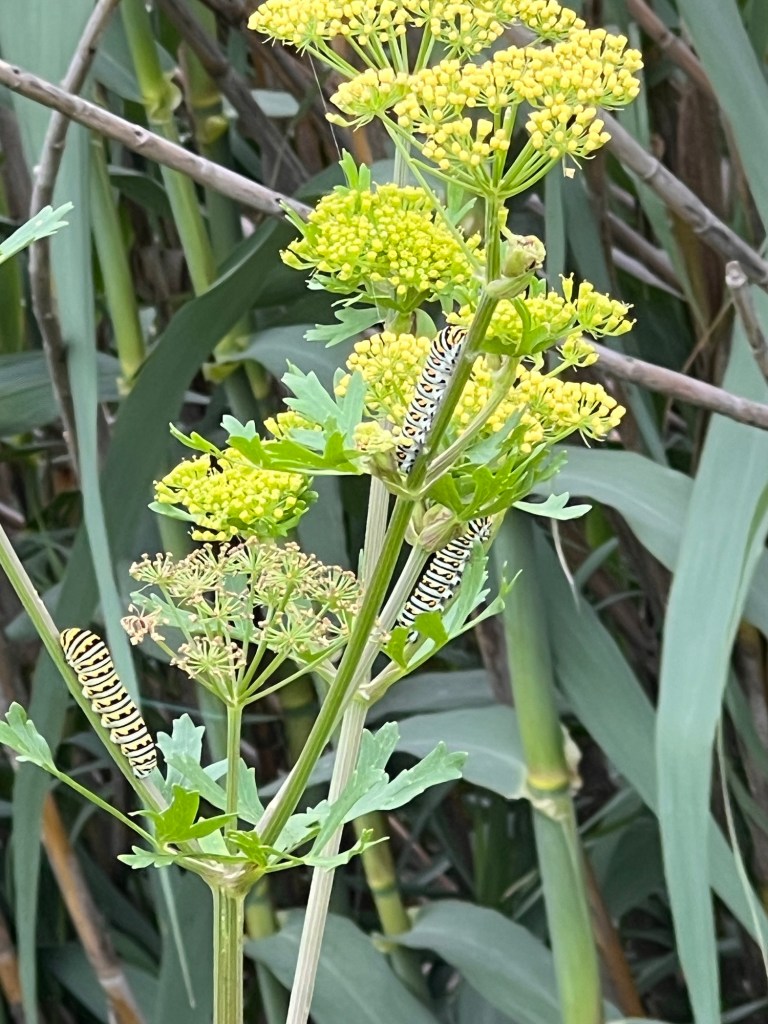
Back at the ranch, I found many interesting bugs and spiders on prairie parsley. If you want more butterflies, grow this! I also got a great look at a kingbird. The buntings and dickcissels are very loud but are also good at hiding.
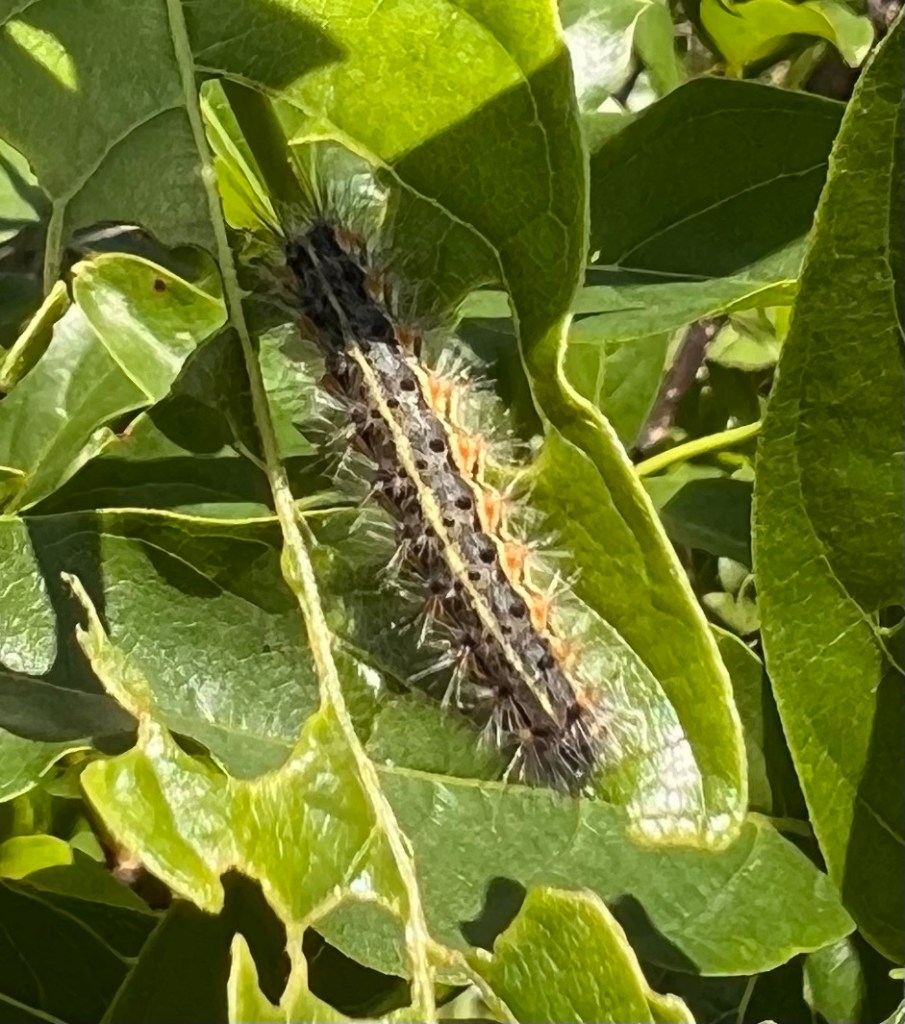
Kingbird Spot the crab spiderSwallowtail caterpillar More!Many hornworm tachinid fliesAnother oneA mason wasp
It was so windy that I gave up on birds. Tomorrow I’m going over to Sara’s to see if she has any interesting plants. I’d probably win the challenge if I was able to go to Tarrin’s, but she’s out of town and I wouldn’t want to impose on her family. Maybe next year!
A little broken, like many of us, but this goatweed leaf wing (Anaea andria) was a beautiful find.
All in all, a little spontaining was good for us both.
After yesterday’s constant precipitation, today came as a very welcome change. It was nice and sunny, as well as pleasantly cool. I was ready to get in some exploration of Lake Whitney State Park!
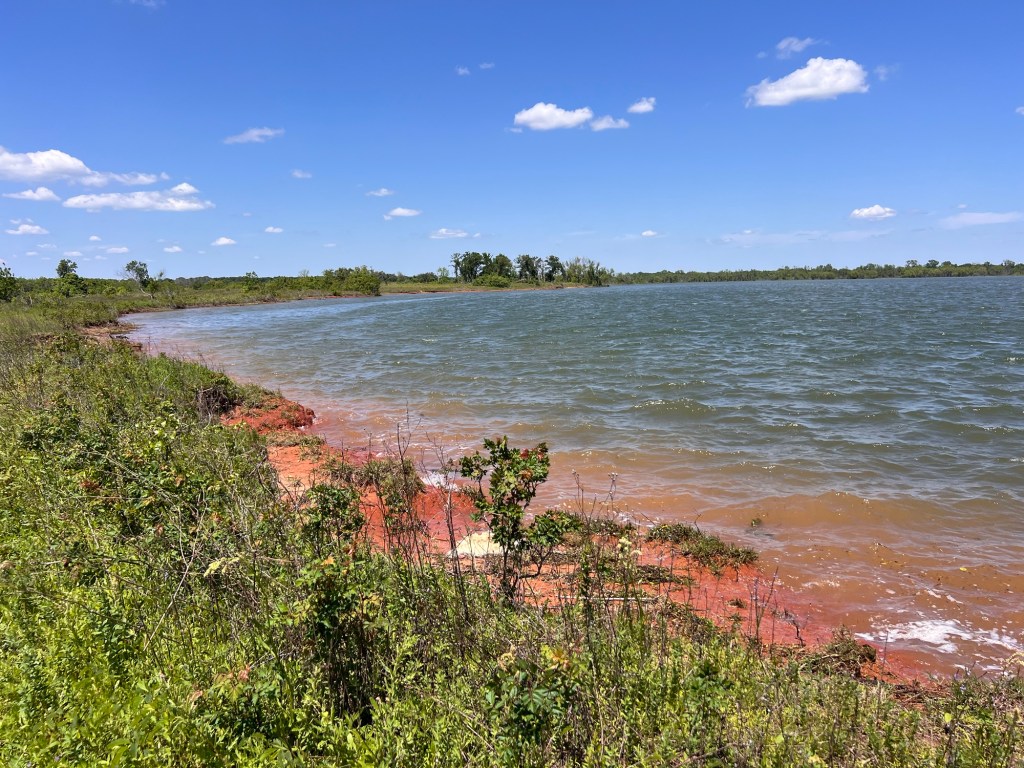
The lake looks way better in the sunshine.
The first thing I did was head back to the Two Bridges Trail for a birdwatching walk. It was led by two fellow Master Naturalists who claimed to be amateurs but have lots of experience.
I think they thought I was weird, but they said I could share their picture with one of the oldest trees in the park.
We had a very good time, even if we didn’t see or hear too much exciting bird action. I learned much about the park and lake. The lake is only about a foot deep, for the most part!
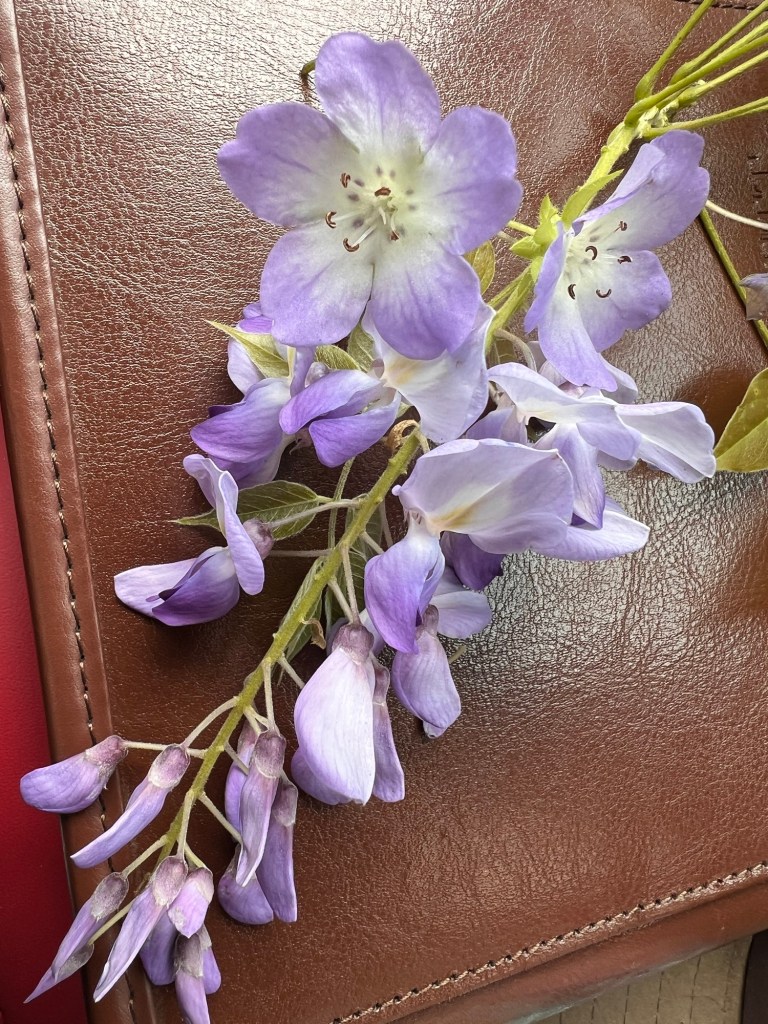
There are vitex trees here, and no one knows how they got there!
The walk ended on a triumphant note when I heard a male painted bunting then actually spotted it. I got a great look with my binoculars and even got this blurry yet identifiable photo.
Exciting to a birder
In the same clump of trees, a Nashville warbler appeared. I’d been hearing them, but this was my first sighting. We felt quite successful.
On the way back, I saw a guy walking down the road who had three cameras and binoculars. I stopped to tell him about the birds and he laughed. The other two had just told him, as well. I guess bird lovers stick together.
Great folks!
When I got back, I sat by the RV and hung out with Lee for a while. I heard an unusual bird, so I turned on Merlin. It was the summer tanagers! We quickly figured out they were close. Sure enough, we got to enjoy great views of both the male and female! He’s solid red and she’s pale yellow. Whew, that’s a lot of bird excitement for one morning.
A very red bird.
After lunch I headed out again so I could check out the other trail. It’s called the Towash Forest Trail, but there’s not much forest. Towash is the town that’s now under the lake.
Entrance
I must say the scenery left a lot to be desired. The first part interested me, because I could see old fences, and trees were all lined up as if they used to be along a fence. I think that part of the trail used to be the road leading to Towash.
Old fenceLines of treesAt least two woodpecker holes in this tree.
Most of the trail went along the lake. There were small trees but lots of dewberries and grapevines. Of course, there were insects. There were disturbing numbers of caterpillars and butterflies, along with a new friend, the bird grasshopper. They were flying off in front of me, just like the butterflies were. I even saw a Gulf fritillary and a black swallowtail but they avoided my camera.
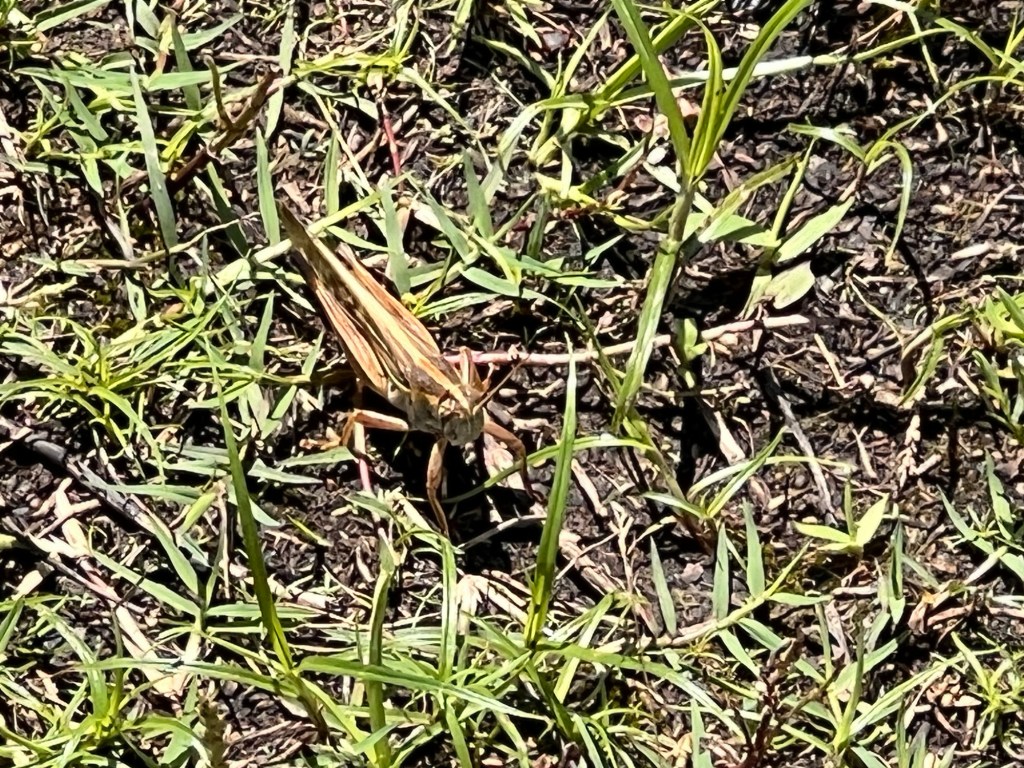
These were all over the evening primrose Variegated fritillary Future mothBird grasshopperOne that flew up to meTypical sceneYep, that’s itGood old carpenter antsBuckeyeFriendly buckeyesFriendly sulphursQueen Another moth. There are sure gonna be lots of these soon. Oh yes, dragonflies are out. Yes, more moths This one got on me and would not leave
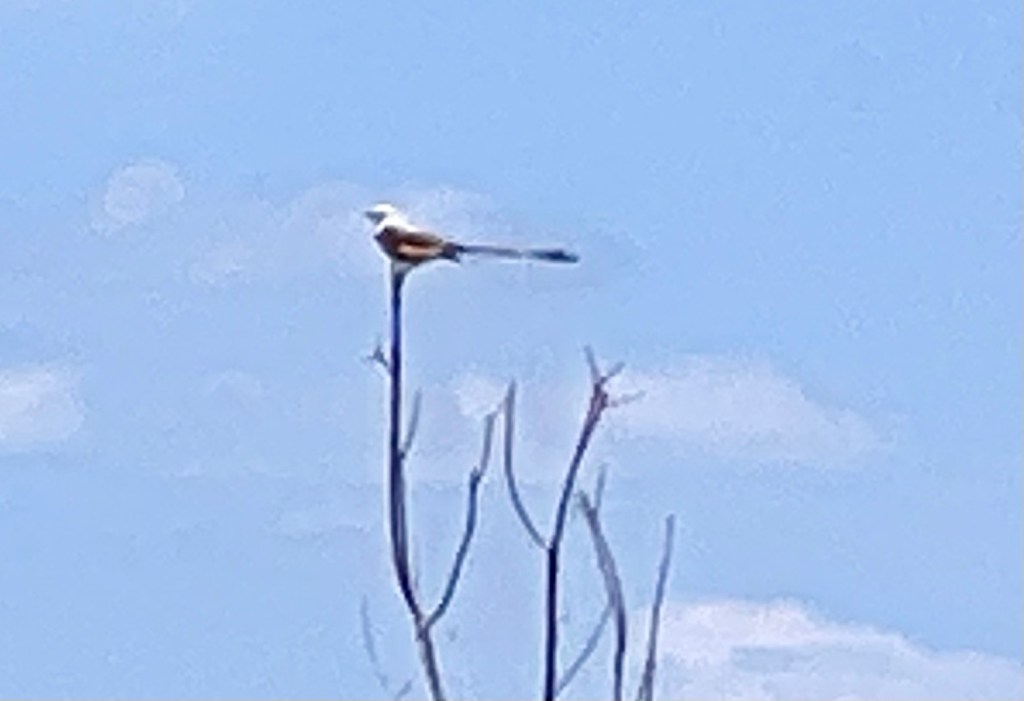
Yes, there were birds. There weren’t too many, but I did enjoy finding a flock of coots, watching Scissortail catch a bug, and startling a spotted sandpiper. Again, there were lots of egrets.
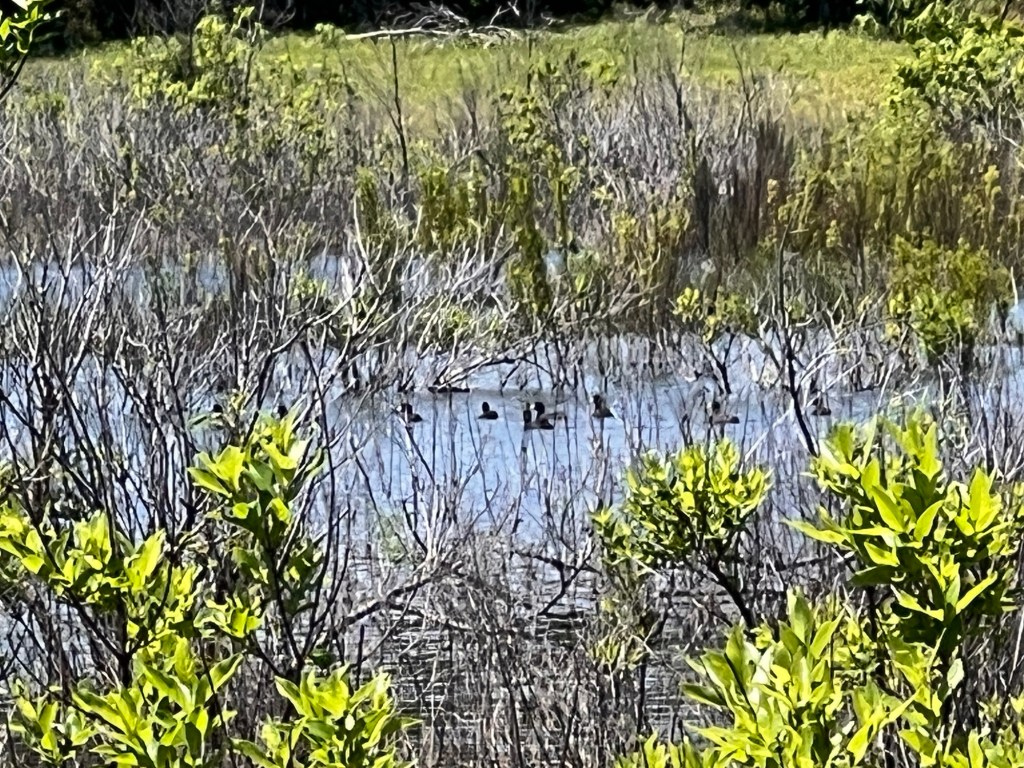
Coots in here somewhere Scissor tail flycatcher EgretsMore egretsWhere the sandpiper was
Later, after some lovely rest, I couldn’t control my nature-loving self and I blazed through the trees behind our campsite to find the lake we can barely glimpse. It was worth it. This inlet is very natural and beautiful. I saw so many shore birds, ducks, and others!
More old fencing Great egretHuge cedar elm
Having just dozed off, I’m pretty sure I should stop typing. But it was a great day in nature. Ahh.
Blog readers will know that I’ve been using Merlin Bird ID since last summer to identify birds I hear. I’d used it before to identify birds I saw, but once I started the listening exercise, I was hooked. It’s such fun knowing what I hear around me, and it’s great training for birding without the app. My ability to identify birds by song is hugely improved. Plus, knowing what’s out there helps you know what to look for if you want to see birds.
Merlin interface.
Cornell Labs has done an amazing job developing this app, which you can download from the App Store in whatever kind of phone you have. I can’t imagine how much work it has taken to train the listening app on the sounds of all the birds around the world (you can get Bird Packs for wherever you happen to be).
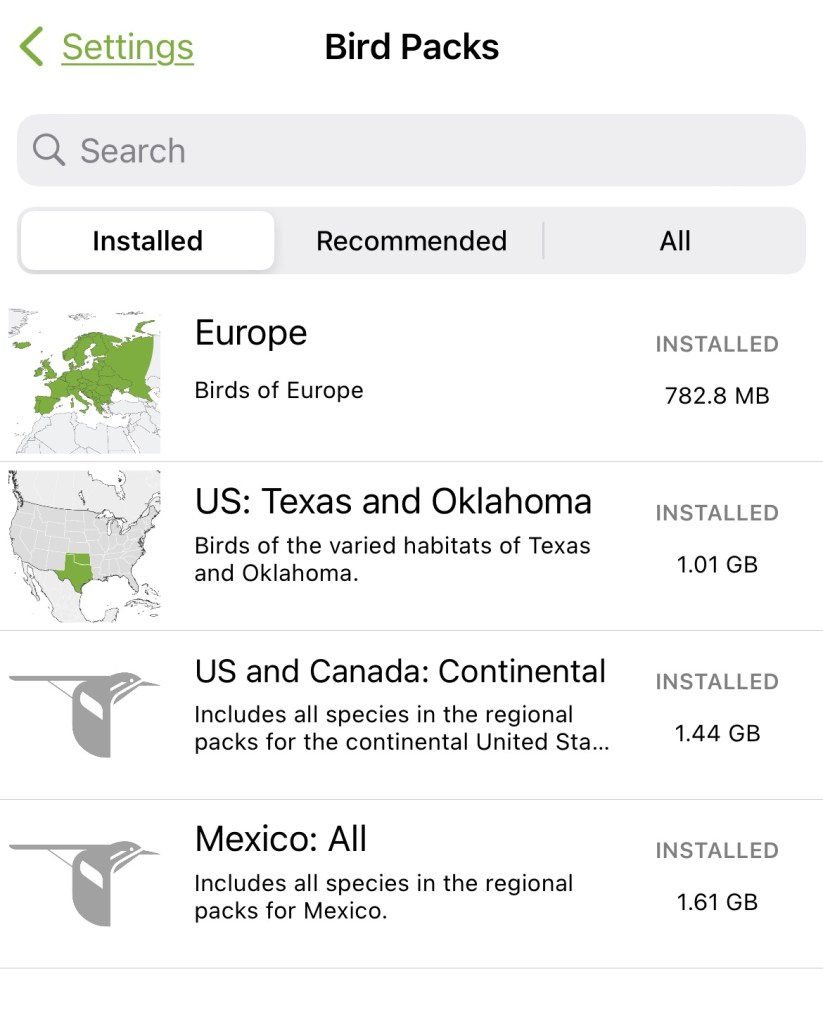
I got Europe because I keep getting those weird IDs and wanted to read about those birds. Mexico is because I go to South Texas sometimes.
I’ve learned a few interesting things about Merlin that those of you who use it or are interested in giving it a try may benefit from.
One of the most common birds I hear.
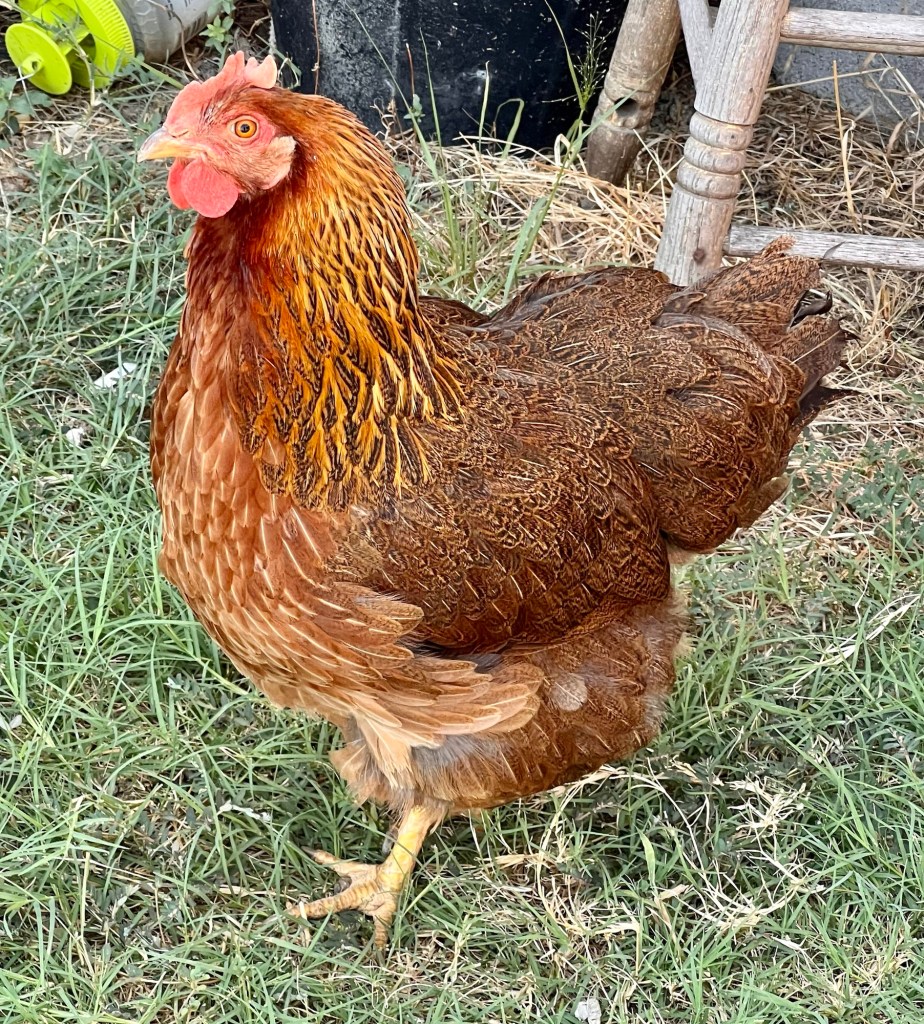
1. Merlin will not identify domestic birds. My chickens can walk right in front of the phone and nothing registers. It also completely ignores Tarrin’s guinea fowl, and didn’t pick up the turkeys at Bird and Bee Farm. However, it has identified wild turkeys, so I think the turkey thing was a fluke.
I’m a bird!
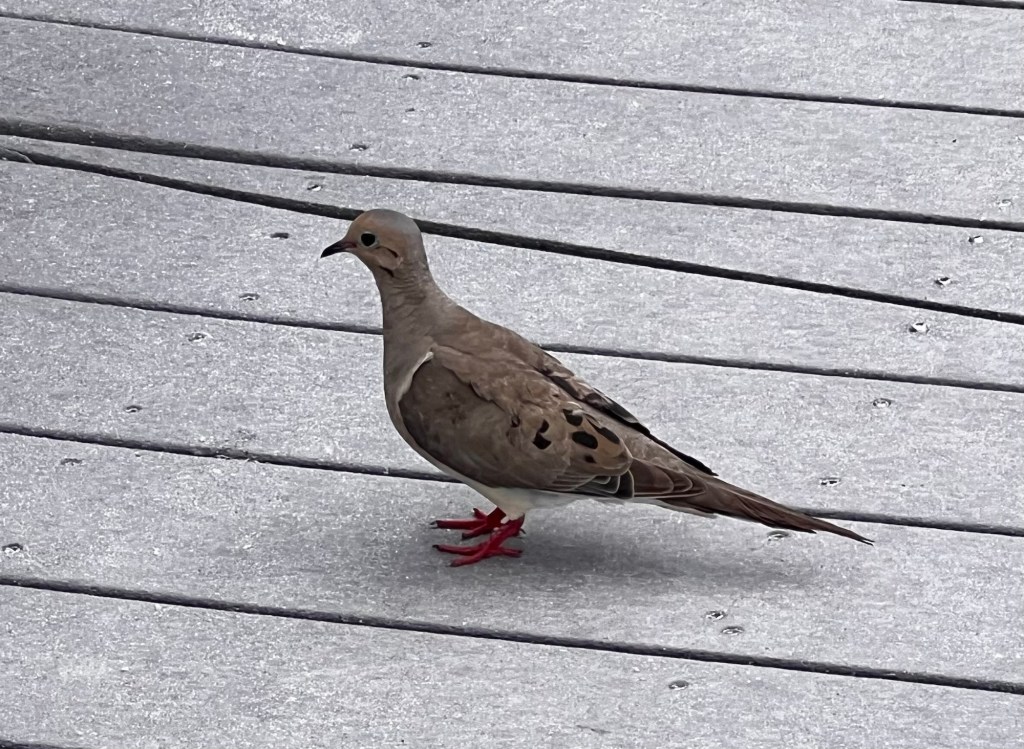
2. The app has trouble with birds who make sounds that are low in pitch. For example, it needs most doves to be really close in order for it to register them. Collared doves make a higher sound that it identifies more easily. And you have to be on top of an owl for it to be picked up. In the past week, I’ve heard entire owl conversations that didn’t get “heard,” both of barred owls and great horned owls. That’s why it pays to also be able to identify birds with your own ears!
I’m so subtle.
3. Crazy things can happen after a recording is interrupted. Two things that happen to me often will interrupt a recording: the phone ringing or me accidentally starting a video rather than taking a photo while the app is running. You can usually save the recordings, though I have lost a couple.
However, I’ve found that if I start the listening function again after an interruption occurs, Merlin’s decides I am not only in North America, but I’m also in Eurasia. I will be informed that I hear a great tit or a European robin, which is highly unlikely!
So, if you suddenly get an identification of a bird you’ve never heard of, be sure to click on the map for that bird, to be sure it has actually been seen in your area. Sure, occasionally birds are blown off course when migrating or after a storm, but most European birds stay in Europe (other than our biddies the house sparrows and starlings, of course!).
Lee’s haiku: Porch sparrow drama – fussing, fighting – very loud What are they saying?
4. Moving around is hard on Merlin. The app works best if you are standing still (or the phone is sitting on something) and the environment is not noisy. It’s amazing how loud you are walking on a trail or around your property. I live in the country, yet I realize now that it’s loud here. Loud farm vehicles and trucks, single-engine planes practicing their takeoffs and landings at the nearby tiny airport, our six dogs, the pool pump and waterfall, and air conditioning units all contribute. When camping, screeching children on trails and boats are hazards. So are waves, believe it or not. But if you stay still, Merlin’s does a pretty good on anyway.
Savannah sparrows looking for bugs
When I’m out walking, I usually pause if I hear an interesting bird, so the app can pinpoint what it is. My exercise app on my watch hates that.
Merlin Hints
Save fairly often. I try to go no more than 20 minutes or so before saving a recording unless there’s some great bird action going on. That minimizes your losses if the app crashes, which does happen occasionally.
Remember to report interesting birds you hear or see to Cornell Labs. It goes to e-Bird and provides useful research data. I don’t report every sighting. I doubt they are interested in the fact that I see vultures and house sparrows every single day. You can also upload photos. Occasionally I get one good enough to share.
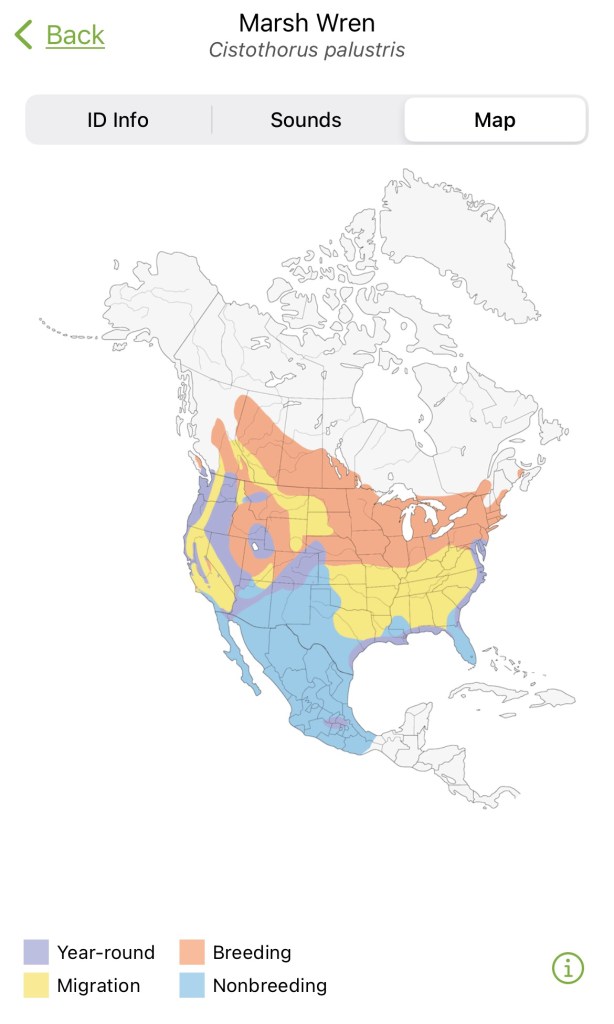
Have some fun with the app and do your own research. I’m tracking what birds I hear at my house each month. It’s letting me know which birds are winter birds, which migrate, which show up in summer, and of course, what’s here all the time (vultures, house sparrows, cardinals, chickadees). Be sure to report each new bird you hear, so your life list on Merlin can grow. I have 192 birds since last September. Majestic that 193. A marsh wren showed up today. That includes birds I’ve seen while traveling, too.
Yep, we are in their range.
Conserve your phone battery. To make my battery last longer when on long hikes, I don’t keep my camera open at the tame time Merlin is running unless I’m actively taking pictures (remember, I also obsessively record plants and other life for iNaturalist). If I were planning to go out for a long time, I’d take a spare battery. I tend to run out of juice after around three hours.
Don’t become annoying. I have developed the habit of shushing people who talk when I’m “listening” through Merlin. I’m sure it irritates my spouse. People are important! I also don’t even TRY to use the app when on a group hike unless I hear something really cool and go hide to try to capture it. I was hilarious at the National Butterfly Center last October, as I lagged behind the Master Naturalists trying to hear exotic Mexican birds. I also find myself trying to be extra quiet any time I’m outdoors,because it’s become a habit. I whisper answers to questions and such. I am working on fixing that before my family stope talking to me.
I hope you get something helpful out of these hints. If I’m wrong about anything, let me know. Also, if you have additional insights or hints, tell me and I can add them to this blog post. I’m still learning!
Flowers attract insects that attract birds.
By the way, I’m not claiming Master Naturalist VT hours for any of this, since it’s on my own property most of the time, and that doesn’t count. I did count my time during the Great Backyard Bird Count, since that’s approved. I don’t claim hours when I’m camping or traveling, since I’m also usually making iNaturalist observations at the same time and don’t want to “double dip.”
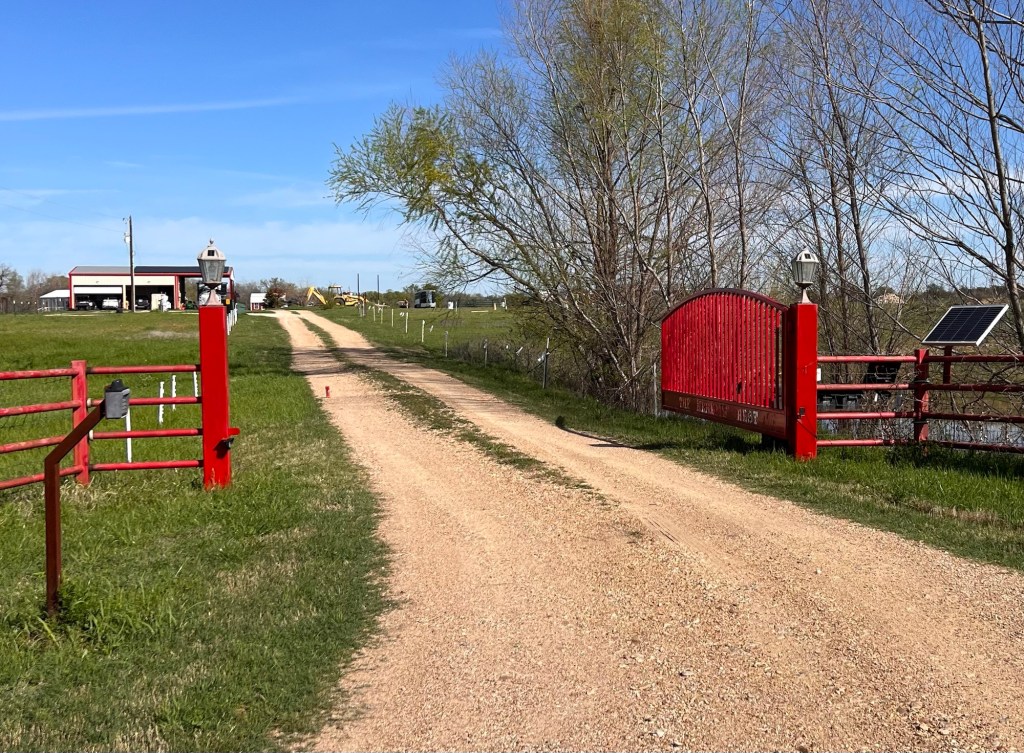
Not much happened today that was exciting, but that’s fine with me. I was able to refresh the Hermits’ Rest Red on the mailbox stand and gate posts, because it was finally calm enough outside to spray paint. I also added house numbers that are reflective, which should help 911 find us in case of emergency. I feel like we might need it at some point.
Sadly, we need a new mailbox, since after only 12 years, the hinges rusted out.
I’ll eventually repaint everything. You need to do it every few years, except for the gate, which is powder coated.
I had lots of birds to keep me company. My son drove by and asked where my shoes were, because I took them off so no red paint would get on them. Of course I got red paint on my manicure, but it blends in with the flowers.
Yes, I needed lotion.
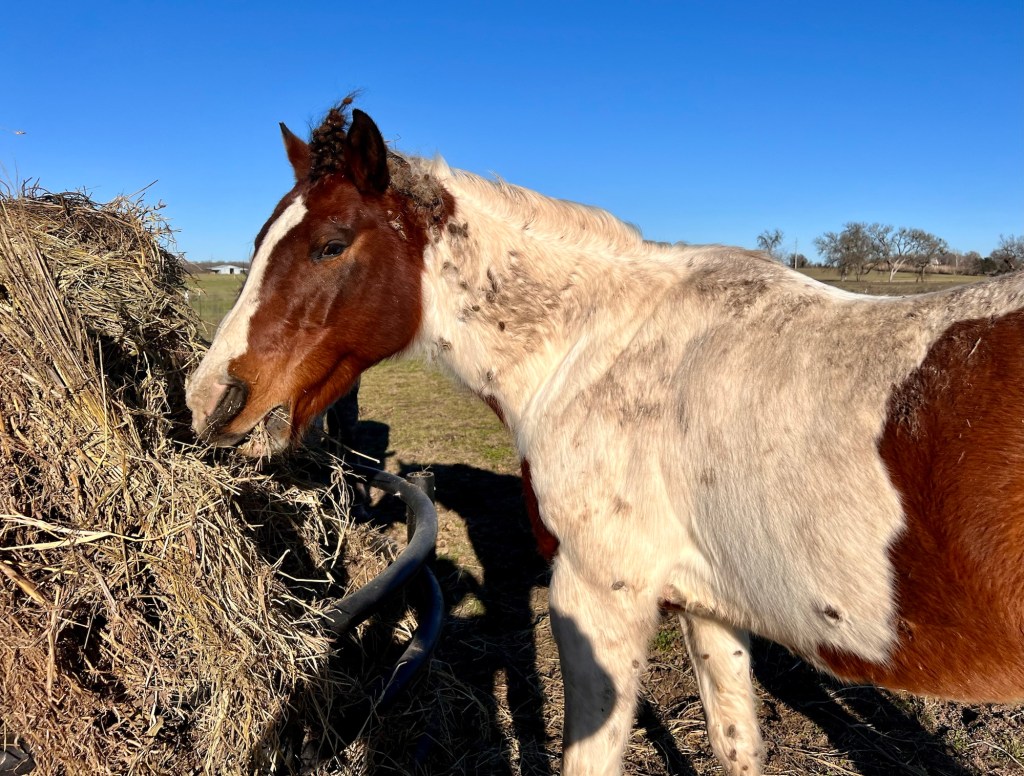
I’ve been spending lots of time with the horses, which is nice and calm these days. I have Dusty and Mabel looking pretty good in mid-shedding season, but Apache still has lots of hair left. Today he’d apparently napped in a pile of burs. It turns out it’s harder to get them off his belly than his mane or tail. He’s back to normal in every other way. We’ve enjoyed riding and he’s enjoyed his cantering. I think it makes him feel strong and powerful.
I forgot to take a picture of the King of Canter, so here’s a mama cow.
Mostly today (other than Master Naturalist stuff) I looked at butterflies while the phone listened to birds. The first scissortail arrived, as did another hummingbird. It’s not summer yet, guys! The low today was 37°! But my face did get pink from being outside in the pleasant weather. Best time of year here.
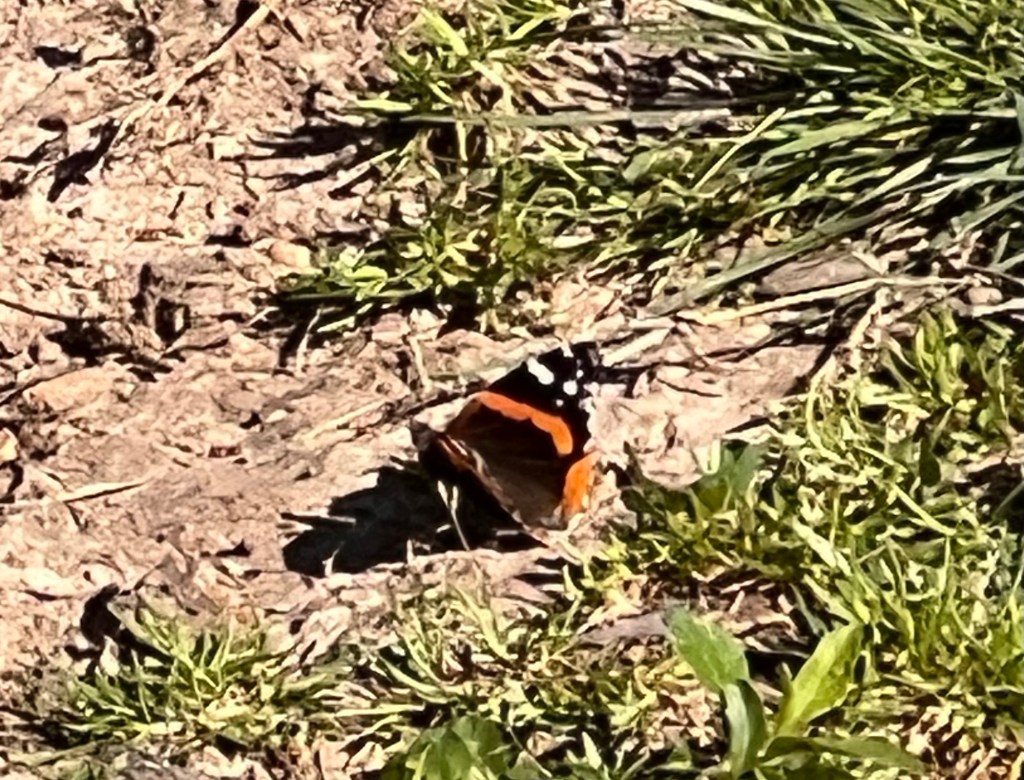
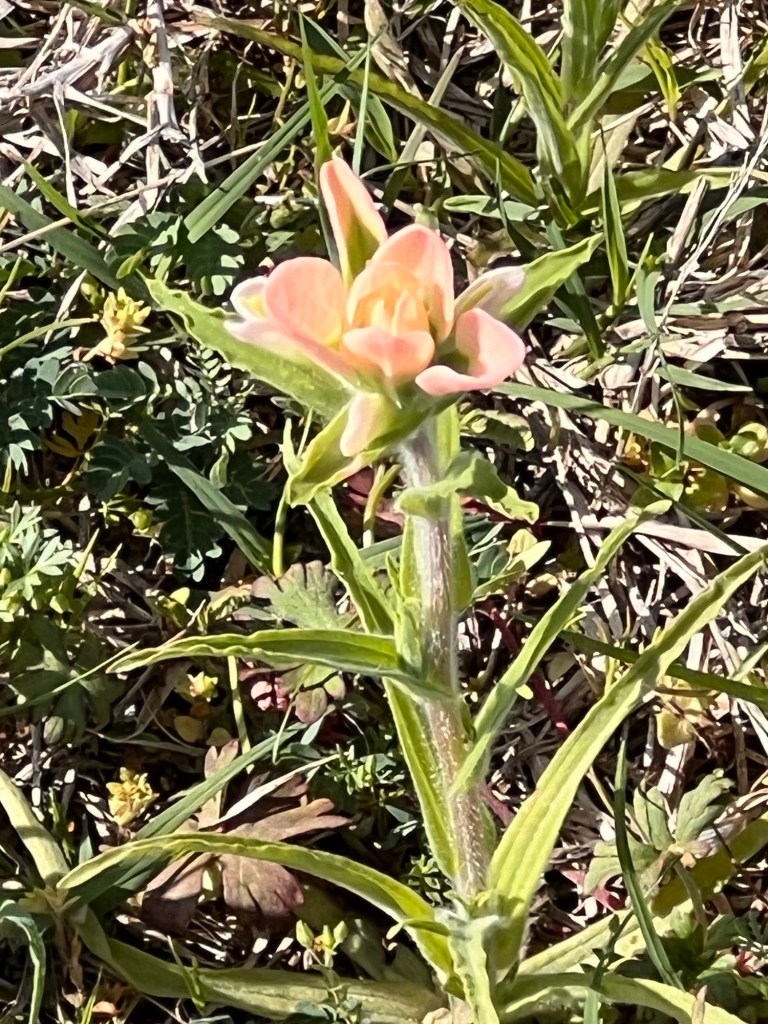
Orange SulphurCactus sproutMore swamp privet. How have I missed these trees before?Ragwort Checkered skipperRed admiral Buckeye, the butterfly kindA pale paintbrush Today’s sightings
One of the things you’re supposed to do as a Texas Master Naturalist is share what you know about nature with others. I’m not very good at staffing booths, I’ve discovered, but today I was able to do some nature interpretation with some Cub Scouts, and that’s what I hope to be able to do more of.
River view
You may remember I went with friends to check out the Ranchería Grande as a potential nature walk site. The Cub Scouts leader decided it might be too much for the pack members and some parents, so instead they planned a shorter walk at the Chalk Ridge Falls Park in Belton, and asked me to come along and see what I could show them. She figured it would be pretty simple, given the young people’s attention spans.
Nice trail
Happily, that wasn’t true at all. The park, which winds along the banks of the Lampassas River on the other side of the dam that creates Stillhouse Hollow Lake. It has nice wide trails, though one has to watch out for the many steep ledges some young people want to lean over. There are plenty of birds, trees, flowers, raccoon poop, and weird things to entertain Scouts and their siblings.
I’m explaining what an oak gall is. Can you tell it was chilly?
It was great that most of the participants were interested in the things they saw and found. I enjoyed answering some really good questions and showing everyone lovely sights like buckeye trees, which I didn’t even know we had.
It’s an Ohio buckeye, all right. One youngster observed that it looks like honey.
One little boy asked me a series of questions about what I showed him, was thrilled when I showed him how trees bloom, and after a while, came running up to me with a huge grin and shining eyes, exclaiming, “I love nature now!”
Little explorers
His brother carried a catkin from some tree around for a long time telling everyone how important pollen is. He’d never seen it before.
Pollen excitement
And the sister of one of the Scouts got all disappointed when her parents said they had to go back to their car. She told them she wanted to stay and keep having this adventure. Wow. I’d say the outing was a success.
Hello!
And the adults were also great. One grandmother was using her cane to help walk, and had said she’d just stay on the trail when everyone went down some stairs. But she got so interested in what we were seeing that she came on down and made it much further. Afterward, she was so proud of herself and declared she was ready to do some squats. That was just the best.
The bridge
I had good conversations with the adults as well. One mother said she wished we could come back without the kids so we could go further. I liked her!
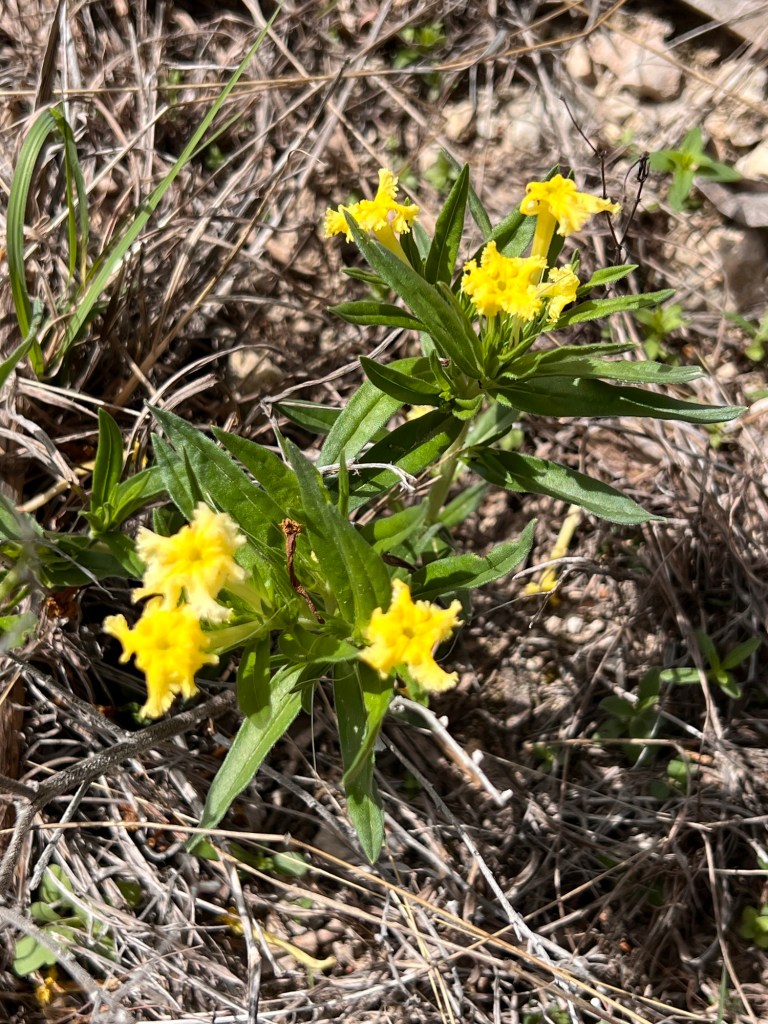
Everyone thought that narrowleaf puccoon is a weird name for a plant.
I learned a bunch, too, like that there are chalk deposits in the area and that canyon wrens have a distinctive call I’ll never miss again. They are my Daily Bird. No wonder we found them here—they live on cliffs. We’re at the eastern edge of this bird’s range.
The park has more litter than I’d like to see. We talked about returning with trash bags. Some of the infrastructure is in poor shape, too. But it’s beautiful, free, and just an hour from Cameron. It’s a great field trip, and I’m glad my friend brought the pack there!
Stemmy four nerved Daisy, I thinkGiant spiderwortRoughleaf dogwood More buckeyesBird nestTexas mountain laurelMore puccoon or stoneseedMore daisiesSights at the park
If you could permanently ban a word from general usage, which one would it be? Why?
I’m gonna make random readers learn about my encounter with a new favorite flower and some historical land before telling you what word I’d ban. I want to share happy things.
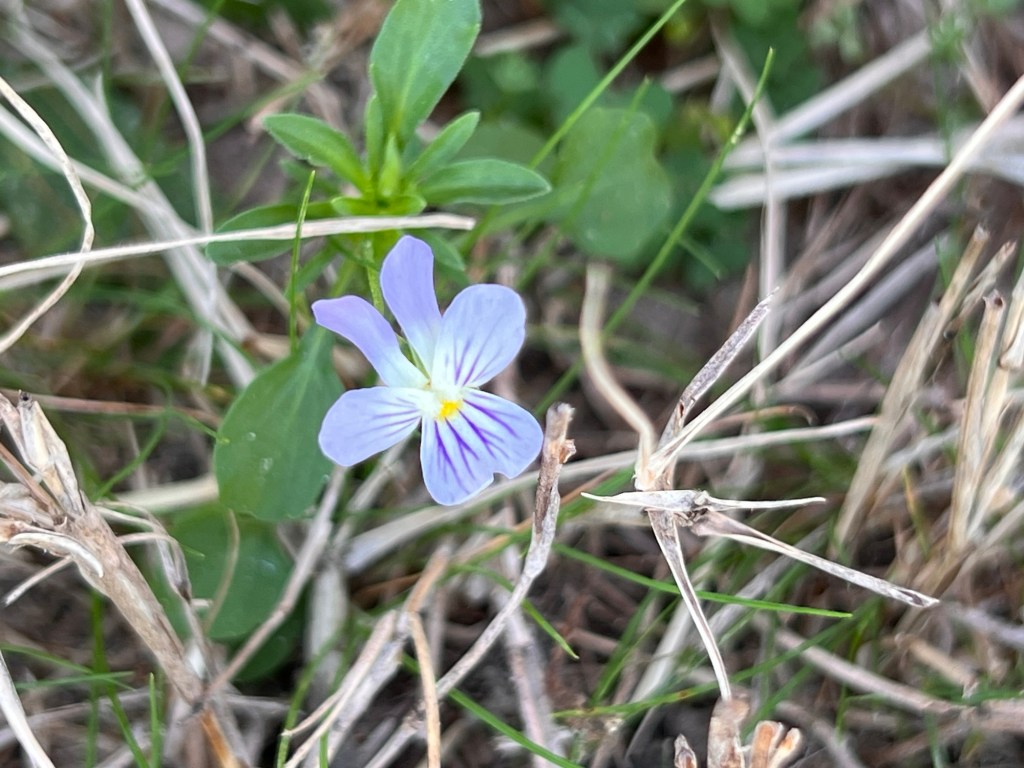
What are these little darlings?
Anyone who’s known me a long time probably knows my favorite flower in the pansy. I love their colors and their happy faces. I had no clue that there are wild pansies in the US, since I only knew them from flats in the garden store. But there are!
Hello! I’m the American field pansy – Viola rafinesquei
There’s no info on it in iNaturalist, which surprised me. But it apparently grows all through the eastern US. Have you ever seen it?
We were hiding
I was quite entranced by these tiny mini-pansies, which I encountered in Southeastern Milam County today on a hike with friends and their sons along the old El Camino Real de Los Tejas trail, leading to the panoramic views at the top of a hill, where Native American settlements at the Ranchería Grande were located. It’s gorgeous, with 360° views of the area. (Fellow Master Naturalists own the property and with the help of volunteers will make it accessible to the public.)
Lots of view.
I found another new plant, called smallflower fumewort (Corydalis micrantha). They were all over the field, too. It has a charming, yellow flower shaped like tubes. I never saw anything like it before!
I love a new plant!
We had three young boys with us who were very new to the concept of observing and preserving nature. One young man was very proud to have cut apart the snail shell I gave him. Another one really enjoyed hitting things with sticks to see the sounds they made. They took great glee at destroying any animal tracks they found, but we convinced them to leave the cool leaf cutter ants to their business. I think ant lions sounded scary so their holes were safe, too.
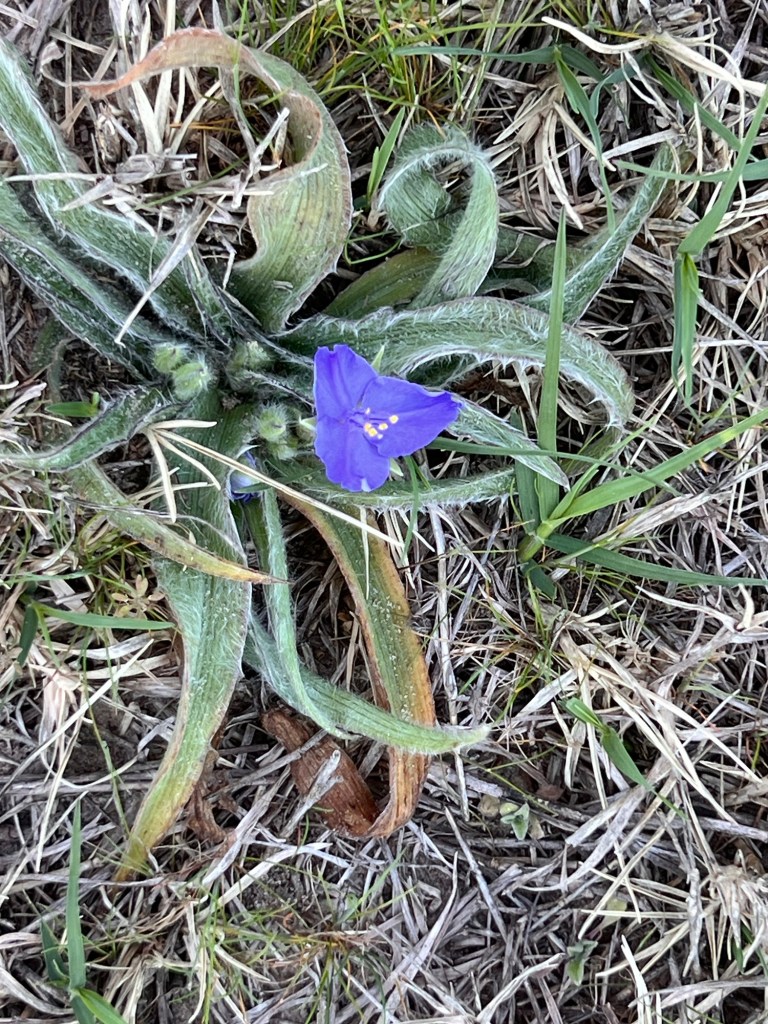
Spider wort didn’t scare anyone. I was pleased my friend found one blooming!
I hope the younger hikers learned some things, though, and it was fun listening to them and hearing how they think. I’ll have a lot more boys next week, as we take Cub Scouts along the trail. Here are some things the boys found interesting.
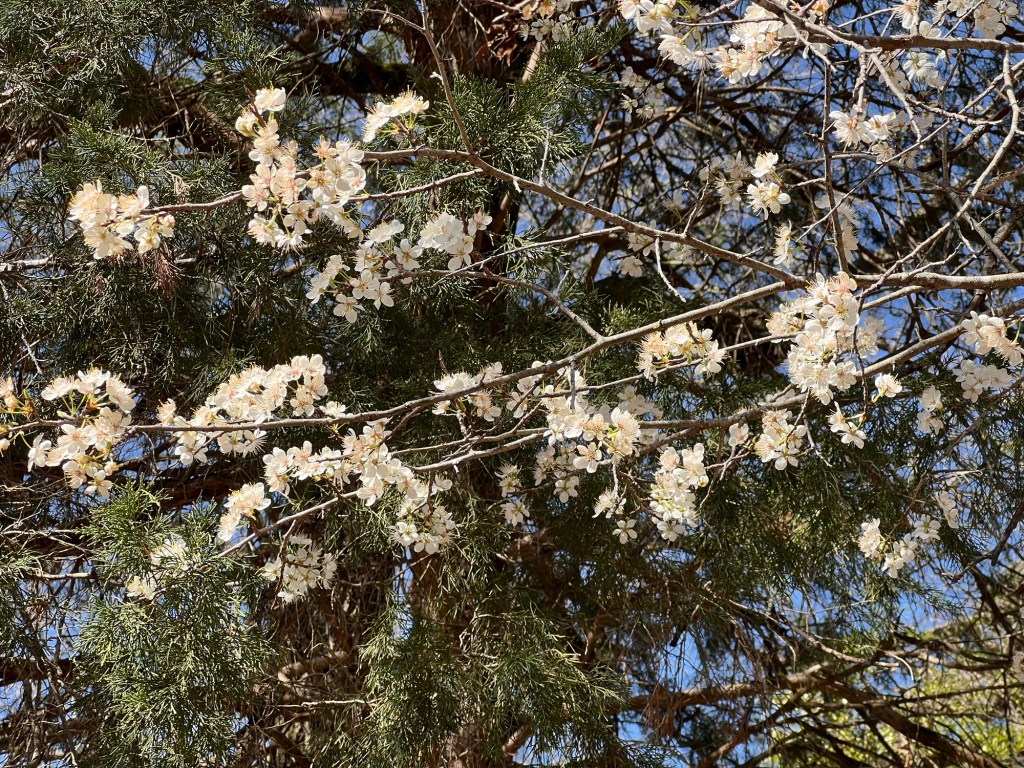
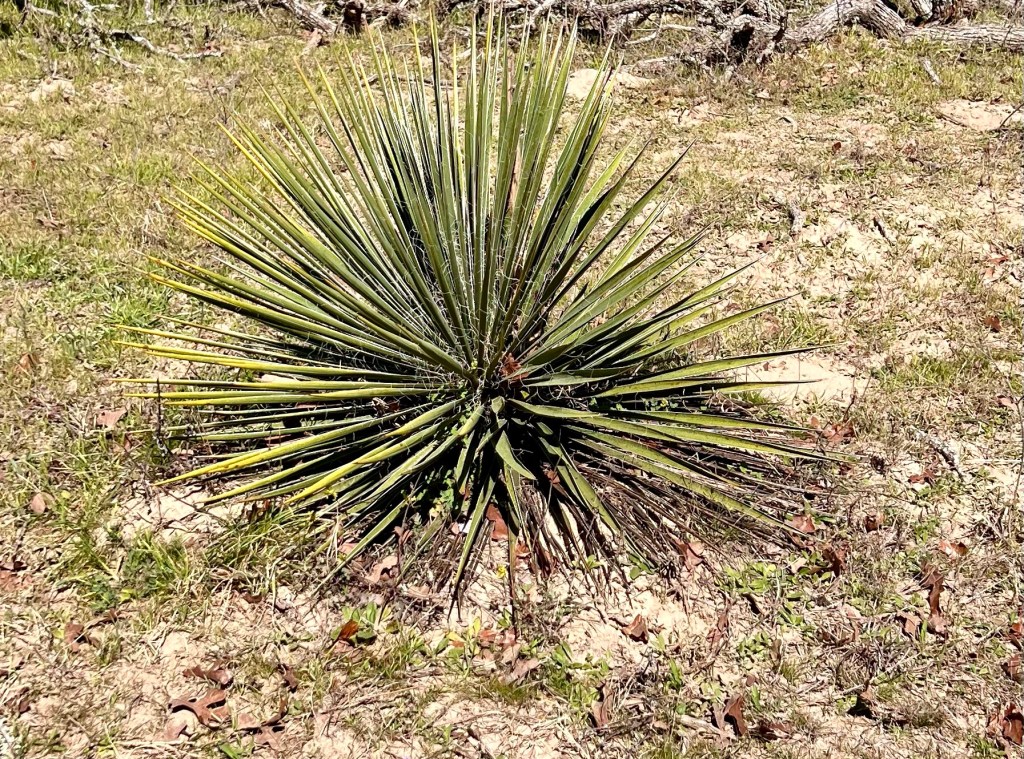
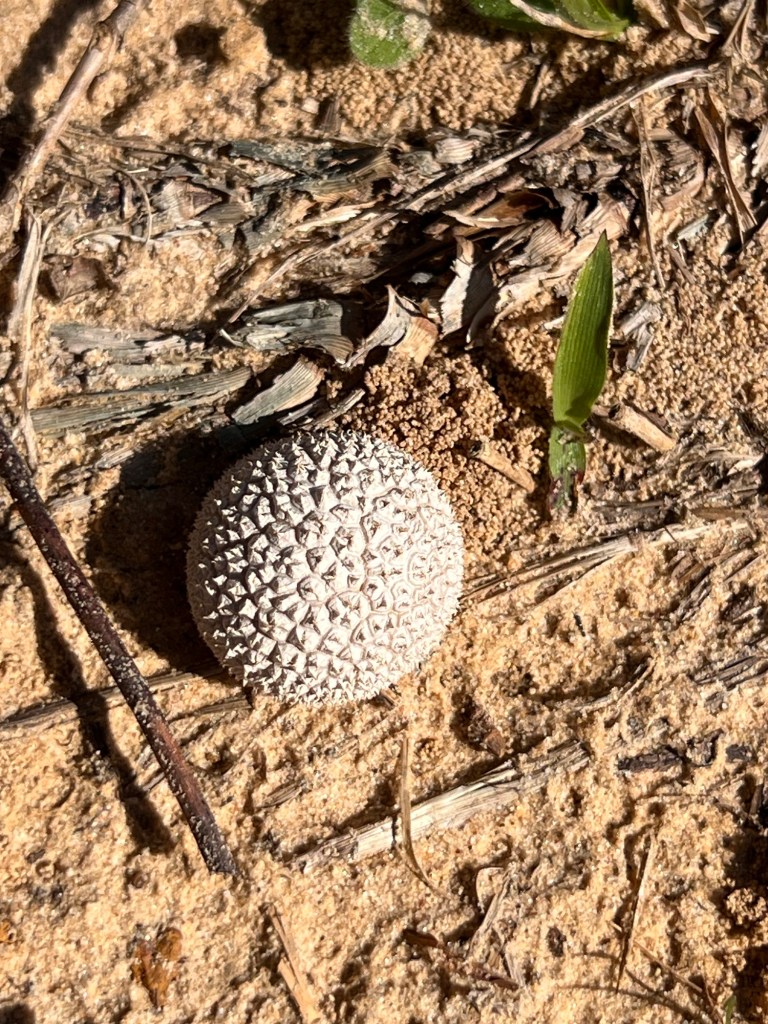
Raccoon poopAnt hillsBeetles making more beetlesSandFungiBees on wild plumsPonds to throw stuff inVery sharp yuccaTerritorial bullPuffball mushroom Ant moving cedar berry
We adults had fun, probably more than the kids. I was happy to have a chance to hang out with my friend, her spouse, and my fellow Master Naturalist. Next week I’m on my own with no backup naturalist.
This photo shows a huge leaf cutter ant colony. Dozens of connected nests.
So, what word would I like to make go away? I find the word “libtard” especially offensive and disrespectful. It insults people with more progressive ideas by using “-tard” which is something people try not to use to refer to those who have mental disabilities. I guess the word helps me remember to do my best to avoid name calling and pejorative labels when talking about the new far, far right factions in the US.
Hurling insults is a time-honored tradition in politics, I know. That doesn’t make it any less distasteful.
I would not win the lottery unless someone gave me a winning ticket as a gift, in which case I’d probably share with the gift giver. I don’t play games of chance (life is a gamble, so I can’t say I don’t gamble).
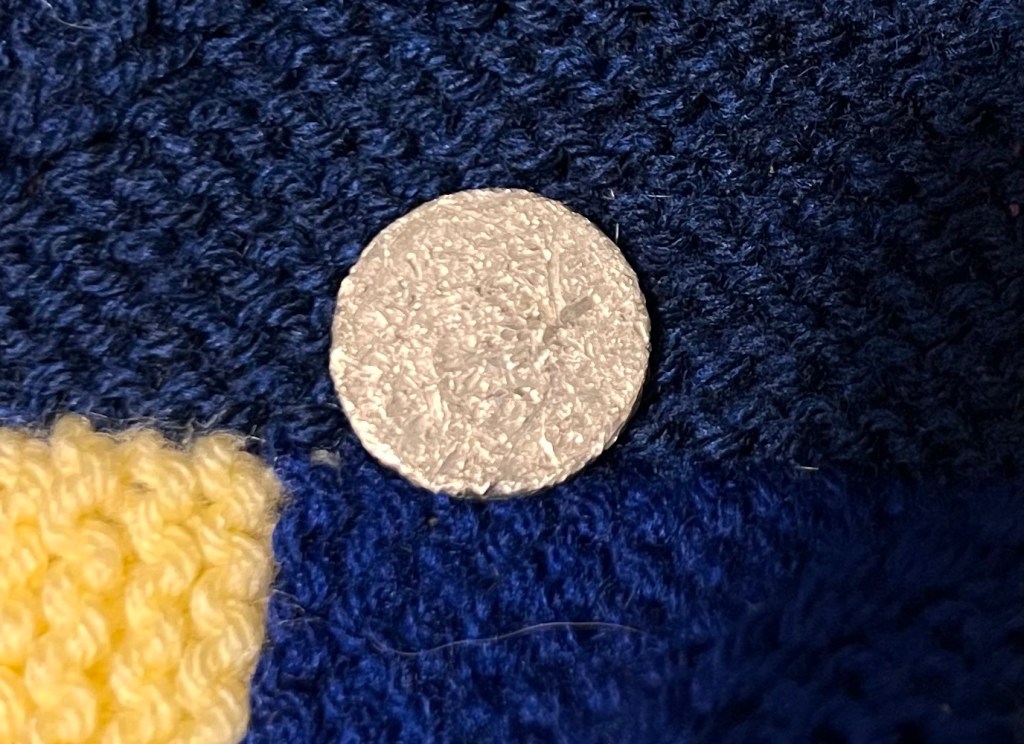
But today I feel like I won the life lottery. I enjoyed my day, even with the long drive made longer by having to drive around a bad accident on the Interstate. Then I had to ask for help getting my gas cap cover to open. I must have broken it. But a very nice man helped me (I actually walked into the truck stop and picked a man who was being friendly to the clerk to ask for help). After we got the thing open, he saw the knitting bag in the back of my car. He said I looked crafty and me this flattened coin, saying I could bang on it and make myself a silver ring. There are good folks out there!
It’s a former dime, I think.
I listened to NPR the whole way, and though it wasn’t overt fascinating, I learned a few things about brains and such. Since it was sunny, the drive was just more cheerful. Seeing white pelicans flying for the second week in a row helped!
When I got home I checked on the horses. Lee says Drew was mean to him at the gate, like he was with my son the time he got hurt. I think we will have to work on that.
They do seem to appreciate the hay Lee gave them.
My gosh, in only two days the horses got more than double the amount of burs they had before. When I first saw Apache, he not only had all these burs, but hay was attached to it. This is bad enough!
I got many of these off while he was eating. But I have more, plus all of Drew to do before I can work with them.
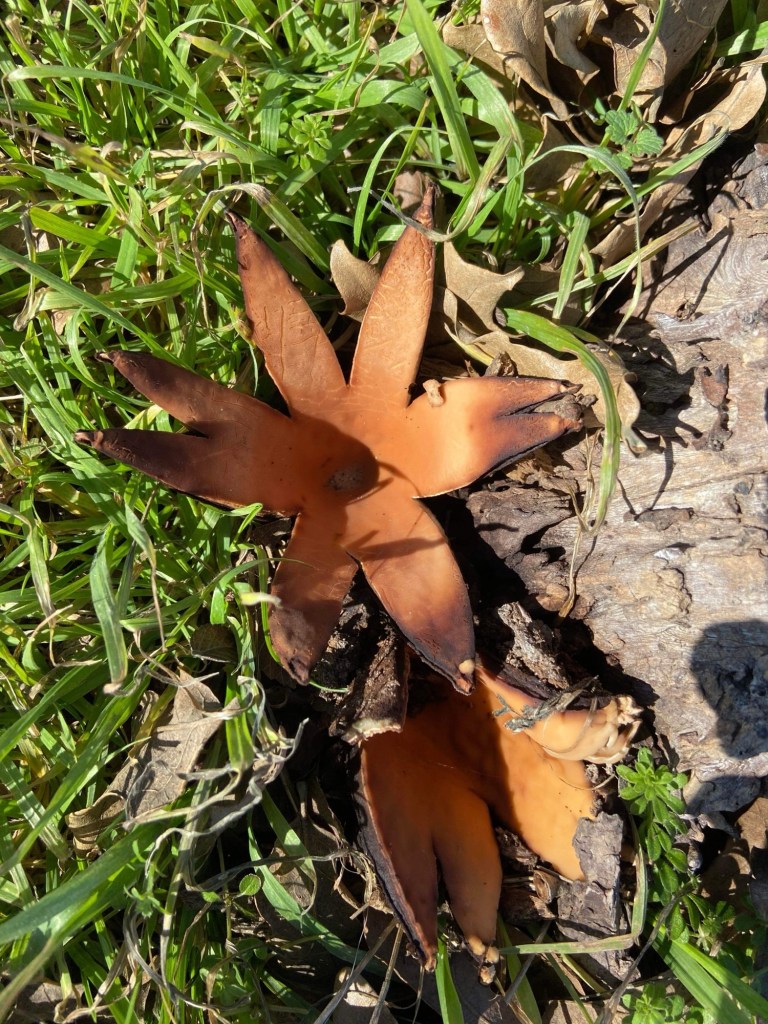
After the horses and chickens were fed, I was watching football when my neighbor texted me asking if I’d ever seen one of these.
This is a very rare fungus. Oddly, the Devil’s Cigar or Texas Star is found only in central Texas and Japan. I got very excited when Vicki sent the photo, because I knew exactly what it was. There had been an article about finding it in Inks Lake state park recently.
Photo by Vicki King
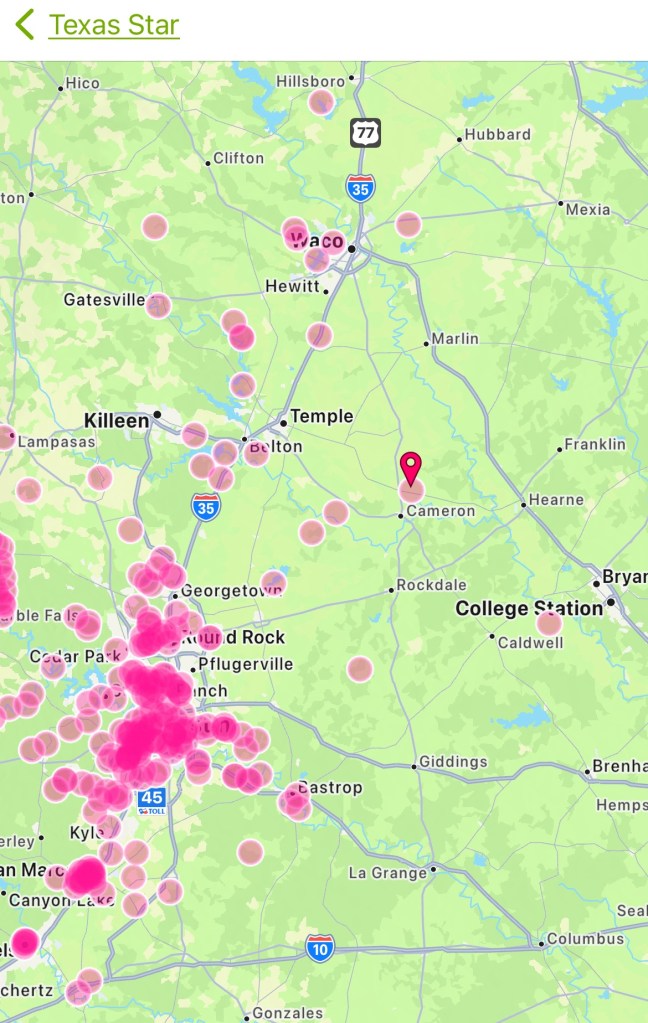
This is the first or second observation in Milam County on iNaturalist. I’m so glad to have photos with the GPS attached so I could share them and get Vicki’s sighting verified. I wish we could hear it hissing! Since very few people have seen the Texas Star, I really do feel like I won the lottery.
Map of iNaturalist observations. That’s our area, north of Cameron with the pin in it.
I’m going to go see it myself in the morning. I hope it’s not faded. What a find! I should be less tired tomorrow and maybe I can write something better in the Master Naturalist blog.
Write about your first name: its meaning, significance, etymology, etc.
Well, I’m glad I don’t hide who I am on this blog, or this would be more of a challenge. No doubt I e answered this before over the years, but here I go, in case anyone is at all interested.
Sue Ann means “graceful lily,” according to name books’ etymological declarations. I am pretty damned sure my parents didn’t look at my round and wobbly baby self and name me based on that.
The graceful lily herself.
No, after a couple of days of indecision, they named me after two of Dad’s sisters. Of course, as the Kendalls tended to do, they gave me their middle names. I’m glad. Bettye Doris is a mouthful. Bettye went by “Pug” all her life and Doris Ann went by both names, or either, randomly.
Suna came from an existentialist Japanese movie (and book by Kōbō Abe) that affected me deeply. It was called Woman in the Dunesor Suna no Onna (砂の女). Suna means something like grains of sand, which I metaphorically interpret to be like all the different facets of oneself. The idea of being fluid yet solid, like sand, stuck with me, and so when the time came to choose my own name, that stuck. Like sand on the beach.
I used to be quite the little gloomy existentialist intellectual in the olden days.
By the way, Suna is a given name in other cultures. The source I saw says it’s a female Turkish name meaning “duck.” The cute kind, I’m sure. Ah, upon further reading, it means beautiful and tall, like a drake. I guess since male ducks are prettier?
I saw a lot of ducks today, along with white pelicans, along the Cooper Lake dam.
Or it could be gold, from a Sanskrit word. In any case, a hint of my love for the name comes from the fact that it’s much less beautiful backward. Ha!
Humor.
I’ve driven that topic into the dirt (another sand reference?) so let’s move on. Today dawned cloudy and gusty. Hiking in that weather is not fun. I did try, and got a couple more plant photographs and bird sounds, but checking the forecast led us to head home sooner than planned.
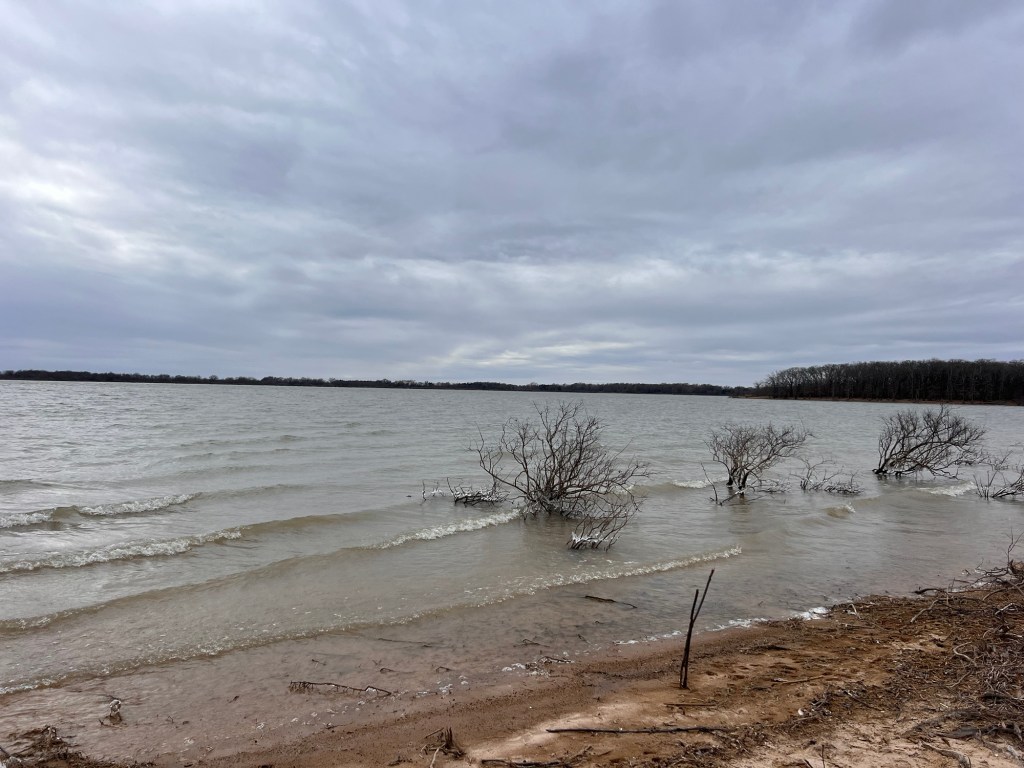
Pretty gloomy. Note waves.
Rain is forecasted for tomorrow, and Lee didn’t want to take Seneca the motorhome on back roads in bad rain. So we visited the park office, where buying a magnet was quite difficult, then headed out.
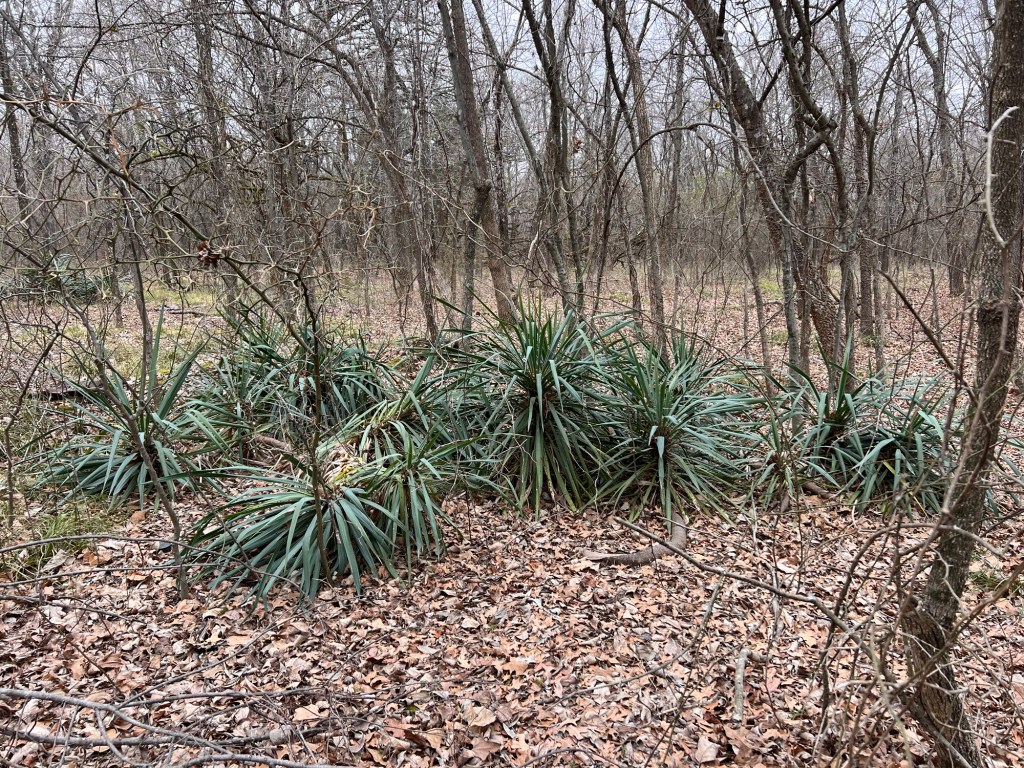
This pretty stand of yuccas was one photo I was glad to get. The only ones I saw.
It’s an interesting drive from Cooper to Cameron if you avoid the interstate. There are lots of horse farms (yay) and lots of this kind of thing (ugh).
Proudly declaring to the world he’s Suna backwards.
It was good to be home and get caught up with things back home. It can rain all it wants to now!
My dream job has changed over the years. If money were no object, I’d teach knitting and crochet part time. I don’t want to be a famous knitting guru like some of my friends; I just want to bring the joy of a lifetime pastime to others. It’s so rewarding.
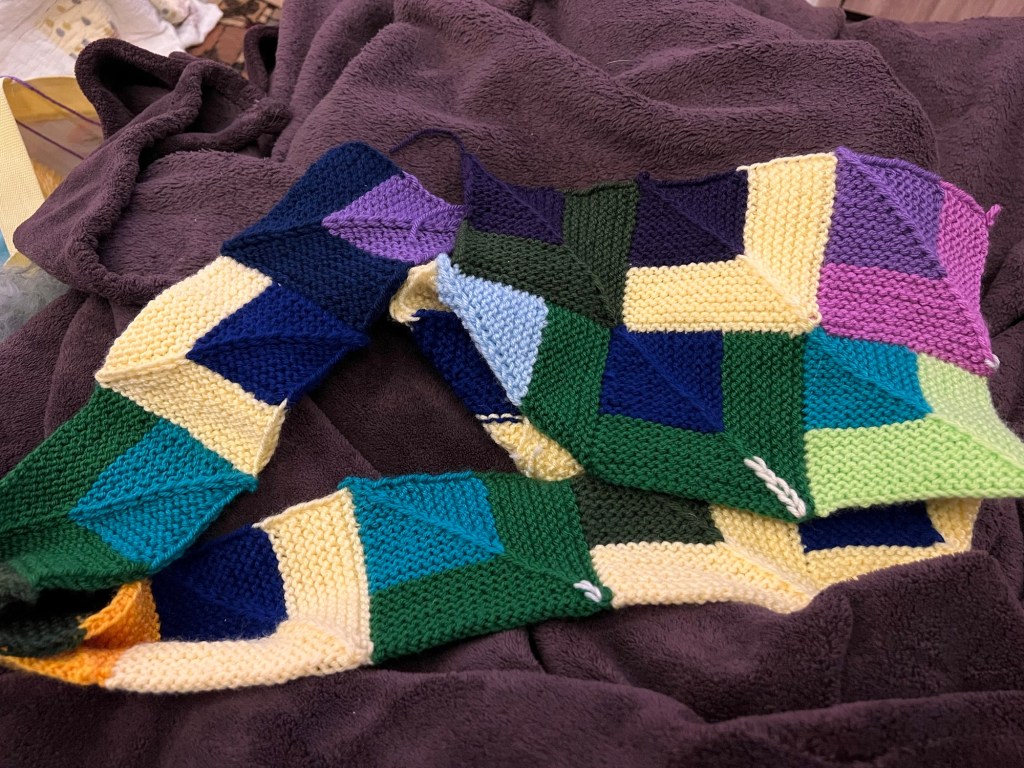
The temperature blanket for this year is so fun and has purple in it! Cool. Literally.
Nowadays, though, I am getting so much from my time out in nature that it would be a dream job to be a park interpreter. I could lead walks and hikes that show folks how ecosystems work, what plants and animals there are in different habitats, and how to identify what they see, hear, smell, and touch.
I could lead a hike here and show folks all the future wildflowers in midwinter.
I could also teach hiking etiquette. Like, don’t bellow at the top of your lungs and sing rock songs so loud you scare all the woodland creatures for miles, which is what the only other hikers I saw today did. Ugh.
We’re outa here.
Anyway, we’re enjoying a very peaceful time at Cooper Lake State Park. We are the only people here who don’t work here. It’s glorious and peaceful, probably the quietest state park we’ve been at. Someone was shooting something somewhere nearby and it was SO loud with no other noise around.
Seneca all aloneLee looking at the shelters in deluxe campsitesBeautiful accessible site
It was really cold last night here in northeast Texas, down to 20°. We got in late, and the heater just couldn’t cope. It got down to 58° inside, but I slept so well. Quiet. Once the sun came out, the heater coped and tonight it’s fine.
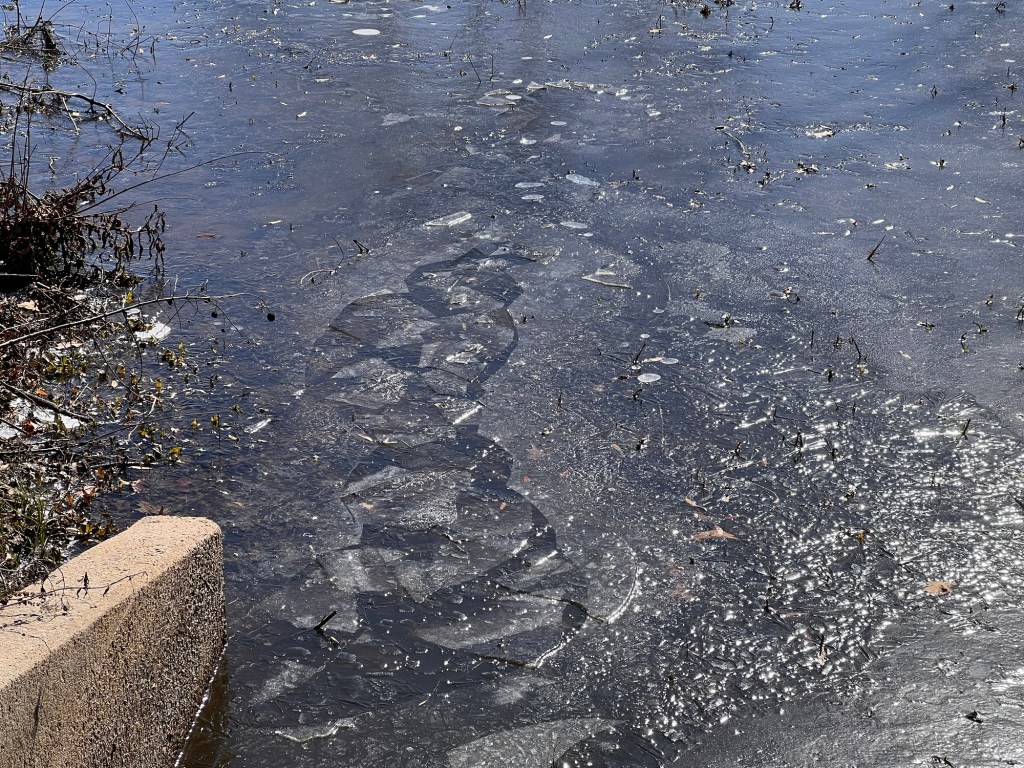
The ice melted except in deep shade.
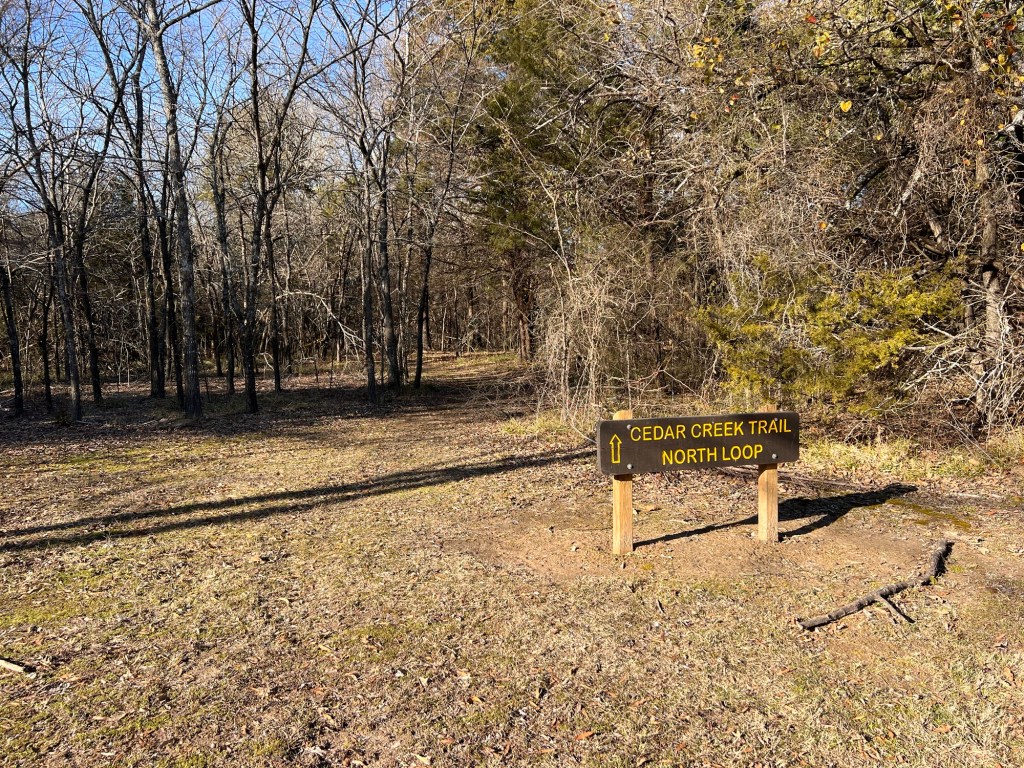
Because it was sunny and there was no whipping gale wind, it actually wasn’t too bad outside, and I was able to go on a couple of nice walks around this huge lake and the hardwood forest around it.
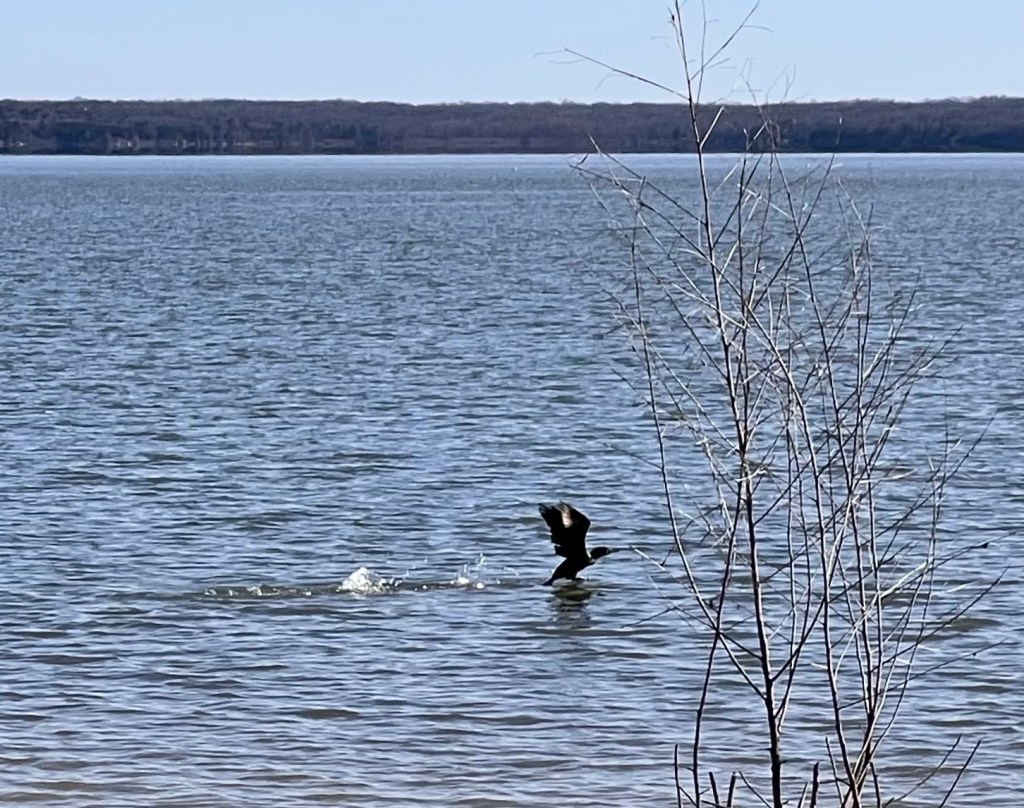
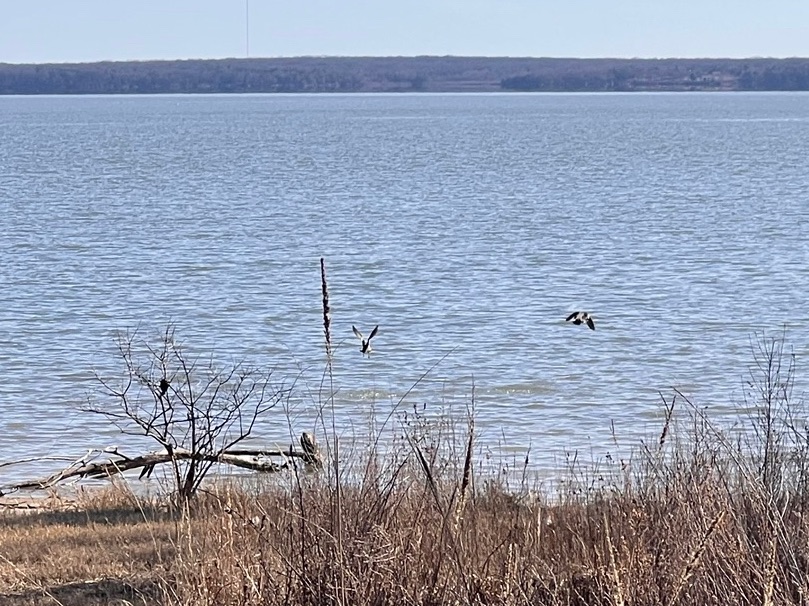
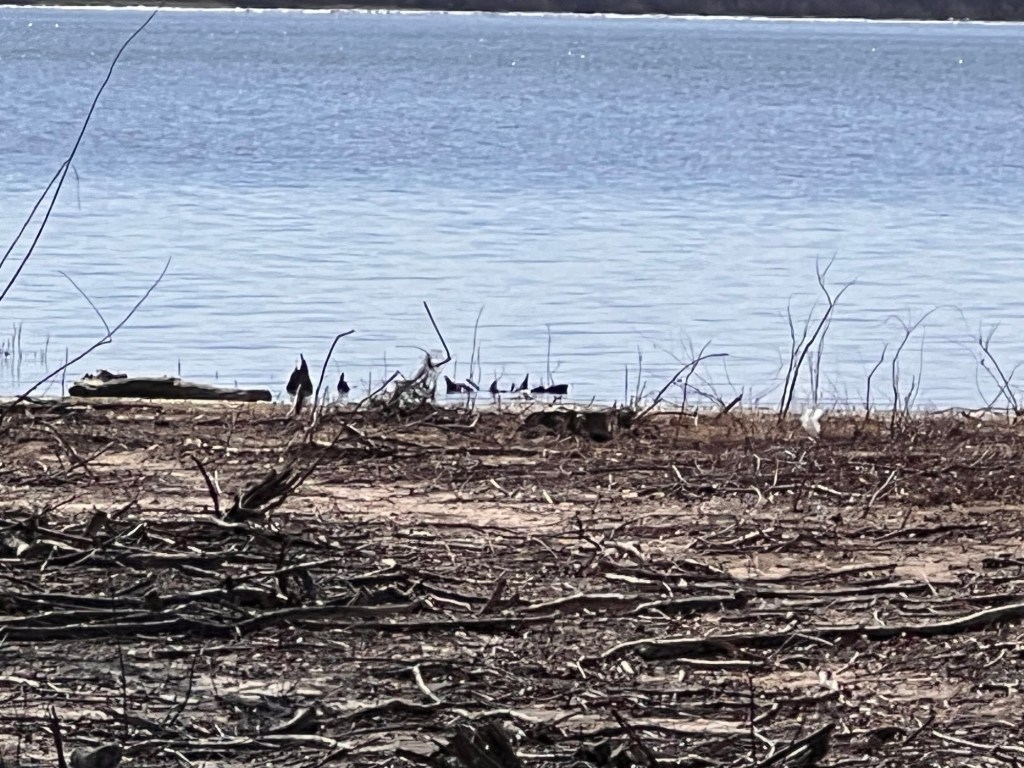
There were ducks, herons, a cormorant, gulls, greater yellowlegs, belted kingfishers, and more on the lake shore.
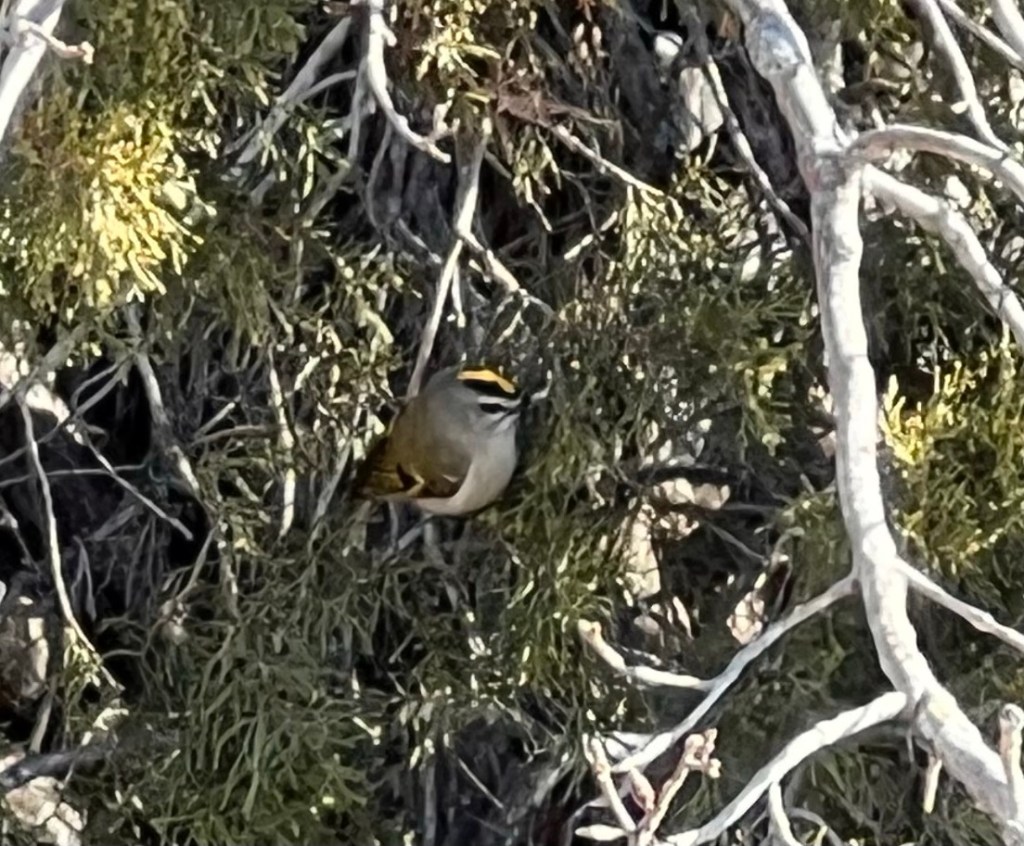
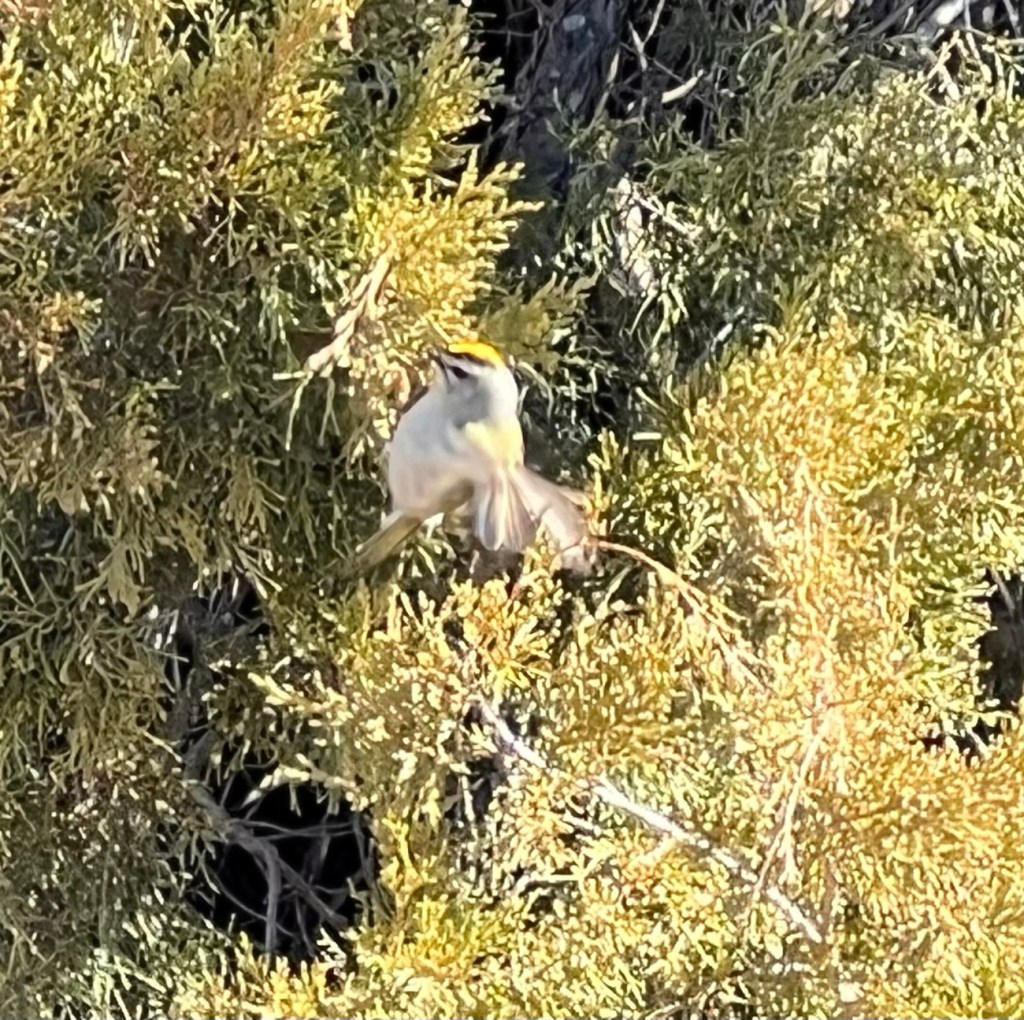
The bird highlight for me was getting to see a golden-crowned kinglet close enough to see that little crown. Theirs are way easier to see than ruby crowned.
Briefly sitting still. Action shot
Woodland birds included lots of crows, blue jays, cardinals, robins, and woodpeckers. The most popular tiny bird was the yellow-rumped warbler, but there were plenty of titmice, wrens, chickadees, and sparrows. Two nuthatches also showed up. Lots of singing and flitting to enjoy. Who cares about the cold!
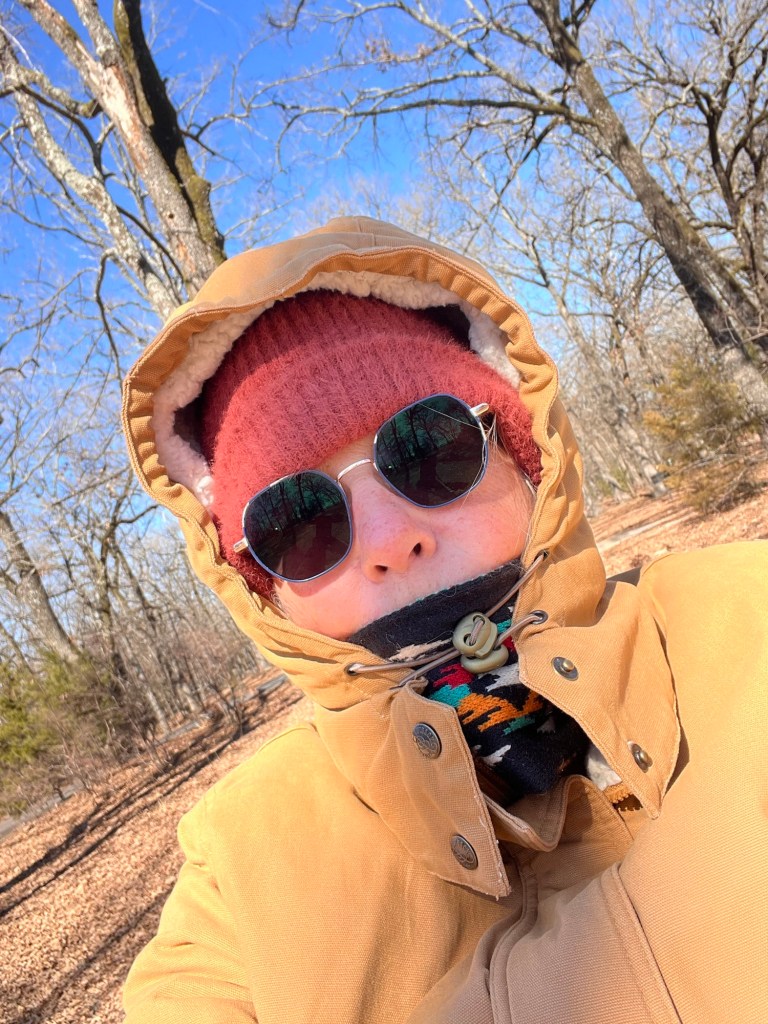
I was dressed appropriately.
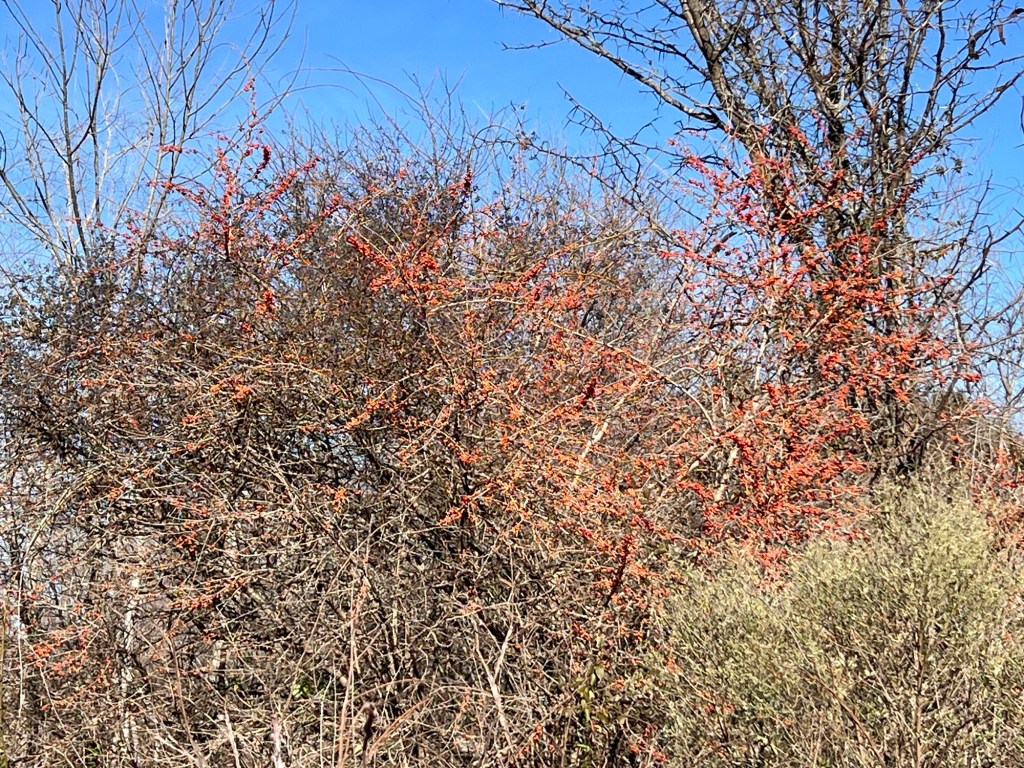
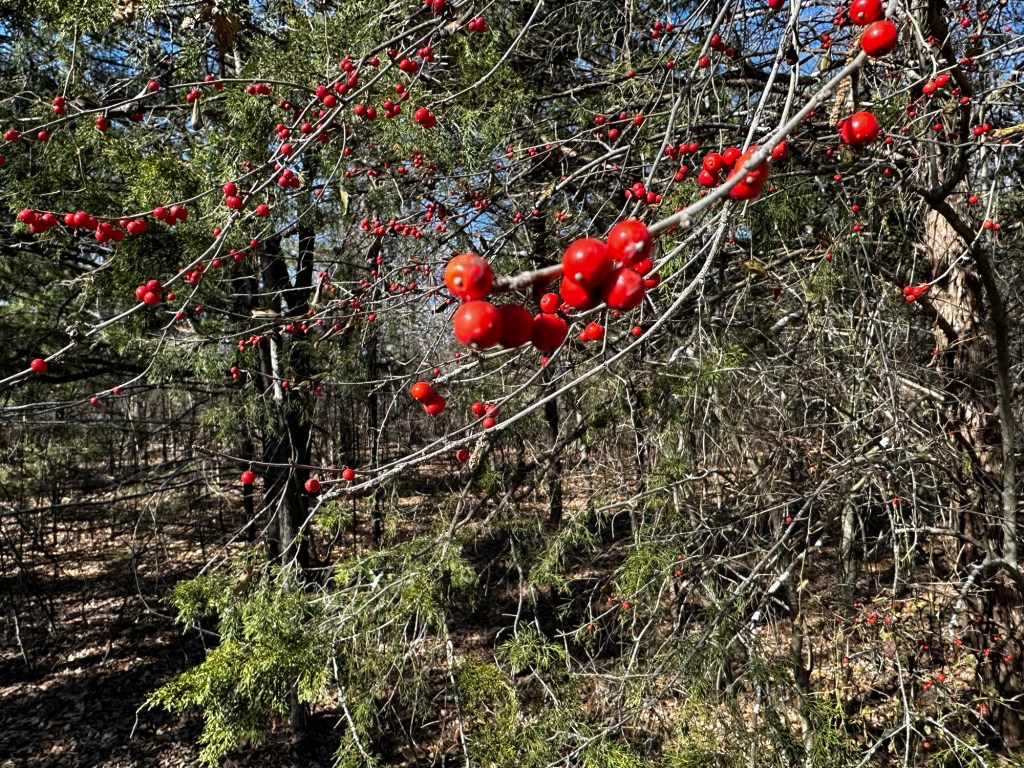
You could see all the wildflowers and grasses in their winter resting states. There were colorful leaves and berries if you looked carefully, though. I found it fun to try to figure out what the dried flowers and bare trees were. I’ll see how well I did when I put them in iNaturalist.
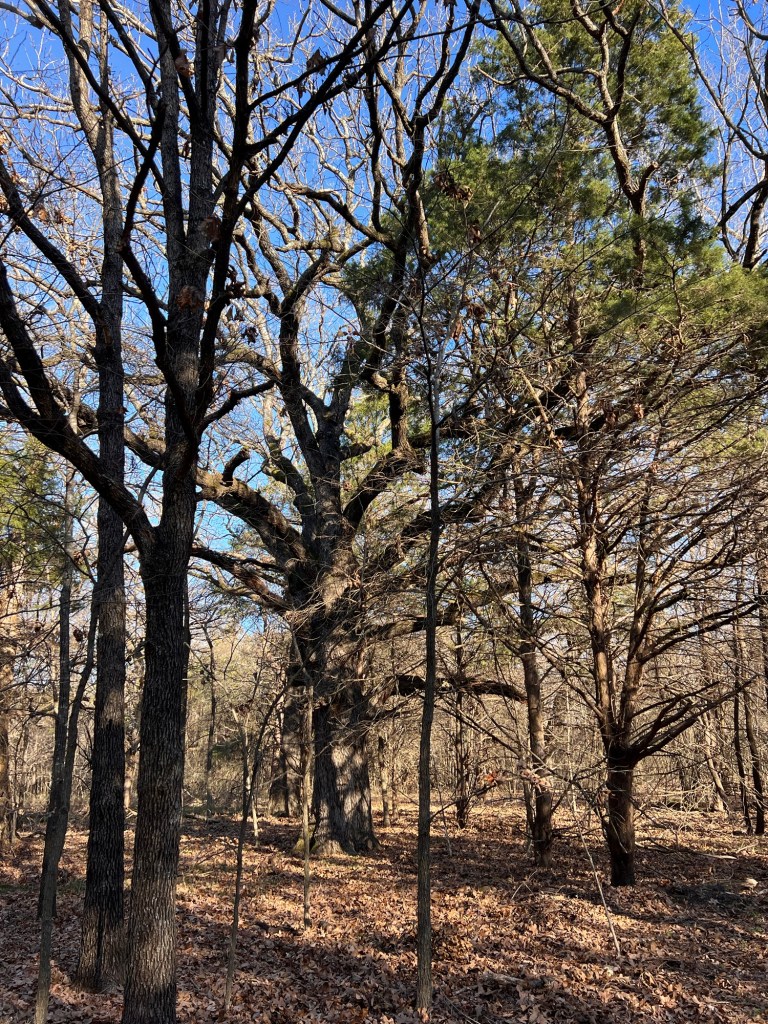
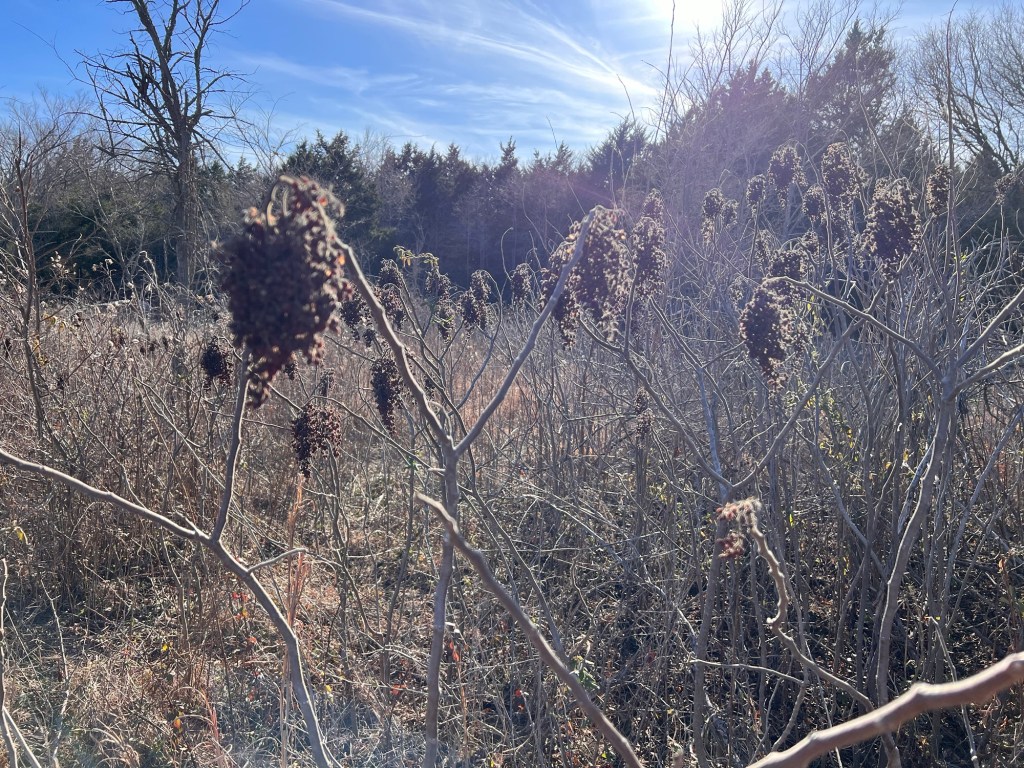
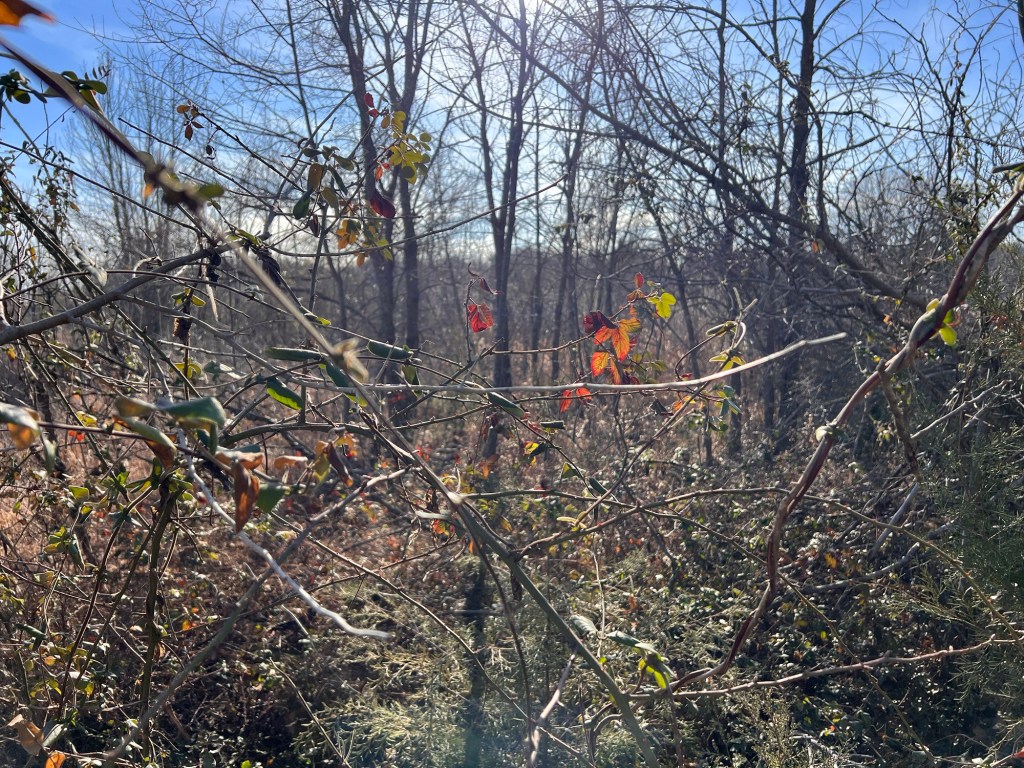
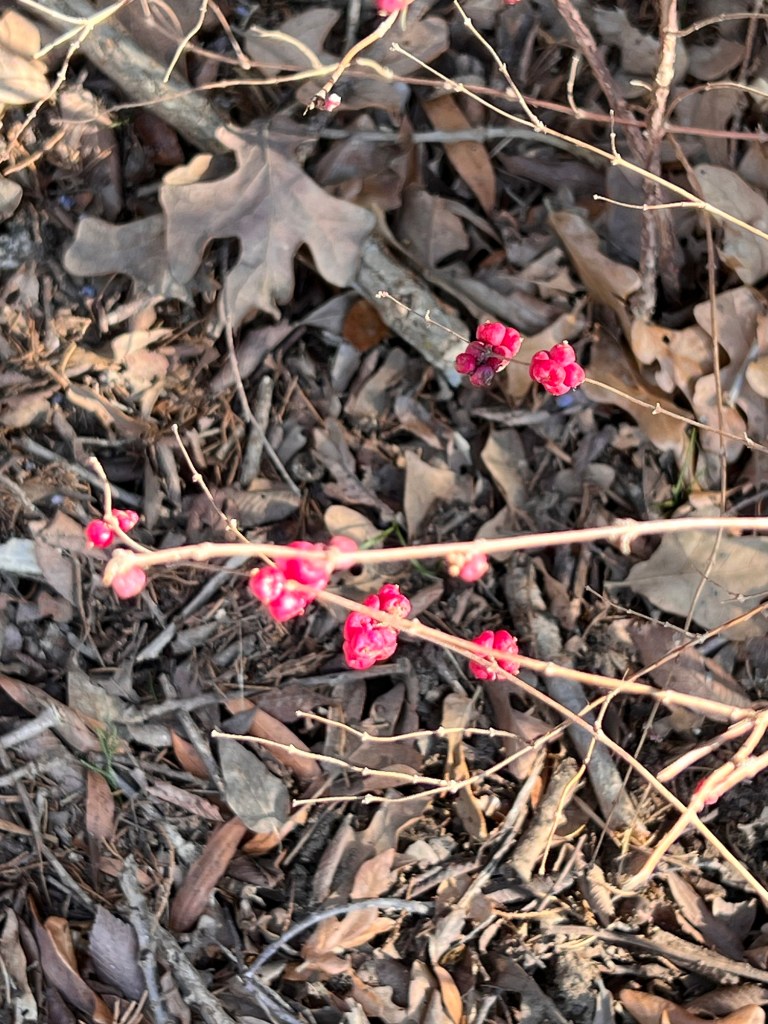
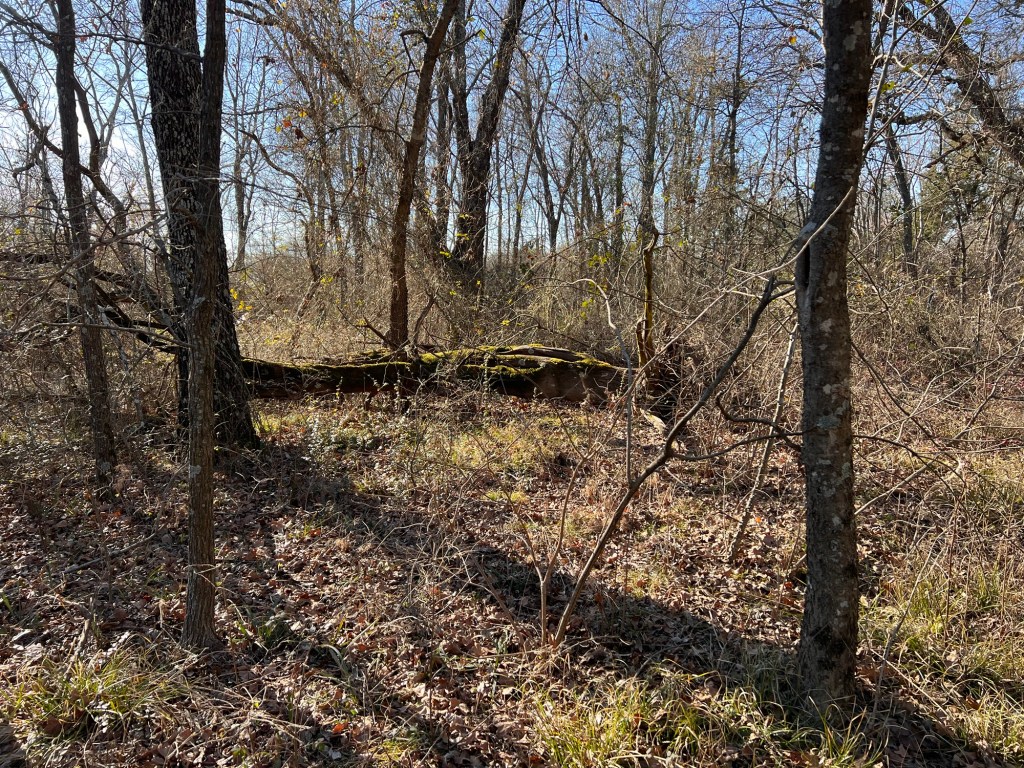
I like big trees, I cannot lie I do love big old trees. PossumhawMore Possumhaw Lee’s closeup of Possumhaw. Smooth sumacDewberries Pretty moss View through red leaves Yellow beautyPink Coral berryLook at the moss on the downed tree. Wildflower meadow Ice cracking. Spillway leading to the lake
What didn’t I see? Insects. Not one butterfly showed up. No bees or flies. They’ll be back soon as it warms up again. The little insect-eating birds like phoebes and mockingbirds were busy with other food in the meantime.
Great blue heron with gulls behind it. Really cool bird:black-necked stilt. Very long legs. Cormorant taking offCrow taking offGreen-winged teals taking offUpside down ducksOne teal Blue jay being coy
I could do this observation stuff for a living with other people! However, wow, it’s nice to do it alone. Traveling without the annoyance of other humans sure is pleasant. I prefer this to cities.
The woods are a fine companion.
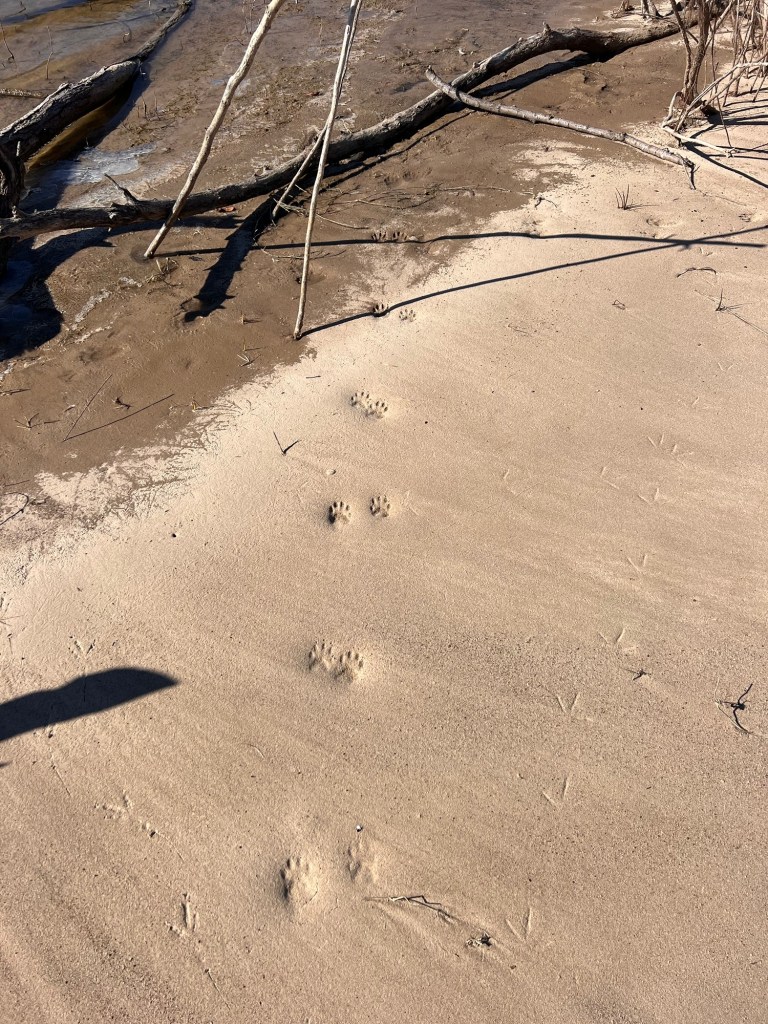
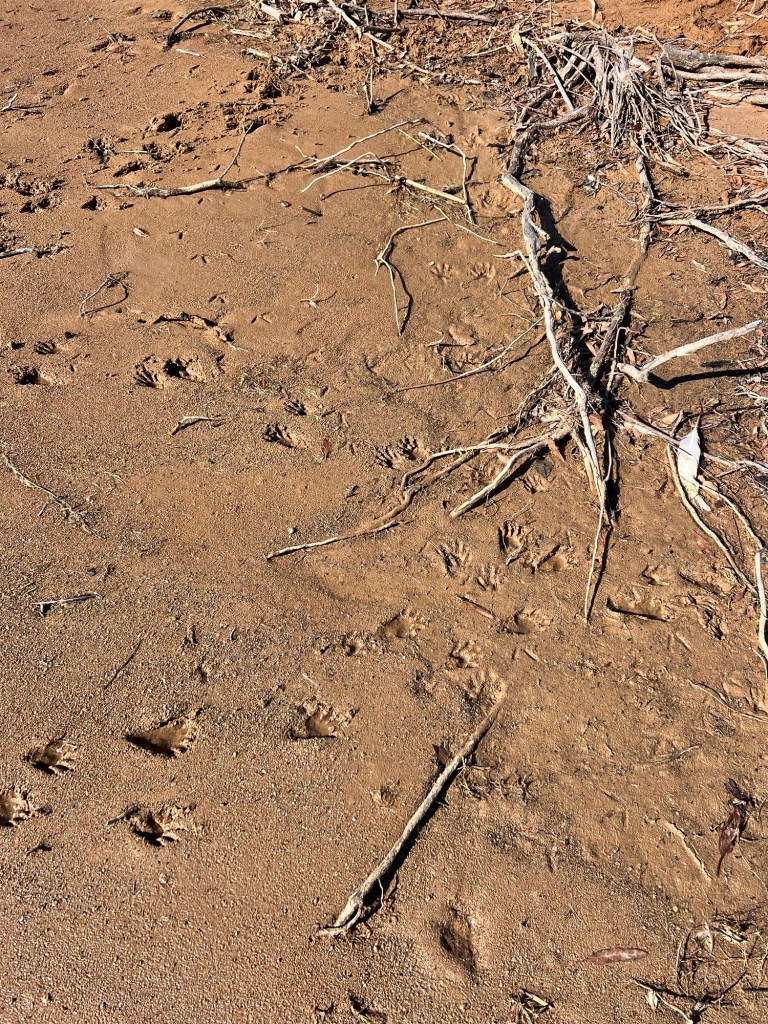
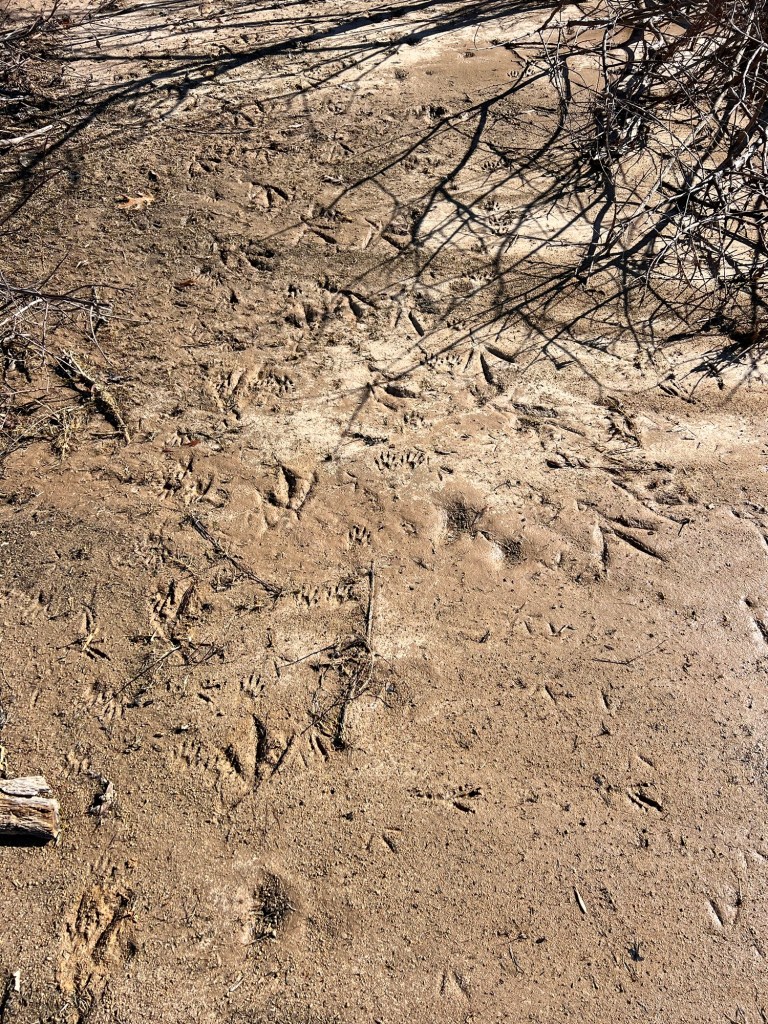
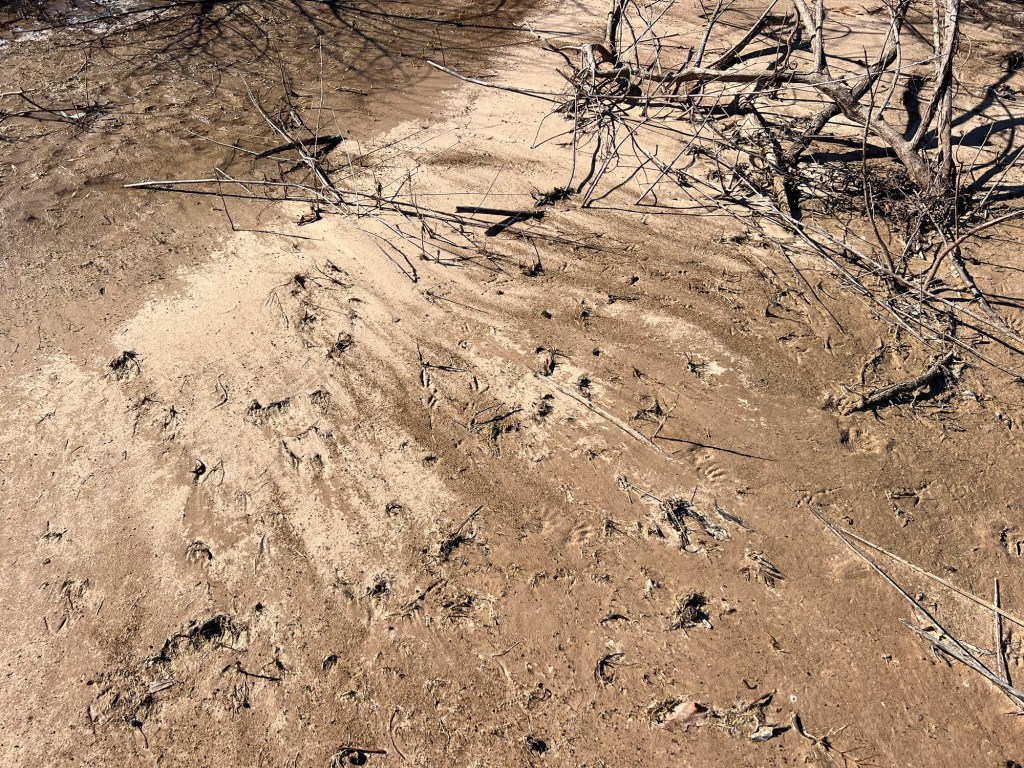
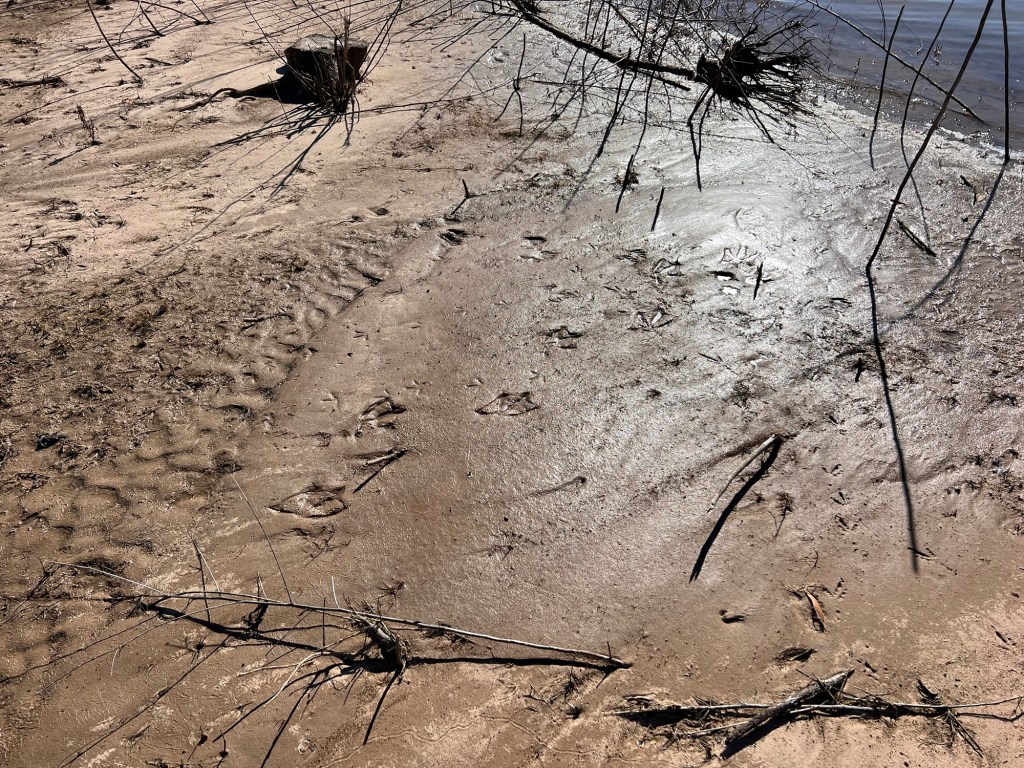
To wrap it up, here are some fun pictures of tracks I found along the lakeshore. There are herons, ducks, little birds, raccoons, and a canine. I didn’t see deer tracks, but I did see deer, so of course they are here!















































































 The Hermits' Rest