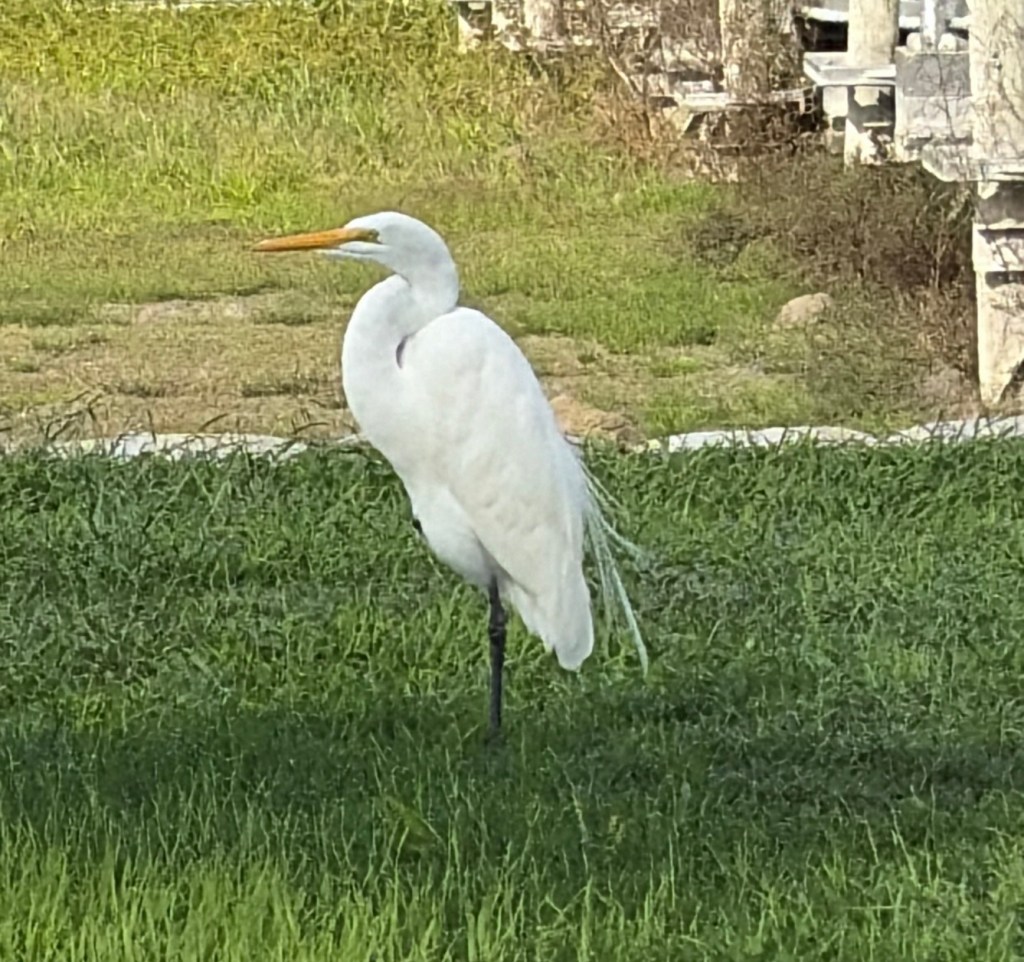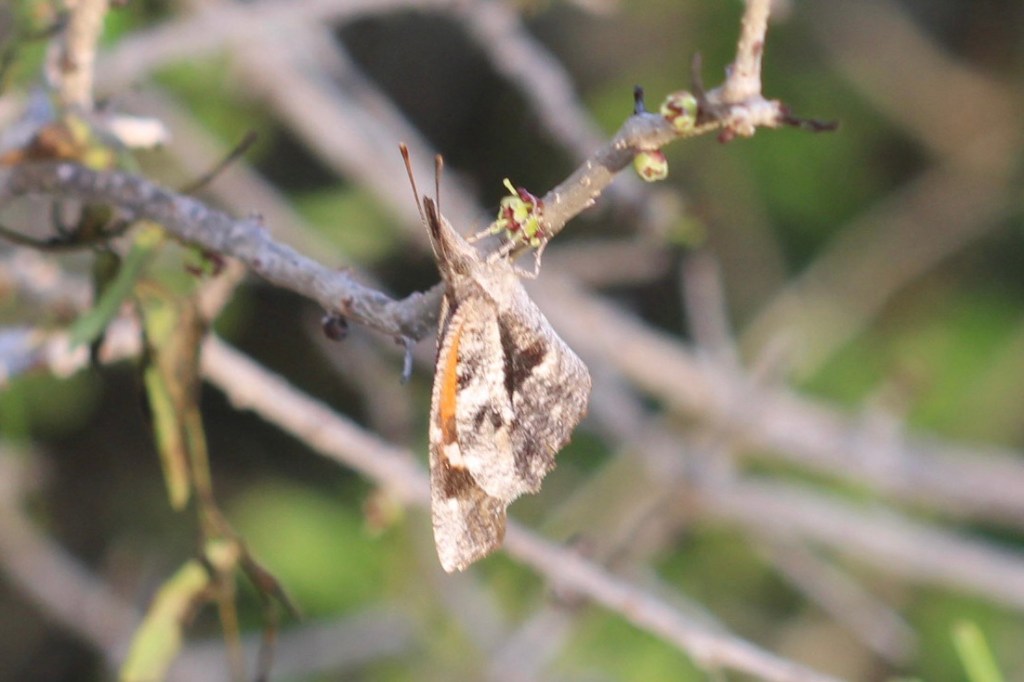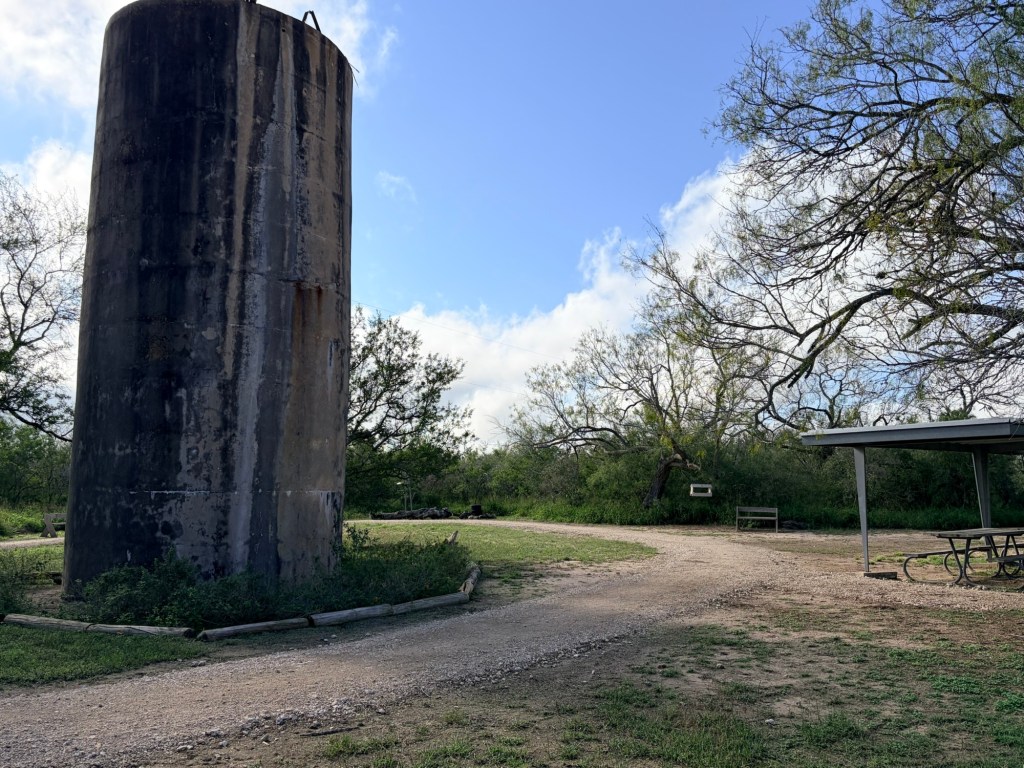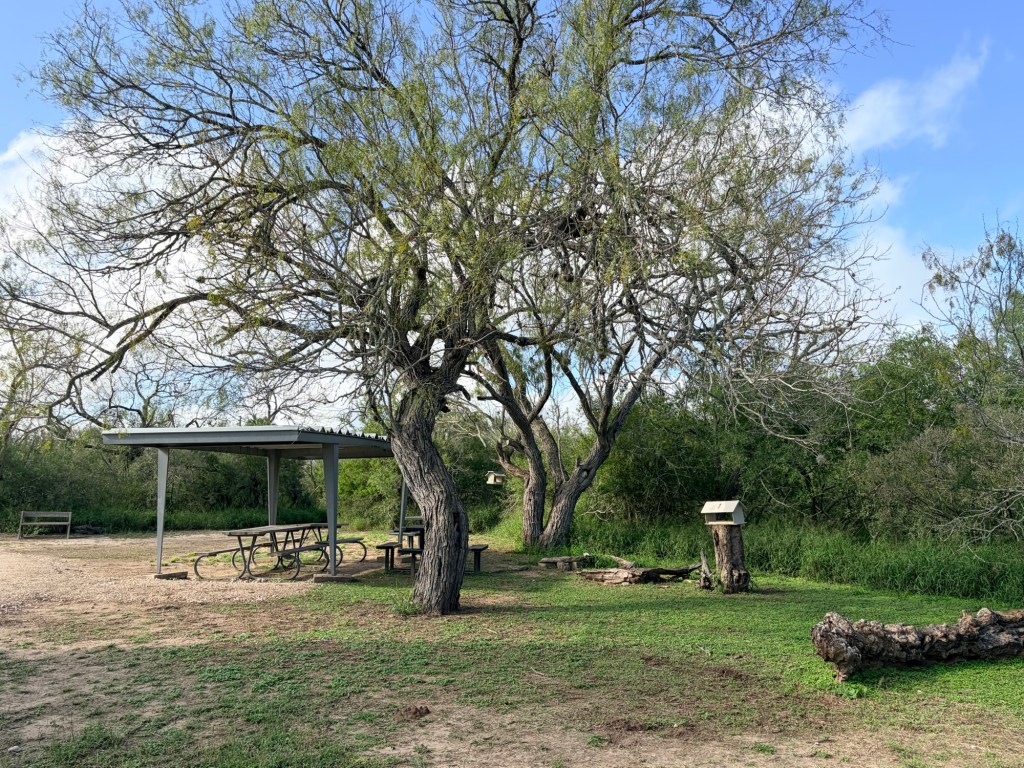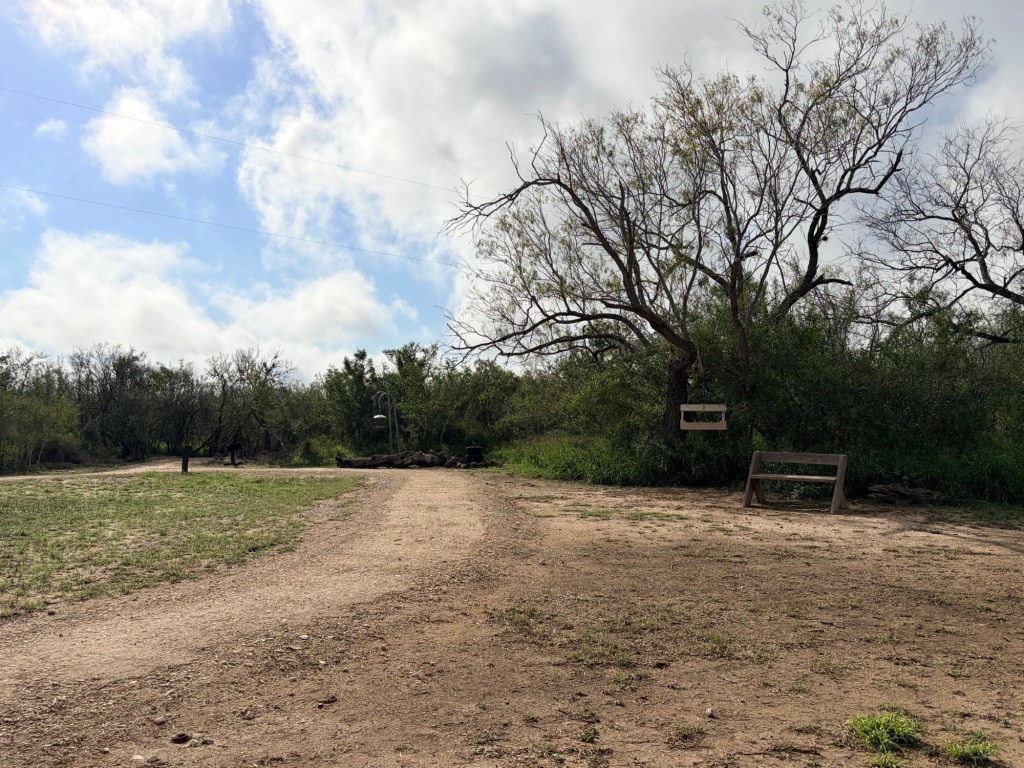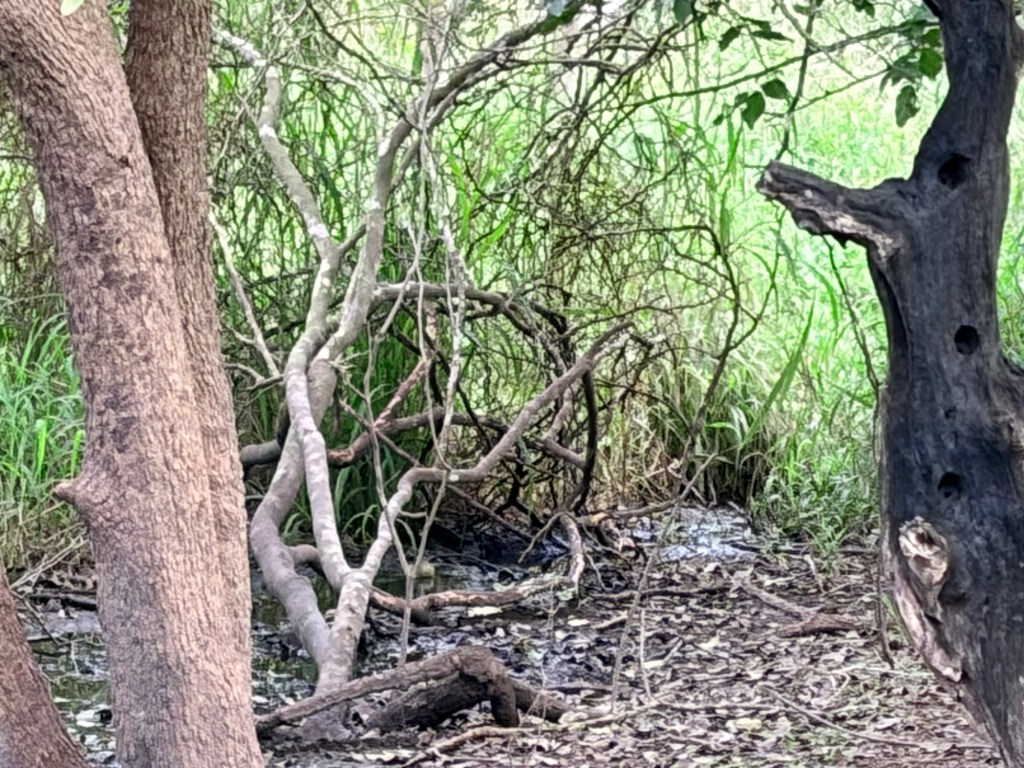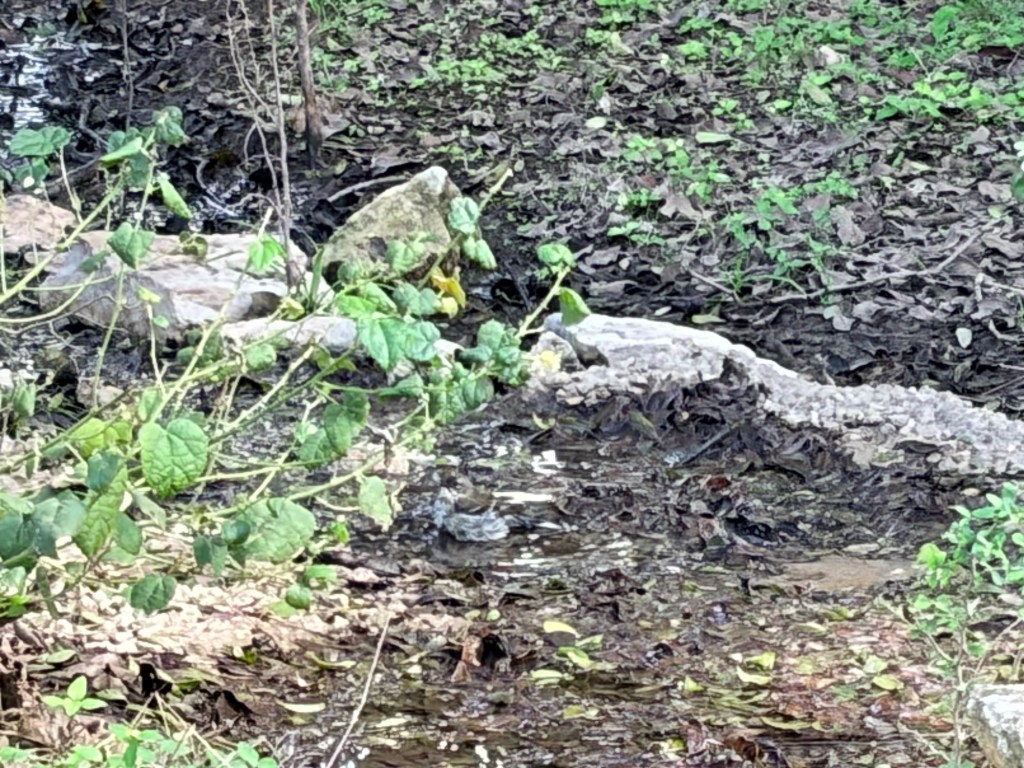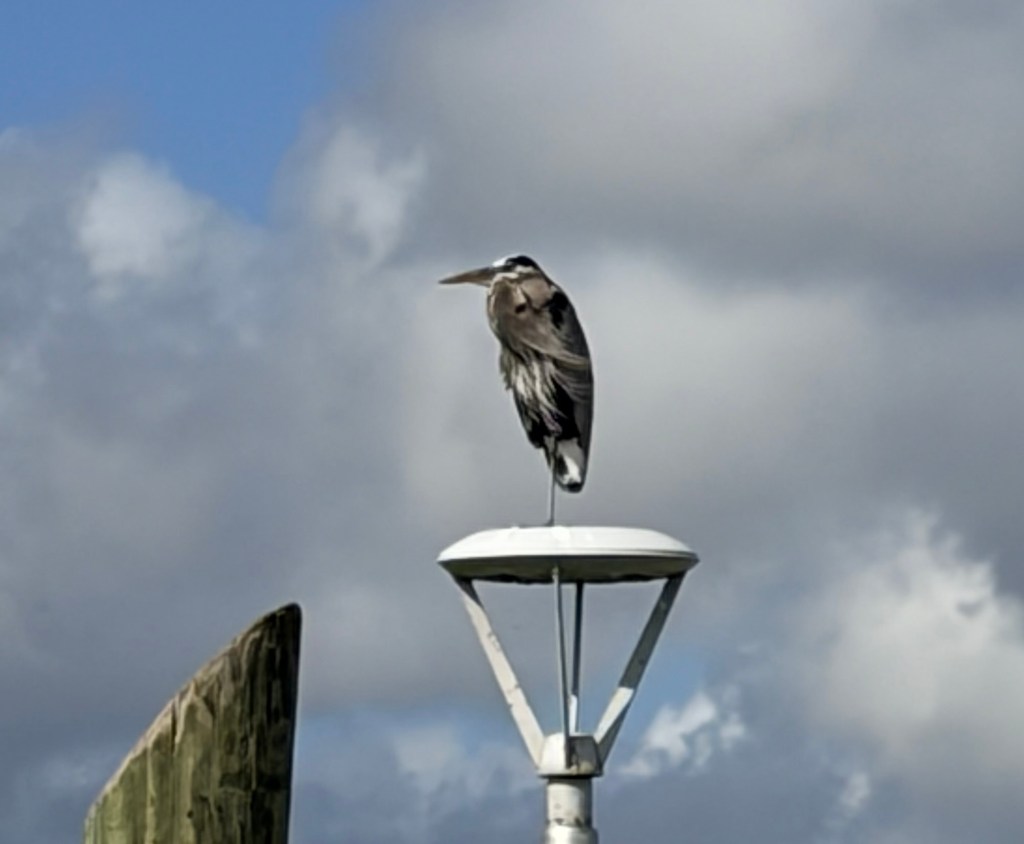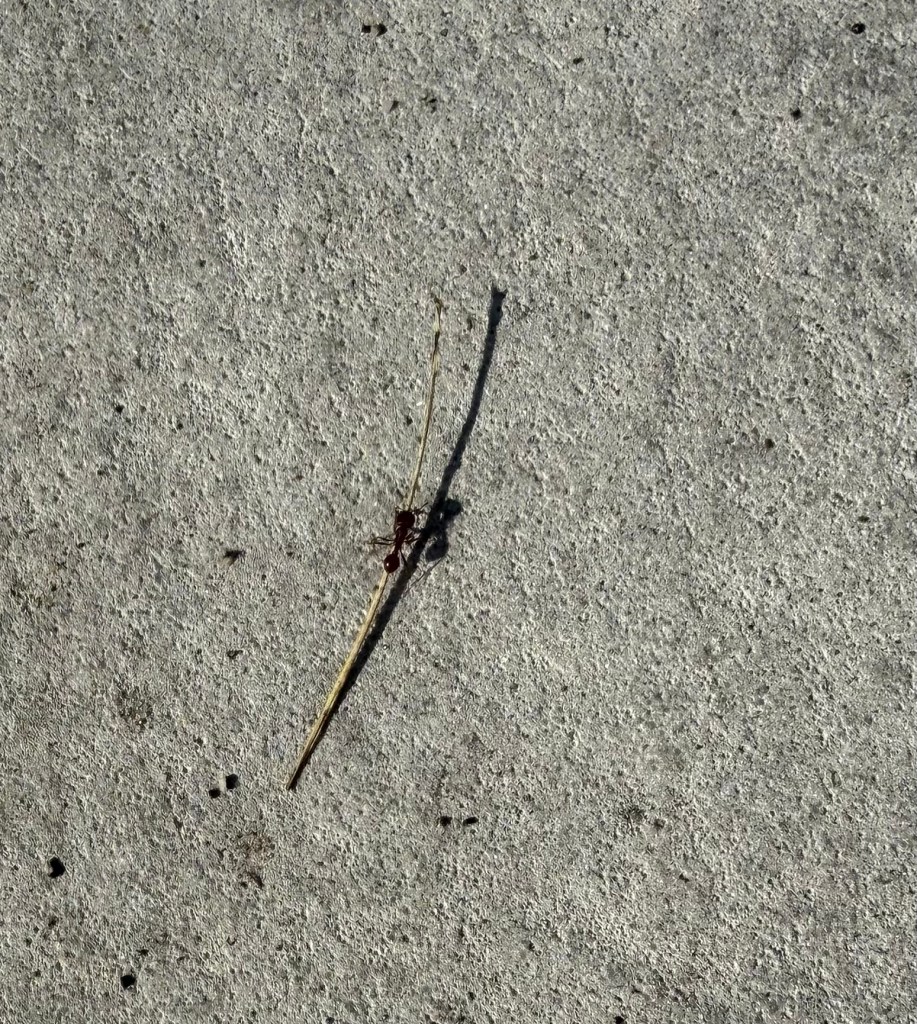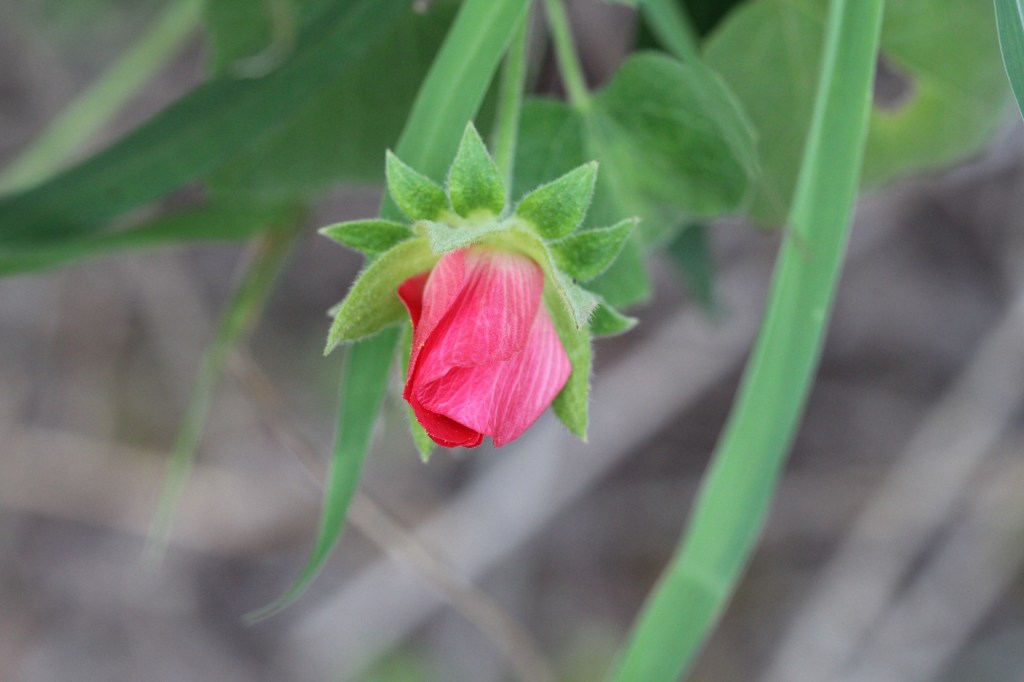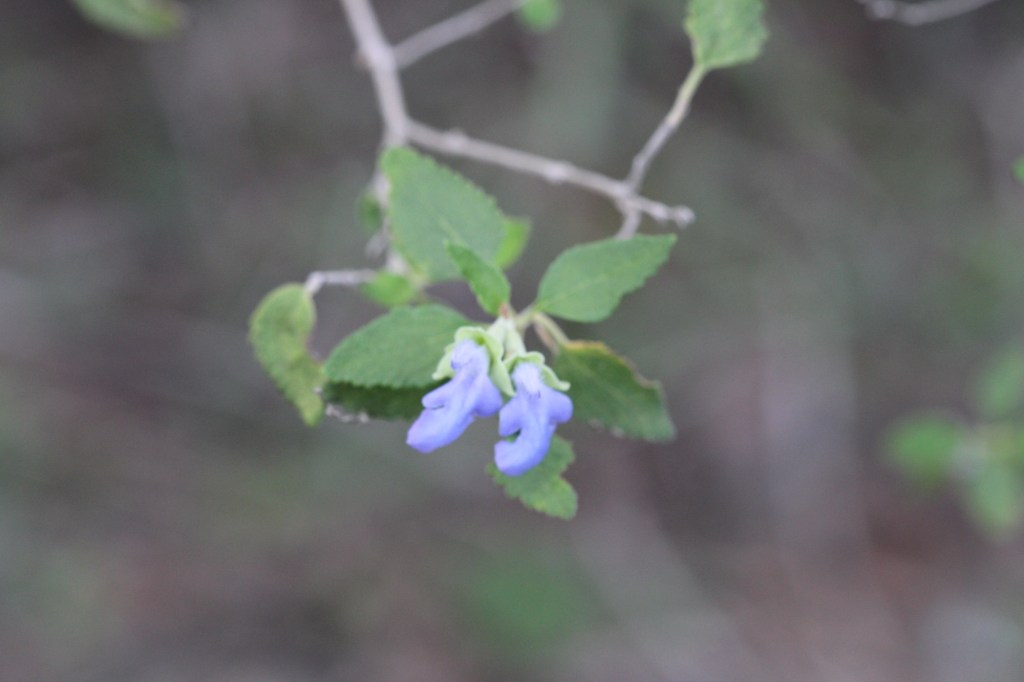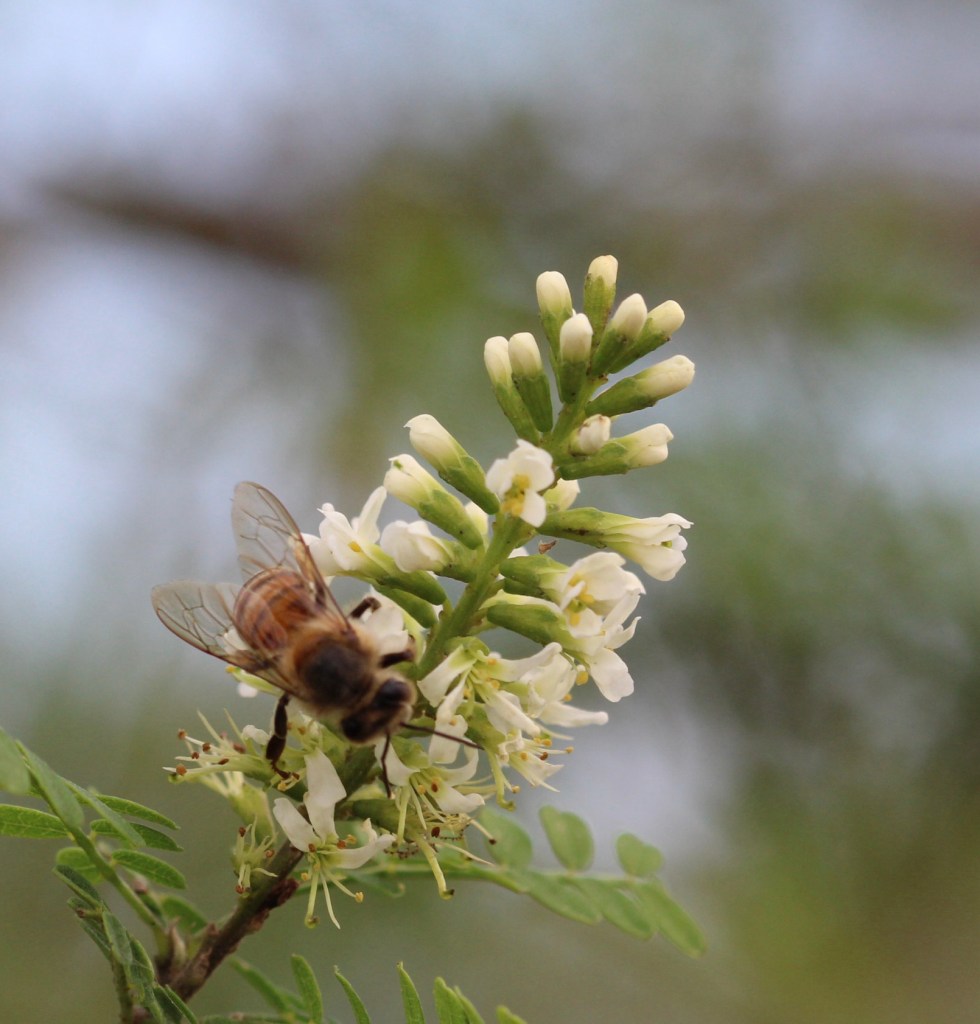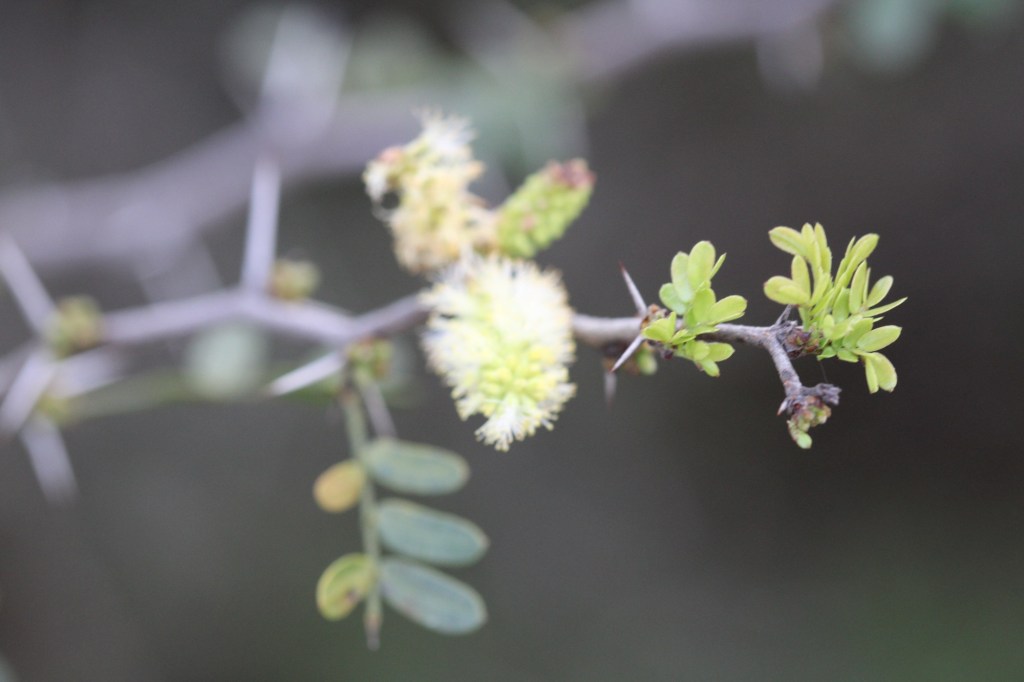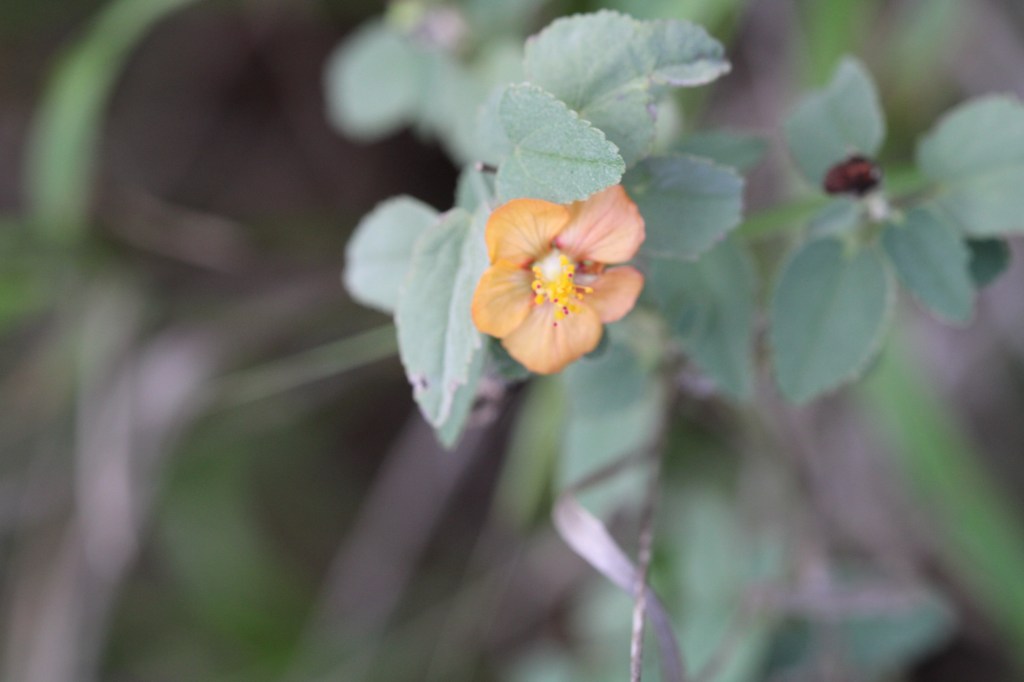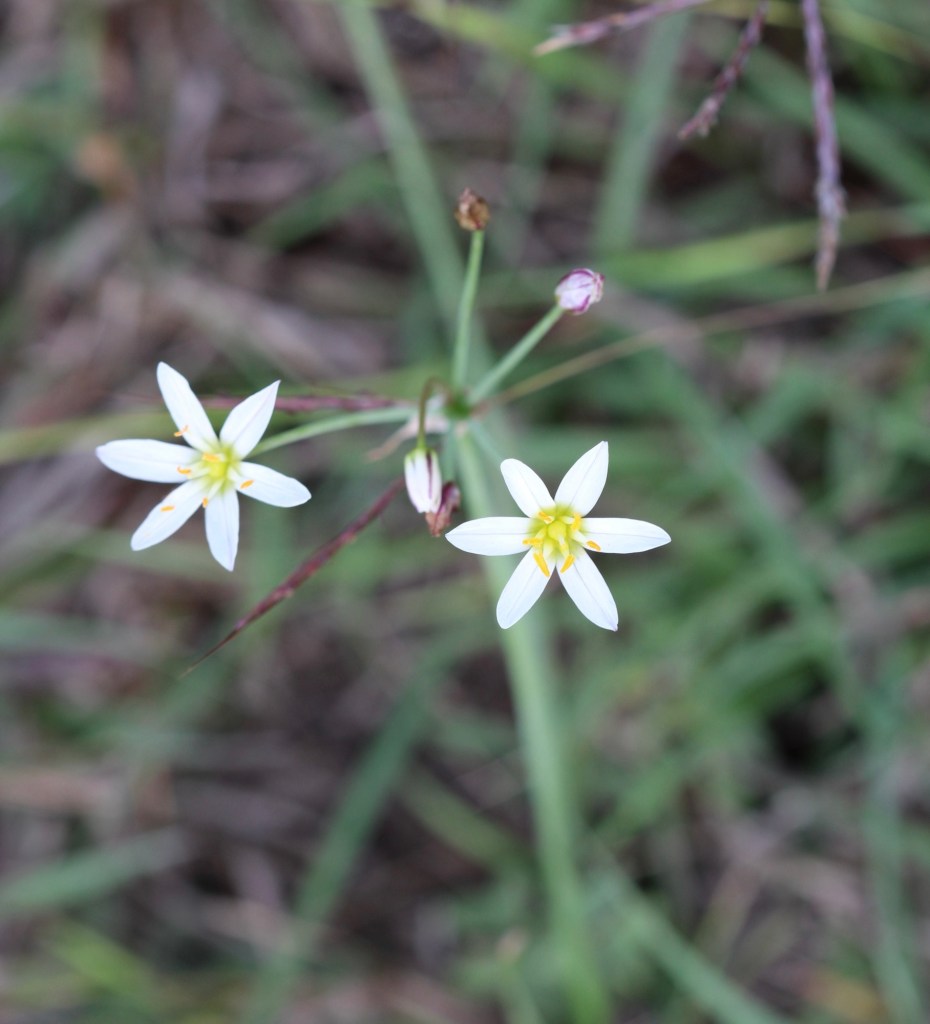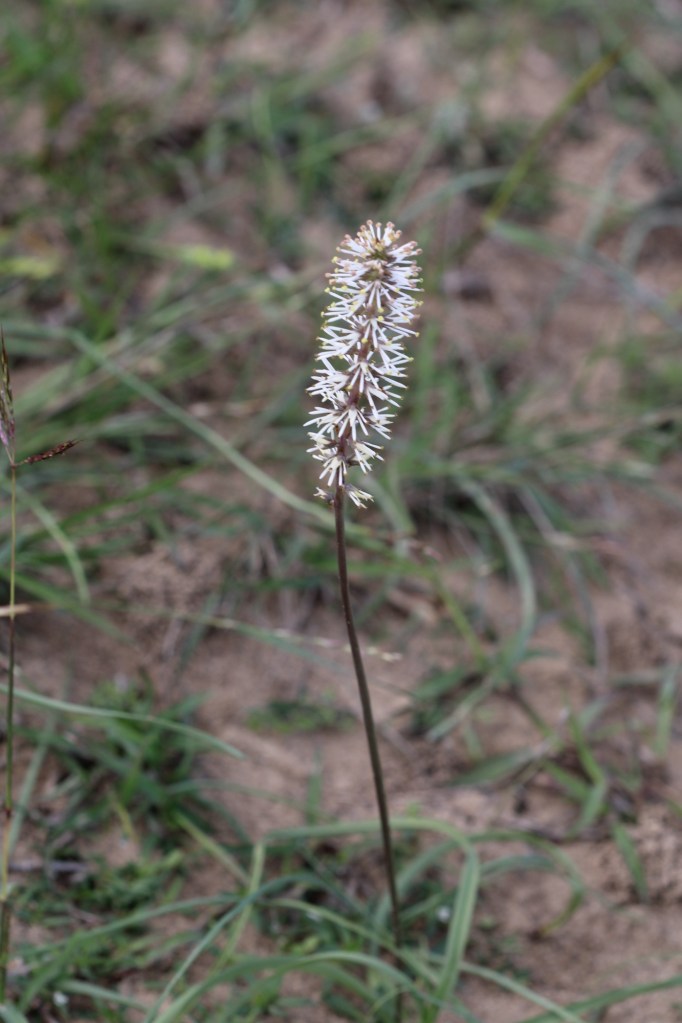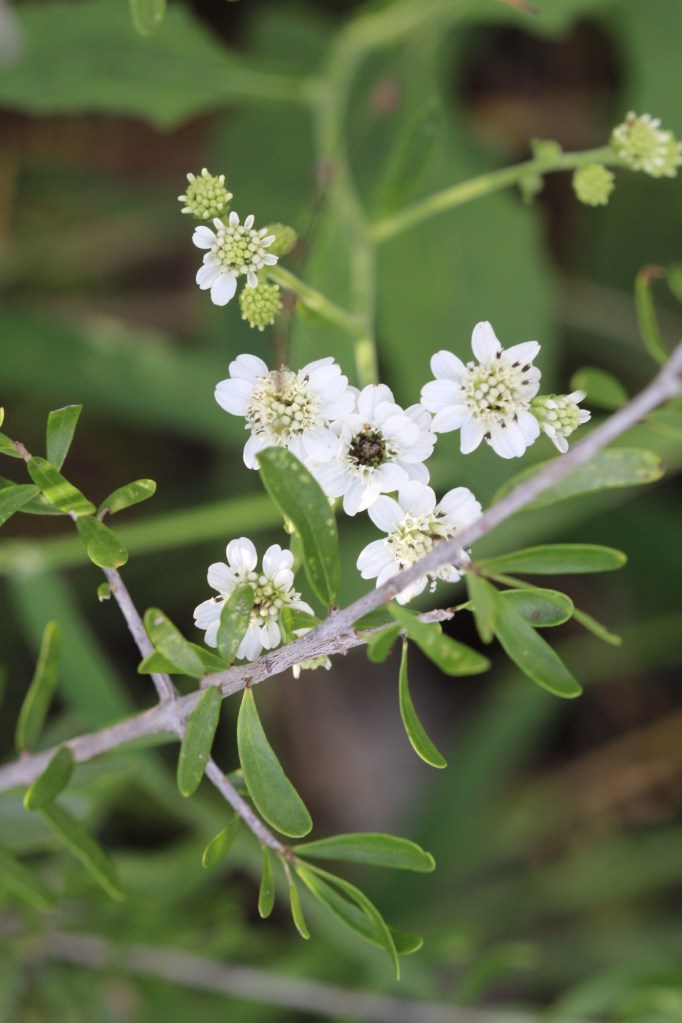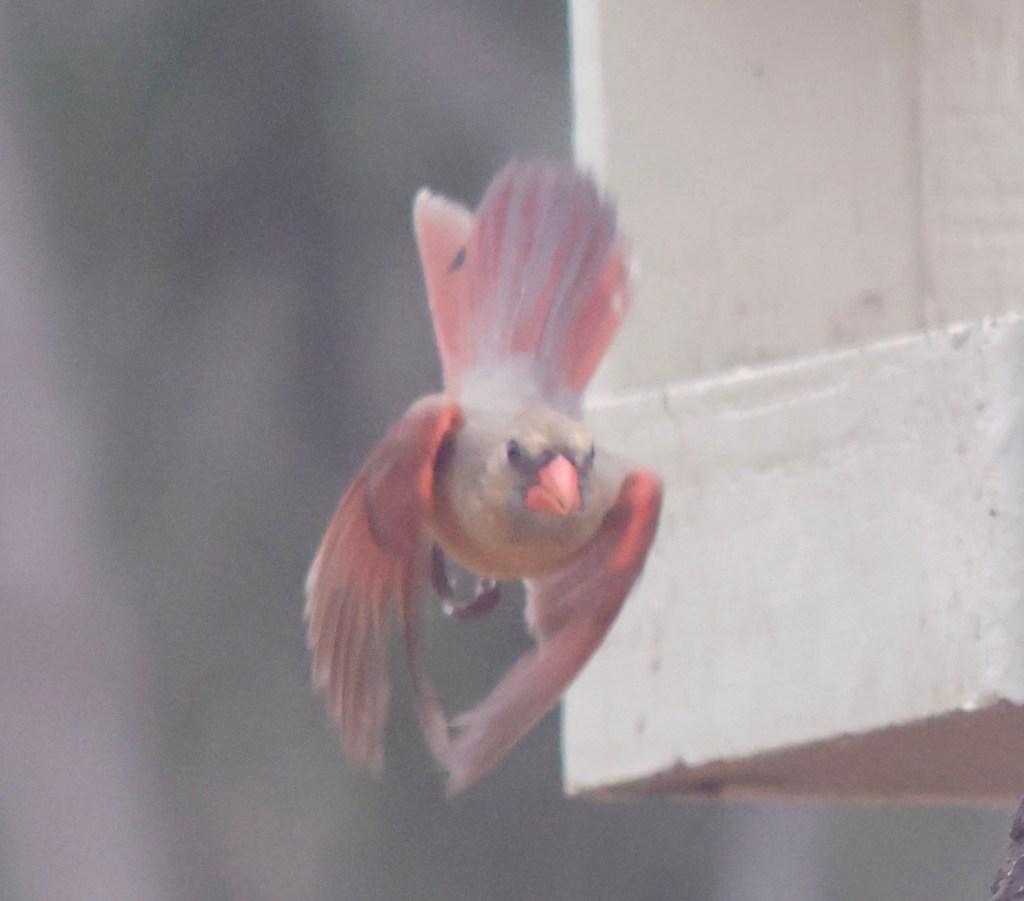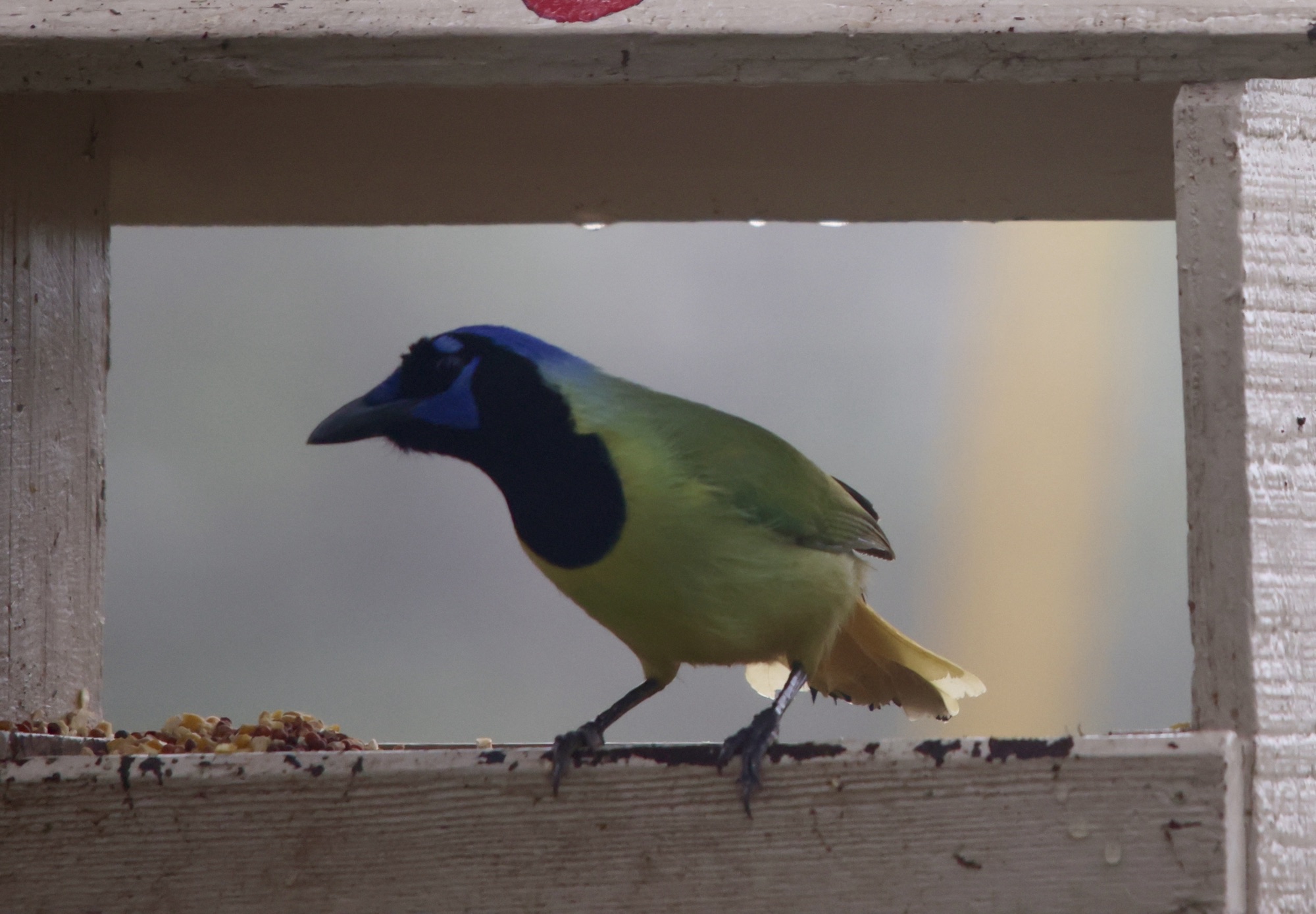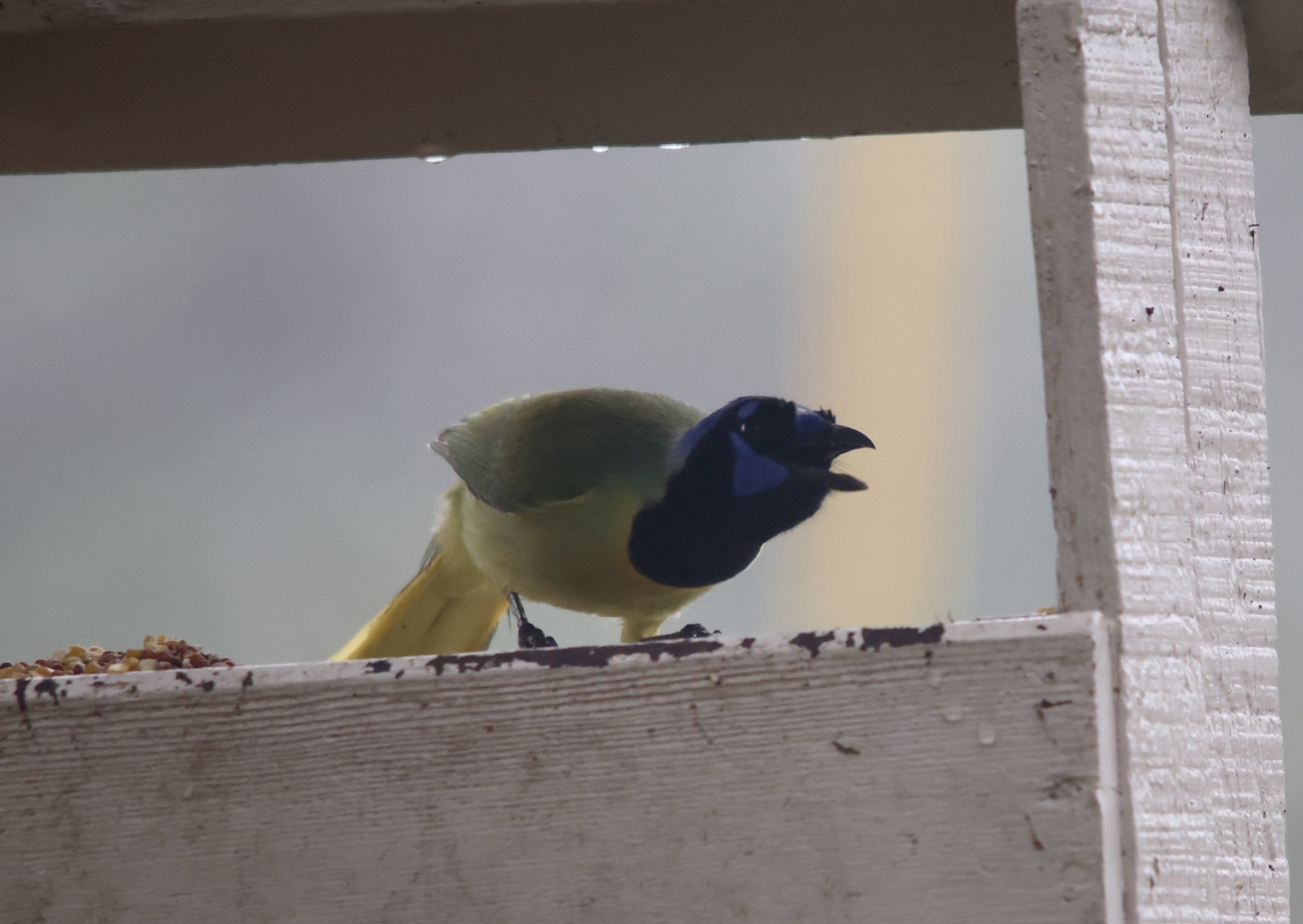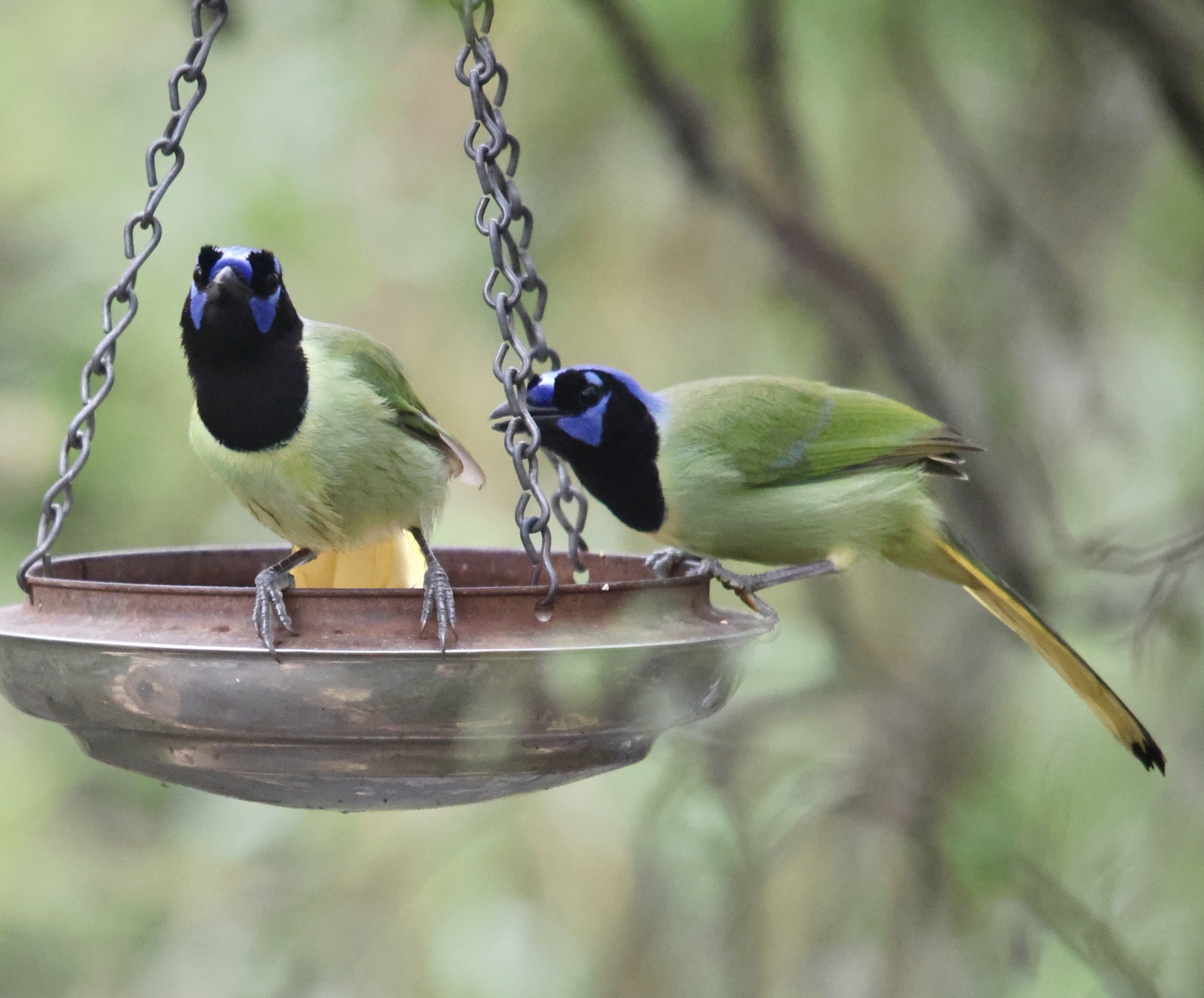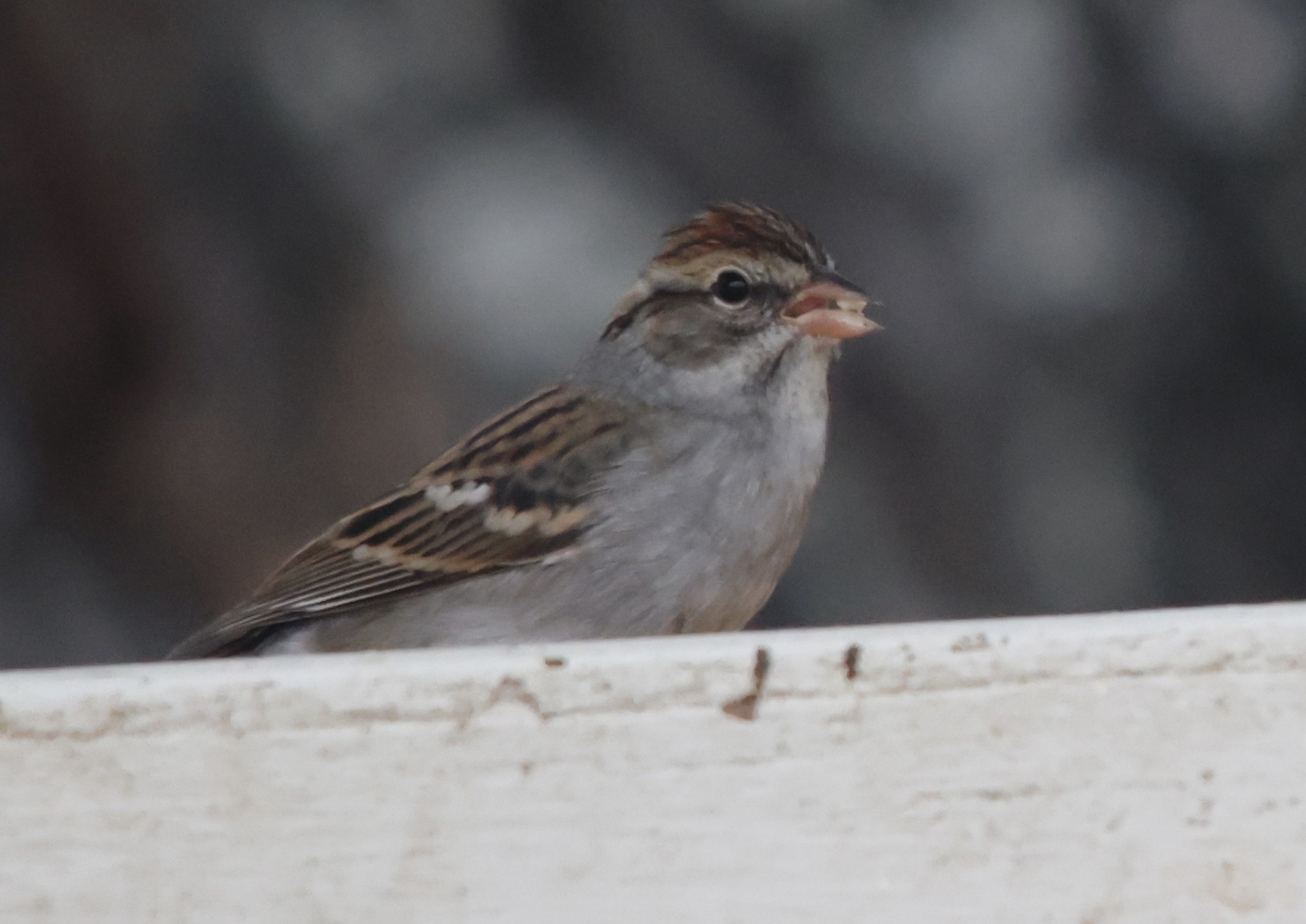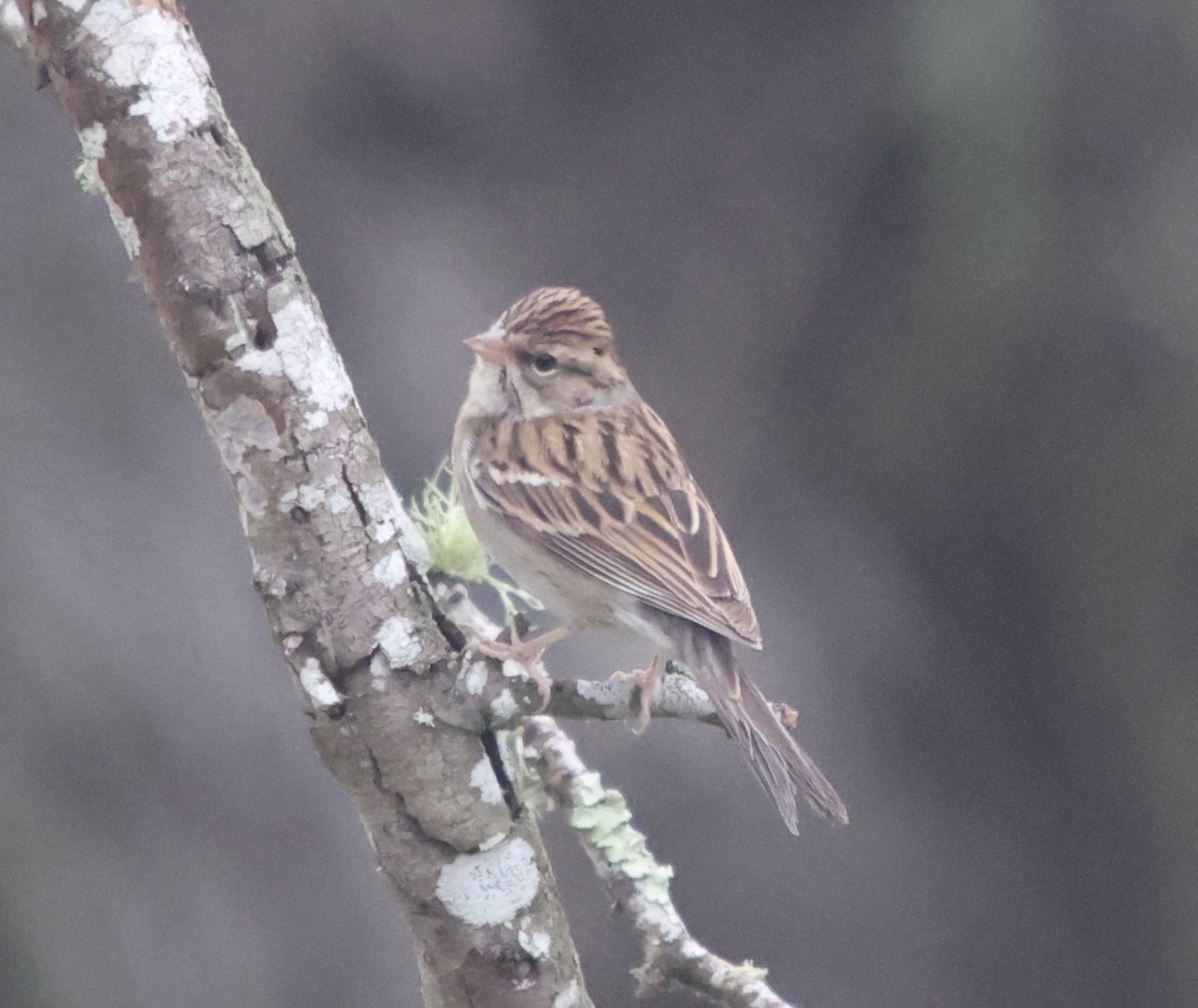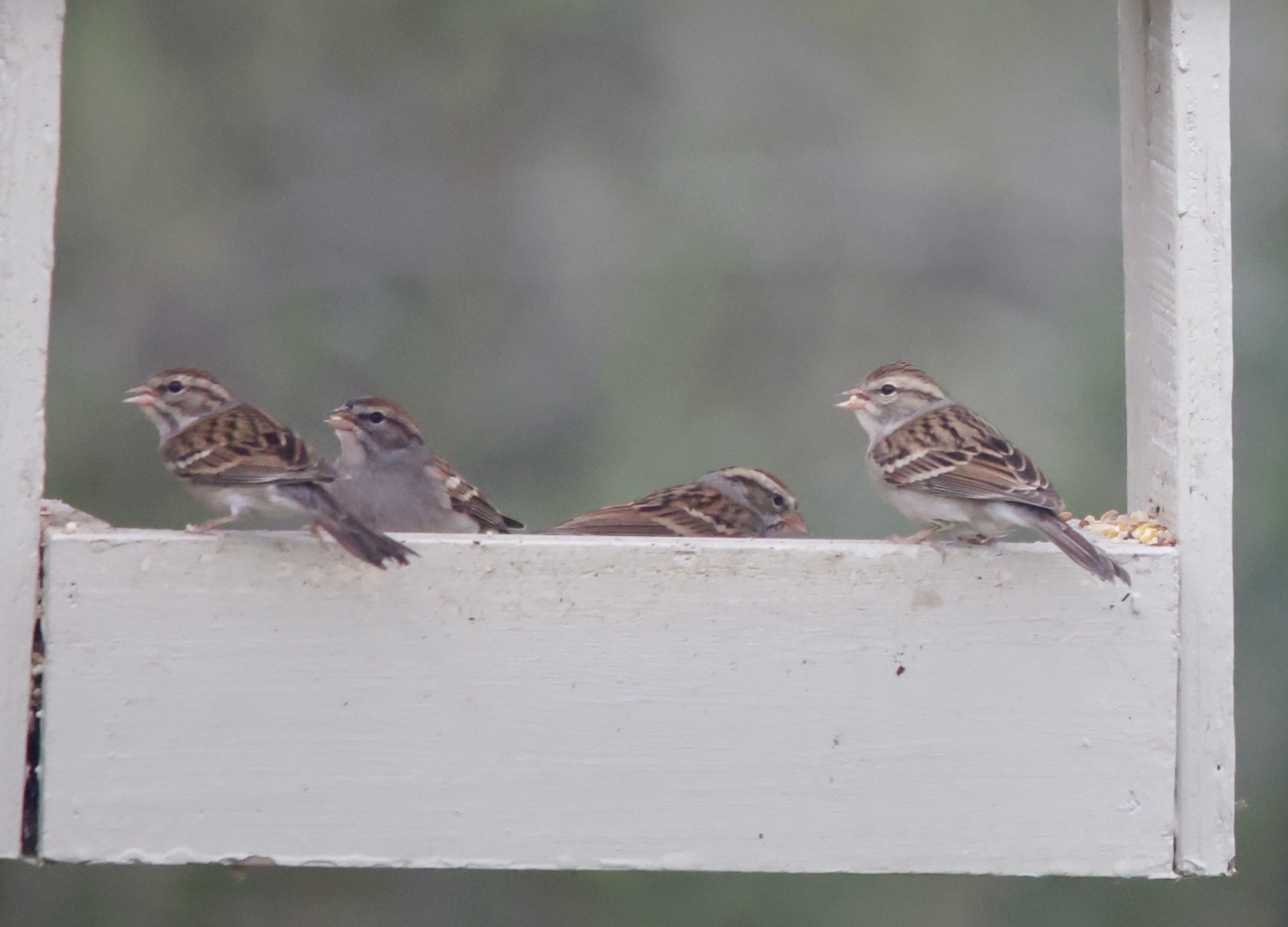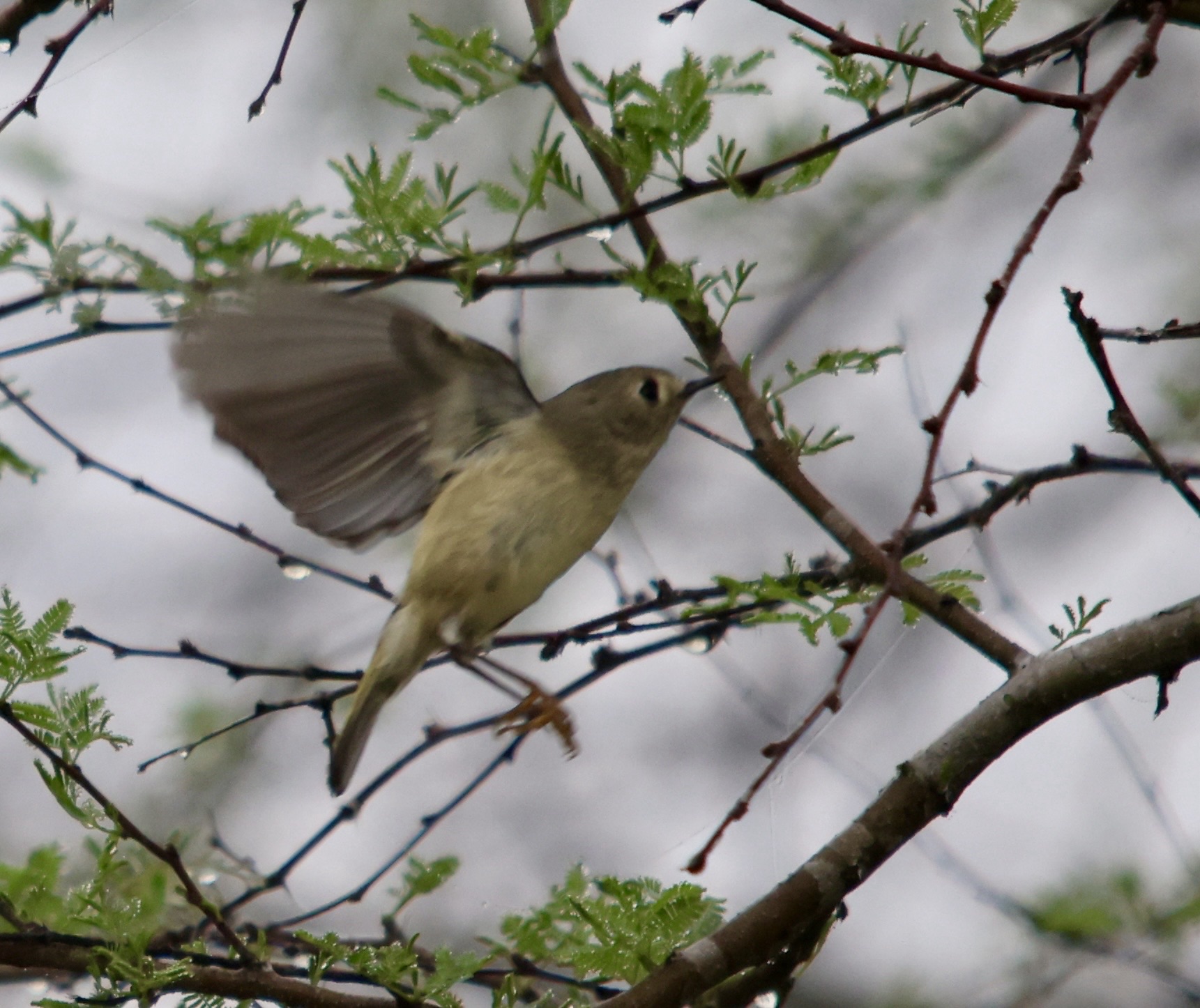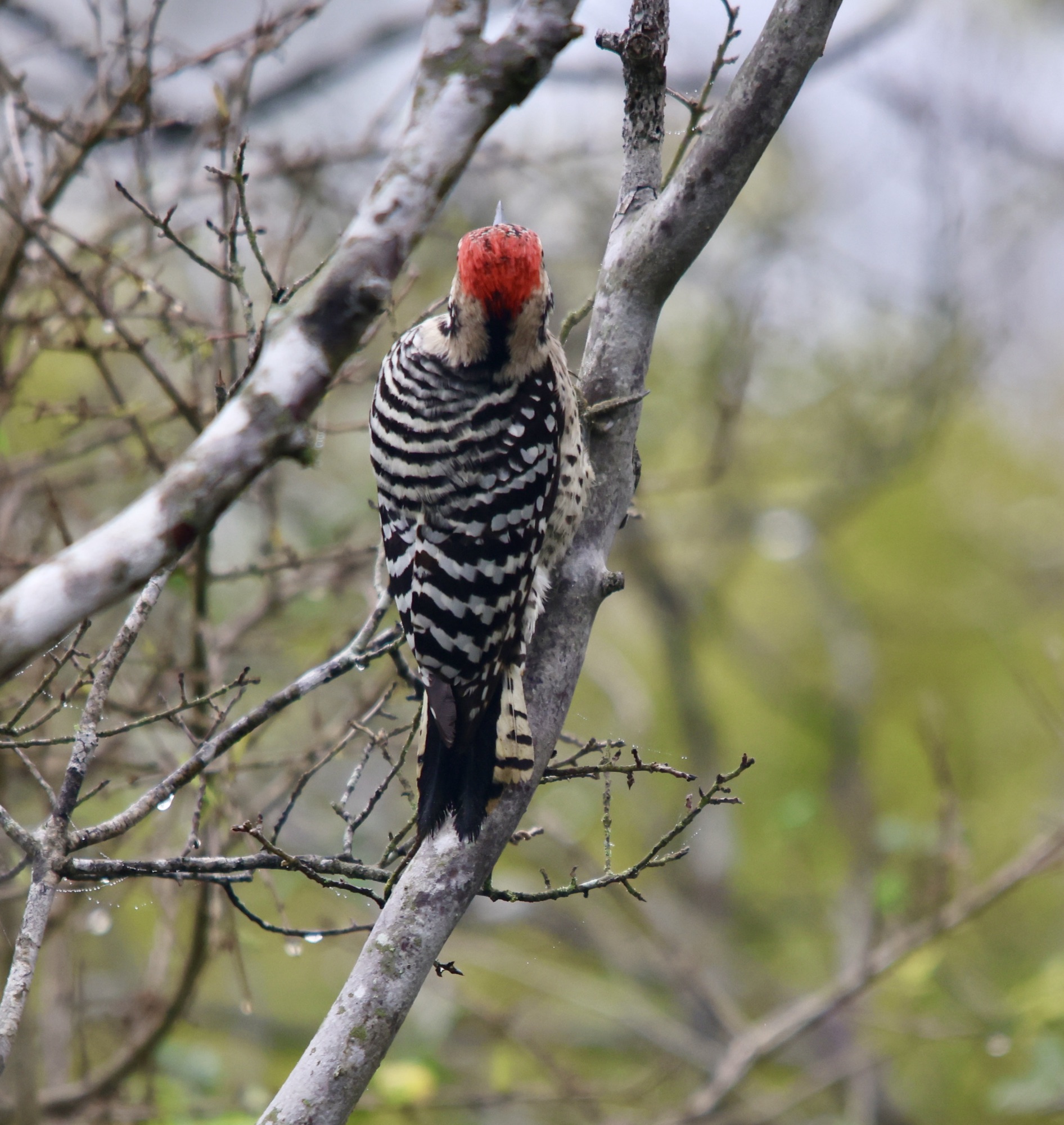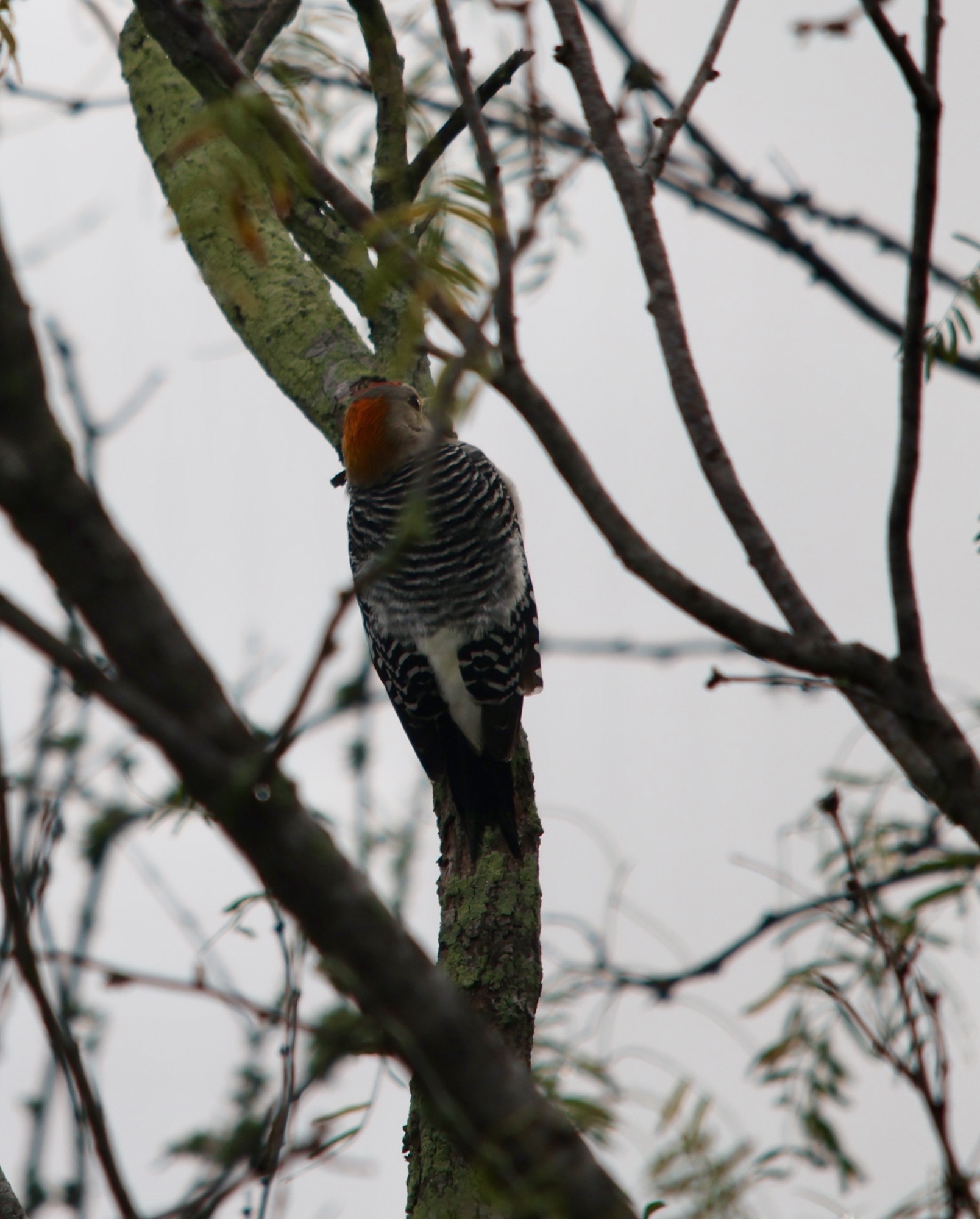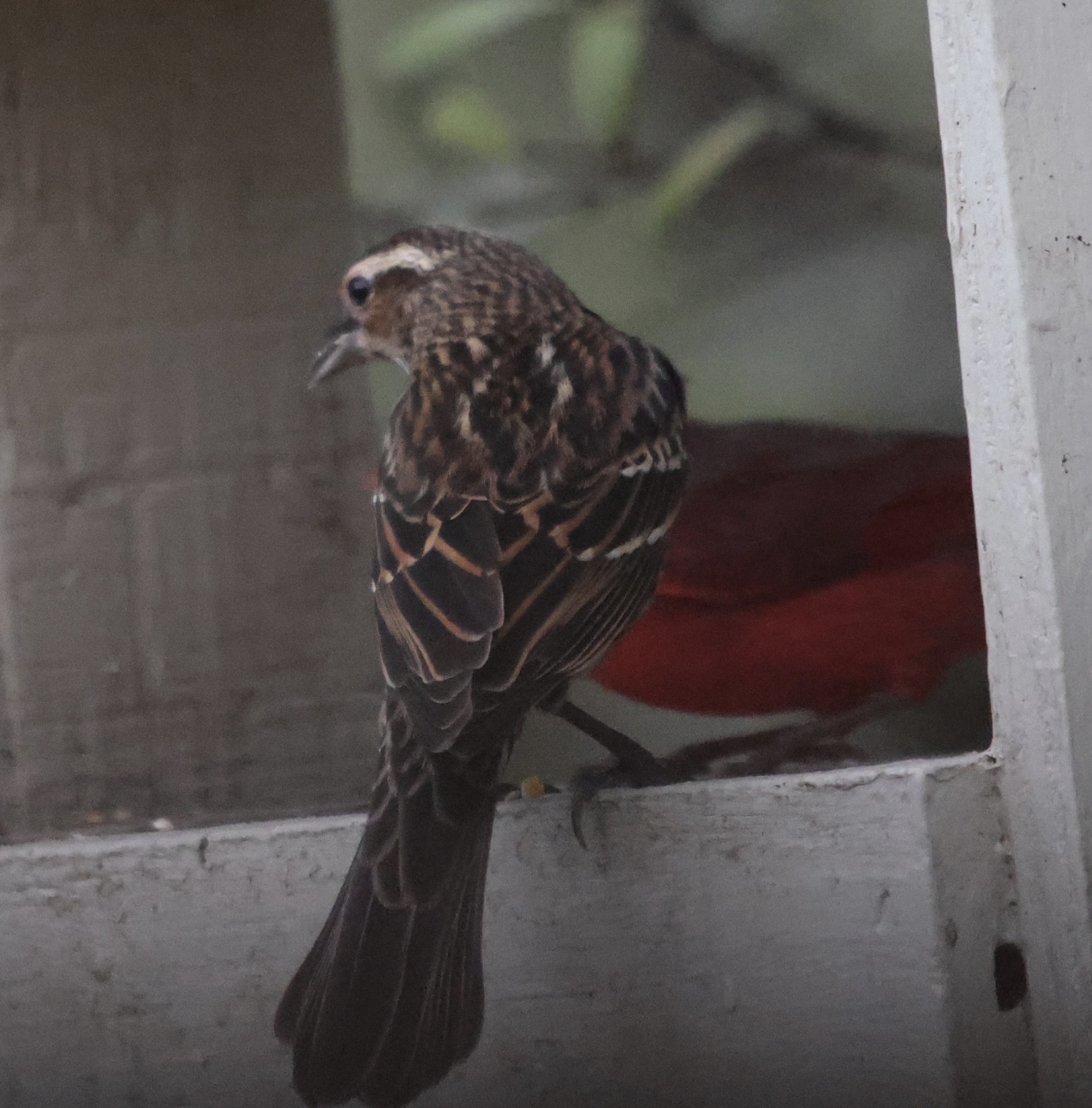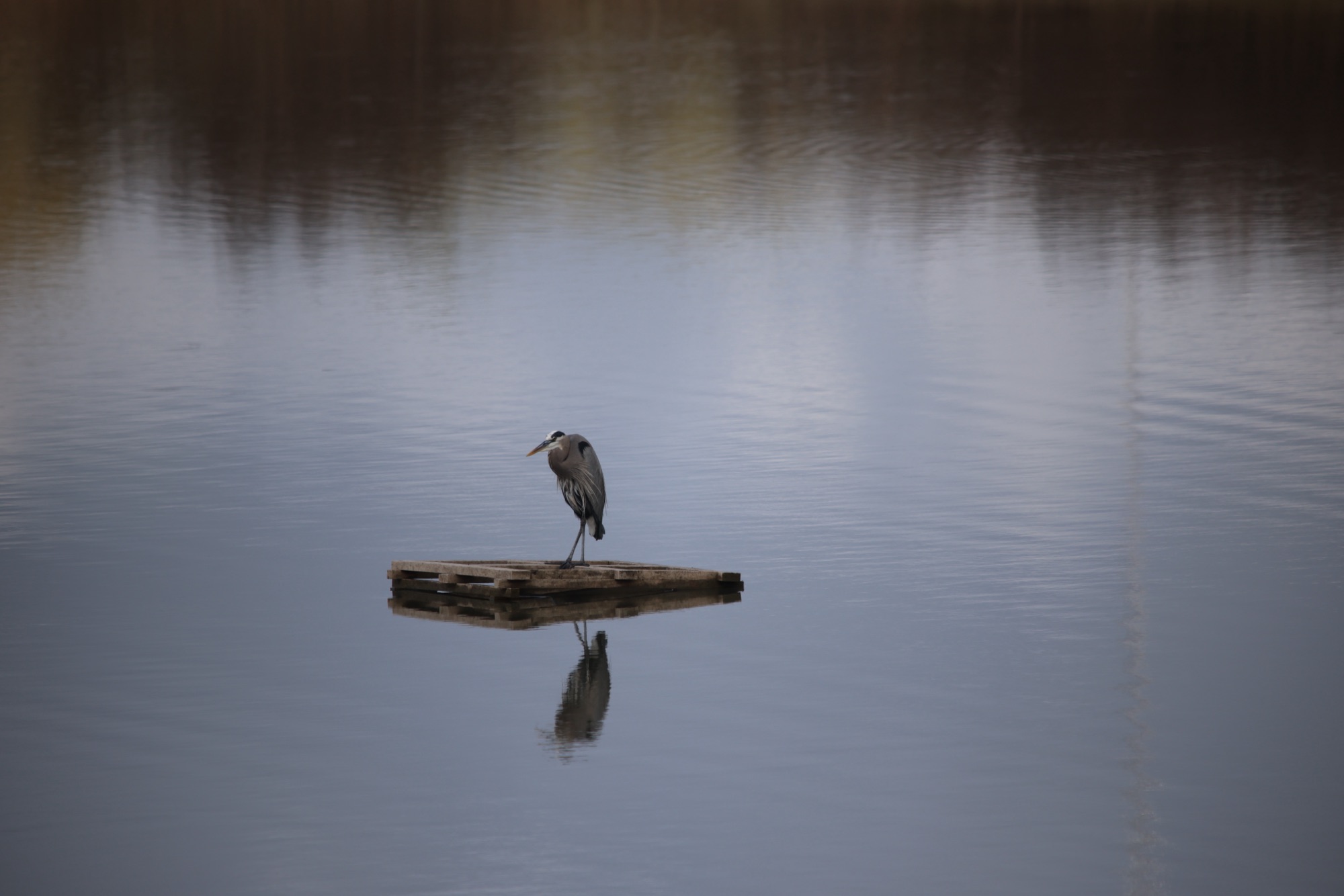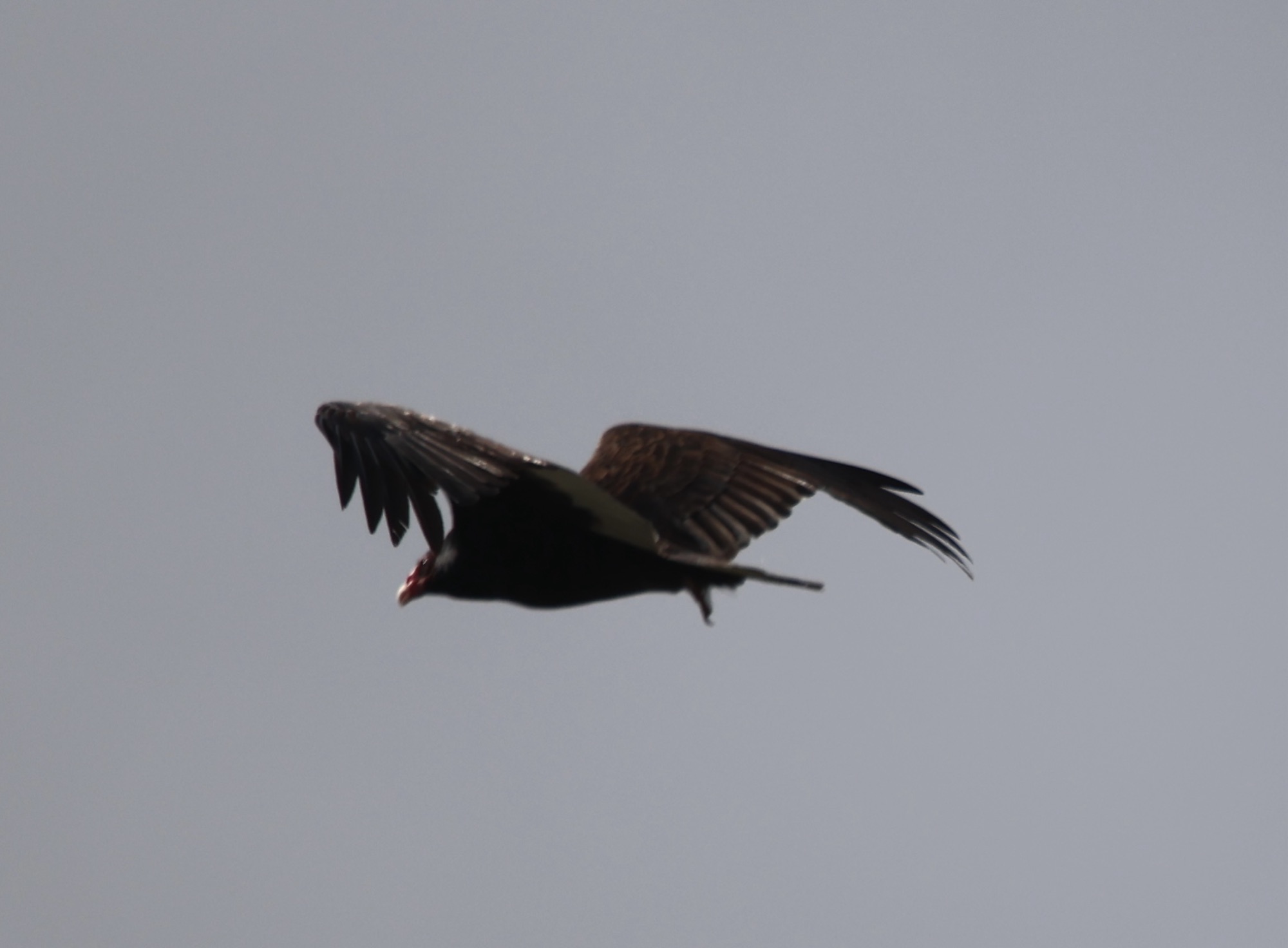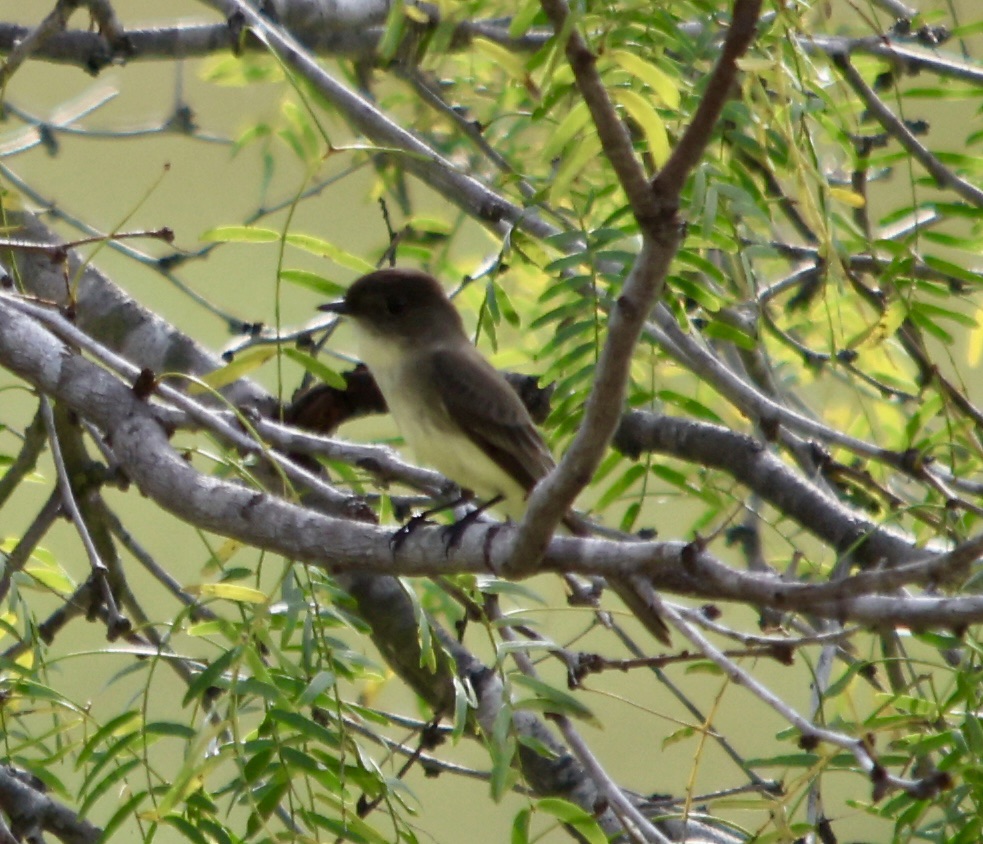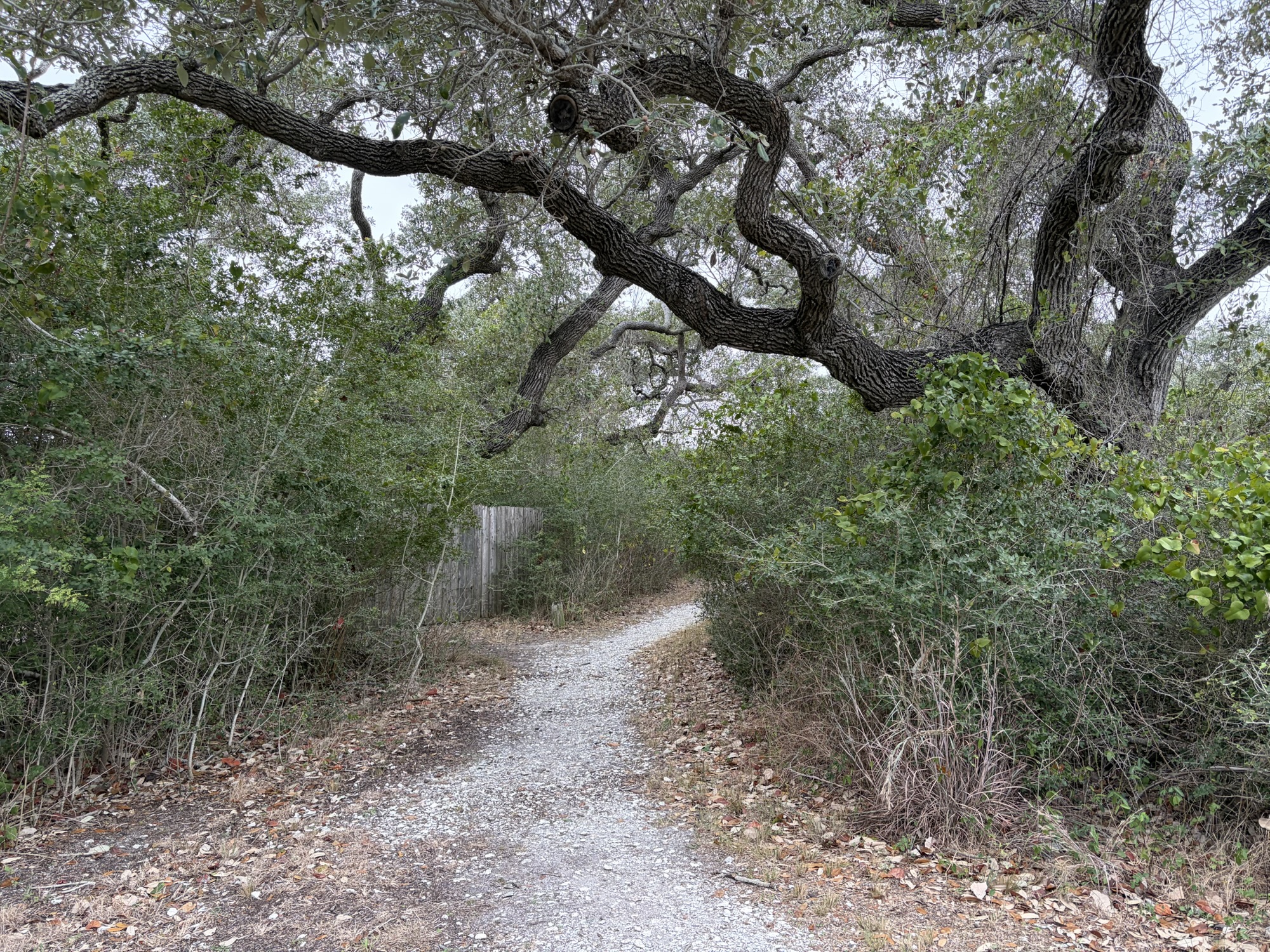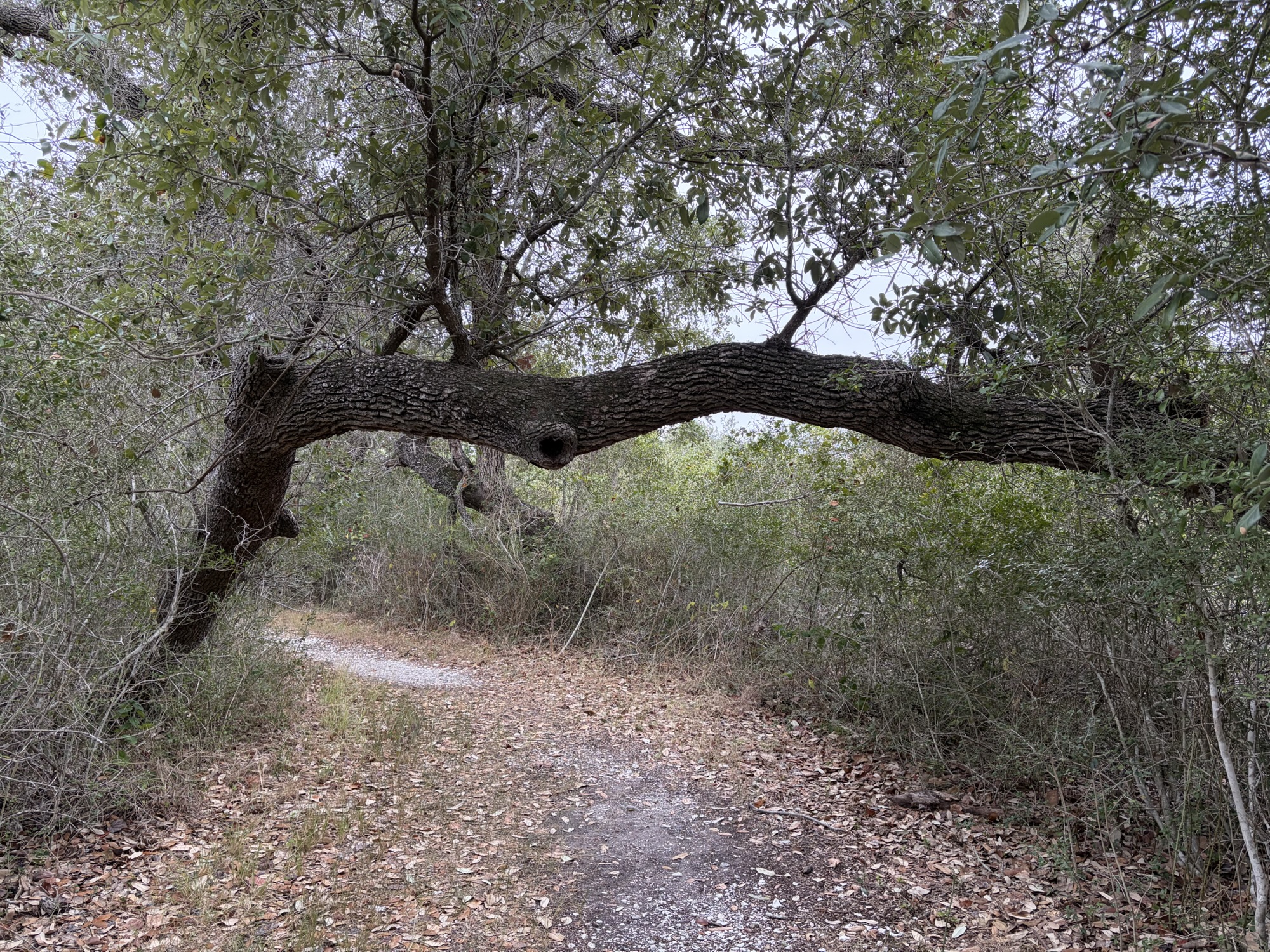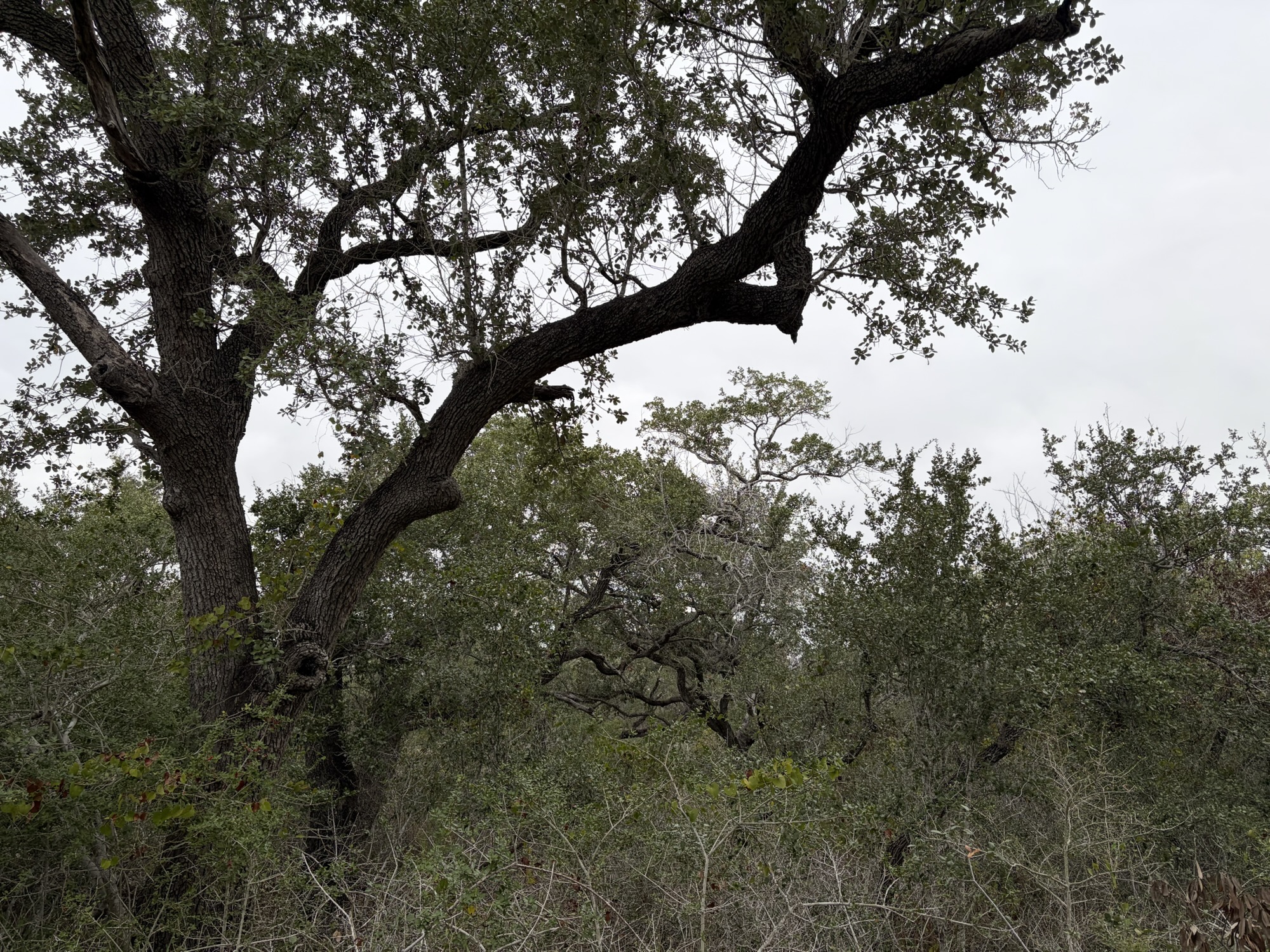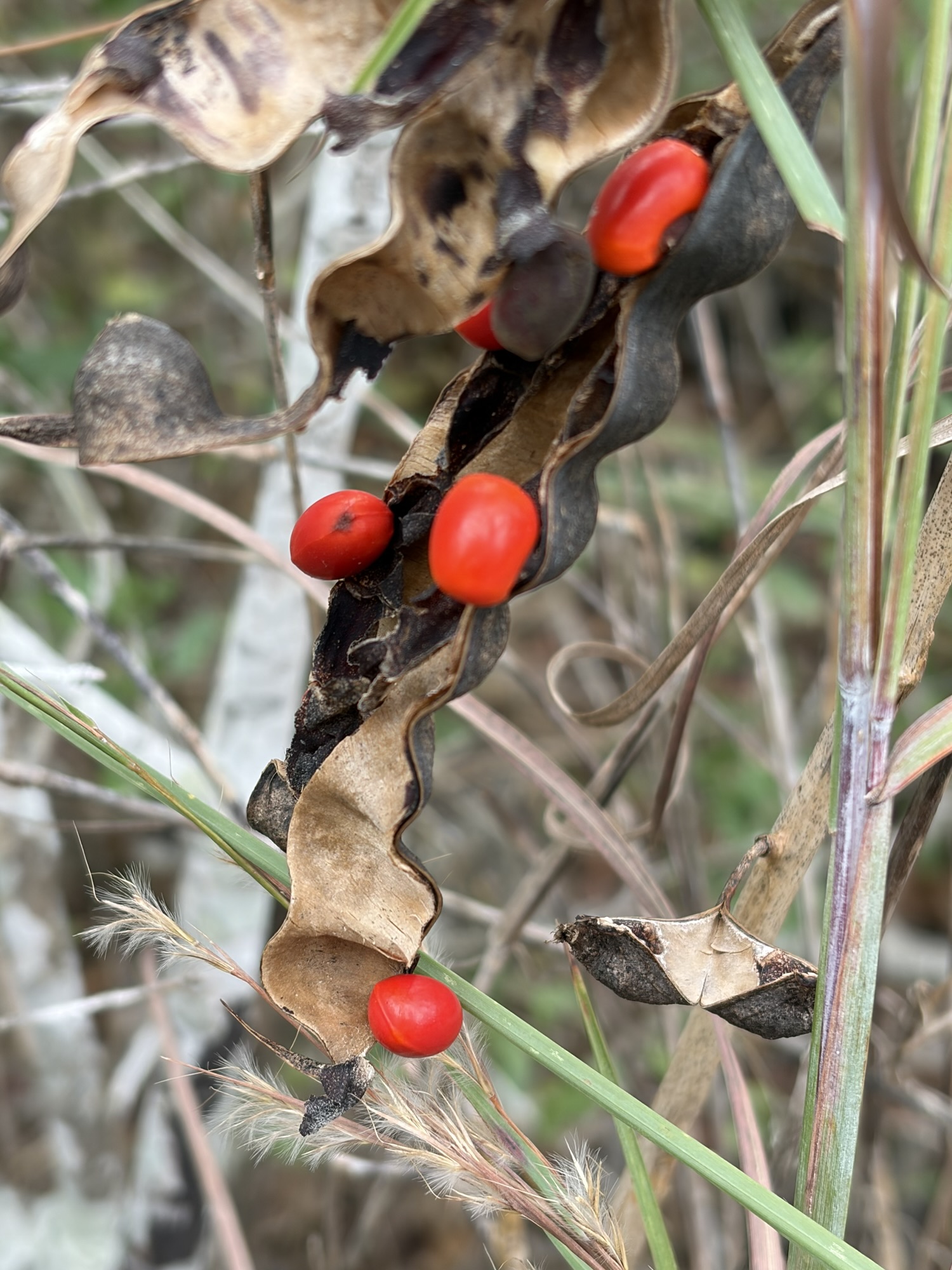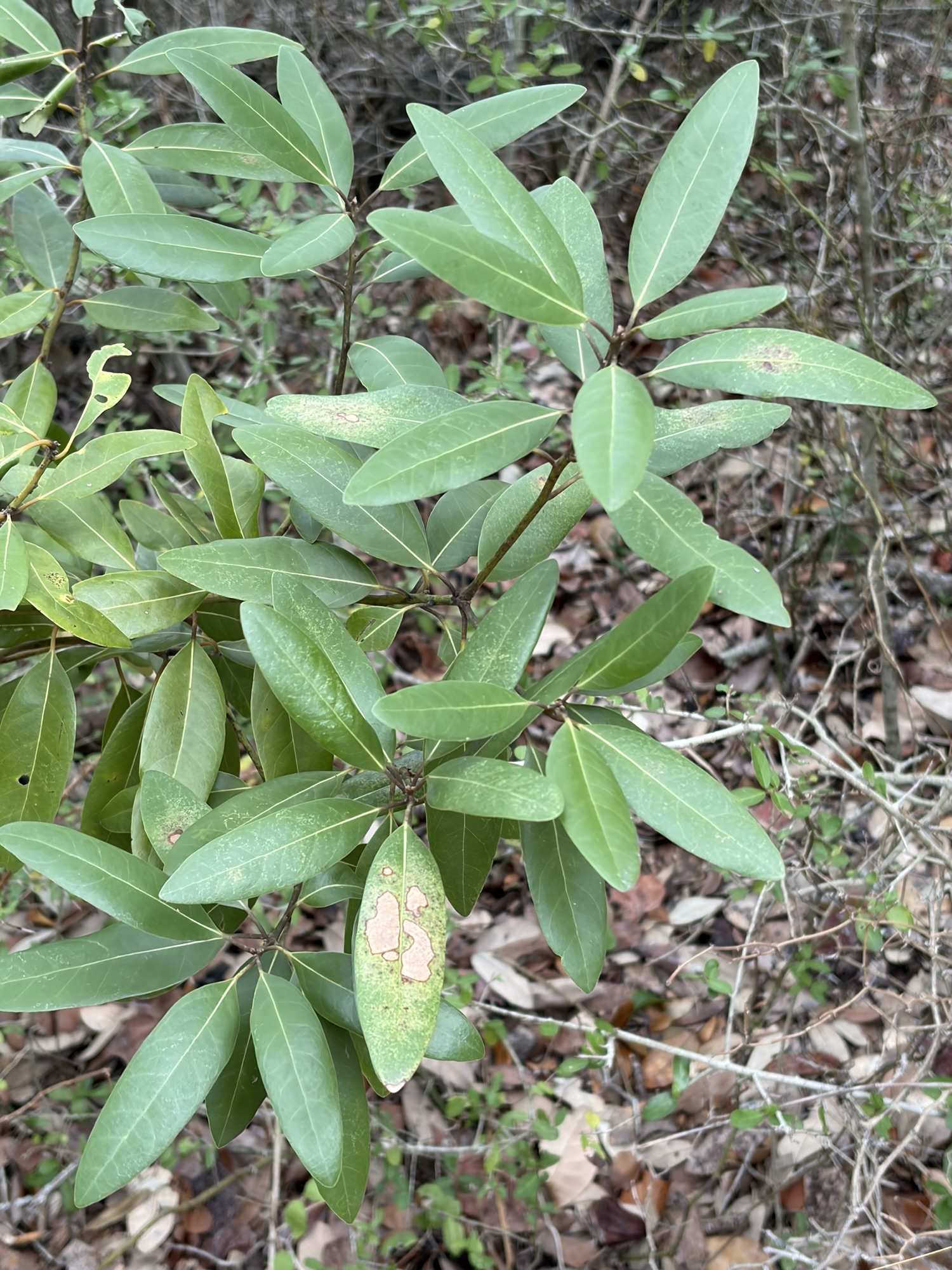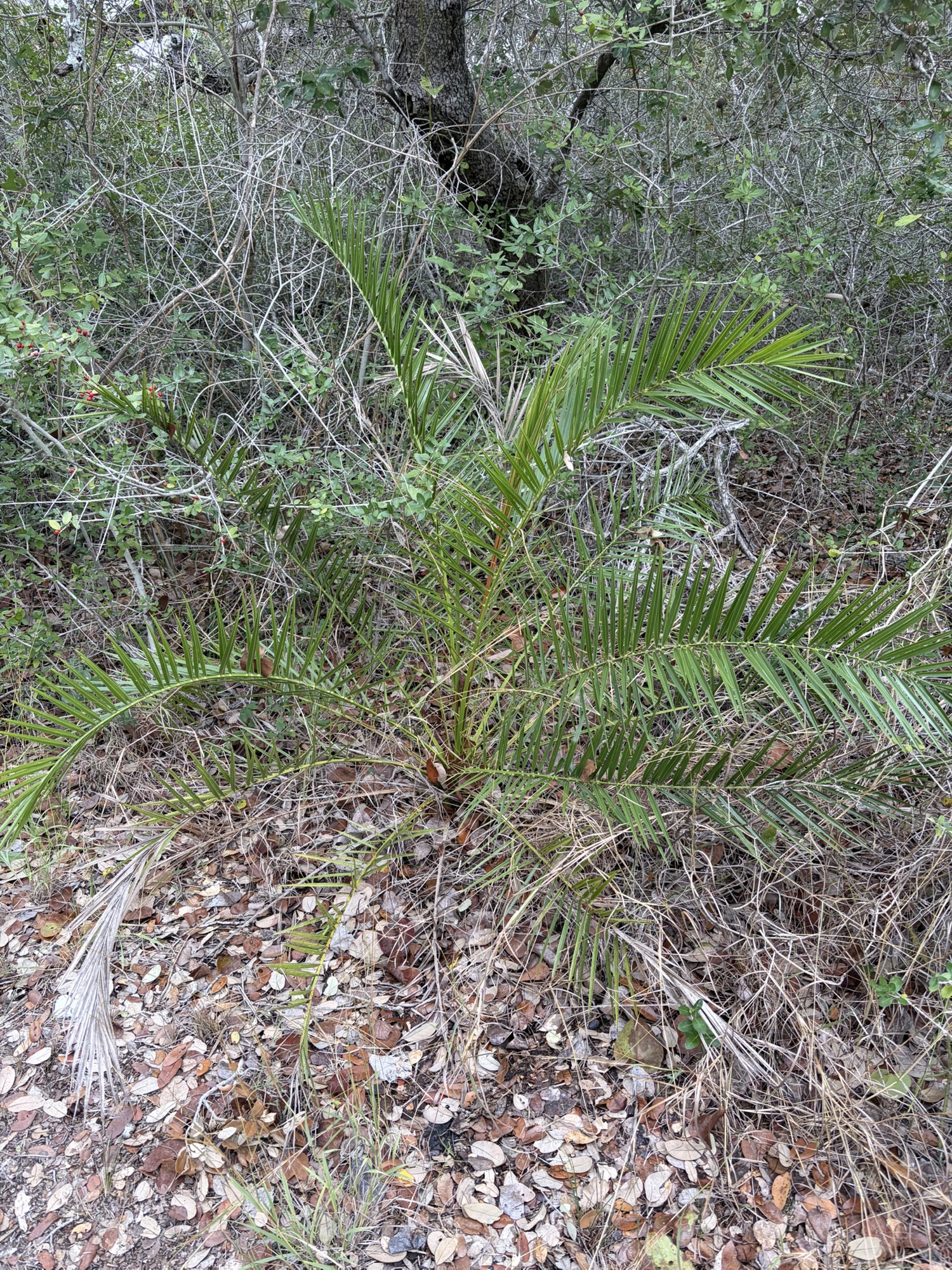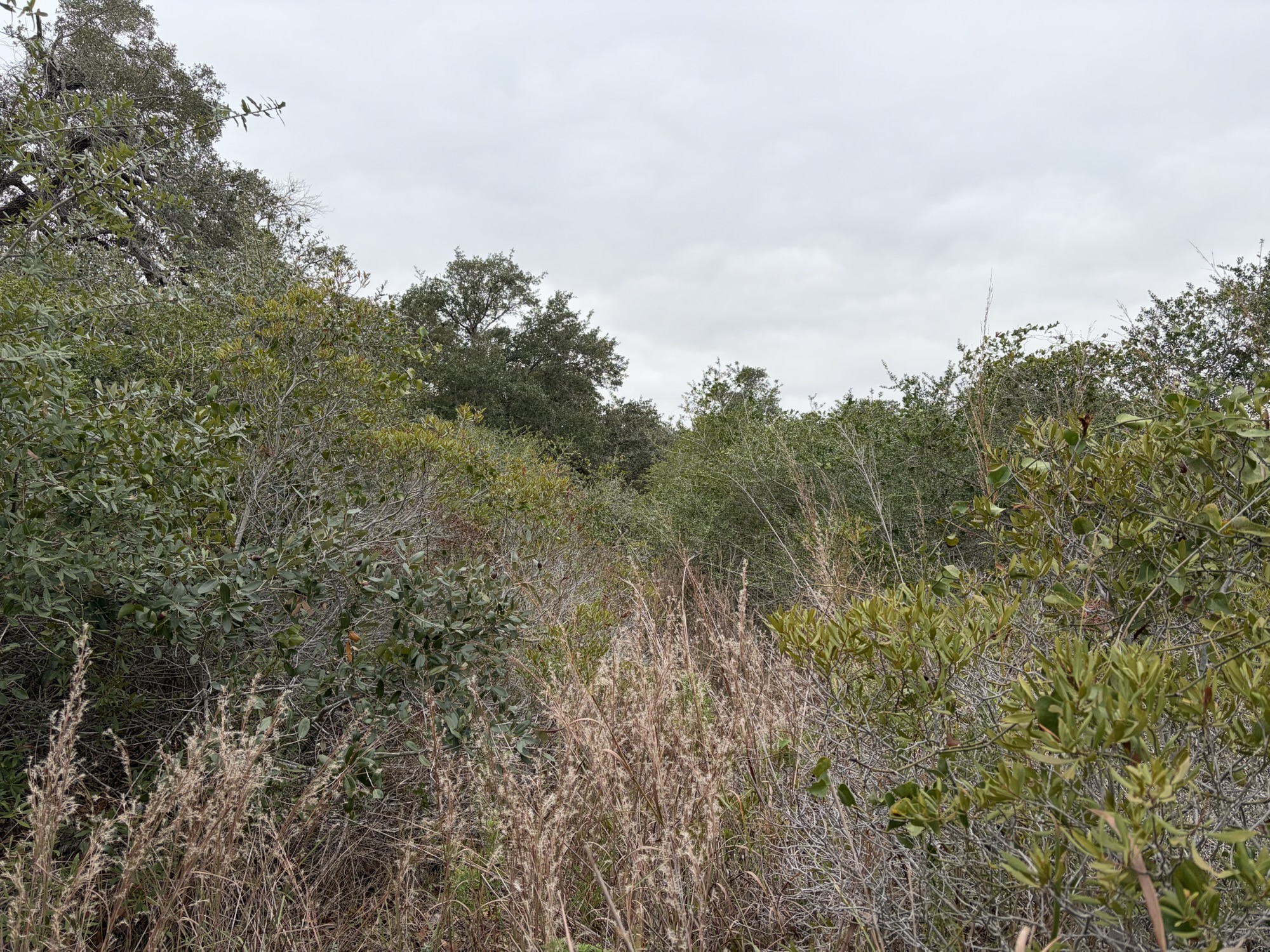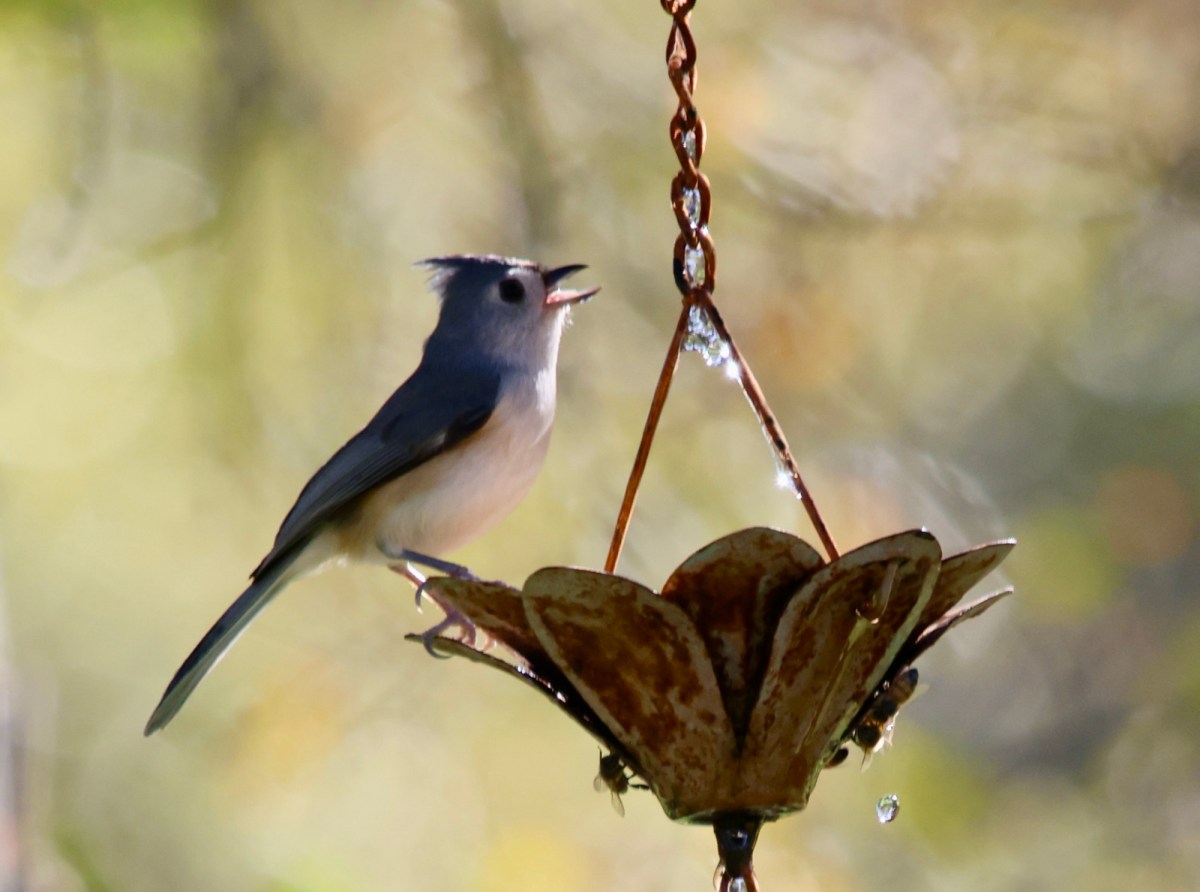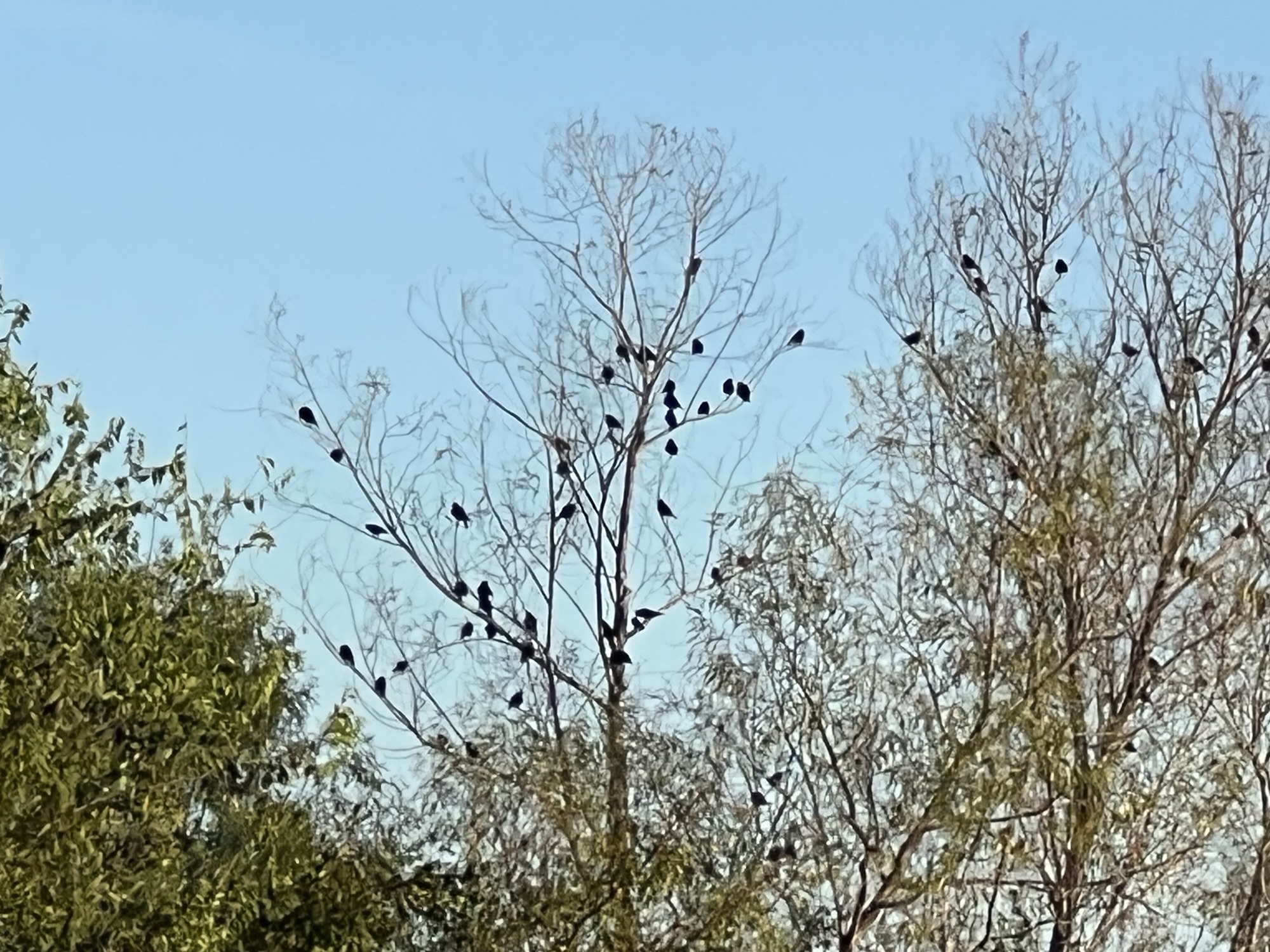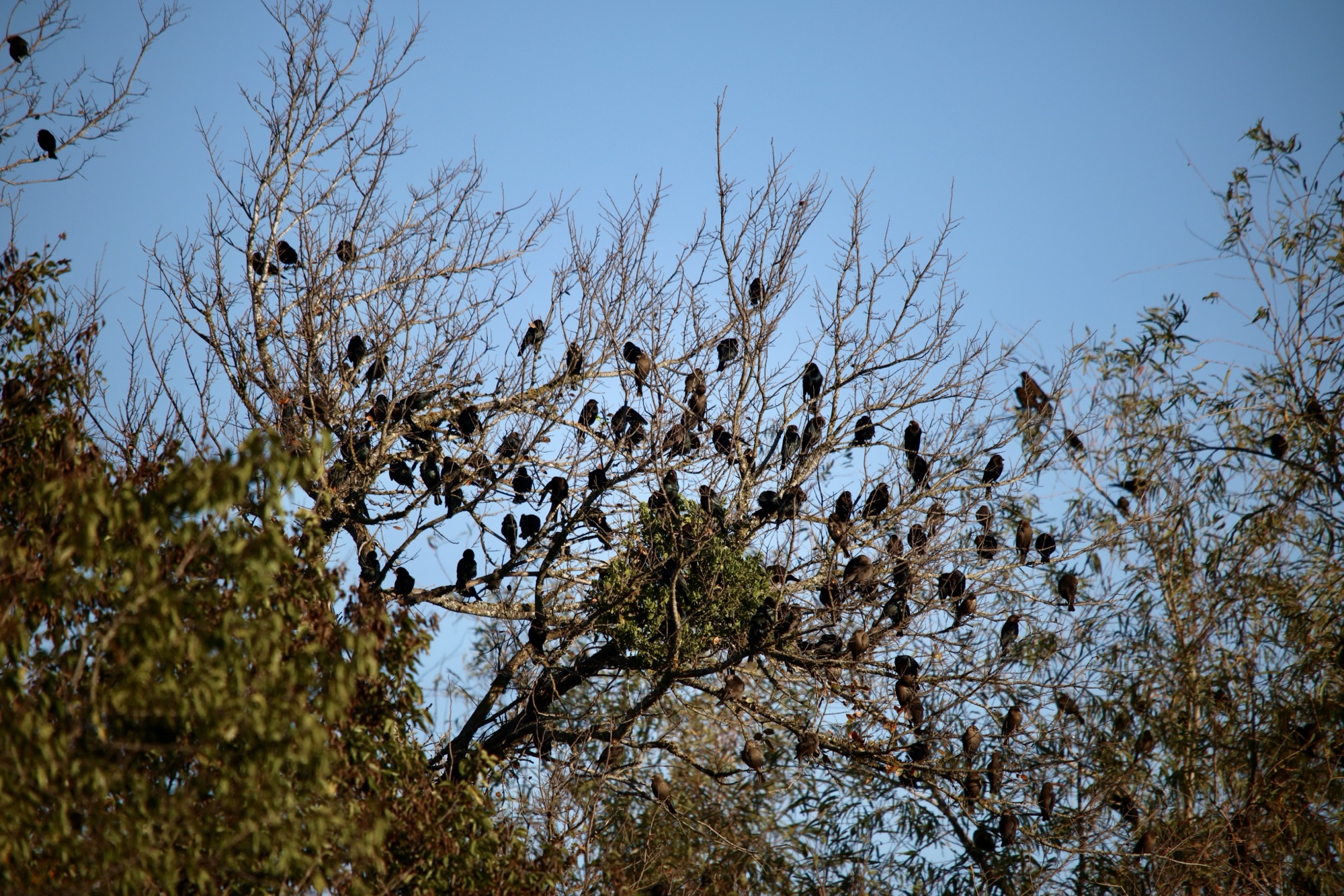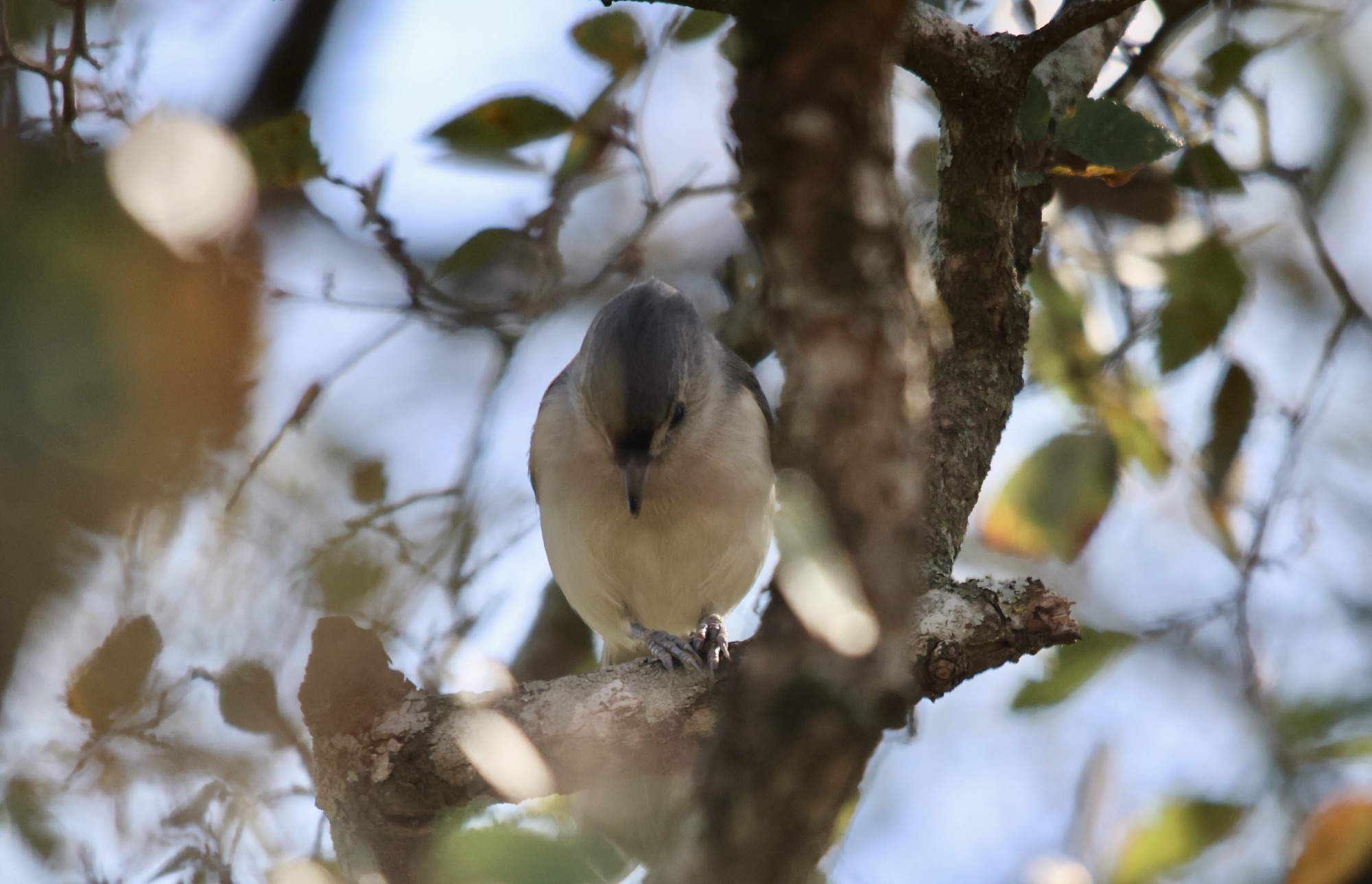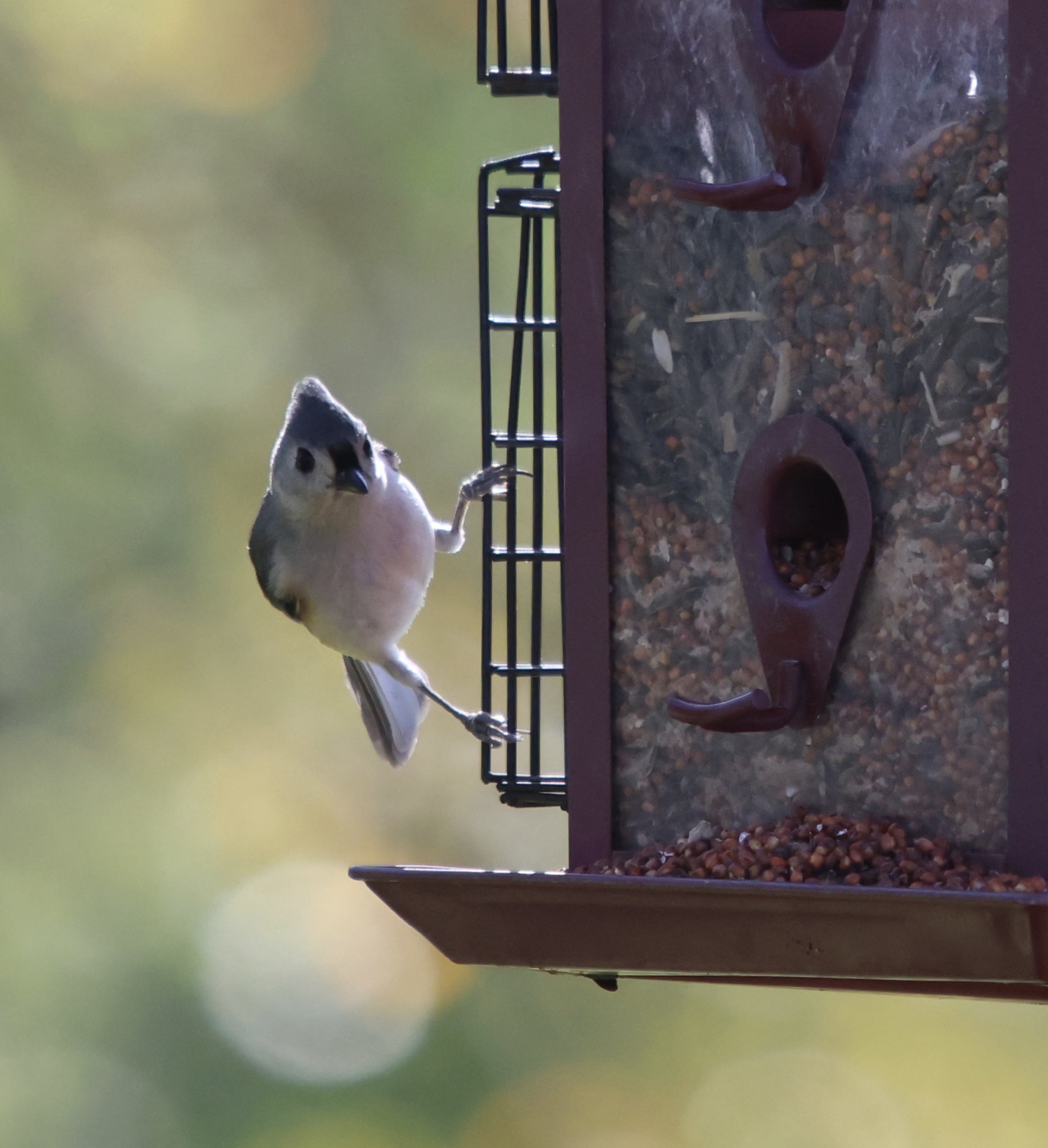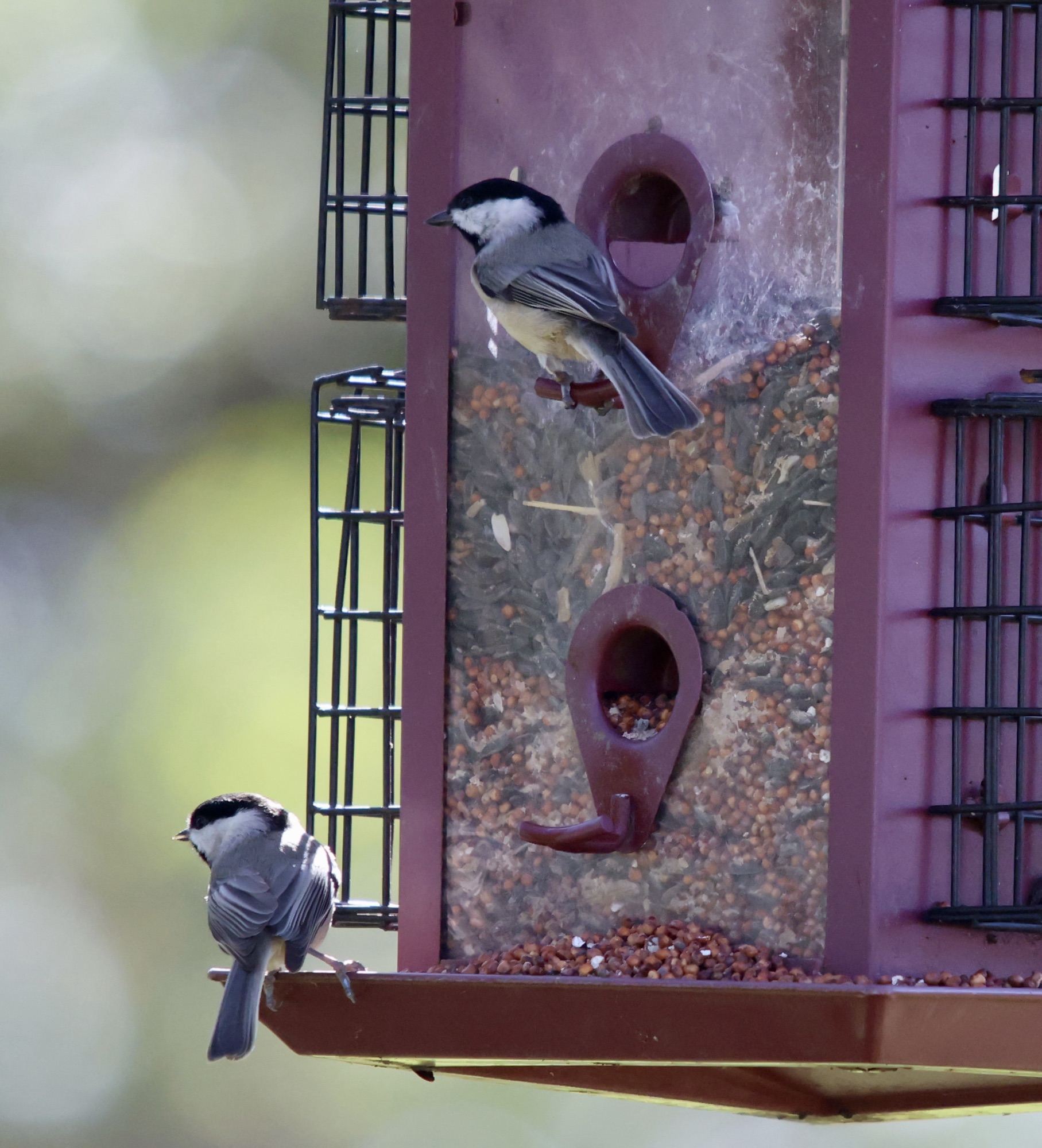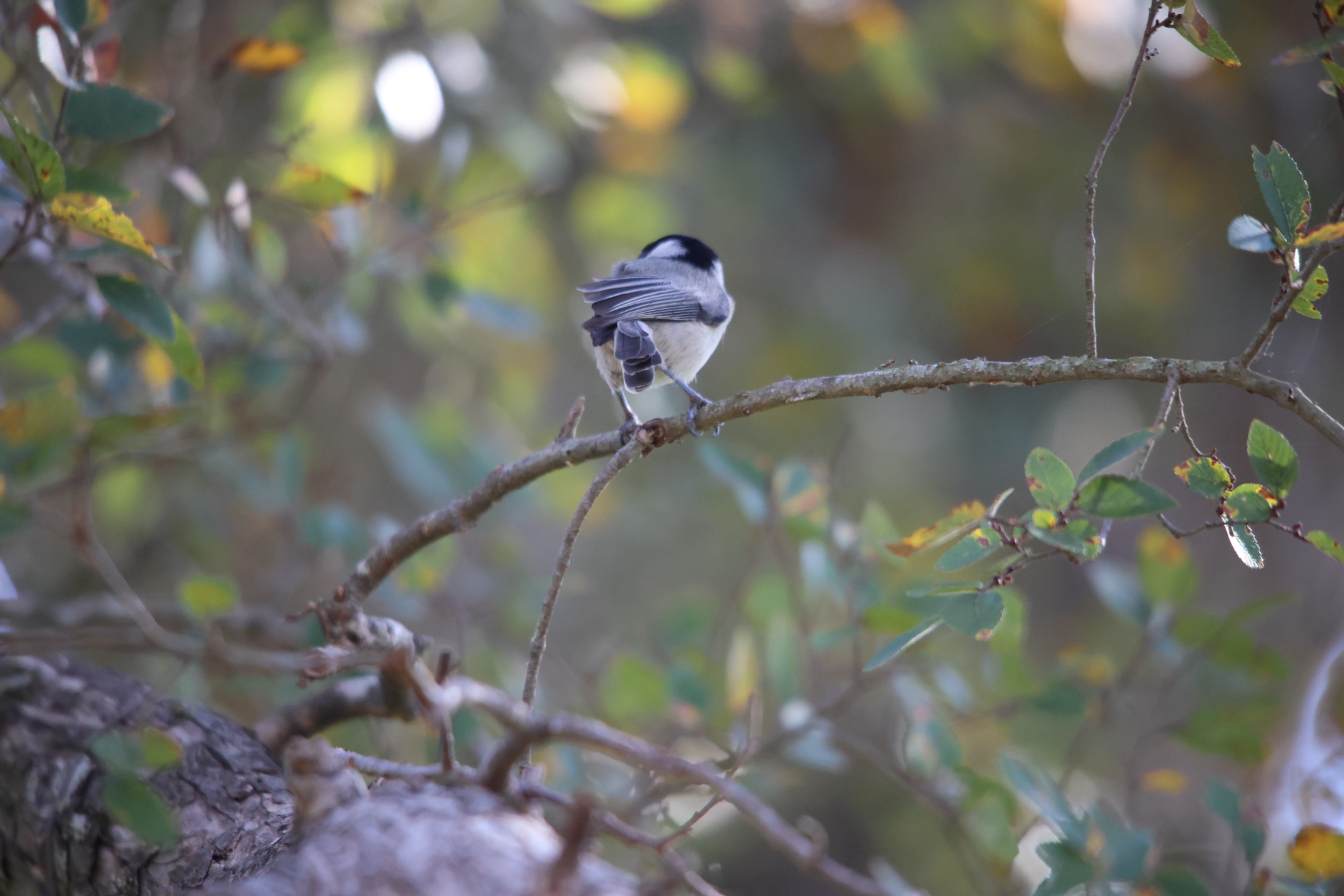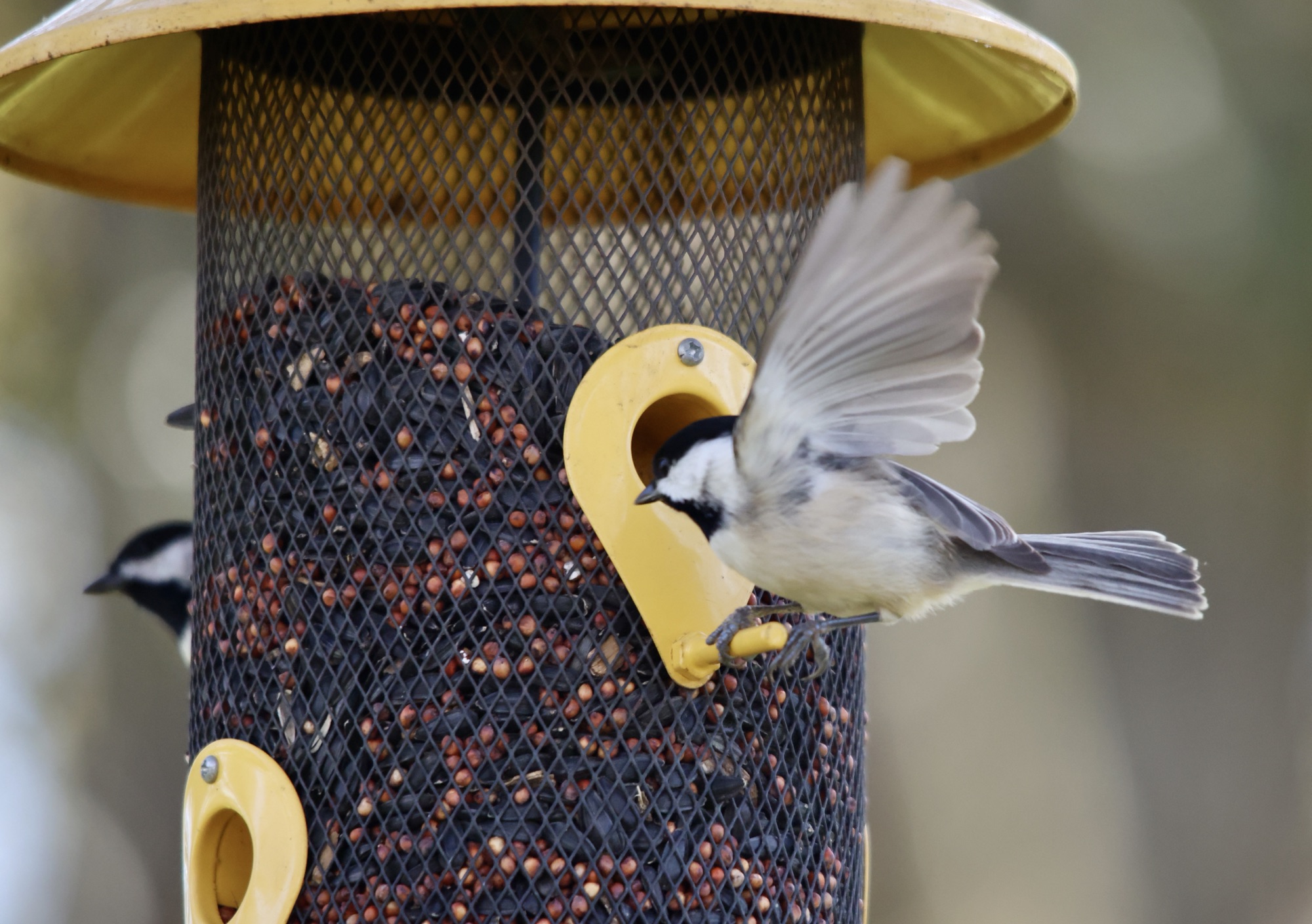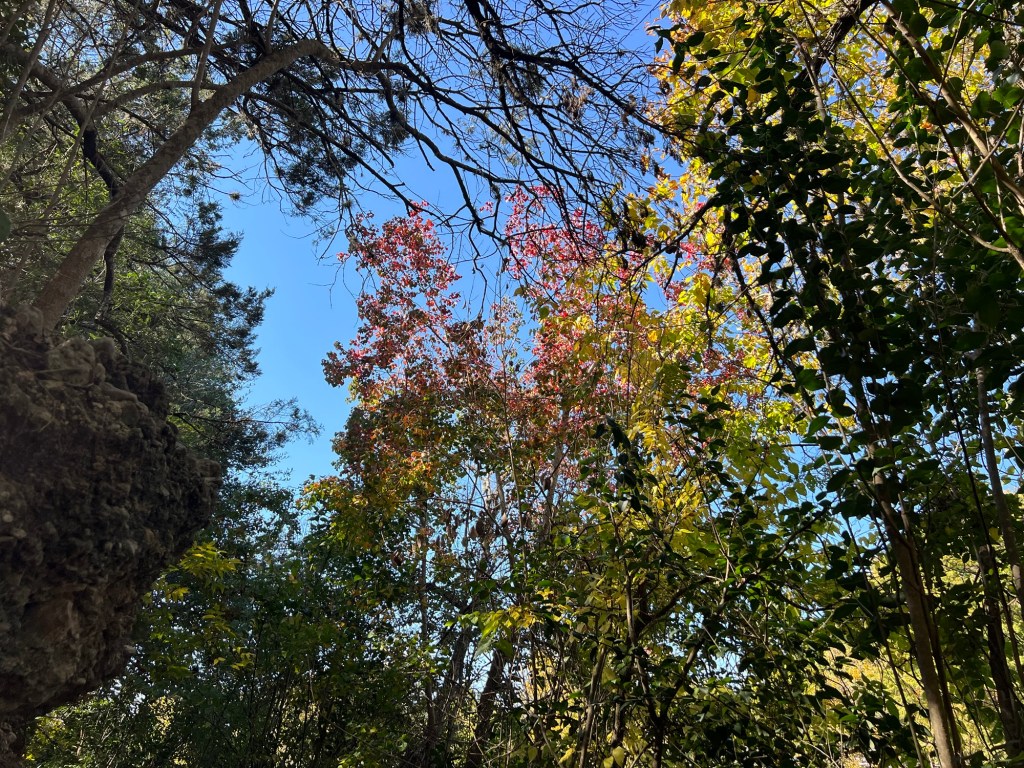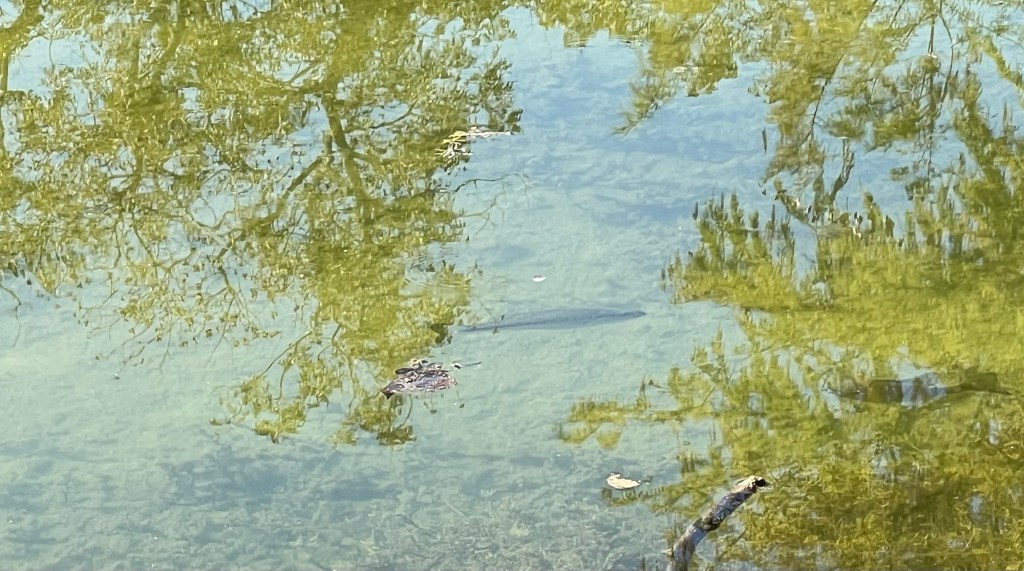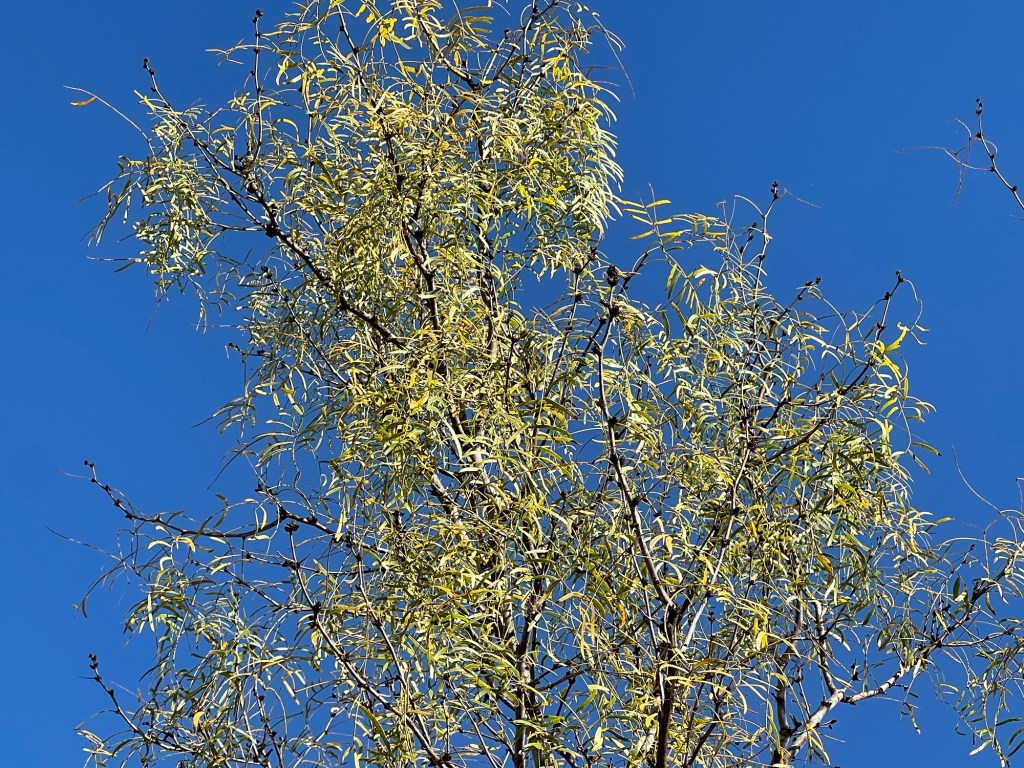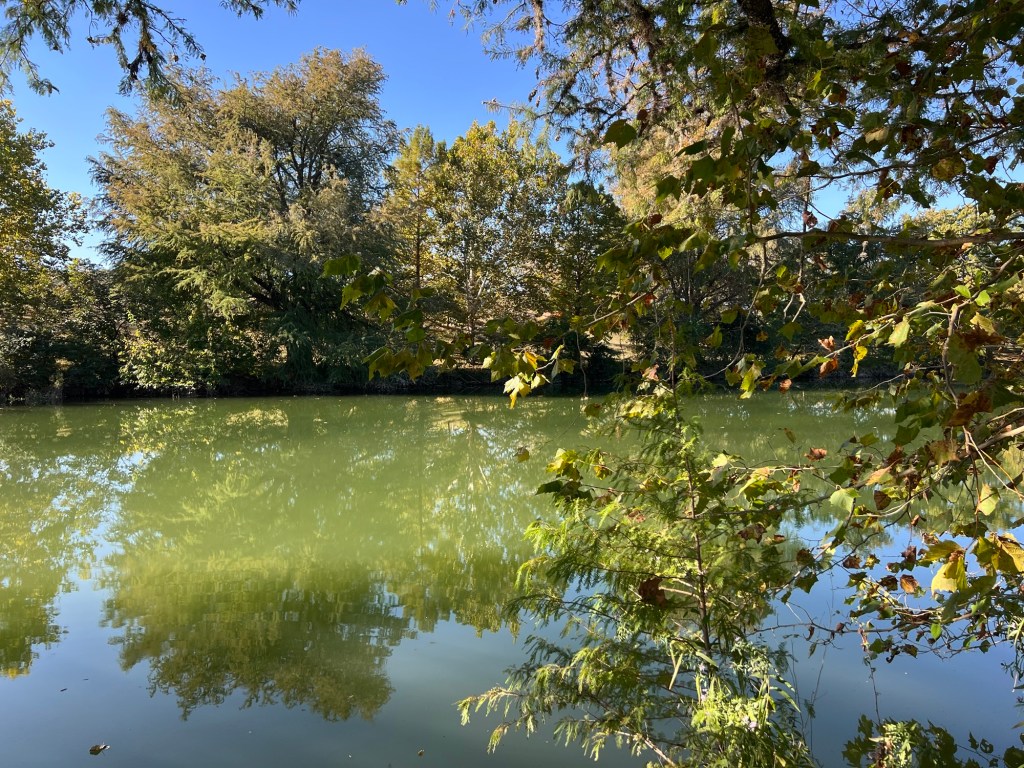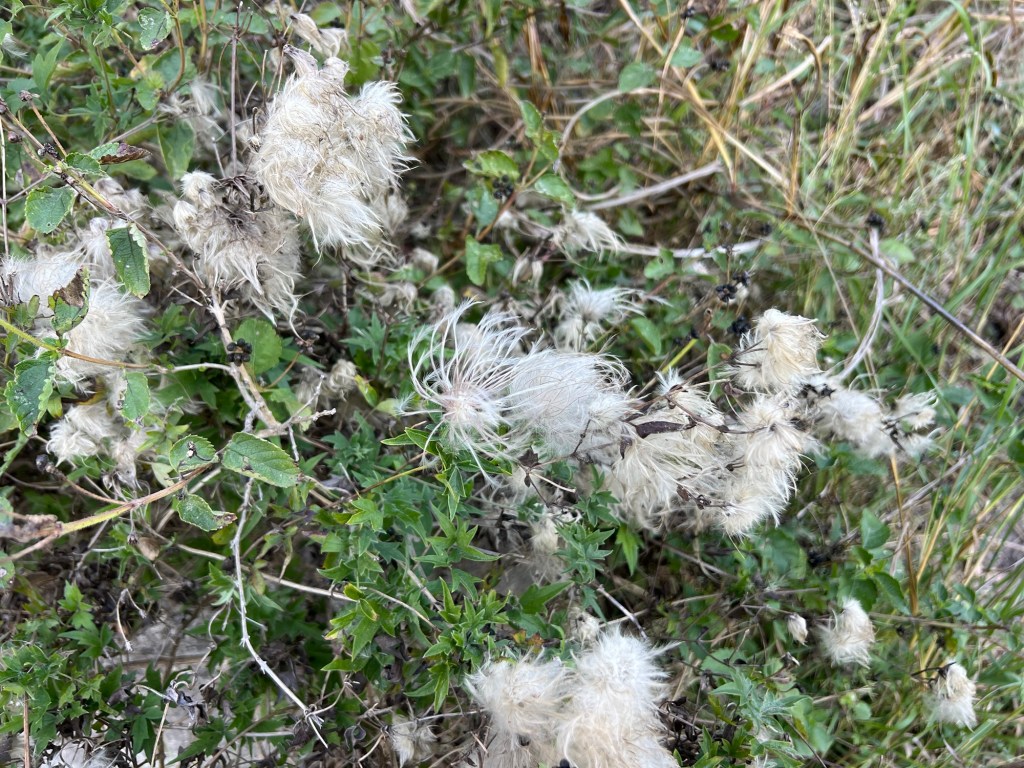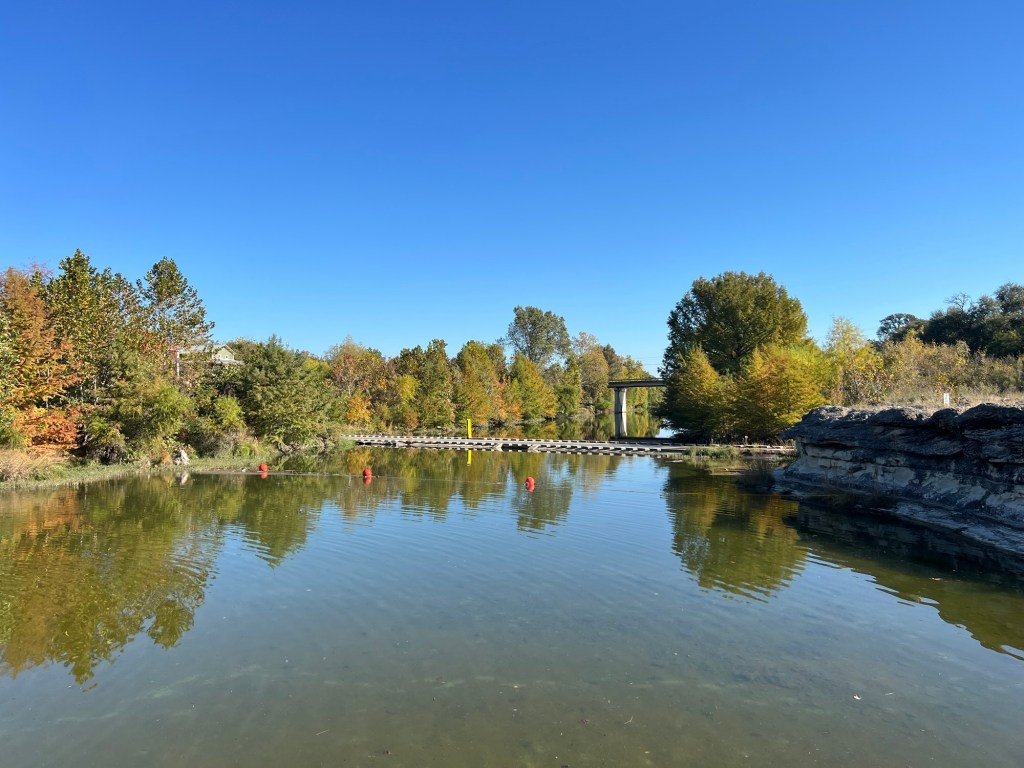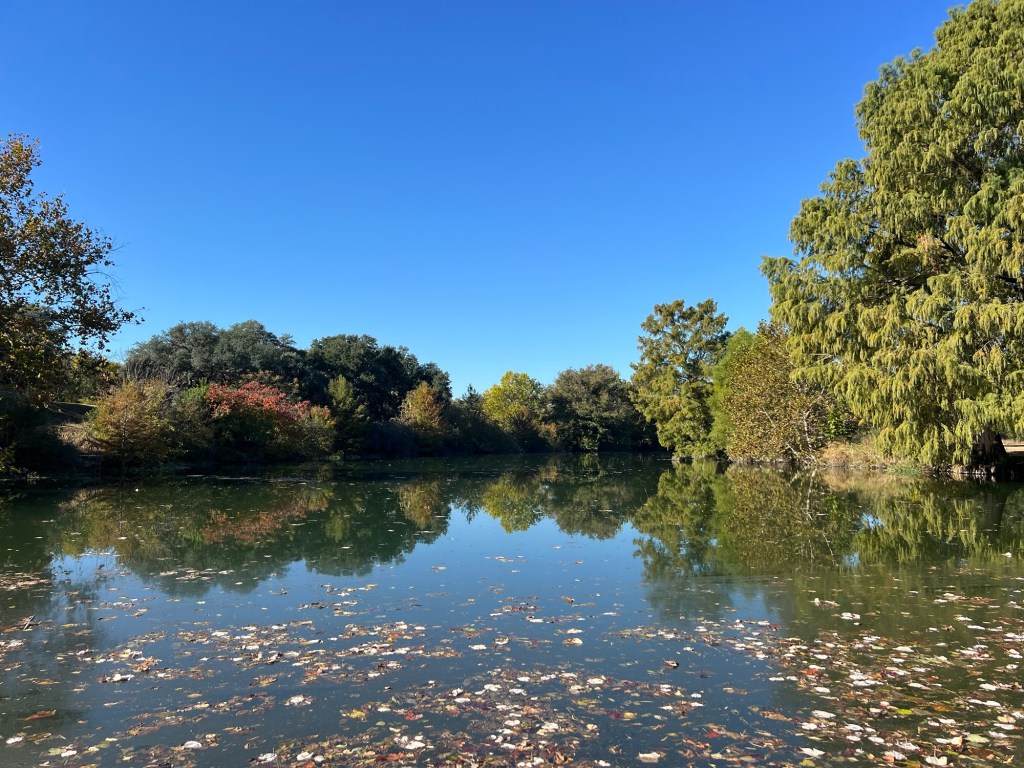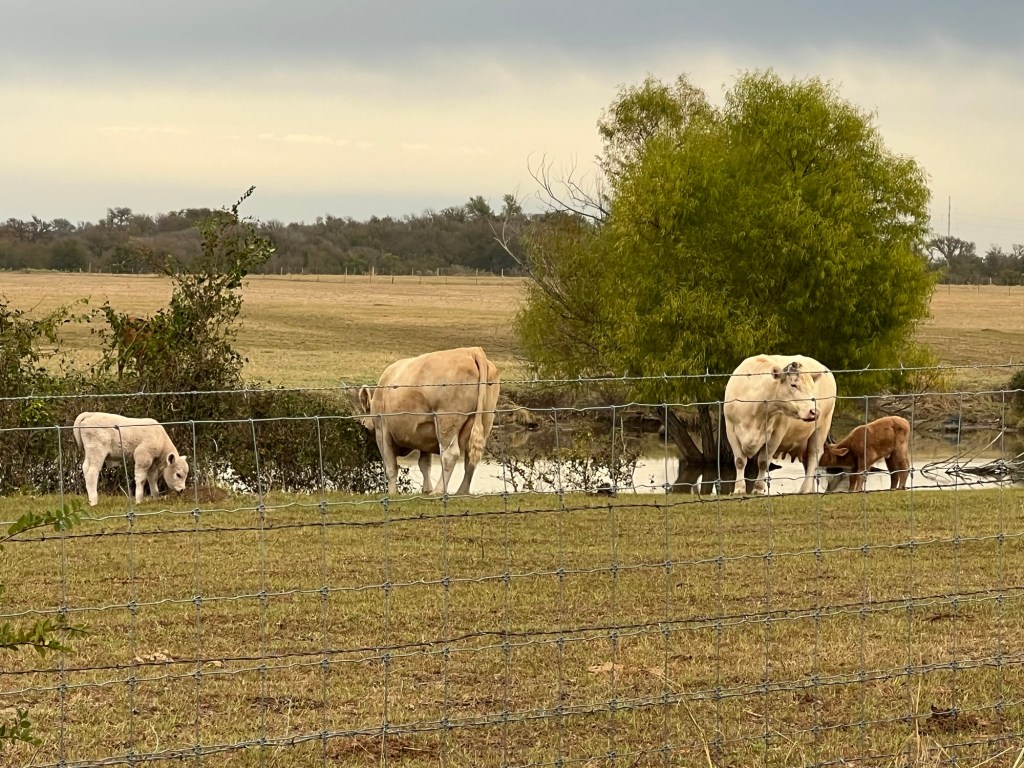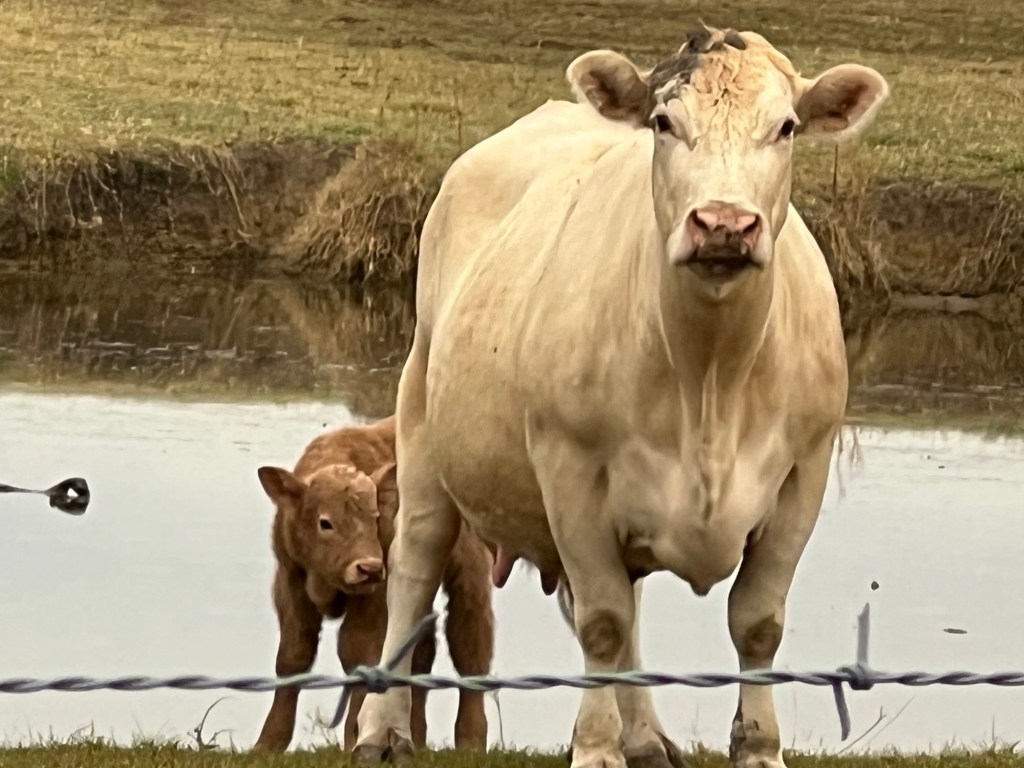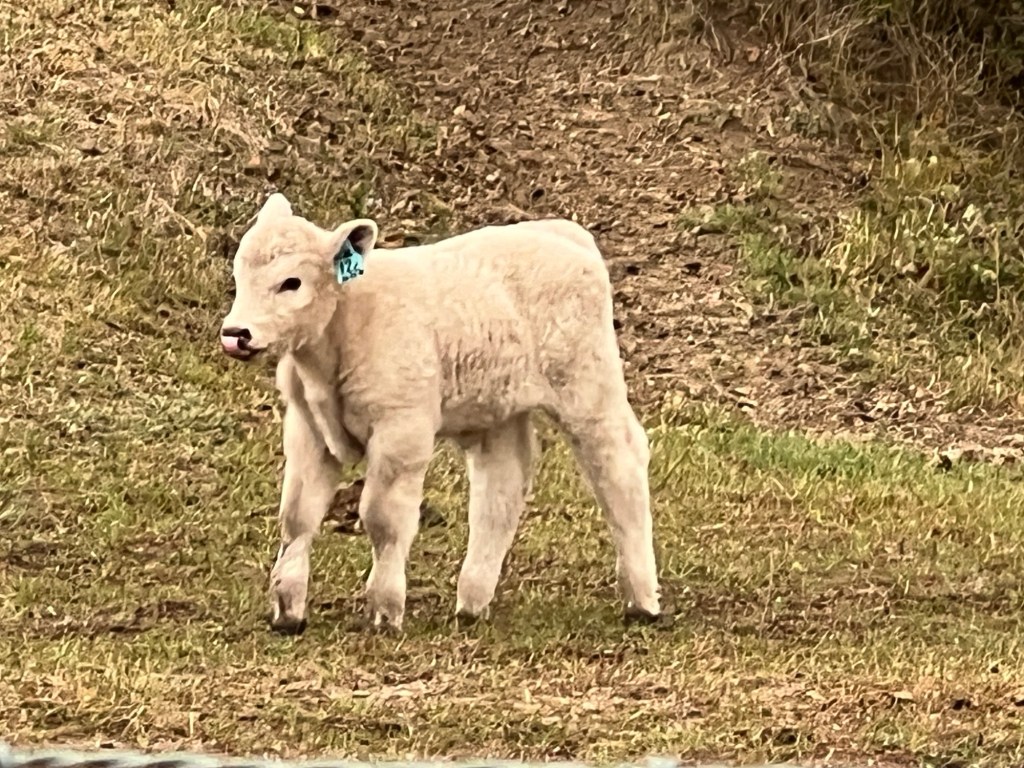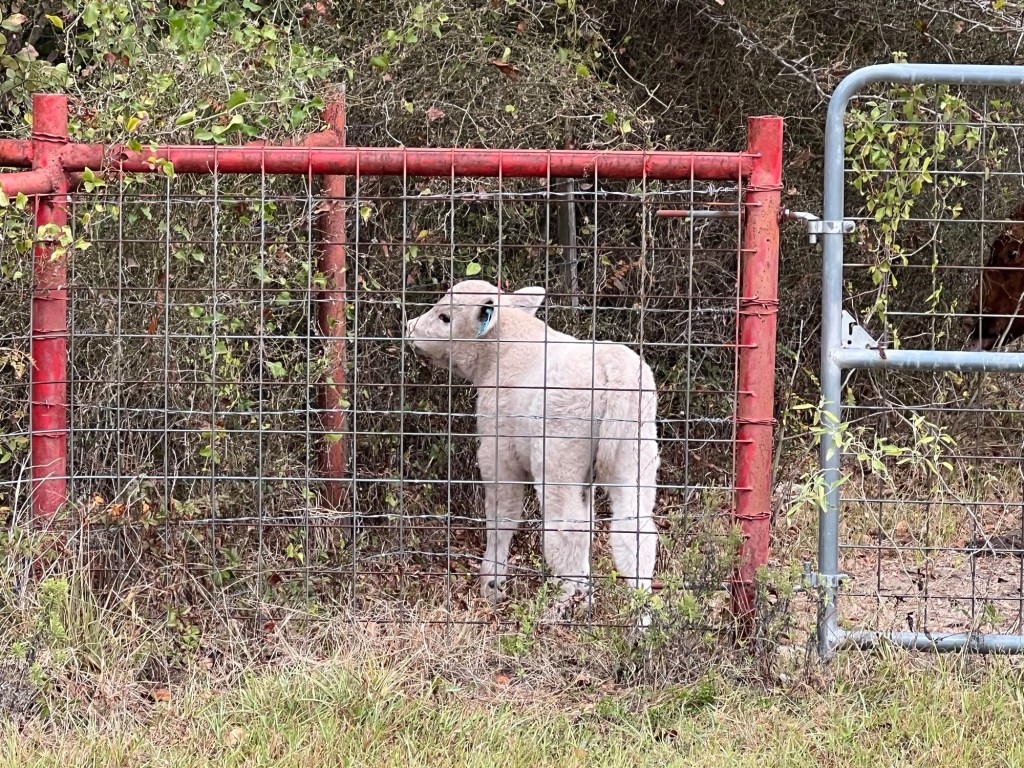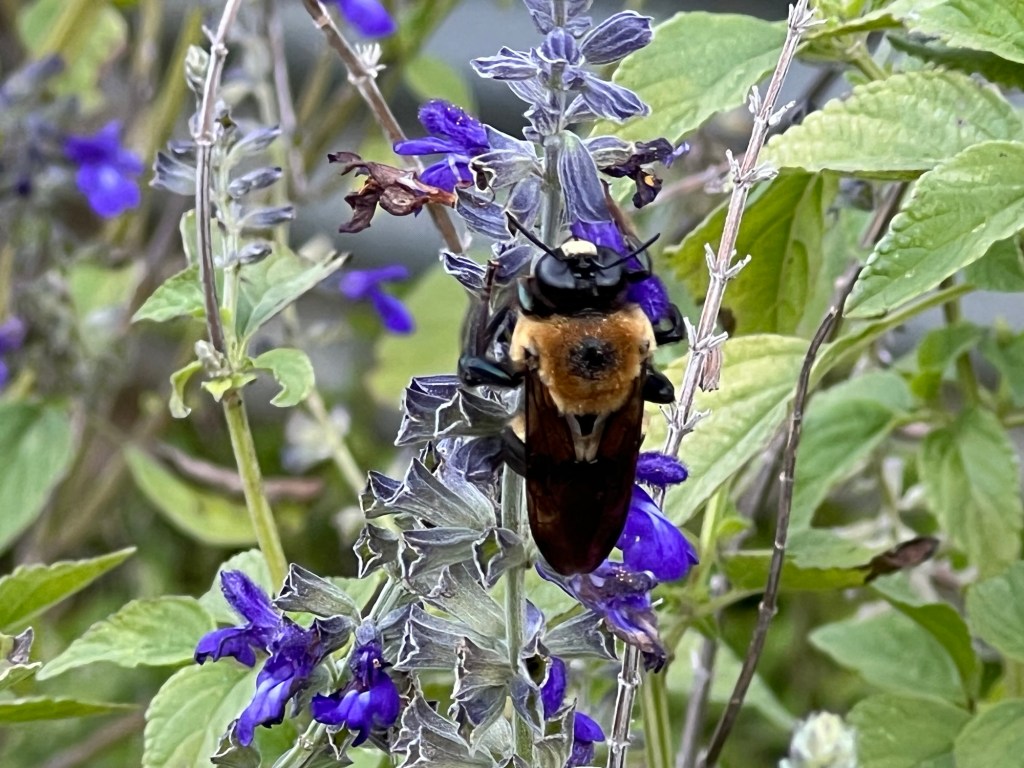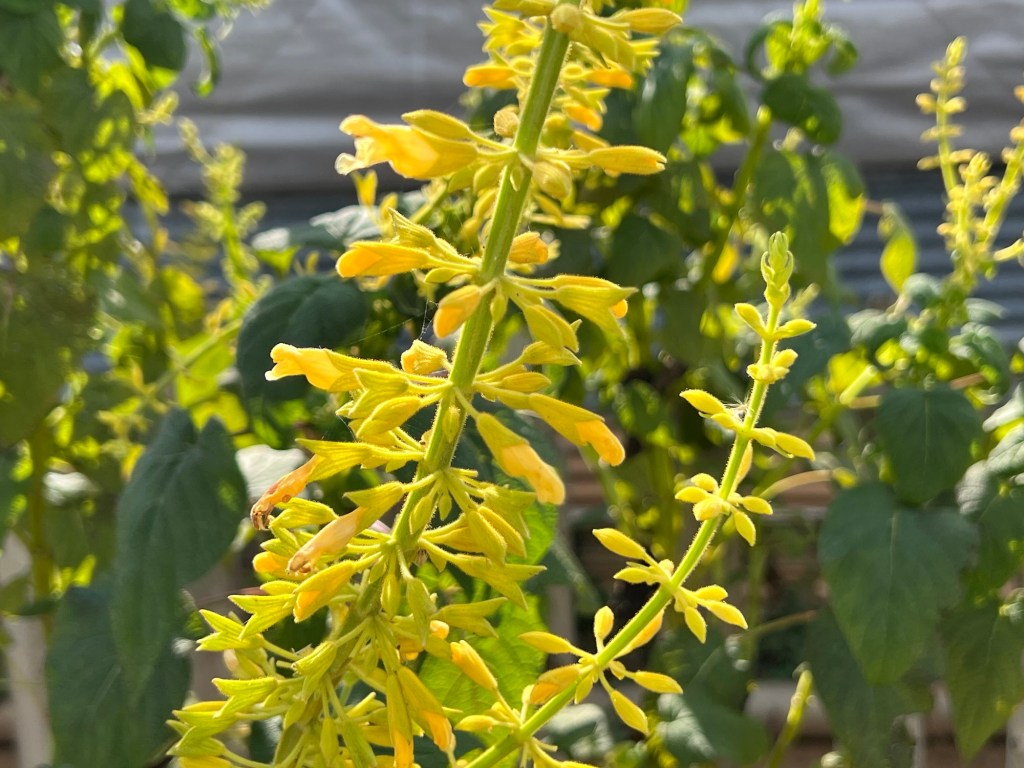
I’m all cozy in a hotel very close to a University campus. So it’s not quiet. I’m pretty tired from all that bleeding and stitching yesterday, so you’re not getting much to read tonight.
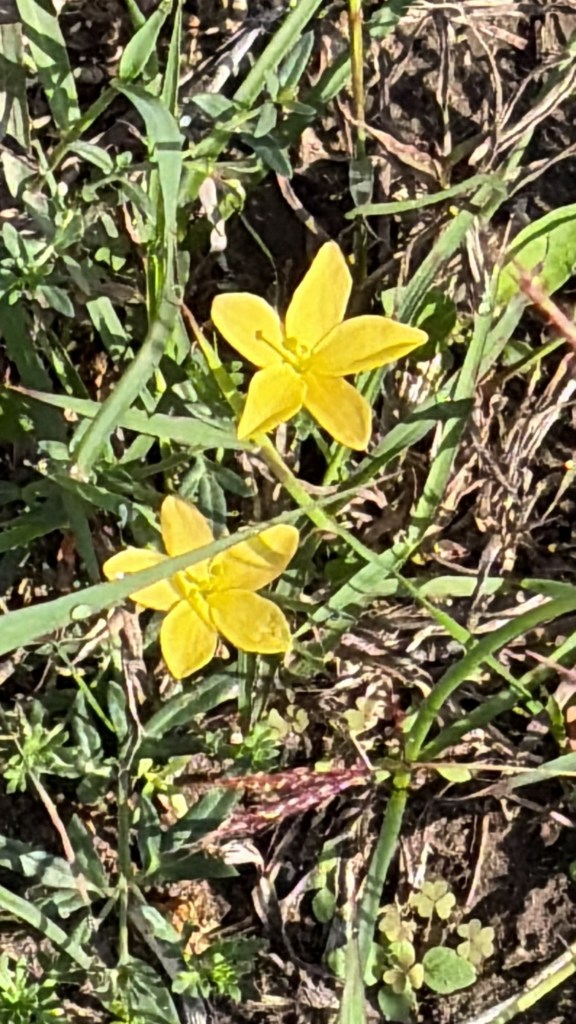
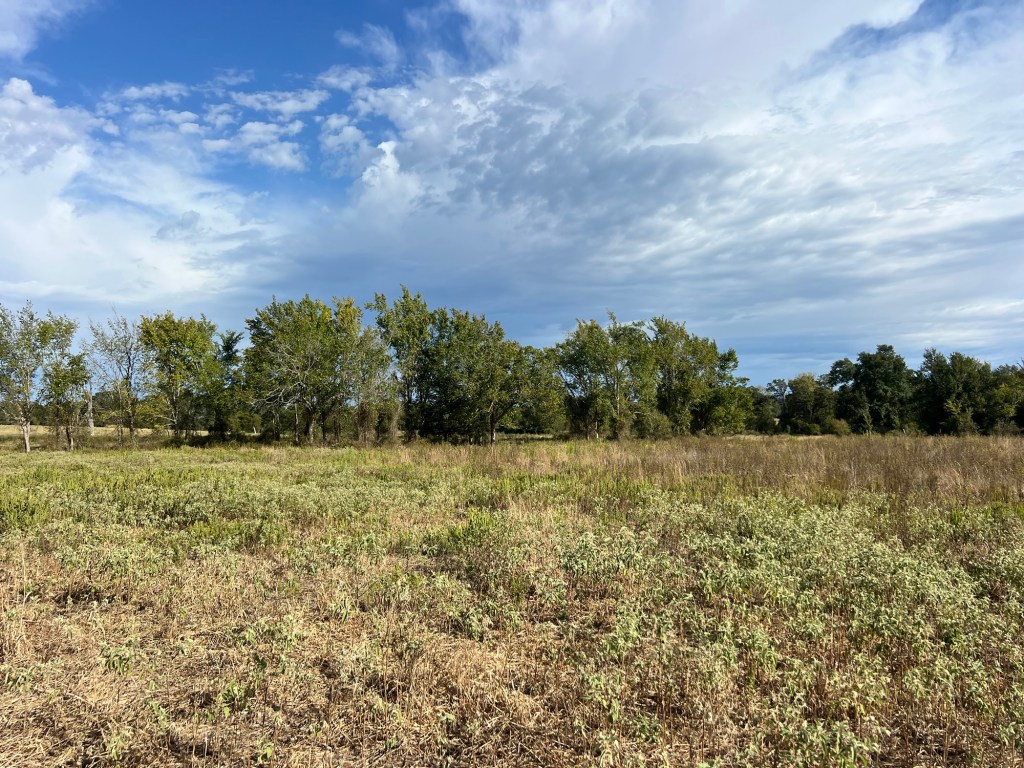
I did do a BioBlitz at Lick Creek Park in College Station today, but it was very low key because I just wasn’t ready for big crowds (auto correct made the word “crowds” into “briefs”) and talking. So I wandered around and looked at the saddest collection of wilted plants I’ve ever seen in the wild.
Not a beautiful beautyberry.
It’s hard to find diverse plants when everything is brown and droopy.
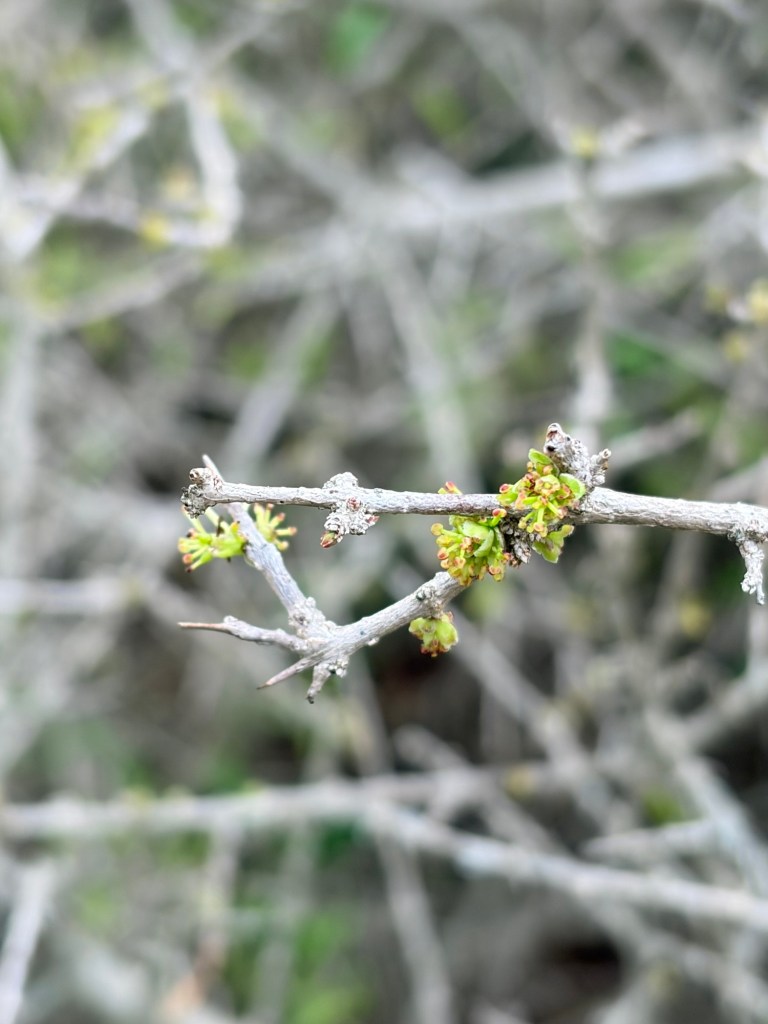
This tree looks pathetic.
I found a few things and would have seen more if I’d been in the guided botany walk.
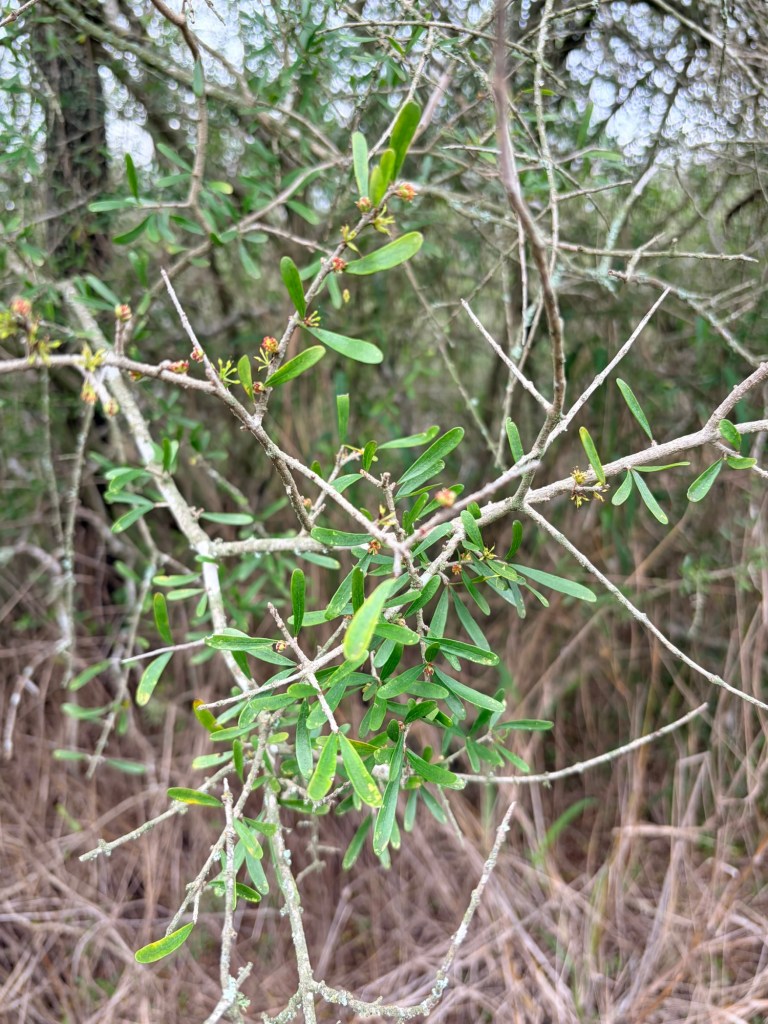
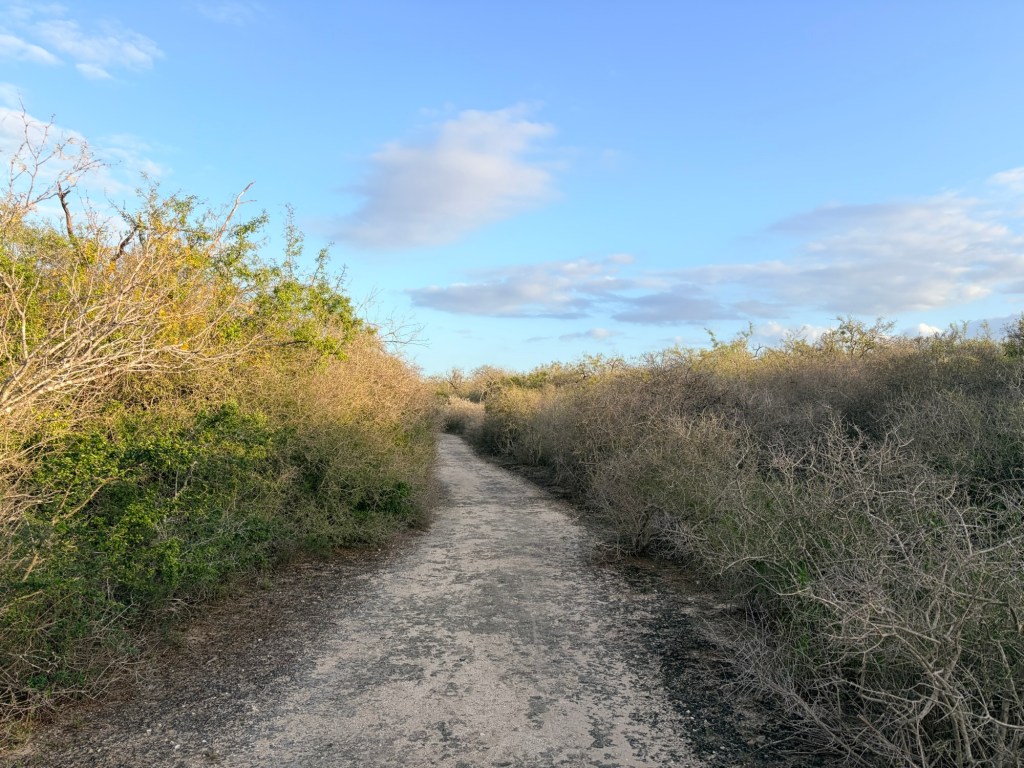
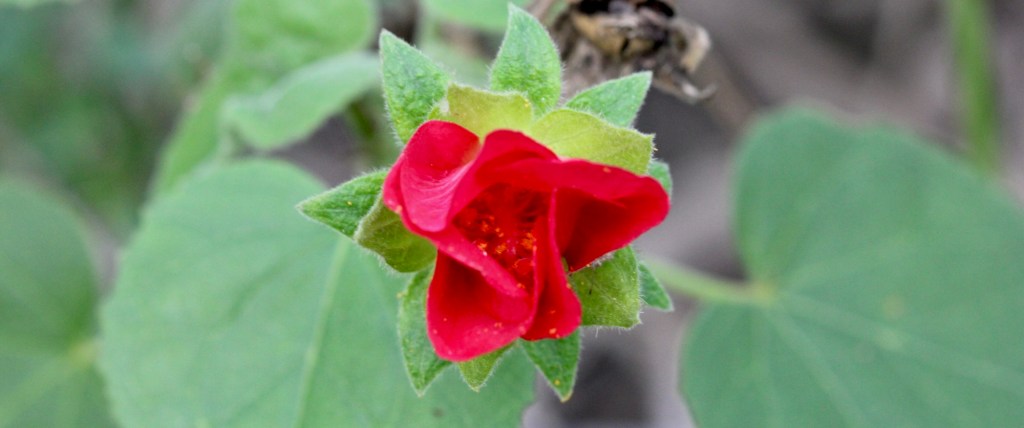
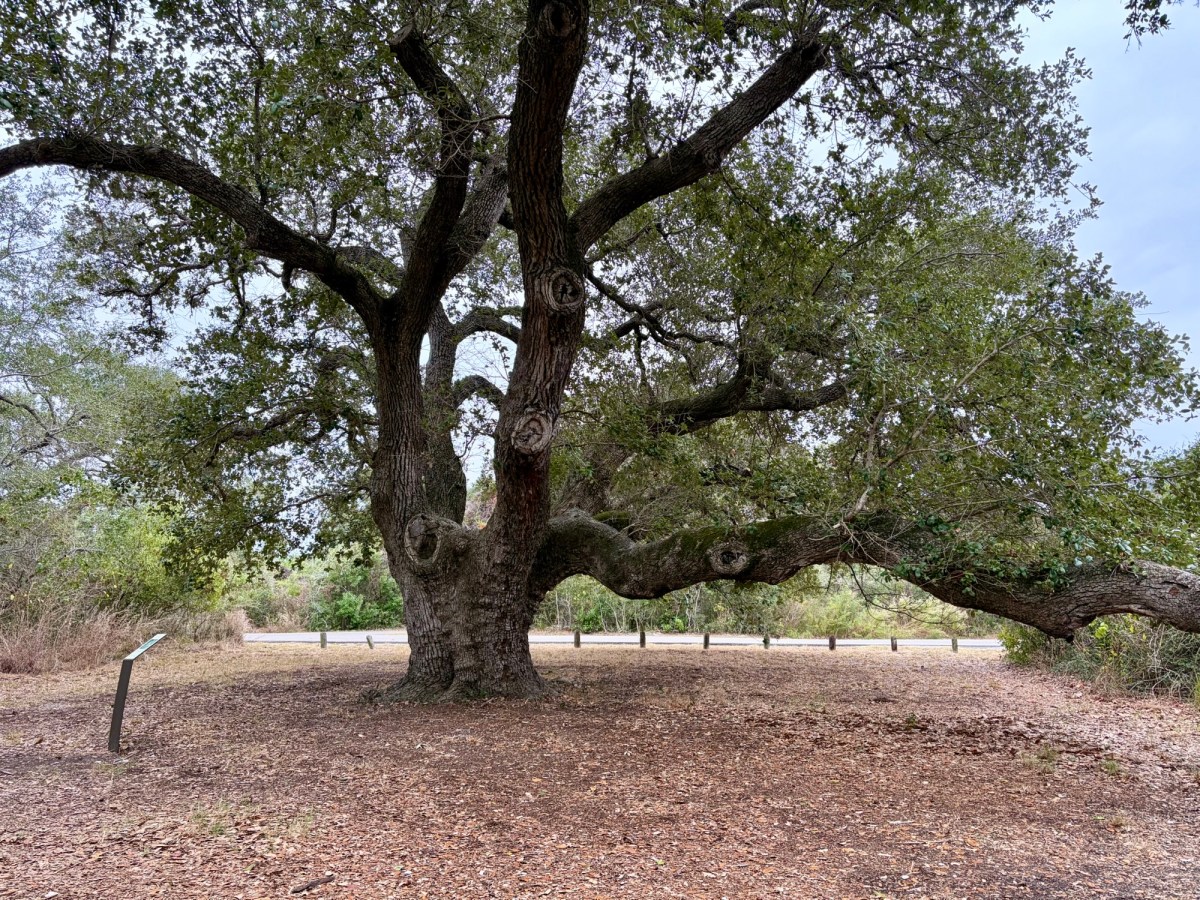
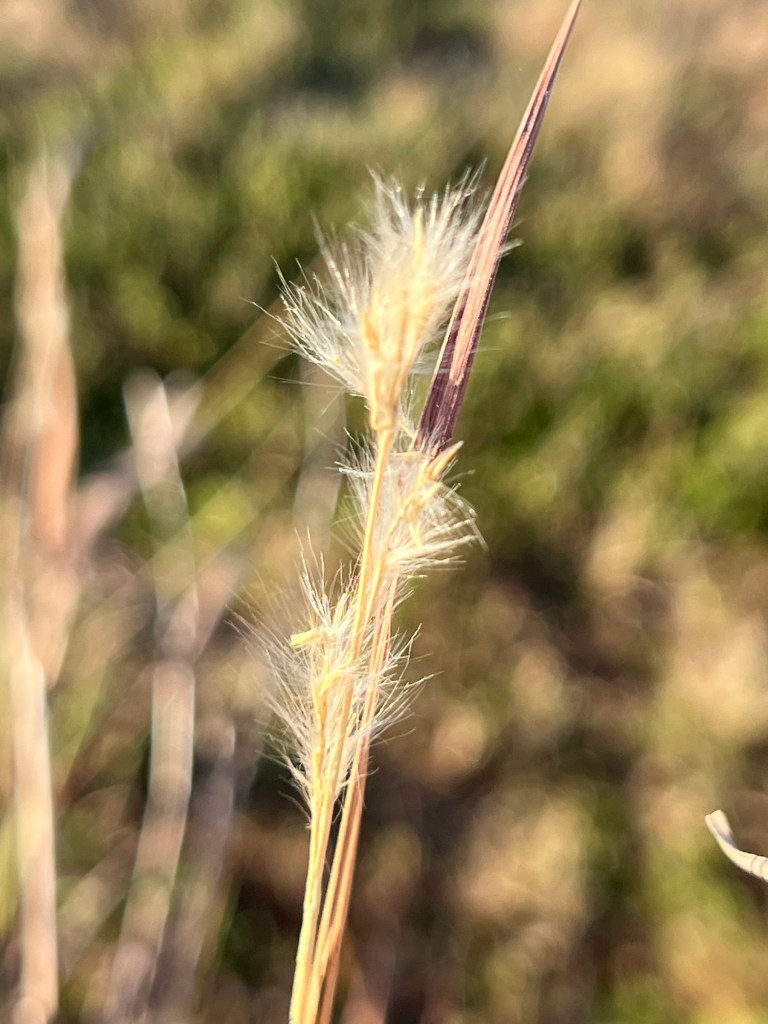
This area has red dirt. Or the path is red dirt. Bladder podWhole plant It’s dry. Yuccas don’t wilt. These dried bluestems are prettyThey make nice winter colorBat boxes? There were many kinds of oaks here. This is the native post oak.
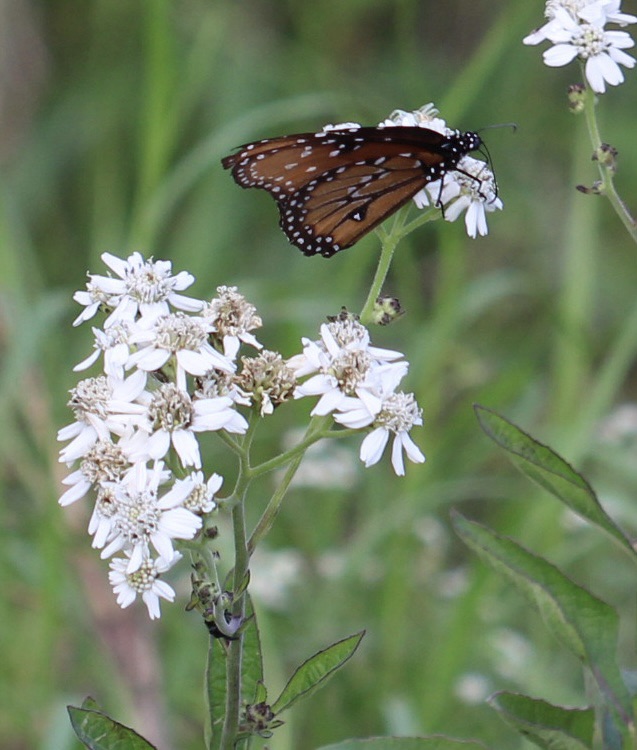
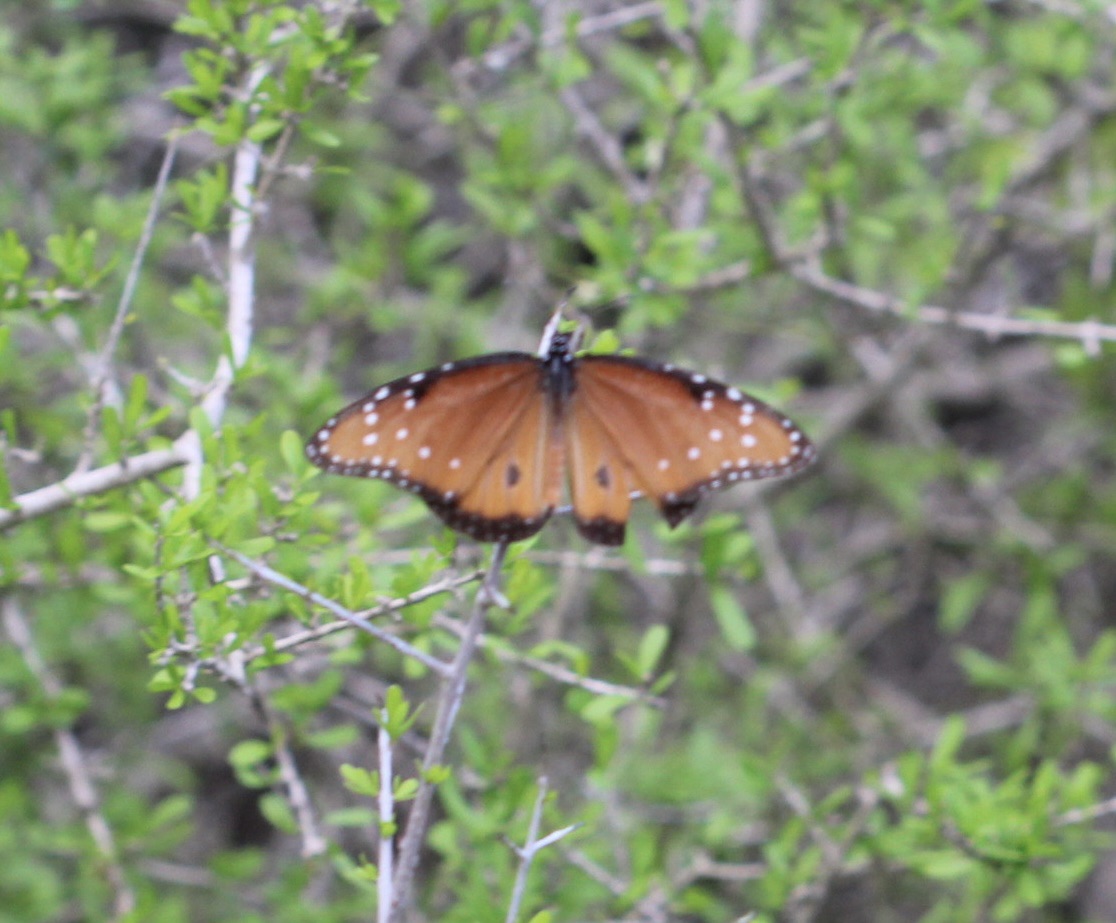
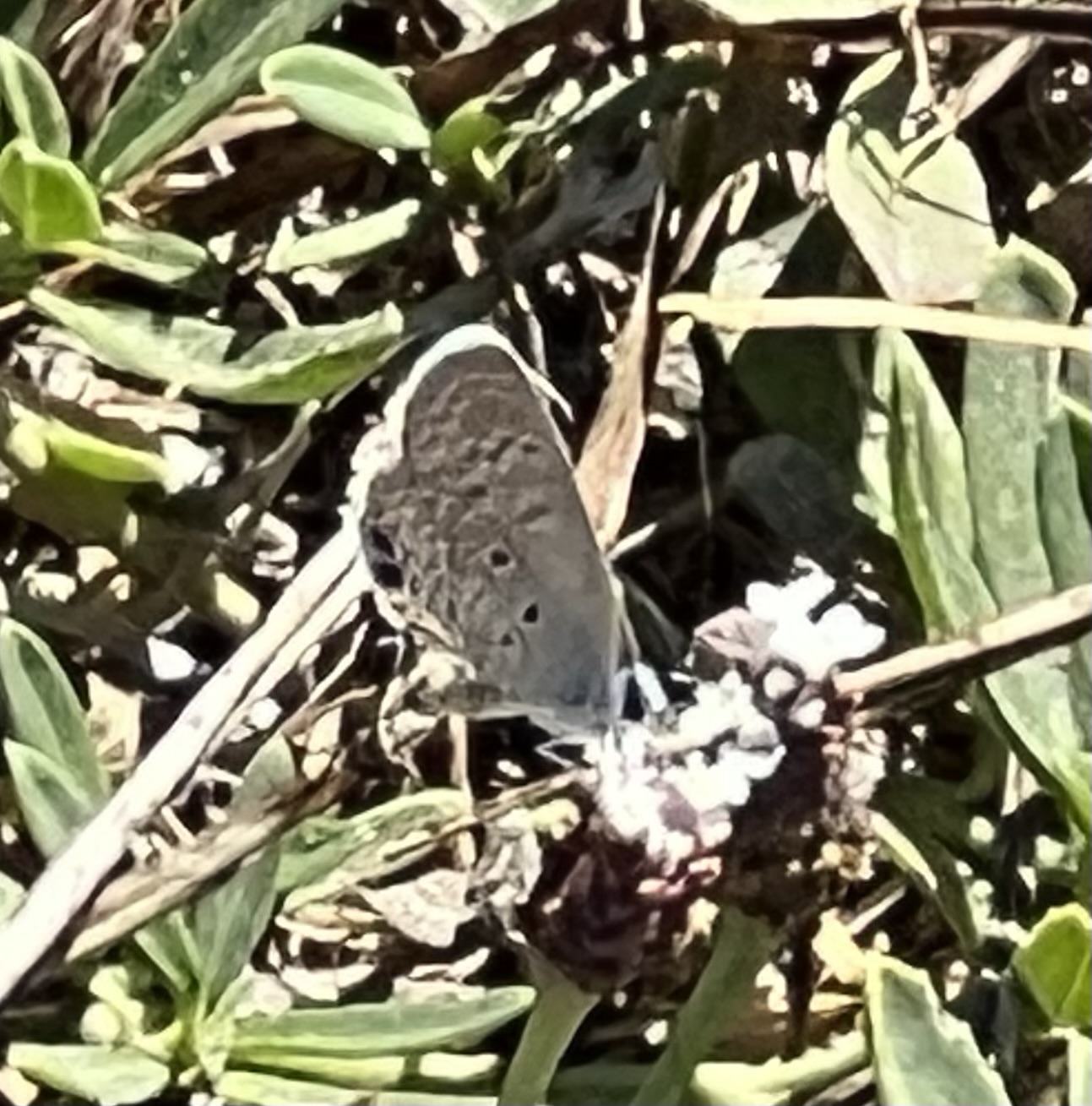
There were irrigated pollinator gardens around the nature center. I hoped to get lots of pollinator photos, but the butterflies seemed more intent on mating than sipping nectar. And the mid-afternoon sun makes phone photography hard. You can’t see the screen, so you miss a lot. I tried taking distant photos and cropping, with poor results. So the four types of skippers and the many Queens remain uncaptured.
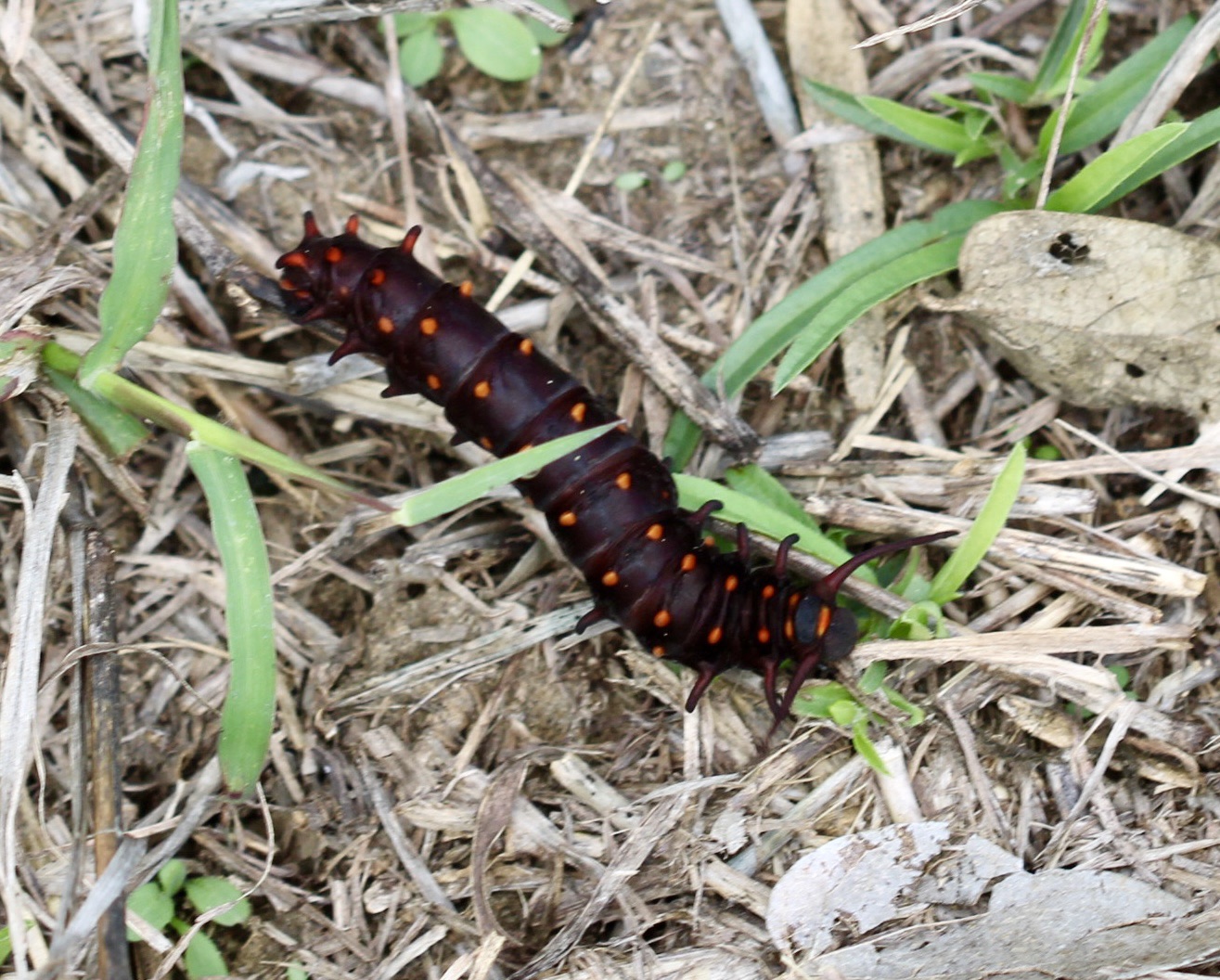
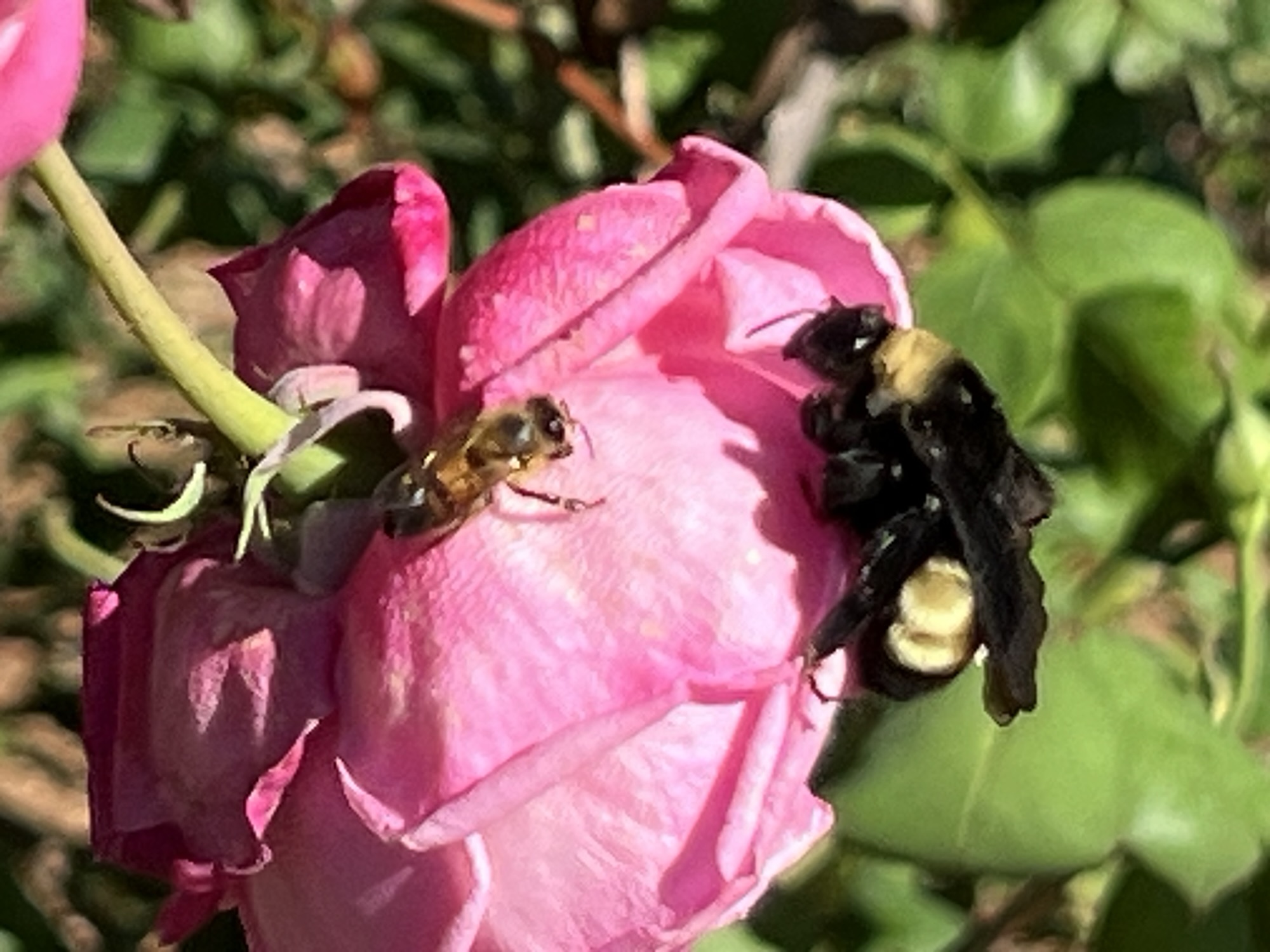
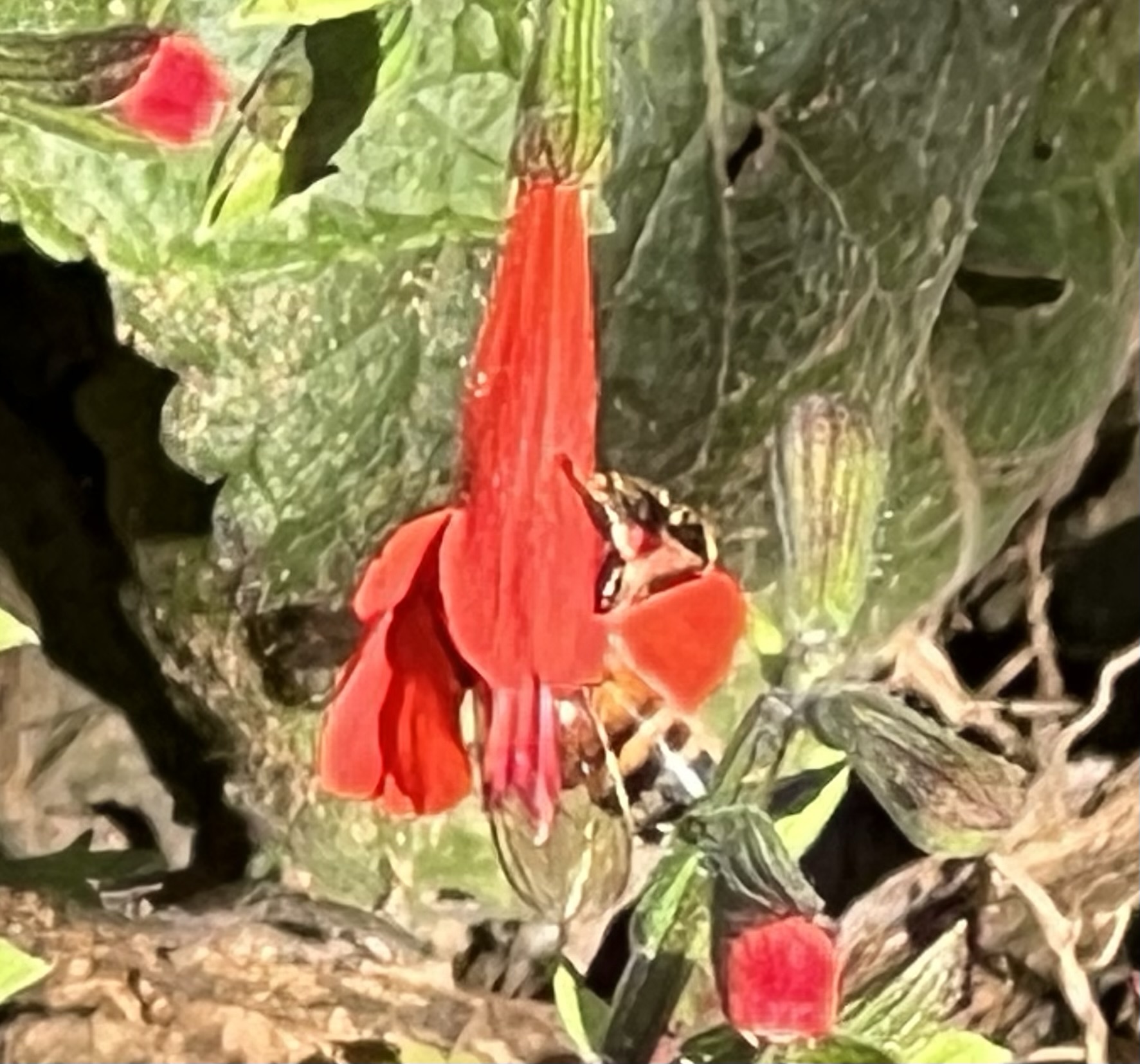
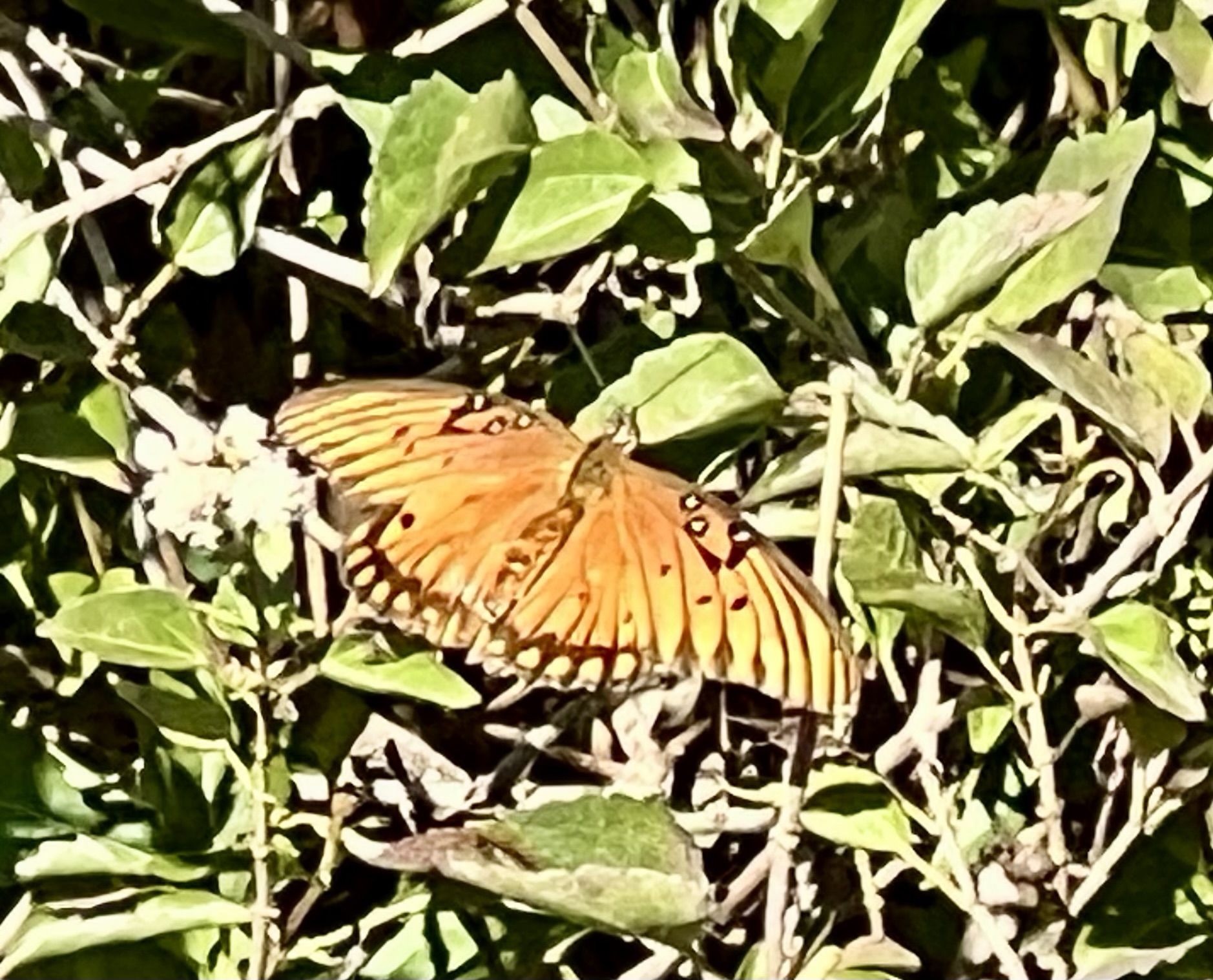
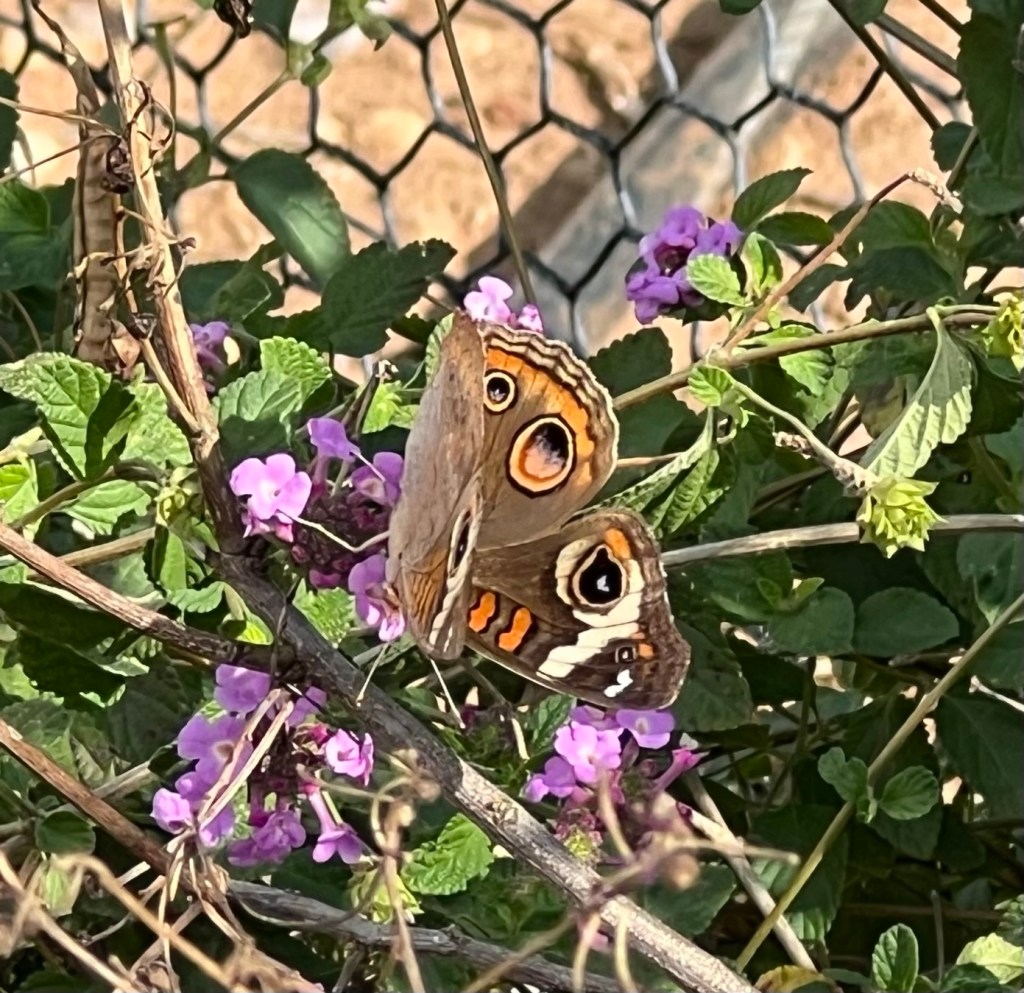
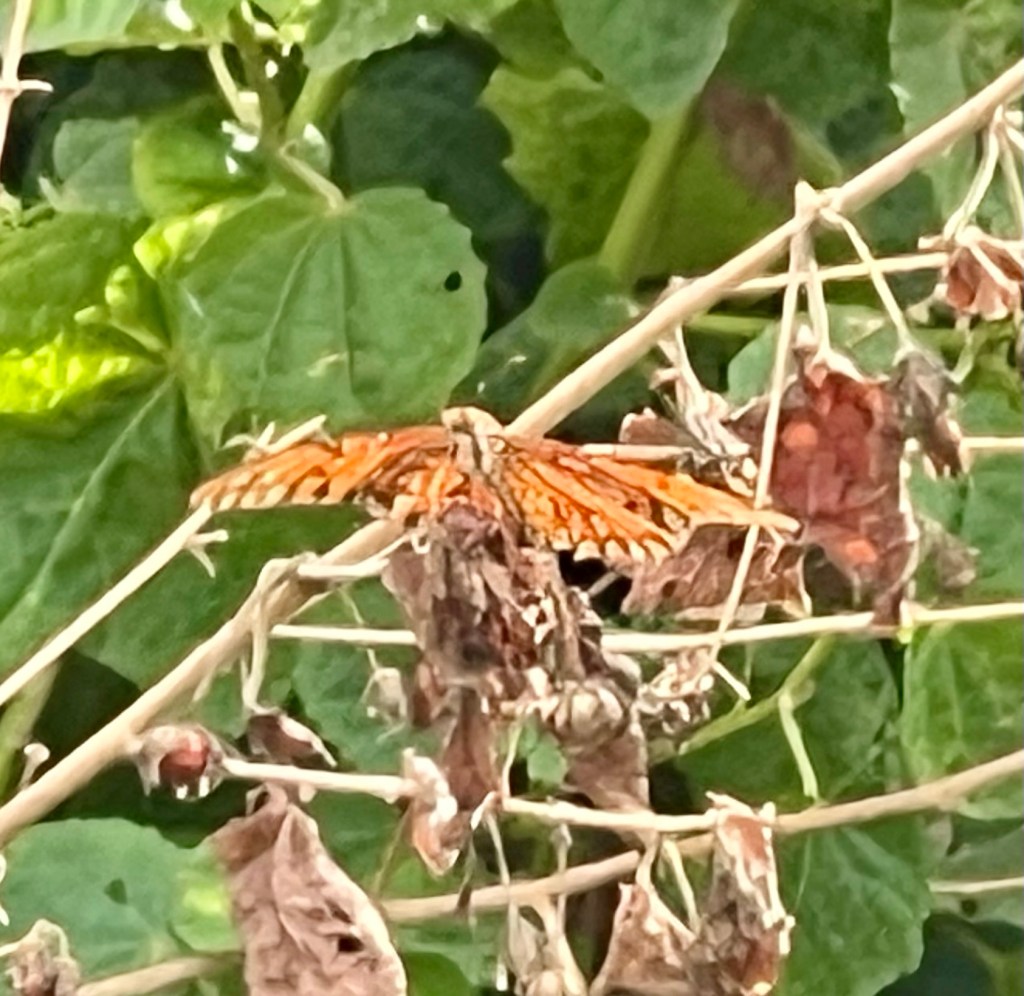
A honeybee. Cloudless SulphurDusky winged hoverflyPipevine SwallowtailBold jumping spider, not a pollinator Gulf Fritillary Phaeon Crescent SameCommon BuckeyeAnother Gulf Fritillary
I only heard four birds, too. But, it was a day outdoors and I did chat with a few like-minded people. No complaints.
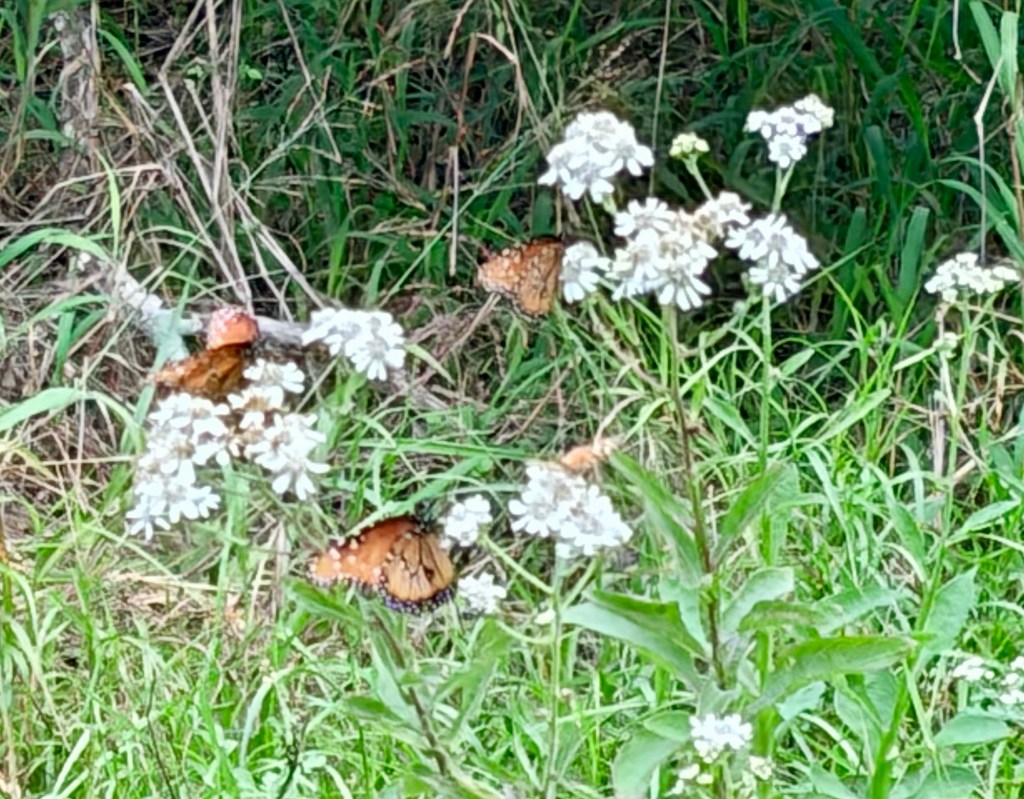
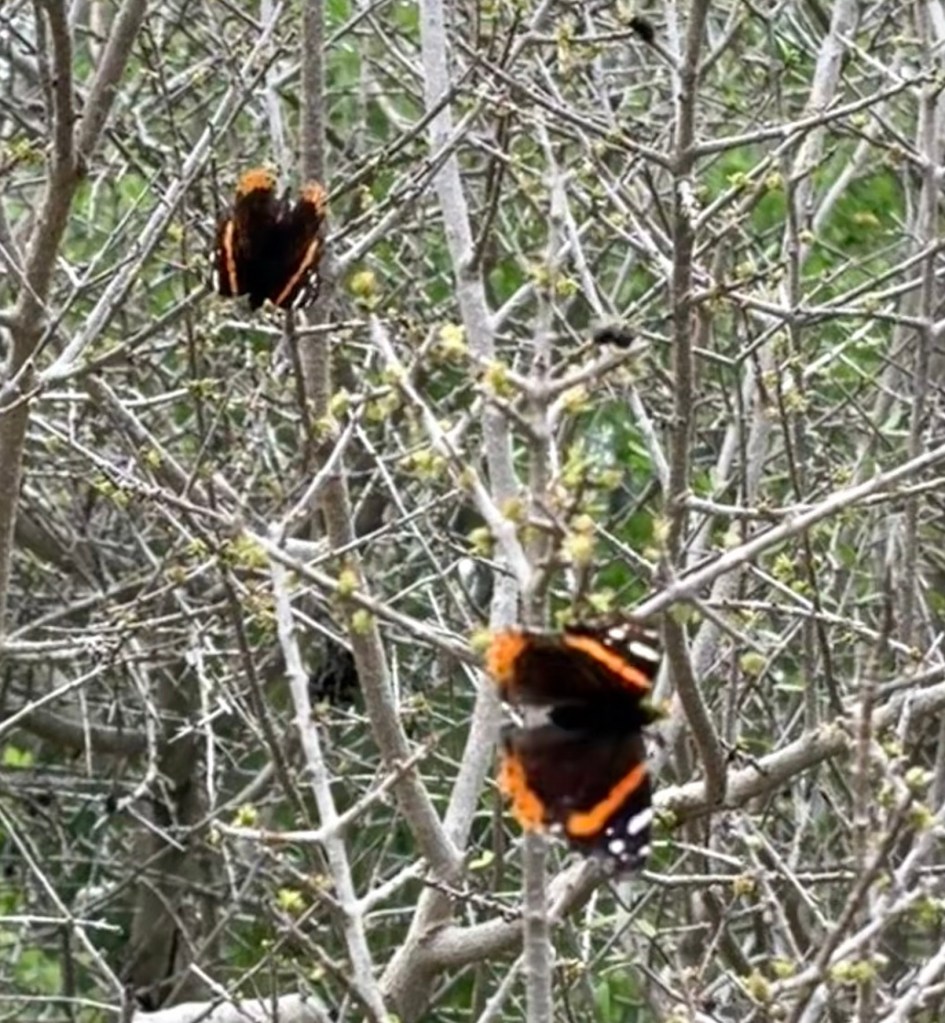
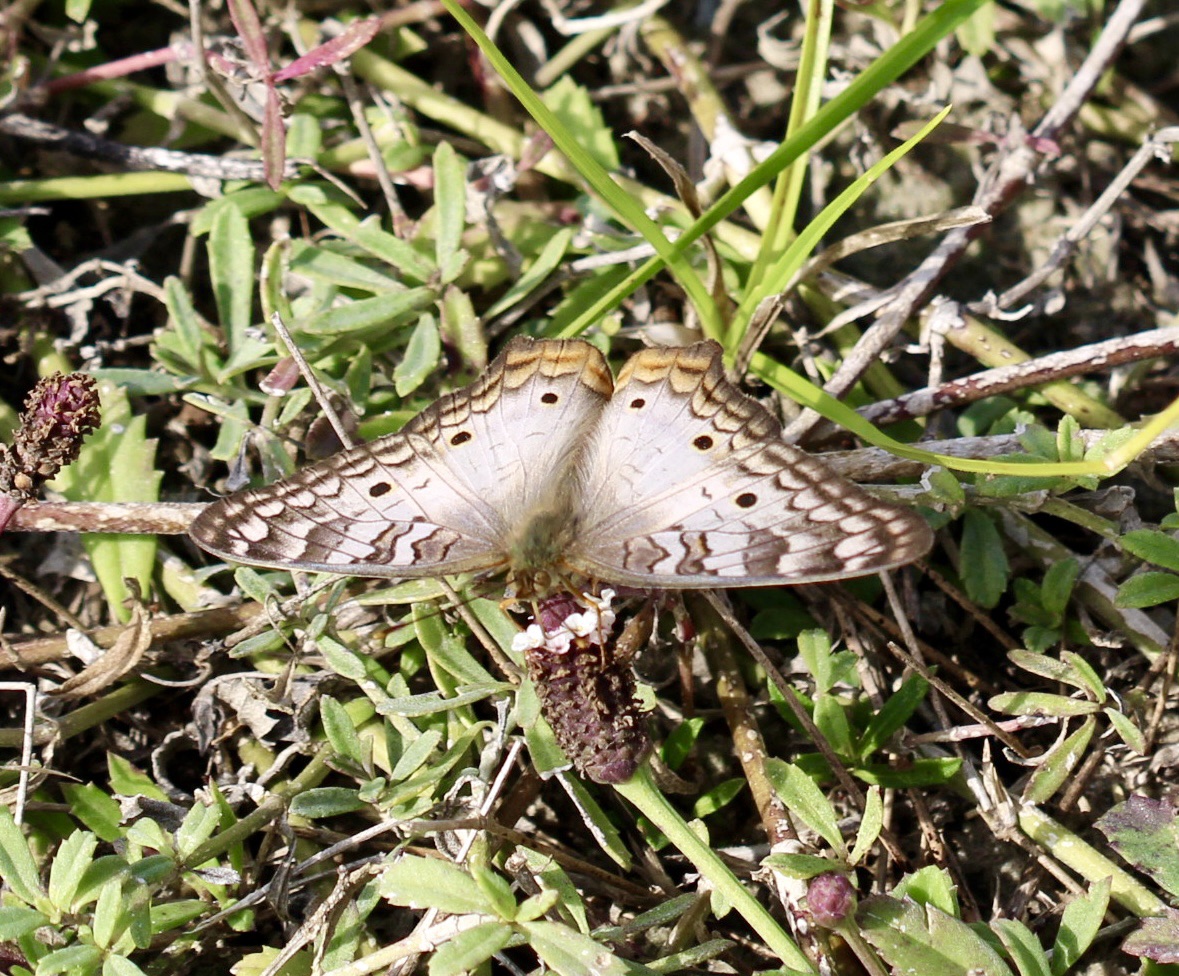
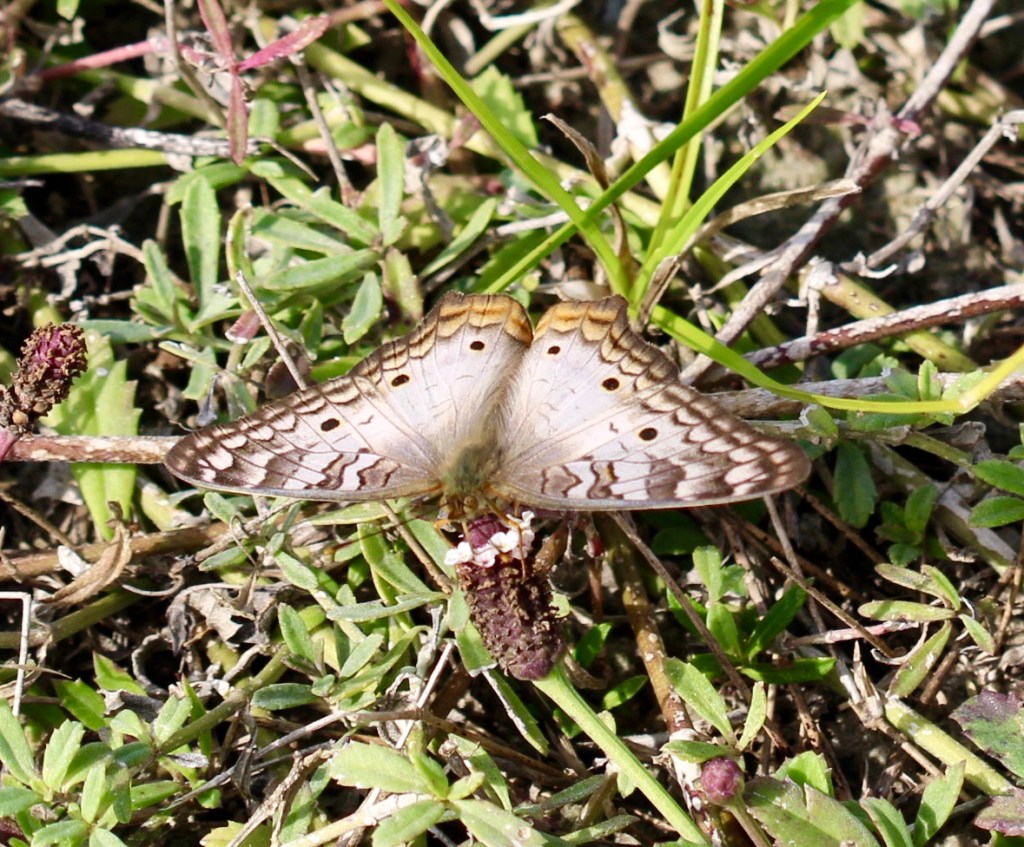
Two butterflies! See the skipper?
Thanks to all who checked in on me. I will endeavor to not fall this weekend.
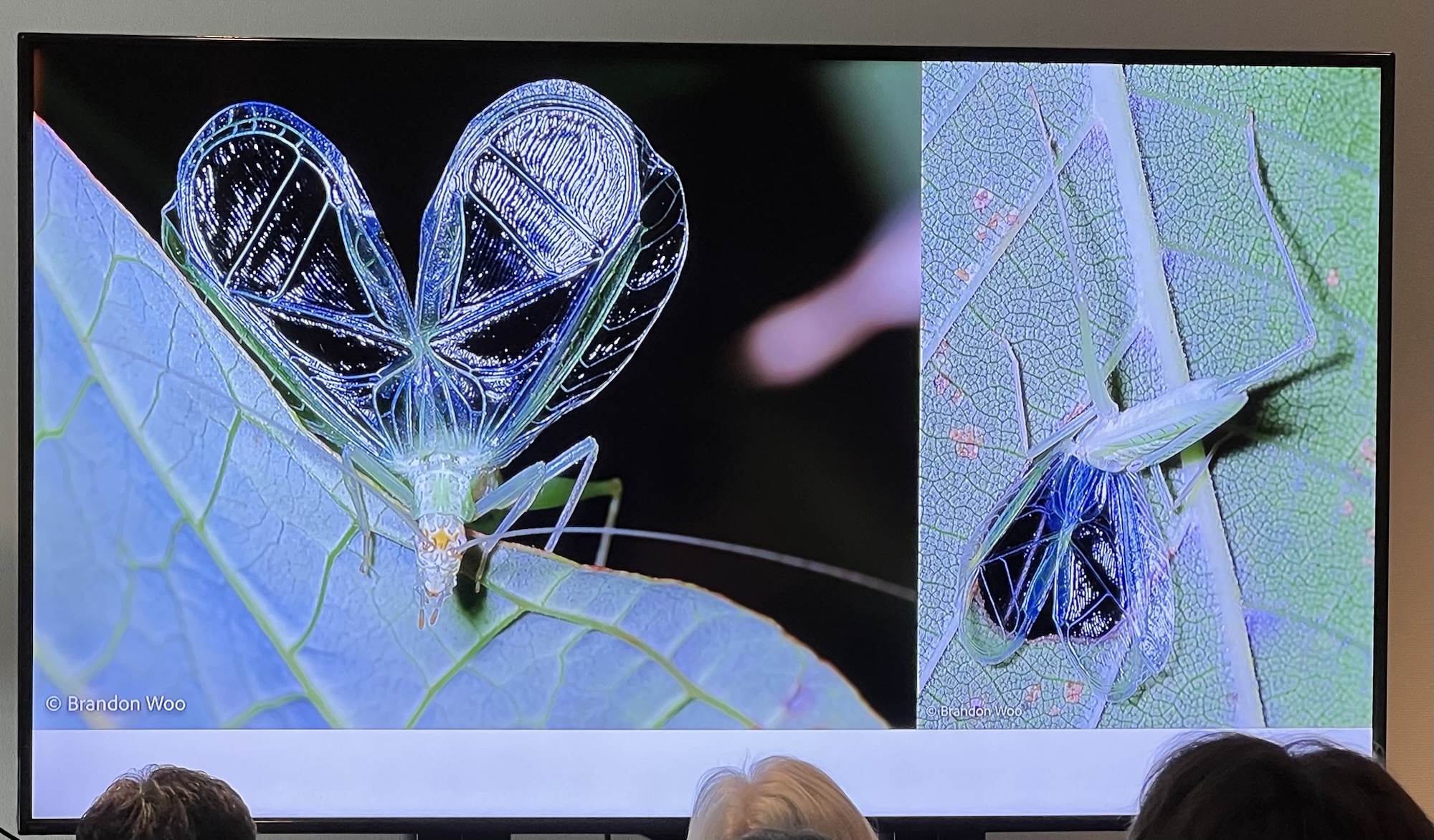
Tonight’s Master Naturalist meeting presentation was on moths. It turns out I have a lot to learn about moths, which far outnumber butterflies, so I thoroughly enjoyed the presentation by a very personable Swedish woman who I’d love to know better.
This fiery skipper would like to point out that butterflies are still fascinating.
It turns out all that sorrel vine at our house attracts the beautiful Wilson’s Wood Nymph moth, so I will need to share it with our Wildscape for a new project.
The vineThe larvaBoth of these photos are from our property
We did some mothing after the meeting was over. That’s where you shine a bright light with UVA in it on a white cloth and see what shows up. I’ve done it before at Master Naturalist annual meetings, but it was fun to do it in Cameron.
Genuine moth. The good old Vagabond Sod Webworm moth Agriphila vulgivagellus
We didn’t see many moths, but did realize that by attracting tiny insects, we were providing a smorgasbord for Asian lady beetles. It was like Wild Kingdom (that’s an old TV show).
Bow-legged bigPoopA cricketA small waspFour-spotted Green lacewing A longhorn beetle, perhaps Neoclytus mucronatusFall Army webworm mothMaybe a bee fly
Maybe I’ll set something up so I can get better photos with the good camera while we go camping this weekend. Ooh, I can see a white sheet from where I’m writing this…in my bedroom…not sweating. Yes, the air conditioner is working again.
Mothing equipment
I can enjoy my glow-in-the-dark fingernails comfortably. They really looked good in the motorhome, where I slept last night, because it gets dark in there.
Bear in mind that I have been looking at waveforms most of my adult life, so this stuff interests me. I still edit myself talking a lot (yep, it’s my job), so I know when I’m gasping or clicking from saliva before I even listen. It’s interesting, not that fun.
But it’s only in the past couple of years, since I e had Merlin Bird ID that I’ve been able to identify bird calls by how they look on a spectrogram.
Loggerhead Shrike – you can just tell it’s loud and harsh, not melodic.
This kind of knowledge is helpful in winter when there are so many sparrows around. Their spectrograms look different. Here’s one I also like.
Red-bellied Woodpecker
Songbird recordings look very different. Some are more horizontal lines going up or down with the pitch. Others have a mix of tones, but you can see the melody. These two I got from Merlin, of birds I’ve heard.
Swainson’s Warbler
As I’ve been enjoying the sounds birds, there have been other sounds Merlin catches, like loud trucks, airplanes, and wind. And, of course there are insects. I was being deafened by the sounds of late-summer cicadas when I looked down at the waveforms. Wow!
They look three dimensional.
You can practically feel the pulsing by looking at those fascinating shapes. On the other hand, crickets just stick to one note.
This is wind and a cricket.
So if anyone ever asks me how I know a sound is a cricket versus a cicada, I can turn on Merlin. It may not ID it, but I can know from the shape.
Here’s a sound I’m glad Merlin heard: a Yellow-headed Blackbird. They only show up here a few days a year during migration. Photo by Dorian Anderson.
I used to have some frog images but I can’t find them. I’ll be paying attention and when I hear something interesting, I’ll stop the recording, since Merlin doesn’t save recordings over about 20 minutes long, due to storage constraints. My phone would be FULL.
I’m missing RV travel, I can tell. Anytime I get an offer to go do something, I try to figure out a way to tack on a nature trip. I did that today!
Nature. She is good. Maximillian Sunflower.
I stayed in College Station last night after the dinner with my friends, which provided me with the chance to visit some parks there. After a hotel breakfast with many food labels in Spanish (see, Texas IS bilingual), I walked around behind all the hotels and restaurants to find a nice, older neighborhood that was chock full of Blue Jays. They love urban spaces! I found some wild areas, so my iNaturalist needs were sated.
Common sunflower Horse weed Hackberry Pubescent Gall Midge TievineSlim pickings
I checked out and went to the next place, which I could probably have walked to. It was a small nature preserve in the middle of the nice neighborhood.
Dr David E. Schob Nature Preserve
I noted it had a Texas Master Naturalist sign. The park has seen better days, maintenance-wise, but the paths are still there, and there are good places to sit and look at wildlife. And if you like ragweed, it’s a great time to visit.
Pearl CrescentLittle Yellow
Still, I found some interesting plants and saw lots of birds, including this Greater Roadrunner with its catch.
I decided next to go check out Lick Creek Park, where lots of the outings at the Texas Master Naturalist meeting in October will be hosted. I’m glad I went, since I couldn’t register for the Annual Meeting until today, one day after registration opened, so all the field trips were full.
Park map
Anyway, it was already hot by the time I got to the huge park, so I just did a short loop trail. There was much to see and photograph, plus quite a few summer birds. A Summer Tanager taunted me for at least ten minutes hopping from tree to tree, but hiding. I certainly knew it was there!
Little Yellow on Rose PavoniaBeautiful beauty berriesBird blindPepperdineBluestem along pathPartridge peaBeautiful oakWeird Mockingbird on the ground. Hope it was ok. Gulf Fritillary on Turk’s cap
I made my way home full of nature and happiness, only to spend the rest of the day enjoying nature at home. Beautiful clouds came in bearing very welcome rain, which was pleasant to observe from the shelter of the porch. Lee and I read, looked at birds, and relaxed for quite a while!
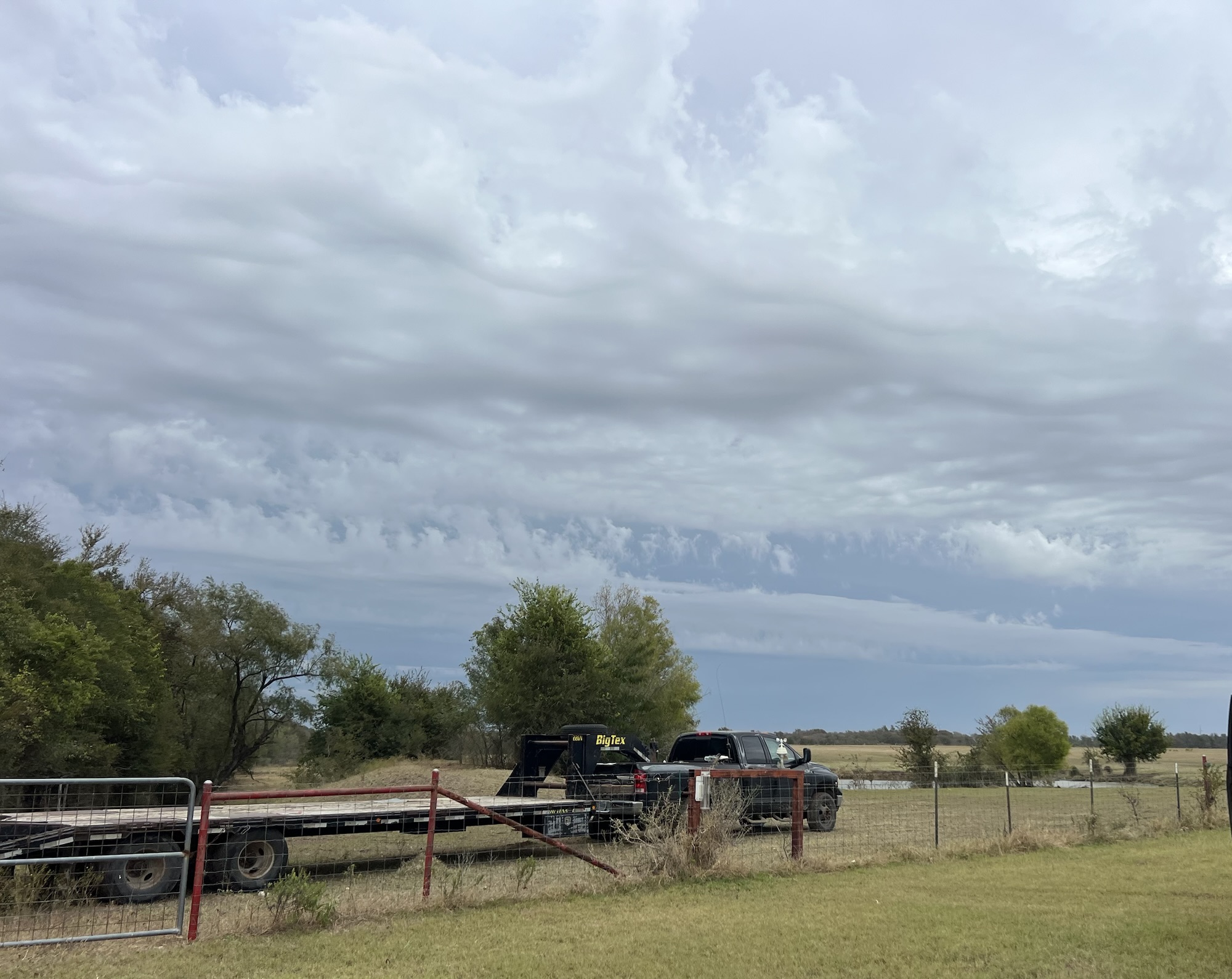
Big ole clouds! We got .33” of rain It’d flock heading to a tree. Zooming All in the treeOur viewpoint.
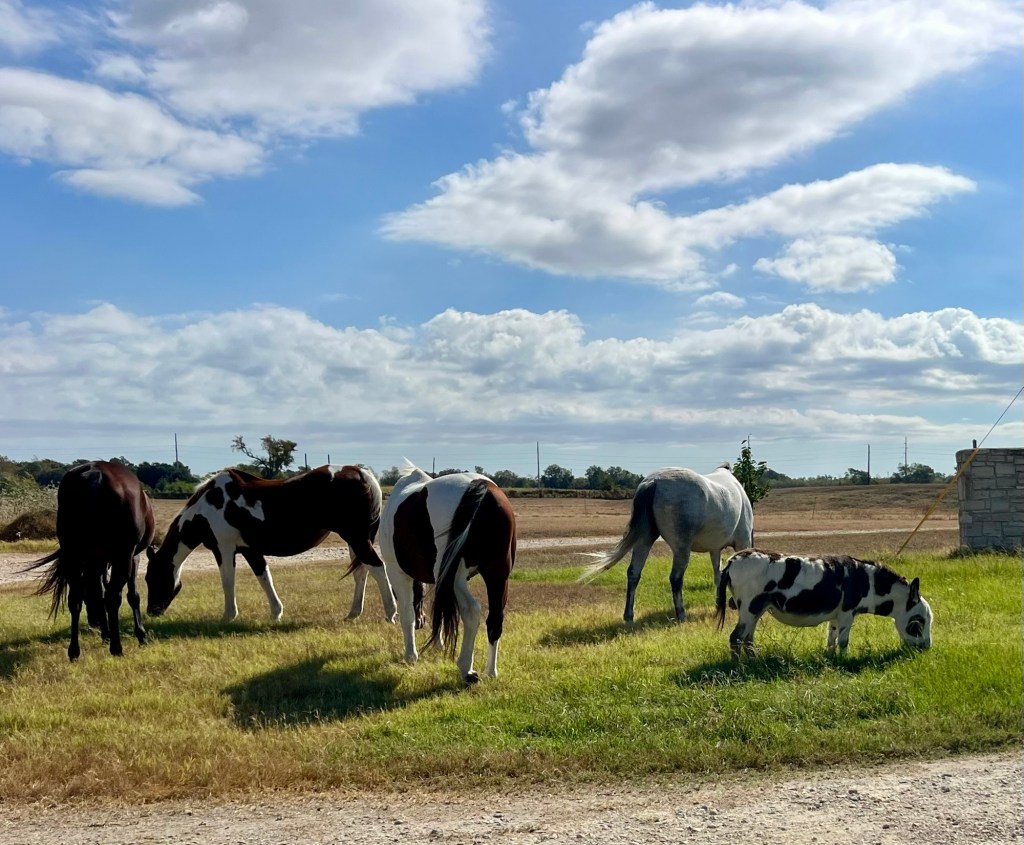
This all constituted a fine day in which I had no complaints. Well, I didn’t get to ride horses. Maybe tomorrow!
Lee got these pictures of the Mockingbird babies in our small tree. They look great!
Those of us in and around Milam County, Texas know there are more native mammals out in our area besides deer, cottontails, raccoons, opossums, and armadillos. But many aren’t easy to spot. I’ve never seen a porcupine, for example, but I know they’re out there. Occasionally we will spot coyotes, bobcats, or (very rarely) mountain lions. The most fun mammals we look for, though, are beavers and river otters.
A likely sighting site, Walker’s Creek bridge on County Road 140, featuring: flood debris.
This morning I was doing my daily walk to the bridge and back, dreading the inevitable scattering of annoyed vultures (today both Black and Turkey) who have been patiently working on what appeared to be a deceased Holstein steer, which must have come a long way, since we have no Holstein cattle nearby. Cow mercifully not shown.
Zoom in. There are many vultures.
Sure enough, I scared the giant birds off. Then I noticed a head larger than that of a turtle or snake in the creek. Ooh! A mammal! I was instantly ready to snap a photo, figuring it would see me and exit.
Aha!
Sure enough, something brown and wet was exiting. Was it a beaver or an otter? I was ready to verify by checking its tail.
Looks skinny.
Yay! It was a river otter! How fortunate I was to see this water mammal! I’ve seen two swimming together here a few years ago, and one crossing our field after a big rain. That was very cute.
100% otter.
I didn’t take too many more photos, because I was enjoying the moment. But I was very happy to finally document one on iNaturalist!
Getting the heck away from me.
River otters are also called common otters (Lontra canadensis). As their scientific name suggests, they are found all over North America, except for a swath of territory in the center of the country.
Hmm.
They love to eat fish, crayfish, and turtles, but will also eat other small animals. They aren’t a danger unless you own a fish farm, which would lead to happy otters. River otters also love to play, which makes them very popular in zoos.
Not playing, getting away!
I’m glad we still have some otters here in Milam County, because they’re a sign of healthy waterways. I guess Walker’s Creek is pretty good other than pooping and dying cattle.
I’m still looking for a beaver, though I’ve seen evidence at a fellow Master Naturalist’s property nearby.
Bonus observations:
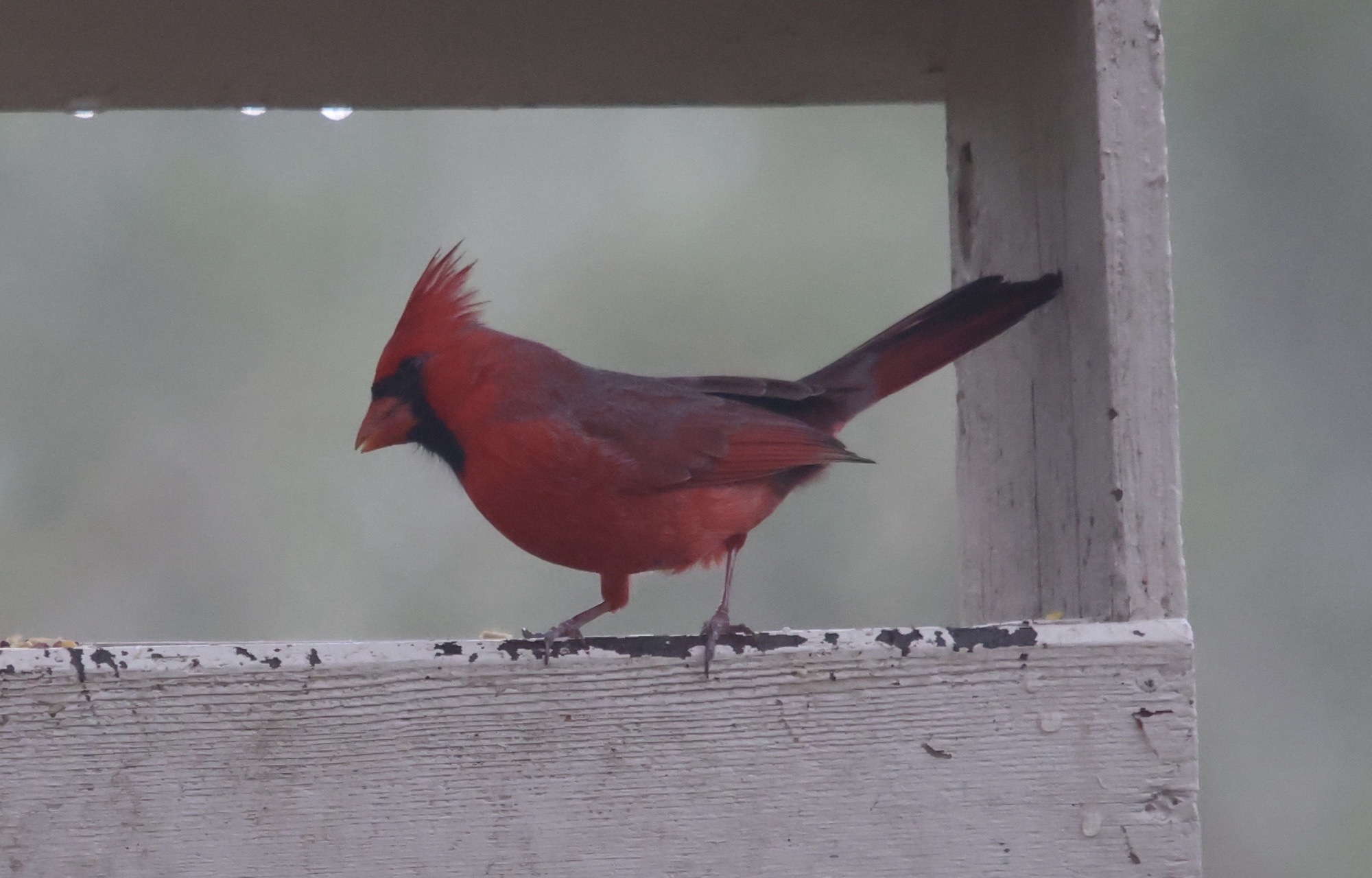
I saw a Northern Cardinal eating away at the berries of a nettle-leaf noseburn vine. more fell to the ground than went in.
Yesterday I was swimming when I saw a small bird bathing in the shallow “beach” end of our pool. I figure it was a House Sparrow, but her breast was yellowish. Then she shook her wings. She was a Painted Bunting! I’d never seen one at the pool before!
Also yesterday I heard a Summer Tanager, and something chirped back. It was the female, for once not hiding. I’m always impressed with myself if I can ID a female bird of a species with drab females.
Nettleleaf noseburn Tragia urticifolia – photo by Sue Ann KendallFemale Painted Bunting Passerina ciris – photo by Lloyd Davis Female Summer Tanager Piranga Rubra – photo by Don Danko
Tarot Card of the Day
Today I drew a great card for the topic of this blog, the Child of Air (page of Swords). It’s about having the enthusiasm of a curious child who is in awe of nature and the world around them. In the Gaian deck, she is entranced by butterflies, an air allusion.
I bet she’d have been as excited as I was about encountering an otter in the wild!
I’m taking a break from Facebook, since the fallout on a post I thought was not too controversial turned out to incite strong partisan feelings among my friends. I respect their rights to debate, and find areas of agreement with each, but I’m so damned hypersensitive that I had to take a break. I also snoozed a few very nice people for a while. So, I’m no longer listening to the fallout until I’m up to it again. I do want to hear all views, but I also want to remain mentally stable.
But I can still blog and write on my Substack, which is where I rant. I’ve been trying to listen to birdsong my porch or birding slab, but I’m thwarted. There is an incessant throbbing sound echoing through the trees. It fills most of the spectrogram on Merlin Bird ID.
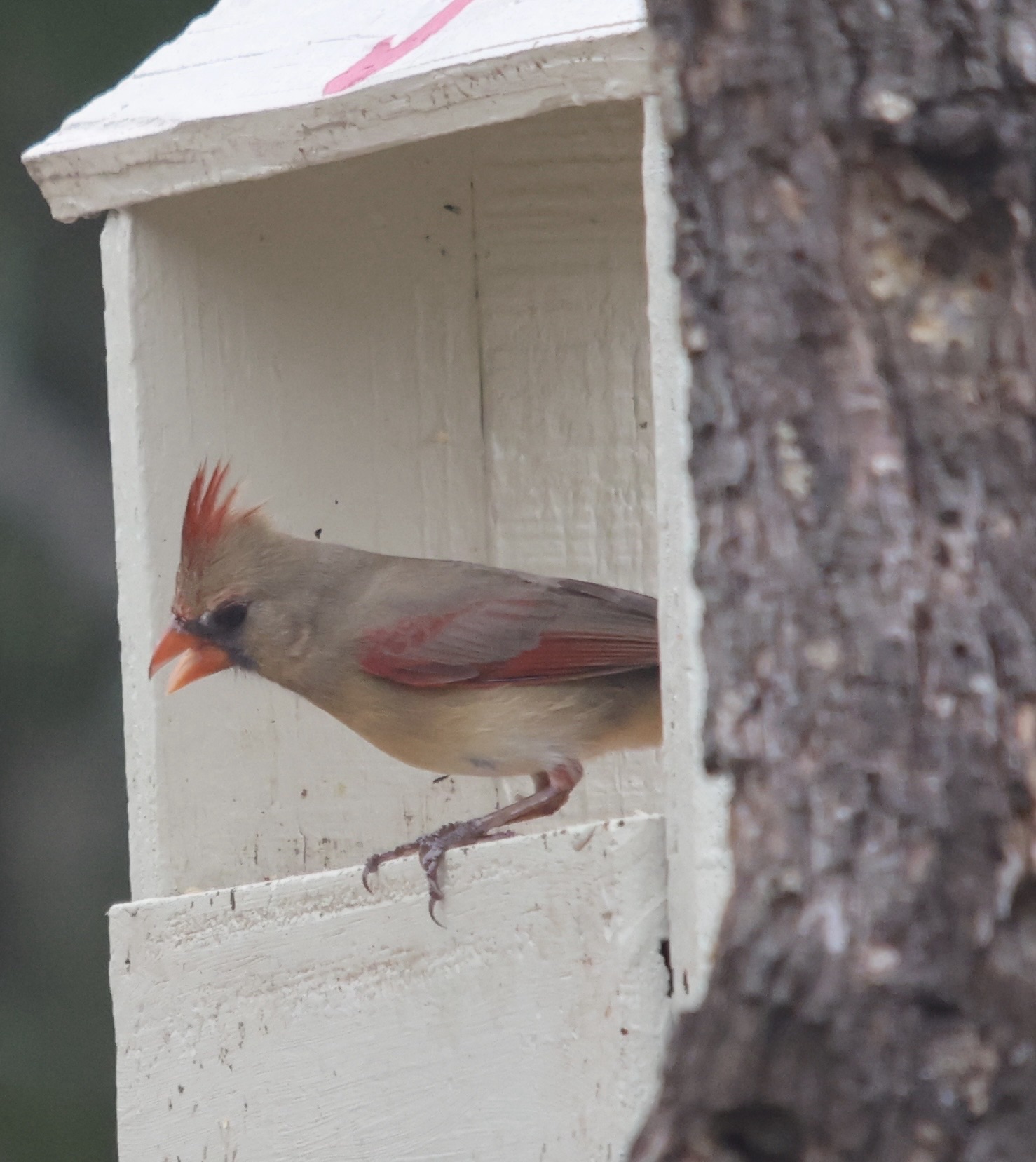
The faint rhythmic lines are a Cardinal.
It’s cicadas. I can hardly hear myself think for them. Once they start up around 9 am, they’re in all the trees every minute unless it rains. My best birding the past couple of days has been right after a storm, when birds have a feeding frenzy thanks to flying insects, and I guess the cicadas need to dry off.
Annoying. Photo from Pexels.
Only the loudest and closest birds pierce through the wall of cicada sound. I do get a lot of House Sparrow chirps. That’s because their nest is above me (to the right; I’m not putting chairs under their extra-decorative nests.
Mrs Sparrow, who alternates with Mr Sparrow in insect deliveries.
These mofos are everywhere. When not feeding, they’re sitting around pooping on our outdoor furniture, grills (which are covered), etc. They’re not native, so we could dispose of them, but nope. I just make sure they stay out of the new screened porch.
Grr.
Speaking of our lovely new porch, the Barn Swallow eggs haven’t even hatched yet, so who knows when we will be able to shut the door. Sometimes I wish I wasn’t quite so dang law abiding and could remove the nests.
Photo yesterday by Lee.
I do have a bit better luck with birds on my walks, where there are some areas a bit farther from the cicadas. Plus, there are always good old eyeballs for spotting birds! Yesterday I found a Mississippi Kite and today a Green Heron.
Blurry, but I could tell what it was from colors and call. This guy didn’t have to say anything. I know a Green Heron!
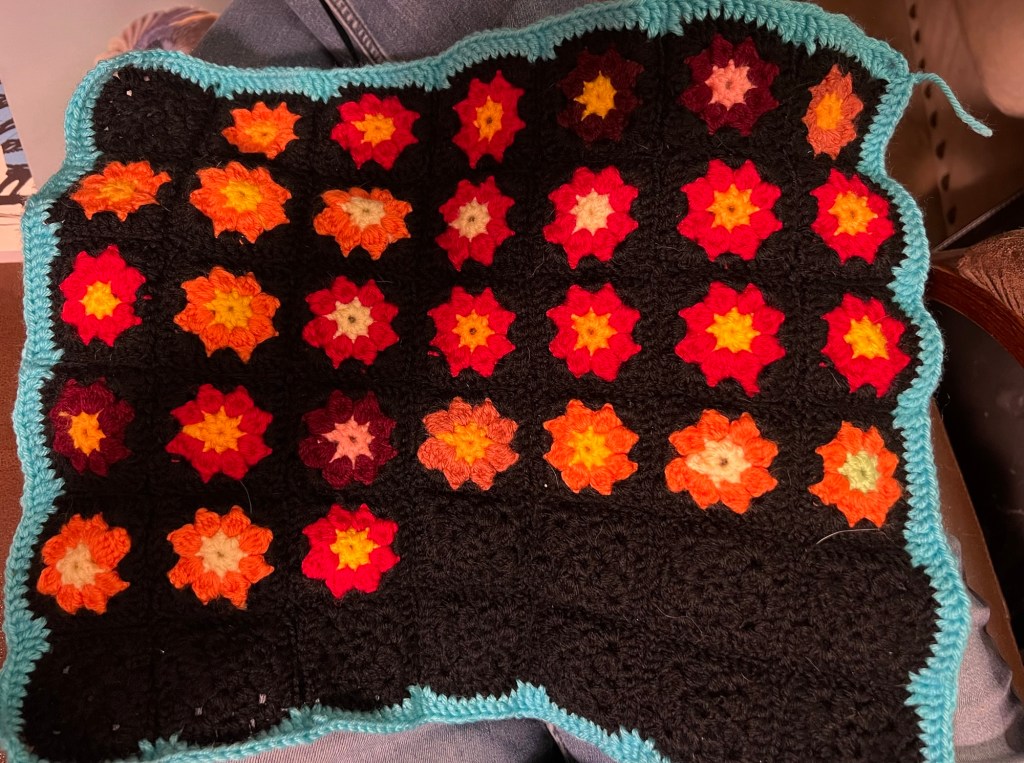
So, between traipsing through mud to tend to horses and listening to birds, my last free week before my consulting gig starts is full. I also keep crocheting, and now April and May are connected on my temperature blanket, and June is caught up. The nice KnitPicks lady said that if I do not get yarn by ten working days to call them rather than patiently waiting a month like I did. I am now warned.
April and May. Getting warmer.
I’ll leave you with bugs and flowers. Please send healing thoughts to everyone who’s affected by world events, and listen hard, even when it’s difficult to hear.
Maize calligrapher waspLighted furrow beeVelvet ant? Not sure.
I’ve got to tell you how much fun I had this morning! My friend Ann and I went to see the property of our fellow Master Naturalist, to help her improve her skills and see what plants and birds were there.
A beautiful place.
Our friend lives far enough east of the Hermits’ Rest that the soil is very different, quite sandy compared to my soil. That means different plants will grow. I’d already noticed that along the road to my horse lessons, where the Gaillardia are solid red, and standing cypress lines the road this time of year, with its red plumes. So pretty.
Maroon blanketflower (Gaillardia amblyodon)
The birding where we visited was pretty good, and I learned the sounds of a Swainson’s Warbler very well when the ubiquitous White-eyed Vireos rested momentarily. It gave good opportunity for Merlin Bird ID lessons.
The plants were what had me all in a tizzy, though. There were expanses of meadows bordered by nice thick woods, plus excellent trails the homeowners maintain. So much to explore!
There were so many kinds of plants. I found this expanse of spotted horse mint breathtaking Nice, wide paths.
I found interesting insects, too. I wish I could have gotten photos of all the different bees and wasps buzzing around all the flowers, but I did capture a few as well as butterflies. The pale pipevine swallowtail was so lovely I will share multiple photos.
Metric paper waspClubbed Mydas flyDusky-blue groundstreakUsually these are darker. Pipevine swallowtail Bonus baby toad
There were some impressive wildflower areas, and in one of them I found many species I’d never seen, even some Ann had never seen, and she doesn’t live too far away. A couple of these, like the prairie clover, are pretty rare, so no wonder I wasn’t familiar with them.
Slimspike prairie cloverSame, from a distance with maroon blanket flowerTexas SandmintDrummond’s NailwortQueen’s DelightHappy me.
The flowers were in a place is where someone built a new tall wildlife fence about ten feet back from the original barbed wire. The area where cattle or other ruminants can’t reach was a blaze of flowers. It’s a secret botanical treasure we discovered!
Like a river of flowers
It wasn’t just flowers that were new. There were plenty of fungus and moss samples to investigate, too. I’d never seen a moss inflorescence so spectacular as the one we found on a trail, and after the recent rains, mushrooms were everywhere.
I think it’s pale cow hair mossIt was kind of shinyLatte bracketGolden reishi Coral-pink meruliusRingless Honey mushroom
I don’t mean to go on and on, but this unknown wonderland brought a lot of joy, as did hanging out with my fellow nature lovers. It’s hard to believe I found so much that was new to me, so close to home.
Beautyberry
I’ve spared you most of the species I saw, but this location has gone from nothing on iNaturalist to dozens, including the rare ones. I hope this makes a scientist happy someday!
Voted Most Beautiful Flower, by me, was the propeller flower or Alophia drummondii
You can tell I live in a semi-arid environment by how often I mention that I’m grateful for rain. Our land is so prone to drought that we always fear it will never rain again. Of course, that’s not true. Usually, we have a very dry period followed by a flood. We’re used to it.
Rain brings sunflowers!
This year we have had some dry spells, but also some nicely spaced rain episodes, just nothing huge, until last night. We had over 2.5″ of rain here yesterday, and since 2″ is usually enough to get runoff happening, that means our ponds/tanks all filled.
Nice to see the front pond full of
It also means that the creek is overflowing, which is always fun, as long as it doesn’t cover the road, which it did not. It only got to the top of the fence that keeps the cattle in. No giant logs banged into the fence, either, which means the new owners won’t have to fix it.
You can see the fence posts almost underwater.
The rain was scary, and there were tornadoes in the area. Some folks got damage, but nothing like what we see in the news in other places, so we’re lucky. One of my friends even got up to 6″ of rain over the past few days! We’ve had at least 3 in total. Now all the animals will be happy.
Walker’s Creek is muddy and wide.
Something did die, though. The vultures right next to my birding chair told me, along with the large number of flies. Ick. I may have to move my chair!
My friends and I smell something good. Please leave so I can eat. It’s right next to my chair!
I enjoyed many clean and shiny birds on my morning walk, though, which is the best bonus. I’m still seeing a Tricolored Heron here, so who needs to travel to see interesting birds?
The heron still doesn’t come close This Lark Sparrow was singing away. Lovely song. Here’s a Phoebe, saying Phoebe. Great Blue Heron flying around again. The Crimson King going through his repertoire of songs
I went into town to have lunch with a new Master Naturalist and help her get her Merlin and iNaturalist set up for ease of use. Driving around I saw lots of hail damage and trees with lost limbs. The storm was a lot worse southeast of the ranch!
Our Merlin lesson was a bust, because the birds decided to stop making noise at our Cameron renovation project, where we tried to practice. But I did give my student some hints, and we had more success with iNaturalist. A lesson that I learned (relearned) is that everyone’s cell phone and service are set up differently, which always adds to the challenge of assisting people. We had fun anyway, and found some plants we want to transplant before the old landscaping gets obliterated.
I want some of this Turk’s Cap to plant next to our woods.
Today remains sunny, though more rain is in the forecast. Other than how muddy the horse pens get, I’ll welcome all we get!
Ha ha, mission is an appropriate word choice, since we did visit an area full of missions today.
Mission Nuestra Señora del Espíritu Santo de Zúñiga, Park Service photo.
After a highly disappointing hotel breakfast, we drove a half hour from Victoria to Goliad, Texas. It’s where lots of Texas history occurred. Just go over here and read about it, unless you are a product of Texas schools, in which case I assume you already know.
The old downtown of Goliad
Since we were pressed for time, we looked at the beautiful old buildings briefly and then went on a short hike along the San Antonio River, which appeared to be a very old trail.
Hike scenery
It was a great joy to investigate this new ecosystem. I found a new-to-me butterfly, the Texas Crescent. It’s so beautiful.
Texan Crescent Anthanassa texana
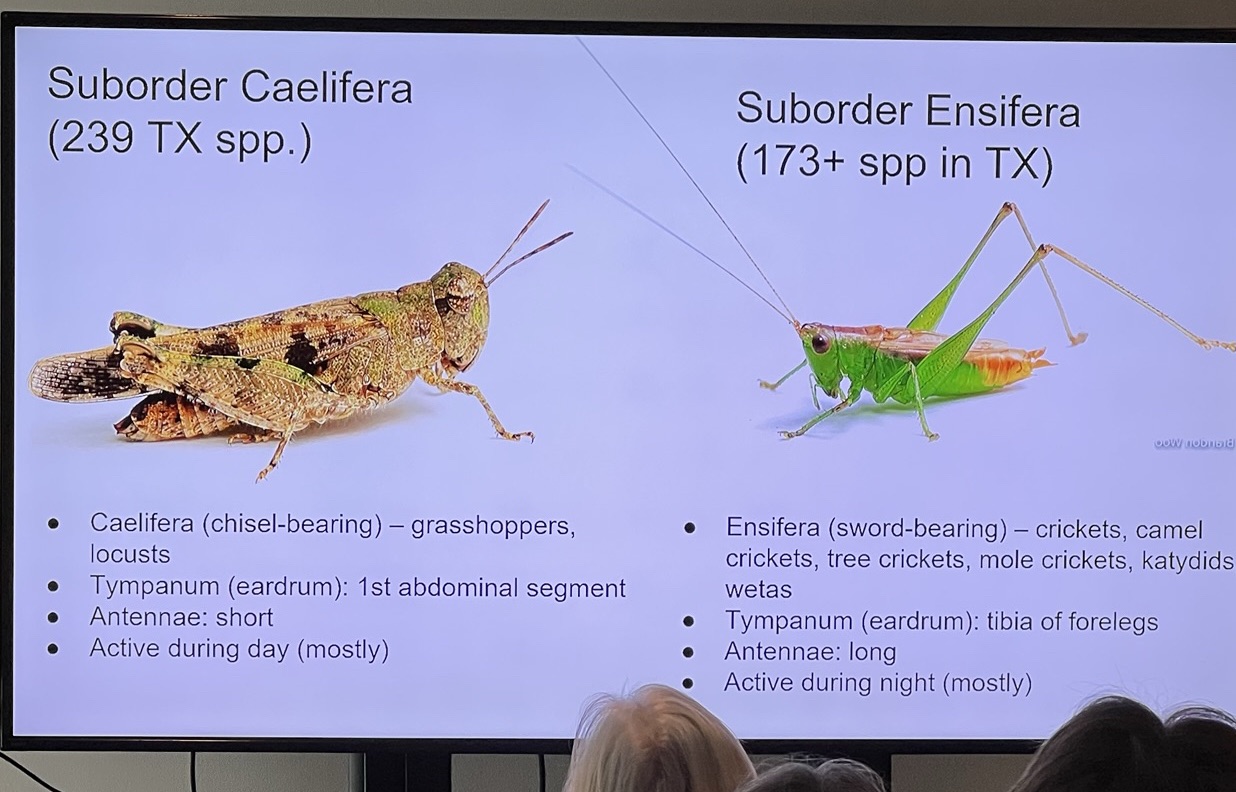
Even more beautiful (to me) was the new grasshopper I found, which is apparently the most distinctive grasshopper in the southern US.
The Eastern Lubber (Romalea microptera)
It’s so pretty. And big! They get to be up to four inches long! I was impressed and very grateful to Lee for spotting the first one.
Very cool.
We enjoyed the river, woods, trees, and birds. I even identified a Northern Parula before seeing the ID on Merlin. I’m learning!
There was a bird blind, but we were too late for the morning feed and only saw a male and female House Finch. The male was very colorful, though, and since I usually only hear them at home, I took it as a birding win.
House Finch. Last one is the female.
We were ready to head home, but enjoyed going a different route, which ended up being a tour of different roads Lee used to take to visit his parents in the Cuero hospital. That’s where they’d go unless they had heart attacks, in which case they’d go to Victoria, where I’d already had the hospital memory lane tour. Yes, my previous visits to Victoria had been hospital or funeral visits. A wedding was our first happy reason to visit. [edit: second happy reason—we also went down to Yorktown for Chris and Kathleen’s wedding!]
All is well at home. I didn’t even lose any plants! The dogs, chickens, and horses were fine, too. Kudos to our pet sitter!
Here’s a question I had not considered before. I tend to have an overly existentialist view of life, that we’re here while we’re here, and when we’re gone, we’re gone. It’s been many years since I’ve thought about what happens when I’m gone.
My genes won’t live on in future generations, so I’m not sticking any thoughts in mitochondrial DNA. My books won’t sit on bookshelves and my knitting isn’t good enough to pass on reverently.
Nor is my bird photography. It’s barely adequate!
I think the volunteer work I’ve done has the most chance of leaving a legacy. I know I helped many, many women with feeding their babies when I put all that material on the old La Leche League website. That will pay forward for future generations.
And I survived those years only going a little cuckoo (this is a Yellow-billed Cuckoo).
The many hours I’ve spent documenting organisms found wherever I go on iNaturalist is another legacy. That data can help scientists in the future to learn more about how life changes through time. I’m proud of this work. Plus, it’s fun.
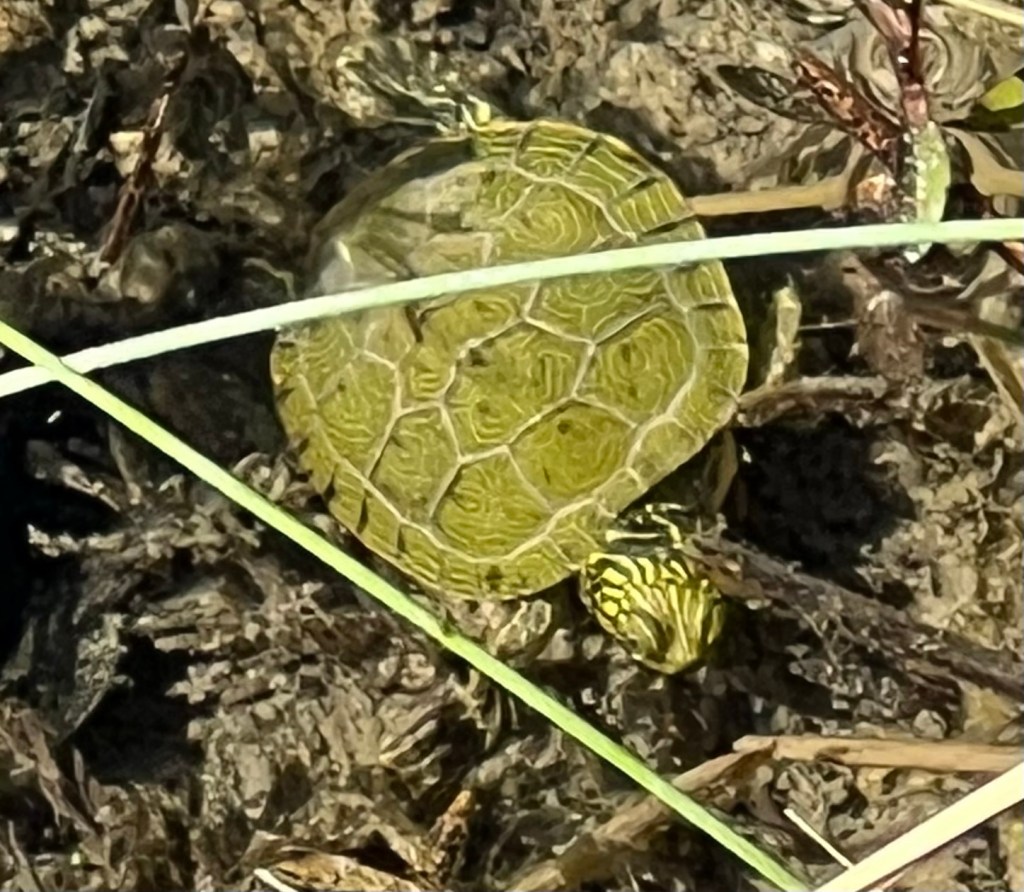
I documented this pond slider.
The third legacy I hope to leave is that if I helped anyone feel better or inspired them to take action, those I influenced will pass on the assistance or inspiration to others. I’d be very grateful to pass that legacy on.