Book Report: The Raven Scholar

Lee likes to go to the bookstore/coffee shop in Rockdale, so I went with him one day to order a book. The shop doesn’t have a big variety, mostly historical romances and fantasy. I did need something to read, so I looked at all the covers and titles of the fantasy novels, and chose this one, The Raven Scholar, by Antonia Hodgson. It had an interesting cover, was purple, and featured ravens. All good if a random way to pick a book.

I also checked to be sure it wasn’t part 2 or 3 of a trilogy. Nope, part 1.

I actually enjoyed the book a lot! It was quite fun to jump into a new world and figure out how it worked. As you might guess, the heroine is a member of the Raven group in her society, which has all kind of animal totems, bears, hounds, tigers, etc.

I’ll share some masses of flowers to entertain you during the review. Here’s arrowhead clover.

The story in the book is complex and convoluted, but I could keep track of the characters better than I could The Lord of the Rings, so Hodgson has that going for her. All the characters are well developed, with good features and flaws that make them interesting.

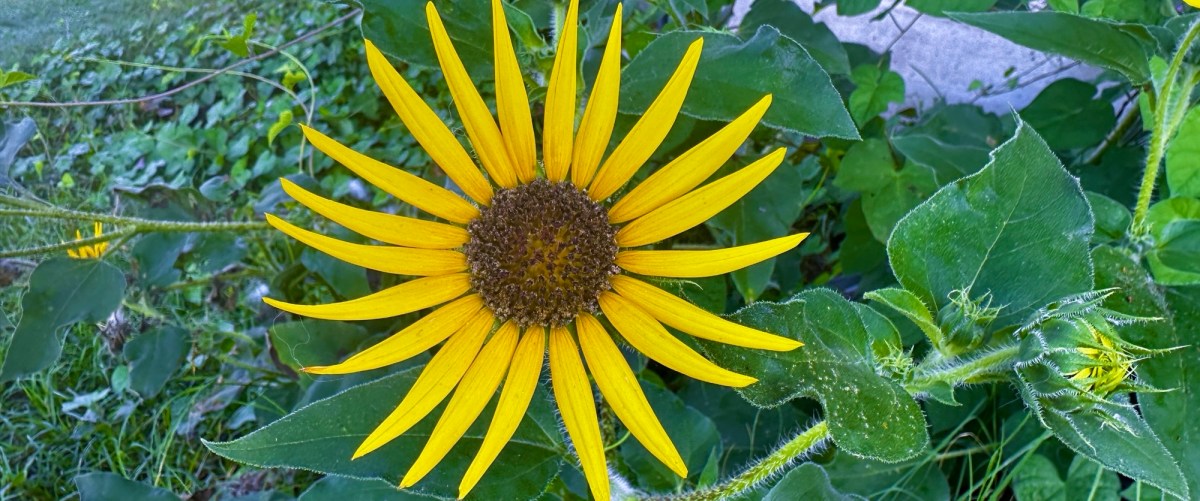
Black-eyed Susans

I had a good time figuring out what was going on with the Emperor, who was supposed to be supervising a competition to determine who would succeed him. That’s one of the many interesting aspects of the culture created in this book, which is very well developed and internally consistent. That’s what I think is one of the hardest parts of writing fantasies, creating plausible worlds and cultures. This one is interesting and multi-faceted.

Mexican hats, or clasping coneflowers

I think anyone who enjoys fantasy will enjoy meeting Neema, the title’s Raven scholar. She’s smart, vulnerable, and creative. And her Fox friend Cain, who happens to remind me of my son, is a great counterbalance.

Gaillardia

And of course there is the great bonus that a good fantasy novel is a wonderful way to escape from your own comfortable world and exchange it for an immersion in another strange and fascinating one. For me, that’s a real blessing these days.

Lemon Beenalm and Curly Dock

So, go ahead and check The Raven Scholar out, if you like to disappear into an engrossing alternate universe, and look forward with me to the next 600-page installment.

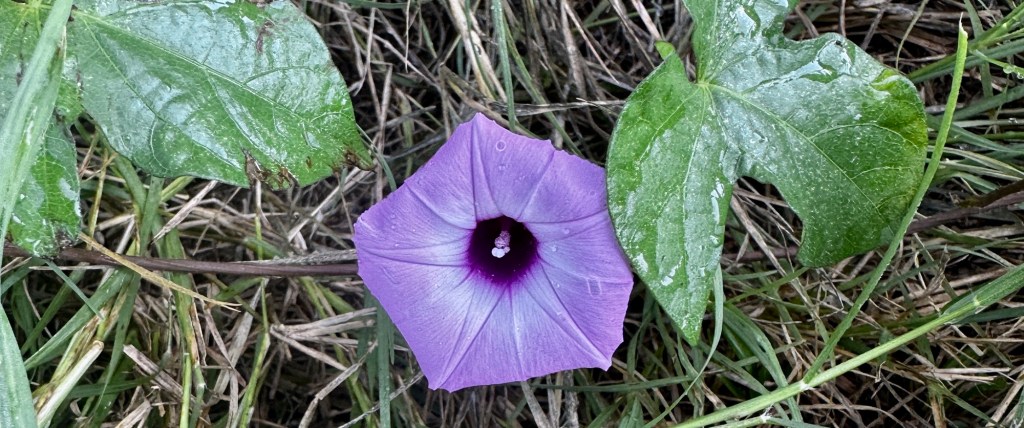
Texas Indian Mallow

Book Report: Spare

I’ve read a few books lately. This was the first. I picked it up at the airport on my way to Hilton Head and finished it when I got home. Honestly, I’m not a huge fan of the British Royal family, nor do I dislike them, but I read so many conflicting reviews of this book by England’s Prince Harry, so I decided to read it.

Spare was a pretty interesting book, really. It showed how human and fallible Harry was, for sure, and how utterly strange the world the Royal Family exists in. I don’t know how anyone could survive in that setting without some big time PTSD and anxiety.

I mostly ended up feeling sad for these folks and blaming their blind adherence to outdated traditions for how things have ended up today.

Prince Harry came across as very honest about his own failings and his sincere desire to do something that mattered. Wow, that young man could use drugs with the best (or worst) of them. He really seemed to crave numbing and distraction. His love of flying helicopters and of ascetic African pilgrimages both seemed to be ways of keeping his brain occupied with something other than Princess Diana and all those Royal protocols.

The writing is surprisingly good and Harry’s voice is clear. I do hope that he’s able to keep helping others and gets some peace after being chased by paparazzi for so long. That has to be difficult even for people with strong boundaries and good mental health. For sensitive people like Harry, well, I can see how he got so messed up.

After reading this, I feel empathy, which I guess was the goal of the book. I’m aware, though, that there are other sides of this story. I wonder if any other aspects will clarify Harry’s story someday? At least he’s no longer needed as a “spare” anymore.

Book Report: The Serviceberry

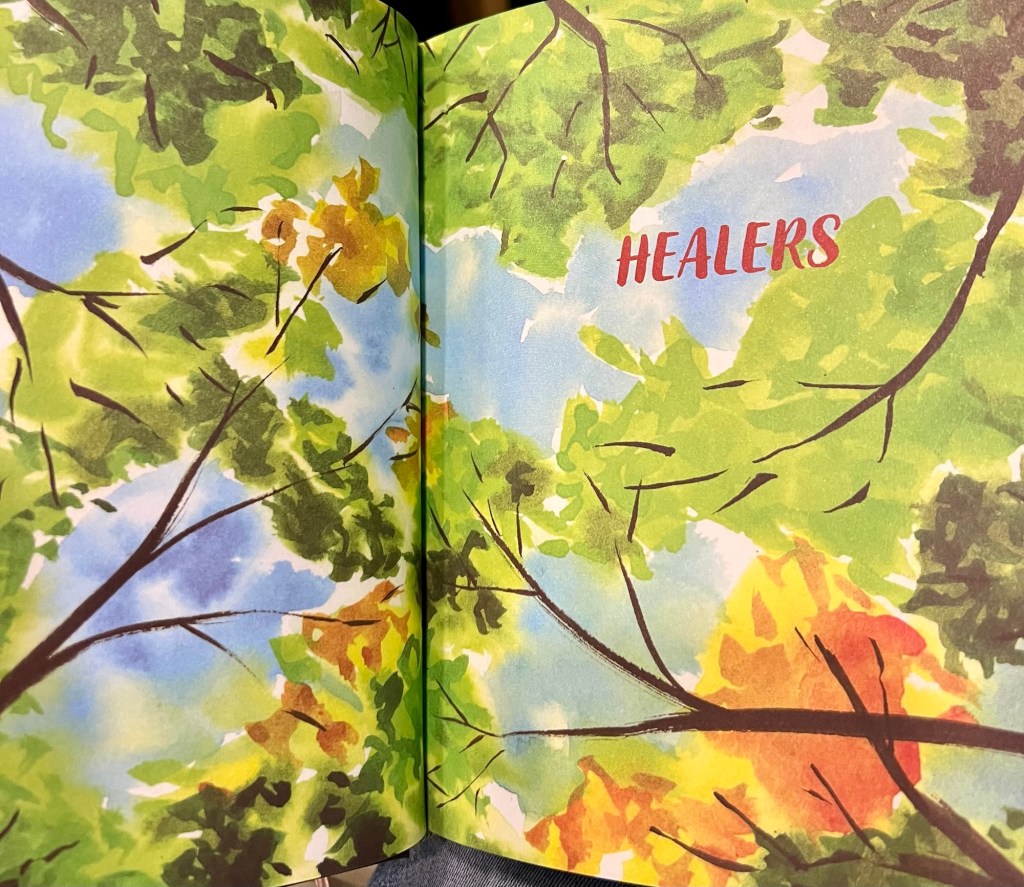
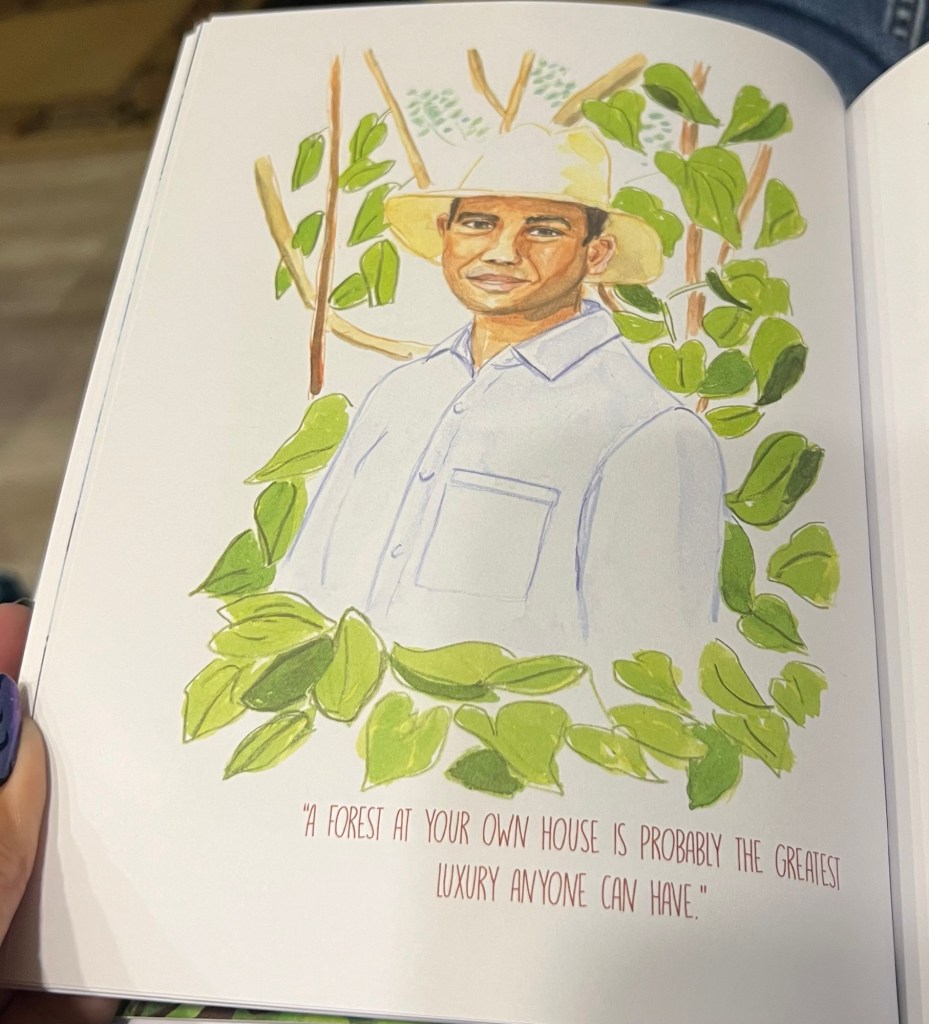
This is a beautiful gem of a book. First, it’s beautiful to touch and hold. The cover is textured and has watercolors illustrating the cover. It’s even got lovely, thick paper and a nice font. That all counts with me, since I love physical books.

The Serviceberry: Abundance and Reciprocity in the Natural World, by Robin Wall Kimmerer, has at its heart a sweet story about sharing berries and the implications that simple act has for humanity and the planet.

It can beautify the world like a rainbow over an industrial complex.

Kimmerer shares stories about how “gift economies” can work, and how beneficial it can be to share what you have with others. Much draws from her experiences as a Native American, as well as other sources.

I like how it’s possible to implement the practices found in this book right here and right now, but most important is the idea that we can share not only our bounty but our practice of reciprocity and abundance. We can do it and encourage others! That’s reciprocity!

I’m sharing my sunrise with you!

It’s a nice contrast from having your goal be to hoard wealth. I have already shared the book, and hope to pass it on again. It would be perfect for a Little Free Library!

Book Report: Eve

Rating: 5 out of 5.

Hey, look, I finished a book that I like enough to write about! I’d would wager (if I did that kind of thing) that any like-minded friend of mine would love Eve: How the Female Body Drove 200 Million Years of Human Evolution, by Cat Bohannon, as much as I did. It has footnotes and endnotes, too, which hints at some thorough documentation, yet there’s lots of humor scattered throughout, so it’s not boring one bit.

I got it at the airport on the way to Hilton Head. Those nails are so two weeks ago!

Bohannon tells the story of “Eves,” who are archetypal women of the past whose developmental firsts made big impacts on the evolution of humans. All my La Leche League friends will love the chapter on breastfeeding, though perhaps some more intense fans of this method of feeding might find flaws. I didn’t, and I even learned a little.

fingernails
Newest nails. Call me the Eve of Girly Gender Neutral Confusion.

You learn a lot about the history of hominids, as well as how mammals developed, told charmingly through example animals. You get all wrapped up in their little lives as you see how traits we still have made a difference millions of years ago. The book is a lot of fun.

As are these blue flag irises. I’ll now stop with random photos.

I also have to hand it to Bohannan for being “woke” in the best possible sense. That woman doesn’t put down anyone, even inadvertently, and she navigates our world of gender dysphoria and sexual choices like the consummate professional she is. I was duly impressed, and if I were trans or XXY or whatever, I’d feel like I’d been talked about respectfully. But she doesn’t make things awkward–if she chooses a typical example, she always acknowledges possible exceptions. I hope her terminology holds up now that there’s a (scary as heck to someone who fought for women’s rights) sudden devolutionary trend in women’s rights and roles in the US.

My only criticism, if you can call it that, is that Bohannon doesn’t talk about the effects of hormone replacement therapy in post-menopausal women. I’d be interested to know if the current trend of using bioidentical hormones has a positive or negative affect on women’s health and longevity. Maybe that will be in her next book.

This is a hefty tome, for certain, but remember at least a third of it is end notes, bibliography, and index. You’ll wish it kept going.

Books to Love

What book could you read over and over again?

I admit it. I have read many books by Brené Brown more than once. I think people need different kinds of support at different times in their lives. When I needed to drag my self esteem out of the gutter and stop telling myself I kind things about myself, her stories and ideas were there to push me toward healing. I’m forever grateful that she writes in ways that reach me.

Just a picture to note that Cattle Egrets have arrived.

Here are my Brené Brown favorites:

Her writing taught me I wasn’t alone and I wasn’t awful. What a gift!

Here’s a gift. My favorite wildflower, Texas Baby Blue Eyes.

I’ve mentioned before that I must have read Black Beauty, by Anna Sewell, dozens of times as a child. It shaped by love of horses and all animals and set me on a path of kindness to our animal friends.

I do try to be kind.

Speaking of my animal friends, Apache and I had a hard lesson today. He is not fond at all of Tarrin’s gate obstacle. I got a good lesson in patience (though I did lose my patience once). He learned he has to trust me when I ask him to do things, and I learned I still have work to do on quietly repeating instructions and not showing my frustration.

It’s like the dung beetle. You just keep pushing until you get there. No need to get upset.

He’s such a good guy most of the time that I know Apache has his reasons for disliking the gate. We will work through it! After all, Brené Brown taught me that being imperfect is how we grow.

Book Report: The Power of Trees

I started reading The Power of Trees (2021, English 2023), by Peter Wohlleben, the German forester who also wrote The Hidden Life of Trees, last year. I had to put it down, because it was so depressing. It sure sounds like Europe’s trees are messed up and not much hope is shared in this book.

The book and many representatives of tree friends.

So, what a great book to read during an election where the non-environmentally friendly folks won bigly? But I got through it. I learned why forestry, with its great fondness for monoculture and treating trees like products rather than fellow citizens of the planet, has led to massive death in forests and loss of uncountable other species that support trees (what lives in the earth and helps trees do their work).

Trees get so tall when left alone.

Wohlleben shows how allowing natural forests to regenerate on their own and create old trees that are allowed to live on would help restore a healthy climate (trees cool it) and still provide for human needs, especially if we recycle old wood products rather than always making new ones.

We do a lot of that at home.

You’ll learn a lot about the complex interrelationship between trees and the other life around them as well as lessons that apply to forests around the world.

It’s wonderful that there are protected remnants of coastal forest here on Hilton Head. It helps that it was hard to reach for so long.

I always feel drawn to helping woodlands, knowing how many mighty trees in Florida my grandfather sent to sawmills in the early twentieth century. As I have resolved to focus on doing something kind every day, I’m keeping the remaining native woodlands in mind.

My grandfather dwarfed by the trees that are about to be killed.

Book Report: Navigating Rocky Terrain

I got this book, with the complete title of Navigating Rocky Terrain: Caves, Karsts, and the Soul of Unseen Spaces, at the Texas Master Naturalist Annual Meeting last week. It’s a 2024 book by Laurie Roath Frazier, a fellow Master Naturalist in the chapter that hosted the meeting. She wrote the essay collection while dealing with a series of the holes her losses caused in her life by finding healing in the cracks and crevices of the Texas Hill Country, a landscape very familiar to me, where I also found comfort in hard times.

Since I’m also a huge fan of the unique features of the karst formations I lived in for 25 years, I figured I’d enjoy reading about Roath’s quests and observations. I didn’t expect to be so moved by her work with her inner rocky terrain. It reminded me so much of when my life was fractured by divorce, mental health challenges (mine and a child’s), and fear for the future.

She’s a good writer, though I wish there was more of an arc connecting the essays and that there was some resolution to pieces of her life—like, what happened with her birth family? But I enjoyed both the personal parts and the more scientific information about caves, limestone, bats, lakes, and crevices. And of course, it was nice to read about the Sacred Springs in San Marcos, where I’d just had such a moving experience.

If you’re a fan of nature, geology, or personal growth, you’ll enjoy this little book and support a Master Naturalist!

I hope to share it with friends!

Something else I’ll treasure from the meeting last week: I now can tell you that this is a female house fly. Yep. Males’ eyes look like one big eye.

Book Report: Holy Sh*t

I’m way behind on book reports, and I want to catch up before I flee Texas for a couple of weeks again. So let me share this delightful volume that Lee got at the bookstore/coffee shop in Rockdale (one of the few reasons I would volunteer to go there).

Great cover!

Holy Shit: A Brief History of Swearing (2013) is worth looking for in your local used book store. Melissa Mohr has a fine way of blending academically rigorous prose with sneaky bits of humor. For little linguist Suna, this was a delightful and engaging combination.

I’m sure my friends are glad I finished reading it, because I was compelled to regale my family and friends (and complete strangers who were willing to listen) with tidbits about the origins of curses and swear words. I feel quite educated in how the English language developed its words not fit for polite company.

I was extra glad that Mohr started out with how the Romans used swearing in Latin. I learned some good Latin and laughed a lot at their creative bathroom scrawls. Actually, they scrawled on all the exterior walls, too. I also learned more about their sexual practices than I did before. I’m not putting that stuff in the blog, though.

The main point of Mohr’s research was that what US and British society found to be the most offensive type of words has changed over time. early on you could babble on and on about shitting and fucking, but you’d better watch your tongue when uttering oaths or insulting God. The worst was to swear by God’s body, like God’s blood! They felt that you truly hurt God when you did that.

As time passed, oaths and swearing became less of a touchy subject. Nowadays we swear to God or whatever, and most sects don’t get up in arms. It’s the bodily functions that are taboo. Now we pass gas, have a bowel movement, urinate, and copulate. That’s all thanks to our Victorian ancestors.

The history of what was allowed under what circumstances is fascinating, though. You have to get used to reading all those “naughty” words, of course. It’s worth it. I haven’t laughed and learned at the same time to this extent in a long time.

I’m happy to lend it out once Lee reads it.

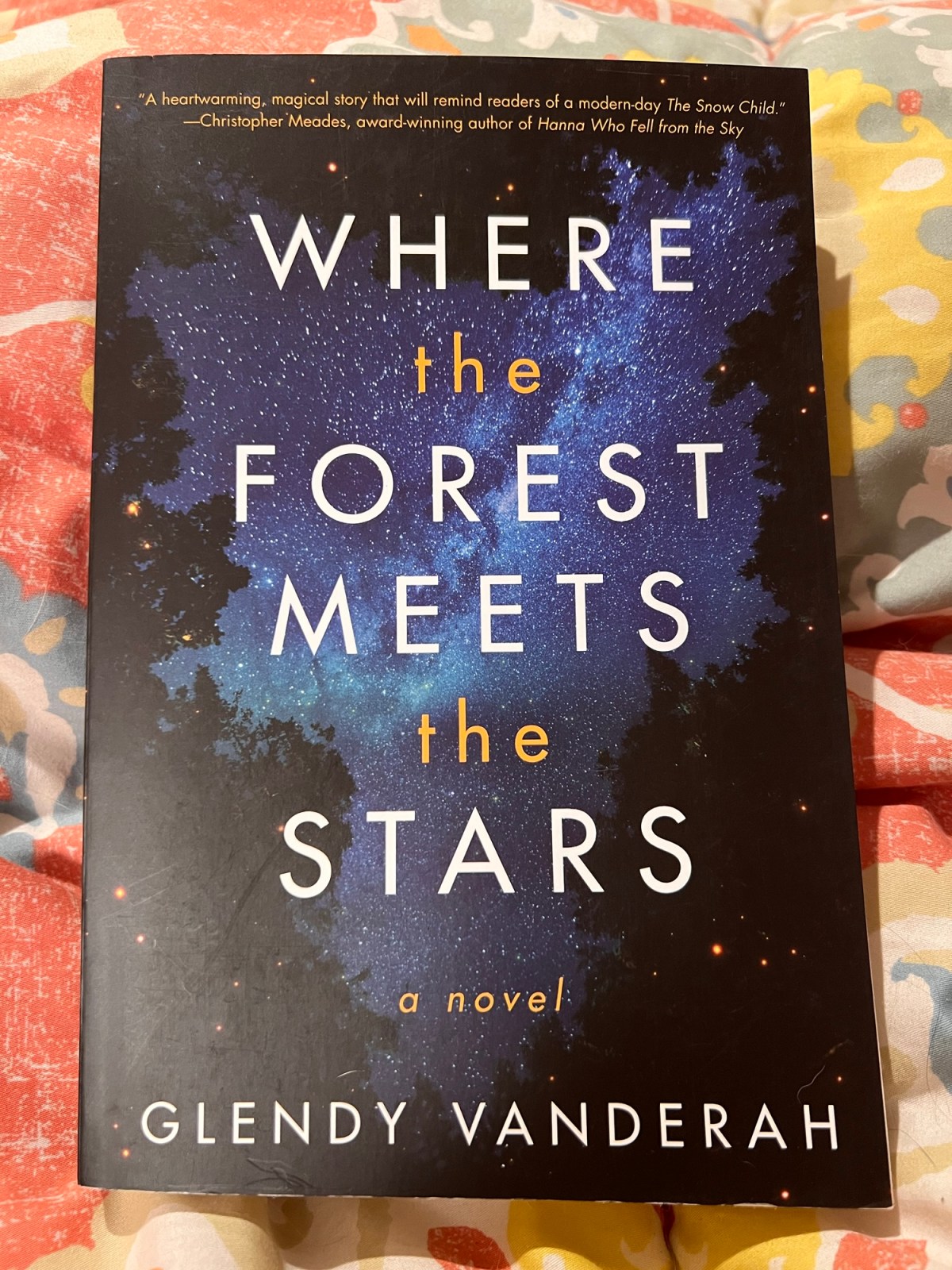
Book Report: Tell Me Everything

I’ve been meaning to write about the latest Elizabeth Strout novel, and since I was wrong about going camping this afternoon, I suddenly have time. I guess I should have asked someone if we were leaving the day we originally planned. That’s what you get for making assumptions. I make an a** out of me. And, sigh, we have to leave a day early because I have jury duty Monday, I’m a bit pouty. I really want to go camping. We haven’t been in so long.

Must deal with these results of the investigation into why the bedroom slide won’t move. It needs professional help.

However, I did read this book, so let’s talk about Tell Me Anything (2024). As soon as I realized there was a new book in this series (I’ve reviewed them all on this blog, so you can search for Strout and find them), I ordered it. I was very interested to find out what was going on with the characters in Crosby, Maine, since the pandemic, so I dove right in. I was happy to see that this installment concentrated on good old Lucy Barton and her friend Bob Burgess, as they cope with a local murder.

As with most of Strout’s books, the plot is secondary for me. I just enjoy how she tells stories. Her style is so spare, and her use of repetition and the narrator jumping in with bits of information, just enough information. And as always, you get insights into how people think, act, and work from points of view you’d never considered before. I just love the pithy parts.

An imaginary Maine coastline.

I underlined and marked many passages that I can no longer see, but my favorite one was this part of a conversation about the meaning of one of the stories two characters shared with each other:

That was about the same thing that every story Lucy and I have shared is about. People suffer. They live, they have hope, they even have love, and they still suffer. Everyone does. Those who think they have not suffered are lying to themselves.” p. 315.

Actual small town in Maine. Photo by Leah Newhouse on Pexels.com

The people in the book are also fun for me. They are all so fully formed, with wonderful features and fatal flaws. They are real in the best way. I love how married couples are treated here. They have days where their spouses get on their nerves, then days where they don’t know what they’d do without them. And there are divorced people who don’t hate each other, but are glad to no longer be married. It’s refreshing to be able to feel empathetic with human beings who can be inconsistent, think judgmental things about others, but still be doing their best. I feel less alone.

There’s always time for reflection, like the heron is doing. These books inspire you to reflect on universal truths and intimate insights.

One more thing is that I was glad to see that Strout introduced a few new characters, since the “old” ones are mostly getting old. Olive Kitteridge is now 93! I can’t wait to see how she weaves them into the continuing saga as she follows them on through the scary 2020s.

Book Report: Wild Old Woman

Once again, my friend Ann thrusted a book at me and said she knew I’d like it. She’s very good at selecting reading material for me. Ann said there was a part in it about Burning Man, did I know anything about it?

It was hard to find a usable photo of burning man. This is a temple. From Pexels

Well, yes, I know people whose adult children go, and my jewelry friend got married there. And I get the concept, but never had an urge to go. Too much sand and too many drugs for me. I really hate sand and wind combined. It gets everywhere. And most of my life I avoided psychedelic drugs. I was afraid of messing up the only brain I had.

It gets everywhere. From Pexels.

But, that’s neither here nor there. The book Ann gave me was Wild Old Woman, by Joan Maloof, a great writer about trees and nature. This memoir, more about love, sex, spirituality, and adventure, was self published this past summer.

And yes, indeed, this was a memoir that resonated with this weird old Suna woman as I’m sure it did with Ann. Bonus: I learned a lot about Burning Man, among other places. I don’t plan to go, but Maloof sure learned a lot there.

Sometimes memoirs are interesting because the writer does fascinating things or meets famous people. This one intrigued me because Maloof experienced many life changes and spiritual insights, and she reacted just like I would, for better or worse. That felt a little weird. I appreciated her honesty and openness. She’s a real, fallible human with many strengths, but who likes to examine her failings as endlessly as I do.

One of the best parts of the wild old woman’s tale (she is a couple of years older than me) comes after the narrative ends and Maloof finishes her dream journey to Bhutan. She provides two “meta” chapters that outline how the book took shape, was reviewed, and was published. I just loved how this section provides insight, especially into what’s not in the book and why.

I learned something in this section that gave me a useful new understanding about a certain kind of very frustrating relationship, one I have experienced as well. This relationship is with a man who keeps pushing her away and pulling her back, while her brain recognizes the pattern but her heart understands why he acts the way he does. It’s called a trauma bond. Here’s what she discovered:

I learned that it was more of a one-way thing. Someone alternates being kind with being unkind, and the bondee sticks around waiting for the next dose of kindness-sugar. P. 199

That explains an extremely embarrassing relationship I was enmeshed in when I was much younger. I knew the guy had issues and was toying with me, but I kept coming back, hoping for more kindness.

Maloof pointed out that her research said that the only way to get out of a trauma bond relationship is to completely cut it off. And I did that. I was in contact once more when I was older, and the person started right back in with the poor me, everyone is out to get me stories. I didn’t reply.

I’m just happy to know there’s a better word for what I went through for a few years than pathological obsession. I feel closer to closure over this regrettable and embarrassing period of my life. It’s hard to admit I could be so gullible, but I was young and inexperienced. I have worked years to forgive myself. I mostly have done so.

These guys help.

Sadly (in my mind) Maloof is still going through the push and pull, though distanced. Maybe it’s okay. On the other hand, she’s still living alone and free, running her wonderful nonprofit to save trees. We all have things to work on, even us chronic meditators.