The Reviews Are In! The Dare to Lead Workbook Stinks!

I felt like I needed something pretty to balance the content. Read on.

I just can’t stop laughing, so I have to share. This will be brief. I went to Amazon to write a review of the Dare to Lead workbook I “read” yesterday. Of course, I had to read the other reviews. That started my day off right. There was ONE positive review, and it was written in exactly the same psueudo-English that so many of the spam comments that come into our blogs show up in. Let me get you an example:

Magnificent beat ! I would like to apprentice while you amend your website, how could i subscribe for a blog site? The account aided me a acceptable deal. I had been a little bit acquainted of this your broadcast offered bright clear idea 

fargade linser solotica, comment on Hermit Haus Redevelopment blog, March 2, 2020

So, do NOT take Ralph Hornbuckle’s word for it, even when he sincerely wants to tell you. “ I’ll no doubt prescribe this book to my loved one.

The rest of the folks join me in universal rejection of this poor little booklet, which by the way was “Independently published (January 18, 2020).” AHA! I shall never again overlook those words!

Reviewer Kevin agreed with me: “It is chock full of misspellings and grammatical errors so much so that I believe an 8th grade English teacher would give this paper an ‘F.'”

This review is my favorite, so I screenshotted it:

Imposter book, by Rene, February 4, 2020

Lesson Learnt*

Last time I post about this; I promise.

Be very careful what books you order, especially if you haven’t heard about them. Remember that some self-published books, like my future series Suna Blathers On, will be just fine. Many are scary. Also, read the reviews. That can be quite entertaining for bad books and enlightening for good ones.

Want the real resources for Dare to Lead? You can find them right here, a read-along guide and a glossary. Oh boy, I hope “rumble” and “lean in” are in the glossary! (That was sarcasm folks; I’m steeling myself to wade through the jargon to find the good parts in Dare to Lead.)


*This is a chapter title in Workbook for Dare to Lead.

What Makes a Professional Editor/Writer Sweat? Unprofessional Editing/Writing

We all make mistakes, right? Well I’m about to admit to making a big mistake. I spent $8.99 on a “book” that is only a book by virtue of having pages, a cover, and some printing. I had good intentions!

Classy cover art.

The work book club is going to read Dare to Lead, by my buddy Brené Brown. When I went to pick up a second copy (because I hid my first copy when I pitched a fit about how many times she said “lean in”), I saw there was also available a study guide for the book. I thought it would be great to have some questions and ideas to talk about when we have our meetings.

Today the books showed up. Coworker Maggie said, “Hey that’s a printout of a PDF; they always have those ugly rectangles on them.” I told her to check out the inside. There’s no author (unless the Review Press is a person), little publishing information, and no blank pages. You just jump right into a table of contents.

Cringing yet?

Then you keep going, or you try to. OMG, the whole thing is in “books for the visually impaired” size type, and it’s conveniently both right AND left justified. And because the huge print makes the lines quite short, the gaps between words can create not rivers, but entire seas within the paragraphs.

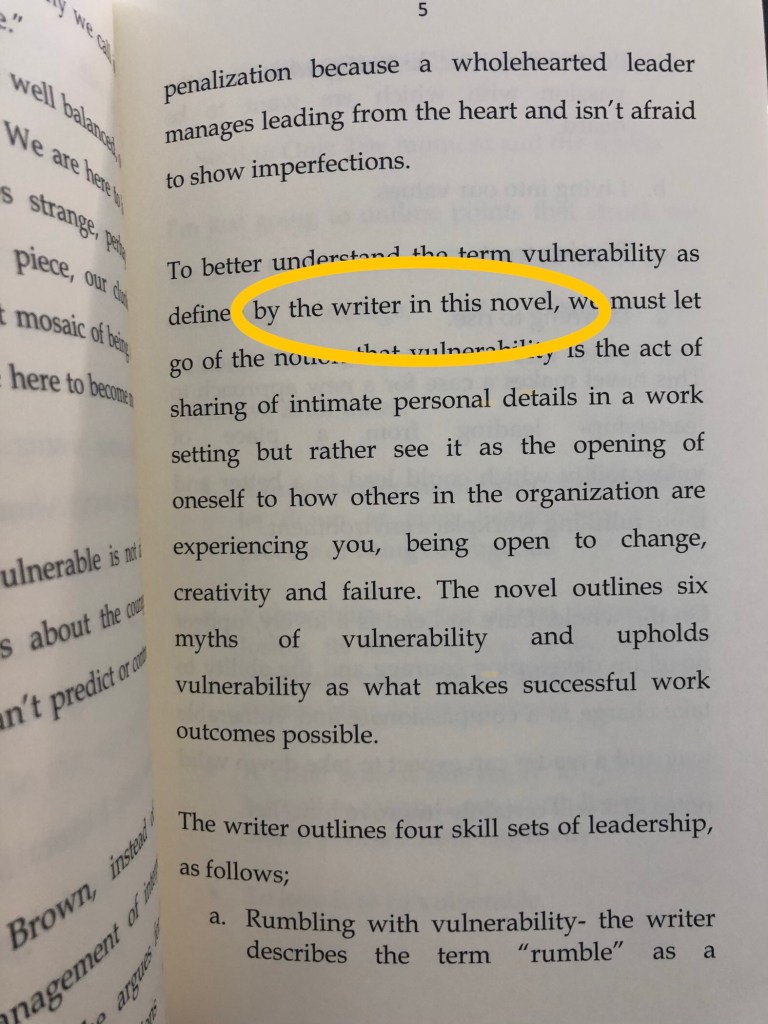
As I read the first part of the book, it because clear that it is a book report penned by a 14-year-old in the UK (there’s a “Lessons Learnt” chapter) trying to get the paper long enough to fit the teacher’s requirements. Poor Brené is referred to as “the writer” endlessly, and poor Dare to Lead is repeatedly called a novel. If it’s a novel, the character development and plot both suck.

But Wait, There’s More

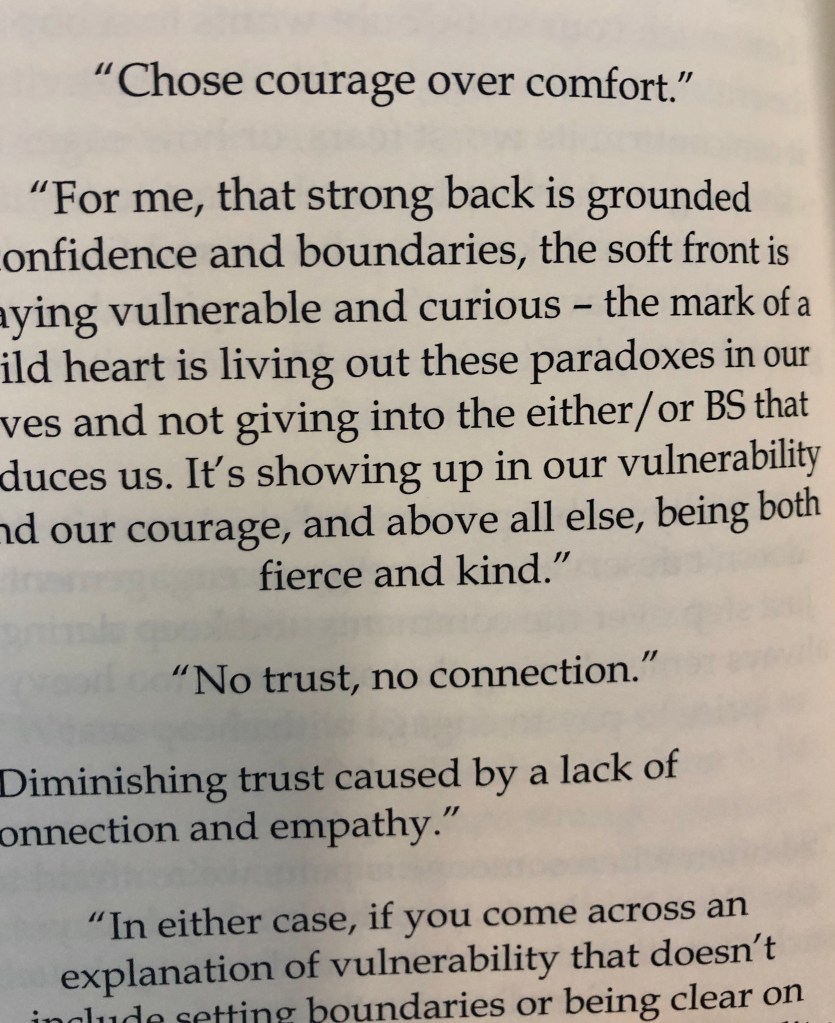
The book report, replete with listings of the names of each section and verbatim content from Dare to Lead, mercifully ends after 22 zippy pages. Then ten pages of quotes from the book are kindly shared by, um, let’s call them “the author.” These are dizzily presented centered, but still full of huge gaps. And for fun, one’s occasionally left aligned. (I’m a hack writer too, though, how many adverbs ending in -ly were necessary in this paragraph?)

It’s centered! Mostly…

I guess “the author” got tired after picking out those quotes, because the “Conclusion” section slides into a description of the organization of the book and the names of chapters. Riveting. After carefully detailing Part 1 (though alternating on using and not using quotation marks around chapter/section titles), everything comes to a screeching halt:

“Haven discussed all the sections in part one, the writer further divided the book to part two, three and four and termed it living into our values, under section two the writer stated that giving and receiving feedbacks is one of the biggest fears at work…”

the author, Workbook for Dare to Lead

They then finally take a breath and give one sentence for each of the rest of the sections Brown so carefully put LOTS of concepts in. It’s okay, the author had to save space for the lessons learnt and workbook pages. I don’t think I’ll be using any of the workbook questions in the book club, though I could play connect the dots using the dotted lines between pages.

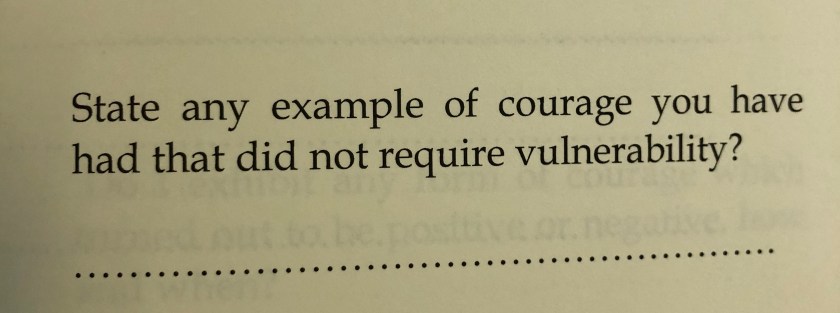
That’s an imperative, my friend, not a question.

To Conclude My Most Excellent Review

I actually hadn’t intended to write a book report of this book report, but it just came pouring out, and was probably good for me in a cathartic sort of way. I realize someone wrote the study guide quickly to get something out there to make money. I was silly not to look carefully and see that it was from a self-publishing purveyor.

Mainly, I want to beg and plead with any of you who plan to self publish books or know someone who does:

Please, please, please have someone look over your content before you send it in.

Amazon is NOT gonna do it. They’re going to print copies of your PDF on demand and send them to innocent people who want to read an actual book.

Really, it does?

At least glance at other books and see how they are set up. Large print and small pages are not a good combination. Most important, while Microsoft may say what appears at right about justified text, it helps to have professional typesetters and to use hyphenation. You might want to take note, too, that centering works best in very small doses.

Of course, you or someone else should proofread; “have4” is not a word, but it’s in the study guide. I forgive using semi-colons for colons in introducing lists, since whoever wrote this was trained in the British style.

One More Thing

Say, let’s look at my pretty flowers and my breakfast, to cleanse our minds.

Some very good books have started out self published. I am proud of some of the people I know who wrote them. Not all self published books are embarrassingly bad, but caveat emptor and all that.

On the other hand, I wonder if I should just PDF up every year’s worth of my blogs and offer them for sale? Suna Blathers On, Volume 1, and so forth. I could use some money, and I did write this all by myself, errors and repetitious phrases and all. I guess I’m a writer after all! Maybe I’m creative!

I’m gonna do the whole thing in Comic Sans! That’s pretty!

Book Report: Furious Hours

Oh, hooray! I finally finished a book! I’ve been reading some long ones lately, and it hasn’t helped that I have all those other activities and distractions going on. Speaking of distractions, Cathy J. gave me some fascinating used books and magazines passed along by her daughter. When I sent this photo on to Anita, she squealed via text. Cathy also sent along a VERY 1970s decorating book that may well be my next review.

I can’t wait to delve into all the dish about Lee! (Not my husband, this guy)

Oh, Wait, This Is a Book Report

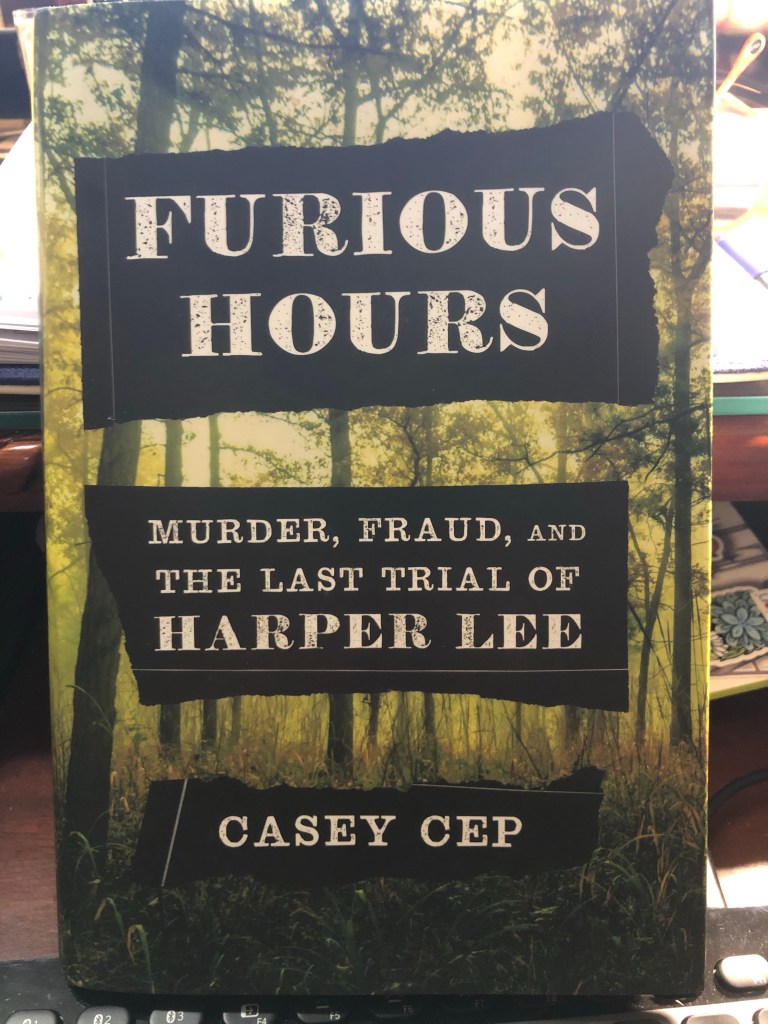
Anyway, the book for this month’s book club is Furious Hours: Murder, Fraud, and the Last Trial of Harper Lee (what a mouthful). It’s by Casey Cep, a young woman with a mighty big talent for writing complex plots that you can still follow. Heck, it’s so complex that it’s hard to say what kind of book it is.

Cool fonts and scary woods just draw you in.

It’s almost like a few books all gathered together into one. There’s a crime story involving the black community in a small Alabama town, full of innuendo, unsolved deaths, and much drama. There’s a biography of the author, Harper Lee, including her childhood friendship with Truman Capote and her difficulties writing after To Kill a Mockingbird was published. There are also at least two other biographies hiding in the book, Willie Maxwell and “Big” Tom Radly). And then there’s a book on how to write “true crime” books, including how to do the research, interview people, and ferret out the facts.

The cast of characters in Furious Hours is legion. You meet practically everyone in the small Alabama town and the surrounding area from regular citizens to the law officers and politicians. You meet everyone Harper Lee was ever close to in all her travels and adventures, including, of course, all her colleagues in publishing. And you meet people who have insight into all the above.

I’m usually one of those people who has to write down all the characters in books, so I can keep them straight (I was so glad the book Homegoing had a family tree with names and relationships in it). But Casey Cep made the people in the book come alive so well (and she included subtle reminders of who people were), that I followed all the people as they came into the book, left, and came back again years later.

The person you don’t don’t get to meet in this book is Casey Cep, who prefers to let her words tell you about her. She’s the one who impressed me the most. Her research was impeccable, as far as I could tell, and she carefully clarified any time something she wrote about was not verifiable or when she got conflicting information from sources. That sure made the book more interesting to me!

There’s so much to this book that I wonder if Cep, like Harper Lee, only has one magnum opus in her. I hope not, though. Her reportage is clear, quick-moving, and a lot of fun. It’s amazing that this was her first book!

The Physical Book

I’d like to say a few words about the book, itself. You have probably noticed that I like to read physical books, rather than listening to them or reading on a screen. It’s probably something to do with the age I grew up in, but it’s also because books are a sensory experience to me.

Furious Hours has lots of photos of Harper Lee smoking. She was something else.

I also like to read hardback books. I KNOW that’s because they were such a luxury when I was young. All we had were the encyclopedias and a lot of paperbacks (Mom read romance novels). I loved her Reader’s Digest Condensed Books, though, because they were hardbacks. (However, I didn’t like the “condensed” parts once I read some of the full versions of books.) I wonder what happened to those books?

Back to my topic, Furious Hours is over 300 pages, so it’s a substantial hardback book. It’s great that there are photos of some of the people and places in the book, too.

And if you haven’t read it, for goodness’ sake, go get this book.

However, the book drove me nuts as I was reading it. Why? Well, the pages are really thick. I always felt like I must have been turning two pages instead of one. Second, the book just would not open all the way. I even tried to smoosh it down in a few places, but nope, it would not open wide. If you loosened your grip on it, it would pop shut. I’m sure it’s a good quality and will last a long time, but it sure was hard to read! I did like the quality of the paper on the cover, though. It felt good.

I find it interesting that I kept turning from this book to a large paperback I’m also reading, called Behave. I just love the way that book feels. It opens up so I can read it, the pages feel good, a blend of smooth and a little texture, and there are lots and lots of words on the pages, so I don’t have to turn them so often. (I will say, though, that if you don’t have really good glasses, you’ll have a heck of a time with its footnotes, which are in 6 point type, I swear.)

Should You Read It?

In summary: for a fascinating time learning about crazy crimes and Harper Lee, go out and get a paperback version of Furious Hours! Thanks to Anita for selecting it for our neighborhood book club.

Book Report: Sunnyside Plaza

I haven’t written a book report in a while. Why? I am reading two long books at the same time, which means neither one of them is finished. But, yippee-dippee, I small but significant little book has appeared, and I got so excited about it, that I got it the day it was published: Sunnyside Plaza, by Scott Simon.

The cover of the book is also charming.

Stereotypical hippy liberals like me will recognize the name Scott Simon, because he is the host of Weekend Edition on NPR. He also has one of the best Twitter feeds that I read. He is smart, funny, and insightful. He’s also a good writer, and Sunnyside Plaza is his first book in the Young Adult genre.

Now, don’t turn away because it’s YA Fiction. Some of my favorite writers focus on that genre. All it means, in this case, is that the book isn’t very long. It does not mean that the subject matter and its implications aren’t also appropriate for us non-young adults.

Simon based the book on people he met as a teen when he had a summer job in a halfway house for intellectually disabled adults, only it wasn’t called that back then, of course. Part of what makes him such an empathetic adult came, no doubt, from his experiences with these folks.

So, yes, it’s a book about people who live in a group home and have varying degrees of cognitive impairments. It’s told through the eyes of Sal, who you just have to love, a lot, by the time the book is over. During the course of solving a mystery at Sunnyside Plaza, Sal and her friends learn just how capable they are, and the people around them come to see them as individuals with charm, wit, and strengths.

It never hurts to be reminded that people who are different are still whole human beings with much in common with the rest of us. But I saw something that is sticking with me after I finished the book: it doesn’t take owning a lot of things, being accomplished, or even being able to talk to live a whole and happy life. The joys of living in the moment are perhaps more available to people who don’t have to go off to work, think about bills, or all those things. Love, friendship, fun, and yes, even sad things, are all available to experience when there isn’t so much clutter to get in the way.

The people living in Sunnyside Plaza like it being just the way they are. The people they meet who get to know them also come to feel the same. That’s an important lesson I’m glad I’ve learned, that everybody has their own wisdom.

I strongly recommend this book for you, any teens you know, and any mean people who poke fun at others, not that they’ll read it. But maybe it will teach all of us to be a bit kinder.

Next

While I have to read the book club selection next (Furious Hours, about Harper Lee), I am wanting to jump right into another book I just got, which I think builds on the lessons of Sunnyside Plaza: Talking to Strangers, by Malcolm Gladwell. This book dives deep into why it’s so hard to really talk to people from different parts of society from ourselves, but why it’s so worth it.

However, I have to finish my giant scientific book, Behave, first. It’s hard to read about brain chemistry when you are about to fall asleep, but it’s interesting!

Book Report: Ragtime

I didn’t buy a hardback copy. But, it was a well-constructed paperback.

Proud of myself, I am, for finishing the latest book in the neighborhood book club series, especially since this is not something I would have picked out for myself. But, the assignment was Ragtime, by E.L. Doctorow, so I read it!

As someone interested in history, I did enjoy all the historical references and real people who came and went throughout the book, some of whom happened to be favorites of mine (like Emma Goldman, the anarchist). I think it helps to have some clue as to what was going on around the beginning of the twentieth century, though I guess you learn a lot even without any helpful background knowledge. This great review by the late John Brooks said it really well:

This mixture of fact and fiction may confuse or mislead the unwary or historically uninformed reader, and it suggests a projection onto the past of the suspect techniques of the New Journalism. I, for one, although no friend of that aberration, am willing to forgive any historical novelist who makes his flights from historical fact as funny and pertinent as Doctorow makes his. Like Houdini’s audiences, I am made to enjoy being fooled. As to the topical descriptions, they appear to be accurate enough to satisfy an exacting student of Americana. Certainly they are alive enough never to smell the research in old newspaper files that they must have required.

John Brooks: From the Archives: A review of E.L. Doctorow’s ‘Ragtime’, Chicago Tribune, March 05, 2015 (Suna’s birthday)

Now, as much as I enjoyed getting to know some fun details about historical figures, especially the imagined inner thoughts of Harry Houdini, the ground-breaking way the book was written seemed a little contrived and sometimes annoying. Here’s how John Brooks (a man of many more words than Suna) put it:

Continue reading “Book Report: Ragtime”

Book Report: Can We, Should We, Be “Happier Now?”

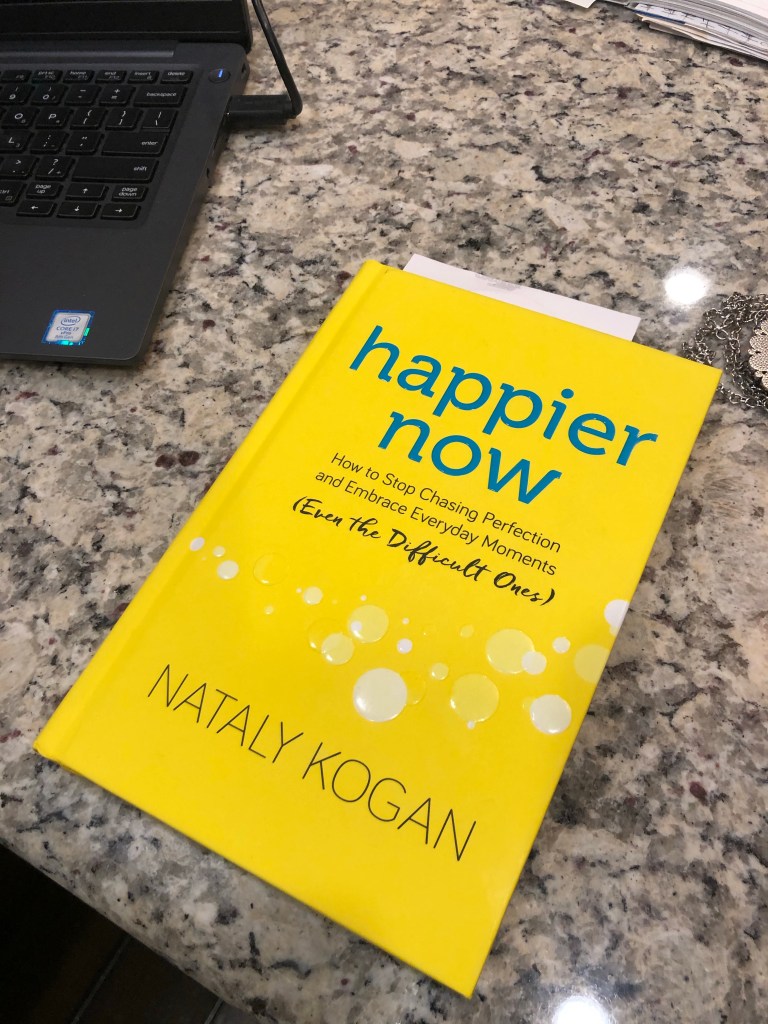
They started a book club at work, where everyone is to read some self help book. Even though I had to miss the first meeting, I have been dutifully reading Happier Now: How to Stop Chasing Perfection and Embrace Everyday Moments (Even the Difficult Ones), by Nataly Kogan. Kogan is a Russian immigrant who founded the “Happier” app, which I used for a little while then got nothing out of, because no one else I knew was using it and I probably didn’t quite “get it” at the time. Still, I figured this lady would know something about happiness, since it was her job.

It’s certainly a cheerful-looking book!

I was dubious about this book, to start out with. After all, I’ve read plenty of self help books about learning to love myself as I am, embrace my imperfections, and be kind to myself. I have said more than once that Brené Brown saved my life and that I should re-read The Gifts of Imperfection annually. Her books are how I became the much-less neurotic Suna who writes these blogs.

I told myself that, since I have already turned around my negative self-talk (I scare myself sometimes when I find my inner voice saying stuff like, “I feel great!” or “I’m happy today.”), I really don’t need another book on this topic. Of course, I conveniently forgot that I vowed to read books on this kind of thing yearly, to remind myself of how I want to be in the world.

Continue reading “Book Report: Can We, Should We, Be “Happier Now?””

Book Report: The Body: A Guide for Occupants

Ooh-wee am I excited to share this book report! I’ve been making myself obnoxious the entire time I’ve been reading it, because I keep telling everyone little tidbits I’ve learned or recommending it with great abandon. I sure liked The Body: A Guide for Occupants, by Bill Bryson. I am a complete sucker for nonfiction that both informs and entertains, and this book certainly achieves those goals and more.

Even Penney the dog liked this book, at least at first.

Bryson, who is many people’s favorite nonfiction writer, according to the many people who told me that, takes you on a tour of the human body and all its systems, and he shares lots of current information (the book just came out) as well as fascinating stories of what people used to believe about various aspects of ourselves.

Continue reading “Book Report: The Body: A Guide for Occupants”

Book Report: Unnatural Texas?

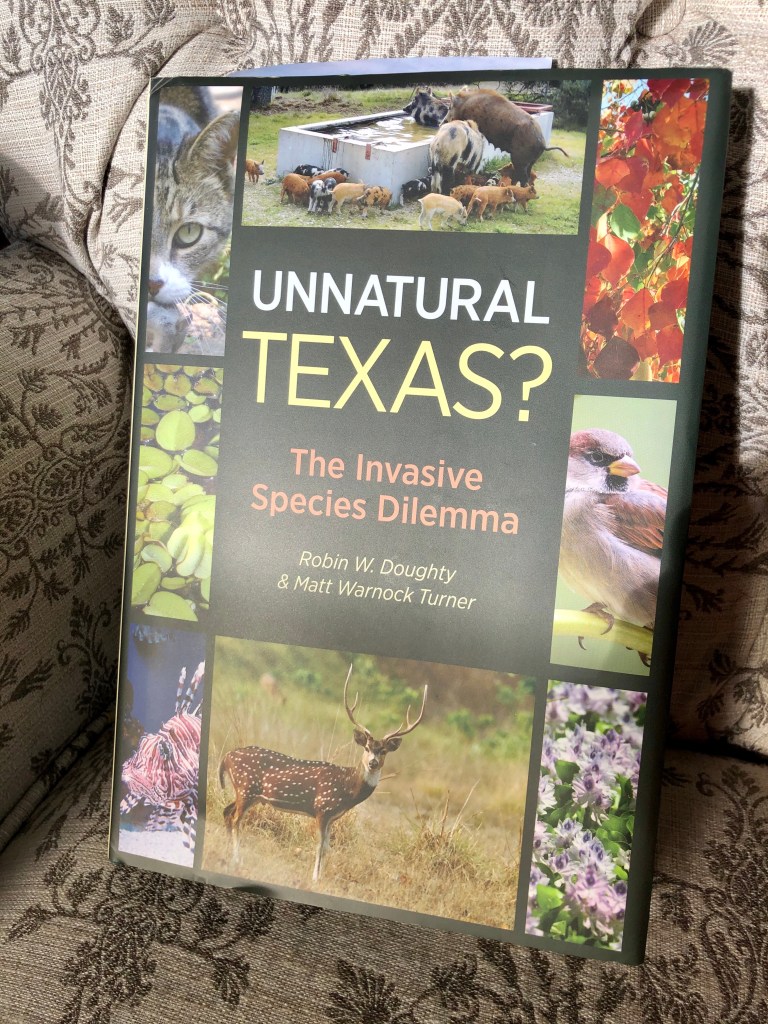
Hey from Austin! You didn’t think my holiday was all traipsing through the mosquito fields and staring at the ocean, did you? Of course not. I also read a lot. Admittedly, I read a few magazines, but I got deeply into this book, which I got at the Texas Master Naturalist Conference a couple of weeks ago. It’s whole title is Unnatural Texas? The Invasive Species Dilemma, and it was written by Robin W. Doughty and Matt Warnock Turner.

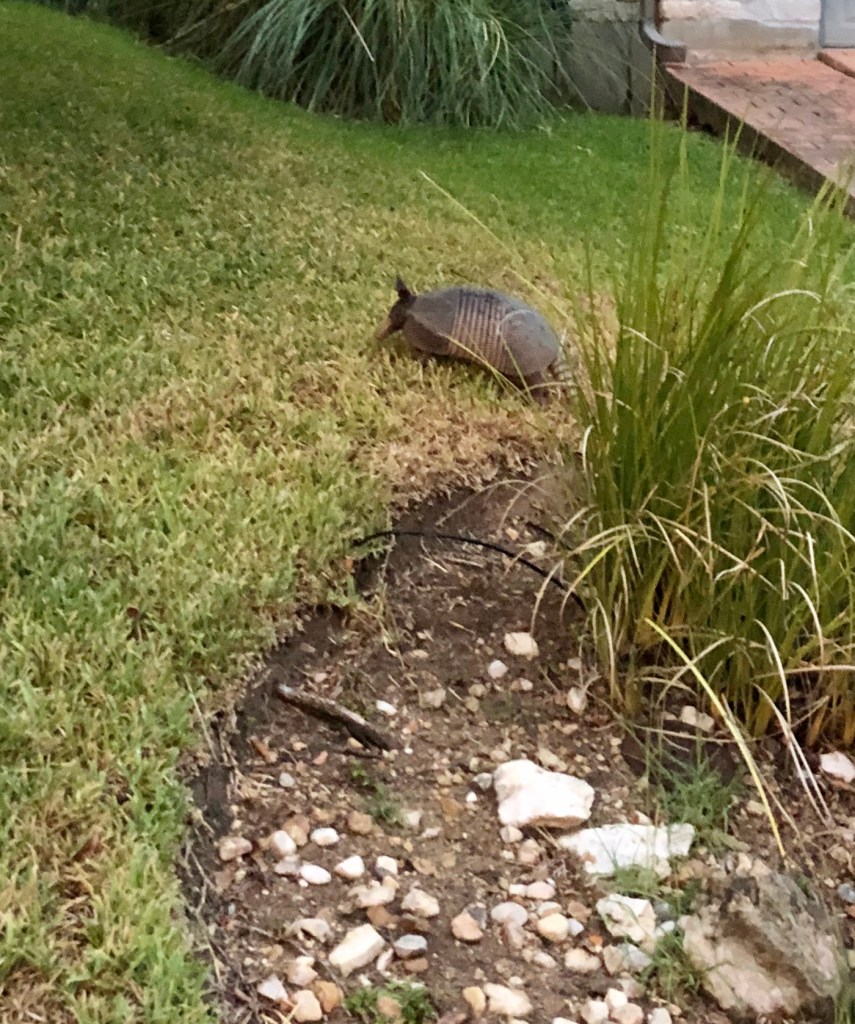
The authors didn’t want to put “invasive” in the first part of the title, because, as they frequently point out, none of the plants and animals they talk about actually invaded in the first place; someone brought them to this continent. In fact, the only animal who’s actually “invaded” that they talked about is the nine-banded armadillo, who’s been going farther and farther northward, on its own, for the past couple of hundred years. (I would add to this list the caracara/Mexican eagle and a couple of other birds that are coming northward since it’s getting warmer).

This dude invaded our neighborhood all on their own.
Continue reading “Book Report: Unnatural Texas?”

Book Review: The Art of Racing in the Rain

The book I read all in one day is The Art of Racing in the Rain, by Garth Stein (also a major motion picture, which I did not see). There seems to be an entire genre of books written from the viewpoint of dogs, these days. In fact, here’s a list of them from Amazon, and you will see it includes a book by a human with “dog” in their name.

As for this book, it’s both about racing and being a very intelligent dog observing a life. Like A Dog’s Purpose, this one posits that dogs are put on earth to protect or care for a family. When they are done, they go away and come back as something else. For our book’s dog, named Enzo, he is convinced he will come back next as a human, and he’ll know so much stuff, especially about racing cars.

I can see how this book became a “major motion picture,” because the people in it are not quite as complex as the inhabitants of the last few books I’ve read. The race-car driver dad is just plain good, with just a hint of temptation to be bad. The lawyers are just plain lawyers.

Continue reading “Book Review: The Art of Racing in the Rain”

Book Report: Me, by Elton John

Here’s a random fact about me: I really love to read memoirs, especially of my favorite musicians from the seventies. Some are definitely better than others (like Keith Richards’ memoir, dang that was some good writing). So, I had this book by Elton John pre-ordered and got it the day it was published last week. I’d enjoyed the movie a lot, especially the costumes that were exactly like what he wore in real life, but I was interested to see if his own words differed from the cinematic portrayal.

It matches the movie

Luckily I finished the other book I was reading, so I could delve right into this one. And delve I did. At first I didn’t like the writing all that much, but soon enough, I was trying to keep my eyes open every night so I could read more. Yep, he was an interesting guy. He is also an honest guy. No sugar-coating of his less than stellar qualities for him!

I’ve read a couple of books recently where the author remarks that random decisions or meetings changed the course of their lives dramatically and mused about what would have happened if person X hadn’t been in the shopping center on the right day, or whatever. Elton John does this, too, but I liked his conclusion that all his mistakes, lucky coincidences, and random choices made him the happy man he is today, so it’s all fine by him.

I just thought this was pretty, and it’s here to remind me to tag when I finish writing this.

I have to second that, myself. Every “mistake” contributes to your growth and wisdom.

Continue reading “Book Report: Me, by Elton John”