Book Report: The Field Guide to Dumb Birds of North America

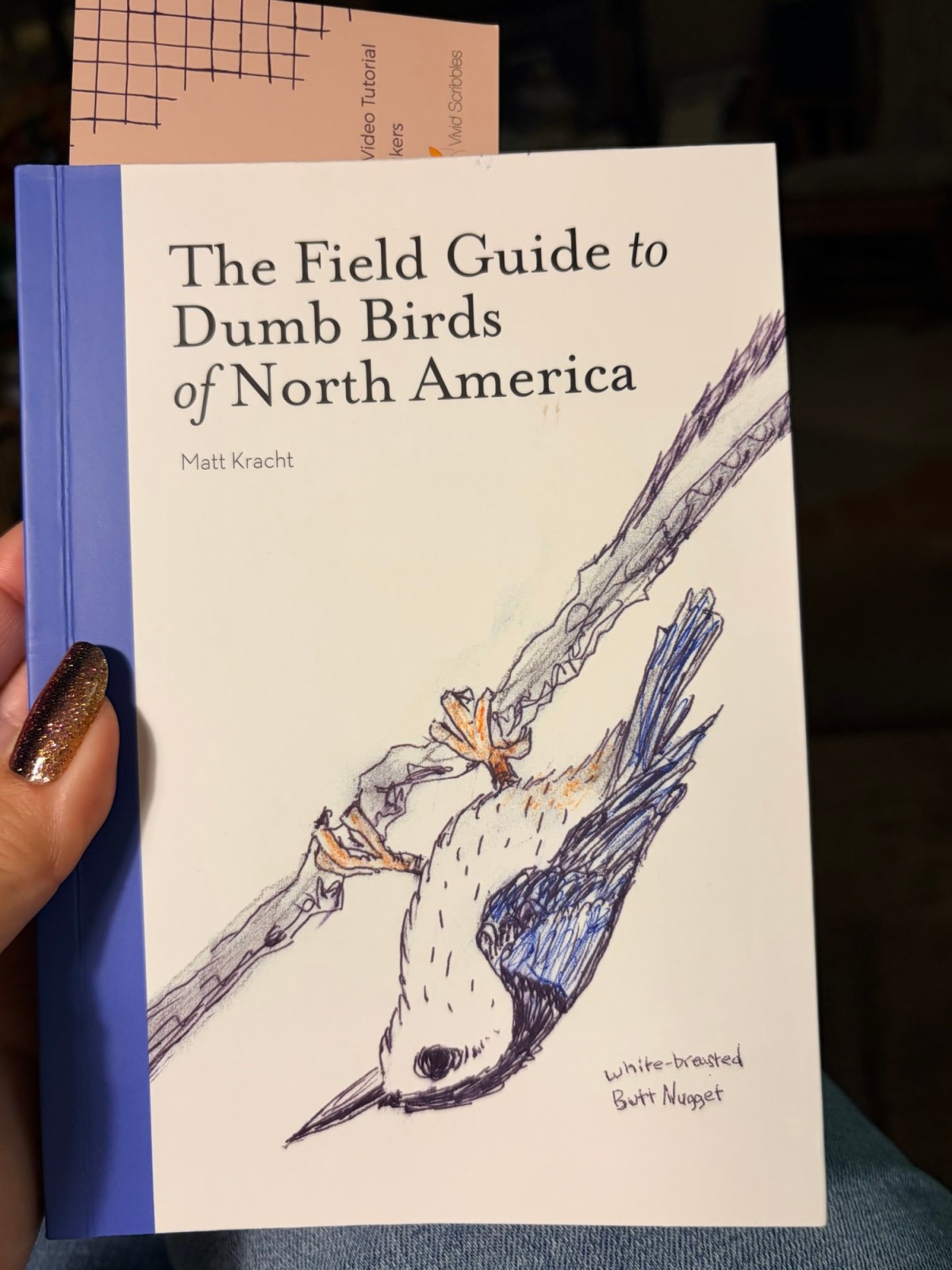
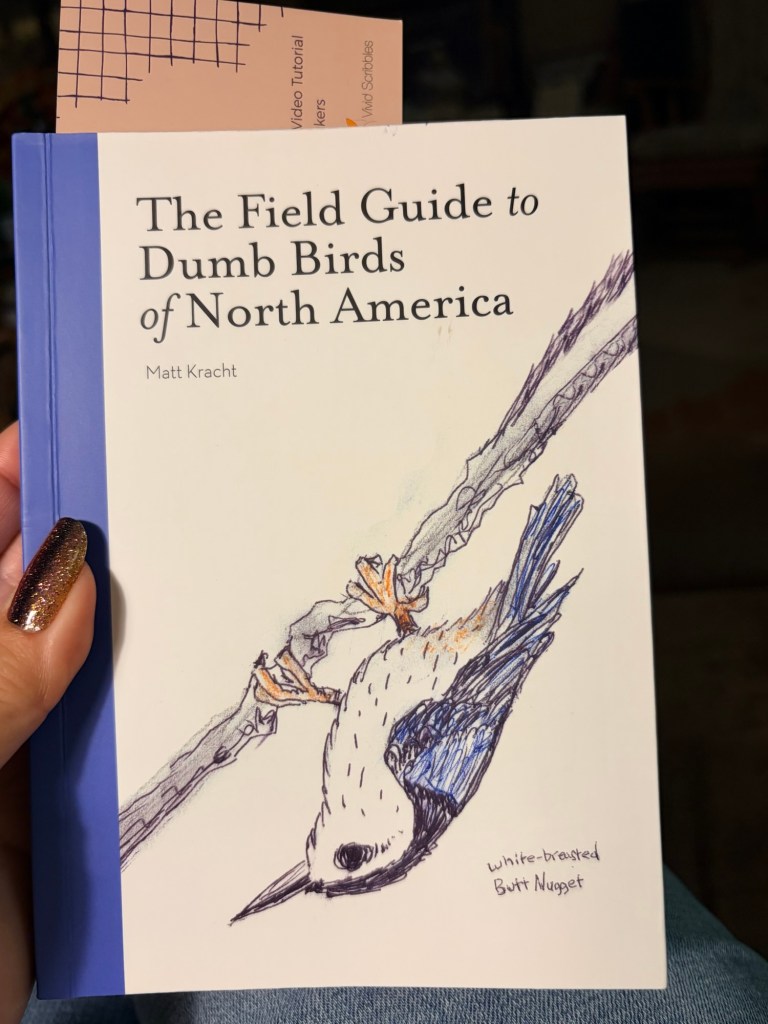
I got this little book from 2019 yesterday and found it necessary to plow through it last night before I went to sleep. Matt Kracht, the author, tries to present himself as a curmudgeonly bird hater who hates all that screeching and pooping birds do. But you can tell from his charming and accurate drawings that he’s secretly quite fond of birds.

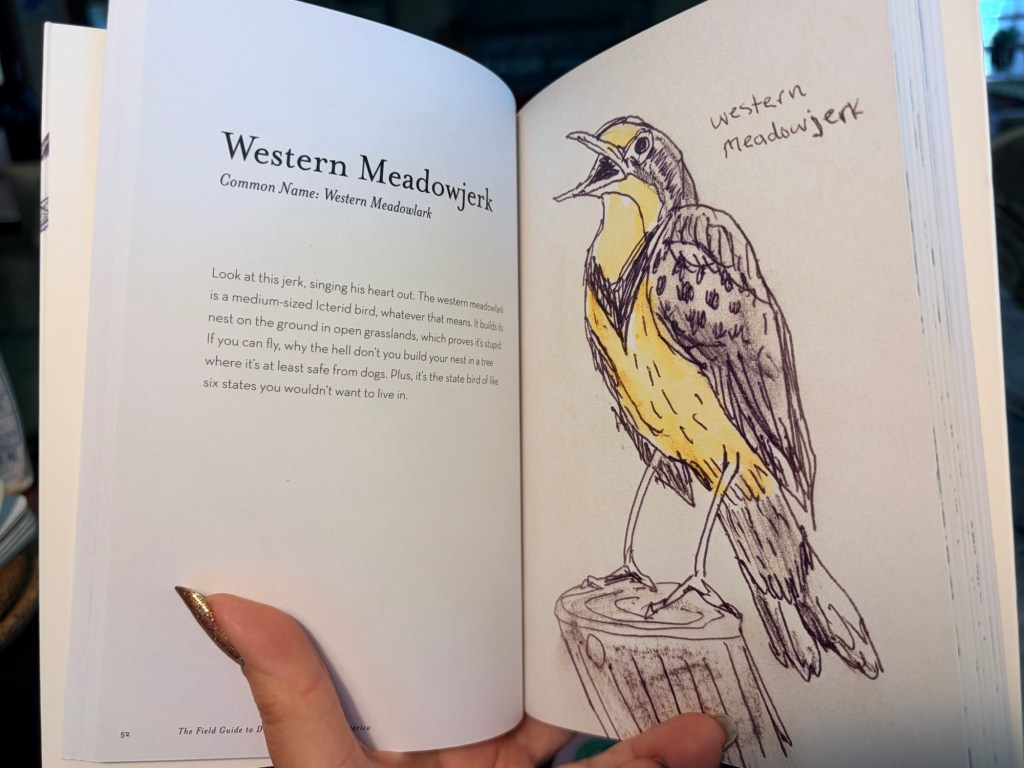
Sample page featuring a bird name that’s not too full of curse words.

Though it’s really funny, the book isn’t for kids, due to f-bombs and such. But it’s hilarious for those of us comfortable with adult language. And Kracht includes lots of birding/birdwatching advice, bird feeding information, and “helpful” information that’s both funny and sorta useful underneath.

This is not a book I’d recommend for a person who’s new to birds but it’s a great amusement for your experienced bird-loving friend, white-elephant gift for your nature group gift exchange. Or you could leave it in the bathroom for visitors to enjoy.

I certainly felt it was worth $7! See if they have it at your local bookstore.

Thanks to Gene Roddenberry

Lee and I have been watching lots and lots of Star Trek series for the past many months. We watch one entire series and then move on to another. So far we have watched or rewatched Picard, Enterprise, Discovery, The Next Generation, and Strange New Worlds. we have now gotten into Deep Space 9. We skipped The Original Series (TOS) for reasons I’ll explain later.

Why do we do this? An easy answer would be that it’s not taking place now, and races solve their problems in that universe. It’s a pleasant diversion.

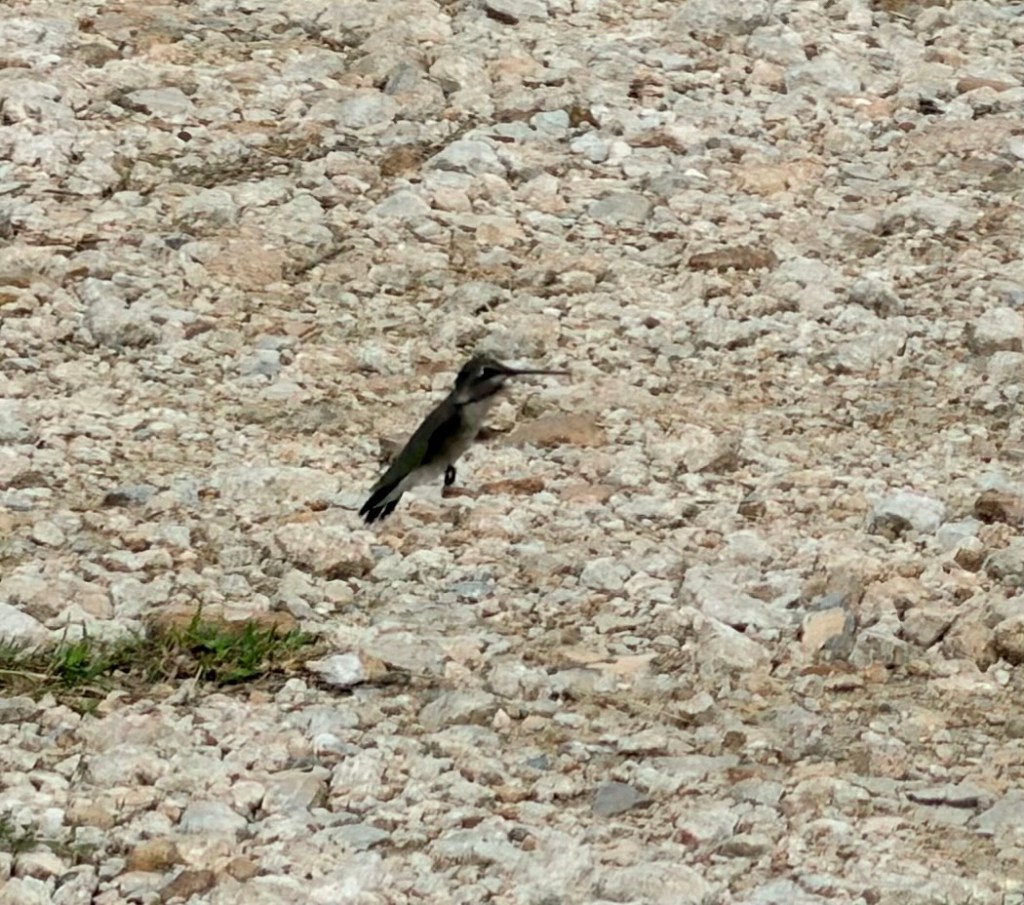
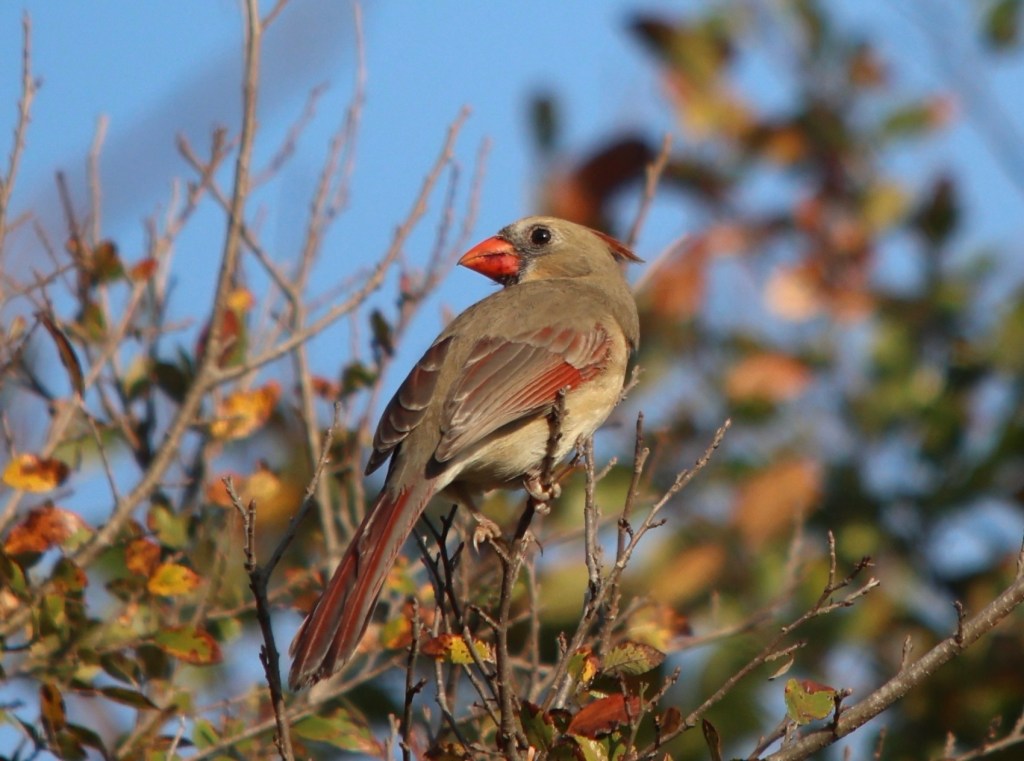
So are birds. Today we have a Brown-headed Cowbird.

I don’t know about Lee’s answer for watching these, but my answer turns out to be deeper. I started watching Star Trek TOS when it first went into repeats after the show ended. I couldn’t watch it before, because Gainesville, Florida didn’t have an ABC station back then. Yep. We only had CBS, NBC, and PBS. Very bad PBS.

And we had birds. Mom and I watched a lot of birds.

Reruns aired right after school, and I’d get in the phone with my friend Patti to dissect each episode as soon as it was over. We bought the big book with summaries of all the episodes in it and annotated our copies with our favorite scenes or sayings. We were very serious. Of course I still have the book.

It’s hard to take ST too seriously

After I moved away I watched it with new friends, avidly collecting the James Blish paperback books rehashing each episode. I read them until they fell apart. You can see why I have no need to watch that series again.

What I now realize was happening was exactly what many people feared would happen to the youth of America. I was sucked into believing every not-so-subtle criticism of the oppressive aspects of the USA at the time and slowly but surely became who I am now. Yes, Gene Roddenberry helped me pull together my morals, ethics, and political leanings. Thanks, Gene. You made me progressive.

Gene, that subversive radical dreamer!

And nothing makes me happier than to briefly slip into the universe those characters live in. I feel like I’m home with my imaginary family. Sure, they have a lot of battles and shootouts but they are usually so bad that you have to laugh. I like that people and cultures screw up, just like here.

Anyway, I’m not ashamed to be a Star Trek fan and can easily see why some folks are not. That’s fine; they have the Yellowstone universe to enjoy.

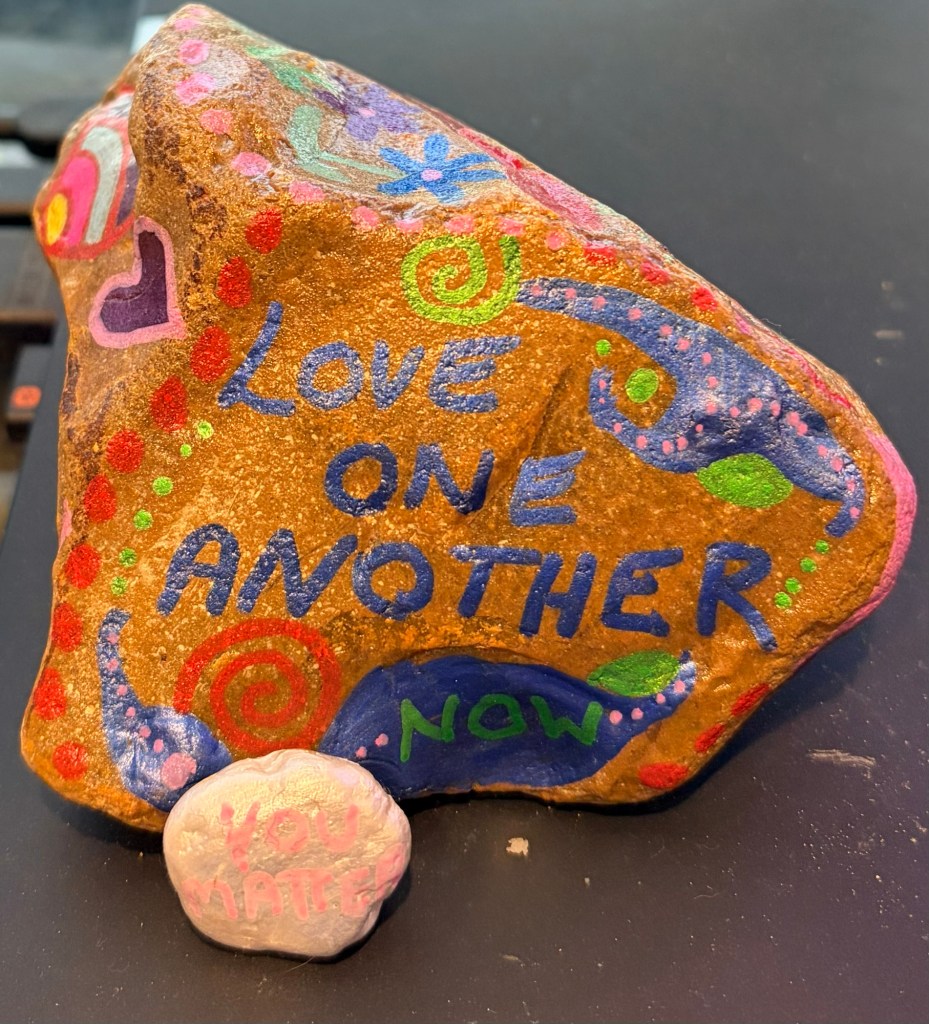
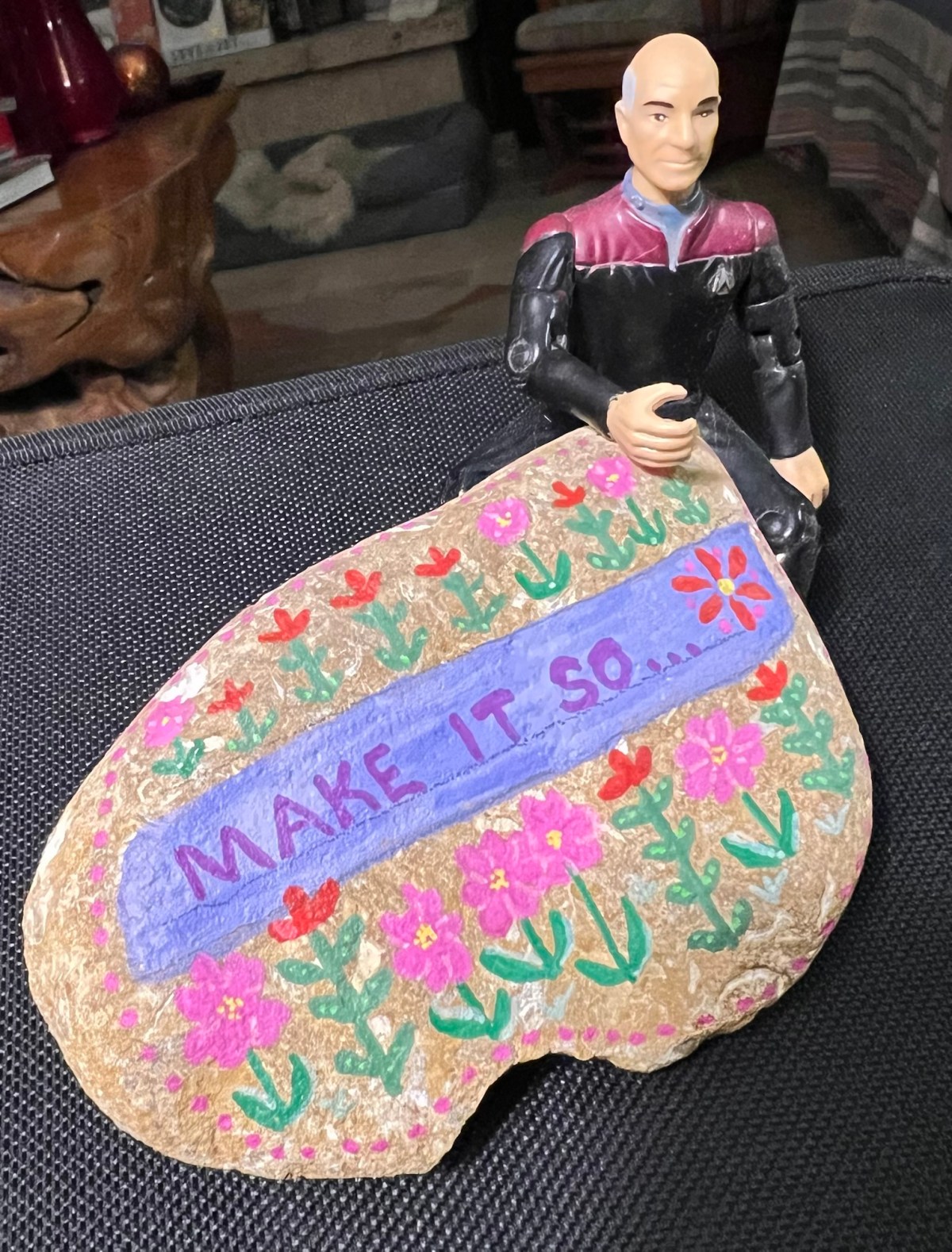
Picard approves of his rock.

Now, there is a lot of silliness in Star Trek, some bad acting, and way too many time travel/other dimensions plot lines. I think the writers over the last 50+ years all really like time travel for easy storytelling. And I surely like some series better than others, but we plan to watch them all, even the cartoons.

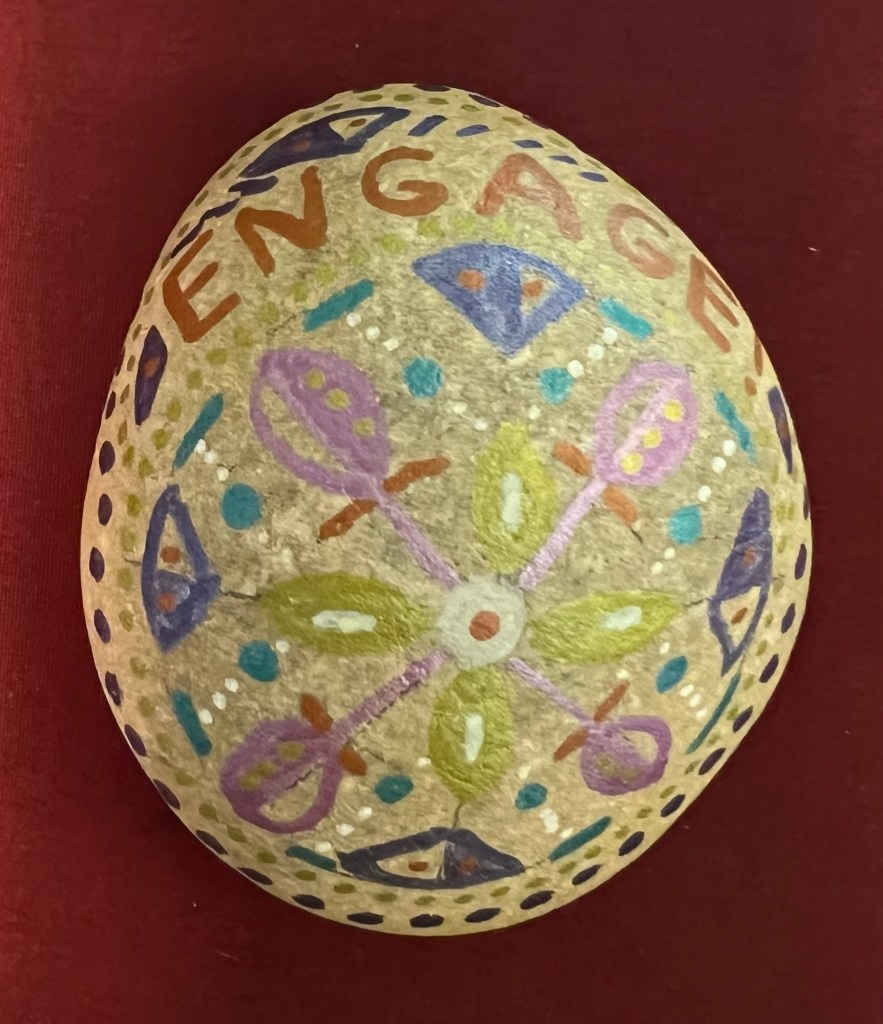
As you can see, I have Star Trek on my mind.
This leads me to express my opinion on the current series, Strange New Worlds. I have heard it gets mixed reviews. But who cares? I love it even more than I loved TOS as a kid. The characters seem much less stereotypical, they have interesting experiences and real traumas. Plus you get the backstory to TOS. Captain Pike is so much more than a guy in a wheelchair thing! And his hair! The younger versions of all the beloved characters are so much fun and it’s cool to see how they all met.
Also the hair jokes.

But here’s where I’m controversial. I just love the weird episodes. My absolute favorite is the one where they act out the history of Star Trek from the beginning as part of some holodeck issue. There were enough Easter Eggs in that one to fill many baskets. When I realized Number One was playing Lucille Ball and Captain Pike was Roddenberry I about fell over laughing. Then Uhura delivers a speech about the real mission of the series. Sniff.

I also got a kick out of the musical episode. You just never know what’s next with that series. I’m glad there will be a few more episodes before Pike’s accident.

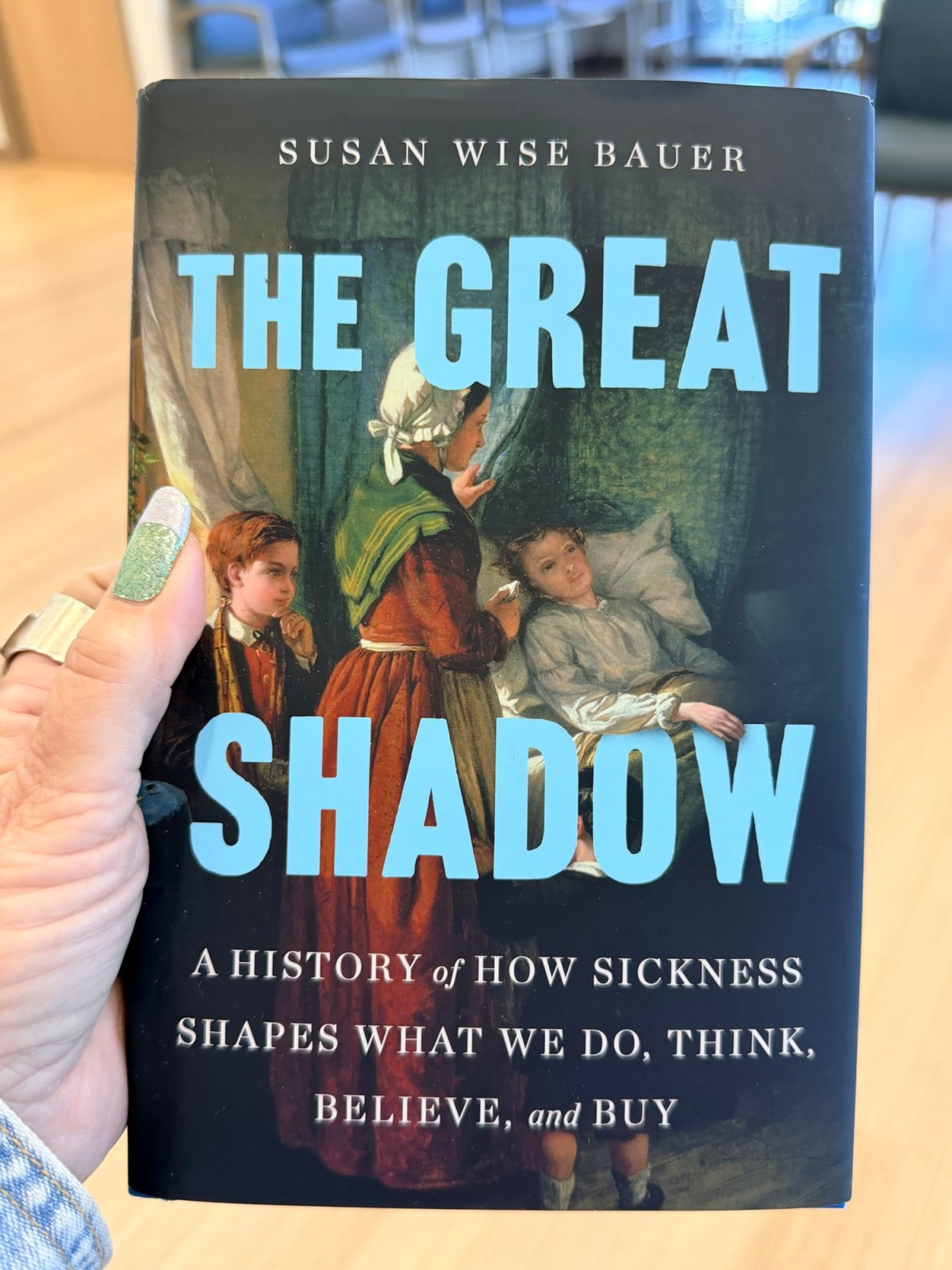
Book Report: The Language Puzzle

To say the least, as a former linguist, I was excited to find this book by a genuine researcher that claimed to explain the origins of language. And by gosh, Steven Mithen undertook a boat-load of multidisciplinary research on the history of humanity, culture, anatomy, and climate (among other things) to put together the various factors that could shape the development of language. It’s impressive. Lots of footnotes.

I enjoyed learning about all aspects of the puzzle, particularly the parts where he summarizes the history of linguistics and how the various parts of language fit together. Even if I didn’t already have a pretty firm grasp of the parts of speech, sound systems, semantics, and pragmatics, I think I could have grasped enough of it from Mithen’s clear explanation. Just the first few chapters are worth the price of the book.

One thing that bugs me, especially when he gets to the sections on human development, is that it takes a lot of conjecture to move from the time when the human line diverged from the chimpanzee evolutionary path. There are many missing pieces in the fossil record, and much of our anatomy doesn’t survive to the present day.

And all the parts about how words sounded are fun to think about, and he does find evidence to back up many of the concepts, such as different head shapes and vocal tracts. I just found some of the story Mithen comes up with, about fire shaping storytelling and such to be plausible but not verifiable.

I’m not saying this wasn’t a good book, because I enjoyed it very much and learned a great deal about human history. I’m simply pointing out that I still don’t think we have a clear picture of how human language developed. I wonder if we ever can figure out details of something there’s no record of, like spoken or signed language.

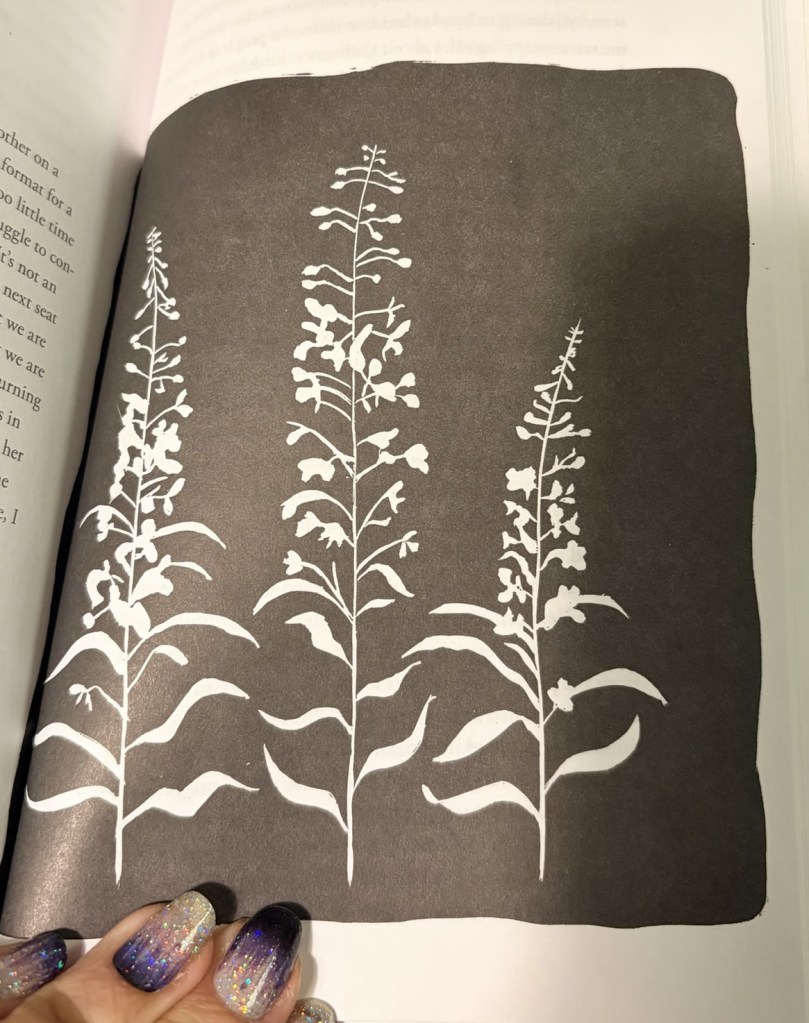
Unspoken beauty of dew on dove weed.

Maybe Mithen will next turn to written language. It has more examples to investigate.

Book Report: Beaverland

I recently finished this fascinating book about beavers, which opened my eyes to a lot of possibilities for healing the earth thanks to these helpful animals. Leila Philip is a New Englander who became interested in beavers when they were in the pond behind her house, so she spent a couple of years researching Beaverland: How one weird rodent made America (2022).

I like that Philip researched so many aspects of beavers’ presence in North America. The historical background was fascinating/horrifying. Fur trapping completely eliminated beavers in the eastern US and Canada but when reintroduced, numbers came back very quickly. That’s good.

Philip spent a long time learning about modern-day trappers and I commend her open-mindedness as she not only talked to trappers but went out with one as he checked his traps. This guy had incredible knowledge of the wildlife and terrain and a deep knowledge of beaver behavior and habits. I was fascinated, and came to accept that a reasonable amount of harvesting keeps numbers at a good level and provides hides that are used for hats, etc.

What boggled my mind, though, was finding out how beavers (and the prolonged lack of beavers) affect our waterways, water quality, and health of the surrounding countryside. Rivers didn’t look like they do now before trappers arrived. No straight lines and eroded banks. When there are beaver dams, water moves much more slowly toward the ocean and is cleaned of toxins. Oh there’s lots more, but I don’t want to rewrite the whole book!

Speaking of writing the book, my favorite part came at the end, where there’s a section called “The Story of the Book,” that provides context for her travels and research for the book. It’s just as interesting as the main book, and a lot more fun to read than typical endnotes, though it serves the same purpose.

My only quibbles with this wonderful book are that sometimes information is repeated almost verbatim, and Philip feels compelled to describe everyone she meets through a sort of annoying subjective lens. I’m not sure I need to know how messy someone’s hair is or the details of their clothing in every situation.

I’m in a grumpy mood, so take my criticism with a grain of salt or two. If you’re a naturalist or nature lover, you’ll treasure this book and the perspectives it provides.

Book Report: The Tree Collectors

This is the book I needed right now. I needed sweet stories of people who love trees and are willing to go to great lengths to show that love. I also needed simple but beautiful watercolors of trees and the people who love them. The Tree Collectors: Tales of Arboreal Obsession, by Amy Stewart (2024) gave me just what my fascism-weary brain needed—a beauty break.

First, the book is beautiful. Even the cover hiding underneath the dust jacket is a watercolor painting.

And the section headers are so fun that I just want to go try to make a painting like them. All the art is by Amy Stewart, including portraits of each of the people she profiles in the book (either their favorite plants) and all the other illustrations. (Oh yes, the headings are also in a fun font.)

This visual extravagance might be enough to enjoy, but the words in the book are very enjoyable and encouraging as well. It feels so good to read about people around the world who collect trees in many different ways, from embroidering holes in leaves to scientific DNA manipulation. There’s a lot in between, too.

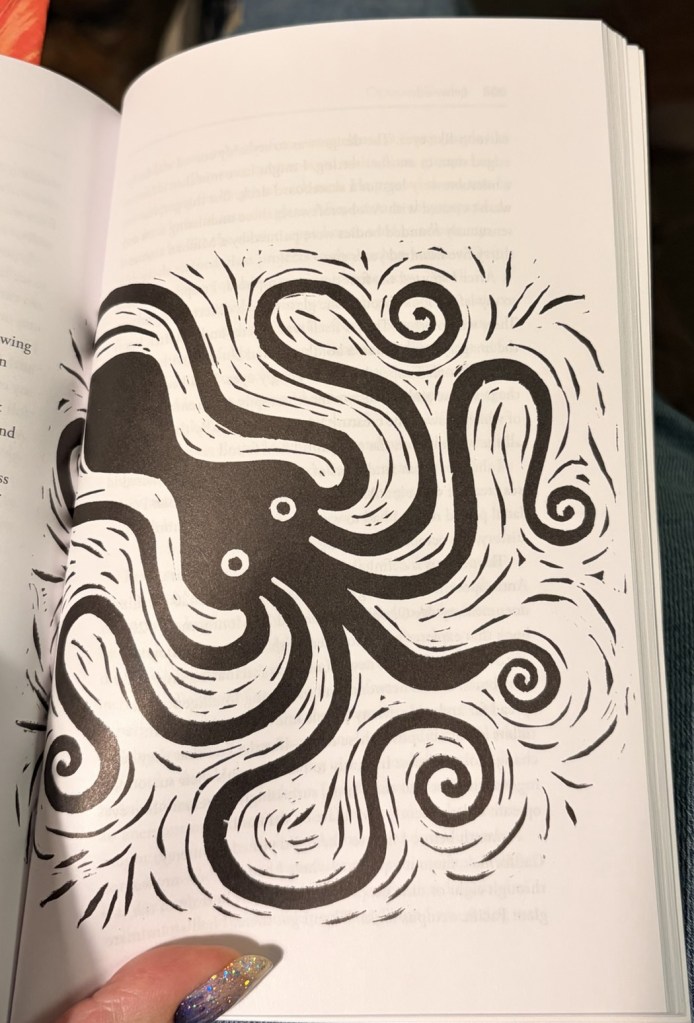
One of the profile illustrations

Some of the people Stewart profiles seem so kind and dedicated that I just want to hug them. The best part is that she uses the words of the collectors themselves to explain their obsessions. I got a real kick out of the way an urban man with a checkered past described his passion for planting trees surreptitiously around neglected overpasses. His street vocabulary doesn’t diminish his love of trees and of beautifying his neighborhood.

No watercolors, but I used colored pencils to do this Autumn Buttercup from Renaissance Botanical Coloring Book.

The Tree Collectors would be a great gift for any tree-hugger you know. There are so many ways you could enjoy it and savor it over time. The chapters are short enough to read aloud before bed, but you’d have to show the photos. It would also be a fun book to leave in your guest bathroom for entertainment.

Yep. I’m a tree hugger.

Book Report: Coming Up Short

Full disclosure: Robert Reich is the American I admire most. So it’s no surprise that I hoped to enjoy his new memoir, Coming Up Short: A Memoir of My America (2025).

Yes. Punning is involved. He’s short.

Wow, this is an insightful book, both from a historical and philosophical standpoint. I think that, at last, I have a grasp on what was going on in the United States during my lifetime. I think I only had a superficial understanding of who won elections and who promoted wars, improved lives, made rich people richer, etc.

Robert Reich has known so many important political and intellectual figures in his lifetime, from all parties and perspectives. His first-hand accounts of historically significant events clarify my understanding of turbulent times and remind me that ours isn’t the only time of upheaval in the US. He freely admits where he made errors, too, which makes him much more credible than someone who’d claim to have never made mistakes.

I found his detailed analysis of how we got where we are today fascinating. I can see the current US leader’s appeal to disenfranchised citizens and how those folks have been distracted from their actual enemies, which are corporate interests out only for their own profit. I think we educated elites are also being distracted into thinking the enemy is Christian nationalism rather than corporate greed. Yikes.

Reich is someone whose thoughts and commentary I read daily, even though I get pretty alarmed sometimes. He does also try to point out where people are doing good work, speaking out, and standing up to bullies. It’s good to have a little hope. In that spirit, I give you this passage on patriotism from Coming Up Short:

“White male Christian nationalism has nothing to do with patriotism. True patriots don’t fuel racist, religious, or ethnic divisions.

“Patriots aren’t homophobic or sexist, nor are they blind to social injustices, whether ongoing or embedded in American history. They don’t ban books or prevent teaching about the sins of the nation’s past. They don’t censor truths that may make people uncomfortable, facts that are inconvenient, realities that people would rather not face.

“True patriots are not uncritically devoted to America. They are devoted instead to the ideals of America- the rule of law, equal justice, voting rights and civil rights, freedom of speech and assembly, freedom from fear, and democracy. True patriots don’t have to express patriotism in symbolic displays of loyalty like standing for the national anthem and waving the American flag. They express patriotism in taking a fair share of the burdens of keeping the nation going, sacrificing for the common good. This means paying their fair share of taxes rather than lobbying for lower taxes or seeking tax loopholes or squirreling away money abroad. It means refraining from making large political contributions that corrupt American democracy. It means blowing the whistle on abuses of power even at the risk of losing one’s job. It means volunteering time and energy to improving one’s community and country.”

P. 317

In summary, this is an important book for anyone who still cares about truth and ethical behavior. It’s also full of enjoyable anecdotes from a brilliant yet humble man. He will go down as a great American.

Book Report: How the Hell Did I Not Know That?

I needed some light and humorous reading this week, so I picked up this book to read before bedtime rather than the depressing memoir I’m reading at other times of the day. How the Hell Did I Not Know That: My midlife year from couch to curiosity, by Lucie Frost, certainly provided me with laughs and gave me other things to think about than cults of personality and so on.

One of my friends from when my kids were younger recommended the book, and I believe most everything this friend says, so I bought it. Lucie Frost lives in San Antonio and is an actual Native Texan (who lived in Mexico for some time as a child, so also speaks Spanish). She is also sort of foul-mouthed in an endearing way, so if you don’t like curse words in your books, skip this one.

The idea here is that Frost retired early, in her 50s, then didn’t know what to do with herself. She came up with the idea of trying to learn new things to get herself to stop bingeing on reality television and wine. Spoiler: she got better.

The fun of the book is going along with Frost’s journey of knowledge, in which she freely admits to being ignorant about things many people know about, but also bravely provides a peek at how her mind functions in coming up with questions to ask. She has a pretty funny mind. My favorite of her discoveries is what the balls for different ball sports were made of when the sports were invented. Hint: animals.

While this may not be the most well-written book on earth, it’s quite entertaining and worth spending some pre-snooze time on. Since she and I have much in common spiritually and philosophically, I probably got more out of the book than some folks I know. But if you’re “a person like Suna,” you can get a good chuckle or two from Frost’s stories, and you’ll heartily agree with her conclusions that by keeping your senses open to new things and living in the world with a curious mindset, you’ll feel a lot better.

Example of Vicki’s extremely cute Sheltie puppies. Don’t tell Lee his hair is thinning.

Let me know if this was too controversial and I’ll try harder next time. I’m now limiting Facebook/Instagram posts to cute little animals, except for blog links, which mostly will be cute little animals and book reviews for the near future.

Book Report: Braiding Sweetgrass

People who know me well may find it odd that I only just finished reading Braiding Sweetgrass, by Robin Wall Kimmerer (2015). After all, as I mentioned a couple of days ago, it’s a Suna kind of book.

Certainly, Kimmerer and I are kindred spirits, both of us seeing the natural world as a part of us, and humans as ones who should learn from nature. She has some real advantages over me in that she actually got to become a botanist and she was born into a Native American tradition. She gets to learn firsthand about things I can only read or hear stories about. I’m so glad she has shared her insights with other humans!

This is one of those books you read slowly, so you can let the ideas and images sink in and process the poetry, science, and memories within each chapter. The ideas of a giving society, generosity, and shared resources that she shares ease my worries and make it harder to believe that the Ayn Rand adherents of the world are going to prevail. There ARE ways to live that aren’t all me me me.

I’m very strongly drawn to the ideas of the various indigenous traditions Kimmerer shares, but I’m also very aware that they aren’t my traditions to assimilate and take over. She gently points out that she’s sharing examples, but it is up to people like me to make ourselves a part of the land we now steward, to make our own traditions, and to tell our own stories.

I noticed today that the Cedar Elms are putting out flower buds. Is this late? What is the tree telling me?It turns out they are late bloomers, but sometimes late summer rains can inspire a second bloom. I observed this before looking up the answer.

I’m up for this. I think people who feel attached to the life and land around them can show their gratitude to their adopted homes, enjoy the gifts they are given, and return the favors by caring for their neighbors.

Have you read this book? How has it affected you? I was already fairly entrenched in the mindset Braiding Sweetgrass promotes, but now I have more of a framework to go forward in. Your ideas are appreciated!

Regressing to Childhood?

Maybe. I was a bit too tired to do much after I finally finished a long work day, plus it was suddenly 100° outside after a break in the weather.

Sunflower doesn’t care. Photo by Lee.

So I sat in my chair this evening and colored in my coloring book. It took me a few evenings to do this one, because I only do it when my hands get tired of crocheting.

Design, colored in markers and gel pens.

The design is from a book in a series a friend of mine writes, where she re-draws art to color, but also includes information on the source of the designs.

This is the book. Note the tasteful version of the image I did.

I have a couple of other books in Sugar’s series, too. She is a very fun jewelry designer and often teaches classes. I met her in the waiting room when each of our husbands was having oral surgery. Check out the series if you like adult coloring books.

I also find the bleed-through on the back fun to look at. The book contains blank pages to blot up excess ink.

I also got a coloring book by another friend’s daughter, which has lovely Art Deco and Art Nouveaux images, with lots of space. I may try different techniques on those. Once I get the motorhome opened up again, I’ll have access to my pencils and crayons.

Another option!

I’m glad to have this throwback activity to ease my mind. I loved coloring when I was little. It’s one of the things that kept me quiet (along with reading, but I read too fast and often ran out of books). I often colored outside in my treehouse. I’m pretty much the exact same person I used to be, only less anxious.

Another Lee photo. He likes to crop them this way.

Time to conk out. Thanks for enjoying my activity.

Book Report: Where the Forest Meets the Stars

My friend Carolyn M recommended this book to me, because she said I had so much in common with the protagonist (and with the author). I’m glad she did, because the book is very sweet and took me down some literal memory lanes.

Where the Forest Meets the Stars (2019) is the first novel by Glendy Vanderah. She worked as an endangered bird specialist and apparently attended the same graduate school I did, in Champaign-Urbana, Illinois. This also describes the book’s protagonist, Joanna. That’s where the memory lanes come in. I was taken back to my twenties when I, too, traveled up and down Interstate 57 and wandered Urbana’s “state” streets, admiring the gracefully aging Tudor-style homes of my professors.

Illinois, too, has sunflowers on the roadside, out of the reach of pre-emergent herbicides.

The novel isn’t entirely about driving through east-central Illinois and its endless miles of corn and soybeans, though. There’s a mysterious young girl who claims to be from another galaxy, Indigo Buntings, cancer survival, and (of course) a love interest.

No, this isn’t the greatest novel ever, but it’s an enjoyable read and the plot twists are fun. It was perfect for making a long plane flight feel short! And I have to say I ended up fond of all the characters, both major and minor.

I’m happy to share this book with someone local, but it would cost less to order a used copy than for me to mail it. You might find that the little girl from space provides a nice respite from whatever is burdening your mind, plus you’ll get a glimpse into the place I lived from 1980-1998.

Good night from the land of heat and humidity.