It rained and rained and I worked and worked today, so I didn’t have any “adventures” to write about. I was glad to see the blog prompt for today, since it fit in with my day’s activities.
Still rainy
Have you guessed my favorite subject in school? It’s pretty obvious, though after sixth grade there were really two.
Since I have the condition where I’m just driven to write (hypergraphia, self diagnosed), it’s no surprise that I loved English grammar and composition. I still do, though I’ve cut out all the convoluted sentences and polysyllabic vocabulary of my youth, at least in public.
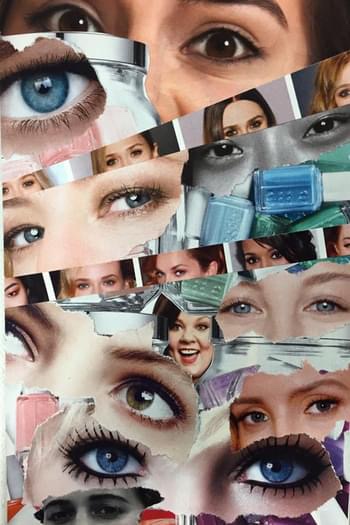
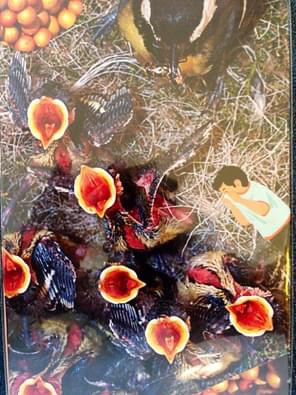
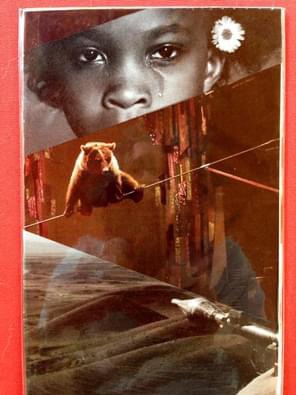
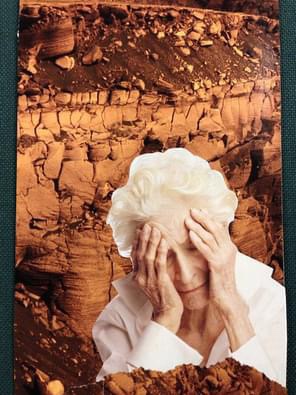
I don’t have any photos from today, so consider these old collages as writing prompts.
There’s nothing I liked better than to be assigned to diagram me some sentences or write a nice, juicy composition. Term papers with lots o’ footnotes were also my idea of fun. In high school the only way I got a boyfriend was to find the guy who liked fancy sentences as much as I did (he’s an English/film studies professor now).
How do you see yourself as a writer?
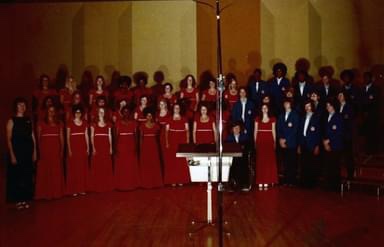
But I did have another passion, which, probably not coincidentally, involved arranging words in certain ways. It was my second love, choral music. I loved how chords worked, harmonies intertwined, and crescendos followed decrescendos. While writing was a solo activity, chorus involved working with others, blending and matching in tone.
I’m the red dress in the tenor section.
I learned a lot about discipline, learning rules so you can later break them, cooperation, and vulnerability through these activities. Sharing your writing and performing in public are not easy until you get a lot of practice and learn to take feedback constructively. (My high school chorus teacher and grad school advisor are still alive and could tell you how much I had to learn in that area.) (Note that there’s still work to be done.)
I feel like the kid in this one.
Thanks for being an audience for my blog. It’s a nice break from job aids and meeting minutes, which I wrote all day today. I’m lucky to have a place to be a “real,” person, not an influencer or manufactured celebrity.
These SoulCollage cards can make you think.
Go out and read some other great blogs by real people! I love learning what I have in common with others, as well as our differences. I learn a lot, and you can, too.
We learn more if we look. Right now looking can be hard.
What alternative career paths have you considered or are interested in?
Here’s a prompt I was interested in. I was really stuck on a career path until I was about 26 and realized I didn’t want to write about little syllables at the ends of Japanese words the rest of my life. But I loved the teaching of linguistics. I love teaching anything.
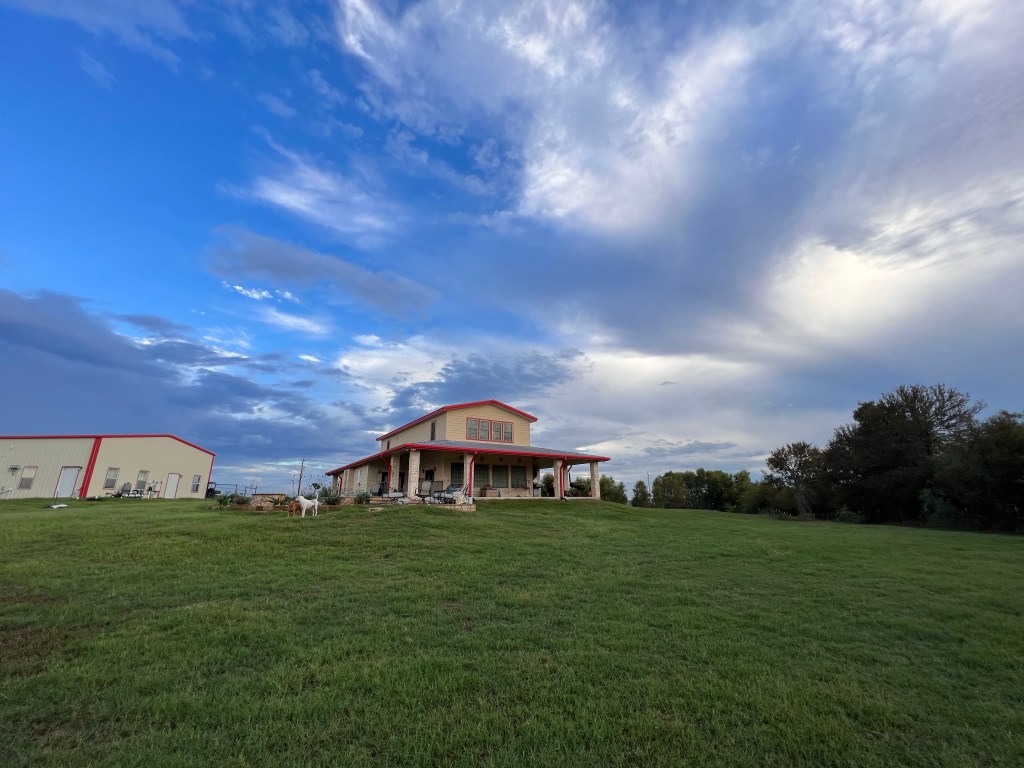
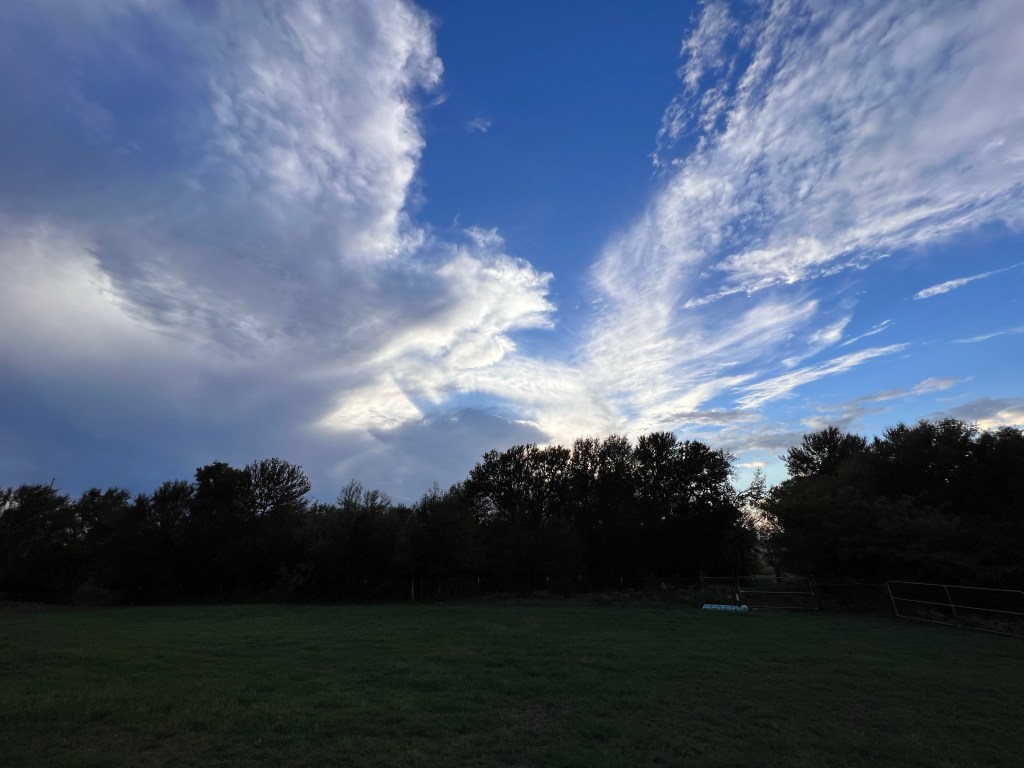
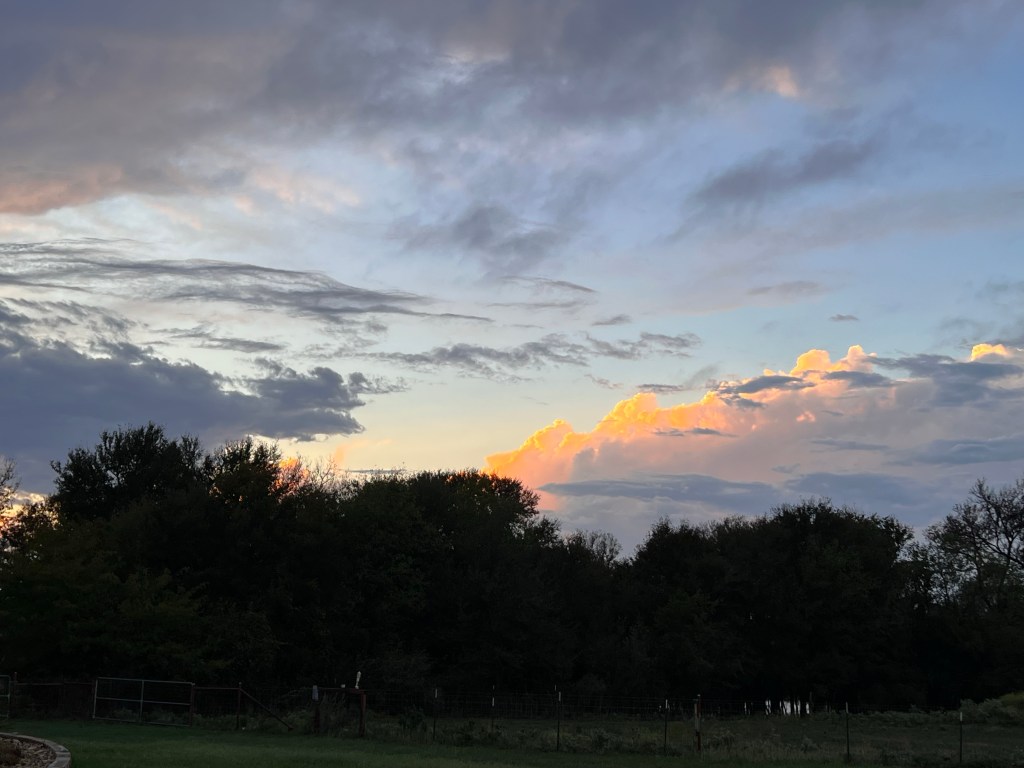
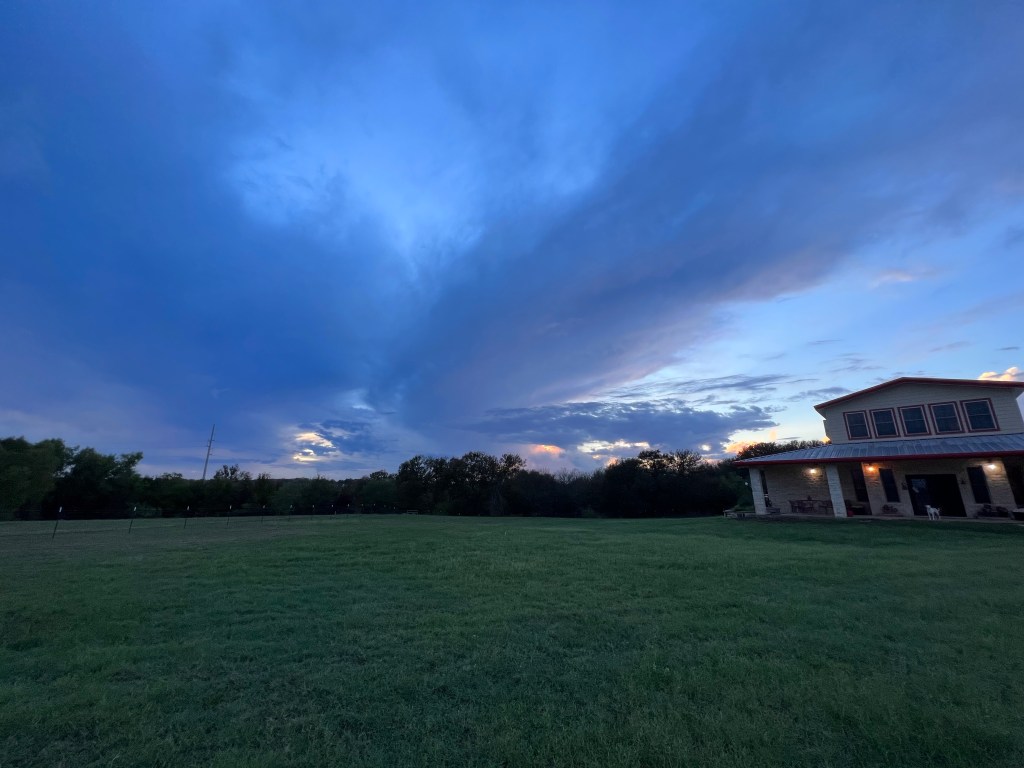
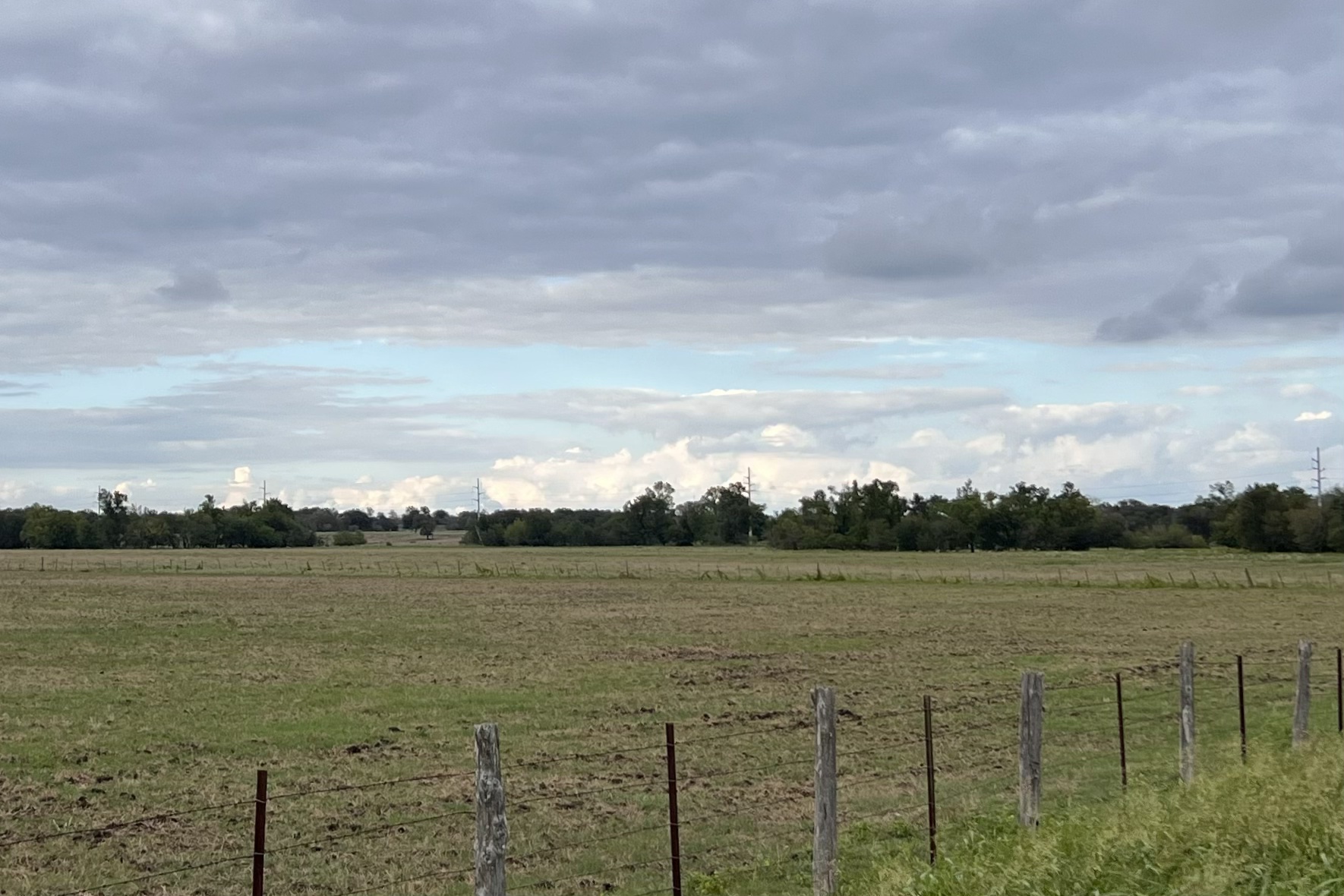
Todays illustrations are cool cloud formations from today.
The first path I should have considered was getting a degree in music education so I could teach choral music and sing in choruses. That seems more likely than making a living in folk-rock.
Another path would have been to switch my college major to biology once I realized how good I was at it. I could have gotten to do field research and written marginally more interesting scientific papers…or taught biology. Still, I’d get to hang out in nature for a living. But I’d have ended up specializing in maggots or something, knowing my luck.
I could have done forestry and become a park ranger? Right now that’s my vote, especially if I could ride horses in the forest.
I seriously considered a career change in mid life to work in a yarn shop and teach knitting and design patterns. I enjoy doing that still, but I’m not creative or driven enough to actually make a living at it. I sure admire my friends who do it, though.
Someday I’d like to write a book that’s got a plot. Obviously I have a lot of words in me. They just need more structure than a blog! I do write for my job, but honestly, I’d be writing every day no matter what. Maybe I’d write letters. Maybe I’d write poems or songs. Who knows? I just enjoy making sentences. That’s not a different me; the writer is the real me.
I don’t think photography is a potential career path.
Your life without a computer: what does it look like?
Now, y’all may be surprised by my answer to this question, given that I have made my career in online activities and teaching folks about software. I made websites when there were no images in them, after all (1993).
First, I’d still be outside a very often, hiking, playing with horses and dogs, and observing plants, birds and other wildlife.
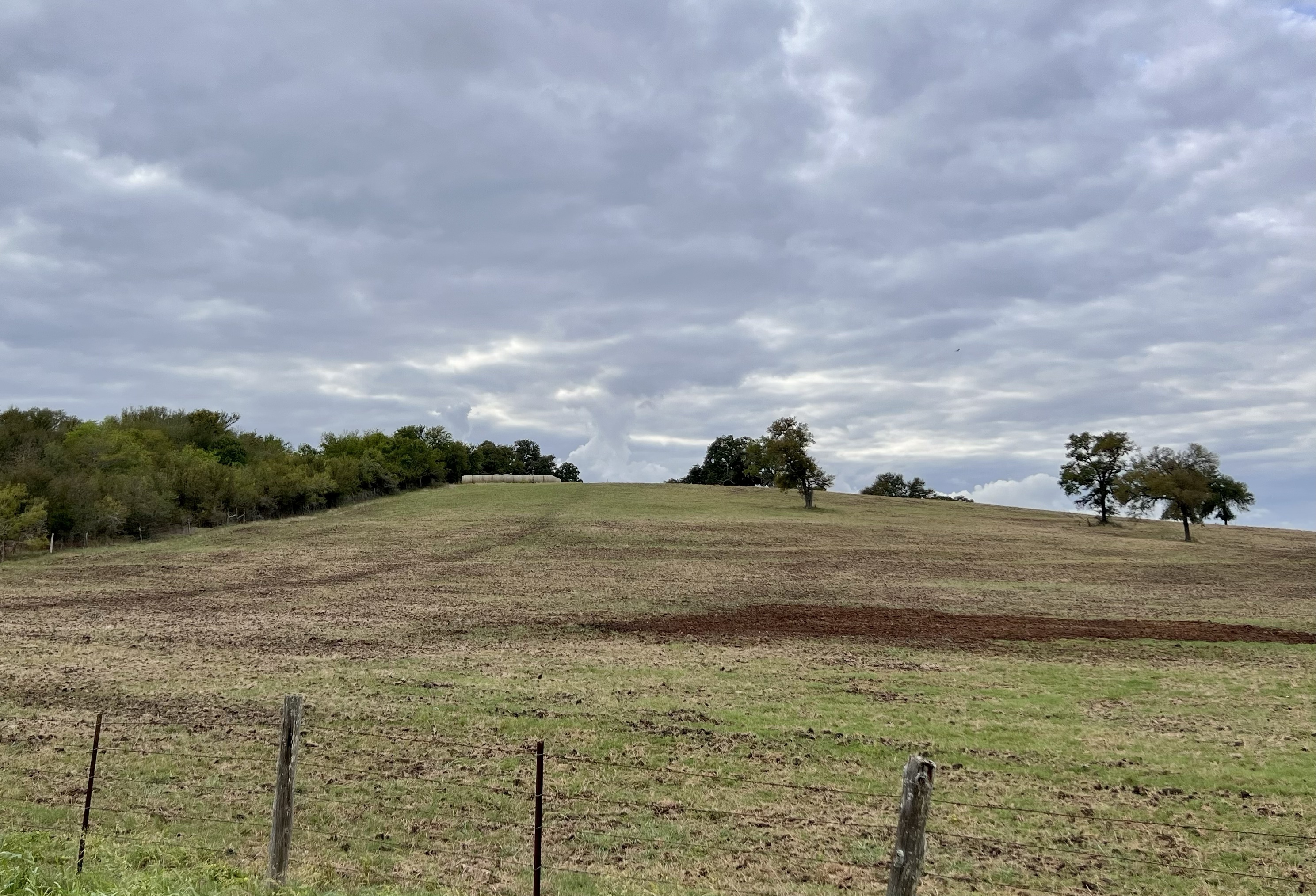
You can see my house way down this hill.
Second, I’d still be knitting, crocheting, doing needlepoint and all that. I’d just have books to learn from and go to the library a lot, just like I did in the blissful 70s and 80s.
I think I’d do many of the same things in person that I now do online. I’m a writer, so nothing will stop me from writing. I used to be a great typist, too. I typed a book on Catalan using three different IBM Selectric type balls, which you young folks have never even heard of, probably. I also have excellent handwriting in cursive, that ancient indecipherable script.
Typewriter ball.
I could also still teach adults. I guess I’d teach at a community college or vocational school. From books. Books are good.
Book I’m reading. I prefer real books, but use the Kindle when traveling. I’m not an auditory learner by preference, so I’m not as fond of listening to them.
I’d create communities, too, just like I used to do with email groups and chat software, but (gasp) in person. I do that now, anyway, or try to. I love being with like-minded people to learn and support each other. Who needs Zoom?
But mostly I’d wander around listening to birds and watching butterflies, just like Snow White or whoever it was that had all the forest creatures flocking around her in a cartoon. Ah, it was Sleeping Beauty.
I think I’d be very happy. I was certainly happy outdoors among nature today. It rained 1.5” overnight, so all the living beings were happy. I even recorded two new birds on the Merlin app, a gray catbird and house wren (both birds I’ve seen before but never recorded). And it was only up to 84° today!
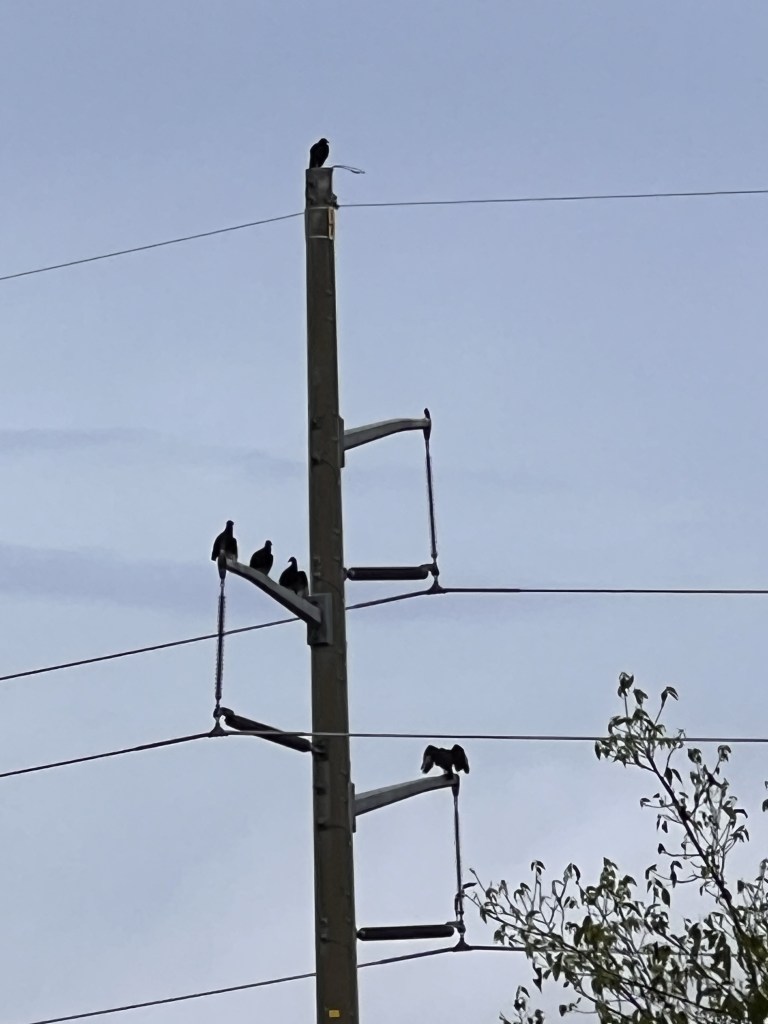
I didn’t hear these vultures, but I saw them, along with a crested caracara and a red-shouldered hawk.
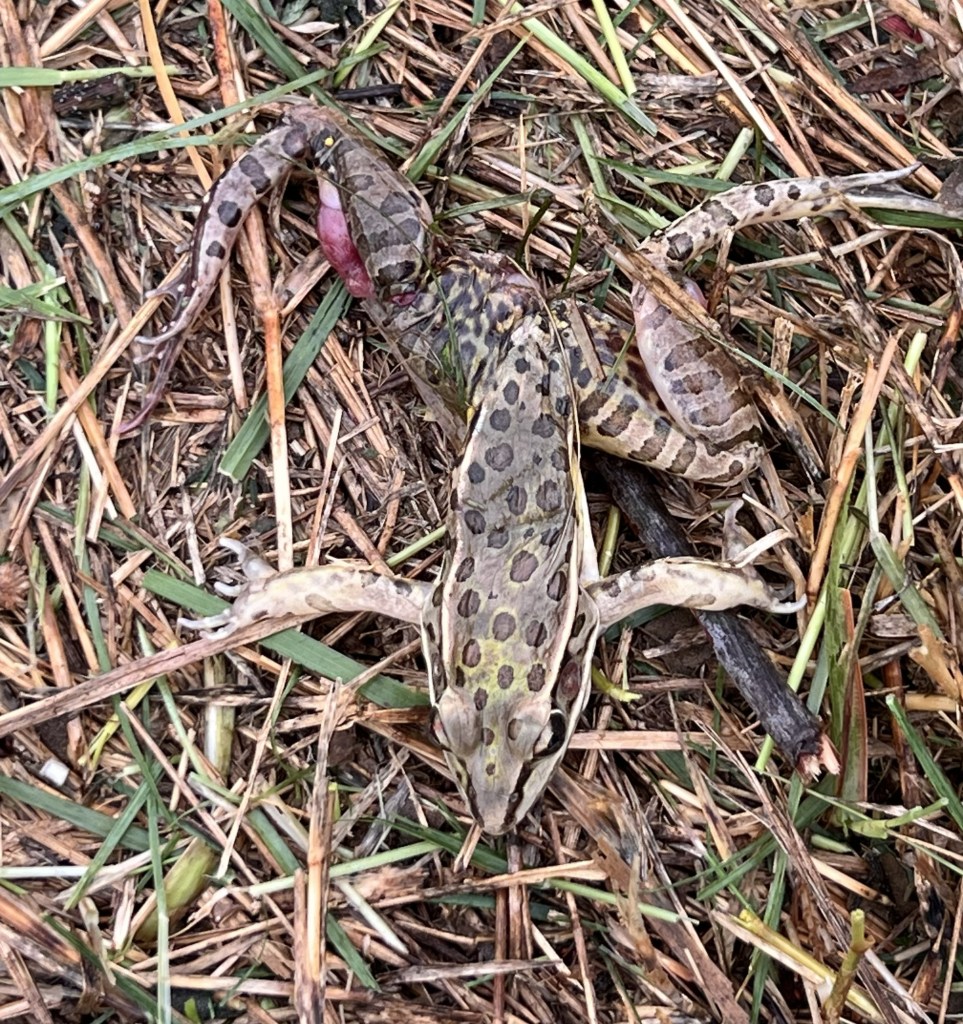
The only sad part was finding a beautiful leopard frog that had gotten caught in the shredder last night when all the front field got all smooth and pretty. But that means there are probably more of these beauties!
Leopard frog, not sure which type.
Yes, autumn is actually here. It’s even going to be chilly this weekend! Enjoy my nature photos from my pleasant nature walk today.
Interesting clouds. Fall color! Soapberry tree. Texas fence. The tree line is Walker’s Creek. Indian mallow (Abutilon fruticosum)Green antelope horns (Asclepias viridis) I love milkweed blossoms. Looking up the hill from the creek.
Today Lee was unpacking stuff from our old Austin house, you know, the stuff I just couldn’t get to in all the time we lived at the Bobcat Lair, now officially known as Anita’s House of 300 Boxes. (She is ready to move out soon as she can.)
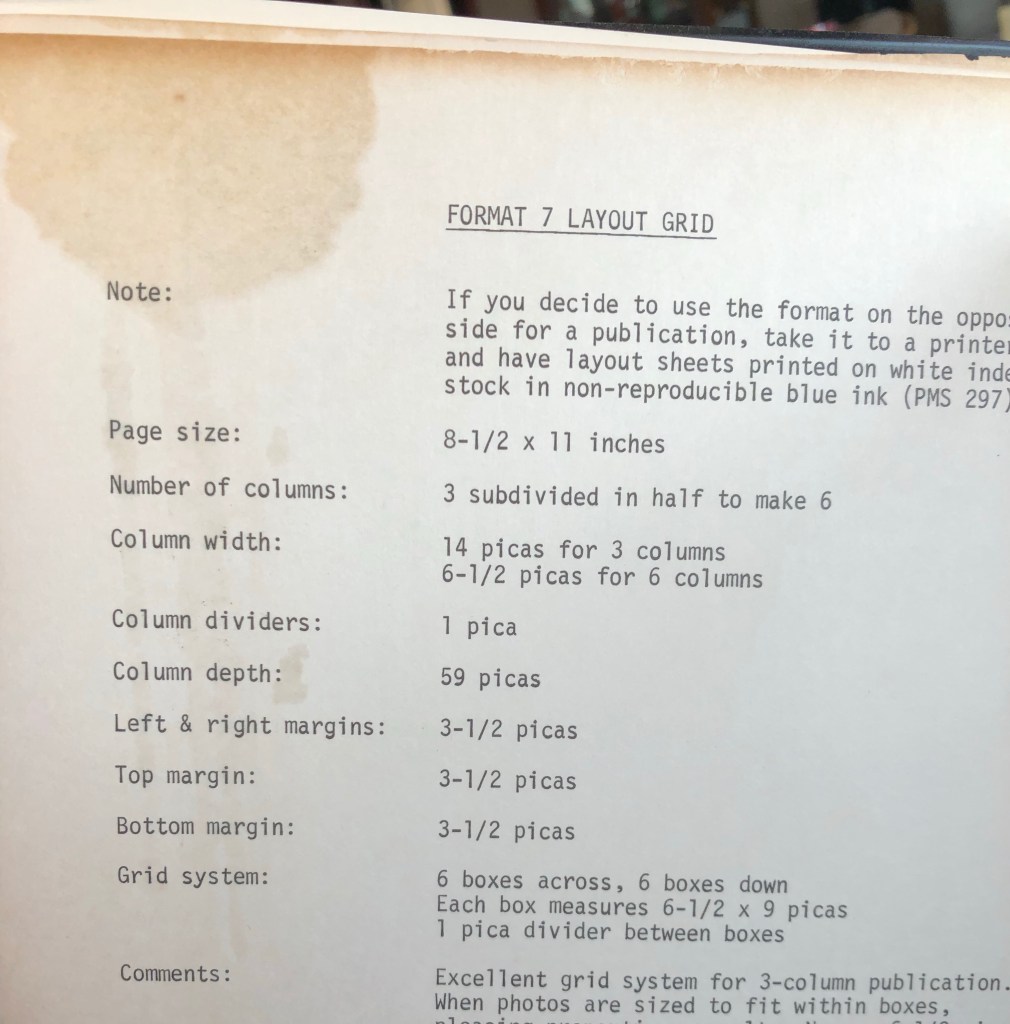
Anyway, Lee found a true gem, a takeaway notebook from a seminar in 1988.
Blast from the past.
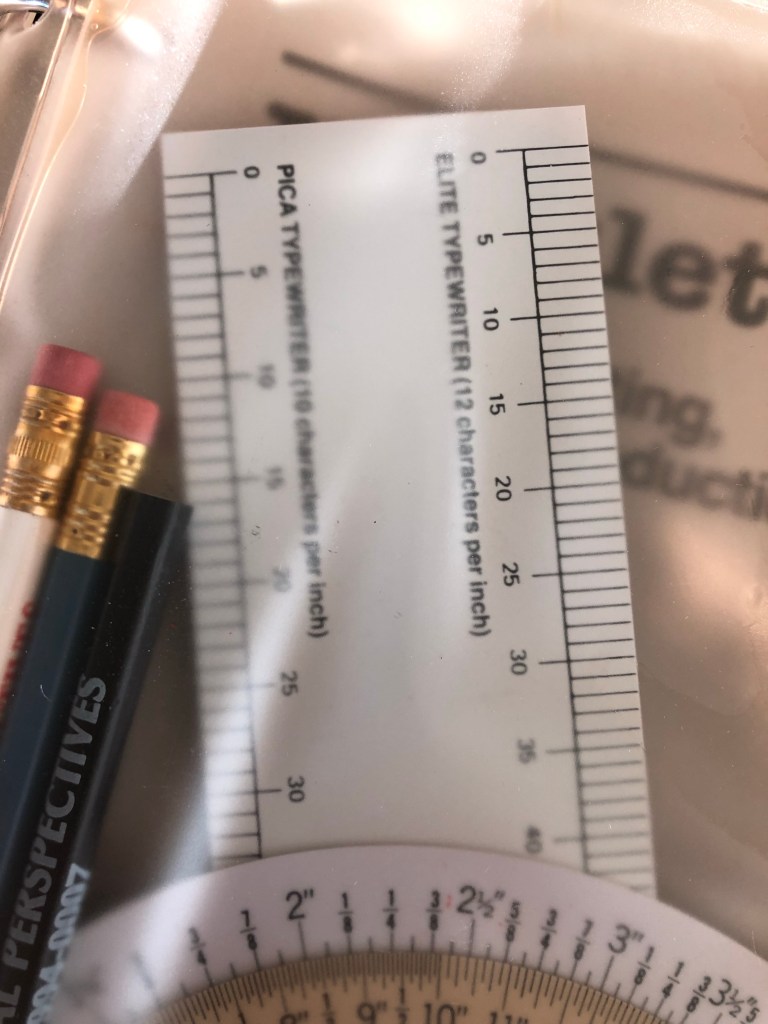
Oh wow. I forgot how much effort it used to be to make newsletters and such back then! Or write dissertations (footnotes on a typewriter, hell). This really helpful (back then) guide even came with tools. Let me explain to you lucky people only slightly younger than me.
A ruler
So this ruler is for figuring out how many characters you can fit in a space. I’d completely forgotten that typewriter balls came in Pica or Elite. That’s if you were lucky enough to have an IBM Selectric, the dream typewriter with an eraser key and interchangeable heads. I’m eternally grateful to High School Boyfriend for sharing his with me.
We made money typing papers for others in college and I even typed a whole book on Basque for pay. That typewriter was beloved, even though we sure typed a lot of pages over and over, especially when we had to use footnotes. No wonder I love end notes today.
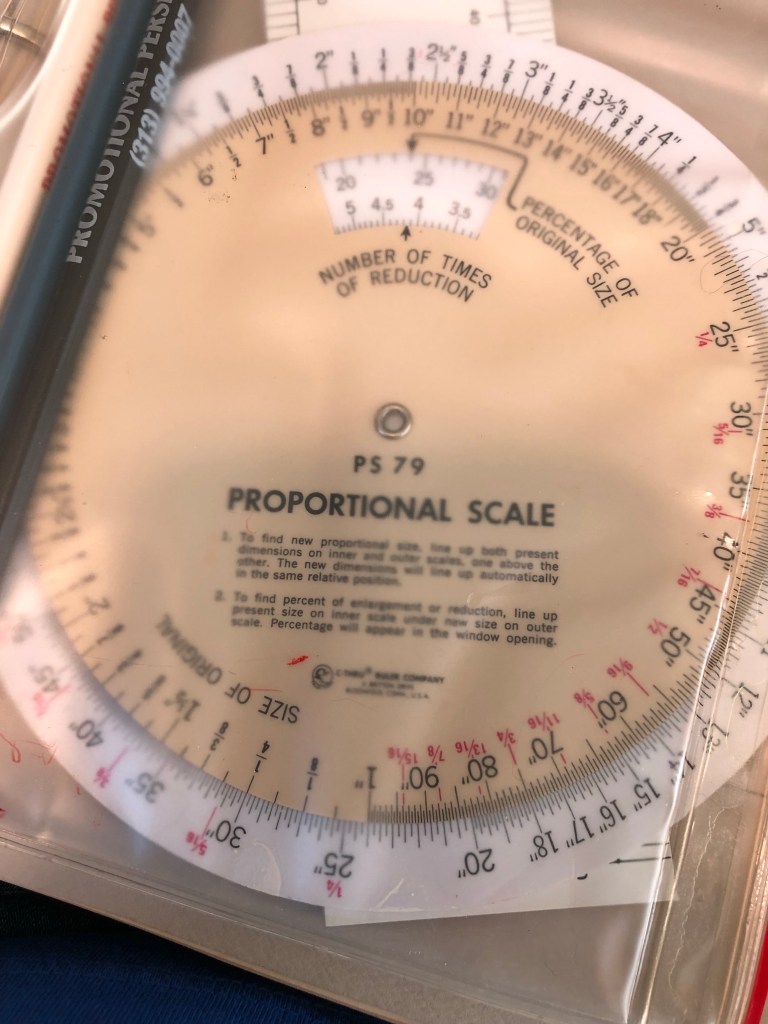
This tool was a mystery.
The other tool that came with the notebook was this crazy wheel that tells you how much you have to reduce your text to fit in a certain space. I imagine this was very handy. It also makes me really glad I didn’t make newsletters until personal computers were available. I never had to paste up anything. Yay.
I think this is too much math for words.
I thumbed through the notebook as it showed how to make monospaced text interesting, as it went over how to get photographs (real ones) and put them in, and extolled the virtues of typesetting. Then I remembered the date. 1988.
Scary
I got my first PC in 1985. The people one year ahead of me had to write dissertations on a mainframe line editor. I got to use WordPerfect in beautiful Times Roman. By the time I got my first real job in 1987, page layout software existed. I just gave my graphic designer my words and she poured them into the software. The typesetter at work saw their career path dwindling to a footpath.
Good advice.
Things changed so fast around this time. It was fun, though. Soon I could make my own documents.
Soon after that, I was making web pages, all words, no pictures. Monospaced. Then there were digital images! You could make text blink! Be green! Have moving backgrounds! Play an insipid song in a loop! Ah, times were so simple then. I’m so grateful for word processing and page design software!
But the course on how to make newsletters on a typewriter didn’t help Lee for long. I’m pretty sure it wasn’t given much longer. But I sure like that ruler and reduction wheel!
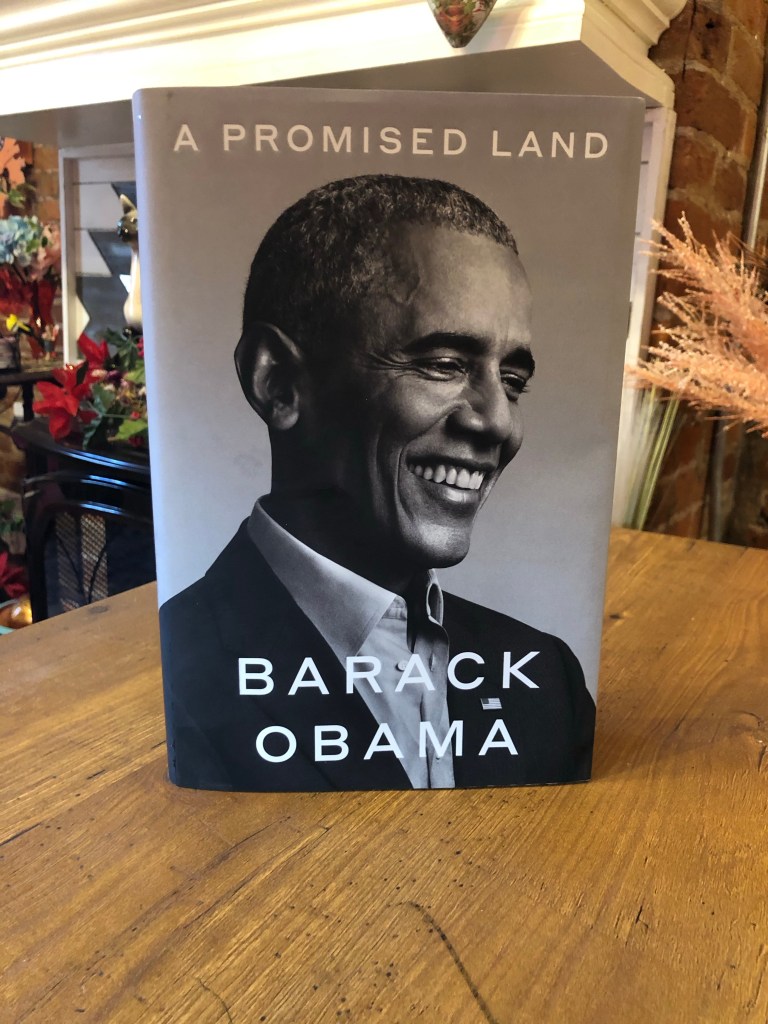
If you finish a 700-page book and are still happy with it, you know it was a darned good book. And yes, A Promised Land, by Pres. Barack Obama, was a really fascinating book. That’s saying a lot, because I have mostly been bored to tears by books about presidential politics, international relations, and recent history.
He’s pretty funny sometimes, too, especially about his ears.
Somehow, Obama manages to talk about his life in such a way that it’s easy to keep up with who’s who, and you feel like you get to know the many, many people he comes across. Whoever helped him organize the book and recommended putting in the short-but-helpful descriptions of his friends, colleagues, opponents, and staff members wins my earnest thanks. I didn’t lose track of people in this story, at all. And they all seemed so real, not like names to memorize in a history book.
As you may know, Obama is a pretty smart guy (even if you don’t like him, that’s a fact). He loves explaining things, and this book gives him the opportunity to do so at length, rather than in sound bites. By taking his time and explaining why he did things, why compromises had to be made, and how he could see what other people wanted and needed from their perspectives, I was actually able to understand the complexities of elections, dealing with dignitaries, working with Congress, etc.
The typesetting of the book made it hard for me to read when I was tired. Whenever there were a bunch of letter “g” together, it made a big blob. There’s one in the middle of the right page. I did love the letter “Q” in this font, though, and there were lots, thanks to al-Qaeda.
I think I’d have been drawn into this book even if I wasn’t already a fan, because he does a great job of pointing out where he screwed up, when other people were right, when hard decisions had to be made, etc. It helps to have the context and to realize how much those of us consuming the news don’t get to know (I’m not talking about Fox News, I’m talking about more moderate outlets).
We all make mistakes, right? Well I’m about to admit to making a big mistake. I spent $8.99 on a “book” that is only a book by virtue of having pages, a cover, and some printing. I had good intentions!
Classy cover art.
The work book club is going to read Dare to Lead, by my buddy Brené Brown. When I went to pick up a second copy (because I hid my first copy when I pitched a fit about how many times she said “lean in”), I saw there was also available a study guide for the book. I thought it would be great to have some questions and ideas to talk about when we have our meetings.
Today the books showed up. Coworker Maggie said, “Hey that’s a printout of a PDF; they always have those ugly rectangles on them.” I told her to check out the inside. There’s no author (unless the Review Press is a person), little publishing information, and no blank pages. You just jump right into a table of contents.
Cringing yet?
Then you keep going, or you try to. OMG, the whole thing is in “books for the visually impaired” size type, and it’s conveniently both right AND left justified. And because the huge print makes the lines quite short, the gaps between words can create not rivers, but entire seas within the paragraphs.
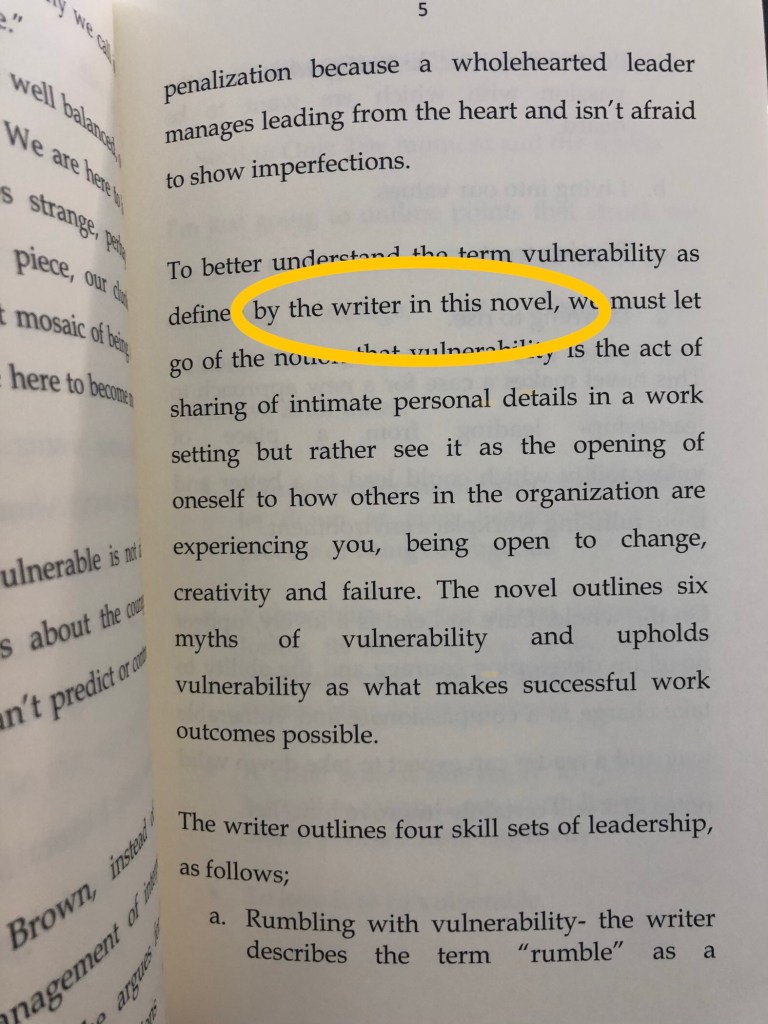
As I read the first part of the book, it because clear that it is a book report penned by a 14-year-old in the UK (there’s a “Lessons Learnt” chapter) trying to get the paper long enough to fit the teacher’s requirements. Poor Brené is referred to as “the writer” endlessly, and poor Dare to Lead is repeatedly called a novel. If it’s a novel, the character development and plot both suck.
But Wait, There’s More
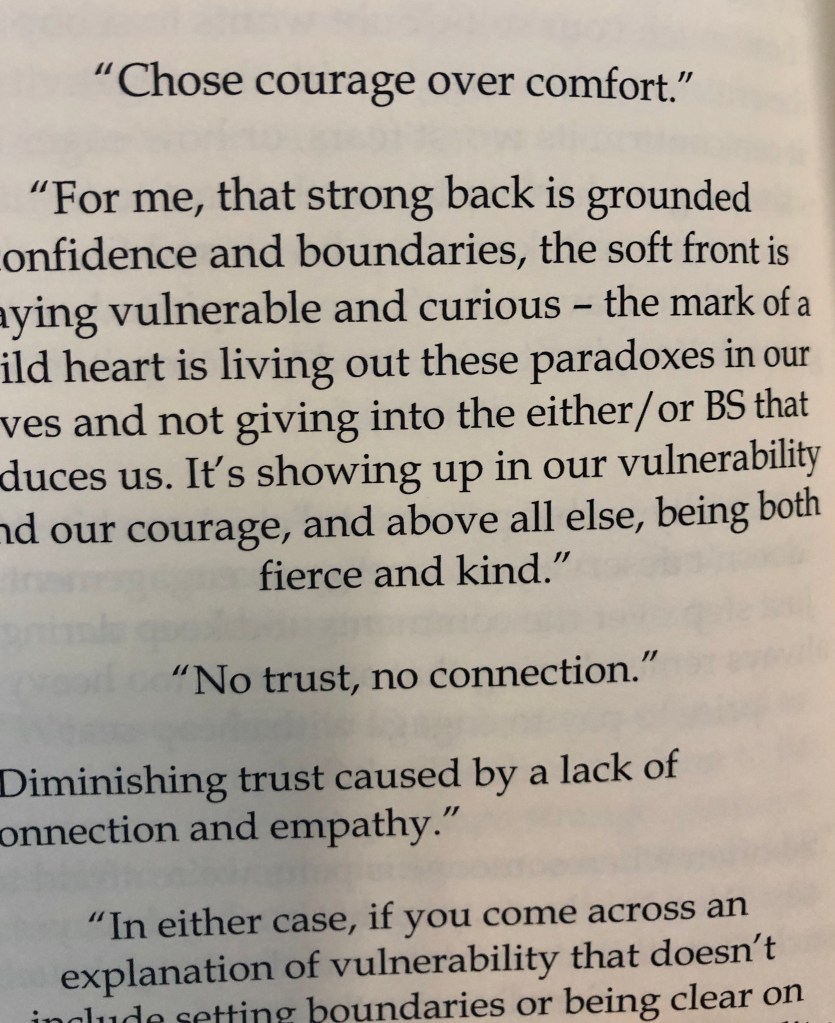
The book report, replete with listings of the names of each section and verbatim content from Dare to Lead, mercifully ends after 22 zippy pages. Then ten pages of quotes from the book are kindly shared by, um, let’s call them “the author.” These are dizzily presented centered, but still full of huge gaps. And for fun, one’s occasionally left aligned. (I’m a hack writer too, though, how many adverbs ending in -ly were necessary in this paragraph?)
It’s centered! Mostly…
I guess “the author” got tired after picking out those quotes, because the “Conclusion” section slides into a description of the organization of the book and the names of chapters. Riveting. After carefully detailing Part 1 (though alternating on using and not using quotation marks around chapter/section titles), everything comes to a screeching halt:
“Haven discussed all the sections in part one, the writer further divided the book to part two, three and four and termed it living into our values, under section two the writer stated that giving and receiving feedbacks is one of the biggest fears at work…”
the author, Workbook for Dare to Lead
They then finally take a breath and give one sentence for each of the rest of the sections Brown so carefully put LOTS of concepts in. It’s okay, the author had to save space for the lessons learnt and workbook pages. I don’t think I’ll be using any of the workbook questions in the book club, though I could play connect the dots using the dotted lines between pages.
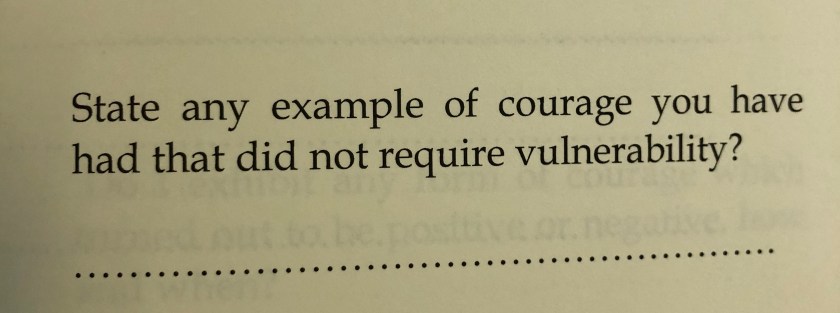
That’s an imperative, my friend, not a question.
To Conclude My Most Excellent Review
I actually hadn’t intended to write a book report of this book report, but it just came pouring out, and was probably good for me in a cathartic sort of way. I realize someone wrote the study guide quickly to get something out there to make money. I was silly not to look carefully and see that it was from a self-publishing purveyor.
Mainly, I want to beg and plead with any of you who plan to self publish books or know someone who does:
Please, please, please have someone look over your content before you send it in.
Amazon is NOT gonna do it. They’re going to print copies of your PDF on demand and send them to innocent people who want to read an actual book.
Really, it does?
At least glance at other books and see how they are set up. Large print and small pages are not a good combination. Most important, while Microsoft may say what appears at right about justified text, it helps to have professional typesetters and to use hyphenation. You might want to take note, too, that centering works best in very small doses.
Of course, you or someone else should proofread; “have4” is not a word, but it’s in the study guide. I forgive using semi-colons for colons in introducing lists, since whoever wrote this was trained in the British style.
One More Thing
Say, let’s look at my pretty flowers and my breakfast, to cleanse our minds.
Some very good books have started out self published. I am proud of some of the people I know who wrote them. Not all self published books are embarrassingly bad, but caveat emptor and all that.
On the other hand, I wonder if I should just PDF up every year’s worth of my blogs and offer them for sale? Suna Blathers On, Volume 1, and so forth. I could use some money, and I did write this all by myself, errors and repetitious phrases and all. I guess I’m a writer after all! Maybe I’m creative!
I’m gonna do the whole thing in Comic Sans! That’s pretty!
Oh, lulz, that was a joke, there. I’m not going to tell you how to perform rites, either, but I just wanted to remind you all that your Facebook posts, texts, emails, and blog comments are a safe space for you to express yourself however you want to. I’m not going to correct your grammar or spelling, even if you accidentally hit a pet peeve (grammer, for example).
I actually heard last week that someone was hesitant to comment on the blog, because they were afraid I’d say something about their spelling or punctuation. Nope, unless a typo is hilarious (the classic public/pubic one comes to mind), I am going to assume that in informal writing has not been proofread extensively.
If you print it and want to sell it, proofread it. Photo: @cbm0809 via Twenty20
You see, it’s true that I spent a zillion years in the distant past studying linguistics and editing. It’s true I make my living writing and editing things. And yes, I’m pretty well versed at American English grammar and punctuation. But, I don’t expect you to be an expert. I don’t even expect ME to be when I’m texting.
One thing a that study made clear to me is that writing for different purposes has different standards. Yes, if I am writing for publication or sending a formal letter, I will do my best to eliminate grammar errors, spelling mistakes, or typos. However, in Facebook posts, I do not expect residents of Cameron, Texas to realize that “wondering” is not something dogs who roam around neighborhood are doing. That’s just how they say it and spell it. Sort of like the garage sell. It’s an interesting way their spoken dialect affects spelling. I find it interesting.
It CAN make a big difference, though! Image: @cindyhodesigns via Twenty20
And that’s the thing. I’m more likely to have an enjoyable time figuring what led to a typo or nonstandard grammatical phrase than to judge the writer or feel the desire to “correct” them. I feel rather guilty, in fact, that I corrected a meme someone posted that repeatedly used “your” for “you’re.” For some reason, this older person expects memes you publish to be grammatical, at least when they are not using slang I don’t understand or the interesting text terms lots of younger people use. Whoops.
So yeah (which is not the word for “yay”), I am not interested in being labeled a “Grammar N-word.” I save that for work and judging my own writing goofs, not yours. Just don’t ask me to review your novel or proofread a document without me pointing things out. In that case, you asked!
















 The Hermits' Rest