Yet, more than once in my life I’ve been called elitist for mentioning some of my peeves. After all, educated folks who know and use standard English are looked at as suspiciously progressive or something.
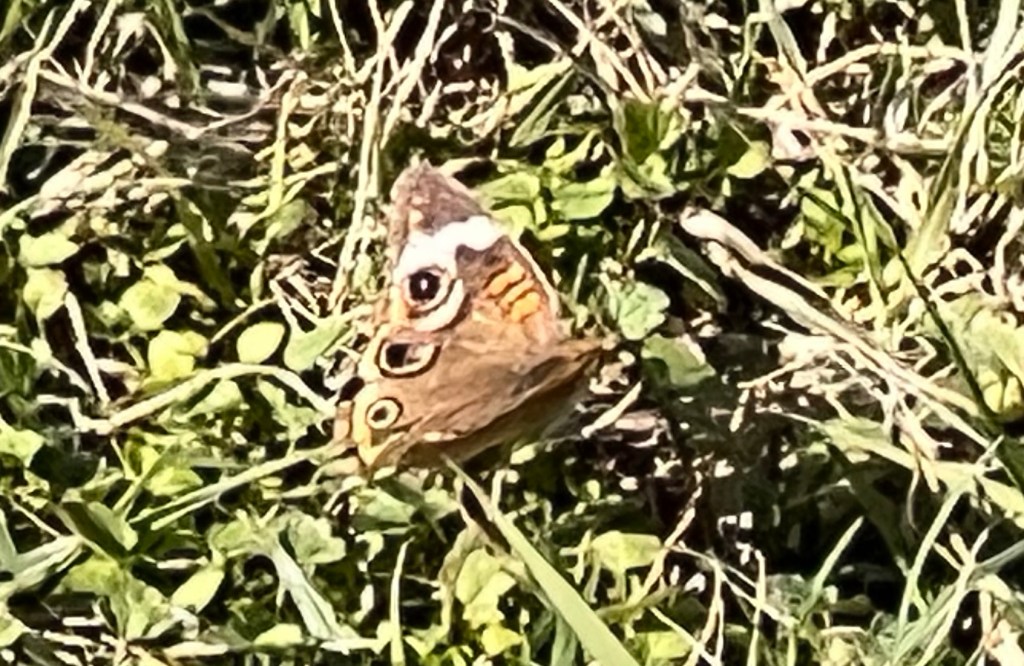
I won’t put the Latin name for this common buckeye so I’ll seem less snooty.
I’m all for creative use of language, am well aware that language changes constantly. So I am fine with observing new language, even if I never call u bae.
And I don’t even know ow which checkered butterfly this is.
So my peeves are mostly language usage. Not New language, just wrong stuff. Other than number 3 below.
1. Please use the contraction “you’re” when you are shortening “you are.” It’s easy. The word “your” refers to something of yours. Like your ability to spell words even when you’re using autocorrect.
I hope this peevish list doesn’t make me look like one of these.
2. Speaking of apostrophes, (a word with no apostrophes in it, by the way), they aren’t like garnish on top of salads that you sprinkle wherever they look cute. You do not pluralize nouns by adding ‘s. Nope. If there’s more than one item, you add a plain letter “s” unless the word ends in an s or z sound. The. You add “es” with no apostrophe. Even people’s NAMES are pluralized that way! Lee and I are Kendalls and Brunses. Now if we own something? Stick an apostrophe in there! Ms. Kendall’s pet peeves are a great example.
That’s enough, Suna.
3. Ooh, ooh! I have another one to add to my apoplectic elitist frenzy of prescriptivism! There is a recent trend to take perfectly innocent nouns and make them into some kind of cutesy verbs. Like:
What are you gifting this year? It’s the time of year to gift and gift some more!
What’s your favorite way to morning? Coffee, of course.
It’s time to football!
I think it started with things like weekending and breakfasting and has just kept spreading.
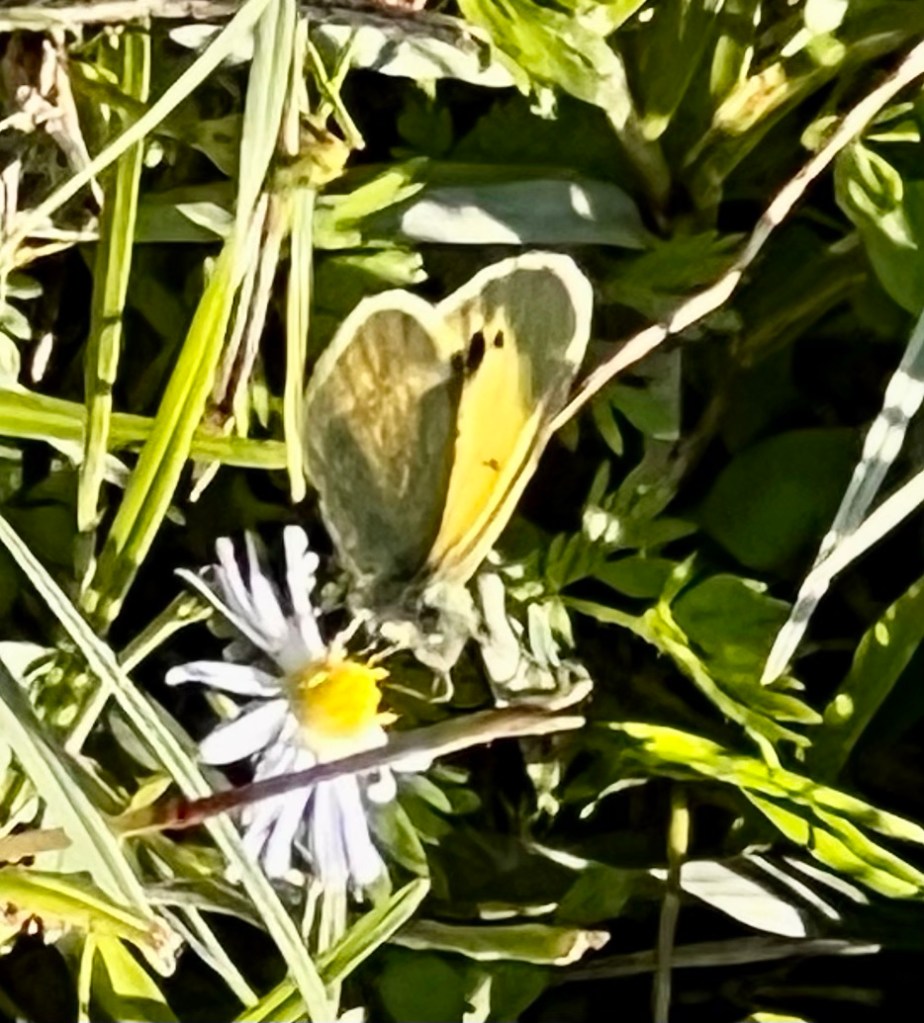
Butterfly break! Dainty yellow.
4. It’s versus its. At least this one’s harder. But in this one case, the apostrophe is only for smooshing two words together and not for possession. So I get it that it’s hard to get its nuances.
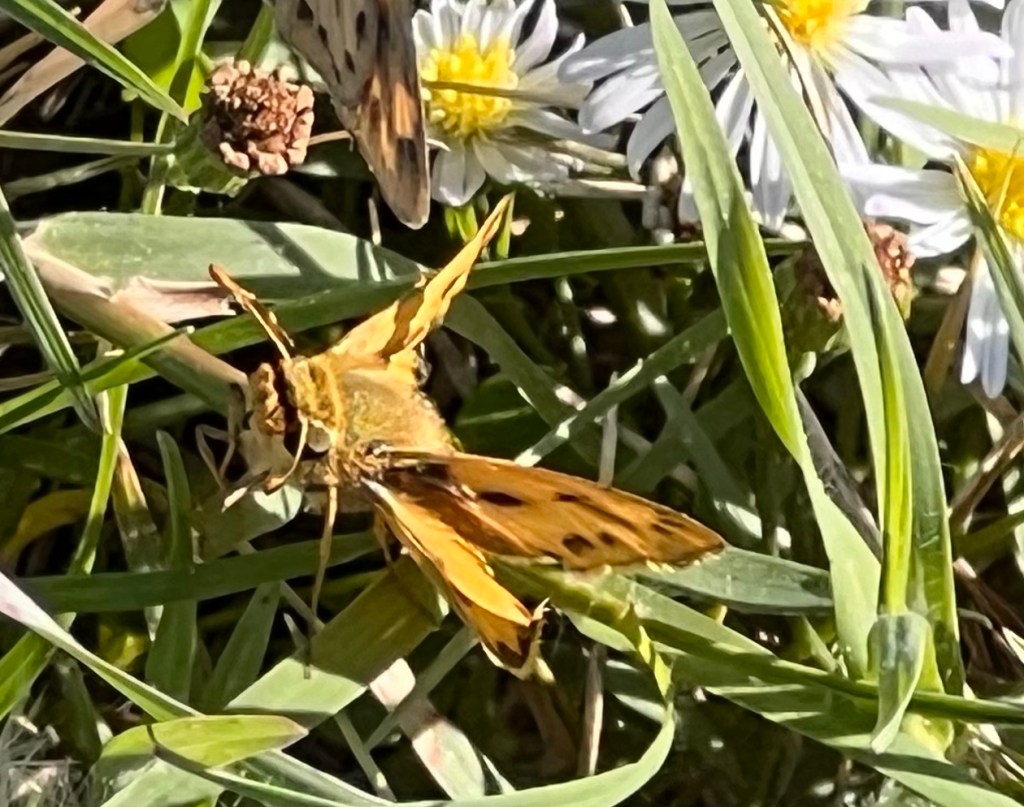
A good angle on this fiery skipper.
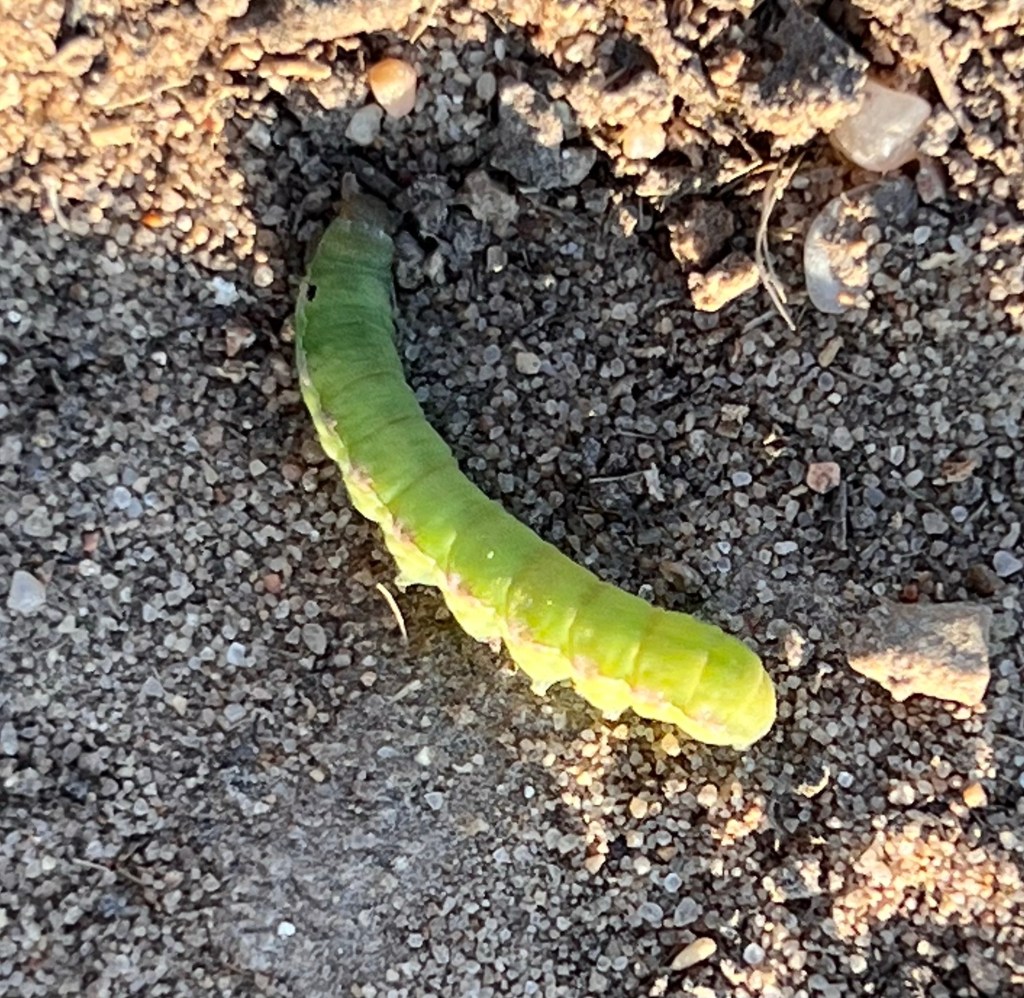
Enough of that. Today was a fine day with much sunshine, pleasant coolness, and many butterflies. As you can see, I got a few photos, but I saw many more, plus a caterpillar I can’t identify.
Daily Bird
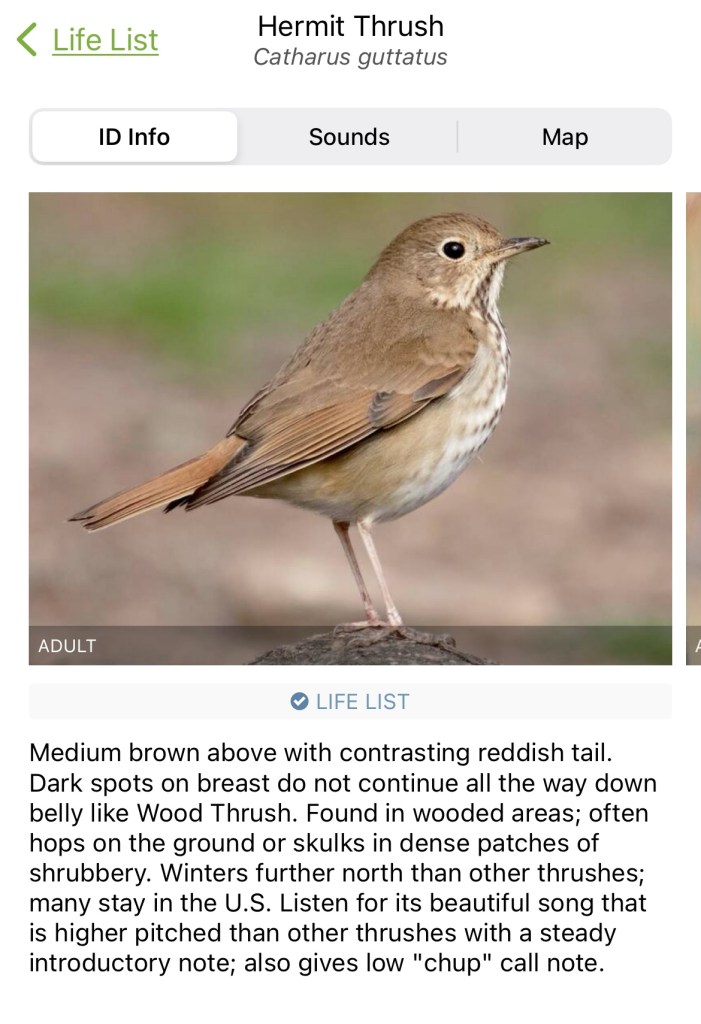
Today, since it was sunny and not very windy, there were lots of birds to enjoy. I counted eight types of sparrows! But the bird I enjoyed the most was the hermit thrush. It’s hard to resist a bird who shares a name with your ranch.
I like that it skulks
Today’s thrush was skulking in the big brush pile that was created last year in the woods, and it was chupping up a storm. it even drowned out a very vocal wren. I saw it a couple of times, but like the pipits, it looks a lot like a little brown bird that’s hard to distinguish without binoculars. I’m glad I know what it sounds like.
I have to admit that once again I heard a cool “bird,” then sheepishly remembered we do have a few squirrels out here.
I’ve always trusted my instincts. I’m intuitive. Besides that, I think I take in cues I don’t consciously perceive that lead me to know what I should or want to do. It’s just how I’m built. I’m not good at deliberation; in fact many bad decisions I’ve made came from overthinking.
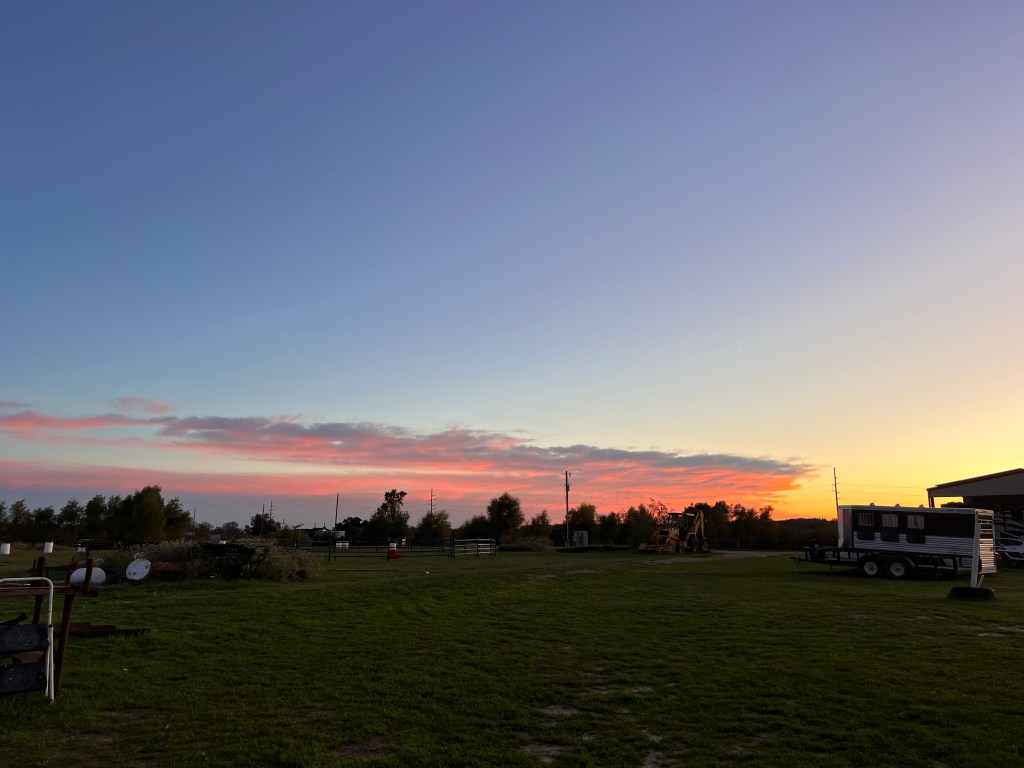
Sunset looked like a flag
Sure, things go wrong, but often I learn the most when acting on instinct and getting different results than I expected. You just make the best decision with the information you have at the time. The worst thing is to not do anything at all, so my instincts are good enough for me.
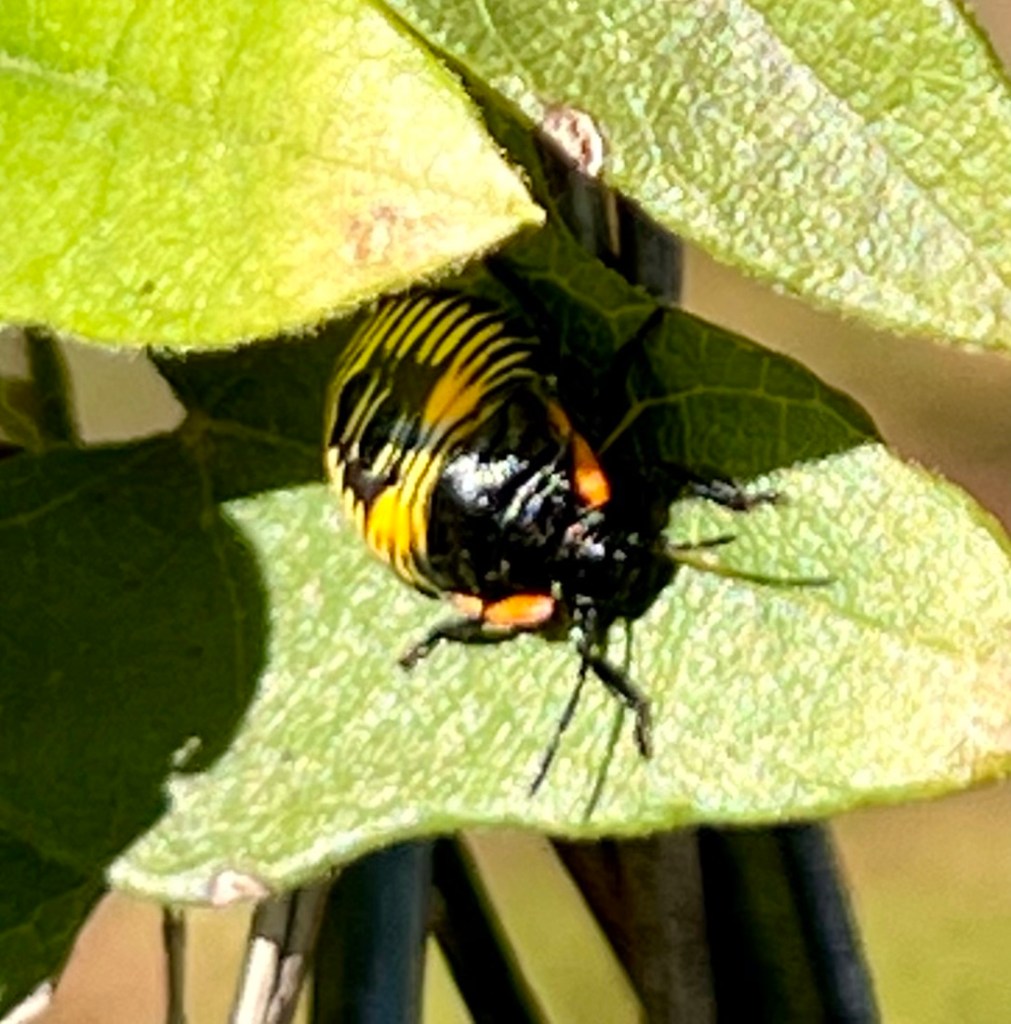
Bug of the day is a young green stink bug. Yep, not green at this stage.
Honestly, as I’ve gotten older I’ve quit believing any predictions, promises, or plans for the future. I’m just going with the flow and not trying to influence the outcome. I’ll learn what I’m meant to learn. That has lessened my anxiety considerably.
Bird watching also helps. I saw the kingfisher catch a fish today!
So yeah, I think my instincts are correct for me and I’ll stick with them.
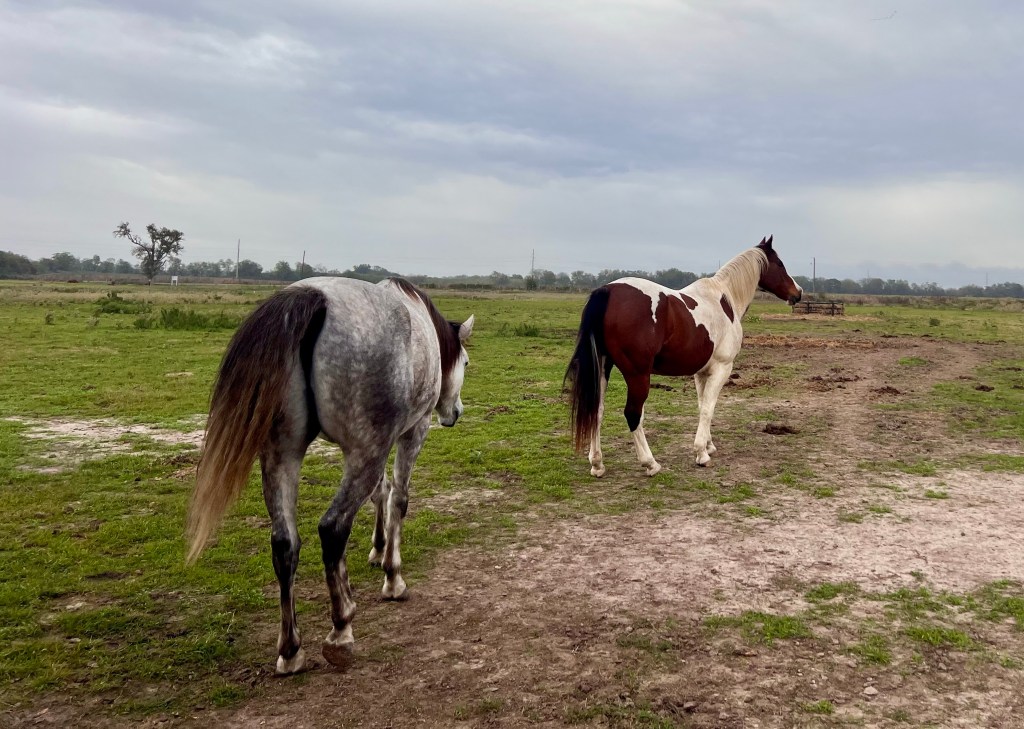
My instinct today was that I needed to spend some time with my equine friends. So while Drew was being a pain for Sara while she tried to trim his hooves, I hung out with the other horses.
I’m pretty for a brat.
I got burs out of them, which took a while for Dusty. His mane is sparse, but his thick tail was just about all bur. He munched hay and let me work on him. I brushed him, too, which he always likes.
I still manage to get burs in this little tuft.
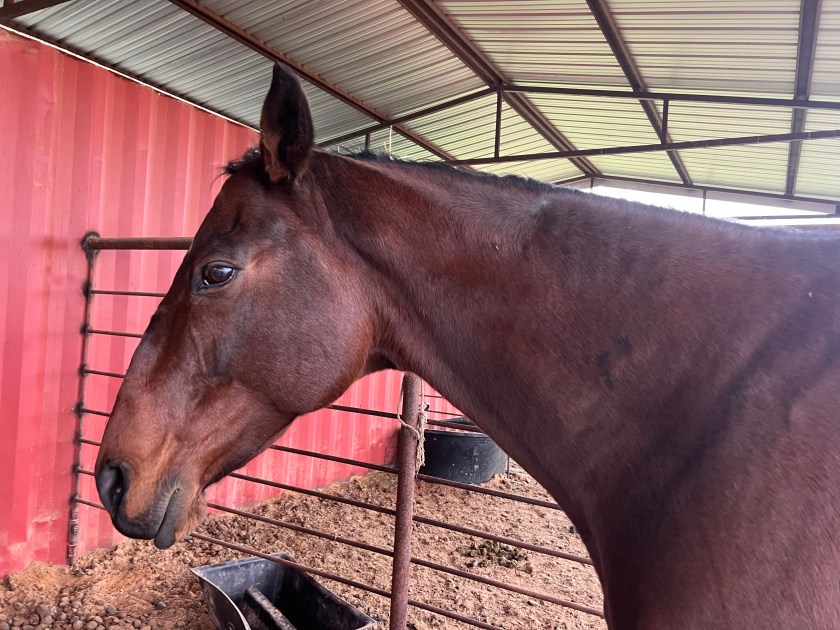
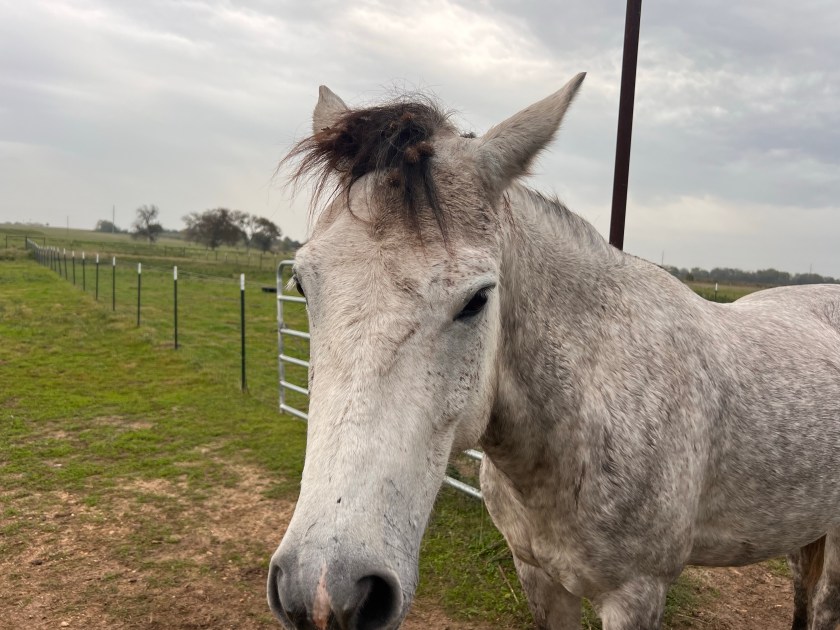
Mostly I worked with Mabel, though. She’s been on a product called Gut-X for a while and it seems to have done the trick and helped her put on more weight. I’m pleased.
Looks like a horse.
She’d already been getting happier, and now she voluntarily comes up for attention. She let me fix up her tail and much of her mane, but mostly she wanted to be brushed softly and stroked. We spent a long time just being together.
Still has that face only a mother could love.
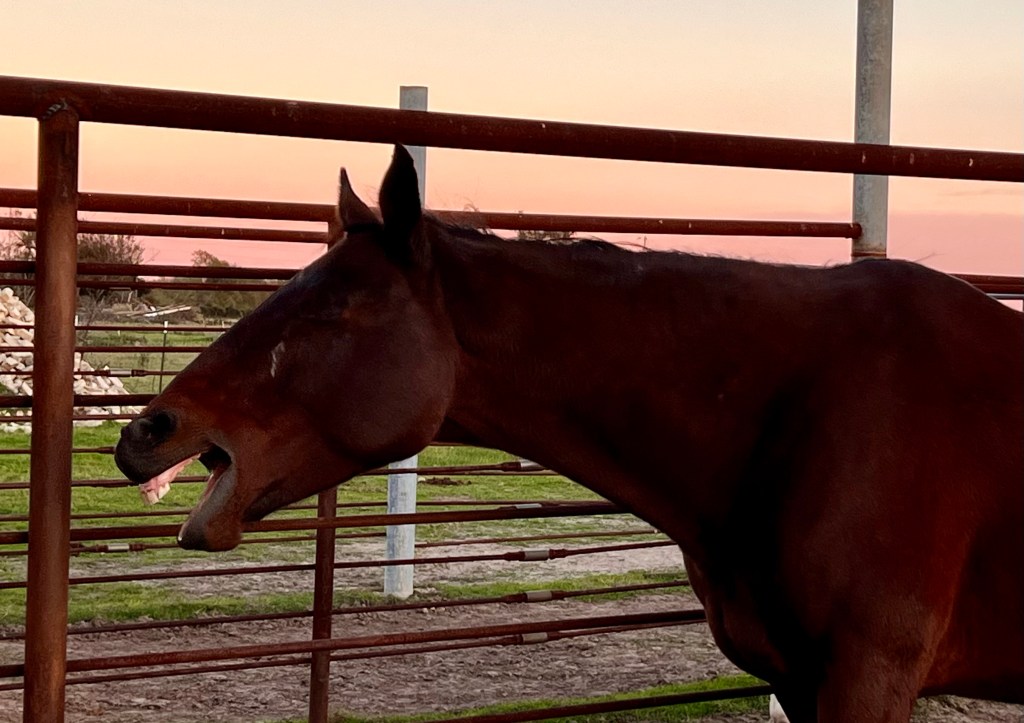
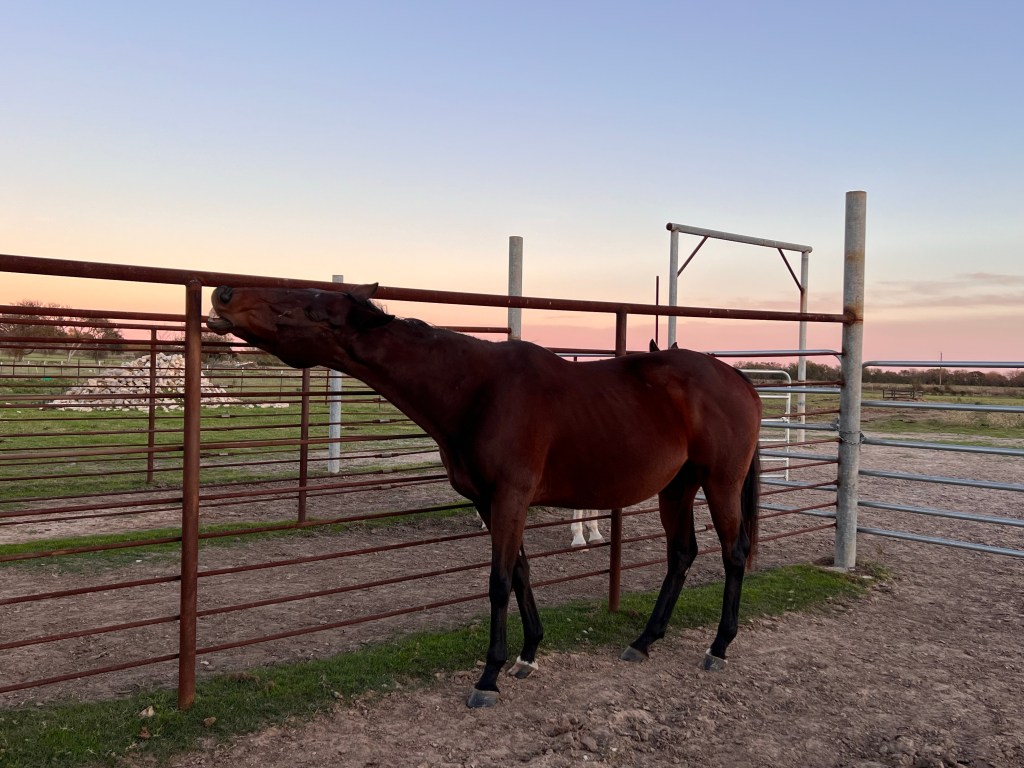
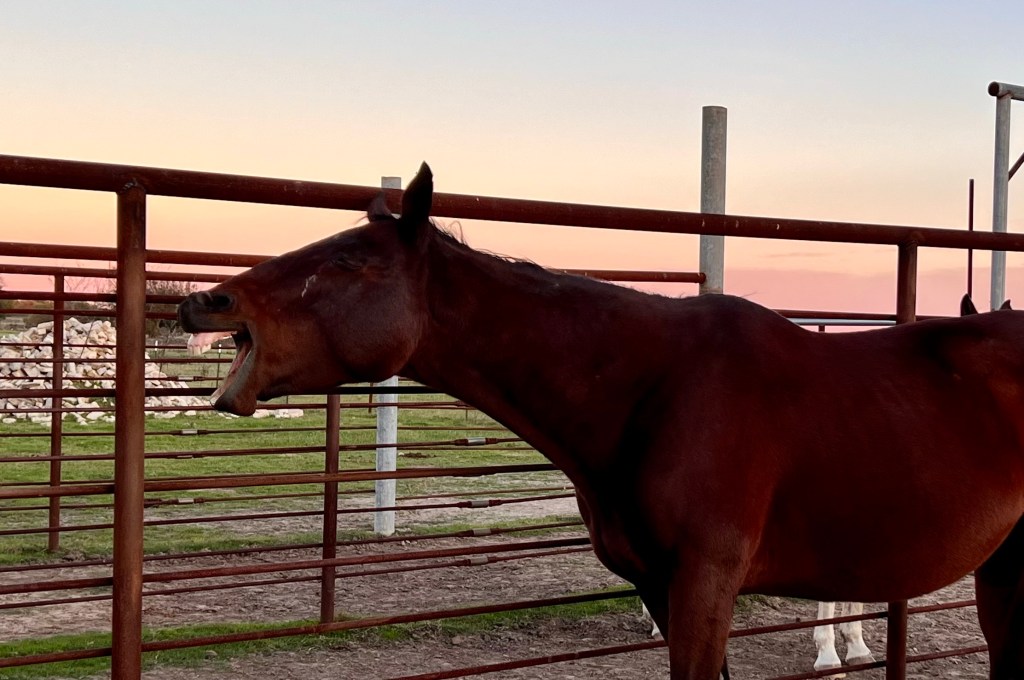
After I was done, she stood in her pen and yawned over and over. This kind of release is a very good sign in a horse. She’s feeling good, even though one hoof is cracked and her eye had been runny earlier (she got hay in there).
Mabel yawning
Today’s Bird
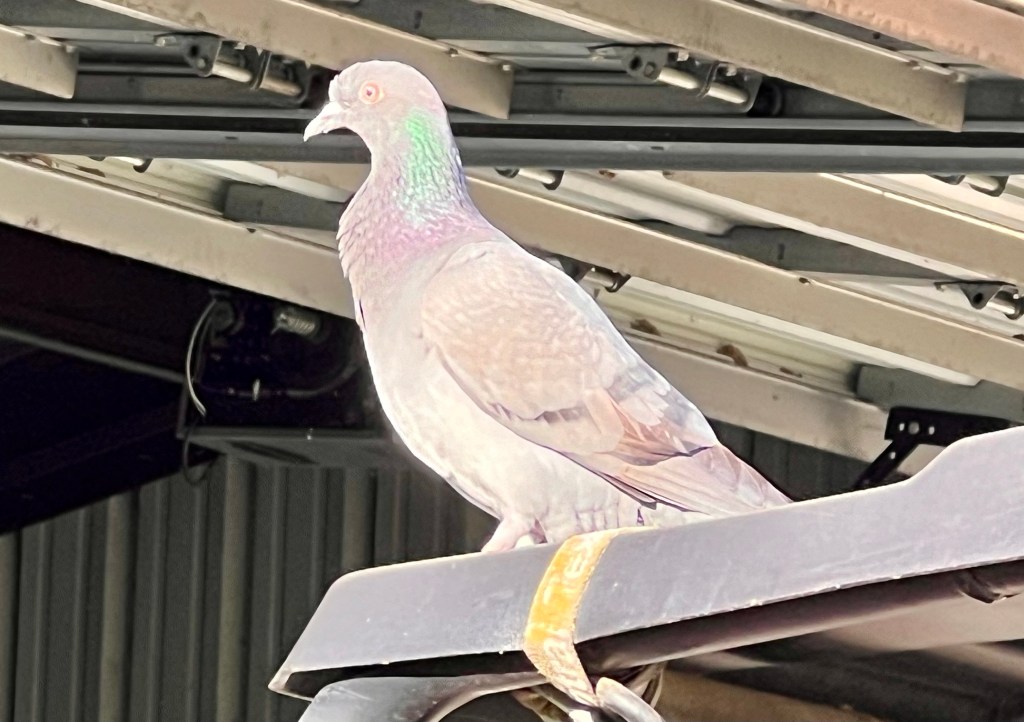
Today I saw a bird we all see often, but one I rarely see here at the ranch. It really surprised me, as it was sitting on top of the utility vehicle right next to me as I went through the gate from the house.
The pigeon never moved. Eventually it must have flown off, though. We see doves here (mourning, white-winged, Inca) but not often pigeons. Wonder where it came from?
It’s weird. Since Apache started his medicine, he’s been a lot calmer. I wonder if he has a buzz or something.
Drew, on the other hand, has been on a real tear of peskiness and mischief lately, like he’s Loki and Apache is Thor (Apache has a lot of hair, like Thor). I’ve been watching Drew running around and chasing his herd-mates around, but never had any photographic evidence until this morning, when I saw a lot going on in the horse pens as I was feeding the chickens.
It interrupted my nap.
Droodles had gotten ahold of one of the food buckets and was playing with it. He picked it up and rested it on the fence; he waggled his head and threw it up and down; he ran off with it, as if he wanted to hide it from me (which probably would have worked if I hadn’t seen it).
Chomp.This is funWheeLook, I’m collectedMaybe Suna won’t find it here.No, I better take it farther away.
He was really having a good time with that bucket. Suddenly, out of the corner of his eye, he spotted his absolute favorite toy, innocently grazing and minding her own business: Fiona. Off he flew to pester her.
I’ll get herZomHerding actionI kicked him.
He ran circles around her and tried to herd her into a corner. I’m not sure why he always wants to force her into a corner, because the result is always the same: she kicks him in the head. Sadly, I didn’t catch that part of the fun.
I’m outa here. She kicked me.
Drew let Fiona go, because his eyes alit on yet another toy. This is an old lead rope that actually is supposed to be a toy, which is why I don’t put it away. He picked that up and flopped it around vigorously until it hit Apache in the face, leading Apache to come over to me so I could get burs out of his tail.
See, Apache, isn’t this cool? No.
Drew then turned to the next object in his visual range, which is a large water trough made of the same recycled rubber as the food buckets. He spent a few minutes chomping away on that, which gave me some bur removal time.
This is too heavy to toss in the air, darn it.
But, no, not enough time. I was still de-burring when Drew sidled up beside me. I thought he wanted a treat (he knows treats exist now, because he gets them when I bridle him). But instead, he wanted to “help” me with the tail project. His idea of helping was to try to take a big chomp out of Apache’s tail. Granted, that would have gotten rid of some burs, but not how I wanted it to happen. After three attempted chomps, Apache walked away, and I had to laugh as I watched Drew trying to sneak up on him for another chomp.
Shh, I’m sneakingI’m totally innocent, SunaSoon as she leaves, I’m chomping.
I finally shooed him off and he ate some hay while I finished with the tail project. I’m sure he was at least a little tired after all that. He doesn’t know it’s lesson day, so he’s going to get even more exercise later, and not just the circles, squares, barrels, and sidepassing I make him do every other day or so. (Yesterday I even made him do something scary: go around the shed from the BACK. Oooh, that was different.)
Don’t scare me or my hair will look worse.
Daily Bird
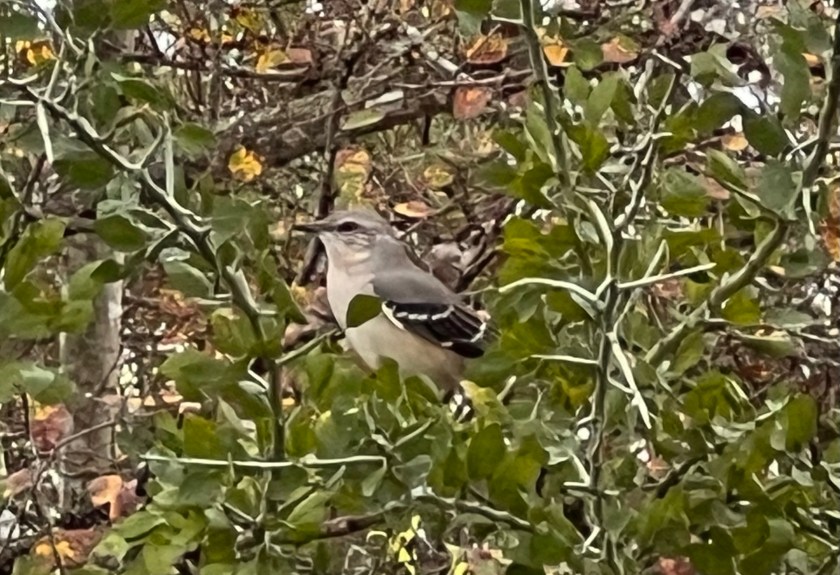
Today’s bird is the mockingbird, because I got a nice photo of one today. I remember as a kid being deeply disappointed that the mockingbird was the state bird of Florida, because it was all gray and black and white. I wanted the blue jay, due to being able to use more crayons to color it (the state flag of Florida had that tiny Native American lady in the middle who was hard to color, by the way, and the dang flower was white, which equalled NO crayons).
This bird was really enjoying something on these branches.
Really, though, I’ve gotten so much pleasure out of mockingbirds in my life, that I’ve forgiven their boring colors. We had one that sat on the streetlight outside of our house in Brushy Creek and would sing for hours. There was also a big singer over by Sara’s horse pens back when Apache lived there. They can really come up with some doozies of songs, like backup beeps and cell phones.
The northern mockingbird (Mimus polyglottos) is a mockingbird commonly found in North America. This bird is mainly a permanent resident, but northern birds may move south during harsh weather. This species has rarely been observed in Europe. This species was first described by Carl Linnaeus in his 1758 10th edition of Systema Naturae as Turdus polyglottos. The northern mockingbird is known for its mimicking ability, as reflected by the meaning of its scientific name, “many-tongued mimic”. The northern mockingbird has gray to brown upper feathers and a paler belly. Its tail and wings have white patches which are visible in flight.
The northern mockingbird is an omnivore, eating both insects and fruits. It is often found in open areas and forest edges but forages in grassy land. The northern mockingbird breeds in southeastern Canada, the United States, northern Mexico, the Bahamas, the Cayman Islands and the Greater Antilles. It is replaced farther south by its closest living relative, the tropical mockingbird. The Socorro mockingbird, an endangered species, is also closely related, contrary to previous opinion. The northern mockingbird is listed as of least concern according to the International Union for Conservation of Nature (IUCN).
The northern mockingbird is known for its intelligence. A 2009 study showed that the bird was able to recognize individual humans, particularly noting those who had previously been intruders or threats. Also birds recognize their breeding spots and return to areas in which they had greatest success in previous years. Urban birds are more likely to demonstrate this behavior.
The mockingbird is influential in United States culture, being the state bird of five states, appearing in book titles, songs and lullabies, and making other appearances in popular culture.
They are fun to watch when mating, and their babies are darned cute, so I’m glad we have them out here at the Hermits’ Rest to entertain us on the off chance that the meadowlarks, killdeer, crows, and white-crowned sparrows get quiet. (In other words, there’s lots to hear out here.)
Bonus snow goose photo, since you can actually tell they are geese in this one, taken today.
I’ve been thinking about doing this for a while. I’d like to share the most interesting bird I come across every day, or most days. Since I’m learning so much about birds lately, why not share? Usually I’ll just stick a bird paragraph and photo at the end of a normal blog about horses, dogs, plants, or whatever. Today I want to share two, though, so that will be all the blog (oh darn, you’re saying, what about today’s bur adventure in which Suna got completely covered in them?). No one cares about that.
Yesterday’s bird of the day made me very happy. I heard and saw my first Harris’s sparrow of the year. In my opinion, they are the most dapper of sparrows, with all the black on their heads and pretty white edges to their wing feathers.
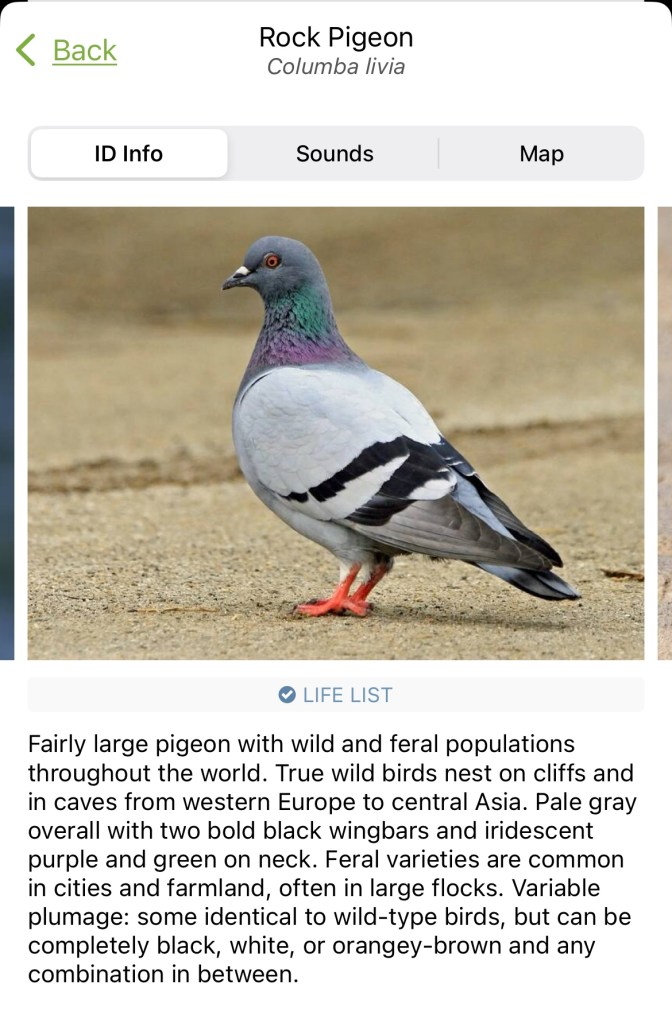
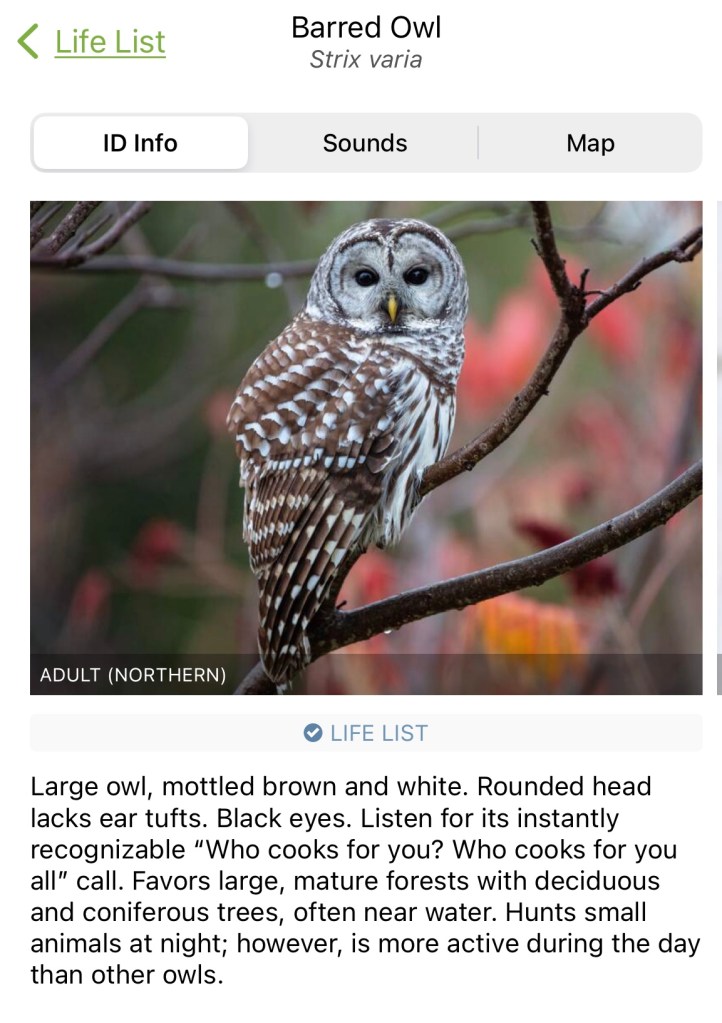
Description from Merlin.
Their song is quite distinctive and loud, so once you know what a Harris’s sparrow sounds like, you can find them. The first time I spotted one was when I was wandering around in Sara’s pasture looking for sparrows a couple of years ago. I managed to get a blurry photo to ID it with, and afterward I was on the lookout! They are so pretty!
What a range!
I think I’ve mentioned before that they’re one of the last winter sparrows to arrive. It’s no wonder! They come from practically the North Pole! It’s cool that they only live in the center of the US. There are very few advantages to being here, bird-wise, so that’s cool.
Things I’ve learned about them:
They are the only bird that exclusively breeds in Canada.
They like fields near water. This explains why we see them, since we’re so near the creek.
They hang out on the ground out in the open more than a lot of sparrows (well, not more than Savannah sparrows).
The Daily Bird for today is the Barred Owl. Today I finally got one recorded on Merlin, so it’s on my “life list” there (though I’ve been familiar with them since I moved here). They are gorgeous birds and I love listening to them go “who cooks for you?” Over and over.
Bigger than it looks here.
These birds have some interesting habits. They love to nest and hang out in abandoned buildings. How did I learn this? Well, after we bought the Rattlesnake house down the road, we didn’t mess with it for a while. Finally, we brought our contractor at the time over to look at it. All was well until we went upstairs. When we entered the main bedroom there was a big noise, lots of feathers rustling, and there was a barred owl, not happy to see us. It expressed its opinion by letting loose a very large stream of owl poop as it flew off. Yes, we scared the poop out of it. Fun times.
I’m not always so fond of them, since they ate all my chickens when I was caring for the ones over by the cabin where my son lives now. Not fun times.
Things I’ve learned about them:
They are also called hoot owls. I always wondered what a hoot owl actually was.
They don’t migrate. We’re on the western edge of their range, though they have spread further in the northern US.
Their biggest predator is the great horned owl. Grr. Leave my owls alone.



















 The Hermits' Rest