Oh goodness. Today is Sunday, so the UU Lent word is extra UU: inclusion. This is, I suppose, to incite us privileged cisgender white womyn to give a pious lecture about including our rainbow of friends in all aspects of society. Politics! The Board room! Your church! Your neighborhood!
Sunrise over parking lot. All are included in this view.
Okay. So, go do that.
Inclusion starts in your own circle, though. It’s been a tough issue for me. I’ve felt left out a lot, especially as a somewhat weird adult. I can see all the lunches, parties, outings, etc. to which I’m not invited but thought I’d fit in with. Still hurts. Childhood stuff.
Pretty pink tree.
I do get included in things, especially in Cameron. That pleases me. And I do not expect everyone to like me. I’m over the people pleasing thing, except those leftover pangs. More growth opportunities.
Include me! (Adoptable dog we met in Arkansas)
This is the best I can do on one cup of coffee and without getting political. I guess I’ll just suggest you invite an outlier in your circle to join you and your friends, at least occasionally. You might make a new friend?
Onward to North Carolina, soon as I can move the spouse.
First, yay, we made it to scenic Jackson, Tennessee, which means we should be able to eat dinner with my stepmom tomorrow, even though we lose TWO hours thanks to Daylight Savings Time.
But, on to a brief rant. I’m sure you’ve experienced the extra creepy feeling you get when something you were just talking about appears in your Facebook or other ads.
I find it less than helpful. Why do I keep getting ads for stuff I just bought? Like I need another one?
Example. Last night my sister gave me a throw with a pattern of birds on it. She said, “It has birds,” and I looked at the picture on the label, then agreed it did have birds on it. It’s a nice blanket.
Less than an hour later, this appeared in my Facebook feed:
Geez!!! Ack!! Eww!!
It’s the matching comforter set. I did NOT describe the throw or say what it was called or take its picture. I understand Siri listening in to everything I say or browse to, but no one said what the dang throw looked like or its brand. Just birds. There are many throws with birds on them.
I believe Facebook has out-creepied itself. I may become a conspiracy theorist and claim it’s in my retina or something. Then today, when we stopped for lunch:
I already ordered soup! Go away!
It was taunting me.
Now friends, I don’t need advice on why I should leave social media or turn off settings x, y, and z. If someone, something, or some corporate entity wanted to gather intel on me, they already have it. I’m just not that fascinating. So spy away. I’m sticking with social media omnipresence.
I just wish they’d suggest more things I want or new places to eat, rather than things I’m familiar with.
Today’s word for UU Lent is play. Great choice, since Lee and I are taking a birthday present road trip to visit a new place and see some relatives. It’s my gift to him. We hope to get Lee relaxed and me out looking at water. Fun.
As you can see, he’s thrilled.
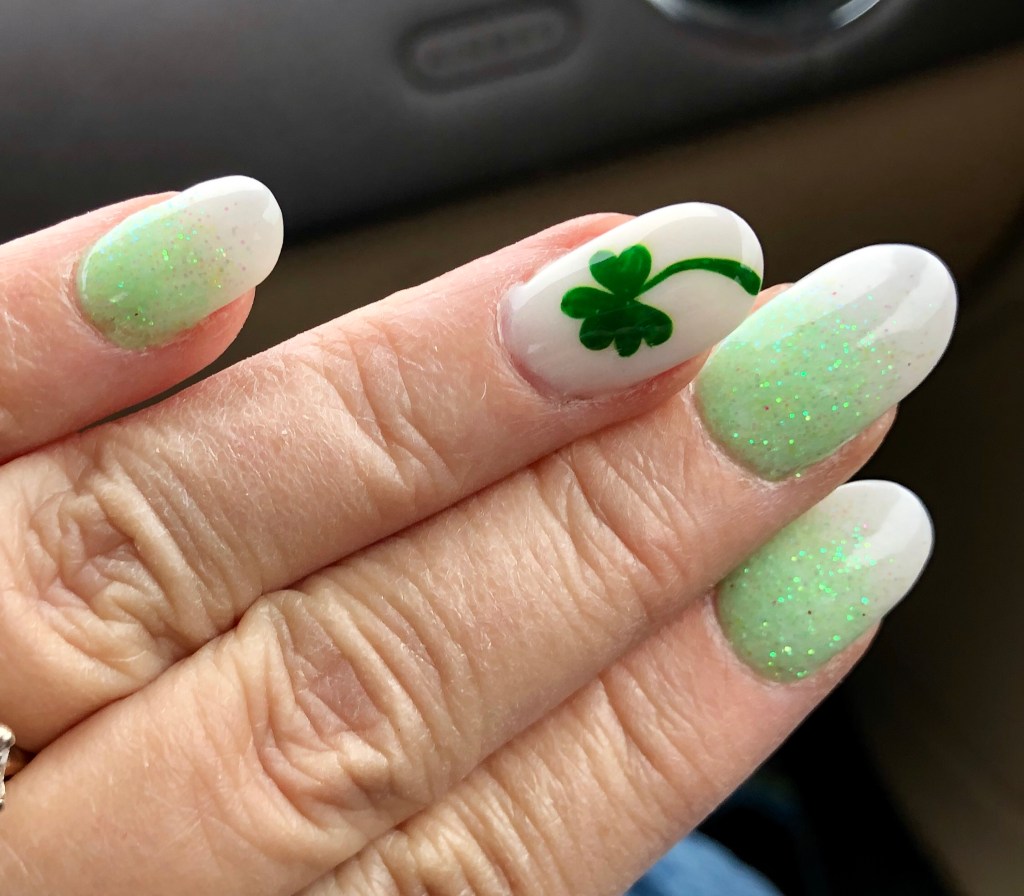
I’ve always tried to incorporate play into my life. Some of the goofy stuff I do, like weird hair colors and holiday-themed nails are play for me and a way to encourage others to bring some fun into their lives.
Tina really enjoyed making these St Patrick’s Day nails.
My two main sources of fun at this point in my life are the Master Naturalist activities and my animals. I learn so much in our MN meetings and classes, and I have fun sharing it with others.
Boy did I learn a lot about plant ID a couple weeks ago.
The dogs and chickens make me play. They can’t help it. But true play is when I’m with Apache and Fiona. They both love to play, and I love going along with them. They just like to hang out together. Like yes, when Trixie the farrier came, we spent most of the time cuddling and nuzzling.
My guys.
Apache loves when Trixie comes and he gets to get in those weird positions and then feels better. I think he thinks they’re playing.
Today’s Instagram post shows a horse playing!
Riding just exhilarates me. It’s the best playtime ever.
One More Way to Play
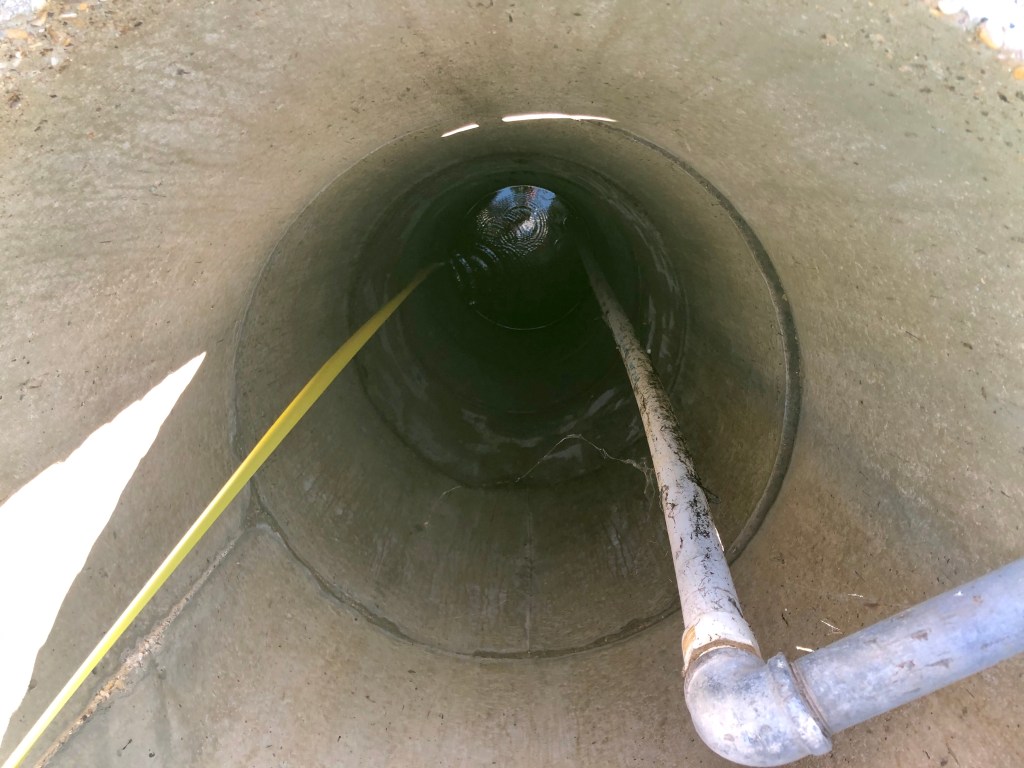
I must admit that some aspects of our work renovating properties is like play. I do have fun picking out colors, fixtures and such. And Chris and I tend to play pretty often. Yesterday, we decided to check out the well behind the Pope Residence.
Look! Water!
It has water in it. We are now working on ideas for what we can do with that. We both admitted we had wanted to look in there for a long time.
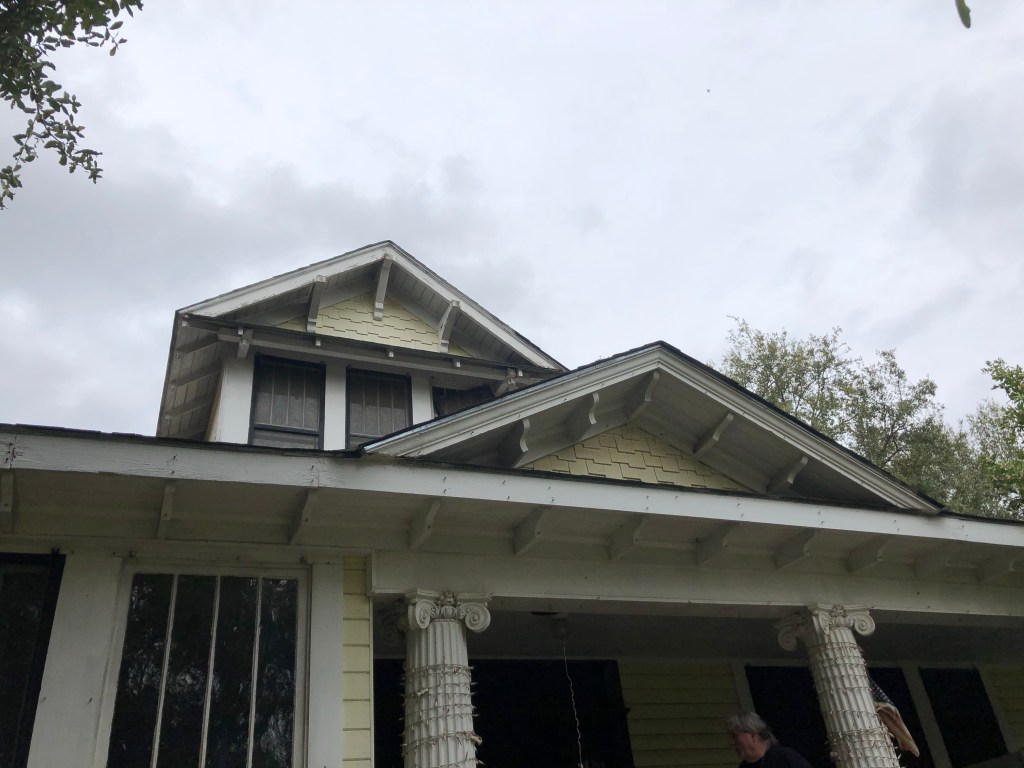
I’ll have a Pope update soon. Until then, here’s a hint of what we hope will be the next project.
The word of the day in UU Lent is imagination. Great, I thought, I already wrote a lot about this in my post about mind blindedness. I’m going to repeat a section from that post at the end of this one, because it explains a lot about my childhood and development.
Day-dreaming of beautiful and peaceful places…a fantastic use of imagination, right? Photo by @jesslowcher via Twenty20
My imagination has been my constant companion, sanity saver, and comfort zone my whole life. It’s almost as if I’ve lived in two worlds, the one I physically walk around in and the one in my imagination and dreams. Guess which one I prefer (even the weirdest of my weird dreams are at least fascinating!)?
Cautions – Too Much Imagination Can Be Damaging to Your Health
While using one’s imagination for temporary escapes from either too much stress or too little going on can be a good thing, I’ve sure seen a lot of times where too much imagination (or maybe it’s more like conjecture) can have some unpleasant consequences.
Just because I’m paranoid doesn’t mean they aren’t out to get me.
I used to have someone very close to me who had an issue with paranoia. He would experience something, and then use his vivid imagination to come up with consequences, motivations of others, and their effect on him. I can remember a two-hour conversation about how a higher-up didn’t say hello to him, which meant his entire career was in jeopardy, she had something against him…blah blah. I just kept repeating, “Maybe she was just thinking about her own shit.” I wasted many hours and much energy on this.
I didn’t hear from this guy for 20 years, so when Facebook showed up, we re-connected. He immediately launched into how his current employers were out to get him. I did not engage.
Or course, I’ve dealt with this kind of thing myself from time to time. Mostly it’s when someone suddenly drops out of my life, which happens to me periodically. I’ve spent way to much of my energy imagining possible things I said or did to offend people, or things that might have been going on with them that could have led to it.
Has any of that helped the situation even one little bit? Well, maybe, if I would have stuck to the imaginary scenarios where I’m a totally innocent victim of some huge misunderstanding and I’m better off without the person I formerly cared deeply about. But, no, I’ve spent way too much of my energy and time imagining less pro-Suna scenarios.
Two moms and three young women. In good news, Pouri and Ellie still speak to me. I wish all of them a good life, though!
What’s helped is that I’ve been training myself to live with ambiguity. I’d rather have that than to find out the paranoid truth. I think I’d rather have not known why Edie and Leigh (two young women who lived with our family when they were having problems) both suddenly went off on me and told me everything I did was for selfish reasons, they’d never loved me, and they’d hated being in my family temporarily. Like my old friend, they were twisted in knots with things they came up with in their heads, and it made me sad. But in both cases, I just listened, knowing my actual motivations and that I loved them anyway. They weren’t interested in my perspective; they must have needed to make a break for their own reasons. I just moved on.
I hate dredging it all up, but I wanted to share how painful over-imagining things can be to others. I don’t want to do it.
So now, I’m okay not knowing what other people’s imaginations have interpreted my actions and motives to be. Everyone has their own perspective, and if anyone wants to talk to me about it, I’ll listen, but I won’t endure abuse. I’ll move on. And I am consciously refraining from imagining why others might be thinking or doing what they do. It’s not helpful to me, and I end up much more mentally healthy and with lots more time for all the things I enjoy.
Instagram of the day,
From now going forward, I’m using my imagination to design dream homes, take mental trips to interesting places, conjure up a nation and world where differences are celebrated, and remember my departed loved ones.
Imagine all the people living life in peace.
John Lennon
My Imagination and Me, from February 11
In case you were wondering about me, I’m one of the 2% on the extremely vivid mental imagery side. I’ve always been that way, so I never knew any different. My mom said as a toddler, I was always wandering around talking to a tree. When she asked why, I said I was talking to Jose, who lived up there. Where this little Anglo girl got that name is beyond me. So, either I was seeing fairies, or I had a vivid imagination. It’s all the same to me.
Don’t shut the car door on meeeee!
I had an imaginary gang of cartoon characters that went with me everywhere, too. My parents loved to tell the story of the time Mom shut the car door on Theodore of the singing chipmunks. I apparently didn’t take it well. I was also a Highly Sensitive Person, ha ha.
My whole life I played stories in my head. It helped pass the time, since I was not the most popular child, and certainly not the most popular during the early teen years! I had an entire life I lived during the time between going to bed and actually falling asleep. In this soap opera, I was strong, smart, and always said the right thing. What a nice world. I also had very cute boyfriends, especially the one from the comic books who was the smartest guy in the universe, and also green.
Teen superheroes make for a fun imaginary life. Hey, don’t judge. All my human heart-throbs died.
This internal life was very vivid and had touch and smell, as well as visual aspects. I now fall asleep without my “dreams,” for the most part. I think it lessened so dramatically when I started anti-anxiety medication. I will gladly exchange that loss for my mental clarity and ability to handle things more calmly.
I still can enjoy a little mental vacation by imagining things, like what’s going on in the towns I drive through, or what animals and plants may be perceiving. I find that fun. No wonder I’m not bored easily (if ever).
Currently imagining what I will do with this future stairwell and landing when it’s done.
Is your imagination your friend or your enemy? Are you imaginative? Where do you go in your imagination?
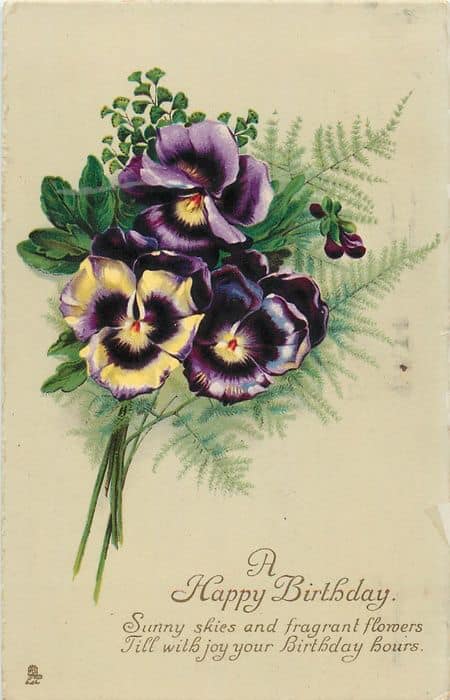
I love that people send me pictures of my favorite flowers for my birthday. That’s enough to make the day cheerful!
What a coincidence that the UU Lent word for today is community, when it’s the day every year that I’m reminded of how far my extended community goes and how close my intimate community is. As much as people complain about Facebook, it’s great for reminding you that people are thinking of you, so Facebook birthdays are always fun.
Community is something I think about a lot, because as the years go by, I’ve come to realize that so much of what I do is to try to create community. I crave being part of a group of people who care for each other and support each other. Perhaps most of us do (with my spouse as an exception, maybe).
These pansies came from a member of my caring LLL sub-community/
At last, after making a lot of attempts at joining communities and trying to become a part of them, I’ve come to realize that it works way better when communities join YOU. I often mistook being part of an organization or other group of people formed because of a shared mission or passion as being part of a community. Sometimes it is, but sometimes you can mistake people working together as people who care about each other. I found this out the hard way with La Leche League, my old church, my knitting group, and others. I did make good friends doing this work, but the community of caring wasn’t really there after all, or if it was, I wasn’t in it. Too much struggle for power and in-group formation.
My birthday morning greeted me with sun rising above fog in good old NorthCat Villas in Austin.
To me, a real community consists of a group of people who all are equal and accept each other as they are, warts and all, and work together for the benefit of all. So, my old groups had sub-communities, for sure, and I truly appreciate them and the friendships they created that have lasted many years.
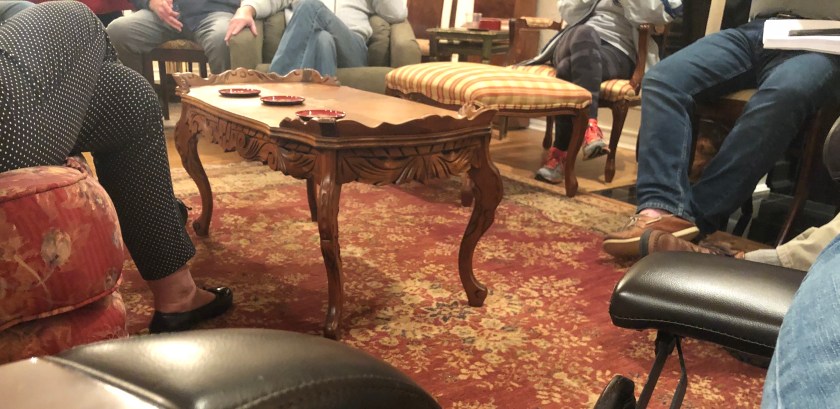
The feet of my community in Austin. We had a rather amusing meeting about people taking up too many parking spaces in our cul-de-sac.
Now I really do feel part of a community in both of the places where I live. I feel safe and cared for in my little Austin cul-de-sac (warts and all, oh yes), and I certainly feel that way among the community that’s building up around me in Cameron. No wonder I am happier and more at “home” than I’ve ever been in my life.
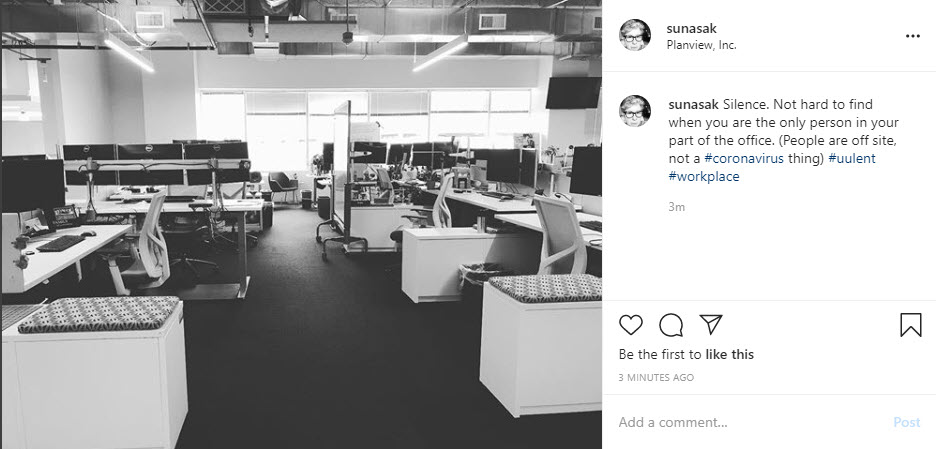
The fascinating UU Lent prompts continue to take me down rabbit holes of thought. Silence is the word of today. I chuckled a bit when I walked into the office this morning to see absolutely no one in my entire area of cubicles. That led to quite a bit of silence, other than the ever-present noise-canceling hum.
This place looks even more sterile and silent in black and white.
Of course, by the time the morning moved along a bit, laughing came out of meeting rooms and a couple of coworkers came in for meetings. We just happen to have a lot of people at an off-site meeting, combined with the usual people working from home. I don’t think anyone’s staying home for coronavirus reasons, at least so far.
I Abhor a Sound Vacuum
It has taken me a long time to become comfortable with silence, even though I’ve found a quiet place to meditate daily for most of my life. Then I hear my breathing, so it doesn’t feel silent.
Growing up, my family were all readers, so you’d think it would have been quiet, but they were all “readers while watching television.” There was always some kind of background noise in my life. When I went to my room I played the radio until I finally got a little stereo (it was green plastic and was from K-Mart of its equivalent). After that, I read to the sounds of the music.
Me and Camille in grad school, taking a brief pause from nonstop yakking.
I also took a long time to be comfortable in silence when in groups of people. I must have driven my teachers crazy, because I wanted to answer all the questions, I talked when I was done with my work (always quite early), and I chatted while waiting silently in line. In small groups, I talked when no one else was speaking up.
And that went on and on. I sure talked a lot. I’m not sure why I felt the need to fill the air with the sound of my own voice. I had to concentrate to get myself to stop going on. Yeah, I had reasonable stuff to say, but I never gave other people who had to think a minute any time to talk.
Yes, coworkers, I have learned to shut the heck up.
Yes, I worked on that problem a lot! I have gotten much better at being quiet. I can sit in meetings and let all the other folks talk. Sometimes I don’t even share all my brilliant contributions. I can self edit! I learned to take notes to myself when I wanted to talk. Now that I have keyboards, I type to myself. Then you get to read it, the results of my logorrhea!
One thing that helped me learn to be a better conversationalist and meeting participant was watching others. I see how people react to the colleague who never takes a breath when they talk and vigorously resists any attempts to steer the conversation a different direction or end it altogether. I don’t want that!
That’s what marriage is about. Learning to deal with your differences, because you care.
I’m still working on waiting for my spouse to respond in conversations. He generally takes a lot longer than most people before answering a question or contributing to a discussion. I find the silences that ensue really uncomfortable, and can’t ever tell if he simply doesn’t plan to respond or is working something brilliant out in his head. I’ve started counting to ten before moving the conversation on or answering for him. I don’t want to be rude, but my ideas of the intervals between conversational turns are different from his. If I were still a linguist, I’d probably research it and write a paper about that.
But Suna, Don’t You Love to Be Alone in Silence in Nature?
That’s a paraphrase of an actual question I got when discussing silence. I do, indeed, love to be alone in nature. I love taking hikes, riding the horses way out on our property, and even sitting on the back porch alone. But it’s not silent out there. Sometimes it’s pretty loud, with all the birds communicating, crickets and cicadas, frogs and toads, cattle, bees and wasps, chickens, coyotes, etc. This is the music I like to listen to best at this stage of my life.
There’s lots to hear way out here in the middle of Milam County. Sara and I love it.
I can walk along, being embraced by a breeze that feels like an actual hug, and see, smell, and hear all the life around me. If this is silence, if this is being alone…it’s great with me.
Another book finished, and I’m impressed that I got this one done in less than a week, since I’m also trying to knit some every day now. I bought Talking to Strangers: What We Should Know about the People We Don’t Know, by Malcolm Gladwell, because I really wanted some insight into how to communicate with people from different communities, cultures, social groups, etc.
Hey look, you can buy it, too. Trying a new embed format.
It turns out that the famous Mr. Gladwell (he wrote Blink, a book I didn’t like much at the time it came out) wasn’t exactly writing about what I thought he would, but I found the direction he took pretty interesting, anyway.
The question he really seemed to be asking was more like why do we let assumptions about other people, based on appearance, blind us to their real motives or intentions? He talks about cases we are all familiar with, like Bernie Madoff, who fooled all kinds of rich people into believing his really ridiculous Ponzi schemes and the pedophilia scandal at Penn State University, where Jerry Sandusky’s purported actions were dismissed until everything blew up and all sorts of people lost their jobs.
Don’t talk to strangers, said so many mothers. Photo by @tonyturretto via Twenty20
Spoiler alert: Gladwell says all of the misinterpretations of others’ motivations boils down to two main things: one is that we all assume that people we don’t know are telling us the truth. It takes lots and lots of evidence that something’s amiss to change that assumption. So, good ole Bernie M. was such a nice guy and friends of so many smart people, of course he was telling the truth! Gladwell points out that the assumption of truth is actually a good thing almost all the time. It certainly would slow down social interactions if you questioned everything anyone said to you, right? That lets skilled liars, or even unskilled liars, as he shares with a story about a Cuban spy in the CIA, keep doing what they’re doing.
Here’s one way to not read people’s motivations from their faces, right? Photo by @pprevost via Twenty20
The second thing that makes knowing what a stranger is really up to hard is the assumption of transparency. This means how we expect that we can read people’s motivations from their appearance. As long as people act like our cultural norms predict they should in a situation, it goes well. This refers to looking afraid when you are scared or acting solemn when someone dies (Amanda Knox in an Italian murder case didn’t act sad enough when her roommate died, but really she was just socially awkward, not a killer). People who, like Knox, don’t telegraph their internal states can get away with lying or not be believed when they are telling the truth. In the end, that is one thing that caused that poor Sandra Bland woman to end up dead in a jail cell: she acted nervous when a police officer pulled her over and didn’t grovel properly, in his mind.
The other part of Talking to Strangers that I enjoyed a lot was a discussion of the concept of “coupling,” where Gladwell makes a strong case that inexplicable things you do are tied strongly to location and opportunity. Sylvia Plath’s suicide happened because gas ovens in England still had carbon monoxide in them. If she had tried to do it a year or two later, they’d have switched to natural gas, and she would have just gotten a headache. Another poet, Anne Sexton, killed herself by locking herself in the garage and turning her car on. This was just a short time before catalytic converters showed up in American cars, so this method wouldn’t work. Um, did you know that the profession most likely to commit suicide is poets?
That’s right. Don’t do it.
The point is, though, people think that if your chosen method won’t work, you go try another method, but the research on coupling has shown that isn’t true. When nets were put on the Golden Gate Bridge, people didn’t march off to another bridge to jump off. The motivation is tied to the place.
I haven’t explained that well. The section on coupling is the main reason I encourage people to read Talking to Strangers. I kept reading sentences aloud to Anita, because I was learning so much. The section about “pockets of crime” blew me away.
Photo by @yournameonstones via Twenty20
Now that I write this all down, it’s clear that Gladwell made a big impression on me with his viewpoints and the research that backs them up. It’s fun that he weaves recent events (and Hitler) into the analysis, because you always want to know how the heck these implausible events actually go down the way they do (why did Neville Chamberlain like and believe the words of Hitler?). I have a new perspective on why people just don’t “get” each other so often. Learning is good!
Sadly, I still don’t think I’m any better about talking to strangers. I think I’m even more cautious about it than I was before. Maybe that’s a good thing. Assumptions about other people tend to bite you in the…butt.
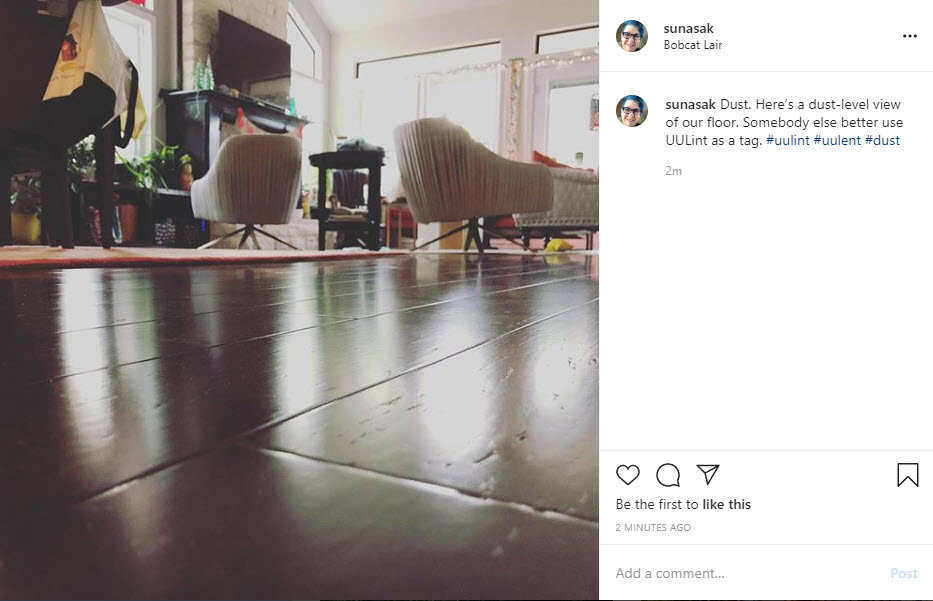
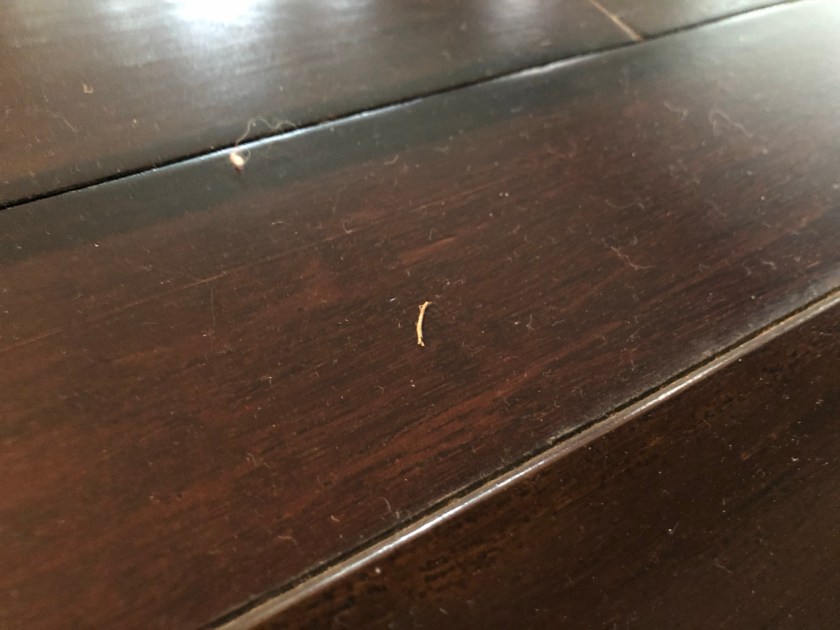
Oh goodness. What WERE the PC Practitioners over at the Unitarian Universalist Association (world’s most politically correct organization) thinking when they decided that dust was going to be one or the UU Lent words of the day? Were they thinking UU Lint? (And how many people also came up with that question today?)
Can’t believe no one else had tagged #UULint yet on Instagram. Ima check back later. None on Twitter yet, either.
Photo by @melpaul199 via Twenty20
I’m sure a lot of people go real deep when they think about dust. Or the song “Dust in the Wind” gets stuck in their heads. Darn you, Kansas. I guess it DOES blow your mind the first time you realize that, “we are all made of stardust,” a sentiment which seems to have been attributed to every pop astronomer of the past twenty years.
Sometimes I wish the vast majority of people who have that us versus them mentality would think about the fact that we are all made of the same stuff a little more. Perhaps if they dusted off the cobwebs in their brains, dust could lead to peace. That’s a stretch, though.
Just imagine what all’s in there.
I’ll be honest, here. When I think about dust, other than when I need to wipe some off a surface, I usually think about what’s IN the dust. I’ve always had what passes for Suna having fun by imagining germs, dander, mites, ash, and a whole lot of giant pollen particles swirling around me, going in my lungs and back out. I’m glad we don’t get all stuffed up inside.
Special Dust
Brick dust everywhere, even on the ancient curtains.
However, right now, I’m more fixated on all that brick dust at the Pope Residence. It’s a couple of inches thick on some of the wainscoting in the entry. Poor Randy has swept it many times. I’m sure glad he and Easton wore masks when sanding down the bricks.
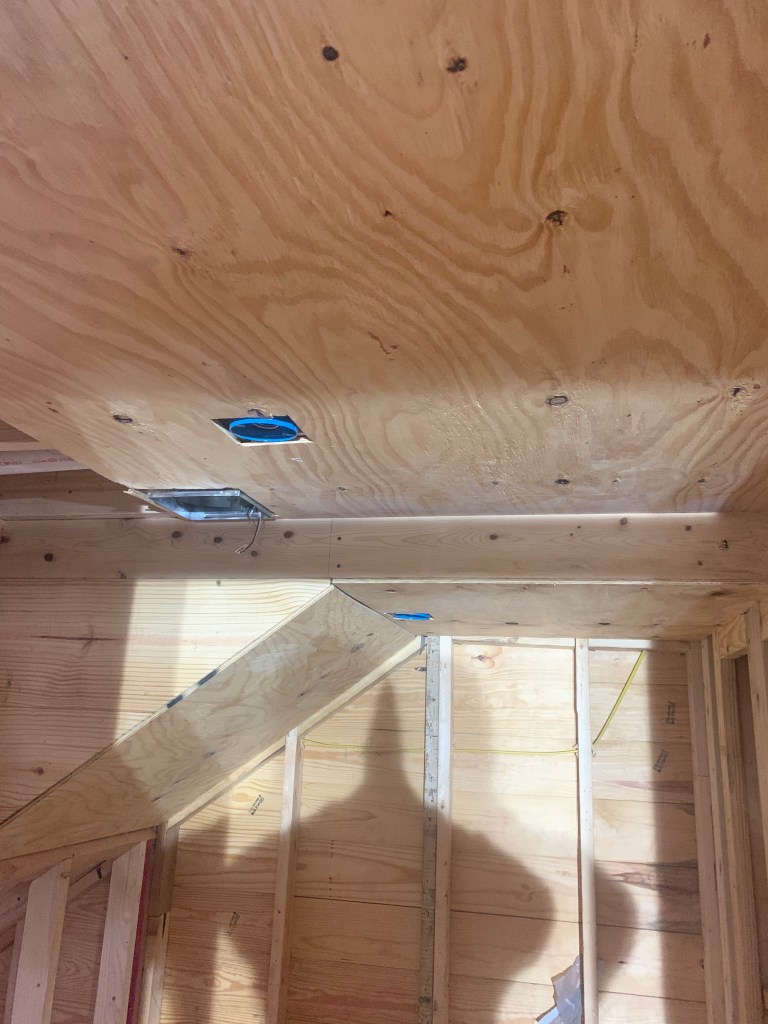
That’s some dust-free wood! Plus, I can see where the light fixture and vent will be! Photo by Chris
In fact, when Chris sent me this photo of the ceiling going up in the bathroom attached to my future office, my first thought was, “Wow, that sure is clean.” I sure hope we eventually get ALL that brick dust out of the building. It can blow in the wind, because as we all know, EVERYTHING is dust in the wind. Or stardust.
Okay, if any of you would happen to have more insights into the concept of “dust” that you’d like to share with me, I’d really appreciate it. I may be missing out on something as I am using most of my brain on actual work today. Share! Do it for Vlassic!
Thinking about being made of stardust has me all tuckered out.
I felt like I needed something pretty to balance the content. Read on.
I just can’t stop laughing, so I have to share. This will be brief. I went to Amazon to write a review of the Dare to Lead workbook I “read” yesterday. Of course, I had to read the other reviews. That started my day off right. There was ONE positive review, and it was written in exactly the same psueudo-English that so many of the spam comments that come into our blogs show up in. Let me get you an example:
Magnificent beat ! I would like to apprentice while you amend your website, how could i subscribe for a blog site? The account aided me a acceptable deal. I had been a little bit acquainted of this your broadcast offered bright clear idea
The rest of the folks join me in universal rejection of this poor little booklet, which by the way was “Independently published (January 18, 2020).” AHA! I shall never again overlook those words!
Reviewer Kevin agreed with me: “It is chock full of misspellings and grammatical errors so much so that I believe an 8th grade English teacher would give this paper an ‘F.'”
This review is my favorite, so I screenshotted it:
Be very careful what books you order, especially if you haven’t heard about them. Remember that some self-published books, like my future series Suna Blathers On, will be just fine. Many are scary. Also, read the reviews. That can be quite entertaining for bad books and enlightening for good ones.
Want the real resources for Dare to Lead? You can find them right here, a read-along guide and a glossary. Oh boy, I hope “rumble” and “lean in” are in the glossary! (That was sarcasm folks; I’m steeling myself to wade through the jargon to find the good parts in Dare to Lead.)
*This is a chapter title in Workbook for Dare to Lead.
We all make mistakes, right? Well I’m about to admit to making a big mistake. I spent $8.99 on a “book” that is only a book by virtue of having pages, a cover, and some printing. I had good intentions!
Classy cover art.
The work book club is going to read Dare to Lead, by my buddy Brené Brown. When I went to pick up a second copy (because I hid my first copy when I pitched a fit about how many times she said “lean in”), I saw there was also available a study guide for the book. I thought it would be great to have some questions and ideas to talk about when we have our meetings.
Today the books showed up. Coworker Maggie said, “Hey that’s a printout of a PDF; they always have those ugly rectangles on them.” I told her to check out the inside. There’s no author (unless the Review Press is a person), little publishing information, and no blank pages. You just jump right into a table of contents.
Cringing yet?
Then you keep going, or you try to. OMG, the whole thing is in “books for the visually impaired” size type, and it’s conveniently both right AND left justified. And because the huge print makes the lines quite short, the gaps between words can create not rivers, but entire seas within the paragraphs.
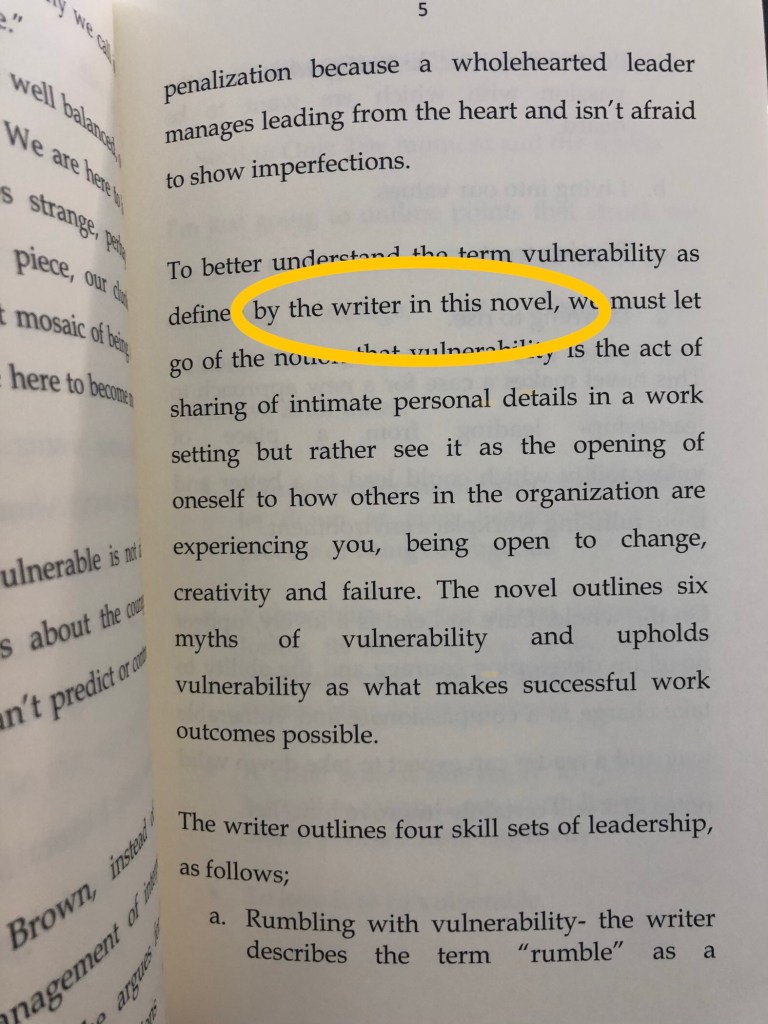
As I read the first part of the book, it because clear that it is a book report penned by a 14-year-old in the UK (there’s a “Lessons Learnt” chapter) trying to get the paper long enough to fit the teacher’s requirements. Poor Brené is referred to as “the writer” endlessly, and poor Dare to Lead is repeatedly called a novel. If it’s a novel, the character development and plot both suck.
But Wait, There’s More
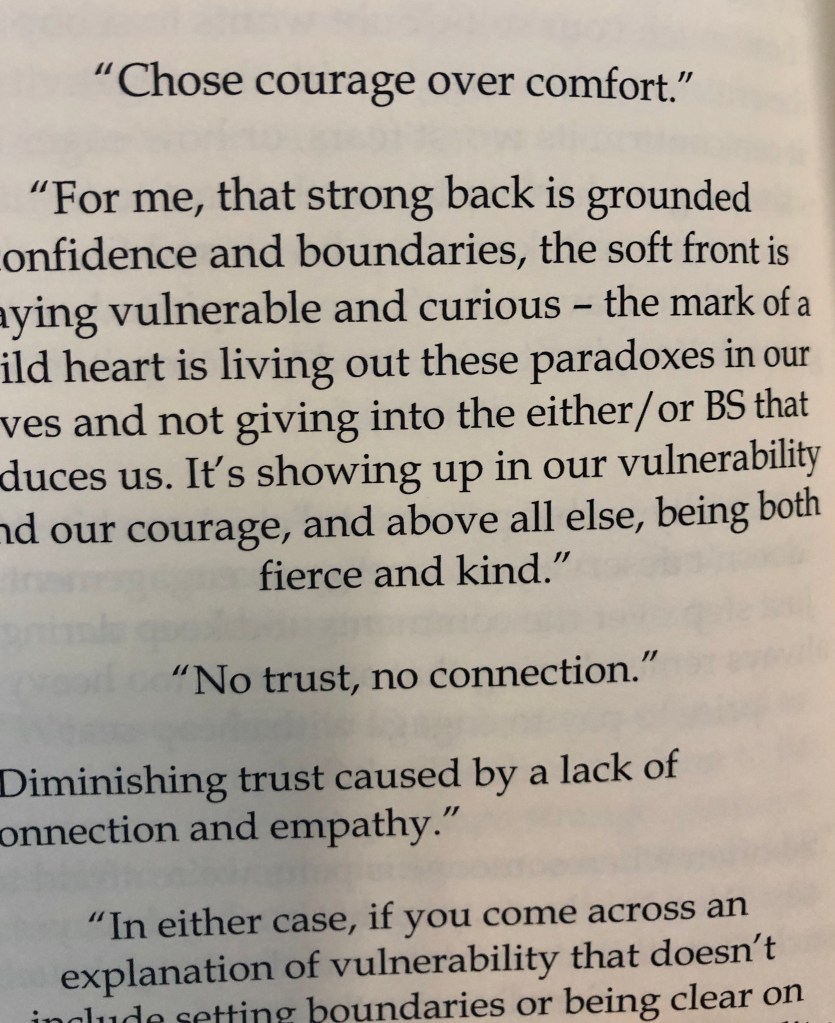
The book report, replete with listings of the names of each section and verbatim content from Dare to Lead, mercifully ends after 22 zippy pages. Then ten pages of quotes from the book are kindly shared by, um, let’s call them “the author.” These are dizzily presented centered, but still full of huge gaps. And for fun, one’s occasionally left aligned. (I’m a hack writer too, though, how many adverbs ending in -ly were necessary in this paragraph?)
It’s centered! Mostly…
I guess “the author” got tired after picking out those quotes, because the “Conclusion” section slides into a description of the organization of the book and the names of chapters. Riveting. After carefully detailing Part 1 (though alternating on using and not using quotation marks around chapter/section titles), everything comes to a screeching halt:
“Haven discussed all the sections in part one, the writer further divided the book to part two, three and four and termed it living into our values, under section two the writer stated that giving and receiving feedbacks is one of the biggest fears at work…”
the author, Workbook for Dare to Lead
They then finally take a breath and give one sentence for each of the rest of the sections Brown so carefully put LOTS of concepts in. It’s okay, the author had to save space for the lessons learnt and workbook pages. I don’t think I’ll be using any of the workbook questions in the book club, though I could play connect the dots using the dotted lines between pages.
That’s an imperative, my friend, not a question.
To Conclude My Most Excellent Review
I actually hadn’t intended to write a book report of this book report, but it just came pouring out, and was probably good for me in a cathartic sort of way. I realize someone wrote the study guide quickly to get something out there to make money. I was silly not to look carefully and see that it was from a self-publishing purveyor.
Mainly, I want to beg and plead with any of you who plan to self publish books or know someone who does:
Please, please, please have someone look over your content before you send it in.
Amazon is NOT gonna do it. They’re going to print copies of your PDF on demand and send them to innocent people who want to read an actual book.
Really, it does?
At least glance at other books and see how they are set up. Large print and small pages are not a good combination. Most important, while Microsoft may say what appears at right about justified text, it helps to have professional typesetters and to use hyphenation. You might want to take note, too, that centering works best in very small doses.
Of course, you or someone else should proofread; “have4” is not a word, but it’s in the study guide. I forgive using semi-colons for colons in introducing lists, since whoever wrote this was trained in the British style.
One More Thing
Say, let’s look at my pretty flowers and my breakfast, to cleanse our minds.
Some very good books have started out self published. I am proud of some of the people I know who wrote them. Not all self published books are embarrassingly bad, but caveat emptor and all that.
On the other hand, I wonder if I should just PDF up every year’s worth of my blogs and offer them for sale? Suna Blathers On, Volume 1, and so forth. I could use some money, and I did write this all by myself, errors and repetitious phrases and all. I guess I’m a writer after all! Maybe I’m creative!
I’m gonna do the whole thing in Comic Sans! That’s pretty!





















 The Hermits' Rest