I Did a Social Event! With Airplanes

What the heck? This sure came as a surprise. I realized there was a little airshow coming up this weekend, and that Lee had volunteered to help out with the Chamber of Commerce table. I hadn’t considered helping, but I didn’t want him to go be social all alone, since he hadn’t done it in over a year. So, off we went to the Cameron airport this morning, to celebrate the recently renovated runways and such.

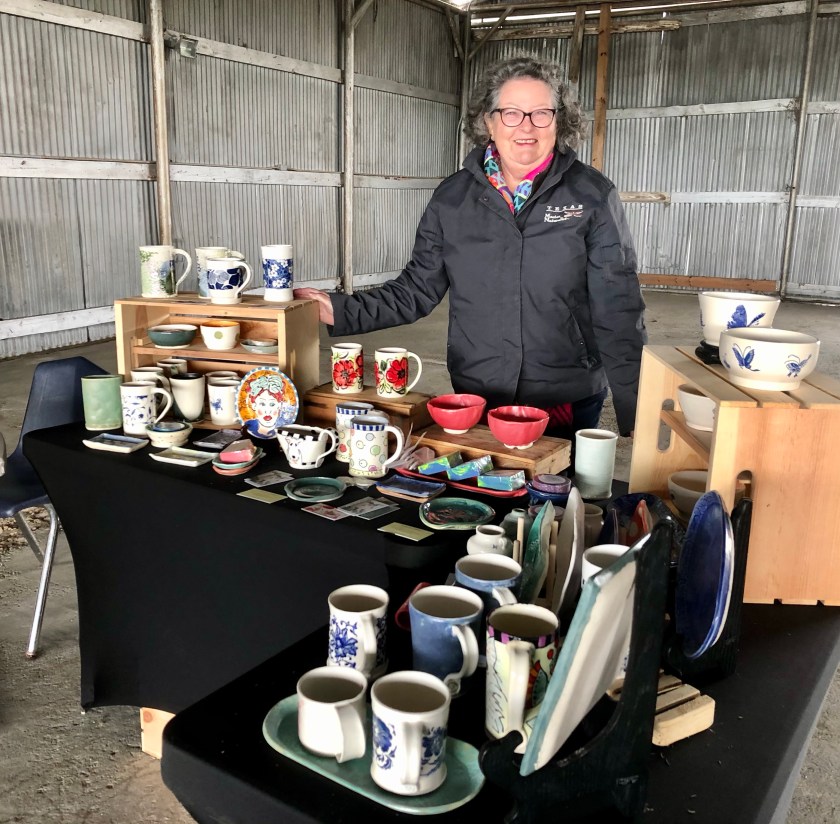
This was Cameron’s “soft opening” for events, too. There were vendors, including my friend, Pamela, plus Manley the king of jams, and even wine. They were all in an excellent open hangar, so we felt breezes and fine wearing our masks.

Lee and Melanie managed to sell a whole bunch of the Chamber of Commerce raffle tickets, so they felt quite successful. It was a lot of chatting for Lee, but he did well. Now he’s exhausted, though.
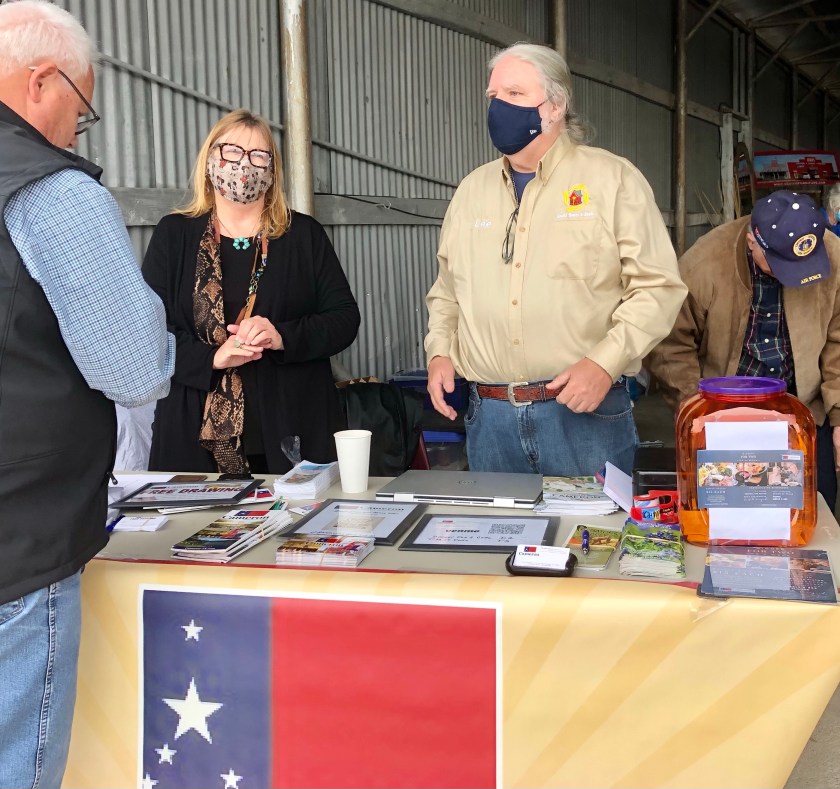
Melanie and Lee are telling visitors what fun you can have in Cameron. I got to choose the giveaway winners. No cheating from me!

I mostly knitted and talked to my Master Naturalist friends. We got a little giddy when we realized we were all fully vaccinated and could actually stand near each other and talk. It was a small thing, but made us so happy. Sigh, maybe we can have real meetings again soon, if people keep being careful (like we were today).
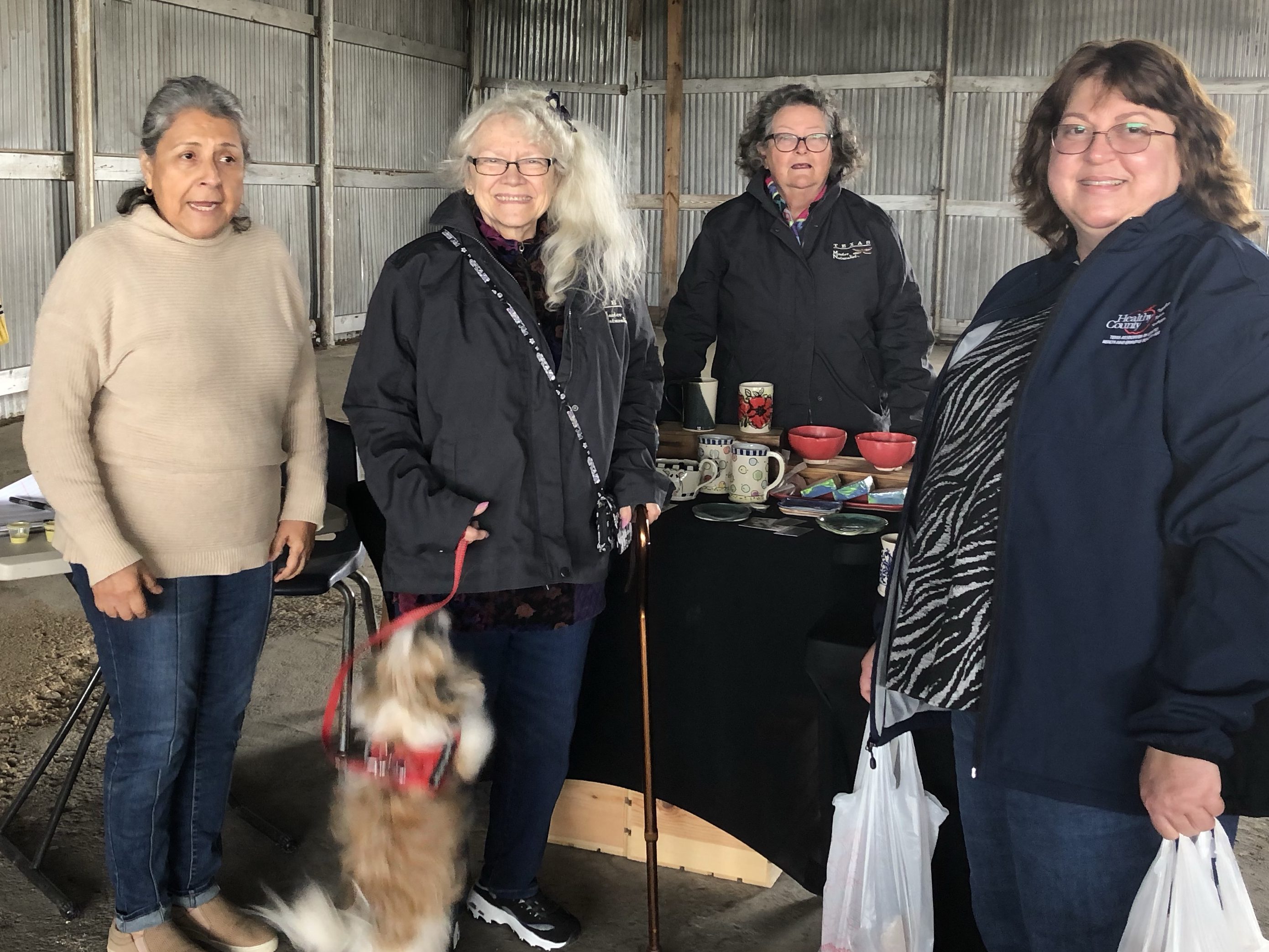
I truly love this picture. We could not stop talking, and the dog could not stop jumping long enough to get a photo. But I sure was glad to see all these fully vaccinated friends.

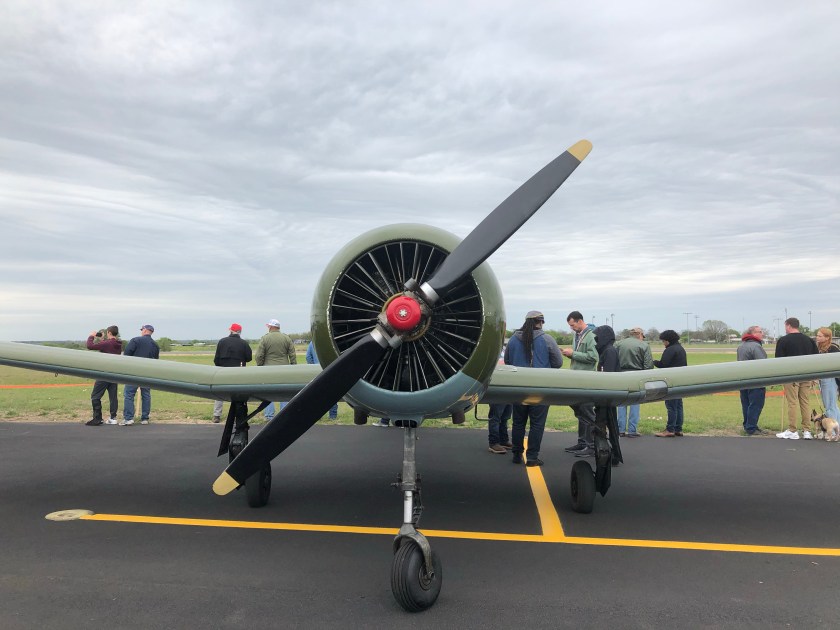
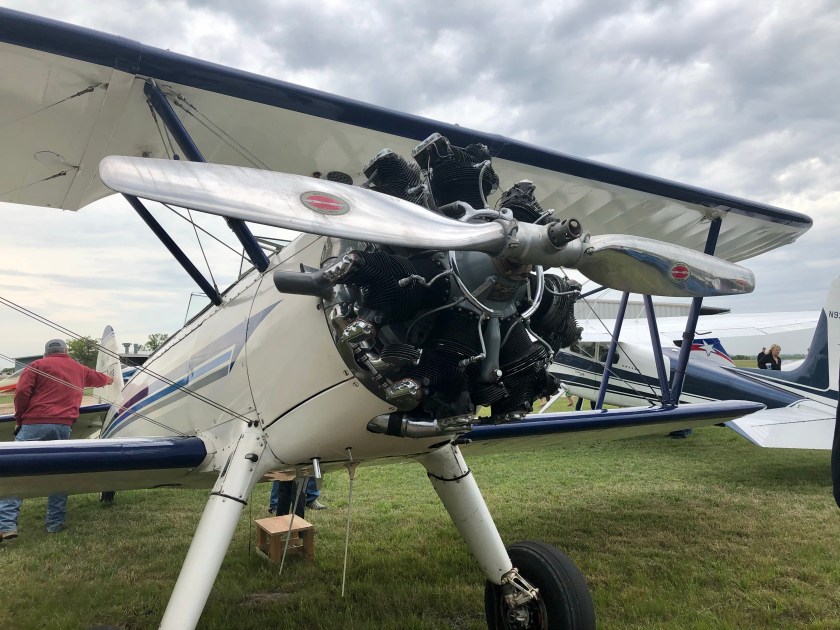
Most of the action was outdoors, though, and it was so much fun to look at the 20-30 little planes that showed up. It was the most planes I ever saw at this little private airport. Lots of them were old and interesting, no doubt, and I’d explain more about them if I knew anything at all about private planes. I did ask our banker friend, Richard, who happens to be a private pilot (and has been a looooong time), so I knew that the one that did the tricks was a trainer plane from after WWII, and the cool green plane that blazed in from Georgetown was a Russian trainer.
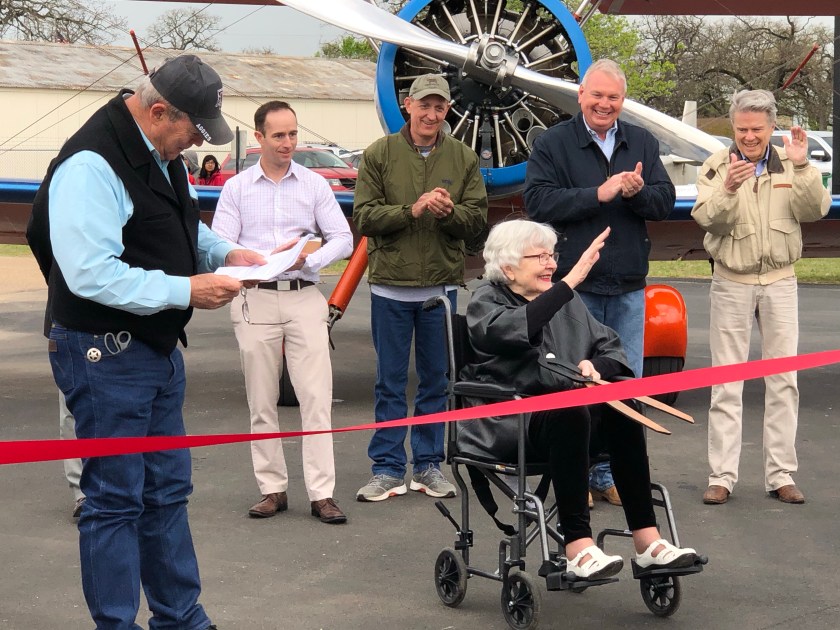
One highlight of the day was cutting the ribbon to officially re-open the airport. All the local dignitaries were there, including the whole city council and mayor, plus the airport team, the engineer, and others. But the star of the show was Marion Travis, age 92. She was a pilot in her youth, and a true aviation pioneer. She is Cameron royalty (and a real hoot). She cut the ribbon.
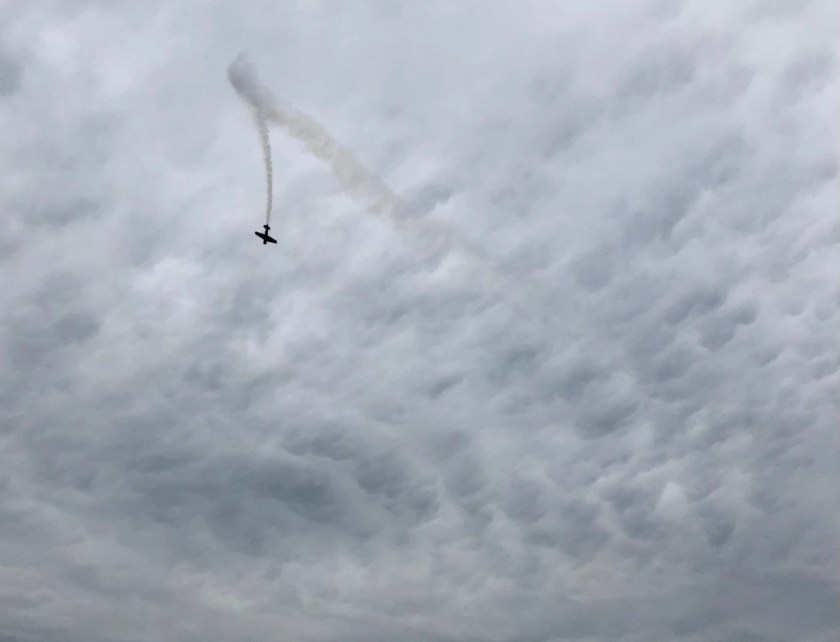
There wasn’t much to the actual air show, since one of the trick planes had a mechanical problem, but the one that did fly had some tricks. It sure was fun watching that plane going upside down and making loops. I’m glad I was on the ground, though. I was told the pilot is a Southwest Airlines pilot for his day job.
I feel practically human, though really tired, after walking around looking at planes then walking around with Apache trying to figure out how he’s feeling (he was a bit weird yesterday, not cooperating and tossing his head a lot). But, hey, it was almost like a normal day from the olden times, other than all the masks people were wearing!

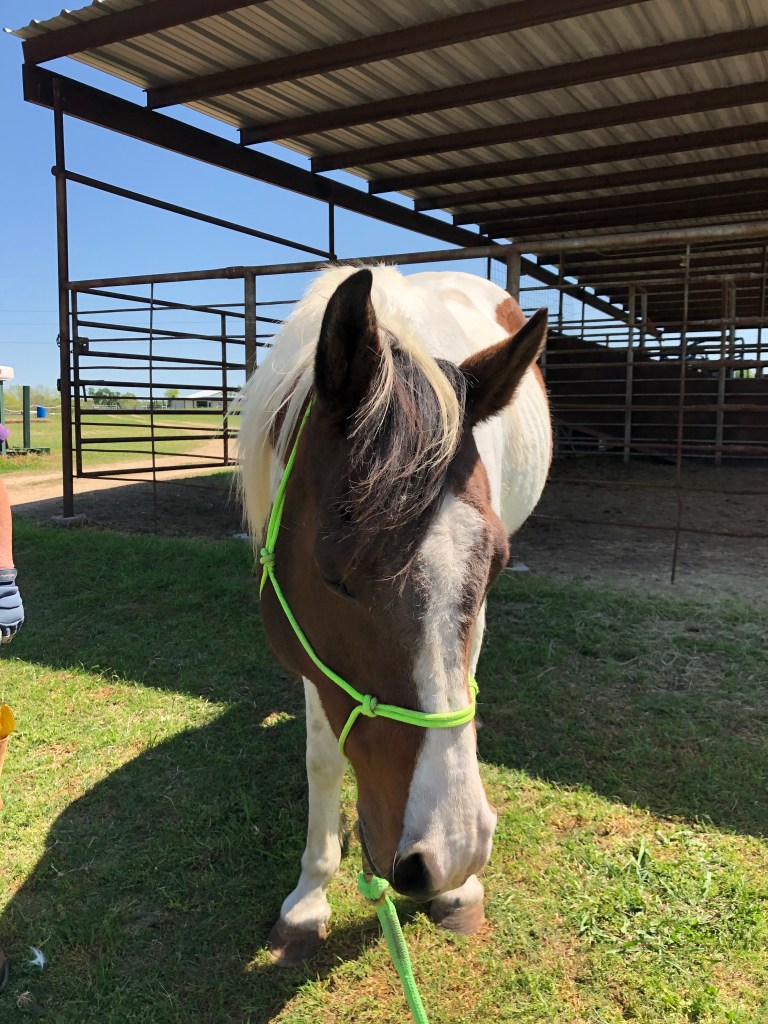
Suna let me eat the forbidden grass, but just for a few minutes.

Ooh, one more horse note. Apache has shed most of his winter coat over the last two days. It’s been most impressive brushing him out. Some bird will be able to make many nests from his fur. By the end of today, I suddenly realized I could see his patches on his skin again. I got down to his summer hair! He’s going to feel a LOT better now that it’s slowly warming up. More goodness to look forward to over the summer, I hope.

He must feel lighter after getting rid of so much hair. He lost this much yesterday, too.

Tanks? Ponds?

I live in Texas, on a cattle ranch, though none of the cattle here are mine. The cattle here mostly drink out of artificial ponds, because as any Texas naturalist knows, there’s only one natural lake in Texas (Caddo Lake, on the Louisiana border). Thus, any pond you see is made by a human or beaver.

There’s a tank in the middle of those flowers down the road.

However, any native Texan will tell you those cattle aren’t drinking out of (and cooling off in, and pooping in) ponds. Oh no. Those are tanks. Stock tanks or cattle tanks. You sound like a city person if you call them ponds.

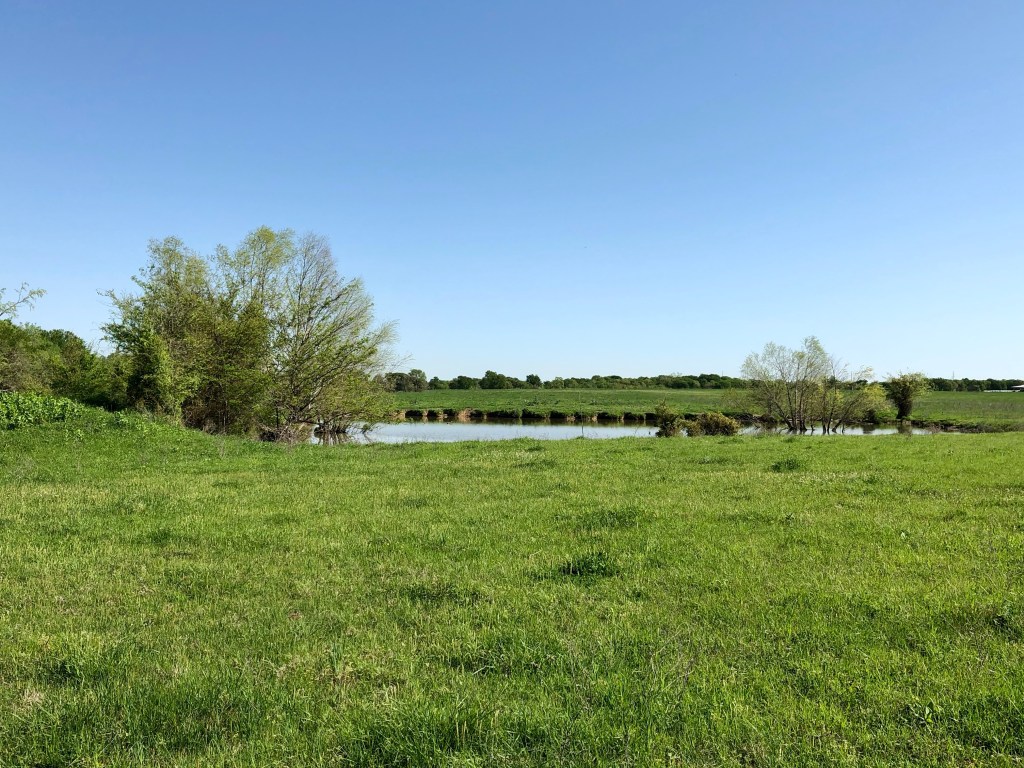
Our lovely small pond that sometimes merges with the creek.
I don’t know how long they stay so pristine.

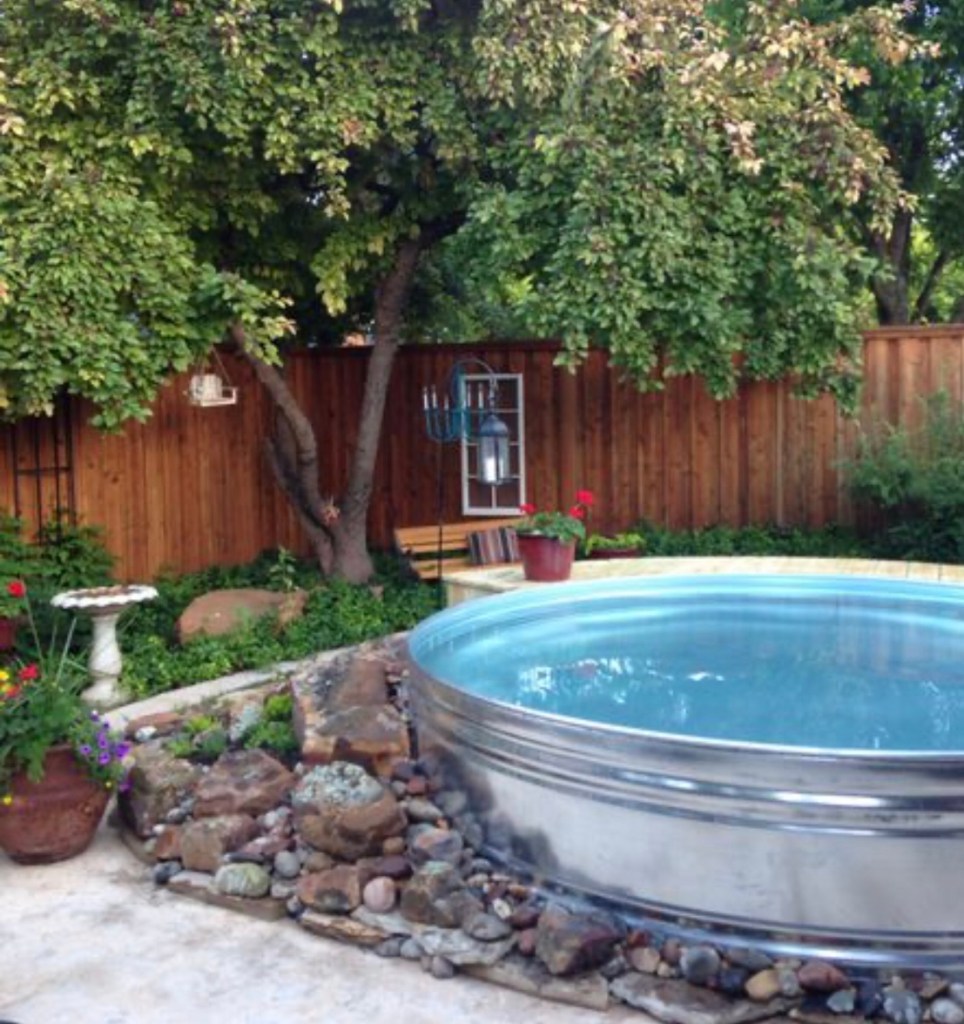
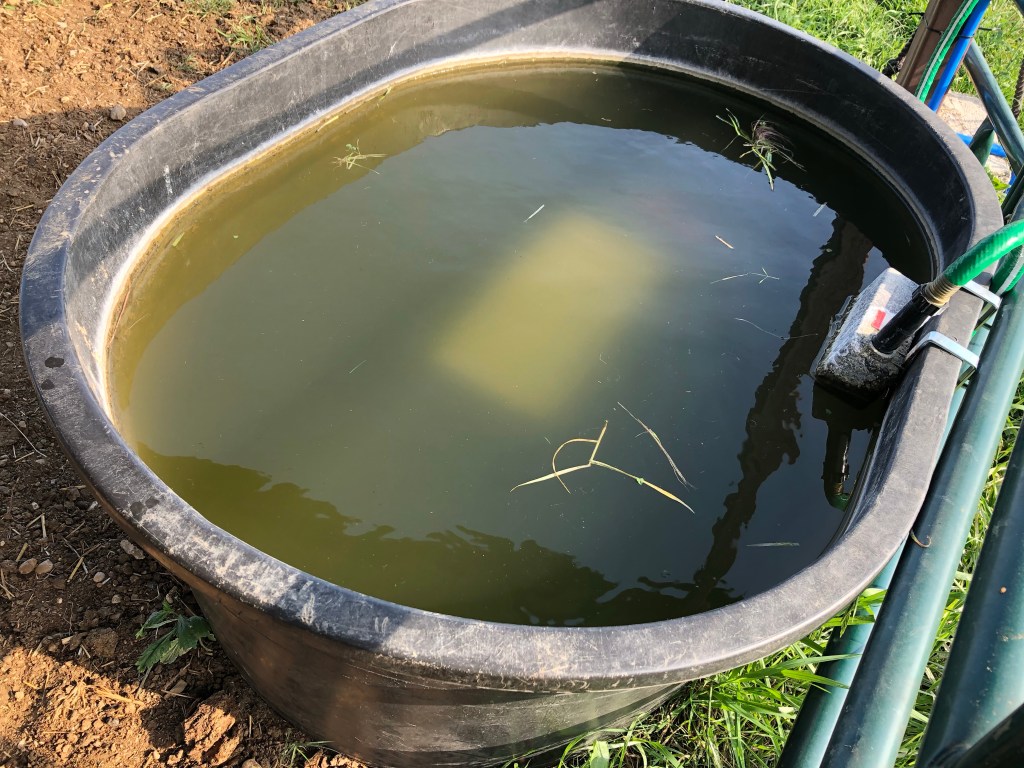
I’m telling you all this because I’ve recently had a couple questions about what the heck a cattle tank is. First, stock tanks in most places are like big water troughs made of metal or plastic. People like to make them into swimming pools. But that’s a normal tank.

These are attached to water supplies and have valves to keep water at the right level. We have some here, as well. The goldfish in there have really grown, to my happiness.

There ARE fish in here.

But most properties have one or more of these in-ground tanks, made usually by damming an arroyo or other place where water naturally goes, then digging out a big hole. This is how we made our front “pond.” Our driveway is the dam.

The tank we made. Those trees grew up since we built the dam/driveway.

All the other tanks on the property are much older. Our neighbor’s son remembers swimming in them. Um, I see too many snakes to consider that. The big tanks have very tall dams around them, created by digging the holes. The dam around the front tank next door is really tall, and Fiona freaks out at it. I still don’t know why.

Looking down the ditch that drains into the big tank. Look carefully on each side to see the dam.

Because I wanted to know more about the history of tanks in Texas, I looked it up and found a fine article from Texas Monthly that fascinated me. For example, I learned that 80% of the tanks in Texas have fish in them, even ones that haven’t been stocked. I’ve seen catfish in ours!

The tank behind our house has plenty of fish for the herons, and is popular with cattle and dogs for cooling off. There’s only a dam on one side, but it’s tall!

I also learned that there are subsidies for building tanks that prevent erosion. That may explain why Texas has more of these man-made bodies of water than any other US state. I actually think that’s what my neighbor does, advise people about building tanks. I should ask, huh. My friend Phyllis confirms this; I’d call them tanks, too, if I got paid!:

My Dad always said that the government would pay farmers to put in stock tanks in the early 1900’s. So if you built a pond for your livestock you paid for it, but if you built a “tank” for your livestock the government paid for most and sometimes all of it…

Of course, as my friend Lynn also pointed out, when you build a tank, the State owns the surface water. That’s one of those weird Texas technicalities.

One thing I do know is that it’s easier to build a tank when you have some clay in your soil. In sandy places, you have to add a layer of clay so it will hold water. We have a couple of dry tanks here, too. Animals like to hide in them. See, I paid attention in my Master Naturalist classes. I obviously think tanks are cool.

Some old tanks look pretty darned natural, like the one next to Walker’s Creek cemetery.

And finally I was happy to read my favorite thing about tanks is not just mine and my naturalist friends. Tanks now attract all kinds of plants and animals that might not be there if we hadn’t put the water there for them. Long after the cattle ranches are gone, the tanks will remain, drying up in drought and refilling when there’s lots of rain.

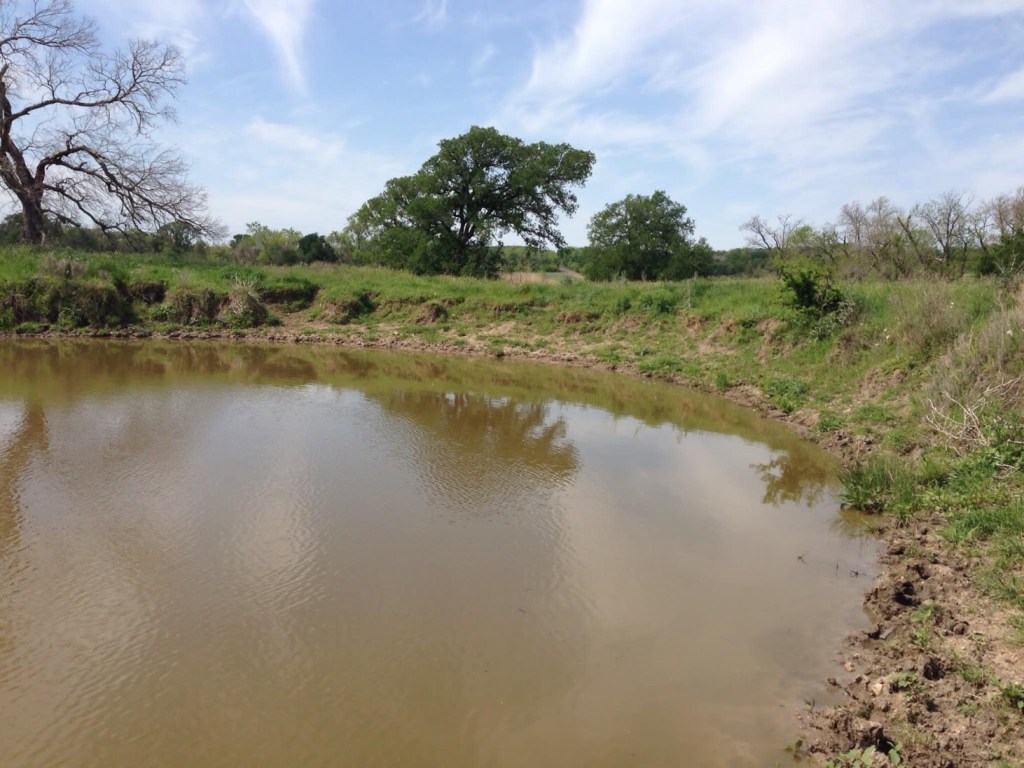
The little front pond in a drought. Not much water (2013)

Yes, pond, tank, or whatever, these artificial watering holes will provide us with ample nature watching opportunities and provide habitat for so much life. Hooray for tanks!

Book Report: The Nature of Oaks

Rating: 4 out of 5.

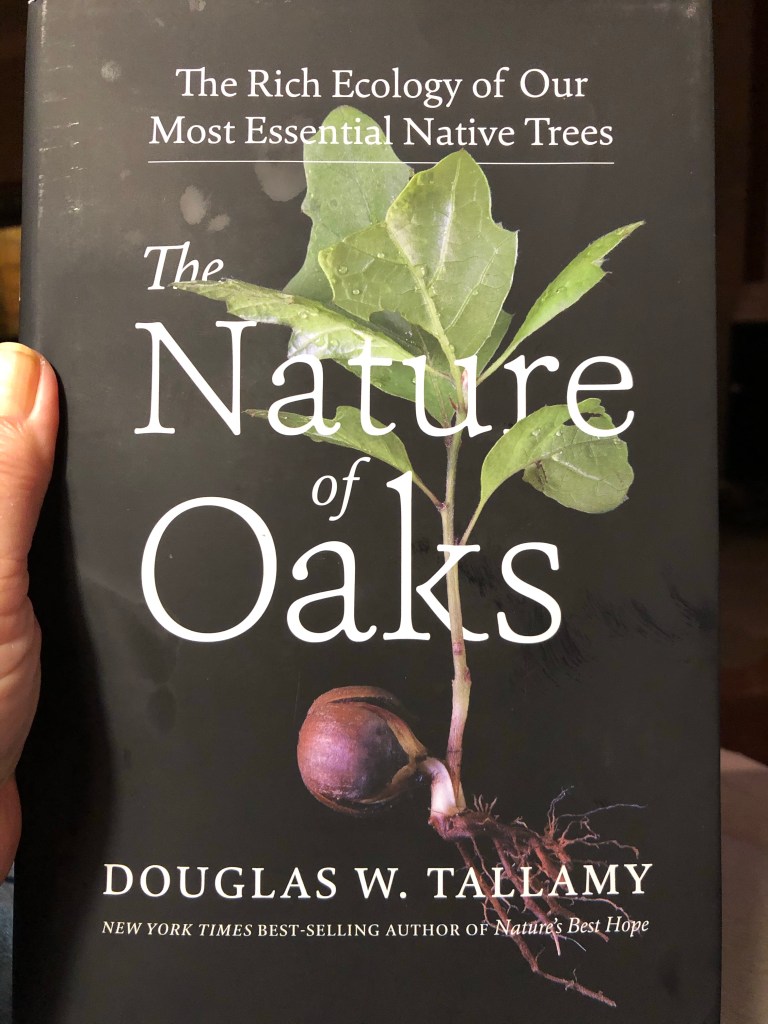
Admission: I only gave this book 4 stars because I wanted it to be longer. I dwell on every word Doug Tallamy writes, so I selfishly want more of them. The Nature of Oaks: The Rich Ecology of Our Most Essential Native Trees is his latest book, and it was only published two days ago. I snatched it out of the packaging and started reading it immediately! I’m really glad Tallamy mentioned this when I heard him speak in February, so I knew to pre-order.

Now, not only is Doug (I’ll call him Doug, because I consider him a friend, though I’ve never really talked to him) my favorite current naturalist writer, but oaks are my favorite trees. How much better can it get?

Oak trees and I go way back. One of my mom’s favorite stories about toddler Suna is that she used to go outside and find me talking to the trees in my yard. I thought there was someone in there, you see. I spent my childhood in something like a paradise for plant lovers, a small cement-block house on two lots, covered with large live oaks, along with a few other lovely native Florida trees. I was, however, not at all fond of pine trees (ironic, since my grandfather worked for a company that planted pines for paper-making). I liked oaks. They always had something going on, with all that Spanish moss dripping off them, possums and squirrels running around, and of course an endless parade of songbirds.

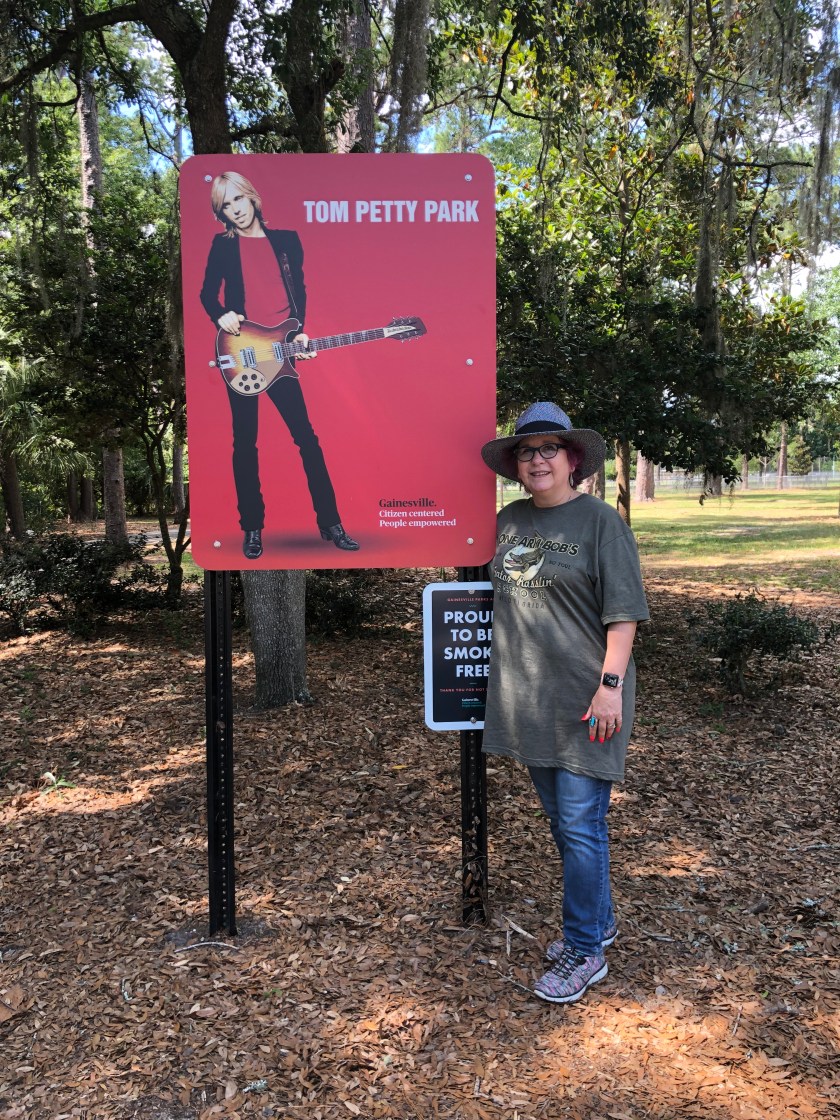
My most recent visit to some of my favorite trees, at the park I played in a child (as did Tom).

I loved those trees like family members, as I followed my dad around helping him landscape the yard and make lovely flower beds around the oaks, all mulched with their leaves. Little did I know he was doing the exact right thing by planting the dogwoods, redbuds, azaleas, and such under the larger trees to mimic a natural understory. Most important, the leaf mulch supported all sorts of wonderful insects that contributed to the ecology of my little world. Thanks, Doug, for confirming my dad’s innate wisdom!

The oaks and I continued our love affair, and I continued to visit ones I particularly cared about as long as I lived in Gainesville, and I still check to see if certain trees are still there (most are, 50+ years lager). And when I moved to Illinois and then to Texas, I learned about more and more types of oaks, which shed their leaves in the fall like normal trees (not like live oaks, who shed in the spring). My favorite tree in my first yard in Texas was a bur oak we planted, of course with an understory of Texas mountain laurel and native plants. It’s a gorgeous specimen now.

All this background is to explain why I was so happy this book was written. It turns out, I was right, there was “someone” in my oaks! They support more moths and other insects than any other type of tree. They teem with life! I enjoyed learning a lot about the various caterpillars and moths Doug finds in his Pennsylvania trees (he also talks about other areas, too, though).

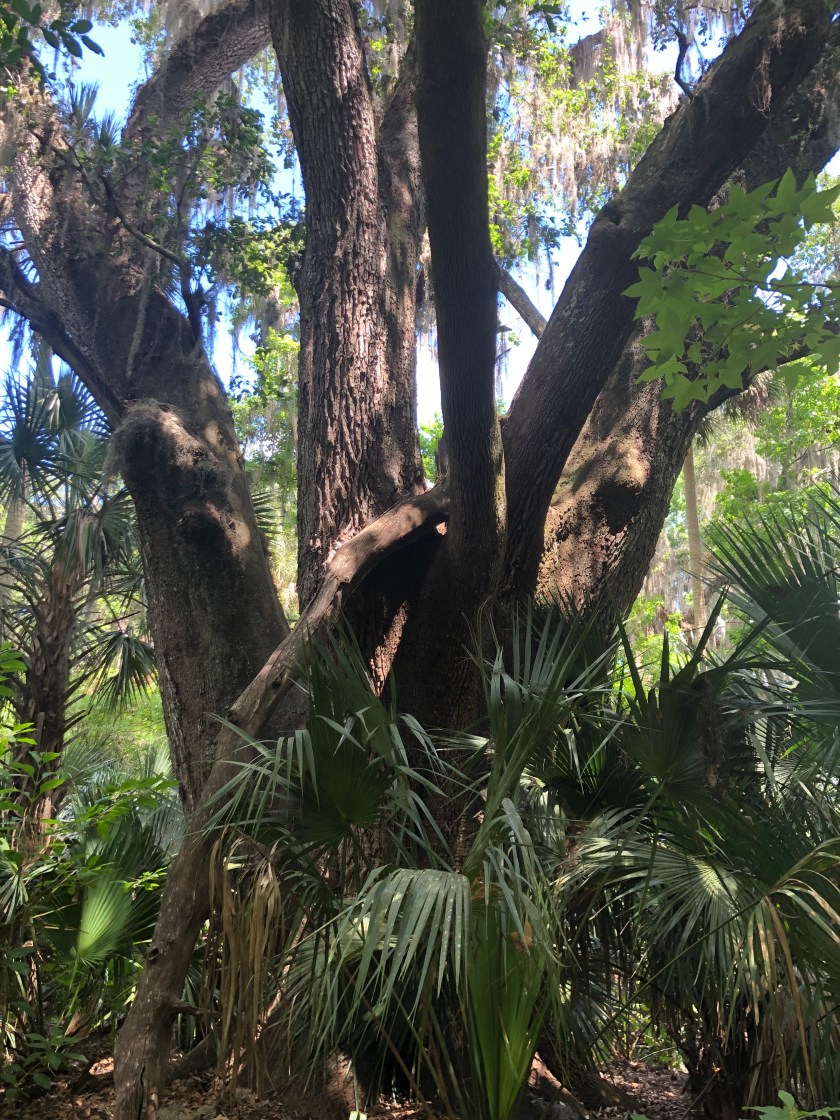
An oak out in nature in Florida

He also satisfied my curiosity as to what the heck oak galls are, what they’re made of, and who lives there. Well, little larvae live in there, but the galls are somehow inspired to grow from actual oak material by the wasp who lays her eggs on the leaf buds. All sorts of insects want to eat the larvae, but galls protect them well. Then, when they leave, they make a nice hole, which then can be used by certain ants as little homes. I never knew that!

So, there’s just one example of the kinds of things you learn about amazing oak trees in this book. It’s enough to make you want to run out and plant some. That’s exactly what Doug wants you to do. Like to many trees, their numbers have diminished. We need them to store carbon, to support life, and to clean the atmosphere. You’ll find fun information on starting oak trees from acorns, as well as comprehensive lists of the best oak varieties for different parts of the US (by size, too).

You’ll also be sure to enjoy the color photos of trees, insects, and all the denizens of the oak world. I guess Doug’s now famous enough that he gets to have color photographs in all his books. We win!

This little book is a treasure, and I’m so glad it confirmed my bias toward the gentle old trees I’ve loved my whole life. I plan to take the book off its shelf and hug it occasionally. It’s my friend, I guess.

Want to read more by Doug Tallamy? I have a review of his previous wonderful and inspirational book, Nature’s Best Hope that you might enjoy.

The Great Hen Detective Strikes Again!

Take THAT, Bertie Lee! You can’t fool us forever! You’re just a chicken, and we are human hen detectives! I think they could start paying me for this egg-finding work. Yep, I finally found where Bertie Lee is currently stashing her eggs. I say currently, because I only found ten. Of course, she could have just started again after finishing molting, or after the cold episode. I don’t know. I’m not a chicken.

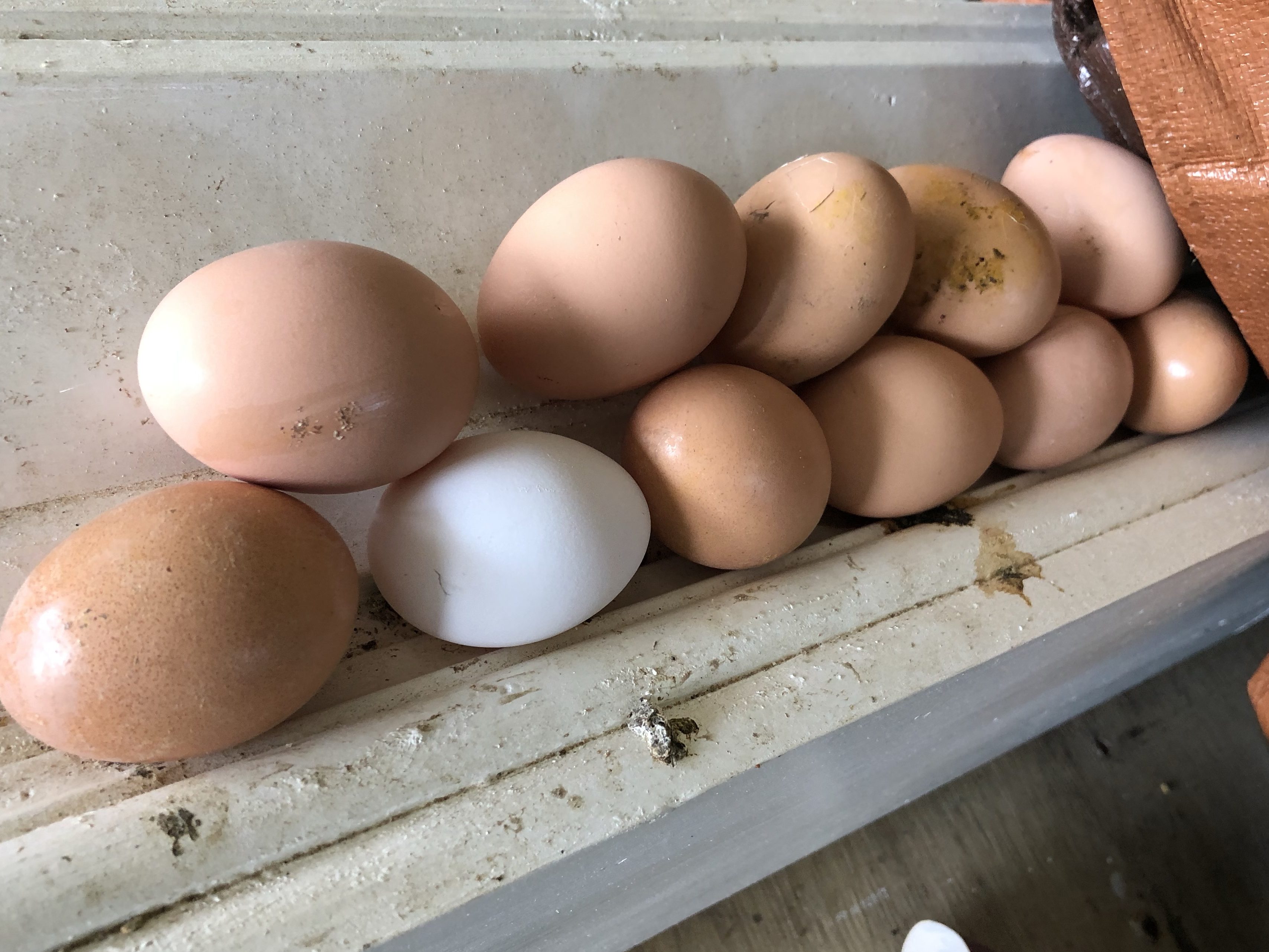
Look at all those sort of dirty Bertie eggs! And one very clean Henley egg that was just laid.

Lee helped on this one, because yesterday he said he saw her coming out from behind the work benches again. He thought maybe she was laying in her old spot, which she’d gotten chased out of. So, this morning, I decided to look even harder than usual, and used the step ladder to climb on top of the sturdy old workbench. I looked down behind it, and there they were! Eggs!

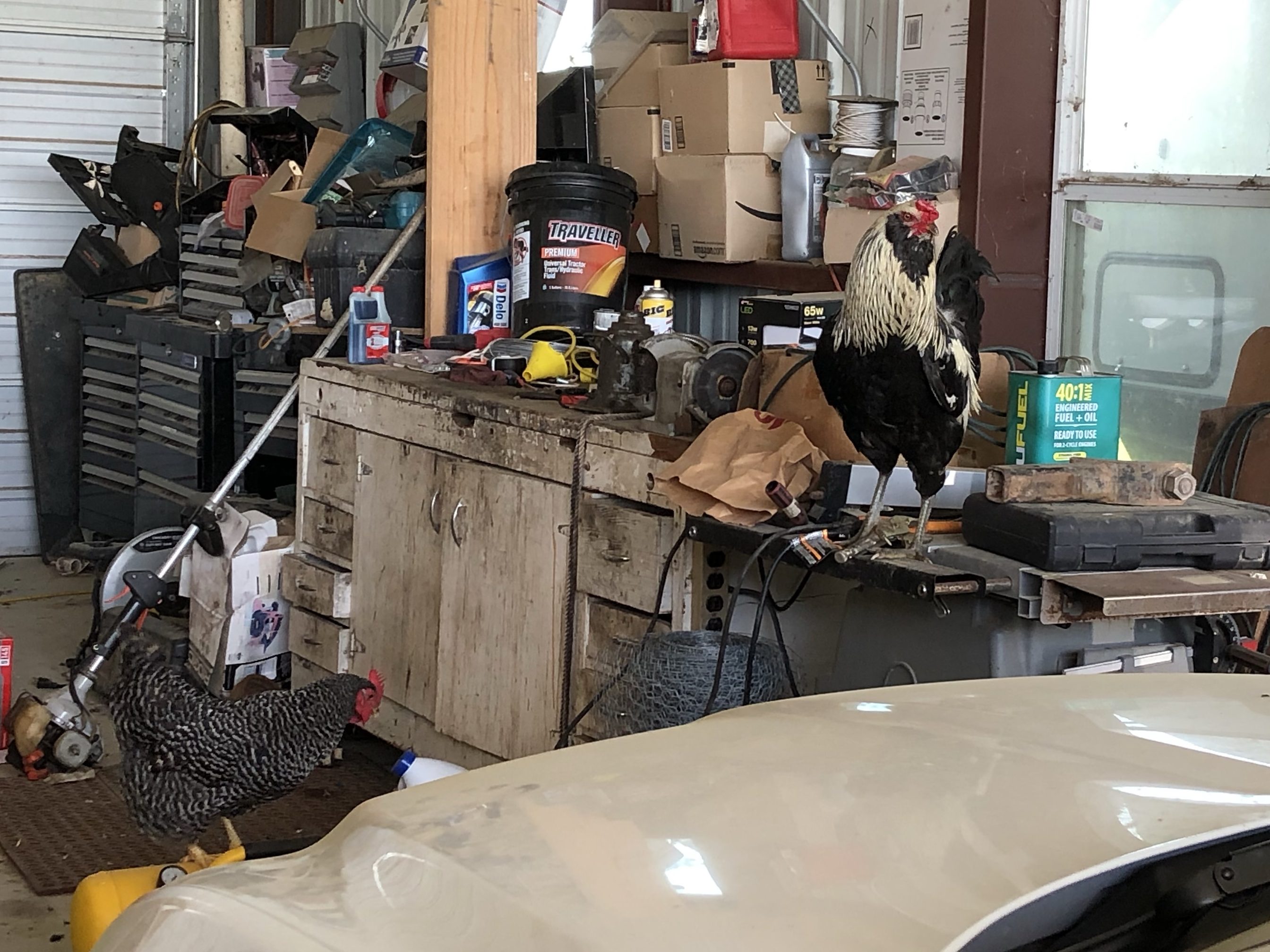
Bertie Lee tells Bruce that she’s glad the garage is such a mess, because it’s easy to hide eggs in. Her eggs are secretly under that white cabinet.

Of course, they were in a really hard-to-reach place, as Bertie Lee is a smart hen. She survived the 2019 and 2020 hen attacks that lost us a lot of our flock. I found the perfect egg-moving device however, our fishing net. I was able to carefully roll them forward and get them, without injury to me or any eggs. Well, two of the eggs were cracked, but I think Bertie must have done that herself, since the mess was dried up.

When I brought the eggs in, I immediately tested them for viability by seeing if they floated, just like I did a couple of days ago when I found Big Red’s egg stash. These were all in GREAT shape, with only one looking slightly iffy. I put it in with Big Red’s, along with a couple others, ready for becoming deviled eggs for Easter!

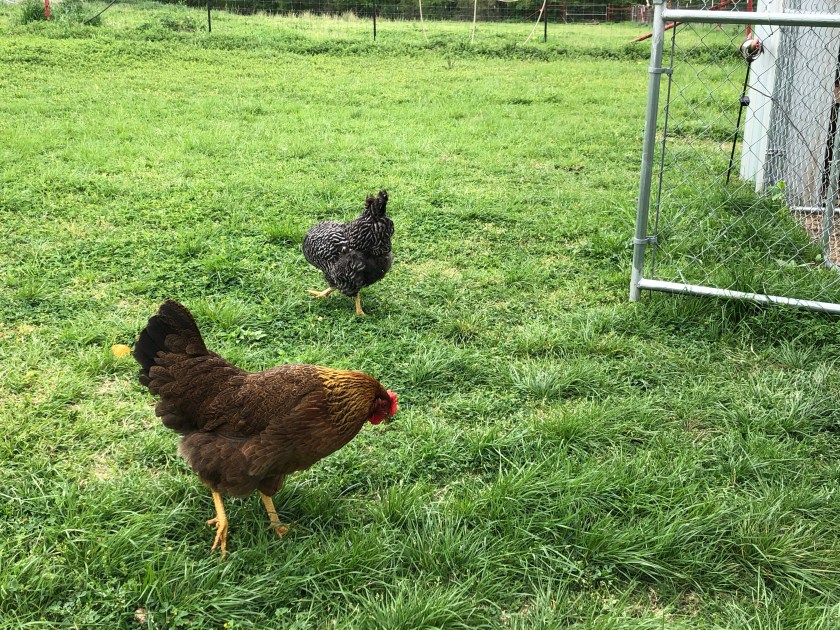
Bertie is trying to tell Buttercup to hide her eggs better, but Butter is focused on bugs.

Now I have seven hens capable of laying, and six of them are active (I hope; I couldn’t find Springsteen this morning, and she’s the low chicken in the pecking order). Theoretically, I may have enough to start giving eggs away again. And I can’t wait to see if Star hatches any baby hennie chicks! She’s still in there, setting away.

She knows she’s my favorite. Don’t tell Buttercup.

What a great way to start a day off! The Sherlock Holmes of Laying Hens strikes again! I’ve already had my personal Easter egg hunt.

The Ranch Resurrection

It’s the time of year when my Christian friends are thinking about resurrection. To me, Easter comes at the perfect time of year, since flora and fauna are coming back to life all over the place. The Hermits’ Rest Ranch is no exception, but this year, after the unusually cold winter, we haven’t been sure if everything was going to come back or not. Every time I look out the window and see a monarch butterfly feeding, I feel grateful that some of them made it here and have food.

Everywhere I look there are monarchs, and I know I have milkweeds out there for them!

I’ve been periodically patrolling the land around our house, checking to see if plants are coming up at their usual times and numbers, and what kinds of insects are showing up. The good news is that most of the old friends are returning, but the bad news is that some are not as numerous and are later than usual.

One plant I’ve been anxiously looking for are the Texas baby blue eyes (Nemophila phacelioides), which only grow in one spot on the edge of the woods near the house. Usually by this time of year, we have a nice stand of them. Today I finally found one blossom, along the fence. I hope there are more of them among the green things in the woods!

Well, that’s one, at least.

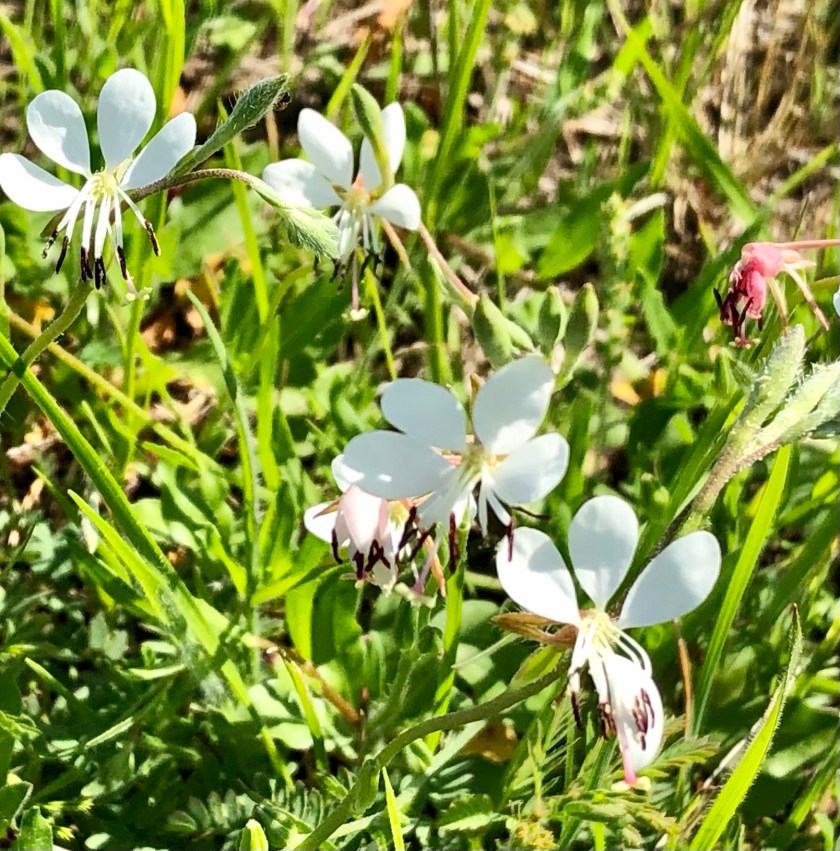
The Indian paintbrush that usually covers our front field and the one down the road are nowhere near as numerous as usual, but the fact that there are some gives me hope for future years. The bluebonnets are okay in numbers, but I haven’t seen a winecup yet. The delicate roadside gaura (Oenothera suffulta), however, has managed to come up, in such a pretty stand that I thought they were some other flower.

Usually you don’t see so many together. They turn pink when finished blooming.

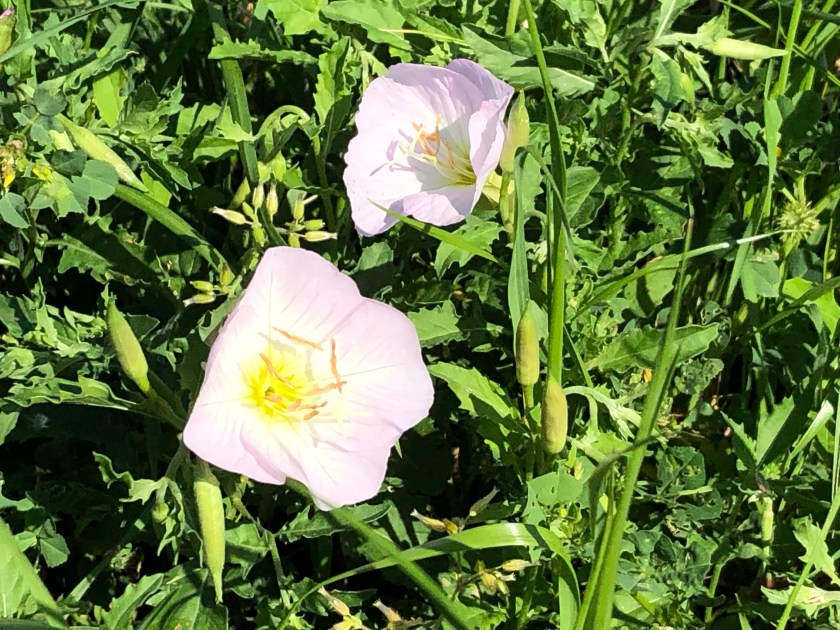
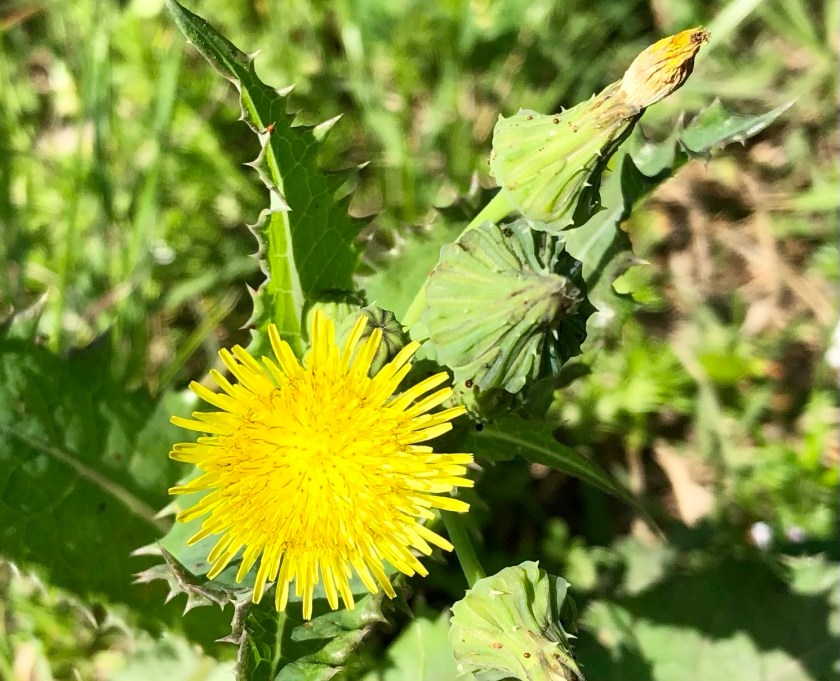
I was comforted today to see that the little spring is still flowing, and that plenty of prickly sow thistle (Apache’s favorite snack), yellow evening primrose, pink evening primrose, ragwort, and dewberries are blanketing the ground.

Future food for lots of birds!

And the big, purple thistles, which are a pain in the butt, but good for the soil, are getting ready to bloom.

I finally found a blooming example of one of the plants I’ve been watching, velvetweed (Oenothera curtiflora). It’s another gaura, but grows much bigger and has lovely soft leaves. Every year I forget what that plant is until it finally blossoms.

It will be much bigger and more showy soon.

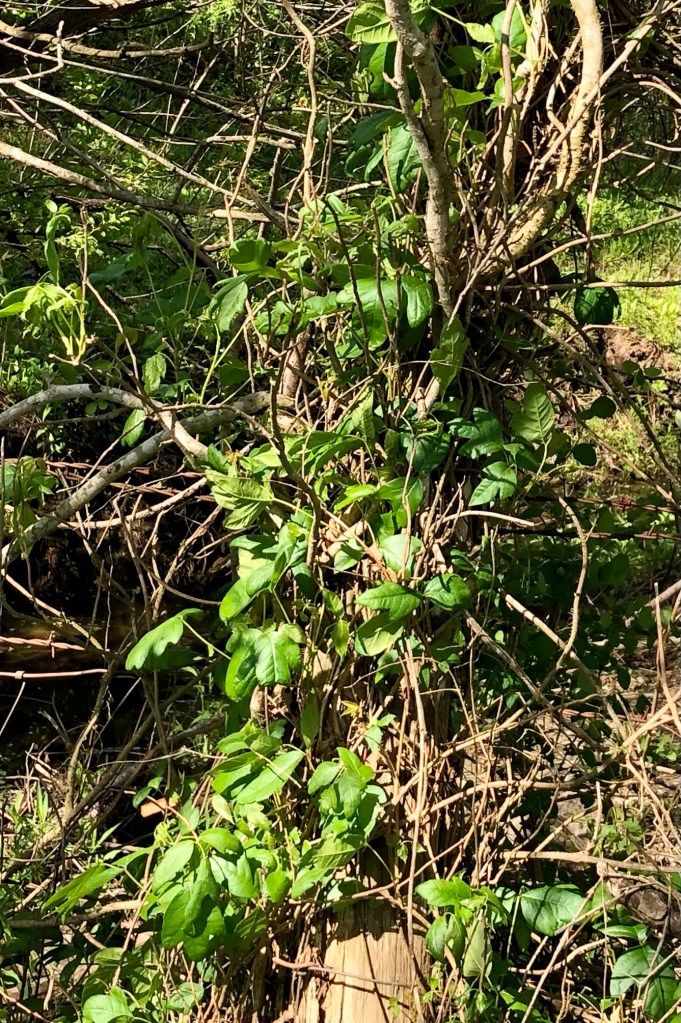
One plant I’d hoped the freezing weather would wipe out is the poison ivy, but I should have known, given how thick the vines are that climb the trees in a certain area, that they’d be back. Sigh. It looks so healthy and shiny, too. The mesquite tree, another one that’s sort of a pain (but also has its good points, unlike poison ivy), is coming back, as is the prickly ash, another Texas thorny tree. Well, at least they break up the monotony of our little wooded area, which has mostly cedar elm trees in it.

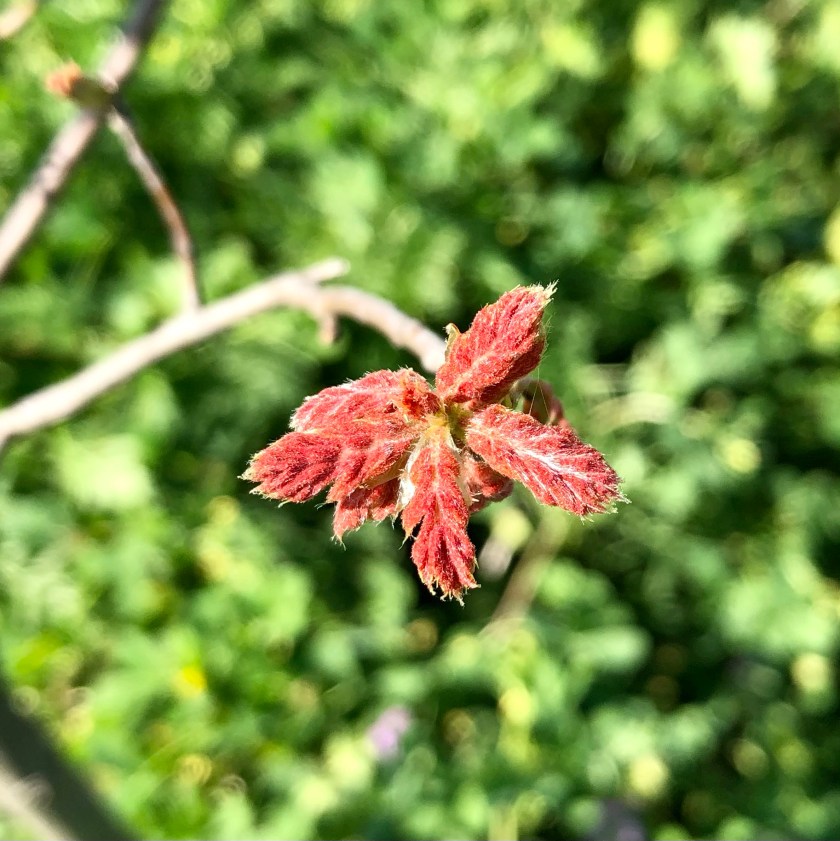
Now, I’ve saved the best news for last. As of yesterday, I was sure that the Shumard red oak that we’d planted last year behind out house, to someday shade the chickens, was a victim of the weather. I was not surprised, since it hadn’t had much chance to expand its roots. But, lo and behold, I spotted something red while I was out checking on the roosting hen. Little leaves! It looks like the tree will be with us another year after all. And that is good, which you will learn more about soon, when I report on the book about oak trees I just got!

Brand-new oak leaves!

No fooling, April 1 has been an encouraging day, at least for the plants around here! Our wildlife is returning to life and bringing us joy, in Nature’s yearly resurrection.

Still Working on Horse Feet

I’m working on horse feet in more ways than one these days. Animals have a lot to teach us, both scientifically and intuitively.

In science news, we learned a lot about horse feet (hooves) with Trixie’s latest visit, and we learned that Fiona loves Sara more than we ever realized. She spent a long time leaning on Sara and asking for hugs.

My feet are fine, I’m just spreading love — Fiona

Trixie has most of the damaged area of Apache’s feet trimmed off, but we were all shocked to see how much hoof separation he suffered. It’s scary. Laminitis can be deadly. We’re lucky we still have him.

The black crack shows damage.

We also talked about how he always does a little buck and stumble when transitioning to a canter (which explains my lack of cantering experience). Trixie did more chiropractic work in his spleen area. As always, Apache was a trooper and relaxed happily when it was over.

Whoa, I feel better.

I got to watch a little of the work Trixie did on Ace. He wasn’t used to what she did, but he got a pretty funny look when he realized he felt better!

What are you doing?
Sara listens to Trixie explaining what good shape Ace is in.

Trimming his feet was a bit difficult, because it had been a while since his last trim, and I heard Ace’s feet were a bit sore yesterday. Today he was walking fine, but I didn’t see him run. it just shows how important horse feet are!

Apache has never had such fine looking feet before!

So, yesterday I went off and rode Apache alone again. He was feeling okay, but didn’t want to walk on the hard driveway. I don’t blame him. It was pretty challenging for a number of reasons.

First, it was really windy, which often gets the horses on edge. Second, our dogs were out, barking and chasing cows, which puts me on edge. And third, Fiona was in a mood. A really annoying mood.

Once we got near the front cattle tank, she acted like she was full of beans. She ran up and down the sides of the tank, ran back and forth in front of me and Apache, while braying endlessly, and kept doing sudden turns and pivots. Once or twice would have been fine, but she kept it up for ten minutes or more.

I tried to be good. But I love grass.

Apache had already been a bit of a handful, focused on grass and not me. I was a little worried she’d spook him. So, I stopped him and breathed deeply. He just watched Fiona acting like she had a bee up her butt. I counted that as a win.

It was still a challenge to get Apache to pay attention to me. He would duck his head, spin his feet, and do what he could to avoid my instruction. I kept asking, then resting, then asking, and finally, I could feel him settle down. He walked back to the barn calmly, like nothing had happened out in that windy pasture. I learned a lot. I can trust Apache even when he’s antsy, and we can get through weird days. Whew.

All’s well as long as us horses and people keep learning from each other and moving those feet.

Curbing Your Anti-racist Enthusiasm

Wait, wait, I’m not going to tell anyone not to continue in their work to fight racism, point it out when they see it, or work on their own behavior and bias with regard to race. Nope, nope, that’s not where I’m going. But, I do want to share some insights I’ve been having as I watch discussions about race happening, and how the books I’ve recently been reading cause me to see them differently.

Here’s a very passionate young person I do my best to learn from.

The material I’ve been reading on unconscious bias has made it clear that, thanks to growing up in a particular society at a particular time, each of us presents ourselves to the world through the lens of our own biases, some of which are helpful and some of which may be less so. A good thing I’ve read is that the people born more recently may well be less prone to some of the racial biases that older people may have grown up with. A large percentage of younger adults in the US grew up in diverse neighborhoods, attended diverse schools, and are familiar with a wider range of US cultures (most young people I know are fans of music from urban, African, Caribbean, Latino, Korean, Indian and other artists), and have friends and colleagues from highly diverse backgrounds. So, they have a different set of biases from older Americans.

People my kids’ age tend to make friends based on common interests and experiences. This often leads to racially diverse friends with strong bonds in other areas. (Some don’t; I over-generalize.) Photo by @SBphoto via Twenty20.

I am very happy about this, and very interested in learning from people of my children’s generation. Sometimes it’s hard, though, because in their anti-racist enthusiasm they push their audience away.

Another fact about a large subset of younger adults is that their preferred methods of interacting with others tend to be more confrontational, less “polite,” and less patient when sharing their views with others (not implying only young people act this way, it’s more appropriate in some cultures, too). This is the part that causes communication problems with people who grew up avoiding confrontation, focusing on polite behavior, and a conversation style that includes acknowledging the potential validity of the other person’s point of view. Neither of these ways of interacting is all right or all wrong; there are issues with each one, which I’m going to let you think of for yourselves.

Admirably, many people in the 18-30-ish age group want to create a better society and are working hard toward those goals. They feel passionate about the rights of people of color, LGBTQ+, poor people, and the oppressed around the world. Yay for them! Those are goals shared by many older people, too, though their methods of working toward it are different, and often unpopular with younger folks (which is fine and normal; I’m not complaining, just noticing).

The thing is, I’m wondering what the goals the young and fervent activists are working toward might be.

  • Are they trying to change people’s minds? I wonder if calling people you don’t know racist for actions you don’t even know that they’ve done is terribly helpful (for example, I have been sitting back and watching a woman lecturing an obviously white woman about how race and racism work, blissfully unaware (or not listening hard enough to realize) that the second woman has a black husband and family members). It’s racist to assume someone has beliefs because of their looks, period. And yes, being in an interracial relationship doesn’t mean you have no bias and can shut down conversation (sorry if I’m not clear about this; I’m still learning).
  • Are they trying to prove how ethically advanced and modern they are? In this case, demonstrating that you’re a passionate anti-racist while bullying and insulting others shows ALL your ethics, quite clearly.
  • Are they trying to sow unity? Are they trying to add to divisiveness? These are my big questions. I’ve been observing people pick at others for not being non-racist in the “right” way (say, for adopting a child of another race, without knowing whether a white adoptive parent may have a black or Asian partner or other black or Asian children). It reminds me of one branch of a religion not saying another branch is Christian enough, or Muslim enough, or the right kind of Buddhist, without remembering they all are focused on the same overall goal, which is love.

This is why I wish more of us knew HOW our unconscious biases work, and that none of us is above them or immune to them. I see a lot of bias against older people in the passionate younger folks. That’s too bad, since when I was a young, passionate feminist, I learned a LOT from the women who’d gone before me, which helped me not repeat some mistakes and not burn some bridges. Perhaps some of us older folks might have useful insights, if we could share our perspectives without being silenced or labeled.

I know I harp on this message. It’s because I think the ONLY way we can make a better world is to listen to each other, maybe even respectfully.

And some of us elders want to silence and label younger folks. None of that is helpful, because the one thing I’ve learned is that the best way to limit the effects of unconscious bias is to get to know members of the groups you may have trouble with. Spending quality time in conversation and interaction with the “other” is guaranteed to help all of us realize that “they” are not a monolithic group, but diverse, varied, and interesting. Not all elderly people are the stereotypical MAGA-hat wearing, flag waving, insular white folks. They are not all inflexible members of the liberal elite. Not all young people hate everything that isn’t socialist or everyone who doesn’t fall into their definition of “woke” (insert current term for woke there). But, if we just talk AT each other rather than WITH each other, we’ll never figure that out.

We all have our blind spots, our prejudices, our biases, and our areas of passion. Not everyone will share them, and not everyone will even express the same biases and passions in the same way we do. We will never grow as human beings nor as a society if we don’t listen to other points of view. Even people we think are dead wrong in one area may have something “right” to share with us in another area, which we’d never find out if we just dismiss them out of hand.

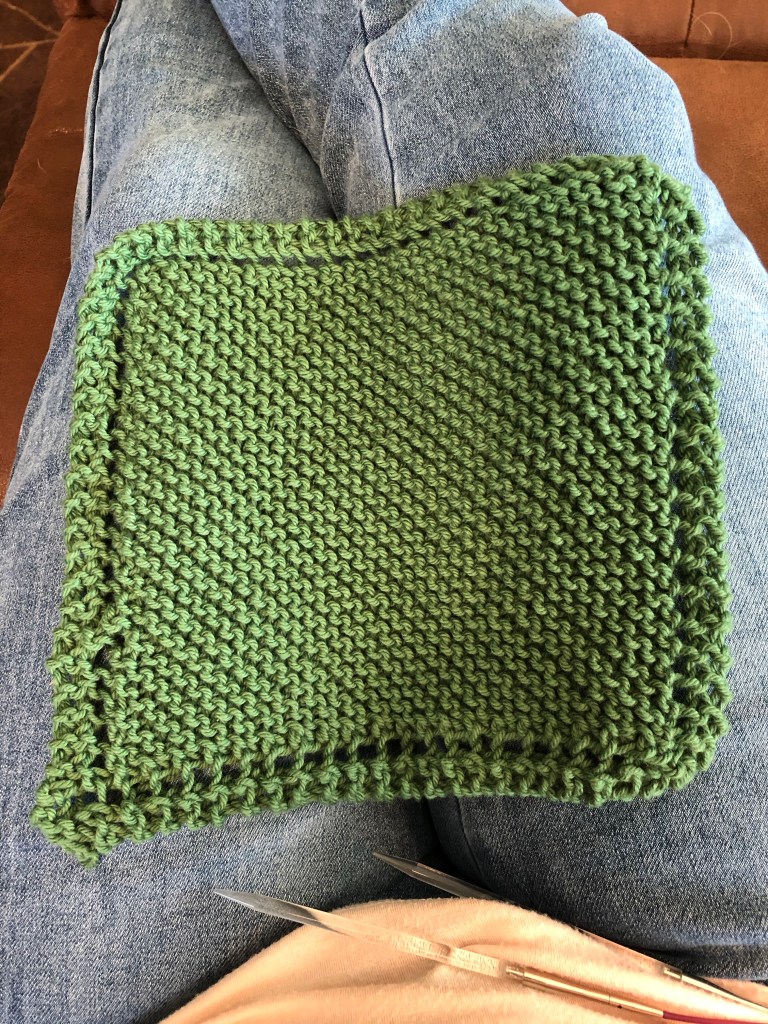
I interrupt this diatribe with a photo of a dishcloth (with an error; I’m keeping this one). YOU can have one if you sponsor this blog and its companion podcast!

I know my audience skews toward people of my age, but still, I want to reach out to those younger than me to listen to us, and give us a chance to share what we’ve been through and how we got there. And then share with people my age what YOU are going through and how you got there, rather than pointing fingers at us, labeling us, and dismissing us. Being young doesn’t invalidate anyone’s experiences and insights, but neither does being old. We can all learn from each other, but we might have to stop talking sometimes and listen.

Rather than trying to drag others kicking and screaming into the new and more advanced world, I’d love to see enthusiastic and passionate people reaching out a hand and gently lifting up others, knowing that they used the experiences of those who came before as stepping stones to get where they are today.

I’m the Sherlock Holmes of Nesting Hens

This one had us laughing much of last night. You may remember that not too long ago, I used my chicken detective skills to discover that my Hermits’ Rest hens had decided to start laying eggs in an artificial Christmas wreath on top of our garage refrigerator. I’d looked high and low, but finally saw Springsteen up on the fridge in the middle of the day, looking very much like she was laying an egg. Now everyone lays there except Bertie Lee (mystery location) and Star, who’s brooding three eggs in the nest box, where they are supposed to be laying eggs. I just climb up on the fridge every day and retrieve the eggs. Not an elegant solution, but it works.

There’s one more chicken, though. Big Red lives with Apache and Fiona, and I hadn’t gotten an egg from her in over a year. Hmm.

I think I’m a horse.

What’s Red’s Story?

Well, once upon a time about three or four years ago, there was a chicken coop and run over the cabin on the greater ranch property. At one point, two people decided to raise some chicks, and got like two dozen production red chicks and two dozen black meat chickens. It was fun to watch them grow and grow. (Here’s a link to a longer story from 2018; podcast listeners can search for chickens on the blog and find it.)

I really loved these guys.

Soon we were getting a LOT of eggs (I say “we” because I took care of them when their caregivers were out of town). I dutifully trotted them up to the neighbors’ storage area and labeled them, where they got sold at farmer’s markets.

Fast forward, and one partner stopped coming around, the residents at the cabin moved out, and I ended up being the caretaker. More babies arrived, some we bought and some that came as gifts. I became the half owner. We ended up with Americaunas, barred rocks, leghorns, and more and more. I sure enjoyed all those chickens, and enjoyed selling my half at work.

Yep, the neighbors had a LOT of chickens back in the day. That’s Buckbeak, the nice rooster, in the center.

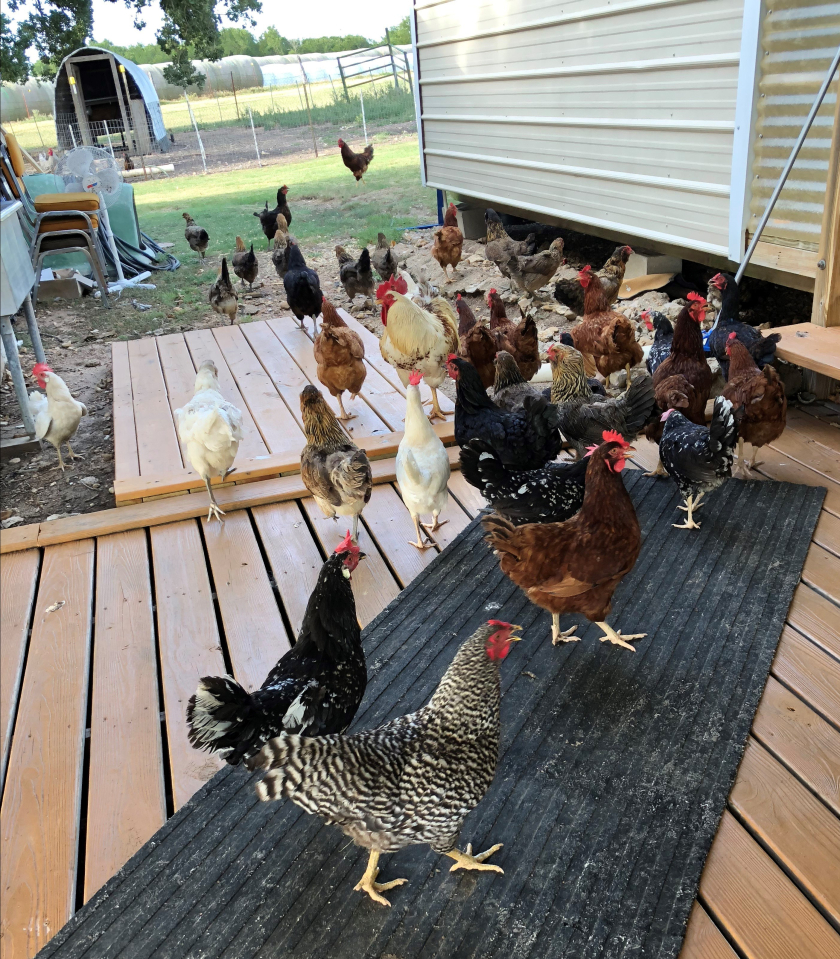
At some point, an owl began systematically eliminating the chickens, including the wonderful rooster we had back then. Sniff. I felt powerless, because there was no roof on the chicken yard, and a hole in the door to the coop, which allowed owls in. But it wasn’t my coop, so I couldn’t exactly work on it. The other partner was going to make the hens all into sausage, so I took over as the queen of the dwindling flock. It was sad.

I decided to let nature take its course (which was awful, with so many dead hens), and to just get myself my own chickens at my house, with an enclosed coop, where they would be easier to care for and less vulnerable. As we know, the joke was on me, because we still lose chickens to predators over at our part of the ranch, though we have been working hard on keeping the chickens safe…at least when they are young. The old ones insist on living outside.

Well, I thought all the chickens over there were gone and stopped feeding them. But, soon we realized there was still ONE old chicken left. That’s Big Red. She outlived them all. She was out scrounging for bugs and grain over by the horse area. That made sense.

Plenty to eat around here! (August 2020)

We’ve enjoyed her antics with Fiona and Apache, especially when she drinks from the big troughs. We never found any eggs, but once found her laying an egg with no shell. That led me to start bringing some chicken feed over to her, which we give her when we feed the horses.

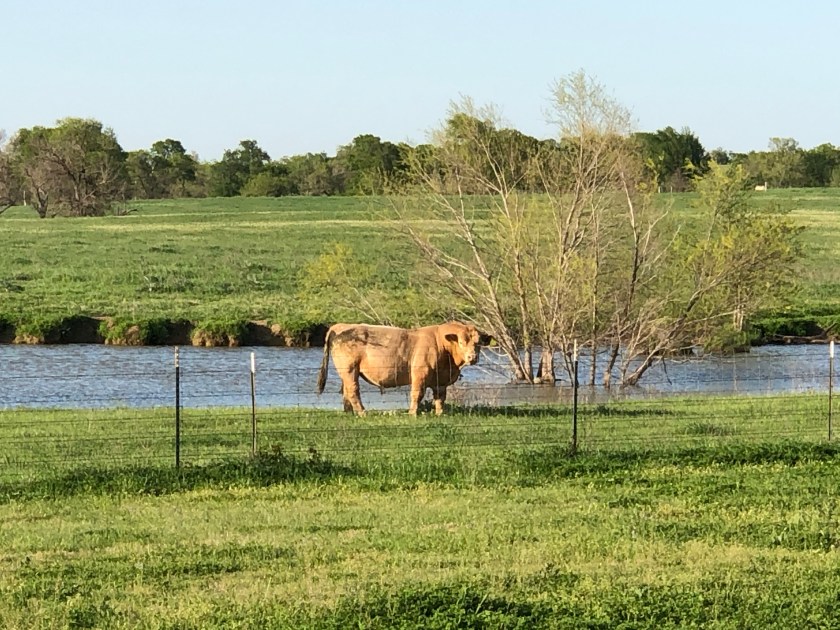
She’s a fine hen, and that’s no bull. (This beefy guy is behind our house.)

Once she started eating, she began to look better and better. She doesn’t look at all like an “old” hen, and she’s friendly as heck. She made it through the cold weather, too, and had a nice warm place to hide out. For the past few weeks, though, we’d been wondering if her improved nutrition has enabled her to start laying. I put on my detective hat again.

I’ve been looking in various spots, like the storage area, the cattle pens, etc. No eggs. Then, day before yesterday, I heard an odd noise in the old chicken run. There was Big Red, scratching away. Hmm, I hadn’t seen her over there in a long, long time.

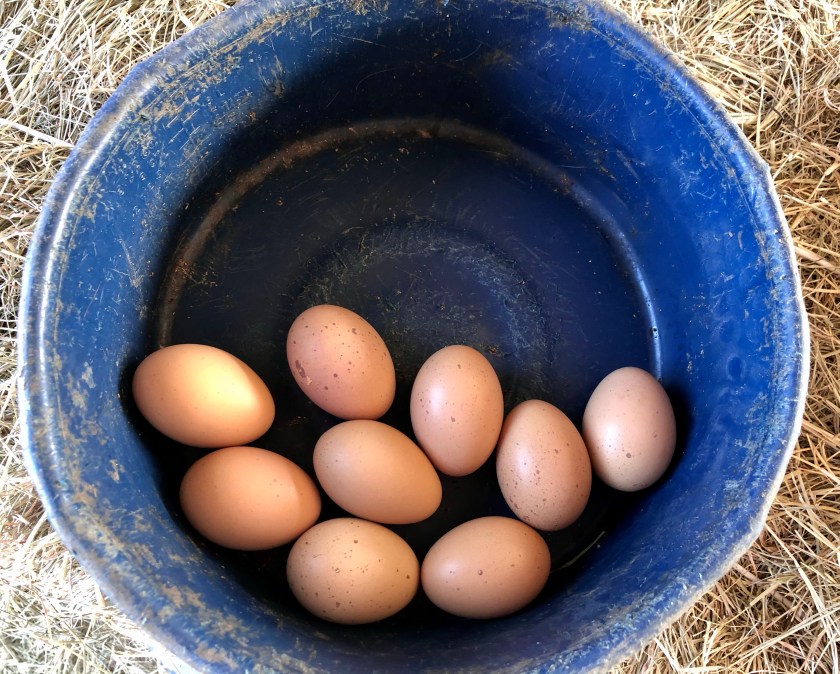
So, yesterday, on a whim, I decided to take a look in the nesting boxes where the hens used to all lay. Oh my goodness. There were 9 lovely Big Red eggs in there!

What??? Eggs!

Well, of course. The great egg detective figured out that the eggs were in the egg boxes. Go me!

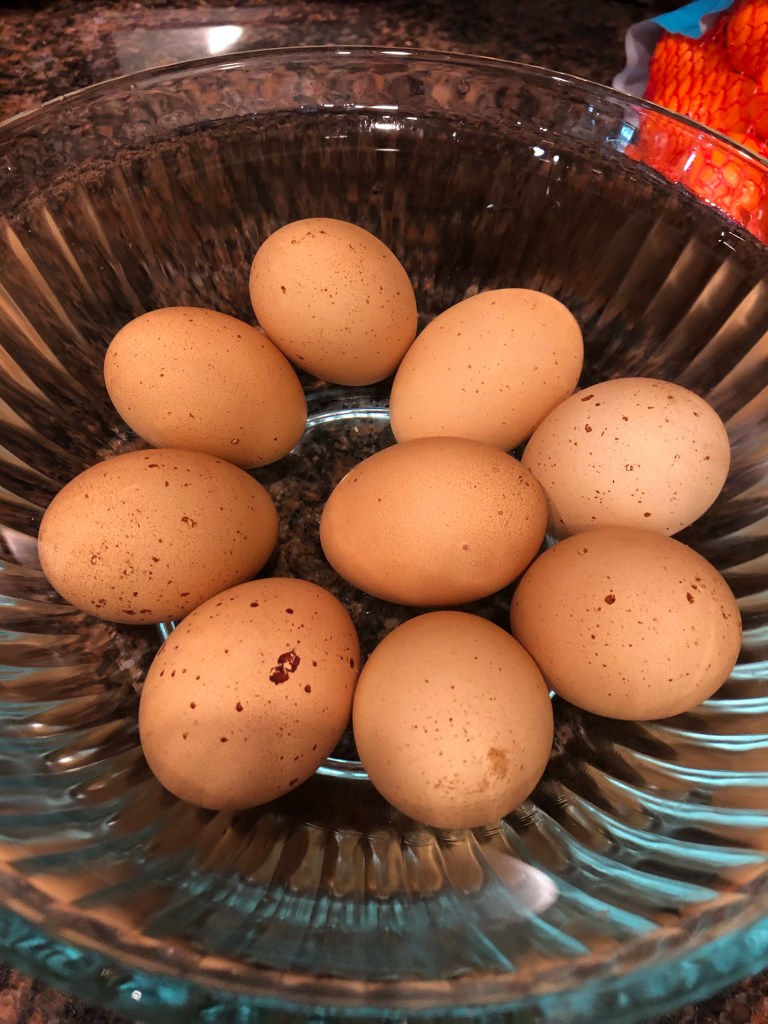
Which egg in the Easter basket is not from Big Red?

I took the eggs home, curious as to whether I’d found fresh eggs or ancient eggs. I tested them in a bowl of water, and while none of them floated (which means they aren’t old, rotten, bad, and such), a few of them were iffy. They are marked for future hard boiled eggs.

It’s hard to tell, but this is a picture of the eggs NOT floating.

My guess is that, at her age, Big Red is laying a couple of times per week, so these eggs may be from about the time the cold weather event occurred. I’ll be checking daily from now on, so I’ll know how often she’s laying. I’m so surprised and pleased that she’s still churning out eggs, especially since the production hens tend to lay a lot for the first year, then pretty much stop after their second year. Way to go, Big Red!

Now Suna the great hen detective needs to solve the Bertie Lee mystery. She should still be laying…somewhere.

Book Report: Everyday Bias

Rating: 5 out of 5.

Did you think I was finished with unconscious bias books? You’d be almost right. I just have this one more book to talk about before I move on to books about diversity and inclusion. Totally different, yep. This one’s really good, though, even though it talks about many of the same topics as the previous books did. Everyday Bias: Identifying and Navigating Unconscious Judgments in our Daily Lives (updated edition), by Howard J. Ross (2020) is guaranteed to get you thinking, challenge you, and to my immense relief, offer some hope for humanity.

I really like the “voice” of Ross, which shines through all the book’s content. You feel like you’re right there with him figuring out that we’re all acting on our biases 24/7 and that’s just the way we are built. He shares lots of data about our friend, the amygdala, and how it’s apt to put us on autopilot any time something stressful or scary happens. And he notes that we can’t make that thing stop!

Somewhat garish cover, but great book!

Ross also reminds us that we can’t exactly help where we were born, in what community, and to which parents. All of these things get us wired in certain ways that we can’t control. I like that he declares it a waste of time to constantly apologize for being biased or to poke at people for having them. His best point in the whole book is that by constantly reminding people of the harm their biases causes others (like women telling men how they’ve been harmed, black people saying the many ways white culture has affected them) we aren’t going to make things better. The reverse is often the case, and can perhaps explain all the racist and sexist groups we are hearing from more and more these days.

I think it’s true that some folks are just going to continue on their merry ways with their biases against certain other people and groups, and there’s not much we can do about it. No one’s immune, so we are just gonna have Jews who are biased against blacks, gays who dislike Muslims, or so on and so on. No group of humans is without us versus them ingrained in us, because it’s normal.

Luckily, Ross reminds us of neuroplasticity, which is the ability of our brains to change. He then spends the last part of the book providing clear, helpful ideas for working to mitigate the effects of our bias in the workplace and in our personal lives. He gives great information on six things to work on in Chapter 7:

  1. Recognize that bias is a normal part of human existence. (Stop judging others so much and work on your own self. I have a few super-judgy trolls in groups I maintain that need this.)
  2. Develop a capacity for self-observation. (It turns out that relaxing, meditation, etc., can calm that amygdala right down and let you think about your thinking.)
  3. Practice constructive uncertainty. (Stop to figure out WHY you have a strong reaction to something.)
  4. Explore awkwardness and discomfort. (Figure out your triggers.)
  5. Engage with people in groups you may not know very well, or about whom you may harbor biases. (Get to know an Other!)
  6. Get feedback and data. (Facts!)

In the next chapter, he lists eight ways to work on eliminating bias in hiring, promotions, and that sort of thing in businesses. It’s quite helpful.

And finally, what warmed my heart is that Ross truly feels that if we pay attention to our biases, we can create a better world. He talks about how what appear to be groves of individual trees are in reality one big, connected organism (as I’ve read before), and uses it as a metaphor for people:

We look at the “other” as if he or she is separate from us. We see the other group as a threat. And yet, we are all deeply connected. We share a common destiny on this planet. We all seek pleasure and do our best to avoid pain. We all want what is best for our children and grandchildren. All of us are the products of that which we have seen before. And we are all (for the most part), unconscious about the “programming” that runs our thoughts and our lives.

We can transcend. We can, through discipline, practice, and awareness, find a new way to relate that honors our differences yet also builds upon our similarities.

Howard J Ross, p. 148

I think he finally put into words all the reasons why I have been so doggedly introspective for the past few years. I want to GET THERE NOW and do my part to fix some of my ingrained biases. It’s not possible to know all that’s going on in our busy brains, but with at least some of us trying to raise awareness of some of our areas of bias, it’s a start.

Fine book. Made me feel empowered.

The Student Becomes the Teacher

I remember, in my youth, the first time I became a teacher of linguistics in addition to being a student. It was a gentle introduction, since I co-taught with one of my professors, but it really did me a lot of good. They say that you really start to master a subject once you teach it, and “they” (whoever they are) are telling the truth! The stuff I learned when teaching interested college students about linguistics, as well as teaching grumpy engineering students about rhetoric for engineers sticks with me today.

Here’s a shameful admission: the ONLY writing class I ever took after high school English was reading the textbook for engineering rhetoric a chapter ahead of the students the first time I taught it. Yep, I taught myself technical writing. That seems to have worked out.

What? I can’t believe you never took a class. Also, I still don’t love this food.

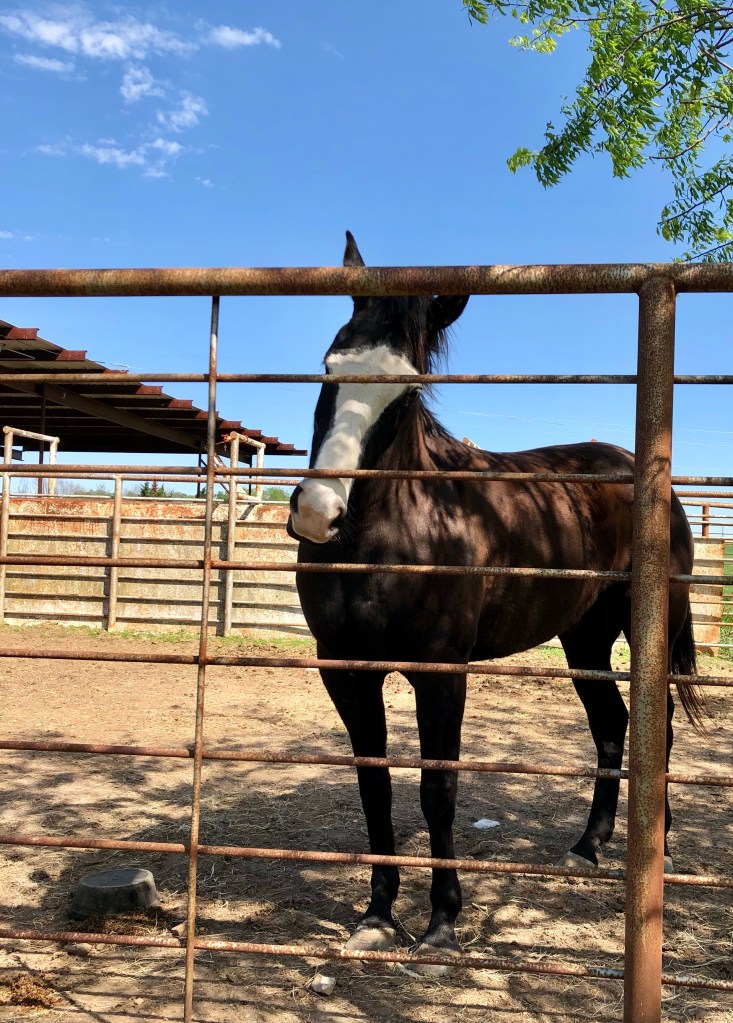
I watched this phenomenon of the student becoming the teacher play out yesterday, when we went out to play with the horses. Sara had already worked with Ace in the morning, so today she saddled him and put a bridle on him. The bit was a new surprise for him, but by the end of the day, he could eat grass with it. He’s no fool!

What the heck is going on here? Does this saddle make my butt look big? Photo by Sara.

So, I brushed tons of hair off Apache, then got him all saddled up, while Sara took Ace to the round pen for some groundwork (that’s when you teach a horse to follow your instructions while running around). I started groundwork using a rope, but she was doing it “at liberty,” which means you’re in the pen with a horse who can do whatever it wants to (including, one hopes, what you ask it to).

It was quite an active scene, with Ace running and bucking and doing the kinds of things a horse who’s learning will do. Meanwhile, I decided it would be a good opportunity to help Apache keep focused on doing what I ask him to do, no matter what’s going on around him. We did patterns and turns, and different ways of approaching obstacles, and he did an impressive job of not paying much attention to Sara and Ace.

Ace was making progress, but not finding it easy to settle down, being burdened with all this new paraphernalia on him. He truly did not want to calmly walk in a circle. So, we tried having Apache be his role model. We walked calmly around the outside of the round pen, while Ace and Sara walked on the inside. Sure enough, Ace matched Apache’s mood and pace, and we walked in both directions just fine. That was the perfect time to stop the lesson, while success was happening.

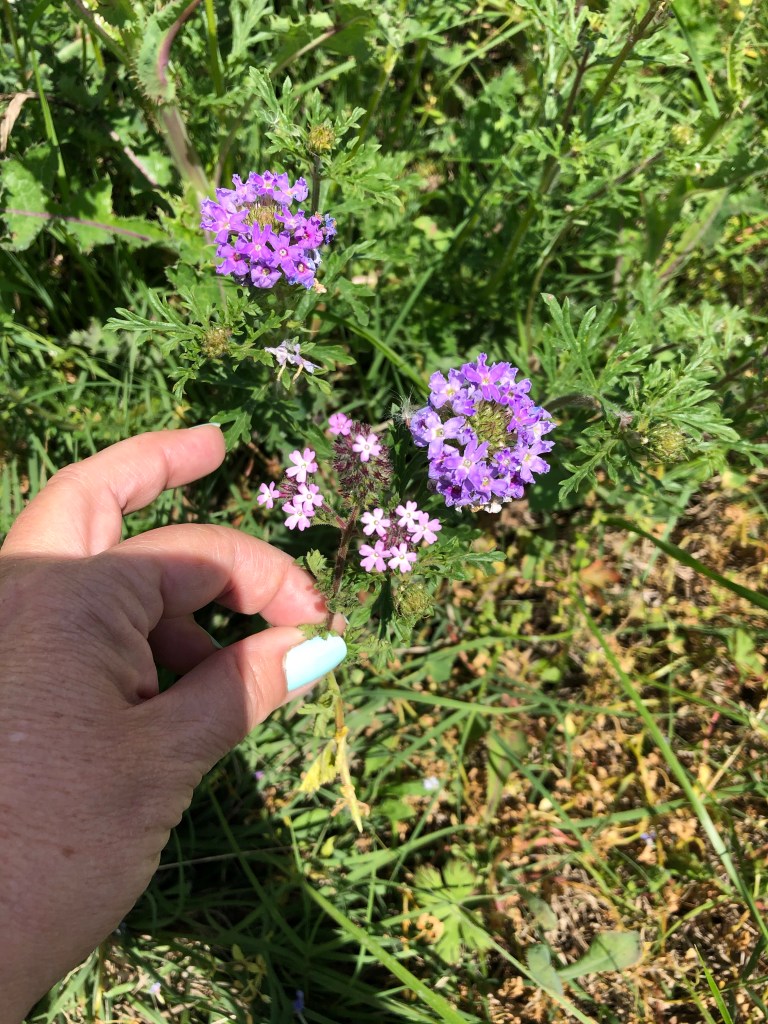
I also stopped to look at flowers. These two types of verbena look very different right next to each other!

I was proud of Apache for being a good teacher. Both horses got their reward when we walked to the end of the driveway again, me mounted and Sara alongside of Ace. Then we enjoyed a grazing break again. That was also good practice. It’s nice that these two get along so well.

We’re friends, so we don’t bother each other.

I know it’s really good for Apache to be the calm, reasonable role model for the first time in his life. I can tell he enjoyed doing it, and he didn’t even realize that yesterday was the second time we ever rode without another person riding with us. Score!

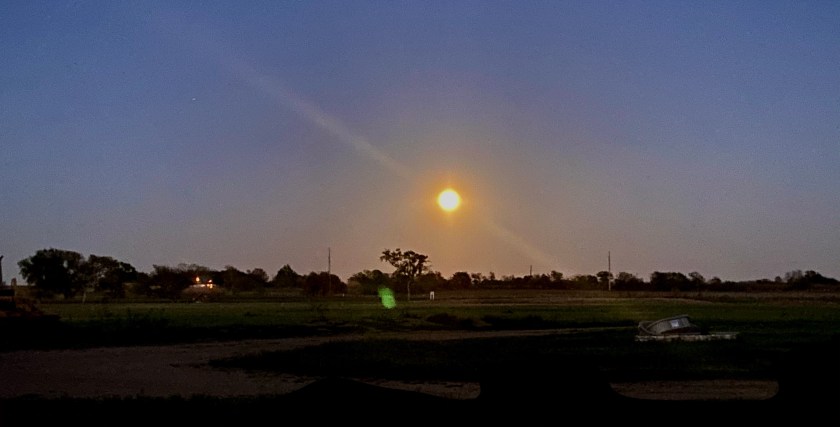
Plus we had a big ole full Passover moon! Photo by Lee.

That’s it for today’s horse report. Don’t worry, I won’t be writing about Ace progress every day, even though his owner says this makes him “famous.” But, Trixie comes today, so we may need a foot report!