Knowing Your Issues Doesn’t Fix Everything, Nor Should It!

As always, things are changing in my life. One of the changes anticipated for this year is that Anita and I will need to move out of the Bobcat Lair house in Austin. That’s sad, because we really love the setting, the house, and most of all, the neighbors. But, the cost of just paying the City of Austin property taxes is more than the mortgage to our old house, and now that we are getting closer to me retiring from paid employment, we’ll need the money from that house as part of our income stream. Things are winding down, and it’s time for investments to pay off.

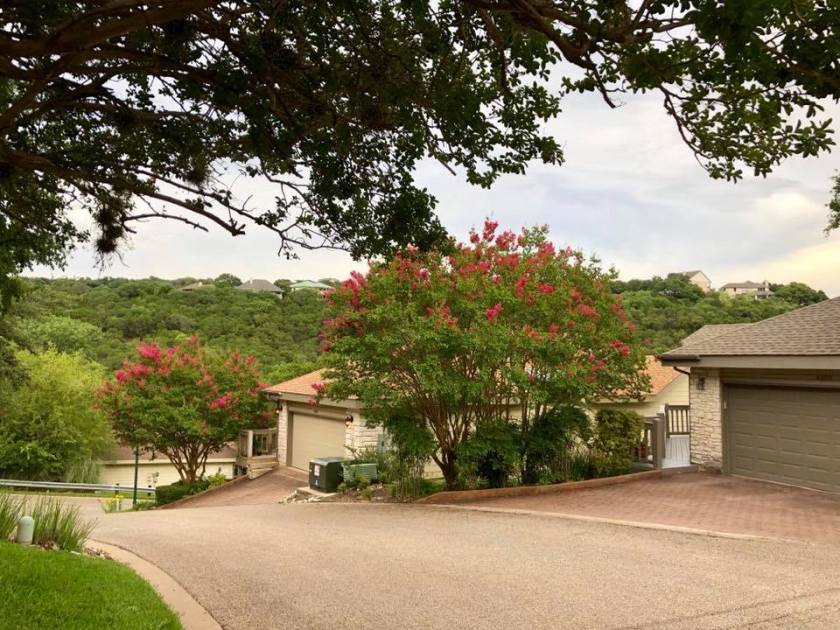
It’s the Austin house (Bobcat Lair) showing lovely dark rain clouds. Ah.

Yes, that’s all logical and good. Anita has her own little house in Cameron that we hope to get renovated as soon as her contractor is available and her tenant, who’s already month to month, knowing Anita is going to need to live in the house herself, finds another place to live. This is all quite reasonable, right?

But, when Anita started talking to me yesterday about how much she’s packed up already (she does all her moves all by herself, because she would rather invest her time than her money), and that she gave her tenant notice that she needs to be out, I found myself going back into one of my old, unproductive ways of reacting. I am not good with moving, AT ALL, and the thought of having to leave my beloved sanctuary sent me into a panic. It just seemed like a HUGE amount of work, change, and uproar was impending, and I kind of shut down.

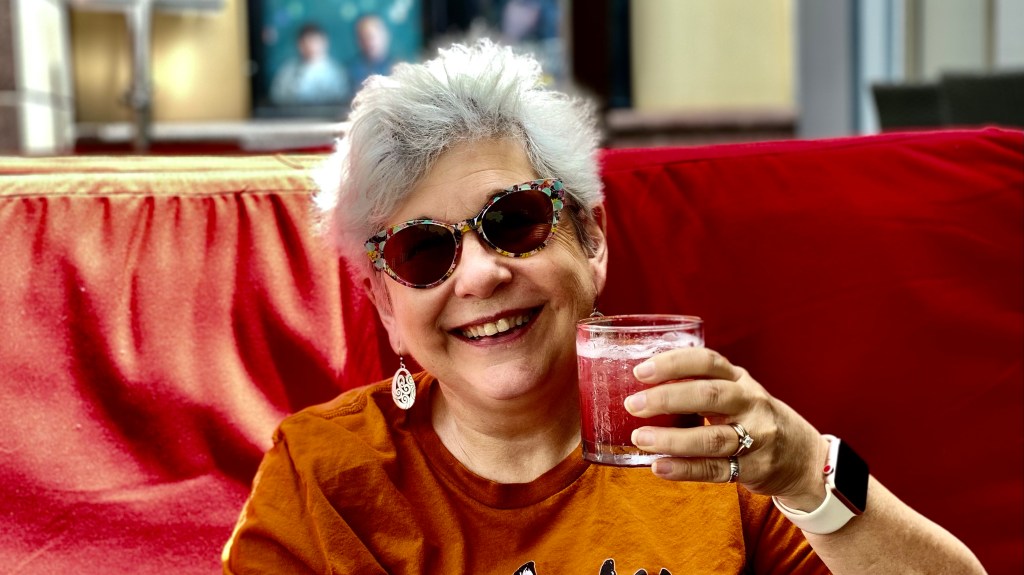
A little wine on the deck helped me feel better, too.

Anita (bless her) kept talking me through it, and I began to realize that I can do things in stages, that I actually don’t have all THAT much furniture in the Bobcat Lair, and that I even have a place to store things like my books and such. And all the boxes I still haven’t unpacked (though there aren’t all that many now!!).

Plus, I plan to rent an apartment near my work, so I can easily figure out what things go where, move them, then get the rest moved to Cameron (except for what’s needed to stage the house). I’m just trying to breathe as I think of more things that need to be done, like electrical work to fix outlets that stopped working…but it’s not too much.

I just have to face it; I’m who I am, and I’m going to have trouble with changing things when it comes to my home, because having my own place grounds me. I’m still a fine person!

Ernesto apparently agreed with my coping strategy. Photo by  @juleslang via Twenty20.

I’m Not Alone

Speaking of my issues, which I am, I had an odd experience last night watching the PBS show on Ernest Hemingway. Now, he’s not someone I ever would have thought I had anything in common with, other than being fond of short sentences (he was way better at actually writing them, though). As I learned how he grew up, the experiences he had with his family, and how he coped later, I was really surprised to see how we have a LOT in common when it comes to our inner demons and how we deal with them.

One part of the show, in particular, hit me hard. He was talking about how happy he was when he had both his wife and another woman he was also in love with. He said it made him inexplicably content, even if he knew it was hurtful. And then he talked about how, in his relationships, he always made sure to have another love interest all lined up before he left someone. Ouch. Those were my destructive patterns in my younger days.

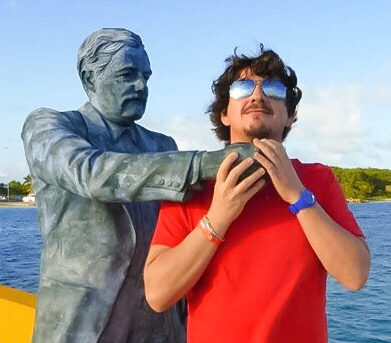
Hemingway statue in Cuba that apparently chokes people up.  @prezioso02 via Twenty20.

I’m really glad I didn’t live such a public life as Hemingway did, because reading all the criticism of my life, like he had to, would have been really uncomfortable. I’m glad I just got to judge myself harshly without too much help from others (except former partners).

I don’t think Hemingway was able to get much control over his demons, much like his father, who committed suicide when he couldn’t get a handle on his mental struggles. He knew perfectly well what his problems were, which is clear from his books, but knowing what his challenges were didn’t mean he could fix them, any more than I can help my issues with moving.

I’m glad I had help, good reading, and inner work that has gotten me out of destructive patterns, at least with romantic and friendship relationships. I’ll be interested in watching the rest of this series and getting more insight into this fascinating writer and historical figure.

What a good thing that we happened to watch this interesting Ken Burns documentary right after I was beating myself up for repeating patterns from my youth (I know perfectly well that I hate to move house because leaving my beloved home as a teenager was so hard on me). It gives me perspective to cut myself some slack and bear in mind that some of our personality “features” are deeply ingrained, just like those unconscious biases.

We can only do the best we can and keep making an effort to improve. Thank goodness I’m a lifelong learner and never plan to stop enjoying the challenges of living up to my best intentions. Let’s all keep open to ways to learn more about ourselves and others, and be patient with ourselves.

That’s my lecture for today. Take what works for you and leave the rest!

A Note from a Friend

After reading my blog (with all the typos I just fixed), my friend Kelli Martin Brew responded to echo my thoughts. I really got a lot from what she said, so I’m happy she allowed me to share her thoughts with you:

I love this. The longer I live, the more it seems clear that a lot of who we are and what we do is hardwired. But how I have wanted to believe that knowing something was the same as changing it! At this stage in life, I think we can use this hard-won knowledge to be more merciful – and to be honest about our own struggles and behavior. I grew up with a huge mandate to “be a good example.” At this point in life, I have contented myself with being just an honest “example” of… something. Whether it is deemed “good” or not will be decided sometime in the future, if at all.

Kelli, Facebook, April 6, 2121

I really treasure connections that allow us to share our inner thoughts, struggles, and learnings. I plan to be an example, too!

Book Report: A Short History of the World According to Sheep

Rating: 3 out of 5.

I buy most of my books from Amazon, and they, of course, keep track of your buying history. They know I like books on wool, sheep, knitting, and so on, so I got this book, A Short History of the World According to Sheep, by Sally Coulthard (2020), on Amazon’s recommendation. I also thought the cover was pretty.

Beautiful cover, isn’t it?

Absolutely, I was right; the cover is great, a pastoral scene of grazing sheep by Nathan Burton, beautifully printed on textured paper. The book is a great tactile experience all around. These days you don’t often get books bound this well, so kudos to the Head of Zeus Press, whoever they are. I guess quality bookbinding is still alive and well in England today.

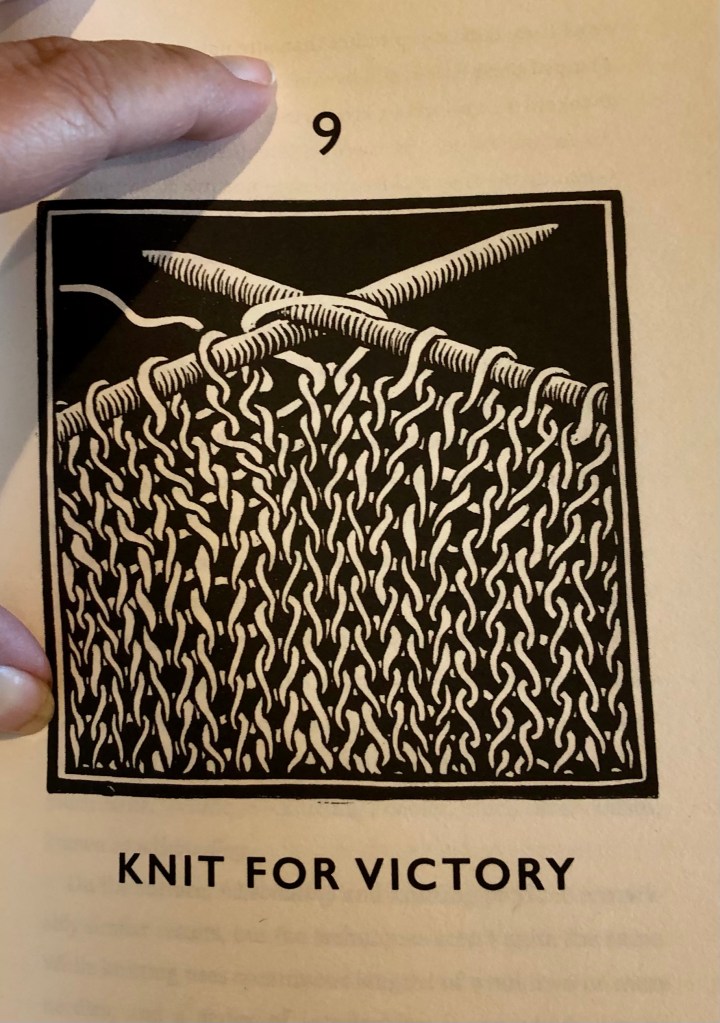
This sheepy little tome is indeed quite British, which lends a lot of charm. There are so many mentions of the names of tiny towns and villages in England, Scotland, and Wales that I got an urge to go look up photos of the whole lot of them. Sadly, there are no photos of sheep or villages to be found, though each chapter begins with a really lovely etching of something to do with sheep or wool.

The illustration of the chapter on wartime wool use.

I guess I should get around to Sally Coulthard’s content. It’s quite charming, and just full of fun tidbits about sheep, wool, word origins, and such. There are a LOT of English place names that refer to sheep and wool. And a bellwether was not a type of stock originally, but a very tame neutered ram who wore a bell to lead sheep where the shepherd wanted them to go. I want a bellwether. Well, I want any kind of wether, actually. I am so fond of them.

Each chapter in the book moves along through history and tells how sheep and humans have coexisted throughout history. There’s no doubt about it: sheep have shaped human life in many ways. They are darned useful animals, and Coulthard’s delightful way of telling stories about them makes for a pleasant read. I admit I could have used more details, but then, I’m a detail-oriented reader.

If you’re like me and enjoy reading about history through the lens of one particular commodity (after all, I’ve read books on salt, the pencil, various colors, and so on), you’ll get a lot out of this charming book. If you get bogged down by a bunch of place and people names with which you’re not familiar, or really aren’t enthusiastic about sheep and wool (how could you?), then you may want to go find another topic.

I’m glad to have read this one, as it cleansed my palate before starting the last unconscious bias book in my current stack of books.


An Offer!

Speaking of wool, I have a wooly offer for those of you who listen to the podcasts I make from these blog entries. The first person who sponsors my blog on Anchor for over the minimum $.99 a month will get a knitted throw by ME (and you can choose colors). The first ten people will get TWO knitted cotton dishcloths. Now, don’t you want to run over to subscribe?? Go to anchor.fm/sue-ann-suna-kendall/support to get set up!

Of course, you can make me (and maybe yourself) happy simply by following the The Hermit’s Rest podcast on any platform you like (here’s the Spotify link) and listening to an episode or two. My friend Mandi said it’s so much like talking to me that she kept trying to answer me back.

Must Surnames Be Sir-names?

This just POPPED into my head a few days ago. It’s not like I never thought about it before, since it was discussed a LOT in the 1980s among my grad school friends in linguistics and English. In Western society, the tradition for the past number of hundreds of years has been that women took the surname of their husbands upon marriage (you know, to show who they belonged to and who got to take all their property).

First names on a bulletin board
Somehow, we’ve always been freer with given names. I’m awfully disinclined to be Oflee, though. Image from @eliza_og via Twenty20.

Those of us who were in the feminist movement of the 1970s and 1980s got all worked up over this remnant of the patriarchal system we were trying to overcome. It was quite the hot topic, since for many of us, this tradition held sentimental attachments and symbolized “love” and “commitment” to them. Others didn’t want to feel like someone’s possession and didn’t want to change our names. Both sides have valid arguments.

A picture of Icelandic money
Iceland also has women on their money, and guys with cool hats. Image from @SteveAllenPhoto via Twenty20.

It’s often been pointed out that, well, if you keep your birth name (maiden name, not a popular term among my friends at the time), you are simply keeping a patronymic from the previous generation. Yep, that was totally true, unless you happened to be from Iceland (like Björk Guðmundsdóttir) or using a Gaelic system (Máire Ní Bhriain).

As alternatives, people thought about new ways to symbolize with their names that they have formed a commitment to make a family unit. A lot of people hyphenated their last names or used both, which I’m sure you’re familiar with, as it’s quite common. Sometimes both partners do this; sometimes just one of them do. Hmm. Others just added the new one to their previous one. I actually bowed to pressure and was SueAnn Kendall Crain for two years. I never got comfortable with it.

See, I even have things published under that name.

Some of us (me since the Crain episode) just kept the names we were given. However, I’d hoped to give male children their father’s surname and female children mine. Only little dudes showed up, though, and their names match their dad’s Irish surname quite nicely, so I’m okay with it.

The most fun names to me are ones where people combine their sirnames (yuck yuck) to make new ones. I knew a few people who did that back in the 80s, then didn’t hear much of it until later. I LOVE some of the combinations people come up with!

names on a wall.
Choose random syllables and have fun.

The option that bows the least to the patriarchy is where members of the family select a completely different name to symbolize their commitment. Why not? Genealogy students probably roll their eyes at this, but hey, at some point in history, that’s what everyone did. English people chose their occupation (Archer, Butcher, Tanner), where they came from (Kendal, in northern England), a personal characteristic (Whitehead), etc. Other European places made similar choices, while Gaelic folks stuck with their patronymic Mc- and O’ (son of) surnames (very few women continue to use the ní (daughter of) ones today). So if I wanted to be Suna Plantsinger, I could. Lee wouldn’t go for that.

Back to Combining Names

Where am I? I didn’t intend to write a history of surnames. I do believe one can look that all up on the googles. What I was trying to get to was how popular the idea of combining the last names of people who’ve formed family units is among my friends. I asked people this a couple days ago:

Thinking about surnames. What if you and your spouse (or partner) blended your surnames as a sign of commitment? What would you get?
A fun question

At this time I have had 171 responses. I guess there was some interest. Most people simply took the beginning of one name and combined it with the end of the other. Some really came out like names that should stick!

  • Kendall + Bruns = Kenduns, Brundall (Kens, Brunsken, etc.)
  • My neighbors Faivre + Mitchell = Fitchell or Maivre (best was Faivritch)
  • Lozano + Harris = Lozarris or Harrizano

It got more creative when people took random syllables and moved them around, or surrounded one name with parts of another.

  • Brukends is one I like for me and Lee.

Here’s a story someone shared, which I hope is anonymous enough not to be invading their privacy:

We have friends named FredRICkson and PeTERson who got married. They took the middle syllable of each name (the core of who they are) and now are legally The Ricters which I love. They used a scrabble tile themed sign to announce it after the ceremony.

That was so creative!

There were two couples whose name ended up nearly the same as each of their existing surnames. I guess that was destiny!

  • Peterson + Jensen = Petersen, Jenson

None of this solves the problem of our names being reminders of not-too-distant times when women could not own property, vote, etc., and in fact WERE property. But, it shows that today we can have some fun with it. I’m thinking of a party game or something, where folks could vote on the best blended names.

Desperate for fun? Ummm…maybe.


Did you know you can now support my blog and the podcasts that go with it? Yep. Totally optional, though.

Frigid-Pocalypse! The Cold!

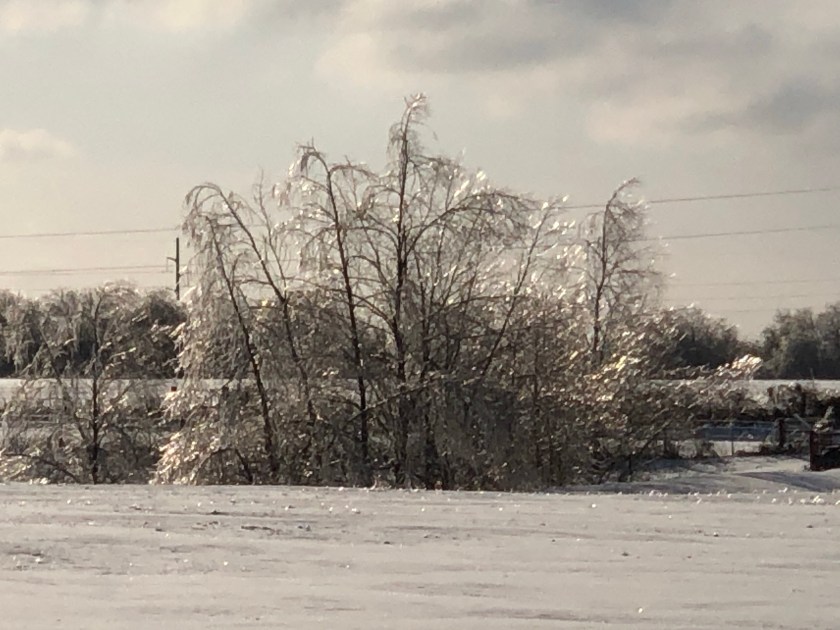
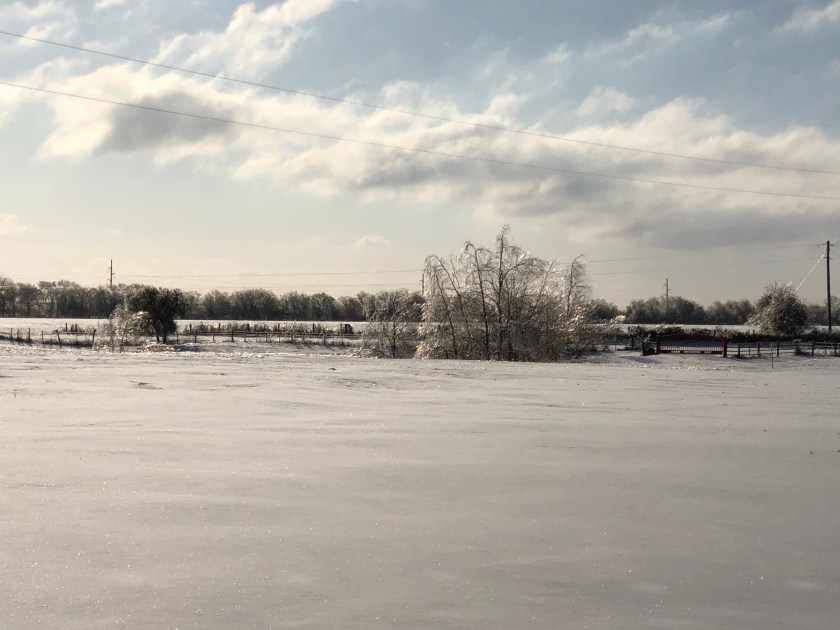
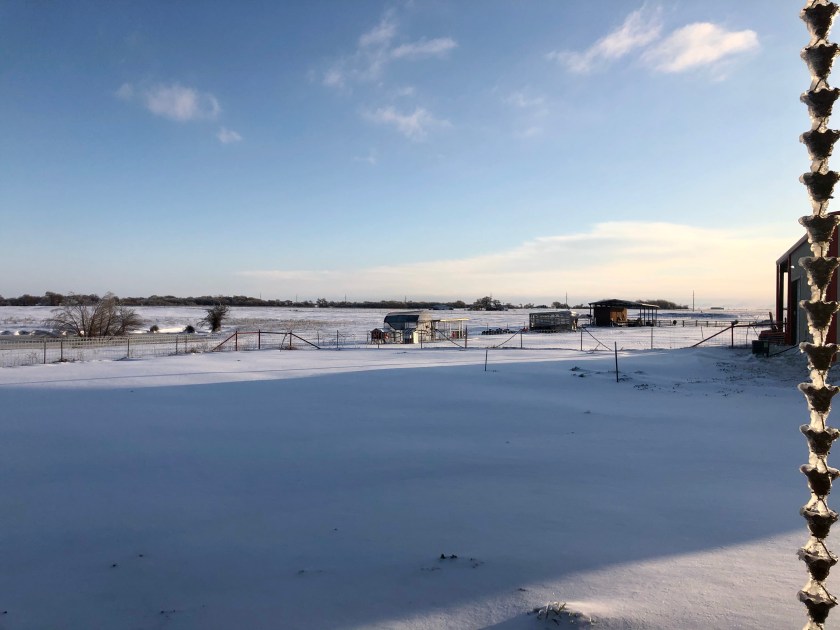
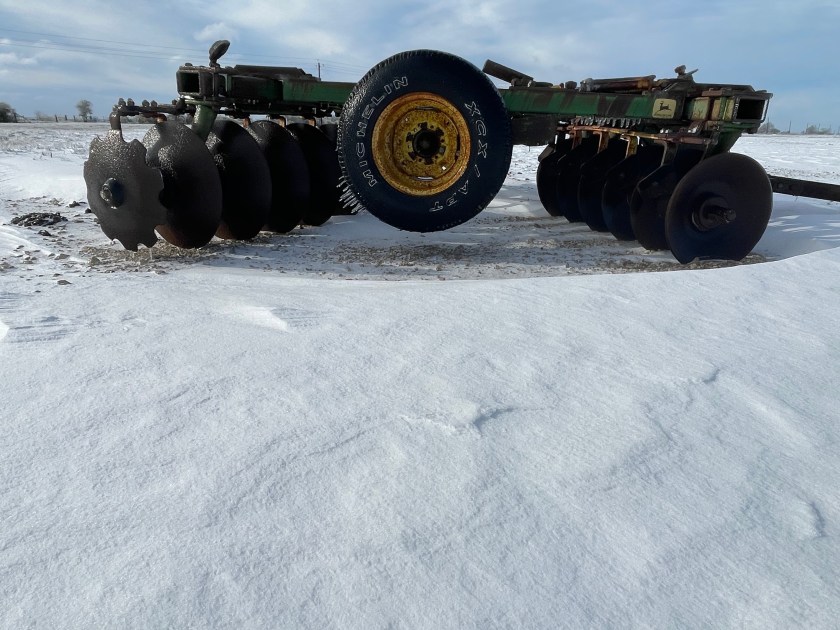
I’m not apologizing to anyone tired of weather posts. All we have here is weather, and since we can’t go anywhere or do anything, it’s weather-post-a-rama here in the ice cube known as the middle of Texas. It’s cold as when I used to live in Illinois, only that it not at all normal here. No one remembers it being this cold. And last night’s blizzard of sleet and snow was something else. The good news is that the sun is out for the first time in days.

Blurry, since there’s no way I was going out to actually get this shot up close, but it WAS pretty this morning.
Here’s the farther-out view.

And we do have power, which is good. Many parts of the area are dealing with rolling blackouts or just plain outages. The less good thing is that our heating system can’t cope, so it was 45 degrees this morning in our bedroom. My office is the warmest place, and I found a heating pad. We sent the space heater over to Jim in the RV, who needs it way worse than we do!

Chickens, cows, and all are still there. The pond/tank froze for the first time!

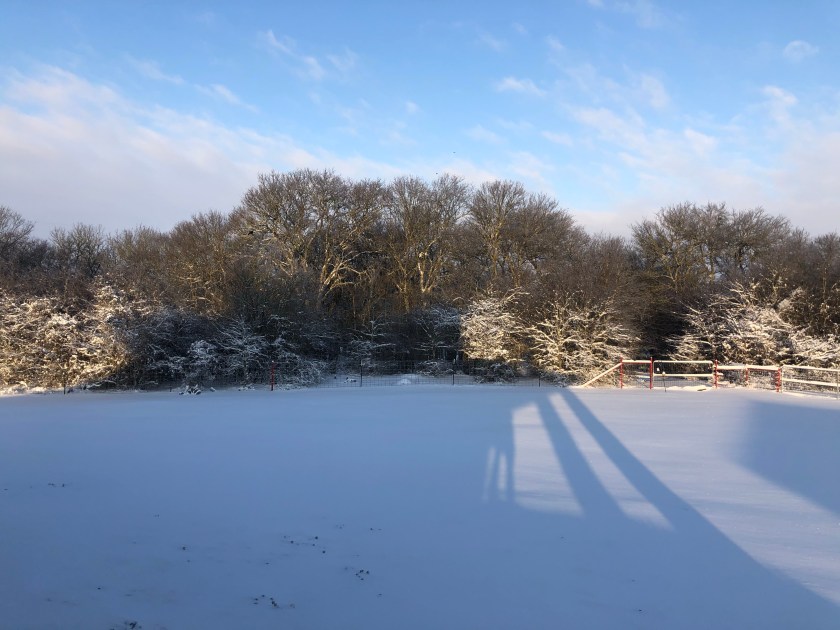
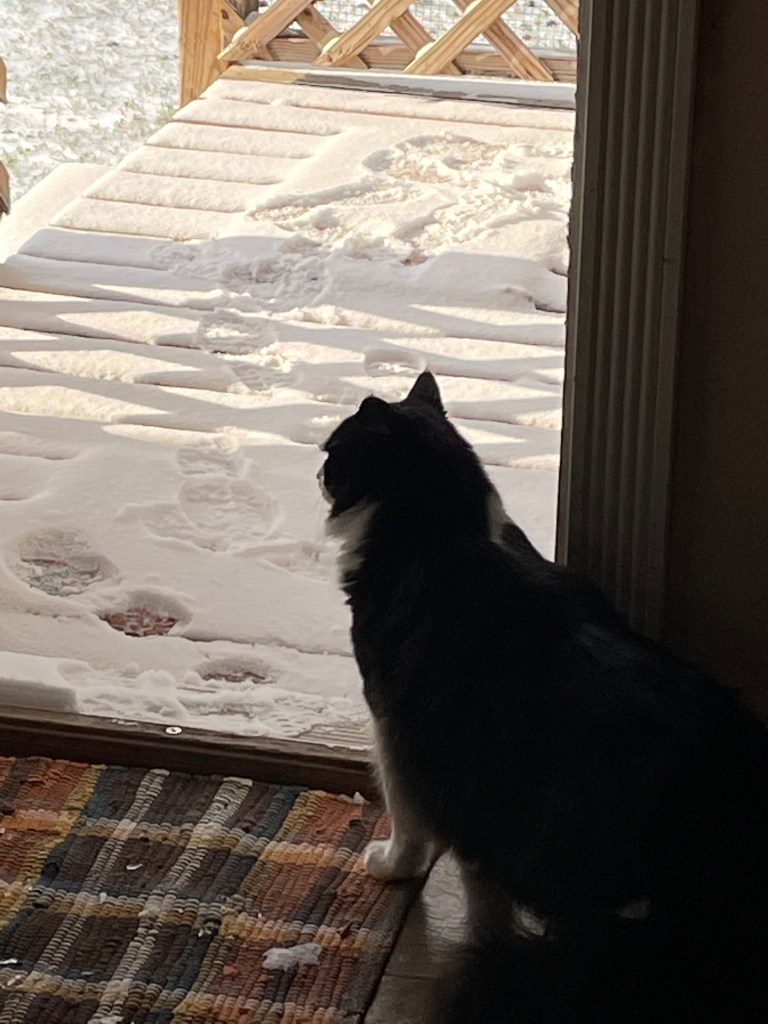
Today’s snow isn’t as pretty as last time, because the wind blew it out of the trees, but I’ve been enjoying bird watching out the window. Cardinals always look spectacular against the snow, and the little sparrows are bopping around like crazy. The crows are cawing (celebrating all their wins, I guess), and the doves are flopping around grumpily. I saw at least one live chicken outside (I have NOT dared to walk around, since it is 8 degrees outside).

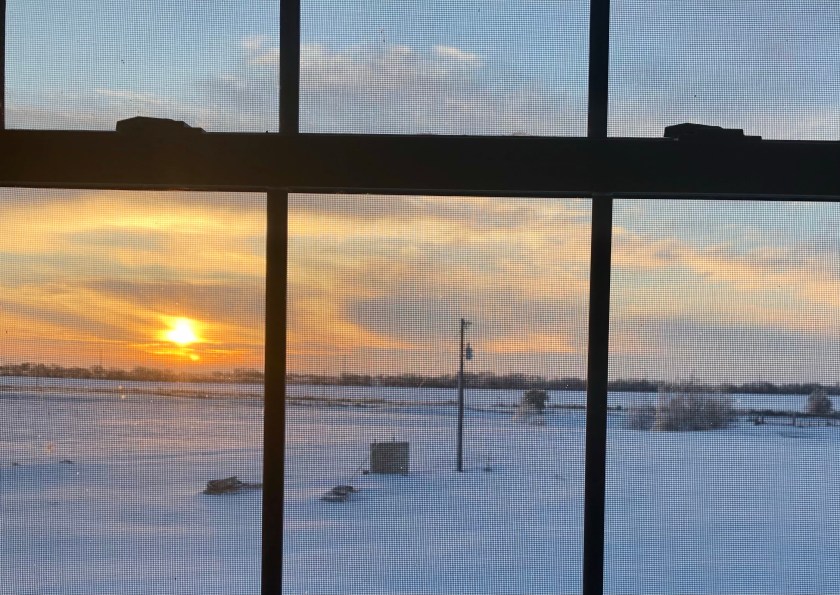
Sunrise through the screen. It’s cold.

I’m very thankful Ralph said he would check on the horses, since driving over there would be dangerous without four-wheel drive, even though it isn’t very far. Mandi slid down the hill going up to the cemetery yesterday, when she was attempting to go UP. So, we will not be leaving the house.

Frigid.

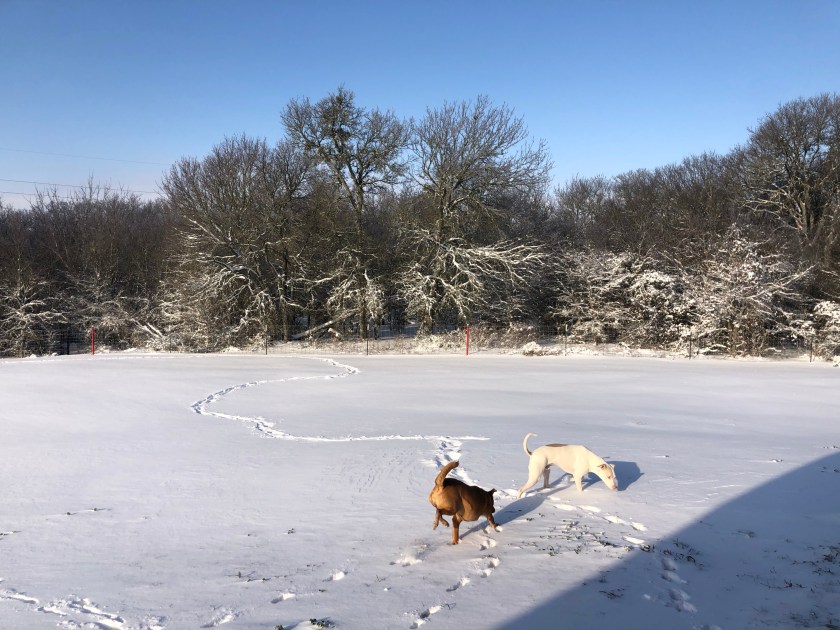
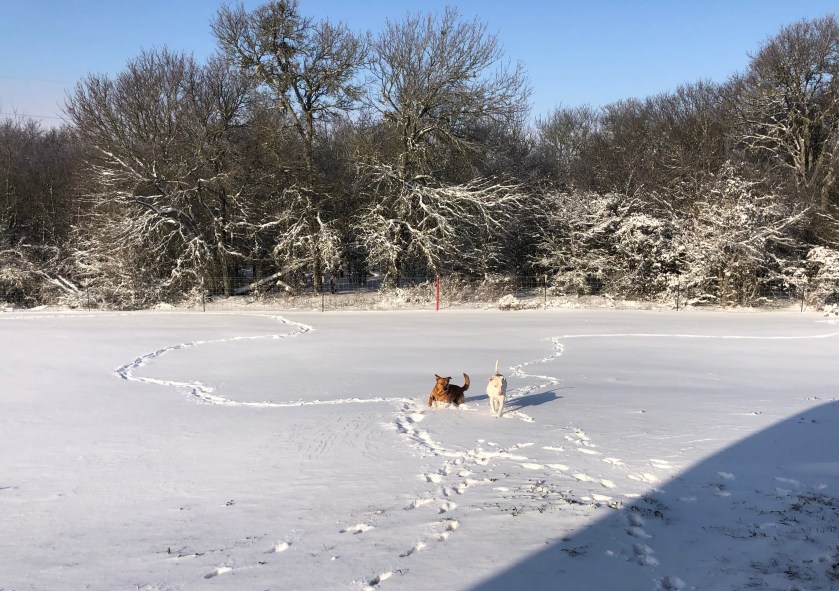
We managed to sleep fine last night with sufficient blankets and warm dogs. Carlton stayed under the blankets all night, but surprisingly enough, he and Penney went out and ran around and played for a while. They’re tough, but not like the cows. They just want their water trough de-iced!

Whee! Penney’s feet don’t want to touch the snow!
All the frolicking did not last long.

It has even snowed in Yorktown, where Kathleen and them are, a thing they don’t remember ever happening. Lee says his dad experienced it, but then, he lived through most of the 20th Century! Yorktown is not that far from the Gulf of Mexico, so that’s saying something. It’s a big weather day for Texas!

Luckily, I have lots to blog about and enough bird-watching and knitting to get me through the day, but my longest exercise streak died yesterday, what with all the sickness and the confinement to quarters.

From what I can tell, nothing’s been down our county road today.
Rather accurate depiction of me.

I only feel a little sickly today, so it looks like I’ve kicked the vaccine’s butt and my immune system is strong and vigorous. Hooray.

If you are in any of the many, many areas in the US hit by this awful weather, I hope you stay safe and warm. It’s bad all over, and much worse in the north. You are all in my thoughts.

Feel free to share your experiences or commiseration!

Headstones and History

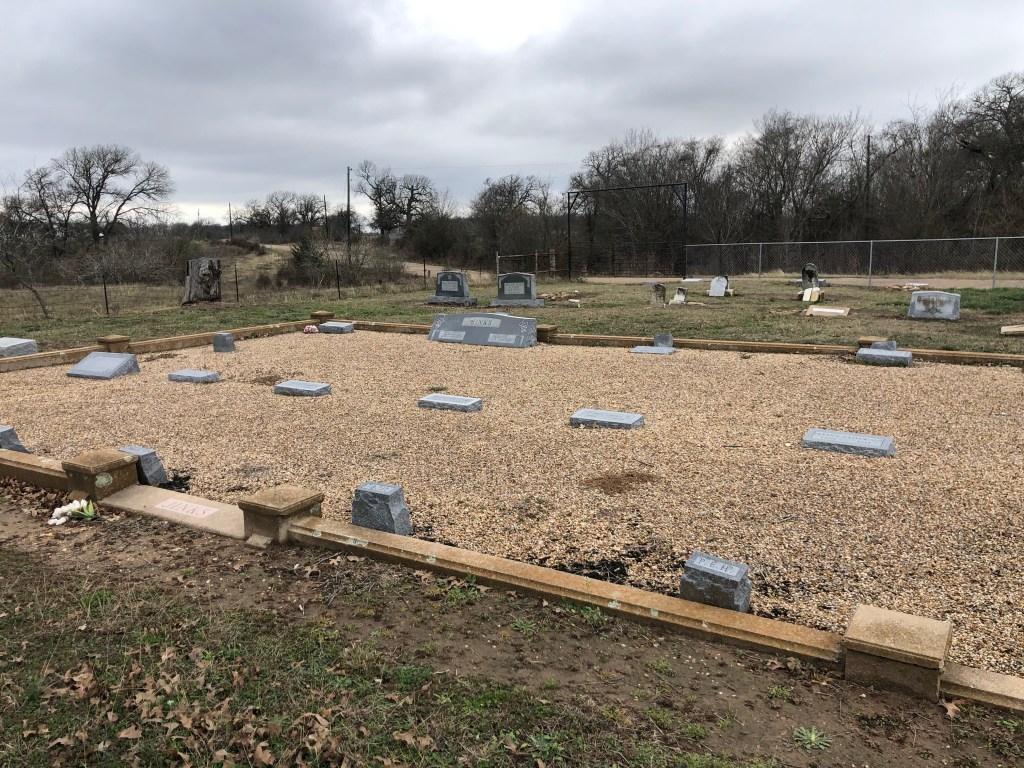
While I’ve written about Walker’s Creek cemetery before, I was compelled to write again, because our Master Naturalist event champion, Linda Jo, asked us to go out and observe at a Milam County cemetery this week. This place is so beautiful, I’m always happy to visit.

This is maybe a mile from the ranch.

I decided to do two things, survey what’s living and growing in the area for iNaturalist and see what I can learn about the area’s history from the tombstones. I’ll post the nature stuff on the Master Naturalist blog when it’s done.

Our area in a nutshell. I do have photos of the school, etc., somewhere on this blog.

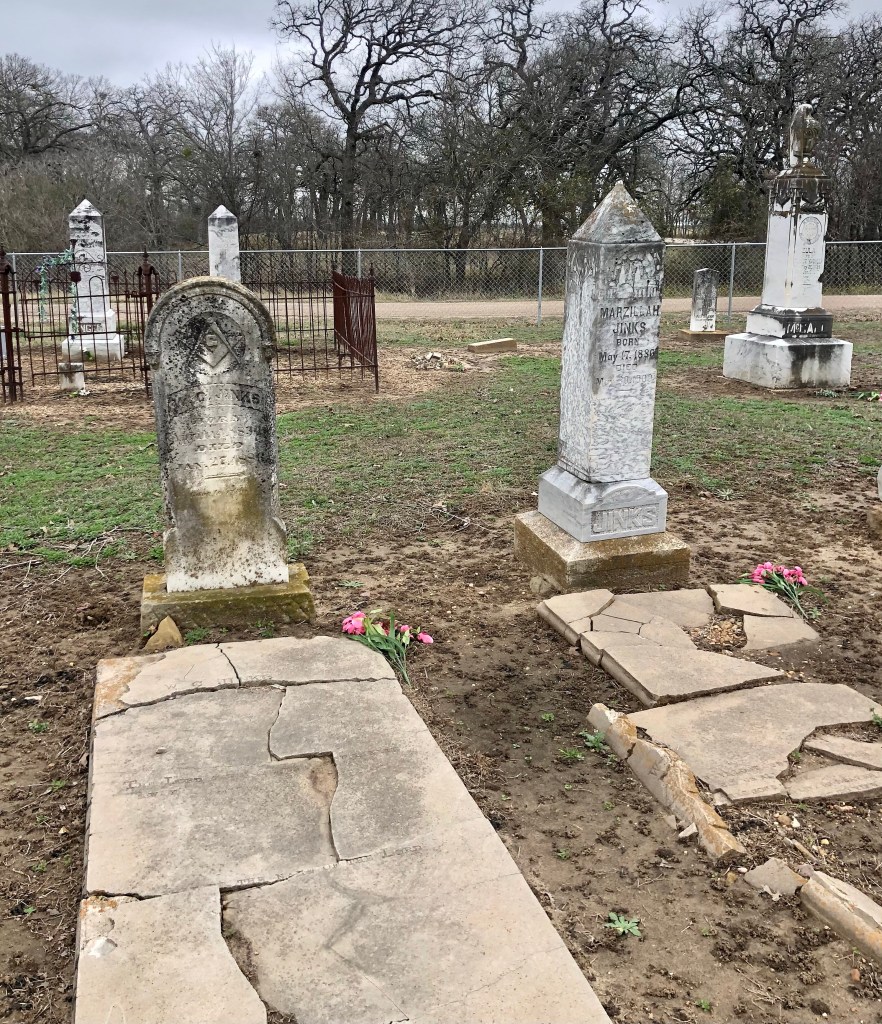
As I looked around, I saw the graves of those founders and their descendants. The Jinks family put in new stones and is all fancy.

Very fancy, Jinks family.
Older Jinks graves. Marzillah, on the right, died in 1909 and has Heaven and other art on her stone. Her husband was a Mason. He died in 1886, making him probably one of the first ones here.

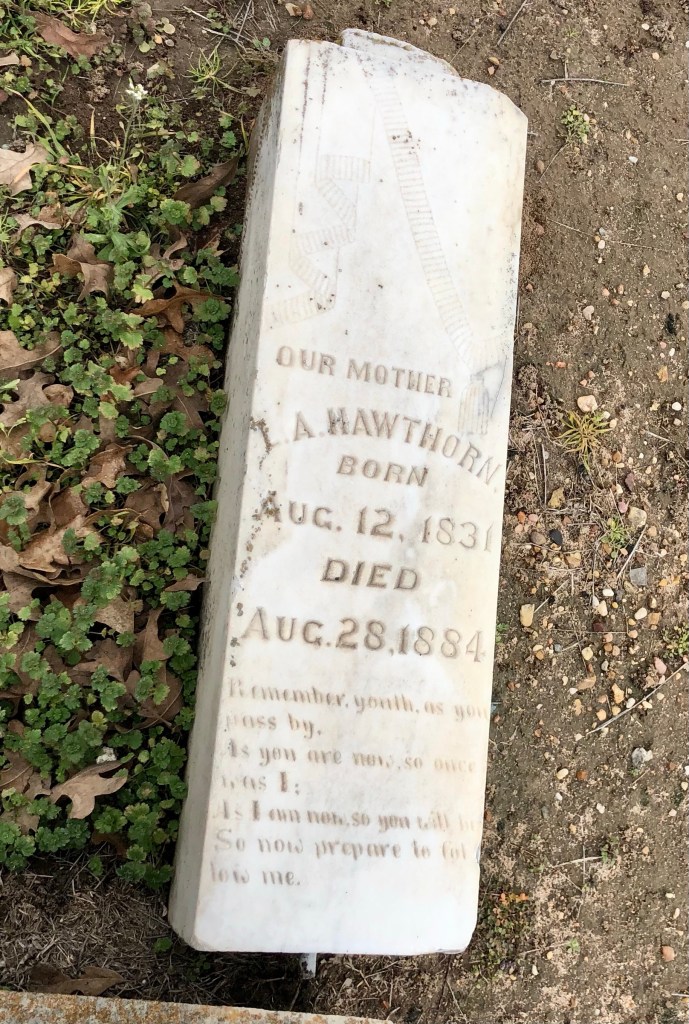
The Cages and Walkers had some cool old stones. I love how many stones throughout the cemetery have kind words on them.

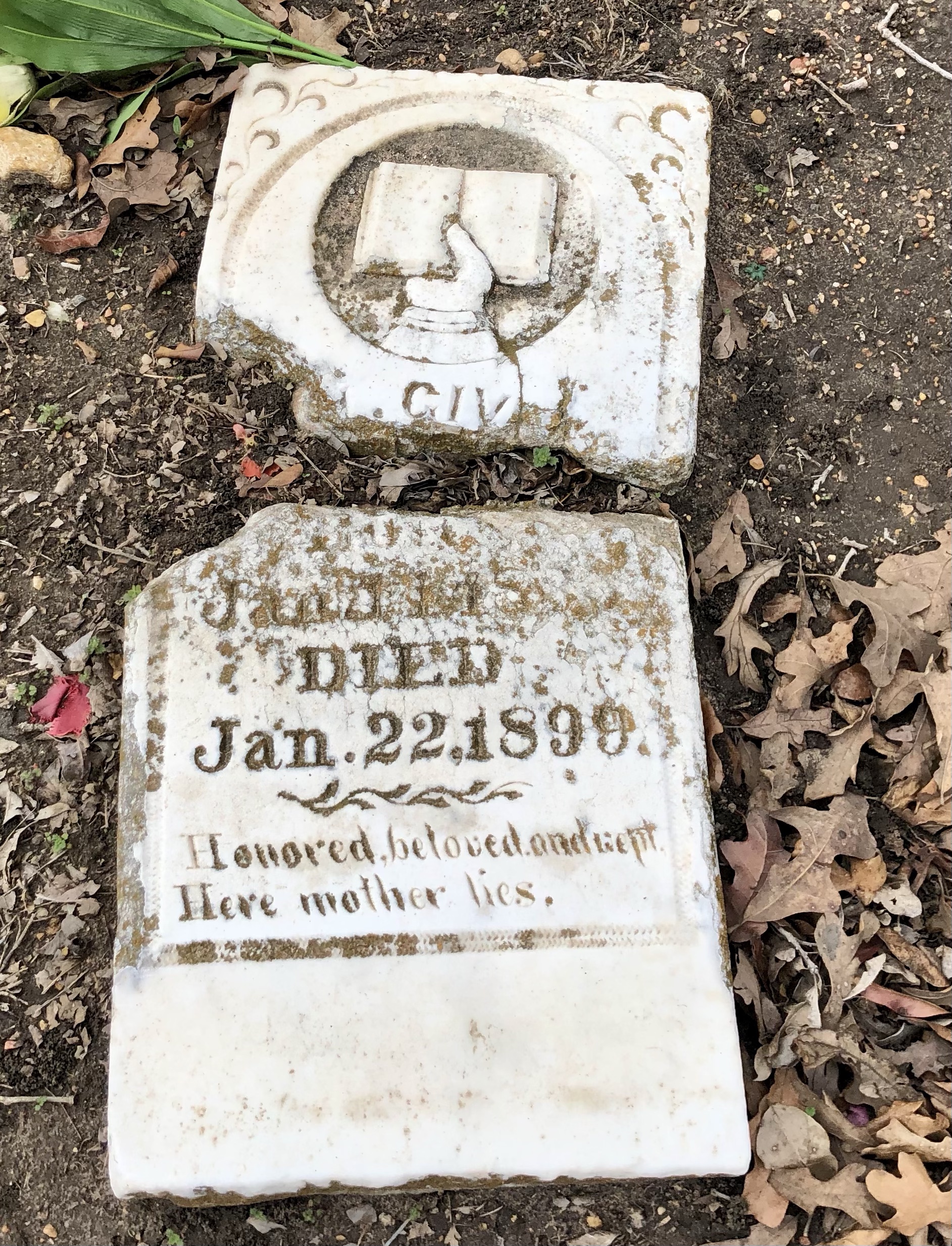
Mothers often have poems.
Another beloved mother. “Rest, mother, rest in quiet sleep, While friends in sorrow over thee weep.”

Another thing I notice on the older headstones is that there are hands in them, like the one at our house, which has a hand pointing up. Here are a couple with a handshake and hands reading a book (Bible, I assume).

My favorite stone with an inscription was this much more recent one. Way to go, Sonny.

Yes. What a guy.

I do enjoy humor from the families. This is so cute cute

A cow, and a population sign. Fun Lucko family.

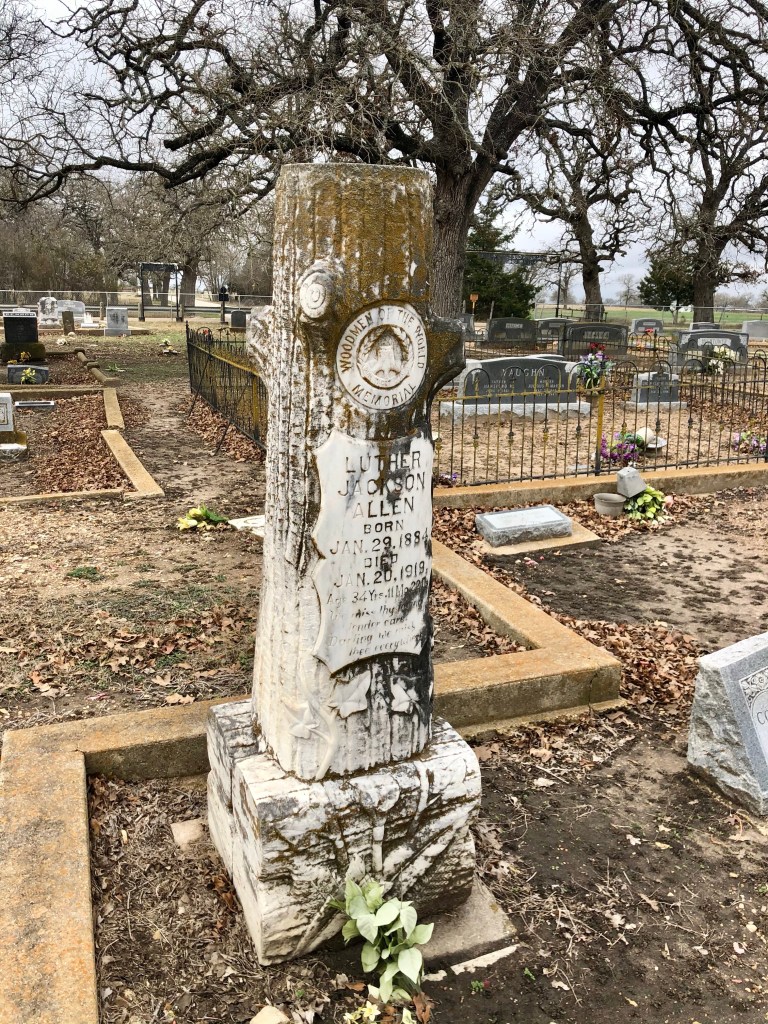
Lots of the gravestones looked like trees. They are Woodmen of the World stones, bought with burial insurance. When I was a kid, I thought it was an organization for guys like my grandfather, who was a woodsman (forest surveyor).

1919 grave of Luther Allen

As I looked around, I noticed a few things. One is that the people buried here aren’t German or Czech, like we see in the surrounding area. The names are mostly English, Scots, etc.

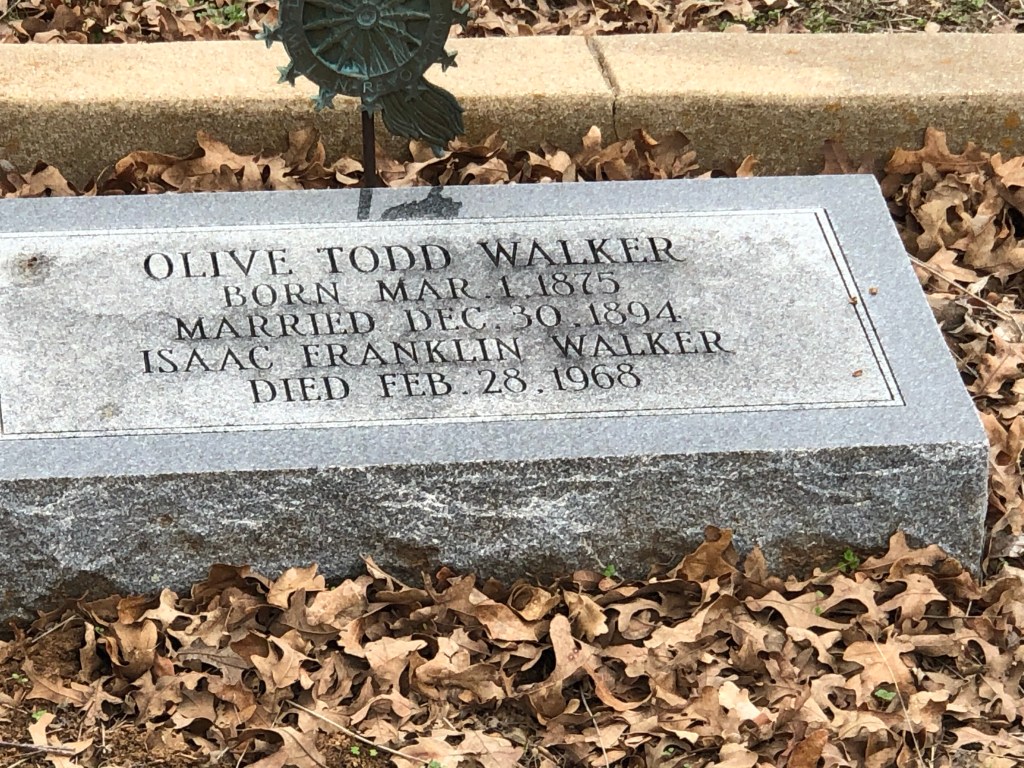
A Walker who lived a long life. Originally a Todd. There are Todds down the road.

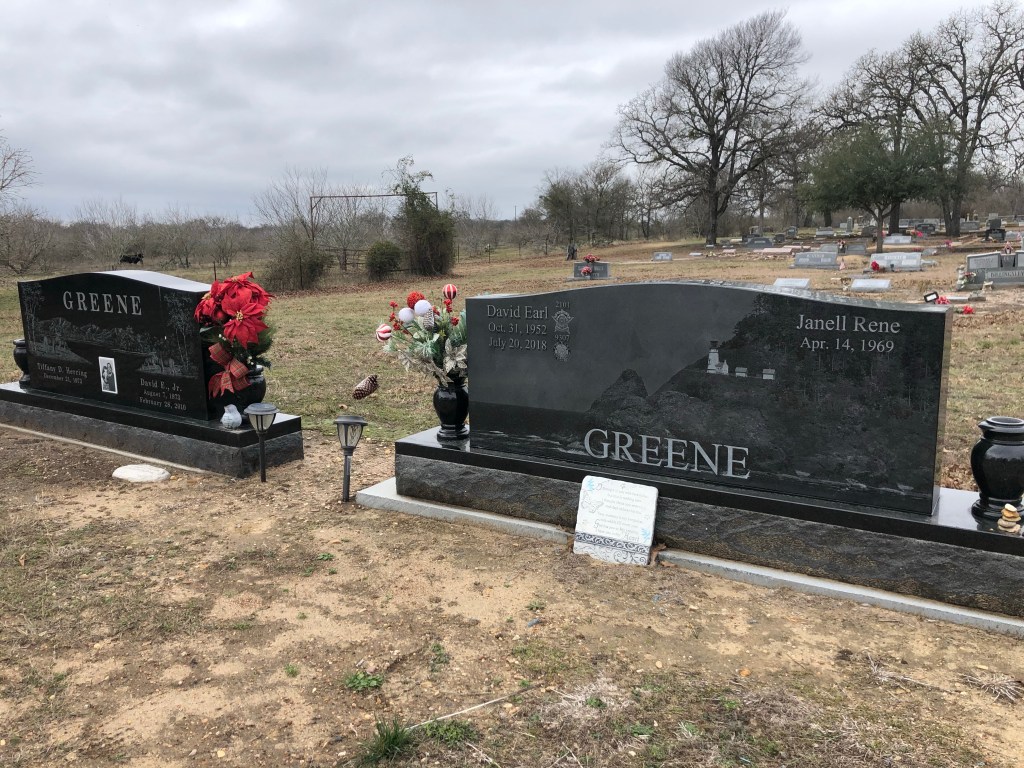
Even the people I know who are buried here have English names. The late sheriff Green, his son, and eventually his wife, the Greenes, are here.

Newer graves lovingly cared for.

This is a great example of what I saw all over the cemetery, where people do sweet things like stack rocks or arrange rocks in patterns. I thought it was so sweet.

Notice the stacked rocks. Also, such a beautiful tree for the family to enjoy during visits.

The rocks hold up better than fake flowers, for sure. But, some of the graves are well tended. My former neighbor, Elaine, gets visited often. It helps that her son now lives across the street in her old house.

Notice the rocks, her favorite bird, and fresh flowers.

Another thing I noticed was that any tomb cover on a grave was all cracked up. I’m not surprised, seeing how much the soil moves around here. The Jinks grave above shows this. Here’s another example.

It’s all cracked.

This cemetery is in a beautiful spot, surrounded by woods and little ponds. I enjoyed my time here so much.

There were doves and cardinals around this pond.

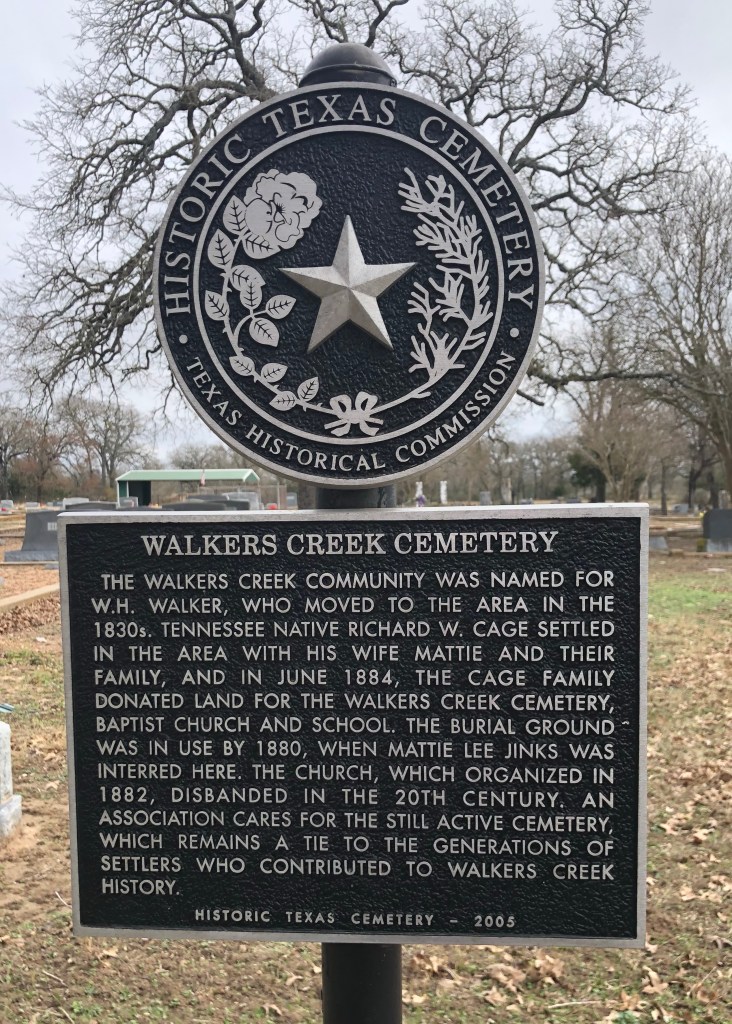
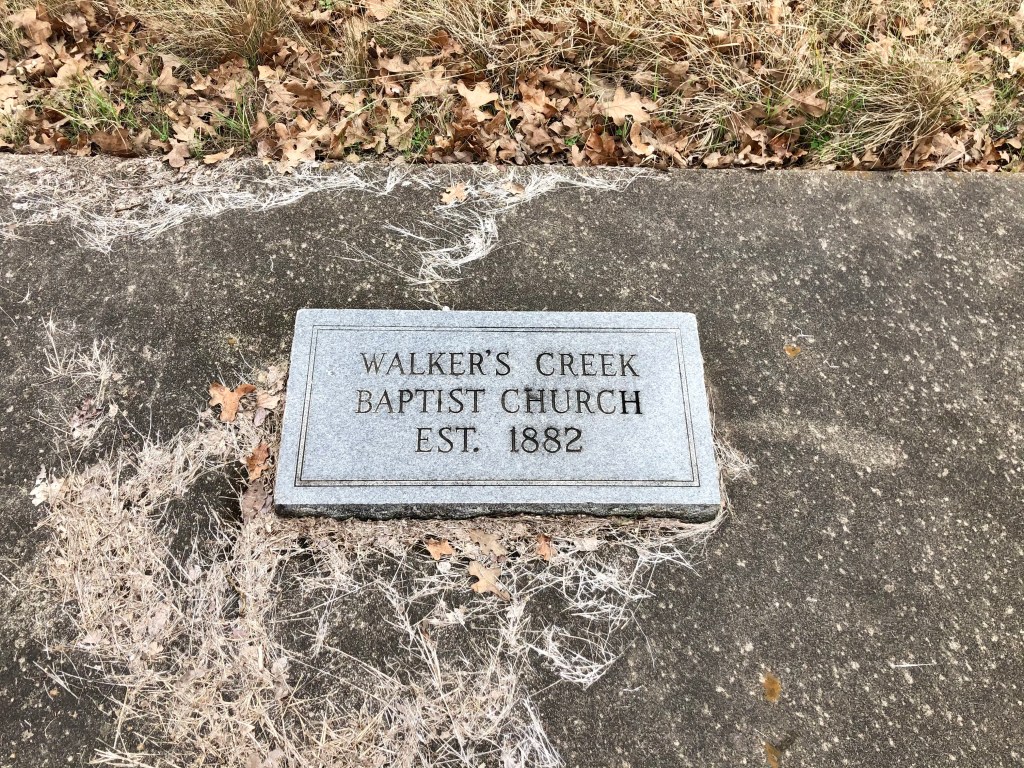
Remember the sign at the beginning that talked about a church? Most cemeteries have a church associated with them. There’s not one here now, but there was one across the road, here.

This is where the church was.

I’d noticed the sign before, since we drive by here often.

Church site.

Only today did I see the sign, which appears to be on the old entry. Aha.

Very descriptive.

I saw so much of historical interest here, right down the street! I look forward to writing up all the plants and animals I encountered.

The History of Our Cemetery

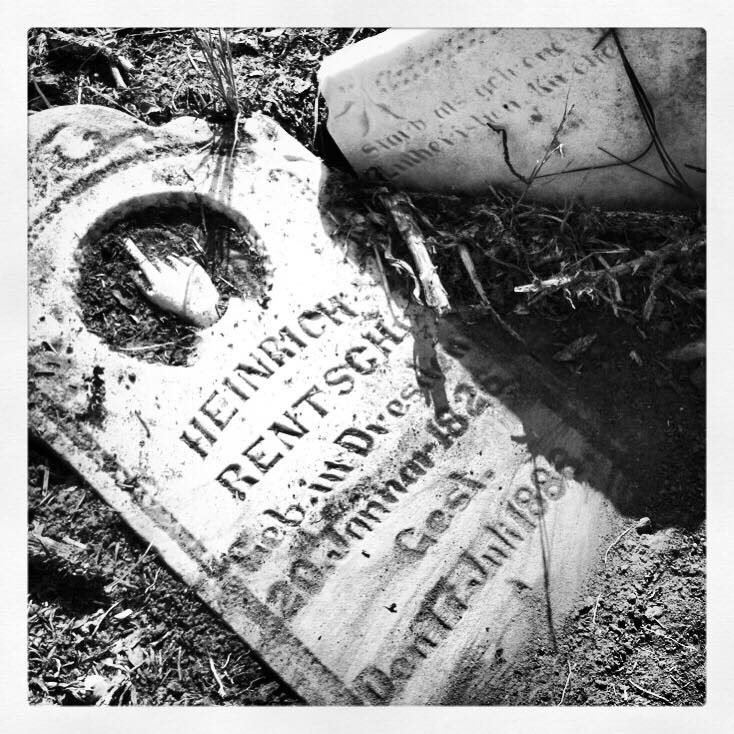
You may know we have a grave on our property, with (as far as we can tell) just one person buried there, Heinrich Rentsch (1826-1888). I have tried to learn more about him, but my skills aren’t too great. I do know that we want to repair his headstone, which cattle knocked over in 2012.

My oldest photo of this. I know I wrote a lot about this once…but I sure can’t find it.
Look, I found a crawfish while waiting on Holly.

I was contacted by Holly Jentsch (names are sure similar around here), who is doing official research on cemeteries in the area. She’s working with the Milam County Historical Commission to GPS all graves/cemeteries in Milam County for the Texas Historical Commission Atlas as well as document the sites. She wanted to check out the site on our property. Of course, I said yes, but it took a while to get together, what with all the snow, family stuff, etc.

Yesterday was really windy, so it was a perfect day to stay outside and interact and not breathe on each other. Holly and I got a good look at the part of the headstone we are keeping by the RV, then hiked (along with Vlassic) to the fenced-in area where the rest of the stone is.

We had a great time talking as we walked around our pasture. Holly likes to walk, too, and it turned out we have a ridiculous amount of things in common, plus she lives next door to my friend, Donna. So, now I know who “the neighbor with all the dogs” is. Small counties are really small. Anyway, it sure was fun to talk to someone. It’s such a rare treat (especially since I haven’t even left the ranch since last week).

Here’s Holly getting a photo of the base of the headstone.

When we finally got to the old fence, Holly got excited, seeing depressions near the grave of Mr. Rentsch, because that could have meant she found his son, Otto, for whom there are no records. But no, those are the final resting spots of Rosie, Stella, and Brody. Sniff.

I hope to go out and look at other sites in the with Holly, when she gets permission. I find the history of settlers around here so interesting, and it’s well worth preserving!

History of Our Ranch’s Former Resident

When she got home, Holly was able to send me her findings. She is great at genealogical research, DNA, and all that fun stuff. It was sure fun to talk to a professional. Here’s what she sent:

Thank you so much for letting me come to visit you and Mr. Rentsch today. This is what I have found out so far about Mr. Rentsch. He was born in Dresden, Germany on 20 Jan 1826 and died in Milam County on 17 July 1888. In the 1870 and 1880 census he lived in Precinct 2, Comal County, Texas with his wife Johanna, son Otto and daughter Helena. His occupation was farmer and he owned property.

Johanna Rentsch was born in April 1830 possibly in Sachsen/Saxony and died 9 Nov 1908 in Galveston, Galveston County, Texas. After her husband’s death she was found in Dallas, Texas in 1889 and 1890, address r.322 Hord between Griffin, Magnolia. Her daughter Helena was living with her and working at Eureka Steam Laundry. In the 1900 Census she is living (renting) in Galveston on Avenue 0 1/2, a widow with only 1 of 2 children living. In the 1906 & 1908 Galveston city directory, Johanna was living in the Letitia Rosenberg home. She was buried in the Lakeview Cemetery, Galveston TX.

I have found nothing on the son Otto past him living with the family in the 1880 census but the fact that Mrs. Rentsch states in 1900 that she only has one living child, suggests he died between 1880 and 1900.

The daughter Helena married a Charles Molsburger, a dairy farmer in Galveston about 1896. It was his second marriage. Helena was born in Texas in Dec 1869. Mr. Molsburger had 3 children and may have been divorced. It would appear from the ages of the children in the 1900 Census that only 1 was born to Helena and Charles, Robert Mosburger in 1897. the Molsburger family lives in the part of Galveston that was wiped out by the 1900 Great Hurricane. It appears the whole family was wiped out on 8 Sept 1900 plus many of the extended Molsburger/Malzberger family.

Many thanks to Holly for all this information. Now that I have it blogged, maybe I won’t lose the facts!

Dangerous Memories of Middle of Nowhere, Oklahoma

I’m glad I kept looking for all those wedding photos, because next I found photographic evidence of MOST of a very memorable trip I had in the late 1990s. It’s one of my favorite stories, so those of you who know me in person probably have heard it. But I have PHOTOS to prove I’m not making it up! (I have way more photos, but didn’t want to break the Internet.)

Just Another La Leche League Conference

Back in the olden days, when La Leche League was a volunteer-staffed breastfeeding support organization headquartered in Schaumburg, Illinois, the US part was organized into Areas. Some Areas were one state, some a group of states, and some part of a state. But it had something to do with geographic location. How quaint.

I knew I was in Oklahoma by the themed clothing and the hay.

I lived in Texas, which was its own Area. Up north from us was AR/OK, which was Arkansas and Oklahoma combined, due to their lower population. Many of my friends lived there, and I was working on my online projects with them. Since I’d recently become the webmaster for the parent organization (making this probably be 1998), they invited me to give a talk, my first in that capacity where I was invited out of state…ooh. It sounded fun to me!

It Gets Interesting

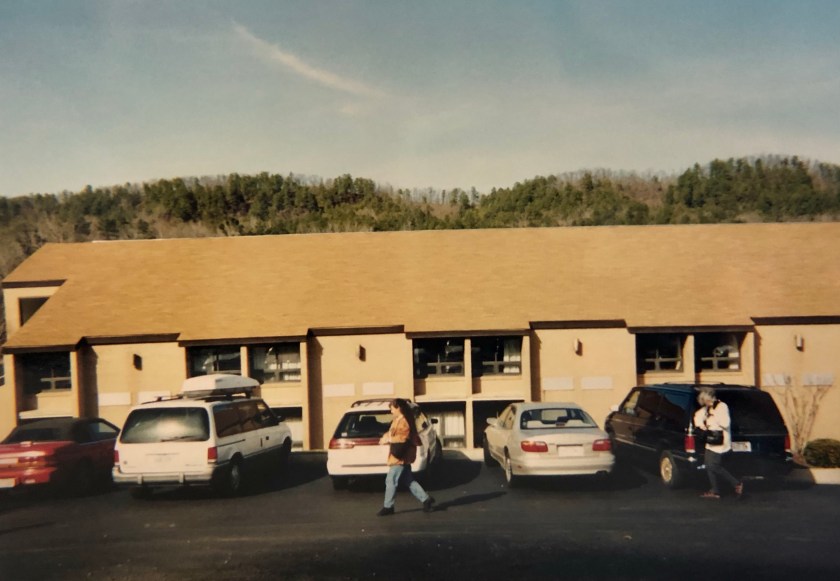
I had a hard time finding the place, even though I think I followed my friends from Little Rock. It was in an old 4H camp (or something like that) either in or near a reservation.

Here is the place. I think that’s Sandy, followed by Barbara looking in her purse.
Kris, in a calmer moment.

The minute I got unpacked and hugged my friends who were sharing something like a dorm room with me, I got in touch with my artsy friend from Oklahoma, Kris, who I had yet to meet (I had a LOT of online friends back then). She had her own cabin off from the main building. We met, which involved much squealing and hugging (oh, how I miss squealing and hugging).

Immediately we decided we MUST go on a hike. There were trails! A lake! Rocks! Plants! There was a reason I liked Kris; she was also a nature gal. So, we went on a fabulous hike. The woods were beautiful.

That is soooo pretty.

We found all sorts of cool rocks, plants we didn’t recognize, and bugs. Kris also likes bugs.

Finding something fascinating

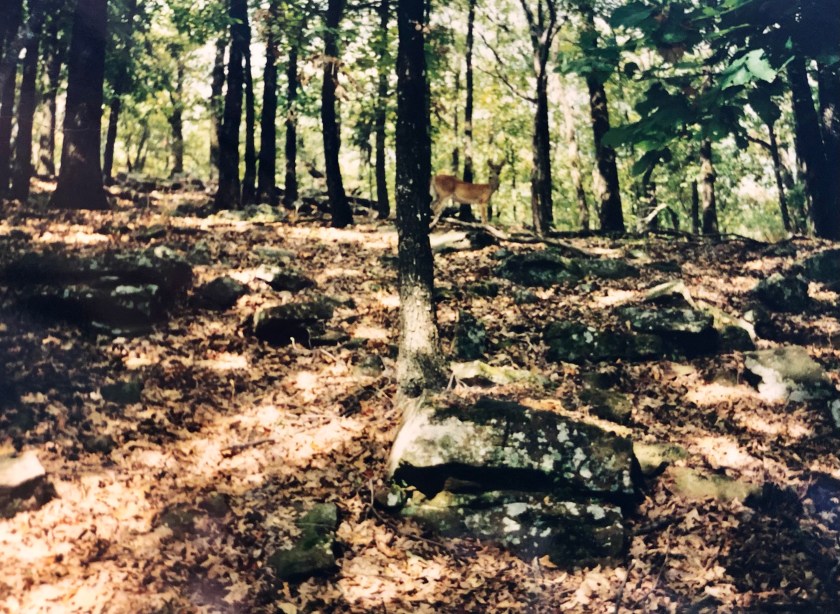
We even managed to see a deer, which made us so happy. We gabbed and gabbed about our children, our spouses (hers was way more annoying than mine and still is, as an ex), our LLL stuff, our friends, and so on.

A deer. Aww, we liked deer. At that moment.

We were happy and tired when we arrived back at her little cabin. Then, I felt an itch. And another. I pulled down my socks. Kris had no socks, so she just pulled up her pants. Oh, crap. There were tiny, tiny things on our legs. There were tiny, tiny things ALL OVER us. Almost at once we screeched, “Ticks!” and immediately began throwing our clothing off. Now, only a couple of hours ago, Kris and I had never laid eyes on each other. Here we were basically naked, picking ticks off each other. Tiny, tiny deer ticks.

No photos of this are available. Lucky for all.

At last, we got most of the ticks off, leaving an interesting pattern all over us. We de-ticked our clothing and headed to the main building. We found our friend Barbara. She had gone on a hike. Oops. Luckily hers was shorter and she wasn’t totally infested. Everyone else avoided those trails!

The rest of the conference, we had to keep showing people our bit-up extremities. Now you know why I do NOT get close to deer.

The Rest of the Conference

Things went uphill, and as far as I remember, the rest of the conference was fine. I met a lot of “high-ranking” LLL women, which was fun. I gave my talk, learned to dance the two-step with a very handsome actual cowboy (little did I know that would become nothing special to me eventually), and cemented life-long friendships.

I also did the limbo. It’s not my best skill. The children behind me were much better at it, and are all adults now.

We also got a lot of work done, which always amazed me. My team back then were so good at multi-tasking, since they all had young children, led lots of mother-to-mother support meetings, AND did extra things, like our new email lists, websites, and online communities. I’ve always been very proud of those women.

The other thing I remember about this weekend was that I made a lot of purchases at the sales area, where groups brought things they made, and such, to raise funds. I also bought a LOT of raffle tickets. I was trying to help out an Area that had less money than mine. Plus, they gave me a free trip.

I ended up with so much stuff that I had to take an extra suitcase home, but I had no idea how much I would treasure the things I brought. A lot of the stuff was made by Rudy, the husband of the woman in charge of the area (Wista). He was a talented Native American artist who did scrimshaw on mammoth bones (he was allowed to), did paintings and drawings, and a whole bunch of other art stuff. He was also fascinating to talk to and very patient with all my nature questions.

This is Rudy, Wista, me, and one of the two Ednas who I worked with in the Texas LLL.

Among many other wonderful items, I got a picture of a wolf by Rudy for my son that he probably still has. I also won dozens of wooden symbols of the West, like buffalo, cacti, howling coyotes, etc., which were I think made by Wista’s brother. My kids loved them. They sat in the windows in my house for years and years. They bring back such great memories (and yes, some are still around in boxes somewhere).

You just never knew who you’d meet at one of these conferences, but I soon learned that you would always come away with lifelong friends and lifelong stories to tell. Yep, it wasn’t all bad.

PS: If you were there, correct or add to my memories! I am not the best remember-er on earth.

Memories of Stuff

There’s no way to top yesterday’s post. Thanks to all who went down memory lane with me and re-lived our wedding. I’m still wallowing in memories. While I was looking for all our wedding photos, I stumbled across other albums, including my ill-fated first wedding, which was right after I left grad school. I was living in Chambanaland, also known as Champaign-Urbana, Illinois (I lived there 20 years!).

It was fun seeing all my friends from the University of Illinois, including the child who ran across the room during the “processional” (just one friend) and sat in the fireplace through the ceremony. Oddly enough, though, that wasn’t what I enjoyed the most. It was seeing my family in 1987 having fun in my apartment of 1987.

My sister and brother, Canova and Maury, May 1987.

They are dang cute, that’s for sure. But then I started looking at the stuff around them. That afghan in the corner I made in the late 70s, while I was pining away for my high school boyfriend because my parents had “cruelly” forced me to go visit my grandmother and leave him. My sweet grandmother had taken me to the five-and-dime store and bought me the kit to give me something to do. That thing’s still in my linen closet.

My brother is sitting on a brown folding chair (I was VERY fond of brown and orange at that time). I got that with Green Stamps. Are you old enough to remember them (I think they were a US thing). Those were my dining chairs for a long, long time. I still have one. Just one. The table had been left in an apartment my friend Judy rented in 1981. I took it, because at the time I had no table.

Behind him I see a chianti bottle with a plant in it. Some things never change, and wine glasses my sister gave me when she briefly swore off drinking. I also still have those. I see a trend.

That’s some good ham!

It appears that there was a pre-wedding ham dinner event. Ah, there’s one thing I got rid of, the brown dishes. Of course, that baking dish is still around. I no longer have the world’s largest microwave, nor the cute little red timer next to my brother’s arm. I like how I hung all my coffee mugs above the sink (sadly, some of THEM are still around, too…even though I have tried to give lots away).

It was an amazing apartment, I must say. There were cool open shelves separating the kitchen from the living area, and a nice space to hang out, except we NEVER got a cat pee smell out of one corner (that is where we put my comfy chair, which I admit now came from beside a dumpster). The other big negative was the way sound carried. We certainly knew what the people upstairs were up to, whether it was a lot of love or a fight involving furniture throwing, to which the ex helpfully tried to end by banging on the ceiling with a broom handle.

Drinkin’ and smokin’ on the porch. I like my sister’s hair a lot.

Now, from this picture that includes my very patient dad, my sister, and the lovely Callie Avera, my first mother-in-law (actually, there were two, since each of the ex’s parents had remarried, and the other one, Grace, was also a great woman), it looks like I lived in a pretty nice building. HA.

This photo brought back a flood of memories of what we always referred to as the two-story trailer home. It was amazingly cheaply made, and literally looked like stacked mobile homes. And it glowed a faded baby blue. But, there was a nice front porch for drinking and smoking (mostly we drank coffee with the nice neighbors), and often hot-air balloons would take off and land in the field across the street. You can’t beat that, PLUS it was on the city bus line, so I could go to work and not have to try to park on campus, when I worked there.

We later moved to a larger apartment, a very odd place featuring a wall of marbleized glass tiles that I covered with sheets. It came with a sweet landlord named Mr. Chang. He never did figure out that the ex had moved out after he returned from a summer in Germany where he decided he only wanted to be married if he lived in the US, because he was a different person in Europe. I quickly caused him to not be married in the US, too. That’s okay, because my divorce lawyer turned out to be Roberta Bishop Johnson, who got me into La Leche League and set my future career course. Mr. Chang also never realized when my next husband moved in, since the two were similar in height and coloring. I guess all white people looked alike to him, though one had a Cajun accent and one had an Irish accent.

Wait, am I writing my memoirs now? I’ll stop. But, I now want to go plow through old photos of places where I lived, so I can remember the furniture, the decorative objects, and the cast of characters that I think I’ve tried to eliminate from my memory. It all comes back when I look at old photos!

Do You Have a Label You Just Don’t Like?

For the past few days, I’ve been noticing that I cringe when I hear certain words used to label people or things in conversation, on social media, or on television. Some of these are words I know bother other people (like “gypsy,” for personal and business names that the Romani/Romanichal folks would not be fond of because the people using the term aren’t referring to actual gypsies, or naming your pets “Dixie” or “Cracker” or other loaded Southern words in today’s climate).*

The Roma wagons are so cool, though. Image by @Loreke76 via Twenty20

Others are just me. I realize that, for some reason, I do not like the word “cheap” when applied to things you buy. I think my internal definition in my idiolect has more to do with poor quality than low cost. In my mind when people say they want a cheap thing, they are saying that they pay more attention to the price of a thing than to how well it will work or how long it will serve, a short-term viewpoint. So, I never refer to things I obtain as cheap. They are inexpensive, which doesn’t have the poor quality connotation that’s really a secondary definition of cheapness. To me.

Yeah, economical, not cheap!

Back to the first group of words I don’t like, most of them appear to be words that apply to cultural, racial, or national groups. I just recently began to cringe when I hear “Latinx,” after hearing someone say no actual Latino or Latina person would use that word, since it isn’t even Spanish. To them it sounds like white people went and made up a word to solve a problem that didn’t really exist. People who speak Spanish don’t take grammatical gender as literally as English speakers do. How about that? Should I use “Hispanic?” That one has its own issues. Maybe I’ll just call people by their names or refer to their country or origin if they aren’t from the US.

As for these Mexicans, in Mexico, let’s use that term. It was either these guys or some pan flute players. I like mariachi music better than those flutes, which aren’t Mexican anyway.

I guess I know how much people treasure their cultural identities, so I want to use the words members of a particular culture prefer to use, even if they change as time goes on. It would be a LOT easier if there was universal agreement, though. I actually knew someone who preferred “negro” to “Black” or “African American.” Plus, the AA term really doesn’t apply to actual Africans or people from the Caribbean who have moved here. ARGH.

One thing the current movement toward acknowledging the great variety of gender terminology and preferences has taught me is this: it never hurts to ASK someone how they want to be referred to. So, if you don’t know, ASK if a Cajun wants to be called that. ASK what your “indigenous” friend likes their cultural identity to be called.

Let’s call this woman “Quechua” and her alpaca beautiful.

Just don’t be cheap about it. Don’t gyp me. Don’t try to jew me down. When did you start to cringe in this extra cringeworthy paragraph? Do you see why I prefer to be careful with labels and their derivations? It’s not just me being a liberal snowflake (by the way, each snowflake is unique and beautiful, so thanks for calling me that, frenemies!).

Signed,

Suna, she/her, McLeod of the Clan McLeod**


*I have known many dogs named Dixie, and it didn’t use to be controversial. Times change.

**Way too fond of one branch of my Ancestry family tree, perhaps?

Book Report: The Warmth of Other Suns

Rating: 4 out of 5.

You’d think I would have finished a couple of books by now, since I’ve been mostly alone in Utah for two weeks. But, there has been knitting, and that does take away from reading time. And the book I have been reading is over 600 pages. But, I finished The Warmth of Other Suns: The Epic Story of America’s Great Migration today! It’s the 2010 first book by Isabel Wilkerson, who wrote Caste, the book that has moved me so much.

I took the photo with sun shining on it.

Many people told me I just had to read this book, and I’m glad they did, since it provided a lot of context for my life, both in the American South and my 20 years in Illinois. I would recommend this book to everyone, but especially to Black friends, because it really does a great job making sense out of both the people who migrated northward from the 1930s to the 1960s, as well as to those who stayed and stuck it out through really awful times.

For sure, reading about the struggles of “colored” people, as Wilkerson correctly calls the folks living before the 1960s, makes it clear how hard the parents and grandparents of the current generations of Black Americans worked to get us to where we are now. Whenever I think there’s been no progress, I can think of the people in this book and realize that yes, things ARE better now for Black citizens. They just aren’t good enough (as the Caste book explains and anyone with eyeballs can see for themselves).

The table runner I’m working on is certainly stripey.

I was a white child in the Deep South, and I recall how separate the worlds of our races still were in the 1960s. What I didn’t see were some of the really, really awful things a child wouldn’t see, such as how hard it was to buy a house, get an education, or get a non-menial job for the colored folks where I lived. No wonder so many people left, hoping it would be better in the North.

But wow, I now know how things got the way they were in the big cities back then, how hard it was to live anywhere but crowded areas, how quickly a neighborhood would empty of White folks (and their businesses) once integration occurred. I remember it happening in the South, where my dad told me his brothers kept moving to get away from Blacks, only that’s not what they called them. I didn’t think it was like that up in the North, where people were free. Or so I thought. Now I know.

Why we aren’t out having fun today. Ugh.

Wilkerson follows three different people and their families, who moved to Chicago, New York City, and Los Angeles in this book. I like that she humanizes what could easily have been a dry, intellectual discourse, by sharing the lives of real people. The three are fallible, human, and above all, honest about their lives, and Wilkerson does an amazing job of interspersing their stories with historical background and generalizations about migrants to the North all over the US. The human element just keeps you drawn in and helps you get through the sad stories of beatings, lynchings, cruelty, and unfairness.

One thing is for sure, anyone who reads this book and learns the stories of the people in the Great Migration will not be able to figure out when the heck America was ever “great,” at least for large segments of the population. And that is why more of us should read this book, because it puts our history into perspective. We can be proud of the hard work our citizens have put in to make life better for others, but seeing what a battle it’s been clarifies WHY we still have to work so hard for all of us.

I now understand what was going on during the years I spent visiting Hyde Park in Chicago, whereas at the time I was just a frightened young woman wanting to safely get from that integrated oasis to downtown and transportation. I understand what was going on with the trains going through my hometown. I understand why it was so hard to integrate the schools there: people were scared of each other. People are still scared, perhaps for different reasons, and I realize not much has changed in that respect.

But, when I think back to how I lived 20 years next door to a Black family and had nothing but good neighborly experiences, how my children had friends whose parents had migrated from all over the world, how no one looks sideways at people dating members of other races and cultures, and how many bright and talented Black folks DO get a chance to shine now, I feel a bit better. I have no illusions that we are a “post-racial” society. But I have hope.

By reading this book, any reader will have the context to understand how and why we got to where we are in 2020. Now to keep working together to build a better world. Like my dear husband told me last week, even when there are setbacks, we have to keep trying. We’re all worth it, aren’t we?

Whew, sorry I got so pedantic there. I’ve just been thinking a lot, here by myself. Now I will go to the convenient exercise room and do my walking. Indoors.