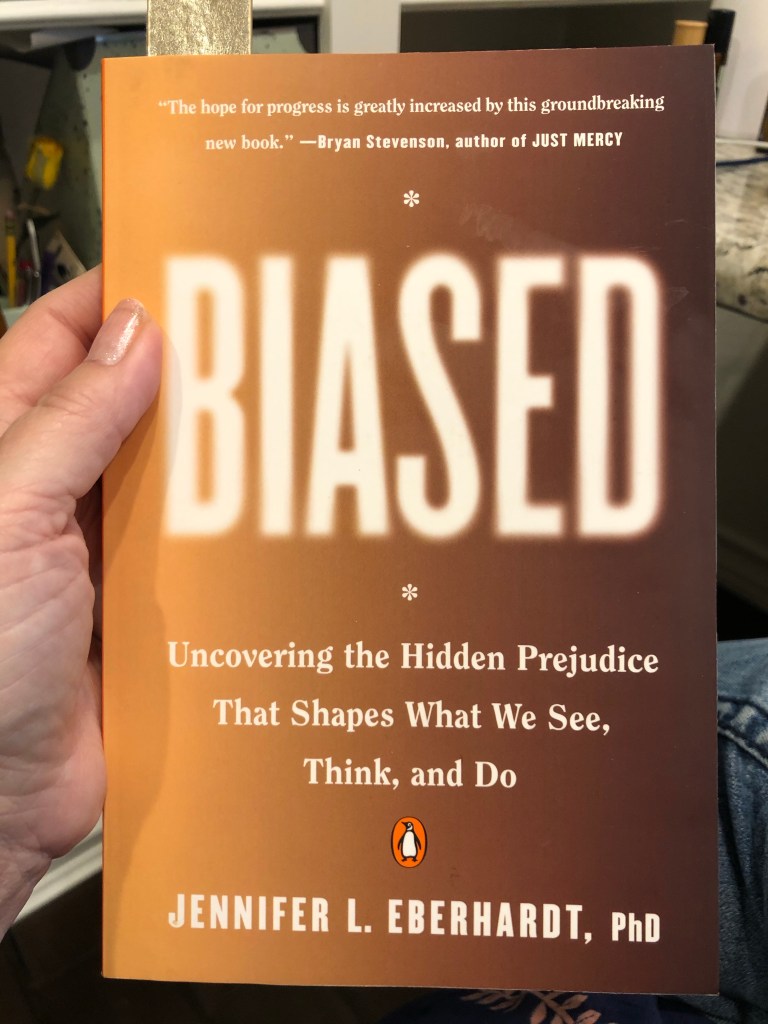
It’s time for another in my series of book reports on unconscious bias. This one’s a little different from the previous ones, because it covers mostly just one racial bias, the one against Black people, particularly in the USA. Biased: Uncovering the Hidden Prejudice That Shapes What We See, Think, and Do, was written by Jennifer L. Eberhardt, Ph.D., who’s spent her entire career studying this type of bias, and has worked extensively with many police departments to help diminish this kind of behavior within their work. The book came out in 2020, so has recent statistics and analysis, which is always something I enjoy.
Eberhardt shares many stories from her own experience, not only as a researcher, but as a Black woman and mother to Black male children. Her stories about her sons and their experiences, her own experiences in school, and the people she’s encountered during her lecture tours and workshops with police officers are quite eye-opening and add strong punctuation to the data and other information she presents.
I truly appreciated her honesty as she talked about progress and setbacks in racial bias throughout our recent history. She makes it very clear that we have a LONG way to go before people can eliminate this bias, even when they very much want to do so. Data she presents about how people associate Black people with apes without even knowing it disturbed me greatly. And when she presented evidence that the stereotypes and biases are just as present in Black people as in others, I really got to understand that this is a hard, hard issue with no easy solutions.
Eberhardt even comes out and exhorts readers to not be too discouraged, because at least we are now learning exactly what we’re up against.
I learned some facts about how Asians are being treated, both in the US and Europe, and I now understand the pressures many of my children’s classmates dealt with. Even if she didn’t devote as many pages to biases against Asians, Hispanics, and women, she shared enough to get me thinking. It’s just as hard to live up to certain expectations as to rise above negative stereotypes! The few paragraphs on smart women explained a lot of my past experiences.
Sometimes I learned new things from Biased that I wish I hadn’t learned, such as that many “minority” job candidates “whiten up” their resumes, so that prospective employers don’t apply stereotypes. For example, Chinese people put their American nickname on their resume, or Black people just use initials (women do this, too). And they scrub activities that give away their ethnicity. SHEESH! I now see why blind resumes are NOT such a bad idea after all.
I’ll conclude that if you are interested in learning more about racial bias, this book will keep you both engrossed and saddened. But, we need to learn the hard facts of just how much our unconscious biases are ingrained in us before we can work to lessen them consciously. I think it’s worth it.
If you’ve read this book, feel free to share your reactions to it!
Want to support my blog and podcast so I can keep going? Your monthly donation would help cover my blog expenses. I can assure you that on a blog as little as this one, the ads only give me a couple of dollars a month, so even a dollar makes me happy!
Wow. There are so many things to say about this book that I’ll never get them all said! After I read All My Puny Sorrows, I wanted to read more from Miriam Toews, and selected this one, Women Talking, after reading the intriguing reviews. I said All My Puny Sorrows was a jewel of a book. Well, this one is like the Hope Diamond or something. There are so many aspects of it that are just…perfect…that it’s hard to find a place to start.
If this is soon to be a major motion picture, I think I’d have a hard time watching. It’s intense.
Well, I do know where to start, which is with the content warning. If you can’t handle books where there is discussion of rape, you’ll need to pass this one by, because the premise of Women Talking hinges around the effects of women of an entire community dealing with the consequences of it. It’s based on a true story, but the dialog and such are imagined.
The protagonists are a group of women in a Mennonite community isolated somewhere in South America, who at first thought they were being attacked by ghosts or demons in the night. The entire plot takes place over two days, as they decide how to deal with the men in their community who actually perpetuated the crimes.
None of these women have been allowed to learn to read or write, and very few of them have ever left their small compound. They have been trained to obey the men, never offer an opinion, and to simply do their jobs (cook, clean, farm, and reproduce).
They hold a series of secret meetings, when the men have gone to try to bail out the rapists, and they ask the one educated person in the community, the teacher, who’s an outcast, to take minutes of their meetings. August is not sure WHY they asked, but he is willing to do it.
Through his notes (and his unexpectedly complex asides and insights into his own history), we learn what a fascinating group of people these women are, gain many insights into the beliefs of their Mennonite community (by the way, NOT like all Mennonite communities…it’s a bit cultish), and see how brilliant, brave, compassionate, and feisty they can be.
When they start planning, reasoning, discussing theology, and supporting each other, you can’t help but be in awe. Toews shows how resilient the human spirit is, and truly draws you into their culture and concerns. There are so many details I’ll never forget, such as conditions they have to deal with all alone, with no real medical care (edema, fainting spells, pregnancy and childbirth, loss of eyesight, loss of limbs, etc.). And there are little things like how one of them manages to be a smoker, or how the two youngest women braid their hair together, or jauntily remove their head coverings and roll their socks down in rebellion.
You eventually see that everyone in the book has suffered, has tenuous connections to sanity, but have strengths, the depths of which they don’t always realize. And to get to that realization you get to enjoy the privilege of Towes’s spare dialogue, her knack for expressing things in ways that people from another “world” would say them, and her true love for marginalized people.
I admired the women in this book deeply. They stuck to their principles as I could only hope to do if I was challenged to fundamentally. And I admired August the note-taker, too, poor tortured soul.
This book affected me as deeply as The Handmaid’s Tale did way back in the 1980s. That means it will stay with me forever. Please read it.
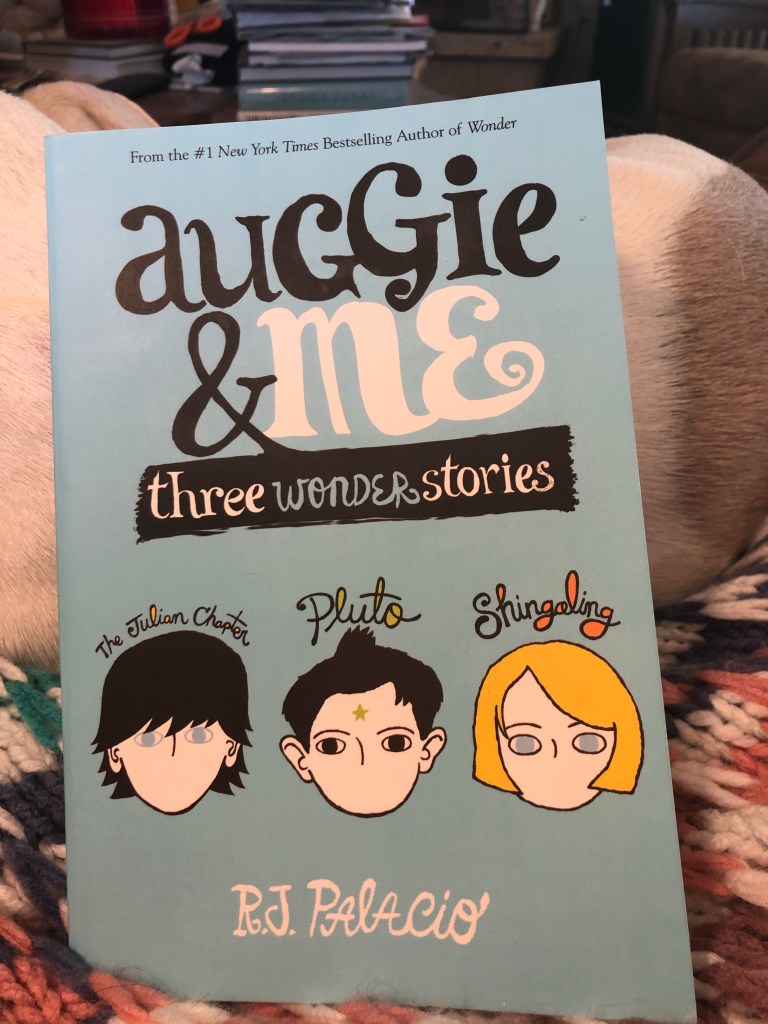
I usually don’t do two of these per day, but I’ll be really busy at work next week, so let’s take advantage of the weekend! I spent most of yesterday reading this charming book. Augie & Me: Three Wonder Stories, by R.J. Palacio, is a companion to the beautiful young adult novel, Wonder, that I read last year. It’s not a sequel, since the author has vowed not to write a sequel, so readers can imagine the future of Augie, the kid with facial deformities who’s the star of Wonder.
I also love the covers of all the books in this series.
If you know middle-school kids struggling to fit in, dealing with bullying, or even not able to figure out how they got to be the popular kid, give them both these books! And if you are an adult and want to read something positive and yet realistic, I recommend them strongly.
Augie & Me really is three short stories or novellas, each of which has been published as an e-book before this compilation. Every chapter is from the point of view of one of the characters in Wonder. Palacio says that she didn’t fully develop these characters in the first book, since it might have taken away from the points she was making, but she knew they each had a story!
I always enjoy reading from the point of view of older children, and each of these characters, Julian, Chris, and Charlotte is on the cusp between childhood and teenhood. There sure is a lot to be confused about at that age, but all three stories revolve around figuring out whether your initial perceptions of people are accurate, and discovering how people perceive you doesn’t necessarily jibe with how you perceive yourself.
Shoot, we can all use a dose of that, right?
One thing that made this book enjoyable to read as an adult is that Palacio does not make all the adults out to be bumbling idiots or fools. There are many adults who are respected by the young people in the book, and it’s heartwarming to read about how they appreciate even the quirks and foibles of their teachers and the other kids’ parents. Every character in the book has their good points and challenging areas, just like people in real life, and if young adult readers can learn this lesson early, wow, their lives will be a lot easier!
I tell you what, immersing myself deeply into the characters of this novel, as well as A Simple Favor, enabled me to stop thinking about how cold I was and how dark it is in the house without power. Books really are wonderful things!
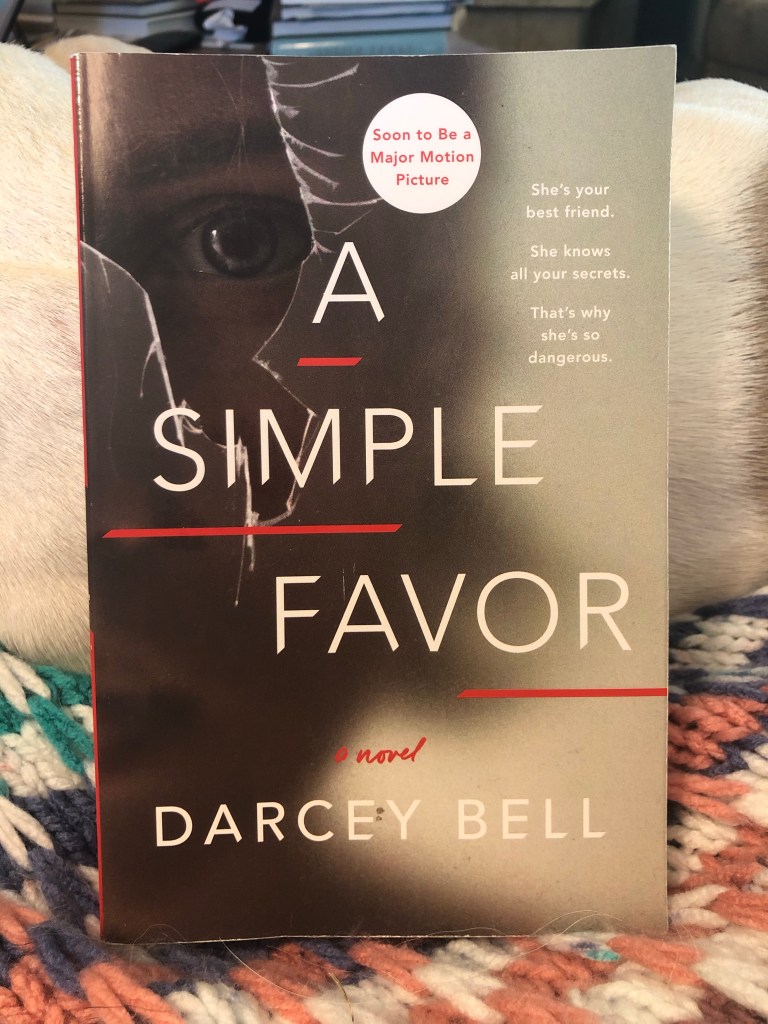
It’s time to report on all the books I read while I was freezing or had no power. The first one, A Simple Favor, by Darcey Bell, is the next neighborhood book club selection, and was recommended by neighbor Ruth C’s daughter. It says it’s soon to be a major motion picture, and I can see why. It’s plot would be great for a movie.
Scary
A Simple Favor is written from the perspectives of the characters in the book, which mostly focuses on Stephanie, a “mommy blogger,” who, just like me, only shows the perky side of herself in her blog (ha ha ha). I immediately disliked her because she refers to mothers as “moms,” and was amused to find out it also bothered other characters. She is a person who operated based mostly on instinct, feelings, and hormones. She has a LOT of hormones. I’m glad at least she has all those juicy sexual memories to share (don’t worry, it’s not graphic, just frequent).
Another “character” in the book is Stephanie’s blog, which she uses in all sorts of ways to try to get things accomplished, send messages, and bias readers in her favor. That was something I enjoyed in Bell’s writing.
The other main focus of the book is on Stephanie’s “best friend,” Emily, who has “issues,” shall we say, but certainly dresses well. She’s not big on telling the truth, but she loves to ask Stephanie for “simple favors.” The glue that holds the two together are their children.
(Aside, the names in this book were not great. Stephanie’s late husband was Davis and her child is Miles. Who would name the child of Davis, Miles? All you’d do is think about jazz. And the English man married to Emily is Sean, who goes to “Ireland” in the “UK” at some point. I shall charitably assume he went to Belfast.)
Where was I? Anyway, the plot revolves around Emily’s sudden disappearance and how Sean, her husband, and Stephanie cope with it. Oh yes, even Sean gets a chapter or two to tell his perspective. Since the book is a murder mystery kind of deal, I won’t go into much more detail, other than that it involves a lot of descriptions of meals, meltdowns, and sex.
By the end of the book, you really aren’t fond of any of the characters, who are by turns gullible, cunning, slow, selfish, shallow, and deranged. I guess they’re human, huh? I know I gave it a 2-star rating, but it’s a good book if you are stuck in the house under many layers of clothing and blankets, and you want to take your mind off the lack of water and electricity.
PS: I hope you enjoyed my over-use of quotation marks as much as I enjoyed over-using them!
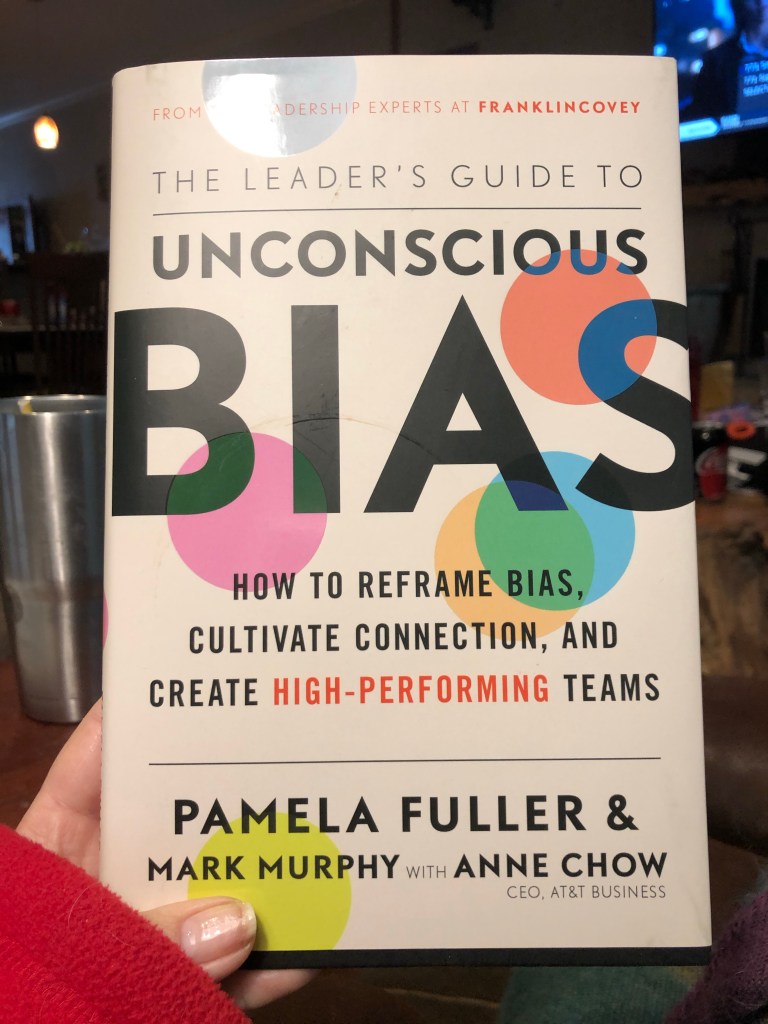
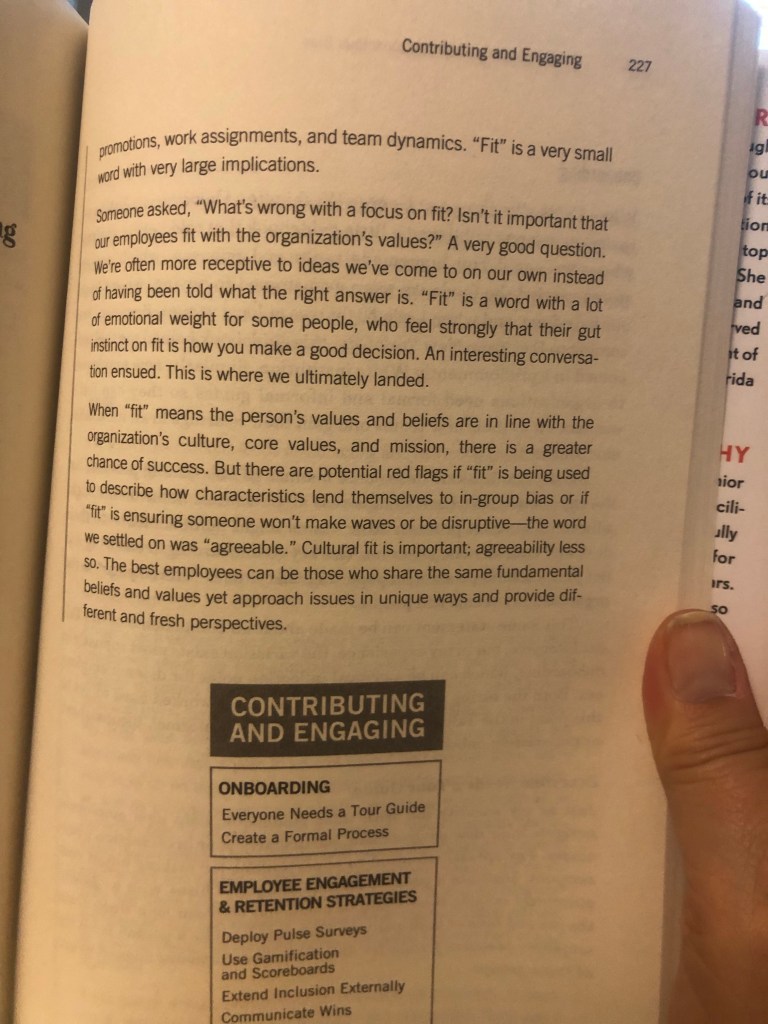
At least you get a lot of reading done in bad weather! I zipped through the second of the unconscious bias books I bought to review for work. The Leader’s Guide to Unconscious Bias: How to Reframe Bias, Cultivate Connection, and Create High-Performing Teams, by Pamela Fuller and Mark Murphy with Anne Chow, is from FranklinCovey, the business consulting firm. That turned out not to be a bad thing.
Their format made the book interesting to read, and I was surprised how helpful some of their simple charts and learning aids were. Plus, the authors shared lots of detailed and varied stories about how they experienced unconscious bias, from the giving and receiving sides.
The business focus helped the focus stay on doing concrete things to address these biases and make the workplace better. I enjoyed the examples from different types of businesses, too.
Each short and info-packed chapter is followed by exercises that I didn’t find annoying or stupid. It’s pretty obvious that these folks know how to teach adults and engage them.
I had a few aha moments about areas I can work on. One of those is working with neurodivergent people. I plan to look for more resources to help me find ways for teams and individuals to do their best work with fewer frustrations.
An interesting passage on being careful about cultural fit interview questions
On the other hand, I saw some areas where I feel like I, and my employers, are doing a really good job with hiring and employee inclusion. Of course, we can all do better, but I think it’s a wonderful challenge and I enjoy working with our diversity and inclusion initiatives. It feels like a tangible way to make things better for all of us.
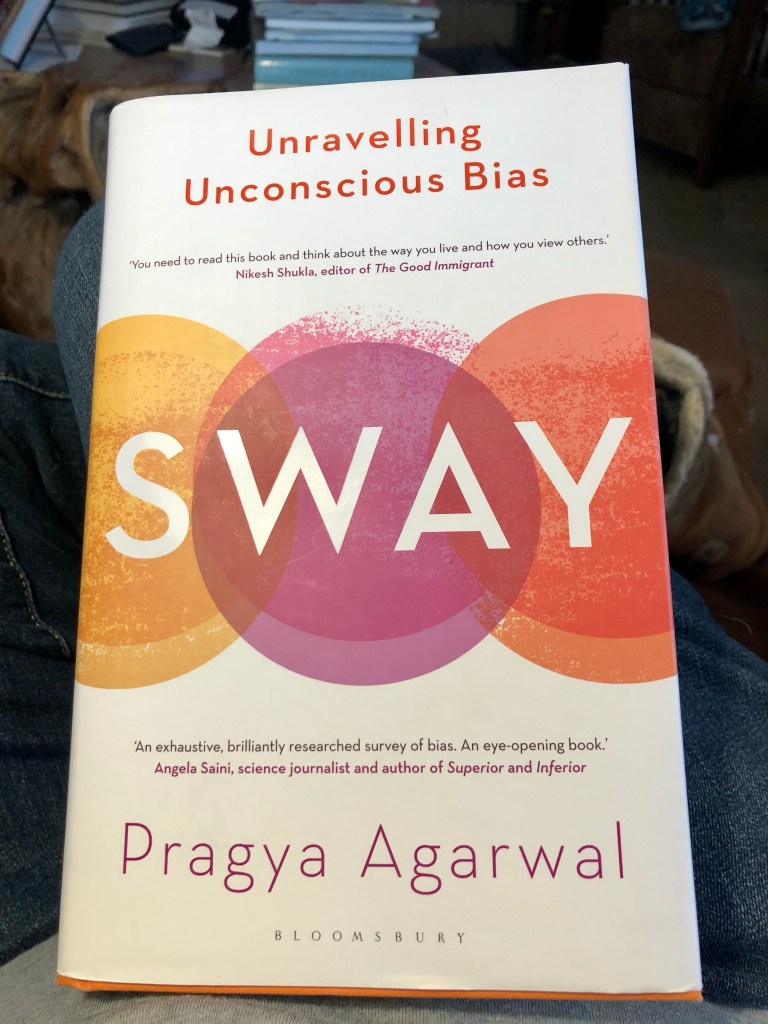
When you’ve got to stay in side and try to keep warm, you can read! Yesterday, I finished Sway: Unravelling Unconscious Bias, by Pragya Agarwal. It’s another big ole book with an academic focus, but I learned a lot about all kinds of bias and how it’s formed.
The author shared some helpful personal stories about being someone born in India who has become a citizen of the UK and has biracial children. She also had some interesting stories about how she is treated as a woman, too. These were my favorite parts of the book.
The long descriptions of various research studies that painstakingly listed every author and where their academic credentials are made a lot of the book a hard slog. I think I prefer books that do share the sources of information, but leave them in notes. That makes it easier to follow the information.
Nonetheless, anyone wanting to study unconscious bias seriously, work in the field, or teach it would benefit from reading Sway. I’m very glad I read it, because I learned a lot about the kinds of bias you find in other places, like the UK and Germany. That’s a topic I’d like to find out more about.
My other favorite sections were when Agarwal talked about bias against accents, which is something I hadn’t thought about before (though I happen to have minimized my own native north Florida accent when I became an academic, knowing I’d be taken more seriously). I found out what kinds of accents are looked down upon in Australia, England and Germany, among other places (that RP British accent is posh everywhere, it seems). And by the way, your native accent makes your amygdala happy, as I found when I talked to the nice AT&T lady on the phone last week while getting my phone plan upgraded.
I’ll leave you with the hopeful conclusion at the end of the book. I hope it’s true:
Understanding more about unconscious bias is not going to magically fix all the injustices in the world. But, if we start becoming more aware of our unconscious bias and what triggers when we are most vulnerable to it, we will become more attuned to the consequences of externalising our unconscious biases in the form of behavioural outcomes. And if we actively exercise strategies to mitigate and counter our unconscious biases, we can hopefully finally put a dent in them.
Sway, p. 408
That’s my plan. To realize when I’m under pressure, stressed, or overwhelmed with data and allow myself to pause and ensure that I’m making my decisions as bias free as I can. And I’ll know there’s always work to do to make things better!
Let’s see if I can get anything written today. I’ve been having technology issues, annoying bill-paying issues, and trouble doing what I set out to do today. Cows are mooing their asses off outside, too. So, I’m hoping a pleasant blogging break will help get me back on track to do some proofreading.
We seem to be lost. Update: not lost, separated so they can get some treatments. Still, unhappy.
Meanwhile, as I briefly mentioned last week, I have been looking more into how bullet journaling works, since my work book group friends all said they sort of do it, but would like to know more. You know me, I went out and bought the book, after reading up on two popular forms of bullet journaling online, the original bullet journal (by Ryder Carroll) and the Full Focus Planner (by Michael Hyatt), which is what Lee uses.
I might have ordered this because it looks cool and has cork on the outside.
Even though I have a nice-looking journal I use right now, in what turns out to be a semi-bullet journal format, I ordered another journal, because I forgot to check whether the book I’m using opens flat. It doesn’t, and that is more than a little irritating, even though it’s a pretty little book. I can use it for something else.
I know this journaling style is all the rage these days, but, as usual, I avoided looking into it, since I have my own system. But, one of my goals is to learn more, in general, so I’ll learn more. So far, I’ve learned how important BuJo journal proponents believe it is to write things down by hand. I’ve always agreed with their premise that writing helps cement things, which I why I was such a big note-taker in college.
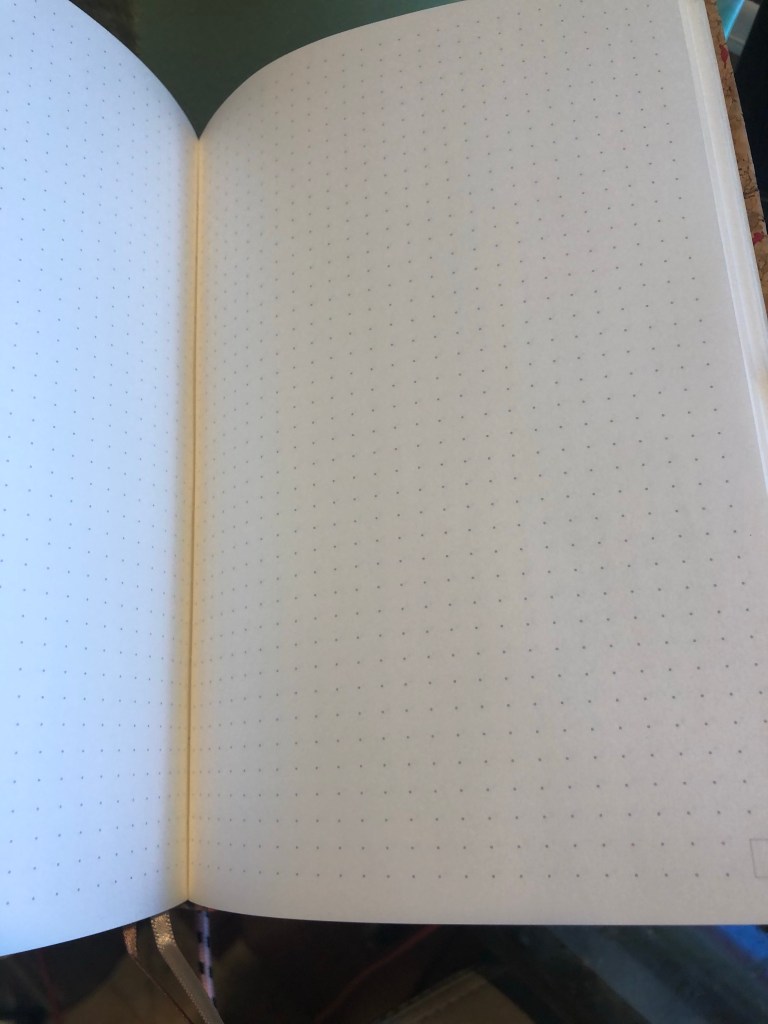
Bullet journals use dots, not lines. I think this is for freedom? I’m not that far in the book. I like dots, though.
The handwriting fans maintain that typing is not as good for focusing as the act of writing on paper, mainly because typing goes so fast that you don’t necessarily really think about it. Hmm, no wonder my blog doesn’t make sense; my hands just go typing way ahead of my brain. I honestly find typing to be equally helpful, but I also think my brain works a little differently than some people’s.
Nonetheless, I know my handwriting has become a LOT worse since I stopped doing it so often, so maybe writing more intentionally in a bullet journal will help with that. You see, a LOT of people make their journals into pieces of art, which all sorts of colors, drawings, stenciled headings, and stickers upon stickers. That has to slow down the “rapid logging” process, don’t you think? Maybe they just do it as they prepare their monthly sections. Maybe I should read more of the book.
I think one reason I hesitated to look into this stuff is that before, I felt the way Lee journaled was very rigid, and that may or may not be right. It is very goal oriented, so you don’t get to do things that don’t contribute to a goal. There goes my fondness for random activities and plain old fun (so, one of my goals is to have fun…HA).
My practice. I even put in a sticker and used a template yesterday (blurred to obscure work notes).
I was happy to see that there’s a LOT of freedom in bullet journals. You can put in art, write stories, keep lists, track your food, or whatever you find important. The best freedom, though, is to get rid of things that don’t work for you. That’s very Agile, I think, as is the iterative monthly planning. Oh goodness, Agile project management is everywhere in my life these days!
Let’s see what happens once I get my journal actually going. I’m still using the old one and practicing BuJo style bullets and style. I need to finish the book and learn about all the components before I mess up the new one. I mean, use it however I want to.
Do you journal? Is blogging journaling? Memoir writing? Narcissism? Who knows.
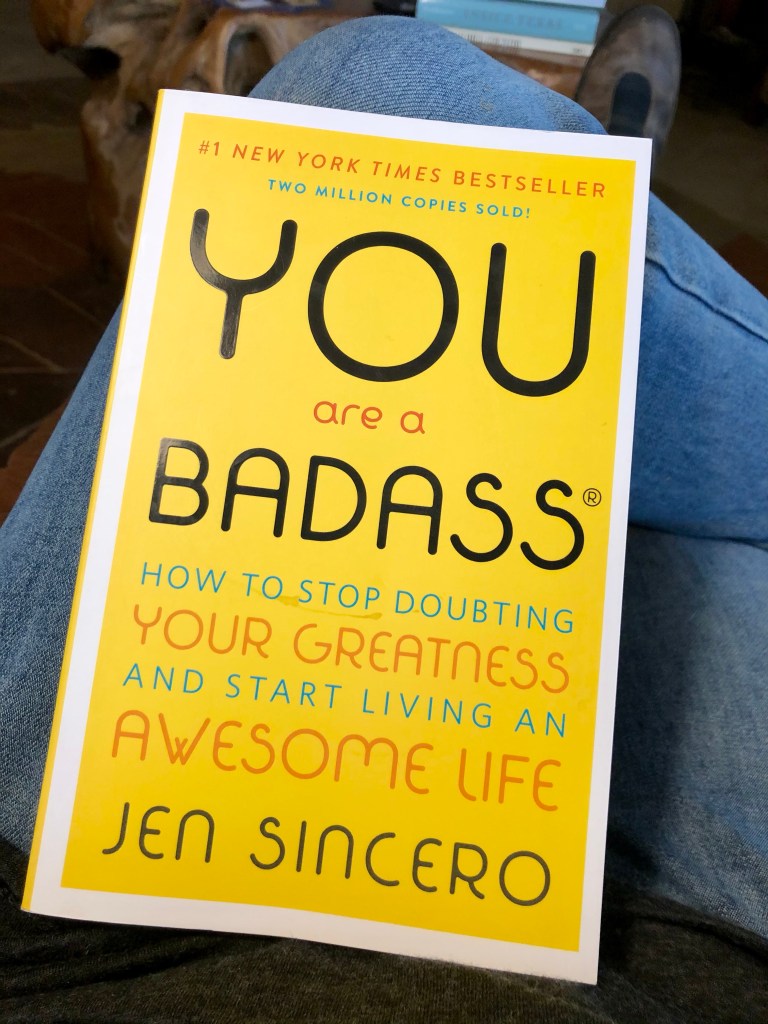
Here’s another book I started out hating, so I put it down for a good while. It all worked out for the best though, because I picked it up right when I needed it most.
I got this book, because it’s the one my work book club selected. When I started out, I was really put off by the tone and all the assumptions the author made about who her readers were. They are most assuredly people who are not me. But then, those people need books, too, right? It’s meant for people in their twenties and thirties, from what I can tell from the popular culture references strewn throughout the text. And it is most certainly for Americans, for the same reasons.
Sincero does try to notice that not everyone has the privileges she has, but there’s a lot of exhortations to just DO a thing and all will be well. Plus, there’s an undercurrent of blaming people for their own misfortunes. I don’t think she intends it, but it does come across if you know anyone who is actually poor, abused, or has other big-ass hardships.
No doubt, a lot of people will enjoy her light-hearted tone and short, easy-to-read-in-a-sitting chapters. Sincero’s heart is in the right place, and I guess she’s just talking like a life coach, making me very glad, once again, not to have a life coach. She repeats that important notion that you’re fine just as you are, and that it’s okay to let go of things (andpeople) that don’t serve you. And I think for anyone setting out to figure out who they are and who they want to be, her ideas, visualizations, and focusing techniques can be truly helpful.
I thought hard about it and realized I know who I am, where I want to be in life, and how I’m going about getting there. I know where my blockages are and am laser focused on moving through them. (I am NOT perfect; I just already introspect the heck out of myself and keep changing and adjusting.)
Here’s What Was Serendipitous
The cool experience I had with You Are a Badass (registered trademark) is that I set it down from November until last week, when I realized I needed to read the next section for our long-delayed book club meeting soon. Then I said to myself, “Let’s just get this book over with, and kept plodding away.
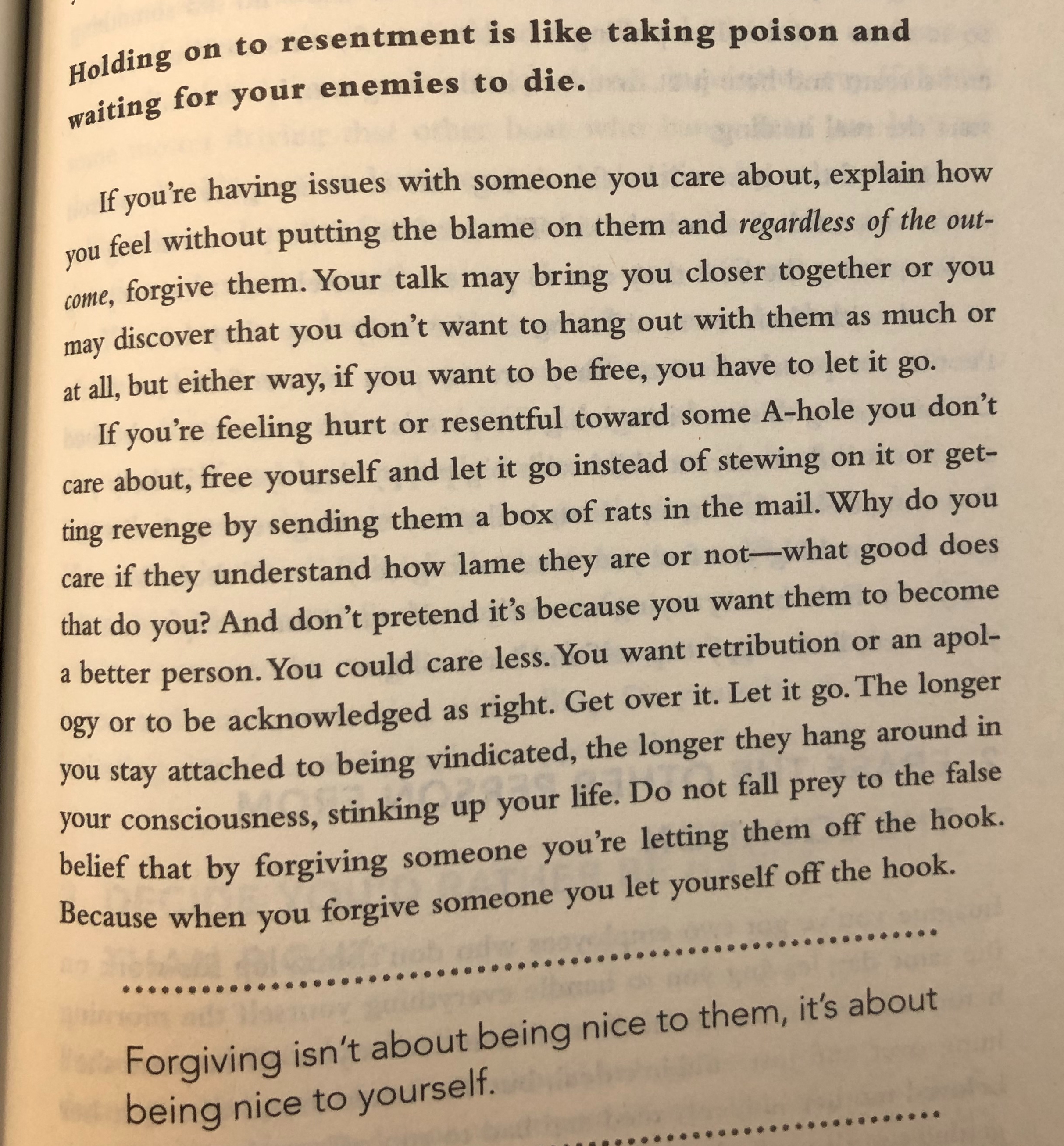
Now, I’d been dealing with a person who’d been in my life a while, but whose habits and actions really bothered me. I talked about it in my bully post. I knew perfectly well what I needed to do to stop letting myself feel annoyed, and deep beneath my subconscious there was an elusive piece of insight I knew I needed to apply, but it had slipped my mind. Not to worry, by delaying reading this book until the right moment, my reminder popped up, right there on page 180.
p. 180, BINGO
I’ve heard that before, and even applied it to myself (for example, I learned to deal with a constant “my problems are worse than yours” friend by realizing I had that tendency, too, forgiving the friend, and working on my own shit. Y’all do NOT get to read about all my problems here (just things I want to share, in case they are helpful to someone), and you can thank that friend.
But yeah. Sincero’s example was even right on. This person feels as if he just HAS to be the smartest person in the room, delivering lectures at the drop of a hat, and not entertaining alternate ideas or thoughts. That is another tendency I fall into myself. I hate being wrong (or screwing up). Luckily, this is another thing I’ve worked on (and had a LOT of opportunities since I came to rural America). I no longer feel it necessary to trot out my knowledge of whatever it is I’m so knowledgeable about unless I really think someone WANTS to know about it or would make any use of my expertise. I’ve been called out on this a few times (Suna, aren’t you a professional writer? Why didn’t you say anything to that person pontificating about writing?) Unless it’s worth the effort, I’ll just let people figure stuff out for themselves; I don’t have to be Professor of Everything I Know About.
But, that does explain one reason that person annoyed me. That person also has a savior complex, and feels that it’s their duty to fix the problem of every sob story they hear about (human and otherwise). Helping others is good. Helping others to get attention for it is less great. And oh have I been accused of doing that in the past! I am pretty sure that, while I’ve helped some people, my motives may have been messed up some of the time. No wonder seeing that in someone else annoyed me.
Seeing this made me feel much better about needing some distance, and also helped me get over being annoyed. That leads to the next nugget I ran into, all about how to get past being irritated and move on. I needed a reminder of this, too.
page 123, the nugget of goodness
Right on! I am learning to talk to people I care about if I have issues with them, and to listen when people do that to me. She’s right, it can bring you closer. But, in the case of the bully, Sincero is dead right. It is totally useless to think about revenge, proving myself right (I am), or some other vindication. It’s not worth the mental effort nor the physical symptoms all that vitriol can cause.
I knew I needed to just let it go. I had been telling myself that, but this passage helped me realize it was for my own good to do this. If karma bites that person in the butt, I may not see it, but that’s fine. If it becomes clear to them that I was doing the right thing all along by resisting the bullying, well, maybe that will help them, but it won’t be my problem. I’m over here with people who like me, learning about being a better human being, and dealing with my own issues.
That’s plenty, right? I’m glad I came across those passages right when I needed them.
Small Warning
The last part of the book, where she goes into full-throttle, goal-setting, laser-focused dream achievement is something you might want to skip. The end of the book has advice that, if I took it, I’d be one miserable human being. I think it would be very hard to be so focused on some goal that you have no other life. Also, her belief in the Secret, or whatever it is, that things come if you just focus on them, well, it’s great for some stuff.
But it felt to ME that she came from a really entitled white lady space in a lot of the last part of the book. I don’t think she knows REAL struggle, systemic racism, and the like.
Just my thoughts. If you fit her intended audience, though, maybe you, too, can bring out the internal badass that’s always been there. I find that Brene Brown says similar things in a way that resonates more with me. But then, she is closer to my age.
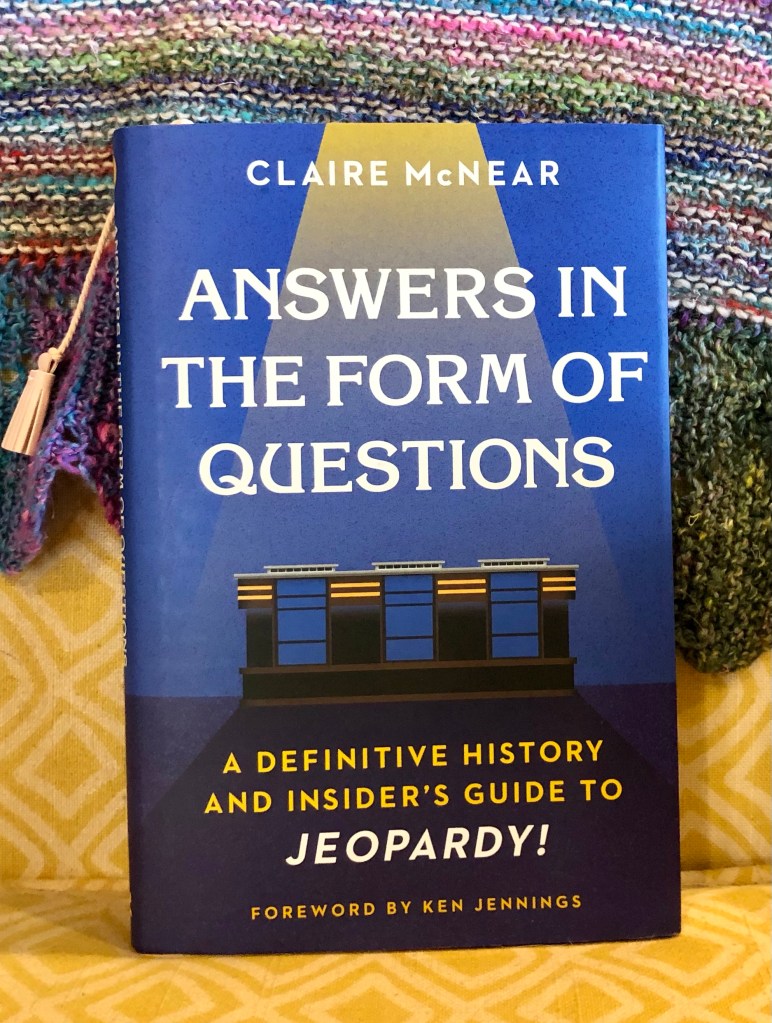
I’ve been sitting on this book report for a few days, because there were so many things to write about that I actually had a backlog! So, today let me share about Answers in the Form of Questions: A Definitive History and Insider’s Guide to Jeopardy! by Claire McNear. I wanted to read this book so much that I bought it twice. The first copy seems to have been taken from the office porch or delivered to another address. I do hope whoever got the book read it and enjoyed it!
As someone who’s been fascinated by words and word games my whole life, I was thrilled to learn this book came out. I enjoyed Answers in the Form of Questions, and would recommend it to anyone interested in the game of Jeopardy! (exclamation point mandatory) and its history. You learn a lot about how people prepare, as well as what people who have been on the show do later. Apparently, they hang out a lot and go to trivia events at various bars and restaurants.
I gained even more respect for good ole Merv Griffin, who invented that game and Wheel of Fortune (among others). I always thought he was that boring guy who asked Charro funny questions in the afternoon when I got home from school, but nope, he was a pretty darned smart and innovative television pioneer.
I enjoyed learning more about Alex Trebek and his personality. I had no idea how popular his mustache was or how upset people got when he shaved it off! Dang!
I guess this was the world’s most admired ‘stache.
There were a couple of things that I had trouble with in the book. McNear repeats the same information more than once in different chapters, so you read the same stories multiple times, as if she forgot she mentioned something. A good editor would have caught this and had her refer to the previous tale rather than repeating them.
The sun in the process of attacking my desk chair a few days ago. Note a Big Boggle game beside my chair. No one will play it with me. Sniff.
And the book really could have stood to have its publication delayed by six months or so, since it was written during the awkward time when many changes were about to happen for Jeopardy! People were about to retire, changes were about to be made, and Alex Trebek was still alive, but obviously terminally ill. It would have been nice to wait a couple of months or add an addendum with kind words about him and information on how the show is going forward. Maybe they will add something in a second edition.
I get that they probably rushed the book out to cash in on interest following Trebek’s death. It’s marketing!
Goodbye for now from my home office sanctuary. I’m enjoying the view of phoebes, meadowlarks, and mockingbirds until the sun attacks me every afternoon. I need a darker Roman shade!
How appropriate that I finished this book just as civilization began to unravel where I live. But, here’s a nice post about nothing scary. It’s about The Fabric of Civilization, by Virginia Postrel (2020). From the five stars in my rating, you may infer that I enjoyed this book. Whew, I sure did.
This was one fascinating book. Postrel sure did her job by showing that a topic people might thing was boring and insignificant, cloth, is actually critical to the development of much of human culture and civilization. The best news is that this one’s written in an interesting and fun style that makes you want it to go on and on and on.
One of the best points Postrel makes is that, while we go on and on about wearing natural fibers, none of the fibers we wear is in the natural state for the plant or animal from which it comes. Wild cotton is almost all seeds. Today’s cultivated and carefully hybridized silkworms would not last long at all out in the natural mulberry groves, wherever those are. Wild sheep are brown and shed their wool (thank goodness, since there’s no one out there on a mountainside to shear wild sheep).
As Postrel goes through the chapters, each of which is a self-contained unit you could read by itself, you learn how fabric contributed to civilization way more than just by covering people up. It was one of the earliest forms of money. Trading it led to the development of bookkeeping and checking. Figuring out new ways to create fiber has led to all sorts of scientific discoveries, from way back when people were trying to figure out how to dye fabric (I can’t get away from that topic) up to today, when they are trying to make clothing with batteries and computer chips in them that’s comfortable (comfort is the hard part).
One thing I wish is that the folks at Basic Books had budgeted for some color photographs. In a book that talks so much about weaving gold fabric and other shiny things, it sure would be nice to be able to see them in detail. The black-and-white images aren’t clear at all.
I should also warn you that it really helps to have some basic understanding of weaving, knitting, and looms to get the most out of the chapter on cloth. Thankfully, Postrel does include a glossary in the book (Judith Flanders, the author A Place for Everything, would appreciate that alphabetized learning aid). Plus, with 30 pages of end notes, you can rest assured research was involved in this.
One thing’s for sure, I will never take the clothing on my back, the upholstery on my chair, or any piece of fabric I come across for granted. Knowing me, I’ll analyze whether it’s woven or knitted (more likely knitted, since the vast majority of our clothing to day comes off knitting machines, not looms) and what the yarn or thread is made of. Then I’ll wonder how it was dyed…yep, even with all my years of working with fiber, I learned a lot from The Fabric of Civilization, and it’s sticking with me!










 The Hermits' Rest