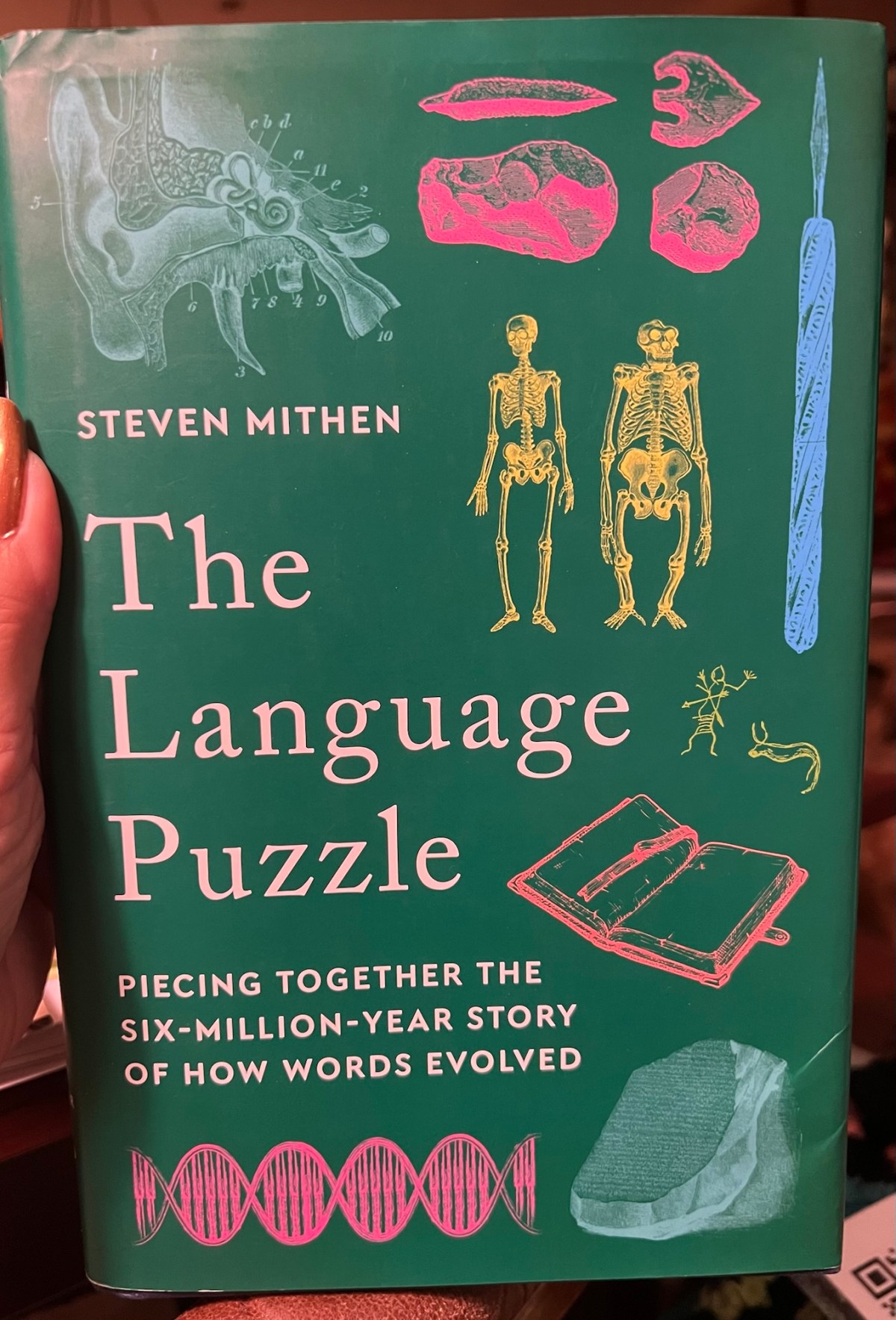
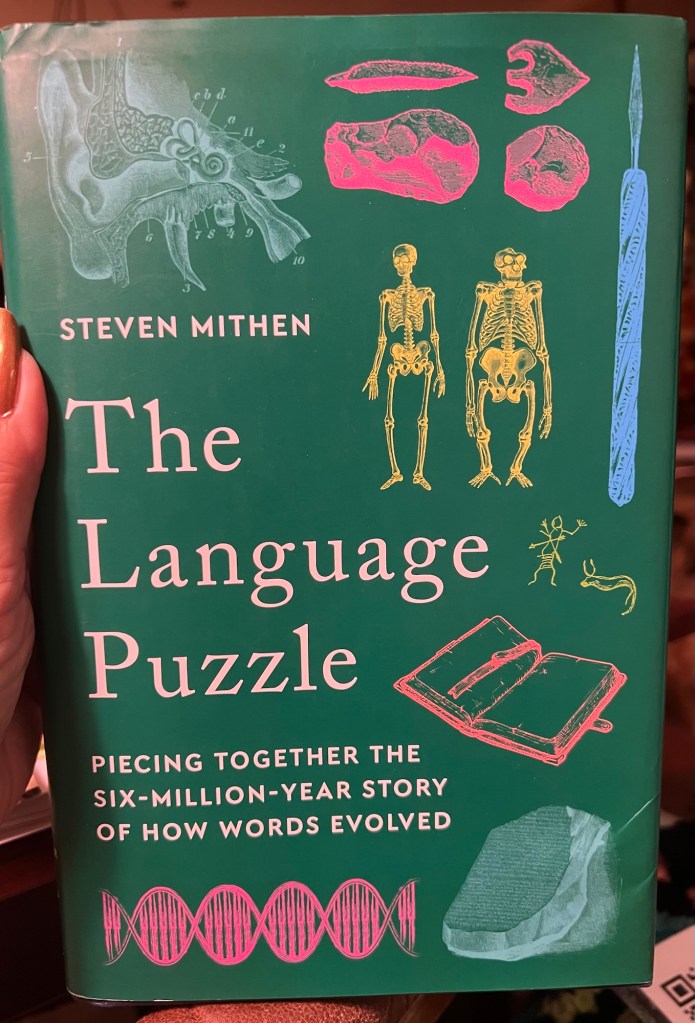
To say the least, as a former linguist, I was excited to find this book by a genuine researcher that claimed to explain the origins of language. And by gosh, Steven Mithen undertook a boat-load of multidisciplinary research on the history of humanity, culture, anatomy, and climate (among other things) to put together the various factors that could shape the development of language. It’s impressive. Lots of footnotes.
I enjoyed learning about all aspects of the puzzle, particularly the parts where he summarizes the history of linguistics and how the various parts of language fit together. Even if I didn’t already have a pretty firm grasp of the parts of speech, sound systems, semantics, and pragmatics, I think I could have grasped enough of it from Mithen’s clear explanation. Just the first few chapters are worth the price of the book.
One thing that bugs me, especially when he gets to the sections on human development, is that it takes a lot of conjecture to move from the time when the human line diverged from the chimpanzee evolutionary path. There are many missing pieces in the fossil record, and much of our anatomy doesn’t survive to the present day.
And all the parts about how words sounded are fun to think about, and he does find evidence to back up many of the concepts, such as different head shapes and vocal tracts. I just found some of the story Mithen comes up with, about fire shaping storytelling and such to be plausible but not verifiable.
I’m not saying this wasn’t a good book, because I enjoyed it very much and learned a great deal about human history. I’m simply pointing out that I still don’t think we have a clear picture of how human language developed. I wonder if we ever can figure out details of something there’s no record of, like spoken or signed language.
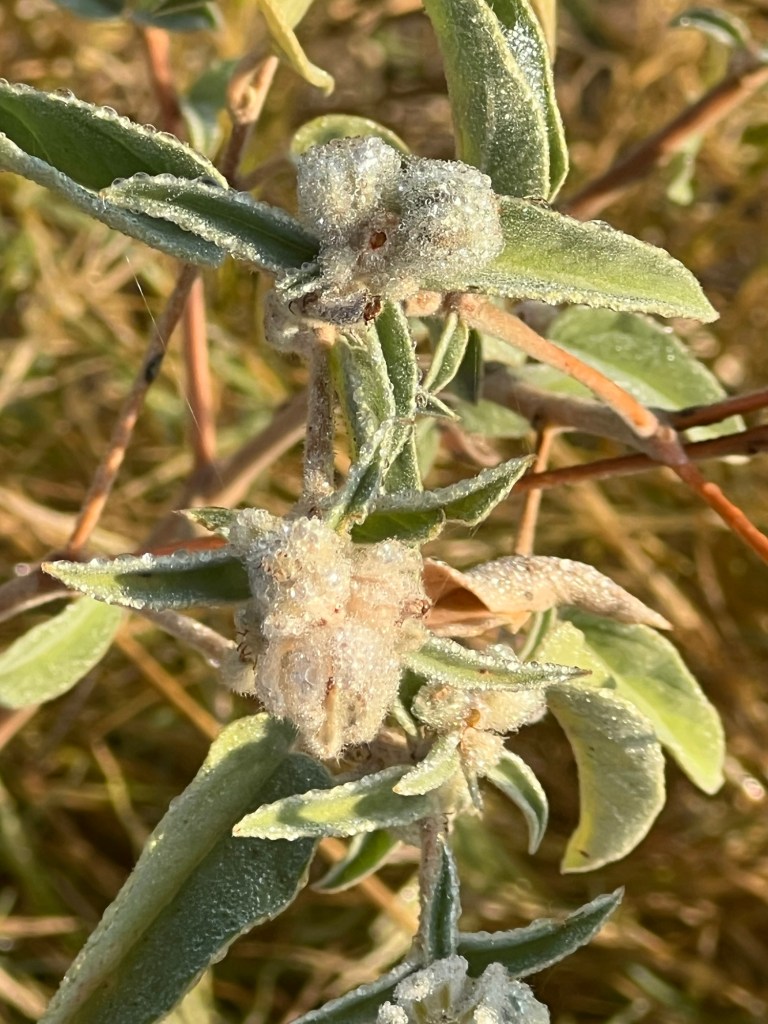
Unspoken beauty of dew on dove weed.
Maybe Mithen will next turn to written language. It has more examples to investigate.
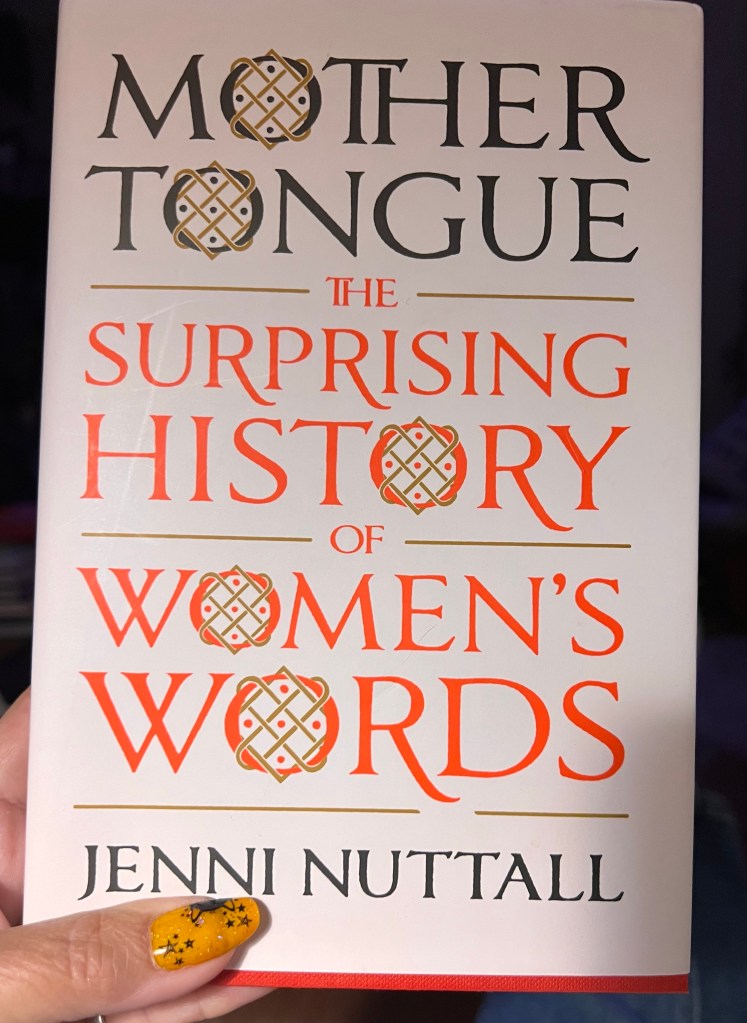
It’s a good book to review on Samhain/Halloween, since it has an entire chapter on witches, and there’s a good deal of discussion of how all kinds of words became derogatory terms for old women, the kind you see depicted in Halloween decorations. And who can complain about a book about etymology? Not me, that’s for sure.
Nuttall is an expert on Old and Middle English, so it’s fun to read her easy translations of old phrases (and to try to figure them out before she translates). I’m inclined to be sympathetic to fellow linguists, of course, and to fellow feminists as well, but dang, this woman comes across as grumpy. She also comes across as defensive about her life choices. I don’t think parenting is her favorite stage of life and she certainly doesn’t have much good to say about breastfeeding and hanging out with your baby. I think she’d have liked one of those wet nurses she talks about in the mothering chapter.
The other small complaint I have is probably just me. Since I spent a lot of my early adulthood reading (and writing) about how women use language in more recent times, I was hoping for a lot more detail, more examples, and more juicy stories about the language of and about women in early English. She doesn’t seem to have many other choices than Chaucer. It does occur to me that there may not be many written sources for her to draw from, so I’ll grant that.
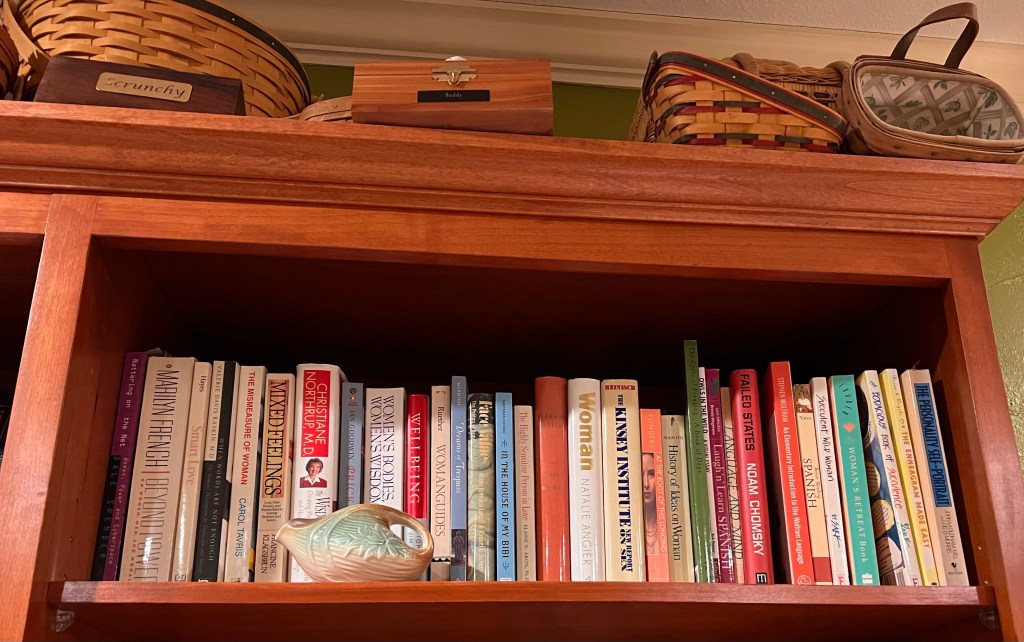
I have a lot of books on women’s language and sexuality. Some of them are here. Others are still in a box.
One of the fun things about Women’s Words is that it’s written in British English, so I got to learn some new modern slang. That was a real bonus. But since she’s English, I wish she could have added some words about women from former British colonies like India and the Caribbean.
Honestly, though, I wouldn’t discourage anyone who has an interest in the English language through history and cares about all English speakers, not just the ones who fancy themselves to be in charge. You’ll find out some interesting derivations, like the fact that the history of “girl” is shrouded in mystery. You’ll learn about words for childbirth, marital states, and the work women do. Go ahead and check it out. Don’t listen to grumpy Suna.
PS: if you write a book about women and language, don’t name it Mother Tongue. There are lots of books called that, so you’ll need a good subtitle.
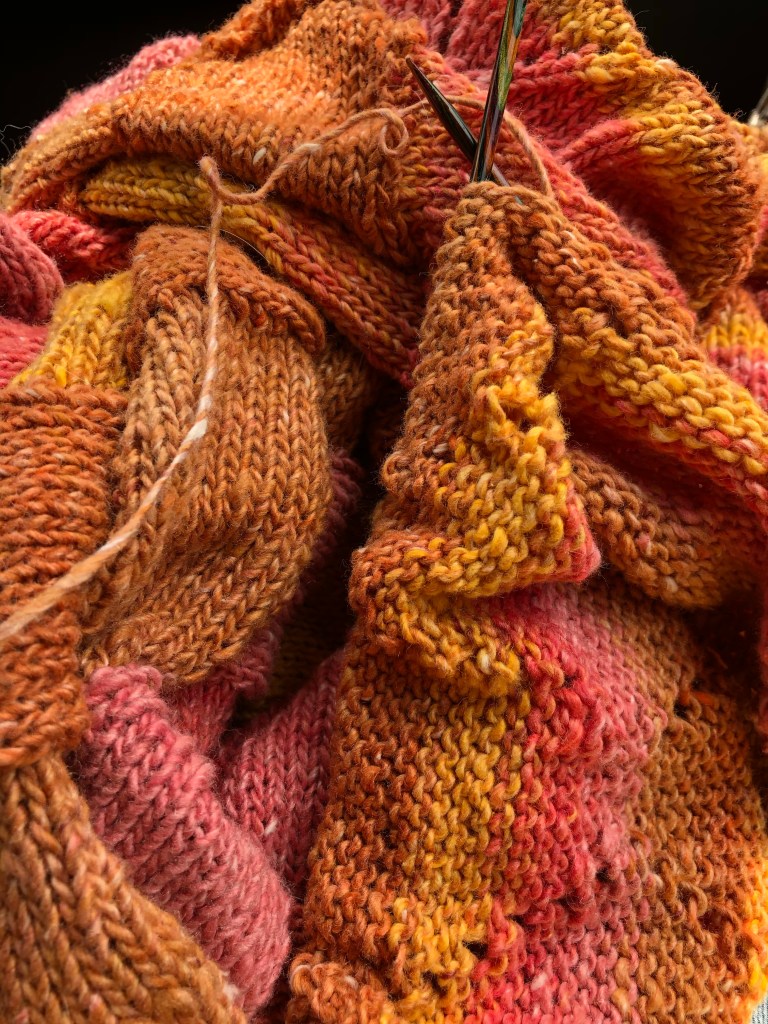
Hello from the road to South Carolina. I love road trips. You can sure think a lot. You can also knit a lot. I’ve actually arrived at the end of the pattern I’m making, but because I’m using different yarn and needles, I’m going to repeat the lace pattern.
Best picture I could get in the car. You can get the idea.
I have plenty of yarn left. I enjoy knitting without disturbances. It lets me think of new techniques to try, modifications to make, and things I want to try next. I was wondering if I could crochet a border off live knitting stitches (not bound off). I think I’ve seen socks done that way, with crocheted cuffs.
I can’t wait to block it.
I could knit for my job, if I’d taken that choice when it came to me. I love the science of designing patterns, love teaching it (so much, oh so much), like to go to conferences, and all that. And I do technical writing, which helps a lot. I’d have to have figured out a niche and done a lot of marketing, like so many of my knitting friends did so well. Knitting blogs got a lot of folks started, and I loved doing that, too.
So much comfort.
That dream ended as abruptly as my work in La Leche League did. I didn’t have the self confidence and hadn’t healed enough to figure out a way to get through the hard part and start again, which I now can do. I no longer just disappear when I’m unfairly treated and no longer believe what other people say. Woo!
What Else Did I Want to Do?
But, who knows, I have a lot of years left! There’s another alternate route I could have taken, like the road less traveled. Yes, it’s exactly like two roads diverging in a woods, because I didn’t choose the one leading into a forest.
I do love those plants!
In college, I concentrated hard on classes leading to an interdisciplinary degree in linguistics. I loved studying all the different areas, and was strongly tempted by neurolinguistics. Brains fascinated me. (Still do; notice what I read about now.)
But, I had to get those darned prerequisites out of the way. I did most of them in the wonderful honors program, but I got burned by an awful teacher in Biology who gave exams that were ten essay questions where if you missed any part of the answer, the whole thing was wrong. That ended up ruining my boyfriend and his best friend’s GPAs. I was like, “You ain’t messing with my summa cum laude, asshole,” and got the only A in the class. I gave him one scathing evaluation.
Crimson clover to cleanse your palate from that guy.
That preamble was intended to explain why I took my second biology class as a normal class, with a grad student TA instead of a mean full professor. The class mostly covered genetics and biochemistry. I ate it up like ice cream. Figuring out chromosomes and proteins and all that was like figuring out puzzles. It was so fun.
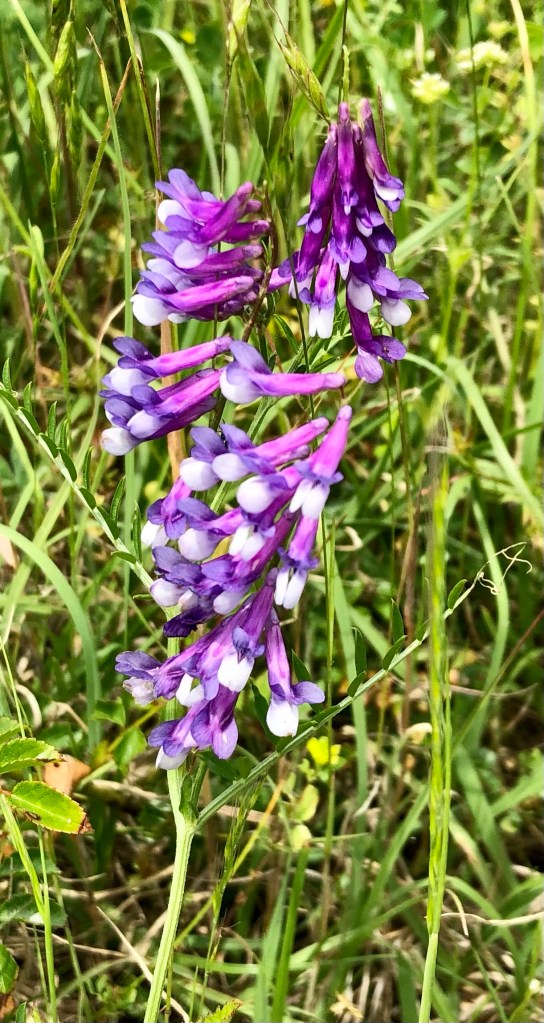
I always wanted to know how plants worked. This is a beautiful invasive vetch in Georgia.
I stayed after and asked the teacher questions. This guy was studying bees for his doctoral research, so I asked a lot about insect genetics. All I now remember is that he always wore incredibly wrinkled shirts, apparently because his girlfriend didn’t have an iron. There was much good-natured kidding, and he rewarded us with wearing an ironed shirt to the final exam.
Like this wild azalea hiding in a prissy trimmed hedge, I was nature girl stuck in academia.
Because I answered all the extra credit questions right, I didn’t need to pass the final, but I did it for fun. Then came the fateful question. The TA took me aside and begged me to switch majors. Biology needed me! I said I’d think about it. With my love of trees and springs and swamps, I imagined becoming a wildlife biologist and working with a State agency.
But, by that time I was already accepted to grad school in linguistics with a full fellowship. I had to take that path. Plus I was following my boyfriend. Hint to young people: your vocational choice should be determined by your brain, not hormones. I’ve been stuck working with language a lot longer than I had my boyfriend (a great human, don’t get me wrong).
The Good Part
But, all was not lost. I came to the Hermits’ Rest and got to hang out with Sara, the genetics PhD. And I met Dorothy, who’s not only a blog/podcast sponsor, but also got me into the Texas Master Naturalist program! I now get to do biology every day if I want to, I get to study the natural world, and if I can’t BE a wildlife biologist, at least I get to hang out with them! And I do work with a State agency.
Like this fine plantain, I’m choosing to find beauty wherever I am and grow where I’m planted.
It took me a while, but I did get to be what I wanted to be when I grew up. It just took patience.
So, have you attained your goals? Does your vocation match your avocation?
A couple of days ago, as thoughts were passing through my consciousness, it just popped up, “My favorite word is ‘friend.'”
Friend
You’ve got a …. making friends for the world to see … one is silver and the other gold
Huh. I wondered where the heck that thought came from, and the first thing that came to me was that every time I say that word, I feel warm inside. Just a little bit of peace falls across my soul when I think of “friend.”
Is it the meaning?
I considered first whether I like the word because friendship is important to me. Most of my life I’ve yearned for close friends. There have been many times when I didn’t have any, just acquaintances or people I talk to because we are in the same group or school. I function best with one or two good friends who I can tell anything to and not feel judged. I have that at the moment, so hooray! So, that’s one factor.









 The Hermits' Rest