Book Report: Foraging Texas

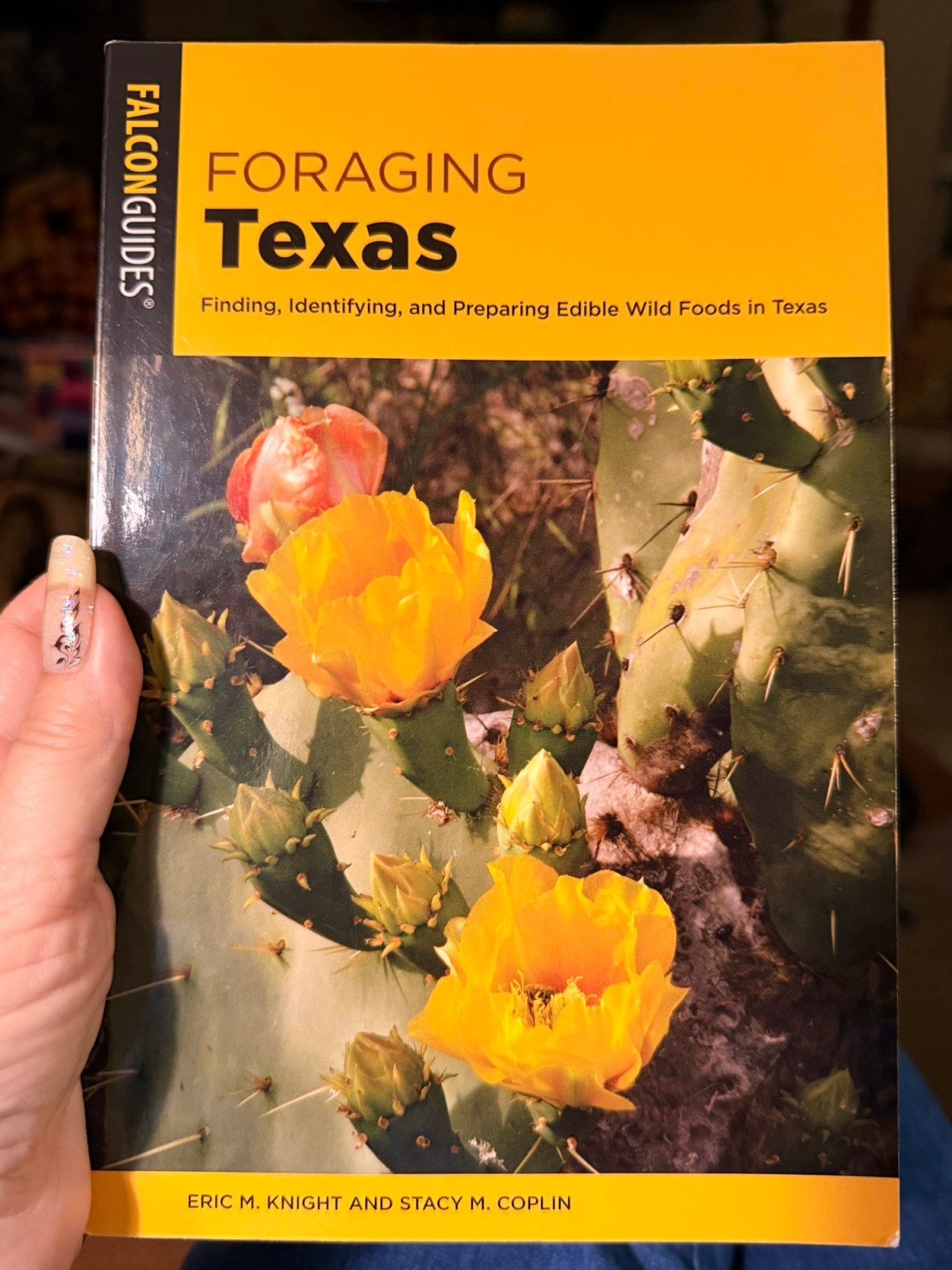
I got this book at the Ladybird Johnson Wildflower Center. I’m sure glad I did, because I thoroughly it and learned how many things right outside the house are delicious. Foraging Texas: Finding, Identifying, and Preparing Edible Wild Foods, in Texas (2021), by Eric M. Knight and Stacy M. Coplin, is the most fun and sensible foraging guide I ever read.
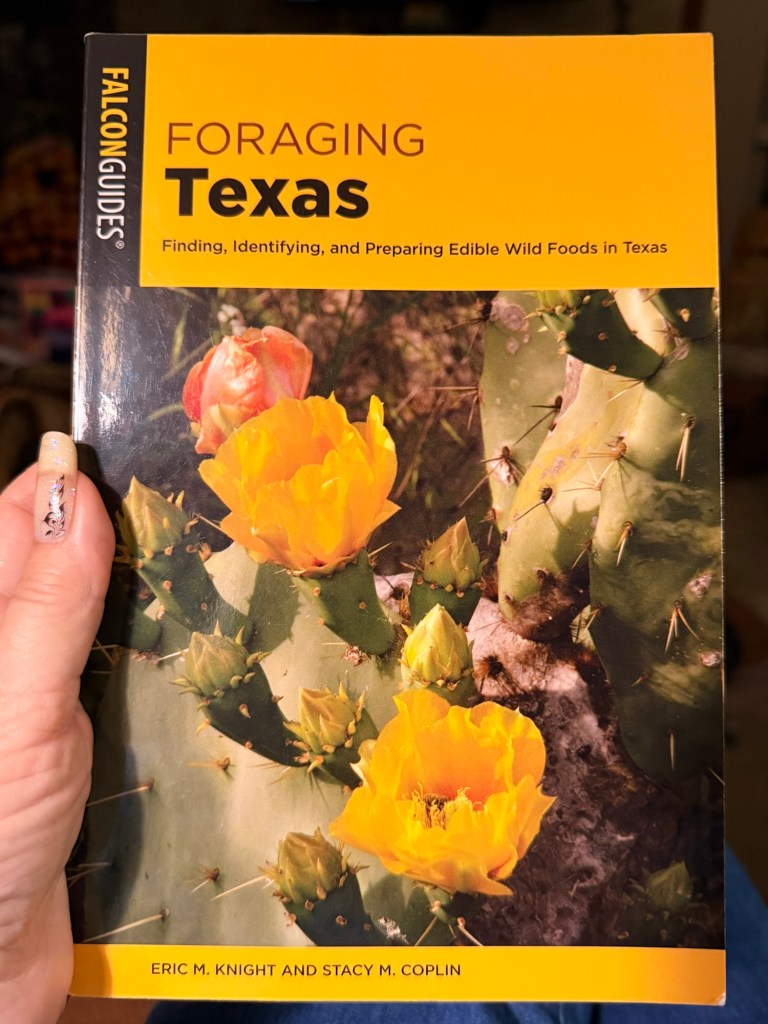
The authors, who apparently know my friend Linda Jo, strike a great balance e between caution and curiosity as they teach about edible plants. First, they insist you read the chapter on toxic plants, some of which I could go take you to right now (very healthy poison ivy vines). I do now know my water hemlock and friends, and simply won’t eat anything growing in the water, at all. Even the yummy ones might have pollutants in them. Sigh.
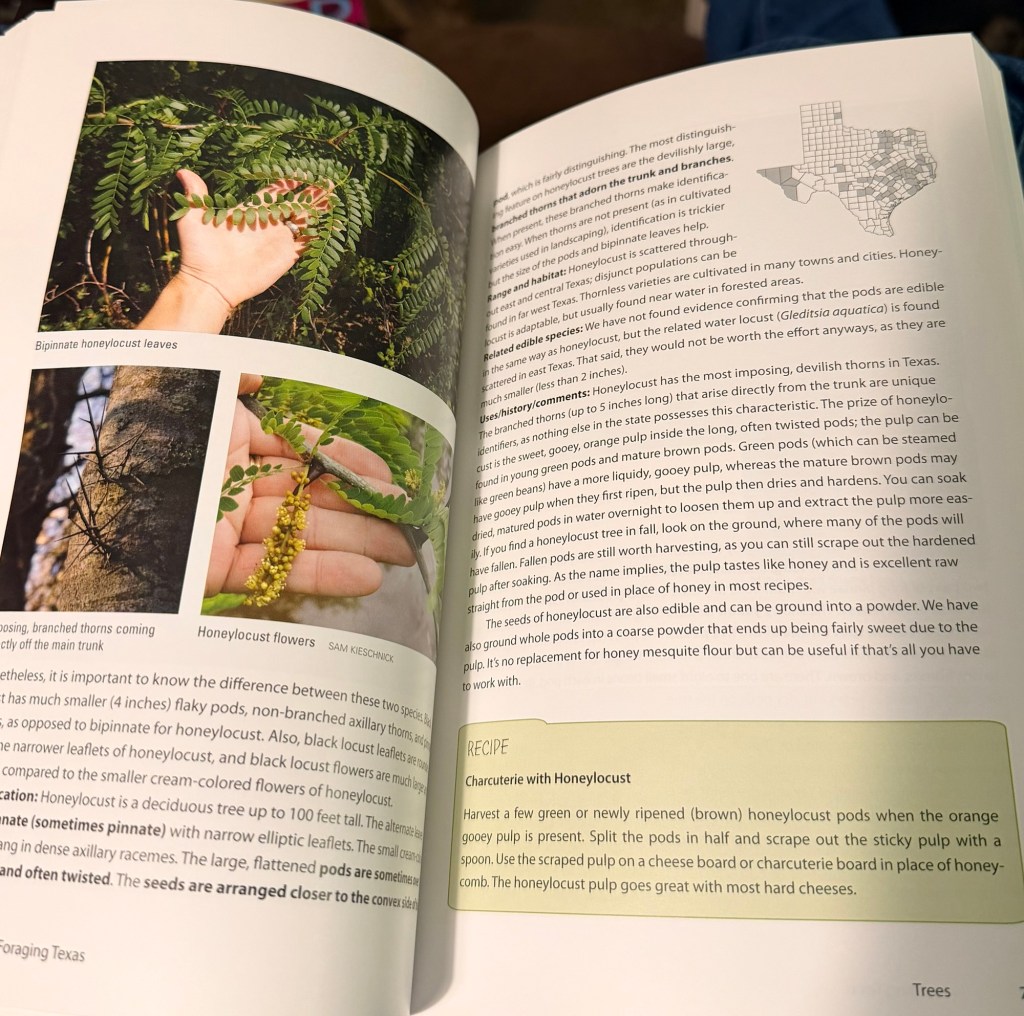
Sample page

The authors focus on plants that are plentiful (many, if not most, non-native) so as not to encourage folks to contribute to a species going extinct. You’re heartily encouraged to eat annoying plants like bastard cabbage (they tell you to pull it up after you harvest the flowers, which proves to me that they have met Linda Jo). That woman hates bastard cabbage.
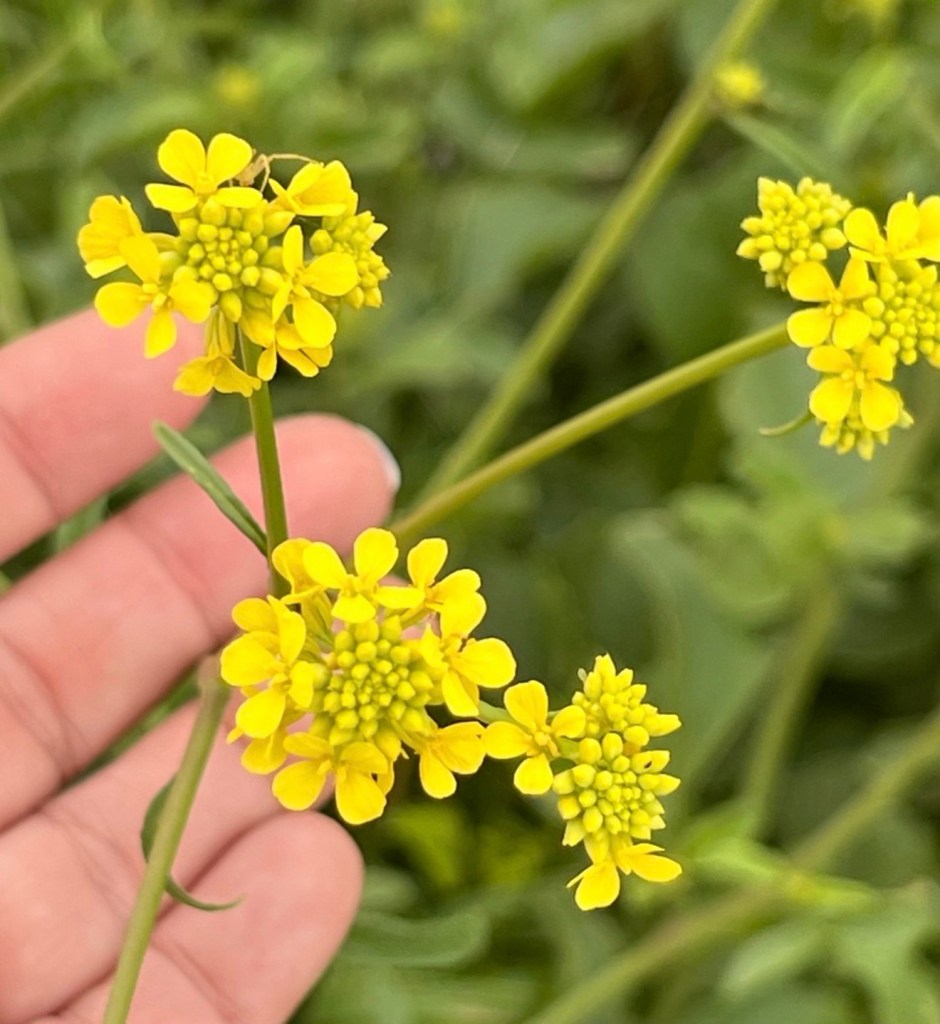
Bastard cabbage submitted by me to iNaturalist.

For each plant there’s a map of where to find it, a thorough botanical description (there’s an index of terms), comparison with any toxic lookalikes, how to harvest, and a recipe. Some recipes are like, just eat it. Other plants seem so hard to harvest that I wonder if it’s worth it. So many stickers and prickles to remove in your prickly pear fruit (tuna) or heart-leaf nettles. I’d say I’ll pass, but those fruit are so tasty.
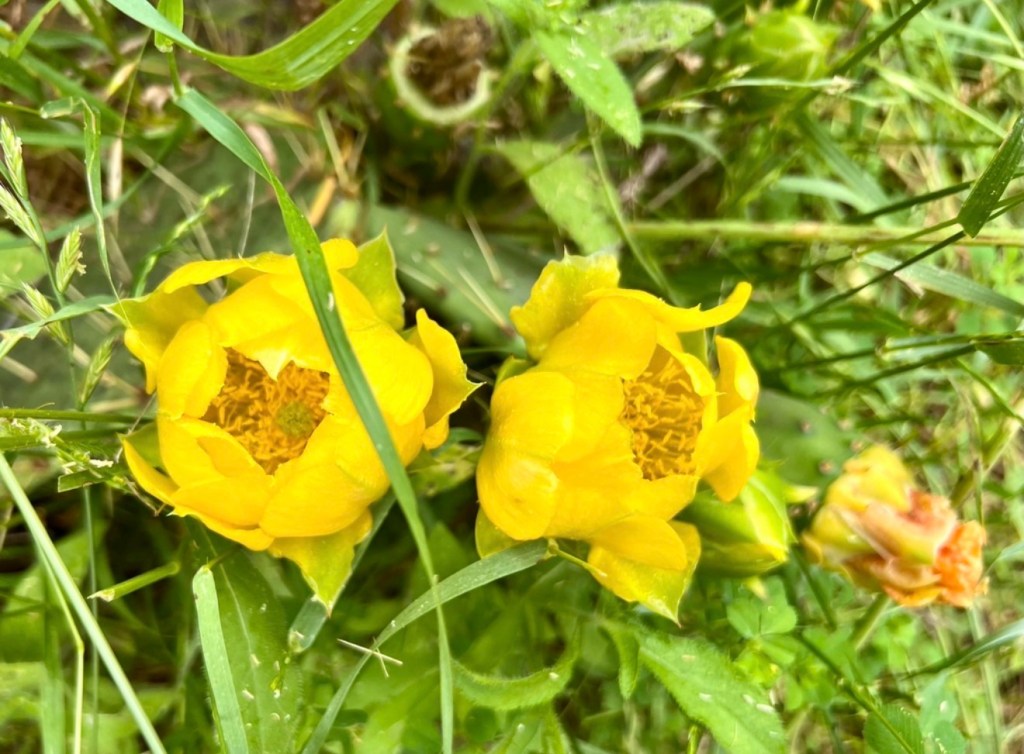
Prickly pear with developing fruit at top. 2024.

Very few other plants are described as tasting delicious (dewberries are!). Most are okay.
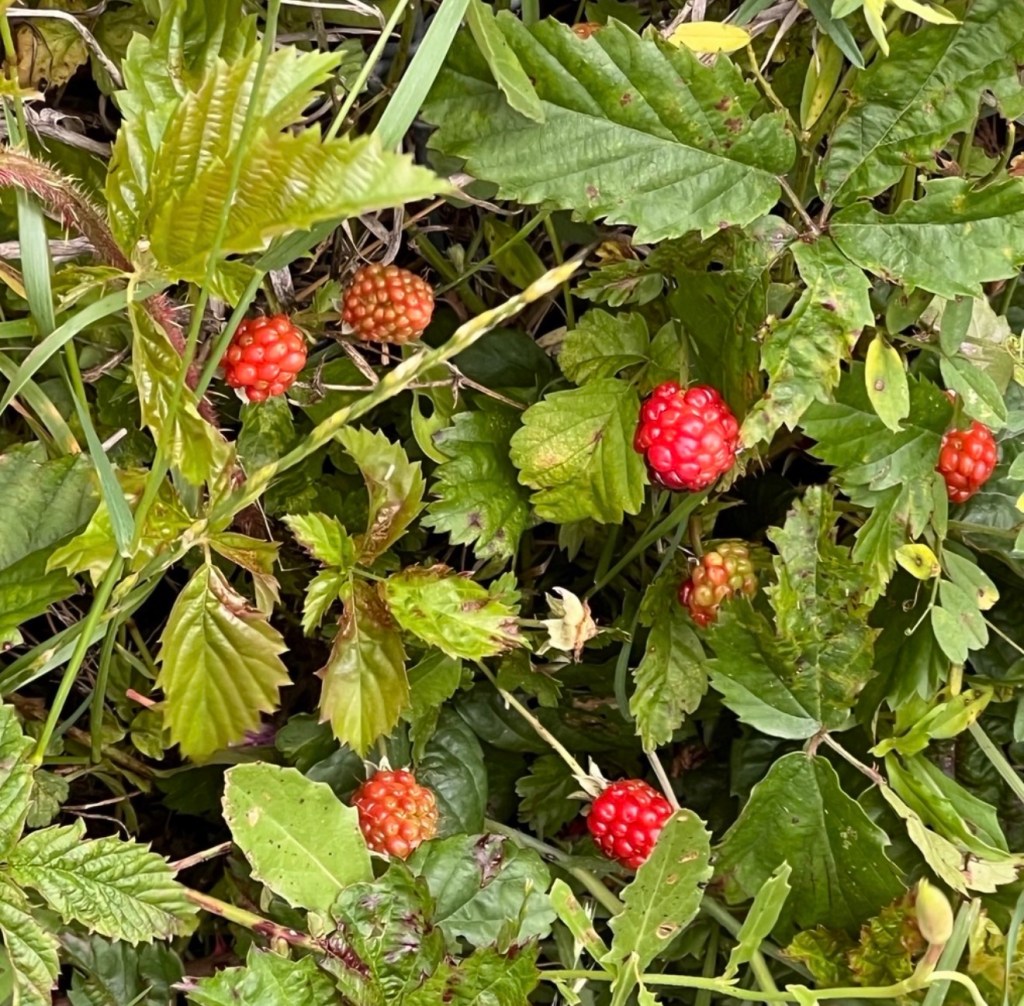
Unripe dewberries, 2024.

I think the fun is mostly finding edible plants around you and knowing what’s a good hiking snack.
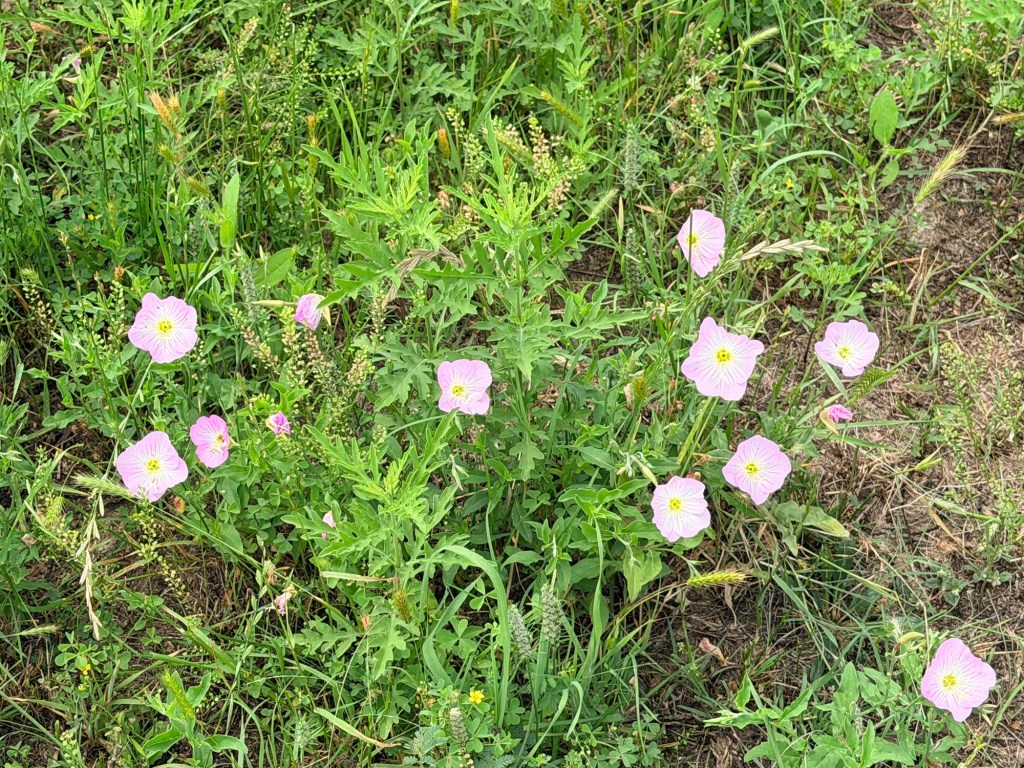
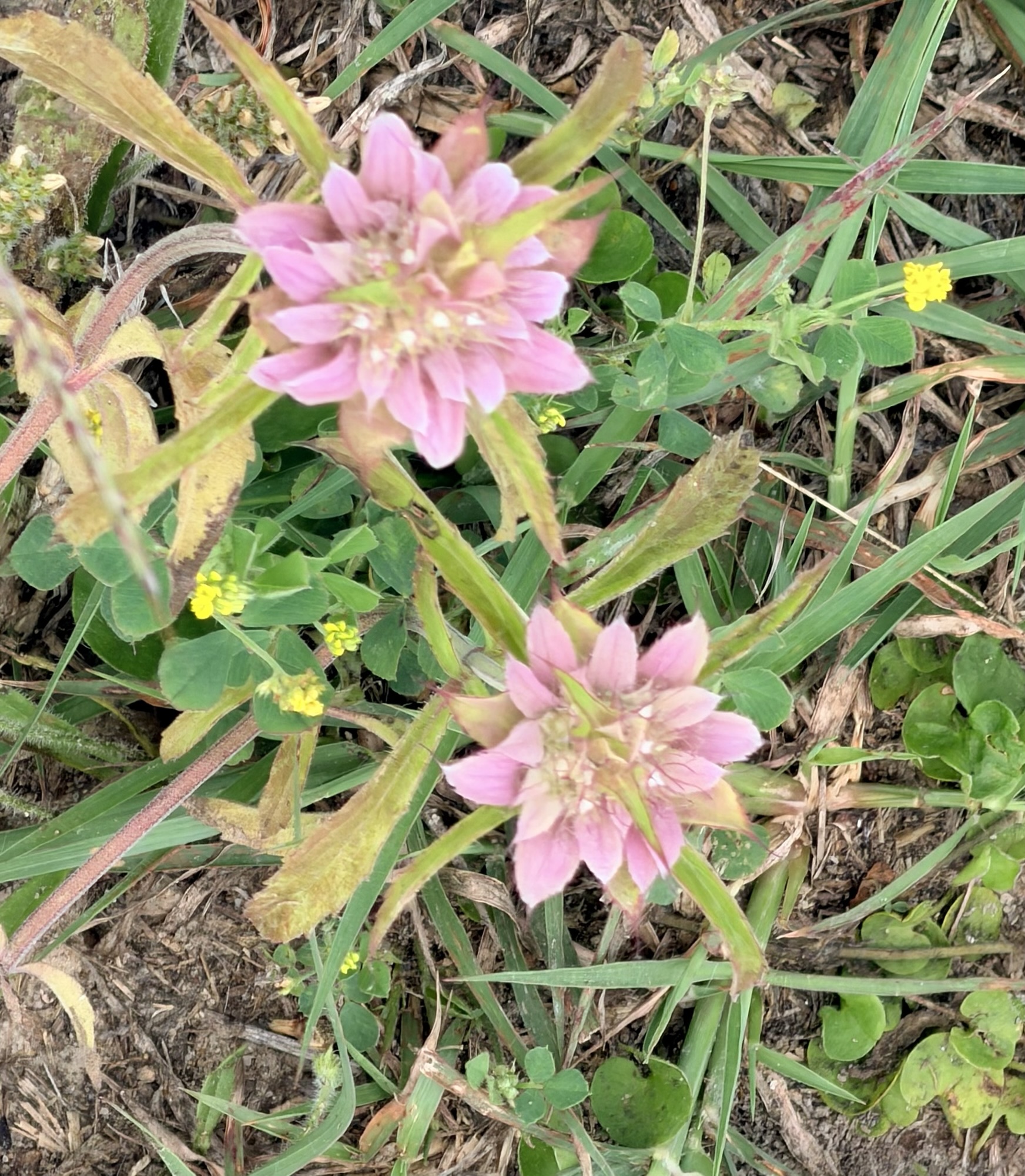
Found these today. You can eat flowers and roots, pink evening primrose.

Today I ate plantain seeds, because there are many in the pasture right now. I’m not going to go gather a bunch to share with the family. I could sneak chickweed in a salad, though. It’s tasty.
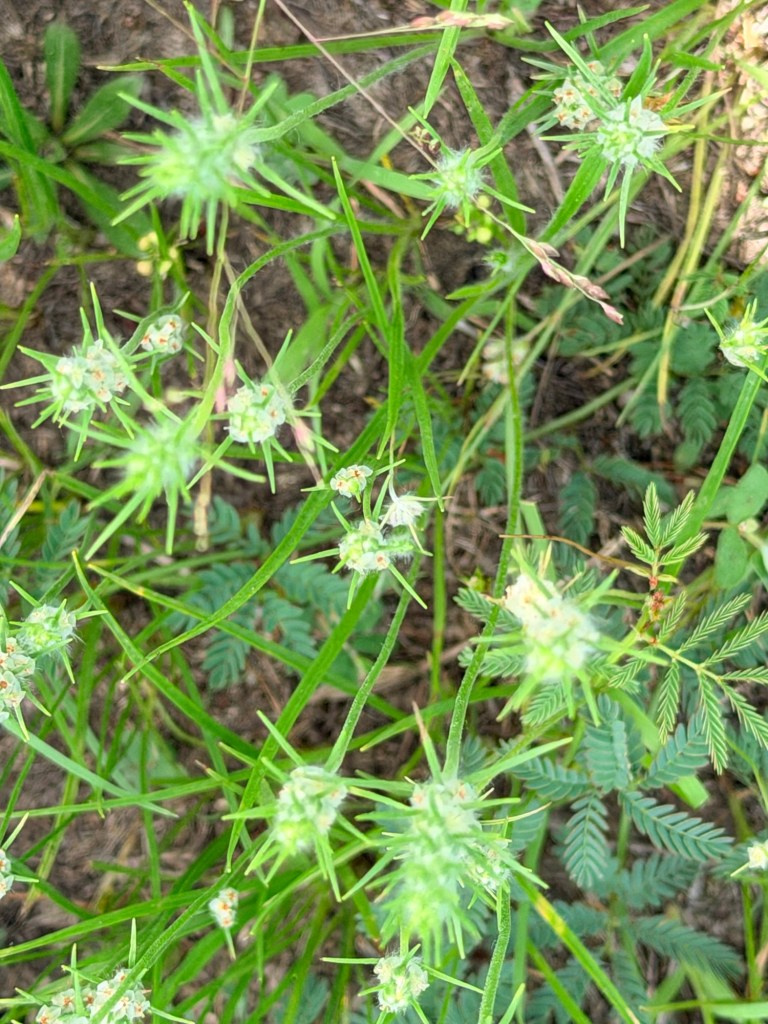
Bracted plantain. Much prettier than the kind I ate.

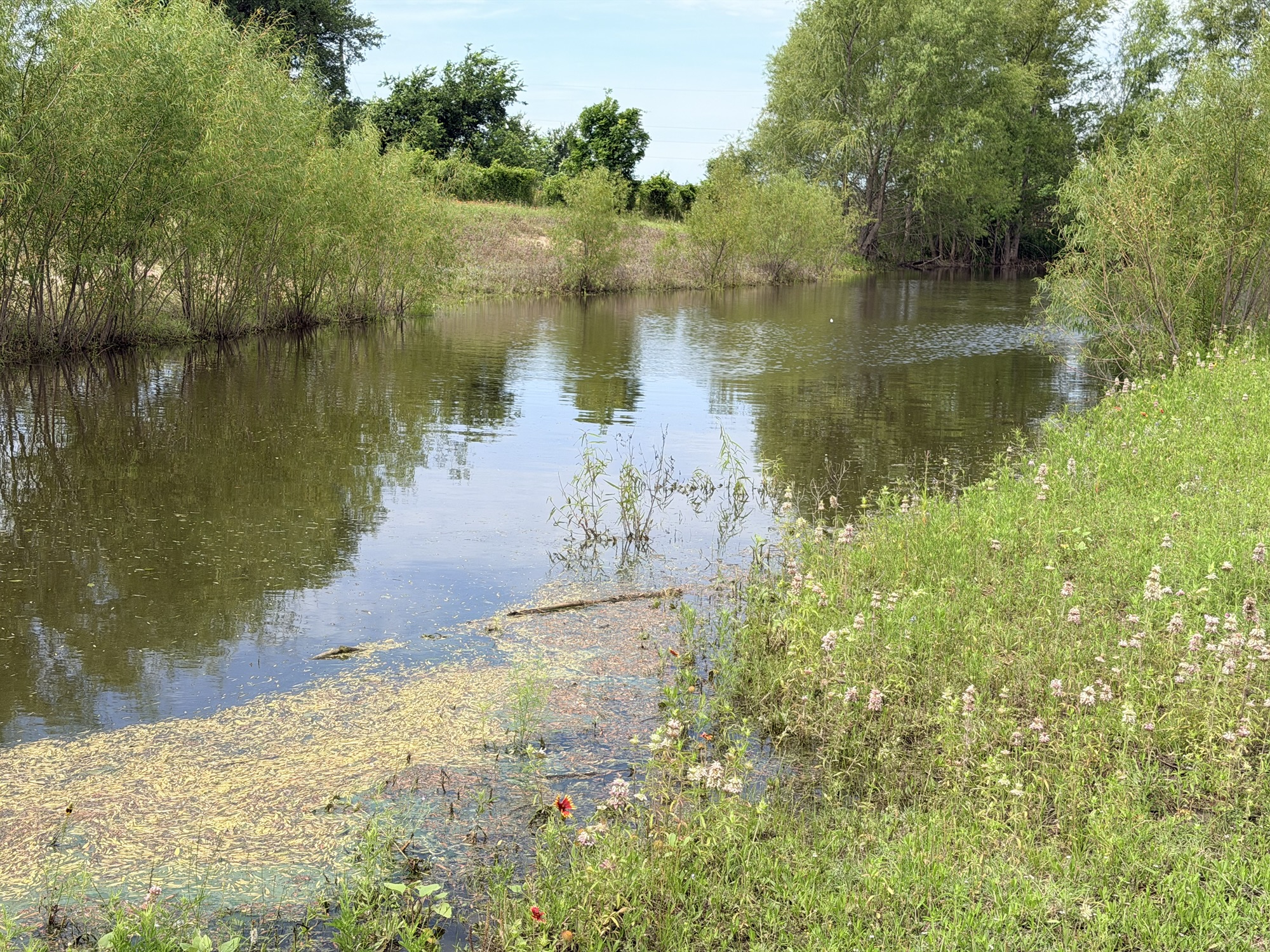
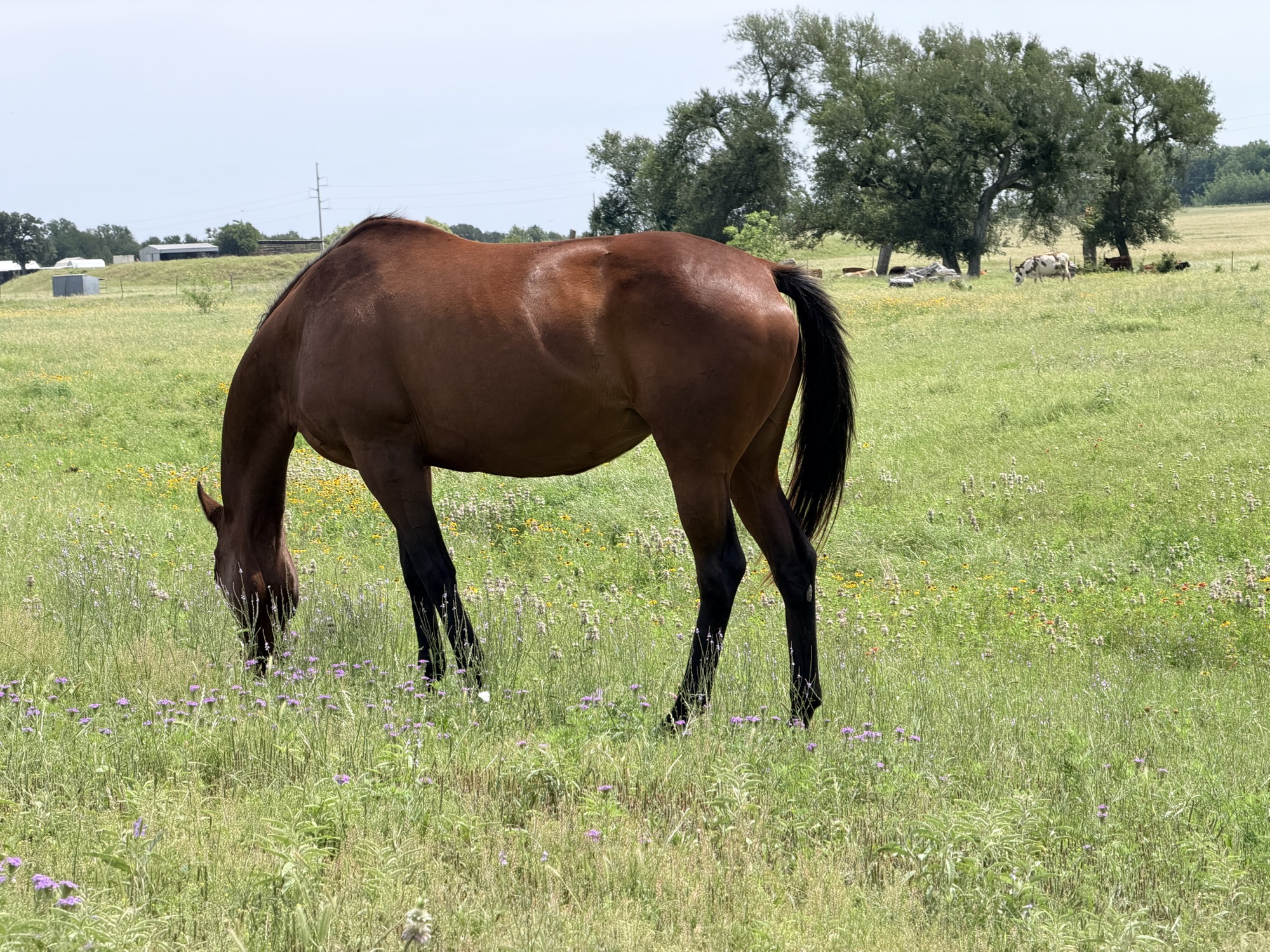
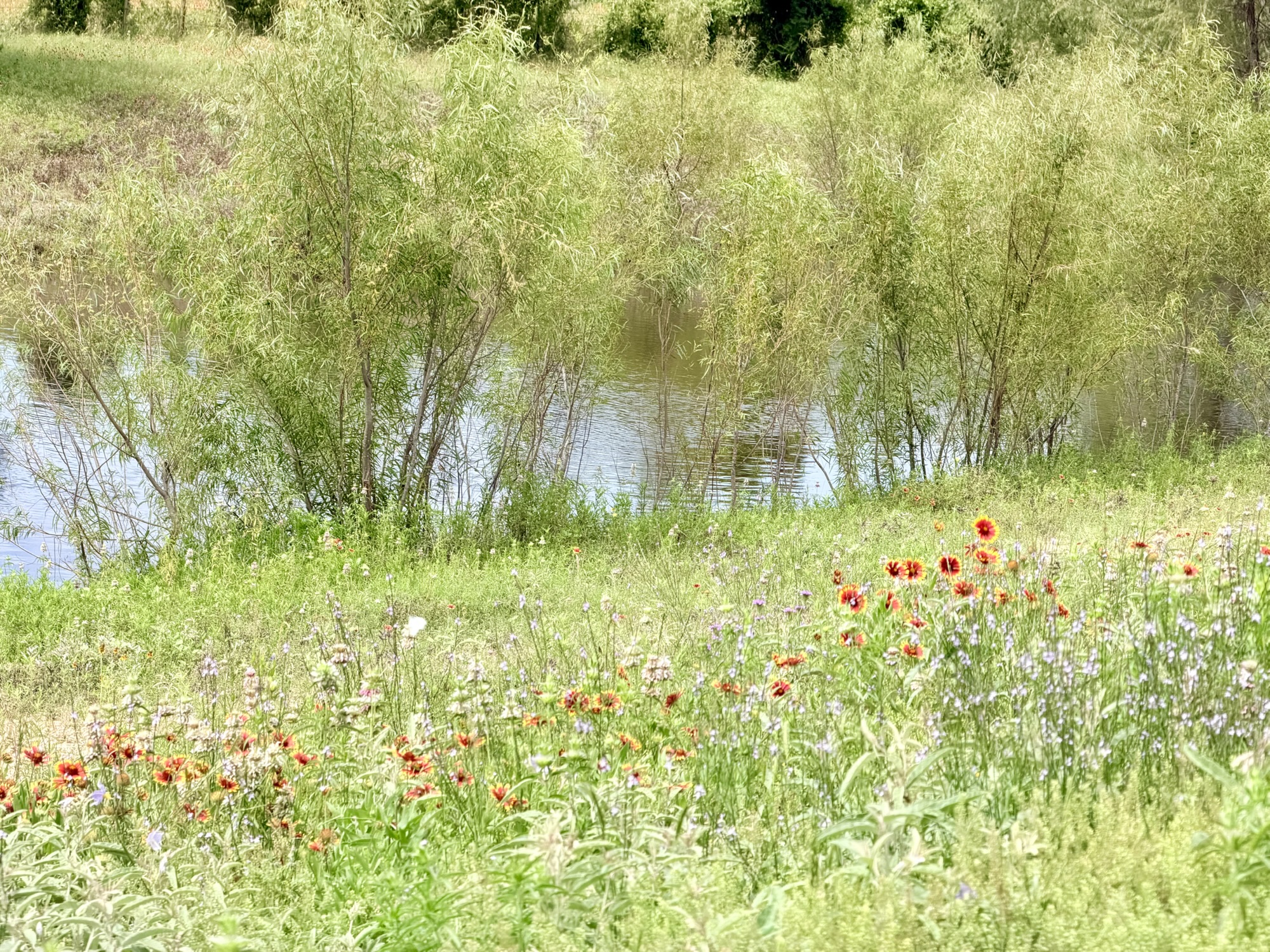
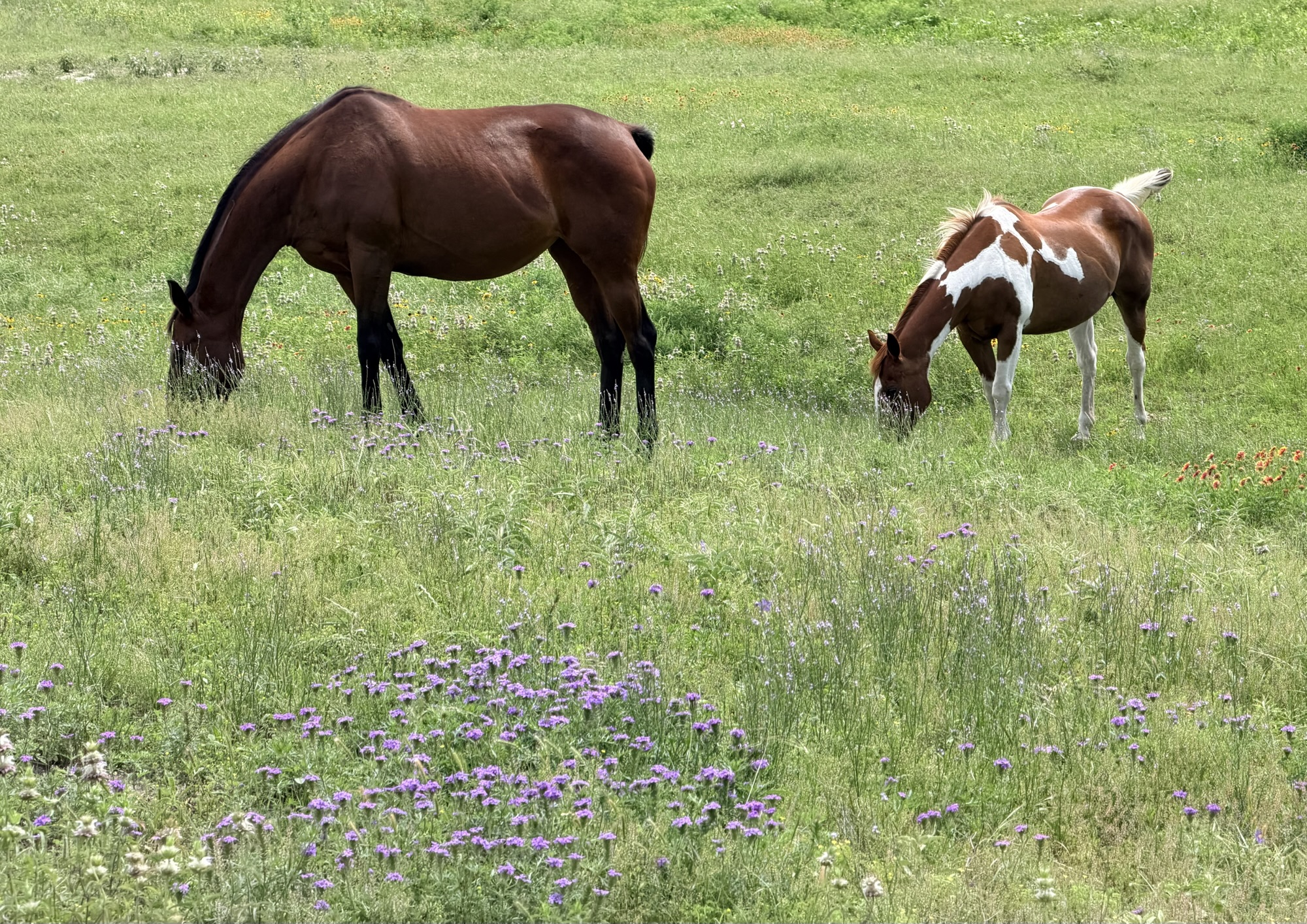
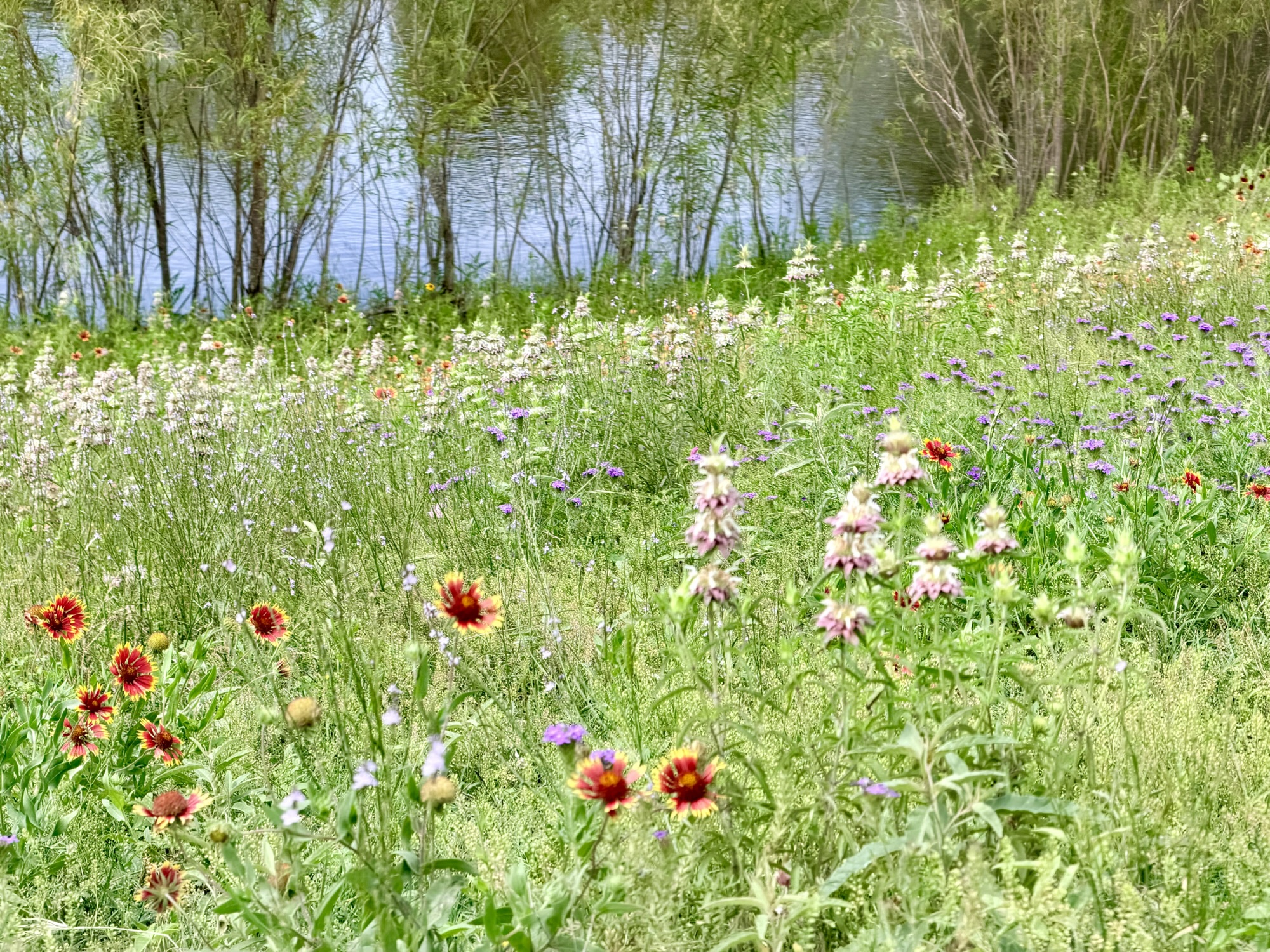
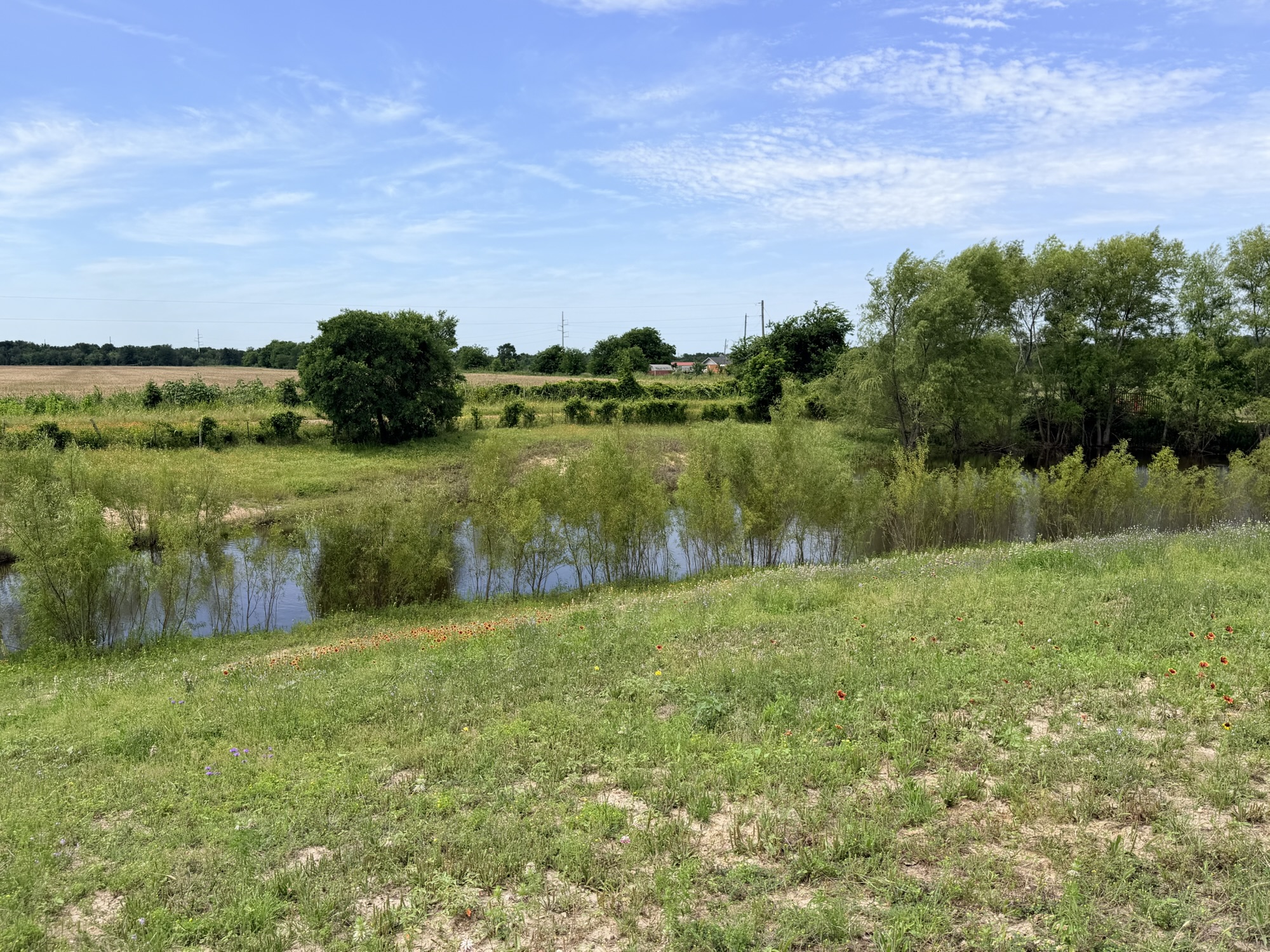
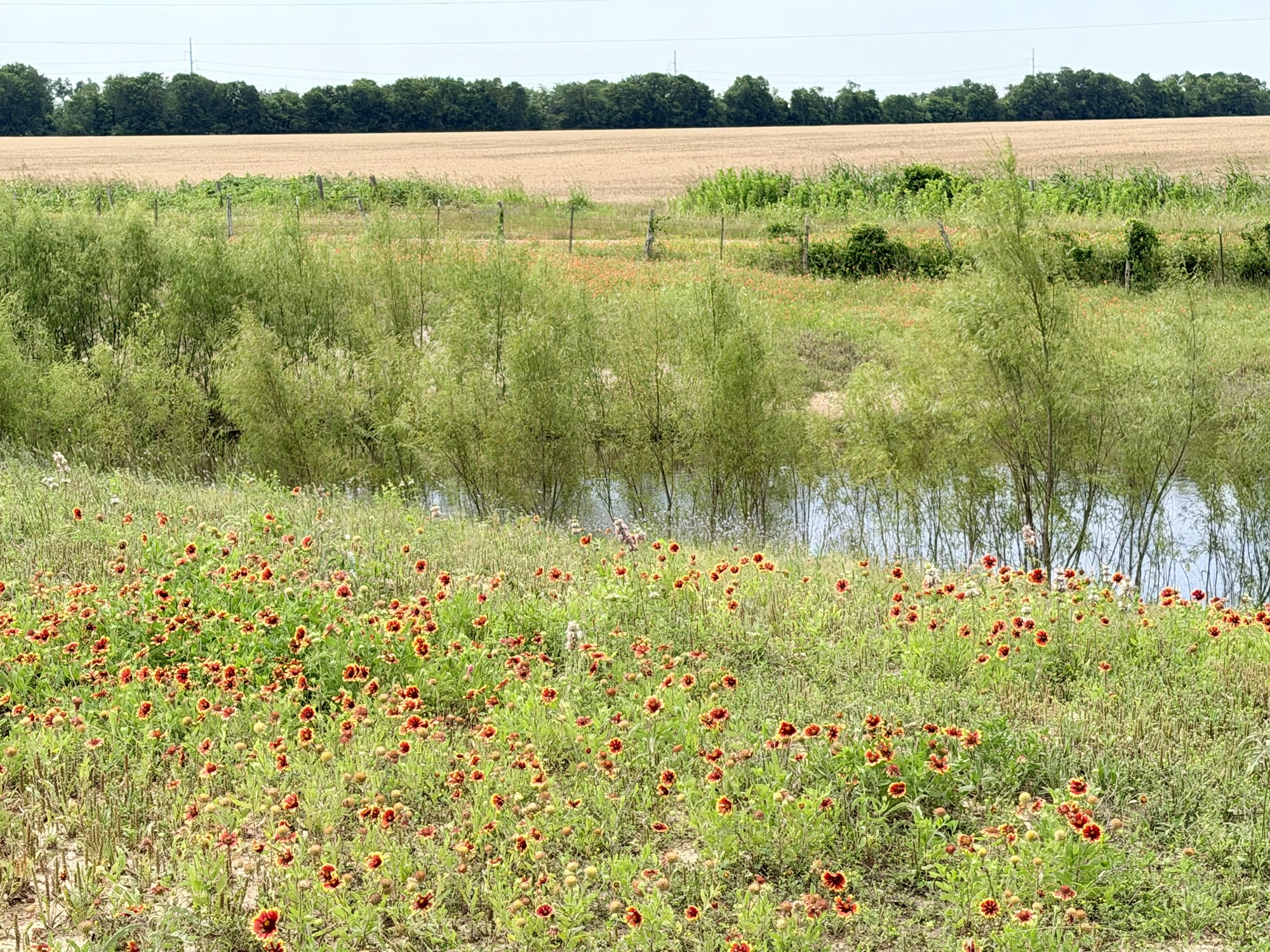
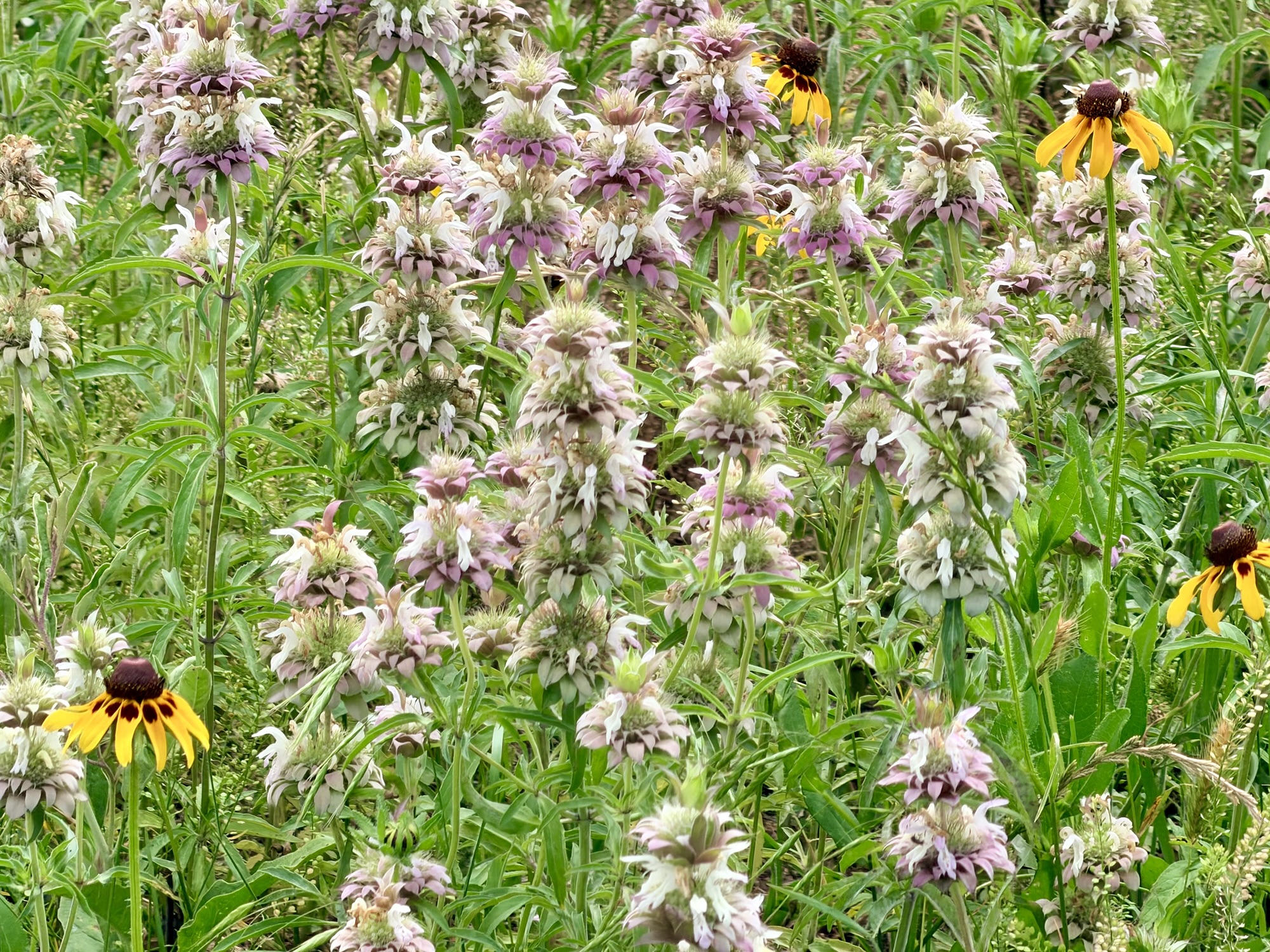
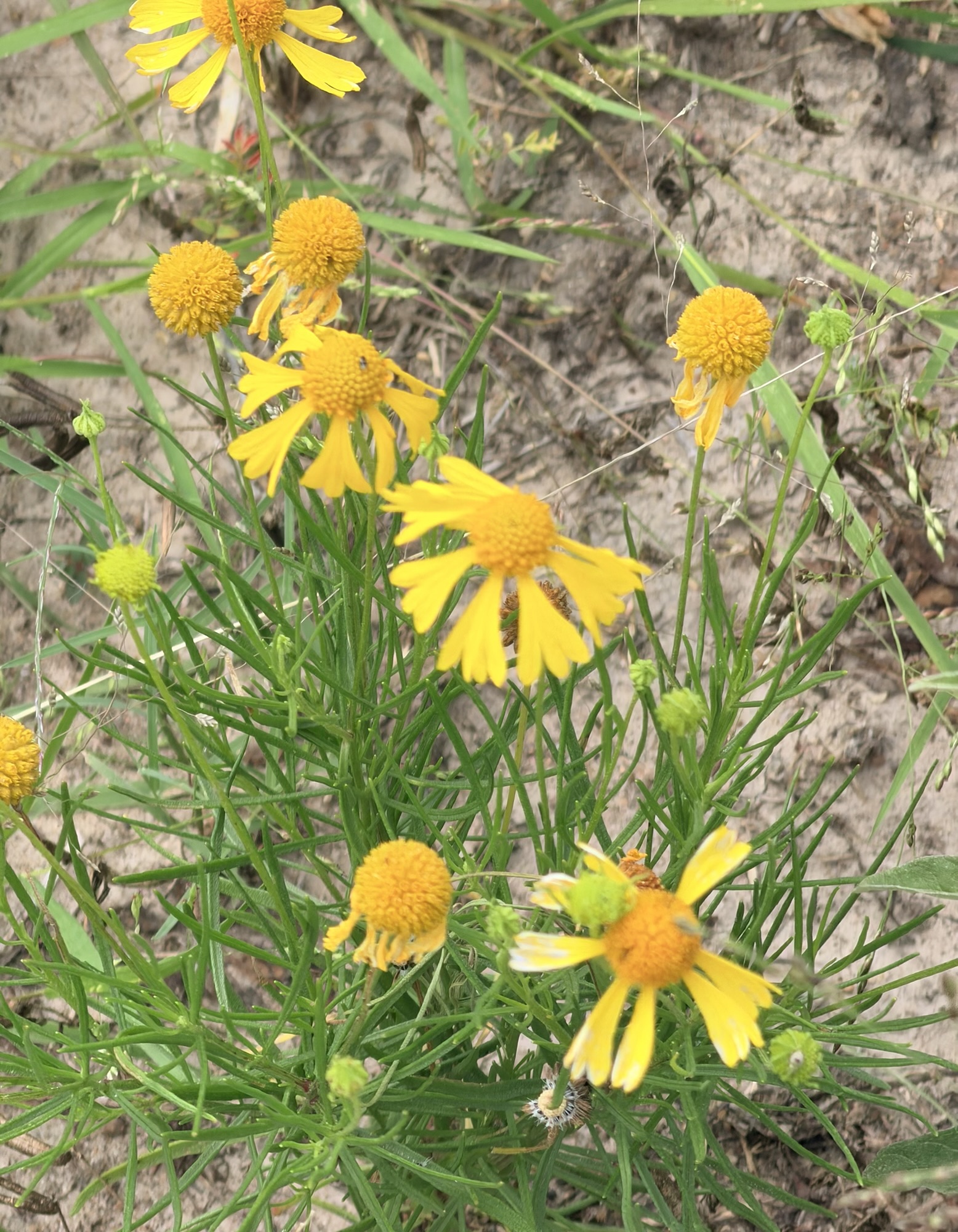
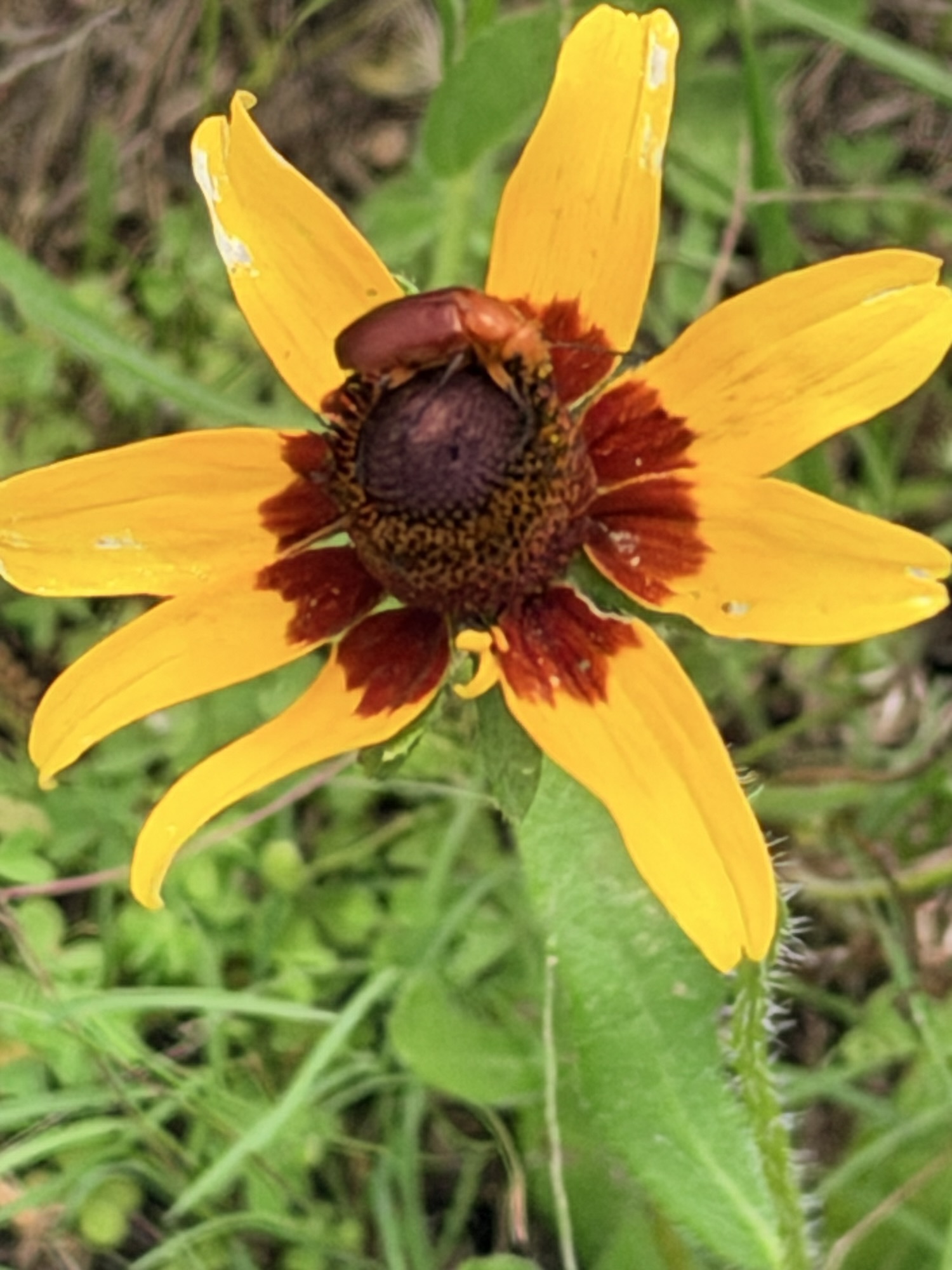
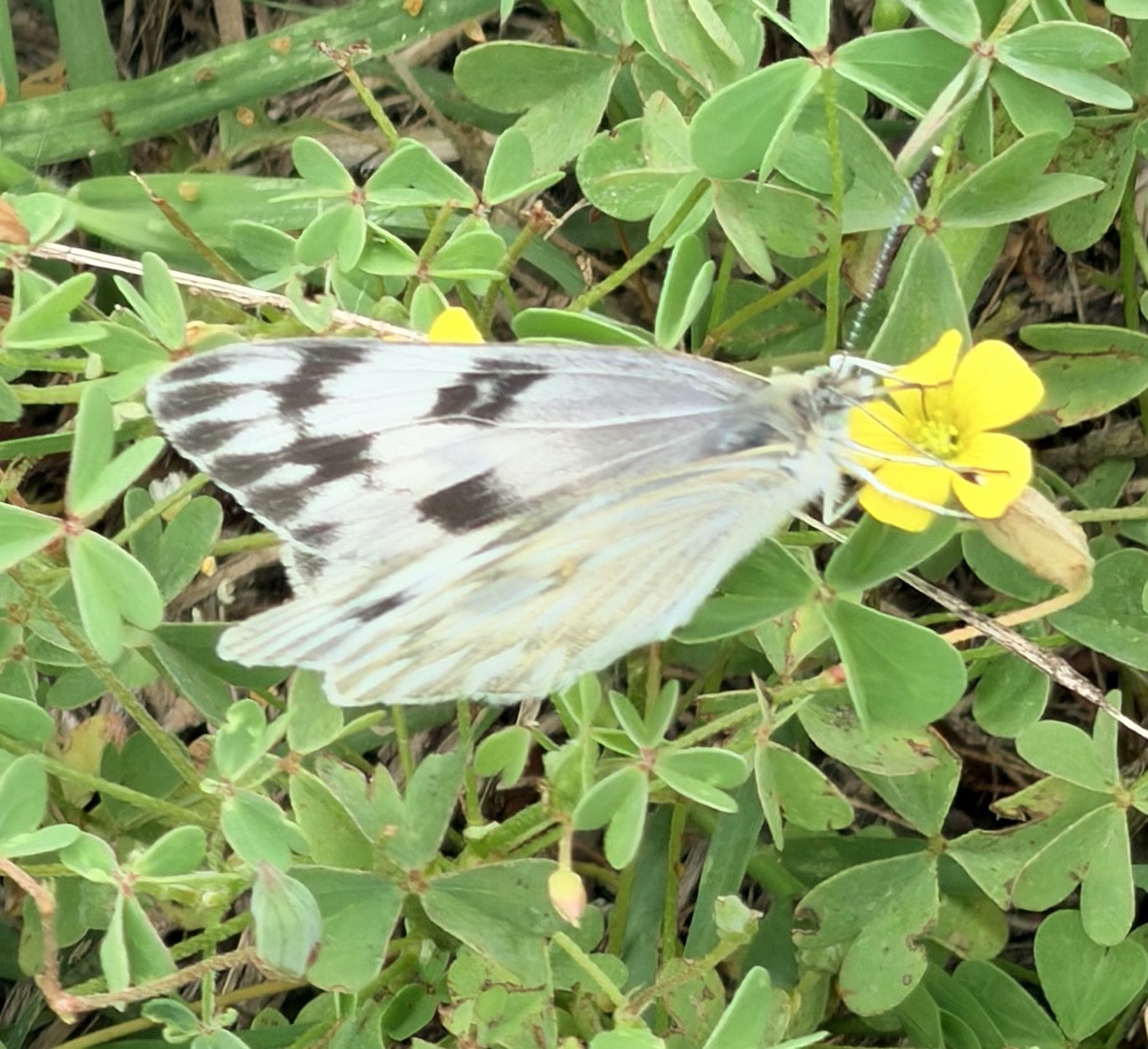
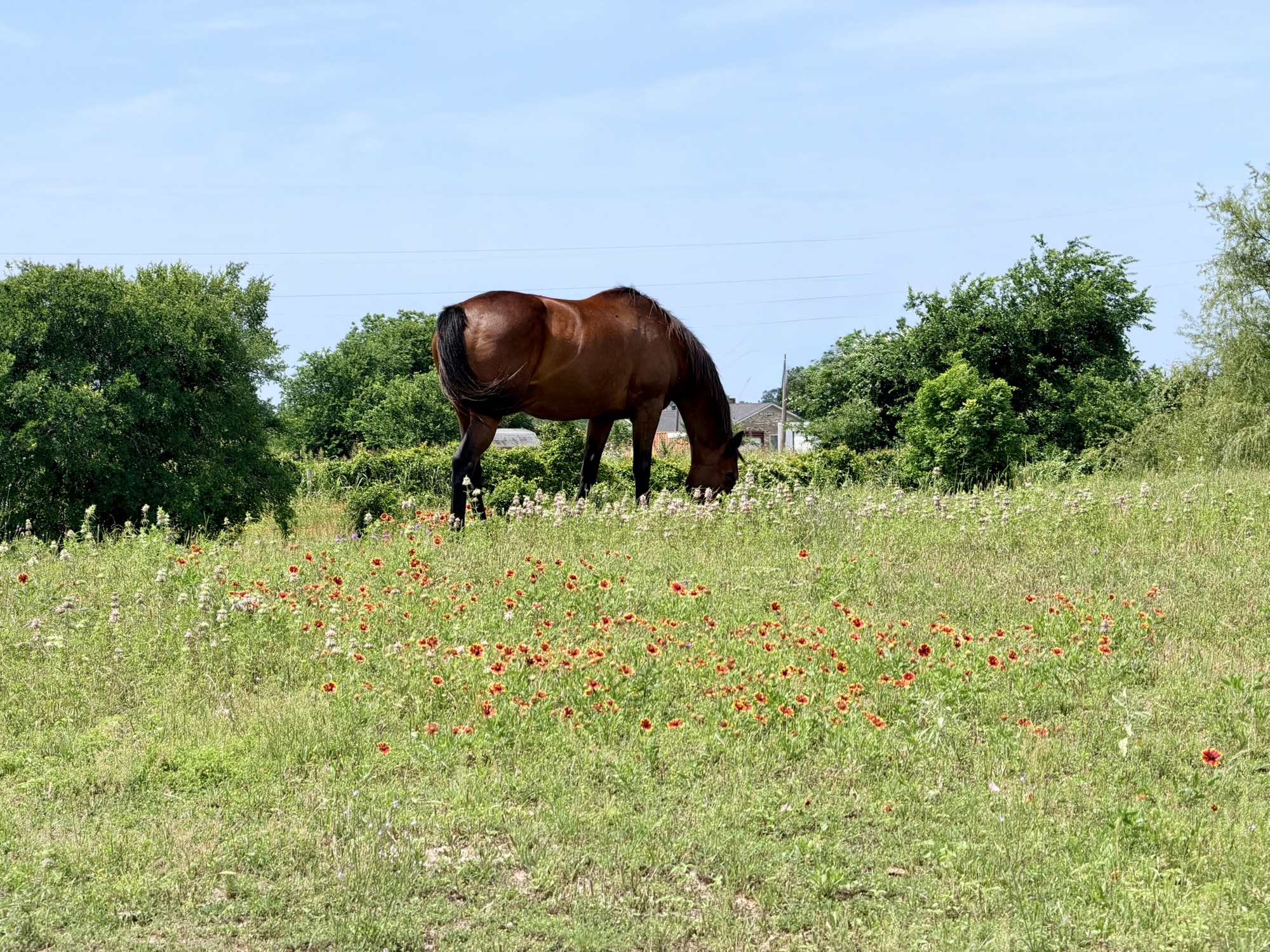
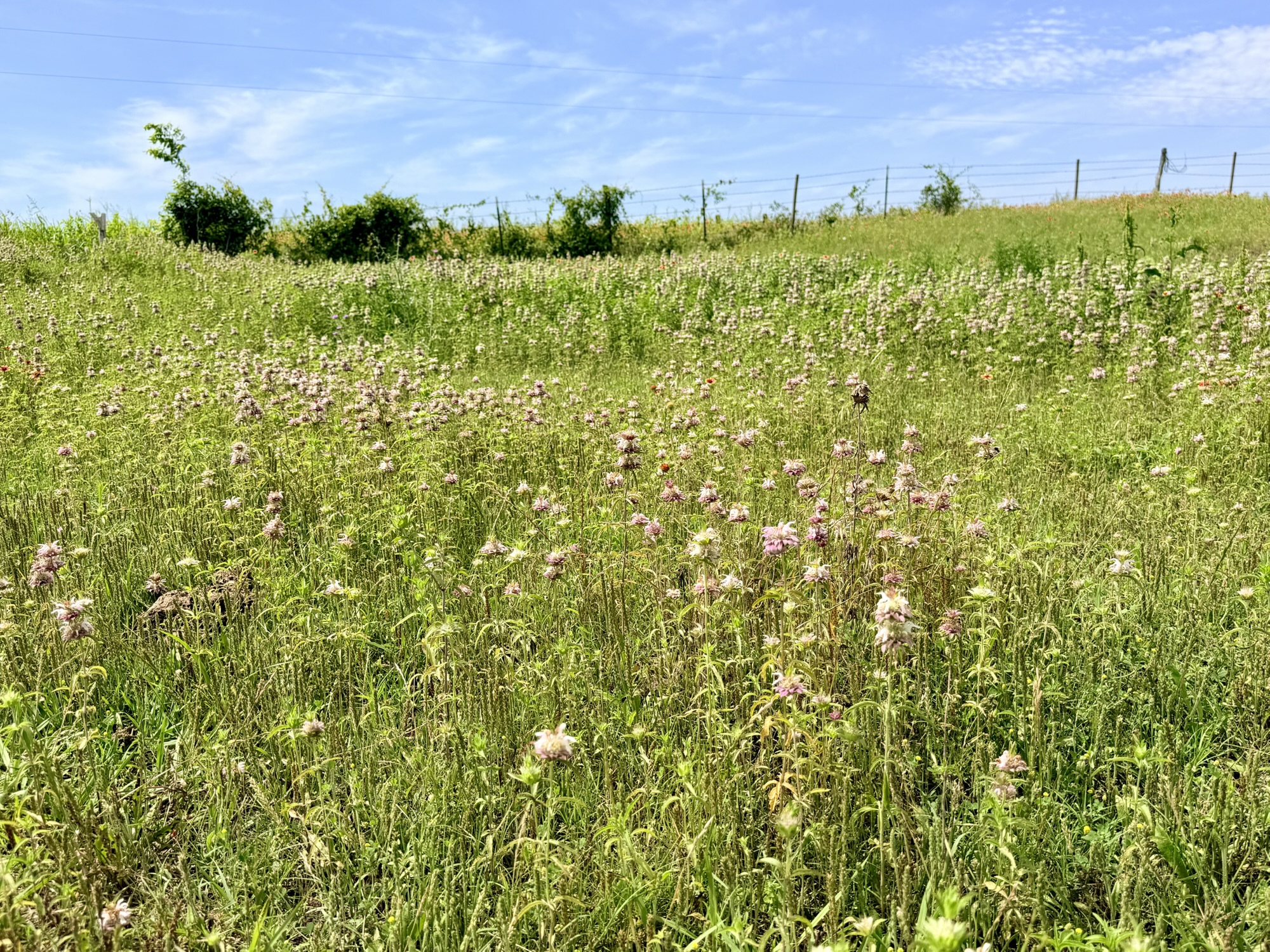
I will probably keep this reference book in the RV for reference when traveling. There are more comprehensive foraging books out there, but I like that this one covers the area where I live and is enjoyable to read. Now enjoy some pasture flowers.
A Chickweed Festival for Birds

It was a beautiful morning here, with mist rising from the ponds and a very heavy load of dew, so the grasses and flowers were all shiny. As soon as I went downstairs and sat at my desk, I realized that there are even more birds in the field in front of the house than usual.

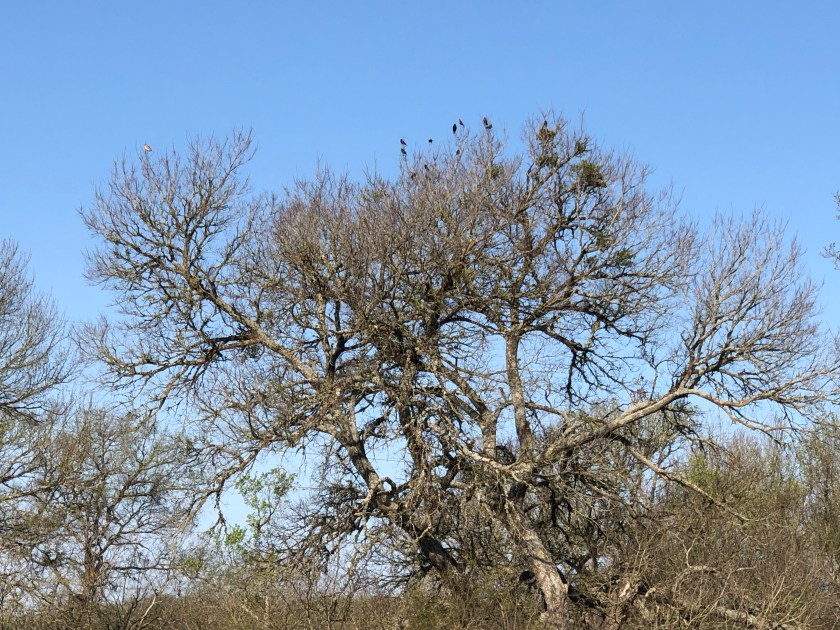
Some of the birds I scared off when I walked outside. Mostly starlings, but there’s a meadowlark at left.

The meadowlarks have been all over the fields for weeks now, but I realized that there are also a lot of European starlings, along with some of the red-winged blackbirds that I’ve mostly been hearing and not seeing. The savannah sparrows are also participating (a few white-crowned sparrows are at the edge of the woods, but they don’t like to come out in the middle of the field). Joining the crowds are our breeding pairs of mockingbirds and cardinals. This creates quite a cacophony.

Where I see all the birds. You can see some flying back by the trees. I scared them.

I wondered why there were more birds today than in the past couple of weeks. I put on my Master Naturalist thinking cap and thought there must be some kind of thing for them to eat now that wasn’t there last week.

The male cardinal is in the center. The mockingbirds flew off as I took the picture.

Sure enough, I recalled mentioning to Lee last night that the chickweed was all yellowish and looked like it had gone to seed. Could that be it? The name implies birds like it.

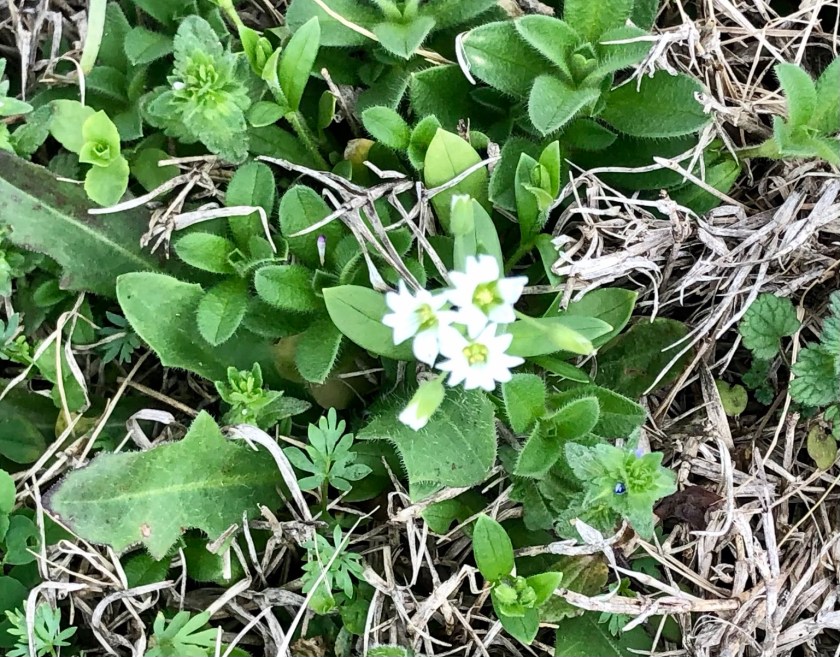
Chickweed in bloom.

So, I went off to search the internet and look at that. I found an article that told me chickweed is not native, but is good to eat for us humans, too. It’s chock full of vitamins and minerals. Most important:

Chickweed is also grown as feed for chickens and pigs, hence its common names clucken wort, chicken weed, and birdseed. Wild birds also love to eat chickweed seeds.

Read more at Gardening Know How: Can You Eat Chickweed – Herbal Use Of Chickweed Plants 

Well, there ya go. I used my brain and got my answer. It looks like I’ll have plenty of bird-watching fun for the next few days, right out my little window. Chickweed is my new friend, and officially a wildflower and NOT a weed (even though I already figured it was).

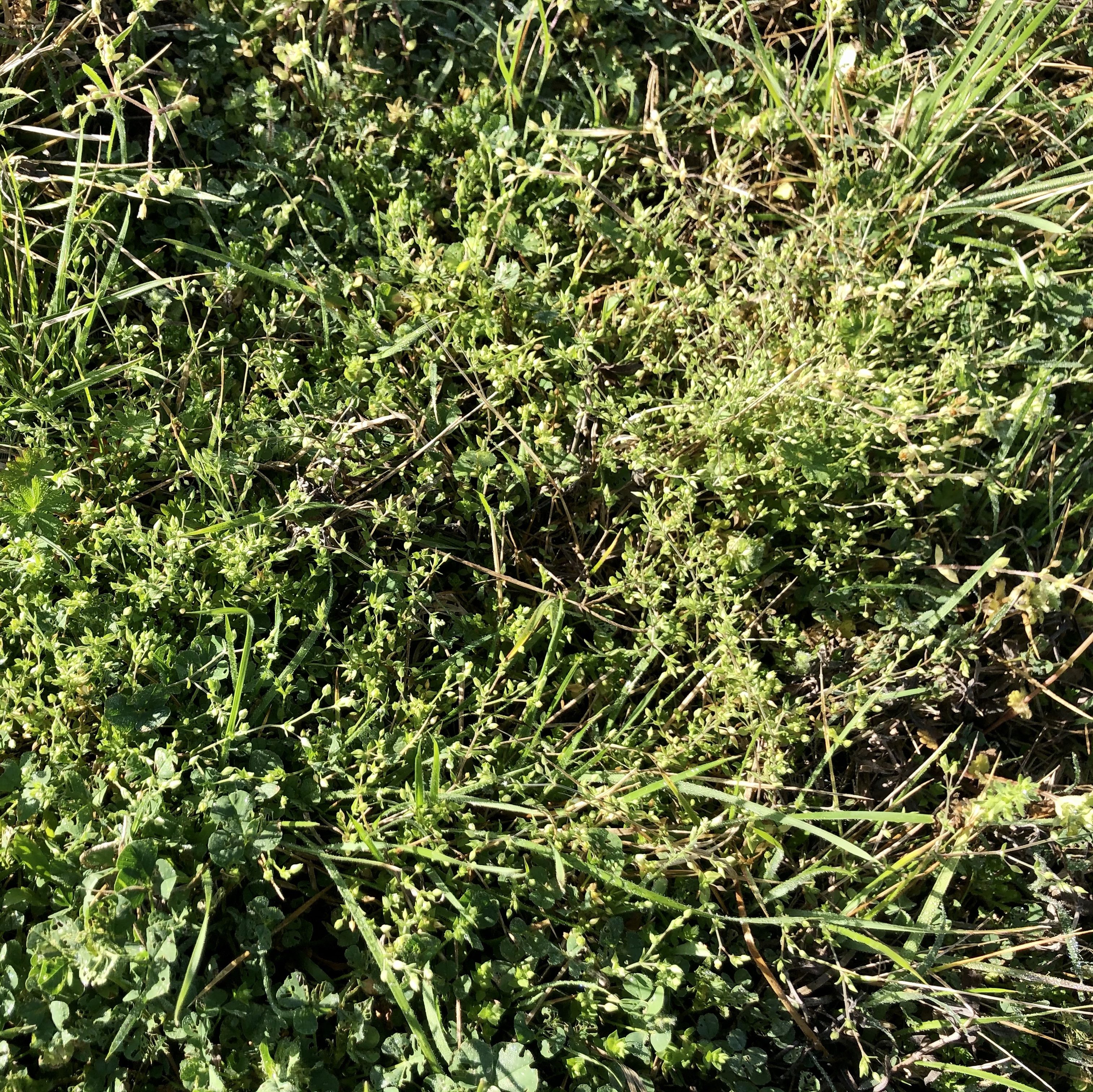
This is not fascinating, but does show some chickweed seed heads.

Anything exciting going on where you are?


Don’t forget that if you like my blog or podcast and want to be one of my supporters, I’ll be grateful and give you a shout-out!