This is me sending you peace and kindness at the solstice. Have a cool Yule!
Yule greetings to all you blog readers! Thank you for being there, and for brightening my life with your likes and comments. I wanted to send you a personal Yule greeting, since my work commitments didn’t allow me to write cards or anything.
This time of year always makes me feel closer to the rhythms of the seasons and to the wonders that the Earth keeps showing us. As the morning sun came into my east-facing window today, I marveled at how far the sun moves between the seasons. And then I thought of my southern hemisphere friends who have the same marvel, only on their longest daylight of the year.
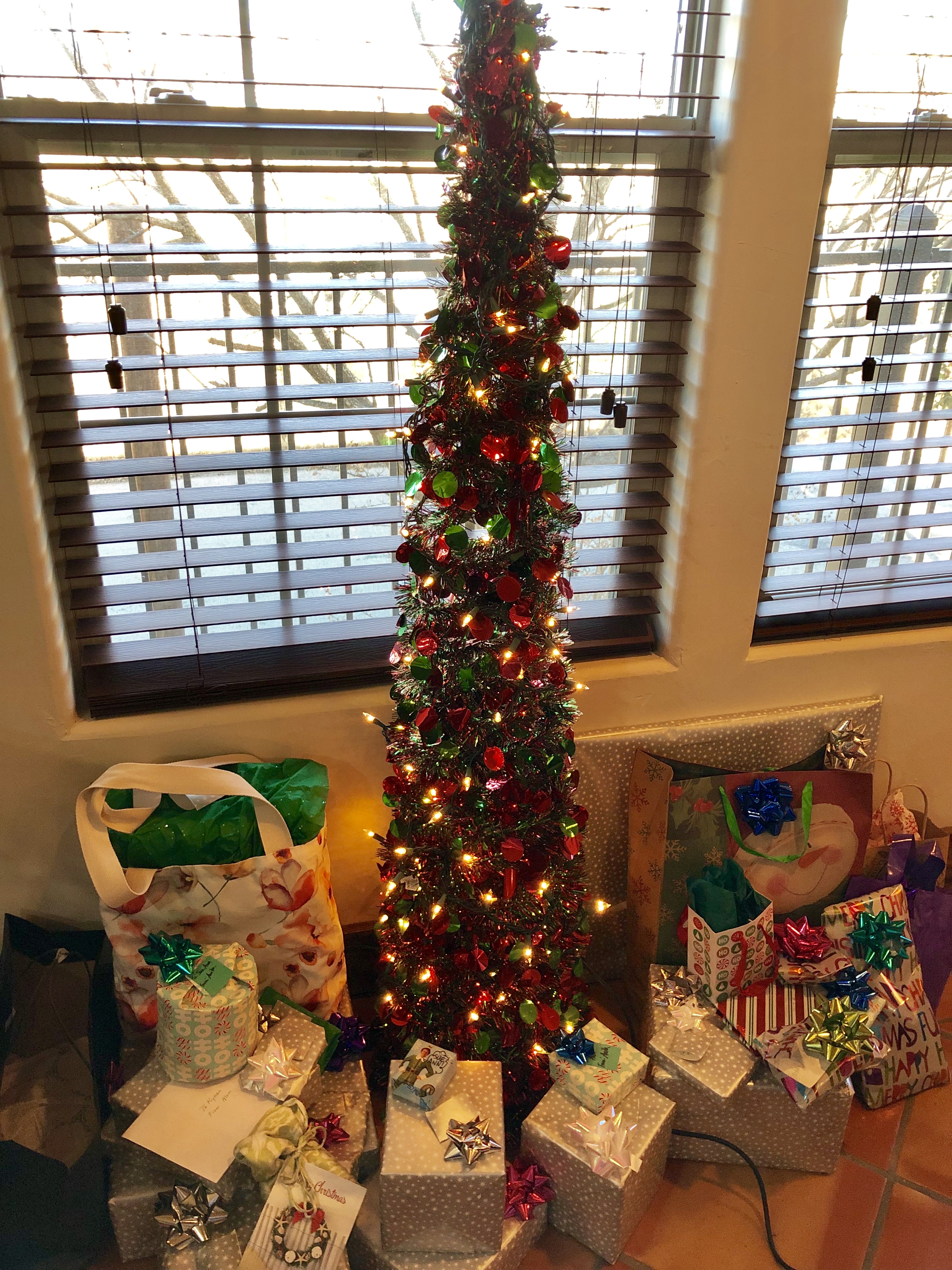
Our small but bright portable tree makes the dime-store bows sparkle merrily.
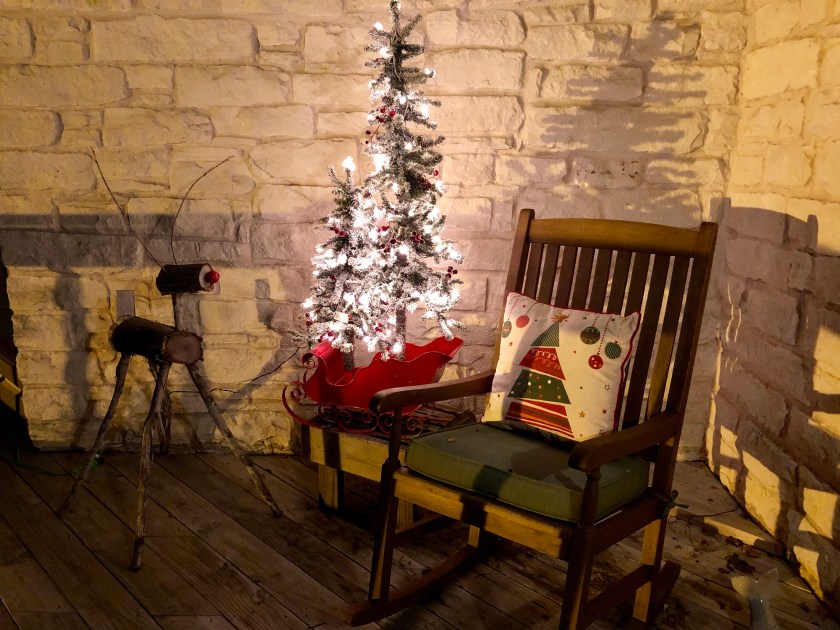
This year in particular I have really appreciated all the holiday lights around homes and businesses. They honor the ancient traditions of burning special fires (Yule logs, outdoor trees with candles) to make the dark days cheery and bright. I have my pop-up tree here at the rental house, but I know my solar lights at the ranch are greeting passers-by, and our sleigh of trees cheers up the Austin house.
Anita and I drove around our Austin neighorhood last week and oohed and aahed just like when we were kids riding around with our parents. I remember that my mother really loved to ride around Gainesville, Florida to look at lights way back in the 60s. No innflatable Star Wars characters or projected lights on houses back then, but w did enjoy silver trees in people’s windows, and lots of huge electric lights. (I will share Fredericksburg lights, and I hope lights from Johnson City later this week!)
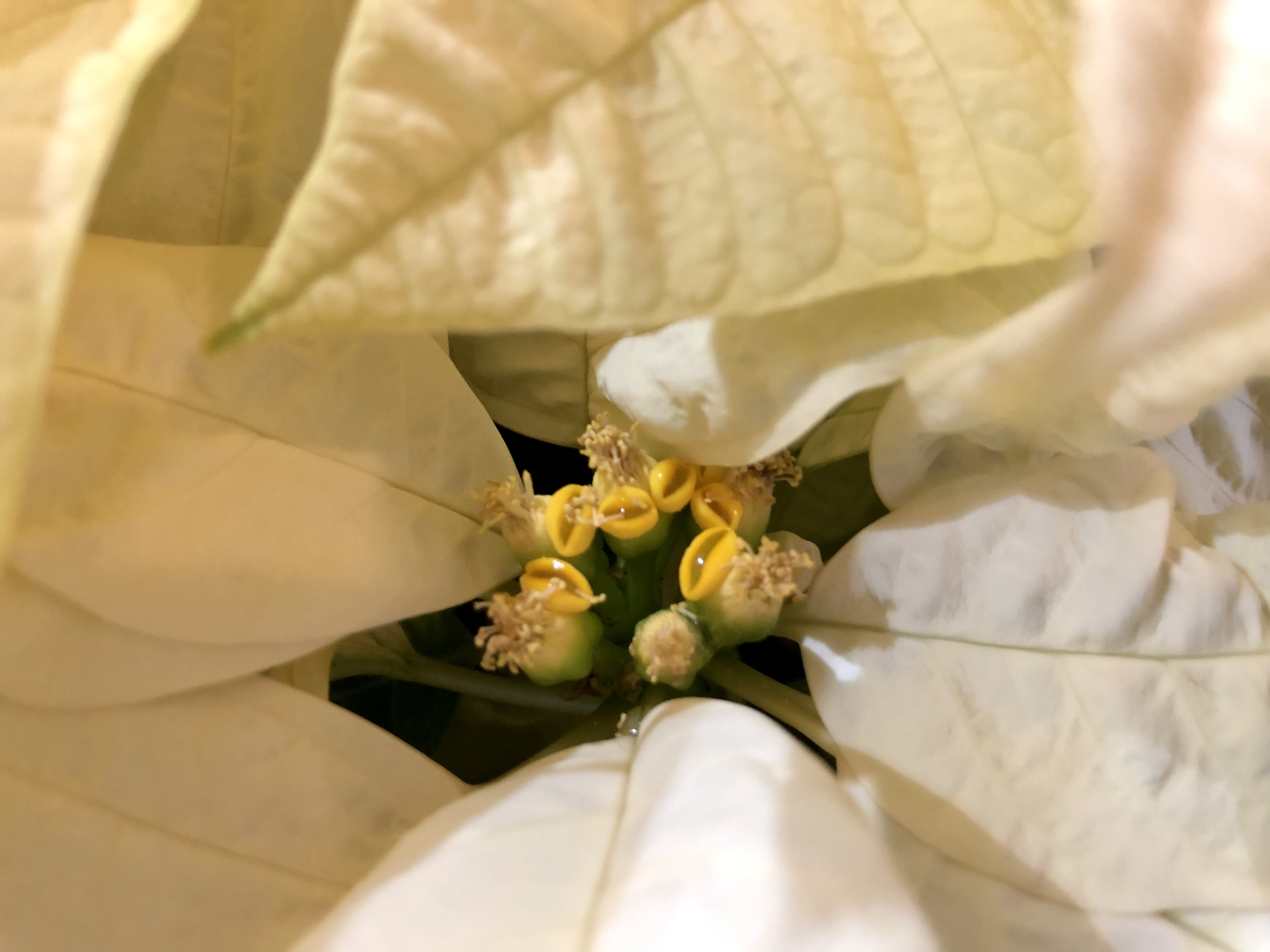
I’m captivated by the shiny highlights in the flowers on the poinsettia. As all us fans of botany know, those white things are leaves.
Even in winter, there is much beauty to be seen, so I am wishing you the time to take a look around you and savor the changing seasons with your own family, friends, and communities.
PS: I have a whole bunch of subjects I want to share, so get ready!
It’s been raining since yesterday afternoon. Apparently a big cold front is on its way, so I should be glad it’s not snowing. Nonetheless, I’ve been wandering out in the rain looking at houses and such.
Because I love you, my dear blog readers, I even went out to check what’s blooming and interesting in this soggy soil.
The first paperwhites struggle to hold their heads up in the rain.
I was so overjoyed to look out behind my office house to see that the paperwhite narcissus (narcissus papyraceus) were blooming that I ran through a LOT of puddles to take a photo and pick a stem. Glad I am wearing my fabulous waterproof shoes.
They look pretty droopy, but they tell me that in a week or two it will be glorious back there. I hope my friend Martha likes them, since she’ll be living in this house soon!
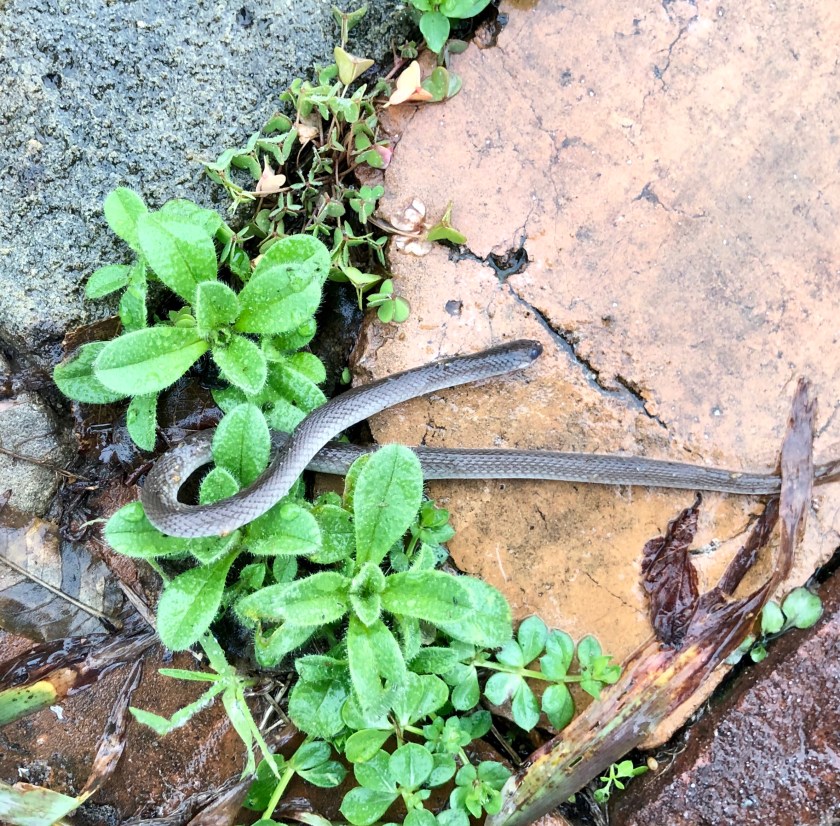
This little guy is only like 8 inches long, at most.
On the way back in I saw this poor, damp baby snake. This is not a great time of year for snake birthing. Maybe it’s an adult of a small species. It was identified by iNaturalist as a rough earth snake; at least that was the closest one I found. I hope it makes it to a warm den.
It is the time of year when some of us go a little crazy with decorating for the various holidays involving bringing light to the darkness in some way or another (Christmas, Yule, Hannukah, and more). Seeing all those lights, candles and blow-up characters does life one’s spirits when driving home in the dark. (I admit, I’m actually more fond of lights and less fond of blow-up things, which look so sad during the day when they are deflated.)
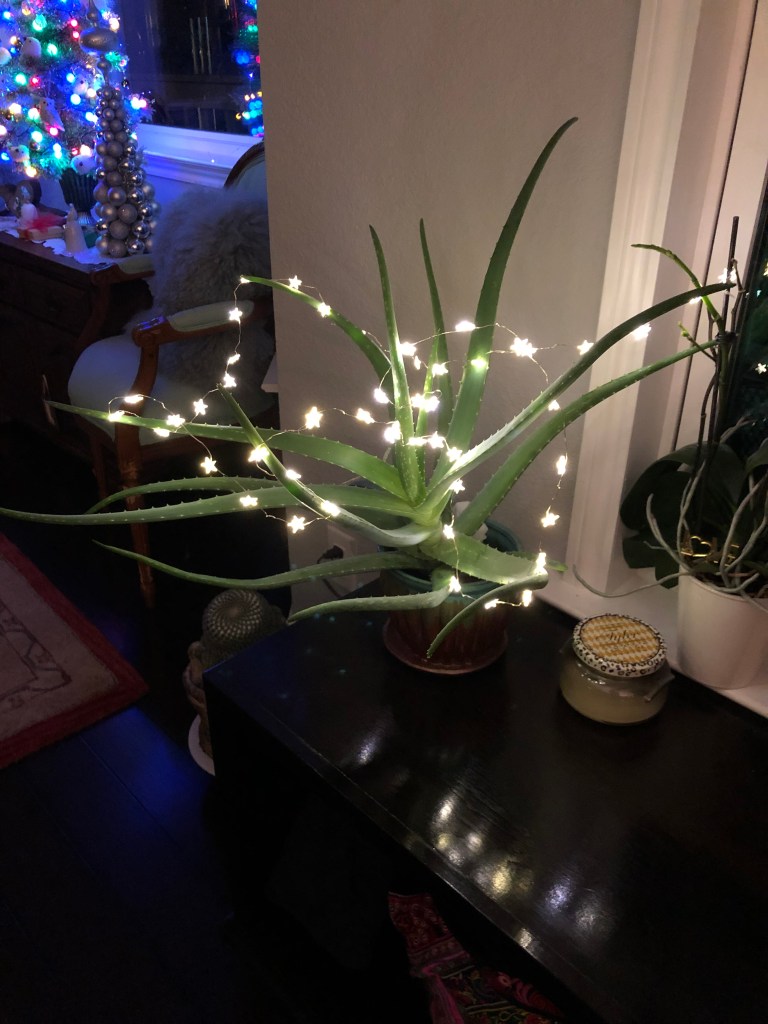
Never thought I’d decorate an aloe plant.
This year, we’ve brought more light to the darkness than usual, thanks to our love of battery-powered lights and a gift of a lot of regular lights that my coworker no longer wanted.
After this photo, I also electrified Rudolph. We have so many lights.
We did put a few lights on the deck and door, but most of them are in plants, both outdoors and indoors. I even bought NEW plants to stick lights on (and I hope they will live a long time and decorate the house the rest of the year, too).
That’s the question I asked myself this weekend. So I wandered around with my head down to see what’s there.
I
Speedwell is so tiny, but it lights up the ground as it opens by midday.
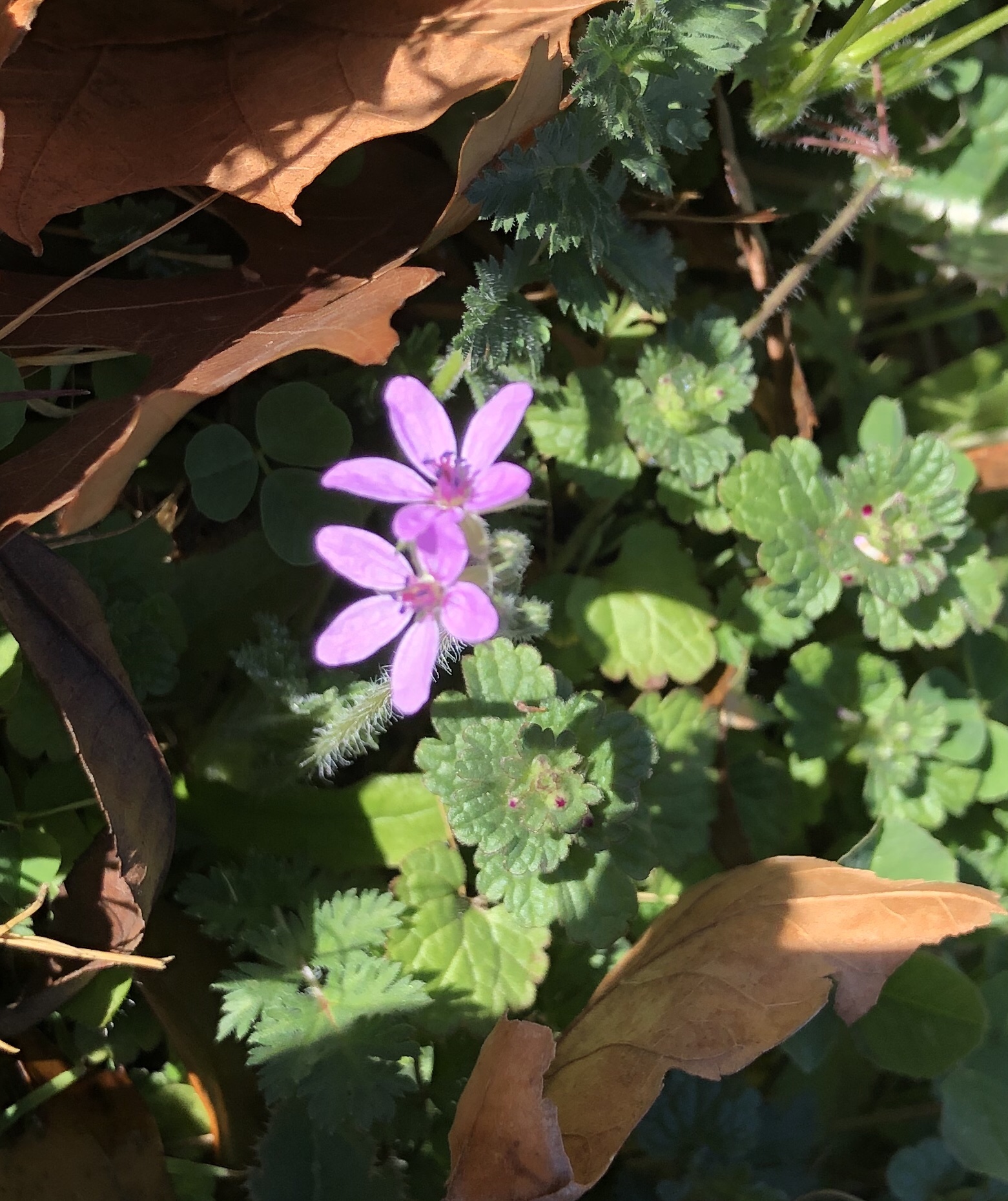
was surprised to find the lawn (sorta) around our old church property blooming away. Granted, they were tiny wood sorrel, blue speedwell, and pink storks-bill flowers, but they were enough to keep at least four kinds of small butterflies happy.
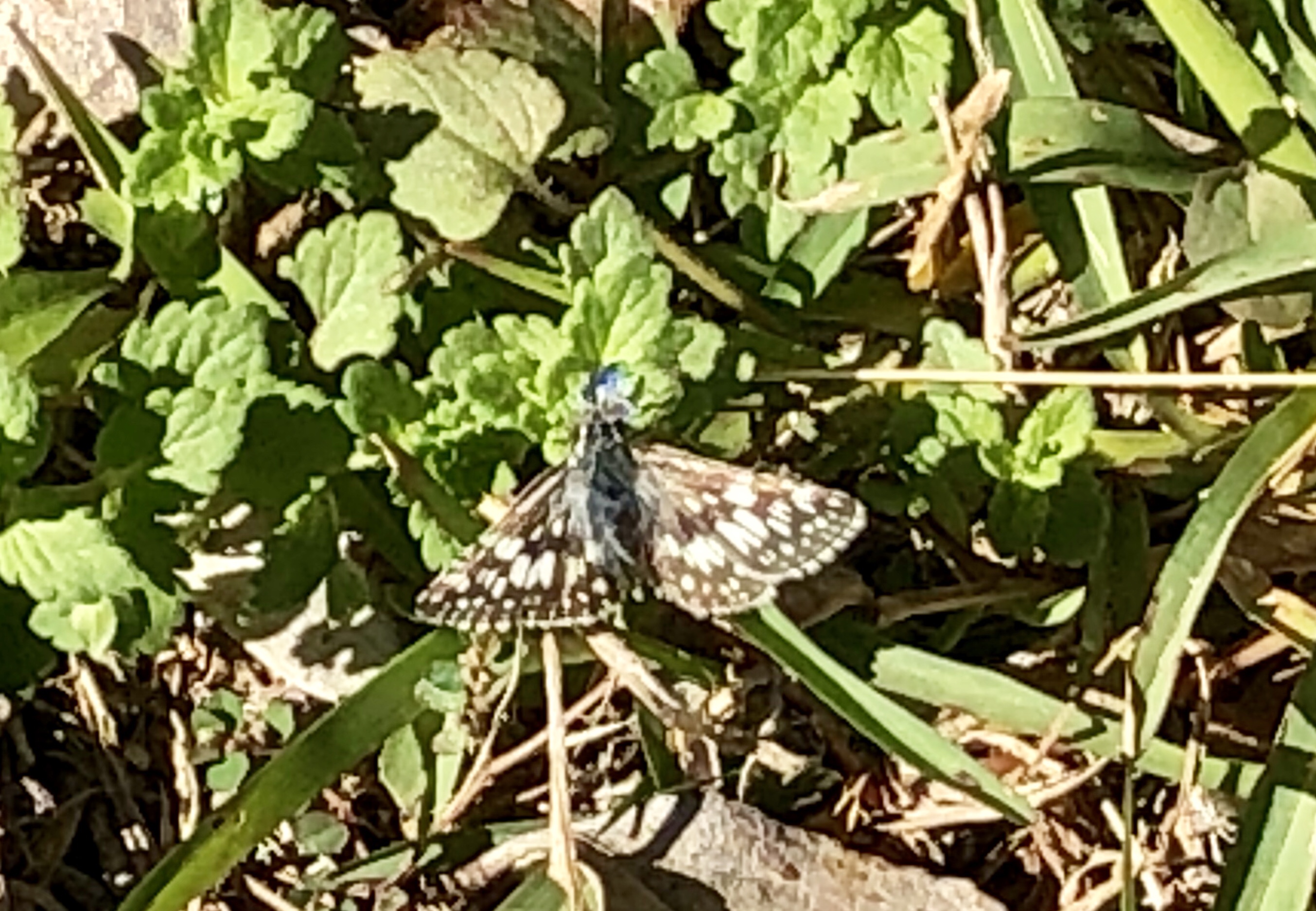
These are prettier in person. Their bodies look blue.
I saw lots and lots of these lovely tropical checkered skippers, plus elusive little sulphurs and a hairstreak. And my friends the fiery skippers still are hanging around. Not bad for December.
The fiery skipper loves the wood sorrel.
Looking Up
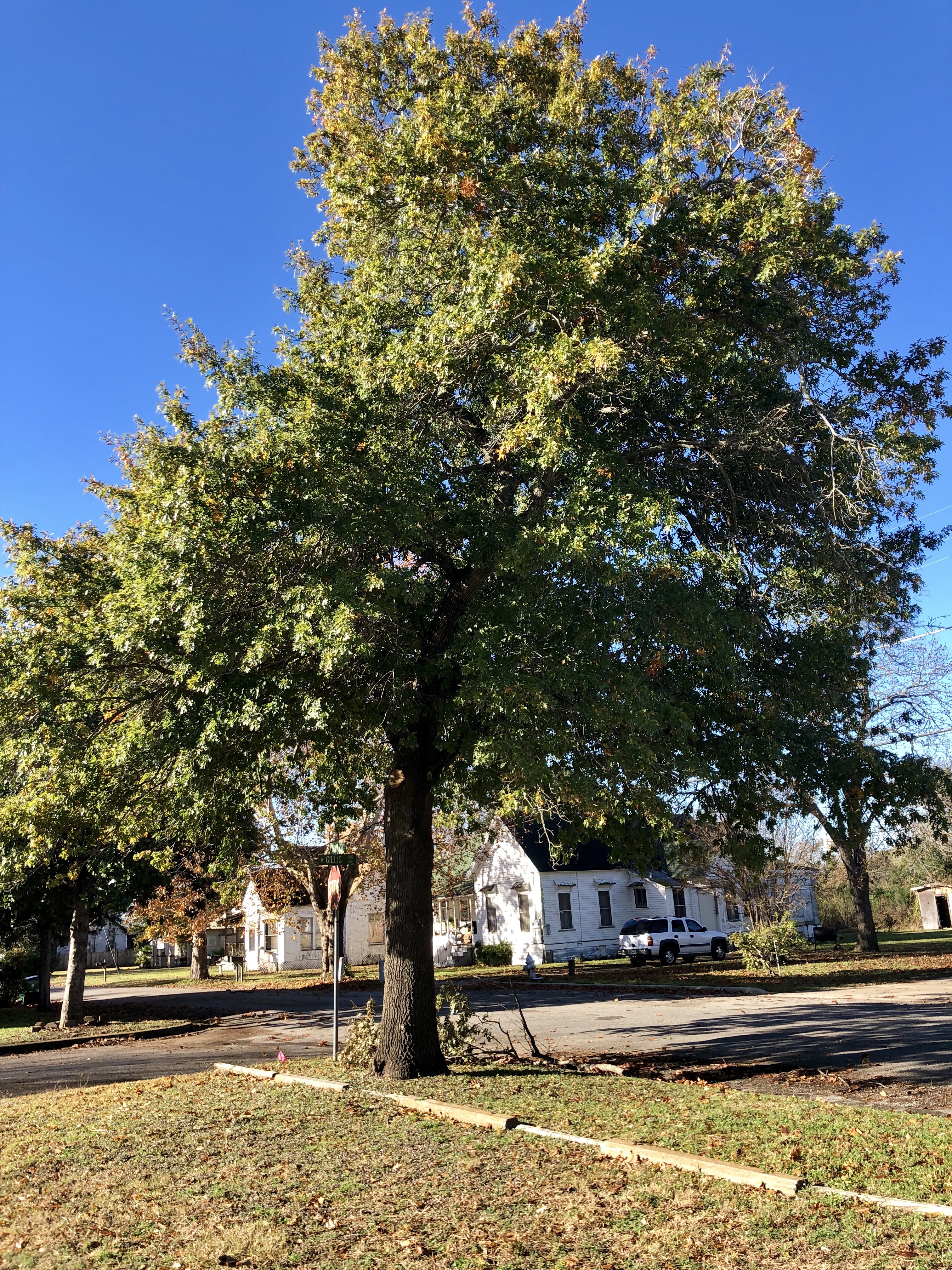
When I looked up, I noticed the big oak tree (the only tree on the property) seemed to be shaking, even though there was no breeze. Then I heard a whole lot of chattering.
The tree is holding up well, even though it lost some limbs in recent storms.
The tree was filled with fat, happy squirrels. They ran up and down, jumped over branches, and tussled.
I’m a happy rodent.
Why were they so happy? Well, it’s autumn, and this tree alone has provided enough acorns for an entire city of squirrels. Why go elsewhere?
The ground is solid acorn. Busy tree.
I wish you the bounty and happiness these little guys have found. I also hope you are finding the life and beauty wherever you are. It’s there!
I actually think I’ve discovered the key to indoor plants: the right light. Duh. I know I’m not the first person to say that. Right? If you’ve ever read a plant book, I assume you’ve read about light requirements.
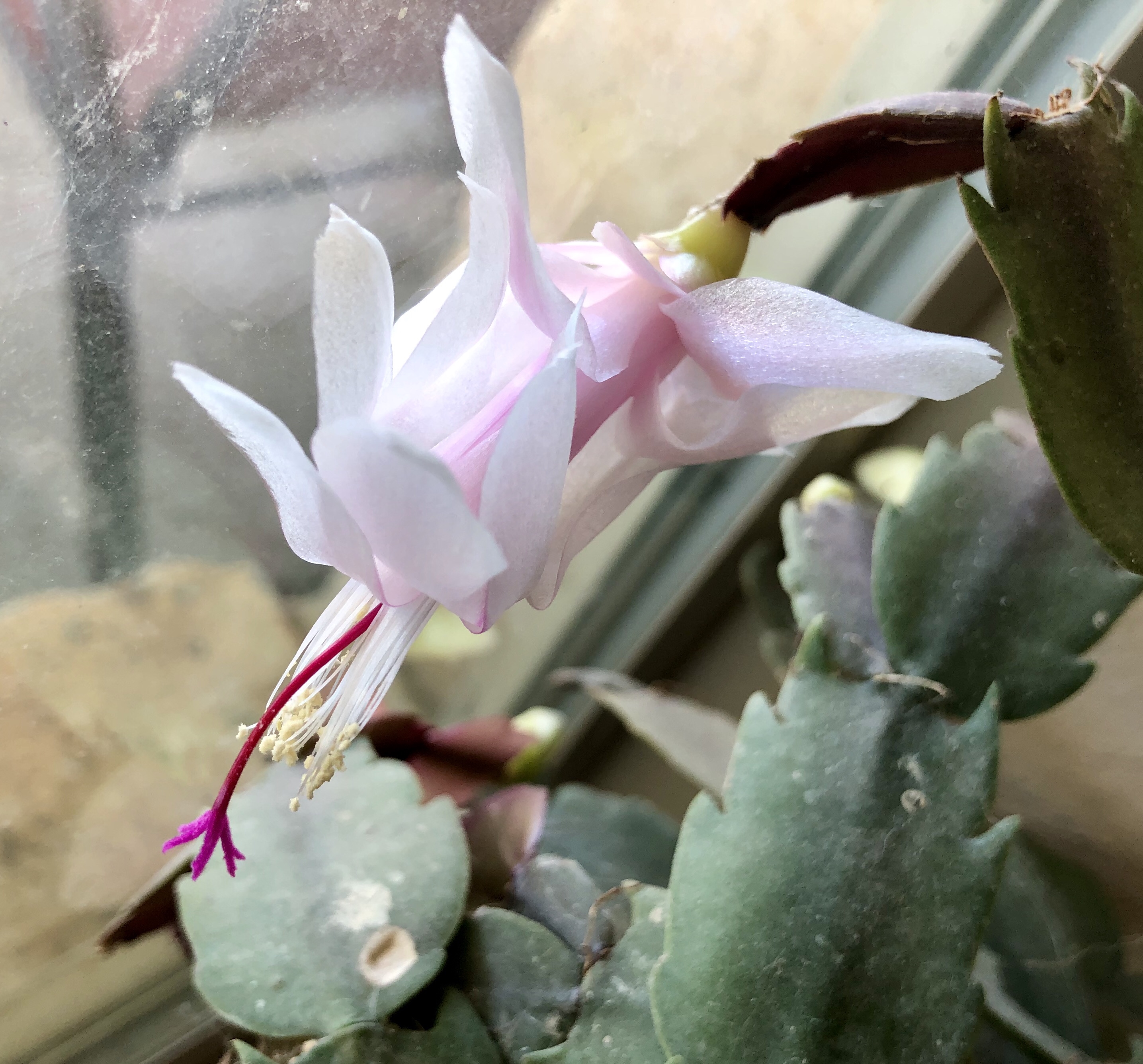
The white blooms with pink stamens are so lovely.
I did well with the orchids in Austin, but I have come to realize I finally got my Christmas cactus in a place they like.
This one is peachy white. Maybe I need to get a standard pink and peach one to go along with these two.
They didn’t bloom much at my old house, but since I set them in this window that gets bright light at the ranch, they’ve been really happy.
The first year we were here, the big one got over-watered and I thought it was dead. But nope! It’s white flowers bloom first, then the pink ones will show upon January (two plants are in there).
So many friends have very old Christmas cactuses, and I hope these live to a ripe old age. I was sad to lose my very old ones when we moved to Texas, but now I’m doing well again.
Share your stories of these beloved plants in the comments, if you want to.
One of my reblooms from earlier in the year. The white one is budding again. The purple one has added new buds to the end of the stalk in the photo.
I come from a long line of plant lovers. Both of my parents had the green thumb gene, so I grew up in Florida surrounded by beautiful plants and flowers. While my dad focused on the lawn and large plantings, in her later years my mom concentrated on a beautiful collection of orchids that she grew on a patio with a slatted roof that my dad had built for her.
Lynn and me in 9th grade.
During those years, one of my dearest friends was Lynn McCrain. We spent a lot of our early teen years at each other’s houses, talking about horses and painting our nails. Naturally, our parents got to know each other.
My mom and Lynn’s dad discovered a shared love of orchids. The two of them took great pleasure in each other’s discoveries, shared plants and tips, and made both of our homes more beautiful. When my mom passed away in 1984, my dad made sure Mom’s orchids made it to the McCrain house.
Lynn says this one also smells good. Wow.
Fast Forward!
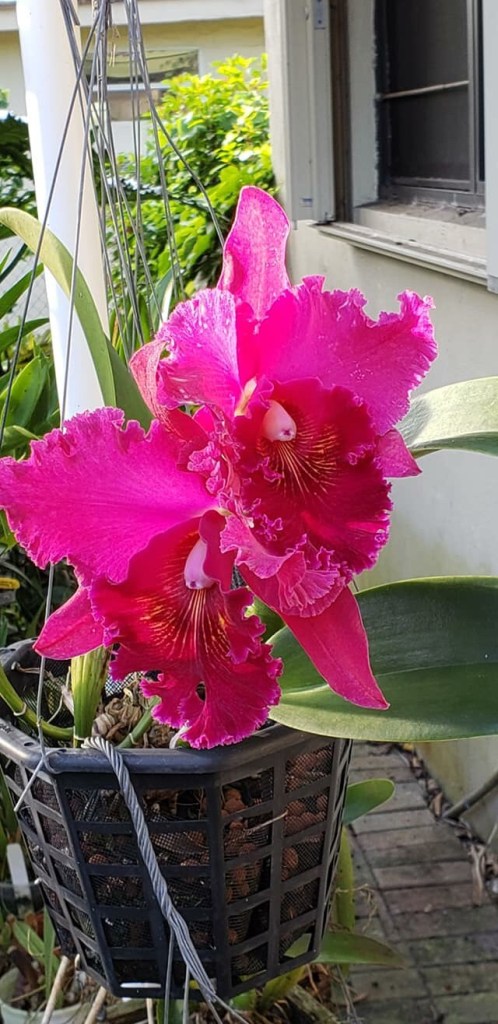
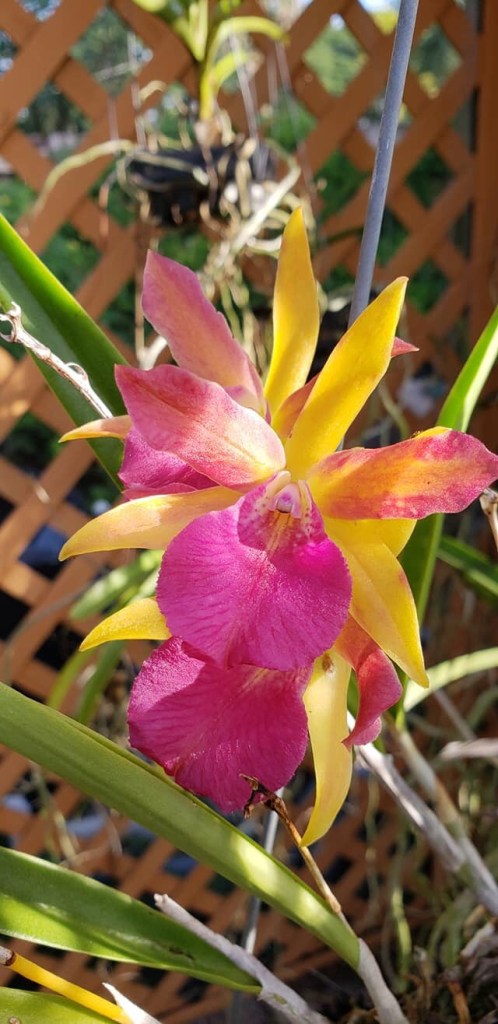
Many years have passed, and Lynn McCrain Molitor still lives in her old neighborhood, and she is still my dear friend. Also living with her are many, many amazing orchids in her beautiful yard, some of which I’m sharing here. I have taken great pleasure in seeing Lynn’s orchid photos on Facebook, every time thinking back to our parents’ shared love.
These colors in another of Lynn’s orchids could not be prettier.
I thought the green thumb gene had mostly eluded me, especially when it came to orchids. I love plants, but am better with wild ones. However, things have changed for the better.
These also smell good, according to Lynn. I want more of this kind, some day. I like the clusters.
The orchids I’d tried to grow in Austin did okay, but never rebloomed, even when I followed instructions. But, once Anita and I moved to the little Villa Park casita, I started to get reblooms on the phalaenopsis (that’s mostly what I have; things from the grocery store).
This is the orchid that just finished blooming and is already at it again. It’s white with purple inside.
And now that we are in the Bobcat Lair house in Austin, I’m beginning to feel like I could start my own McCrain-style jungle. All I can figure is that the large and very expensive argon-filled windows on the east side of the house are orchid heaven.
These new buds were not there when the plant originally bloomed!
They aren’t even pausing between reblooms. One I just got at the grocery store is already putting out a new flower stalk. Another lovely little purple one finished blooming, then pushed out new buds on the same stalk.
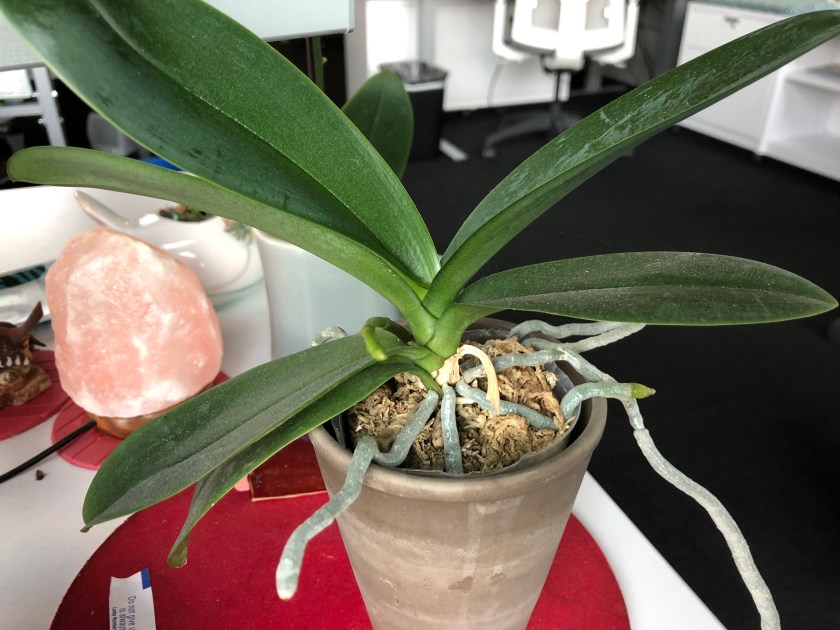
It’s small, but it’s a bud on the work orchid.
At least I THOUGHT it was the windows at the house. Early this week I looked over at one of the little orchid plants I have at work, and by golly, there’s a new flower stalk coming up.
Plus
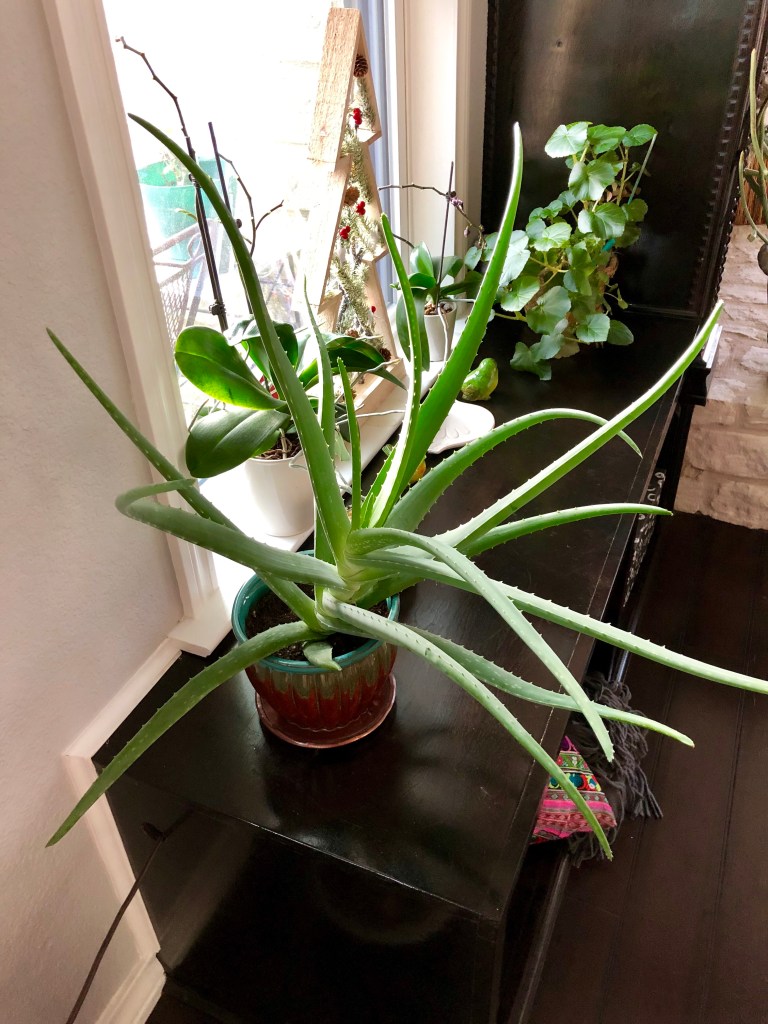
Actually, all the plants in the Austin house are extremely happy. I planted a small aloe plant to sit in the kitchen bay window where I keep small plants. After a few months I realized it was taking over the window. We just had to re-pot it because it had become top-heavy. It looks as good as the ones my mom used to grow in the ground in Florida. Maybe it will bloom, too!
The aloe plant that wants to take over the house.
Sigh, it really pleases me to see that Lynn and I are carrying some of our parents’ legacy on. I hope some of my plants last as long as Lynn’s.
I interrupt my sharing from the conference I attended to share what a lovely afternoon my spouse, dogs and I had at the Hermits’ Rest yesterday.
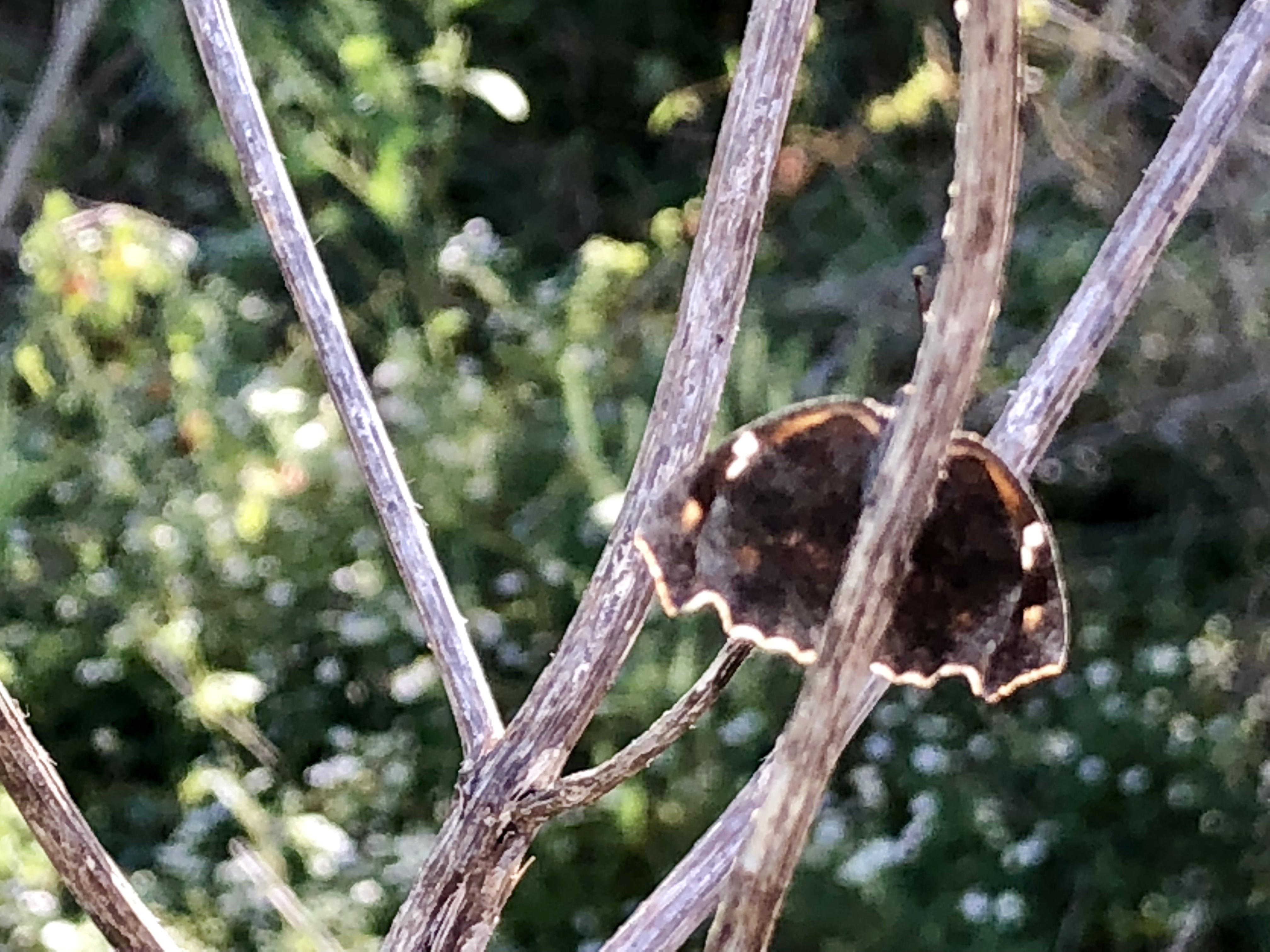
This is the back of a red admiral butterfly. I just love how this photo came out.
I came home from work, and just felt like taking a long walk. I gathered a few dogs and started my usual route around the property. As I went down toward where the arroyo stream meets the woods, something smelled wonderful. I realized it was a large bed of fall asters. The little valley had trapped the aroma.
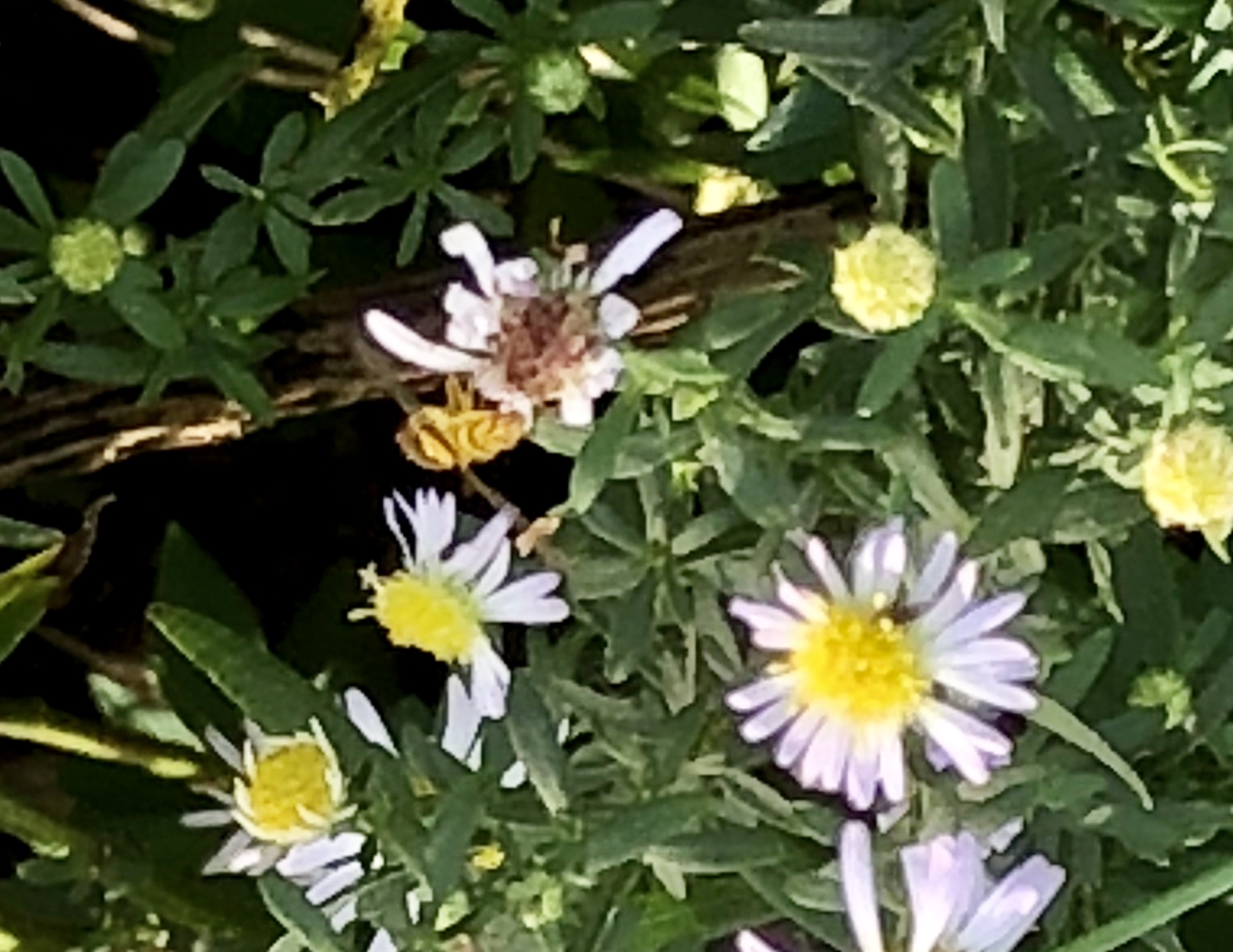
Asters and small bees.
The aroma had attracted more than just me, too. The flowers were literally abuzz and aflutter with bees of all sizes and at least six types of butterflies. I was really happy to see Lee come down to see me, so he could enjoy the sights, smells, and sounds with me.
The monarch was in flower heaven.
I really didn’t take all that many photos, because we were just observing. Still, I have to share that we got at least one migrating monarch in the bunch! There were also Gulf fritilaries, a red admiral, fiery skippers (lots), and some painted ladies.
This lush, moist, fern-covered scene is typical in the preserve.
My next Master Naturalist conference field trip was to see the part of the Balcones Canyonland Preserve that abuts Concordia University, in the beautiful western hills of Austin. This area is full of endangered and rare plants and animals, including the beloved golden-cheeked warbler (who is not here right now). In addition, this series of preserved areas is interesting because it’s administered by multiple agencies, which is unusual. It’s also very big, as you can see from this interesting map.
So, an intrepid group of naturalists took a van over to the beautiful Concordia University campus (it’s beautiful, because they made a ton of money when they sold their very valuable but confining old location and bought this large property with plenty of room to grow).
This is Jared. He learned about nature from his grandfather, who shared his Cameron property with him.
We were met by the people in charge of the piece of the preserve that we were going to tour, and some really nice student workers who all really seem to love this property and know a lot about it. One student even had roots in good old Cameron, Texas (shout out to the Davenport family). I really enjoyed talking to the young people about their observations of the area. If they keep it up, they will sure have a fun life ahead of them.
While we were exploring the Avery Ranch cave, I remembered where I’d seen other caves in the neighborhood over from the one we were in, Oak Brook. I suggested that, if anyone wanted to go look at other local caves, I’d take them there. Unfortunately, my memory issues made giving directions stink, and since I didn’t remember the name of the place we could not look it up. So, only one carload made it.
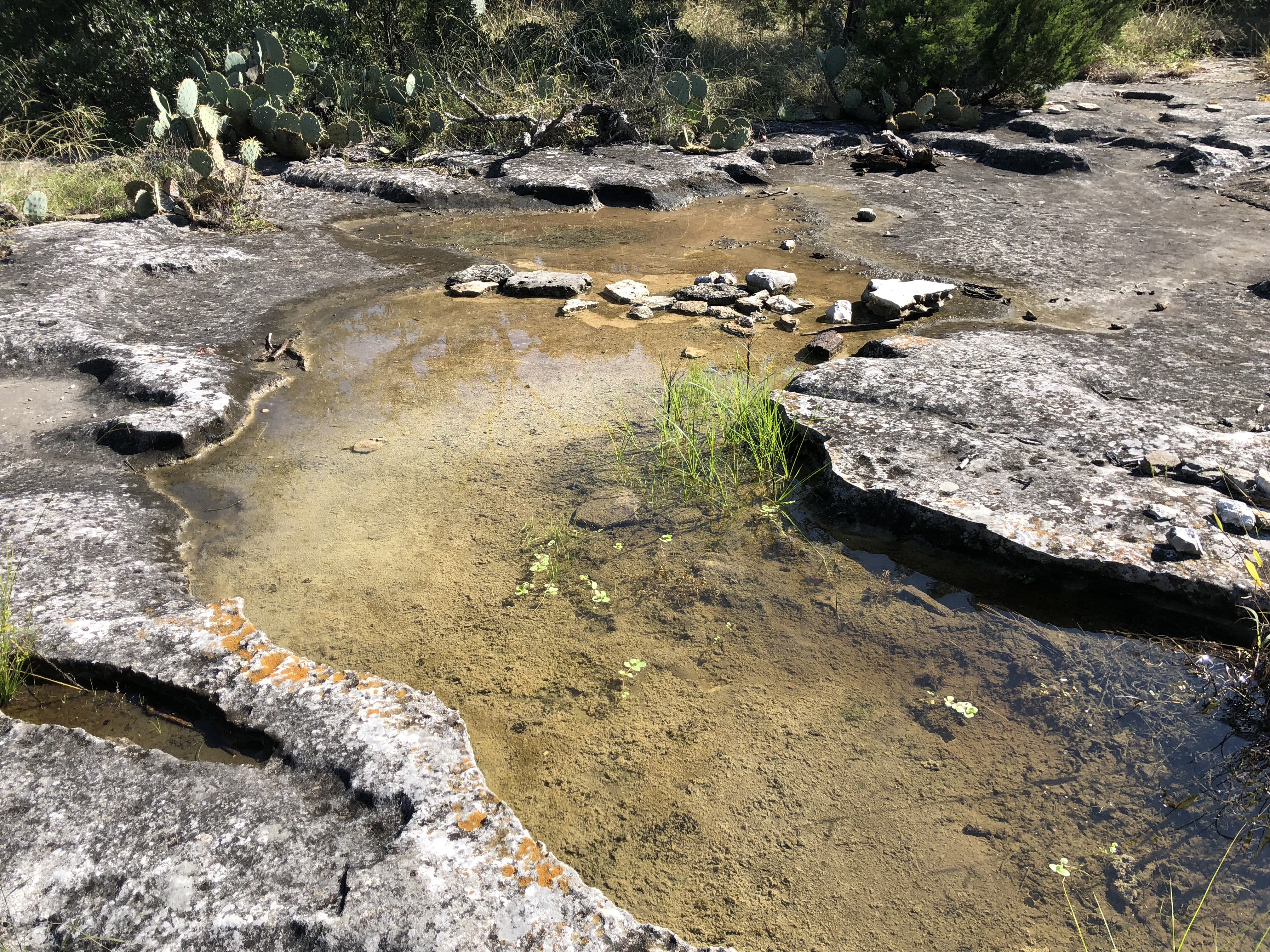
Typical karst pools that form in wet periods. I need to go back in spring to figure out what kind of little plants bloom here. They have yellow flowers and may be lichen.
However, we had a great time at the Oak Brook Karst Preserve once we found it. I have some bittersweet memories of this spot, because I used to go over there long ago, when I was sad about marital issues, to be sad where my kids couldn’t see me. I gave my troubles to Mother Earth, I guess. On a happier note, my traveling companions liked it for more Master Naturalist reasons—flora and fauna!


 What do you call these? Auralia?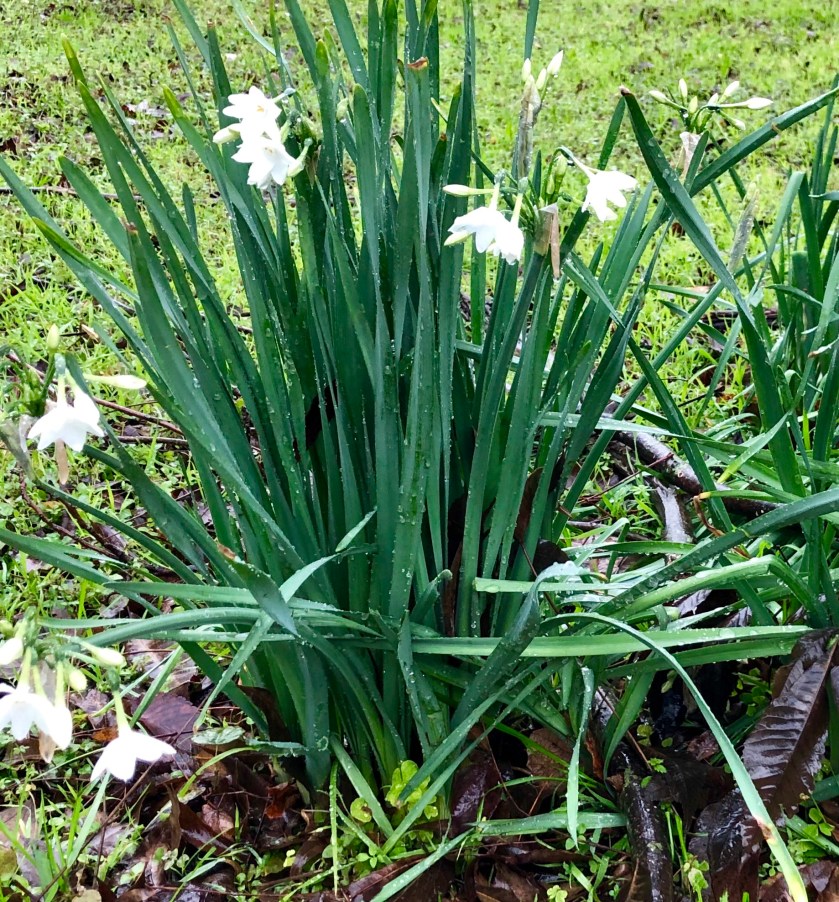











 The Hermits' Rest