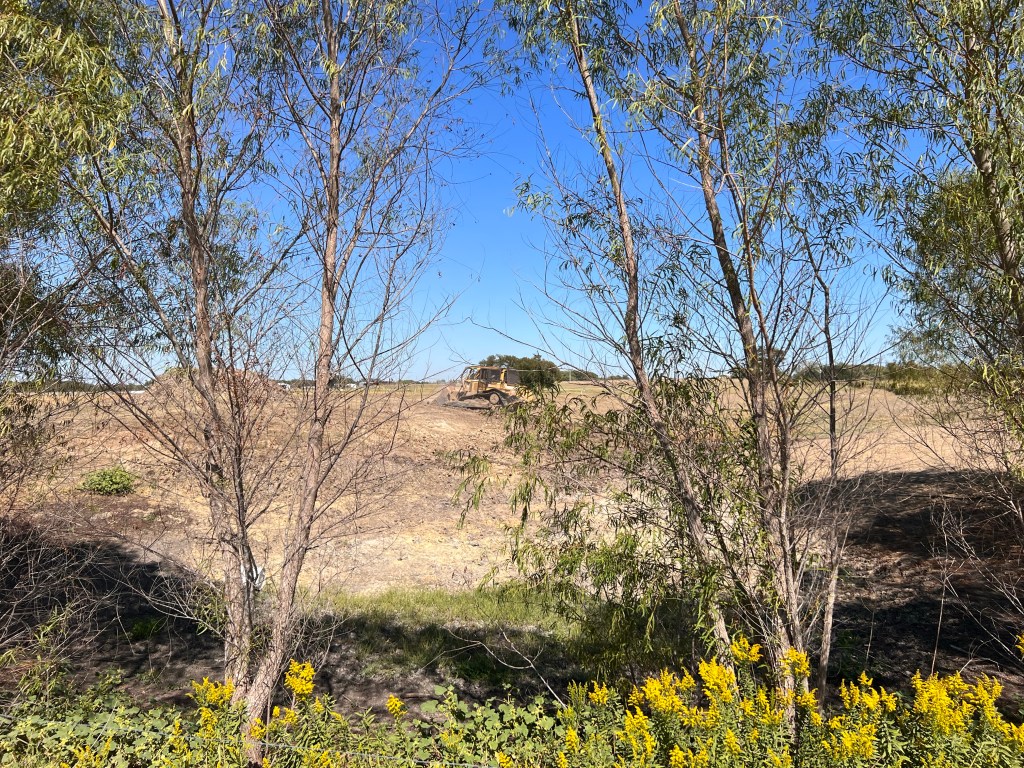
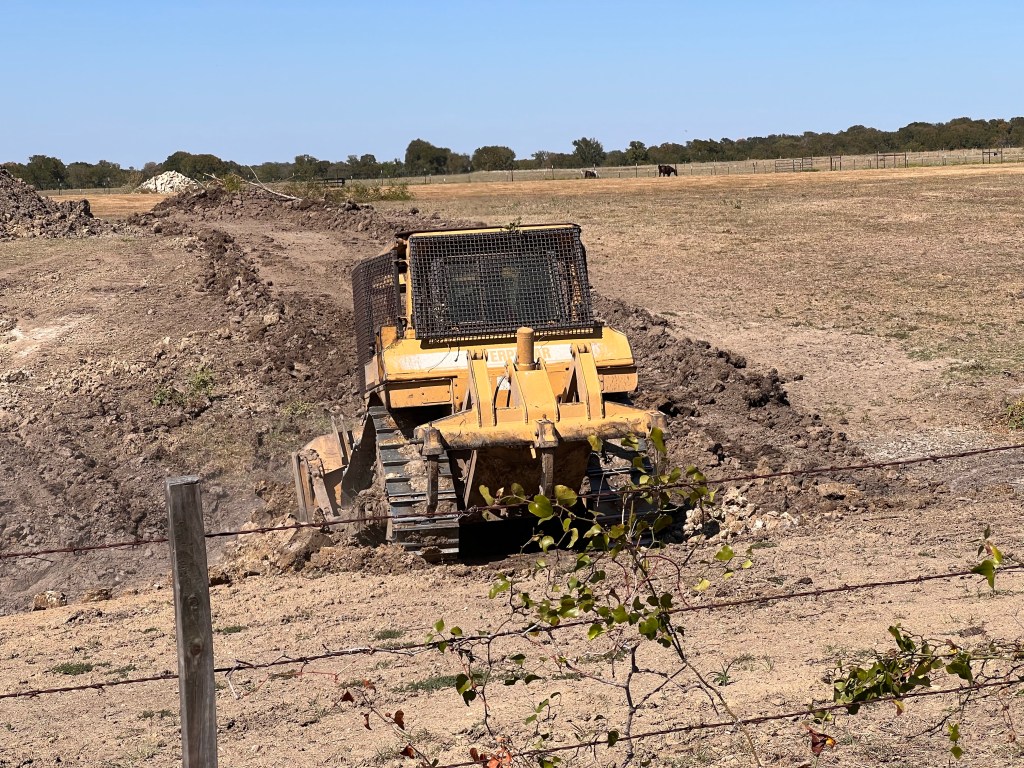
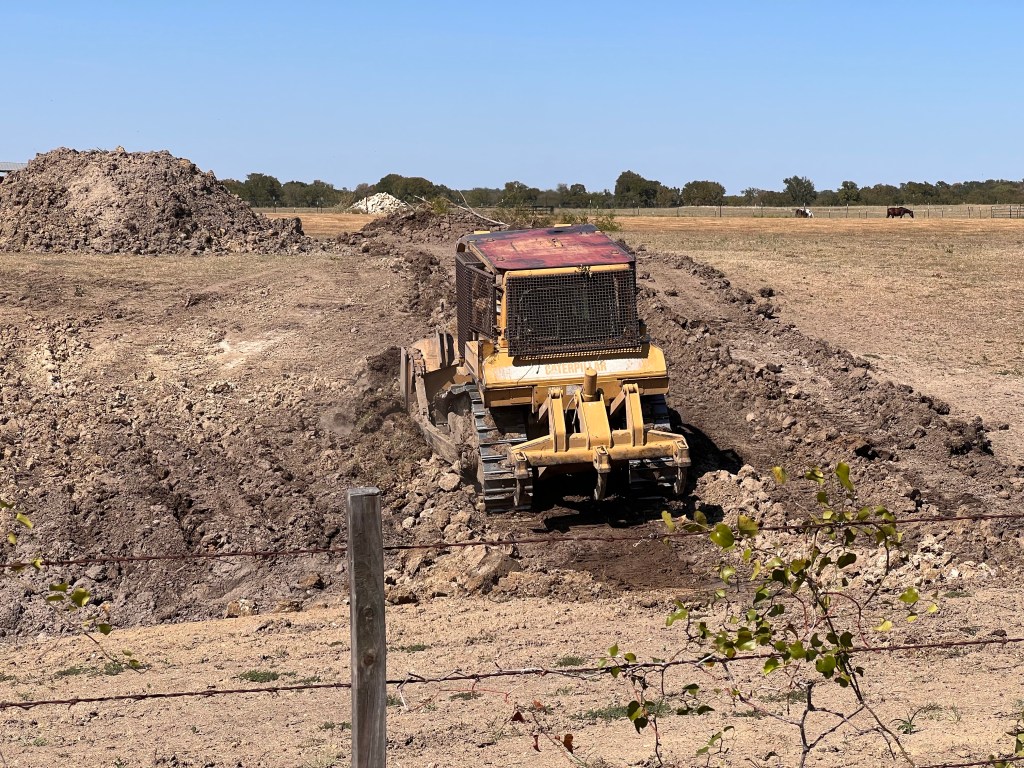
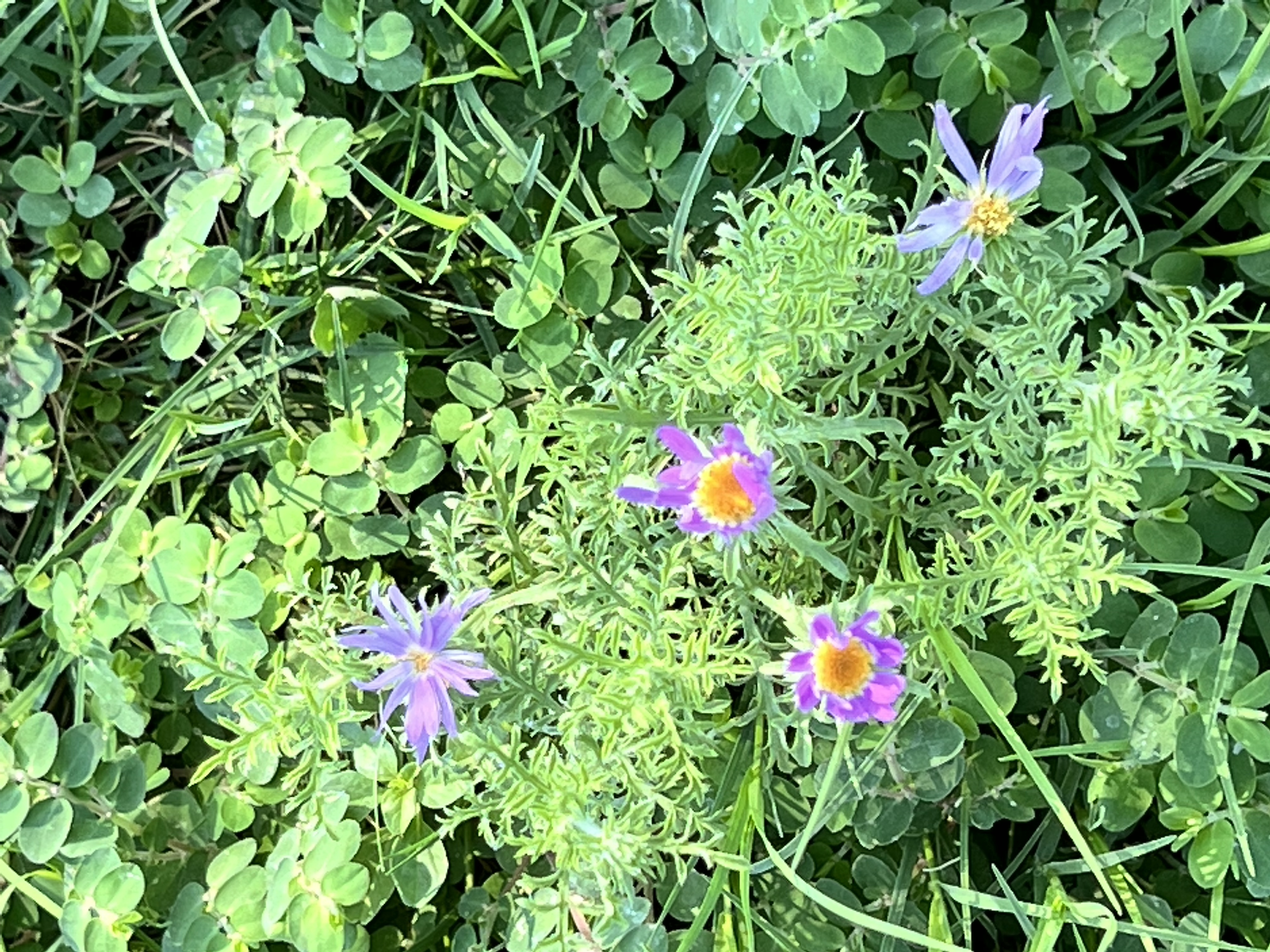
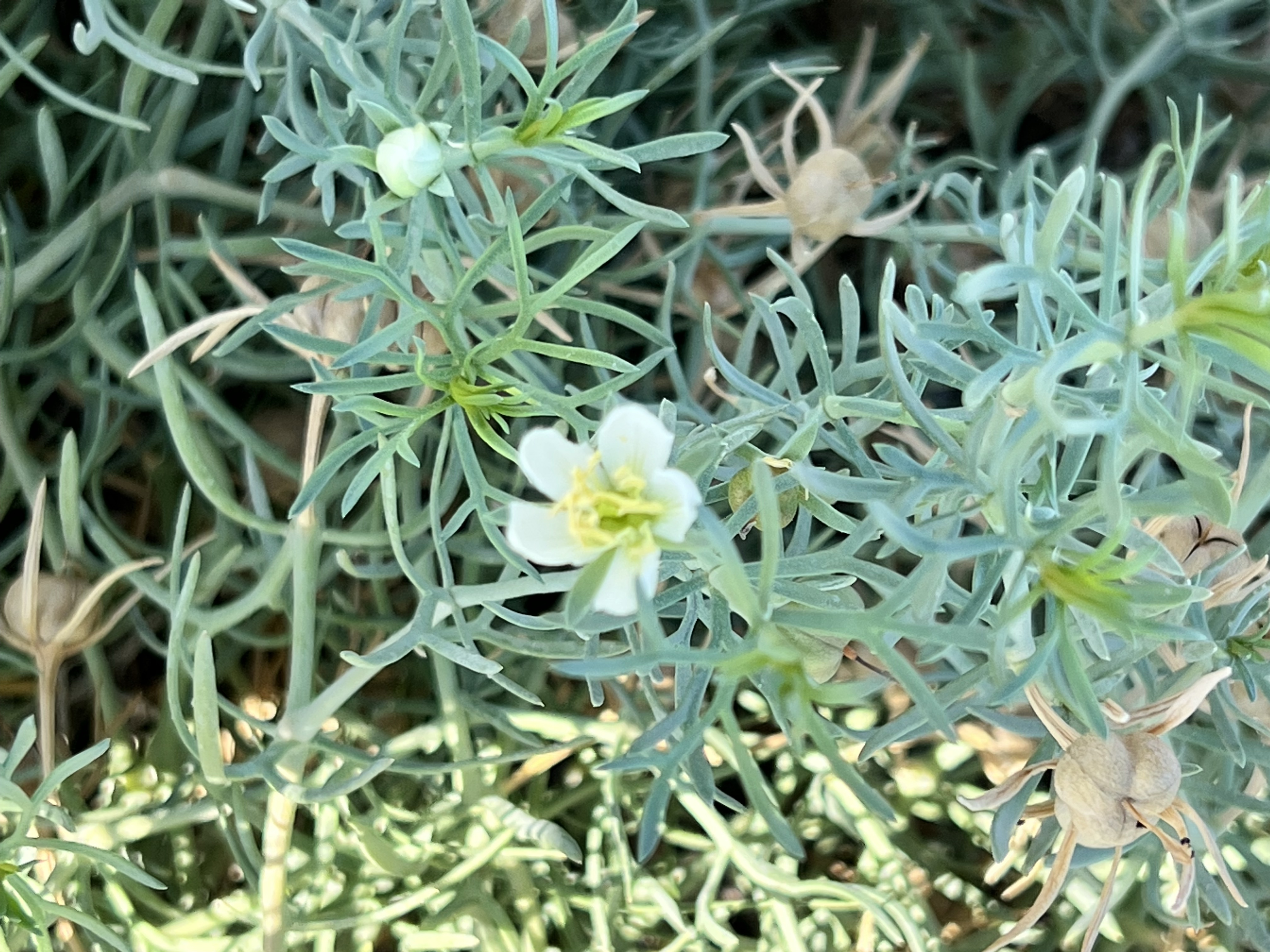
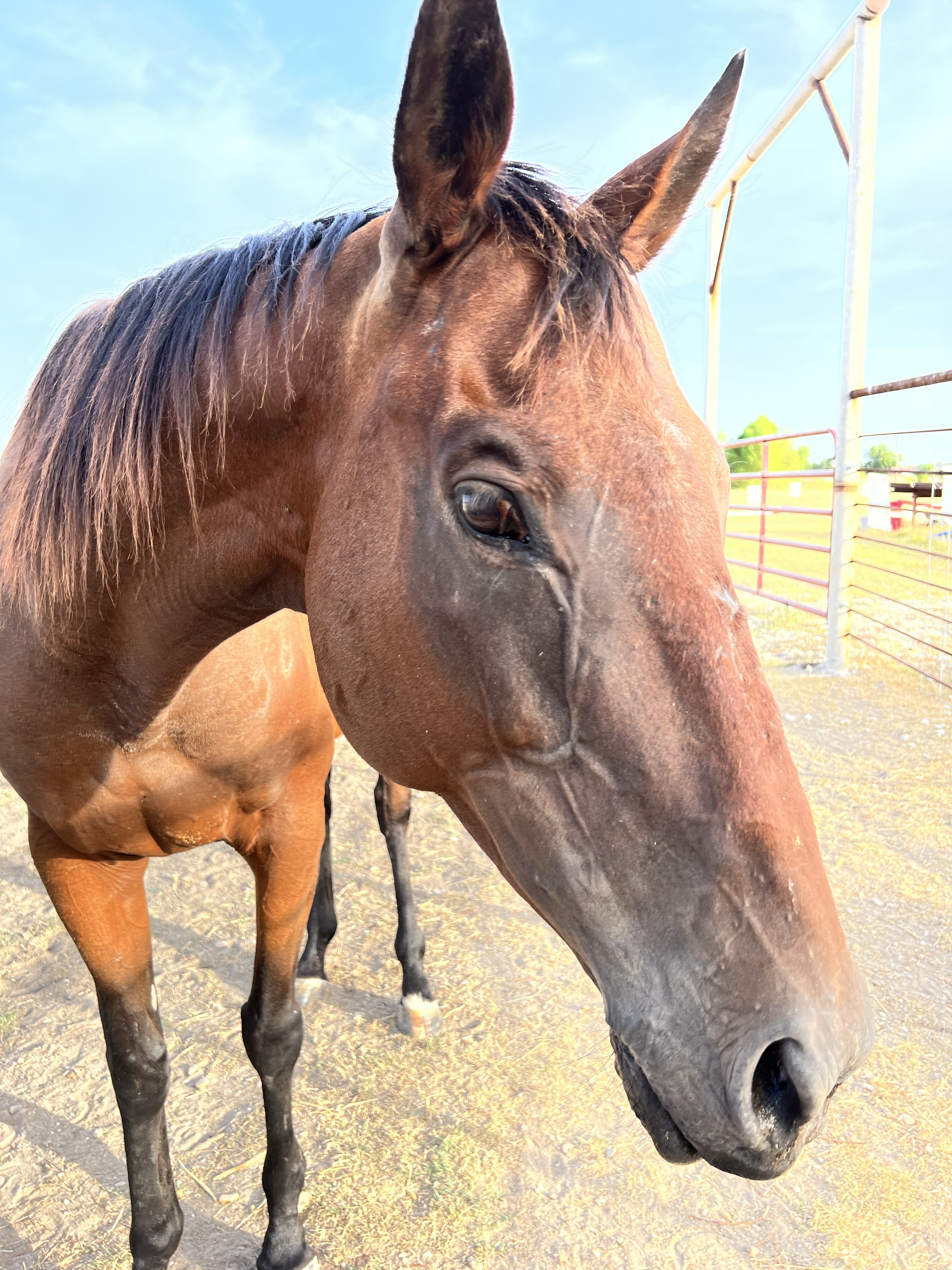
Hooray! I have a ranch project I can talk about! We’re getting the front pond dug out more, so it will be bigger, deeper, and hold more water. The pond was originally made from an arroyo (ditch) that made it hard to build a driveway into our homestead area. The dam is our driveway.
Removing willows that are in the way.
While it’s all dry, the tenants have had the ponds (cattle tanks) in the area between our house and the creek dug out. They silt up and need it every so often. since the guy already had the dozer here, Lee seized the chance to dig ours out, too.
It looked familiar, but don’t they all look alike?
It turns out the bulldozer is the same one that built the pond in the first place! The current operator got it from the previous guy when he gave up the dozing. It’s pretty cool! Plus the dozer guy (see, I’m not naming names) grew up right down the road, so he knows how the drainage works from first-hand experience.
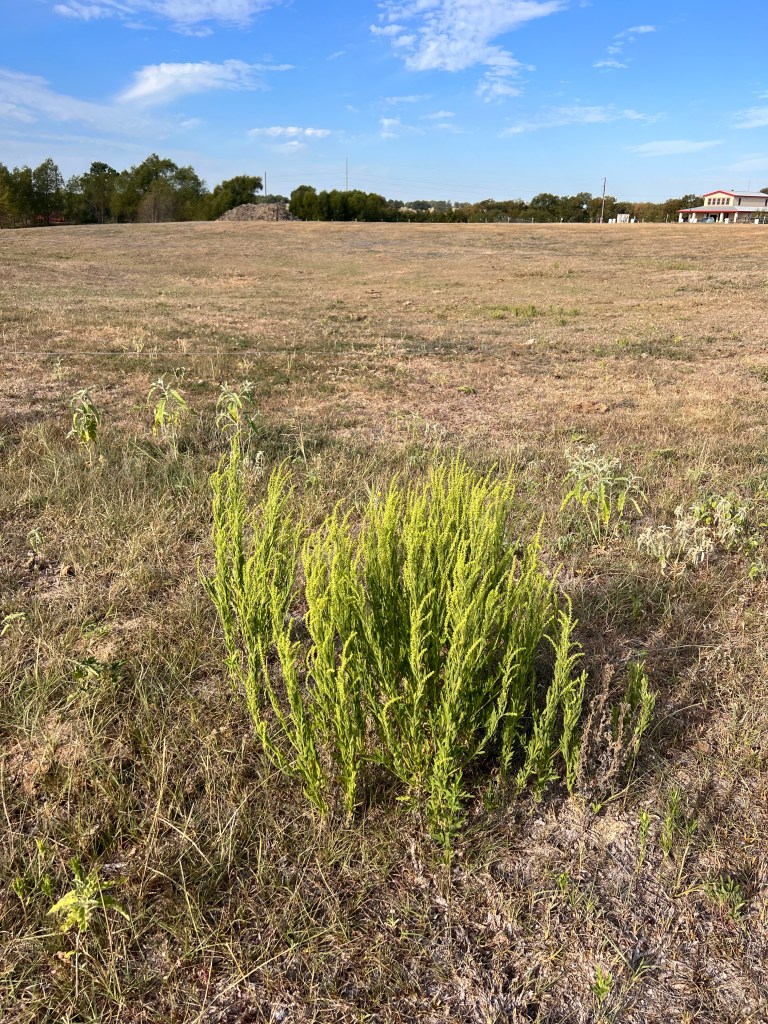
Dozing with scenic ragweed.
I’m looking forward to seeing how much our budget will buy in pond digging. He’s first digging deeper into what’s already there, then enlarging it. I’m confident all the water plants will return. After all, they showed up quickly once the pond was dug in the first place!
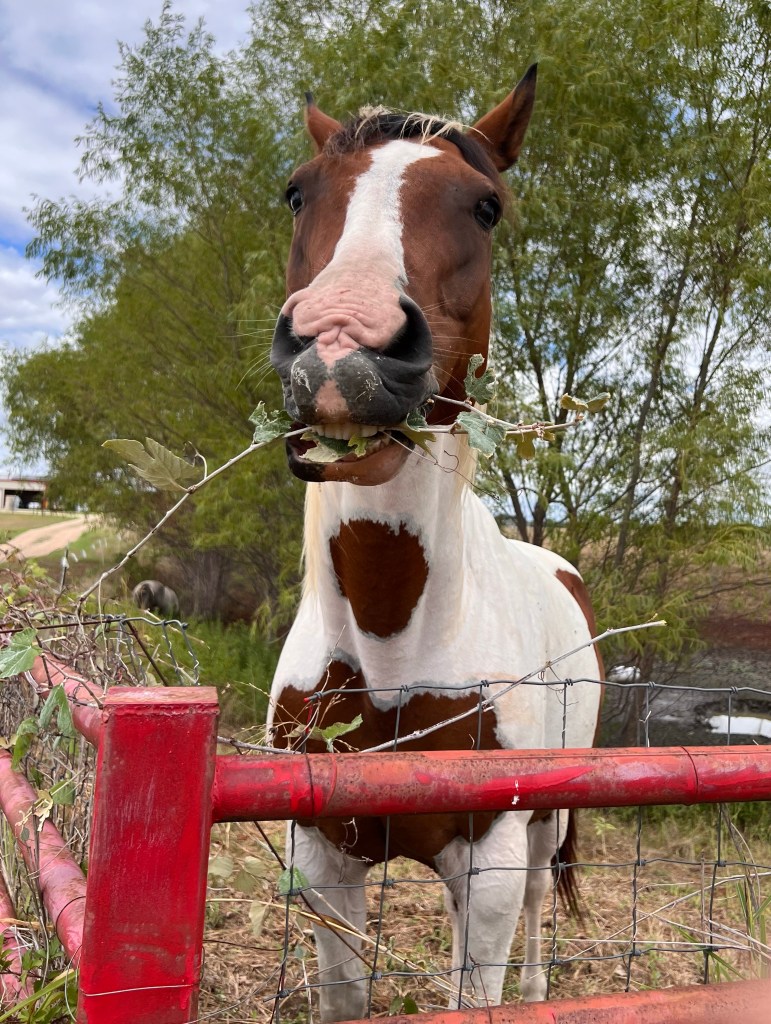
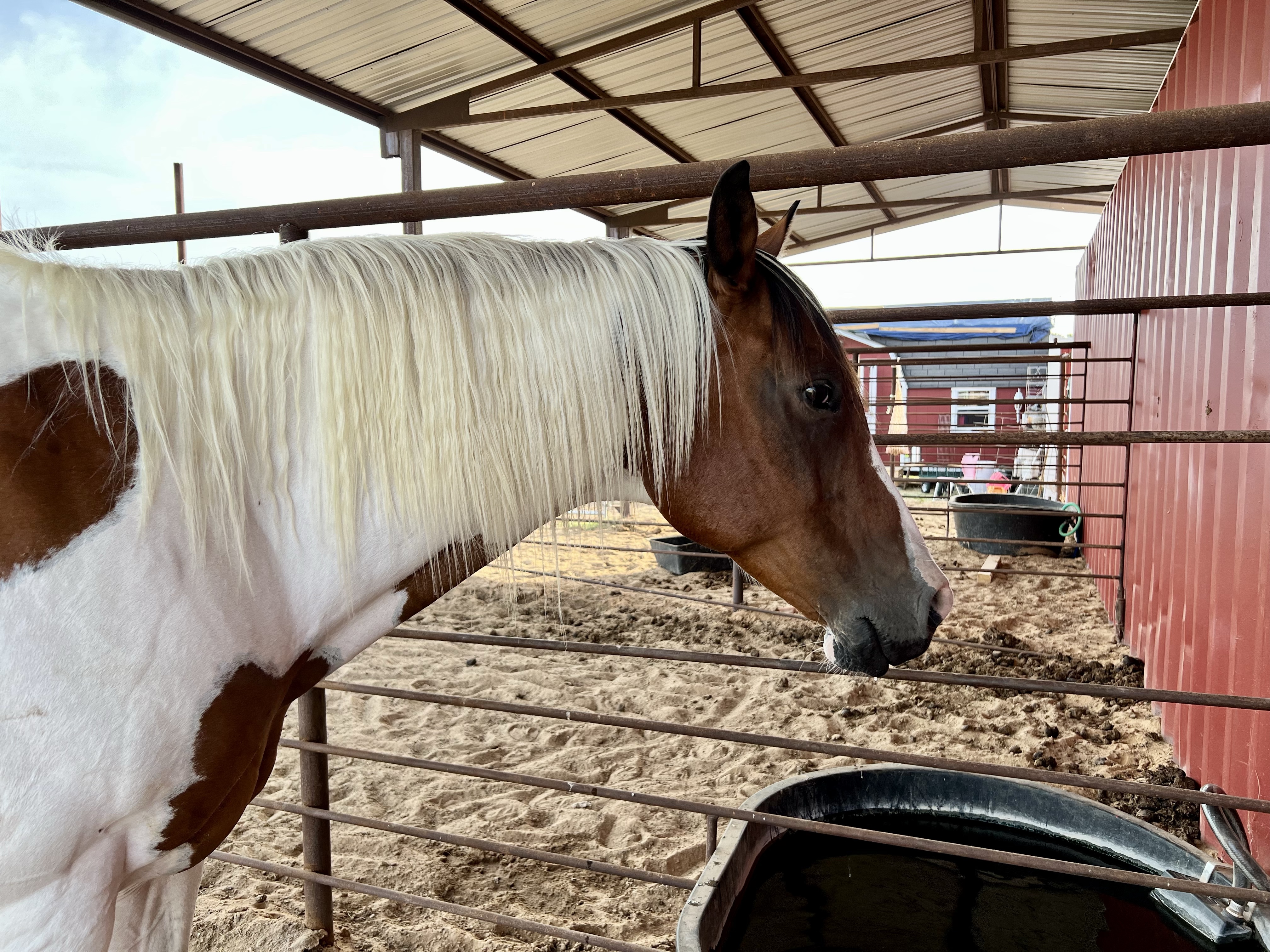
I took a walk and enjoyed the cool October morning air today, too. What a refreshing work break! I got to pat all the equines and see what was blooming and growing. The horses were mostly ignoring me and staring intently to the north, though.
Alert!
It turns out one of Sara’s horses was walking down its pasture. They sure keep an eye out for each other! I know they miss Drew, who is making new friends, I hear.
All right then, these are some more pictures from my day. One good thing about starting work at 6:30am is having time to take pictures after work!
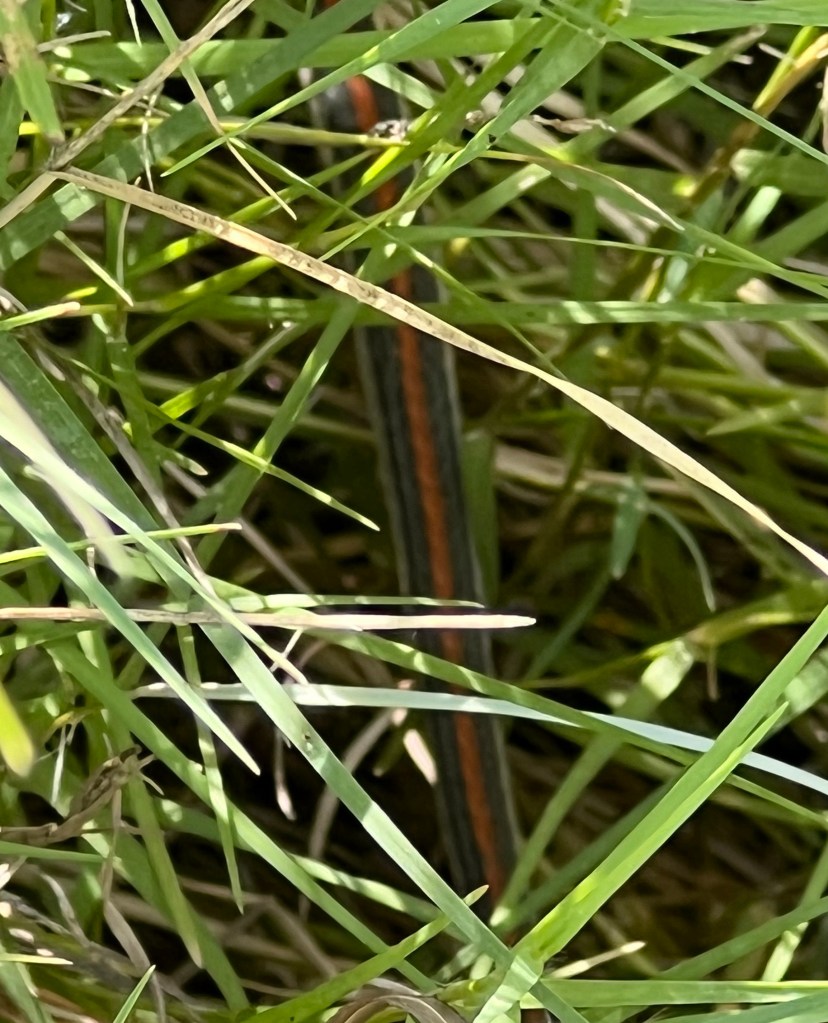
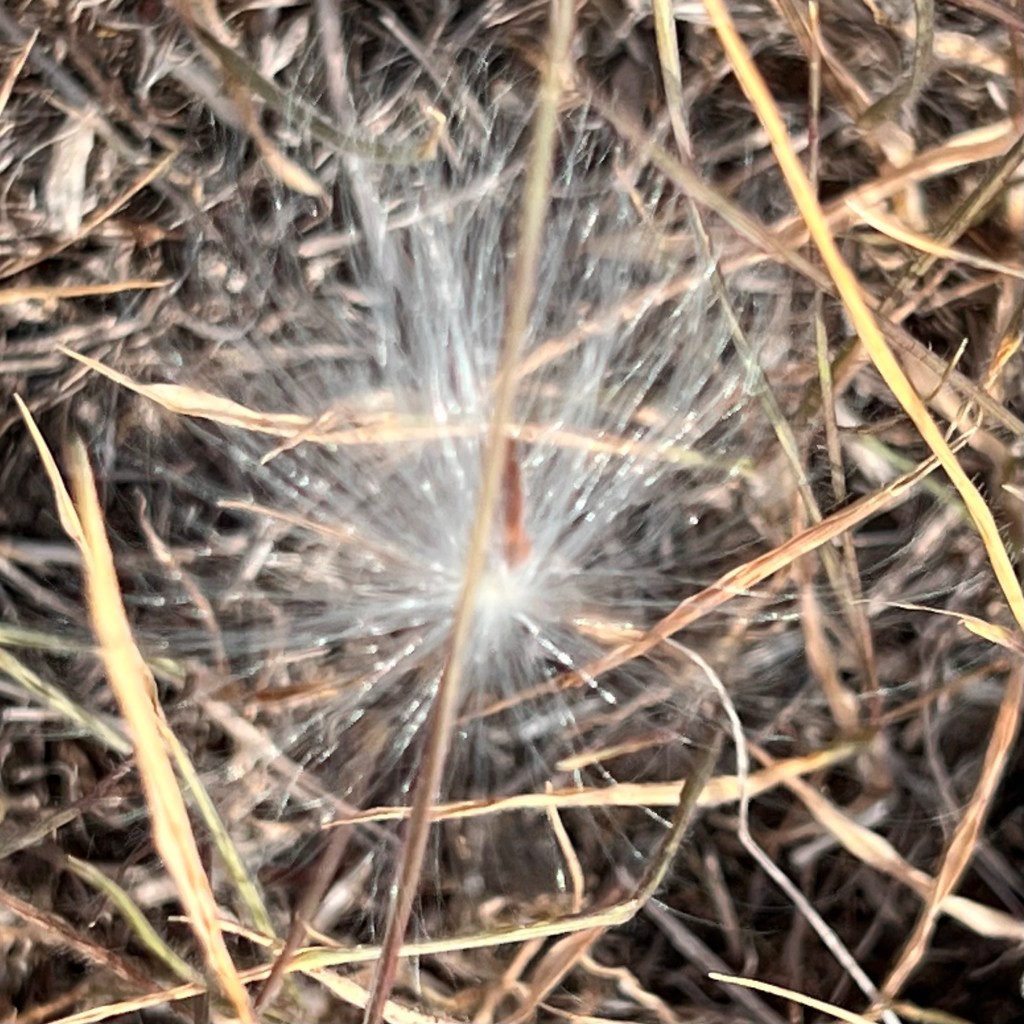
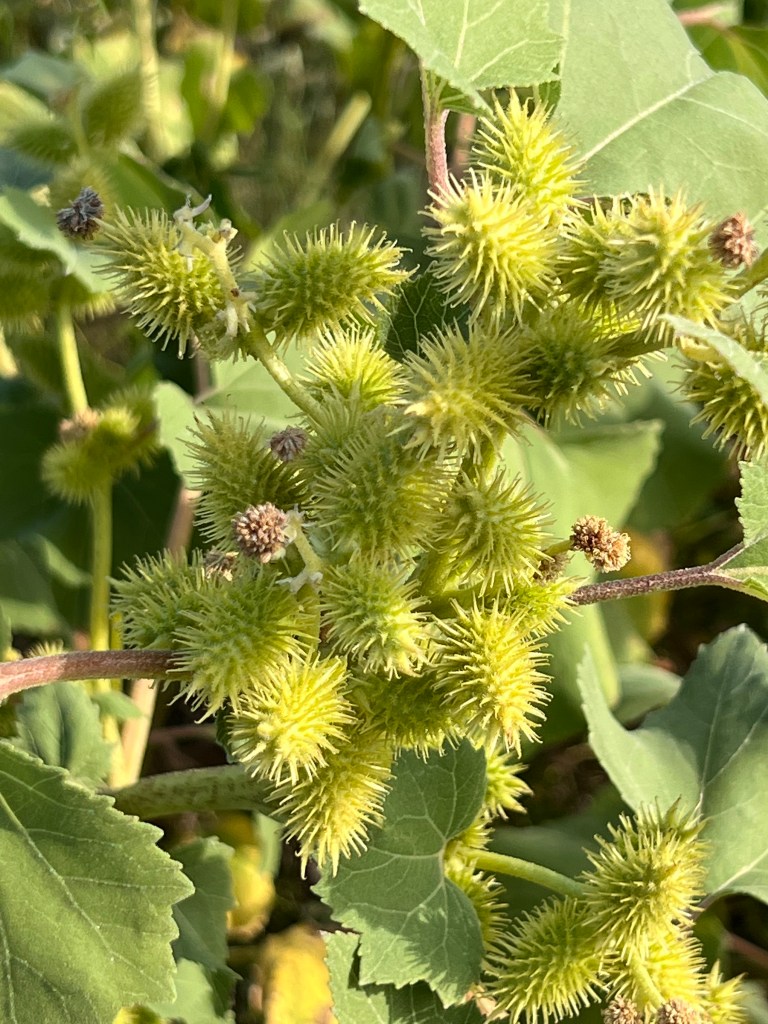
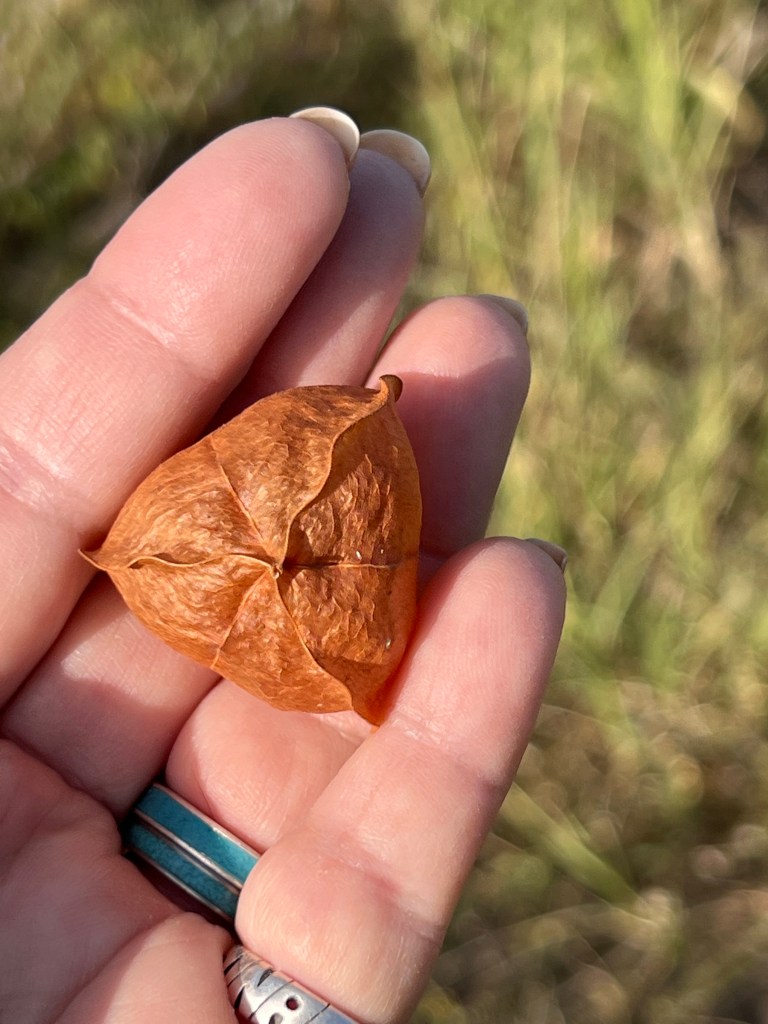
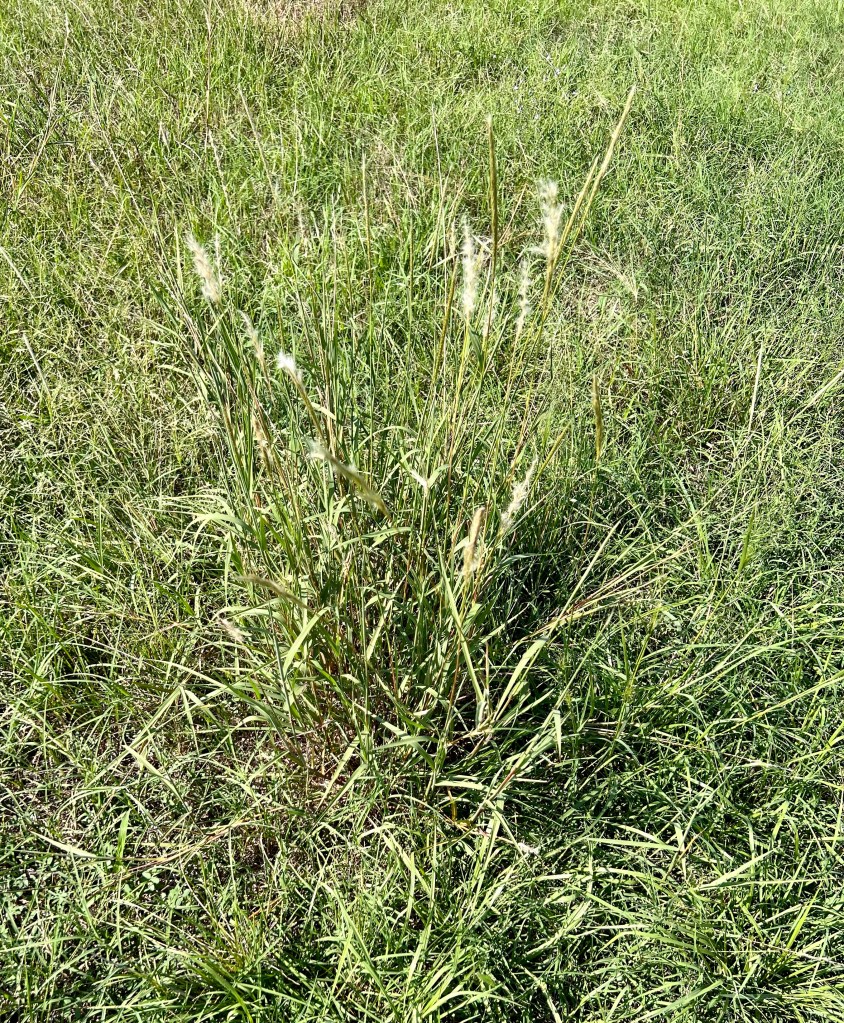
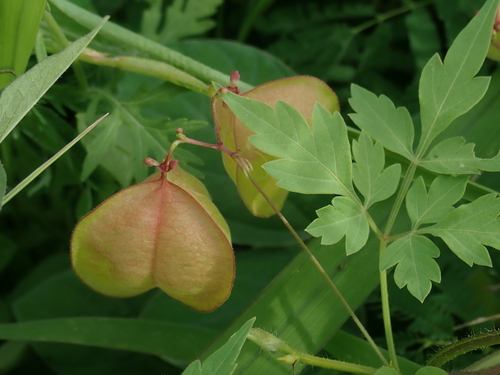
Heading down Heading up. This is a ribbon snake that was eating a frog. Sniff. The horses’ favorite snack. Johnson grass. Dove weed. I like. Others don’t. Lady beetle sans spotsWhat is this smooth spot? Fiona’s rolling area. Beautiful milkweed seed ready to fly away. Western ragweed leaves smell good. I probably shouldn’t have sniffed. A-Choo. My second least favorite plant. Buffalo bur. Intrepid Mexican hats. Balloon vine seed pod. They float. Balloon vine seeds look like yin and yang. Sorry the false foxglove is blurry.
As they say, getting out in nature is good for you, even if it’s just a horse pasture.
Let me start with the dream that didn’t come true. I was obviously a bit stressed out from going to work and not knowing where the office actually was. That night, I had a dream that I was visiting my previous job, the previous location for it. Everyone was there, and it had been remodeled with very cheerful colors and furnishings.
They had alcoholic beverages, too.
I chatted with the happy workers, but then, as it often happens in my dreams, I had to pee. I headed to where the bathrooms were, only to find people at workstations in there, cheerfully typing. I asked where the bathrooms were. “Down the road,” was the response.
WTF??
In the dream, I blurted out, “What if you have diarrhea?” The answer was, “We have an Uber right outside!” I went out and yep, there was an old black car. I got in, and the driver sped off. I asked him if he thought driving people to the bathroom struck him as weird. He turned around and smiled at me, saying, “The tips are great!”
I woke up.
The other dream, the one that did come true isn’t that exciting, except to me. The past two rides I’ve had on Apache the Paint horse have made me so dang happy that it’s like I’ve nailed my bucket list. We’ve been improving slowly over the past year, as you probably know.
Honest, he’s happy, too.
Yesterday we did the thing I’d been wanting to do so badly. We went out in the back pasture and wandered around, going up and down the arroyo, and checking out all the fences and trees. We just did it. No stress, no spinning around, no freezing and snorting. We just had a good time.
Hey Drew, we had fun.
Today was just as fun. First I worked with Drew, who’s getting better at his stuff on the ground. His reward was a nice walk together, which we both love. Halfway through was his big reward: he got to eat long grass in the unmown front field. What a dream, hanging out in the shade and relaxing.
So. Much. Grass.
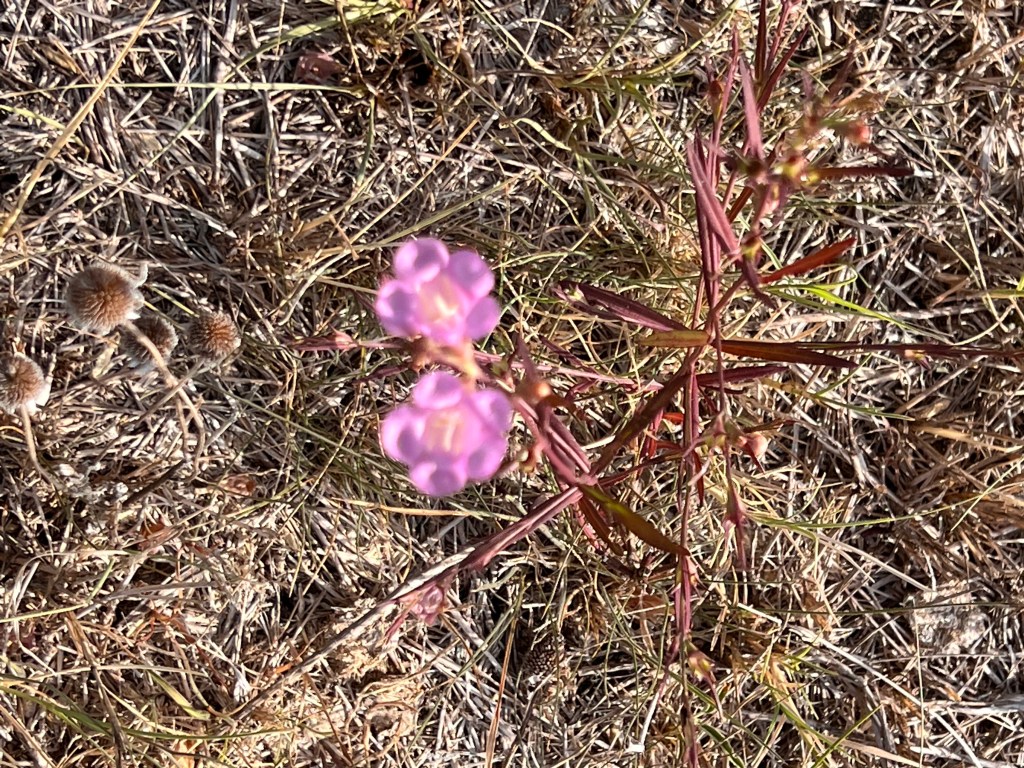
The dream continued with Apache’s ride. He’s just doing so well. We trotted around like we k ew what we were doing, walked all the way across the road (I checked for cars), then headed out to the front field. Rather than getting worried as we got farther from the other horses, he looked around and checked things out. We looked at pretty pink flowers, sunflowers, and long, waving grass.
Wandering around looking at flowers while feeling safe on a happy, calm horse…that has been my dream since things went sour with Apache a couple of years ago. And I’d never been able to ride through fields alone before. I’d been afraid to ride without another person with me.
I had this idea in my head that since the highs are no longer over 100° I could start taking longer walks. I set out to follow the ranch paths for a while. I was wrong. The humidity more than made up for the lower temperatures. But I enjoyed looking around.
Hermits’ Rest compound from my son’s cabin residence.
I enjoyed looking at our place from the back, which doesn’t happen often, since I’m usually wrangling a horse these days. You can see how tall the ridge past the creek is. The pool house will fit in better when it gets re-painted. It’s still moving along.
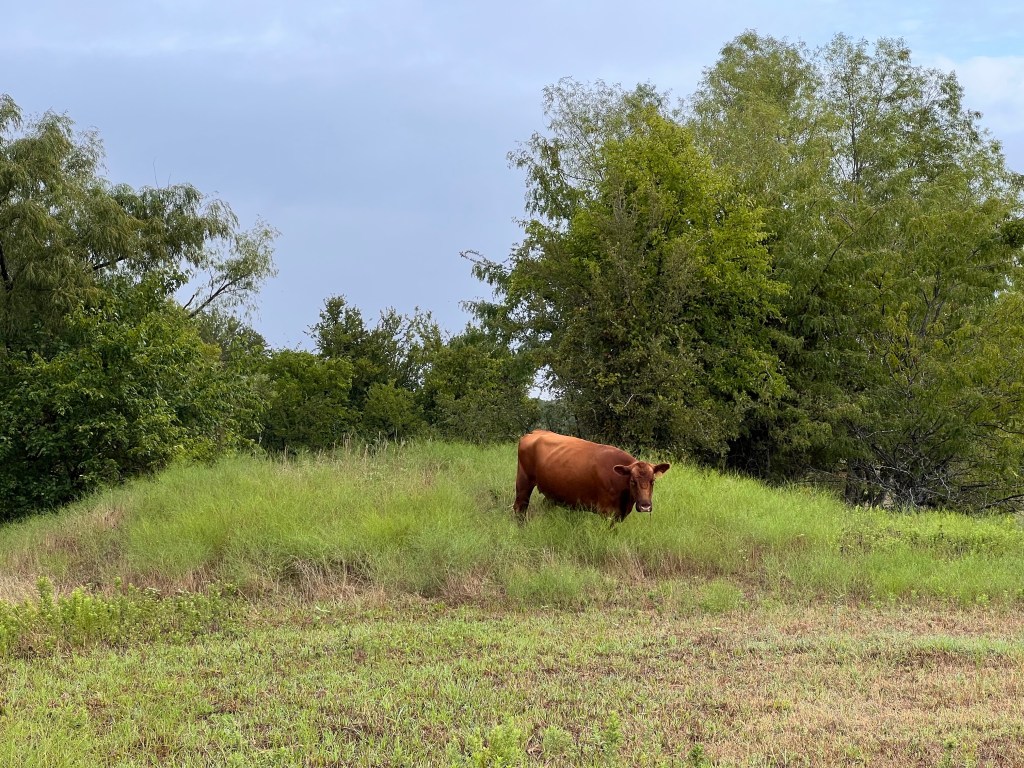
I stopped by Sara’s barn to enjoy the little twin calves before heading back. Calves are always cute. I also enjoyed watching the other cattle and bull getting their morning cud chewing in.
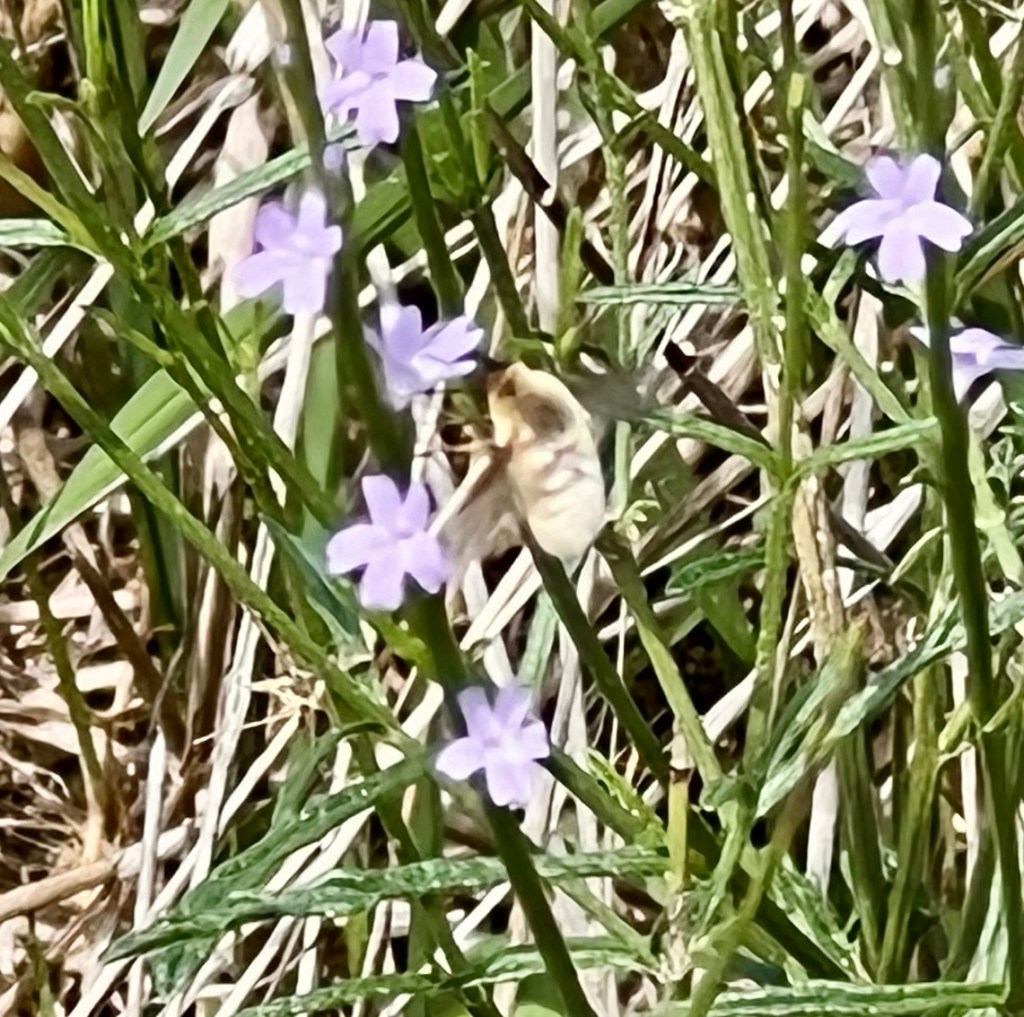
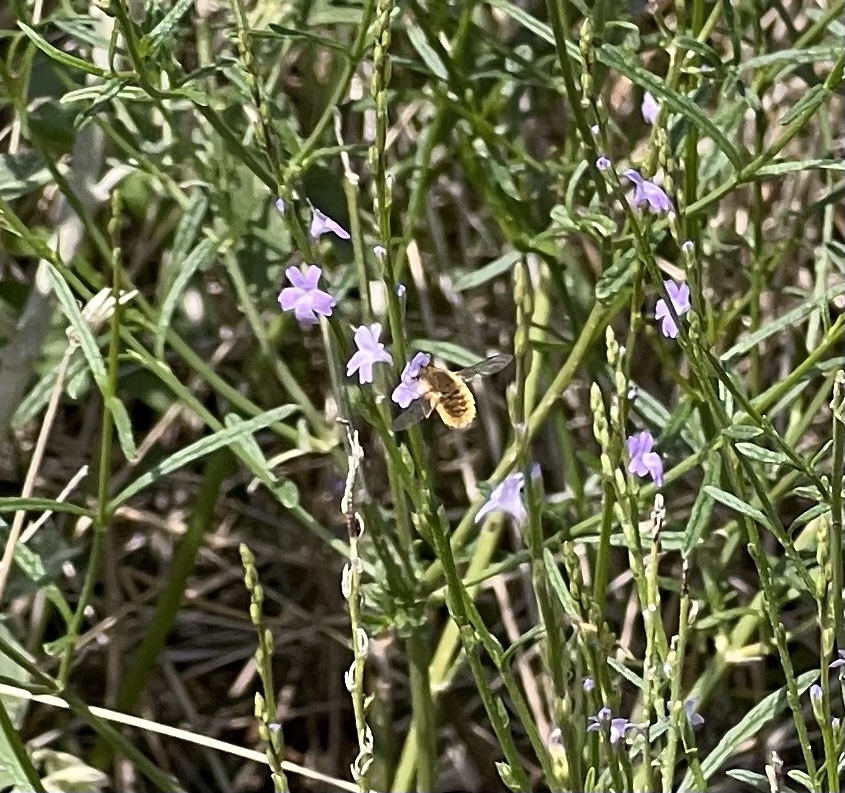
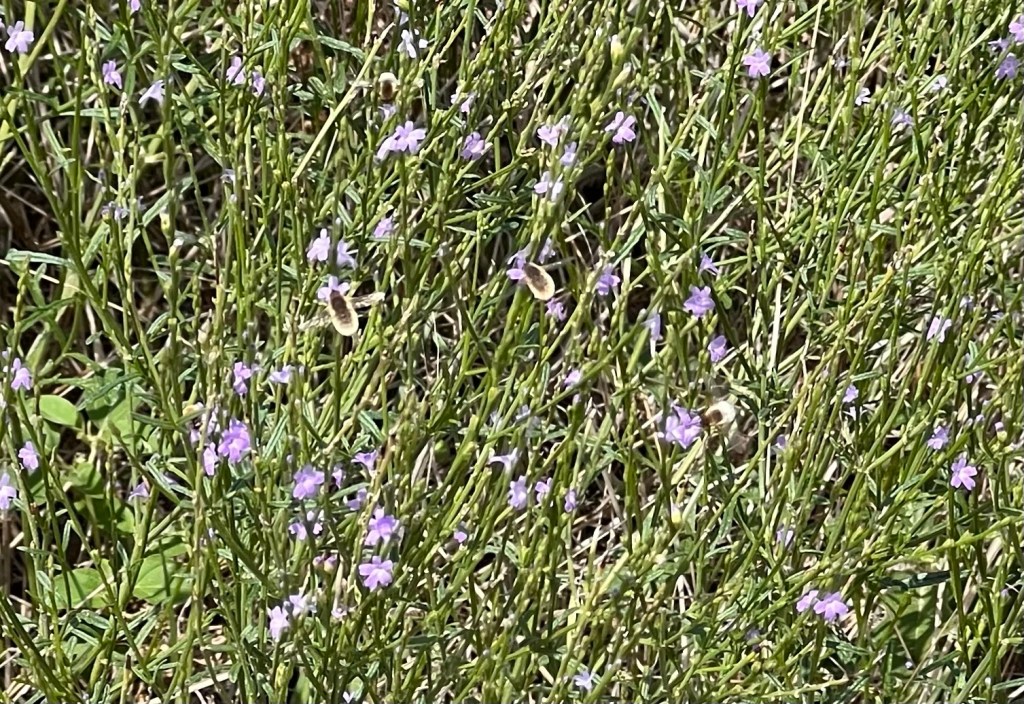
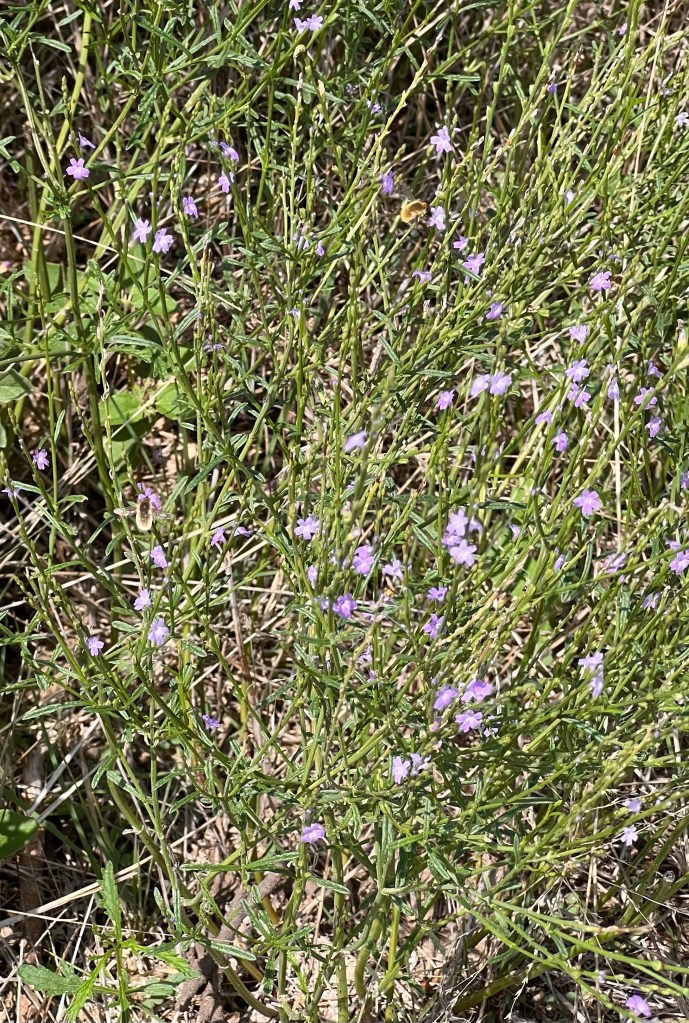
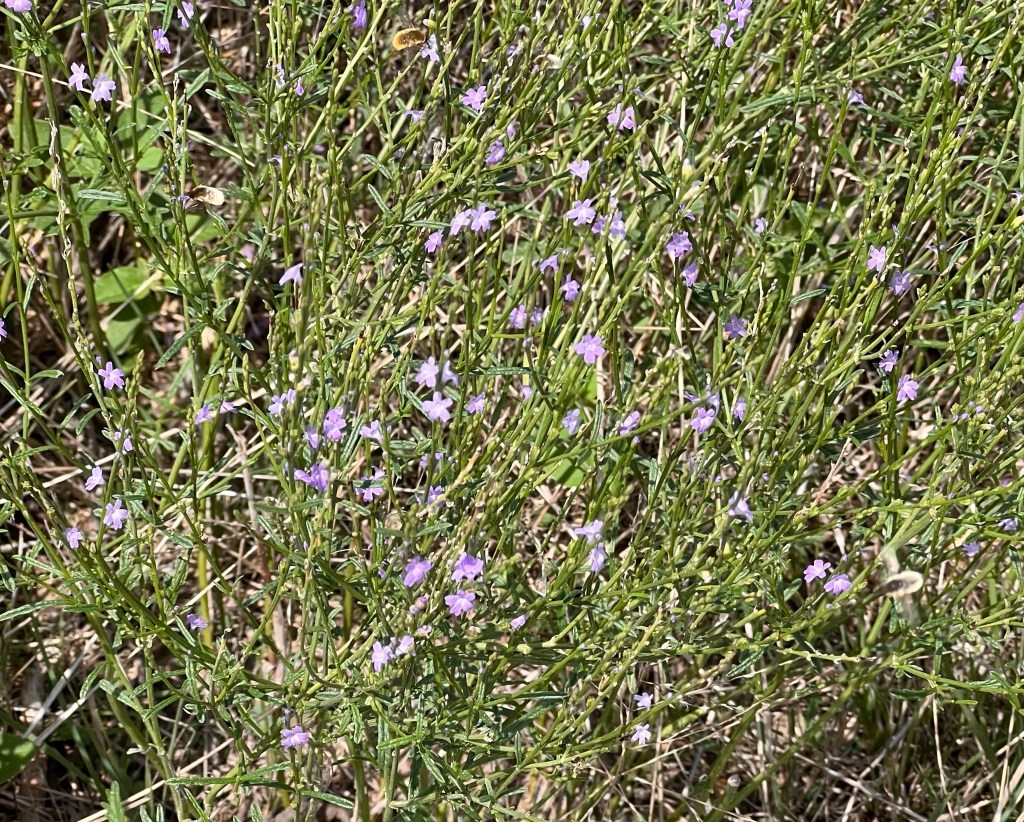
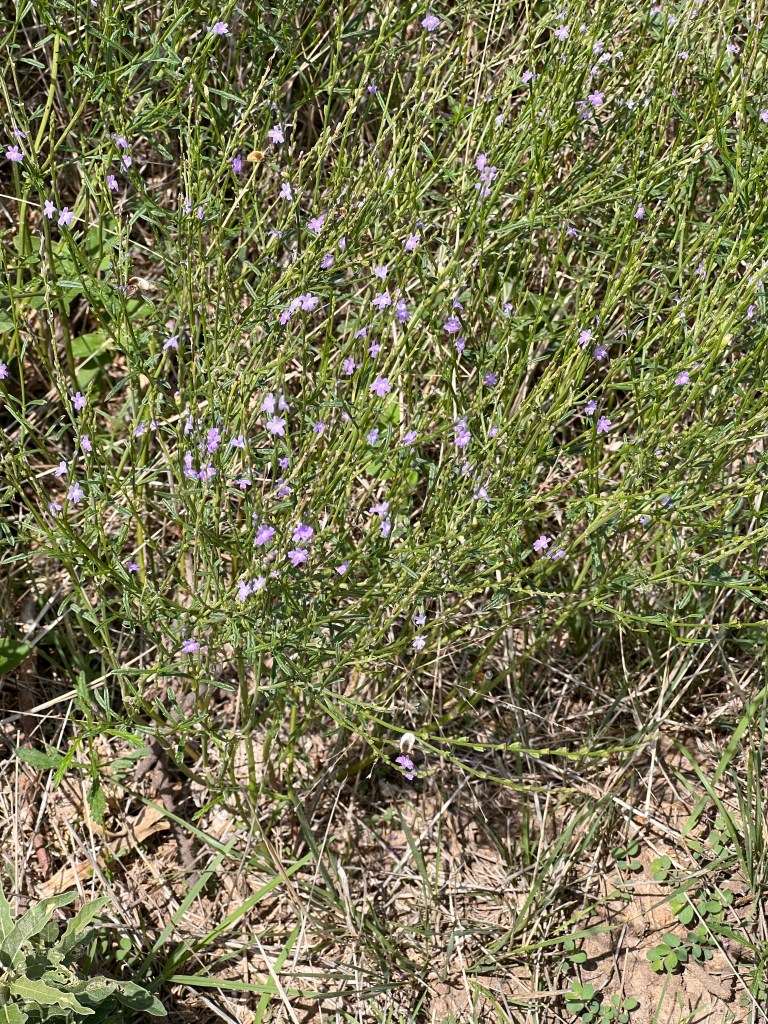
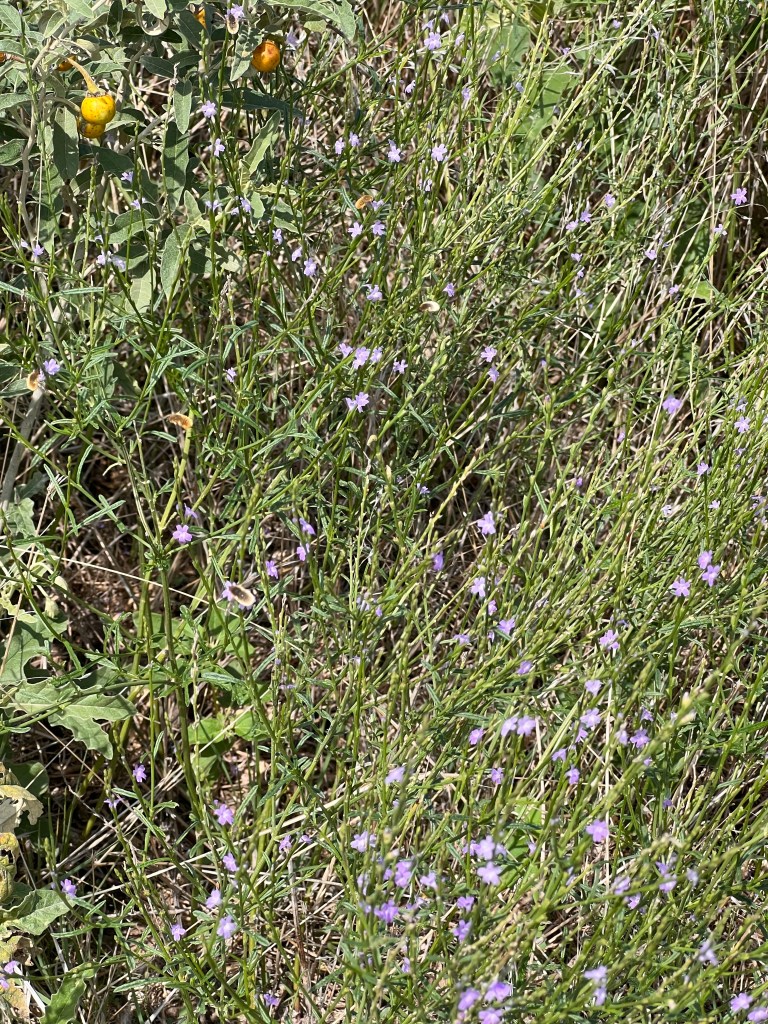
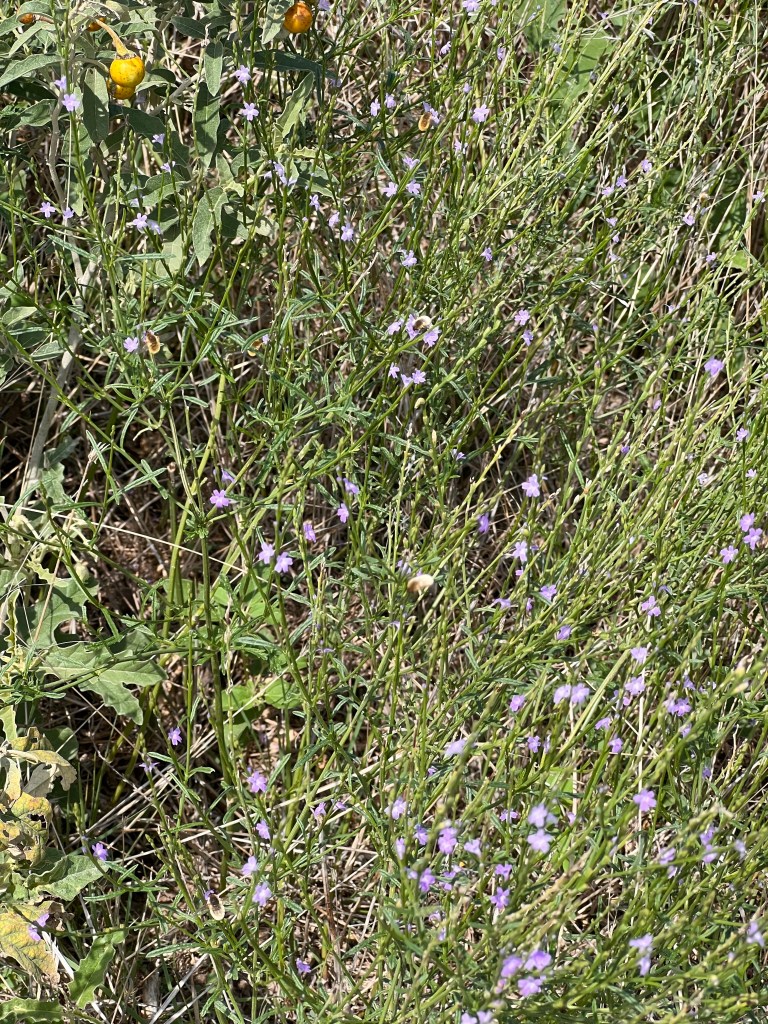
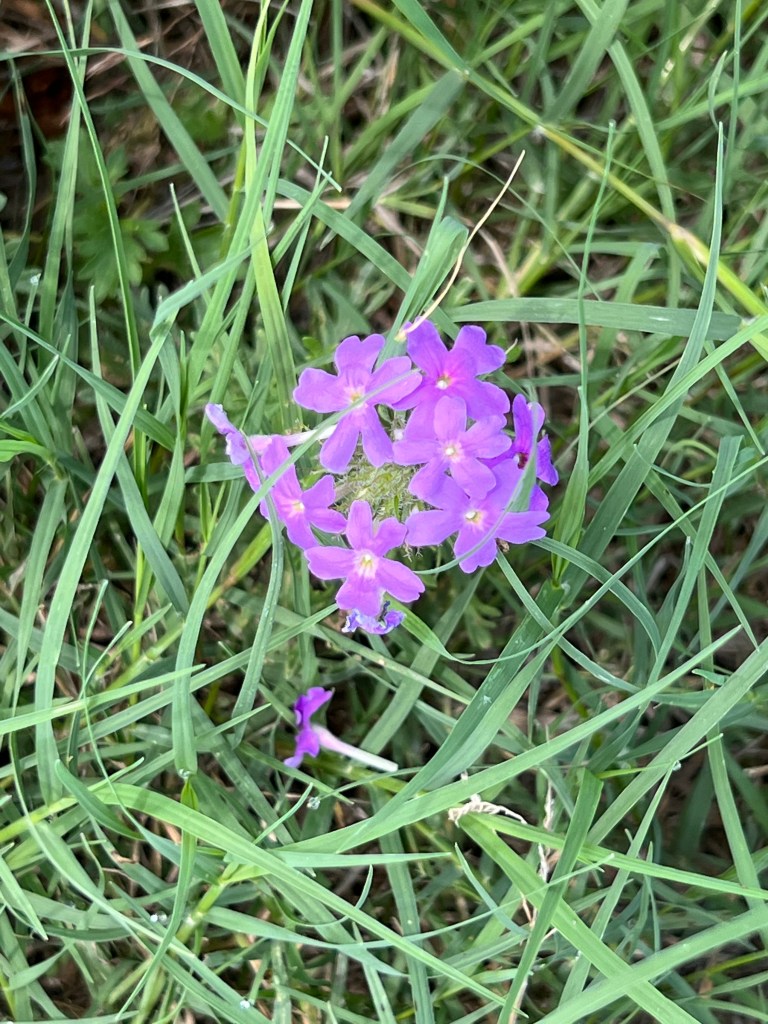
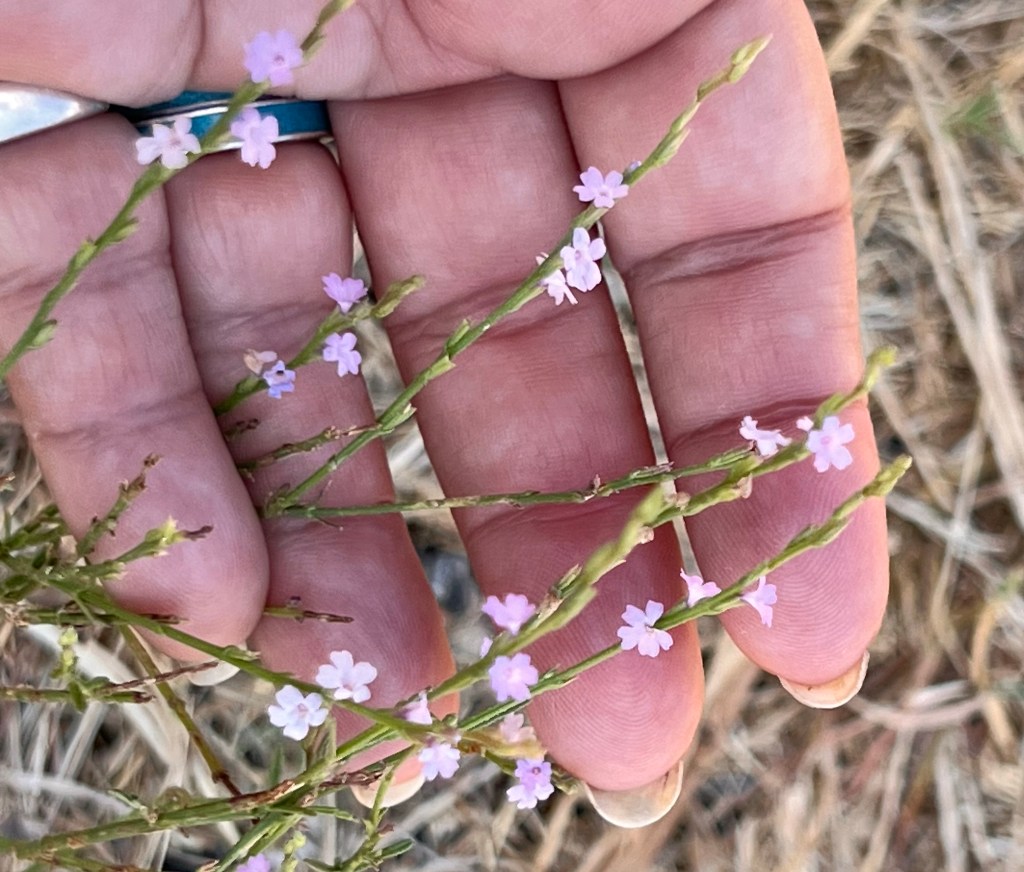
Other than that I had fun looking at insects and flowers. I have been seeing these tiny bee-like insects hovering and farting around the flowers, especially the tiny purple vervain flowers. I got what I though was a better picture, but I’m not sure iNaturalist knows what they are. It says bee flies, which I’ll go along with. See if you can find them in the more distant photos!
You can see a proboscis. Spot the insects
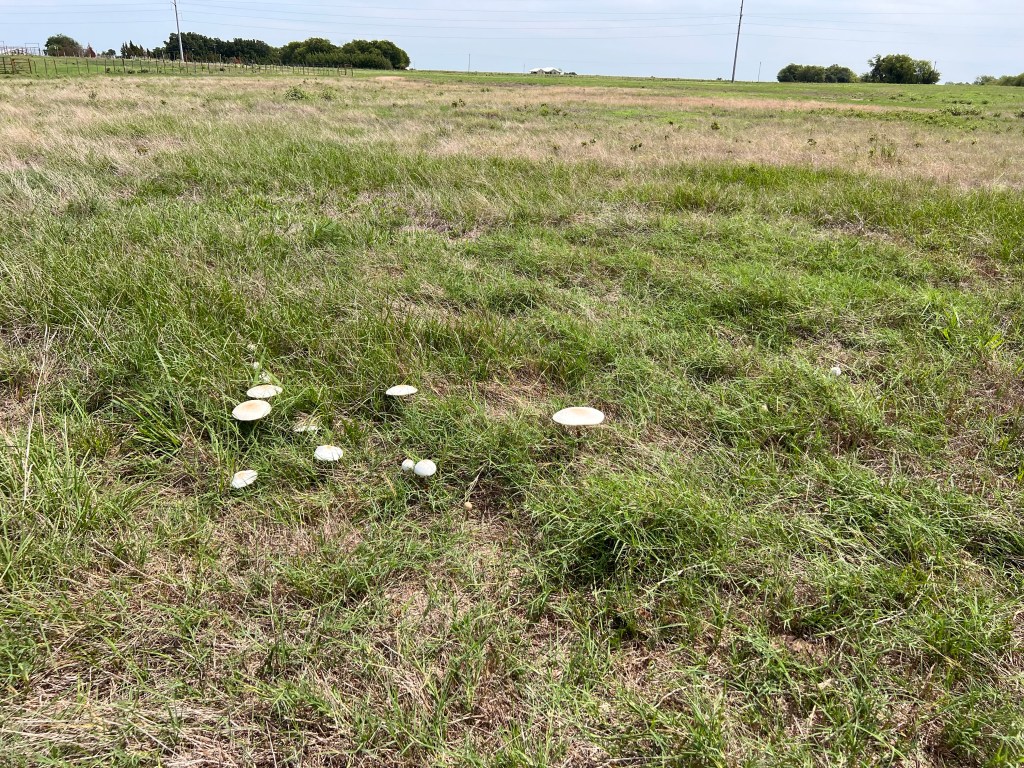
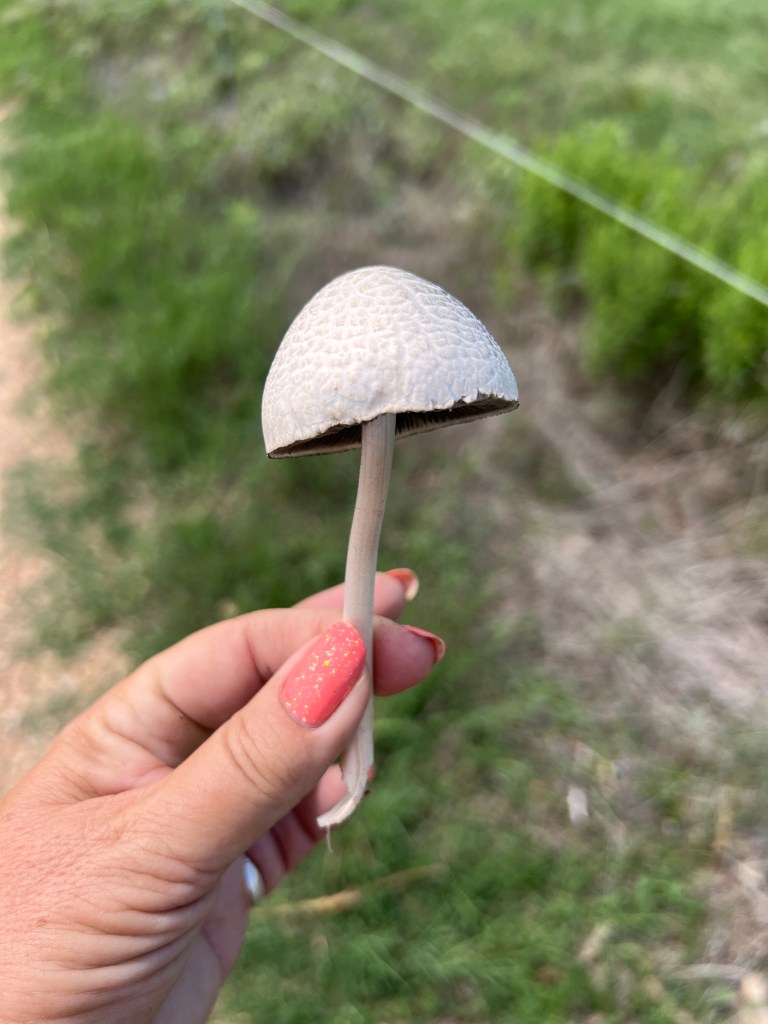
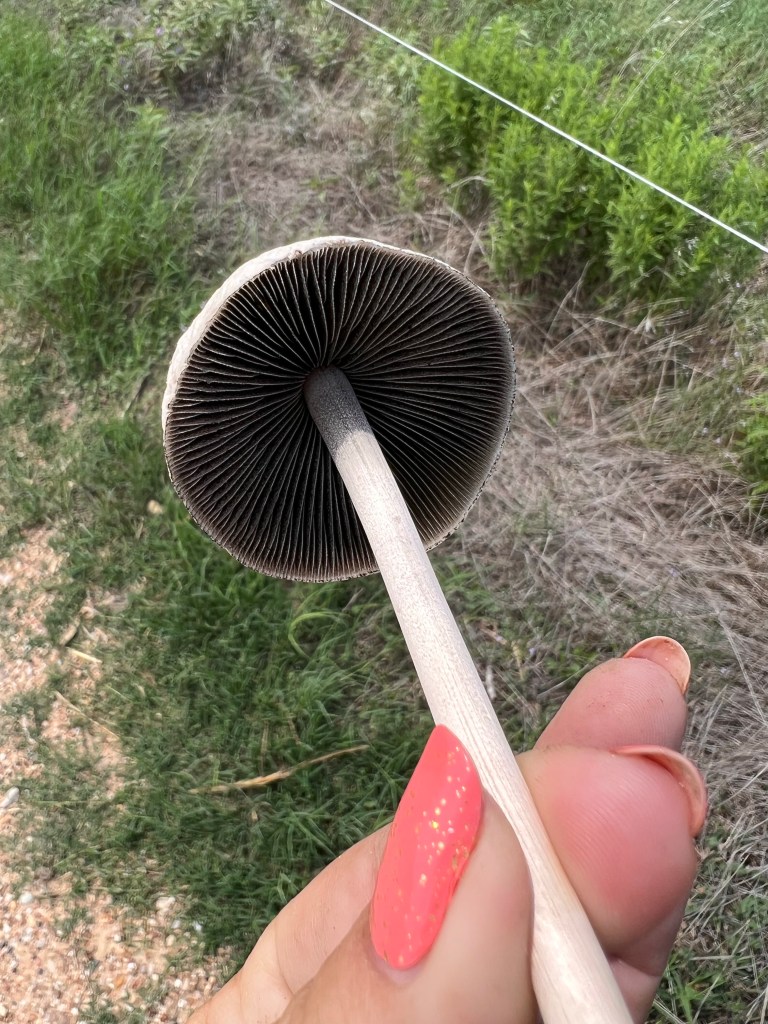
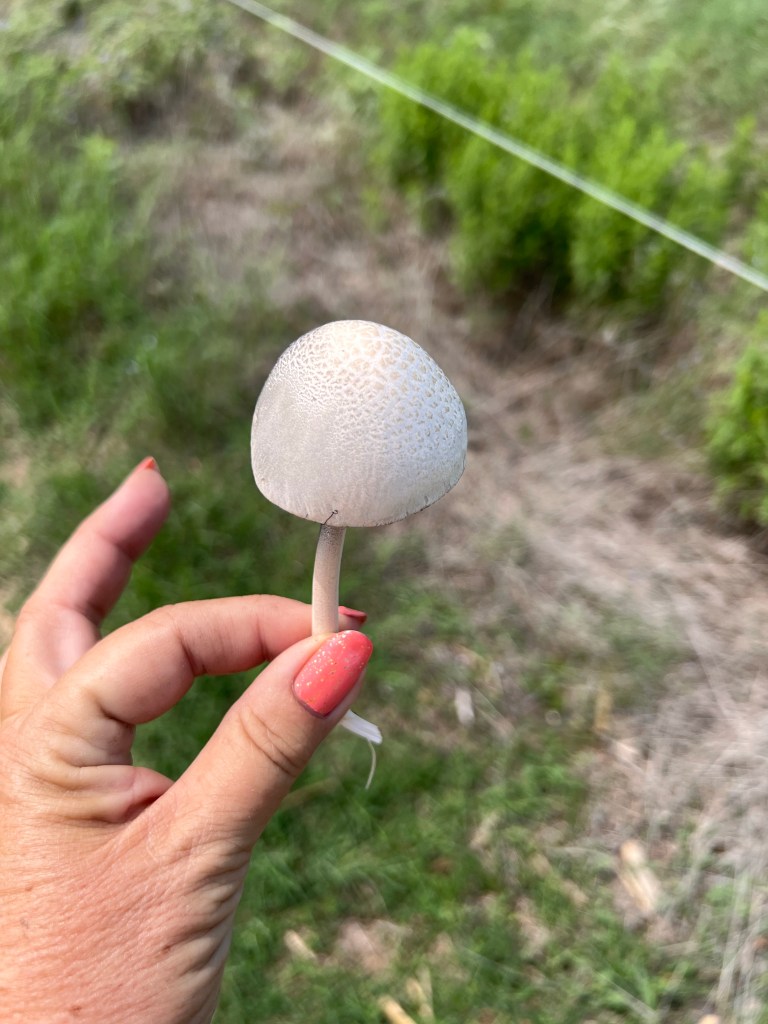
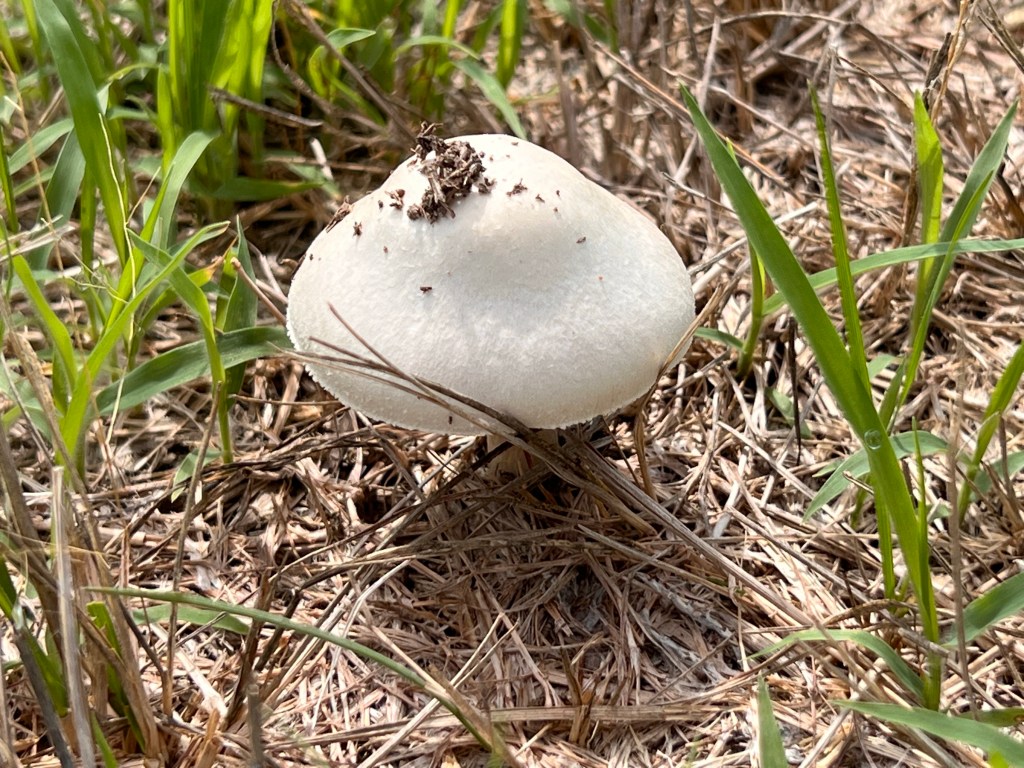
As usual these days I kept looking at mushrooms. There were some big ones in the pasture. And some smaller ones that made me pretty sure mushrooms inspired the invention of the umbrella.
More shrooms
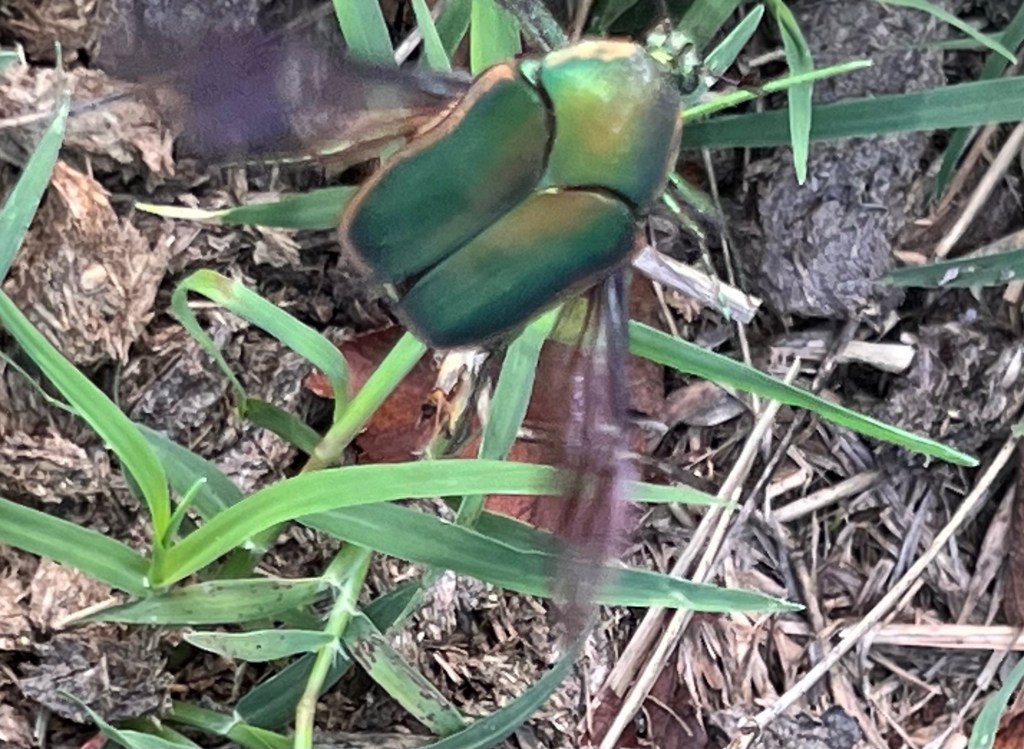
In addition to bee flies there were other things buzzing around. What I thought were more beelzebub bee killers turned out to be these green June bugs, common green June beetles or Cotinis nitida. I thought they were something else, but they got IDed as such. Hmmm. They are scarab beetles. I got this cool photo of one flying.
It tried to fly out of my view.
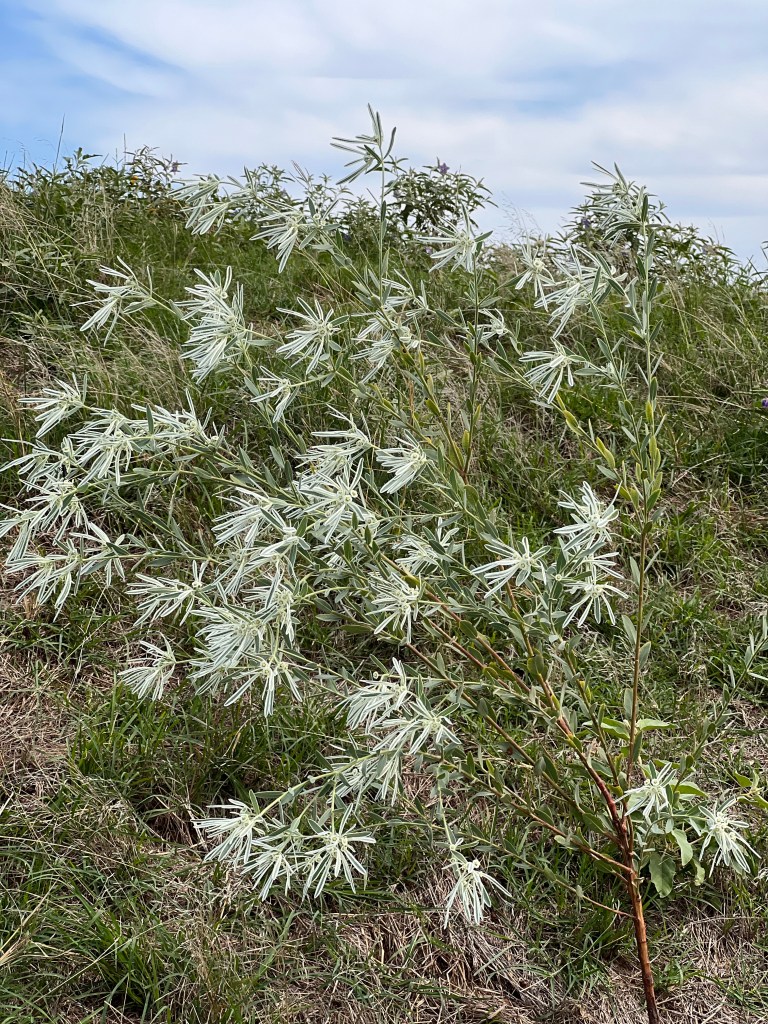
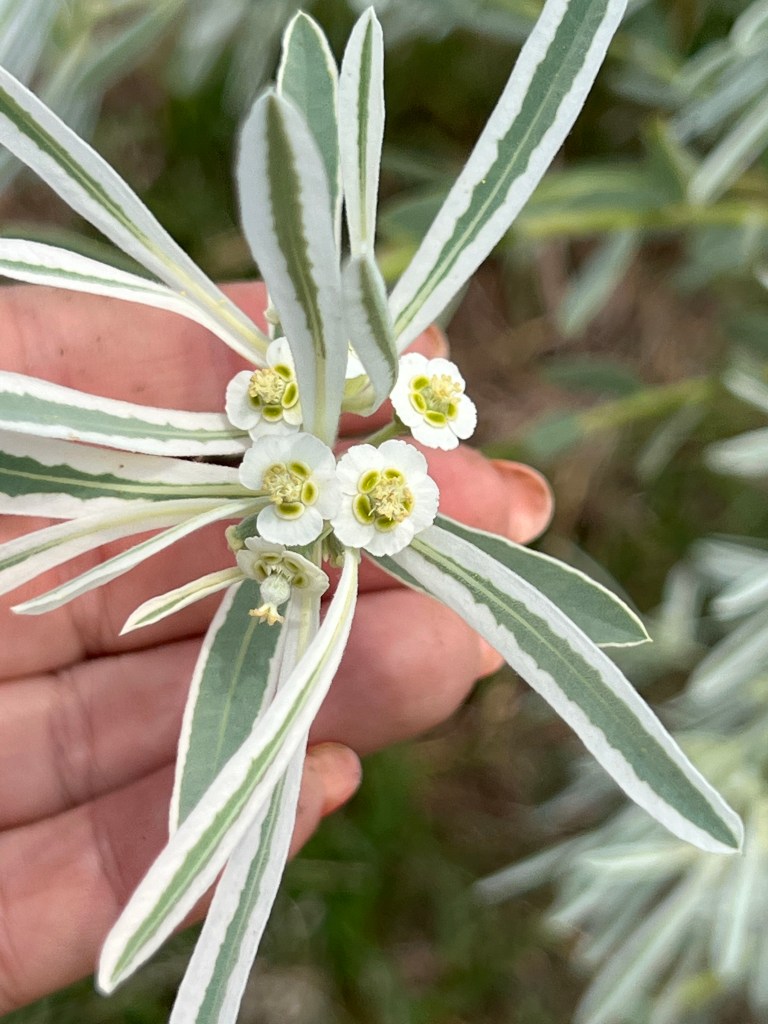
Many flowers are coming back after the rain, but the snow on the prairie usually blooms in late summer. It’s a weed, but so pretty.
The other flowers are probably blooming because there aren’t so many grasshoppers now. Now I can enjoy the different colors of the females when they fly. They can be red, orange, or yellow. No photos; it’s too fast!
Wood sorrel, usually a spring flowerWild garlic, same Another spring friendDo you know rain lilies smell good?Texas vervain, summer bloomerRuellia or Mexican petunia, a summer oneNot a wildflower. My asparagus came back and is blooming!
I hardly talk about trees, but today I enjoyed two. The hackberry by Sara’s barn has always been a welcome source of shade for us. It was full of bees yesterday.
It’s pretty to look at and is often full of birds
And this old cedar elm has been hollow ever since I’ve known it. I wonder how much longer it will shelter random creatures? I’ve seen many bird nests in it, too.
Just a shell of a tree.
I’m glad I was able to spend some time poolside this afternoon. It had gotten all messed up when the pool builder replaced equipment they’d burned out. The dude had set the chlorine to 0. Yay for our pool guy Kathleen found. It’s fixed, and Lee and I took good advantage of it.
Rain is coming again. The white egrets sure look pretty against the dark sky.
I feel sorta silly for being sad about a rooster. But it’s sort of on top of three people I know losing beloved horses recently, too. Livestock? Friends? Fellow beings who enrich our lives? Sure.
Portraits of Carlton make me feel better.
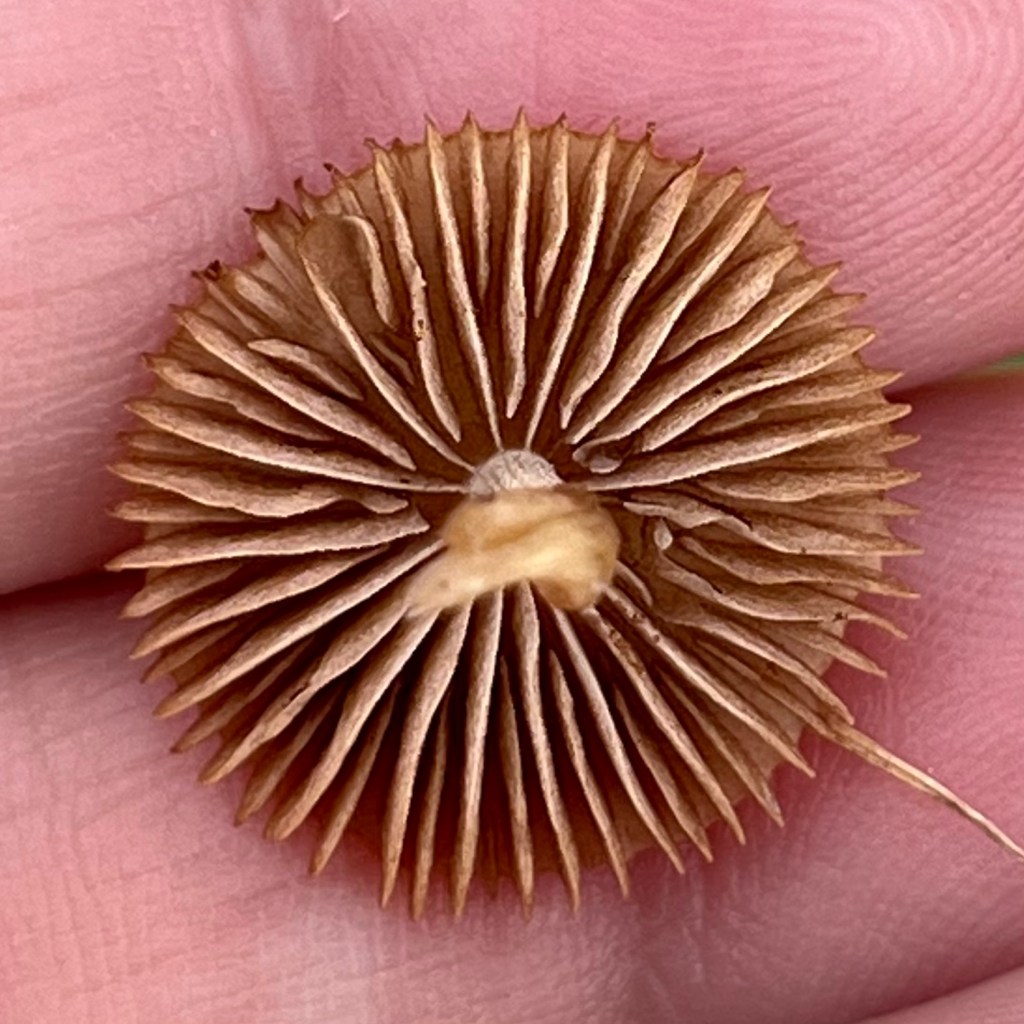
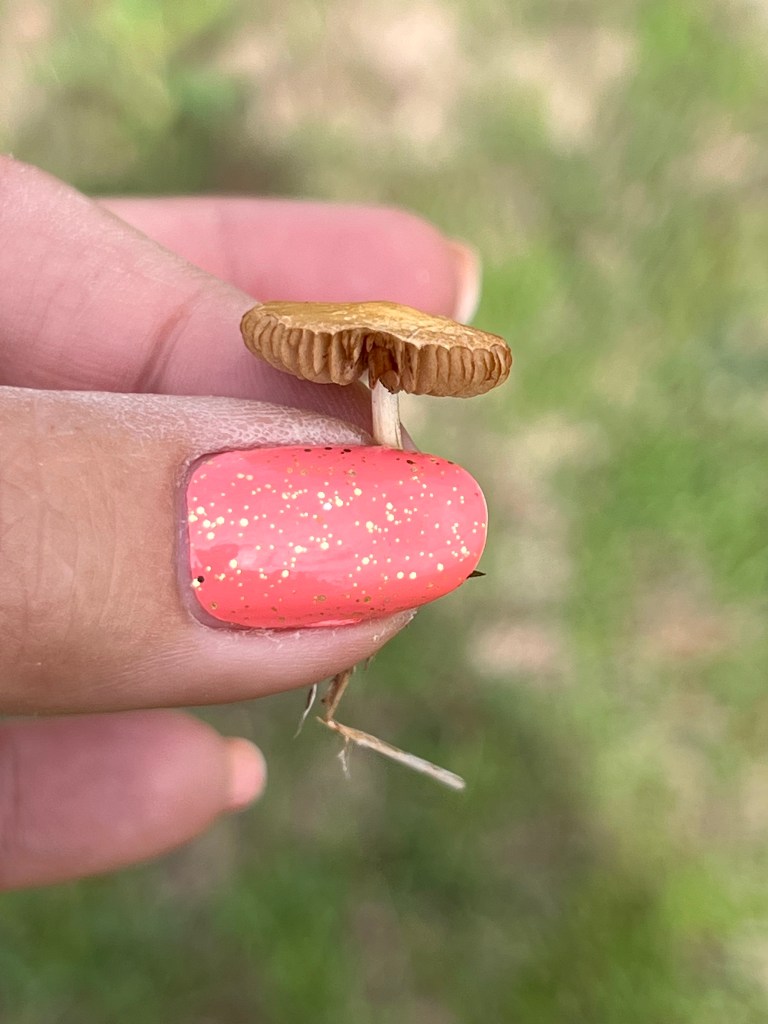
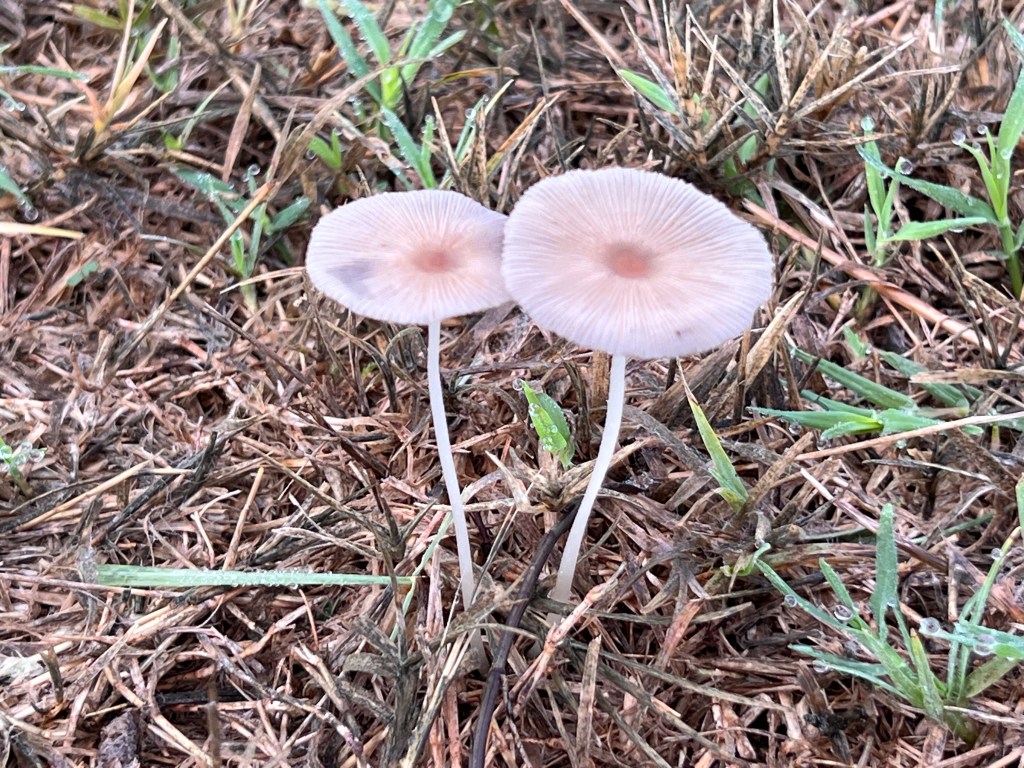
I went out to remind myself of how we are all part of something bigger. Tiny mushrooms said, “Look at us!” I spent about ten minutes just looking at the first one there. So detailed.
Shrooms
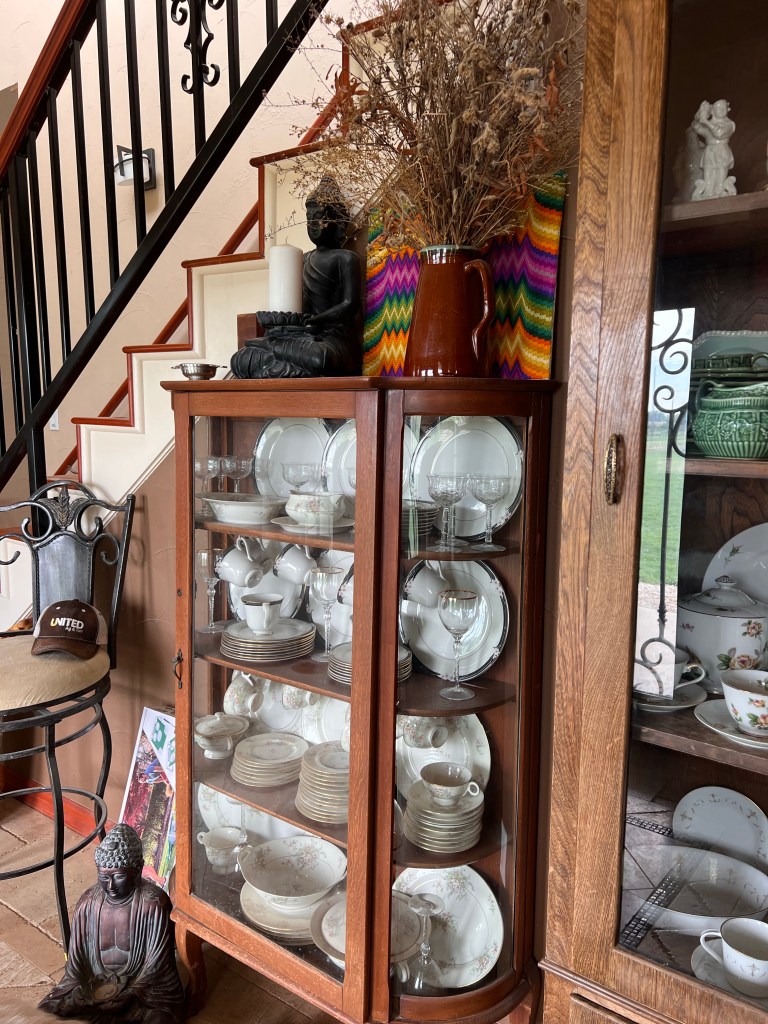
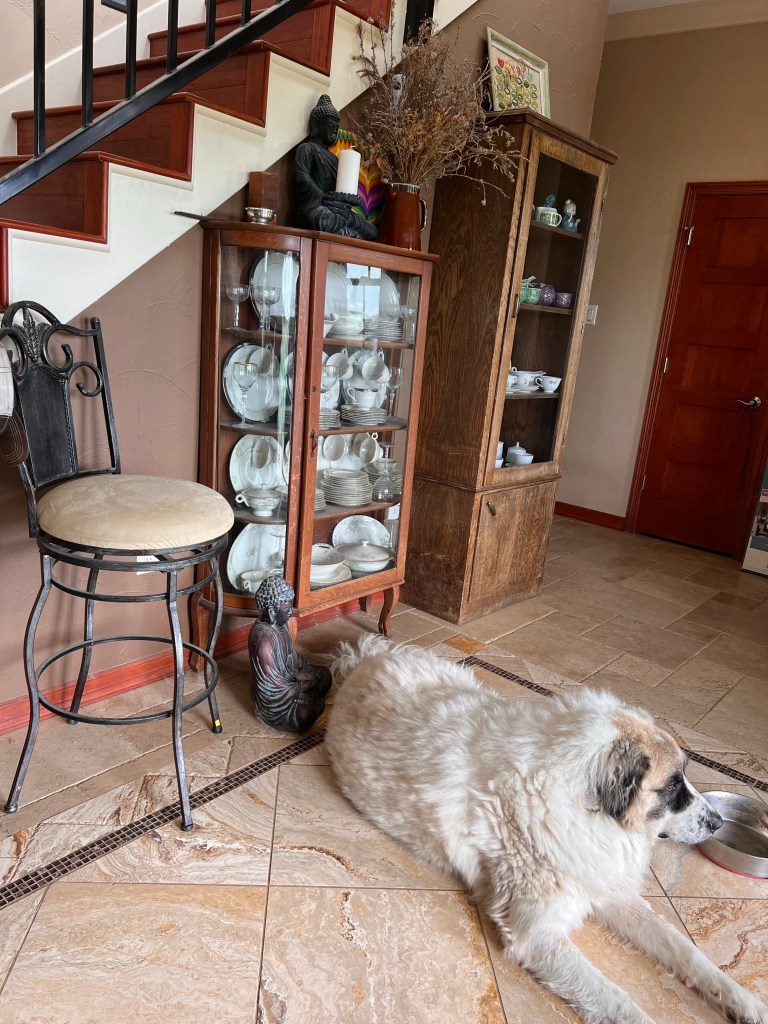
I went in and tried to work. I’m glad I’m doing something that requires concentrating. It makes time pass quickly. But it’s not terribly cheerful. So, I decided to do something that would please Lee and make the house look better, too. I put actual china in the old china cabinet that one day I’m gonna spiff up. It looks better with Lee’s family china and my green and purple stuff in it. Some day I’ll find the rest of the china.
Cabinet we just moved here. Old cabinet with less stuff in itThis looks better expanded. It features Alfred.
That made me feel a little better. It still needs some color. I sure was fond of tan and wood when I built this house.
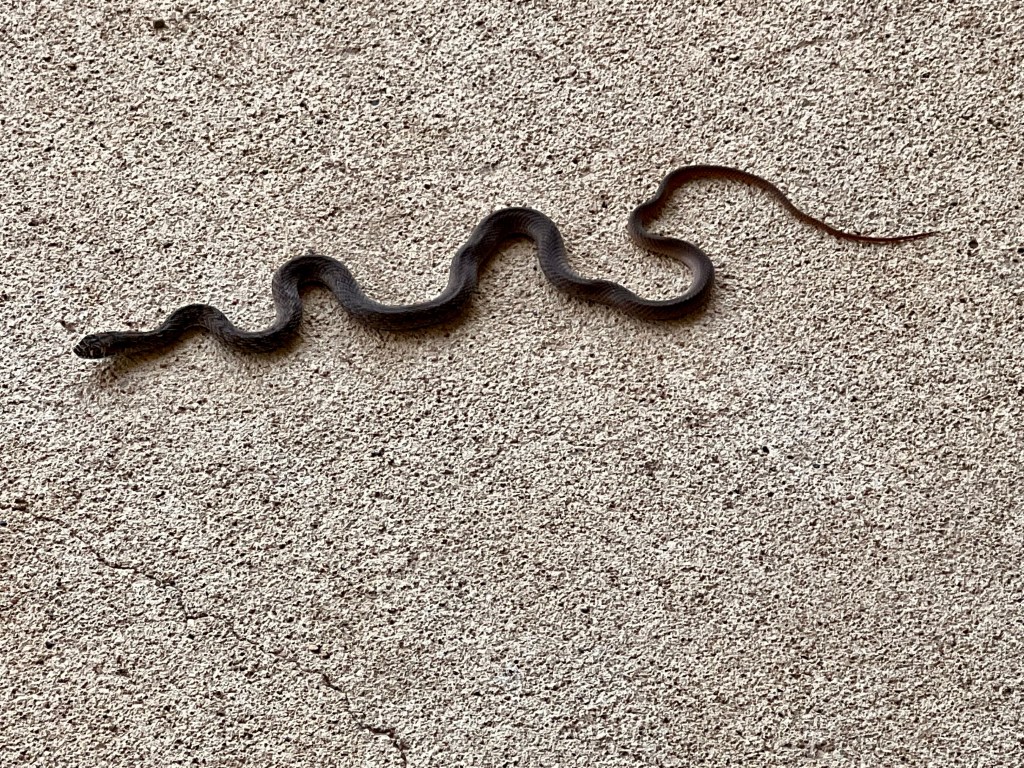
There’s new life, though. A baby snake said hi.
And now it’s raining again so that feels better. I just needed to remind myself of what is good. Life is good, even when it’s hard and we lose our companions. That’s just how it goes.
I kept having dizzy spells today but got my work done. Then I went to the really nice new clinic and talked to the nice PA about my symptoms. I love that he didn’t start me on antibiotics! While my eardrums are swollen, we’re just trying Mucinex first. That should fry up my poor Eustachian tubes.
I guess one chicken is also feeling poorly.
It was a fine day other than the dizziness, thanks to my ability to enjoy the animals from a seated position. I especially enjoy Goldie when she feels she MUST protect us from those treacherous cows. The cows who just look at you funny, in her opinion.
I’m watching you. I’m watching YOU.
And the horses. They tried to mow the lawn. Apache was gleeful in his role as weed eater.
I love my job.
I’m glad for this stuff. It’s been such a hard day for a lot of friends. A hard couple days for horse friends. It’s made me hug my guys so hard. And my human friends. I know I’m getting older when my friends are getting dementia falling into mental illness, and struggling. Hug your friends, too. And you family members who love you. Let’s look at some nature, shall we?
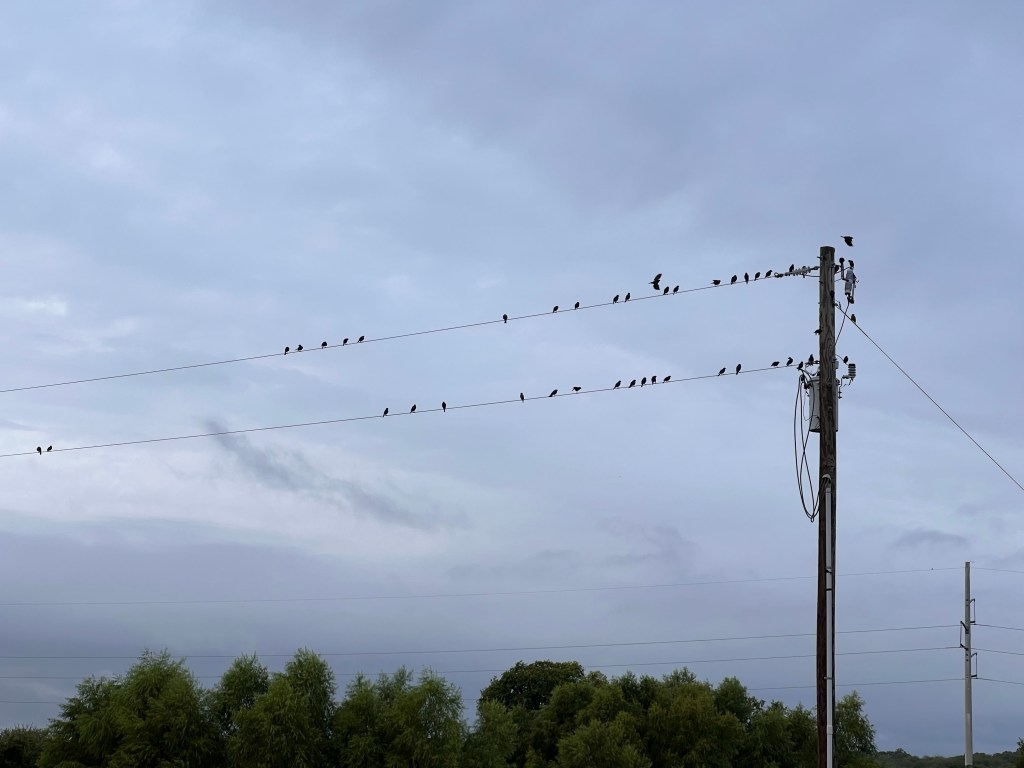
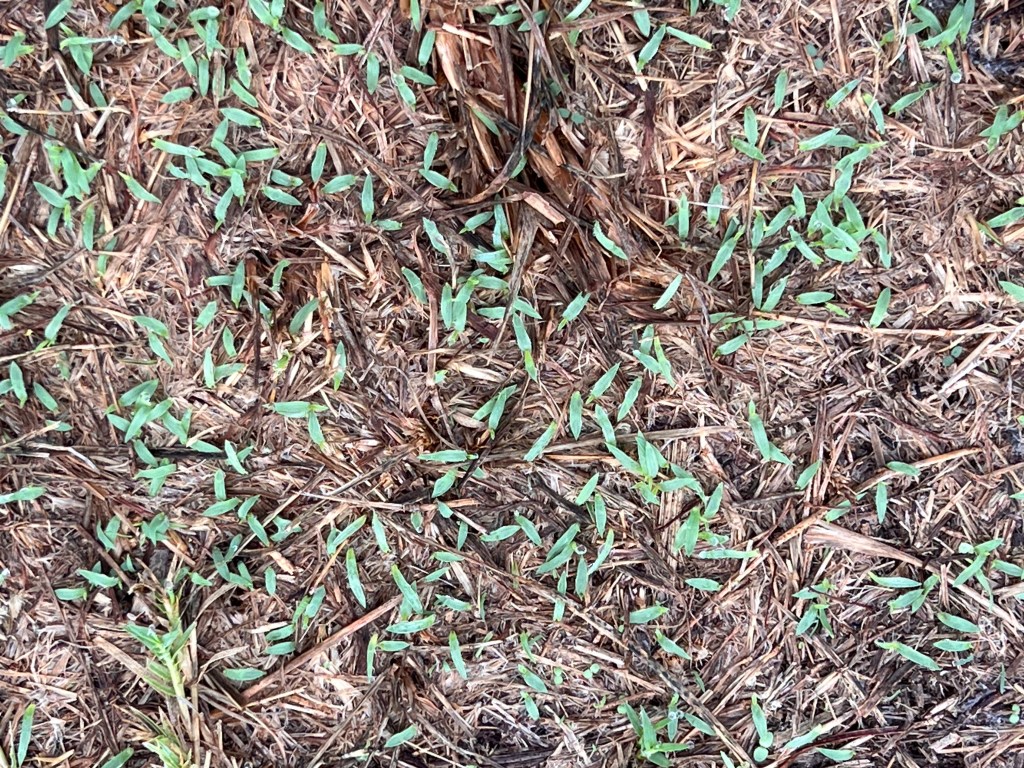
June bugs are BACK. Killdeer in the sky Birds on a wireNew life!More sproutsPoop shroomsMy favorite delicate shroomsGREENThe lawn mower eating Johnson grass.
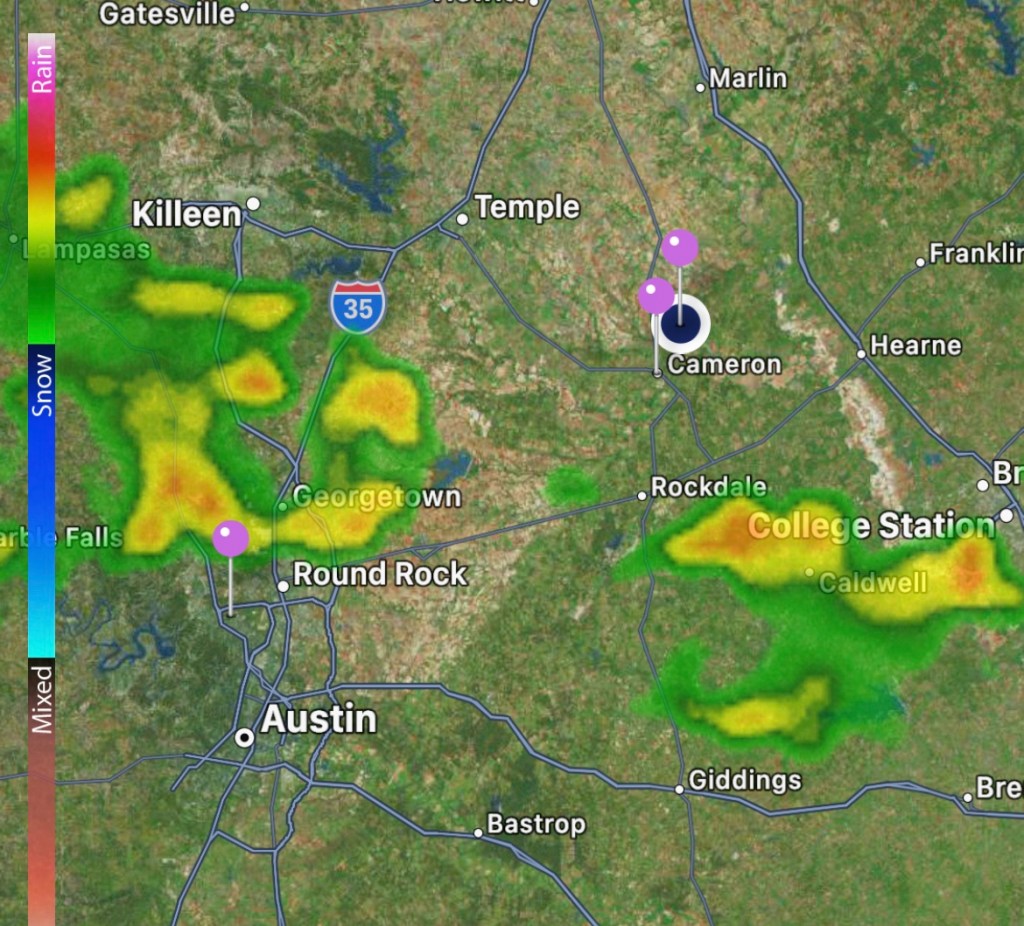
And it might even rain again! The bottom of my screen says, “rain coming,” and it’s raining at my coworker in Cedar Park’s house. We are so excited about the mere idea of rain that he sent an IM that he heard thunder.
So says my laptop
It actually rained .37″ last night, complete with much thunder and lightning that the dogs didn’t like. It was music to MY ears, however!
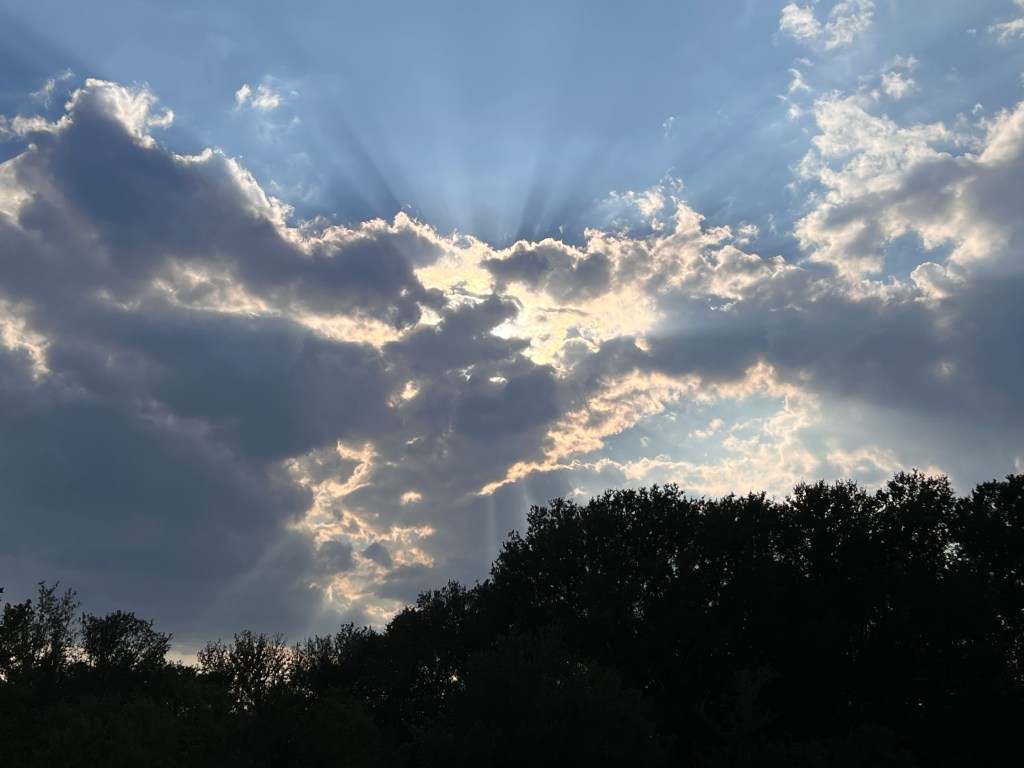
The “future pond” got some water in it last night!I see a gap in the clouds. Please don’t bypass us!
I’m amazed at the signs of life I keep seeing this summer. Lee says this is probably going to be the driest year since we started measuring (we were not here every day during 2011, so we don’t have daily records for then). Trees are turning brown, which is scary, but some things are doing well.
Ruellia is especially happy this year, according to my Master Naturalist friend. It’s more of a desert plant, which makes sense. Some hardy non-natives are hanging around. Yesterday, I got some photos of crepe myrtles, spider lilies and one very confused rain lily at a house we’re working on.
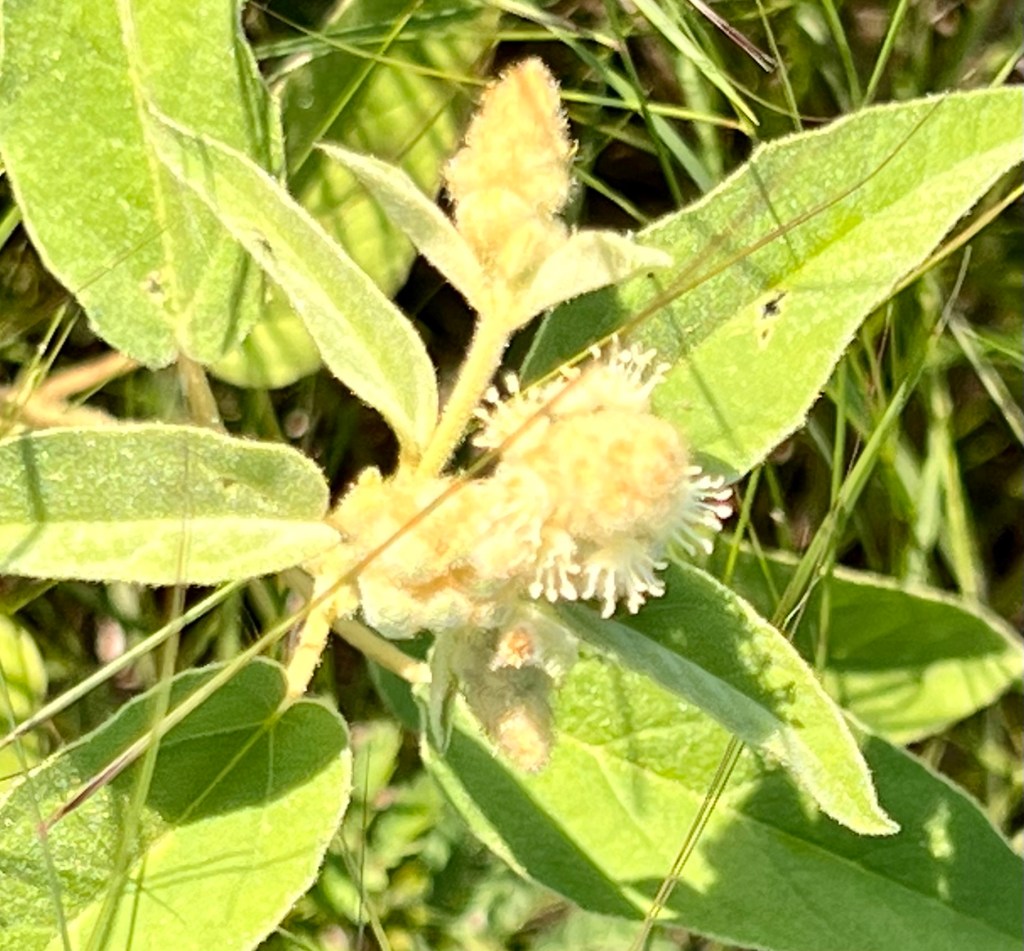
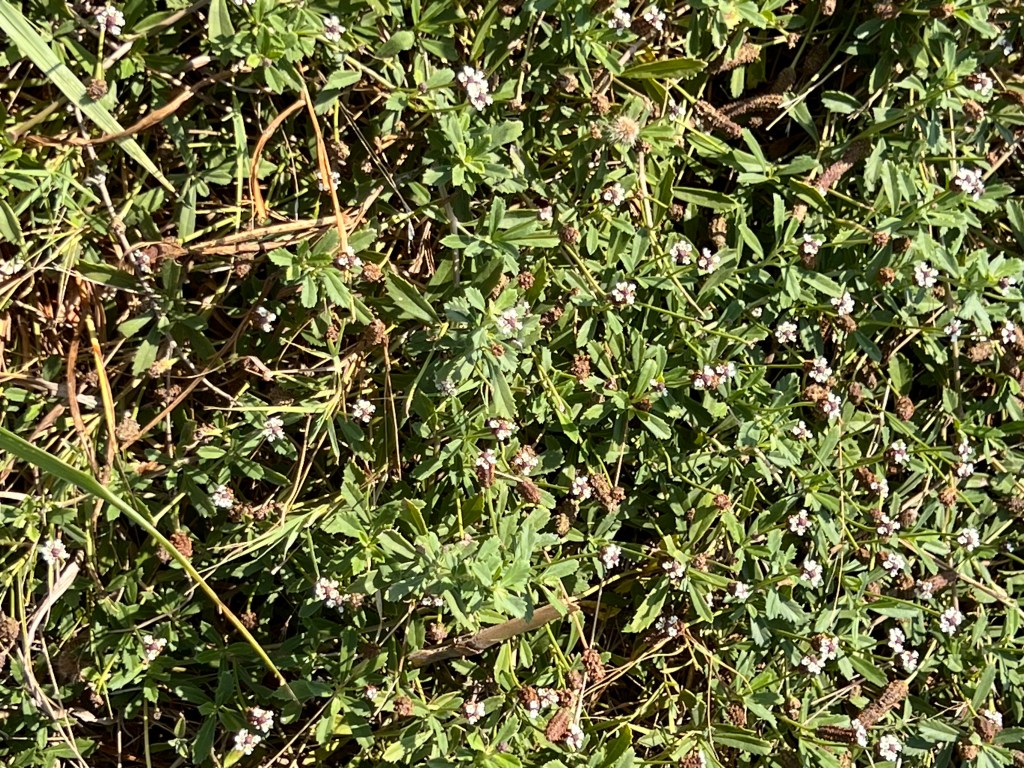
And today I saw some zyzotes milkweed looking strong and happy, along with broomweed, velvet weed, and frog fruit.
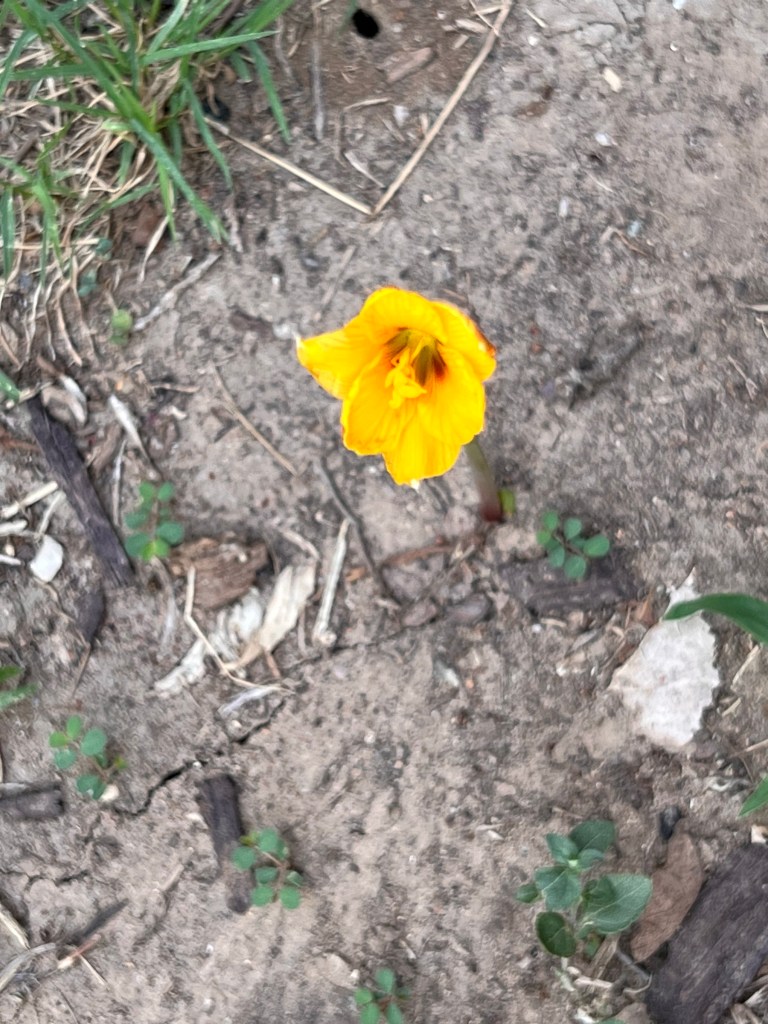
happy violet ruelliasdrought lily (copper lily)spider lilycrepe myrtlebindweedprairie broomweedfrogfruitvelvet weedTexas vervainSorrelvine, in the grape family
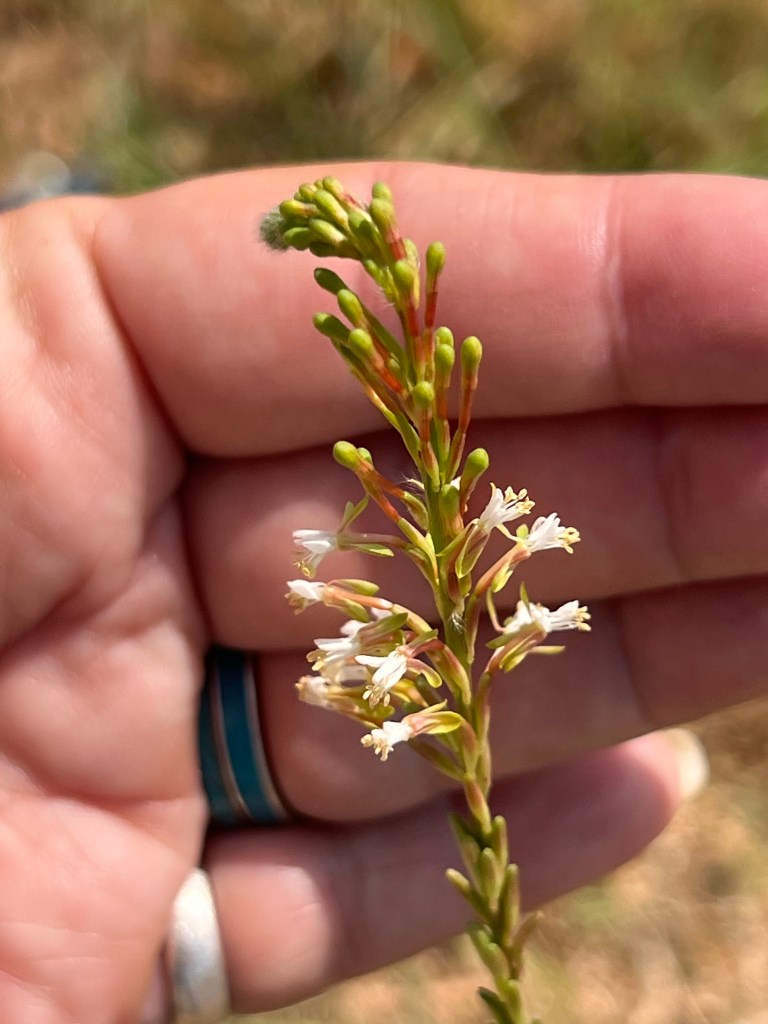
Plus, something smelled very, very good over by the dry ole creek, and I realized it was thousands of tiny balloon weed flowers in the creek bed. White flowers do tend to smell good, I’ve found. I guess I’d never been around so many of them before, so I never noticed the lovely aroma. These vines don’t usually catch your attention until autumn when the fascinating seed pods appear.
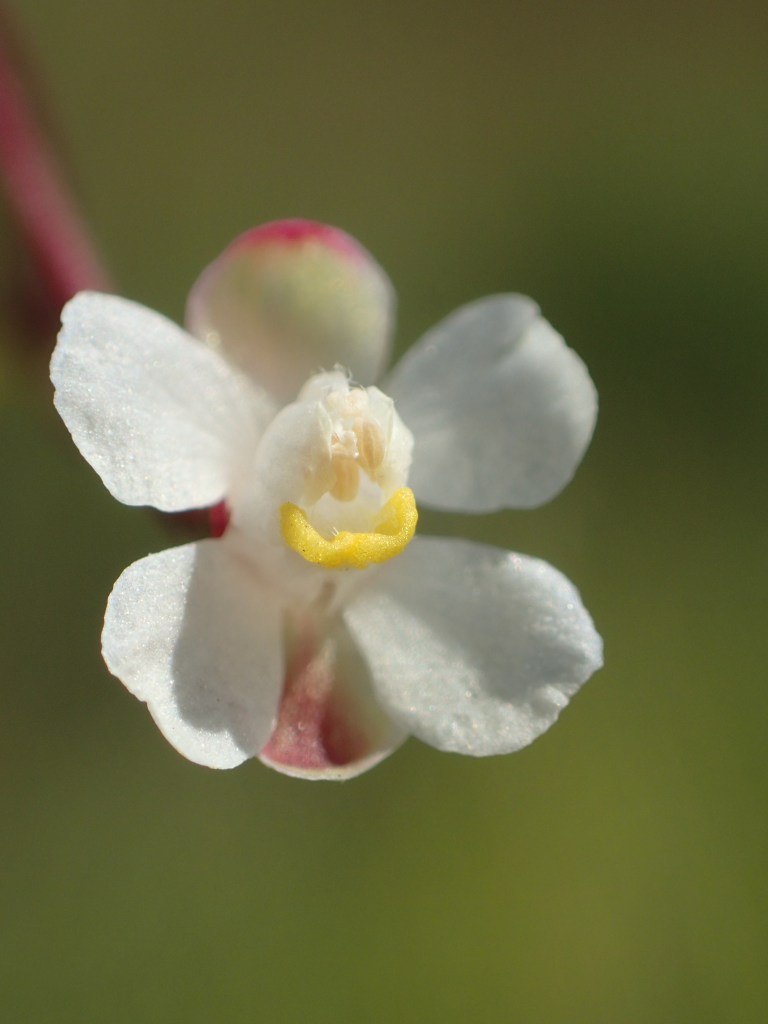
Seeds, photo by HungExtreme closeup of tiny flower photo by 葉子
Enjoy the photos and hope the promised additional rain comes here. We need it so badly.
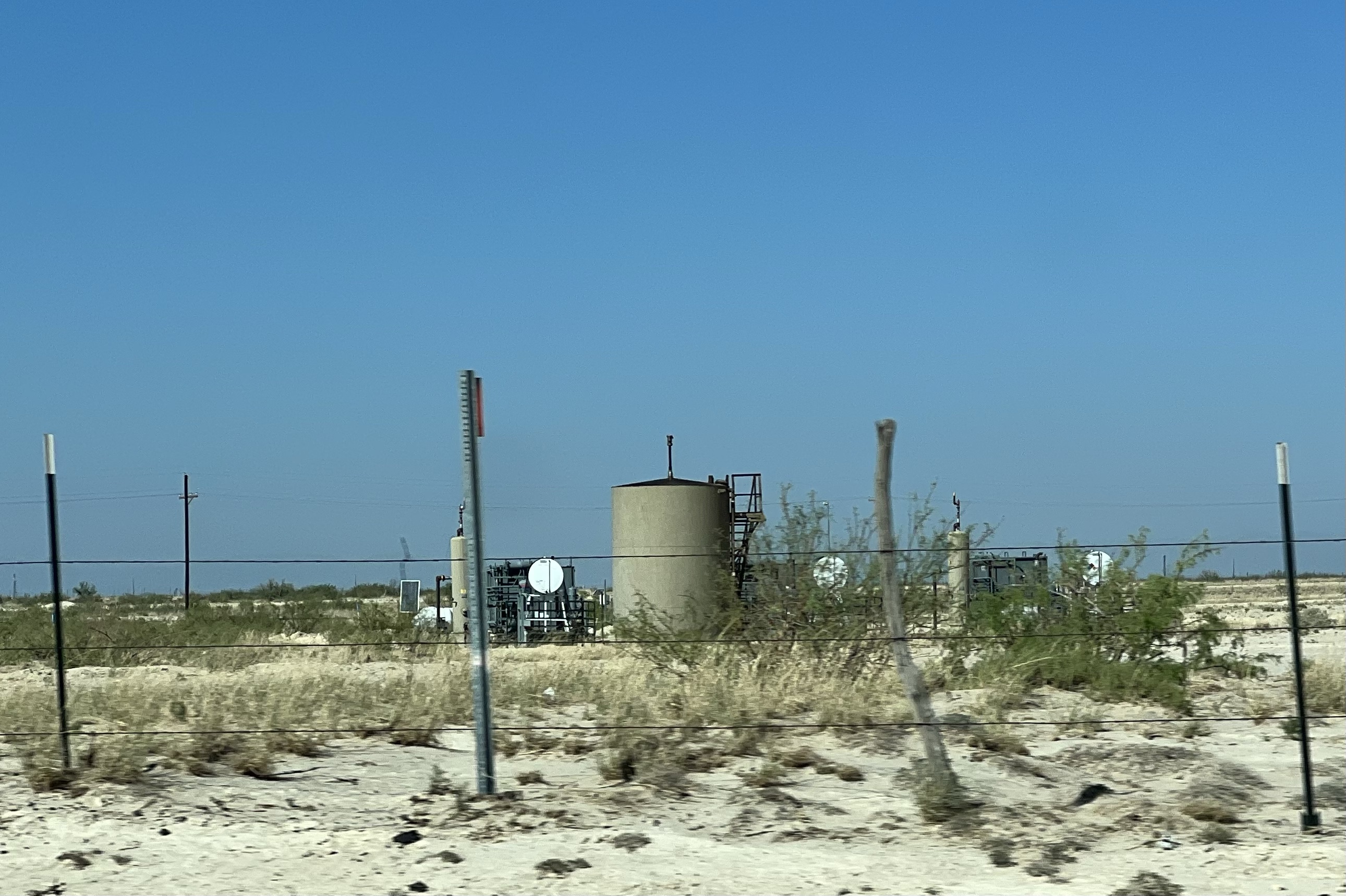
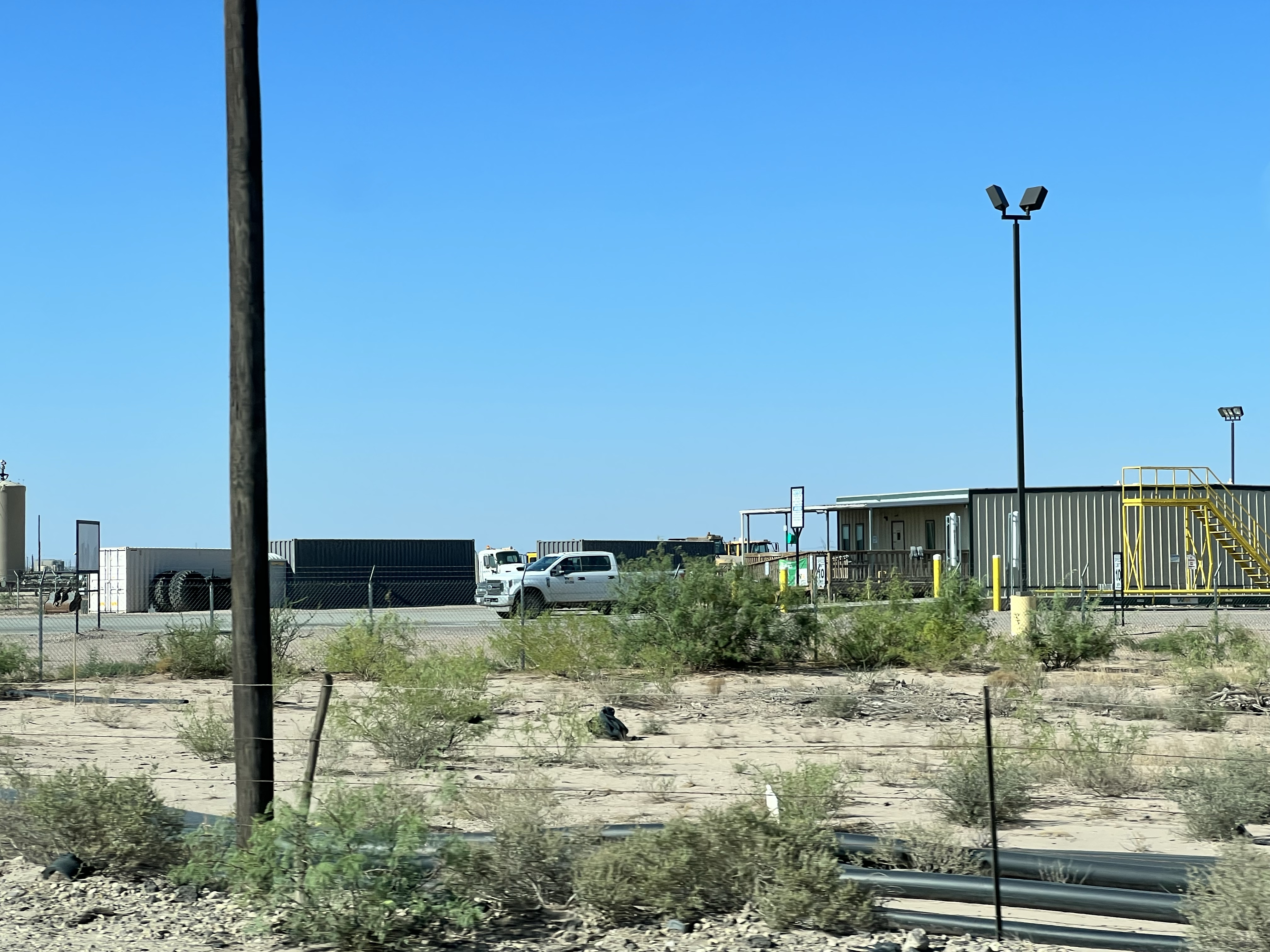
One good thing about having to drive an additional hour to Pecos, TX because there was no water in the entire town on Van Horn, our drive home was easy. Wow, Pecos is a one-industry place. That industry is oil. We knew that, but it was impressive to see so many wells, tanks, and pipelines.
The Pecos area
Where there was no oil the scenery was negligible. This might have been the least interesting desert we crossed.
Look, a bush!
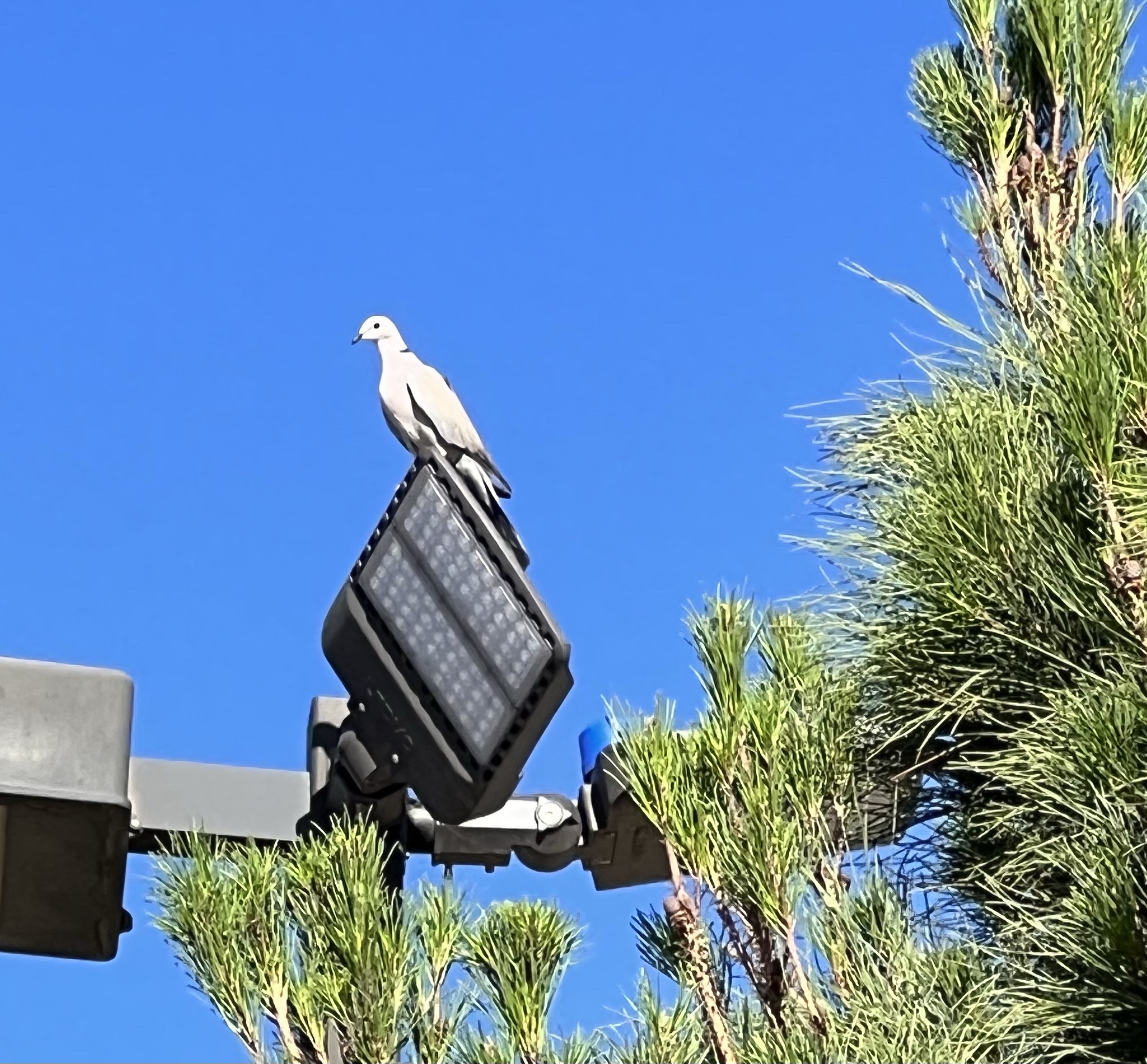
Even the hotel, which I liked because it featured many elephant statues, a Buddha holding a US flag, and many Mexican cactus statues, had pretty dull birds. Grackles and doves! I did find a couple of new plants, so I was pleased.
Collared doveGrackles Female grackleTahona daisy. Pretty!Harmel or wild rueThis is used in folk medicine
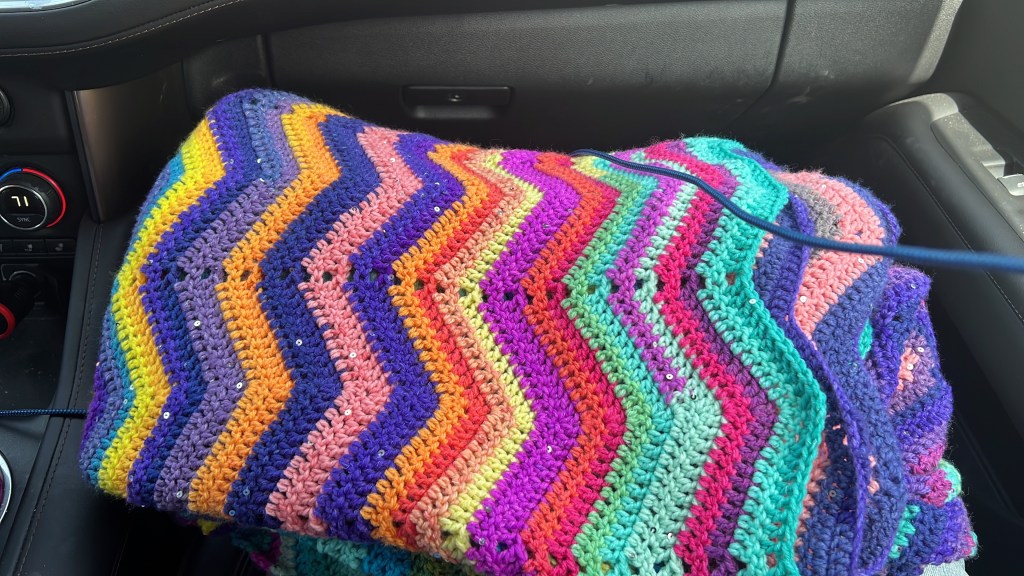
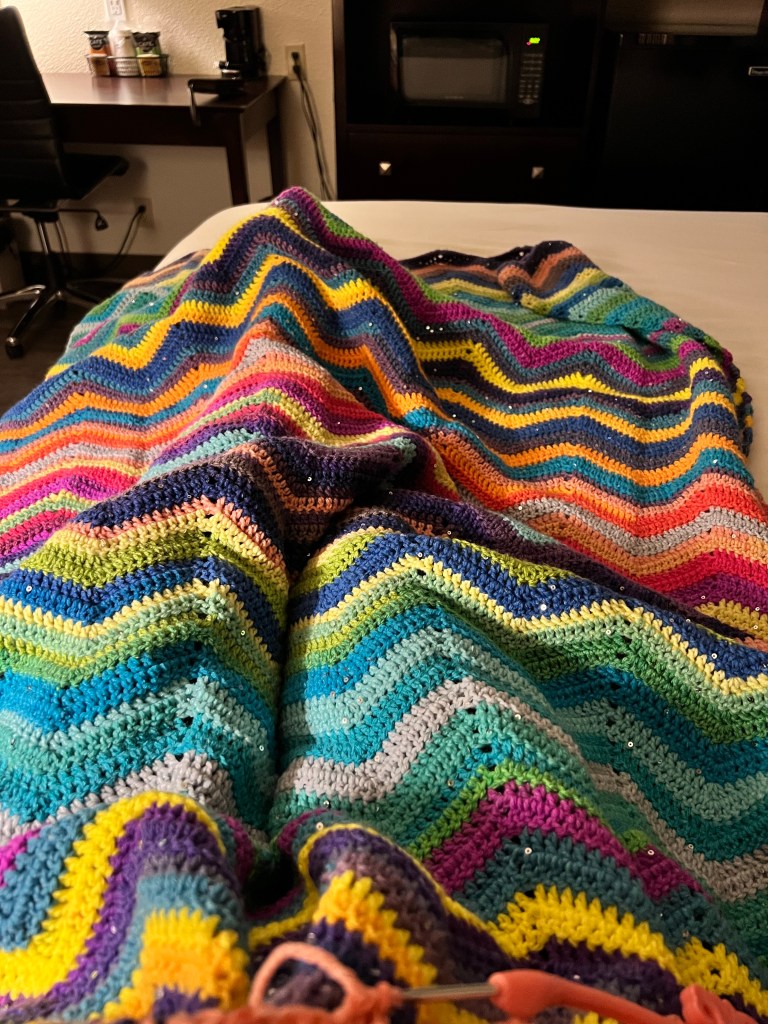
I’m about done with the blanket I’m making. Crochet gives me exercise points on my watch, so I appear very fit. It helped pass the time, but I was also glad when more mountains showed up.
Before heading home, I gave Kathleen the Native American pottery bear I bought her in Arizona. It’s my favorite kind that’s fired with horse mane and tail hairs to make the decorations. It’s a Mama Bear to look over her and protect her from negativity and unkind people. It will work!
Mama Bear
I have a large one of these somewhere that’s not unpacked yet.
We finally got home and I was so glad to see everyone! The ranch is fine and all animals and people are, too. I got to visit the chickens and hug all the horses.
Where were you?
Everyone looks darned good. Fiona especially looks fine. I think her recent worming helped. they got hay from my son, which I appreciate and do did they. It didn’t rain much.
I’m so sleek.
Drew and Apache both were happy to get fly spray. Ahh.
He was really hungry.
Back to work and heat tomorrow. Keep sending our family healing thoughts!
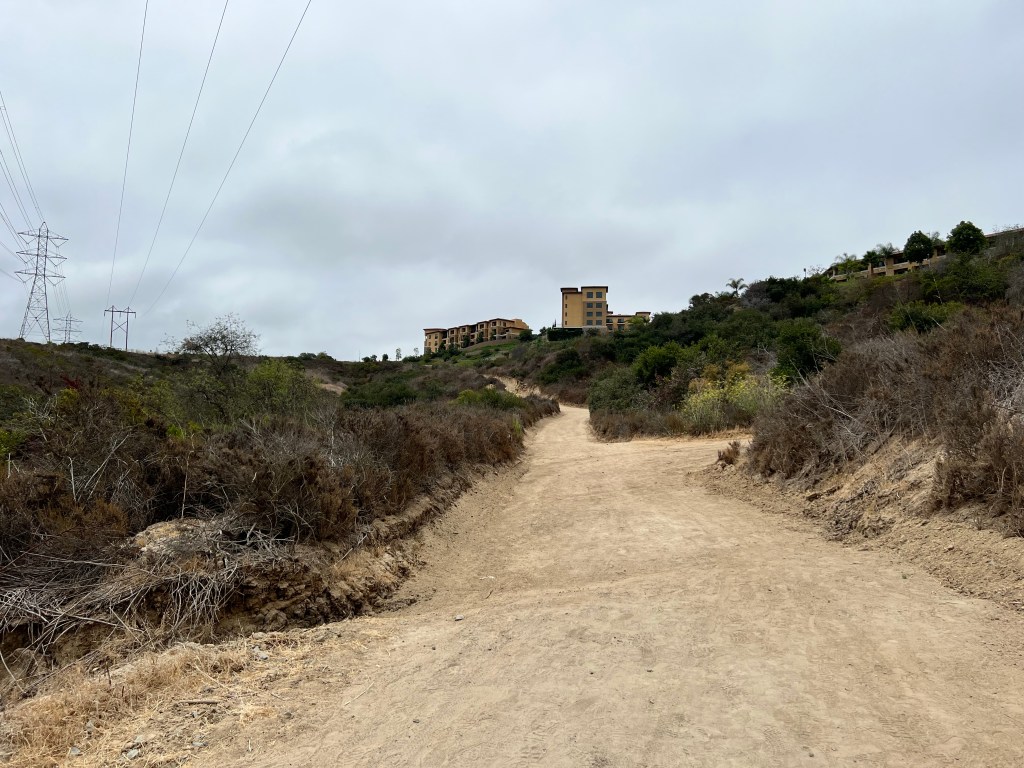
Our last day in California we didn’t have any plans so I decided to take a hike on my last day of pleasant temperatures. I found parts of the resort I hadn’t seen before and then a trail head! Off I went.
View of resort from trail.
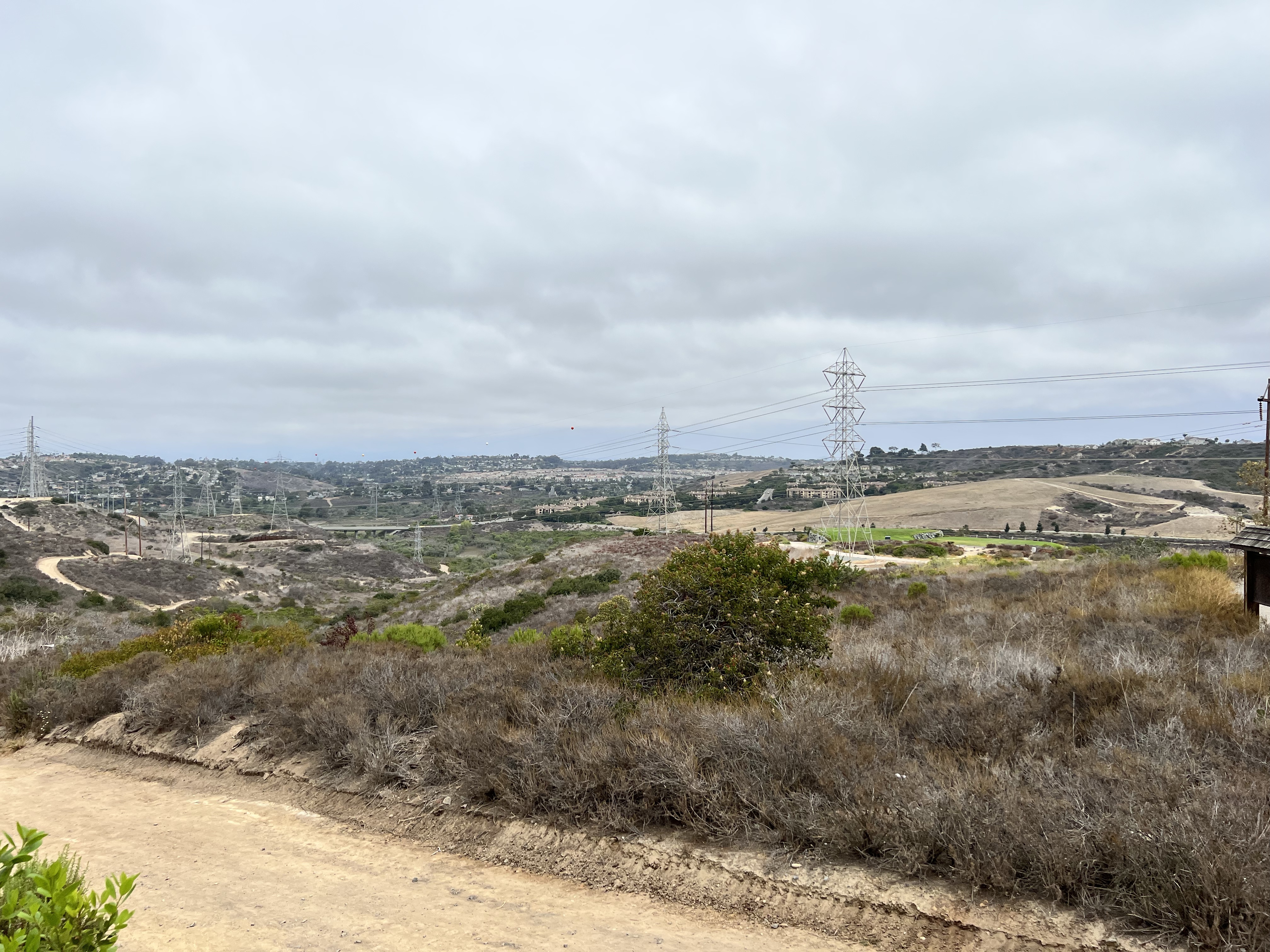
Carlsbad has a large network of trails that I wish I’d found earlier. I chose to go downhill the whole way, which was fun. I didn’t see any new plants or animals, but it was peaceful and scenic.
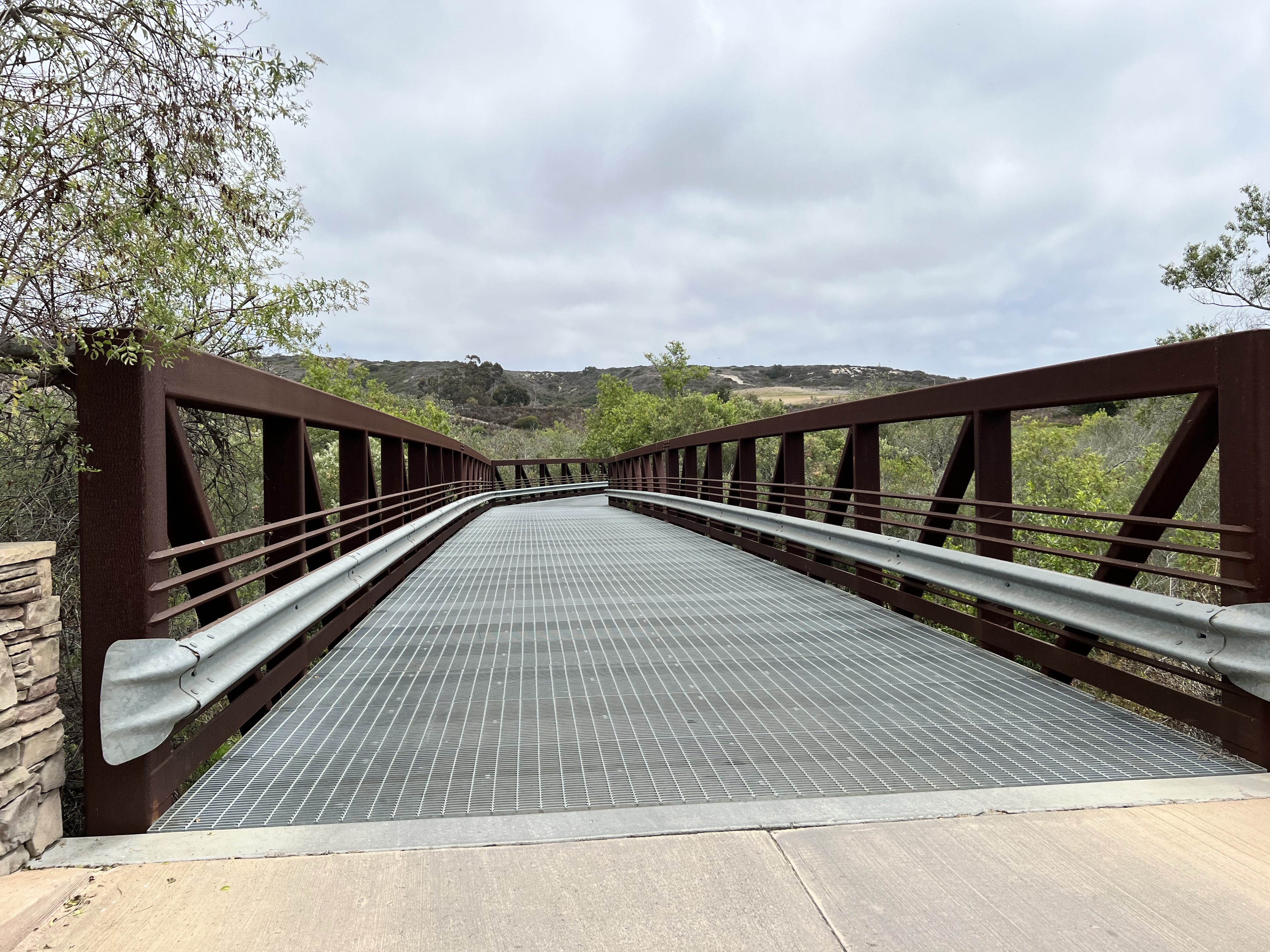
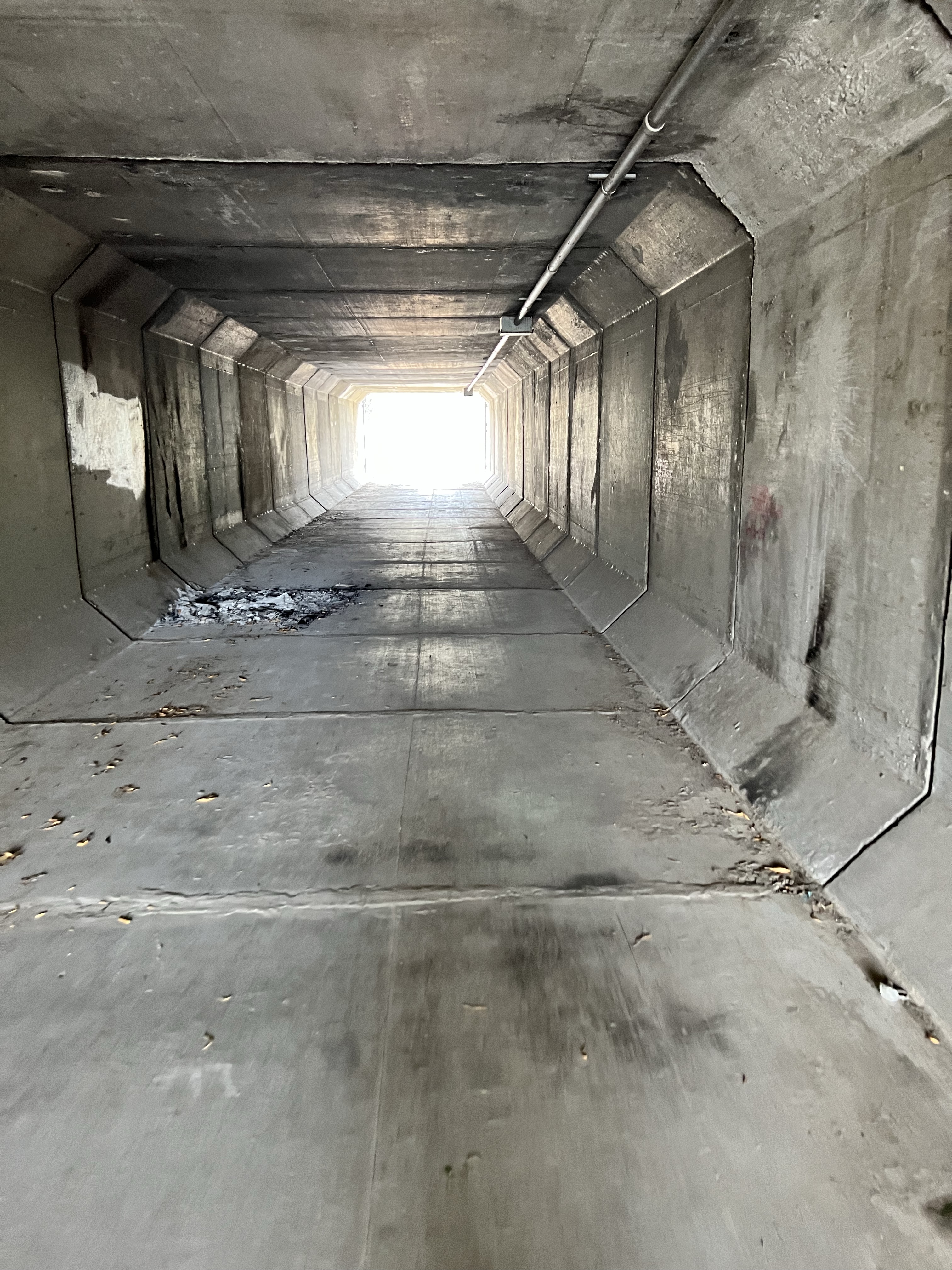
The trail took me through a golf course and had a cool tunnel. I had fun. Suna fun.
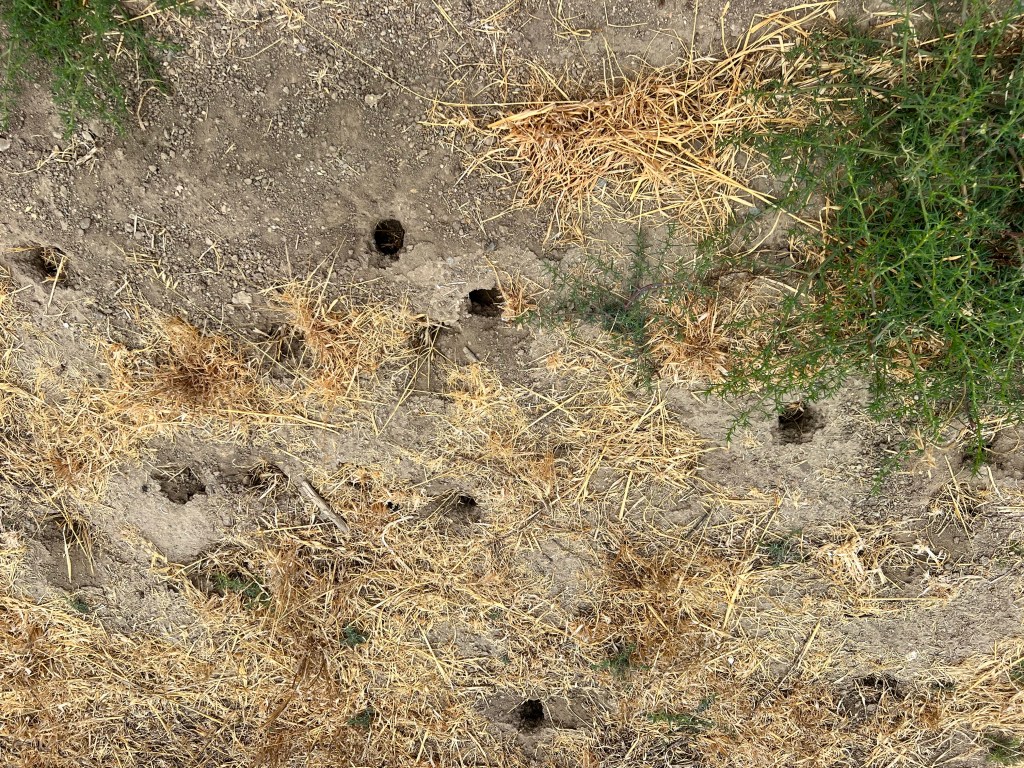
When the trail ended, I walked down the road, which skirted other trails. There I saw many holes.
Holes!
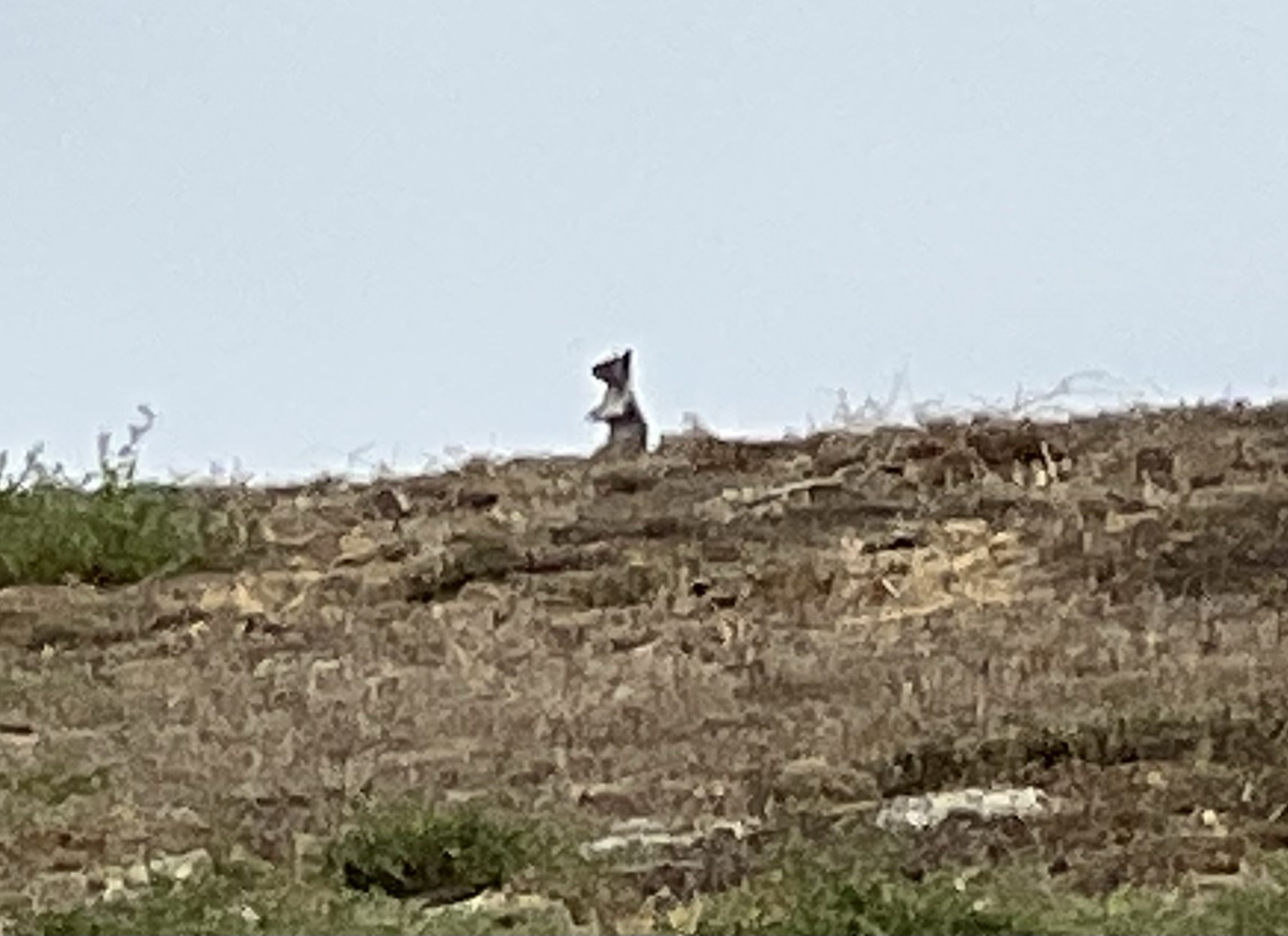
I thought to myself that it looked like where ground squirrels might live. I was right! So I saw them scampering around and going into the holes. Photos are from a long way away, so blurry
On alertChecking me outHeading into a hole.
I looked up the California ground squirrel and learned that each one has its own hole. This made me realize there are a LOT of squirrels in that wilderness. I bet they really annoy nearby homeowners with their irrigated manicured lawns.
The real highlight of Thursday was that I spent all afternoon by the pool just relaxing. I had the hot tub all to myself and enjoyed it until I moved to a big round couch and crocheted on my blanket and watched some teens having fun in the pool. It was so nice to have no agenda, no chores, and no work to do. I’ll cherish those hours, even though I’ll be happy to be back into my ranch routine.
Blanket progress. Sure is random.
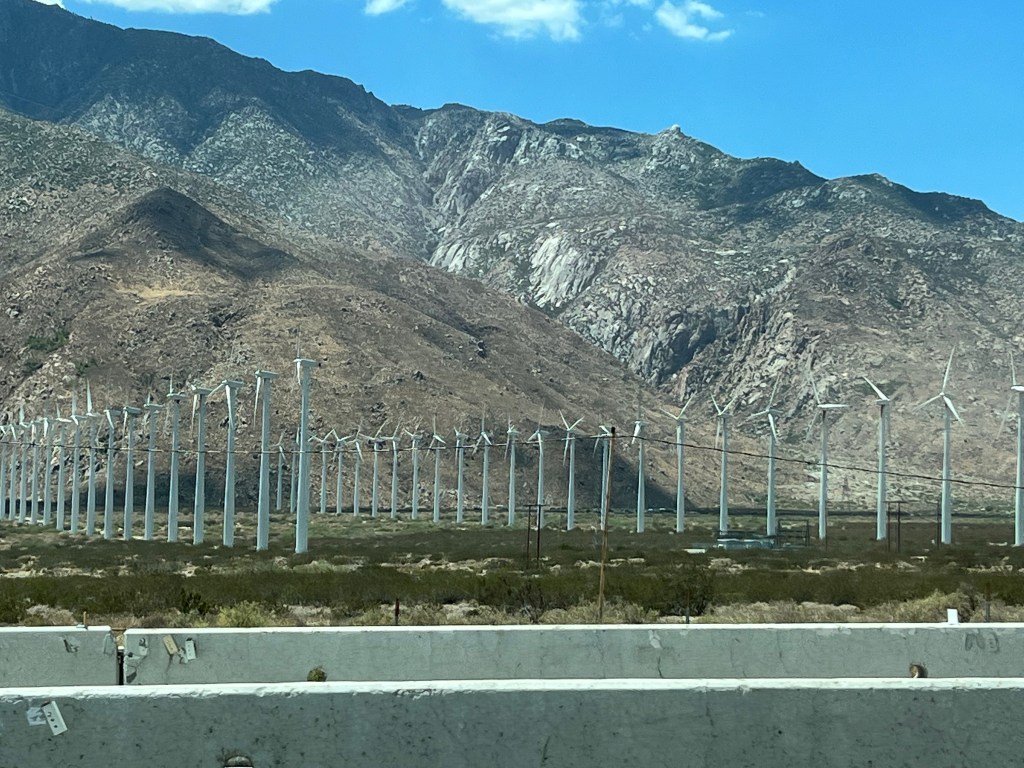
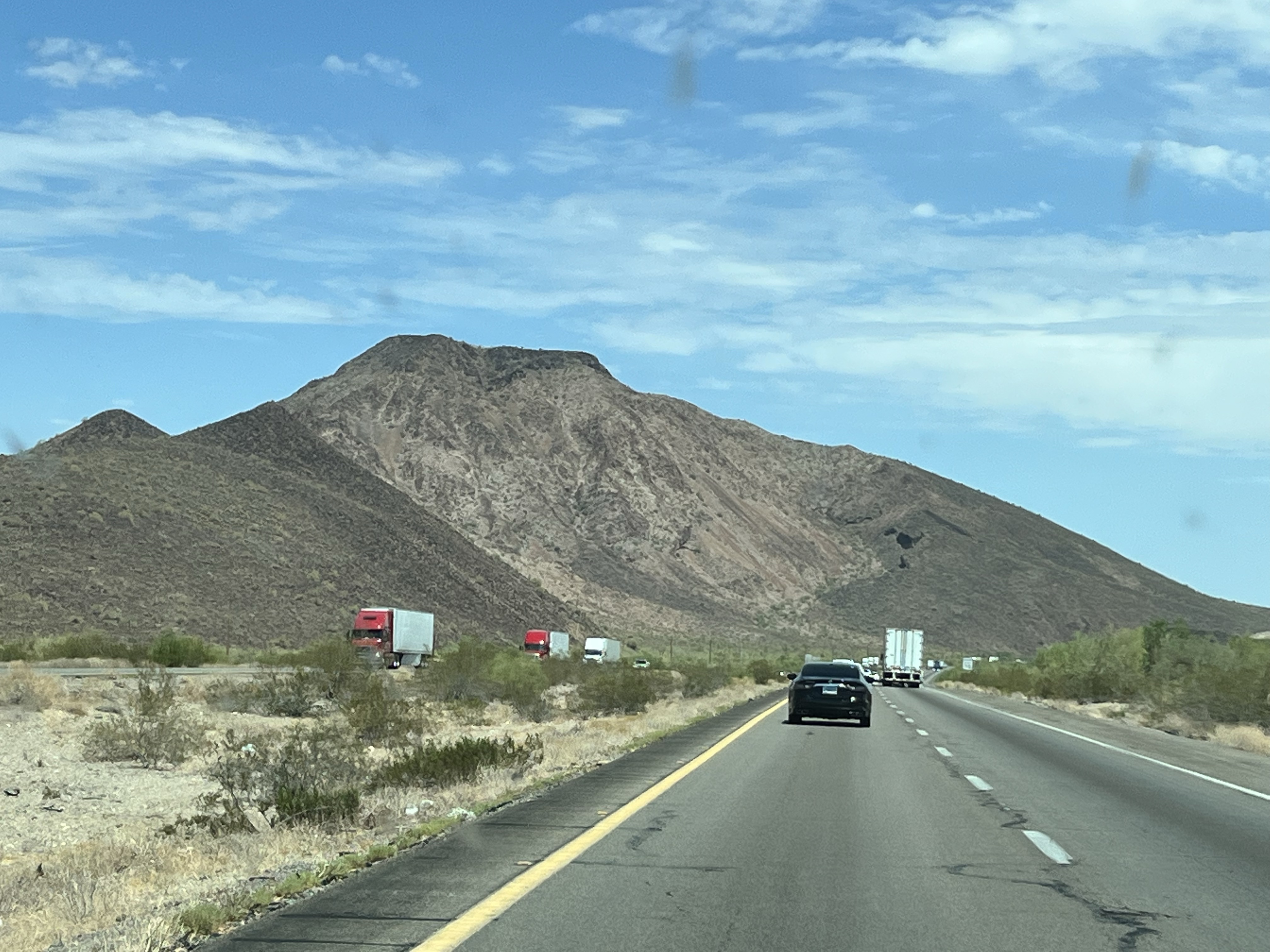
We headed out yesterday morning and took a different route to our first destination. I enjoyed seeing Palm Springs and other desert towns from I-20. There are so many windmills and solar farms out there! Nice to see.
Electricity for Palm Springs
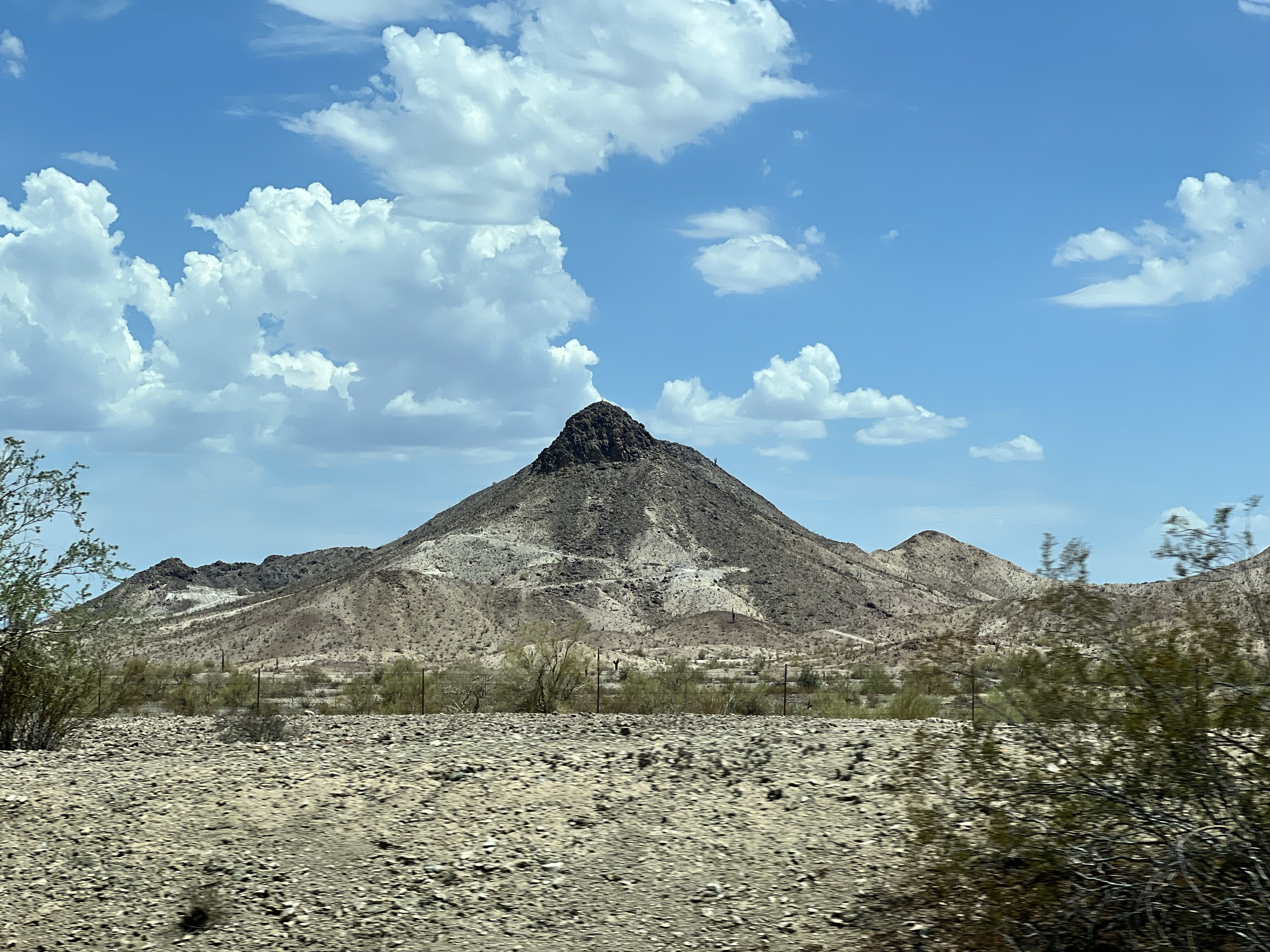
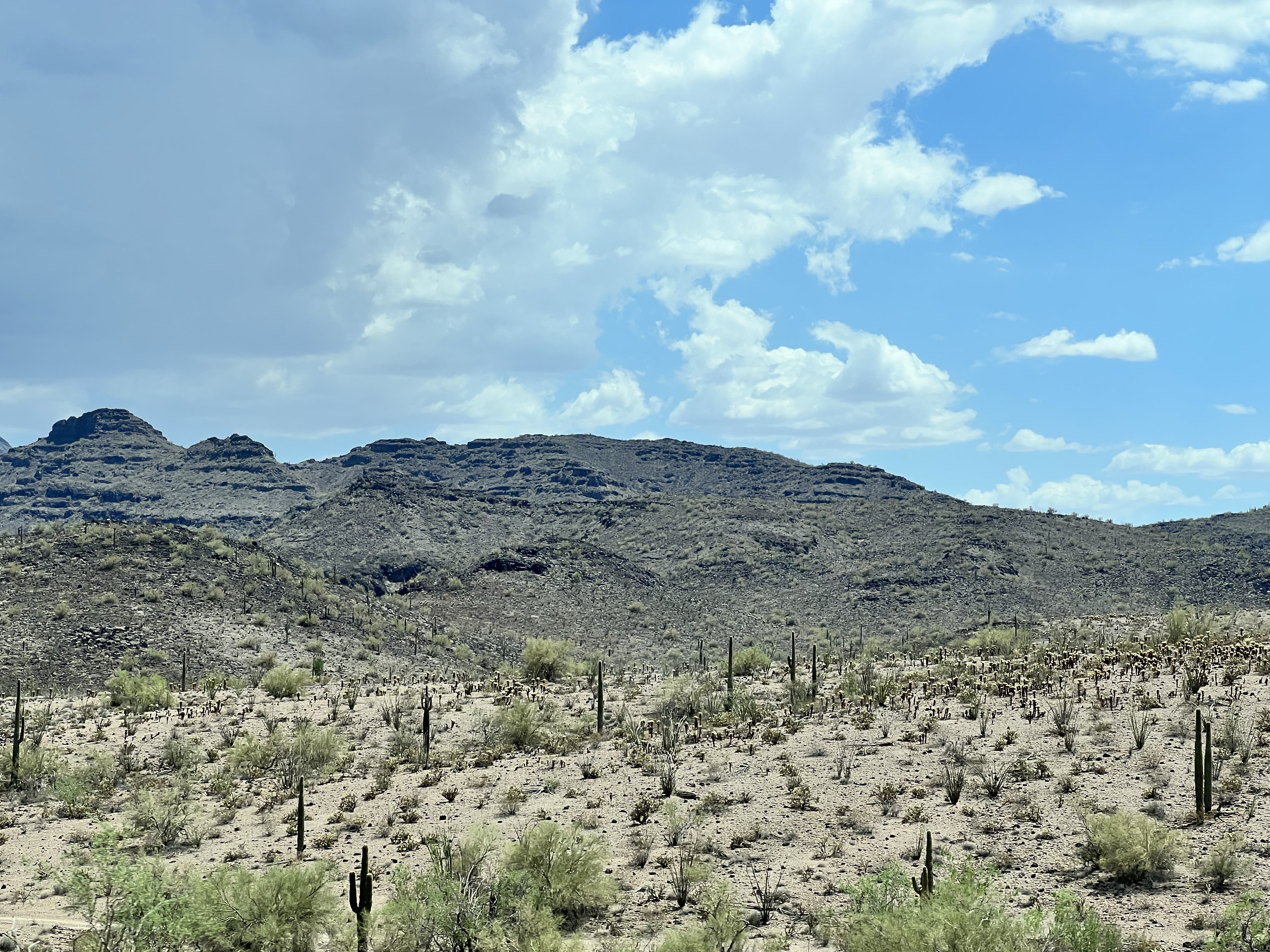
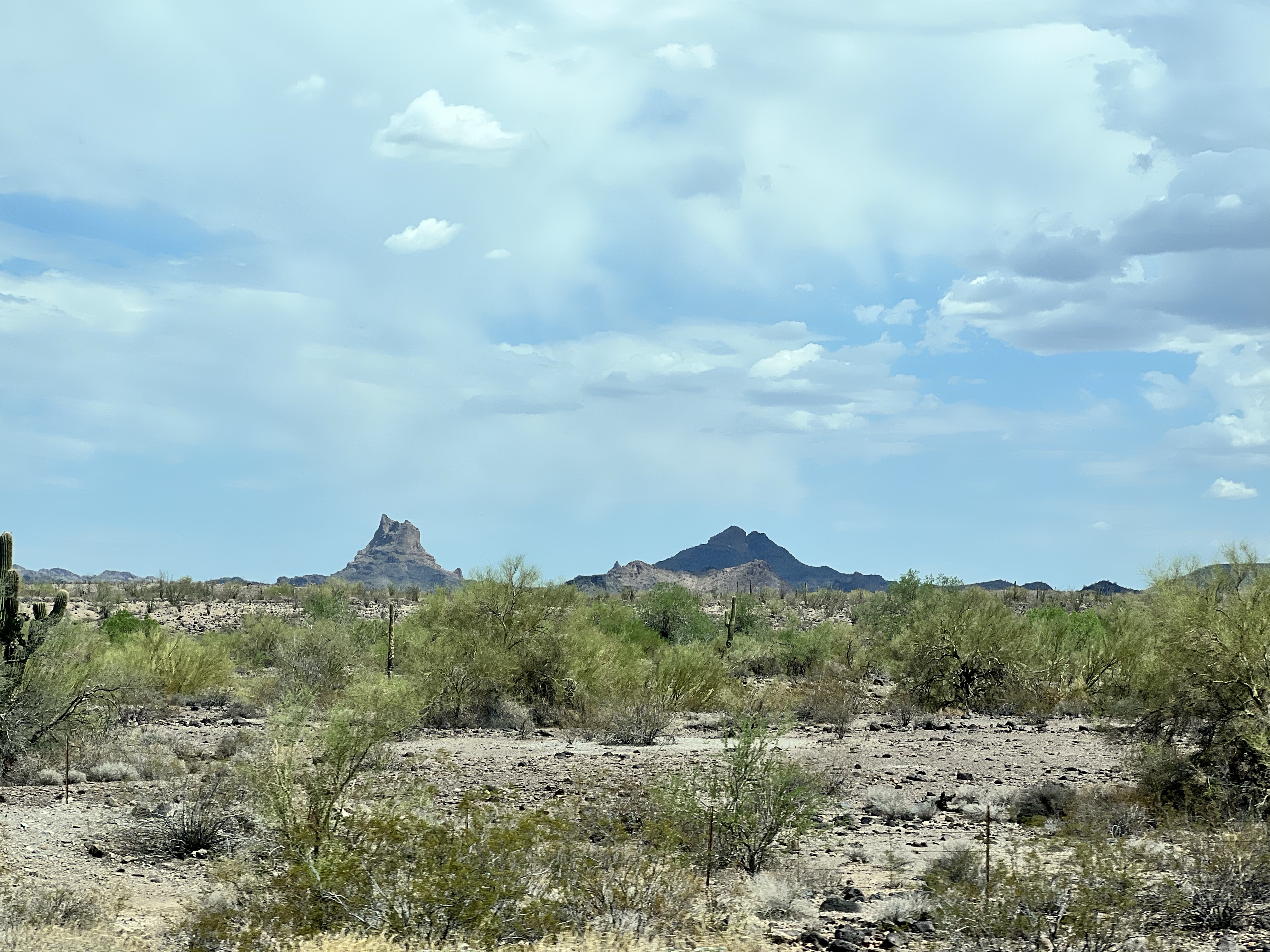
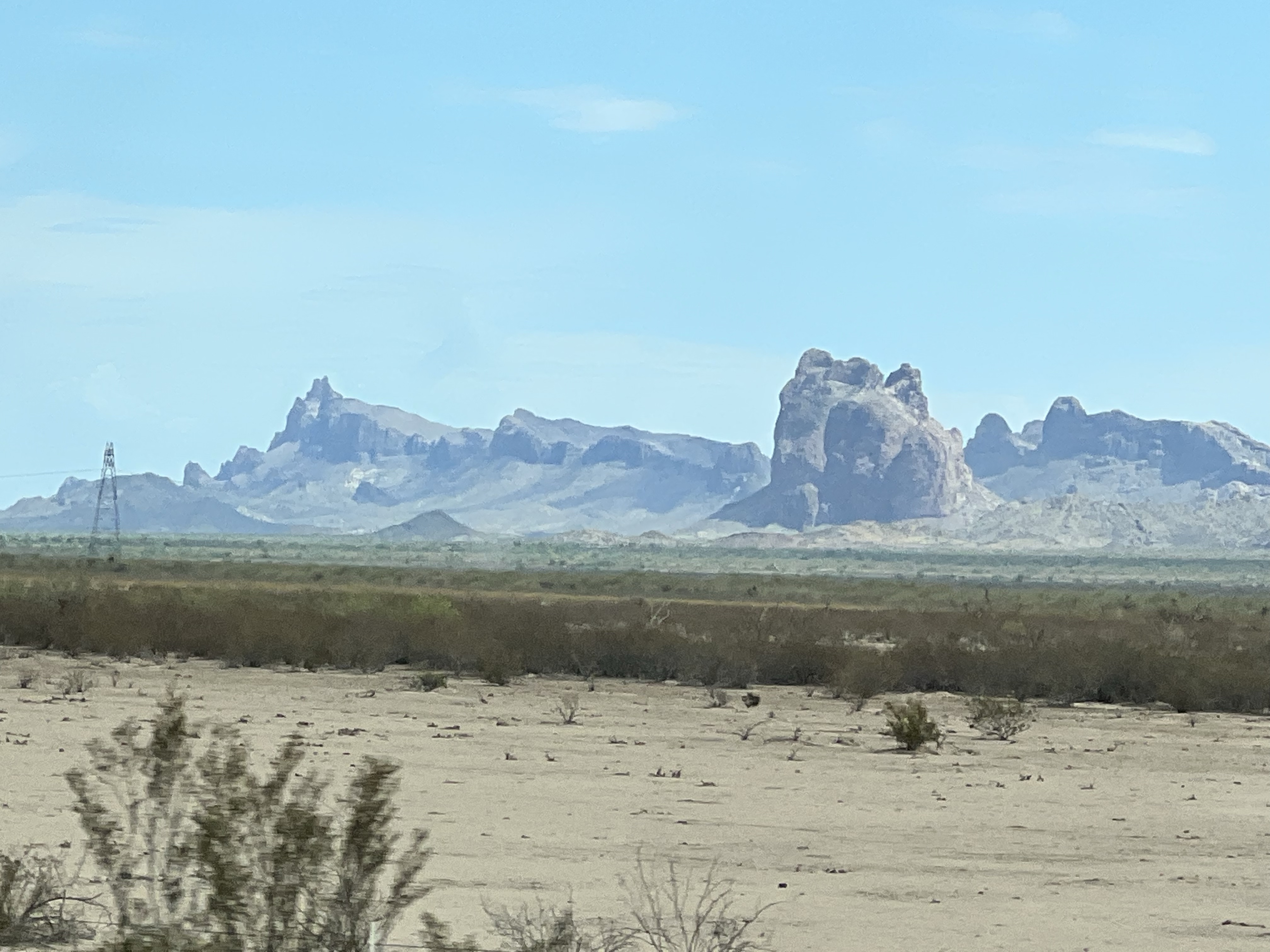
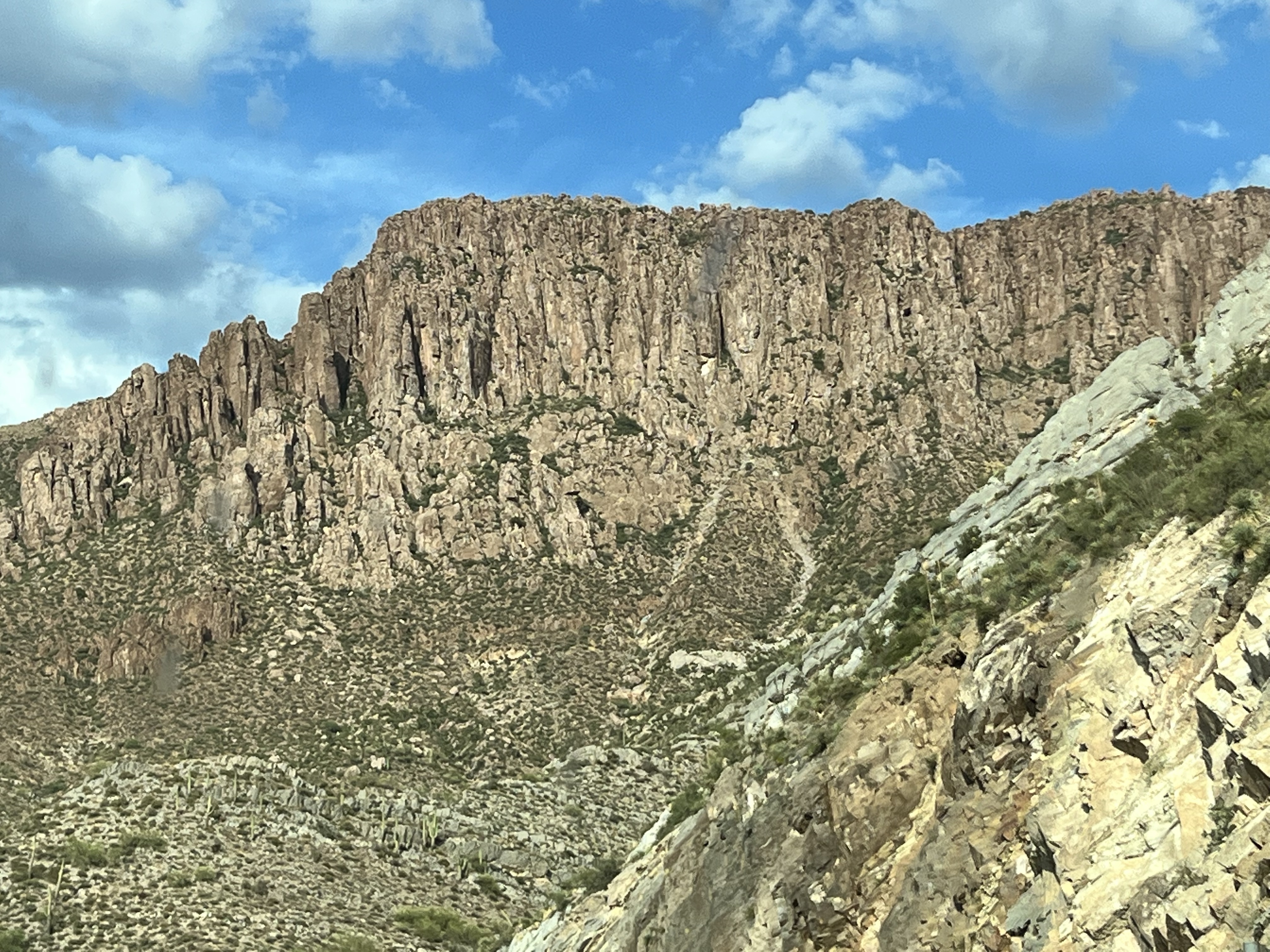
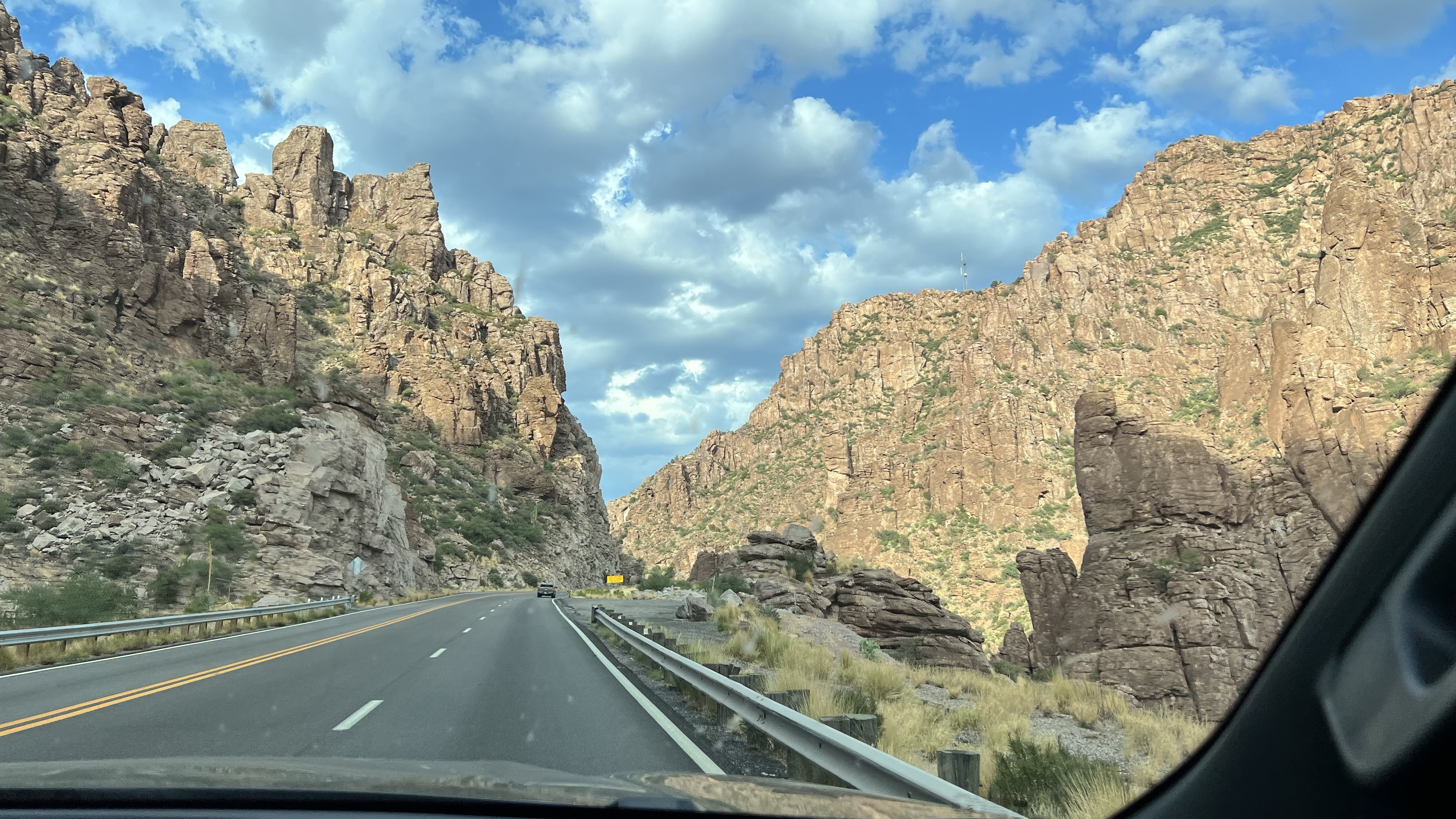
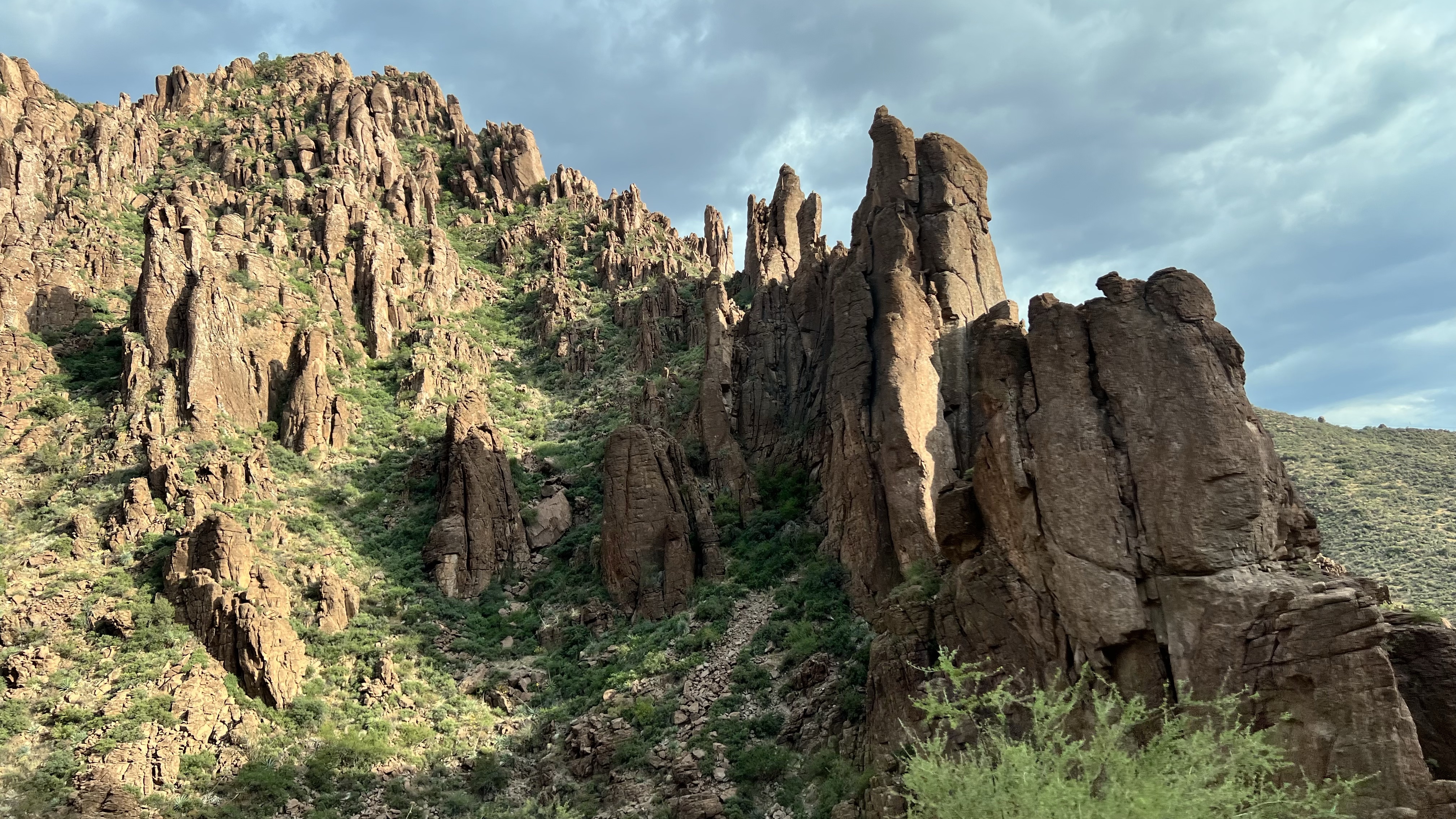
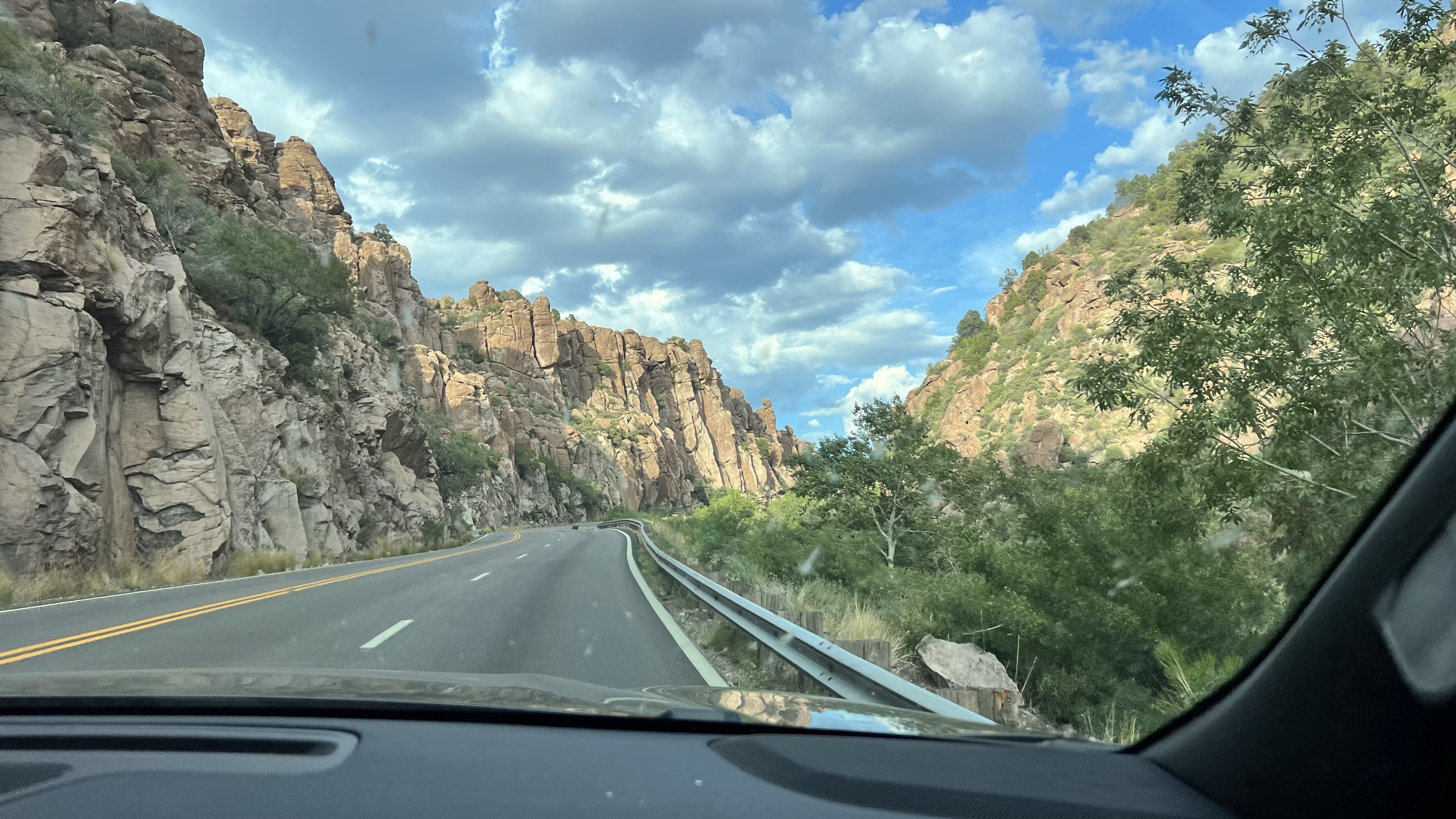
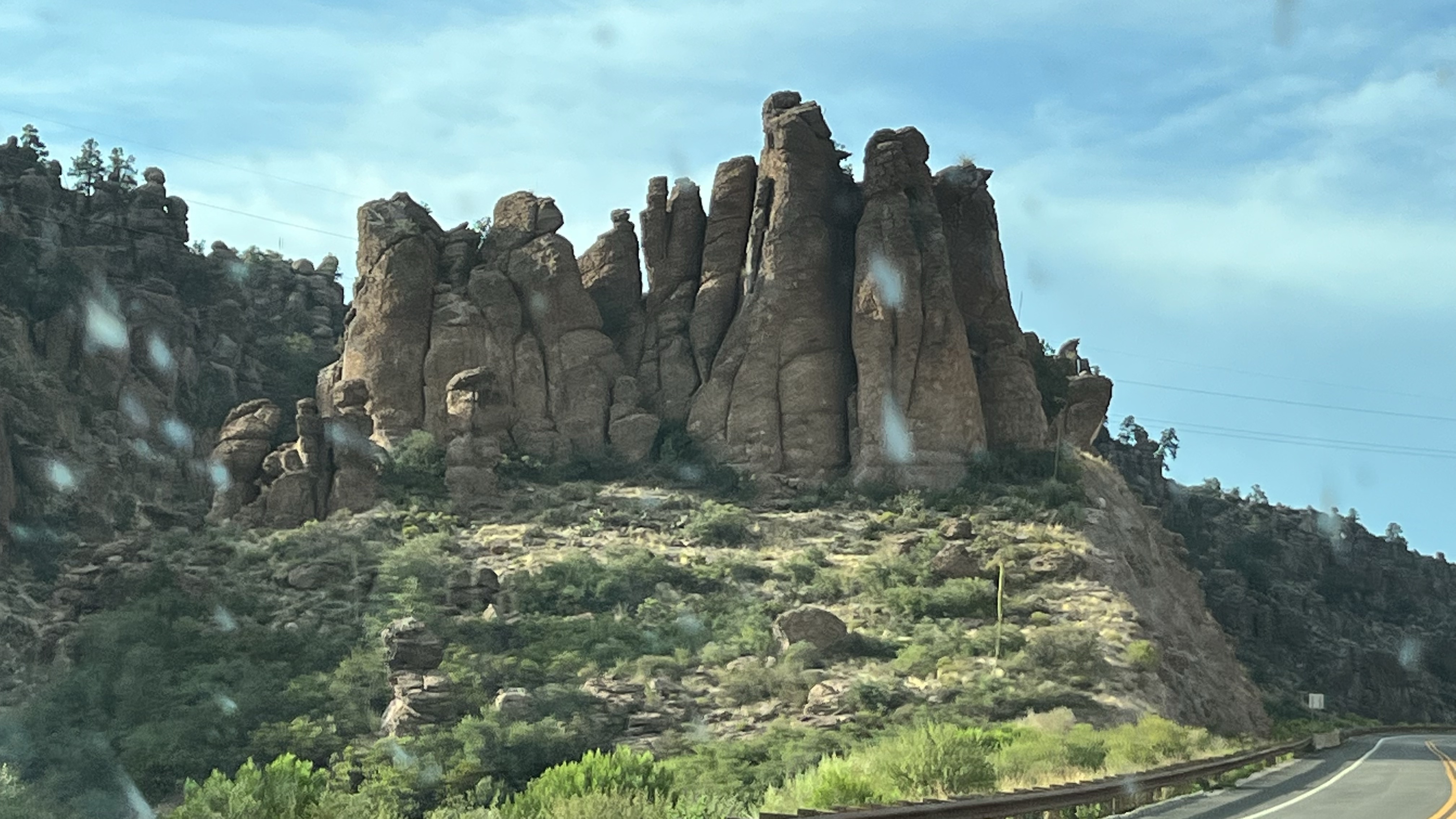
There was lots of very barren desert with some oases in between. I was happy to get back to the mountains so I could take more pictures of rocks. I just think that area is gorgeous.
We got to Globe, Arizona, where we stayed at a very cute family-owned Best Western. It had great landscaping and friendly owners.
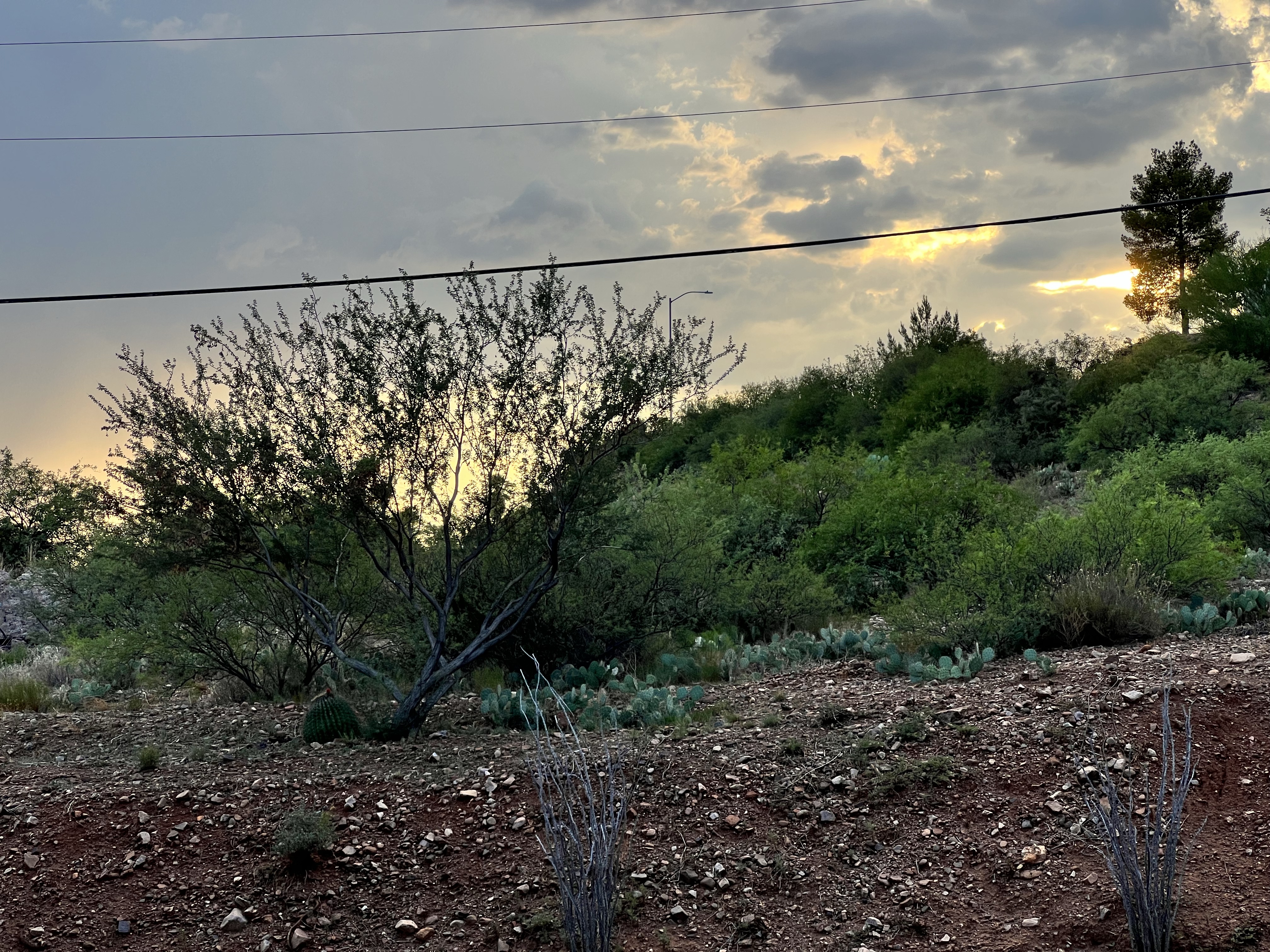
Sunset with rain. View from our room!
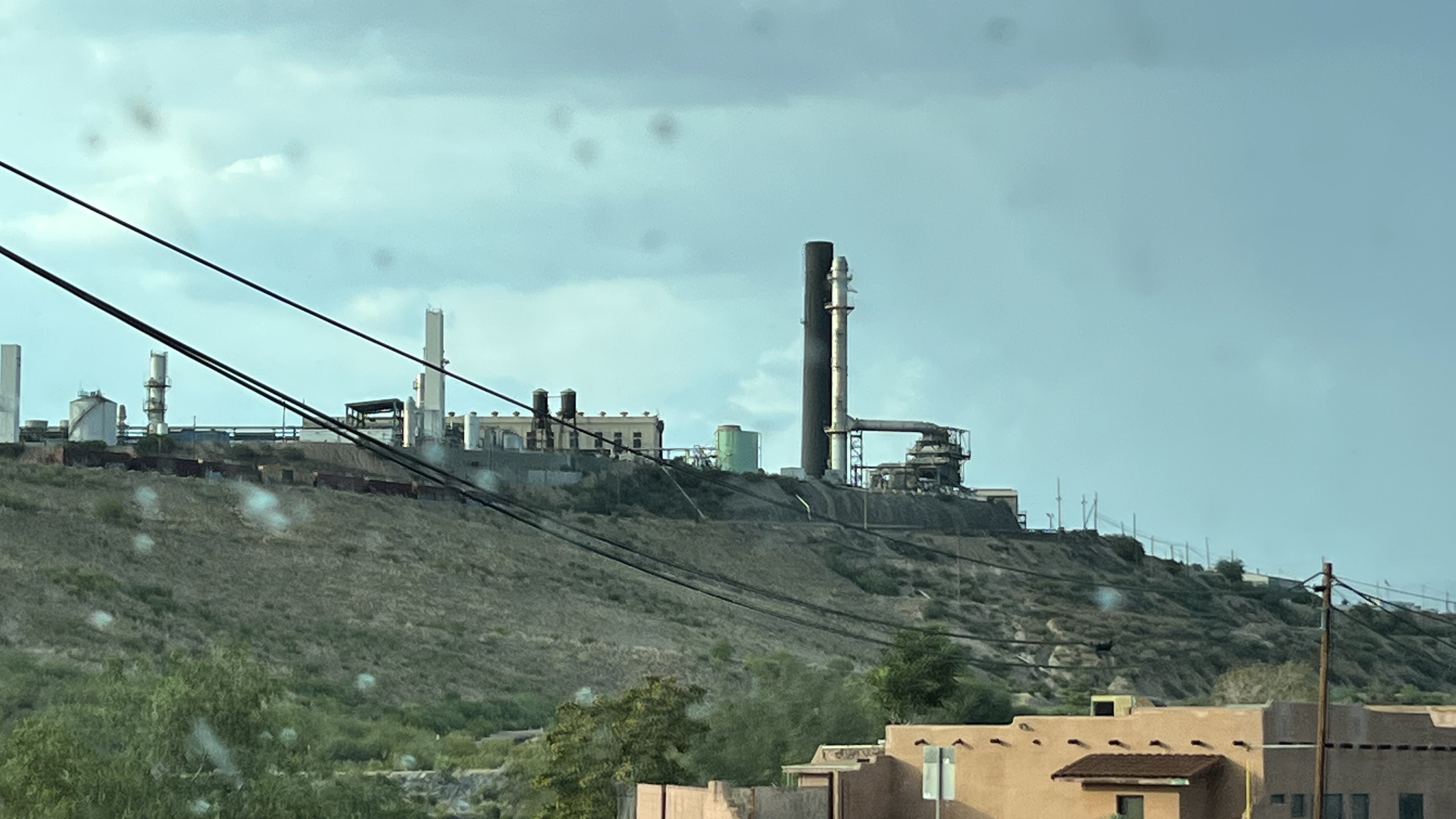
The room had too much scent in it for Lee, but we had a good night followed by a home-cooked breakfast! We had great conversation with the cook and an elderly couple who were fascinating. We talked about horses, spiders and other poisonous things, and travel. A great start to the day! Enjoy a few more photos of Globe, whose main industry is copper mining.
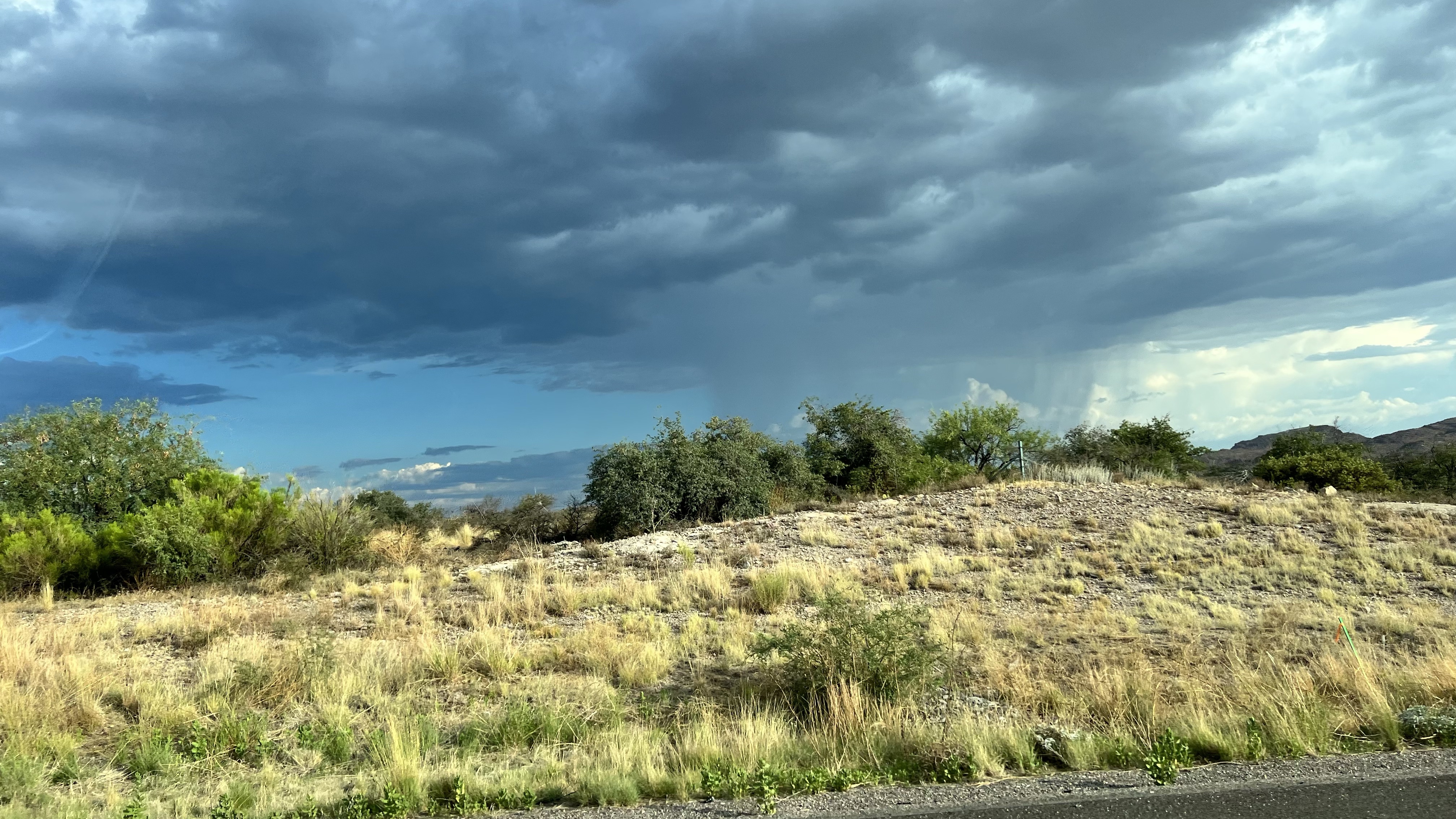
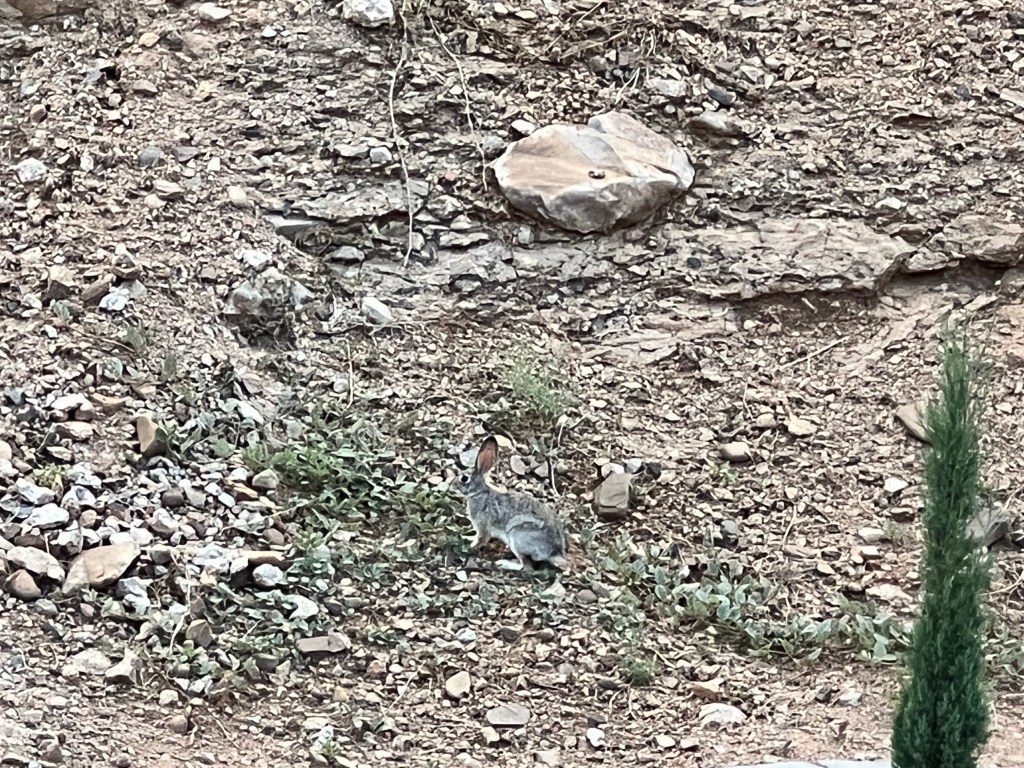
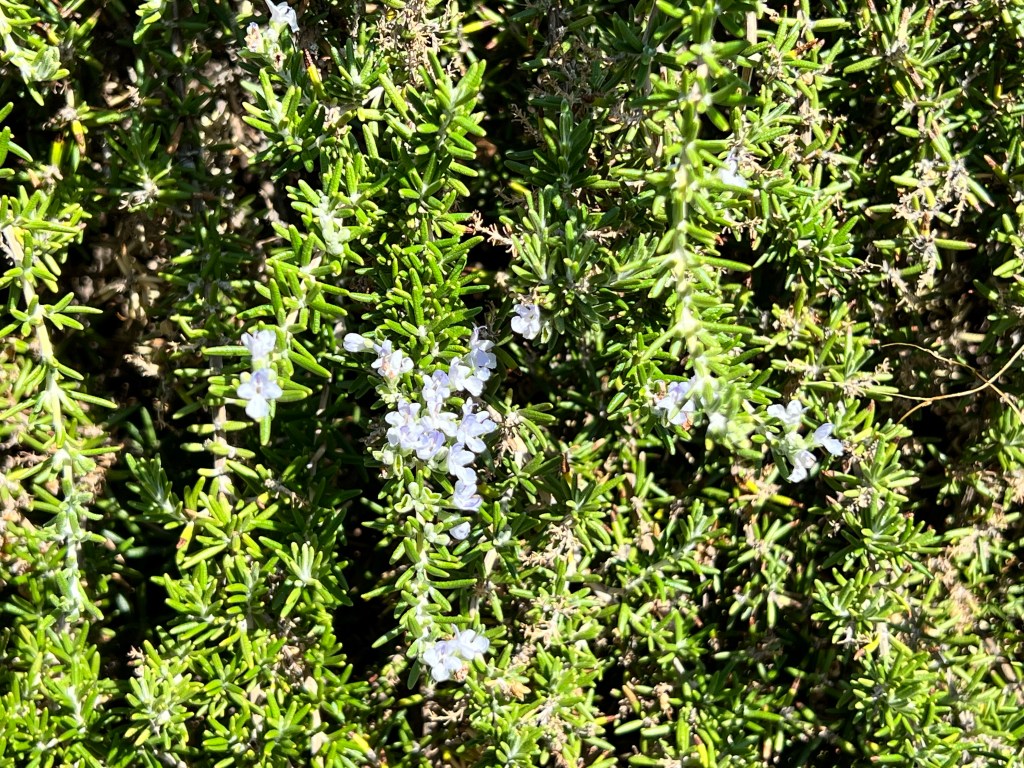
Copper mine Sunset Rabbit. Big ears! Desert cottontail Rabbit!Rosemary Old courthouse and jail (right)Town
Thanks for all your kind words about Kathleen yesterday. She’s hanging in there, though the toxin has affected her bladder! Keep the good vibes coming!
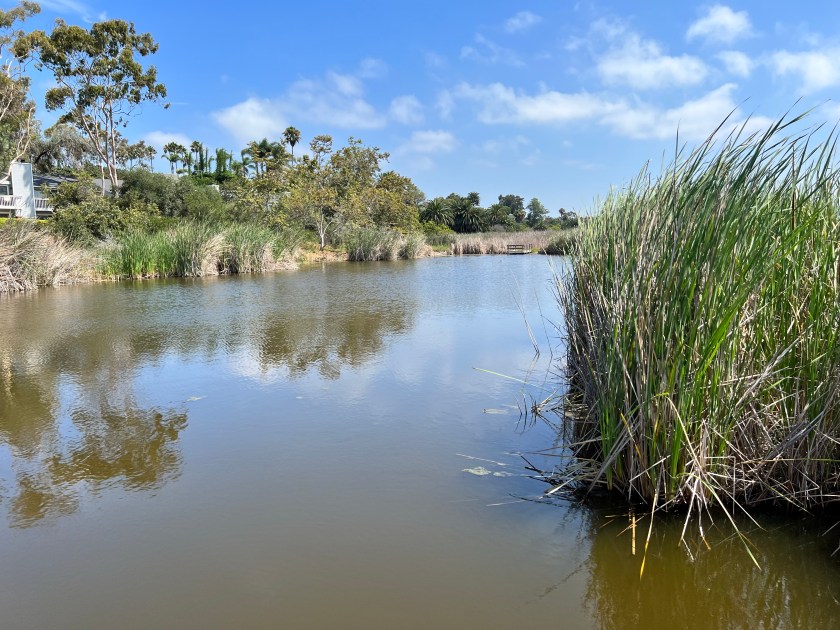
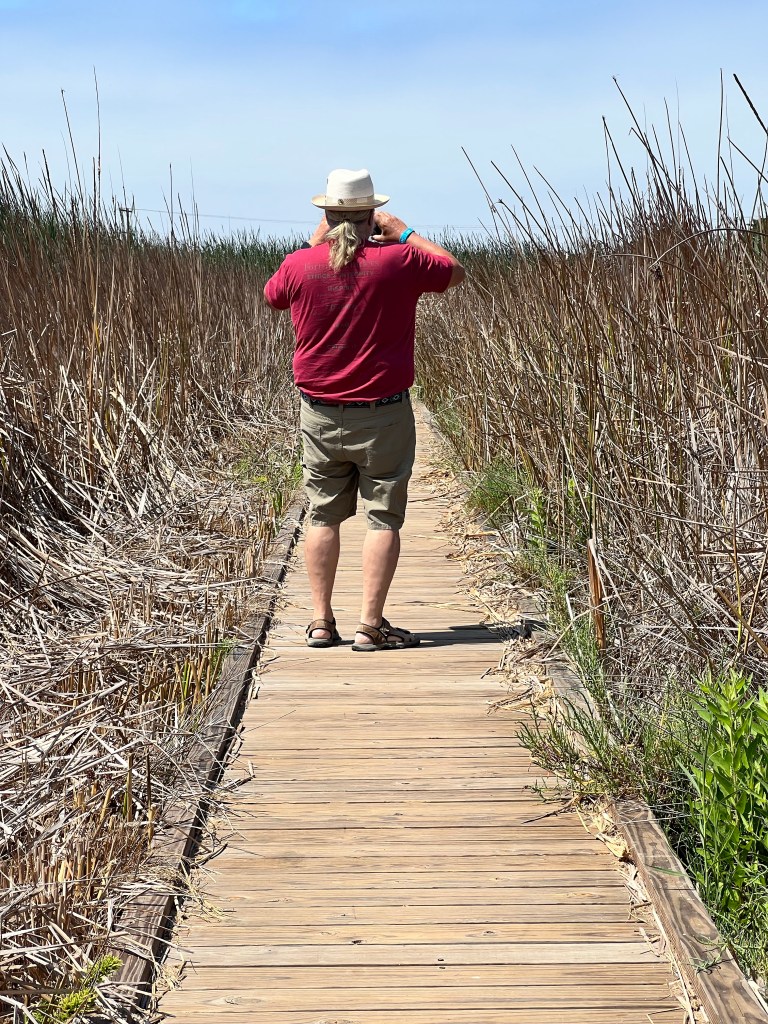
Yesterday’s daily expedition in the Carlsbad, California area was to the Buena Vista Audubon Society’s nature center in Oceanside. It’s on the Buena Vista lagoon, which is a former saltwater marsh that was dammed 50 years ago to create a freshwater pond. One of the things we learned at our visit is that the nature center folks and friends are about to open it back up to its original state.
Quiet in the middle of urban beach world
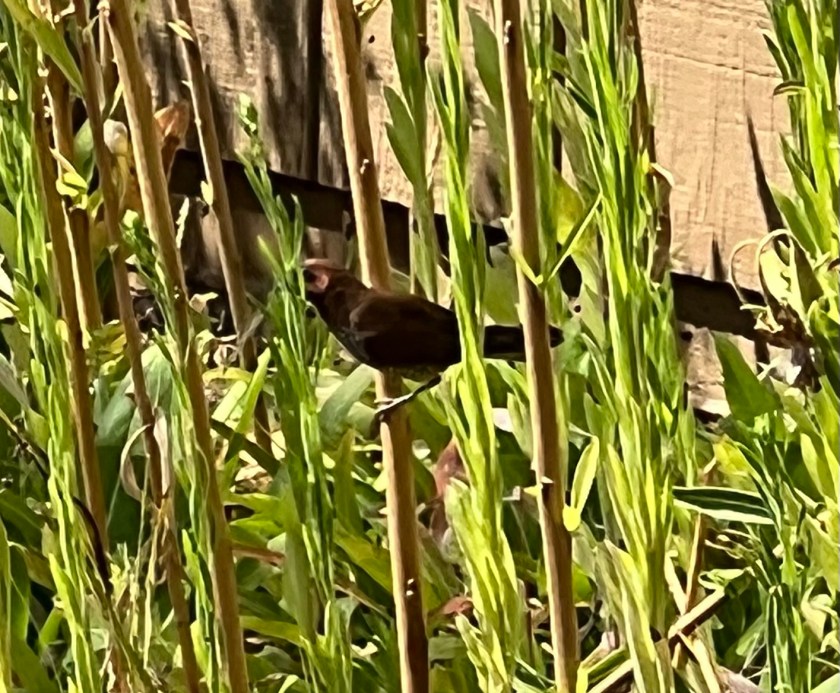
The center is surrounded by plantings of native vegetation, which attract lots and lots of birds. We saw California towhees, brown-headed cowbirds, hummingbirds that were too distant to identify, and something green (kept hiding).
Shy towhee
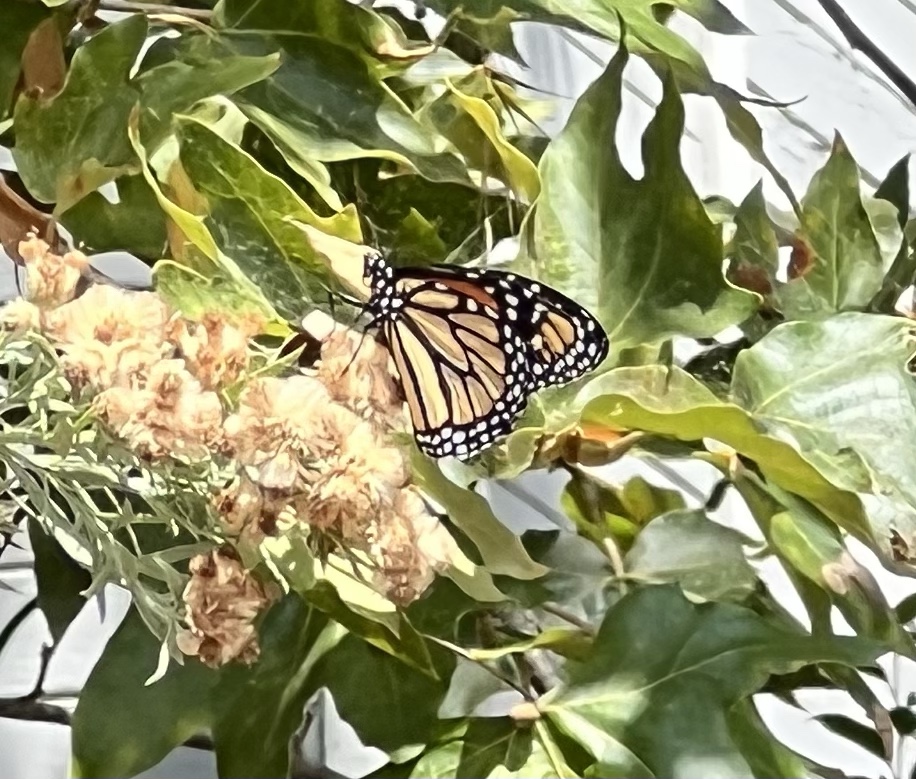
We also saw many butterflies. There were many monarchs and fiery skippers, plus whites and some other skippers.
Hooray for monarchs. My fiery skipper images are too blurry to share.
I have to say the highlights of the wildlife were this gorgeous lizard, an ornate tree lizard, and one resident we only heard, an American bullfrog. It had a lot to say, that’s for sure, and was so loud! Ours don’t make that much noise.
She posed for me. Look how well the colors blend in with wood.
The docent we spoke with was full of information. She said the lagoon will no longer be crammed with cattails once the salt water comes in, which will be welcome to observers. The center itself was just beautiful and obviously well loved by society members. They also had prepared beautiful maps of the trail with important plants labeled, and a really good guide to the plants for young people that encouraged them to interact with some of the more interesting specimens like the lemonade berries and the rushes. I learned from the brochure, too, about how pickleweed traps salt in little growths and then drops off the stored stuff in little red segments.
Views of the nature center trail
I also learned a bit more about that alkali water. It comes from an aquifer under Carlsbad and is full of calcium. Now I want to try some!
They cut down some cattails to provide a view.
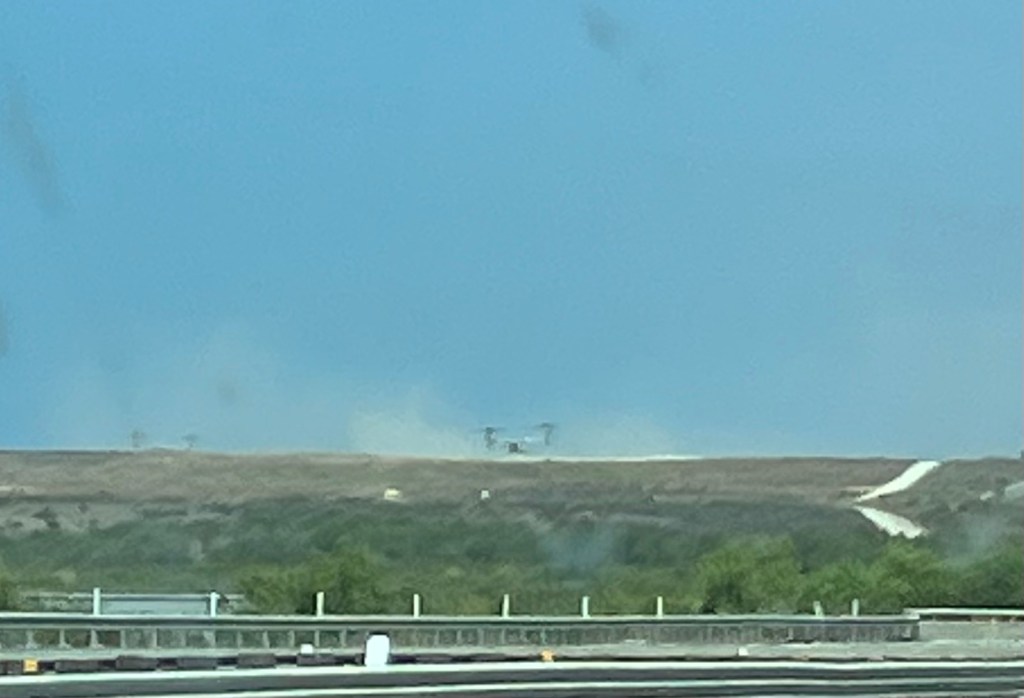
After we left, we drove by Oceanside beach and watched some surfers. It was a beautiful day at the beach, which meant not much parking. We took a wrong turn and ended up at the entrance to Camp Pendleton, where my dear friend Mike spent many years. He shared some stories with me and told me all about the cool Osprey planes I saw practicing landings and takeoffs as we drove past the base. That made our wrong turn worth it. I’d never seen an Osprey (the plane, not the bird) in person.
We ended the expedition with another piece of culinary luck. We found a real taco stand hiding in the same shopping center where I bought my yarn (though I didn’t realize it at the time, since we approached from the other direction). I got to eat real fish tacos, and Lee had a most impressive burrito. We were the only Anglo customers the whole time we were there, and we could watch the cook make everything from scratch. Now, that’s some Cal-Mex cuisine! I’m doing pretty well at choosing random restaurants on this trip!
So fresh, even the taco.
Hilton humor
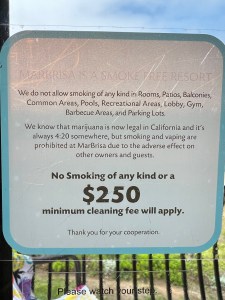
One more piece of humor for any of you who aren’t on Facebook with me. This sign has been on the door of our condo since we arrived, but I’d only read “no smoking” and the fine until yesterday. I got such a good laugh out of it that I had to share it with a family member, who shared it with all the nurses who came to her room. I cheered up an entire hospital!
Otherwise, I’m continuing to rest a lot, crochet away, sit in the quiet hot tub area, and work on my mental health. It’s going well.
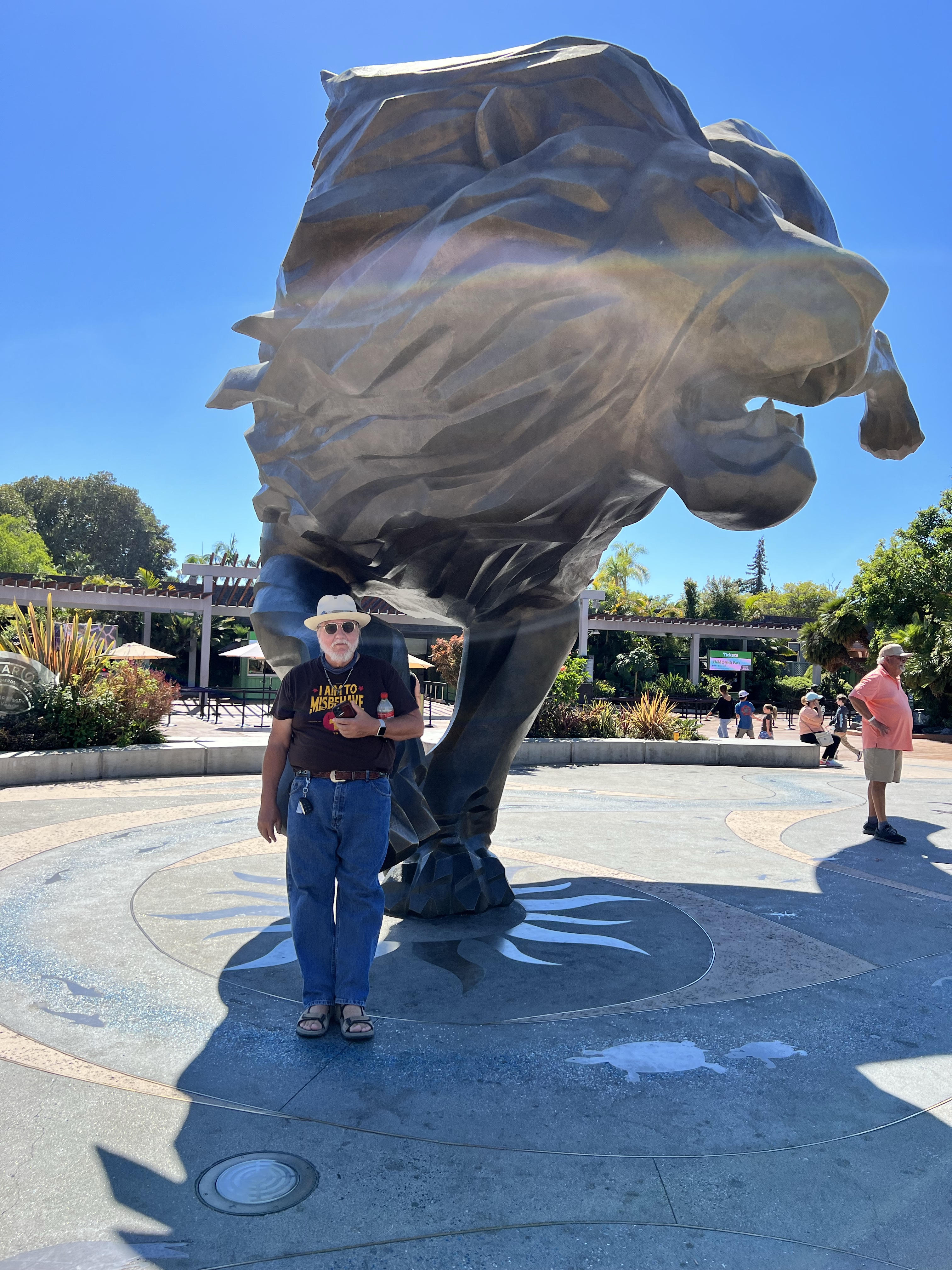
Both my spouse and I like animals. I like plants. The San Diego Zoo has lots of each. It also has crowds, though, and neither of us likes crowds. Especially with good ole COVID getting worse again. But we were nearby, and that’s one of the best zoos on earth, so we went.
This guy reminded me of Lee. Plopped down and immediately started snoozing.
We survived the line for the bus tour, and after that it wasn’t too crowded. So we lived, though it wore Lee out.
Some animals were easy to see from the bus.
Lee truly endeared himself to me when he suggested we try to hit all the aviaries. That was good with me. I liked them, because they all have plants common in the areas where the birds are from. And bird spotting is so fun!
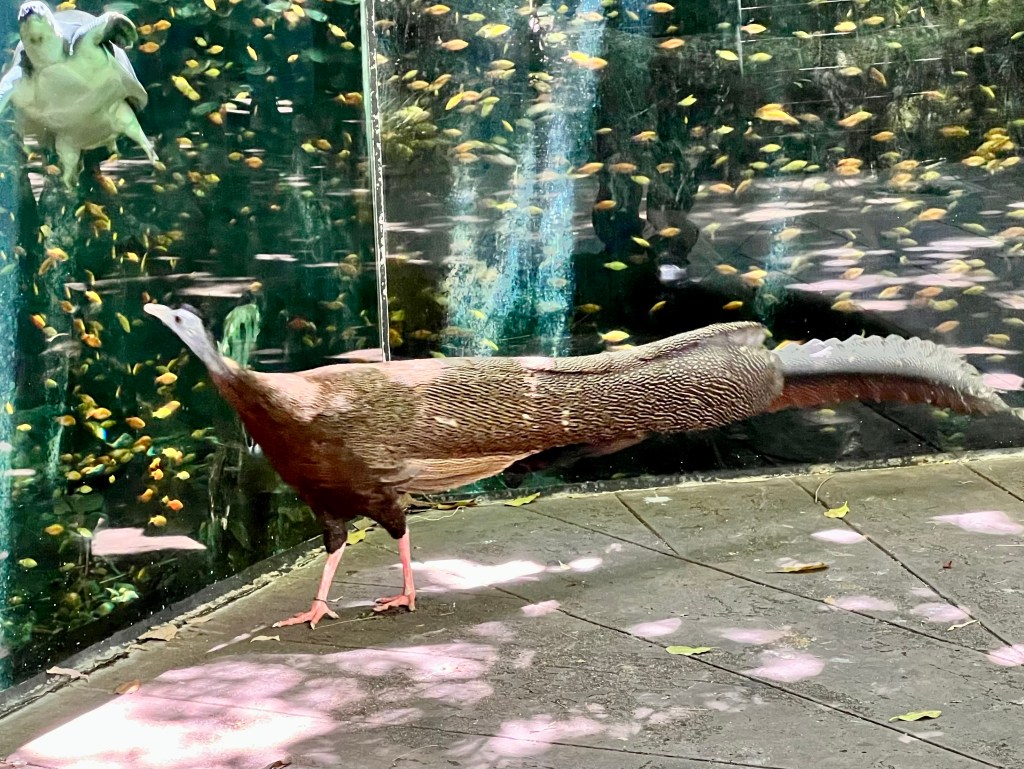
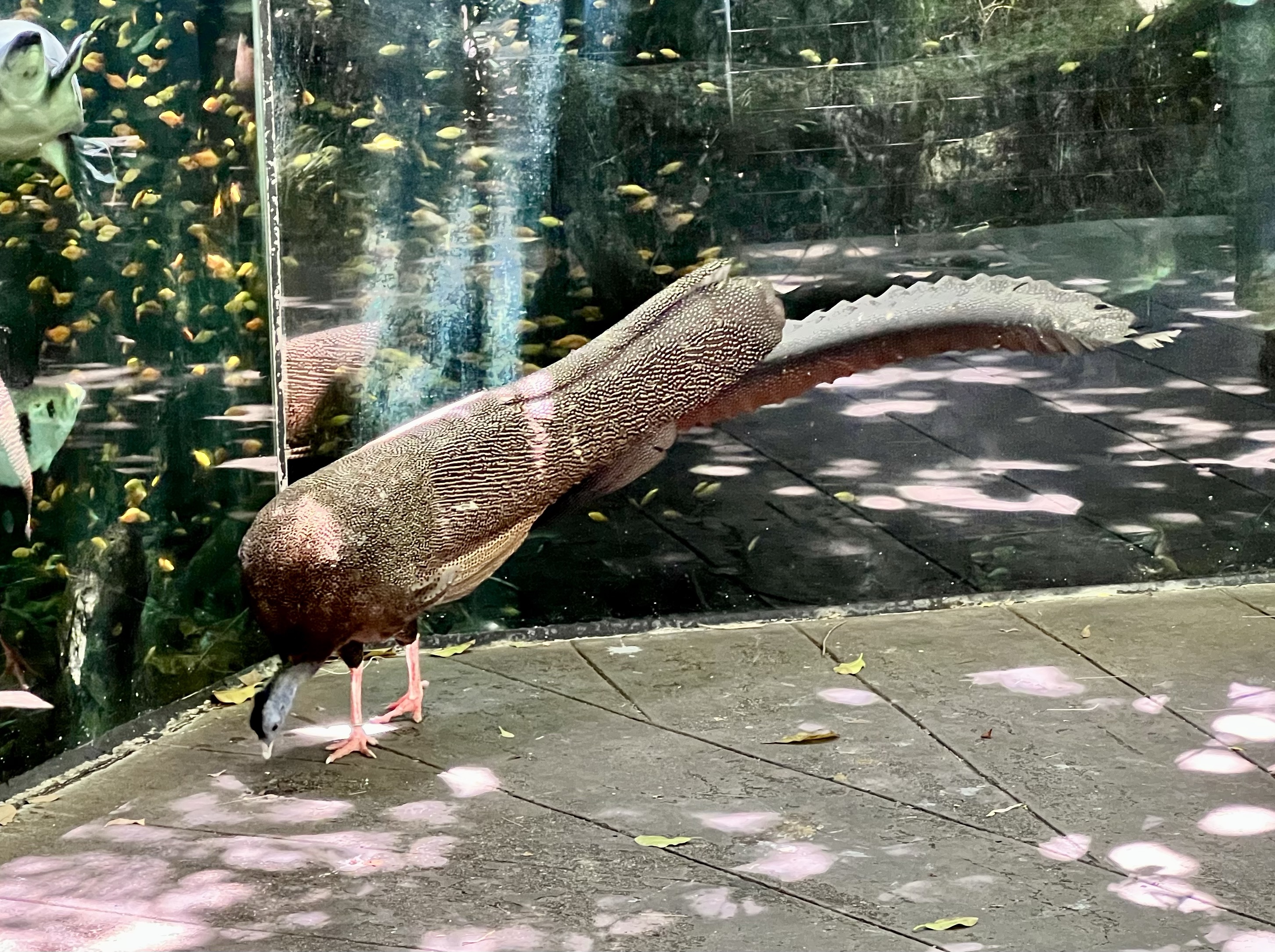
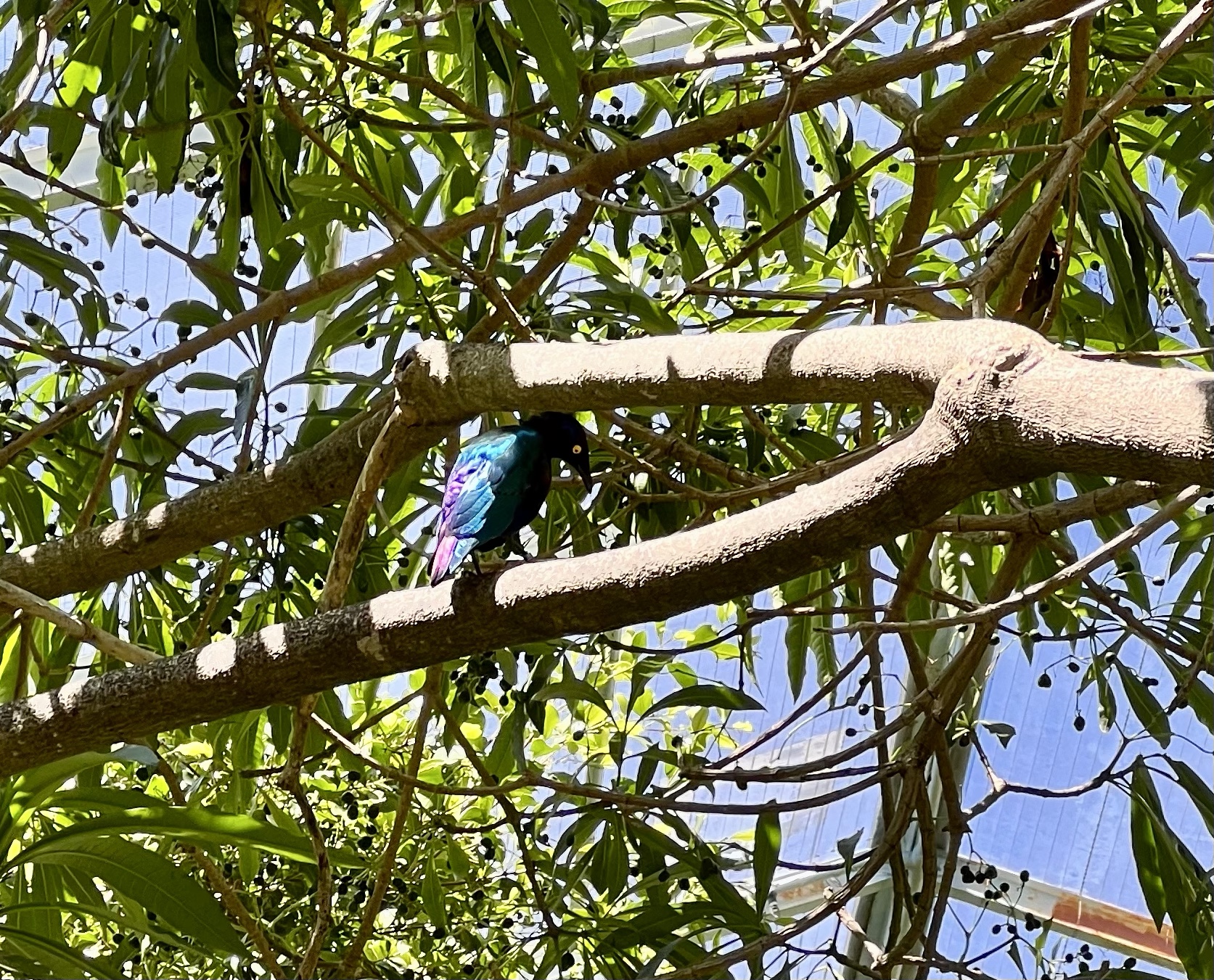
My favorite was this fancy pheasant of some sort who really wanted to get a fish!
We got to see birds eating, nesting, and building nests. Some were really entertaining.
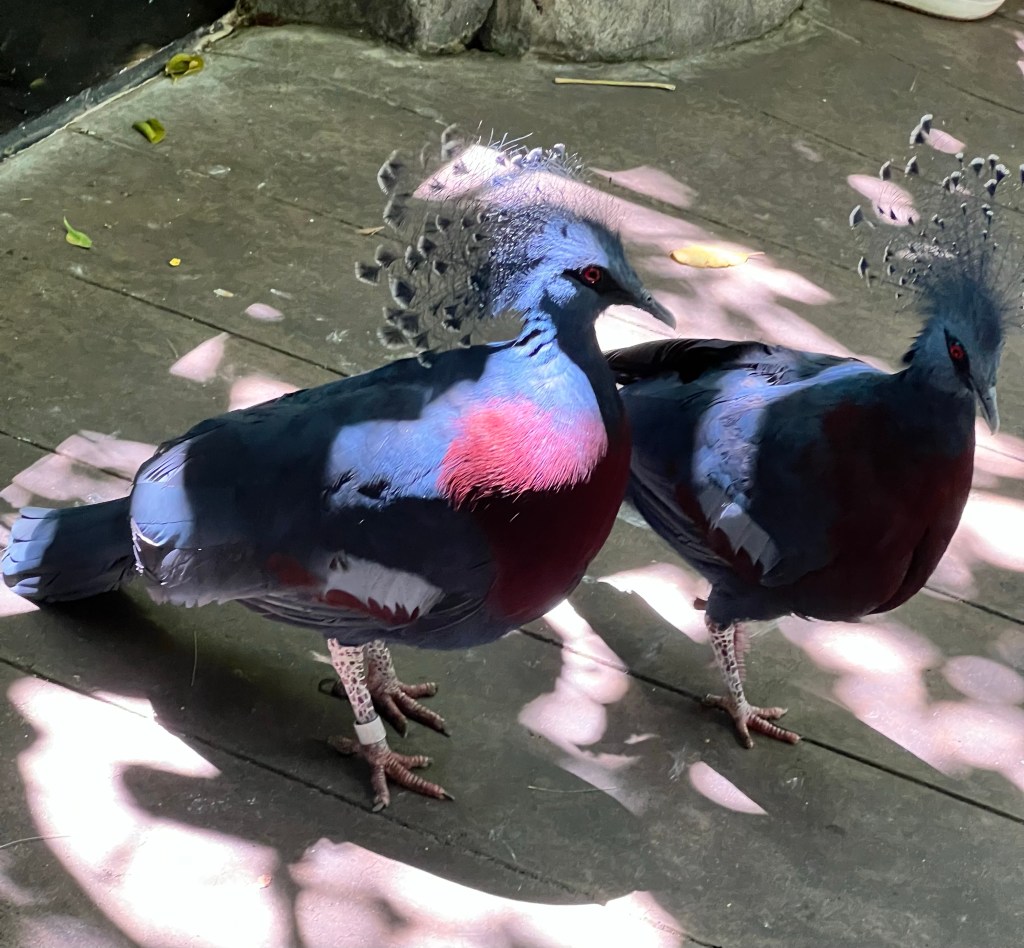
Mr. Pigeon here did a mating display, including really impressive vocalizations.
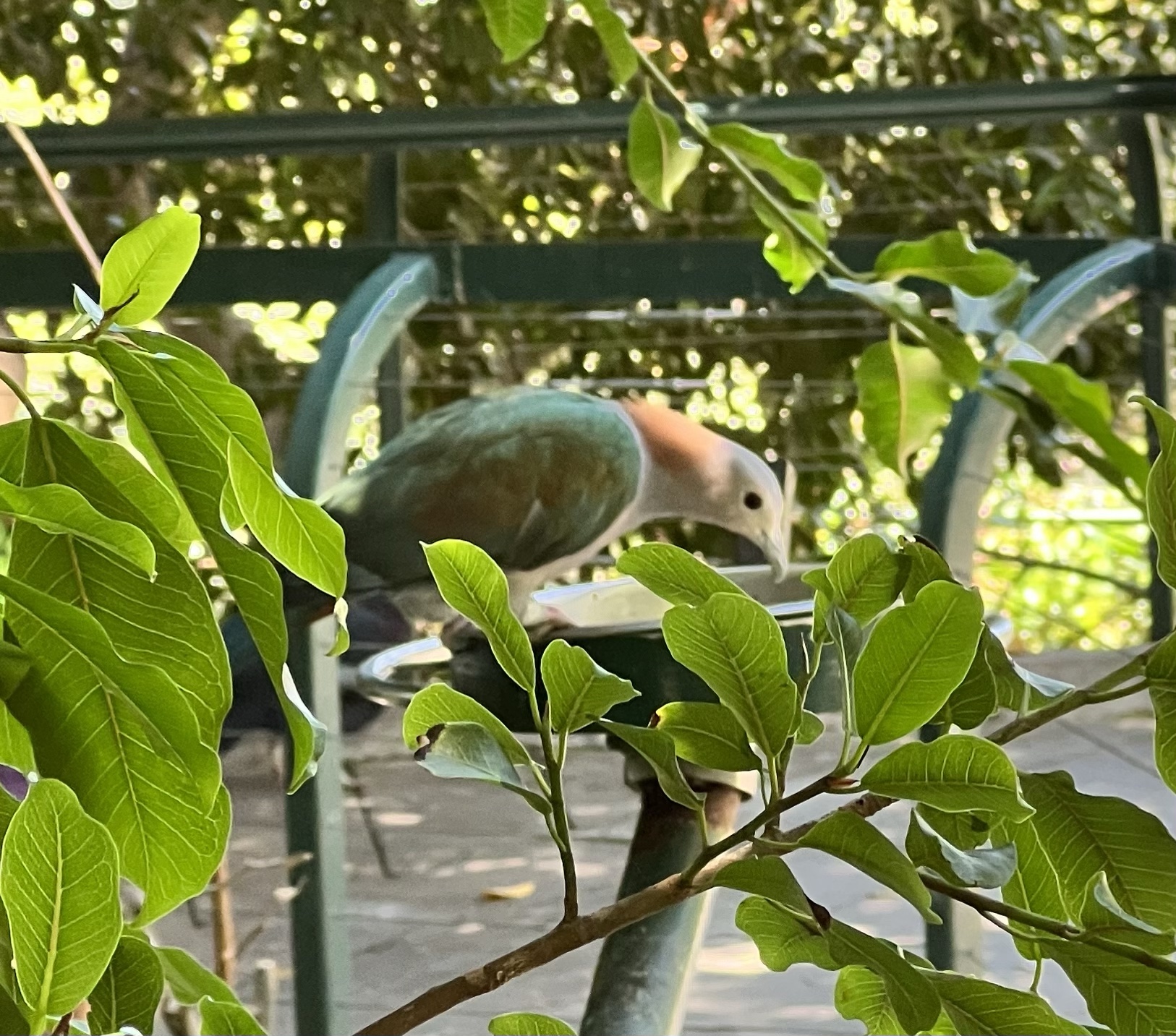
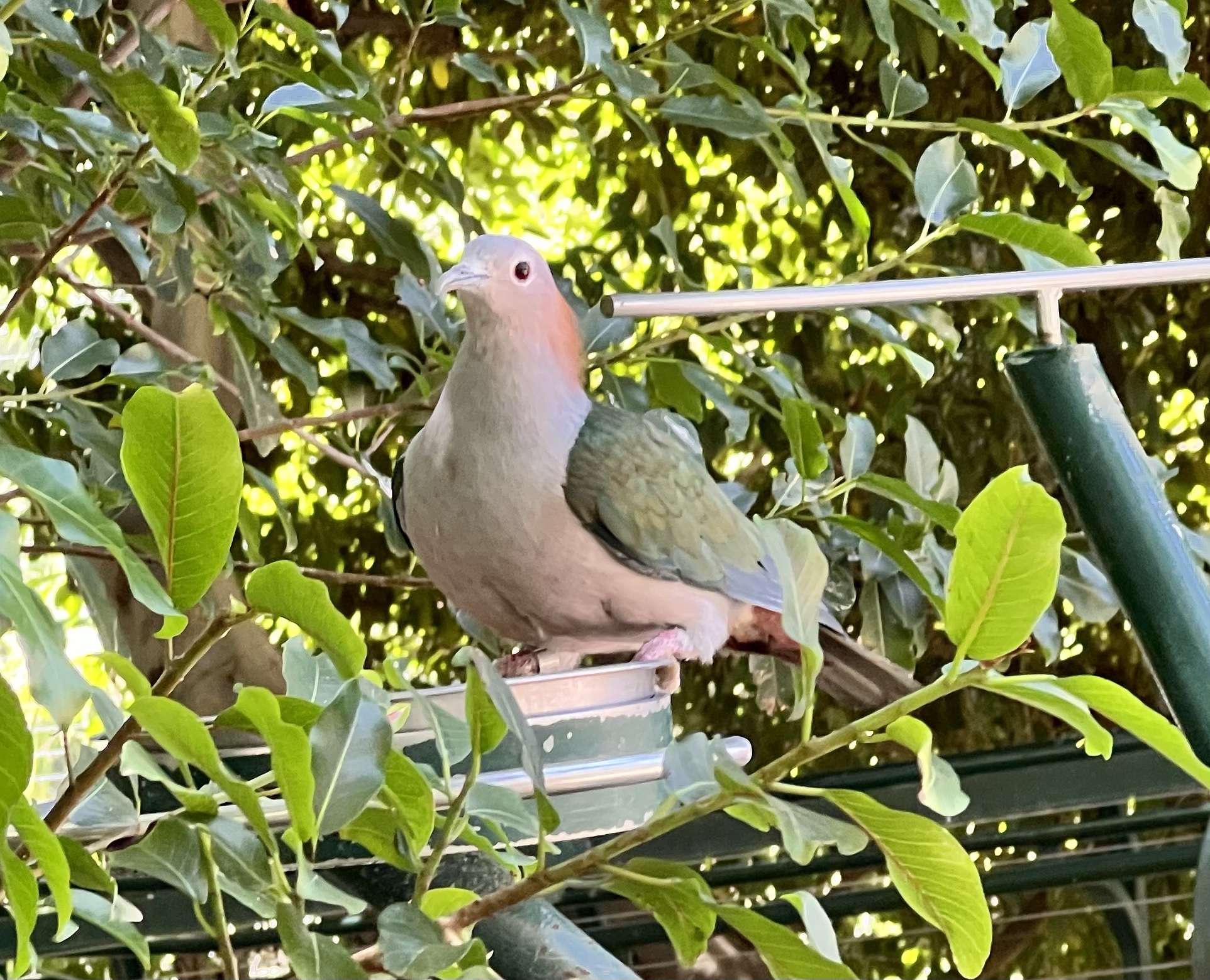
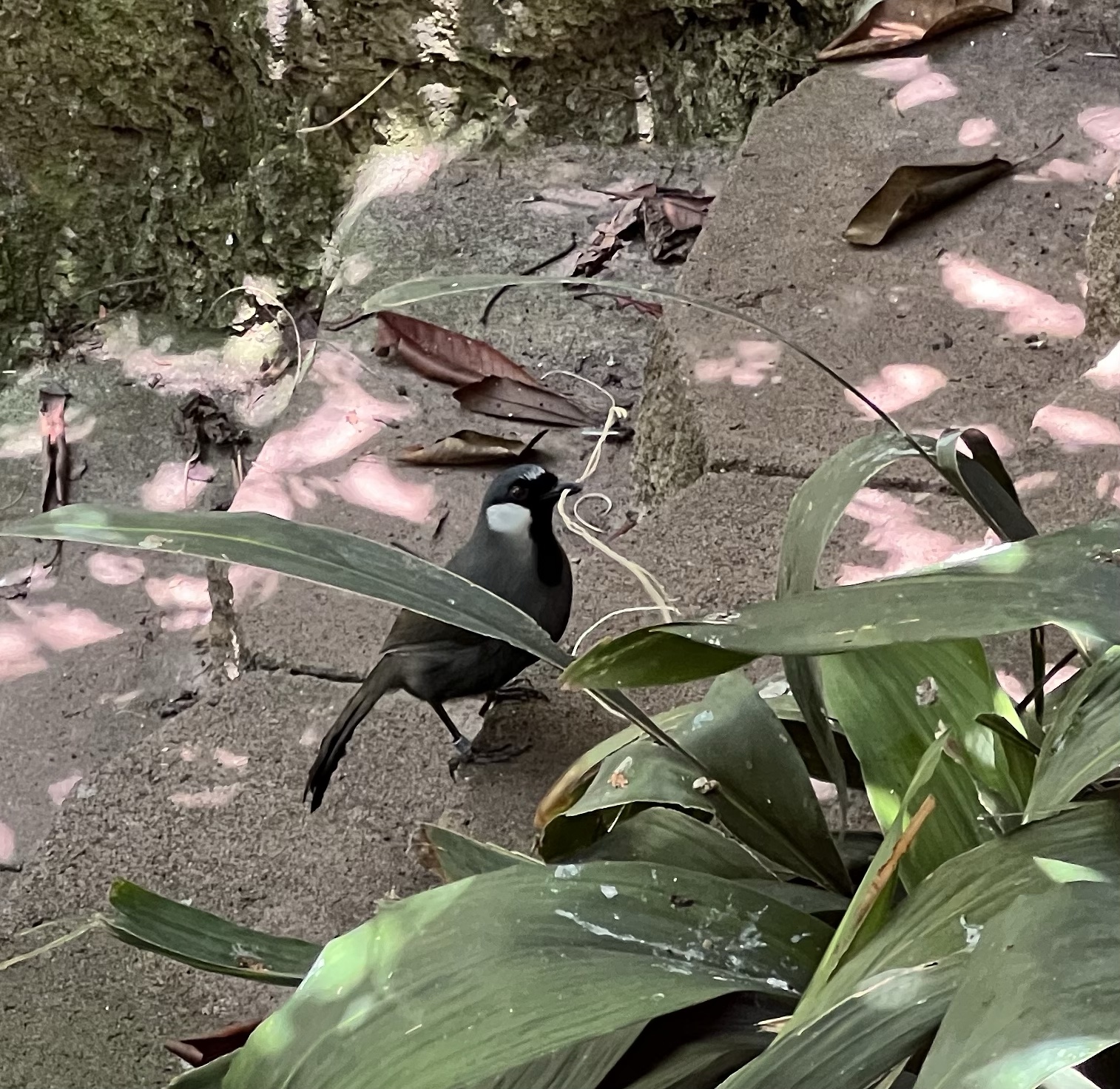
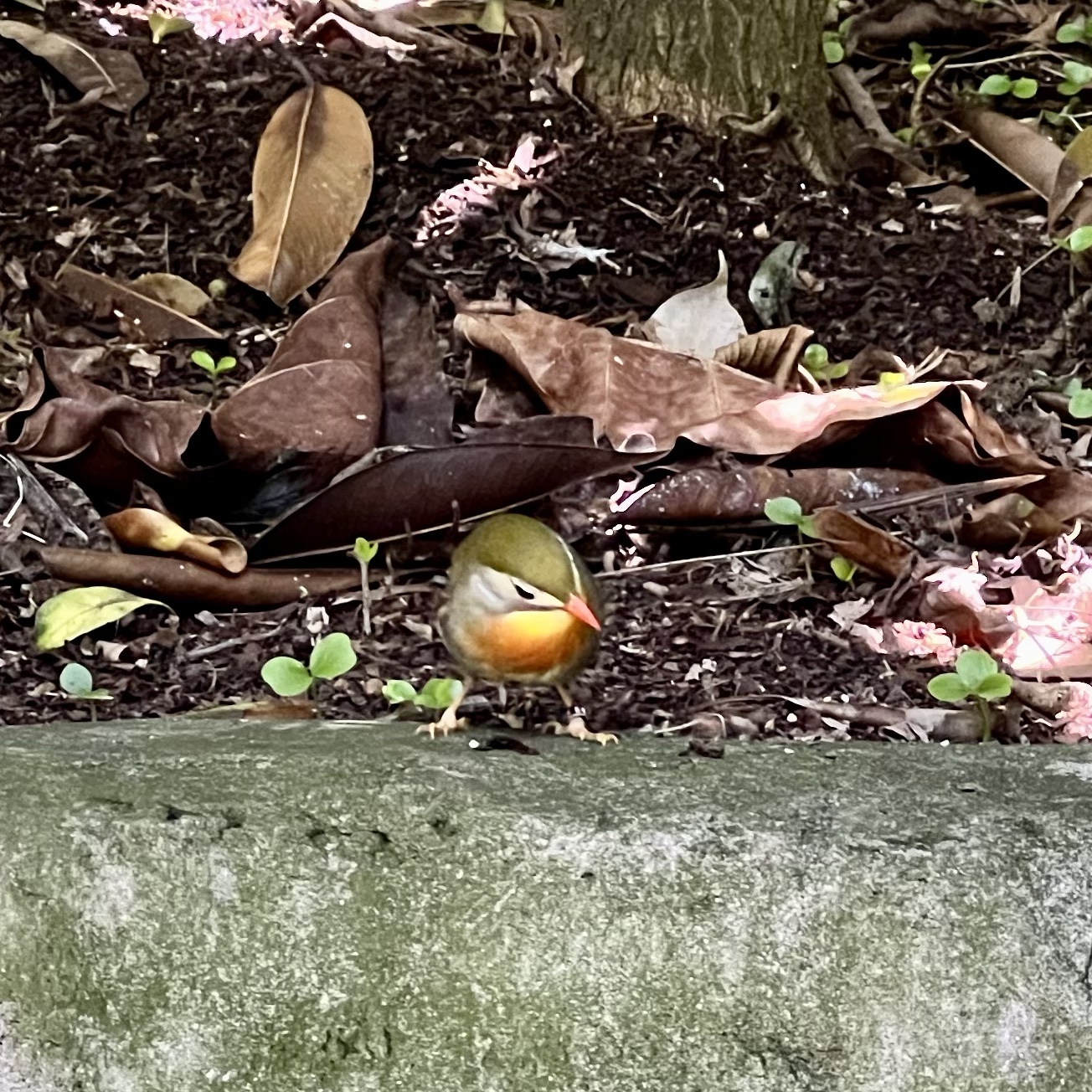
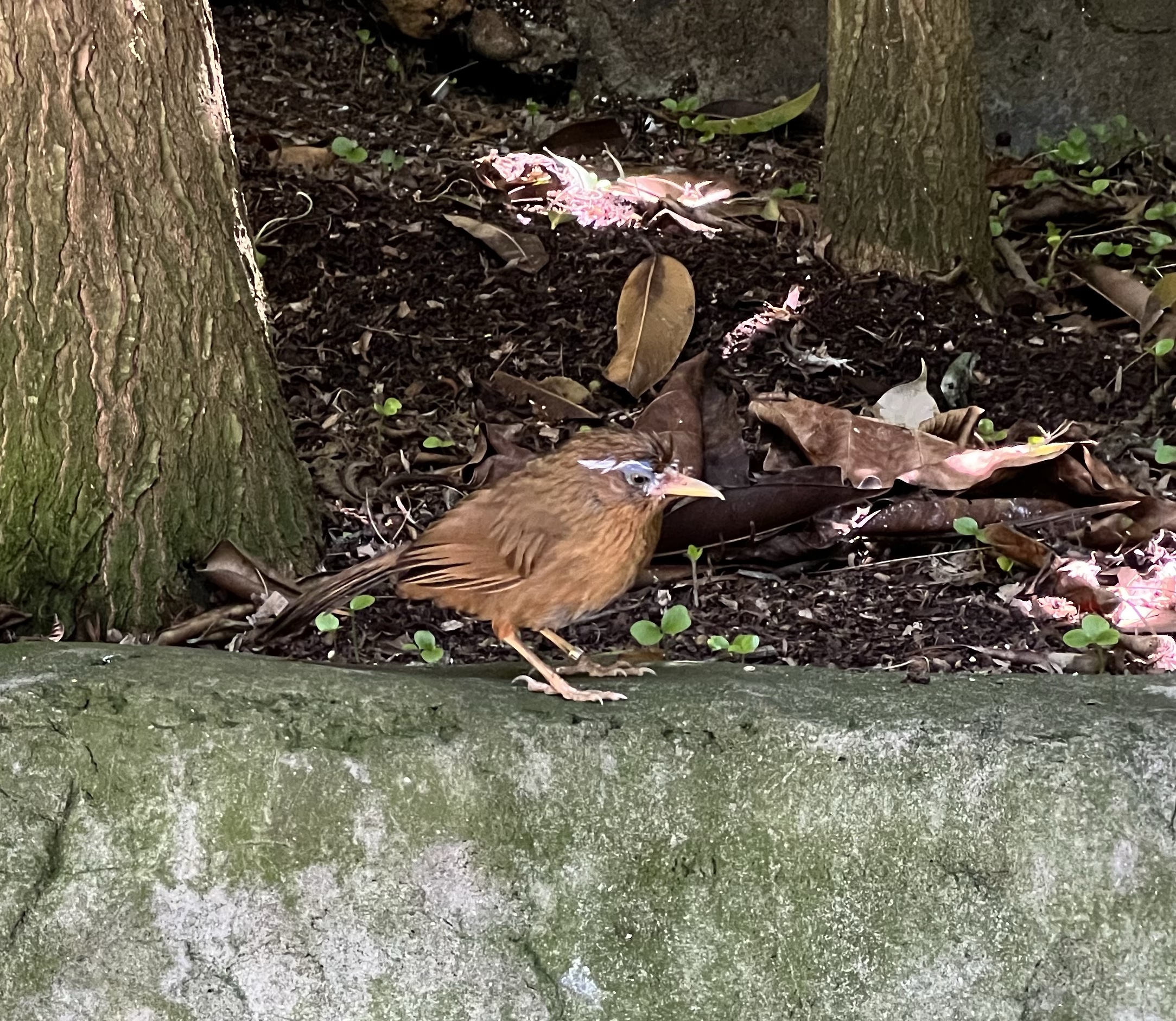
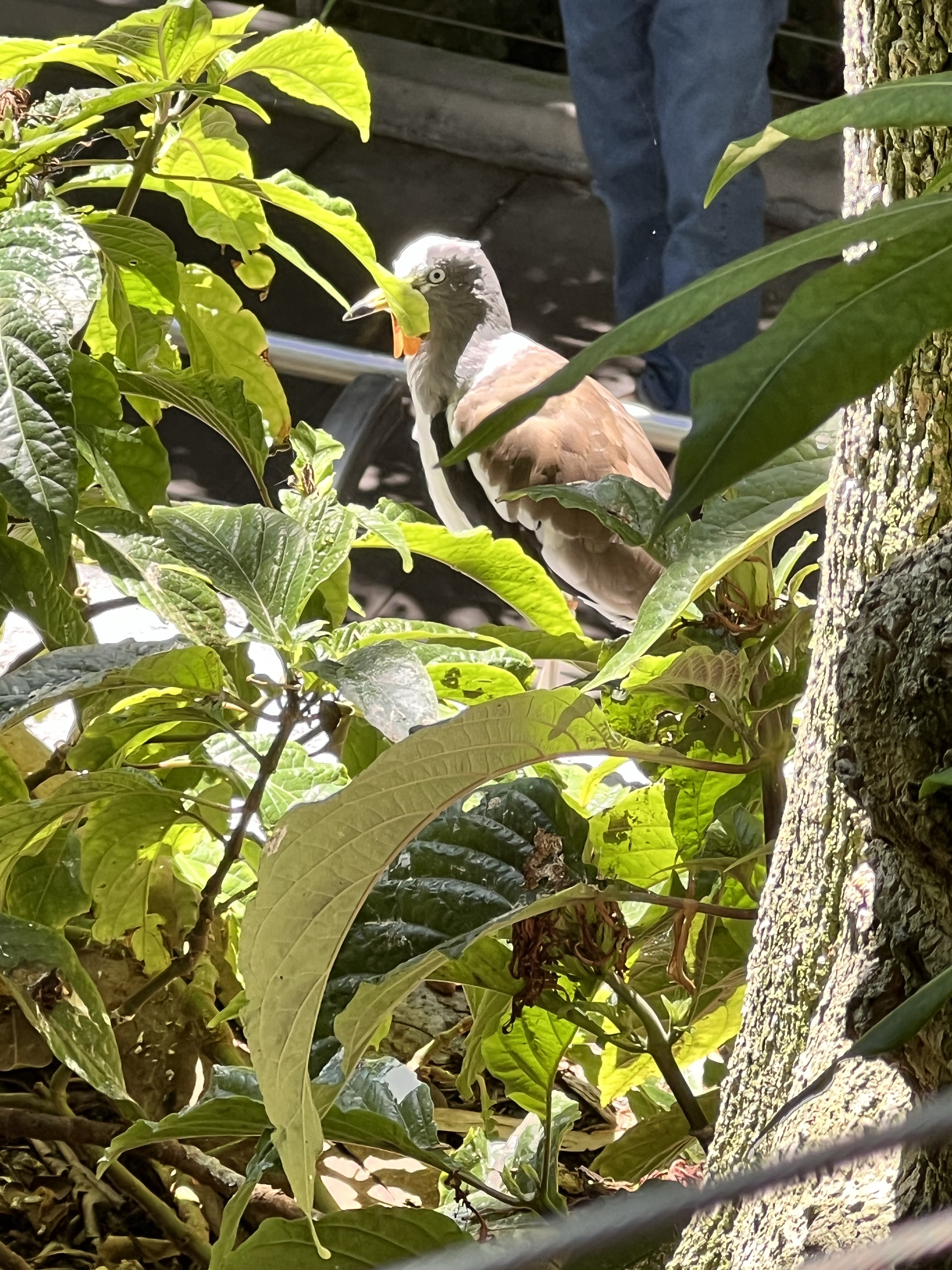
I probably would have been fine just looking at birds and plants. Here are just a few of the dozens of interesting birds we saw. Forgive me for not knowing what they all are. There were so many! I never realized how many kinds of doves there are!
Secretary birdA dove That fancy pigeonAnother dove Three birds! Nesting material in beakSo prettyThis one was very friendly This one has yellow wattles. Hard to photograph. Full of nestsShinyHungryAlso hungryThose eyes!The wattles! Bird watcher
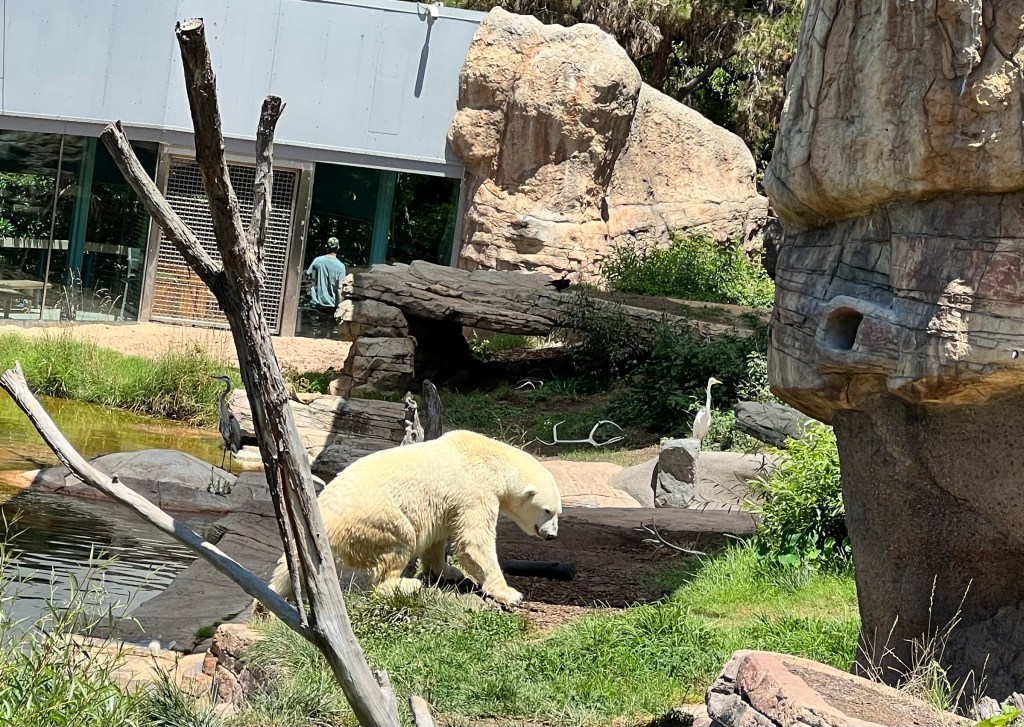
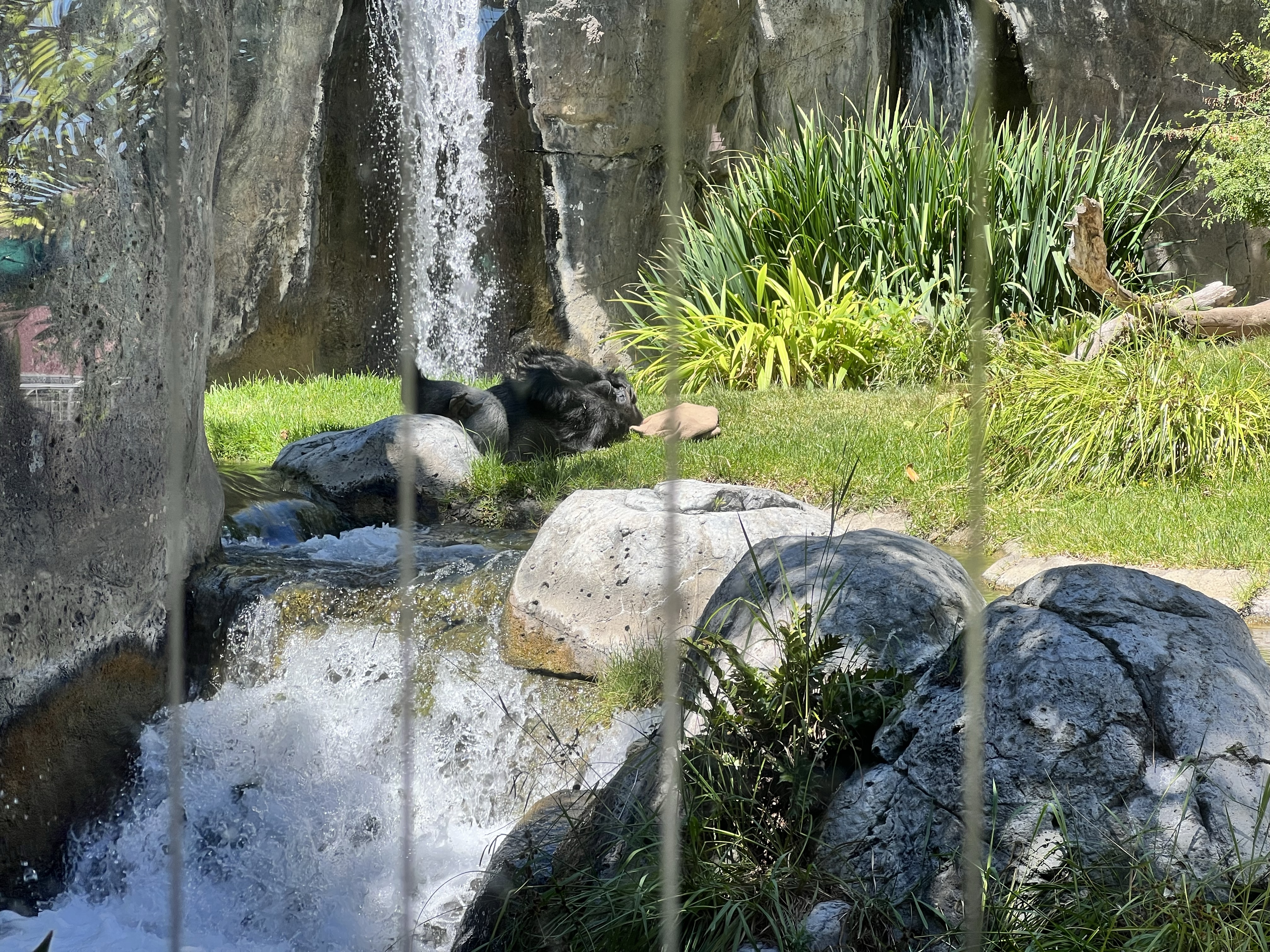
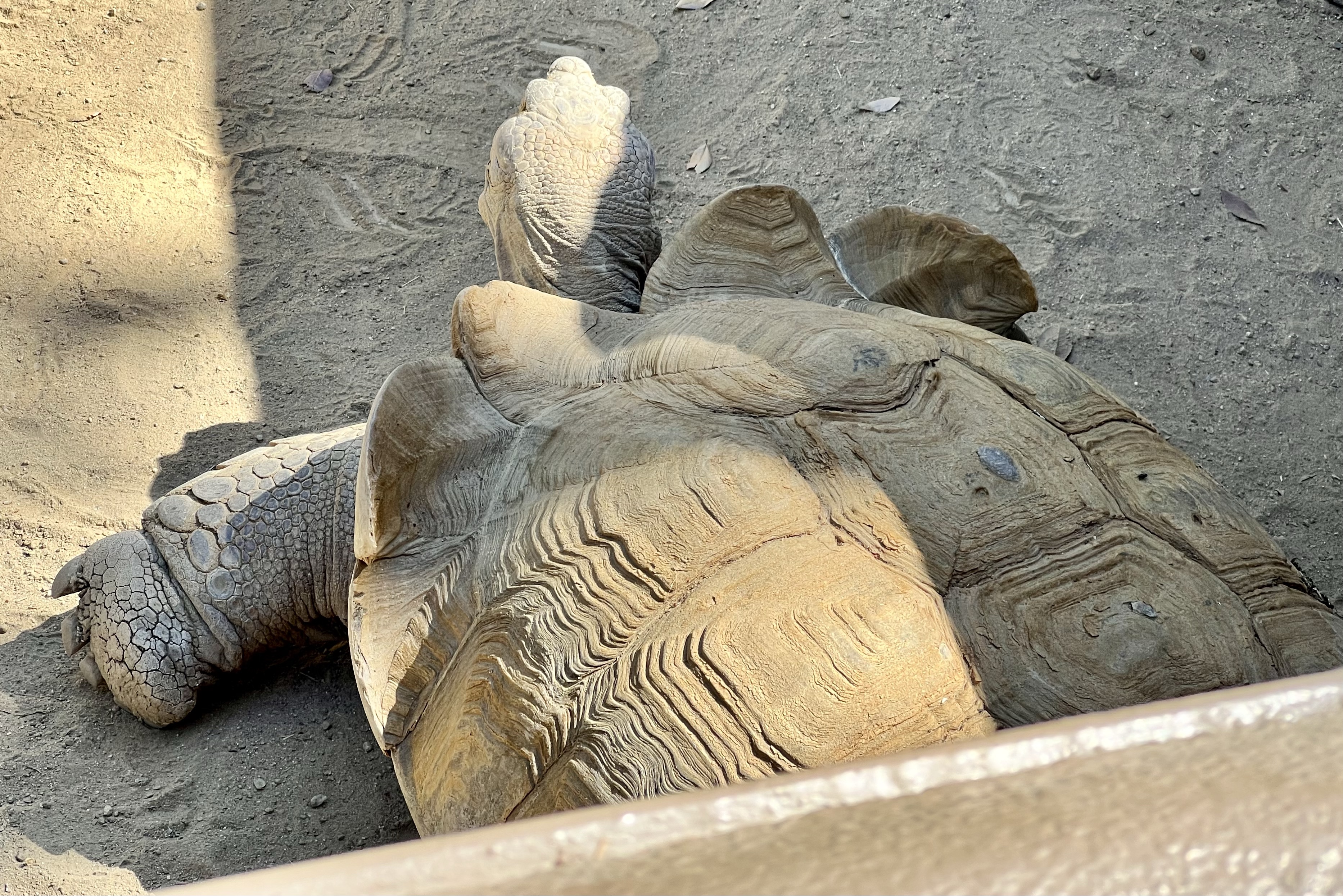
I did look at some animals. I managed to see all the apes and most bears. I didn’t get photos but got a great look at a huge anteater. Those are some interesting animals! I was too busy looking to take many photos, but here are a few.
Gharial – look at that snoutSpiny tortoise Galapagos tortoise Sloth bearPartial camelElephant. She seemed sad. Really pretty endangered antelope Meerkat!
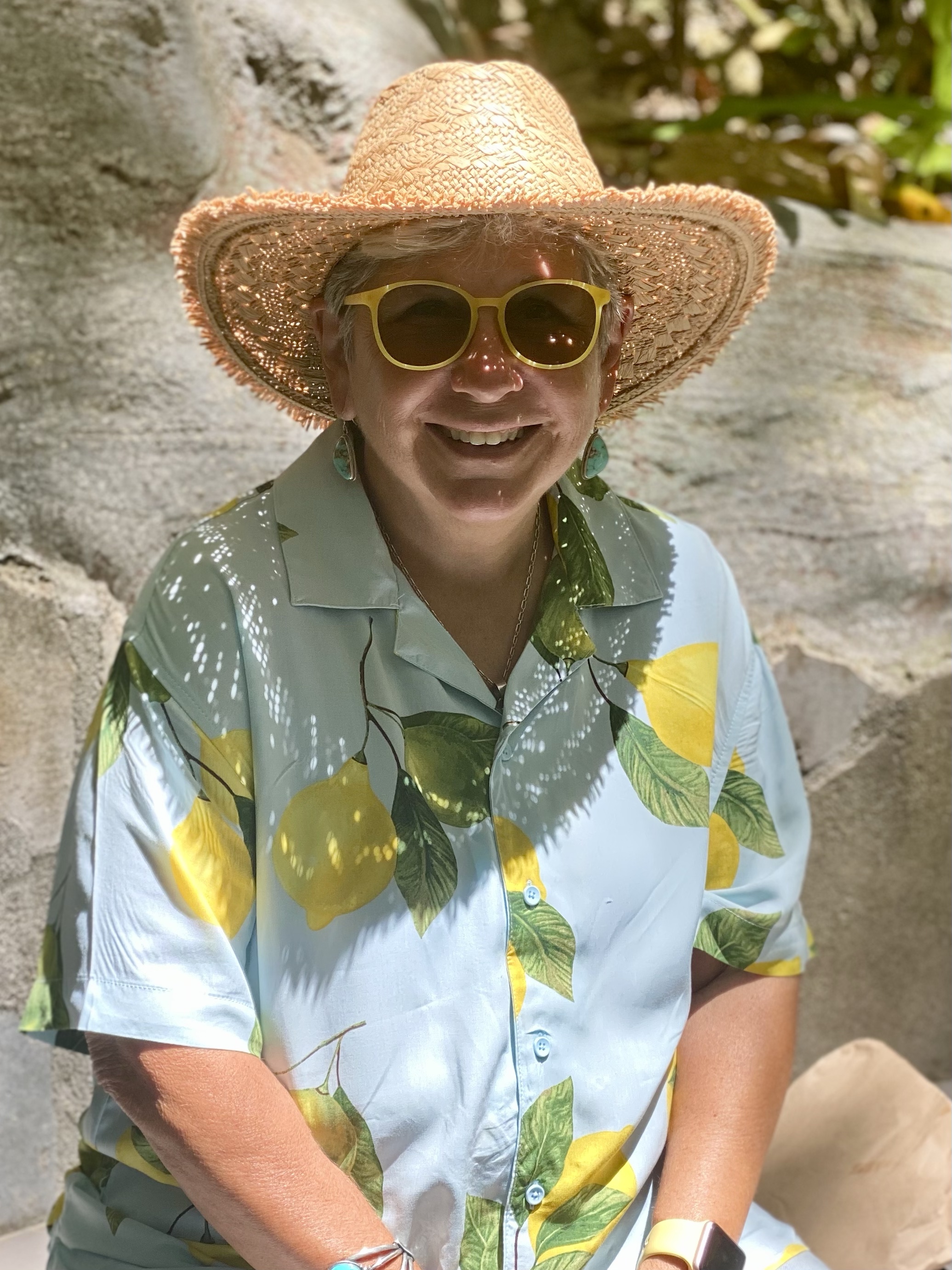
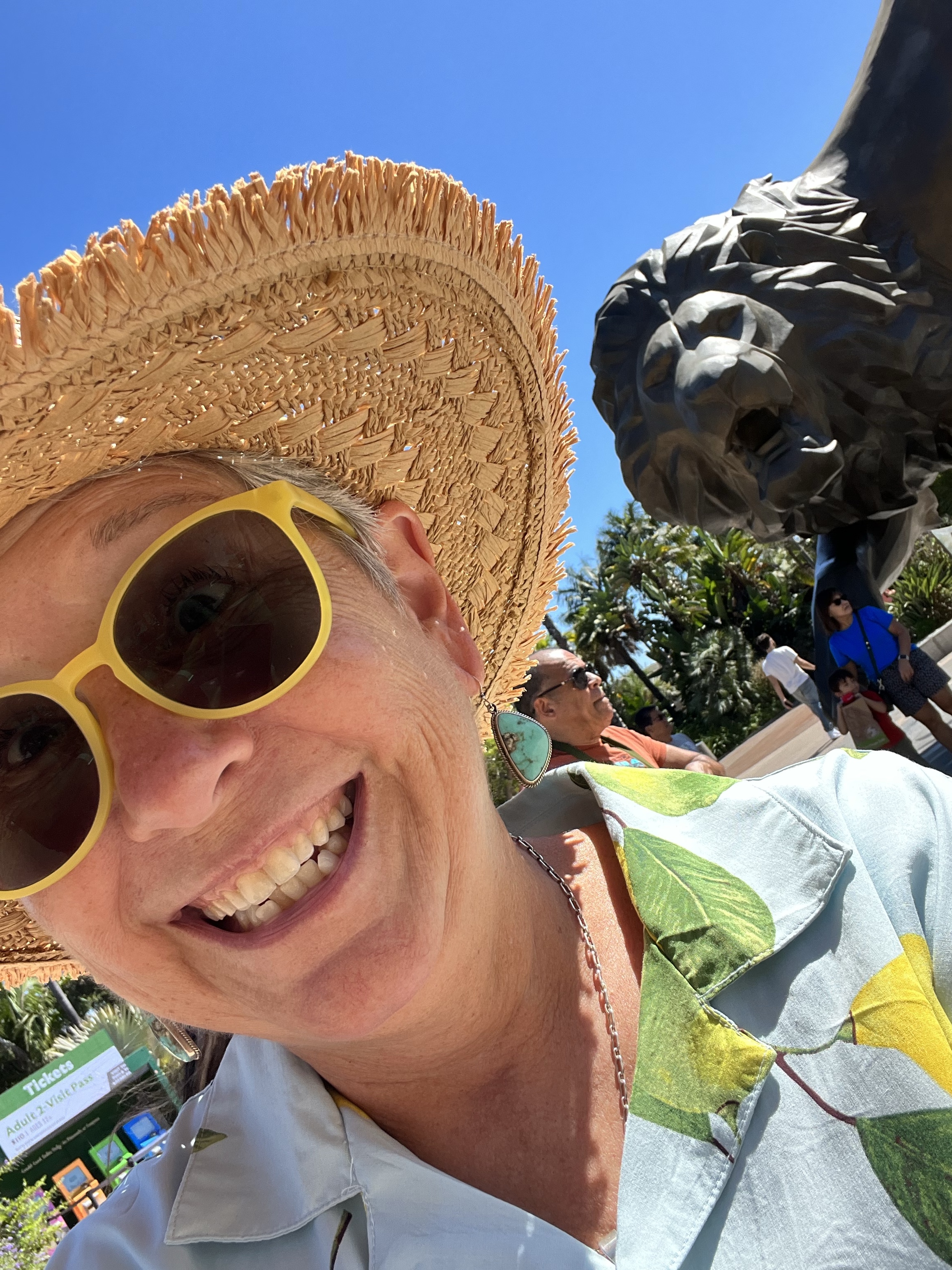
I guess that was our big tourist activity of the trip. We are really concentrating on spending quiet time together with as little stress as possible, given the unending health challenges of the folks at home. They tell us to stay here, so we have done so! We even manage to look happy.