Such a long day! I’ll just share some observations I made today and talk about other stuff tomorrow.
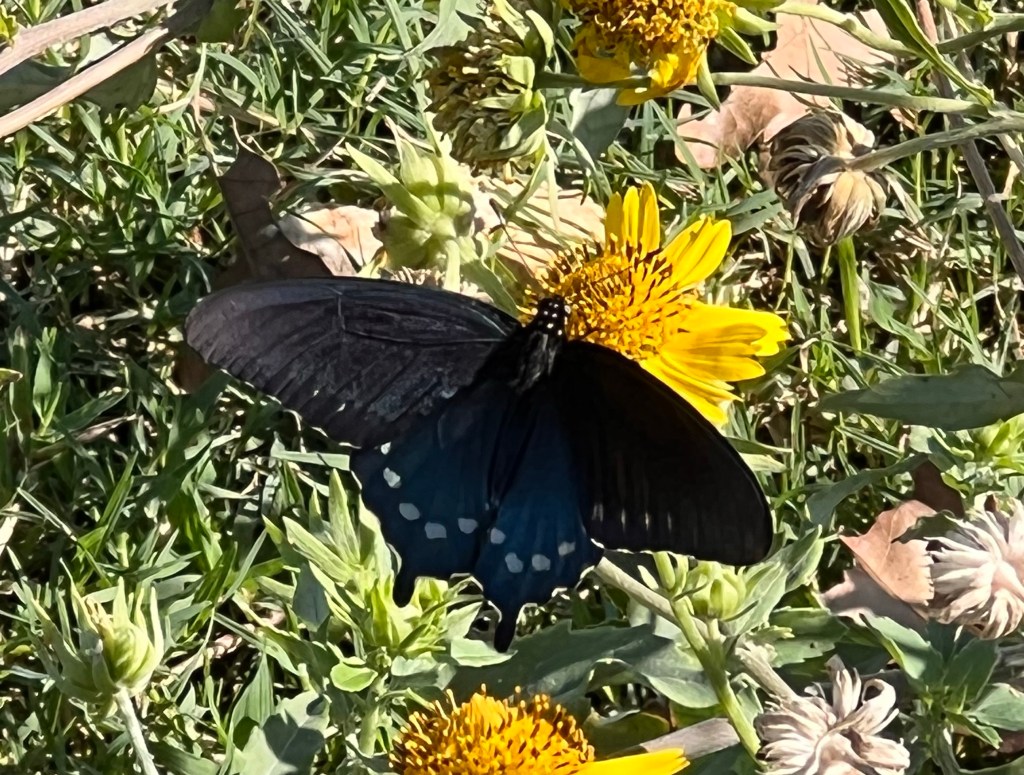
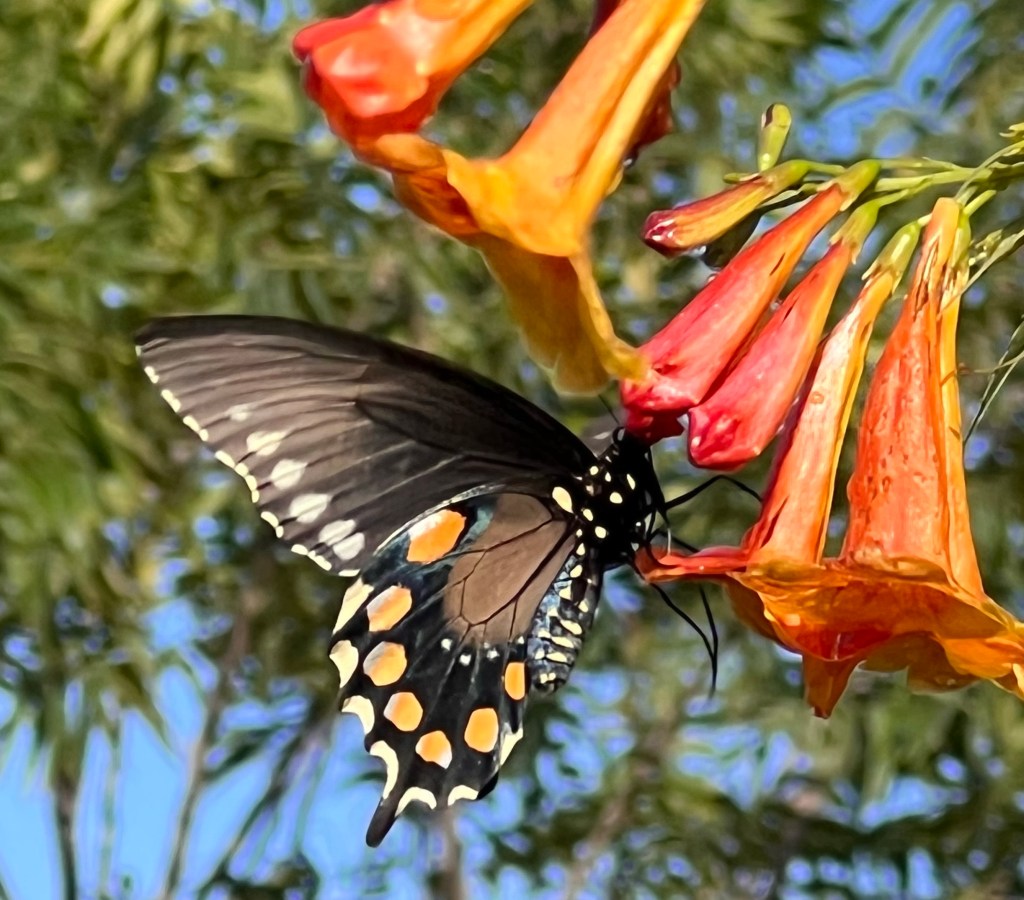
Pipevine swallowtail
I decided to see how many butterflies and bees I could see today between the two stops I made. One was Nature Days that our Master Naturalist group is doing every Saturday this month, while the other was a visit to my lonely horse, Drew, who’s been living the spa life while Tarrin’s on vacation. More on that later.
No, Mom, focus on me!
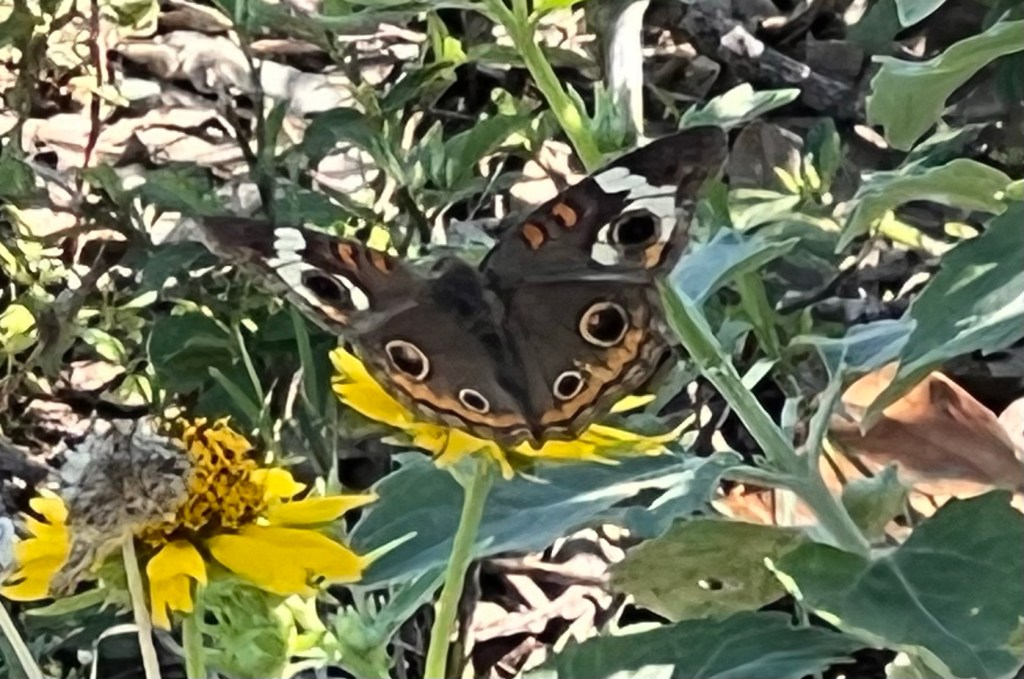
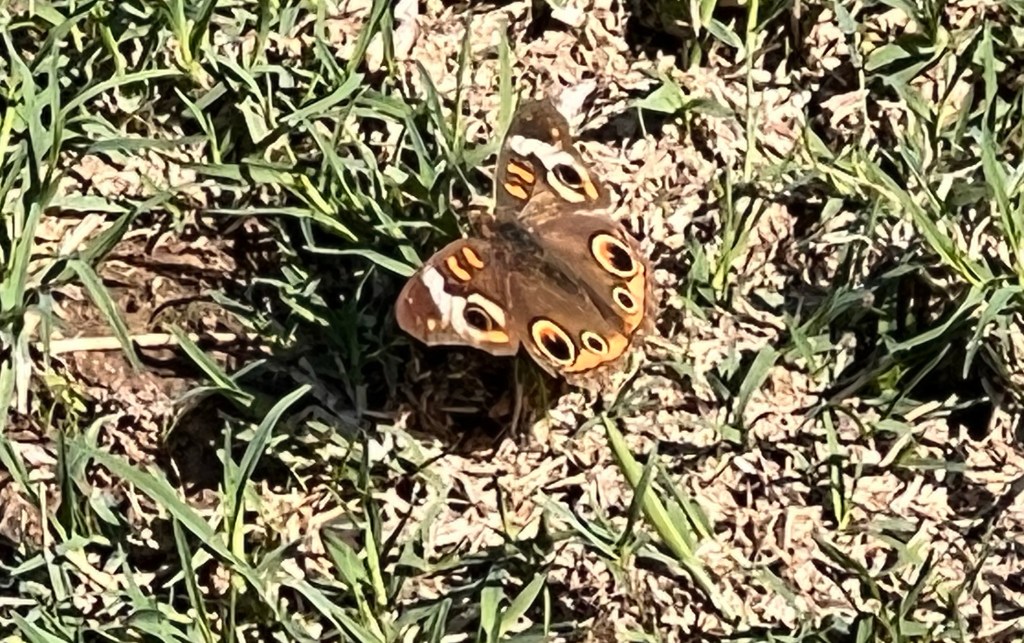
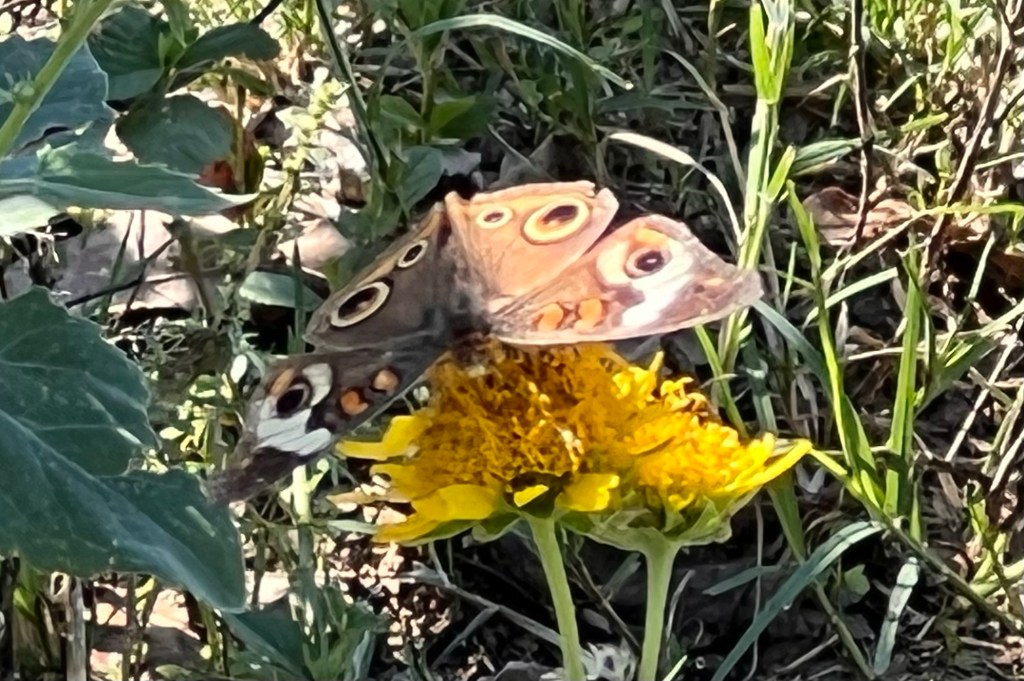
I really saw some beauties today. The most common one was the Common Buckeye.
I say they are uncommonly beautiful.
The fall butterflies make me so happy. The buckeyes, Junonia coenia, prefer yellow flowers that no other butterflies have visited. They eat plants as caterpillars that make them taste bad, too, like monarchs do.
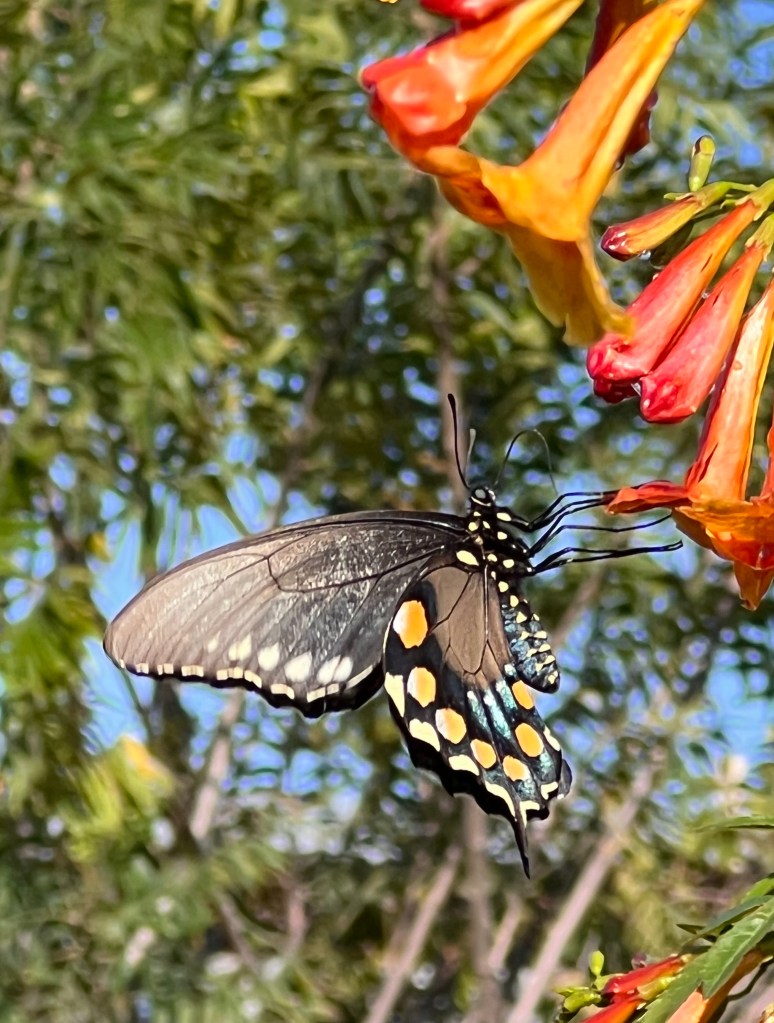
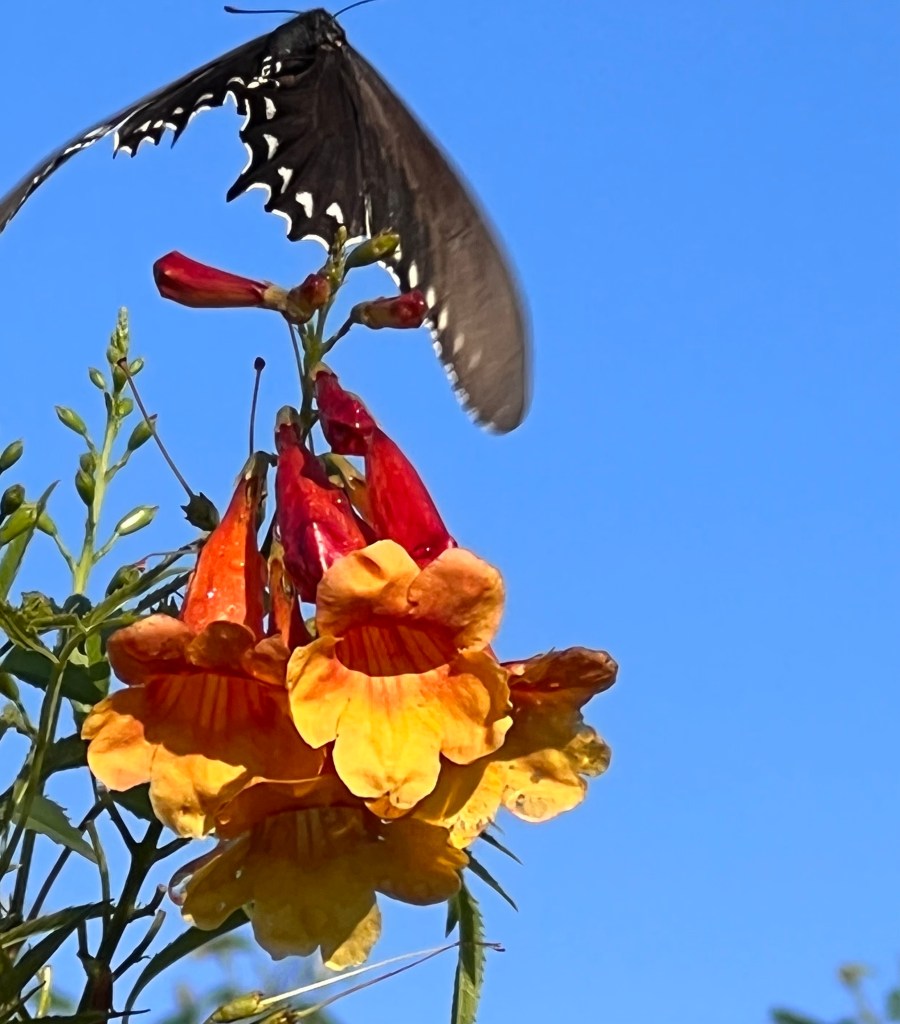
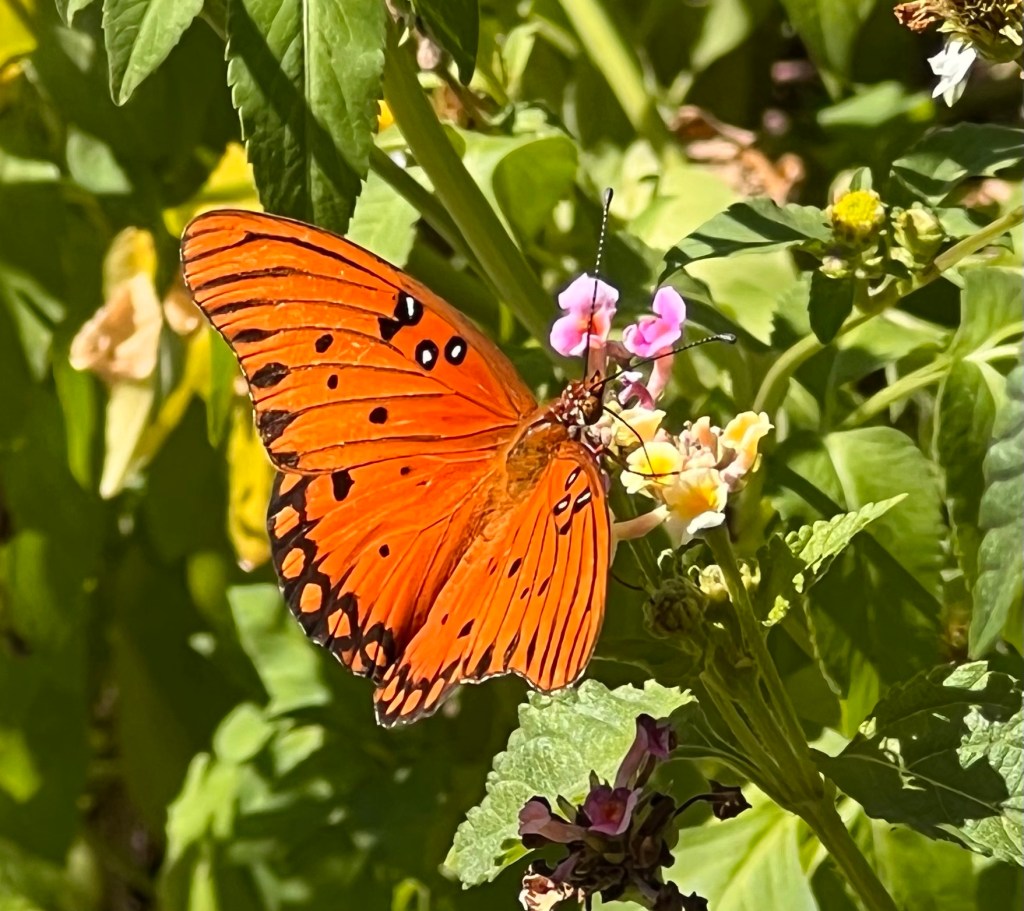
The most beautiful sight for sure was the pipevine swallowtail, which is the top photo. We get lots of these near here but not too many at our ranch. They are not shy, so you can often get good photos. I also saw these in both places I visited.
I saw both the Gulf fritillary and the variegated fritillary (who I confuse with a couple others). These are around for many months here. The Gulf ones are the brightest orange! Oops. I got confused and put the painted lady in here. See?
Oops this is a painted ladyAlso painted lady
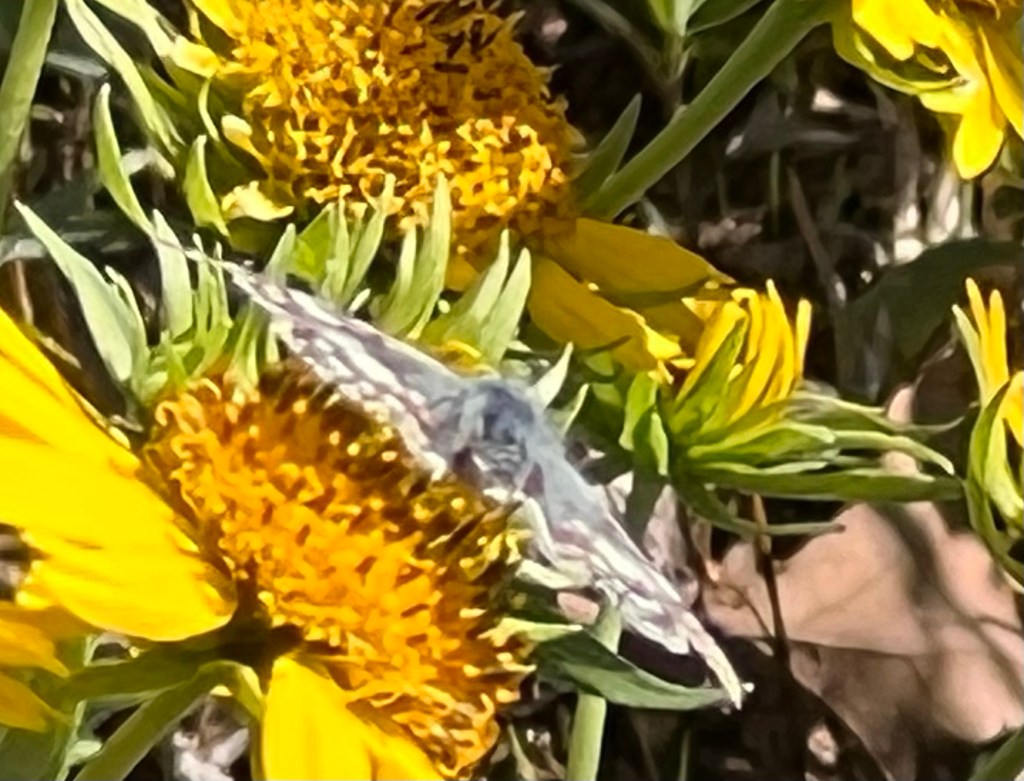
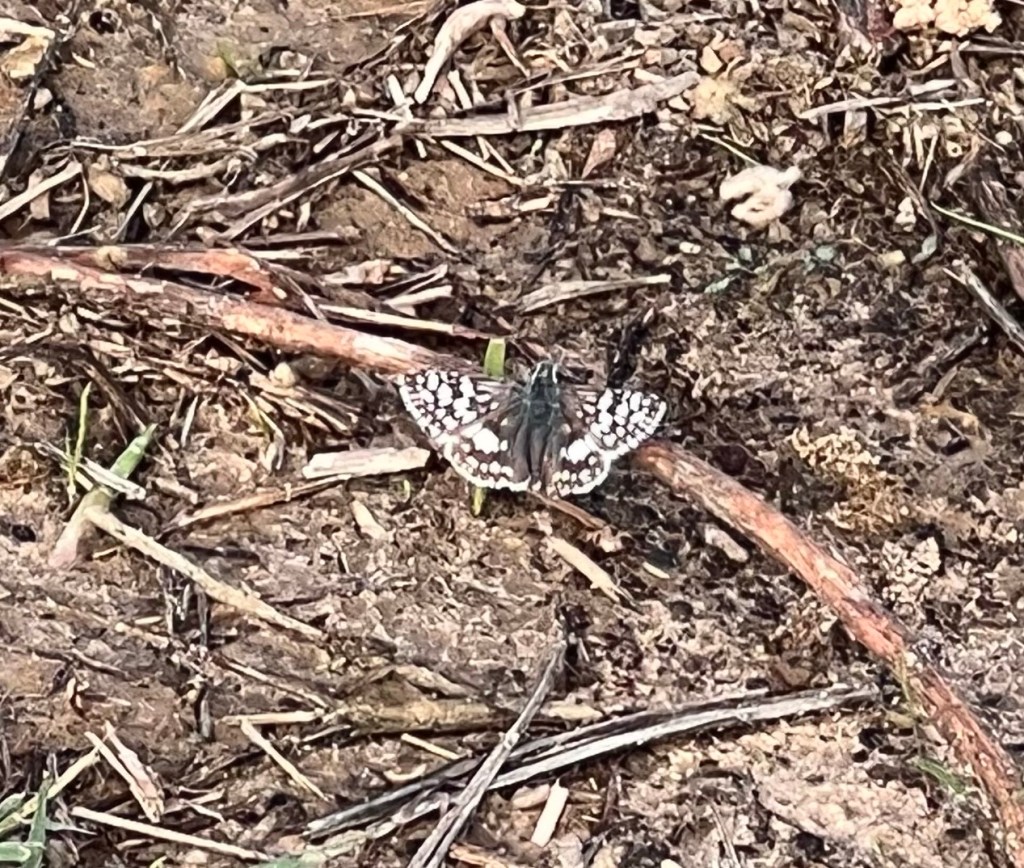
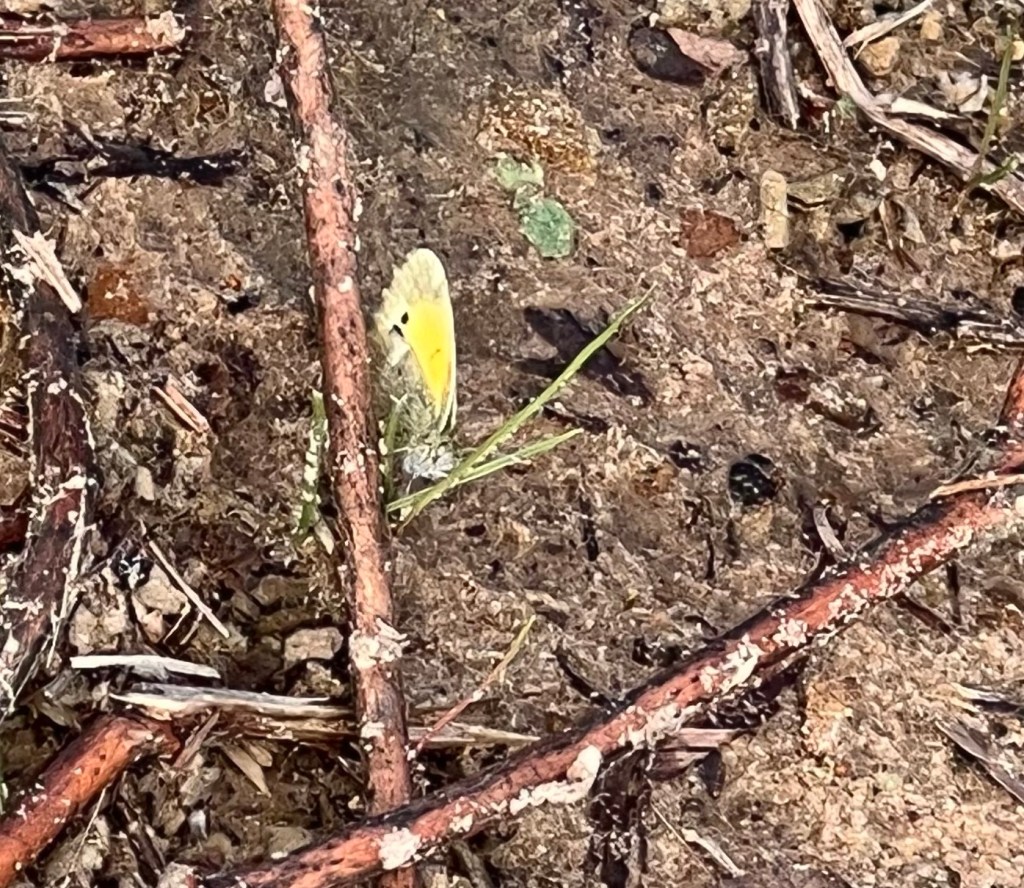
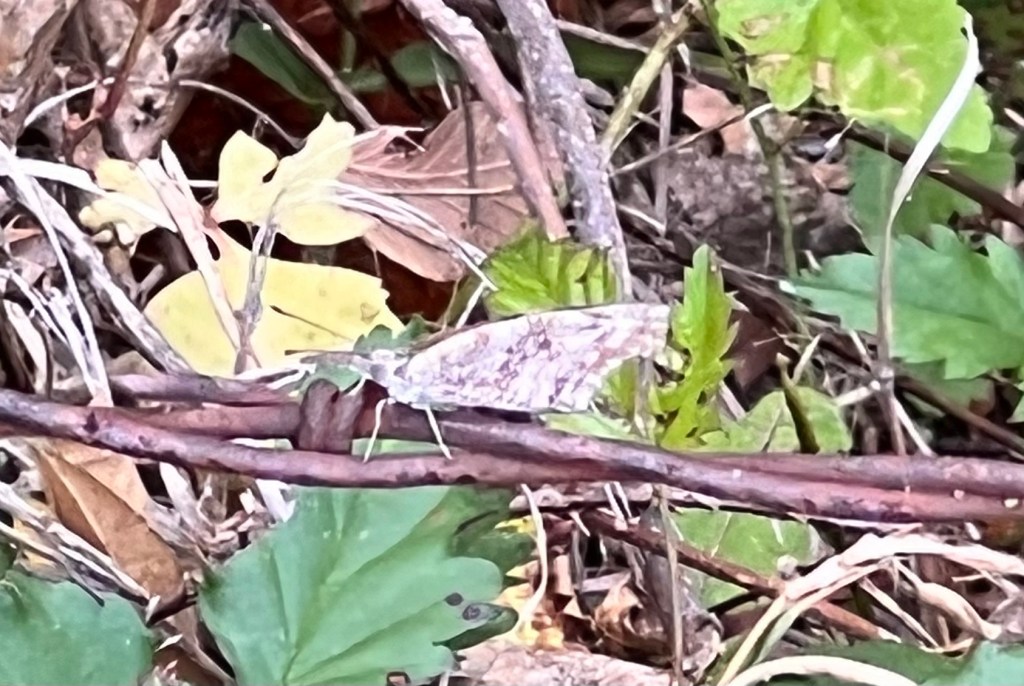
Let’s see, what else was there? Painted ladies, queens. dainty sulphurs (tiny yellow ones!), fiery skippers, and the checkered skipper. Also there’s one that is some moth.
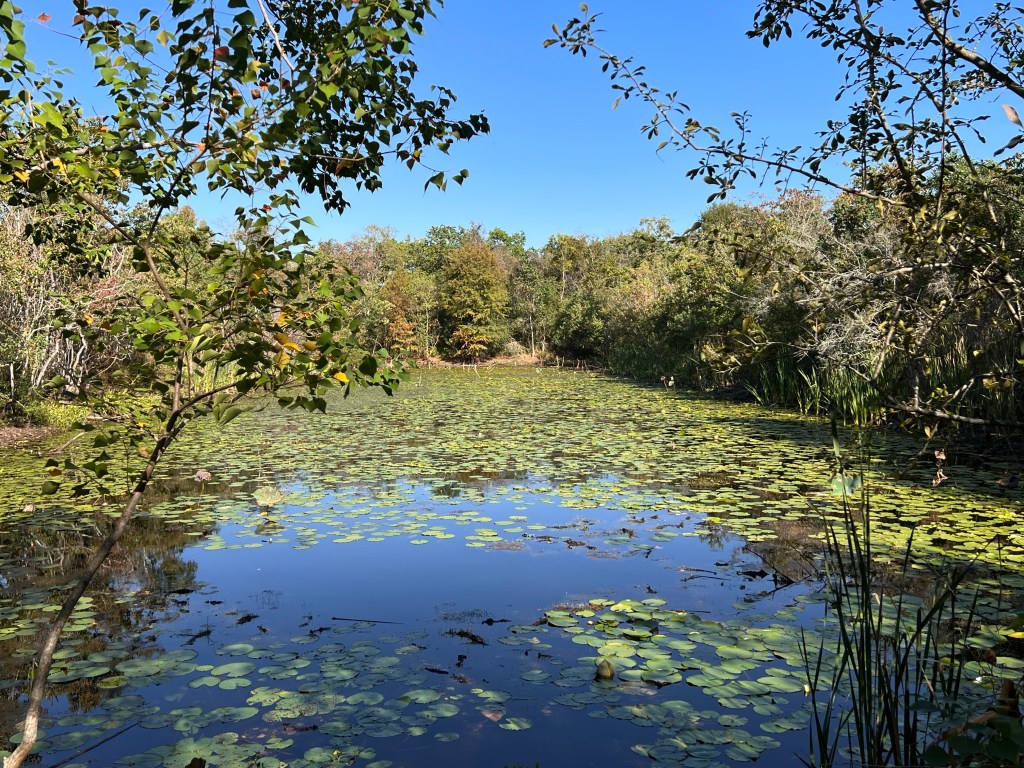
It being Samhain or Halloween, I figured I should write about life and death and moving on. (That’s where snouts come in.) As for life, I was happy to see a turtle head pop up in the new pond. It’s good to see it getting to support life again.
Turtle is to the left of the black leaf.
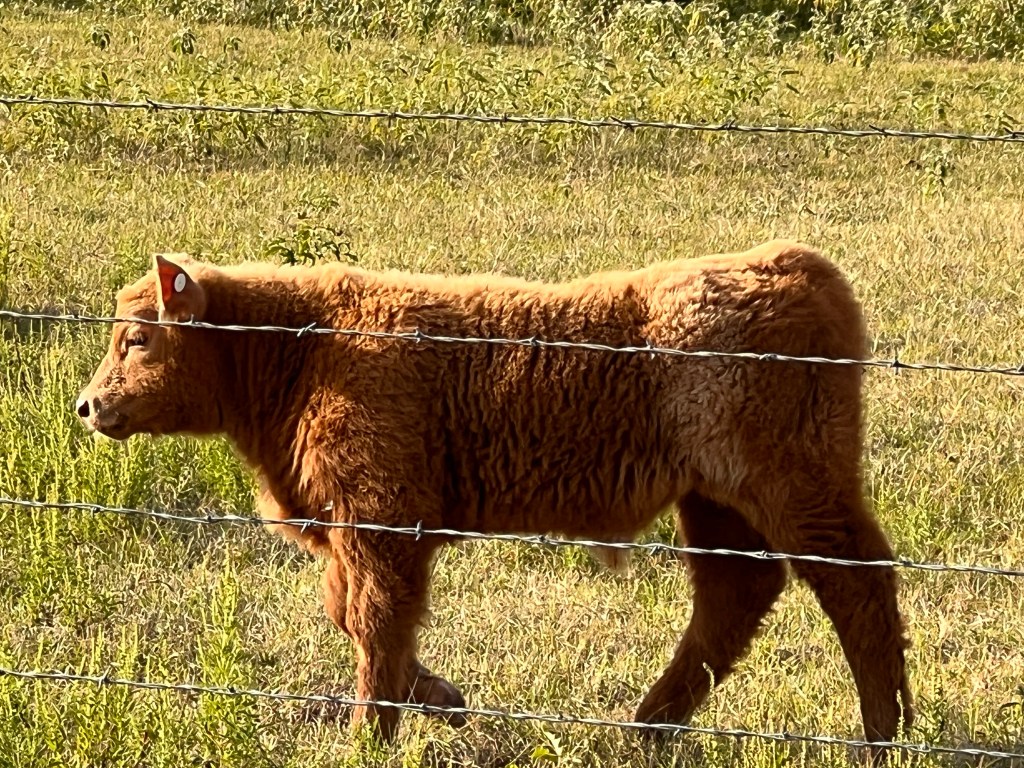
There is much new life behind us, as more calves show up. This is one of the fuzzy twins. They look like stuffed animals!
Bawww!
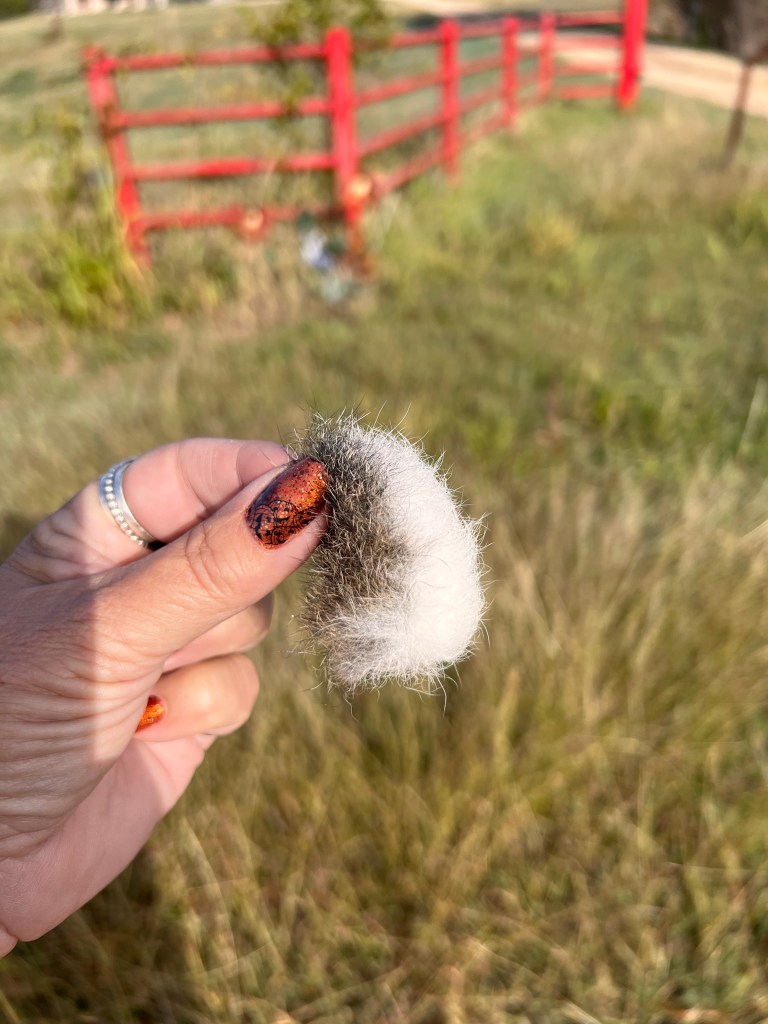
There’s death, too, as I discovered when I checked the mail. I found just the tail of a rabbit. Hmmm. I could choose to believe it got away with just a tail-ectomy.
Not a usual find!
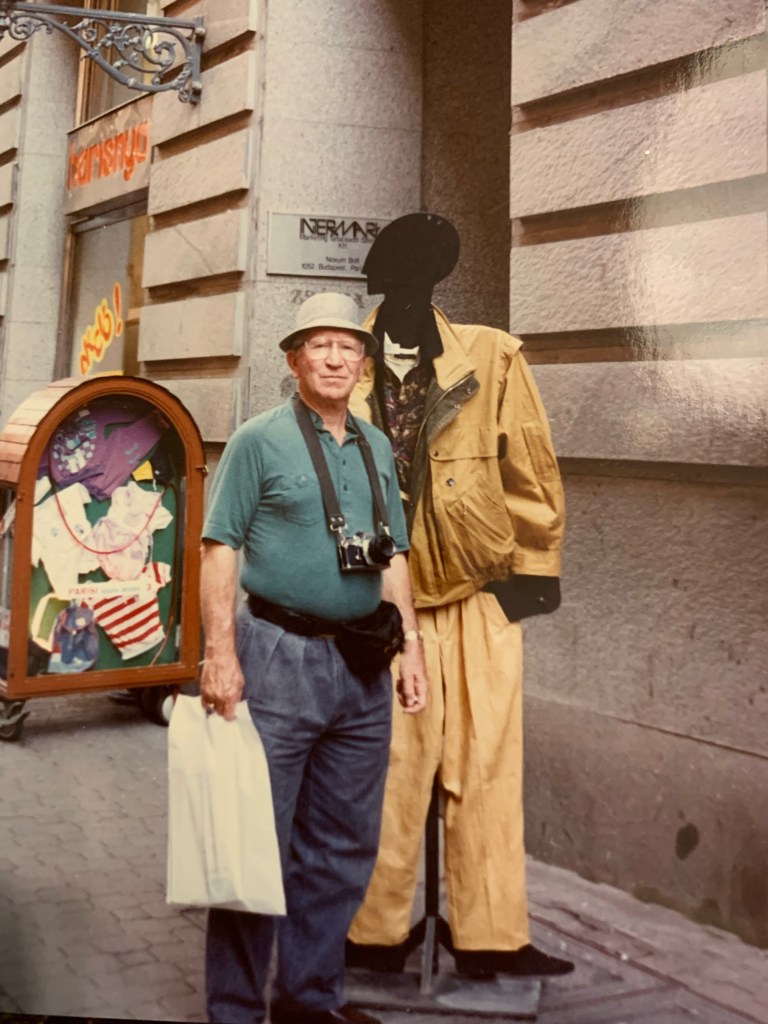
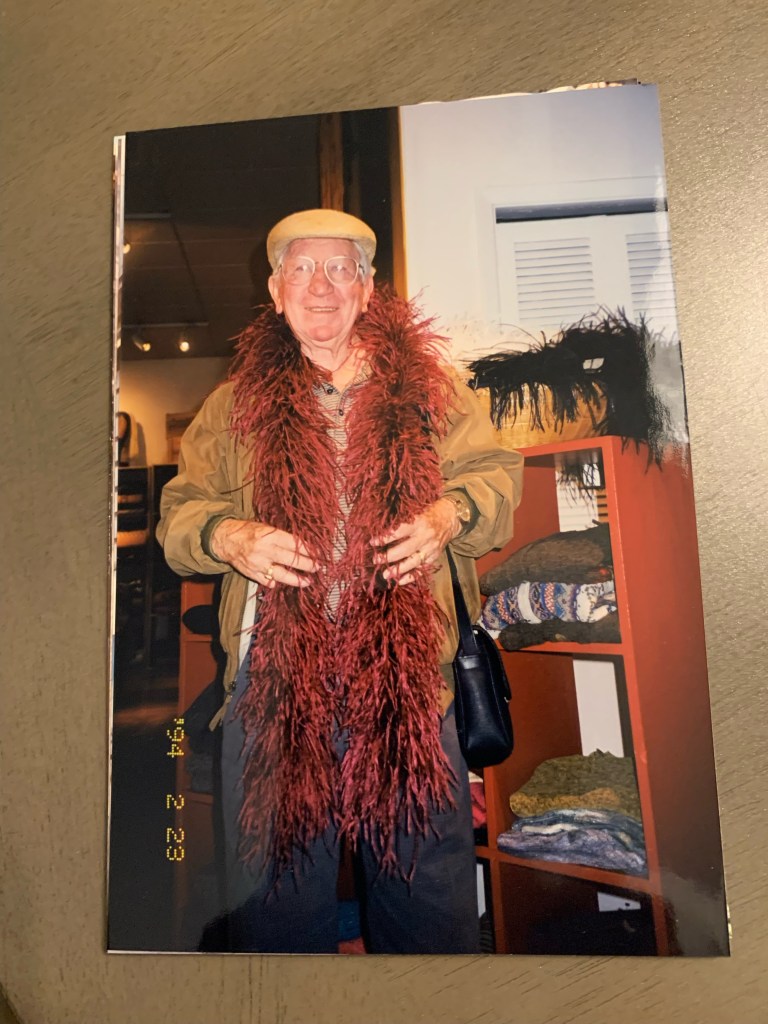
This is also the time of year in my culture and many others, where you think of the dead and welcome memories. While I’m thinking of way too many friends who’ve recently lost spouses or parents, I’m also comforted by my own memories. My stepsister sent me these fun pictures of my dad, so I’ll put them here as an electronic ofrenda.
Snappy dresserDad and Florence on their wedding day with my offspring. Prince Kendall, ever the clown
Much of the day today I thought about transition. The butterflies started it. The snout butterflies are still migrating, and I enjoyed watching them today as they visited flowers and grasses and did mating dances. They’ll lay eggs and make more little snouts as they head north. (I’m also throwing in a Gulf fritillary and sleepy orange — what a great name.)
Pretty American snoutOops. That’s a vineThe side you usually seeThreesome!Delicate perch!Fritillary has seen better daysSleepy orange Other side of sleepy
Like the butterflies, we all move on and do as much as we can while we live. That’s my goal. Keep moving and enjoy my life.
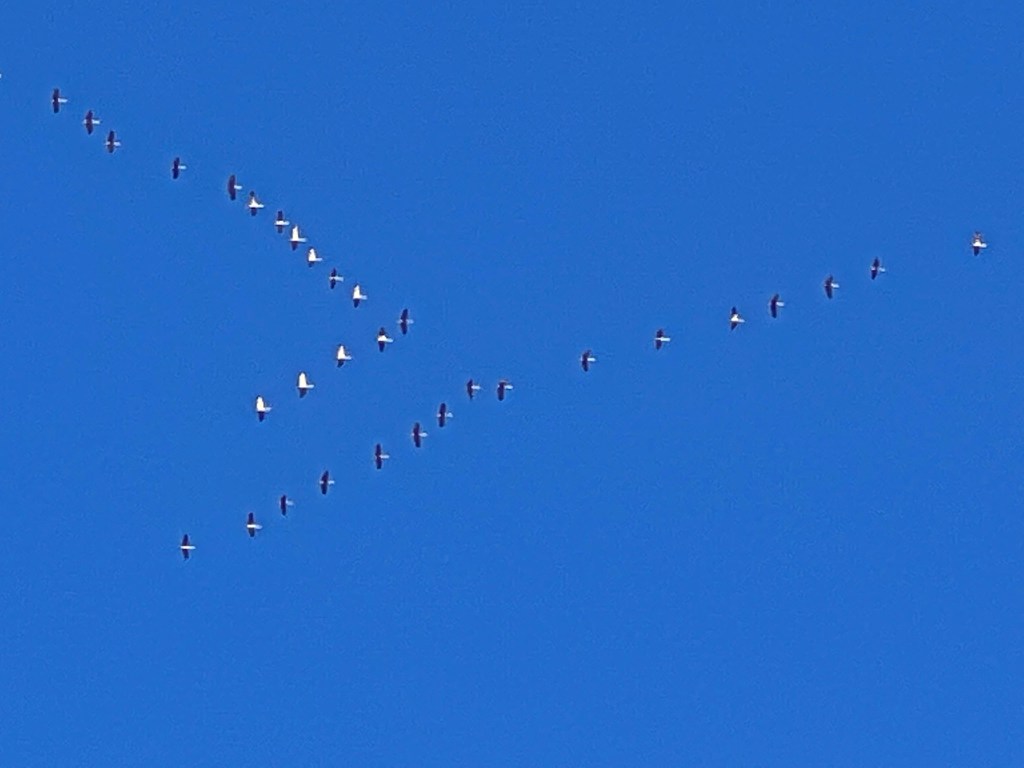
Although I’m quite excited about migrating snout butterflies (hundreds) and sandhill cranes (dozens), I’ll share more that I learned last Saturday for now.
Insect Photography, by Mary Ann Melton
Insects are what I take photos of most, after plants. I enjoyed getting ideas from Mary Ann, who happened to be the speaker at our last Chapter Meeting. I was very happy that she gave tips for phone photos as well as camera ones.
Handy hints
I took photos of some of the ideas she shared, especially for digital cameras, in case I can ever get one. There was also a cool attachment that lets you take better close ups on the phone. Attaching that to the 3x camera on my phone should be fun to try.
This is the closeup attachment
I also just enjoyed her beautiful photos with nice blurry backgrounds so the subjects look better. This was fun.
Here Be Dragons! Odonata 101, by Brent Franklin
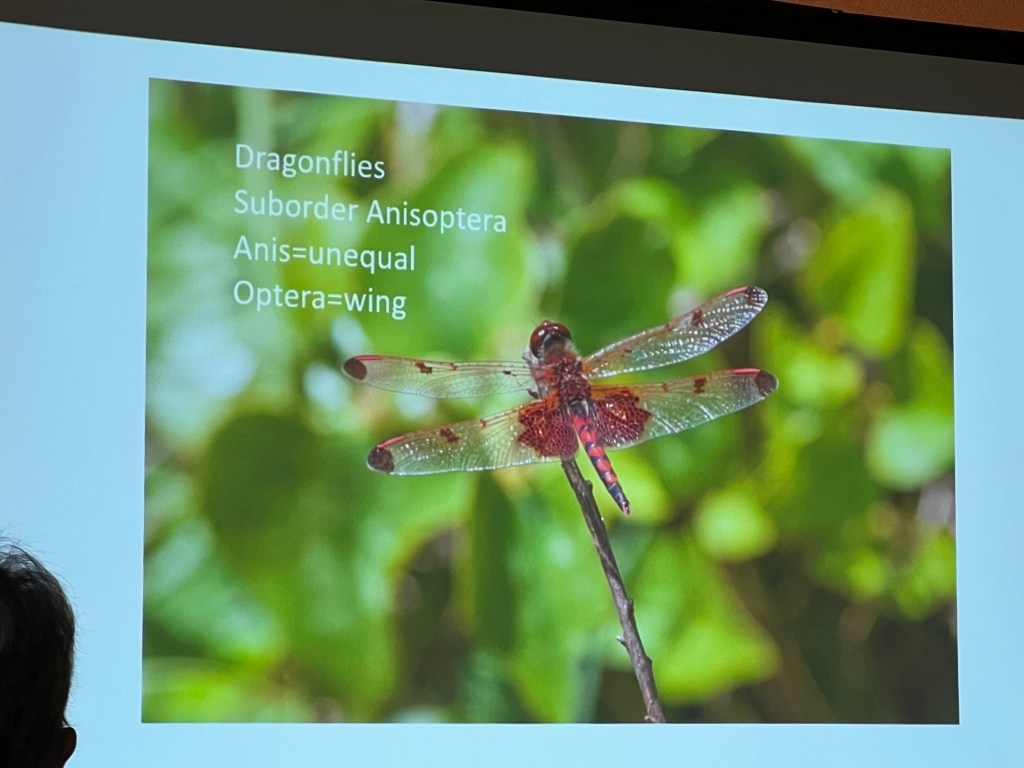
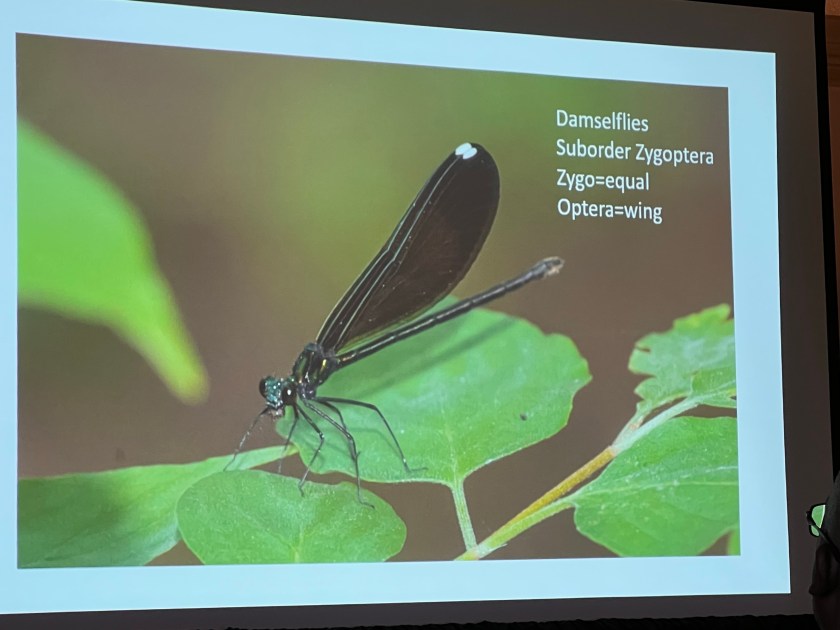
This was probably Brent’s first presentation, since he apologized a lot for its length and content. But it was just fine, and I learned a lot about dragonflies and damselflies, even though I thought I knew a lot. This guy has really seen a LOT of the Texas Odonata and has lots of insights on finding them and observing them.
He had some fantastic photos of various dragonflies, too. I learned more about their mating behavior (the male clamps on to the female behind her head and flies her around until they find a good egg-laying place) and life when young. I don’t think I’d realized how long they can live in the water before emerging into the air. It can be years!
There’s just so much going on with these guys. Did you know dragonfly eyes take up almost their whole head, while damselfly eyes are on stalks on the sides of their heads? Yep.
Sticking their back ends straight up is called obelisking. That’s a new word for me.
iNaturalist 301: Advanced Applications and Exploring Data in iNaturalist, by Tania Homayoun
I always feel like it’s not a good conference if I don’t go to a session by Tania. I think I’ve gone on a field trip with her or heard her speak at every conference I attended. I’m such a rogue iNat user that I don’t think she’s too impressed by me, but I’m impressed by her! This session didn’t disappoint, as I learned some new features in iNaturalist and that some features have gone away. I’m glad I was able to draw an area for our ranch before that was removed as an option because people were misusing it or something.
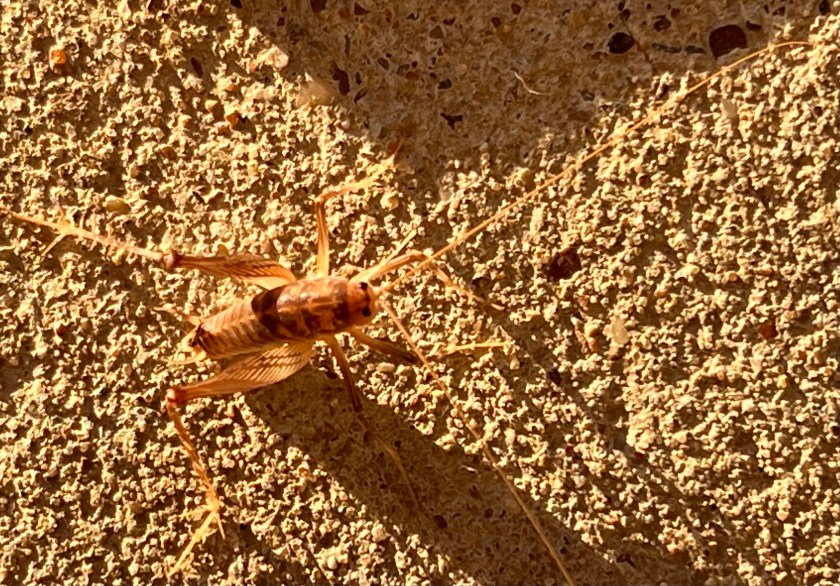
My latest iNat entry taken in glary sunlight. I think it’s a camelback cricket.
Since I’d spent all week uploading things for that Pollinator BioBlitz, it was good to just talk about it and to learn more about the computer application, which really lets you do useful things. I plan to download my ranch observation data soon and do some analysis in Excel.
I was sad to find out that Tania is leaving her position with Texas Nature Trackers, but very happy to discover it’s because she is going to be the State Ornithologist! WOW!
Wrens: Little Birds with Lots of Energy, by Scott Kiester
It turns out that the speaker for this session, the last one I attended, is the guy who drove us to the field trip on Thursday. He had lots and lots and lots of information on wrens, including fun recordings of the songs and “scolding calls” of each type.
This was all news to me. Cool.
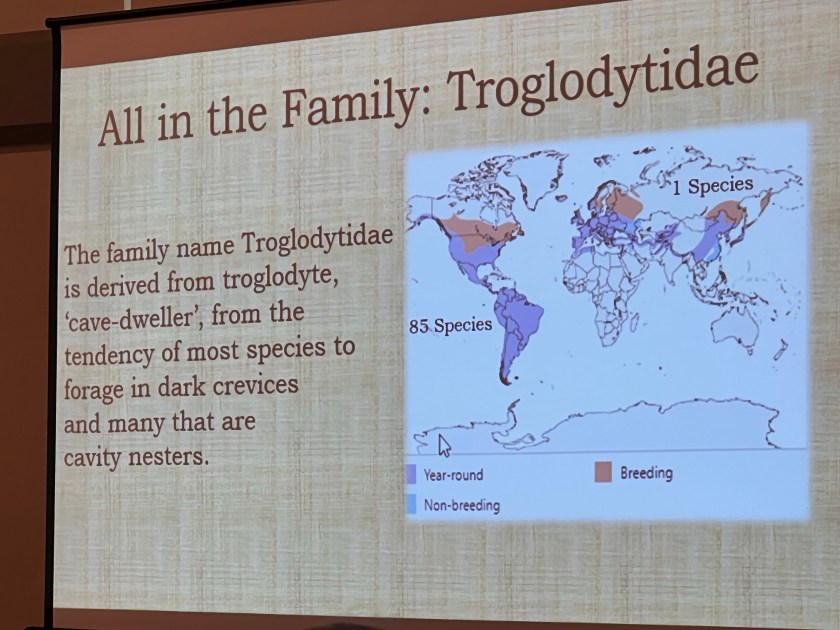
Wren fact that blew my mind: there is only ONE kind of wren in the Old World, and they are pretty sure it crossed the Bering Strait and populated that part of the world from North America. There are many kinds of wrens here, though. We went through most of them in two hours, it seemed.
We also learned folk tales. The wren won kingship by hitchhiking on an eagle and jumping off it to become the highest flyer. Tricky bird.
I have a much better clue about wren identification now, and can easily tell you which one is a Bewick’s. By the way, their numbers are diminishing as some other wren takes over, and it’s pronounced like the Buick car. Huh.
The rest of the sessions on Saturday were about who won awards and honoring people with lots of volunteer hours. I sure wish Donna Lewis had been able to come so she could have received her 10,000 hour pin. That is a huge milestone. To compare, I have about 800 hours.
I’m sticking my crane photos and video from yesterday in here, in case you’re interested. Seeing them flying over is always a highlight of the autumn for me. I love the sounds they make.
I’m saving conference memories until I can concentrate. I made it home to find that we had visitors and more coming. That’s fun!
Autumn at Hermits’ Rest
Luckily I had a few minutes free to finish out the Pollinator BioBlitz. I hadn’t figured I’d see anything new, but I was happy to be surprised! I saw a new dragonfly, for one. It’s all black.
Swift setwing
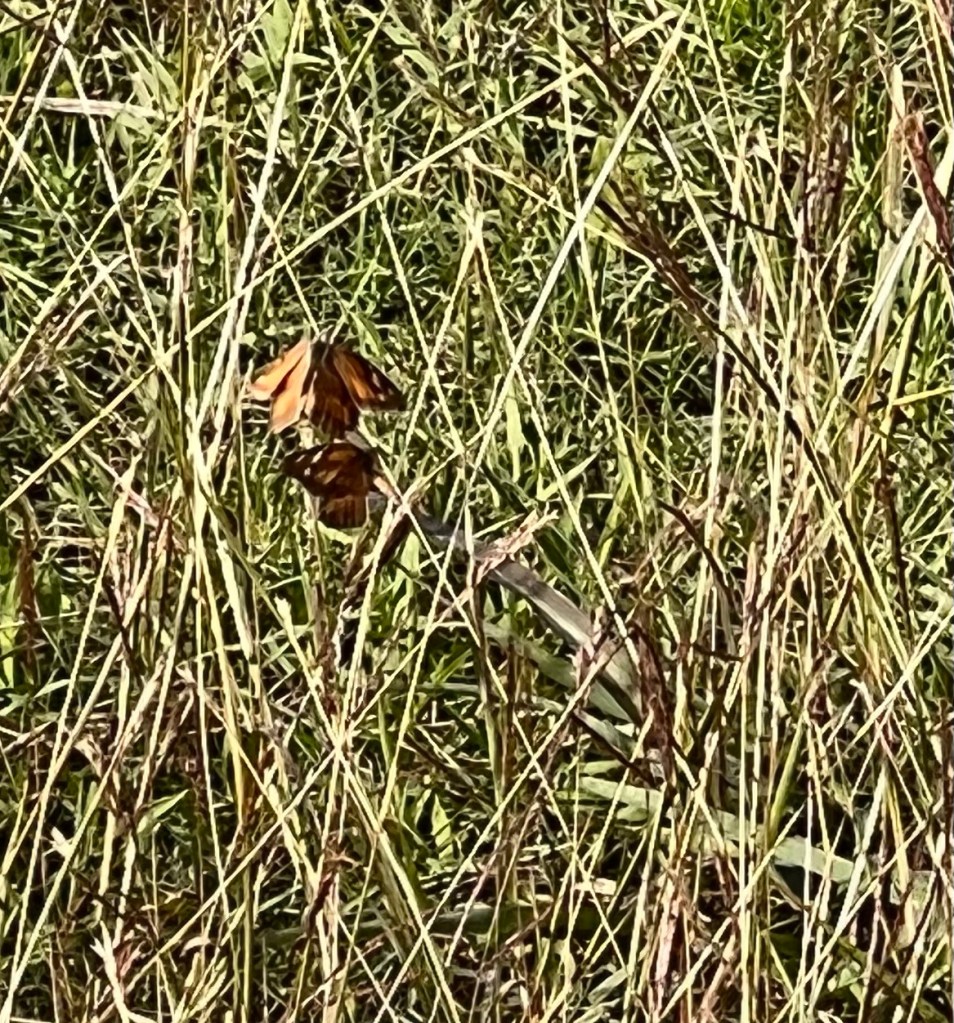
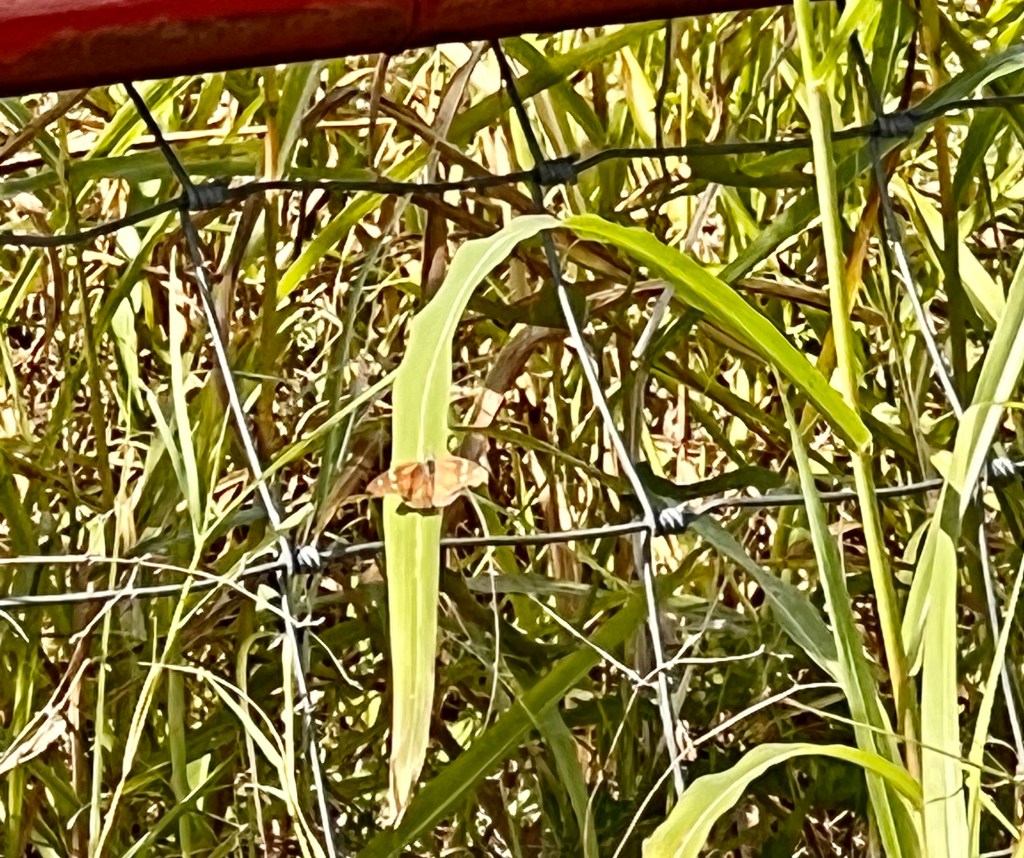
Plus I saw way more butterflies than I expected, including one I never got to hold still. I’m not sure which of the ones that look purple when they fly it is, it someone will correct it.
Plus, I saw a snout butterfly holding still, finally, and dozens of fiery skippers. And one more fritillary.
Gulf fritillary Fiery skipperAmerican snout
I was even more satisfied to finally get a clear photo of the bee fly who is always around the asters. Woo!
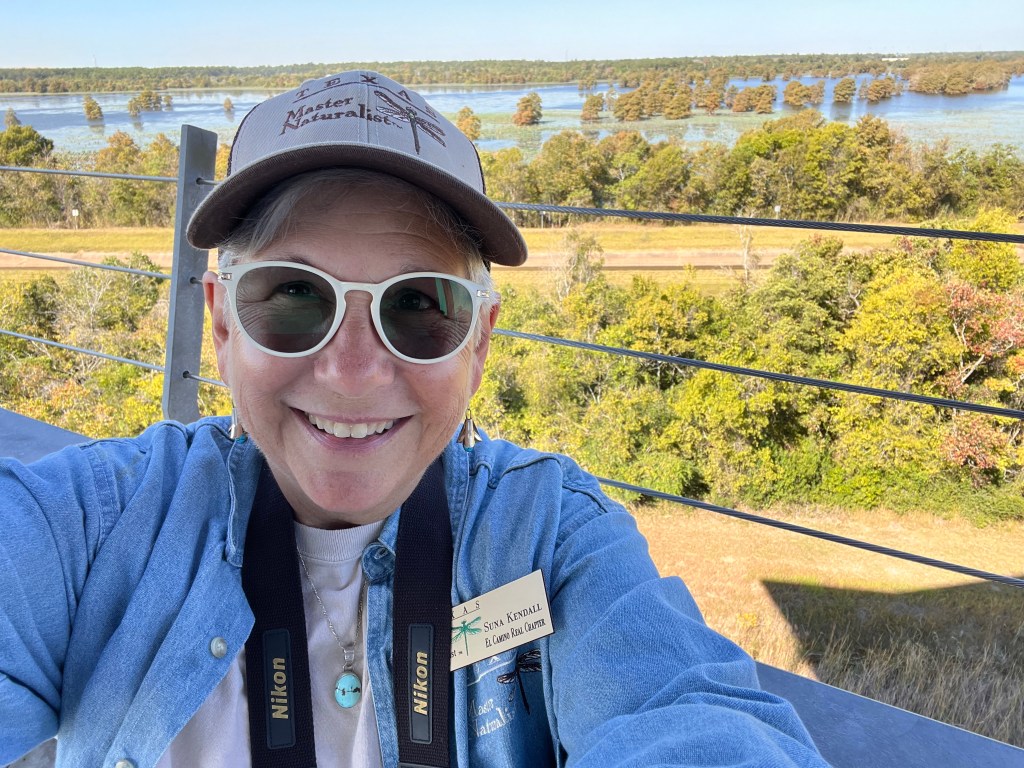
I’m too tired to do much writing, but my first day of the 2022 Texas Master Naturalist conference in Houston was really fun. What a pleasant and educational day.
See how happy I was?
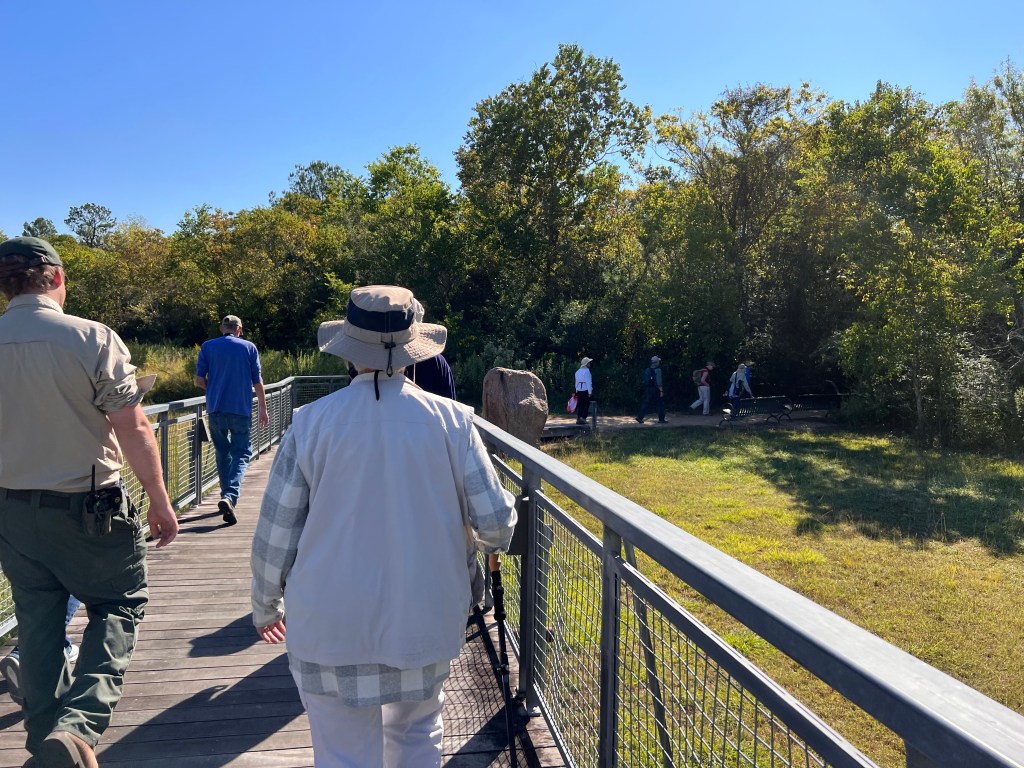
The day started out with a trip to Sheldon Lake State Park. If you are ever wherever it is, go visit! It’s even free and very easy for people with mobility challenges to enjoy.
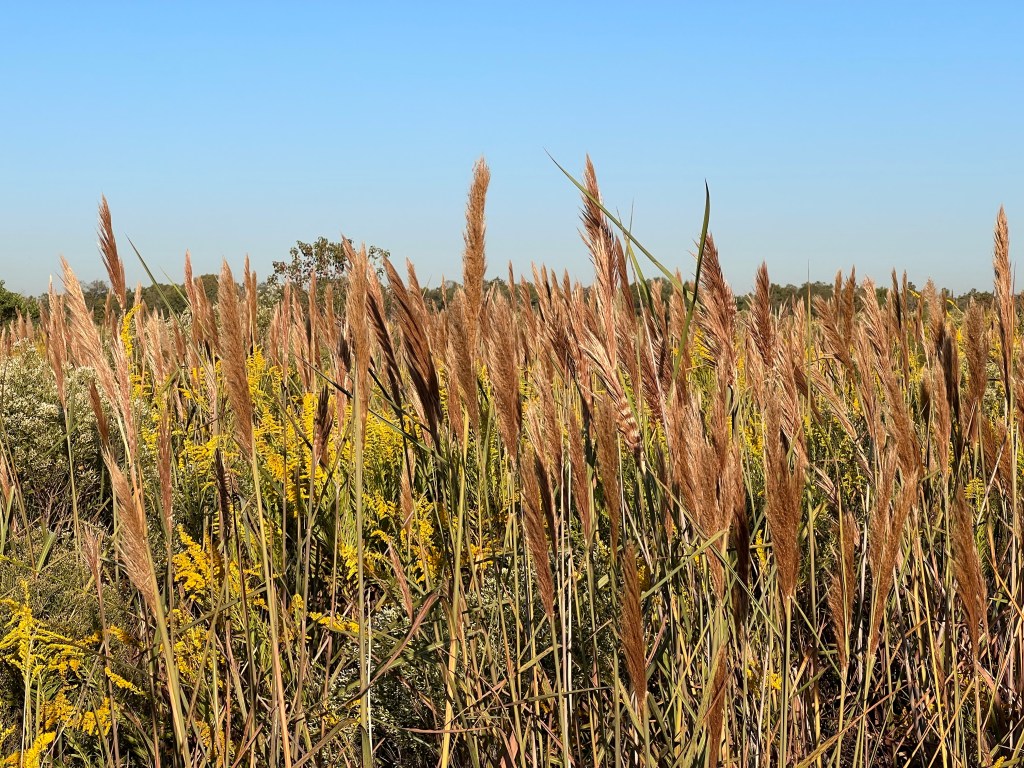
Prairie area
This whole park has been reclaimed to have native plants through hard work of volunteers. So much digging and planting! We learned a lot from the park ranger and two really cool volunteers. They showed us what they did, how they propagate plants, and the history of the place.
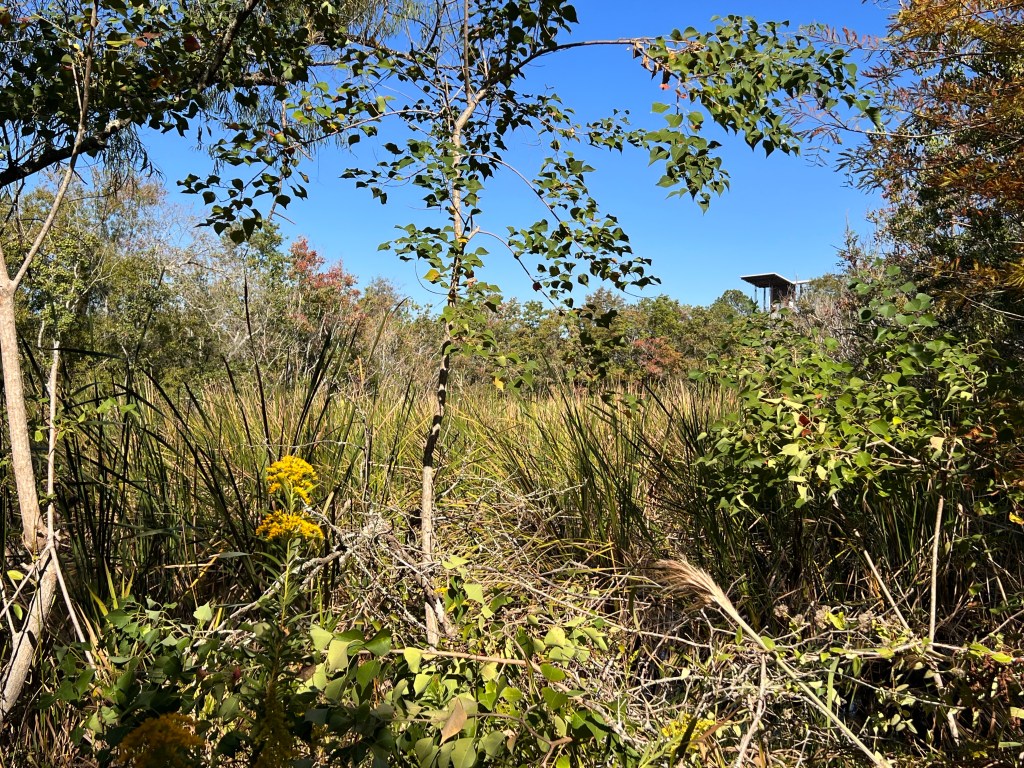
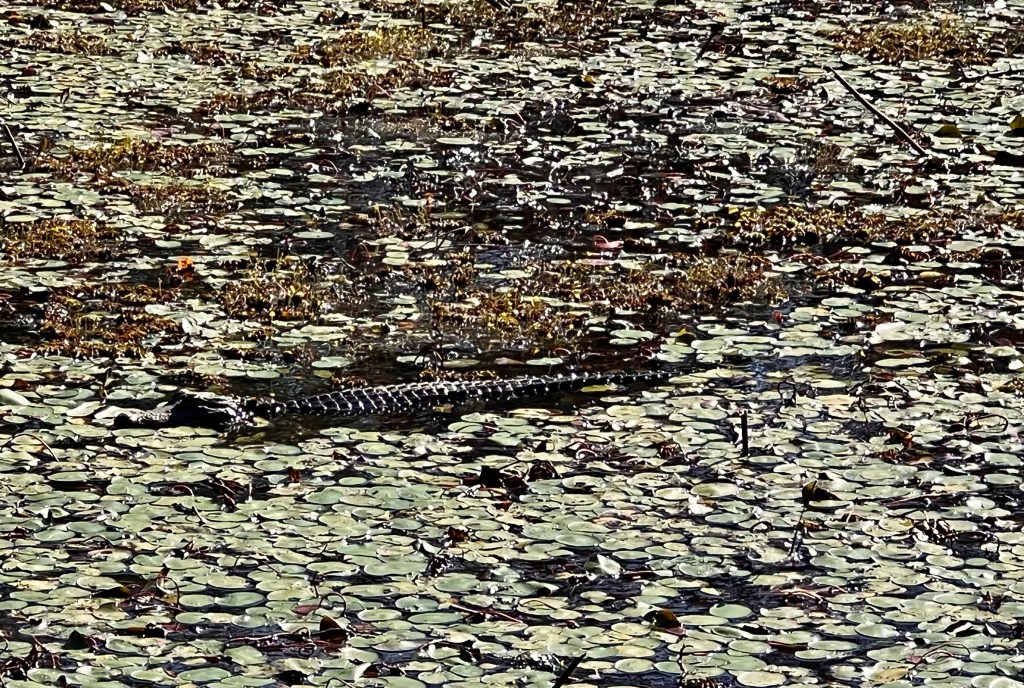
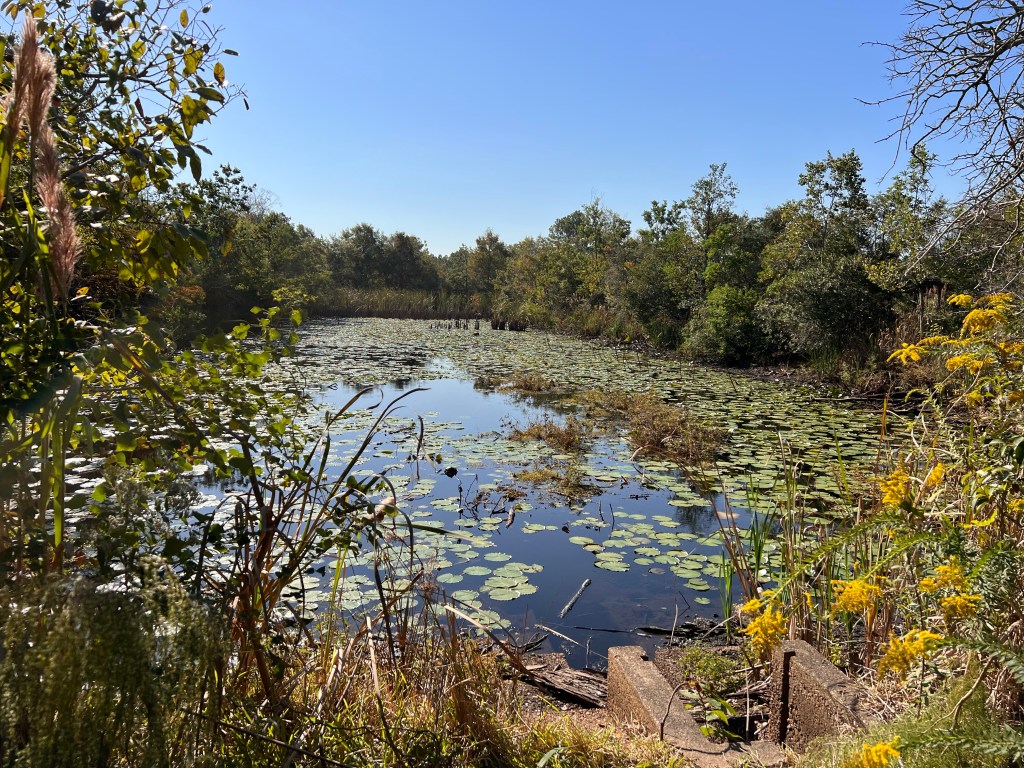
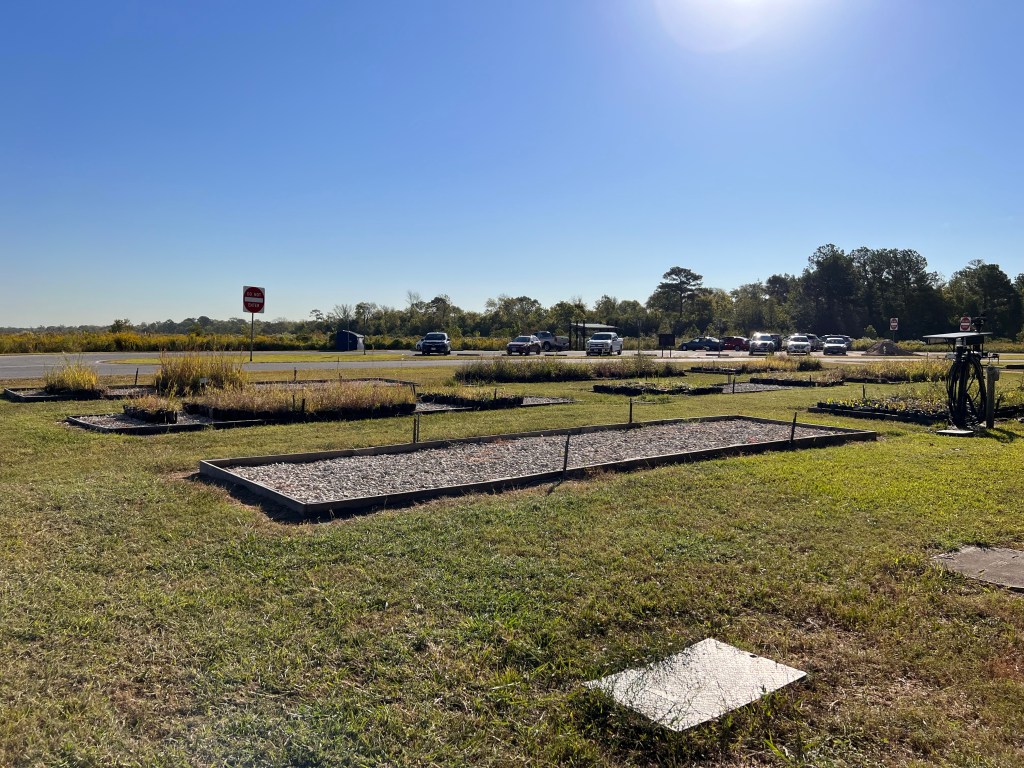
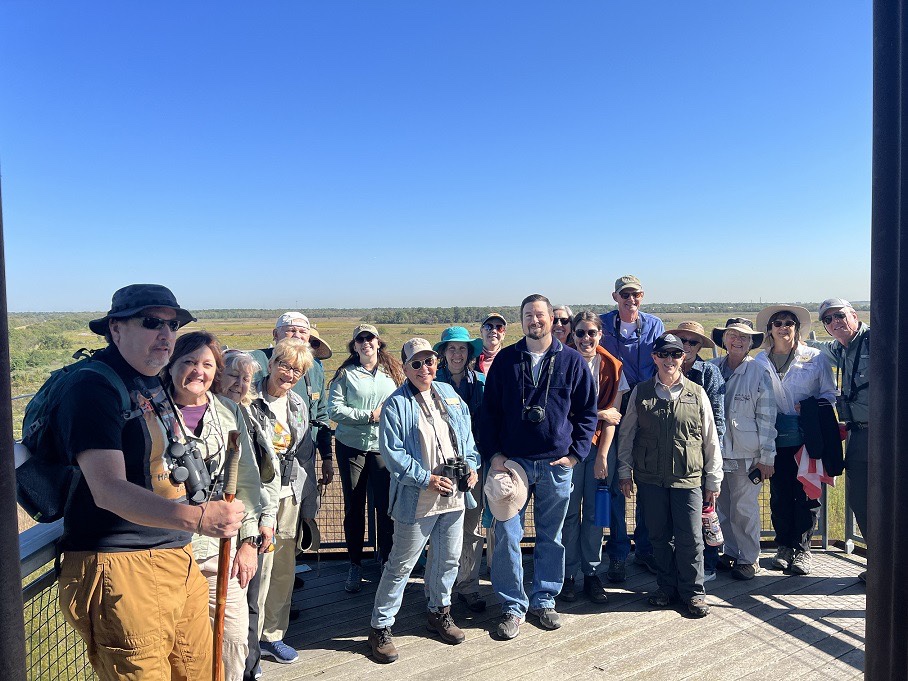
Lovely boardwalksView from a tower of the main lakeThe area once had a fish farm, so there are many pondsWe were on a trail with beautiful vignettes every so often Yes, gatorsNice to see some water, though it’s dryBigger pondGreenhouse where they propagate native plantsWhere they grow plants out prior to plantingBeautiful big bluestemAnother native grassThe group on the tower
I spent a lot of time taking pictures of plants and pollinators for the BioBlitz. I even got to see a new butterfly! I sure love learning new plants and insects.
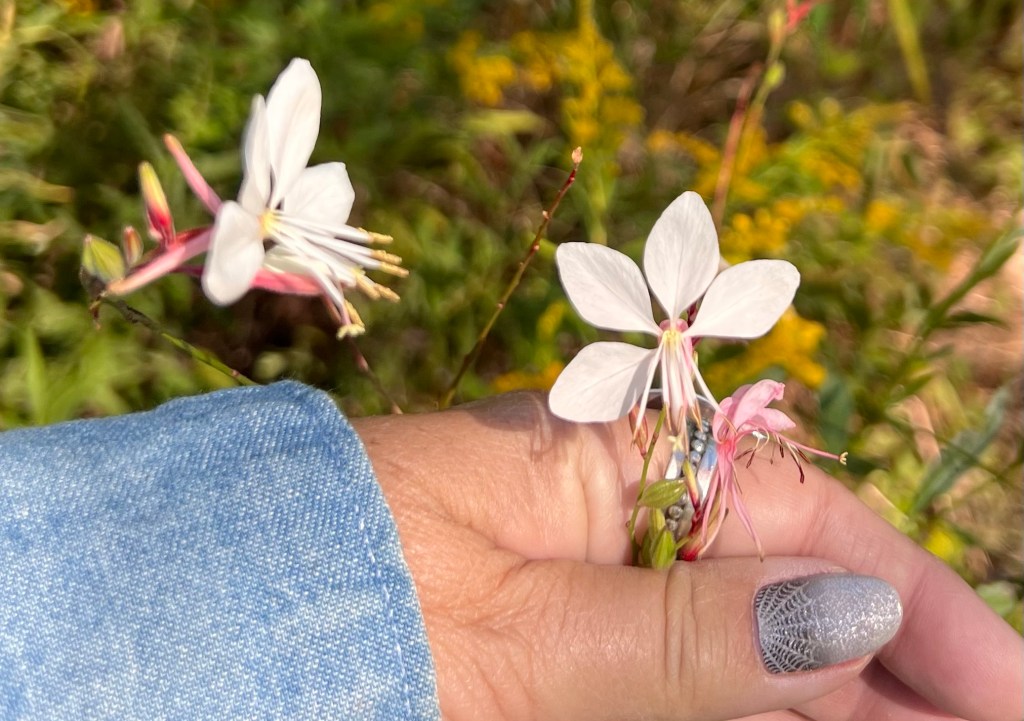
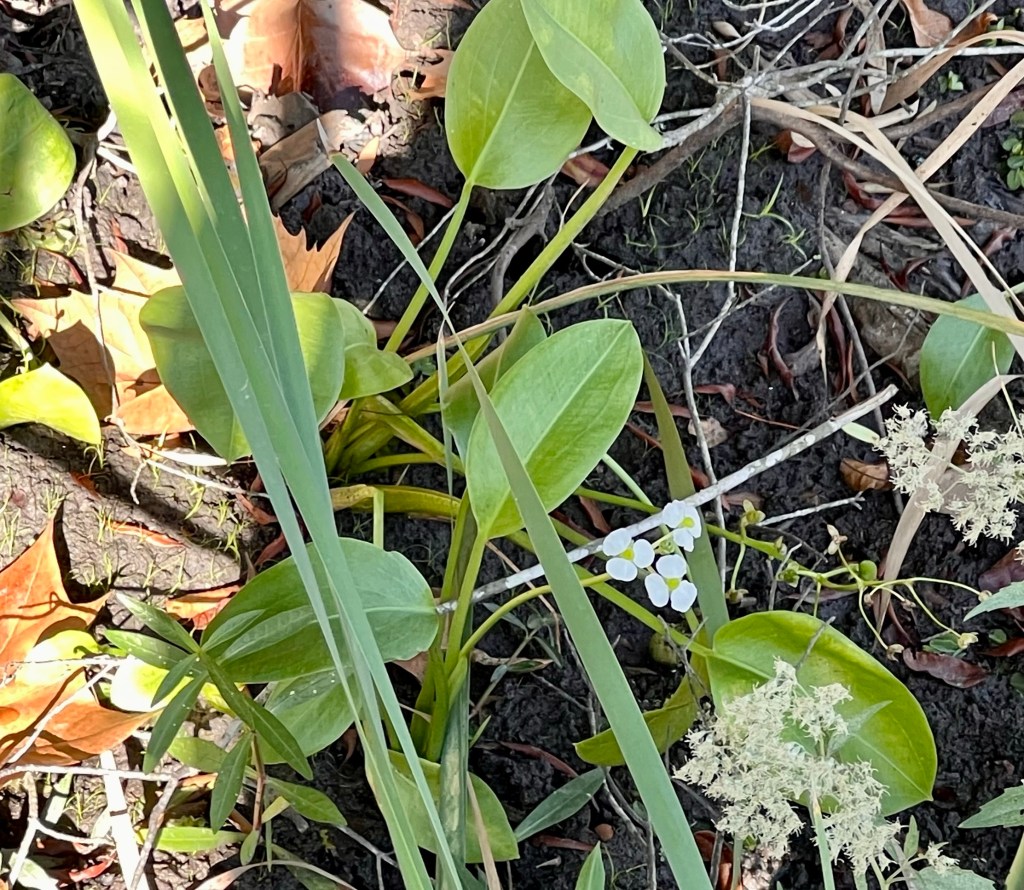
Big gaura flowersA new one for me, delta arrowheadThose are spoonbills and an egretHollyGulf fritillary. There were so many of theseCool bugRed banded hairstreakInteresting waspWhite striped long tail!Assembly moth
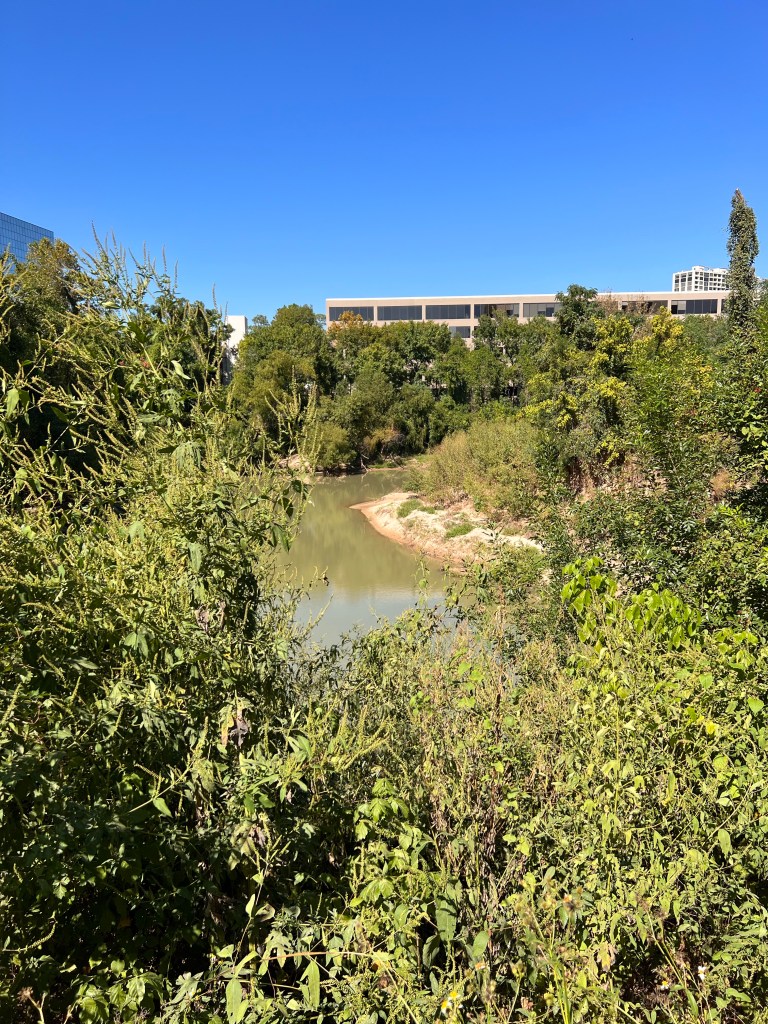
After we got back (I was able to carpool with two nice folks) I ran into friends from home. We decided to go check out Buffalo bayou next to the Omni Hotel we’re staying at. I have to tell you, wandering the weedy area on the other side of the fancy office buildings was as fun as any organized field trip.
So many fun plants and insects! I swear the monarchs posed.
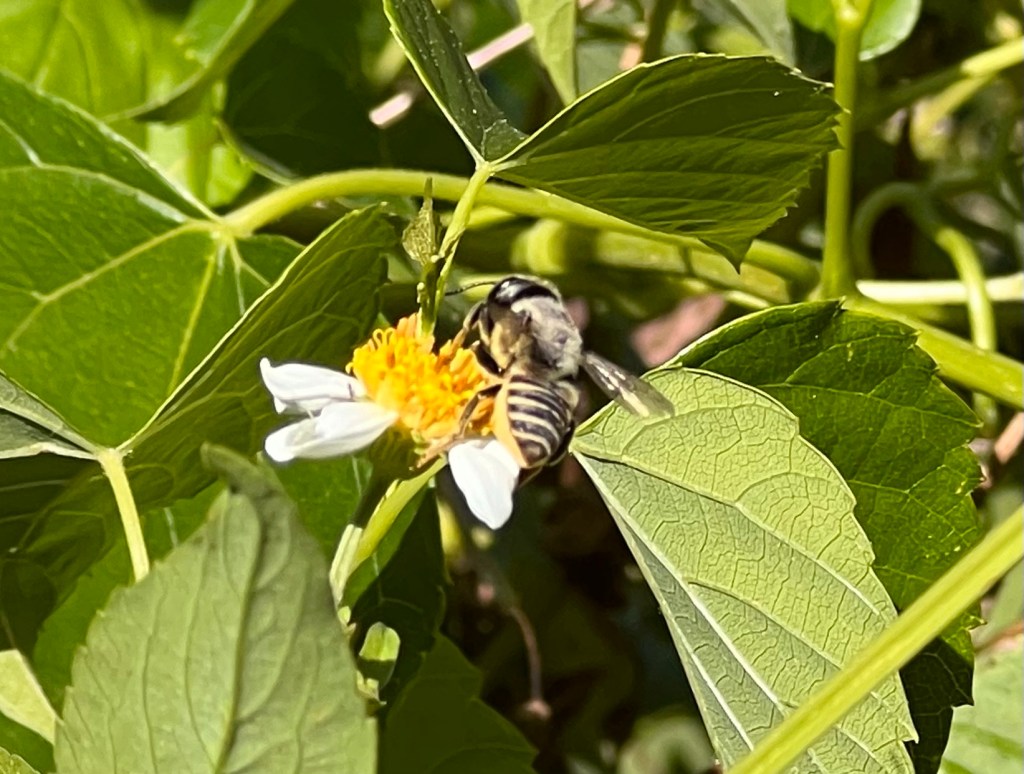
Ann and Jackie are always lots of fun, and Ann is so good with plants! We saw many native trees and so many vines. And though not much was blooming, some daisy-like plants attracted entire hives’ worth of bees and wasps. We had a blast!
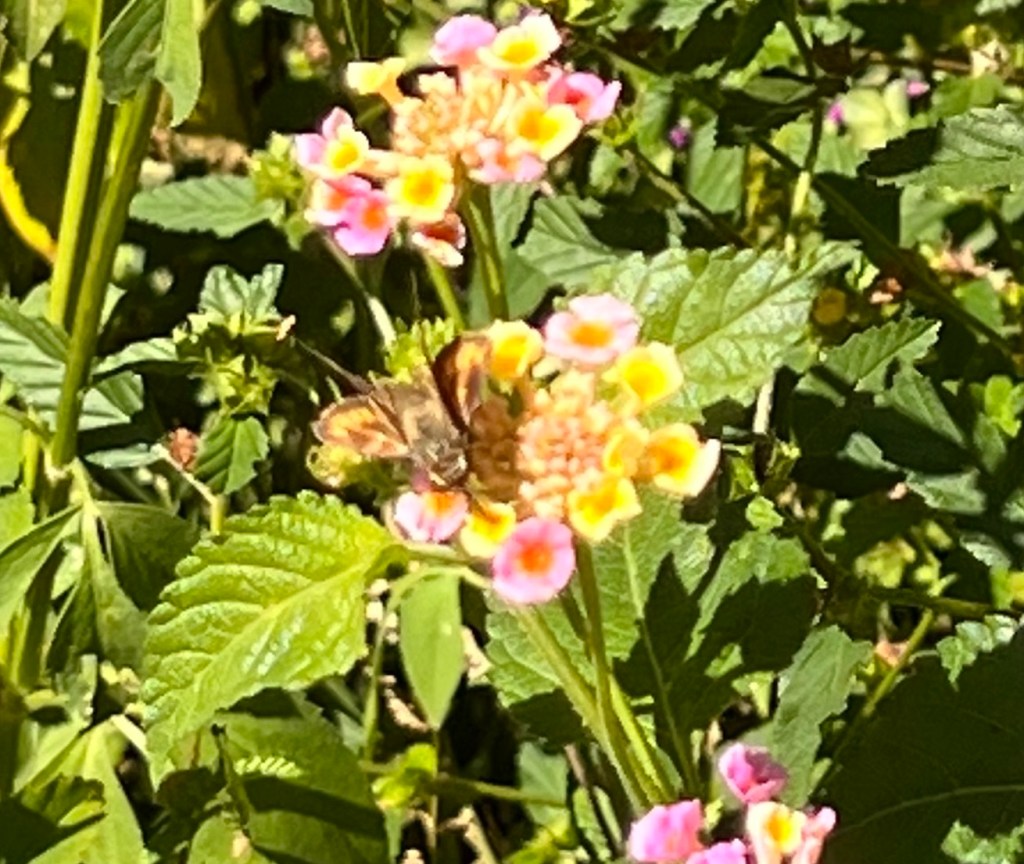
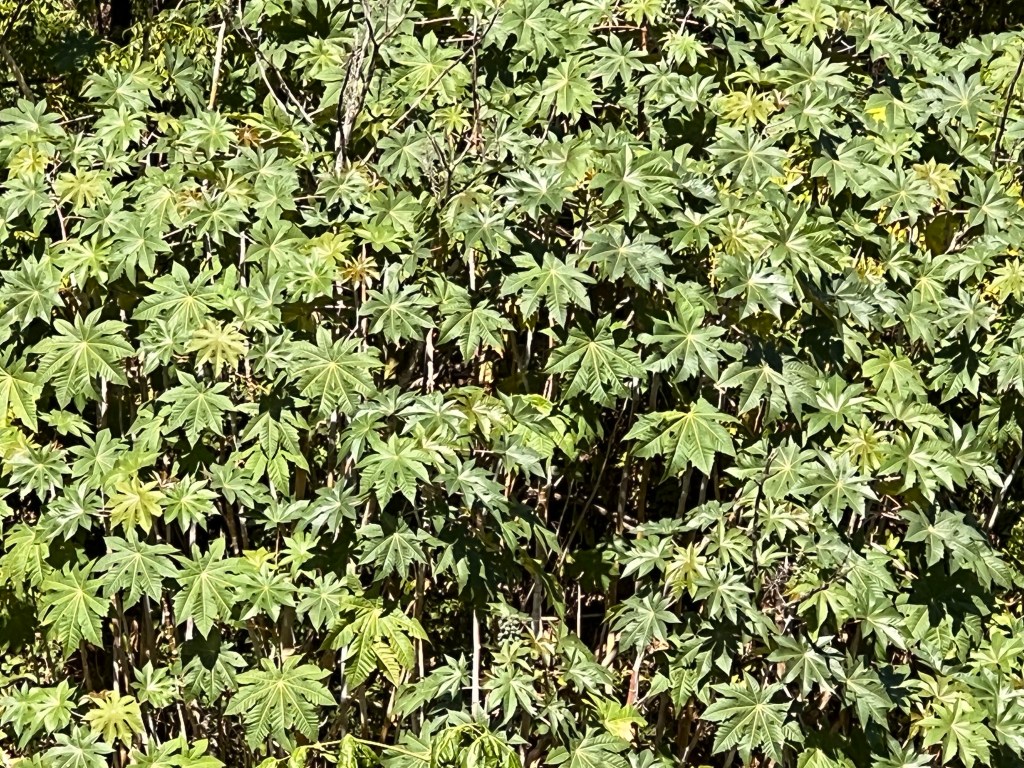
Herb of grace (it’s tiny)Tiny flyGood ole honey beeAnother Gulf fritillary More monarch beautyAnd moreDowntown Houston?Fiery skipper in lantanaA cool beeFalse mintCreeping cucumber A cool waspWheel bugMexican bordered plant bugBayou bugVinesGiant castor beans
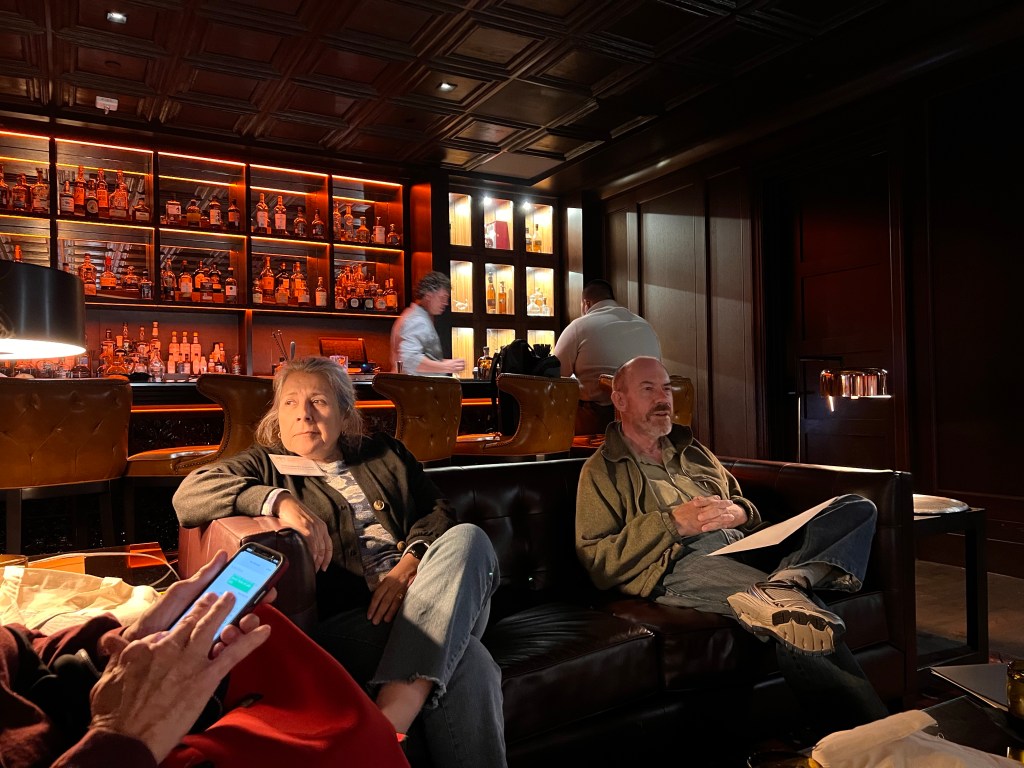
Once we were done I came up and rested, then met up with folks from our chapter for dinner and drinks. This hotel has great food. And we went to the “whiskey bar” later. We had great conversations in such a warm and elegant atmosphere. A good day!
Centerpieces are creative!Good chairs in dining room!So romantic. CozyLove the red bar
There was frost last night! It’s amazing how quickly it goes from boiling hot to frost around here. Luckily none of my plants were damaged, since I thought they’d still be ok outside. I look forward to putting them in the greenhouse, though!
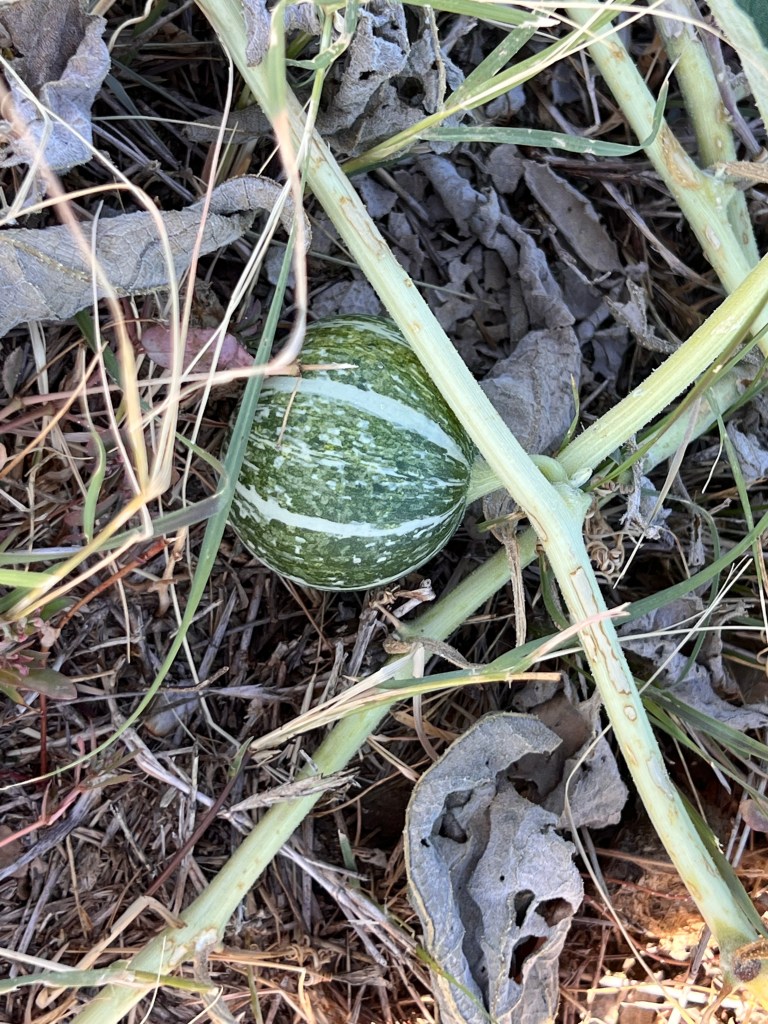
I decided to take one more sweep of the ranch for the pollinator BioBlitz, just to see if I would find anything different, and I’m glad I did, because I did stumble upon a few things. I’d say the most interesting one is the buffalo gourd.
Cucurbita foetidissima (means stinky)
Here’s some info on these plants, which Lee’s dad called “smell apples.” I’m always amused by giant squash in the middle of the pasture.
Cucurbita foetidissima is a tuberous xerophytic plant found in the central and southwestern United States and northern Mexico. It has numerous common names, including: buffalo gourd, calabazilla, chilicote, coyote gourd, fetid gourd, fetid wild pumpkin, Missouri gourd, prairie gourd, stinking gourd, wild gourd, and wild pumpkin. The type specimen was collected from Mexico by Alexander von Humboldt and Aimé Bonpland sometime before 1817. In Latin, foetidissima means ill smelling.
The feral perennial buffalo gourd has evolved in the semiarid regions and is well-adapted to desert environments. It contains high amounts of protein and carbohydrates and yields abundant oil. The carbohydrates that are formed in the tap root have led to the idea of growing the plant for biofuel.
The fruit is consumed by both humans and animals. When mature, a stage marked by increasing desiccation of vine, leaves, fruit-stem, and fruit, the fruit begins its final gourd stage. (from iNaturalist/Wikipedia)
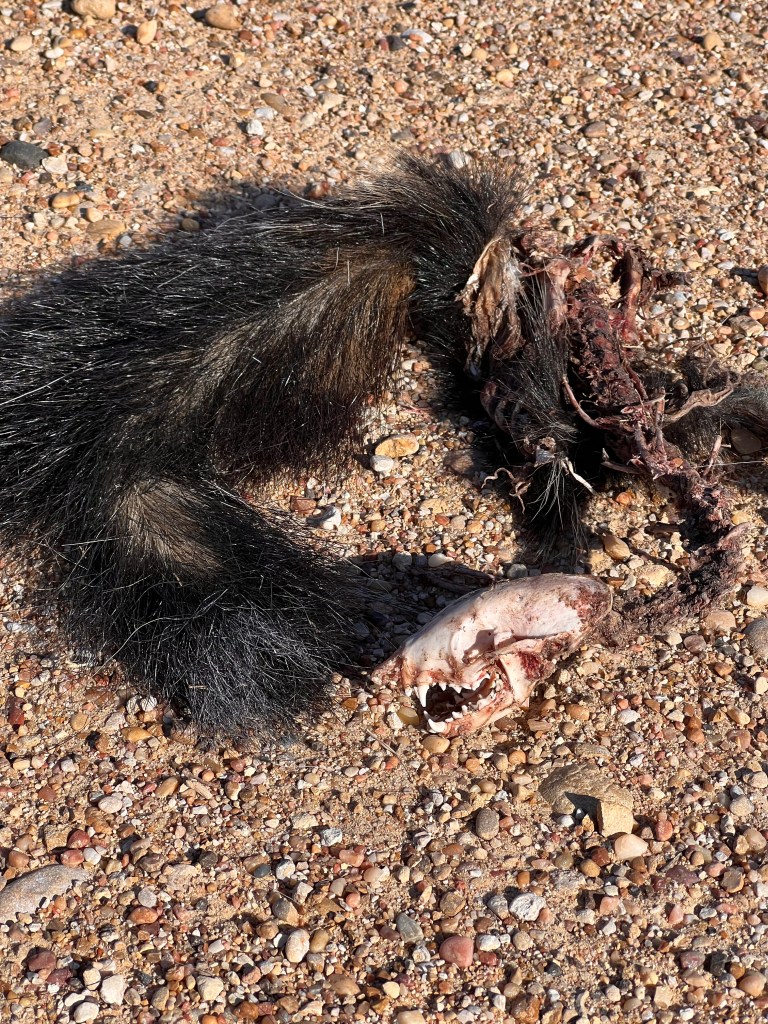
I enjoyed seeing things other than the plants, too. There was a kettle of black vultures circling around. And I identified what they were all gathered around recently on my son’s driveway/access road. It was a skunk. What a cool skeleton! And I got greeted by the current “bull in residence” in the pasture next to ours. He is really friendly and beautiful. I look forward to his babies.
Someone’s truck probably stinksHe came up to say “hey” later
It’s pretty this time of year, and the grass has greened up a little. Finding plants is hard, so I’ve resorted to looking for spring plants that are coming up already and some pretty sad drought-damaged dock. But they all count, and I’m still ranked in the 30s in the BioBlitz. Wait until tomorrow. My camera will be snapping like crazy on the field trip I’m attending in Houston.
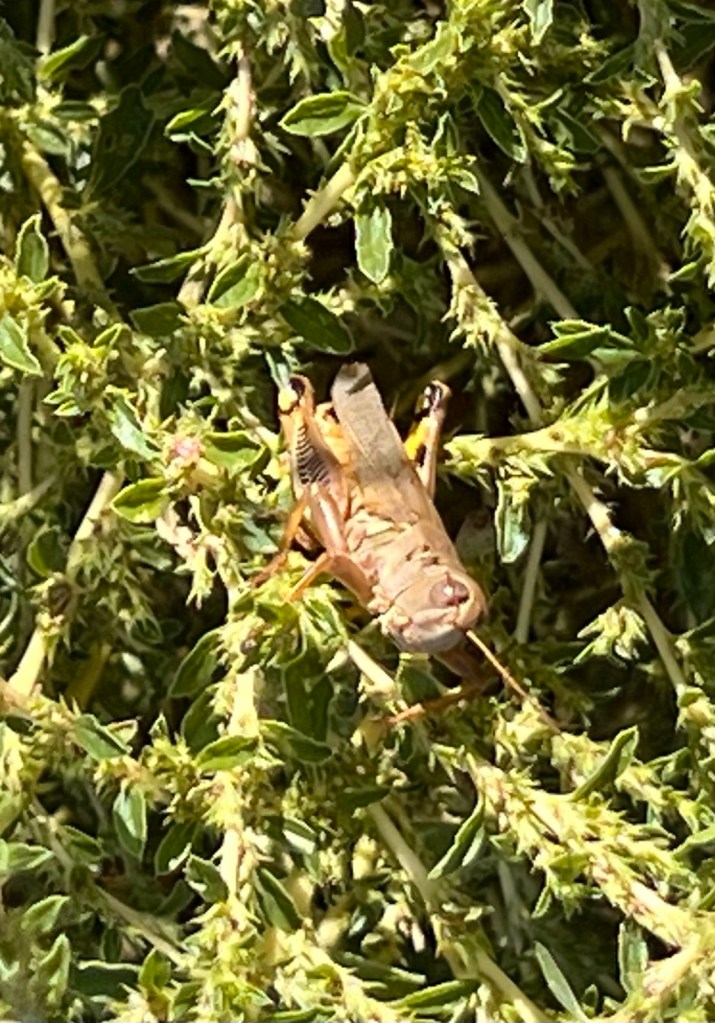
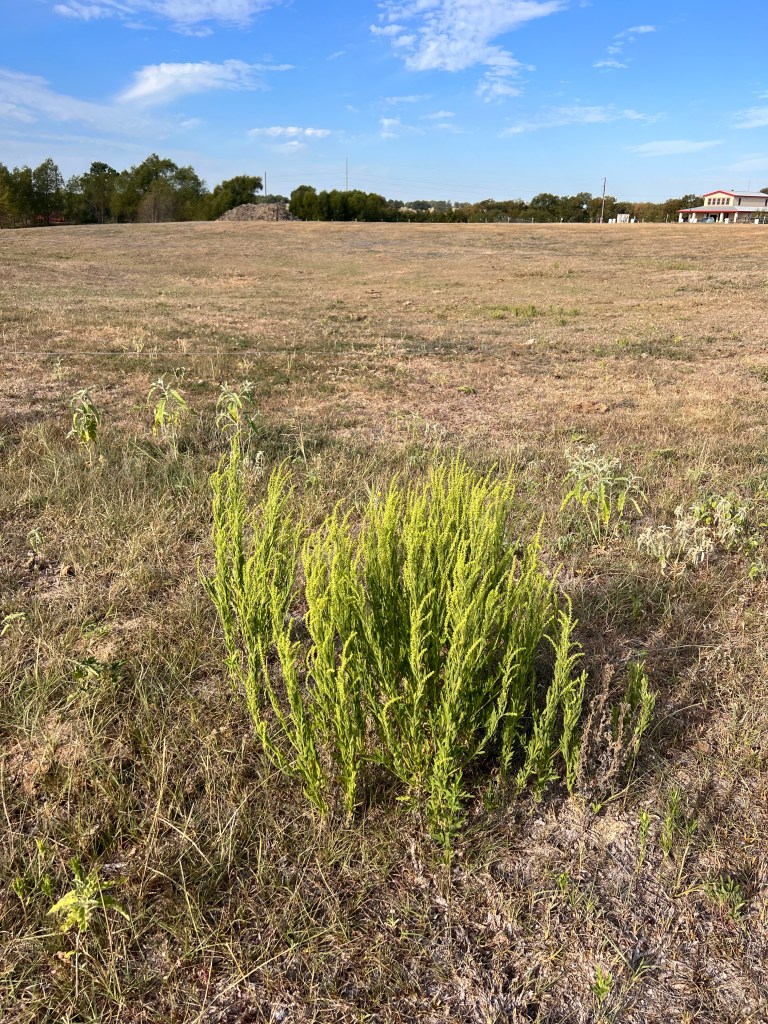
Differential grasshopper on the ubiquitous ragweed.Pretty stand of Texas vervain
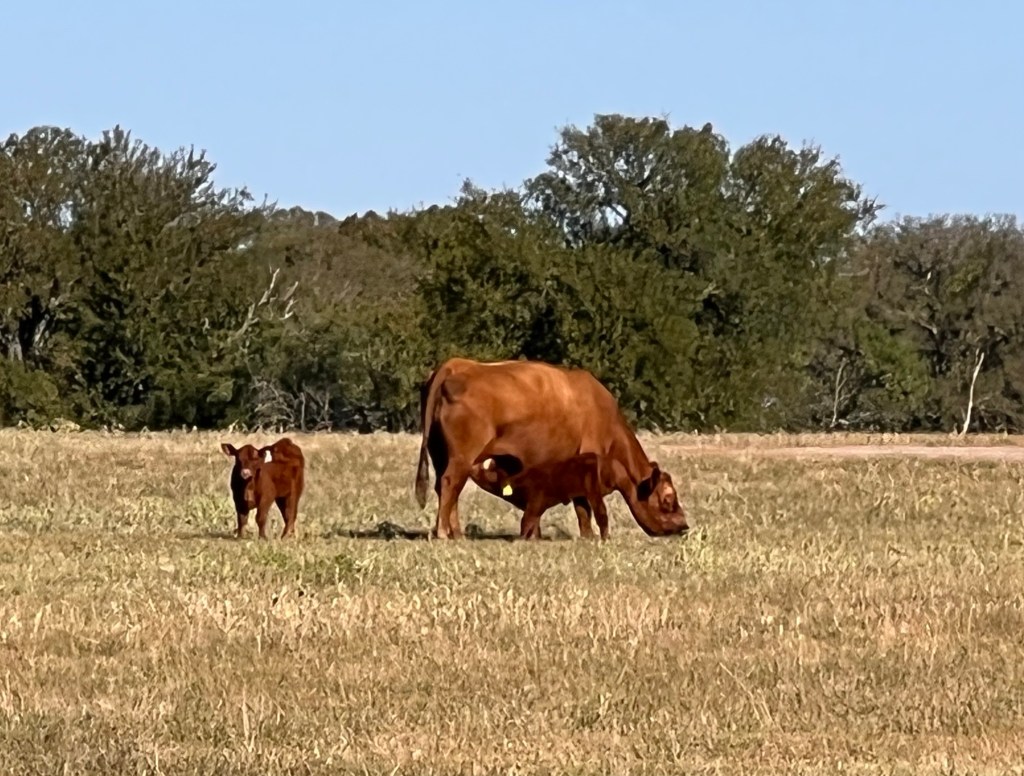
I was happy to see all the twin calves having a good time in the pasture behind us. The cow who was hugely pregnant did indeed have twins. I’m sure she’s really glad to get them OUT of her. The little one’s a hoot. He got hungry and started bellowing for her. She came through!
Most of the babiesmmm. milk.
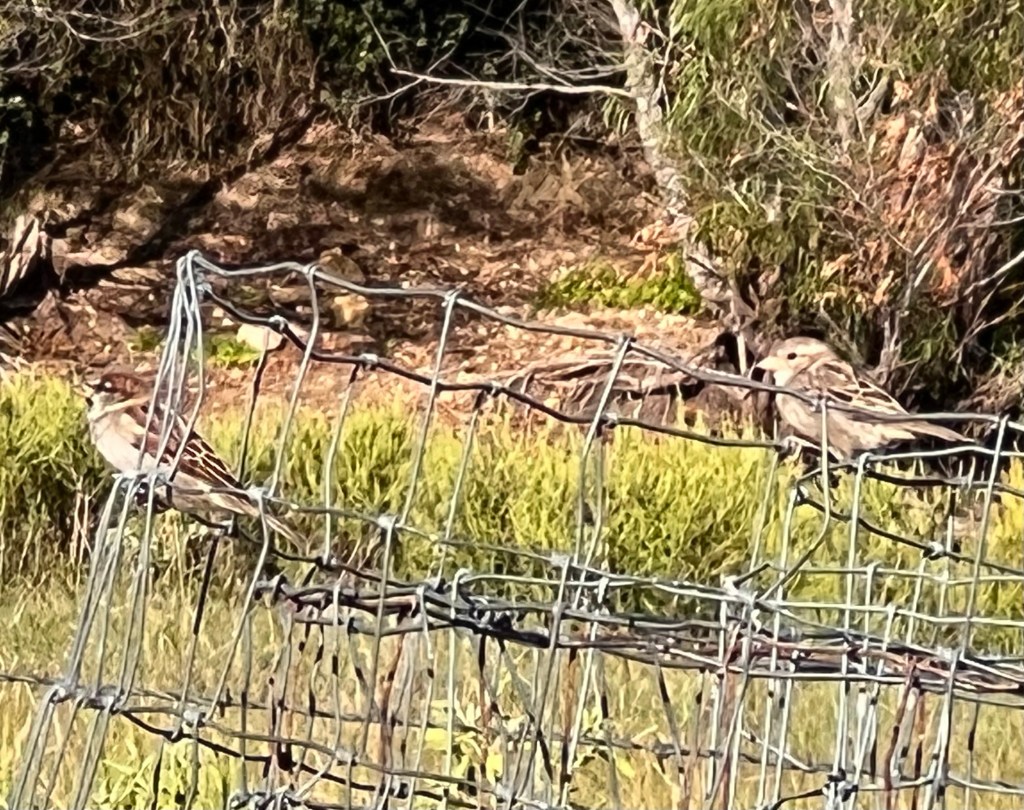
It’s simply restorative to just take in all that you see around here. Then I feel good heading in for more technical writing and helping lovely people with their software dilemmas. I even enjoyed the sparrows that eat all my chicken food. And of course, my horsies!
male and female, ready to reproducefind and count the birdsWe don’t eat the ragweed.
Whew, I was tired by the time I got home from Fredericksburg. I went home a new way, though, so I got to see some different scenery and avoid Austin traffic. To keep myself awake I tromped around the ranch on my breaks, taking pictures for the pollinator BioBlitz.
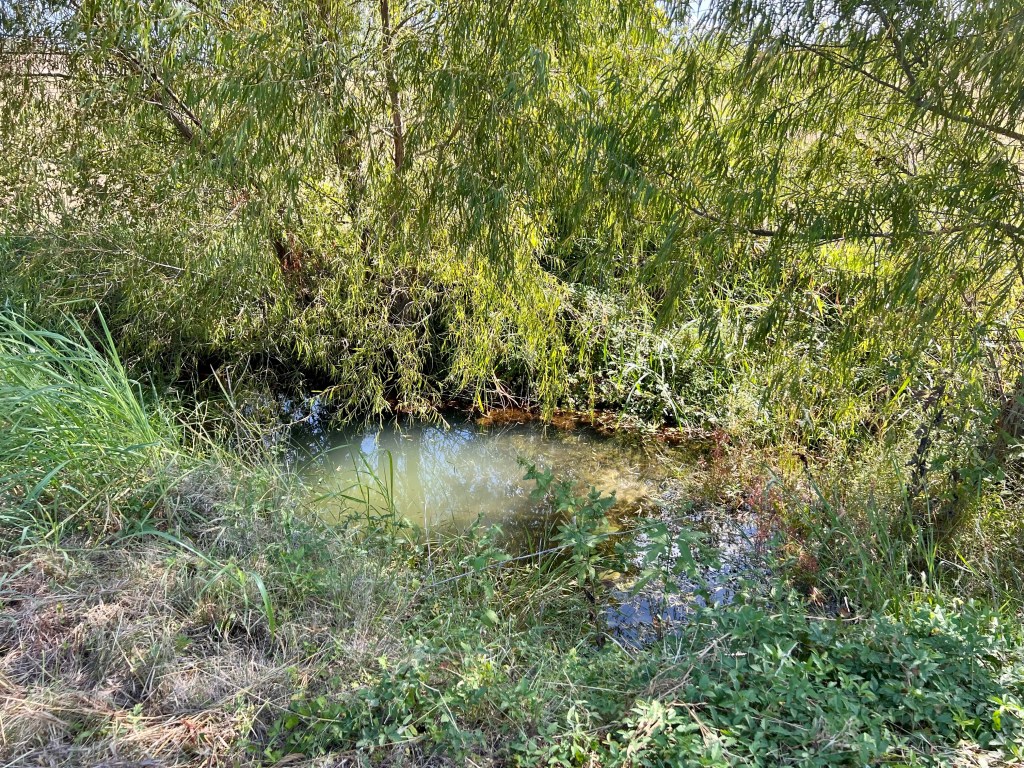
I especially enjoyed our remaining water areas. I spotted lots of fish in here.
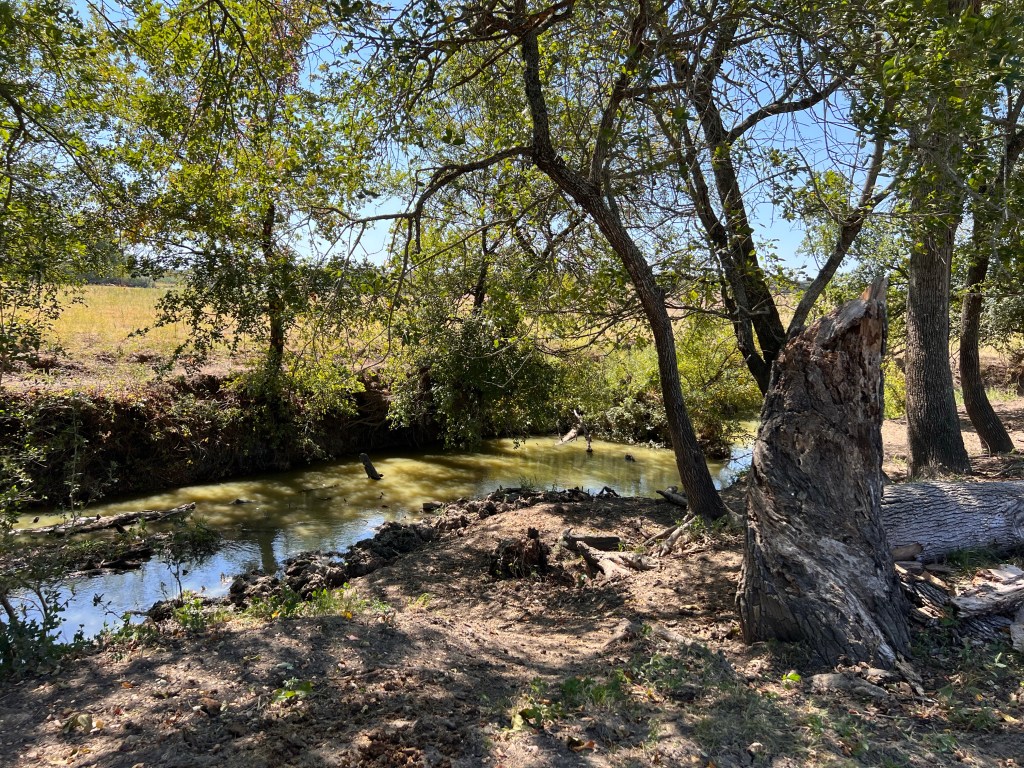
I just wandered and wandered, bearing in mind what I learned at the conference this week. I noted there were more fish where there was no cow poop, but there were fish even in what’s left of the creek, where I found one of the old mama cows having a quiet bath.
Can I have some privacy here?
As I checked out the riparian areas, I also looked at the pastures. Yeah, they are rather over-grazed. The only plants left are what cattle don’t eat: broomweed, milkweed, and silverleaf nightshade. This made finding things to add to the BioBlitz a challenge.
There’s a lot of broomweed.
I did find lots of insects and documented every tree variety, so I feel good. My goal is to ID 100 species as my contribution, and I think if I get some at Tarrin’s, where there are different plants, I’ll pass that goal. I did hit another goal today, and that’s 600 different species here on the ranch. Hard to believe!
Even if all I see is cedar elms and greenbrier, I can’t complain. Being able to get outside is such a privilege. The variety of life that’s still thriving in this drought gives me hope for us tenacious humans, too.
Insects I saw
I didn’t see many birds other than this coy mockingbird and a cardinal that hid completely. I did hear hawks and crows a lot.
I’m hiding!
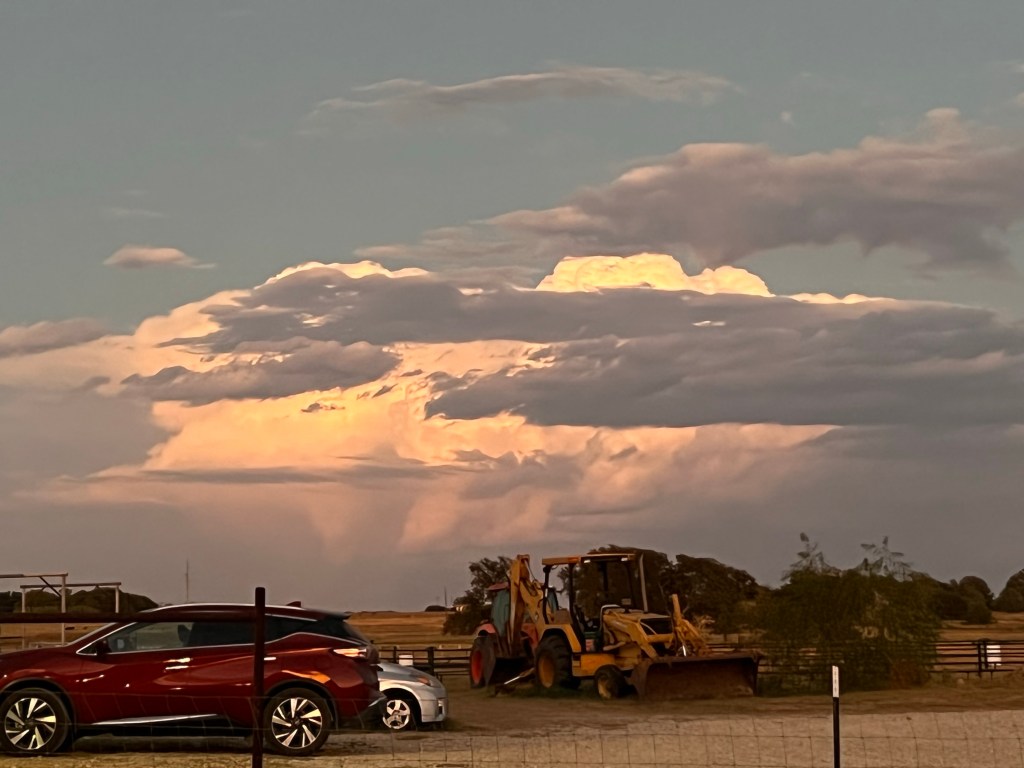
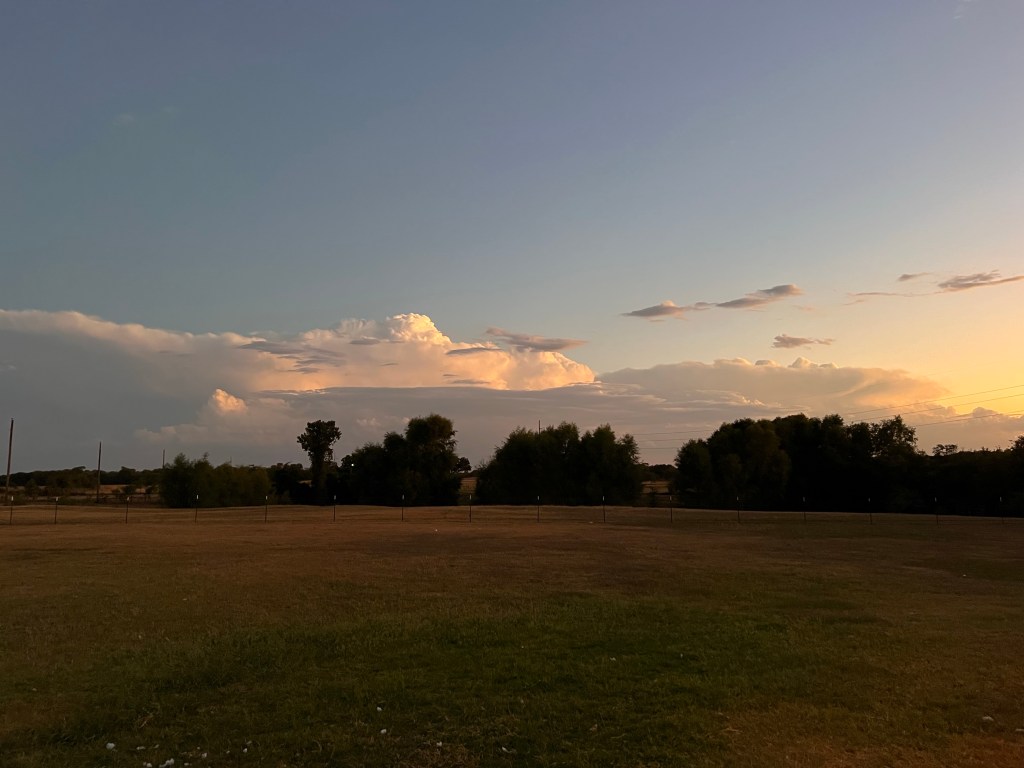
I’m hoping the weather will turn. It actually rained a few tiny drops when I fed the horses, and there was lightning in clouds at sunset. More hope!
What’s that noise on the roof, Suna? I’d like some rain. Thunder cloud 1Thunder cloud 2Look! More water in the tank! We’ve had no rain.
More photos, mainly because Barbara looks at them all.
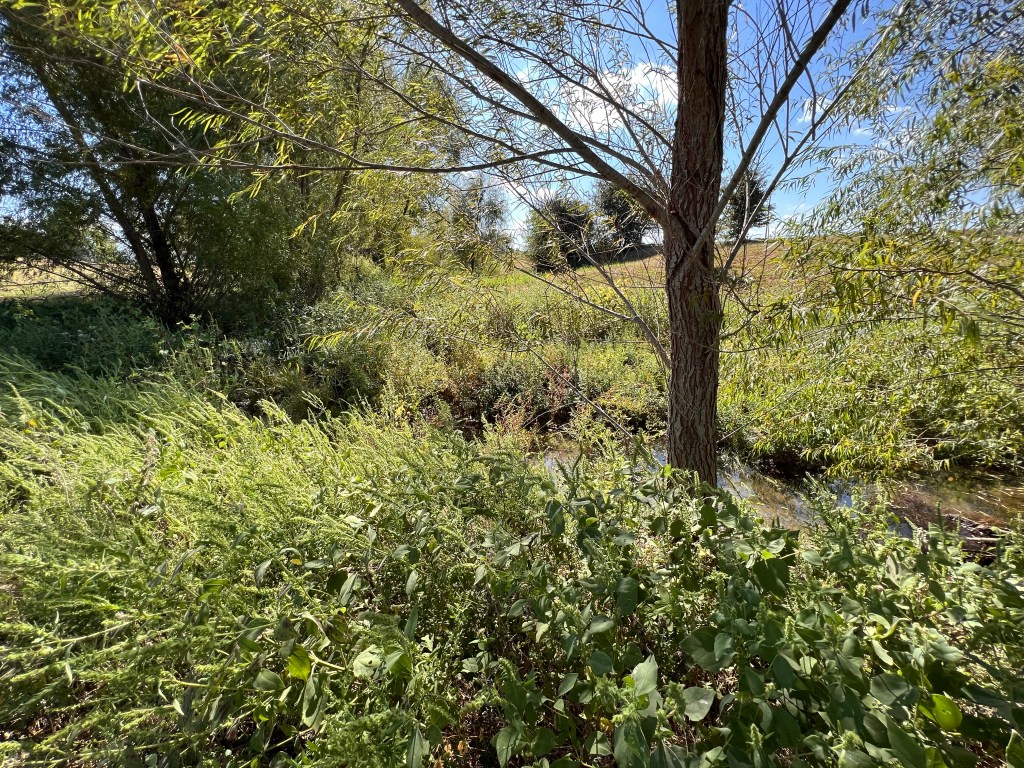
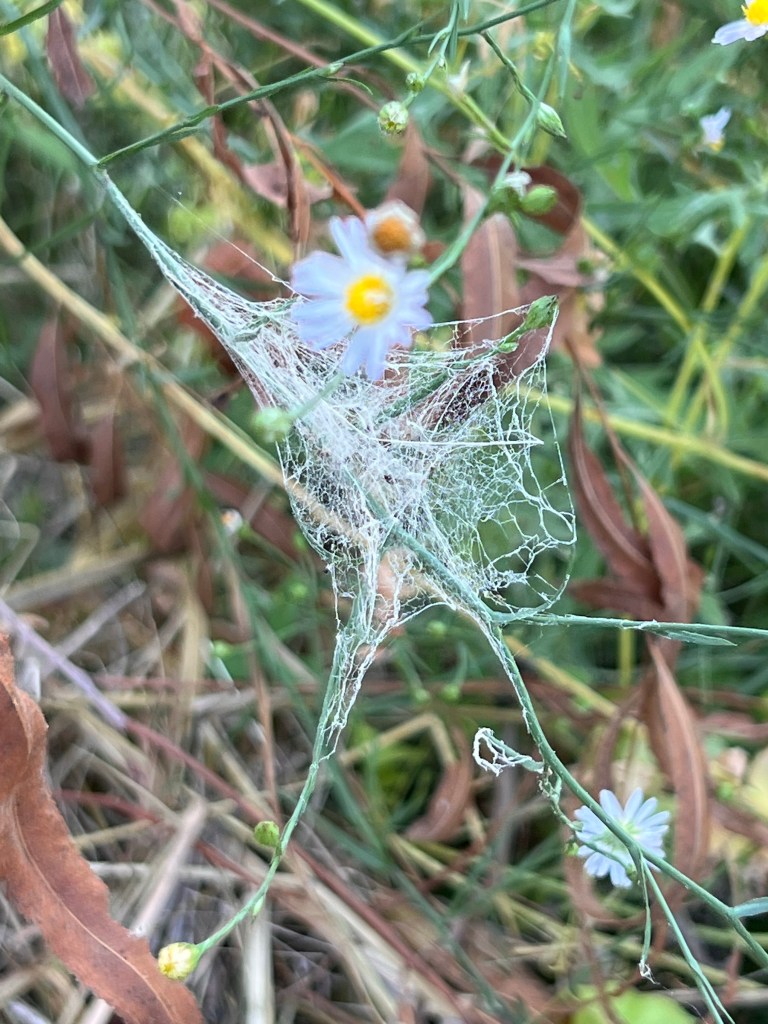
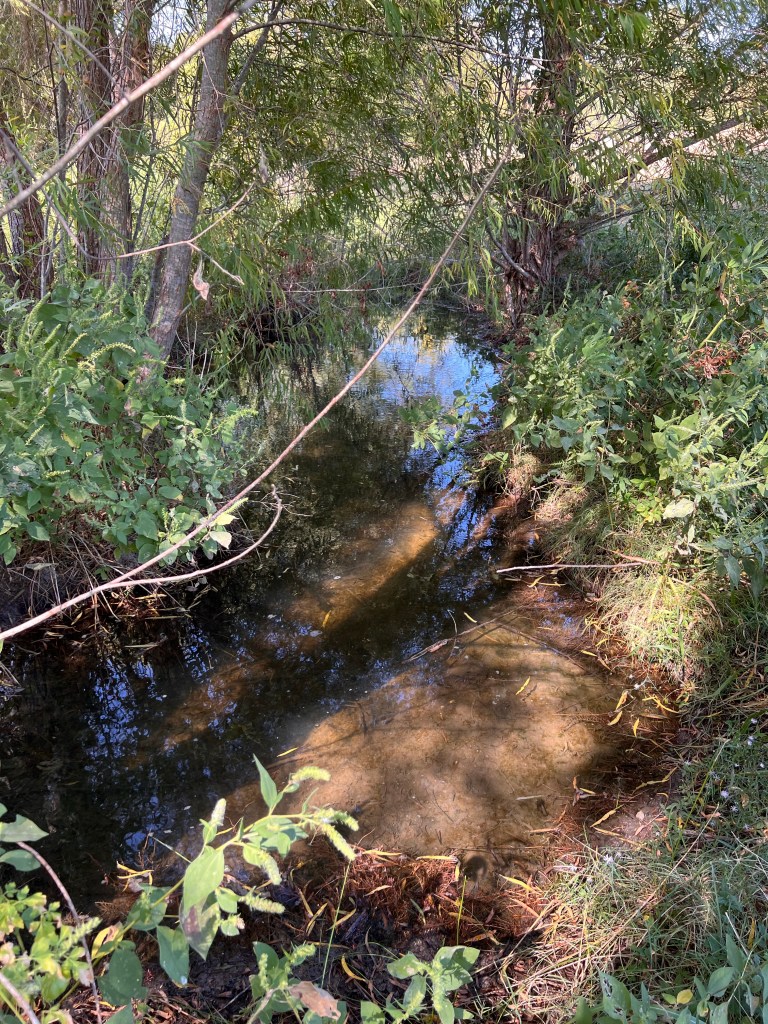
Weathered stumpWalker’s Creek, now a pond Host to much lifeHappy ragweedInteresting webSpooky waterAnother deep spotFind the minnows!
I think my idea of Junction, Texas was that it was some kind of wasteland with some gas stations in it. I was wrong, and I’ll always be grateful for this year’s Bennett Trust Women’s Conference: “Building A Legacy of Environmental Stewardship”, which concluded today with the field trips. We went to three very different places in the Junction area. I learned a ton, PLUS I got to add a bunch of observations to the 2022 Texas Pollinator Bioblitz over on iNaturalist!
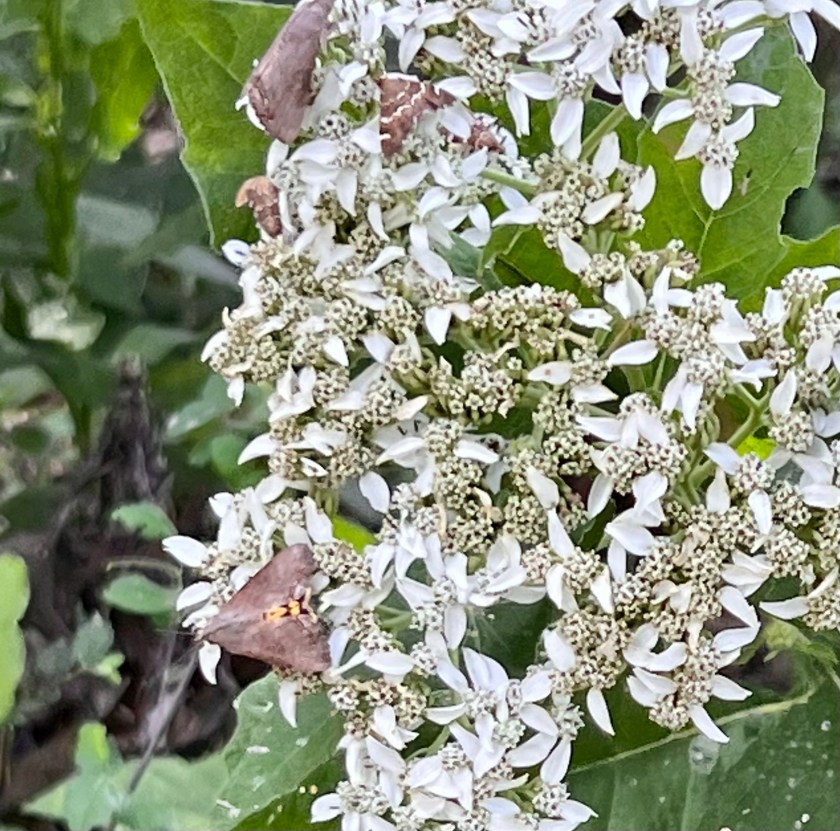
Look at all the moths!
Native American Seed
Our first stop was a visit to a place I’d never dreamed I’d actually get to visit: the farms for Native American Seed, one of my favorite catalogs. Not only that, we got greeted by Bill Neimann, co-founder of the company. He comes very close to being one of the coolest humans I’ve ever met. He lives his life principles every single day, and spreads a great message across the world.
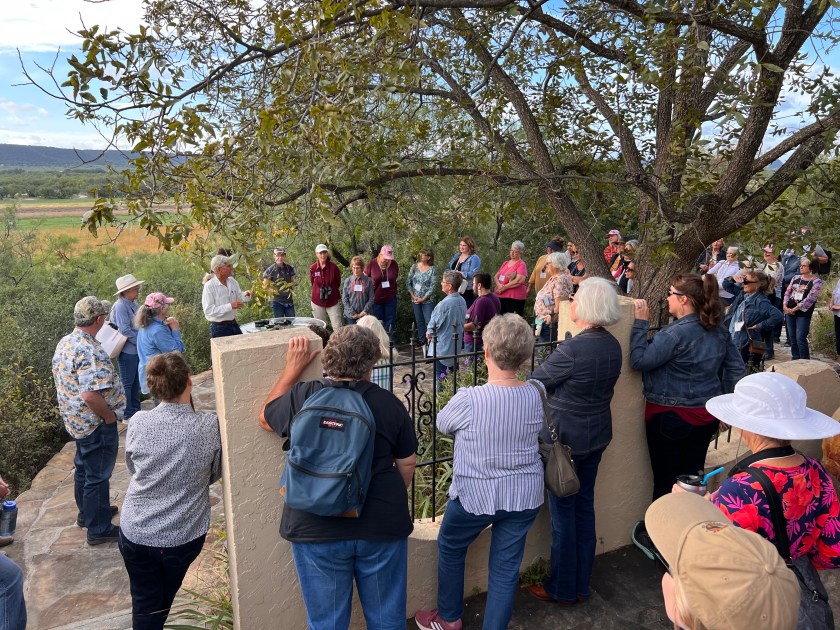
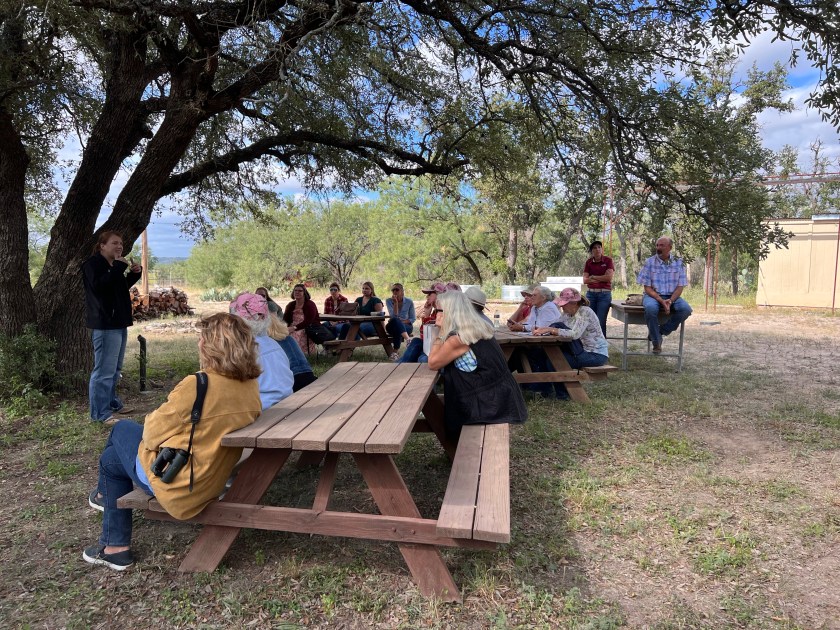
Listening to Bill Neimann orient us to the business
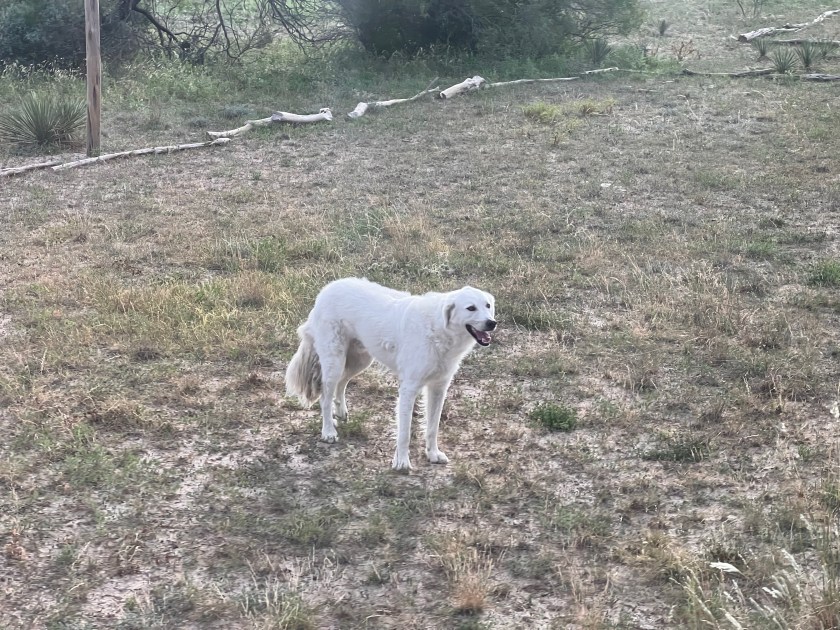
The farm is located in a beautiful spot on the Llano River, and they have places where people can stay and have programs, etc., too. Plus a friendly guardian dog. Was I in heaven? Yes.
Hi, Alfred!
The view from the main house was spectacular, as it overlooked an area planted with native plants that spread out to acres and acres of native grasses under cultivation. Mind-blowingly beautiful.
Looking down at the river valley and plantings
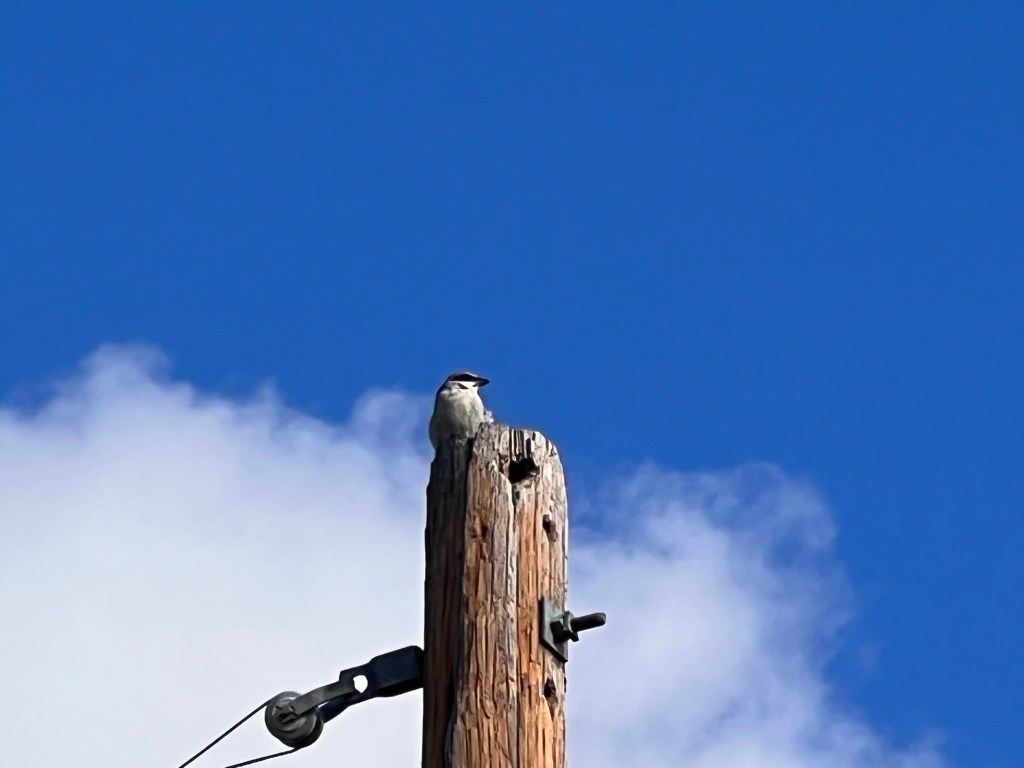
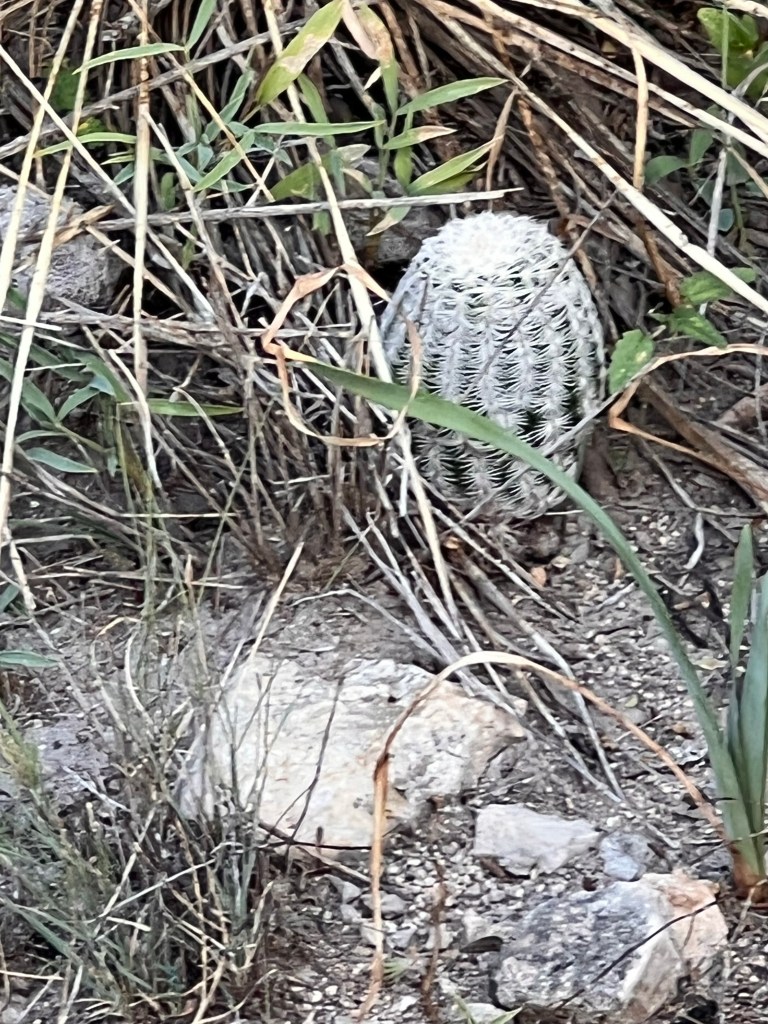
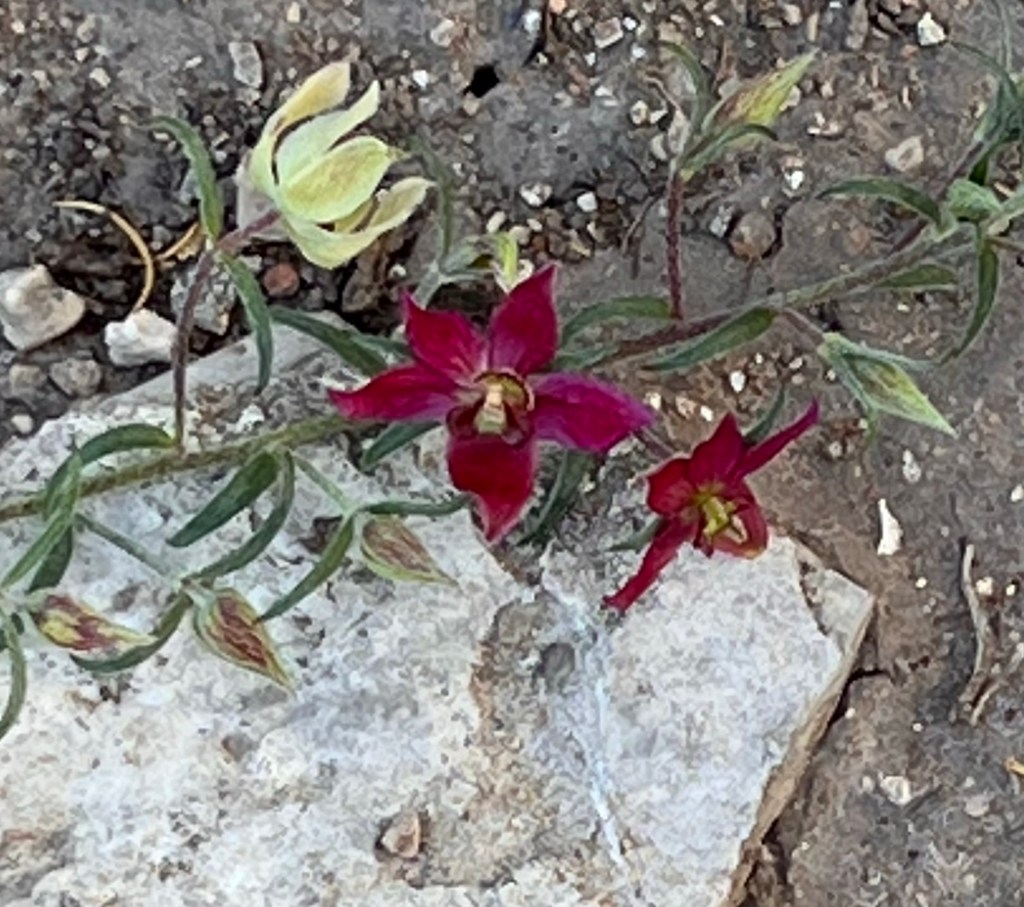
While we were there, we had three presentations, one on bird-watching that resulted in one loggerhead shrike and a loud but hidden chickadee. That’s OK. There were so many great plants that I was fine. There were many I’d never seen before, so I was in Suna Happy Place.
loggerhead shrikeGregg’s tube tongueDevil’s bouquetLace hedgehog cactusTrailiing RhatanyHorse Crippler Cactus (what a name!)The shrike and plants that were new to me
The second presentation was on doing ecotourism, and I learned some good tidbits about making money from people who want to look at birds on your property. I wish I could bring the storks in on cue!
Our speaker on bird tourism doesn’t actually like birds.
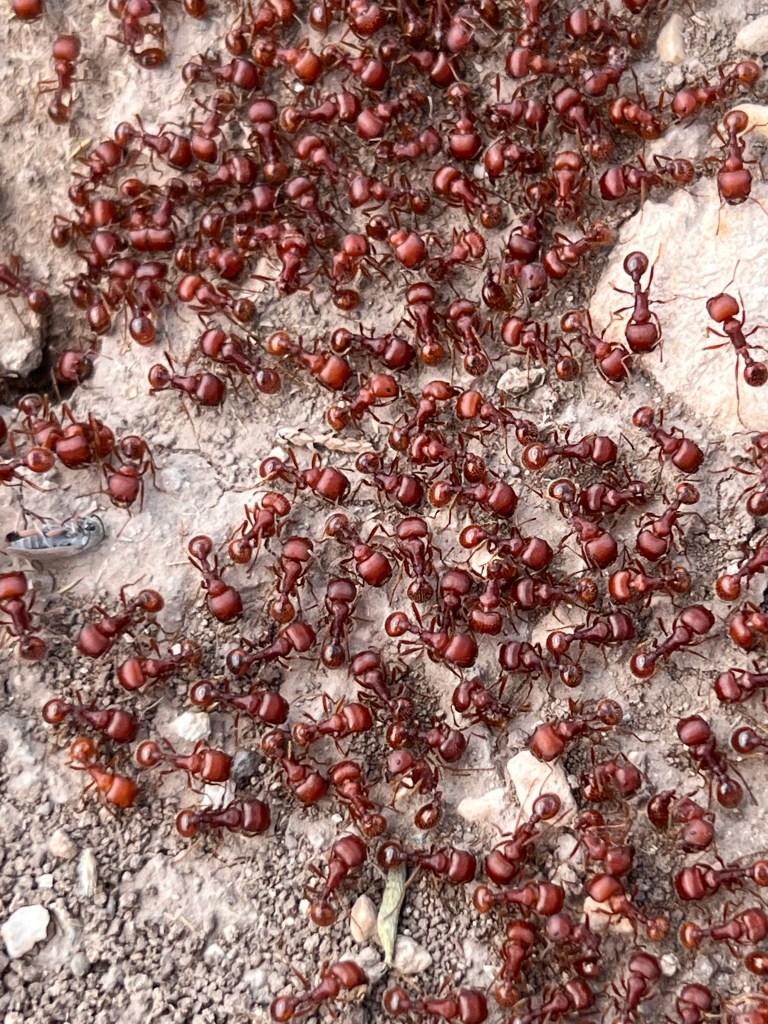
The third presentation involved going into the growing fields. We were short on time for this, which was too bad, but I was in awe of the people who work there and have figured out ways to grow these now-rare plants for seed to distribute all over the place. Plus, I got to watch harvester ants, you know, harvesting.
Pigeonberry in bloom and berryAntses!I’d love this guy’s job; he’s outstanding in his field
Silver Farms
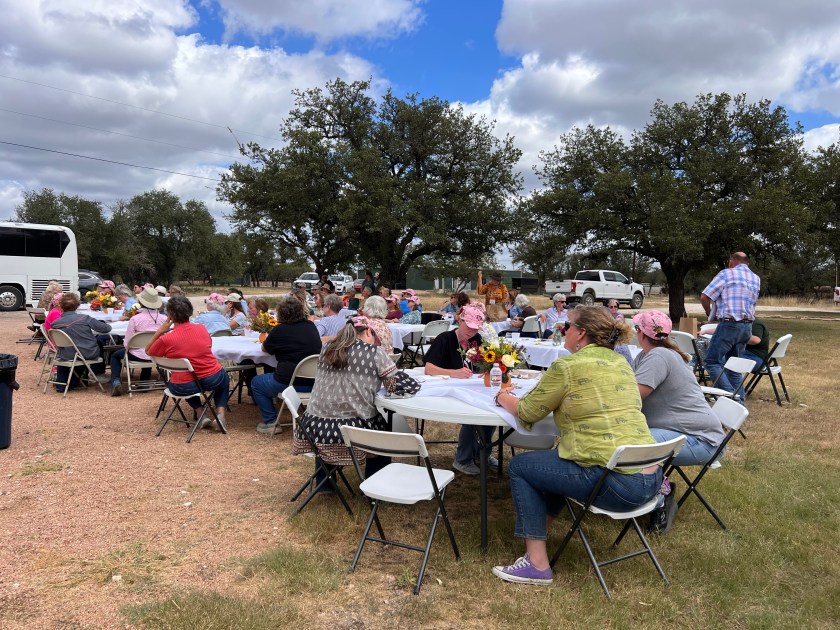
Next, we went to lunch, but it was much, much more than just lunch. It was a farm-to-table lunch with all the aspects of it prepared by women. The farm raises show goats and sheep, as well as some meat lambs. We had the best roast lamb I ever ate for our main course. For the salad, a company that consists of two homeschooled teens prepared it. That was one of the best salads ever, too, and I’m not making that up. There was goat cheese in it, home-grown greens, local pecans, etc., in it. I had two helpings and was not alone in this. There were also cheesy potatoes, homemade herb breads, and a chocolate dessert.
Getting ready for lunch. No lunch photos because we were eating!
Oh, and there was wine from friends of the owners, and it was all delicious as well. When we finished eating, all the people who brought the meal together spoke to us about how they came to do what they do. It was really encouraging to see all these new businesses cropping up in rural Kimble County.
Rustic venue, all newRustic and darling bathroom
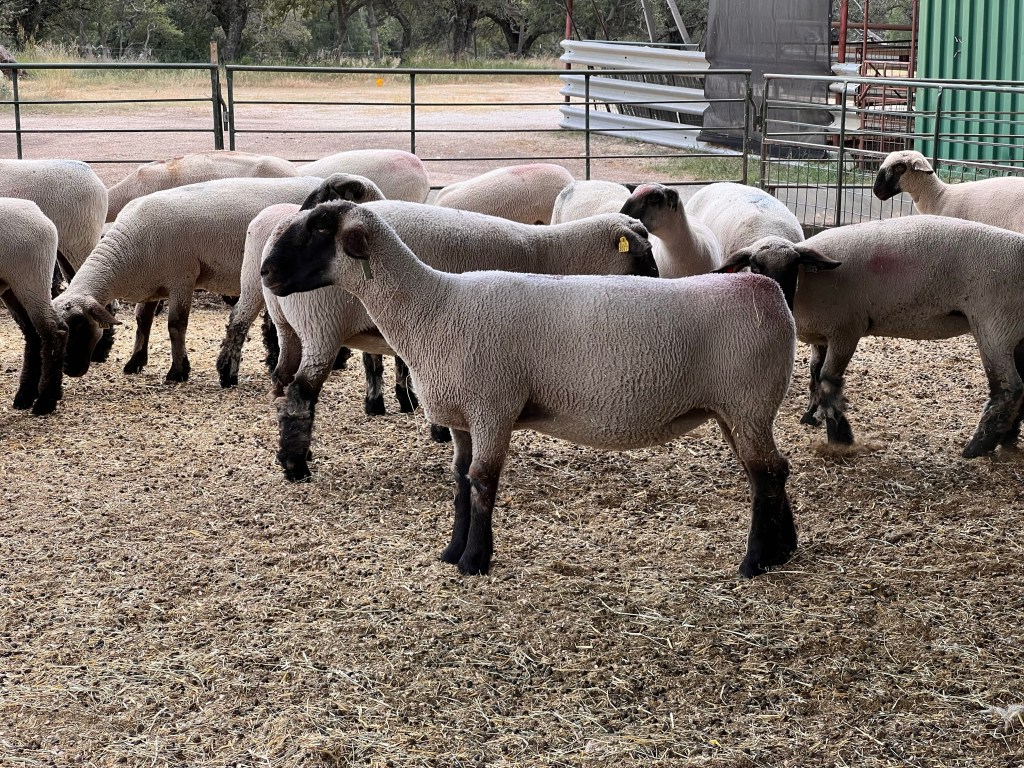
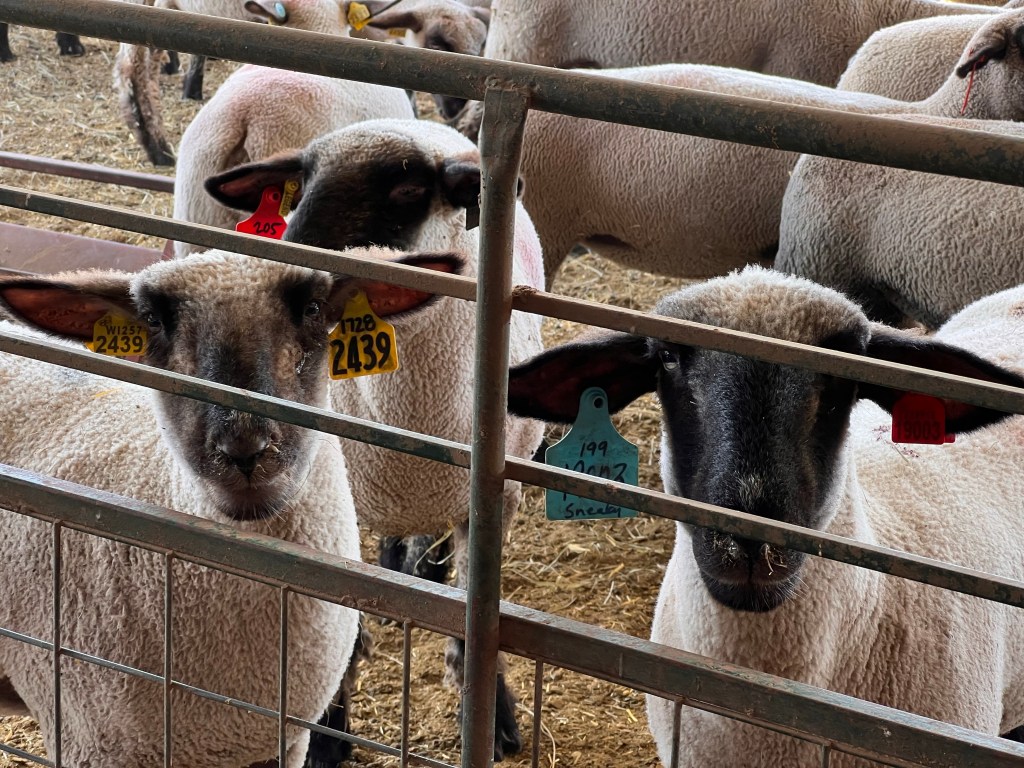
Once that was over, we got to go look at the sheep and goats! You know that was a highlight for me! They were Hampshire sheep, which are nice and big. There was one pen full of ewes getting worked on by one lucky ram. You can tell which ram got to a ewe, because they put paint on his chest and it rubs off on the lucky gals. The ram in the pen had red paint, but a blue one had been there earlier.
breeding penThey crop their tails.Sweet ladiesRam is sniffing ewe buttHello, we are show sheepGot any treats?I couldn’t get any good pictures, but the goats had tails like flags and were clowns.
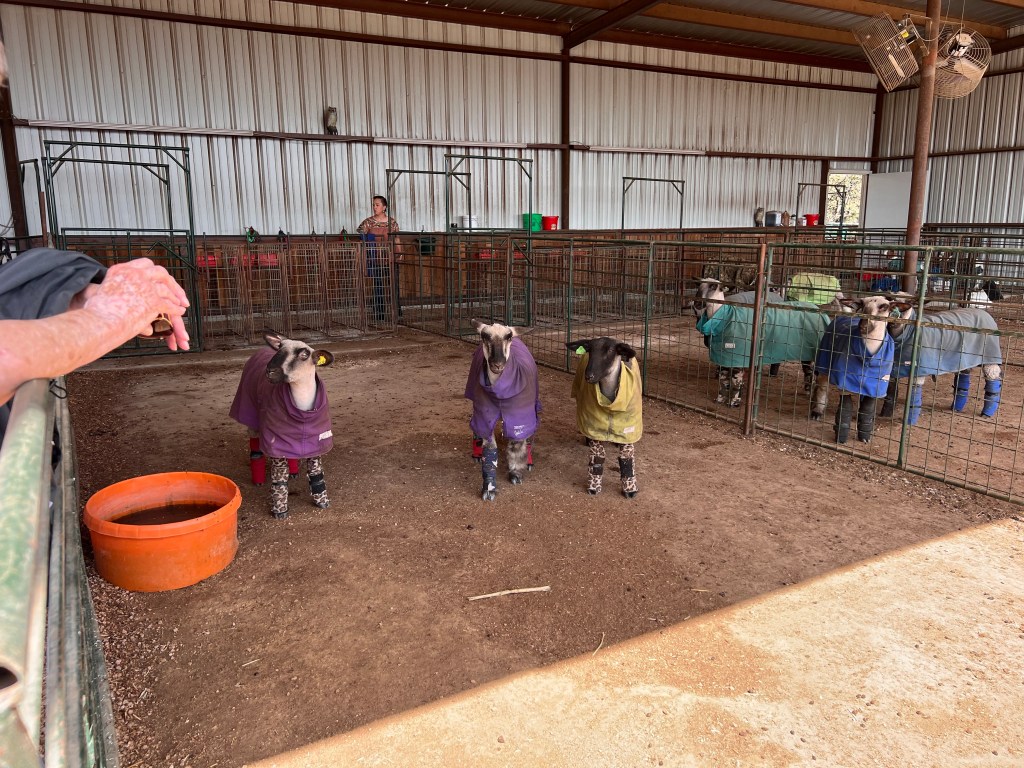
There was another area where the show animals were. They all wear little outfits to protect their coats. I was not aware of this practice. They were a hoot to watch, though, but we had to leave.
Texas Tech, in Junction
Back on the buses we went, to find the Texas Tech campus in Junction, which looks mostly like a summer camp. That was fine with me, because we got to go look at the river. Hooray, I love the river. The presentation here was by folks from Texas Parks and Wildlife and AgriLife. It covered managing riparian areas and dealing with axis deer.
Llano River. It’s officially pristine, and flows north.
It was shocking to see how badly the deer had grazed the area down, compared with an area they had fenced to keep wildlife out, which had lovely long grass and a variety of kinds.
Deer ate all the grassFencing saved this grass
I learned a lot about how to tell if your land is holding a good amount of deer or is being over-grazed, depending on what plants they have eaten. I am happy to report we have plenty of the stuff deer like to eat, and also that there aren’t any axis deer on this side of I-35 yet. Whew.
We’re pretty but not welcome in Texas. You can shoot us any time of year, if you pay someone enough money. Sniff.
What are axis deer? Imported animals native to northern India and the area around there, who have escaped and gone crazy breeding in Texas.
Anyway, it was all extra interesting, and I had a grand time, all the while taking more and more pictures of wildlife. I got into the top 50 of the BioBlitz just by taking all these pictures. There really were lots of butterflies and moths. There was one plant I saw four or five types of moths on at once!
BumblebeeLeavenworth’s enrygoThe camp area on the Texas Tech camputNo idea what this isVariegated fritillaryOn mealy blue sageTrailing rhatany beautySkeleton flower with sulphur butterflyButterfly love (Gulf fritillary) snake appleDainty sulphurHypocala mothYellow-striped Armyworm moth
Enjoy just a FEW of the photos I took, including some of the new things I saw.
The only negative thing is I have to get up early and drive home in the morning. But, that’s not the end of the world!
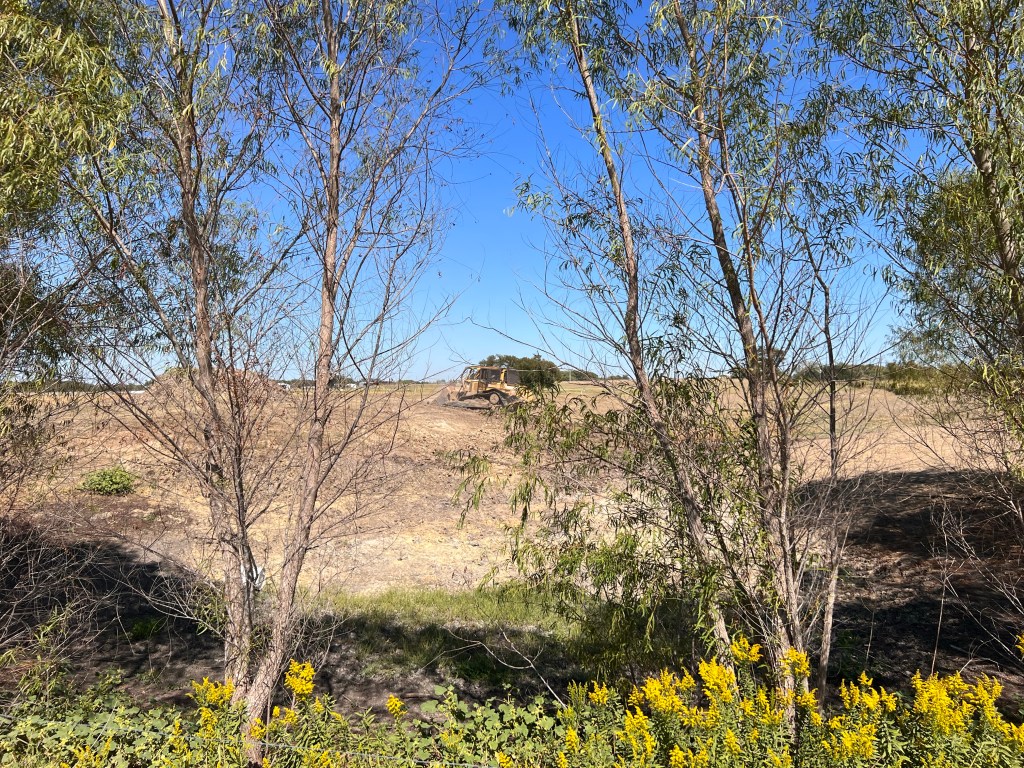
Hooray! I have a ranch project I can talk about! We’re getting the front pond dug out more, so it will be bigger, deeper, and hold more water. The pond was originally made from an arroyo (ditch) that made it hard to build a driveway into our homestead area. The dam is our driveway.
Removing willows that are in the way.
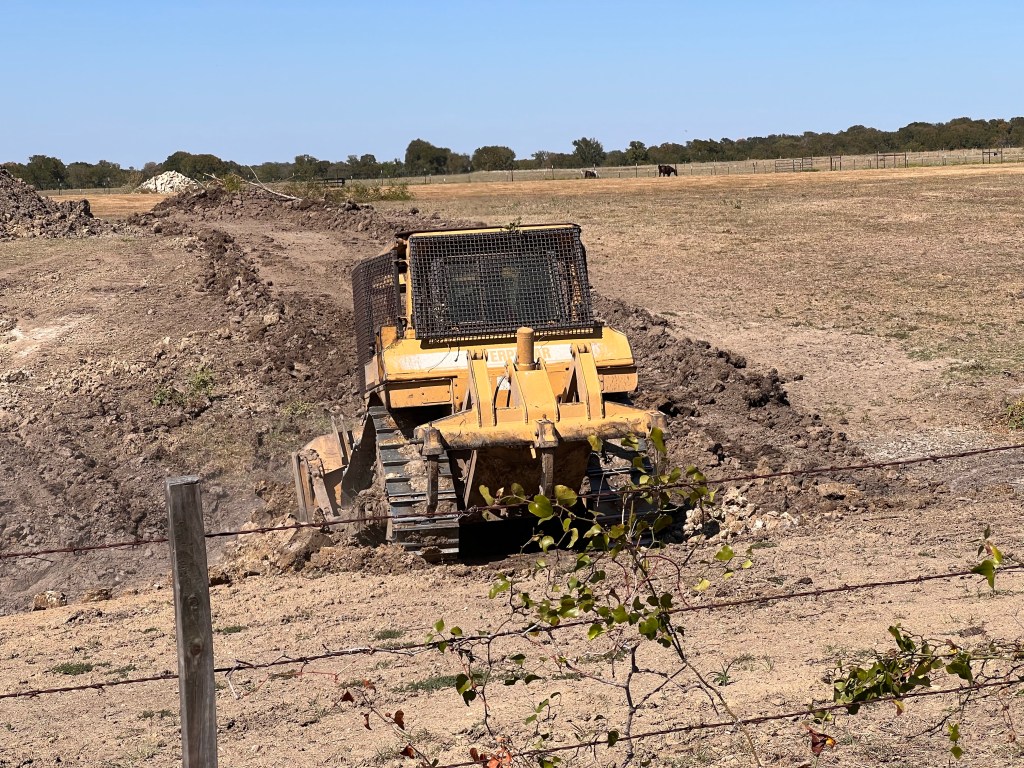
While it’s all dry, the tenants have had the ponds (cattle tanks) in the area between our house and the creek dug out. They silt up and need it every so often. since the guy already had the dozer here, Lee seized the chance to dig ours out, too.
It looked familiar, but don’t they all look alike?
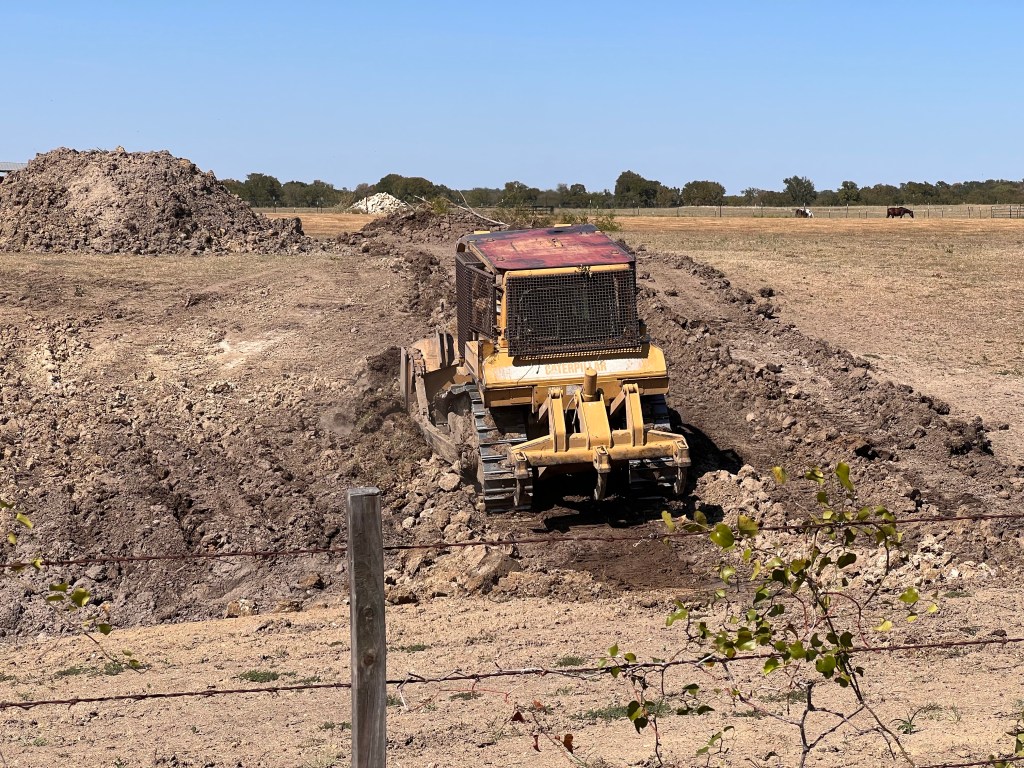
It turns out the bulldozer is the same one that built the pond in the first place! The current operator got it from the previous guy when he gave up the dozing. It’s pretty cool! Plus the dozer guy (see, I’m not naming names) grew up right down the road, so he knows how the drainage works from first-hand experience.
Dozing with scenic ragweed.
I’m looking forward to seeing how much our budget will buy in pond digging. He’s first digging deeper into what’s already there, then enlarging it. I’m confident all the water plants will return. After all, they showed up quickly once the pond was dug in the first place!
I took a walk and enjoyed the cool October morning air today, too. What a refreshing work break! I got to pat all the equines and see what was blooming and growing. The horses were mostly ignoring me and staring intently to the north, though.
Alert!
It turns out one of Sara’s horses was walking down its pasture. They sure keep an eye out for each other! I know they miss Drew, who is making new friends, I hear.
All right then, these are some more pictures from my day. One good thing about starting work at 6:30am is having time to take pictures after work!
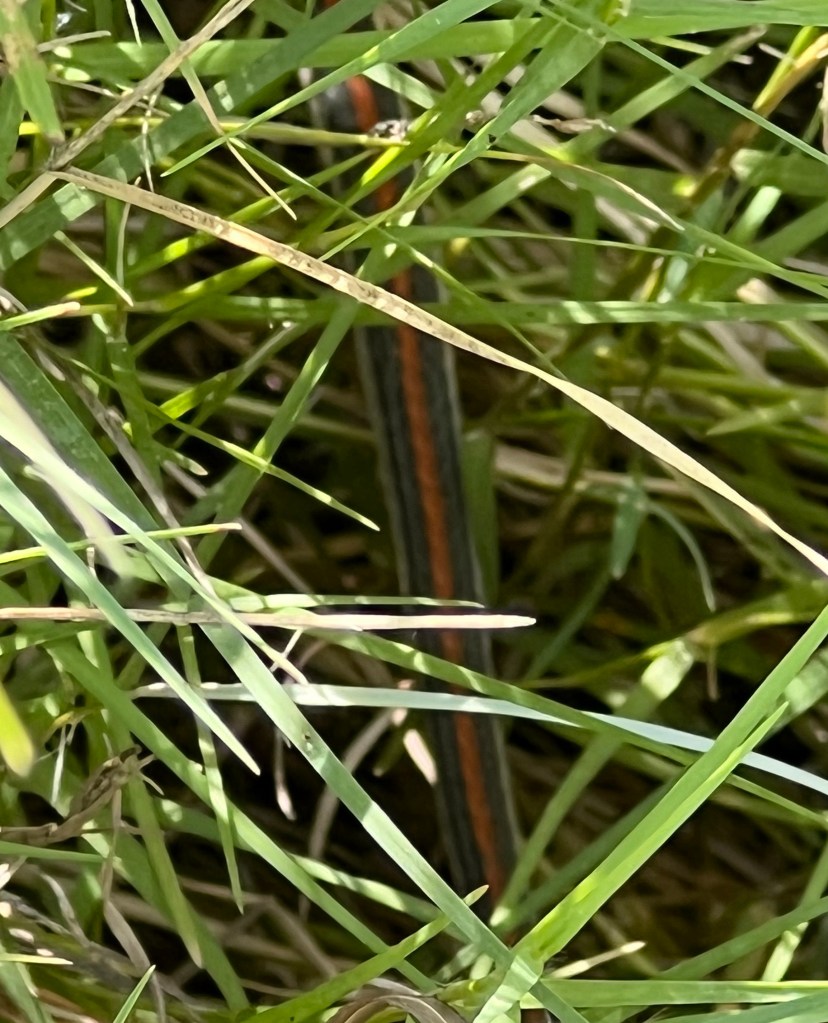
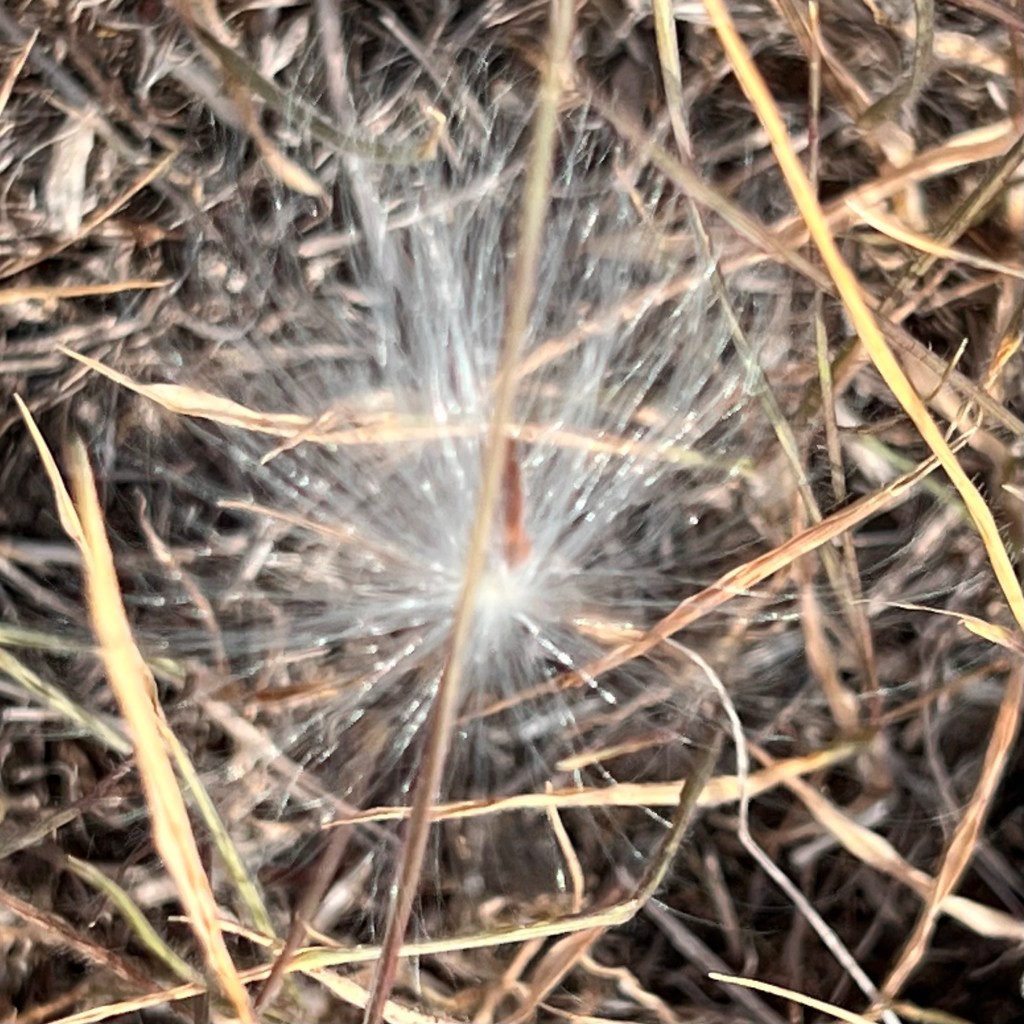
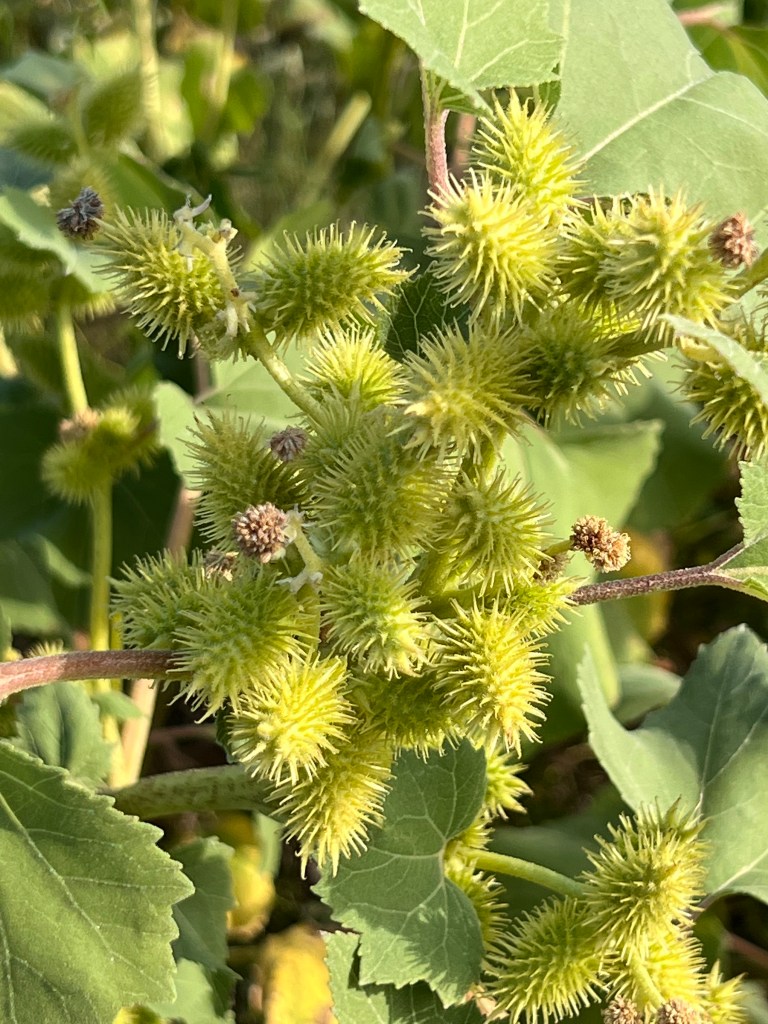
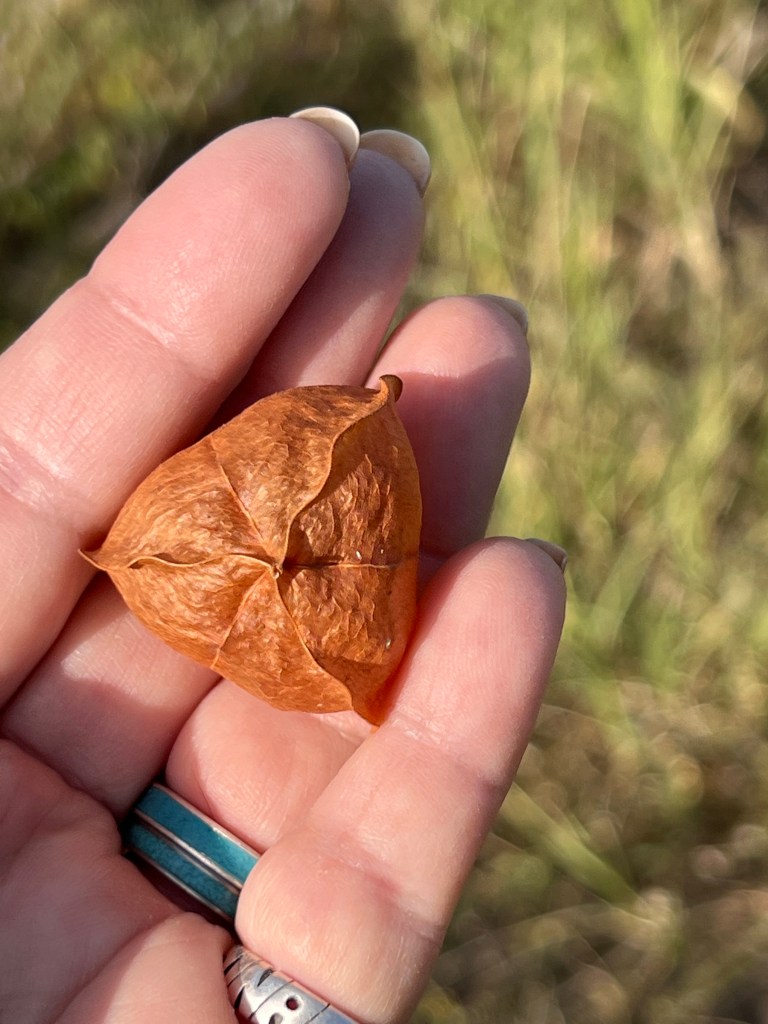
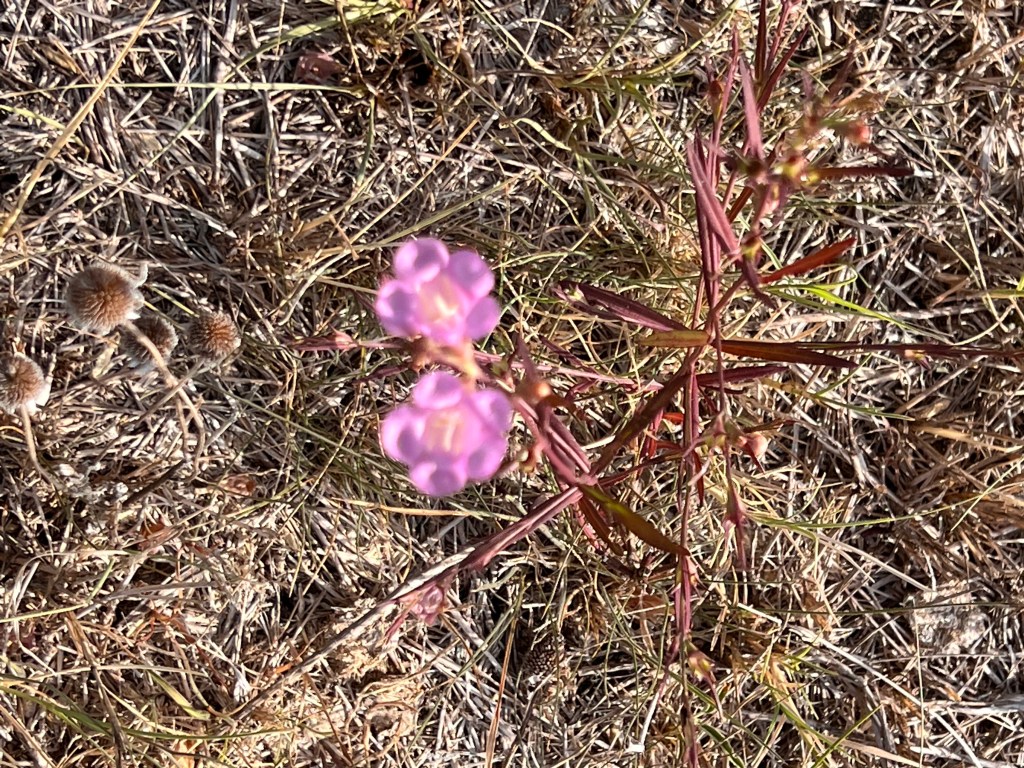
Heading down Heading up. This is a ribbon snake that was eating a frog. Sniff. The horses’ favorite snack. Johnson grass. Dove weed. I like. Others don’t. Lady beetle sans spotsWhat is this smooth spot? Fiona’s rolling area. Beautiful milkweed seed ready to fly away. Western ragweed leaves smell good. I probably shouldn’t have sniffed. A-Choo. My second least favorite plant. Buffalo bur. Intrepid Mexican hats. Balloon vine seed pod. They float. Balloon vine seeds look like yin and yang. Sorry the false foxglove is blurry.
As they say, getting out in nature is good for you, even if it’s just a horse pasture.
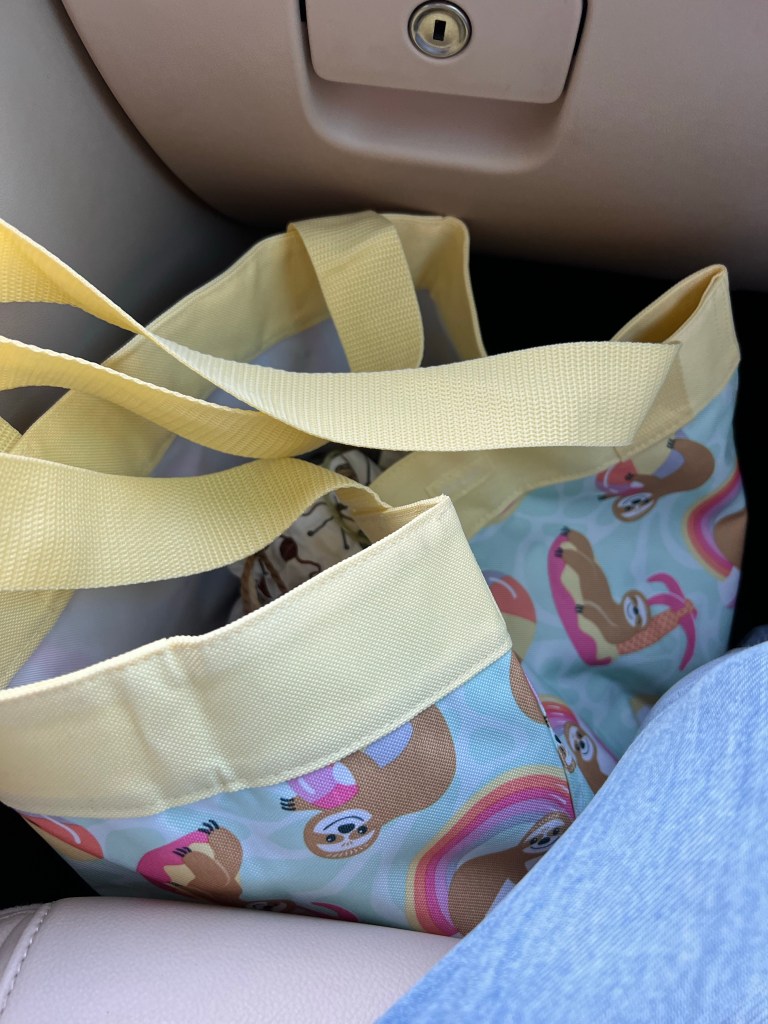
Hmm, I sure took a large bag with me on this evening’s drive. Cute bag, isn’t it? I got three or four of them to hold knitting stuff and am getting a lot of use out of them.
Happy rainbow sloths
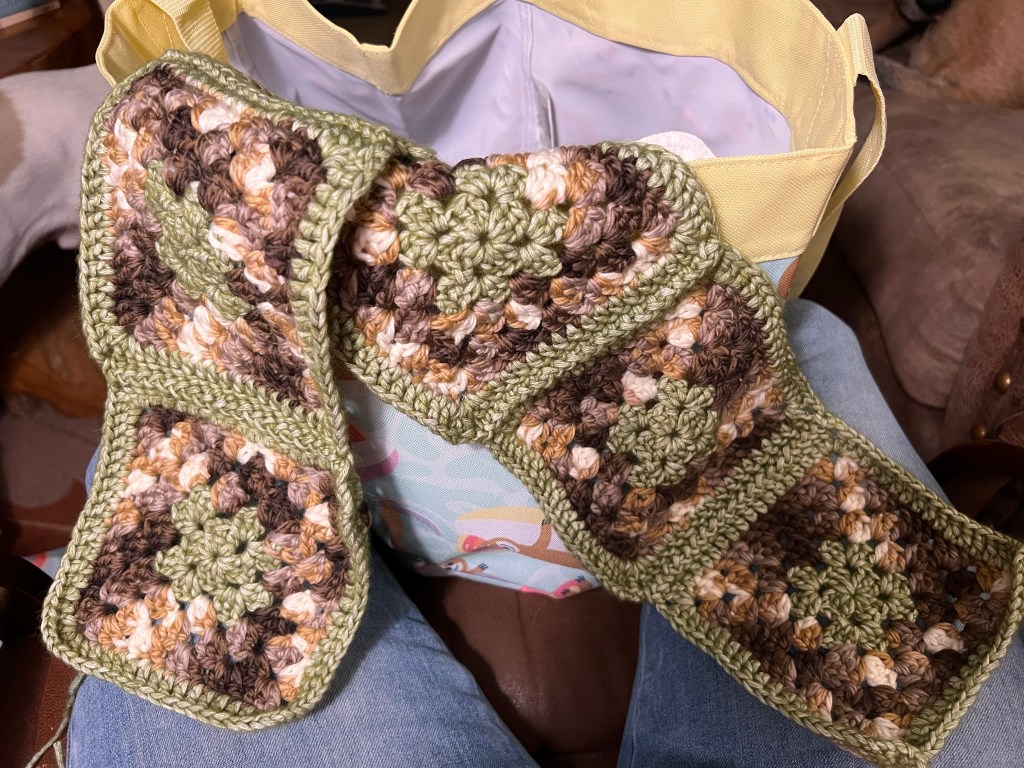
I’ve been working on two projects at the same time, a blanket for a toddler and one for the niece Kathleen. I hit a milestone on the camouflage blanket today, since I’ve been riding in cars with Lee a lot this week. So, what’s in the bag are 63 granny squares.
Practically invisible camouflage squares.
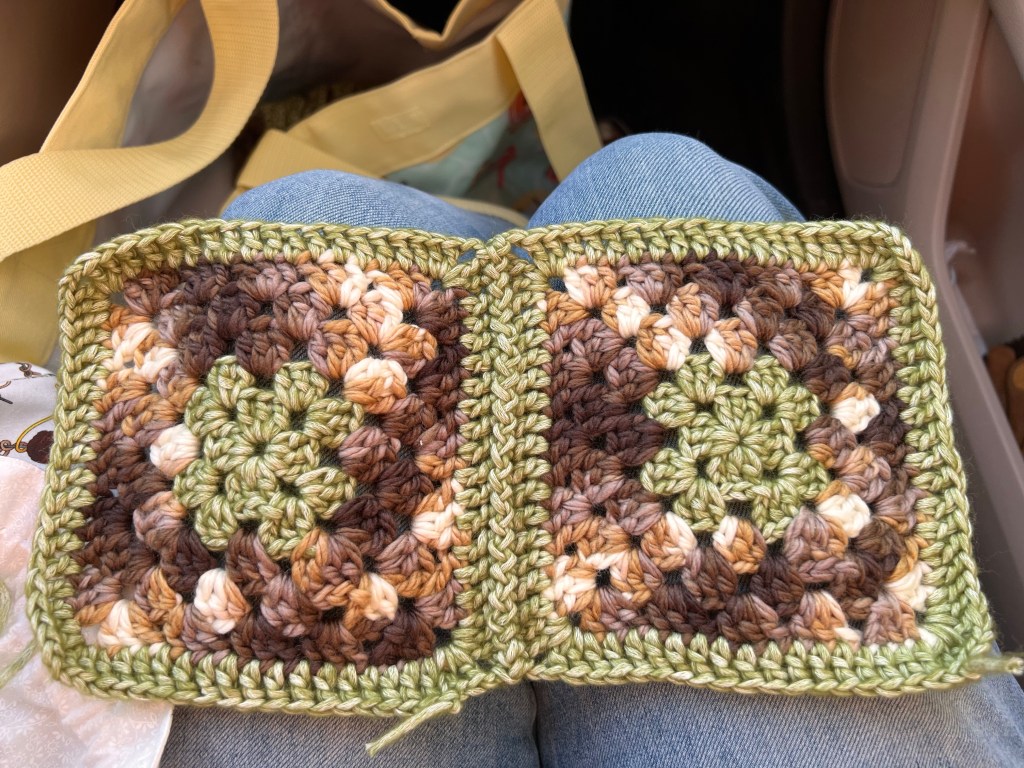
Of course, now that the squares are done, I need to turn them into a 7X9 rectangle. 63 squares; I did math.
The first two. It will look better once the ends are covered.
I’m using the zigzag joining method because it lays nice and flat. I’ll make 9 strips of 7 squares, then crochet the strips together.
First strip, artistically draped.
When it’s all together, I’ll make a border out of the brown yarn. I’d like to do something interesting but I may not have enough of the yarn. I look forward to winging it! It will be loved, no matter what.
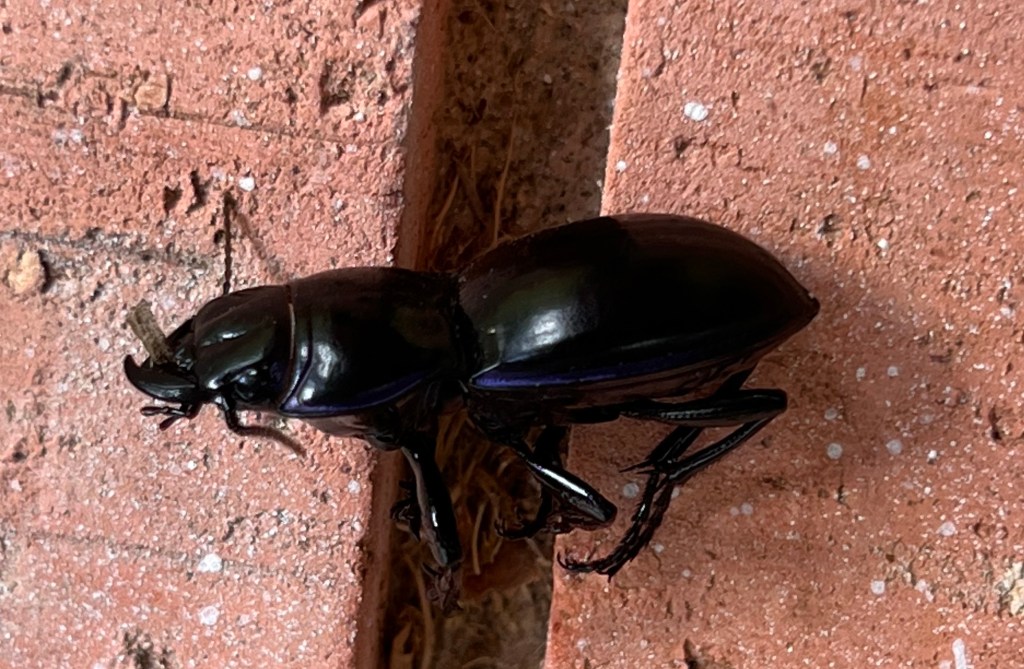
Bonus photo: ground beetle with purple side stripes seen at Anita’s house.
Lee’s Tahoe has been having issues and had to be towed to the dealership. It’s a good thing my plans for tomorrow don’t involve our trailer!







































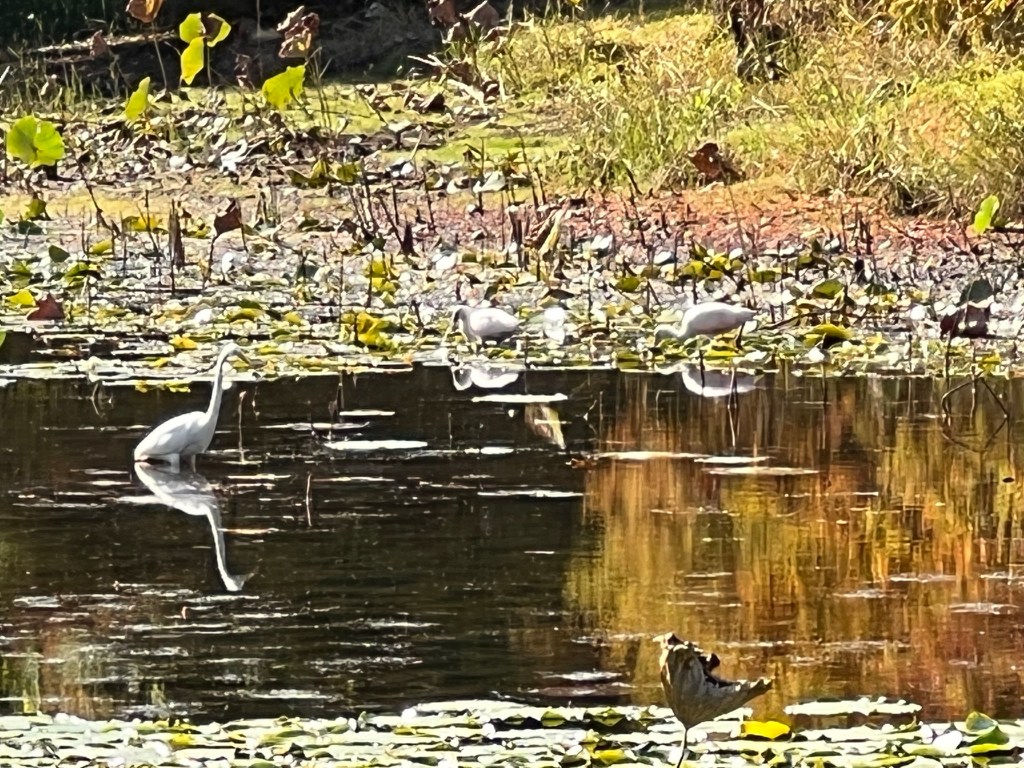
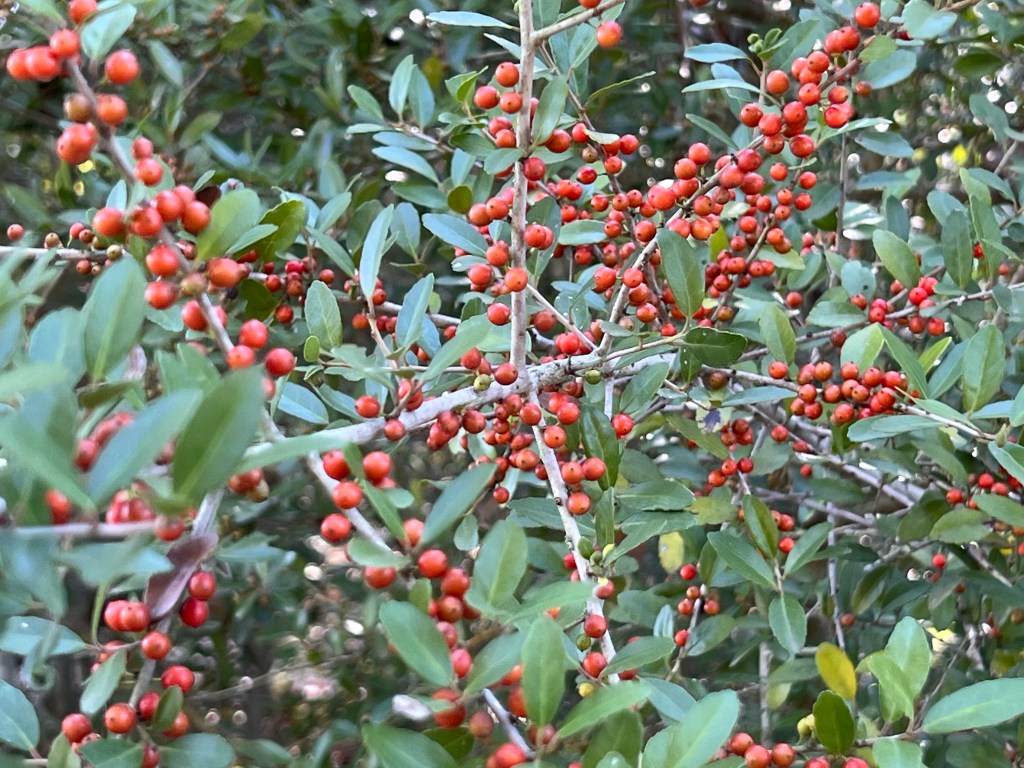
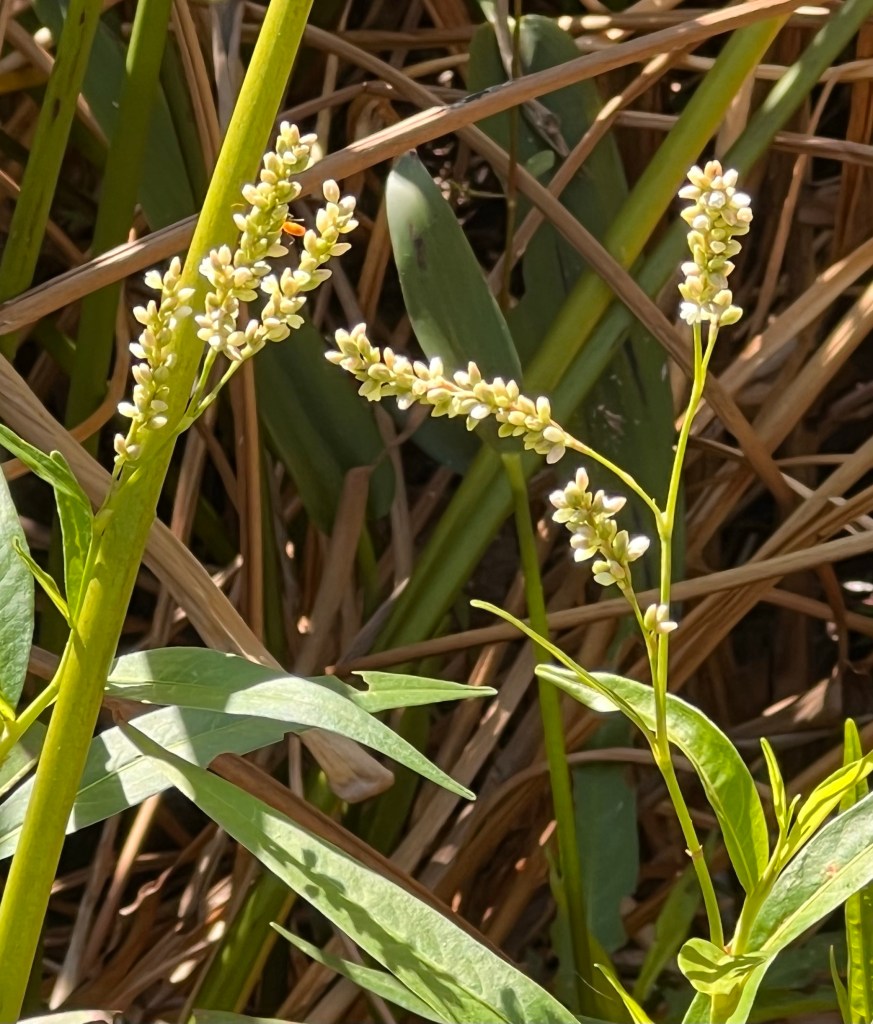
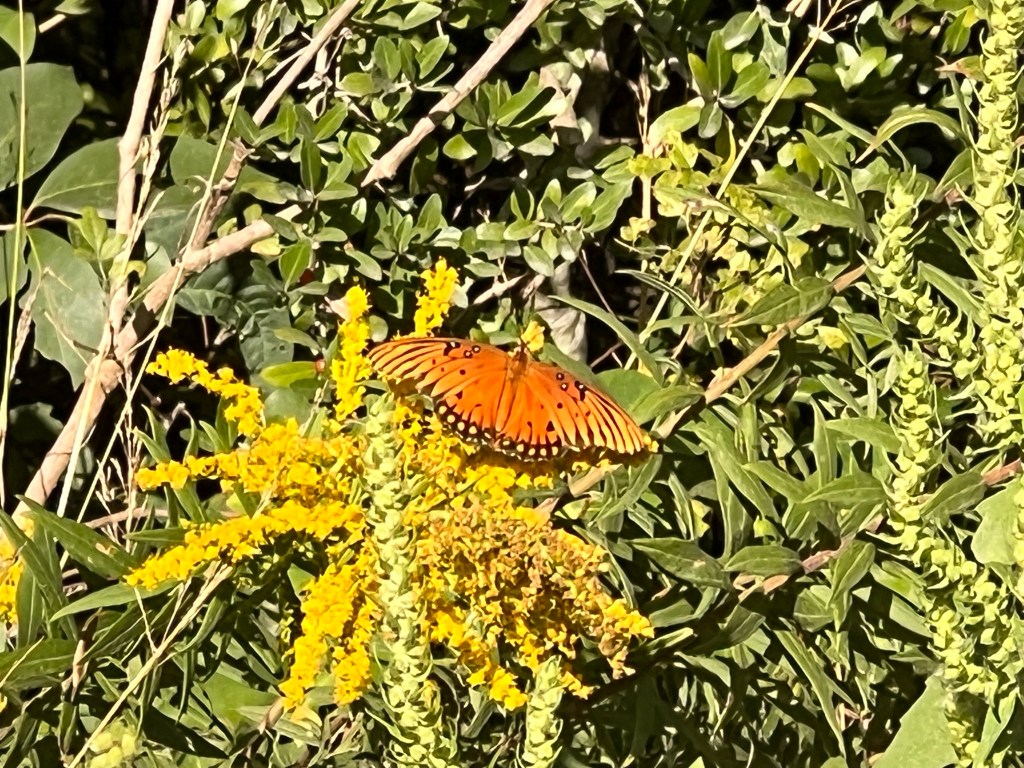






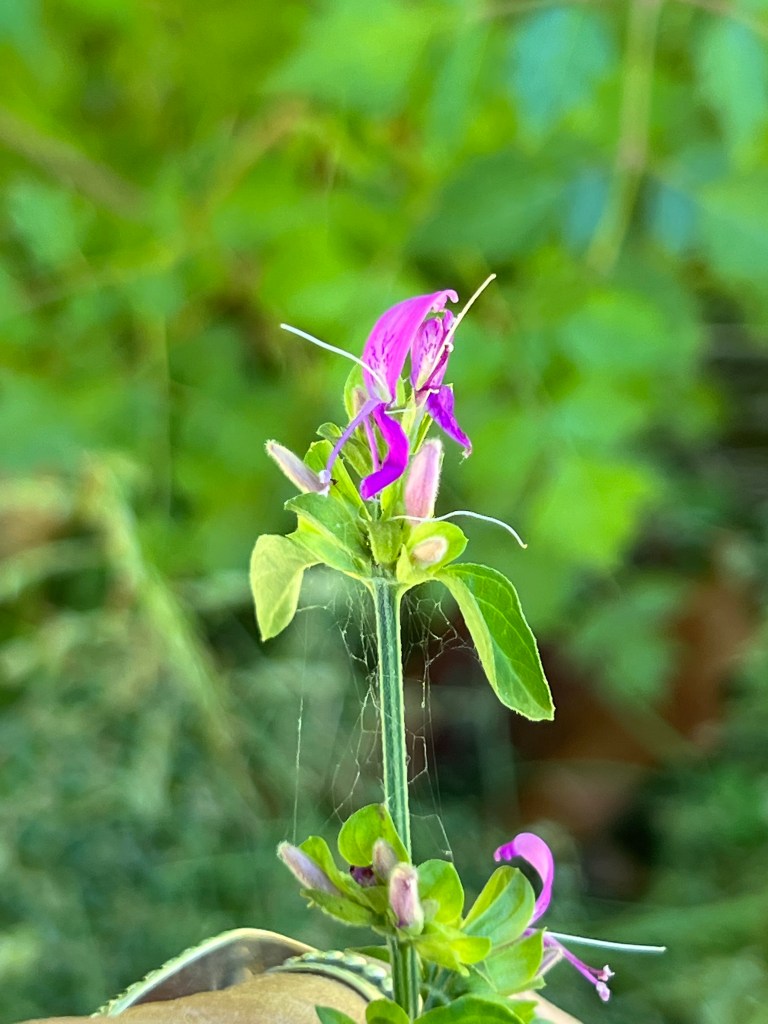


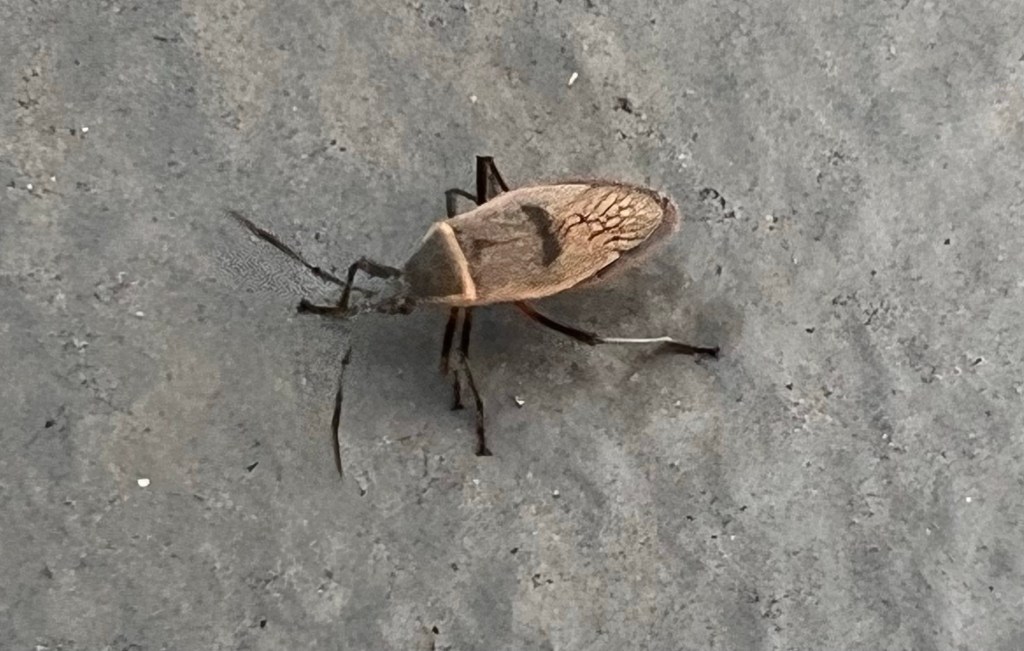
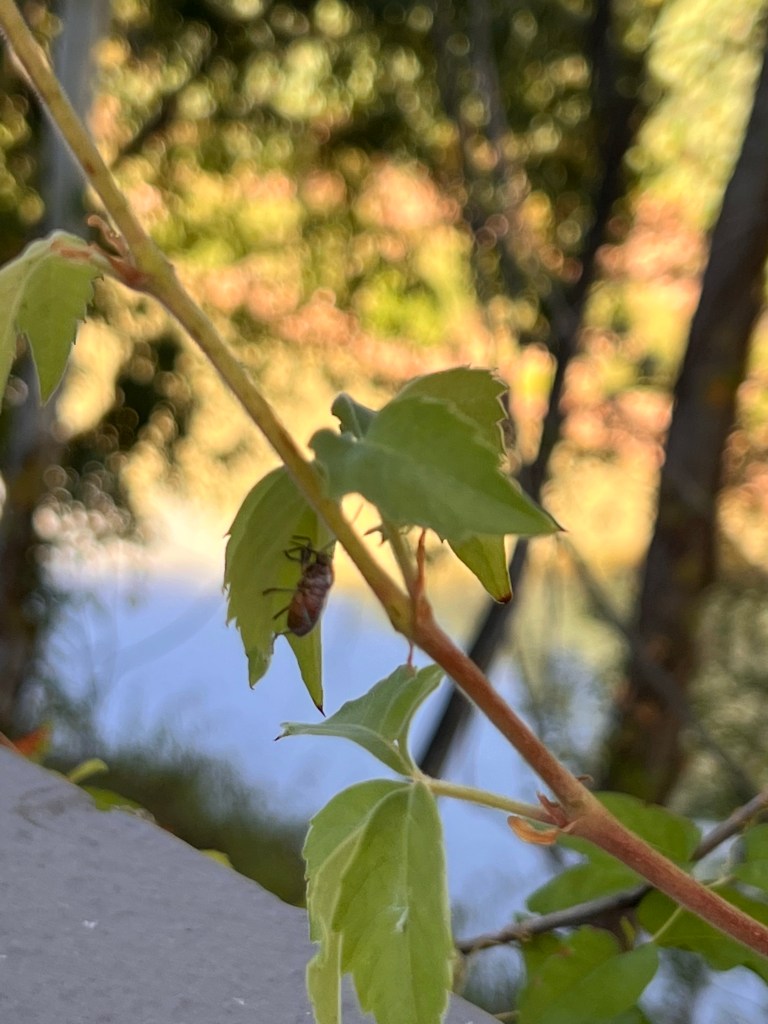

















































 The Hermits' Rest