For the past week or two, I’ve been enjoying my friends in the order Odonata, the dragonflies and damselflies. They’ve been darting around the ponds and zipping around the driveway. I always look forward to the brightly colored pink, purple, orange, blue, and green shapes, especially when they hold still.
When they’re moving, it’s a blur.
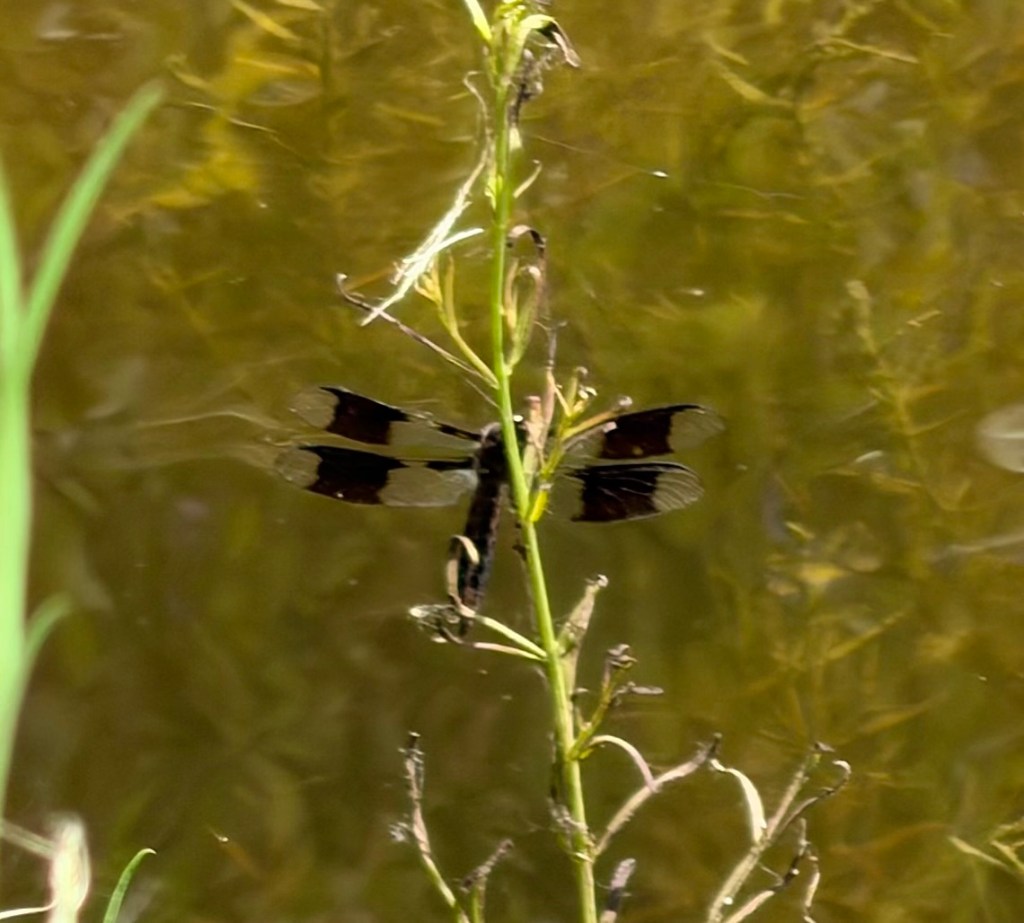
Of course, even the less colorful ones are fun, since they tend to make up for it with interesting patterns.
Common whitetail, female. Plathemis lydia
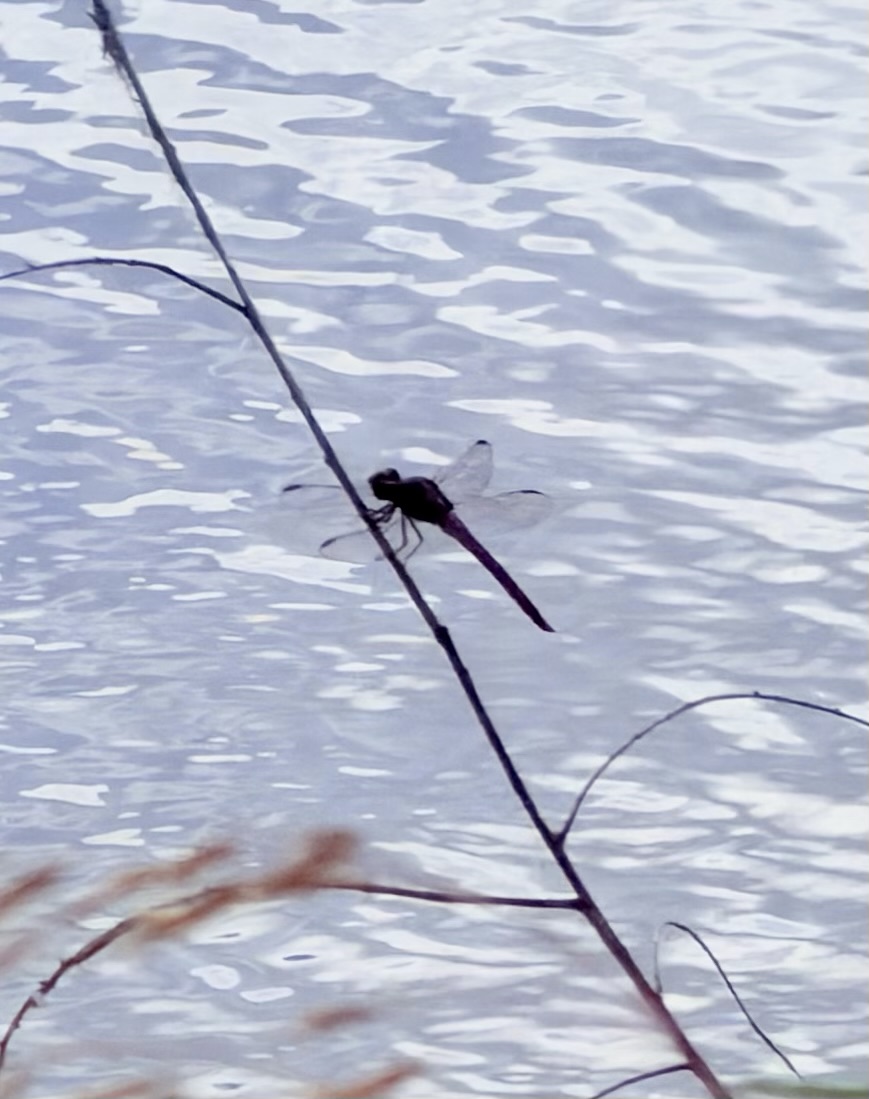
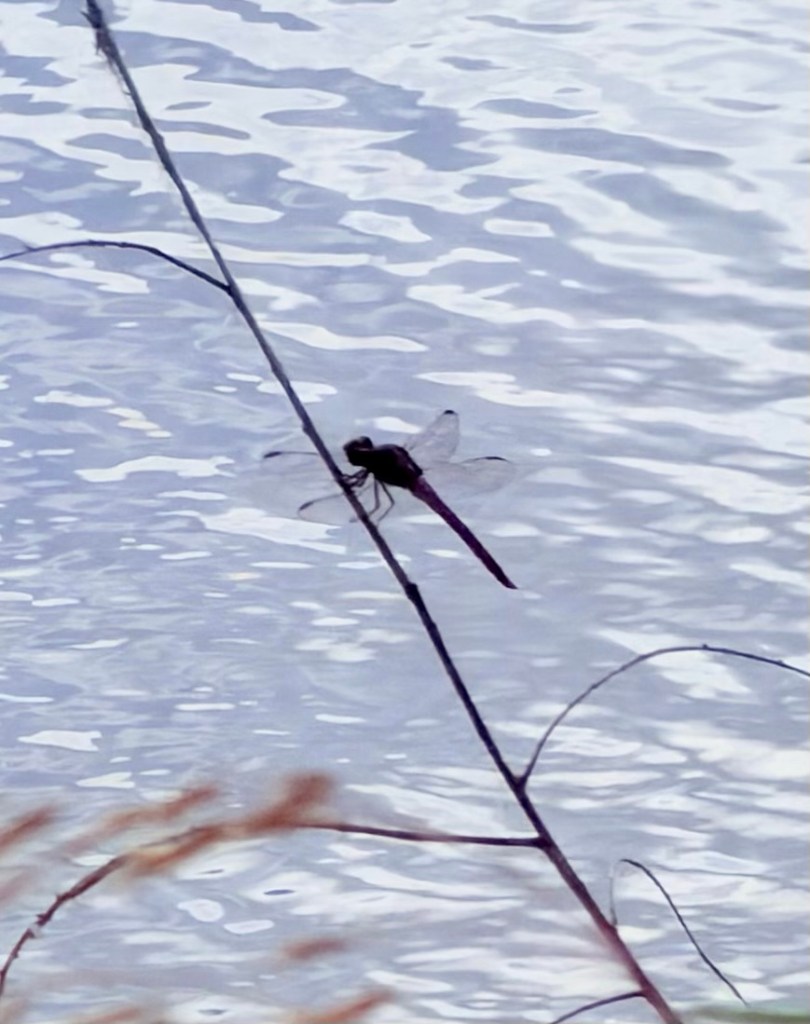
I didn’t get any photos as pretty as the one yesterday, but I thought this backlit Roseate skimmer was artistic. These are gloriously pink in sunlight.
Orthemis ferruginea
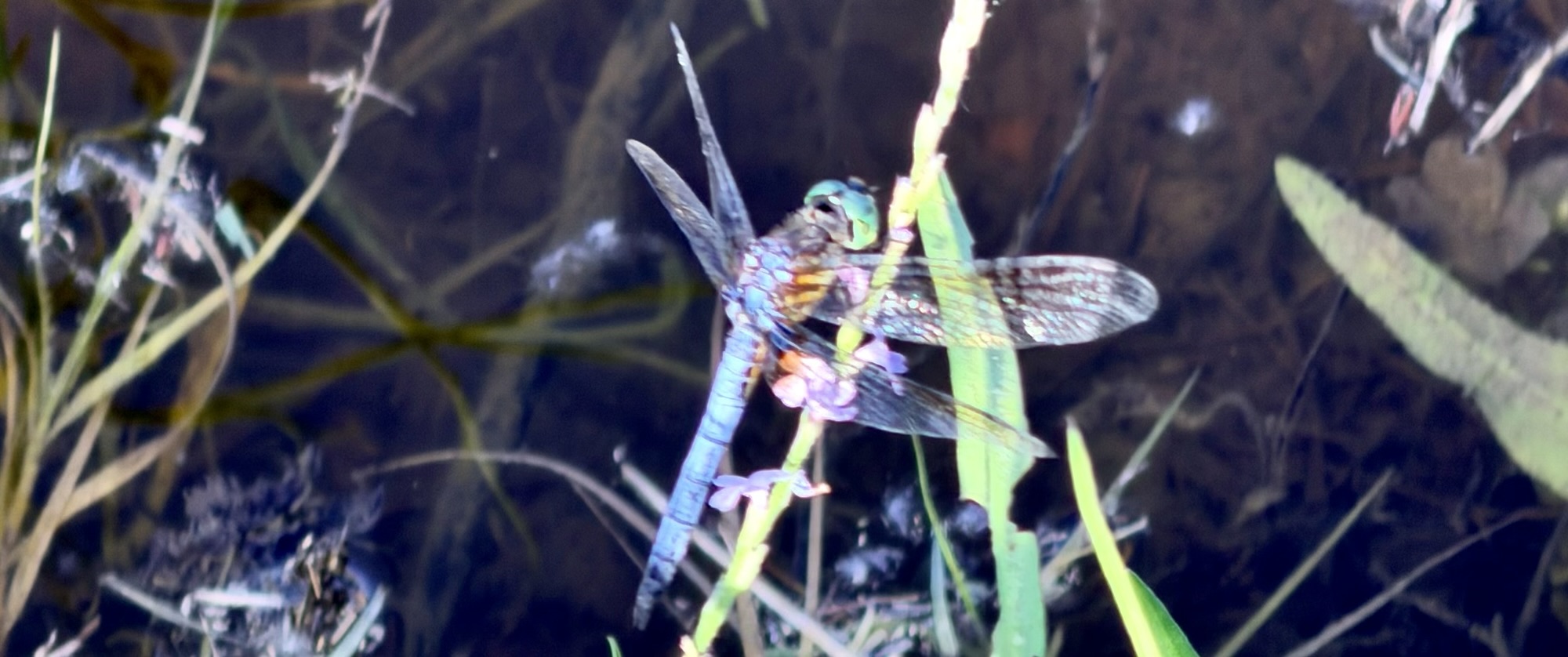
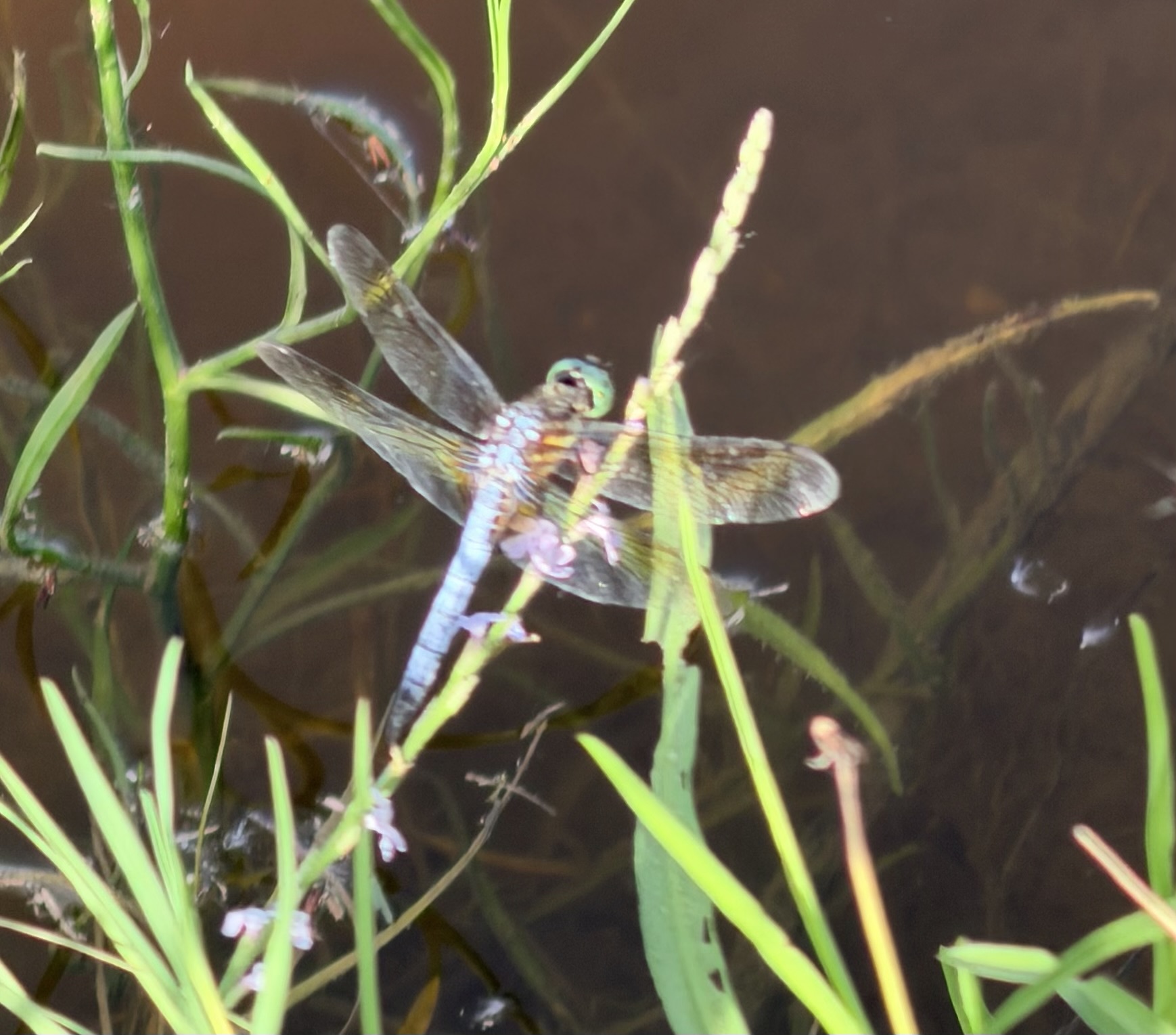
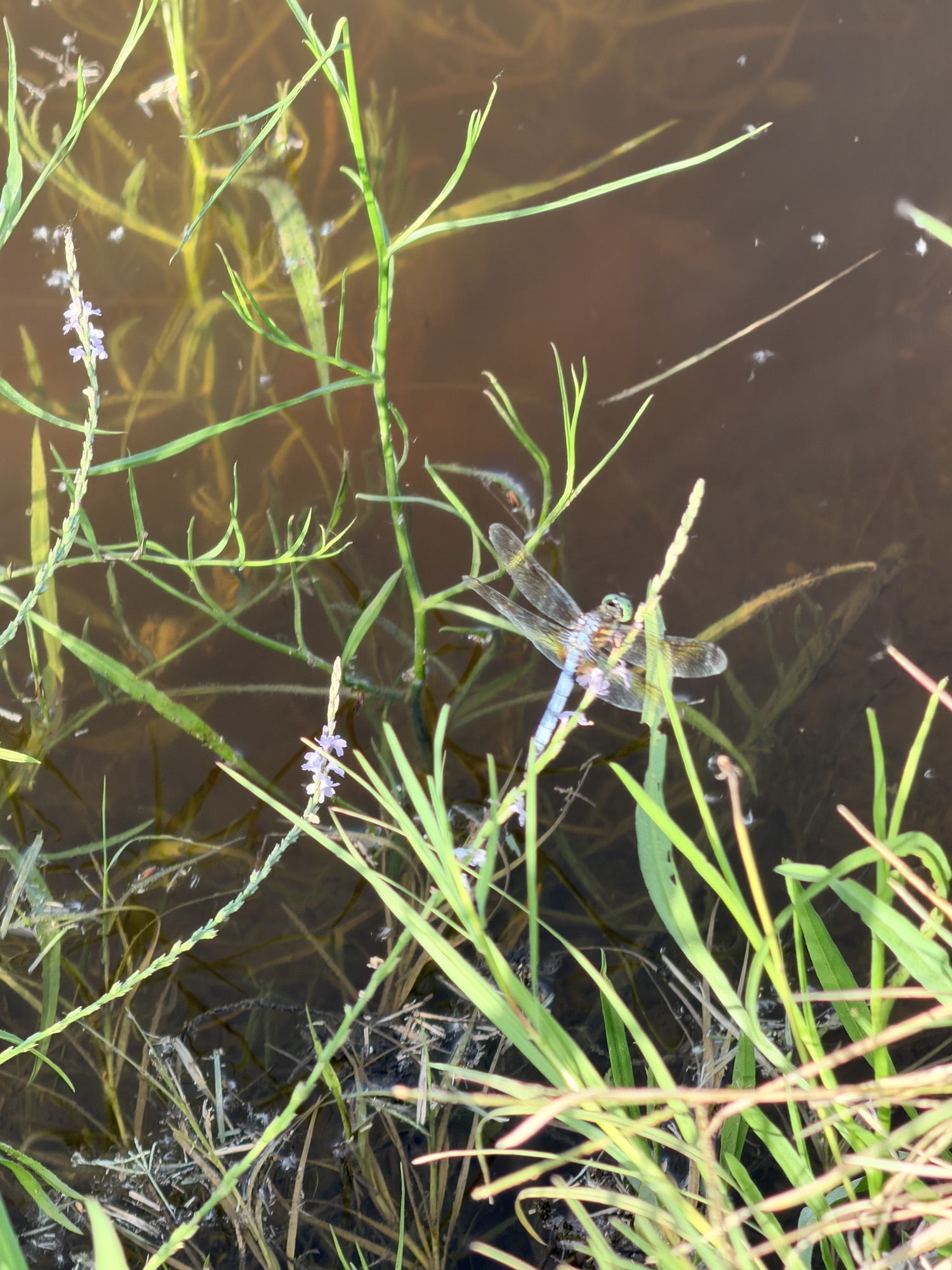
What the heck, here are more pictures of yesterday’s Blue dasher.
Pachydiplax longipennis
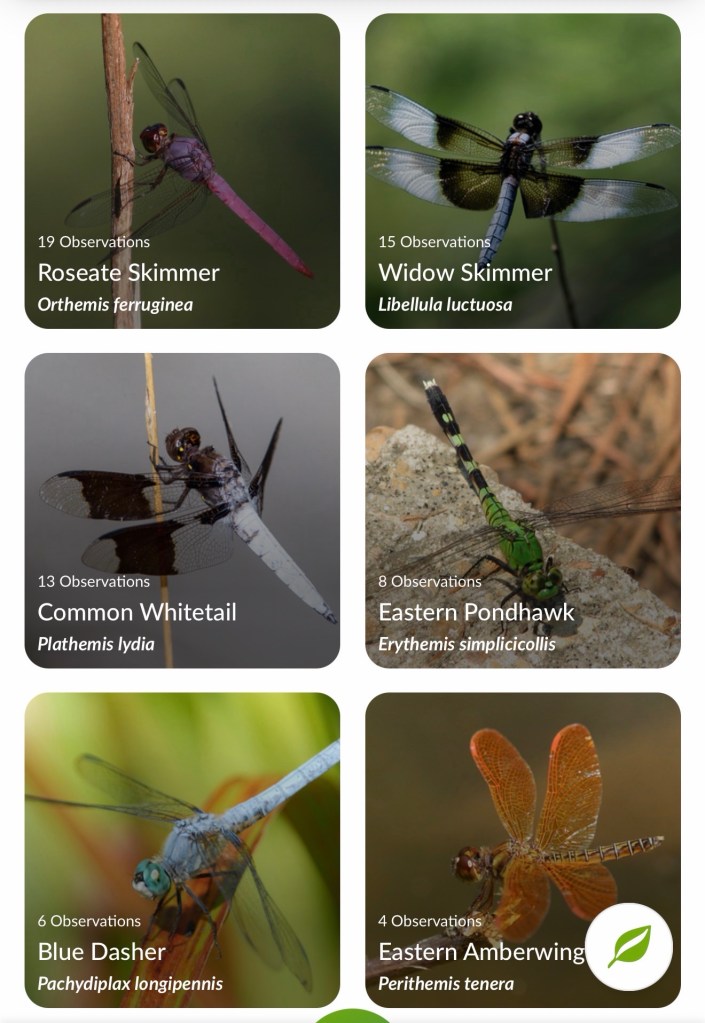
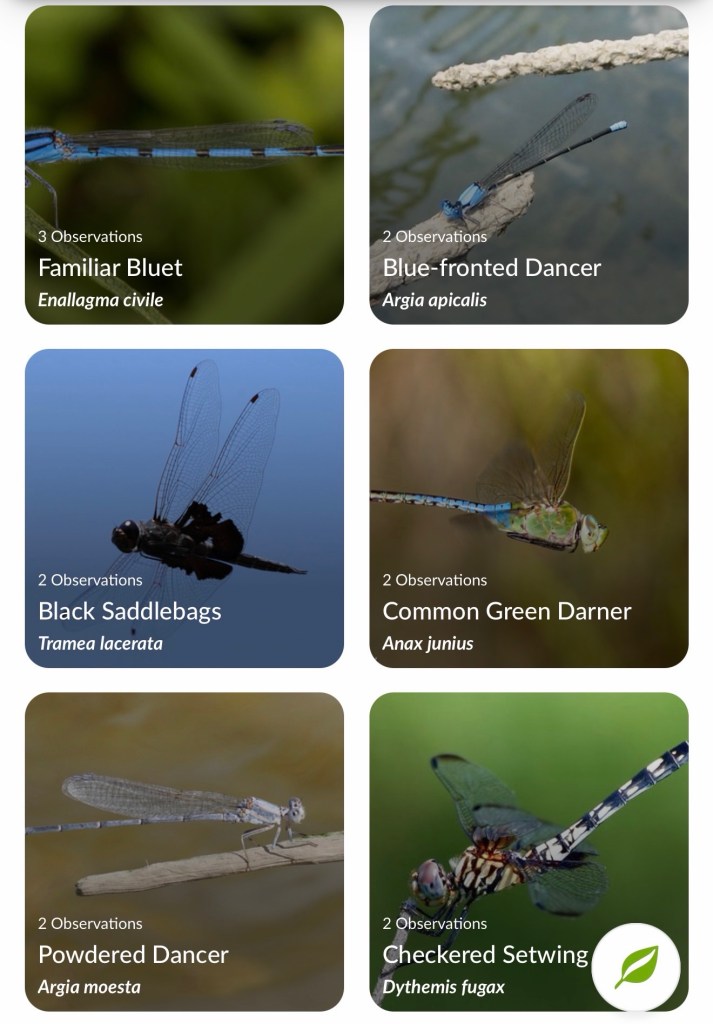
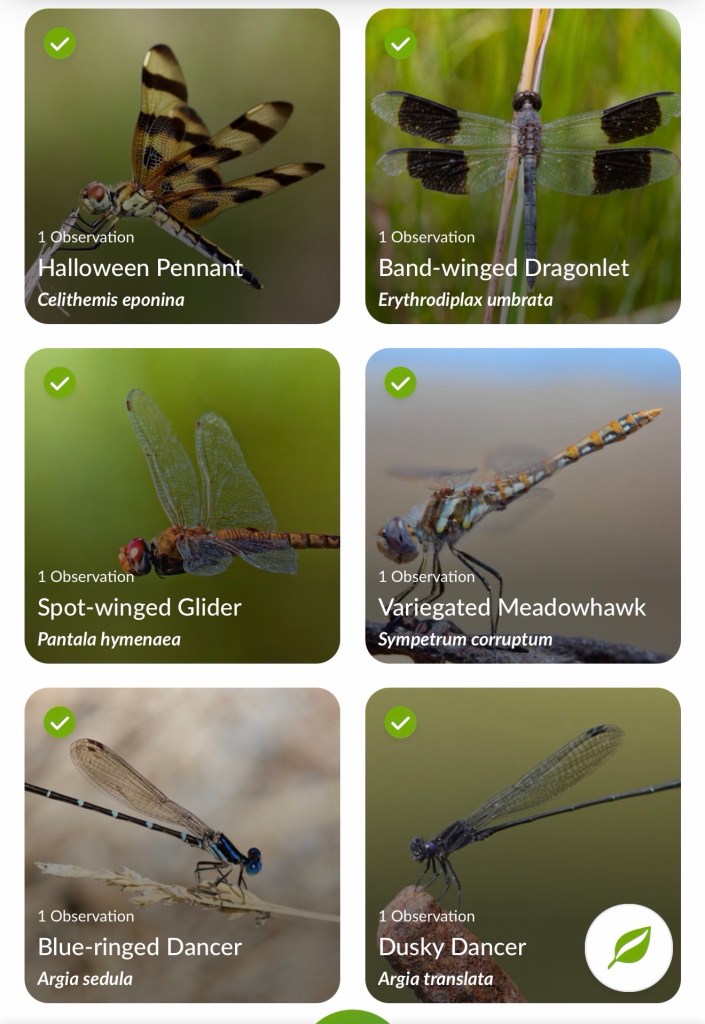
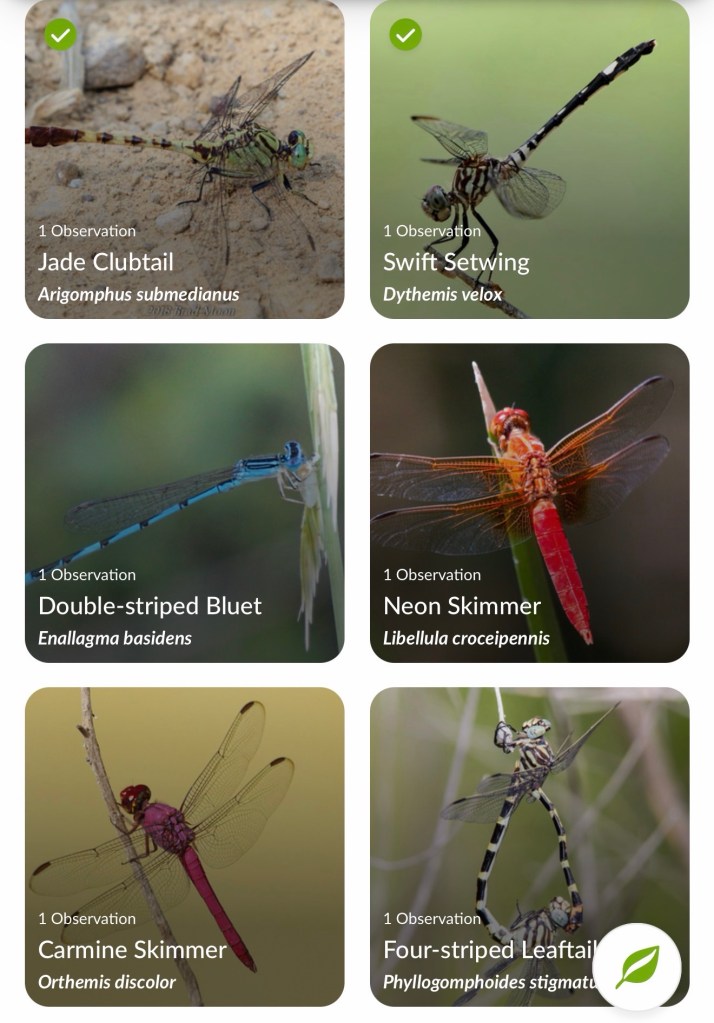
I got to wondering how many different Odonata species we’ve observed here at the ranch. Luck is with me, because I have an iNaturalist project of all observations on our original property and the one next door. Turns out there are 24 species so far. Look at all the variety!
I know I’ve seen some of these more frequently than it appears. But those skimmers are hard to get sitting still. I’ll have to try with the good camera. It doesn’t help that dragonfly season is also mosquito season, which means I also don’t want to hold still very long. I do see many amber wings and Halloween pennants, but they are quite busy so not so many photos.
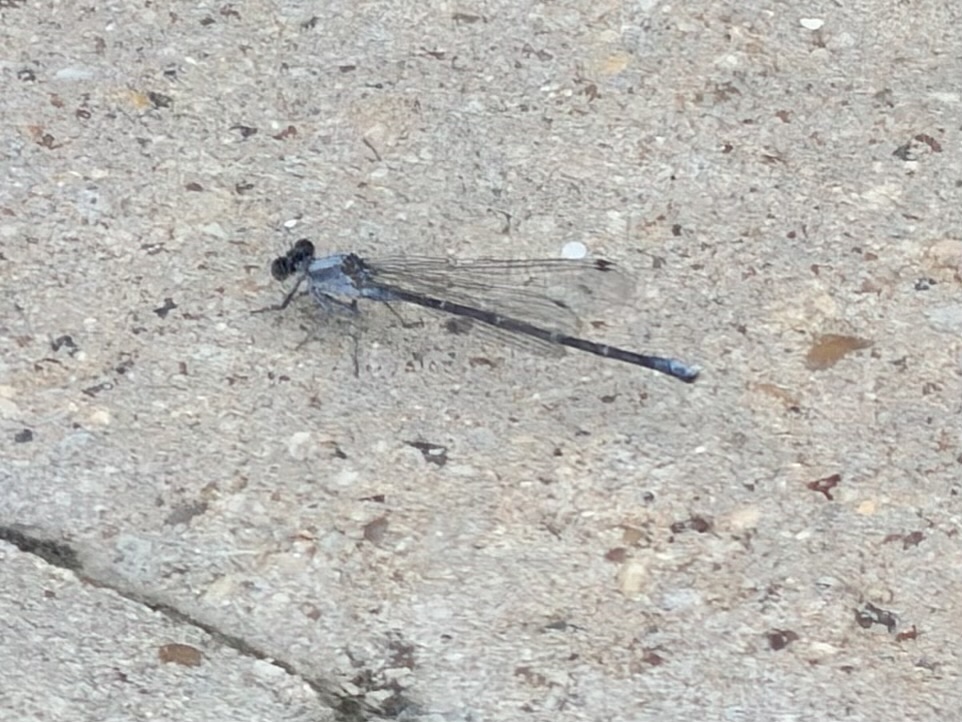
And no, I can’t tell one blue dancer from another. I do know powdered dancers. They hang around the swimming pool with me.
Powdered dancer from last April
I’d love to know what dragonflies and damselflies some of you see elsewhere. I’ll have to look up their ranges.
Although I’m quite excited about migrating snout butterflies (hundreds) and sandhill cranes (dozens), I’ll share more that I learned last Saturday for now.
Insect Photography, by Mary Ann Melton
Insects are what I take photos of most, after plants. I enjoyed getting ideas from Mary Ann, who happened to be the speaker at our last Chapter Meeting. I was very happy that she gave tips for phone photos as well as camera ones.
Handy hints
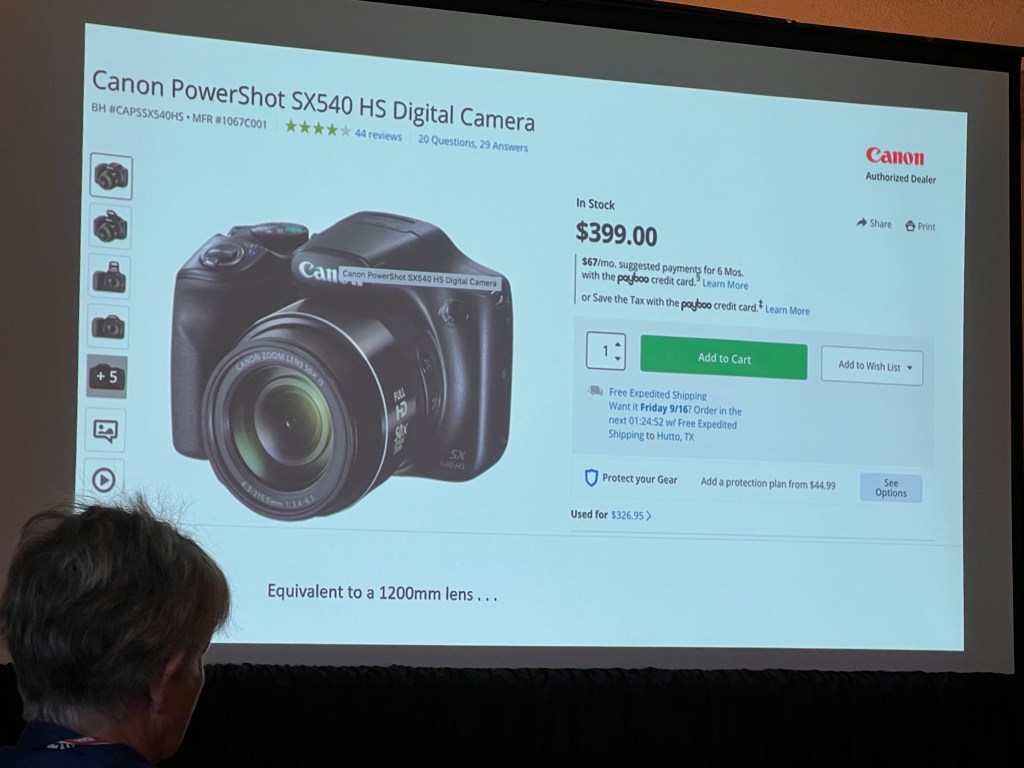
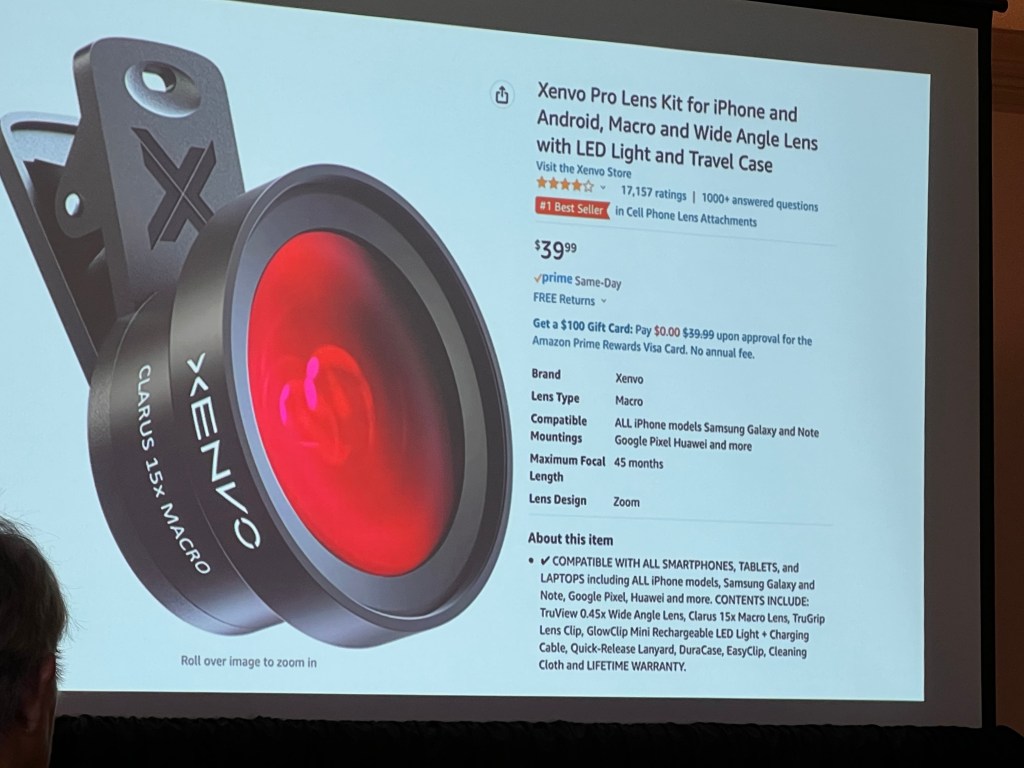
I took photos of some of the ideas she shared, especially for digital cameras, in case I can ever get one. There was also a cool attachment that lets you take better close ups on the phone. Attaching that to the 3x camera on my phone should be fun to try.
This is the closeup attachment
I also just enjoyed her beautiful photos with nice blurry backgrounds so the subjects look better. This was fun.
Here Be Dragons! Odonata 101, by Brent Franklin
This was probably Brent’s first presentation, since he apologized a lot for its length and content. But it was just fine, and I learned a lot about dragonflies and damselflies, even though I thought I knew a lot. This guy has really seen a LOT of the Texas Odonata and has lots of insights on finding them and observing them.
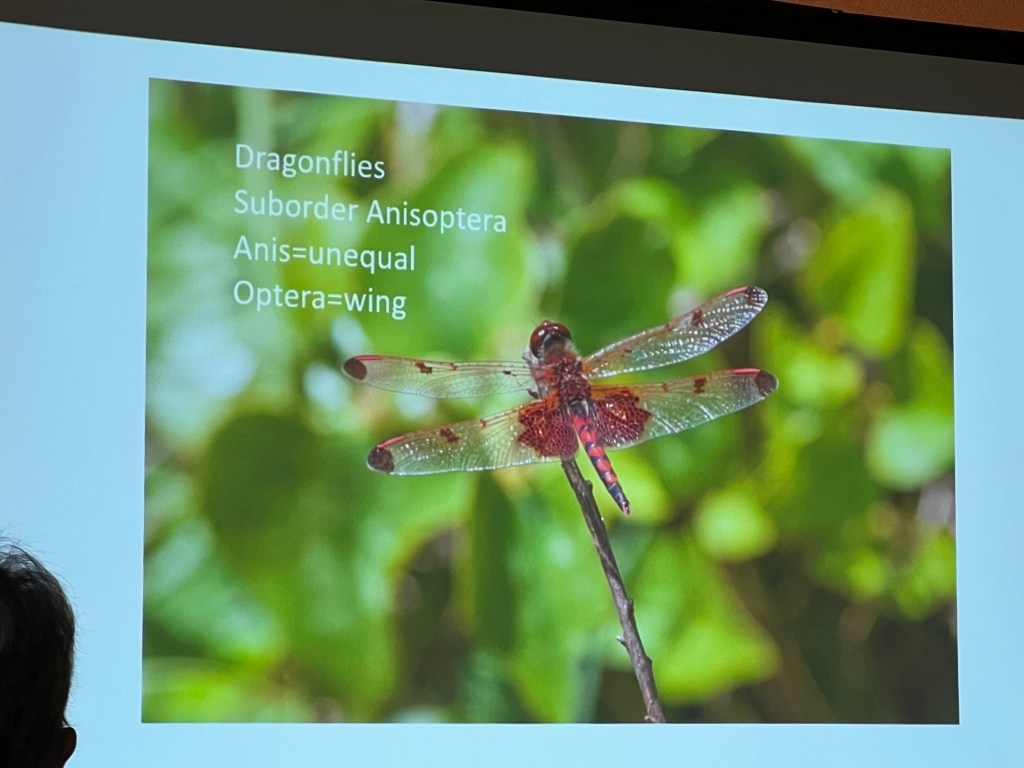
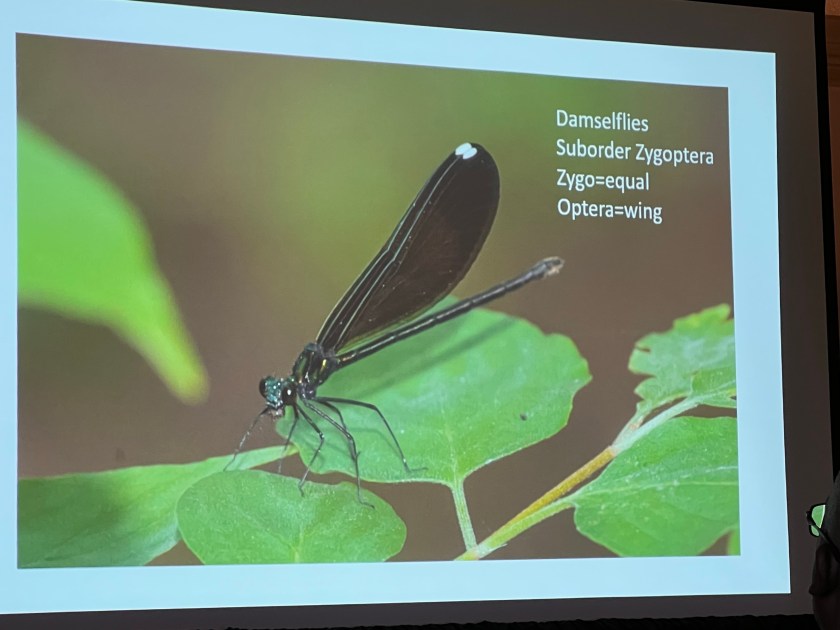
He had some fantastic photos of various dragonflies, too. I learned more about their mating behavior (the male clamps on to the female behind her head and flies her around until they find a good egg-laying place) and life when young. I don’t think I’d realized how long they can live in the water before emerging into the air. It can be years!
There’s just so much going on with these guys. Did you know dragonfly eyes take up almost their whole head, while damselfly eyes are on stalks on the sides of their heads? Yep.
Sticking their back ends straight up is called obelisking. That’s a new word for me.
iNaturalist 301: Advanced Applications and Exploring Data in iNaturalist, by Tania Homayoun
I always feel like it’s not a good conference if I don’t go to a session by Tania. I think I’ve gone on a field trip with her or heard her speak at every conference I attended. I’m such a rogue iNat user that I don’t think she’s too impressed by me, but I’m impressed by her! This session didn’t disappoint, as I learned some new features in iNaturalist and that some features have gone away. I’m glad I was able to draw an area for our ranch before that was removed as an option because people were misusing it or something.
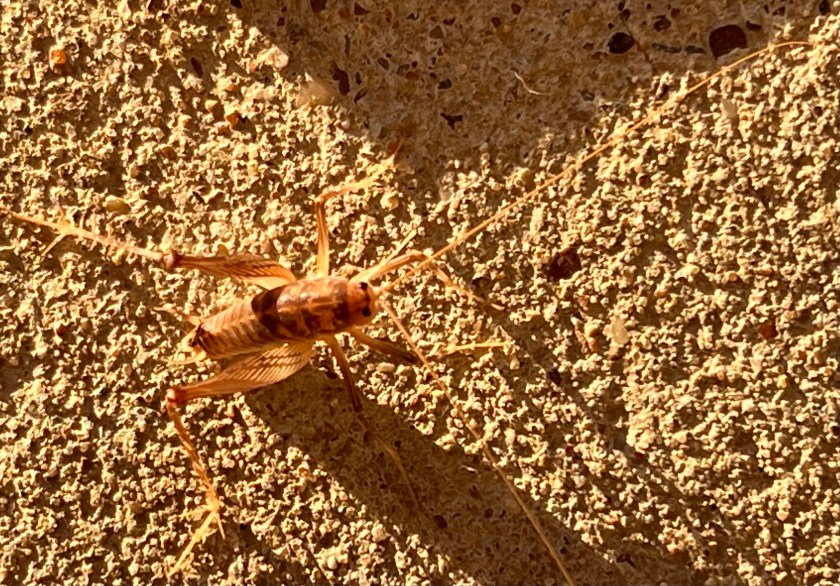
My latest iNat entry taken in glary sunlight. I think it’s a camelback cricket.
Since I’d spent all week uploading things for that Pollinator BioBlitz, it was good to just talk about it and to learn more about the computer application, which really lets you do useful things. I plan to download my ranch observation data soon and do some analysis in Excel.
I was sad to find out that Tania is leaving her position with Texas Nature Trackers, but very happy to discover it’s because she is going to be the State Ornithologist! WOW!
Wrens: Little Birds with Lots of Energy, by Scott Kiester
It turns out that the speaker for this session, the last one I attended, is the guy who drove us to the field trip on Thursday. He had lots and lots and lots of information on wrens, including fun recordings of the songs and “scolding calls” of each type.
This was all news to me. Cool.
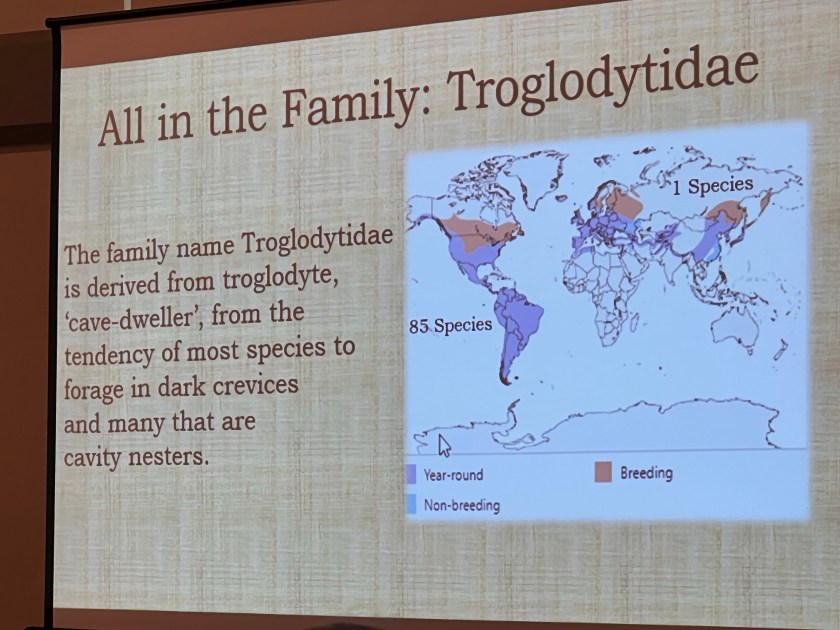
Wren fact that blew my mind: there is only ONE kind of wren in the Old World, and they are pretty sure it crossed the Bering Strait and populated that part of the world from North America. There are many kinds of wrens here, though. We went through most of them in two hours, it seemed.
We also learned folk tales. The wren won kingship by hitchhiking on an eagle and jumping off it to become the highest flyer. Tricky bird.
I have a much better clue about wren identification now, and can easily tell you which one is a Bewick’s. By the way, their numbers are diminishing as some other wren takes over, and it’s pronounced like the Buick car. Huh.
The rest of the sessions on Saturday were about who won awards and honoring people with lots of volunteer hours. I sure wish Donna Lewis had been able to come so she could have received her 10,000 hour pin. That is a huge milestone. To compare, I have about 800 hours.
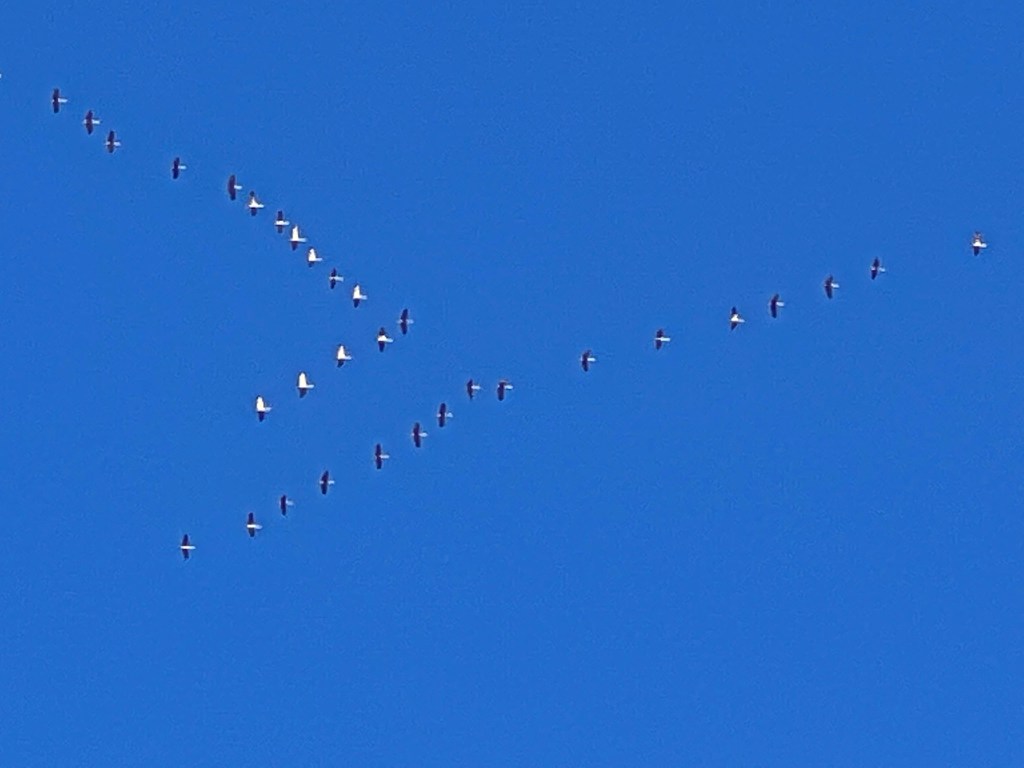
I’m sticking my crane photos and video from yesterday in here, in case you’re interested. Seeing them flying over is always a highlight of the autumn for me. I love the sounds they make.








 The Hermits' Rest