Book Report: The Secret Wisdom of Nature

Yay! It’s time for another naturalist-centered book report. This book, which IS about the entire earth, has the extra-lengthy title of:

The Secret Wisdom of Nature: Trees, Animals, and the Extraordinary Balance of All Living Things – Stories from Science and Observation

Buy it here!

It’s by Peter Wohlleben, the German forester who wrote The Inner Life of Animals, which I reviewed recently. It’s the third volume in a trilogy that started with The Hidden Life of Trees, which I promise to finish and review, too.
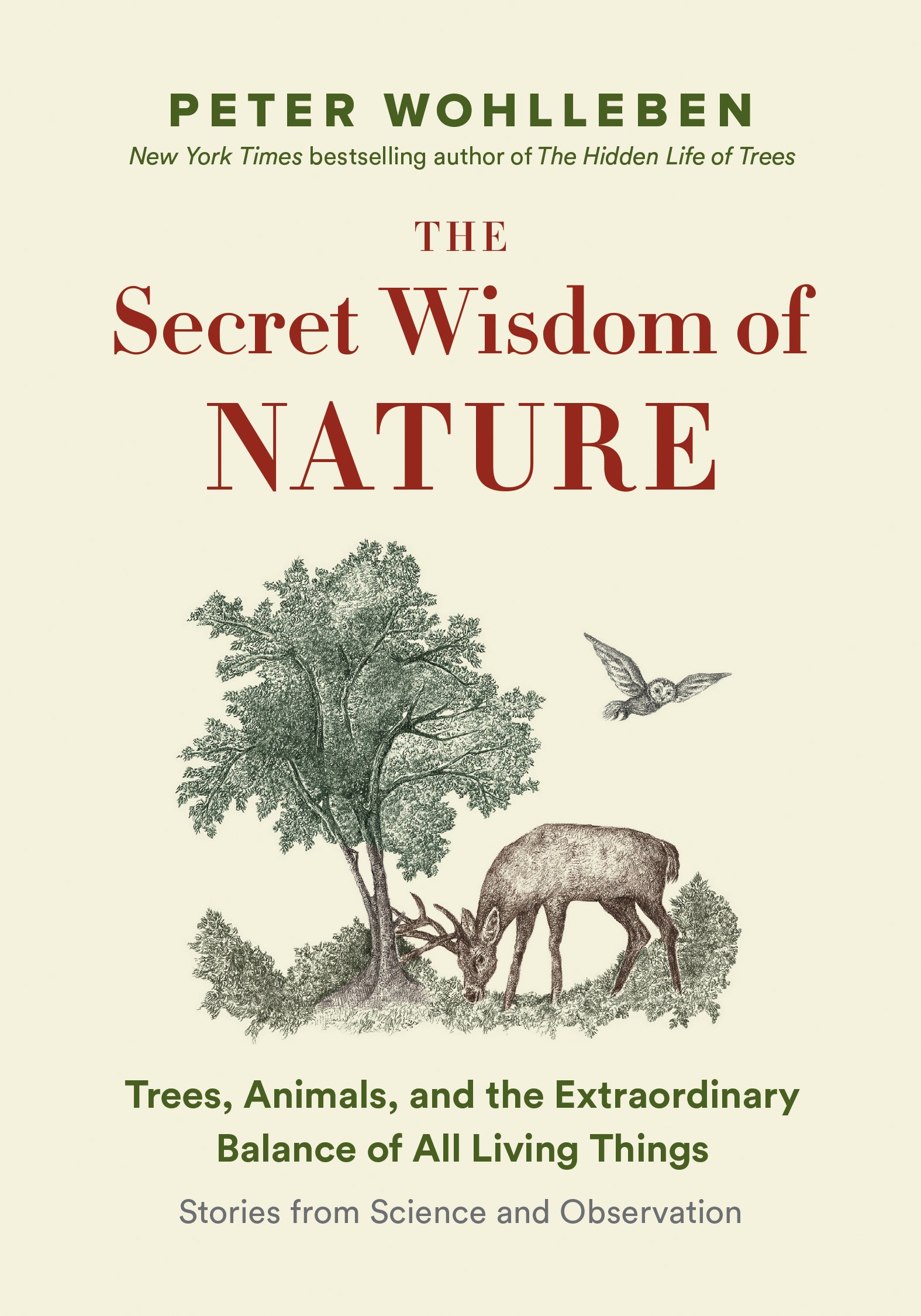
You’ve just got to like Wohlleben, because he does not give a hoot if others think his ideas are not quite “scientific” enough or if he’s personifying non-human entities. Nope, he just calls things as he sees them, and seeing is his specialty. He doesn’t just look around his forest or anywhere else he visits, he carefully observes from the macro level to the micro level, and from the far past to the present. He doesn’t hesitate to ponder about the future, either. To me, this is the kind of teacher we all need, because he inspires all his readers to think beyond stereotypes and actually pay attention to what’s going on in front of them.

All the scientists out there will also appreciate that he backs up his observations with recent scholarship and provides us with a hefty bibliography for further exploration.

Why is this important?

As I was reading this book, I began to get a sinking feeling of concern. Wohlleben chronicles all sorts of ways humans have interfered with the interconnected web of life on this planet, and how the consequences are very far reaching. Changing the types of trees in European forests meant some organisms had nowhere to live, while others could march in and find new homes (or eat new things). Not having enough shade in the forest also meant huge differences.

Continue reading “Book Report: The Secret Wisdom of Nature”
Book Report: The Biohistory of Alachua County, Florida

Note: this post is about the history of a single county in north Florida. I am quite aware that there were civilizations, settlements, and migrations throughout North America long before events I talk about here. In fact, my own ancestors were in Florida long, long before Alachua County was settled.

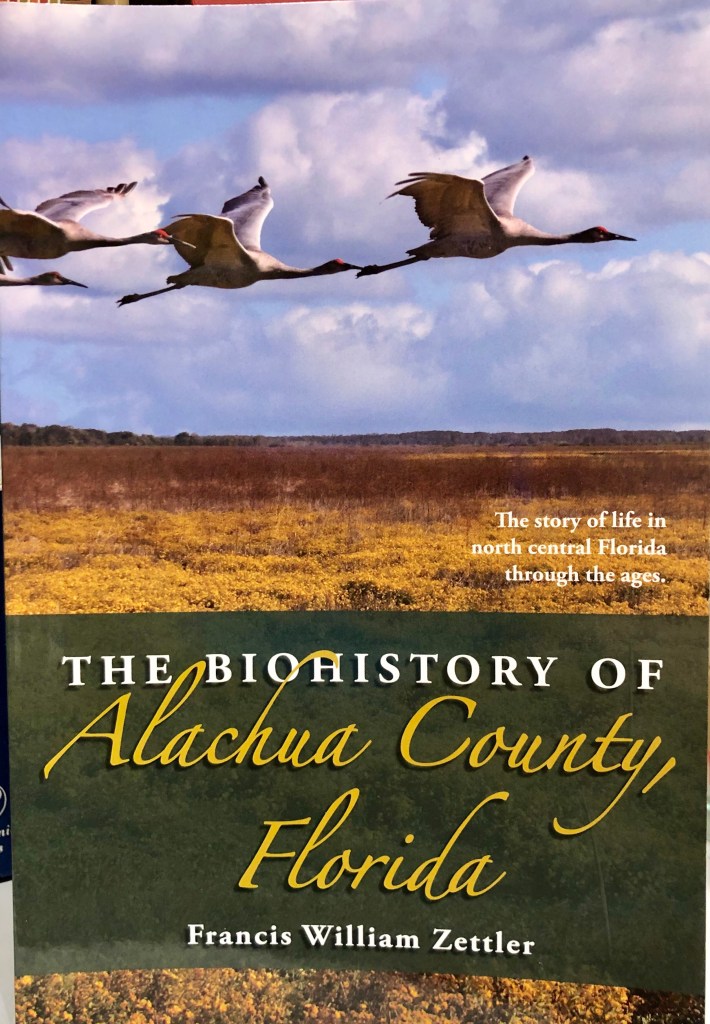
While we were visiting Gainesville, the county seat of Alachua County, Florida, I bought this slim book (published in 2015), mainly because I wanted to know what a “biohistory” was. The subtitle of this little gem, which was written by Francis William (Bill) Zettler, is “The story of life in north central Florida through the ages.” It turns out the book is based on a popular class Zettler taught for many years at the University of Florida.

I had to take a photo of the book, since I couldn’t find a nice image.

He uses the term “biohistory” to refer to his method of presenting the biological features of the area in chronological order. It turns out to be very enlightening and makes me want to read a biohistory of other areas where I’ve lived.

One thing that helped keep the book short is that Florida was underwater a long time, so there were no dinosaurs to talk about. It also helped that Florida was hard to get to, so animals, as well as humans, took their time showing up once the land mass revealed itself. I’d never thought of that!

But eventually there were lots of giant mammals (megafauna), like huge sloths, beavers, mammoths, and shovel-toothed elephants (cool). They did fine until the humans finally showed up and killed them all pretty quickly, leaving only animals we see today (deer and such). There were also camellids and different kinds of horses, which all escaped to live in Asia and South America.

Continue reading “Book Report: The Biohistory of Alachua County, Florida”

Carlton’s Dream: Painting with Natural Pigments

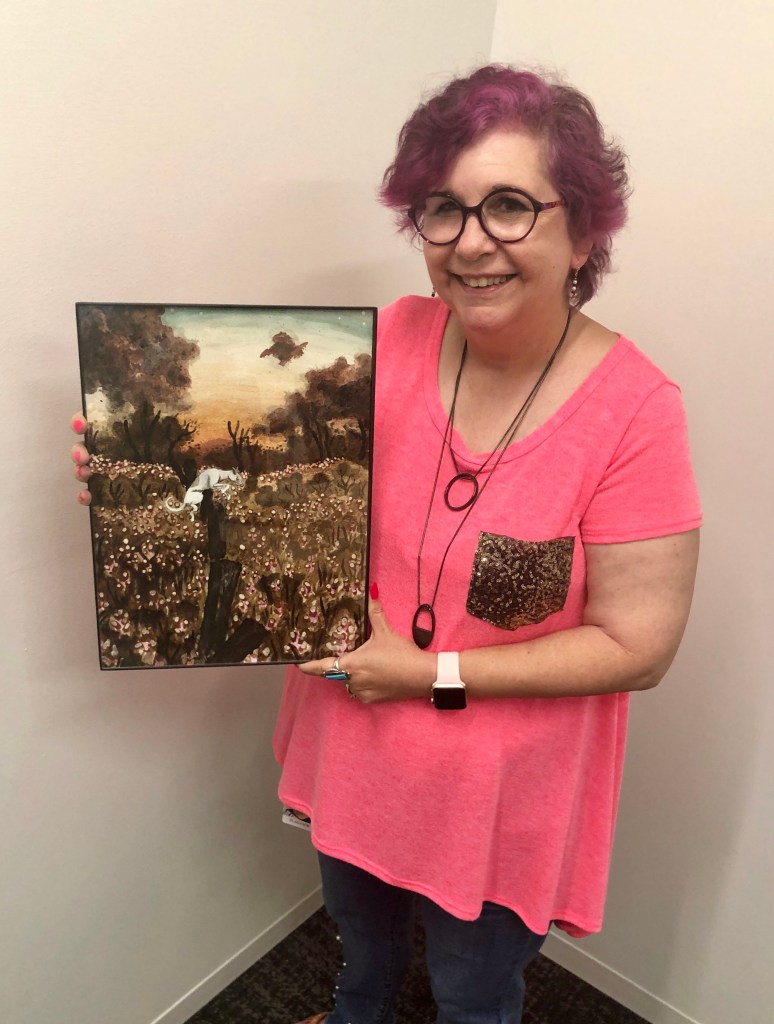
What a happy moment it was yesterday when my friend Sean Wall bought me a painting I’d commissioned from him. What makes this painting extra special is that the painting was done with natural pigments he gathered in the wild (other than the white; I think that’s acrylic).

The painting is called “Carlton’s Dream,” because hard as he would try, he could not climb the barbed wire fence. He sure looks happy.

I’ve written about Sean before, so check this link to learn about the book he recently published. It has lots of his art, which is what I call hippie folk art, but I bet he has another name for it. I have a poster of one of the trees he painted, which will go in my office in Cameron, once it’s redecorated.

Continue reading “Carlton’s Dream: Painting with Natural Pigments”

Book Report: The Inner Life of Animals

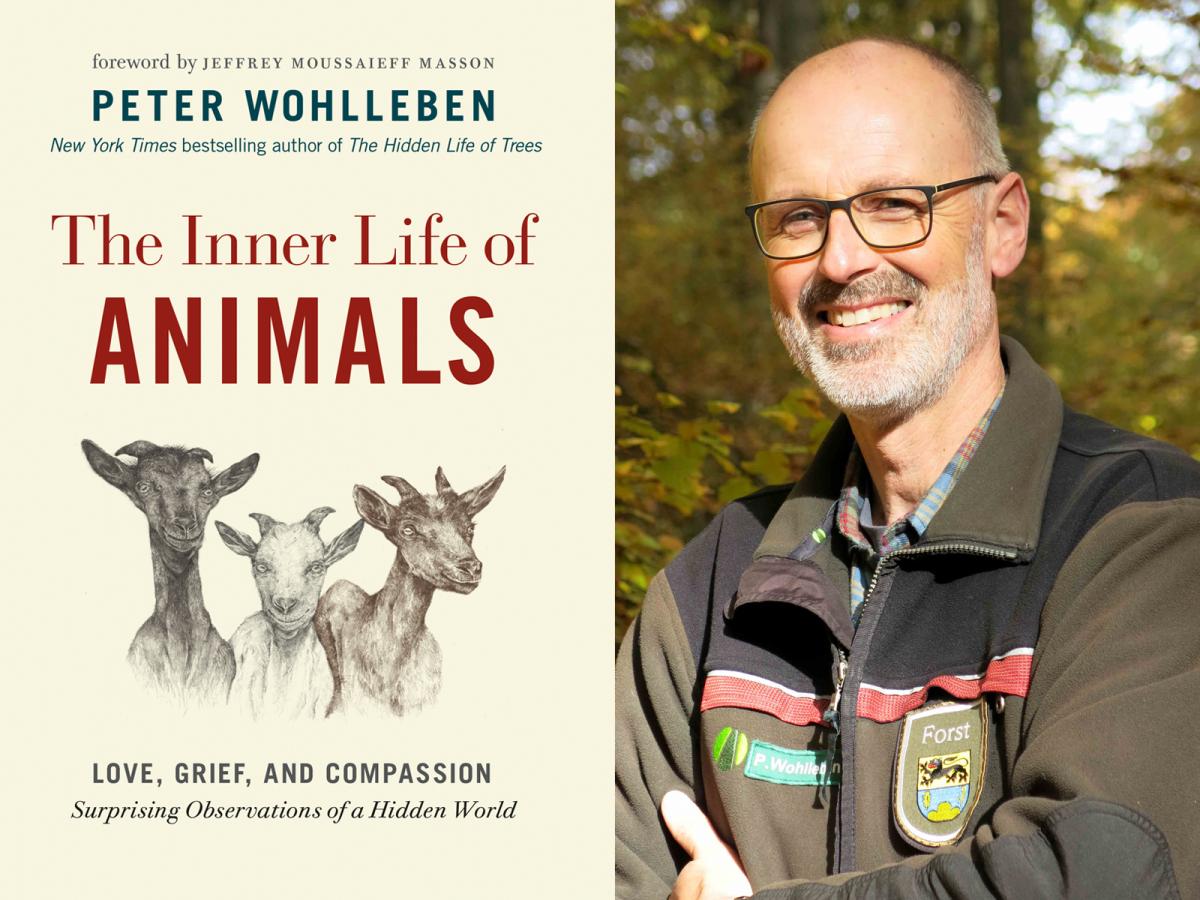
Back to my old habits of reading nonfiction about nature, I just finished this book: The Inner Life of Animals: Love, Grief, and Compassion―Surprising Observations of a Hidden World, by Peter Wohlleben. The author is a caretaker for a forest in Germany, which gives him lots of time to observe the habits of the animals and plants he encounters there. He’s also the author of The HIdden Life of Trees, which has amazing information about how trees feel, communicate, and more. There’s a third volume in the series coming out soon, too.

The author and his goats

You’ll either love Wohlleben’s approach to observing the feelings, morals, and behaviors of animals or be a little uncomfortable with it. He uses a lot of scientific evidence to back up his claims (the footnotes are a book unto themselves), but there’s plenty of gut feelings and assertions that an animal felt this way or that way, because it just looked like it to him.

Continue reading “Book Report: The Inner Life of Animals”

Book Report: Where the Crawdads Sing

Spoiler: Master Naturalists will LOVE it.

Suna Kendall

Here’s one of those quirky facts about me that I’m not sure where it came from: I strongly resist jumping on the bandwagon of the latest “popular item,” whether it’s music, types of cars, clothing fads (no one has ever seen my bare midriff in public) decorating styles (“a nice, bright white”), and most assuredly, books.

Oh no, everyone’s reading it. It has to be smarmy.

So, when I was first encouraged to read Where the Crawdads Sing, by Delia Owens, I resisted. I kept thinking it would be one of those motivational books like The Secret or Chicken Soup for the Soul or that book about the shed…oh, The Shack. I figured, if everyone was reading it, snobby intellectual elitest Suna had probably read all the original source material.

That’s a bit harsh. I admit to not being fond of most books with mass appeal. But, the person who recommended Where the Crawdads Sing to me is also an intellectual elitist, and it’s a novel, so how could I have already read the source material? Oh, I know, it’s probably all formulaic and full of poor attempts at regional accents, with too many big words where small ones will do. Yeah. And it’s in Reese Witherspoon’s book club. Ew…

Continue reading “Book Report: Where the Crawdads Sing”

A Hugely Successful Earth Day Celebration

Here’s Suna’s Earth Day Celebration Report.

Sue Ann (Suna) Kendall's avatarNature Along the El Camino Real

by Sue Ann Kendall

I’m interested in nature, too.

The 2019 Earth Day Celebration is in the books! It was a great success, too! At least 100 people and two dogs visited the Community Room on Main Street in Rockdale to see the El Camino Real Master Naturalists and their exhibits. We were joined by local Girl Scouts of Central Texas troops and the Little River Basin Master Gardeners, too. (It helps that many of our members are also Master Gardeners.)

Rosie Johnson did a great job decorating the outside of the Community Room in Rockdale.

Many thanks go out to Donna Lewis and the rest of the Earth Day Committee, who put in a lot of effort and planning to make this event successful. There were so many details, but they were all handled very well!

Donna Lewis takes a break to talk to Catherine Johnson during setup.

View original post 1,000 more words

Projects and More Projects

There’s not much to share today, because I’ve been mainly preparing for things.

Last night I spent most of the night at a neighbor’s house participating in the HOA landscaping committee, which I and the other member not on the board were repeatedly reminded has NO power and makes NO decisions. I’m pretty sure the other woman and I were put on the committee to placate us after running for the board and losing or something.

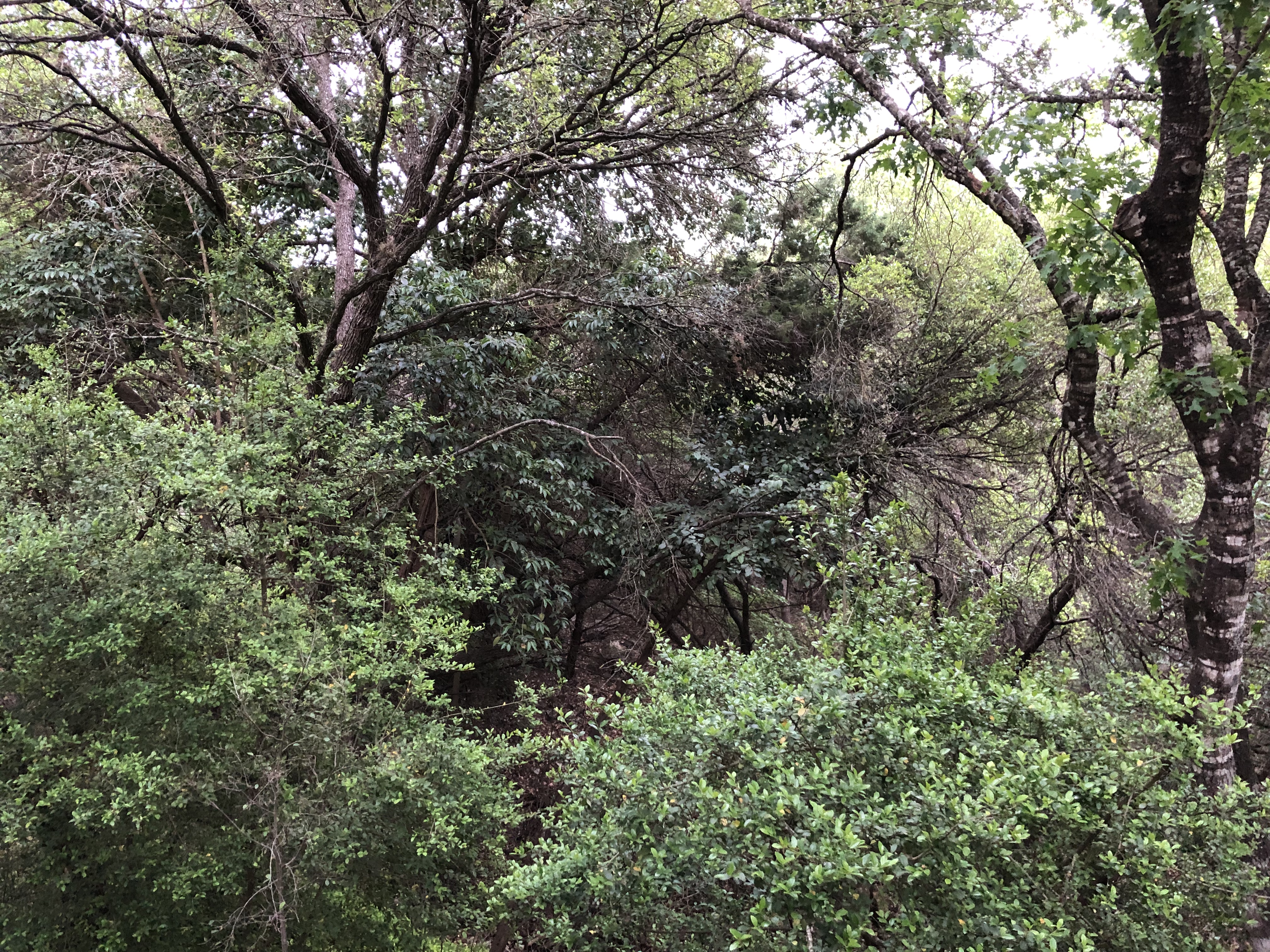
This is the view of Cat Creek from the landscaping committee chair’s house.

It’s okay, though, because these folks had great wine and really nice Italian furniture. We actually did come up with a list of plants to humbly suggest that the board adopt as options for landscaping. They need to be drought tolerant and things deer don’t love.

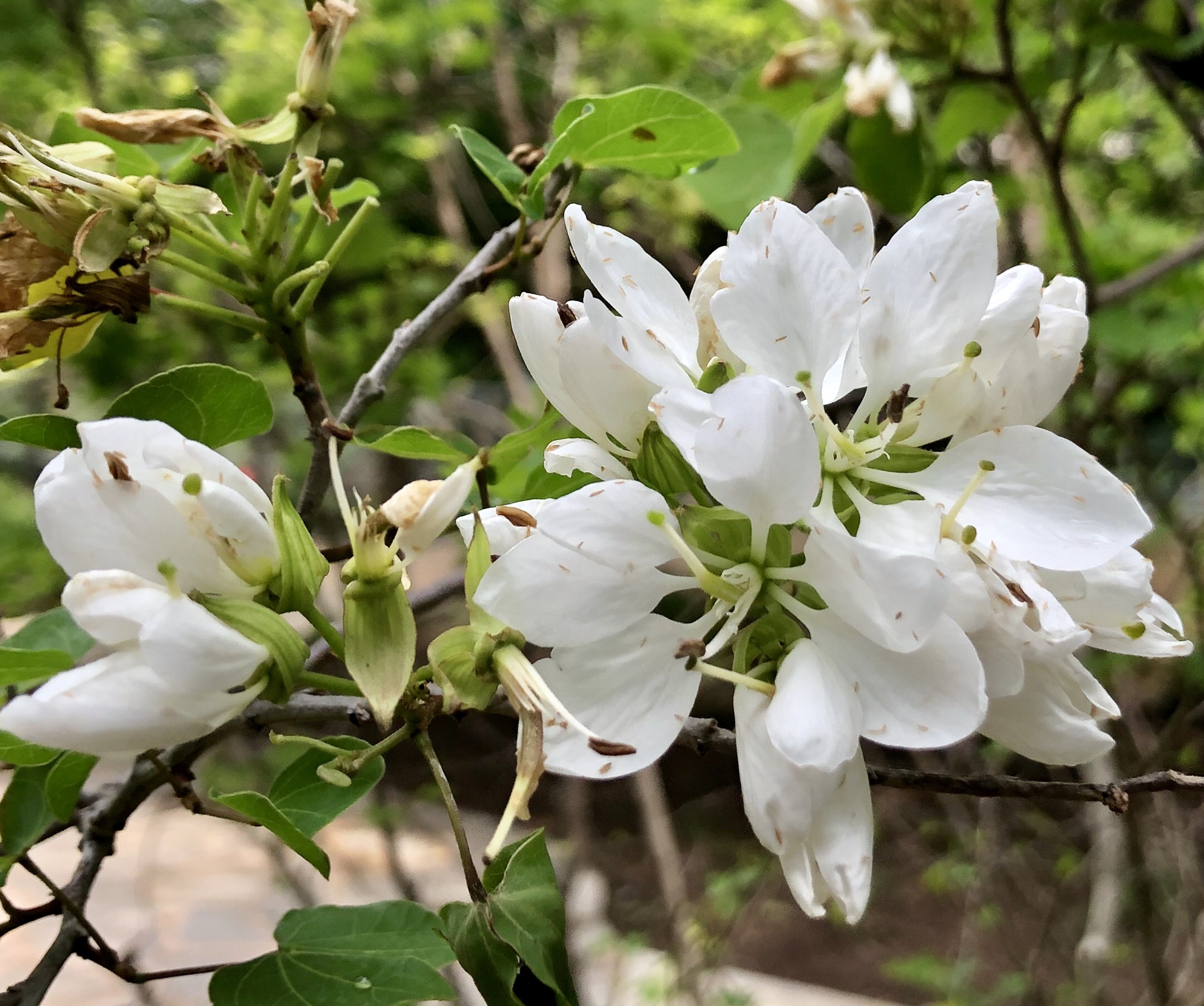
One of the plants the chair of the committee just loved was one I wasn’t familiar with, though I’d heard of it. When I saw this lovely flowering tree at work, I thought it might be that, but no, it’s an orchid tree native to just this area. Very pretty, and it’s leaves are cool.
I like these leaves.

Another Project

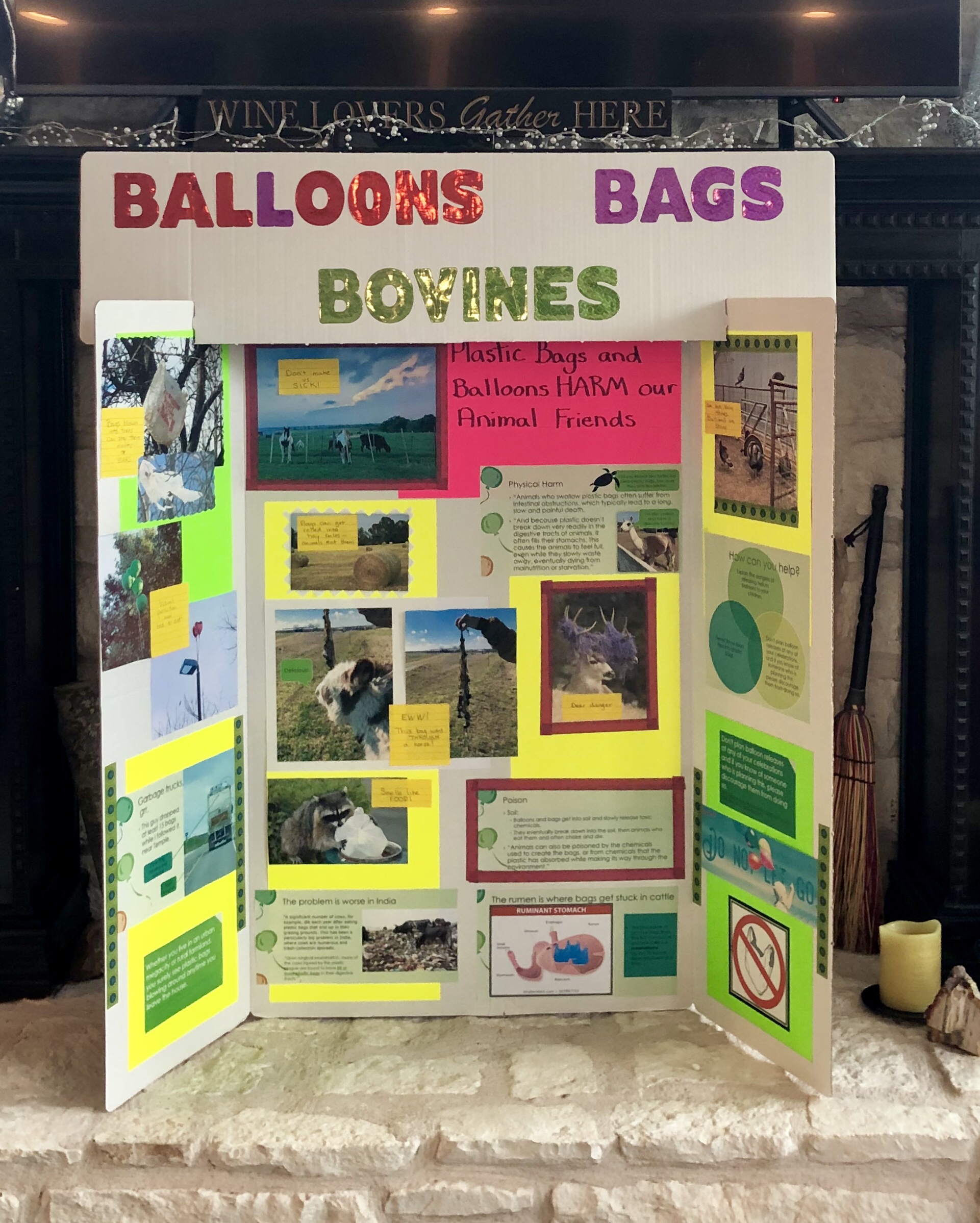
Next Saturday is the Master Naturalist chapter’s big event of the year, our Earth Day event. They said they wanted exhibits, so I volunteered to do one on the dangers of balloons and plastic bags to livestock and wild animals.

I’ve ended up doing a lot of research and learning interesting things, so I also developed a presentation on the topic, with a pretty good slideshow, I think. I used it as the basis for my poster display.

I’d say it’s at least up to middle school standards.

Making the display was fun, because I got to use my collage supplies. Yay.

I’d hoped to present my information to a chapter meeting, but though I thought they said they were looking for speakers, when I wrote to volunteer, I was told they’re all full. Oh well. Maybe someone else would enjoy it.

Or maybe I’ll write it up here. That will wait until I have more energy.

History Lesson, Walker’s Creek Edition

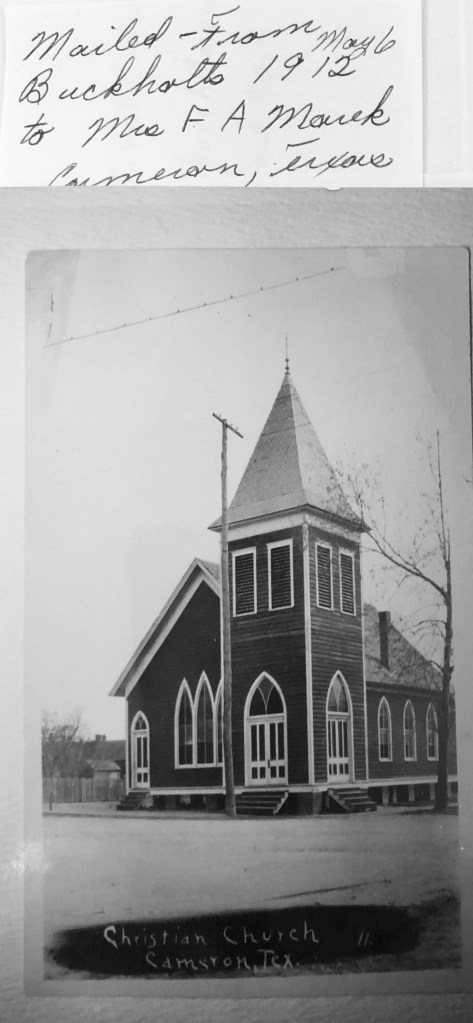
Today my friend Melanie Reed, who’s a native to these parts, went with me over to the Milam County Museum to do some research on projects we are working on. She’s looking into the history of two parks in town, while I was looking to learn more about the old church and home we own in Cameron.

Postcard mailed in 1912 showing the building that once stood where our church is now.

I did find a postcard that was a picture of the First Christian Church building as it looked in the early twentieth century. That one burned down.

We met with Charles King, the director of the museum, who brought us some books with old photographs of the county. I was surprised to see so many large churches and schools in what are now tiny hamlets, like Maysfield and Milano. Charles and Melanie told me Milano (where our Master Naturalist Meetings are held) once had a population of 10,000! Wow! It’s between 200-300 now, though it seems like I keep meeting people who live there.

Charles was kind enough to dig up a book and newspaper article about the people who built our house on Gillis St., the Pope family. I’ll use that for my writing about that house on the Hermit Haus blog.

Continue reading “History Lesson, Walker’s Creek Edition”

We’re a YEAR Old!

This is the first post I accidentally posted as a page, not a blog post.

Hooray! Our little blog is a year old! I’m happy to have over a hundred followers, since so much of what I write is so I’ll remember stuff that happened. It’s been great sharing my nature observations, rants, and thoughts with all of you. Share us with your friends!

What else happened a year ago?

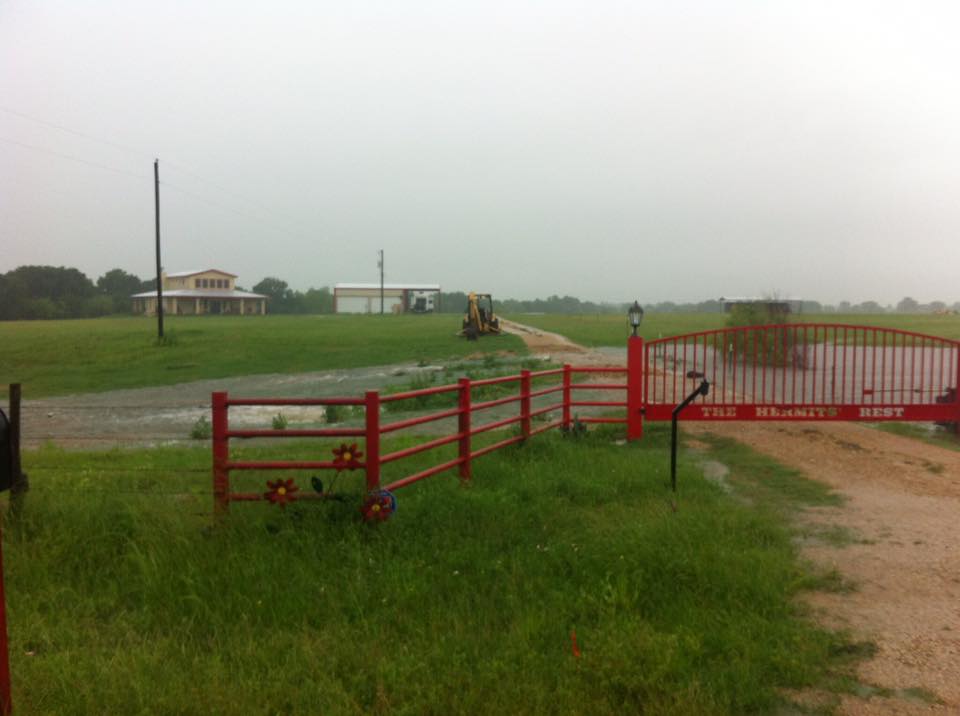
I guess I should not complain about last weekend’s big rain. I was remembering that we always seem to have some flooding in early April, and then, lo and behold, my Facebook memories reminded me that it was a lot worse this time last year.

April 11, 2018. No wonder I started a blog; I couldn’t go anywhere.

The 8 inches we got last year all came at once, which pushed the water over the bridge at Walker’s Creek, and worse, breached our dam. That flooding is what inspired Lee to add a second culvert for water overflow, which may be why we didn’t have a dam breach last week. Hooray for Lee.

The big tractor is just waiting to start digging that new culvert that will prevent us from losing more of our driveway.

PS: My blog interface decided to no longer let me add tags and categories. I’ll fix it eventually.

PPS: The reason it didn’t work because I added this as a PAGE and not a BLOG POST.


Birding Experts on Birding

Last night I went to the El Camino Real Master Naturalist meeting, as I do most every month. I wrote up a post for their blog with lots of details about what I learned, so here I want to share my deep enjoyment from listening to women who are passionate about birds and birding as they share their passions with others.

Three women from our group spoke about how they engage in bird watching, each with a different perspective and knowledge base. I sat there like a little kid, all enthralled at the details they shared. It was thought-provoking to look at how each of them engaged in their hobby. Here’s what I saw (just using first names here).

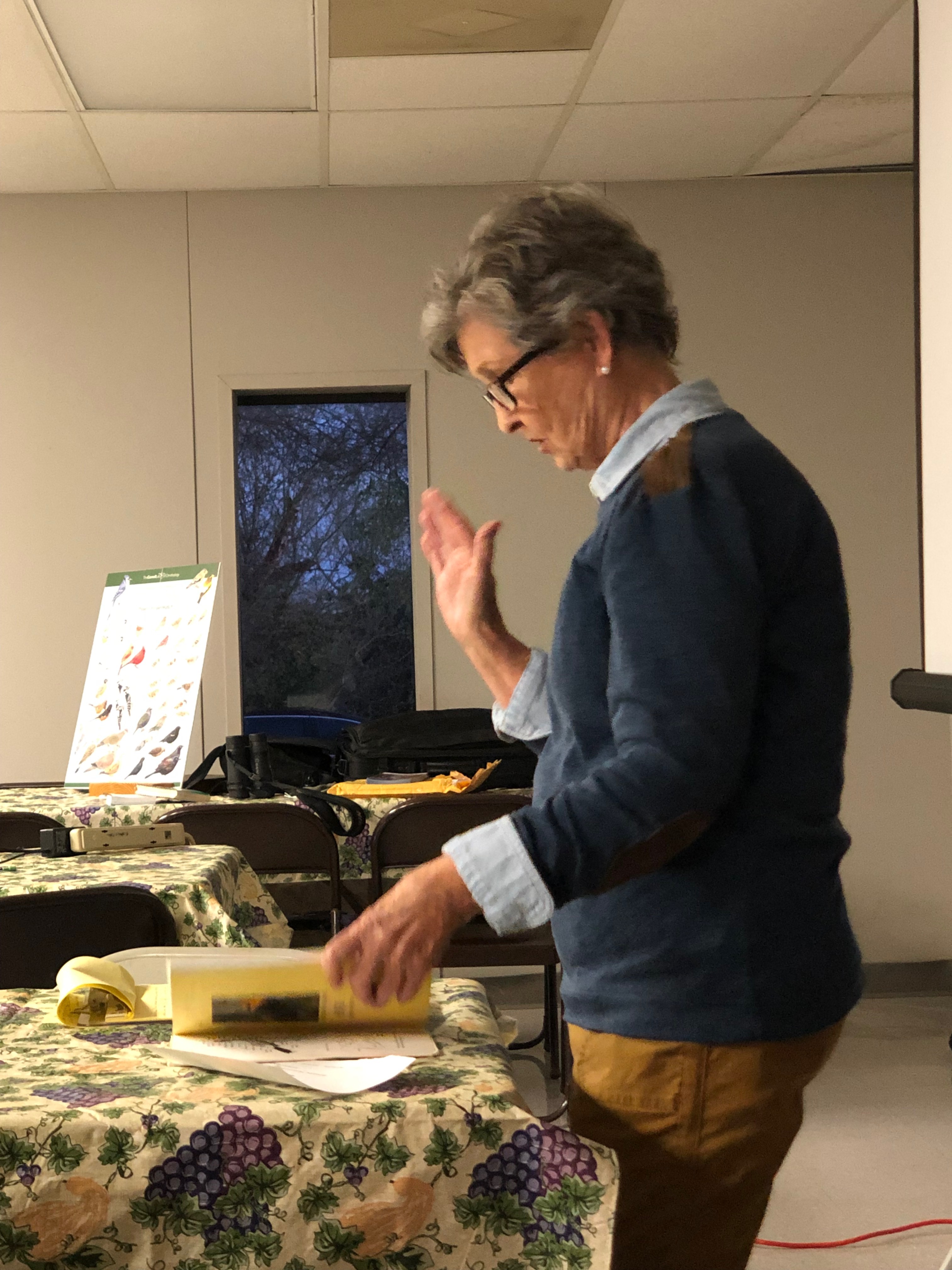
Ann tells us you really, really need a good bird book.

Ann has been birding for many years, and she does it for the same reasons I do: basically, she likes birds a lot. Her passion and enthusiasm for identifying new and unusual birds was very obvious, but she reminded me of my methods for birding. She said if she didn’t know what a bird was from quickly observing it, she’d often just move onto the next, in contrast to her birding friend who just HAD to identify every single bird she saw, in a scientific way. Of course, Ann knows pretty much all the birds you can see around here; she just doesn’t stress over what she doesn’t know.

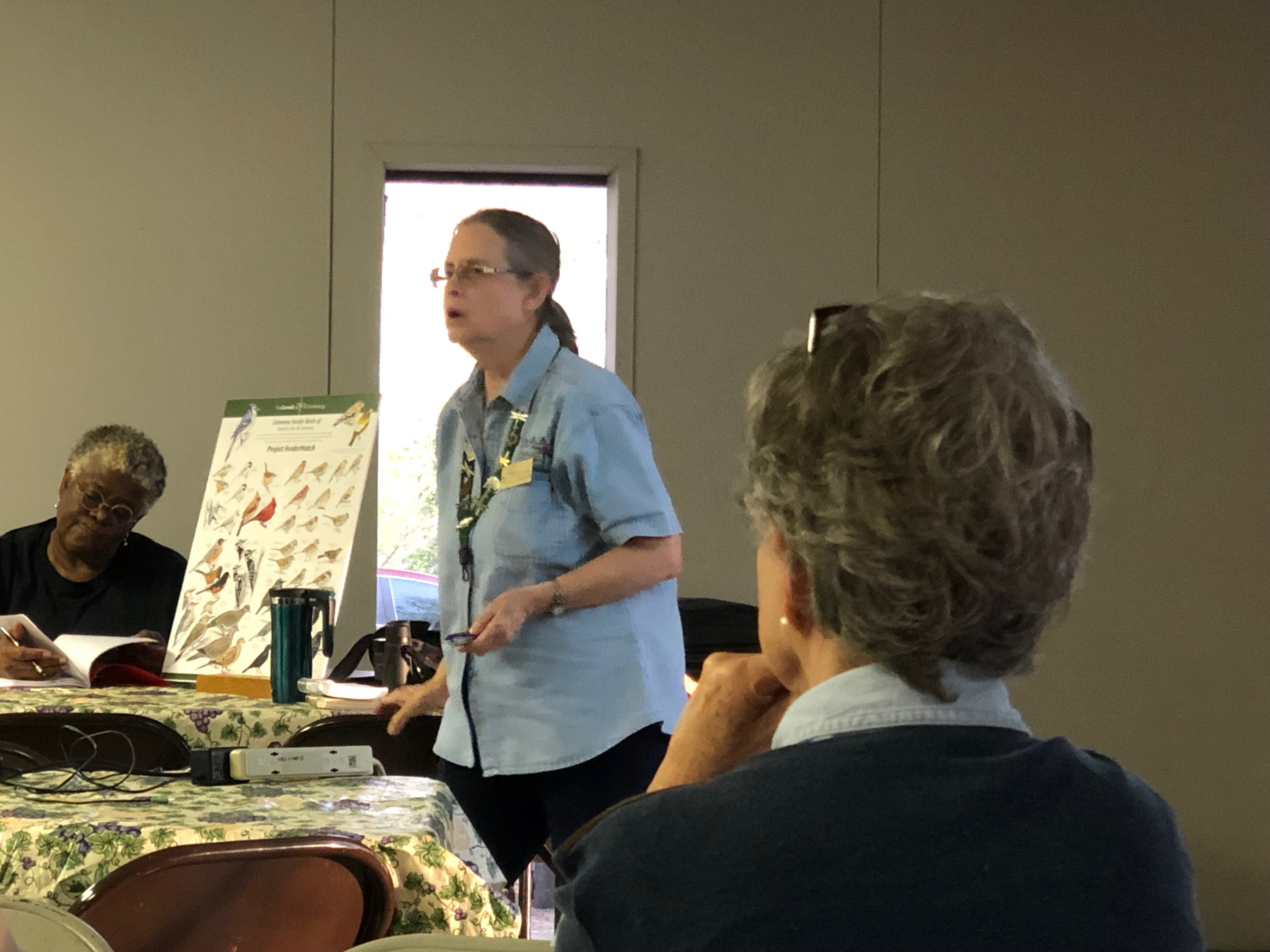
Joyce shares the various ways we can upload our observations to help researchers.

Joyce also loves birds, and watches them in a very accurate and detailed way. She keeps good records of her feeder, counting them carefully, and only identifying the ones that come into her feeder watch zone. There is a great deal of discipline to her approach to observing birds, which goes along with her amazing attention to detail in other parts of her life. We need birders like Joyce, too, to provide accurate data for researchers. (Of course, she’s also having fun.)


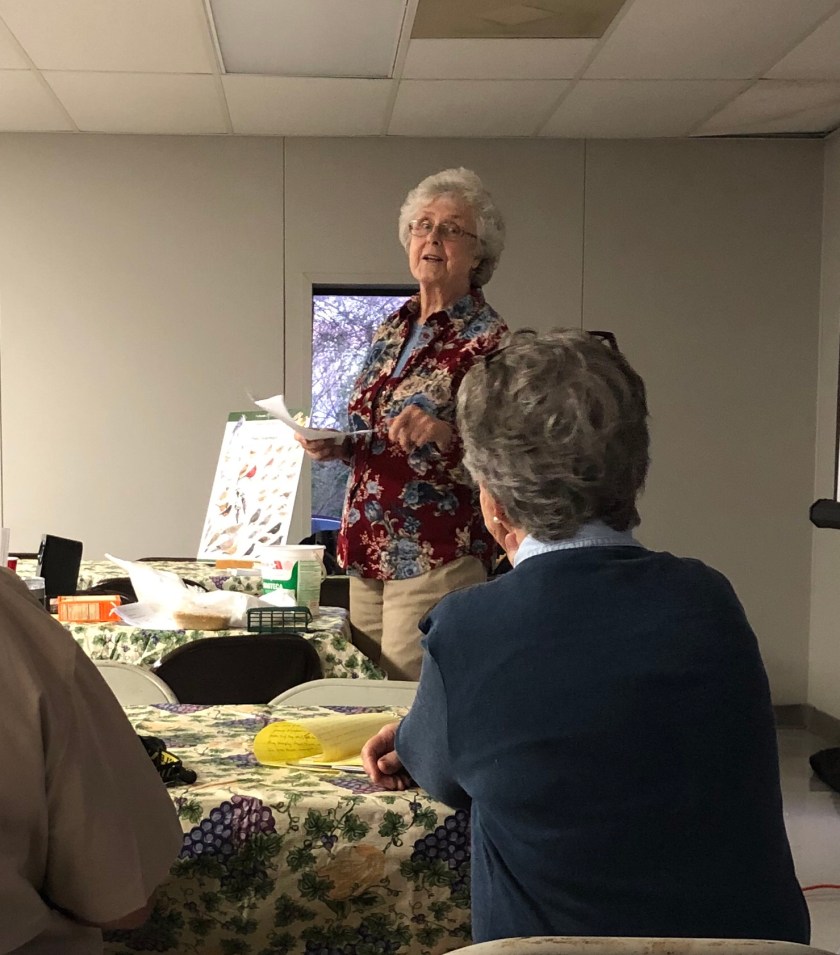
Here, Ann is listening to Cindy tell us her suet recipe. Some samples are on the table.

Then, there’s Cindy, whose approach to birding is to figure out how she can practically help the most birds. She shared with us her recipe for making lots and lots of suet for little money, so that the woodpeckers and other birds that like to feed on trees and eat more than just seed can be satisfied. She’s not there just to watch or count or record she’s there to help the birds thrive.

(All the women also carefully feed and water their birds; I was just contrasting their main styles.)

Another birder style was described by Ann, who talked about a very intense young man who asked to come to her house, because he was on a mission to get three more birds on his Milam County list of 100, and she had some of them in her yard. As soon as he saw one, he went on to look for the next. No lollygagging, watching behavior, or anything. And he didn’t stick around to chat; nope, he had to go to Bell County to work on his count there. These are the kind of birders people often gently poke fun at, but hey, they aren’t hurting anyone, are they?

Bonus sinset from the meeting yesterday.

Like any other hobby, there are many ways to enjoy birding (don’t get me started on process versus product knitters). Do you like to watch birds? Do you feel like you need to know what they are? Do you just enjoy their antics? Do you use them to tell what season it is? Share!

Now, that is a yellow flower!

By the way, I was almost late to the meeting, because I had to take this photo of beautiful evening primroses along County Road 140 across from the cemetery.