Such a long day! I’ll just share some observations I made today and talk about other stuff tomorrow.
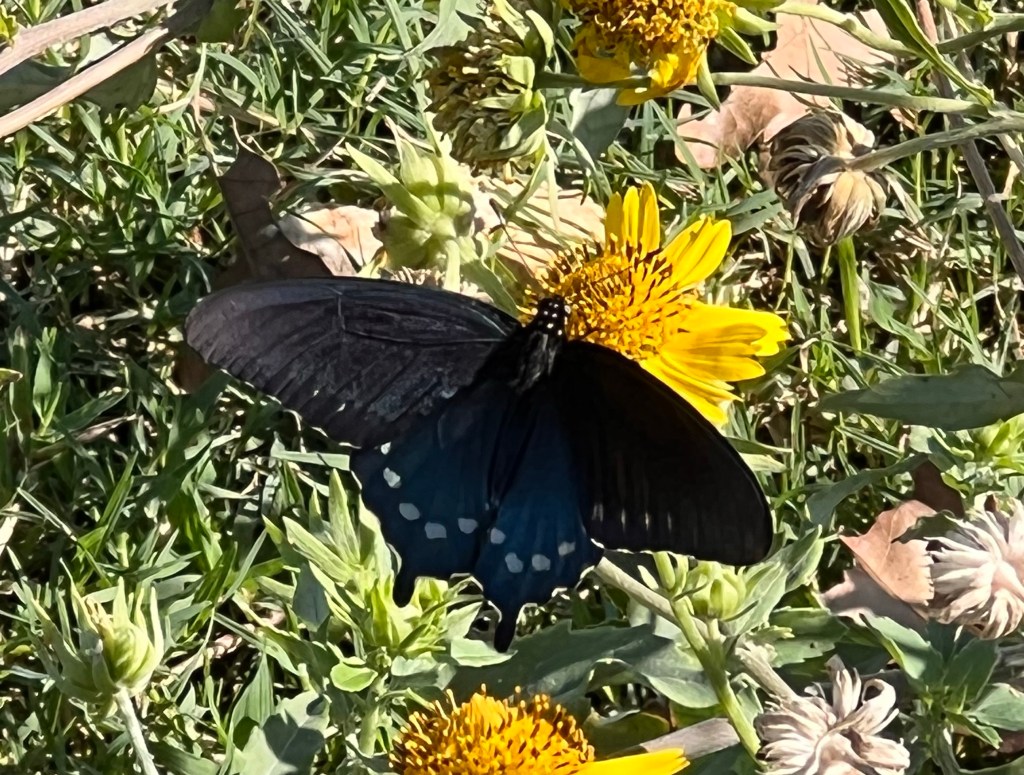
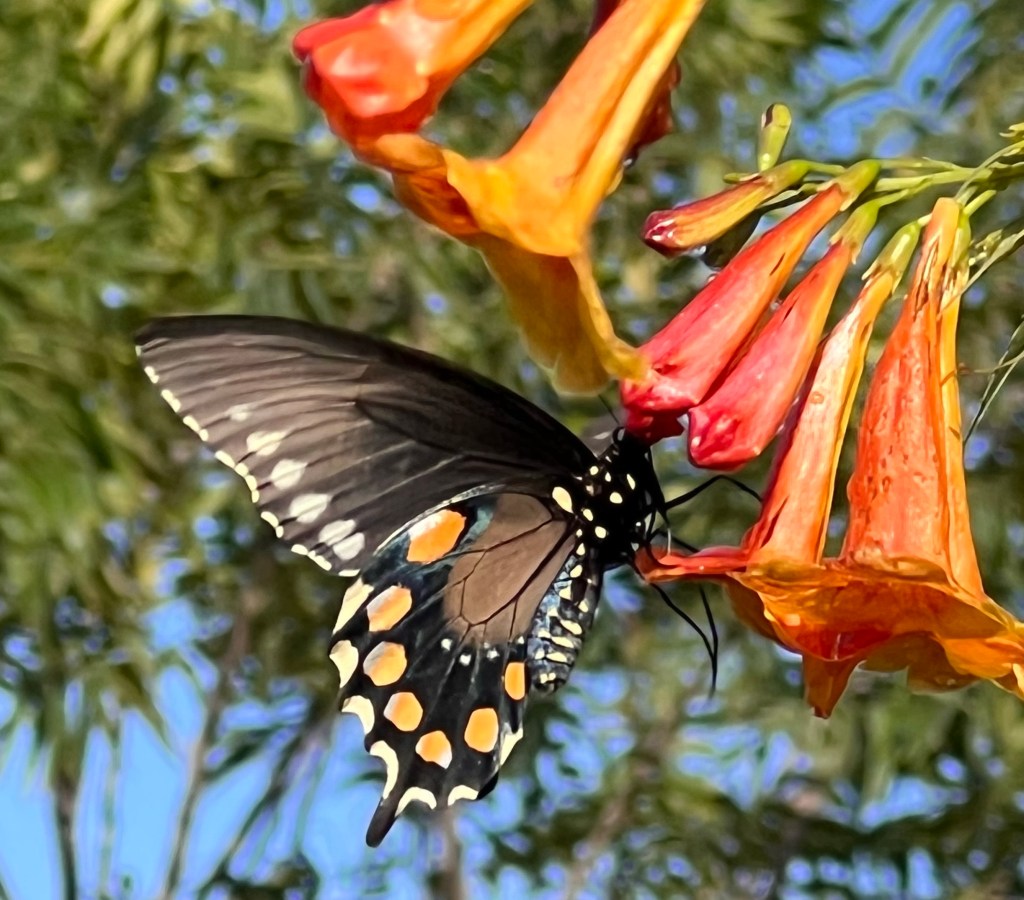
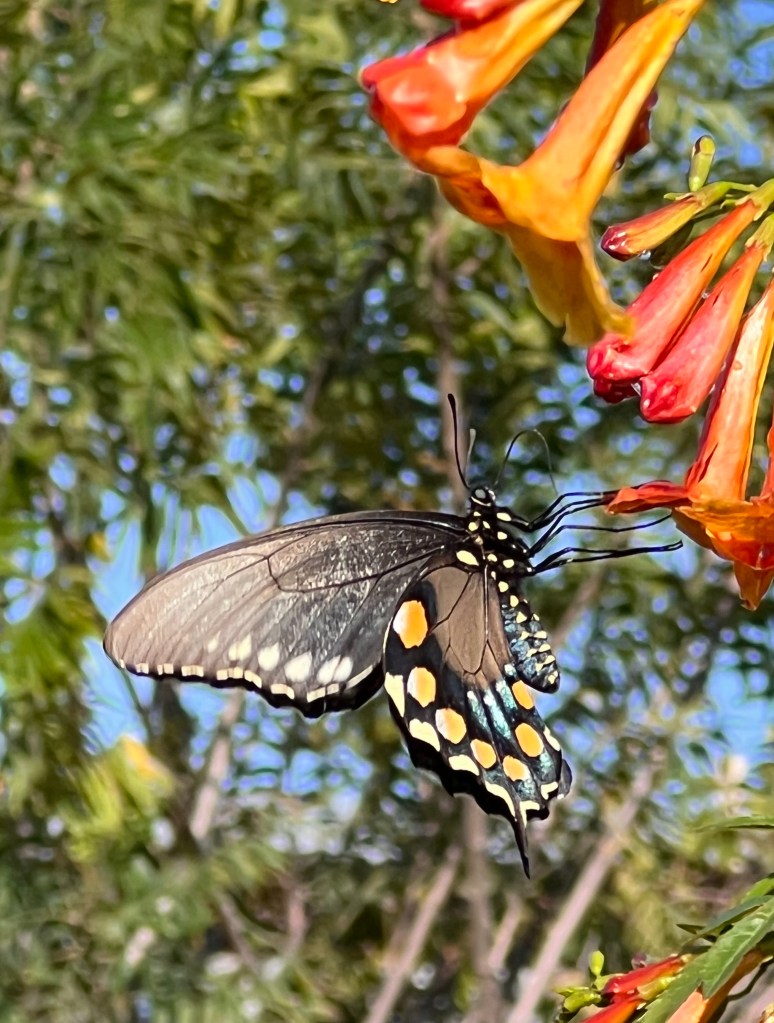
Pipevine swallowtail
I decided to see how many butterflies and bees I could see today between the two stops I made. One was Nature Days that our Master Naturalist group is doing every Saturday this month, while the other was a visit to my lonely horse, Drew, who’s been living the spa life while Tarrin’s on vacation. More on that later.
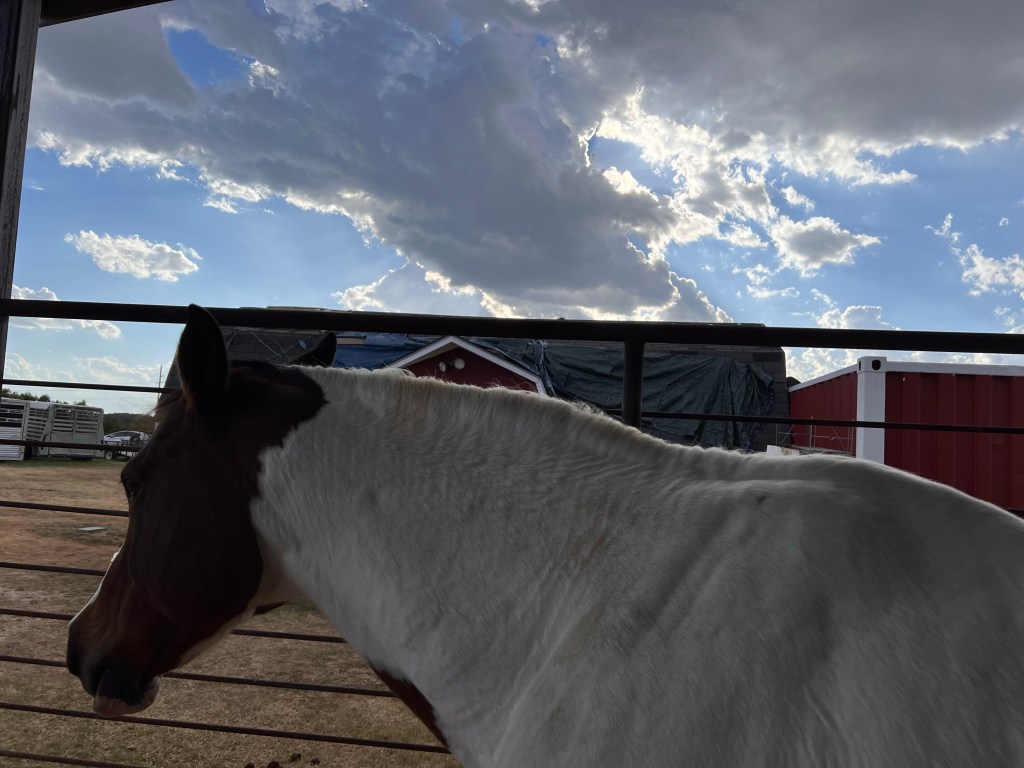
No, Mom, focus on me!
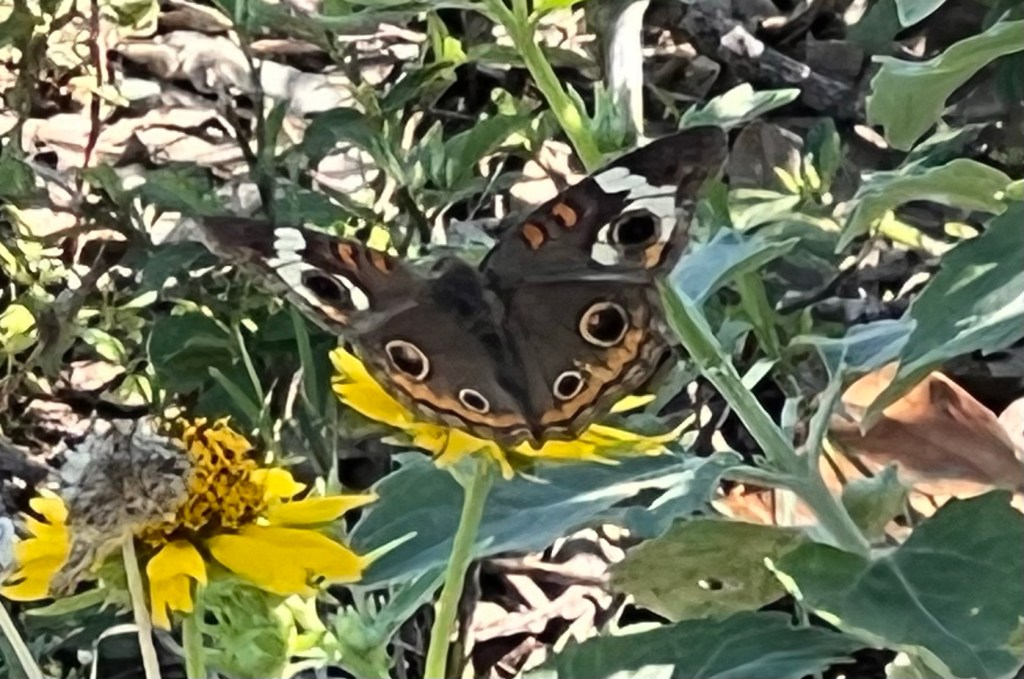
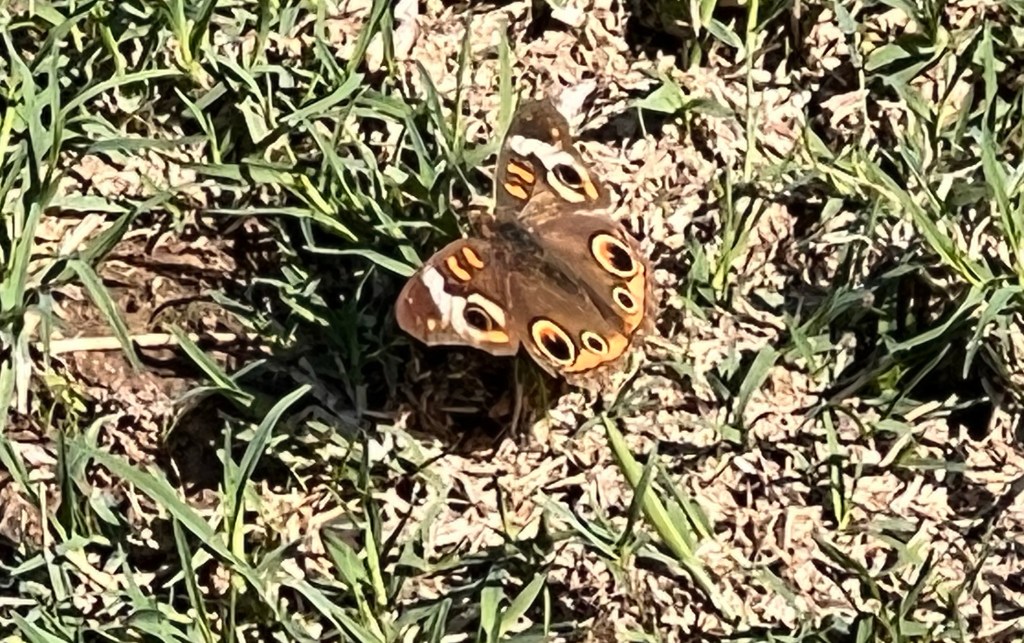
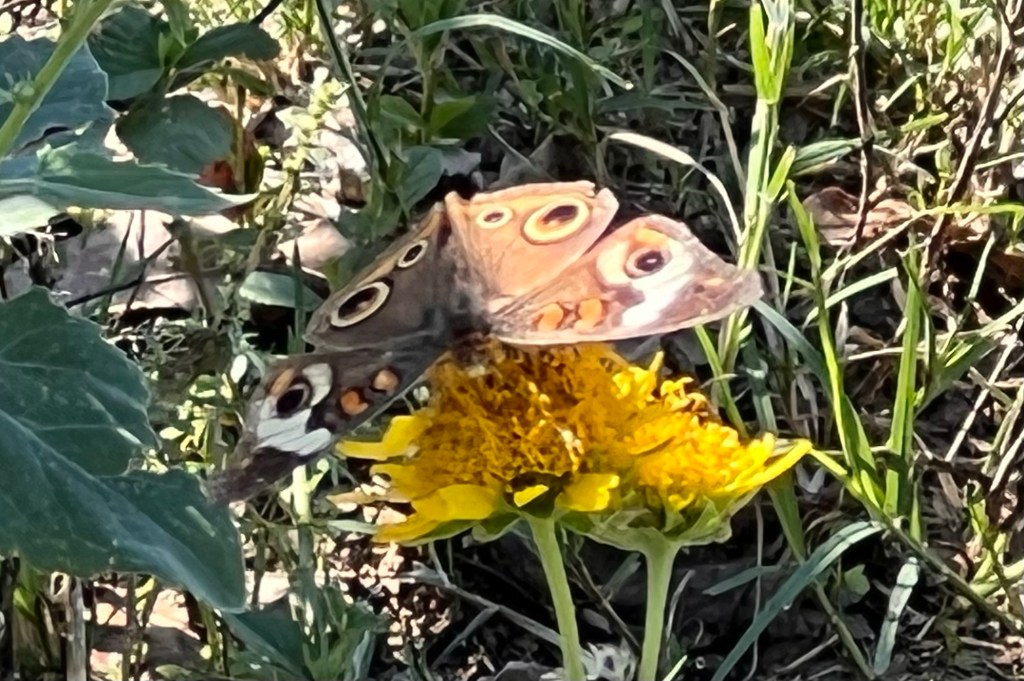
I really saw some beauties today. The most common one was the Common Buckeye.
I say they are uncommonly beautiful.
The fall butterflies make me so happy. The buckeyes, Junonia coenia, prefer yellow flowers that no other butterflies have visited. They eat plants as caterpillars that make them taste bad, too, like monarchs do.
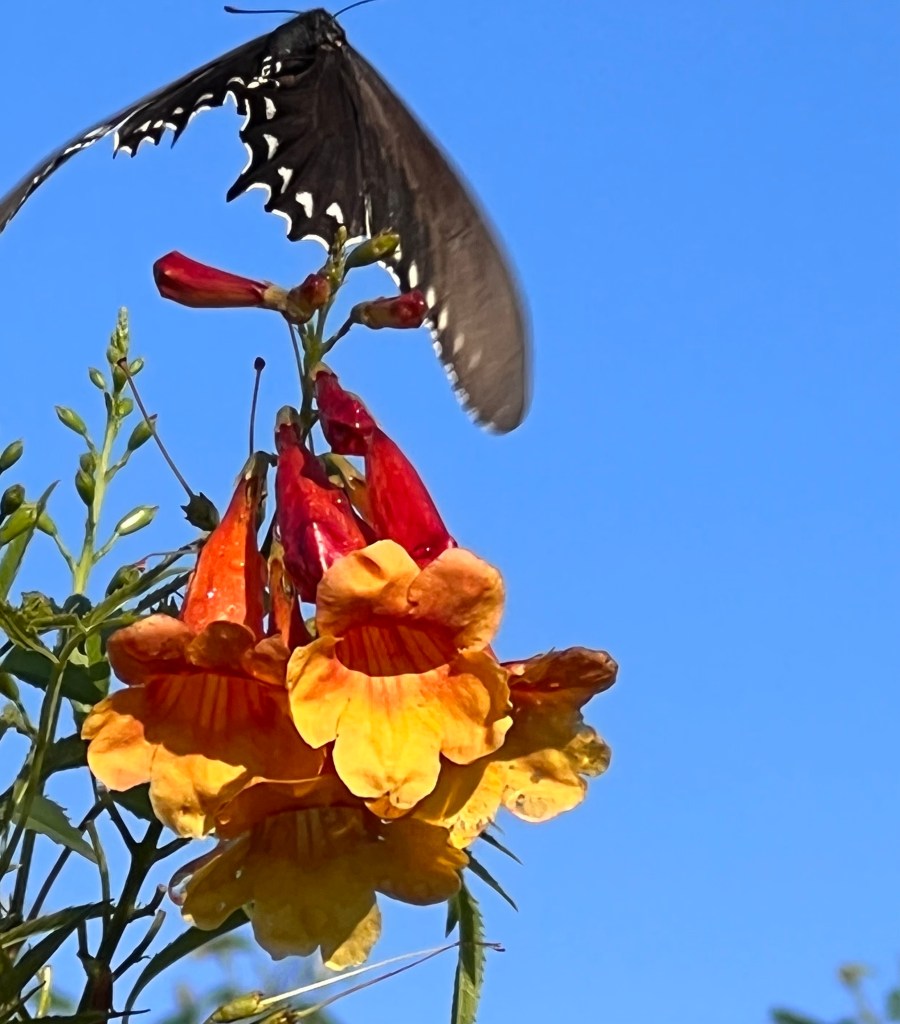
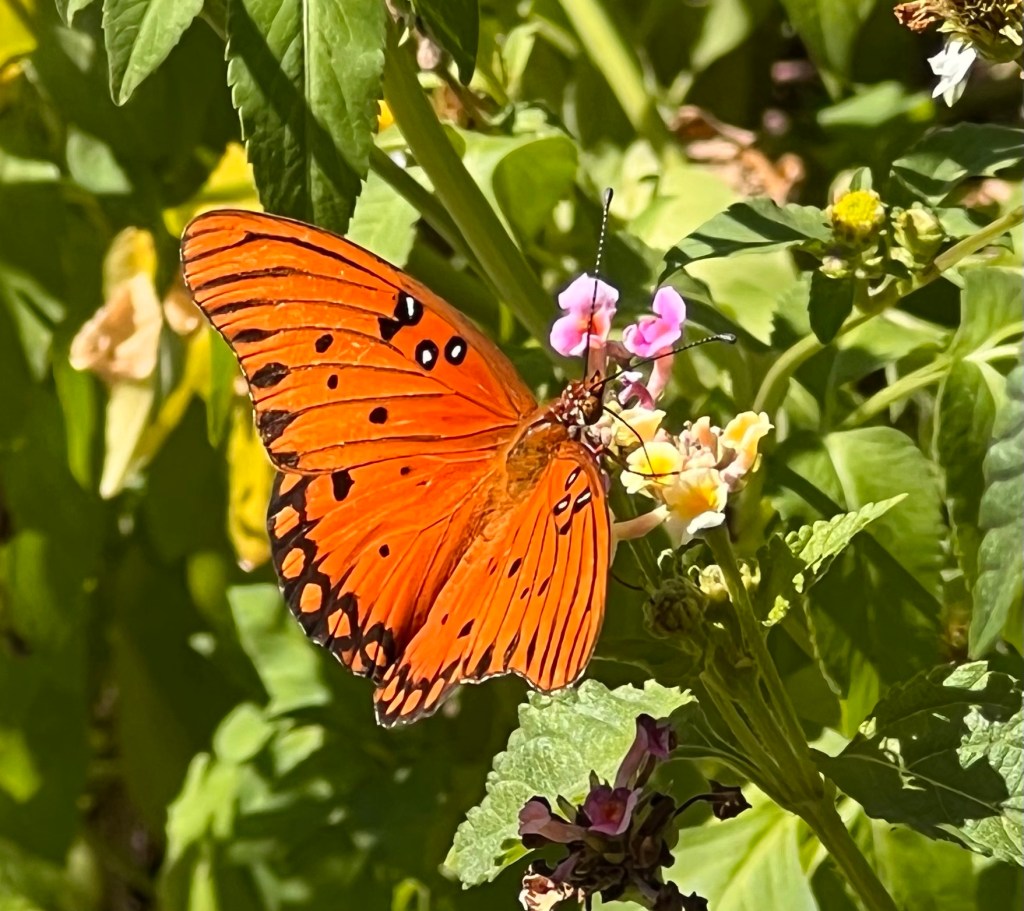
The most beautiful sight for sure was the pipevine swallowtail, which is the top photo. We get lots of these near here but not too many at our ranch. They are not shy, so you can often get good photos. I also saw these in both places I visited.
I saw both the Gulf fritillary and the variegated fritillary (who I confuse with a couple others). These are around for many months here. The Gulf ones are the brightest orange! Oops. I got confused and put the painted lady in here. See?
Oops this is a painted ladyAlso painted lady
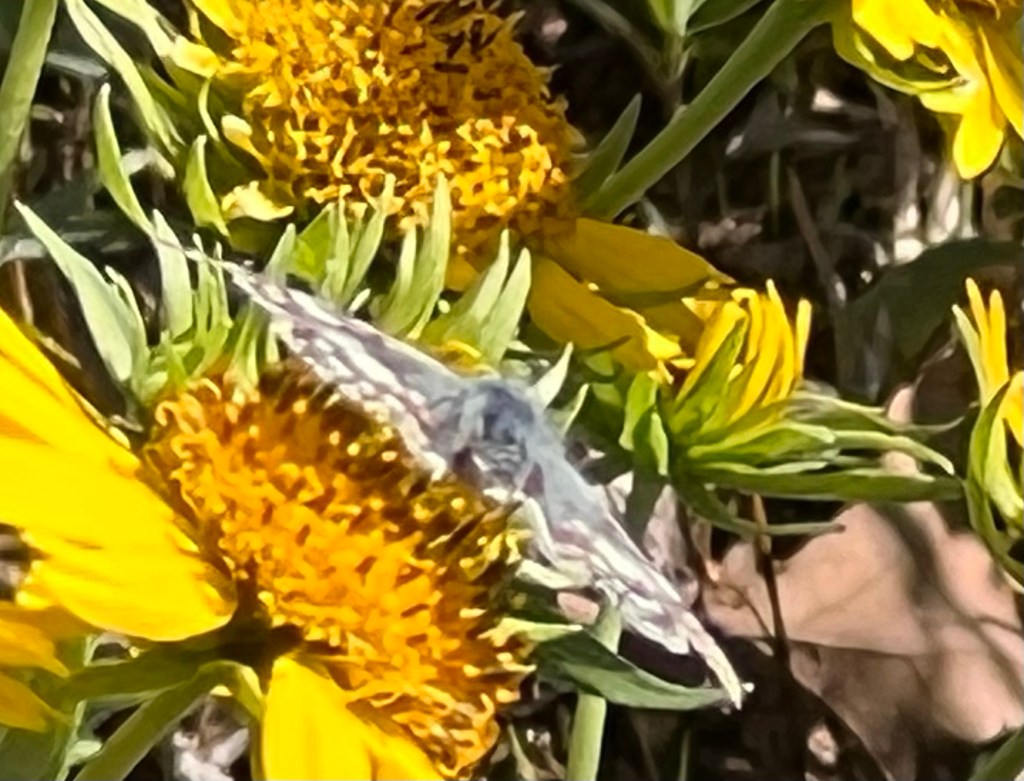
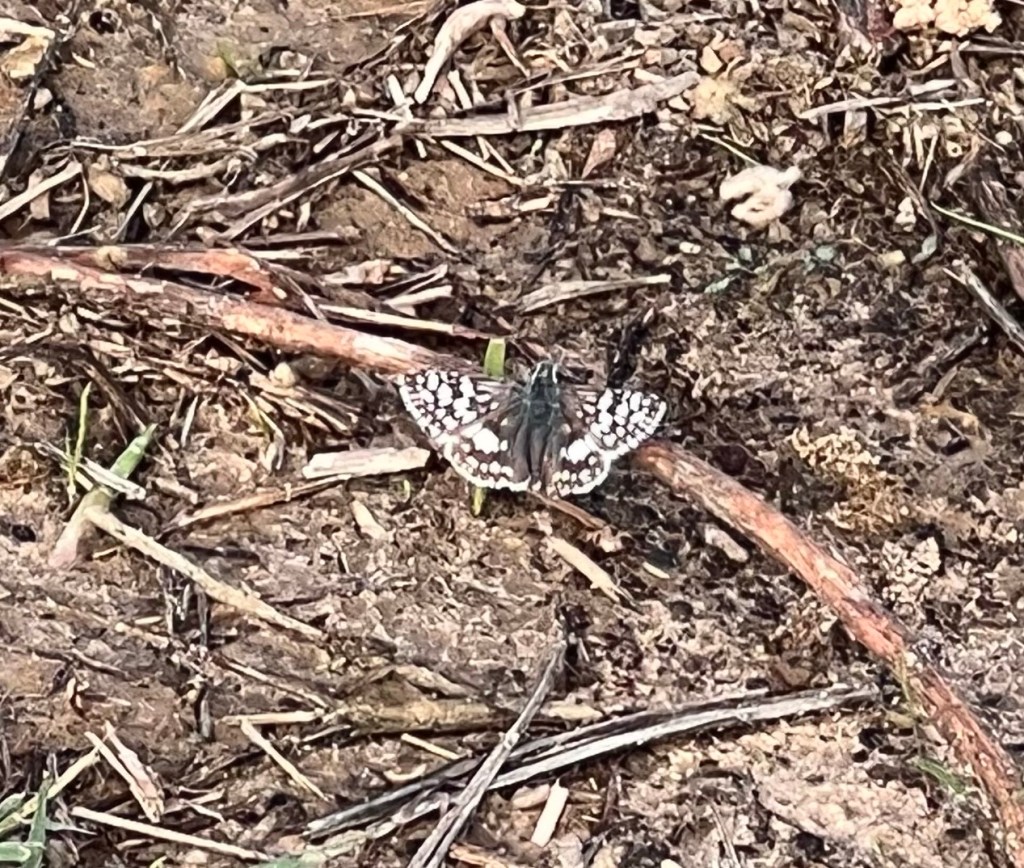
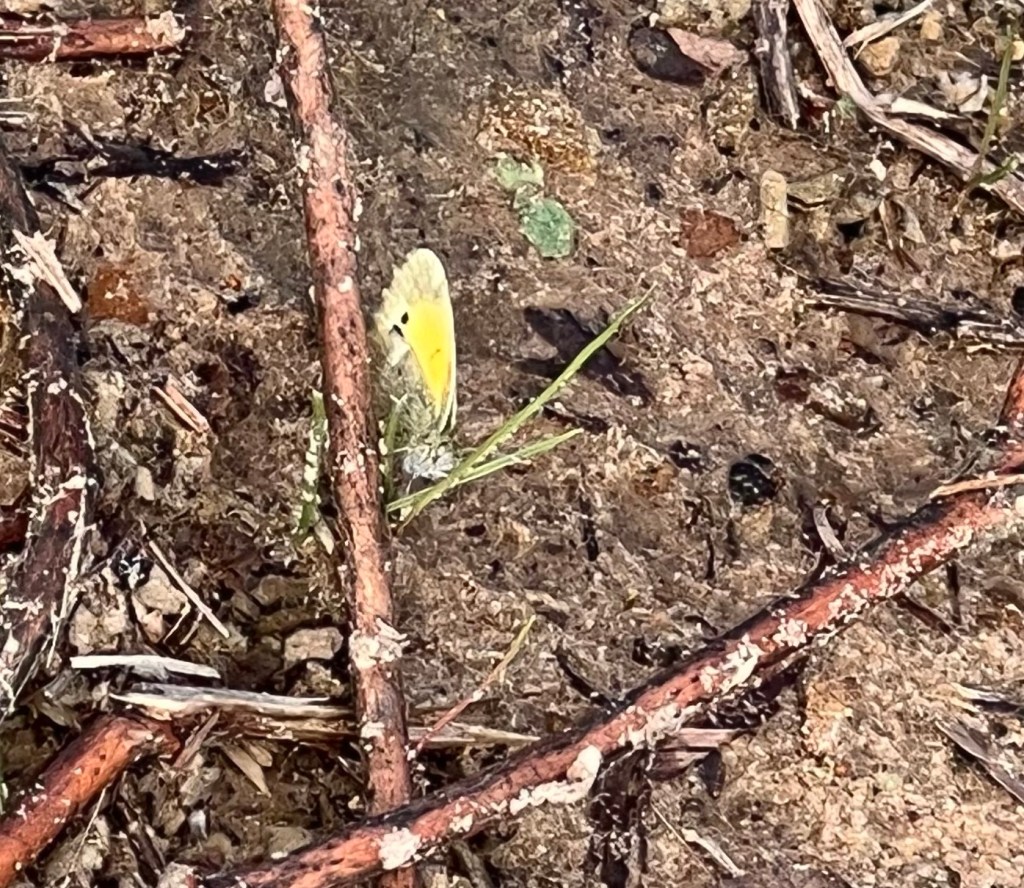
Let’s see, what else was there? Painted ladies, queens. dainty sulphurs (tiny yellow ones!), fiery skippers, and the checkered skipper. Also there’s one that is some moth.
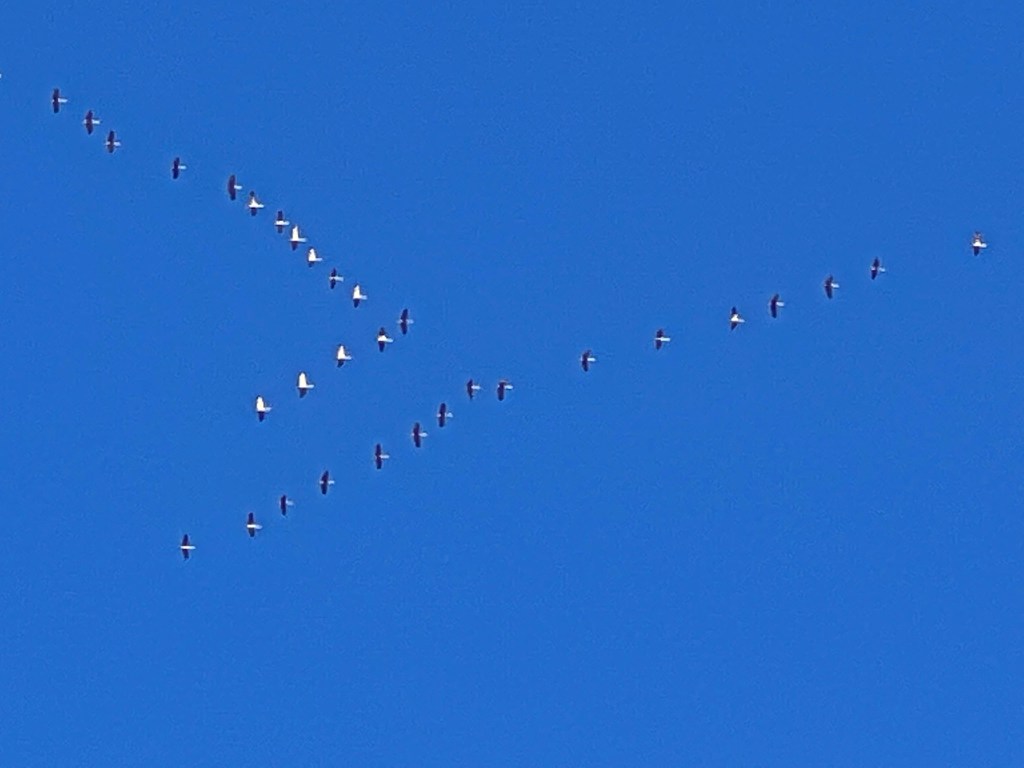
Although I’m quite excited about migrating snout butterflies (hundreds) and sandhill cranes (dozens), I’ll share more that I learned last Saturday for now.
Insect Photography, by Mary Ann Melton
Insects are what I take photos of most, after plants. I enjoyed getting ideas from Mary Ann, who happened to be the speaker at our last Chapter Meeting. I was very happy that she gave tips for phone photos as well as camera ones.
Handy hints
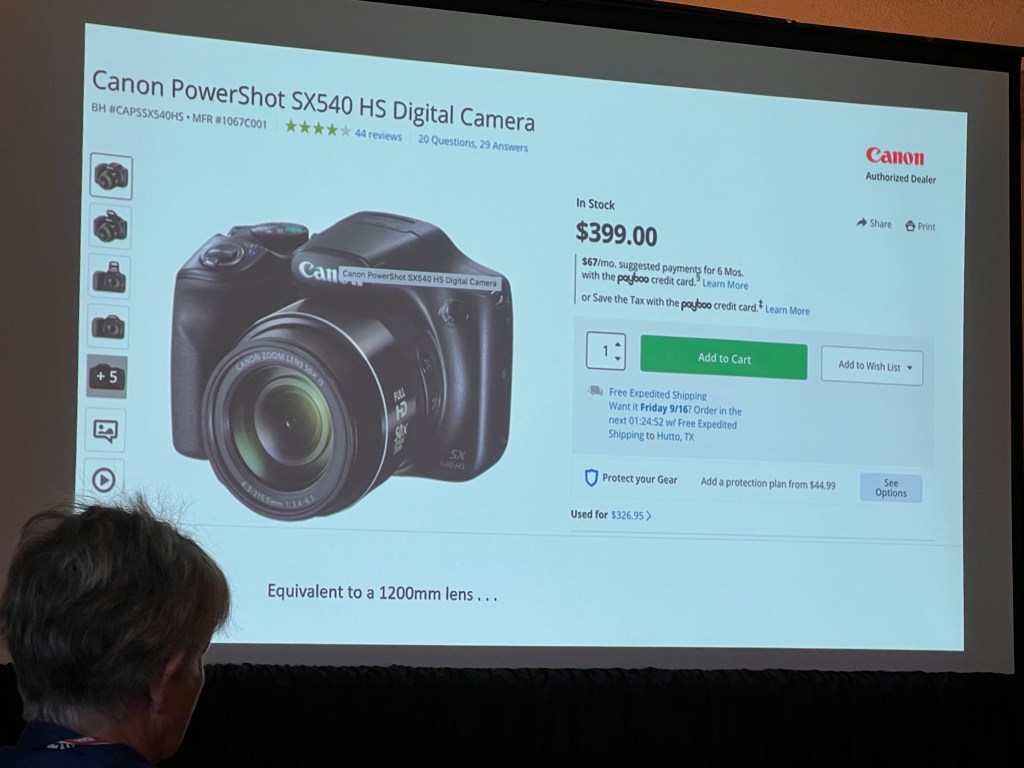
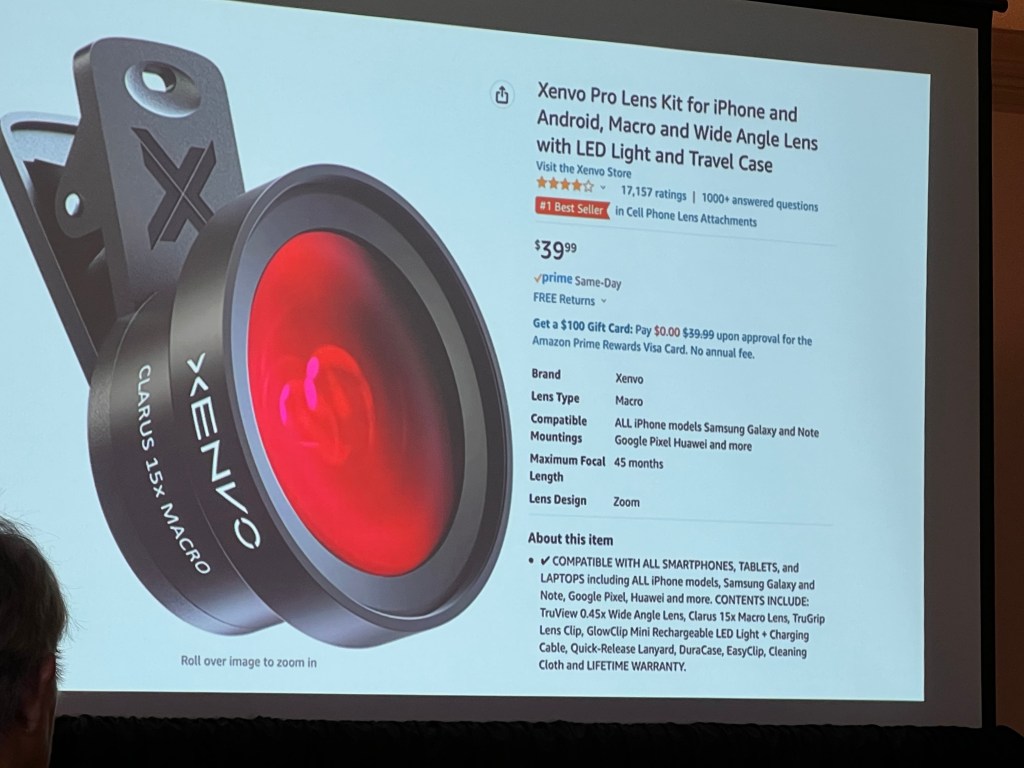
I took photos of some of the ideas she shared, especially for digital cameras, in case I can ever get one. There was also a cool attachment that lets you take better close ups on the phone. Attaching that to the 3x camera on my phone should be fun to try.
This is the closeup attachment
I also just enjoyed her beautiful photos with nice blurry backgrounds so the subjects look better. This was fun.
Here Be Dragons! Odonata 101, by Brent Franklin
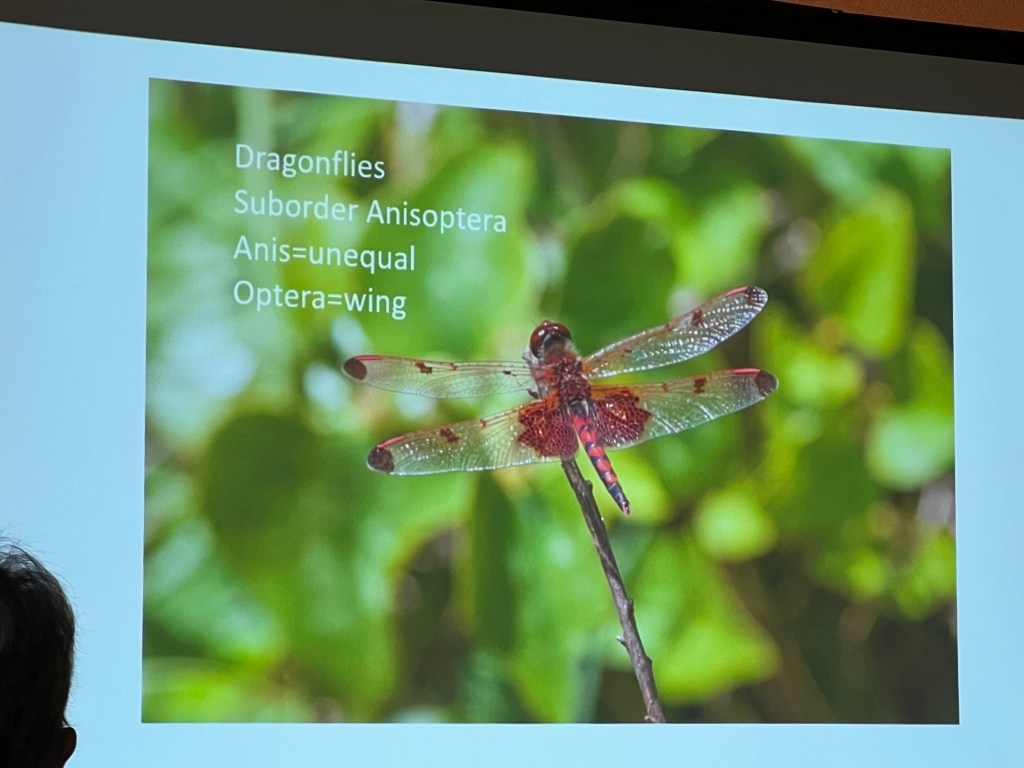
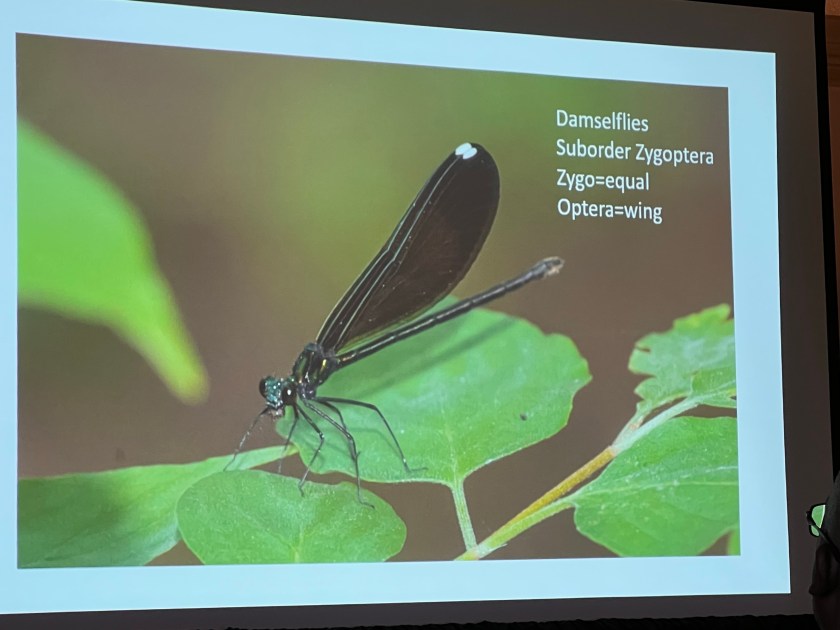
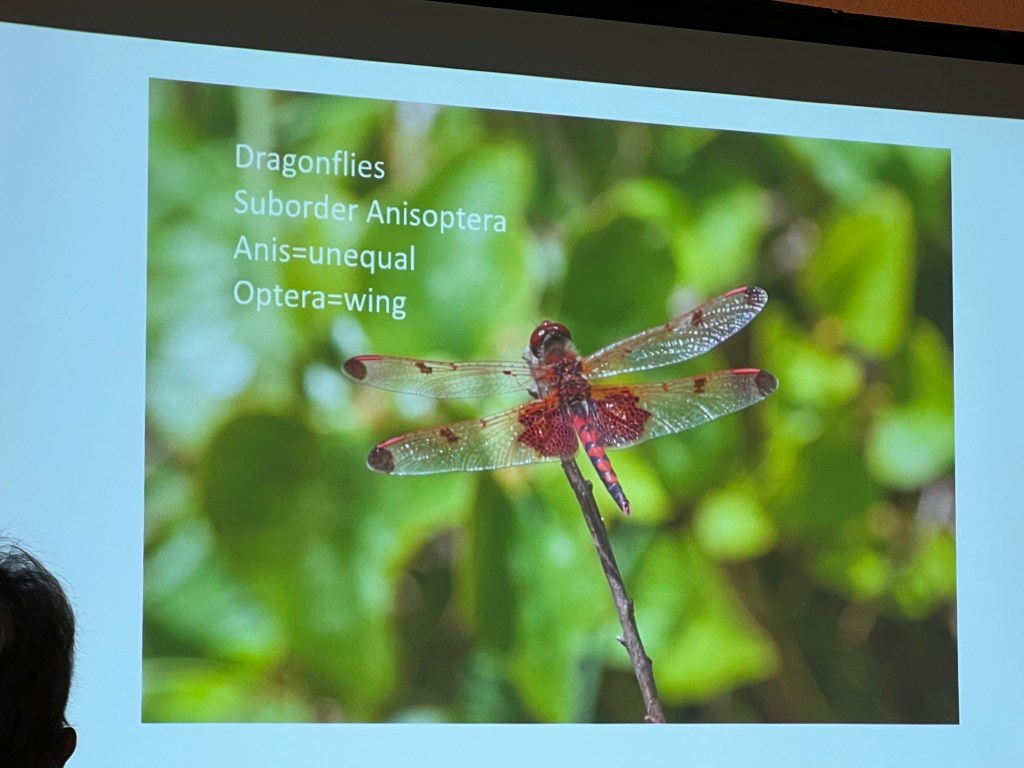
This was probably Brent’s first presentation, since he apologized a lot for its length and content. But it was just fine, and I learned a lot about dragonflies and damselflies, even though I thought I knew a lot. This guy has really seen a LOT of the Texas Odonata and has lots of insights on finding them and observing them.
He had some fantastic photos of various dragonflies, too. I learned more about their mating behavior (the male clamps on to the female behind her head and flies her around until they find a good egg-laying place) and life when young. I don’t think I’d realized how long they can live in the water before emerging into the air. It can be years!
There’s just so much going on with these guys. Did you know dragonfly eyes take up almost their whole head, while damselfly eyes are on stalks on the sides of their heads? Yep.
Sticking their back ends straight up is called obelisking. That’s a new word for me.
iNaturalist 301: Advanced Applications and Exploring Data in iNaturalist, by Tania Homayoun
I always feel like it’s not a good conference if I don’t go to a session by Tania. I think I’ve gone on a field trip with her or heard her speak at every conference I attended. I’m such a rogue iNat user that I don’t think she’s too impressed by me, but I’m impressed by her! This session didn’t disappoint, as I learned some new features in iNaturalist and that some features have gone away. I’m glad I was able to draw an area for our ranch before that was removed as an option because people were misusing it or something.
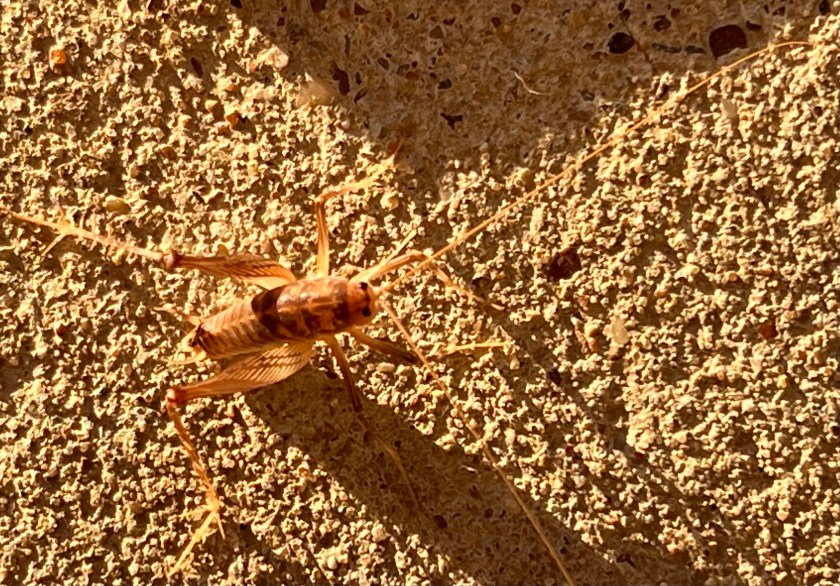
My latest iNat entry taken in glary sunlight. I think it’s a camelback cricket.
Since I’d spent all week uploading things for that Pollinator BioBlitz, it was good to just talk about it and to learn more about the computer application, which really lets you do useful things. I plan to download my ranch observation data soon and do some analysis in Excel.
I was sad to find out that Tania is leaving her position with Texas Nature Trackers, but very happy to discover it’s because she is going to be the State Ornithologist! WOW!
Wrens: Little Birds with Lots of Energy, by Scott Kiester
It turns out that the speaker for this session, the last one I attended, is the guy who drove us to the field trip on Thursday. He had lots and lots and lots of information on wrens, including fun recordings of the songs and “scolding calls” of each type.
This was all news to me. Cool.
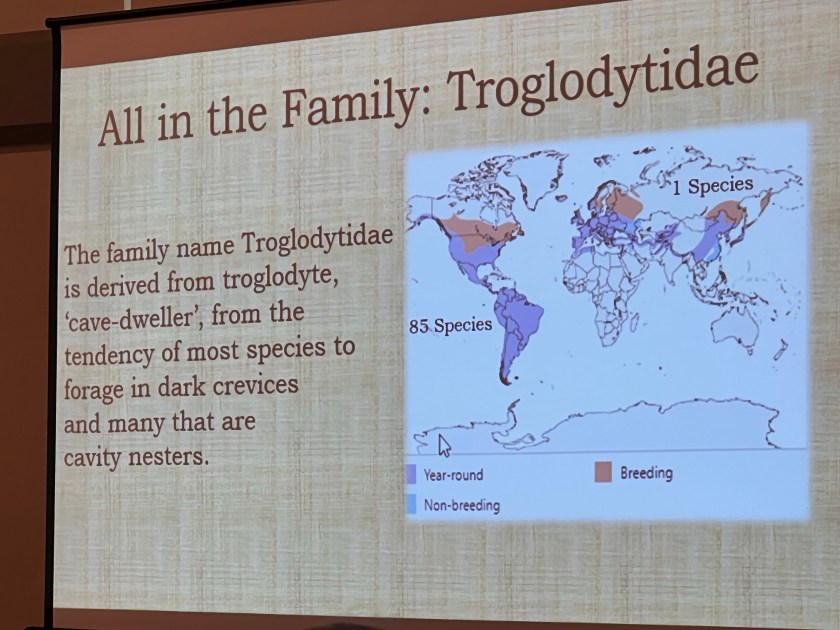
Wren fact that blew my mind: there is only ONE kind of wren in the Old World, and they are pretty sure it crossed the Bering Strait and populated that part of the world from North America. There are many kinds of wrens here, though. We went through most of them in two hours, it seemed.
We also learned folk tales. The wren won kingship by hitchhiking on an eagle and jumping off it to become the highest flyer. Tricky bird.
I have a much better clue about wren identification now, and can easily tell you which one is a Bewick’s. By the way, their numbers are diminishing as some other wren takes over, and it’s pronounced like the Buick car. Huh.
The rest of the sessions on Saturday were about who won awards and honoring people with lots of volunteer hours. I sure wish Donna Lewis had been able to come so she could have received her 10,000 hour pin. That is a huge milestone. To compare, I have about 800 hours.
I’m sticking my crane photos and video from yesterday in here, in case you’re interested. Seeing them flying over is always a highlight of the autumn for me. I love the sounds they make.
I promised to write up notes from the sessions I took at the 2022 Annual Meeting of Texas Master Naturalist, but there was a lot of stuff going on the last couple of days. Now I have a moment! First, I will say that this was the best conference I attended so far in terms of the quality of the sessions I attended. They were chock-full of interesting tidbits. It also helped that the Omni Houston has comfortable chairs. I wasn’t squirming the whole time, except in the one session where I had to sit on the floor. Anyway, here are some notes!
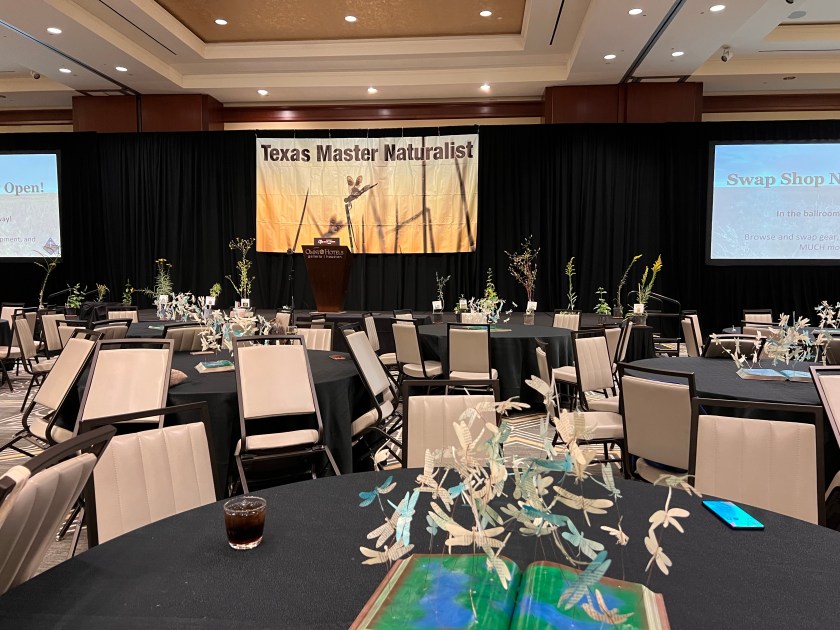
The main meeting room with interesting centerpieces made out of books
Becoming a Land Doctor: Evaluating Land Health, by Megan Clayton
The speaker here had also spoken at the Bennett Trust conference, so it was good to hear her information again. She talked about how to tell if your land was over-grazed, whether it had lost its topsoil, etc. It takes thousands of years to rebuild topsoil if it’s removed.
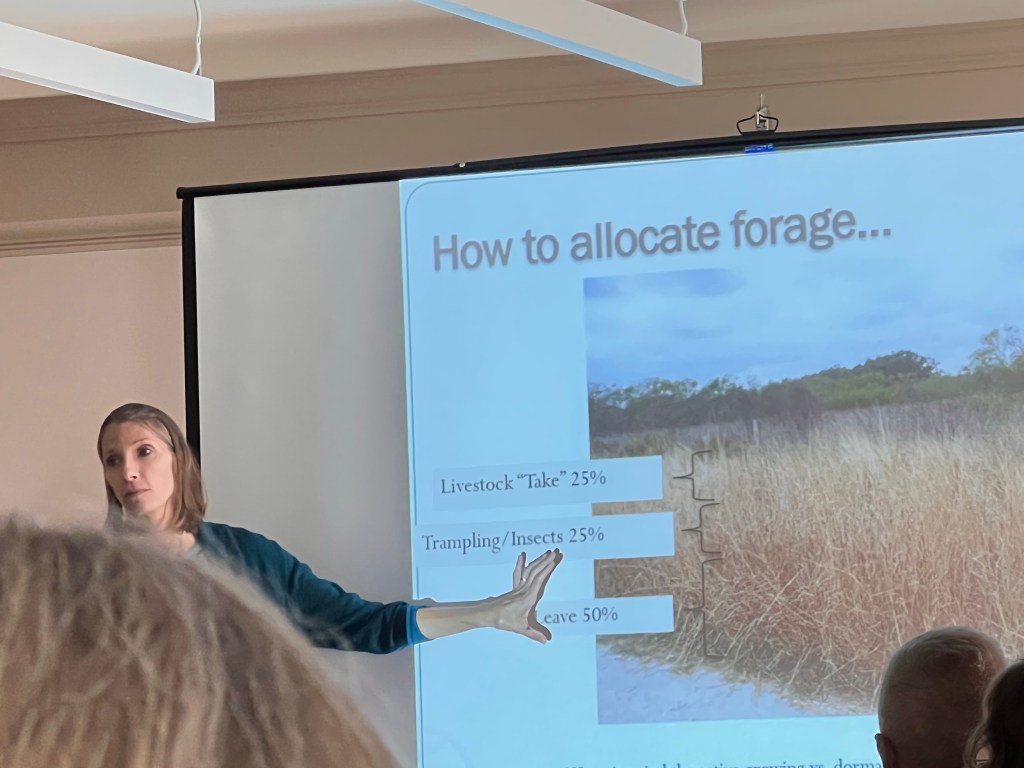
Grass is your friend if you want healthy land! But you need to let it grow back before grazing again. The ideal would be to imitate bison, who showed up, ate, pooped, and trampled once a year, then moved on.
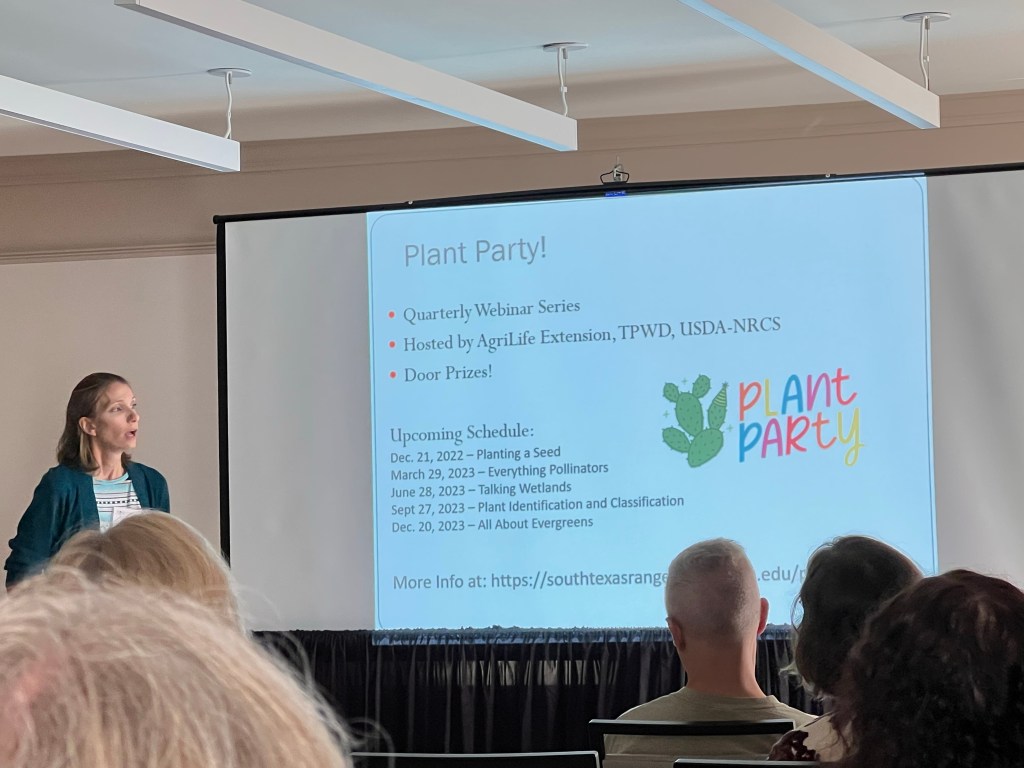
I found out the speaker does these fun webinars that I will try to attend
Fire and Goats: Vegetation Management Using Traditional Techniques in a Novel Setting, by Stephen Benigno
This one was a lot of fun. The speaker is from the Houston Arboretum, and he shared how they used a flock of goats from “Rent a Ruminant” — what a great name. The goats really took care of the underbrush. They just took a week and we’re great at gnawing down dewberries.
This gave me many ideas, so I had questions about fencing and such. Having just a few goats and rotating them sounds good!
He also talked about doing a controlled burn at the arboretum. That required lots of permission and publicity to keep people calm about the smoke. It worked out well but didn’t quite burn as much of the meadow as they wanted. All learning experiences in an urban woods and prairie!
No photos from this session, so here’s a beautiful Polyphemous moth that was on a window at the hotel.
Birding with Today’s Technology: Utilizing eBird, Merlin, and Other Online Resources, by Kelsey Biles
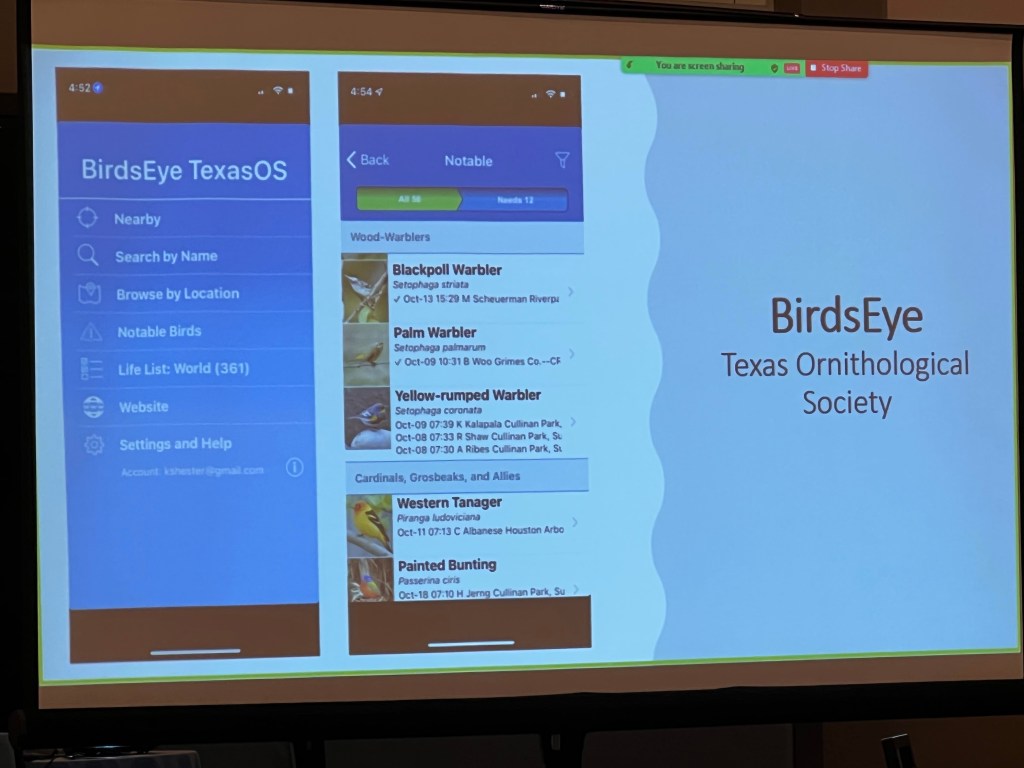
I took this one to learn more about eBird. It was worth it just to learn about how you can ID birds just by sound using it. So, if you don’t know, this is software that lets you identify birds and save your sightings online, all going to science. You don’t need photos, and it’s easier for folks who aren’t great with online image stuff. Many people I know contribute to it daily by just watching their feeders.
One of the resources I learned about
There was a lot to learn, though, so I was glad to be there. Plus the speaker had a very cute bird skirt on.
Conservation of the Night, by Cindy Luongo-Cassidy of the Dark Sky Network
This was the lunch speaker. She got us all fired up about eliminating light pollution and keeping the dark sky available for people, animals, and plant life. We all need it. I learned how to modify light fixtures to direct light downward rather than outward from simple things you might have on your property.
I feel pretty good about our place. We have a couple of rogue lights, but most of them stay off unless needed, which is a good practice. I don’t want to confuse moths and migrating birds, after all!
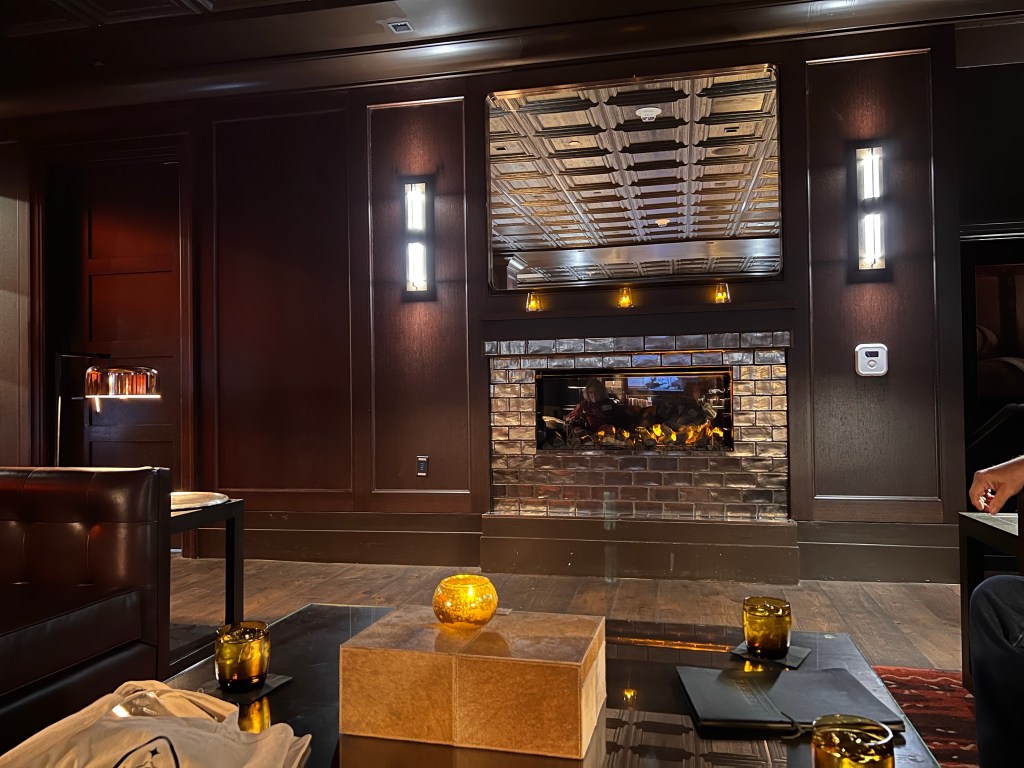
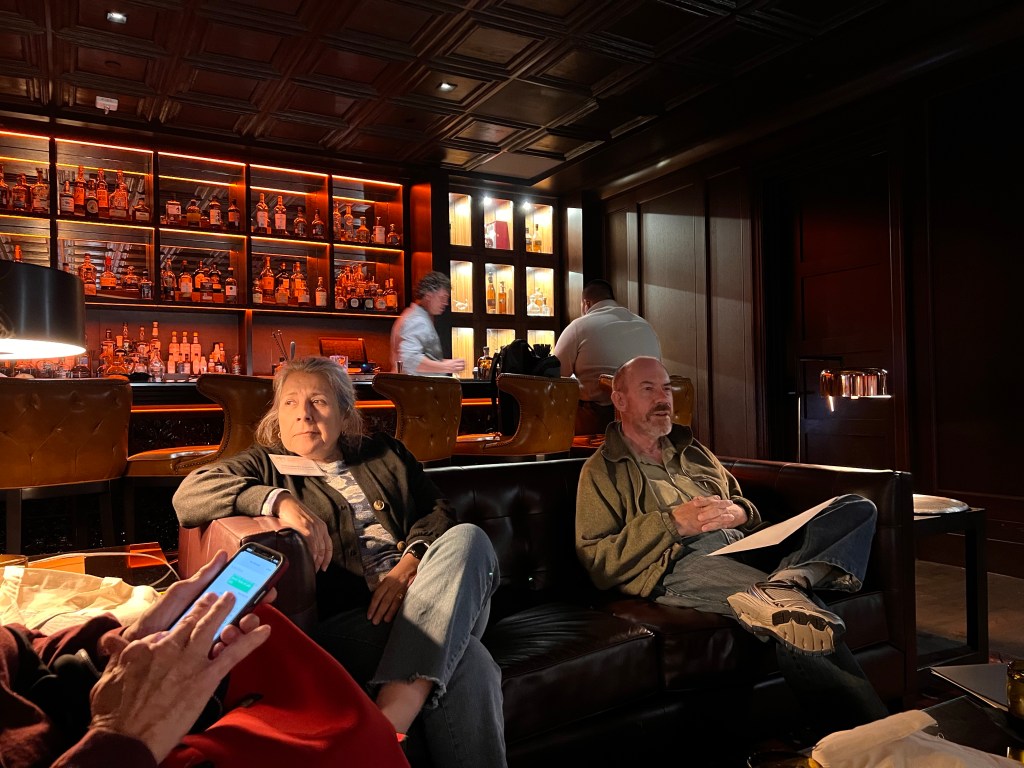
Speaking of the dark, we sure enjoyed the darkness of the whiskey bar at the hotel later in the evening.
Feral Hog Biology and Impacts: What We Know and What We Hope to Learn, by Mikayla Killam
This one was pretty depressing to me. It sure is hard to get rid of feral hogs. I did learn a few trapping techniques that aim to get as many hogs as possible into traps, like using funnel feeders and trip wires at the furthest end of the traps.
Of course, hogs are very smart and figure many kinds of traps out, as we know. The speaker recommended that the best way to remove the greatest numbers of these invasive animals all at once is to hire professionals in helicopters to get as many as possible, and to go in with as many neighbors as possible, since hogs don’t know land boundaries. Once that is all done, you can then more easily pick off individuals by trapping or shooting.
I discovered this lovely nest for the hotel’s black swan pair. Cygnet making is preferable to piglet making.
I learned that if you just get some of them, they go into piglet-making overdrive to get their numbers up. There’s a scientific word for it that I forgot.
Living in Harmony with America’s Song Dog, by Karin and Roberto Saucedo
My last educational session for the day was very popular. The presenters are a couple who really love coyotes and have studied them extensively in urban environments. I had to sit on the floor for this one, but it was kinda fun.
We learned how the coyotes interact with human habitation, which is often caused by houses being built around their traditional territories. We saw how they helped some of the coyotes get over mange by putting out medication for them. They knew not to get too friendly with them and showed a sad video they made about a coyote that people kept feeding even when asked not to (and even when they knew game cams were set up that would catch them). Sure enough, being tame was its downfall.
A lot of the coyote stories were sad. But an interesting thing I was reminded of in this talk was that in parts of Texas there is a lot of red wolf blood in them, which makes them a bit larger. I think that is true here, as ours are often quite large and healthy (I don’t see ones with mange out here, but they also are wilder and avoid people and our dogs).
Keynote: Kjell Lindgren, Astronaut
The last talk of the day was the dinner speaker. It started out with some Texas Parks and Wildlife or AgriLife official talking about how cool it was that a Master Naturalist spent time on the space station recently. They showed some photos and a nice message he’d recorded for us about how being a Master Naturalist had helped him in his work. We were all happy with that, but then they surprised us with Kjell, the astronaut, coming onstage and talking to us in person.
Kjell Lindgren
This is one impressive fellow with an MD, a PhD, and a degree from the Air Force Institute or whatever that is in Colorado Springs. And of course, he’s a Boy Scout leader and such. He seems genuinely nice, kind, and humble, too. My favorite part of his talk was all the photos he shared of the earth as seen from the space station. The auroras, the volcanoes, the rivers, etc., were fascinating to look at.
Rivers and farms
I have to say, though, that Friday’s sessions were a LOT of learning all in one day. I’m glad we got to go relax afterward in the lovely bar. The hotel had great restaurants and bars. No complaints about that!
I didn’t get a chance to blog yesterday and I’m pretty wiped out tonight. It’s been a great Master Naturalist conference and I’ve also enjoyed hanging out with friends.
Also the Omni Houston is an extra nice hotel. Best hotel bathrooms ever, plus views from meeting rooms (shown).
I plan to share some of my learning later. Tonight I’ll hit the highlights. Like yesterday, during dinner, when they surprised us with a great talk from the first Master Naturalist in space, Kjell Lindgren. Wow, he’s a real renaissance man and nice, too!
He also shared amazing images from space.
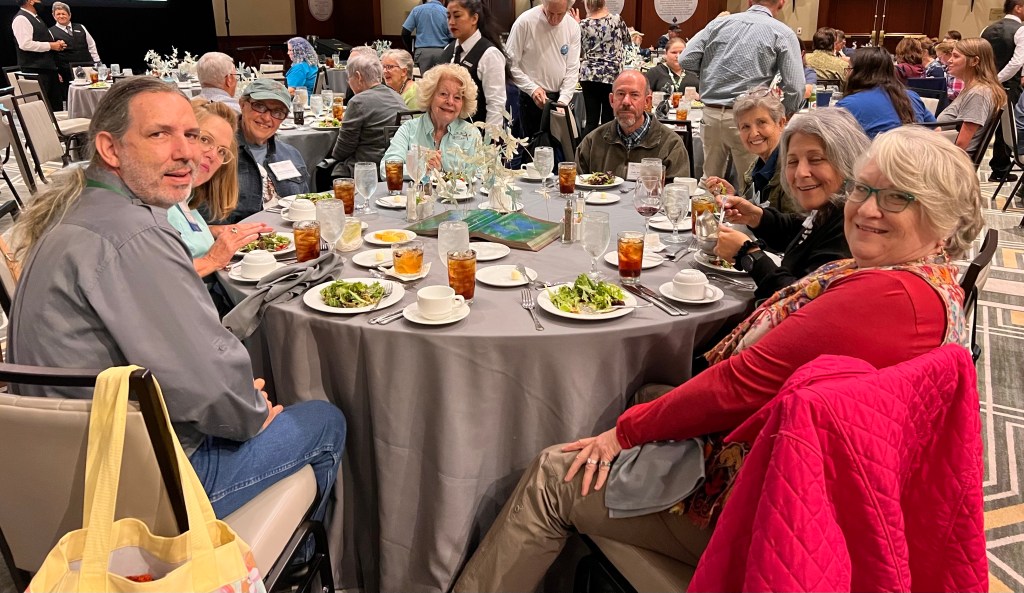
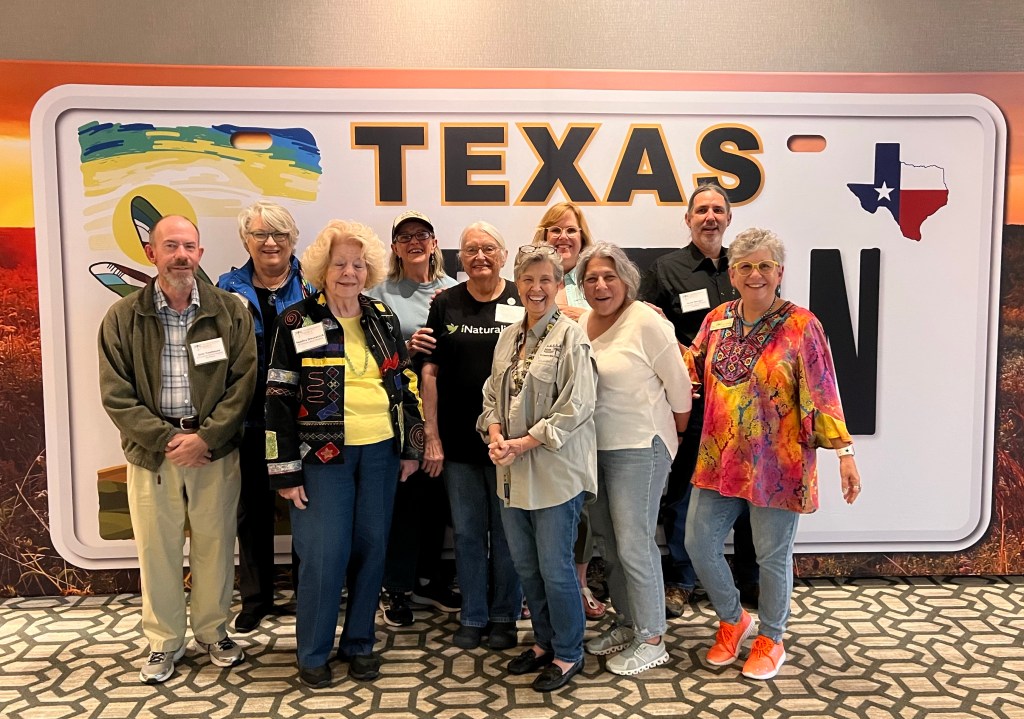
The food has been great, too. And conversation with nine fellow Milam County folks and new friends has been so great. I even got a COVID test, and it was negative! Fun times.
Meal time!
We got goofy a lot, which kept me laughing and nicely broke up intense learning about feral hogs, coyotes, wrens, dragonflies, insect photography and much more.
There, now you learned something. And we settled down long enough to take a picture.
I get renewed by taking a break like this, even when I get worn out. I’m inspired to do more at the ranch and more outreach as well. I learned so many ways to help the planet.
I learned ranch stuff, too.
But mostly. I’ve had fun. And I’m proud of our little chapter.
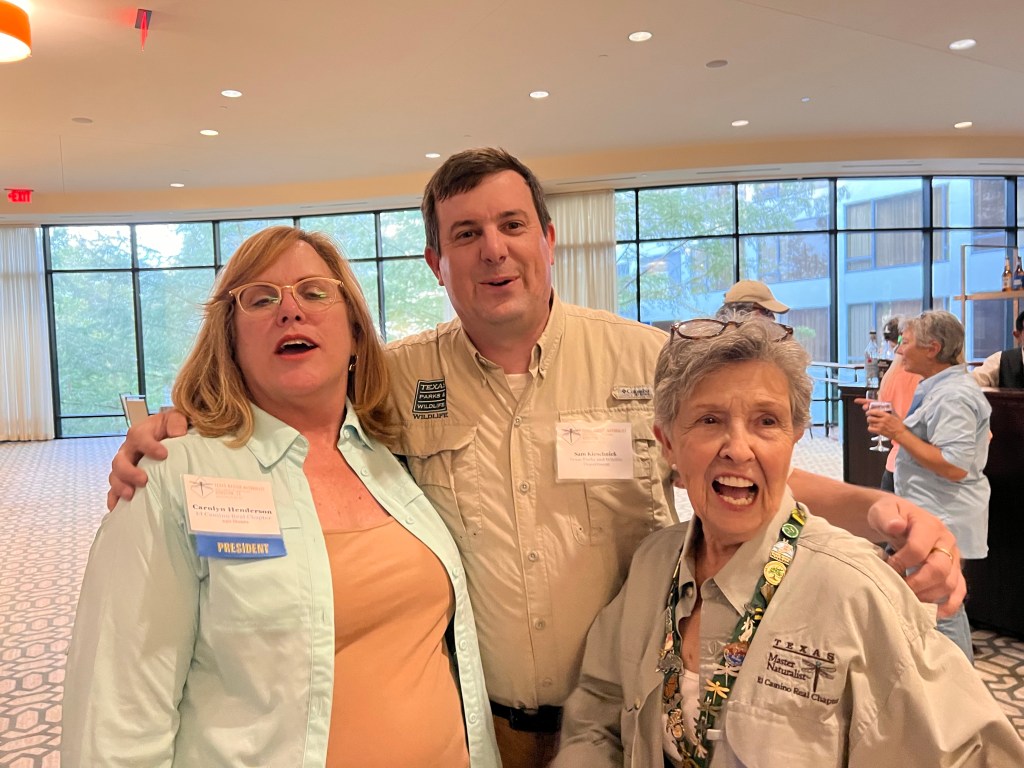
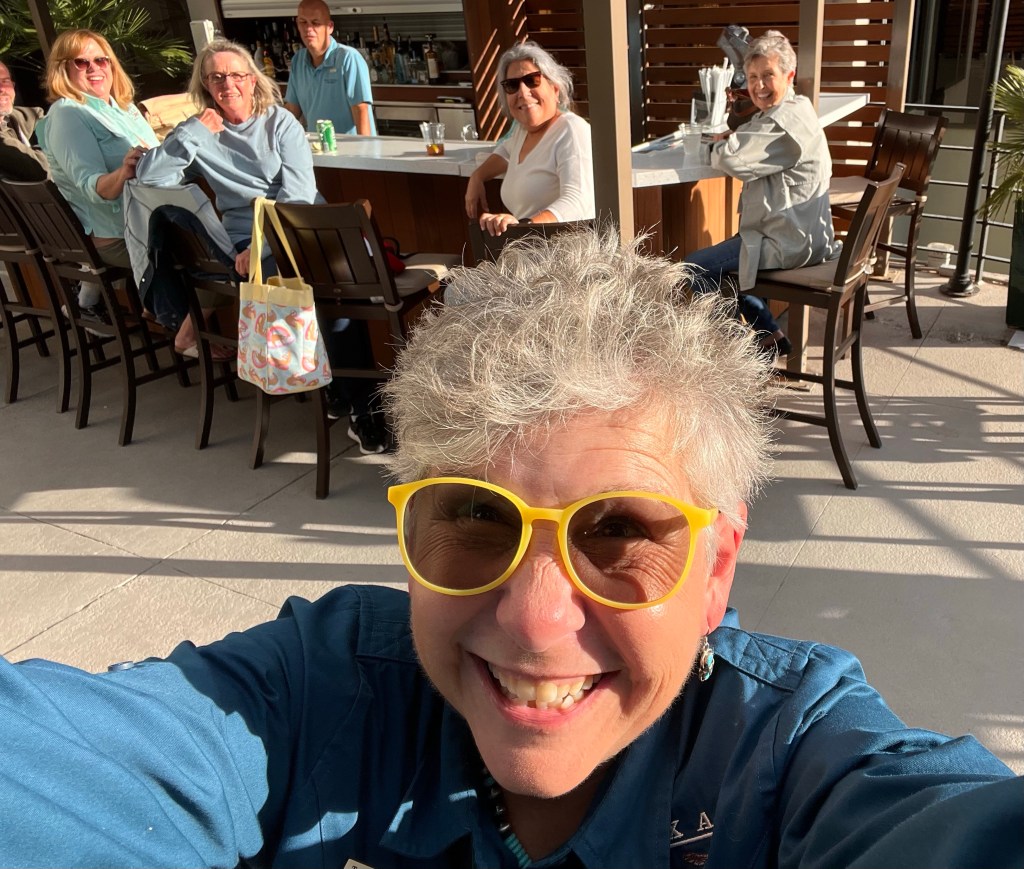
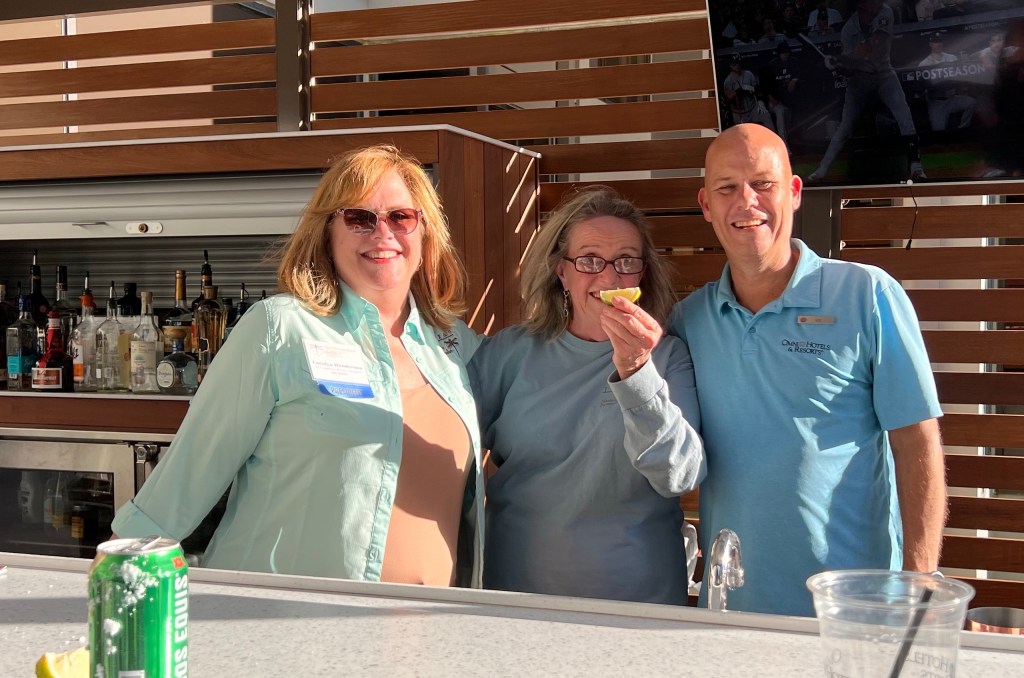
Three of us were honored for 250 hours volunteering Eric got honored for 500 hours (Linda Jo has over 4,000)Sam here was honored, tooHe’s an inspiration to usWe escaped to the pool bar. I love a pool bar. Lo, the bartender, has 5 horses and a mule. We bonded over plump limes.
Yep, we had fun. I’ve missed fun with the Master Naturalist folks.
I’m too tired to do much writing, but my first day of the 2022 Texas Master Naturalist conference in Houston was really fun. What a pleasant and educational day.
See how happy I was?
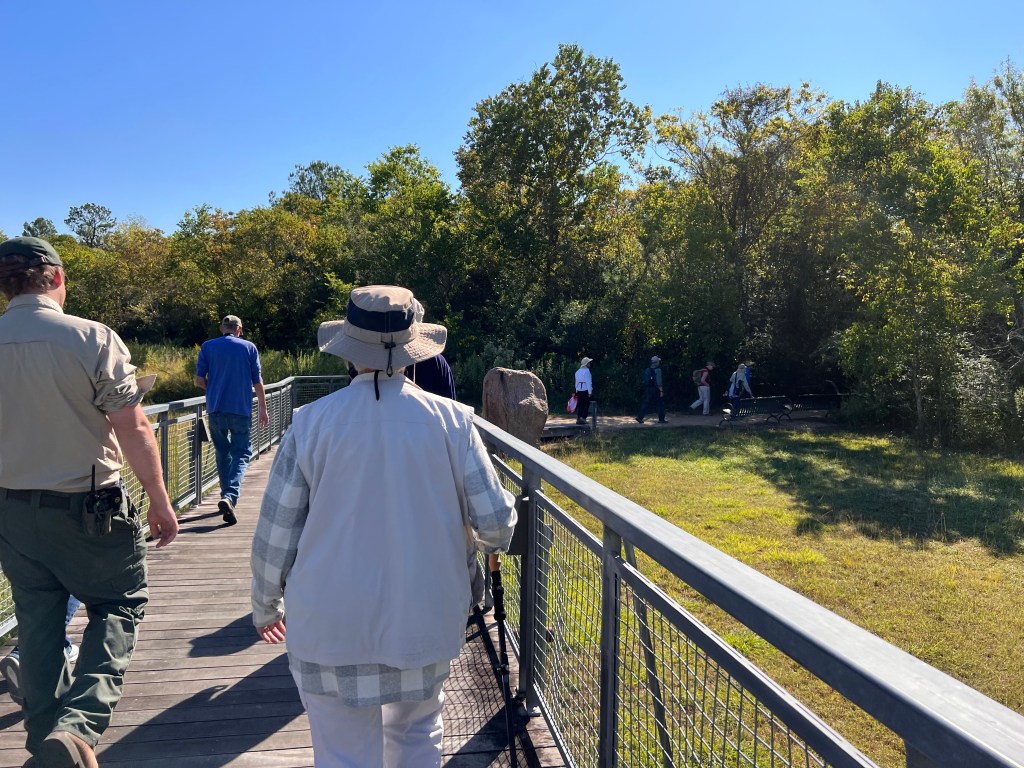
The day started out with a trip to Sheldon Lake State Park. If you are ever wherever it is, go visit! It’s even free and very easy for people with mobility challenges to enjoy.
Prairie area
This whole park has been reclaimed to have native plants through hard work of volunteers. So much digging and planting! We learned a lot from the park ranger and two really cool volunteers. They showed us what they did, how they propagate plants, and the history of the place.
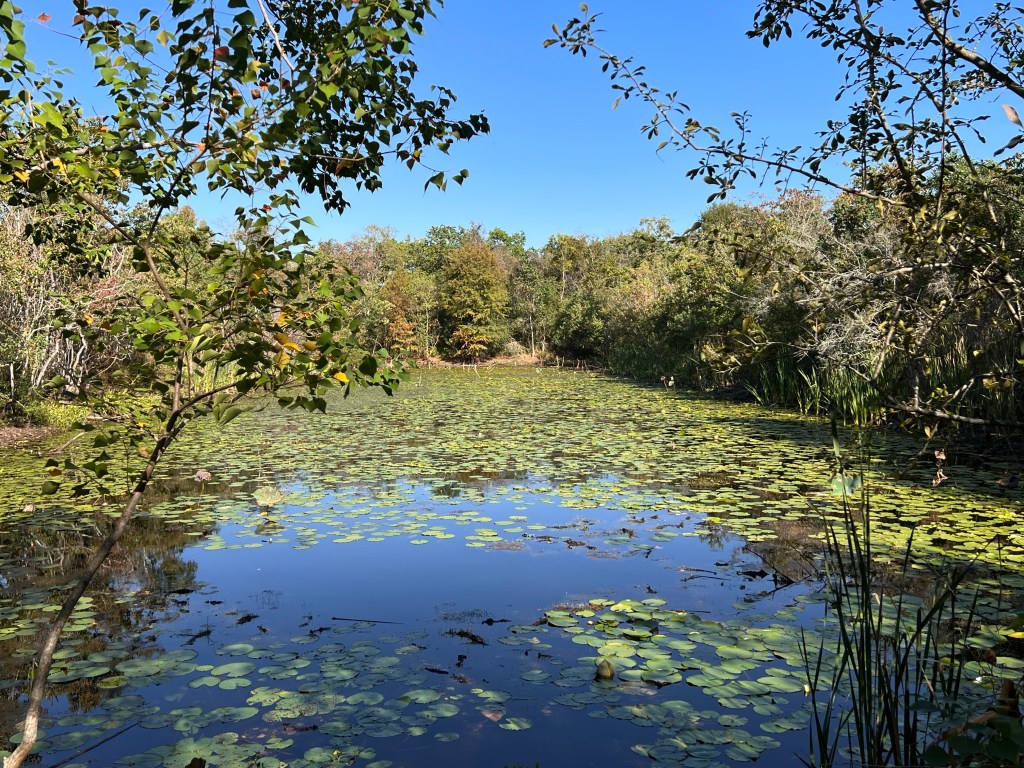
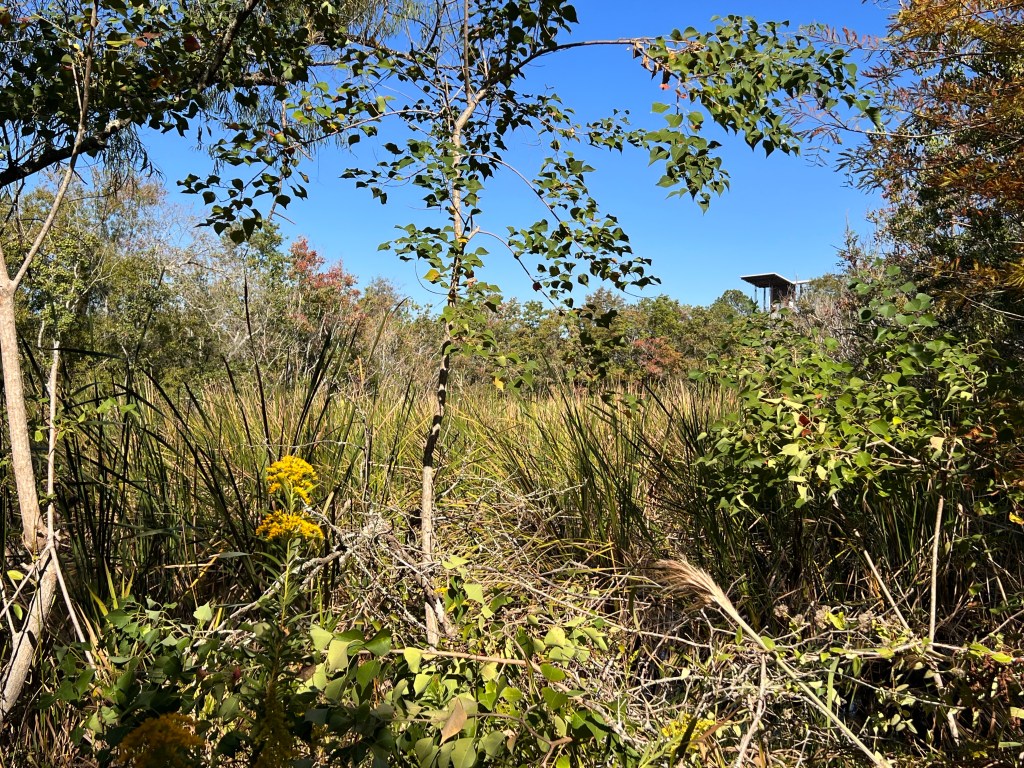
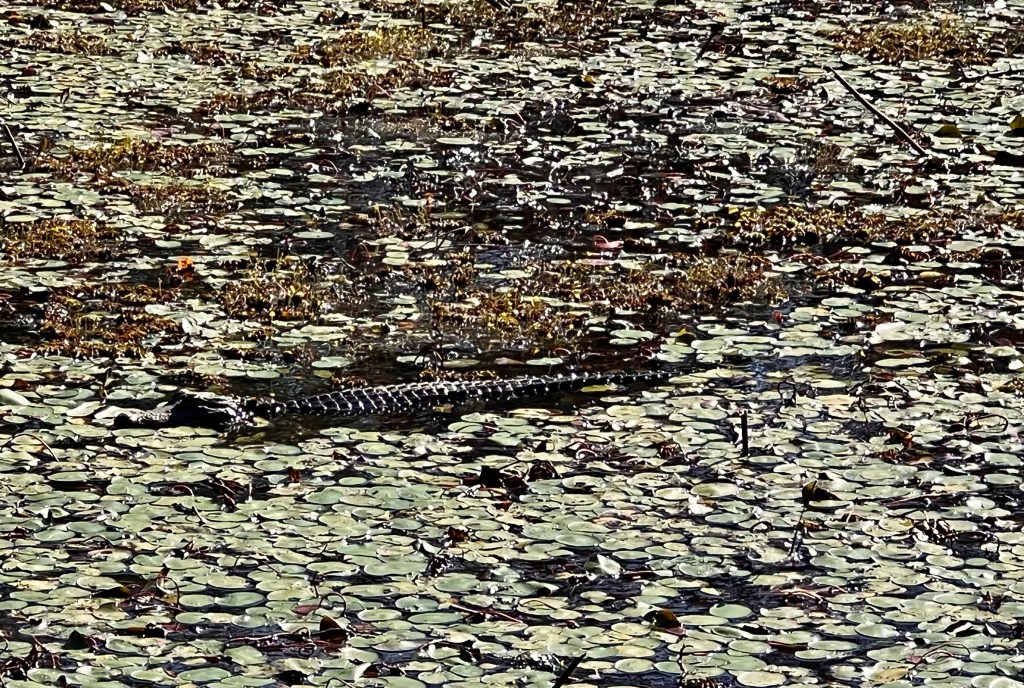
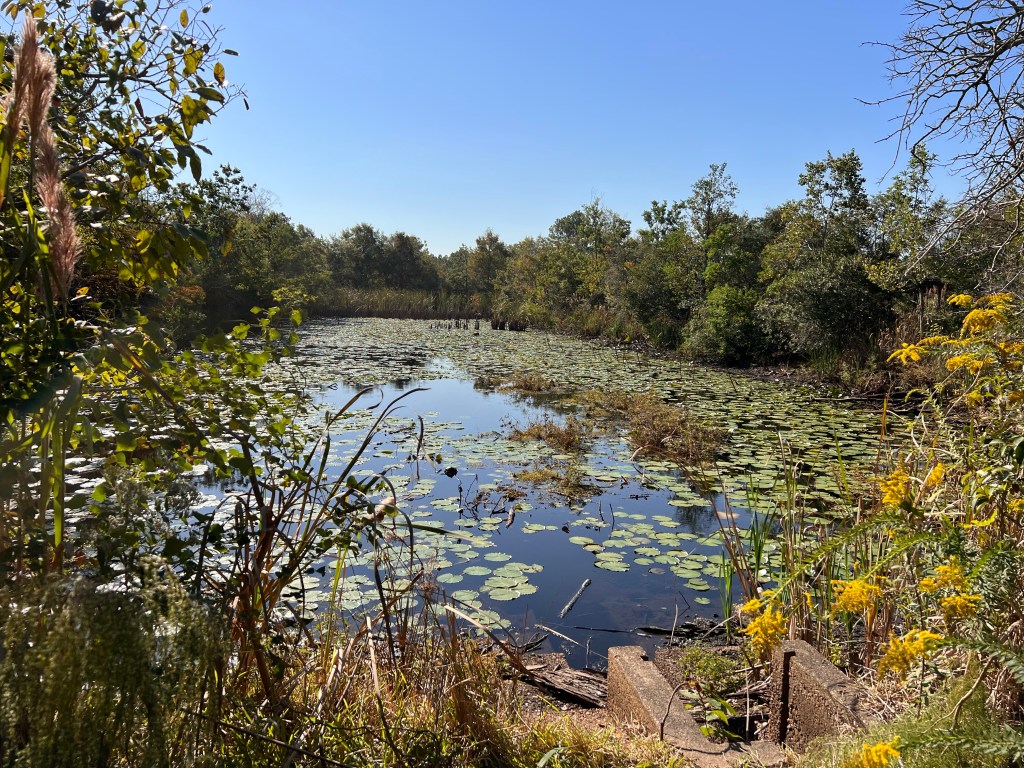
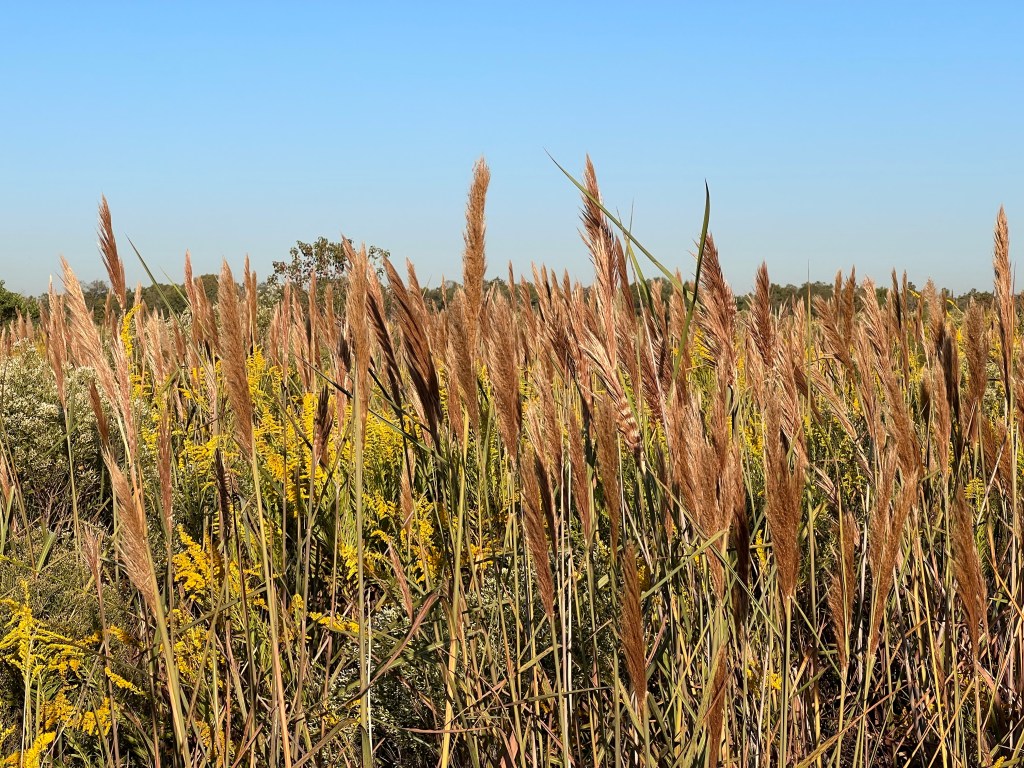
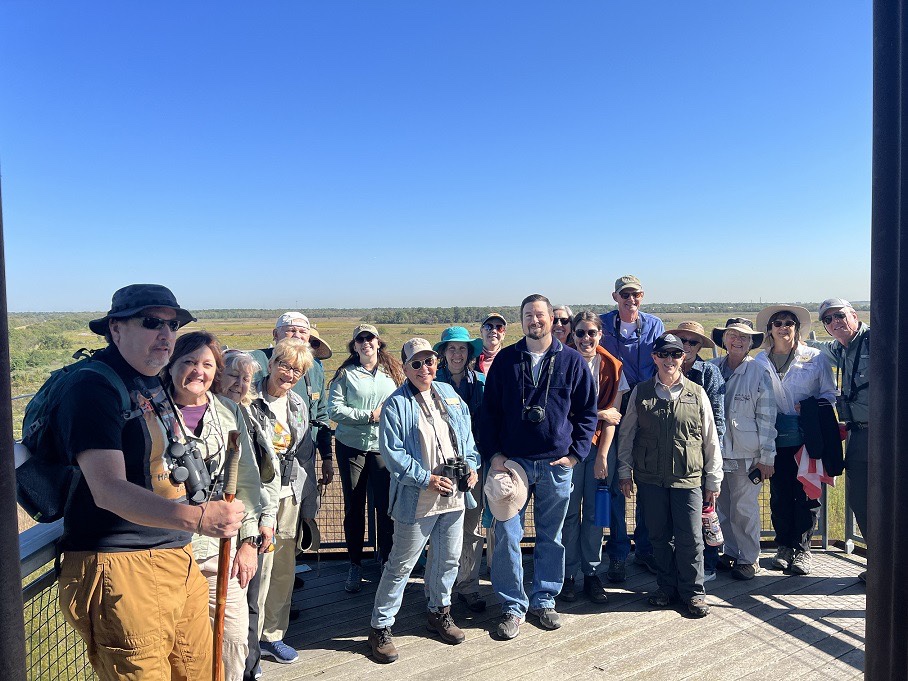
Lovely boardwalksView from a tower of the main lakeThe area once had a fish farm, so there are many pondsWe were on a trail with beautiful vignettes every so often Yes, gatorsNice to see some water, though it’s dryBigger pondGreenhouse where they propagate native plantsWhere they grow plants out prior to plantingBeautiful big bluestemAnother native grassThe group on the tower
I spent a lot of time taking pictures of plants and pollinators for the BioBlitz. I even got to see a new butterfly! I sure love learning new plants and insects.
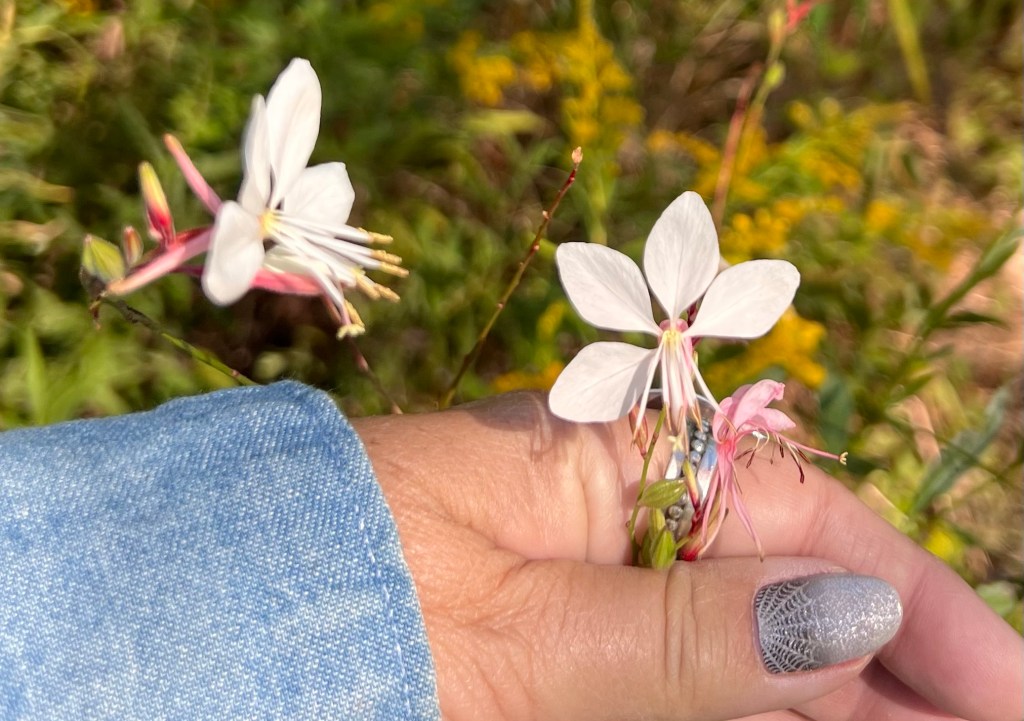
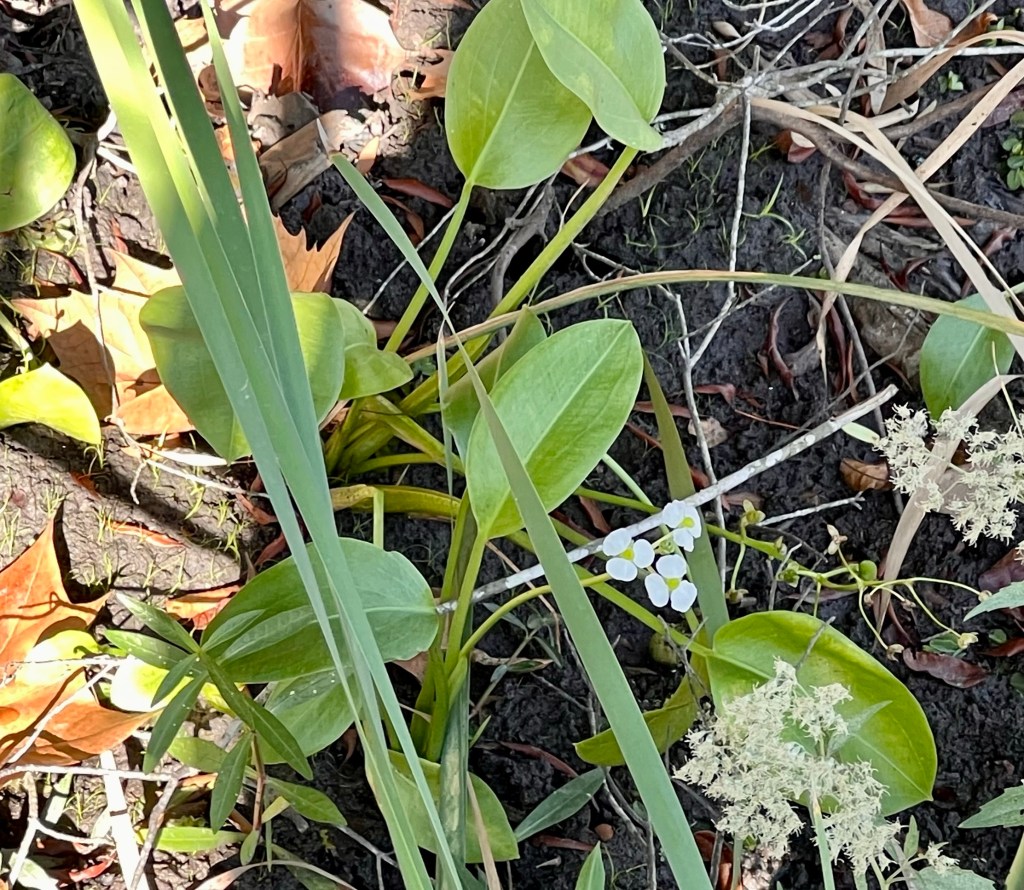
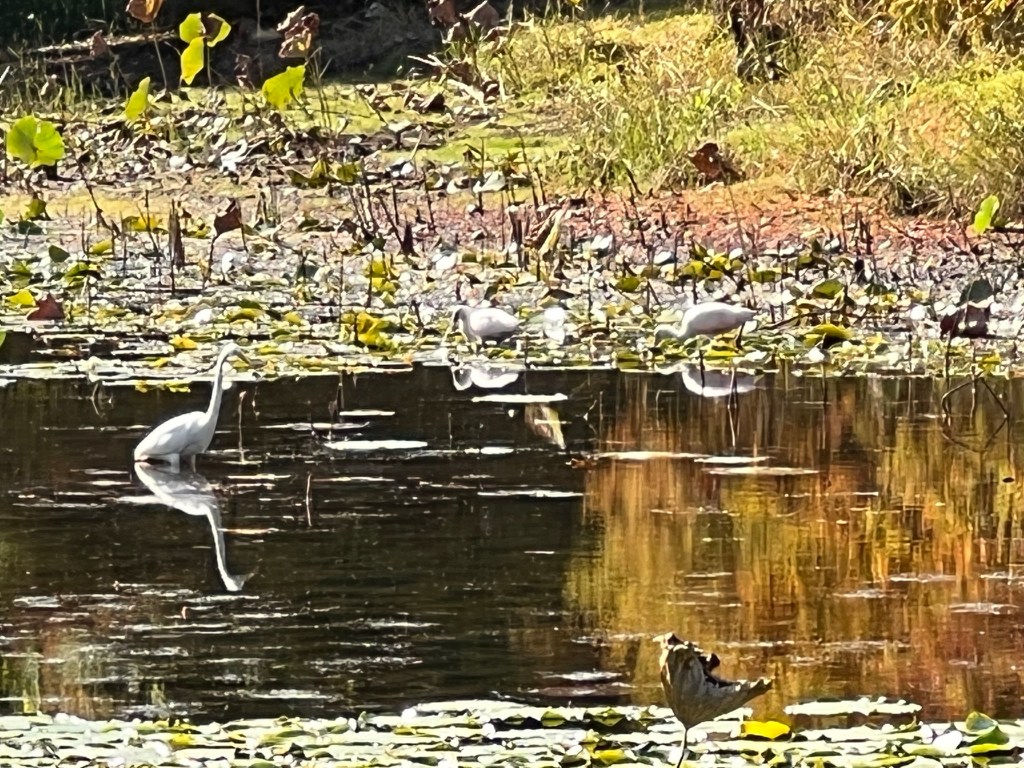
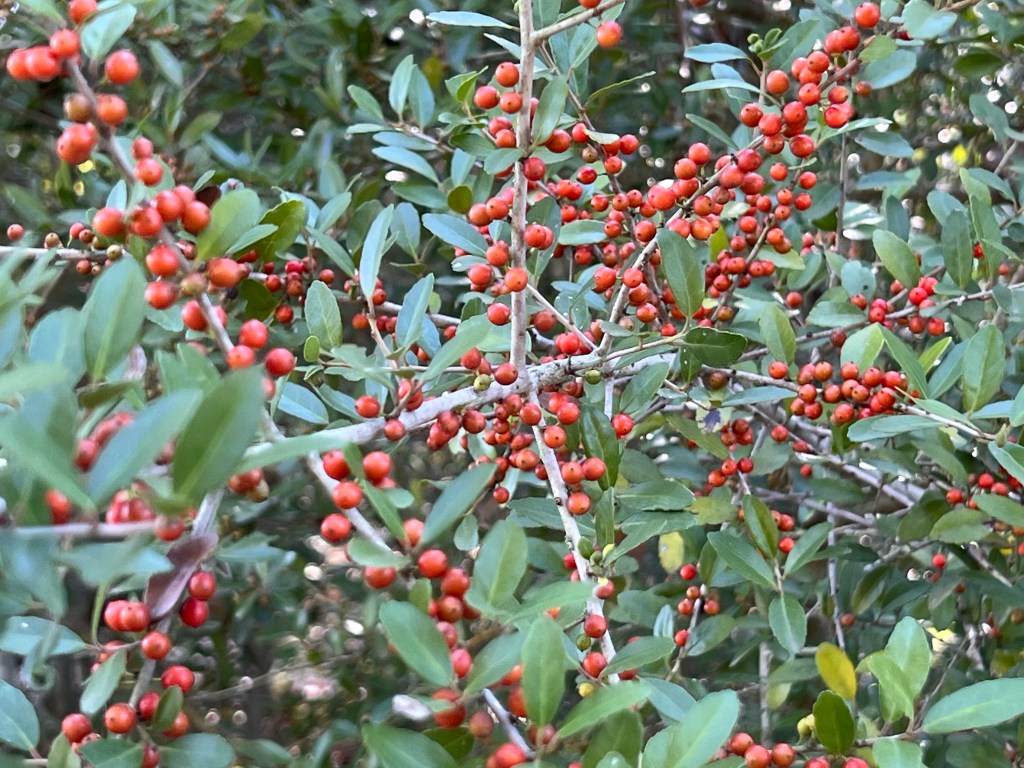
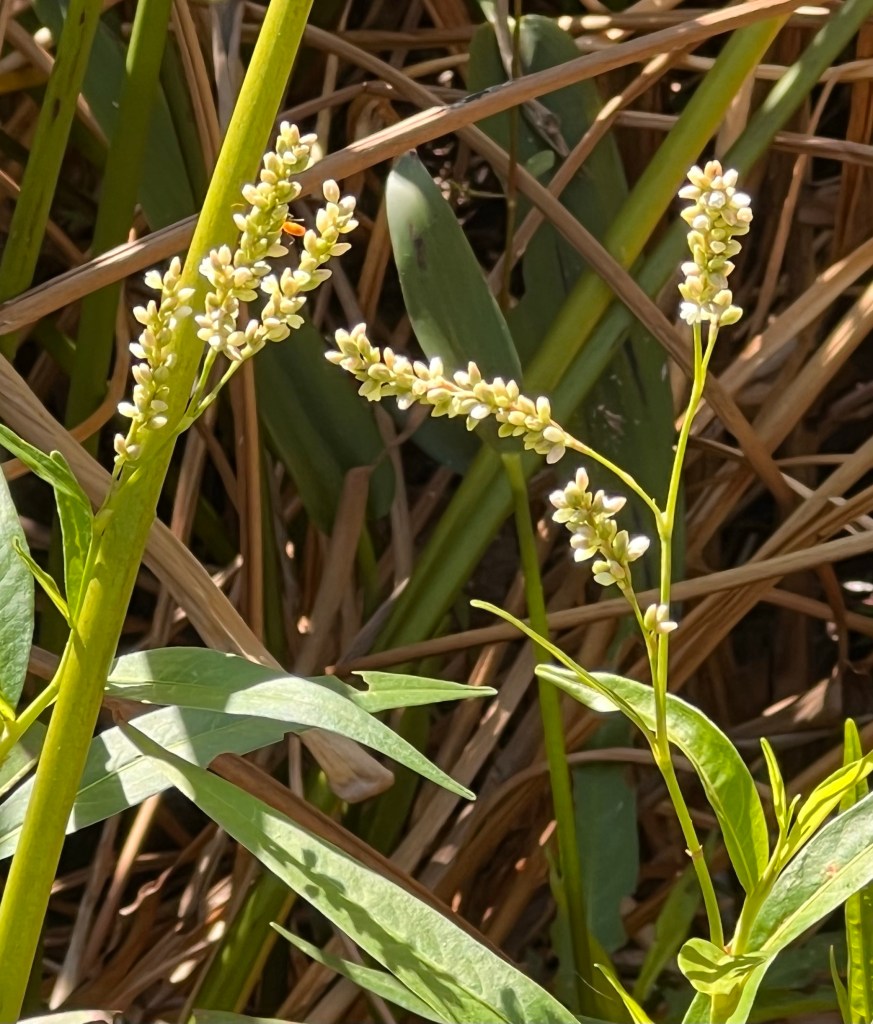
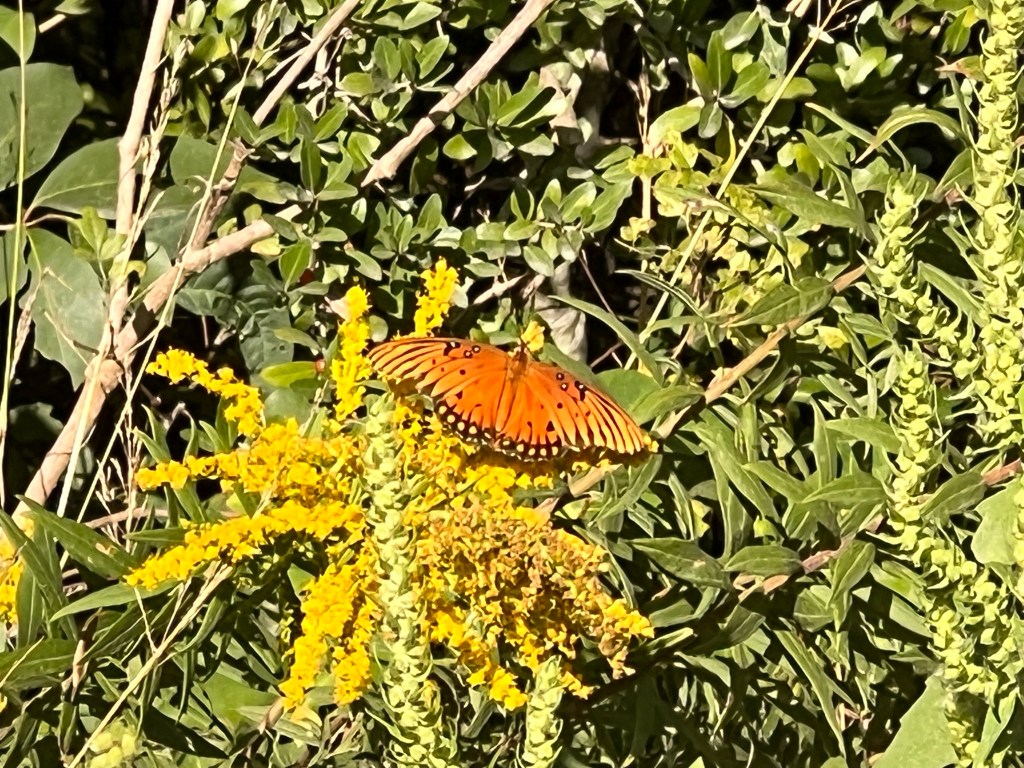
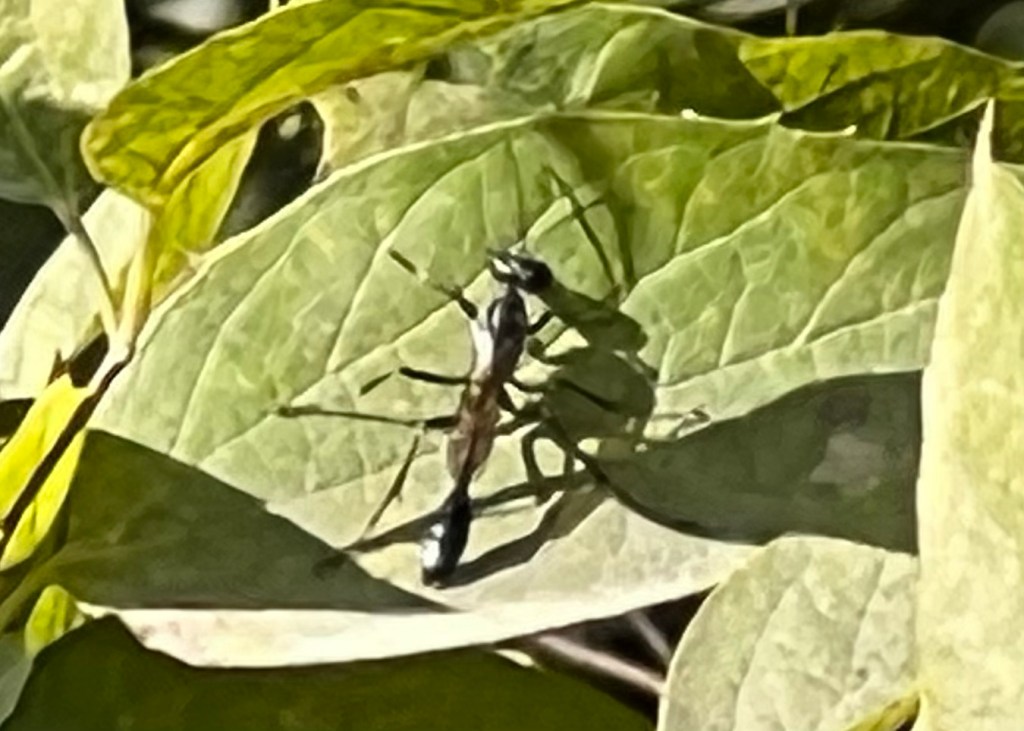
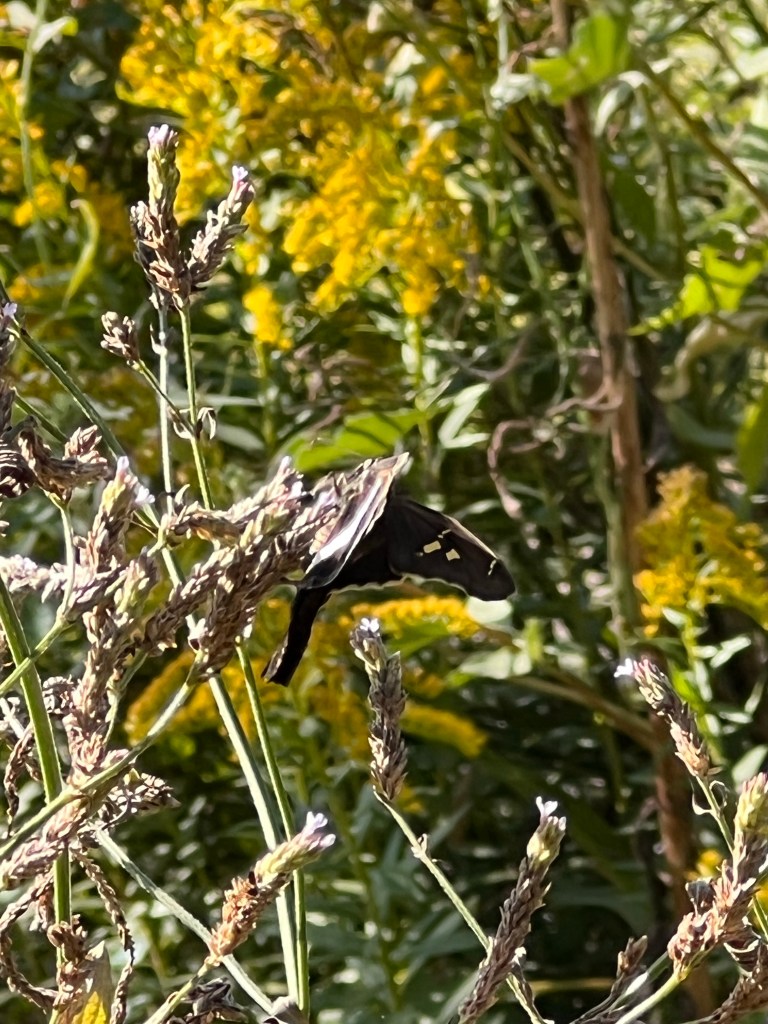
Big gaura flowersA new one for me, delta arrowheadThose are spoonbills and an egretHollyGulf fritillary. There were so many of theseCool bugRed banded hairstreakInteresting waspWhite striped long tail!Assembly moth
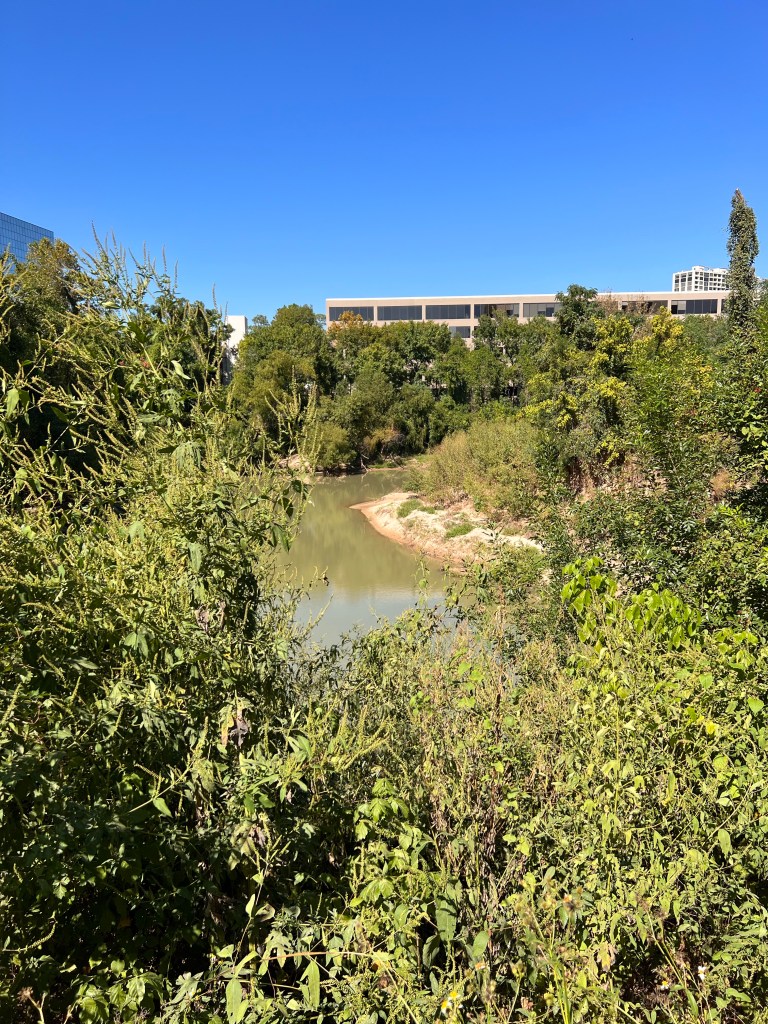
After we got back (I was able to carpool with two nice folks) I ran into friends from home. We decided to go check out Buffalo bayou next to the Omni Hotel we’re staying at. I have to tell you, wandering the weedy area on the other side of the fancy office buildings was as fun as any organized field trip.
So many fun plants and insects! I swear the monarchs posed.
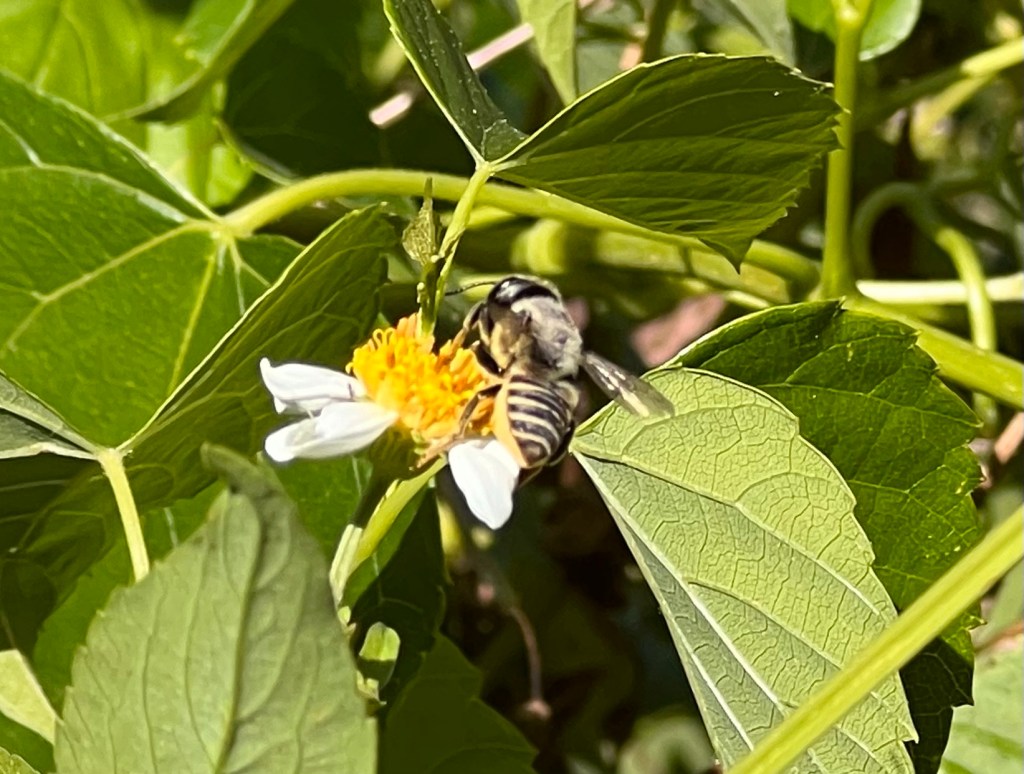
Ann and Jackie are always lots of fun, and Ann is so good with plants! We saw many native trees and so many vines. And though not much was blooming, some daisy-like plants attracted entire hives’ worth of bees and wasps. We had a blast!
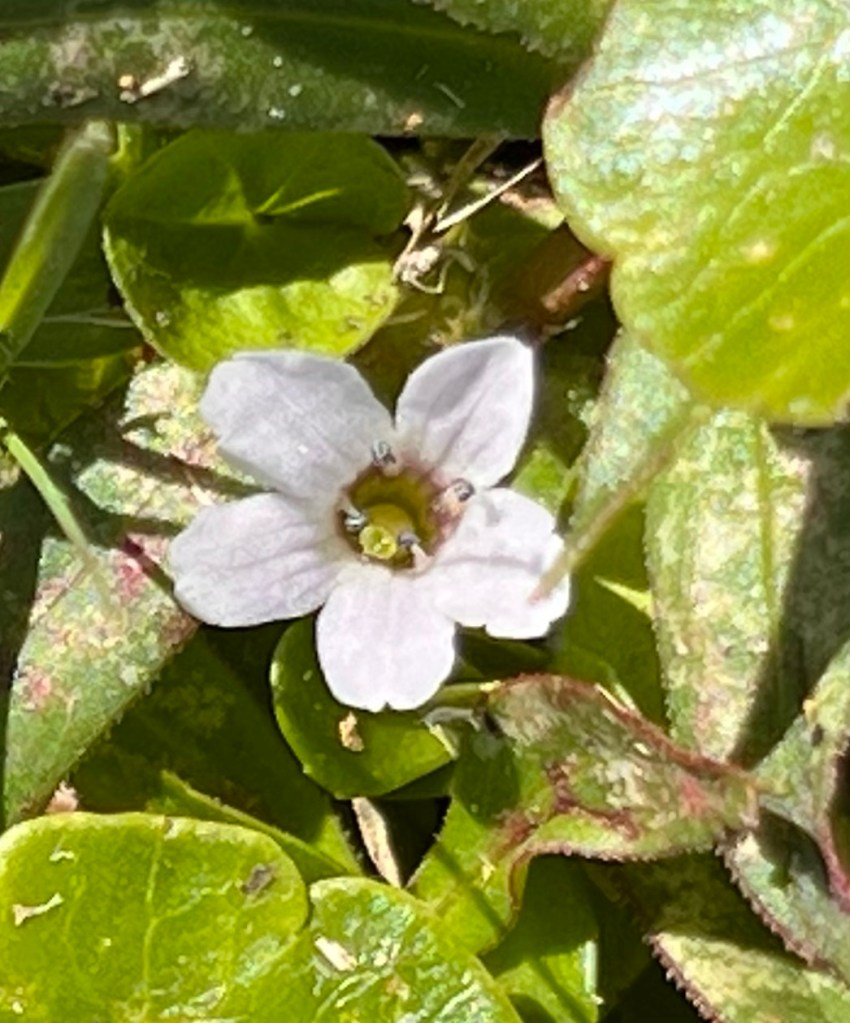
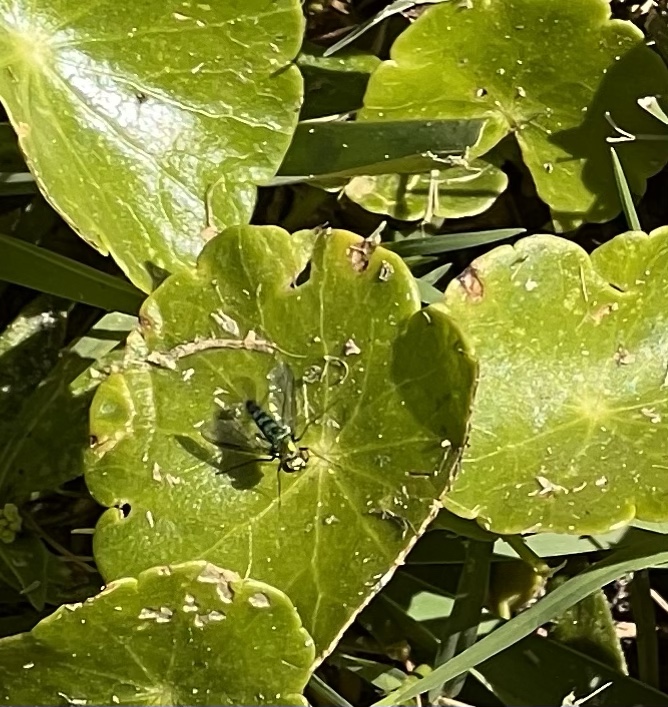
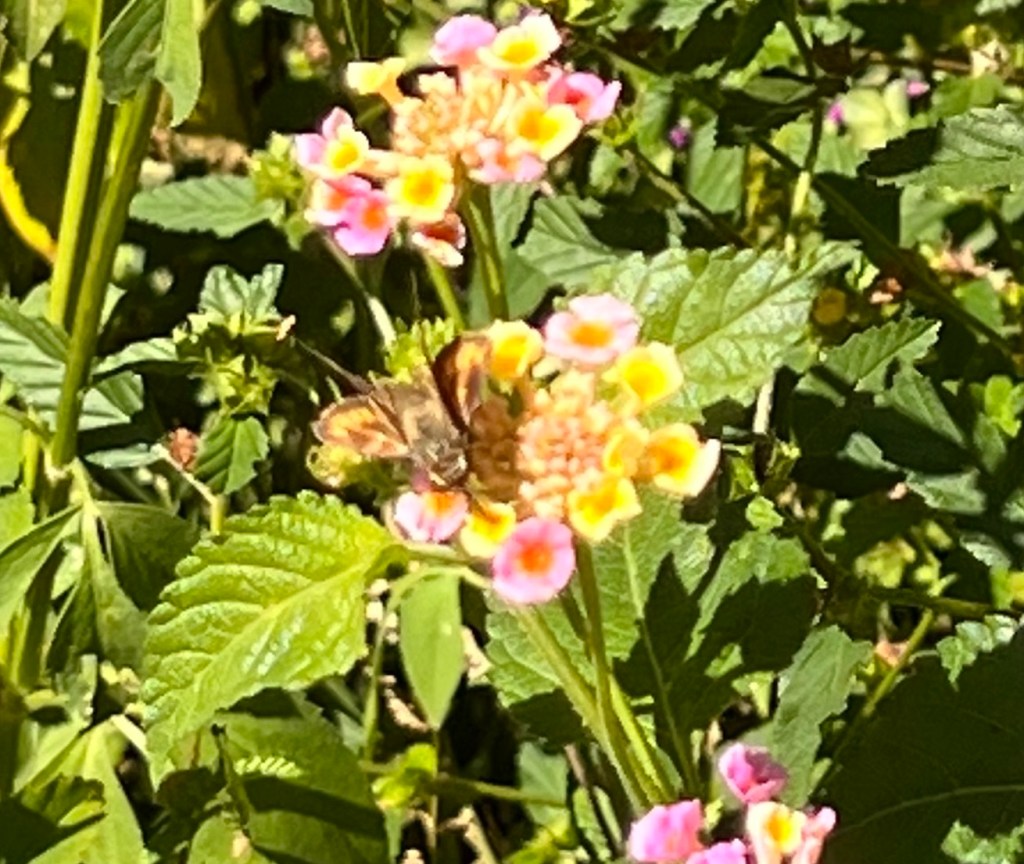
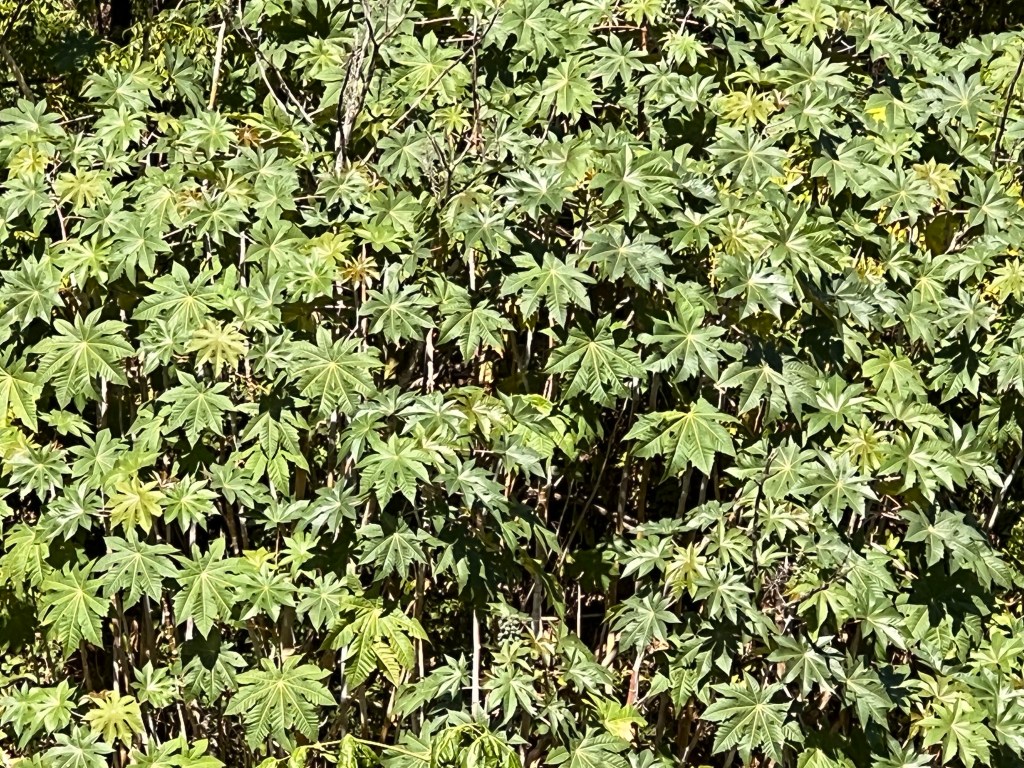
Herb of grace (it’s tiny)Tiny flyGood ole honey beeAnother Gulf fritillary More monarch beautyAnd moreDowntown Houston?Fiery skipper in lantanaA cool beeFalse mintCreeping cucumber A cool waspWheel bugMexican bordered plant bugBayou bugVinesGiant castor beans
Once we were done I came up and rested, then met up with folks from our chapter for dinner and drinks. This hotel has great food. And we went to the “whiskey bar” later. We had great conversations in such a warm and elegant atmosphere. A good day!
Centerpieces are creative!Good chairs in dining room!So romantic. CozyLove the red bar
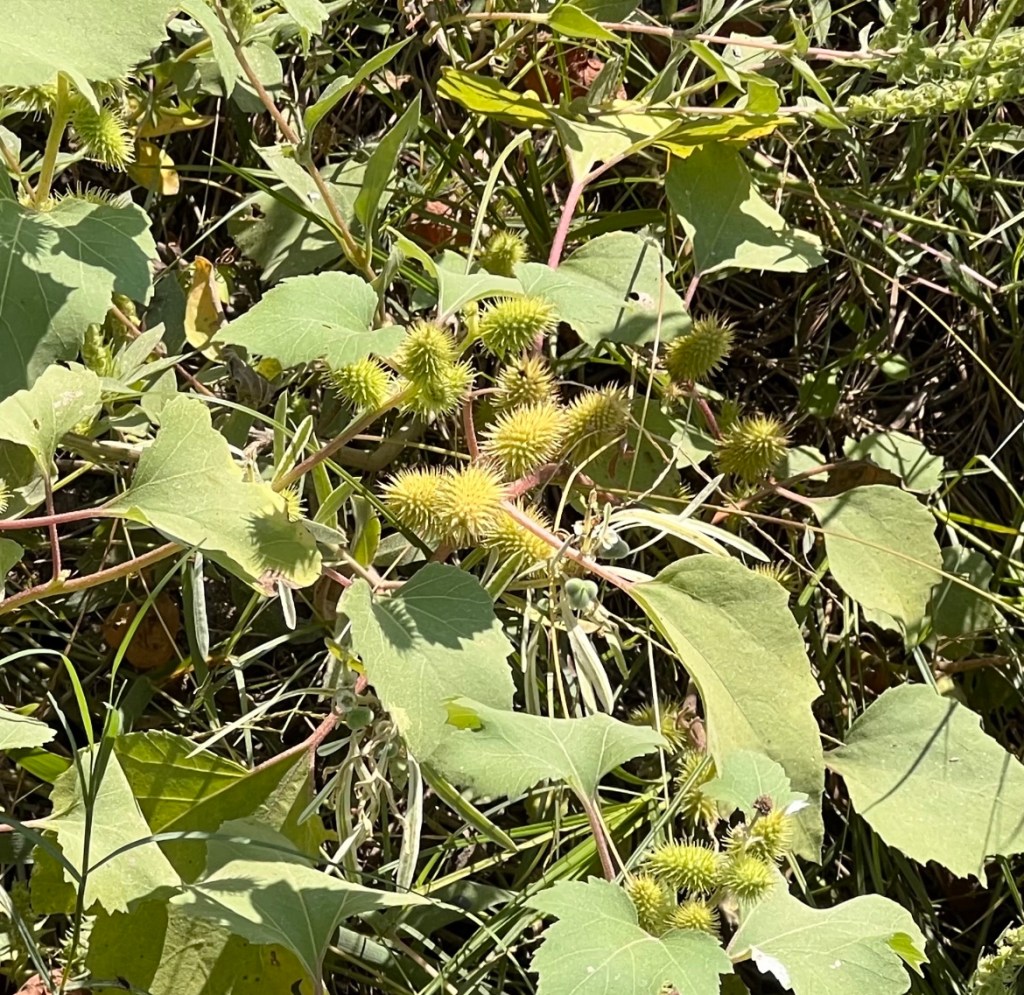
At this time of year, I dislike the most annoying giant cockleburs that grow here. There are fewer now than there was at one time, thanks to diligent mowing but the horses will find them, since we can’t quite get to all the spots where they like to grow.
Pulled from Apache’s forelock.
Poor Fiona had them all over her legs and hips today. They must be so annoying. And Mabel hid some in her mane, too!
I’m keeping them here so they won’t have a chance to grow!
They hurt like the dickens to pull out. I remember one year Sara just cut off Pardner’s forelock (he was our ancient buddy who lived to be at least 30).
Don’t pull mine out!
They are very sturdy plants when mature. The chickens roosted on one last fall. And they have nice leaves and actually quite beautiful, pink flowers. But no, I don’t like them.
Rough cocklebur
They are Xanthium strumarium. They are a North American plant but have taken over other places, as burs do. We call them buffalo burs, but maybe that’s another plant.
I just don’t like them.
PS: my friend Mary W sent along a scientific article about the uses of these burs in traditional Chinese medicine to treat headaches and sinus issues. It’s apparently also been used in Pakistan as a biodiesel fuel. Aha! We can burn them in our vehicles! Kidding. Here’s the link. They may be a pain to the horses and Fiona and Pickle too; but the plant has a long use as a traditional herbal medicine.
Whew, I was tired by the time I got home from Fredericksburg. I went home a new way, though, so I got to see some different scenery and avoid Austin traffic. To keep myself awake I tromped around the ranch on my breaks, taking pictures for the pollinator BioBlitz.
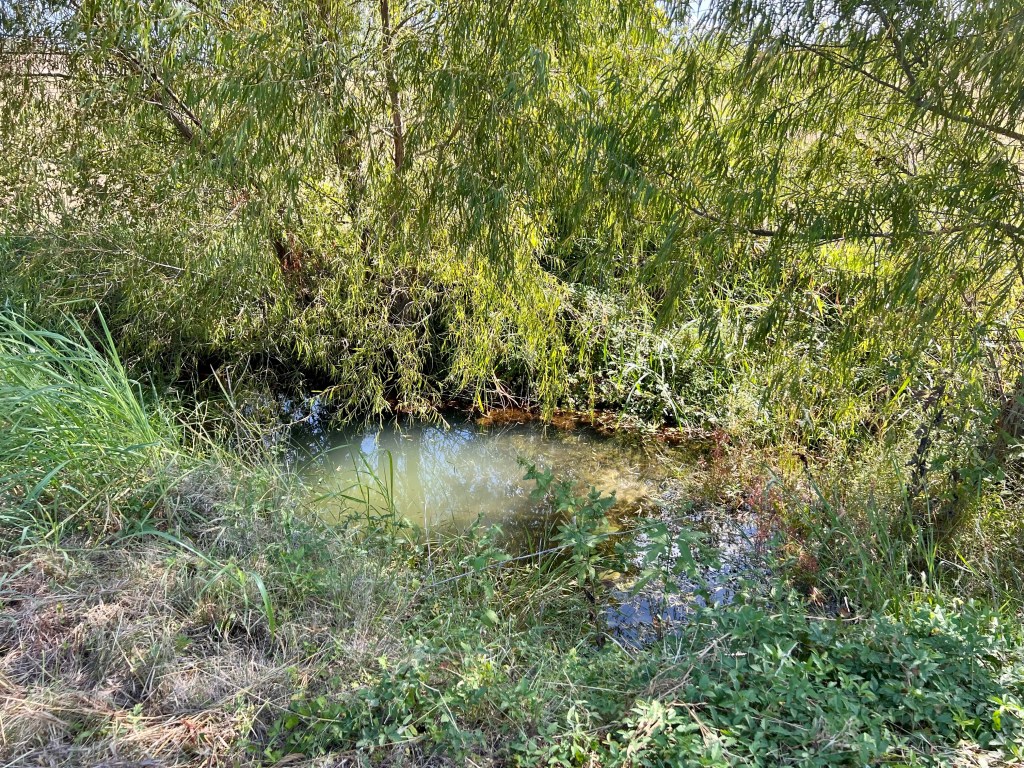
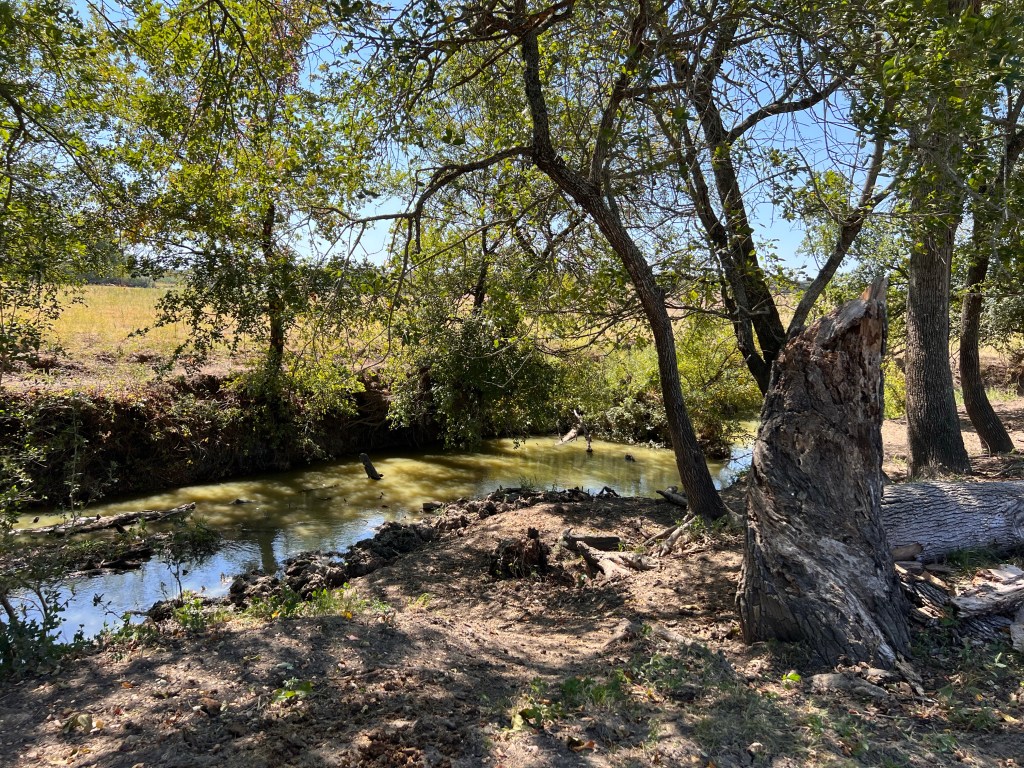
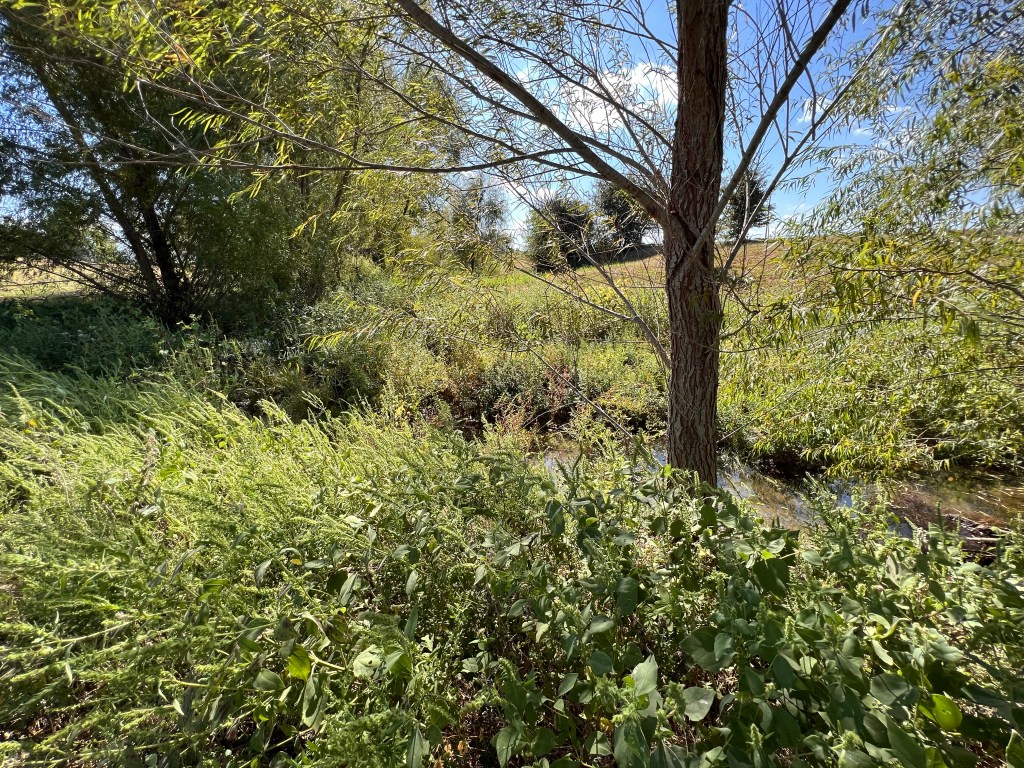
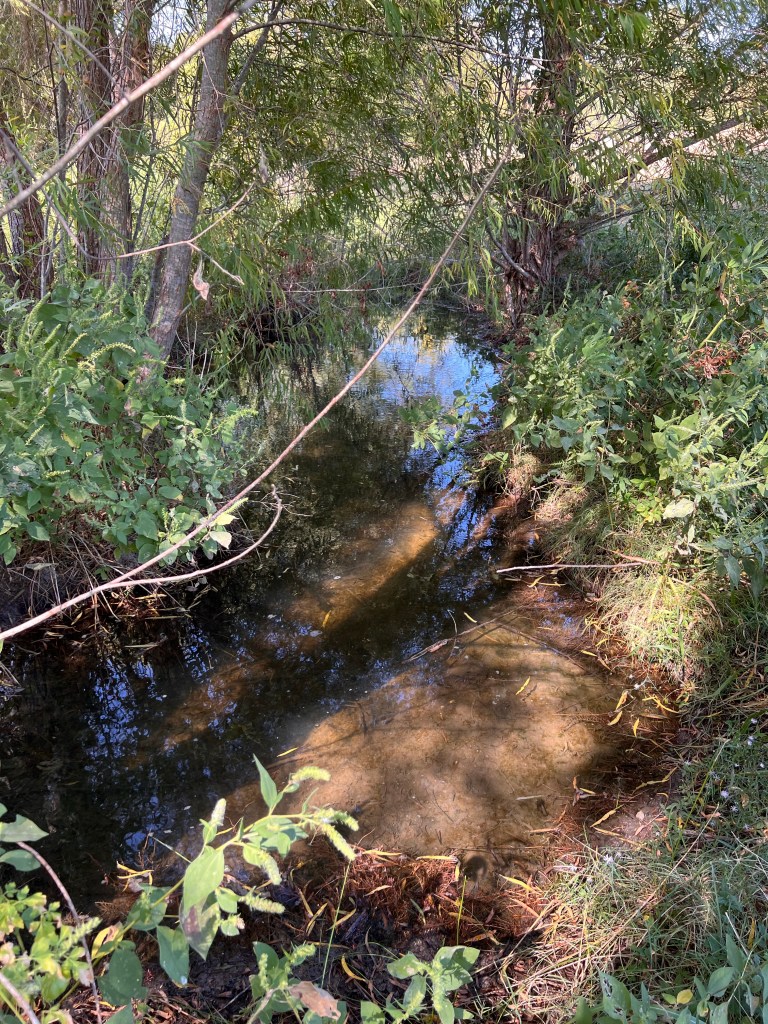
I especially enjoyed our remaining water areas. I spotted lots of fish in here.
I just wandered and wandered, bearing in mind what I learned at the conference this week. I noted there were more fish where there was no cow poop, but there were fish even in what’s left of the creek, where I found one of the old mama cows having a quiet bath.
Can I have some privacy here?
As I checked out the riparian areas, I also looked at the pastures. Yeah, they are rather over-grazed. The only plants left are what cattle don’t eat: broomweed, milkweed, and silverleaf nightshade. This made finding things to add to the BioBlitz a challenge.
There’s a lot of broomweed.
I did find lots of insects and documented every tree variety, so I feel good. My goal is to ID 100 species as my contribution, and I think if I get some at Tarrin’s, where there are different plants, I’ll pass that goal. I did hit another goal today, and that’s 600 different species here on the ranch. Hard to believe!
Even if all I see is cedar elms and greenbrier, I can’t complain. Being able to get outside is such a privilege. The variety of life that’s still thriving in this drought gives me hope for us tenacious humans, too.
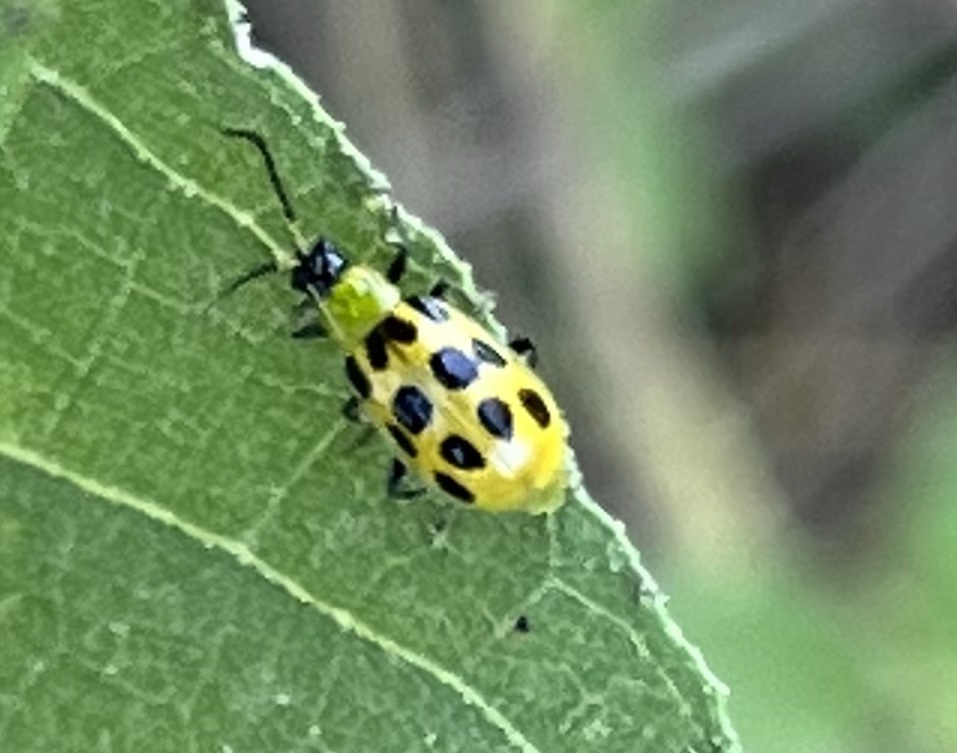
Insects I saw
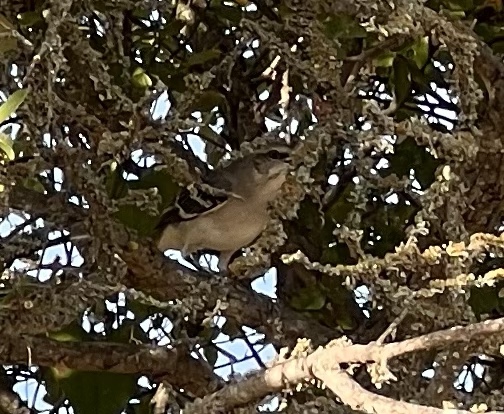
I didn’t see many birds other than this coy mockingbird and a cardinal that hid completely. I did hear hawks and crows a lot.
I’m hiding!
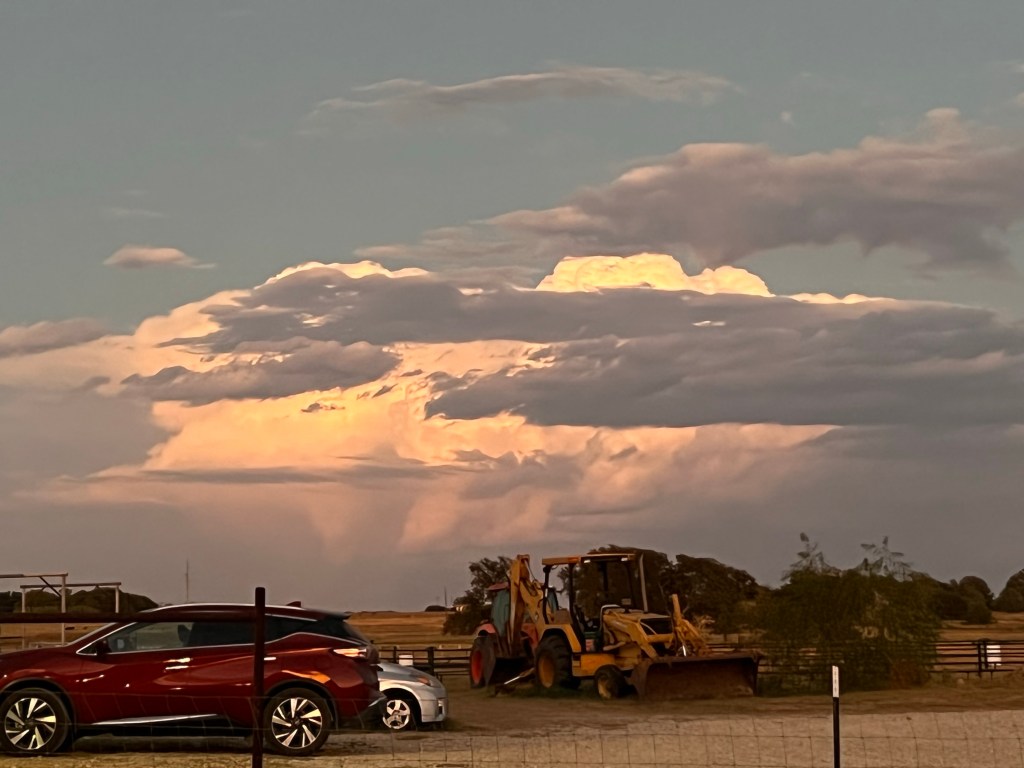
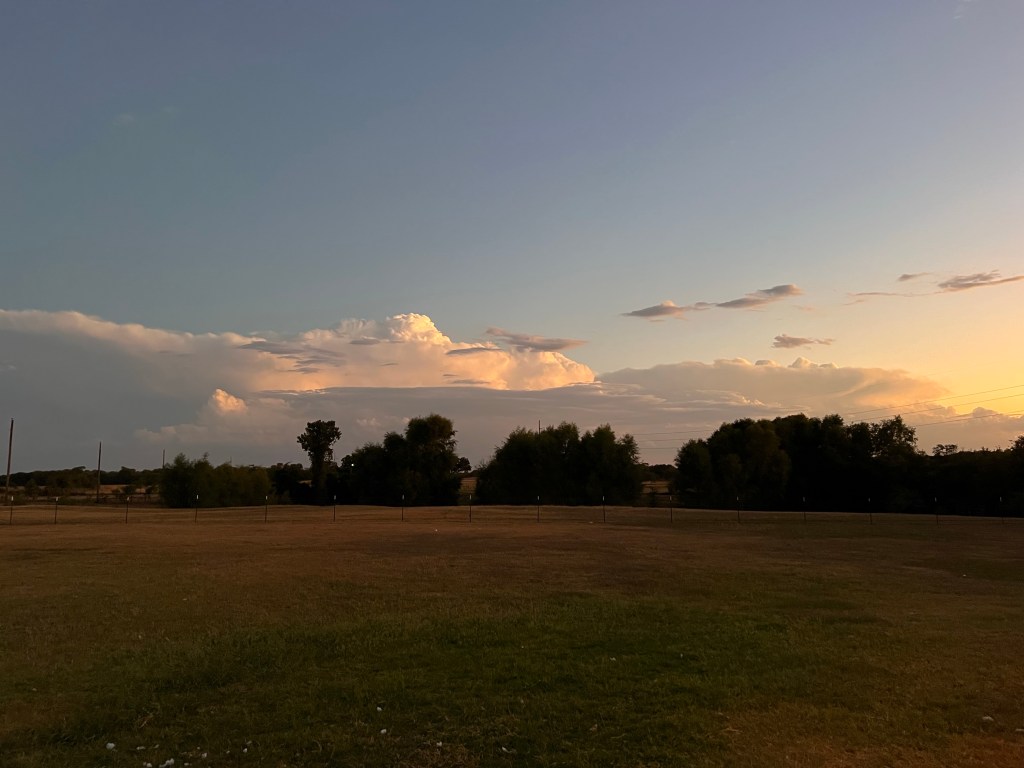
I’m hoping the weather will turn. It actually rained a few tiny drops when I fed the horses, and there was lightning in clouds at sunset. More hope!
What’s that noise on the roof, Suna? I’d like some rain. Thunder cloud 1Thunder cloud 2Look! More water in the tank! We’ve had no rain.
More photos, mainly because Barbara looks at them all.
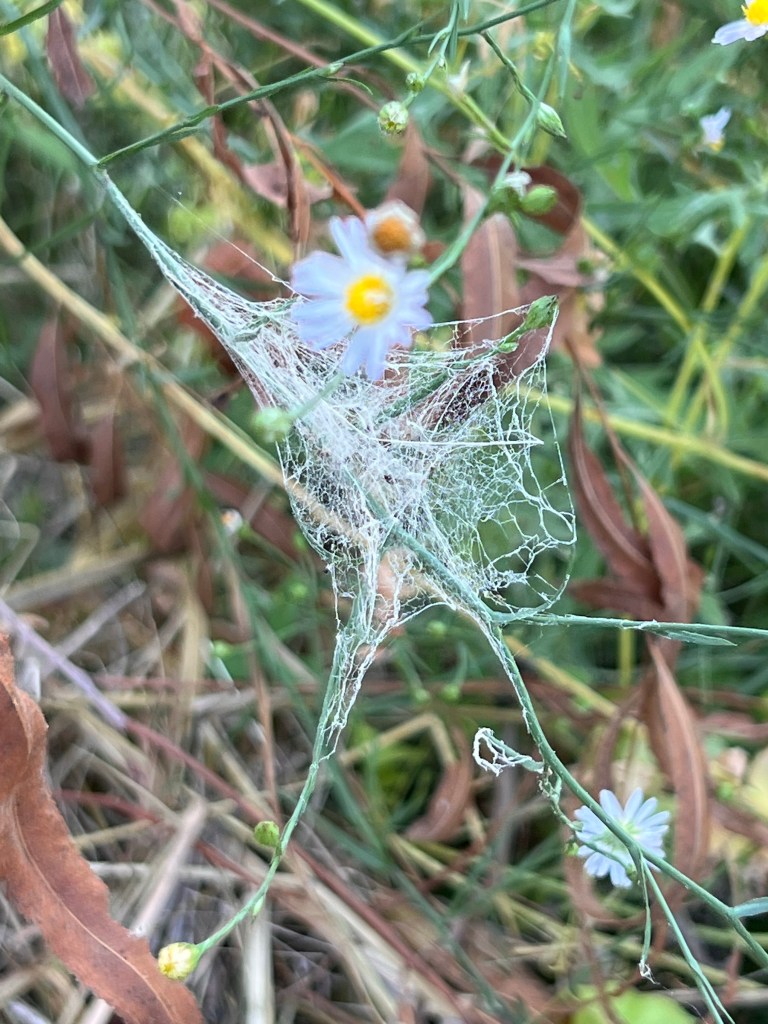
Weathered stumpWalker’s Creek, now a pond Host to much lifeHappy ragweedInteresting webSpooky waterAnother deep spotFind the minnows!
I’m so glad the Bennett Trust conference for ranch women is back at last. The conference started at 7 am and the wine hour was still going on when I left to watch football, along with my new friend, Mim, who’s originally from Rockdale. We bonded.
Post conference relaxation, with pumpkins.
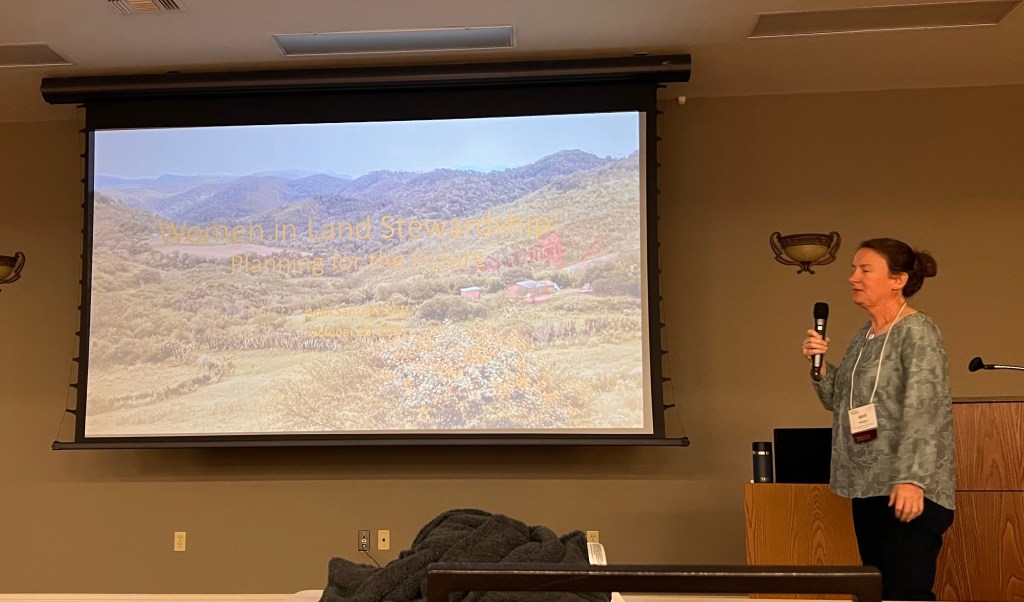
Not only did the legacy of the Bennetts (very nice people who left a trust to pay for these events) pay for excellent food, but there were really interesting speakers on various aspects of taking care of your land. the keynote was on women and land stewardship, and April Sansom was inspiring to all of us who want to leave the land better than we found it.
She’s helped women use small agricultural projects to better their lives all over the world thank you the Peace Corps, and now educates people at the Selah Bamberger Ranch preserve (including Master Naturalists!). Her love of the planet shown through every word.
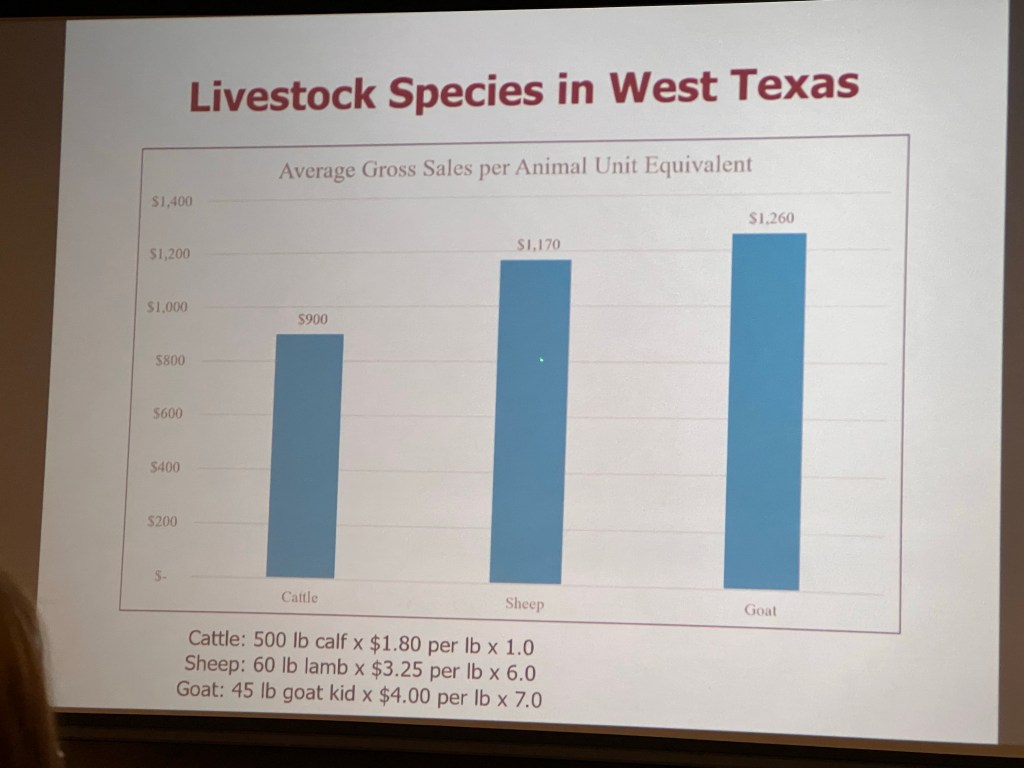
I heard a lot about how cost effective goats are to raise and sell. The speaker, David Anderson, even explained what all the types of livestock sales mean. Now I’ll understand the livestock report on KMIL better.
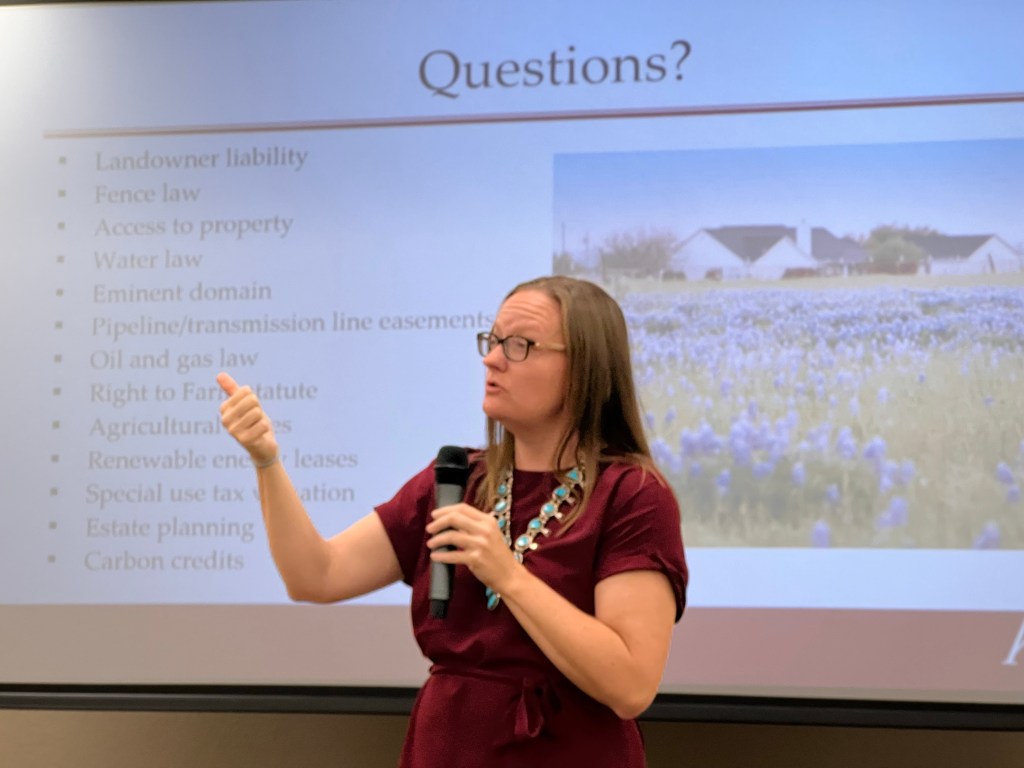
One fun segment was by a ranch land lawyer. She answered so many questions about fencing, trespassing, and the usefulness of forming LLCs.
Tiffany Dowell-Lashmet and her list of topics
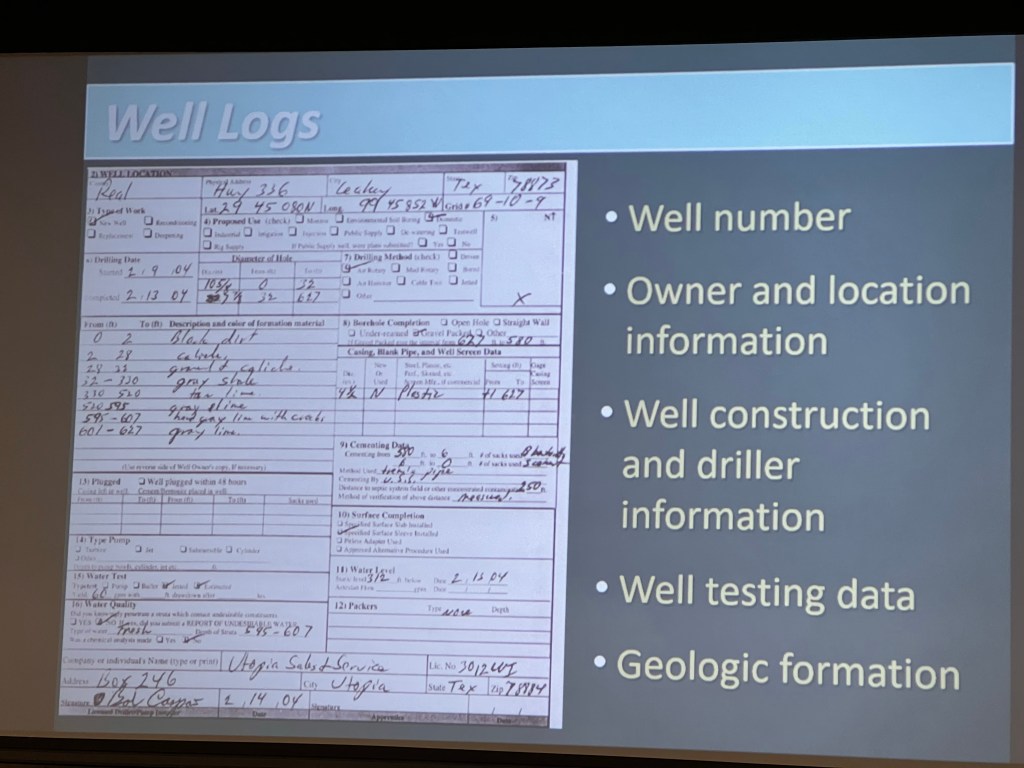
Then, I learned more than I ever thought I would about wells and well water. Luckily, since I can’t remember it all, Joel Pigg gave us lots of excellent printed material that I can’t wait to read and share. Major learning: wells should be uphill from septic systems.
Also, your well should have a log.
Probably my favorite speaker was Morgan Treadwell, whose husband is from the family that owns a historic Texas ranch. She knows her brush removal and how to use fire. What I learned, though, was how to get rid of brush cost effectively.
Great quote.
Morgan really had a lot of information that was new to me. For example, weaken mesquite with a controlled burn, then bring in goats to eat new growth. Huh. Goats again. Also fire won’t kill them when over 3 years old, so do small maintenance often rather than a huge effort every decade or so.
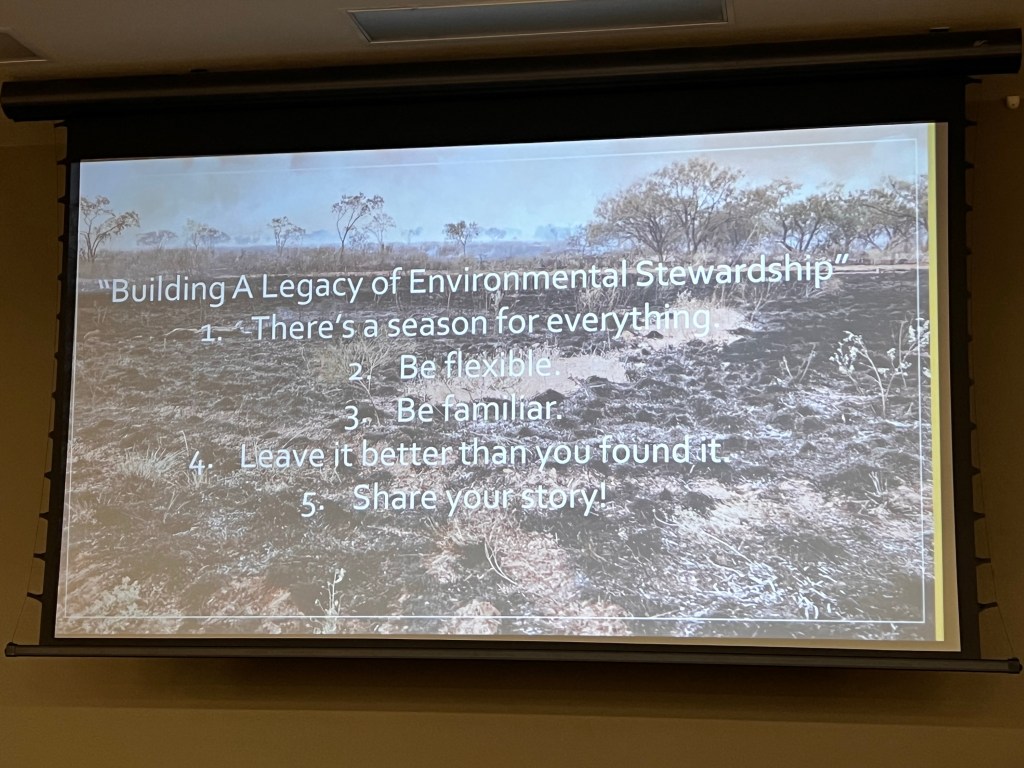
Rules to live by
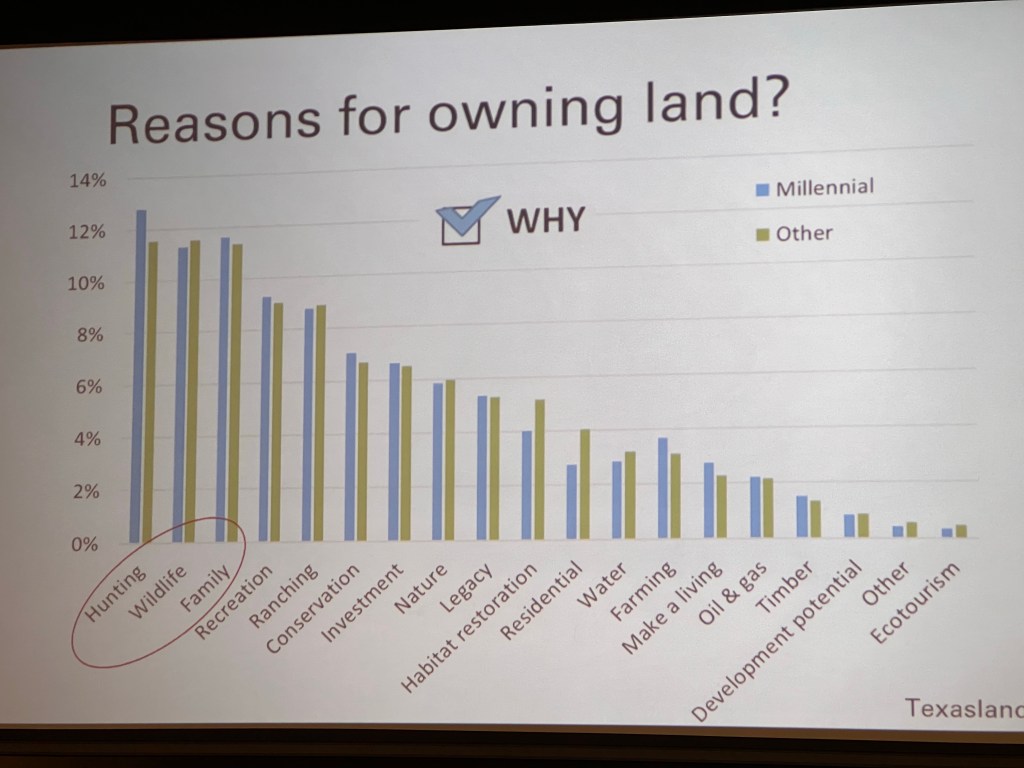
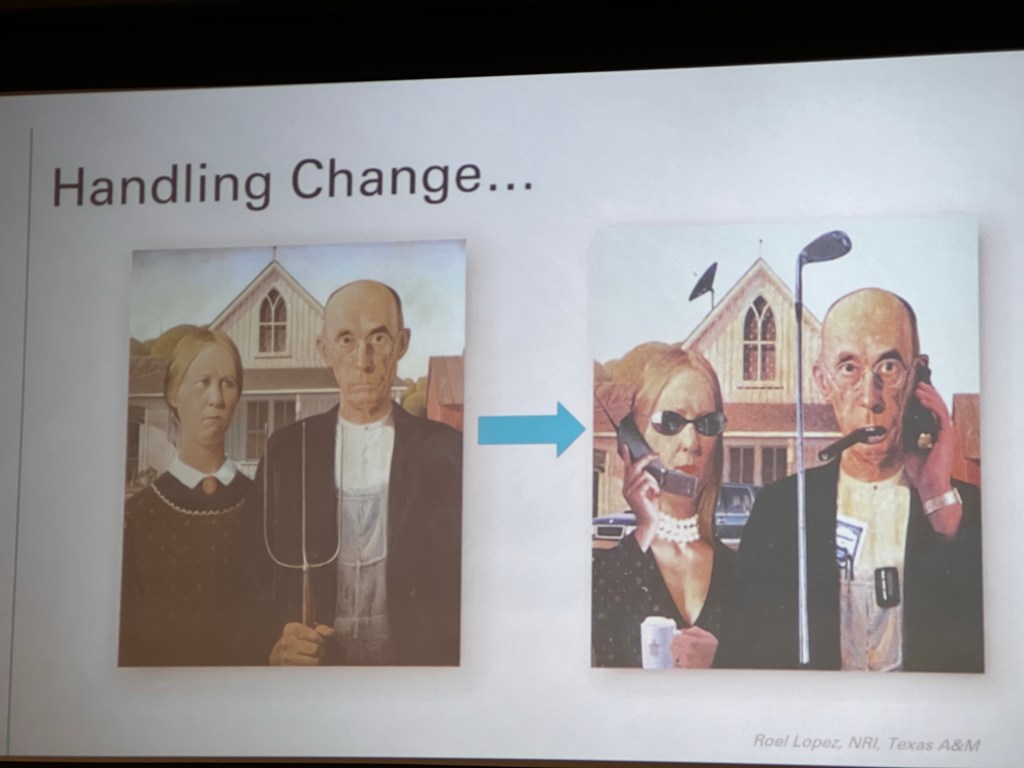
The final talk was by a woman named Megan Clayton. She talked about how newer land owners may want to do different things with their land, and that women play a huge role in new things like agri-tourism and farm-to-table operations.
How reasons for owning land change by generations.
Clayton shared a lot of fun websites with us, including a cow poop analyzer, which I must try out at home. She then paired people with mentors and mentees. I ended up being a mentor because no one wanted to admit they knew anything.
This made us laugh.
Anyhow, this was a lot, but I learned so much. And the food was so good! I enjoyed meeting a lot of interesting women and was pleased to see the diversity of attendees. I’m looking forward to a day of ranch tours tomorrow!
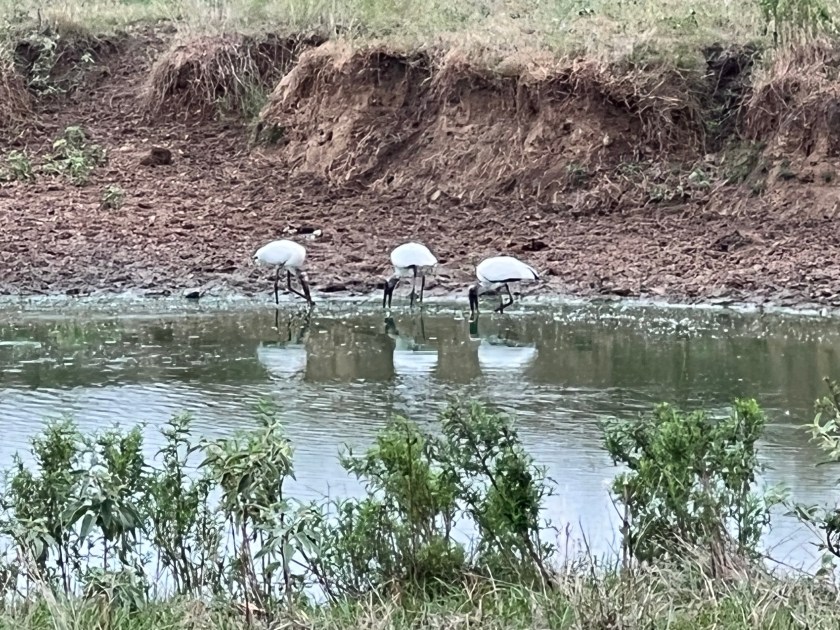
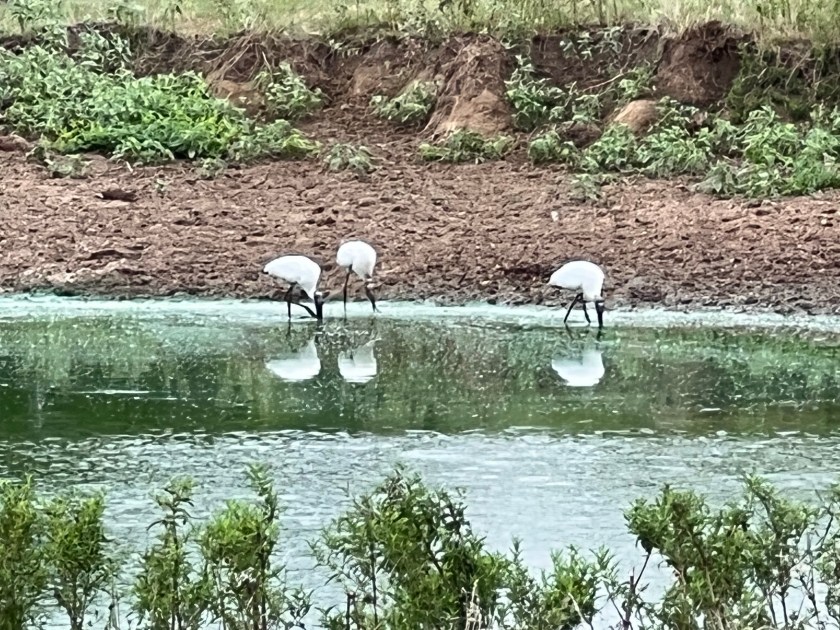
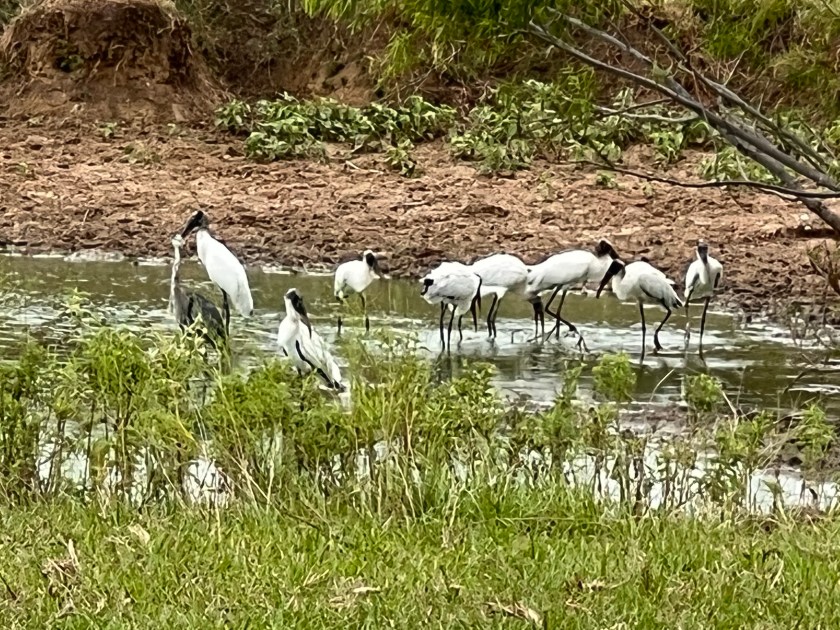
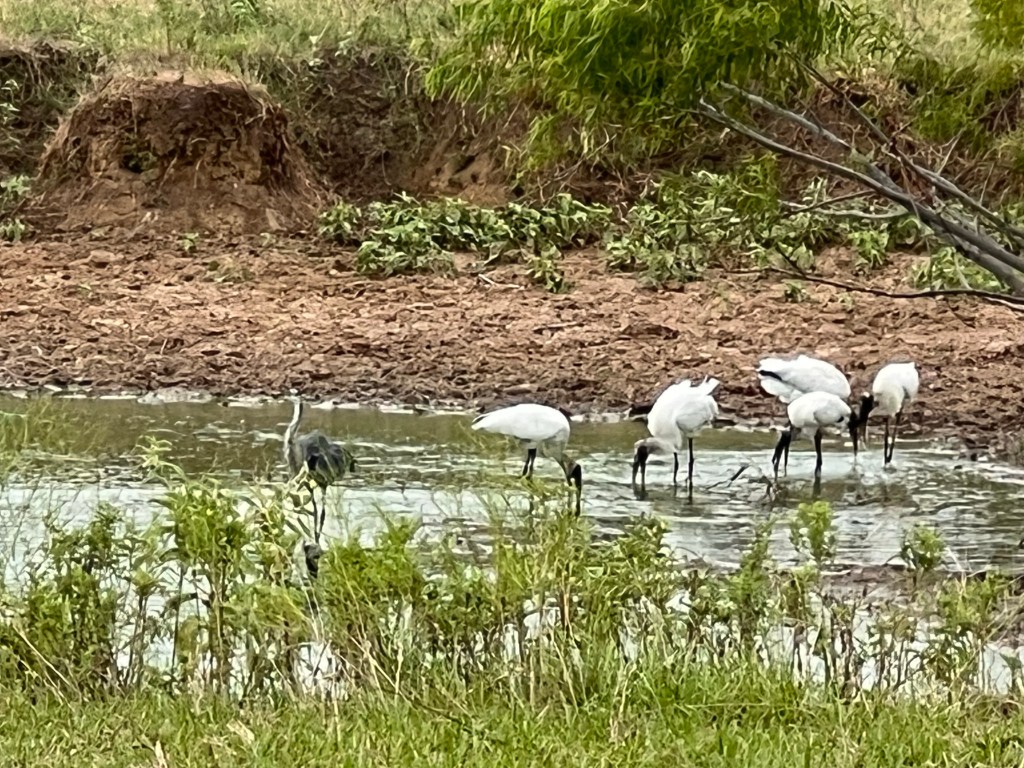
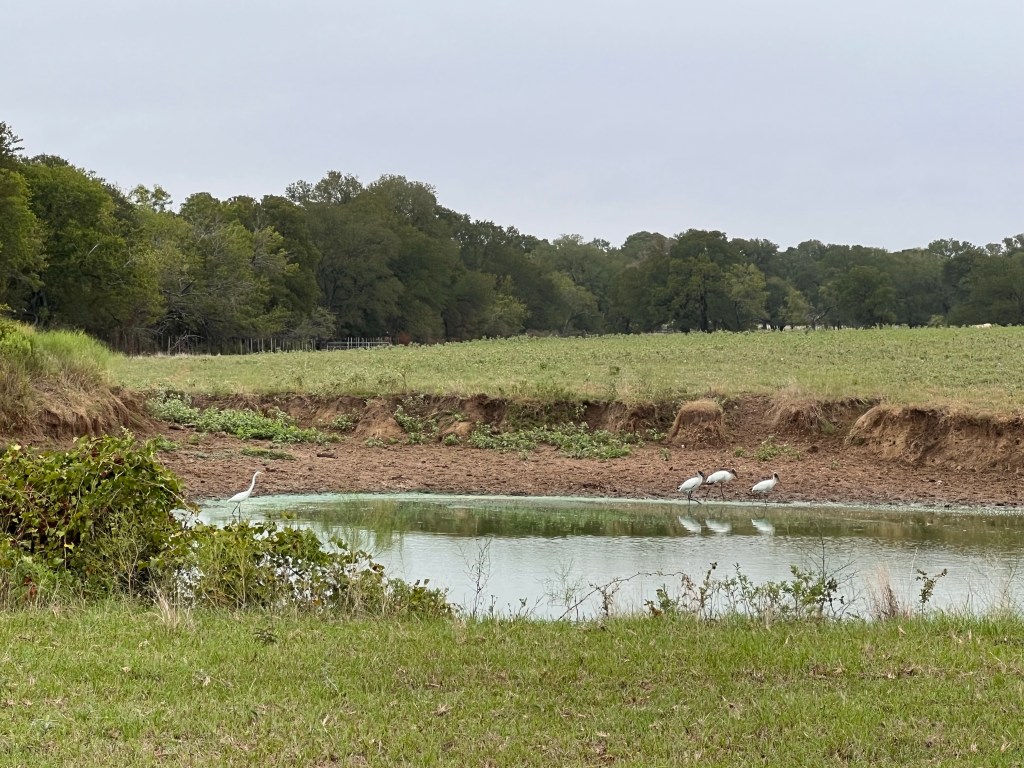
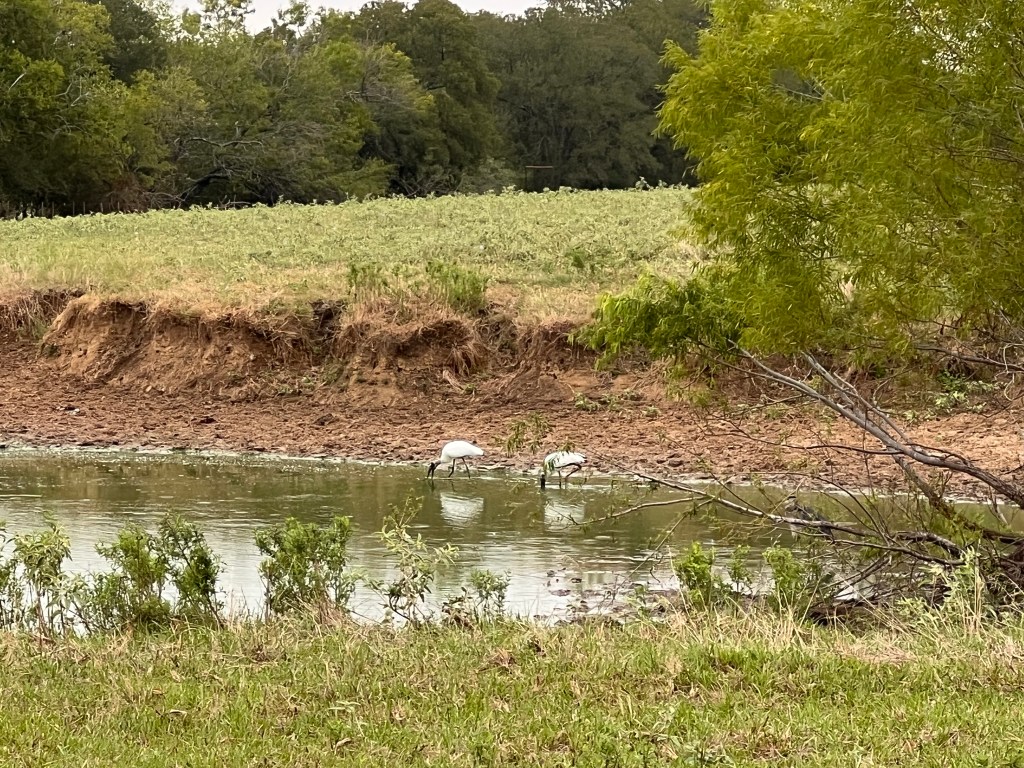
This morning there’s thunder everywhere, so I went out early to feed the chickens. I’m glad I did, because when I looked into the pond behind the house, I saw something in addition to the usual great egret and blue heron: wood storks!
At first there were just three. I love how their shadows look.
They used to visit for a while periodically, but lately they just drop by and move on. I’m so glad I got to catch them before they left. They are such gorgeous birds, with white bodies, black heads and black wing tips that make them easy to spot when they are flying.
mmm, minnows
You know they are big when you compare them to the resident blue heron, who is HUGE thanks to all those catfish and minnows it ate while the ponds were drying up.
Later there were lots of them, to the annoyance of the blue heron.
Wood storks (Mycteria americana) are the only American stork, and they move around with the seasons. Interestingly, they must have shallow water to feed in, because they feed by touch. That’s why they breed when water levels are falling (in South America). They are predominantly subtropical birds, which is why they hang around here only when it’s warmer. They are listed as a threatened species in the Western hemisphere, because of predation (bad ole caracaras) and believe it or not, ecotourism disturbing their nesting colonies. (Source: Wikipedia via iNaturalist)
You can see the wing here.
I’m extra happy to have gotten some videos. The one of them flying away is so lovely. I hope they visit again soon!
Very short, but pretty
Goodbye! Thanks for visiting!
PS: Yes, we had a good amount of rain yesterday, and should have more today. Happy news for all the plants around here!
This one shows the great egret that was also presentA few more pictures
I’ll write more in the Master Naturalist blog about this (update, I forgot to do so), but I did enjoy a visit to the Texas A&M Biodiversity Research and Teaching Collections this morning. My friend Pamela and I drove over and met up with another Master Naturalist and her granddaughter, who’s high school age, and enjoyed it as much as we did, I think. We were sad that more of our group couldn’t join us.
Art is from 3D images of animals.
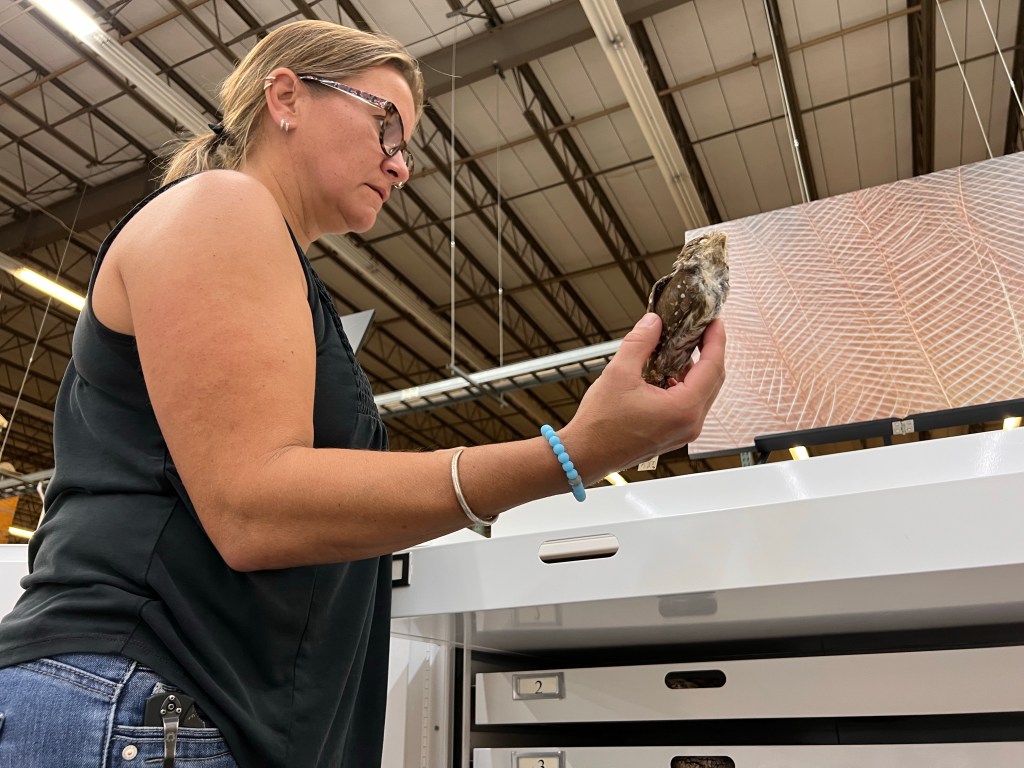
Our guides were curators Heather Prestridge, an ichthyologist, and Gary Voelker, an ornithologist. They were informal with our small group, informative, and entertaining as well. I had a blast learning about how many specimens they have, how long the collection has been growing (since the 1930s), and how they preserve the animals for research.
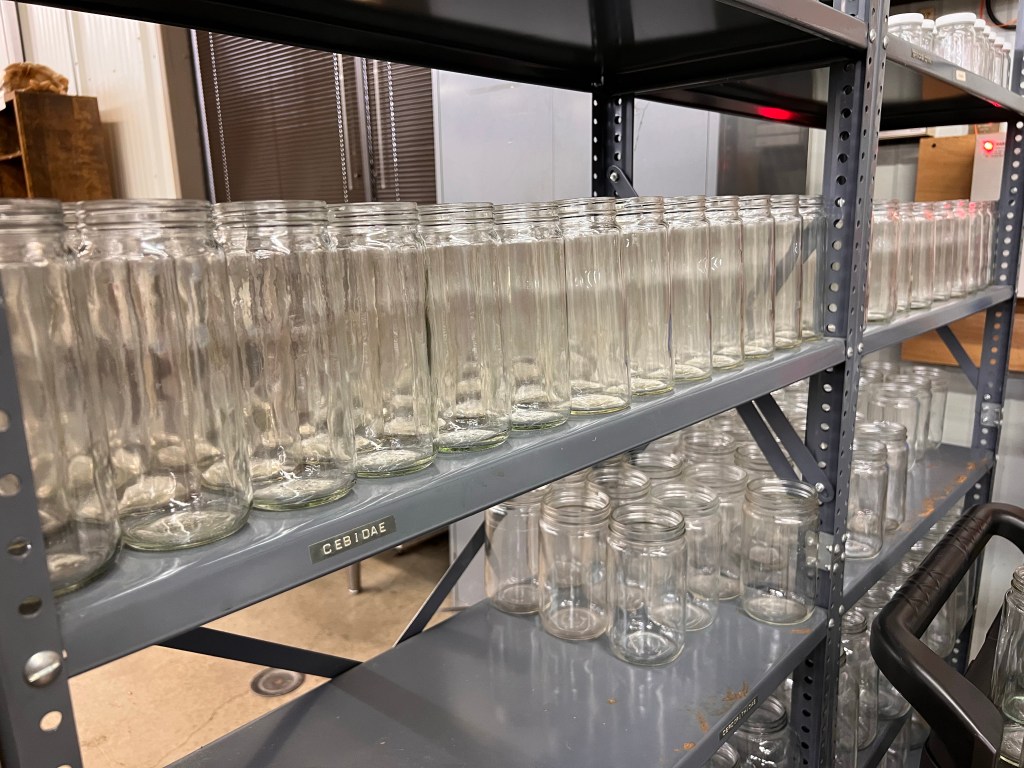
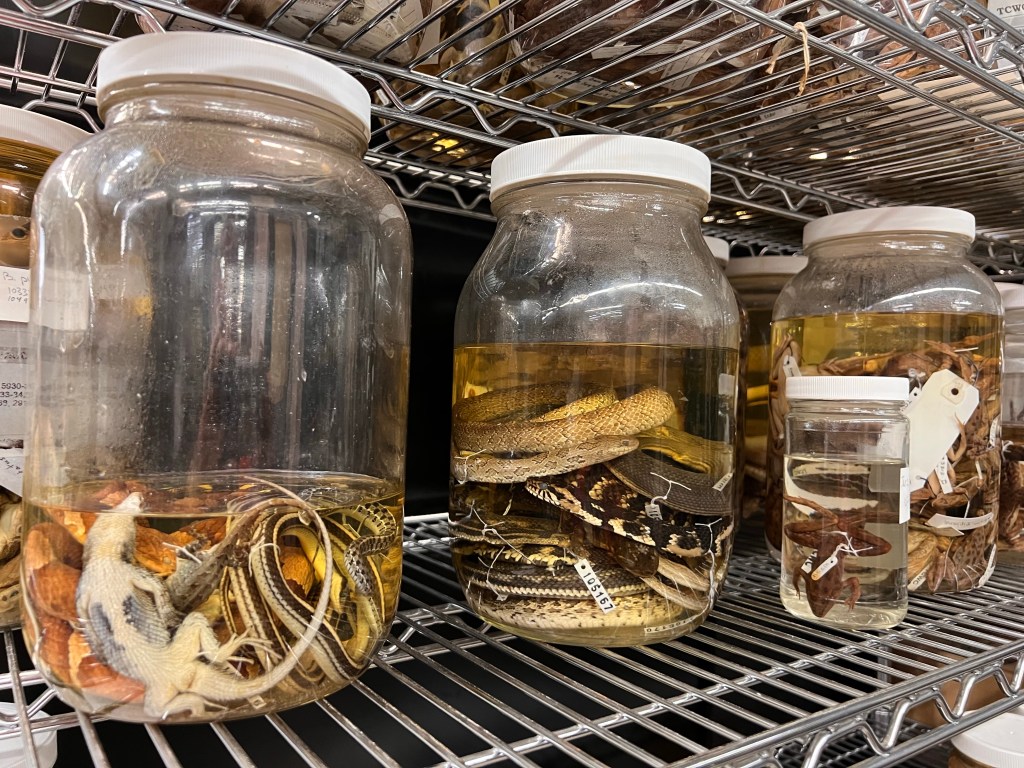
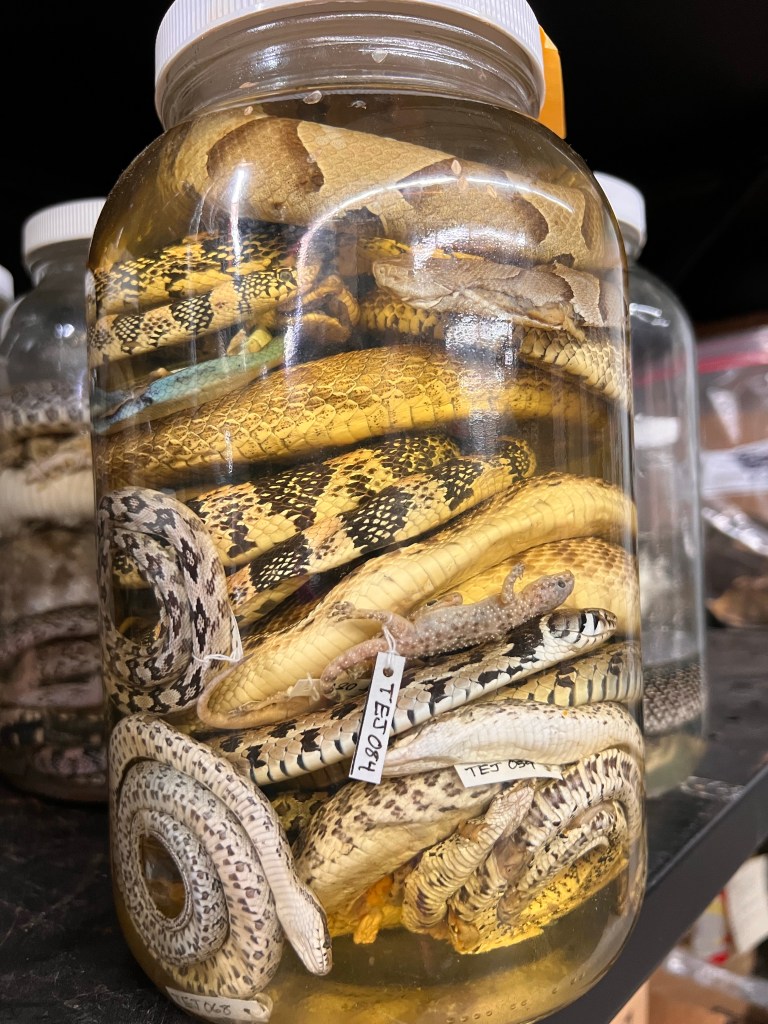
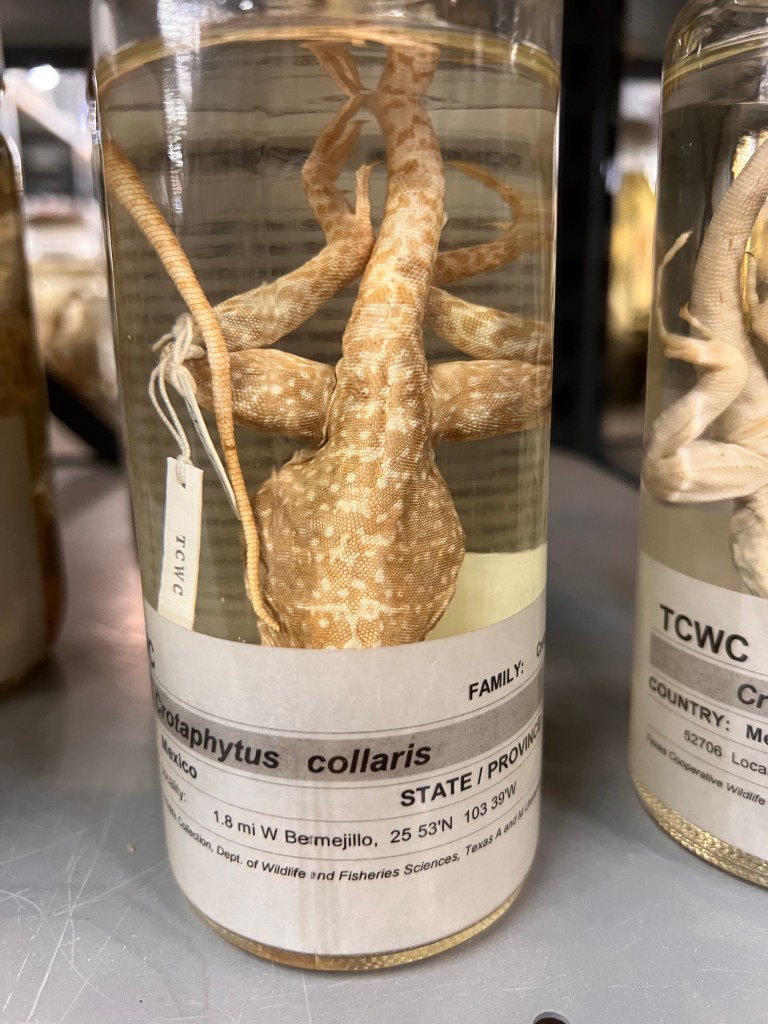
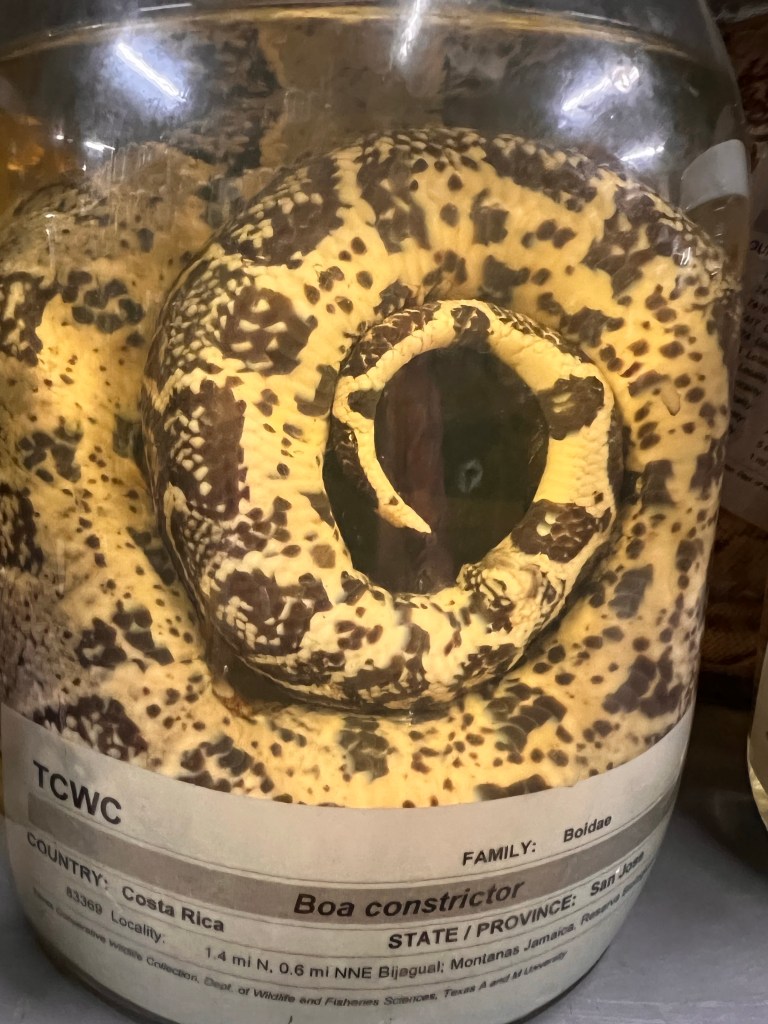
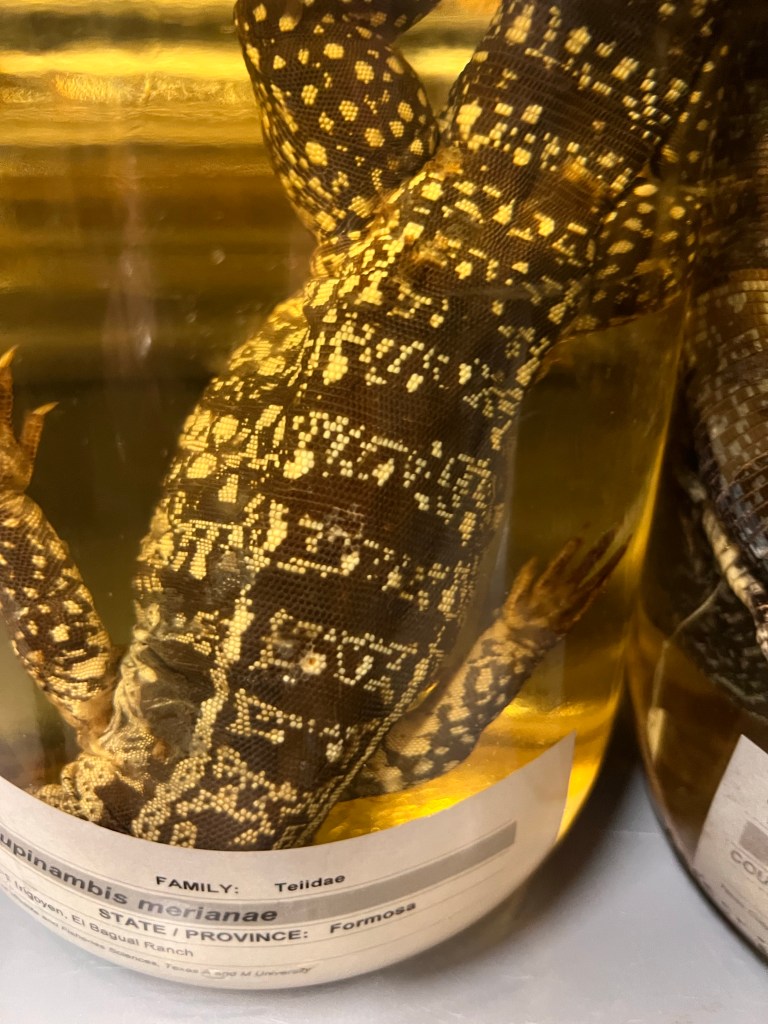
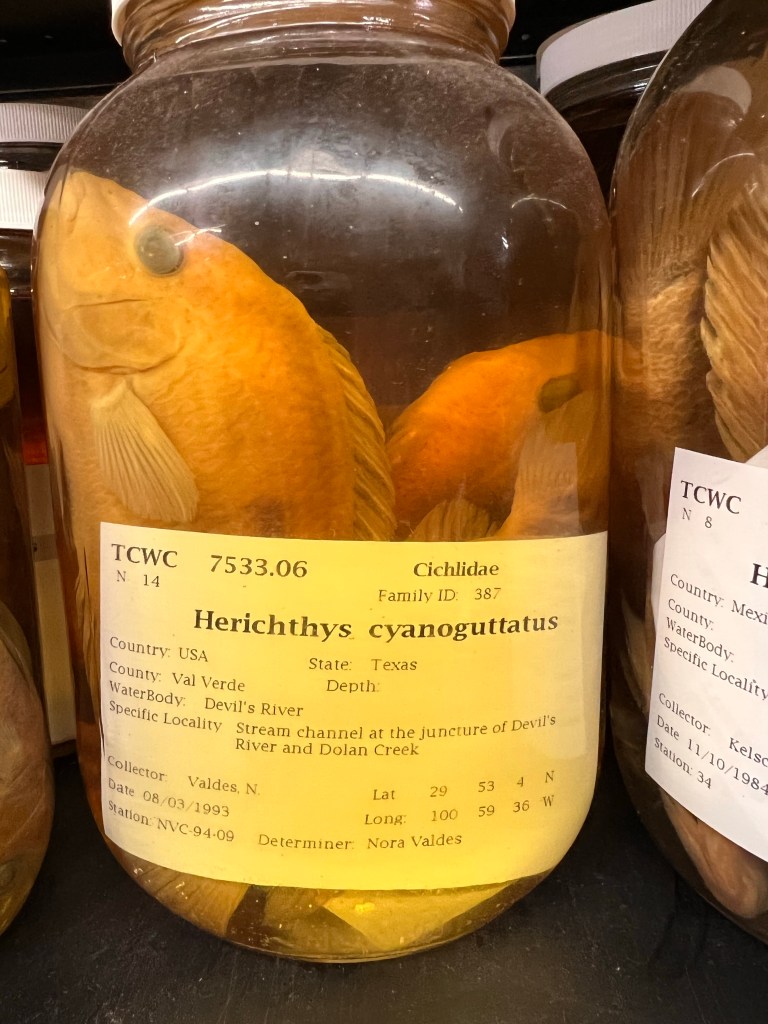
Specimen jars. Stop here if you don’t want to see preserved animals and such.
The collections of herps (snakes, lizards, frogs, etc.) are immense. It’s cool to see where they all come from. There is much from Texas but also around the world. They are preserved in formaldehyde.
Snake stackBoa constrictor I want to knit this lizard pattern from Taiwan
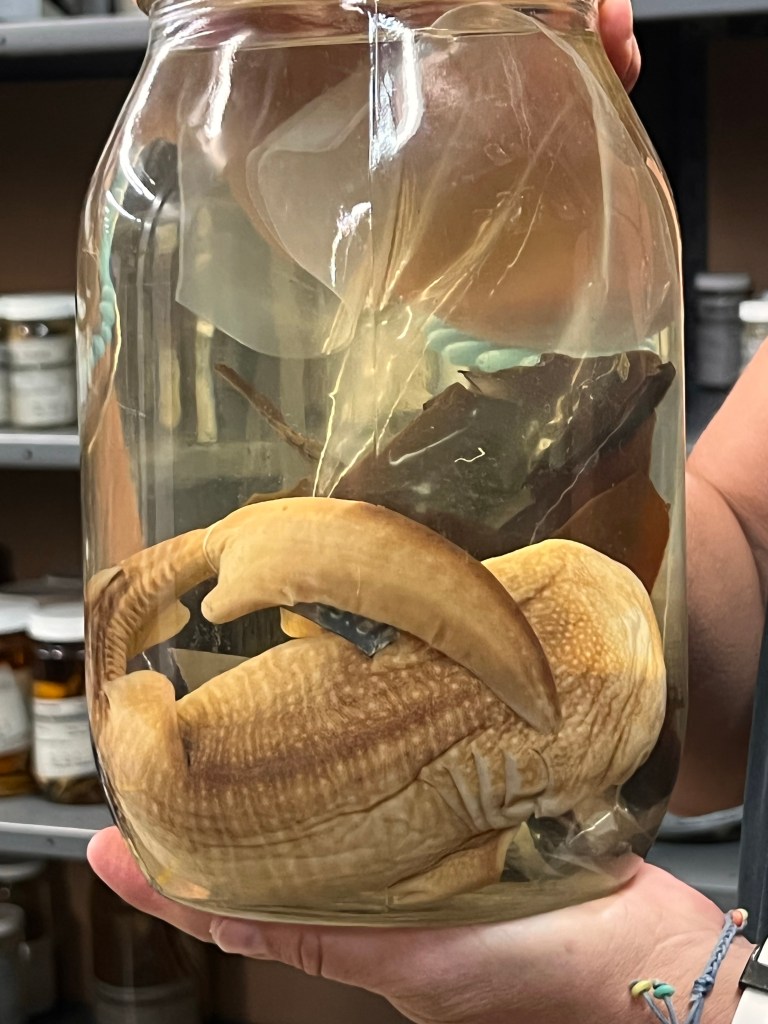
The fish were fascinating as well. My favorite was the box fish. There were just so many to categorize. Wow. There’s a lot of work for their grad students and volunteers! The other thing they do with the specimens is take tissue samples and freeze them (really cold) for future research on DNA and the like. What a resource this is!
Rays always look like they are smilingBaby deep-sea shark and egg case. The first ever found. 1950sEyeball of a giant deep-sea sunfish. Biggest eye I ever saw. Box fish.
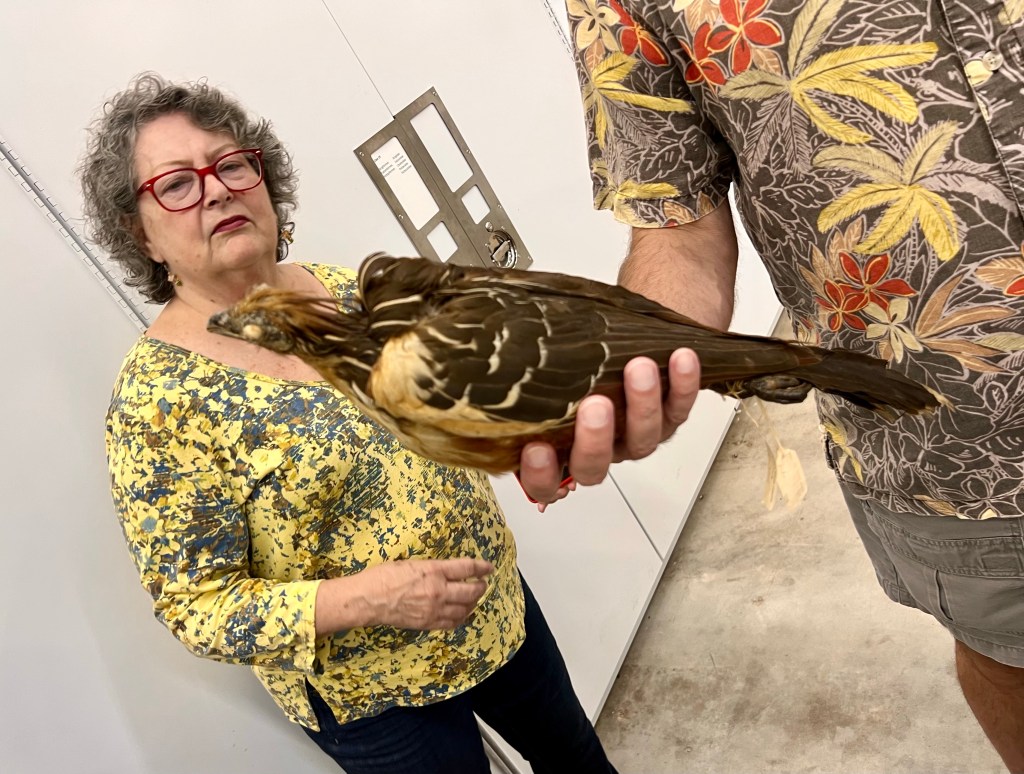
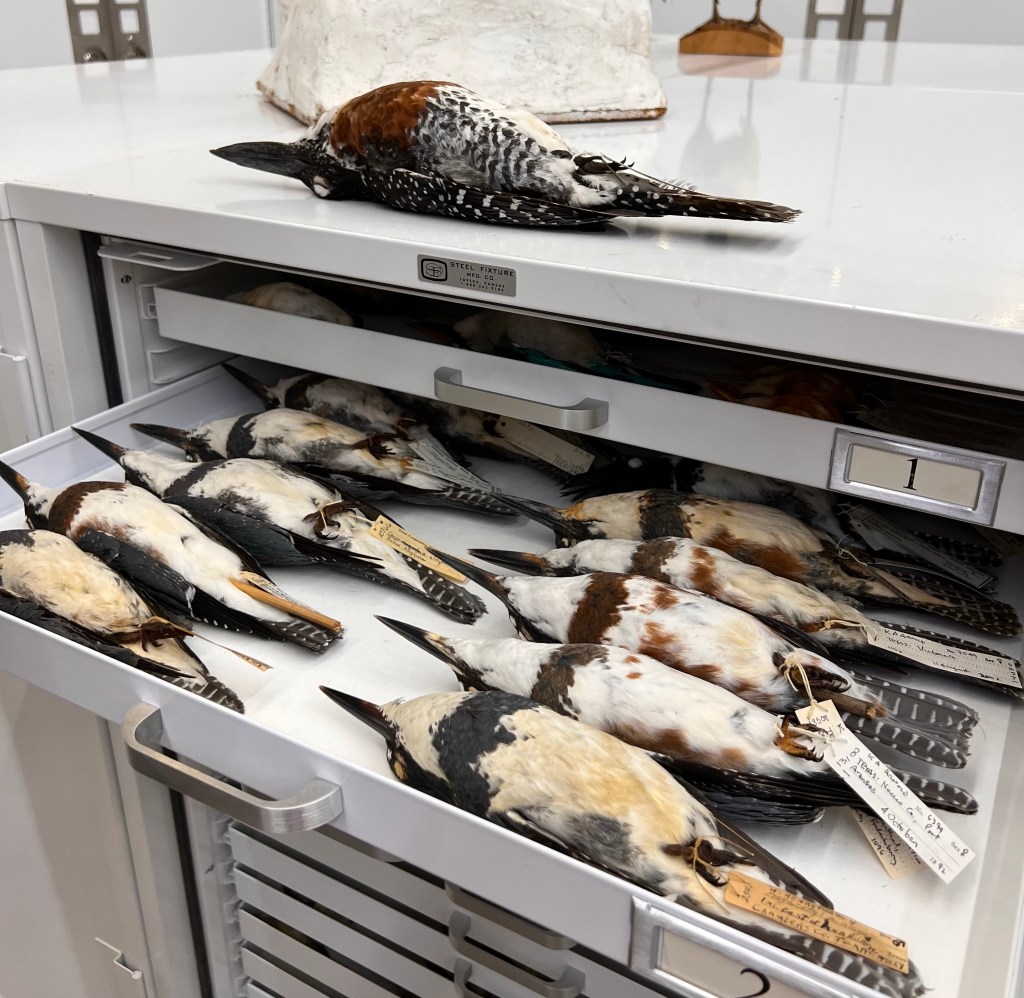
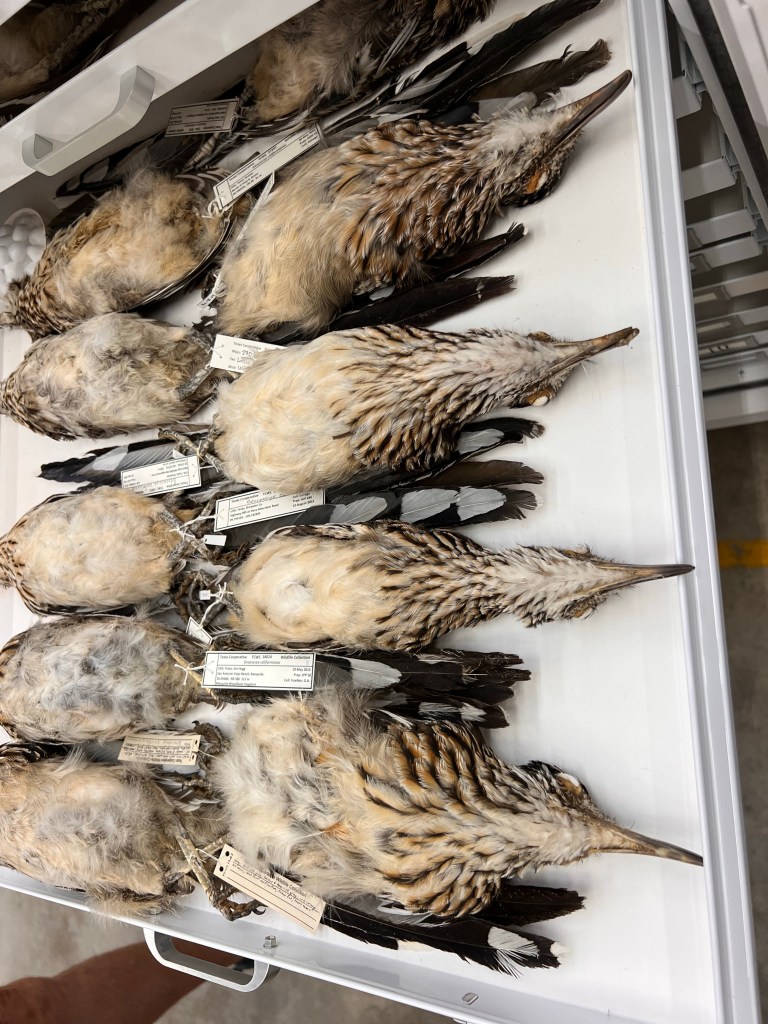
Of course the birds fascinated me. I was probably really annoying with all my questions but wow, there were things here I’d never seen before, like the Hoatzin. What the heck. This bird’s young have claws on their wings!! It’s also called a stink bird, because it digests food in its crop, which is smelly. It’s a really different bird!
Pamela is amazed at the hoatzin bird
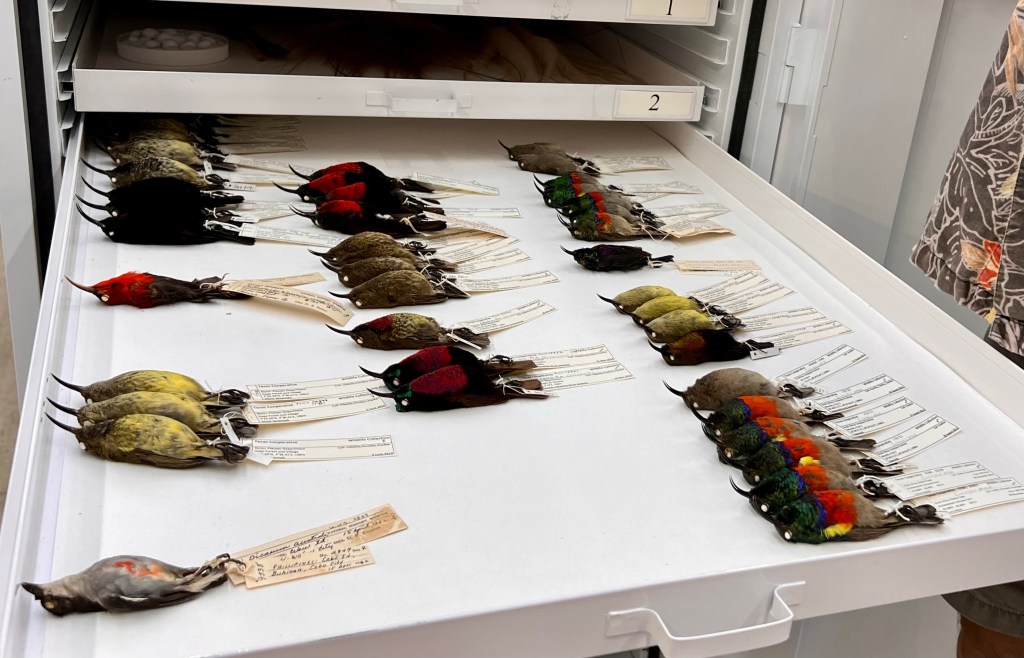
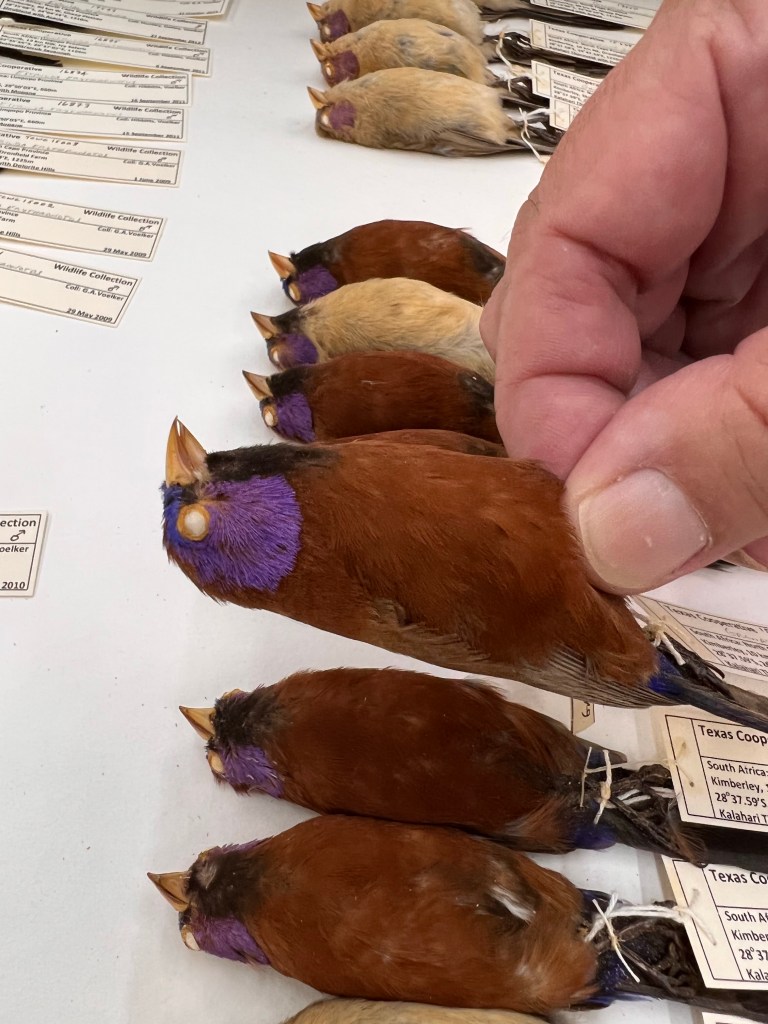
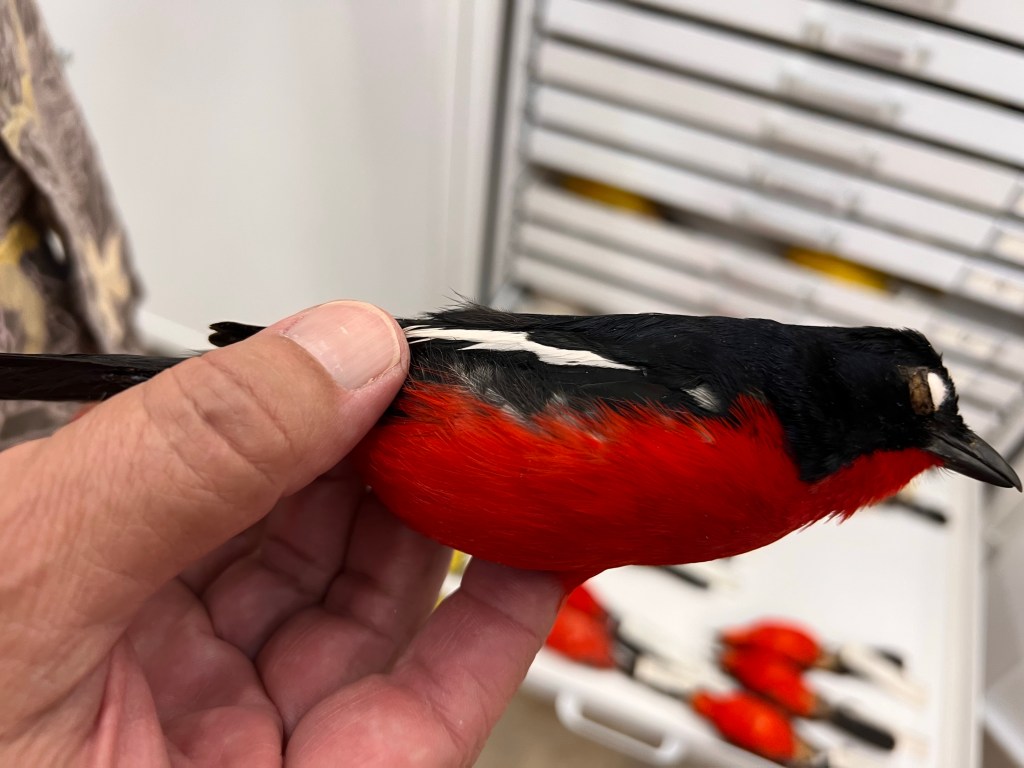
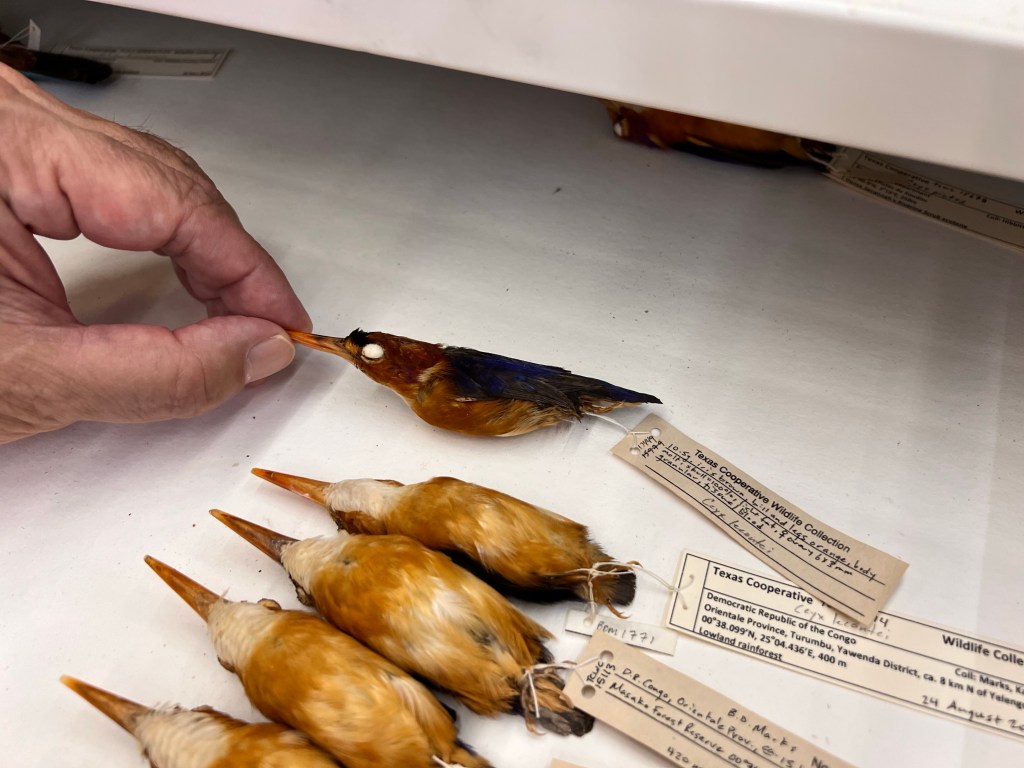
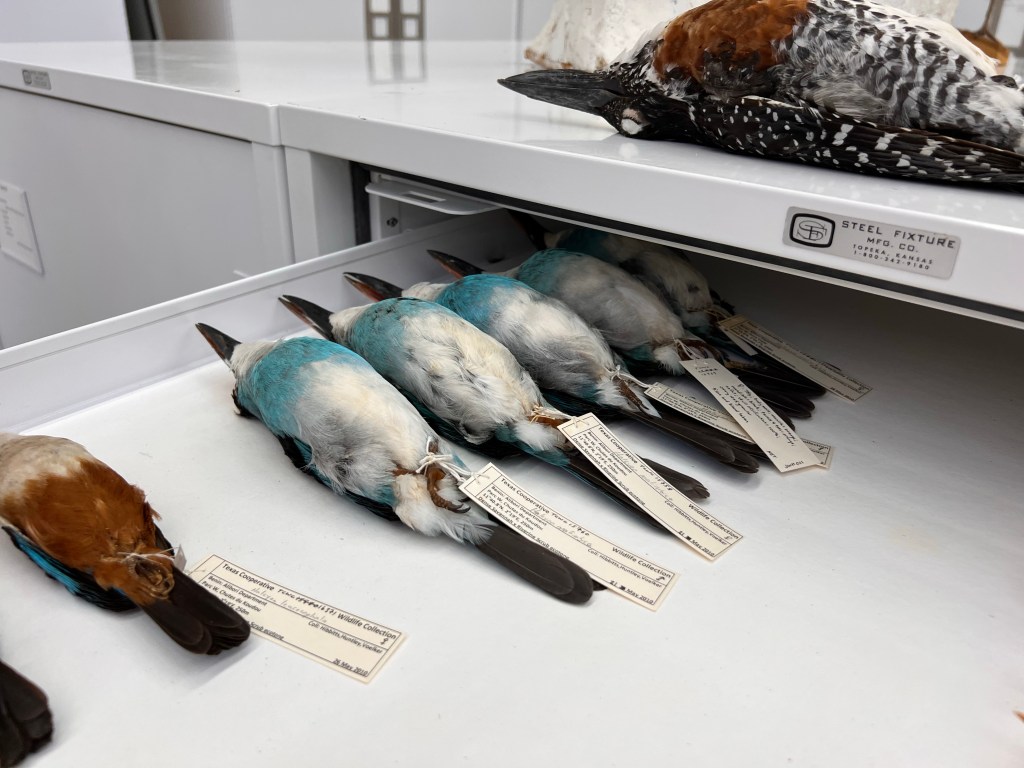
Dr. Voelker was great at sharing information about the birds. We saw the largest and smallest owls and an awesome variety of kingfishers, some that were an indescribable blue. Africa has some darn colorful birds.
Birds of paradise Whooping craneColors!Lots of kingfishersExtra blue one!Kingfisher beautyThe trays are so nice, but whew, they smell like mothballs!
Look at these roseate spoonbills. They are so many shades of pink. and I was fascinated to see the bill up close. Such specialization!
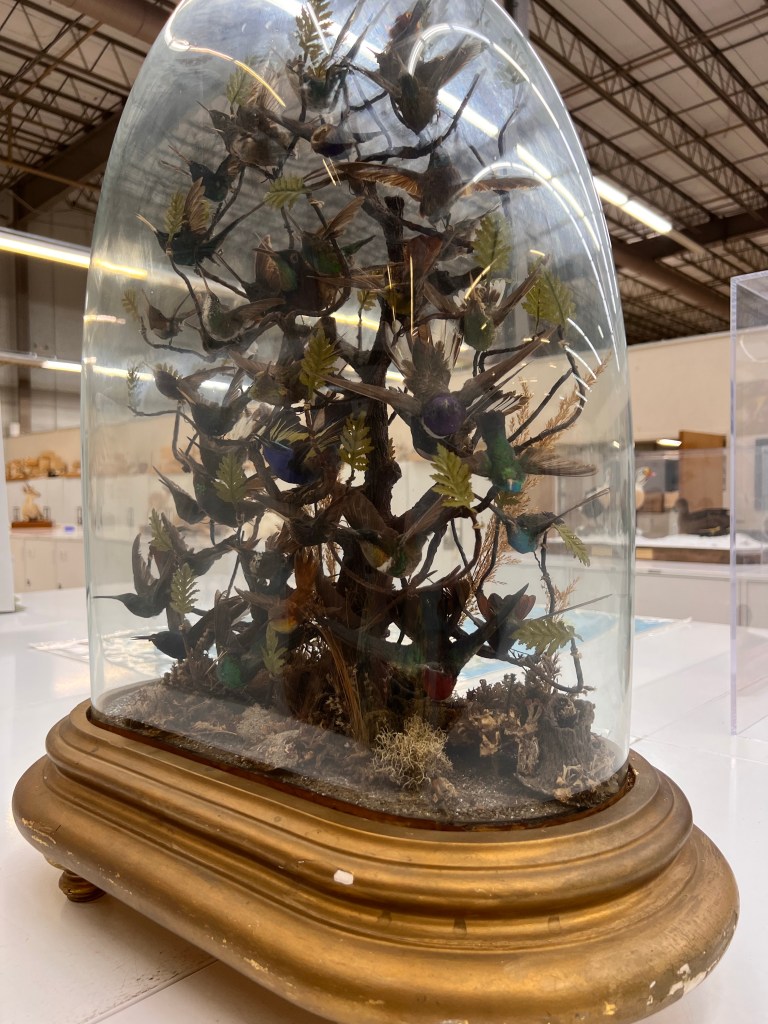
There was a lovely domed collection of hummingbirds that had been donated to Heather. Someone had it in their family for years!
That’s something else!
I’ll spare you the details but we learned about 3D imaging and printing of specimens. They find what’s in the animals’ stomachs and can ID them. Huh.
And look! A giraffe skull! Look at the horns!
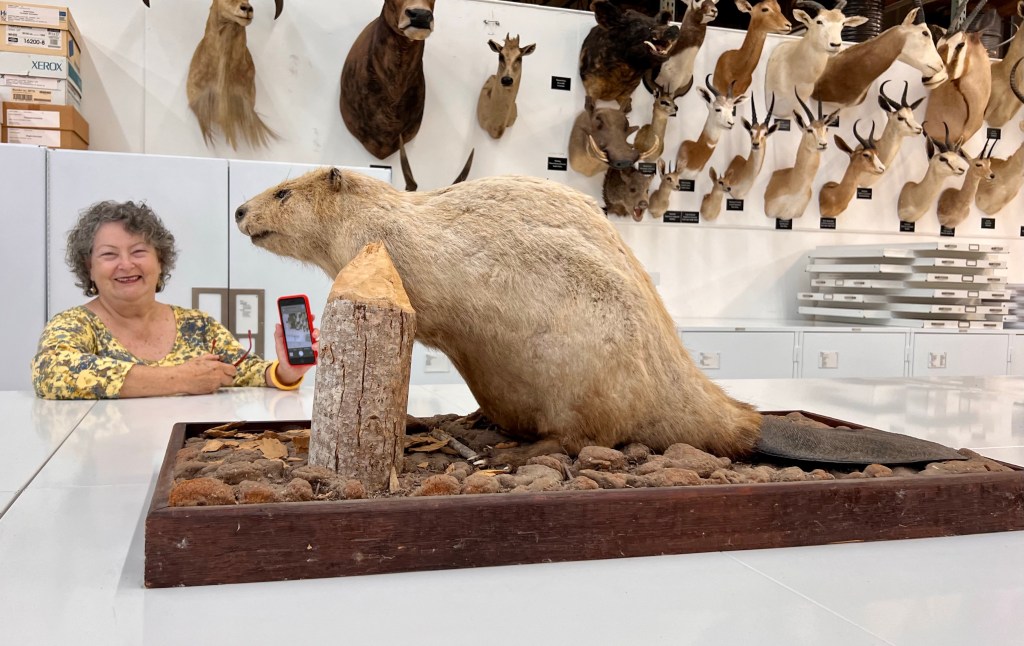
They didn’t talk much about boring old mammals but I checked them out.
I was dazed.
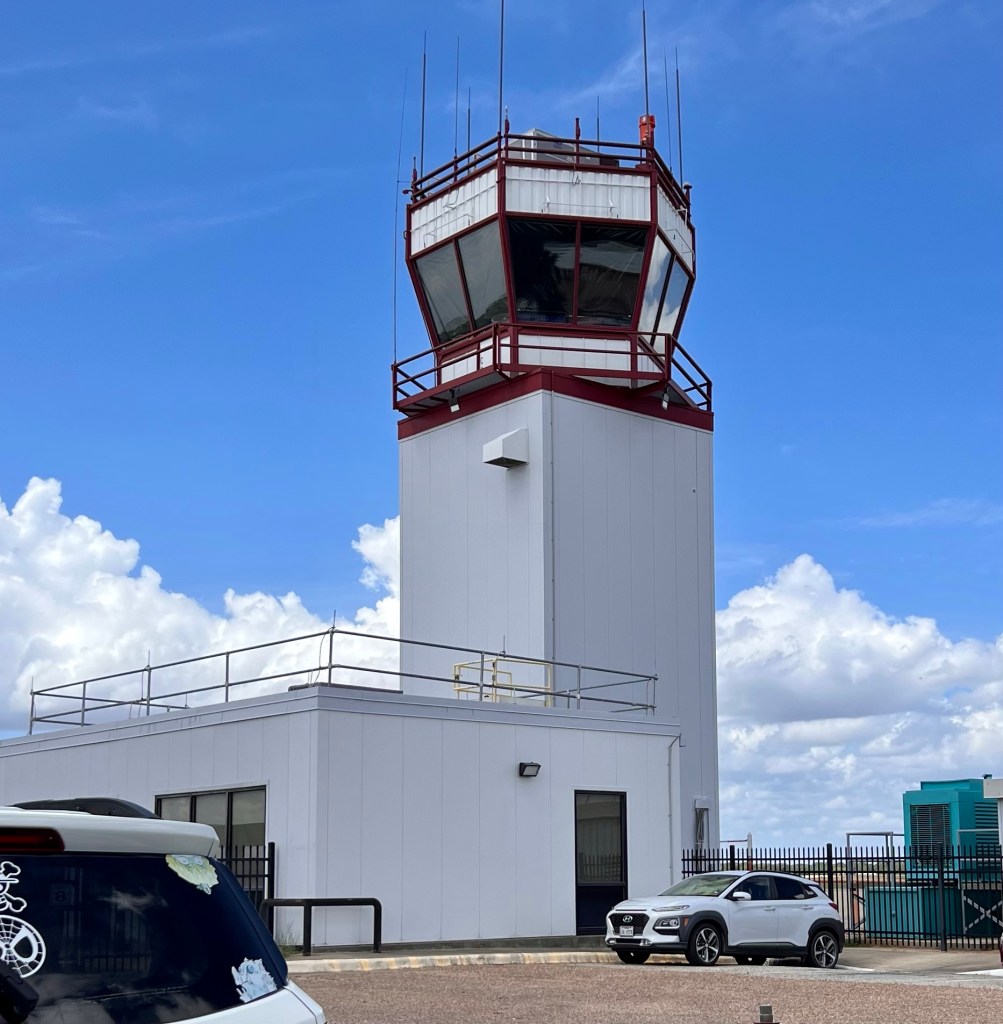
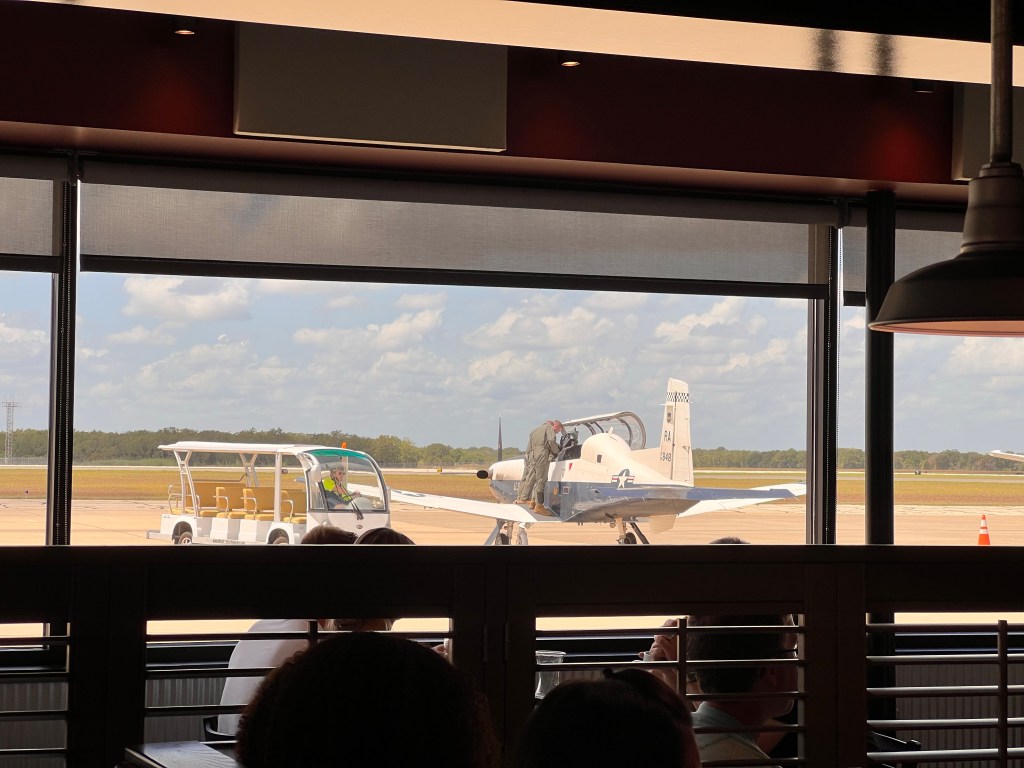
Believe it or not, I managed to get hungry after all those dead things. Good thing we’d arranged to meet our friend, Lynn at a restaurant at the old airport terminal. Ah. A nice restaurant. And airplanes! What a good time.


















































































 The Hermits' Rest