I got to sit on the front porch for a few minutes this morning. Finally. And I got excellent news!
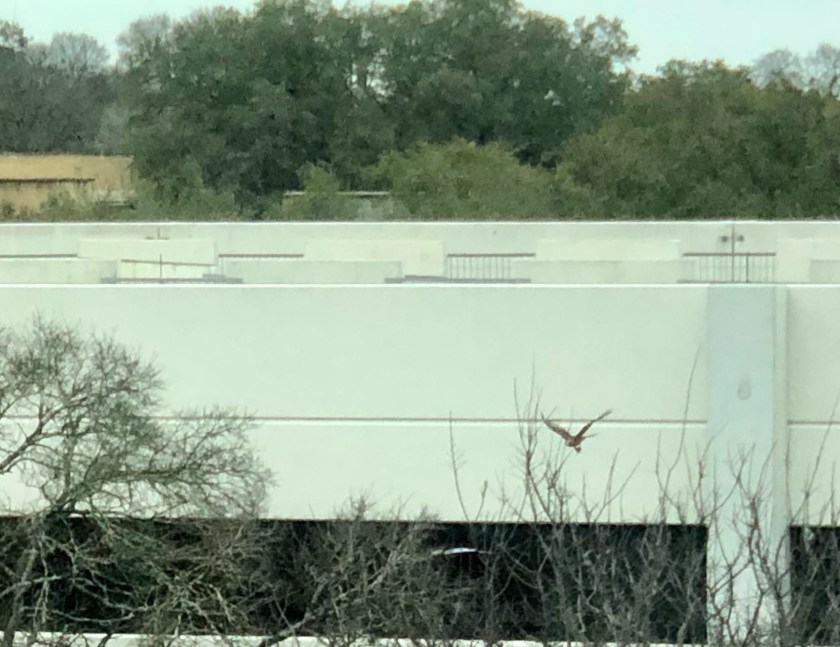
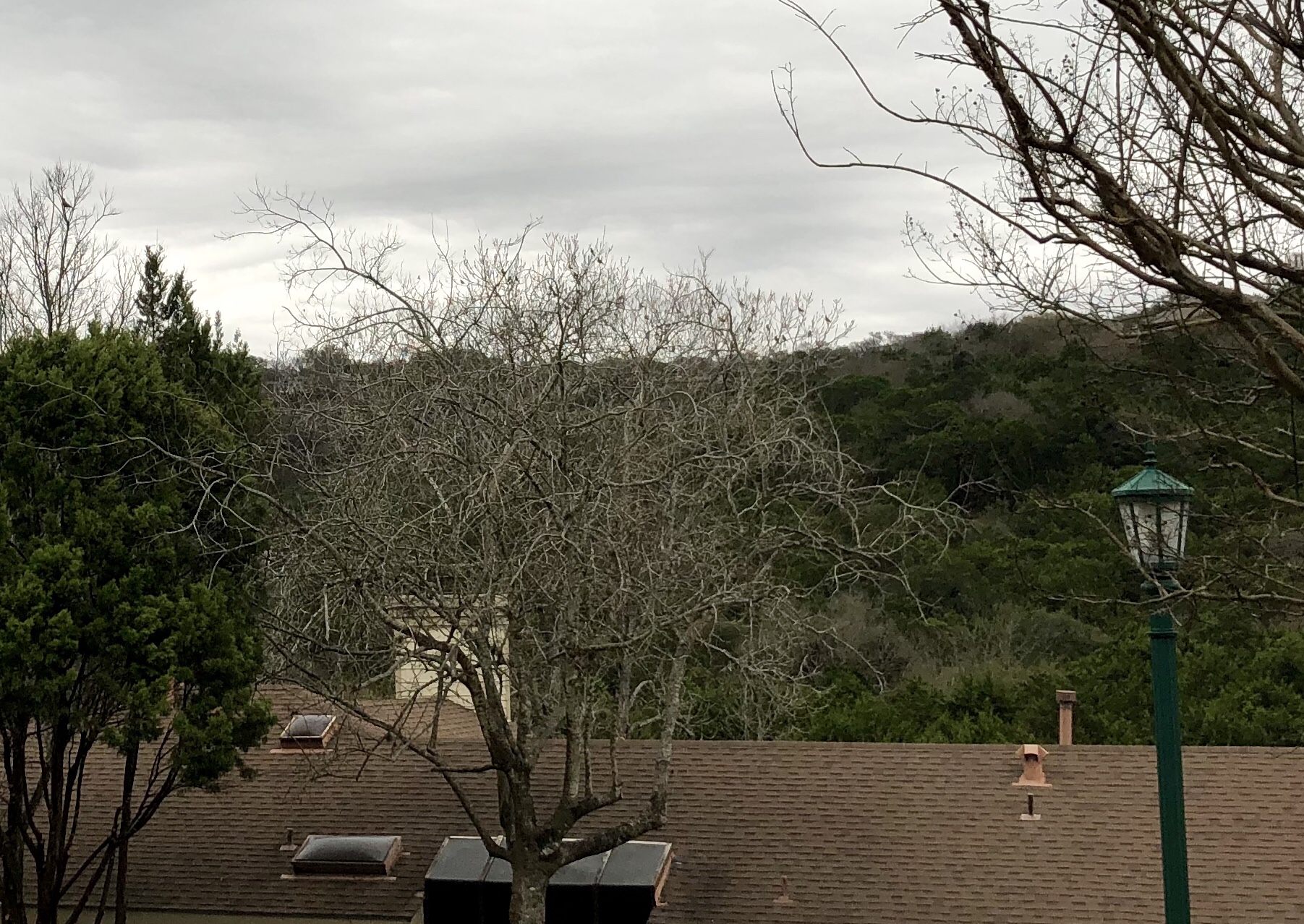
Here’s where I saw the swallows. You can also see trees budding out. Ah.
A familiar chirp told me to look up. And oh happy day, there were barn swallows scoping out the area. I love watching them swooping around and eating bugs. I don’t mind the two nests they rebuild every year, either. It’s our thanks for their services.
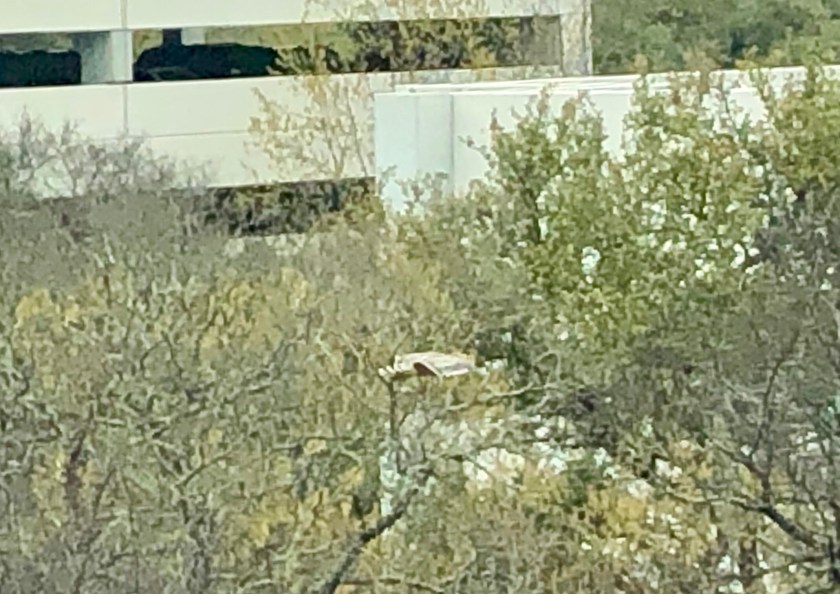
The shrike WAS on that post.
As I was looking for a swallow to take a photo of (failed), I saw another familiar friend, our loggerhead shrike. These guys take care of larger bugs for us and leave them impaled on barbed wire fences. I wrote a lot about them when I went on a field trip looking for them at last year’s Master Naturalist conference.
I also love porch sitting.
One reason I love porch sitting is the easy bird watching. I’ve seen a red-tailed hawk, black buzzards, mockingbirds, and of course, the field sparrows, too. I hear crows. I sure wish my laptop battery wasn’t dead, so I could do my work outside.
I chose to drive to Boerne, Texas today on the back roads. That rarely disappoints me! The hills and valleys to the west of Austin and San Antonio provide new surprises every time you take a corner or reach the top of a hill.
I passed many beautiful ranches, and saw many longhorns and exotic game. I even saw four axis deer NOT in a fenced area. I guess those guys are here to stay.
I also finally got to visit Kendall County, and Kendalia, where I fulfilled a dream of taking my picture by the sign.
Doing my chipmunk imitation. Kendall in Kendalia.
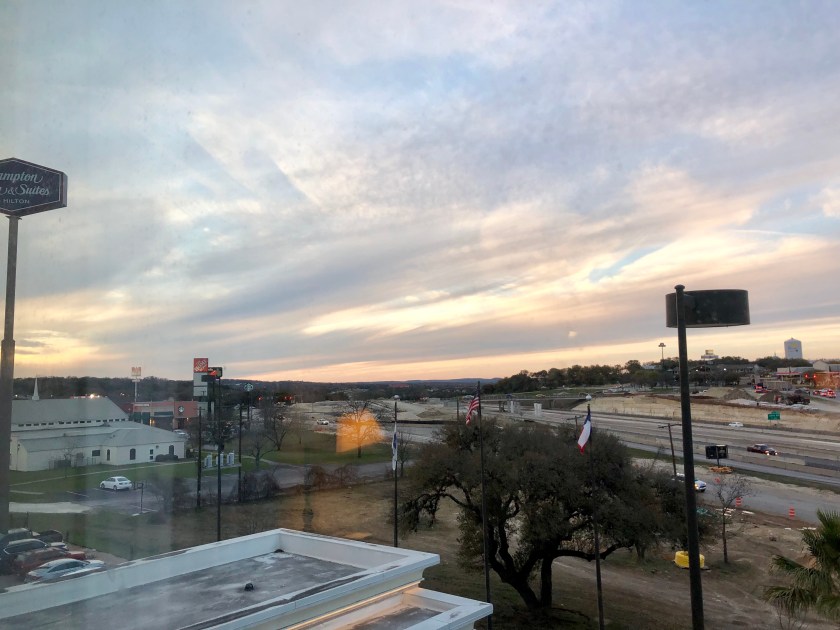
Everything on the back roads went well until I went to find the Hampton Inn. The Maps app didn’t realize it was on the OTHER side of the Interstate. I called for help, and the poor young woman who answered had just moved to Boerne and had to get help of her own. She gave me an extra water bottle, because I was nice about it.
Yep, it’s on THIS side of I-10. Construction confused my navigation app.
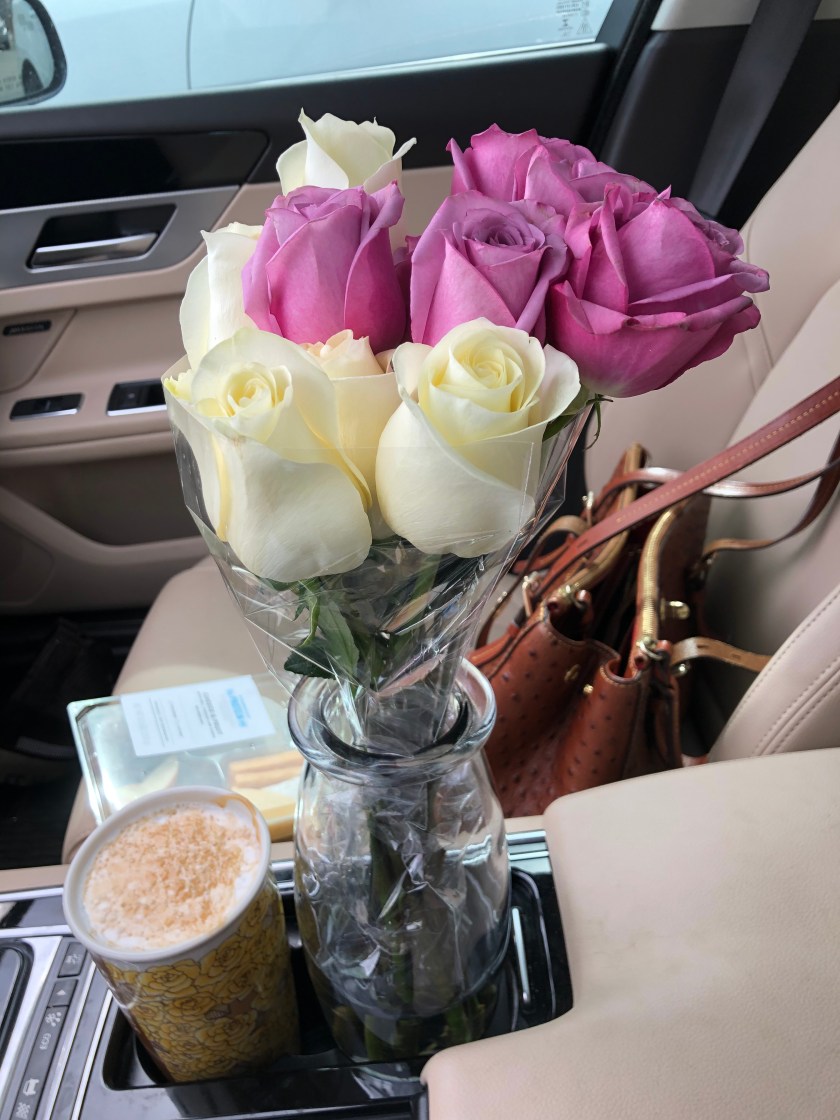
She was also impressed that I brought my own dozen roses with me, thanks to my annual gift from Freytag’s Florist.)
Traveling in style with roses and a fancy coffee in a rose cup.
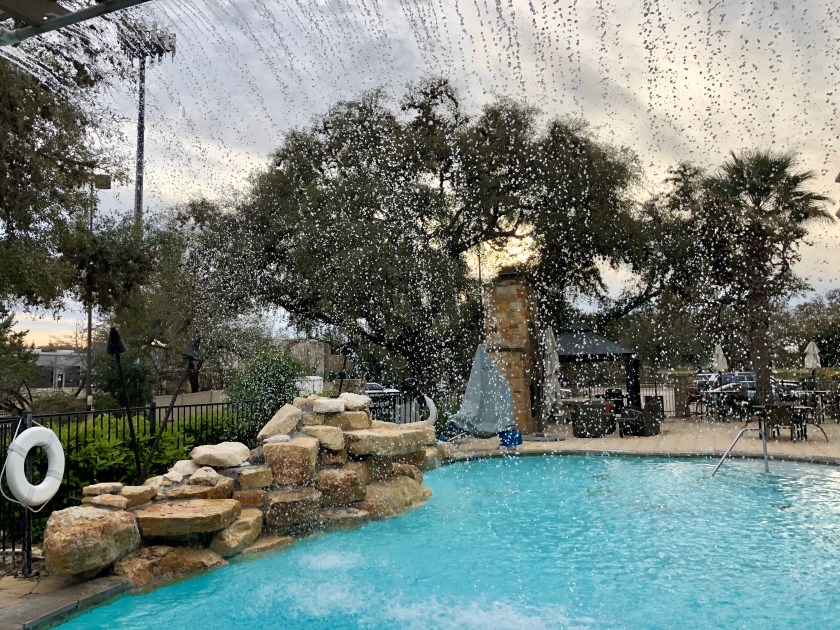
After all that, I needed fresh air. I checked out the really pretty pool area behind the hotel. There’s a fun waterfall, so I sat in a lounge chair behind it (hey, it was over 50 degrees F!).
Whee! I’m behind the fake waterfall!
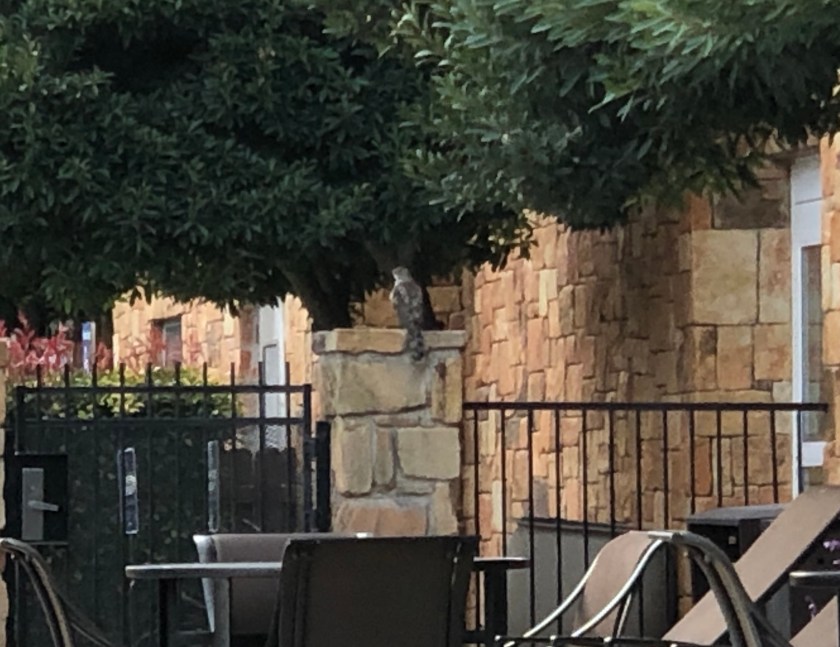
Suddenly, a familiar blurry shape descended. A Cooper’s hawk landed in a small tree on the other side of the pool. It was a male or juvenile, quite petite. I watched him checking things out around him, paying no attention to me.
Watching the watcher. Hello, hawk.
I guess this is my season to be reminded of the vigilance and protectiveness of hawks.
It’s been a fun weekend here at the Hermits’ Rest. I managed to go horseback riding twice, which is rare, and Apache and I had lots of fun.
Sara is setting up our cone obstacle course.
Sara set up cones, so we got to ride in patterns. He did way better on Day 2, like he figured it out. I also prevented him from eating thistles unless it was my idea.
Today we went into the pasture where a lot of cattle were. Spice did a great job herding them, and Apache managed not to panic when a big mama came toward him. Baby steps.
The new veggie garden at the cabin. Tyler hopes it will be chicken free.
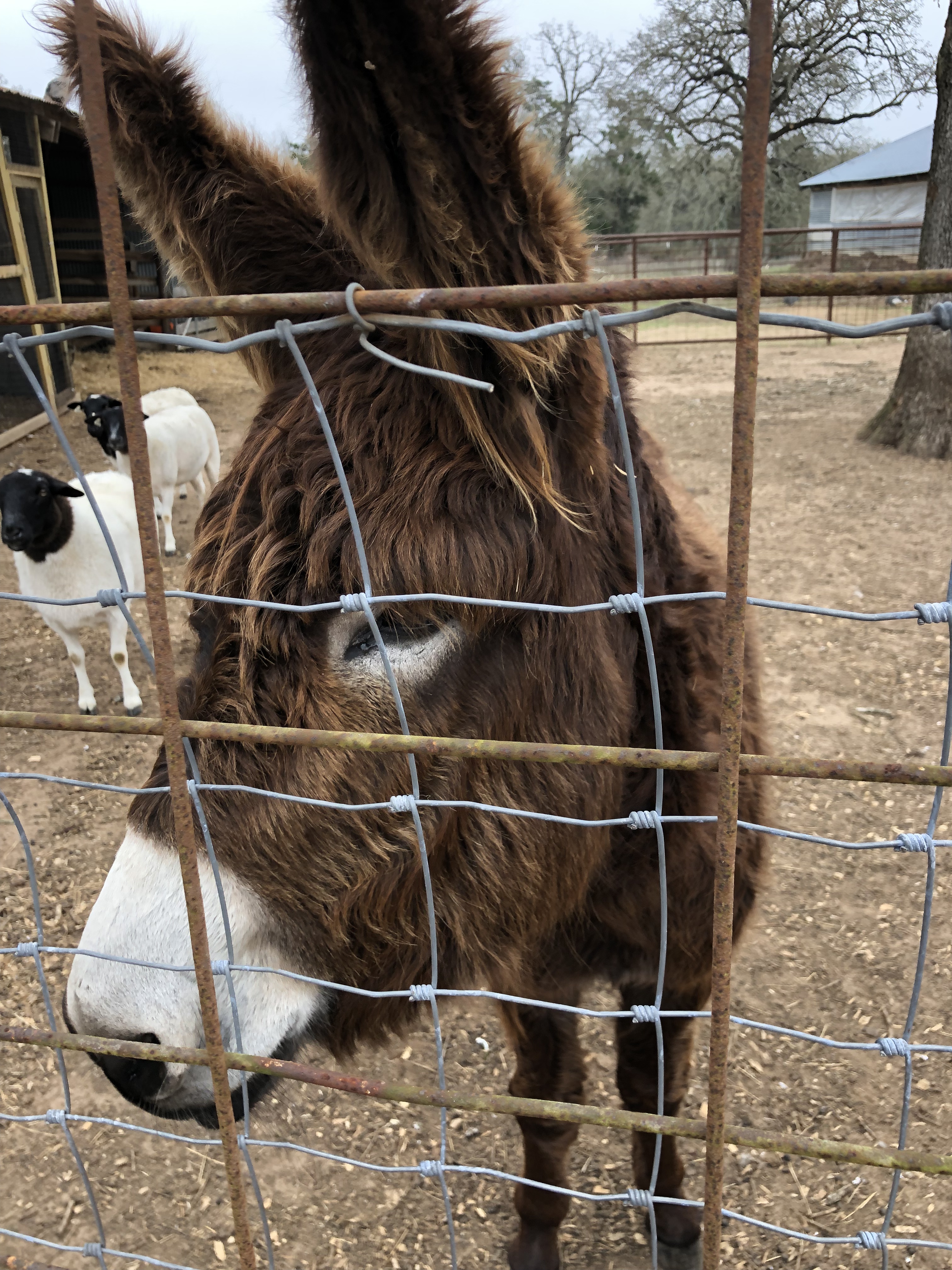
Meanwhile, Fiona was “helping” Tyler work on his new vegetable garden. And hee-hawing. He has patiently built a fence and covered it, to keep the chickens out. That’s nice of him.
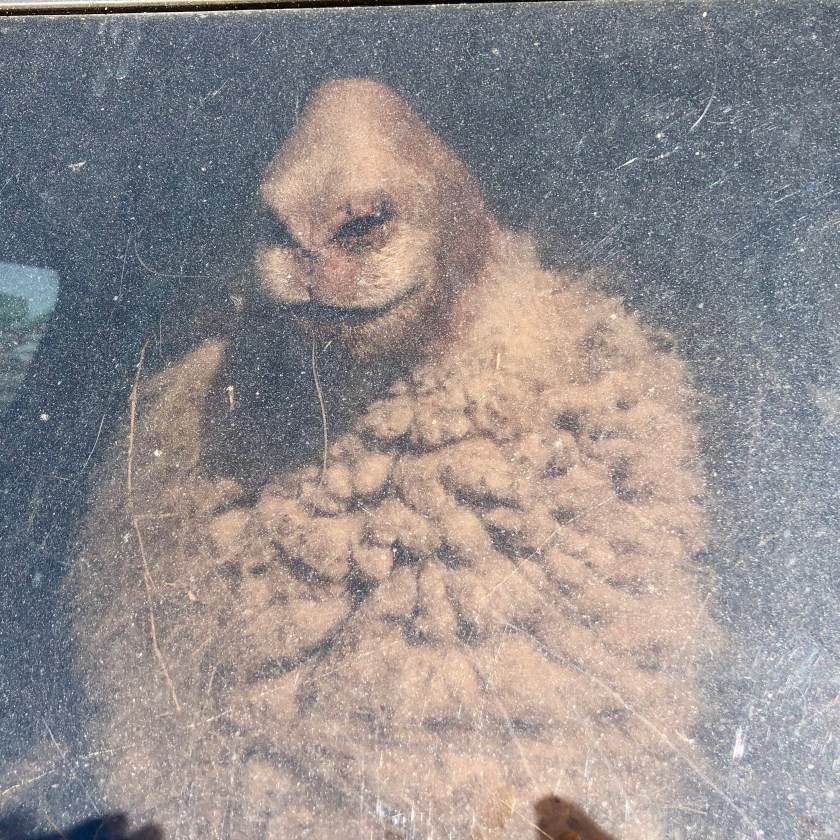
Let me out of this car.
Even more exciting was the fact that the sheep’s owner had come to pick them up to shear them. She got the male in her SUV but the ewe would NOT be caught. She thinks she’s a cow, dang it. In the end, they let Sheep Man back out. That’s one for them!
Ooh! Carrots and celery! Thanks!
As for the chickens, they were excited this weekend by food fun. I got them some dried mealworms, which they love. They’re sort of creepy, though, because they look sort of alive when you pour them. Plus, they got even more excited when I bought them veggie leftovers from the dinner I was cooking.
One of these eggs is not like the other!
The it was my turn to get excited! The chocolate brown eggs have started! It’s amazing how tiny pullet eggs are. I want to save the shell!
Homemade chicken and dumplings. Comfort food rules.
Now to eat my chicken and dumplings. Dumplings are secretly flour tortillas cut up. Chicken is not from my hens!
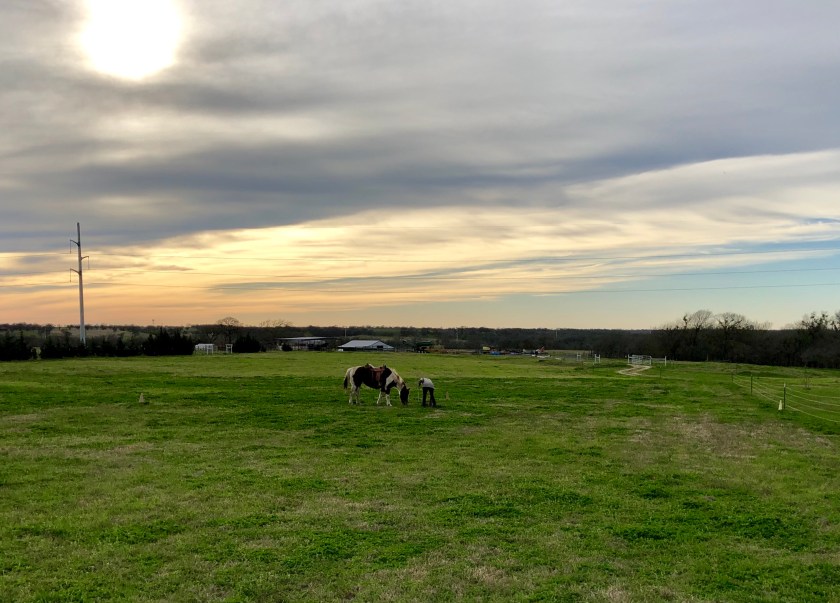
It’s a beautiful day today, so I’ve done a bit of wandering around. I’m always surprised at the beauty I see, just walking around the ranch.
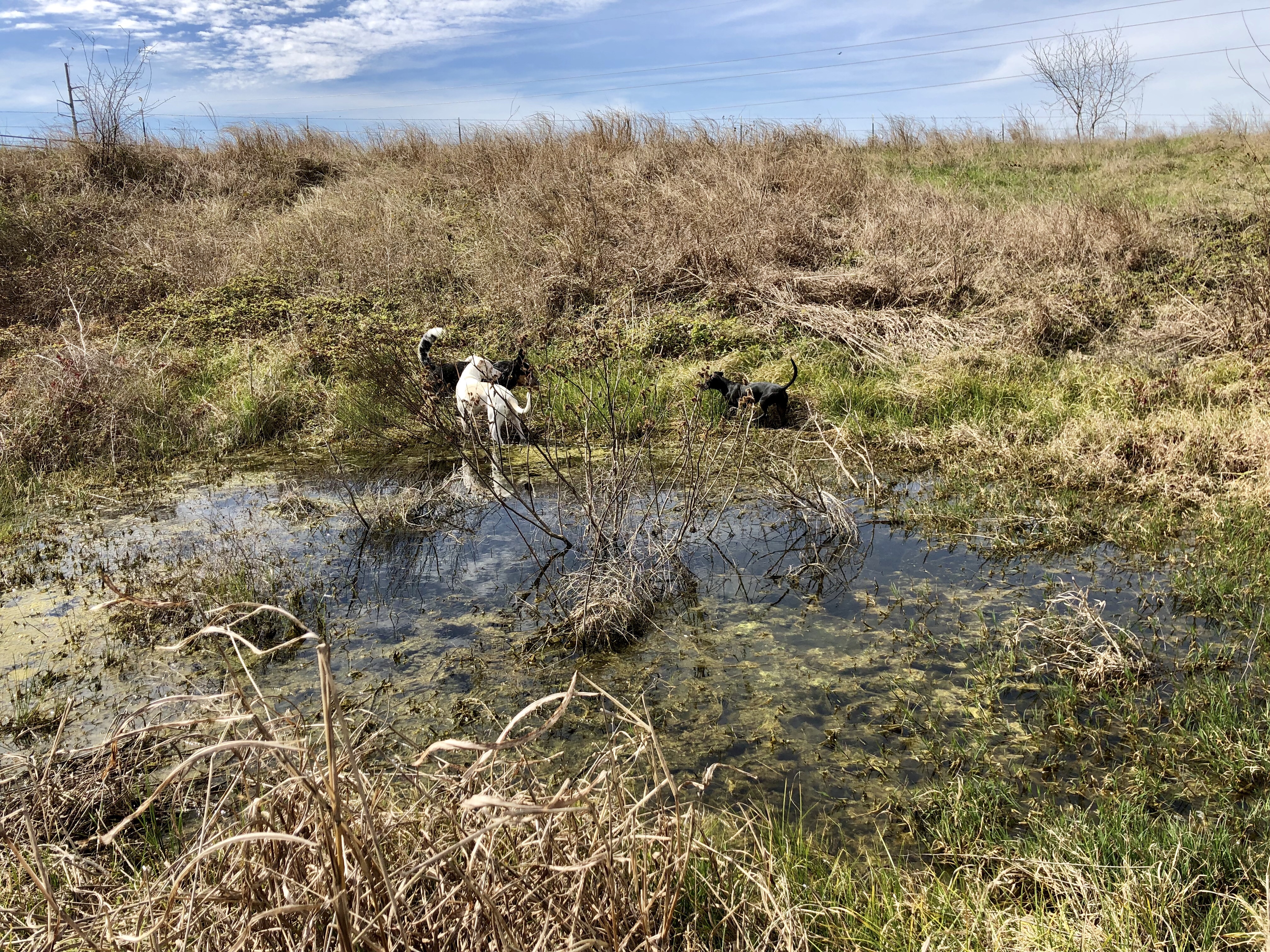
Just a beautiful day to have dog fun.
Today the dogs and I checked out the arroyo, and they had a lot of fun sniffing and stomping, as usual.
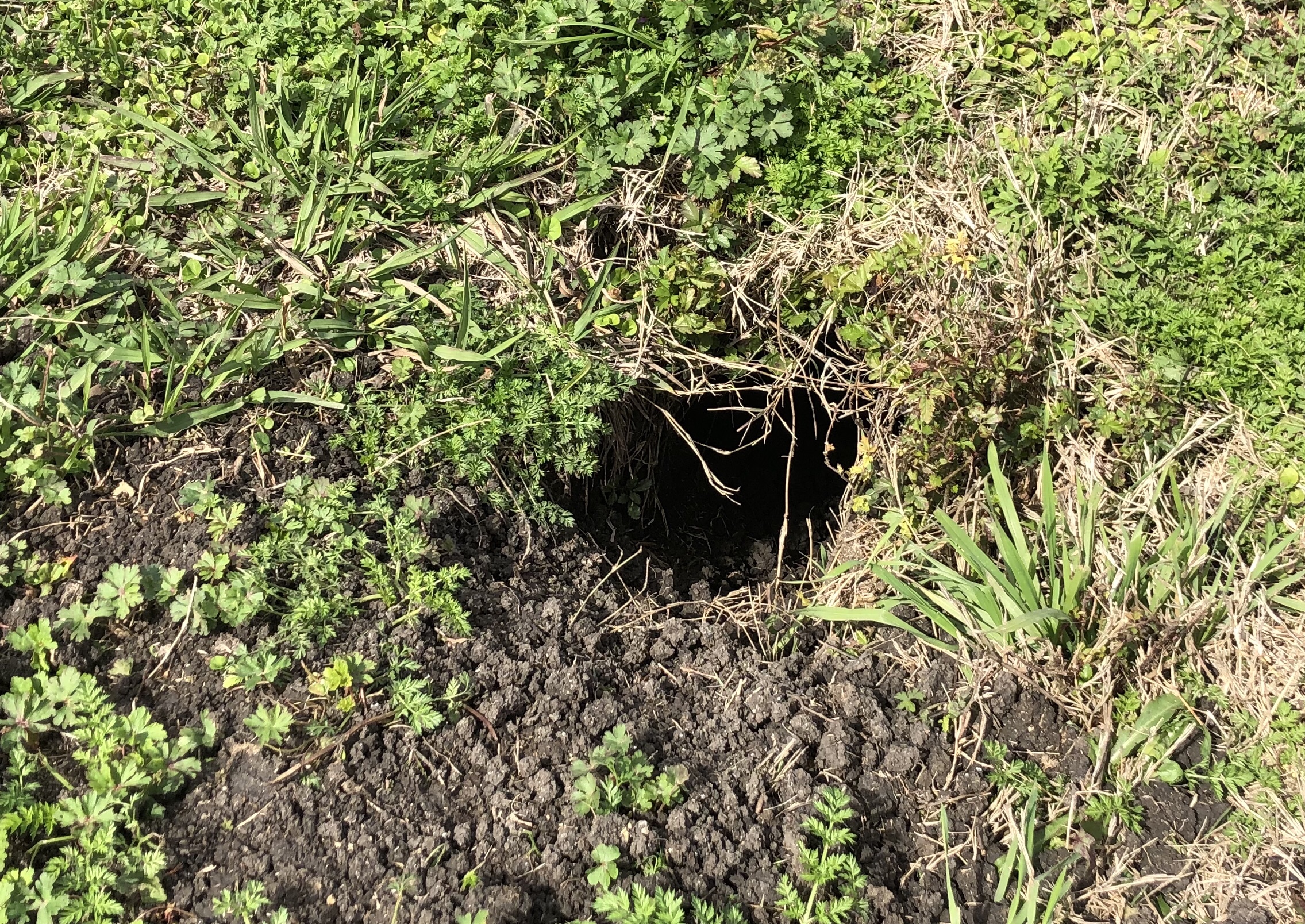
That is a BIG hole. Glad I know where it is, so I won’t step on it.
I was surprised to see just how big the armadillo’s hole has gotten. Every time I walk by there’s more dirt outside it. That is one busy dillo.
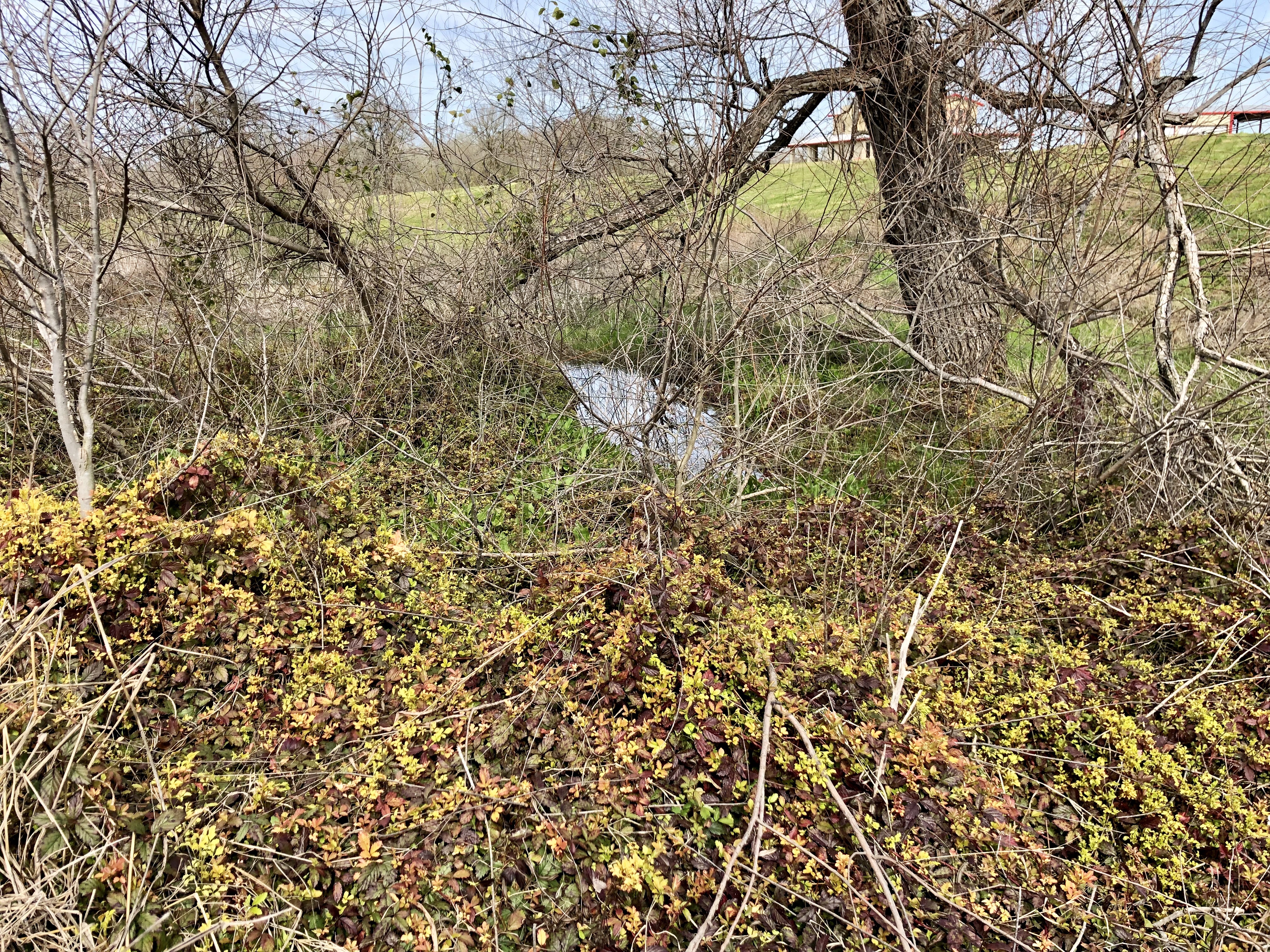
You can’t really see as much orange as I saw in person, but hey, these will be a lot of delicous berries!
The trees and bushes are all budding out, and sometimes the color really surprises me. The dewberries are all red and yellow, and look almost autumnal!
A brief pause between screeches.
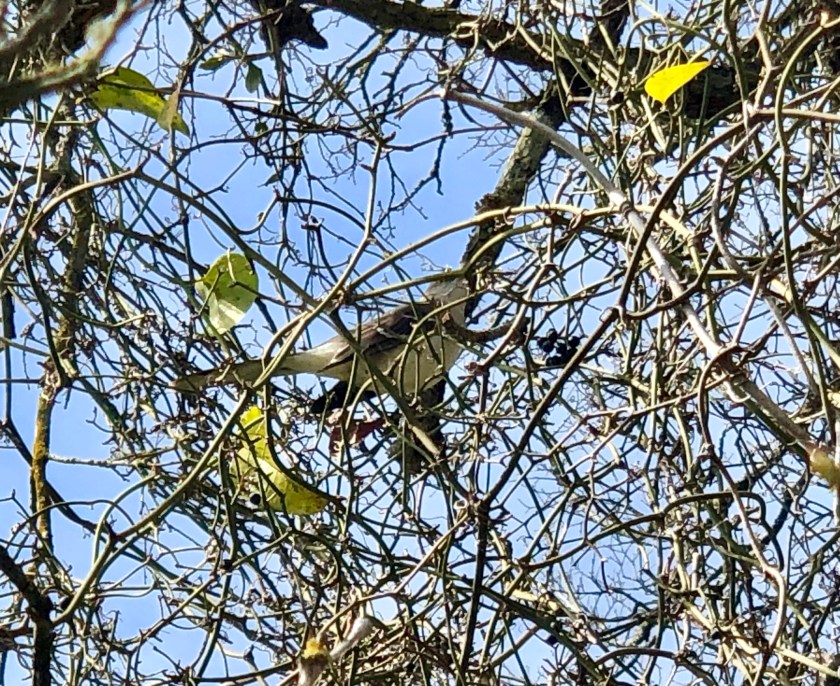
There are also many, many birds out today, including a family of mockingbirds who would really like to be left alone. They yelled and yelled at me for messing around in “their” tree, trying to get a picture of some raccoon poop. I think the raccoon may hang out in the tree, too.
But the best!
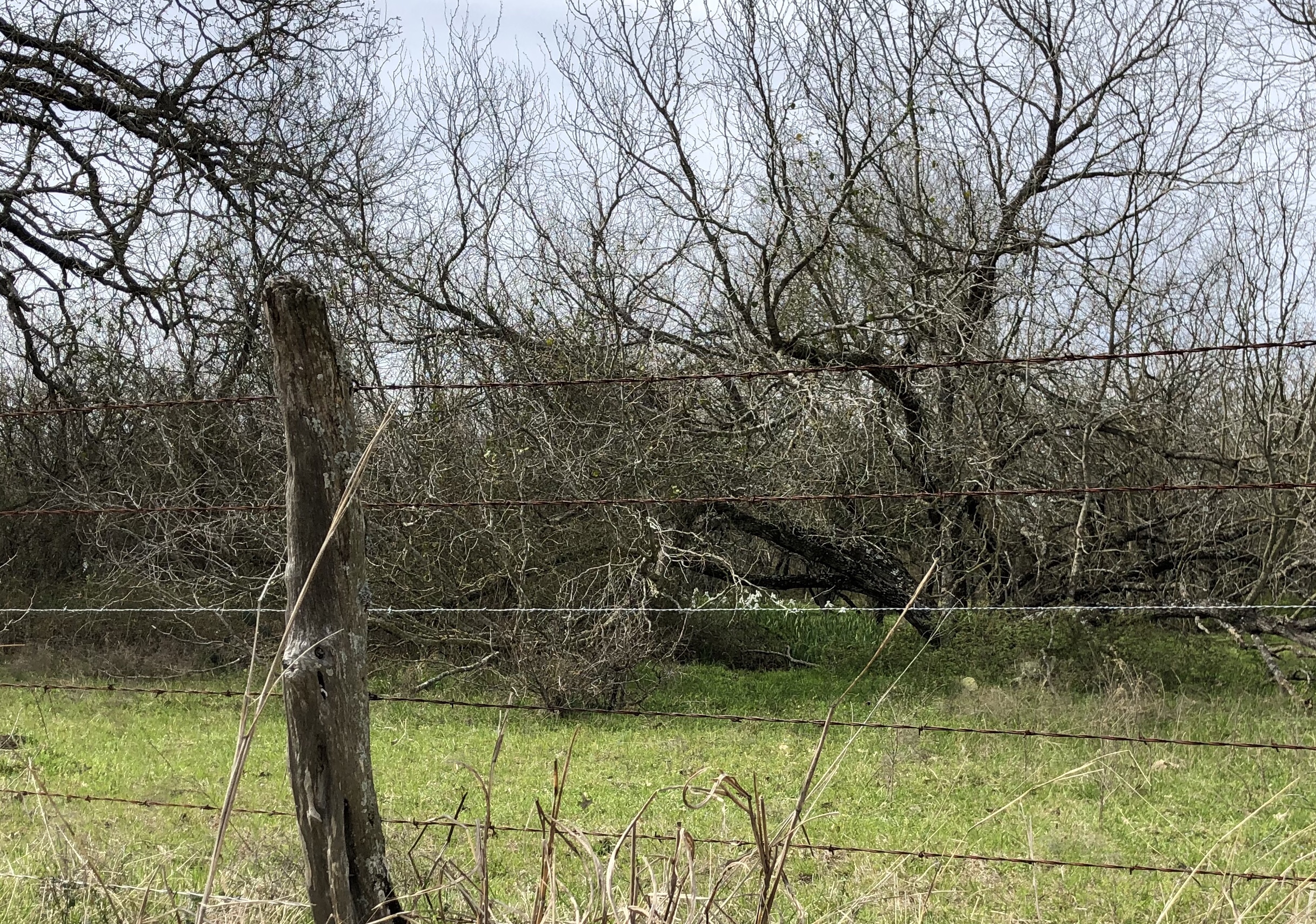
The best nature sight came slightly off the ranch, on our county road. I saw something white as I was driving into town this morning, so when I came back, I parked to check things out. There, in the middle of a field, were dozens of white irises. They were so pretty.
The irises are right in the center of this picture.
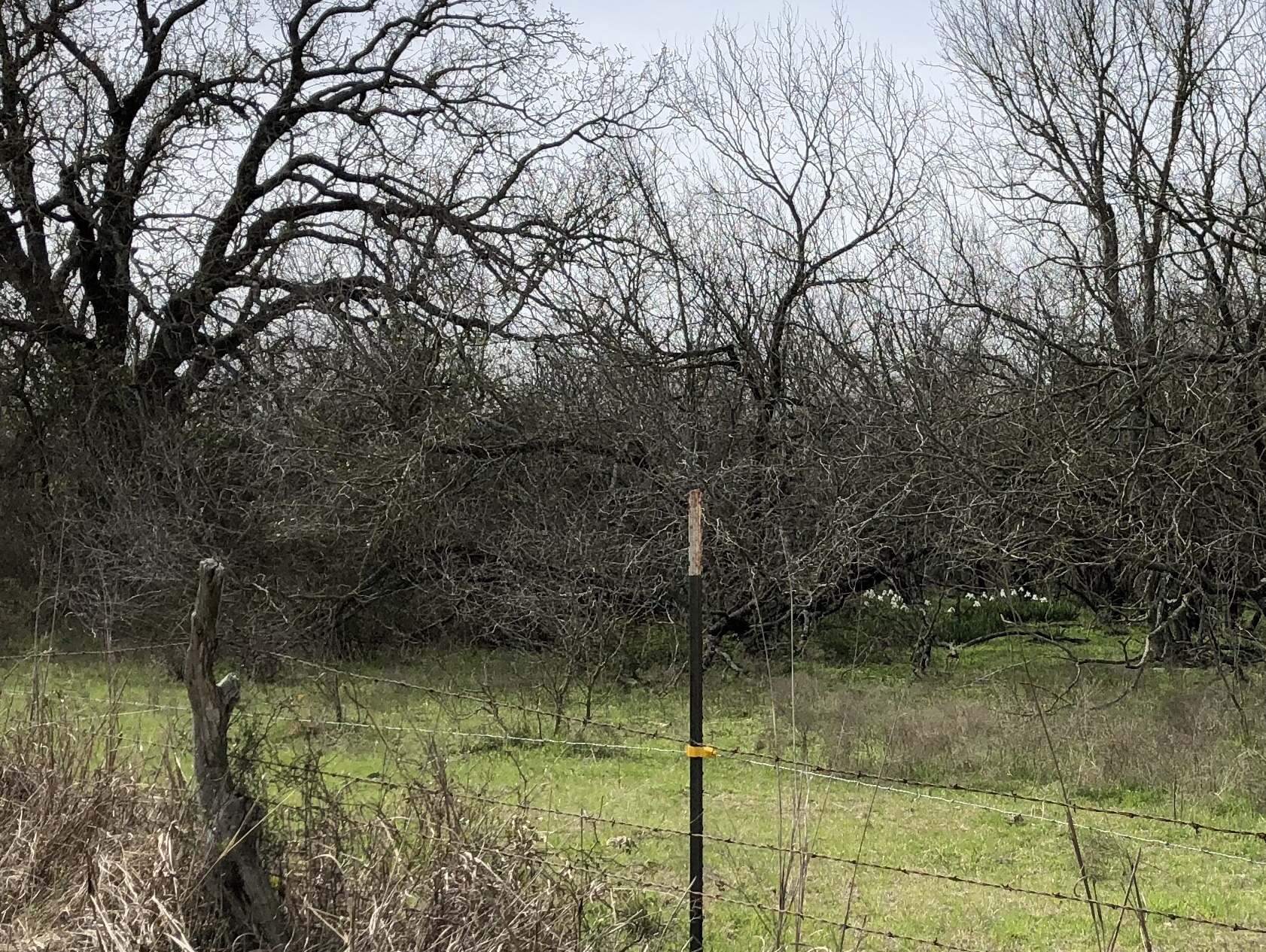
I wish I could have gotten closer, but you know, snakes. My guess is that there was once a house where the overgrown trees and such are now. There is still a huge oak that may have been planted by someone. And, next door, there are a lot of the same flowers planted around a tree. Maybe they dug some of the ones in the field up.
Here you can see the flowers and the big tree. And an annoying post.
I’ll just have to ask the people who live there one day!
The collection of glass jars contains collections of various items. So clever.
Last night Anita and I attended the neighborhood book club meeting. We eventually got around to discussing The Poisonwood Bible, which I actually read (yay me). The discussion ranged to many topics, and I apparently am the Nature Expert of the group. I also LOVED the house we visited, because the owner was very clever in displaying her many collections.
The little black dots in the center tree are robins, merrily singing their wake-up call.
I’d been noticing a lot of tweeting birds in the mornings when I walk the dog, and my thoughts were confirmed when the attendees began to describe large flocks of robins all over the neighborhood. This morning, I was on the lookout, and saw dozens of them in one tree (where I got this not-so-great picture), and more in other trees. The sound was amazing! Just as lovely as when all the cedar waxwings show up.
Then I got to work!
I’m watching.
Right as I walked into work, I saw one of our hawks swooping. She landed in a NEST! I’d thought it was a squirrel nest, but there she was, hanging around, while the other hawk (smaller, so I figured it was the male) hung around on the building or the parking garage.
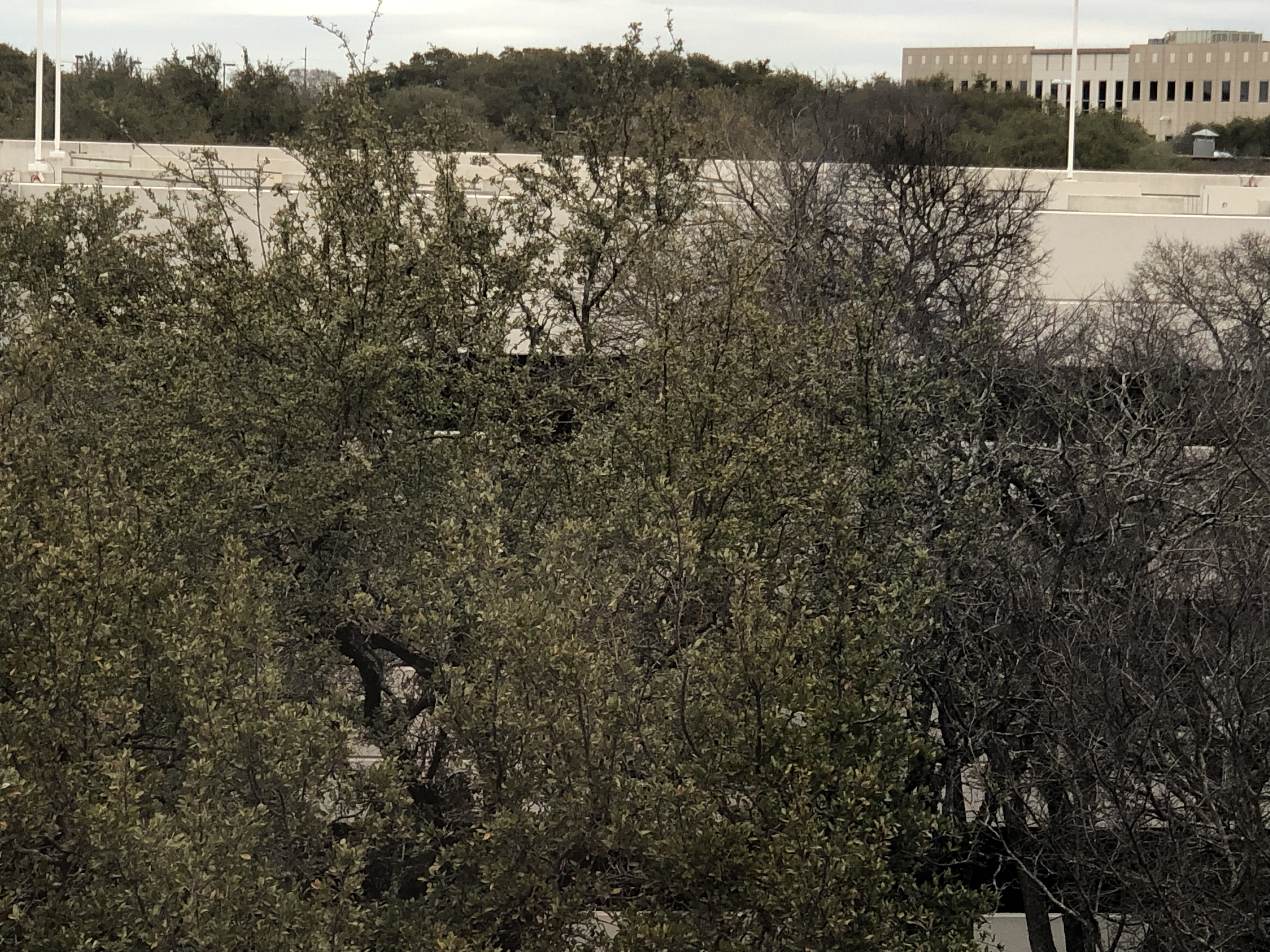
If you can find the nest, you get bonus points. It IS in the center of the photo.
Later we saw a squirrel in the nest, so we were wondering if the hawk was just messing with baby squirrels or what. Last year, as you may remember, the hawks built their nest on the other side of the office park, on some metal structures.
Swooping.
When we saw the hawk bringing food to the nest, though, we became certain that the squirrel was just curious (and should be careful!).
As you can imagine, my coworkers are quite psyched to watch the hawks raise some babies. Binoculars will be brought out, and a lot of oohing and aahing will occure, if today is any indication.
Yes, that’s right, after nearly three days of the temperature outside not varying beyond 40-43 degrees, the blazing ball of sky fire showed up again this morning.
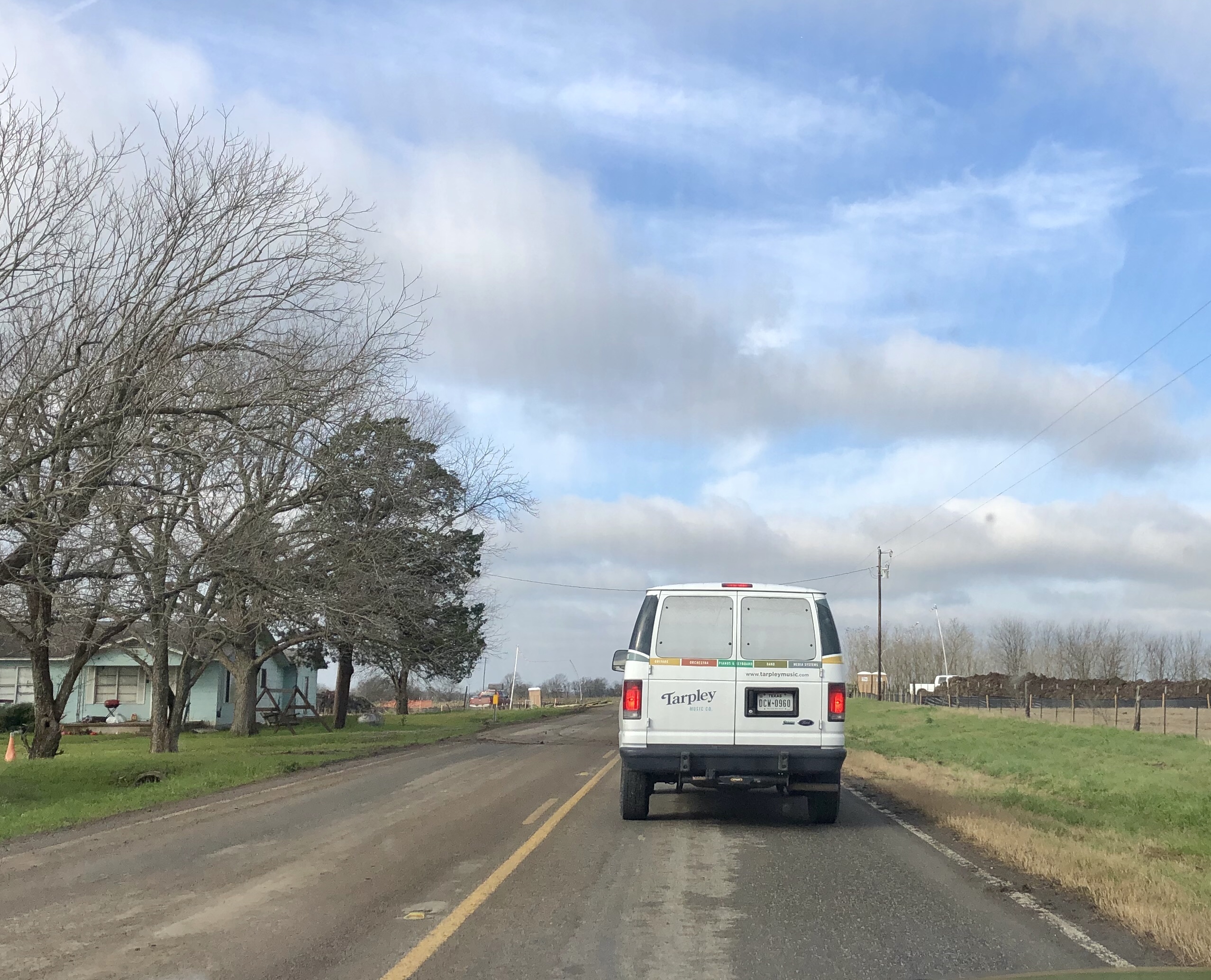
Hooray for blue sky. Boo for being stuck while equipment goes across the street.
I had a lot of time to see it, since I kept being stopped by flaggers at the many, many pipeline construction areas along my way from Cameron. I’ll write more about those later, but wow, they make a mess.
Lee is excellent. I knew it.
I was in Cameron last night to attend the 85th Annual Chamber of Commerce banquet, representing both our Hermits’ Rest Enterprises company and the Master Naturalists. I was proud to see so many people I admire being singled out for honors, but MOST proud that my very own spouse got a special award for his contributions to the town this past year. He was truly surprised. Aww. I guess we are fitting in!
Bob told great stories.
We enjoyed hearing the speaker, too, Bob Phillips, who has been doing the Texas Country Reporter television show since 1972. It’s the longest running independent television show in the US. He sure had some cool mentors, like Tom Landry and Charles Kurault.
Chicken Report
I got ALL worried yesterday, when Mandi reported that no eggs had been in the nest boxes for two days. That seemed weird, since I got seven on Sunday, and at least two of them were definitely from the new birds (they are laying smaller “pullet eggs” still.
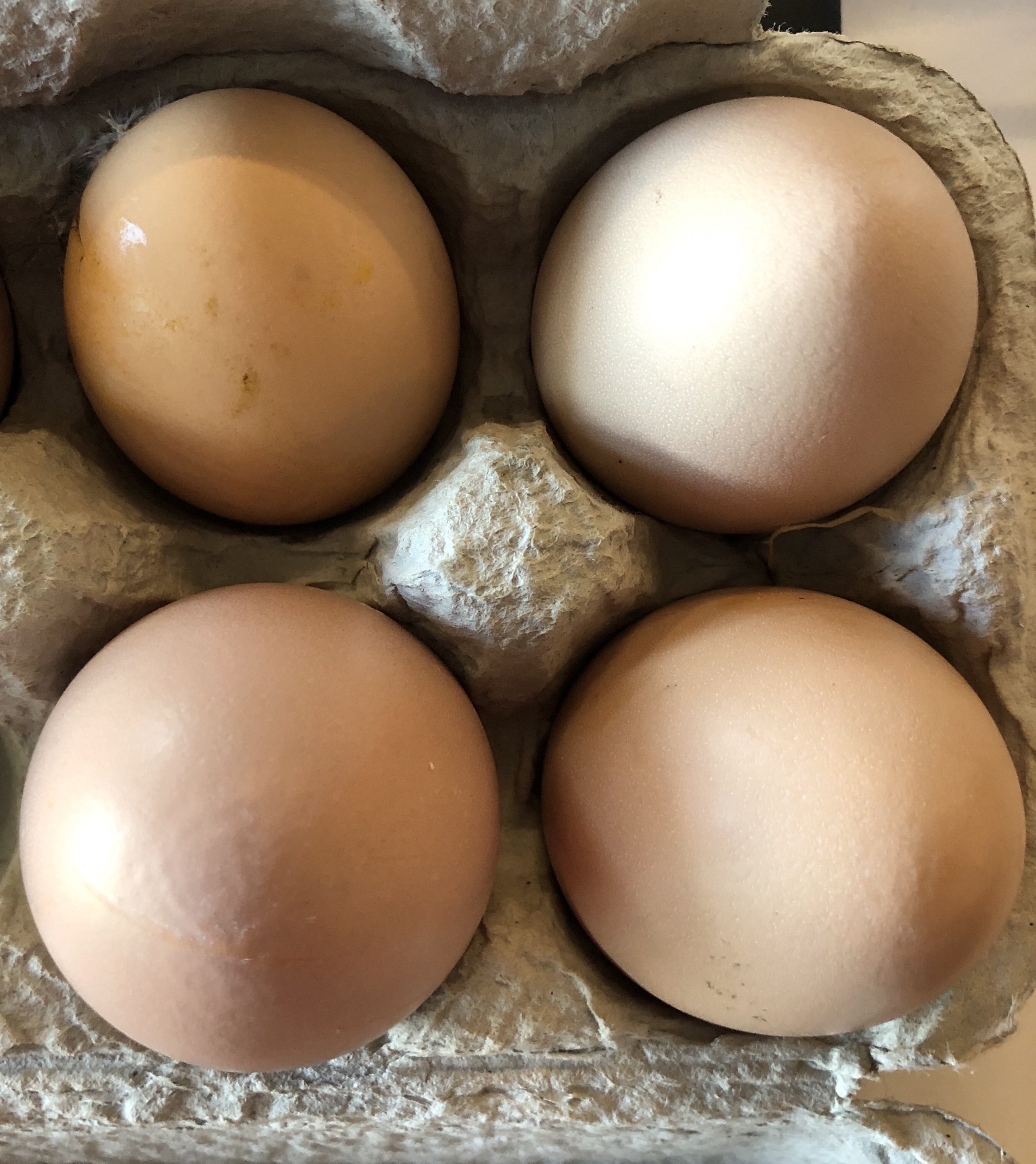
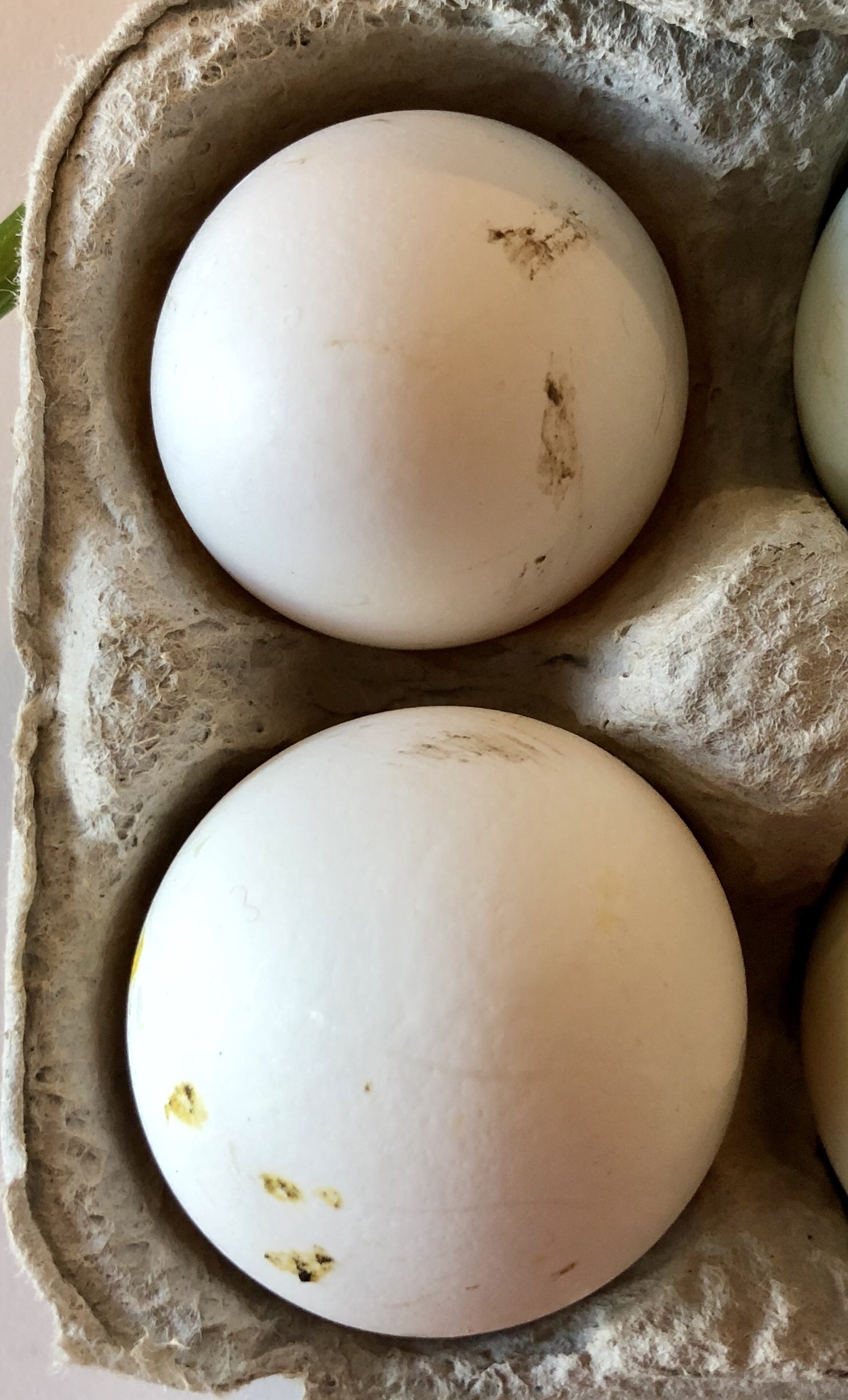
Variation in egg sizes. Top left is a pullet egg. Bottom left is the big “rosy” one that I am not sure who lays, but it’s BIG. The other two are normal brown eggs from brown hens.
So, this morning I felt compelled to check on the hens before I left to go back to Austin to work. I gingerly walked in, disturbing two hens who were trying to lay. I looked in the last two boxes. There were a dozen eggs, plus evidene that the poor chicken who lays dud eggs had also laid.
Both eggs are from leghorn hens. One’s a year old and the other is 5 months old (top). Yes, they will be cleaned before anyone eats them.
My guess is that the chicken feeder/egg feeder person either didn’t look all the way in the nest area, or actually didn’t check and just told his mom there was nothing there. He also said someone else had fed the chickens, so there’s still some kind of mystery!
Hawk Report
I’m the boss of this parking garage.
I’m happy to share that the hawk couple who nested where I work in Austin have returned. We’ve been enjoying watching them fly around together. This morning I heard some weird bird sounds, and looked up to see one of the hawks was scolding me. Aww.
Yesterday was the final day of the great chicken coop cleanup effort. Before that, though, I had to clean my dang horse, who has started to shed his thick winter coat. Fiona the mini-donkey did not want to be left out, either.
This may not be the right brand, but this is the sort of thing we used on the horses.
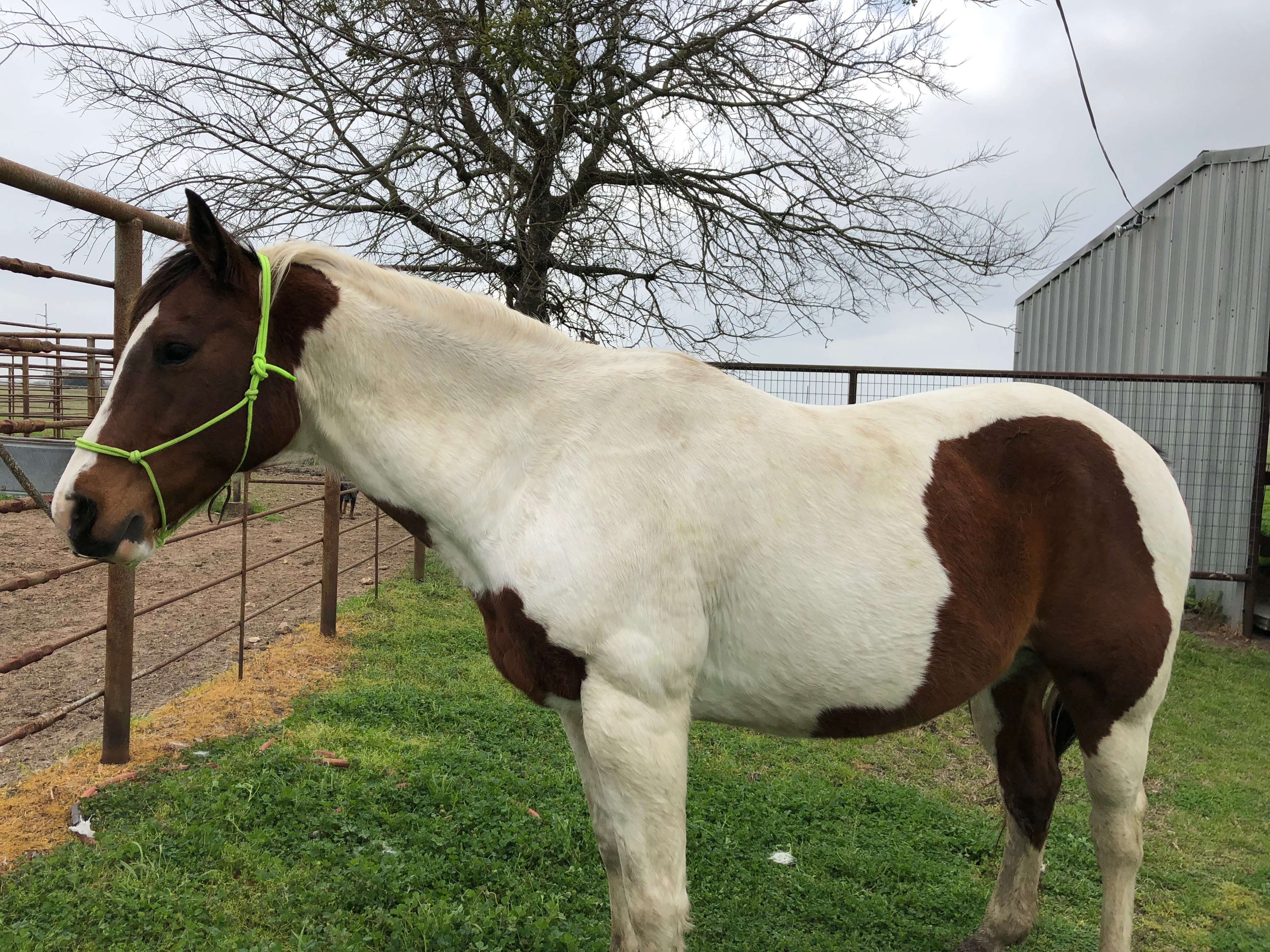
It was too cold for me to ride, but I wanted to hang out with Sara and brush Apache out. Of course, Fiona had to come along. Sara had bought these new miracle tools, which look suspiciously like something you’d clean your barbecue grill off with. I tried it out on the very dirty Apache, and wow, did a LOT of long white hairs come off. He seemed to like the way the cleaning tool felt, too. Neither Spice nor Fiona were shedding like Apache was. Must be the Arabian in him.
I’m embarrassed that my tail looks so perfect, so I”m hiding it. Snort.
While I was at it, I also trimmed his tail, since it was reaching the ground again and getting all dirty. I hope he appreciated it.
May I please come in?
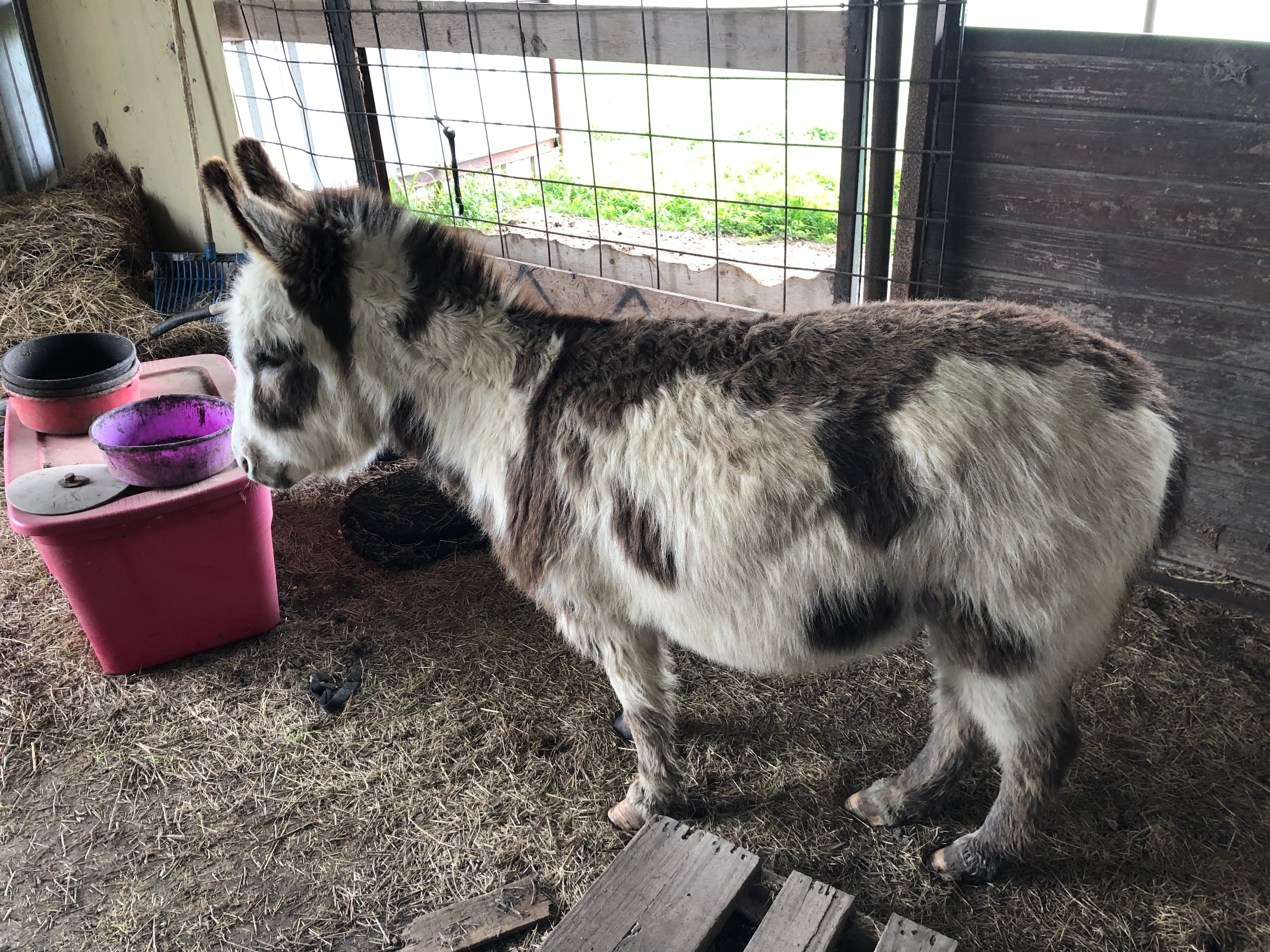
I kept having to go back into the tack room to get things. I heard a noise, and there was my little “helper” wanting to come on in and check out the food dishes full of beet pulp that were soaking.
Fine, then, I’ll just go over and check out this hay, since these feed bowls are obviously empty.
When I told her to move, she happily went over to help get rid of that last bale of hay that was hanging around from when the horses were in the corral. Such a little darling.
Also had hen helpers
That’s Fluffy Butt in front, with Candi in back.
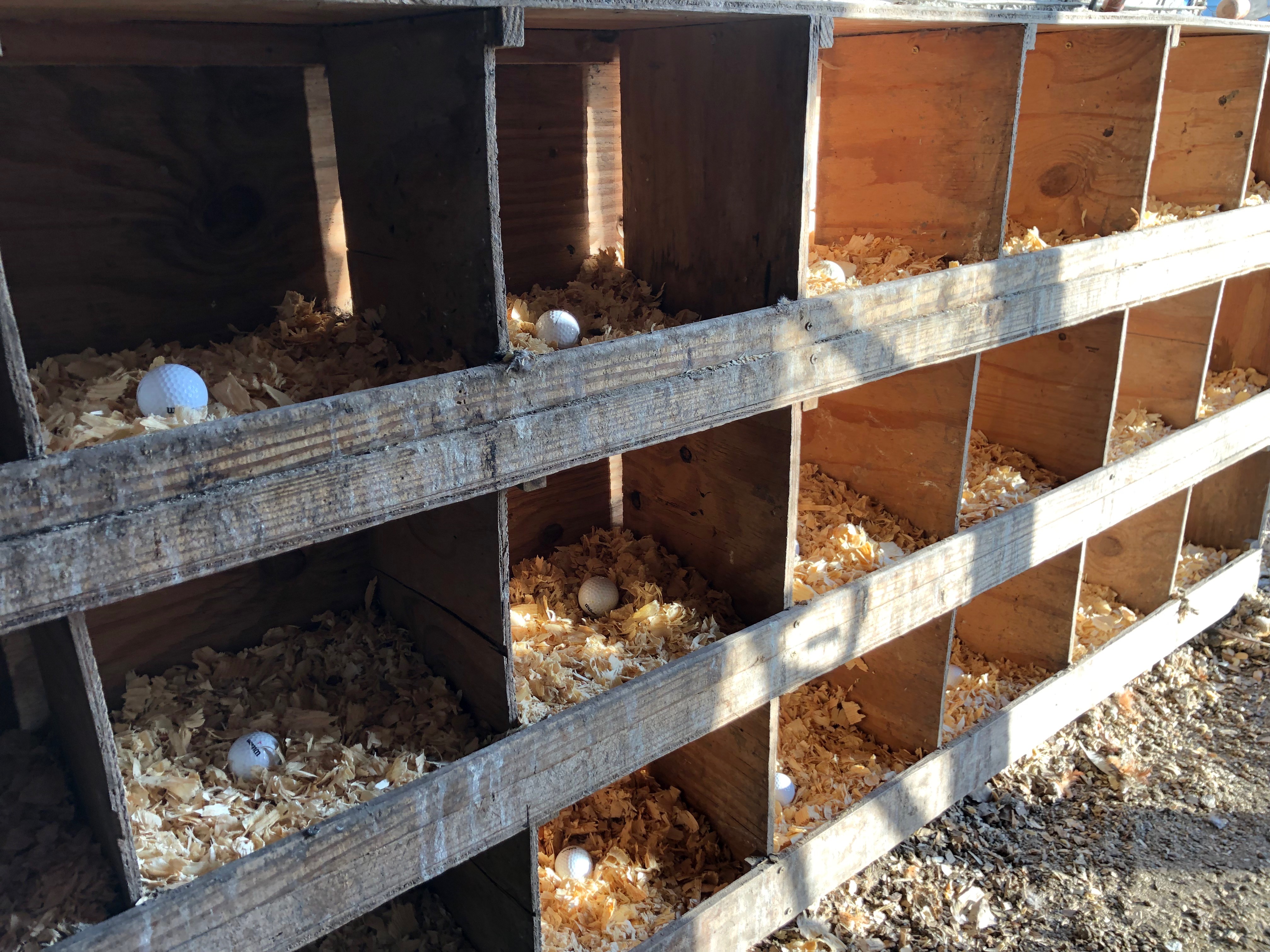
Later in the afternoon, I came back to finish cleaning out the chicken coop. I was very proud of myself for emptying out all 24 nest boxes and replacing the old mulch with new pine shavings, which are what the new chickens are used to, anyway. The job was made both harder and more fun by the new hens, who were very interested in “helping” me.
The golf balls are pretend eggs, Ralph says they work, so I put one in each next box.
In fact, after I finished, I was picking up more glass off the ground, and Fluffy Butt, the new Barred Rock hen, came up repeatedly, so I fed her some chicken scratch right out of my hand. She was very delicate!
A better view of fluffy pine shavings. Ah. Comfort.
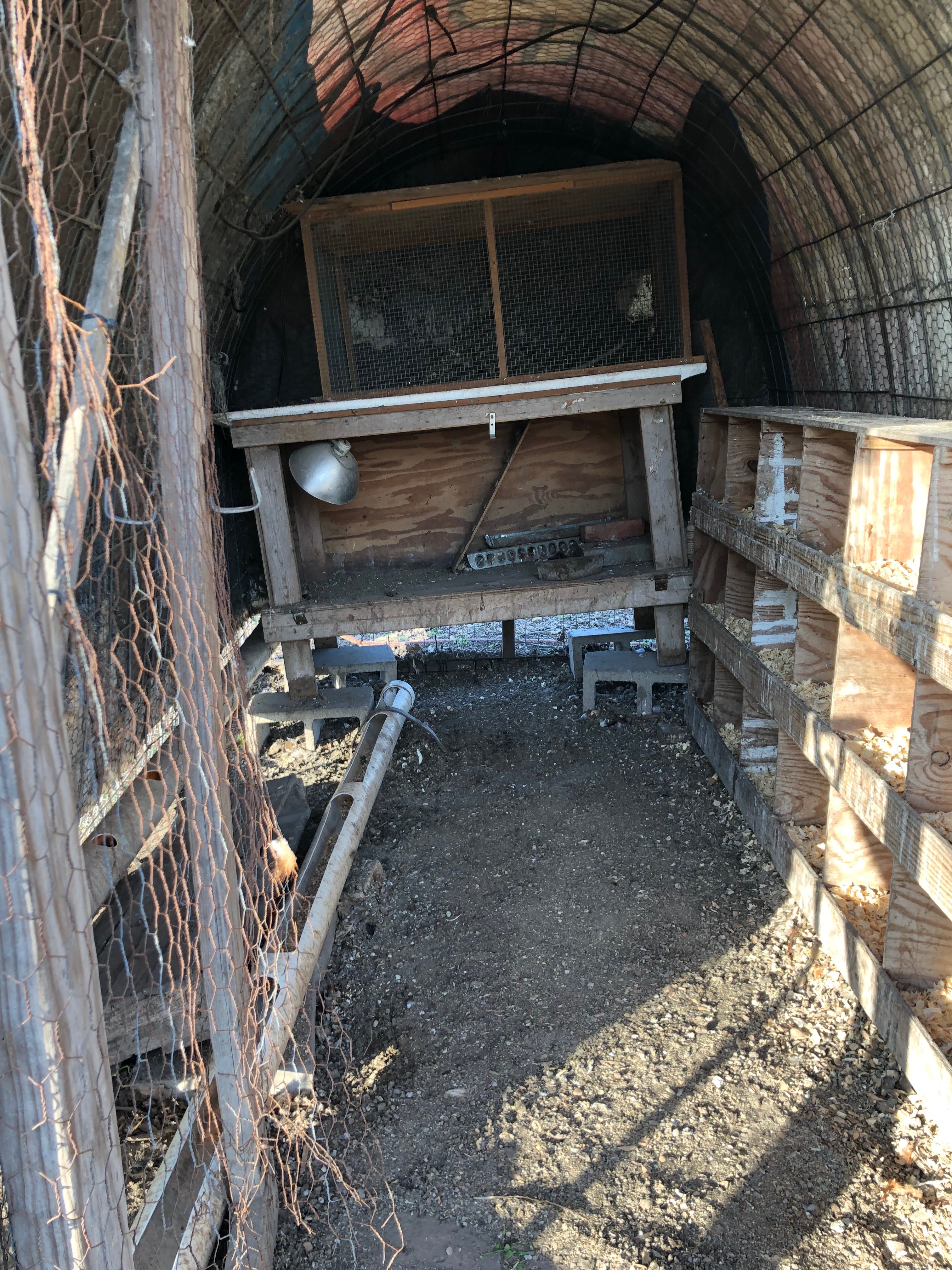
About that time, Mandi and Randy showed up to help me with the floor and parts of the coop I could not reach. A real cleaning ensued, with the feed trough cleaned out, the top of the chick raising area cleaned, and ugh, a dead chicken that got wedged behind the cage removed (one final owl casualty, I guess, though it had been a while).
Mandi also swept all the droppings and stuff off the floor, which now will be some fine mulch, once it composts a bit more. It may be an old coop, but it’s a clean one now.
This picture is from before the floor got cleaned. Imagine it all smooth and with no poop.
Once Randy discovered the pieces of glass in the pen, he started picking it up, and by the time we were ready to go, we had another large amount of glass! I sure appreciated the help.
Now I’m just hoping that the new hens and the old hens get along. They definitely hang out in separate groups. But we already have a couple of eggs from the new gals. Hooray!
Entry to the farm. We knew we were in the right place.
Previously, I hinted that I was going to add some chickens to our flock. I’d met a woman at the Master Naturalist Christmas party named Cindy Vek, who told me all about her chicken farm, Bird and Bee Farm, between Rockdale and scenic Milano, Texas. I was intrigued.
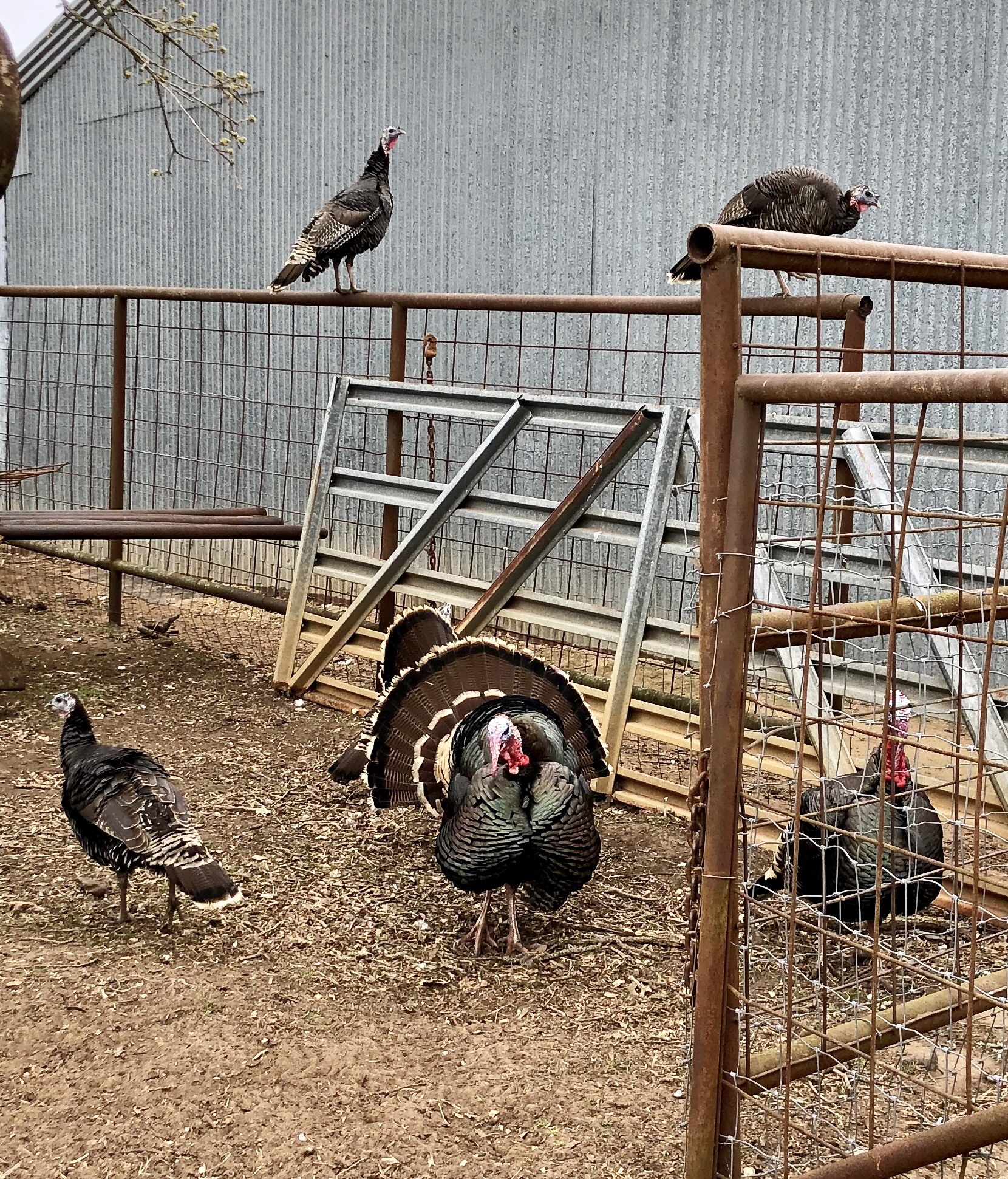
A welcoming display from the Tom!
So, yesterday, Mandi and I fired up the big, black pickup and headed over there, first stopping at Tractor Supply for the supplies I’d needed earlier.
Welcoming committee.
I’m always grateful for map apps. It sure makes finding places way in the middle of the country easier. After a drive through some really pretty Milam County countryside, we found the place, conveniently labeled, as you can see from the first photo.


 But! I’m going on a fun jaunt and will have things to share later today and tomorrow.