Master Naturalist Meeting Notes: Friday, October 21

I promised to write up notes from the sessions I took at the 2022 Annual Meeting of Texas Master Naturalist, but there was a lot of stuff going on the last couple of days. Now I have a moment! First, I will say that this was the best conference I attended so far in terms of the quality of the sessions I attended. They were chock-full of interesting tidbits. It also helped that the Omni Houston has comfortable chairs. I wasn’t squirming the whole time, except in the one session where I had to sit on the floor. Anyway, here are some notes!
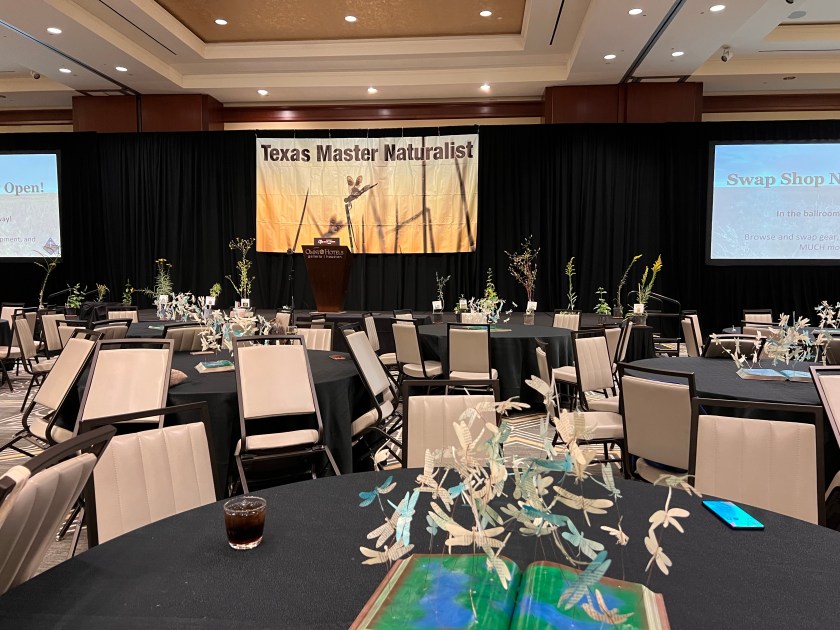
The main meeting room with interesting centerpieces made out of books

Becoming a Land Doctor: Evaluating Land Health, by Megan Clayton

The speaker here had also spoken at the Bennett Trust conference, so it was good to hear her information again. She talked about how to tell if your land was over-grazed, whether it had lost its topsoil, etc. It takes thousands of years to rebuild topsoil if it’s removed.
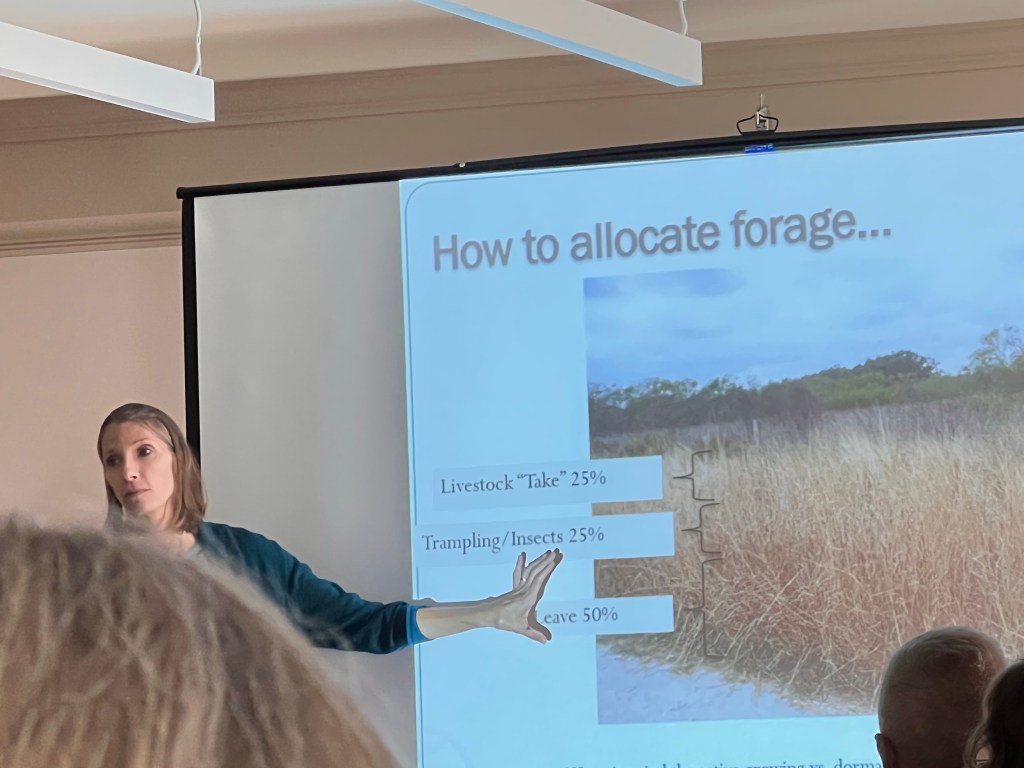
Grass is your friend if you want healthy land! But you need to let it grow back before grazing again. The ideal would be to imitate bison, who showed up, ate, pooped, and trampled once a year, then moved on.
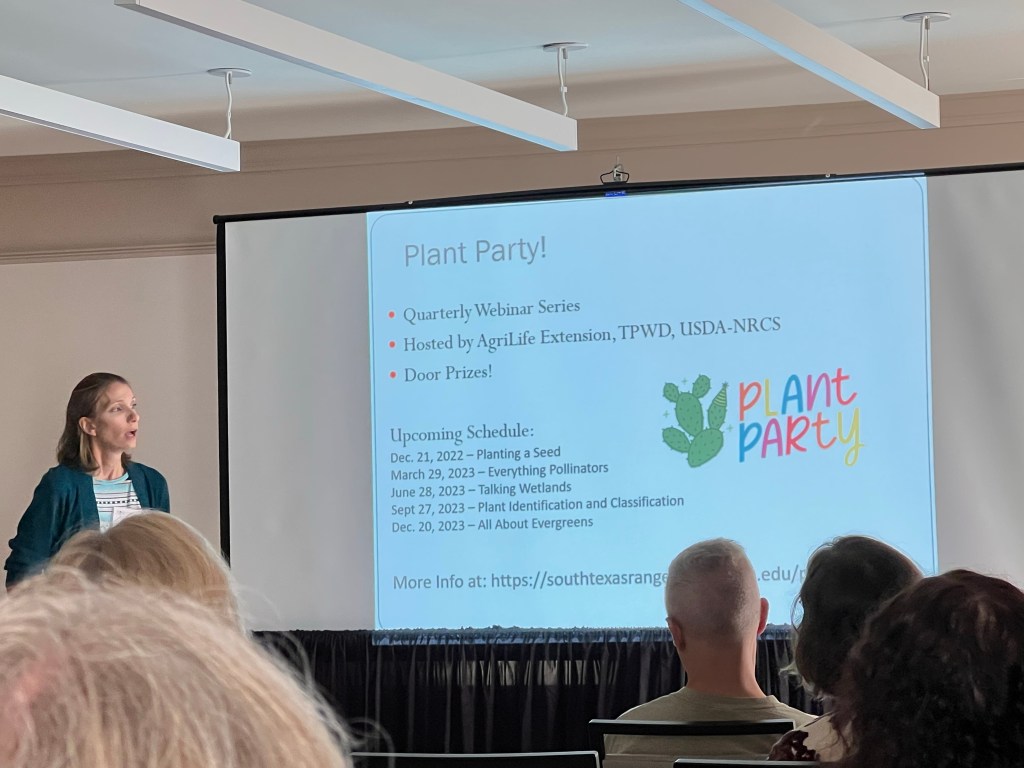
I found out the speaker does these fun webinars that I will try to attend

Fire and Goats: Vegetation Management Using Traditional Techniques in a Novel Setting, by Stephen Benigno

This one was a lot of fun. The speaker is from the Houston Arboretum, and he shared how they used a flock of goats from “Rent a Ruminant” — what a great name. The goats really took care of the underbrush. They just took a week and we’re great at gnawing down dewberries.

This gave me many ideas, so I had questions about fencing and such. Having just a few goats and rotating them sounds good!

He also talked about doing a controlled burn at the arboretum. That required lots of permission and publicity to keep people calm about the smoke. It worked out well but didn’t quite burn as much of the meadow as they wanted. All learning experiences in an urban woods and prairie!

No photos from this session, so here’s a beautiful Polyphemous moth that was on a window at the hotel.

Birding with Today’s Technology: Utilizing eBird, Merlin, and Other Online Resources, by Kelsey Biles

I took this one to learn more about eBird. It was worth it just to learn about how you can ID birds just by sound using it. So, if you don’t know, this is software that lets you identify birds and save your sightings online, all going to science. You don’t need photos, and it’s easier for folks who aren’t great with online image stuff. Many people I know contribute to it daily by just watching their feeders.
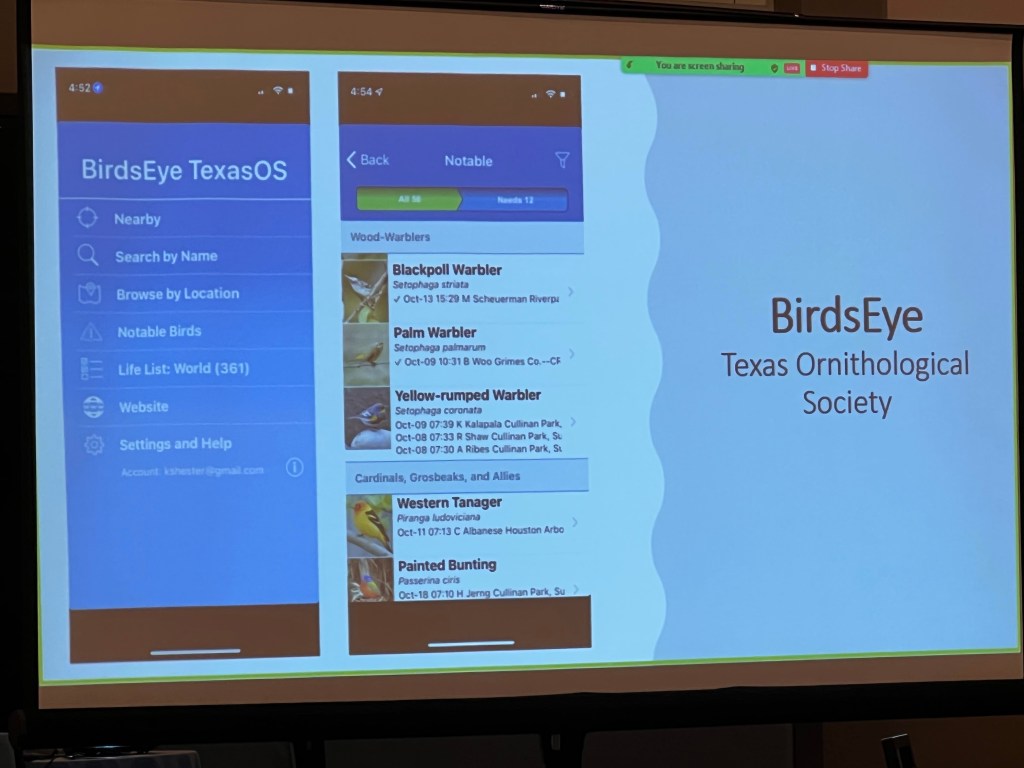
One of the resources I learned about

There was a lot to learn, though, so I was glad to be there. Plus the speaker had a very cute bird skirt on.

Conservation of the Night, by Cindy Luongo-Cassidy of the Dark Sky Network

This was the lunch speaker. She got us all fired up about eliminating light pollution and keeping the dark sky available for people, animals, and plant life. We all need it. I learned how to modify light fixtures to direct light downward rather than outward from simple things you might have on your property.

I feel pretty good about our place. We have a couple of rogue lights, but most of them stay off unless needed, which is a good practice. I don’t want to confuse moths and migrating birds, after all!

Speaking of the dark, we sure enjoyed the darkness of the whiskey bar at the hotel later in the evening.

Feral Hog Biology and Impacts: What We Know and What We Hope to Learn, by Mikayla Killam

This one was pretty depressing to me. It sure is hard to get rid of feral hogs. I did learn a few trapping techniques that aim to get as many hogs as possible into traps, like using funnel feeders and trip wires at the furthest end of the traps.

Of course, hogs are very smart and figure many kinds of traps out, as we know. The speaker recommended that the best way to remove the greatest numbers of these invasive animals all at once is to hire professionals in helicopters to get as many as possible, and to go in with as many neighbors as possible, since hogs don’t know land boundaries. Once that is all done, you can then more easily pick off individuals by trapping or shooting.

I discovered this lovely nest for the hotel’s black swan pair. Cygnet making is preferable to piglet making.

I learned that if you just get some of them, they go into piglet-making overdrive to get their numbers up. There’s a scientific word for it that I forgot.

Living in Harmony with America’s Song Dog, by Karin and Roberto Saucedo

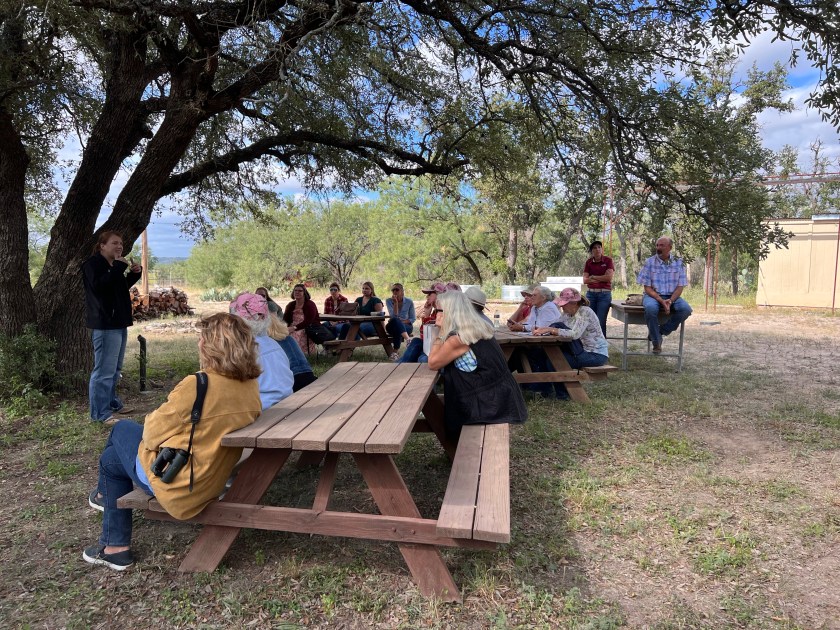
My last educational session for the day was very popular. The presenters are a couple who really love coyotes and have studied them extensively in urban environments. I had to sit on the floor for this one, but it was kinda fun.

We learned how the coyotes interact with human habitation, which is often caused by houses being built around their traditional territories. We saw how they helped some of the coyotes get over mange by putting out medication for them. They knew not to get too friendly with them and showed a sad video they made about a coyote that people kept feeding even when asked not to (and even when they knew game cams were set up that would catch them). Sure enough, being tame was its downfall.

A lot of the coyote stories were sad. But an interesting thing I was reminded of in this talk was that in parts of Texas there is a lot of red wolf blood in them, which makes them a bit larger. I think that is true here, as ours are often quite large and healthy (I don’t see ones with mange out here, but they also are wilder and avoid people and our dogs).

Keynote: Kjell Lindgren, Astronaut

The last talk of the day was the dinner speaker. It started out with some Texas Parks and Wildlife or AgriLife official talking about how cool it was that a Master Naturalist spent time on the space station recently. They showed some photos and a nice message he’d recorded for us about how being a Master Naturalist had helped him in his work. We were all happy with that, but then they surprised us with Kjell, the astronaut, coming onstage and talking to us in person.

Kjell Lindgren

This is one impressive fellow with an MD, a PhD, and a degree from the Air Force Institute or whatever that is in Colorado Springs. And of course, he’s a Boy Scout leader and such. He seems genuinely nice, kind, and humble, too. My favorite part of his talk was all the photos he shared of the earth as seen from the space station. The auroras, the volcanoes, the rivers, etc., were fascinating to look at.

Rivers and farms

I have to say, though, that Friday’s sessions were a LOT of learning all in one day. I’m glad we got to go relax afterward in the lovely bar. The hotel had great restaurants and bars. No complaints about that!
A Pleasant Walk around the Ranch

There was frost last night! It’s amazing how quickly it goes from boiling hot to frost around here. Luckily none of my plants were damaged, since I thought they’d still be ok outside. I look forward to putting them in the greenhouse, though!

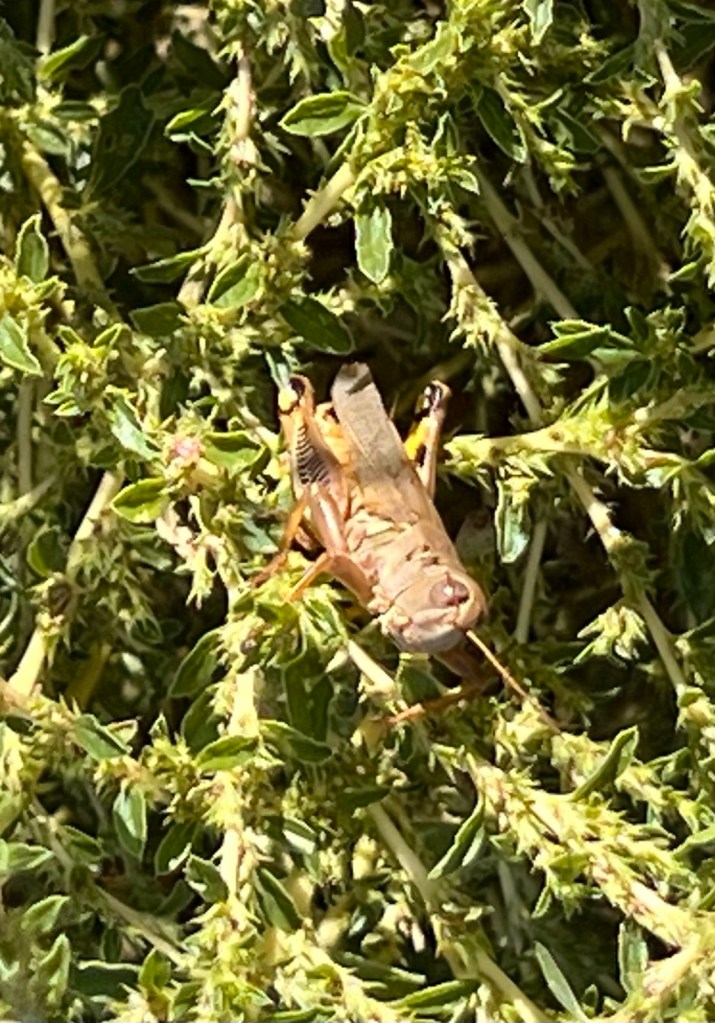
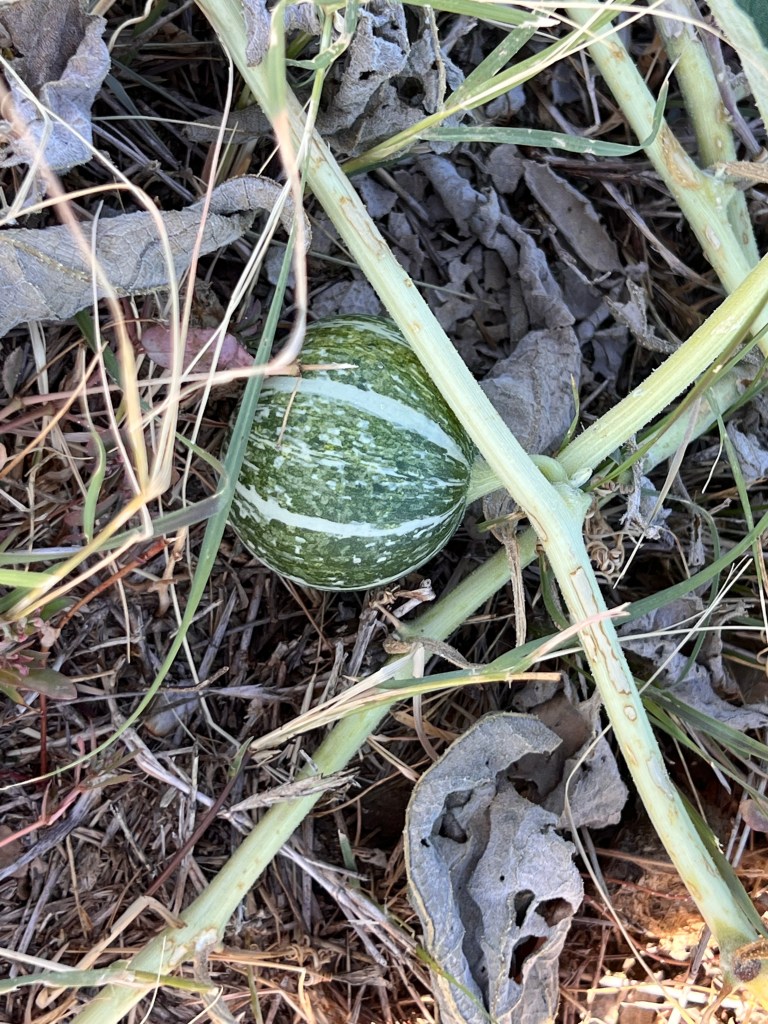
I decided to take one more sweep of the ranch for the pollinator BioBlitz, just to see if I would find anything different, and I’m glad I did, because I did stumble upon a few things. I’d say the most interesting one is the buffalo gourd.

Cucurbita foetidissima (means stinky)

Here’s some info on these plants, which Lee’s dad called “smell apples.” I’m always amused by giant squash in the middle of the pasture.

Cucurbita foetidissima is a tuberous xerophytic plant found in the central and southwestern United States and northern Mexico. It has numerous common names, including: buffalo gourd, calabazilla, chilicote, coyote gourd, fetid gourd, fetid wild pumpkin, Missouri gourd, prairie gourd, stinking gourd, wild gourd, and wild pumpkin. The type specimen was collected from Mexico by Alexander von Humboldt and Aimé Bonpland sometime before 1817. In Latin, foetidissima means ill smelling.

The feral perennial buffalo gourd has evolved in the semiarid regions and is well-adapted to desert environments. It contains high amounts of protein and carbohydrates and yields abundant oil. The carbohydrates that are formed in the tap root have led to the idea of growing the plant for biofuel.

The fruit is consumed by both humans and animals. When mature, a stage marked by increasing desiccation of vine, leaves, fruit-stem, and fruit, the fruit begins its final gourd stage. (from iNaturalist/Wikipedia)

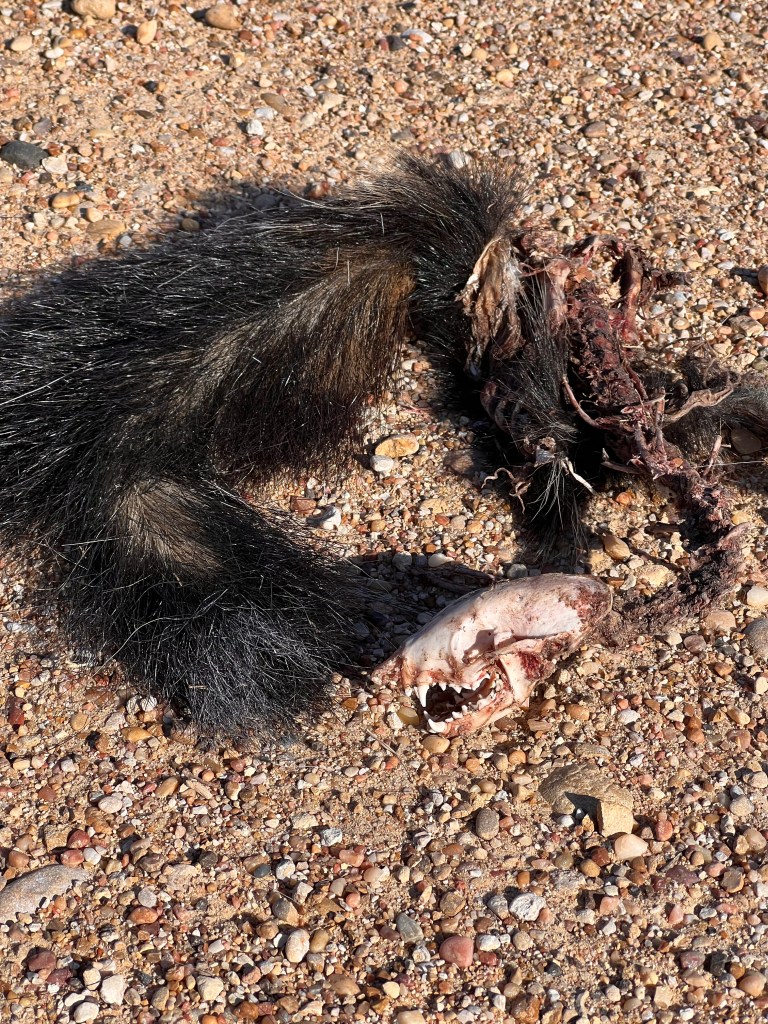
I enjoyed seeing things other than the plants, too. There was a kettle of black vultures circling around. And I identified what they were all gathered around recently on my son’s driveway/access road. It was a skunk. What a cool skeleton! And I got greeted by the current “bull in residence” in the pasture next to ours. He is really friendly and beautiful. I look forward to his babies.

It’s pretty this time of year, and the grass has greened up a little. Finding plants is hard, so I’ve resorted to looking for spring plants that are coming up already and some pretty sad drought-damaged dock. But they all count, and I’m still ranked in the 30s in the BioBlitz. Wait until tomorrow. My camera will be snapping like crazy on the field trip I’m attending in Houston.

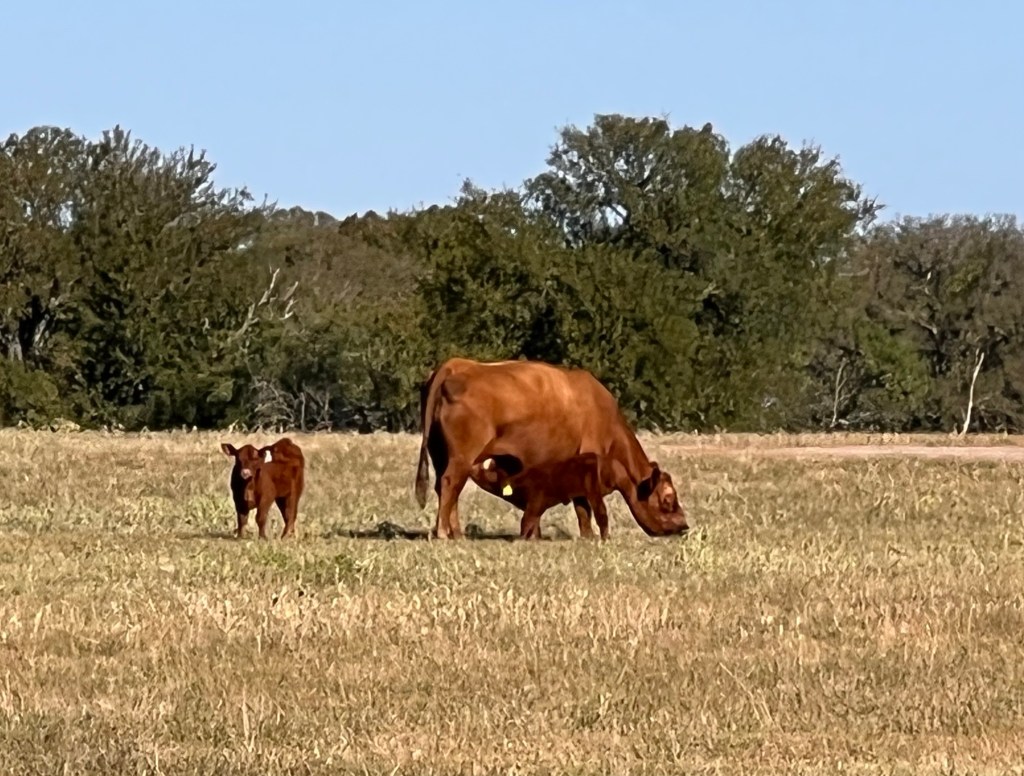
I was happy to see all the twin calves having a good time in the pasture behind us. The cow who was hugely pregnant did indeed have twins. I’m sure she’s really glad to get them OUT of her. The little one’s a hoot. He got hungry and started bellowing for her. She came through!

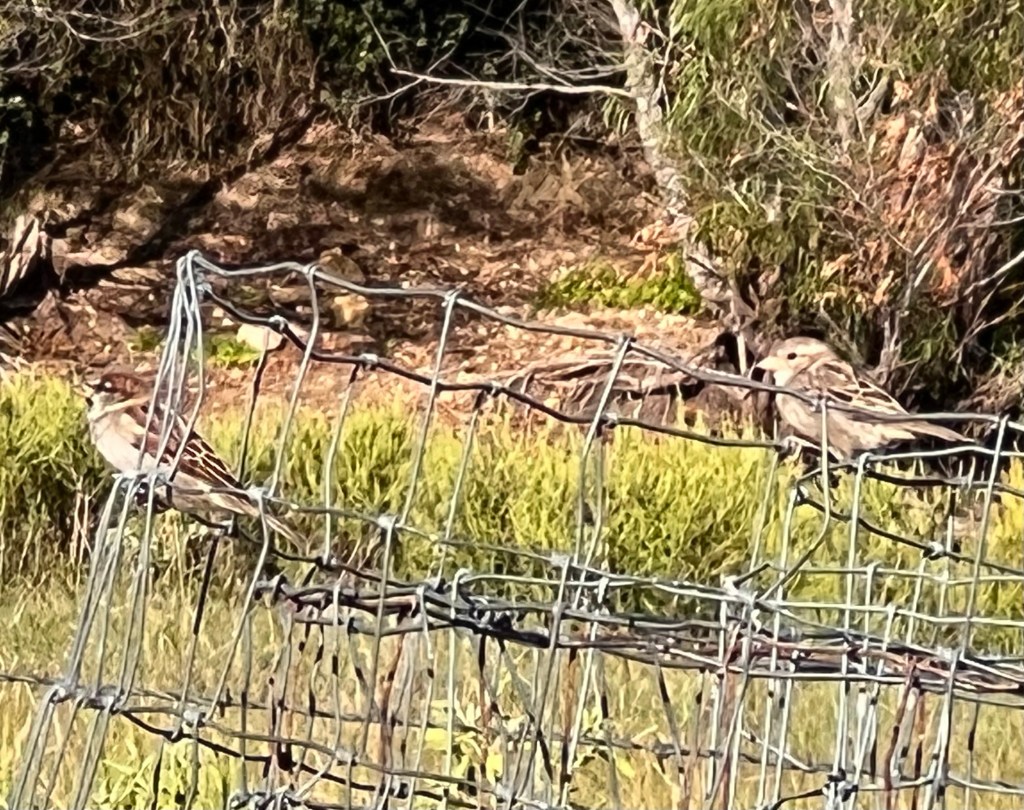
It’s simply restorative to just take in all that you see around here. Then I feel good heading in for more technical writing and helping lovely people with their software dilemmas. I even enjoyed the sparrows that eat all my chicken food. And of course, my horsies!

Tromping

Whew, I was tired by the time I got home from Fredericksburg. I went home a new way, though, so I got to see some different scenery and avoid Austin traffic. To keep myself awake I tromped around the ranch on my breaks, taking pictures for the pollinator BioBlitz.

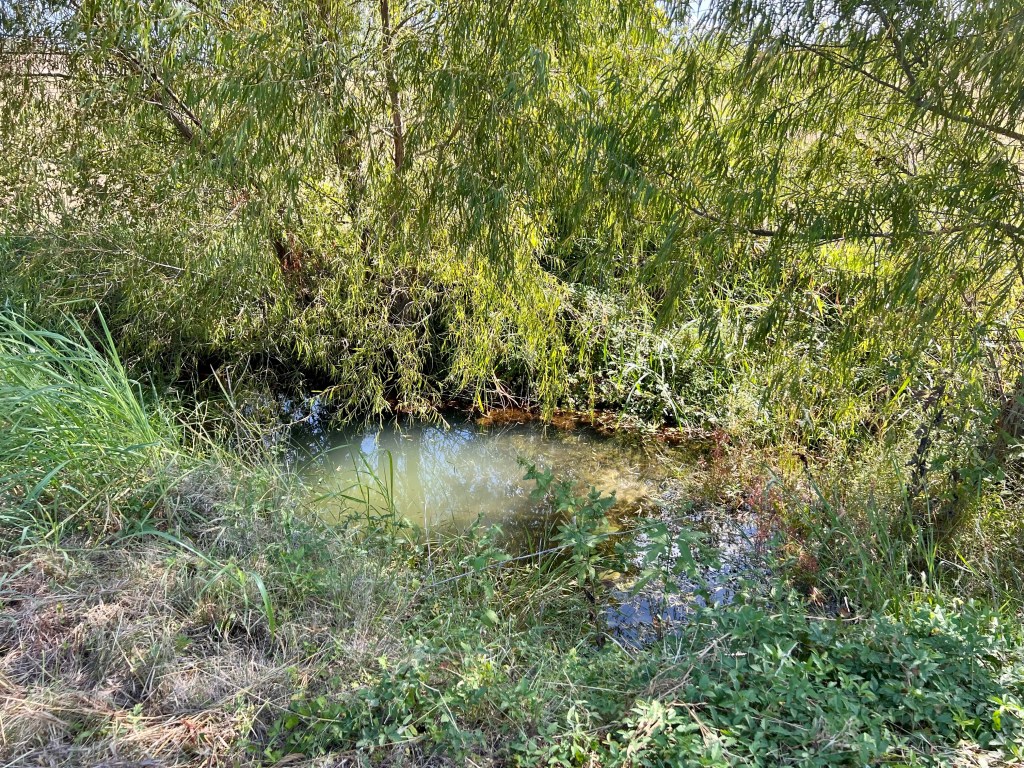
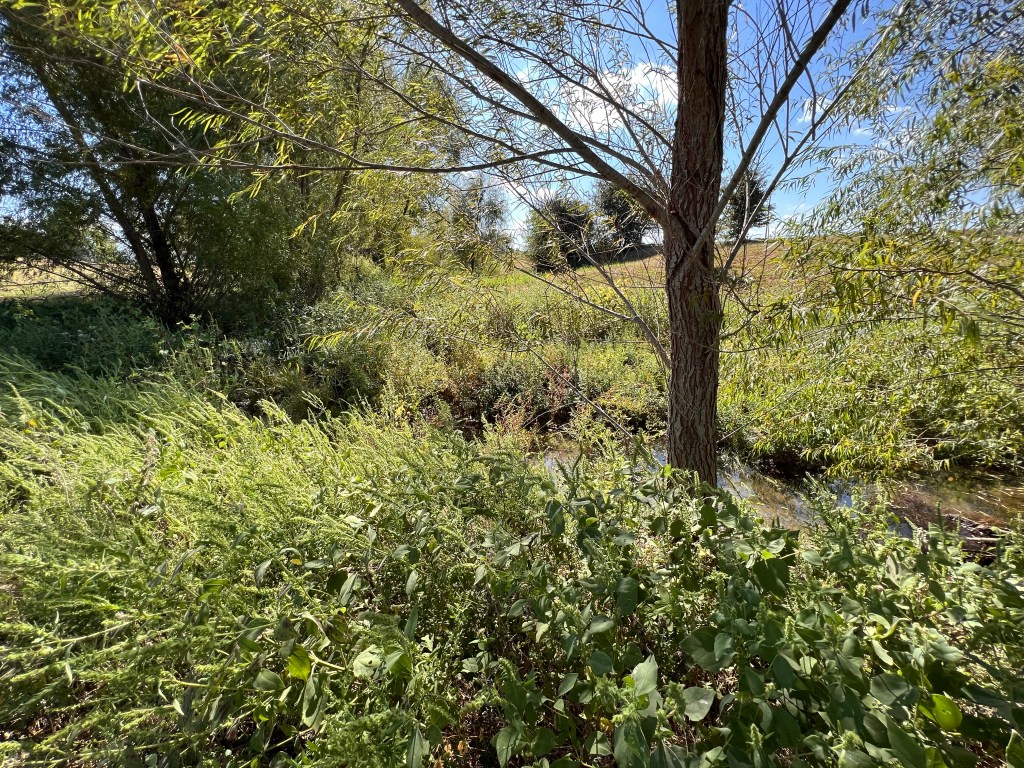
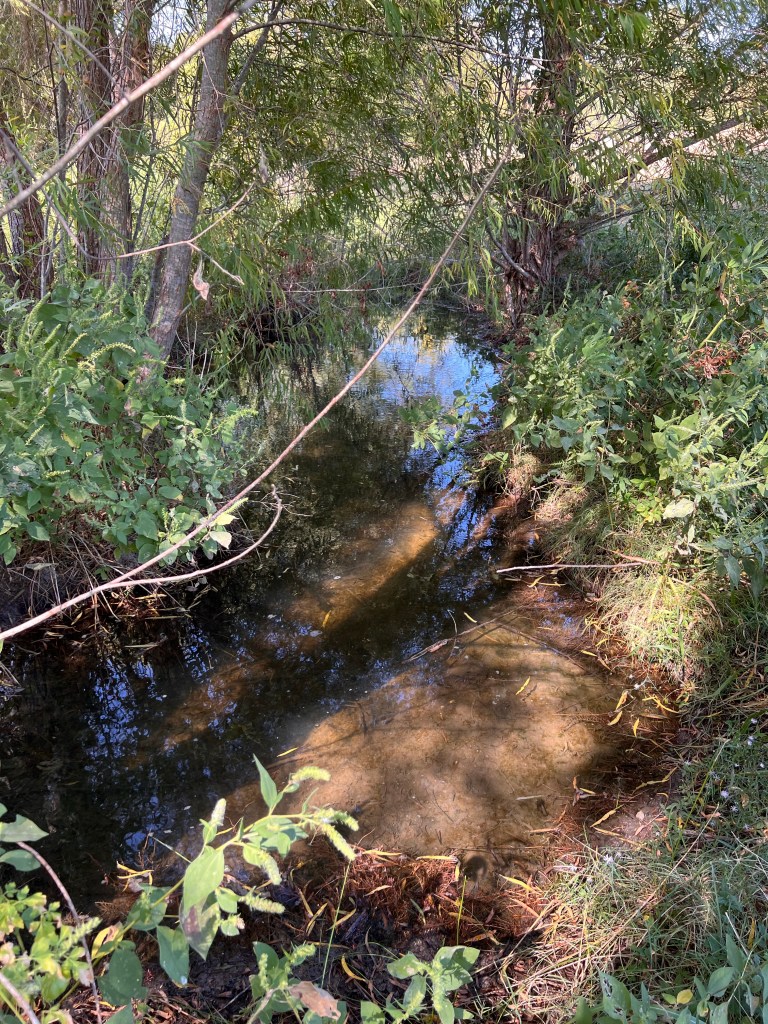
I especially enjoyed our remaining water areas. I spotted lots of fish in here.

I just wandered and wandered, bearing in mind what I learned at the conference this week. I noted there were more fish where there was no cow poop, but there were fish even in what’s left of the creek, where I found one of the old mama cows having a quiet bath.

Can I have some privacy here?

As I checked out the riparian areas, I also looked at the pastures. Yeah, they are rather over-grazed. The only plants left are what cattle don’t eat: broomweed, milkweed, and silverleaf nightshade. This made finding things to add to the BioBlitz a challenge.

There’s a lot of broomweed.

I did find lots of insects and documented every tree variety, so I feel good. My goal is to ID 100 species as my contribution, and I think if I get some at Tarrin’s, where there are different plants, I’ll pass that goal. I did hit another goal today, and that’s 600 different species here on the ranch. Hard to believe!

Even if all I see is cedar elms and greenbrier, I can’t complain. Being able to get outside is such a privilege. The variety of life that’s still thriving in this drought gives me hope for us tenacious humans, too.

I didn’t see many birds other than this coy mockingbird and a cardinal that hid completely. I did hear hawks and crows a lot.

I’m hiding!

I’m hoping the weather will turn. It actually rained a few tiny drops when I fed the horses, and there was lightning in clouds at sunset. More hope!

More photos, mainly because Barbara looks at them all.

Amazing Adventures Near Junction, Texas

I think my idea of Junction, Texas was that it was some kind of wasteland with some gas stations in it. I was wrong, and I’ll always be grateful for this year’s Bennett Trust Women’s Conference: “Building A Legacy of Environmental Stewardship”, which concluded today with the field trips. We went to three very different places in the Junction area. I learned a ton, PLUS I got to add a bunch of observations to the 2022 Texas Pollinator Bioblitz over on iNaturalist!

Look at all the moths!

Native American Seed

Our first stop was a visit to a place I’d never dreamed I’d actually get to visit: the farms for Native American Seed, one of my favorite catalogs. Not only that, we got greeted by Bill Neimann, co-founder of the company. He comes very close to being one of the coolest humans I’ve ever met. He lives his life principles every single day, and spreads a great message across the world.

Listening to Bill Neimann orient us to the business

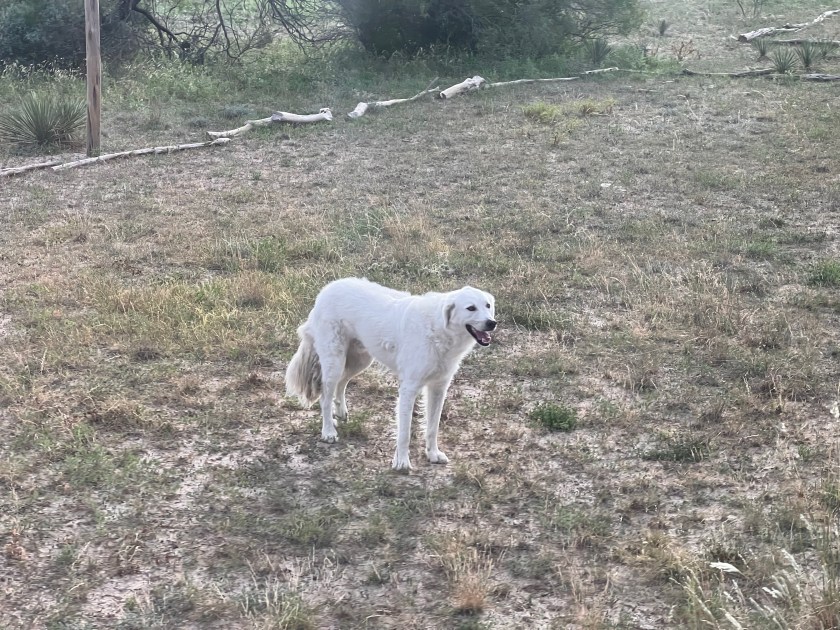
The farm is located in a beautiful spot on the Llano River, and they have places where people can stay and have programs, etc., too. Plus a friendly guardian dog. Was I in heaven? Yes.

Hi, Alfred!

The view from the main house was spectacular, as it overlooked an area planted with native plants that spread out to acres and acres of native grasses under cultivation. Mind-blowingly beautiful.

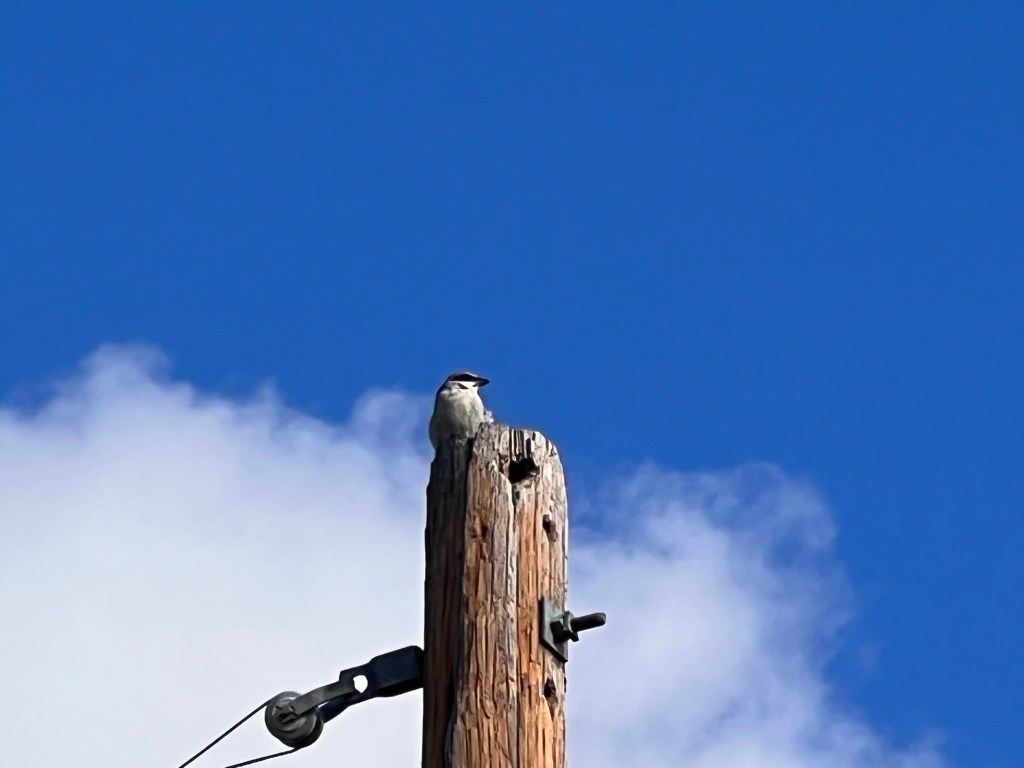
While we were there, we had three presentations, one on bird-watching that resulted in one loggerhead shrike and a loud but hidden chickadee. That’s OK. There were so many great plants that I was fine. There were many I’d never seen before, so I was in Suna Happy Place.

The second presentation was on doing ecotourism, and I learned some good tidbits about making money from people who want to look at birds on your property. I wish I could bring the storks in on cue!

Our speaker on bird tourism doesn’t actually like birds.

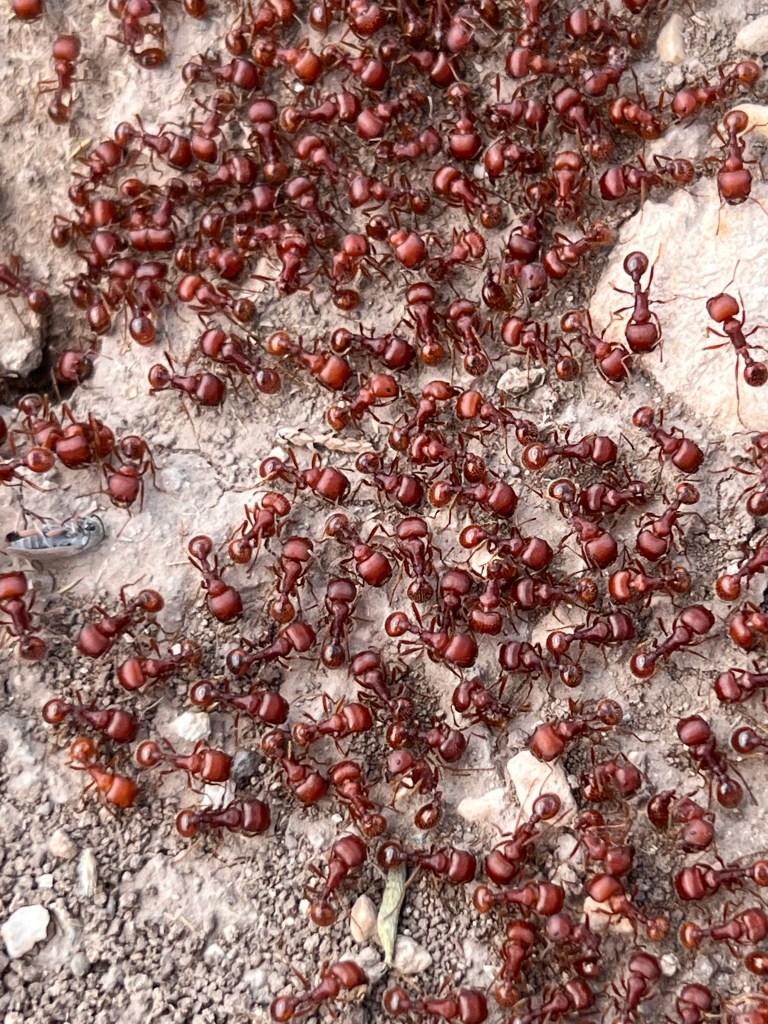
The third presentation involved going into the growing fields. We were short on time for this, which was too bad, but I was in awe of the people who work there and have figured out ways to grow these now-rare plants for seed to distribute all over the place. Plus, I got to watch harvester ants, you know, harvesting.

Silver Farms

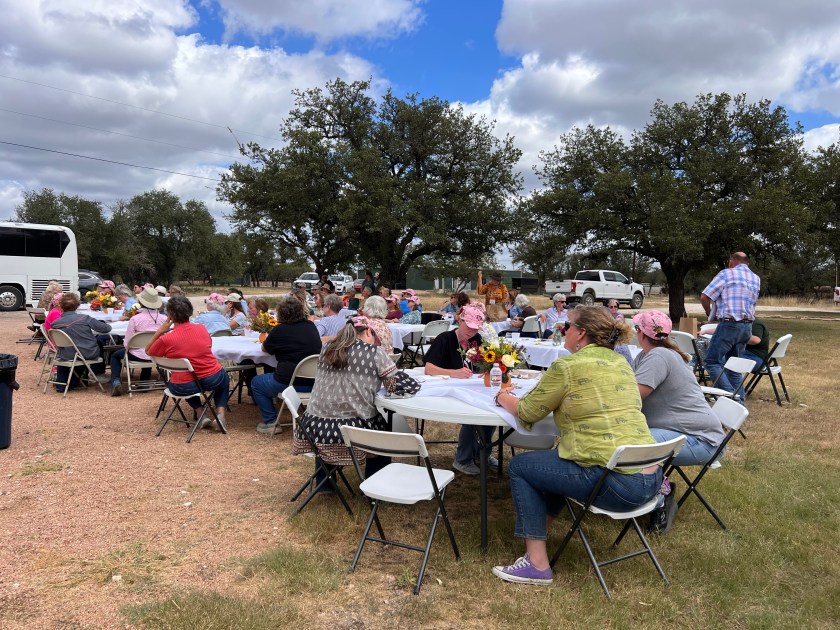
Next, we went to lunch, but it was much, much more than just lunch. It was a farm-to-table lunch with all the aspects of it prepared by women. The farm raises show goats and sheep, as well as some meat lambs. We had the best roast lamb I ever ate for our main course. For the salad, a company that consists of two homeschooled teens prepared it. That was one of the best salads ever, too, and I’m not making that up. There was goat cheese in it, home-grown greens, local pecans, etc., in it. I had two helpings and was not alone in this. There were also cheesy potatoes, homemade herb breads, and a chocolate dessert.

Getting ready for lunch. No lunch photos because we were eating!

Oh, and there was wine from friends of the owners, and it was all delicious as well. When we finished eating, all the people who brought the meal together spoke to us about how they came to do what they do. It was really encouraging to see all these new businesses cropping up in rural Kimble County.

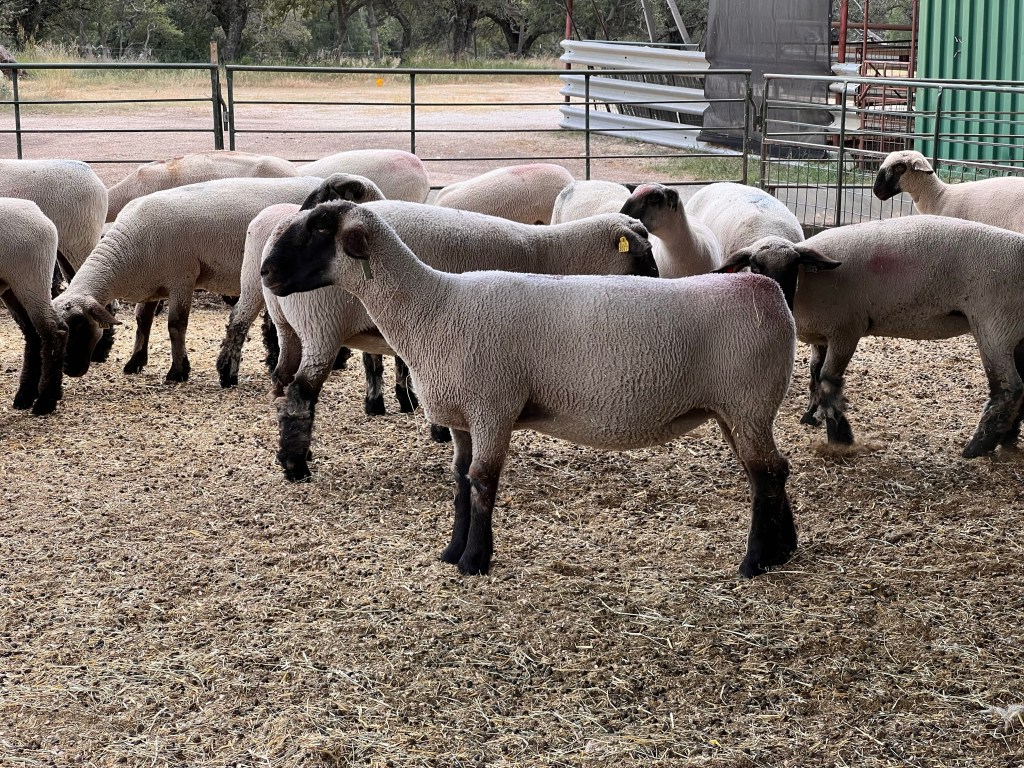
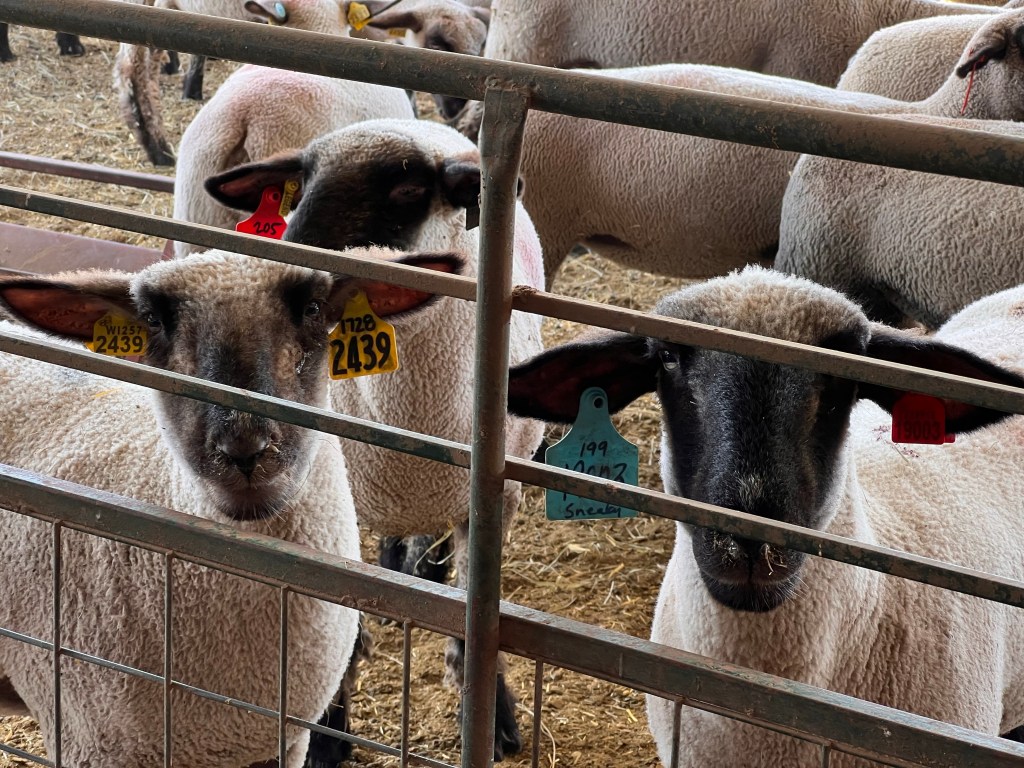
Once that was over, we got to go look at the sheep and goats! You know that was a highlight for me! They were Hampshire sheep, which are nice and big. There was one pen full of ewes getting worked on by one lucky ram. You can tell which ram got to a ewe, because they put paint on his chest and it rubs off on the lucky gals. The ram in the pen had red paint, but a blue one had been there earlier.

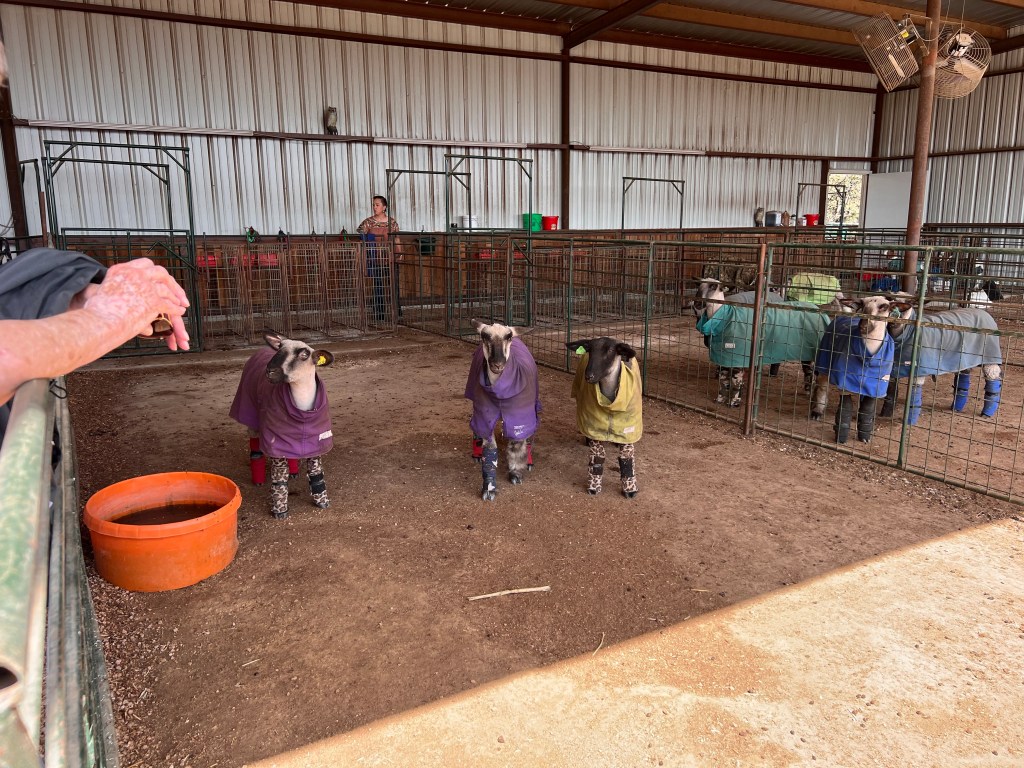
There was another area where the show animals were. They all wear little outfits to protect their coats. I was not aware of this practice. They were a hoot to watch, though, but we had to leave.

Texas Tech, in Junction

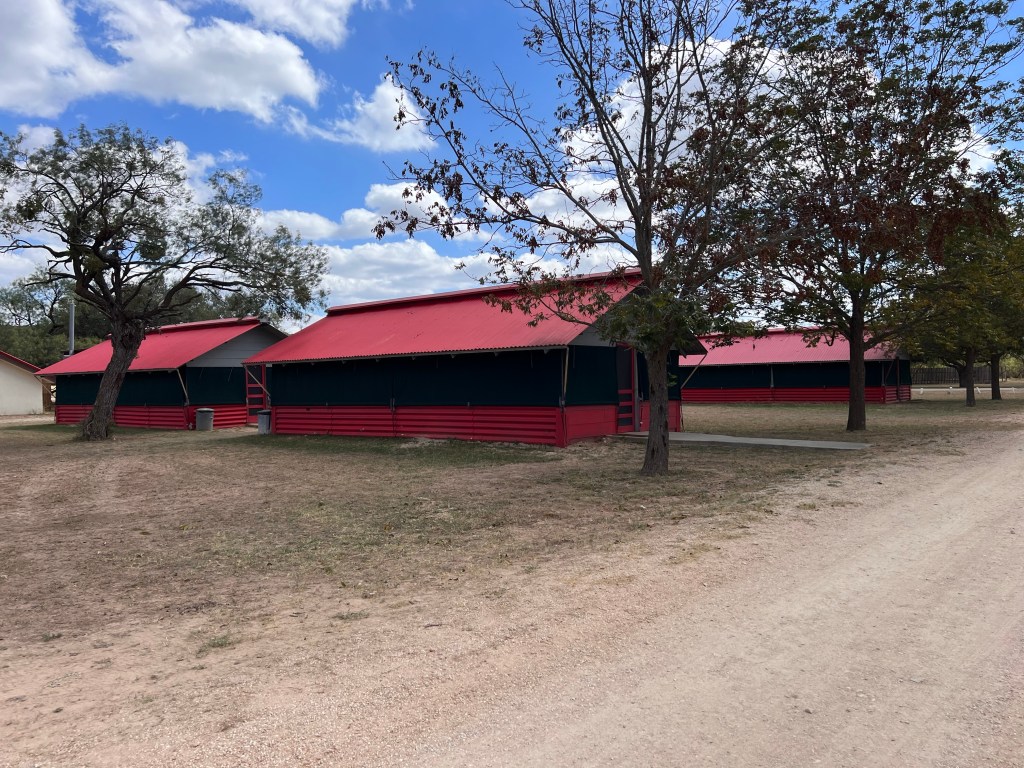
Back on the buses we went, to find the Texas Tech campus in Junction, which looks mostly like a summer camp. That was fine with me, because we got to go look at the river. Hooray, I love the river. The presentation here was by folks from Texas Parks and Wildlife and AgriLife. It covered managing riparian areas and dealing with axis deer.

It was shocking to see how badly the deer had grazed the area down, compared with an area they had fenced to keep wildlife out, which had lovely long grass and a variety of kinds.

I learned a lot about how to tell if your land is holding a good amount of deer or is being over-grazed, depending on what plants they have eaten. I am happy to report we have plenty of the stuff deer like to eat, and also that there aren’t any axis deer on this side of I-35 yet. Whew.

We’re pretty but not welcome in Texas. You can shoot us any time of year, if you pay someone enough money. Sniff.

What are axis deer? Imported animals native to northern India and the area around there, who have escaped and gone crazy breeding in Texas.

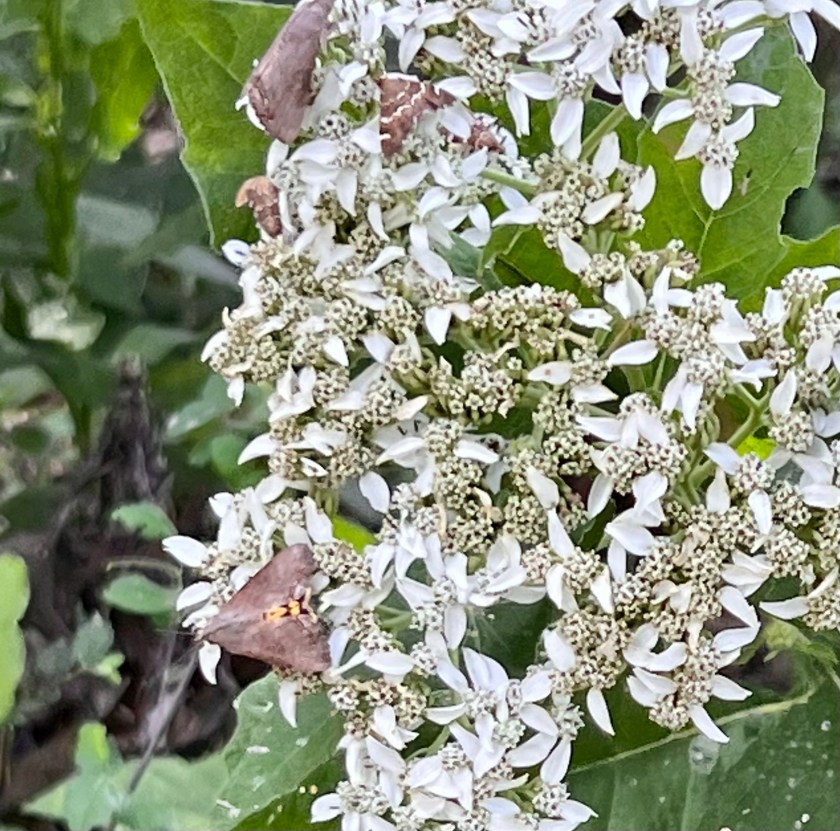
Anyway, it was all extra interesting, and I had a grand time, all the while taking more and more pictures of wildlife. I got into the top 50 of the BioBlitz just by taking all these pictures. There really were lots of butterflies and moths. There was one plant I saw four or five types of moths on at once!

Enjoy just a FEW of the photos I took, including some of the new things I saw.

The only negative thing is I have to get up early and drive home in the morning. But, that’s not the end of the world!

Sky and Water

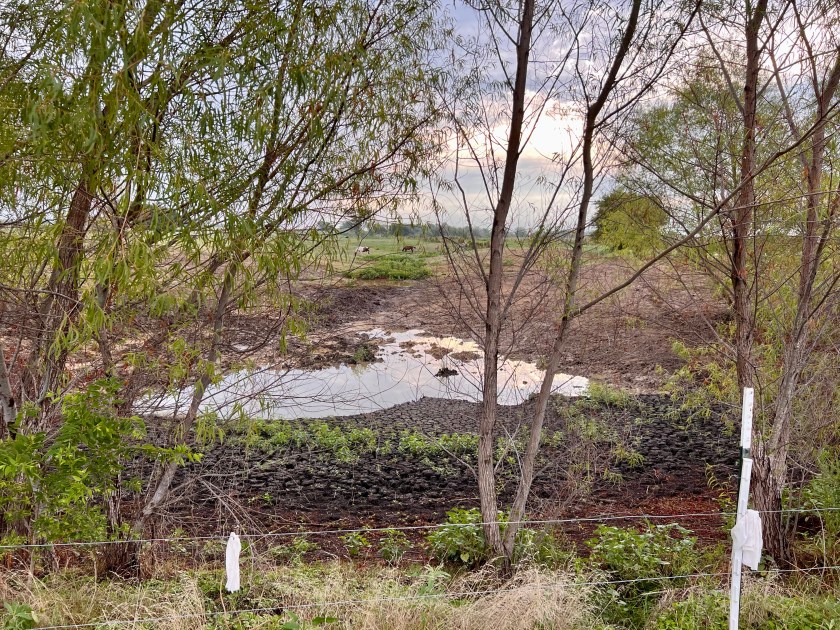
What happy news. The springs the bulldozer guy found made a tiny water patch in the refurbished pond. This makes me look forward even more to rain. This pond will hold so much water!

See that puddle?

Today he smoothed out the berm he made from the dirt he dug up. It’s very smooth and looks so natural. I’ll have to get pictures tomorrow. I think once it gets some vegetation on it, it will be great for horse muscle building.

Speaking of muscles, Tarrin is working on Drew’s. I wasn’t very good at it.

Mostly though, I want to join these birds. I was so happy today, because it was cloudy! Not rainy, but cloudy at least. Even the birds were happy.

Fly away against a sky of gray!

Maybe it will rain!

Ups, Ups, Downs

Things have been good here lately. I spend a lot of time watching cute animals.

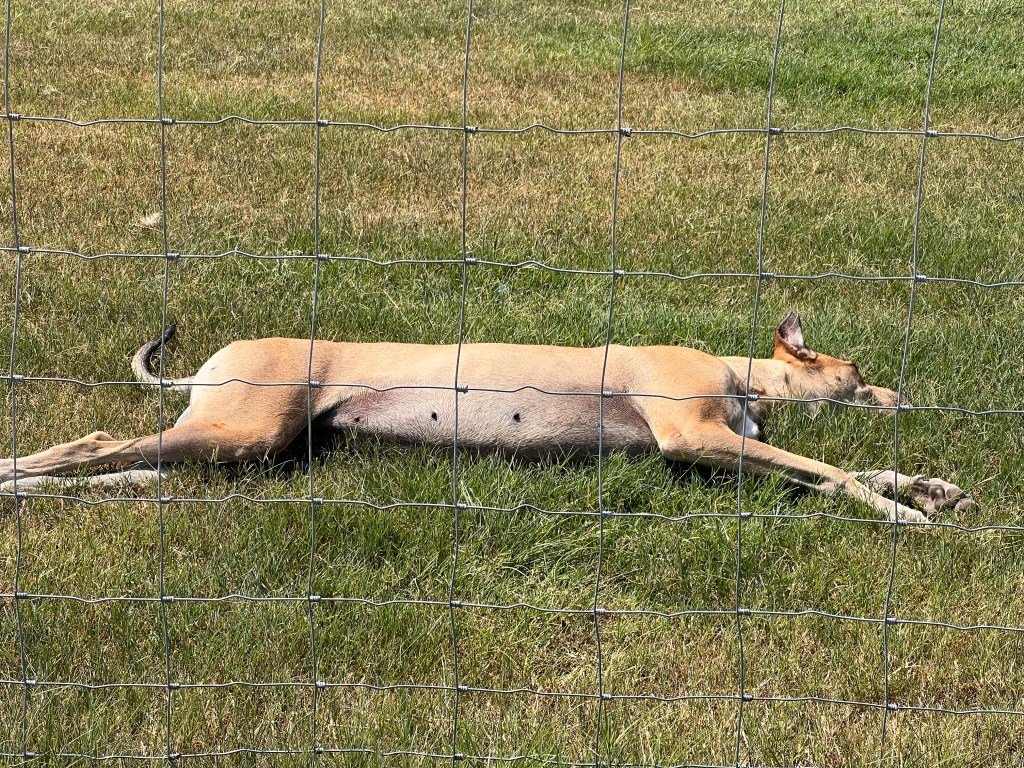
That’s a relaxed dog.

I even rescued a trapped English sparrow today who couldn’t figure out how to get out of the henhouse. I caught her and took her out. She was so exhausted that she just sat on my hand. Poor dear. No photos, since I had five hen eggs in my other hand!

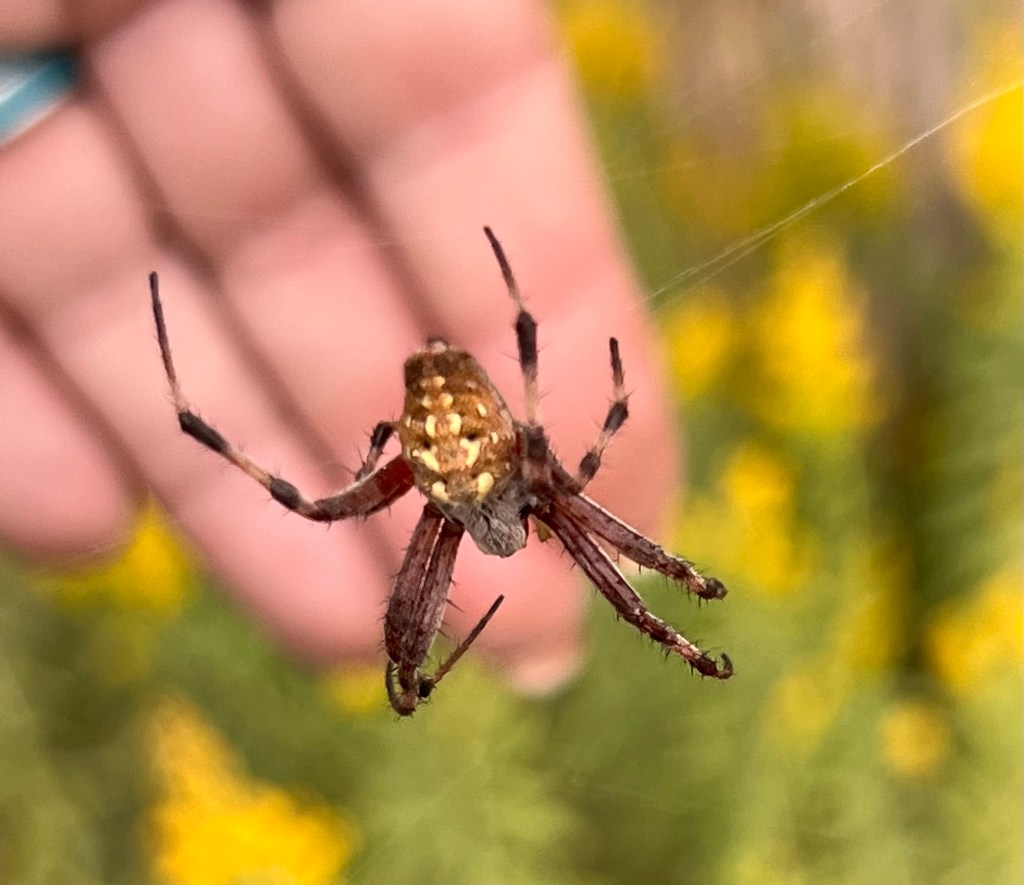
So, here’s another friend, the gate spider. Apparently a Western spotted orb weaver.

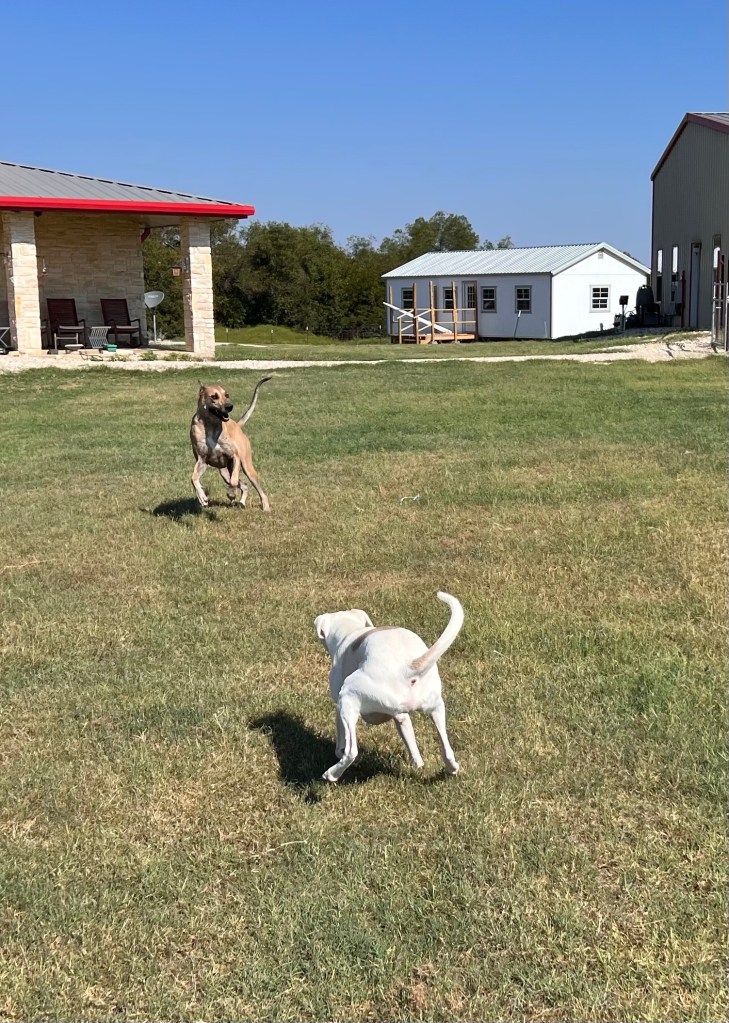
There’s just so much joy in our animals. The dogs love evenings when we’re in the pool, because they can run and play with an audience. I take them out in the mornings for a little play, too, which makes for a nice work break.

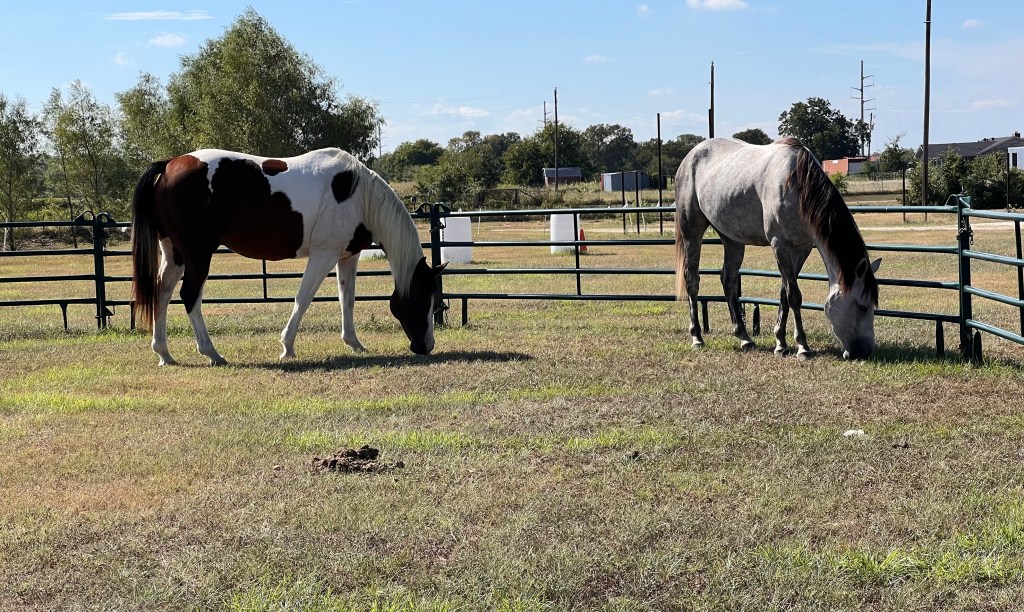
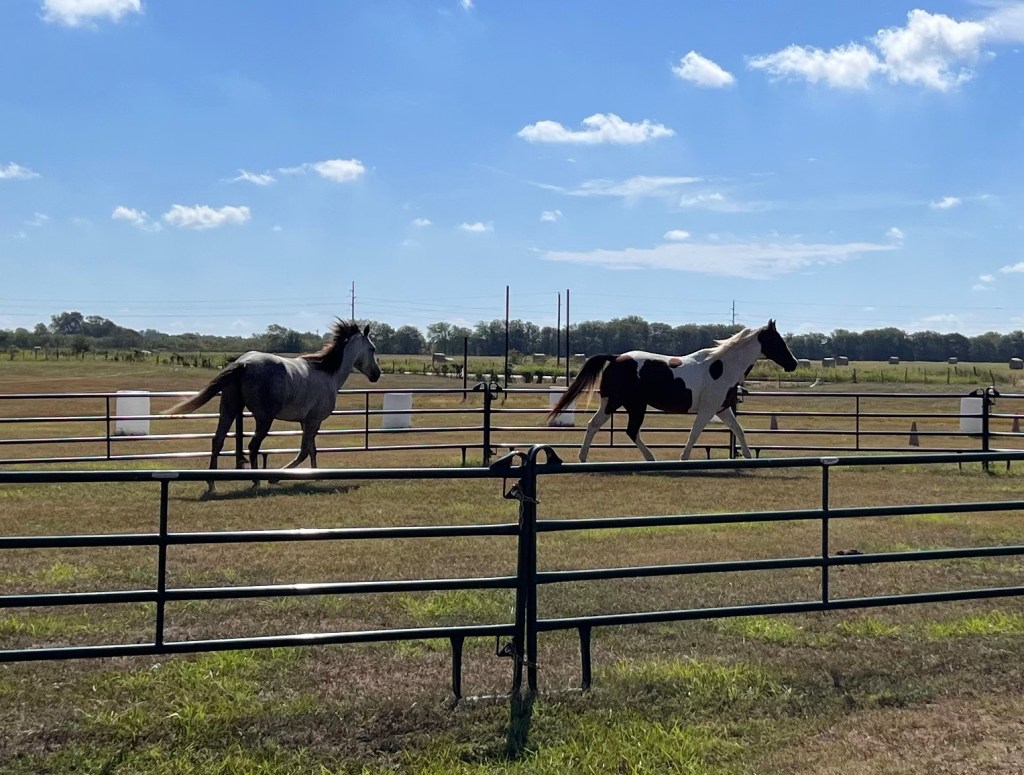
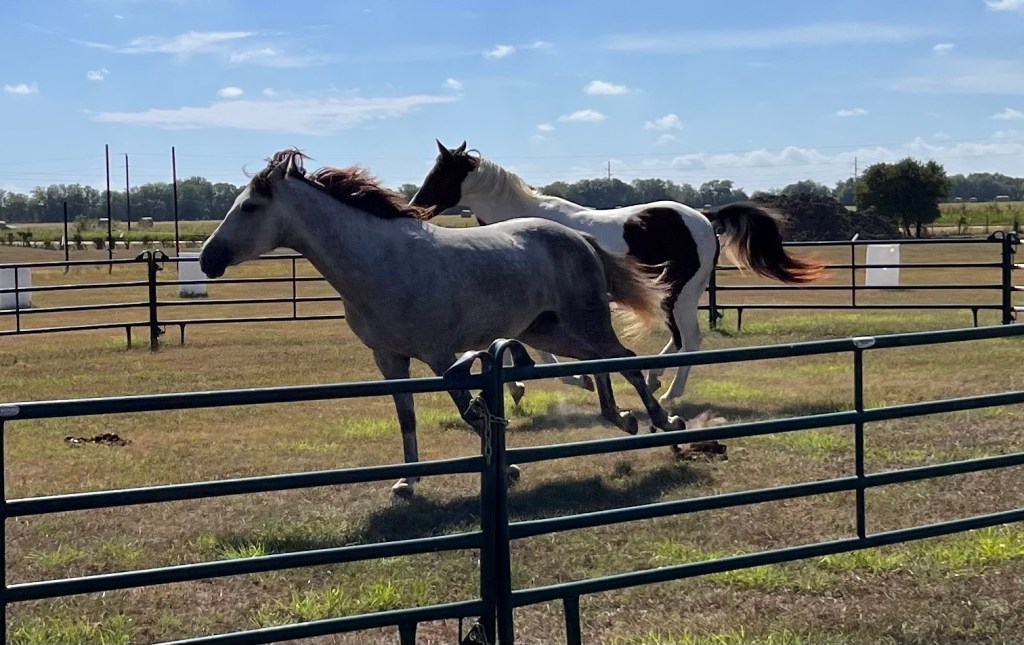
Things continue to be good with the horses, too. We had good lessons today. Drew showed Tarrin how hard we’ve been working and then learned new backups. And poor Apache struggled a lot with moving his butt when asked. My left leg is tired! But, those two bring me such joy. I’m so lucky to be able to learn and grow with them.

But there are so many animals to enjoy here. My son found this really cool snake in his cabin. He just caught it and took it outside and caulked up the hole it came in. That’s my boy.

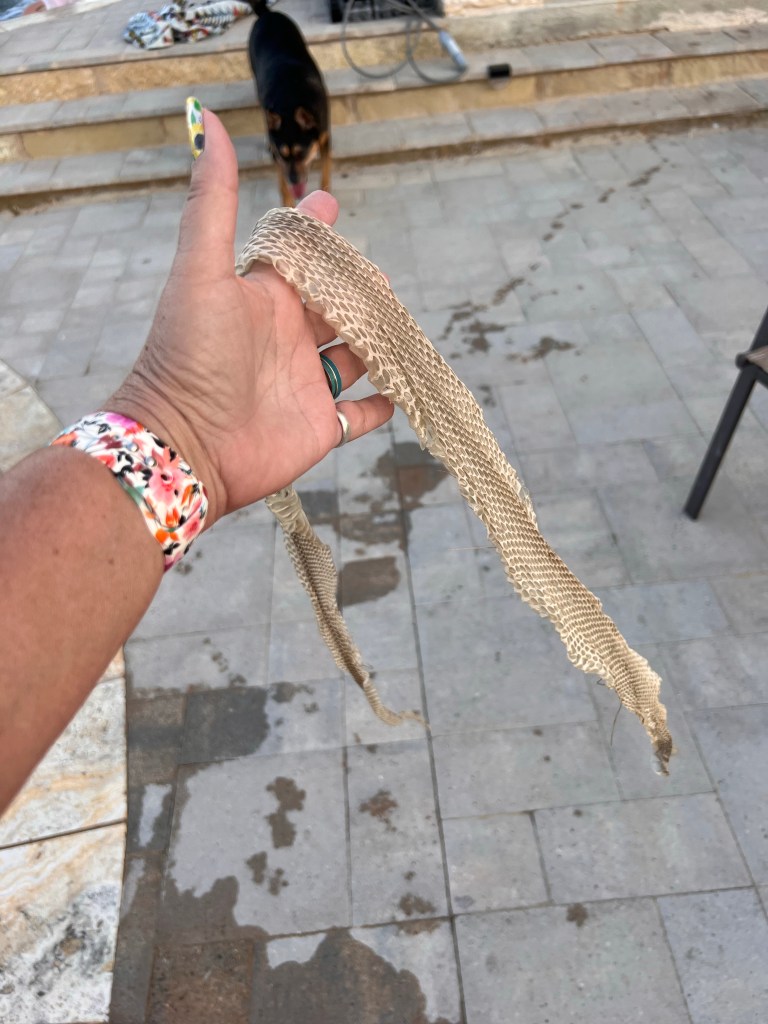
And today, I went to water the plants and was startled when I reached to turn on the spigot. Along the house was a complete snakeskin, I’m pretty sure it was one of our rat snakes. I love it when you get the whole skin.

I guess that’s enough animal fun for a Saturday evening. Hoping all is well with you. We’re having more family illness stuff. That’s the down part of the post title.

What’s Pink and behind My House?

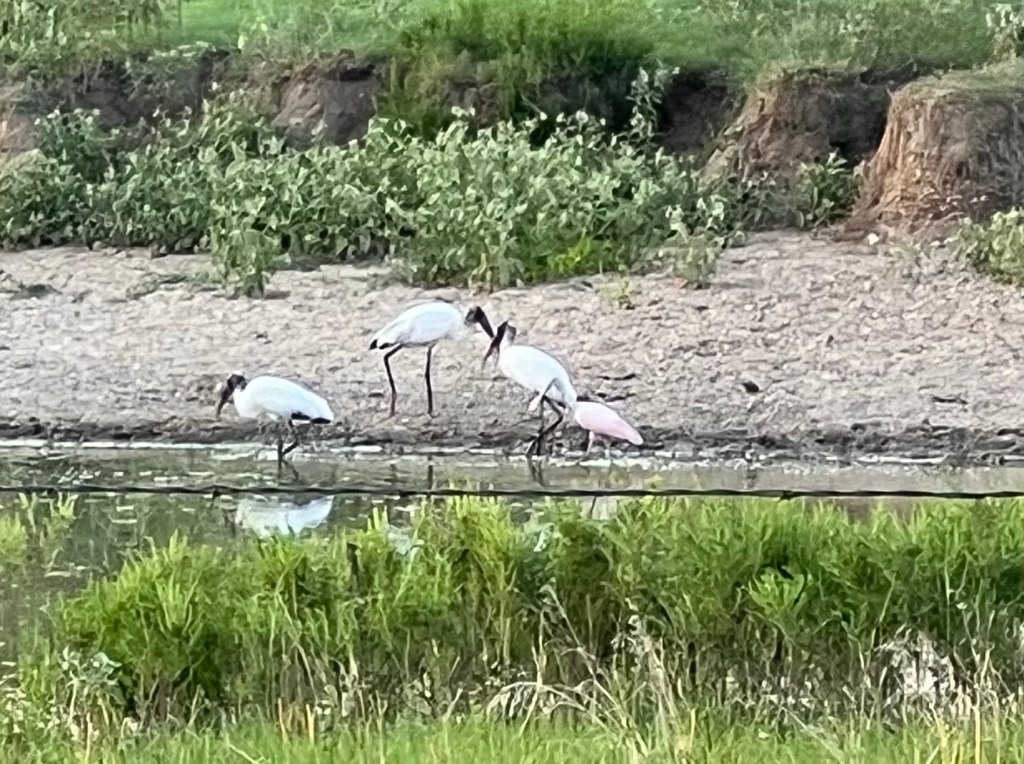
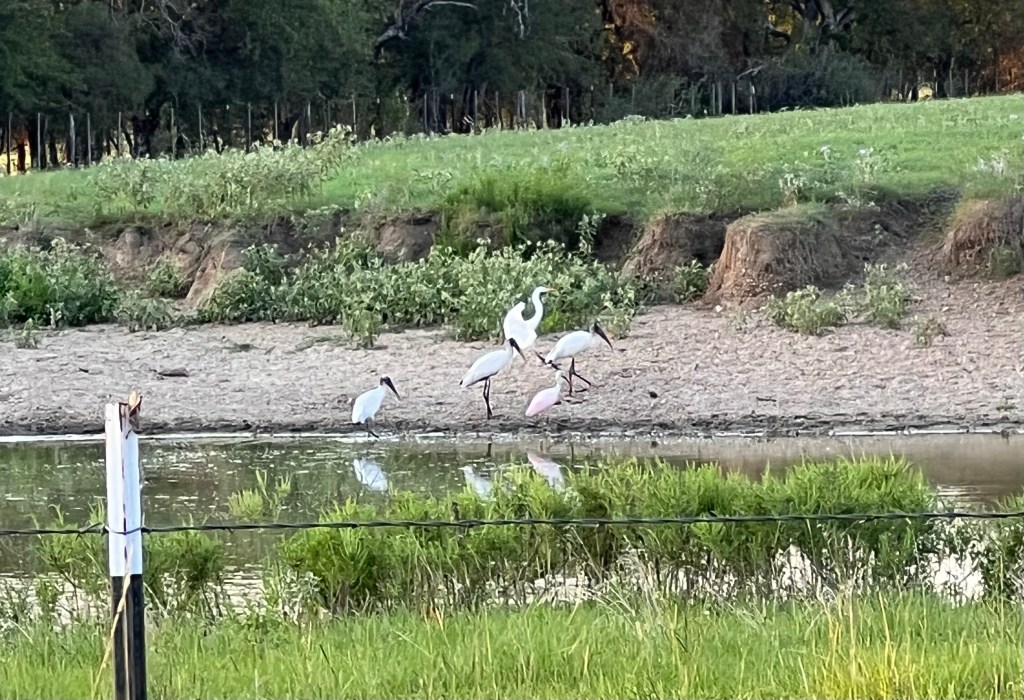
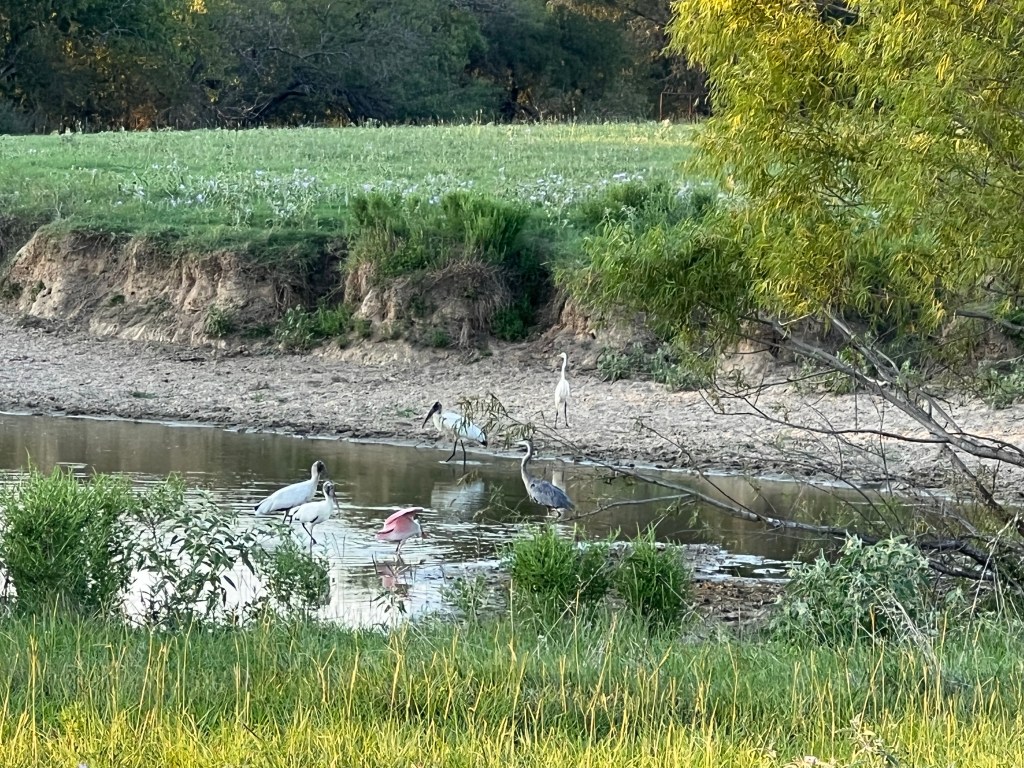
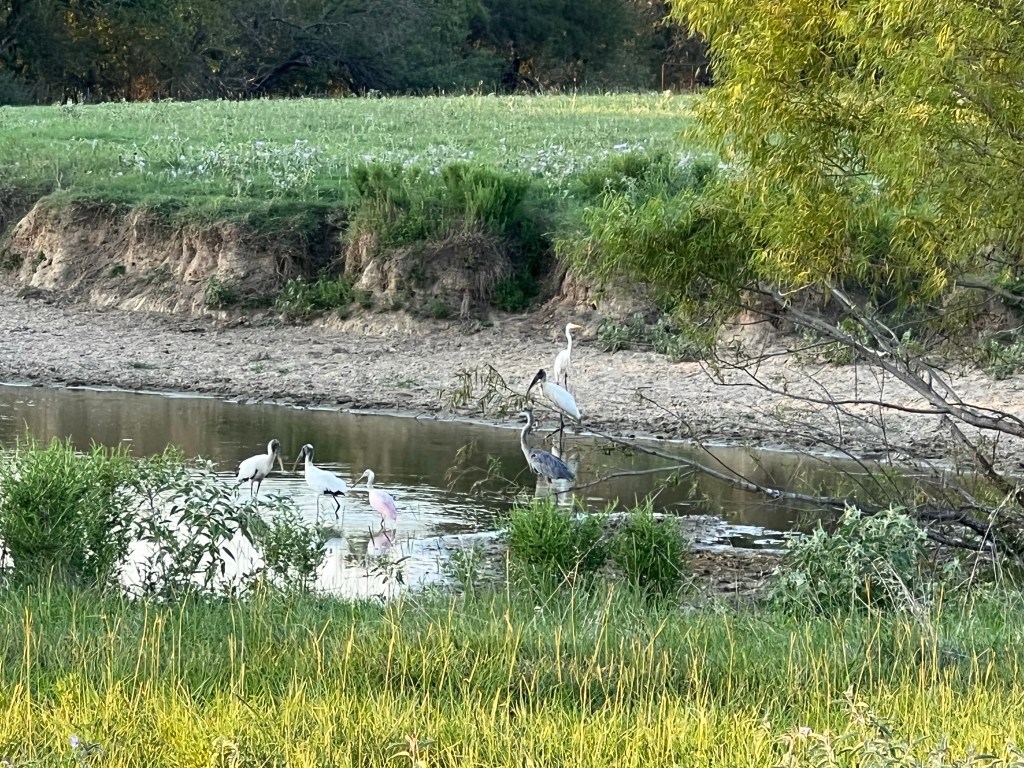
It’s a roseate spoonbill, that’s what!

…and three storks, one great egret and one great blue heron!

I was excited to see the storks visiting again, then I noticed one of the beaks trolling the shore was not black and looked sorta funny. Whoa. It was pink!

Look at that bill!

I’ve only had one visit from a spoonbill before so this made me smile. I remember looking at one up close at the collection at College Station but I’d rather see them live! I guess this one had just joined up with stork pals for a while.

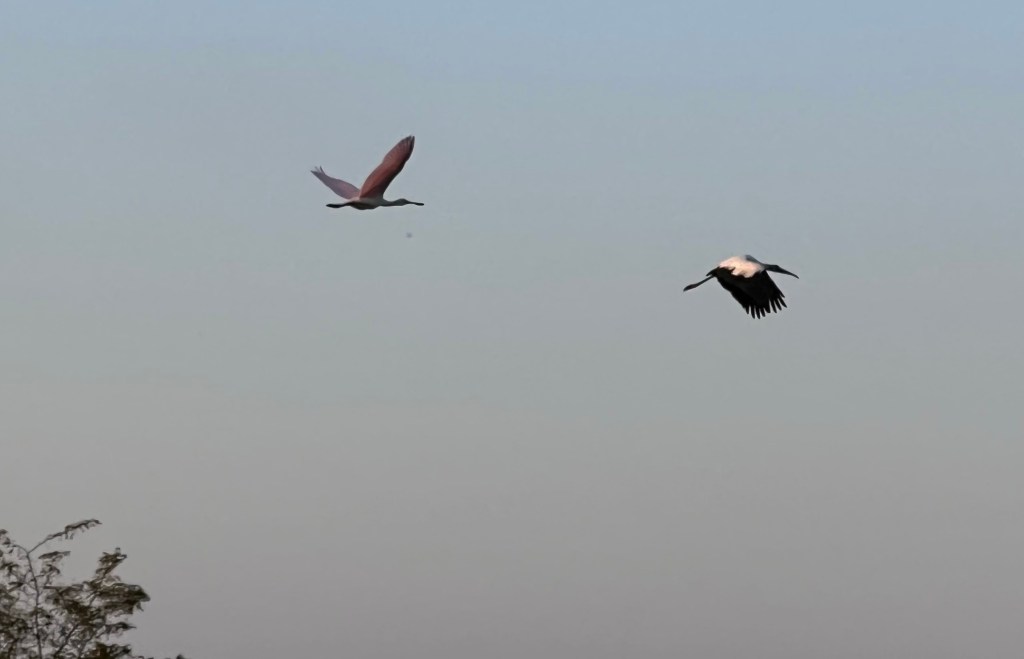
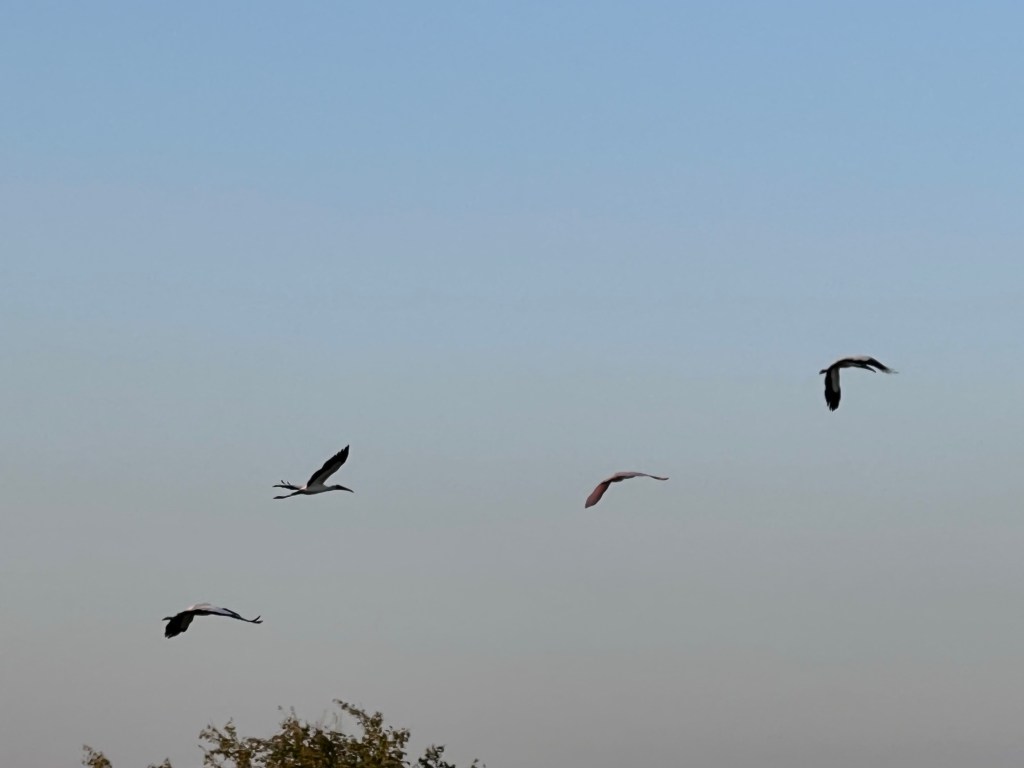
It was beautiful to see them all fly off, too.

Bye!

What a happy ending to a day that was already fun.

Why was today fun?

No, not because I did my favorite work task, building an e-learning video. It’s because it was Dusty’s turn to star in a horse activity, and it’s fun to watch him bask in the glow of attention.

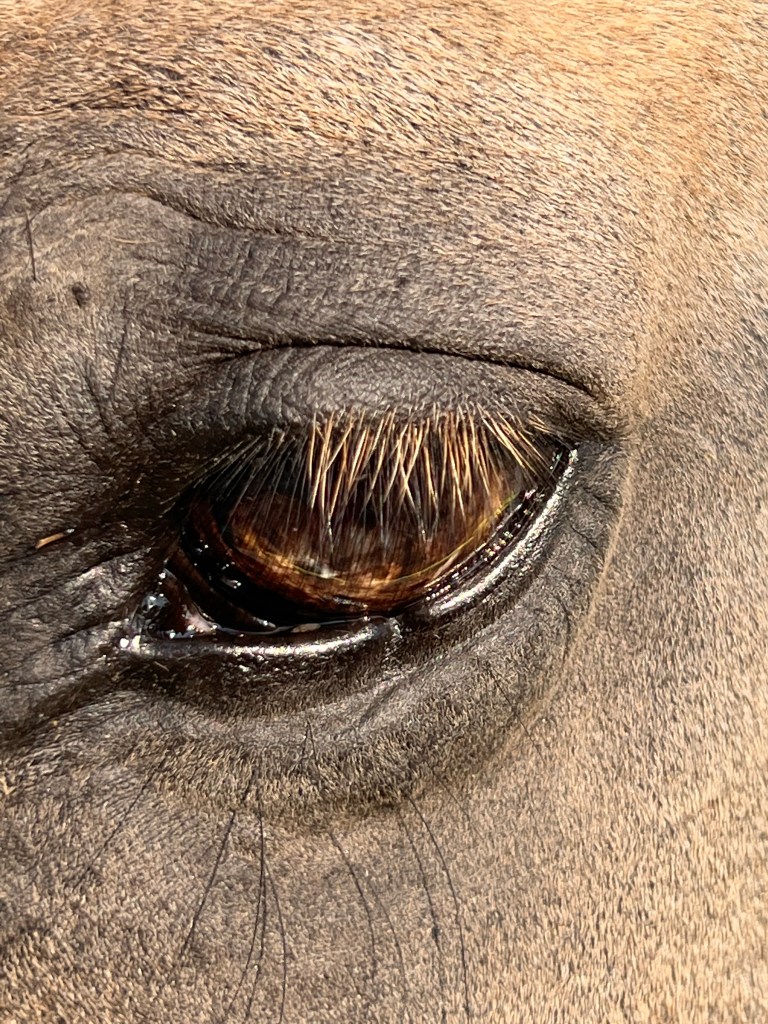
Dusty eye. He has blue swirls.

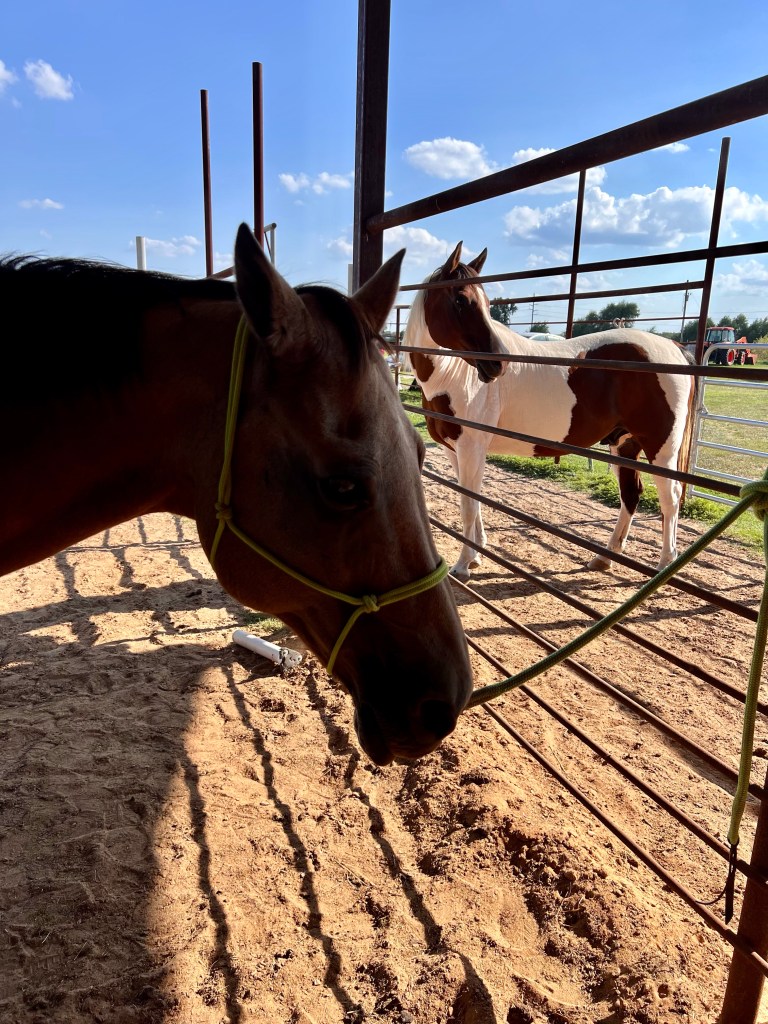
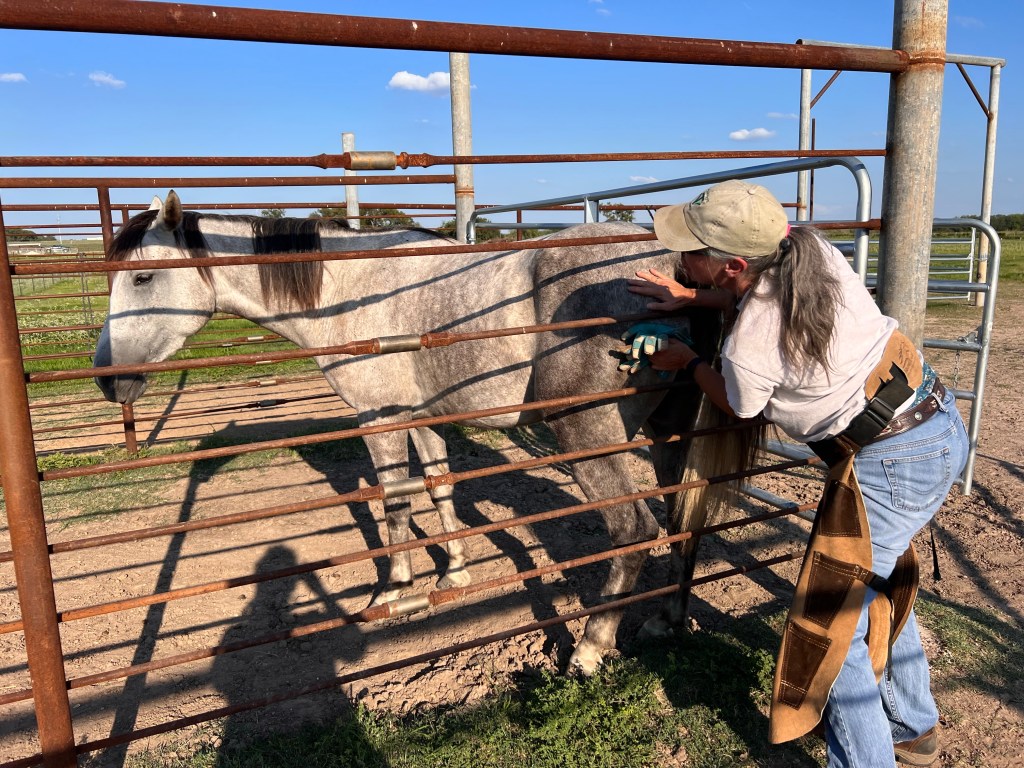
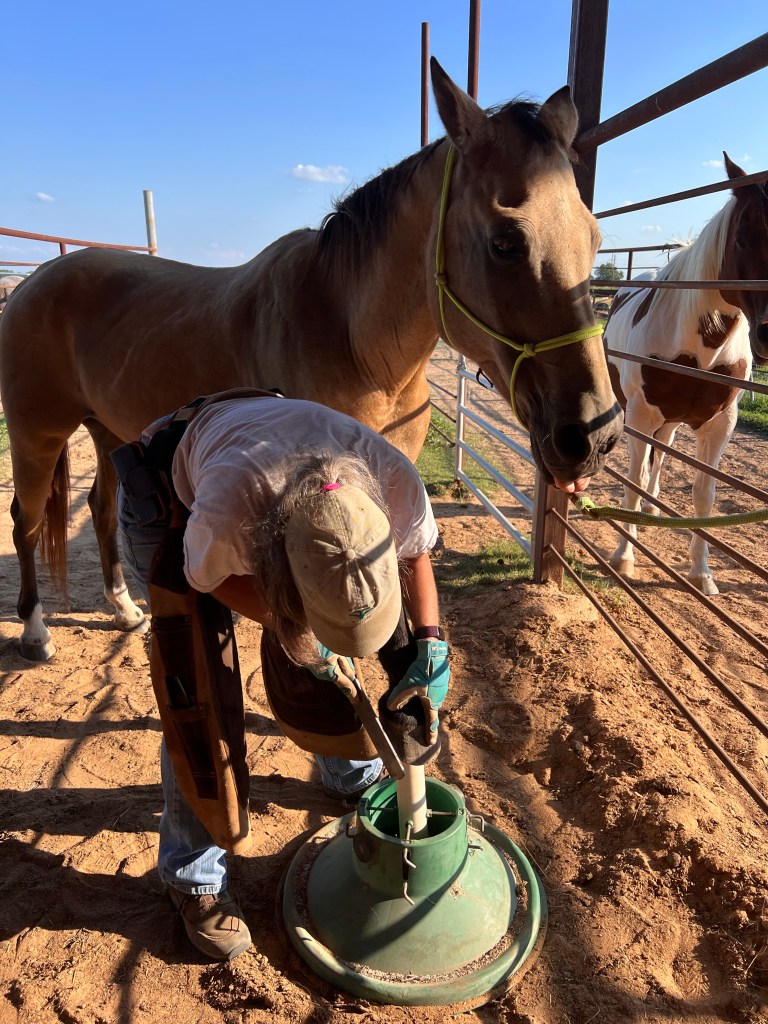
Sara needs to practice trimming hooves, and Dusty had four that needed attention. So she brought all her equipment over and worked on our old buddy.

Me? I’m the focus? Not attention hog Apache?

Sara is doing so great, too. As I expected, she is learning fast. It only took her an hour to do the trim, which is a big improvement!

Yep, it was time!

She had a lot more training to do, but she’s well on her way. Dusty did fine and was quite the gentleman. He had to rest his feet some, but that gave Sara a break, too. We were all happy with the results.

Everybody’s happy, and Fiona is also an attention hog.

It’s just so fun to watch my friend learn and hang out with my horse buddies.

Drew got his attention, too. Scratches with Sara’s gloves went over very well.

Life does not suck right now. It’s good, in fact. And it’s getting better! Woo hoo! Enjoy some more hoof fixing photos!

Hey, I skipped a blogging day. It was both busy and sorta boring. But I’m almost finished making the squares for my little macho camouflage blanket! I used my time wisely!

Welcome to the Hermits’ Rest Aviary

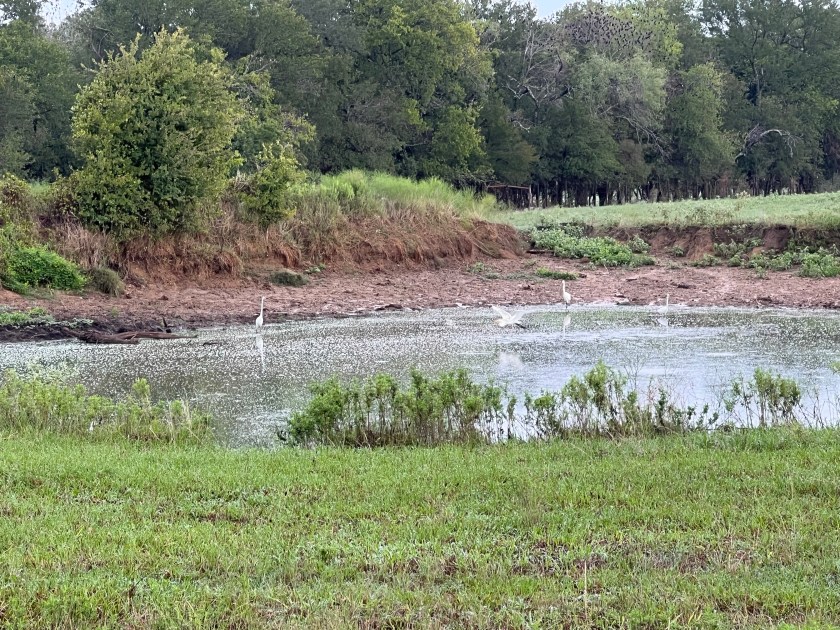
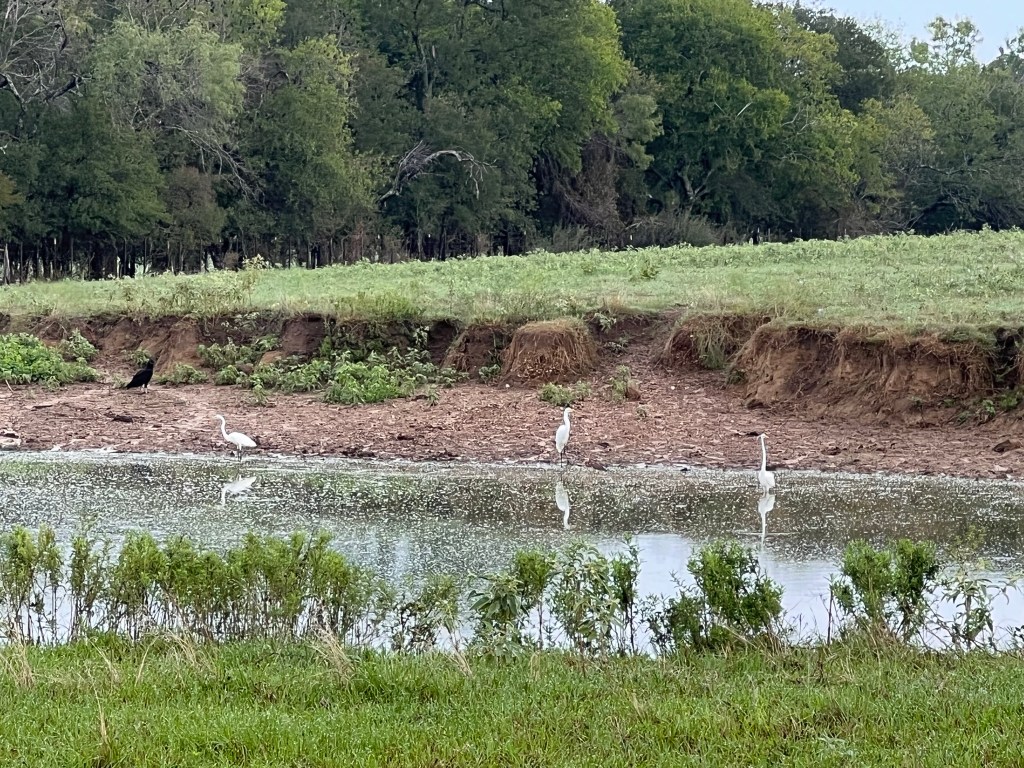
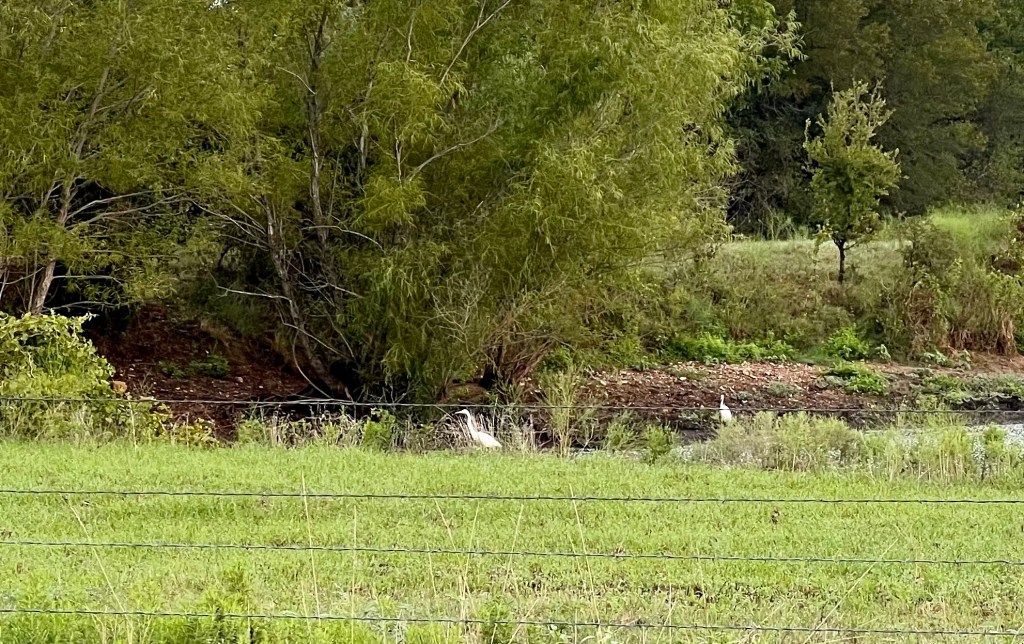
This week, I’ve truly felt like I live in some kind of private bird sanctuary or something. There are so many beautiful birds to enjoy. This morning I went out to feed the hens, and the ground was heavy with dew, which must have made all the birds in the world happy. Once again, we were heavy on the heron family, with the usual great blue heron and green heron (the tricolored heron did not make an appearance) joined by an entire flock of great egrets (usually we just have one or two). There were also a couple of cattle egrets (distinguished by their yellow legs as opposed to the black legs on the larger birds).

Fun times at the pond.

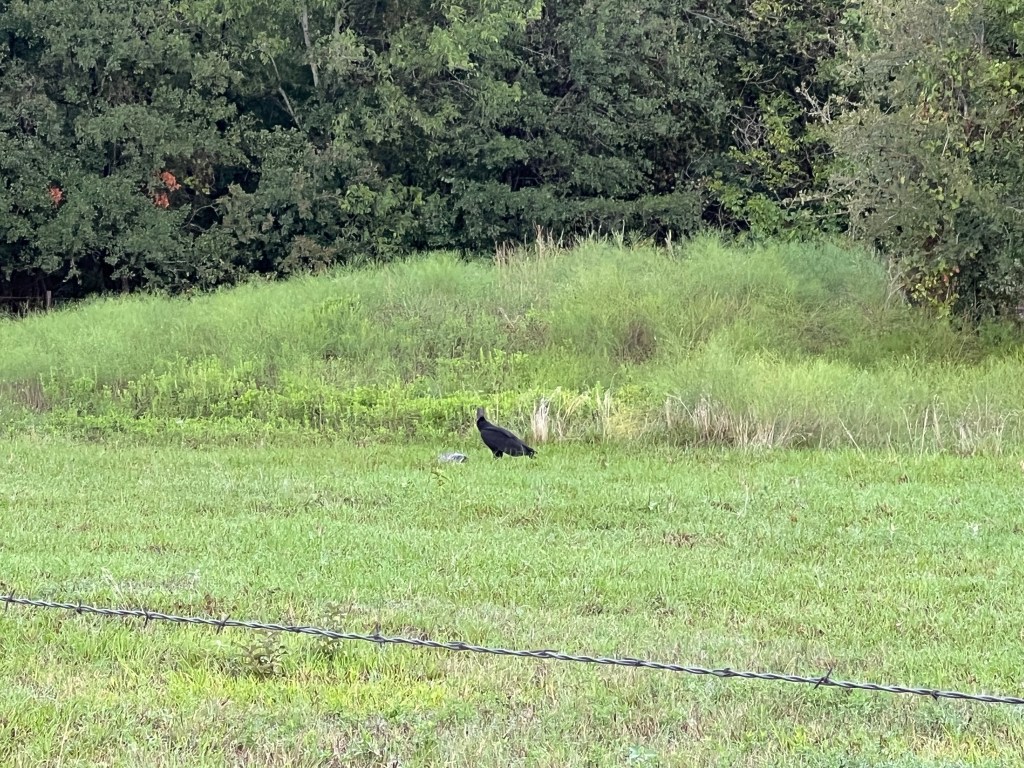
Plus, there were ten or twelve black vultures, hopping and bopping along the edge of the pond or tank. They were drawn by the dead armadillo, who’s contributing to the Circle of Life by feeding both these guys and turkey vultures, who were out in force yesterday. Turkey vultures have red heads, while black vultures’ heads are black. That makes for easy identification.

Vultures taking flight

There were also the twittering English sparrows flitting around, along with all the grackles that sit on the electrical wires then fly around in a huge murmuration, descending on the fields, then departing again. Cardinals are constantly coming and going, as well. Plus there was something that makes a big screech sound, which I haven’t managed to catch on the Picture Bird software to see what it is.

That’s a lot of birds. Plus the storks are still around, which warms my heart.

When I tire of the pond, I go over to the black willow trees beside the front tank, which now has a little water in it, thanks to a bit more rain (hooray for the rainy season).

A little more water this morning!

There I’ve been seeing one, and just one, scissortail flycatcher. I wonder if it somehow didn’t migrate. By the way, did you know they’re related to the Western kingbird? We have those here, too!

I like it here

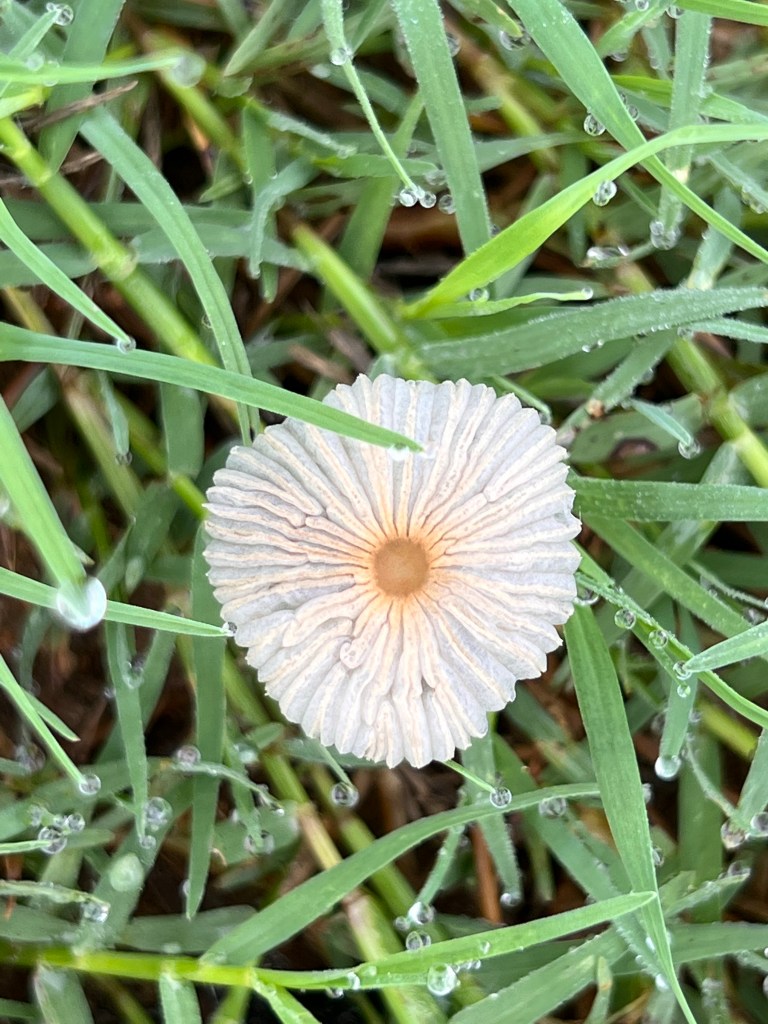
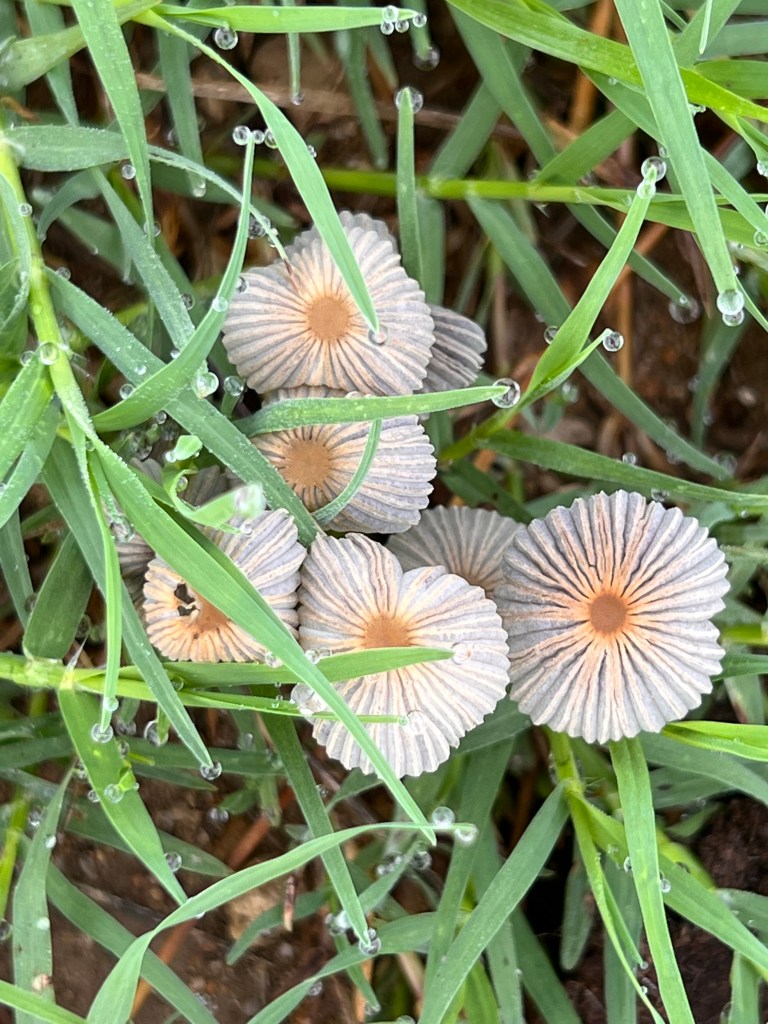
The trees are just chock full of tiny birds, including chickadees, orchard orioles, and warblers I can only hear but not see. Oh yeah, and the mockingbird whose territory is the telephone pole across the street, who mimics the woodpecker who also hangs out there. Since I don’t have photos of those guys, here are some sparkly dew-encrusted tiny mushrooms.

What a symphony! That’s what I’ve been enjoying lately. I’ll spare you the cuckoo, owls, and many sparrows in the woods. It’s too muddy to try to get photos of them, so I just listen.

I can’t wait to watch the geese and cranes migrating.

Honoring a Good Rooster

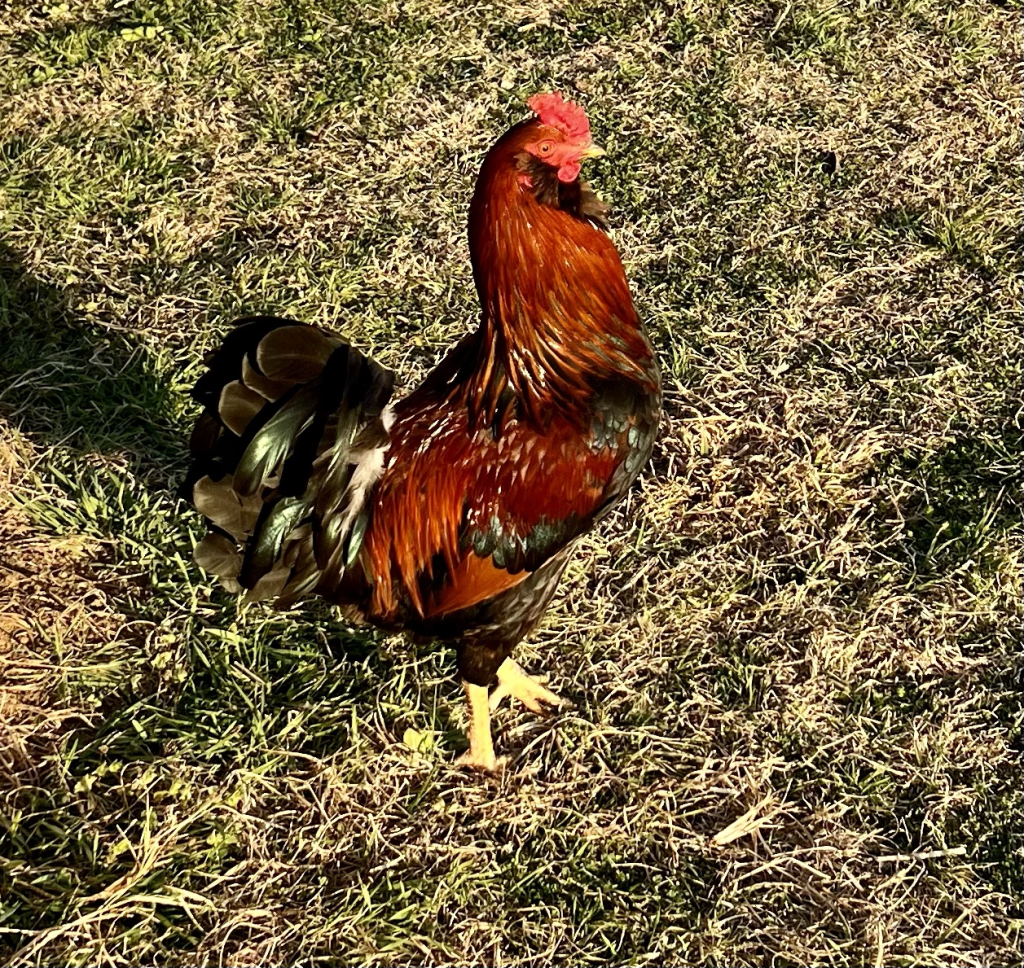
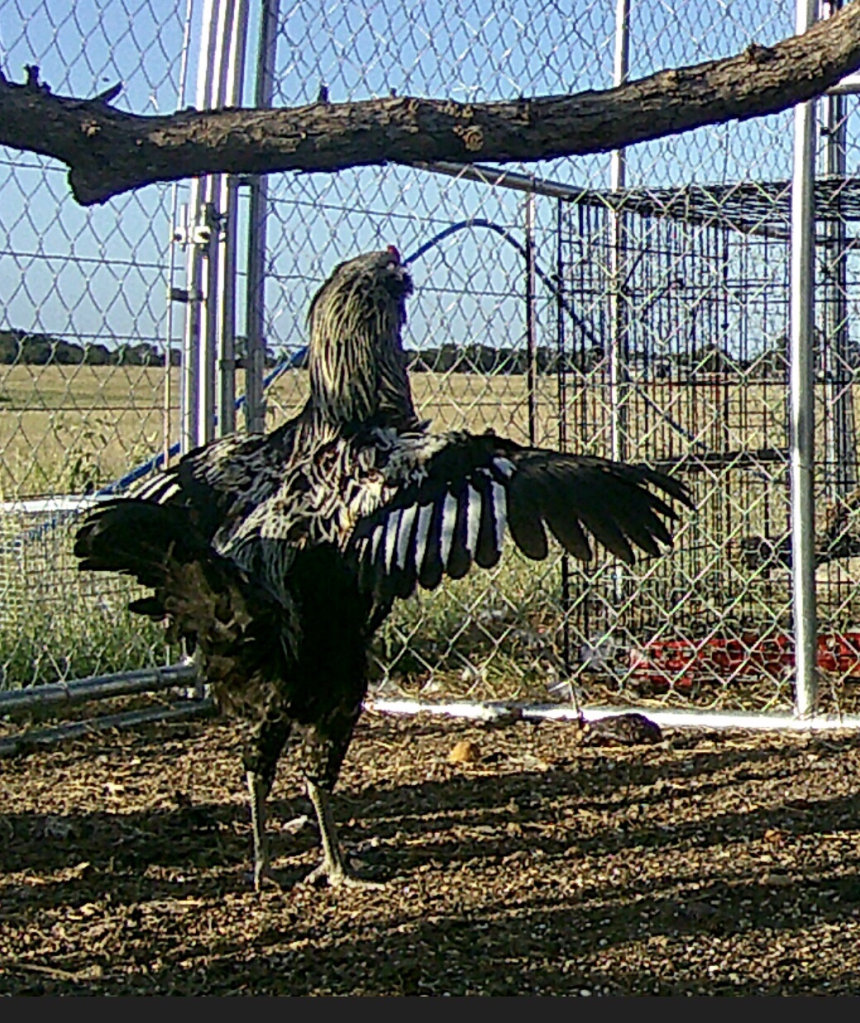
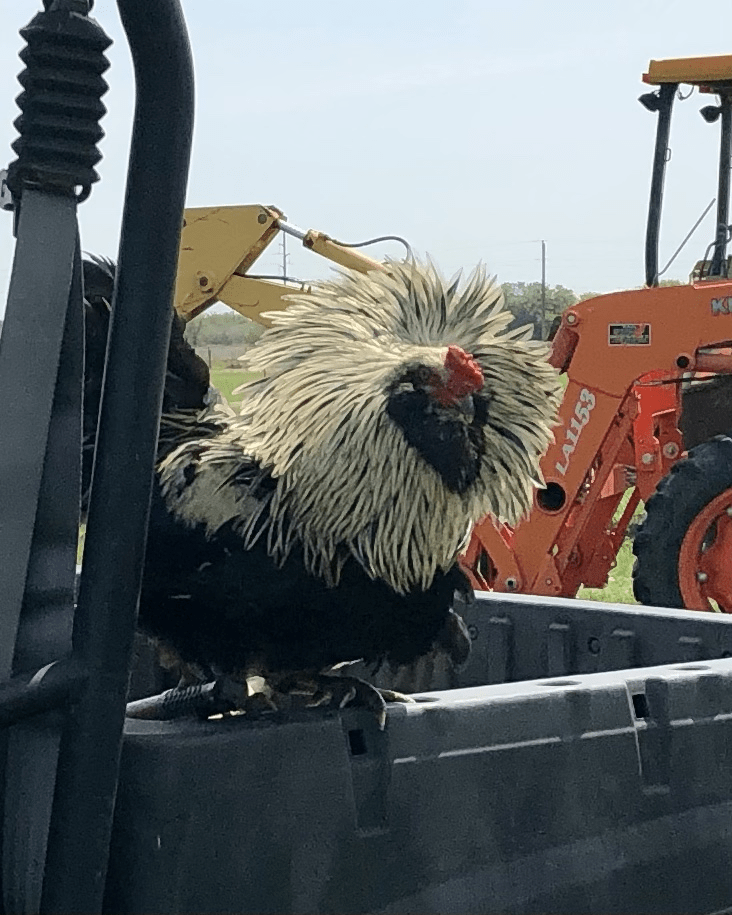
The morning didn’t start out as well as I’d hoped, though I had an inkling I might make a sad discovery this morning. And yes, I was correct that my buddy Bruce, the best rooster ever to crow, had passed away overnight. He was only 2.5 years old, so I’d hoped we’d have many more years with him.

He was in his glory last fall, when is comb looked cool and all his green feathers were shining.

Bruce was an “Easter egger,” who I’d gotten for free when I got a bunch of other hens from Bird and Bee Farm that I named after Bruce Springsteen’s family and band. I’d hoped he’d father some babies that laid olive green eggs. That was a great plan, but my luck with baby chicks has been very bad. One (Peeper) made it to adulthood, but Bruce did him in. He was a one rooster per flock kinda guy. He was mean to poor Peeper and was a bit rough with some of the hens when he was doing his duty, but good to humans. He was very gentle and quite funny.

Peeper, son of Bruce, who thinks his dad was jealous.

Bruce did crow a lot, but no one around here minded. It was really loud, though, if he happened to do it right next to you! There was much flapping and jumping onto high branches involved as well. In fact, that’s how I realized he was sick a few days ago. There was no crowing, and he was not on his branch.

Headed for the branch to crow.

I guess I’m just bummed that I couldn’t help him and that I won’t get to enjoy those beautiful green tail feathers anymore. I did save some from when he lost them in a fight recently, which is probably what led to his decline. He was a good protector.

I’ll take care of my gals. Henly over there is still with us, even!

When I first had him, he was not an attractive young man, in the middle of a gangly adolescence. I’m glad he grew out of that!
I was an awkward child.

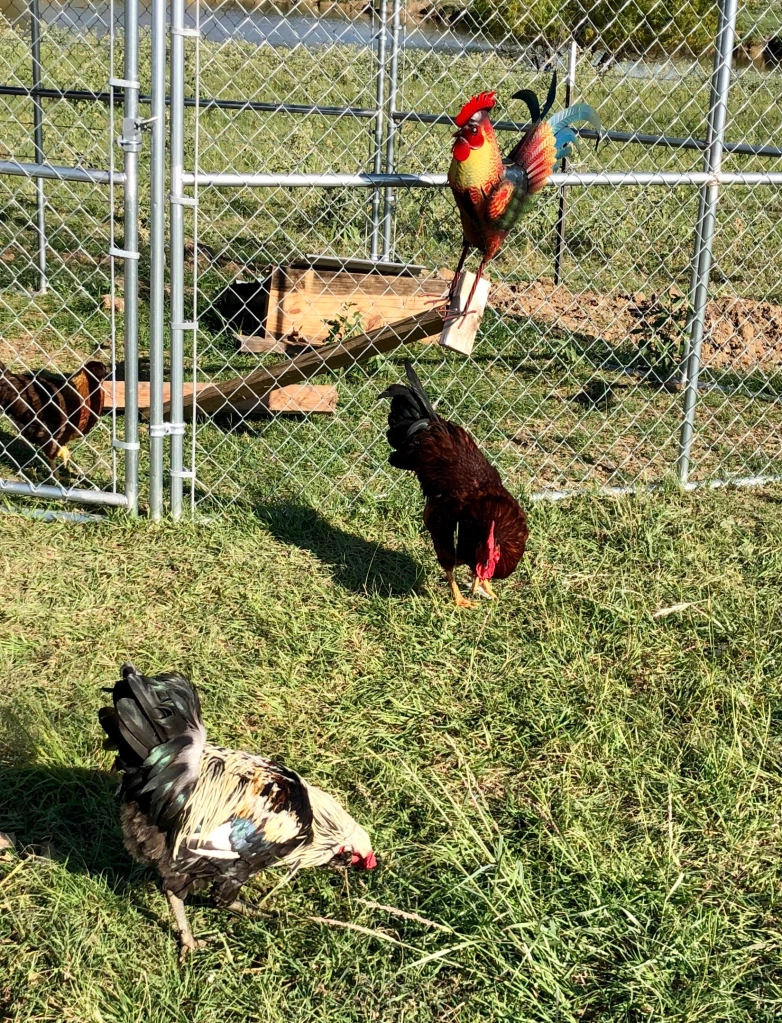
Soon after he got big enough to be a dude, we took on a second rooster, but that did not go well. Clarence was not like Bruce at all. He was mean to humans, tried to kill my sister, and gave me huge bruises. So, he didn’t get to stay all that long. That made Bruce happy. Like I said, he preferred to be the solo chick daddy.

Stay away from me, Clarence.

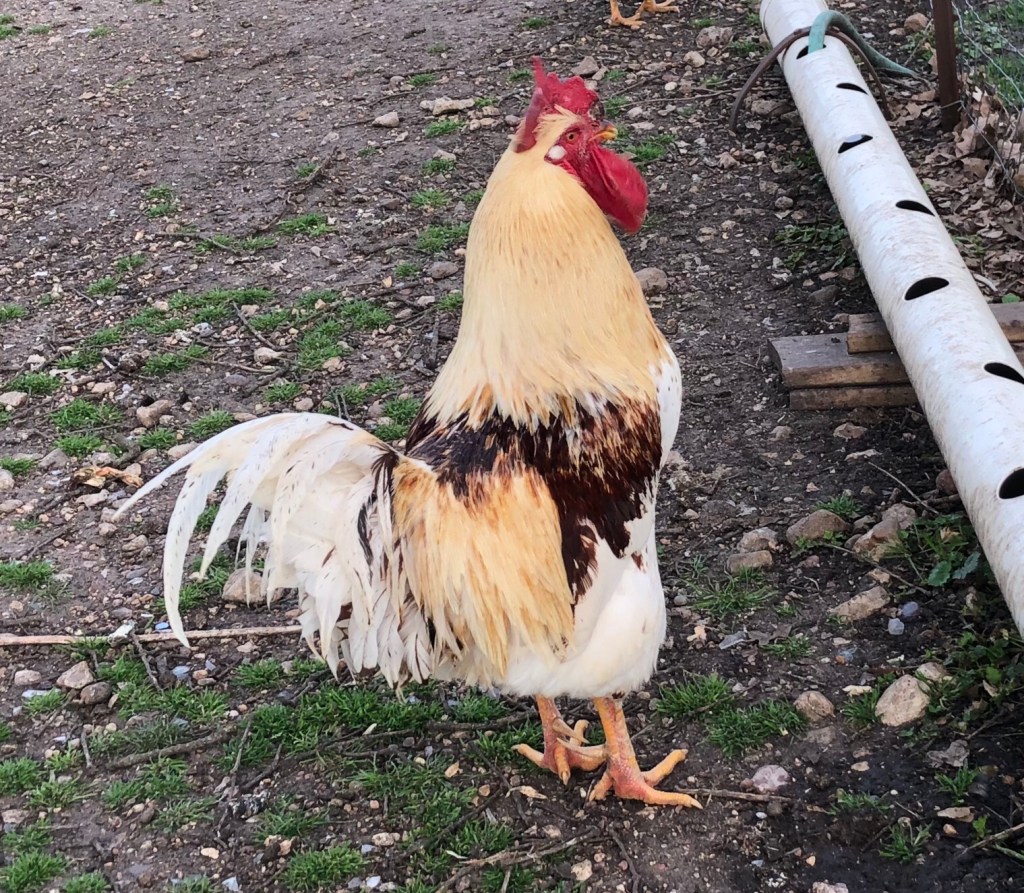
I had to do write an ode to a rooster once before, in 2019, when the late, great Buckbeak passed away. He was the previous greatest rooster ever. That didn’t make things any easier. Buckbeak was even nice to other roosters, and took care of a huge flock that I got put in charge of when their owners had a disagreement and no one wanted to take care of all the dead ones (there was an owl and an insecure hen house). Now you know why we take so much time and effort trying to protect the chickens here!
He was nothing fancy, but a gentleman, our Buckbeak.

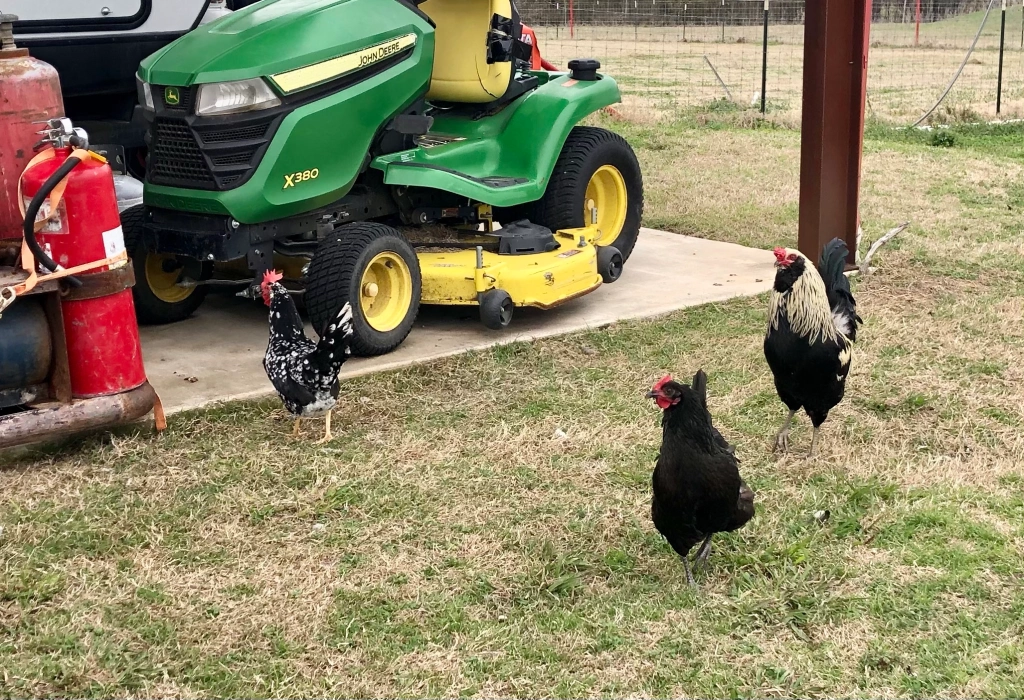
I’ve gotten a bit weepy here, even though I still don’t cry very much these days. I was enjoying a period of fewer chicken deaths, to be honest. I think dealing with poultry has helped me be a bit more of a rancher now, and I’ve tried hard to not get attached to my current hens. One, Buttercup, is from my early bunch (only Bertie Lee is older), and she has stopped laying eggs. I swear she thinks she’s the rooster now.

What??? I’d tell her to stop that if I were still here.

Bruce and I had a good couple of years together, and he sure went through a lot. I think the cold weather this winter wasn’t good for him at all. He lots much of his comb to the cold, which had to be hard. And he had to fight off a lot of skunks and snakes and so on. It’s hard being the biggest of the bunch.

I was always ready, though!

I’ll try to buck up and think about adding to the flock again. At least I still have dear striped Bertie Lee, who’s over three years old and refuses to lay eggs in the new nest boxes, but she’s as bright and perky as ever.

These are all eight of my current hens with Bruce. I bet they miss him. Buttercup, Star, Betsy, Bruce, Henley, Bertie Lee, Blanca, and Blondie.

A Visit from Storks!

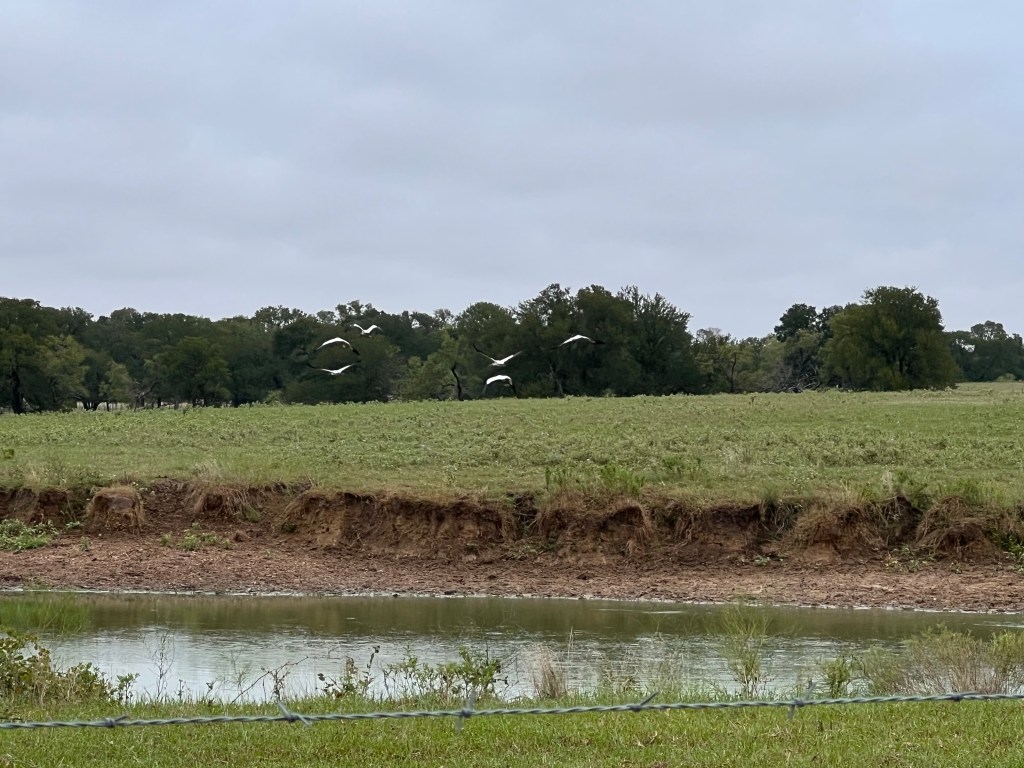
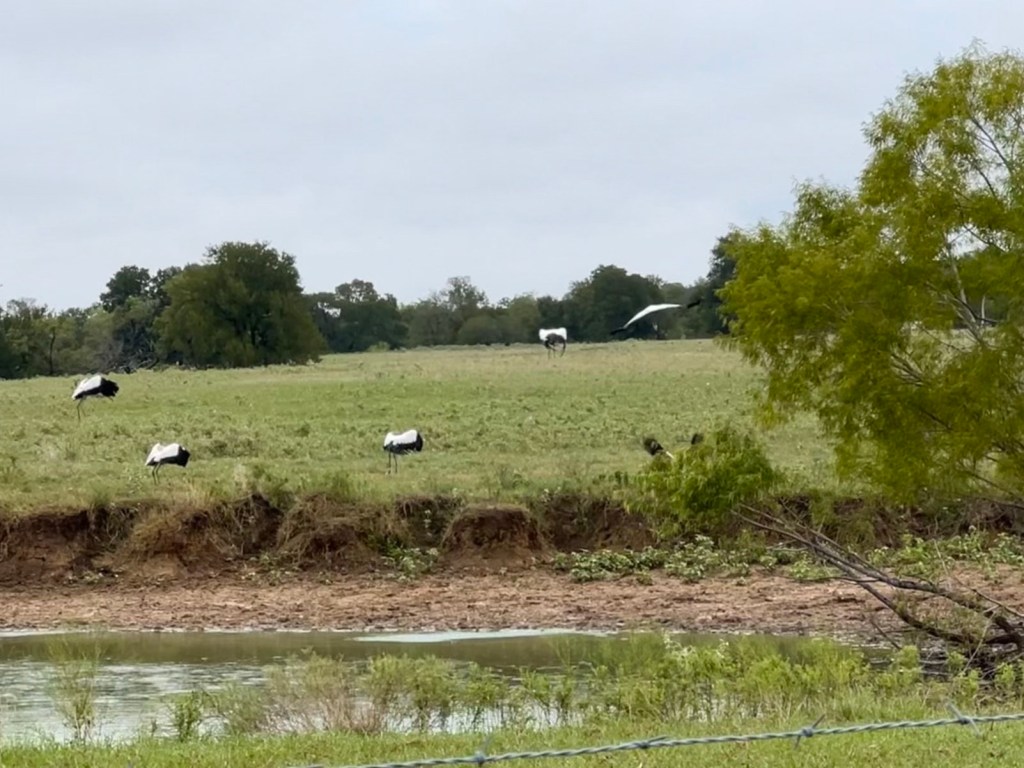
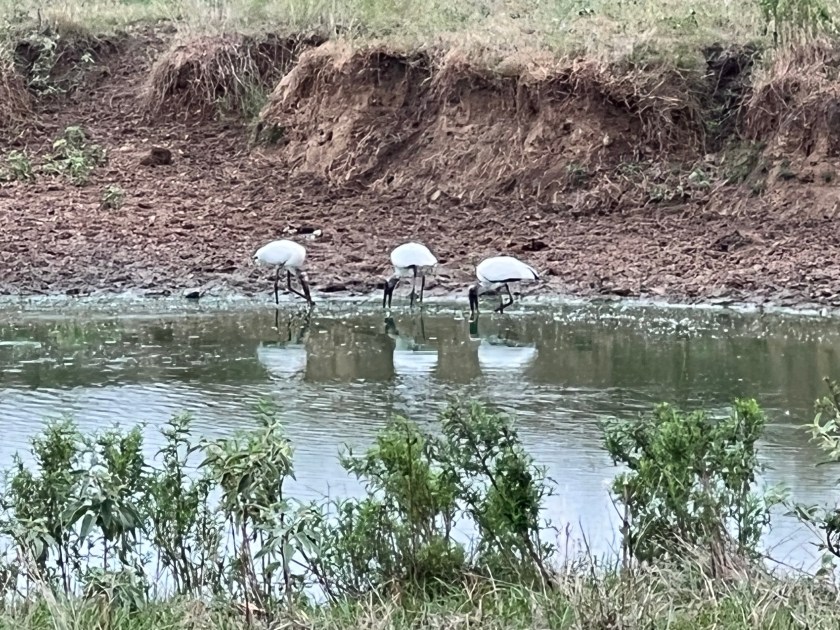
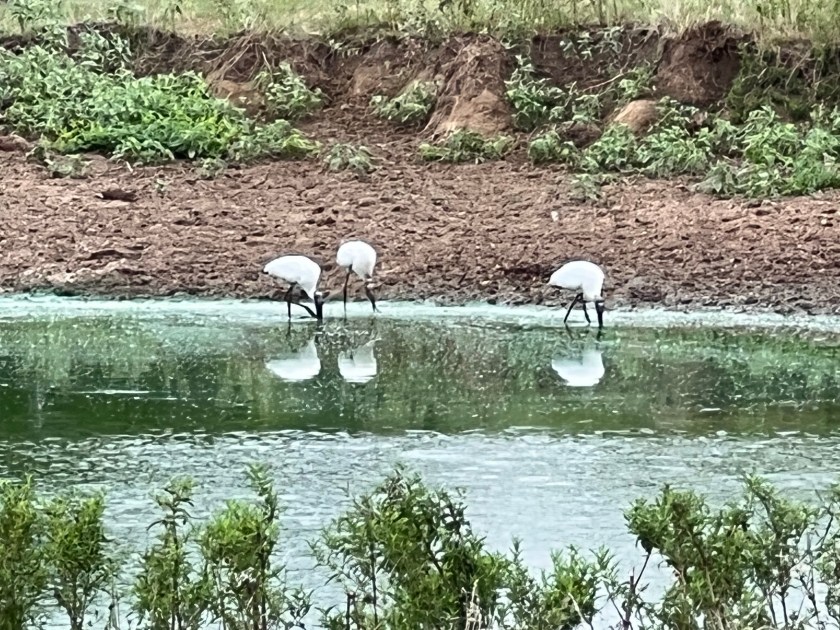
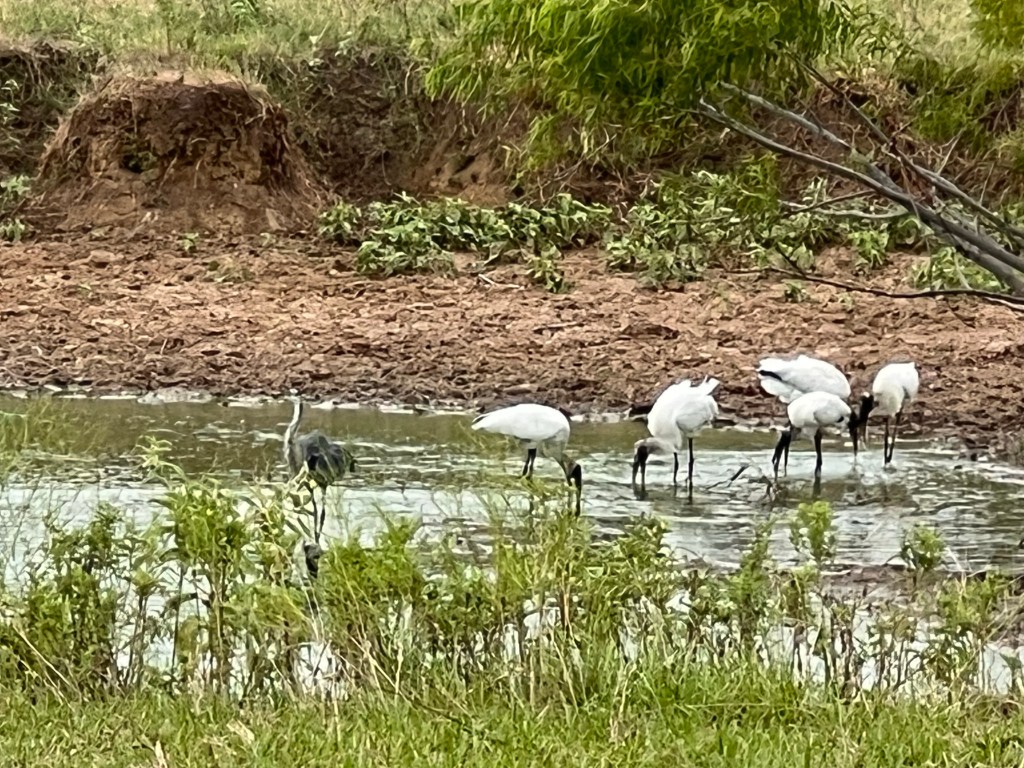
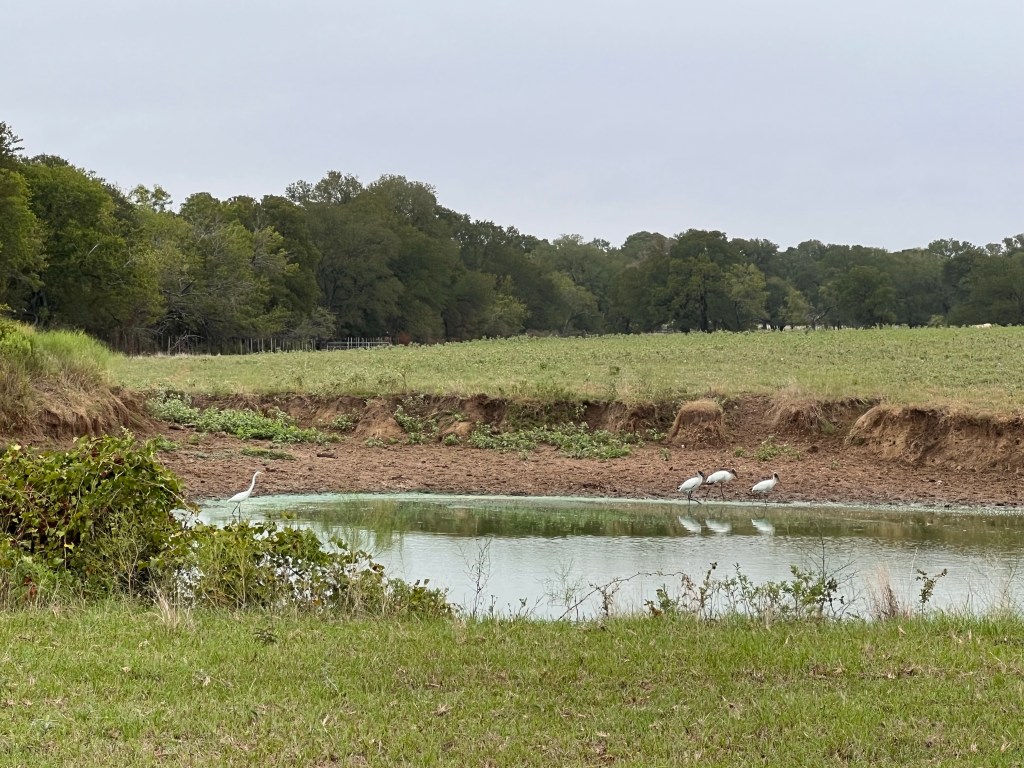
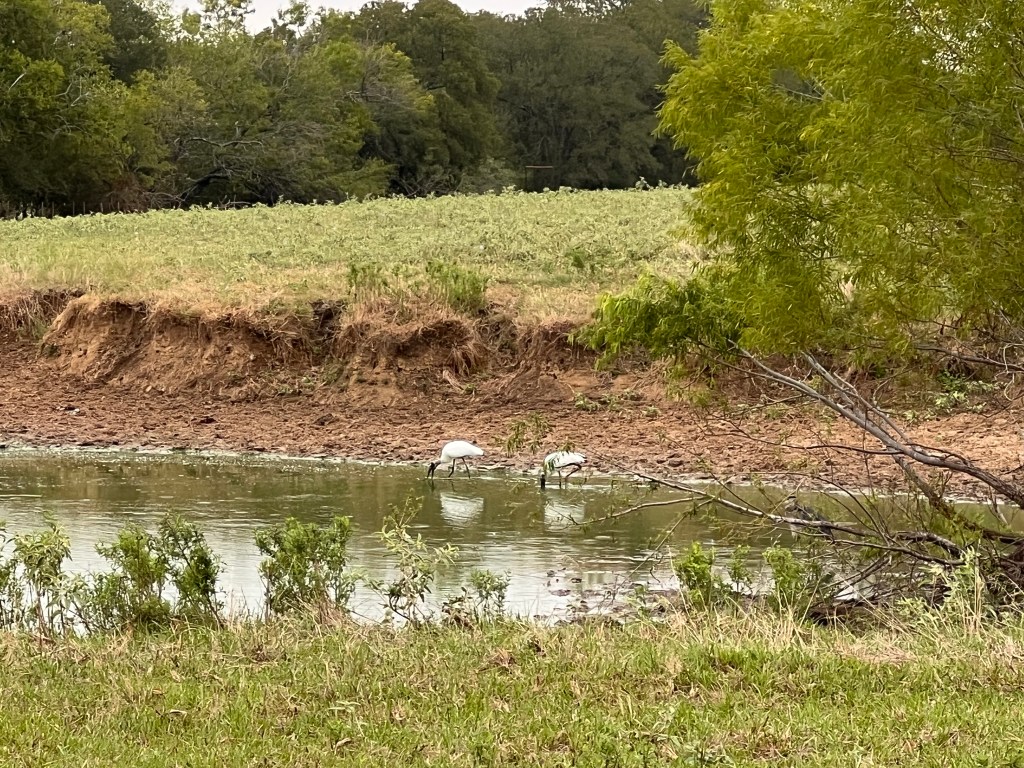
This morning there’s thunder everywhere, so I went out early to feed the chickens. I’m glad I did, because when I looked into the pond behind the house, I saw something in addition to the usual great egret and blue heron: wood storks!

At first there were just three. I love how their shadows look.

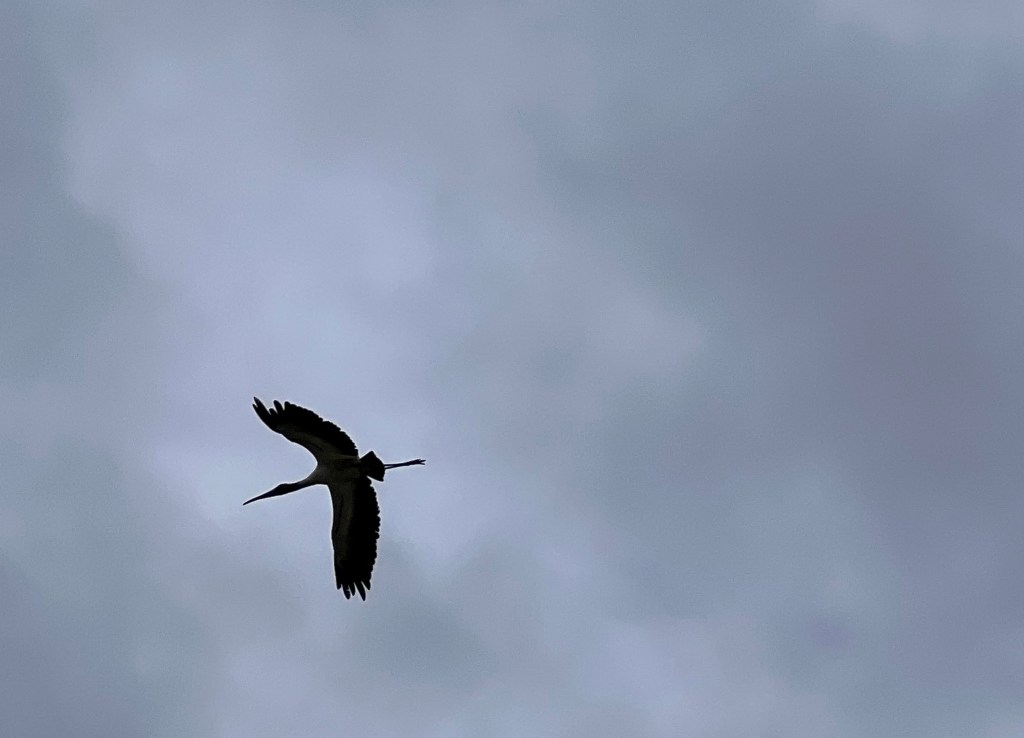
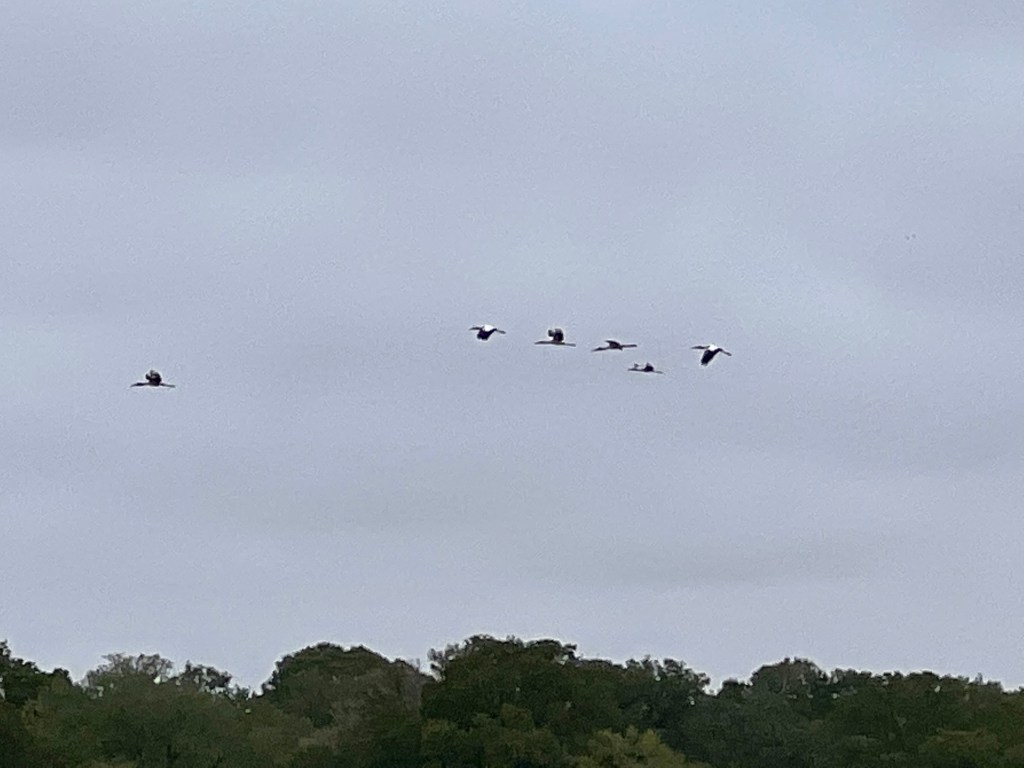
They used to visit for a while periodically, but lately they just drop by and move on. I’m so glad I got to catch them before they left. They are such gorgeous birds, with white bodies, black heads and black wing tips that make them easy to spot when they are flying.

mmm, minnows

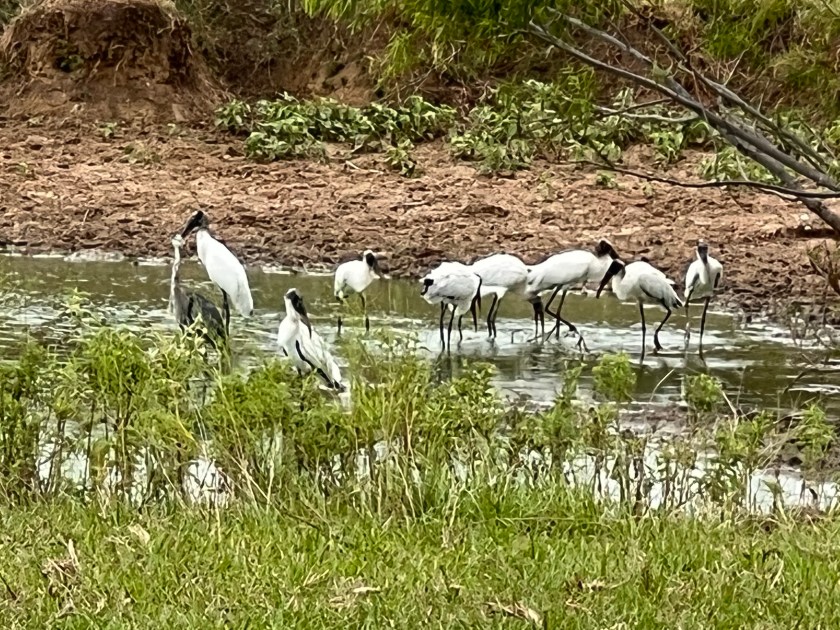
You know they are big when you compare them to the resident blue heron, who is HUGE thanks to all those catfish and minnows it ate while the ponds were drying up.

Later there were lots of them, to the annoyance of the blue heron.

Wood storks (Mycteria americana) are the only American stork, and they move around with the seasons. Interestingly, they must have shallow water to feed in, because they feed by touch. That’s why they breed when water levels are falling (in South America). They are predominantly subtropical birds, which is why they hang around here only when it’s warmer. They are listed as a threatened species in the Western hemisphere, because of predation (bad ole caracaras) and believe it or not, ecotourism disturbing their nesting colonies. (Source: Wikipedia via iNaturalist)

You can see the wing here.

I’m extra happy to have gotten some videos. The one of them flying away is so lovely. I hope they visit again soon!

Very short, but pretty
Goodbye! Thanks for visiting!

PS: Yes, we had a good amount of rain yesterday, and should have more today. Happy news for all the plants around here!