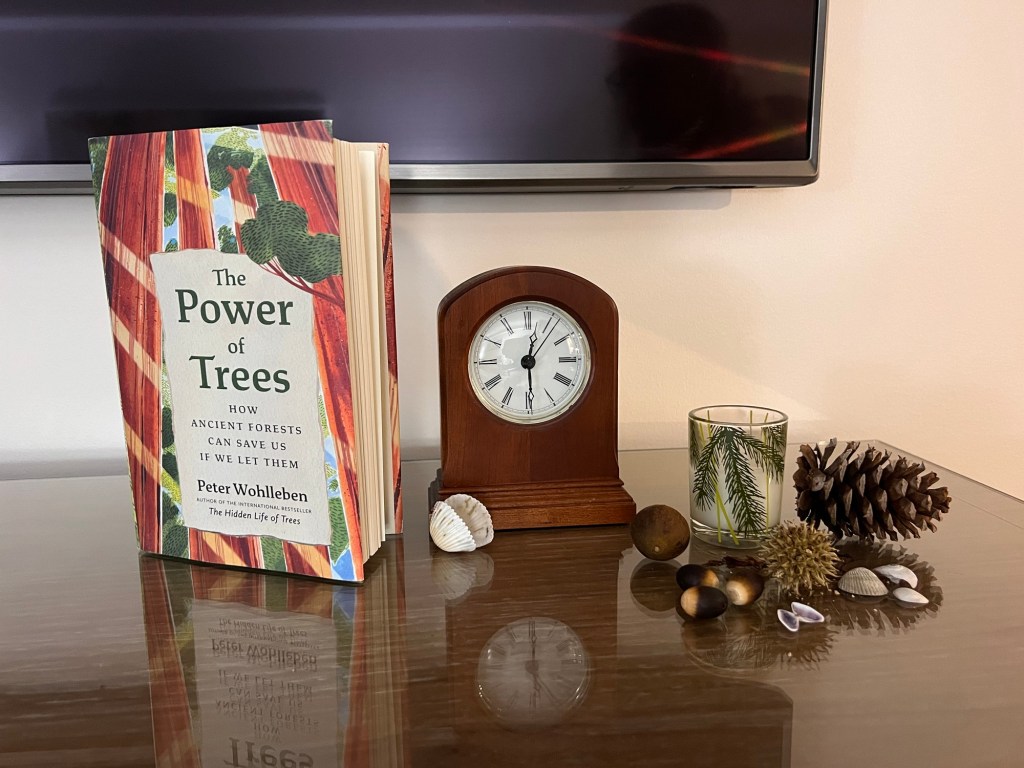
I started reading The Power of Trees (2021, English 2023), by Peter Wohlleben, the German forester who also wrote The Hidden Life of Trees, last year. I had to put it down, because it was so depressing. It sure sounds like Europe’s trees are messed up and not much hope is shared in this book.
The book and many representatives of tree friends.
So, what a great book to read during an election where the non-environmentally friendly folks won bigly? But I got through it. I learned why forestry, with its great fondness for monoculture and treating trees like products rather than fellow citizens of the planet, has led to massive death in forests and loss of uncountable other species that support trees (what lives in the earth and helps trees do their work).
Trees get so tall when left alone.
Wohlleben shows how allowing natural forests to regenerate on their own and create old trees that are allowed to live on would help restore a healthy climate (trees cool it) and still provide for human needs, especially if we recycle old wood products rather than always making new ones.
We do a lot of that at home.
You’ll learn a lot about the complex interrelationship between trees and the other life around them as well as lessons that apply to forests around the world.
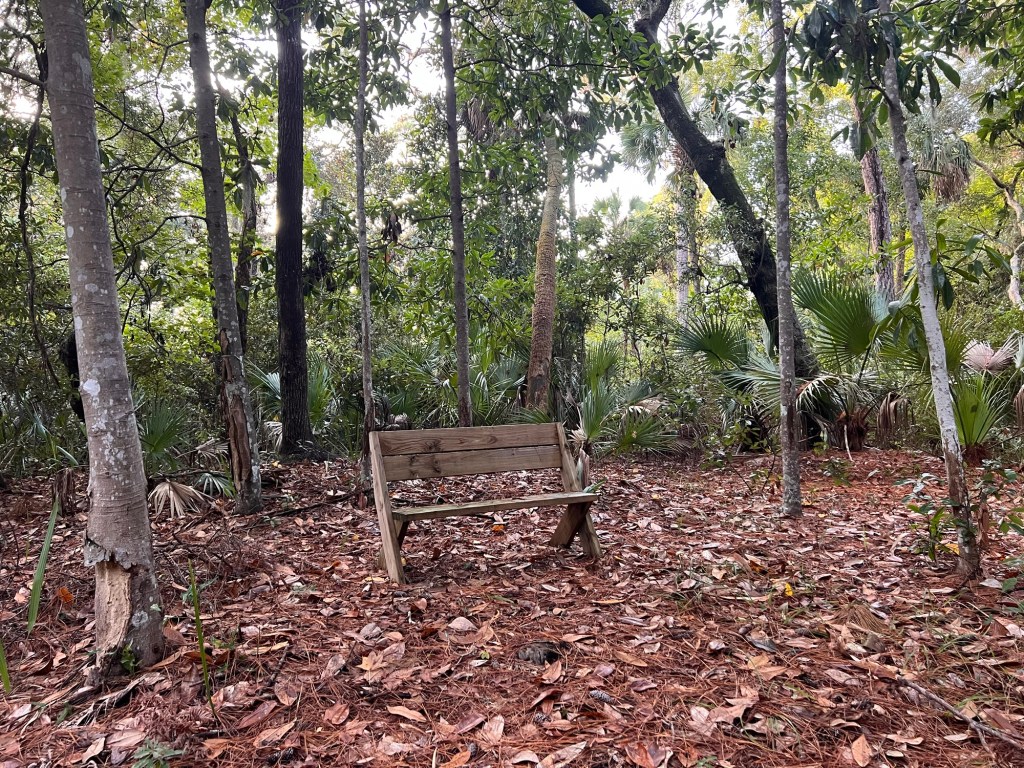
It’s wonderful that there are protected remnants of coastal forest here on Hilton Head. It helps that it was hard to reach for so long.
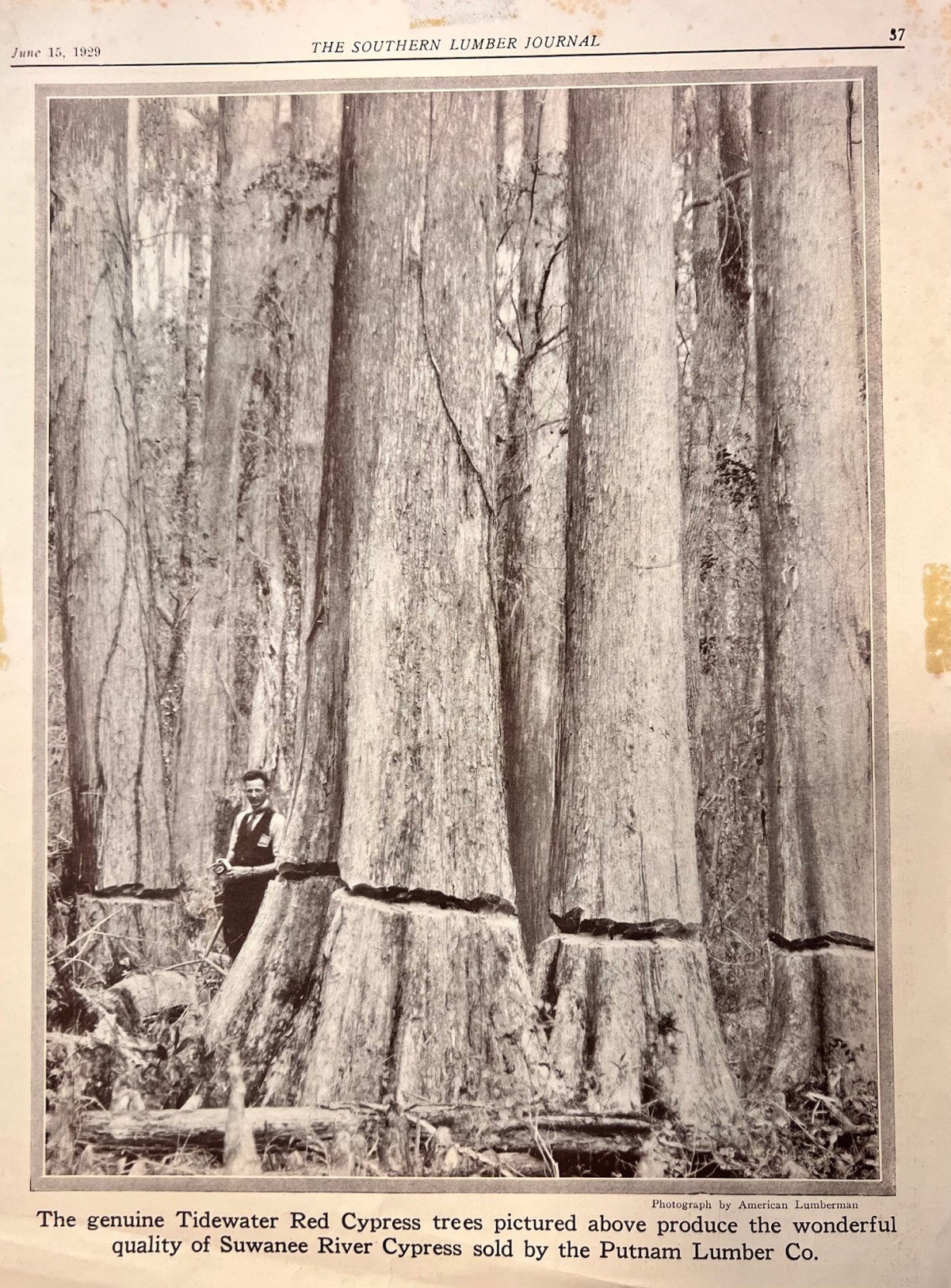
I always feel drawn to helping woodlands, knowing how many mighty trees in Florida my grandfather sent to sawmills in the early twentieth century. As I have resolved to focus on doing something kind every day, I’m keeping the remaining native woodlands in mind.
My grandfather dwarfed by the trees that are about to be killed.
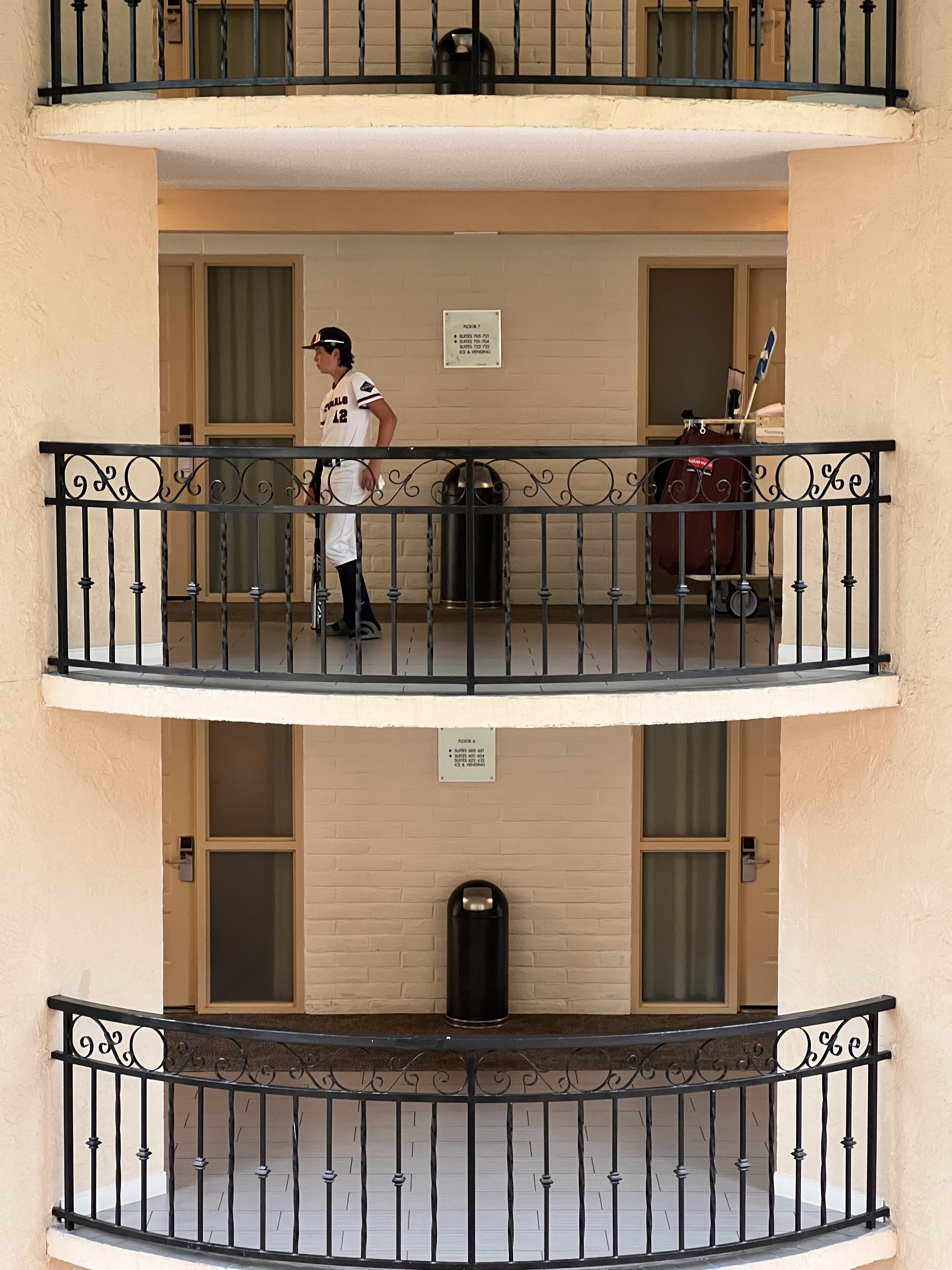
Today’s travel day took me and Lee from Baton Rouge, Louisiana to Valdosta, Georgia. Before we left, I got in a walk to a park behind the hotel, where I saw a couple of interesting plants, many non-native. I also enjoyed watching dozens of high school baseball players getting ready for a national tournament. No wonder it was loud last night.
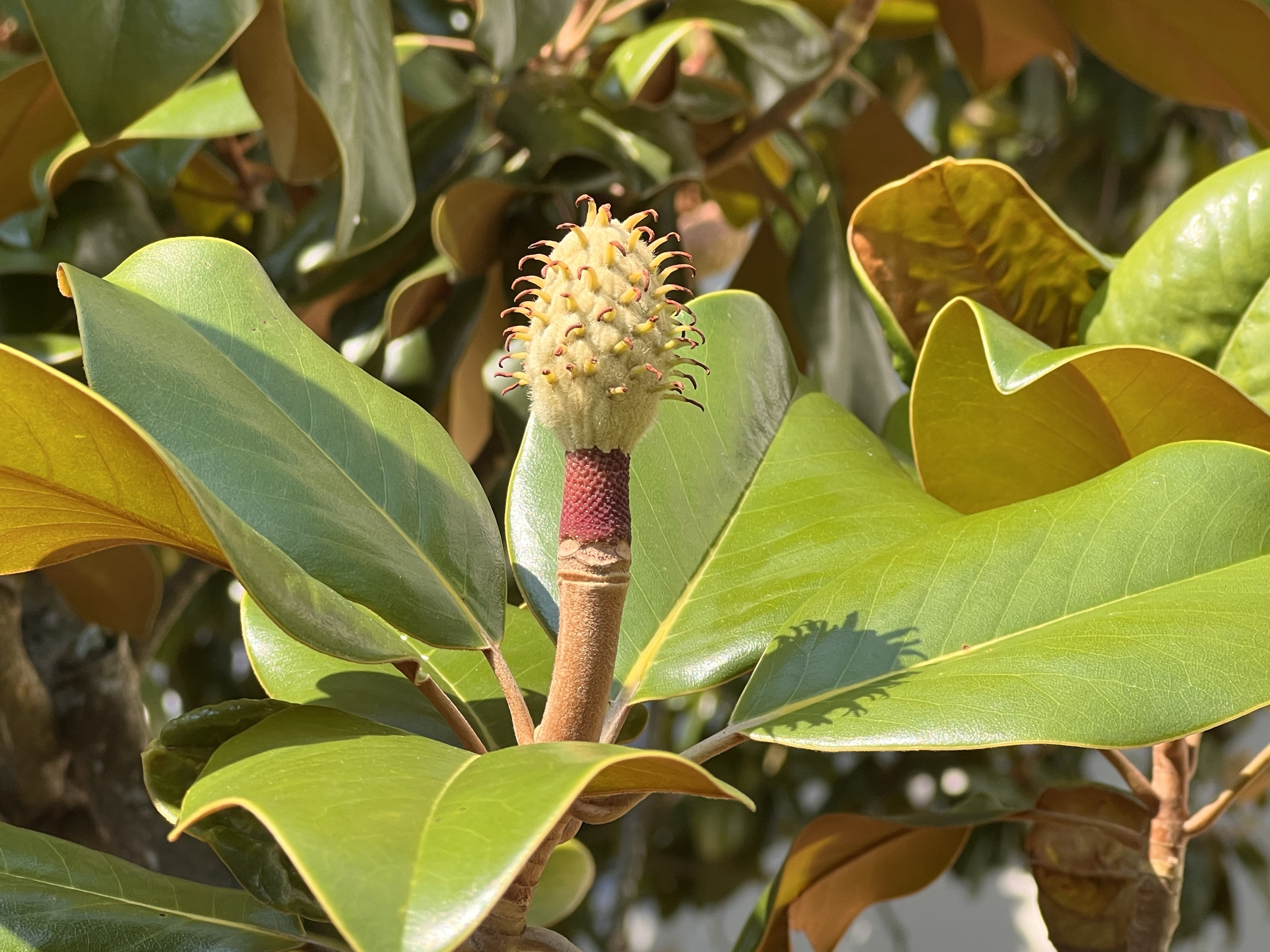
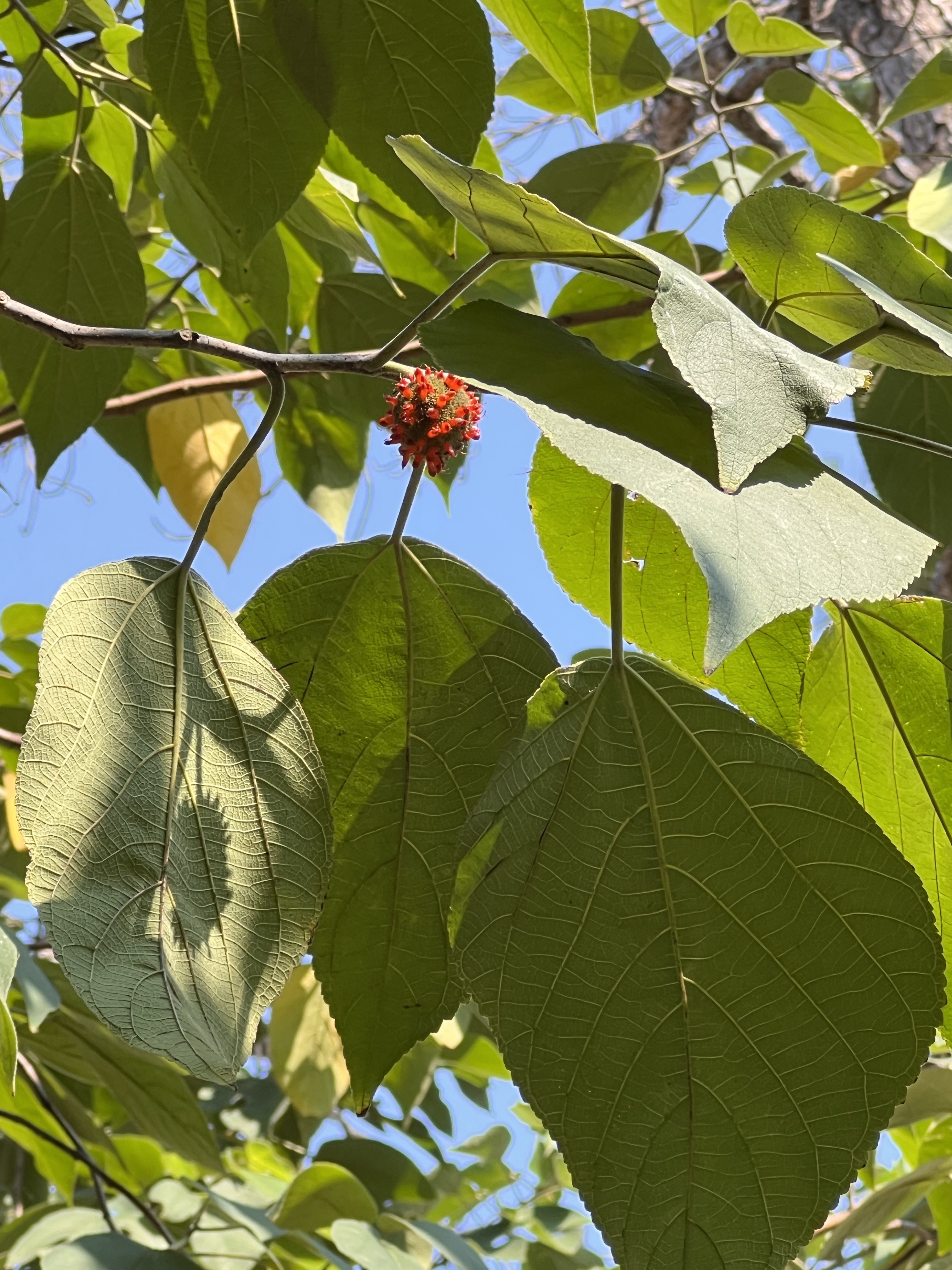
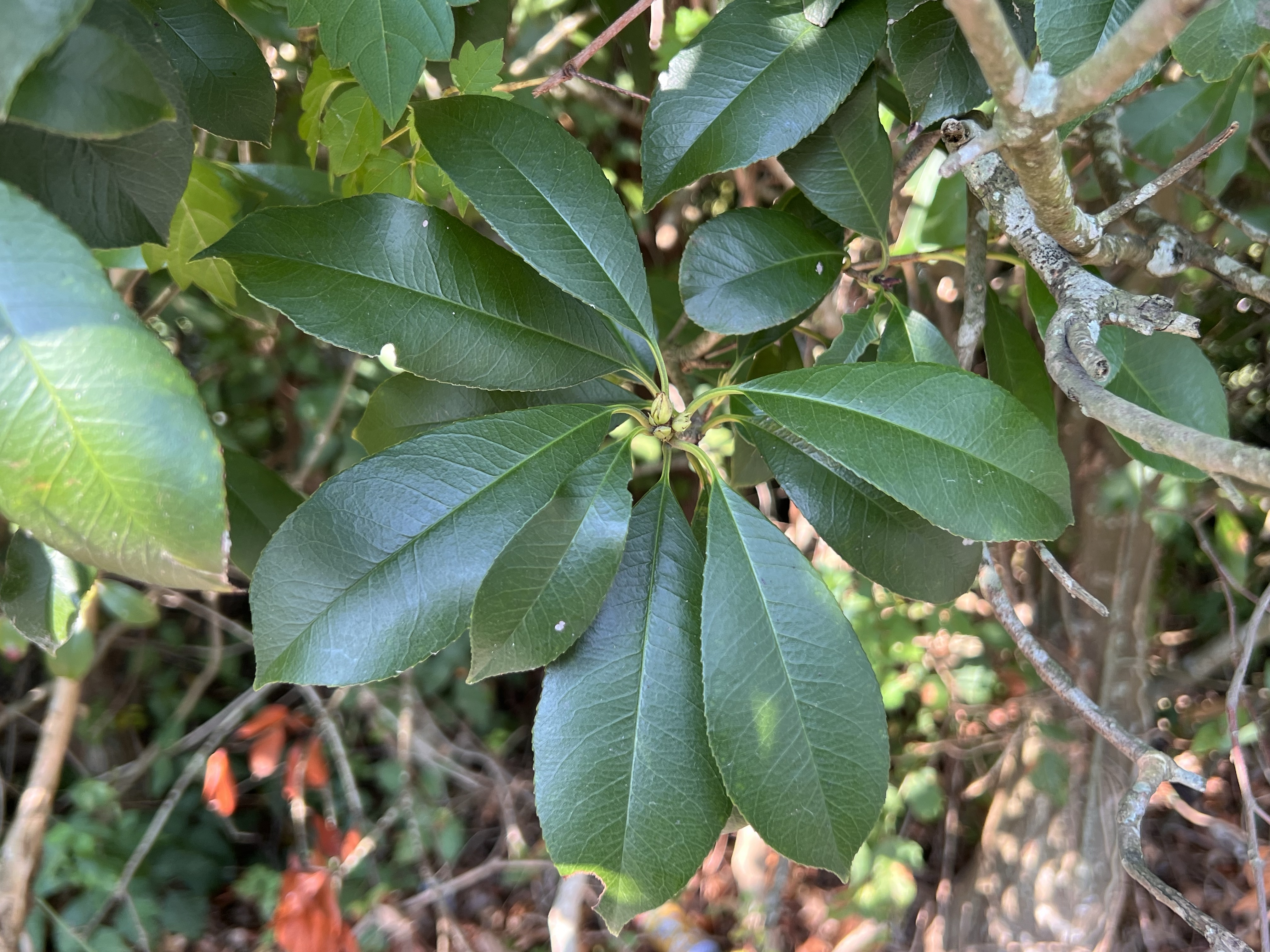
Pretty magnolia budTree with lots of burlsThis is a type of paper mulberry Chinese photinia Glossy privetNative saw greenbrier with cool insect damage Ready to go. I met his dad. This scary giant dog was across the highway.
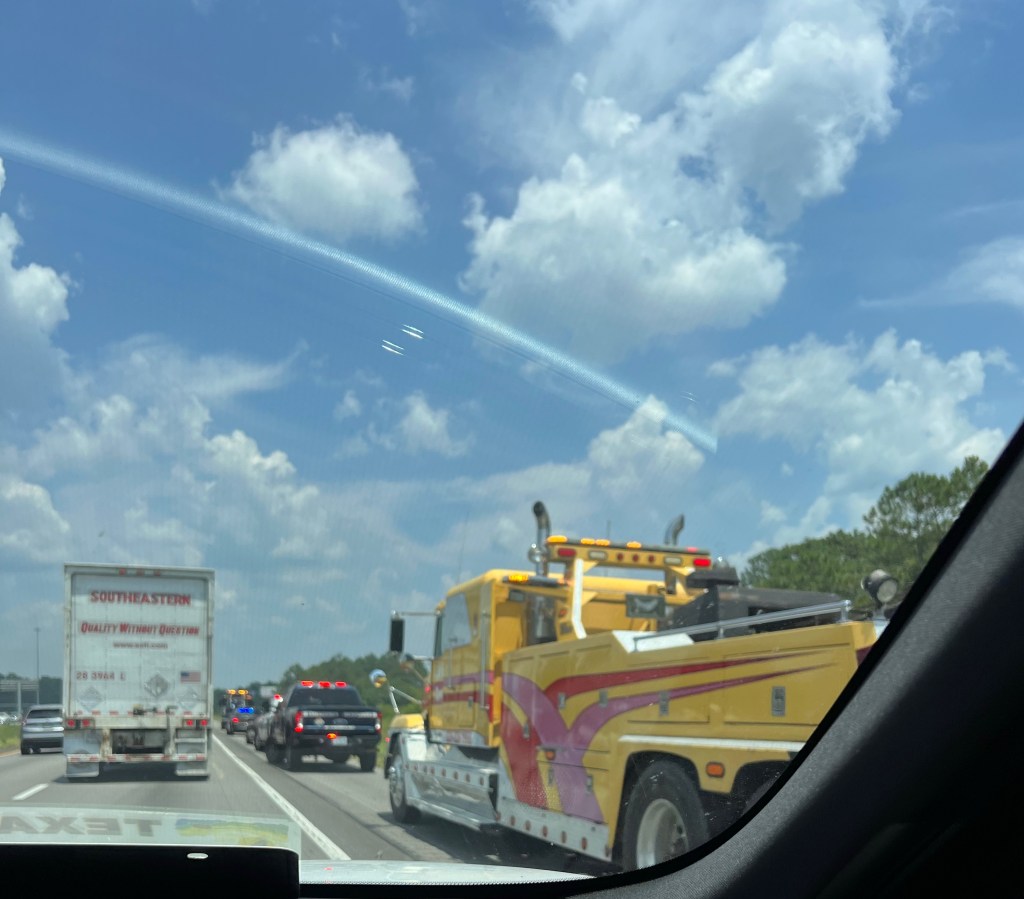
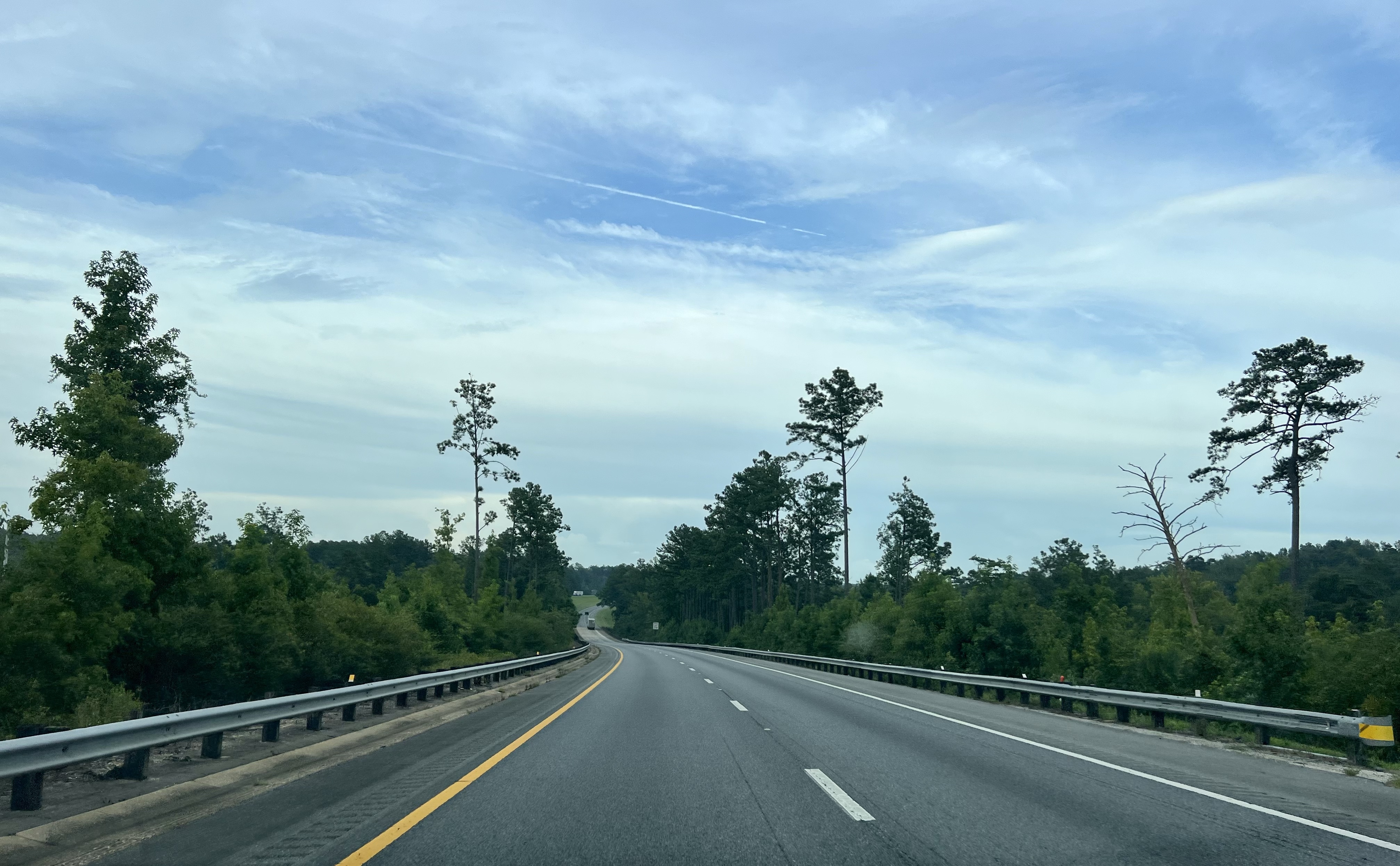
Much of the day featured interstate highways through commercial forests. It took longer than we expected, because there was construction and a big delay due to a horrible accident where a semi truck appeared to have slid sideways a long way off the road. Not a happy start.
I’ll spare you a view of the vehicle.
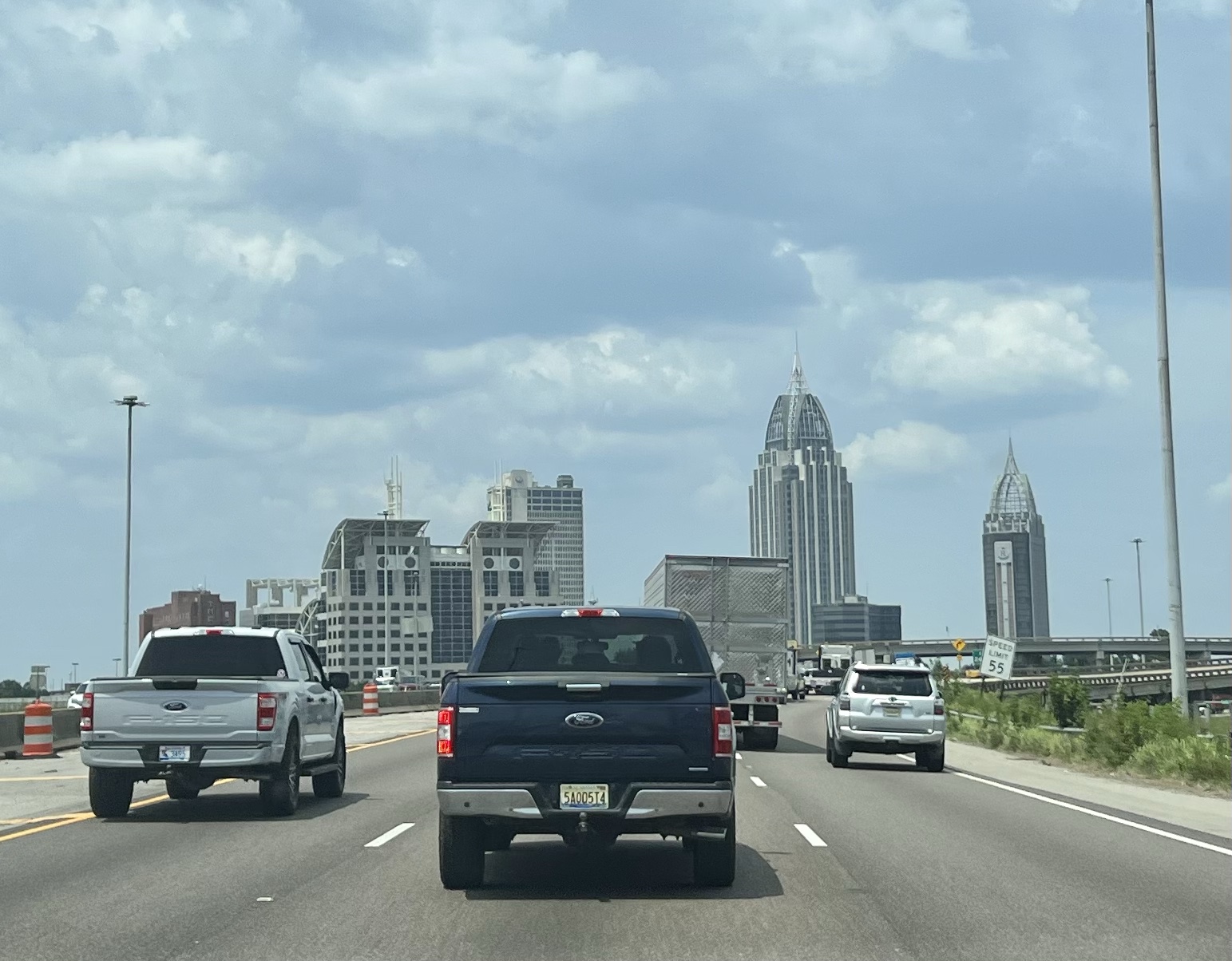
Occasionally I got to see some non-forests, like in Mobile and other coastal places. Mostly it was trees. Good thing I like them.
Beautiful bridgeA prison!Mobile Tunnel, another traffic slowdown Truck made a messA battleship Driving on I-10
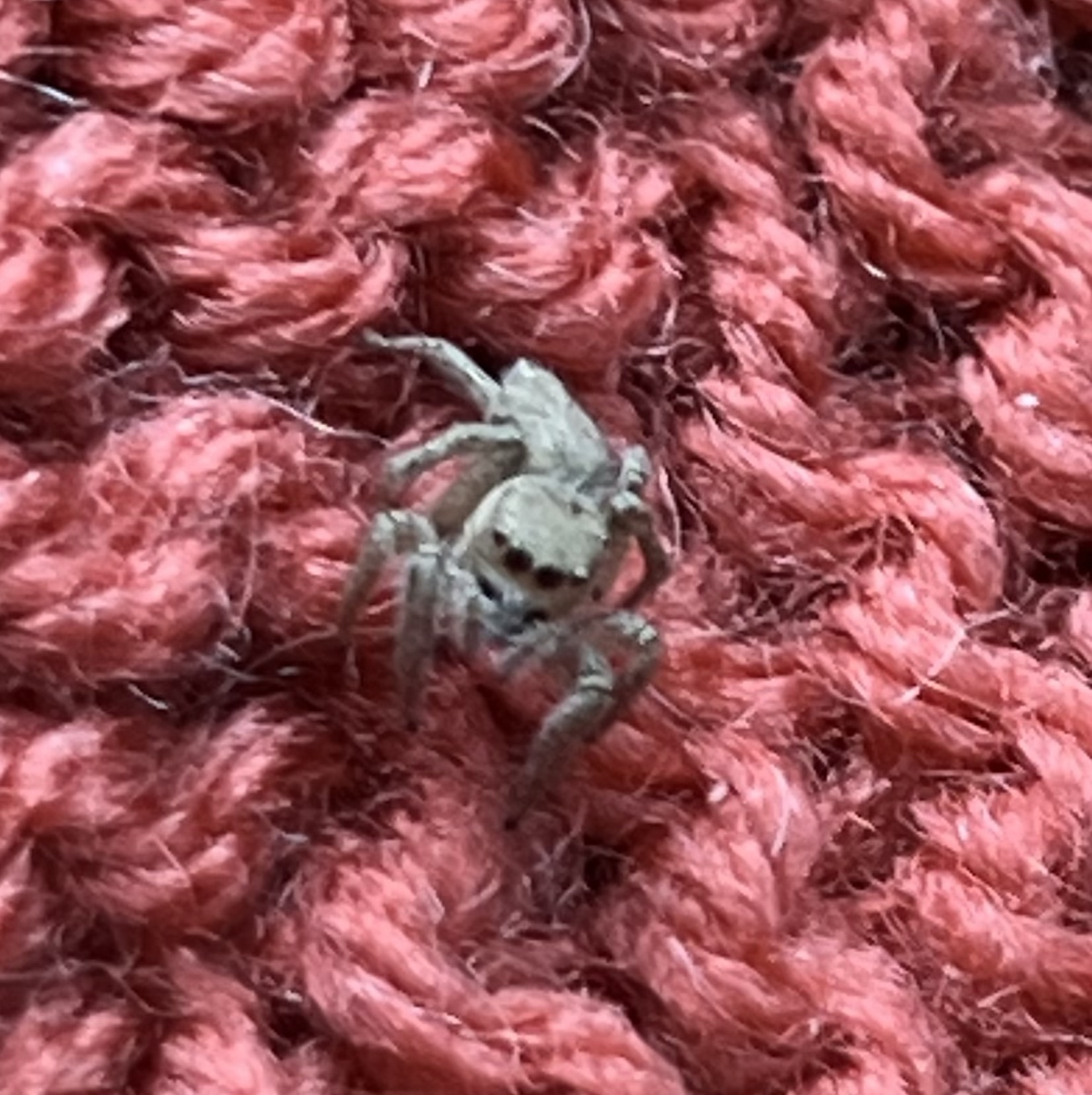
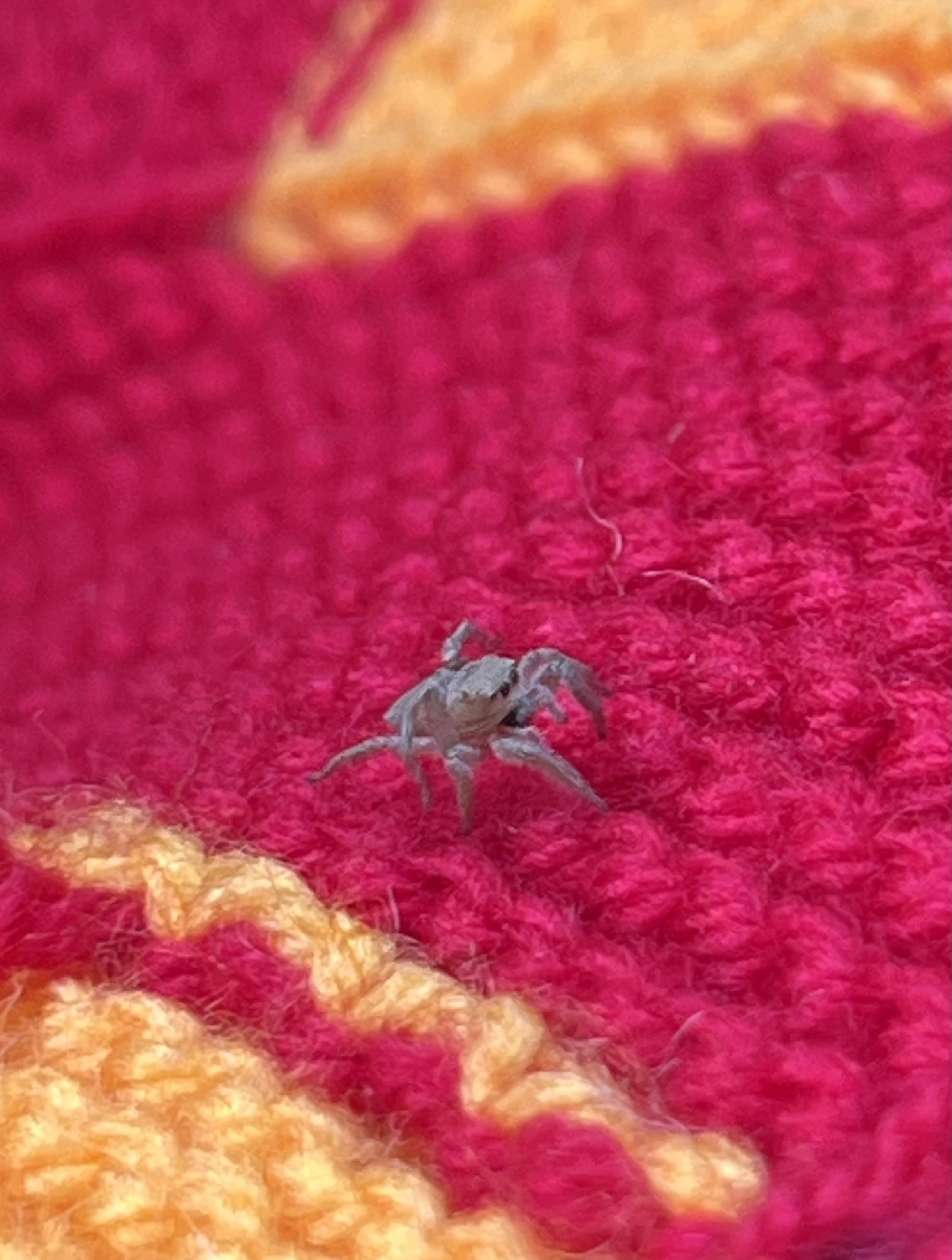
I worked much of the day, including before and after the drive, but I got a lot of knitting done, too. This little jumping spider decided to join me and hop all over my project. I sure enjoyed watching it moving its eyes and mouth and checking things out with all those legs. I think it was a paradise jumping spider (Habronattus coecatus) but I’m not sure.
Spider buddy
The trip got more interesting when the GPS took us off the interstate near Quincy, Florida. We then embarked on a magical hour or so traveling through small towns and beautiful rural properties of north Florida and South Georgia.
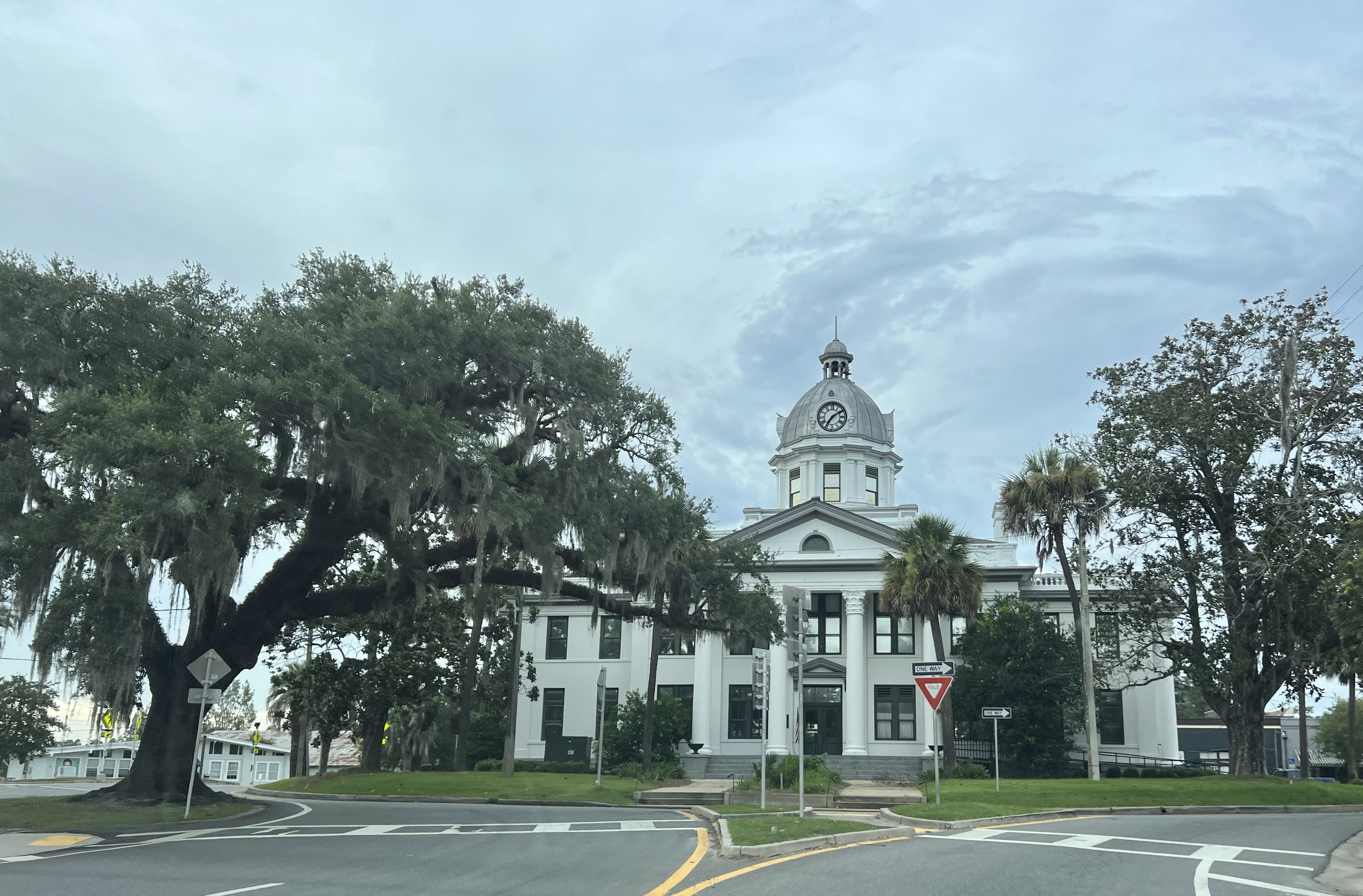
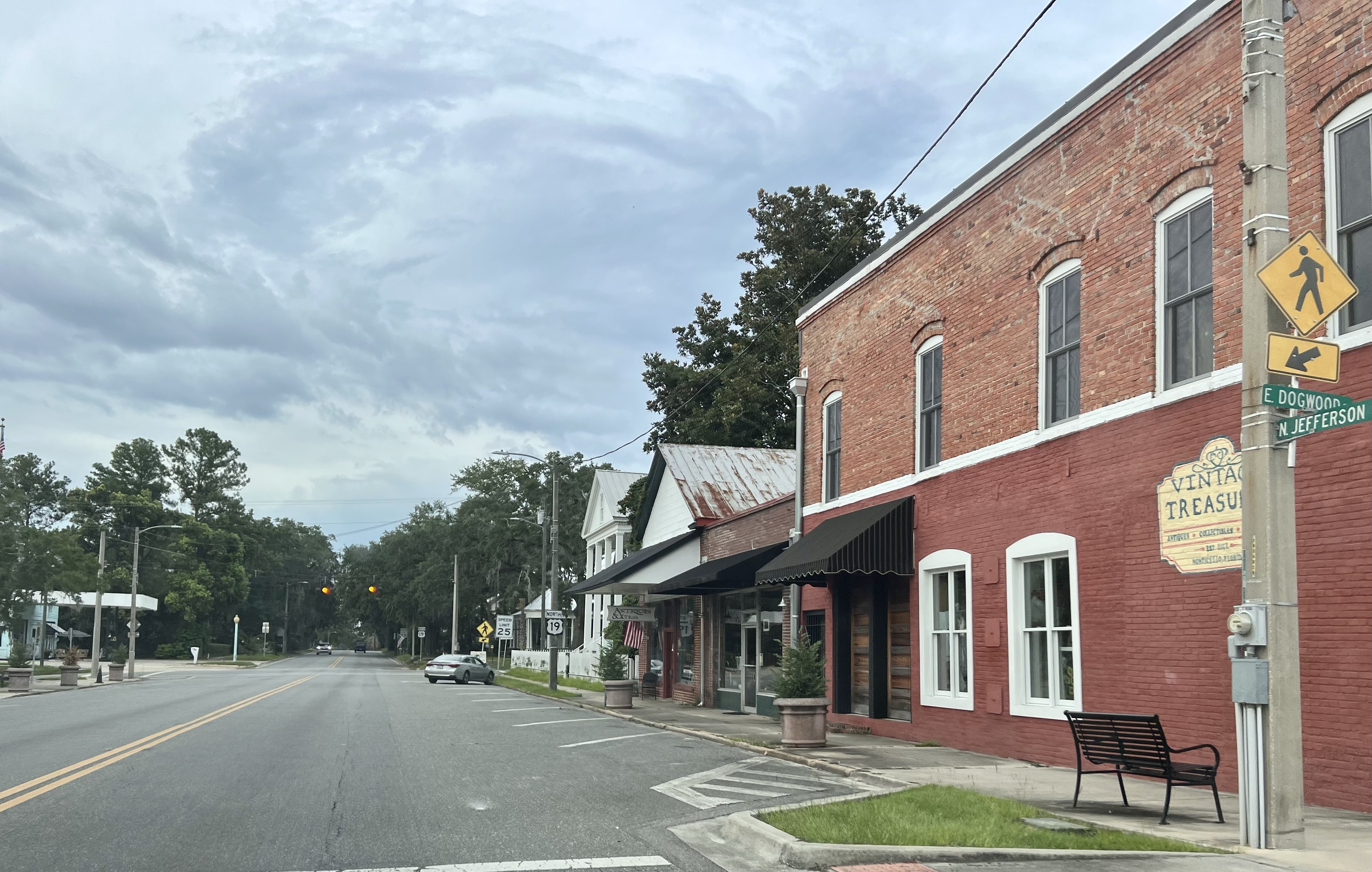
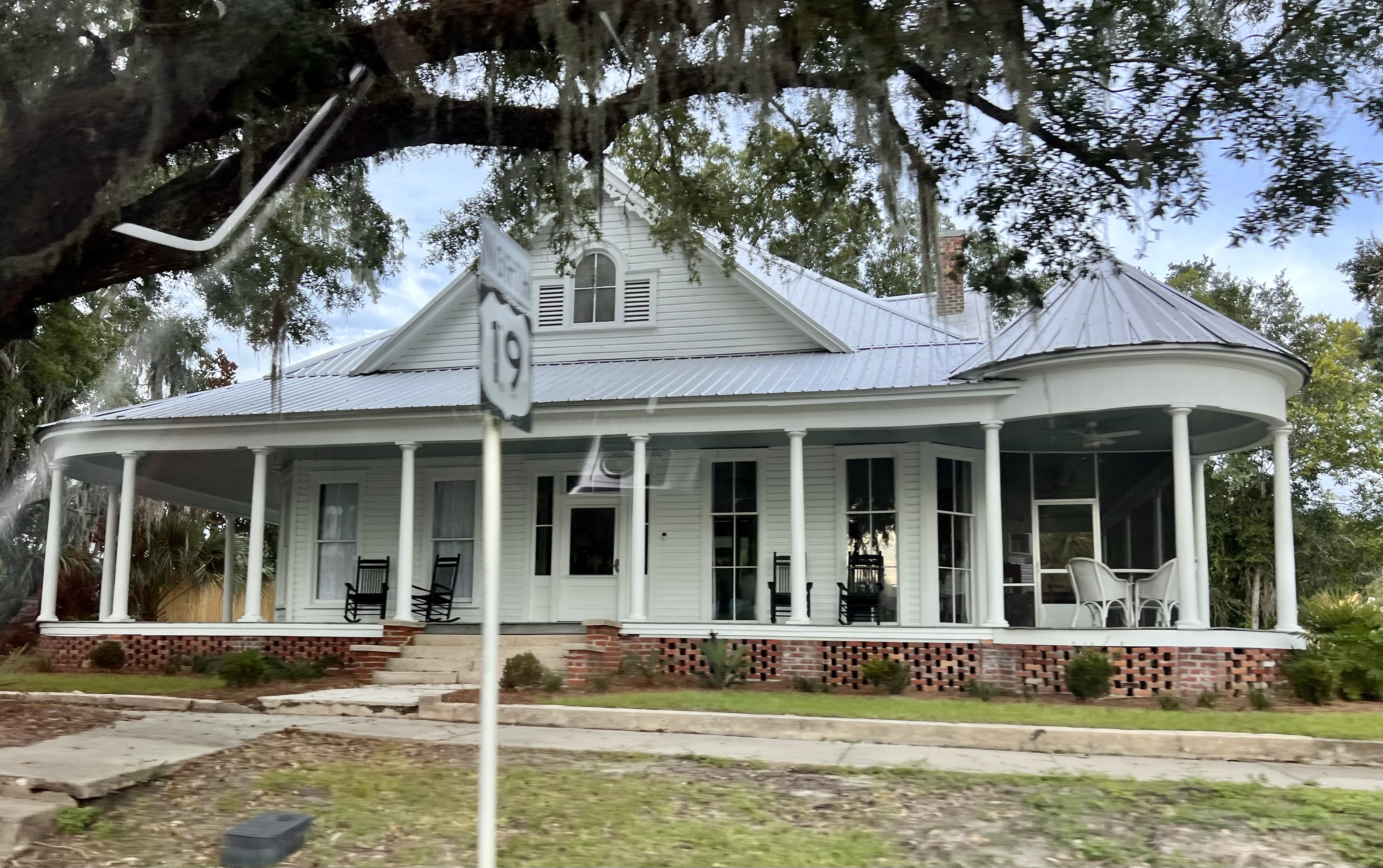
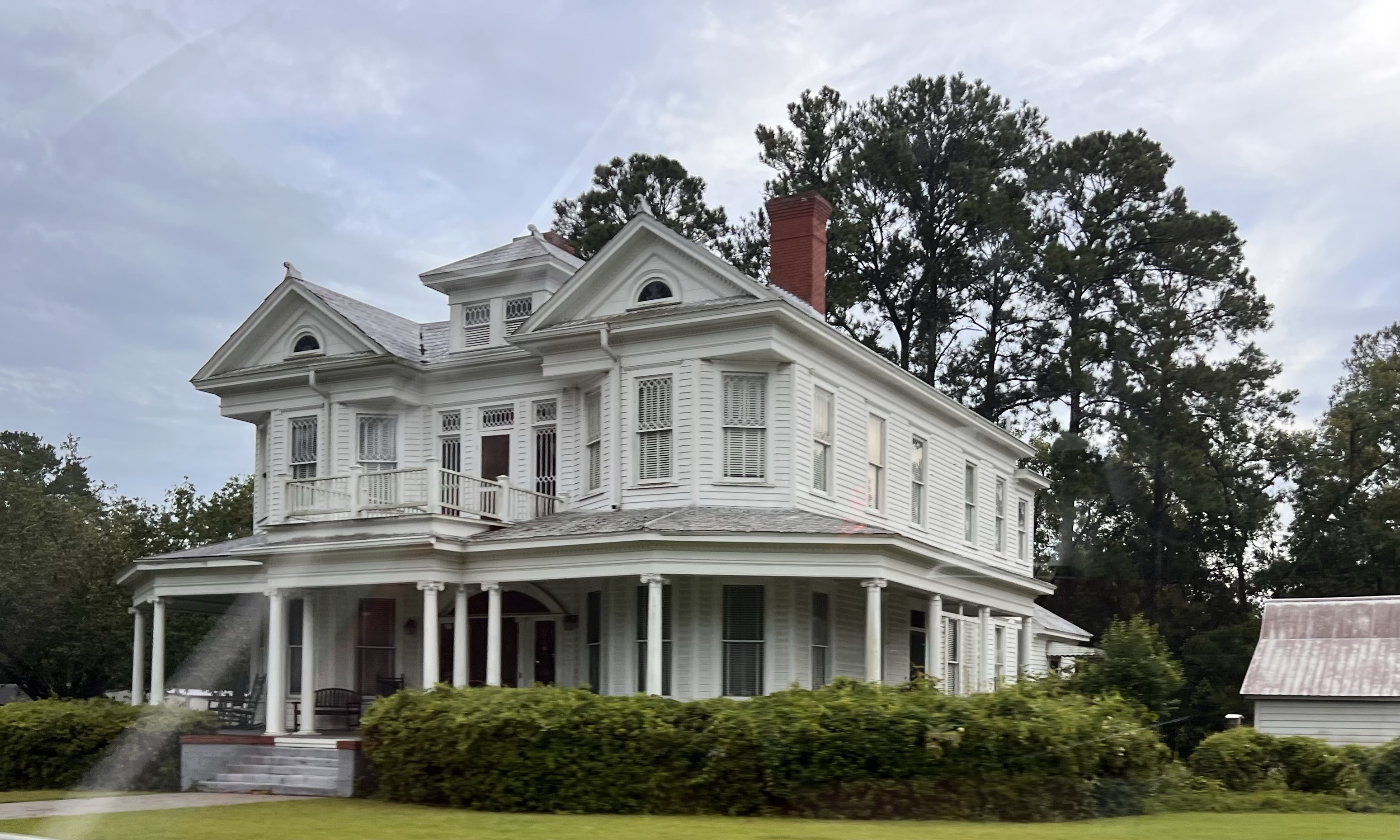
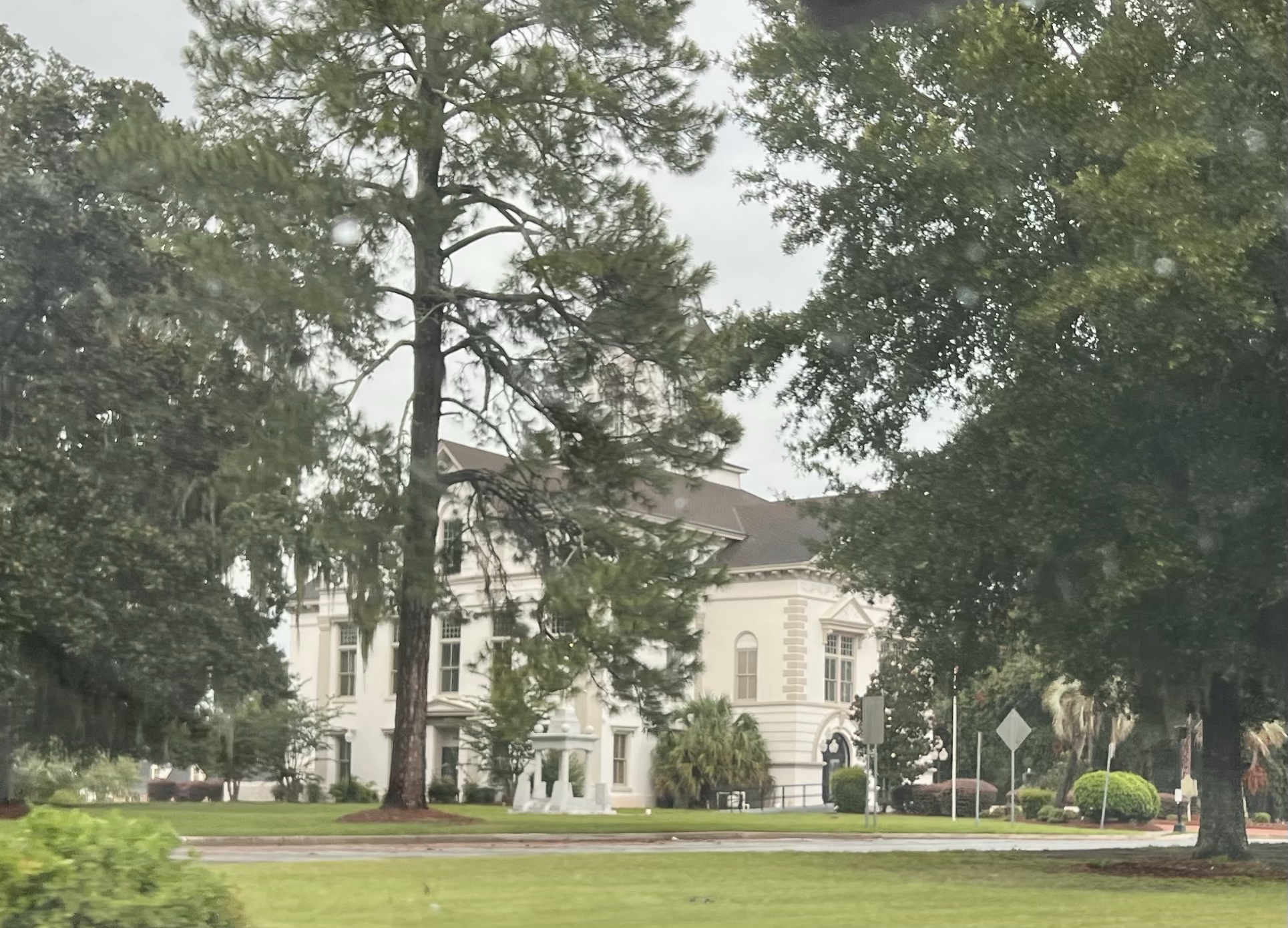
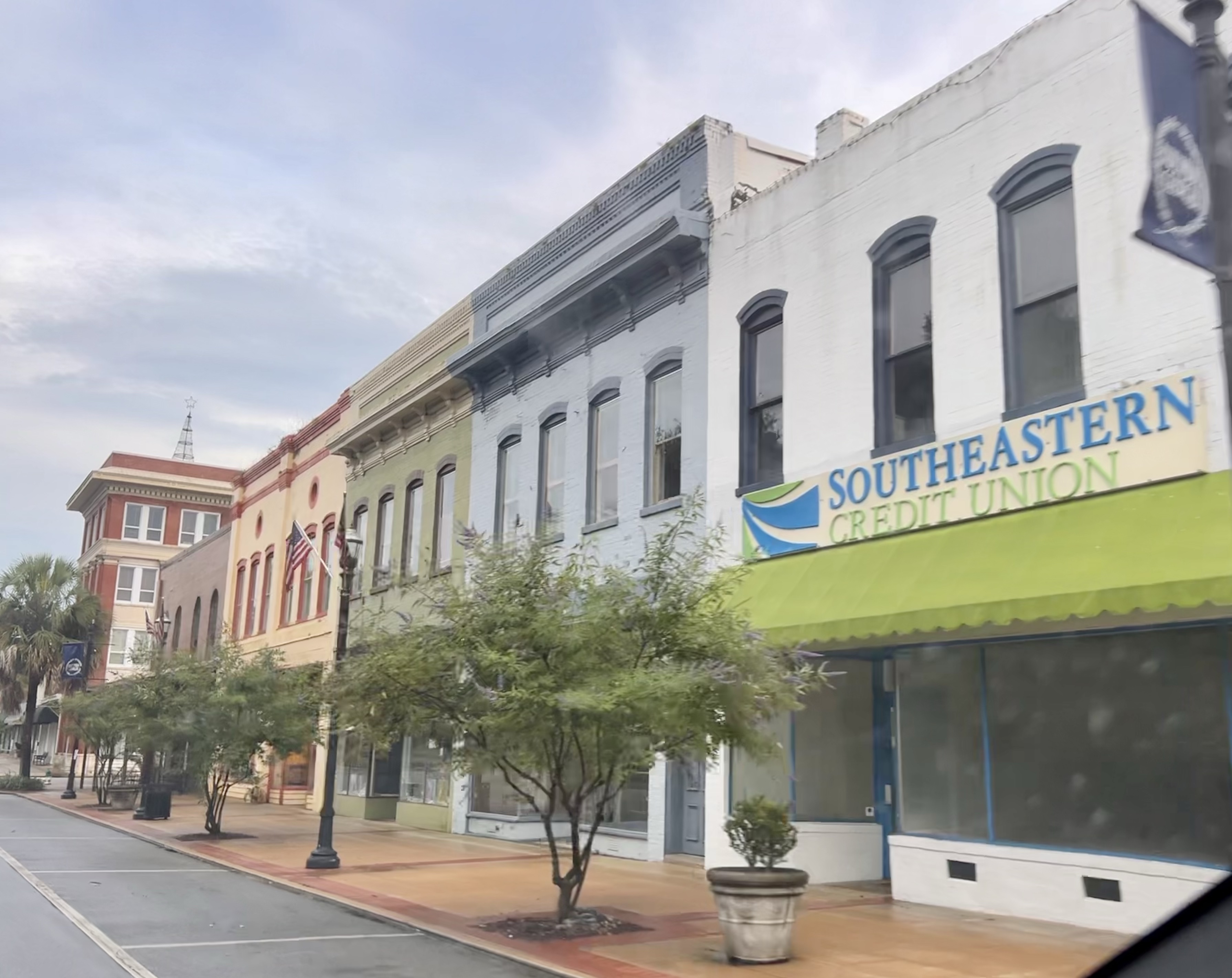
Monticello, Florida Courthouse More of MonticelloBeautiful churchMonticello So many lovely homesQuitman, Georgia Best picture I could get of the courthouse Downtown QuitmanPost office
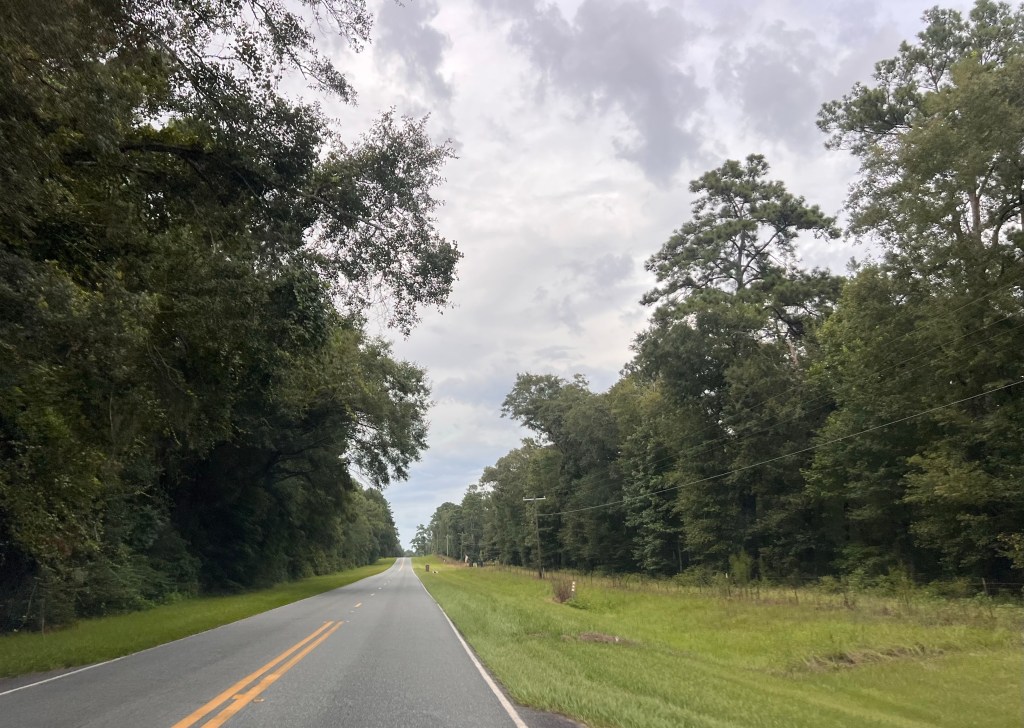
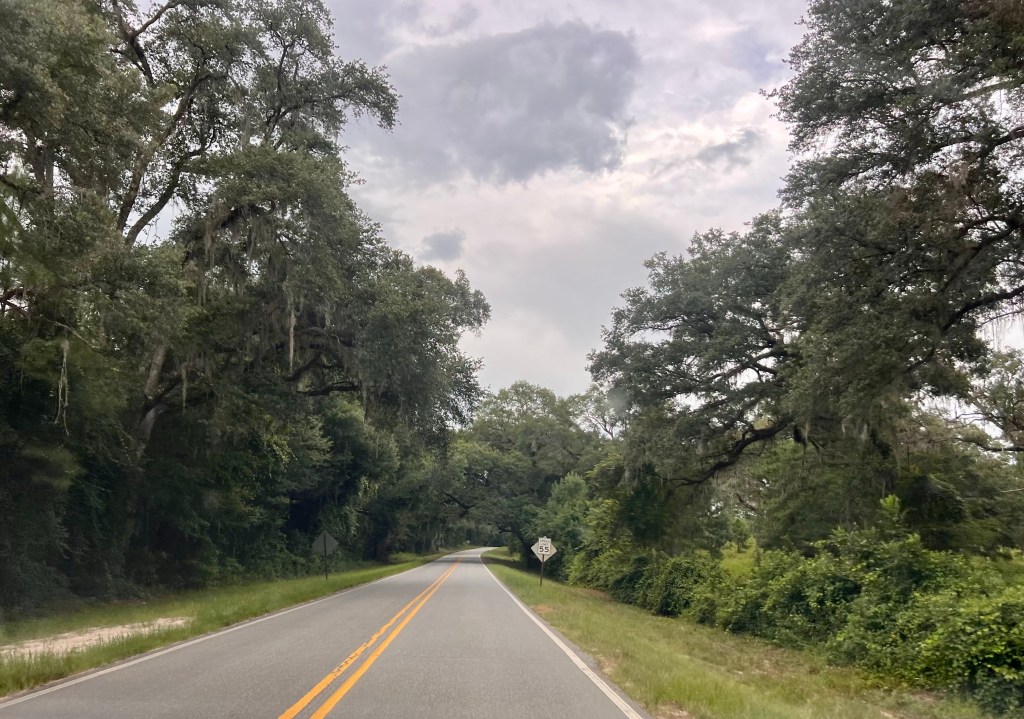
We went through long stretches of road where it seemed like the trees were reaching out toward us to envelop us in green. With the draping moss, the overgrown old homesteads being taken over by immense crape myrtles, and the wooden fences…I felt like I was in one of my dreams of being home. I was so entranced in the deep woods that I forgot I had a camera. It was so Gothic. There was even mist rising from bogs. This is some beautiful country.
Trees, fields, roads
It’s places like this, far from my everyday world, that remind me of why the Deep South is so beloved by people from there, despite the legacy of hardship for so many, despite societal changes. It’s so peaceful, quiet, and still. It engulfs you.
And here we are in small-town civilization (Valdosta)
Tomorrow we see more of Georgia before heading through South Carolina. Some of the trip will feature back roads. But today created plenty of moody memories to get me through boring highways and lookalike suburbs.
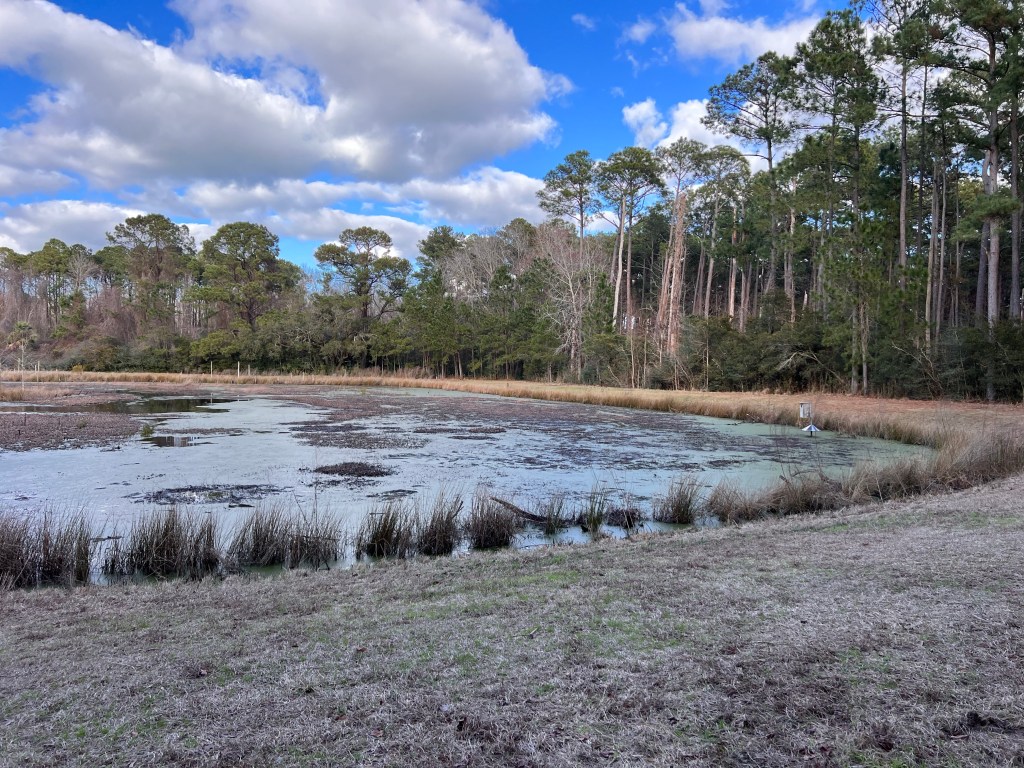
I finally got to go on a hike. It rained all morning, but at some point in the afternoon it cleared up. Hooray, hooray. Off we went to a big ole nature preserve called Pinkney Island National Wildlife Refuge. I hadn’t gotten to go there before, so I was pretty excited. There’s nothing I like better than a swampy and damp woodland and marsh combo. Ooh boy. Nature and all its smells and colors. This place looks like my dreams.
My idea of fun
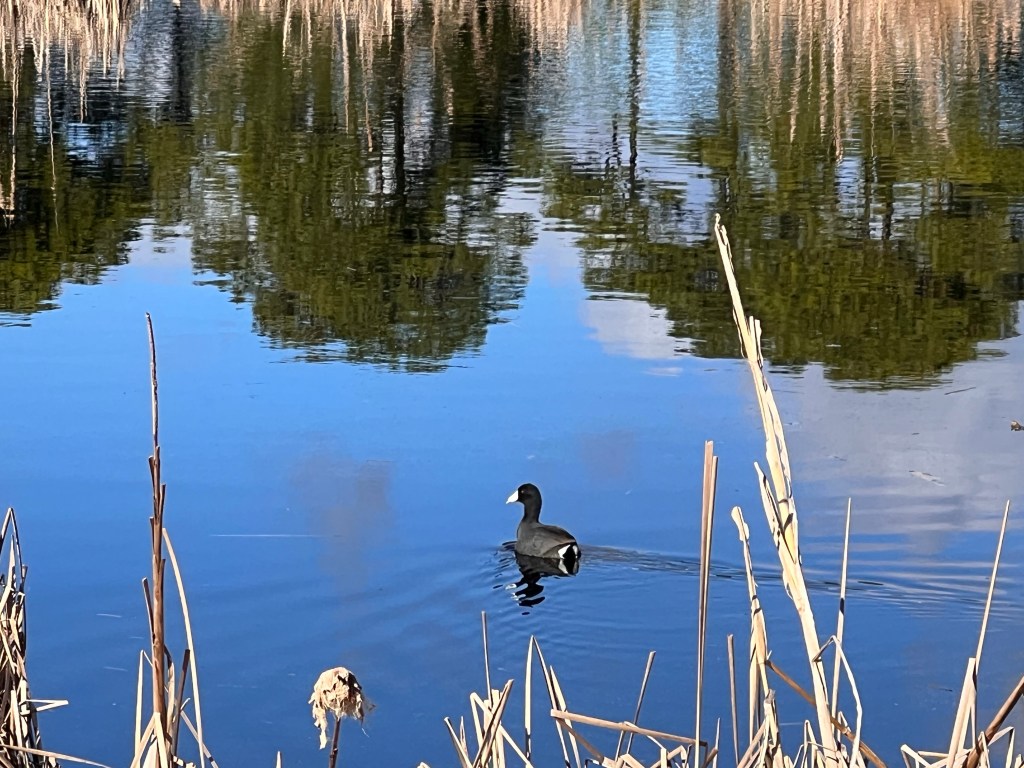
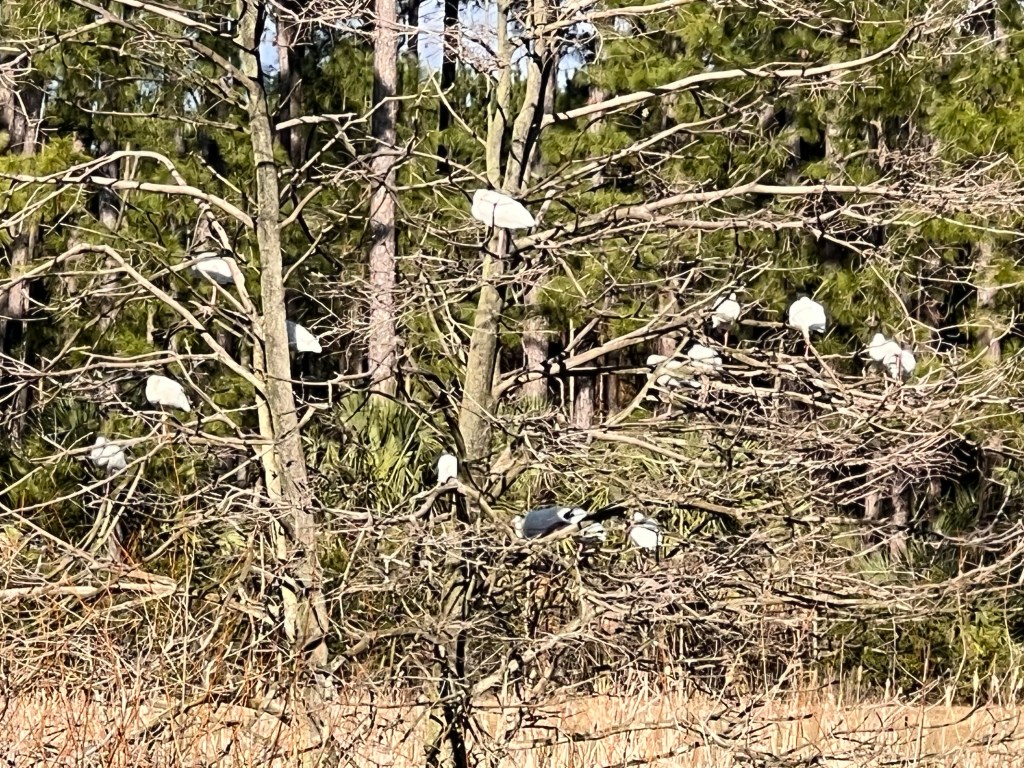
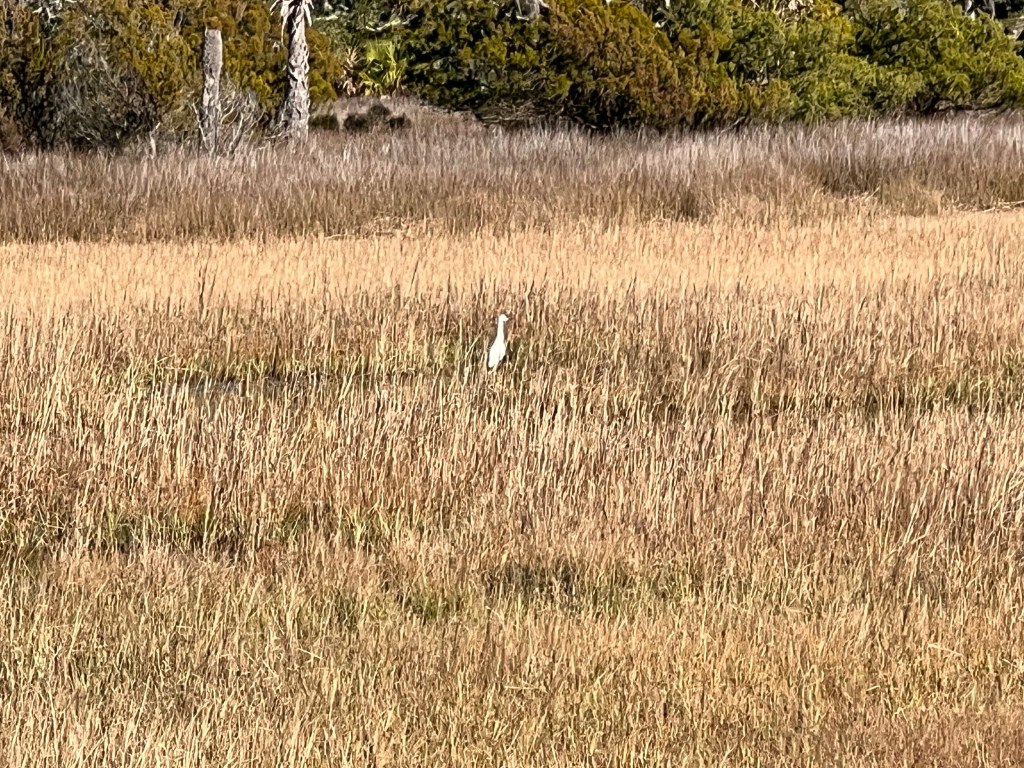
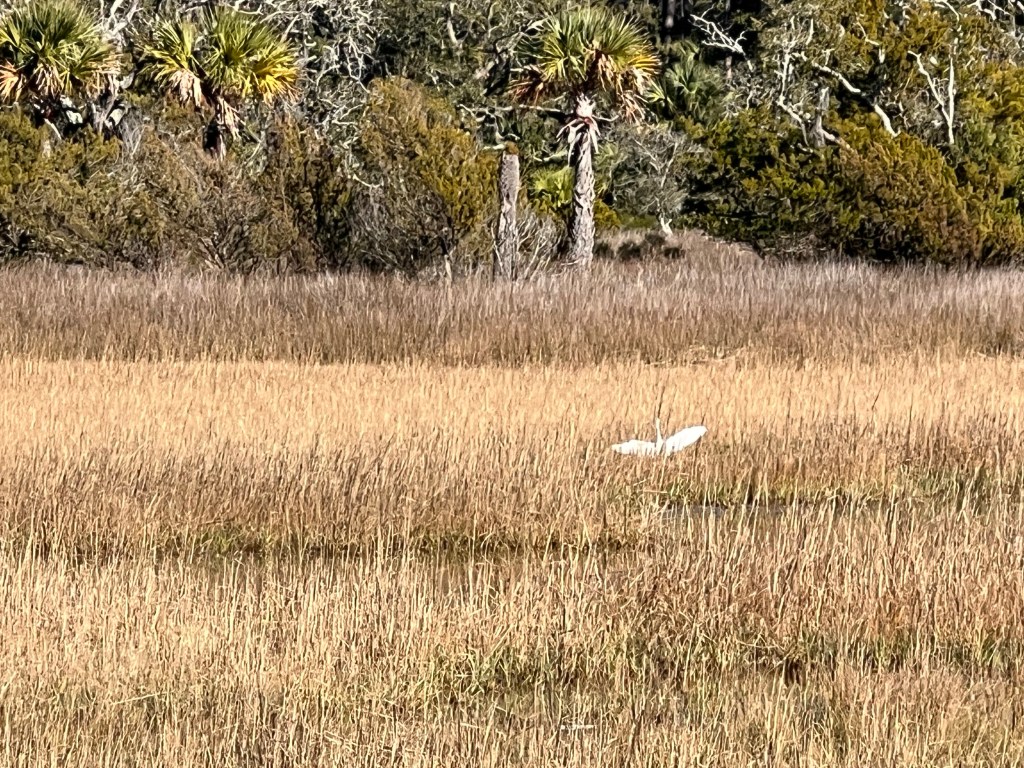
This beautiful place is a breeding spot for marsh birds, and we did get to enjoy seeing lots of birds at the Ibis pond, including, of all things, some white ibis! There were many fun birds swimming around there, including our friends the great heron and great white egret. There were also snowy egrets, gallinules, and coots, which were all fun to watch. And all the sounds were like being in a jungle movie. We loved it.
CootCootGllinuleHungry galliinuleIbis feedingTree ibisThose little legsIbis and a bonus birdSnowy egretSnowy egretdistant snowy egretsBird buddiesOn Ibis Pond
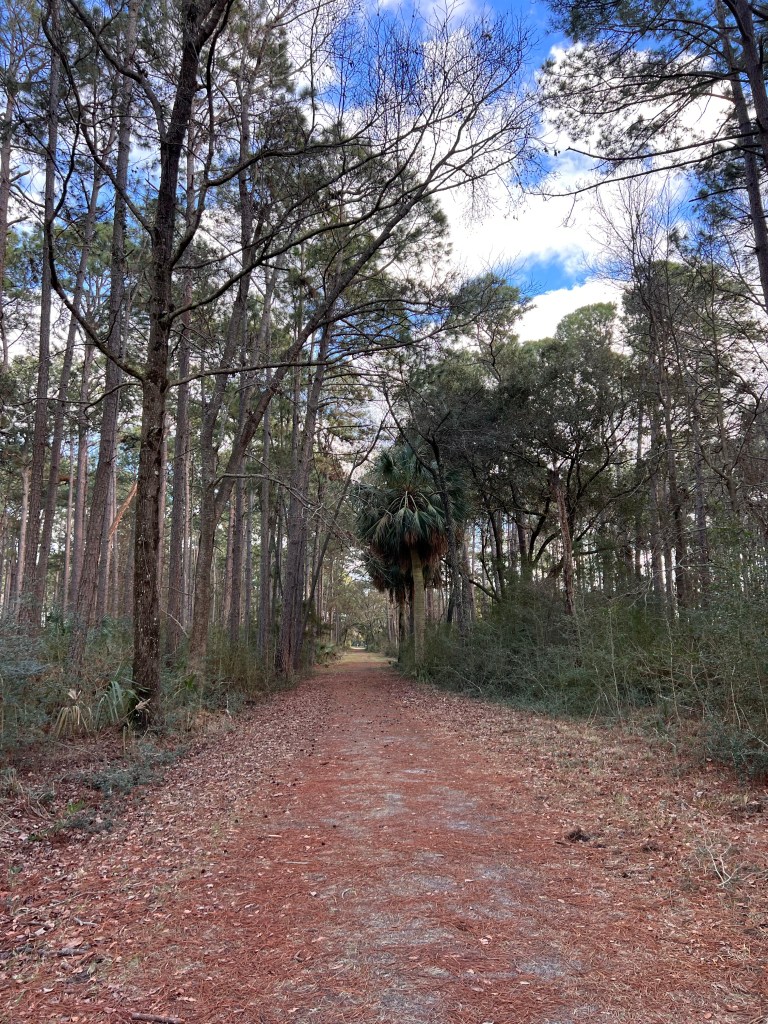
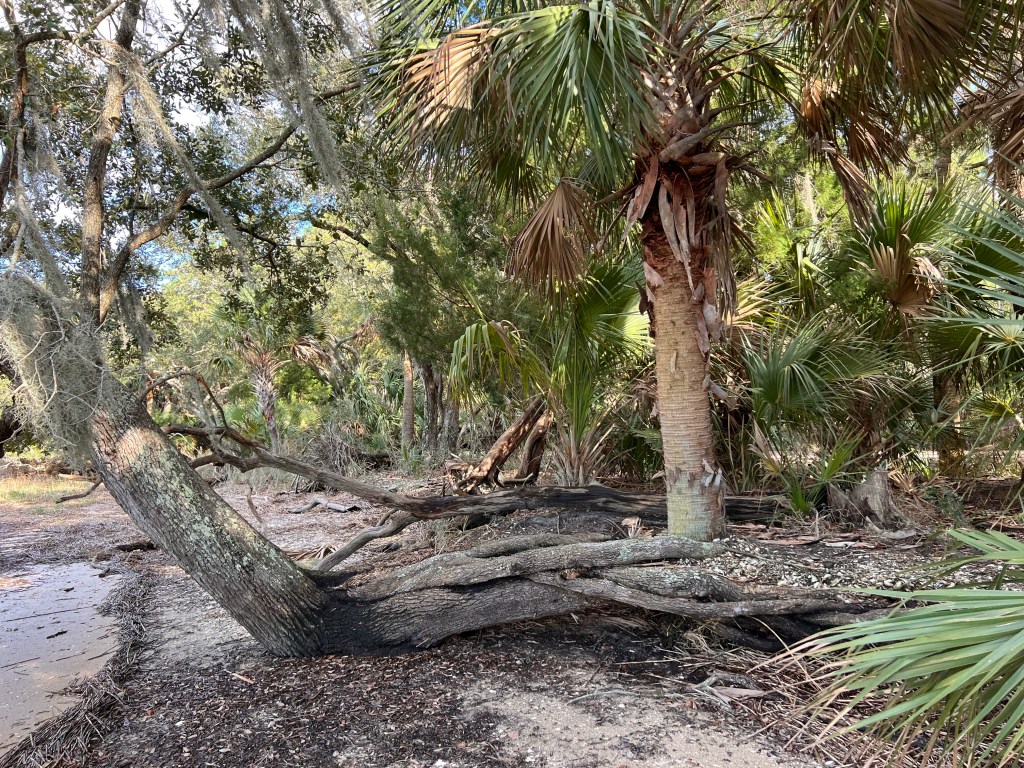
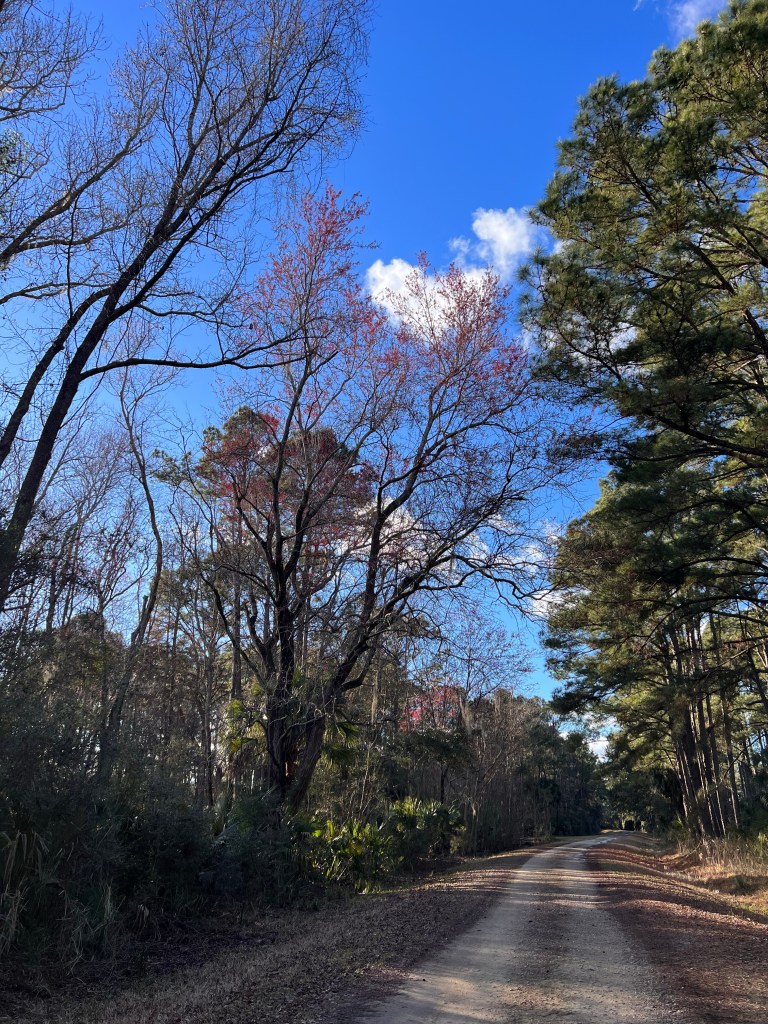
After that, Lee rested while I kept walking down a long path where I was completely alone with the woods. Suna Heaven. I saw so many beautiful trees, including some huge oaks, pines, and the biggest sweetgum tree I’ve ever seen. It was tree world, full of fungus, lichen, decay, and dank dampness. Ah.
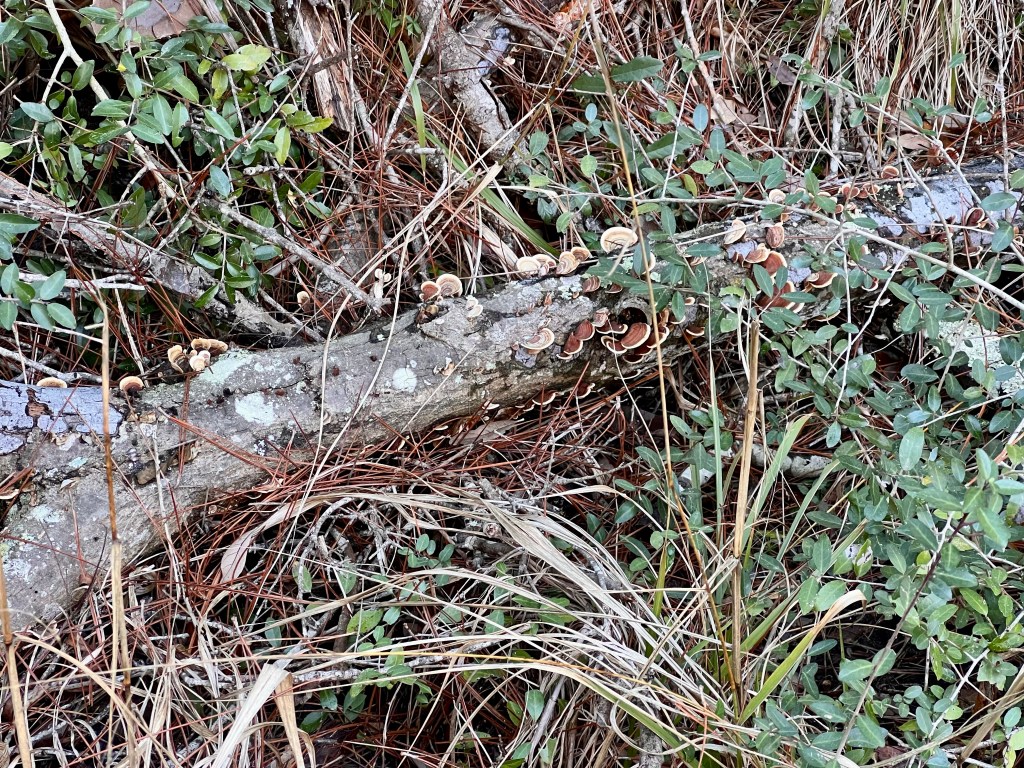
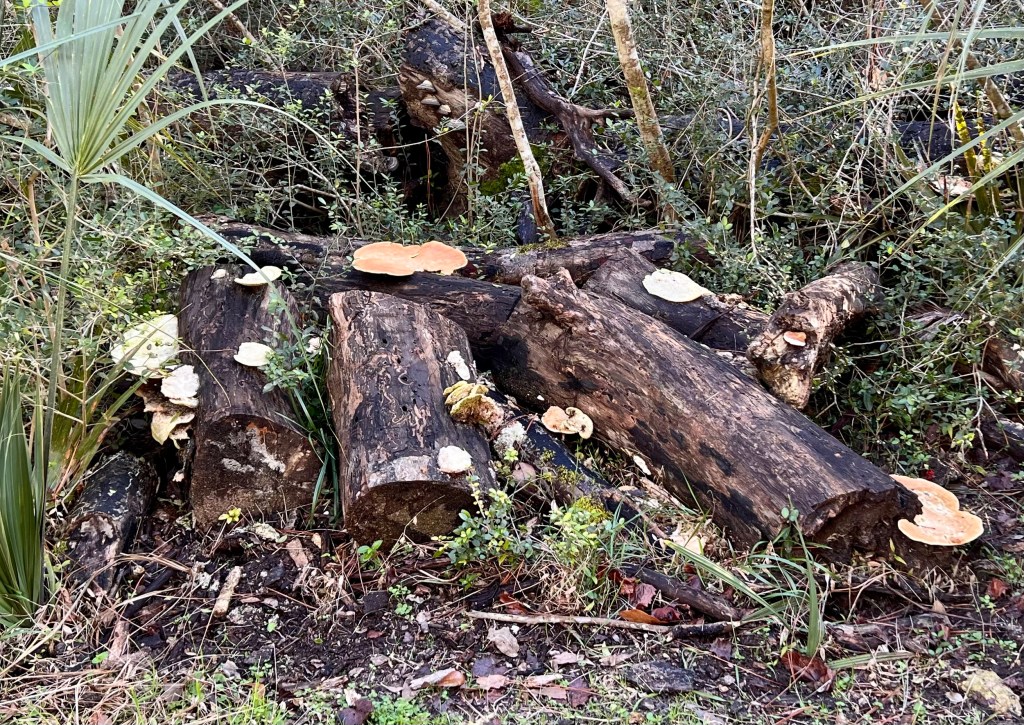
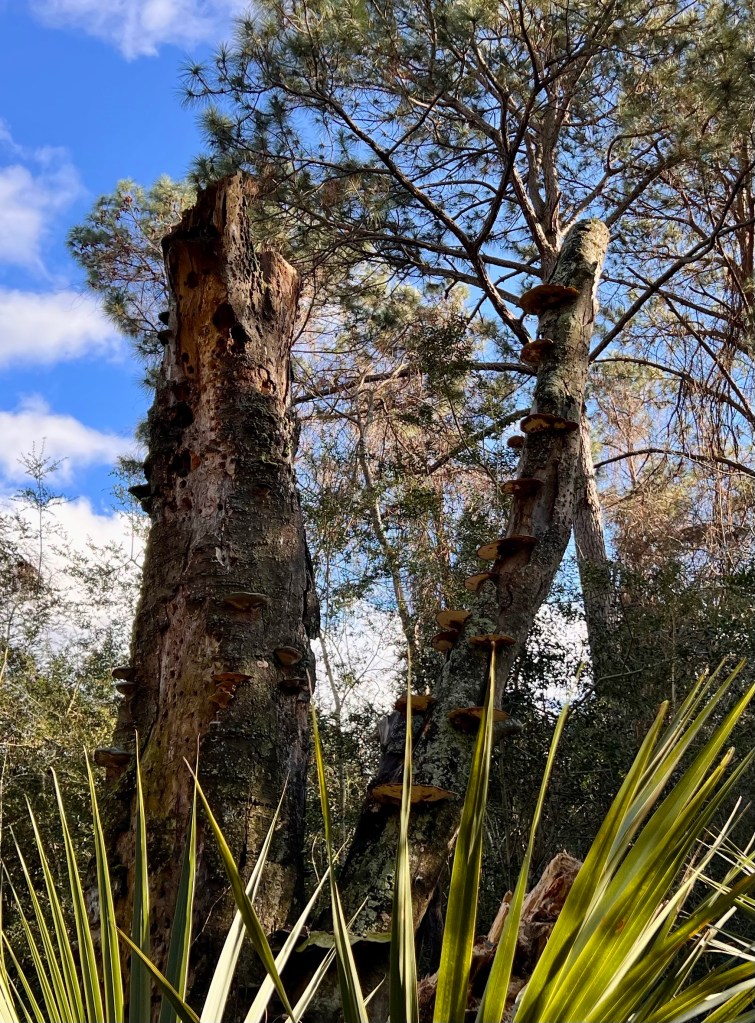
Very large long-leaf pineSwampy treesA familiar site to me, pines and palmettosThis gum tree is taller it looksOak at the edge, lying downCan you see the sun shining on the red blossoms (elm?)sweetgum leafPine blossoms, source of Lee sneezingTree covered in fungusPoetic oaksSome fine leaf litterSomebody found this tree deliciousDecay helpersThese tree fungi were the size of dinner platesAn elder slowly returning to the Earth
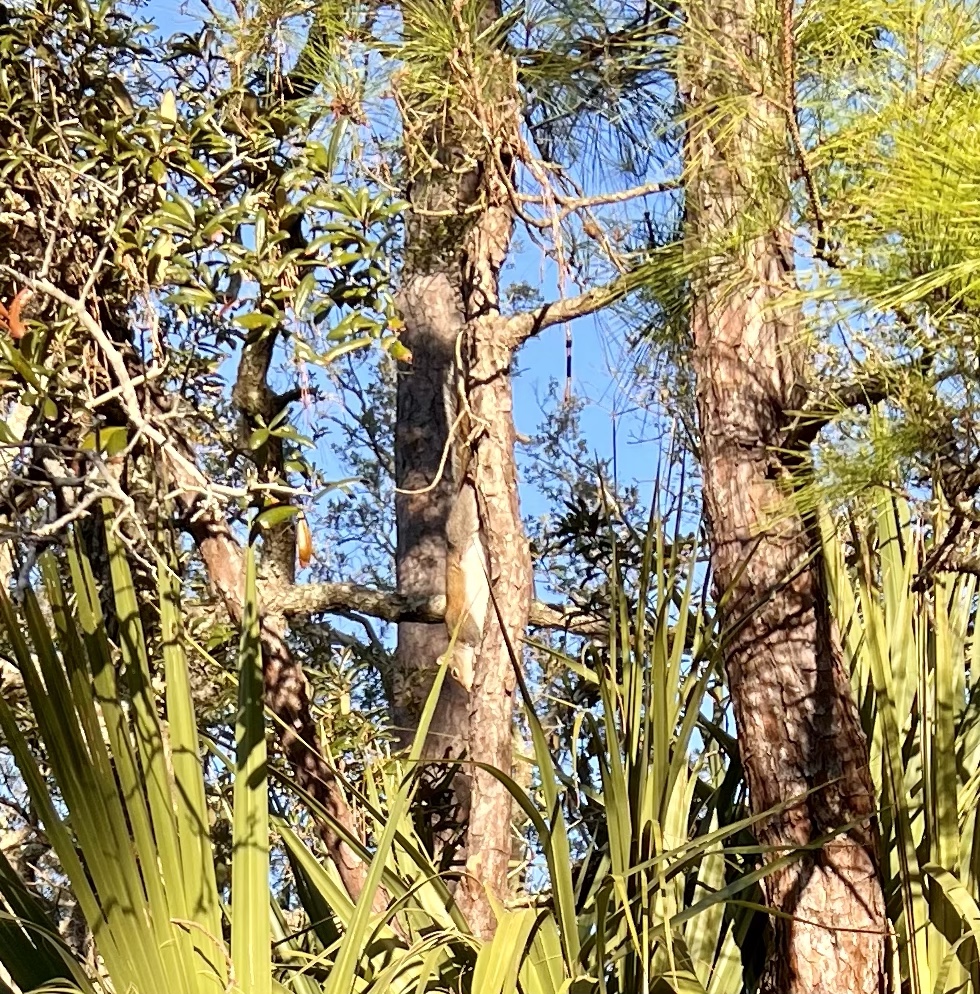
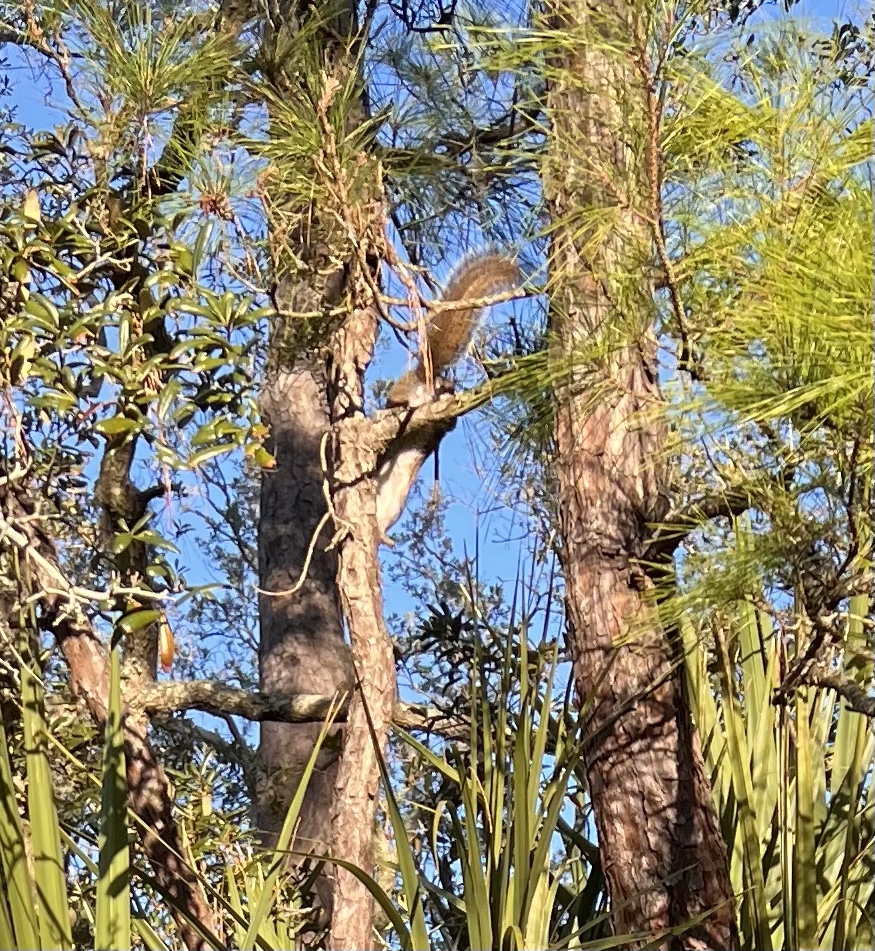
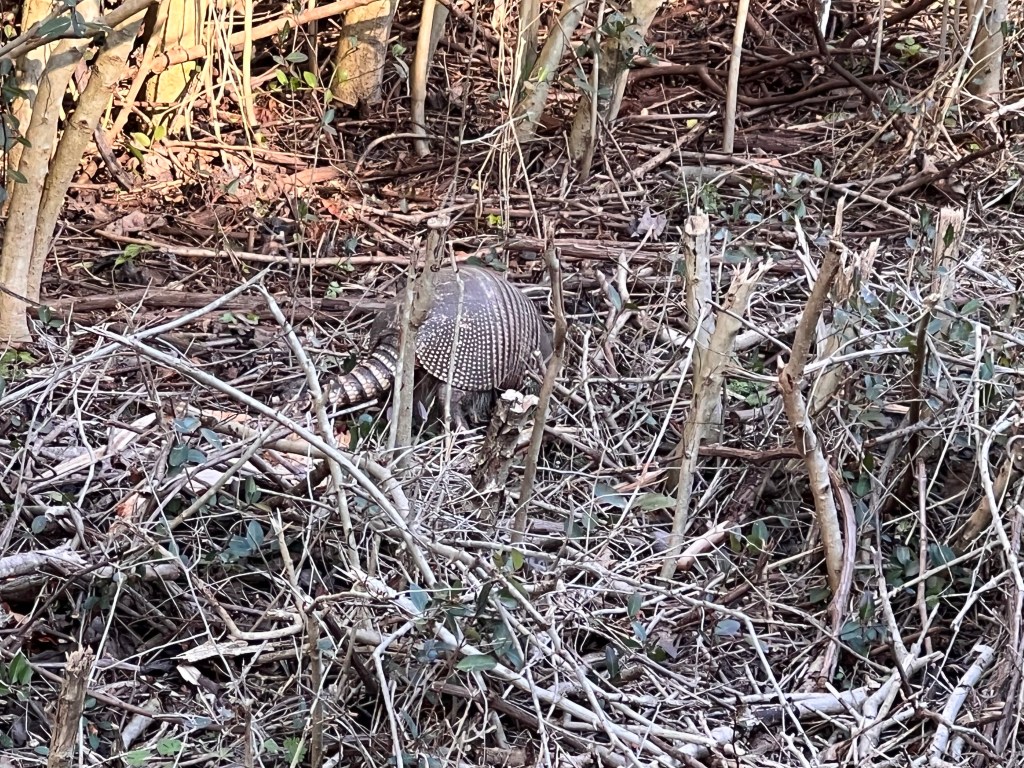
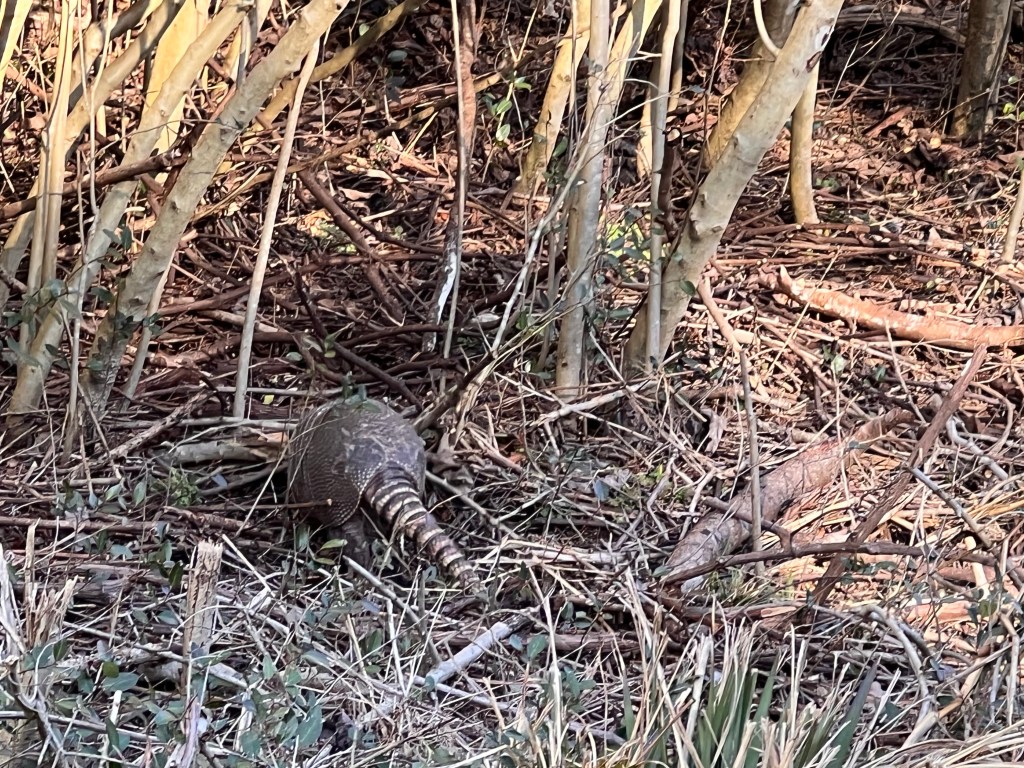
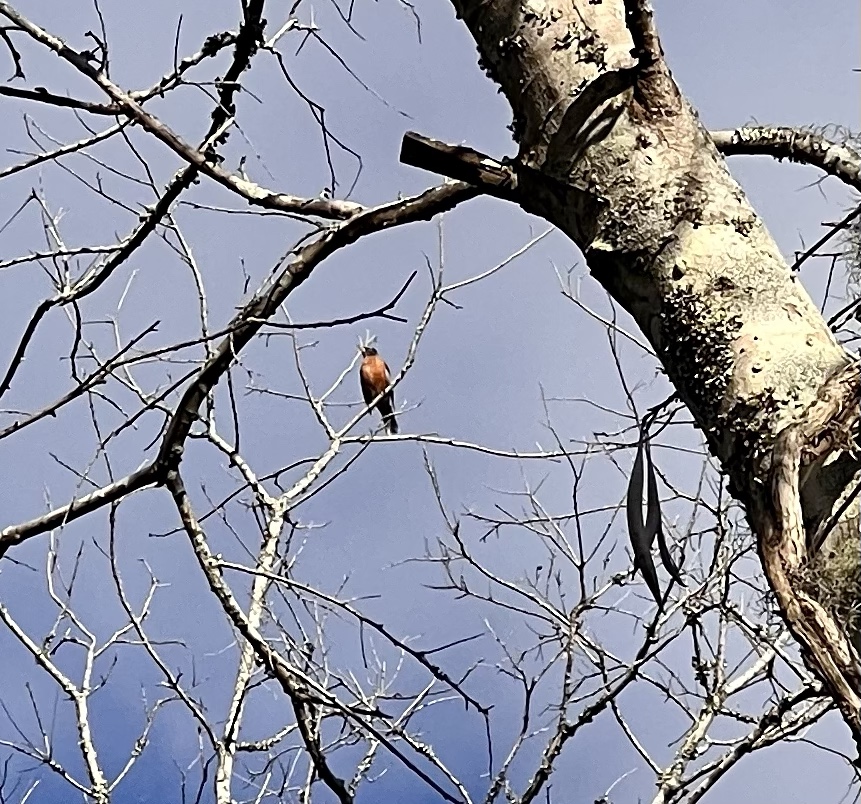
There were also at least two armadillos that just totally ignored me as they busily rooted in the leaves, a lot of annoyed squirrels, and a flock of American robins. There was also a precious ruby-crowned kinglet we watched take a bath in a puddle, but I enjoyed it too much to get a picture. It was glorious! I was so happy.
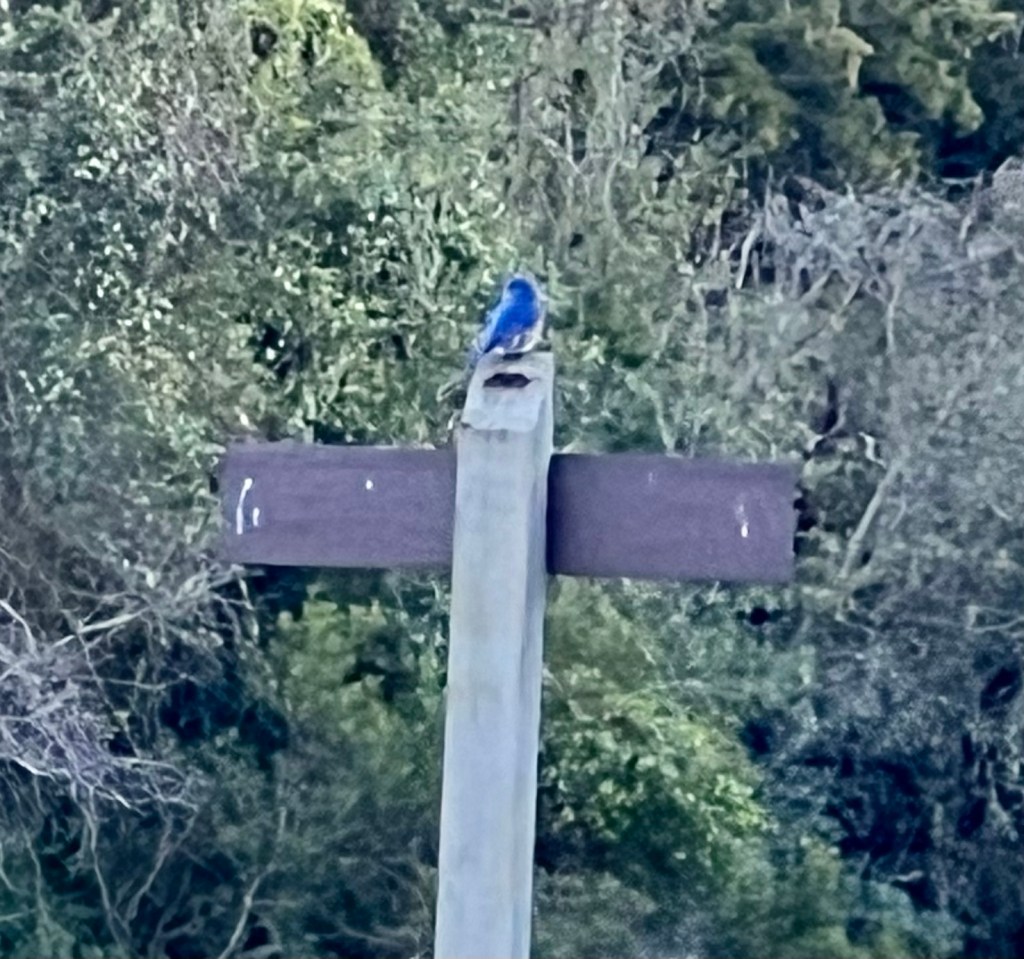
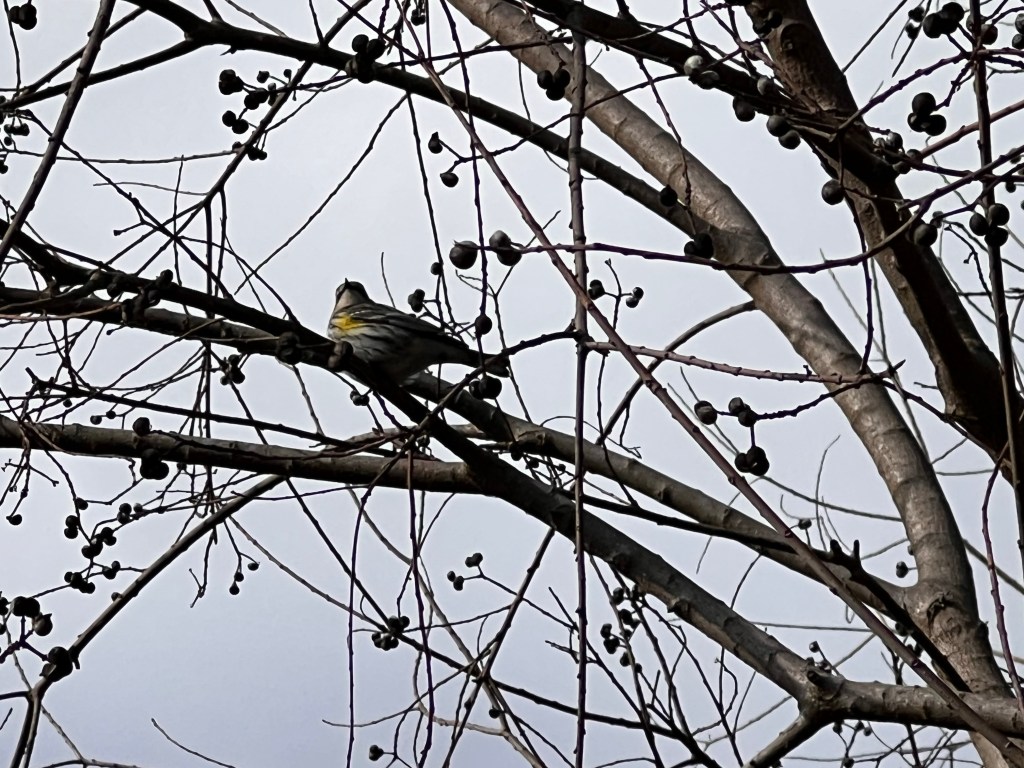
Spot the squirrelDillo…Mrs. RobinMr. RobinMale bluebirdThat’s a warbler.
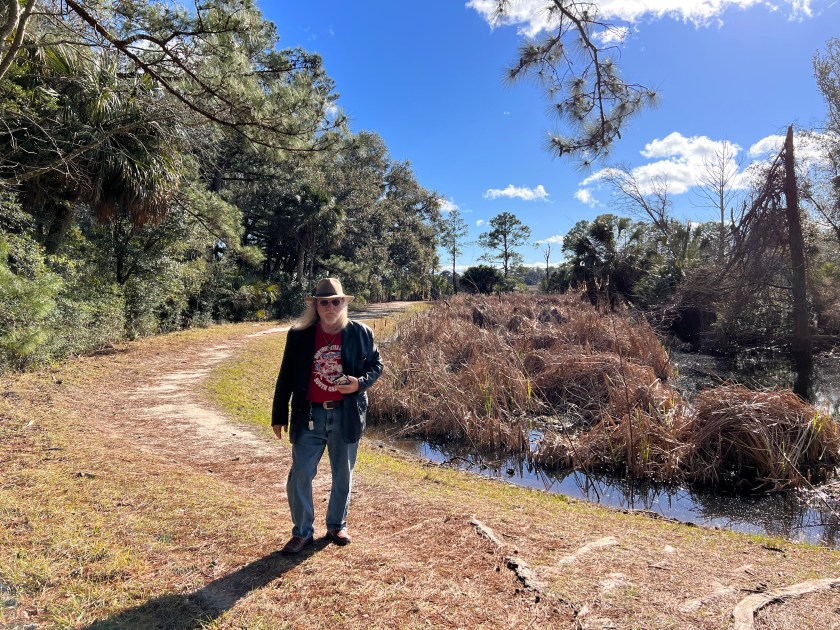
But I did have to come back and find my husband, after walking nearly five miles. Even my fancy shoes were beginning to let my feet hurt, anyway.
Found him!
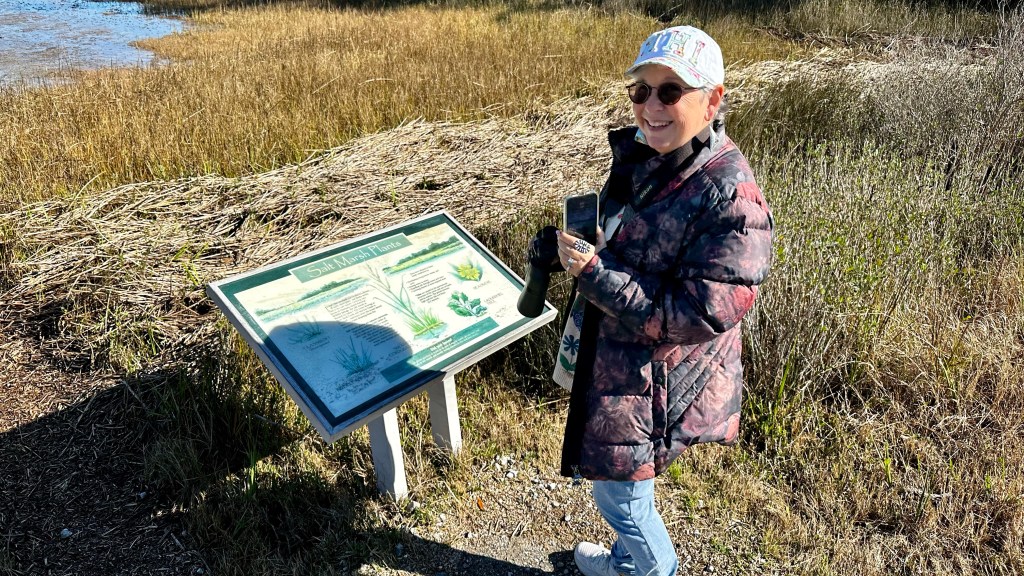
I enjoy walking with Lee, because I’m free to stop and take lots of pictures while he takes his time. It works for us. I took a lot of pictures of the marsh, the shore, the trees ranging from tiny to immense, and all the life that feels safe on an uninhabited island. Well, unless there’s a hurricane or anything.
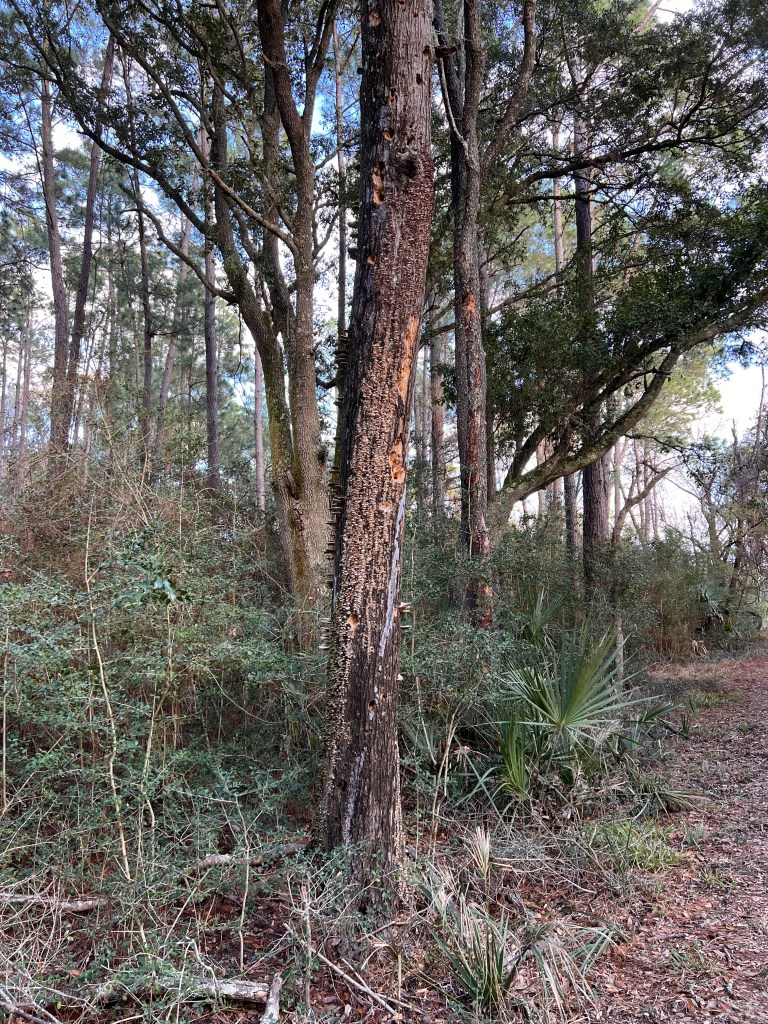
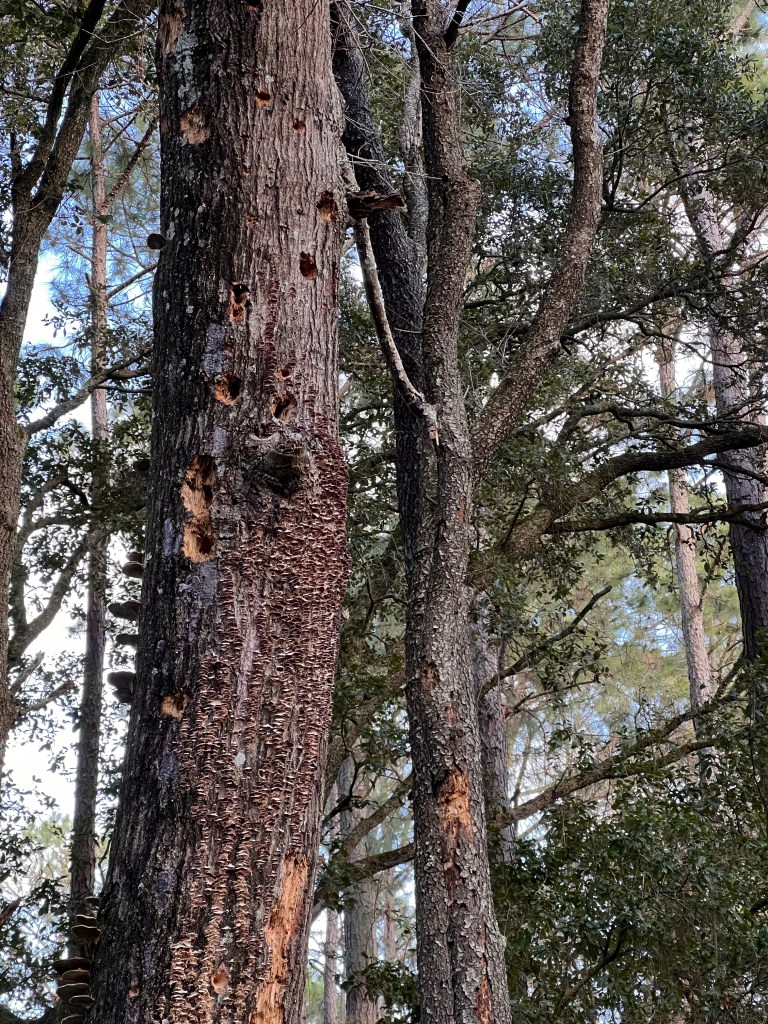
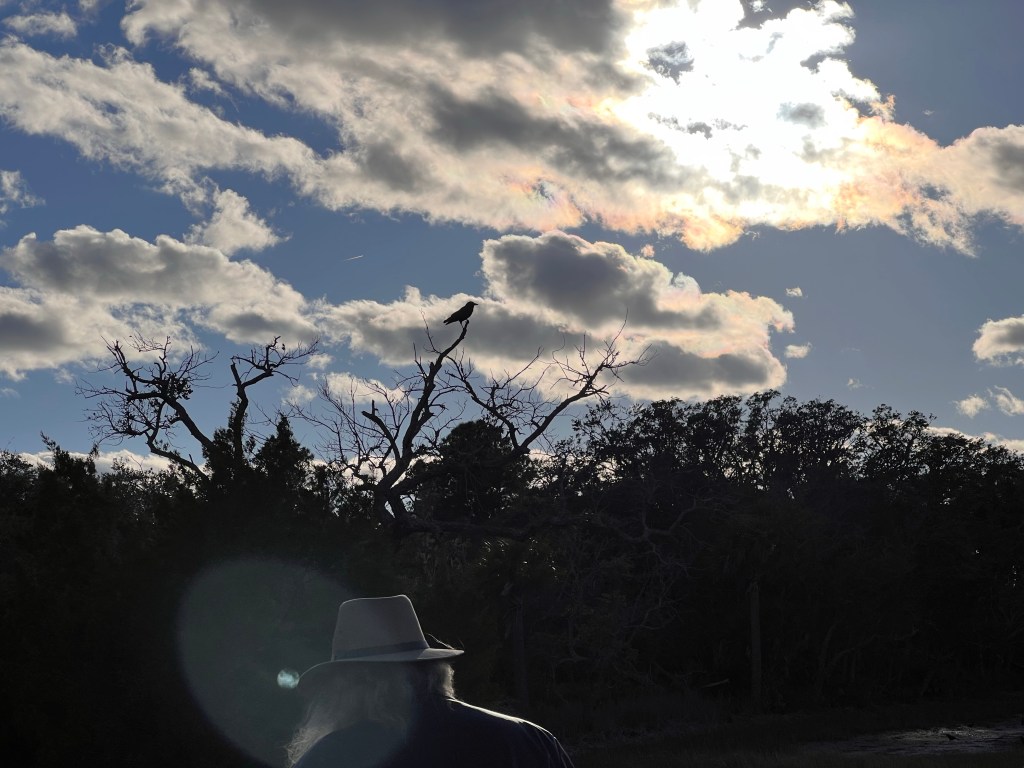
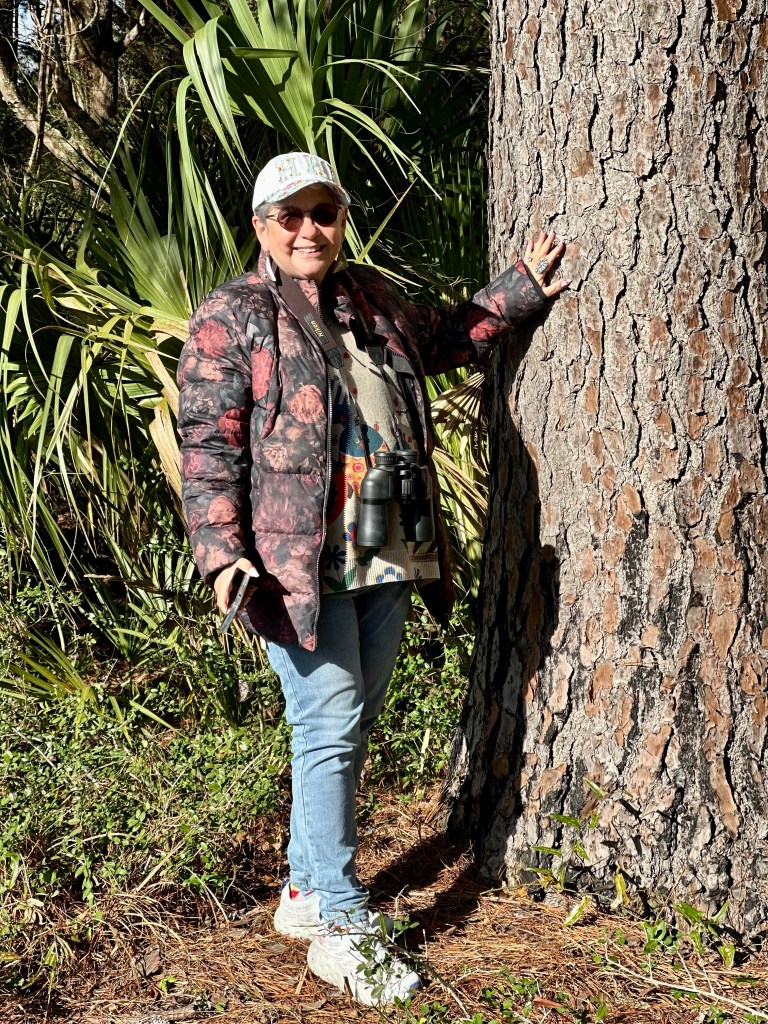
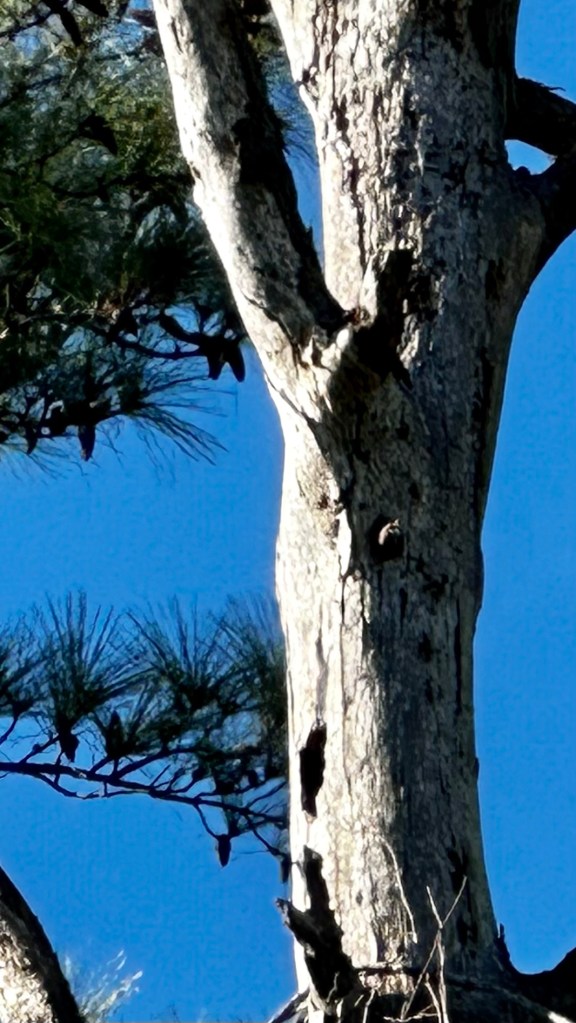
CattailsMarsh with tiny snails in itThis could be a paintingCrow in the sunyellow mossMe showing how big this pine isLittle red mushroomLearningThe center of this photo is a flicker woodpecker building out its nest hole. We watched her a long time with the binoculars.
We topped the trip off with a meal at an overly fancy restaurant (Nunzio’s, for Rae who wants restaurant recommendations) where you have to have reservations even at 5 pm and most of the cars in the lot were Porsches and Mercedes. Still, the halibut was perfect, and the tomato salad had the ripest, tastiest tomatoes I’ve had in ages.
I just need one day like this per vacation, so I guess I can sit around the rest of the time I’m in South Carolina. Ha ha.
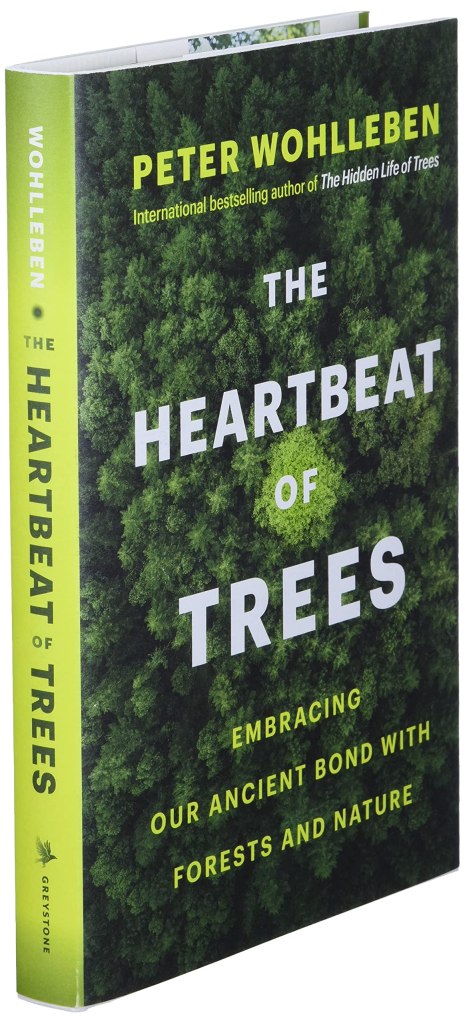
Yes, indeed, I read another tree book. In fact, I read another tree book by one of my favorite tree-hugging authors, Germany’s Peter Wohlleben. This one, The Heartbeat of Trees: Embracing Our Ancient Bond with Forests and Nature (2021), is the English translation of his latest book from 2019. It’s theme is that we are not so removed from trees (and the rest of life on earth) as we make ourselves out to be, and that it behooves us to listen to them and care for them as part of our family of living, thinking beings.
The book has some really comforting sections, along with simple and fun ways to remind ourselves of our connections to nature and the forest. I think that’s the part I enjoyed the best. There are reminders to breathe, listen, and observe when amongst our tree friends, not just plow through our hikes like we have to meet some goal of efficiency. Plus, Wohlleben shares scientific evidence of how being out in nature contributes to both the health and wellbeing of humans. Don’t you forget that!
A lot of the book made me incredibly sad, however. Alas, there are no, make that zero, examples of untouched old-growth forests in Europe. Humans have messed with that land so much that even the very old forests that do exist were originated by humans planting them in the past few hundred years.
Worse, foresters aren’t necessarily out there protecting the trees and looking out for their best interests, in Europe or in the Americas. No, they are “managing” forests for productivity. I think I read enough passages on cutting down ancient trees, clear-cutting entire forests, and strip mining to last me for a long time.
Now, Wohlleben is no fool, and he points out that we need trees to be harvested (you know, so his books can get printed, and such). He’s not unrealistic; he just thinks it would be worth it to come up with some management techniques that are more respectful of trees, kinder to the environment, and supportive of all the life that surrounds forests. Just because something’s small and insignificant to us (like a mold, an insect, or a fungus) doesn’t mean it has no role in the balance of life. You probably know that, of course. I’m just saying it, because I’m all filled with righteous indignation.
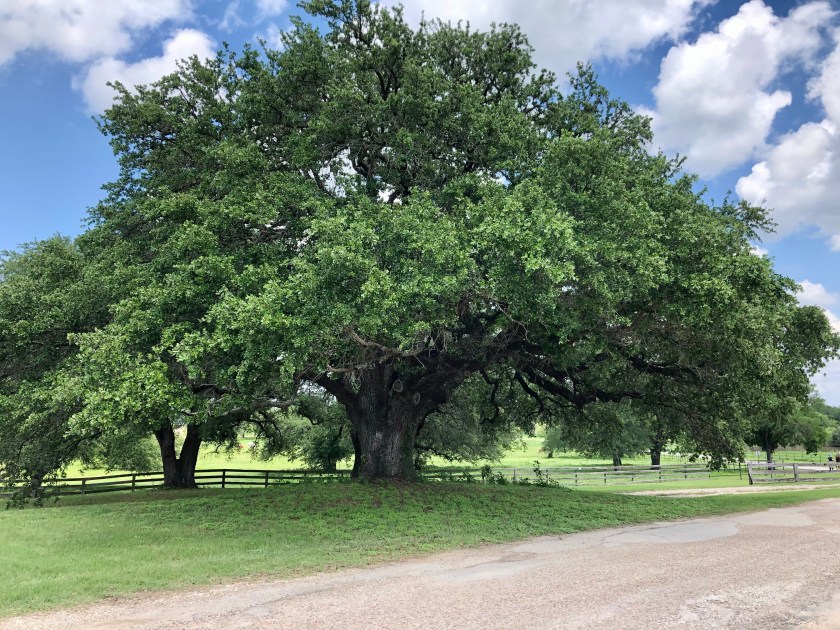
We aren’t all lucky enough to have our own woods (and I certainly don’t have any old-growth forests at the Hermits’ Rest, either, just some old trees in pastures, where they can’t reproduce because of mowing), so the ones that are out there to be shared with our fellow humans and others are treasures. This book tells us about how some people are working to make things better, and that’s hopeful. The fact that governments and industries are not convinced that using up every resource we have isn’t a good idea is NOT hopeful, though.
You’ll learn a lot of you read The Heartbeat of Trees, and my hope is that it gets you to pay attention to your surroundings, wherever you are, and to do whatever you can to help the earth maintain a healthy balance for all of its inhabitants. You will also have a more global viewpoint, since he focuses on Europe as well as North America.
My excuse for not finishing this one sooner is that I was trying to catch up on magazines, thanks to all the “subtle” hints that I have too many piles of them. I did at least get all the horse and decorating magazines finished, so last night I got myself to the end of Finding the Mother Tree: Discovering the Wisdom of the Forest, by Suzanne Simard (2021). What a journey this book is!
If this doesn’t make you go hug a tree, nothing will.
I got the book the minute it came out, which is no surprise given how many books on trees, how trees talk to each other, and forest ecology I’ve read in the past couple of years! Simard wrote it in an interesting way, where autobiographical sections are interspersed with some pretty hard-core science content. If you just like stories, you can skim the science; if you just want to know exactly how trees communicate with and support one another, you can bypass the story of her life (but you’d be missing out on an interesting life!).
Simard was born, full of curiosity, into a western Canadian family full of loggers and tough woodland pioneers. It’s no wonder she ended up as a biologist. And she, too, is a pioneer. She had a very hard time getting anyone to listen to her as she explained the effects of clear cutting and re-planting as it was practiced at the end of the 20th century. I really came to admire her tenacity and conviction that she was right.
Mother tree I saw at the horse competition.
Of course, it helped that all her data backed her up, and that eventually she got enough grad students and fellow researchers to make it clear that trees help each other and need each other to survive. I’m glad she did, because her findings are fascinating. Different types of trees are connected, and certain ones use different kinds of fungi help different kinds of trees in their connections, too. It’s all complicated, as one would expect, but fascinating.
The highlight of the book is when Simard talks about “mother trees,” which appear in healthy forests. They are very old, and very well connected. They give their energy to new seedlings and distressed neighbors. It kept making me sad to read about them getting cut down, but I have to credit Simard for acknowledging that we need wood; we just need to be careful with managing forests so they can keep giving us wood!
I know the tree I have pictures of here is or was a mother tree. Just look at her beautiful roots.
Forests that are managed and have all the trees the same age, planted in rows, don’t get the advantages of having mother trees, nor of the diversity of companion trees and understory plants necessary for optimal health, resistance to pests, and protection from diseases.
I’m so glad scientists, and now foresters, are listening to Simard, and that she has passed her work on to her daughter. This woman is an amazing role model for us all.








































 The Hermits' Rest