I had exactly ONE important meeting today where I had to pay attention. That is when some folks off somewhere adjacent to the people across the road decided it was time to break out the rifles and start with the pew, pew, pew. Only it was much louder.
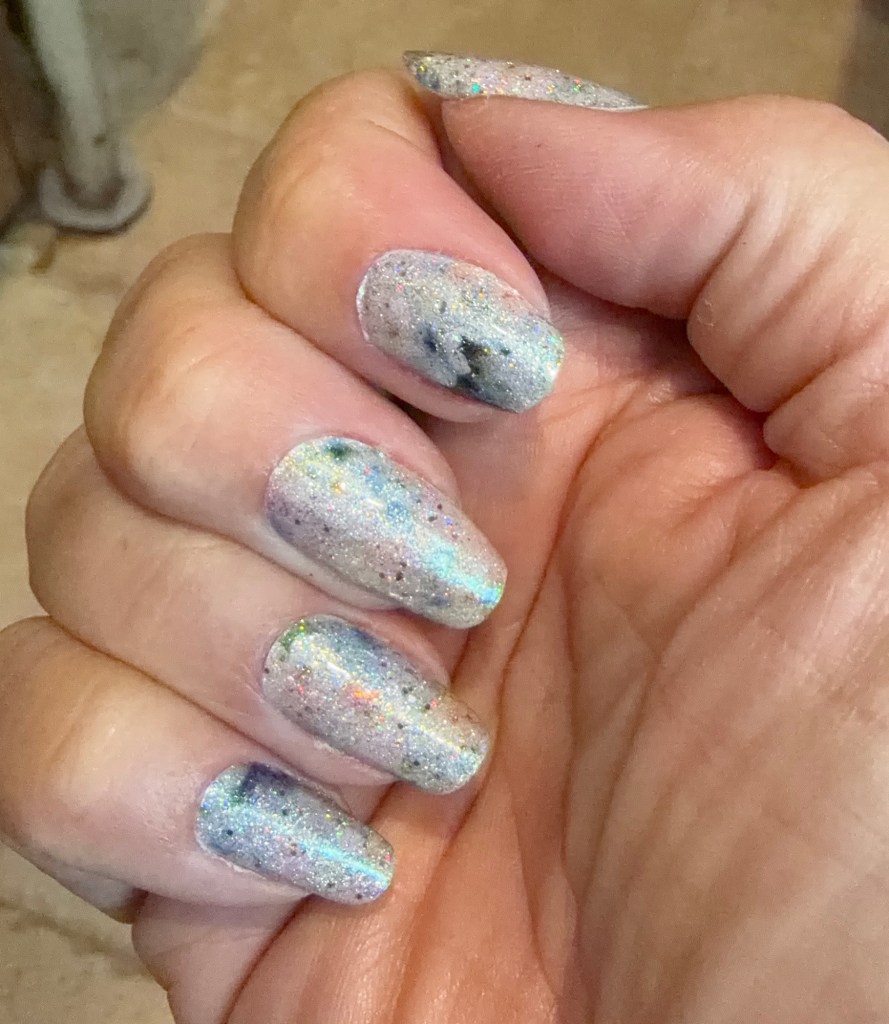
I should have run outside and blinded them with my nails. This stuff is incredibly reflective outdoors.
Of course, while I had my camera on, Penney had to try to insert herself into my arms, Carlton started shaking under my desk, and Alfred stuck his giant head under my free arm. My headphones disconnected, things fell off the desk, and I kept trying to act professional. At least I wasn’t leading the meeting.
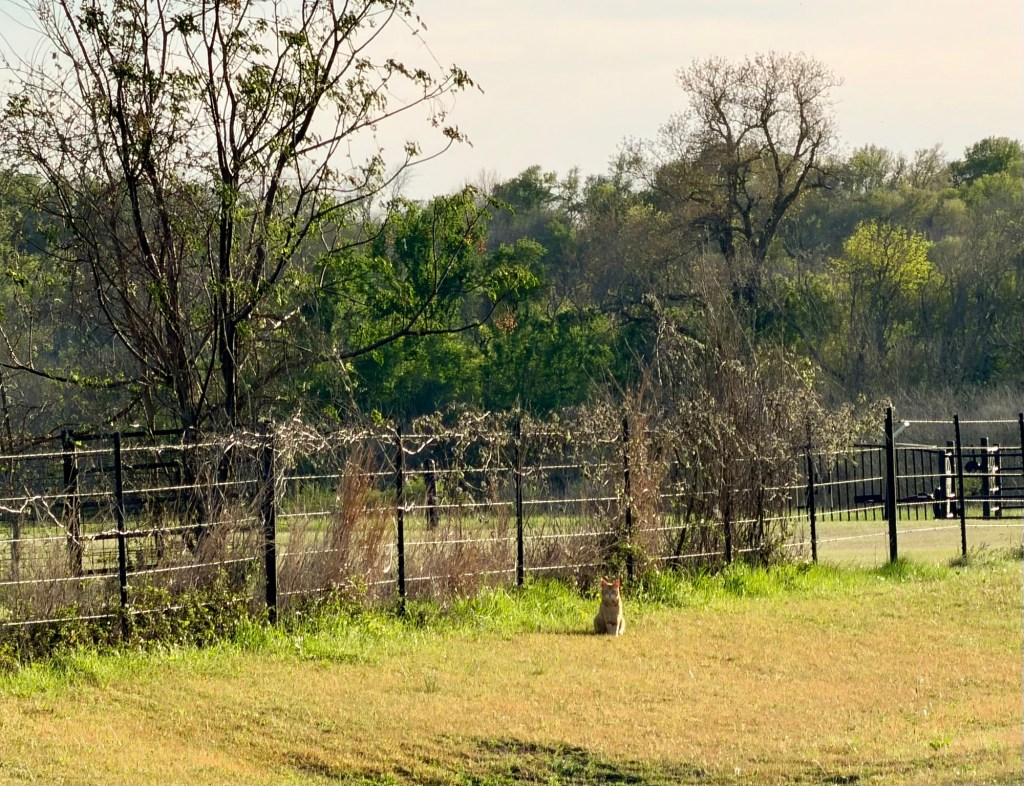
Why couldn’t those woods be all peaceful, like yesterday, when it was just me and the orange cat?
Let’s hope they don’t start up again tomorrow when I’m leading a meeting with bosses in it. Apparently, yesterday the blamming was during my lunch with friends.
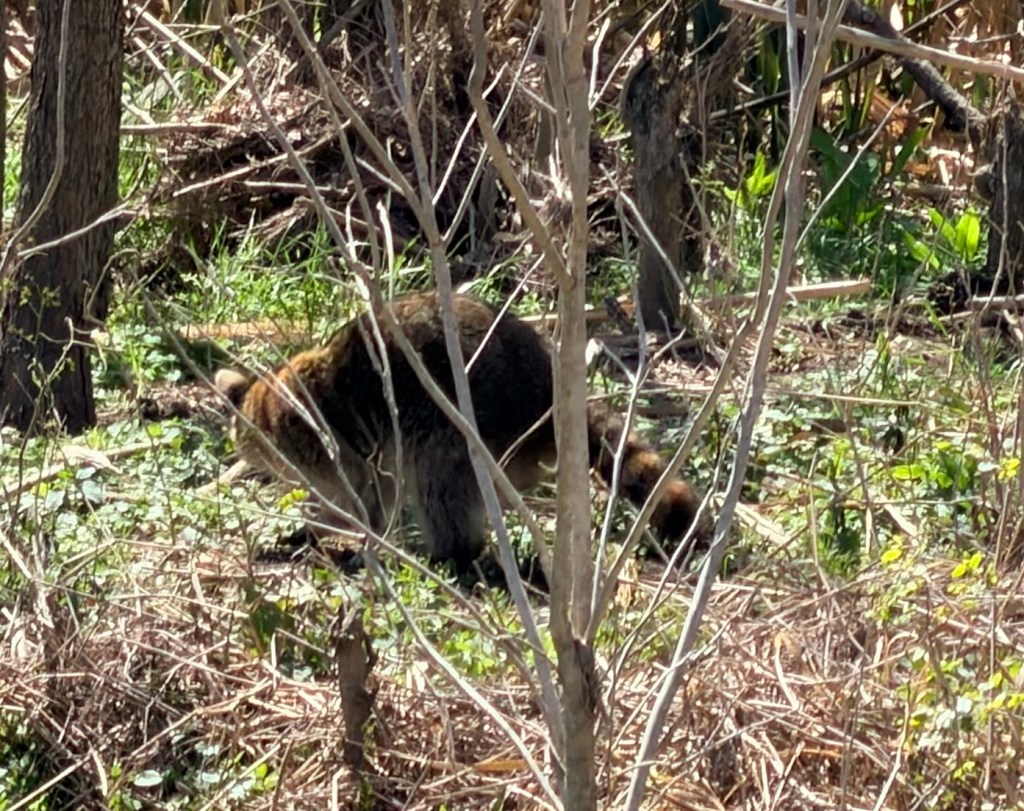
I’d have been trying to hide like this raccoon was during today’s noise.
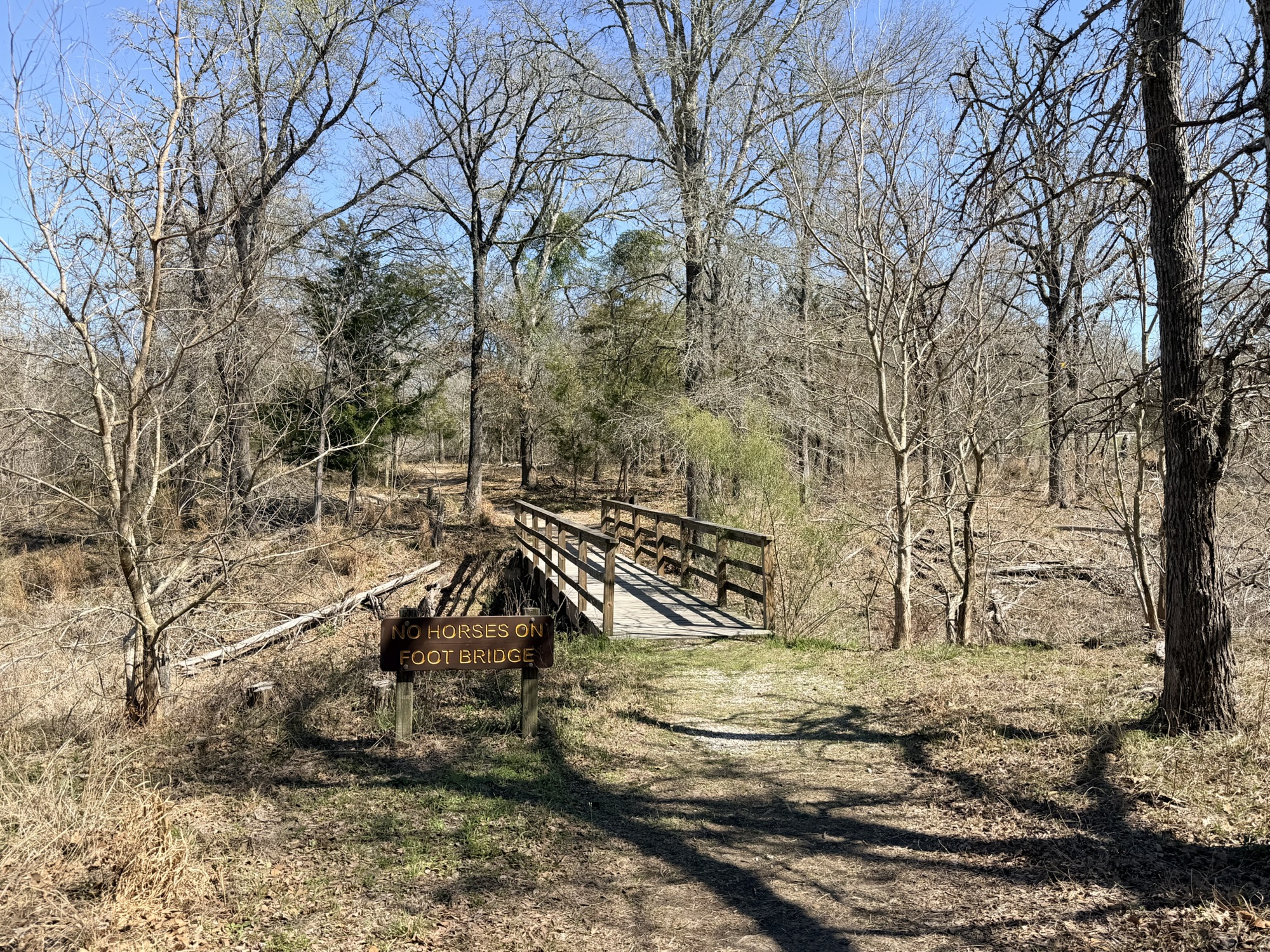
The good news is that there was no massacre. Once the meeting ended and I walked past the bridge, I could hear them yelling, “pull,” before shots rang out, so I figured out they were skeet shooting. That’s a new one.
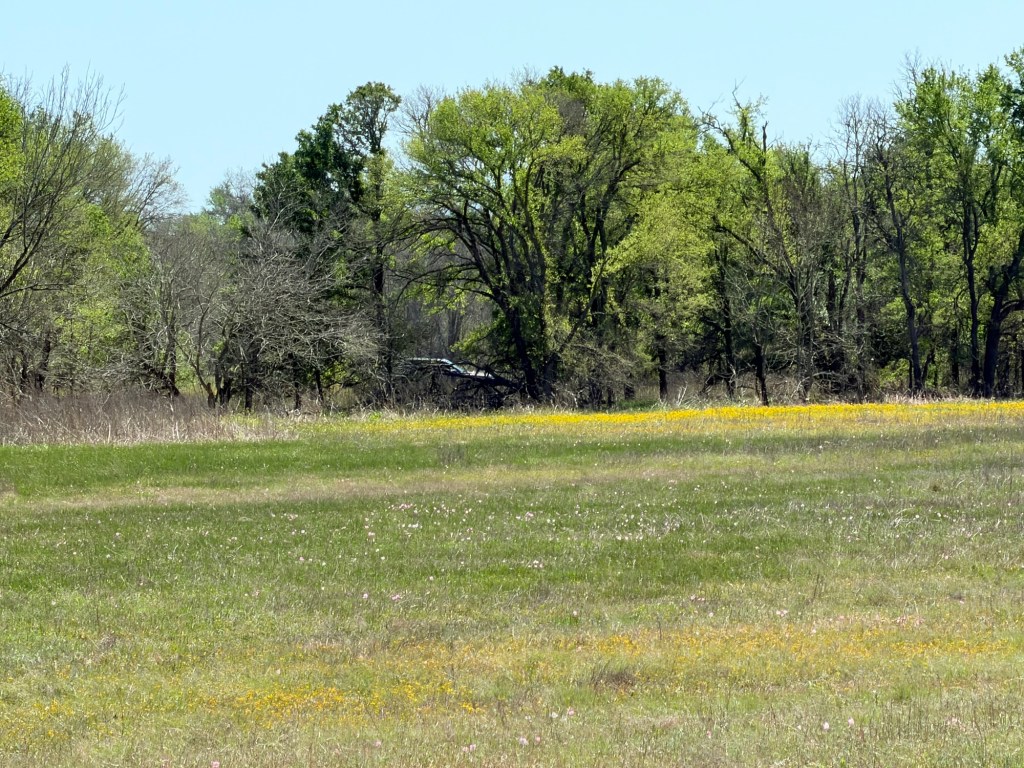
There are the shooters. They also mowed an entire field of bluebonnets.
The shots sounded really close from our house, and my neighbor said it sounded like it was in her back yard. Her dogs were also terrified. The shooters were very close to her property line. Well, I hope they got lots of skeet.
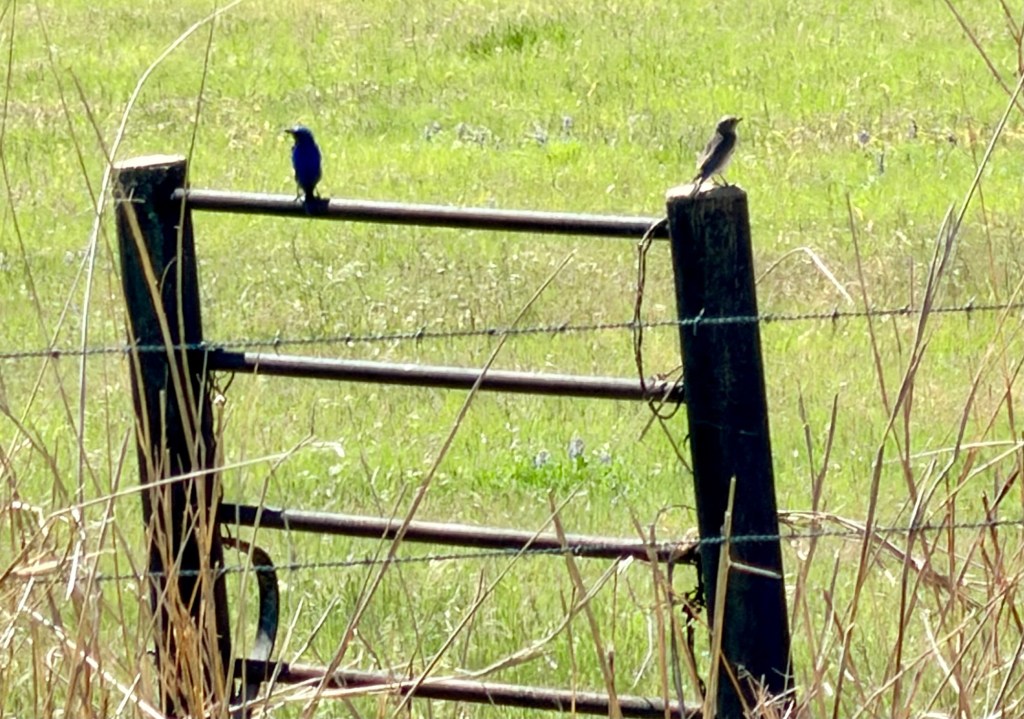
Bluebirds were not purturbed
I also enjoyed banter about skeet and what they could be hunting in response to my Facebook post about the noise. That made a weird day a bit better.
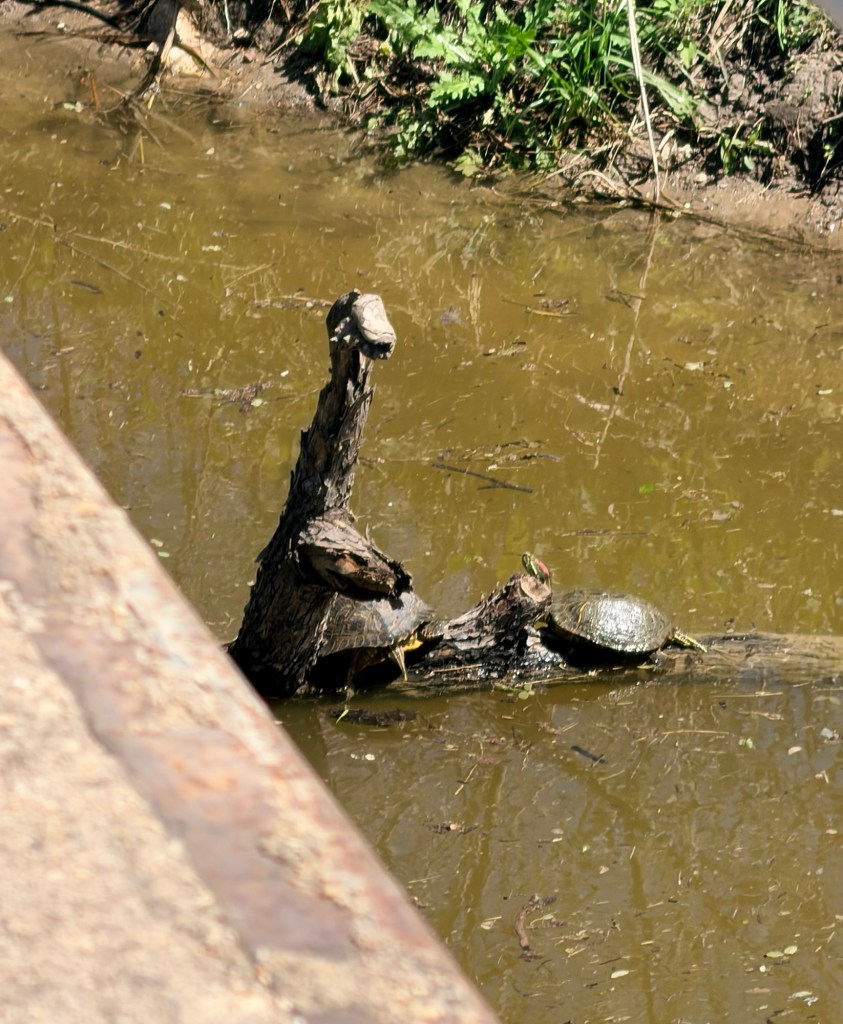
Getting to enjoy the bridge turtles on their new sunning log also cheered me up.
In the end, I enjoyed writing for most of the day, and had a nice rest on the porch with all the flowers after work.
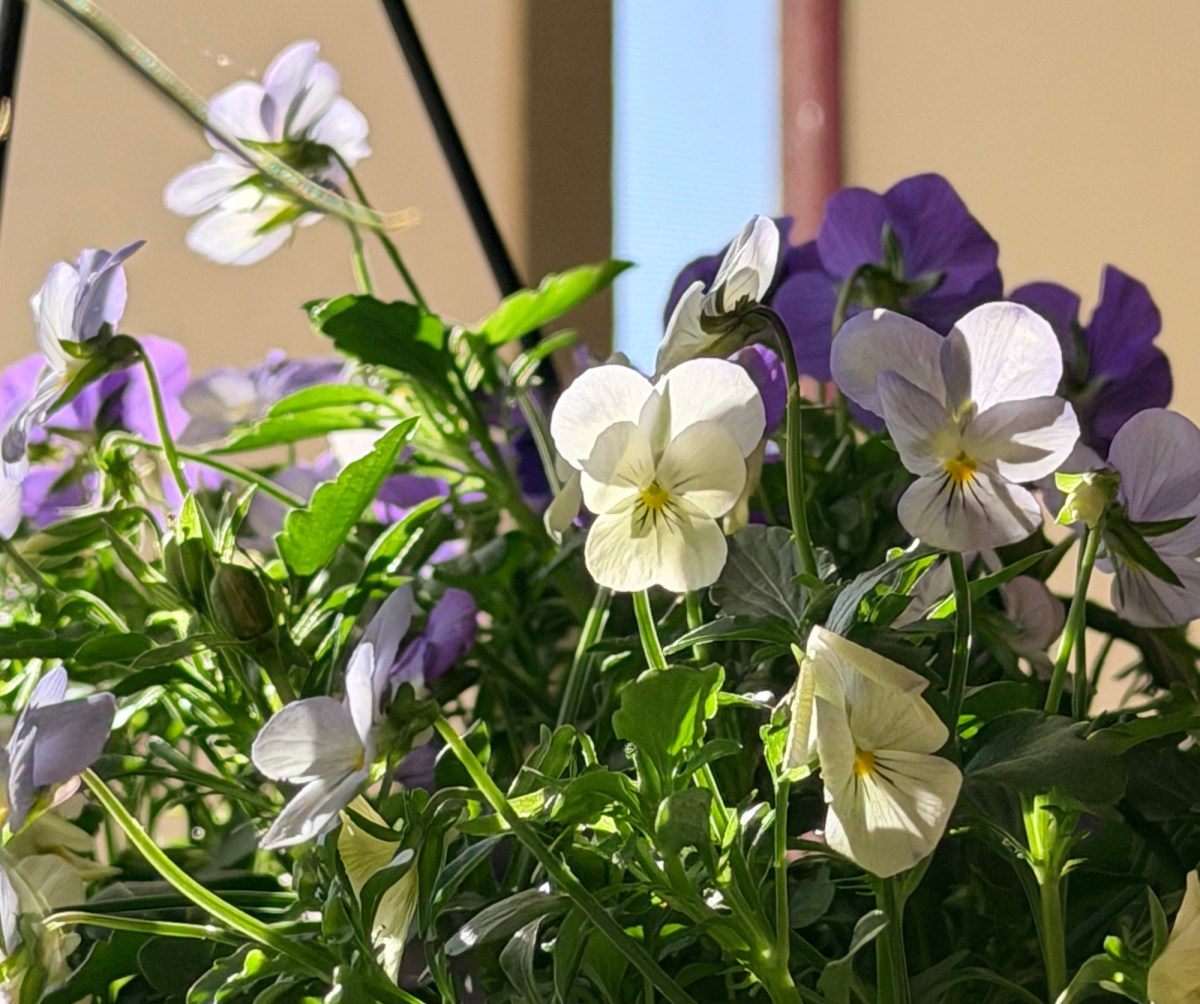
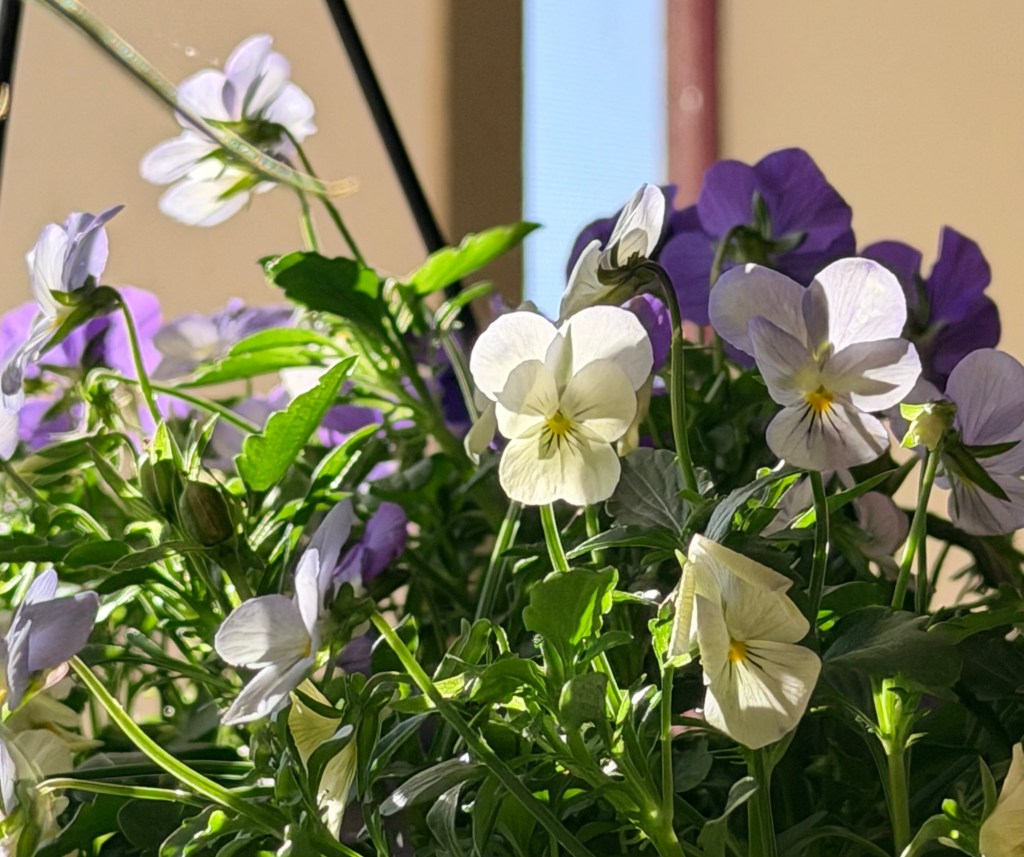
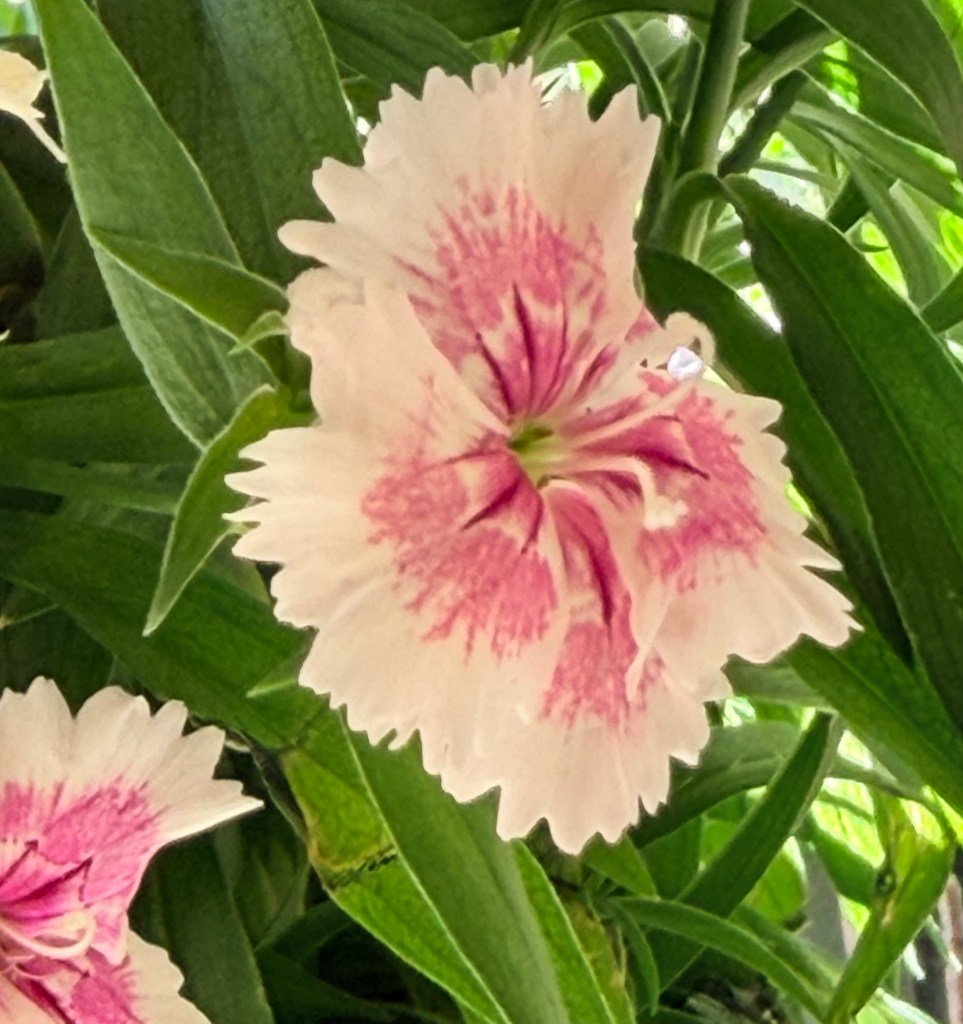
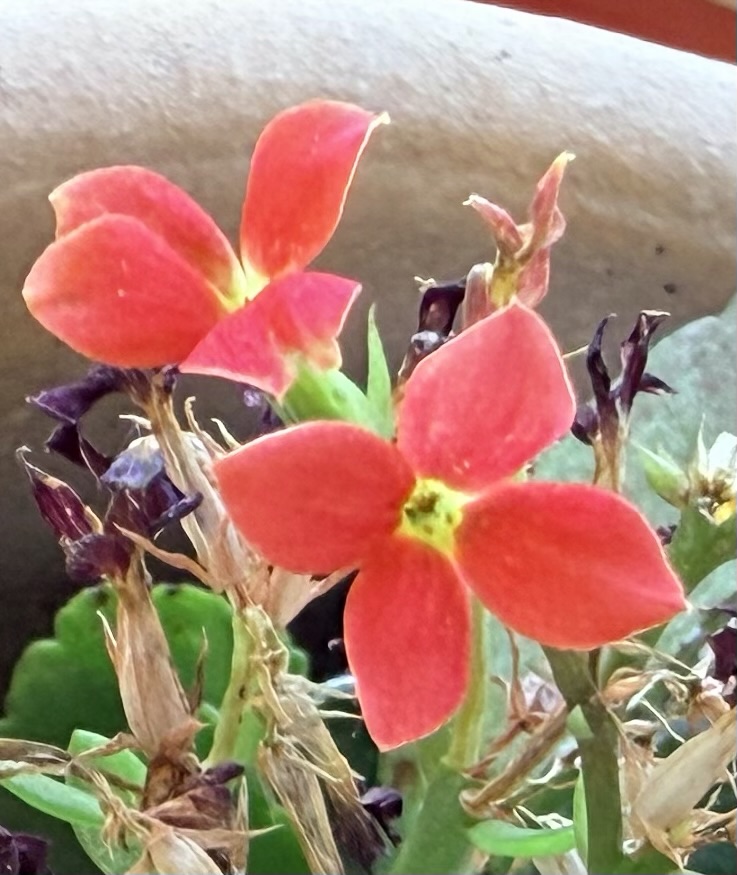
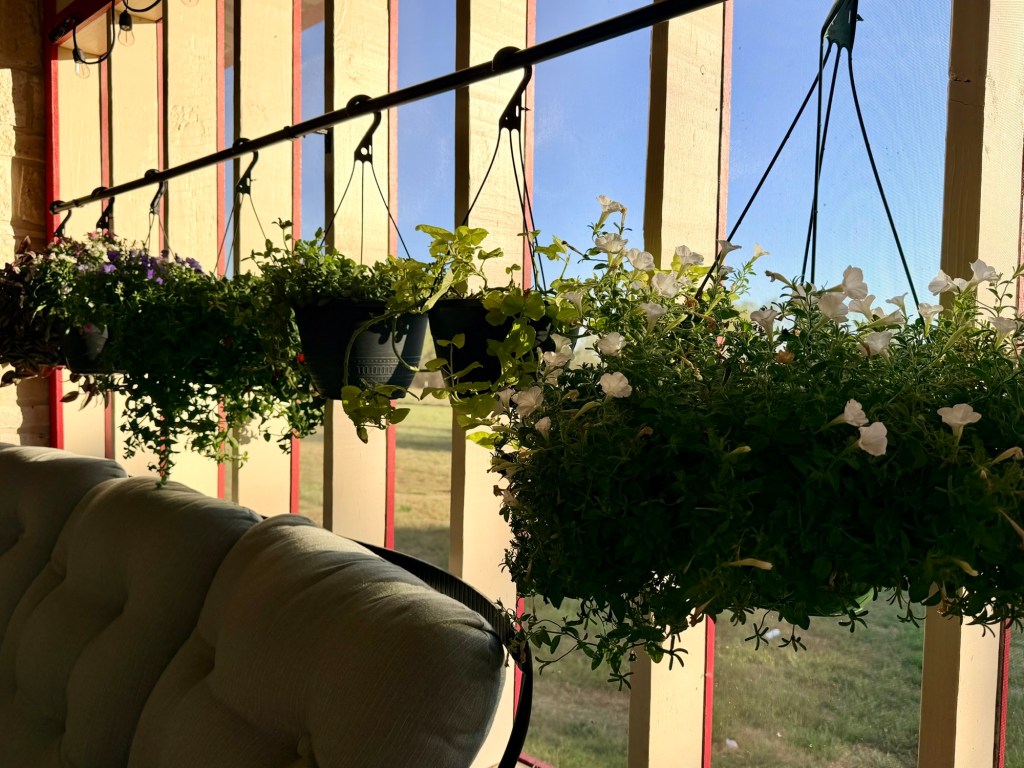
Lee got me these violas today DianthusKolanchoe? I cannot remember the name. All the hanging baskets now cover the window wall.
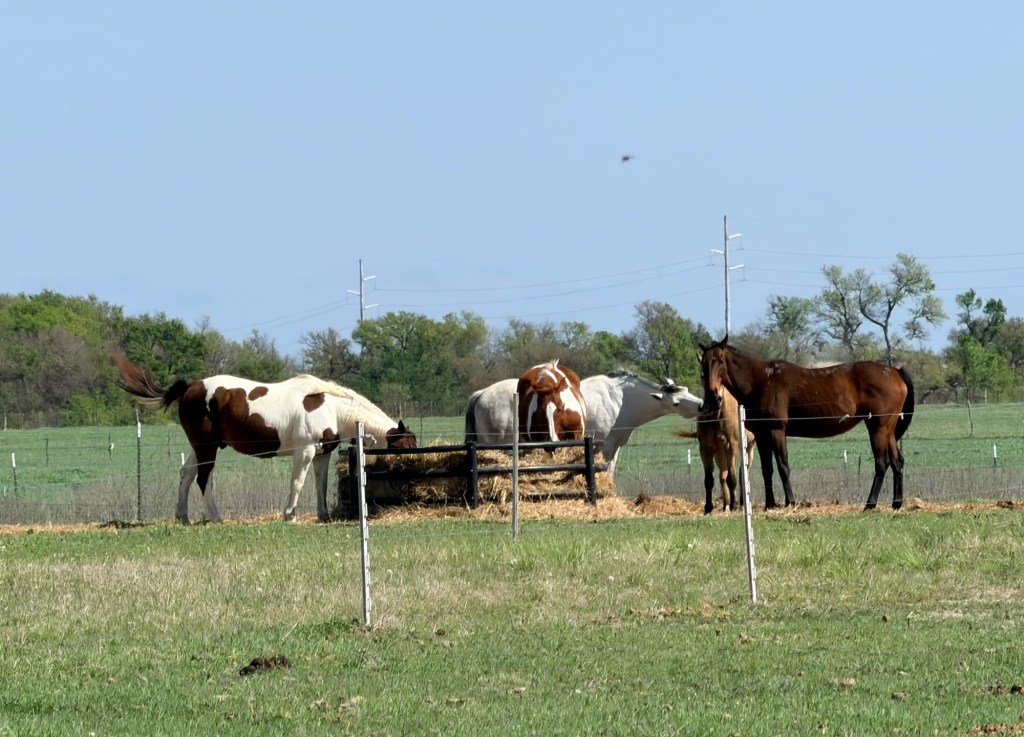
Then all but one horse got some vigorous currying, because it’s shedding time. Mabel, as usual, also has mud clods that I’m gradually scraping off. She can really collect mud. I’m in charge of the horses for a while, since my helper has had a setback, but I’m on it! I just want no nearby shooting during horse time.
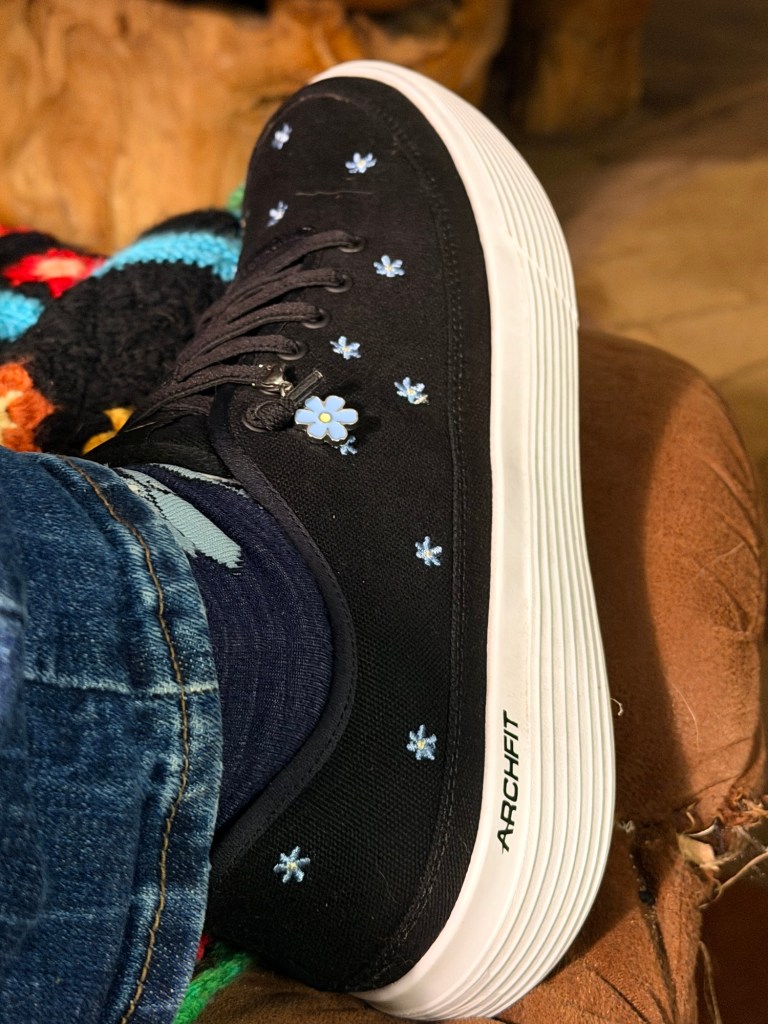
Finally there’s a blog prompt that I can answer and it comes right when I’m doing my best not to buy things…except peace symbol jewelry and shoes. Shoes are what triggers my pleasure receptors or something like that.
Look how cute this shoe is! And it has a little charm!
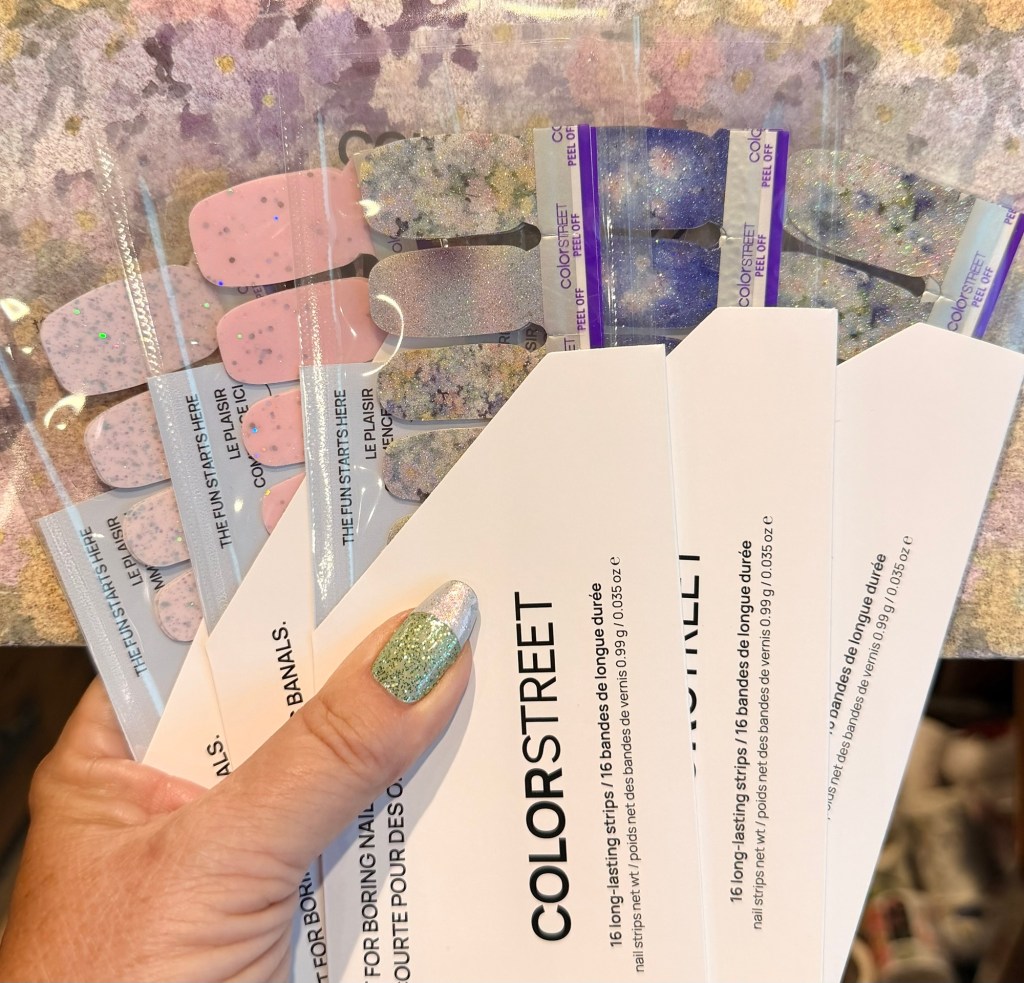
I guess I can’t forget my love of nail polish strips. Today’s shipment made me glaze over with pleasure at their beauty, especially the one with green highlights. Ooh.
The one on far right. It will look so great on!
That doesn’t answer the question of where I’d go on a shopping spree, though. I can only wear so many Skechers and ColorStreet (no, I’m not compensated).
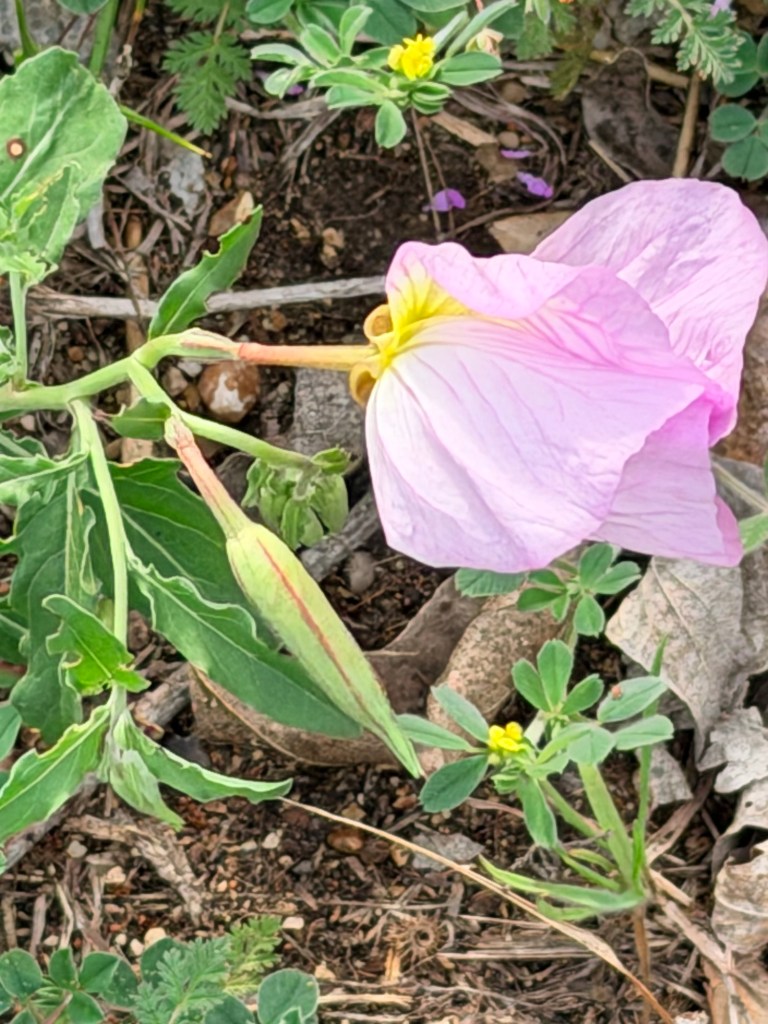
And wildflowers are free.
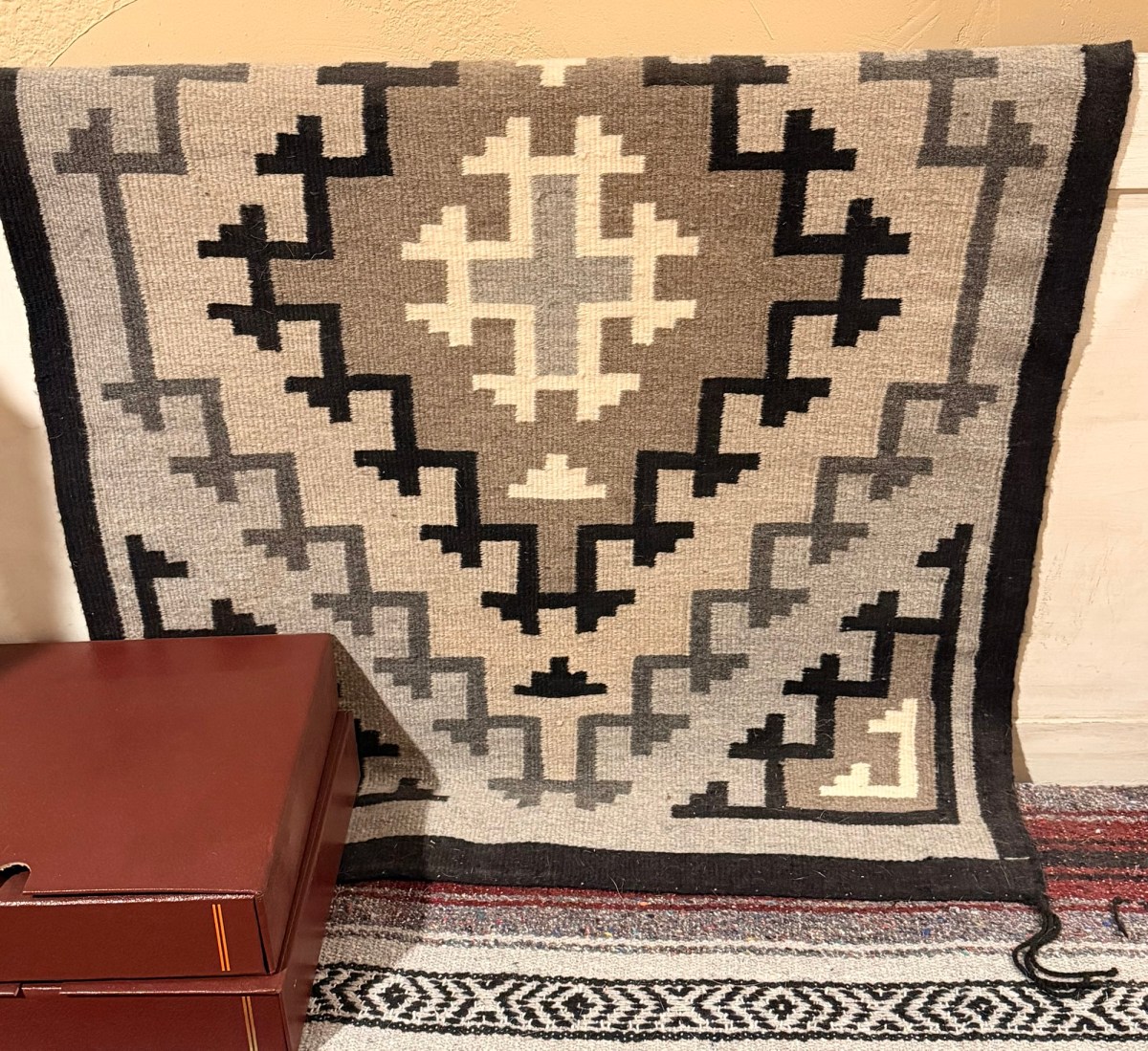
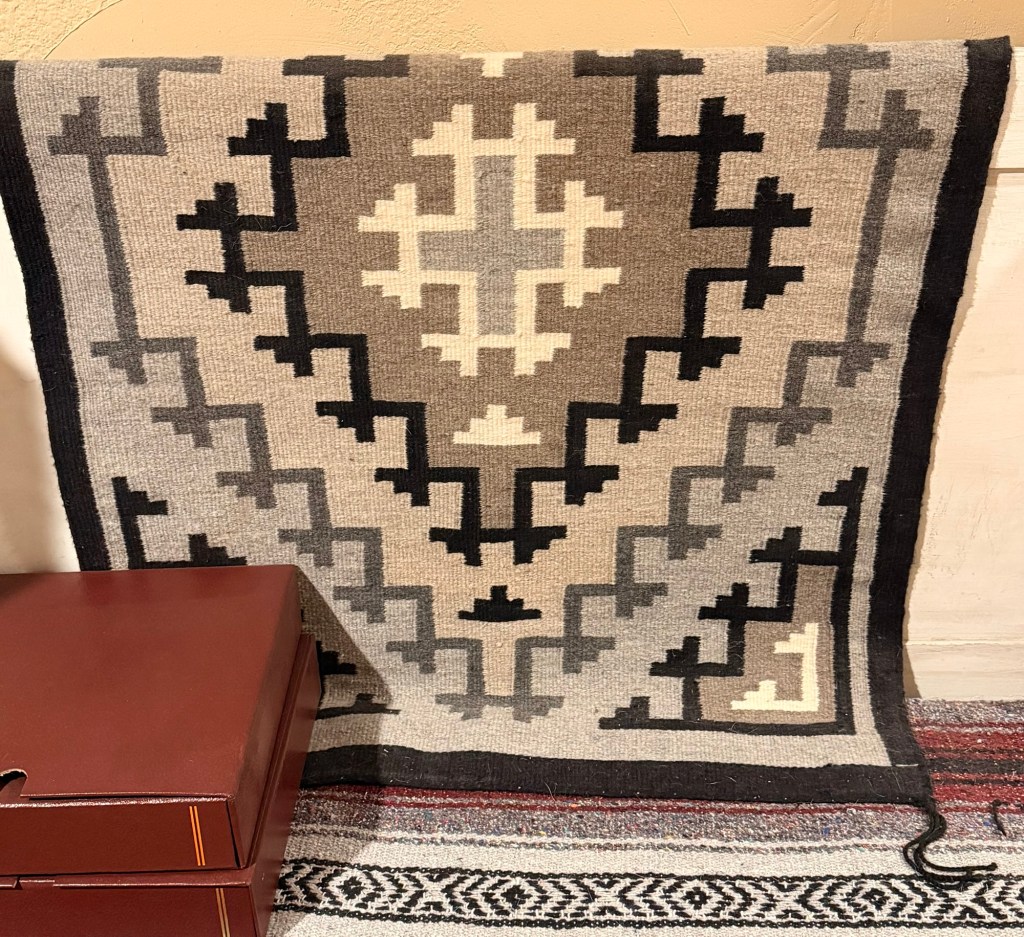
I think I’d go to the Navajo Nation and buy some turquoise jewelry, rugs (in the styles I like best), and some churro wool I could weave or crochet with. I’d get some pottery and paintings by artists I admire or ones who are new to me. I would prefer to buy directly from the artist. Maybe my spree would include commissions just for me, but allowing the artists freedom to do whatever they want.
This is the closest I have to a real Navajo rug. I don’t know its maker, but the colors and pattern are right.
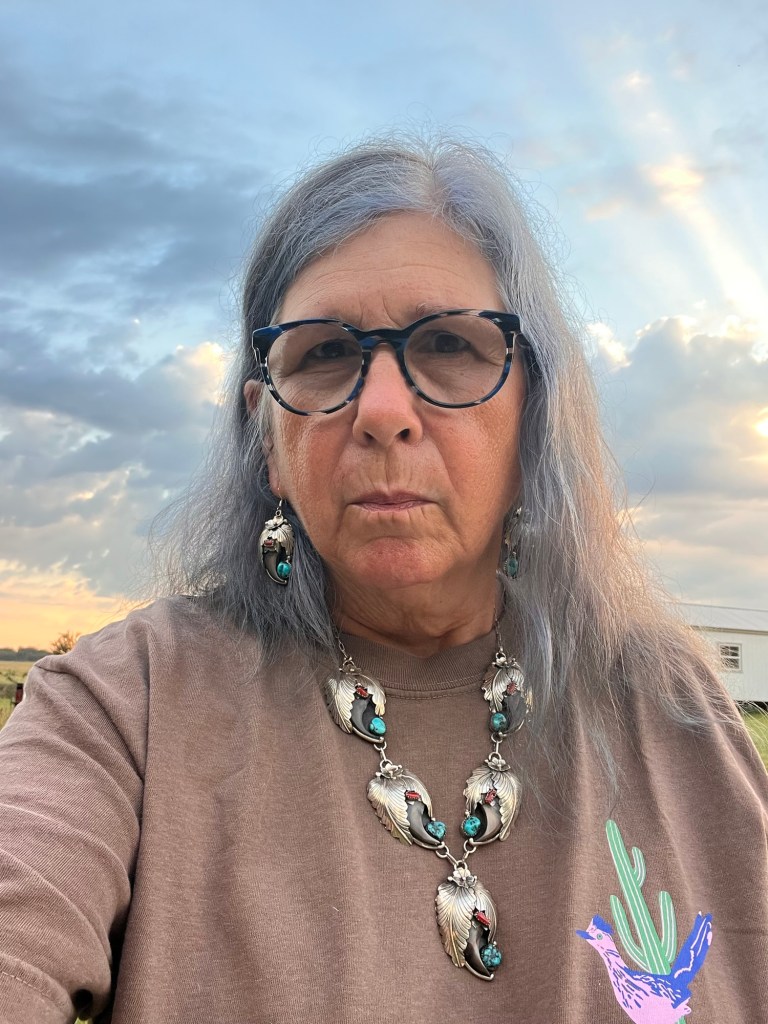
If I’m going to spend a lot of money, I’d like to contribute to a culture I admire and purchase handmade items. So, if anyone wants to send me on a spree, that’s what I’d do! I’ve certainly bought enough jewelry and from Native Americans and other people I know. It brings me joy to wear these things and see them in my home.
The necklace distracts you from my scowl.
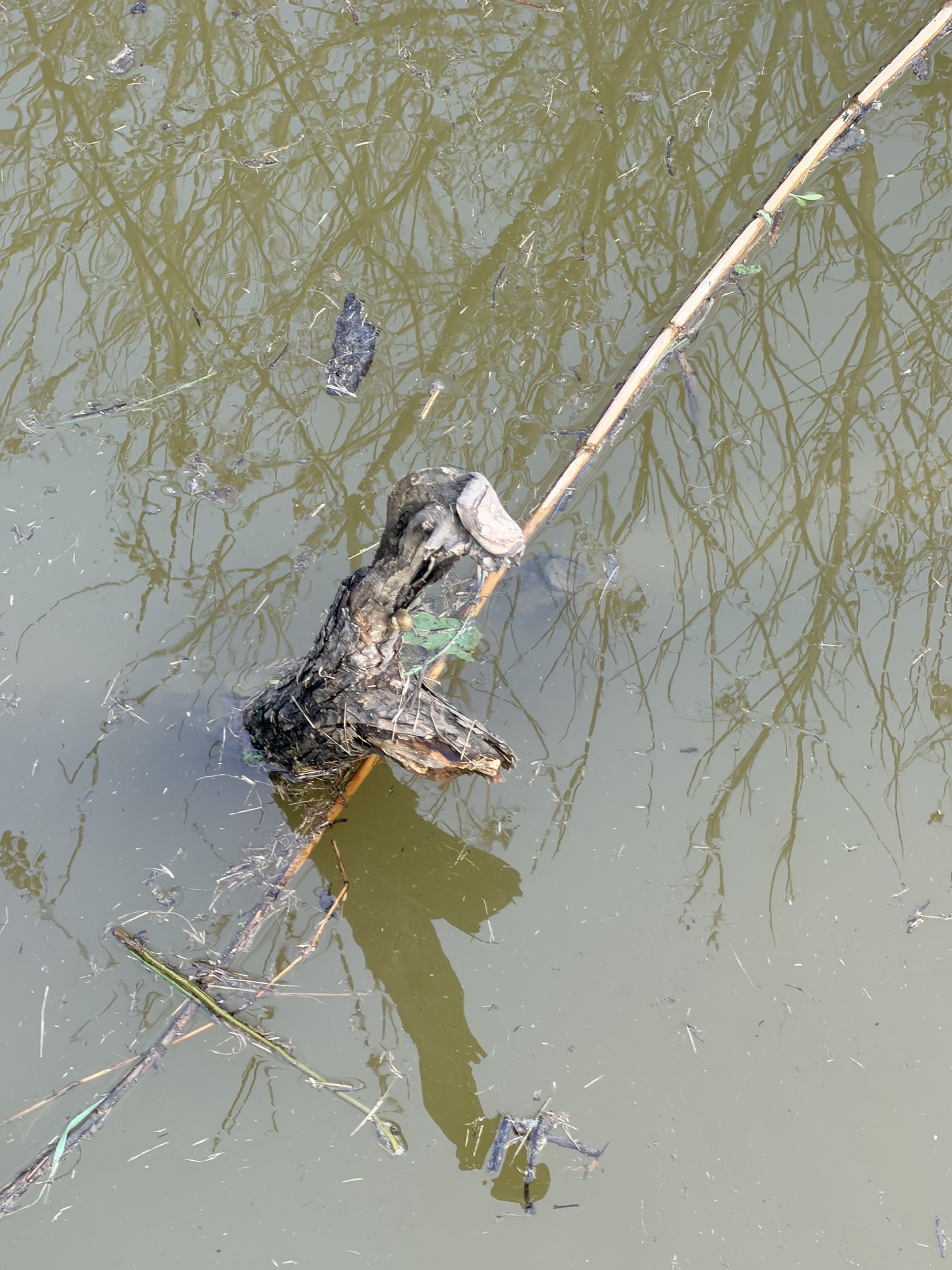
There’s not much other news, because I worked both jobs today (all interesting) and the only other activity I did was go on a walk with Kathleen. We found some flowers and a scary branch that looked like an angry snake in the creek.
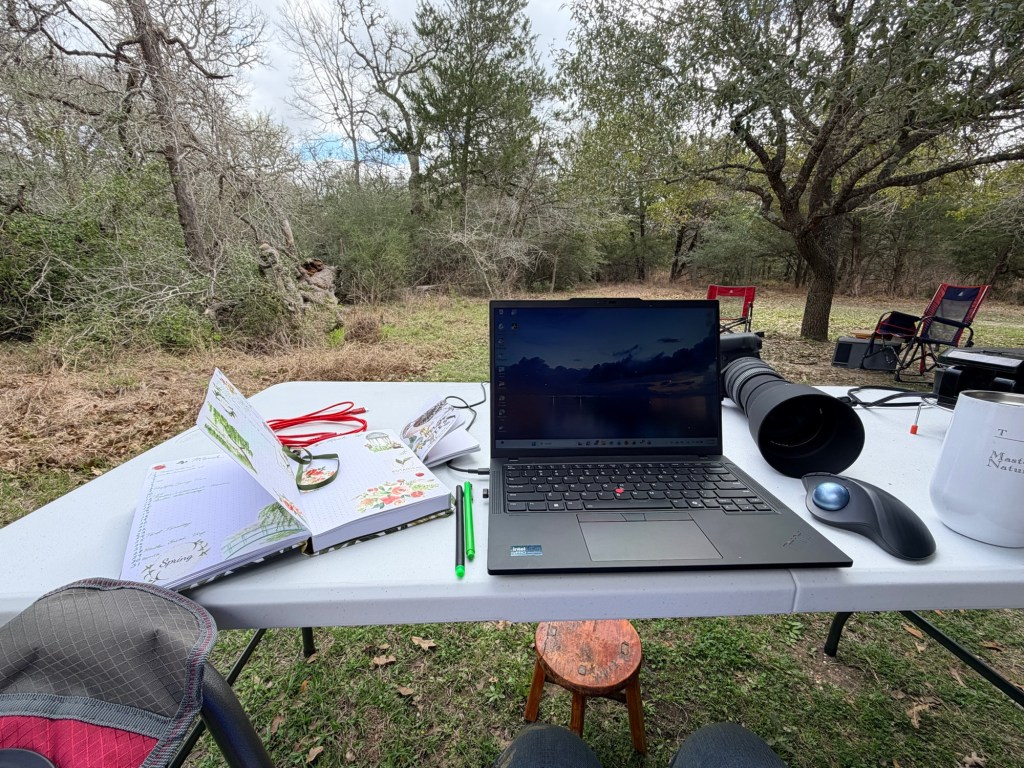
I must congratulate myself for creating such a pleasant outdoor workspace today at our campsite that I didn’t have to move inside at all. I guess I should thank Mother Nature for providing pleasant temperatures and no crazy winds.
Nice view!
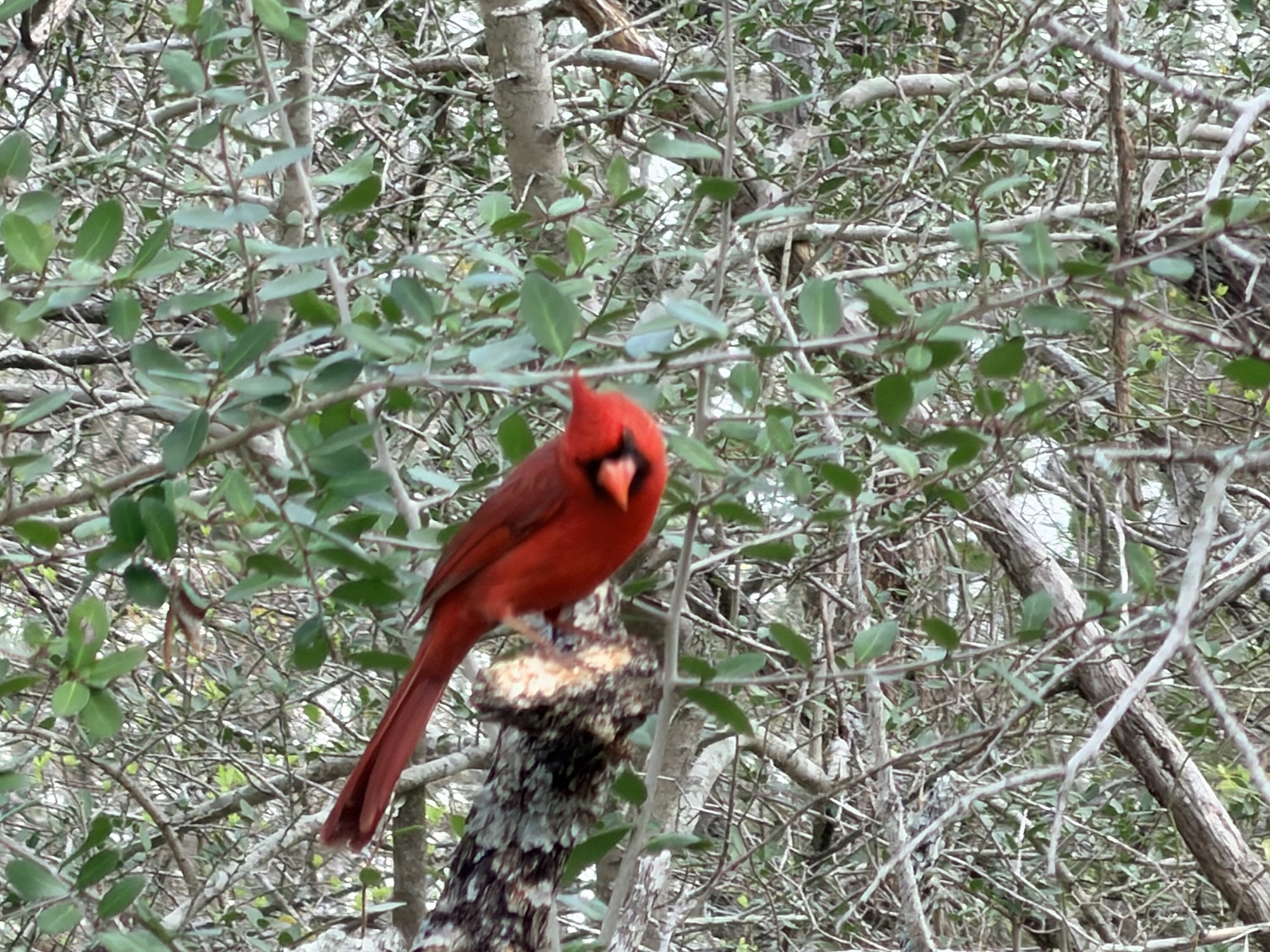
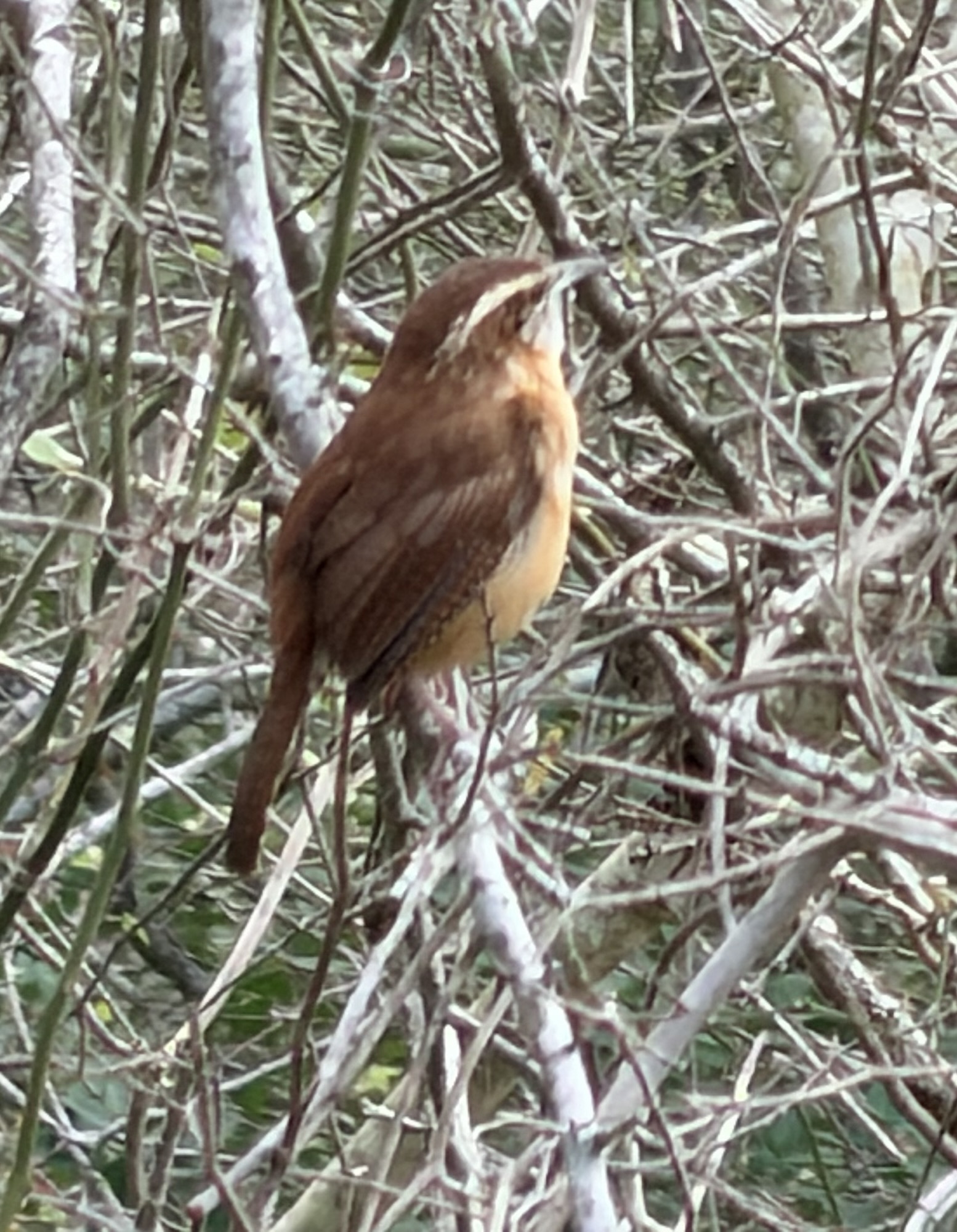
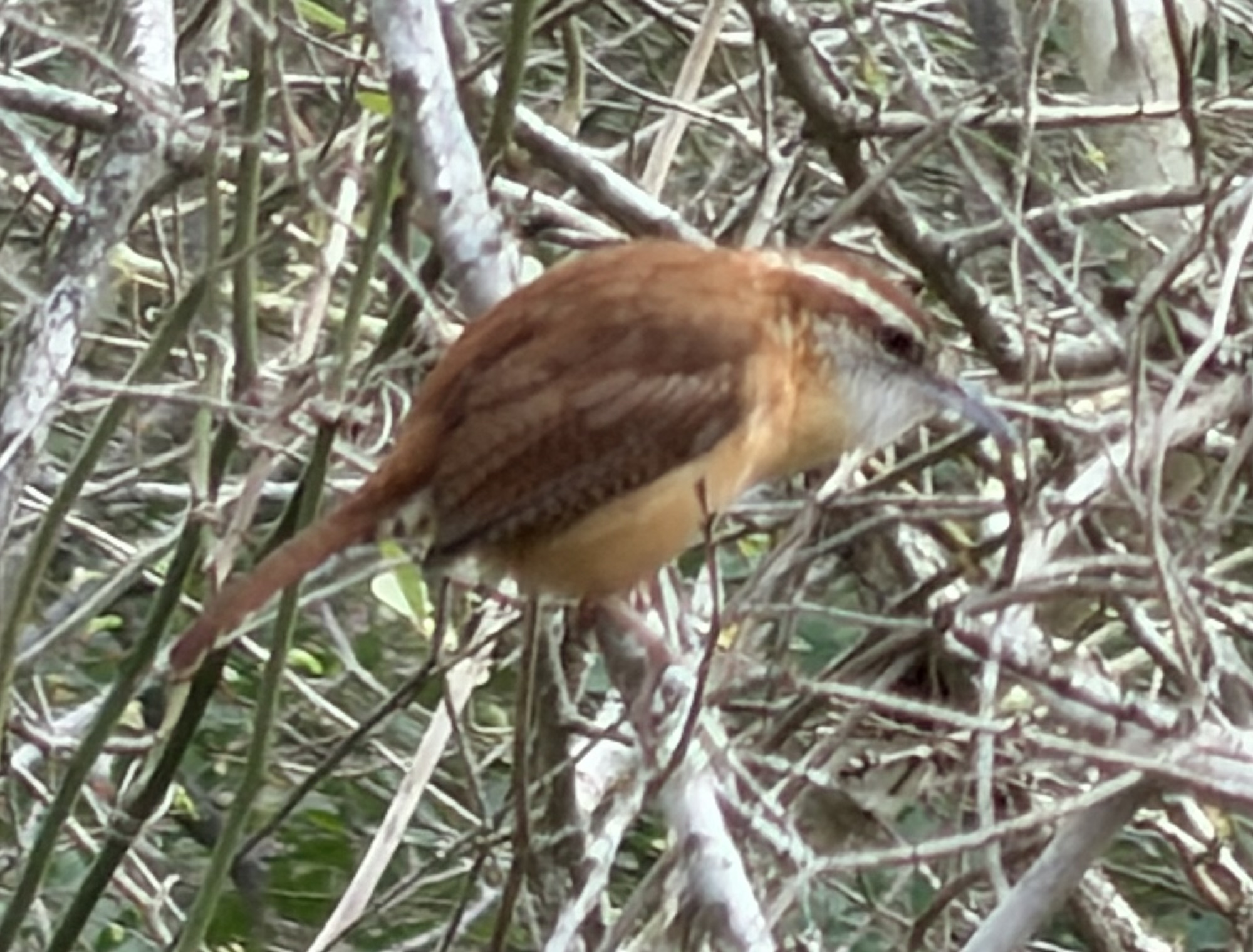
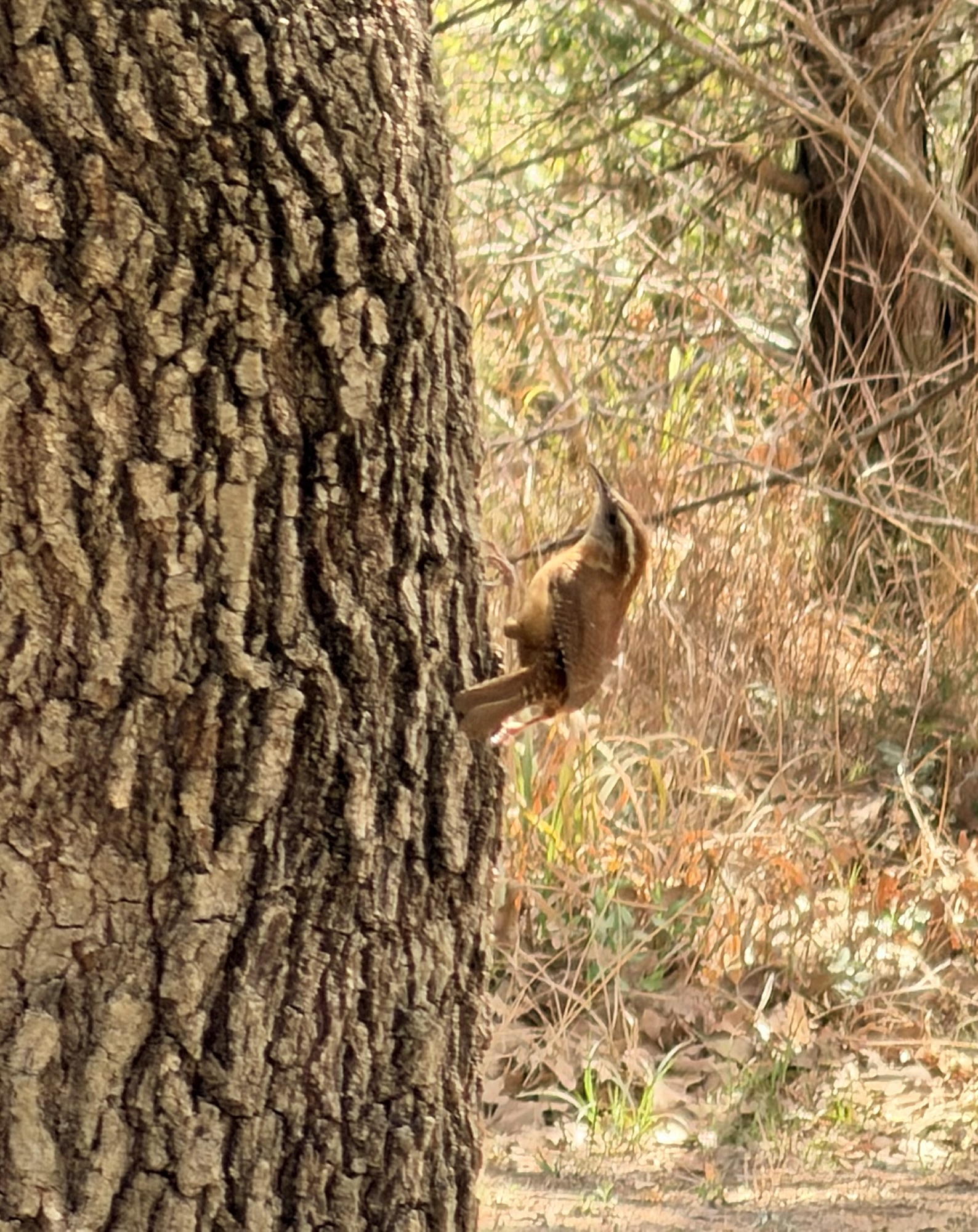
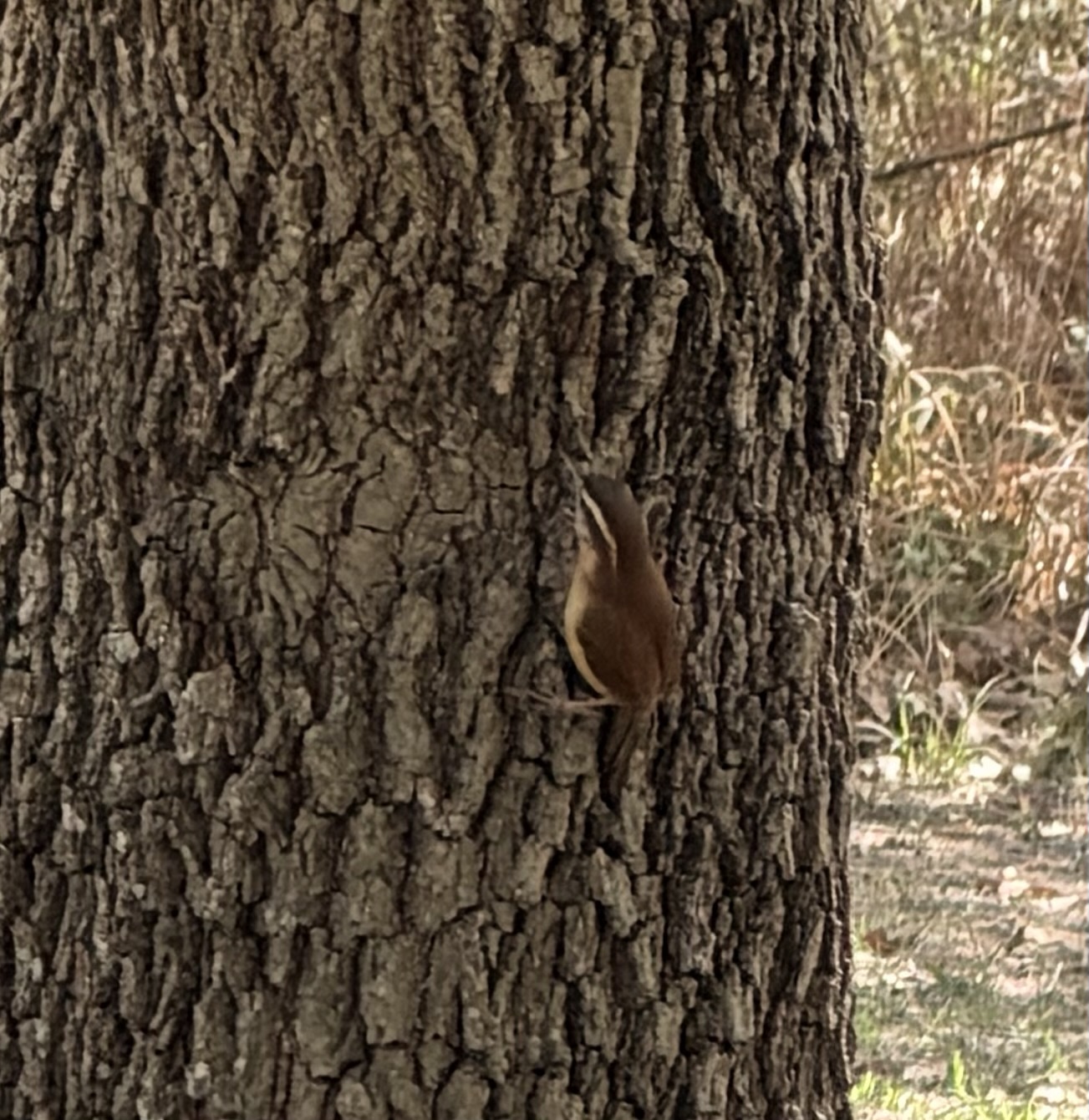
The portable table makes a great and spacious desk. I could watch Cardinals and Carolina Wrens bopping around while I listened to meetings. And thanks to the awning, I was in shade most of the day. It helped that I didn’t need two monitors for anything today.
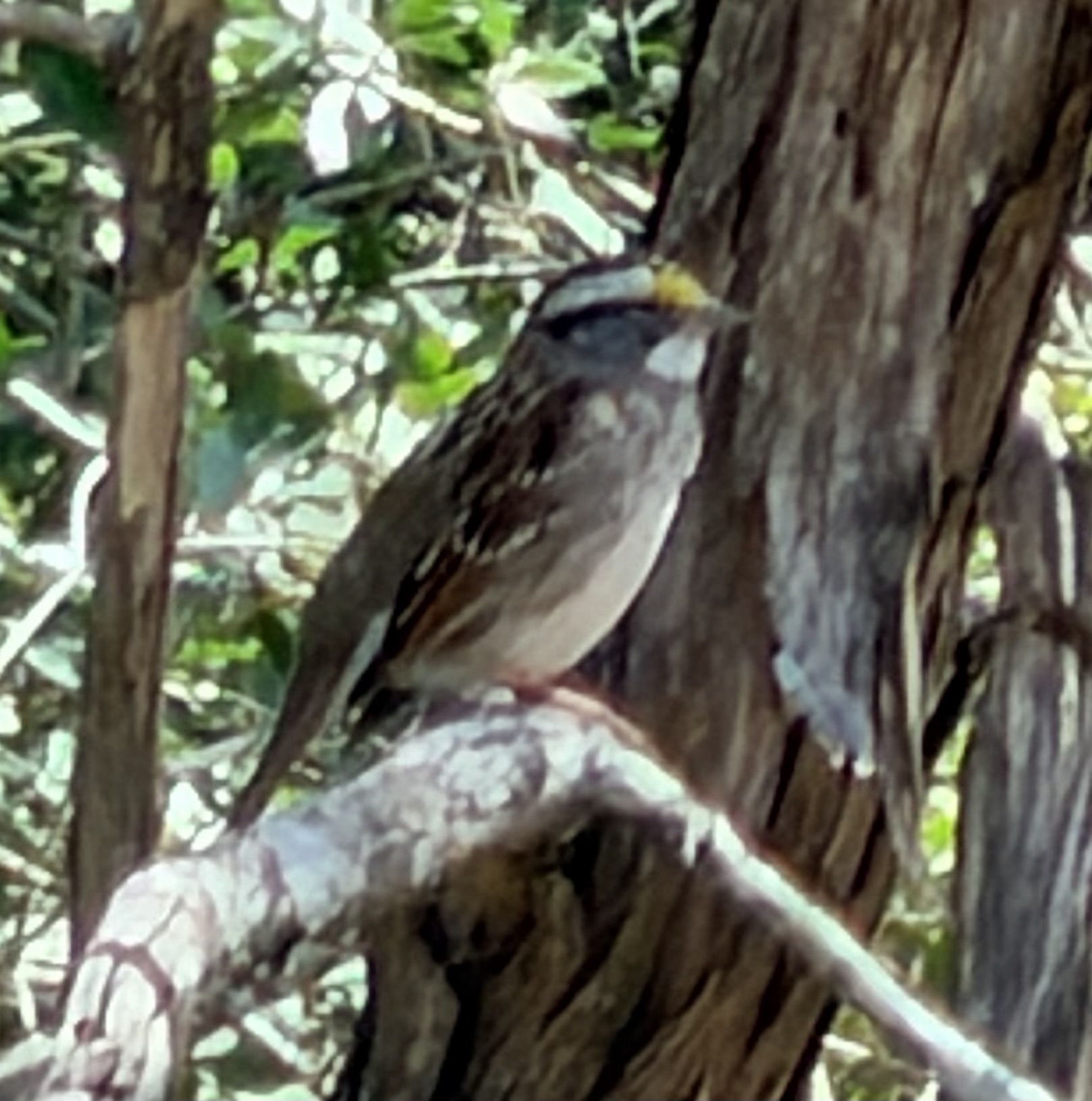
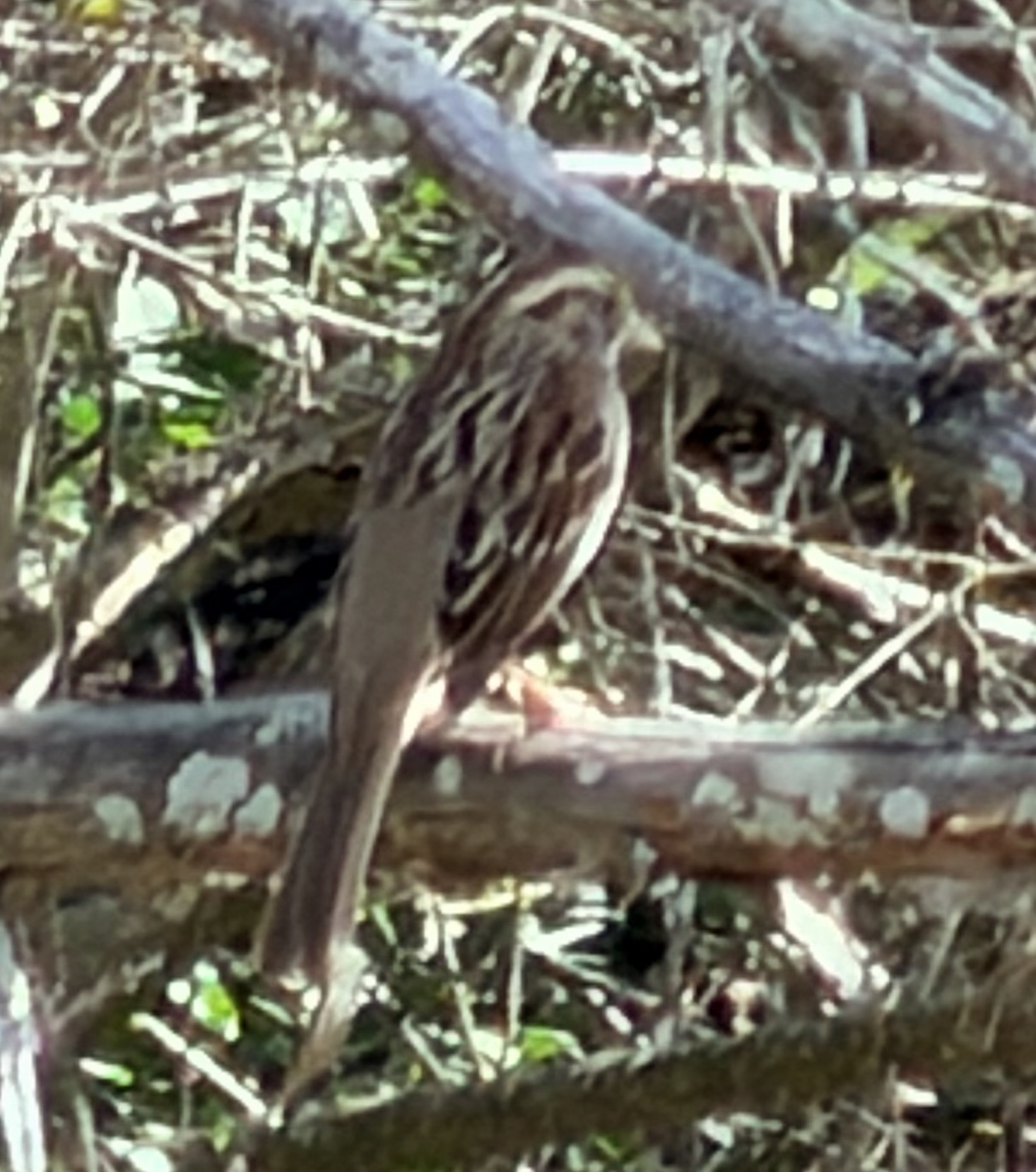
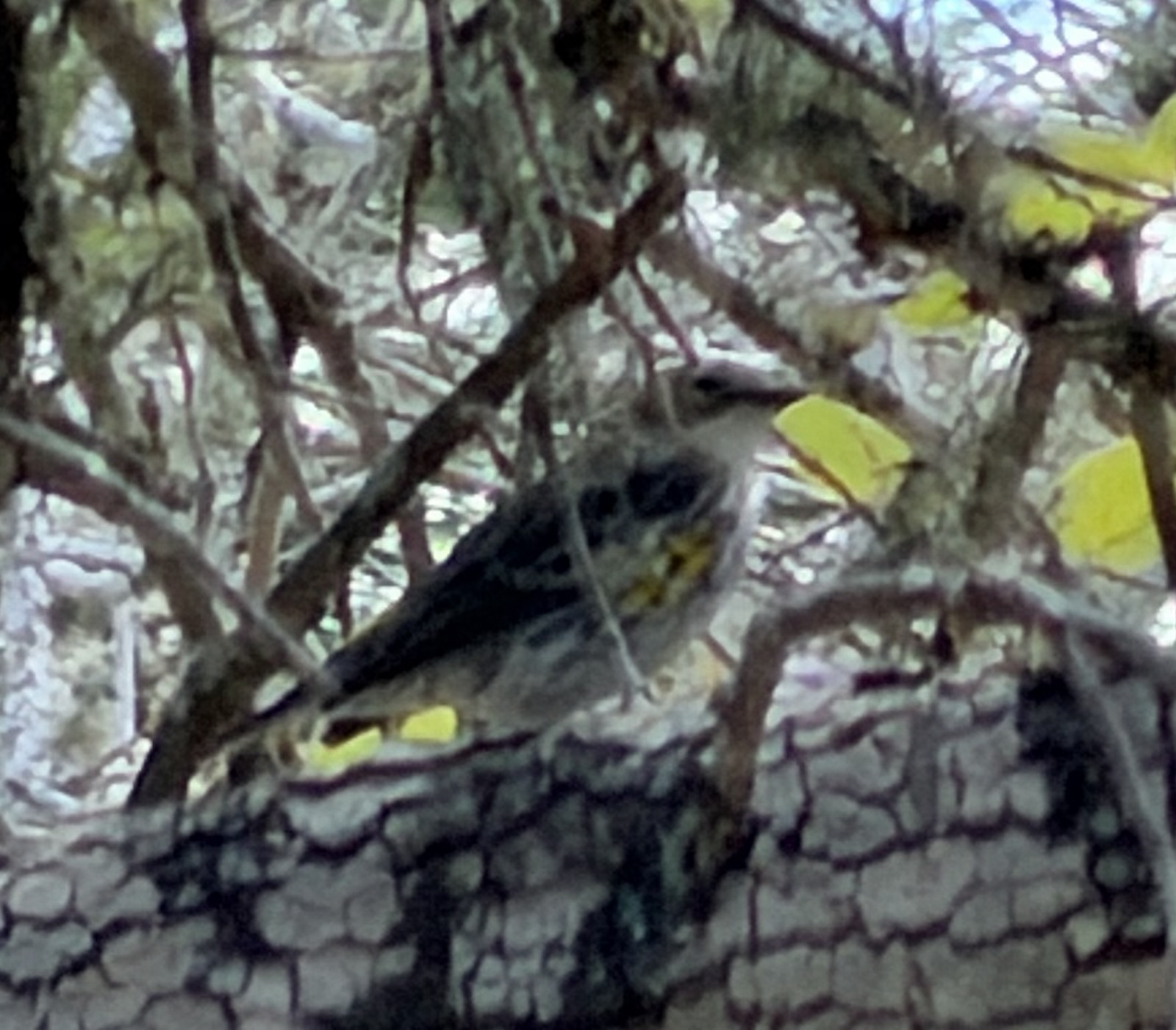
They’re familiar but prettyHe’s intense!So darned cuteBonus male White-throated SparrowBonus female WTSBonus Yellow-rumped Warbler
I took a short walk in the morning and was able to get photos of a few more birds, some of whom I’ve been hearing but not seeing. The light was bad, but I could tell what they were!
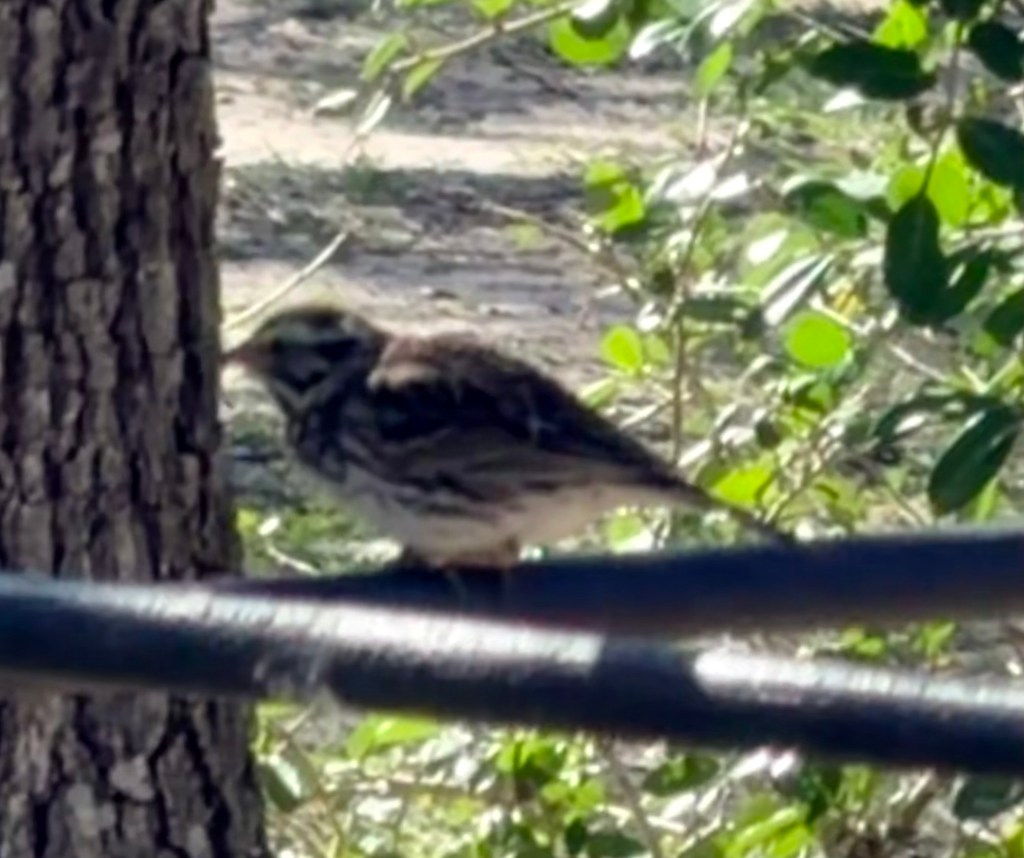
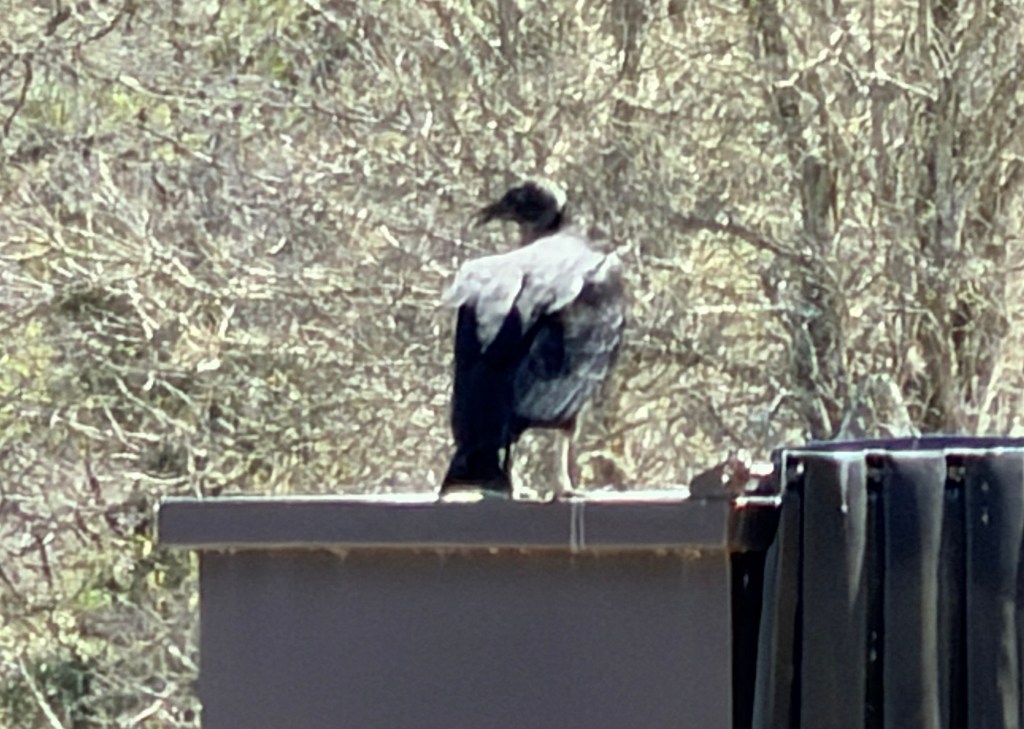
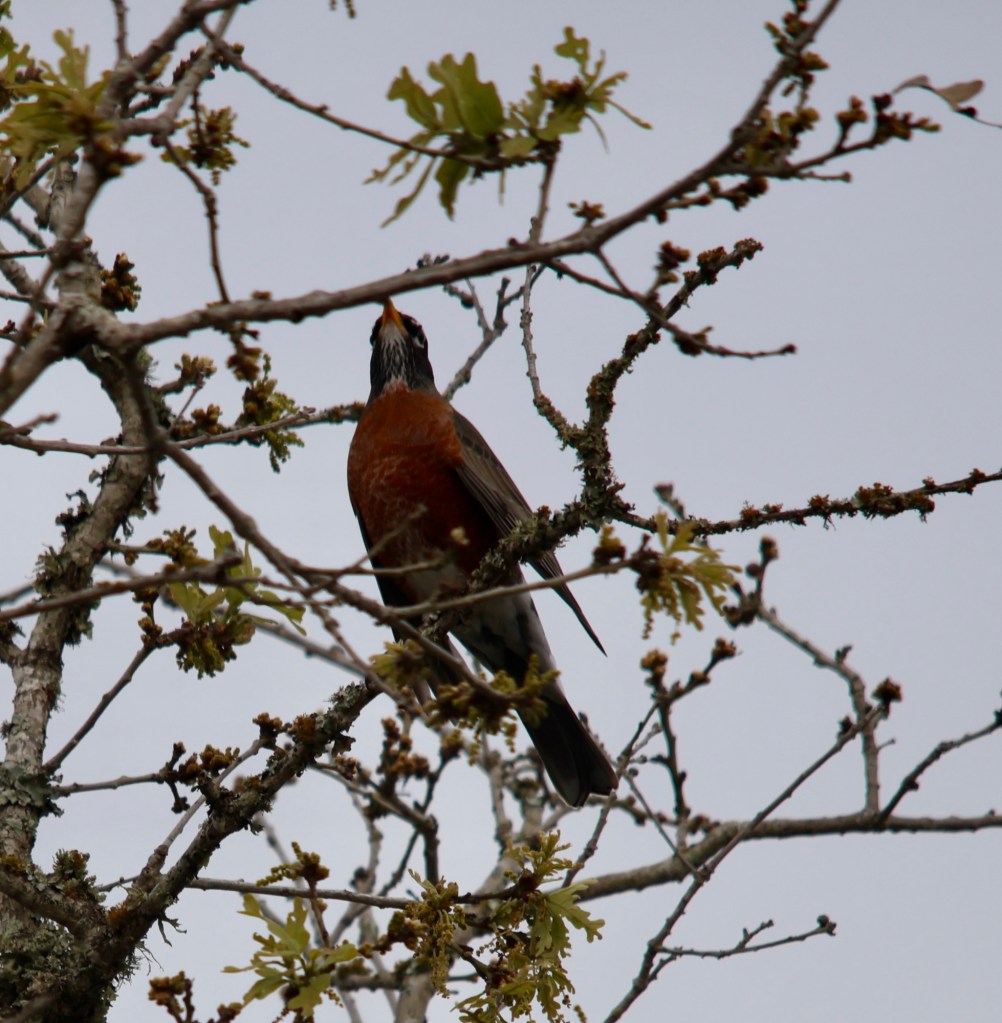
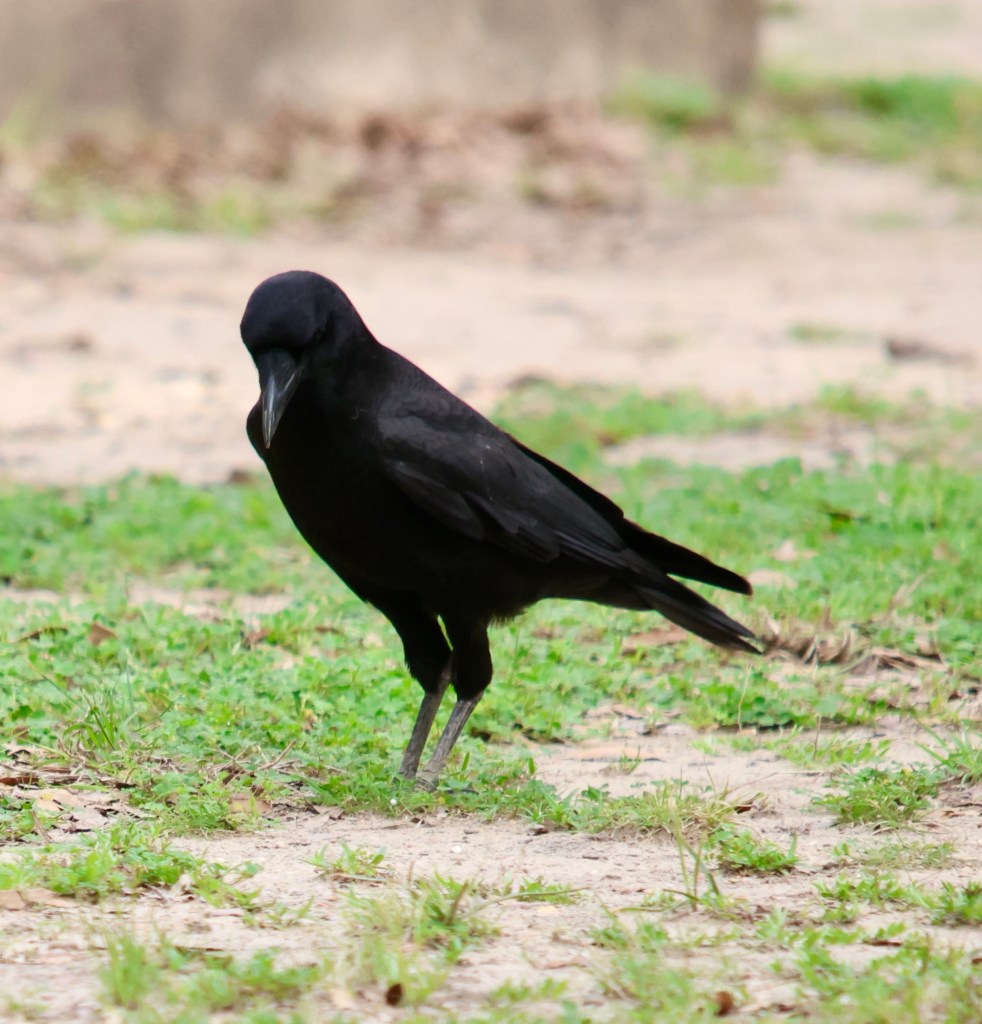
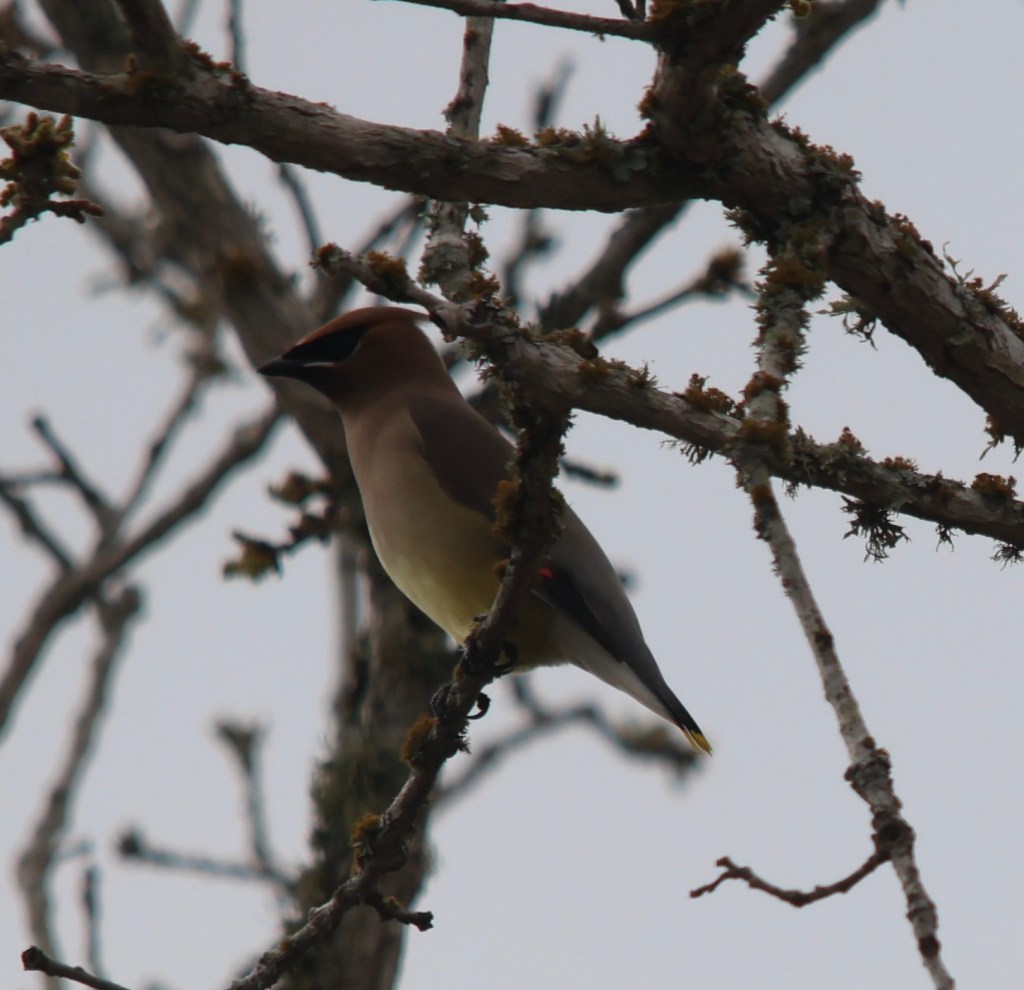
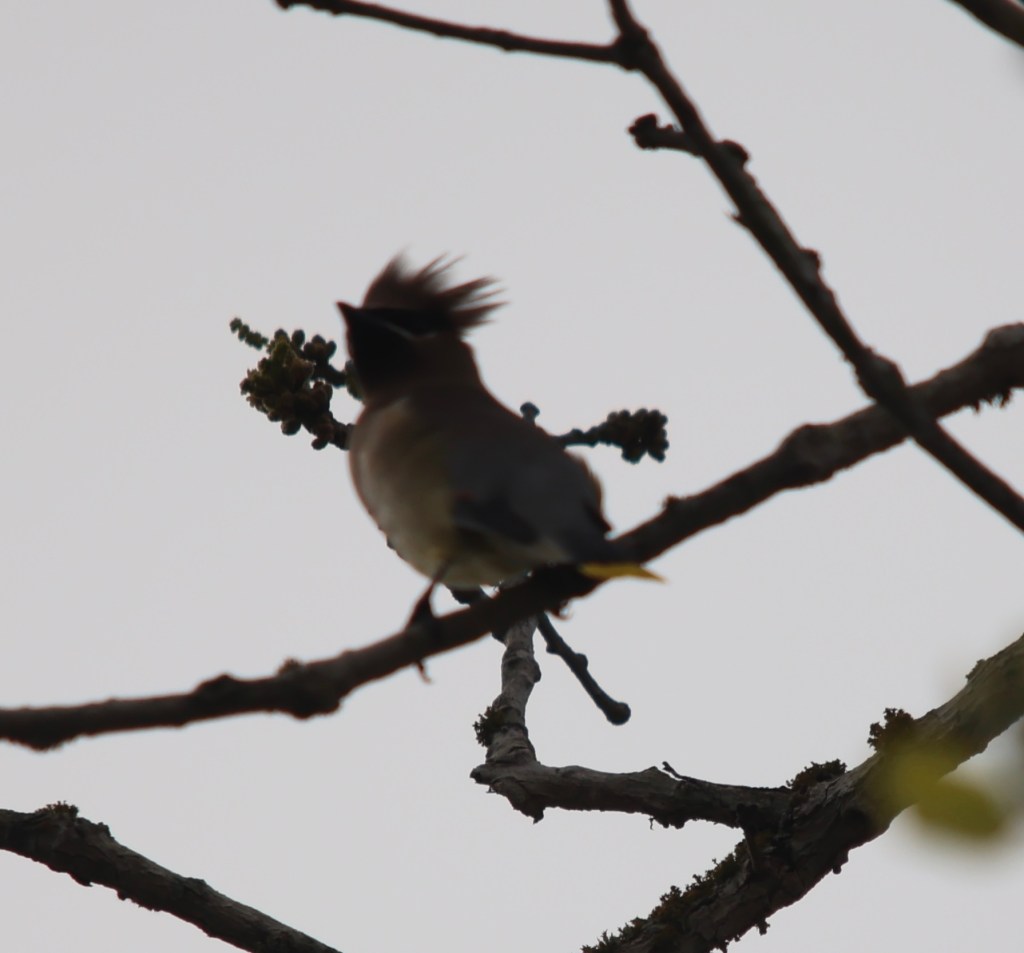
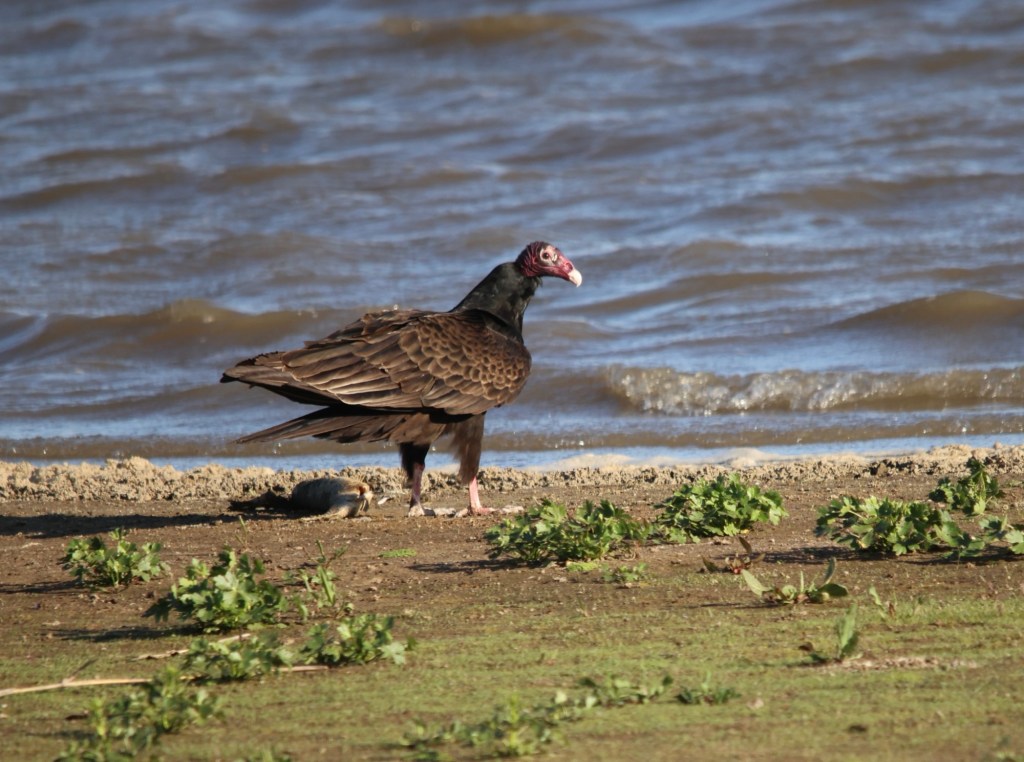
Savannah SparrowBlack Vulture at her favorite dining spotRobin (male)Pensive CrowCedar WaxwingBad hair day Waxwing
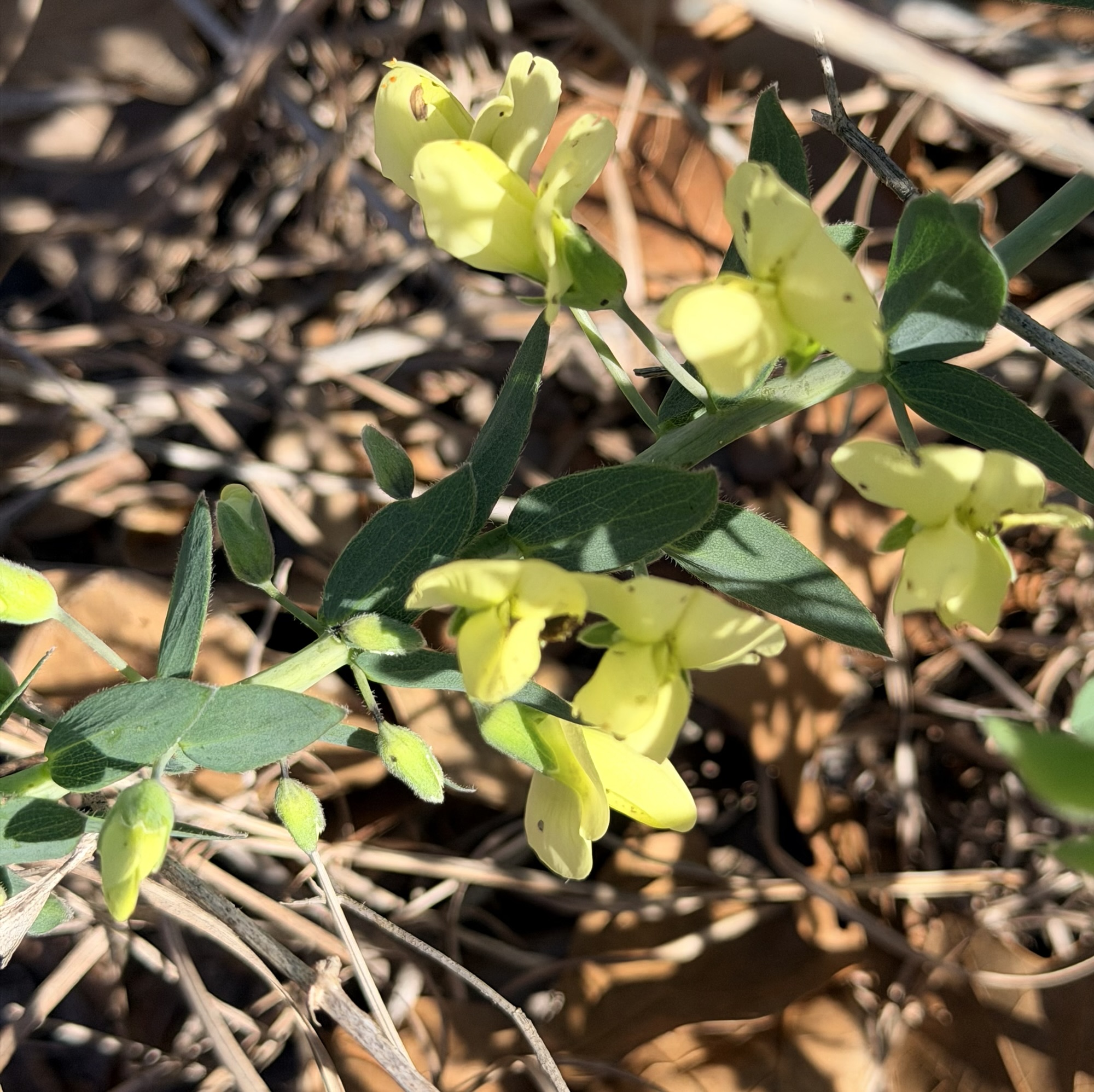
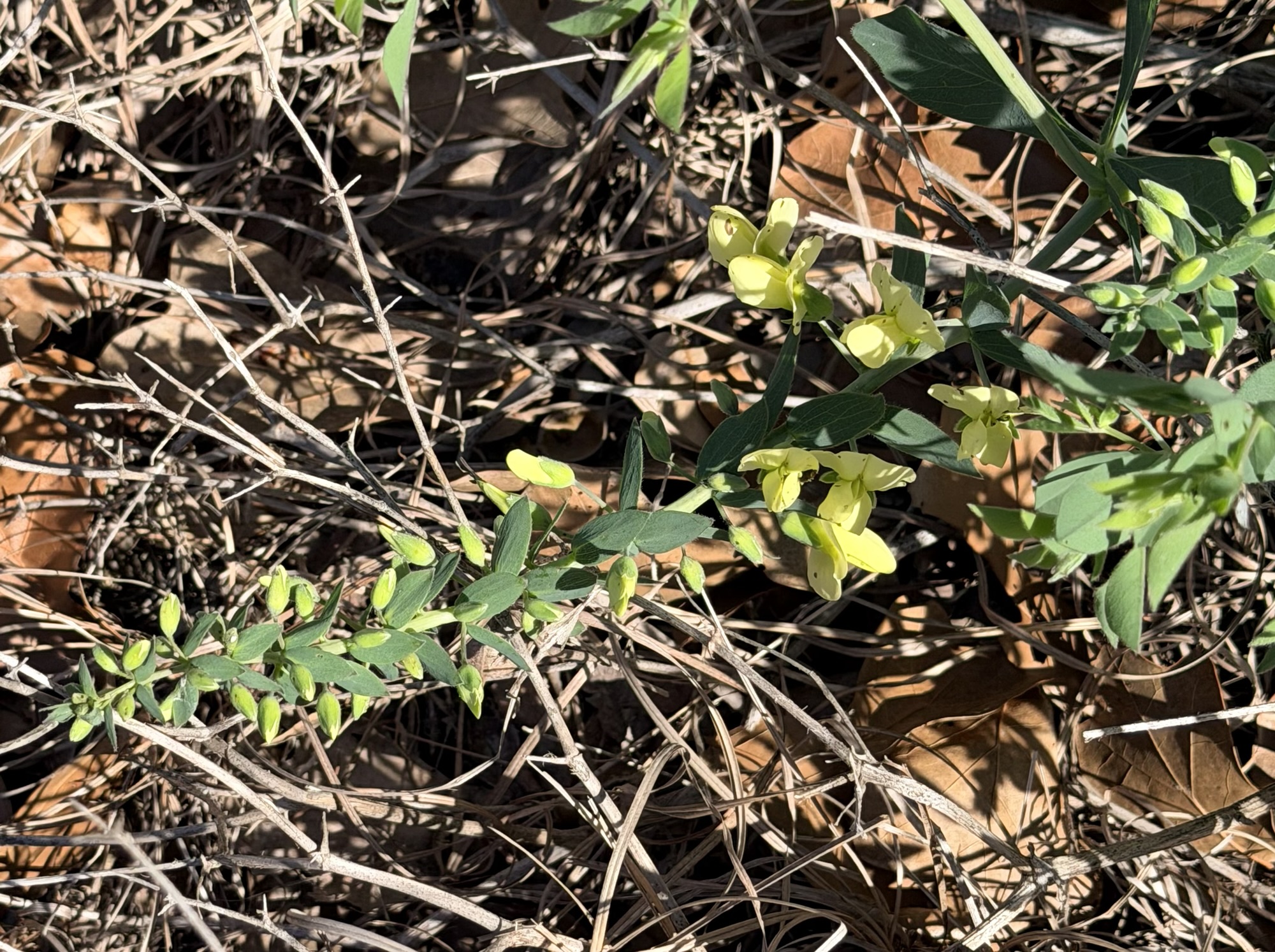
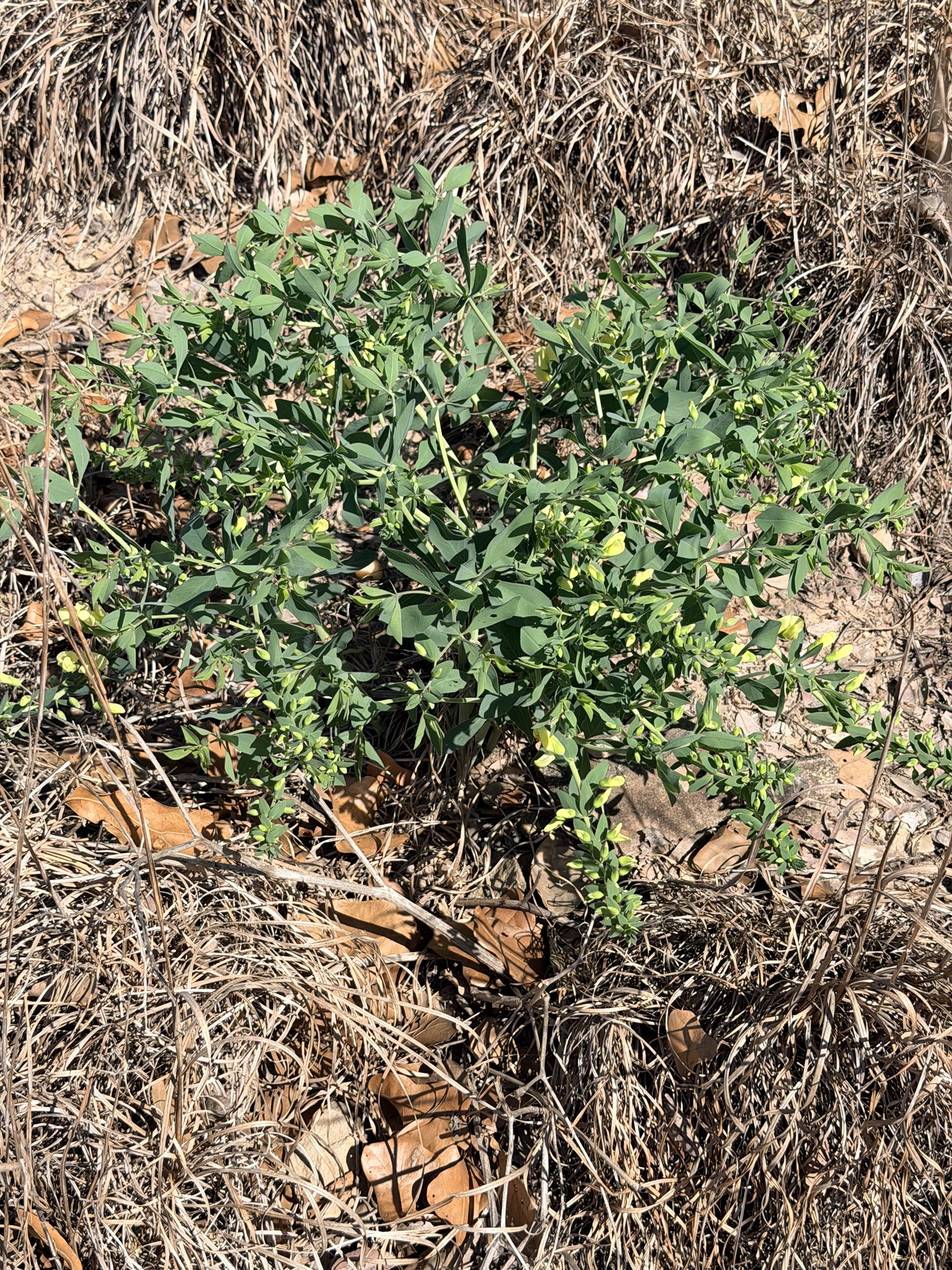
Lunch hour gave me time for another walk at 2 pm (lunch Pacific Time). I enjoyed shady paths and some ups and downs. The highlight was finding the incredibly beautiful cream wild indigo (Baptisia leucophaea). The blossoms are breathtaking.
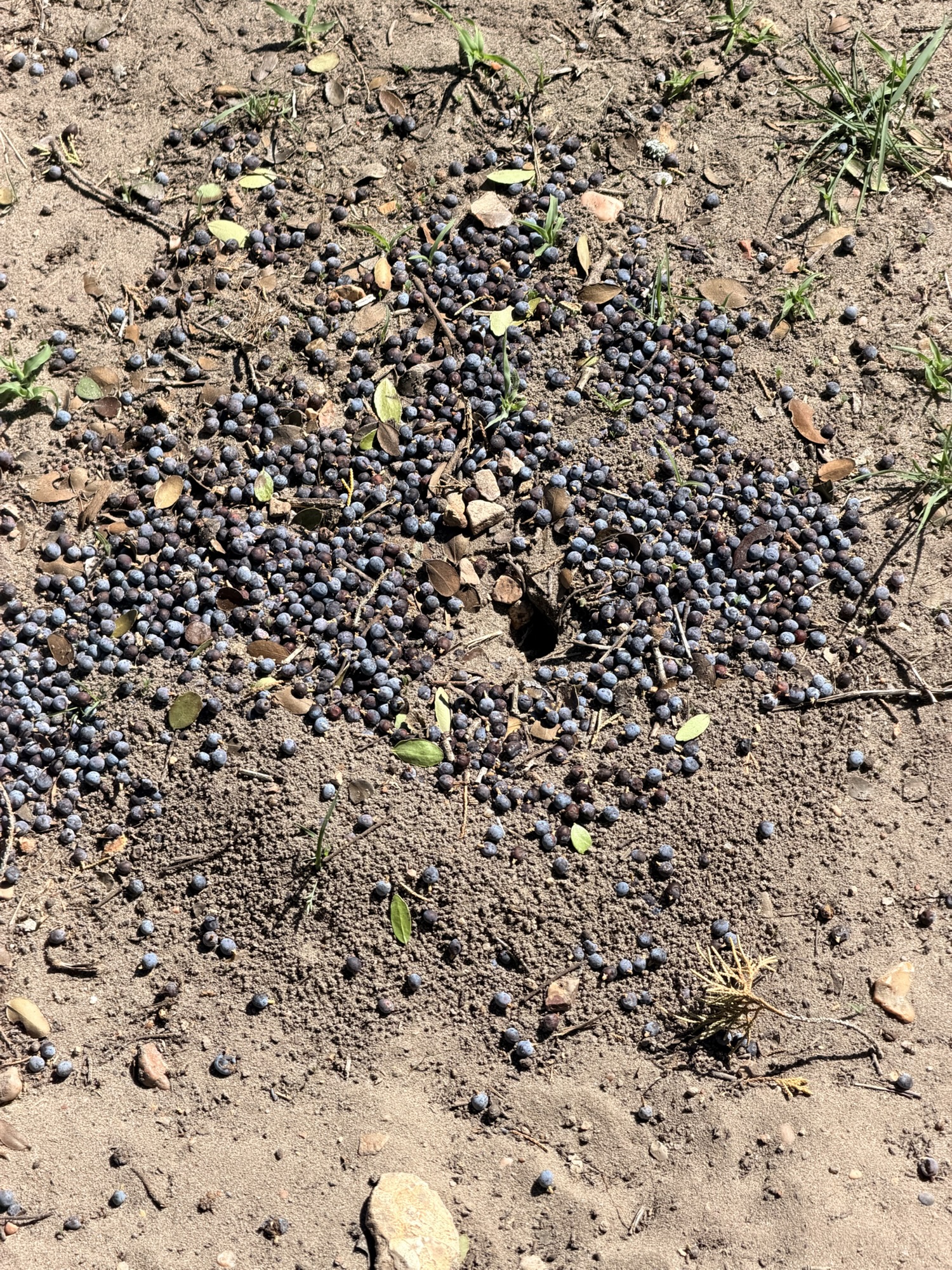
Leaf-cutter ants decorated with juniper berries rather than leavesEarliest blooming species of false indigoPrettier in person
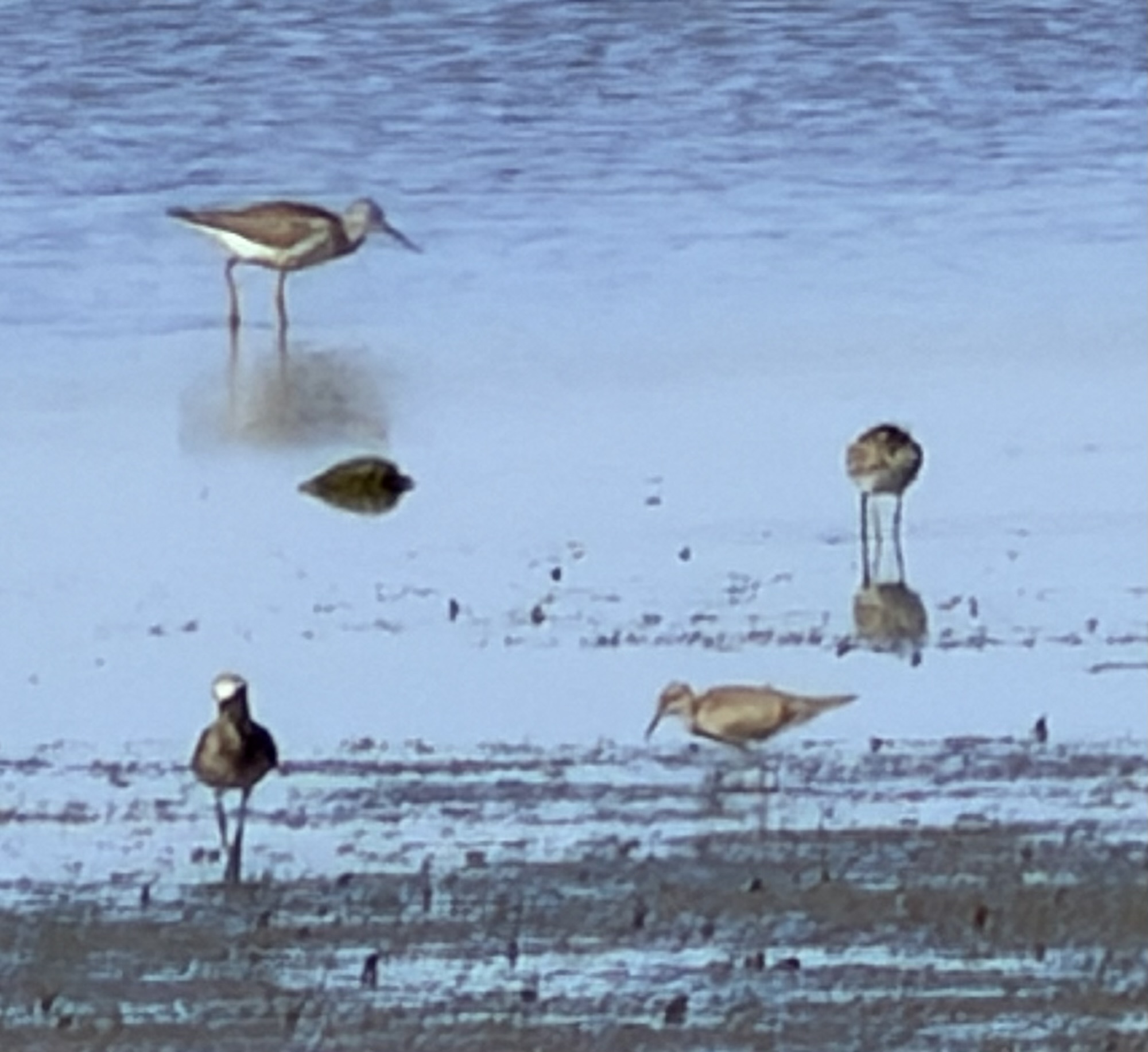
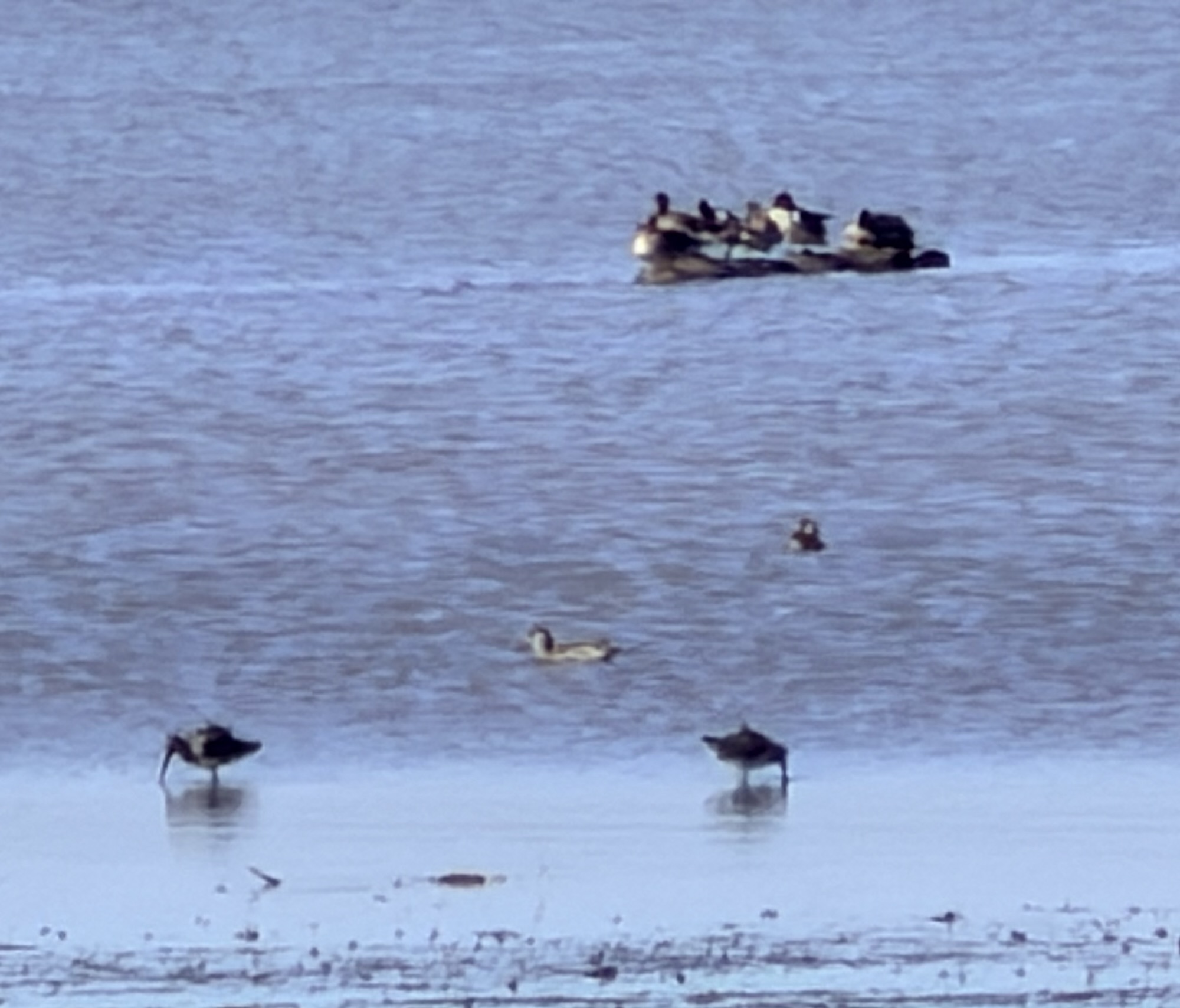
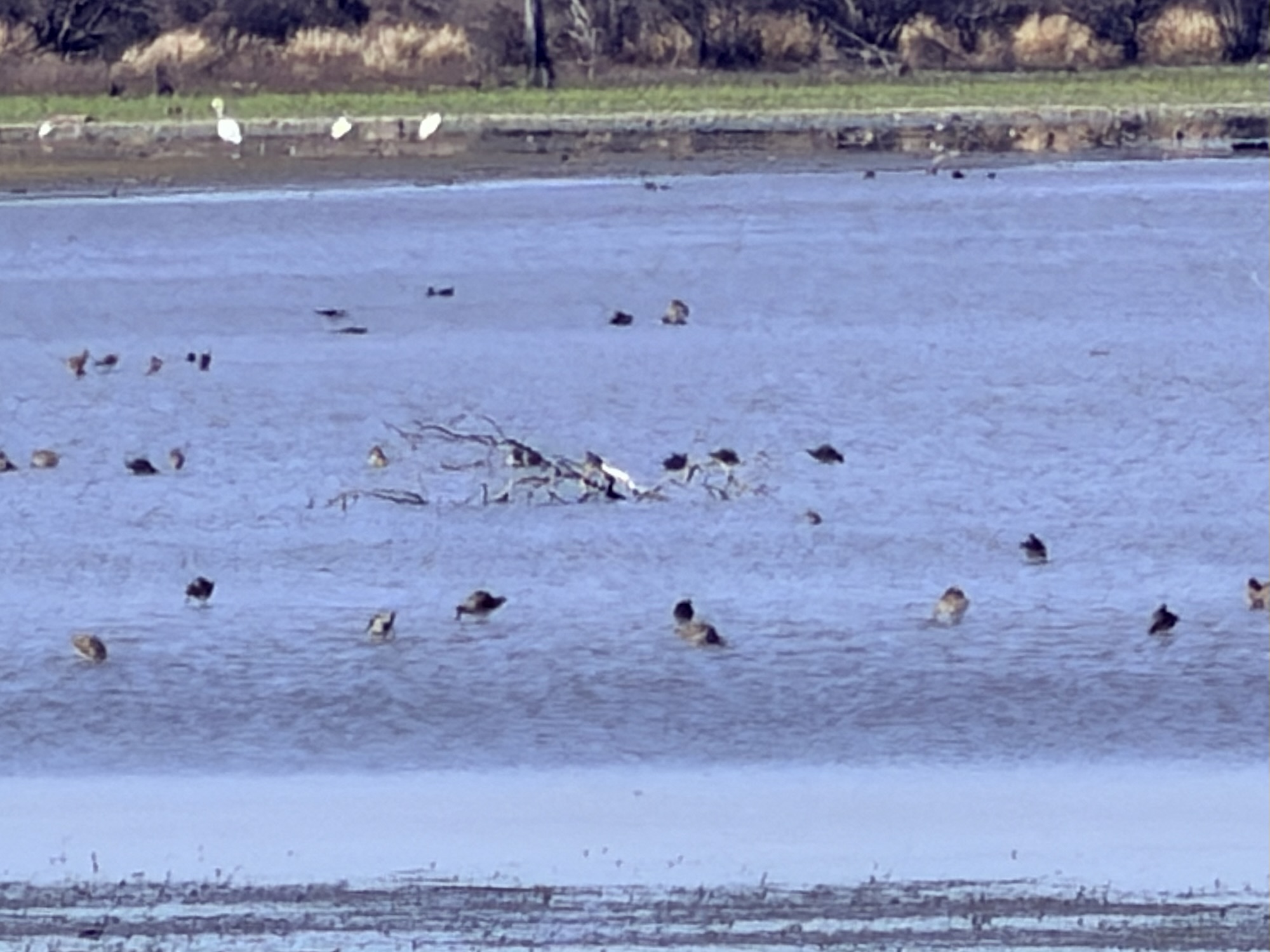
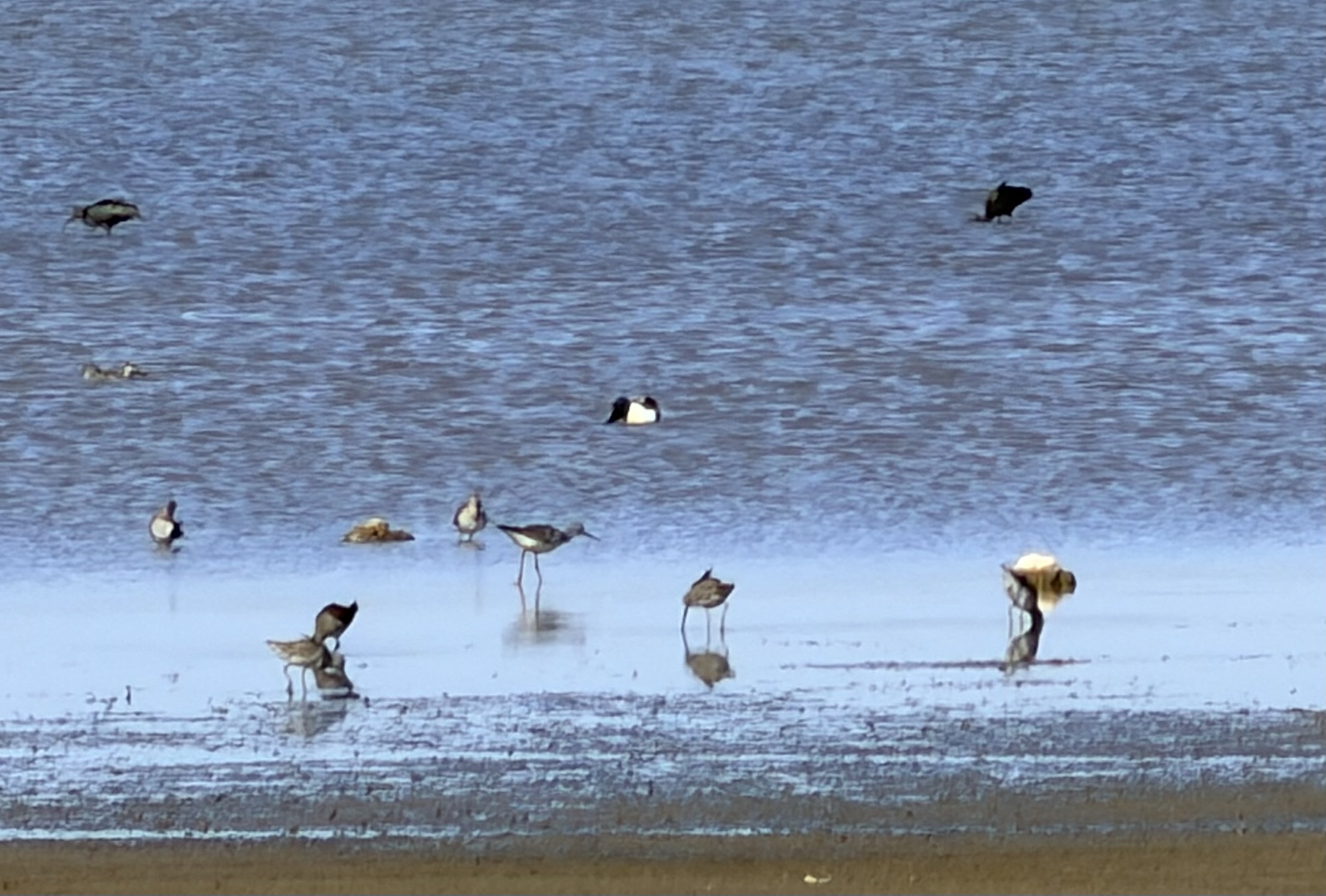
I couldn’t NOT go look at the waterfowl, but I mostly watched ducks dabble and dowitchers dig. Dandy! The Ibises were also present.
Ducks on a raft or branchSo many!
I worked pretty late so that was it for hiking. I still got 10,000 steps, and the big camera gave my arms a workout, too. I think I balanced work and life pretty well today. Now enjoy my “artsy” photos.
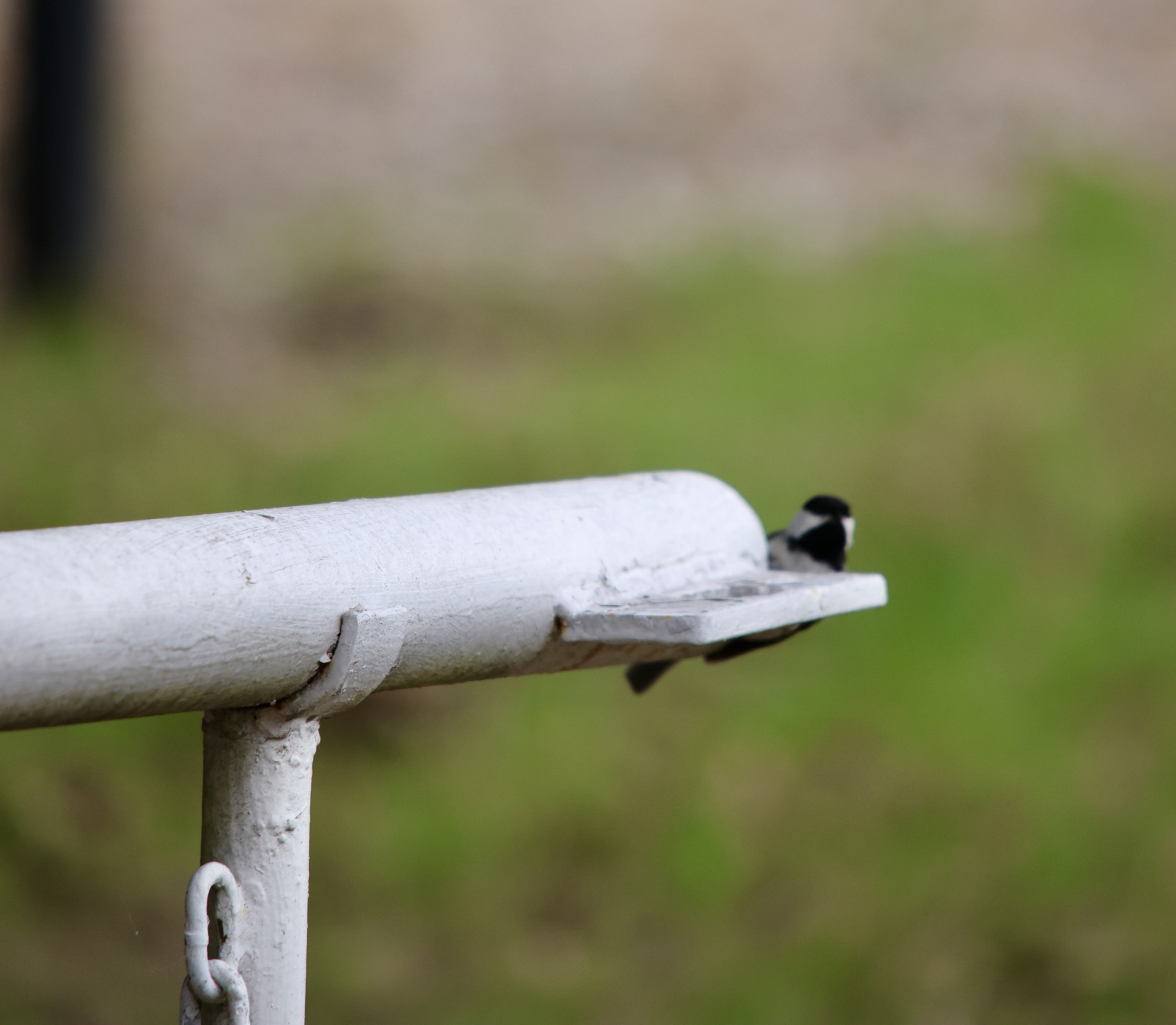
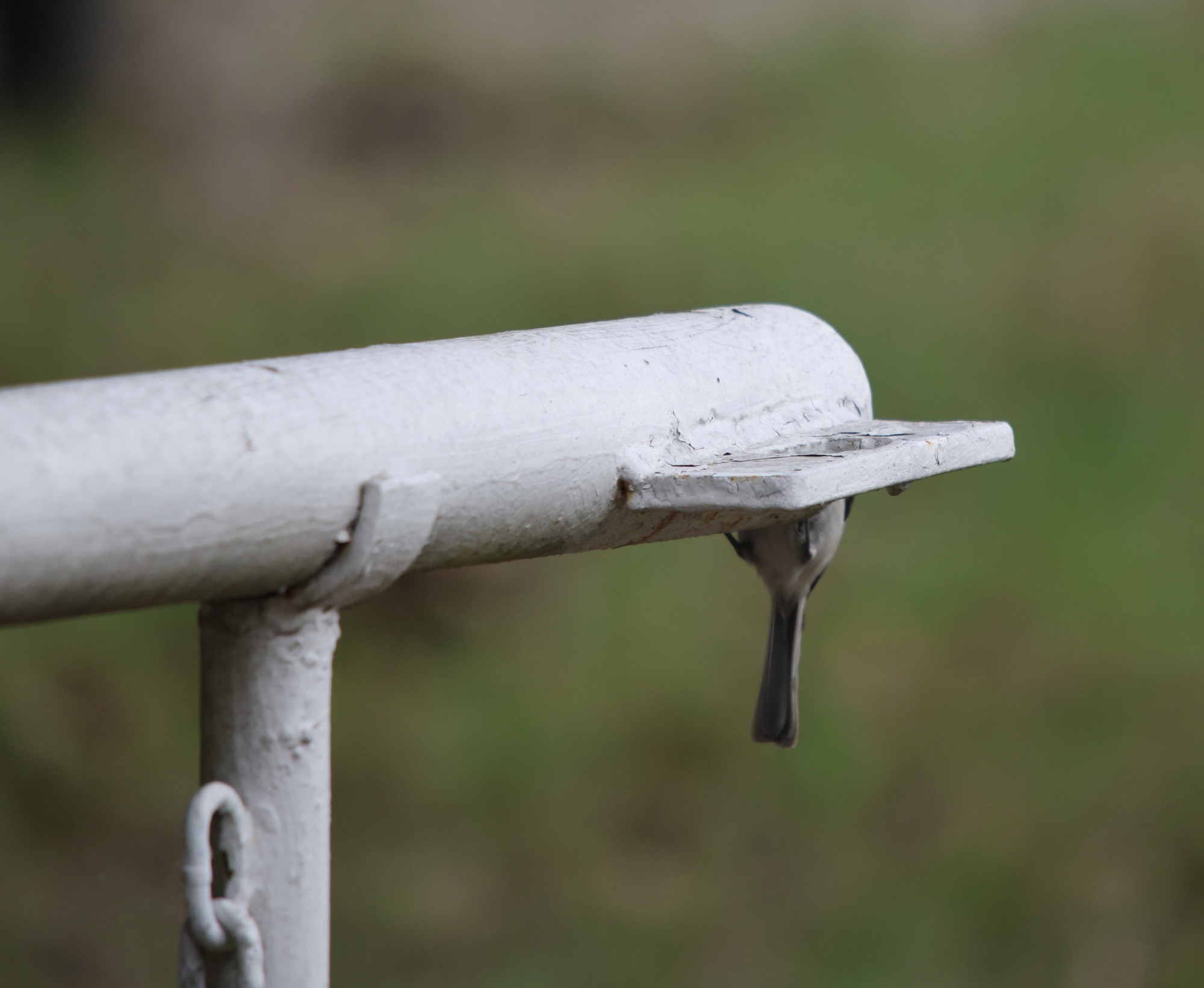
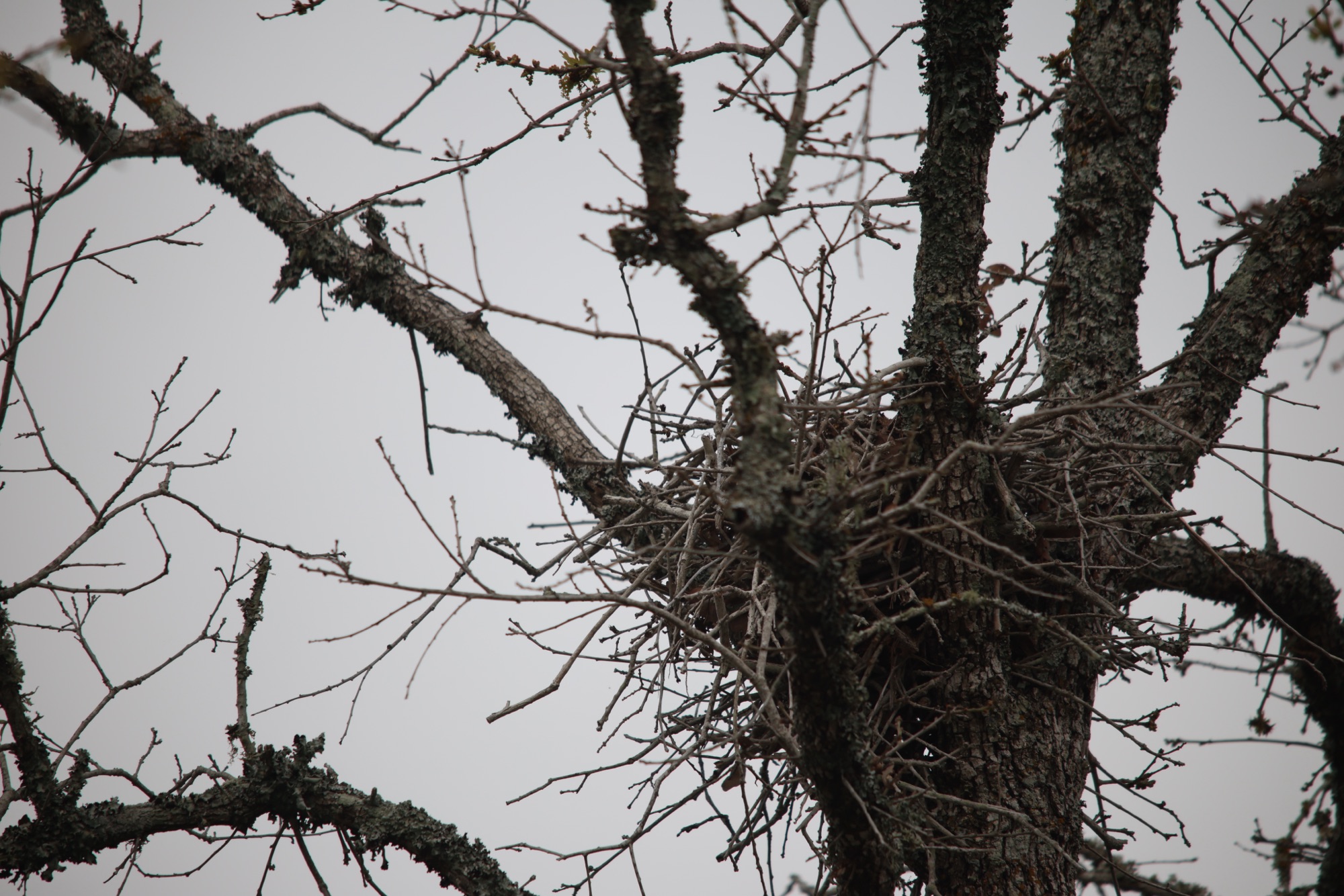
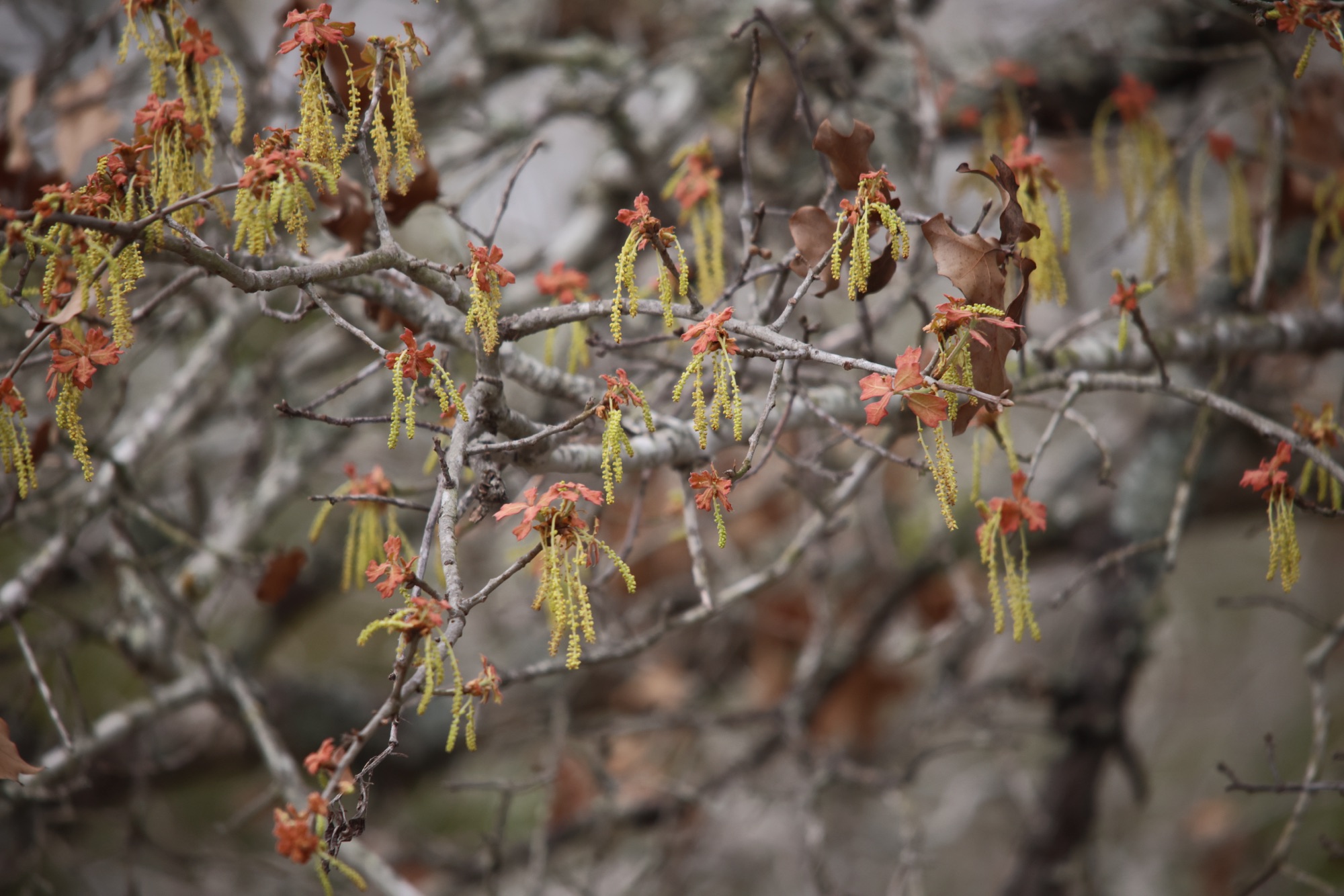
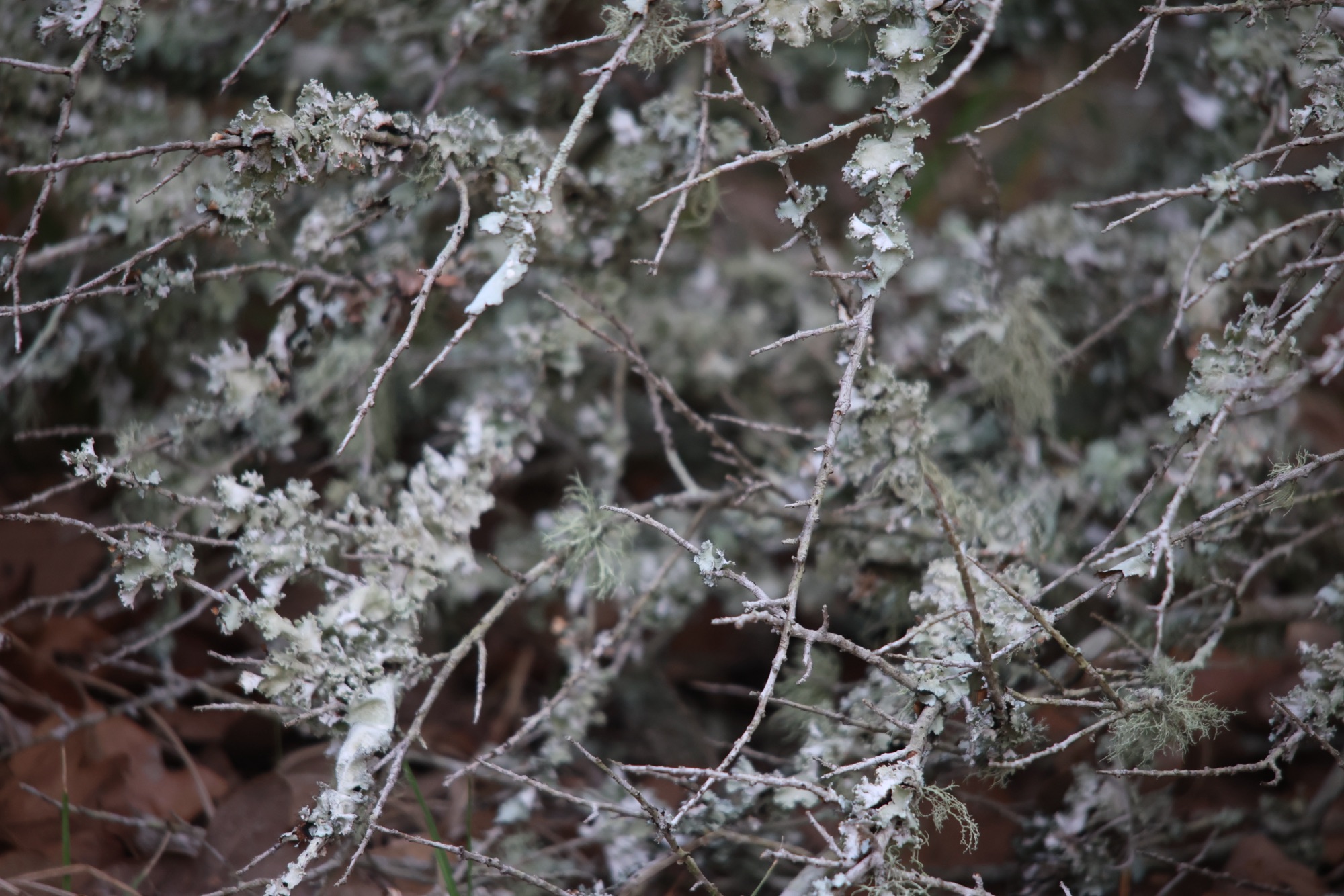
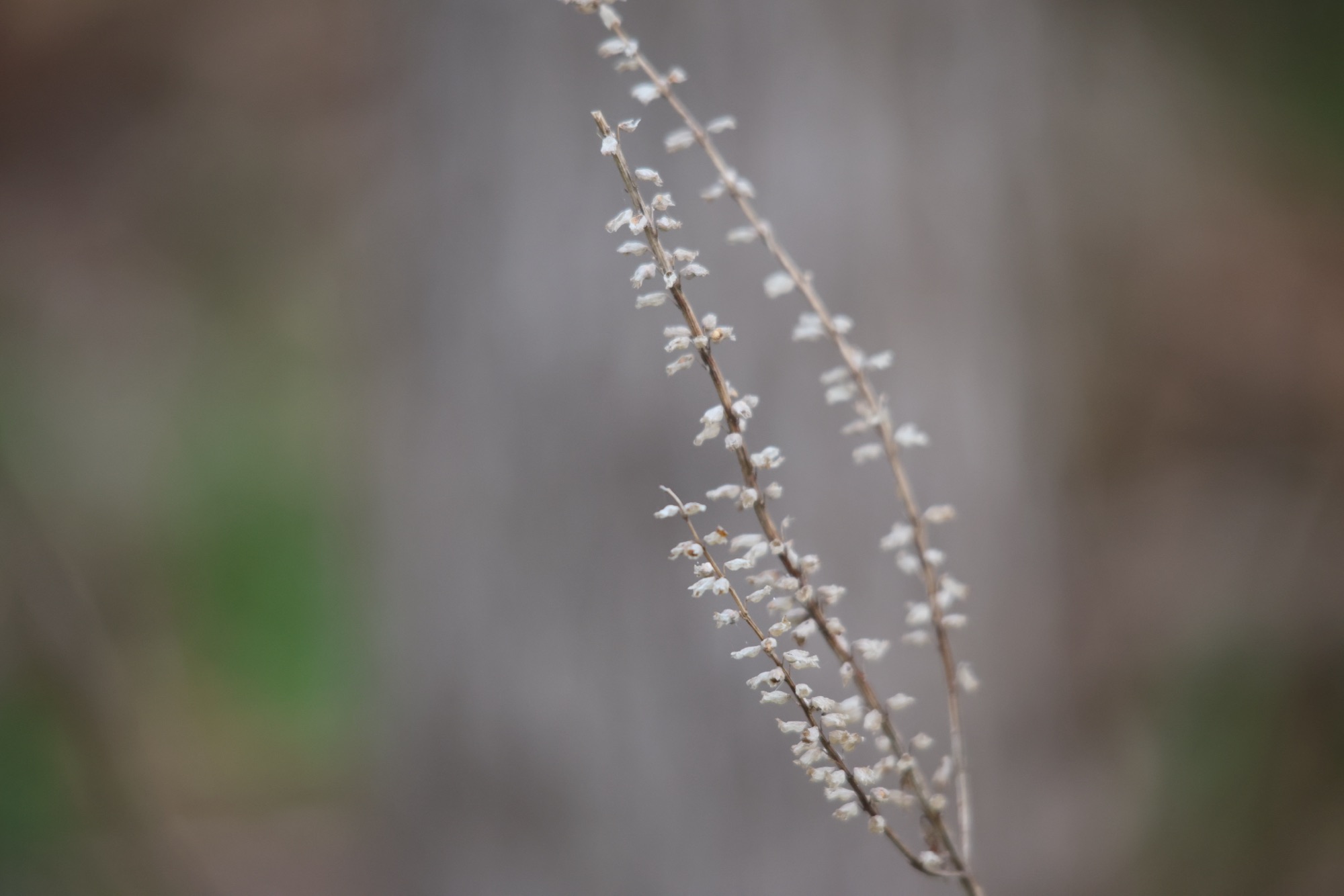
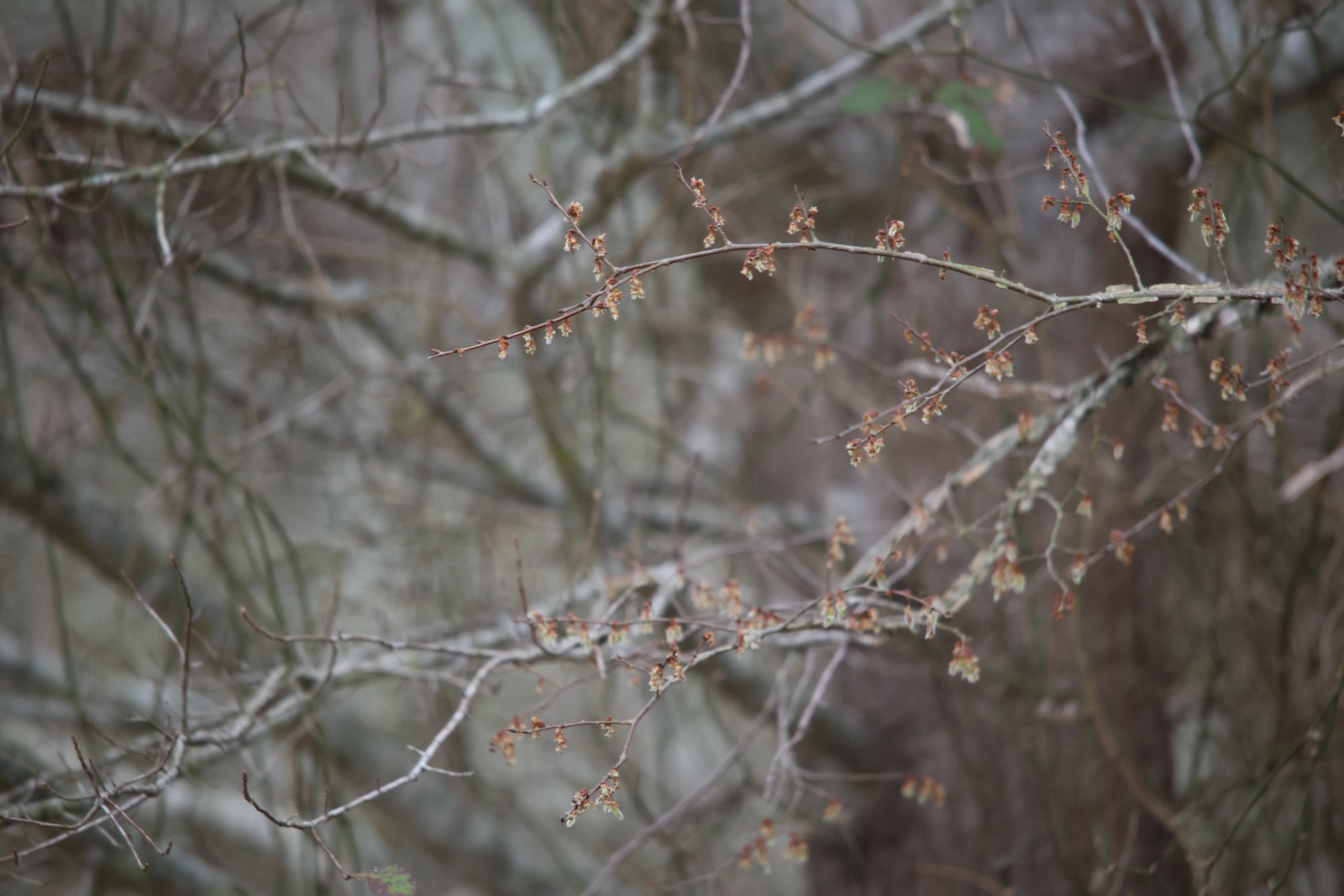
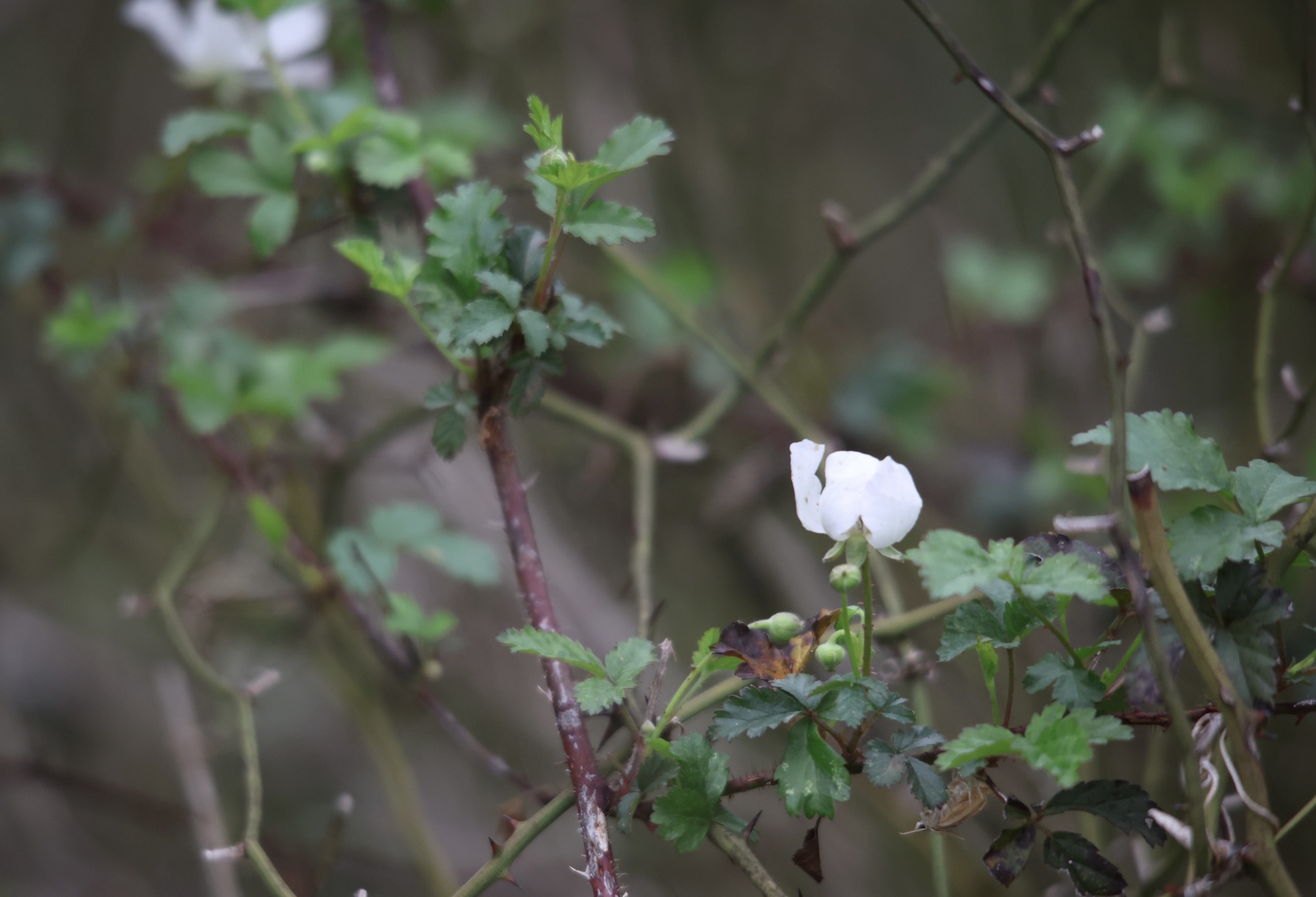
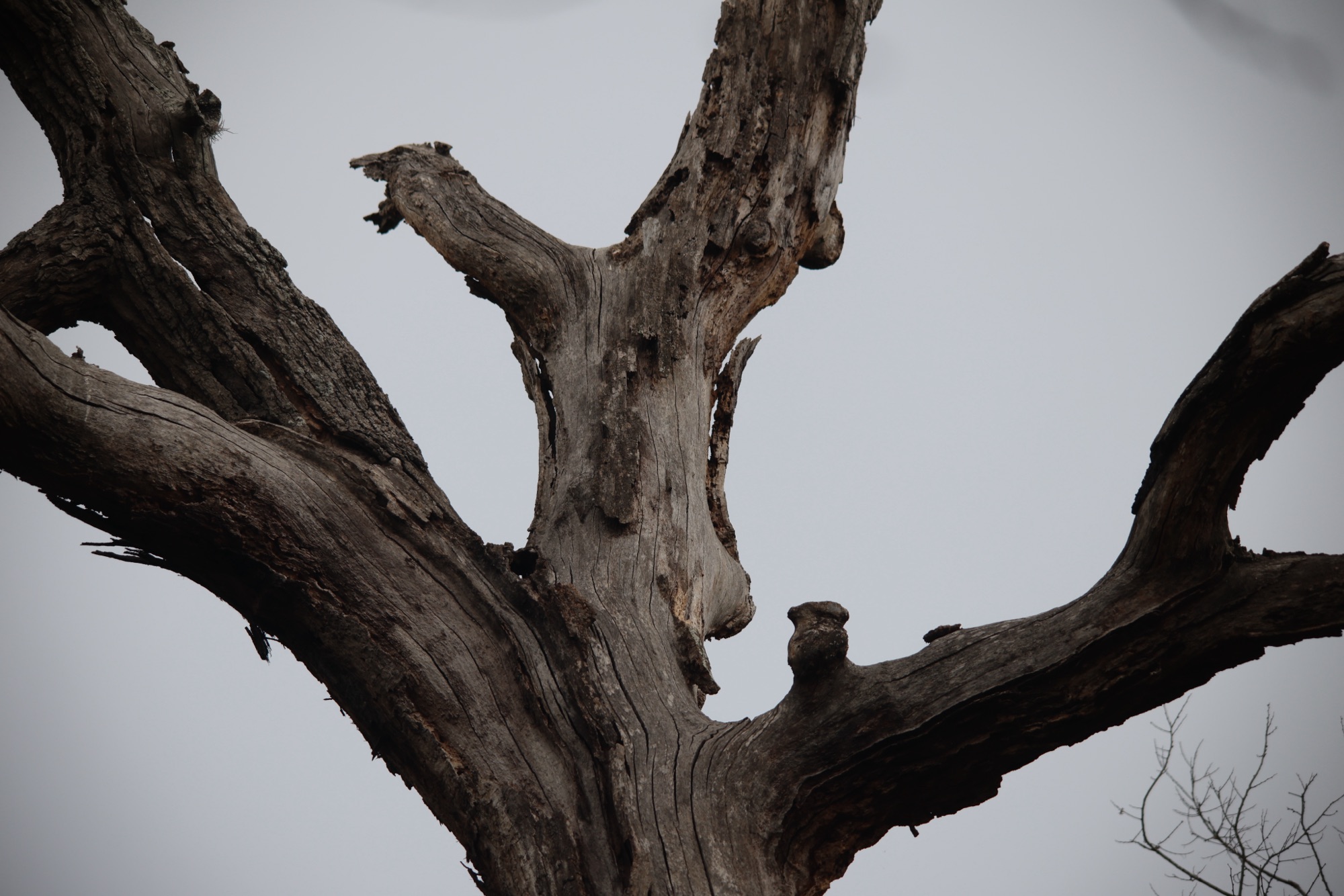
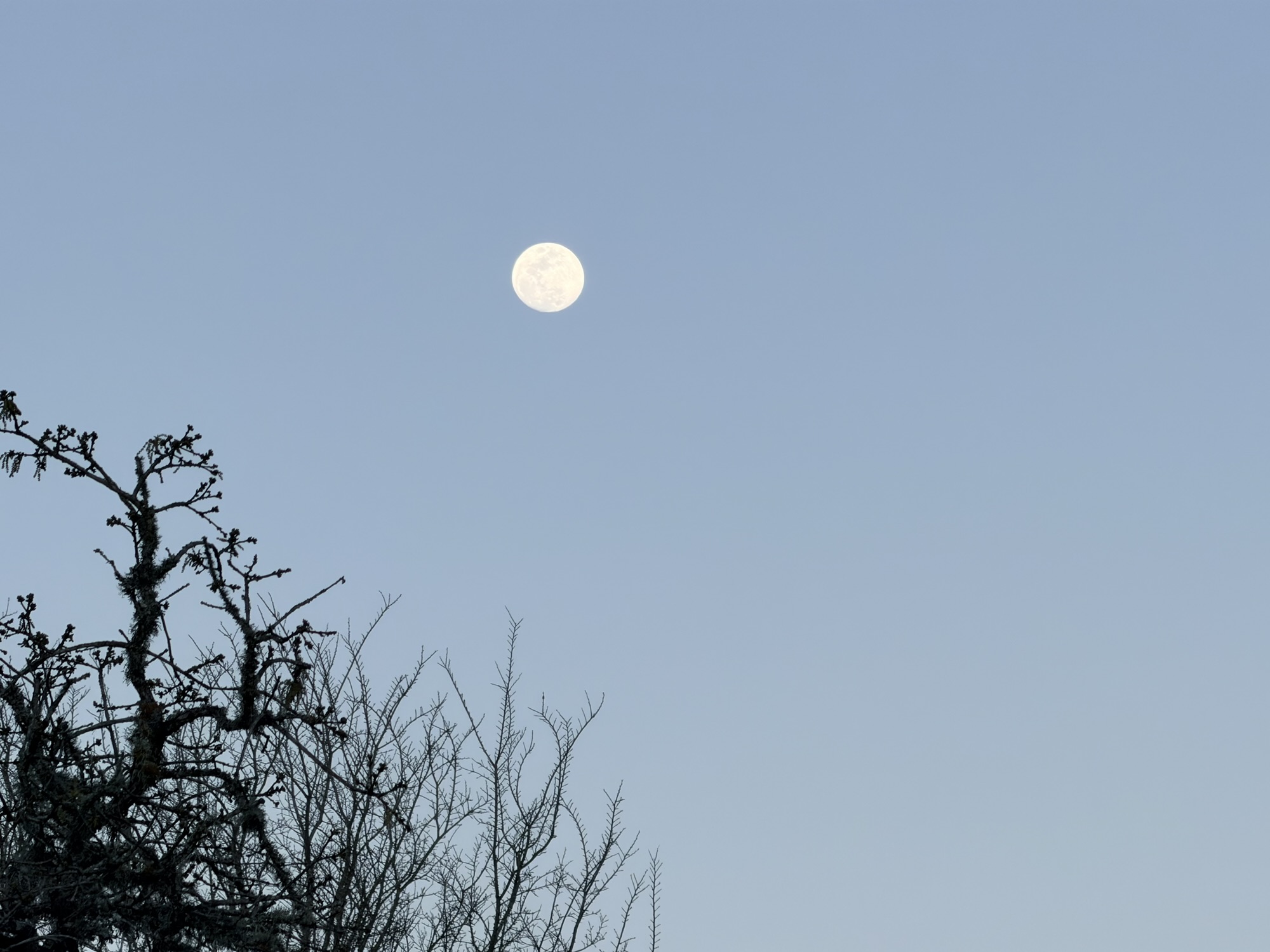
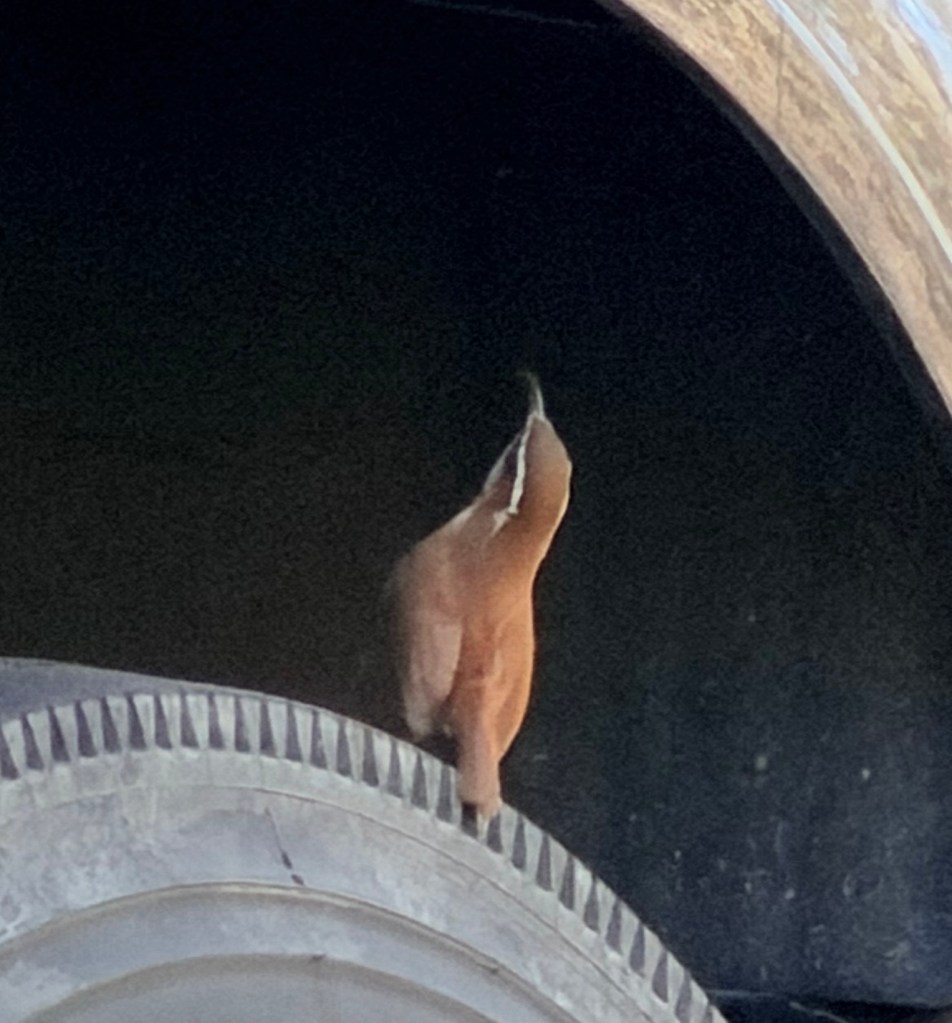
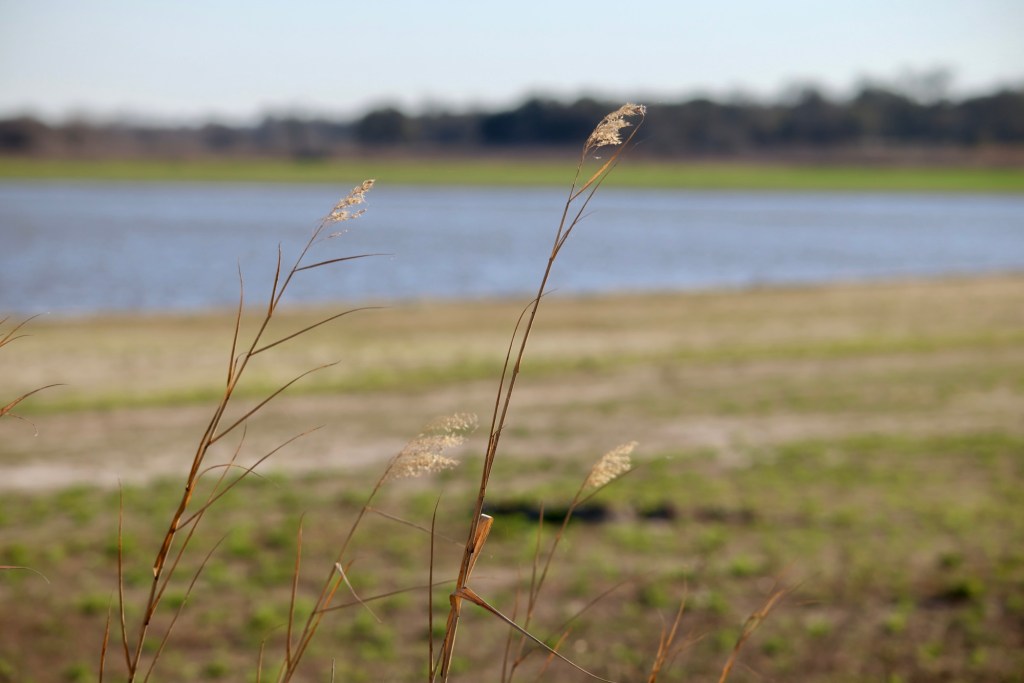
Chickadee peekaboo I call this tail gate. The white thing is a gate. Big nestNew oak leaves LichenLast year’s grassNew growthDainty dewberry Majestic snagMoon (from yesterday)
The world is so complicated. There’s a lot of negativity going around. So the fact that I was able to feel real joy twice today is a sweet and precious thing. What does it say, about, well, everything, that the source of my joy both times was birds?
It’s because birds are tiny (or larger) packets of joy.
I’m sure thankful for my animal friends, my birds and horses especially, for helping me get through the weirdest of times! Today was a great example.
Did I help? Yes, I did.
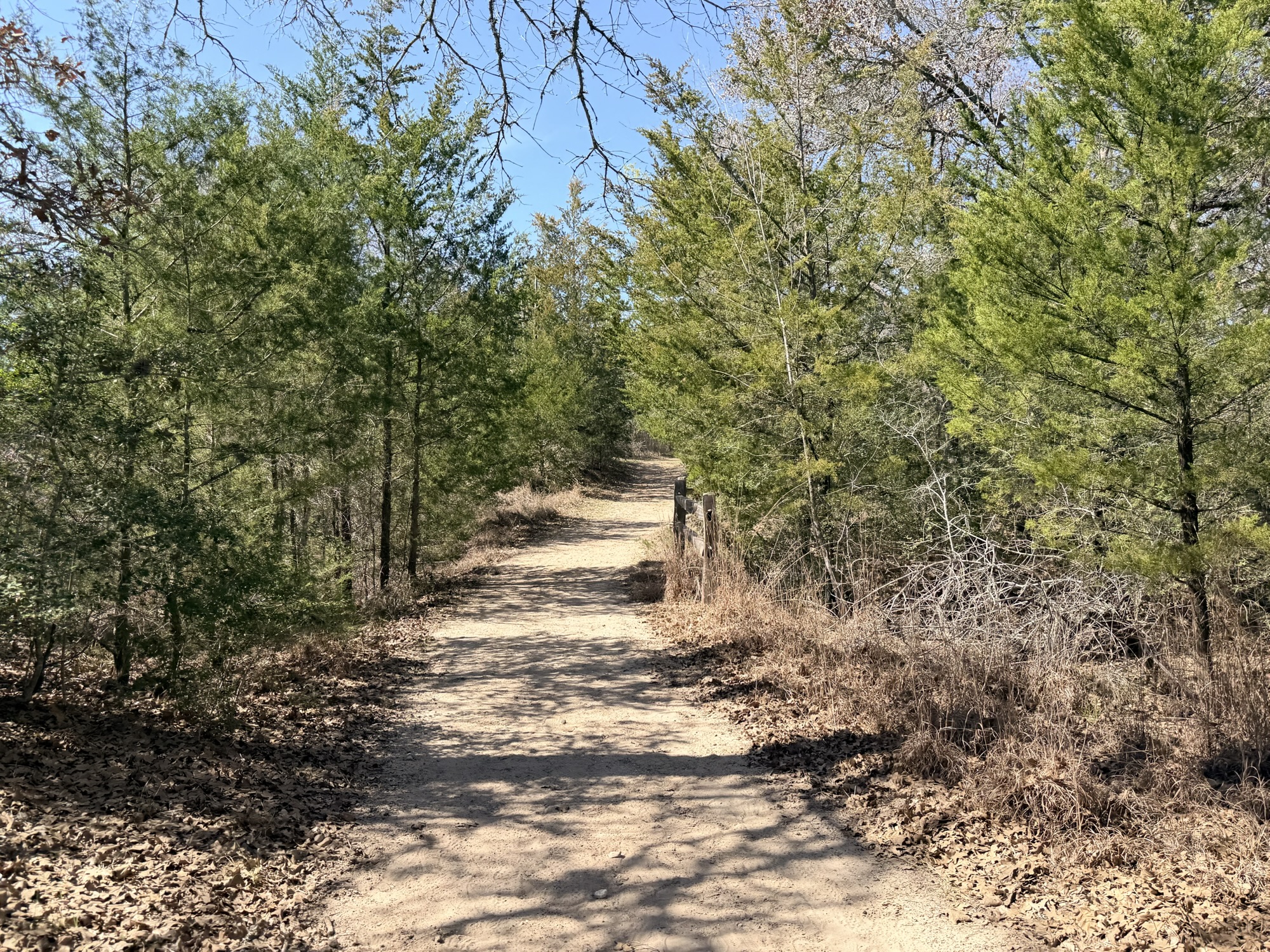
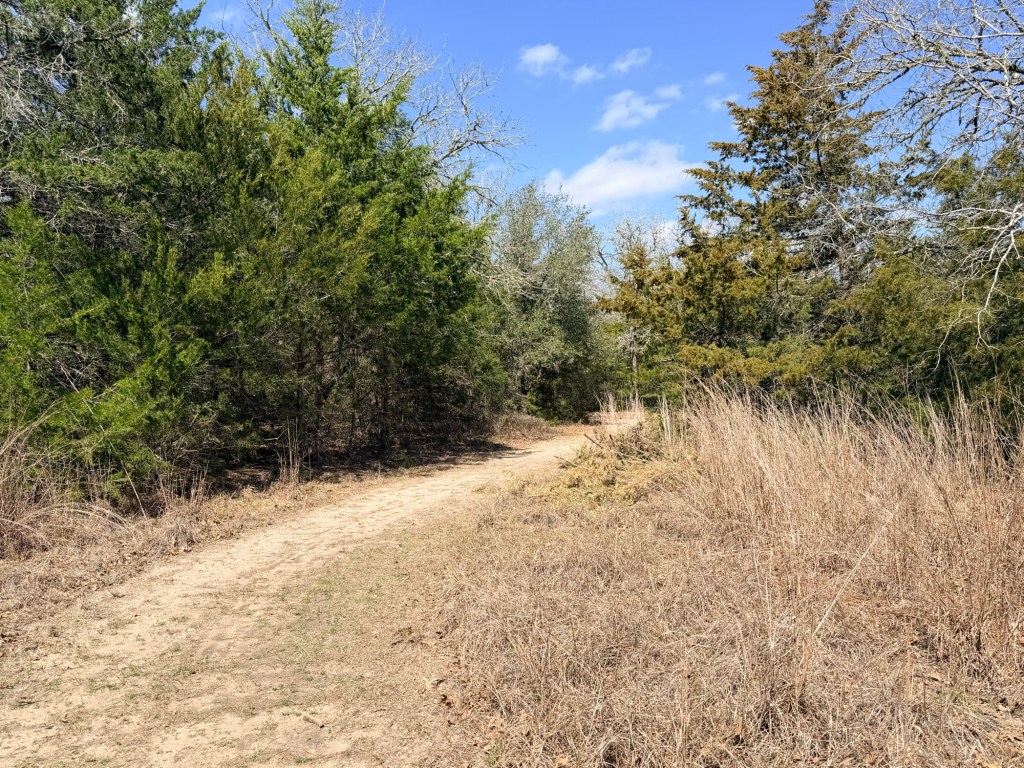
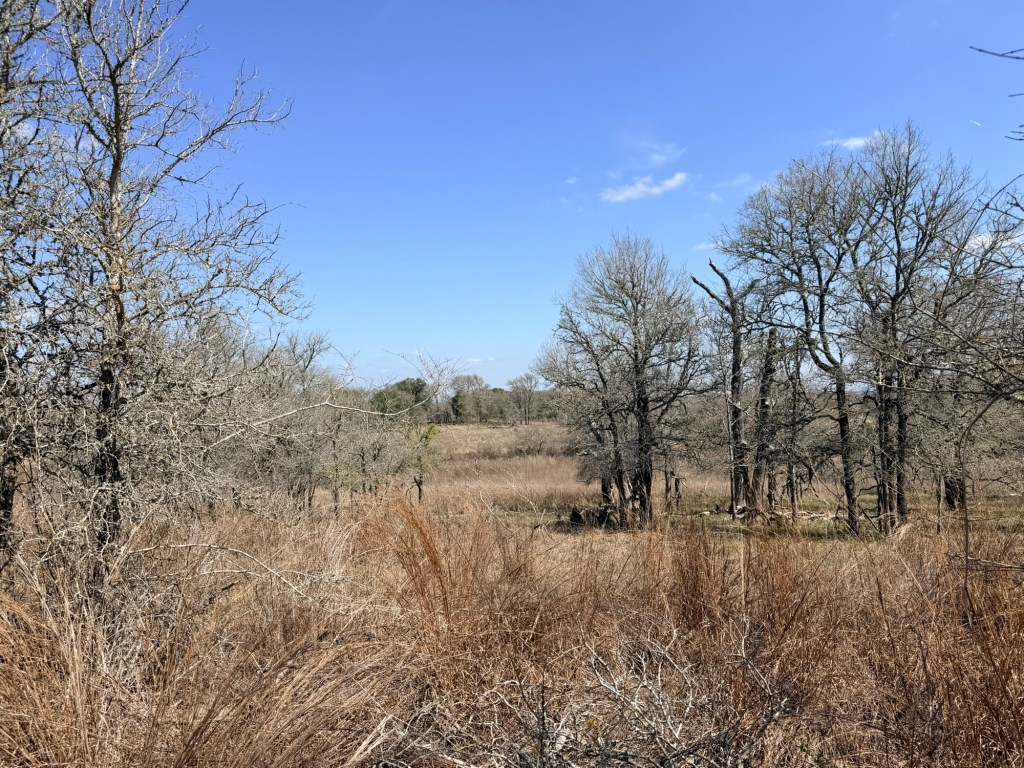
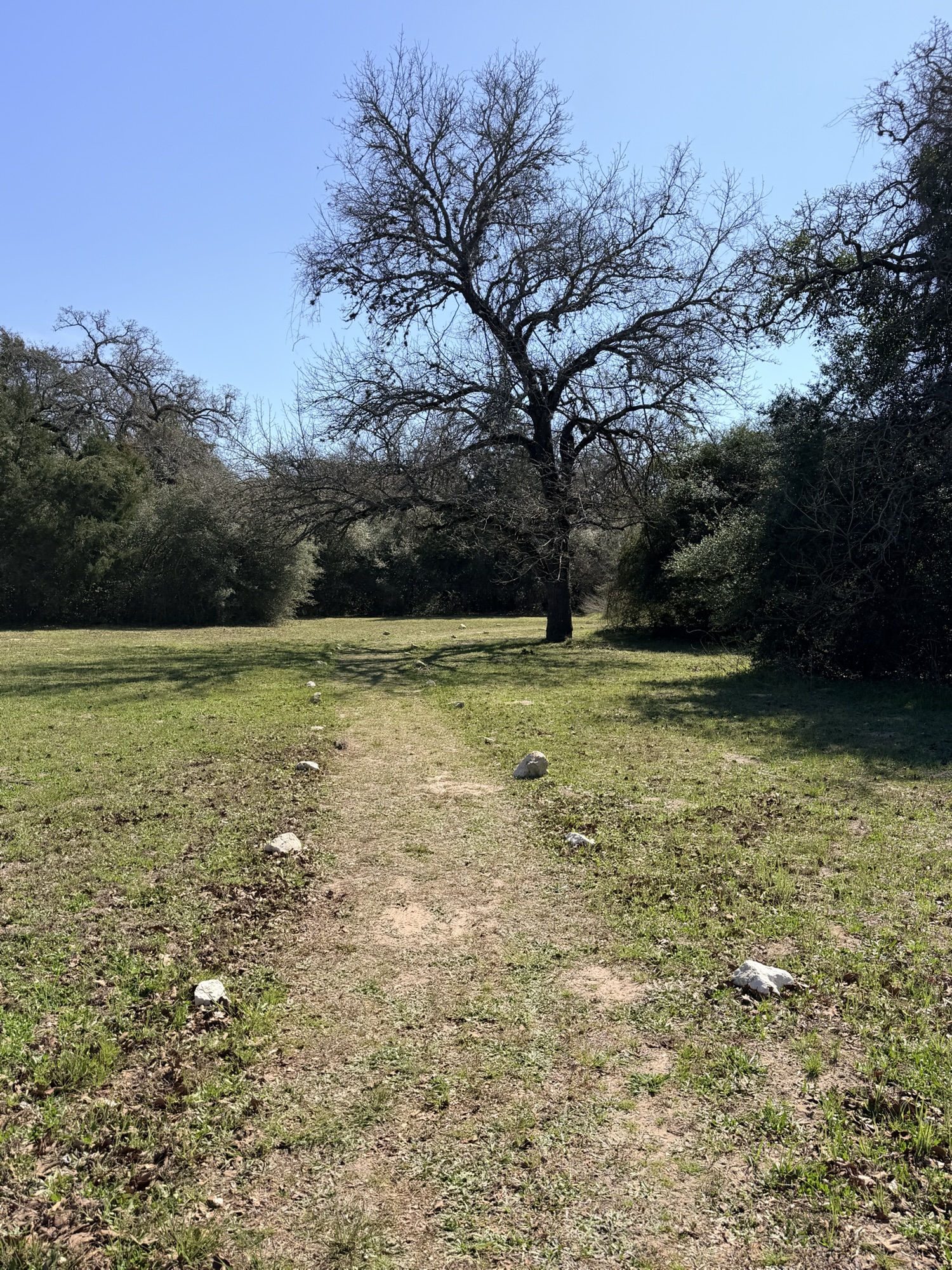
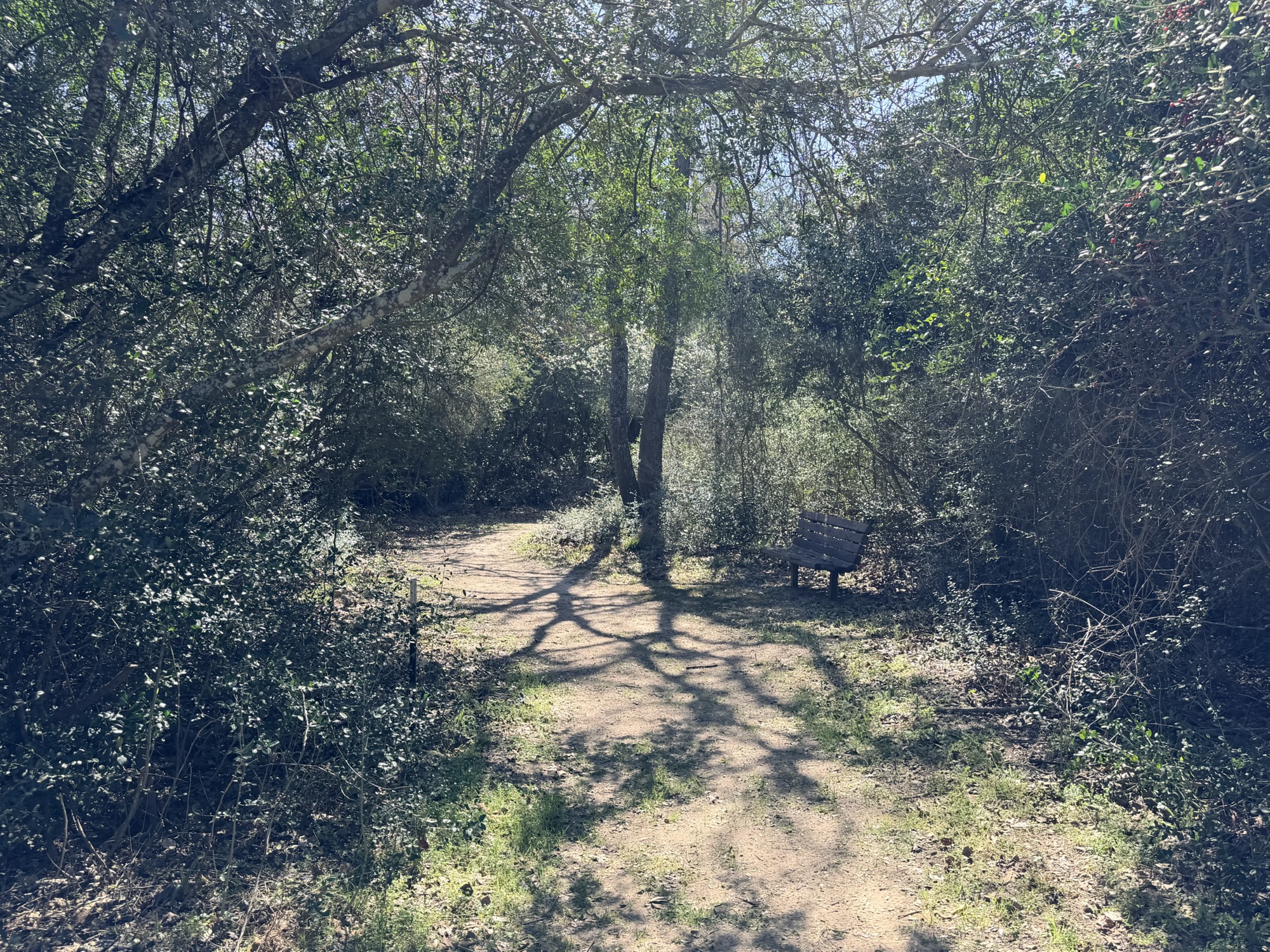
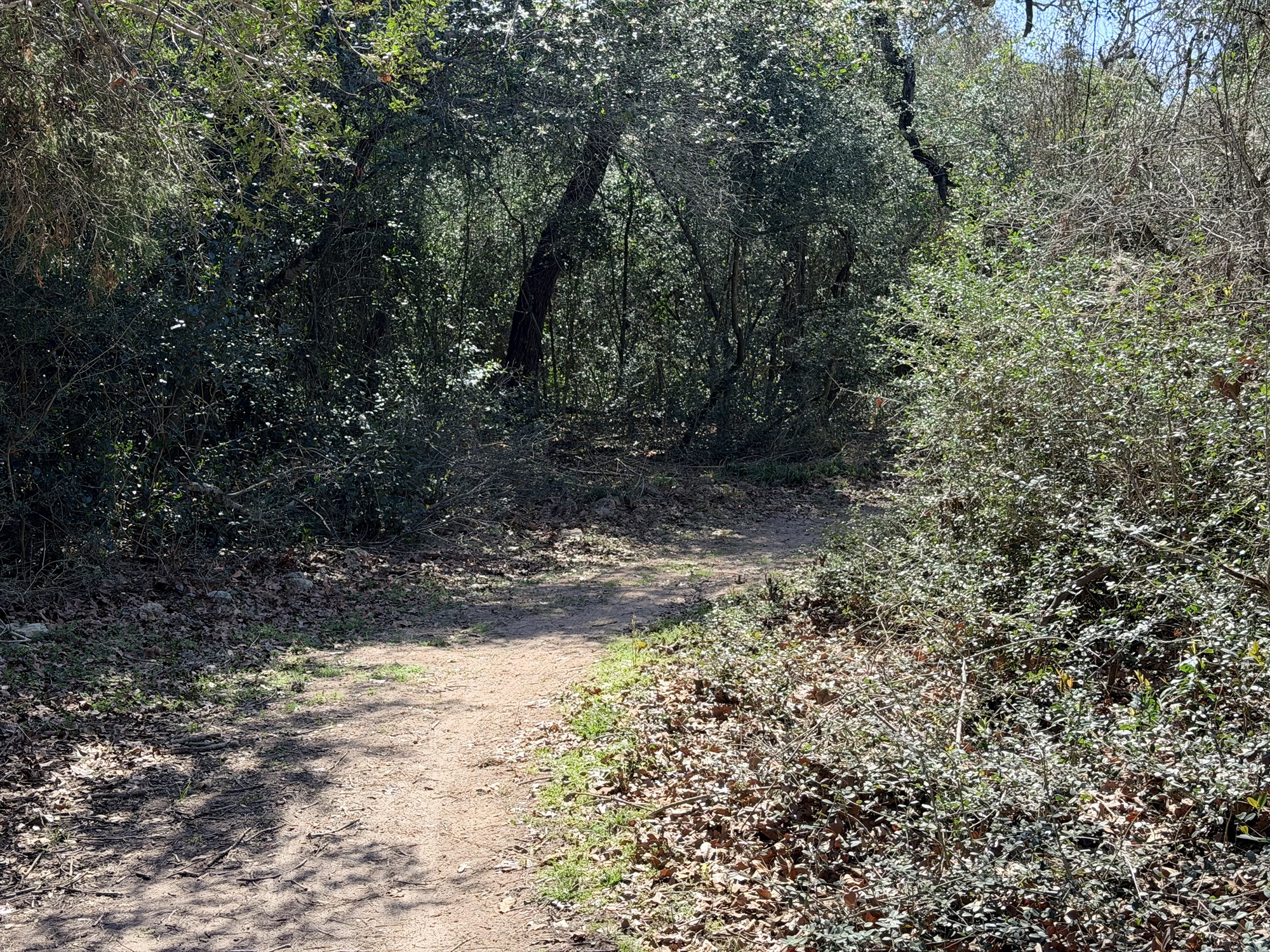
I took my morning hike today to a part of Nail’s Creek (Lake Somerville) park I never made it to before. It was pretty in a dry, post-oak Savannah kind of way.
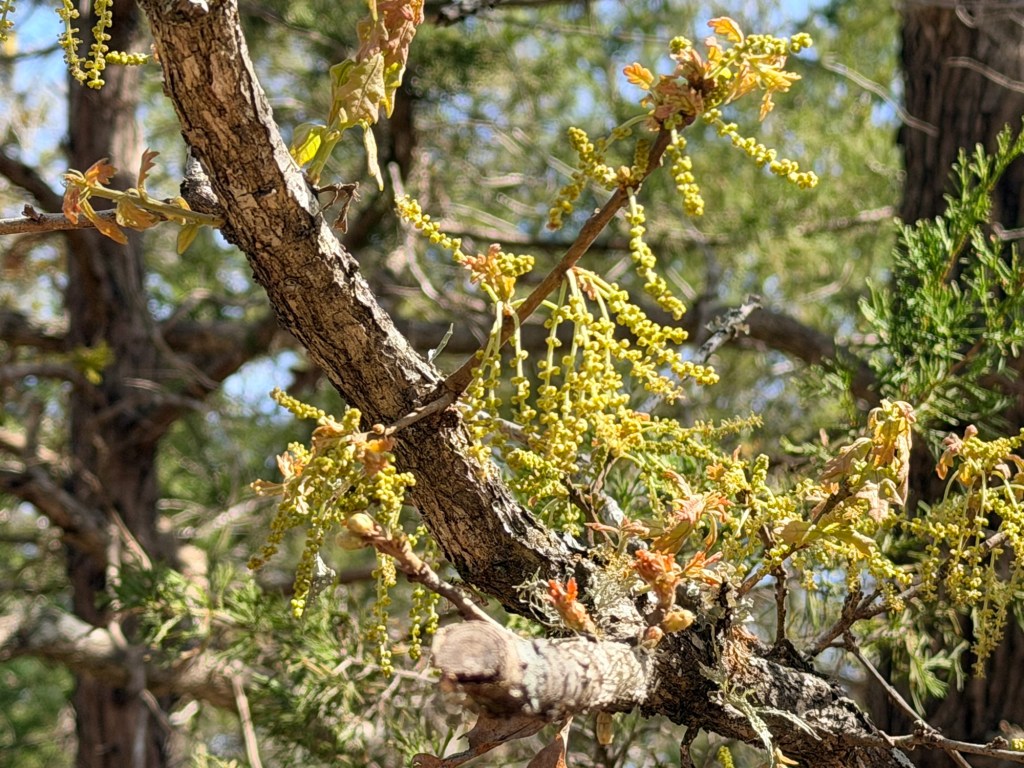
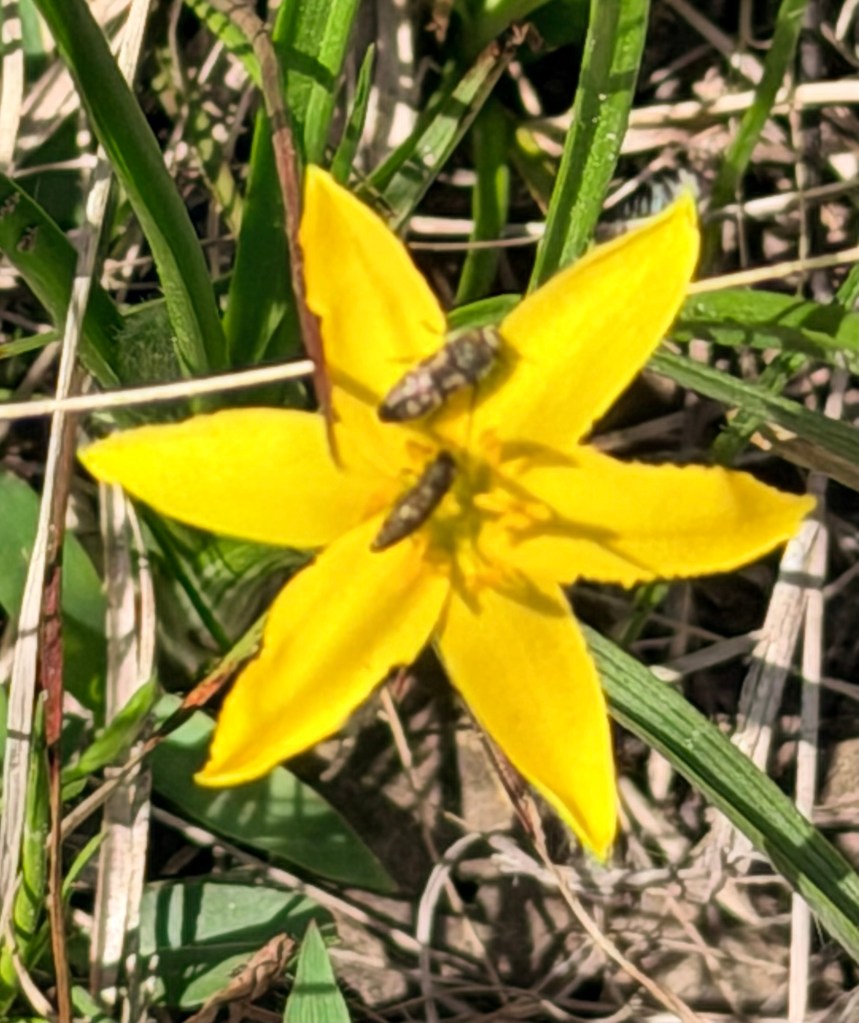
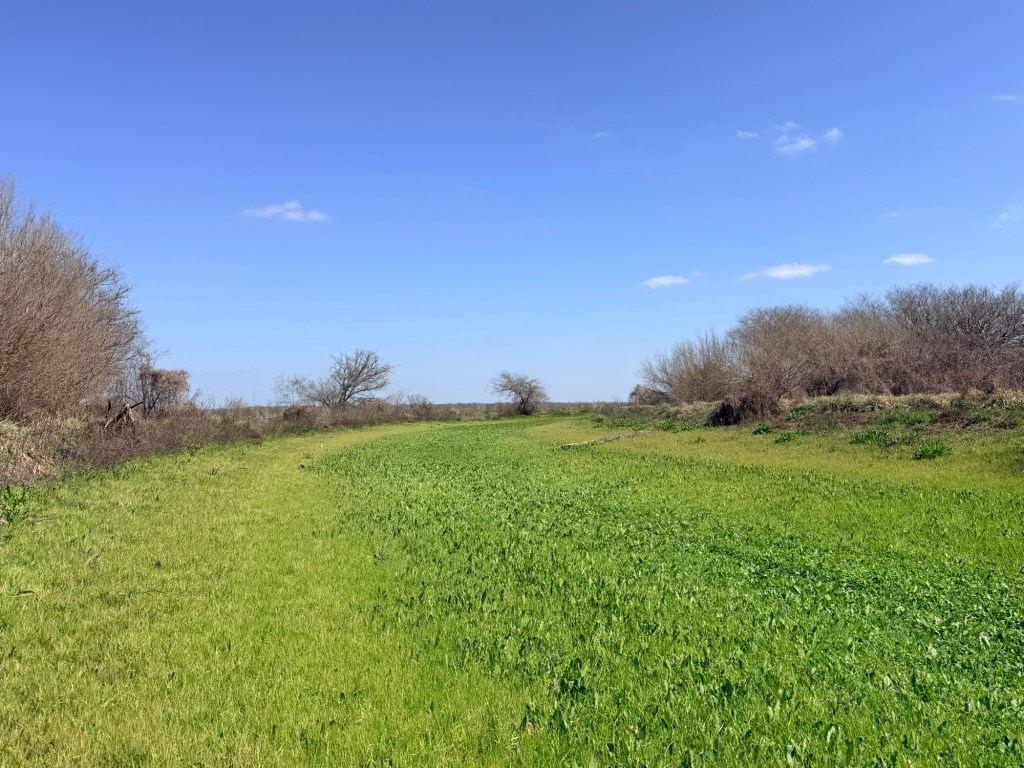
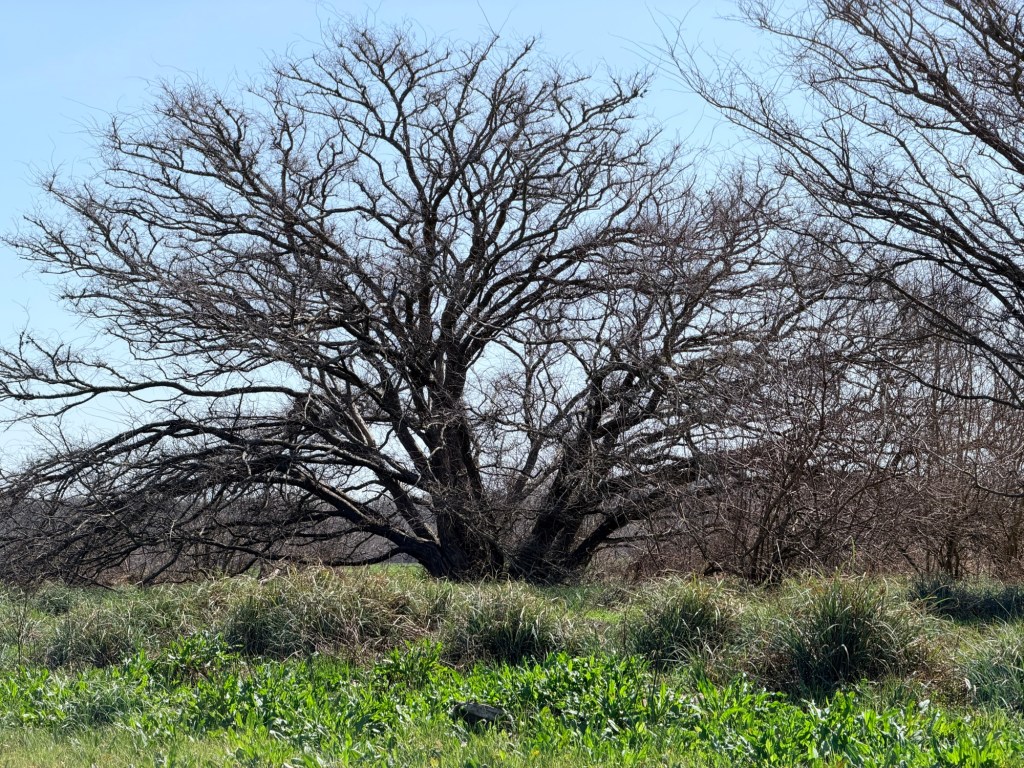
Trees are blooming!Yellow star grass (Hypoxis hirsuta)There were a few places with waterMost of the creek looked like this Very green!Another wet areaMuch curly dockOaks
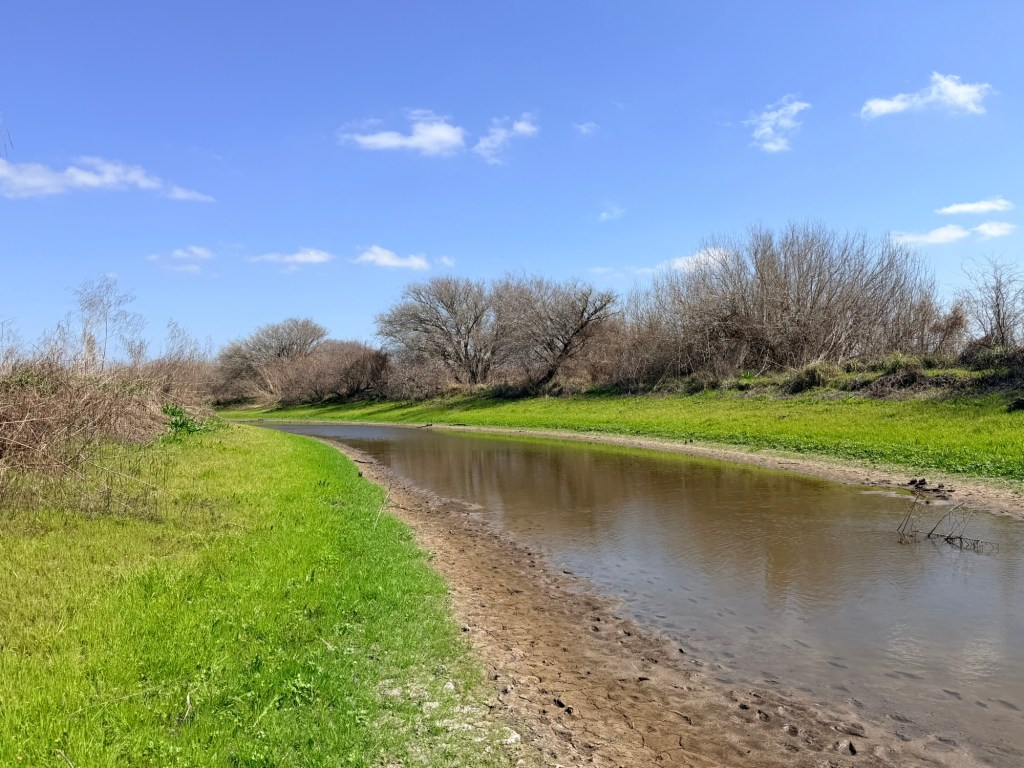
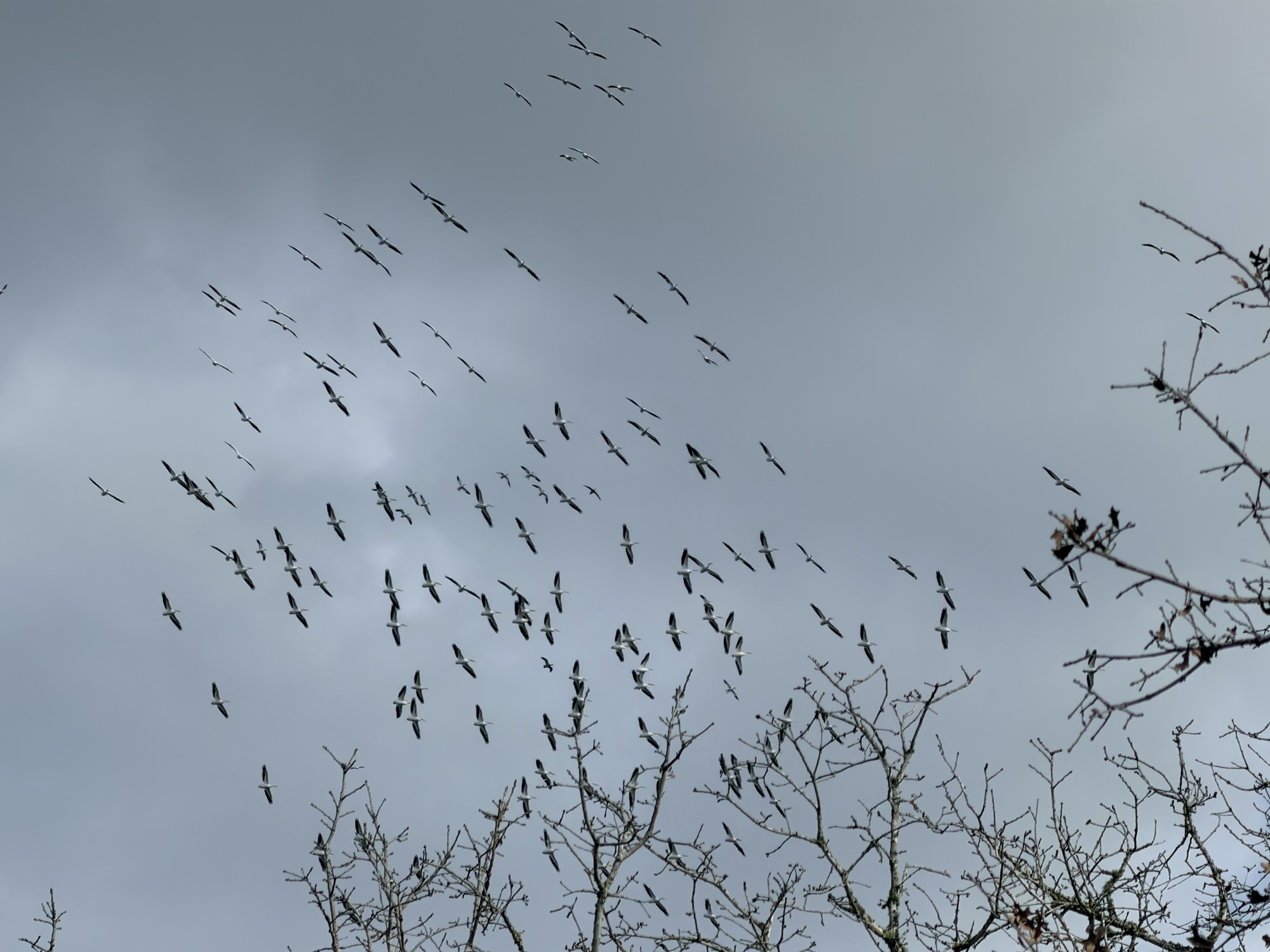
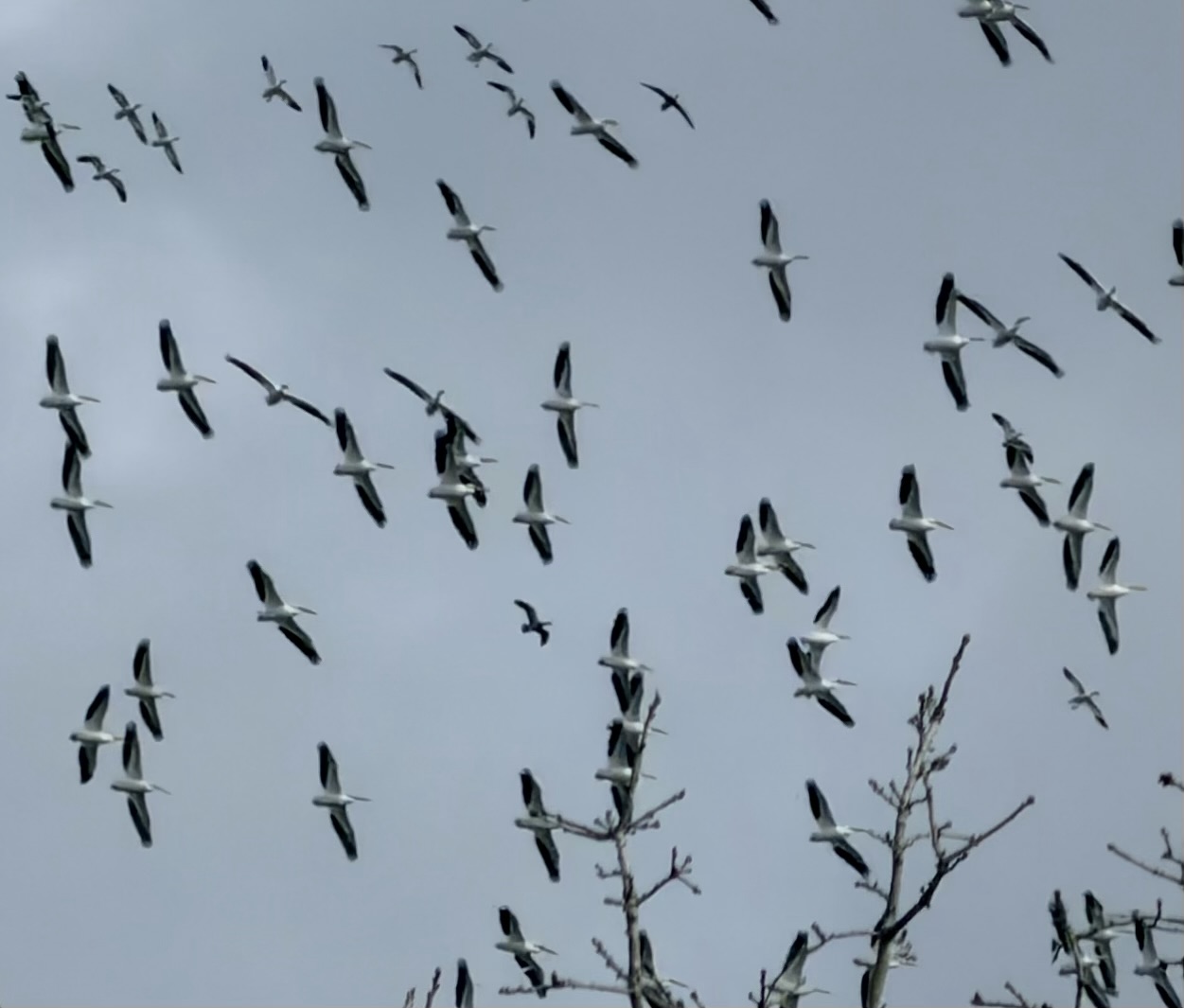
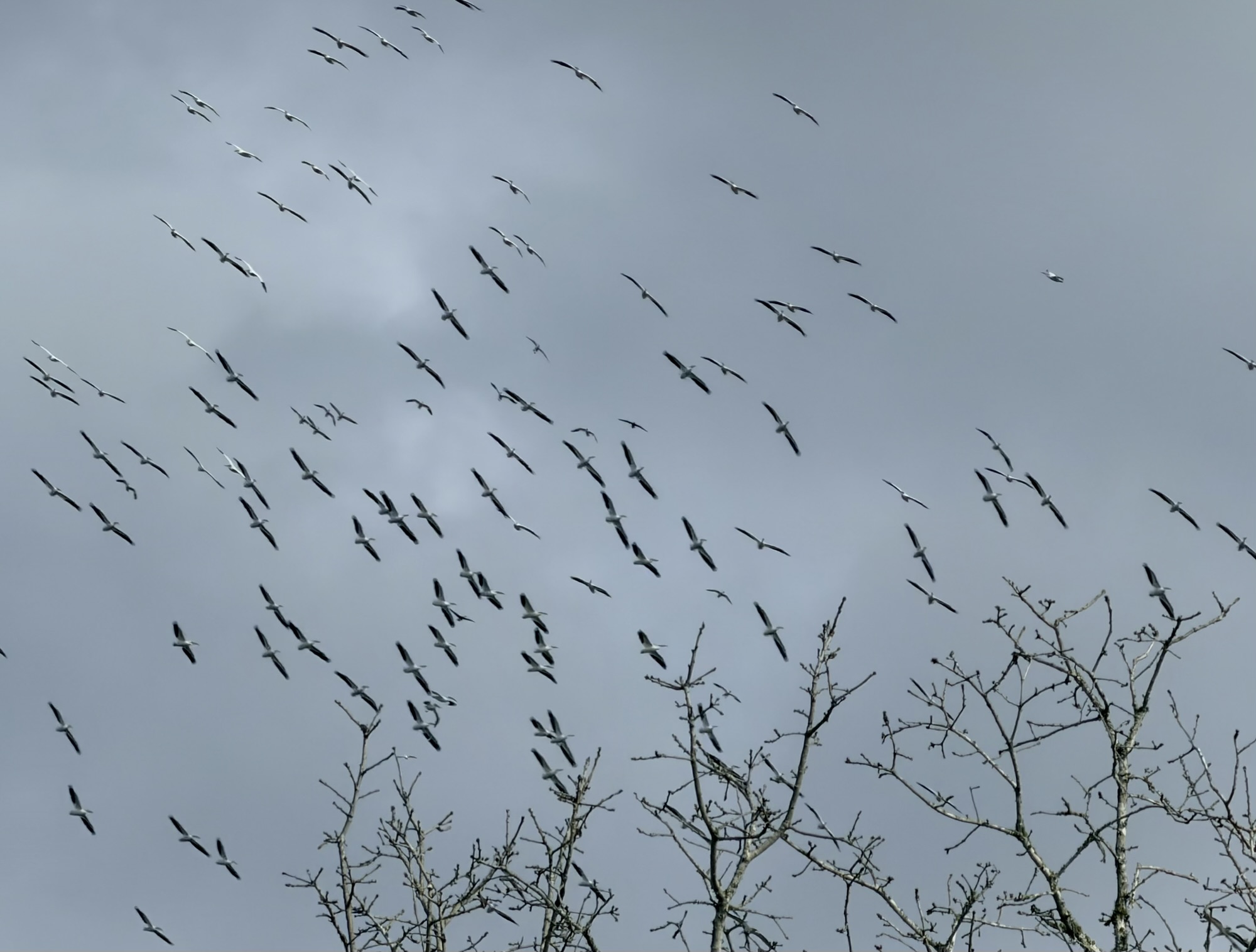
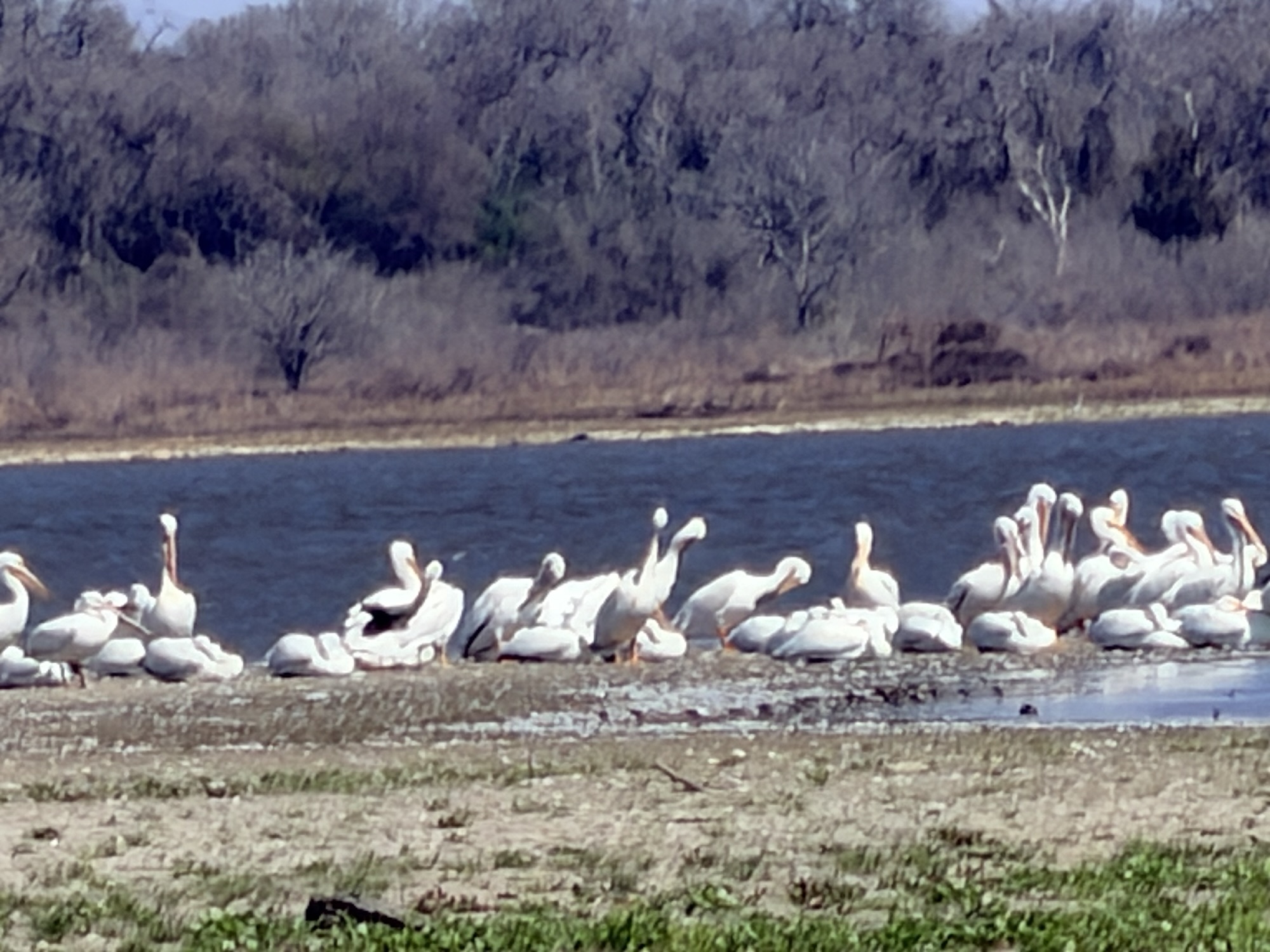
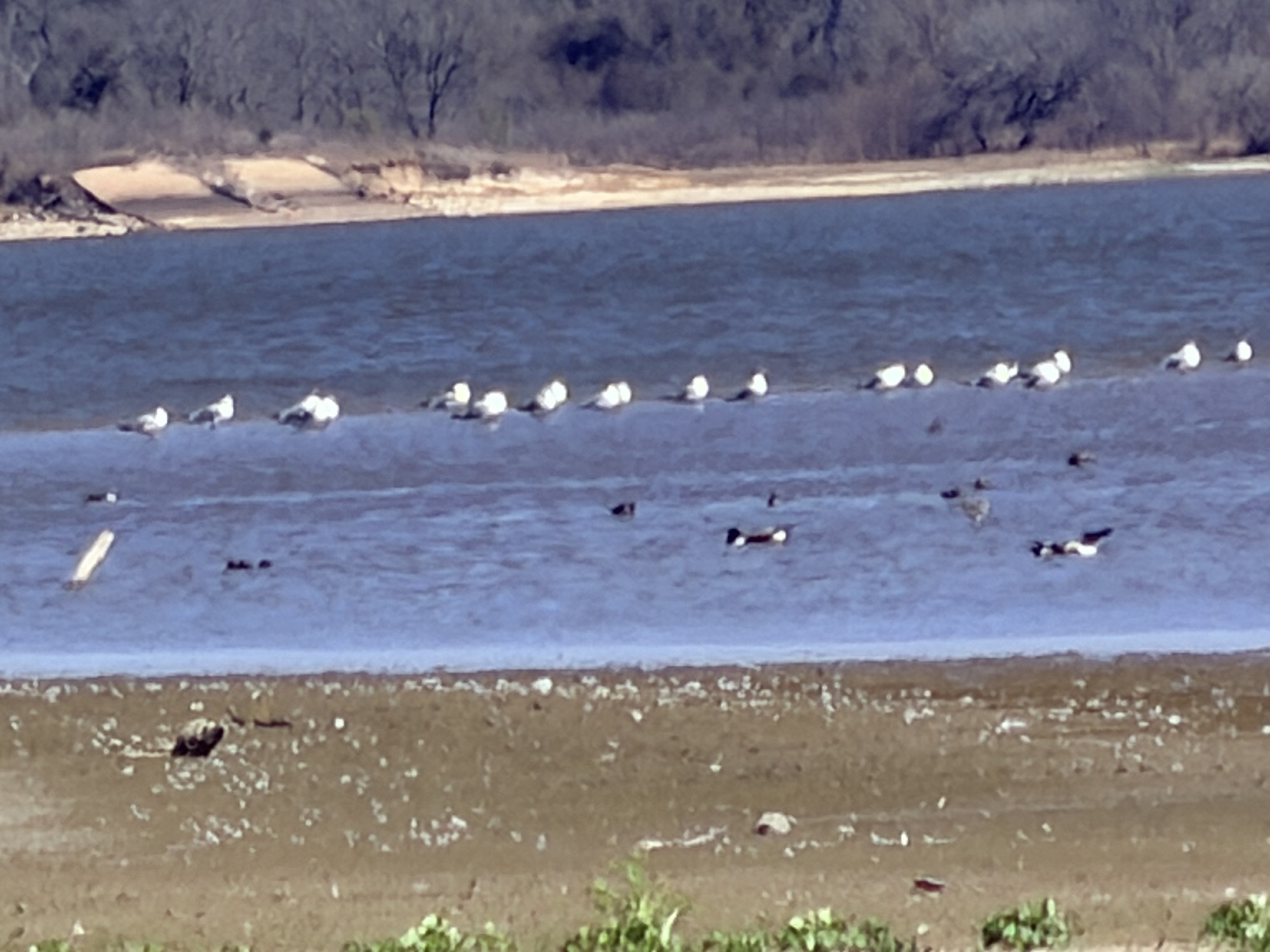
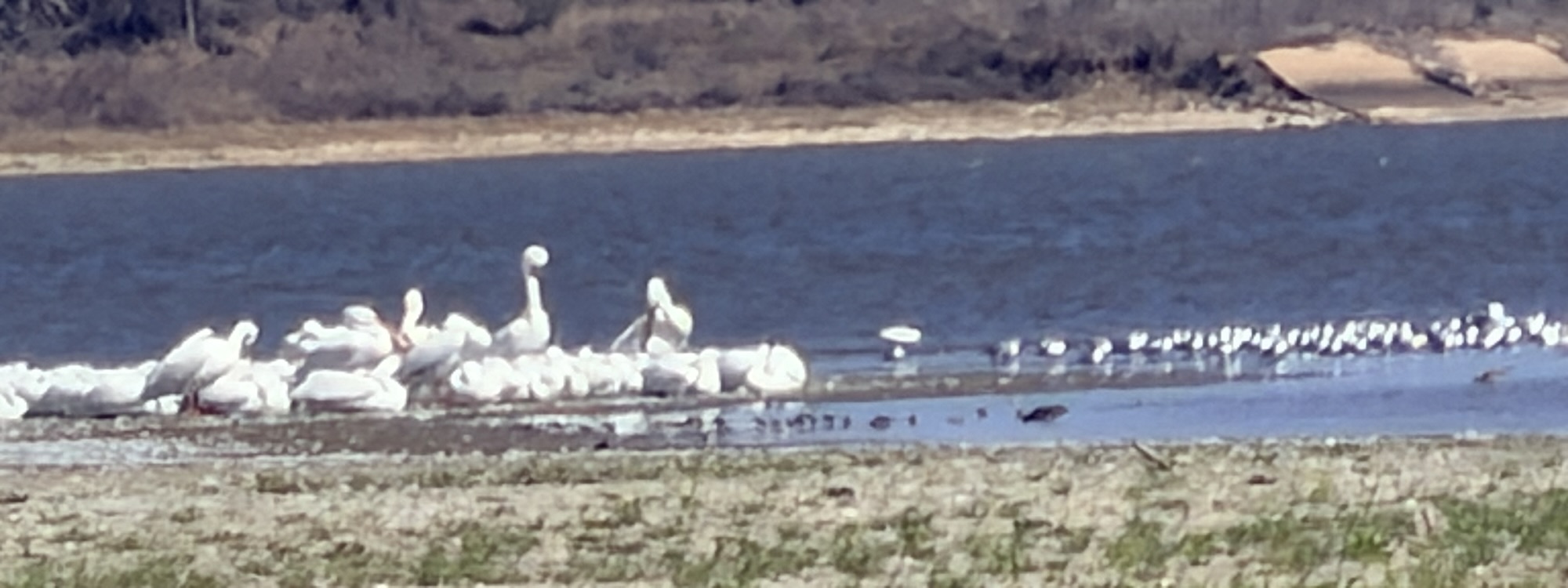
I followed the path of Cedar Creek, which was mostly dry, and saw lots of wetland plants and hog damage. I saw hogs there last year, so I wasn’t surprised. I was hoping to get a better view of the pelicans and snow geese we’d seen earlier (and heard—much honking).
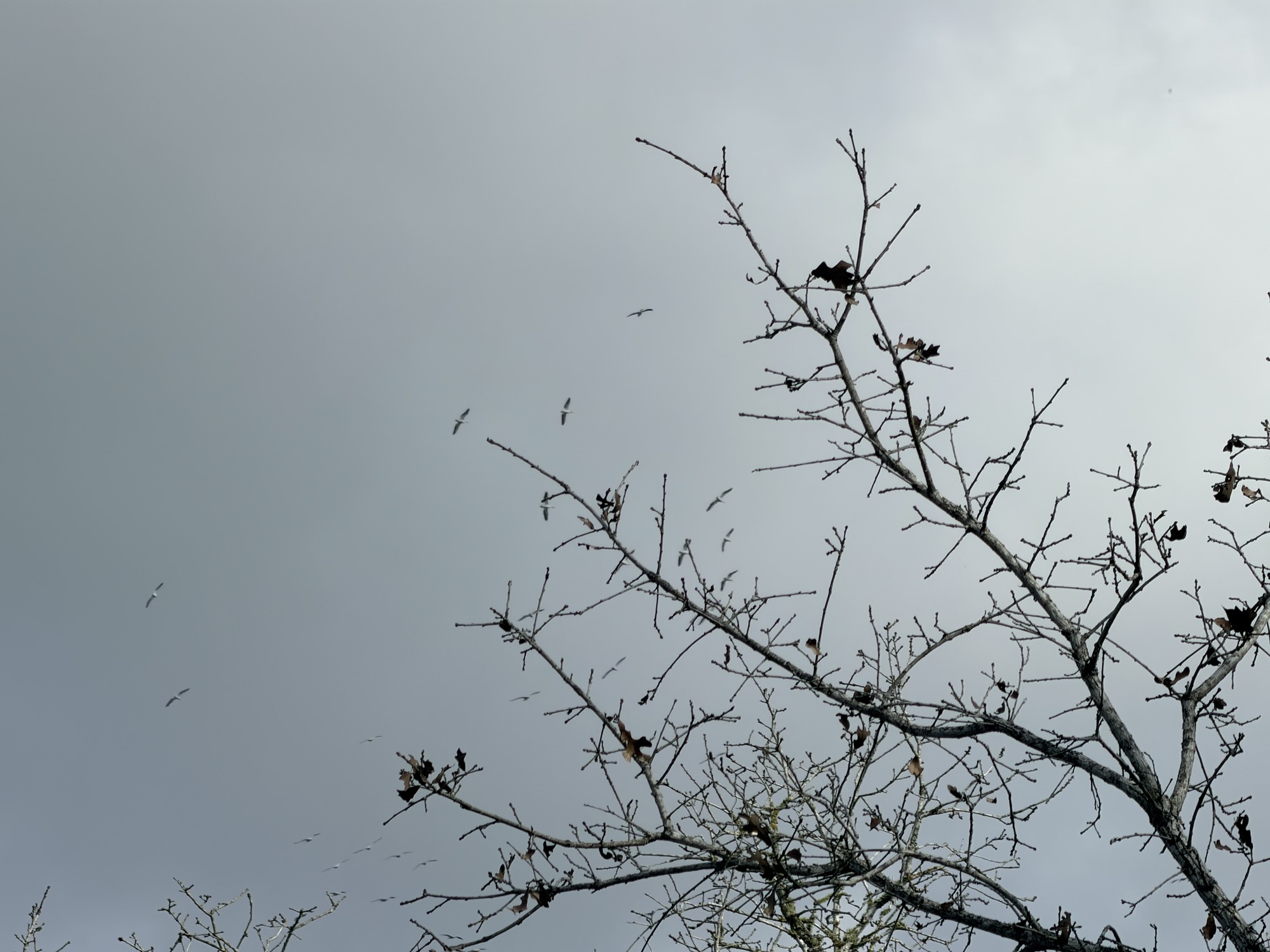
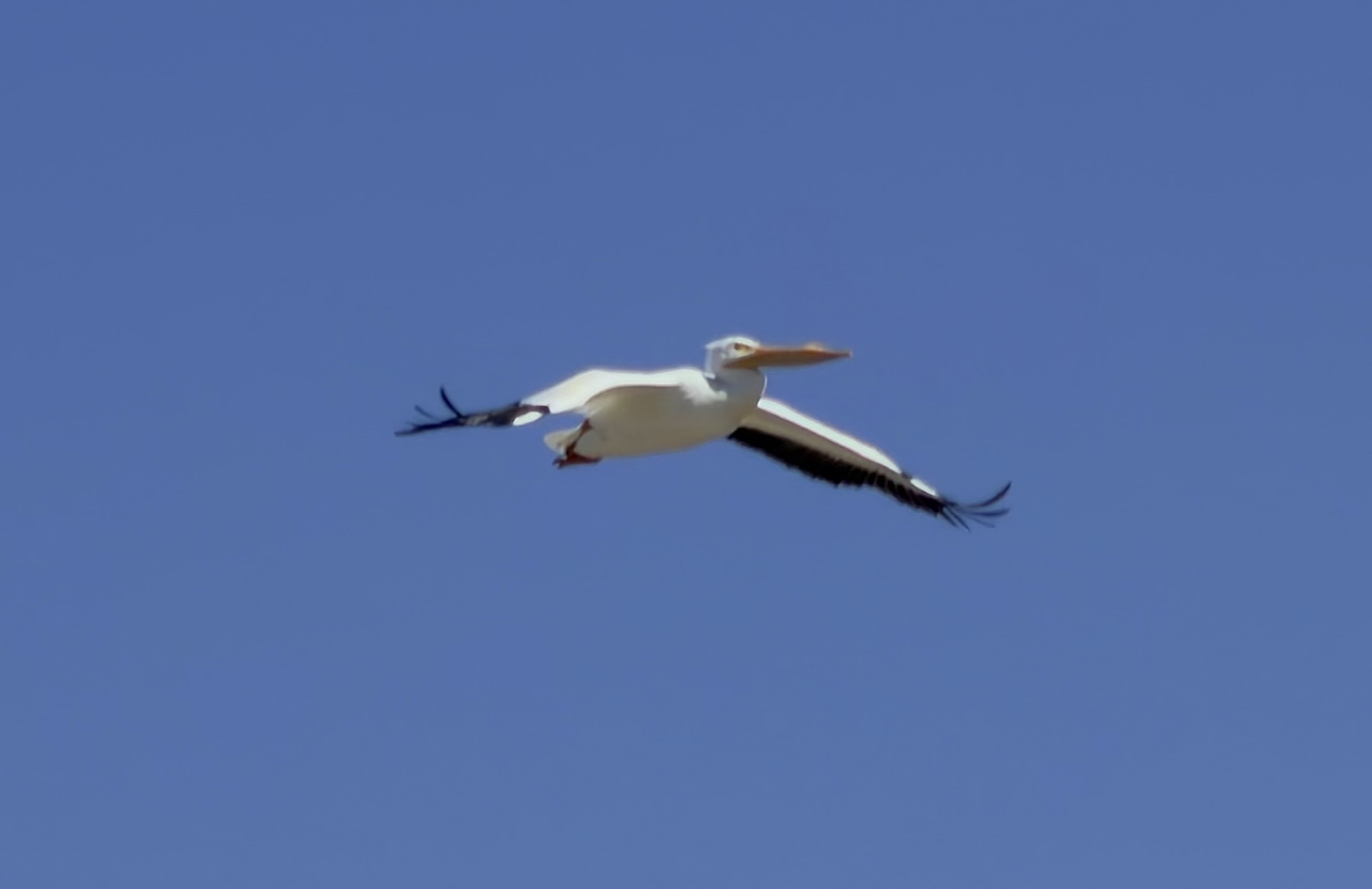
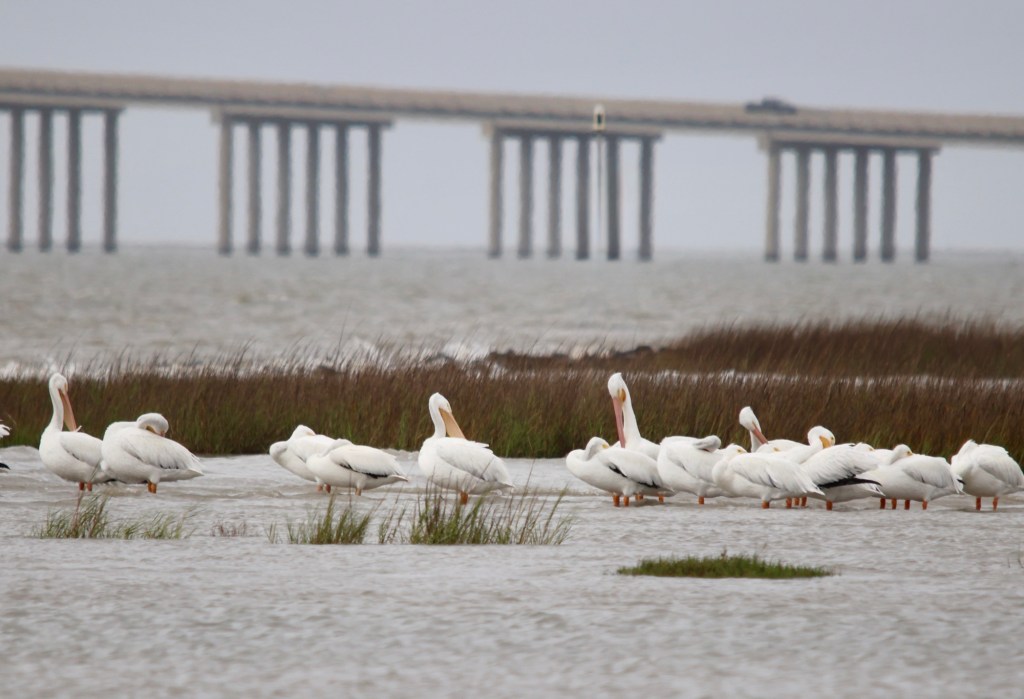
I heard snow geese, but when I zoomed in I realized that both geese and pelicans were flying around
I did find them, but still couldn’t see them much better.
Ok, this one is goodPelicans and geese
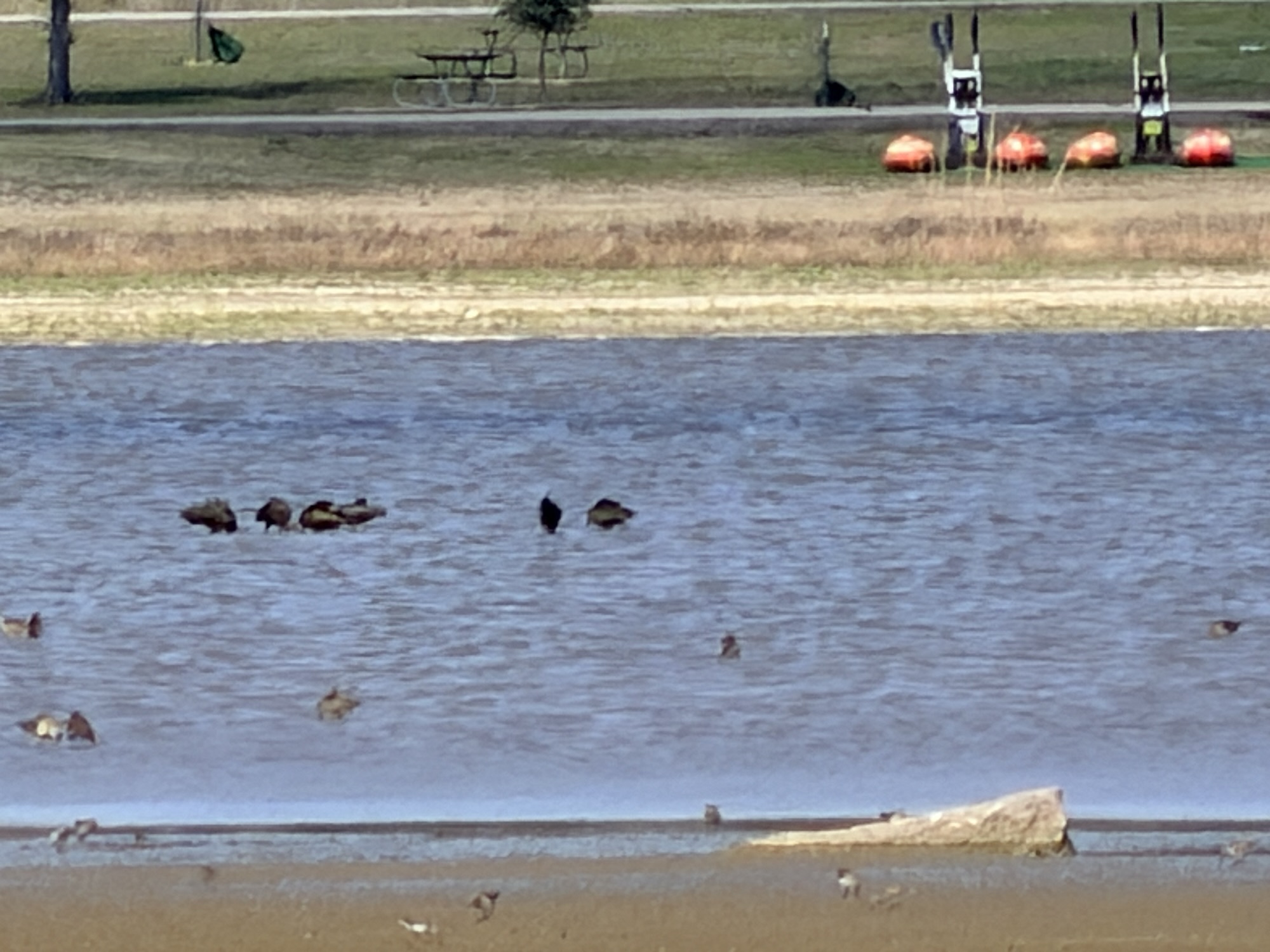
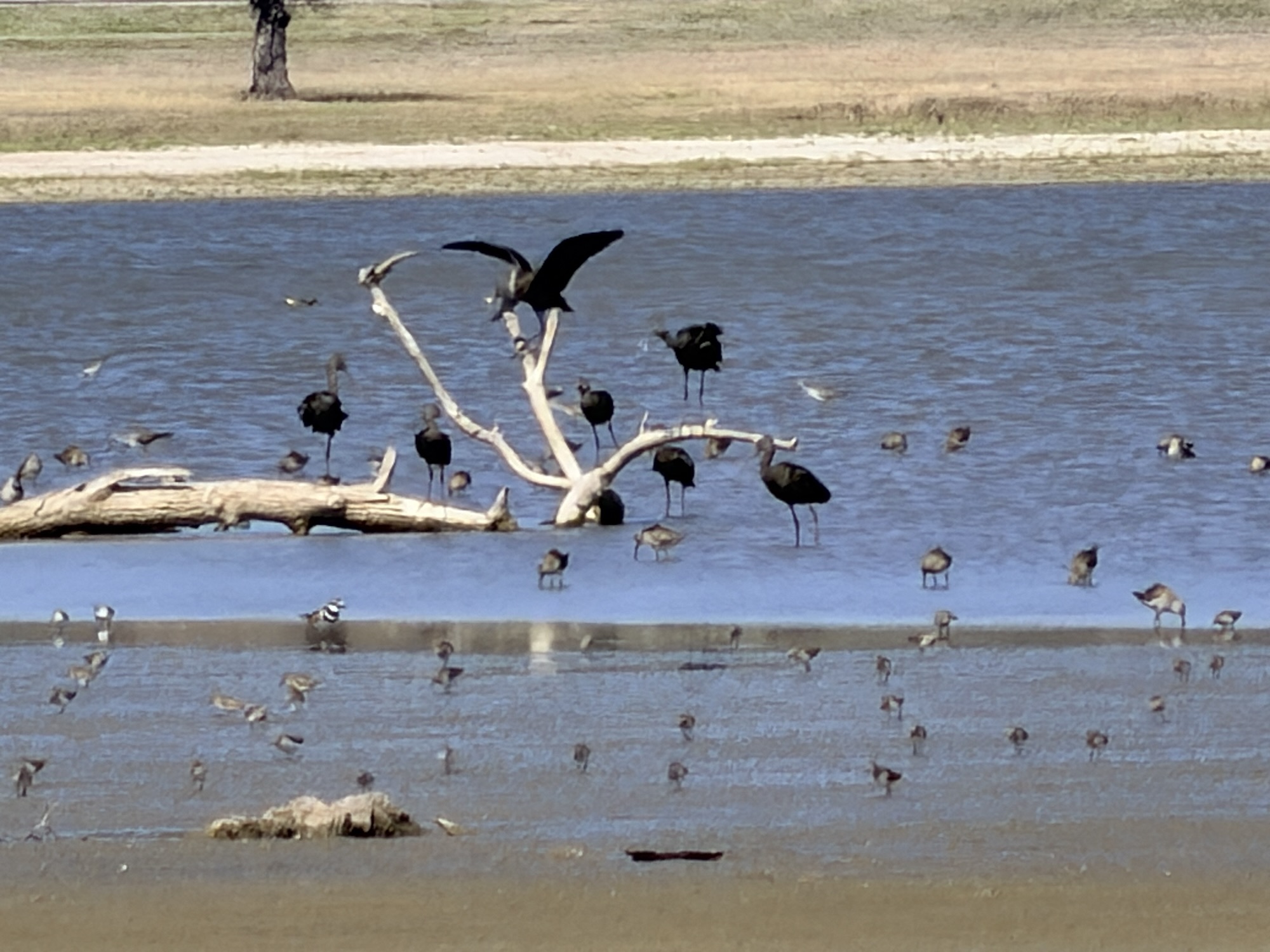
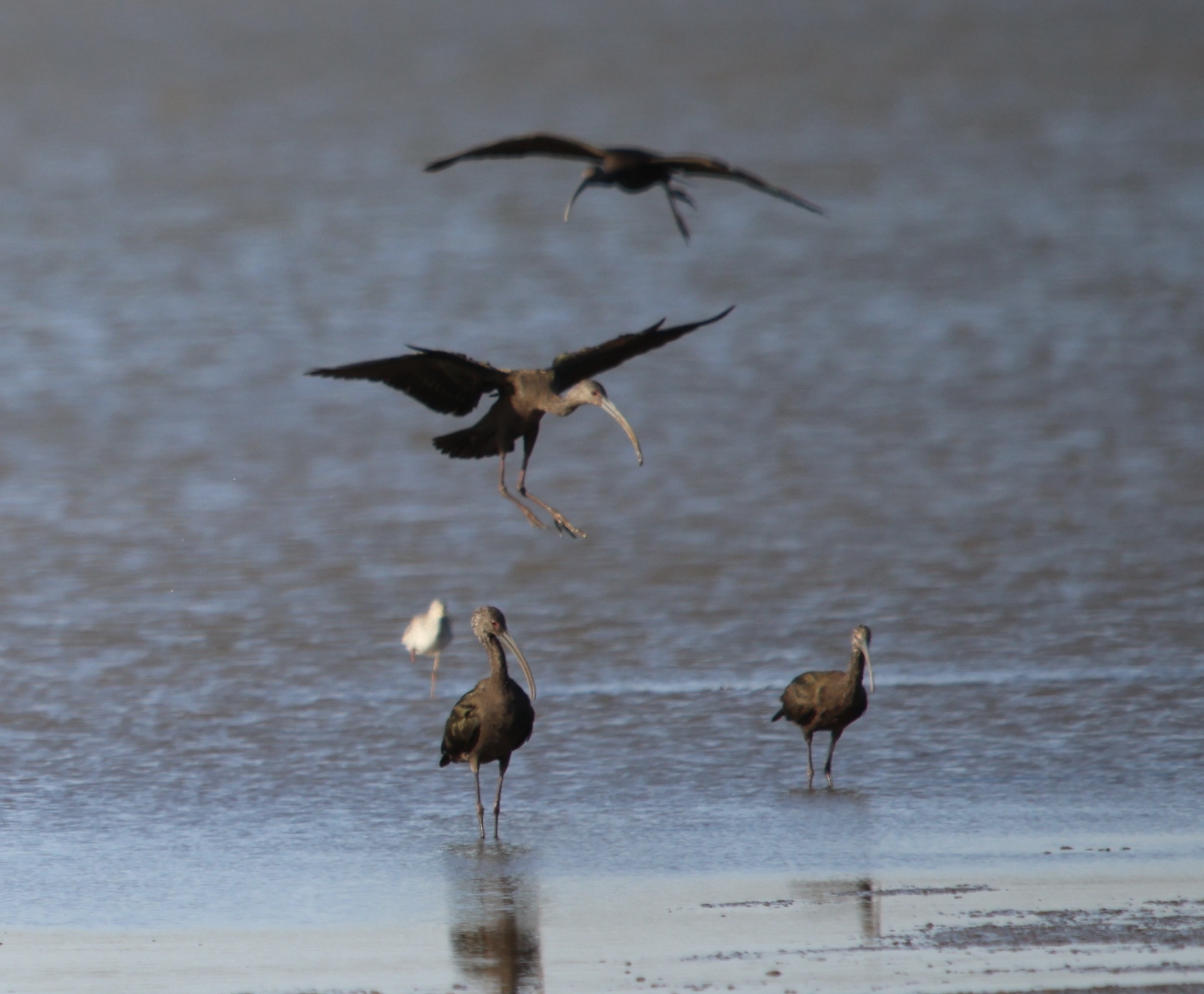
As I was taking pictures of ducks, sandpipers, yellowlegs and such, some big birds showed up. They were black, but I had a hard time figuring out much about them, even through binoculars. Were they Anhingas? Black geese?
Large black birds.
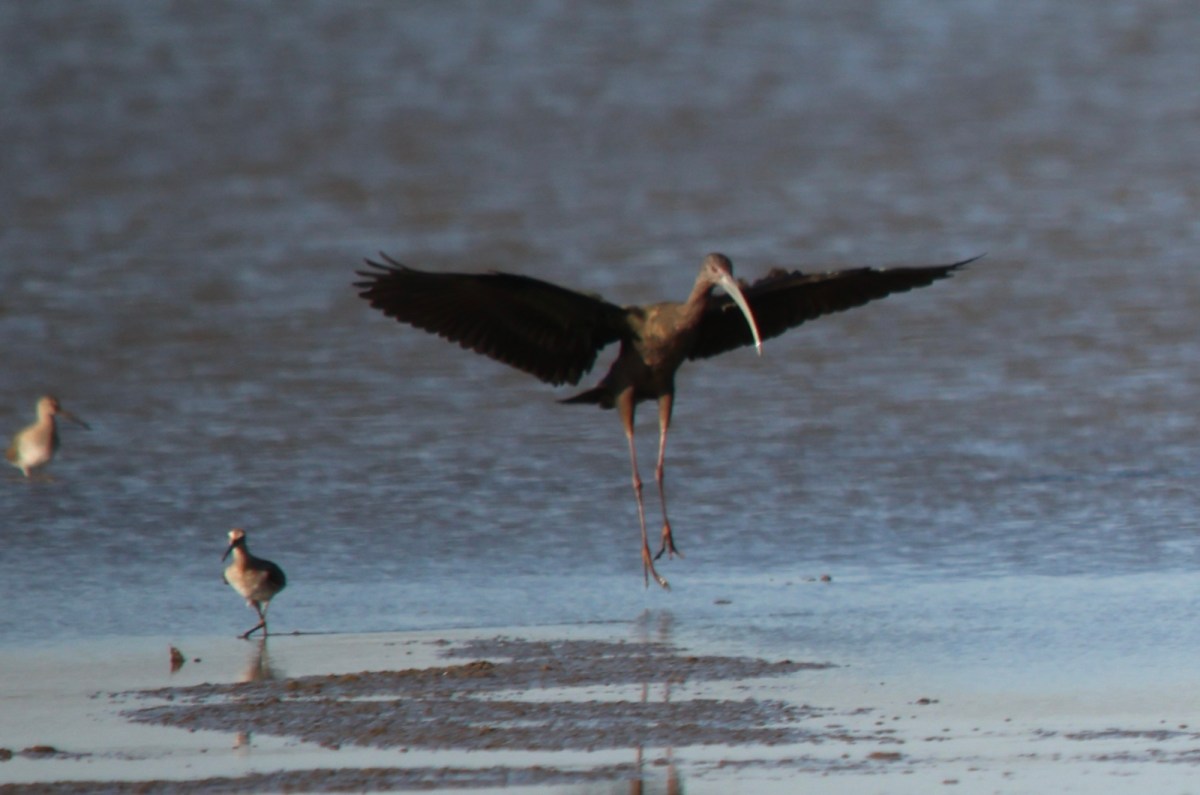
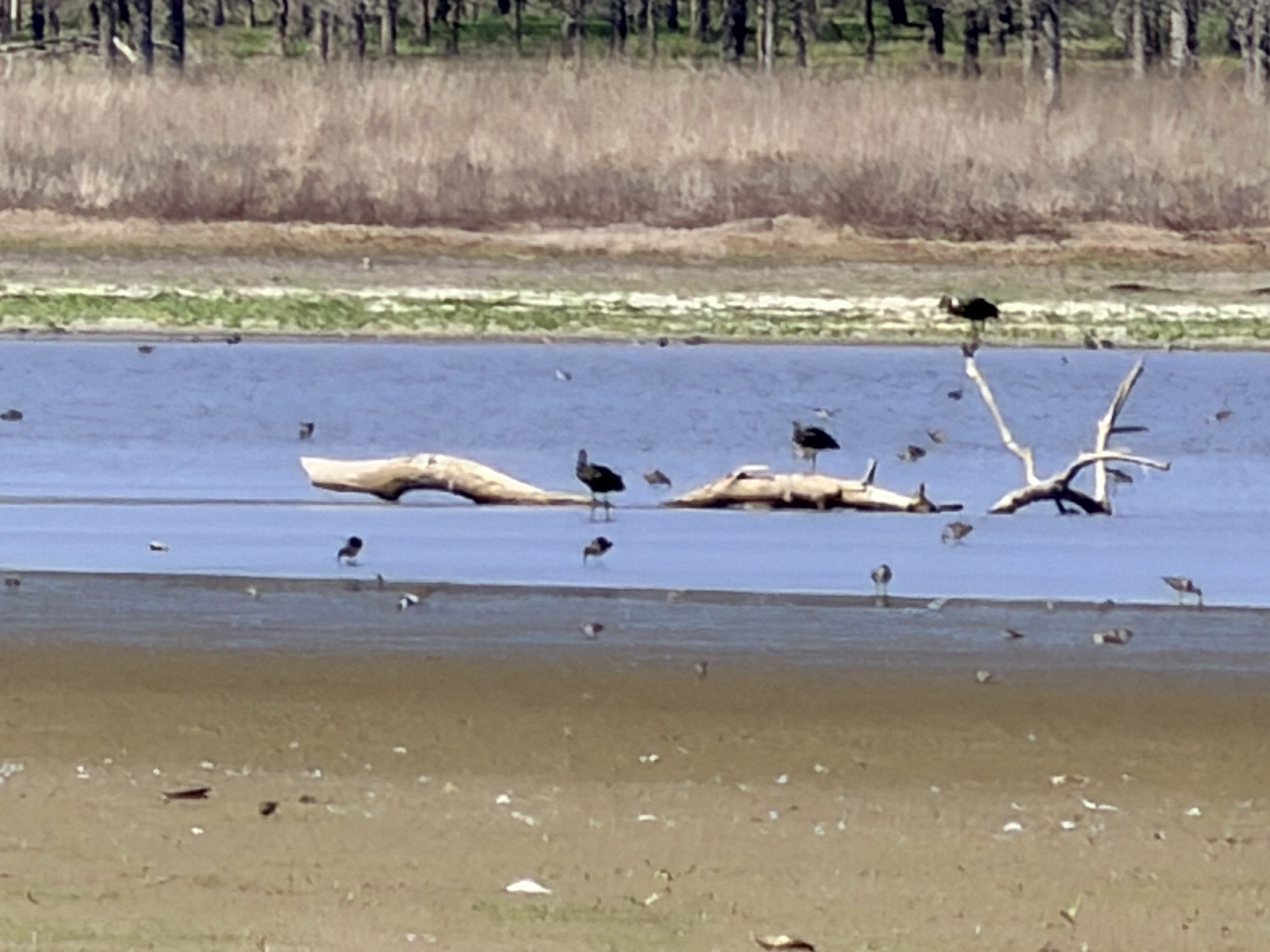
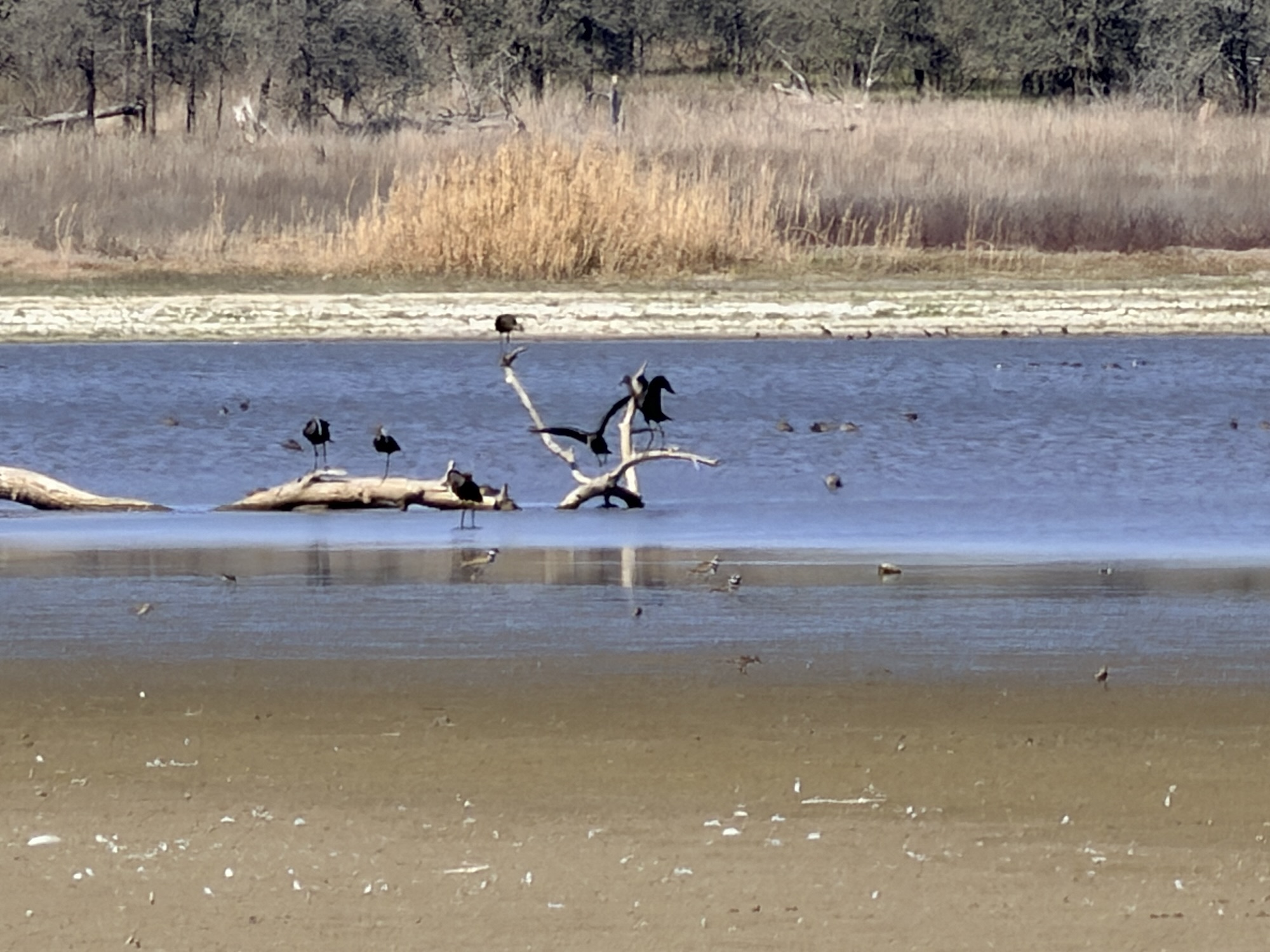
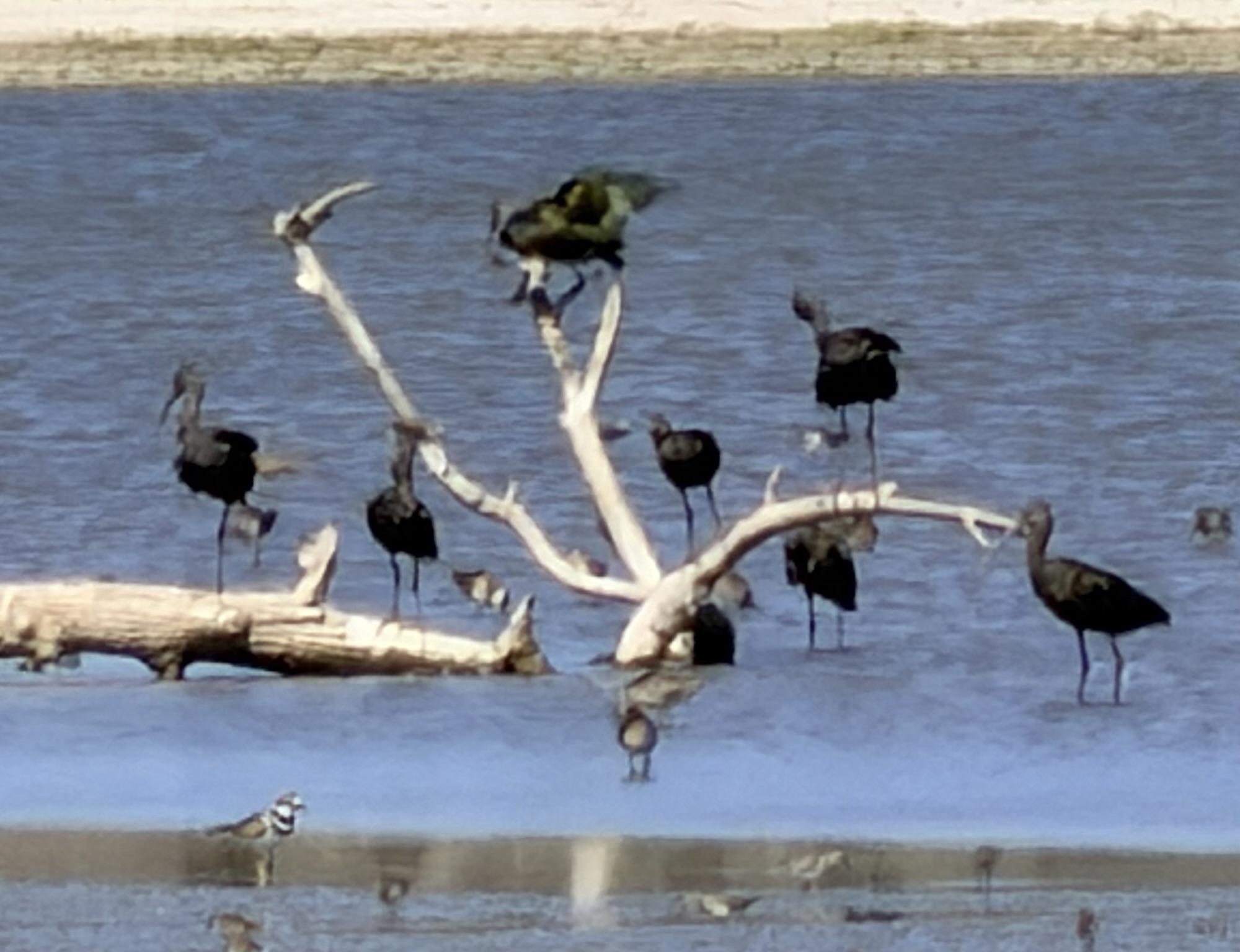
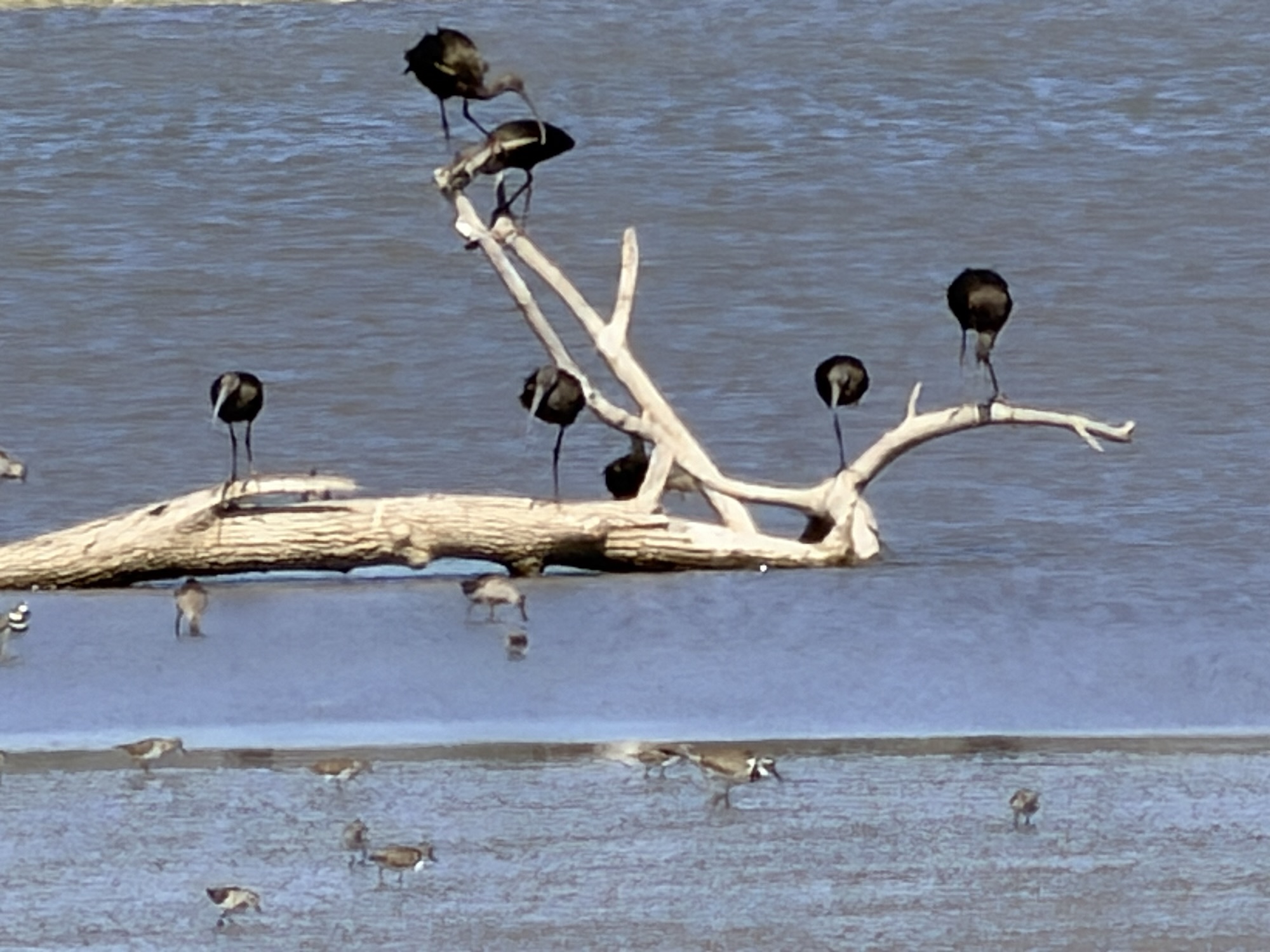
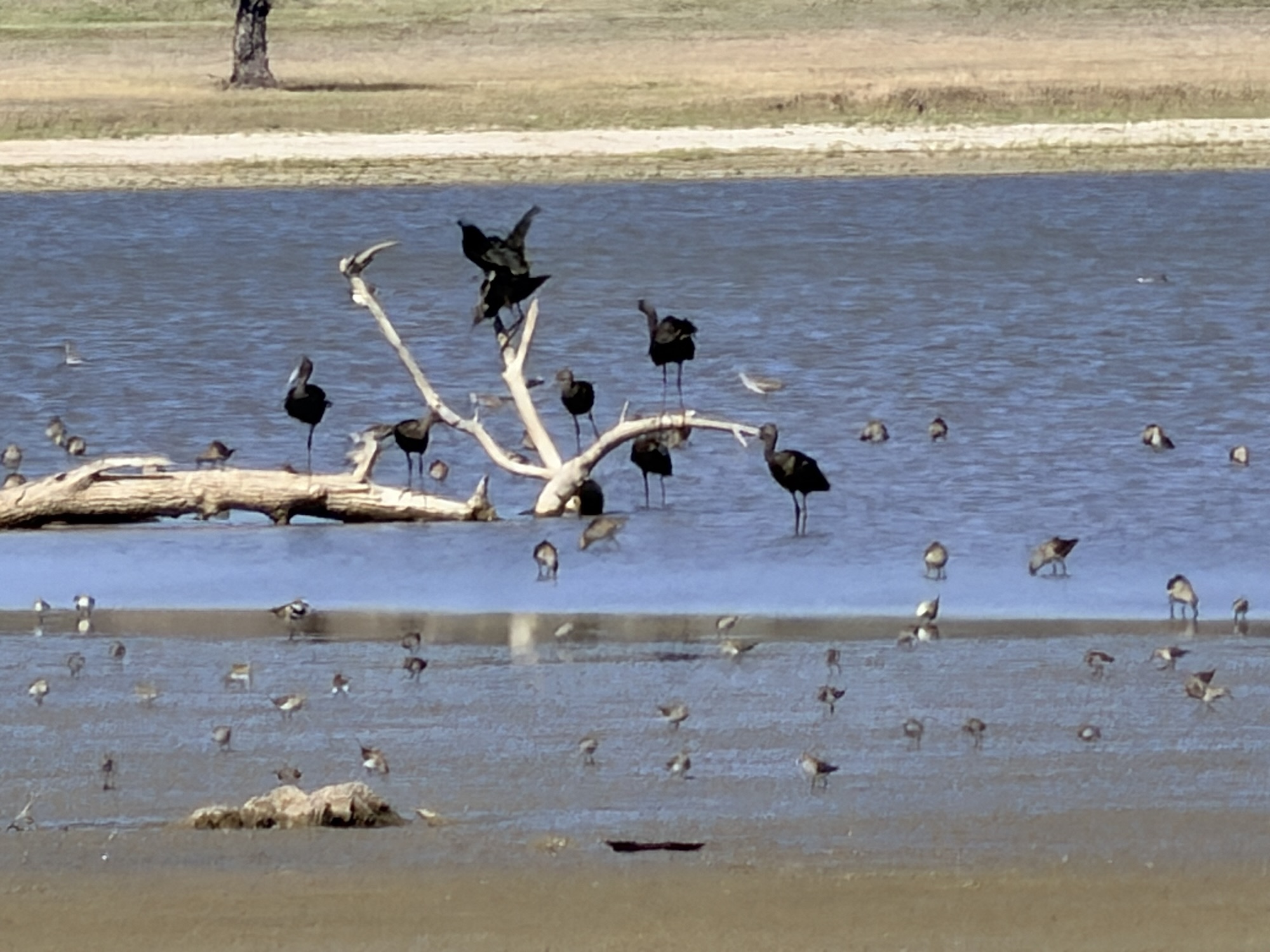
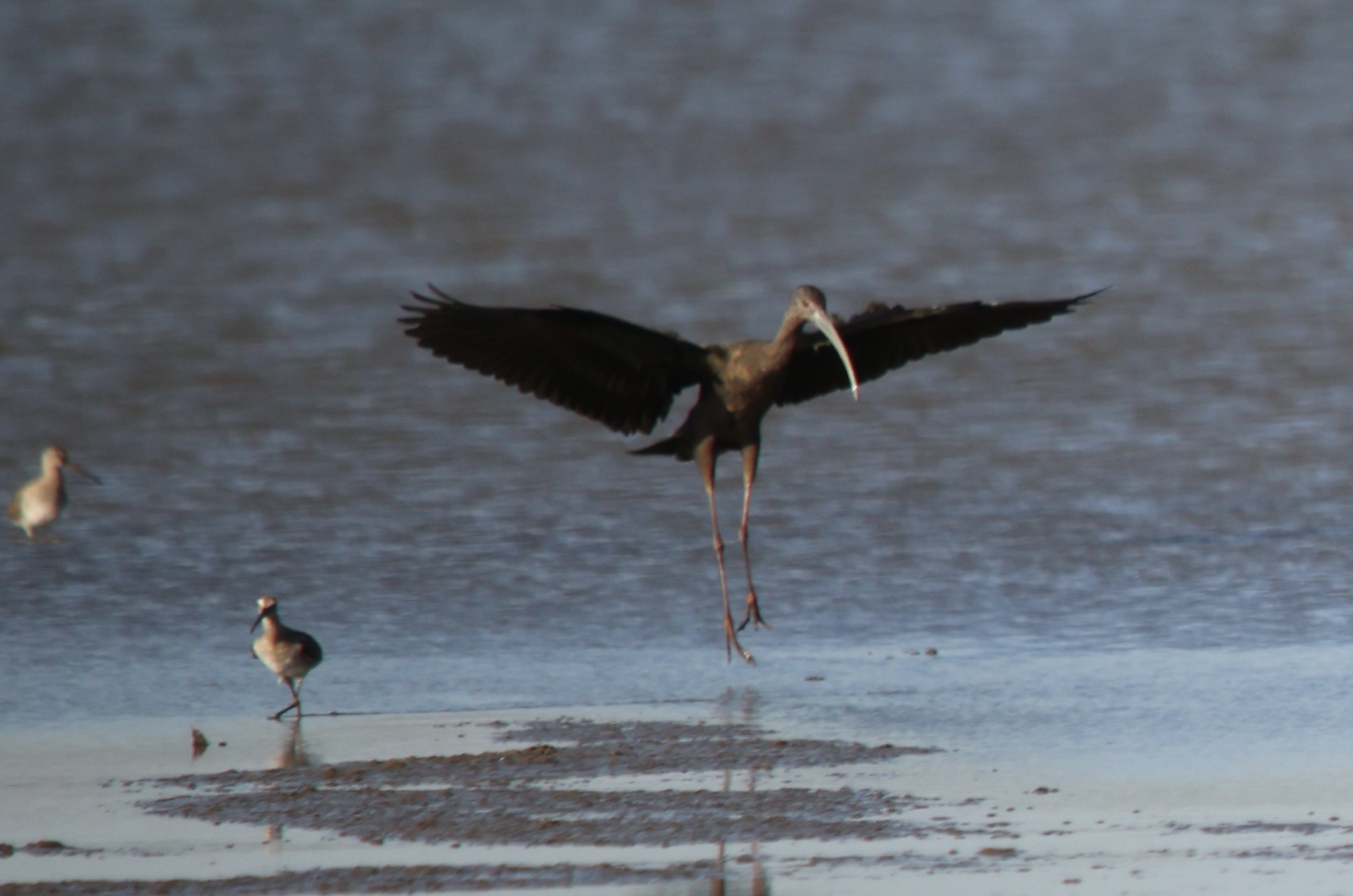
Finally I got close enough to see their bills. They were ibises! They eventually started making sounds, so Merlin confirmed they were white-faced (there are other dark ones). They dug in the shallow water and hung out on a snag in the water. It was most entertaining, and I was thrilled to get to watch them up close. By the time I heard Sandhill Cranes again that weird feeling in my chest that could only be joy burst forth.
White-faced Ibises
A friend asked me if I felt any other emotions along with joy. Yeah, there’s a poignant sadness when I realize joy is just a momentary feeling. I had tears looking at the birds. But that’s what makes joy so special — its rarity and fleeting nature.
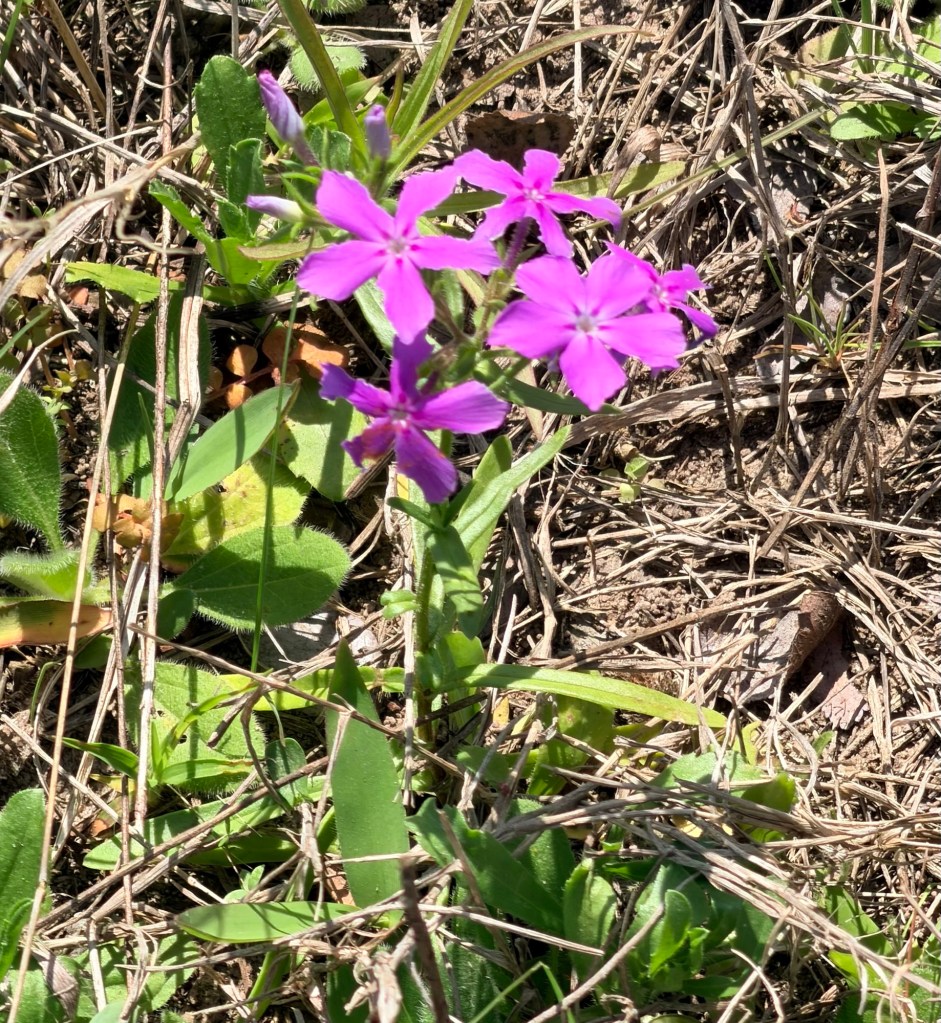
Phlox brought happiness! That’s good, too.
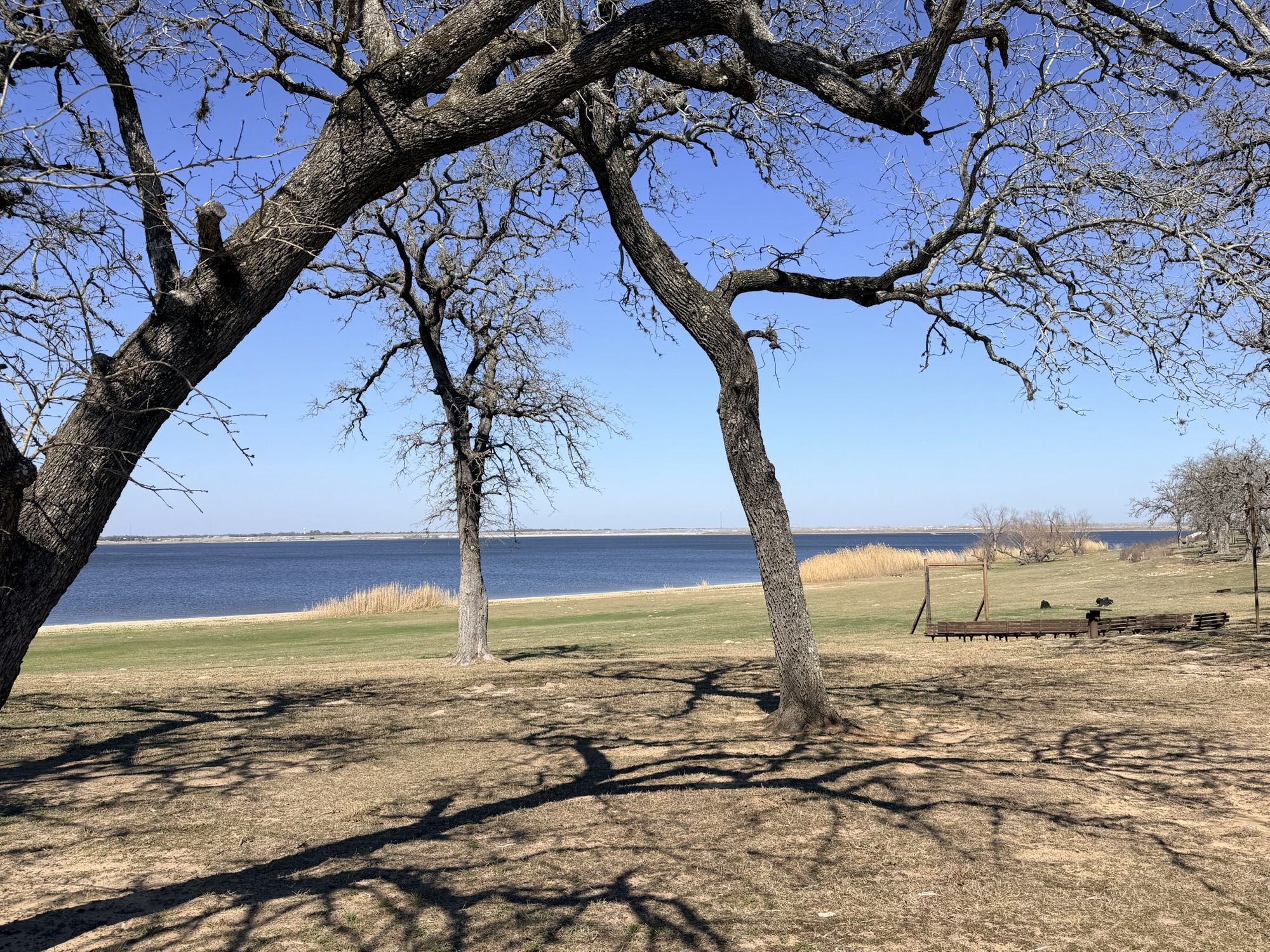
Anyway, the day continued and we took a drive around the area. We visited Yegua Creek Park, where Catherine from the comments section’s husband was camping. We missed him but did enjoy checking out the campsites and views.
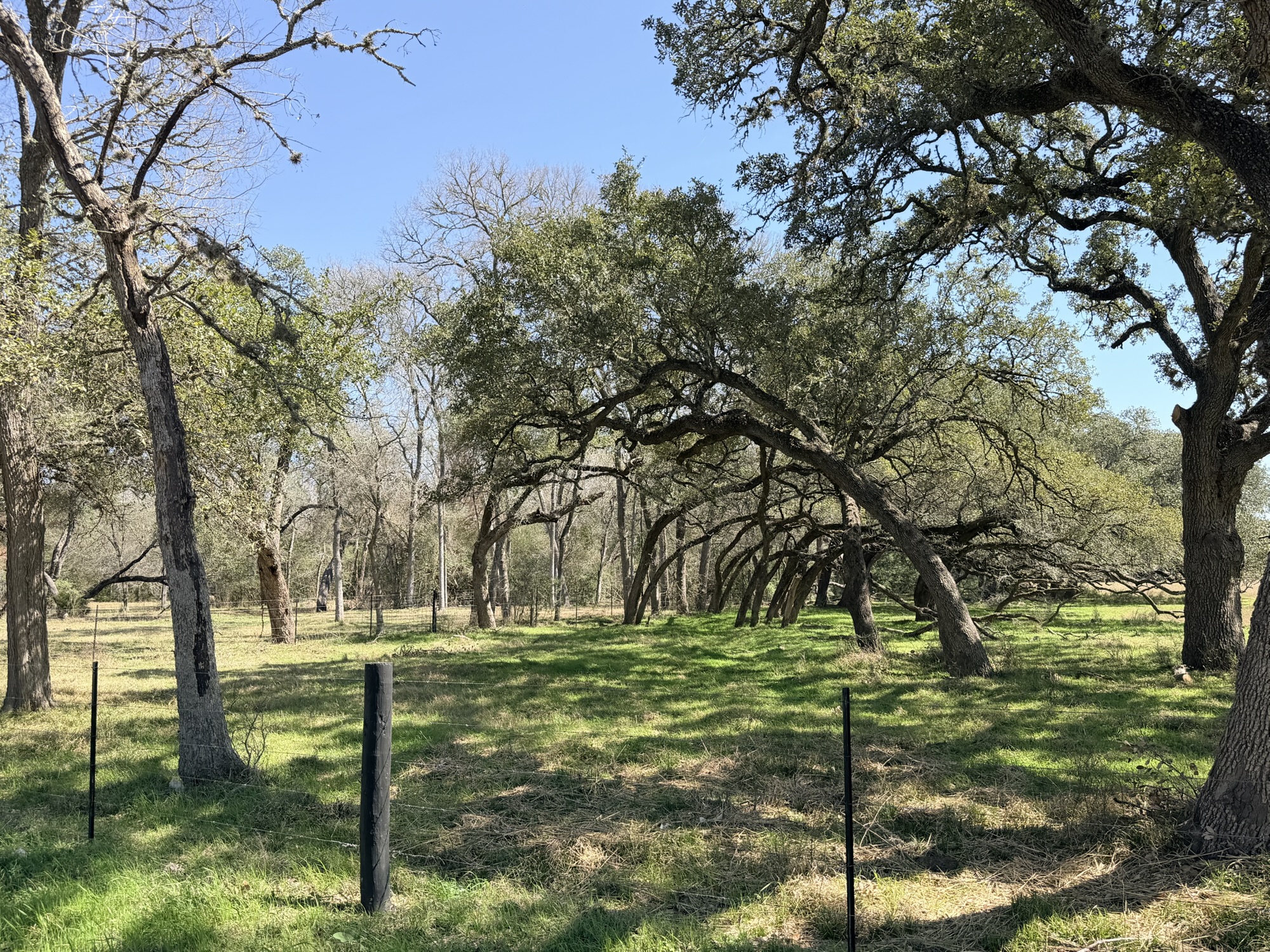
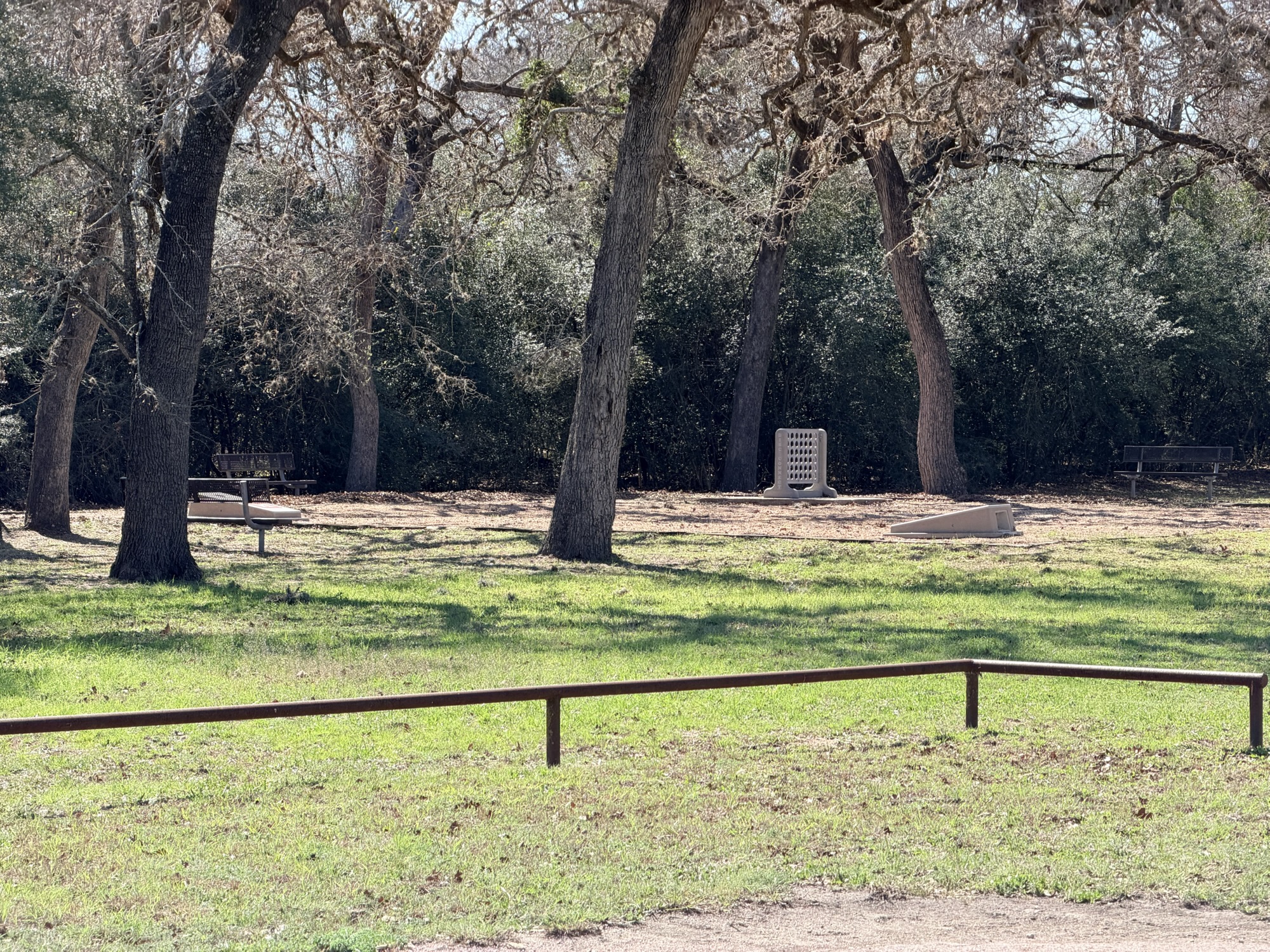
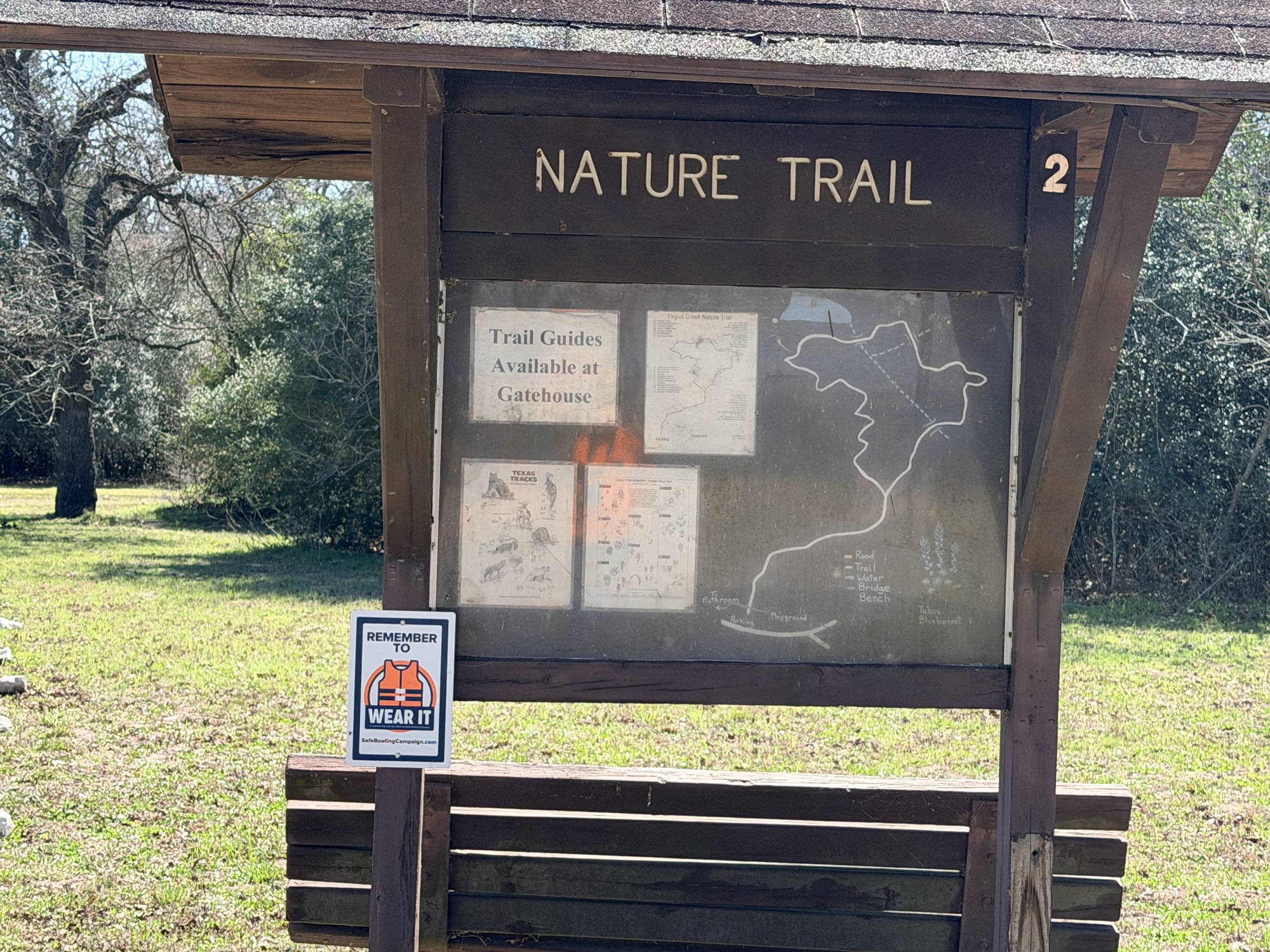
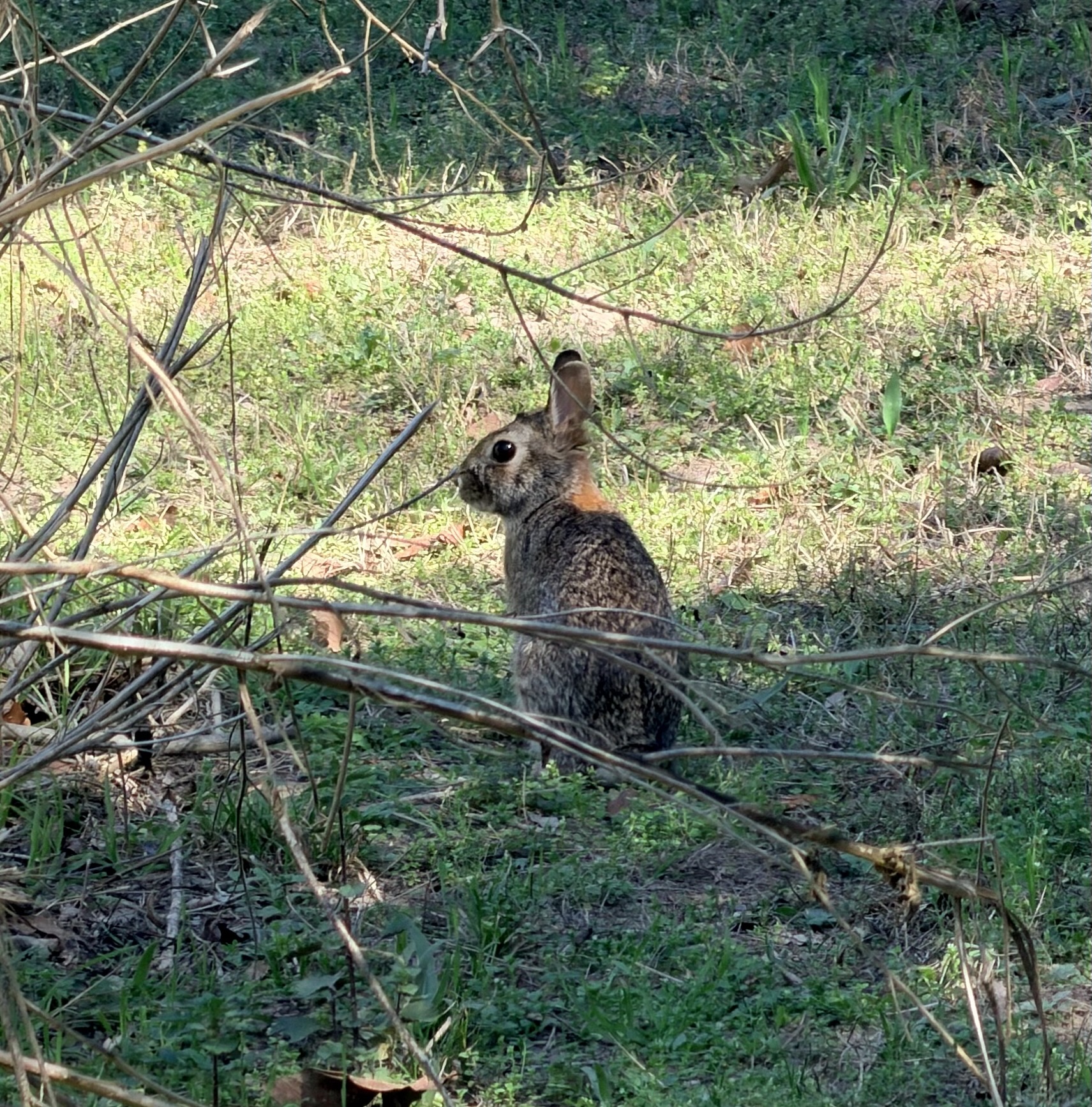
Interesting trees on the drive inThey have fancy cornhokecsetupAnd a nature trailRabbit counts as nature
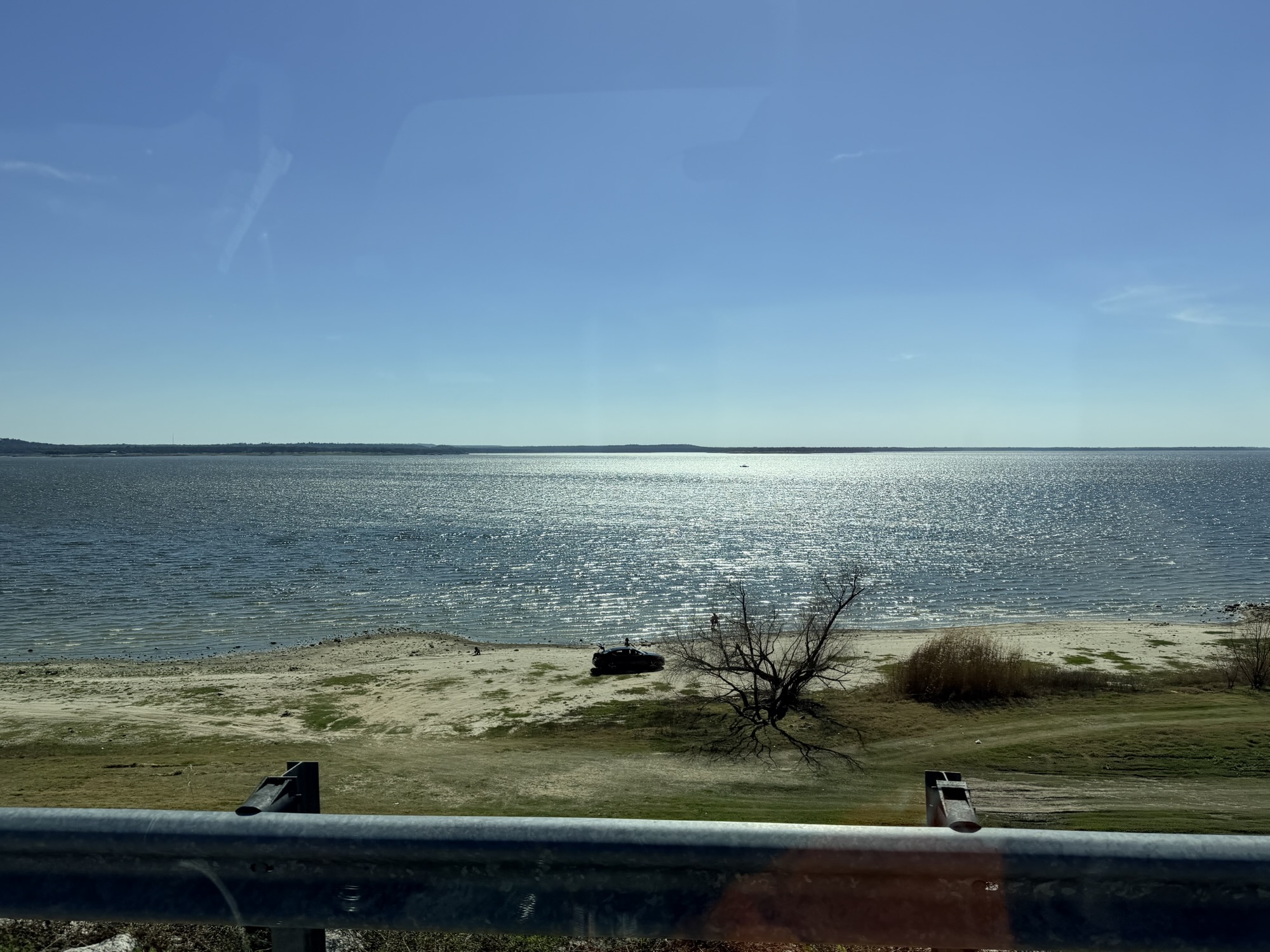
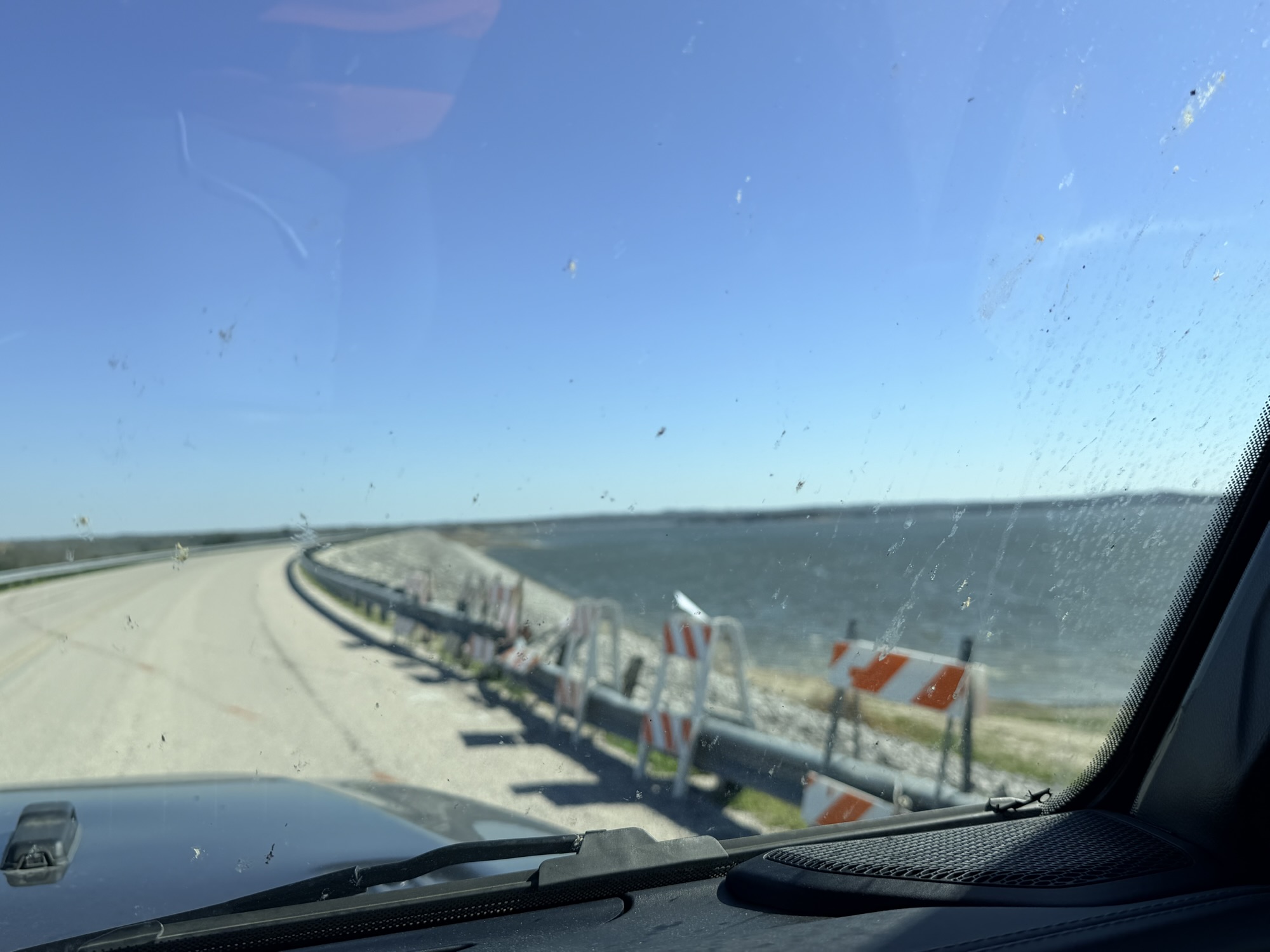
We then drove to where the dam for Lake Somerville is, which has many camping areas. After going over the whole dam, we took the scenic route back. There are some nice properties in the area.
Dam
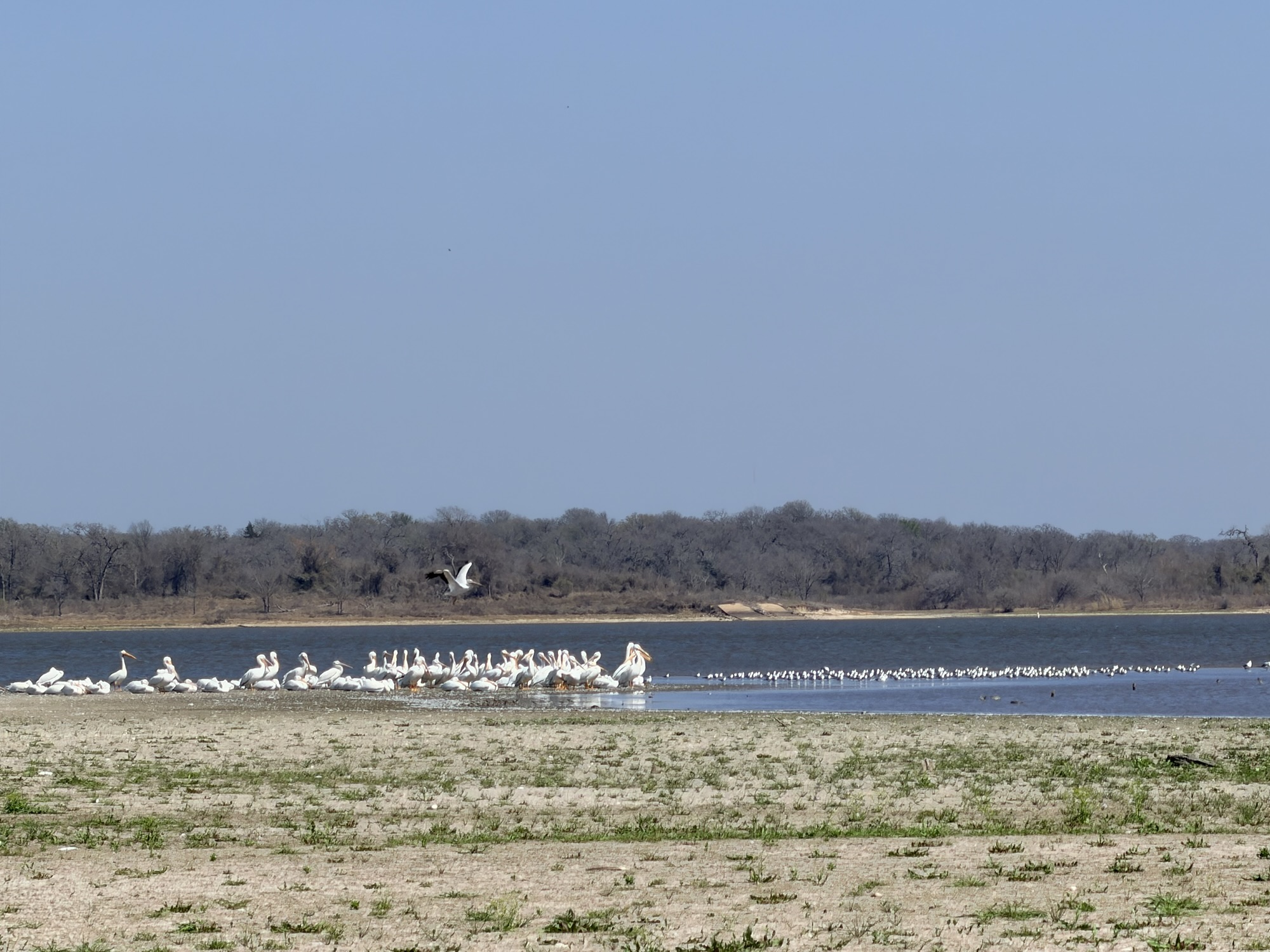
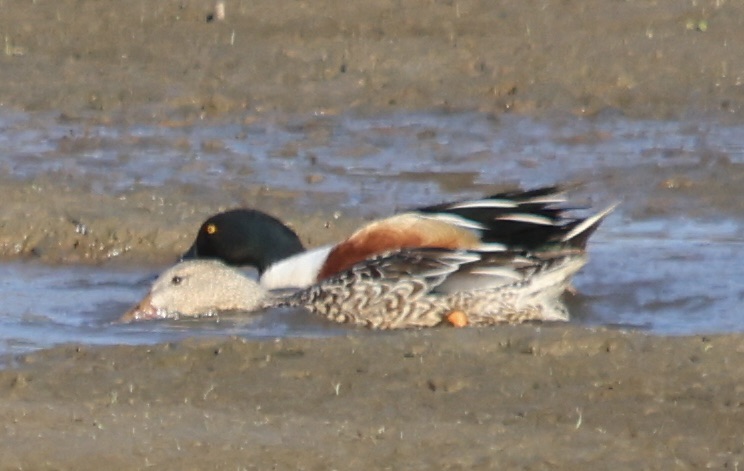
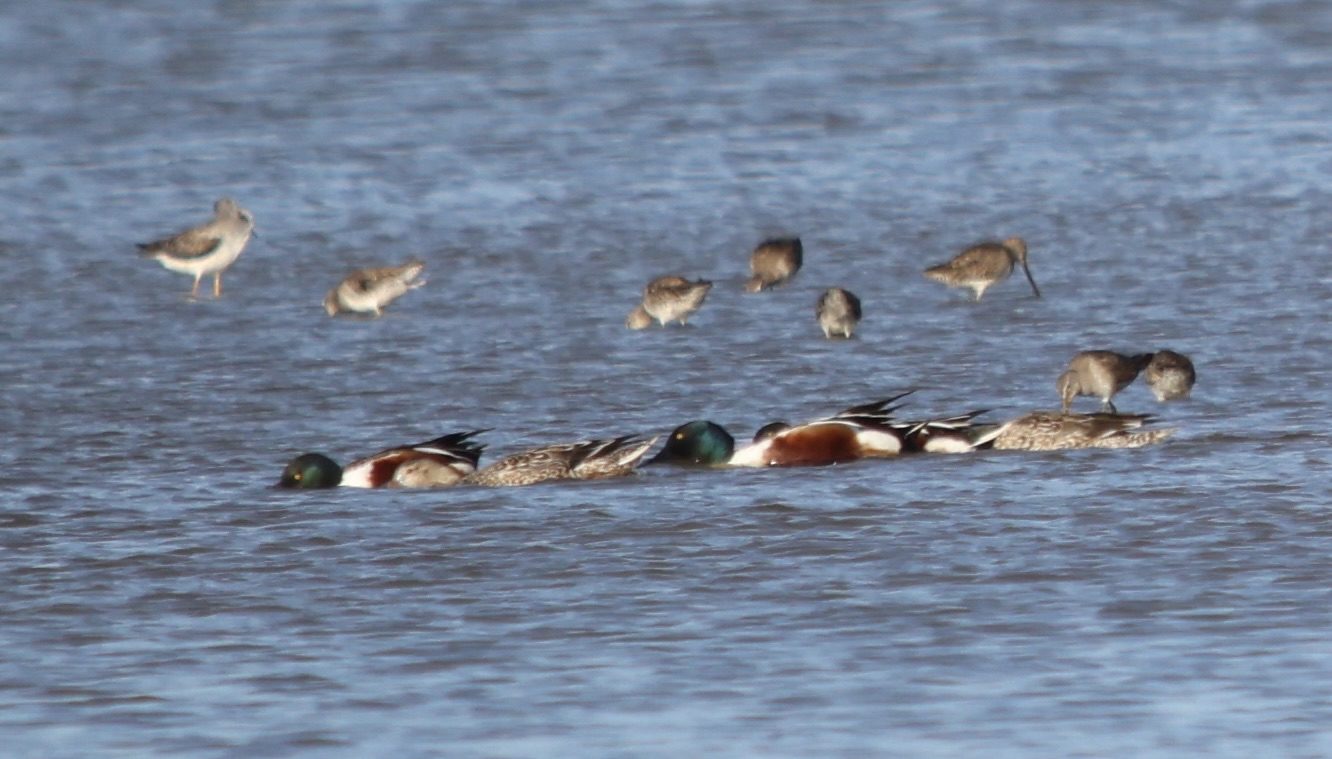
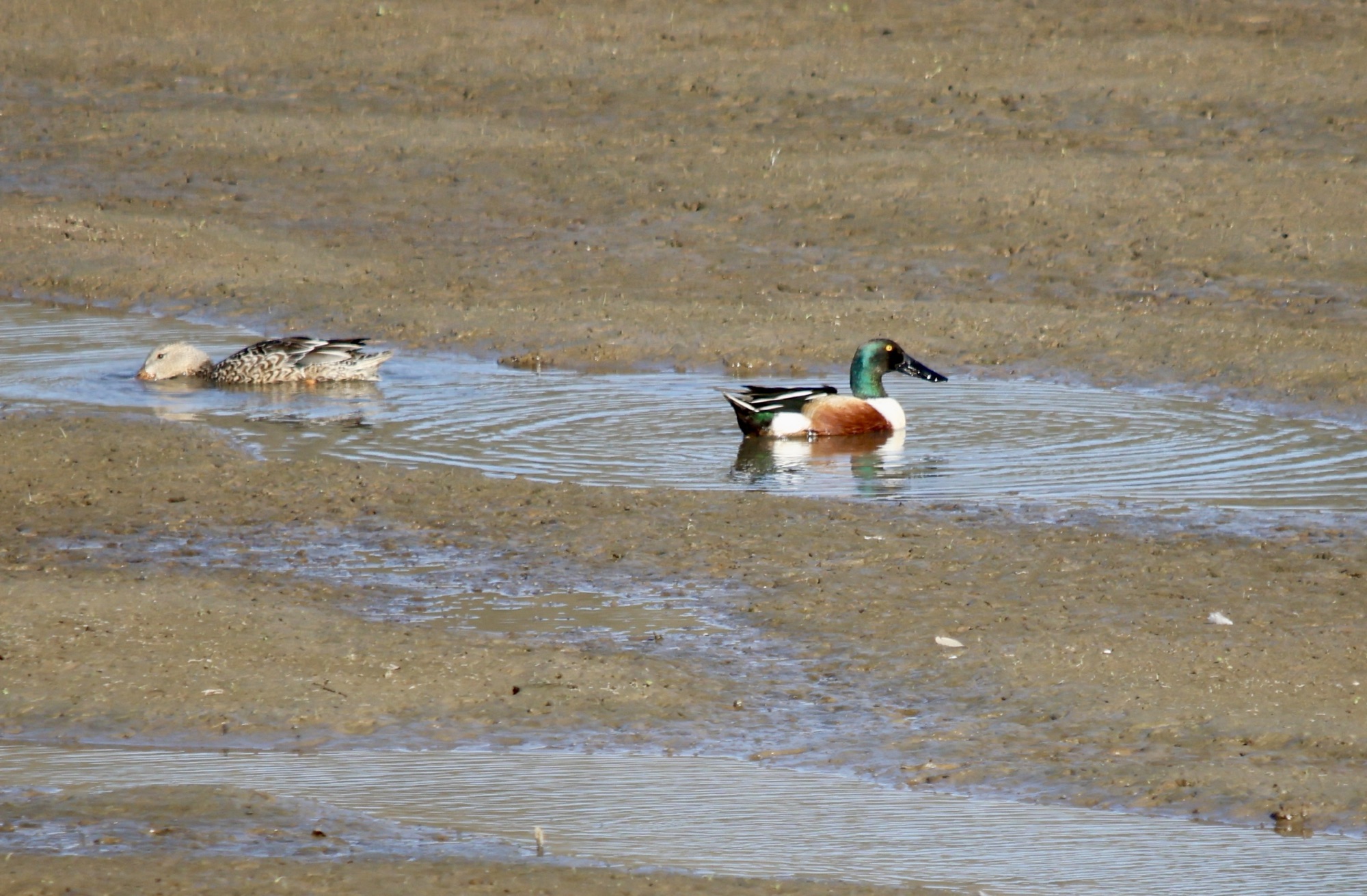
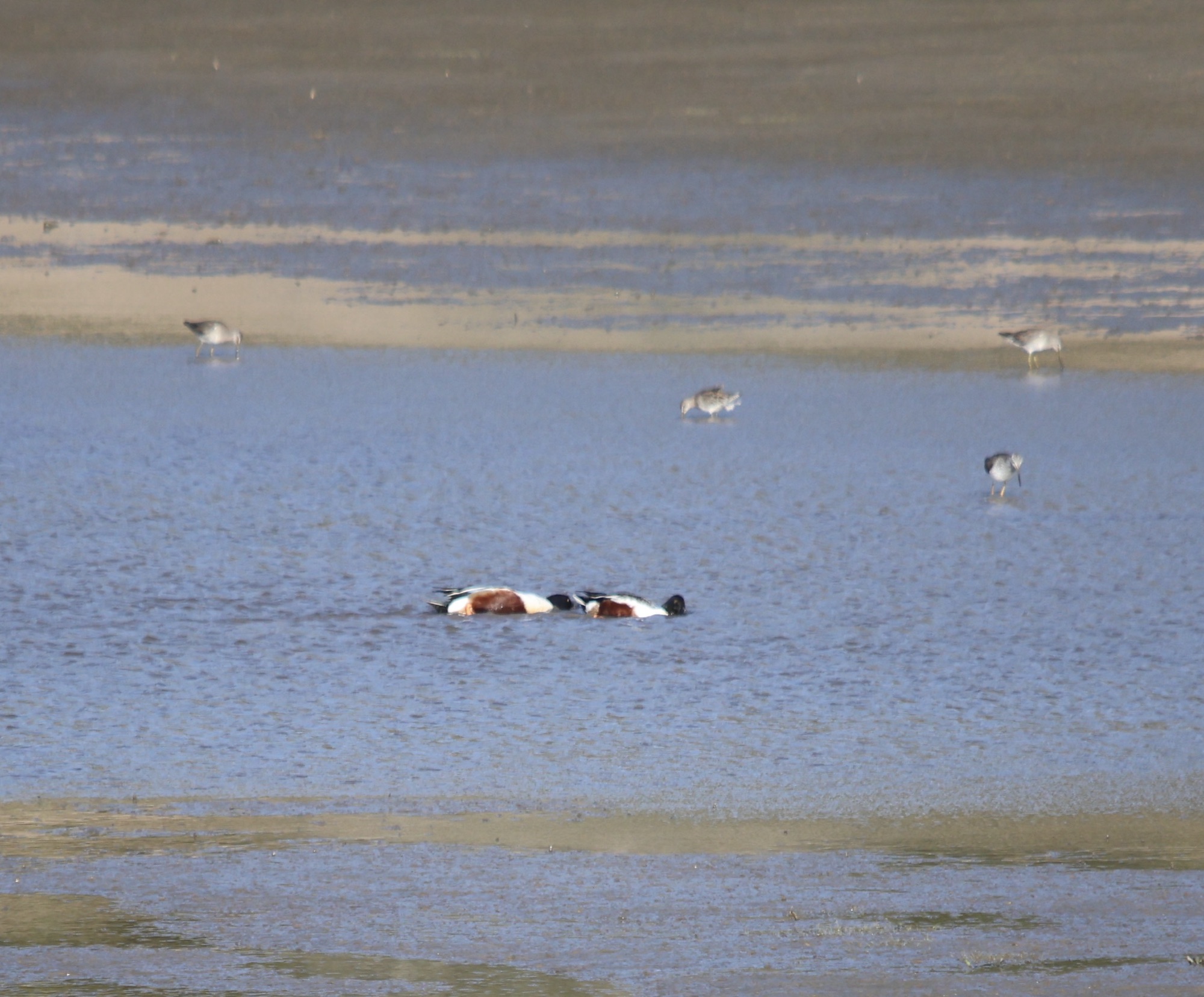
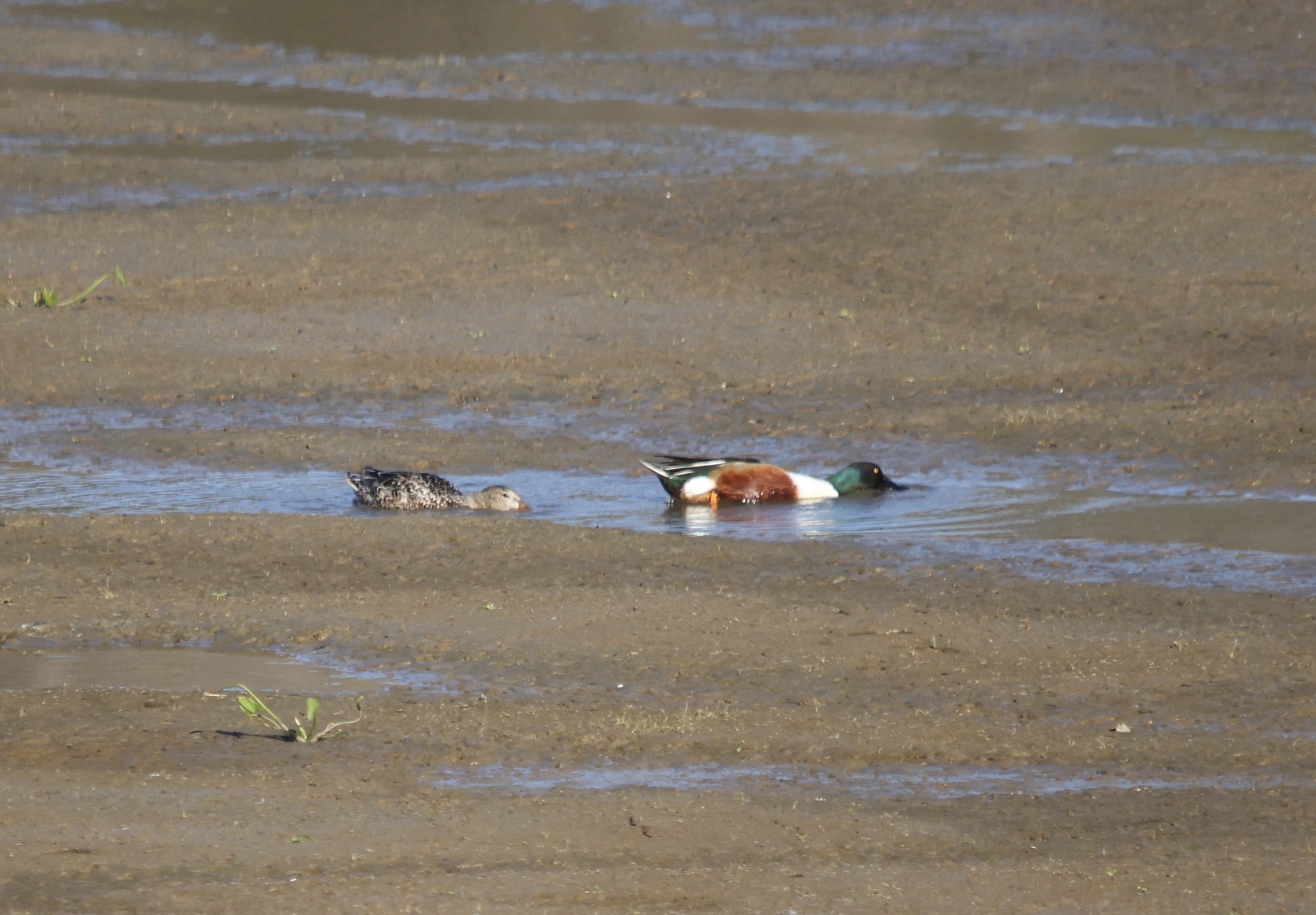
Back at our campsite, I wanted to take the good camera out to try and get better pelican pictures. We went to the day use area, where lots of birds were gathered. I helped a young man find his first Northern Shoveler ducks, and his excitement was fun to observe.
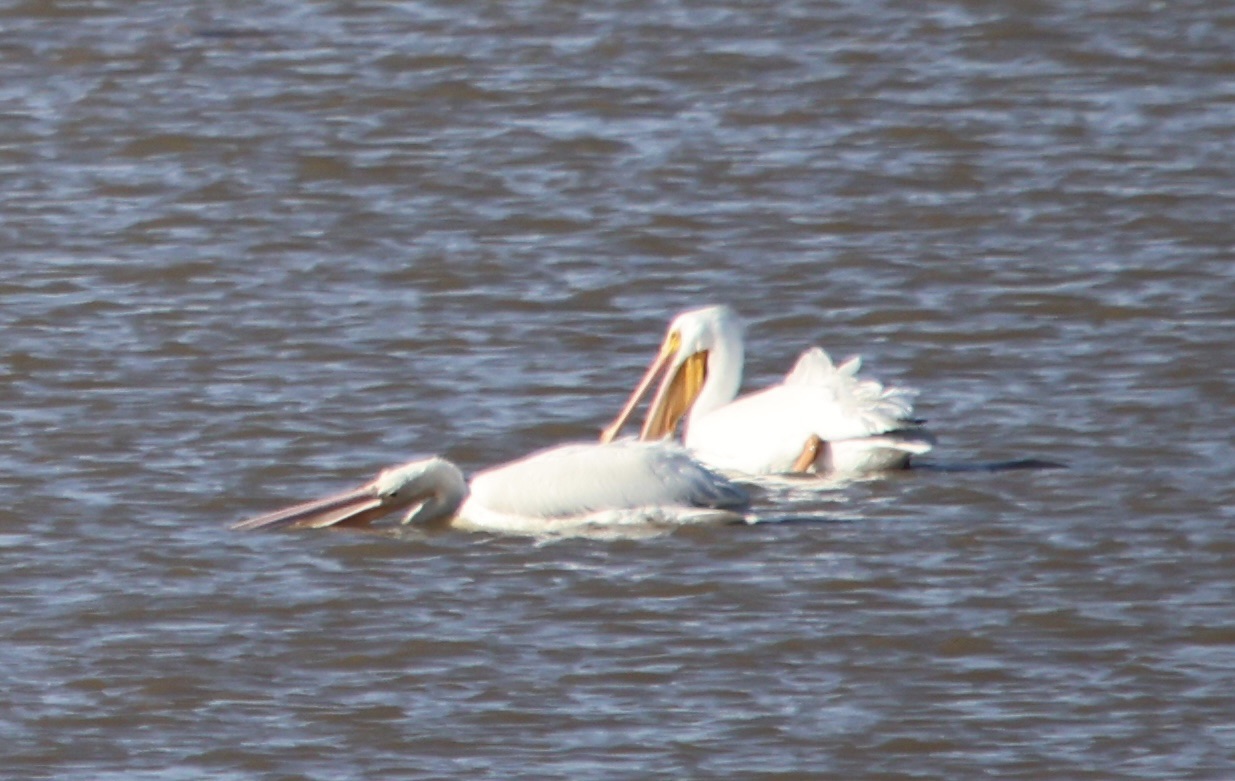
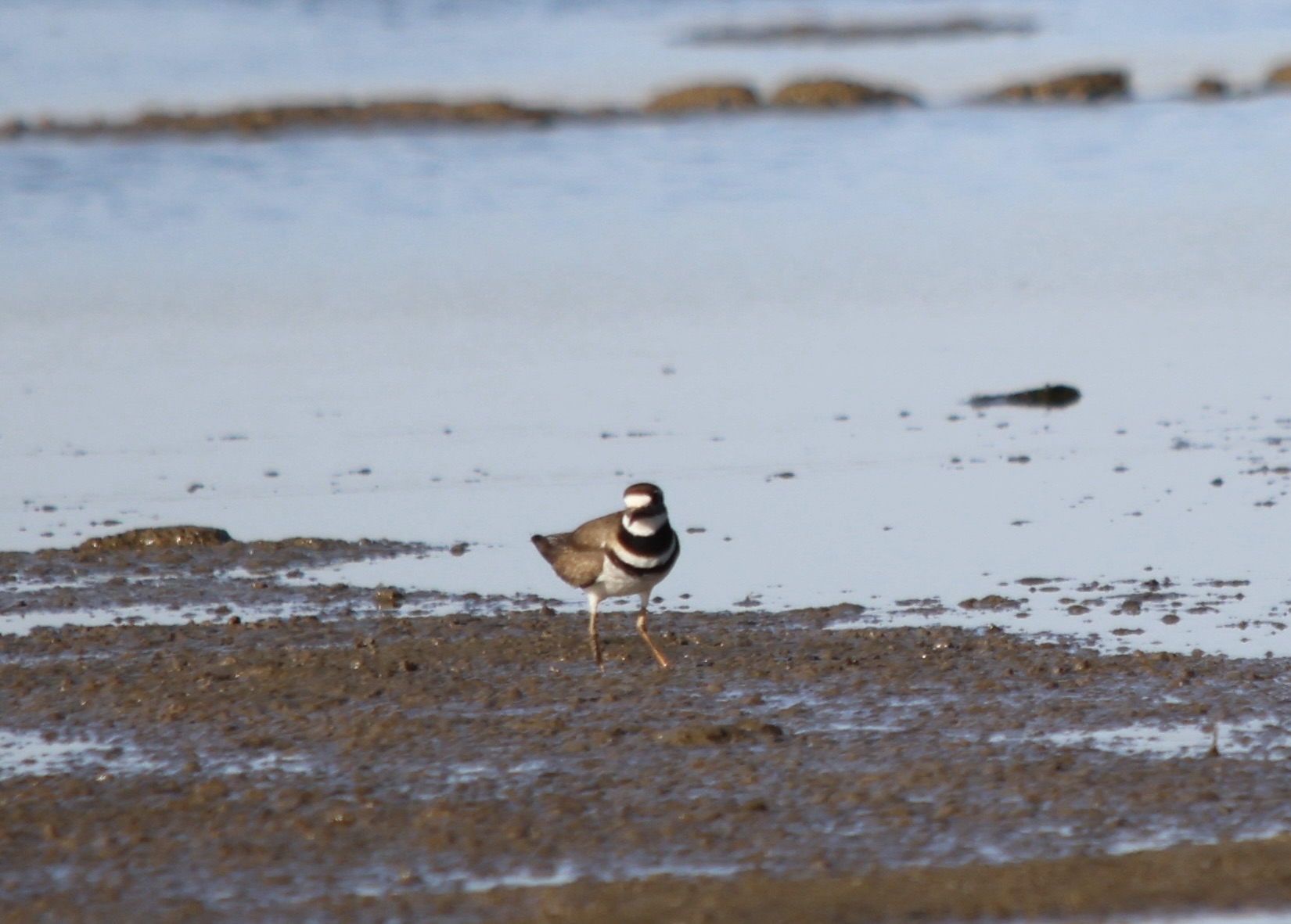
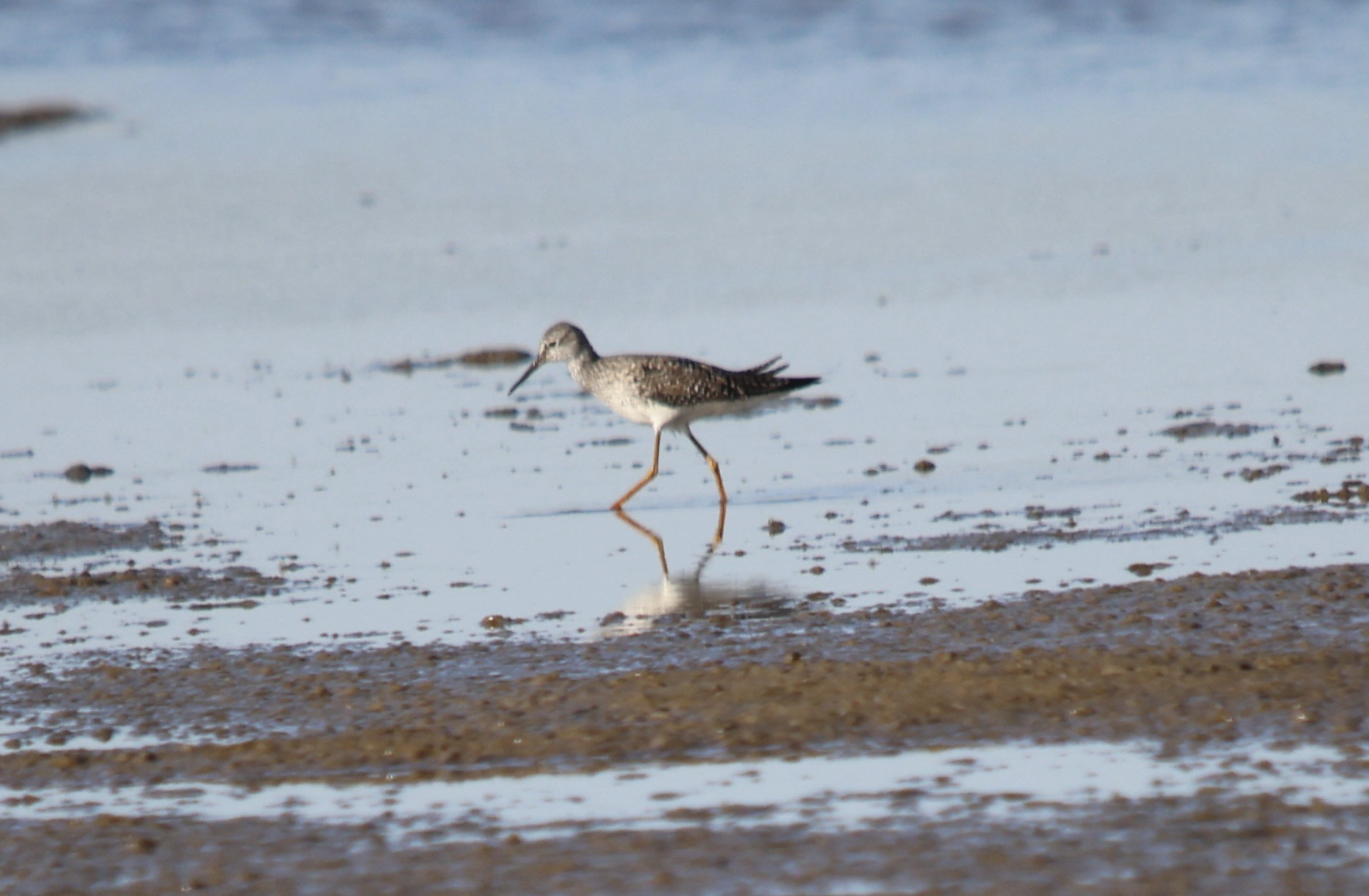
ShovelersThey are beautiful ducksHappy pelicansDowitchers I thinkKilldeerGreater YellowlegsAnother ibisIbis landing
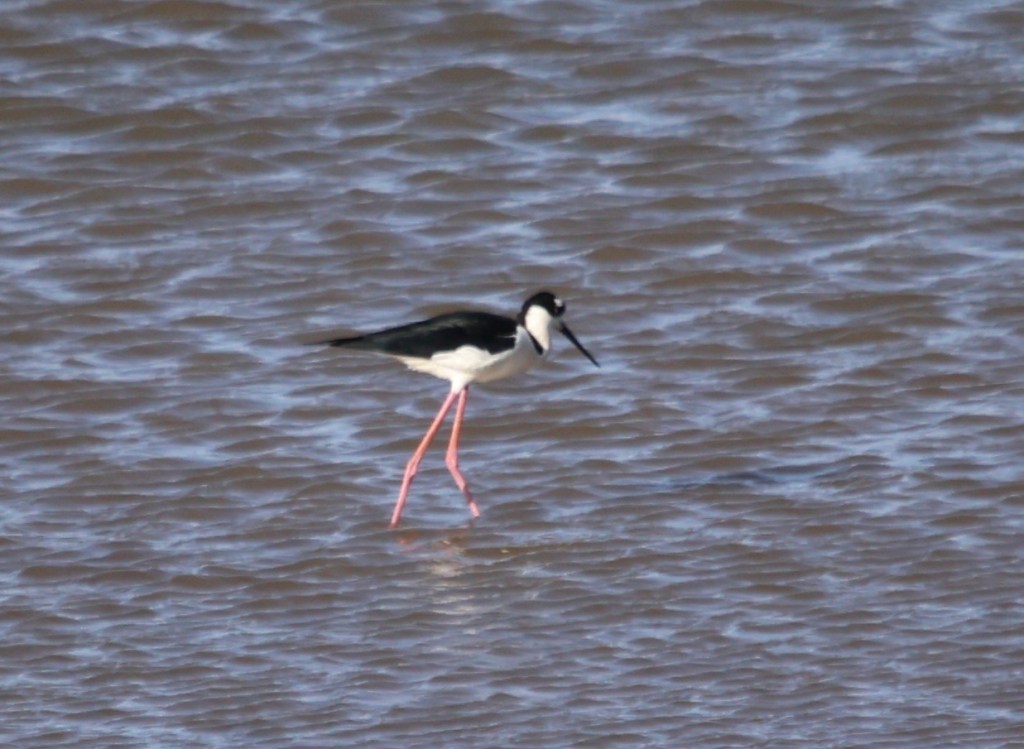
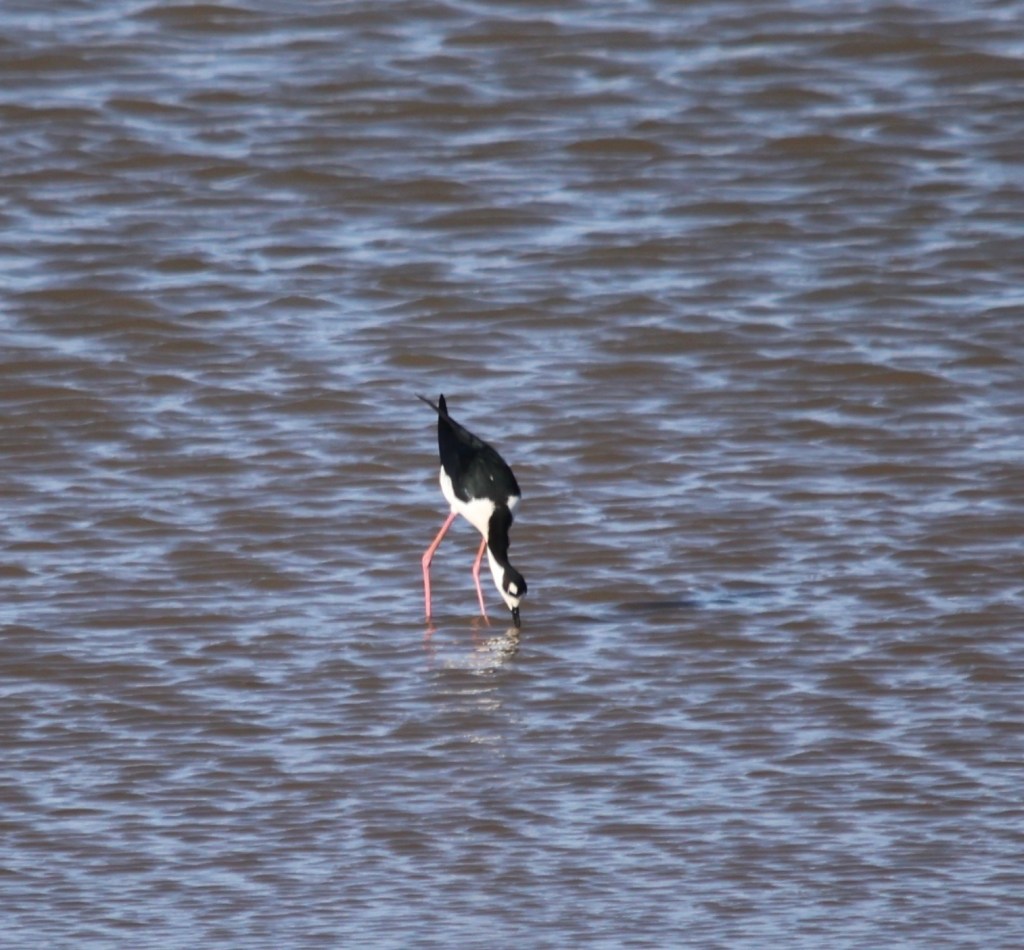
Then I got all excited because I spotted a Black-necked Stilt. The second joyful moment.
Stilt!
I jumped up and down and made happy noises, which Lee enjoyed. He said that’s why he likes to go with me sometimes, just to see me all happy. Aww. Here are a few more photos from the day.
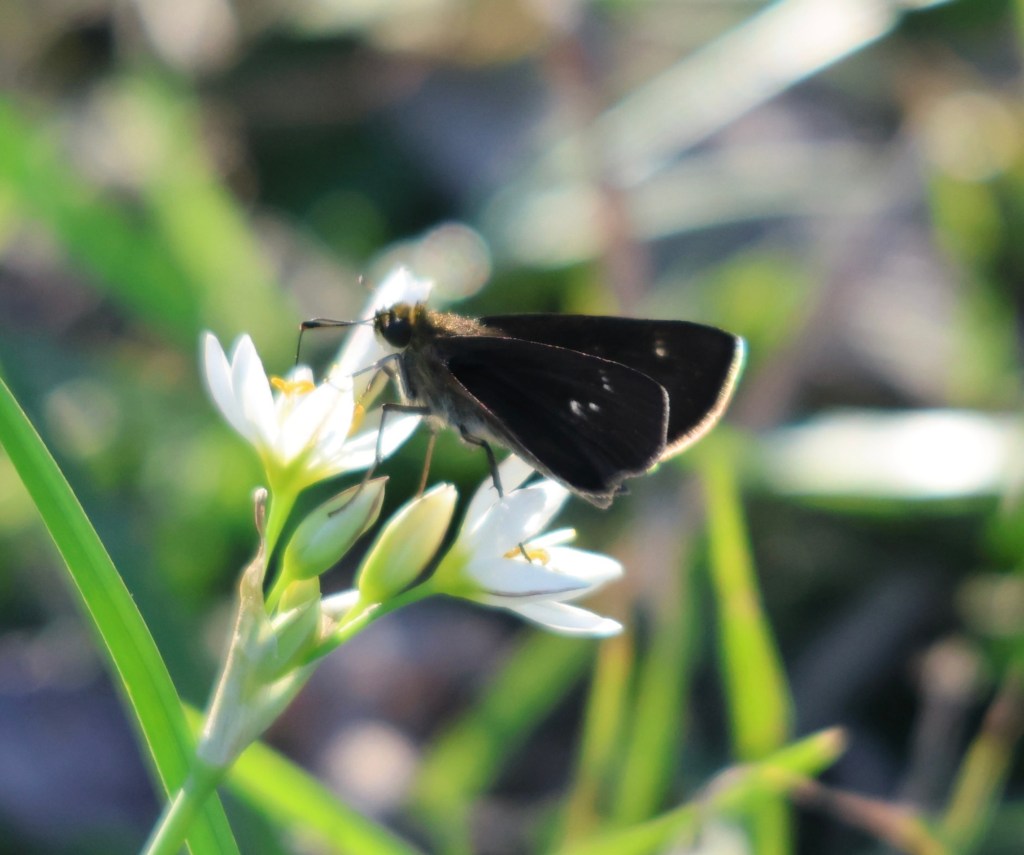
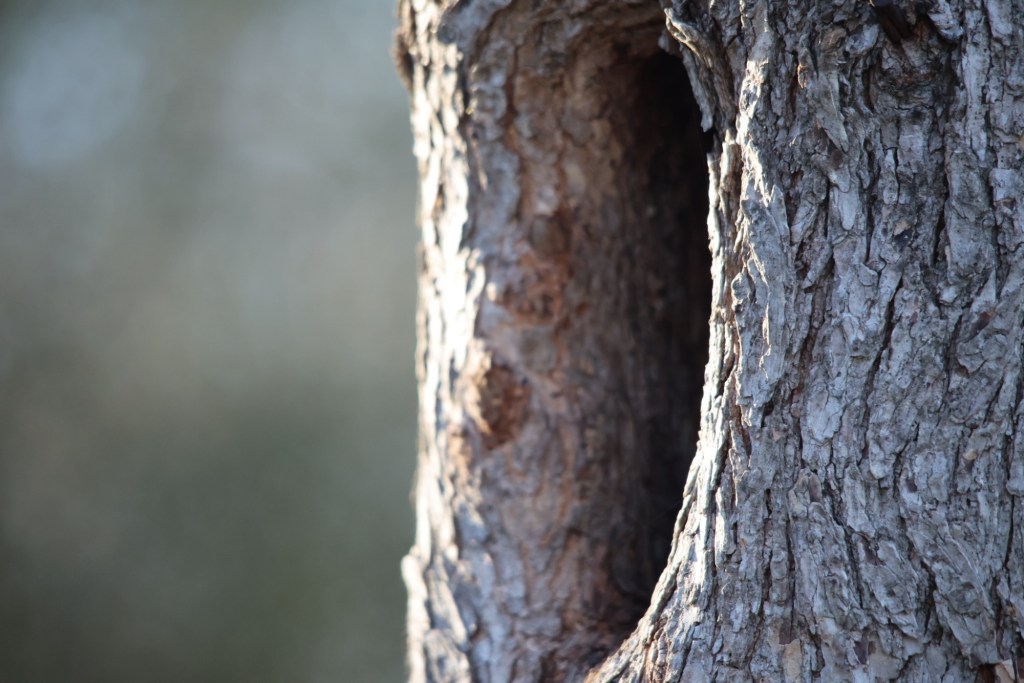
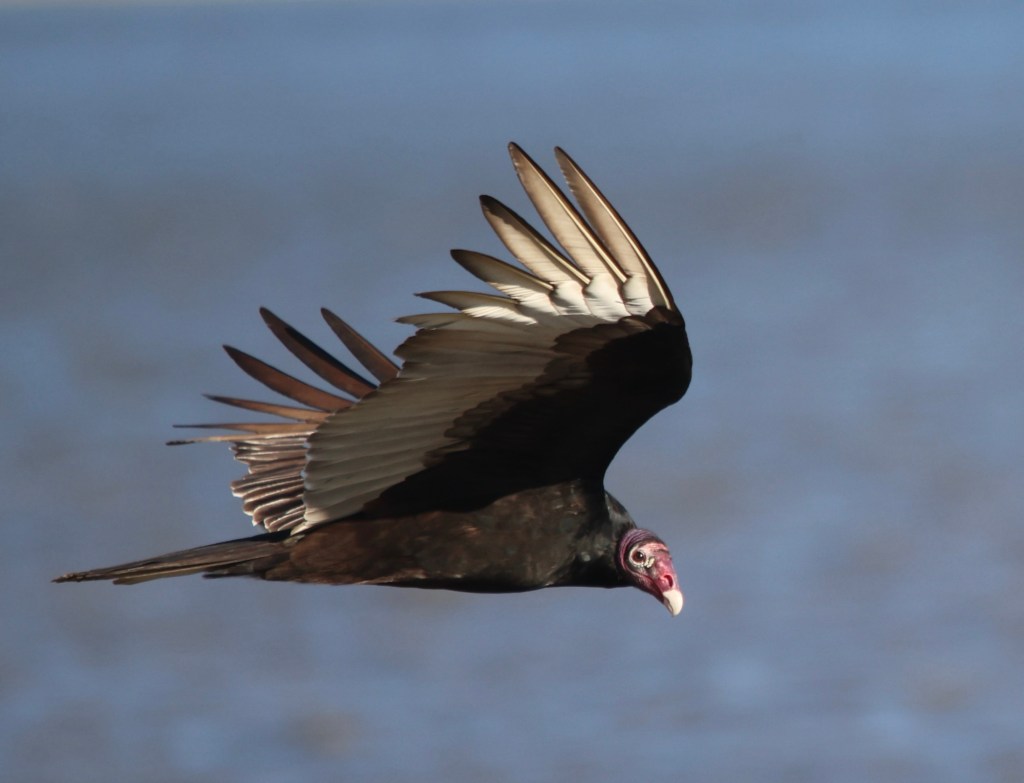
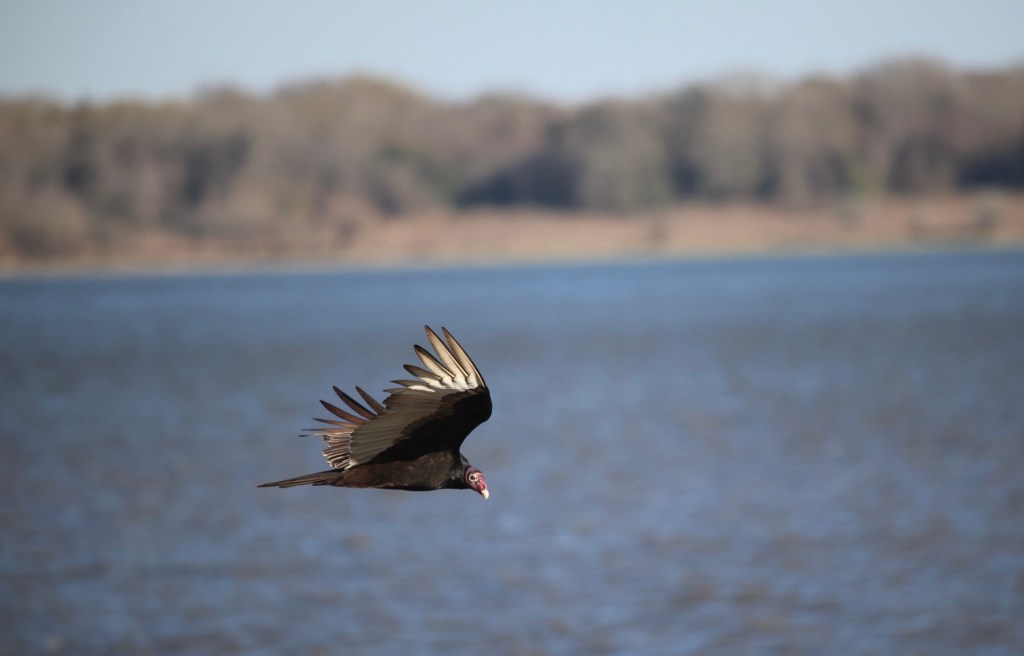
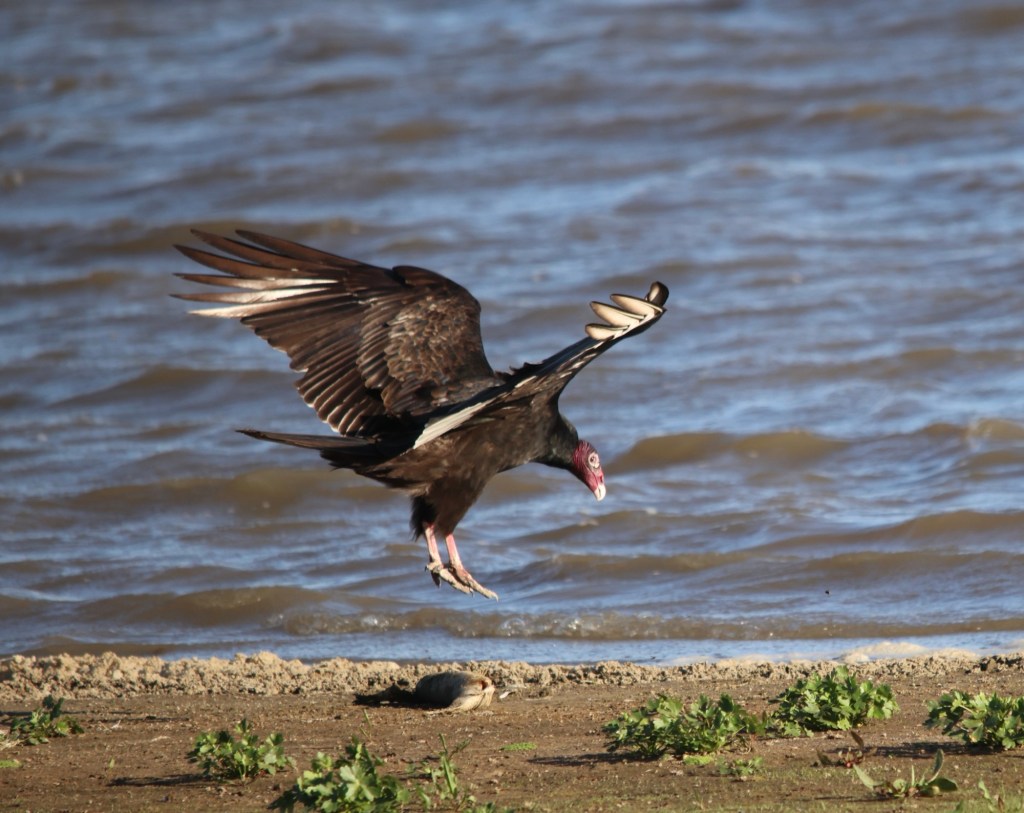
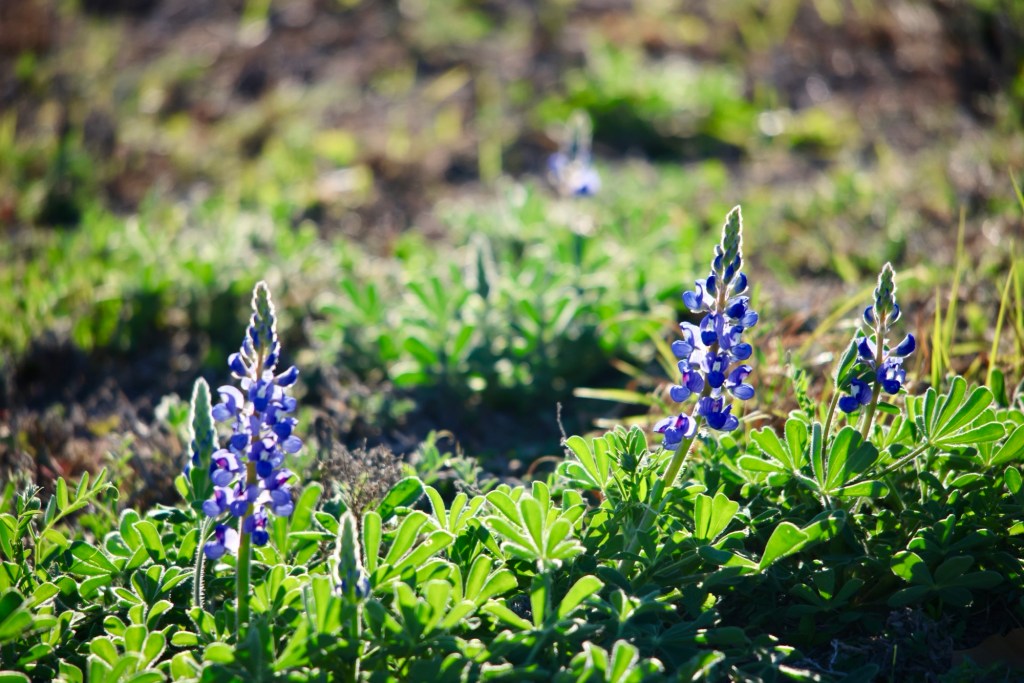
Dun skipperTree holeFemale Turkey VulturesMy favorite bluebonnet picture.
The day ended with salmon patties made into sandwiches with really good potato salad. Lee got to cook on his little grill outdoors, so he had fun, too.
Proof Lee and I were here.
Thanks to all of you who’ve been reading the last few days. It’s encouraging to think I entertain you a bit. At least it’s a brief diversion!
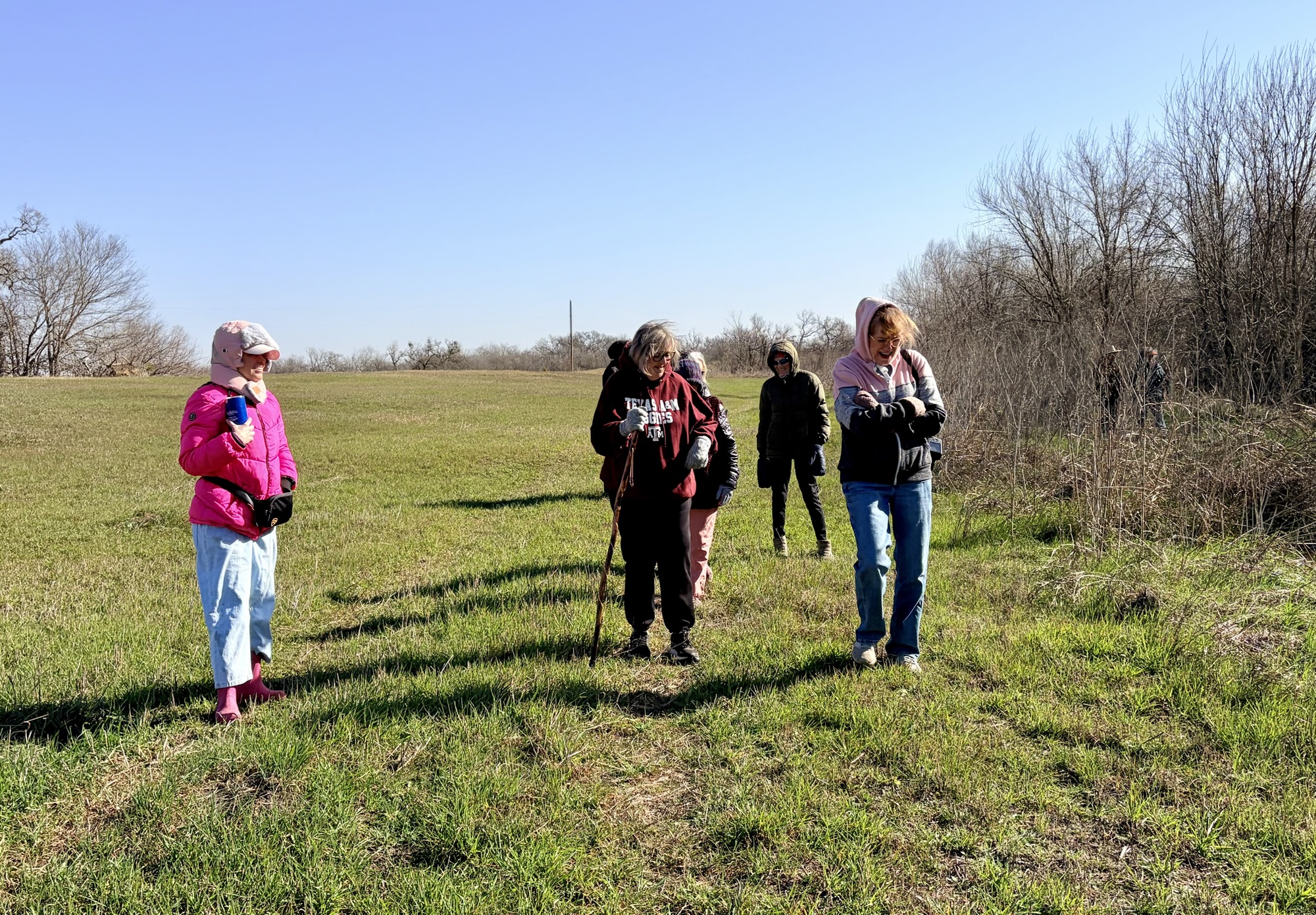
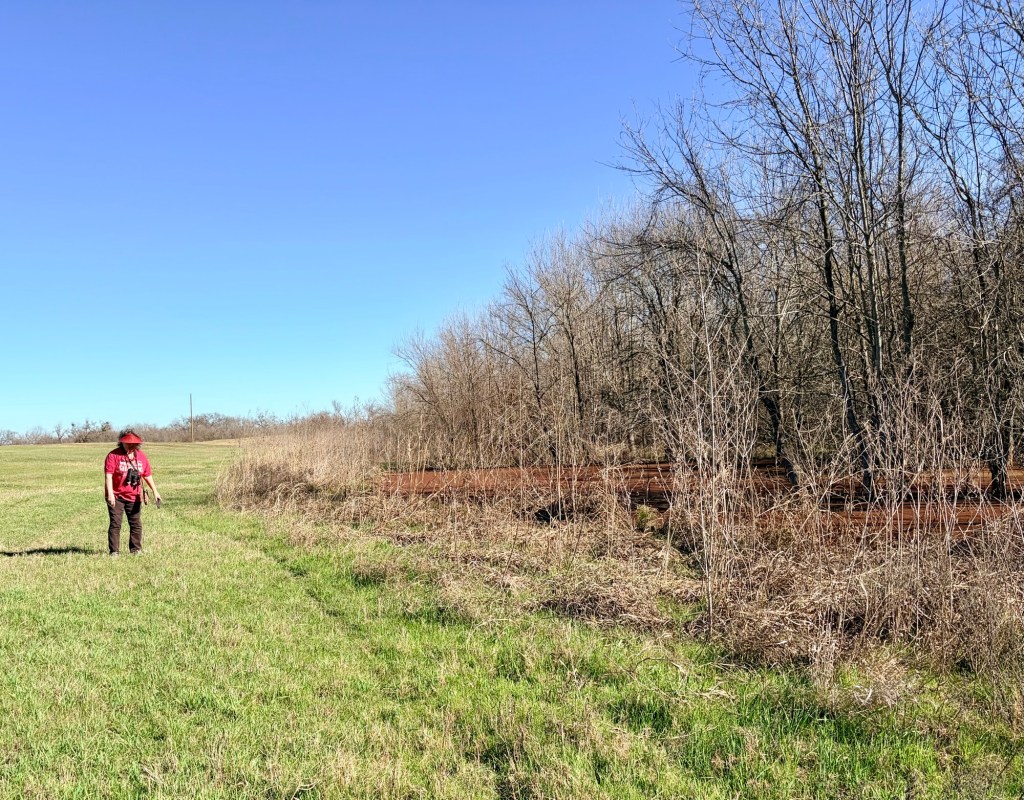
It was darned cold and windy this morning as I headed over to my friend’s house to show some of our Master Naturalist friends the beaver dams and ponds I visited earlier this month.
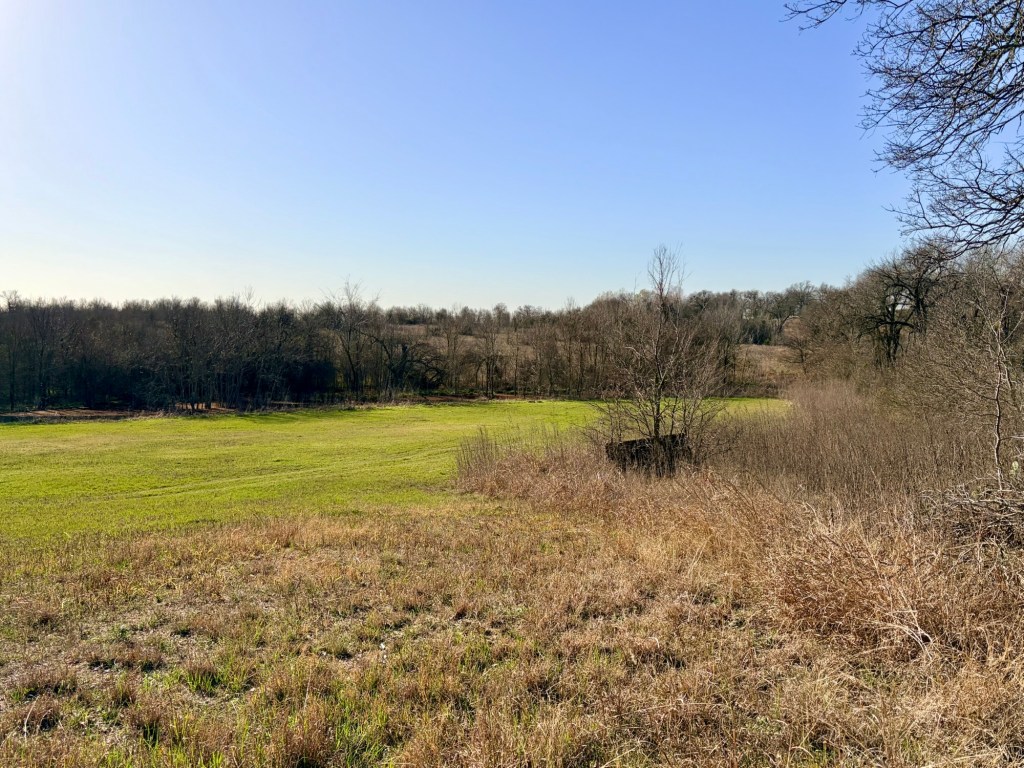
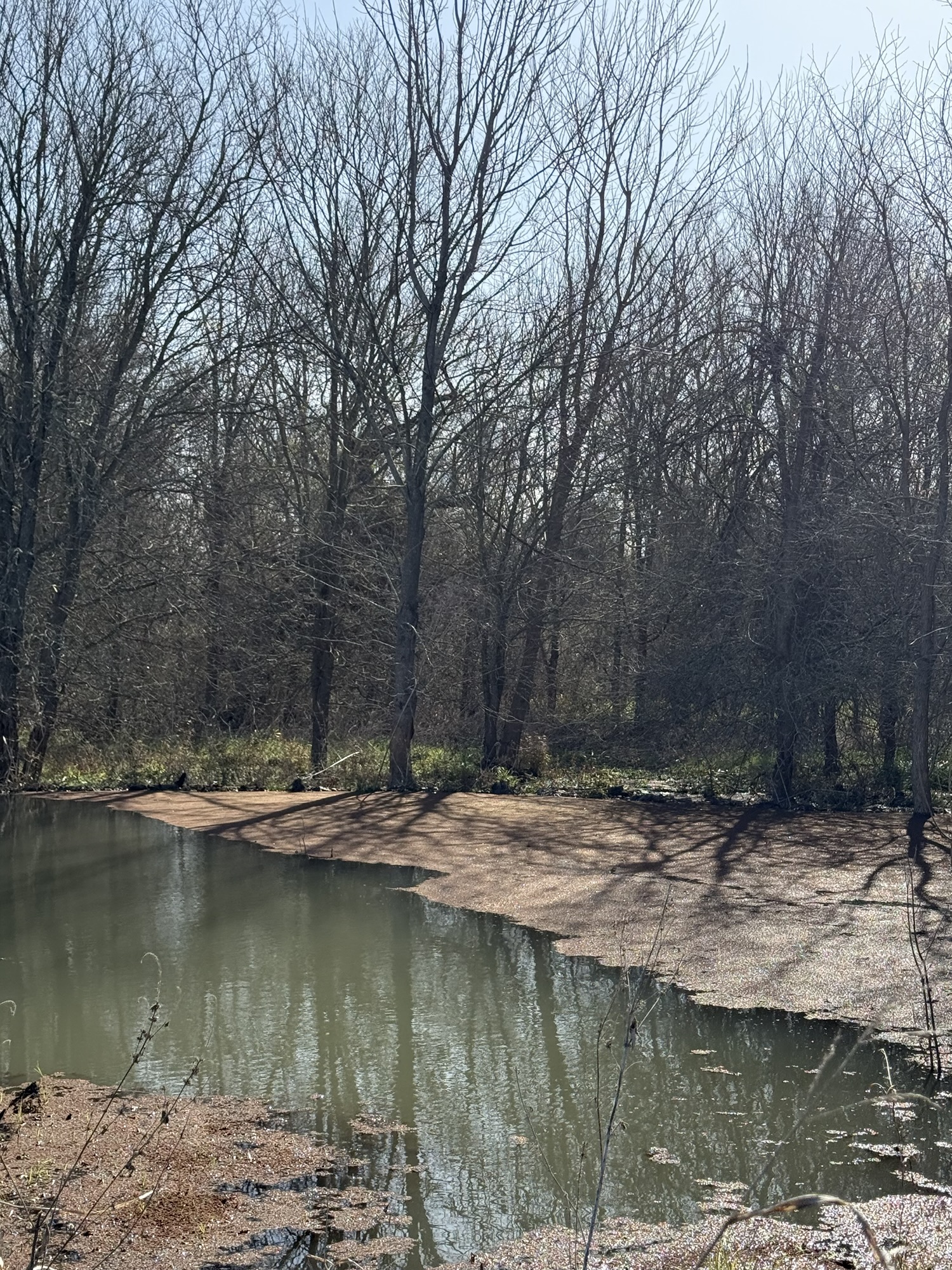
At least it was sunny! Ponds are among the trees in the distance.
I recovered from being lost and going down the wrong road, and everything went fine. I remembered all my beaver facts and just started spitting them out authoritatively. I think I even taught people some things they didn’t know!
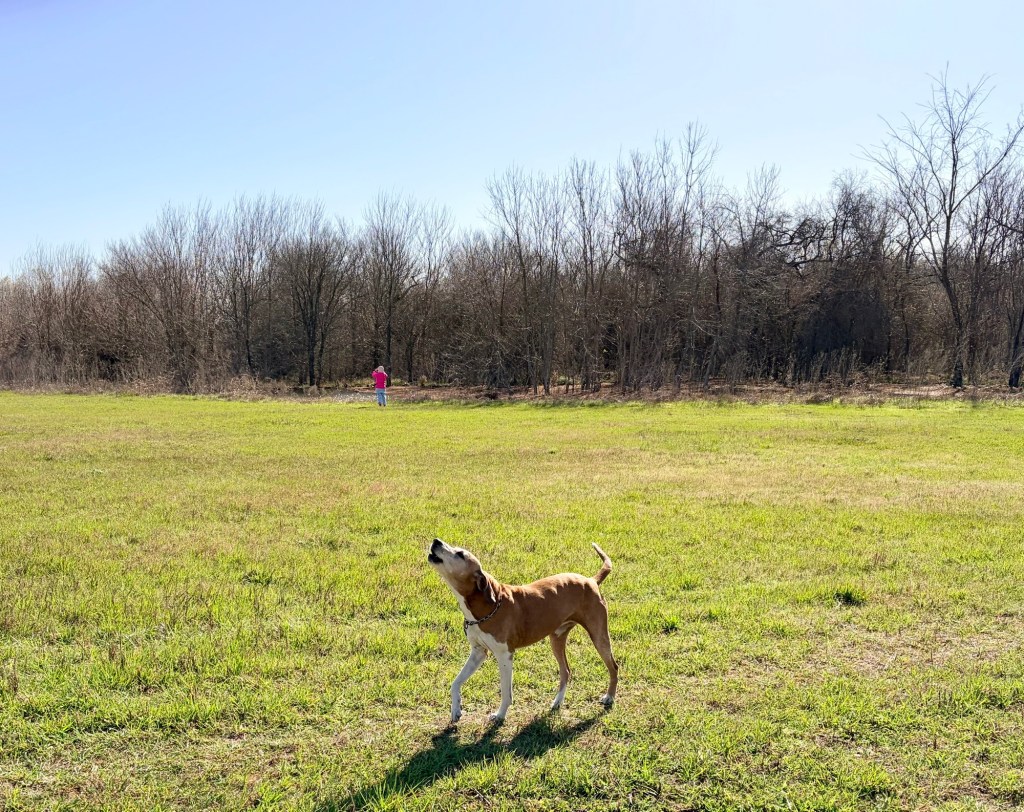
Ruby howled her approval.
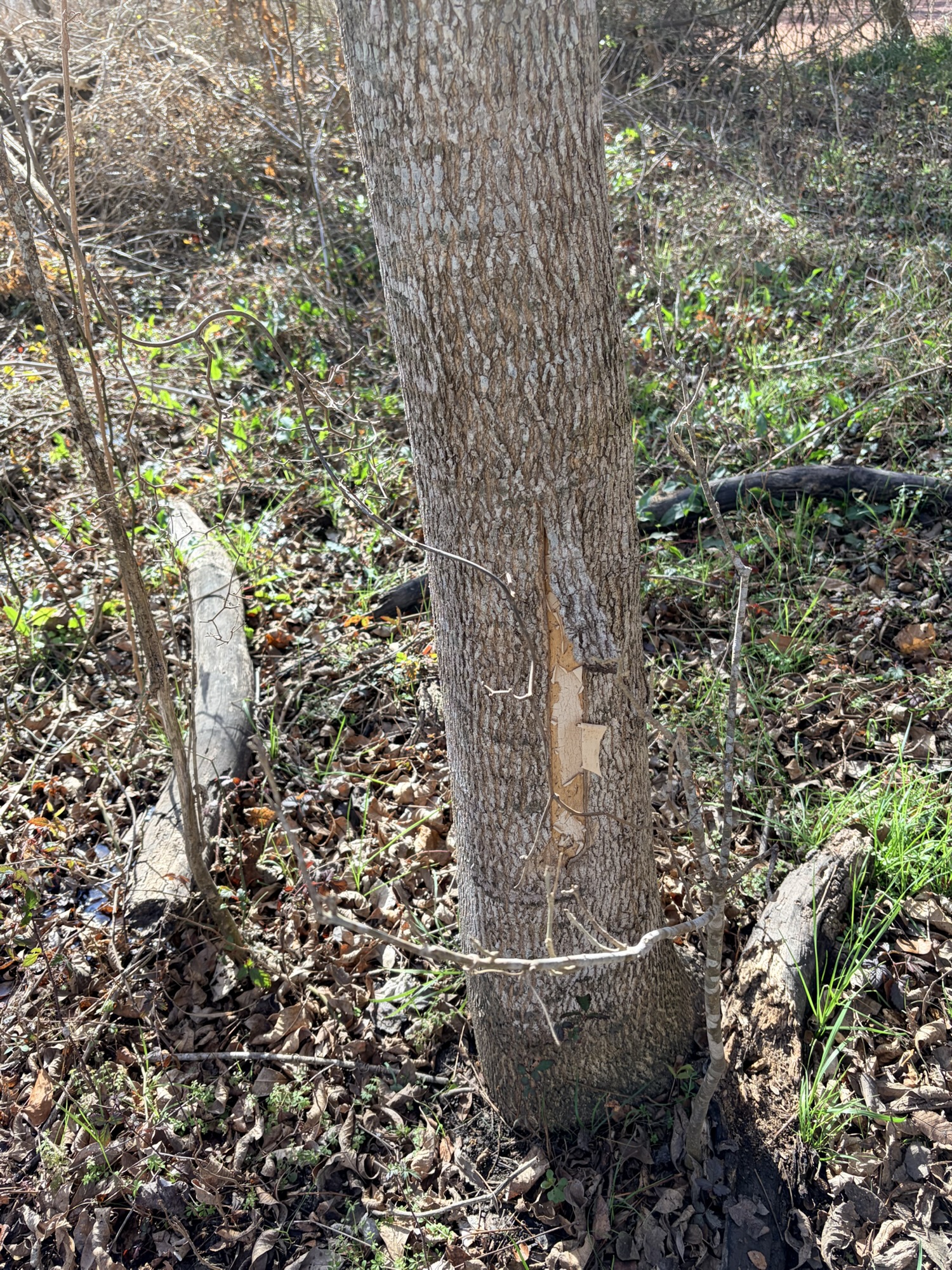
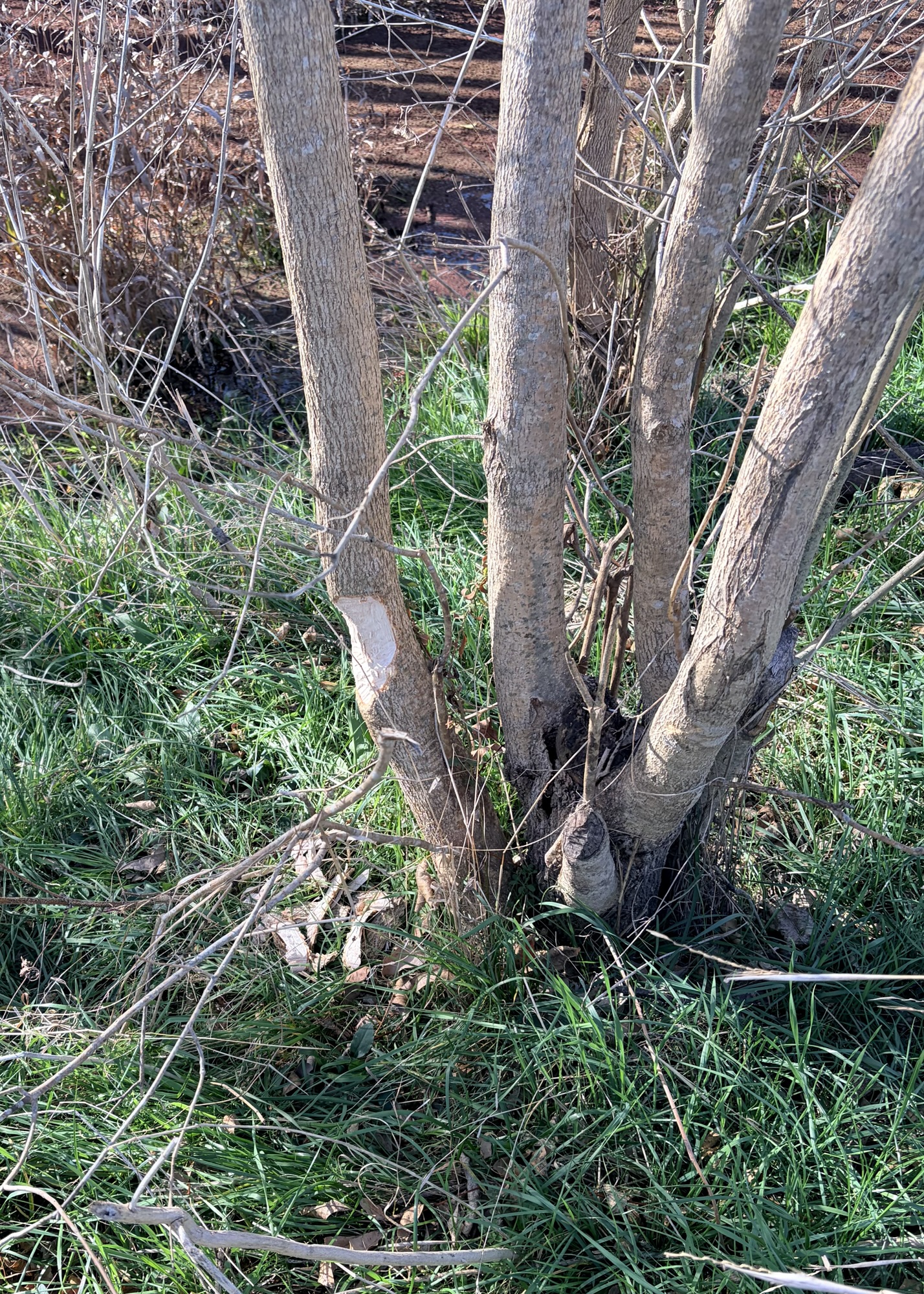
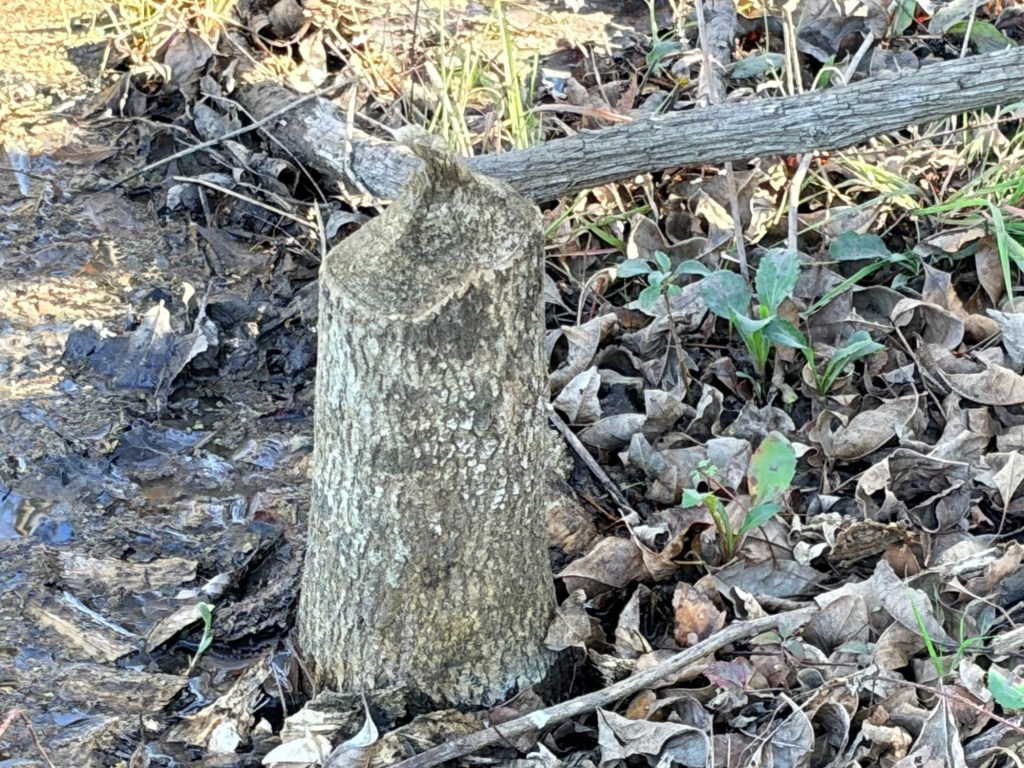
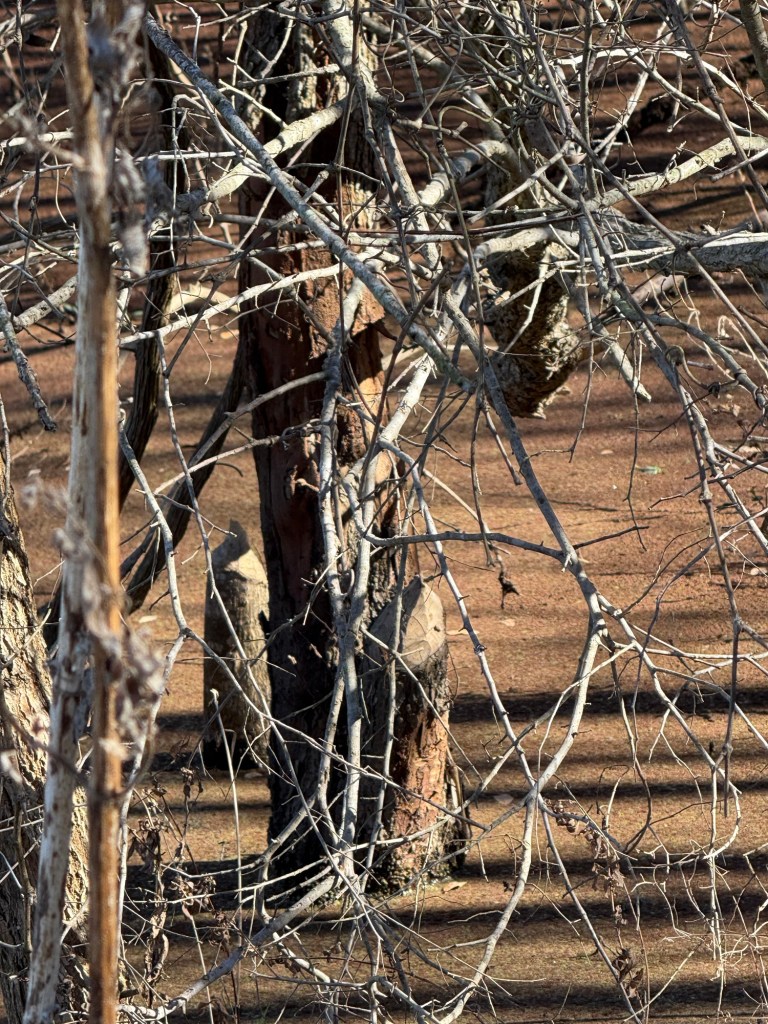
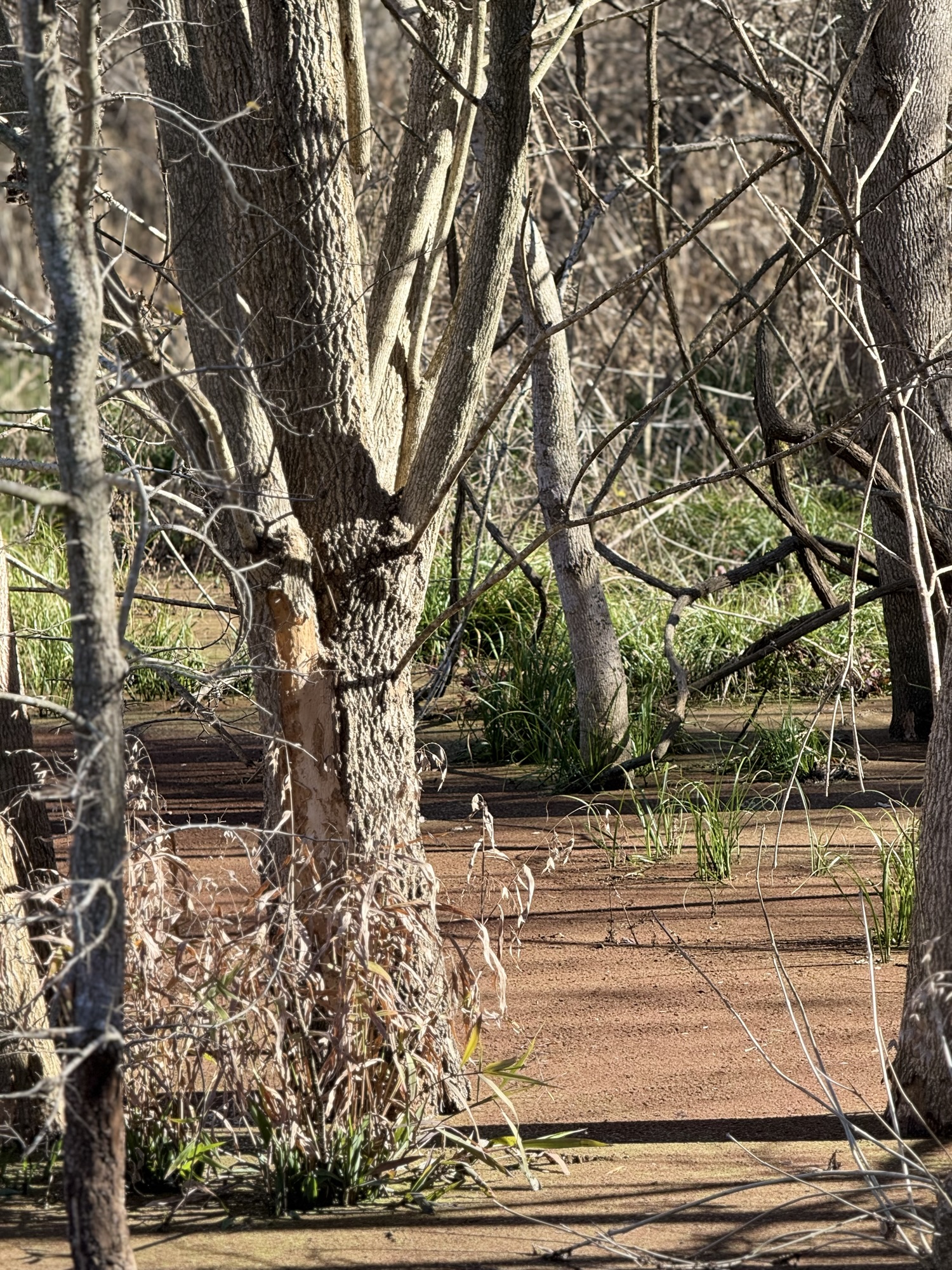
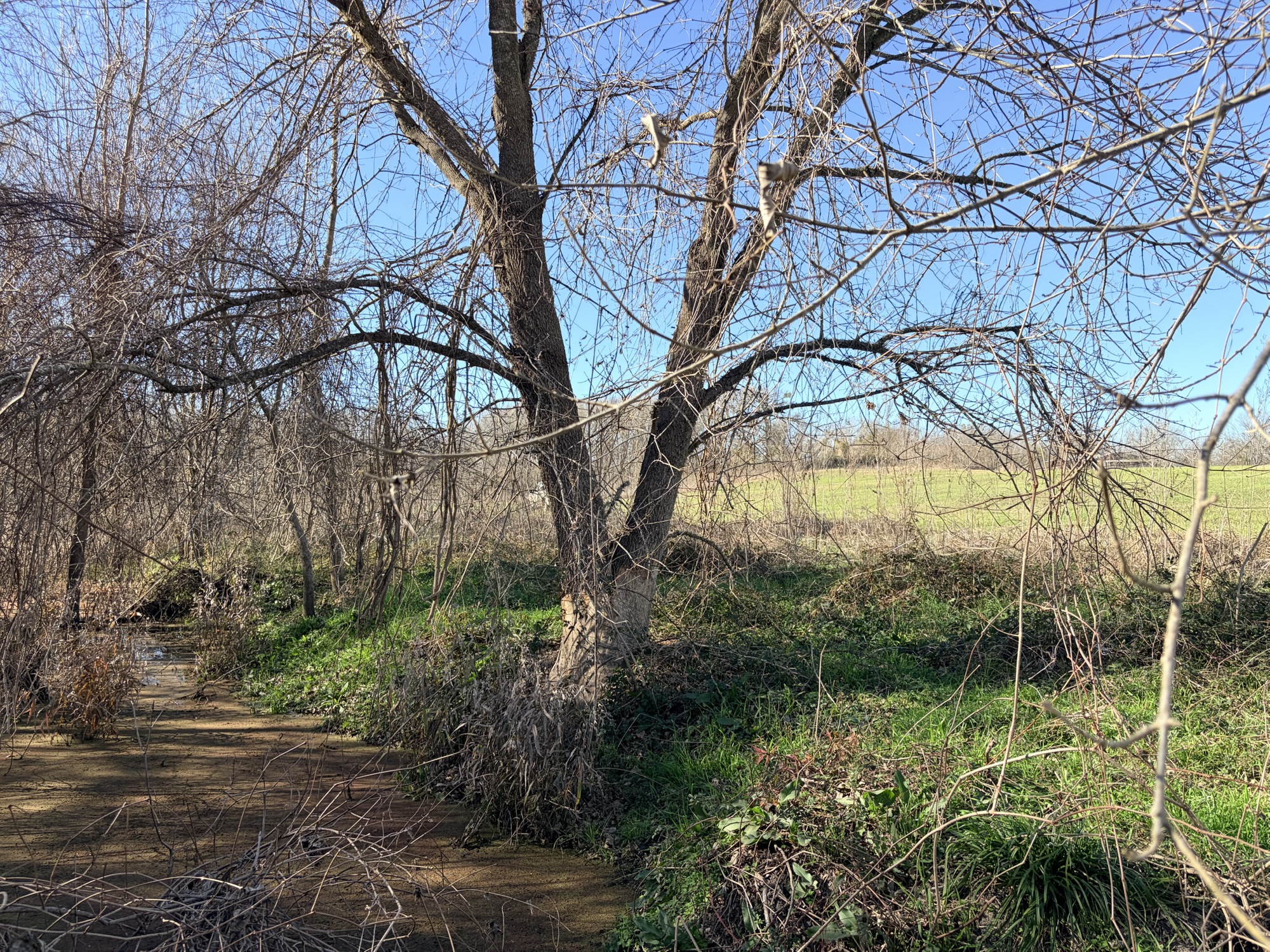
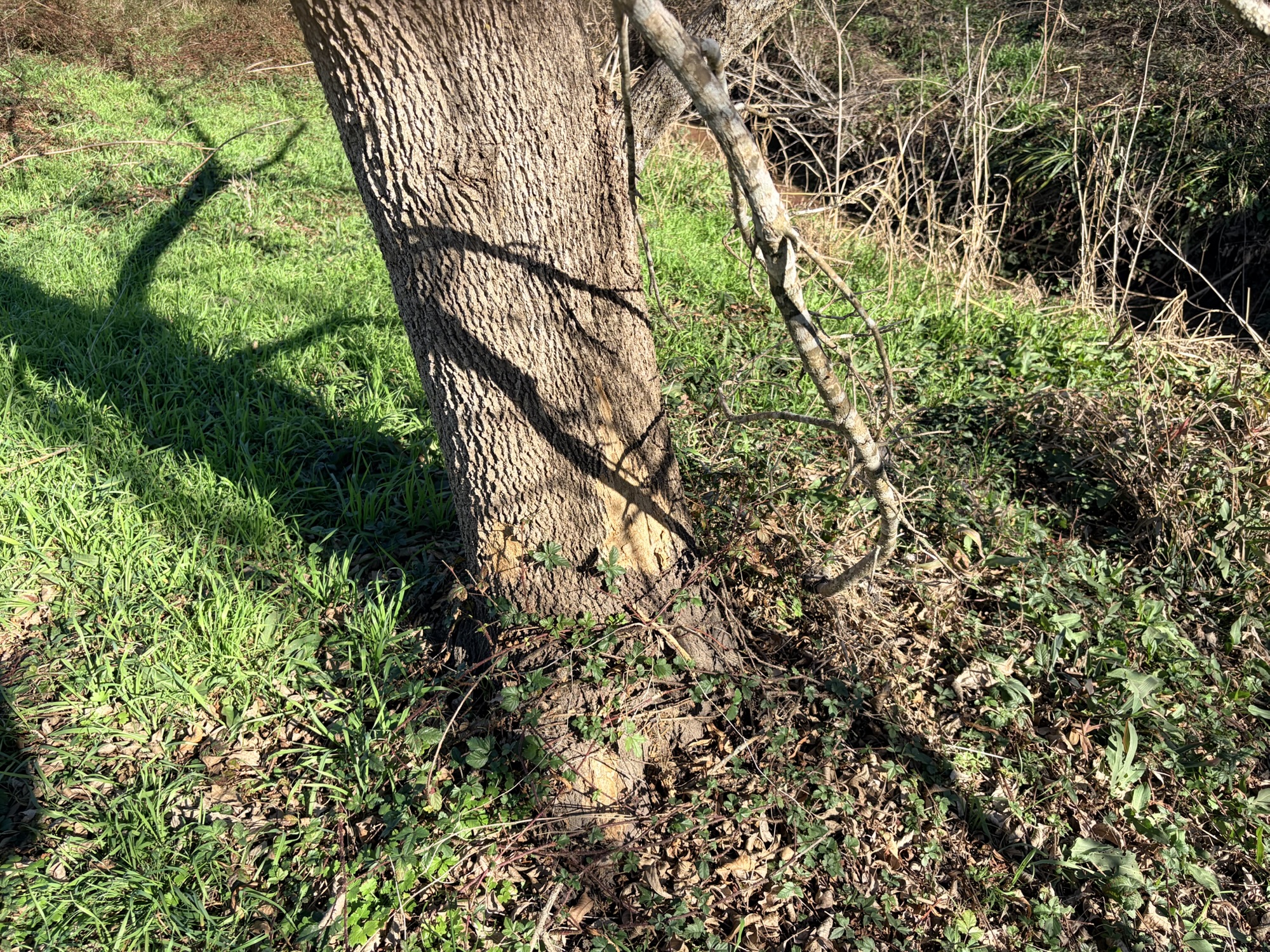
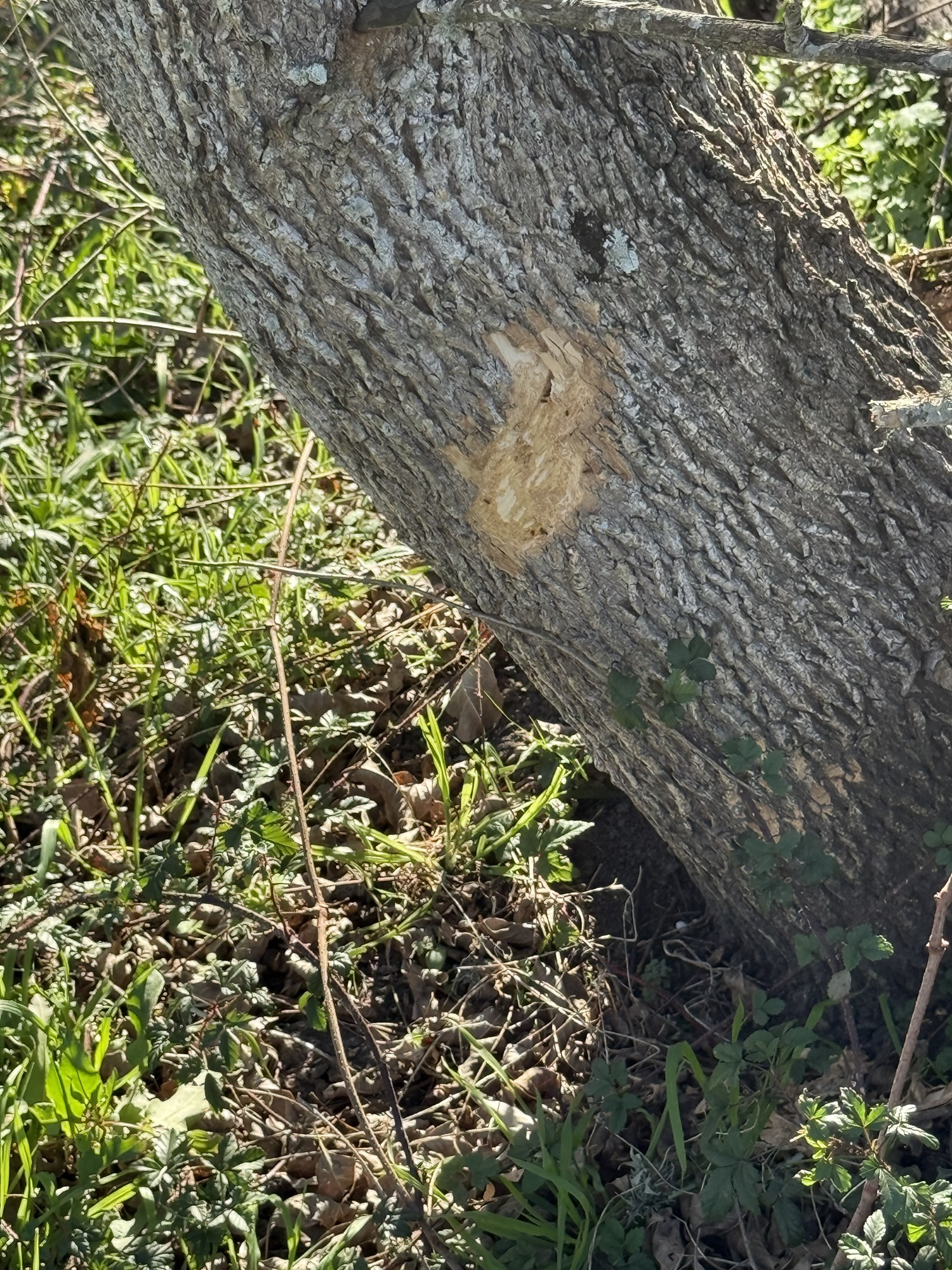
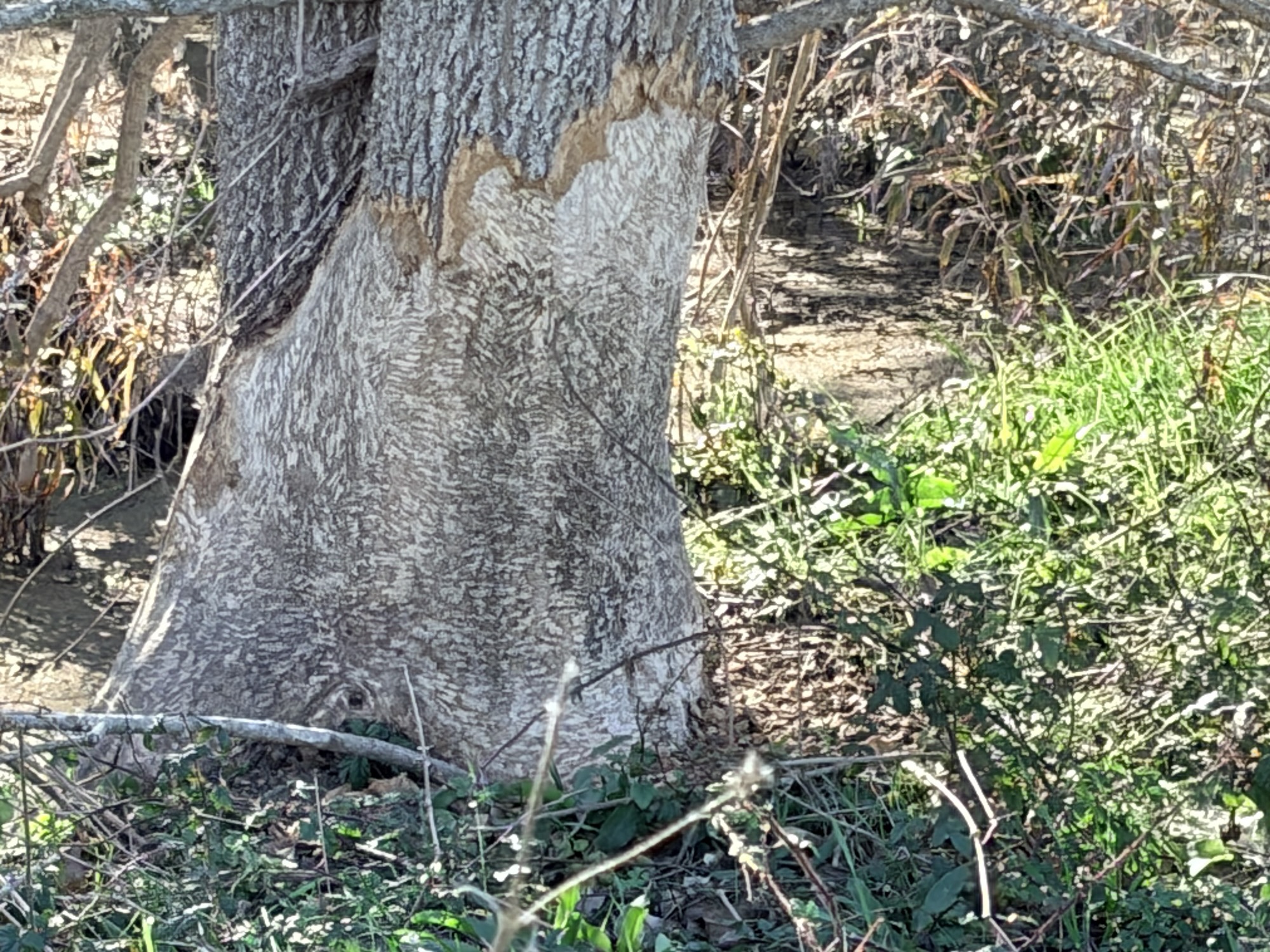
I had a good time looking at the area again and seeing changes. There were trees with new evidence of bark chewing, which made me happy.
Click to see these larger
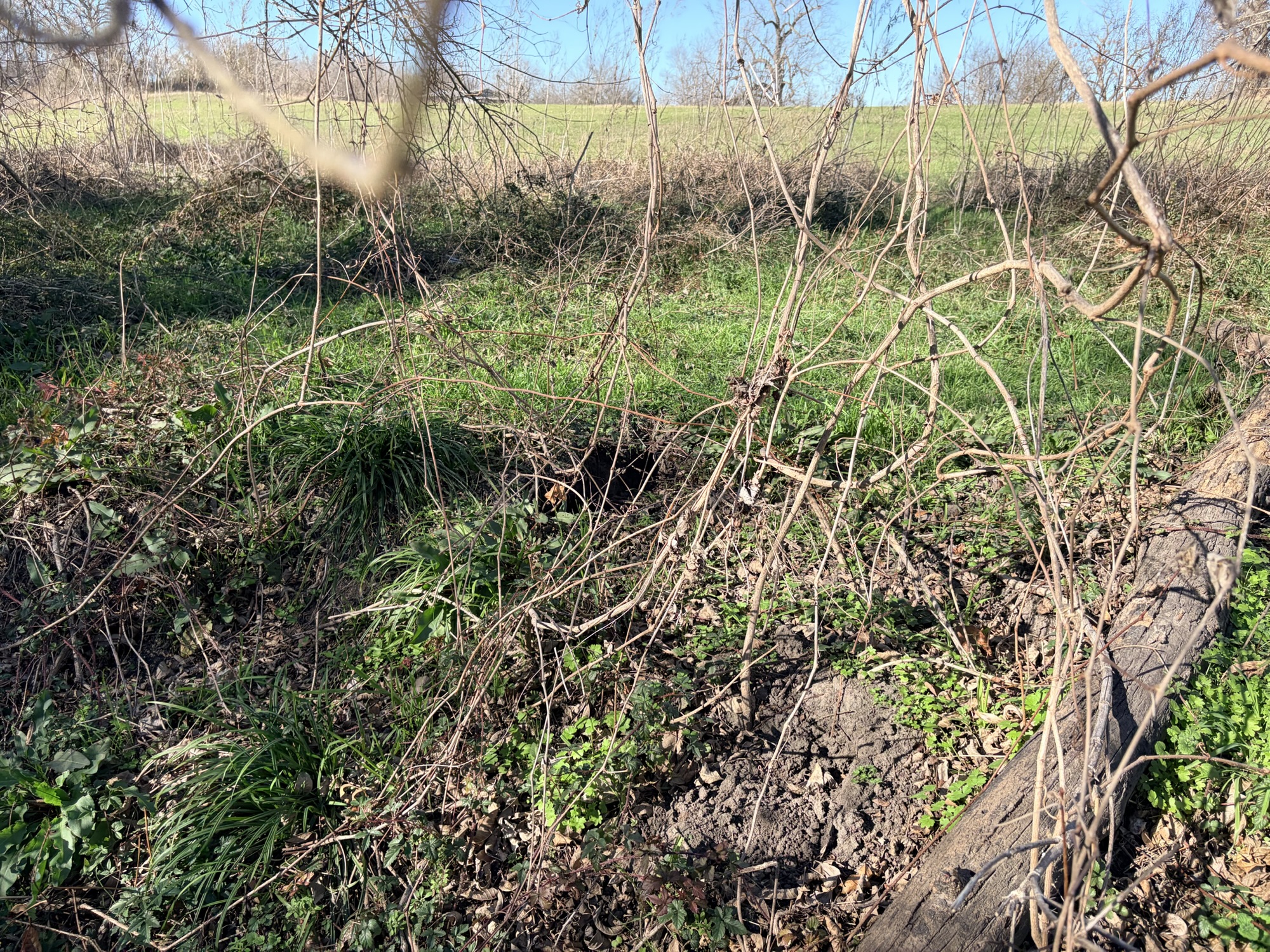
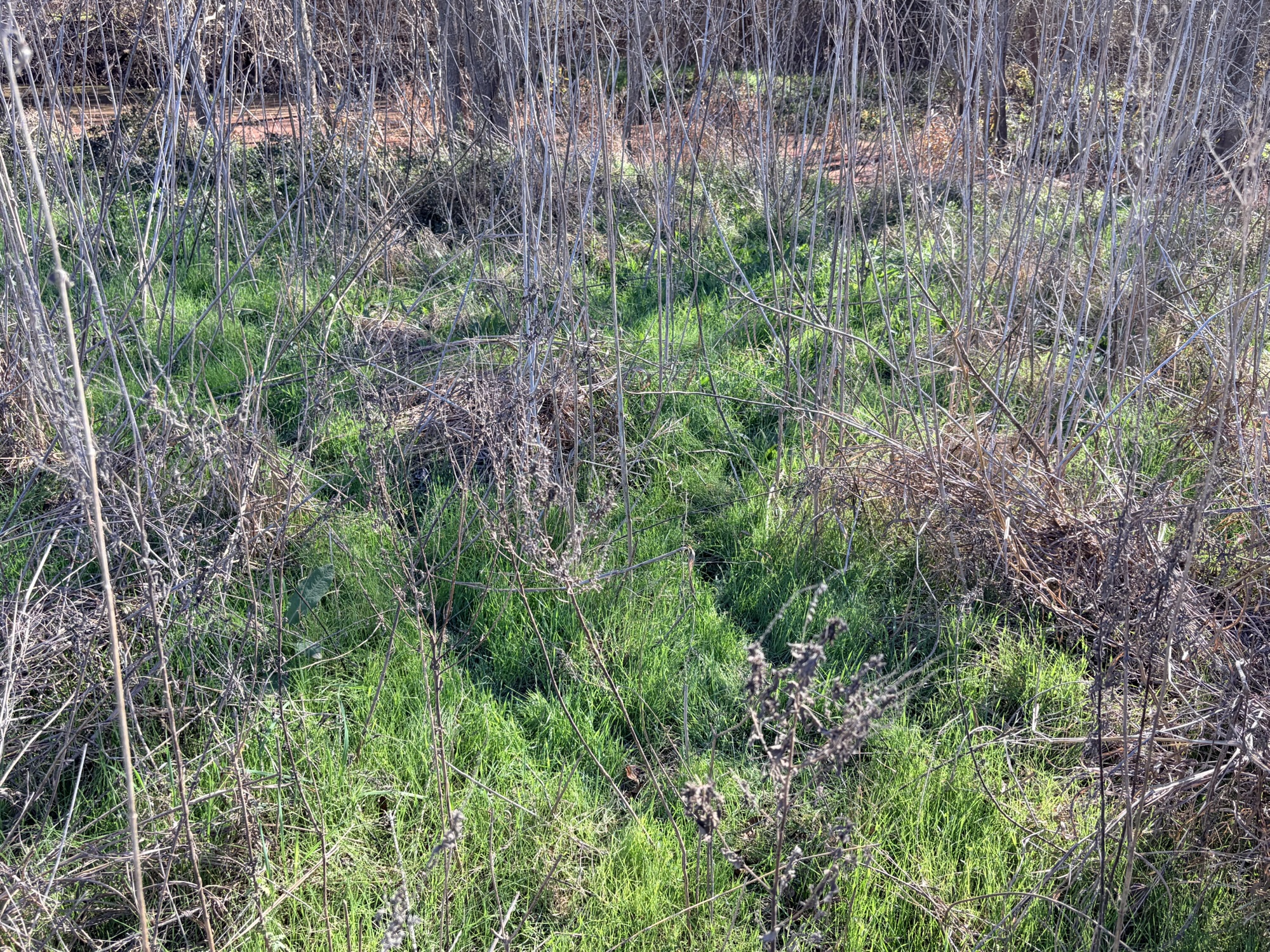
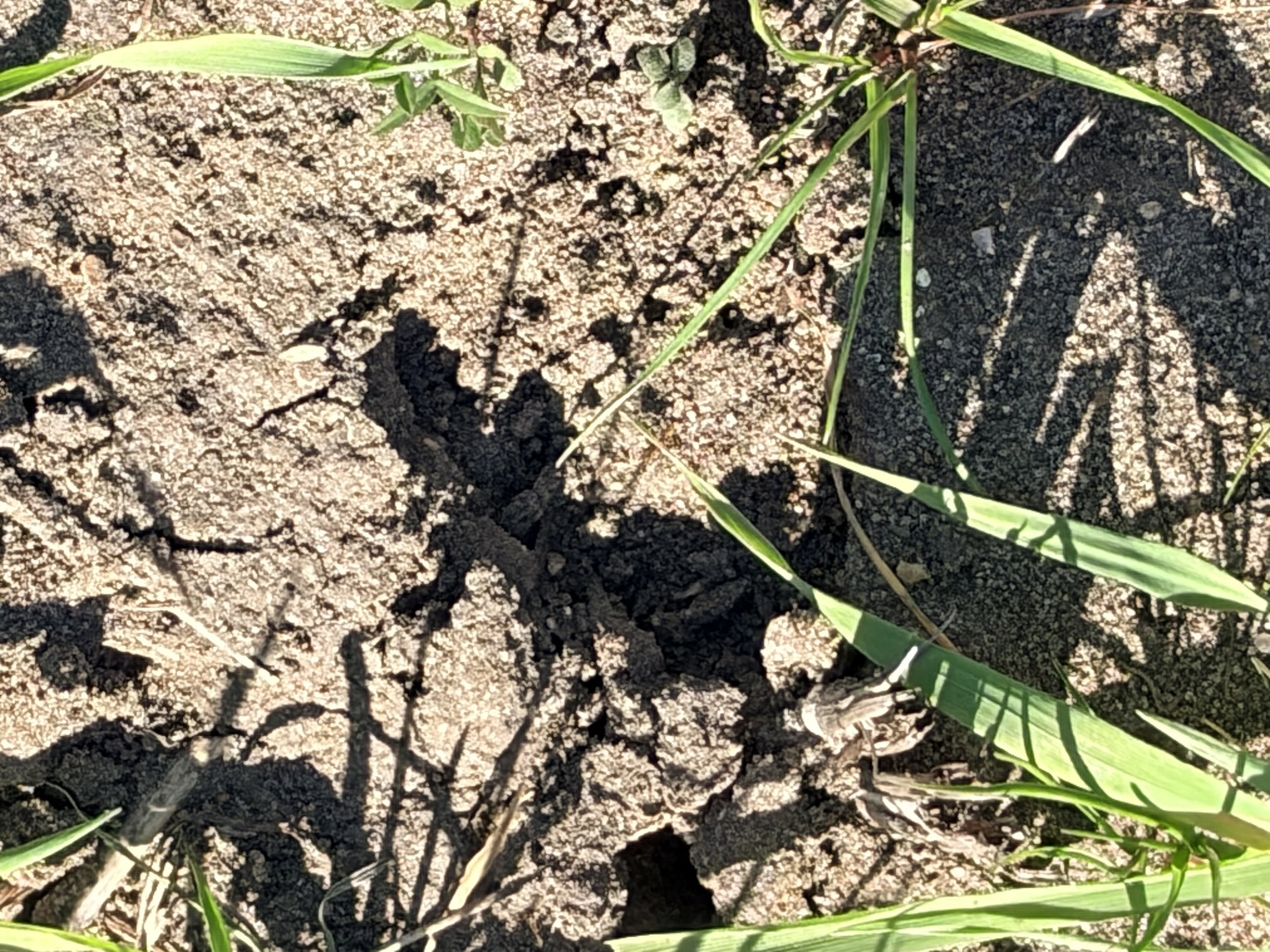
We saw the beaver trails, an entrance they use for one pond, and some tracks. I think people enjoyed themselves. I sure did!
Beaver trailPond entranceIntrepid visitors
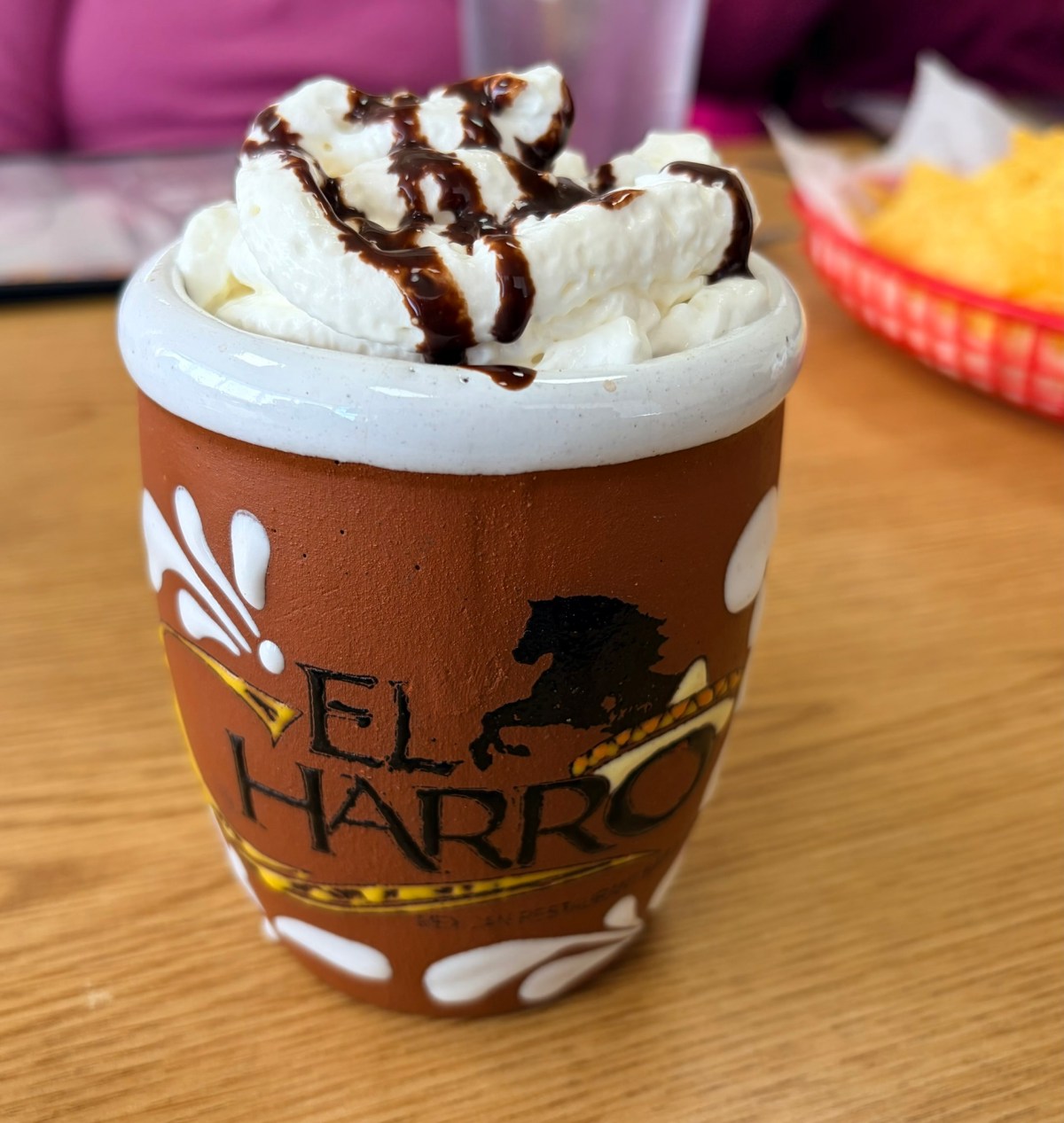
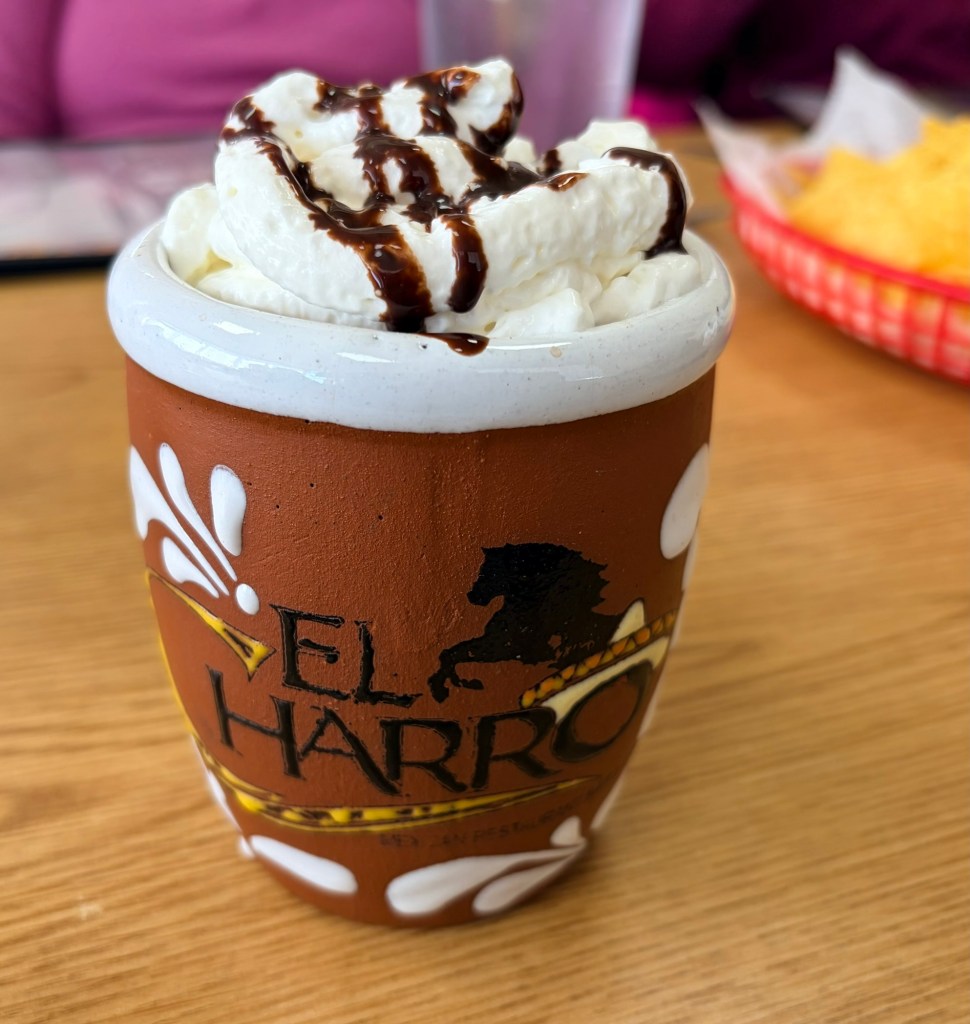
After we were done, we ate at one of our local Mexican restaurants. I enjoyed a delicious cup of Mexican hot chocolate in a beautiful mug. It got me thinking about how much there is to treasure about Mexican culture, so on my way home I got a few yummy Mexican baked goods. Mmmm.
It was pretty nasty outside so I didn’t do birding and I just took care of birds and equines quickly. I’m glad they all have good shelter now (I saw evidence the turkeys used their hut last night).
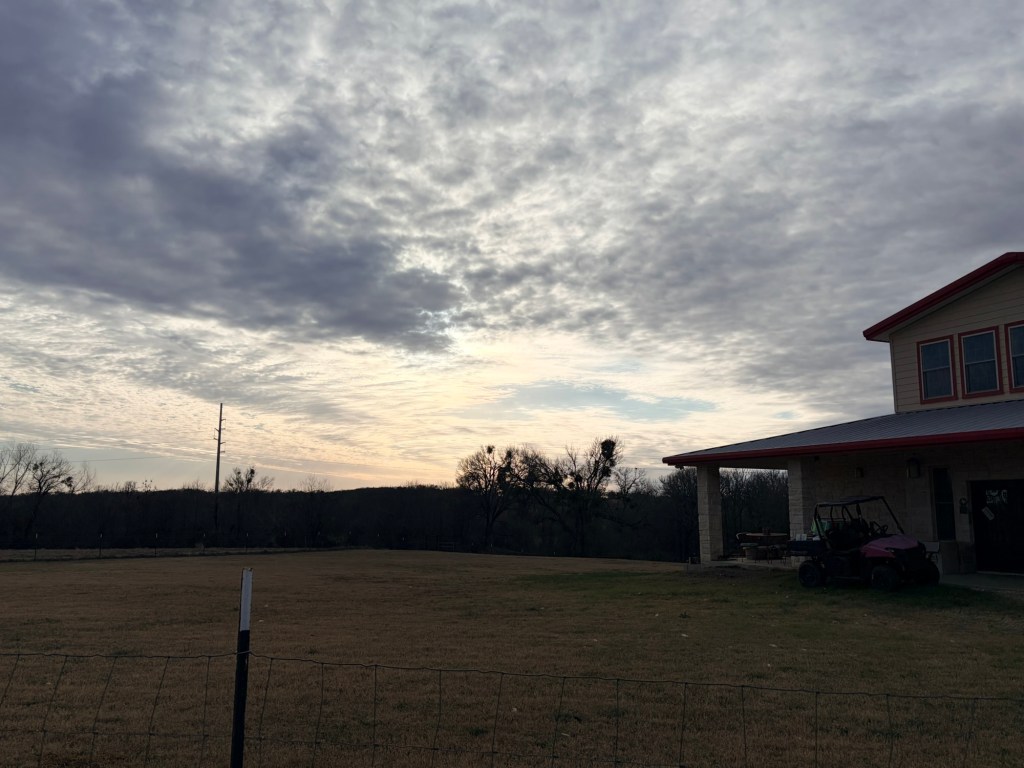
Cold-looking sky
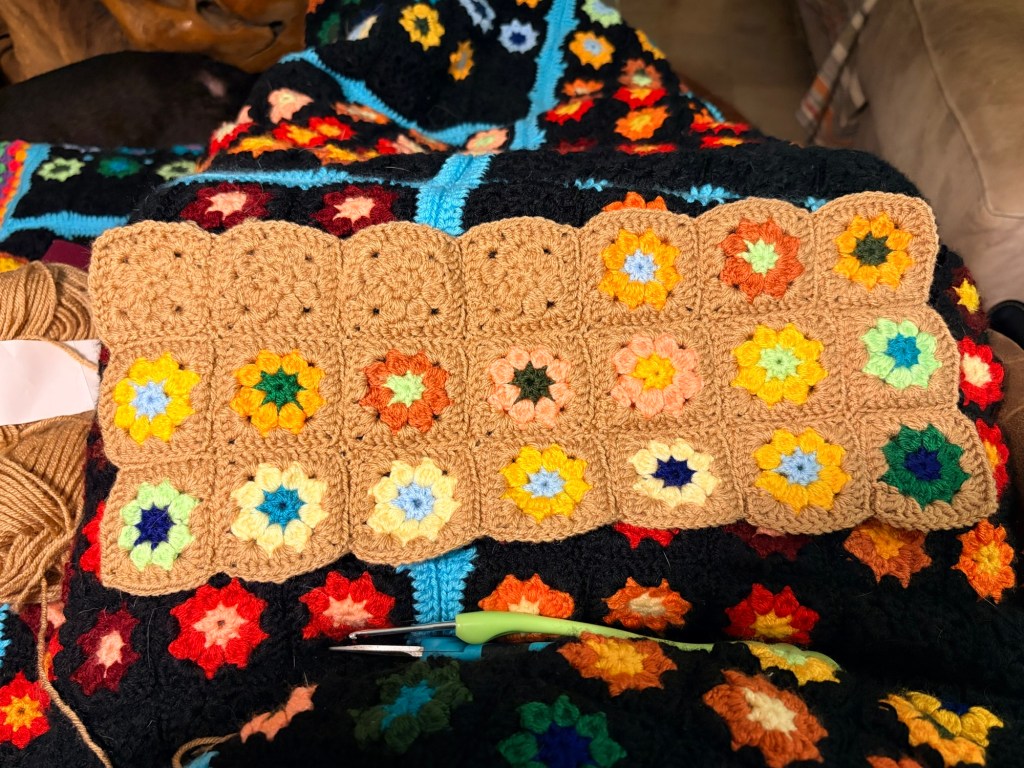
Mostly I watched football, read, and crafted today. Here’s what my tan themed temperature block for January looks like so far. I like it.
I’m getting some criticism for sharing thoughts more directly on Facebook, but that’s fine. Feel free to fire me from your life if my truth bothers you! it’s becoming more important to speak out and be brave.
What an adventure I had today with my fellow Master Naturalist! We escaped to the wilderness known as her property outside of Cameron and searched for a rumored beaver dam on the spring-fed creek that runs through the land. It was a beautiful warm day for exploring.
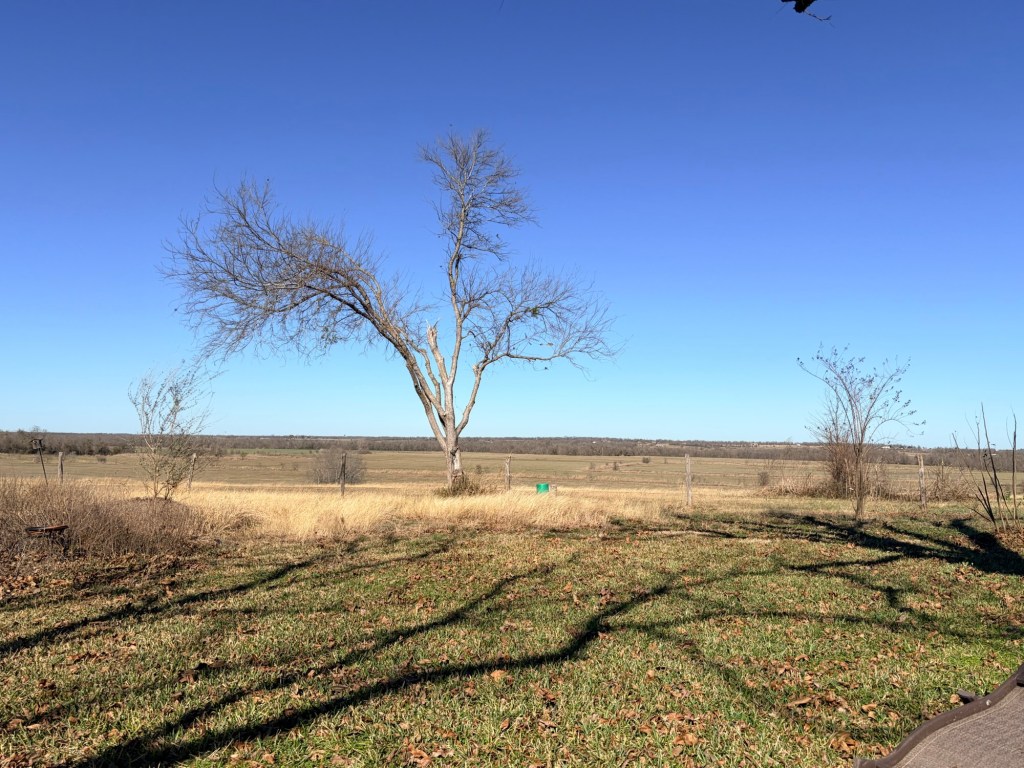
Blue skies
At first we looked in the wrong place and got attacked by much greenbrier and dewberry vines that tried very hard to trip us. I did determine that the water was not out of its banks and was very clean.
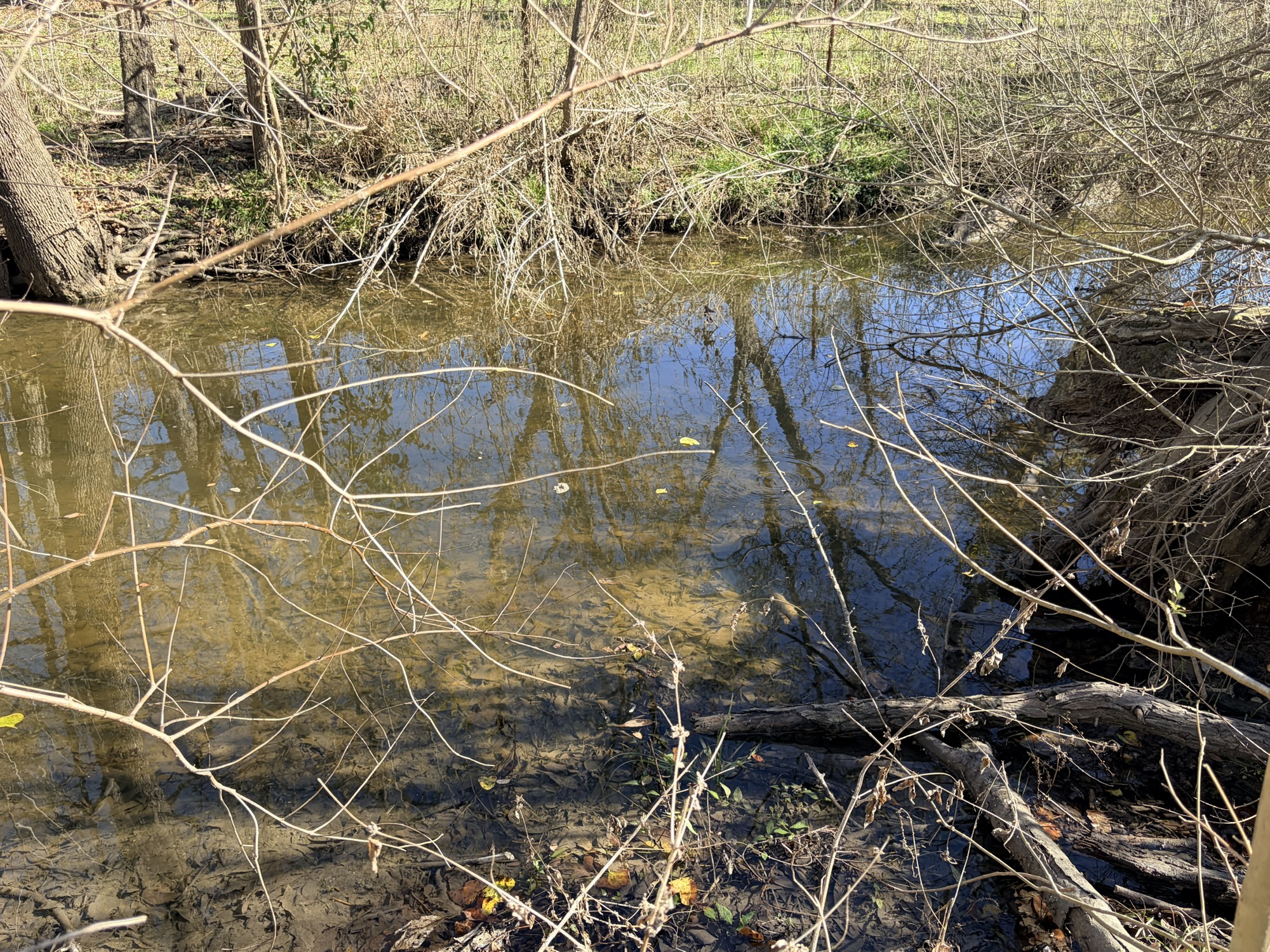
Creek not floodedMany sticky vines in hereMy friend not falling down
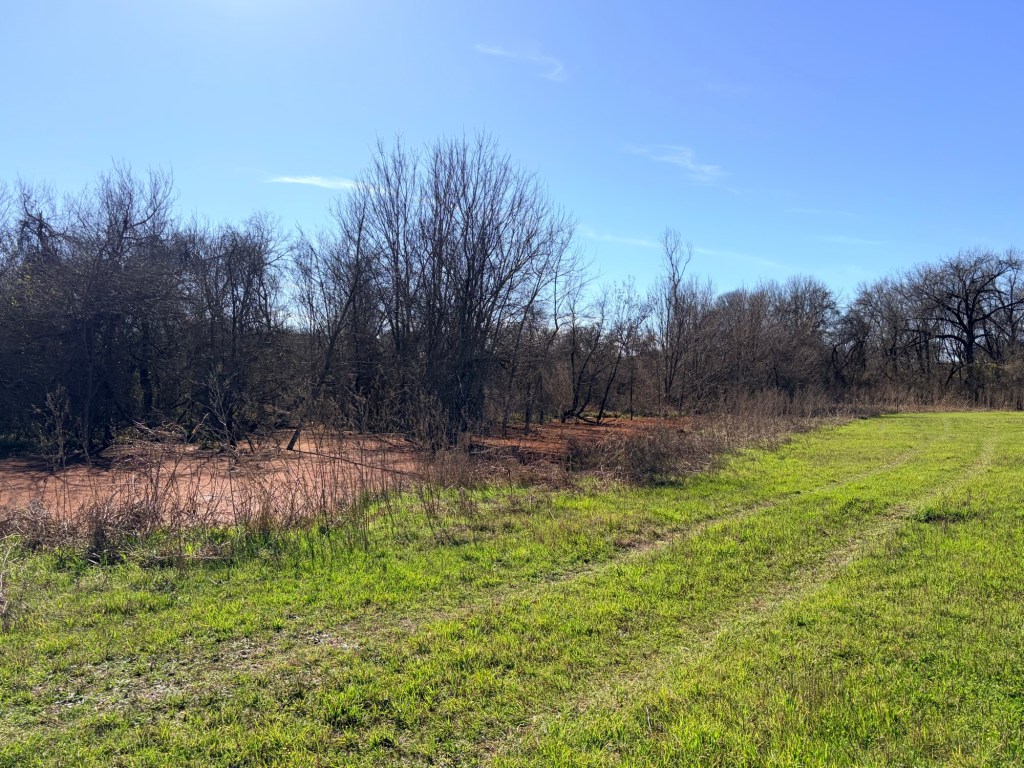
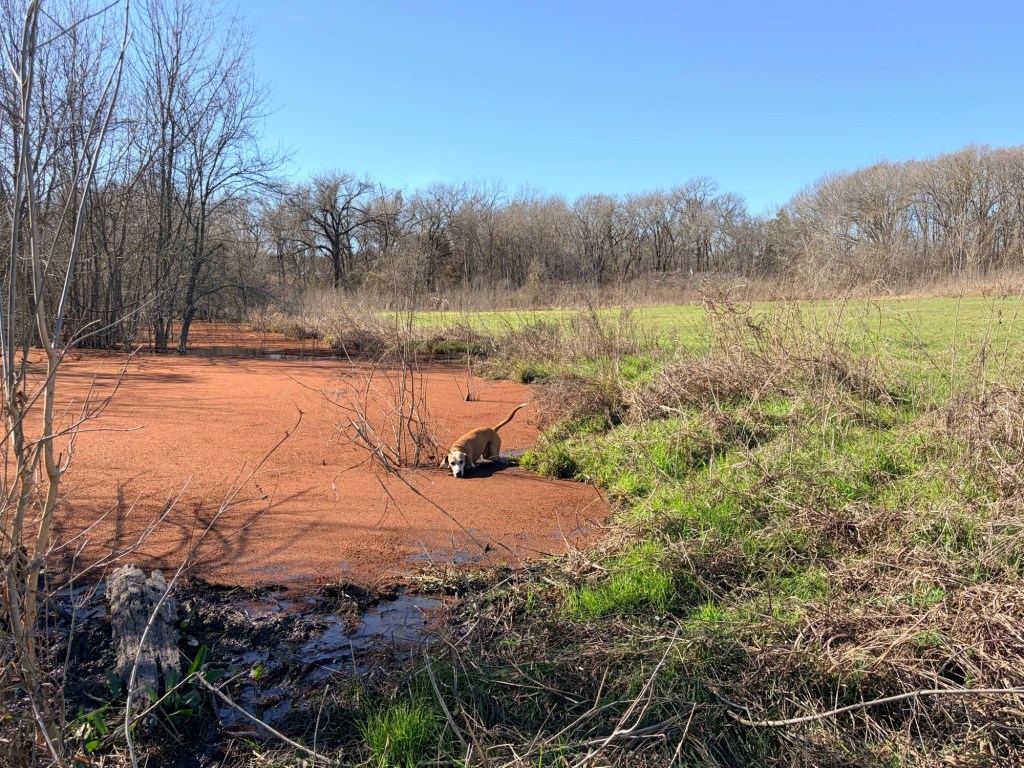
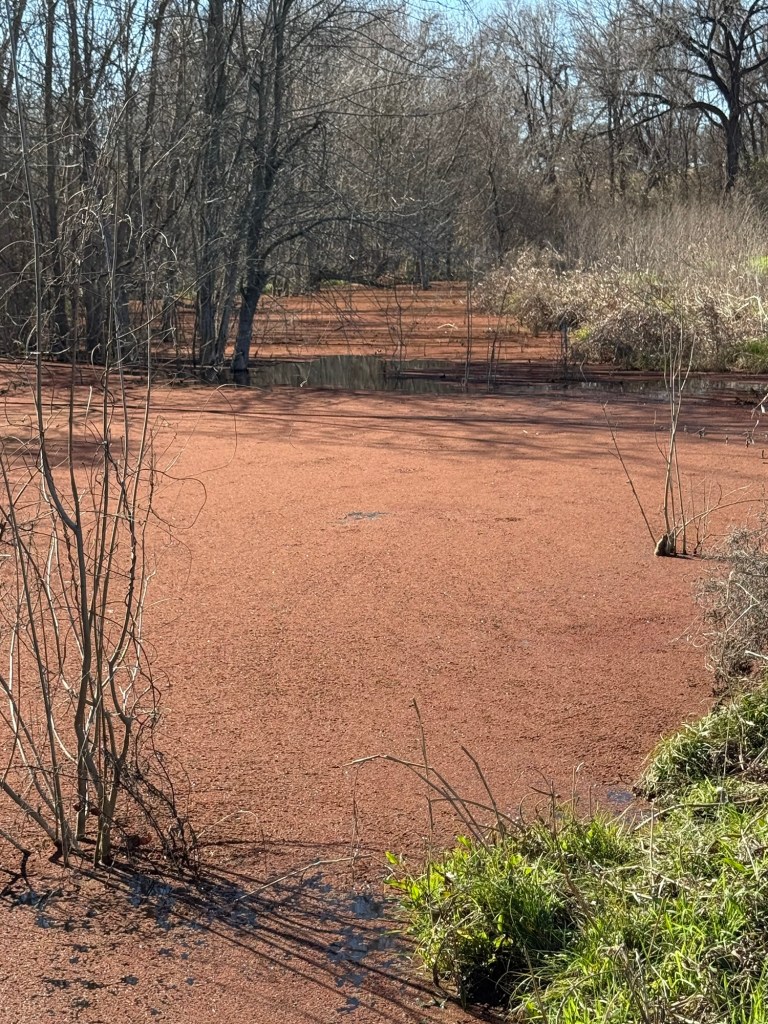
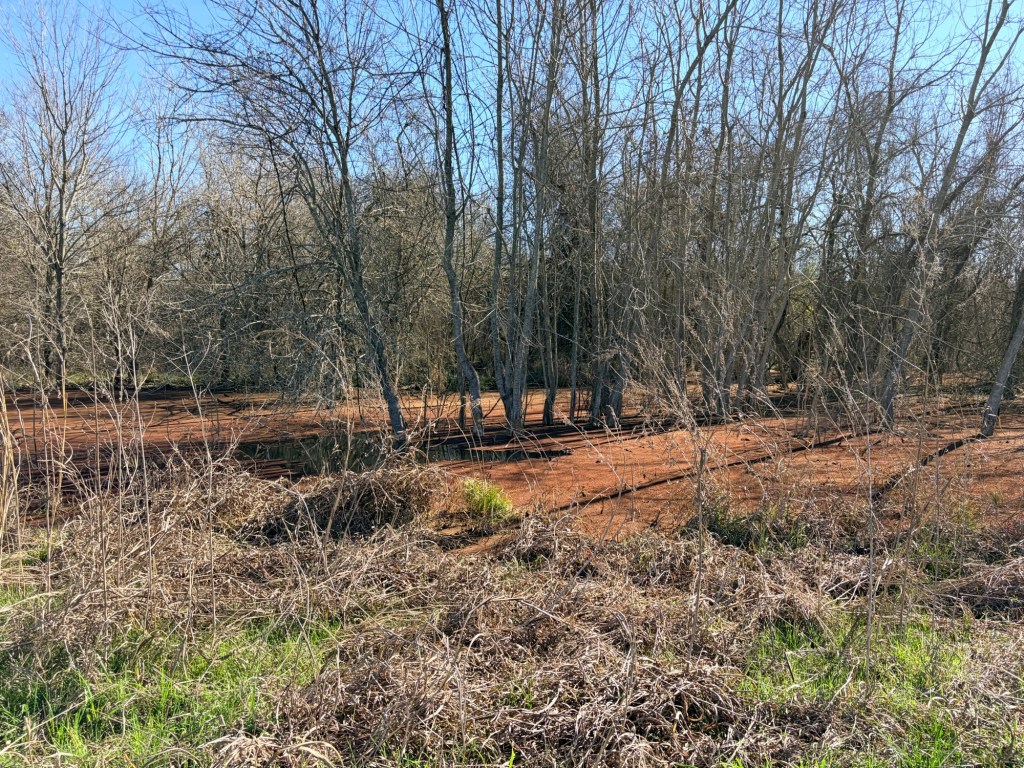
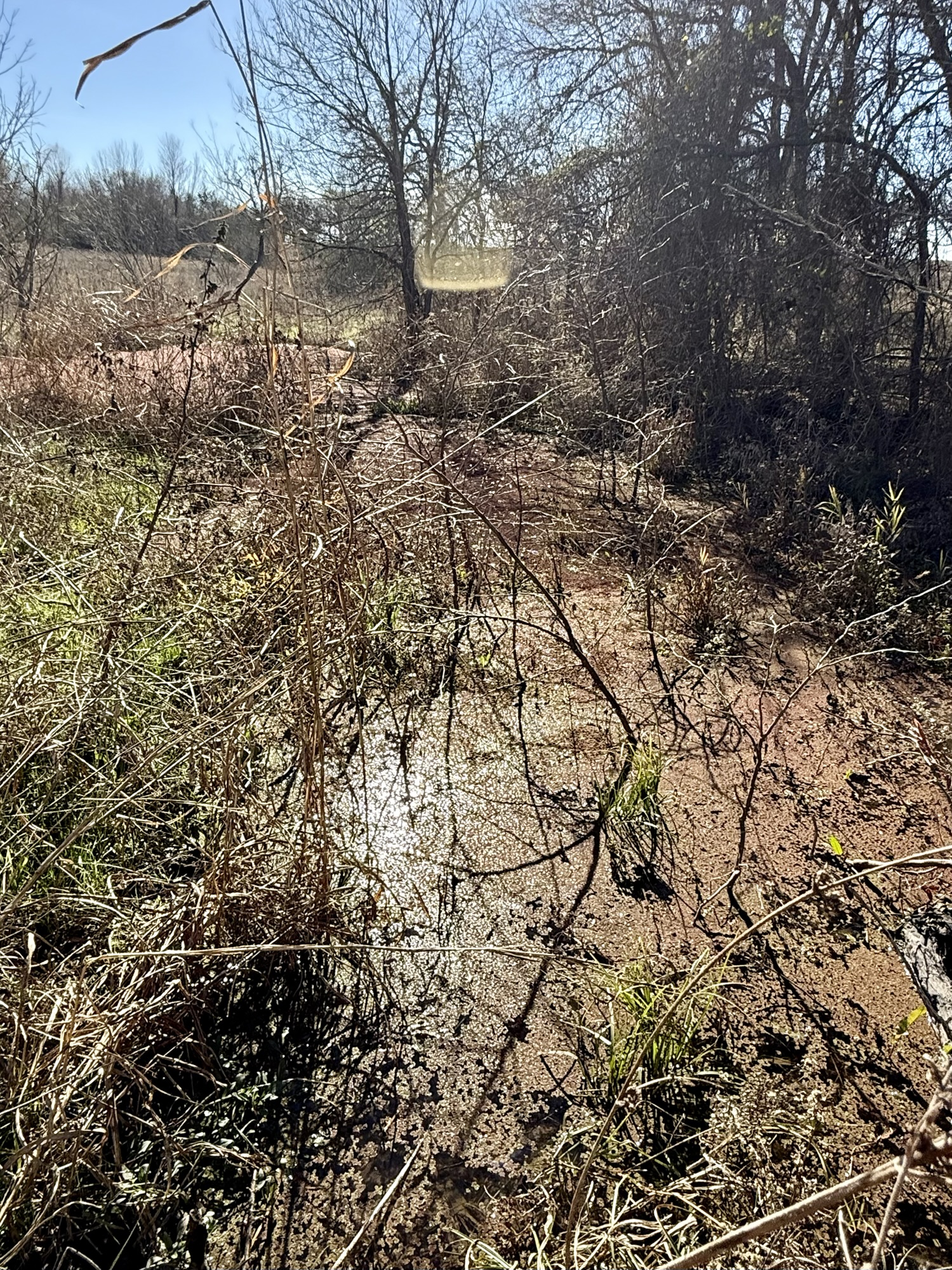
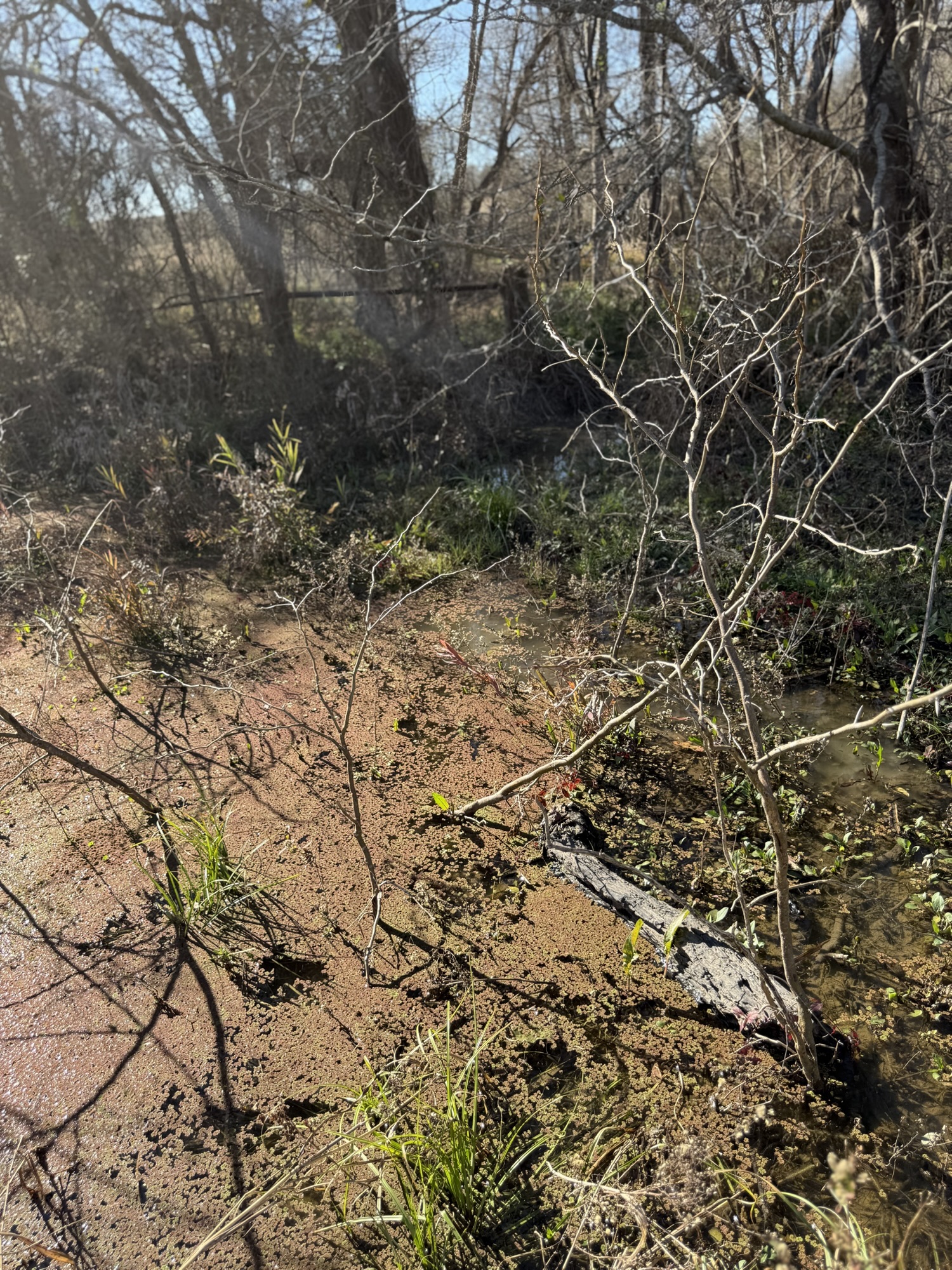
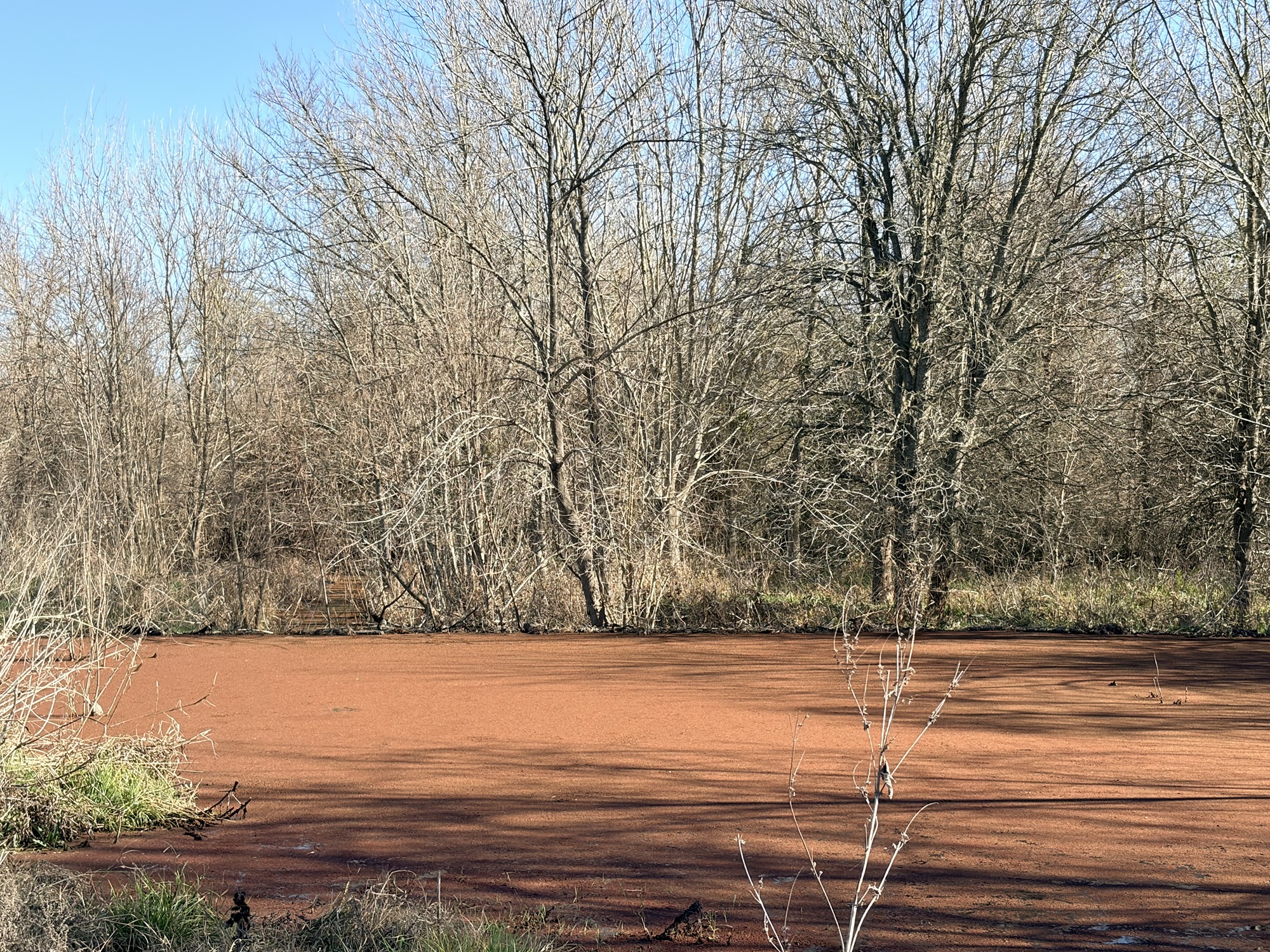
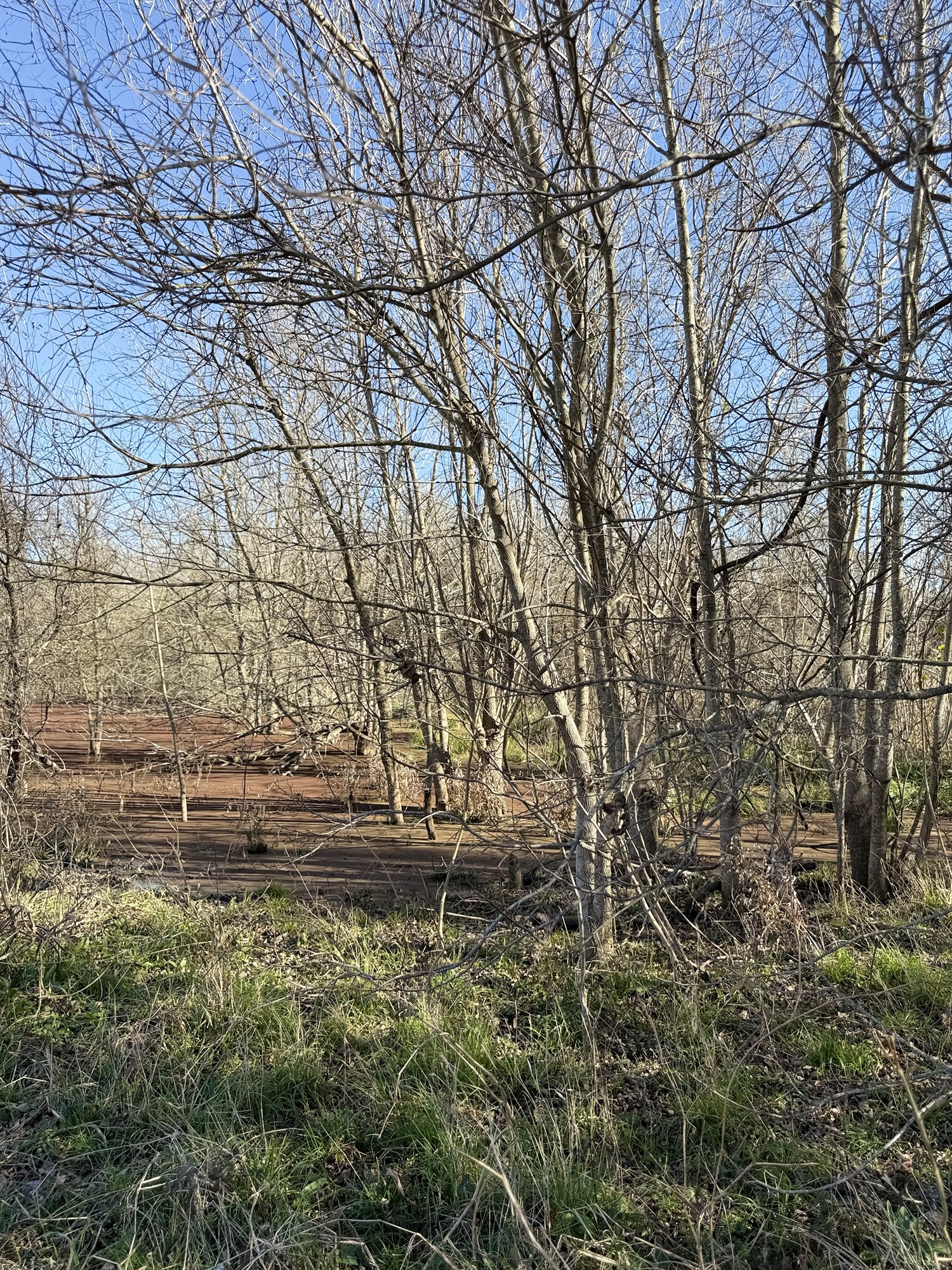
My friend called the folks who’d been on the property monitoring their deer lease or something, and they redirected us upstream. There we found what appeared to be weird flat areas with brown vegetation.
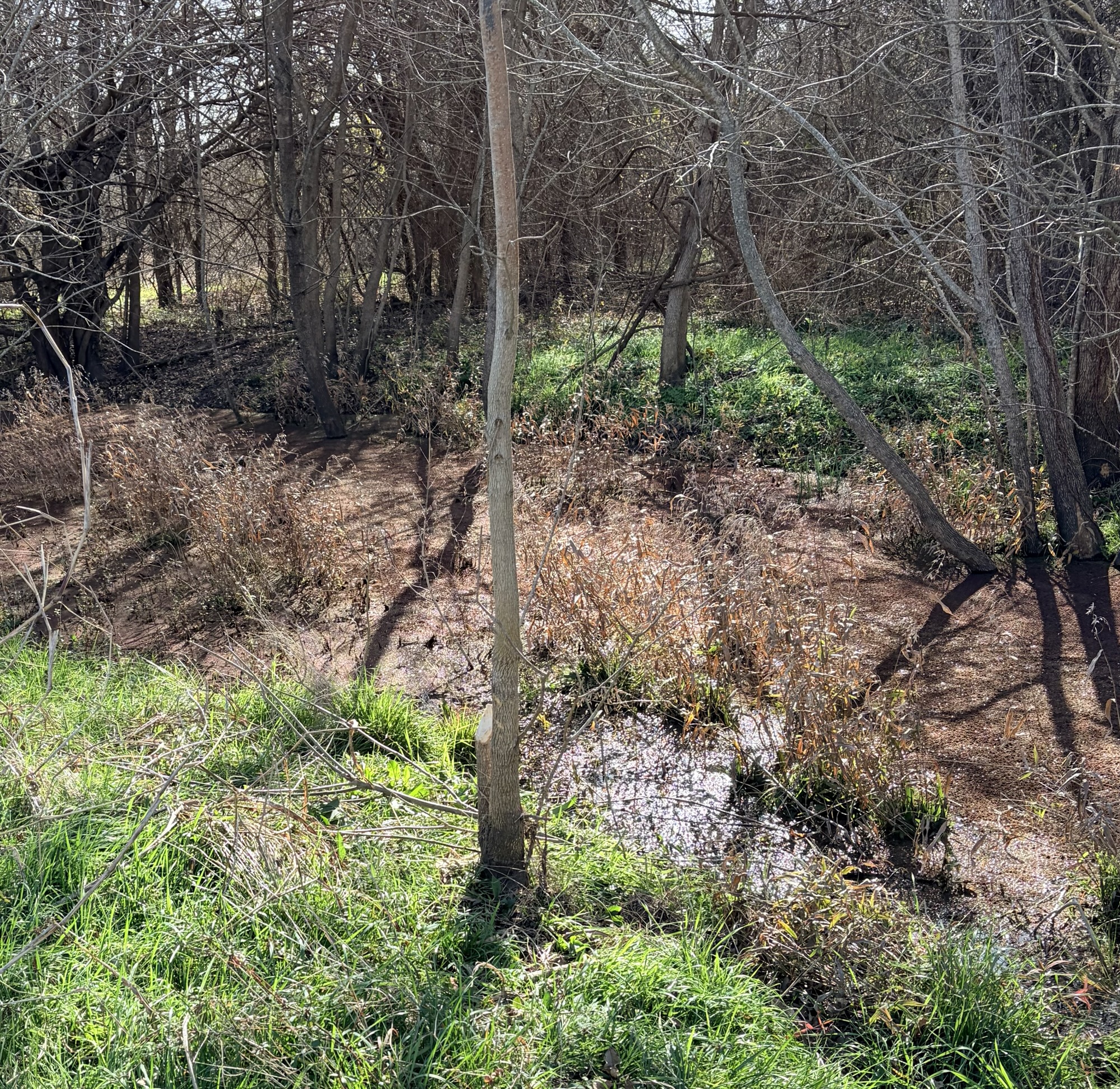
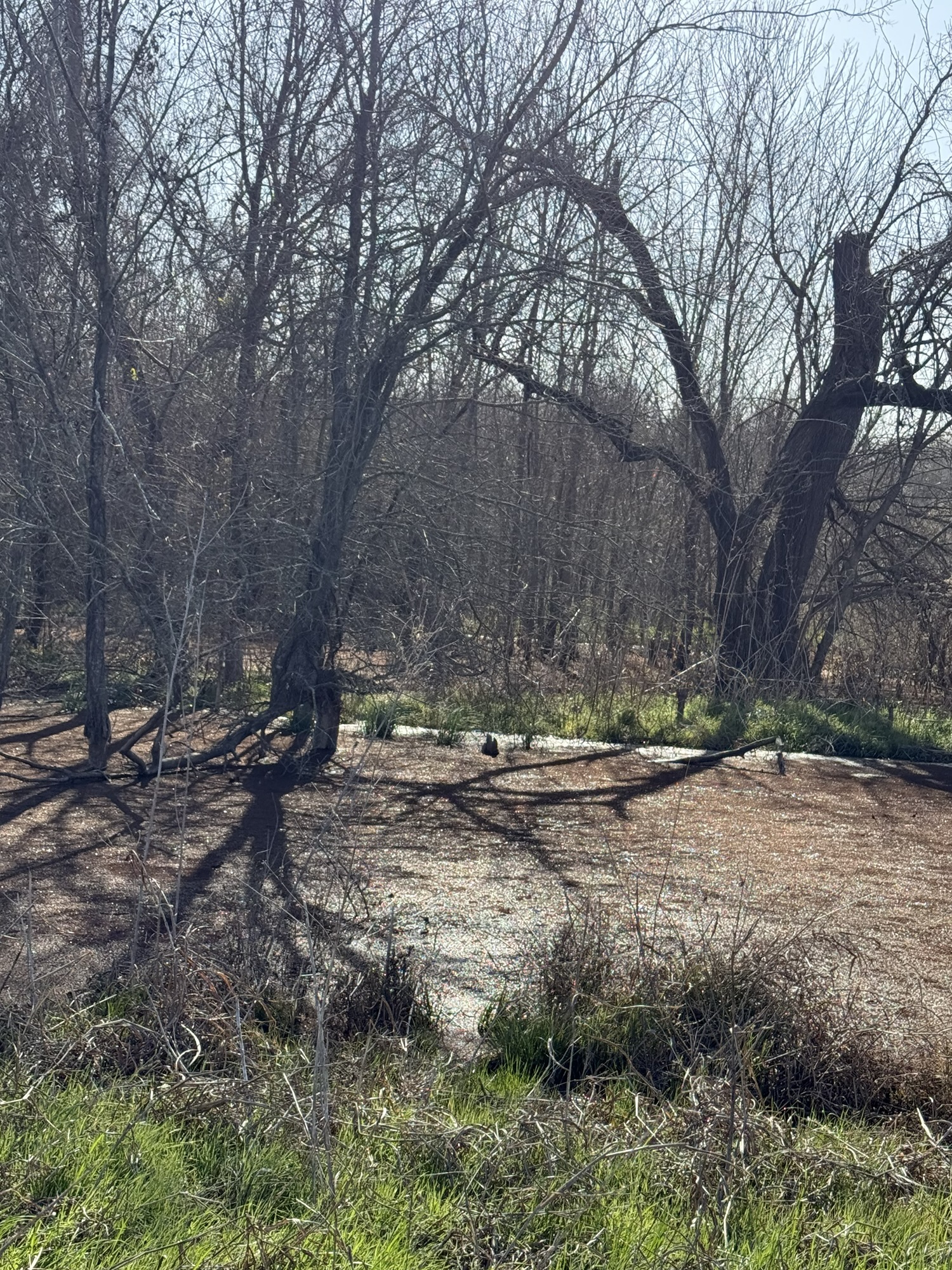
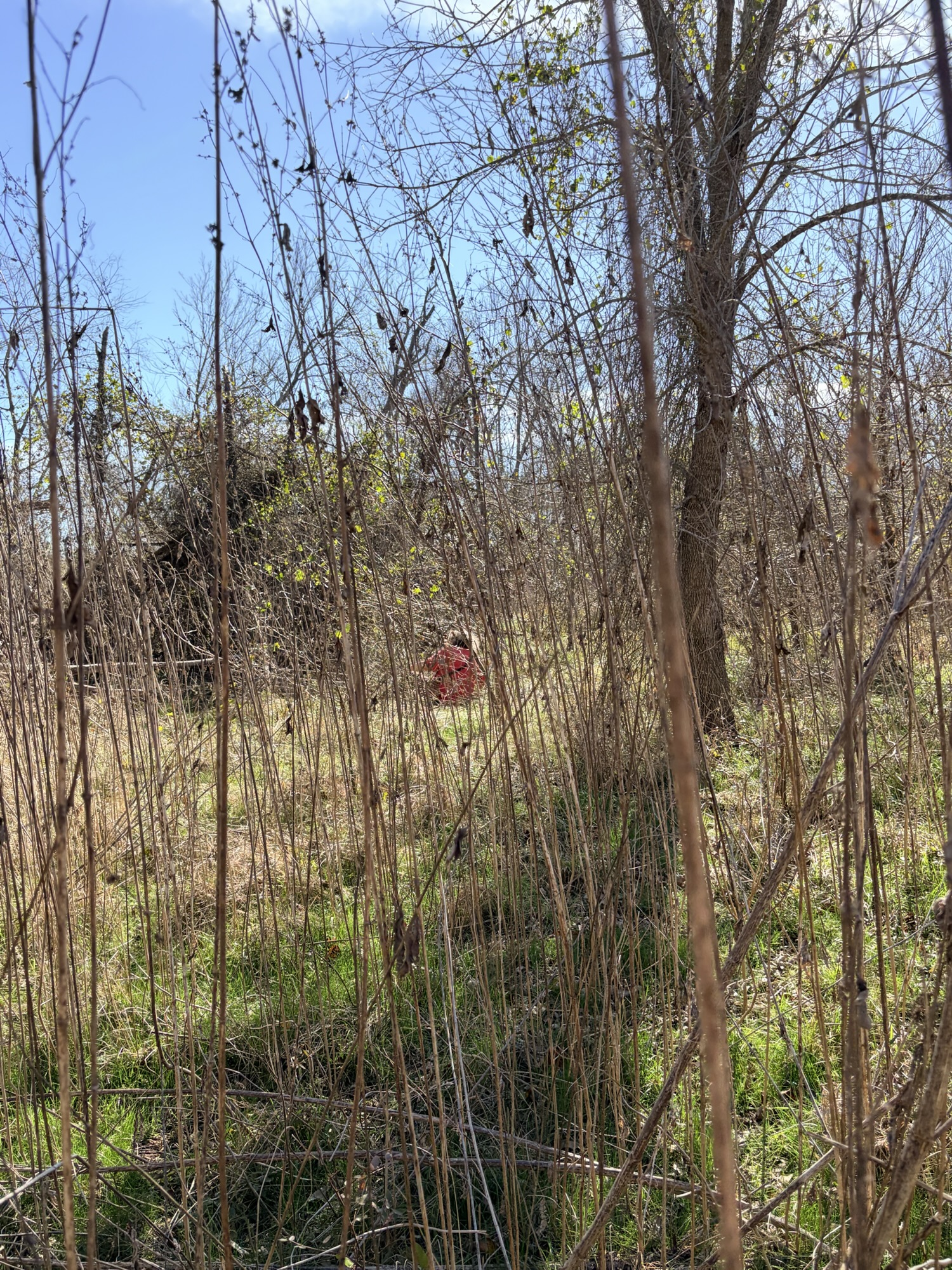
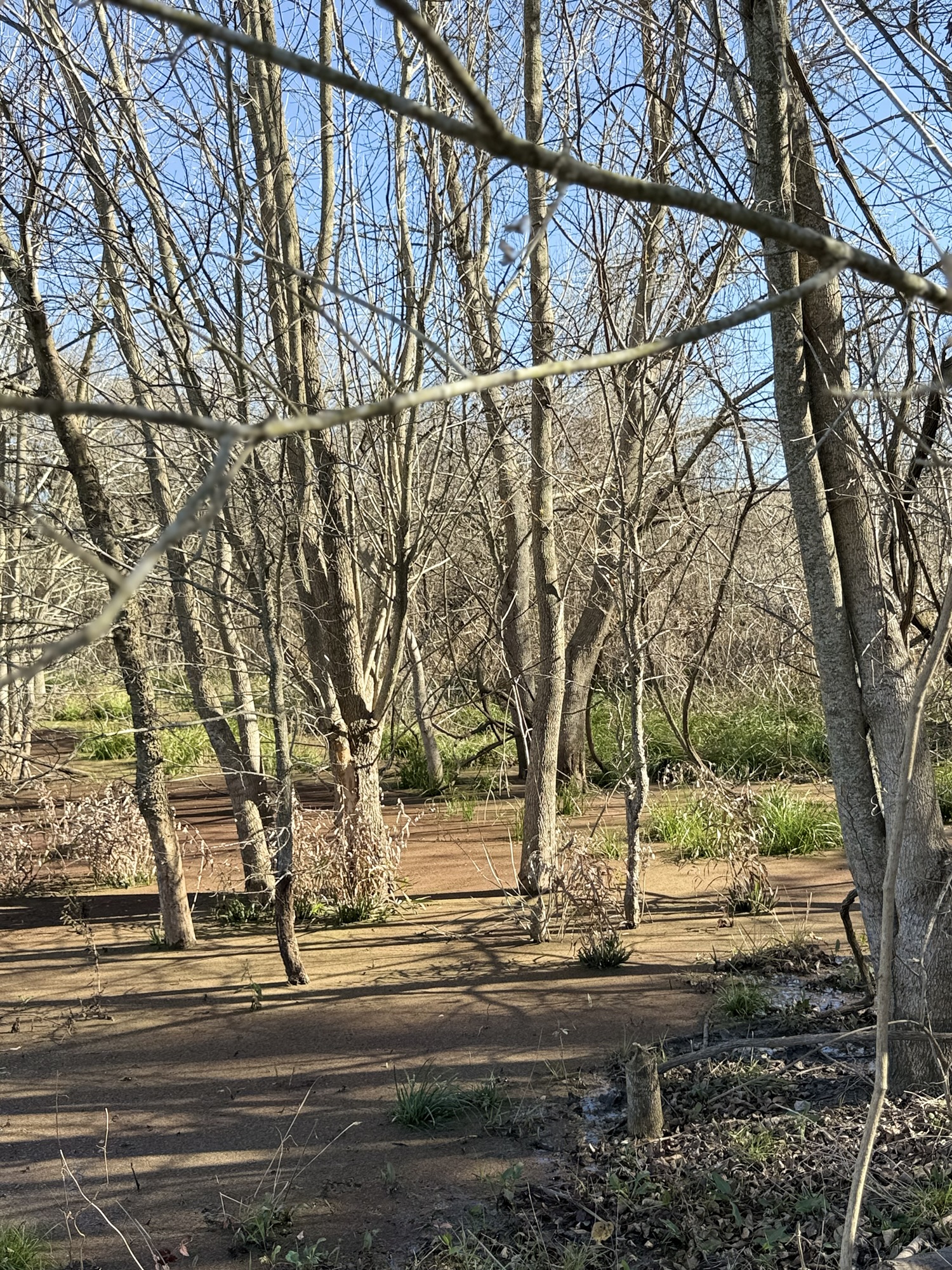
Looks like brown vegetation.
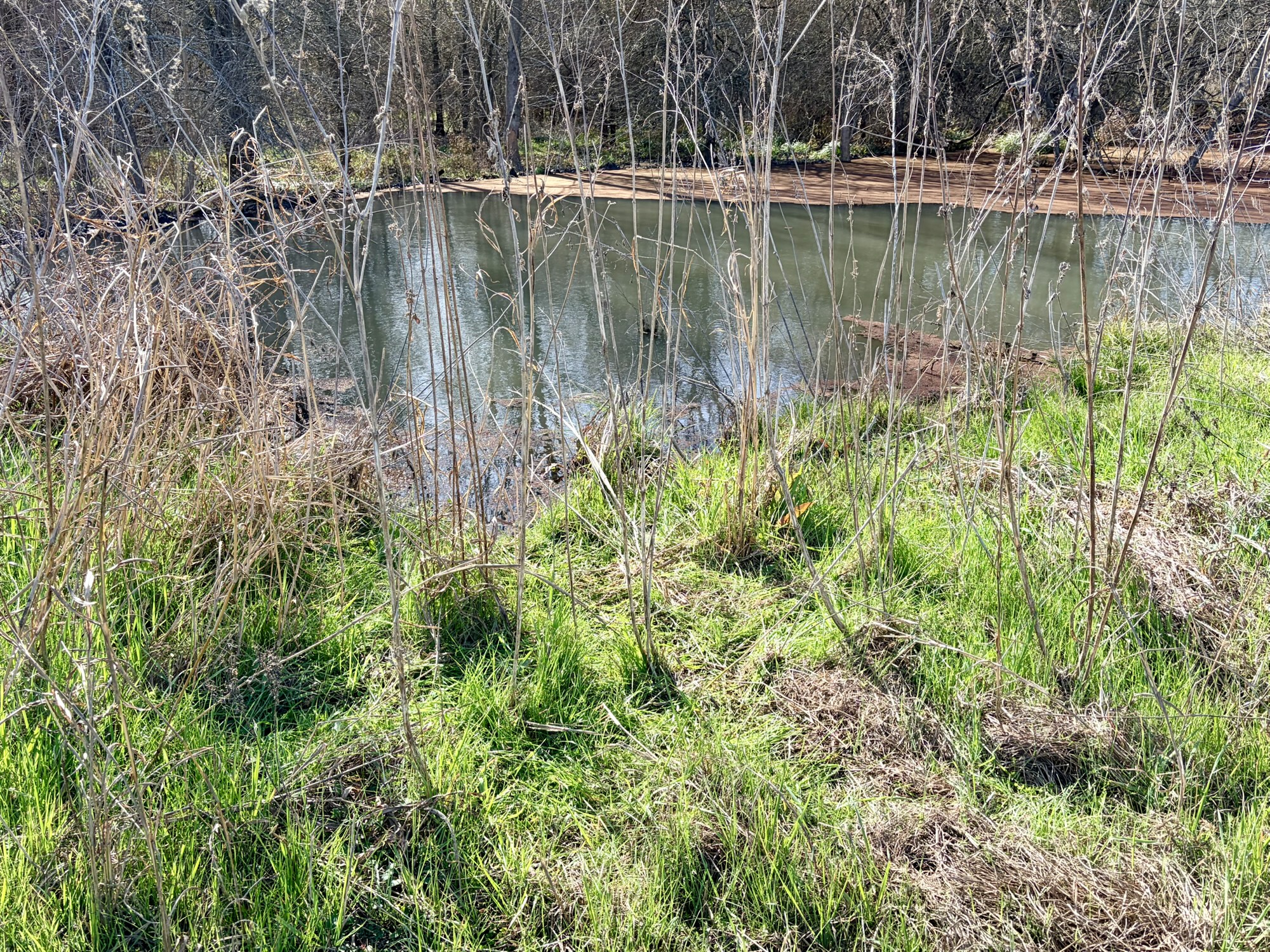
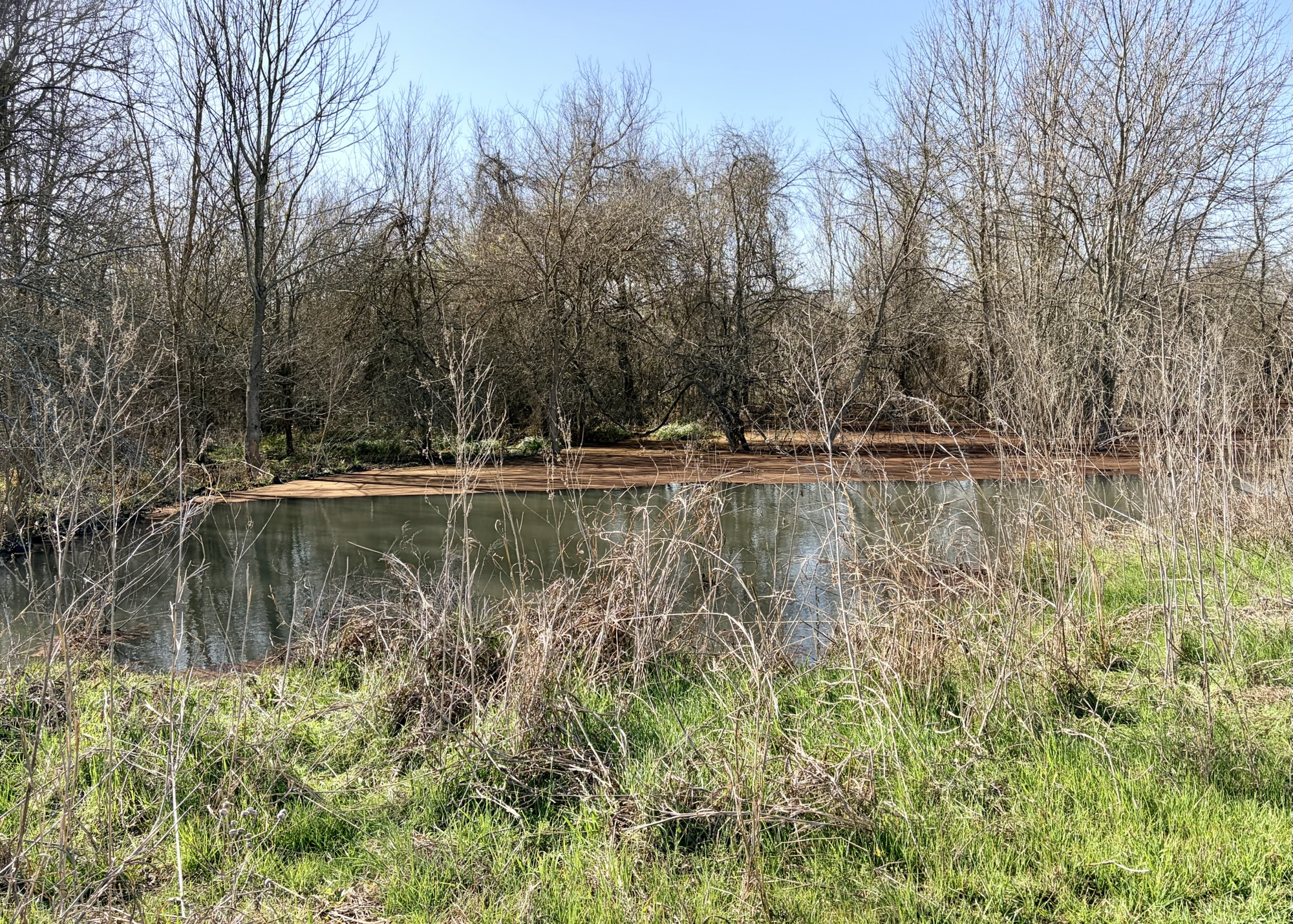
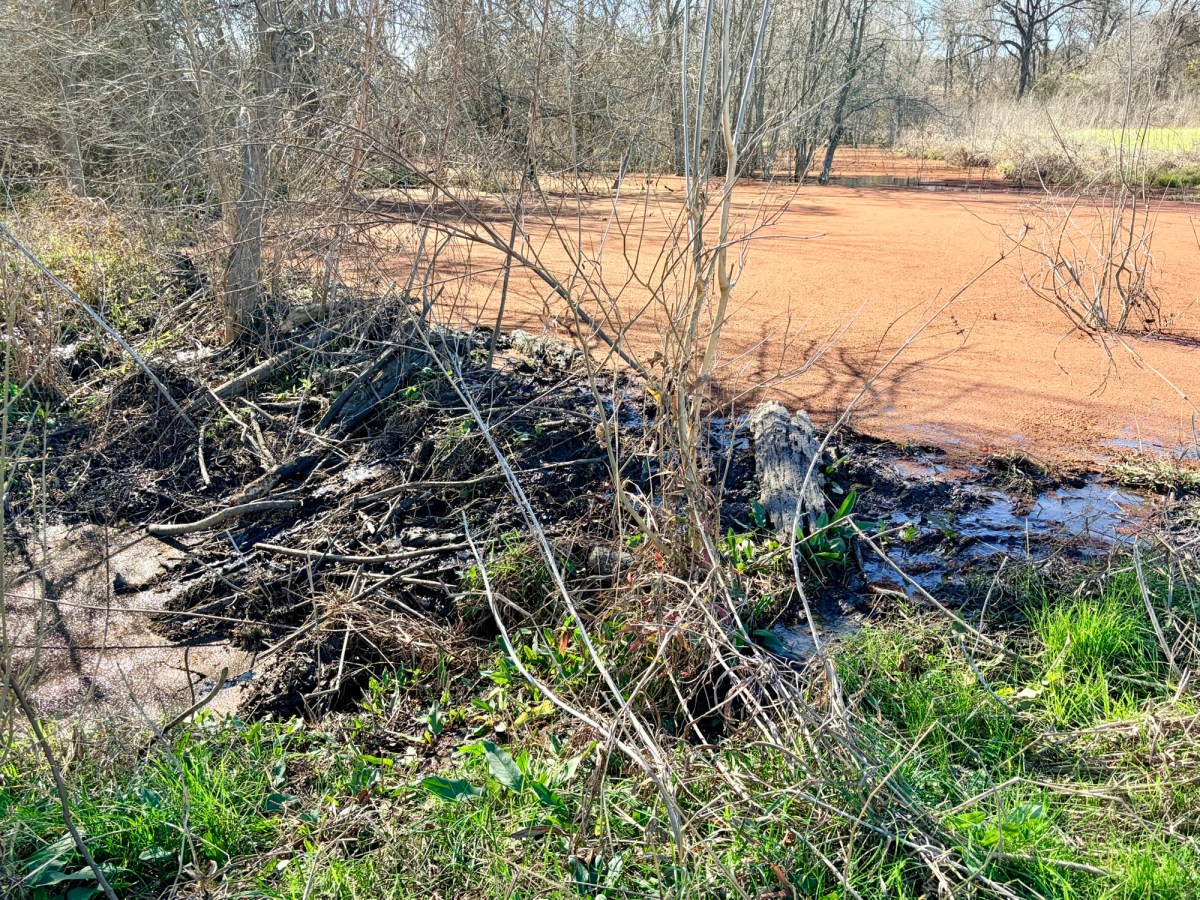
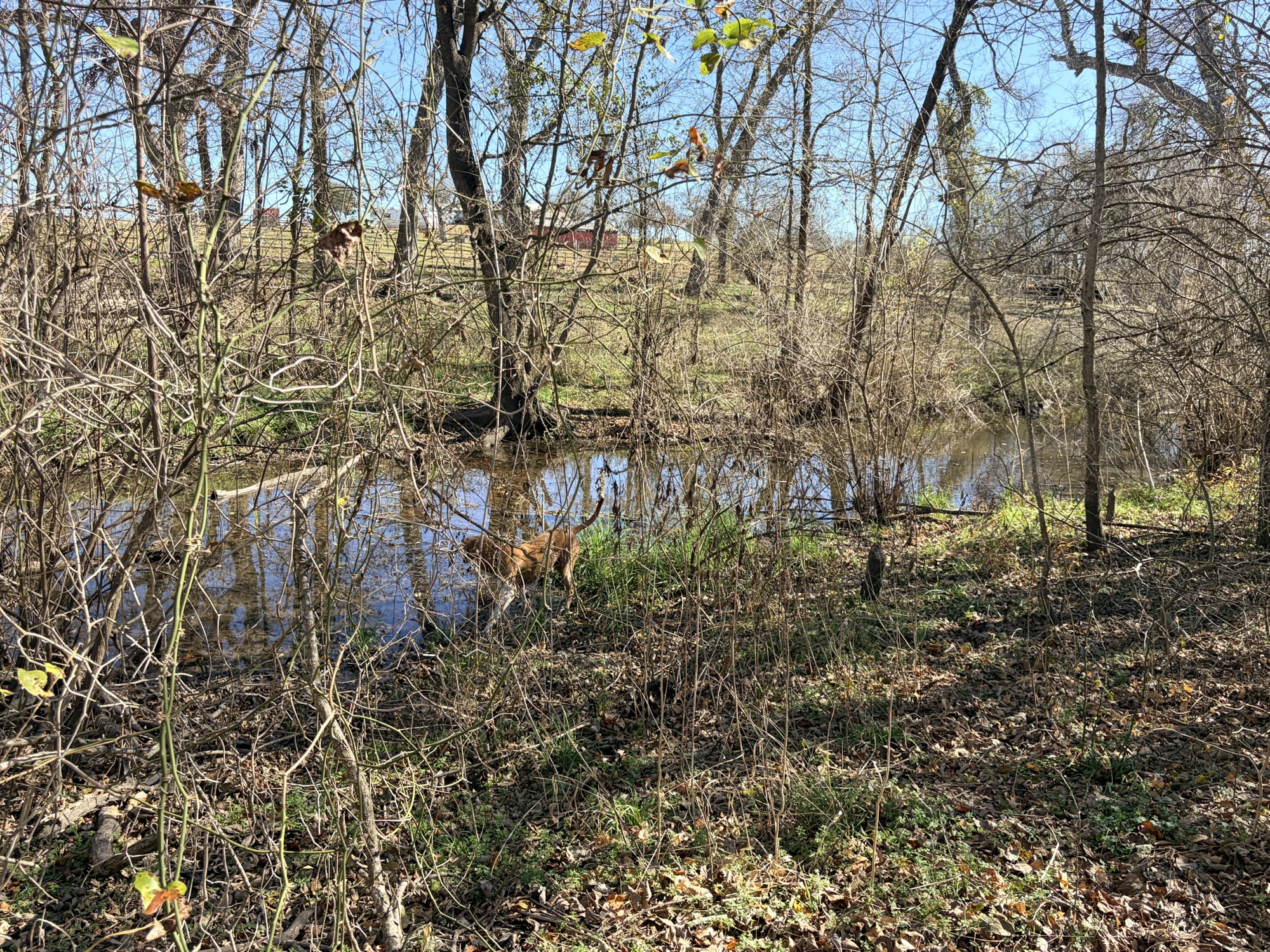
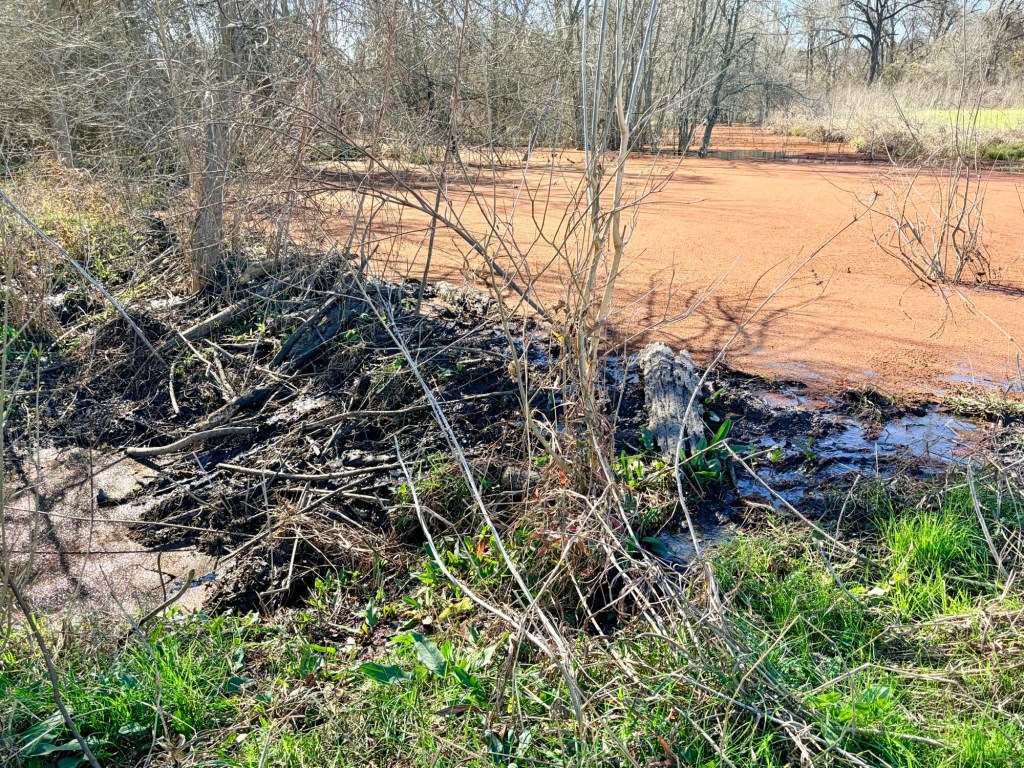
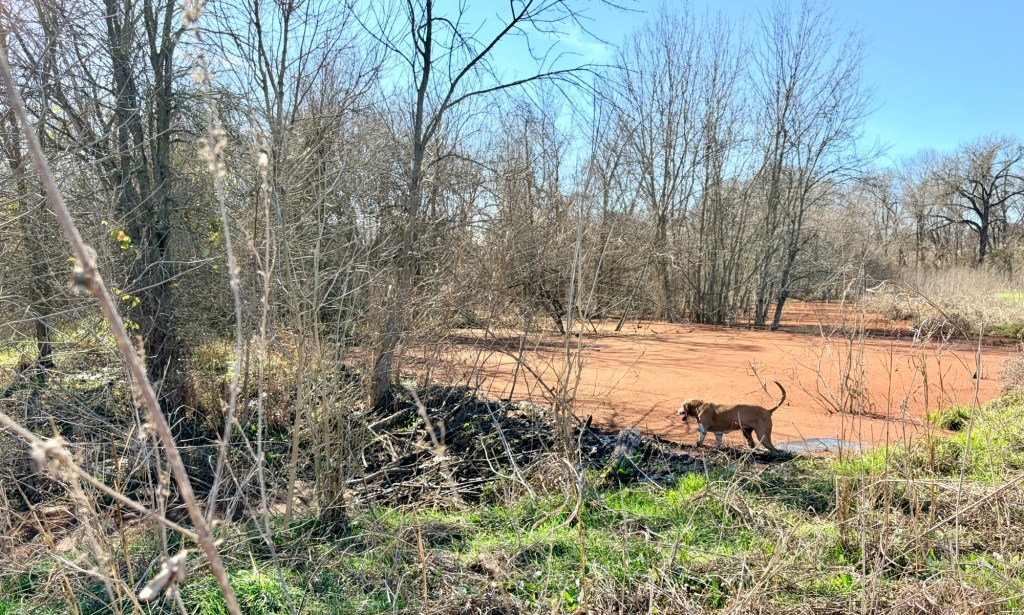
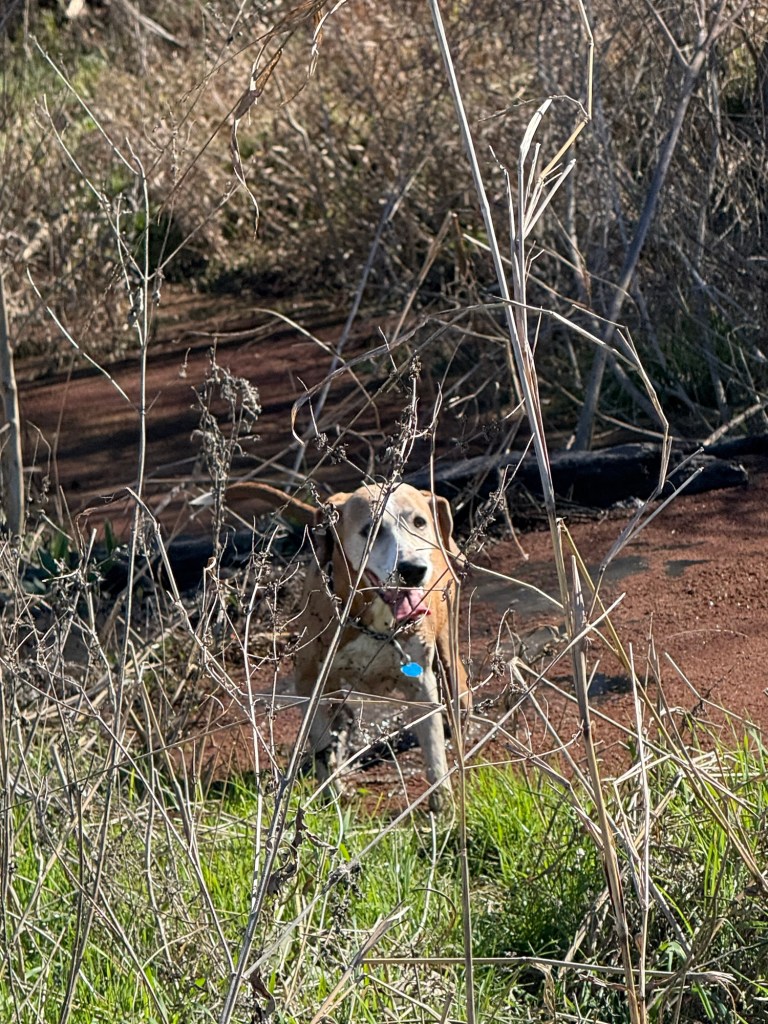
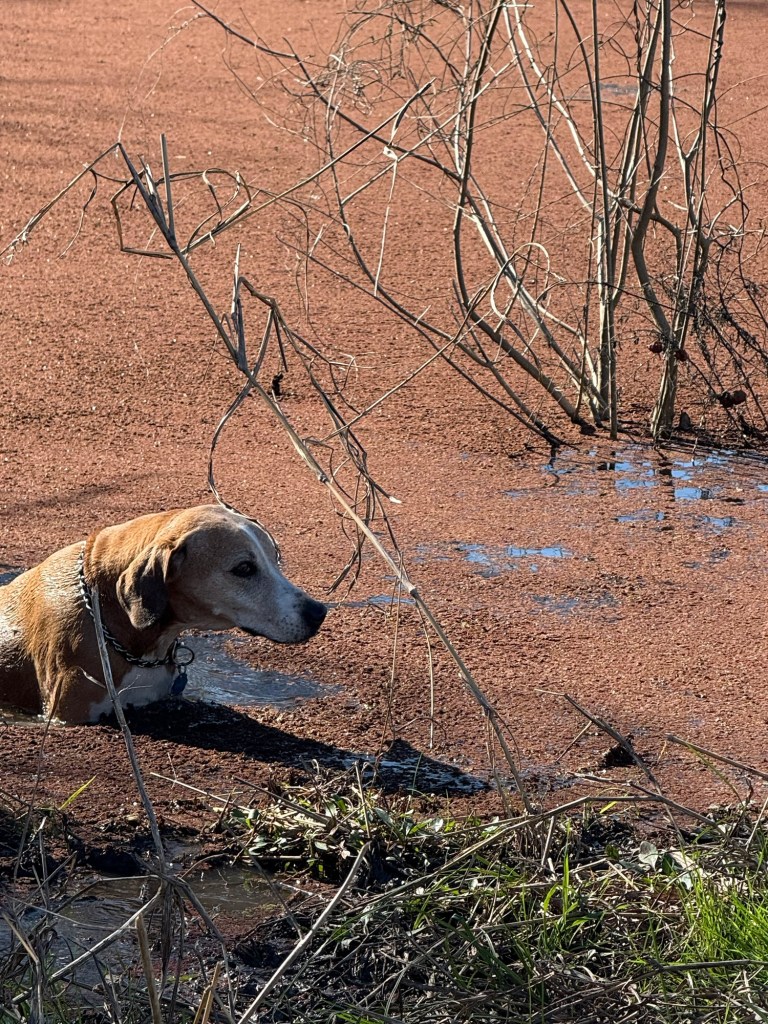
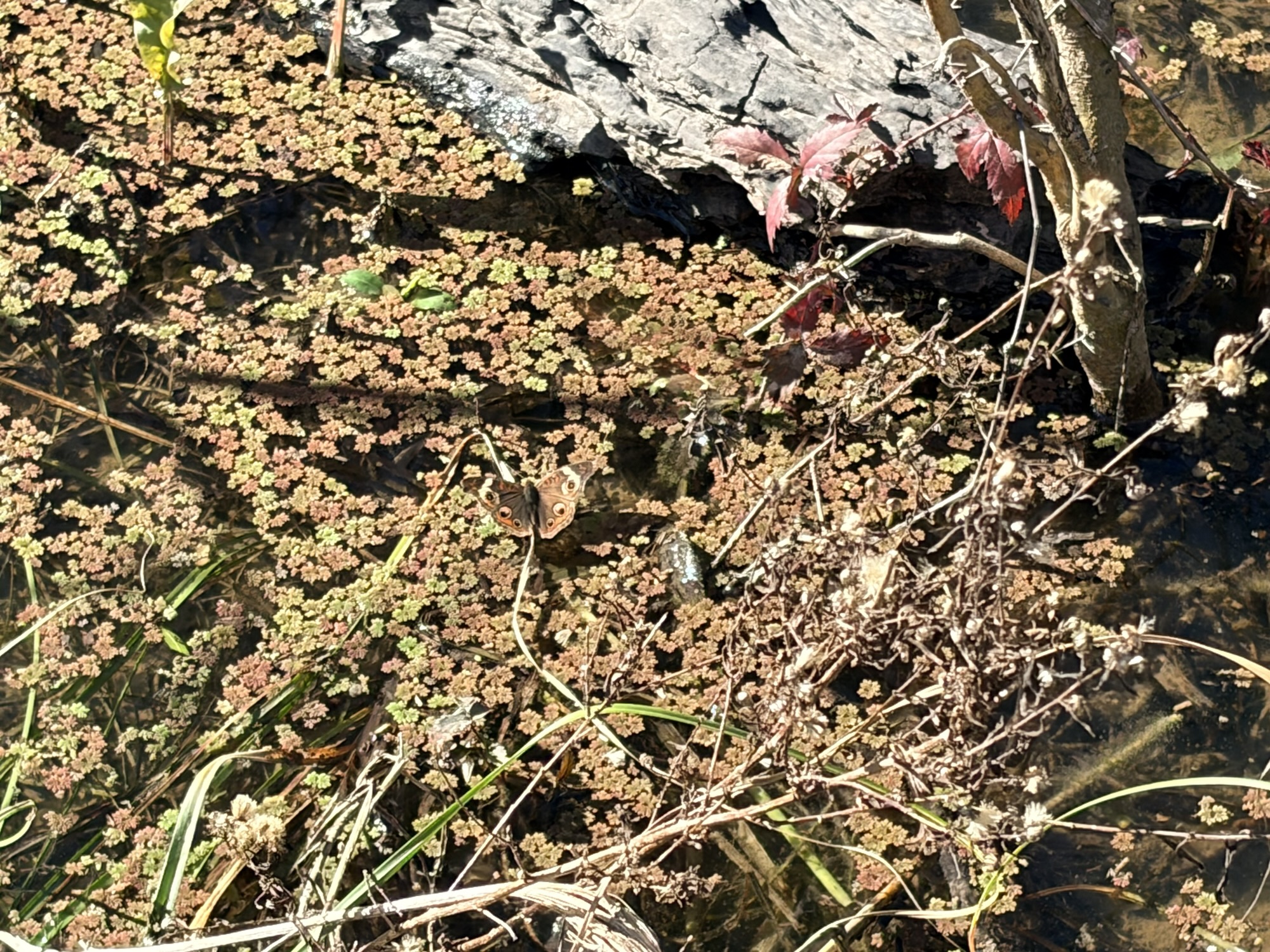
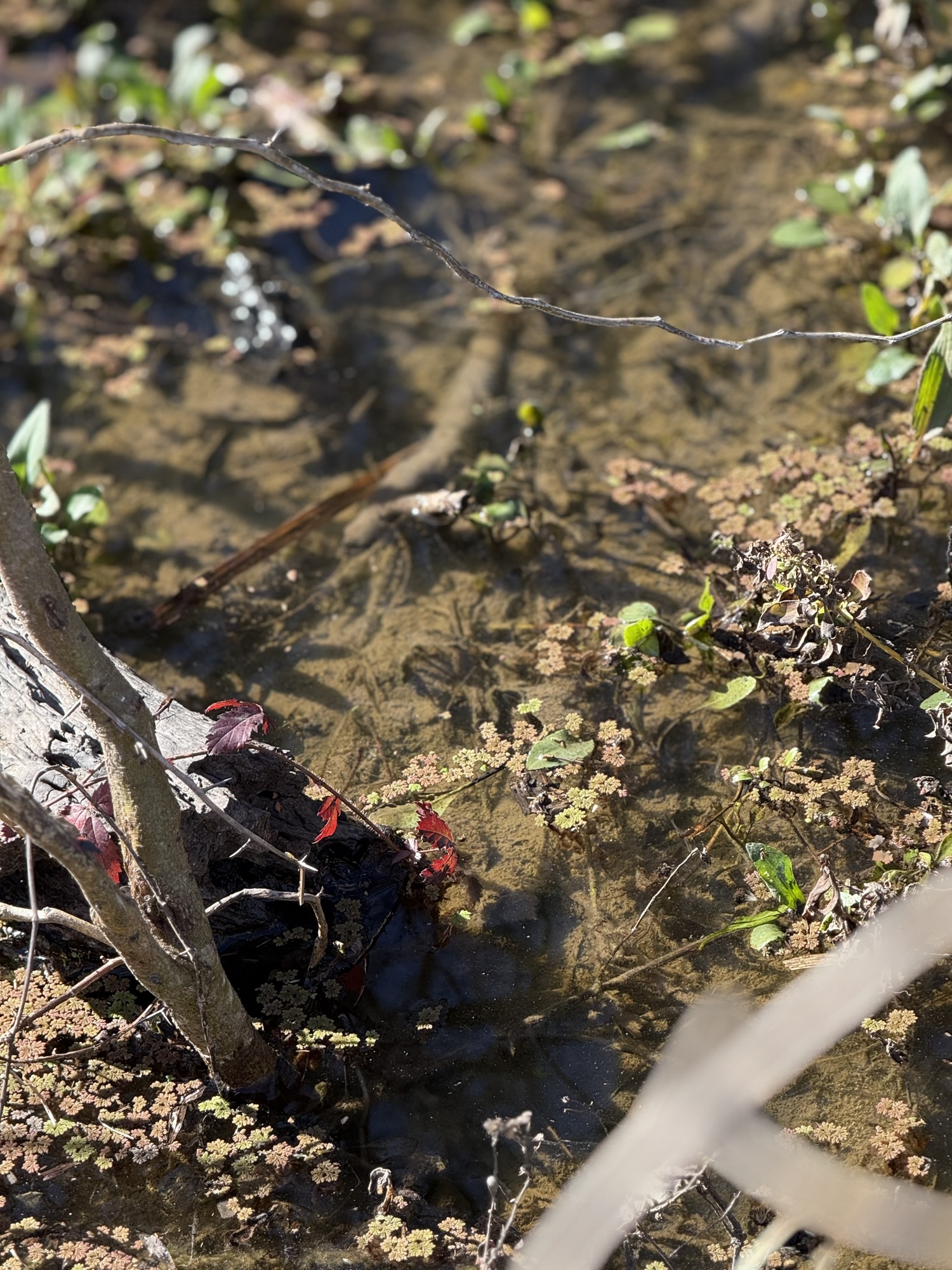
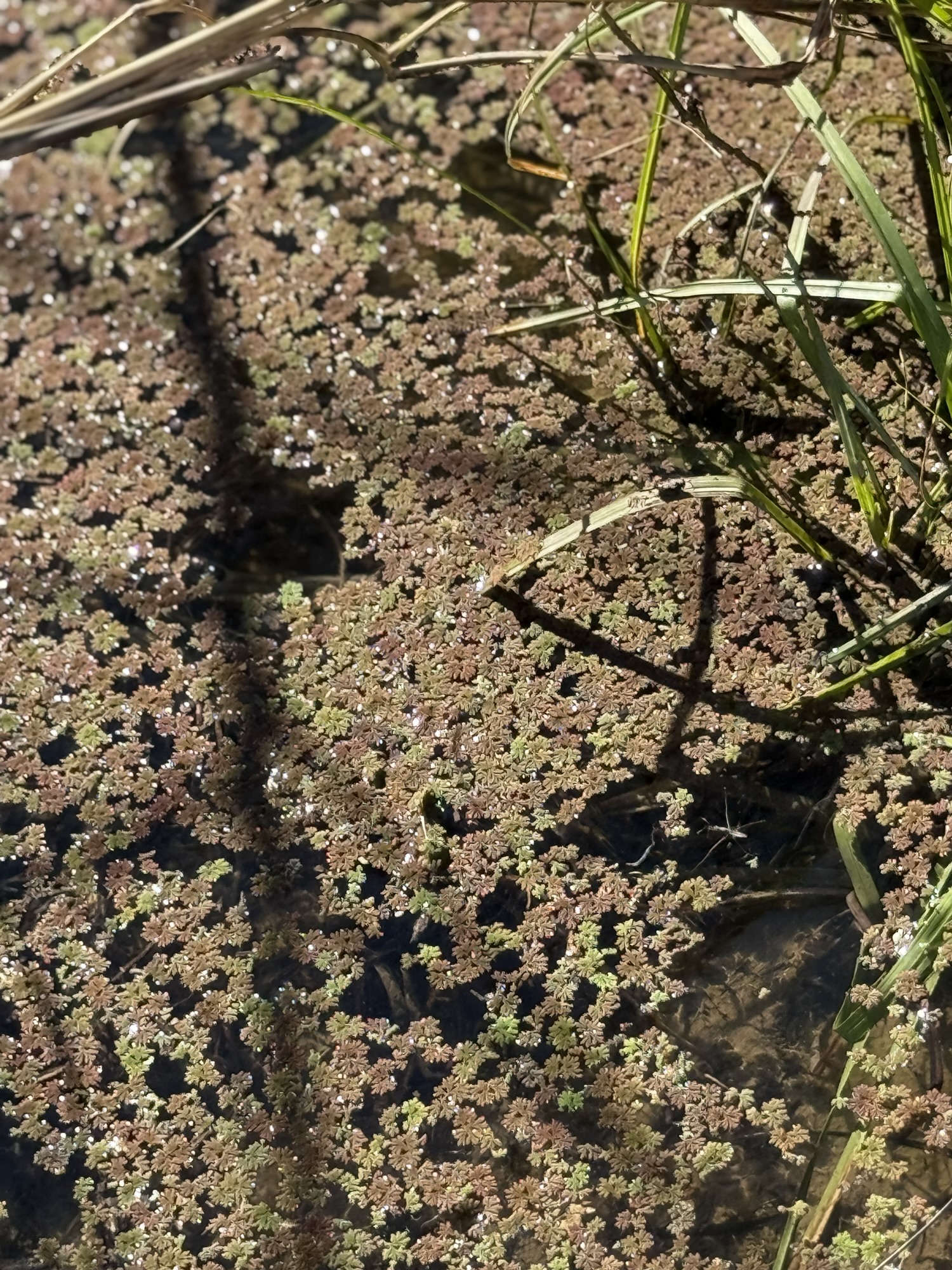
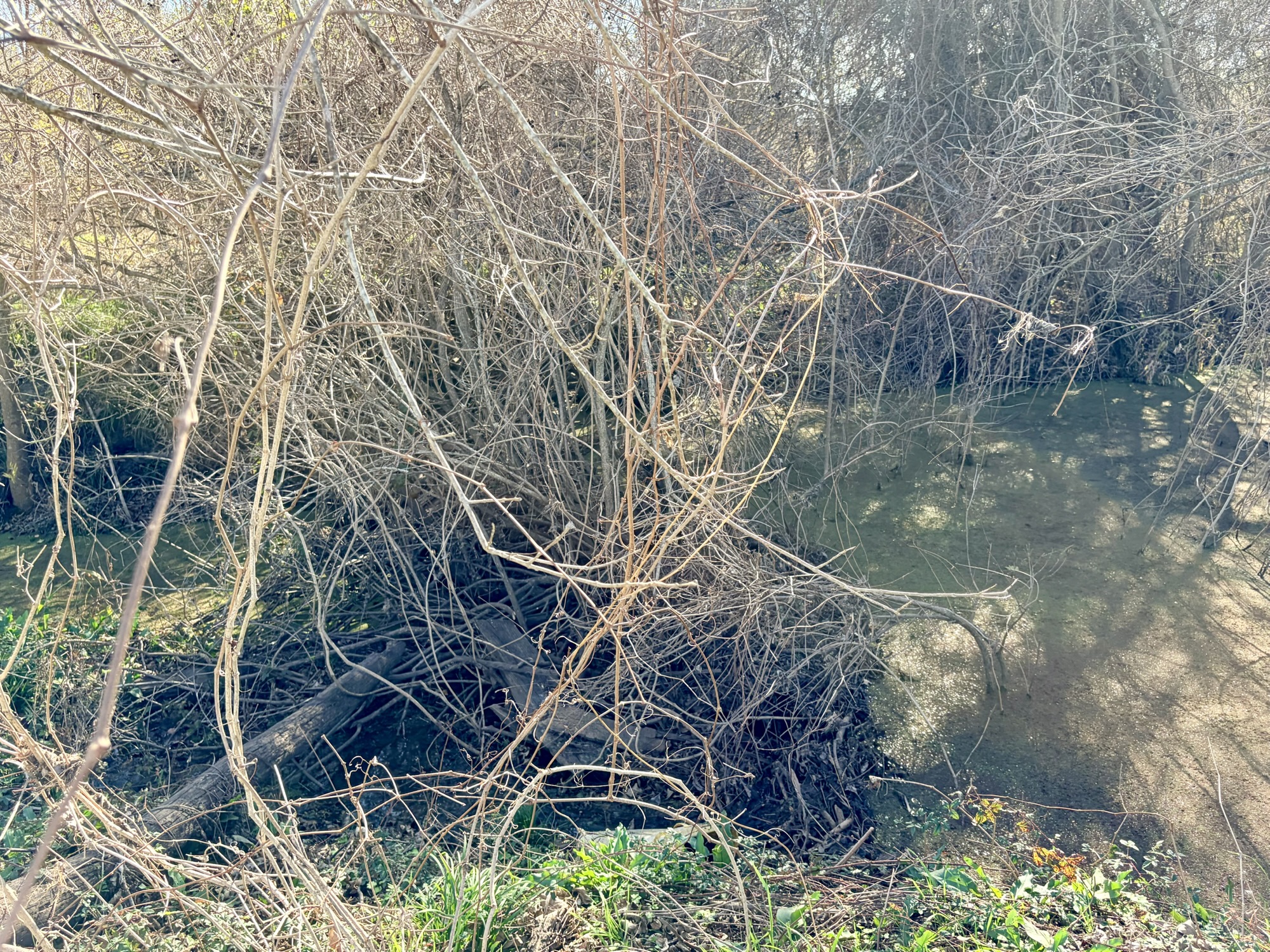
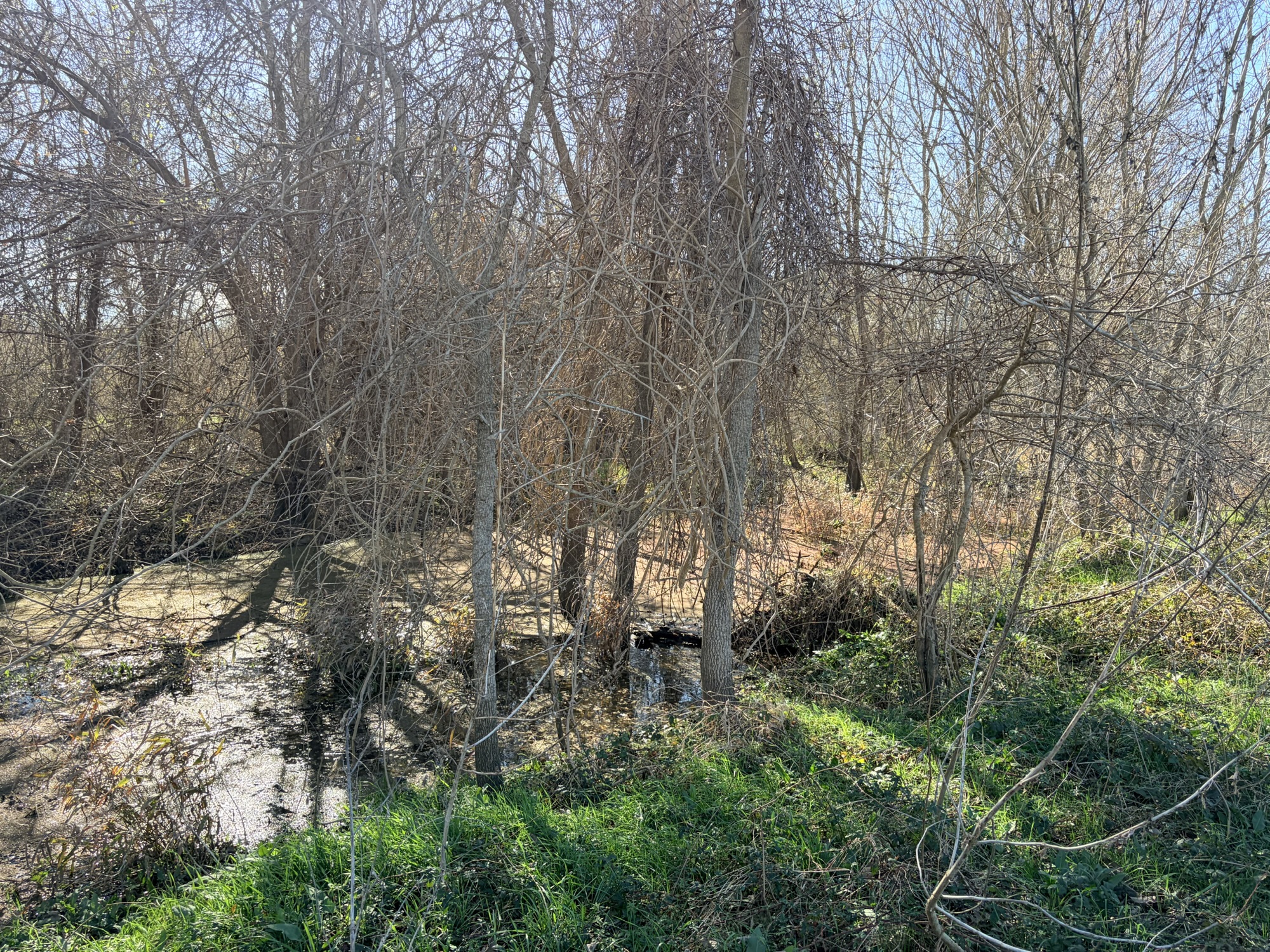
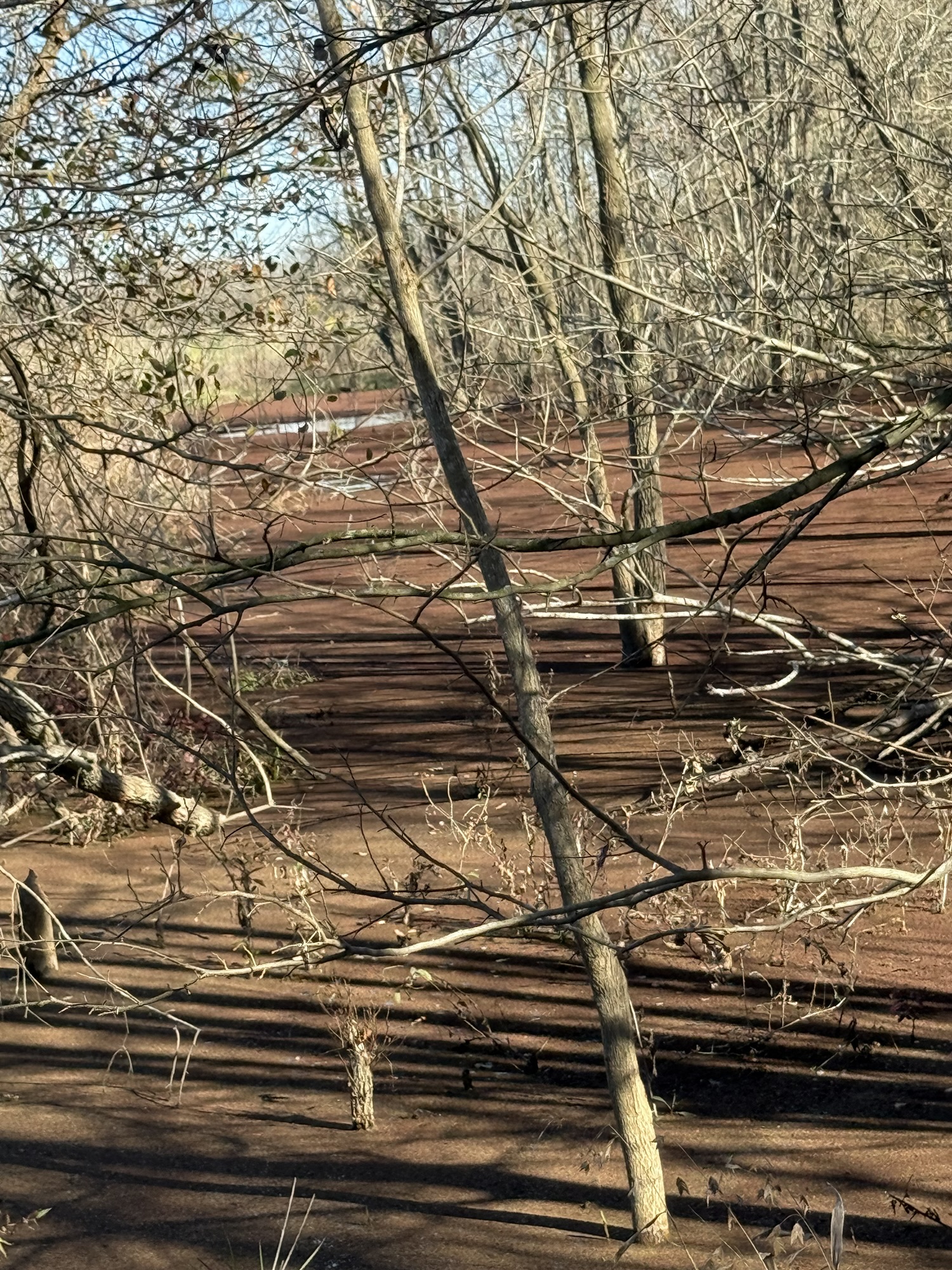
That was actually duckweed on a big ole beaver pond! To say I was excited would be an understatement. The dog was also excited and immediately went swimming.
Best view of the dam and pond behind it
I enjoyed investigating the dam construction and listening to the water trickling through the spillways. It’s hard to believe animals can do this, even though I read that book all about beavers recently.
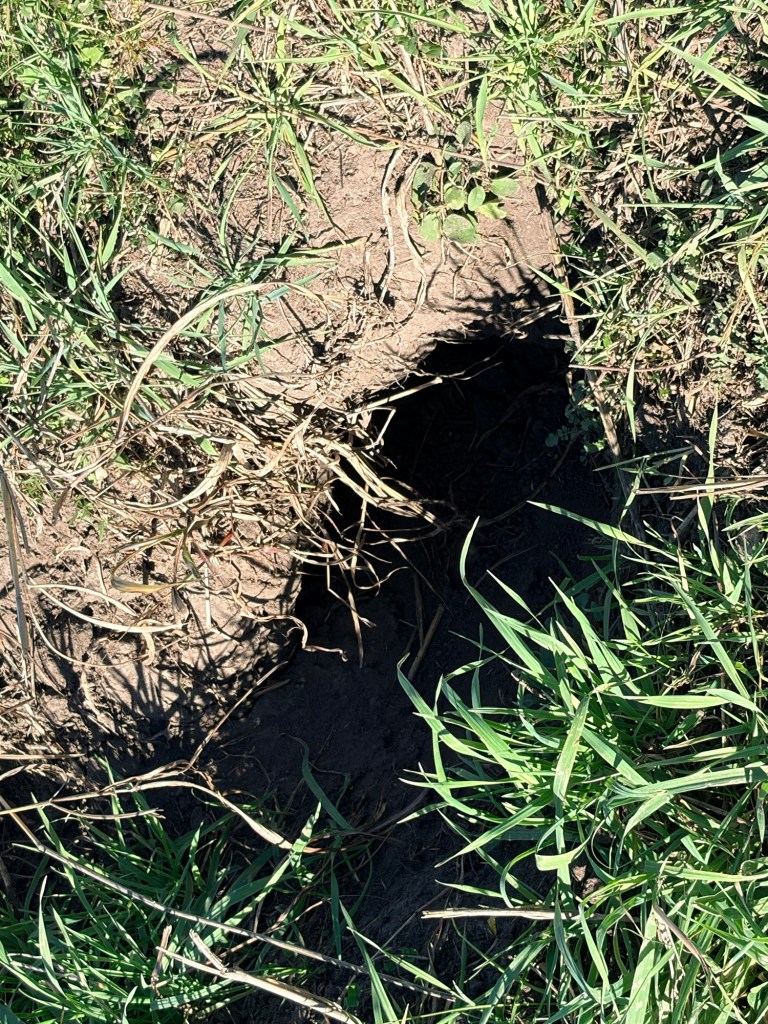
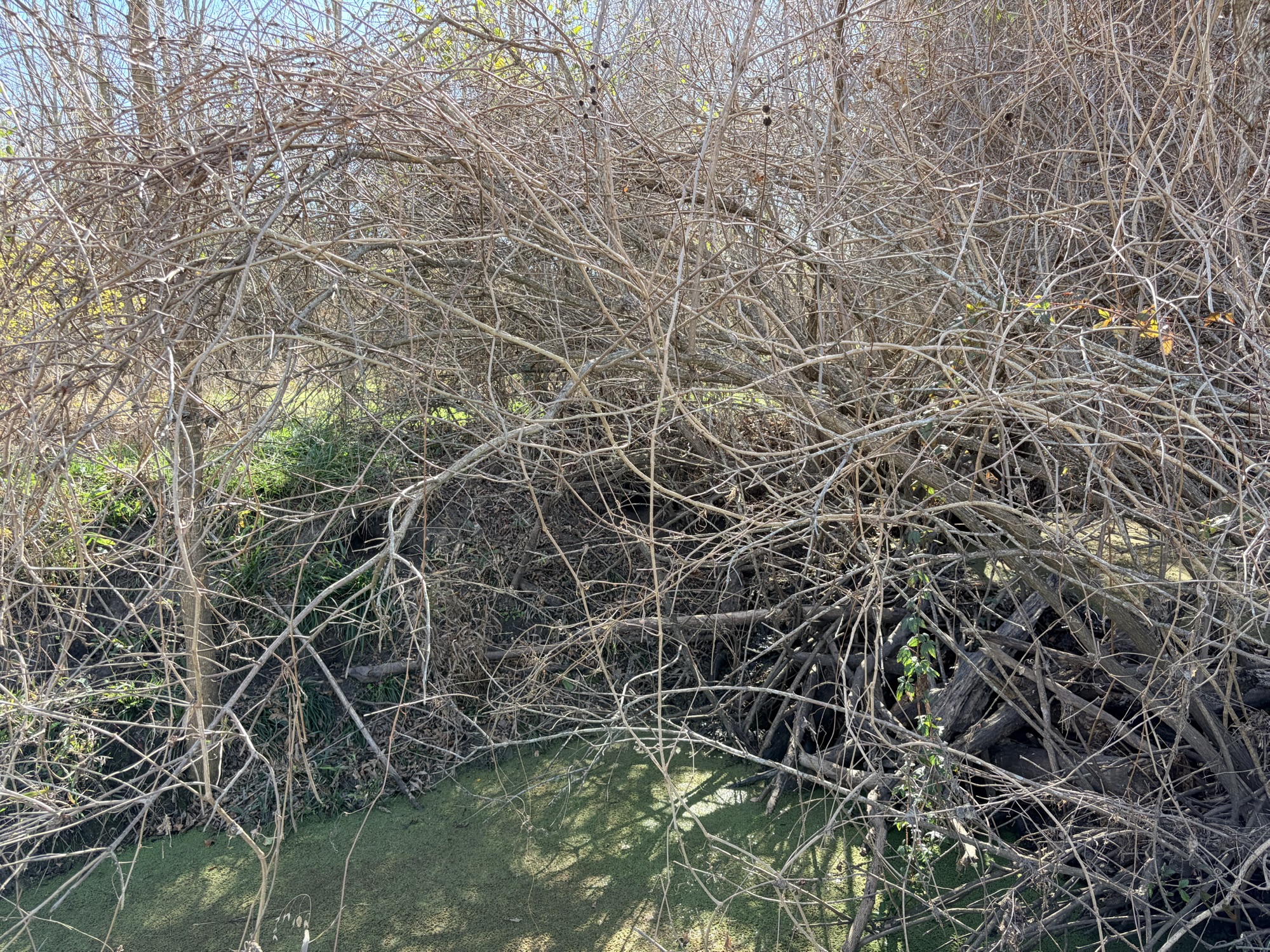
Also they dig big tunnels. Here’s an entrance.
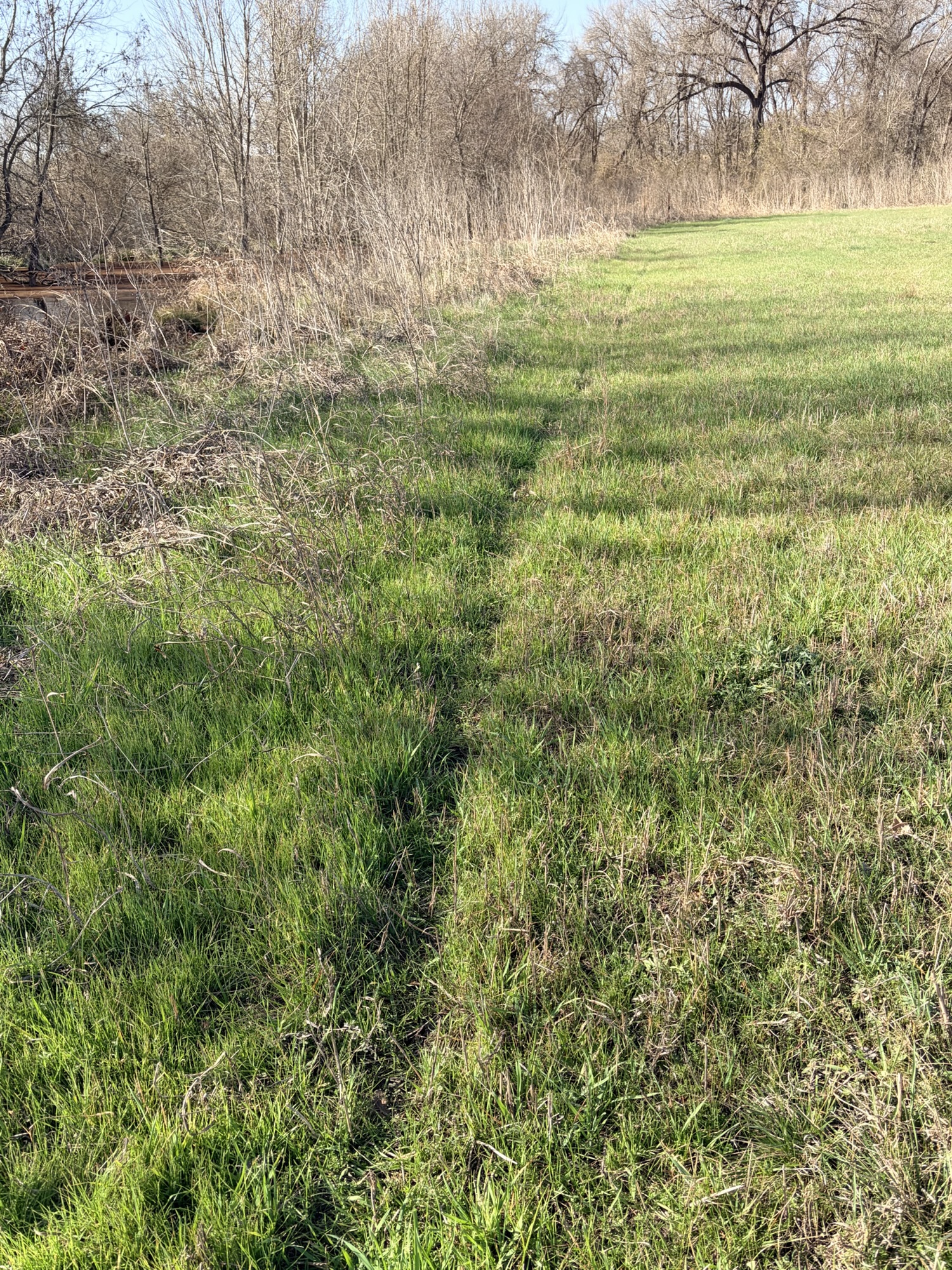
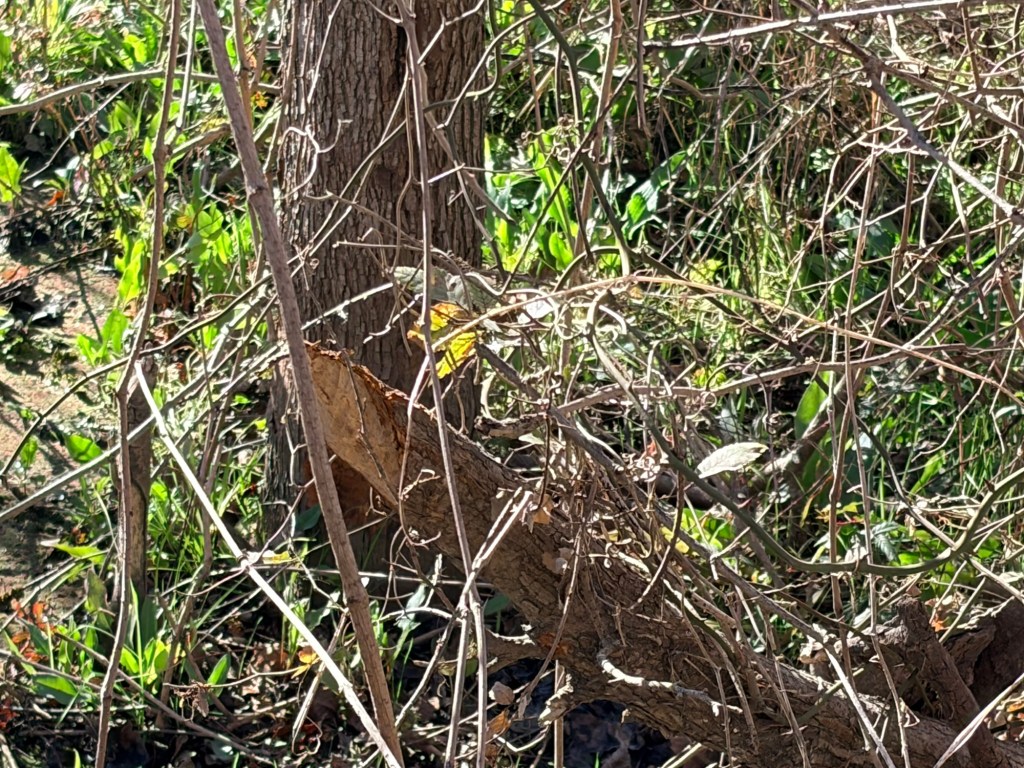
We found trees that had been gnawed by beavers (some from the previous dam a few years back). There were also trees whose bark had been gnawed.
Sniffing out big rodents
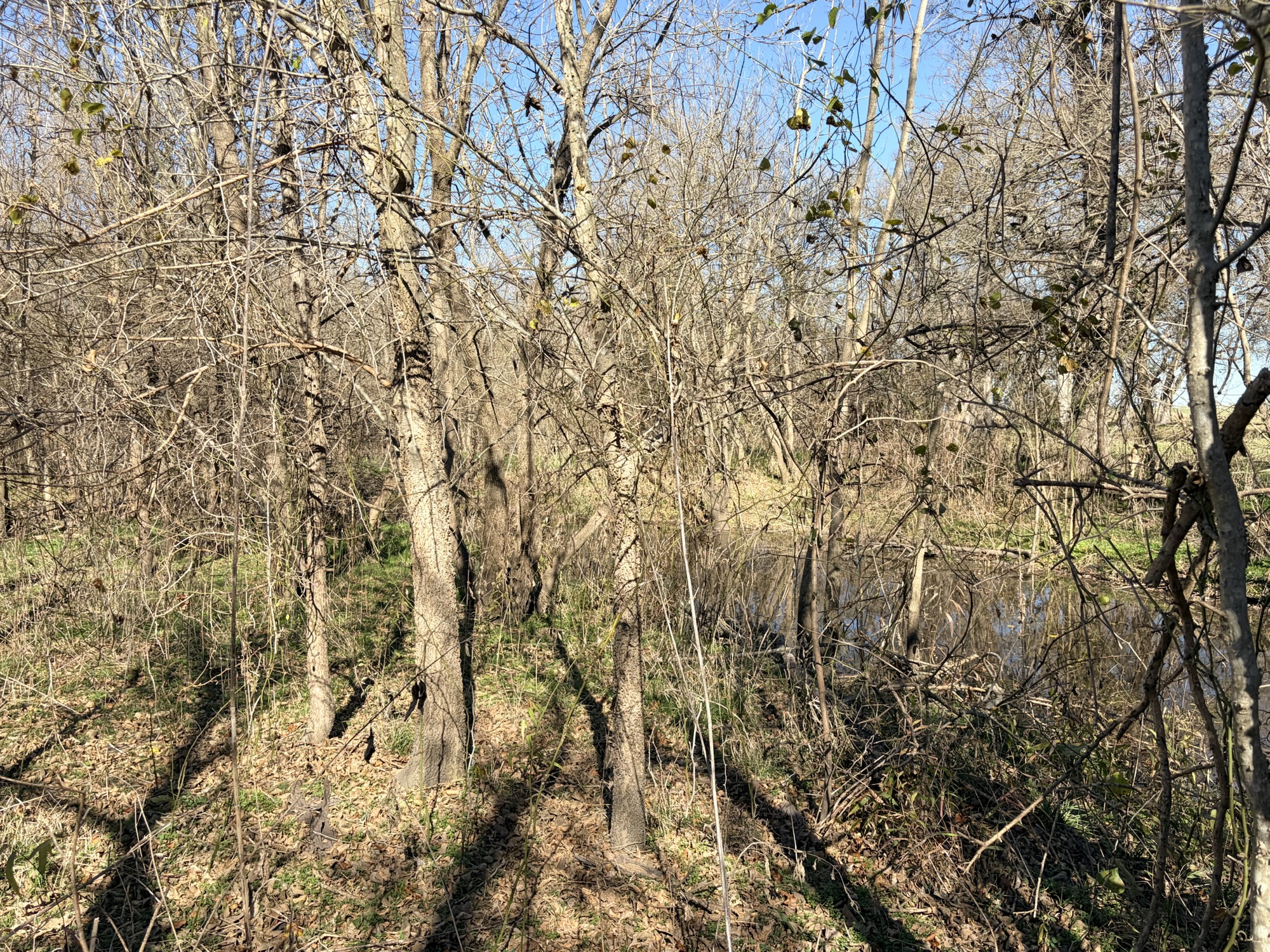
We moved upstream some more and found a second dam, which has created a magical pond full of fish, butterflies, and plants. It was hard to pull myself away from the tranquility.
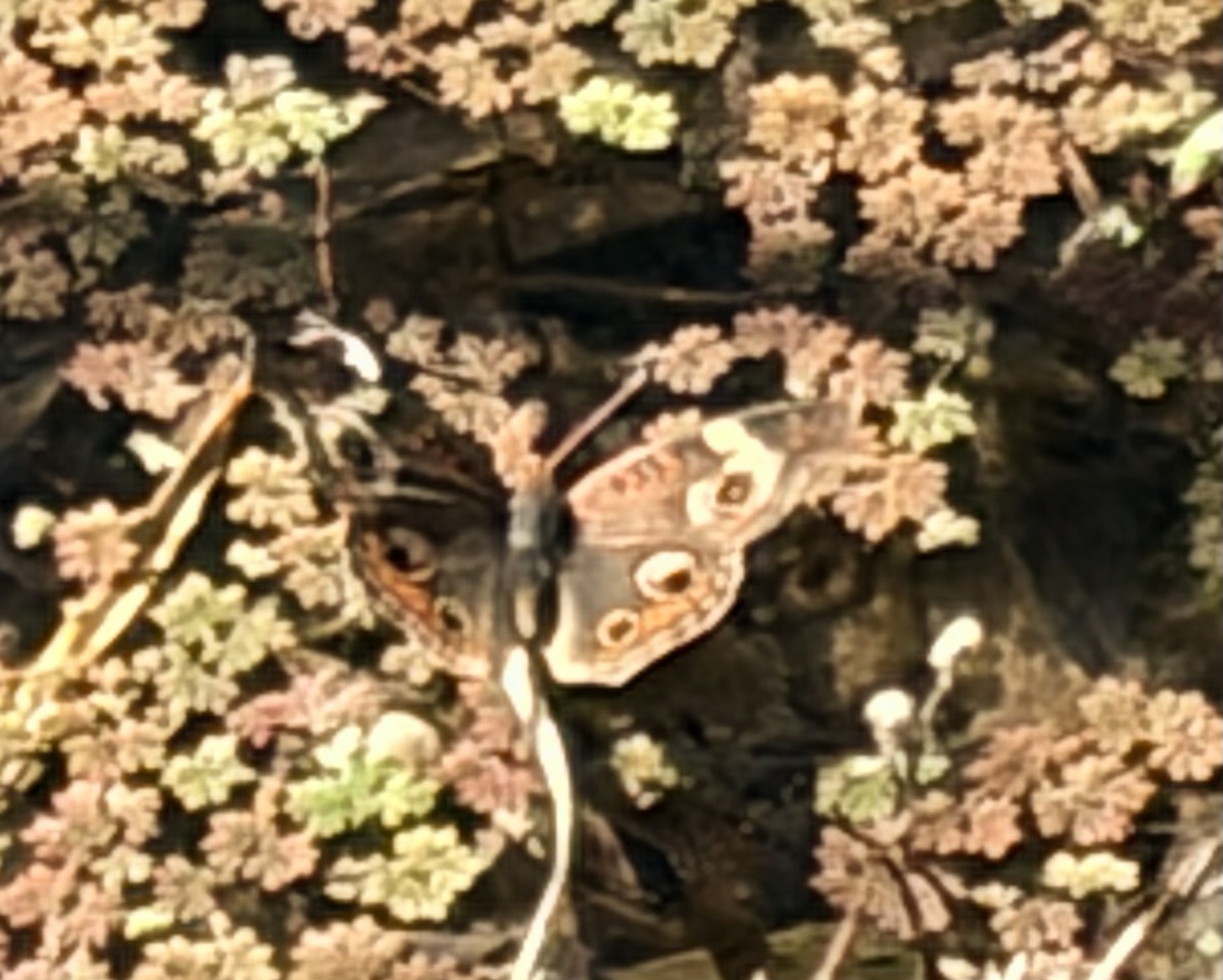
Buckeye enjoying duckweedThe colors are so niceRandom upper pond photos
But, I wanted to see if there was a third dam below the first one we found. Sure enough, following the cool beaver trails led to another one that my friend thinks is a reconstruction of the original dam.
The old dam has trees growing on it. Hard to see, but it’s in therePond
Here I located the tunnels they dig for entrances and exits, which is fascinating. I even found some beaver tracks in ant beds, but my pictures weren’t great. That’s okay, just seeing evidence that the amazing mammalian construction workers was a bucket list item for me.
Gnawed woodPathI think this is a beaver tracksOld chewed treeThis shows holes but they are hard to spot.
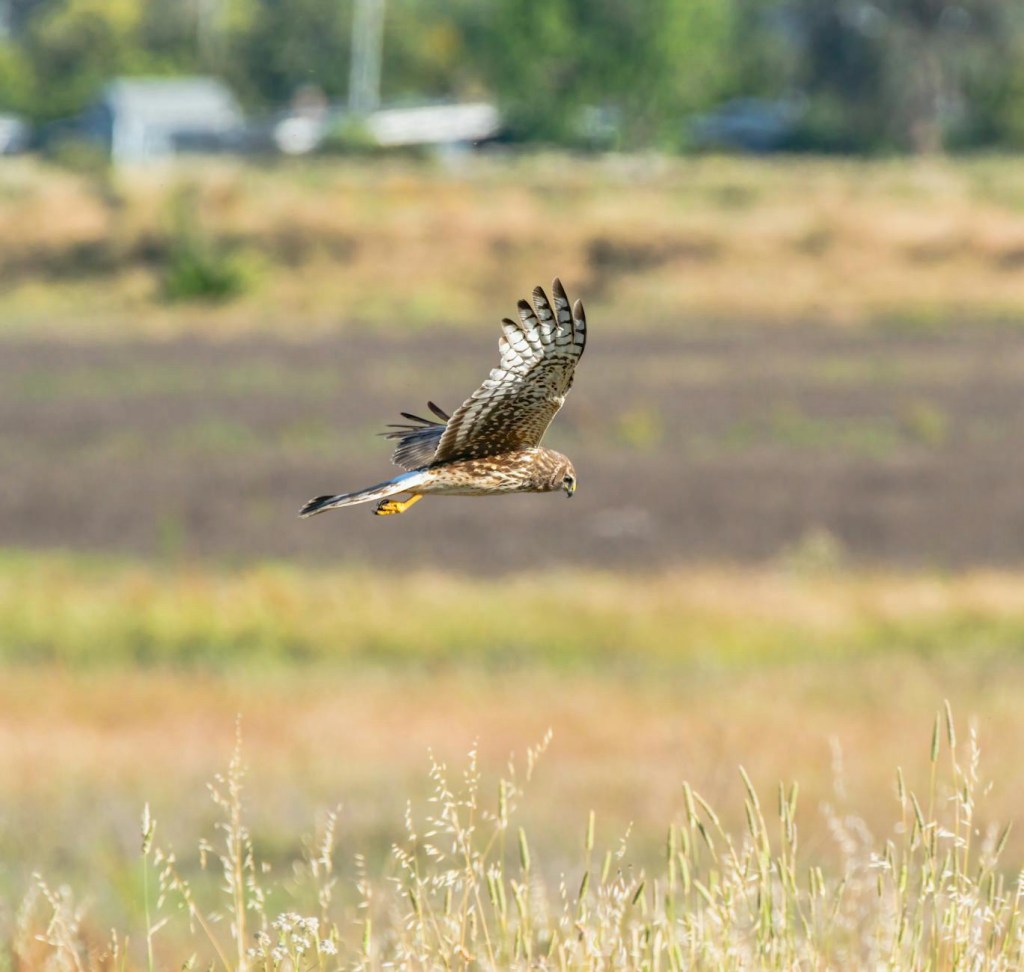
Since we had time and a truck, we went off exploring other parts of the property, which are mostly hay fields. We stopped and got to see a spectacular Northern Harrier fly right in front of us when we both had our binoculars. They’re beautiful hawks with a white patch just above their tail.
Harrier, from Pexels.
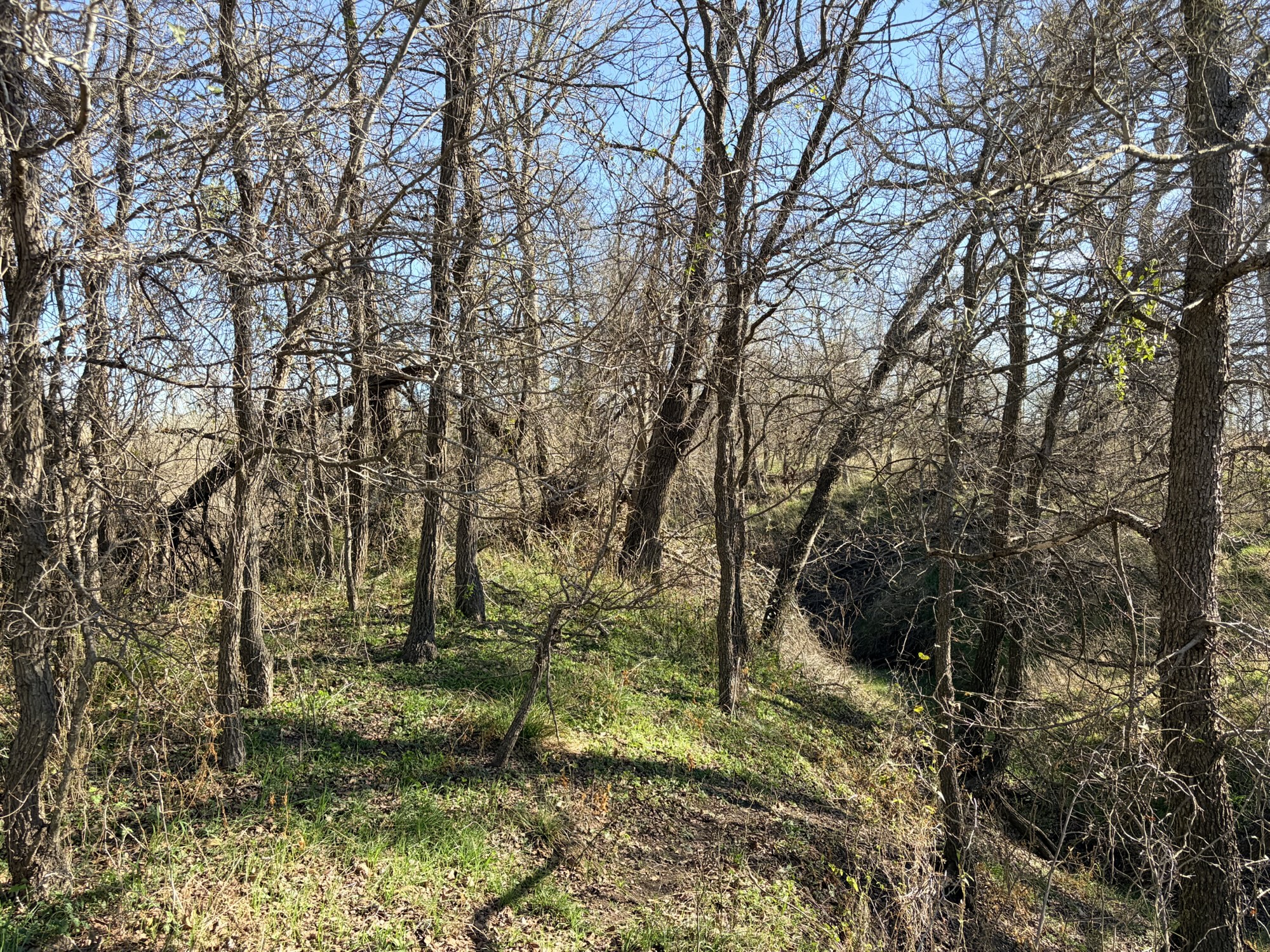
We then explored a ravine that lead to the big creek and observed how it is slowly moving northward. I did not fall down when I clambered down the embankment. I held onto trees.
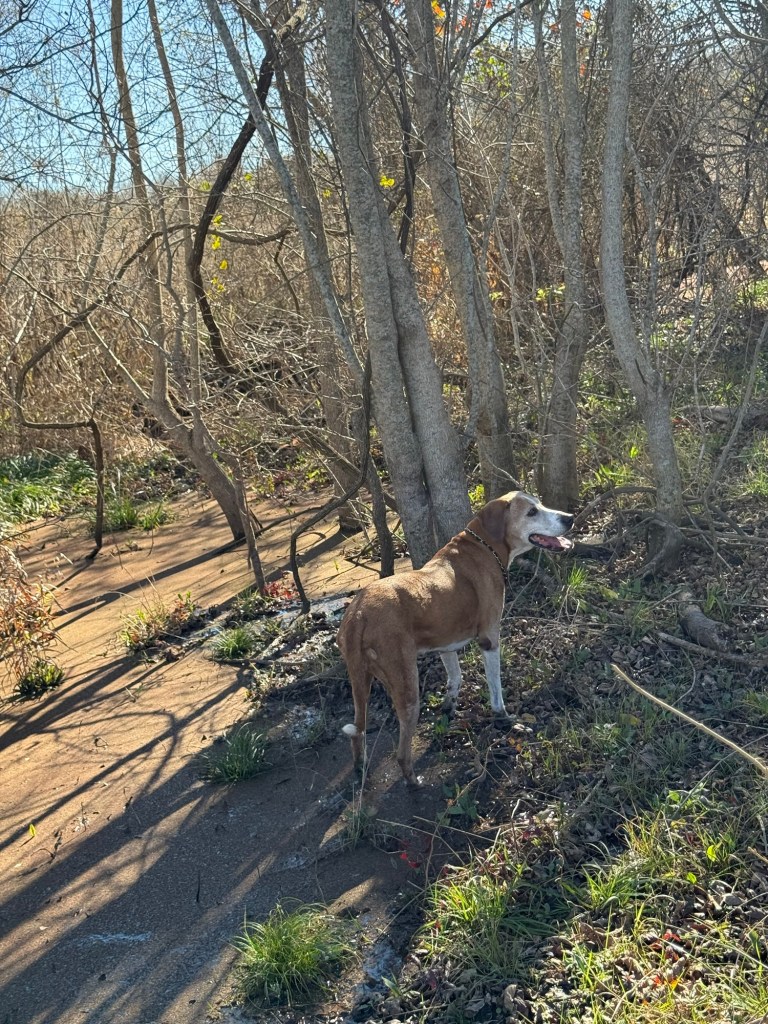
Ravine areaRavine Happy houndThis creek is bigger than some rivers
We ended our exciting afternoon doing some more birding back by my friend’s house and enjoying each other’s photos. I’m so pleased to cross another mammal off my list of Milam County sightings, even if I didn’t see an actual beaver. All my beaver knowledge really helped me see the signs of them. I’m sure they’re glad the prowling humans and dogs are gone!
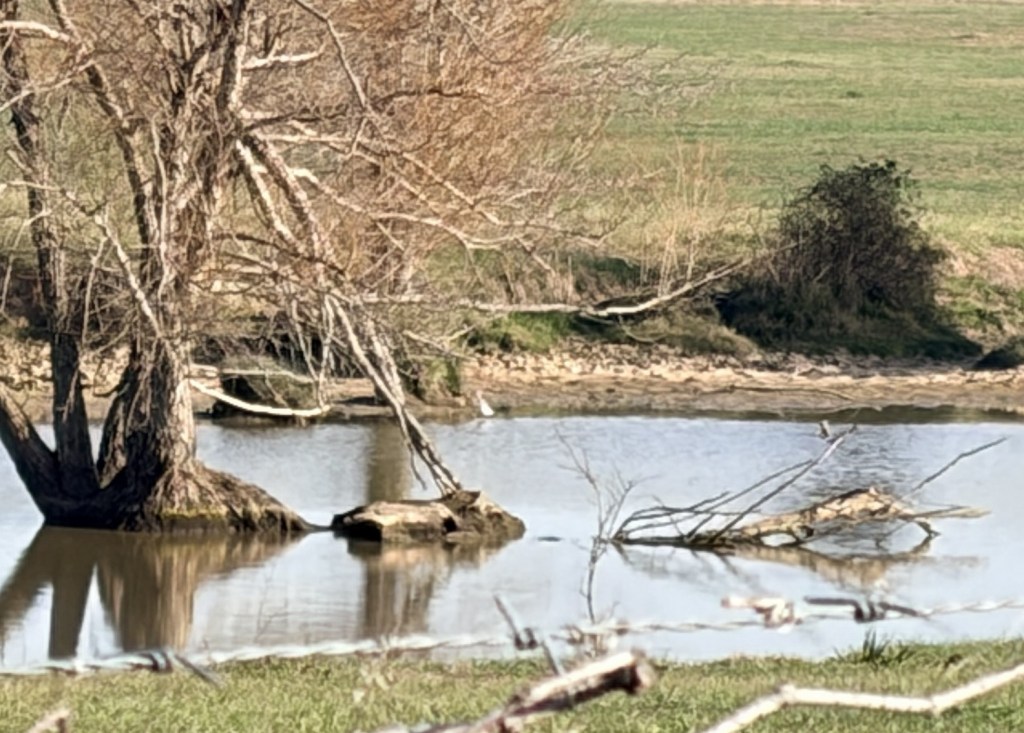
The natural world greeted me as soon as I woke up on New Year’s morning. I looked out the side window and saw a large bird walking along the pond shore, of which there is a lot, thanks to inadequate rain. What was it?
The white blob to the right of the tree is the bird.
Luckily one of my many pairs of binoculars is stored on the windowsill for just this kind of occasion (along with the tools Lee used on his most recent home improvement attempt). Now I could see it, and I was happy.
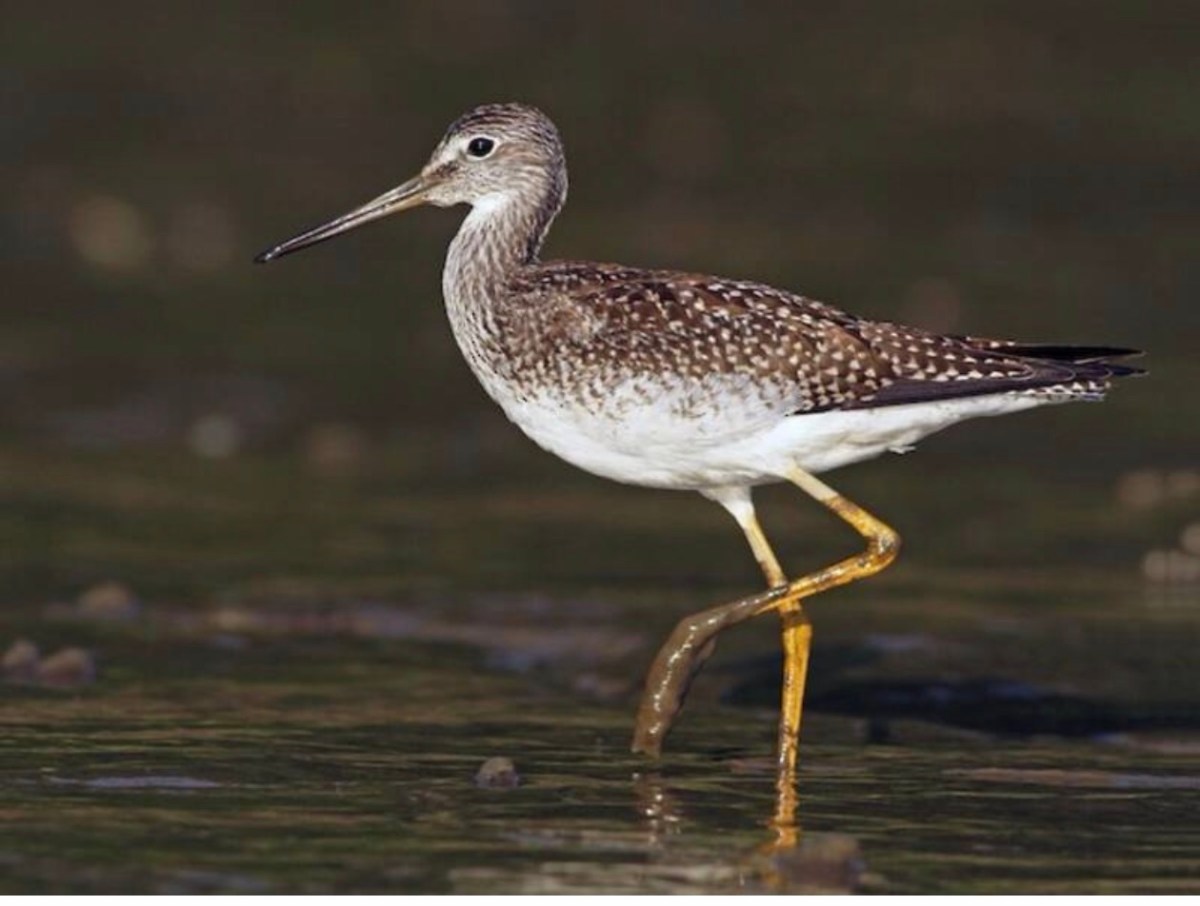
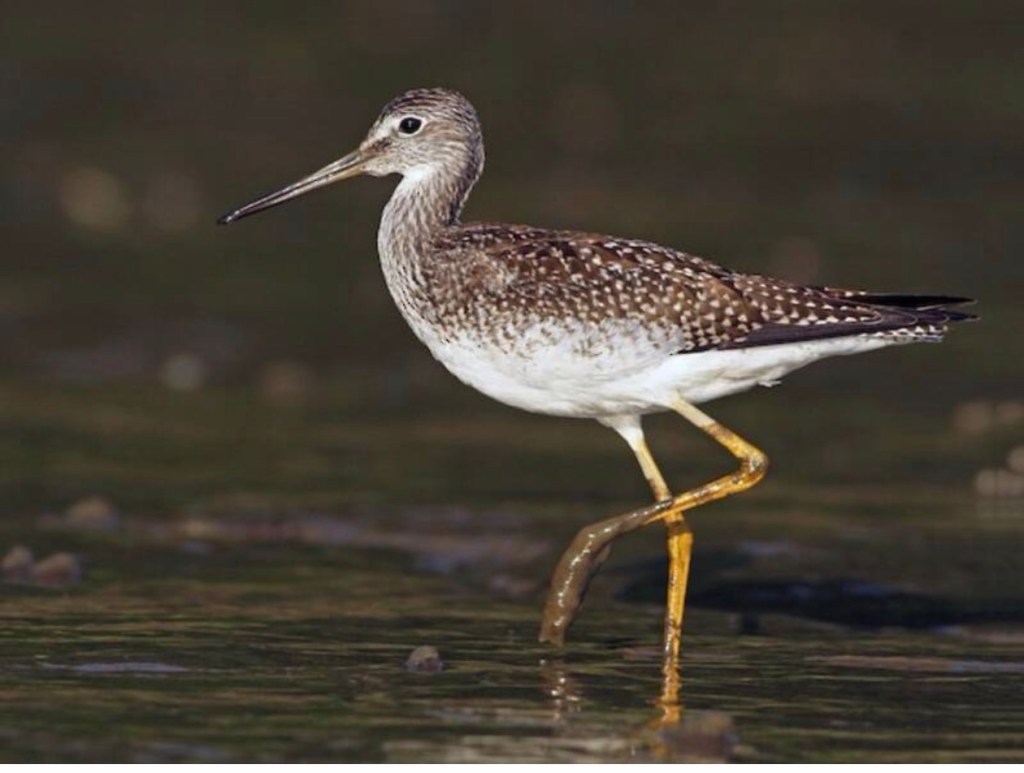
It’s a Greater Yellowlegs
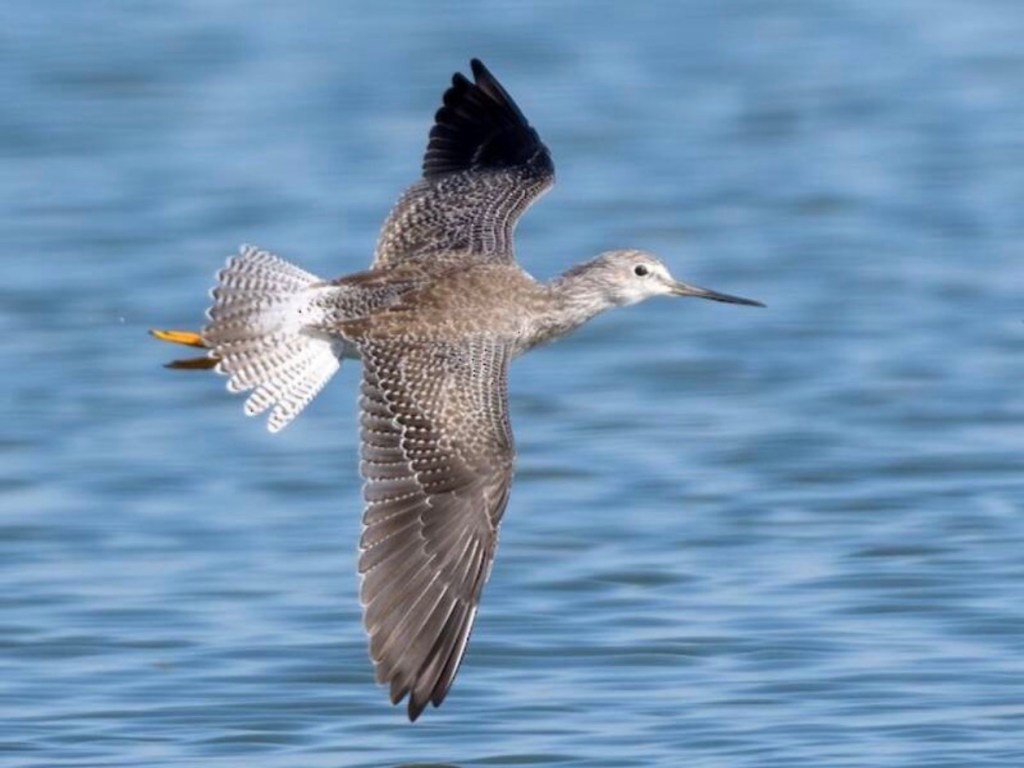
Why was I so happy to see a bird that’s around here all the time? Because I so rarely see them on the ground, doing their shorebird thing. Usually I hear their very distinctive call, and occasionally see them flying with their legs tucked under like landing gear.
I tend to see the underside. Photos are from Merlin Bird ID. My only photos are blobs.
I like these birds lots, mainly because they were the first bird to visit our front pond after it filled with water. I had to ID it, gasp, from a book! They were also one of the first shorebirds whose call I learned. Here’s more from Merlin on Greater Yellowlegs:
Fairly large shorebird with bright yellow legs. Plumage is essentially identical to Lesser Yellowlegs: gray upperparts with white speckling, streaky neck, and white belly. Proportions are most important for identification. Greater is larger overall with longer, thicker, more upturned bill, longer neck, blockier head, and bigger chest. Forages actively on mudflats and in shallow pools and marshes, often in loose mixed flocks with Lesser Yellowlegs. Somewhat more likely to be found in larger, more open habitats than Lesser, but much overlap. Listen for strong, ringing “tew tew tew!” calls, louder than Lesser, and usually three or four notes instead of one or two (though Greater can also give single notes). (from Merlin Bird ID)
The highlight of yesterday’s sighting was that it stayed, along with some Killdeer, long enough for me to watch it with the good binoculars as it ran through shallow water sticking its slightly curved bill just under the surface, sorta like how a skimmer does when flying. I now know they don’t poke into the dirt, but rather skim the water. Yay for citizen science!
Once I settled into the birding station, I also got to watch a cute Eastern Phoebe get all plumped up for an extended grooming session. I like how the ones here are more yellow than others I’ve seen.
Blob to the right of the pole is the Phoebe. I still hate this phone camera.
This morning I had a Loggerhead Shrike land on the birding station roof. I know that because it then sat on the fence right in front of me. Such striking birds. Wish I’d had the good camera.
That blob is the shrike.
I’m off to an adventure this afternoon, so maybe I’ll get more blurry photos (too much walking to carry the big lens camera).
I realize we had an earlier cold snap, but the front that came through last night (all the way to Rockport/Fulton) looks like it wants to stick around. I can’t complain, because we got at least a little rain at the ranch (I will know more tomorrow). It looks like maybe more rain is coming to replenish the water table.
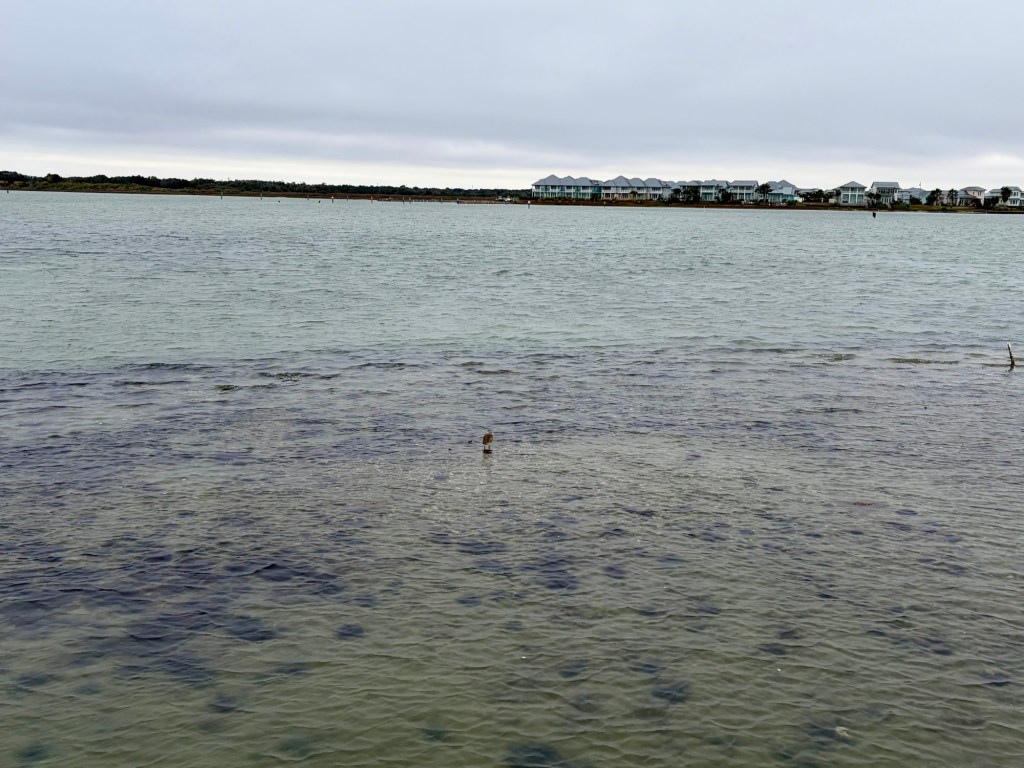
It was pretty gray at the bay.
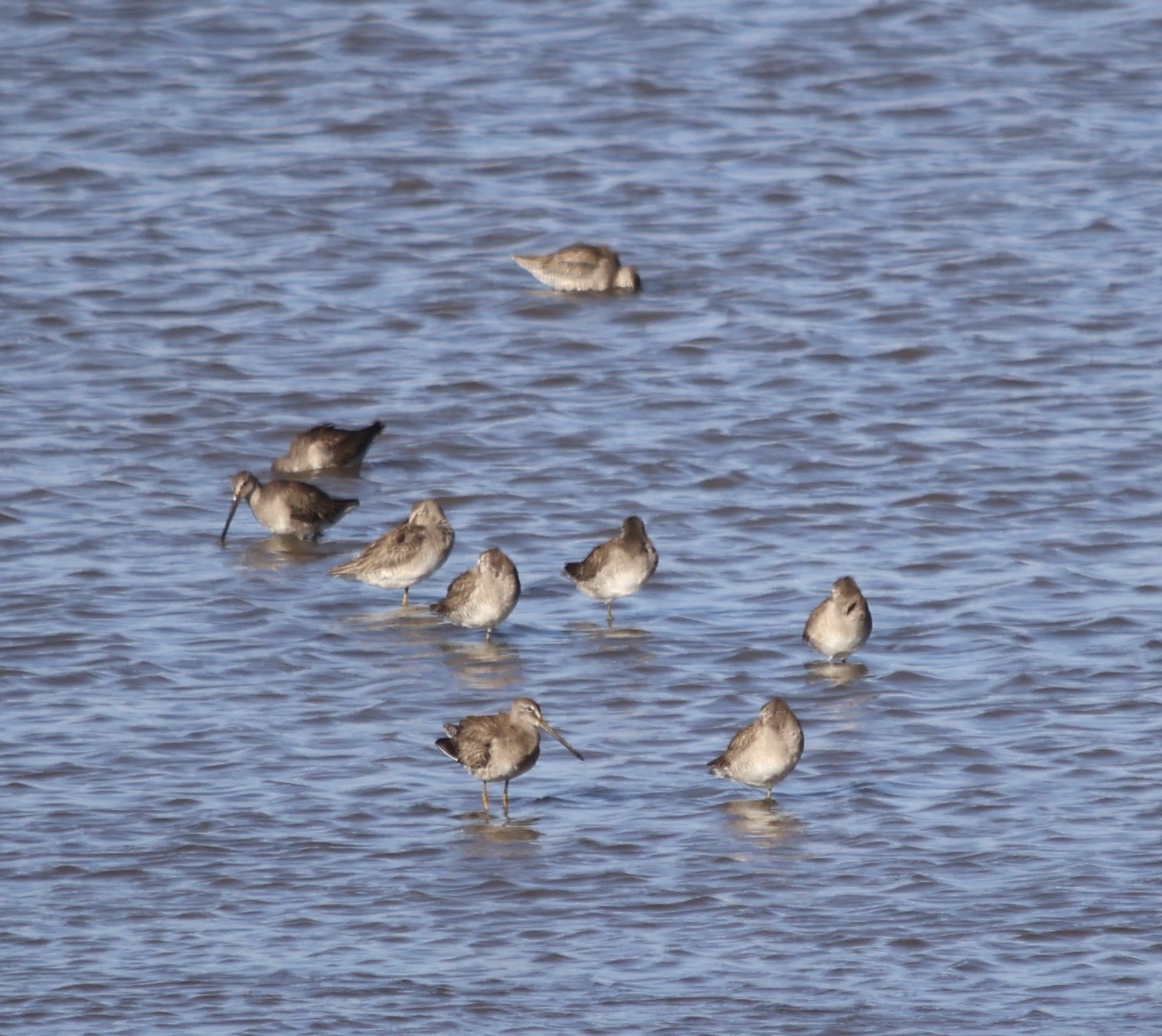
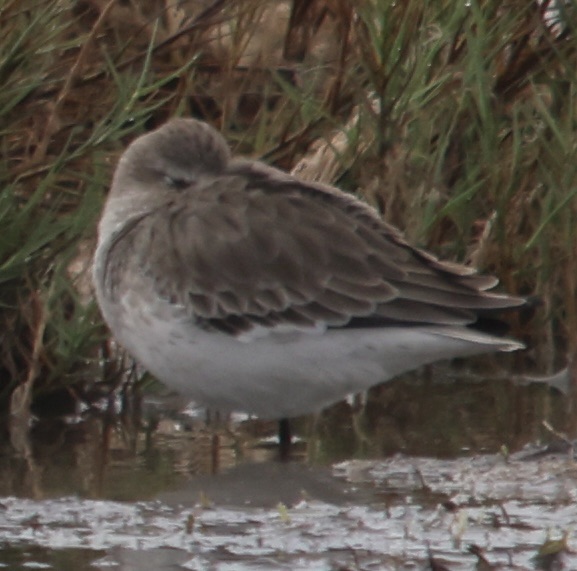
It rained last night, but wasn’t as windy at Goose Island. I was able to take one fairly pleasant walk that was only moderately cold. Since the wind was less, I could use Merlin, and identified two more life list birds! One I saw pretty well, a White-tailed Kite. The other was a Short-Billed Dowitcher, which I can’t tell from a Dunlin or Long-billed Curlew. I need to go back to the sanctuary in Port Aransas where they are all together so I can compare.
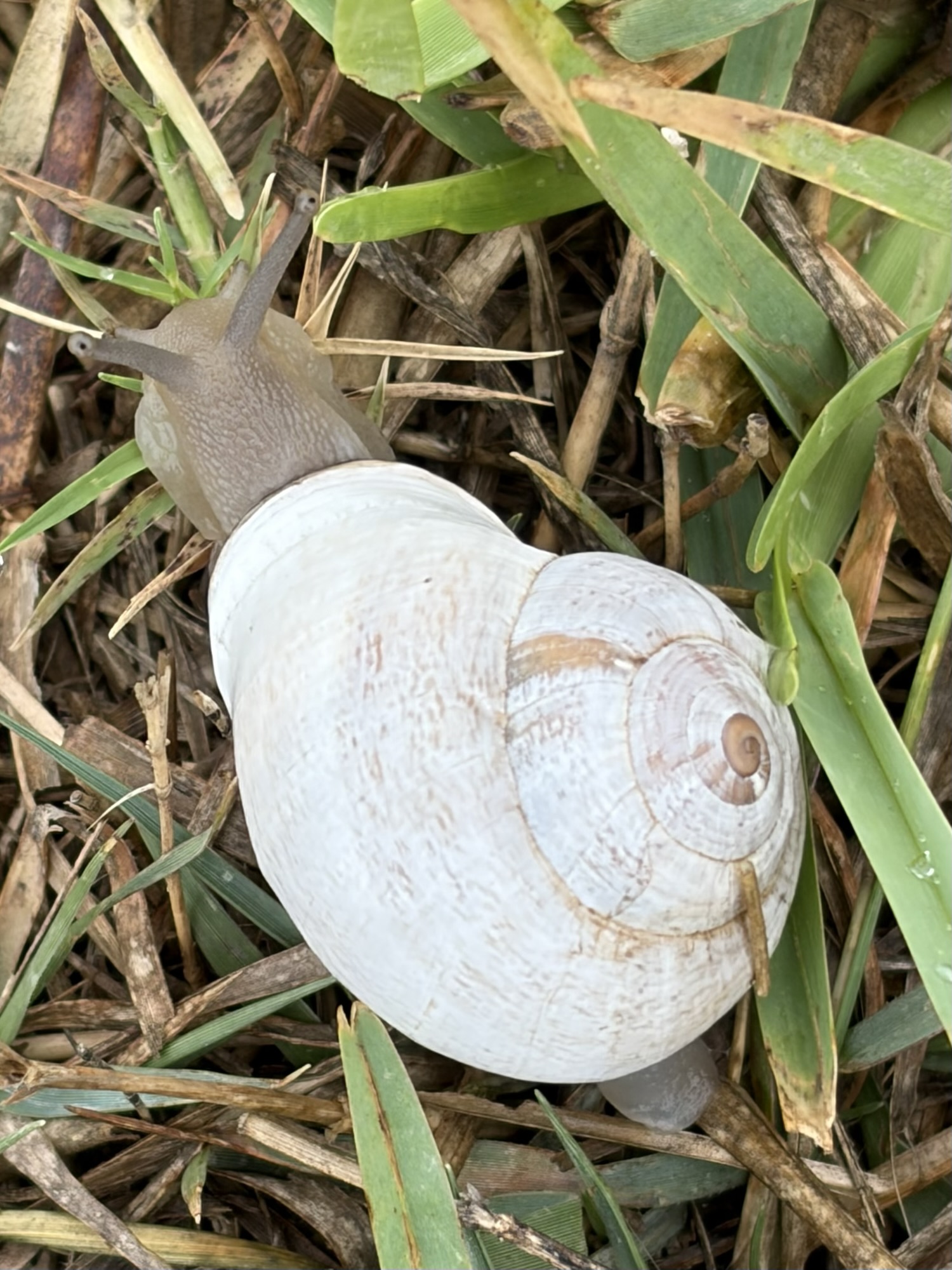
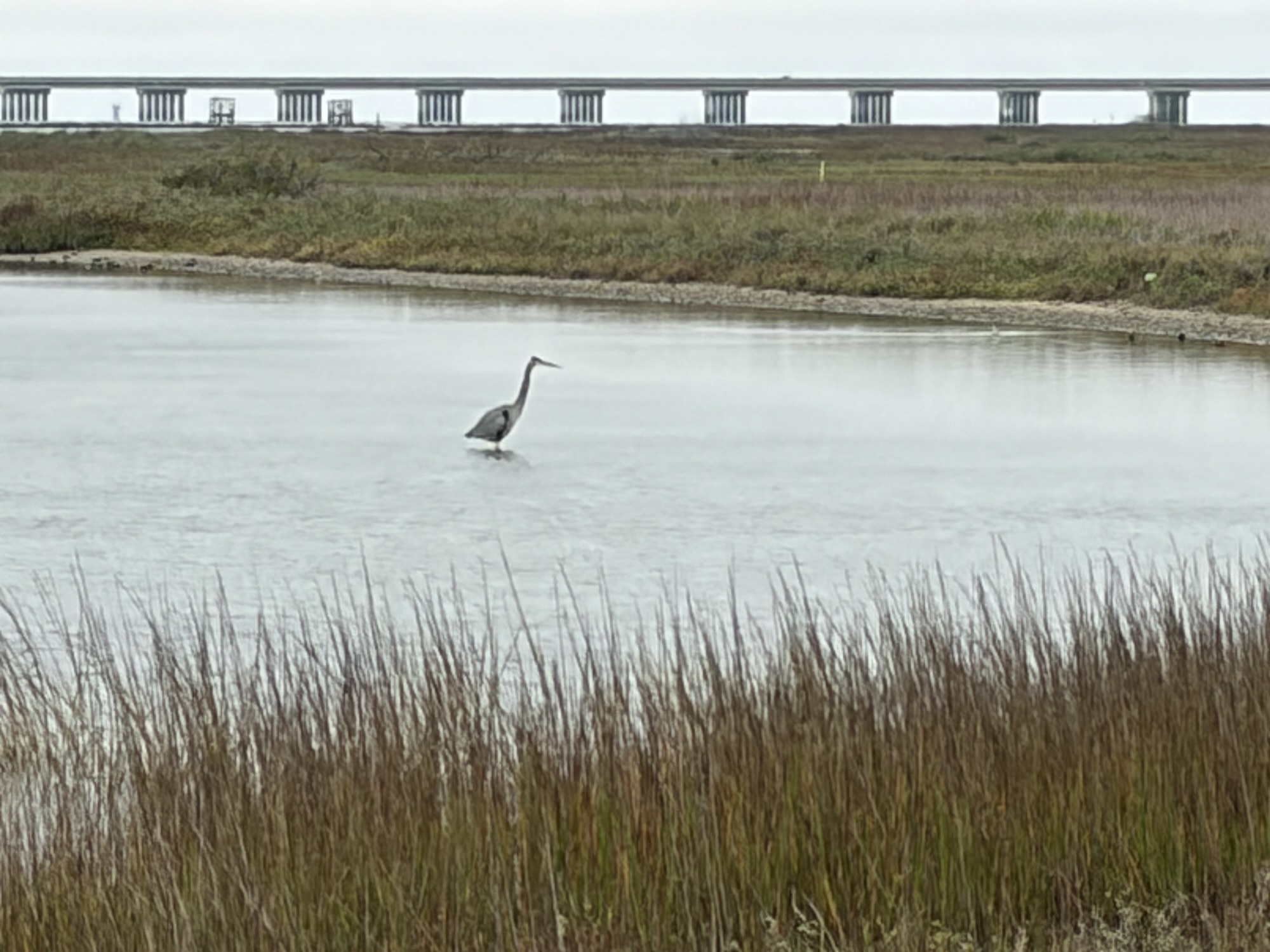
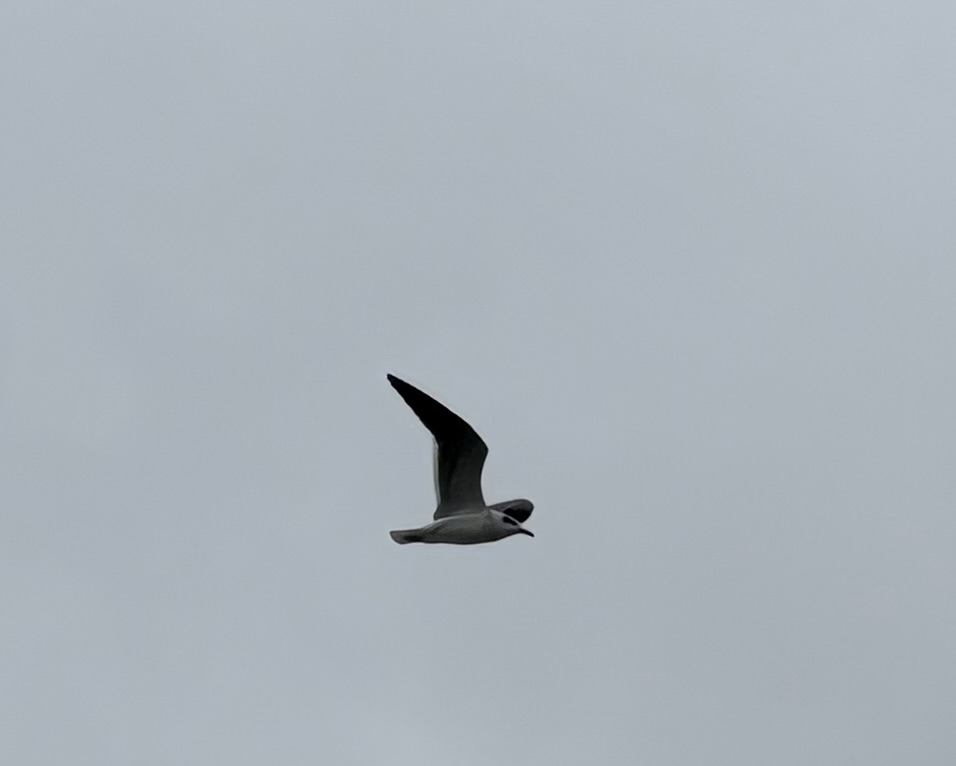
Redhead DucksSupervisor HeronMilk snailHappy Great BlueThe water is very clear — that’s seaweedGull, gull, gull
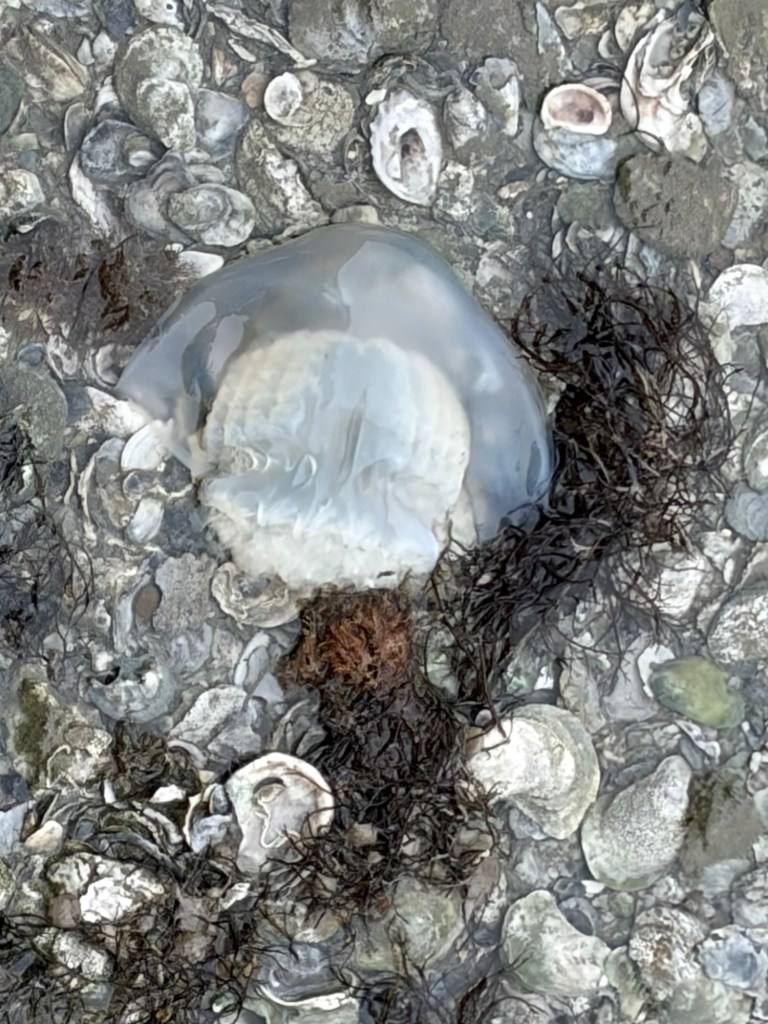
All sorts of fun birds were out, even a Palm Warbler and a very persistent Yellowthroat, so while I waited on IT to fix something at work, I went back to the pier. It was getting colder, but I enjoyed seeing some cannonball jellies, oystercatchers, very loud Caspian Terns, and so many loons. The highlight, though, was when I realized the slapping noises I heard were dozens of fish jumping out of the water! I’ve always enjoyed it since I was a kid watching mullets jump in the canals in South Florida.
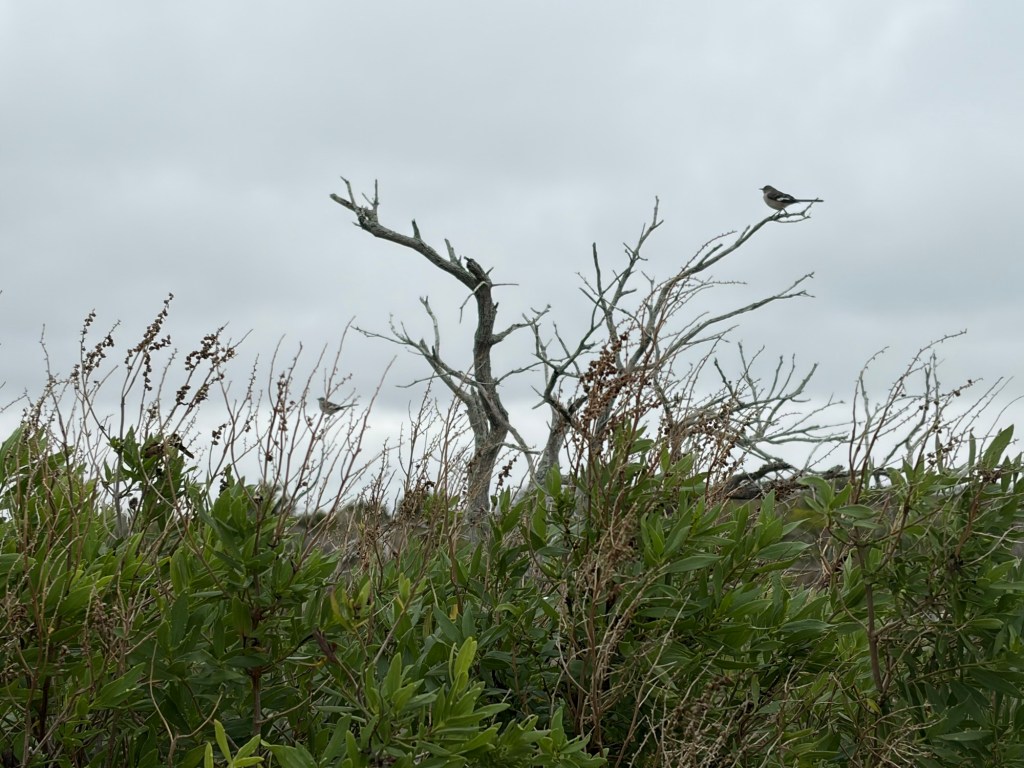
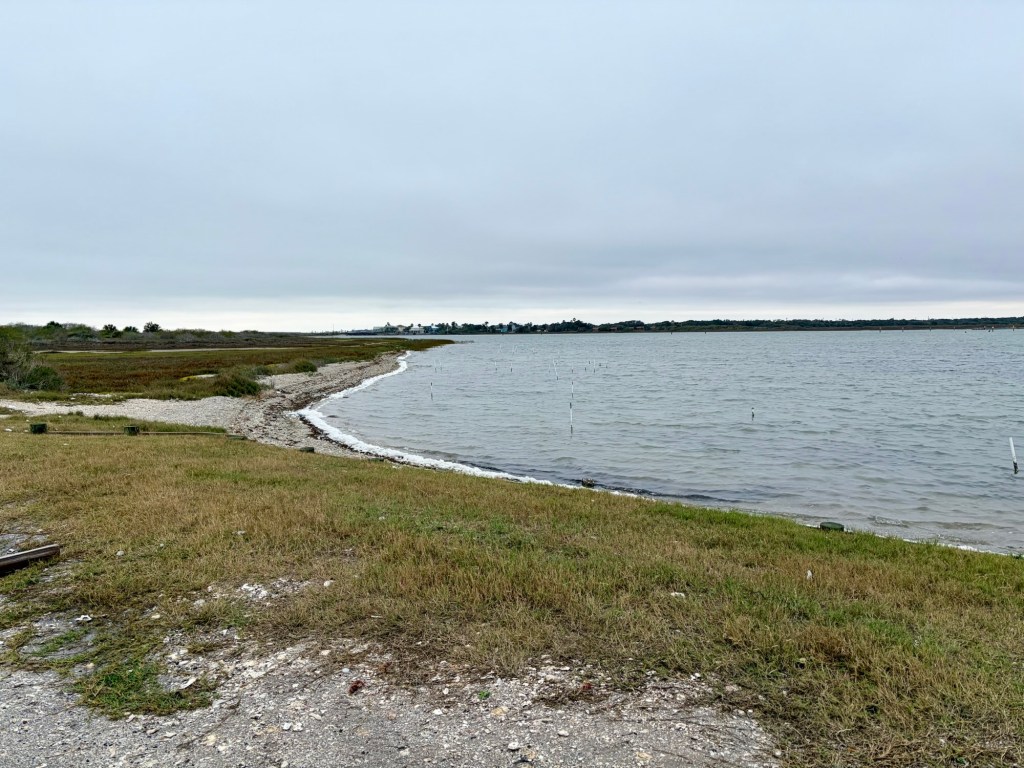
Mockingbirds scanning for mischief Jellyfish Loud-ass ternPretty oyster shoalCommon LoonLong-billed CurlewThe island from the roadThere are white poles marking where they are trying to encourage oysters to grow to stabilize the shore.
After I got some work done, we drove home with no major issues (hurray) in light rain. Ooh, on our way out of the park, a gorgeous fox crossed the road in front of us, turned to look for a few seconds, then quietly disappeared into the brush. What a great farewell!
No photo, so here’s a Mockingbird
I had time once we got home to do my beginning-of-the-month tasks, like tallying the birds at the ranch for November. We had 110 species, which I find pretty darned impressive. I’ve slowed down with new species, which was only one. Of course, my mind is a blank…but you can see the list right here.
The dogs were happy to see us!
I still have to tally up the bird sanctuary list, which I hope to do tomorrow or at least later this week. I did bring the porch plants inside, just in case it freezes. Ah. It’s December!
Last night the wind blew so hard that I felt like I was on a boat again, but this time the boat was in a major squall—not a typhoon but pretty bad.
Not this boat. It just woke me up.
Nonetheless, I got up early so I could go on a birding walk with a man named Kelly, who’s recently moved here in Rockport, who really knows his stuff. I was glad that Bernice, who works at the park office, mentioned it to me. But whoa, the temperature in the 50s, combined with cloudy skies and biting winds, made for mighty unpleasant circumstances.
I’m as cold as I look, and glad for the borrowed hat.
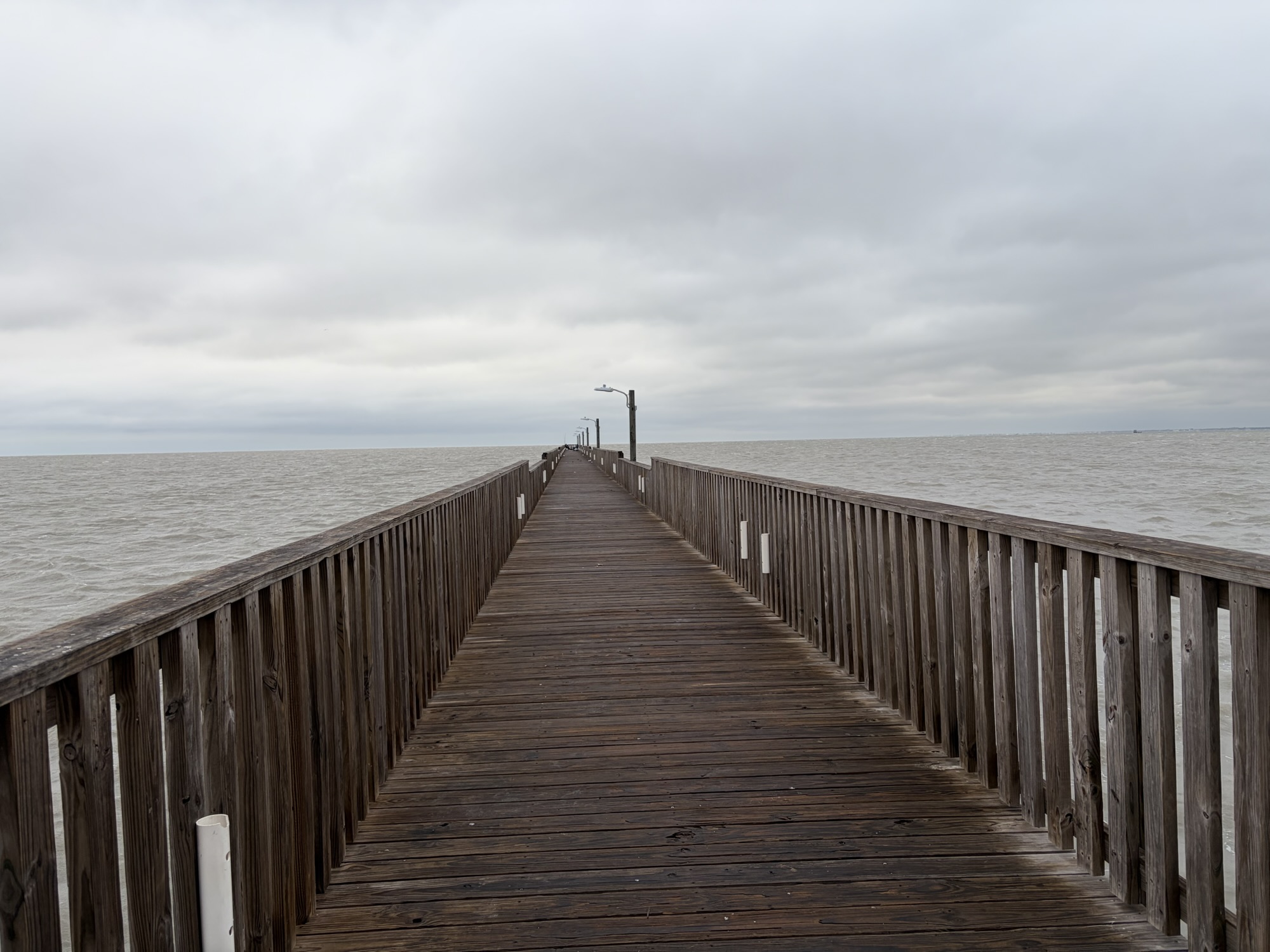
We started out on the big pier near our site, where nothing blocked the wind. I was glad for the railings and that I didn’t bring the big camera! We did see some interesting birds, though it was hard to see them well due to shaking hands holding the binoculars.
My only two pier photos.
Mercifully, Kelly took us away and we went to the jetty I visited yesterday, when it was balmy at just slightly cloudy. There were some gorgeous Roseate Spoonbills flying around, and I have to tell you all that pinkness flying around with the dark gray background was striking, even in the wind. I was too cold to take pictures, so use your imagination.
Redhead Ducks (and others)Long-billed DowitchersShore birdsGreat EgretCommon LoonsThe only photos. My shaky hands could take.
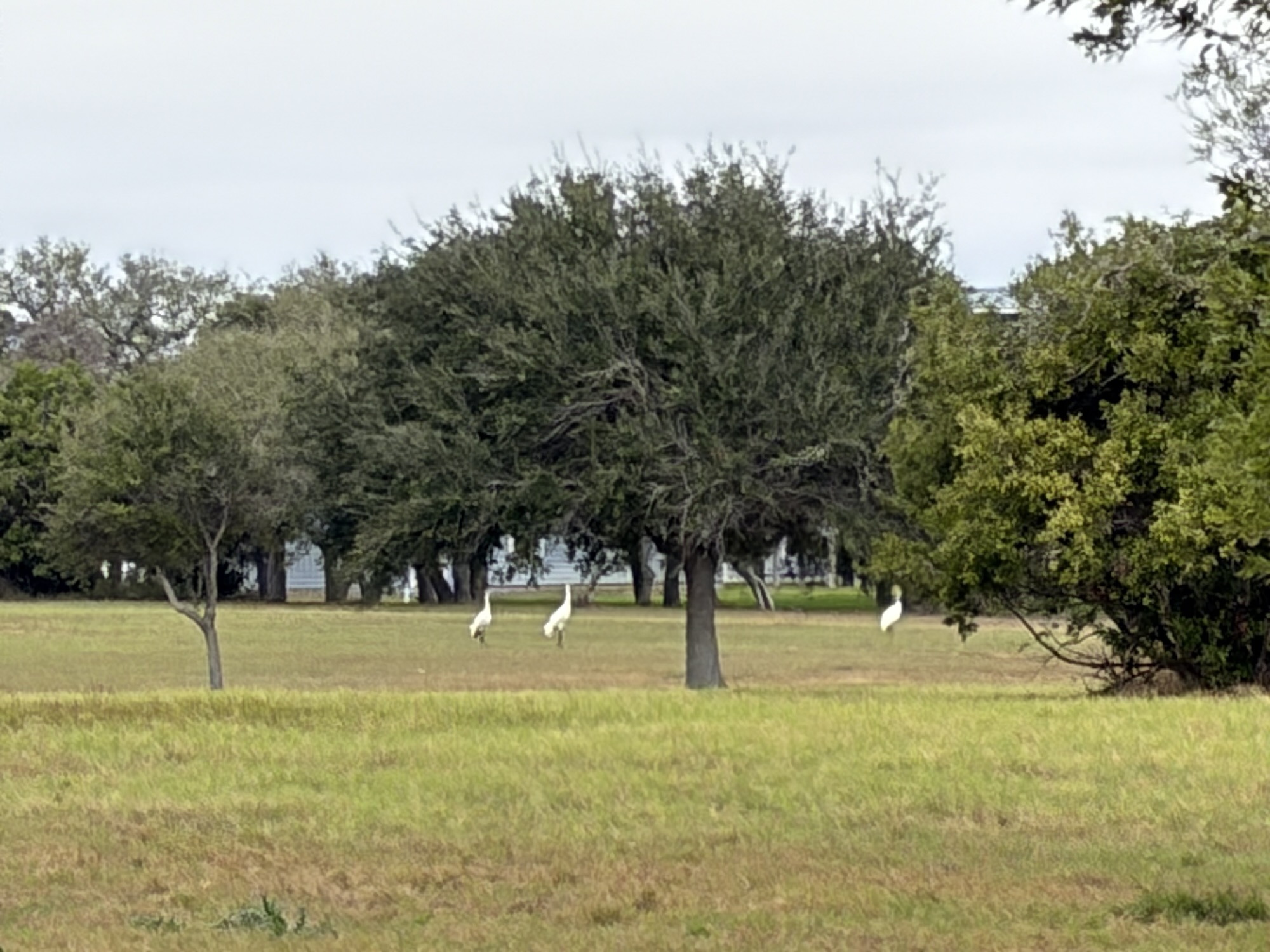
We then caravanned back over to the Whooping Cranes, where Bernice and I got to see some flying overhead and whooping! We were like two little kids in our excitement! We no longer cared about the cold and were very happy to share our joy with others who were there. The birders here are very collegial.
Flying Whooping CranesStanding Whooping Cranes
While that was all fun, I had gotten a chill and didn’t get myself warm, despite tea and a warm meal, until I’d had a little nap in bed. Yow. Still, I dragged myself back outside in the afternoon, and went on a walk around the trail in the other part of Goose Island State Park.
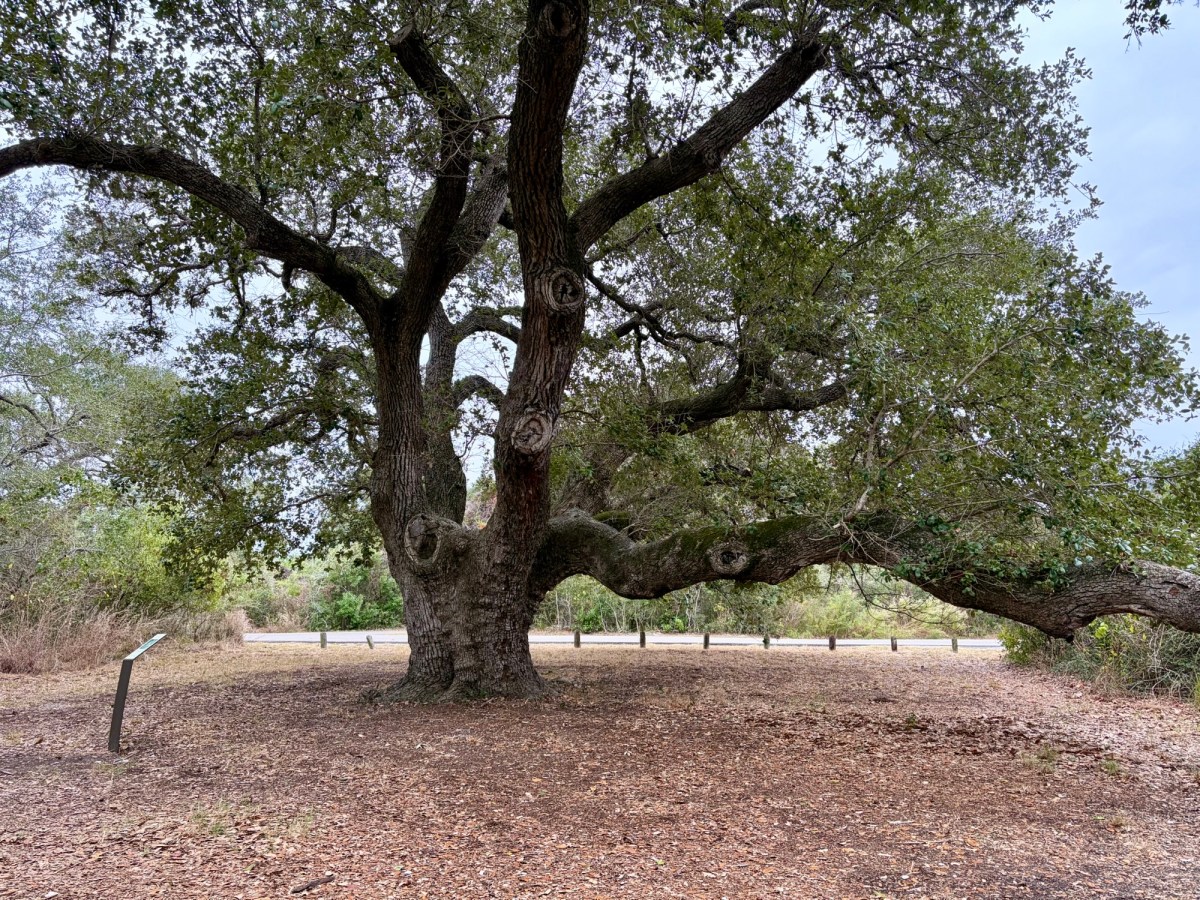
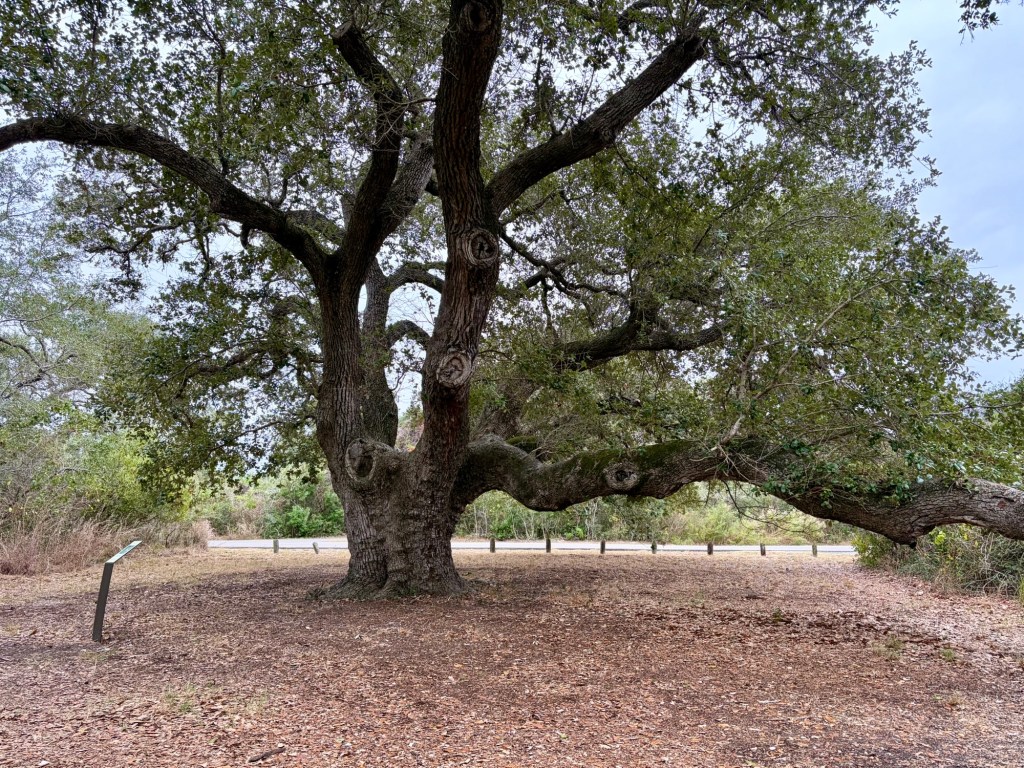
The largest oak tree in the park
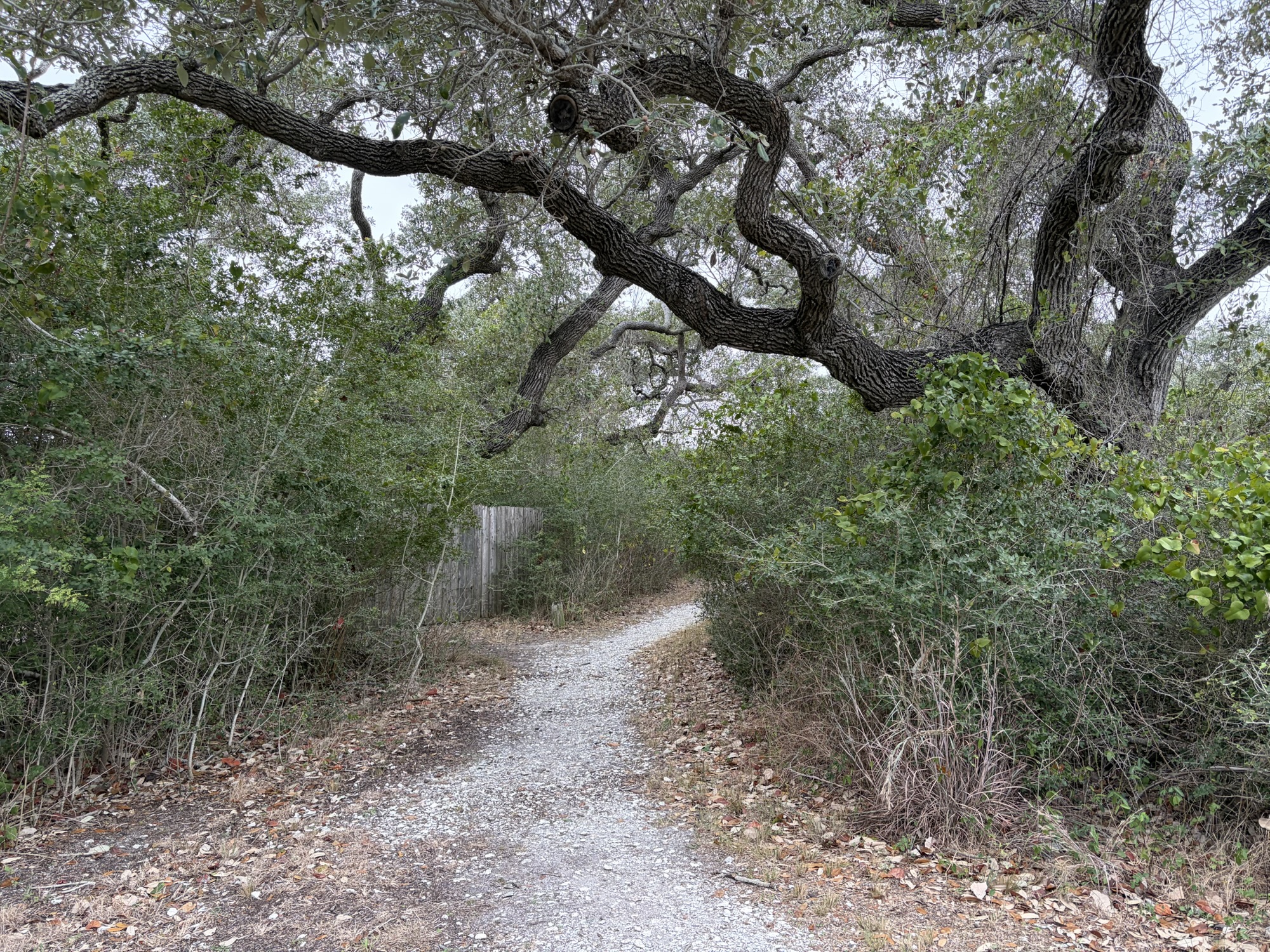
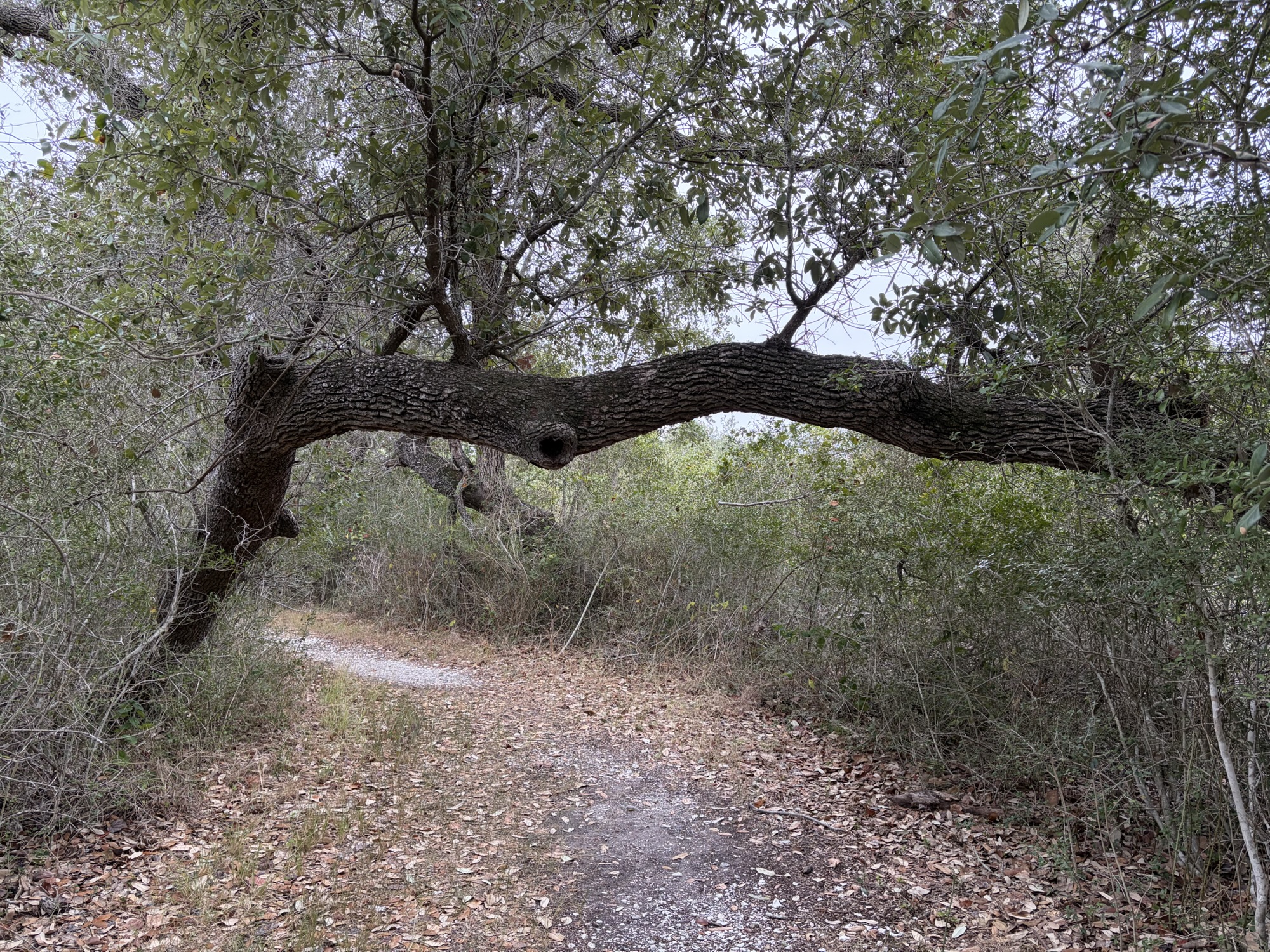
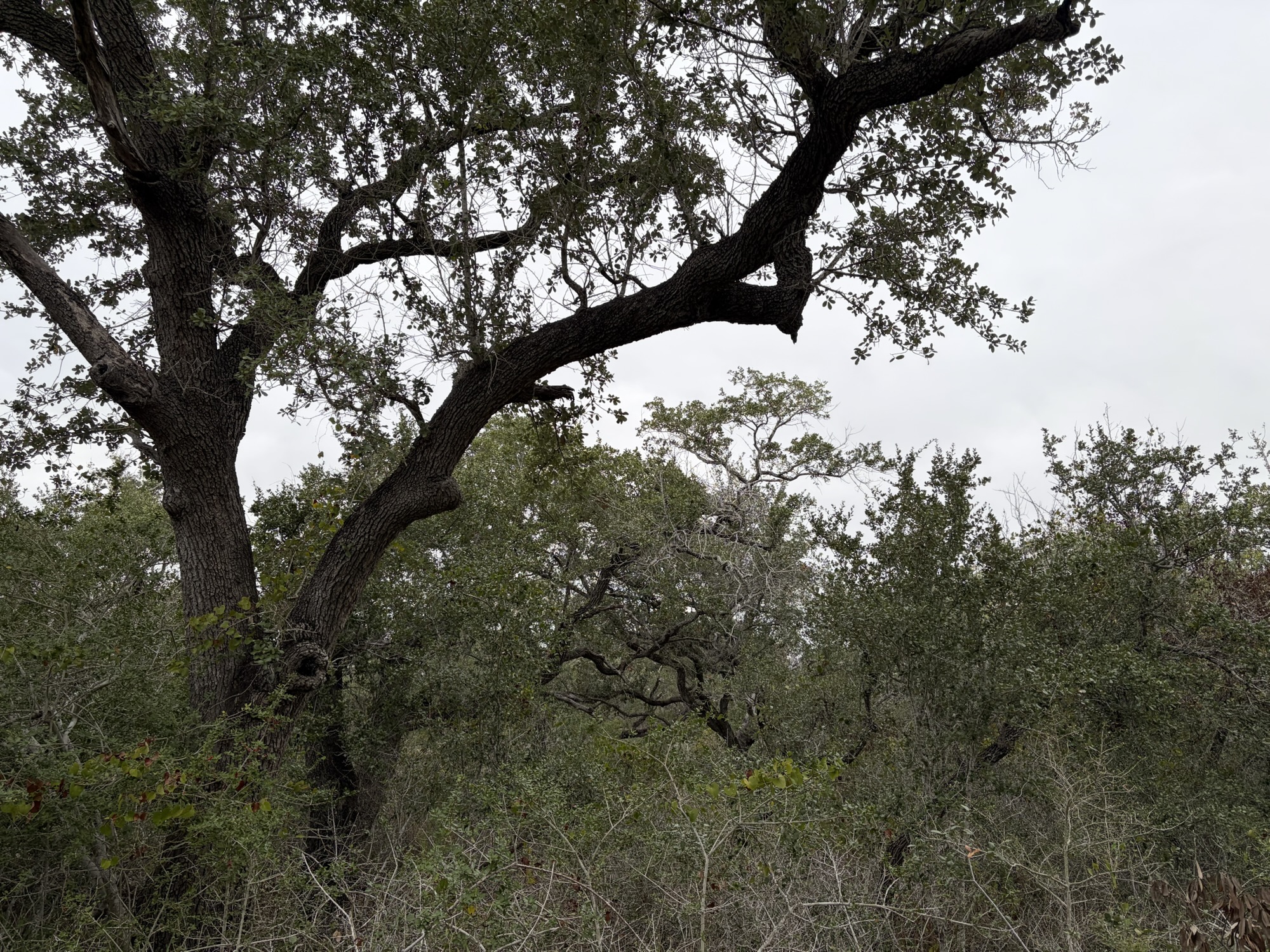
Ooh, they have nice, large campsites with large trees in that part of the park. I enjoyed a relatively wind-free stroll through a coastal oak woodland full of beautiful understory plants like sweet bay, wax myrtle, and beautyberry. I felt a lot better when I got back to the motorhome.
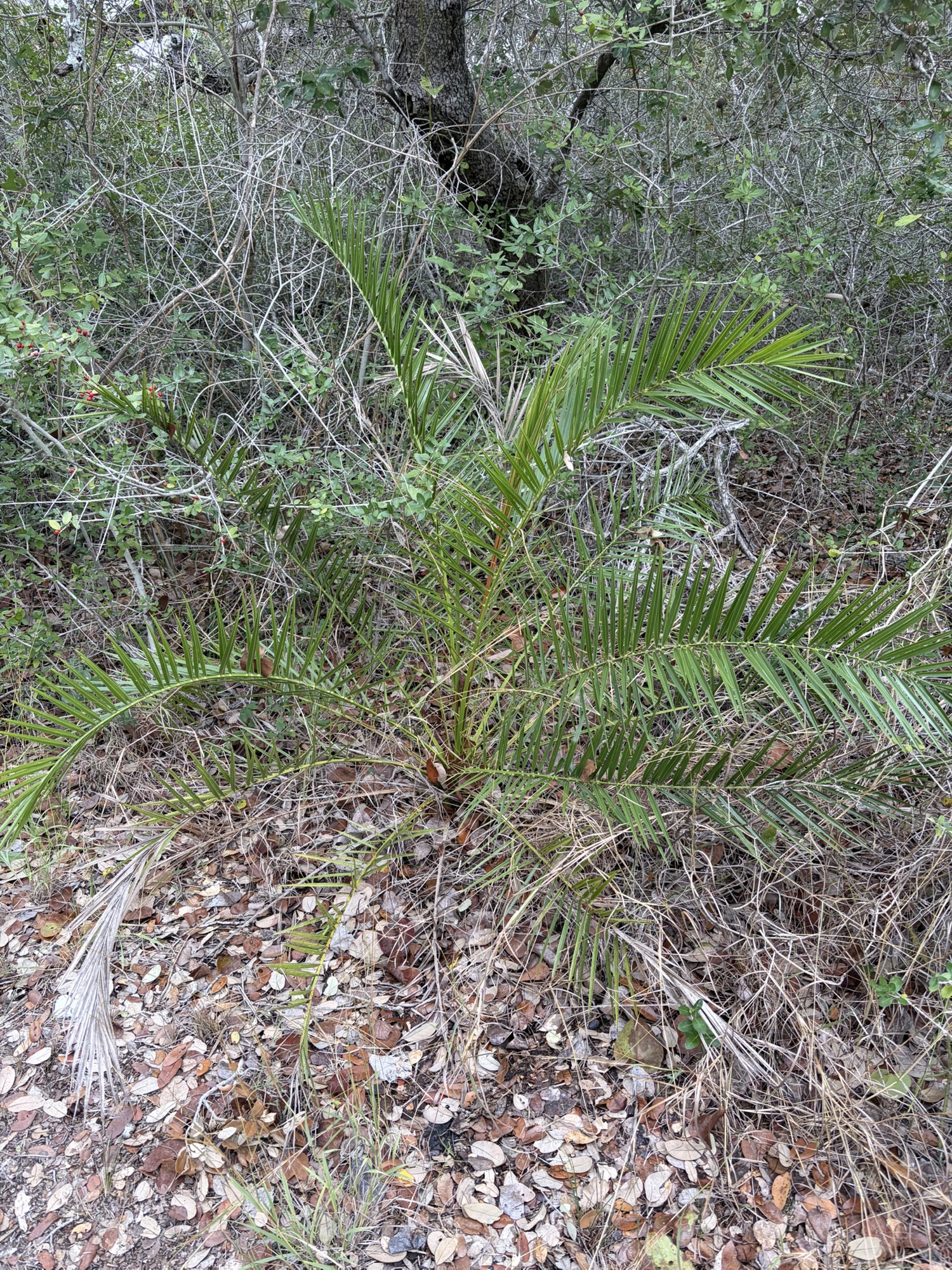
Many beautiful oaks on the pathsCoralbeanSweet baySome kind of palm White top sedgePartridge peaYaupon holly Lovely meadowsTurkscap trail
I didn’t get to do everything I wanted to on this trip, so we will be back. I really like it here. At least there are birders in enough numbers to balance out the air boaters and duck hunters. And seafood!
So pretty.
We waited to leave until tomorrow to avoid traffic today. I’ll figure out how get some work in tomorrow. There will be lots of time before we leave.
Yesterday was a lot of fun,but it tired me out so I fell asleep and didn’t have a chance to blog. Sorry about that. I also took hundreds and hundreds of pictures. It seems I will only share a few.
Lee took this with the Canon EOS Rebel T7 and the macro lens.
In the morning I walked over to the jetty near where we are staying at Goose Island State Park. There I was delighted to see many different kinds of birds, especially herons and egrets. I enjoyed watching a tricolored heron and a snowy egret having a little battle over some kind of morsel. Those are some beautiful birds.
Snowy Egret and Tricolored Heron
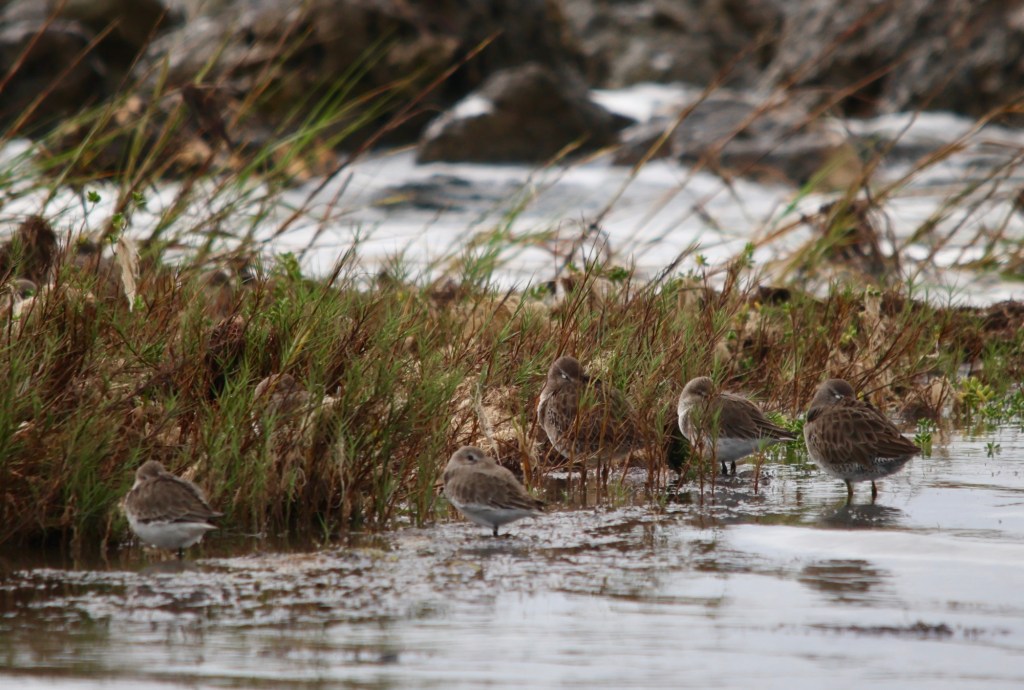
One of the cutest sights I saw was a little group of Dunlins, which are shorebirds and a new lifer for me! They were all huddled together with their little heads tucked under their wings like they were trying to get a nap in before something was supposed to happen. I did finally get one picture of one of them with its head up and it’s such a beautiful little round brown birds. Of course, there were others, too. Check it out!
Dunlin! Long-billed DowitcherShy birds Front is a Red Skimmer, back black ones are Oystercatchers Oystercatchers and Laughing GullsRuddy TurnstoneSameTurnstone flyingAmerican White Pelicans
Over in the marshy area there were many egrets. I saw a beautiful little blue heron, many great egrets and a ruffly looking great blue heron.
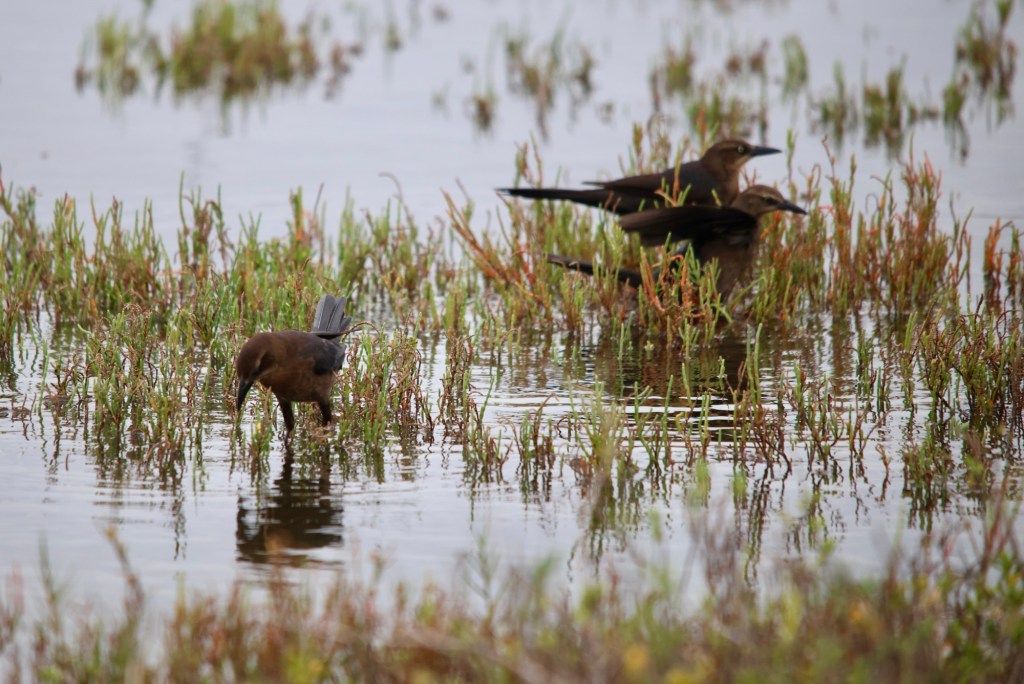
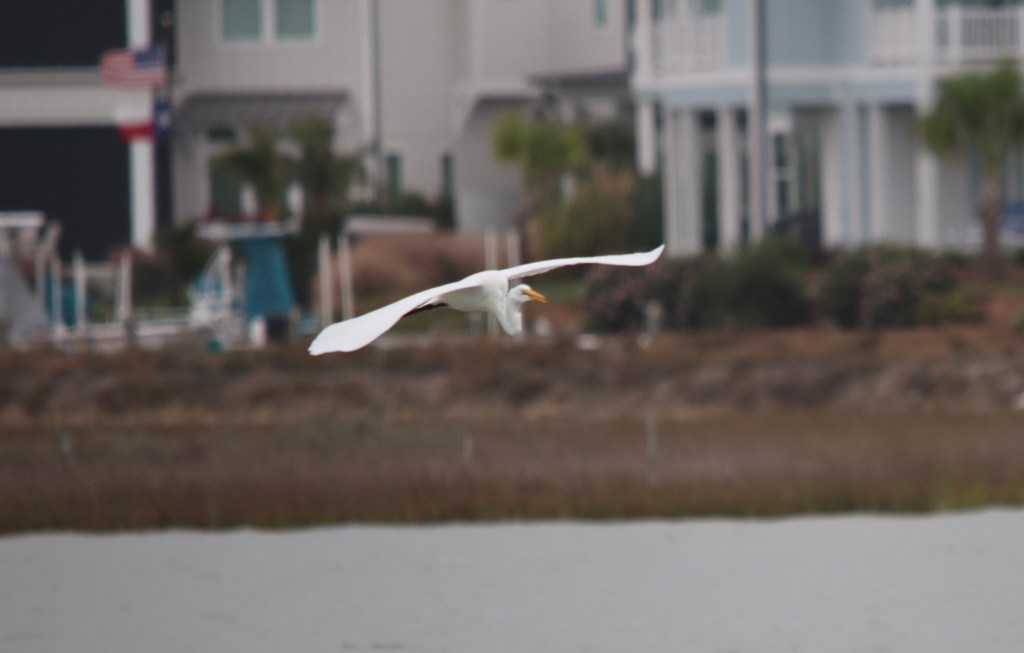
Little Blue HeronTricolored HeronGreat EgretGreat Blue HeronGracklesFlying egret
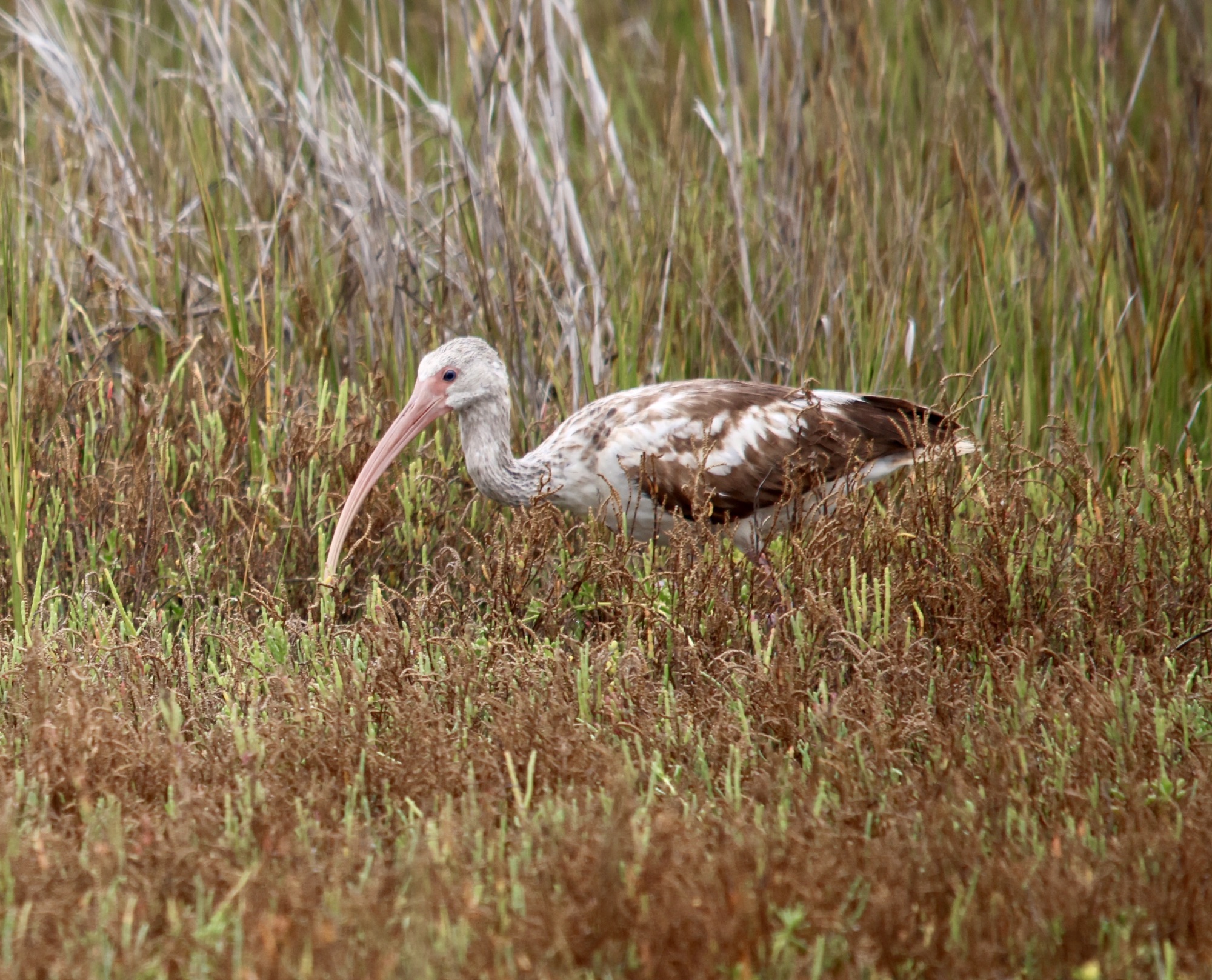
There were also ibises. There were a number of white ibises, but the most amazing part were the juvenile White Ibises, which are gorgeous brown and white little speckled birds. Well they’re actually big birds. I really like some of the pictures I got of themwith the brownish foliage all around them, I think that’s very artistic.
White Ibises—the brown one is young
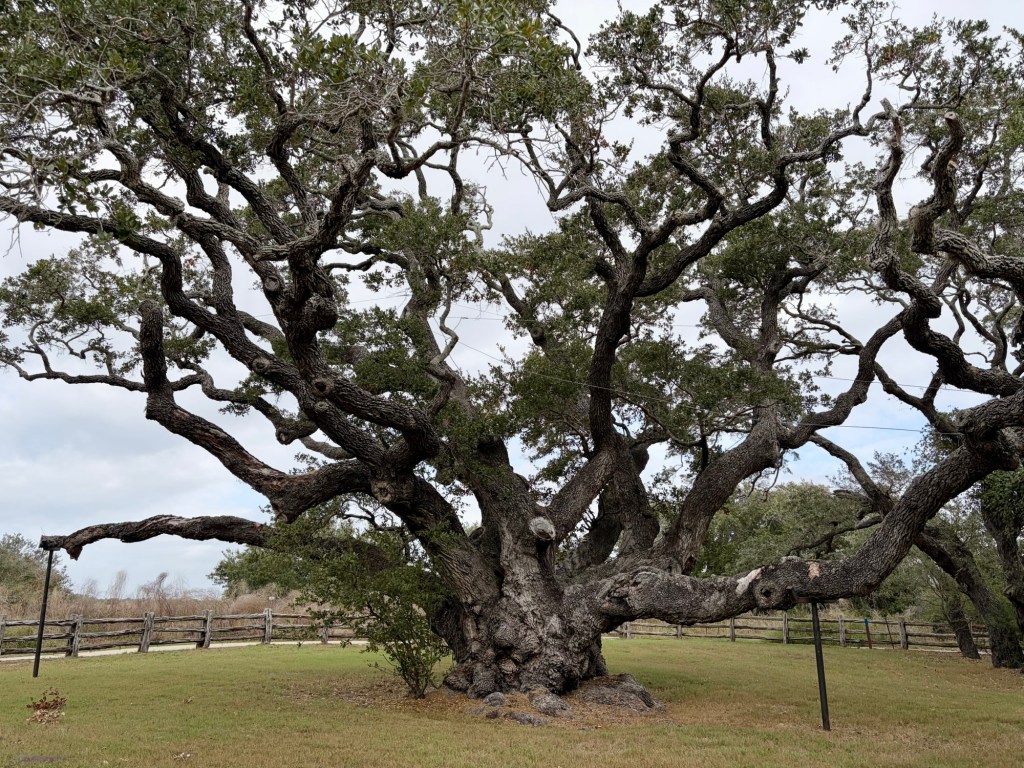
Later in the day, Lee and I got in the Jeep and drove around to find more birds. The first place we went was the famous big tree that is part of this park.
It’s still big
We weren’t there very long however because Park staff told us that there were a whole lot of whipping cranes and sandhill cranes together right around the corner so we sort of flew off to go see those running right past my friend, Cindy and her husband. Oops.
I was watching you like a hawk, says the Osprey.
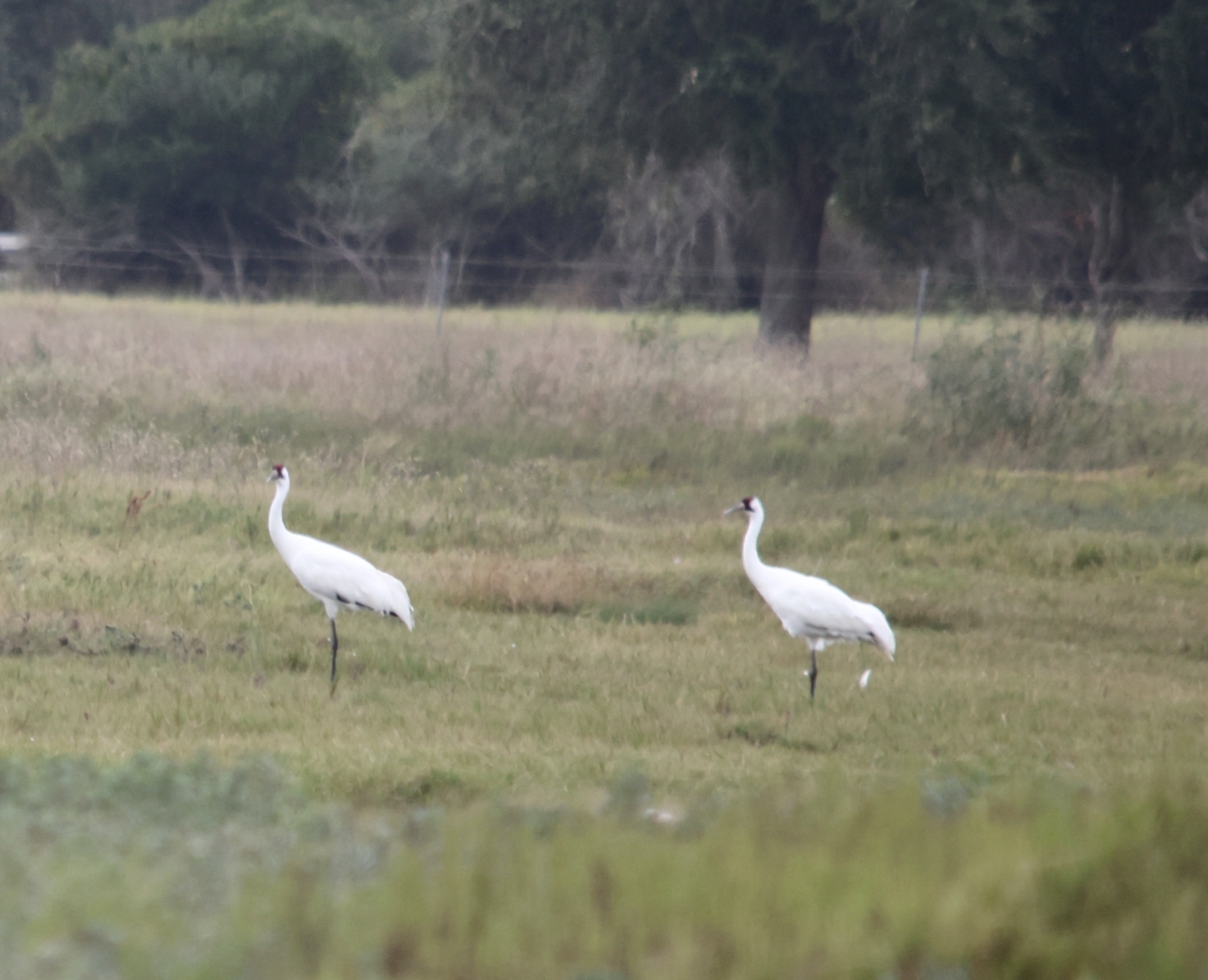
The cranes were beautiful as always, and it was very nice to see the sandhill cranes right next to the whooping cranes to compare their size and coloring. It makes it a lot easier to remember, which is which.
Sandhill at left, Whooper at rightyWhooping CranesSandhill Cranes callingIn flightIt’s always a thrill to see cranes up close.
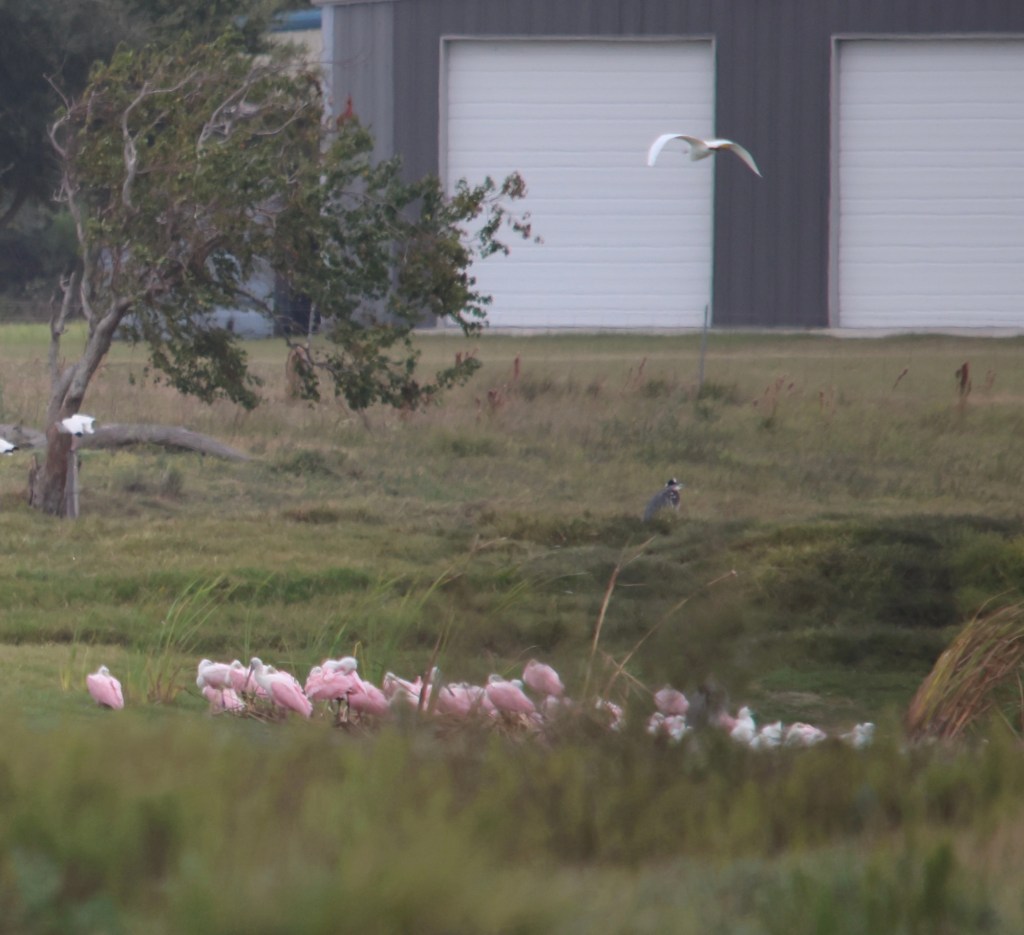
They were joined by some lovely Roseate Spoonbills, and you can’t complain about pink birds ever. We met and talked to a few people and enjoyed that as well and took some pictures of extremely friendly seagulls.
Roseate Spoonbills There are a few Ibises hiding in there. With cranesZoomFriendly Laughing Gull
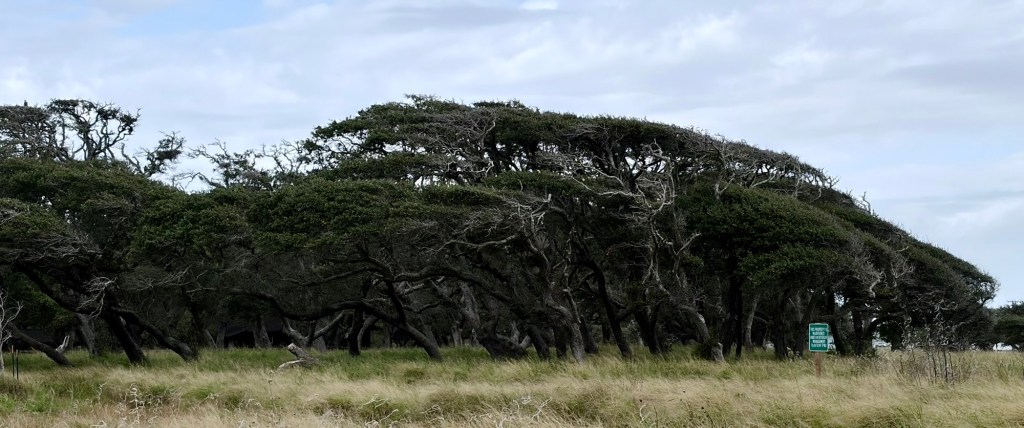
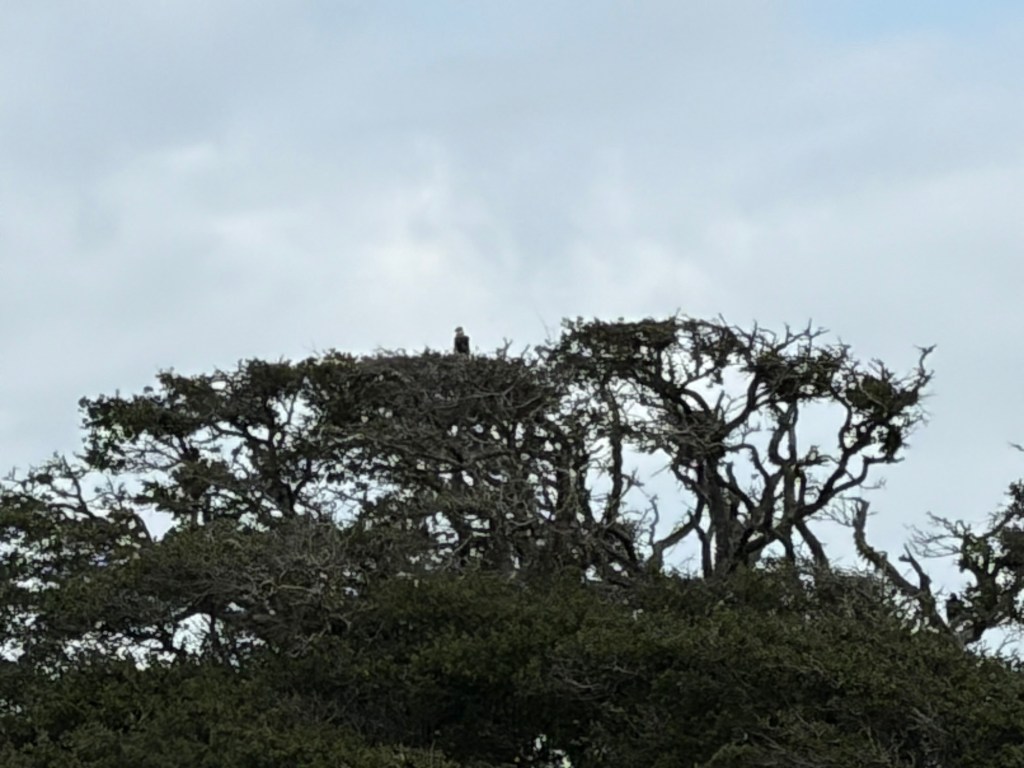
After that, we made a fruitless trip over to where the great blue heron rookery is forgetting the fact that it is not great blue Heron breeding season so there weren’t any great blue Heron there I did see a Caracara, Osprey, and some other birds. Of course, the trees are still beautiful, so it wasn’t a waste of time.
The CaracaraOsprey
We drove down the road a little bit and found a very nice place called the Linda S.Castro Nature Sanctuary, where there were so many butterflies. It was rivaling the national butterflies center. I’m not kidding. We found a lot of butterflies mostly Gulf Fritillaries and southern whites. (Golf rivalries, golf ferries, golf fiddle Aries—I would like to point out that the dictation software does not understand “Gulf Fritillaries).
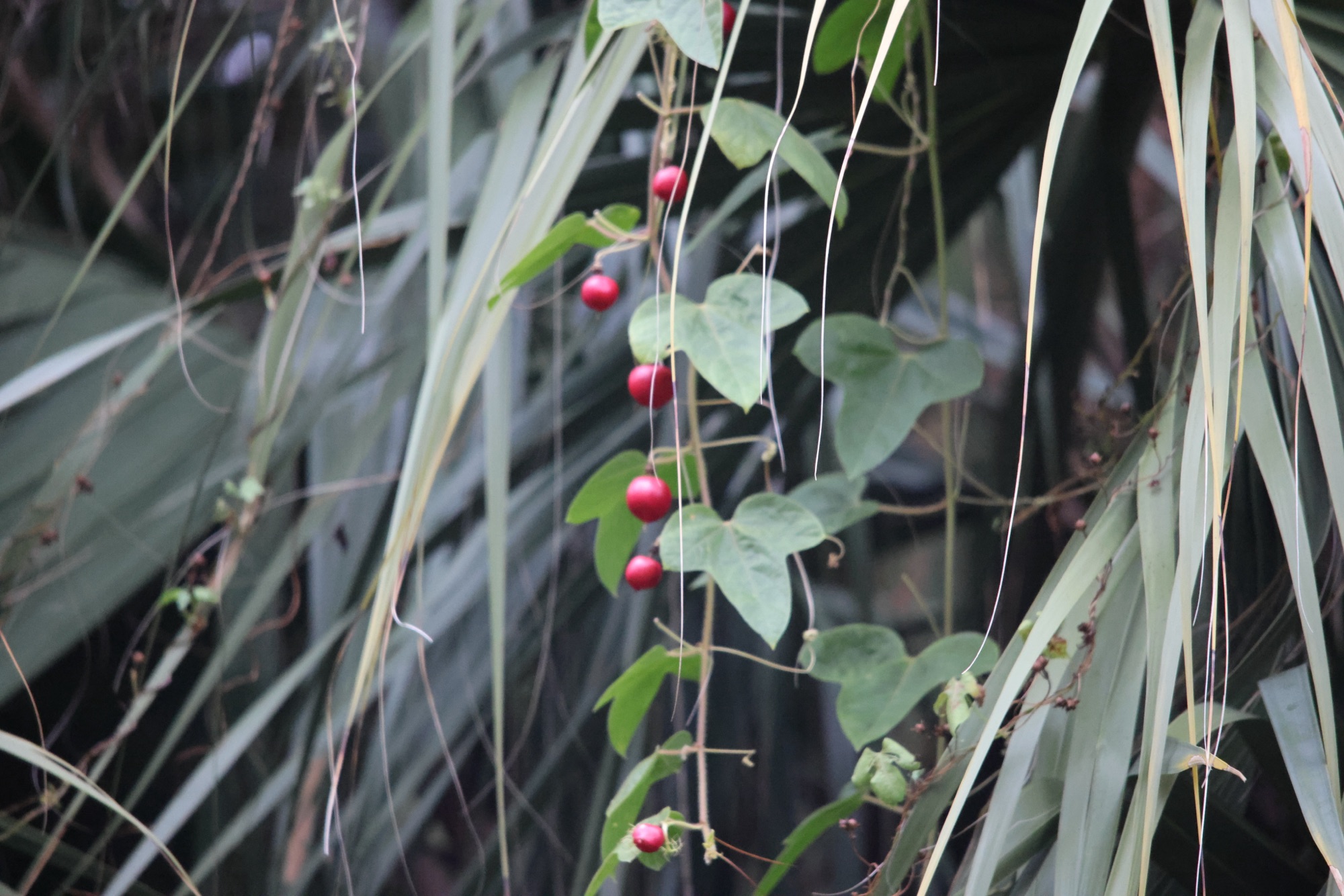
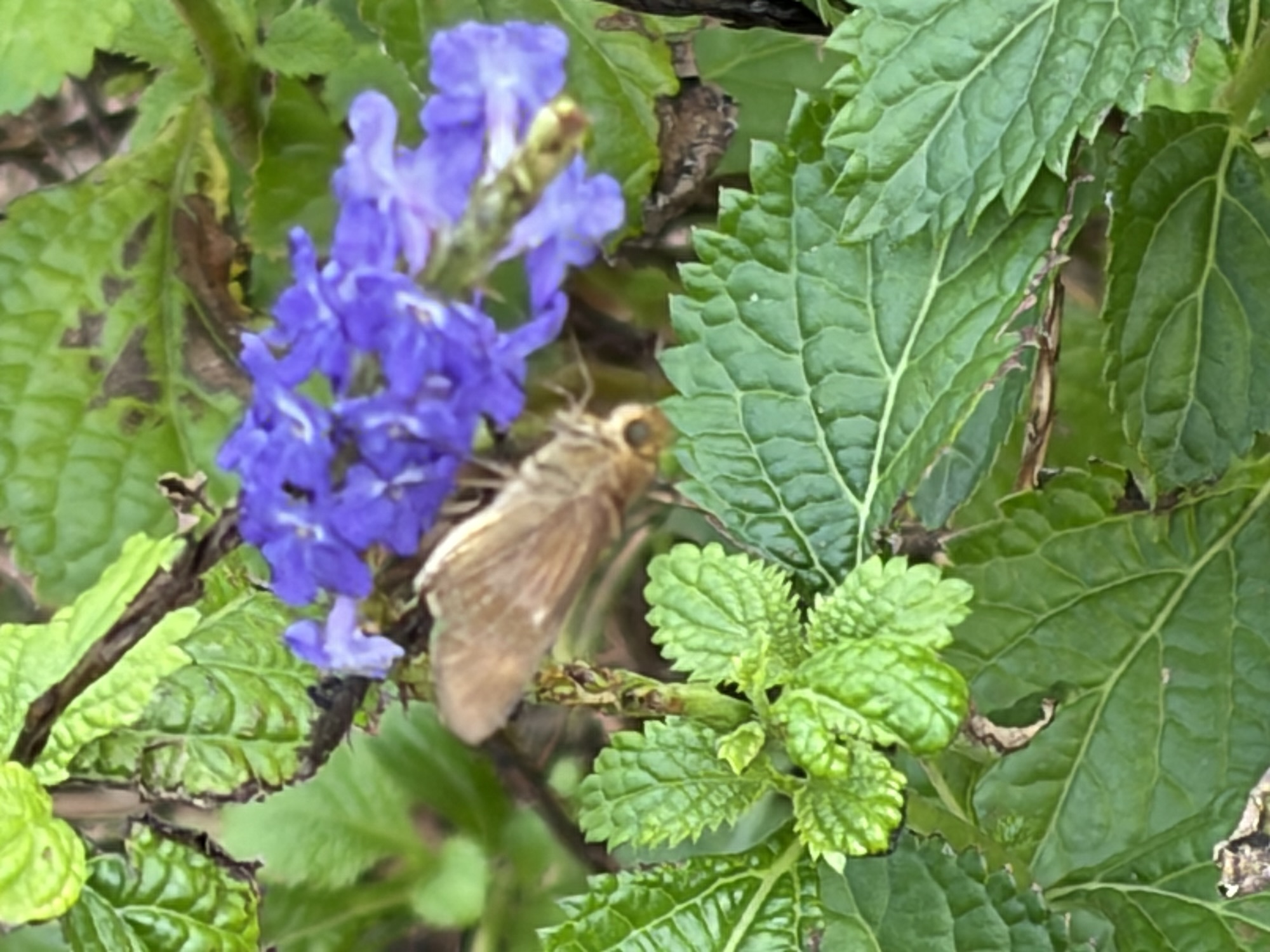
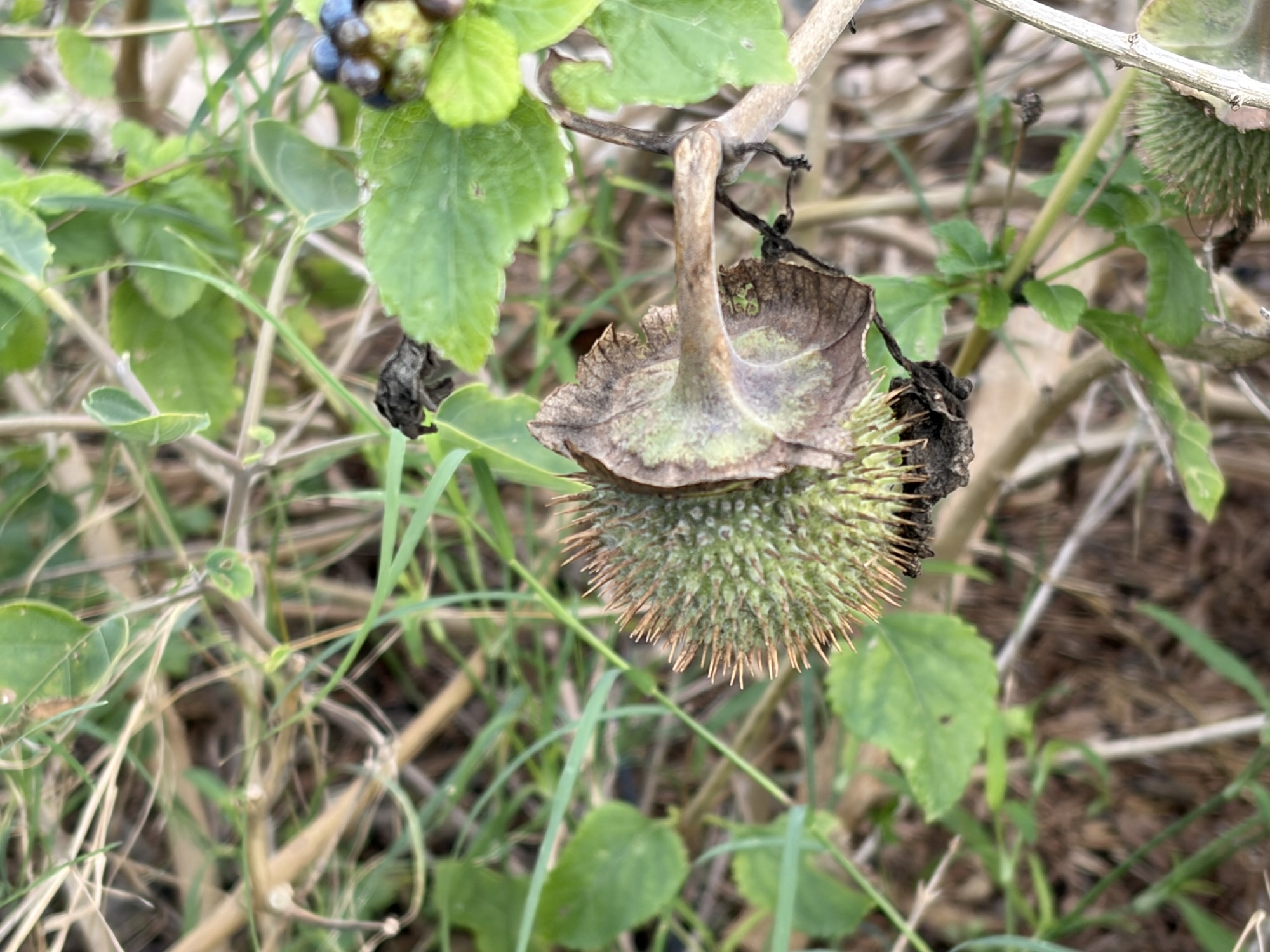
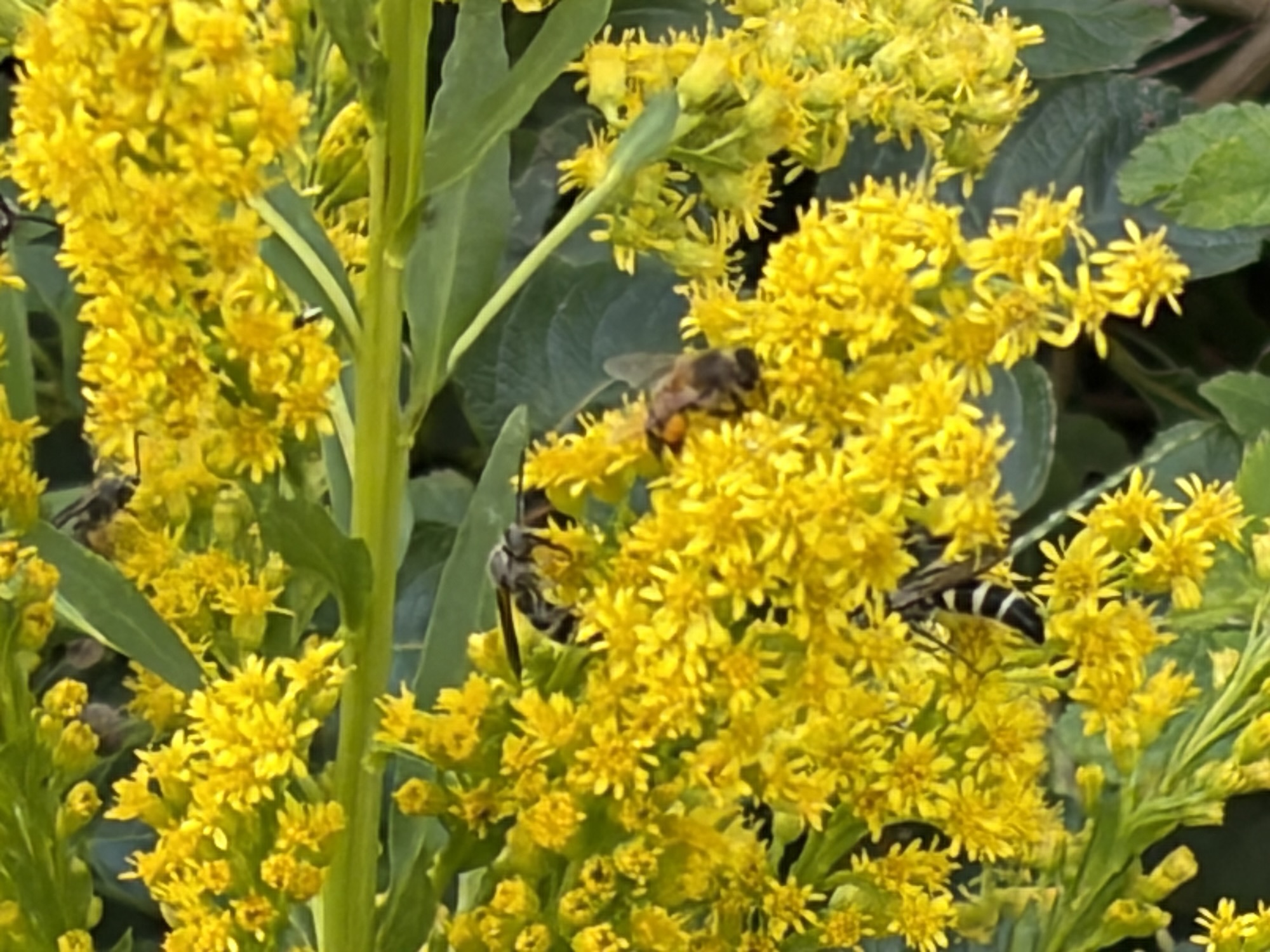
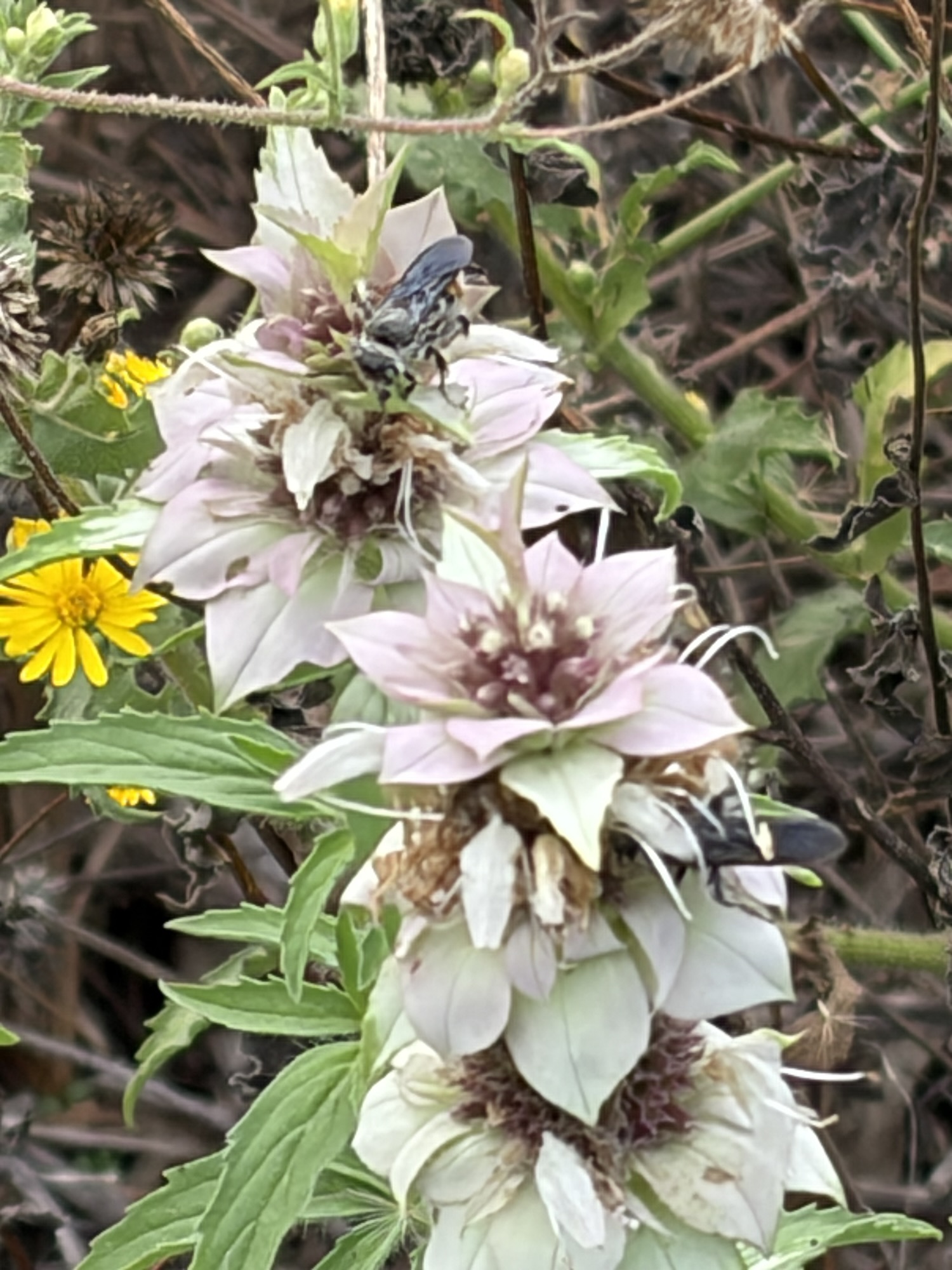
This is cool. The fruit of the scarletfruit passionflowerThere were many of these scoliid wasps. SkipperGulf fritillary Datura seed podFiery skipperGoldenrod and waspsSouthern White. Leaf-footed bugScoliid waspBee balm and waspsA different scoliid wasp!BuckeyeIndian blanketYaupon hollyLee’s artistic closeupsDog fennelSpiny colacanthaQueen
There were lots of paths through some beautiful native plants and we got some good pictures of the scenery around that sanctuary. The people who made it did a very good job and it’s quite a nice place to go. I recommend it to anyone even though it’s sort of hiding we met a nice couple (the guy is a Master Naturalist) there and talked to them about different places to go and look at birds and plants and I think they’re gonna have a good time, the rest of their visit. Everyone is so dang friendly here.
Scenery at the preserve
We then headed over to one final place which is the thule sanctuary. I went there before with Linda Jo and Ann and it was a nice place to walk around though. There weren’t very many birds. I got a lot of plant photos and Lee got some very good ones using the macro lens.
YauponNot sureMaritime or brushy bluestemCattailBladderpod Tule Marsh East, Rockport, TX
By that time, we were tired of walking around and looking at birds and plants so we went to find some food. after all it was our anniversary and we needed a nice anniversary dinner. We found a nice place on a bay next to a harbor we sat outside to eat and got to watch many, many birds while we were waiting for our food, including belted kingfishers, ospreys, and many terns and gulls. I got to eat oysters and fish, and Lee enjoyed his bacon-wrapped shrimp.
That’s a cucumber margarita. I liked it!
It was a successful day of fairly good weather and lots of fun. Happy 17th anniversary to us!





































































 The Hermits' Rest