Book Report: Bunny Bunny

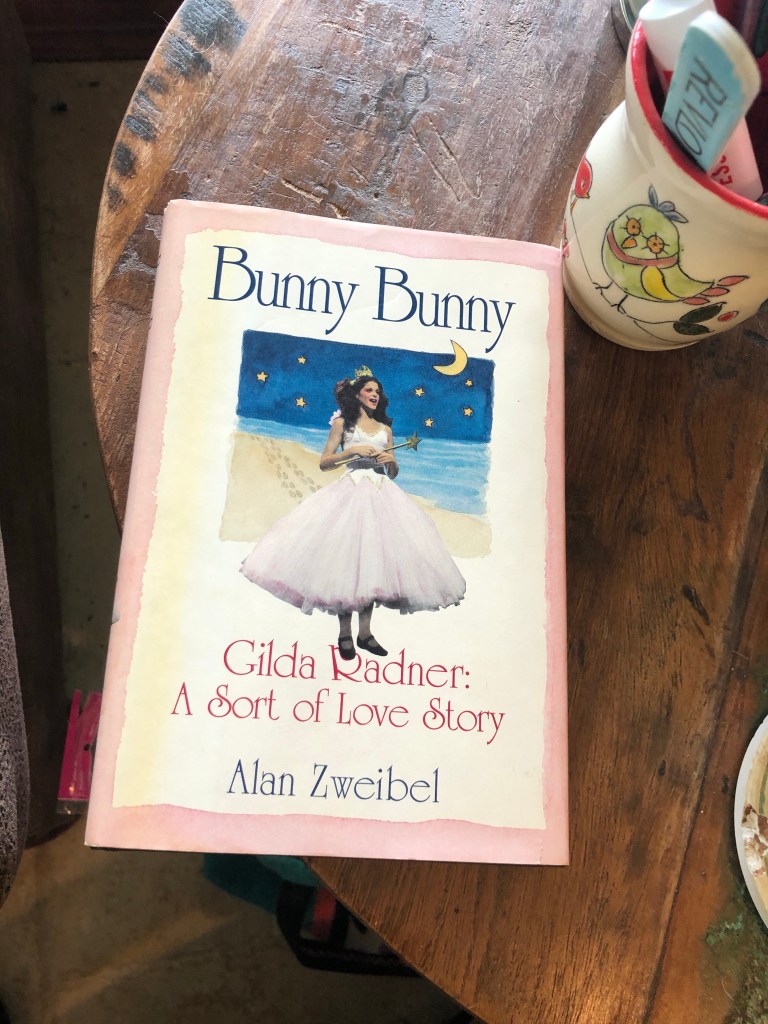
This book is a follow-up to the memoir of Alan Zweibel that I posted last week. In that book, Zweibel talked about a little book he wrote about his late best friend, Gilda Radner, who died of ovarian cancer at a very young age. He said the whole book was dialog that just came to him after she passed away. I was interested.

The cover was put together by Zweibel’s wife and an artist they commissioned for the painting.

So, I set out to get a copy. That was harder than it might have been, because Bunny Bunny: Gilda Radner: A Sort of Love Story (a book with TWO colons) is out of print, having passed its prime in 1994, I guess. Luckily I selected a reputable vendor of used books and got a copy in pretty good shape for just $7.

Once again. Zweibel made me laugh a lot, but I was also touched by the little stories he chose to tell. It’s a wonderful tribute to an amazing friendship. I had to read some passages aloud to the family, so they could enjoy them, too.

I got a real kick out of the illustrations, as well. They are simple line drawings by the artistically impaired author, but they are also really sweet and convey the essence of the stories perfectly.

Here, they have taken a taxi in New York City. I left in a snippet of dialog to show you the format.

So, I’m pretty sure none of you are going to go out and buy this book, but if you want to borrow it from me, see me after people can meet up more easily!

Mexican hats!

Enjoy some flowers. They’re left over from yesterday’s photo expedition.

Book Report: Leave Only Footprints

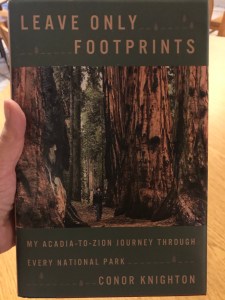
Tell ya what, this sheltering in place stuff has really helped me get a lot more books read. Last night I finished the latest of my series of “hot off the presses” books (the next few will be older books). Today’s recommended reading is Leave Only Footprints: My Acadia-to-Zion Journey through Every National Park, by Conor Knighton. When I saw this one in “new books,” it looked just right for a nature-lover like me, so I had to get it.

Look at those big trees!

The book is written by Conor Knighton, who wrote it about a year-long contract he got from CBS television to visit all the US National Parks and report back. He had nothing to lose, thanks to just going through a bad breakup, so off he went, accompanied often by a Mexican-born photojournalist, Efrain Robles, whose perspective is often heard in the book as well.

Knighton was in his 30s during the journey, and I found it refreshing and a little off-putting at the same time to hear about what he saw from the perspective of a younger writer. I realized at some point that nearly all the nature books I’ve been reading have been by people at the ends of their careers who are sharing their vast knowledge of their topics. Here I got the perspective of someone looking at the National Parks with the fresh eyes of someone out to gain that knowledge. I really appreciate getting the chance to learn how Knighton and Robles experienced the parks, and to realize how different their experiences are from mine (there is so much about finding dates on Tinder in the book, which I realize I know nothing about).

There are some things about the book that you’d either like or get irritated by. One is how he presents the parks. Rather than go through his journey in the order he saw them, Knighton groups his encounters by themes. Thus, in one chapter he might talk about a park he visited in the summer and one he saw in the winter, or parks miles and miles away. I would have liked the organization better if his transitions weren’t so sudden. I also found some of the transitions somewhat awkward, like the editor told him he needed to put a transition sentence HERE and he did. On the other hand, talking about parks with volcanoes all at the same time makes sense, as do a lot of the other groupings.

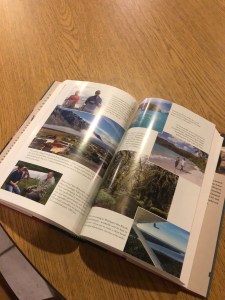
There are photos from almost all the parks Knighton visited. It’s a nice variety of scenery and people pictures.

Another thing I didn’t like was that for some of the parks I really didn’t get much of a sense about what they were like. Occasionally we get more of “how Conor was feeling that day” than what the park was like. But, the poor guy was going through a lot, so I don’t blame him for reflecting.

Some of the most interesting parts of the book were the encounters with Park Rangers, people in the towns near (or in) parks, and people from so many different cultures that are part of the greater US. I loved learning about the people in Alaska, New Guinea, the Virgin Islands, etc., as well as the perspective of black park employees and full-time RV-ers. I guess I’m a sucker for learning about what makes people tick, and I got a lot of new information in Leave Only Footprints.

Of course, Knighton also shares the history of the National Park movement and those who inspired it. You can’t help but enjoy a good John Muir quote or two.

If you are itching to go somewhere, anywhere, right about now, you’ll get a lot of vicarious travel out of this book, and you’re guaranteed to learn a great deal about the amazing variety of landscapes and seascapes in the USA. You’ll want to go visit a park as soon as you can…and the good news is that many other countries also are a part of the National Park movement, so you can go wherever you live!

Anyone want to share their favorite National Park experiences? I’d like to hear them. I haven’t been to many, but I was glad to hear that White Sands National Monument in New Mexico, which I have visited more than once, became a National Park in 2019!

Book Report: Laugh Lines

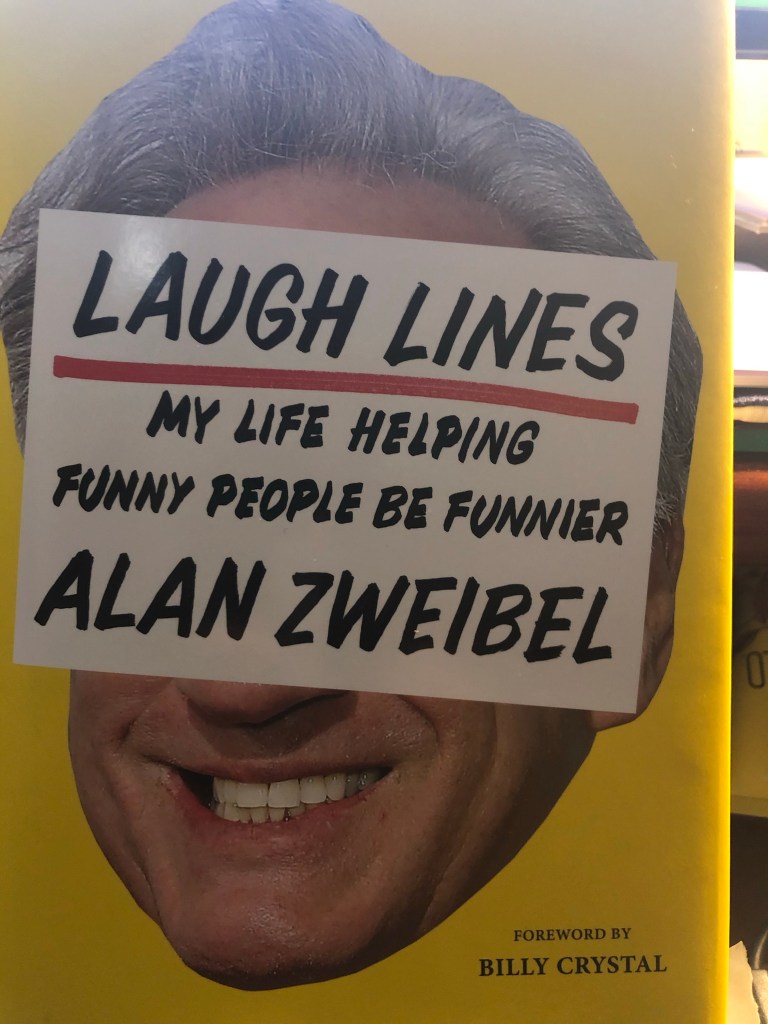
Believe it or not, I don’t spend all my time getting pissy about people’s online behavior. I actually spent much of this weekend laughing aloud, because I read the new memoir, Laugh Lines: My Life Helping Funny People Be Funnier, by the great Alan Zweibel. Who? I didn’t realize I was such a comedy nerd until I figured out I was the only person I knew around here who was excited that this book came out. I’d been a fan since I was in my late teens.

Those teeth look too good to be true. They remind me of how he said an old comedian he wrote jokes for had fake teeth the size of porcelain tiles.

Zweibel was one of the original Saturday Night Live writers, and I have followed his career ever since. He is one funny, funny man. And he sure has run into a lot of funny, funny people in his life.

I had a great time reading about his start as a deli meat cutter/joke writer for the last of the Borscht Belt comics, how he made the big time writing for SNL, and of course, his ups and downs in the years since.

Some of the best parts of the book are about his friendships and comedic partnerships. His best friend was Gilda Radner (and he wrote what I hear is a beautiful book about her, called Bunny Bunny, which I just ordered). Much of their story had me laughing aloud. He was very honest about his relationship with Garry Shandling, which had very big highs and lows. And learning more about Billy Crystal, another favorite comic of mine, was another highlight.

Here he is, proving he worked for Saturday Night Live.

At times, Zweibel’s incessant name dropping got on my nerves. It was like I was playing a game of How Much Comedy History Do You Know? I’m glad that he often described what a person was known for in parentheses, and I admit to having little moments of glee when I already knew a comedy name. You do end up with the impression that the world of comics and their agents is a very small one, or at least was for a long time.

His casual mentions of just dropping by a Knicks game, getting let in to Broadway shows, or playing tennis with the cronies came off a little elitist, but I probably do that stuff inadvertently myself, on a smaller scale. He probably views those things as normal parts of life, since everyone he knows has a house in Hawaii with a famous comic/movie director (Rob Reiner, or was it Carl; all that family are in the book).

I think Zweibel redeems himself, though, with the respect and high regard he places on the people who came before him, who taught him and all the comedians his age so much. He also seems to feel honored to be able to share his experiences with younger comics. I honestly think he’s a nice guy who lucked out and got famous, and handled it as well as he could, being a regular human being and all. His love for his wife and kids also are refreshing to read about – his wife, Robin, seems as funny and genuinely nice as he does.

From the Bottom Drawer of: Alan Zweibel: The Prize, The Ride Home, Sexting with Alan Dershowitz by [Alan Zweibel]

If you like the history of comedy in the US, and understand enough Yiddish and Jewish culture to be able to follow a Henny Youngman joke, you’ll get a real kick out of this book. And you’ll have a few old and new jokes to tell your friends.

By the way, there’s a free Kindle version of a few comedy stories by Zweibel that you might enjoy: From the Bottom Drawer of: Alan Zweibel: The Prize, The Ride Home, Sexting with Alan Dershowitz

Book Report: Poetry E-book Edition

You may know that I am very fond of books, the physical objects. I like to hold books, feel the paper of the pages, smell that inky new-book smell, etc. But, some books aren’t available physically, including self-published books. I’ve always liked the idea of making one’s work available for friends and family, and don’t expect perfect copy editing, formatting and all that (what I DO mind is being charged a lot of money for a printed book, only to find it was not copy edited AT ALL, has eight random fonts, and is randomly justified).

Today I’m not talking about one of those! Instead, I’d like to briefly share a book of poems I just read, which I know I’ll re-read many times. Past Life: Poems is a collection of poems by my long-time online friend Ida Bettis Fogle. She’s always been a word person, as shown by her thoughtful posts that I’ve enjoyed for many years and her career as a librarian.

She published this collection of her favorite poems from the past 25 years to share with her friends. A lot of gushing has ensued, as members of our long-time group of mothers pointed out their favorites. Why were they so enthusiastic?

Well, Ida has captured the experience many women of my generation had, both in childhood and as mothers. Many of her poems brought images back to my mind of similar events I’d been through…it’s like I continued her poems in my own head.

One of my favorites, “Three Minus One,” talks about the third child you never had but always wanted. The longing you feel for a child who almost seems real mirrors my own experience exactly.

There are poems about birth, vacation, scary things, and beautiful things, all the kinds of small but memorable things many of us have experienced as we go through life. Ida celebrates moments and captures them for the rest of us to share. And it is formatted normally with only one typo (that I didn’t notice).

If you need something to take your mind off the present and take you back to a past that is real, but not all bad, you might really enjoy Past Life. I found it worth much more than the four dollars and odd membership process in Smashbooks that was required to obtain my PDF. (And if you are a poet or other kind of writer, this may be a way for you to share YOUR work with others.)

Book Report: A Hundred Suns

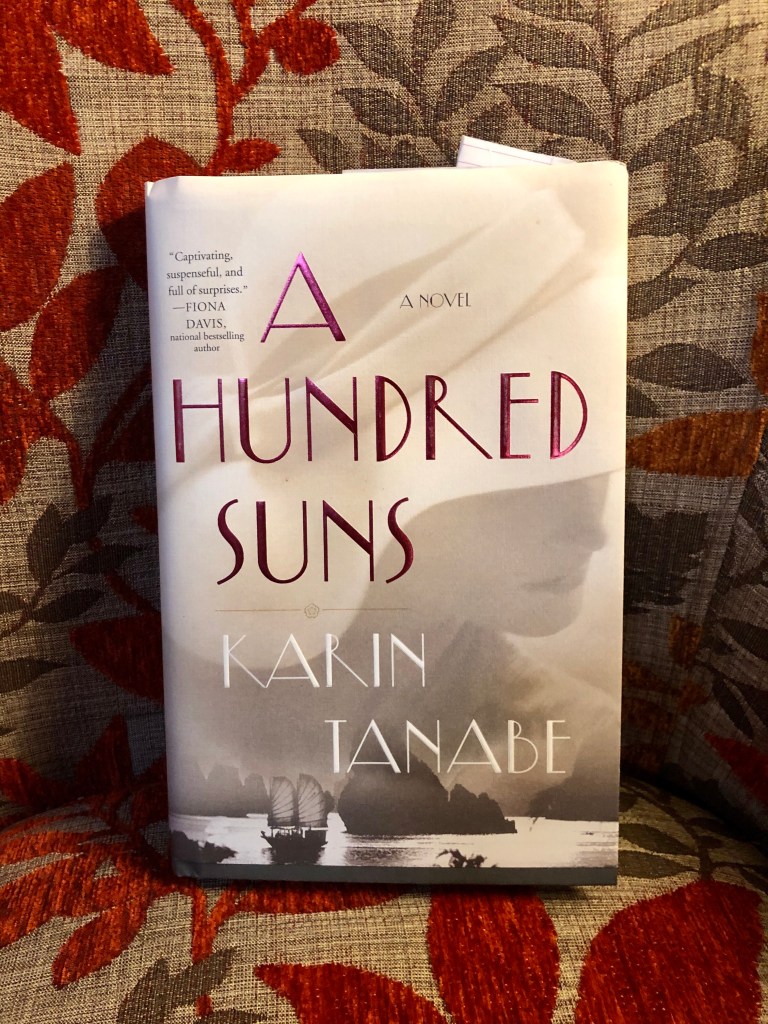
I gobbled up this novel, which I found via my usual method of discovering books, an interview on NPR (National Public Radio in the US). I figure anything Scott Simon likes, I’ll like. I encourage you to read or listen to the interview about A Hundred Suns, with the author, Karin Tanabe.

Nice font on that title, huh?

Tanabe is known for writing historical novels, and this one’s about Vietnam before it was Vietnam, in the 1930s when it was still French Indochina. It’s a period and place I’m interested in and wanted to learn more about, so why not learn history through a novel (it’s how I learned when I was young; those novels about Queen Elizabeth I sure were more interesting than history books, even if they weren’t 100% accurate; after all, neither are history books).

There is so much to like about the book, and I especially liked how each and every character in the book (French people, Americans, and Annamites (what Vietnamese people were called then)) had a fully developed personality. Like real people, each of them had admirable aspects and made plenty of mistakes. Each had prejudices but learned not to be so confident. You end up empathizing with each major character, even though they do some pretty icky things.

Ah, let us pause to enjoy some sedge seeds with curly tendrils. Also enjoy my lack of nails. I miss certain Vietnamese friends, who happen to also do my nails, a lot.

Tanabe, of course, weaves a lot of history into the narrative. You get to see the country from the eyes of the French colonists (ooh, la la, they were fancy), local people who tried to assimilate into French society, wealthy communist sympathizers, grass-roots communists, and of course, random mercenaries. I found it easier to understand the Vietnamese point of view on communism from this book than I did in books I read when I was younger, which all took the capitalist viewpoint exclusively (one character in the book was like me, neither colonial nor communist nor really capitalist…just wanting the best for everyone).

One thing I really liked about the book is how Tanabe portrays relationships between people of different cultures and races. As someone who’s enjoyed being close to Asians in the past and remembers how people STILL looked askance at it in the 1980s, I appreciated how the relationship between the characters Marcelle and Khoi in the 1930s was depicted. I’m so glad that people are much freer to love whoever they want to now.

I actually liked how she portrayed all relationships. She made arranged marriages make more sense, yet showed that both friendship and true love that can grow and change as people mature, as well. Here’s my favorite quote, from Khoi, the rich and handsome silk merchant, talking about two friends:

“We are not perfect people, you and I,” he said, “No one is. Even Anne-Marie and Sinh. I know we hold him up on a pedestal now, but he wasn’t perfect. We all have moments of weakness, of strength, of stupidity. But if we’re lucky, we’ll have even more moments of love.”

A Hundred Suns, page 340.

There were a couple of things that bugged me about the writing style of Tanabe. Sometimes she gets a little didactic and seems to be giving a history lesson rather than letting it come out through the characters. But, there IS a lot of historical context about rubber plantations and such to get through.

And she has a writing style that sometimes bothers me, where at the end of any utterance she inserts some bit of physical description of the character’s eyes, or skin, or something. I have no idea why that style annoys me, but it always seems like the author couldn’t find any other way to add these details, so they get stuck into the dialogue. And I always wonder if whether someone’s skin is tanned or not matters to the story (in this case, I’ll assume the main character’s deepening tan symbolizes her growing understanding of the Asian culture she finds herself immersed in).

Shoot, I’ve totally forgotten to say what the book’s plot has to do with. You see, there’s a nice social-climbing American woman named Jessie who gets her wealthy family sent to Indochine to escape her past. They are a part of the Michelin family, and the husband wanted to do more with tires and rubber and less with writing tour guides. Jessie meets up with locals, both French and Annamite, deals with her servants (fascinating in their own right), travels through the country, and gets drawn into intrigue as she begins to doubt her sanity. Mayhem ensues.

Wow, can I summarize a book, or what? Anyway, I’d say A Hundred Suns is worth getting a hold of. It will take your mind off the present, and you’ll get to meet a lot of fascinating people in an interesting historical context. You might as well learn something!

Book Report: Nature’s Best Hope

Do you care about our planet and the life it supports? Then, stop reading this blog post and go order this book: Nature at Its Best: A New Approach to Conservation That Starts in Your Yard, by Douglas W. Tallamy. Consider it an early Earth Day present to yourself and the Earth. Get ready for some gushing now.

Why encourage caterpillars? Birds need them to make more birds!

Wow, this is a great book, which you might guess, given that I devoured it in a weekend. It’s got proper footnotes and references and such, but is written more for a lay audience than Behave! was. (Since I really don’t want to take pictures of the pictures in the book, I’ll share my own happy nature pictures from the weekend to encourage readers to make environments where they can see these for themselves, like the book describes!)

This is the book you want to give people who are not naturalists or environmental activists to explain to them that a) all those horrid weeds and bugs are what’s keeping the world alive and b) you can make a beautiful planting area on your property that encourages birds and other wildlife without going to a lot of trouble and effort.

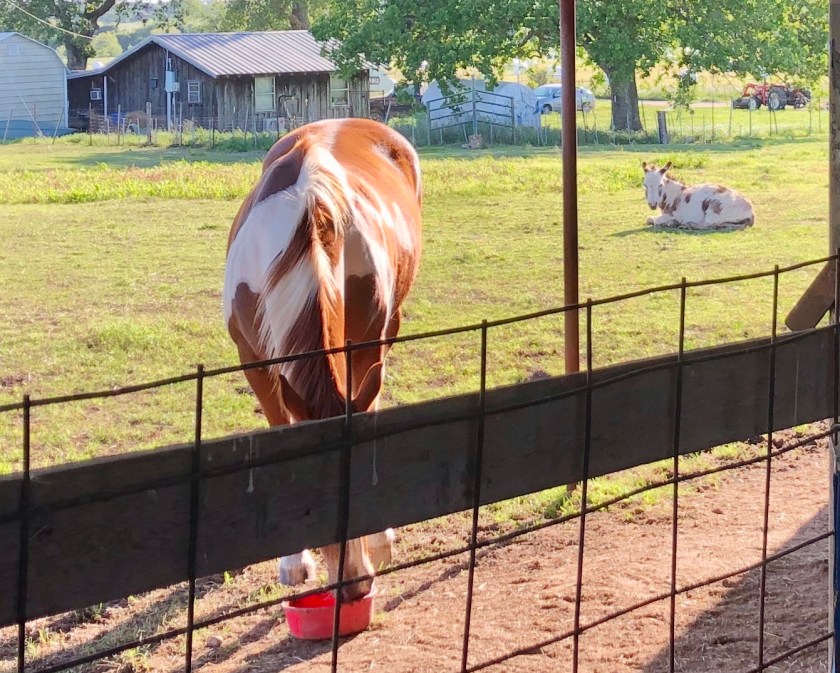
While not part of creating a landscape of natives, donkeys and horses have a place, at least in my heart. (Spice and Fiona)

Tallamy makes so much sense in this book! Wow! He calls using native plants in naturalistic, yet attractive, settings creating Homegrown National Park. The main point of the book is that if people did this instead of planting endless swaths of turfgrass and non-native plants, we would be well on our way to saving the beauty all around us, benefiting us (we get to watch birds, butterflies, and animals) and the planet (diversity will be maintained, etc.). And Tallamy points out that turfgrass does have its place, for making nice paths.

Urban wildlife! Duck party at the Pope Residence.

I especially enjoyed all the beautiful photos he includes in Nature at Its Best, to show the kinds of sights you can see if you just make an appropriate setting. And that’s important, because exposing kids (and adults) to the natural world right where they live will make such a huge impact (as opposed to visiting nature in very carefully structured short trips). I say yes to all this, as do my fellow Master Naturalists.

You just can’t help but get all fired up and ready to drag in some native trees and shrubs and stick a rotting log or two around the place for moths to pupate in. And, conveniently, Tallamy provides links to two excellent websites to help you select what you should plant where YOU live:

  • Native Plant Finder: uses your postal code to help you find trees and herbaceous plants for hosting caterpillars. This is EXTREMELY cool.
  • Plants for Birds: same deal, but for hosting birds. I’ve already looked up both my houses.
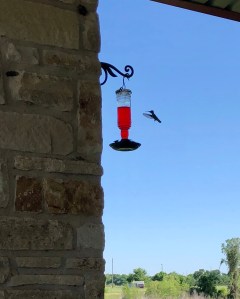
Don’t worry, we are just using up the last of the red hummingbird food. We’ll make more of the correct kind!

I’m impressed that the work of one person, Kimberly Shropshire, created the original database for these, working with Tallamy. She must be an amazing person!

Honest, this book encourages citizen science at its BEST. I’d really like to spread the word about this resource. If you know people who enjoy nature and gardening, please share this post or the name of the book. And order it, even if just for the pretty pictures!

Those of you who prefer novels to nonfiction, rest easy. My next book is a fun historical novel.

Book Report: Behave!

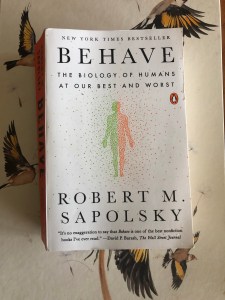
It feels like it took me forever to read the 2017 best-selling nonfiction book, Behave: The Biology of Humans at Our Best and Worst, by Robert M. Sapolsky. It’s not that I didn’t find the book absolutely fascinating, because I sure did! It’s just those sneaky book club books and the book about restoring old houses kept slowing me down. And it is a BIG book.

It’s a very thick book. Held up well through three months of traveling with me.

It’s close to 800 pages long, so there’s a lot to read. Luckily the main part of Behave! is “only” 675 or so pages of small print with even smaller print footnotes (that you have to read, because some of them are really funny). Since the book covers a lot of neuroanatomy, chemistry, biology, and brain structure, it was kind of Sapolsky to include three pretty clear (considering the subject matter) appendices to introduce readers who didn’t happen to major in any of these disciplines with some background.

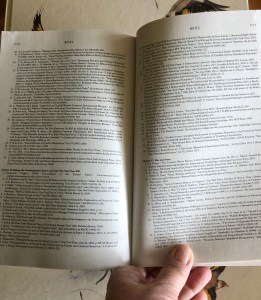
There are lots and lots of footnotes, too. Get out your magnifying glasses.

Hey, now, don’t quit reading just because it’s a long book with a bunch of science talk in it. It’s also a book with lots of interesting insights about humans and other animals, funny stories, and answers to plenty of age-old questions. Really, this is one of the most interesting science books I ever read, which should be obvious since I got it in January but kept picking it back up to slog through more of it when the distractions were over.

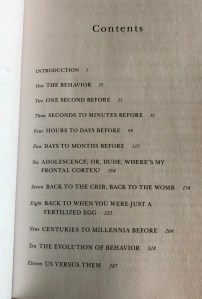
Here are some of the topics covered, at least in the first half of the book.

Sapolsky makes understanding how our brain processes external stimuli to come up with a reaction, how different parts of our brain lead us to feeling and acting in certain ways, and how darned fast it all works. Toward the end of the book he gets into my favorite topics: why we humans are so Us versus Them oriented and whether we have “free will” or not. Oooh, it’s pretty deep.

We get to meet all sorts of scientists and philosophers who have worked to figure out how human activities work, plus we learn about all kinds of animals that do or don’t share characteristics with us. Sapolsky knows a LOT about baboons, that’s for sure.

Tiny flowers on a dock plant.

I’m gonna recommend this book to any of you who enjoy reading about science and have at least a little more than a lay-person’s understanding of chemistry, biology, and neuroscience. If you aren’t a science type, the appendixes will prepare you for the rest of the book. And even if your mind starts to glaze over at all the names of chemicals and regions of the brain, you will still enjoy the stories and descriptions of research.

Horsenettle sure is purple.

Some of us have a lot of time on our hands (while others of us are even busier than usual, so I’m not referring to you), so it might be a good time to lose yourself in a book that provides a LOT of insight into how we ended up in the divided society we’re in now. It’s fascinating.

PS: I just thought you’d enjoy a couple of wildflowers from the ranch. That’s because nature helps us keep calm. I’m reading about that in my NEXT book!

Book Report: Restoring Your Historic House

I saw a little blurb in This Old House magazine, saying this new book is a “must-read” for anyone restoring an old house. Why, I’m renovating an old house, which is close. So, I ordered two copies, one for me and one for Kathleen, of Restoring Your Historic House: The Comprehensive Guide for Homeowners, by Scott Hanson (2019). At 720 pages, it has a good chance of being comprehensive, anyway!

This post will have two parts, one in which I review the book, and the other in which I talk about the choices we have made on the Pope house that do or don’t follow Hanson’s recommendations.

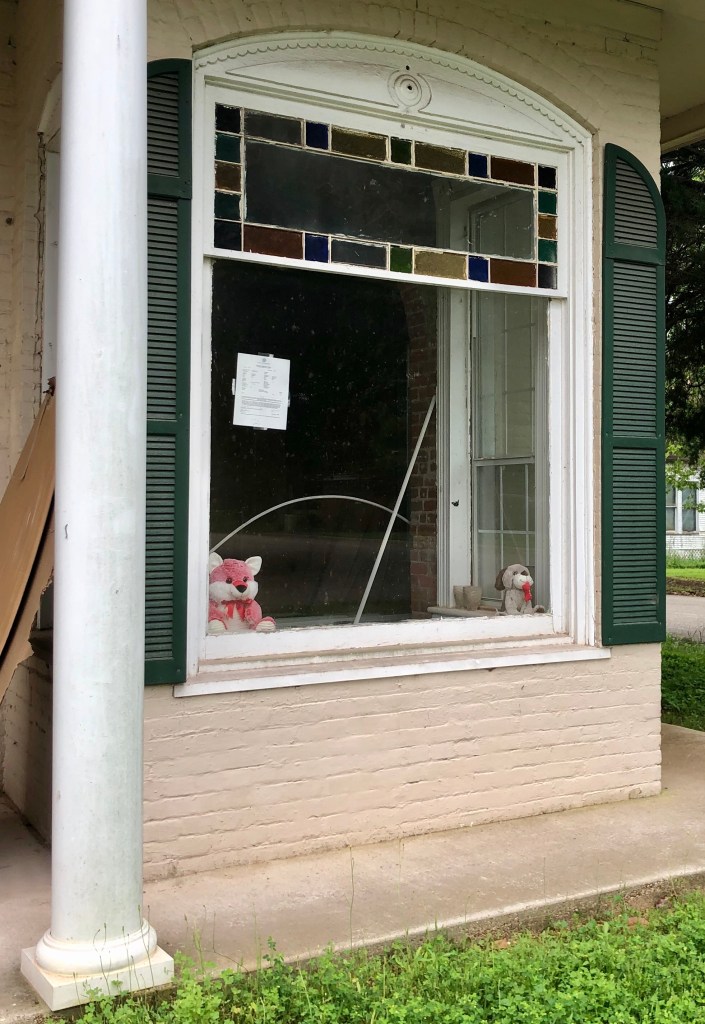
By the way, we now have TWO stuffed animals for kids to find, and we’re going to put Easter eggs in the window, too. Look at that original stained glass! Look at that trim! Let’s keep it.
Continue reading “Book Report: Restoring Your Historic House”

Book Report: Stories of Your Life, and Others

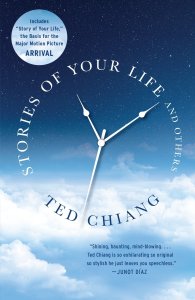
The informative cover.

Well, we have plenty of time to read books, at least most of us do right now. I had a big backlog of magazines when I got back from vacation, but I finally got around to finishing this month’s book club book, Stories of Your Life, and Others, by Ted Chiang. I am told by the book cover that “Story of Your Life,” was the basis of the movie Arrival. I have not seen it, but now that I realize it’s about linguistics, I probably should!

It was a nice change of pace, because it’s a collection of science fiction stories rather than a novel or work of nonfiction. We were only supposed to read a couple of the stories, but since they turned out to be right up my alley, I read the whole book.

Chiang is a very scientific science fiction writer, which I enjoy a lot. I also like that he just changes one or two things about “normal” life in many of the stories, which makes it very easy to immerse yourself into them and think about what your own life would be like in that version of Earth.

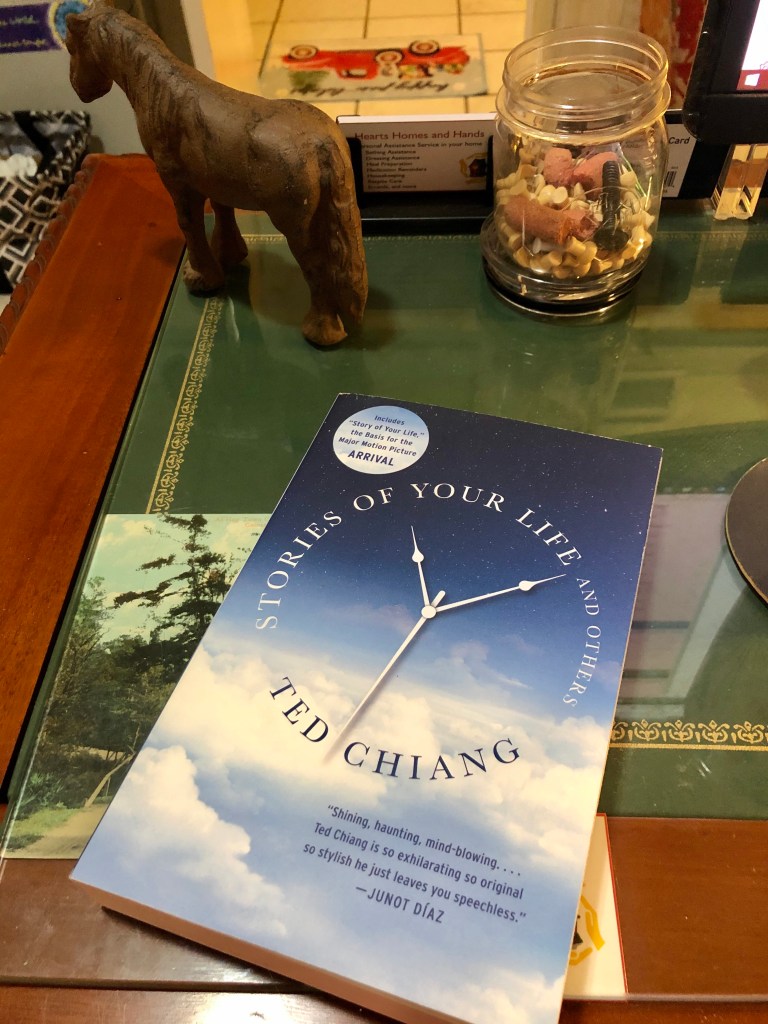
Here’s the book sitting on my desk.

For example, there’s a story in which angels, Heaven and Hell are all real, called “Hell Is the Absence of God.” Angles are always showing up and messing with people. I decided very quickly how I’d lead my life in THAT world. I’d probably have gotten myself to Hell as fast as possible. It seemed nice. But what an interesting world it was!

The title story is all about a linguist figuring out an alien language. The results were predictable if you know how language and the brain works, but it was still fun to read.

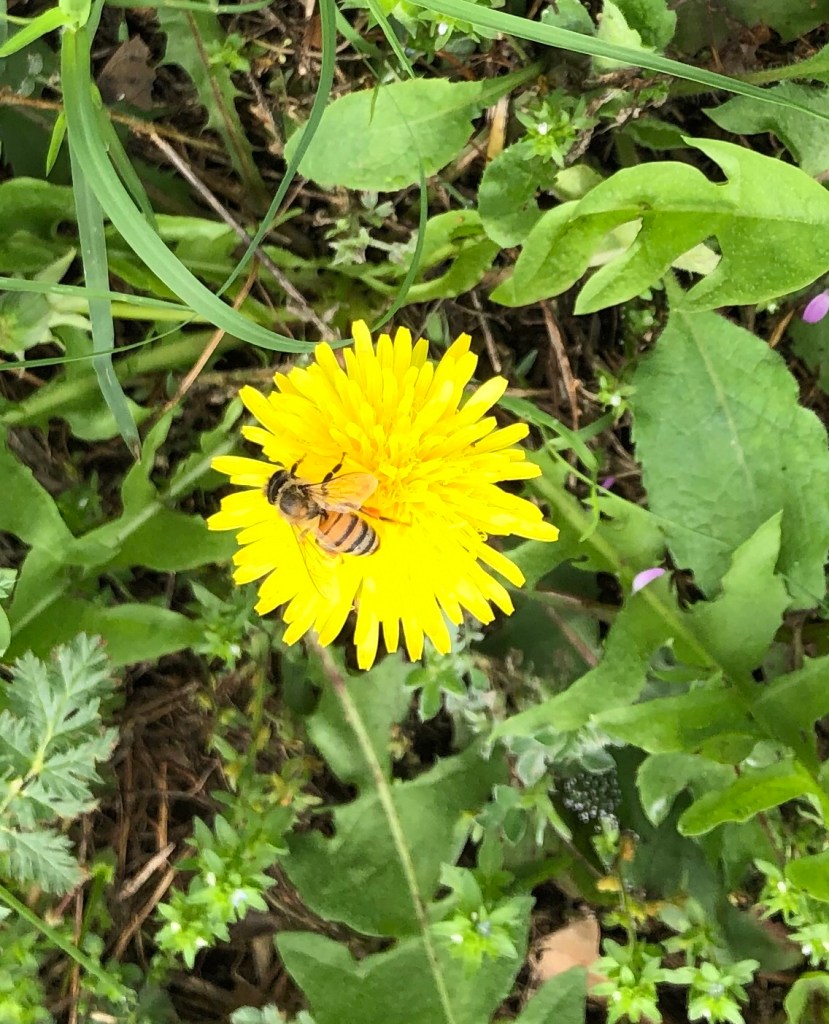
Enjoy a dandelion and a bee.

In another story, “Seventy-two Letters,” science was more like alchemy combined with the kabbalah or magic, where names could bring things to life. The way human reproduction worked there was very different, but logically consistent. That would also be a fun world to live in for a linguist.

It’s a weevil. No idea what kind.

My favorite of all the stories in the book wasn’t about linguistics, really, but about the science behind the “Tower of Babel,” as if the world was like in the Old Testament, and you really could build a tower to Heaven. The ending was GREAT, and I just loved all the people in this world.

I guess I’ll be reading his next book, even though I’m told it isn’t quite as outstanding as this one. Any of you who’d like to go immerse yourselves in another world, though, should run out and get this paperback, or get it in Kindle. All the stories are fun and get your mind thinking about possibilities of how things just might have been on another timeline.

Book Report: Talking to Strangers

Another book finished, and I’m impressed that I got this one done in less than a week, since I’m also trying to knit some every day now. I bought Talking to Strangers: What We Should Know about the People We Don’t Know, by Malcolm Gladwell, because I really wanted some insight into how to communicate with people from different communities, cultures, social groups, etc.

Hey look, you can buy it, too. Trying a new embed format.

It turns out that the famous Mr. Gladwell (he wrote Blink, a book I didn’t like much at the time it came out) wasn’t exactly writing about what I thought he would, but I found the direction he took pretty interesting, anyway.

The question he really seemed to be asking was more like why do we let assumptions about other people, based on appearance, blind us to their real motives or intentions? He talks about cases we are all familiar with, like Bernie Madoff, who fooled all kinds of rich people into believing his really ridiculous Ponzi schemes and the pedophilia scandal at Penn State University, where Jerry Sandusky’s purported actions were dismissed until everything blew up and all sorts of people lost their jobs.

Don’t talk to strangers, said so many mothers. Photo by @tonyturretto via Twenty20

Spoiler alert: Gladwell says all of the misinterpretations of others’ motivations boils down to two main things: one is that we all assume that people we don’t know are telling us the truth. It takes lots and lots of evidence that something’s amiss to change that assumption. So, good ole Bernie M. was such a nice guy and friends of so many smart people, of course he was telling the truth! Gladwell points out that the assumption of truth is actually a good thing almost all the time. It certainly would slow down social interactions if you questioned everything anyone said to you, right? That lets skilled liars, or even unskilled liars, as he shares with a story about a Cuban spy in the CIA, keep doing what they’re doing.

Here’s one way to not read people’s motivations from their faces, right? Photo by  @pprevost via Twenty20

The second thing that makes knowing what a stranger is really up to hard is the assumption of transparency. This means how we expect that we can read people’s motivations from their appearance. As long as people act like our cultural norms predict they should in a situation, it goes well. This refers to looking afraid when you are scared or acting solemn when someone dies (Amanda Knox in an Italian murder case didn’t act sad enough when her roommate died, but really she was just socially awkward, not a killer). People who, like Knox, don’t telegraph their internal states can get away with lying or not be believed when they are telling the truth. In the end, that is one thing that caused that poor Sandra Bland woman to end up dead in a jail cell: she acted nervous when a police officer pulled her over and didn’t grovel properly, in his mind.

The other part of Talking to Strangers that I enjoyed a lot was a discussion of the concept of “coupling,” where Gladwell makes a strong case that inexplicable things you do are tied strongly to location and opportunity. Sylvia Plath’s suicide happened because gas ovens in England still had carbon monoxide in them. If she had tried to do it a year or two later, they’d have switched to natural gas, and she would have just gotten a headache. Another poet, Anne Sexton, killed herself by locking herself in the garage and turning her car on. This was just a short time before catalytic converters showed up in American cars, so this method wouldn’t work. Um, did you know that the profession most likely to commit suicide is poets?

That’s right. Don’t do it.

The point is, though, people think that if your chosen method won’t work, you go try another method, but the research on coupling has shown that isn’t true. When nets were put on the Golden Gate Bridge, people didn’t march off to another bridge to jump off. The motivation is tied to the place.

I haven’t explained that well. The section on coupling is the main reason I encourage people to read Talking to Strangers. I kept reading sentences aloud to Anita, because I was learning so much. The section about “pockets of crime” blew me away.

Photo by @yournameonstones via Twenty20

Now that I write this all down, it’s clear that Gladwell made a big impression on me with his viewpoints and the research that backs them up. It’s fun that he weaves recent events (and Hitler) into the analysis, because you always want to know how the heck these implausible events actually go down the way they do (why did Neville Chamberlain like and believe the words of Hitler?). I have a new perspective on why people just don’t “get” each other so often. Learning is good!

Sadly, I still don’t think I’m any better about talking to strangers. I think I’m even more cautious about it than I was before. Maybe that’s a good thing. Assumptions about other people tend to bite you in the…butt.