I got so involved with writing my previous post that I forgot to make one of my points. While thinking of types of people I might be biased against, I became very aware of some ways in which my subconscious biases me toward some people.
While out on a walk with Anita and Pickle, I even said, “I always think I’ll like anyone who has this sign in front of their house.”
The sign has all my buzz words on it. Plus I like the flag addition: it’s for all of us in the USA.
Now, there’s a positive bias! I just assume that, by buying one of these signs, they must be great folks. These must be fine people, too:
I happen to know the sign’s owner IS a nice person, but from actually knowing her, not from her sign.
This is just as inaccurate a way to judge others as lumping all people with Trump pickup-truck flags in the same boat. You really don’t know what a person is like until you actually get to know them (yes, I know their signs DO give a hint, but let’s not pre-judge!).
I tend to have a favorable bias towards dog lovers, too (which helps mitigate some other biases). And if you own a spotted mini-donkey…oooh, you must be GREAT.
Now you know why I fell for my spouse. It was the dogs.
I have some other positive biases, mostly based on education, career choices, and hobbies (I always feel betrayed when I find out a fellow knitter is actually creepy, but having read comments directed at some of my gay knitting heroes, I know they’re out there).
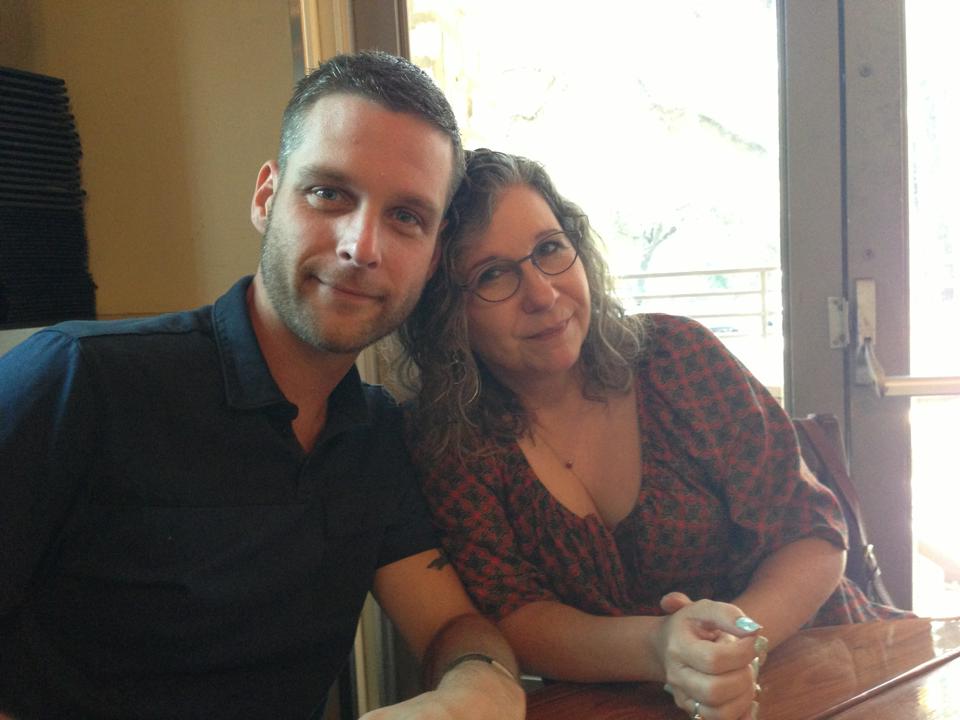
I blame my bias on Mike. Most things are his fault, after all. Here we are in 2013. Apparently I’d just given him a rabbit hutch.
Speaking of which, I’m pretty sure I’m positively biased toward gay men (more neutral toward others). I wonder if it’s because they’ve been kinder to me most of my life, in general, than any other group. Or it’s just empathy based on my family and past friends’ experiences. Of course I’ve known some unpleasant gay men, but my bias makes me assume I’ll like them. Like with any other group, of course, it’s better to get to know individuals than make sweeping generalizations.
Here we are again in February 2020, just before being attacked by the quarantine and becoming more…substantial. I have no idea where we are.
To be honest, after thinking about my positive biases, I can see that they can be helpful shortcuts to identifying potential friends, but they can also make you assume things about people that might not be true. I’m going to make sure I identify the positive ones as well as the negative unconscious biases.
Enjoy this cloud formation in far southeast Austin as you ponder bias.
The short answer to that question is: all of us. Bias is normal for humans, and there’s no way to eliminate it; it’s part of being human. There are, by the way, both positive and negative biases (we are biased toward the kinds of people who most resemble you or share your beliefs, while people who don’t fit into our ideas of “normal” often engender negative biases). Anyway, I’m not here to write a book about bias (go here for more info). I just want to make it clear that there’s no way to get around having unconscious biases, because all of us can’t be aware of everything that’s influencing us or we’d be bombarded by thoughts. Our unconscious biases are part of what led humans to succeed (being biased against funny-looking strangers probably saved a lot of past people).
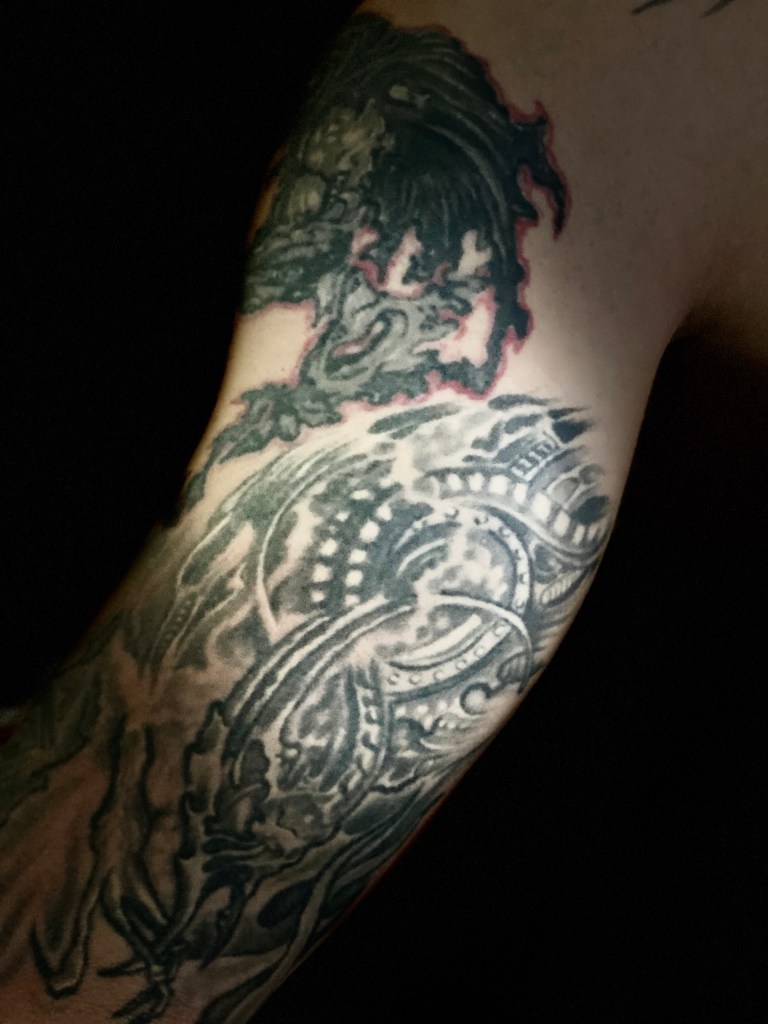
The tattoo bias is one that comes up a lot in these trainings. Image by @noralynepo58 via Twenty20.
Why I’m thinking about this today is that I have been helping out with a diversity and inclusion initiative at my job. One of the things I said I’d do was evaluate some potential training courses on unconscious (or implicit) bias. There’s nothing this old instructional designer likes better than evaluating online training, so I was happy to do so.
I went through two different courses. In one of them, the presenter repeated so many times that unconscious bias is normal that I’m pretty sure THAT is seared into my unconscious. But I see why they did that: you don’t want people feeling guilty or that they’re a bad person for having them. That first course reminded me that I’ve been reading a lot about unconscious bias in the books about race in the US, so I was feeling all good about myself. The course encouraged me to write down biases that might pop up into my head while I was learning, and sure enough a big ole list started growing.
The second training was more scientific than the first, and I enjoyed that. It also had some exercises in identifying bias that I really enjoyed. Sure enough, I have a bias toward males in certain roles (science rather than art). And I totally messed up another exercise that proved the same thing. These results make a good point, that many of us retain biases that aren’t even in our own self-interest, thanks to cultural traditions, media depictions, etc.
Am I Biased?
Heck yeah, I’m biased. Some of them I’m more conscious of than others, because, like the trainings pointed out, by introspection and careful observation, you CAN see some of your biases and make an effort to mitigate them in the workplace (and beyond). Also, by actually exposing yourself to members of groups you have an unconscious bias toward, you can start to see each person as an individual, rather than a group member. I’m eternally grateful for linguistics classes and factory jobs for exposing me to people outside my in-group and letting me see them for themselves.
Here are a few biases I’ve made an effort to work through, and how I think I got them:
People with tattoos (blame my mom)
Muslim men (blame a long string of horny married men in college/grad school)
Black people (blame growing up in the South in the 60s)
Fraternity members (blame college)
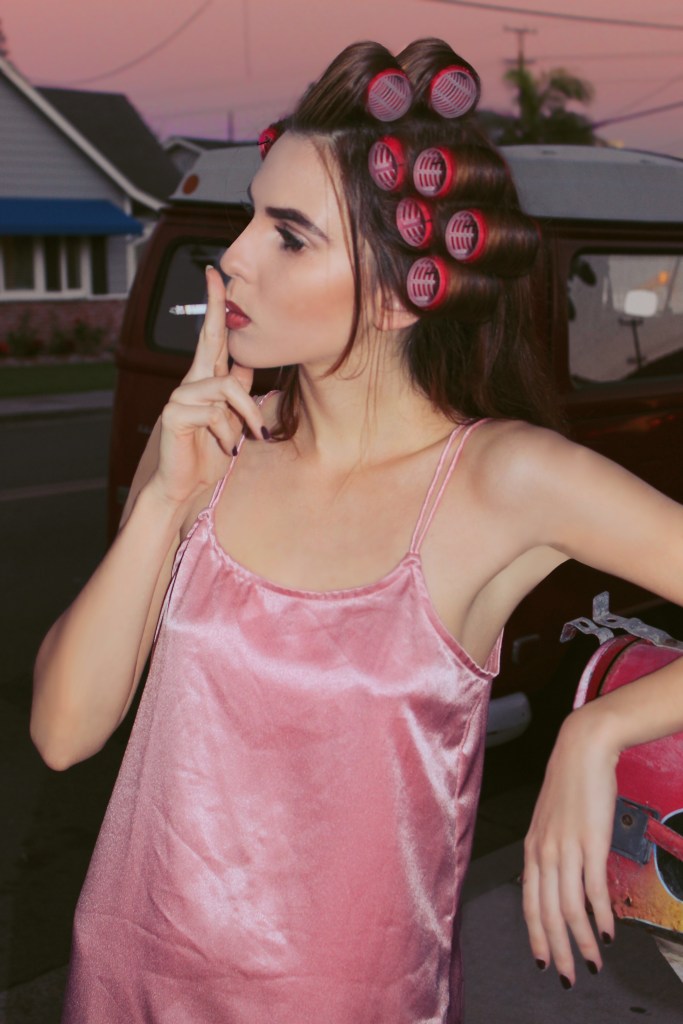
Smokers (also blame my late mother, who died of lung cancer)
I’m not saying I’ve eliminated my biases, but I know they are there, and now I can make a conscious effort to treat people as people. I’ve benefited from this a lot. Now the bias is just a twinge, which I acknowledge and move on really quickly.
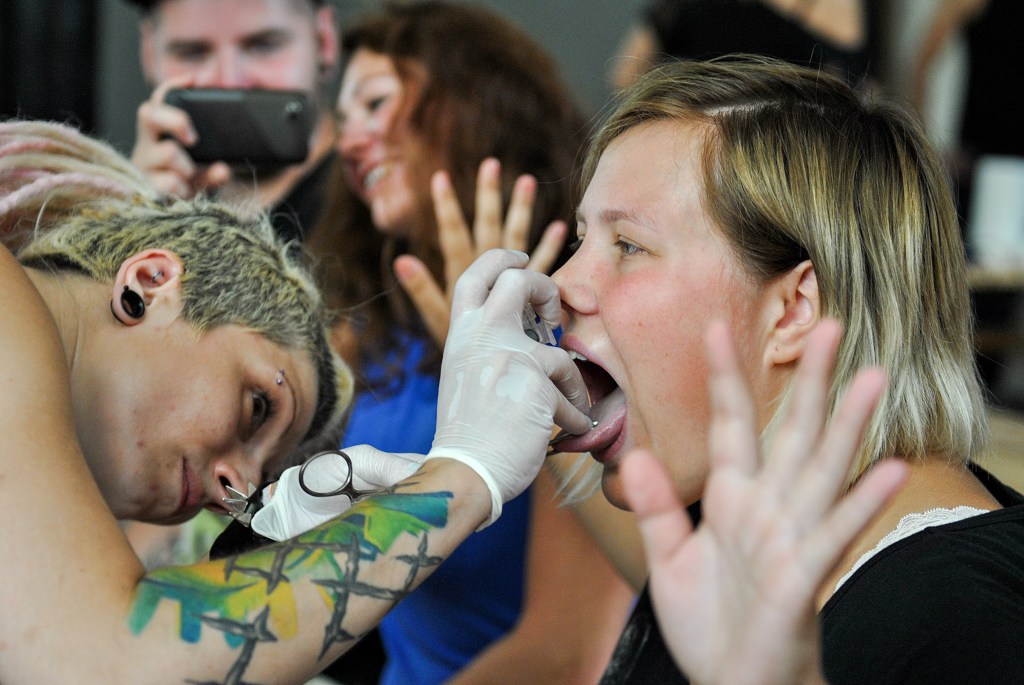
How many irrational Suna negative biases are in this photo? A bunch. Will they affect my hiring practices? Nope. Image by @zelmabrezinska via Twenty20.
Now, other biases I wrote down I have a harder time with. As I wrote them down, I could readily see that some of these are really silly. I also can see where some of the biases are based on bad experiences, formed in self defense, and related to safety (like the Muslim men one, which required many years of meeting Muslim guys who did not try to proposition or assault me or my friends). Here are some silly ones that I need to work on. I have biases against people:
With strong body odor
With dirty hair
With tongue piercings
With poor dental hygiene
From New York (rudeness)
From California (constant bragging)
Who speak or write with poor grammar in formal/business settings (as opposed to cultural identity things like Tex Mex or Black English, which don’t bother me, or informal slang)
Mom also said that wearing curlers in public was trashy. How 60s.
A lot of these look to me like things my mother would have said denote “low class,” and I got it drilled into me that no matter what I did, I was not to appear like “white trash” (Mom’s words). This verifies that biases against “out” groups from your childhood are hard to get rid of, even in the face of experiences that prove them wrong. The New York and California things are based on personal experiences, and I know perfectly well they are stereotypes. They are just very sticky to me. Do you have any like that?
Biases That Protect
A couple of the biases I wrote down are pretty obviously based on protecting myself from negative consequences (real or imagined). For example, I am biased against narcissists, and that’s based on how I’ve seen friends treated and how hard these people are to eliminate once they attach themselves to you. Now, narcissists can’t help being who they are, since it’s a mental illness. And I need to not treat them differently in the workplace, but I’ll avoid them in personal relationships as much as I can, to protect me. Do you avoid people with certain personality types?
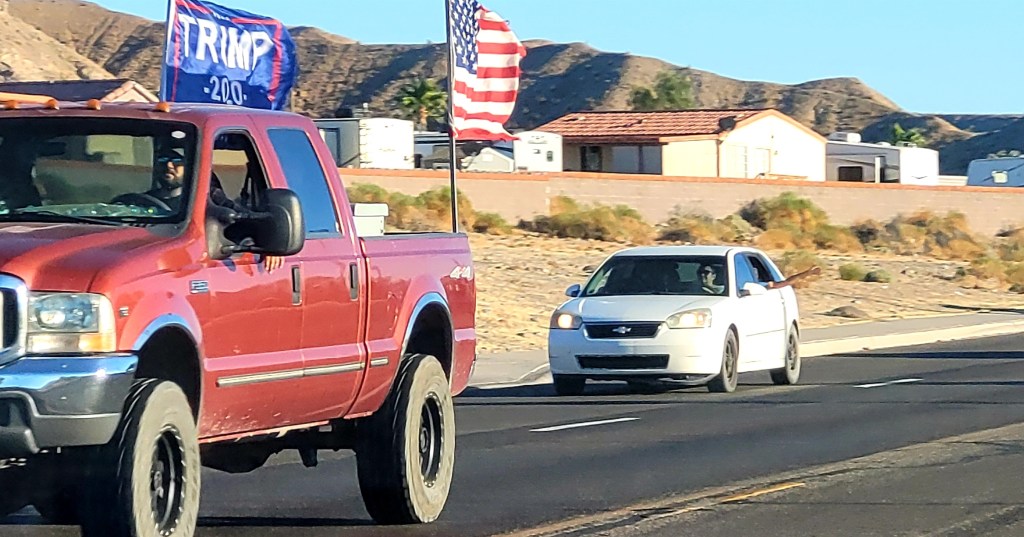
Here’s a negative bias I plan to work very hard to get rid of. I hope this goes both ways. We’re all citizens of the same country and want the best for our families.
While I’m being honest, I’ll admit to being biased against people who display giant Trump flags on their property or pick-up trucks. In my mind, I see them as the radical types who actually believe I have an agenda to take away their rights or force them to have an abortion. That’s probably not true of most of them. But, thanks to the media and reading comments on social media, this one is stuck within me. Note, however, that I am perfectly capable of working with, finding commonalities with, and even living with people who voted differently from me. How about you?
While waiting to give birth to my first child, I edited this book. I removed the word “basically” about 897 times. I did get a Society for Technical Communication award for it.
The final self-protection bias is one I am working really, really hard to get rid of, but it’s sort of funny. You see, I once worked for the great Stephen Wolfram, who is a certified genius with a heart of gold, but at least as a younger man was hard to work for. There was an incredible amount of berating, cursing, odd demands, and eccentricities to negotiate (I could write a book, but I won’t; we both have fond memories of each other…now). The thing is, he had a particular English accent based on where he was born and educated. Coincidentally, one of my coworkers at Planview has the exact same accent, being from the same area. So, every time this other person talks, I hear Wolfram. Everything that person says sounds like a criticism or a put-down (it doesn’t help that sometimes it IS that), but I have to make a huge effort to separate the two of them. My Wolfram PTSD is not doing me any favors!
I wrote this. It was very funny at the time. From Stephen’s website.
I wonder how many of us deal with biases like that? I’d love to hear some stories.
In any case, there’s no doubt in my mind that my biases that popped into my head are just scratching the surface and that there are many more hiding down deep in the recesses of my subconscious, helping me make judgments quickly, but not necessarily fairly. Acknowledging them is a good start, as long as it’s followed by making the effort to eliminate them in important business activities like hiring, reviewing, and such. I’m on it.
PS: I just ran across an article that provides some great ways to open up conversations with people toward whom you may have negative biases. Check it out!






 The Hermits' Rest