Really. This sounds like a prompt designed to get information to use against me in some weird internet way. Lee says most of the blog prompts are like that in his opinion, but I find this question really creepy. Also, my answer would be boring.
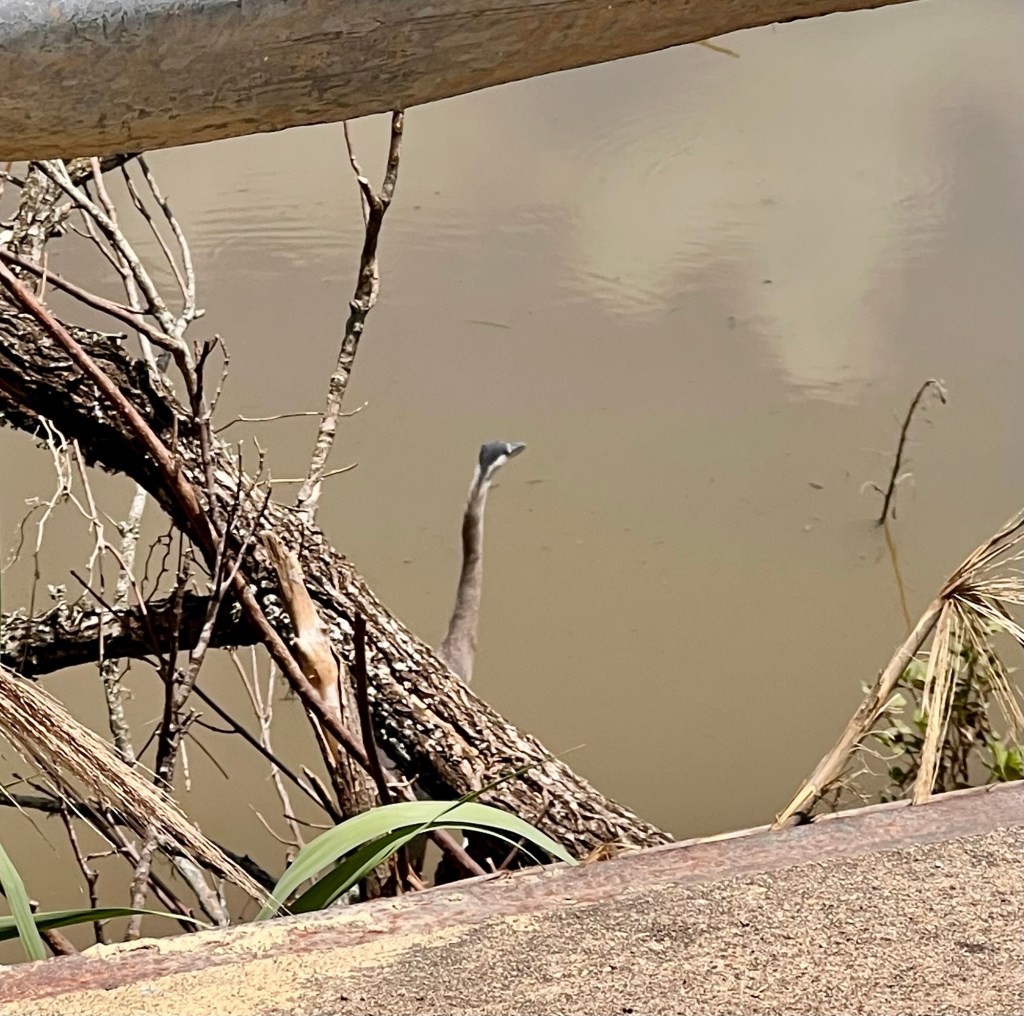
Great Blue Heron fishing in the creek is not interested in such details, either.
So, instead of my medical history, I’ll share my story from my morning walk (this is a repeat for Facebook friends):
Who says there aren’t good people in Texas? Not me. Today I took my morning walk rather late, so by the time I was on my way back I was pretty sweaty. I noticed a car stopped in the middle of the road near my house and wondered if I knew them. Soon they drove up and stopped next to me. It was an older woman and man who asked if I needed a ride home or a cool drink. I said no, that I was almost home. We chatted briefly and told me they stopped at the top of the hill to finish a phone call, because they lose service by the creek. That’s very true! And then the man handed me a cold Mr. Pibb and insisted I take it. That was so kind.
As I walked home with my cold beverage I wondered why they felt compelled to tell me why they stopped and that the man grew up nearby. But it’s Texas and I guess they wanted me to know they were not up to anything, since the man was Black. Geez. He was friendlier than many white neighbors.
Anyway, I’ll wave when I see them again. I wave to everyone who comes down the road, though most often it’s family members or friends. Rural life!
My cool beverage
Friendly, kind strangers who don’t judge you but just want to make sure you’re okay—we need more of them in the world. I hope I can always be like this couple. If someone needs help, I want to offer it with no regard to appearance or other factors. Good folks are urban, rural, immigrant, religious, atheist, and of all political beliefs. There are icky people in all those groups, too, but today reminded me to never forget the good ones.
The heron left before the car came down the road, so it missed my free drink.
Sorry this wasn’t about surgeries. But a day enjoyed with kind strangers, sweet horses, good friends, more Green Herons than I ever saw at one time, and a lovely sunset is more interesting to me.
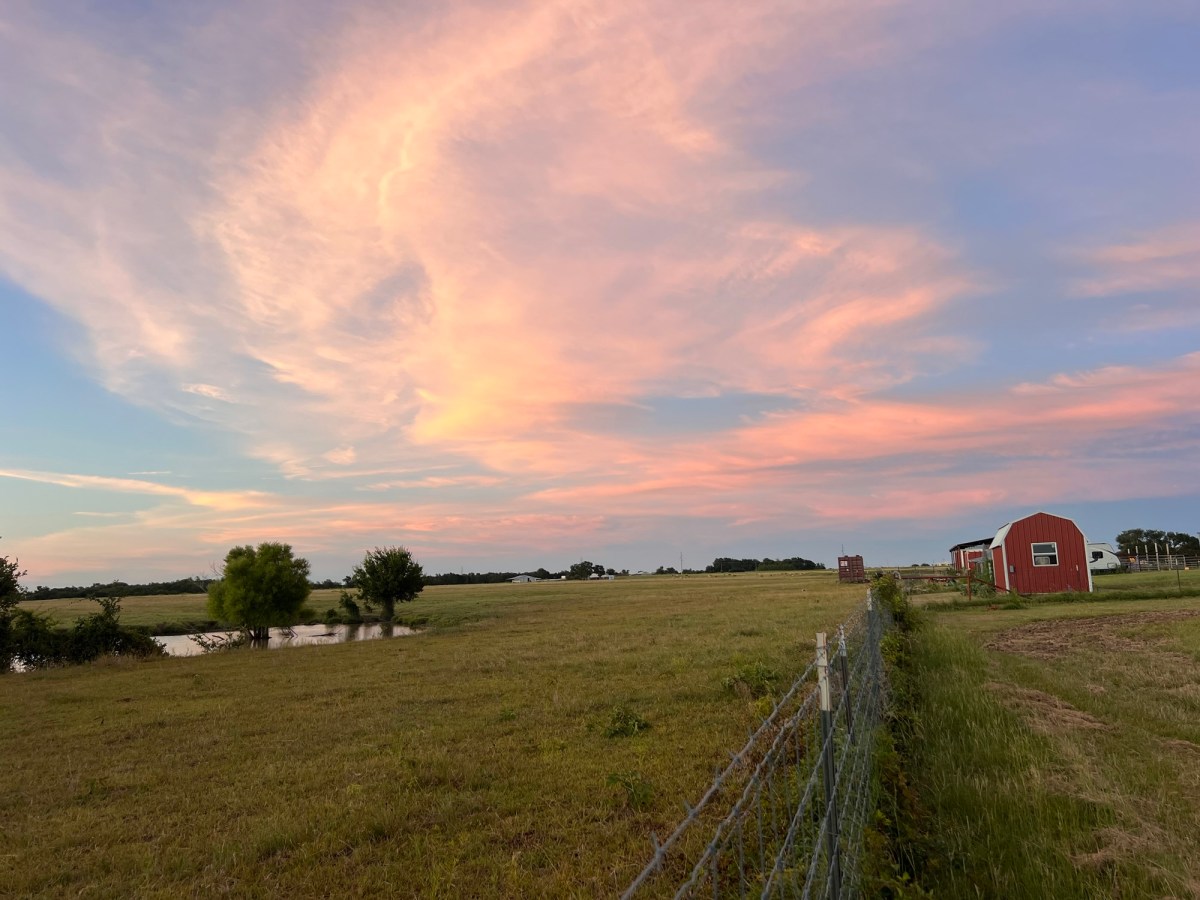
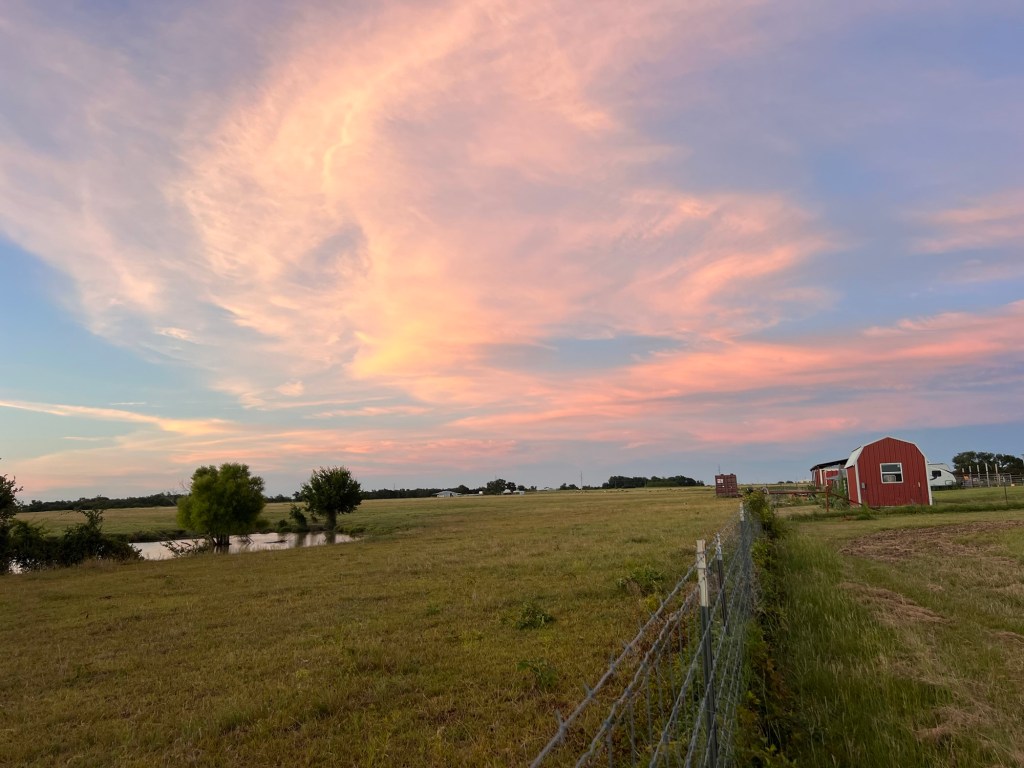
This is facing east. Way to go, setting sun!
Now, go be good to someone you may or may not know.
Describe a random encounter with a stranger that stuck out positively to you.
I’m not as big on talking to people I don’t know as other people in my family are, but I tend to do it more when we go to State Parks and camp for a few days.
Ah, this is the life
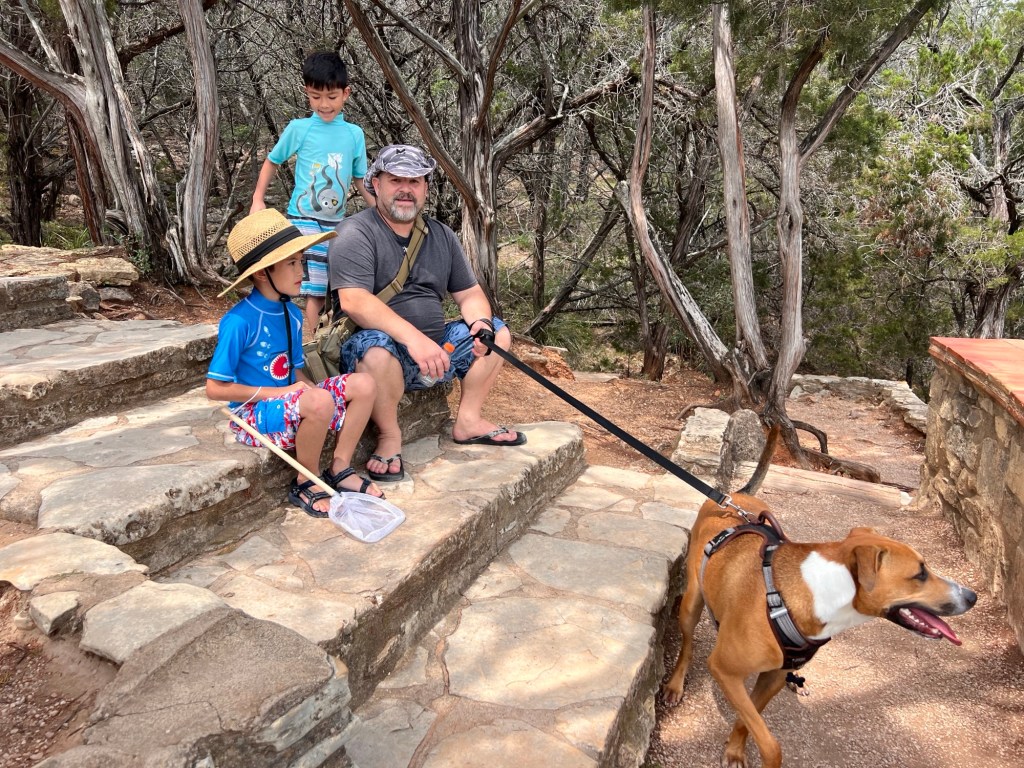
People at the parks are often very friendly and interesting. My favorite memory is somewhere in this blog from last year. I’ll repeat for this prompt. I was at Pedernales Falls, and ran into a family playing in the river after I climbed down a zillion stairs to get there. Now, that was okay, because the wildflowers were so spectacular I didn’t notice.
Heading down the stairs.
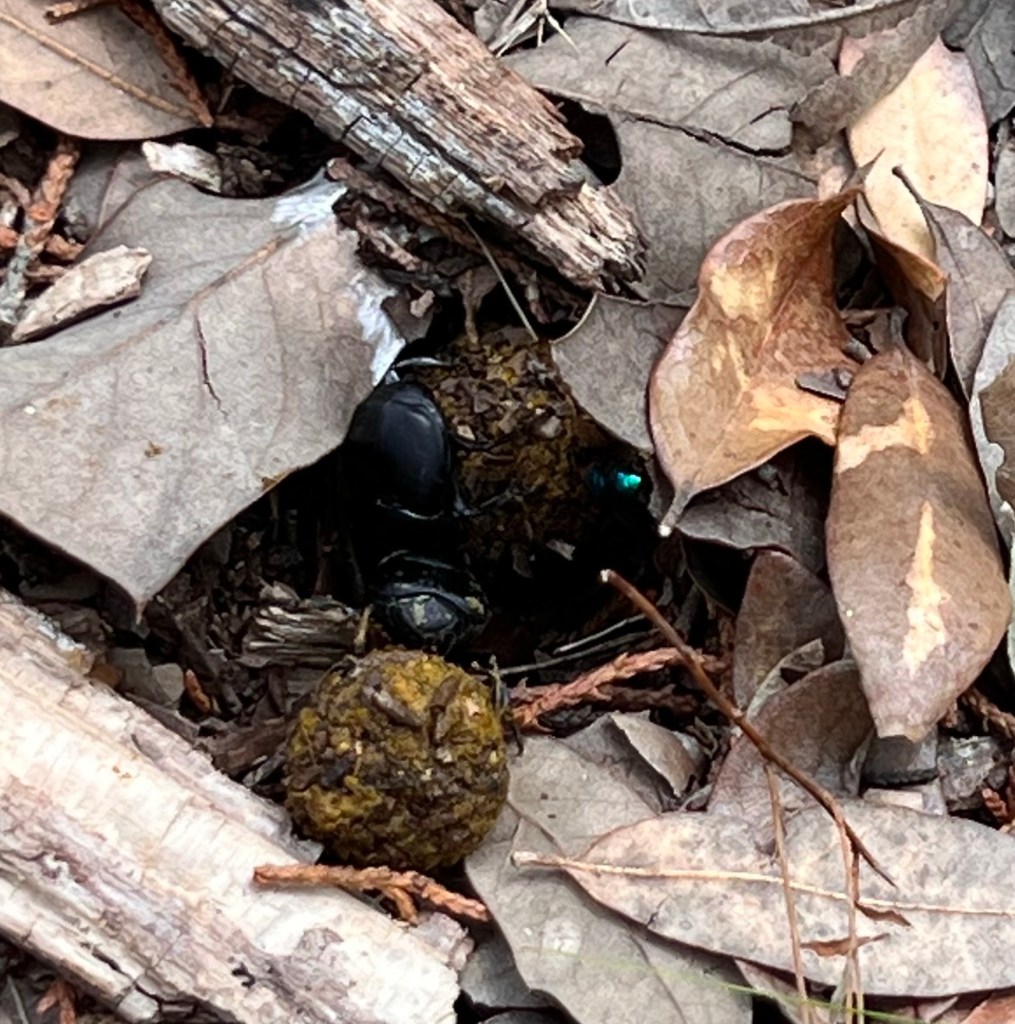
I showed the kids some bugs going back up, and bonded with the dad o er the flowers. They asked if I’d been to the actual falls, and I said no, because it was too far to walk. So they drove me there! And we found more bugs. Dung beetles. I never saw such excited kids. We could hardly drag them away to go look at the falls!
Very exciting to a small child.
I’ll never forget this sweet family and their dog, who sure let me know I was sitting in her spot in the car!
Such great folks.
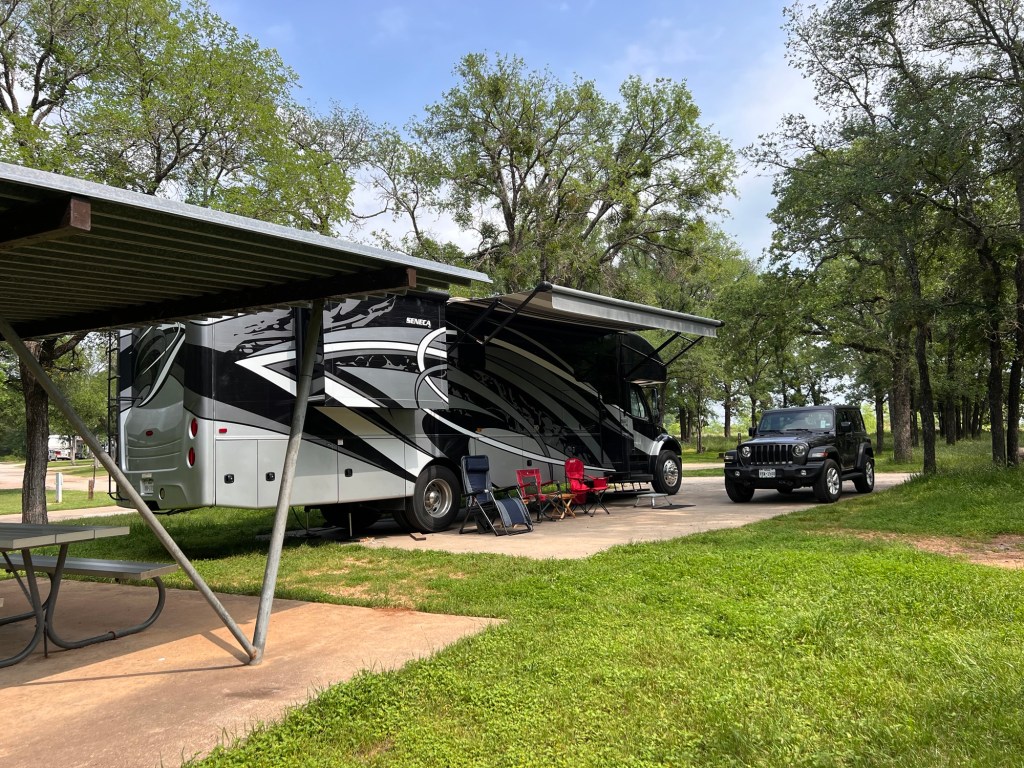
Today we inaugurated Hermee the Jeep as our tow vehicle and drove to Lake Whitney State park, which is west of West, Texas. We succeeded!
Lee is good at parking.
Here I also talked to strangers, even without Lee, who went to get supplies while I finished working and took a walk. It turns out that the large group of Texas Tech people were all band alumni who gather every year at a park. What a fun tradition!
This park is on the eastern edge of the Grand Prairie. The lake was formed by damming the Brazos River.
I also met a nice retired couple and a man with beautiful little dogs. It’s worth talking to strangers in settings where you feel safe!
More prairie
The park has lots of birds, plus we saw migratory snow geese on our way to the park. I enjoyed hearing summer tanagers and seeing bluebirds and woodpeckers.
Red bellied woodpecker in action.
There are only two official trails, but there are roads and camping areas to check out, too. I won’t be bored. Here are a few views of flowers and fields.
Bright yellow Texas paintbrush Milkweed and paintbrush Lots of flowers Texas stork’s bill. Very different from the ones at homeCarpenter bee and hairstreaks enjoy antelope horns milkweed. Hairy pink? A new one. Buckeye caterpillarPrairie parsley and friends
We had a nice dinner thanks to the George Foreman grill Lee came back with. It made quesadillas. He also got a replacement for the overly cheap tiny coffeemaker we’d been using. Wow was it bad, and then it broke! we’re sticking with name brands from now on.
Mmmmm
Later we enjoyed how dark it is here and listened to frogs. A great evening! Tomorrow maybe it will be cooler and I can work outside.
Another book finished, and I’m impressed that I got this one done in less than a week, since I’m also trying to knit some every day now. I bought Talking to Strangers: What We Should Know about the People We Don’t Know, by Malcolm Gladwell, because I really wanted some insight into how to communicate with people from different communities, cultures, social groups, etc.
Hey look, you can buy it, too. Trying a new embed format.
It turns out that the famous Mr. Gladwell (he wrote Blink, a book I didn’t like much at the time it came out) wasn’t exactly writing about what I thought he would, but I found the direction he took pretty interesting, anyway.
The question he really seemed to be asking was more like why do we let assumptions about other people, based on appearance, blind us to their real motives or intentions? He talks about cases we are all familiar with, like Bernie Madoff, who fooled all kinds of rich people into believing his really ridiculous Ponzi schemes and the pedophilia scandal at Penn State University, where Jerry Sandusky’s purported actions were dismissed until everything blew up and all sorts of people lost their jobs.
Don’t talk to strangers, said so many mothers. Photo by @tonyturretto via Twenty20
Spoiler alert: Gladwell says all of the misinterpretations of others’ motivations boils down to two main things: one is that we all assume that people we don’t know are telling us the truth. It takes lots and lots of evidence that something’s amiss to change that assumption. So, good ole Bernie M. was such a nice guy and friends of so many smart people, of course he was telling the truth! Gladwell points out that the assumption of truth is actually a good thing almost all the time. It certainly would slow down social interactions if you questioned everything anyone said to you, right? That lets skilled liars, or even unskilled liars, as he shares with a story about a Cuban spy in the CIA, keep doing what they’re doing.
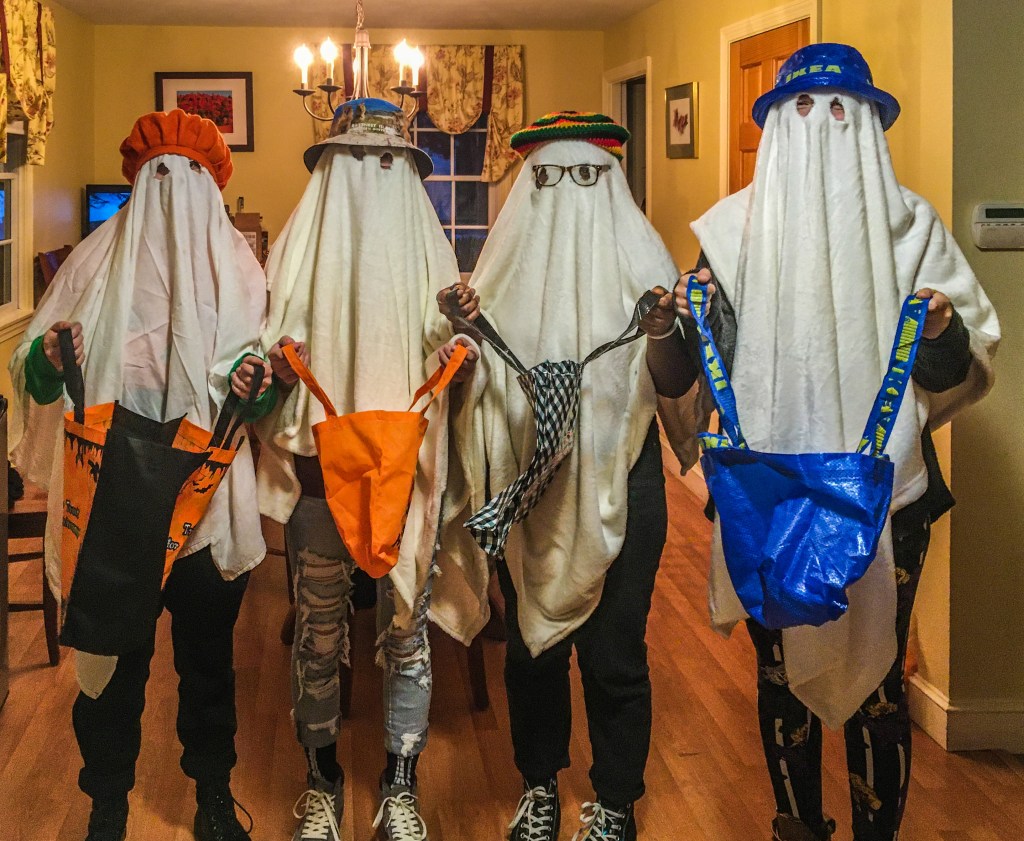
Here’s one way to not read people’s motivations from their faces, right? Photo by @pprevost via Twenty20
The second thing that makes knowing what a stranger is really up to hard is the assumption of transparency. This means how we expect that we can read people’s motivations from their appearance. As long as people act like our cultural norms predict they should in a situation, it goes well. This refers to looking afraid when you are scared or acting solemn when someone dies (Amanda Knox in an Italian murder case didn’t act sad enough when her roommate died, but really she was just socially awkward, not a killer). People who, like Knox, don’t telegraph their internal states can get away with lying or not be believed when they are telling the truth. In the end, that is one thing that caused that poor Sandra Bland woman to end up dead in a jail cell: she acted nervous when a police officer pulled her over and didn’t grovel properly, in his mind.
The other part of Talking to Strangers that I enjoyed a lot was a discussion of the concept of “coupling,” where Gladwell makes a strong case that inexplicable things you do are tied strongly to location and opportunity. Sylvia Plath’s suicide happened because gas ovens in England still had carbon monoxide in them. If she had tried to do it a year or two later, they’d have switched to natural gas, and she would have just gotten a headache. Another poet, Anne Sexton, killed herself by locking herself in the garage and turning her car on. This was just a short time before catalytic converters showed up in American cars, so this method wouldn’t work. Um, did you know that the profession most likely to commit suicide is poets?
That’s right. Don’t do it.
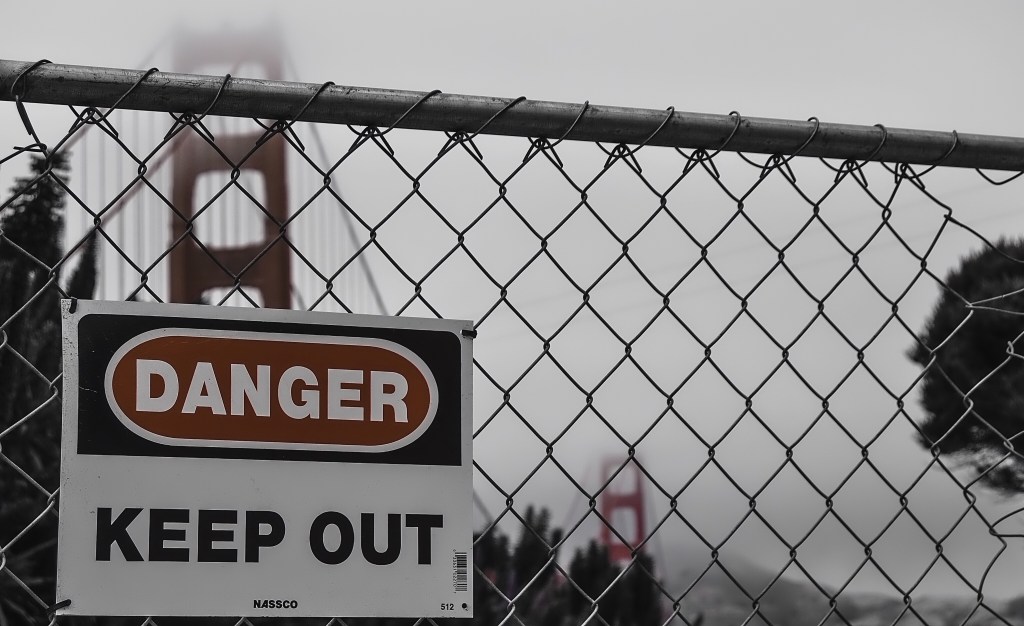
The point is, though, people think that if your chosen method won’t work, you go try another method, but the research on coupling has shown that isn’t true. When nets were put on the Golden Gate Bridge, people didn’t march off to another bridge to jump off. The motivation is tied to the place.
I haven’t explained that well. The section on coupling is the main reason I encourage people to read Talking to Strangers. I kept reading sentences aloud to Anita, because I was learning so much. The section about “pockets of crime” blew me away.
Photo by @yournameonstones via Twenty20
Now that I write this all down, it’s clear that Gladwell made a big impression on me with his viewpoints and the research that backs them up. It’s fun that he weaves recent events (and Hitler) into the analysis, because you always want to know how the heck these implausible events actually go down the way they do (why did Neville Chamberlain like and believe the words of Hitler?). I have a new perspective on why people just don’t “get” each other so often. Learning is good!
Sadly, I still don’t think I’m any better about talking to strangers. I think I’m even more cautious about it than I was before. Maybe that’s a good thing. Assumptions about other people tend to bite you in the…butt.








 The Hermits' Rest