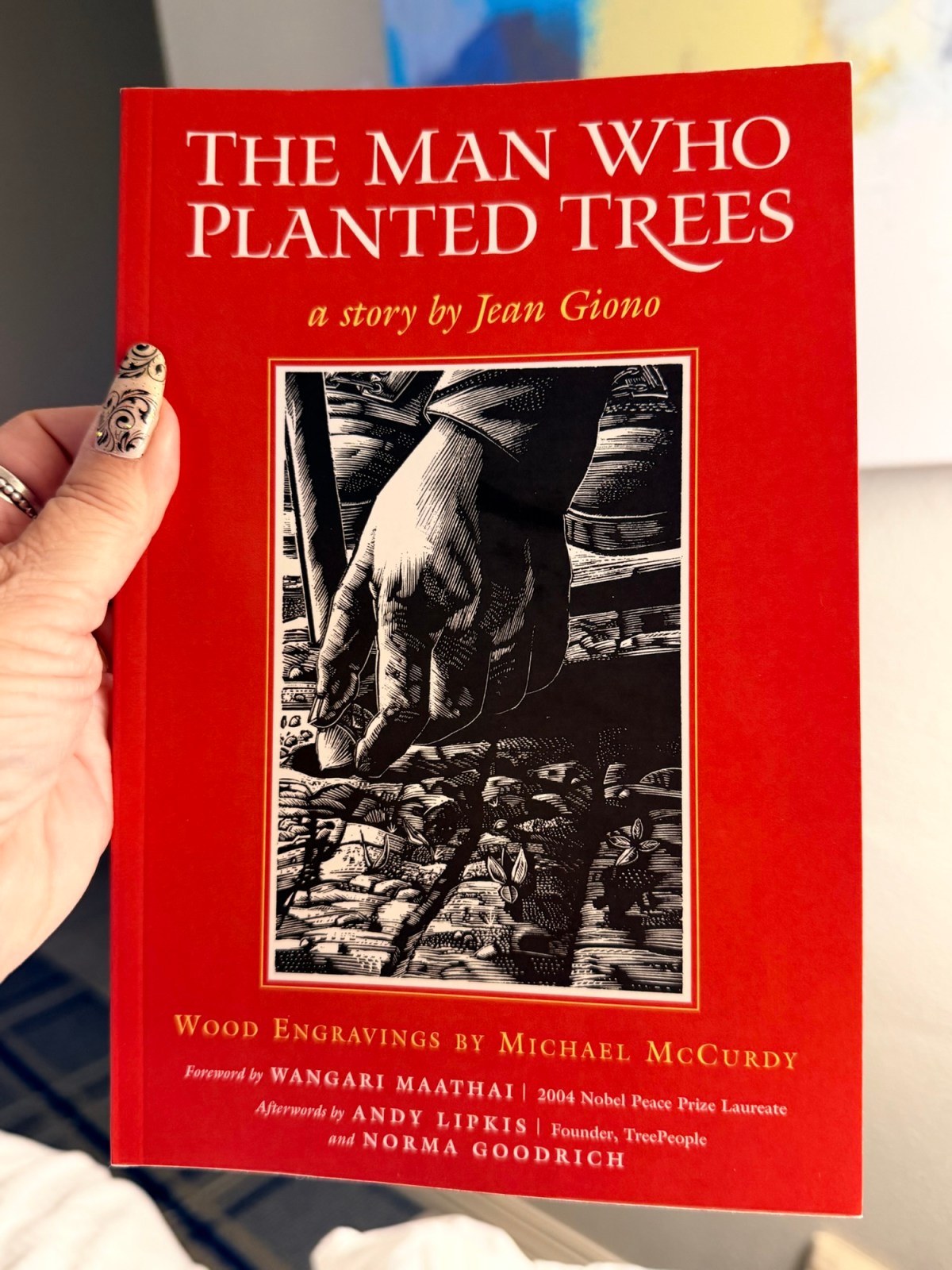
Book Report: The Man Who Planted Trees

I received The Man Who Planted Trees (1954), by Jean Giono, from my friend Anita, who has a way of finding whimsical gifts that are exactly what I need at the time. What a great talent. She’s gifted at gifts!
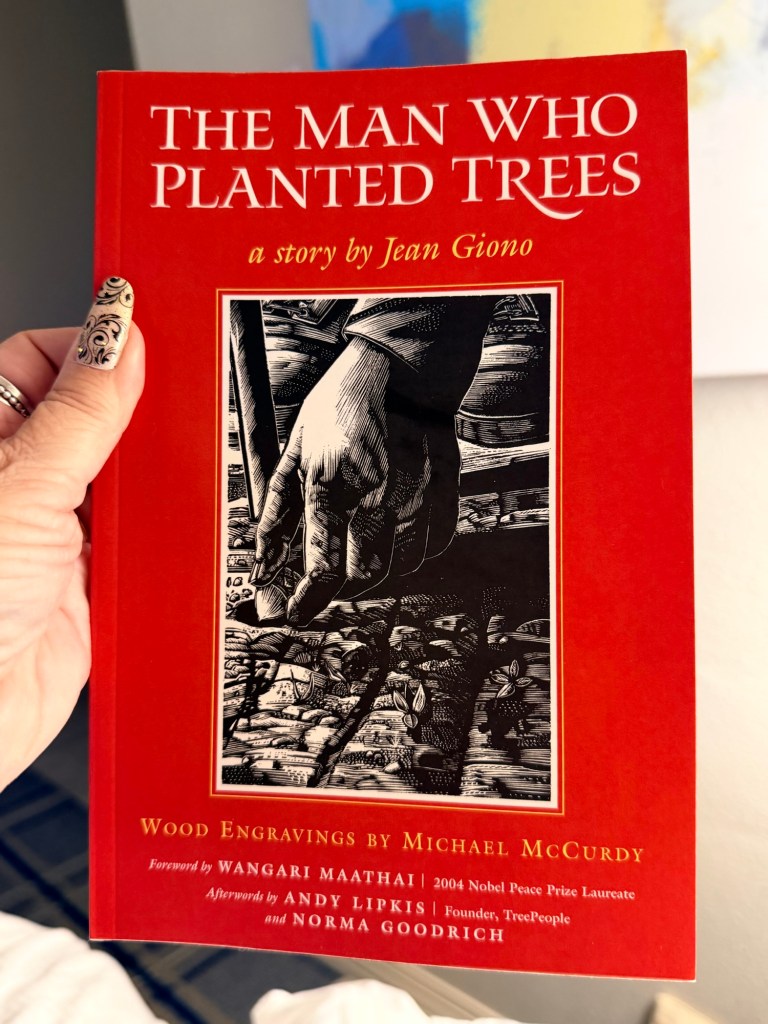
The author, Jean Giorno, was a great 20th Century French writer known for his skill at creating a mood, evoking a dreamlike spell as you read his work. This short story (more of a fable) was originally an article in Vogue magazine, but was subsequently published in book form accompanied by engravings by Michael McCurdy that help add to the fairy-tale qualities of the story. It’s been in print all these years, just waiting for people to be inspired to change the work for the better after reading it.
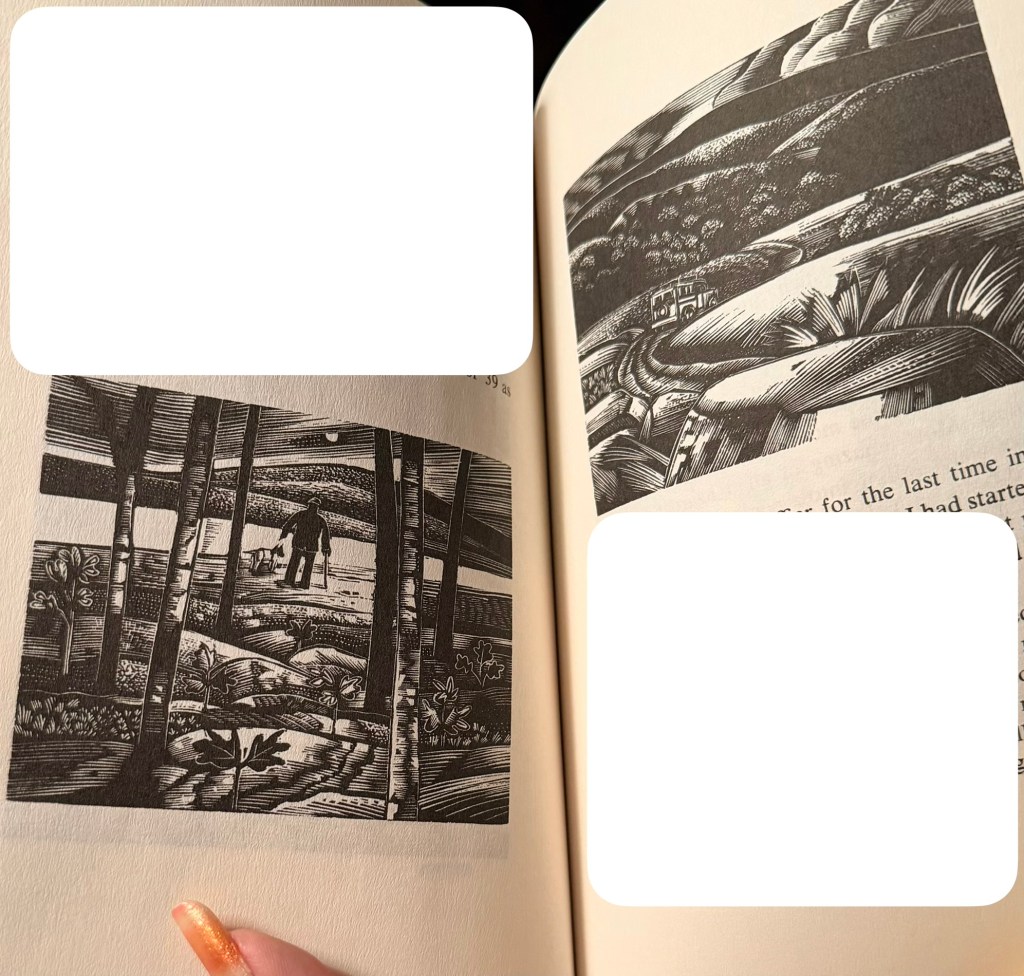
I don’t want to spoil the story, but look at the engravings!

The plot is simply a tale narrated by a wanderer who comes across an amazing man and visits him across many years during some hard times for France. Trees are indeed involved. But you need to read the mythical telling for yourself! Then read the introduction and afterwords (yes, there are two afterwords—longer than the story, but providing great context) to see how Jean Giorno’s tale inspired others, over the years since the book came out, to make the world a better place. Trees are powerful!

Dream on, readers! I’m going to recover from some unexpected news and be back at it tomorrow!
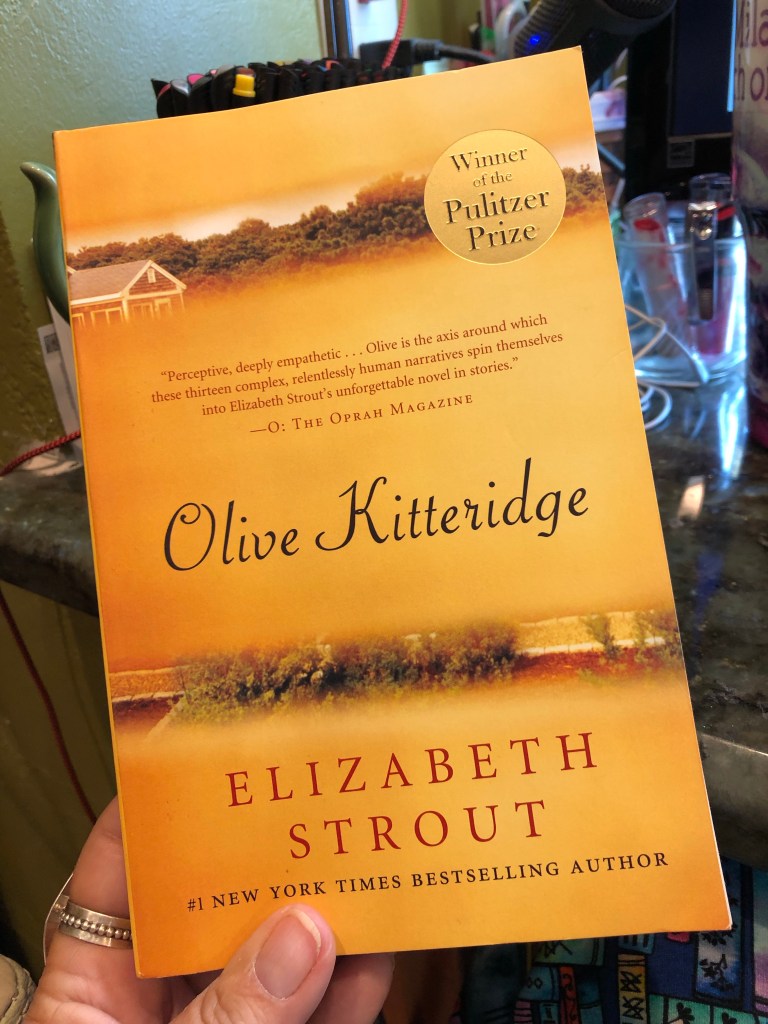
Book Report: Olive Kitteridge

Rating: 5 out of 5.

A friend recommended I read the books by Elizabeth Strout on Olive Kitteridge, because I said I was interested in good character development. I ordered them, and just finished Olive Kitteridge. It’s a quiet masterpiece.

The book is a series of short stories, sort of, though the same people in a small Maine town appear and re-appear. Olive, a large sorta grumpy woman is the pivotal character who appears in each story. It’s fun to wait and see how she turns up and how the other people perceive her.

I love how normal and real the people in the stories are, but also how they each have personal tragedies that shape them. One theme I detected in the book was of people daring to do something unexpected or out of character. It usually works out well, but not always. It reminded me of my own attempts to get out of my shell, tell my truth, or speak up. Only mine tend to backfire. Never mind…

I did find many beautiful phrasings and observations about daily life, beauty, and appreciation of your current moment. But mostly it was about feeling lonely.

When he was in town, it seemed he saw couples everywhere; arms tucked against each other in sweet intimacy; he felt he saw light flash from their faces, and it was the light of life, people were living.

Starving, p. 99

And she has an amazing way of showing how disconnected and lonely people can let themselves be. I felt like framing a couple things Strout has her characters think or say.

It’s just that I’m the kind of person that thinks if you took a map of the whole world and put a pin in it for every person, there wouldn’t be a pin for me

Criminal, p. 236

What I get from Strout’s interrelated tales is that we can all feel our separateness deeply, and we all seek intimacy in our own ways. I’m grateful for all the glimpses into everyday intimacy that the stories in Olive Kitteridge provide. I will probably turn to this book often just to re-read some of the words and slip back into the feelings they elicit.

Great book. Thanks so much to the friend who recommended it!